Posts Tagged ‘VLADIMIR PUTIN’
ABC NEWS, ALAMO, ALTERNET, AMERICABLOG, ANDREW JACKSON, ANTONIO LOPEZ DE SANTA ANNA, AP, BABY BOOMER RESISTANCE, BBC, BLOOMBERG NEWS, BLUESKY, BUZZFEED, CBS NEWS, CHARLES VII, CNN, CROOKS AND LIARS, DAILY KOS, DEPARTMENT OF HOMELAND SECURITY, DONALD TRUMP, FIVETHIRTYEIGHT, FRANCE, GAVIN NEWSOM, HARPER’S MAGAZINE, HUFFINGTON POST, IMMIGRATION AND CUSTOMS ENFORCEMENT (ICE), JOAN OF ARC, KAREN BASS, LONE STAR: A HISTORY OF TEXAS AND THE TEXANS (BOOK), MEDIA MATTERS, MOTHER JONES, MOVEON, MSNBC, NATIONAL GUARD, NBC NEWS, NEWSDAY, NEWSWEEK, NPR, PBS NEWSHOUR, POLITICO, POLITICUSUSA, RAW STORY, REUTERS, RUSSIA, SALON, SAM HOUSTON, SEATTLE TIMES, SLATE, T.R. FEHRENBACH, TALKING POINTS MEMO, TEXAS, THE ATLANTIC, THE CHICAGO SUN-TIMES, THE CHICAGO TRIBUNE, THE DAILY BEAST, THE DAILY BLOG, THE GUARDIAN, THE HILL, THE HUFFINGTON POST, THE INTERCEPT, THE LOS ANGELES TIMES, THE NATION, THE NEW REPUBLIC, THE NEW YORK TIMES, THE NEW YORKER, THE VILLAGE VOICE, THE WASHINGTON POST, THINKPROGRESS, TIME, TOM HOMAN, TRUTHDIG, TRUTHOUT, TWO POLITICAL JUNKIES, U.S. NEWS & WORLD REPORT, UKRAINE, UPI, USA TODAY, VLADIMIR PUTIN, VOLODYMYR ZELENSKY, WILLIAM BARRET TRAVIS, WONKETTE, X
In Bureaucracy, History, Law, Law Enforcement, Military, Politics, Social commentary on June 23, 2026 at 12:10 am
History is filled with examples of men—and women—who in moments of crisis rose to challenge a deadly enemy.
Among these have been:
- Joan of Arc
- William Barret Travis
- Volodmyr Zelensky
Volofmyr Zelensky (January 25, 1978 – ) is a former attorney, actor and comedian who, as the sixth president of Ukraine, now leads his country in a life-or-death struggle against the aggressive Russia of Vladimir Putin.
In 2021, his administration came under mounting pressure from Russia. On February 24, 2022, Putin ordered a full-scale invasion of Ukraine.
During the assault by Russian troops on the capital of Kiev, the Biden administration urged Zelensky to evacuate to a safer location and offered to help him do so. Zelensky refused, saying: “The fight is here [in Kiev]; I need ammunition, not a ride.”
As CBS correspondent Scott Pelley put it: “The moment Zelensky told his people he refused to flee, they refused to fall.”
Russia expected Kiev to fall in three days. But more than four years after the invasion, Kiev still remains defiant—and in the hands of Ukrainians.
When Zelensky wasn’t broadcasting defiance at Russia and rousing Ukrainians to heroism, he was often visiting the battlefront. Zelensky sees Ukraine’s struggle as the opening round of Russia’s war against the West:
“Some are….saying, ‘We can’t defend Ukraine because there could be a nuclear war.’ I think that today, no one in this world can predict what Russia will do.
“If they invade further into our territory, then they will definitely move closer and closer to Europe. They will only become stronger and less predictable.”
Millions of Americans—such as those who took part in nationwide “No Kings” protests on June 14, 2025—feel the same way about Donald Trump and his own dictatorial regime.
Which leads to:
Gavin Christopher Newsom (October 10, 1967) has been the 40th governor of California since 2019. During the COVID-19 pandemic in 2020, he imposed strict lockdown measures, thus saving countless lives by preventing a far greater spread of the virus.

Gavin Newsom
In doing so, he aroused the wrath of then-President Donald J. Trump, who promoted false “cures” such as drinking bleach and shining UV light up people’s rectums. Trump’s goal: “Keep America open” so he could take credit for a robust economy—and win re-election—no matter how many people died.
And Newsom has continued to challenge a re-elected Trump’s lies and illegal actions:
- Trump has targeted the governor on social media, often referring to him as “Newscum.”
- And Newsom has proven he can give as good as he gets: He has highlighted U.S. Bureau of Labor Statistics data demonstrating that California created more jobs than any other state between the first quarters of 2025 and 2026.
- He has openly criticized Trump for policies that cut good-paying clean energy jobs and weaken environmental safeguards.
- The two routinely trade personal barbs on X over state issues like wildfire management, homelessness and California’s high-speed rail project.
- In January 2026, Trump gave a speech at the World Economic Forum in Switzerland. Afterward, Newsom publicly mocked it as “boring” and “boorish.”
- Newsom’s team accused the White House of blocking him from accessing the “USA House” headquarters at the summit.
On June 15, 2026, Newsom accused Trump of launching a politically motivated investigation into him and his wife: “They have not found a crime—they are simply trying to find one.
“He’s coming after me because I’m considering running for president, because he hates that I’ve consistently called him out over and over again for his lies and deceit.”
He added that federal agents had in recent days knocked on the doors of his friends and former employees, asking for records.
The Justice Department declined to comment.
On June 6, 2025, protests erupted in Los Angeles against Immigration and Customs Enforcement (ICE). The demonstrations were triggered by ICE raids at multiple locations in the city to arrest suspected illegal aliens.
The first raid occurred within the Los Angeles Fashion District; two other raids occurred at a clothing wholesaler and a Home Depot in upscale Westlake.
Word of these arrests quickly spread, and so did demonstrations, with the Department of Homeland Security (DHS) stating that 44 people were arrested for suspected immigration violations and one person was arrested for obstruction.
David Huerta, the California president of the Service Employees International Union, was arrested for blocking a vehicle and charged with felony conspiracy to impede an officer.
The epicenter of the protests became the Los Angeles Metropolitan Detention Center at 535 N Alameda Street. About 200 protesters remained at the facility by 7 p.m., when the Los Angeles Police Department (LAPD) declared the protest to be an unlawful assembly and ordered protesters to disperse
Some protesters hurled chunks of broken concrete toward officers; the LAPD responded with tear gas, pepper spray and flash-bang grenades to disperse the crowd. At 8:24 p.m. a citywide tactical alert was announced.
On June 7, the protests continued. About 1,000 people surrounded a local branch building used by Homeland Security.
Newsom deployed California Highway Patrol units to protect Los Angeles freeways.
By June 7, 118 illegal aliens had been arrested in Los Angeles, according to the DHS.
ABC NEWS, ALAMO, ALTERNET, AMERICABLOG, ANDREW JACKSON, ANTONIO LOPEZ DE SANTA ANNA, AP, BABY BOOMER RESISTANCE, BBC, BLOOMBERG NEWS, BLUESKY, BUZZFEED, CBS NEWS, CHARLES VII, CNN, CROOKS AND LIARS, DAILY KOS, DEPARTMENT OF HOMELAND SECURITY, DONALD TRUMP, FIVETHIRTYEIGHT, FRANCE, GAVIN NEWSOM, HARPER’S MAGAZINE, HUFFINGTON POST, IMMIGRATION AND CUSTOMS ENFORCEMENT (ICE), JOAN OF ARC, KAREN BASS, LONE STAR: A HISTORY OF TEXAS AND THE TEXANS (BOOK), MEDIA MATTERS, MOTHER JONES, MOVEON, MSNBC, NATIONAL GUARD, NBC NEWS, NEWSDAY, NEWSWEEK, NPR, PBS NEWSHOUR, POLITICO, POLITICUSUSA, RAW STORY, REUTERS, RUSSIA, SALON, SAM HOUSTON, SEATTLE TIMES, SLATE, T.R. FEHRENBACH, TALKING POINTS MEMO, TEXAS, THE ATLANTIC, THE CHICAGO SUN-TIMES, THE CHICAGO TRIBUNE, THE DAILY BEAST, THE DAILY BLOG, THE GUARDIAN, THE HILL, THE HUFFINGTON POST, THE INTERCEPT, THE LOS ANGELES TIMES, THE NATION, THE NEW REPUBLIC, THE NEW YORK TIMES, THE NEW YORKER, THE VILLAGE VOICE, THE WASHINGTON POST, THINKPROGRESS, TIME, TOM HOMAN, TRUTHDIG, TRUTHOUT, TWO POLITICAL JUNKIES, U.S. NEWS & WORLD REPORT, UKRAINE, UPI, USA TODAY, VLADIMIR PUTIN, VOLODYMYR ZELENSKY, WILLIAM BARRET TRAVIS, WONKETTE, X
In Bureaucracy, History, Law, Law Enforcement, Military, Politics, Social commentary on June 22, 2026 at 12:10 am
On November 30, 1954—the 80th birthday of former British Prime Minister Winston Churchill—he gave an uncharacteristically modest assessment of his World War II legacy:
“It was the nation and the race dwelling all around the globe that had the lion’s heart. I had the luck to be called upon to give the roar.”
But author William Manchester was having nothing of it. In his monumental trilogy, The Last Lion, he wrote:
“It wasn’t that simple. The spirit, if indeed within them, lay dormant until he became prime minister and they, kindled by his soaring prose, came to see themselves as he saw them and emerged a people transformed, the admiration of free men everywhere.”

Winston Churchill
History is filled with examples of men—and women—who in moments of crisis rose to challenge a deadly enemy.
Among these have been:
- Joan of Arc
- William Barret Travis
- Volodmyr Zelensky
Joan of Arc (c. 1412 – 30 May 1431) was an illiterate peasant girl who, in France’s darkest hour, became its greatest hero. After she arranged an interview with King Charles V11, he sent her with a relief army to lift the siege of Orléans.

Joan of Arc
She had never wielded a lance or sword, or even ridden a war horse. She had never studied military strategy nor even seen a battlefield. Yet nine days after arriving with an army at Orléans, she lifted the English siege of the city on May 8, 1429.
On May 4, her army attacked the outlying fortress of Saint Loup. She arrived just as the French soldiers were retreating after a failed attempt. Her sudden appearance roused the soldiers to cheer and launch another assault—which overwhelmed the fortress.
In June, Joan decisively defeated the English at the Battle of Patay. She then advanced on Reims, entering the city on July 16. The next day, Charles, the rightful heir to the French throne, was consecrated as the King of France in Reims Cathedral with Joan at his side.
These victories paved the way for the final French victory in the Hundred Years’ War at Castillon in 1453.
On May 23, 1430, while relieving the siege of Compiegne, she was captured by Burgundians troops and exchanged to the English. Tried for heresy, she was declared guilty and burned at the stake on May 30,1431.
Only 19 when she died, she had, through her inspired leadership, restored the kingdom of France.
William Barret Travis (August 1, 1809 – March 6, 1836) was a South Carolina lawyer whose courage and eloquence inspired 200 Texans at the Alamo to hold back an army of 2,000 Mexican soldiers.

William Barret Travis
Few of the defenders had known each other before finding themselves besieged. None of them had had professional military training. Some had served in local militias or as irregulars fighting Indians under the command of frontier officers such as Andrew Jackson. Since the vast majority of the garrison were volunteers, they could have deserted the fortress at any time.
Holding them in place was Travis. Gifted with an eloquence beyond his 26 years, he gave purpose to their stand. As historian T.R. Fehrenbach writes in his monumental book, Lone Star: A History of Texas and the Texans:
“From the Alamo, from his first message before the arrival of the Mexicans to his last, his words had the ring of prophecy. The Texas historian who stated publicly that few people would want to have a son serve under William Barret Travis had forgotten, in the comforts of long security, the reasons why men make war.”
When the final assault came before dawn on March 6, 1836, the roughly 200 defenders killed and wounded about 600 of their enemies—inflicting a casualty rate of 33% on the Mexican army.
Travis’ body was found near his cannon on the north wall. He had been shot through the forehead.
The garrison’s sacrifice inspired Sam Houston’s ragtag army to fall on the Mexican army at San Jacinto on April 21. Slaughtering about 800 soldiers, the Texans captured Mexican dictator Antonio Lopez de Santa Anna—and forced him to surrender control of Texas in return for his life.
Volofmyr Zelensky (January 25, 1978 – ) is a former attorney, actor and comedian who, as the sixth president of Ukraine, now leads his country in a life-or-death struggle against the aggressive Russia of Vladimir Putin.
After earning a law degree from Kiev National Economic University, he pursued a career in comedy. He created his own production company, Kvartal 95, which produced films, cartoons, and TV shows. His comedy, Servant of the People, starred Zelensky as the president of Ukraine.

Volodymyr Zelensky
In 2019, he announced his candidacy for president of Ukraine. He opposed the corruption that had been rife under the country’s luxury-loving president, Victor Yanukovych.
(In 2014, Ukrainians had rioted in Kiev and evicted Yanukovych. And that didn’t sit well with his “sponsor”—Russian President Vladimir Putin.)
A second feature of Zelensky’s presidential campaign: He promised to resolve the Russia-sponsored separatist movement in Donbas and end Ukraine’s protracted conflict there with Russia.
Zelensky won election by a landslide, with 72% of the vote.
In 2021, his administration came under mounting pressure from Russia. On February 24, 2022, Putin ordered a full-scale invasion of Ukraine.
2016 PRESIDENTIAL ELECTION, ABC NEWS, AFFORDABLE CARE ACT, ALAN LADD, ALTERNET, AMERICABLOG, AP, BABY BOOMER RESISTANCE, BBC, BLOOMBERG NEWS, BORDER WALL, BUZZFEED, CALVERA (CHARACTER), CANADA, CAPITOL INSURRECTION, CBS NEWS, CHARLES GEORGE GORDON, CHRIS (CHARACTER), CHYE-CHING HUANG, CIA, CNN, COVID-19, CROOKS AND LIARS, DAILY KOZ, DONALD TRUMP, DONALD TRUMP: TRAGIC HERO (ARTICLE), ELECTORAL COLLEGE, ELI WALLACH, FBI, FEDERAL FISCAL POLICY, FEDERAL GOVERNMENT SHUTDOWN, FIVETHIRTYEIGHT, HAMLET, HARPER’S MAGAZINE, HOOVER INSTITUTE, HUFFINGTON POST, ISLAMIC STATE, JACK PALANCE, JAMES COMEY, JEFF SESSONS, JOHN FORD, JOHN WAYNE, JOSEPH BIDEN, KHARTOUM, KIM JONG ON, LEE MARVIN, MEDIA MATTERS, MOTHER JONES, MOVEON, MSNBC, NATIONAL SECURITY AGENCY, NBC NEWS, NEW REPUBLIC, NEWSDAY, NEWSWEEK, NORTH KOREA, NPR, PBS NEWSHOUR, POLITICO, POLITICUSUSA, RAW STORY, REUTERS, ROBERT S. MUELLER III, RUFUS RYKER (CHARACTER), RUSSIA, SALON, SEATTLE TIMES, SERGEY KISLYAK, SERGEY LAVROV, SHANE (MOVIE), SLATE, STEVE MCQUEEN, TALKING POINTS MEMO, TAX CUTS AND JOBS ACT OF 2017, THE ATLANTIC, THE CASE FOR TRUMP (BOOK), THE CHICAGO SUN-TIMES, THE CHICAGO TRIBUNE, THE DAILY BEAST, THE DAILY BLOG, THE GUARDIAN, THE HILL, THE HUFFINGTON POST, THE LOS ANGELES TIMES, THE MAGNIFICENT SEVEN (MOVIE), THE MAN WHO SHOT LIBERTY VALANCE (MOVIE), THE NATION, THE NEW REPUBLIC, THE NEW YORK TIMES, THE NEW YORKER, THE PRESS, THE VILLAGE VOICE, THE WASHINGTON POST, THINKPROGRESS, TIME, TRAGEDY, TRUMP FOUNDATION, TRUMP UNIVERSITY, TRUTHDIG, TRUTHOUT, TWO POLITICAL JUNKIES, U.S. NEWS & WORLD REPORT, UKRAINE, UPI, USA TODAY, VICTOR DAVIS HANSON, VLADIMIR PUTIN, VOLODYMYR ZELENSKY, WILLIAM SHAKESPEARE, WILSON (CHARACTER), WONKETTE, X, YUL BRYNNER
In Bureaucracy, Entertainment, History, Law, Law Enforcement, Medical, Politics, Social commentary on June 17, 2026 at 12:08 am
For historian and classicist Victor Davis Hanson, Donald Trump possesses an unappreciated self-awareness and sense of what it means to be a tragic hero.
Trump was into the first year of his Presidency when Hanson penned his article, “Donald Trump, Tragic Hero,” published on April 12, 2018.
To make his case, Hanson cited a series of popular Western movies featuring lethal men who risk—and sometimes sacrifice—their lives on behalf of others too weak to vanquish evil on their own.
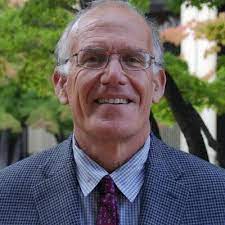
Victor Davis Hanson
Thus in the classic 1960 film, The Magnificent Seven, the Seven slaughter the outlaw Calvera and his banditos—and then ride into the sunset. As they do, Chris (Yul Brynner) tells Vin (Steve McQueen): “The old man was right. Only the farmers won. We lost. We always lose.”
Wrote Hanson: “[Chris] knows that few appreciate that the tragic heroes in their midst are either tragic or heroic — until they are safely gone and what they have done in time can be attributed to someone else. Worse, he knows that the tragic hero’s existence is solitary and without the nourishing networks and affirmation of the peasant’s agrarian life.”
Chris may know this, but there is absolutely no evidence that Trump does. He has never shown even an awareness of sensitivity and self-knowledge, let alone the possession of either. Trump is at best semi-literate. The concept of tragedy—as expressed in the Greek tragedies to which Hanson refers throughout his article—means nothing to Trump.
Moreover, the Seven have risked their lives—and four of them have died doing so—on behalf of villagers who can pay them almost nothing.
It is inconceivable that Trump would risk anything—especially his life—for people he regarded as poor and thus unworthy of his concern.

In their first encounter with Calvera (Eli Wallach) the bandit chief offers to make the Seven partners in his ravaging of the village. Of his intended victims, Calvera sneers: “If God had not wanted them sheared, he would not have made them sheep.”
If Trump had heard Calvera’s offer, he would have instantly accepted it.
In June 2016, USA Today published an analysis of litigation involving Trump. Over the previous 30 years, Trump and his businesses had been involved in 3,500 legal cases in U.S. Federal and state courts.
Of the 3,500 suits, Trump or one of his companies were plaintiffs in 1,900; defendants in 1,450; and bankruptcy, third party, or other in 150. Trump was named in at least 169 suits in federal court.
Many of those cases centered around his refusal to pay contractors for their finished work on his properties. Most of the contractors didn’t have the financial resources—as Trump had—to spend years in court trying to obtain the monies they were owed. As a result, they never received payment—or, at best, only a small portion of what they were owed.
When he ran for President in 2015-16, Trump repeatedly promised poor and middle-class Americans a far better plan for medical care than the Affordable Care Act.
He spent the next four years thuggishly trying to dismantle “Obanacare,” the signature achievement of Barack Obama, America’s first black President. But never did he offer even a general outline of his own alleged plan to “replace” it.
Hanson tries to draw a further parallel between Trump and the fictional Tom Doniphon, the unsung hero of John Ford’s 1962 movie, The Man Who Shot Liberty Valance.

Hanson sums up the movie thus:
“Tom Doniphon [John Wayne]…unheroically kills the thuggish Liberty Valance [Lee Marvin], births the [political] career of Ranse Stoddard [James Stewart] and his marriage to Doniphon’s girlfriend [Vera Miles] and thereby ensures civilization is Shinbone’s frontier future. His service done, he burns down his house and degenerates from feared rancher to alcoholic outcast.”
It is inconceivable that Trump would take the risk of committing a crime on behalf of someone else—or being able to resist bragging about it if he did. It is equally inconceivable that he would give up a woman he wanted for the happiness of another man.
Most unbelievable of all is the suggestion that Trump would imitate Doniphon by quietly riding off into the sunset.
Trump has often “joked” about becoming “President-for-Life.” After losing the November 3, 2020 Presidential election to former Vice President Joe Biden, he filed 60 lawsuits to overturn the will of 80 million voters. Those failing, he tried some old-fashioned but unsuccessful arm-twisting of several state lawmakers to “find” non-existent votes for him.
Finally, on January 6, 2021, he incited a mob of his fanatical followers to attack the United States Capitol Building. Their mission: Stop the counting of Electoral College ballots certain to give Biden the victory.
Victor Davis Hanson is a brilliant scholar and colorful writer. But his effort on Trump’s behalf is embarrassing and appalling.
In a series of bestselling books, he has eloquently chronicled the heroism of the ancient Greeks in defending their budding democracy.
It is depressing—and frightening—to discover that this same man can blatantly ignore the criminalities and even treason of the greatest and most destructive tyrant to ever attain the Presidency.
2016 PRESIDENTIAL ELECTION, ABC NEWS, AFFORDABLE CARE ACT, ALAN LADD, ALTERNET, AMERICABLOG, AP, BABY BOOMER RESISTANCE, BBC, BLOOMBERG NEWS, BORDER WALL, BRANDON DE WILDE, BUZZFEED, CALVERA (CHARACTER), CANADA, CAPITOL INSURRECTION, CBS NEWS, CHARLES GEORGE GORDON, CHRIS (CHARACTER), CHYE-CHING HUANG, CIA, CNN, COVID-19, CROOKS AND LIARS, DAILY KOZ, DONALD TRUMP, DONALD TRUMP: TRAGIC HERO (ARTICLE), ELECTORAL COLLEGE, FBI, FEDERAL FISCAL POLICY, FEDERAL GOVERNMENT SHUTDOWN, FIVETHIRTYEIGHT, HAMLET, HARPER’S MAGAZINE, HOOVER INSTITUTE, HUFFINGTON POST, ISLAMIC STATE, JACK PALANCE, JAMES COMEY, JEFF SESSONS, JOHN FORD, JOHN WAYNE, JOSEPH BIDEN, KHARTOUM, KIM JONG ON, LEE MARVIN, MEDIA MATTERS, MOTHER JONES, MOVEON, MSNBC, NATIONAL SECURITY AGENCY, NBC NEWS, NEW REPUBLIC, NEWSDAY, NEWSWEEK, NORTH KOREA, NPR, PBS NEWSHOUR, POLITICO, POLITICUSUSA, RAW STORY, REUTERS, ROBERT S. MUELLER III, RUFUS RYKER (CHARACTER), RUSSIA, SALON, SEATTLE TIMES, SERGEY KISLYAK, SERGEY LAVROV, SHANE (MOVIE), SLATE, STEVE MCQUEEN, TALKING POINTS MEMO, TAX CUTS AND JOBS ACT OF 2017, THE ATLANTIC, THE CASE FOR TRUMP (BOOK), THE CHICAGO SUN-TIMES, THE CHICAGO TRIBUNE, THE DAILY BEAST, THE DAILY BLOG, THE GUARDIAN, THE HILL, THE HUFFINGTON POST, THE LOS ANGELES TIMES, THE MAGNIFICENT SEVEN (MOVIE), THE MAN WHO SHOT LIBERTY VALANCE (MOVIE), THE NATION, THE NEW REPUBLIC, THE NEW YORK TIMES, THE NEW YORKER, THE PRESS, THE VILLAGE VOICE, THE WASHINGTON POST, THINKPROGRESS, TIME, TRAGEDY, TRUMP FOUNDATION, TRUMP UNIVERSITY, TRUTHDIG, TRUTHOUT, TWO POLITICAL JUNKIES, U.S. NEWS & WORLD REPORT, UKRAINE, UPI, USA TODAY, VICTOR DAVIS HANSON, VLADIMIR PUTIN, VOLODYMYR ZELENSKY, WILLIAM SHAKESPEARE, WILSON (CHARACTER), WONKETTE, X, YUL BRYNNER
In Bureaucracy, Entertainment, History, Law, Law Enforcement, Medical, Politics, Social commentary on June 16, 2026 at 12:05 am
Victor Davis Hanson has long been a distinguished historian and classicist at the Hoover Institution at Stanford University in Palo Alto, California.
On April 12, 2018, the year before the publication of The Case for Trump, Hanson offered a preview of its upcoming contents in an article published in the well-known conservative magazine, National Review.
Its title: “Donald Trump, Tragic Hero.”
“The very idea that Donald Trump could, even in a perverse way, be heroic may appall half the country,” begins his first paragraph.
“Nonetheless, one way of understanding both Trump’s personal excesses and his accomplishments is that his not being traditionally presidential may have been valuable in bringing long-overdue changes in foreign and domestic policy.”
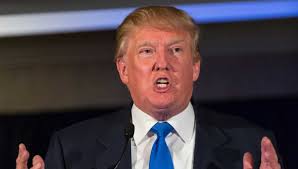
Donald Trump
Having laid out his thesis, Hanson writes: “Tragic heroes, as they have been portrayed from Sophocles’ plays (e.g., Ajax, Antigone, Oedipus Rex, Philoctetes) to the modern western film, are not intrinsically noble.”
On the contrary: A true tragic figure is a noble character with a fatal flaw, which ultimately destroys him.
To cite one from literature: Shakespeare’s Hamlet. Hamlet believes that his father, the king of Denmark, has been murdered. He believes the murderer may be his uncle, Claudius, who has seized the throne. Hamlet is brilliant, athletic, supremely eloquent and conscientious. But he’s not completely certain that Claudius is guilty, and in his hesitation to strike he lays the seeds for his own destruction.
To cite one from history: British General Charles George Gordon, sent by the British government in 1884 to evacuate the Sudanese city of Khartoum. But instead of evacuating its citizens, he choses to stay and fight the oncoming army of Mohammed Achmed, an Islamic religious fanatic who called himself The Madhi (“The Expected One”).
Although Gordon’s dynamic leadership enables the city to hold out for almost a year, the British relief force arrives too late. The city is overwhelmed and Gordon himself killed.
Various theories have emerged to explain his motive: He was a religious fanatic; he had a death wish; he was arrogant to believe he could hold off an entire army. Any one or more of these theories could be correct.
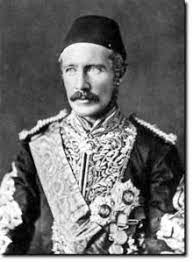
Charles George Gordon
But the fact remains that for almost an entire year he kept alive about 30,000 men, women and children. It was only the failure of the British to send a relief army in time that allowed the city—and Gordon—to perish.
Tragic heroes always have a cause that is bigger than life—something that makes giving up life worthwhile. They always recognize this, and they have the ability to put into perspective the ultimate sacrifice—giving up life—for the good of something bigger.
Which brings us back to Trump. Besides being a five-times draft-dodger during the Vietnam war, he has never made an act of professional or personal sacrifice for anyone.
On the contrary: he has been forced to shut down both his Trump Foundation and unaccredited Trump University.
Trump was forced to pay more than $2 million in court-ordered damages to eight different charities for illegally misusing charitable funds at the Foundation for political purposes.
And his university scammed its students, promising to teach them “the secrets of success” in the real estate industry—then delivering nothing. In 2016, a federal court approved a $25 million settlement with many of those students.
This is hardly the stuff of which tragic heroes are made.

Hanson cites several examples from famous Western movies to make his case that Trump deserves the status of a tragic hero.
One of these is the classic 1953 “Shane,” starring Alan Ladd as the soft-spoken gunfighter who intervenes decisively in a range war.
Writes Hanson:
“He alone possesses the violent skills necessary to free the homesteaders from the insidious threats of hired guns and murderous cattle barons. Yet by the time of his final resort to lethal violence, Shane has sacrificed all prior chances of reform and claims on reentering the civilized world of the stable ‘sodbuster’ community.”
Comparing Trump to Shane is unbelievably ludicrous. Shane doesn’t boast about his past—in fact, this remains a mystery throughout the movie. Trump constantly brags—about the money he’s made, the buildings he’s put up, the women he’s bedded, the enemies he’s crushed (or plans to).
Moreover, Shane takes the side of poor homesteaders at the mercy of a rich cattle baron, Rufus Ryker. Ryker tries to bully the homesteaders into leaving. When that fails, he hires a ruthless gunman named Jack Wilson (Jack Palance).
In the film’s climax, Shane kills Wilson, and then Ryker, in a barroom showdown. Then he rides off—much to the sadness of Joey (Brandon de Wilde), the homesteaders’ son he has befriended.
“There’s no living with a killing,” says Shane. “There’s no going back from one. Right or wrong, it’s a brand. And a brand sticks.”
And so he rides on, knowing that his gunfighter’s skills make him an outcast among those very homesteaders whose lives he’s saved.
If Trump appeared in the movie, it would be as Ryker, not Shane.
Shane empathizes with the plight of others. Ryker—like Trump—hires others to do his dirty work.
2016 PRESIDENTIAL ELECTION, ABC NEWS, AFFORDABLE CARE ACT, ALAN LADD, ALTERNET, AMERICABLOG, AP, BABY BOOMER RESISTANCE, BBC, BLOOMBERG NEWS, BORDER WALL, BRANDON DE WILDE, BUZZFEED, CALVERA (CHARACTER), CANADA, CAPITOL INSURRECTION, CBS NEWS, CHARLES GEORGE GORDON, CHRIS (CHARACTER), CHYE-CHING HUANG, CIA, CNN, COVID-19, CROOKS AND LIARS, DAILY KOZ, DONALD TRUMP, DONALD TRUMP: TRAGIC HERO (ARTICLE), ELECTORAL COLLEGE, ELI WALLACH, FBI, FEDERAL FISCAL POLICY, FEDERAL GOVERNMENT SHUTDOWN, FIVETHIRTYEIGHT, HAMLET, HARPER’S MAGAZINE, HOOVER INSTITUTION, HUFFINGTON POST, ISLAMIC STATE, JACK PALANCE, JAMES COMEY, JEFF SESSONS, JOHN FORD, JOHN WAYNE, JOSEPH BIDEN, KHARTOUM, KIM JONG ON, LEE MARVIN, MEDIA MATTERS, MOTHER JONES, MOVEON, MSNBC, NATIONAL SECURITY AGENCY, NBC NEWS, NEW REPUBLIC, NEWSDAY, NEWSWEEK, NORTH KOREA, NPR, PBS NEWSHOUR, POLITICO, POLITICUSUSA, RAW STORY, REUTERS, ROBERT S. MUELLER III, RUFUS RYKER (CHARACTER), RUSSIA, SALON, SEATTLE TIMES, SERGEY KISLYAK, SERGEY LAVROV, SHANE (MOVIE), SLATE, STEVE MCQUEEN, TALKING POINTS MEMO, TAX CUTS AND JOBS ACT OF 2017, THE ATLANTIC, THE CASE FOR TRUMP (BOOK), THE CHICAGO SUN-TIMES, THE CHICAGO TRIBUNE, THE DAILY BEAST, THE DAILY BLOG, THE GUARDIAN, THE HILL, THE HUFFINGTON POST, THE LOS ANGELES TIMES, THE MAGNIFICENT SEVEN (MOVIE), THE MAN WHO SHOT LIBERTY VALANCE (MOVIE), THE NATION, THE NEW REPUBLIC, THE NEW YORK TIMES, THE NEW YORKER, THE PRESS, THE VILLAGE VOICE, THE WASHINGTON POST, THINKPROGRESS, TIME, TRAGEDY, TRUMP FOUNDATION, TRUMP UNIVERSITY, TRUTHDIG, TRUTHOUT, TWO POLITICAL JUNKIES, U.S. NEWS & WORLD REPORT, UKRAINE, UPI, USA TODAY, VICTOR DAVIS HANSON, VLADIMIR PUTIN, VOLODYMYR ZELENSKY, WILLIAM SHAKESPEARE, WILSON (CHARACTER), WONKETTE, X, YUL BRYNNER
In Bureaucracy, Business, Entertainment, History, Law, Law Enforcement, Medical, Military, Politics, Social commentary on June 15, 2026 at 12:10 am
“America needs the outsider Trump to do what normal politicians would not and could not do.”
That was the assertion made by Victor Davis Hanson, a classicist and historian at the Hoover Institution, Stanford University, in Palo Alto, California.
Among his bestsellers on military history:
- The Second World Wars
- Carnage and Culture
- Wars of the Ancient Greeks
- The Western Way of War
- The Soul of Battle: How Three Great Liberators Vanquished Tyranny

Victor Davis Hanson
In 2019, Hanson turned his attention to politics—specifically, The Case for Trump.
Its dust-jacket provides a useful summary of its contents:
“This New York Times bestselling Trump biography from a major American intellectual explains how a renegade businessman became one of the most successful—and necessary—presidents of all time.
“In The Case for Trump, award-winning historian and political commentator Victor Davis Hanson explains how a celebrity businessman with no political or military experience triumphed over sixteen well-qualified Republican rivals, a Democrat with a quarter-billion-dollar war chest, and a hostile media and Washington establishment to become president of the United States — and an extremely successful president.
“Trump alone saw a political opportunity in defending the working people of America’s interior whom the coastal elite of both parties had come to scorn, Hanson argues. And Trump alone had the instincts and energy to pursue this opening to victory, dismantle a corrupt old order, and bring long-overdue policy changes at home and abroad.”
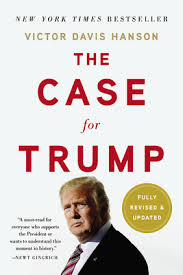
Hanson’s book appeared before Trump:
- Tried to coerce Ukrainian President Volodymyr Zelensky to smear former Vice President Joseph Biden, who was likely to be his Democratic opponent in the 2020 Presidential election.
- Allowed the deadly COVID-19 virus to ravage the country, killing more than 400,000 Americans by the time he left office.
- Attacked medical experts and governors who urged Americans to wear masks and socially distance to protect themselves from COVID-19.
- Ordered his Right-wing followers to defy states’ orders to citizens to stay-at-home and wear masks in public to halt surging COVID-19 rates.
- Became the first President in American history to refuse to accept the results of a Presidential election.
- Tried to overturn the November 3, 2020 election of Joe Biden through 60 lawsuits and the arm-twisting of several state lawmakers.
- Sent a mob of his fanatical followers to attack the United States Capitol Building. Their mission: Stop the counting of Electoral College ballots certain to give Biden the victory.
- Was twice impeached during his four years in office—the only President to be impeached twice (and acquitted by a Republican Senate which ignored his litany of crimes).
But his book appeared after Trump had:
- Fired FBI Director James Comey for pursuing ties between Trump’s 2016 Presidential campaign and Russian Intelligence agents.
- Tried to fire Independent Counsel Robert S. Mueller III, who was assigned to investigate those ties after Trump fired Comey.
- Attacked Attorney General Jeff Sessions for refusing to fire Mueller.
- Attacked the integrity of Federal judges whose rulings he disagreed with.
- Gave Russian Foreign Minister Sergey Lavrov and Russian Ambassador Sergey Kislyak highly classified CIA Intelligence about an Islamic State plot to turn laptops into concealable bombs.
- Amassed an infamous record as a serial liar, in both personal and Presidential matters.
- Attacked the integrity of the American Intelligence community.
- Sided with Russian dictator Vladimir Putin against the FBI, CIA and National Security Agency which unanimously agreed that Russia had subverted the 2016 Presidential election.
- Repeatedly attacked the nation’s free press for daring to report his growing list of crimes and disasters, calling it “the enemy of the American people.”
- Branded America’s longtime ally, Canada, as “a national security threat.”
- Praised brutal Communist dictators Putin and North Korea’s Kim Jong Un.
- Shut down the Federal Government for 35 days because Democrats refused to fund his ineffective “border wall” between the United States and Mexico.
- An estimated 380,000 government employees were furloughed and another 420,000 were ordered to work without pay. The shutdown ended due to public outrage—without Trump getting the funding amount he had demanded.
So much for Hanson’s claims that Trump had been “one of the most successful—and necessary—presidents of all time.”
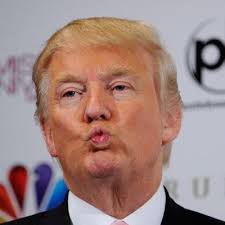
Donald Trump
Then there’s Hanson’s claim that “Trump alone saw a political opportunity in defending the working people of America’s interior whom the coastal elite of both parties had come to scorn.”
In November, 2017, Trump and a Republican-dominated House and Senate rammed the Tax Cuts and Jobs Act of 2017 through Congress. It became law on December 22, 2017.
According to Chye-Ching Huang, Director of Federal Fiscal Policy, the law did nothing to help ordinary Americans.
Testifying before the House Budget Committee on February 27, 2019, Huang stated that the law:
- Ignored the stagnation of working-class wages and worsened inequality;
- Weakened revenues when the nation needed to raise more;
- Encouraged rampant tax avoidance and gaming that will undermine the integrity of the tax code;
- Left behind low- and moderate-income Americans—and in many ways hurt them.
For American corporations, however, the law was a godsend:
- Cutting the corporate tax rate from 35 to 21 percent;
- Shifting toward a territorial tax system, where multinational corporations’ foreign profits go largely untaxed;
- Benefitting overwhelmingly wealthy shareholders and highly paid executives.
This was hardly an attempt at “defending the working people of America’s interior.”
Trump never made another attempt to “reform” the tax laws.
ABC NEWS, AL QAEDA, ALTERNET, AMERICABLOG, AMERICAN EXCEPTIONALISM, AP, BABY BOOMER RESISTANCE, BARACK OBAMA, BASHIR AL-ASSAD, BBC, BLOOMBERG NEWS, BUZZFEED, CBS NEWS, CHILE, CNN, CROOKS AND LIARS, DAILY KOZ, FACEBOOK, FIVETHIRTYEIGHT, HARPER’S MAGAZINE, HOUSE UN-AMERICAN ACTIVITIES COMMITTEE, HUFFINGTON POST, HUMAN RIGHTS, IRAN, JOHN BOEHNER, JOHN MCCAIN, MEDIA MATTERS, MOTHER JONES, MOVEON, MSNBC, NBC NEWS, NEW REPUBLIC, NEWSDAY, NEWSWEEK, NICARAGUA, NPR, PBS NEWSHOUR, POLITICO, POLITICUSUSA, RAW STORY, REUTERS, RUSSIA, S.I. HAYAKAWA, SALON, SEATTLE TIMES, SLATE, SYRIA, TALKING POINTS MEMO, THE ATLANTIC, THE CHICAGO SUN-TIMES, THE CHICAGO TRIBUNE, THE DAILY BEAST, THE DAILY BLOG, THE GUARDIAN, THE HILL, THE HUFFINGTON POST, THE LOS ANGELES TIMES, THE NATION, THE NEW REPUBLIC, THE NEW YORK TIMES, THE NEW YORKER, THE VILLAGE VOICE, THE WALL STREET JOURNAL, THE WASHINGTON POST, THINKPROGRESS, TIME, TRUTHDIG, TRUTHOUT, TWO POLITICAL JUNKIES, U.S. NEWS & WORLD REPORT, UPI, USA TODAY, VLADIMIR PUTIN, WONKETTE, X
In Bureaucracy, History, Military, Politics, Social commentary on June 9, 2026 at 12:05 am
On July 4, the United States will celebrate the 250th anniversary of its declaring independence from Great Britain. But a new poll finds that fewer Americans see their country as exceptional.
- According to the Associated Press NORC Center for Public Affairs Research, only about one-quarter of Americans say the U.S. stands above all other countries in the world.
- About four in 10, 44%, of adults under 30 say there are other countries better than the U.S., compared with 22% of adults 60 and older.
- About two-thirds of adults say a democratically elected government is highly important to America’s identity as a nation, down from 80% in 2021.
Which harkens back to a 2013 essay on “American Exceptionalism” from an unlikely source.
On September 11, 2013, the New York Times published an Op-Ed (guest editorial) from Russian President Vladimir Putin, entitled: “A Plea for Caution from Russia: What Putin Has to Say to Americans About Syria.”
No one should be surprised that Putin came out strongly against an American air strike on Syria.
Its “President” (i.e., dictator) Bashir al-Assad, was a close ally of Russia. Just as his late father and dictator, Hafez al-Assad, was a close ally of the Soviet Union until its collapse in 1991.
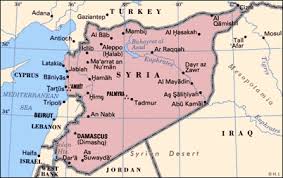
Putin, of course, is a former member of the KGB, the infamous secret police which ruled the Soviet Union from its birth in 1917 to its collapse in 1991.
He grew up under a Communist dictatorship and clearly wishes to return to that era, saying publicly: “First and foremost it is worth acknowledging that the demise of the Soviet Union was the greatest geopolitical catastrophe of the century.”
So it would have been unrealistic to expect him to view the “Syria crisis” the same way that President Barack Obama did.
In his September 11, 2013 guest editorial in the New York Times, Putin offered the expected Russian take on Syria:
- Poison gas was used in Syria.
- It wasn’t used by the Syrian Army.
- It was used by “opposition forces, to provoke intervention by their powerful foreign patrons.”
But it was the concluding paragraph that enraged American politicians the most—especially Right-wing ones. In it, Putin took exception with American “exceptionalism.”
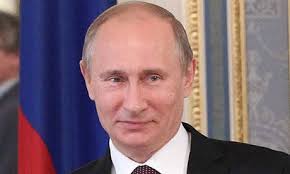
Vladimir Putin
This is the belief that the United States is unlike other nations in its innocence and steadfast dedication to human rights above all else.
Citizens of nations whose governments have been overthrown by the United States—such as Chile, Iran and Nicaragua—and replaced with brutal dictatorships would strongly disagree.
Referring to then-President Obama, Putin wrote:
“And I would rather disagree with a case he made on American exceptionalism, stating that the United States’ policy is ‘what makes America different. It’s what makes us exceptional.’
“It is extremely dangerous to encourage people to see themselves as exceptional, whatever the motivation.
“There are big countries and small countries, rich and poor, those with long democratic traditions and those still finding their way to democracy. Their policies differ, too.
“We are all different, but when we ask for the Lord’s blessings, we must not forget that God created us equal.”
Putin had never publicly shown any interest in religion. But by invoking “the Lord,” he was able to turn the Christian beliefs of his Western audience into a useful weapon.
“I was insulted,” then-House Speaker John Boehner (R-Ohio) told reporters when asked for his blunt reaction to the editorial.
“I have to be honest with you, I was at dinner, and I almost wanted to vomit,” said U.S. Senator Bob Menendez (D-New Jersey).
Putin had dared to question the self-righteousness of American foreign policy—and those who make it.
Making his case for war with Syria, Obama had said: “America is not the world’s policeman….
“But when, with modest effort and risk, we can stop children from being gassed to death, and thereby make our own children safer over the long run, I believe we should act.
“That’s what makes America different. That’s what makes us exceptional. With humility, but with resolve, let us never lose sight of that essential truth.”
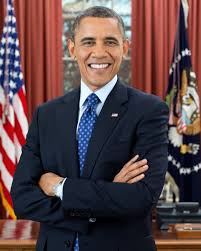
President Barack Obama
* * * * *
In short: Because we consider ourselves “exceptional,” we have the divine right to do whatever we want.
It’s not necessary to see Putin as a champion of democracy (he isn’t) to see the truth in this part of his editorial: “It is extremely dangerous to encourage people to see themselves as exceptional, whatever the motivation.”
From 1938 to 1969, the House Un-American Activities Committee sought to define what was “American” and what was “Un-American.” As if “American” stood for all things virtuous.
Whoever heard of an “Un-French Activities Committee”? Or an “Un-German” or “Un-British” one?
The late S.I. Hayakawa once made an observation that clearly applies to this situation.
Hayakawa was a professor of semantics (the study of meaning, focusing on the relation between words and what they stand for).
In his bestselling book, Language in Thought and Action, he observed that when a person hears a message, he has four ways of responding to it:
- Accept the speaker and his message.
- Accept the speaker but reject the message.
- Accept the message but reject the speaker.
- Reject the message and the speaker.
Americans might want to consider #3 in the recent case of Russian President Vladimir Putin.
ABC NEWS, ALTERNET, AMERICABLOG, ANTHONY FAUCI, AP, ARMY-MCCARTHY HEARINGS, BABY BOOMER RESISTANCE, BBC, BLOOMBERG, BLOOMBERG NEWS, BLUESKY, BUZZFEED, CBS NEWS, CNN, COVID-19, CROOKS AND LIARS, DAILY KOS, DONALD TRUMP, FIVETHIRTYEIGHT, GEORGE FLOYD RIOTS, HARPER’S MAGAZINE, HUFFINGTON POST, JEFFREY EPSTEIN, JEWS, JOSEPH MCCARTHY, JOSEPH N. WELCH, KEVIN CRAMER, MARCO RUBIO, MARJORIE TAYLOR GREENE, MARTIN GUGINO, MEDIA MATTERS, MITCH MCCONNELL, MOTHER JONES, MOVEON, MSNBC, NAZI GERMNY, NBC NEWS, NEW REPUBLIC, NEWSDAY, NEWSWEEK, NPR, PBS NEWSHOUR, POLITICO, POLITICUSUSA, RAW STORY, REUTERS, RICK SANTORUM, RON JOHNSON, SALON, SAMURAI, SEATTLE TIMES, SLATE, TALKING POINTS MEMO, TED CRUZ, THE ATLANTIC, THE CHICAGO SUN-TIMES, THE CHICAGO TRIBUNE, THE DAILY BEAST, THE DAILY BLOG, THE GUARDIAN, THE HILL, THE HUFFINGTON POST, THE INTERCEPT, THE LOS ANGELES TIMES, THE NATION, THE NEW REPUBLIC, THE NEW YORK TIMES, THE NEW YORKER, THE VILLAGE VOICE, THE WALL STREET JOURNAL, THE WASHINGTON POST, THINKPROGRESS, TIME, TRUTHDIG, TRUTHOUT, TWO POLITICAL JUNKIES, U.S. NEWS & WORLD REPORT, UKRAINE, UPI, USA TODAY, VLADIMIR PUTIN, X
In Bureaucracy, History, Politics, Social commentary on May 25, 2026 at 12:13 am
“Senator, may we not drop this?…You’ve done enough. Have you no sense of decency, sir? At long last, have you left no sense of decency?”
The speaker was Joseph N. Welch, chief counsel for the United States Army—then under investigation by Joseph McCarthy’s Senate Permanent Subcommittee on Investigations for alleged Communist activities.
It was June 9, 1954, the 30th day of the Army-McCarthy hearings.
And it was the pivotal moment that finally destroyed the career of the Wisconsin Senator whose repeated slanders of Communist subversion had bullied and frightened Americans for four years.
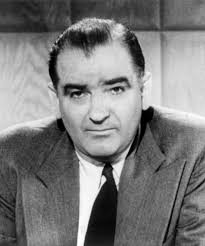
Joseph McCarthy
When the Senate gallery erupted in applause, McCarthy—totally surprised at his sudden reversal of fortune—was finished.
Today, however, other Americans should be asking themselves the question asked by Welch: “At long last, have you left no sense of decency?”
Americans like President Donald Trump:
On June 4, 2020, during nationwide protests over the police murder of black security guard George Floyd, a curfew was imposed on Buffalo, New York. As police swept through Niagara Square, 75-year-old Martin Gugino walked directly into their path as if attempting to speak with them.
Two officers pushed him and he fell backwards, hitting the back of his head on the pavement and losing consciousness. The line of officers walked past Gugino as he lay on the ground with blood pooling around his head.
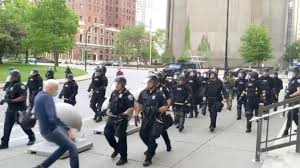
Martin Gugino falls backward
On June 9 Trump tweeted: “Buffalo protester shoved by Police could be an ANTIFA provocateur. 75 year old Martin Gugino was pushed away after appearing to scan police communications in order to black out the equipment. @OANN I watched, he fell harder than was pushed. Was aiming scanner. Could be a set up?”
Trump offered no evidence to back up his slander. And Republicans refused to condemn him for his latest outrage.
Americans like:
- Texas Senator Ted Cruz: “I don’t comment on the tweets.”
- Florida Senator Marco Rubio: “I didn’t see it. You’re telling me about it. I don’t read Twitter. I only write on it.”
- North Dakota Senator Kevin Cramer: “I’ll say this: I worry more about the country itself than I do about what President Trump tweets.”
- Wisconsin Senator Ron Johnson said he hadn’t seen the tweet—and didn’t want it read to him: “I would rather not hear it.”
- Senate Majority Leader Mitch McConnell (KY) refused to say whether Trump’s tweet was appropriate.

Donald Trump
Americans like Marjorie Taylor Greene:
Greene served as a member of the United States House of Representatives for Georgia’s 14th Congressional district from 2021 until her resignation in 2026. Among the highlights of her career:
- Attacking masking and social distancing—then the only safety measures against COVID-19—to the persecution of Jews in Nazi Germany.
- Attacking Anthony Fauci, director of the National Institute of Allergy and Infectious Disease, for daring to contradict Trump’s ignorance- and lie-riddled statements.
- Praising Russian dictator Vladimir Putin and his invasion of Ukraine, while claiming that Trump would save the United States from “radical socialism.”
She enraged Trump in 2025 by voting to release the Justice Department’s files on convicted sex trafficker Jeffrey Epstein. Trump, a longtime Epstein friend, had fought bitterly to keep them a secret. As a result, Trump threatened to back a primary challenger to her re-election in 2026.
On April 5, she tweeted on X: “Everyone in his administration that claims to be a Christian needs to fall on their knees and beg forgiveness from God and stop worshipping the President and intervene in Trump’s madness. Our President is not a Christian and his words and actions should not be supported by Christians.”
Clearly, the word “hypocrisy” meant nothing to McCarthy—and to his successors in the Republican party.
But it should mean something to the rest of us.
In samurai Japan, officials who publicly disgraced themselves knew what to do. The samurai code of Bushido told them when they had crossed the line into eternal damnation.
And it gave them a way to redeem their lost honor—seppuku. With a small “belly-cutting” knife and the help of a trusted assistant who sliced off their head to spare them the agonizing pain of disembowelment.
In the armies of America and Europe, the method was slightly different: A pistol in a private room.

Considering the ready availability of firearms among Right-wing Republicans, redeeming lost honor shouldn’t be a problem for any of these hypocrites.
But of course it will be. It takes more than a trigger pull to “do the right thing.”
It takes insight to recognize that you’ve “done the wrong thing.” And it takes courage to act on that insight.
In men and women who live only for their own egos and wallets, such insight and courage will be forever missing. They are beyond redemption.
Their lives give proof to the warning offered in Matthew 7:17-20:
“Even so every good tree bringeth forth good fruit; but a corrupt tree bringeth forth evil fruit. A good tree cannot bring forth evil fruit, neither can a corrupt tree bring forth good fruit.
“Every tree that bringeth not forth good fruit is hewn down, and cast into the fire. Wherefore by their fruits ye shall know them.”
ABC NEWS, ADOLF HITLER, ADVICE, ALTERNET, AMERICABLOG, AP, BABY BOOMER RESISTANCE, BAY OF PIGS, BBC, BENITO MUSSOLINI, BLOOMBERG NEWS, BUZZFEED, CAESARE BORGIA, CBS NEWS, CNN, CORPORATIONS, CROOKS AND LIARS, CUBA, DAILY KOS, DAILY KOZ, FIDEL CASTRO, FIVETHIRTYEIGHT, FLORENCE, HARPER’S MAGAZINE, HUFFINGTON POST, JOHN F. KENNEDY, JOSEPH STALIN, KING PERSEUS OF MACEDON, MEDIA MATTERS, MOTHER JONES, MOVEON, MSNBC, NAZI-SOVIET "NON-AGGRESSION PACT", NBC NEWS, NEW REPUBLIC, NEWSDAY, NEWSWEEK, NICCOLO MACHIAVELLI, NPR, PBS NEWSHOUR, POLITICO, POLITICS, POLITICUSUSA, POPE JULIUS 11, RAW STORY, REUTERS, SALON, SEATTLE TIMES, SLATE, TALKING POINTS MEMO, THE ATLANTIC, THE CHICAGO SUN-TIMES, THE CHICAGO TRIBUNE, THE DAILY BEAST, THE DAILY BLOG, THE DISCOURSES, THE GUARDIAN, THE HILL, THE HUFFINGTON POST, THE INTERCEPT, THE LOS ANGELES TIMES, THE NATION, THE NEW REPUBLIC, THE NEW YORK TIMES, THE NEW YORKER, THE PRINCE, THE SS, THE VILLAGE VOICE, THE WASHINGTON POST, THINKPROGRESS, THIRD REICH, TIME, TRUTHDIG, TRUTHOUT, TWITTER, U.S. NEWS & WORLD REPORT, UKRAINE, UPI, USA TODAY, VLADIMIR PUTIN, VOLODYMYR ZELENSKY, WEHRMACHT, WORLD WAR 11
In Bureaucracy, Business, History, Military, Politics, Social commentary on May 22, 2026 at 12:05 am
Ask the average person, “What do you think of Niccolo Machiavelli?” and he’s likely to say: “The devil.”
In fact, “The Old Nick” became an English term used to describe Satan and slander Machiavelli at the same time.

Niccolo Machiavelli
The truth, however, is more complex. Machiavelli was a passionate Republican, who spent most of his adult life in the service of his beloved city-state, Florence.
The years he spent as a diplomat were tumultuous ones for Italy—with men like Pope Julius II and Caesare Borgia vying for power and plunging Italy into one bloodbath after another.
Florence, for all its wealth, lacked a strong army, and thus lay at the mercy of powerful enemies, such as Borgia. Machiavelli often had to use his wits to keep them at bay.
Machiavelli is best-known for his writing of The Prince, a pamphlet on the arts of gaining and holding power. Its admirers have included Benito Mussolini and Joseph Stalin.
But his longer and more thoughtful work is The Discourses, in which he offers advice on how to maintain liberty within a republic. Among its admirers were many of the men who framed the Constitution of the United States.
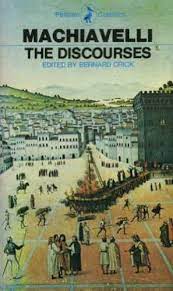


Most people believe that Machiavelli advocated evil for its own sake.
Not so. Rather, he recognized that sometimes there is no perfect—or perfectly good—solution to a problem.
Sometimes it’s necessary to take stern—even brutal—action to stop an evil (such as a riot) before it becomes widespread:
“A man who wishes to make a profession of goodness in everything must inevitably come to grief among so many who are not good. And therefore it is necessary for a prince, who wishes to maintain himself, to learn how not to be good, and to use this knowledge and not use it, according to the necessity of the case.”
His counsel remains as relevant today as it did during his lifetime (1469 – 1527). This is especially true for politicians—and students of political science.
But plenty of ordinary citizens can also benefit from the advice he has to offer—such as those in business who are asked to give advice to more powerful superiors.
Machiavelli warns there is danger in urging rulers to take a particular course of action: “For men only judge of matters by the result, all the blame of failure is charged upon him who first advised it, while in case of success he receives commendations. But the reward never equals the punishment.”
This puts would-be counselors in a difficult position: “If they do not advise what seems to them for the good of the republic or the prince, regardless of the consequences to themselves, then they fail to do their duty.
“And if they do advise it, then it is at the risk of their position and their lives, for all men are blind in thus, that they judge of good or evil counsels only by the results.”
Thus, Machiavelli warns that an adviser should “take things moderately, and not to undertake to advocate any enterprise with too much zeal, but to give one’s advice calmly and modestly.”
The person who asked for the advice may follow it, or not, as of his own choice, and not because he was led or forced into it by the adviser.
Above all, the adviser must avoid the danger of urging a course of action that runs “contrary to the wishes of the many.
“For the danger arises when your advice has caused the many to be contravened. In that case, when the result is unfortunate, they all concur in your destruction.”
Or, as President John F. Kennedy famously said after the disastrous invasion of Cuba at the Bay of Pigs in April, 1961: “Victory has a hundred fathers and defeat is an orphan.”
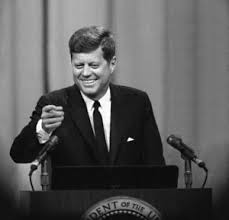
John F. Kennedy
By “not advocating any enterprise with too much zeal,” the adviser gains two advantages:
“The first is, you avoid all danger.
“And the second consists in the great credit which you will have if, after having modestly advised a certain course, your counsel is rejected, and the adoption of a different course results unfortunately.”
Finally, the time to give advice is before a catastrophe occurs, not after. Machiavelli gives a vivid example of what can happen if this rule is ignored.
King Perseus of Macedon had gone to war with Paulus Aemilius—and suffered a humiliating defeat. Fleeing the battlefield with a handful of his men, he later bewailed the disaster that had overtaken him.
Suddenly, one of his lieutenants began to lecture Perseus on the many errors he had committed, which had led to his ruin.
“Traitor,” raged the king, turning upon him, “you have waited until now to tell me all this, when there is no longer any time to remedy it—” And Perseus slew him with his own hands.
Niccolo Machiavelli sums up the lesson as this:
“Thus was this man punished for having been silent when he should have spoken, and for having spoken when he should have been silent.”
Be careful that you don’t make the same mistake.
2016 PRESIDENTIAL CAMPAIGN, ABC NEWS, AFGHANISTAN, ALTERNET, AMERICABLOG, AP, BABY BOOMER RESISTANCE, BARACK OBAMA, BLOOMBERG, BOB WOODWARD, BUZZFEED, CBS NEWS, CENTER FOR AMERICAN PROGRESS ACTION FUND, CIA, CLINTON WATTS, CNN, COVID-19, CRAIG UNGER, CROOKS AND LIARS, DAILY KOS, DAVID ROTHKOPF, DEPARTMENT OF HOMELAND SECURITY, DIRECTOR OF NATIONAL INTELLIGENCE, DONALD TRUMP, DONALD TRUMP JR., DRUDGE RETORT, ERIC TRUMP, FBI, FBI’S COUNTERTERRORISM DIVISION, FEAR: TRUMP IN THE WHITE HOUSE (BOOK), FIVETHIRTYEIGHT, FOX NEWS, G7, GEORGE PAPADOPOULOS, GREG MILLER, HARPER’S MAGAZINE, HILLARY CLINTON, HOUSE INTELLIGENCE COMMITTEE, HOUSE OF TRUMP HOUSE OF PUTIN (BOOK), HOWARD STERN, ISLAMIC STATE OF IRAQ AND SYRIA (ISIS), ISRAELI INTELLIGENCE, JAMES CARLOS BLAKE, JAMES COMEY, JARED KUSHNER, JEFF SESSIONS, JOE SCARBOROUGH, JOINT TERRORISM TASK FORCE, JOSEPH BIDEN, Kamala Harris, KAYLEIGH MCENANY, KIM JONG-UN, MAIN INTELLIGENCE DIRECTORATE, MALCOM W. NANCE, MEDIA MATTERS, MICHAEL FLYNN, MICHAEL ISIKOFF, MOSCOW PROJECT, MOTHER JONES, MOVEON, MSNBC, NATALIA VESELNITSKAYA, NATIONAL SECURITY AGENCY, NBC NEWS, NEWSWEEK, NPR, OFFICE OF THE DIRECTOR OF NATIONAL INTELLIGENCE, PAUL MANAFORT, PBS NEWSHOUR, PERIL (BOOK), POLITICO, POLITICUSUSA, PRESIDENT’S DAILY BRIEFING, PRINCETON UNIVERSITY, RAGE (BOOK), RAW STORY, REPUBLICAN PARTY, REPUBLICANS, REUTERS, REX TILLERSON, RICHARD M. NIXON, RINAT AKHMETSHIN, ROBERT S. MUELLER 111, ROD ROSENSTEIN, RUSSIA, RUSSIAN ROULETTE (BOOK), SALLY YATES, SALON, SEAL TEAM SIX, SEATTLE TIMES, SENATE INTELLIGENCE COMMITTEE, SERGEY KISLYAK, SERGEY LAVROV, SLATE, TALIBAN, TALKING POINTS MEMO, THE APPRENTICE (BOOK), THE ATLANTIC, THE CHICAGO SUN-TIMES, THE CHICAGO TRIBUNE, THE DAILY BEAST, THE DAILY BLOG, THE FRIENDS OFPANCHO VILLA (BOOK(), THE GUARDIAN, THE HILL, THE HUFFINGTON POST, THE LOS ANGELES TIMES, THE NATION, THE NEW REPUBLIC, THE NEW YORK TIMES, THE PLOT TO DESTROY DEMOCRACY (BOOK), THE VILLAGE VOICE, THE WASHINGTON POST, THINKPROGRESS, TIME, TREASON, TRUMP TOWER MEETING, TRUTHDIG, TRUTHOUT, TWO POLITICAL JUNKIES, U.S. NAVY SEALS, U.S. NEWS & WORLD REPORT, UNITED STATES DEPARTMENT OF JUSTICE, UNITED STATES DEPARTMENT OF STATE, UPI, USA TODAY, VANIT FAIR, VICTOR YANUKOVYCH, VLADIMIR PUTIN, WIKILEAKS, WILLIAM BARR, WONKETTE, X, XI JINPING
In Bureaucracy, History, Law, Law Enforcement, Military, Politics, Social commentary on May 15, 2026 at 12:08 am
The appointment of Robert S. Mueller as Special Counsel on May 17, 2017, aroused President Donald Trump’s greatest fears.
But in the end, Mueller did not dare force Trump to testify under oath. Nor did he issue a subpoena to compel Trump’s in-person testimony. The reason: To avoid a “protracted legal fight” that would have delayed the conclusion of the 22-month investigation.
Trump’s supporters claimed that he had been exonerated. In fact, the report did not exonerate him.
Yet even before the release of the long-awaited Mueller report, several deeply-researched and well-written books outlined Russia’s efforts to subvert the 2016 Presidential race. And they cast devastating light on Trump’s loyalty to the United States.
Among these:
- The Apprentice: Trump, Russia and the Subversion of Democracy, by Greg Miller
- House of Trump, House of Putin: The Untold Story of Donald Trump and the Russian Mafia, by Craig Unger
- Russian Roulette: The Inside Story of Putin’s War on America and the Election of Donald Trump, by Michael Isikoff
- The Plot to Destroy Democracy: How Putin and His Spies Are Undermining America and Dismantling the West, by Malcom W. Nance
According to its blurb on Amazon.com, The Apprentice is “based on interviews with hundreds of people in Trump’s inner circle, current and former government officials, individuals with close ties to the White House, members of the law enforcement and intelligence communities, foreign officials, and confidential documents.”
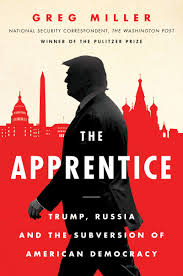
Among the subjects it covers:
- The Trump Tower meeting, where the Trump campaign sought “dirt” on Hillary Clinton from Russian Intelligence agents;
- The penetration by Russian Intelligence of computer systems used by Democrats;
- How Jared Kushner, Trump’s son-in-law, tried to set up a secret back channel to Moscow via Russian diplomatic facilities;
- Trump’s giving Russian officials highly classified secrets supplied by Israeli Intelligence;
- Trump’s clashes with the FBI and CIA.
Miller is a veteran investigative journalist and twice winner of the Pulitzer Prize. Among his stories: National security adviser Michael Flynn’s discussing ending U.S. sanctions on Russia with Russian officials prior to Trump’s inauguration. The story contributed to Flynn’s ouster.
House of Trump, House of Putin, whose jacket blurb describes Trump’s inauguration as “the culmination of Vladimir Putin’s long mission to undermine Western democracy, a mission that he and his hand-selected group of oligarchs and Mafia kingpins had ensnared Trump in, starting more than twenty years ago with the massive bailout of a string of sensational Trump hotel and casino failures in Atlantic City.

“…Craig Unger methodically traces the deep-rooted alliance between the highest echelons of American political operatives and the biggest players in the frightening underworld of the Russian Mafia. He traces Donald Trump’s sordid ascent from foundering real estate tycoon to leader of the free world….
“Without Trump, Russia would have lacked a key component in its attempts to return to imperial greatness. Without Russia, Trump would not be president.”
As an appendix to the book, Unger writes: “Donald Trump has repeatedly said he has nothing to do with Russia. Below are fifty-nine Trump connections to Russia.”
Russian Roulette, according to its dust jacket, “is a story of political skullduggery unprecedented in American history. It weaves together tales of international intrigue, cyber espionage, and superpower rivalry.
“After U.S.-Russia relations soured, as Vladimir Putin moved to reassert Russian strength on the global stage, Moscow trained its best hackers and trolls on U.S. political targets and exploited WikiLeaks to disseminate information that could affect the 2016 election.
“The Russians were wildly successful and the great break-in of 2016 was no ‘third-rate burglary.’ It was far more sophisticated and sinister—a brazen act of political espionage designed to interfere with American democracy. At the end of the day, Trump, the candidate who pursued business deals in Russia, won….
“This story of high-tech spying and multiple political feuds is told against the backdrop of Trump’s strange relationship with Putin and the curious ties between members of his inner circle—including Paul Manafort and Michael Flynn—and Russia.”
Malcom Nance, the author of The Plot to Destroy Democracy, is an Intelligence and foreign policy analyst and media commentator on terrorism, Intelligence, insurgency and torture.
In his book, he outlines how “Donald Trump was made President of the United States with the assistance of a foreign power.

“[It is] the dramatic story of how blackmail, espionage, assassination, and psychological warfare were used by Vladimir Putin and his spy agencies to steal the 2016 U.S. election—and attempted to bring about the fall of NATO, the European Union, and western democracy….
“Nance has utilized top secret Russian-sourced political and hybrid warfare strategy documents to demonstrate the master plan to undermine American institutions that has been in effect from the Cold War to the present day.
“Based on original research and countless interviews with espionage experts, Nance examines how Putin’s recent hacking accomplished a crucial first step for destabilizing the West for Russia, and why Putin is just the man to do it.”
These books—combined with the findings of the Mueller report—clearly establish the damning conclusion: The man who sat in the Oval Office from 2017 to 2021 and who sits in it now—was an illegitimate usurper, installed by an unholy alliance of American Fascists and Russian Communists.
2020 PRESIDENTIAL ELECTION, AFFORDABLE CARE ACT (ACA), ALEC BALDWIN, ALTERNET, AMERICABLOG, AMNESTY INTERNATIONAL, AP, ARTICLE 1, BABY BOOMER RESISTANCE, BANDY X. LEE, BBC, BILL CLINTON, BIRTHRIGHT CITIZENSHIP, BLOOMBERG, BLUESKY, BUREAU OF LABOR STATISTICS (BLS), BUZZFEED, CANADA, CBS NEWS, CHICAGO, CHRIS KREBS, CNN, CONSUMER PROTECTION FINANCIAL BUREAU, CROOKS AND LIARS, CYBERSECURITY AND INFRASTRUCTURE SECURITY AGENCY (CISA), DAILY KOS, DAVID BROOKS, DEMOCRATS, DEPARTMENT OF JUSTICE (DOJ), DIVERSITY EQUITY AND INCLUSION (DEI), DONALD TRUMP, ELON MUSK, FBI, FEDERAL AVIATION ADMINISTRATION (FAA), FIVETHIRTYEIGHT, FLETCHER KNEBEL, GAIUS CALIGULA, GAZA, GEOFF BENNETT, GEORGE STEPHANOPOULOS, GORE VIDAL, GREENLAND, GULF OF AMERICA, GULF OF MEXICO, HARD UNIVERSITY, HARPER’S MAGAZINE, HARVARD MEDICAL SCHOOL, HUFFINGTON POST, illegal immigration, IMMIGRATION AND CUSTOMS ENFORCEMENT (ICE), INSPECTORS GENERAL, IRAN WAR, JANUARY 6 COUP ATTEMPT, JEFFREY EPSTEIN, JOHN ADAMS, JOHN D. GARTNER, JOHN F. KENNEDY CENTER FOR THE PERFORMING ARTS, JOHNS HOPKINS UNIVERSITY MEDICAL SCHOOL, JONATHAN CAPEHART, JOSEPH BIDEN, KEVIN SPACEY, LANCE DODES, LOS ANGELES, MARK MEADOWS, MEDAL OF HONOR WINNERS, MEDIA MATTERS, MEDICAID, MEDICARE, MICHAEL JACKSON, MICK JAGGER, MINNEAPOLIS, MOTHER JONES, MOVEON, MS NOW, MSNBC, NARCISSISM, NBC NEWS, NEWSDAY, NEWSWEEK, NIGHT AT CAMP DAVID (BOOK), NORTH ATLANTIC TREATY ORGANIZATION (NATO), NPR, Oil, PARIS CLIMATE AGREEMENT, PBS NEWSHOUR, POLITICO, POLITICUSUSA, PRINCE ANDREW, QATAR, RAW STORY, REPUBLICANS, REUTERS, RICHARD BRANSON, ROMAN EMPERORS, ROMAN EMPIRE, RUDY GIULIANI, SALLUST, SALON, SEATTLE TIMES, SLATE, ST. PAUL, STRAIT OF HORMUZ, SUPPLEMENTAL NUTRITION ASSISTANCE PROGRAM (SNAP), TACITUS, TALKING POINTS MEMO, THE ATLANTIC, THE CHICAGO SUN-TIMES, THE CHICAGO TRIBUNE, THE DAILY BEAST, THE DAILY BLOG, THE DANGEROUS CASE OF DONALD TRUMP (BOOK), THE GUARDIAN, THE HILL, THE HUFFINGTON POST, THE INTERCEPT, THE LOS ANGELES TIMES, THE NATION, THE NEW REPUBLIC, THE NEW YORK TIMES, THE NEW YORKER, THE PENTAGON, THE TWELVE CAESARS (ESSAY), THE VILLAGE VOICE, THE WASHINGTON POST, THINKPROGRESS, TIME, TRUTHDIG, TRUTHOUT, TWO POLITICAL JUNKIES, U.S. NEWS & WORLD REPORT, UNITED STATES CONSTITUTION, UPI, USA TODAY, VLADIMIR PUTIN, WAR CRIMES, WASHINGTON D.C., WOODY ALLEN, WORLD HEALTH ORGANIZATION, X, YALE SCHOOL OF MEDICINE
In Bureaucracy, History, Law, Law Enforcement, Military, Politics, Social commentary, Uncategorized on May 14, 2026 at 12:05 am
Among the outrages President Donald Trump has committed since returning to power on January 20:
- Launched an unprovoked attack on Iran on February 28, believing that in six weeks he could force its Islamic rulers to abandon their plans to develop nuclear weapons.
- When Iran closed the Strait of Hormuz—through which about 20%-25% of the world’s oil flows—Trump threatened: “A whole civilization will die tonight, never to be brought back again. I don’t want that to happen, but it probably will.”
- He backed off—at least temporarily—only after legal experts and organizations such as Amnesty International warned that attacking civilian infrastructure would constitute war crimes under international law.
Trump’s vindictiveness, his narcissism, his compulsive aggression, his complaints that his “enemies” in government and the press are trying to destroy him, have caused many to ask: Could the President of the United States be suffering from mental illness?
One who has dared to answer this question is John D. Gartner, a practicing psychotherapist.

John D. Gartner
Gartner graduated magna cum laude from Princeton University, received his Ph.D in clinical psychology from the University of Massachusetts, and served as a part-time assistant professor of psychiatry at Johns Hopkins University Medical School for 28 years.
During an interview by U.S. News & World Report (published on January 27, 2017), Gartner said: “Donald Trump is dangerously mentally ill and temperamentally incapable of being president.”
Gartner said that Trump suffers from “malignant narcissism,” whose symptoms include:
- anti-social behavior
- sadism
- aggressiveness
- paranoia
- grandiosity.
“We’ve seen enough public behavior by Donald Trump now that we can make this diagnosis indisputably,” says Gartner, who admits he has not personally examined Trump.
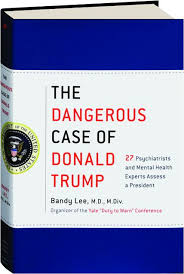
Another psychiatrist who’s determined that Trump is “mentally compromised” is Bandy X. Lee, an assistant clinical psychiatry professor at the Yale School of Medicine.
And she offered her reasons for doing so as the editor of The Dangerous Case of Donald Trump: 27 Psychiatrists and Mental Health Experts Assess a President.
“It doesn’t take a psychiatrist to notice that our president is mentally compromised,” she and colleague Judith Lewis Herman asserted in the book’s prologue.
According to Dr. Craig Malkin, a Lecturer in Psychology for Harvard Medical School and a licensed psychologist, Trump is a pathological narcissist:
“Pathological narcissism begins,” Malkin writes, “when people become so addicted to feeling special that, just like with any drug, they’ll do anything to get their ‘high,’ including lie, steal, cheat, betray and even hurt those closest to them.
“When they can’t let go of their need to be admired or recognized, they have to bend or invent a reality in which they remain special despite all messages to the contrary. In point of fact, they become dangerously psychotic. It’s just not always obvious until it’s too late.”
Lance Dodes, a retired psychiatry professor at Harvard Medical School, believes that Trump is a sociopath:
“The failure of normal empathy is central to sociopathy, which is marked by an absence of guilt, intentional manipulation and controlling or even sadistically harming others for personal power or gratification.”
* * * * * * * * * *
Americans have long believed that they—and especially their leaders—are an “exceptional” people. As a result, they consider themselves immune from the threats of corruption and dictatorship that have plagued other nations.
Millions of Americans—including many Trump supporters—have been shaken by the revelations of the Epstein Files, which chronicle the sexual depravities of convicted pedophile Jeffrey Epstein. Even more disturbing has been the knowledge that he and Donald Trump maintained a friendship for 15 to 17 years.
The Files so far released are replete with names of celebrities such as Michael Jackson, Mick Jagger, Kevin Spacey, Alec Baldwin, Woody Allen, George Stephanopoulos, Elon Musk, Richard Branson, former President Bill Clinton and Prince Andrew.
This has added to the shock and revulsion felt by millions of Americans. Yet they might have been less shocked had they read Gore Vidal’s 1959 essay, “The Twelve Caesars.”

Gore Vidal
Mark Coggins from San Francisco, CC BY 2.0 <https://creativecommons.org/licenses/by/2.0>, via Wikimedia Commons
Vidal’s essay is an ode to The Twelve Caesars, a classic work of ancient biography by Gaius Suetonius Tranquillus—known as Suetonius.
Suetonius, a Roman citizen and historian, chronicled the lives of the first twelve Caesars of imperial Rome: Julius Caesar, Augustus, Tiberius, Caligula, Claudius, Nero, Galba, Otho, Vitellius, Vespasian, Titus and Domitian.
Vidal sought to show the relevance of Suetonius’ work to present-day America: “It would be wrong, however, to dismiss, as so many commentators have, the wide variety of Caesarean sensuality as simply the viciousness of twelve abnormal men. They were, after all, a fairly representative lot.
“They differed from us – and their contemporaries – only in the fact of power, which made it possible for each to act out his most recondite sexual fantasies. This is the psychological fascination of Suetonius. What will men so placed do? The answer, apparently, is anything and everything.”
Thus the lesson taught by the celebrities—including Trump—who glommed onto Jeffrey Epstein: They differed from ordinary citizens only in the power they held over themselves—and others. And, reveling in that power, they felt free to indulge the most depraved fantasies, sexual and otherwise.


ABC NEWS, ALAMO, ALTERNET, AMERICABLOG, ANDREW JACKSON, ANTONIO LOPEZ DE SANTA ANNA, AP, BABY BOOMER RESISTANCE, BBC, BLOOMBERG NEWS, BLUESKY, BUZZFEED, CBS NEWS, CHARLES VII, CNN, CROOKS AND LIARS, DAILY KOS, DEPARTMENT OF HOMELAND SECURITY, DONALD TRUMP, FIVETHIRTYEIGHT, FRANCE, GAVIN NEWSOM, HARPER’S MAGAZINE, HUFFINGTON POST, IMMIGRATION AND CUSTOMS ENFORCEMENT (ICE), JOAN OF ARC, KAREN BASS, LONE STAR: A HISTORY OF TEXAS AND THE TEXANS (BOOK), MEDIA MATTERS, MOTHER JONES, MOVEON, MSNBC, NATIONAL GUARD, NBC NEWS, NEWSDAY, NEWSWEEK, NPR, PBS NEWSHOUR, POLITICO, POLITICUSUSA, RAW STORY, REUTERS, RUSSIA, SALON, SAM HOUSTON, SEATTLE TIMES, SLATE, T.R. FEHRENBACH, TALKING POINTS MEMO, TEXAS, THE ATLANTIC, THE CHICAGO SUN-TIMES, THE CHICAGO TRIBUNE, THE DAILY BEAST, THE DAILY BLOG, THE GUARDIAN, THE HILL, THE HUFFINGTON POST, THE INTERCEPT, THE LOS ANGELES TIMES, THE NATION, THE NEW REPUBLIC, THE NEW YORK TIMES, THE NEW YORKER, THE VILLAGE VOICE, THE WASHINGTON POST, THINKPROGRESS, TIME, TOM HOMAN, TRUTHDIG, TRUTHOUT, TWO POLITICAL JUNKIES, U.S. NEWS & WORLD REPORT, UKRAINE, UPI, USA TODAY, VLADIMIR PUTIN, VOLODYMYR ZELENSKY, WILLIAM BARRET TRAVIS, WONKETTE, X
A CHURCHILL FOR CALIFORNIA–AND AMERICA: PART TWO (OF FOUR)
In Bureaucracy, History, Law, Law Enforcement, Military, Politics, Social commentary on June 23, 2026 at 12:10 amHistory is filled with examples of men—and women—who in moments of crisis rose to challenge a deadly enemy.
Among these have been:
Volofmyr Zelensky (January 25, 1978 – ) is a former attorney, actor and comedian who, as the sixth president of Ukraine, now leads his country in a life-or-death struggle against the aggressive Russia of Vladimir Putin.
In 2021, his administration came under mounting pressure from Russia. On February 24, 2022, Putin ordered a full-scale invasion of Ukraine.
During the assault by Russian troops on the capital of Kiev, the Biden administration urged Zelensky to evacuate to a safer location and offered to help him do so. Zelensky refused, saying: “The fight is here [in Kiev]; I need ammunition, not a ride.”
As CBS correspondent Scott Pelley put it: “The moment Zelensky told his people he refused to flee, they refused to fall.”
Russia expected Kiev to fall in three days. But more than four years after the invasion, Kiev still remains defiant—and in the hands of Ukrainians.
When Zelensky wasn’t broadcasting defiance at Russia and rousing Ukrainians to heroism, he was often visiting the battlefront. Zelensky sees Ukraine’s struggle as the opening round of Russia’s war against the West:
“Some are….saying, ‘We can’t defend Ukraine because there could be a nuclear war.’ I think that today, no one in this world can predict what Russia will do.
“If they invade further into our territory, then they will definitely move closer and closer to Europe. They will only become stronger and less predictable.”
Millions of Americans—such as those who took part in nationwide “No Kings” protests on June 14, 2025—feel the same way about Donald Trump and his own dictatorial regime.
Which leads to:
Gavin Christopher Newsom (October 10, 1967) has been the 40th governor of California since 2019. During the COVID-19 pandemic in 2020, he imposed strict lockdown measures, thus saving countless lives by preventing a far greater spread of the virus.
Gavin Newsom
In doing so, he aroused the wrath of then-President Donald J. Trump, who promoted false “cures” such as drinking bleach and shining UV light up people’s rectums. Trump’s goal: “Keep America open” so he could take credit for a robust economy—and win re-election—no matter how many people died.
And Newsom has continued to challenge a re-elected Trump’s lies and illegal actions:
On June 15, 2026, Newsom accused Trump of launching a politically motivated investigation into him and his wife: “They have not found a crime—they are simply trying to find one.
“He’s coming after me because I’m considering running for president, because he hates that I’ve consistently called him out over and over again for his lies and deceit.”
He added that federal agents had in recent days knocked on the doors of his friends and former employees, asking for records.
The Justice Department declined to comment.
On June 6, 2025, protests erupted in Los Angeles against Immigration and Customs Enforcement (ICE). The demonstrations were triggered by ICE raids at multiple locations in the city to arrest suspected illegal aliens.
The first raid occurred within the Los Angeles Fashion District; two other raids occurred at a clothing wholesaler and a Home Depot in upscale Westlake.
Word of these arrests quickly spread, and so did demonstrations, with the Department of Homeland Security (DHS) stating that 44 people were arrested for suspected immigration violations and one person was arrested for obstruction.
David Huerta, the California president of the Service Employees International Union, was arrested for blocking a vehicle and charged with felony conspiracy to impede an officer.
The epicenter of the protests became the Los Angeles Metropolitan Detention Center at 535 N Alameda Street. About 200 protesters remained at the facility by 7 p.m., when the Los Angeles Police Department (LAPD) declared the protest to be an unlawful assembly and ordered protesters to disperse
Some protesters hurled chunks of broken concrete toward officers; the LAPD responded with tear gas, pepper spray and flash-bang grenades to disperse the crowd. At 8:24 p.m. a citywide tactical alert was announced.
On June 7, the protests continued. About 1,000 people surrounded a local branch building used by Homeland Security.
Newsom deployed California Highway Patrol units to protect Los Angeles freeways.
By June 7, 118 illegal aliens had been arrested in Los Angeles, according to the DHS.
Share this:
Like this: