Posts Tagged ‘UKRAINE’
2016 PRESIDENTIAL ELECTION, 2020 PRESIDENTIAL ELECTION, 2024 PRESIDENTIAL ELECTION, ABC NEWS, ABUSE OF POWER, ADOLF HITLER, AILEEN CANNON, AIR TRAFFIC CONTROLLERS, ALTERNET, AMERICABLOG, AP, ARTIFICIAL INTELLIGENCE, ASSASSINATION, AXIOS, BABY BOOMER RESISTANCE, BBC, BIRD FLU, BLACKS, BLOOMBERG, BLUESKY, BUZZFEED, CANADA, CBS NEWS, CHINA, CLASSIFIED DOCUMENTS, CLIMATE CHANGE, CNN, COVID-19, CROOKS AND LIARS, DAILY KOS, DANIEL CASSINO, DEMOCRACY, DEMOCRATIC PARTY, DEMOCRATS, DENMARK, DIVERSITY EQUITY AND INCLUSION (DEI) PROGRAMS, DONALD TRUMP, ELECTORAL COLLEGE, FBI, FEDERAL AVIATION ADMINISTRATION (FAA), FEDERAL EMERGENCY MANAGEMENT AGENCY, FEDERAL GOVERNMENT SHUTDOWN, FIVETHIRTYEIGHT, FUEL PRICES, GALLUP POLL, GAZA, GLOBAL CONFLICT, GREENLAND, GROCERY PRICES, HARPER’S MAGAZINE, HILLARY CLINTON, HISPANICS, HUFFINGTON POST, HUNTER BIDEN, illegal immigration, IMMIGRATION AND CUSTOMS ENVORCEMENT (ICE), IMPEACHMENT, INFLATION, INSPECTORS GENERAL, INTERNATIONAL BROTHERHOOD OF TEAMSTERS, IRAN, ISRAEL, JACK SMITH, JAMAL KHASHOOGI, JAMES COMEY, JANUARY 6 COUP ATTEMPT, JARED KUSHNER, JIMMY HOFFA, JOHN ADAMS, JOHN F. KENNEDY CENTER FOR THE PERFORMING ARTS, JOSEPH BIDEN, JOSEPH STALIN, Kamala Harris, KEVIN MCCARTHY, KIM JONG-UN, LATINOS, LETITIA JAMES, LOW INFORMATION VOTERS, MAR-A-LAGO, MARJORIE TAYLOR GREENE, MASCULINITY, MEDIA MATTERS, MERRICK GARLAND, MINNEAPOLIS MINNESOTA, MOHAMMED BIN SALMAN, MOTHER JONES, MOVEON, MSNBC, MUSLIMS, NATO, NAVAJO COLDE TALKERS, NBC NEWS, NEW REPUBLIC, NEWSDAY, NEWSWEEK, NORTH KORREA, NPR, OBSTRUCTION OF CONGRESS, PARDONS, PBS NEWSHOUR, POLITICO, POLITICUSUSA, RAW STORY, REPUBLICAN PARTY, REPUBLICANS, REUTERS, ROBERT F. KENNEDY, RUSSIA, SALON, SEATTLE TIMES, SLATE, ST. PAUL MINNESOTA, STRAIT OF HORMUZ, SUPERMAN, SUPPLEMENTAL NUTRITION ASSISTANCE PROGRAM (SNAP), TALKING POINTS MEMO, TERRORISM, THE ATLANTIC, THE CHICAGO SUN-TIMES, THE CHICAGO TRIBUNE, THE DAILY BEAST, THE DAILY BLOG, THE GUARDIAN, THE HILL, THE HUFFINGTON POST, THE INTERCEPT, THE LOS ANGELES TIMES, THE NATION, THE NEW REPUBLIC, THE NEW YORK TIMES, THE NEW YORKER, THE VILLAGE VOICE, THE WASHINGTON POST, THINKPROGRESS, THOMAS MATTHEW CROOKS, TIME, TRANSPORTATION COSTS, TRUTHDIG, TRUTHOUT, TUSKEGEE AIRMEN, TWO POLITICAL JUNKIES, U.S. BORDER PATROL, U.S. NEWS & WORLD REPORT, UKRAINE, UNITED STATES DEPARTMENT OF DEFENSE (DOD), UNITED STATES DEPARTMENT OF JUSTICE, UNITED STATES HOUSE OF REPRESENTATIVES, UNITED STATES SECRET SERVICE, UNITED STATES SENATE, UPI, USA TODAY, VLADIMIR PUTIN, VOLODMYR ZELENSKY, VOX, X, XI JINPING
In Bureaucracy, History, Law, Law Enforcement, Politics, Social commentary on October 9, 2026 at 12:10 am
There were numerous instances where intervention by Federal legislators or law enforcement authorities could have utterly changed the outcome of the 2024 Presidential election.
Case #12: Democrats expected to receive support from their traditional allies—such as blacks and Hispanics. But that didn’t happen.
Despite Donald Trump’s overt racism, blacks deserted Vice President Kamala Harris in droves. About three in 10 back men under age 45 went for Trump, roughly double the share he got in 2020.
A clear majority of young black voters described the economy as “not so good” or “poor,” compared with about half of older black voters.
Despite Trump’s demands for “mass deportations,” numerous Hispanics, when interviewed, said they didn’t feel threatened. They felt certain that Trump would deport “only the bad people.”
Young Latinos, particularly young Latino men, were more supportive to Trump than in 2020. Roughly half of young Latino men voted for Harris, compared with about six in 10 who went for Trump.
Majorities of black and Latino voters said the economy was in bad shape. They wanted a bigger paycheck. And they were willing to re-elect a man who despised them in hopes of getting it.
Case #13: Muslims—especially those living in Dearborn, Michigan—played a losing blackmail game with the Biden administration
On October 7, 2023, under the cover of thousands of rockets fired from Gaza, Hamas terrorists slaughtered an estimated 1,139 men, women and children in Israeli streets, houses, kibbutz communities and at a rave music festival.
About 250 others were kidnapped and taken into Gaza.
Israel responded by declaring a state of war—pounding Gaza with bombs, missiles. tanks and soldiers.

Palestinians celebrating the attack on Israel
Terrorism-sympathizing Islamics—especially in Michigan—demanded that the Biden administration stop sending military equipment to Israel—and force Israelis to stop their military campaign to free the hostages. They threatened: “If you don’t do what we want, we won’t vote for Kamala Harris.”
Biden and Harris rejected their demands—and Islamics voted for Trump or didn’t vote at all.
The result: Harris lost—and was replaced with a Right-wing administration so pro-Israel that it made the Biden one seem pro-Palestinian by comparison.
Case 14: Ignorance of and/or contempt for history.
“Low information voters” is a euphemism for people dangerously ignorant of and indifferent to the issues affecting their lives.
After World War II ended in 1945, the United States proved a force for worldwide stability. Its “nuclear umbrella” prevented a Russian takeover of Europe and a Chinese takeover of Asia.
But voters ignored Trump’s “bromance” with Communist dictators Vladimir Putin (Russia), Xi Jinping (China) and Kim Jong-Un (North Korea). They also ignored his proven disdain for the leaders of democratic nations—such as Canada and Great Britain.
As a result, Canada and Mexico, America’s biggest trading partners, are now treated—by Trump—as enemies. Meanwhile, he cozies up to Putin against Ukraine’s legally-elected President, Vododmyr Zelensky.
* * * * *
Countless historians have tried to answer the question: “Was the rise of Adolf Hitler—and the catastrophe he unleashed—inevitable?”
Future historians will ask the same question about Donald Trump—and the almost certain disaster of a second Trump Presidency.
Competent historians will conclude that no one factor was responsible, but a combination of otherwise unrelated ones. Among these:
- Republicans: Who feared that Trump’s Fascistic supporters would deprive them of political office if they didn’t abase themselves to a lifelong criminal and would-be dictator.
- Republican judges: Who bent and/or broke the law to enable Trump to escape justice.
- Justice Department prosecutors: Whose awe of the Presidency allowed Trump to slander and threaten federal prosecutors and judges.
- Attorney General Merrick Garland: Whose cowardice prevented him from appointing Jack Smith Special Counsel until November 18, 2022—giving Trump time to delay justice and again win the Presidency.

- Democrats: Whose cowardice toward Trump encouraged Republicans to ever more extreme measures.
- Blacks: Voted for a racist in hopes of a bigger paycheck.
- Muslims: Refused to vote for Kamala Harris because Biden wouldn’t stop Israel’s military campaign to free Hamas-captured hostages.
- Hispanics: Like the Jews in Hitler’s Germany, who couldn’t believe that Trump would carry out his threats to imprison and/or deport them.
- The Biden administration: Which refused to stem the tide of illegal aliens invading America—and thus enraged millions of law-abiding Americans into supporting Trump.
- Toxic masculinity voters: Whose misogynistic attitudes toward women led them to reject a former local and state prosecutor for a 34-times convicted felon.
- American voters: Whose hatred of Hispanic illegal aliens and inflationary grocery prices led them to ignore overwhelming evidence of Trump’s intent to overturn the democratic process and make himself absolute dictator.
In short: Those opposed to Trump’s evil were too divided and shortsighted to combine against a common danger.
As John Adams, second President of the United States, observed:
Remember, democracy never lasts long. It soon wastes, exhausts and murders itself. There never was a democracy yet that did not commit suicide. It is in vain to say that democracy is less vain, less proud, less selfish, less ambitious, or less avaricious than aristocracy or monarchy. It is not true, and nowhere appears in history. Those passions are the same in all men, under all forms of simple government, and when unchecked, produce the same effects of fraud, violence and cruelty.
2016 PRESIDENTIAL ELECTION, 2020 PRESIDENTIAL ELECTION, 2024 PRESIDENTIAL ELECTION, ABC NEWS, ABUSE OF POWER, ADOLF HITLER, AILEEN CANNON, AIR TRAFFIC CONTROLLERS, ALTERNET, AMERICABLOG, AP, ARTIFICIAL INTELLIGENCE, ASSASSINATION, AXIOS, BABY BOOMER RESISTANCE, BBC, BIRD FLU, BLACKS, BLOOMBERG, BLUESKY, BUZZFEED, CANADA, CBS NEWS, CHINA, CLASSIFIED DOCUMENTS, CLIMATE CHANGE, CNN, COVID-19, CROOKS AND LIARS, DAILY KOS, DANIEL CASSINO, DEMOCRACY, DEMOCRATIC PARTY, DEMOCRATS, DENMARK, DIVERSITY EQUITY AND INCLUSION (DEI) PROGRAMS, DONALD TRUMP, ELECTORAL COLLEGE, FBI, FEDERAL AVIATION ADMINISTRATION (FAA), FEDERAL EMERGENCY MANAGEMENT AGENCY, FEDERAL GOVERNMENT SHUTDOWN, FIVETHIRTYEIGHT, FUEL PRICES, GALLUP POLL, GAZA, GLOBAL CONFLICT, GREENLAND, GROCERY PRICES, HARPER’S MAGAZINE, HILLARY CLINTON, HISPANICS, HUFFINGTON POST, HUNTER BIDEN, illegal immigration, IMMIGRATION AND CUSTOMS ENVORCEMENT (ICE), IMPEACHMENT, INFLATION, INSPECTORS GENERAL, INTERNATIONAL BROTHERHOOD OF TEAMSTERS, IRAN, ISRAEL, JACK SMITH, JAMAL KHASHOOGI, JAMES COMEY, JANUARY 6 COUP ATTEMPT, JARED KUSHNER, JIMMY HOFFA, JOHN ADAMS, JOHN F. KENNEDY CENTER FOR THE PERFORMING ARTS, JOSEPH BIDEN, JOSEPH STALIN, Kamala Harris, KEVIN MCCARTHY, KIM JONG-UN, LATINOS, LETITIA JAMES, LOW INFORMATION VOTERS, MAR-A-LAGO, MARJORIE TAYLOR GREENE, MASCULINITY, MEDIA MATTERS, MERRICK GARLAND, MINNEAPOLIS MINNESOTA, MOHAMMED BIN SALMAN, MOTHER JONES, MOVEON, MSNBC, MUSLIMS, NATO, NAVAJO COLDE TALKERS, NBC NEWS, NEW REPUBLIC, NEWSDAY, NEWSWEEK, NORTH KORREA, NPR, OBSTRUCTION OF CONGRESS, PARDONS, PBS NEWSHOUR, POLITICO, POLITICUSUSA, RAW STORY, REPUBLICAN PARTY, REPUBLICANS, REUTERS, ROBERT F. KENNEDY, RUSSIA, SALON, SEATTLE TIMES, SLATE, ST. PAUL MINNESOTA, STRAIT OF HORMUZ, SUPERMAN, SUPPLEMENTAL NUTRITION ASSISTANCE PROGRAM (SNAP), TALKING POINTS MEMO, TERRORISM, THE ATLANTIC, THE CHICAGO SUN-TIMES, THE CHICAGO TRIBUNE, THE DAILY BEAST, THE DAILY BLOG, THE GUARDIAN, THE HILL, THE HUFFINGTON POST, THE INTERCEPT, THE LOS ANGELES TIMES, THE NATION, THE NEW REPUBLIC, THE NEW YORK TIMES, THE NEW YORKER, THE VILLAGE VOICE, THE WASHINGTON POST, THINKPROGRESS, THOMAS MATTHEW CROOKS, TIME, TRANSPORTATION COSTS, TRUTHDIG, TRUTHOUT, TUSKEGEE AIRMEN, TWO POLITICAL JUNKIES, U.S. BORDER PATROL, U.S. NEWS & WORLD REPORT, UKRAINE, UNITED STATES DEPARTMENT OF DEFENSE (DOD), UNITED STATES DEPARTMENT OF JUSTICE, UNITED STATES HOUSE OF REPRESENTATIVES, UNITED STATES SECRET SERVICE, UNITED STATES SENATE, UPI, USA TODAY, VLADIMIR PUTIN, VOLODMYR ZELENSKY, VOX, X, XI JINPING
In Bureaucracy, History, Law, Law Enforcement, Medical, Social commentary on October 8, 2026 at 12:56 am
There were numerous instances where intervention by Federal legislators or law enforcement authorities could have utterly changed the outcome of the 2024 Presidential election.
Case #9: Americans had become increasingly worried and angry about surging numbers of illegal aliens pouring into the country. But the Biden administration refused—until its closing months—to dramatically address this issue.
A Vox story, dated July 12, 2024, warned: “According to Gallup, 2024 is the first time since 2005 that most of the public have wanted less immigration, and this year marks the largest share of Americans feeling resistant to immigration since 58 percent said so in 2001….”

Illegal aliens climbing over the border fence in Brownsville, Texas
Six months later, on January 17, 2025, another Vox story offered: “What Democrats must learn from Biden’s disastrous immigration record.”
It opened: “One of the main reasons Vice President Kamala Harris lost the election is the Biden administration’s record on immigration and the border — polls show it ranks up close with inflation among the top issues that drove swing voters to Trump….
“During Biden’s first three years in office, the number of arriving migrants skyrocketed, leading to a backlash as even blue states and cities complained they were overwhelmed. The peak came in December 2023, a month when officials reported about 250,000 encounters with migrants at the border, a record.”
Then, starting early in 2024, and continuing throughout the year, border arrivals plummeted—by more than 80%.
The reasons:
- The Biden administration got the Mexican government to launch an extensive crackdown on migrants passing through its territory to the United States.
- Biden decreed that new unauthorized migrants would be ineligible for asylum if too many people were coming to the border. Essentially, this meant shutting down the asylum process.
Unfortunately for Harris, the downturn in illegal immigration came too late.
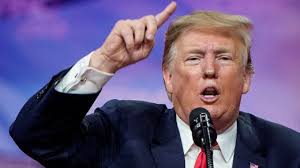
Donald Trump
In times of economic uncertainty, hostility rises toward immigrants—especially those who are alien to a host country’s language and culture. This has proven true in Europe as well as the United States.
Case #10: Americans blamed President Biden for inflationary price increases—especially for groceries such as eggs.
According to a December 20, 2024 article—“Why are groceries so expensive? What you need to know”—by the Center for Science in the Public Interest:
“Since January 2019, food prices have risen nearly 30 percent in the US, leaving many households struggling to afford groceries.”
Among the issues responsible for this:
- COVID-19: Caused worldwide disruptions in supply chains.
- Transportation costs and fuel prices: Fuel costs are directly tied to how much retailers charge for groceries and other goods.
- Animal diseases, weather events, crop failures: When bird flu (H5N1) first struck the U.S. in 2022, eggs were priced at around $2 per dozen. They peaked at $4.82/dozen in January 2023, and in December 2024—following the infection of over 123 million chickens—prices fell to about $4.15/dozen.
- Global conflict: In February, 2022, Russia invaded Ukraine, which exports wheat, corn and agricultural fertilizer, among other products. Russia has tried to strangle Ukraine’s exports by attacking the nation’s agricultural centers.
No President—including Biden and Trump—can control such events. Unfortunately, every Presidential candidate virtually promises to be Superman. And voters repeatedly fall victim to this absurdity.

So when elected Presidents fail to perform miracles, those voters turn on them—and turn them out of office.
Case #11: Americans don’t want a woman President.
American voters proved that in 2016 when former Secretary of State Hillary Clinton ran for President—and lost to Trump in the Electoral College by a count of 227 to 304.
And Hillary had an advantage that Vice President Kamala Harris lacked: Hillary was white.
England has elected a female Prime Minister: Margaret Thatcher. And Mexico—notorious for the machismo of its men—has elected a woman President: Claudia Sheinbaum Pardo. But in the United States, electing a woman chief executive is unthinkable to most American men.
According to Daniel Cassino, Professor of Government and Politics at Fairleigh Dickinson University, men who support Trump hold to a traditionally masculine identity.
“So, among that group, Trump is up over Harris by about 35 points. Huge gap, Among other men, the half of men who don’t put themselves at the extremes of masculinity, Harris is up by 20. In fact, Harris is also up by 20 among most groups of women. So, really the gap is not between men and women, it’s between this one group of traditional masculine men and everybody else.”
Machismo played a major role in Trump’s popularity among Hispanics. Roughly six in 10 men described Trump as a strong leader, compared with 43% who said that in 2020. About half of Hispanic women said Trump was a strong leader, up from 37%.
Case #12: Democrats expected to receive support from their traditional allies—such as blacks and Hispanics. But that didn’t happen.
During the eight-year tenure of America’s first black President, Donald Trump attacked Barack Obama as a foreign-born citizen who was thus ineligible for that office. He also had a history of supporting—and being supported by—racist white groups like the Proud Boys and the Oath Keepers.
Nevertheless, blacks deserted Vice President Kamala Harris in droves. About three in 10 back men under age 45 went for Trump, roughly double the share he got in 2020.
2016 PRESIDENTIAL ELECTION, 2020 PRESIDENTIAL ELECTION, 2024 PRESIDENTIAL ELECTION, ABC NEWS, ABUSE OF POWER, ADOLF HITLER, AILEEN CANNON, AIR TRAFFIC CONTROLLERS, ALTERNET, AMERICABLOG, AP, ARTIFICIAL INTELLIGENCE, ASSASSINATION, AXIOS, BABY BOOMER RESISTANCE, BBC, BIRD FLU, BLACKS, BLOOMBERG, BLUESKY, BUZZFEED, CANADA, CBS NEWS, CHINA, CLASSIFIED DOCUMENTS, CLIMATE CHANGE, CNN, COVID-19, CROOKS AND LIARS, DAILY KOS, DANIEL CASSINO, DEMOCRACY, DEMOCRATIC PARTY, DEMOCRATS, DENMARK, DIVERSITY EQUITY AND INCLUSION (DEI) PROGRAMS, DONALD TRUMP, ELECTORAL COLLEGE, FBI, FEDERAL AVIATION ADMINISTRATION (FAA), FEDERAL EMERGENCY MANAGEMENT AGENCY, FEDERAL GOVERNMENT SHUTDOWN, FIVETHIRTYEIGHT, FUEL PRICES, GALLUP POLL, GAZA, GLOBAL CONFLICT, GREENLAND, GROCERY PRICES, HARPER’S MAGAZINE, HILLARY CLINTON, HISPANICS, HUFFINGTON POST, HUNTER BIDEN, illegal immigration, IMMIGRATION AND CUSTOMS ENVORCEMENT (ICE), IMPEACHMENT, INFLATION, INSPECTORS GENERAL, INTERNATIONAL BROTHERHOOD OF TEAMSTERS, IRAN, ISRAEL, JACK SMITH, JAMAL KHASHOOGI, JAMES COMEY, JANUARY 6 COUP ATTEMPT, JARED KUSHNER, JIMMY HOFFA, JOHN ADAMS, JOHN F. KENNEDY CENTER FOR THE PERFORMING ARTS, JOSEPH BIDEN, JOSEPH STALIN, Kamala Harris, KEVIN MCCARTHY, KIM JONG-UN, LATINOS, LETITIA JAMES, LOW INFORMATION VOTERS, MAR-A-LAGO, MARJORIE TAYLOR GREENE, MASCULINITY, MEDIA MATTERS, MEIN KAMPF, MERRICK GARLAND, MINNEAPOLIS MINNESOTA, MOHAMMED BIN SALMAN, MOTHER JONES, MOVEON, MSNBC, MUSLIMS, NATO, NAVAJO COLDE TALKERS, NAZIS, NBC NEWS, NEW REPUBLIC, NEWSDAY, NEWSWEEK, NORTH KORREA, NPR, OBSTRUCTION OF CONGRESS, PARDONS, PBS NEWSHOUR, POLITICO, POLITICUSUSA, RAW STORY, REPUBLICAN PARTY, REPUBLICANS, REUTERS, ROBERT F. KENNEDY, RUSSIA, SALON, SEATTLE TIMES, SLATE, ST. PAUL MINNESOTA, STRAIT OF HORMUZ, SUPERMAN, SUPPLEMENTAL NUTRITION ASSISTANCE PROGRAM (SNAP), TALKING POINTS MEMO, TERRORISM, THE ATLANTIC, THE CHICAGO SUN-TIMES, THE CHICAGO TRIBUNE, THE DAILY BEAST, THE DAILY BLOG, THE GUARDIAN, THE HILL, THE HUFFINGTON POST, THE INTERCEPT, THE LOS ANGELES TIMES, THE NATION, THE NEW REPUBLIC, THE NEW YORK TIMES, THE NEW YORKER, THE VILLAGE VOICE, THE WASHINGTON POST, THINKPROGRESS, THOMAS MATTHEW CROOKS, TIME, TRANSPORTATION COSTS, TRUTHDIG, TRUTHOUT, TUSKEGEE AIRMEN, TWO POLITICAL JUNKIES, U.S. BORDER PATROL, U.S. NEWS & WORLD REPORT, UKRAINE, UNITED STATES DEPARTMENT OF DEFENSE (DOD), UNITED STATES DEPARTMENT OF JUSTICE, UNITED STATES HOUSE OF REPRESENTATIVES, UNITED STATES SECRET SERVICE, UNITED STATES SENATE, UPI, USA TODAY, VLADIMIR PUTIN, VOLODMYR ZELENSKY, VOX, X, XI JINPING
In Bureaucracy, History, Law, Law Enforcement, Medical, Politics, Social commentary on October 7, 2026 at 12:11 am
There were numerous instances where intervention by Federal legislators or law enforcement authorities could have utterly changed the outcome of the 2024 Presidential election.
Case #5: Even after Donald Trump left office, the Justice Department treated him with a deference not shown any other criminal defendant.
He was allowed, for example, to hurl insults and threats at Special Counsel Jack Smith and even Smith’s family.
One such post, published on Trump’s website, Truth Social, went: “Deranged Jack Smith, who is a sick puppet for A.G. Garland & Crooked Joe Biden, should be DEFUNDED & put out to rest. Republicans must get tough or the Dems will steal another Election. MAGA!”
By “A.G. Garland” Trump meant Attorney General Merrick Garland. By “put out to rest,” he meant that his followers should assassinate Smith.
Not even Mafia bosses like Charles “Lucky” Luciano and Albert “The Executioner” Anastasia dared issue such a threat.
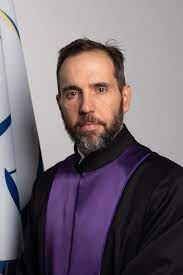
Jack Smith
By contrast: Jimmy Hoffa was president of the International Brotherhood of Teamsters. But that didn’t prevent Robert F. Kennedy’s Justice Department from indicting him for jury tampering—and convicting him on March 4, 1964. He was sentenced to eight years in prison and a $10,000 fine.
No one in the Kennedy Justice Department said: “He’s the elected president of the Teamsters Union—so we can’t touch him.” Yet that is precisely how the Biden Justice Department repeatedly acted—simply because, in 2016, he won a Presidential election.
Case #6: Throughout his struggles to stay out of prison, Trump was aided by the unrelenting support of the Republican party.
Republicans loudly and repeatedly claimed that Donald Trump was the legitimate winner of the 2020 Presidential election—despite overwhelming evidence that he wasn’t.
They also claimed that, by appointing Special Counsel Jack Smith to investigate Trump, the Democrats had weaponized Federal law enforcement.
They also fully supported Trump’s demand for the release of those who attacked the Capitol Building on January 6, 2021.

For example: Rep. Marjorie Taylor Greene (R-GA) has depicted these coup supporters as persecuted martyrs.
On March 24, 2022, members of the Republicans’ House Oversight Committee toured a Washington, D.C. jail where some of these defendants were held.
“Their due process rights are being violated. And they have been mistreated and treated as political prisoners,” Greene told reporters after the tour.
Adolf Hitler similarly portrayed as martyrs the Nazis who tried to violently overthrow the government of Bavaria on November 9, 1923.
A March 2, 2020 Washington Monthly story concluded ominously: “U.S. democracy wasn’t set up to deal with a president openly behaving like a James Bond villain while being protected by a political party behaving more like a mafia than a civic institution.”
Case #7: While Congressional Republicans relentlessly investigated President Joe Biden and his family, Democrats refused to similarly investigate Trump’s family.
The United States House Oversight Committee opened its investigation into the Biden family on January 11, 2023. The investigation included the foreign business activities of Biden’s son, Hunter, and brother, James.
By November 2023, the investigation had not found any evidence of wrongdoing by President Biden.
Democrats, by contrast, never probed why Jared Kushner, Donald Trump’s son-in-law and former White House adviser, received $2 billion from Saudi Arabia’s Crown Prince Mohammed bin Salman. The money came to Kushner’s private equity firm after Kushner left the White House in 2021.

Jared Kushner
Salman has been implicated by U.S. Intelligence reports in the 2018 torture and dismemberment of Washington Post columnist Jamal Khashoggi. When asked if he believed the reports, Kushner said: “Are we really still doing this?”
Democrats also refused to investigate the Trump administration’s illegally seizing vitally-needed medical supplies in at least seven states during the COVID-19 pandemic.
The Federal Emergency Management Agency (FEMA) did not publicly report the thefts, despite the outlay of millions of dollars of taxpayer money. Nor did the administration explain how it decided which supplies to seize and where to reroute them.
The Federal Government did not inform states whose supplies it seized if they would receive the materials they ordered and paid for.
Case #8: On July 13, 2024, Trump was allegedly wounded in his right ear by a gunman while speaking at an open-air Presidential campaign rally near Butler, Pennsylvania.
The would-be assassin, Thomas Matthew Crooks, fired eight rounds from an AR-15 style rifle from the roof of a nearby building. Trump dived for cover behind his lectern, as the shooter killed one audience member and critically injured two others.
Crooks was shot and killed seconds later by the Secret Service’s Counter Sniper Team.
Had Trump not slightly turned his head at the moment Crooks fired, Republicans would have been forced to choose another nominee.
In addition, Trump would not have been alive to win the 2024 Presidential election and openly threaten to imprison the Justice Department prosecutors who sought to hold him accountable for his litany of crimes.
The assassination attempt calls to mind that by Colonel Claus Schenk von Stauffenberg on July 20, 1944, to kill Adolf Hitler with a briefcase bomb. Had he succeeded, the war in Europe would no doubt have ended far earlier, with countless lives being saved.
2016 PRESIDENTIAL ELECTION, 2020 PRESIDENTIAL ELECTION, 2024 PRESIDENTIAL ELECTION, ABC NEWS, ABUSE OF POWER, ADOLF HITLER, AILEEN CANNON, AIR TRAFFIC CONTROLLERS, ALTERNET, AMERICABLOG, AP, ARTIFICIAL INTELLIGENCE, ASSASSINATION, AXIOS, BABY BOOMER RESISTANCE, BBC, BIRD FLU, BLACKS, BLOOMBERG, BLUESKY, BUZZFEED, CANADA, CBS NEWS, CHINA, CLASSIFIED DOCUMENTS, CLIMATE CHANGE, CNN, COVID-19, CROOKS AND LIARS, DAILY KOS, DANIEL CASSINO, DEMOCRACY, DEMOCRATIC PARTY, DEMOCRATS, DENMARK, DIVERSITY EQUITY AND INCLUSION (DEI) PROGRAMS, DONALD TRUMP, ELECTORAL COLLEGE, FBI, FEDERAL AVIATION ADMINISTRATION (FAA), FEDERAL EMERGENCY MANAGEMENT AGENCY, FEDERAL GOVERNMENT SHUTDOWN, FIVETHIRTYEIGHT, FUEL PRICES, GALLUP POLL, GAZA, GLOBAL CONFLICT, GREENLAND, GROCERY PRICES, HARPER’S MAGAZINE, HILLARY CLINTON, HISPANICS, HUFFINGTON POST, HUNTER BIDEN, illegal immigration, IMMIGRATION AND CUSTOMS ENVORCEMENT (ICE), IMPEACHMENT, INFLATION, INSPECTORS GENERAL, INTERNATIONAL BROTHERHOOD OF TEAMSTERS, IRAN, ISRAEL, JACK SMITH, JAMAL KHASHOOGI, JAMES COMEY, JANUARY 6 COUP ATTEMPT, JARED KUSHNER, JIMMY HOFFA, JOHN ADAMS, JOHN F. KENNEDY CENTER FOR THE PERFORMING ARTS, JOSEPH BIDEN, JOSEPH STALIN, Kamala Harris, KEVIN MCCARTHY, KIM JONG-UN, LATINOS, LETITIA JAMES, LOW INFORMATION VOTERS, MAR-A-LAGO, MARJORIE TAYLOR GREENE, MASCULINITY, MEDIA MATTERS, MERRICK GARLAND, MINNEAPOLIS MINNESOTA, MOHAMMED BIN SALMAN, MOTHER JONES, MOVEON, MSNBC, MUSLIMS, NATO, NAVAJO COLDE TALKERS, NBC NEWS, NEW REPUBLIC, NEWSDAY, NEWSWEEK, NORTH KORREA, NPR, OBSTRUCTION OF CONGRESS, PARDONS, PBS NEWSHOUR, POLITICO, POLITICUSUSA, RAW STORY, REPUBLICAN PARTY, REPUBLICANS, REUTERS, ROBERT F. KENNEDY, RUSSIA, SALON, SEATTLE TIMES, SLATE, ST. PAUL MINNESOTA, STRAIT OF HORMUZ, SUPERMAN, SUPPLEMENTAL NUTRITION ASSISTANCE PROGRAM (SNAP), TALKING POINTS MEMO, TERRORISM, THE ATLANTIC, THE CHICAGO SUN-TIMES, THE CHICAGO TRIBUNE, THE DAILY BEAST, THE DAILY BLOG, THE GUARDIAN, THE HILL, THE HUFFINGTON POST, THE INTERCEPT, THE LOS ANGELES TIMES, THE NATION, THE NEW REPUBLIC, THE NEW YORK TIMES, THE NEW YORKER, THE VILLAGE VOICE, THE WASHINGTON POST, THINKPROGRESS, THOMAS MATTHEW CROOKS, TIME, TRANSPORTATION COSTS, TRUTHDIG, TRUTHOUT, TUSKEGEE AIRMEN, TWO POLITICAL JUNKIES, U.S. BORDER PATROL, U.S. NEWS & WORLD REPORT, UKRAINE, UNITED STATES DEPARTMENT OF DEFENSE (DOD), UNITED STATES DEPARTMENT OF JUSTICE, UNITED STATES HOUSE OF REPRESENTATIVES, UNITED STATES SECRET SERVICE, UNITED STATES SENATE, UPI, USA TODAY, VLADIMIR PUTIN, VOLODMYR ZELENSKY, VOX, X, XI JINPING
In Bureaucracy, History, Law, Law Enforcement, Military, Politics, Social commentary on October 6, 2026 at 12:05 am
On January 20, 2025, for the second time, Donald J. Trump took the oath of office as the 47th President of the United States.
Since then, he has aggressively committed a series of outrages against the country he claims to love, including:
- Granting clemency to more than 1,500 people convicted of offenses related to the January 6, 2021 United States Capitol attack.
- Flooding Minneapolis and St. Paul, Minnesota, with 3,000 Immigration and Customs Enforcement (ICE) agents who terrorized (and in two cases murdered) both American citizens and illegal aliens
- Signing executive orders reversing climate change initiatives and eliminating DEI programs.
- Revoking an executive order on Artificial Intelligence safety signed by former President Joseph Biden, to establish safeguards for the rapidly advancing AI technology.
- Threatening Greenland—an autonomous territory within the Kingdom of Denmark—with invasion unless it agreed to acquisition by the United States. Since Denmark is a member of NATO, such an invasion would pit the United States against its own alliance.

Greenland
- Purging about a half-dozen executive assistant directors at the FBI. These were some of the bureau’s top managers overseeing criminal, national security and cyber investigations. Their “crime”: Investigating Trump’s inciting the January 6, 2021 coup attempt and illegally holding highly sensitive national security documents after leaving office.
- Repeatedly threatening to make Canada—a United States ally for over 200 years—America’s “51st state” by military or economic force.
- Firing the board members at the John F. Kennedy Center for the Performing Arts and appointing himself as chairman—just as Joseph Stalin made himself arbiter of what was permissible for artists in the Soviet Union.
- Ordering the Justice Department to indict his critics such as New York Attorney General Letitia James and former FBI Director James Comey.
- Launching an unprovoked attack on Iran on February 28, he believes that in six weeks he can force its Islamic rulers to abandon their plans to develop nuclear weapons. Expecting victory in six weeks, after eight months he finds himself stymied by Iran’s closing the Strait of Hormuz.

Strait of Hormuz
- Shutting down the Federal Government on October 1, when Democrats refused to agree to his gutting Medicaid, Medicare and the Affordable Care Act (ACA), causing 10-15 million Americans to lose health insurance coverage.
- Shutting off the Supplemental Nutrition Assistance Program (SNAP) for the poor to pressure Democrats to support his gutting of healthcare programs.
There were numerous instances where intervention by Federal legislators or law enforcement authorities could have utterly changed the outcome of the 2024 election—and prevented these outrages.
Case #1: On December 18, 2019, the Democratic-controlled House of Representatives adopted two articles of impeachment against Trump: abuse of power and obstruction of Congress. On February 5, 2020, the Republican-dominated Senate voted to acquit Trump on both articles of impeachment.
Their motive: Fear that if they didn’t, they would be “primaried” by even more extreme, Trump-supported Right-wing candidates—and lose their positions and the accompanying power and perks.
Had Republicans agreed to convict him, he could not have run again for President.
Case #2: On January 13, 2021, Trump was impeached for the second time for “incitement of insurrection”—inciting the January 6, 2021 attack on the United States Capitol.
The reason: To stop the counting of Electoral College votes, which he knew would prove that former Vice President Joseph Biden had won the 2020 Presidential election.
The evidence against him was overwhelming—including video of his inciting a mob of his followers to storm the Capitol Building.
But Republican Senators again acquitted Trump on February 13, 2021—choosing ambition over patriotism.
Had they done so, he could not have again been a candidate for President.
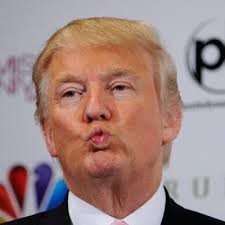
Donald Trump
Case #3: Only on November 18, 2022—a year and a half after becoming Attorney General—did Merrick Garland appoint Jack Smith Independent Counsel to investigate Donald Trump’s role for:
- Inciting the January 6 attack on Congress; and
- Illegally seizing and storing highly classified government documents at his Mar-a-Lago estate in Palm Beach Florida.
This gave Trump time to play his “deny and delay” game. Had he been prosecuted and convicted before the November 5 Presidential election, the results might well have been different.
Even hardcore supporters might have proved unwilling to vote for someone found guilty of inciting a riot or stealing highly classified documents.
Case #4: In June, 2023, Trump was indicted for illegally seizing and storing hundreds of highly classified government documents at his Mar-a-Lago estate.
Aileen Cannon, a Trump appointee as Federal Judge of the United States District Court for the Southern District of Florida, presided over the case.
She repeatedly ruled in his favor and finally dismissed the case in July, 2024. claiming that Special Counsel Jack Smith’s appointment was unconstitutional.

Aileen Cannon
Southern District of Florida, CC BY-SA 4.0 <https://creativecommons.org/licenses/by-sa/4.0>, via Wikimedia Commons
Many legal experts, citing her handling of the civil case against Trump, called for her recusal from the case. Jack Smith could have requested her removal from the case but did not ask a Federal appeals court to do so.
MSNBC analyst Barbara McQuade told Newsweek that Smith likely refused to do so to “return public trust” to the Justice Department, which had been challenged in recent years.
Cannon’s kid-gloves treatment of Trump echoed that of the Right-wing judge who presided over Adolf Hitler’s trial in 1923 for trying to overthrow the government of Bavaria.
2020 PRESIDENTIAL ELECTION, ABC NEWS, ABRAHAM LINCOLN, ADAM SCHIFF, ALEXANDER VINDMAN, ALTERNET, AMERICABLOG, AP, BABY BOOMER RESISTANCE, BLOOMBERG, BUZZFEED, CBS NEWS, CNN, CROOKS AND LIARS, DAILY KOZ, DAVID BROOKS, DEMOCRATS, DONALD TRUMP, DRUDGE RETORT, FACEBOOK, FIVETHIRTYEIGHT, FOX NEWS NETWORK, GERRYMANDERING, HARPER’S MAGAZINE, HOUSE INTELLIGENCE COMMITTEE, HOWARD BAKER, HUNTER BIDEN, JOE BIDEN, JOEL MATHIS, LYNDON JOHNSON, MARIA YOVANOVICH, MARK SHIELDS, MEDIA MATTERS, MEDICAID, MICK MULVANEY, MOTHER JONES, MOVEON, MSNBC, NATIONAL SECURITY COUNCIL, NBC NEWS, NEWSWEEK, NPR, PBS NEWSHOUR, POLITICO, POLITICUSUSA, RAW STORY, REPUBLICANS, REUTERS, RICHARD NIXON, RUDI GIULIANI, RUSSIA, SALON, SEATTLE TIMES, SLATE, TALKING POINTS MEMO, THE ATLANTIC, THE CHICAGO SUN-TIMES, THE CHICAGO TRIBUNE, THE DAILY BEAST, THE DAILY BLOG, THE GUARDIAN, THE HILL, THE HUFFINGTON POST, THE LOS ANGELES TIMES, THE NATION, THE NEW REPUBLIC, THE NEW YORK TIMES, THE VILLAGE VOICE, THE WASHINGTON POST, THINKPROGRESS, TIME, TRUTHDIG, TRUTHOUT, TWO POLITICAL JUNKIES, U.S. NEWS & WORLD REPORT, UKRAINE, UPI, USA TODAY, VOLODYMYR ZELENSKY, VOTER ID LAWS, WATERGATE, WONKETTE, X
In Bureaucracy, History, Law, Law Enforcement, Military, Politics, Social commentary on October 5, 2026 at 12:10 am
On November 14, 2019, the CNN website showcased an opinion piece by Jane Carr and Laura Juncadella entitled: “Fractured States of America.”
And it opened:
“Some worry that it’s already too late, that we’ve crossed a threshold of polarization from which there is no return. Others look toward a future where more moderate voices are heeded and heard, and Americans can find better ways to relate to each other. Still others look back to history for a guide—perhaps for what not to do, or at the very least for proof that while it’s been bad before, progress is still possible.”

A series of sub-headlines summed up many of the comments reported.
- “I was starting to hate people that I have loved for years.”
- “Voting for Trump cost me my friends.”
- “I feel like I’m living in hostile territory.”
- “Our children are watching this bloodsport.”
- “A student’s Nazi-style salute reflects the mate.”
- “Our leaders reflect the worst of us.”
- “I truly believe I will be assaulted over a bumper sticker.”
- “It already feels like a cold war.”
It’s natural to regret that the United States has become so self-destructively polarized. And to wish that its citizens could somehow reach across the chasm that divides them and find common cause with one another.
But that is to ignore the brutal truth that America now faces a choice:
- To submit to the tyrannical aggression of a ruthless political party convinced that they are entitled to power to manipulate and undermine the country’s democratic processes; or
- To fiercely resist that aggression and the destruction of those democratic processes.

In a November 14, 2019 column, “Republicans Can’t Abandon Trump Now Because They’re All Guilty,” freelance journalist Joel Mathis warned: “Trump’s abuses of power mirror those of the GOP as a whole. Republicans can’t turn on him, because doing so would be to indict their party’s entire approach to politics.”
For example:
- At the state level, GOP legislatures have passed numerous voter ID laws over the last decade. Officially, the reason has been to prevent non-citizens from voting. In reality, the motive is to depress turnout among Democratic constituencies.
- When Democrats have won elections, Republicans have tried to block them from carrying out their policies. In Utah, voters approved Medicaid expansion at the ballot box—but Republicans nullified this.
- In North Carolina, Republican legislators prevented voters from choosing their representatives. Instead, Republican representatives chose voters through partisan sorting. In August, 2018, the state’s Supreme Court ruled the legislative gerrymandered district map unconstitutional.
The upshot of all this: “The president and his party are united in the belief that their entitlement to power allows them to manipulate and undermine the country’s democratic processes….”

At the time of the January 6, 2021 coup attempt, even Republicans admitted Donald Trump’s responsibility for it.
House Minority Leader Kevin McCarthy frantically phoned Trump, insisting that the rioters—who were breaking into his office through the windows—were the President’s supporters. He begged Trump to call them off.
“Well, Kevin, I guess these people are more upset about the election than you are,” Trump said.
But on January 28, 2021, “My Kevin” groveled before Trump at his Mar-a-Lago estate in Palm Beach, Florida, while they discussed how to win a House majority in the 2022 midterm elections.

Kevin McCarthy
And Senate Majority Leader Mitch McConnell said on January 12: “The mob was fed lies. They were provoked by the president and other powerful people.”
But when the Senate met to try Trump for inciting an insurrection, McConnell voted to acquit him—and successfully urged his fellow Republicans to do the same.
* * * * *
The United States has indeed become a polarized country. But it’s not the polarization between Republicans and Democrats, or between conservatives and liberals.
It’s the polarization between
- Those intent on enslaving everyone who doesn’t subscribe to their Fascistic beliefs and agenda—and those who resist being enslaved.
- Those who believe in reason and science—and those who believe in an infallible “strong man” who rejects both.
- Those who cherish education—and those who celebrate ignorance.
- Those who believe in the rule of law—and those who believe in their right to act as a law unto themselves.
- Those who believe in treating others (especially the less fortunate) with decency—and those who believe in the triumph of intimidation and force.
Those who hoped that Republicans would choose patriotism over partisanship got their answer on February 5, 2020. That was when the Republican-dominated Senate—ignoring the overwhelming evidence against him—acquitted Donald Trump on impeachment articles: Obstruction of Congress and Abuse of Power.
And they got their answer again on February 13, 2021, when Senate Republicans voted to acquit him of Incitement of Insurrection.
It’s natural to regret that the United States has become a sharply divided nation. But those who lament this should realize there is only one choice:
Either non-Fascist Americans will destroy the Republican party and its voters that threaten to enslave them—or they will be enslaved by Republicans and their voters who believe they are entitled to manipulate and undermine the country’s democratic processes.
There is no middle ground.
ABC NEWS, ADOLF HITLER, ALTERNET, AMERICABLOG, AP, BABY BOOMER RESISTANCE, BBC, BLOOMBERG NEWS, BLUESKY, BUZZFEED, CANADA, CBS NEWS, CLAUDIA SHEINBAUM PARDO, CNN, CNN'S "STARTING POINT", CROOKS AND LIARS, CZECHOSLAVAKIA, DAILY KOS, DAVID BROOKS, DEPARTMENT OF HOMELAND SECURITY, DEPARTMENT OF JUSTICE, DONALD TRUMP, EXTORTION, FBI, FIVETHIRTYEIGHT, GREENLAND, HARPER’S MAGAZINE, HUFFINGTON POST, INSIDER, IRAN, IRAN WAR, JACK SMITH, JIMMY CARTER, JUSTIN TRUDEAU, MASTADON, MEDIA MATTERS, MEXICO, MOTHER JONES, MOVEON, MSNBC, MSNBC'S "HARDBALL", NAZI GERMANY, NBC NEWS, NEGOTIATING, NEVILLE CHAMBERLAIN, NEW REPUBLIC, NEWSDAY, NEWSWEEK, NEWT GINGRICH, NICCOLO MACHIAVELLI, NPR, PANAMA, PBS NEWSHOUR, POLAND, POLITICO, POLITICUSUSA, R.I.CO. ACT, RAW STORY, REPUBLICAN PARTY, REPUBLICANS, REUTERS, ROBERT MEULLER, SALON, SEATTLE TIMES, SLATE, STRAIT OF HORMUZ, TALKING POINTS MEMO, THE ATLANTIC, THE CHICAGO SUN-TIMES, THE CHICAGO TRIBUNE, THE DAILY BEAST, THE DAILY BLOG, THE GUARDIAN, THE HAMILTON PROJECT, THE HILL, THE HUFFINGTON POST, THE LOS ANGELES TIMES, THE NATION, THE NEW REPUBLIC, THE NEW YORK TIMES, THE NEW YORKER, THE PENTAGON, THE PRINCE, THE VILLAGE VOICE, THE WASHINGTON POST, THINKPROGRESS, TIME, TRUTHDIG, TRUTHOUT, TWO POLITICAL JUNKIES, U.S. NEWS & WORLD REPORT, UKRAINE, UPI, USA TODAY, VLADIMIR PUTIN, VOLODMYR ZELENSKY, WONKETTE, WORLD WAR 11, X
In Bureaucracy, Business, History, Military, Politics, Social commentary on September 4, 2026 at 12:10 am
The “negotiating” methods of German Fuhrer Adolf Hitler serve as a useful guide to what domestic and world leaders can expect from trying to reach an agreement with President Donald Trump.
In September, 1938, seven months after seizing Austria, Hitler gave another exhibition of his “negotiating” methods.
This time, the target of his aggression was Czechoslovakia. Once again, he opened “negotiations” with a lie: The Czechoslovak government was trying to exterminate 3.5 million Germans living in the “Sudetenland.”
Then he threatened war: Germany would protect its citizens and halt such “oppression.”
For British Prime Minister Neville Chamberlain, the thought of another European war erupting less than 20 years after the end of World War I was simply unthinkable.
He quickly sent Hitler a telegram, offering to help resolve the crisis: “I could come to you by air and am ready to leave tomorrow. Please inform me of earliest time you can receive me, and tell me the place of the meeting. I should be grateful for a very early reply.”
[Mistake #1: Showing his willingness to placate a brutal dictator. Such men see any concessions as weakness—leading to only greater demands. Trump, like Hitler, relishes attacking those weaker than himself.]
The two European leaders met in Berchtesgaden, Germany, on September 15, 1938.
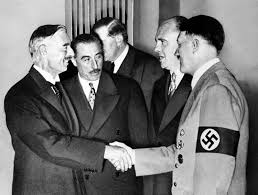
Neville Chamberlain and Adolf Hitler
Hitler denied that he had threatened war: “Force? Who speaks of force?“
Then, suddenly, he accused the Czechs of having mobilized their army in May. They had mobilized—in response to the mobilization of the German army.
“I shall not put up with this any longer,” shouted Hitler. “I shall settle this question in one way or another. I shall take matters in my own hands!”
Suddenly, Chamberlain seemed alarmed: “If I understood you right, you are determined to proceed against Czechoslovakia in any case. In the circumstances, it is best for me to return at once. Anything else now seems pointless.”
Hitler, taken aback, softened his tone and said they should consider the Sudetenland according to the principle of self-determination.
Chamberlain agreed to the cession of the Sudetenland. Three days later, French Prime Minister Edouard Daladier did the same. No Czechoslovak representative was invited to these discussions.
[Mistake #2: Instead of conceding to Hitler, which emboldened the dictator, Chamberlain should have pressed his advantage. When Hitler faced an opponent he couldn’t bribe or cow—such as British Prime Minister Winston Churchill or Soviet Premier Joseph Stalin—he raged and sulked.
[When Trump faces an opponent he can’t buy or intimidate—such as Special Counsel Jack Smith or Ayatollah Mojtaba Khamenei—he does the same.]
Chamberlain met Hitler again in Godesberg, Germany, on September 22 to confirm the agreements. But Hitler aimed to use the crisis as a pretext for war.
He now demanded not only the annexation of the Sudetenland but the immediate military occupation of the territories. This would give the Czechoslovak army no time to adapt their defense measures to the new borders.
To achieve a solution, Italian dictator Benito Mussolini suggested a conference of the major powers in Munich.
On September 29, Hitler, Daladier and Chamberlain met and agreed to Mussolini’s proposal. They signed the Munich Agreement, which accepted the immediate occupation of the Sudetenland.
The Czechoslovak government had not been a party to the talks. Nevertheless, it promised to abide by the agreement on September 30.
It actually had no choice. It faced the threat of an immediate German invasion after being deserted by its pledged allies: Britain, France and the Soviet Union.
[Mistake #3: Selling out an ally and making a concession to an insatiable dictator—and believing that Hitler could be trusted to keep his word.
[Just as Chamberlain sold out Czechoslovakia, Trump plans on selling out Ukraine to Russian dictator Vladimir Putin. He’s blamed Ukraine for starting the 2022 war—even though Russia invaded Ukraine.
He’s long wanted a Trump Tower in Moscow. Ukraine President Volodymyr Zelensky can’t give him that. Putin can.]
Chamberlain returned to England a hero. Holding aloft a copy of the worthless agreement he had signed with Hitler, he told cheering crowds in London: “I believe it is peace for our time.”

Neville Chamberlain
Hitler—still planning more conquests—knew better. In March, 1939, the German army occupied the rest of Czechoslovakia.
Chamberlain would soon be seen as a naive weakling—even before bombs started falling on London.
Believing himself invincible, Hitler turned his attention—and demands—to Poland.
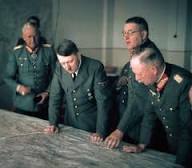
Adolf Hitler and his generals
Believing himself invincible, Trump now threatens violence against Canada, Greenland and Cuba.
Hitler ordered the invasion of Poland on September 1, 1939. To his surprise, France and England honored their pledges to support Poland—triggering World War II. Six years and 50-56 million deaths followed.
On February 28, 2026, Trump—in concert with Israel–attacked Iran without warning. To his surprise, the Iranians closed the Strait of Hormuz, through which 20-30% of the world’s oil total daily oil supply passes. This has triggered a global oil crisis and severely tightened international energy supplies.
Hitler couldn’t “turn off” the war he had started. He could only lash out as his enemies multiplied.
The same has proven true for Trump.
ABC NEWS, ADOLF HITLER, ALTERNET, AMERICABLOG, AP, AUSTRIA, BABY BOOMER RESISTANCE, BBC, BLOOMBERG NEWS, BLUESKY, BUZZFEED, CANADA, CBS NEWS, CLAUDIA SHEINBAUM PARDO, CNN, CNN'S "STARTING POINT", CROOKS AND LIARS, CZECHOSLAVAKIA, CZECHOSLOVAKIA, DAILY KOS, DAVID BROOKS, DEPARTMENT OF HOMELAND SECURITY, DEPARTMENT OF JUSTICE, DONALD TRUMP, EXTORTION, FBI, FIVETHIRTYEIGHT, FRANCE, GELI rAUBAL, GREECE, GREENLAND, HARPER’S MAGAZINE, HUFFINGTON POST, INSIDER, IRAN, IRAN WAR, JACK SMITH, JIMMY CARTER, JUSTIN TRUDEAU, MASTADON, MEDIA MATTERS, MEXICO, MOTHER JONES, MOVEON, MSNBC, MSNBC'S "HARDBALL", NAZI GERMANY, NBC NEWS, NEGOTIATING, NEVILLE CHAMBERLAIN, NEW REPUBLIC, NEWSDAY, NEWSWEEK, NEWT GINGRICH, NICCOLO MACHIAVELLI, NPR, PANAMA, PBS NEWSHOUR, POLAND, POLITICO, POLITICUSUSA, R.I.CO. ACT, RAW STORY, REPUBLICAN PARTY, REPUBLICANS, REUTERS, ROBERT MEULLER, SALON, SEATTLE TIMES, SLATE, STRAIT OF HORMUZ, TALKING POINTS MEMO, TARIFFS, THE ATLANTIC, THE CHICAGO SUN-TIMES, THE CHICAGO TRIBUNE, THE DAILY BEAST, THE DAILY BLOG, THE GUARDIAN, THE HAMILTON PROJECT, THE HILL, THE HUFFINGTON POST, THE LOS ANGELES TIMES, THE NATION, THE NEW REPUBLIC, THE NEW YORK TIMES, THE NEW YORKER, THE PENTAGON, THE PRINCE, THE VILLAGE VOICE, THE WASHINGTON POST, THINKPROGRESS, TIME, TRADE WARS, TRUTHDIG, TRUTHOUT, TWO POLITICAL JUNKIES, U.S. NEWS & WORLD REPORT, UKRAINE, UPI, USA TODAY, VLADIMIR PUTIN, VOLODMYR ZELENSKY, WONKETTE, WORLD WAR 11, X, YUGOSLAVIA
In Bureaucracy, Business, History, Military, Politics, Social commentary on September 3, 2026 at 12:10 am
To understand the “negotiating” style of Donald Trump, it’s essential to study that of Adolf Hitler.
Both men, dictatorial by nature, did/do not believe in compromise. Their idea of “compromise” was/is: “You do what I want—or I’ll destroy you.”
In Hitler’s case, his mania for absolute control began with the Nazi party and eventually extended to Germany. Then it reached to Austria, Czechoslovakia, Poland, Norway, Denmark, France, Greece, Yugoslavia and Russia. At least 50 million men, women and children perished in the wars he unleashed from 1939 to 1945.
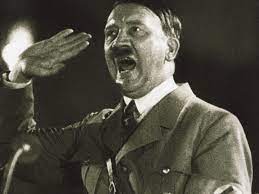
Adolf Hitler
Similarly, Trump’s mania for control started with building a real estate empire. Then it encompassed his “reality TV” show, The Apprentice—and finally politics.
He began dominating the Republican party by winning a series of Presidential primaries—and then the White House. Then came asserting control over the Justice Department and the judiciary—up to the Supreme Court.
Re-elected in 2024, he now seeks to dominate Americans, has asserted but failed to control Iran, attacks Mexico and Canada with trade wars, and threatened Greenland and Panama with invasion.
Much can be learned about Trump’s “negotiating” methods—and what it takes to counter them—by studying those of Germany’s Fuhrer.
Robert Payne, author of the bestselling biography, The Life and Death of Adolf Hitler (1973), described Hitler’s “negotiating” style thus:
“Although Hitler prized his own talents as a negotiator, a man always capable of striking a good bargain, he was totally lacking in finesse.
Donald Trump
“He was incapable of bargaining. He was like a man who goes up to a fruit peddler and threatens to blow his brains out if he does not sell his applies at the lowest possible price.”
What Payne writes about Hitler applies equally well to Trump.
Hitler revealed his “bargaining style” in 1938, when he invited Austrian Chancellor Kurt von Schuschnigg to his mountaintop retreat in Obersalzberg, Germany.
Hitler, an Austrian by birth, intended to annex his native land to Germany. Schuschnigg was aware of this, but felt secure in accepting the invitation. He had been assured that the question of Austrian sovereignty would not arise.
The meeting occurred on February 12, 1938.
Shuschnigg opened the discussion with a friendly compliment. Walking over to a large window, he admired the breathtaking view of the mountains.
HITLER: We haven’t come here to talk about the lovely view or the weather!
Austria has anyway never done anything which was of help to the German Reich….I am resolutely determined to make an end to all this business. The German Reich is a great power. Nobody can and nobody will interfere if it restores order on its frontiers.
[Like Hitler, Trump relies on insults and anger to put his victims on the defense.]
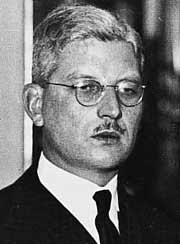
Kurt von Schuschnigg
SCHUSCHNIGG: We simply have to go on living alongside one another, the little state next to the big one. We have no other choice.
And that is why I ask you to tell me what your concrete complaints are. We will do all in our power to sort things out and establish a friendly relationship, as far as it is possible to do so.
HITLER: That’s what you say, Herr Schuschnigg. And I am telling you that I intend to clear up the whole of the so-called Austrian question—one way or another. Do you think I don’t know that you are fortifying Austria’s border with the Reich?
SCHUSCHNIGG: There can be no suggestion at all of that—
HITLER: Ridiculous explosive chambers are being built under bridges and roads—
This was a lie, and Hitler knew it was a lie. But it gave him an excuse to threaten to destroy Austria.
[For Trump, winning—not truth—is all that matters. During his first term as President, he told a documented 30,573 lies.]
HITLER: I have only to give one command and all this comic stuff on the border will be blown to pieces overnight. You don’t seriously think you could hold me up, even for half an hour, do you?
The S.A. [Hitler’s private army of Stormtroopers] and the [Condor] lLegion [which had bombed much of Spain into rubble during the Spanish Civil War] would come in after the troops and nobody—not even I—could stop them from wreaking vengeance.
Schnuschigg made a cardinal mistake in dealing with Hitler: He showed fear. And this was precisely what the Nazi dictator looked for in an opponent.
[Like Hitler, Trump relies on fear: “Real power is—I don’t even want to use the word—fear,” he said in March 2016 when still only a candidate for President.]
Contrary to popular belief, Hitler did not constantly rage at everyone. He used rage as a weapon, knowing that most people feel intimidated by it.
In the case of Schuschnigg, Hitler opened with insults and threats at the outset of their discussion. Then there was a period of calm, to convince the Austrian chancellor the worst was over.
Finally, he once again attacked—this time with so much fury that Schuschnigg was terrified into submission.
With one stroke of a pen, Austria became a vassal-state to Nazi Germany.
[Like Hitler, Trump threatens only those he feels are weak—thus his threats to use military force against Canada, Greenland and Panama.]
ABC NEWS, ADOLF HITLER, ALI HOSSEINI KHAMENEI, ALTERNET, AMERICABLOG, AP, AYATOLLAH ALI KHAMENEI, BABY BOOMER RESISTANCE, BAHRAIN, BBC, BERLIN, BLOOMBERG, BLOOMBERG NEWS, BLUESKY, BUZZFEED, CBS NEWS, CNN, CROOKS AND LIARS, DAILY KOS, DONALD TRUMP, DRONES, FINLAND, FIVETHIRTYEIGHT, FRANCE, GREAT BRITAIN, HARPER’S MAGAZINE, HUFFINGTON POST, IRAN, ISRAEL, ITALY, JAPAN, JOACHIM VON RIBBENTROP, JOSEPH STALIN, KIEV, KUWAIT, LENINGRAD, LUFTWAFFE, MEDIA MATTERS, MOJTABA KHAMENEI, MOSCOW, MOTHER JONES, MOVEON, MSNBC, NAZI GERMANY, NBC NEWS, NEW REPUBLIC, NEWSDAY, NEWSWEEK, NEWT GINGRICH, NPR, NUCLEAR WEAPONS, OIL FIELDS, OMAN, OPERATION BARBAROSSA, PBS NEWSHOUR, PETE HEGSETH, POLAND, POLITICO, POLITICUSUSA, QATAR, QATER, RAW STORY, REUTERS, SALON, SAUDI ARABIA, SEATTLE TIMES, SLATE, SOVIET UNION, SS, TALKING POINTS MEMO, THE ATLANTIC, THE CHICAGO SUN-TIMES, THE CHICAGO TRIBUNE, THE DAILY BEAST, THE DAILY BLOG, THE GUARDIAN, THE HILL, THE HUFFINGTON POST, THE INTERCEPT, THE LONGEST DAY (MOVIE, THE LOS ANGELES TIMES, THE NATION, THE NEW REPUBLIC, THE NEW YORK TIMES, THE NEW YORKER, THE PENTAGON, THE UNITED ARAB EMIRATES, THE VILLAGE VOICE, THE WASHINGTON POST, THINKPROGRESS, THIRD REICH, TIME, TRUTHDIG, TRUTHOUT, TWO POLITICAL JUNKIES, U.S. NEWS & WORLD REPORT, UKRAINE, UNIFORMS, UPI, USA TODAY, VYACHESLAV MOLOTOV, WEHRMACHT, WONKETTE, WORLD WAR 11, X
In Bureaucracy, History, Military, Politics, Social commentary on August 4, 2026 at 12:10 am
Now, fast-forward 85 years—from 1941 to 2026. Substitute President Donald Trump for Fuhrer Adolf Hitler and Mojtaba Khamenei for Joseph Stalin—and Iran for the Soviet Union.

Just as Hitler launched his attack on the Soviet Union without warning, so did Trump launch his on Iran—on February 28.
Hitler—and numerous members of the Wehrmacht—believed that Germany’s mechanized panzers would quickly subdue Soviet armies.
“We were fast,” recalled Panzer Lieutenant Hans-Erdmann Schonbeck. “And our tank forces could cover huge distances. And once we broke through the enemy’s defenses, our orders were not to worry about threats to our right or left but to keep going, deep into Russian territory.”

Panzer tank
But the tanks soon faced unexpected difficulties. Most roads in Russia were unpaved, so the tanks raised huge dust clouds almost everywhere they went. The dust clogged their engines and brought many tanks to a halt. Repair crews worked themselves to exhaustion so that the lightning-fast advance could continue.
Another drawback not evident at the outset of the invasion: Summer uniforms. For a war that began on June 22, 1941, these were entirely appropriate. But as the months quickly passed, the notorious Russian winter season loomed ever closer.

Germans in summer uniforms
The German command underestimated the campaign’s duration, expecting a victory by autumn 1941, and prioritized ammunition and fuel over winter equipment. Although winter gear existed, it was stuck in supply depots in the West, and transport lines were too strained by the Soviets’ “scorched earth” tactics to move it to the front.
Without proper greatcoats or insulated boots, soldiers suffered from extreme cold, with temperatures dropping far below zero. Many resorted to stealing blankets from civilians or using blankets as makeshift clothing.
In its war with Iran, American’s air force completely dominated the skies. But then both American planes and ground forces faced an unexpected enemy: Mass-produced drones.
The same weapons—some of them supplied by Iran to Russia—have been used since 2022 in Ukraine. Unmanned and remotely-controlled, Ukrainian and Russian drones have transformed the battlefield. They’re estimated to inflict around 80% of combat casualties on both sides.
The technology—like that forged in Germany’s Blitzkrieg tactics—is revolutionizing warfare and evolving rapidly. To adapt to the new era, the U.S. military is learning lessons from Ukraine.

Iranian drone
Student News Agency, Attribution, via Wikimedia Commons
Not only are American military forces being targeted, so are those Gulf nations that have allied themselves with the United States: The United Arab Emirates, Saudi Arabia, Kuwait, Bahrain, Qatar and Oman.
Primarily targeted: Energy infrastructure, airports and sites hosting American military personnel.
For Iran, the drones are relatively cheap. For the United States, the costs of countering this threat are steadily mounting. A typical Shahed-136 costs Tehran roughly $20,000 to $50,000, while interceptor missiles, such as the Patriot and Terminal High Altitude Area Defense (THAAD), cost the United States millions.
On August 22, 1939—the eve of his invasion of Poland, which would ignite World War II—Adolf Hitler delivered a secret address to his supreme commanders and generals. Its climax:
“Close your hearts to pity. Act brutally. Eighty million people must obtain what is their right. Their existence must be made secure. The stronger man is right. The greatest harshness.”
Hitler urged his generals to act similarly toward the Russians, whom he regarded as subhumans.
The results of this policy soon became obvious when the Wehrmacht invaded Ukraine. Ukrainians, long suffering under the yoke of Stalin, greeted the invaders with bread and salt, the traditional greeting of comrades.
Within a month, they realized that the tyranny of Stalin had been replaced by an all-out extermination campaign of Hitler. For every Ukrainian the Germans killed, 10 more emerged to seek revenge.
Eighty-five years later, Donald Trump and officials of his administration are celebrating the indiscriminate slaughter of Iranians, whether civilian or military.
“We totally demolished Kharg Island, but we may hit it a few more times just for fun,” Trump said on NBC News.
On March 22, Secretary of Defense Pete Hegseth, hosting his monthly Christian worship service at the Pentagon, prayed: “Let every round find its mark against the enemies of righteousness and our great nation.
“Give them wisdom in every decision, endurance for the trial ahead, unbreakable unity, and overwhelming violence of action against those who deserve no mercy.”

Pete Hegseth
“I pursued my enemies and overtook them, and did not turn back till they were consumed,” he read from Psalms 18:37. “Those who hated me I destroyed. They cried to the Lord, but He did not answer them.”
Former House speaker and Trump advisor Newt Gingrich posted on X: “Instead of fighting over a 21-mile-wide bottleneck [Strait of Hormuz] forever, we [could] cut a new channel through friendly territory. A dozen thermonuclear detonations and you’ve got a waterway wider than the Panama Canal, deeper than the Suez, and safe from Iranian attacks.”
This would produce countless numbers of casualties and cover the Middle East with radioactive fallout.
It remains to be seen if such exhortations will lead American soldiers to act as barbarically as those of the Wehrmacht and SS—and inspire similar barbarism in return.
ABC NEWS, ADOLF HITLER, ALI HOSSEINI KHAMENEI, ALTERNET, AMERICABLOG, AP, AYATOLLAH ALI KHAMENEI, BABY BOOMER RESISTANCE, BAHRAIN, BBC, BERLIN, BLOOMBERG, BLOOMBERG NEWS, BLUESKY, BUZZFEED, CBS NEWS, CNN, CROOKS AND LIARS, DAILY KOS, DONALD TRUMP, DRONES, FINLAND, FIVETHIRTYEIGHT, FRANCE, GREAT BRITAIN, HARPER’S MAGAZINE, HUFFINGTON POST, IRAN, ISRAEL, ITALY, JAPAN, JOACHIM VON RIBBENTROP, JOSEPH STALIN, KIEV, KUWAIT, LENINGRAD, LUFTWAFFE, MEDIA MATTERS, MOJTABA KHAMENEI, MOSCOW, MOTHER JONES, MOVEON, MSNBC, NAZI GERMANY, NBC NEWS, NEW REPUBLIC, NEWSDAY, NEWSWEEK, NEWT GINGRICH, NPR, NUCLEAR WEAPONS, OIL FIELDS, OMAN, OPERATION BARBAROSSA, PBS NEWSHOUR, PETE HEGSETH, POLAND, POLITICO, POLITICUSUSA, QATAR, QATER, RAW STORY, REUTERS, SALON, SAUDI ARABIA, SEATTLE TIMES, SLATE, SOVIET UNION, SS, TALKING POINTS MEMO, THE ATLANTIC, THE CHICAGO SUN-TIMES, THE CHICAGO TRIBUNE, THE DAILY BEAST, THE DAILY BLOG, THE GUARDIAN, THE HILL, THE HUFFINGTON POST, THE INTERCEPT, THE LONGEST DAY (MOVIE, THE LOS ANGELES TIMES, THE NATION, THE NEW REPUBLIC, THE NEW YORK TIMES, THE NEW YORKER, THE PENTAGON, THE UNITED ARAB EMIRATES, THE VILLAGE VOICE, THE WASHINGTON POST, THINKPROGRESS, THIRD REICH, TIME, TRUTHDIG, TRUTHOUT, TWO POLITICAL JUNKIES, U.S. NEWS & WORLD REPORT, UKRAINE, UNIFORMS, UPI, USA TODAY, VYACHESLAV MOLOTOV, WEHRMACHT, WONKETTE, WORLD WAR 11, X
In Bureaucracy, History, Military, Politics, Social commentary on August 3, 2026 at 12:05 am
The city: Berlin.
The date: November 12–13, 1940.
The event: A meeting between German Fuhrer Adolf Hitler and Soviet Foreign Minister Vyacheslav Molotov.
The purposes: To discuss:
- Soviet expansion and control over Finland, Bulgaria, and the Turkish Straits; and
- Germany’s desire for the USSR to attack British interests in India and Iran.
Hitler wanted the USSR to join the Axis (Germany, Italy, and Japan) and expand “southward” toward the Indian Ocean to avoid conflict in Europe.
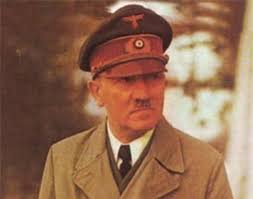
Adolf Hitler
Molotov ignored the talk of India and instead demanded control over Finland, Bulgaria, and the Turkish Straits.
Hitler adamantly opposed Soviet control over Finland, which he considered a strategic ally. He feared a Soviet expansion into Scandinavia would threaten German iron ore supplies from Sweden and northern interests.
And he deeply feared that the Soviet Union would cut off Germany’s vital Romanian oil supplies. Romania provided roughly 75% of German oil in 1941. A late 1940 Soviet attack on the Ploiești oil fields would render Germany helpless and force an end to the war.
On a personal level, Molotov and Hitler grated on each other’s nerves. Molotov was blunt in his remarks and didn’t spare Hitler at all. He seldom smiled and refused to compromises on Russia’s demands for control of Finland, Bulgaria, and the Turkish Straits.
At one point, Molotov asked: “Is last year’s agreement [between Germany and Russia] still valid?”
Hitler replied that it was.
“I asked this question,” said Molotov, “because of the Finns. You are on very friendly relations with the Finns. You invite people from Finland to Germany and you send missions there. And the Finns are very dangerous people. They undermine our security and we’ll have to do something about that and we are going to do something about that.”

Vyacheslav Molotov
“I understand you very well,” exploded Hitler. “You want to wage war against Finland and that is quite out of the question. Do you hear me? It’s impossible because my supplies of iron, nickel and other important raw materials would be cut.”
During the talks, British Royal Air Force (RAF) bombers appeared overhead, forcing the leaders to move to an air raid shelter.
German Foreign Minister Joachim von Ribbentrop had been trying to convince Molotov that Great Britain was “beaten” and that the British Empire was a “gigantic world-wide estate in bankruptcy” ready for partition.
Molotov sarcastically replied: “If England is beaten, why are we in this shelter and whose are the bombs that are falling?”
Even while Molotov was still in Berlin, Hitler ordered his generals to attack the Soviet Union on May 15, 1941.
Within a month they responded with a detailed plan code-named “Operation Barbarossa.”
Less than one year later—on June 22, 1941—with 134 divisions at full fighting strength and 73 more divisions for deployment behind the front, the German Wehrmacht invaded the Soviet Union.
Now the two most ruthless dictators on earth—Adolf Hitler and Joseph Stalin—were locked in a fight to the death.
At the outset, the odds clearly favored the Germans.
The invasion caught the Soviet Union by surprise. Joseph Stalin had received Intelligence reports from Great Britain that Germany was preparing to attack. But Stalin, who believed the British were trying to drive a wedge between him and Hitler, put his faith in Hitler, whose guarantees had long proved worthless.

German army units
From June to September, the Wehrmacht captured vast territories and encircled hundreds of thousands of Red Army troops. German forces quickly advanced toward Leningrad, Moscow, and Kiev, inflicting massive casualties.
The Luftwaffe destroyed much of the Soviet air force on the ground.
In June and July, German panzers quickly advanced, capturing over 300,000 Soviet prisoners in the Minsk-Bialystok pocket. By late September, Army Group South captured Kiev, resulting in the largest encirclement in history, with roughly 600,000 Soviet soldiers trapped.
By the end of 1941, more than three million Soviet soldiers were captured or killed. Still, the Soviet Union did not collapse and continued to commit new field armies to the conflict.
By December, the Wehrmacht, besieging Moscow, were literally freezing to death in their summer uniforms. Then, on December 5-6, the Soviets launched their decisive counter-offensive before Moscow, forcing German forces into a retreat.
It marked the first major land defeat for the Wehrmacht since its September 1, 1939 invasion of Poland, which ignited World War II.
Now, fast-forward 85 years. Substitute President Donald Trump for Fuhrer Adolf Hitler and Mojtaba Khamenei for Joseph Stalin—and Iran for the Soviet Union.
Donald Trump and Adolf Hitler
Just as Hitler launched his attack on the Soviet Union without warning, so did Trump launch his on Iran—on February 28.
Hitler’s attack didn’t kill Joseph Stalin, the all-powerful dictator of the Soviet Union. But Trump’s airstrikes killed Ali Hosseini Khamenei, who had ruled Iran as its supreme leader from 1989.

Ayatollah Ali Khamenei
Still, the Iranians quickly elevated his son, Mojtaba Khamenei, to the same position—and went on fighting.
Hitler––and numerous members of the Wehrmacht—believed that Germany’s mechanized panzers would succeed where Napoleon Bonaparte had failed in 1812. And that they could conquer the Soviet Union in only three months.
They were wrong.
ADOLF HITLER, ALFRED JODL, ALTERNET, AMERICABLOG, AMNESTY INTERNATIONAL, AP, BABY BOOMER RESISTANCE, BBC, BELARUS, BLOOMBERG, BLUESKY, BOLSHEVIKS, BREST-LITOVSK, BROWN UNIVERSITY, BUZZFEED, CANADA, CBS NEWS, CNN, COLUMBIA UNIVERSITY, CORNELL UNIVERSITY, CROOKS AND LIARS, DAILY KOS, DIVERSITY EQUITY AND INCLUSION (DEI), DONALD TRUMP, ESTONIA, FIVETHIRTYEIGHT, GREENLAND, HARPER’S MAGAZINE, HUFFINGTON POST, IRAN, JD VANCE, JONATHAN TRIGG, JOSEPH STALIN, KAISER WILHELM 11, LATVIA, LEON TROTSKY, LITUANIA, MEDIA MATTERS, MOTHER JONES, MOVEON, MSNBC, NAVAL BLOCKADE, NAZI GERMANY, NBC NEWS, NEWSDAY, NEWSWEEK, NICHOLAS 11, NICHOLAS MADURO, NPR, NUCLEAR WAR, OPERATION BARBAROSSA, PBS NEWSHOUR, POLAND, POLITICO, POLITICUSUSA, RAW STORY, REUTERS, REVOLUTIONARY GUARD, RUSSIA, RUSSIAN REVOLUTION, SALON, SEATTLE TIMES, SLATE, SOVIET UNION, STRAIT OF HORMUZ, TALKING POINTS MEMO, THE ATLANTIC, THE BATTLE OF STALINGRAD THROUGH GERMAN EYES (EYE), THE CHICAGO SUN-TIMES, THE CHICAGO TRIBUNE, THE DAILY BEAST, THE DAILY BLOG, THE GUARDIAN, THE HILL, THE HUFFINGTON POST, THE INTERCEPT, THE LOS ANGELES TIMES, THE NATION, THE NEW REPUBLIC, THE NEW YORK TIMES, THE NEW YORKER, THE VILLAGE VOICE, THE WASHINGTON POST, THINKPROGRESS, TIME, TRUTHDIG, TRUTHOUT, TWO POLITICAL JUNKIES, U.S. NEWS & WORLD REPORT, UKRAINE, UPI, USA TODAY, VENEZUELA, Vladimir Lenin, WORLD WAR 1, WORLD WAR 11, X
In Bureaucracy, History, Military, Politics, Social commentary on July 2, 2026 at 12:05 am
“Neither peace nor war—nor a policy” accurately describes the current state of relations between the United States and Iran.
On February 28, 2026, President Donald Trump—in concert with Israel—launched an unprovoked series of devastating airstrikes against Iran. Suddenly he faced an enemy he could neither bribe nor intimidate.
And, by late May, definite parallels had formed between Adolf Hitler’s disastrous attack on the Soviet Union and Donald Trump’s attack on Iran.
Operation Barbarossa erupted on June 22, 1941, swallowing at least two million dead and wounded Soviet soldiers and another three million POWs (most of whom died in captivity under barbarous conditions).
The Wehrmacht occupied the western half of the Soviet Union. But then the seemingly unstoppable Blitzkrieg ground to a halt—owing to unexpected and increasingly fierce resistance by Russians and the advent of the infamous Russian winter.
Adolf Hitler
Jonathan Trigg, in his vividly-written nonfiction book, The Battle of Stalingrad Through German Eyes, observes that when Hitler’s prediction of a six-week victory turned sour, he didn’t have a fallback strategy to win the war.
Nor did the General Staff have a solution. Every country they had invaded—Poland, Denmark, Norway, Belgium, France, Greece, Yugoslavia—-had capitulated. Its government had sued for peace or gone into exile. When Great Britain refused to surrender, Hitler had no answer, and he had none for the Soviet Union.
Panzer commander Ewald von Kleist admitted: “There were no plans for a prolonged struggle. Everything was based on the idea of a decisive result before the end of autumn 1941.”

Like Hitler, Trump had believed that:
- He could force Iran’s leaders to submit to his demands: Surrender their uranium stockpiles and promise to never build a nuclear bomb.
- His war would end successfully in four to six weeks at most.
Finally, like Hitler, Trump had no alternative plan for a prolonged struggle.
True, he could turn Iran into a radioactive pile of rubble by using nuclear weapons. Or he could order an all-out invasion of Iran—a country 2.4 to 2.5 times larger than Texas—requiring tens of thousands of troops.
But both options would be hugely unpopular among Americans—especially in an election year when Republicans were threatened with the loss of the House of Representatives and/or the Senate.
As a result, Trump could only threaten or deliver more impotent airstrikes.

Donald Trump
After a two-week ceasefire was announced on April 8, the following diplomatic activities occurred:
- April 11–12: Vice President JD Vance met with Iranian delegates in Islamabad for the highest-level diplomatic engagement between the two nations since 1979. The talks stalled over Iran’s nuclear enrichment capabilities.
- April 13: The United States launched a naval blockade on Iranian ports, suspending oil shipments.
- April 20–21: Trump warned that a lack of an extended deal would result in the resumption of bombing. The deadline was extended indefinitely while waiting for a unified Iranian proposal.
- June 17: Trump and Iranian President Pezeshkian signed a 14-point interim Memo of Understanding (MoU). The agreement established a 60-day negotiation window regarding Iran’s nuclear program and lifted the U.S. port blockade in exchange for the safe passage of commercial vessels.
- June 26: Trump announced that Iran violated the newly signed ceasefire after launching four one-way attack drones at cargo ships in the Strait of Hormuz.
- June 26–27: The U.S. military executed strikes against Iranian sites in response to the drone attacks, placing the future of the diplomatic agreement in jeopardy.
On June 28, Iran’s Islamic Revolutionary Guard Corps (IRGC) said it launched missiles and drones at United States bases in Kuwait and Bahrain.
Following the exchange of fire, the United States and Iran accused each other of violating the ceasefire agreement.
The IRGC said that the Memorandum of Understanding (MoU) signed gave Iran the right to control passage and navigation in the Strait of Hormuz, and from now on, violating ships would be dealt with more forcefully than in the past.
Strait of Hormuz
The Strait of Hormuz had operated freely as an international waterway before the 2026 war. An estimated 110 to 160 commercial and oil vessels had safely transited the 21-mile passageway on an average day.
The Trump administration is demanding that it remain freely open to all ships. Iran, having discovered that controlling the Strait gives it leverage over the world’s oil-based economy, is determined to exact tolls from ships that pass through it.
After the latest American strikes on Iran were announced, Trump wrote on Truth Social: “There may come a point when we are no longer able to be reasonable, and will be forced to militarily complete the job that we very successfully started. If that happens, the Islamic Republic of Iran will no longer exist!”
Given the conditions cited above, that is highly unlikely.
So long as Iran continues to exert its will against the world’s greatest superpower, German Chancellor Friedrich Merz’ unguarded statement will prove highly accurate:
“The Iranians are obviously very skilled at negotiating, or rather, very skillful at not negotiating, letting the Americans travel to Islamabad and then leave again without any result.
“An entire nation is being humiliated by the Iranian leadership, especially by these so-called Revolutionary Guards. And so, I hope that this ends as quickly as possible.”


2016 PRESIDENTIAL ELECTION, 2020 PRESIDENTIAL ELECTION, 2024 PRESIDENTIAL ELECTION, ABC NEWS, ABUSE OF POWER, ADOLF HITLER, AILEEN CANNON, AIR TRAFFIC CONTROLLERS, ALTERNET, AMERICABLOG, AP, ARTIFICIAL INTELLIGENCE, ASSASSINATION, AXIOS, BABY BOOMER RESISTANCE, BBC, BIRD FLU, BLACKS, BLOOMBERG, BLUESKY, BUZZFEED, CANADA, CBS NEWS, CHINA, CLASSIFIED DOCUMENTS, CLIMATE CHANGE, CNN, COVID-19, CROOKS AND LIARS, DAILY KOS, DANIEL CASSINO, DEMOCRACY, DEMOCRATIC PARTY, DEMOCRATS, DENMARK, DIVERSITY EQUITY AND INCLUSION (DEI) PROGRAMS, DONALD TRUMP, ELECTORAL COLLEGE, FBI, FEDERAL AVIATION ADMINISTRATION (FAA), FEDERAL EMERGENCY MANAGEMENT AGENCY, FEDERAL GOVERNMENT SHUTDOWN, FIVETHIRTYEIGHT, FUEL PRICES, GALLUP POLL, GAZA, GLOBAL CONFLICT, GREENLAND, GROCERY PRICES, HARPER’S MAGAZINE, HILLARY CLINTON, HISPANICS, HUFFINGTON POST, HUNTER BIDEN, illegal immigration, IMMIGRATION AND CUSTOMS ENVORCEMENT (ICE), IMPEACHMENT, INFLATION, INSPECTORS GENERAL, INTERNATIONAL BROTHERHOOD OF TEAMSTERS, IRAN, ISRAEL, JACK SMITH, JAMAL KHASHOOGI, JAMES COMEY, JANUARY 6 COUP ATTEMPT, JARED KUSHNER, JIMMY HOFFA, JOHN ADAMS, JOHN F. KENNEDY CENTER FOR THE PERFORMING ARTS, JOSEPH BIDEN, JOSEPH STALIN, Kamala Harris, KEVIN MCCARTHY, KIM JONG-UN, LATINOS, LETITIA JAMES, LOW INFORMATION VOTERS, MAR-A-LAGO, MARJORIE TAYLOR GREENE, MASCULINITY, MEDIA MATTERS, MERRICK GARLAND, MINNEAPOLIS MINNESOTA, MOHAMMED BIN SALMAN, MOTHER JONES, MOVEON, MSNBC, MUSLIMS, NATO, NAVAJO COLDE TALKERS, NBC NEWS, NEW REPUBLIC, NEWSDAY, NEWSWEEK, NORTH KORREA, NPR, OBSTRUCTION OF CONGRESS, PARDONS, PBS NEWSHOUR, POLITICO, POLITICUSUSA, RAW STORY, REPUBLICAN PARTY, REPUBLICANS, REUTERS, ROBERT F. KENNEDY, RUSSIA, SALON, SEATTLE TIMES, SLATE, ST. PAUL MINNESOTA, STRAIT OF HORMUZ, SUPERMAN, SUPPLEMENTAL NUTRITION ASSISTANCE PROGRAM (SNAP), TALKING POINTS MEMO, TERRORISM, THE ATLANTIC, THE CHICAGO SUN-TIMES, THE CHICAGO TRIBUNE, THE DAILY BEAST, THE DAILY BLOG, THE GUARDIAN, THE HILL, THE HUFFINGTON POST, THE INTERCEPT, THE LOS ANGELES TIMES, THE NATION, THE NEW REPUBLIC, THE NEW YORK TIMES, THE NEW YORKER, THE VILLAGE VOICE, THE WASHINGTON POST, THINKPROGRESS, THOMAS MATTHEW CROOKS, TIME, TRANSPORTATION COSTS, TRUTHDIG, TRUTHOUT, TUSKEGEE AIRMEN, TWO POLITICAL JUNKIES, U.S. BORDER PATROL, U.S. NEWS & WORLD REPORT, UKRAINE, UNITED STATES DEPARTMENT OF DEFENSE (DOD), UNITED STATES DEPARTMENT OF JUSTICE, UNITED STATES HOUSE OF REPRESENTATIVES, UNITED STATES SECRET SERVICE, UNITED STATES SENATE, UPI, USA TODAY, VLADIMIR PUTIN, VOLODMYR ZELENSKY, VOX, X, XI JINPING
BIRTHING FASCISM–AND TRUMP’S EVIL: PART FOUR (END)
In Bureaucracy, History, Law, Law Enforcement, Politics, Social commentary on October 9, 2026 at 12:10 amThere were numerous instances where intervention by Federal legislators or law enforcement authorities could have utterly changed the outcome of the 2024 Presidential election.
Case #12: Democrats expected to receive support from their traditional allies—such as blacks and Hispanics. But that didn’t happen.
Despite Donald Trump’s overt racism, blacks deserted Vice President Kamala Harris in droves. About three in 10 back men under age 45 went for Trump, roughly double the share he got in 2020.
A clear majority of young black voters described the economy as “not so good” or “poor,” compared with about half of older black voters.
Despite Trump’s demands for “mass deportations,” numerous Hispanics, when interviewed, said they didn’t feel threatened. They felt certain that Trump would deport “only the bad people.”
Young Latinos, particularly young Latino men, were more supportive to Trump than in 2020. Roughly half of young Latino men voted for Harris, compared with about six in 10 who went for Trump.
Majorities of black and Latino voters said the economy was in bad shape. They wanted a bigger paycheck. And they were willing to re-elect a man who despised them in hopes of getting it.
Case #13: Muslims—especially those living in Dearborn, Michigan—played a losing blackmail game with the Biden administration
On October 7, 2023, under the cover of thousands of rockets fired from Gaza, Hamas terrorists slaughtered an estimated 1,139 men, women and children in Israeli streets, houses, kibbutz communities and at a rave music festival.
About 250 others were kidnapped and taken into Gaza.
Israel responded by declaring a state of war—pounding Gaza with bombs, missiles. tanks and soldiers.
Palestinians celebrating the attack on Israel
Terrorism-sympathizing Islamics—especially in Michigan—demanded that the Biden administration stop sending military equipment to Israel—and force Israelis to stop their military campaign to free the hostages. They threatened: “If you don’t do what we want, we won’t vote for Kamala Harris.”
Biden and Harris rejected their demands—and Islamics voted for Trump or didn’t vote at all.
The result: Harris lost—and was replaced with a Right-wing administration so pro-Israel that it made the Biden one seem pro-Palestinian by comparison.
Case 14: Ignorance of and/or contempt for history.
“Low information voters” is a euphemism for people dangerously ignorant of and indifferent to the issues affecting their lives.
After World War II ended in 1945, the United States proved a force for worldwide stability. Its “nuclear umbrella” prevented a Russian takeover of Europe and a Chinese takeover of Asia.
But voters ignored Trump’s “bromance” with Communist dictators Vladimir Putin (Russia), Xi Jinping (China) and Kim Jong-Un (North Korea). They also ignored his proven disdain for the leaders of democratic nations—such as Canada and Great Britain.
As a result, Canada and Mexico, America’s biggest trading partners, are now treated—by Trump—as enemies. Meanwhile, he cozies up to Putin against Ukraine’s legally-elected President, Vododmyr Zelensky.
* * * * *
Countless historians have tried to answer the question: “Was the rise of Adolf Hitler—and the catastrophe he unleashed—inevitable?”
Future historians will ask the same question about Donald Trump—and the almost certain disaster of a second Trump Presidency.
Competent historians will conclude that no one factor was responsible, but a combination of otherwise unrelated ones. Among these:
In short: Those opposed to Trump’s evil were too divided and shortsighted to combine against a common danger.
As John Adams, second President of the United States, observed:
Remember, democracy never lasts long. It soon wastes, exhausts and murders itself. There never was a democracy yet that did not commit suicide. It is in vain to say that democracy is less vain, less proud, less selfish, less ambitious, or less avaricious than aristocracy or monarchy. It is not true, and nowhere appears in history. Those passions are the same in all men, under all forms of simple government, and when unchecked, produce the same effects of fraud, violence and cruelty.
Share this: