Posts Tagged ‘ROMAN EMPIRE’
9/11, ABC NEWS, AFGHANISTAN, AL QAEDA, ALTERNET, AMERICABLOG, AMERICAN CAESARS: THE LIVES OF THE PRESIDENTS FROM FRANKLIN D. ROOSEVELT TO GEORGE W. BUSH, AMERICAN CAESARS: THE LIVES OF THE PRESIDENTS FROM FRANKLIN D. ROOSEVELT TO GEORGE W. BUSH (BOOK), AMERICAN EMPIRE, AP, ASSASSINATION, BABY BOOMER RESISTANCE, BASHAR AL-ASSAD, BILL CLINTON, BLOOMBERG, BUREAUCRACY, BUZZFEED, CBS NEWS, CHRIS MATHEWS, CNN, CONDOLEEZA RICE, CROOKS AND LIARS, DAIL Y KOS, DAILY KOZ, DRUDGE REPORT, DWIGHT EISENHOWER, FACEBOOK, FBI, FIVETHIRTYEIGHT, FOOD DELIVERY SERVICES, FRANKLIN D. ROOSEVELT, GAIUS SUETONIUS TRANQUILLIUS, GEORGE H.W. BUSH, GEORGE W. BUSH, GERALD R. FORD, HARPER’S MAGAZINE, HARRY S. TRUMAN, HUFFINGTON POST, JIMMY CARTER, JOHN F. KENNEDY, JOSEPH BIDEN, LYNDON B. JOHNSON, MEDIA MATTERS, MOTHER JONES, MOVEON, MSNBC, NBC NEWS, NEWSWEEK, NIGEL HAMILTON, NPR, OSAMA BIN LADEN, PATRIOT ACT, PBS NEWSHOUR, POLITICO, POLITICUSUSA, RAW STORY, REPUBLICAN PARTY, REUTERS, RICHARD CLARKE, RICHARD NIXON, ROMAN EMPIRE, SALON, SEATTLE TIMES, SEPTEMBER 11, SLATE, SYRIA, TALKING POINTS MEMO, TERRORISM, THE ATLANTIC, THE CHICAGO SUN-TIMES, THE CHICAGO TRIBUNE, THE DAILY BEAST, THE DAILY BLOG, THE GUARDIAN, THE HILL, THE HUFFINGTON POST, THE LOS ANGELES TIMES, THE NATION, THE NEW REPUBLIC, THE NEW YORK TIMES, THE TWELVE CAESARS, THE VILLAGE VOICE, THE WASHINGTON POST, THINKPROGRESS, TIME, TRANSPORTATION SAFEY ADMINISTRATION, TRUTHDIG, TRUTHOUT, TWO POLITICAL JUNKIES, U.S. NEWS & WORLD REPORT, UPI, USA TODAY, VCR RENTALS, X
In Bureaucracy, History, Law, Law Enforcement, Military, Politics, Social commentary on August 7, 2026 at 12:05 am
Colonel Brandt: “I wonder what we’ll do after we lose the war.”
Captain Kiesel: “Prepare for the next one.”
–-“The Cross of Iron,” film by Sam Peckinpah
On September 12, 2001, President George W. Bush attended a meeting of the National Security Council.
“Why shouldn’t we go against Iraq, not just Al-Qaeda?” demanded Donald Rumsfeld, the Secretary of Defense.
Vice President Dick Cheney enthusiastically agreed.
Secretary of State Colin Powell then pointed out there was absolutely no evidence that Iraq had had anything to do with 9/11 or Al-Qaeda. And he added: “The American people want us to do something about Al-Qaeda”—not Iraq.
On November 21, 2001, only 10 weeks after 9/11, Bush told Rumsfeld: It’s time to turn to Iraq.
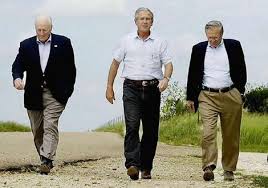
Liars Club: Dick Cheney, George Bush, Donald Rumsfeld
Bush and his war-hungry Cabinet officials knew that Americans demanded vengeance on Al-Qaeda’s mastermind, Osama bin Laden, and not Iraqi dictator Saddam Hussein. So they repeatedly fabricated “links” between the two:
- Saddam had worked hand-in-glove with Bin Laden to plan 9/11.
- Saddam was harboring and supporting Al-Qaeda throughout Iraq.
- Saddam, with help from Al-Qaeda, was scheming to build a nuclear bomb.
Yet as early as September 22, 2001, Bush had received a classified President’s Daily Brief intelligence report, which stated that there was no evidence linking Saddam Hussein to 9/11.
The report added that there was scant credible evidence that Iraq had any significant collaborative ties with Al-Qaeda.

Saddam Hussein
Even more important: Saddam had tried to monitor Al Qaeda through his intelligence service—because he saw Al-Qaeda and other theocratic radical Islamist organizations as a potential threat to his secular regime.
Bush administration officials repeatedly claimed that Iraq possessed huge quantities of chemical and biological weapons, in violation of UN resolutions. And they further claimed that US intelligence agencies had determined:
- the precise locations where these weapons were stored;
- the identities of those involved in their production; and
- the military orders issued by Saddam Hussein for their use in the event of war.
Among other lies stated as fact by members of the Bush administration:
- Iraq had sought uranium from Niger, in west Africa.
- Thousands of aluminum tubes imported by Iraq could be used in centrifuges to create enriched uranium.
- Iraq had up to 20 long-range Scud missiles, prohibited under UN sanctions.
- Iraq had massive stockpiles of chemical and biological agents, including nerve gas, anthrax and botulinum toxin.
- Saddam Hussein had issued chemical weapons to front-line troops who would use them when US forces crossed into Iraq.
Consider the following:
August 26, 2002: Cheney told the Veterans of Foreign Wars, “There is no doubt that Saddam Hussein now has weapons of mass destruction. There is no doubt he is amassing them to use against our friends, against our allies and against us.”
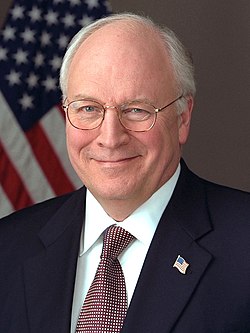
Vice President Dick Cheney
September 8, 2002: National Security Advisor Condoleeza Rice said on CNN: ”There is certainly evidence that Al-Qaeda people have been in Iraq. There is certainly evidence that Saddam Hussein cavorts with terrorists.”
September 18, 2002: Rumsfeld told the House Armed Services Committee, “We do know that the Iraqi regime has chemical and biological weapons. His regime has amassed large, clandestine stockpiles of chemical weapons—including VX, sarin, cyclosarin and mustard gas.”
October 7, 2002: Bush declared in a nationally televised speech in Cincinnati that Iraq “possesses and produces chemical and biological weapons. It is seeking nuclear weapons.”
March 16, 2003: Cheney declared on NBC’s “Meet the Press”: “We believe [Saddam Hussein] has, in fact, reconstituted nuclear weapons.”
March 30, 2003: On ABC’s “This Week” program, 10 days into the war, Rumsfeld said: “We know where they [weapons of mass destruction] are.”
Bush never regretted his decision to invade Iraq, which occurred on March 20, 2003.
Even as American occupying forces repeatedly failed to turn up any evidence of “weapons of mass destruction” (WMDs), Bush and his minions claimed the invasion a good thing.
In fact, Bush—who hid out the Vietnam war in the Texas Air National Guard—even joked publicly about the absence of WMDs.
He did so at a White House Correspondents dinner on March 24, 2004—one year after he had started the war.
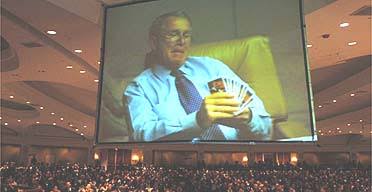
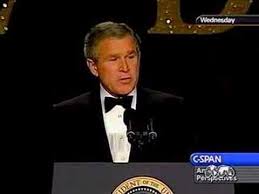
George W. Bush at the 2004 White House Correspondents’ dinner
To Bush, the non-existent WMDs were nothing more than the butt of a joke that night. While an overhead projector displayed photos of a puzzled-looking Bush searching around the Oval Office, Bush recited a comedy routine.
“Those weapons of mass destruction have gotta be somewhere,” Bush laughed, while a photo showed him poking around the corners in the Oval Office.
“Nope–no weapons over there! Maybe they’re under here,” he said, as a photo showed him looking under a desk.
Meanwhile, an assembly of wealthy, pampered men and women—the elite of America’s media and political classes—laughed heartily during Bush’s performance. It was a scene worthy of the court of the ancient Caesars, complete with royal flunkies.
Ultimately, the war that Bush had deliberately provoked
- Took the lives of 4,484 Americans.
- Cost the United States Treasury at least $2 trillion.
- Created a Middle East power vacumn.
- Allowed Iran–Iraq’s arch enemy–to eagerly fill it.
- Killed at least 655,000 Iraqis.
- Bush retired from office with a lavish pension and full Secret Service protection.
- He wrote his memoirs and was paid $7 for the first 1.5 million copies.
- Cheney, Rumsfeld, Rice retired to private business, wrote their own memoirs, and lived in comfort as respected elder statesmen.
9/11, ABC NEWS, AFGHANISTAN, AL QAEDA, ALTERNET, AMERICABLOG, AMERICAN CAESARS: THE LIVES OF THE PRESIDENTS FROM FRANKLIN D. ROOSEVELT TO GEORGE W. BUSH, AMERICAN CAESARS: THE LIVES OF THE PRESIDENTS FROM FRANKLIN D. ROOSEVELT TO GEORGE W. BUSH (BOOK), AMERICAN EMPIRE, AP, ASSASSINATION, BABY BOOMER RESISTANCE, BASHAR AL-ASSAD, BILL CLINTON, BLOOMBERG, BUREAUCRACY, BUZZFEED, CBS NEWS, CHRIS MATHEWS, CNN, CONDOLEEZA RICE, CROOKS AND LIARS, DAILY KOS, DRUDGE REPORT, DWIGHT EISENHOWER, FBI, FIVETHIRTYEIGHT, FOOD DELIVERY SERVICES, FRANKLIN D. ROOSEVELT, GAIUS SUETONIUS TRANQUILLIUS, GEORGE H.W. BUSH, GEORGE W. BUSH, GERALD R. FORD, HARPER’S MAGAZINE, HARRY S. TRUMAN, HUFFINGTON POST, JIMMY CARTER, JOHN F. KENNEDY, JOSEPH BIDEN, LYNDON B. JOHNSON, MEDIA MATTERS, MOTHER JONES, MOVEON, MSNBC, NBC NEWS, NEWSWEEK, NIGEL HAMILTON, NPR, OSAMA BIN LADEN, PATRIOT ACT, PBS NEWSHOUR, POLITICO, POLITICUSUSA, RAW STORY, REPUBLICAN PARTY, REUTERS, RICHARD CLARKE, RICHARD NIXON, ROMAN EMPIRE, SALON, SEATTLE TIMES, SEPTEMBER 11, SLATE, SYRIA, TALKING POINTS MEMO, TERRORISM, THE ATLANTIC, THE CHICAGO SUN-TIMES, THE CHICAGO TRIBUNE, THE DAILY BEAST, THE DAILY BLOG, THE GUARDIAN, THE HILL, THE HUFFINGTON POST, THE LOS ANGELES TIMES, THE NATION, THE NEW REPUBLIC, THE NEW YORK TIMES, THE TWELVE CAESARS, THE VILLAGE VOICE, THE WASHINGTON POST, THINKPROGRESS, TIME, TRANSPORTATION SAFEY ADMINISTRATION, TRUTHDIG, TRUTHOUT, TWO POLITICAL JUNKIES, U.S. NEWS & WORLD REPORT, UPI, USA TODAY, VCR RENTALS, X
In Bureaucracy, History, Law, Law Enforcement, Military, Politics, Social commentary on August 6, 2026 at 12:05 am
September 11, 2026 marks the 25th anniversary of the worst terrorist attack on United States soil. Inevitably, this is a time to remember all those whose lives were so cruelly snuffed out.
But it should also be a time to remember those who made this atrocity inevitable—by refusing to acknowledge and address the impending threat from Al-Qaeda.
British historian Nigel Hamilton has chronicled their arrogance and indifference in his 2010 biography: American Caesars: Lives of the Presidents from Franklin D. Roosevelt to George W. Bush.
Hamilton noted that Richard Clarke, the national security advisor on terrorism, was certain that Osama bin Laden had arranged the [USS.] Cole bombing in Aden on October 12, 2000.
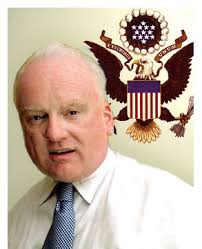
Richard Clarke
For months, Clarke tried to convince others in the Bush Administration that Bin Laden was plotting another attack against the United States—either abroad or at home.
But Clarke could not prevail against the know-it-all arrogance of such higher-ranking Bush officials as Vice President Dick Cheney; Secretary of Defense Donald Rumsfeld; Rumsfeld’s deputy, Paul Wolfowitz; and National Security Advisor Condoleeza Rice.
Rice initially refused to hold a cabinet-level meeting on the subject. Then she “insisted the matter be handled only by a more junior Deputy Principals meeting” in April, 2001, writes Hamilton.
Wolfowitz, the number-two man at the Department of Defense, said: “I don’t understand why we are beginning by talking about this one man, bin Laden.”
Even after Clarke outlined the threat posed by Al-Qaeda, Wolfowitz—whose real target was Saddam Hussein—said: “You give bin Laden too much credit.”
Wolfowitz insisted that bin Laden couldn’t carry out his terrorist acts without the aid of a state sponsor—namely, Iraq.
Wolfowitz, in fact, blamed Iraq for the 1993 bombing of the World Trade Center. Clarke was stunned, since there was absolutely no evidence of Iraqi involvement in this.
“Al-Qaeda plans major acts of terrorism against the United States,” Clarke warned his colleagues. He pointed out that, like Adolf Hitler, bin Laden had actually published his plans for future destruction.
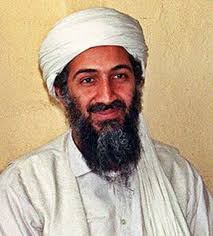
Osama bin Laden
And he added: “Sometimes, as with Hitler in Mein Kampf, you have to believe that these people will actually do what they say they will do.”
Wolfowitz heatedly traded on his Jewish heritage to bring Clarke’s unwelcome arguments to a halt: “I resent any comparison between the Holocaust and this little terrorist in Afghanistan.”
Writing in outraged fury, Hamilton sums up Clarke’s agonizing frustrations:
- Bush’s senior advisors treated their colleagues who had served in the Clinton administration with contempt.
- President Bush, Vice President Dick Cheney, National Security Advisor Condoleeza Rice, Secretary of Defense Donald Rumsfeld and Deputy Defense Secretary Paul Wolfowitz seemed content to ignore the danger signals of an impending Al-Qaeda attack.
- This left only Secretary of State Colin Powell, his deputy Richard Armitage, Richard Clarke and a skeptical Treasury Secretary, Paul O’Neill, to wage “a lonely battle to waken a seemingly deranged new administration.”
Clarke alerted Federal Intelligence agencies that “Al-Qaeda is planning a major attack on us.” He asked the FBI and CIA to report to his office all they could learn about suspicious persons or activities at home and abroad.
Finally, at a meeting with Rice on September 4, 2001, Clarke challenged her to “picture yourself at a moment when in the very near future Al-Qaeda has killed hundreds of Americans, and imagine asking yourself what you wish then that you had already done.”
Seven days later, Al-Qaeda struck, and 3,000 Americans died horrifically—and needlessly.
Neither Bush, Cheney, Rice, Rumsfeld nor Wolfowitz ever admitted their negligence. Nor would any of them be brought to account.
Disgustingly, these were the same officials who, afterward, posed as the Nation’s saviors—and branded anyone who disagreed with them as a traitor, practices the Right continues to exploit to this day.
Only Richard Clarke—who had vainly argued for stepped-up security precautions and taking the fight to Al-Qaeda—gave that apology.
On March 24, 2004, Clarke testified at the public 9/11 Commission hearings. Addressing relatives of victims in the audience, he said: “Your government failed you, those entrusted with protecting you failed you, and I failed you.”
Yet even worse was to come.
On the evening after the September 11 attacks, Bush took Clarke aside during a meeting in the White House Situation Room:
“I want you, as soon as you can, to go back over everything, everything. See if Saddam [Hussein, the dictator of Iraq] did this. See if he’s linked in any way.”
Clarke was stunned: “But, Mr. President, Al-Qaeda did this.”
“I know, I know,” said Bush. “But see if Saddam was involved. I want to know.”
Hussein had not plotted the attack—and there was no evidence proving that he did. But the attack gave “W” the excuse he wanted to remove the man he blamed for the 1992 defeat of his father, President George H.W. Bush.
Bush believed that his father would have been re-elected if he had “gone all the way” into Baghdad during the 1991 Gulf War.
He would finish the job that his father had started but failed to compete.
On September 12, 2001, Bush attended a meeting of the National Security Council.
“Why shouldn’t we go against Iraq, not just Al-Qaeda?” demanded Donald Rumsfeld, the Secretary of Defense.
Vice President Dick Cheney enthusiastically agreed.
9/11, ABC NEWS, AFGHANISTAN, AL QAEDA, ALTERNET, AMERICABLOG, AMERICAN CAESARS: THE LIVES OF THE PRESIDENTS FROM FRANKLIN D. ROOSEVELT TO GEORGE W. BUSH, AMERICAN EMPIRE, AP, ASSASSINATION, BABY BOOMER RESISTANCE, BASHAR AL-ASSAD, BILL CLINTON, BLOOMBERG, BUREAUCRACY, BUZZFEED, CBS NEWS, CHRIS MATHEWS, CNN, CONDOLEEZA RICE, CROOKS AND LIARS, DAILY KOS, DRUDGE REPORT, DWIGHT EISENHOWER, FBI, FIVETHIRTYEIGHT, FOOD DELIVERY SERVICES, FRANKLIN D. ROOSEVELT, GAIUS SUETONIUS TRANQUILLIUS, GEORGE H.W. BUSH, GEORGE W. BUSH, GERALD R. FORD, HARPER’S MAGAZINE, HARRY S. TRUMAN, HUFFINGTON POST, JIMMY CARTER, JOHN F. KENNEDY, JOSEPH BIDEN, Kamala Harris, LYNDON B. JOHNSON, MEDIA MATTERS, MOTHER JONES, MOVEON, MSNBC, NBC NEWS, NEWSWEEK, NIGEL HAMILTON, NPR, OSAMA BIN LADEN, PATRIOT ACT, PBS NEWSHOUR, POLITICO, POLITICUSUSA, RAW STORY, REPUBLICAN PARTY, REUTERS, RICHARD CLARKE, RICHARD NIXON, ROMAN EMPIRE, SALON, SEATTLE TIMES, SEPTEMBER 11, SLATE, SYRIA, TALKING POINTS MEMO, TERRORISM, THE ATLANTIC, THE CHICAGO SUN-TIMES, THE CHICAGO TRIBUNE, THE DAILY BEAST, THE DAILY BLOG, THE GUARDIAN, THE HILL, THE HUFFINGTON POST, THE LOS ANGELES TIMES, THE NATION, THE NEW REPUBLIC, THE NEW YORK TIMES, THE TWELVE CAESARS, THE VILLAGE VOICE, THE WASHINGTON POST, THINKPROGRESS, TIME, TRANSPORTATION SAFEY ADMINISTRATION, TRUTHDIG, TRUTHOUT, TWO POLITICAL JUNKIES, U.S. NEWS & WORLD REPORT, UPI, USA TODAY, VCR RENTALS, X
In Bureaucracy, History, Law, Military, Politics, Social commentary on August 5, 2026 at 12:14 am
This September 11th will mark 25 years—a quarter of a century—-since Islamic terrorists slammed two jetliners into the World Trade Center and a third into the Pentagon.
They would have crashed a fourth jetliner into the White House or Capitol Building except for the heroic resistance of passengers aboard United Airlines Flight 93.
Americans born since then can’t truly understand the horror this ignited in 281.4 million Americans. No one knew if this would be a single cataclysmic act—or if it was only the beginning?
Was the United States destined to become like Beirut, with bombs exploding and buildings collapsing in a seemingly endless spiral of destruction?
In the months directly after 9/11, Americans stopped going out at night. Home seemed to be the safest place to be—which is why food delivery services did a thriving business. So did stores offering VCR rentals.
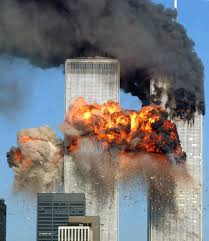
World Trade Center on September 11, 2001
The September 11 attacks drastically transformed the United States by:
- Vastly expanding federal surveillance powers through the newly-passed Patriot Act;
- Thrusting the United States into a nine-year war in Iraq and a 19-year war in Afghanistan;
- Eliminating the longstanding U.S. ban on assassinating foreign leaders;
- Instituting new mandatory ID checks, full-body scans and restrictions on carry-on items at airports through the newly-created Transportation Safety Administration (TSA).
- Sparking a momentary wave of patriotism, which dimmed owing to prolonged wars and controversial domestic policies.
As on past commemorations of 9/11, on this 25th anniversary, those who died will be remembered by friends and relatives who knew and loved them.
It is in fact appropriate to remember the innocents who died on that day—and the heroism of the police and firefighters who died trying to save them.
But it’s equally important to remember those who made 9/11 not simply possible but inevitable.
And that does not mean only the 19 highjackers who turned those planes into fuel-bombs. It means the officials at the highest levels of the administration of President George W. Bush.
Officials who, to this day, have never been held accountable in any way for the resulting death and destruction.
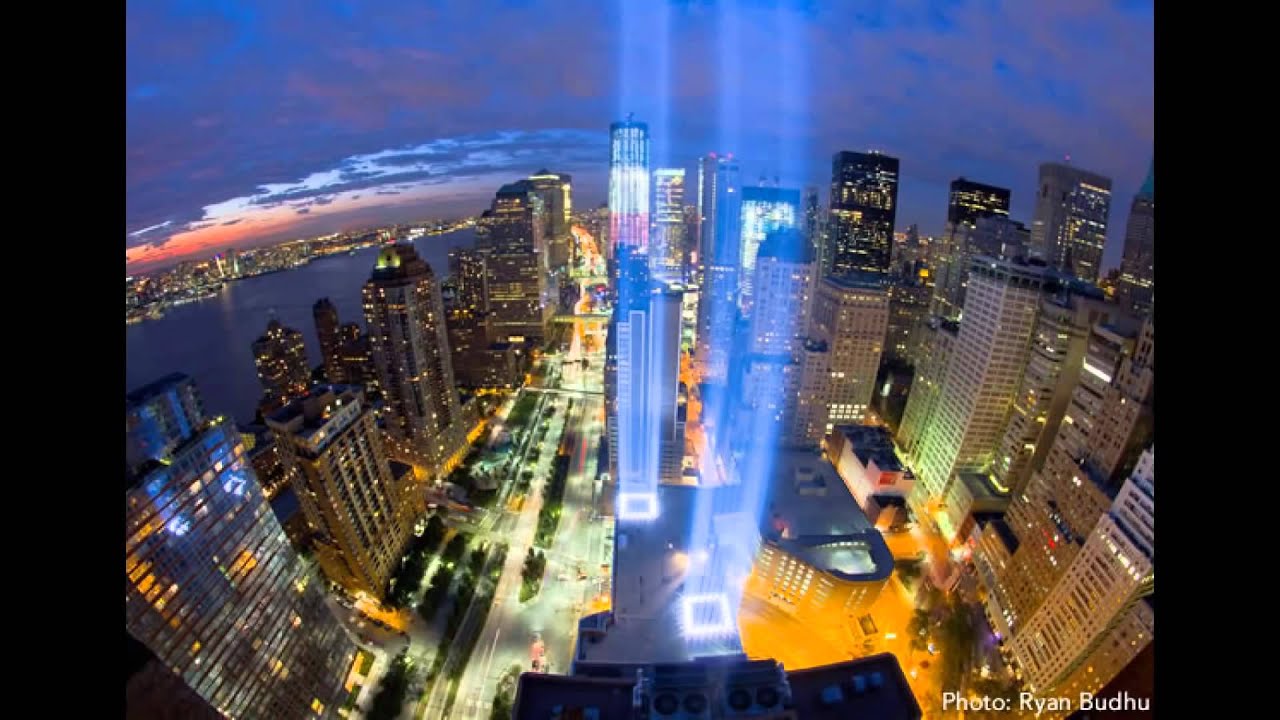
Tribute to 9/11 World Trade Center Victims
And who have been allowed to blatantly lie that they “kept us safe” from terrorism.
Obviously, such an indictment is not going to be presented by TV commentators today—not even on such liberal networks as CNN and MSNBC. And most definitely not on the right-wing Fox network.
Fortunately, British historian Nigel Hamilton has dared to lay bare the facts of this disgrace. Hamilton is the author of several acclaimed political biographies, including JFK: Reckless Youth and Bill Clinton: Mastering the Presidency.
In 2007, he began research on his latest book: American Caesars: The Lives of the Presidents From Franklin D. Roosevelt to George W. Bush.


Nigel Hamilton
The inspiration for this came from a classic work of ancient biography: The Twelve Caesars, by Gaius Suetonius Tranquillus–-known as Suetonius.
Suetonius, a Roman citizen and historian, had chronicled the lives of the first twelve Caesars of imperial Rome: Julius Caesar, Augustus, Tiberius, Caligula, Claudius, Nero, Galba, Otho, Vitellius, Vespasian, Titus and Domitian.
Hamilton wanted to examine post-World War II United States history as Suetonius had examined that of ancient Rome: Through the lives of the 12 “emperors” who had held the power of life and death over their fellow citizens—and those of other nations.
For Hamilton, the “greatest of American emperors, the Caesar Augustus of his time,” was Franklin D. Roosevelt, who led his country through the Great Depression and World War II.
His “”great successors” were Harry S. Truman, Dwight D. Eisenhower and John F. Kennedy—who, in turn, contained the Soviet Union abroad and presided over sustained economic prosperity at home.
By contrast, “arguably the worst of all the American Caesars” was “George W. Bush, and his deputy, Dick Cheney, who willfully and recklessly destroyed so much of the moral basis of American leadership in the modern world.”
Among the most lethal of Bush’s offenses: The appointing of officials who refused to take seriously the threat posed by Al-Qaeda.
![American Caesars: Lives of the Presidents from Franklin D. Roosevelt to George W. Bush Hamilton, Nigel [Used - Good] [Hardcover]](https://encrypted-tbn1.gstatic.com/shopping?q=tbn:ANd9GcQ3XD6eLs1xH-Ysmi1auGx3mKIdsQ74Bv4T8szI3xQLAxjLn2Y-xkQY8EIHF42Pfnxx8OQC0hAKc4l8nT2a3LiCKPSuZvHEVv7SdyE6ixW_5IOqYoKXhqf4&usqp=CAc)
And this arrogance and indifference continued–right up to September 11, 2001, when the World Trade Center and Pentagon became targets for destruction.
Among the few administration officials who did take Al-Qaeda seriously was Richard Clarke, the chief counter-terrorism adviser on the National Security Council.
Clarke had been thus appointed in 1998 by President Bill Clinton. He continued in the same role under President Bush—but the position was no longer given cabinet-level access.
This put him at a severe disadvantage when dealing with other, higher-ranking Bush officials—such as Vice President Dick Cheney, Secretary of Defense Donald Rumsfeld, Rumsfeld’s deputy, Paul Wolfowitz and National Security Advisor Condoleeza Rice.
These turned out to be the very officials who refused to believe that Al-Qaeda posed a lethal threat to the United States.
“Indeed,” writes Hamilton, “in the entire first eight months of the Bush Presidency, Clarke was not permitted to brief President Bush a single time, despite mounting evidence of plans for a new al-Qaeda outrage.” [Italics added]
Nor did it help that, during his first eight months in office before September 11, Bush was on vacation, according to the Washington Post, 42% of the time.
2020 PRESIDENTIAL ELECTION, AFFORDABLE CARE ACT (ACA), ALEC BALDWIN, ALTERNET, AMERICABLOG, AMNESTY INTERNATIONAL, AP, ARTICLE 1, BABY BOOMER RESISTANCE, BANDY X. LEE, BBC, BILL CLINTON, BIRTHRIGHT CITIZENSHIP, BLOOMBERG, BLUESKY, BUREAU OF LABOR STATISTICS (BLS), BUZZFEED, CANADA, CBS NEWS, CHICAGO, CHRIS KREBS, CNN, CONSUMER PROTECTION FINANCIAL BUREAU, CROOKS AND LIARS, CYBERSECURITY AND INFRASTRUCTURE SECURITY AGENCY (CISA), DAILY KOS, DAVID BROOKS, DEMOCRATS, DEPARTMENT OF JUSTICE (DOJ), DIVERSITY EQUITY AND INCLUSION (DEI), DONALD TRUMP, ELON MUSK, FBI, FEDERAL AVIATION ADMINISTRATION (FAA), FIVETHIRTYEIGHT, FLETCHER KNEBEL, GAIUS CALIGULA, GAZA, GEOFF BENNETT, GEORGE STEPHANOPOULOS, GORE VIDAL, GREENLAND, GULF OF AMERICA, GULF OF MEXICO, HARD UNIVERSITY, HARPER’S MAGAZINE, HARVARD MEDICAL SCHOOL, HUFFINGTON POST, illegal immigration, IMMIGRATION AND CUSTOMS ENFORCEMENT (ICE), INSPECTORS GENERAL, IRAN WAR, JANUARY 6 COUP ATTEMPT, JEFFREY EPSTEIN, JOHN ADAMS, JOHN D. GARTNER, JOHN F. KENNEDY CENTER FOR THE PERFORMING ARTS, JOHNS HOPKINS UNIVERSITY MEDICAL SCHOOL, JONATHAN CAPEHART, JOSEPH BIDEN, KEVIN SPACEY, LANCE DODES, LOS ANGELES, MARK MEADOWS, MEDAL OF HONOR WINNERS, MEDIA MATTERS, MEDICAID, MEDICARE, MICHAEL JACKSON, MICK JAGGER, MINNEAPOLIS, MOTHER JONES, MOVEON, MS NOW, MSNBC, NARCISSISM, NBC NEWS, NEWSDAY, NEWSWEEK, NIGHT AT CAMP DAVID (BOOK), NORTH ATLANTIC TREATY ORGANIZATION (NATO), NPR, Oil, PARIS CLIMATE AGREEMENT, PBS NEWSHOUR, POLITICO, POLITICUSUSA, PRINCE ANDREW, QATAR, RAW STORY, REPUBLICANS, REUTERS, RICHARD BRANSON, ROMAN EMPERORS, ROMAN EMPIRE, RUDY GIULIANI, SALLUST, SALON, SEATTLE TIMES, SLATE, ST. PAUL, STRAIT OF HORMUZ, SUPPLEMENTAL NUTRITION ASSISTANCE PROGRAM (SNAP), TACITUS, TALKING POINTS MEMO, THE ATLANTIC, THE CHICAGO SUN-TIMES, THE CHICAGO TRIBUNE, THE DAILY BEAST, THE DAILY BLOG, THE DANGEROUS CASE OF DONALD TRUMP (BOOK), THE GUARDIAN, THE HILL, THE HUFFINGTON POST, THE INTERCEPT, THE LOS ANGELES TIMES, THE NATION, THE NEW REPUBLIC, THE NEW YORK TIMES, THE NEW YORKER, THE PENTAGON, THE TWELVE CAESARS (ESSAY), THE VILLAGE VOICE, THE WASHINGTON POST, THINKPROGRESS, TIME, TRUTHDIG, TRUTHOUT, TWO POLITICAL JUNKIES, U.S. NEWS & WORLD REPORT, UNITED STATES CONSTITUTION, UPI, USA TODAY, VLADIMIR PUTIN, WAR CRIMES, WASHINGTON D.C., WOODY ALLEN, WORLD HEALTH ORGANIZATION, X, YALE SCHOOL OF MEDICINE
In Bureaucracy, History, Law, Law Enforcement, Military, Politics, Social commentary, Uncategorized on May 14, 2026 at 12:05 am
Among the outrages President Donald Trump has committed since returning to power on January 20:
- Launched an unprovoked attack on Iran on February 28, believing that in six weeks he could force its Islamic rulers to abandon their plans to develop nuclear weapons.
- When Iran closed the Strait of Hormuz—through which about 20%-25% of the world’s oil flows—Trump threatened: “A whole civilization will die tonight, never to be brought back again. I don’t want that to happen, but it probably will.”
- He backed off—at least temporarily—only after legal experts and organizations such as Amnesty International warned that attacking civilian infrastructure would constitute war crimes under international law.
Trump’s vindictiveness, his narcissism, his compulsive aggression, his complaints that his “enemies” in government and the press are trying to destroy him, have caused many to ask: Could the President of the United States be suffering from mental illness?
One who has dared to answer this question is John D. Gartner, a practicing psychotherapist.
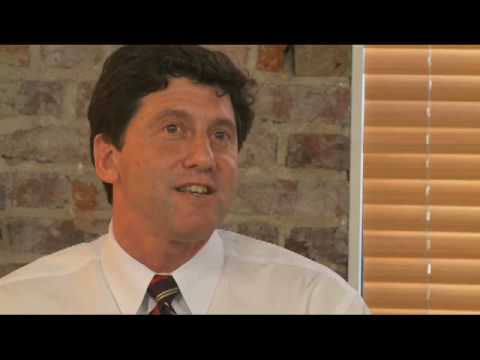
John D. Gartner
Gartner graduated magna cum laude from Princeton University, received his Ph.D in clinical psychology from the University of Massachusetts, and served as a part-time assistant professor of psychiatry at Johns Hopkins University Medical School for 28 years.
During an interview by U.S. News & World Report (published on January 27, 2017), Gartner said: “Donald Trump is dangerously mentally ill and temperamentally incapable of being president.”
Gartner said that Trump suffers from “malignant narcissism,” whose symptoms include:
- anti-social behavior
- sadism
- aggressiveness
- paranoia
- grandiosity.
“We’ve seen enough public behavior by Donald Trump now that we can make this diagnosis indisputably,” says Gartner, who admits he has not personally examined Trump.
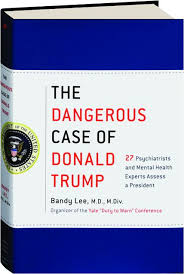
Another psychiatrist who’s determined that Trump is “mentally compromised” is Bandy X. Lee, an assistant clinical psychiatry professor at the Yale School of Medicine.
And she offered her reasons for doing so as the editor of The Dangerous Case of Donald Trump: 27 Psychiatrists and Mental Health Experts Assess a President.
“It doesn’t take a psychiatrist to notice that our president is mentally compromised,” she and colleague Judith Lewis Herman asserted in the book’s prologue.
According to Dr. Craig Malkin, a Lecturer in Psychology for Harvard Medical School and a licensed psychologist, Trump is a pathological narcissist:
“Pathological narcissism begins,” Malkin writes, “when people become so addicted to feeling special that, just like with any drug, they’ll do anything to get their ‘high,’ including lie, steal, cheat, betray and even hurt those closest to them.
“When they can’t let go of their need to be admired or recognized, they have to bend or invent a reality in which they remain special despite all messages to the contrary. In point of fact, they become dangerously psychotic. It’s just not always obvious until it’s too late.”
Lance Dodes, a retired psychiatry professor at Harvard Medical School, believes that Trump is a sociopath:
“The failure of normal empathy is central to sociopathy, which is marked by an absence of guilt, intentional manipulation and controlling or even sadistically harming others for personal power or gratification.”
* * * * * * * * * *
Americans have long believed that they—and especially their leaders—are an “exceptional” people. As a result, they consider themselves immune from the threats of corruption and dictatorship that have plagued other nations.
Millions of Americans—including many Trump supporters—have been shaken by the revelations of the Epstein Files, which chronicle the sexual depravities of convicted pedophile Jeffrey Epstein. Even more disturbing has been the knowledge that he and Donald Trump maintained a friendship for 15 to 17 years.
The Files so far released are replete with names of celebrities such as Michael Jackson, Mick Jagger, Kevin Spacey, Alec Baldwin, Woody Allen, George Stephanopoulos, Elon Musk, Richard Branson, former President Bill Clinton and Prince Andrew.
This has added to the shock and revulsion felt by millions of Americans. Yet they might have been less shocked had they read Gore Vidal’s 1959 essay, “The Twelve Caesars.”

Gore Vidal
Mark Coggins from San Francisco, CC BY 2.0 <https://creativecommons.org/licenses/by/2.0>, via Wikimedia Commons
Vidal’s essay is an ode to The Twelve Caesars, a classic work of ancient biography by Gaius Suetonius Tranquillus—known as Suetonius.
Suetonius, a Roman citizen and historian, chronicled the lives of the first twelve Caesars of imperial Rome: Julius Caesar, Augustus, Tiberius, Caligula, Claudius, Nero, Galba, Otho, Vitellius, Vespasian, Titus and Domitian.
Vidal sought to show the relevance of Suetonius’ work to present-day America: “It would be wrong, however, to dismiss, as so many commentators have, the wide variety of Caesarean sensuality as simply the viciousness of twelve abnormal men. They were, after all, a fairly representative lot.
“They differed from us – and their contemporaries – only in the fact of power, which made it possible for each to act out his most recondite sexual fantasies. This is the psychological fascination of Suetonius. What will men so placed do? The answer, apparently, is anything and everything.”
Thus the lesson taught by the celebrities—including Trump—who glommed onto Jeffrey Epstein: They differed from ordinary citizens only in the power they held over themselves—and others. And, reveling in that power, they felt free to indulge the most depraved fantasies, sexual and otherwise.
2020 PRESIDENTIAL ELECTION, AFFORDABLE CARE ACT (ACA), ALEC BALDWIN, ALTERNET, AMERICABLOG, AMNESTY INTERNATIONAL, AP, ARTICLE 1, BABY BOOMER RESISTANCE, BANDY X. LEE, BBC, BILL CLINTON, BIRTHRIGHT CITIZENSHIP, BLOOMBERG, BLUESKY, BUREAU OF LABOR STATISTICS (BLS), BUZZFEED, CANADA, CBS NEWS, CHICAGO, CHRIS KREBS, CNN, CONSUMER PROTECTION FINANCIAL BUREAU, CROOKS AND LIARS, CYBERSECURITY AND INFRASTRUCTURE SECURITY AGENCY (CISA), DAILY KOS, DAVID BROOKS, DEMOCRATS, DEPARTMENT OF JUSTICE (DOJ), DIVERSITY EQUITY AND INCLUSION (DEI), DONALD TRUMP, ELON MUSK, FBI, FEDERAL AVIATION ADMINISTRATION (FAA), FIVETHIRTYEIGHT, FLETCHER KNEBEL, GAIUS CALIGULA, GAZA, GEOFF BENNETT, GEORGE STEPHANOPOULOS, GORE VIDAL, GREENLAND, GULF OF AMERICA, GULF OF MEXICO, HARD UNIVERSITY, HARPER’S MAGAZINE, HARVARD MEDICAL SCHOOL, HUFFINGTON POST, illegal immigration, IMMIGRATION AND CUSTOMS ENFORCEMENT (ICE), INSPECTORS GENERAL, IRAN WAR, JANUARY 6 COUP ATTEMPT, JEFFREY EPSTEIN, JOHN ADAMS, JOHN D. GARTNER, JOHN F. KENNEDY CENTER FOR THE PERFORMING ARTS, JOHNS HOPKINS UNIVERSITY MEDICAL SCHOOL, JONATHAN CAPEHART, JOSEPH BIDEN, KEVIN SPACEY, LANCE DODES, LOS ANGELES, MARK MEADOWS, MEDAL OF HONOR WINNERS, MEDIA MATTERS, MEDICAID, MEDICARE, MICHAEL JACKSON, MICK JAGGER, MINNEAPOLIS, MOTHER JONES, MOVEON, MS NOW, MSNBC, NARCISSISM, NBC NEWS, NEWSDAY, NEWSWEEK, NIGHT AT CAMP DAVID (BOOK), NORTH ATLANTIC TREATY ORGANIZATION (NATO), NPR, Oil, PARIS CLIMATE AGREEMENT, PBS NEWSHOUR, POLITICO, POLITICUSUSA, PRINCE ANDREW, QATAR, RAW STORY, REPUBLICANS, REUTERS, RICHARD BRANSON, ROMAN EMPERORS, ROMAN EMPIRE, RUDY GIULIANI, SALLUST, SALON, SEATTLE TIMES, SLATE, ST. PAUL, STRAIT OF HORMUZ, SUPPLEMENTAL NUTRITION ASSISTANCE PROGRAM (SNAP), TACITUS, TALKING POINTS MEMO, THE ATLANTIC, THE CHICAGO SUN-TIMES, THE CHICAGO TRIBUNE, THE DAILY BEAST, THE DAILY BLOG, THE DANGEROUS CASE OF DONALD TRUMP (BOOK), THE GUARDIAN, THE HILL, THE HUFFINGTON POST, THE INTERCEPT, THE LOS ANGELES TIMES, THE NATION, THE NEW REPUBLIC, THE NEW YORK TIMES, THE NEW YORKER, THE PENTAGON, THE TWELVE CAESARS (ESSAY), THE VILLAGE VOICE, THE WASHINGTON POST, THINKPROGRESS, TIME, TRUTHDIG, TRUTHOUT, TWO POLITICAL JUNKIES, U.S. NEWS & WORLD REPORT, UNITED STATES CONSTITUTION, UPI, USA TODAY, VLADIMIR PUTIN, WAR CRIMES, WASHINGTON D.C., WOODY ALLEN, WORLD HEALTH ORGANIZATION, X, YALE SCHOOL OF MEDICINE
In Bureaucracy, History, Law, Law Enforcement, Military, Politics, Social commentary, Uncategorized on May 13, 2026 at 12:33 am
Night at Camp David is a 1965 novel about the danger of a President of the United States going insane.
In a November 30, 2018 review of the book, Tom McCarthy, national affairs correspondent for the British newspaper, The Guardian, wrote of President Donald Trump:
“The current president has seen crowds where none exist, deployed troops to answer no threat, attacked national institutions – the military, the justice department, the judiciary, the vote, the rule of law, the press – tried to prosecute his political enemies, elevated bigots, oppressed minorities, praised despots while insulting global allies and wreaked diplomatic havoc from North Korea to Canada.
“He stays up half the night watching TV and tweeting about it, then wakes up early to tweet some more, in what must be the most remarkable public diary of insecurity, petty vindictiveness, duplicity and scattershot focus by a major head of state in history.”
And the nightmare isn’t over.
Among the outrages Trump has committed since returning to power on January 20:
- Pardoned about 1,500 of his followers who violently tried to overturn the outcome of the 2020 Presidential election in the January 6, 2021 attack on Congress. Move than 250 of those pardoned had been convicted of assaulting police.
- Signed 26 executive orders reversing climate change initiatives, eliminating DEI programs, changing the federal designation for the Gulf of Mexico to the “Gulf of America” and initiating a federal hiring freeze.
- Fired the inspectors general—who are charged with protecting the government from waste and corruption—from more than a dozen federal agencies.
- Following Trump’s anti-DEI executive order, the Department of Defense deleted content that included the achievements of nonwhites—such as Navajo code talkers, black Tuskegee Airmen, Medal of Honor winners and women veterans.
- Fired Rohit Chopra, the director of the Consumer Financial Protection Bureau, which protects consumers from unfair, deceptive and fraudulent business practices.
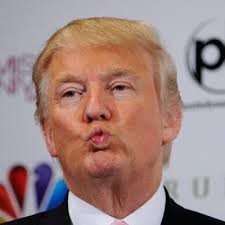
Donald Trump
- Withdrew the United States from the World Health Organization (WHO).
- Withdrew the United States from the Paris climate agreement.
- Fired the non-partisan board members at the John F. Kennedy Center for the Performing Arts. His toadies illegally renamed it the Trump-Kennedy Center and appointed him as its chairman—just as Joseph Stalin made himself arbiter of what was permissible for artists in the Soviet Union.
- When artists and audiences—outraged by the takeover—boycotted the Center, an embarrassed Trump ordered its closure, claiming a two-year repair renovation was necessary
- Purged about a half-dozen executive assistant directors at the FBI. These were some of the bureau’s top managers overseeing criminal, national security and cyber investigations. Their “crime”: Investigating Trump’s inciting the January 6, 2021 coup attempt and illegally holding highly sensitive national security documents after leaving office.
- Ordered the Justice Department to indict his critics such as New York Attorney General Letitia James and former FBI Director James Comey.

- Declared “a national emergency” targeting migrants—legal and illegal.
- Tried to cancel birthright citizenship—enshrined within the United States Constitution— for U.S.-born children.
- Demanded a military parade for his 79th birthday, poorly disguised as a salute to the 250th anniversary of the United States Army.
- Pardoned favored political allies and loyalists. Among these: Seventy-seven people associated with the Trump fake electors plot to overturn the results of the 2020 U.S. presidential election, including Trump’s personal attorney Rudy Giuliani and former chief of staff Mark Meadows.
- Angrily fired the Commissioner of the Bureau of Labor Statistics following a weak jobs report, triggering fears about his extortionate tariff policy.
- Demanded that the media refer to the Gulf of Mexico as “the Gulf of America” and banned the Associated Press from the White House for refusing to do so.
- Ordered the closure of all Federal Diversity, Equity, Inclusion and Accessibility offices.
- Demanded that Canada become the 51st state and aggressively raised tariffs on Canadian goods.
- Shut down the Federal Government on October 1, when Democrats refused to agree to his gutting Medicaid, Medicare and the Affordable Care Act (ACA), causing 10-15 million Americans to lose health insurance coverage.
- Among those not getting paid: Air traffic controllers for the Federal Aviation Administration (FAA). Owing to many controllers’ refusing to work, the FAA reduced air traffic by 10% at many airports.
- Shut off the Supplemental Nutrition Assistance Program (SNAP) for the poor to pressure Democrats to support his gutting of healthcare programs.

- Issued executive orders revoking the security clearance of Chris Krebs, former director of the Cybersecurity and Infrastructure Security Agency. Krebs’ “crime”: Preventing lies spread by Russians—and Americans—on social media platforms from swaying the 2020 Presidential election to Trump.
- Flooded the streets of Los Angeles, Washington, D.C., Chicago with federalized National Guard troops against state governors’ wishes during immigration crackdowns and civil unrest.
- Flooded Minneapolis and St. Paul, Minnesota, with 3,000 Immigration and Customs Enforcement (ICE) agents who terrorized (and in two cases murdered) both American citizens and illegal aliens.
- Threatened Harvard University with the loss of billions of dollars in federal funding, claiming that 2023 student protests about Gaza violated the civil rights of Jewish students.
- Threatened Greenland—an autonomous territory within the Kingdom of Denmark—with invasion unless it agreed to acquisition by the United States. Since Denmark is a member of NATO, such an invasion would pit the United States against its own alliance.
2020 PRESIDENTIAL ELECTION, AFFORDABLE CARE ACT (ACA), ALEC BALDWIN, ALTERNET, AMERICABLOG, AMNESTY INTERNATIONAL, AP, ARTICLE 1, BABY BOOMER RESISTANCE, BANDY X. LEE, BBC, BILL CLINTON, BIRTHRIGHT CITIZENSHIP, BLOOMBERG, BLUESKY, BUREAU OF LABOR STATISTICS (BLS), BUZZFEED, CANADA, CBS NEWS, CHICAGO, CHRIS KREBS, CNN, CONSUMER PROTECTION FINANCIAL BUREAU, CROOKS AND LIARS, CYBERSECURITY AND INFRASTRUCTURE SECURITY AGENCY (CISA), DAILY KOS, DAVID BROOKS, DEMOCRATS, DEPARTMENT OF JUSTICE (DOJ), DIVERSITY EQUITY AND INCLUSION (DEI), DONALD TRUMP, ELON MUSK, FBI, FEDERAL AVIATION ADMINISTRATION (FAA), FIVETHIRTYEIGHT, FLETCHER KNEBEL, GAIUS CALIGULA, GAZA, GEOFF BENNETT, GEORGE STEPHANOPOULOS, GORE VIDAL, GREENLAND, GULF OF AMERICA, GULF OF MEXICO, HARD UNIVERSITY, HARPER’S MAGAZINE, HARVARD MEDICAL SCHOOL, HUFFINGTON POST, illegal immigration, IMMIGRATION AND CUSTOMS ENFORCEMENT (ICE), INSPECTORS GENERAL, IRAN WAR, JANUARY 6 COUP ATTEMPT, JEFFREY EPSTEIN, JOHN ADAMS, JOHN D. GARTNER, JOHN F. KENNEDY CENTER FOR THE PERFORMING ARTS, JOHNS HOPKINS UNIVERSITY MEDICAL SCHOOL, JONATHAN CAPEHART, JOSEPH BIDEN, KEVIN SPACEY, LANCE DODES, LOS ANGELES, MARK MEADOWS, MEDAL OF HONOR WINNERS, MEDIA MATTERS, MEDICAID, MEDICARE, MICHAEL JACKSON, MICK JAGGER, MINNEAPOLIS, MOTHER JONES, MOVEON, MS NOW, MSNBC, NARCISSISM, NBC NEWS, NEWSDAY, NEWSWEEK, NIGHT AT CAMP DAVID (BOOK), NORTH ATLANTIC TREATY ORGANIZATION (NATO), NPR, Oil, PARIS CLIMATE AGREEMENT, PBS NEWSHOUR, POLITICO, POLITICUSUSA, PRINCE ANDREW, QATAR, RAW STORY, REPUBLICANS, REUTERS, RICHARD BRANSON, ROMAN EMPERORS, ROMAN EMPIRE, RUDY GIULIANI, SALLUST, SALON, SEATTLE TIMES, SLATE, ST. PAUL, STRAIT OF HORMUZ, SUPPLEMENTAL NUTRITION ASSISTANCE PROGRAM (SNAP), TACITUS, TALKING POINTS MEMO, THE ATLANTIC, THE CHICAGO SUN-TIMES, THE CHICAGO TRIBUNE, THE DAILY BEAST, THE DAILY BLOG, THE DANGEROUS CASE OF DONALD TRUMP (BOOK), THE GUARDIAN, THE HILL, THE HUFFINGTON POST, THE INTERCEPT, THE LOS ANGELES TIMES, THE NATION, THE NEW REPUBLIC, THE NEW YORK TIMES, THE NEW YORKER, THE PENTAGON, THE TWELVE CAESARS (ESSAY), THE VILLAGE VOICE, THE WASHINGTON POST, THINKPROGRESS, TIME, TRUTHDIG, TRUTHOUT, TWO POLITICAL JUNKIES, U.S. NEWS & WORLD REPORT, UNITED STATES CONSTITUTION, UPI, USA TODAY, VLADIMIR PUTIN, WAR CRIMES, WASHINGTON D.C., WOODY ALLEN, WORLD HEALTH ORGANIZATION, X, YALE SCHOOL OF MEDICINE
In Bureaucracy, History, Law, Law Enforcement, Military, Politics, Social commentary on May 12, 2026 at 12:05 am
On the April 10 edition of The PBS Newshour, David Brooks of The Atlantic and Jonathan Capehart of MS NOW—exchanged opinions on the mental health of President Donald Trump.
Although Brooks, a conservative, and Capehart, a liberal, usually find themselves on opposite sides of a subject, this time they reached a consensus: Trump is dangerously ill.
David Brooks: Last January, as we watched this spiral psychologically….I read Roman histories. And so you get Tacitus and Sallust and those old guys, because they had a front-row seat to tyranny. And they watched authoritarians, one after another, Caligula, all these guys. And the one thing they all said was that they deteriorate.
They create a situation around them, when the sycophants have to get more sycophant. Anybody who’s reasonable is either dead or gone. And then the urge to dominate, the lust for power becomes drunk. They become drunk on that. And they get more and more daring, more and more out of control, and then you get this spiral.
And our founding fathers, they understood this so well. They read Tacitus. They loved these guys. And John Adams said, if we get a leader like that, he will run through our Congress, our Constitution the way a whale goes through a net. And so they completely understood. And their worst nightmare is now happening.
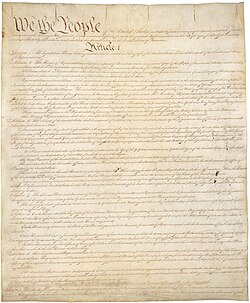
The Constitution of the United States
Moderator Geoff Bennett: And, Jonathan, 61 percent of Americans, including 30 percent of Republicans, now say that President Trump has become erratic with age. That’s according to a recent Reuters-Ipsos poll.
The press corps — I guess we should hold up a mirror to ourselves. The press corps spent two years making President Biden’s mental fitness, his acuity the story. Why isn’t that same scrutiny now being applied to President Trump broadly?
Jonathan Capehart: Yes, exactly. That has been my question since January 20 of last year. We, the press, spent a lot of time talking about President Biden and his age because he looked old. He moved slowly. He wasn’t as vigorous and agile, supposedly, as the guy he pushed out of office and then the guy who was running against him.
And even little slips of the tongue were used to show, see, aha, he’s not all there. He’s losing his mind. How does that compare to what we’re going through right now? I wish people who have written books — people who have gone on air talking about President Biden nonstop, where are they now?
Where are those books now that we have a president who has given ample evidence, ample evidence that something is not right? Where are the people who are standing up and saying, you know what, something needs to be done?
And that goes back to some — you were talking about the founders. They were prepared for something like this. What they weren’t prepared for was the Article I branch just ceding all authority. What they weren’t prepared for were people from the president’s own party willing to either turn a blind eye or enable him to run roughshod over the Constitution.

Donald Trump
Even when you have got him out there threatening annihilation of a civilization, even when he’s started a war for no reason and the enemy is in a stronger position now than it was before he started this war of his own choosing?
At some point, Republicans writ large and those on Capitol Hill have to start standing up for the Article I prerogatives, but also start standing up for the country. I don’t know how much longer we as a nation can withstand this. And I know the world is beyond done with us, but I think they’re also frightened of us.
* * * * * * * * * *
This is not the first time the subject of Donald Trump’s mental instability has been raised. In 2018, during Trump’s first term as President, a 53-year-old novel was re-released: Night at Camp David, by Fletcher Knebel.
At the time of its 1965, release, its plot was considered so over-the-top as to be worthy of science fiction:
Iowa Democratic Senator Jim MacVeagh is summoned to Camp David, the Presidential retreat, by President Mark Hollenbach. MacVeagh is expected to become Hollenbach’s next Vice President. But he becomes alarmed that Hollenbach is clearly suffering from intense paranoia.
Hollenbach wants to develop a closer relationship between the United States and Russia—while cutting ties with American allies in Europe. Moreover, he believes the American news media are conspiring against him with his political enemies.
Its paperback edition offered a sentence that went straight for the jugular: “What would happen if the President of the United States went stark-raving mad?”
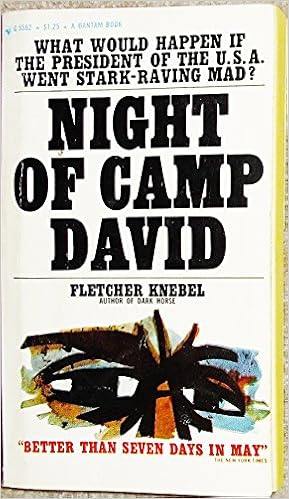
In a November 30, 2018 review of Night at Camp David, Tom McCarthy, national affairs correspondent for the British newspaper, The Guardian, wrote:
“The current president has seen crowds where none exist, deployed troops to answer no threat, attacked national institutions – the military, the justice department, the judiciary, the vote, the rule of law, the press – tried to prosecute his political enemies, elevated bigots, oppressed minorities, praised despots while insulting global allies and wreaked diplomatic havoc from North Korea to Canada.”
2020 PRESIDENTIAL ELECTION, AFFORDABLE CARE ACT (ACA), ALEC BALDWIN, ALTERNET, AMERICABLOG, AMNESTY INTERNATIONAL, AP, ARTICLE 1, BABY BOOMER RESISTANCE, BANDY X. LEE, BBC, BILL CLINTON, BIRTHRIGHT CITIZENSHIP, BLOOMBERG, BLUESKY, BUREAU OF LABOR STATISTICS (BLS), BUZZFEED, CANADA, CBS NEWS, CHICAGO, CHRIS KREBS, CNN, CONSUMER PROTECTION FINANCIAL BUREAU, CROOKS AND LIARS, CYBERSECURITY AND INFRASTRUCTURE SECURITY AGENCY (CISA), DAILY KOS, DAVID BROOKS, DEMOCRATS, DEPARTMENT OF JUSTICE (DOJ), DIVERSITY EQUITY AND INCLUSION (DEI), DONALD TRUMP, ELON MUSK, FBI, FEDERAL AVIATION ADMINISTRATION (FAA), FIVETHIRTYEIGHT, FLETCHER KNEBEL, GAIUS CALIGULA, GAZA, GEOFF BENNETT, GEORGE STEPHANOPOULOS, GORE VIDAL, GREENLAND, GULF OF AMERICA, GULF OF MEXICO, HARD UNIVERSITY, HARPER’S MAGAZINE, HARVARD MEDICAL SCHOOL, HUFFINGTON POST, illegal immigration, IMMIGRATION AND CUSTOMS ENFORCEMENT (ICE), INSPECTORS GENERAL, IRAN WAR, JANUARY 6 COUP ATTEMPT, JEFFREY EPSTEIN, JOHN ADAMS, JOHN D. GARTNER, JOHN F. KENNEDY CENTER FOR THE PERFORMING ARTS, JOHNS HOPKINS UNIVERSITY MEDICAL SCHOOL, JONATHAN CAPEHART, JOSEPH BIDEN, KEVIN SPACEY, LANCE DODES, LOS ANGELES, MARK MEADOWS, MEDAL OF HONOR WINNERS, MEDIA MATTERS, MEDICAID, MEDICARE, MICHAEL JACKSON, MICK JAGGER, MINNEAPOLIS, MOTHER JONES, MOVEON, MS NOW, MSNBC, NARCISSISM, NBC NEWS, NEWSDAY, NEWSWEEK, NIGHT AT CAMP DAVID (BOOK), NORTH ATLANTIC TREATY ORGANIZATION (NATO), NPR, Oil, PARIS CLIMATE AGREEMENT, PBS NEWSHOUR, POLITICO, POLITICUSUSA, PRINCE ANDREW, QATAR, RAW STORY, REPUBLICANS, REUTERS, RICHARD BRANSON, ROMAN EMPERORS, ROMAN EMPIRE, RUDY GIULIANI, SALLUST, SALON, SEATTLE TIMES, SLATE, ST. PAUL, STRAIT OF HORMUZ, SUPPLEMENTAL NUTRITION ASSISTANCE PROGRAM (SNAP), TACITUS, TALKING POINTS MEMO, THE ATLANTIC, THE CHICAGO SUN-TIMES, THE CHICAGO TRIBUNE, THE DAILY BEAST, THE DAILY BLOG, THE DANGEROUS CASE OF DONALD TRUMP (BOOK), THE GUARDIAN, THE HILL, THE HUFFINGTON POST, THE INTERCEPT, THE LOS ANGELES TIMES, THE NATION, THE NEW REPUBLIC, THE NEW YORK TIMES, THE NEW YORKER, THE PENTAGON, THE TWELVE CAESARS (ESSAY), THE VILLAGE VOICE, THE WASHINGTON POST, THINKPROGRESS, TIME, TRUTHDIG, TRUTHOUT, TWO POLITICAL JUNKIES, U.S. NEWS & WORLD REPORT, UNITED STATES CONSTITUTION, UPI, USA TODAY, VLADIMIR PUTIN, WAR CRIMES, WASHINGTON D.C., WOODY ALLEN, WORLD HEALTH ORGANIZATION, X, YALE SCHOOL OF MEDICINE
In Bureaucracy, History, Law, Law Enforcement, Military, Politics, Social commentary on May 11, 2026 at 12:10 am
On April 10, David Brooks of The Atlantic and Jonathan Capehart of MS NOW appeared—as they do every Friday—on the PBS Newshour to discuss the week’s political events.
Brooks is a conservative, Capehart, a liberal, but they exchange their often differing views in a calm, civil manner. But on this date, there was unanimity between them on the subject of President Donald Trump’s deteriorating mental state.
Moderator Geoff Bennett kicked off the exchange with this:
So, David, the president this week threatened to wipe out an entire civilization, and then he took a cease-fire deal 88 minutes before his own deadline. Is this maximum pressure or maximum chaos?
David Brooks: Maximum malevolence. We shouldn’t let that comment about the wiping out of civilization go by without saying what an antithesis it is of American history….We have always prided ourselves, whether — whatever stupid stuff we do, on not being a rapacious European-style imperial dominating power.
After World War II, we didn’t try to take over Germany and Japan. We gave them money so they could recover. Even George W. Bush, whatever you think of the war, the intentions were OK. But to threaten to wipe out a civilization is pure malevolence.

David Brooks
It’s an assertion of true evil. And it didn’t work. And so, if you want to know how the war is going, look at who’s moving. The U.S. used to have regime change. Now, today, Trump said just so we can stop the nuclear program. And the nuclear material have been unaffected by this war, by the way. So we’re pulling back our goals.
The Iranians, when they put forth their negotiating position, they’re sticking with the goals they had and then they’re adding more. We want to control the Straits of Hormuz. We want reparations. We want you to release all our money.
So they’re clearly on the offensive. And so if you…think America’s winning, why are we going backwards and why are we retreating?
Bennett: And, Jonathan, what does it mean for American foreign policy when the distance between the president saying on social media a whole civilization will die tonight and a cease-fire announcement is roughly eight hours?
Jonathan Capehart: It speaks to the chaos that….that characterizes the president himself, that characterizes how he is running his administration. I was on air Sunday morning….where he was demanding explicitly to open the Strait of Hormuz, you crazy bastards, from a president of the United States on Easter Sunday. To your point, this is not the America that we know.
The American president is supposed to be a statesman, supposed to be someone who is a reflection of our better selves or who we hope to be, who we project our image to be. And, right now, our image is so bad that we not only have the French leader calling out the American president, but the British prime minister called out the American president, basically lumping him with Vladimir Putin of Russia in terms of malevolent force on the world stage.

Jonathan Capehart
….This gets to the bigger question for me about….is the president all right? Because no American president ever has written the things, said the things, threatened the things that he did in the span of, what, 72 hours.
Bennett: Let’s talk more about that, because, last night, President Trump shared this graphic video of a woman being beaten to death. We’re not going to show that video, but you can see the screenshot of the social media message there on the screen.
And he used this video to attack former President Biden, Democrats, federal judges. A sitting president posting footage of a murder as political content, is there no line left?
Brooks: Apparently not. I think he is spiraling out of control. And I say that in part, and a little psychologically, narcissists tend to disinhibit as they age. And so they….just get more of themselves, which is not a good thing.
Donald Trump
But last January, as we watched this spiral psychologically….I read Roman histories. And so you get Tacitus and Sallust and those old guys, because they had a front-row seat to tyranny. And they watched authoritarians, one after another, Caligula, all these guys. And the one thing they all said was that they deteriorate.
They create a situation around them, when the sycophants have to get more sycophant. Anybody who’s reasonable is either dead or gone. And then the urge to dominate, the lust for power becomes drunk. They become drunk on that. And they get more and more daring, more and more out of control, and then you get this spiral.
And our founding fathers, they understood this so well. They read Tacitus. They loved these guys. And John Adams said, if we get a leader like that, he will run through our Congress, our Constitution the way a whale goes through a net. And so they completely understood. And their worst nightmare is now happening.
2016 PRESIDENTIAL RACE, 2024 PRESIDENTIAL ELECTION, ABC NEWS, ADRIANNE ZUCKER, ALTERNET, AMERICABLOG, ANTHONY FAUCI, AP, BABY BOOMER RESISTANCE, BBC, BILL CLINTON, BILLY BUSH, BLOOMBERG, BLOOMBERG NEWS, BLUESKY, BUZZFEED, CBS NEWS, CENTERS FOR DISEASE CONTROL AND PREVENTION, CNN, CROOKS AND LIARS, DAILY KOS, DAILY KOZ, DAYS OF OUR LIVES, DEPARTMENT OF HEALTH AND HUMAN SERVICES, DEPARTMENT OF VETERANS AFFAIRS, DONALD TRUMP, DRUDGE REPORT, ENVIRONMENTAL PROTECTION AGENCY, FACEBOOK, FEDERAL AVIATION ADMINISTRATION, FIVETHIRTYEIGHT, FOOD AND DRUG ADMINISTRATION, GAIUS CALIGULA, GAIUS SUETONIUS TRANQUILLUS, HARPER’S MAGAZINE, HUFFINGTON POST, IVANKA TRUMP, JANUARY 6 COMMITTEE, JANUARY 6 COUP ATTEMPT, Kamala Harris, LIZ CHENEY, MARK MILLEY, MEDIA MATTERS, MICHELE BACHMANN, MOTHER JONES, MOVEON, MSNBC, NBC NEWS, NEW REPUBLIC, NEWSDAY, NEWSWEEK, NPR, PBS NEWSHOUR, POLITICO, POLITICUSUSA, RAW STORY, REPUBLICAN PARTY, REUTERS, ROMAN EMPIRE, SALON, SEATTLE TIMES, Secret Service, SEXUAL HARASSMENT, SLATE, TALKING POINTS MEMO, THE ATLANTIC, THE CHICAGO SUN-TIMES, THE CHICAGO TRIBUNE, THE DAILY BEAST, THE DAILY BLOG, THE GUARDIAN, THE HILL, THE HUFFINGTON POST, THE INTERCEPT, THE LOS ANGELES TIMES, THE NATION, THE NEW REPUBLIC, THE NEW YORK TIMES, THE NEW YORKER, THE TWELVE CAESARS, THE VILLAGE VOICE, THE WALL STREET JOURNAL, THE WASHINGTON POST, THINKPROGRESS, TIME, TODAY, TRUTHDIG, TRUTHOUT, TWO POLITICAL JUNKIES, U.S. NEWS & WORLD REPORT, UPI, USA TODAY, VETERANS, X
In Bureaucracy, History, Law, Politics, Social commentary on April 27, 2026 at 12:10 am
The first six months of Gaius Caligula’s reign as Emperor of Rome were successful and popular.
After that, wrote his biographer, Gaius Suetonius Tranquillus: “So much for Caligula as emperor; we must now tell of his career as a monster.”
The same could now be written about Donald Trump.

Gaius Caligula
Among his litany of crimes, according to Suetonius:
“He forced parents to attend the executions of their sons, sending a litter for one man who pleaded ill health, and inviting another to dinner immediately after witnessing the death, and trying to rouse him to gaiety and jesting by a great show of affability.
“He had the manager of his gladiatorial shows beaten with chains in his presence for several successive days, and would not kill him until he was disgusted at the stench of his putrefied brain.”
Donald Trump has never been charged with murder. But among his first acts as reelected President was to issue pardons to his 1,500-plus supporters charged in the January 6, 2021 insurrection that shook the foundations of American democracy.
Dozens of them had prior convictions or pending charges for rape, child sexual abuse, domestic violence, manslaughter, production of child pornography and drug trafficking.
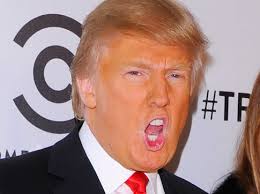
Donald Trump
During the 2024 presidential campaign, Trump made more than 100 threats to investigate, prosecute, imprison or otherwise punish his perceived enemies, including political opponents and private citizens.
To prevent this, President Joe Biden issued pre-pardons to, among others:
- Former Wyoming Representative Liz Cheney;
- Former Chairman of the Joint Chiefs of Staff Mark Milley;
- Members of the Biden family;
- Dr. Anthony Fauci, former director of the National Institute of Allergy and Infections Diseases;
- Members of Congress who served on the House Select Committee to investigate the January 6 attack on the United States Capitol.
Issuing pardons to those who had not committed crimes to protect them from a vengeance-seeking President was an act unprecedented in American history.
Caligula’s egomania soon reached psychotic heights.
- He gave himself several surnames: “Pious,” “Child of the Camp,” “Father of the Armies,” and “Greatest and Best of Caesars.”
- Flattered that he had risen higher than princes and kings, he began to believe himself a god.
- He appeared at the temple of Castor and Pollux to be worshiped as Jupiter Latiaris.
Trump’s egomania is literally stamped on his properties. Of the 515 entities he owns, 268 of them—52%–bear his last name. He often refers to his properties as “the swankiest,” “the most beautiful.”
Among the references he’s made to himself:
- “My fingers are long and beautiful, as, it has been well documented, are various other parts of my body.”
- “I think the only difference between me and the other candidates is that I’m more honest and my women are more beautiful.”
- “My IQ is one of the highest––and you all know it.”
When Caligula wasn’t ordering wholesale Stalin-like purges—ranging from Roman aristocrats to slaves—he was setting new records for debauchery.
According to the Roman historian Gaius Suetonius Tranquillus: “[Caligula] lived in habitual incest with all his [three] sisters, and at a large banquet he placed each of them in turn below him, while his wife reclined above. Of these he is believed to have violated Drusilla when he was still a minor.”
Trump has never been charged with incest, but he’s repeatedly made sexually inappropriate comments about his daughter, Ivanka:
- “Yeah, she’s really something, and what a beauty, that one. If I weren’t happily married and, ya know, her father …”
- When asked how he would react if Ivanka, a former teen model, posed for Playboy, Trump replied: “I don’t think Ivanka would do that, although she does have a very nice figure. I’ve said if Ivanka weren’t my daughter, perhaps I’d be dating her.”
I
Ivanka Trump
For all his cruelty and egomania, the trait that finally destroyed Caligula was his joy in humiliating others.
His fatal mistake was to taunt Cassius Chaerea, a member of his own bodyguard. Caligula considered Chaerea effeminate because of a weak voice and mocked him with names like “Priapus” and “Venus.”
On January 22 41 A.D. Chaerea and several other bodyguards hacked Caligula to death with swords before other guards could save him.
Since returning to the White House on January 20, Trump has ordered a massive and continuing purge of federal employees. By April 1, 2025, about 60,000 workers had been laid off or fired.
Among the purged agencies:
- Federal Aviation Administration
- Centers for Disease Control and Prevention
- Food and Drug Administration
- Department of Veterans Affairs
- Environmental Protection Agency
- Department of Health and Human Services
These firings were not related to poor job performance. And those fired were not given advance notice of their coming termination.
Veterans—who comprise about 30% of the federal workforce–have been particularly hard-hit.
Even those responsible for protecting Trump have been or will be affected: Many Secret Service agents have friends or family members whose lives have been shattered by these purges.
Some of those victims have lost their livelihood. Still others may die of illnesses owing to Trump’s attacks on the Centers for Disease Control and Prevention.
It remains to be seen if Trump suffers the final fate as Caligula.
2024 PRESIDENTIAL ELECTION, ABC NEWS, ADRIANNE ZUCKER, ALTERNET, AMERICABLOG, ANTHONY FAUCI, AP, BABY BOOMER RESISTANCE, BBC, BILL CLINTON, BILLY BUSH, BLOOMBERG, BLOOMBERG NEWS, BLUESKY, BUZZFEED, CBS NEWS, CENTERS FOR DISEASE CONTROL AND PREVENTION, CNN, CROOKS AND LIARS, DAILY KOS, DAILY KOZ, DAYS OF OUR LIVES, DEPARTMENT OF HEALTH AND HUMAN SERVICES, DEPARTMENT OF VETERANS AFFAIRS, DONALD TRUMP, DRUDGE REPORT, ENVIRONMENTAL PROTECTION AGENCY, FACEBOOK, FEDERAL AVIATION ADMINISTRATION, FIVETHIRTYEIGHT, FOOD AND DRUG ADMINISTRATION, GAIUS CALIGULA, GAIUS SUETONIUS TRANQUILLUS, HARPER’S MAGAZINE, HUFFINGTON POST, IVANKA TRUMP, JANUARY 6 COMMITTEE, JANUARY 6 COUP ATTEMPT, Kamala Harris, LIZ CHENEY, MARK MILLEY, MEDIA MATTERS, MICHELE BACHMANN, MOTHER JONES, MOVEON, MSNBC, NBC NEWS, NEW REPUBLIC, NEWSDAY, NEWSWEEK, NPR, PBS NEWSHOUR, POLITICO, POLITICUSUSA, RAW STORY, REPUBLICAN PARTY, REUTERS, ROMAN EMPIRE, SALON, SEATTLE TIMES, Secret Service, SEXUAL HARASSMENT, SLATE, TALKING POINTS MEMO, THE ATLANTIC, THE CHICAGO SUN-TIMES, THE CHICAGO TRIBUNE, THE DAILY BEAST, THE DAILY BLOG, THE GUARDIAN, THE HILL, THE HUFFINGTON POST, THE INTERCEPT, THE LOS ANGELES TIMES, THE NATION, THE NEW REPUBLIC, THE NEW YORK TIMES, THE NEW YORKER, THE TWELVE CAESARS, THE VILLAGE VOICE, THE WALL STREET JOURNAL, THE WASHINGTON POST, THINKPROGRESS, TIME, TODAY, TRUTHDIG, TRUTHOUT, TWO POLITICAL JUNKIES, U.S. NEWS & WORLD REPORT, UPI, USA TODAY, VETERANS, X
In Bureaucracy, History, Politics, Social commentary on April 24, 2026 at 12:10 am
Even many Republicans secretly believe that Donald Trump is better-suited for the role of Gaius Caligula than President of the United States.
It was Caligula who, as the mad emperor of Rome, once said: “Bear in mind that I can treat anyone exactly as I please.”

Gaius Caligula
Sergey Sosnovskiy from Saint-Petersburg, Russia, CC BY-SA 2.0 <https://creativecommons.org/licenses/by-sa/2.0>, via Wikimedia Commons
On October 7, 2016, The Washington Post leaked a video of Donald Trump making sexually predatory comments about women.
The remarks came during a 2005 exchange with Billy Bush, then the host of Access Hollywood and later host of Today. He was fired shortly after the following exchange became public.
The two were traveling in an Access Hollywood bus to the set of the soap opera Days of Our Lives, where Trump was to make a cameo appearance.
Neither Trump nor Bush could be seen during the exchange—the video focused entirely on the bus. But the audio came in clearly—and, for Trump, damningly:
DONALD TRUMP: You know I moved on her actually. You know she was down on Palm Beach. I moved on her and I failed. I’ll admit it. I did try and fuck her. She was married.
UNKNOWN: That’s huge news.
TRUMP: No, no, Nancy. No this was—and I moved on her very heavily, in fact, I took her out furniture shopping. She wanted to get some furniture. I said I’ll show you where they have some nice furniture.
I moved on her like a bitch, but I couldn’t get there, and she was married. Then all of a sudden I see her, she’s now got the big phony tits and everything. She’s totally changed her look.
[At that point, they spot Adrianne Zucker, the starring actress in Days in Our Lives.]
Donald Trump
BUSH: Sheesh, your girl’s hot as shit. In the purple. Yes! The Donald has scored. Whoa, my man!
TRUMP: Look at you. You are a pussy. Maybe it’s a different one.
BUSH: It better not be the publicist. No, it’s her. It’s—
TRUMP: Yeah, that’s her. With the gold. I better use some Tic Tacs just in case I start kissing her. You know I’m automatically attracted to beautiful—I just start kissing them. It’s like a magnet. Just kiss. I don’t even wait. And when you’re a star they let you do it. You can do anything. Grab them by the pussy. You can do anything.
When the Washington Post broke the story on October 7, the reaction was immediate—and explosive.
This was not a testosterone-fueled teenager fantasizing about making love with a girl he adored. This was a 70-year-old man bragging about having used deceit to try to lure a married woman into bed.
And about having used his celebrity status to force himself on women: “I moved on her very heavily. Just kiss. I don’t even wait. Grab them by the pussy. You can do anything.”
Gaius Caligula himself couldn’t have said it better. He lived 29 years and ruled Rome three years, 10 months and eight days. When he died, his reign of depravity and terror died with him.
Today, millions of Americans fear a similar fate has swept their country now that Donald Trump has again become President.
Caligula’s life spanned August 31, 12 A.D. to January 24, 41 A.D. His chief biographer was Gaius Suetonius Tranquillus.

Gaius Suetonius Tranquillus
Trump was born on June 14, 1946.
Caligula became Emperor in 37 A.D. after succeeding the Emperor Tiberius, his uncle who had adopted him as a son after his father died.
Trump was reelected President on November 5, 2024, after winning 312 electoral votes to 226 for his Democratic opponent, Vice President Kamala Harris.
Trump began his real estate career at his father’s real estate and construction company. He rose to wealth and fame after his father, Fred, gave him control of the business in 1971.
Caligula’s reign began well—and popularly. He gave Tiberius a magnificent funeral—then recalled to Rome all those whom Tiberius had banished, and ignored all charges that Tiberius had leveled against them.
He gave bonuses to the military and destroyed lists of those Tiberius had declared traitors. He allowed the magistrates unrestricted jurisdiction, without appeal to himself.
Similarly, soon after acquiring the family business, Trump set out to build his own empire—hotels, golf courses, casinos, skyscrapers across North and South America, Europe and Asia. He named many of them after himself.
He appeared at the Miss USA pageants, which he owned from 1996 to 2015. He hosted and co-produced The Apprentice, an NBC reality television series from 2004 to 2015.
The ancient historians describe Caligula as a noble and enlightened ruler during the first six months of his reign. But in October 37 A.D. he fell seriously ill or perhaps was poisoned.
Caligula soon recovered but emerged a changed man. He began laying claim to divine majesty, and killing or exiling anyone he saw as a threat. He ordered a tribune to murder his brother Tiberius, and drove his father-in‑law Silanus to cut his own throat with a razor.
He favorite method of execution was to have a victim tortured with many slight wounds. His infamous order for this: “Strike so that he may feel that he is dying.”
9/11 ATTACKS, ABC NEWS, AL QAEDA, ALTERNET, AMERICABLOG, AMERICAN CAESARS: THE LIVES OF THE PRESIDENTS FROM FRANKLIN D. ROOSEVELT TO GEORGE W. BUSH (BOOK), AMERICAN EMPIRE, AP, BABY BOOMER RESISTANCE, BARACK OBAMA, BASHAR AL-ASSAD, BBC, BILL CLINTON, BLOOMBERG NEWS, BUREAUCRACY, BUZZFEED, CBS NEWS, CHRIS MATHEWS, CNN, COLIN POWELL, CONDOLEEZA RICE, CROOKS AND LIARS, DAILY KOS, DICK CHENEY, DONALD RUMSFELD, DONALD TRUMP, DWIGHT EISENHOWER, FBI, FIVETHIRTYEIGHT, FRANKLIN D. ROOSEVELT, GAIUS SUETONIUS TRANQUILLIUS, GEORGE H.W. BUSH, GEORGE W. BUSH, GERALD R. FORD, HARPER’S MAGAZINE, HARRY S. TRUMAN, HOLOCAUST, HUFFINGTON POST, IRAN, IRAQ, ISRAEL, JEFFREY EPSTEIN, JFK: RECKLESS YOUTH (BOOK), JIMMY CARTER, JOHN F. KENNEDY, LYNDON B. JOHNSON, MEDIA MATTERS, MEIN KAMPF, MOTHER JONES, MOVEON, MSNBC, NATIONAL SECURITY COUNCIL, NBC NEWS, NEW REPUBLIC, NEWSDAY, NEWSWEEK, NIGEL HAMILTON, NPR, OSAMA BIN LADEN, PAUL O’NEIL, PAUL WOLFOWITZ, PBS NEWSHOUR, POLITICO, POLITICUSUSA, RAW STORY, REPUBLICAN PARTY, REUTERS, RICHARD CLARKE, RICHARD NIXON, ROMAN EMPIRE, SADDAM HUSSEIN, SALON, SEATTLE TIMES, SEPTEMBER 11, SLATE, SOVIET UNION, SUETONIUS, SYRIA, TALKING POINTS MEMO, TERRORISM, THE ATLANTIC, THE CHICAGO SUN-TIMES, THE CHICAGO TRIBUNE, THE DAILY BEAST, THE DAILY BLOG, THE GUARDIAN, THE HILL, THE HUFFINGTON POST, THE INTERCEPT, THE LOS ANGELES TIMES, THE NATION, THE NEW REPUBLIC, THE NEW YORK TIMES, THE NEW YORKER, THE PENTAGON, THE TWELVE CAESARS (BOOK), THE VILLAGE VOICE, THE WASHINGTON POST, THINKPROGRESS, TIME, TRUTHDIG, TRUTHOUT, U.S. NEWS & WORLD REPORT, UPI, USA TODAY, WEAPONS OF MASS DESTRUCTION, WHITE HOUSE CORRESPONDENTS DINNER, WORLD TRADE CENTER, WORLD WAR 11, X
In Bureaucracy, History, Military, Politics, Social commentary on March 18, 2026 at 12:40 am
On September 12, 2001, President George W. Bush attended a meeting of the National Security Council.
“Why shouldn’t we go against Iraq, not just Al-Qaeda?” demanded Donald Rumsfeld, the Secretary of Defense.
Vice President Dick Cheney enthusiastically agreed.
Secretary of State Colin Powell then pointed out there was absolutely no evidence that Iraq had had anything to do with 9/11 or Al-Qaeda. And he added: “The American people want us to do something about Al-Qaeda”—not Iraq.
On November 21, 2001, only 10 weeks after 9/11, Bush told Rumsfeld: It’s time to turn to Iraq.


Condoleeza Rice
Bush and his war-hungry Cabinet officials knew that Americans demanded vengeance on Al Qaeda’s mastermind, Osama bin Laden, and not Iraqi dictator Saddam Hussein. So they repeatedly fabricated “links” between the two:
- Saddam had worked hand-in-glove with Bin Laden to plan 9/11.
- Saddam was harboring and supporting Al-Qaeda throughout Iraq.
- Saddam, with help from Al-Qaeda, was scheming to build a nuclear bomb.
Yet as early as September 22, 2001, Bush had received a classified President’s Daily Brief intelligence report, which stated that there was no evidence linking Saddam Hussein to 9/11.
The report added that there was scant credible evidence that Iraq had any significant collaborative ties with Al-Qaeda.
Even more important: Saddam had tried to monitor Al Qaeda through his intelligence service—because he saw Al-Qaeda and other theocratic radical Islamist organizations as a potential threat to his secular regime.

Dick Cheney
Bush administration officials repeatedly claimed that Iraq possessed huge quantities of chemical and biological weapons, in violation of UN resolutions. And they further lied that US intelligence agencies had determined:
- The precise locations where these weapons were stored;
- The identities of those involved in their production; and
- The military orders issued by Saddam Hussein for their use in the event of war.
Among other lies stated as fact by members of the Bush administration:
- Iraq had sought uranium from Niger, in west Africa.
- Thousands of aluminum tubes imported by Iraq could be used in centrifuges to create enriched uranium.
- Iraq had up to 20 long-range Scud missiles, prohibited under UN sanctions.
- Iraq had massive stockpiles of chemical and biological agents, including nerve gas, anthrax and botulinum toxin.
- Saddam Hussein had issued chemical weapons to front-line troops who would use them when U.S. forces crossed into Iraq.
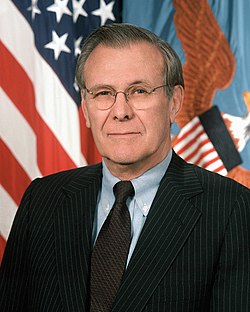
Donald Rumsfeld
Consider the following:
August 26, 2002: Cheney told the Veterans of Foreign Wars, “There is no doubt that Saddam Hussein now has weapons of mass destruction. There is no doubt he is amassing them to use against our friends, against our allies and against us.”
September 8, 2002: National Security Advisor Condoleeza Rice said on CNN: ”There is certainly evidence that Al-Qaeda people have been in Iraq. There is certainly evidence that Saddam Hussein cavorts with terrorists.”
September 18, 2002: Rumsfeld told the House Armed Services Committee, “We do know that the Iraqi regime has chemical and biological weapons. His regime has amassed large, clandestine stockpiles of chemical weapons—including VX, sarin, cyclosarin and mustard gas.”
October 7, 2002: Bush declared in a nationally televised speech in Cincinnati that Iraq “possesses and produces chemical and biological weapons. It is seeking nuclear weapons.”
March 16, 2003: Cheney declared on NBC’s “Meet the Press”: “We believe [Saddam Hussein] has, in fact, reconstituted nuclear weapons.”
Bush never regretted his decision to attack Iraq—on March 19, 2003.
Even as American occupying forces repeatedly failed to turn up any evidence of “weapons of mass destruction” (WMDs), Bush and his minions claimed the invasion a good thing.
In fact, Bush—who hid out the Vietnam war in the Texas Air National Guard—even joked publicly about the absence of WMDs.
He did so at a White House Correspondents dinner on March 24, 2004—one year after he had started the war.

George W. Bush at the 2004 White House Correspondents’ dinner
To Bush, the non-existent WMDs were nothing more than the butt of a joke that night. While an overhead projector displayed photos of a puzzled-looking Bush searching around the Oval Office, Bush recited a comedy routine.
“Those weapons of mass destruction have gotta be somewhere,” Bush laughed, while a photo showed him poking around the corners in the Oval Office.
“Nope—no weapons over there! Maybe they’re under here,” he said, as a photo showed him looking under a desk.
Meanwhile, an assembly of wealthy, pampered men and women—-the elite of America’s media and political classes—laughed heartily during Bush’s performance.
It was a scene worthy of the court of the ancient Caesars, complete with royal flunkies: “Hey! That country we just destroyed wasn’t a threat to us after all! Isn’t that a gas?”
The results of the war that Bush had deliberately provoked:
- Cost the lives of 4,484 Americans.
- Depleted the United States Treasury of at least $2 trillion.
- Created a Middle East power vacuum.
- Allowed Iran—Iraq’s arch enemy—to eagerly fill it.
- Frightened and repelled even America’s closest allies.
- Killed at least 655,000 Iraqis.
- Bush retired from office with a lavish pension and full Secret Service protection.
- He wrote his memoirs and was paid $7 million for the first 1.5 million copies.
- Cheney, Rumsfeld and Rice retired to private business, wrote their memoirs, and lived in comfort as respected elder statesmen.


9/11, ABC NEWS, AFGHANISTAN, AL QAEDA, ALTERNET, AMERICABLOG, AMERICAN CAESARS: THE LIVES OF THE PRESIDENTS FROM FRANKLIN D. ROOSEVELT TO GEORGE W. BUSH, AMERICAN CAESARS: THE LIVES OF THE PRESIDENTS FROM FRANKLIN D. ROOSEVELT TO GEORGE W. BUSH (BOOK), AMERICAN EMPIRE, AP, ASSASSINATION, BABY BOOMER RESISTANCE, BASHAR AL-ASSAD, BILL CLINTON, BLOOMBERG, BUREAUCRACY, BUZZFEED, CBS NEWS, CHRIS MATHEWS, CNN, CONDOLEEZA RICE, CROOKS AND LIARS, DAIL Y KOS, DAILY KOZ, DRUDGE REPORT, DWIGHT EISENHOWER, FACEBOOK, FBI, FIVETHIRTYEIGHT, FOOD DELIVERY SERVICES, FRANKLIN D. ROOSEVELT, GAIUS SUETONIUS TRANQUILLIUS, GEORGE H.W. BUSH, GEORGE W. BUSH, GERALD R. FORD, HARPER’S MAGAZINE, HARRY S. TRUMAN, HUFFINGTON POST, JIMMY CARTER, JOHN F. KENNEDY, JOSEPH BIDEN, LYNDON B. JOHNSON, MEDIA MATTERS, MOTHER JONES, MOVEON, MSNBC, NBC NEWS, NEWSWEEK, NIGEL HAMILTON, NPR, OSAMA BIN LADEN, PATRIOT ACT, PBS NEWSHOUR, POLITICO, POLITICUSUSA, RAW STORY, REPUBLICAN PARTY, REUTERS, RICHARD CLARKE, RICHARD NIXON, ROMAN EMPIRE, SALON, SEATTLE TIMES, SEPTEMBER 11, SLATE, SYRIA, TALKING POINTS MEMO, TERRORISM, THE ATLANTIC, THE CHICAGO SUN-TIMES, THE CHICAGO TRIBUNE, THE DAILY BEAST, THE DAILY BLOG, THE GUARDIAN, THE HILL, THE HUFFINGTON POST, THE LOS ANGELES TIMES, THE NATION, THE NEW REPUBLIC, THE NEW YORK TIMES, THE TWELVE CAESARS, THE VILLAGE VOICE, THE WASHINGTON POST, THINKPROGRESS, TIME, TRANSPORTATION SAFEY ADMINISTRATION, TRUTHDIG, TRUTHOUT, TWO POLITICAL JUNKIES, U.S. NEWS & WORLD REPORT, UPI, USA TODAY, VCR RENTALS, X
SALUTING THE AMERICANS WHO GAVE US 9/11: PART THREE (END)
In Bureaucracy, History, Law, Law Enforcement, Military, Politics, Social commentary on August 7, 2026 at 12:05 amColonel Brandt: “I wonder what we’ll do after we lose the war.”
Captain Kiesel: “Prepare for the next one.”
–-“The Cross of Iron,” film by Sam Peckinpah
On September 12, 2001, President George W. Bush attended a meeting of the National Security Council.
“Why shouldn’t we go against Iraq, not just Al-Qaeda?” demanded Donald Rumsfeld, the Secretary of Defense.
Vice President Dick Cheney enthusiastically agreed.
Secretary of State Colin Powell then pointed out there was absolutely no evidence that Iraq had had anything to do with 9/11 or Al-Qaeda. And he added: “The American people want us to do something about Al-Qaeda”—not Iraq.
On November 21, 2001, only 10 weeks after 9/11, Bush told Rumsfeld: It’s time to turn to Iraq.
Liars Club: Dick Cheney, George Bush, Donald Rumsfeld
Bush and his war-hungry Cabinet officials knew that Americans demanded vengeance on Al-Qaeda’s mastermind, Osama bin Laden, and not Iraqi dictator Saddam Hussein. So they repeatedly fabricated “links” between the two:
Yet as early as September 22, 2001, Bush had received a classified President’s Daily Brief intelligence report, which stated that there was no evidence linking Saddam Hussein to 9/11.
The report added that there was scant credible evidence that Iraq had any significant collaborative ties with Al-Qaeda.
Saddam Hussein
Even more important: Saddam had tried to monitor Al Qaeda through his intelligence service—because he saw Al-Qaeda and other theocratic radical Islamist organizations as a potential threat to his secular regime.
Bush administration officials repeatedly claimed that Iraq possessed huge quantities of chemical and biological weapons, in violation of UN resolutions. And they further claimed that US intelligence agencies had determined:
Among other lies stated as fact by members of the Bush administration:
Consider the following:
August 26, 2002: Cheney told the Veterans of Foreign Wars, “There is no doubt that Saddam Hussein now has weapons of mass destruction. There is no doubt he is amassing them to use against our friends, against our allies and against us.”
Vice President Dick Cheney
September 8, 2002: National Security Advisor Condoleeza Rice said on CNN: ”There is certainly evidence that Al-Qaeda people have been in Iraq. There is certainly evidence that Saddam Hussein cavorts with terrorists.”
September 18, 2002: Rumsfeld told the House Armed Services Committee, “We do know that the Iraqi regime has chemical and biological weapons. His regime has amassed large, clandestine stockpiles of chemical weapons—including VX, sarin, cyclosarin and mustard gas.”
October 7, 2002: Bush declared in a nationally televised speech in Cincinnati that Iraq “possesses and produces chemical and biological weapons. It is seeking nuclear weapons.”
March 16, 2003: Cheney declared on NBC’s “Meet the Press”: “We believe [Saddam Hussein] has, in fact, reconstituted nuclear weapons.”
March 30, 2003: On ABC’s “This Week” program, 10 days into the war, Rumsfeld said: “We know where they [weapons of mass destruction] are.”
Bush never regretted his decision to invade Iraq, which occurred on March 20, 2003.
Even as American occupying forces repeatedly failed to turn up any evidence of “weapons of mass destruction” (WMDs), Bush and his minions claimed the invasion a good thing.
In fact, Bush—who hid out the Vietnam war in the Texas Air National Guard—even joked publicly about the absence of WMDs.
He did so at a White House Correspondents dinner on March 24, 2004—one year after he had started the war.
George W. Bush at the 2004 White House Correspondents’ dinner
To Bush, the non-existent WMDs were nothing more than the butt of a joke that night. While an overhead projector displayed photos of a puzzled-looking Bush searching around the Oval Office, Bush recited a comedy routine.
“Those weapons of mass destruction have gotta be somewhere,” Bush laughed, while a photo showed him poking around the corners in the Oval Office.
“Nope–no weapons over there! Maybe they’re under here,” he said, as a photo showed him looking under a desk.
Meanwhile, an assembly of wealthy, pampered men and women—the elite of America’s media and political classes—laughed heartily during Bush’s performance. It was a scene worthy of the court of the ancient Caesars, complete with royal flunkies.
Ultimately, the war that Bush had deliberately provoked
Share this: