Posts Tagged ‘WORLD WAR 11’
ABC NEWS, ADOLF HITLER, ALTERNET, AMERICABLOG, AP, BABY BOOMER RESISTANCE, BBC, BLOOMBERG NEWS, BLUESKY, BUZZFEED, CANADA, CBS NEWS, CLAUDIA SHEINBAUM PARDO, CNN, CNN'S "STARTING POINT", CROOKS AND LIARS, DAILY KOS, DEPARTMENT OF HOMELAND SECURITY, DEPARTMENT OF JUSTICE, EXTORTION, FBI, FIVETHIRTYEIGHT, HARPER’S MAGAZINE, HUFFINGTON POST, INSIDER, JUDICIARY, MARK CARNEY, MASTADON, MEDIA MATTERS, MEXICO, MOTHER JONES, MOVEON, MSNBC, MSNBC'S "HARDBALL", NAZI GERMANY, NBC NEWS, NEGOTIATING, NEW REPUBLIC, NEWSDAY, NEWSWEEK, NPR, PBS NEWSHOUR, POLAND, POLITICO, POLITICUSUSA, PRESS, RAW STORY, REPUBLICAN PARTY, REPUBLICANS, REUTERS, SALON, SEATTLE TIMES, SLATE, TALKING POINTS MEMO, THE ATLANTIC, THE CHICAGO SUN-TIMES, THE CHICAGO TRIBUNE, THE DAILY BEAST, THE DAILY BLOG, THE GUARDIAN, THE HILL, THE HUFFINGTON POST, THE LOS ANGELES TIMES, THE NATION, THE NEW REPUBLIC, THE NEW YORK TIMES, THE NEW YORKER, THE PENTAGON, THE VILLAGE VOICE, THE WASHINGTON POST, THINKPROGRESS, TIME, TRUTHDIG, TRUTHOUT, TWO POLITICAL JUNKIES, U.S. NEWS & WORLD REPORT, UPI, USA TODAY, WONKETTE, WORLD WAR 11, X
In Bureaucracy, History, Law, Law Enforcement, Politics, Social commentary on September 16, 2026 at 12:26 am
On January 20, 2026, in a speech at the World Economic Forum in Davos, Switzerland, Canadian Prime Minister Mark Carney called for greater cooperation among the world’s middle-sized nations.
The reason: To protect themselves from great powers using tariffs to extort control over them.
An example of this: Ottawa and Beijing now have a limited tariff agreement that swaps reduced Chinese duties on Canadian canola seeds for lower Canadian tariffs on a capped volume of Chinese electric vehicles.
On January 26, Canada announced a plan to significantly expand trade with non‑U.S. countries, strengthen internal Canadian trade, and increase domestic investment by up to one trillion dollars over the next five years.

Canadian provinces and territories
On February 20, 2026, the United States Supreme Court ruled against emergency tariffs imposed under the International Emergency Economic Powers Act.
This had been the basis—and excuse—for Trump’s slapping tariffs on more than 180 countries.
Ignoring the Supreme Court ruling Trump imposed a short term 10% global tariff.
On July 1, after a virtual meeting with U.S. Trade Representative Jamieson Greer with his Canadian and Mexican counterparts, Greer announced that the U.S. would not extend the Canada-United States-Mexico Agreement (CUSMA).
Its goals had been to boost economic growth, reduce trade barriers, and secure preferential market access across North America.
On July 17, in a Truth Social post, Trump threatened to put new tariffs on Canada after hundreds of wildfires left much of the northern U.S. covered by smoke.
He could have offered to send American firefighters and firefighting equipment to Canada. But acting in a humane way has never been a part of Trump’s character.
On July 20, Trump alleged that Canada discriminated against American companies supplying alcohol, dairy and cars. He signed three proclamations under the 1930 Smoot-Hawley Tariff Act, imposing 50% tariffs on Canadian dairy, alcohol, cars and other products.
On August 22, Trump’s 50% tariffs took effect on about $20 billion worth of Canadian goods—dairy products, alcoholic beverages, cement and hockey equipment.
Trade negotiations had collapsed shortly before a midnight deadline the previous night.
Canadian Prime Minister Mark Carney said that “last-minute changes in the U.S. proposed terms” had caused the collapse.

Mark Carney
“….The general attitude….is that the core Canadian industries either would be subsidiaries effectively of the United States industries or would put in place terms where those industries would be, gradually wound down in Canada and we’re not going to of course….accept those terms.”
And he warned that Canada would match the tariffs “dollar for dollar” starting on September 8.
After Canada suspended trade talks on August 21, Trump signed an executive order “changing” the name of Lake Ontario, which borders New York and Canada’s Ontario province, to Lake America.
Google and Apple, cravenly seeking to win Trump’s favor, immediately displayed maps offering the Trumpian version of geography.
“When the Americans stop doing memes, stop throwing shade, stop trying to be tough and start being serious about having those discussions, we can have those discussions,” said Carney at a press conference.
There is no American precedent for such extortionate behavior—but there is a German one. That of Nazi Germany from t938 to 1939 under Adolf Hitler—first against Austria, then Czechoslovakia, and finally Poland.
It was his aggression against Poland that ignited World War II.

But Trump can be beaten—if his enemies are willing to go all the way.
Democratic nations like Canada and Mexico dare not attack the United States militarily. America’s military is so powerful the country is threatened only by China and Russia.
But they can target with ruthless tariffs those Red states whose Fascistic voting blocs fanatically support Trump—and the House and Senate members who support him.
They can:
- Deprive Red state populations of the fruits, vegetables, meats, cars, computers, oil, gas—and especially beer and alcohol—they take for granted.
- Refuse to stock goods from Red states in their stores.
- Appeal to the patriotism of Canadians and Mexicans to maintain the boycott despite the suffering this will impose on their own countries.
Canada, in particular, has a deadly weapon it can unleash at any time:
Provincial authorities and grid operators (such as Ontario’s Independent Electricity System Operator) can reduce or halt power flowing through cross-border transmission lines to states like New York, Michigan and Minnesota.
The U.S. imports electricity from Canada because it is cheaper than generating more supply domestically. Losing Canadian electricity would force affected states to rely on rapacious energy companies, driving up electricity costs for consumers.
This, in turn, would trigger voters’ anger against Trump-supporting Republican candidates for the House and Senate.
Americans are used to seeking simple, painless solutions to major problems. Thus, in 2024, Trump won 77 million votes by promising to drastically reduce the price of eggs.
Instead, he gave voters an unprovoked and endless war on Iran. This has created a worldwide spiral in oil prices—and fueled inflation in the United States and other nations.
As prices soar for food, energy and housing, Trump focuses on vanity projects like a 90,000 square-foot White House ballroom and a towering “Victory Arch” overlooking Arlington Cemetery.
When Red states are forced to suffer staggering losses for months on end, they will elect anti-Fascist Senators and Representatives to nullify the evils of Trump’s administration.
ABC NEWS, ADOLF HITLER, ALTERNET, AMERICABLOG, AP, BABY BOOMER RESISTANCE, BBC, BLOOMBERG NEWS, BLUESKY, BUZZFEED, CANADA, CBS NEWS, CLAUDIA SHEINBAUM PARDO, CNN, CNN'S "STARTING POINT", CROOKS AND LIARS, DAILY KOS, DEPARTMENT OF HOMELAND SECURITY, DEPARTMENT OF JUSTICE, EXTORTION, FBI, FIVETHIRTYEIGHT, HARPER’S MAGAZINE, HUFFINGTON POST, INSIDER, JUDICIARY, MARK CARNEY, MASTADON, MEDIA MATTERS, MEXICO, MOTHER JONES, MOVEON, MSNBC, MSNBC'S "HARDBALL", NAZI GERMANY, NBC NEWS, NEGOTIATING, NEW REPUBLIC, NEWSDAY, NEWSWEEK, NPR, PBS NEWSHOUR, POLAND, POLITICO, POLITICUSUSA, PRESS, RAW STORY, REPUBLICAN PARTY, REPUBLICANS, REUTERS, SALON, SEATTLE TIMES, SLATE, TALKING POINTS MEMO, THE ATLANTIC, THE CHICAGO SUN-TIMES, THE CHICAGO TRIBUNE, THE DAILY BEAST, THE DAILY BLOG, THE GUARDIAN, THE HILL, THE HUFFINGTON POST, THE LOS ANGELES TIMES, THE NATION, THE NEW REPUBLIC, THE NEW YORK TIMES, THE NEW YORKER, THE PENTAGON, THE VILLAGE VOICE, THE WASHINGTON POST, THINKPROGRESS, TIME, TRUTHDIG, TRUTHOUT, TWO POLITICAL JUNKIES, U.S. NEWS & WORLD REPORT, UPI, USA TODAY, WONKETTE, WORLD WAR 11, X
In Bureaucracy, History, Law, Politics, Social commentary on September 15, 2026 at 12:10 am
For all his slim grasp of history, Donald Trump knows that presidents and kings (of which he thinks himself the latter) are remembered for the wars they’ve won.
Easily won wars, of course, are the best. And, for Trump, Canada—no match for the United States militarily—seems a sure bet.
On December 2, 2024 Trump, recently re-elected as President of the United States, threatened to impose a 25% tax on all products entering the United States from Canada and Mexico unless they stopped the flow of drugs and illegal aliens.

Canadian flag
“Less than one percent of migrants coming into the United States irregularly come from Canada and 0.2 percent of the fentanyl coming into the United States comes from Canada,” then-Canadian Prime Minister Justin Trudeau told Parliament.
During 2023-2024, American customs agents seized 43 pounds of fentanyl at the Canadian border, compared with 21,100 pounds at the Mexican border.
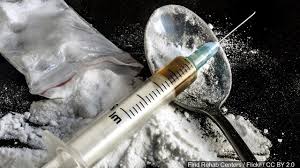
Heroin syringe
Unmentioned—if not deliberately ignored by Trump: Canada plays a substantial role as a U.S. trading partner. About 60% of U.S. crude oil imports are from Canada, and 85% of U.S. electricity imports as well.
Canada is also the largest foreign supplier of steel, aluminum and uranium to the U.S. and has 34 critical minerals and metals that the Pentagon eagerly desires. About 77% of Canada’s exports go to the U.S.
Trudeau pleaded with Trump not to impose the tariff because because it would “kill” Canada’s economy.
Trump responded: “So your country can’t survive unless it’s ripping off the US to the tune of $100 billion?”
His comments referred to the American trade deficit with Canada.
The U.S. had a $75 billion trade deficit with Canada in 2023 but a third of what Canada sells into the U.S. is energy exports and prices have been high.
Trudeau left the meeting without reassurance that Trump would not impose a 25% tariff on products from Canada.
Trump’s trade conflict with Canada began immediately upon his return to office in 2025, driven by disputes over border security, immigration and tariffs.
On January 20, 2025, his first day back in office, Trump announced plans for a 25% tariff on all Canadian imports, citing illegal immigration and drug trafficking.
Donald Trump
In early February, 2025, Trump signed an executive order imposing a 25% blanket tariff on Canadian and Mexican goods (and 10% on energy) starting February 4, invoking a national emergency.
Then-Canadian Prime Minister Justin Trudeau vowed immediate retaliatory tariffs
In mid-February, Trump agreed to a 30-day pause to cool tensions and signed a separate plan for 25% tariffs on global steel and aluminum.
On March 4, 2025, Trump’s 25% tariffs on Canadian goods took effect (with energy capped at 10%). Canada fired back with massive retaliatory counter-tariffs.
American automakers, fearing their sales to Canada would be jeopardized, pressured Trump to delay auto tariffs. Trump agreed to do so, and temporarily paused levies on goods complying with the United States-Mexico-Canada Agreement.
But on March 5, 2025, Trump slapped 25% tariffs on Canada. Six days later, Trump announced that he would impose an additional 25% tariff on all Canadian steel and aluminum imports effective March 12.
Just as Adolf Hitler’s continuing aggression toward England promoted Winston Churchill’s appointment as its Prime Minister, Trump’s continuing aggression toward Canada did the same for Mark Carney.
Adolf Hitler
Carney, a member of the Liberal Party, was elected as Canada’s Prime Minister-elect on March 9. He owed his victory to Trump’s insults toward Canada and threats to make it the 51st state of the United States.
He described the tariff conflict the “greatest crisis of our lifetimes.” And he vowed to defend Canada from American aggression.
On March 12, Trump slammed Canada with 25% duties on steel and aluminum. This, in turn, led Canada to impose further rounds of retaliatory levies on American manufactured goods.
On October 14, Trump issued an executive order that imposed a 10% tariff on softwood lumber and 25% on certain wooden furniture and cabinets from Canada, with scheduled increases.
But by September, Canada’s trade balance returned to surplus as exports recovered, particularly to markets outside the United States, while the impact of U.S. tariffs eased in some sectors.
American lumber and cabinet tariffs escalated further on January 1, 2026: A 50% tariff on specific kitchen vanities and cabinets—affecting Canadian exporters without exemptions.
On January 20, 2026, in a speech at the World Economic Forum in Davos, Switzerland, Carney urged greater cooperation among the world’s middle-sized nations to protect themselves from great powers using tariffs to extort control.
On January 24, Trump, responding to a faulty report, threatened to impose tariffs of up to 100% on all Canadian goods in response to a planned trade agreement between Canada and China.
The arrangement between Ottawa and Beijing is a limited, issue-specific tariff agreement that swaps reduced Chinese duties on Canadian canola seeds for lower Canadian tariffs on a capped volume of Chinese electric vehicles.
It is not a comprehensive Canada-China free trade agreement covering most goods and services, as Trump believed.
On January 26, Canada announced a plan to significantly expand trade with non‑U.S. countries, strengthen internal Canadian trade, and increase domestic investment by up to one trillion dollars over the next five years.
Thus, through threats, insults and extortionate tariffs, Trump has singularly ended a friendly U.S.-Canada relationship that had lasted more than 200 years.
ABC NEWS, ADOLF HITLER, ALTERNET, AMERICABLOG, AP, BABY BOOMER RESISTANCE, BBC, BLOOMBERG NEWS, BLUESKY, BUZZFEED, CANADA, CBS NEWS, CLAUDIA SHEINBAUM PARDO, CNN, CNN'S "STARTING POINT", CROOKS AND LIARS, DAILY KOS, DEPARTMENT OF HOMELAND SECURITY, DEPARTMENT OF JUSTICE, EXTORTION, FBI, FIVETHIRTYEIGHT, HARPER’S MAGAZINE, HUFFINGTON POST, INSIDER, JUDICIARY, MARK CARNEY, MASTADON, MEDIA MATTERS, MEXICO, MOTHER JONES, MOVEON, MSNBC, MSNBC'S "HARDBALL", NAZI GERMANY, NBC NEWS, NEGOTIATING, NEW REPUBLIC, NEWSDAY, NEWSWEEK, NPR, PBS NEWSHOUR, POLAND, POLITICO, POLITICUSUSA, PRESS, RAW STORY, REPUBLICAN PARTY, REPUBLICANS, REUTERS, SALON, SEATTLE TIMES, SLATE, TALKING POINTS MEMO, THE ATLANTIC, THE CHICAGO SUN-TIMES, THE CHICAGO TRIBUNE, THE DAILY BEAST, THE DAILY BLOG, THE GUARDIAN, THE HILL, THE HUFFINGTON POST, THE LOS ANGELES TIMES, THE NATION, THE NEW REPUBLIC, THE NEW YORK TIMES, THE NEW YORKER, THE PENTAGON, THE VILLAGE VOICE, THE WASHINGTON POST, THINKPROGRESS, TIME, TRUTHDIG, TRUTHOUT, TWO POLITICAL JUNKIES, U.S. NEWS & WORLD REPORT, UPI, USA TODAY, WONKETTE, WORLD WAR 11, X
In Bureaucracy, Business, History, Law, Military, Politics, Social commentary on September 14, 2026 at 12:11 am
The history book on the shelf
Is always repeating itself.
–“Waterloo,” by Abba
To understand what is happening in the United States today, it’s necessary to realize this:
- Its decent, democracy-cherishing citizens find themselves in the same position as decent, democracy-cherishing citizens of Nazi Germany from 1933 to 1945.
- And just as Germany’s government became a ruthless dictatorship, so has that of the United States.
- And just as ordinary, peace-loving Germans hoped for a powerful, democratic outsider to remove the menace of Adolf Hitler, so do ordinary, peace-loving Americans hope the same will happen to Donald Trump.
Adolf Hitler
From 1939 to 1945, those democracy-cherishing outsiders consisted of Canada, England and the United States. (The Soviet Union reluctantly joined this alliance only after it became yet another victim of Adolf Hitler’s aggression.)
In the case of the United States, that solution can only be achieved economically—by pressuring Right-wing Republican members of Congress in Red states to end their support for Trump’s dictatorial agenda.
And the only democratic countries with the power to do this are Mexico and Canada, America’s foremost trading partners.
The 2024 elections gave Republicans not only the White House but control of the House and Senate.

Donald Trump
Republicans don’t care that Trump has trashed the institutions that Americans have cherished for more than 200 years. Institutions like an independent judiciary, a free press, and an incorruptible Justice Department.
He has viciously attacked all of these—and Republicans have either said nothing or rushed to his defense.
What Republicans truly fear about Donald Trump is that if they dare to hold him accountable for his lifetime of criminality, his Fascistic base will turn on them—and turn them out of Congress.
If they are conflicted—whether to continue supporting Trump or desert him—the reason is the same: How can I hold onto my power and all the privileges that go with it?

Claudia Sheinbaum Pardo, President of Mexico

Mark Carney, Prime Minister of Canada
Lea-Kim, CC BY-SA 4.0 <https://creativecommons.org/licenses/by-sa/4.0>, via Wikimedia Commons
Republicans—with Trump as their Fuhrer—are utilizing the same my-way-or-else “negotiating” strategy as Nazi Germany’s Fuhrer, Adolf Hitler.
And Democrats—out of cowardice and/or ignorance of history—are, as usual, refusing to publicly make this comparison.
Thus, America’s rescue from Trump can only come from outside the United States.
Donald Trump has proven his affinity for dictators and dictatorships—lavishing praise on Russia’s Vladimir Putin, China’s Xi Jinping and North Korea’s Kim Jong-Un.
There are two reasons for this—and his hostile behavior toward democratic leaders:
- Trump admires dictators, desires to become one himself, and is now stocking essential federal agencies—such as the Pentagon, FBI and Department of Homeland Security—with his political hacks to make this a reality.
- He knows that compared to the dictatorships of Russia and China, democracies such as those of Canada, Mexico and Ukraine are comparatively weak militarily.
At a November 30, 2024 dinner at Mar-a-Lago, Trump’s estate in Palm Beach, Florida, he told then-Canadian Prime Minister Justin Trudeau that Canada could become the 51st state of the United States.
Canada’s Public Safety Minister Dominic LeBlanc, who attended the dinner, insisted that Trump was joking.
But on December 2, Trump threatened to impose a 25% tax on all products entering the United States from Canada and Mexico unless they stopped the flow of drugs and illegal aliens.
And on December 3, Trump posted on his Truth Social platform an AI-generated image of himself standing on a mountain with a Canadian flag beside him. Its caption: “Oh Canada!”
Trudeau had requested the Mar-a-Lago meeting to convince Trump that the northern border is completely different from the southern one with Mexico.
Canadian flag
“Less than one percent of migrants coming into the United States irregularly come from Canada and 0.2 percent of the fentanyl coming into the United States comes from Canada,” Trudeau said in Parliament.
During 2023-2024, American customs agents seized 43 pounds of fentanyl at the Canadian border, compared with 21,100 pounds at the Mexican border.
Most of the fentanyl reaching the U.S. is made by Mexican drug cartels using precursor chemicals smuggled from Asia.
As with Adolf Hitler, attempting to reason with Trump will prove fruitless. He respects only superior force.
But he has blinked when confronted with serious opposition.
Thus, on February 1, 2025, he threatened to hit Mexico and Canada with 25% tariffs, accusing them of injecting huge amounts of fentanyl and huge numbers of illegal aliens into the United States. This allowed him to look tough to his legions of uneducated, Fascistic voters.
But then Mexican President Claudia Sheinbaum Pardo and Canadian Prime Minister Mark Carney threatened to retaliate with their own 25% tariffs on American goods.
And the financially conservative Wall Street Journal-–whose target audience includes business leaders, investors, and affluent consumers—called Trump’s threat “the dumbest trade war in history.”
Suddenly, Trump found a way to declare victory, claiming that Mexico and Canada would vastly increase border security to stop the flow of fentanyl and illegal aliens.
And dropping his threat of a trade war.
ABC NEWS, ADOLF HITLER, ALTERNET, AMERICABLOG, AP, BABY BOOMER RESISTANCE, BBC, BLOOMBERG NEWS, BLUESKY, BUZZFEED, CANADA, CBS NEWS, CLAUDIA SHEINBAUM PARDO, CNN, CNN'S "STARTING POINT", CROOKS AND LIARS, CZECHOSLAVAKIA, DAILY KOS, DAVID BROOKS, DEPARTMENT OF HOMELAND SECURITY, DEPARTMENT OF JUSTICE, DONALD TRUMP, EXTORTION, FBI, FIVETHIRTYEIGHT, GREENLAND, HARPER’S MAGAZINE, HUFFINGTON POST, INSIDER, IRAN, IRAN WAR, JACK SMITH, JIMMY CARTER, JUSTIN TRUDEAU, MASTADON, MEDIA MATTERS, MEXICO, MOTHER JONES, MOVEON, MSNBC, MSNBC'S "HARDBALL", NAZI GERMANY, NBC NEWS, NEGOTIATING, NEVILLE CHAMBERLAIN, NEW REPUBLIC, NEWSDAY, NEWSWEEK, NEWT GINGRICH, NICCOLO MACHIAVELLI, NPR, PANAMA, PBS NEWSHOUR, POLAND, POLITICO, POLITICUSUSA, R.I.CO. ACT, RAW STORY, REPUBLICAN PARTY, REPUBLICANS, REUTERS, ROBERT MEULLER, SALON, SEATTLE TIMES, SLATE, STRAIT OF HORMUZ, TALKING POINTS MEMO, THE ATLANTIC, THE CHICAGO SUN-TIMES, THE CHICAGO TRIBUNE, THE DAILY BEAST, THE DAILY BLOG, THE GUARDIAN, THE HAMILTON PROJECT, THE HILL, THE HUFFINGTON POST, THE LOS ANGELES TIMES, THE NATION, THE NEW REPUBLIC, THE NEW YORK TIMES, THE NEW YORKER, THE PENTAGON, THE PRINCE, THE VILLAGE VOICE, THE WASHINGTON POST, THINKPROGRESS, TIME, TRUTHDIG, TRUTHOUT, TWO POLITICAL JUNKIES, U.S. NEWS & WORLD REPORT, UKRAINE, UPI, USA TODAY, VLADIMIR PUTIN, VOLODMYR ZELENSKY, WONKETTE, WORLD WAR 11, X
In Bureaucracy, Business, History, Military, Politics, Social commentary on September 4, 2026 at 12:10 am
The “negotiating” methods of German Fuhrer Adolf Hitler serve as a useful guide to what domestic and world leaders can expect from trying to reach an agreement with President Donald Trump.
In September, 1938, seven months after seizing Austria, Hitler gave another exhibition of his “negotiating” methods.
This time, the target of his aggression was Czechoslovakia. Once again, he opened “negotiations” with a lie: The Czechoslovak government was trying to exterminate 3.5 million Germans living in the “Sudetenland.”
Then he threatened war: Germany would protect its citizens and halt such “oppression.”
For British Prime Minister Neville Chamberlain, the thought of another European war erupting less than 20 years after the end of World War I was simply unthinkable.
He quickly sent Hitler a telegram, offering to help resolve the crisis: “I could come to you by air and am ready to leave tomorrow. Please inform me of earliest time you can receive me, and tell me the place of the meeting. I should be grateful for a very early reply.”
[Mistake #1: Showing his willingness to placate a brutal dictator. Such men see any concessions as weakness—leading to only greater demands. Trump, like Hitler, relishes attacking those weaker than himself.]
The two European leaders met in Berchtesgaden, Germany, on September 15, 1938.
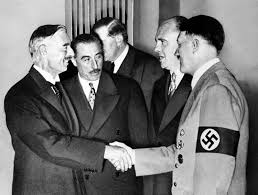
Neville Chamberlain and Adolf Hitler
Hitler denied that he had threatened war: “Force? Who speaks of force?“
Then, suddenly, he accused the Czechs of having mobilized their army in May. They had mobilized—in response to the mobilization of the German army.
“I shall not put up with this any longer,” shouted Hitler. “I shall settle this question in one way or another. I shall take matters in my own hands!”
Suddenly, Chamberlain seemed alarmed: “If I understood you right, you are determined to proceed against Czechoslovakia in any case. In the circumstances, it is best for me to return at once. Anything else now seems pointless.”
Hitler, taken aback, softened his tone and said they should consider the Sudetenland according to the principle of self-determination.
Chamberlain agreed to the cession of the Sudetenland. Three days later, French Prime Minister Edouard Daladier did the same. No Czechoslovak representative was invited to these discussions.
[Mistake #2: Instead of conceding to Hitler, which emboldened the dictator, Chamberlain should have pressed his advantage. When Hitler faced an opponent he couldn’t bribe or cow—such as British Prime Minister Winston Churchill or Soviet Premier Joseph Stalin—he raged and sulked.
[When Trump faces an opponent he can’t buy or intimidate—such as Special Counsel Jack Smith or Ayatollah Mojtaba Khamenei—he does the same.]
Chamberlain met Hitler again in Godesberg, Germany, on September 22 to confirm the agreements. But Hitler aimed to use the crisis as a pretext for war.
He now demanded not only the annexation of the Sudetenland but the immediate military occupation of the territories. This would give the Czechoslovak army no time to adapt their defense measures to the new borders.
To achieve a solution, Italian dictator Benito Mussolini suggested a conference of the major powers in Munich.
On September 29, Hitler, Daladier and Chamberlain met and agreed to Mussolini’s proposal. They signed the Munich Agreement, which accepted the immediate occupation of the Sudetenland.
The Czechoslovak government had not been a party to the talks. Nevertheless, it promised to abide by the agreement on September 30.
It actually had no choice. It faced the threat of an immediate German invasion after being deserted by its pledged allies: Britain, France and the Soviet Union.
[Mistake #3: Selling out an ally and making a concession to an insatiable dictator—and believing that Hitler could be trusted to keep his word.
[Just as Chamberlain sold out Czechoslovakia, Trump plans on selling out Ukraine to Russian dictator Vladimir Putin. He’s blamed Ukraine for starting the 2022 war—even though Russia invaded Ukraine.
He’s long wanted a Trump Tower in Moscow. Ukraine President Volodymyr Zelensky can’t give him that. Putin can.]
Chamberlain returned to England a hero. Holding aloft a copy of the worthless agreement he had signed with Hitler, he told cheering crowds in London: “I believe it is peace for our time.”

Neville Chamberlain
Hitler—still planning more conquests—knew better. In March, 1939, the German army occupied the rest of Czechoslovakia.
Chamberlain would soon be seen as a naive weakling—even before bombs started falling on London.
Believing himself invincible, Hitler turned his attention—and demands—to Poland.
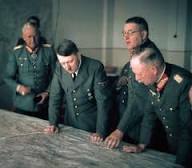
Adolf Hitler and his generals
Believing himself invincible, Trump now threatens violence against Canada, Greenland and Cuba.
Hitler ordered the invasion of Poland on September 1, 1939. To his surprise, France and England honored their pledges to support Poland—triggering World War II. Six years and 50-56 million deaths followed.
On February 28, 2026, Trump—in concert with Israel–attacked Iran without warning. To his surprise, the Iranians closed the Strait of Hormuz, through which 20-30% of the world’s oil total daily oil supply passes. This has triggered a global oil crisis and severely tightened international energy supplies.
Hitler couldn’t “turn off” the war he had started. He could only lash out as his enemies multiplied.
The same has proven true for Trump.
ABC NEWS, ADOLF HITLER, ALTERNET, AMERICABLOG, AP, AUSTRIA, BABY BOOMER RESISTANCE, BBC, BLOOMBERG NEWS, BLUESKY, BUZZFEED, CANADA, CBS NEWS, CLAUDIA SHEINBAUM PARDO, CNN, CNN'S "STARTING POINT", CROOKS AND LIARS, CZECHOSLAVAKIA, CZECHOSLOVAKIA, DAILY KOS, DAVID BROOKS, DEPARTMENT OF HOMELAND SECURITY, DEPARTMENT OF JUSTICE, DONALD TRUMP, EXTORTION, FBI, FIVETHIRTYEIGHT, FRANCE, GELI rAUBAL, GREECE, GREENLAND, HARPER’S MAGAZINE, HUFFINGTON POST, INSIDER, IRAN, IRAN WAR, JACK SMITH, JIMMY CARTER, JUSTIN TRUDEAU, MASTADON, MEDIA MATTERS, MEXICO, MOTHER JONES, MOVEON, MSNBC, MSNBC'S "HARDBALL", NAZI GERMANY, NBC NEWS, NEGOTIATING, NEVILLE CHAMBERLAIN, NEW REPUBLIC, NEWSDAY, NEWSWEEK, NEWT GINGRICH, NICCOLO MACHIAVELLI, NPR, PANAMA, PBS NEWSHOUR, POLAND, POLITICO, POLITICUSUSA, R.I.CO. ACT, RAW STORY, REPUBLICAN PARTY, REPUBLICANS, REUTERS, ROBERT MEULLER, SALON, SEATTLE TIMES, SLATE, STRAIT OF HORMUZ, TALKING POINTS MEMO, TARIFFS, THE ATLANTIC, THE CHICAGO SUN-TIMES, THE CHICAGO TRIBUNE, THE DAILY BEAST, THE DAILY BLOG, THE GUARDIAN, THE HAMILTON PROJECT, THE HILL, THE HUFFINGTON POST, THE LOS ANGELES TIMES, THE NATION, THE NEW REPUBLIC, THE NEW YORK TIMES, THE NEW YORKER, THE PENTAGON, THE PRINCE, THE VILLAGE VOICE, THE WASHINGTON POST, THINKPROGRESS, TIME, TRADE WARS, TRUTHDIG, TRUTHOUT, TWO POLITICAL JUNKIES, U.S. NEWS & WORLD REPORT, UKRAINE, UPI, USA TODAY, VLADIMIR PUTIN, VOLODMYR ZELENSKY, WONKETTE, WORLD WAR 11, X, YUGOSLAVIA
In Bureaucracy, Business, History, Military, Politics, Social commentary on September 3, 2026 at 12:10 am
To understand the “negotiating” style of Donald Trump, it’s essential to study that of Adolf Hitler.
Both men, dictatorial by nature, did/do not believe in compromise. Their idea of “compromise” was/is: “You do what I want—or I’ll destroy you.”
In Hitler’s case, his mania for absolute control began with the Nazi party and eventually extended to Germany. Then it reached to Austria, Czechoslovakia, Poland, Norway, Denmark, France, Greece, Yugoslavia and Russia. At least 50 million men, women and children perished in the wars he unleashed from 1939 to 1945.
Adolf Hitler
Similarly, Trump’s mania for control started with building a real estate empire. Then it encompassed his “reality TV” show, The Apprentice—and finally politics.
He began dominating the Republican party by winning a series of Presidential primaries—and then the White House. Then came asserting control over the Justice Department and the judiciary—up to the Supreme Court.
Re-elected in 2024, he now seeks to dominate Americans, has asserted but failed to control Iran, attacks Mexico and Canada with trade wars, and threatened Greenland and Panama with invasion.
Much can be learned about Trump’s “negotiating” methods—and what it takes to counter them—by studying those of Germany’s Fuhrer.
Robert Payne, author of the bestselling biography, The Life and Death of Adolf Hitler (1973), described Hitler’s “negotiating” style thus:
“Although Hitler prized his own talents as a negotiator, a man always capable of striking a good bargain, he was totally lacking in finesse.
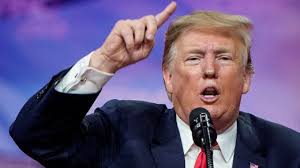
Donald Trump
“He was incapable of bargaining. He was like a man who goes up to a fruit peddler and threatens to blow his brains out if he does not sell his applies at the lowest possible price.”
What Payne writes about Hitler applies equally well to Trump.
Hitler revealed his “bargaining style” in 1938, when he invited Austrian Chancellor Kurt von Schuschnigg to his mountaintop retreat in Obersalzberg, Germany.
Hitler, an Austrian by birth, intended to annex his native land to Germany. Schuschnigg was aware of this, but felt secure in accepting the invitation. He had been assured that the question of Austrian sovereignty would not arise.
The meeting occurred on February 12, 1938.
Shuschnigg opened the discussion with a friendly compliment. Walking over to a large window, he admired the breathtaking view of the mountains.
HITLER: We haven’t come here to talk about the lovely view or the weather!
Austria has anyway never done anything which was of help to the German Reich….I am resolutely determined to make an end to all this business. The German Reich is a great power. Nobody can and nobody will interfere if it restores order on its frontiers.
[Like Hitler, Trump relies on insults and anger to put his victims on the defense.]
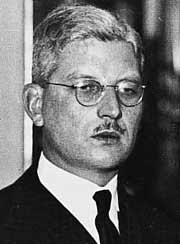
Kurt von Schuschnigg
SCHUSCHNIGG: We simply have to go on living alongside one another, the little state next to the big one. We have no other choice.
And that is why I ask you to tell me what your concrete complaints are. We will do all in our power to sort things out and establish a friendly relationship, as far as it is possible to do so.
HITLER: That’s what you say, Herr Schuschnigg. And I am telling you that I intend to clear up the whole of the so-called Austrian question—one way or another. Do you think I don’t know that you are fortifying Austria’s border with the Reich?
SCHUSCHNIGG: There can be no suggestion at all of that—
HITLER: Ridiculous explosive chambers are being built under bridges and roads—
This was a lie, and Hitler knew it was a lie. But it gave him an excuse to threaten to destroy Austria.
[For Trump, winning—not truth—is all that matters. During his first term as President, he told a documented 30,573 lies.]
HITLER: I have only to give one command and all this comic stuff on the border will be blown to pieces overnight. You don’t seriously think you could hold me up, even for half an hour, do you?
The S.A. [Hitler’s private army of Stormtroopers] and the [Condor] lLegion [which had bombed much of Spain into rubble during the Spanish Civil War] would come in after the troops and nobody—not even I—could stop them from wreaking vengeance.
Schnuschigg made a cardinal mistake in dealing with Hitler: He showed fear. And this was precisely what the Nazi dictator looked for in an opponent.
[Like Hitler, Trump relies on fear: “Real power is—I don’t even want to use the word—fear,” he said in March 2016 when still only a candidate for President.]
Contrary to popular belief, Hitler did not constantly rage at everyone. He used rage as a weapon, knowing that most people feel intimidated by it.
In the case of Schuschnigg, Hitler opened with insults and threats at the outset of their discussion. Then there was a period of calm, to convince the Austrian chancellor the worst was over.
Finally, he once again attacked—this time with so much fury that Schuschnigg was terrified into submission.
With one stroke of a pen, Austria became a vassal-state to Nazi Germany.
[Like Hitler, Trump threatens only those he feels are weak—thus his threats to use military force against Canada, Greenland and Panama.]
2016 PRESIDENTIAL ELECTION, 2020 PRESIDENTIAL ELECTION, ABC NEWS, ADOLF HITLER, ALTERNET, AP, BUZZFEED, CBS NEWS, CIA, CNN, COVID-19, CROOKS AND LIARS, DAILY KOS, DONALD TRUMP, FBI, FRANCE, GUNTER MEISNER, HERMAN WOUK, JAMES COMEY, JANUARY 6 COUP ATTEMPT, JOE BIDEN, KIM JONG-UN, MOTHER JONES, MOVEON, NAZI GERMANY, NBC NEWS, NEWSWEEK, NPR, POLITICO, RAW STORY, REUTERS, SALLY YATES, SALON, SEATTLE TIMES, SERGEY KISLYAK, SERGY LAVROV, SLATE, THE ATLANTIC, THE CHICAGO SUN-TIMES, THE CHICAGO TRIBUNE, THE DAILY BEAST, THE GUARDIAN, THE HILL, THE HUFFINGTON POST, THE LOS ANGELES TIMES, THE NATION, THE NEW YORK TIMES, THE PRESS, THE WASHINGTON POST, THE WINDS OF WAR, TIME, U.S. NEWS & WORLD REPORT, UPI, USA TODAY, VLADIMIR PUTIN, VOLODYMYR ZELENSKY, WALTER VON BRAUCHITSCH, WOLFGANG PREISS, WORLD WAR 11, X
In Bureaucracy, History, Law, Law Enforcement, Military, Politics, Social commentary on August 21, 2026 at 12:10 am
After Donald Trump won the 2016 election, many people feared he would embark on a radical Right-wing agenda. But others hoped that the Washington bureaucracy would “box him in.”
The same sentiments echoed throughout Germany after Adolf Hitler was appointed Chancellor of Germany on January 30, 1933.
The 1983 TV mini-series, The Winds of War, offered a dramatic example of how honorable men can be overwhelmed by a ruthless dictator.
Based on the bestselling 1971 historical novel by Herman Wouk, the mini-series factually re-created the major historical events of World War II.
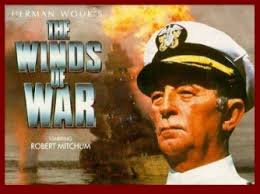
One of those events took place on November 5, 1939.
General Walther von Brauchitsch is summoned to the Chancellery in Berlin to meet with Adolf Hitler. He carries a memorandum signed by all the leaders of the German Wehrmacht asserting that Case Yellow—Hitler’s planned attack against France—is impossible.
Meanwhile, at the German army headquarters at Zossen, in Berlin, the Wehrmacht’s top command wait for word from von Brauchitsch.
CHANCELLERY:
Von Brauchitsch hands the memorandum to Hitler, who reads it.
Adolf Hitler (slamming down the memorandum): So—what is new in all this?
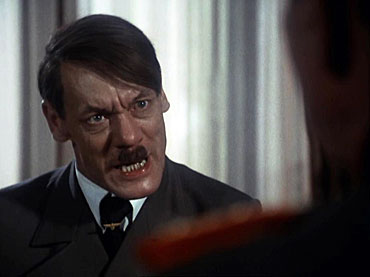
Gunter Meisner as Adolf Hitler in “The Winds of War”
Walther Von Brauchitsch: Fuhrer, it is the army’s final position that Case Yellow cannot proceed.
Hitler: Why not?
Von Brauchitsch: Because of the military fundamentals as stated. The meteorologists predict continuous soaking rains for weeks.
Hitler: It rains on the enemy, too.
ZOSSEN:
Brigadier General Armin Von Roon: The conspiracy has been going on that long—since Czechoslovakia [1938)?
Chief of the General Staff Franz Halder: If the British had not caved in at Munich [where France and Britain sold out their ally, Czechoslovakia]—perhaps. But they did. And ever then, ever since his big triumph, it has been hopeless. Hopeless.
Von Roon: Empty talk, talk, talk. I am staggered.
Halder: A hundred times I myself could have shot the man. I can still at any time. But what would be the result? Chaos. The people are for him. He has unified the country. We must stick to our posts and save him from making military mistakes.
CHANCELLERY:
Von Brauchitsch: Fuhrer, even the supply of artillery shells is totally inadequate.
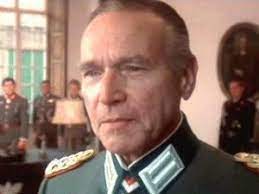
Wolfgang Preiss as Walter von Brauchitsch in “The Winds of War”
Hitler: Do you know how many artillery shells of all calibers we have in the staging areas—right this minute?
Von Brauchitsch: No.
Hitler: How many we have in the reserve dumps in the West? What the monthly annual production of shells is? What the projected rise in production of the next six months is, month by month?
Von Brauchitsch: Who keeps such figures in his head?
Hitler: I do! The supply is adequate. I tell you so. And I’m a field soldier who depended on artillery for four years to protect his life. [He hands von Brauchitsch a sheaf of armaments figures.] Check with your staff. if one of those figures is wrong, you can postpone Case Yellow. Otherwise—you march! And next time you come to see me, know what you’re talking about!
Von Brauchitsch: The morale of the army was low, even in the Polish campaign.
Hitler: Back up this monstrous assertion! In what units was morale low? What action was taken? How many death sentences were handed out for cowardice? Speak up! I’ll fly to the front and pass the death sentences myself. Name one specific instance.
Von Brauchitsch: It was common knowledge—
Hitler: Common knowledge? What is common knowledge is that army headquarters at Zossen crawls with cowards. You opposed me in rearming the Rhineland. You opposed me on the [union] with Austria. You opposed me on Czechoslovakia, until the British came crawling to me. You dirtied in your trousers, you heroes at Zossen, at the idea of marching into Poland. Well, have I once been wrong? Have you once been right? Answer me!
Von Brauchitsch: Mein Fuhrer—
Hitler: Tell everyone who signed this insubordinate Zossen rubbish to beware! I will ruthlessly crush everybody up to the rank of a Field Marshal who dares to oppose me. You don’t have to understand. You only have to obey. The German people understand me. I am Germany.
During his first term, President Donald Trump:
- Fired FBI Director James Comey for investigating Russia’s subversion of the 2016 Presidential election.
- Attacked the integrity of the American Intelligence community.
- Attacked the free press as “the enemy of the American people.”
- Tried to coerce Ukrainian President Volodymyr Zelensky to smear former Vice President Joe Biden, his presumed Democratic opponent in the 2020 Presidential election.
- Repeatedly lied about the dangers posed by the COVID-19 virus, thus enabling it to kill 400,000 by the time Trump left office.
- Incited his followers to violently attack the United States Capitol Building to overturn the results of the 2020 Presidential election and prevent Joe Biden, the winner, from taking office.
Like Adolf Hitler, Donald Trump can truthfully say: I am America.
And that was before the United States Supreme Court declared that a President has absolute immunity for his official acts—including criminal ones.
On November 5, 2024, 77 million Americans seeking cheap eggs and a purge of Hispanics re-elected Donald Trump President of the United States.
ABC NEWS, ADOLF HITLER, ALI HOSSEINI KHAMENEI, ALTERNET, AMERICABLOG, AP, AYATOLLAH ALI KHAMENEI, BABY BOOMER RESISTANCE, BAHRAIN, BBC, BERLIN, BLOOMBERG, BLOOMBERG NEWS, BLUESKY, BUZZFEED, CBS NEWS, CNN, CROOKS AND LIARS, DAILY KOS, DONALD TRUMP, DRONES, FINLAND, FIVETHIRTYEIGHT, FRANCE, GREAT BRITAIN, HARPER’S MAGAZINE, HUFFINGTON POST, IRAN, ISRAEL, ITALY, JAPAN, JOACHIM VON RIBBENTROP, JOSEPH STALIN, KIEV, KUWAIT, LENINGRAD, LUFTWAFFE, MEDIA MATTERS, MOJTABA KHAMENEI, MOSCOW, MOTHER JONES, MOVEON, MSNBC, NAZI GERMANY, NBC NEWS, NEW REPUBLIC, NEWSDAY, NEWSWEEK, NEWT GINGRICH, NPR, NUCLEAR WEAPONS, OIL FIELDS, OMAN, OPERATION BARBAROSSA, PBS NEWSHOUR, PETE HEGSETH, POLAND, POLITICO, POLITICUSUSA, QATAR, QATER, RAW STORY, REUTERS, SALON, SAUDI ARABIA, SEATTLE TIMES, SLATE, SOVIET UNION, SS, TALKING POINTS MEMO, THE ATLANTIC, THE CHICAGO SUN-TIMES, THE CHICAGO TRIBUNE, THE DAILY BEAST, THE DAILY BLOG, THE GUARDIAN, THE HILL, THE HUFFINGTON POST, THE INTERCEPT, THE LONGEST DAY (MOVIE, THE LOS ANGELES TIMES, THE NATION, THE NEW REPUBLIC, THE NEW YORK TIMES, THE NEW YORKER, THE PENTAGON, THE UNITED ARAB EMIRATES, THE VILLAGE VOICE, THE WASHINGTON POST, THINKPROGRESS, THIRD REICH, TIME, TRUTHDIG, TRUTHOUT, TWO POLITICAL JUNKIES, U.S. NEWS & WORLD REPORT, UKRAINE, UNIFORMS, UPI, USA TODAY, VYACHESLAV MOLOTOV, WEHRMACHT, WONKETTE, WORLD WAR 11, X
In Bureaucracy, History, Military, Politics, Social commentary on August 4, 2026 at 12:10 am
Now, fast-forward 85 years—from 1941 to 2026. Substitute President Donald Trump for Fuhrer Adolf Hitler and Mojtaba Khamenei for Joseph Stalin—and Iran for the Soviet Union.
Just as Hitler launched his attack on the Soviet Union without warning, so did Trump launch his on Iran—on February 28.
Hitler—and numerous members of the Wehrmacht—believed that Germany’s mechanized panzers would quickly subdue Soviet armies.
“We were fast,” recalled Panzer Lieutenant Hans-Erdmann Schonbeck. “And our tank forces could cover huge distances. And once we broke through the enemy’s defenses, our orders were not to worry about threats to our right or left but to keep going, deep into Russian territory.”
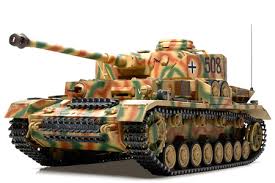
Panzer tank
But the tanks soon faced unexpected difficulties. Most roads in Russia were unpaved, so the tanks raised huge dust clouds almost everywhere they went. The dust clogged their engines and brought many tanks to a halt. Repair crews worked themselves to exhaustion so that the lightning-fast advance could continue.
Another drawback not evident at the outset of the invasion: Summer uniforms. For a war that began on June 22, 1941, these were entirely appropriate. But as the months quickly passed, the notorious Russian winter season loomed ever closer.

Germans in summer uniforms
The German command underestimated the campaign’s duration, expecting a victory by autumn 1941, and prioritized ammunition and fuel over winter equipment. Although winter gear existed, it was stuck in supply depots in the West, and transport lines were too strained by the Soviets’ “scorched earth” tactics to move it to the front.
Without proper greatcoats or insulated boots, soldiers suffered from extreme cold, with temperatures dropping far below zero. Many resorted to stealing blankets from civilians or using blankets as makeshift clothing.
In its war with Iran, American’s air force completely dominated the skies. But then both American planes and ground forces faced an unexpected enemy: Mass-produced drones.
The same weapons—some of them supplied by Iran to Russia—have been used since 2022 in Ukraine. Unmanned and remotely-controlled, Ukrainian and Russian drones have transformed the battlefield. They’re estimated to inflict around 80% of combat casualties on both sides.
The technology—like that forged in Germany’s Blitzkrieg tactics—is revolutionizing warfare and evolving rapidly. To adapt to the new era, the U.S. military is learning lessons from Ukraine.

Iranian drone
Student News Agency, Attribution, via Wikimedia Commons
Not only are American military forces being targeted, so are those Gulf nations that have allied themselves with the United States: The United Arab Emirates, Saudi Arabia, Kuwait, Bahrain, Qatar and Oman.
Primarily targeted: Energy infrastructure, airports and sites hosting American military personnel.
For Iran, the drones are relatively cheap. For the United States, the costs of countering this threat are steadily mounting. A typical Shahed-136 costs Tehran roughly $20,000 to $50,000, while interceptor missiles, such as the Patriot and Terminal High Altitude Area Defense (THAAD), cost the United States millions.
On August 22, 1939—the eve of his invasion of Poland, which would ignite World War II—Adolf Hitler delivered a secret address to his supreme commanders and generals. Its climax:
“Close your hearts to pity. Act brutally. Eighty million people must obtain what is their right. Their existence must be made secure. The stronger man is right. The greatest harshness.”
Hitler urged his generals to act similarly toward the Russians, whom he regarded as subhumans.
The results of this policy soon became obvious when the Wehrmacht invaded Ukraine. Ukrainians, long suffering under the yoke of Stalin, greeted the invaders with bread and salt, the traditional greeting of comrades.
Within a month, they realized that the tyranny of Stalin had been replaced by an all-out extermination campaign of Hitler. For every Ukrainian the Germans killed, 10 more emerged to seek revenge.
Eighty-five years later, Donald Trump and officials of his administration are celebrating the indiscriminate slaughter of Iranians, whether civilian or military.
“We totally demolished Kharg Island, but we may hit it a few more times just for fun,” Trump said on NBC News.
On March 22, Secretary of Defense Pete Hegseth, hosting his monthly Christian worship service at the Pentagon, prayed: “Let every round find its mark against the enemies of righteousness and our great nation.
“Give them wisdom in every decision, endurance for the trial ahead, unbreakable unity, and overwhelming violence of action against those who deserve no mercy.”

Pete Hegseth
“I pursued my enemies and overtook them, and did not turn back till they were consumed,” he read from Psalms 18:37. “Those who hated me I destroyed. They cried to the Lord, but He did not answer them.”
Former House speaker and Trump advisor Newt Gingrich posted on X: “Instead of fighting over a 21-mile-wide bottleneck [Strait of Hormuz] forever, we [could] cut a new channel through friendly territory. A dozen thermonuclear detonations and you’ve got a waterway wider than the Panama Canal, deeper than the Suez, and safe from Iranian attacks.”
This would produce countless numbers of casualties and cover the Middle East with radioactive fallout.
It remains to be seen if such exhortations will lead American soldiers to act as barbarically as those of the Wehrmacht and SS—and inspire similar barbarism in return.
ABC NEWS, ADOLF HITLER, ALI HOSSEINI KHAMENEI, ALTERNET, AMERICABLOG, AP, AYATOLLAH ALI KHAMENEI, BABY BOOMER RESISTANCE, BAHRAIN, BBC, BERLIN, BLOOMBERG, BLOOMBERG NEWS, BLUESKY, BUZZFEED, CBS NEWS, CNN, CROOKS AND LIARS, DAILY KOS, DONALD TRUMP, DRONES, FINLAND, FIVETHIRTYEIGHT, FRANCE, GREAT BRITAIN, HARPER’S MAGAZINE, HUFFINGTON POST, IRAN, ISRAEL, ITALY, JAPAN, JOACHIM VON RIBBENTROP, JOSEPH STALIN, KIEV, KUWAIT, LENINGRAD, LUFTWAFFE, MEDIA MATTERS, MOJTABA KHAMENEI, MOSCOW, MOTHER JONES, MOVEON, MSNBC, NAZI GERMANY, NBC NEWS, NEW REPUBLIC, NEWSDAY, NEWSWEEK, NEWT GINGRICH, NPR, NUCLEAR WEAPONS, OIL FIELDS, OMAN, OPERATION BARBAROSSA, PBS NEWSHOUR, PETE HEGSETH, POLAND, POLITICO, POLITICUSUSA, QATAR, QATER, RAW STORY, REUTERS, SALON, SAUDI ARABIA, SEATTLE TIMES, SLATE, SOVIET UNION, SS, TALKING POINTS MEMO, THE ATLANTIC, THE CHICAGO SUN-TIMES, THE CHICAGO TRIBUNE, THE DAILY BEAST, THE DAILY BLOG, THE GUARDIAN, THE HILL, THE HUFFINGTON POST, THE INTERCEPT, THE LONGEST DAY (MOVIE, THE LOS ANGELES TIMES, THE NATION, THE NEW REPUBLIC, THE NEW YORK TIMES, THE NEW YORKER, THE PENTAGON, THE UNITED ARAB EMIRATES, THE VILLAGE VOICE, THE WASHINGTON POST, THINKPROGRESS, THIRD REICH, TIME, TRUTHDIG, TRUTHOUT, TWO POLITICAL JUNKIES, U.S. NEWS & WORLD REPORT, UKRAINE, UNIFORMS, UPI, USA TODAY, VYACHESLAV MOLOTOV, WEHRMACHT, WONKETTE, WORLD WAR 11, X
In Bureaucracy, History, Military, Politics, Social commentary on August 3, 2026 at 12:05 am
The city: Berlin.
The date: November 12–13, 1940.
The event: A meeting between German Fuhrer Adolf Hitler and Soviet Foreign Minister Vyacheslav Molotov.
The purposes: To discuss:
- Soviet expansion and control over Finland, Bulgaria, and the Turkish Straits; and
- Germany’s desire for the USSR to attack British interests in India and Iran.
Hitler wanted the USSR to join the Axis (Germany, Italy, and Japan) and expand “southward” toward the Indian Ocean to avoid conflict in Europe.
Adolf Hitler
Molotov ignored the talk of India and instead demanded control over Finland, Bulgaria, and the Turkish Straits.
Hitler adamantly opposed Soviet control over Finland, which he considered a strategic ally. He feared a Soviet expansion into Scandinavia would threaten German iron ore supplies from Sweden and northern interests.
And he deeply feared that the Soviet Union would cut off Germany’s vital Romanian oil supplies. Romania provided roughly 75% of German oil in 1941. A late 1940 Soviet attack on the Ploiești oil fields would render Germany helpless and force an end to the war.
On a personal level, Molotov and Hitler grated on each other’s nerves. Molotov was blunt in his remarks and didn’t spare Hitler at all. He seldom smiled and refused to compromises on Russia’s demands for control of Finland, Bulgaria, and the Turkish Straits.
At one point, Molotov asked: “Is last year’s agreement [between Germany and Russia] still valid?”
Hitler replied that it was.
“I asked this question,” said Molotov, “because of the Finns. You are on very friendly relations with the Finns. You invite people from Finland to Germany and you send missions there. And the Finns are very dangerous people. They undermine our security and we’ll have to do something about that and we are going to do something about that.”

Vyacheslav Molotov
“I understand you very well,” exploded Hitler. “You want to wage war against Finland and that is quite out of the question. Do you hear me? It’s impossible because my supplies of iron, nickel and other important raw materials would be cut.”
During the talks, British Royal Air Force (RAF) bombers appeared overhead, forcing the leaders to move to an air raid shelter.
German Foreign Minister Joachim von Ribbentrop had been trying to convince Molotov that Great Britain was “beaten” and that the British Empire was a “gigantic world-wide estate in bankruptcy” ready for partition.
Molotov sarcastically replied: “If England is beaten, why are we in this shelter and whose are the bombs that are falling?”
Even while Molotov was still in Berlin, Hitler ordered his generals to attack the Soviet Union on May 15, 1941.
Within a month they responded with a detailed plan code-named “Operation Barbarossa.”
Less than one year later—on June 22, 1941—with 134 divisions at full fighting strength and 73 more divisions for deployment behind the front, the German Wehrmacht invaded the Soviet Union.
Now the two most ruthless dictators on earth—Adolf Hitler and Joseph Stalin—were locked in a fight to the death.
At the outset, the odds clearly favored the Germans.
The invasion caught the Soviet Union by surprise. Joseph Stalin had received Intelligence reports from Great Britain that Germany was preparing to attack. But Stalin, who believed the British were trying to drive a wedge between him and Hitler, put his faith in Hitler, whose guarantees had long proved worthless.

German army units
From June to September, the Wehrmacht captured vast territories and encircled hundreds of thousands of Red Army troops. German forces quickly advanced toward Leningrad, Moscow, and Kiev, inflicting massive casualties.
The Luftwaffe destroyed much of the Soviet air force on the ground.
In June and July, German panzers quickly advanced, capturing over 300,000 Soviet prisoners in the Minsk-Bialystok pocket. By late September, Army Group South captured Kiev, resulting in the largest encirclement in history, with roughly 600,000 Soviet soldiers trapped.
By the end of 1941, more than three million Soviet soldiers were captured or killed. Still, the Soviet Union did not collapse and continued to commit new field armies to the conflict.
By December, the Wehrmacht, besieging Moscow, were literally freezing to death in their summer uniforms. Then, on December 5-6, the Soviets launched their decisive counter-offensive before Moscow, forcing German forces into a retreat.
It marked the first major land defeat for the Wehrmacht since its September 1, 1939 invasion of Poland, which ignited World War II.
Now, fast-forward 85 years. Substitute President Donald Trump for Fuhrer Adolf Hitler and Mojtaba Khamenei for Joseph Stalin—and Iran for the Soviet Union.
Donald Trump and Adolf Hitler
Just as Hitler launched his attack on the Soviet Union without warning, so did Trump launch his on Iran—on February 28.
Hitler’s attack didn’t kill Joseph Stalin, the all-powerful dictator of the Soviet Union. But Trump’s airstrikes killed Ali Hosseini Khamenei, who had ruled Iran as its supreme leader from 1989.

Ayatollah Ali Khamenei
Still, the Iranians quickly elevated his son, Mojtaba Khamenei, to the same position—and went on fighting.
Hitler––and numerous members of the Wehrmacht—believed that Germany’s mechanized panzers would succeed where Napoleon Bonaparte had failed in 1812. And that they could conquer the Soviet Union in only three months.
They were wrong.
ADOLF HITLER, ALFRED JODL, ALTERNET, AMERICABLOG, AMNESTY INTERNATIONAL, AP, BABY BOOMER RESISTANCE, BBC, BELARUS, BLOOMBERG, BLUESKY, BOLSHEVIKS, BREST-LITOVSK, BROWN UNIVERSITY, BUZZFEED, CANADA, CBS NEWS, CNN, COLUMBIA UNIVERSITY, CORNELL UNIVERSITY, CROOKS AND LIARS, DAILY KOS, DIVERSITY EQUITY AND INCLUSION (DEI), DONALD TRUMP, ESTONIA, FIVETHIRTYEIGHT, GREENLAND, HARPER’S MAGAZINE, HUFFINGTON POST, IRAN, JD VANCE, JONATHAN TRIGG, JOSEPH STALIN, KAISER WILHELM 11, LATVIA, LEON TROTSKY, LITUANIA, MEDIA MATTERS, MOTHER JONES, MOVEON, MSNBC, NAVAL BLOCKADE, NAZI GERMANY, NBC NEWS, NEWSDAY, NEWSWEEK, NICHOLAS 11, NICHOLAS MADURO, NPR, NUCLEAR WAR, OPERATION BARBAROSSA, PBS NEWSHOUR, POLAND, POLITICO, POLITICUSUSA, RAW STORY, REUTERS, REVOLUTIONARY GUARD, RUSSIA, RUSSIAN REVOLUTION, SALON, SEATTLE TIMES, SLATE, SOVIET UNION, STRAIT OF HORMUZ, TALKING POINTS MEMO, THE ATLANTIC, THE BATTLE OF STALINGRAD THROUGH GERMAN EYES (EYE), THE CHICAGO SUN-TIMES, THE CHICAGO TRIBUNE, THE DAILY BEAST, THE DAILY BLOG, THE GUARDIAN, THE HILL, THE HUFFINGTON POST, THE INTERCEPT, THE LOS ANGELES TIMES, THE NATION, THE NEW REPUBLIC, THE NEW YORK TIMES, THE NEW YORKER, THE VILLAGE VOICE, THE WASHINGTON POST, THINKPROGRESS, TIME, TRUTHDIG, TRUTHOUT, TWO POLITICAL JUNKIES, U.S. NEWS & WORLD REPORT, UKRAINE, UPI, USA TODAY, VENEZUELA, Vladimir Lenin, WORLD WAR 1, WORLD WAR 11, X
In Bureaucracy, History, Military, Politics, Social commentary on July 2, 2026 at 12:05 am
“Neither peace nor war—nor a policy” accurately describes the current state of relations between the United States and Iran.
On February 28, 2026, President Donald Trump—in concert with Israel—launched an unprovoked series of devastating airstrikes against Iran. Suddenly he faced an enemy he could neither bribe nor intimidate.
And, by late May, definite parallels had formed between Adolf Hitler’s disastrous attack on the Soviet Union and Donald Trump’s attack on Iran.
Operation Barbarossa erupted on June 22, 1941, swallowing at least two million dead and wounded Soviet soldiers and another three million POWs (most of whom died in captivity under barbarous conditions).
The Wehrmacht occupied the western half of the Soviet Union. But then the seemingly unstoppable Blitzkrieg ground to a halt—owing to unexpected and increasingly fierce resistance by Russians and the advent of the infamous Russian winter.
Adolf Hitler
Jonathan Trigg, in his vividly-written nonfiction book, The Battle of Stalingrad Through German Eyes, observes that when Hitler’s prediction of a six-week victory turned sour, he didn’t have a fallback strategy to win the war.
Nor did the General Staff have a solution. Every country they had invaded—Poland, Denmark, Norway, Belgium, France, Greece, Yugoslavia—-had capitulated. Its government had sued for peace or gone into exile. When Great Britain refused to surrender, Hitler had no answer, and he had none for the Soviet Union.
Panzer commander Ewald von Kleist admitted: “There were no plans for a prolonged struggle. Everything was based on the idea of a decisive result before the end of autumn 1941.”

Like Hitler, Trump had believed that:
- He could force Iran’s leaders to submit to his demands: Surrender their uranium stockpiles and promise to never build a nuclear bomb.
- His war would end successfully in four to six weeks at most.
Finally, like Hitler, Trump had no alternative plan for a prolonged struggle.
True, he could turn Iran into a radioactive pile of rubble by using nuclear weapons. Or he could order an all-out invasion of Iran—a country 2.4 to 2.5 times larger than Texas—requiring tens of thousands of troops.
But both options would be hugely unpopular among Americans—especially in an election year when Republicans were threatened with the loss of the House of Representatives and/or the Senate.
As a result, Trump could only threaten or deliver more impotent airstrikes.

Donald Trump
After a two-week ceasefire was announced on April 8, the following diplomatic activities occurred:
- April 11–12: Vice President JD Vance met with Iranian delegates in Islamabad for the highest-level diplomatic engagement between the two nations since 1979. The talks stalled over Iran’s nuclear enrichment capabilities.
- April 13: The United States launched a naval blockade on Iranian ports, suspending oil shipments.
- April 20–21: Trump warned that a lack of an extended deal would result in the resumption of bombing. The deadline was extended indefinitely while waiting for a unified Iranian proposal.
- June 17: Trump and Iranian President Pezeshkian signed a 14-point interim Memo of Understanding (MoU). The agreement established a 60-day negotiation window regarding Iran’s nuclear program and lifted the U.S. port blockade in exchange for the safe passage of commercial vessels.
- June 26: Trump announced that Iran violated the newly signed ceasefire after launching four one-way attack drones at cargo ships in the Strait of Hormuz.
- June 26–27: The U.S. military executed strikes against Iranian sites in response to the drone attacks, placing the future of the diplomatic agreement in jeopardy.
On June 28, Iran’s Islamic Revolutionary Guard Corps (IRGC) said it launched missiles and drones at United States bases in Kuwait and Bahrain.
Following the exchange of fire, the United States and Iran accused each other of violating the ceasefire agreement.
The IRGC said that the Memorandum of Understanding (MoU) signed gave Iran the right to control passage and navigation in the Strait of Hormuz, and from now on, violating ships would be dealt with more forcefully than in the past.

Strait of Hormuz
The Strait of Hormuz had operated freely as an international waterway before the 2026 war. An estimated 110 to 160 commercial and oil vessels had safely transited the 21-mile passageway on an average day.
The Trump administration is demanding that it remain freely open to all ships. Iran, having discovered that controlling the Strait gives it leverage over the world’s oil-based economy, is determined to exact tolls from ships that pass through it.
After the latest American strikes on Iran were announced, Trump wrote on Truth Social: “There may come a point when we are no longer able to be reasonable, and will be forced to militarily complete the job that we very successfully started. If that happens, the Islamic Republic of Iran will no longer exist!”
Given the conditions cited above, that is highly unlikely.
So long as Iran continues to exert its will against the world’s greatest superpower, German Chancellor Friedrich Merz’ unguarded statement will prove highly accurate:
“The Iranians are obviously very skilled at negotiating, or rather, very skillful at not negotiating, letting the Americans travel to Islamabad and then leave again without any result.
“An entire nation is being humiliated by the Iranian leadership, especially by these so-called Revolutionary Guards. And so, I hope that this ends as quickly as possible.”
ADOLF HITLER, ALFRED JODL, ALTERNET, AMERICABLOG, AMNESTY INTERNATIONAL, AP, BABY BOOMER RESISTANCE, BBC, BELARUS, BLOOMBERG, BLUESKY, BOLSHEVIKS, BREST-LITOVSK, BROWN UNIVERSITY, BUZZFEED, CANADA, CBS NEWS, CNN, COLUMBIA UNIVERSITY, CORNELL UNIVERSITY, CROOKS AND LIARS, DAILY KOS, DIVERSITY EQUITY AND INCLUSION (DEI), DONALD TRUMP, ESTONIA, FIVETHIRTYEIGHT, GREENLAND, HARPER’S MAGAZINE, HUFFINGTON POST, IRAN, JD VANCE, JONATHAN TRIGG, JOSEPH STALIN, KAISER WILHELM 11, LATVIA, LEON TROTSKY, LITUANIA, MEDIA MATTERS, MOTHER JONES, MOVEON, MSNBC, NAVAL BLOCKADE, NAZI GERMANY, NBC NEWS, NEWSDAY, NEWSWEEK, NICHOLAS 11, NICHOLAS MADURO, NPR, NUCLEAR WAR, OPERATION BARBAROSSA, PBS NEWSHOUR, POLAND, POLITICO, POLITICUSUSA, RAW STORY, REUTERS, REVOLUTIONARY GUARD, RUSSIA, RUSSIAN REVOLUTION, SALON, SEATTLE TIMES, SLATE, SOVIET UNION, STRAIT OF HORMUZ, TALKING POINTS MEMO, THE ATLANTIC, THE BATTLE OF STALINGRAD THROUGH GERMAN EYES (EYE), THE CHICAGO SUN-TIMES, THE CHICAGO TRIBUNE, THE DAILY BEAST, THE DAILY BLOG, THE GUARDIAN, THE HILL, THE HUFFINGTON POST, THE INTERCEPT, THE LOS ANGELES TIMES, THE NATION, THE NEW REPUBLIC, THE NEW YORK TIMES, THE NEW YORKER, THE VILLAGE VOICE, THE WASHINGTON POST, THINKPROGRESS, TIME, TRUTHDIG, TRUTHOUT, TWO POLITICAL JUNKIES, U.S. NEWS & WORLD REPORT, UKRAINE, UPI, USA TODAY, VENEZUELA, Vladimir Lenin, WORLD WAR 1, WORLD WAR 11, X
In Bureaucracy, History, Military, Politics, Social commentary, Uncategorized on July 1, 2026 at 12:10 am
On August 1, 1914, Germany declared war on Russia. It did so after Russia mobilized its military to protect Serbia after Austria-Hungary declared war on the Serbian nation.
Four years later, Russia was devastated. After suffering massive casualties, its armies were in full retreat. Czar Nicholas II capitulated on March 15, 1917, after bread riots broke out in St. Petersburg, then the nation’s capital.
And the newly-installed Bolshevik government was faring no better in repelling the German invaders. Moreover, Vladimir Lenin, leader of the Bolsheviks, had made pulling Russia out of a disastrous war a major selling point of their propaganda campaign to win support.

Vladimir Lenin
Fortunately for them, the government of Kaiser Wilhelm II was equally anxious to end to its war with Russia. Doing so would allow it to transfer huge numbers of soldiers to the Western Front—hopefully before the United States could intervene on behalf of France and England.
On March 3, 1918, Russia and Germany signed the Treaty of Brest-Litovsk, withdrawing Russia from World War 1.
Under the terms of the treaty, Russia lost control of Ukraine, Poland, Belarus, Lithuania, Latvia, Estonia, and its Caucasian provinces of Kars and Batum. The lands comprised 34% of the former empire’s population, 54% of its industrial land, 89% of its coalfields, and 26% of its railways.
(The treaty was annulled when Germany signed the Armistice of November 11, 1918 when surrendering to the victorious Allies.)
The treaty was a humiliation for the new Soviet government. Leon Trotsky, leading the Russian delegation, at first refused to sign the agreement. But he also offered an end to hostilities, hoping to spark a proletarian revolution in Germany. He referred to this tactic as “neither peace nor war.”
The Germans were having none of it. Neither was Joseph Stalin, then a rising figure in the Communist government. Stalin’s scathing description of Trotsky’s phrase: “Neither peace nor war—nor a policy.”

Joseph Stalin in 1917
“Neither peace nor war—nor a policy” also describes the current state of relations between the United States and Iran.
Resuming the Presidency on January 20, 2025, Donald Trump threatened military invasions of Canada and Greenland and attacked Venezuela to snatch its dictator/president Nicolás Maduro. He ordered military strikes on suspected drug smuggling boats and cartel operations in the Caribbean, the Pacific and Ecuador.
Domestically he attacked such major universities as Columbia, Brown and Cornell for their Diversity, Equity and Inclusion (DEI) polices and/or alleged antisemitism. To restore their frozen federal funding, Columbia agreed to pay $200 million; Brown paid $50 million and Cornell paid $30 million.
But on February 28, 2026, Trump—in concert with Israel—launched an unprovoked series of devastating airstrikes against Iran. Suddenly he faced an enemy he could neither bribe nor intimidate.

Bombing of Tehran
To Trump’s surprise and dismay, Iran closed the Strait of Hormuz—through which about 20%-25% of the world’s total liquid petroleum consumption (about 20–21 million barrels per day) flows.
Overnight, gas prices surged. By late May, the national average for a gallon of regular gas reached $4.56, compared to roughly $2.98 before military operations began.
On March 11, Trump had told a reporter: “You know, you never like to say too early you won. We won. We won the, in the first hour, it was over.”
On April 5—Easter Sunday, no less—Trump posted on his website, Truth Social: “Tuesday will be Power Plant Day, and Bridge Day, all wrapped up in one, in Iran. There will be nothing like it!!! Open up the Fuckin’ Strait, you crazy bastards, or you’ll be living in Hell – JUST WATCH! Praise be to Allah. President DONALD J. TRUMP”
This was followed on April 7 by another post: “A whole civilization will die tonight, never to be brought back again. I don’t want that to happen, but it probably will.”
Donald Trump
But then Trump backed down after experts and international organizations such as Amnesty International warned that attacking civilian infrastructure would constitute war crimes under international law.
On April 8, Trump and Iranian leaders agreed to a two-week ceasefire—less than two hours before Trump’s deadline.
But then Trump ordered the United States Navy to blockade Iran’s ports—even after Iran officially declared the Strait of Hormuz open again.
In response, Iran declared the Strait closed as long as the U.S. blockade of Iranian ports remained in place.
This left Trump with two unpalatable choices: Expand his unpopular war and watch gas prices continue to rise, or remove the naval blockade and appear weak.
By late May, the Strait of Hormuz remained closed and crude oil prices continued to rise throughout the world. And so did the prices of all goods transported to market.
And, by late May, definite parallels had formed between Adolf Hitler’s disastrous attack on the Soviet Union and Donald Trump’s attack on Iran.
Hitler, confident in a swift victory over the Soviet Union in 1941, told his Chief of Staff, General Alfred Jodl, “We have only to kick in the door and the whole rotten structure will come crashing down.”
Adolf Hitler
Operation Barbarossa erupted on June 22, 1941, swallowing at least two million dead and wounded Soviet soldiers and another three million POWs (most of whom died in captivity under barbarous conditions). The Wehrmacht occupied the western half of the Soviet Union.


ABC NEWS, ADOLF HITLER, ALTERNET, AMERICABLOG, AP, BABY BOOMER RESISTANCE, BBC, BLOOMBERG NEWS, BLUESKY, BUZZFEED, CANADA, CBS NEWS, CLAUDIA SHEINBAUM PARDO, CNN, CNN'S "STARTING POINT", CROOKS AND LIARS, DAILY KOS, DEPARTMENT OF HOMELAND SECURITY, DEPARTMENT OF JUSTICE, EXTORTION, FBI, FIVETHIRTYEIGHT, HARPER’S MAGAZINE, HUFFINGTON POST, INSIDER, JUDICIARY, MARK CARNEY, MASTADON, MEDIA MATTERS, MEXICO, MOTHER JONES, MOVEON, MSNBC, MSNBC'S "HARDBALL", NAZI GERMANY, NBC NEWS, NEGOTIATING, NEW REPUBLIC, NEWSDAY, NEWSWEEK, NPR, PBS NEWSHOUR, POLAND, POLITICO, POLITICUSUSA, PRESS, RAW STORY, REPUBLICAN PARTY, REPUBLICANS, REUTERS, SALON, SEATTLE TIMES, SLATE, TALKING POINTS MEMO, THE ATLANTIC, THE CHICAGO SUN-TIMES, THE CHICAGO TRIBUNE, THE DAILY BEAST, THE DAILY BLOG, THE GUARDIAN, THE HILL, THE HUFFINGTON POST, THE LOS ANGELES TIMES, THE NATION, THE NEW REPUBLIC, THE NEW YORK TIMES, THE NEW YORKER, THE PENTAGON, THE VILLAGE VOICE, THE WASHINGTON POST, THINKPROGRESS, TIME, TRUTHDIG, TRUTHOUT, TWO POLITICAL JUNKIES, U.S. NEWS & WORLD REPORT, UPI, USA TODAY, WONKETTE, WORLD WAR 11, X
FAILING AT IRAN, NOW HE WANTS CANADA: PART THREE (END)
In Bureaucracy, History, Law, Law Enforcement, Politics, Social commentary on September 16, 2026 at 12:26 amOn January 20, 2026, in a speech at the World Economic Forum in Davos, Switzerland, Canadian Prime Minister Mark Carney called for greater cooperation among the world’s middle-sized nations.
The reason: To protect themselves from great powers using tariffs to extort control over them.
An example of this: Ottawa and Beijing now have a limited tariff agreement that swaps reduced Chinese duties on Canadian canola seeds for lower Canadian tariffs on a capped volume of Chinese electric vehicles.
On January 26, Canada announced a plan to significantly expand trade with non‑U.S. countries, strengthen internal Canadian trade, and increase domestic investment by up to one trillion dollars over the next five years.
Canadian provinces and territories
On February 20, 2026, the United States Supreme Court ruled against emergency tariffs imposed under the International Emergency Economic Powers Act.
This had been the basis—and excuse—for Trump’s slapping tariffs on more than 180 countries.
Ignoring the Supreme Court ruling Trump imposed a short term 10% global tariff.
On July 1, after a virtual meeting with U.S. Trade Representative Jamieson Greer with his Canadian and Mexican counterparts, Greer announced that the U.S. would not extend the Canada-United States-Mexico Agreement (CUSMA).
Its goals had been to boost economic growth, reduce trade barriers, and secure preferential market access across North America.
On July 17, in a Truth Social post, Trump threatened to put new tariffs on Canada after hundreds of wildfires left much of the northern U.S. covered by smoke.
He could have offered to send American firefighters and firefighting equipment to Canada. But acting in a humane way has never been a part of Trump’s character.
On July 20, Trump alleged that Canada discriminated against American companies supplying alcohol, dairy and cars. He signed three proclamations under the 1930 Smoot-Hawley Tariff Act, imposing 50% tariffs on Canadian dairy, alcohol, cars and other products.
On August 22, Trump’s 50% tariffs took effect on about $20 billion worth of Canadian goods—dairy products, alcoholic beverages, cement and hockey equipment.
Trade negotiations had collapsed shortly before a midnight deadline the previous night.
Canadian Prime Minister Mark Carney said that “last-minute changes in the U.S. proposed terms” had caused the collapse.
Mark Carney
“….The general attitude….is that the core Canadian industries either would be subsidiaries effectively of the United States industries or would put in place terms where those industries would be, gradually wound down in Canada and we’re not going to of course….accept those terms.”
And he warned that Canada would match the tariffs “dollar for dollar” starting on September 8.
After Canada suspended trade talks on August 21, Trump signed an executive order “changing” the name of Lake Ontario, which borders New York and Canada’s Ontario province, to Lake America.
Google and Apple, cravenly seeking to win Trump’s favor, immediately displayed maps offering the Trumpian version of geography.
“When the Americans stop doing memes, stop throwing shade, stop trying to be tough and start being serious about having those discussions, we can have those discussions,” said Carney at a press conference.
There is no American precedent for such extortionate behavior—but there is a German one. That of Nazi Germany from t938 to 1939 under Adolf Hitler—first against Austria, then Czechoslovakia, and finally Poland.
It was his aggression against Poland that ignited World War II.
But Trump can be beaten—if his enemies are willing to go all the way.
Democratic nations like Canada and Mexico dare not attack the United States militarily. America’s military is so powerful the country is threatened only by China and Russia.
But they can target with ruthless tariffs those Red states whose Fascistic voting blocs fanatically support Trump—and the House and Senate members who support him.
They can:
Canada, in particular, has a deadly weapon it can unleash at any time:
Provincial authorities and grid operators (such as Ontario’s Independent Electricity System Operator) can reduce or halt power flowing through cross-border transmission lines to states like New York, Michigan and Minnesota.
The U.S. imports electricity from Canada because it is cheaper than generating more supply domestically. Losing Canadian electricity would force affected states to rely on rapacious energy companies, driving up electricity costs for consumers.
This, in turn, would trigger voters’ anger against Trump-supporting Republican candidates for the House and Senate.
Americans are used to seeking simple, painless solutions to major problems. Thus, in 2024, Trump won 77 million votes by promising to drastically reduce the price of eggs.
Instead, he gave voters an unprovoked and endless war on Iran. This has created a worldwide spiral in oil prices—and fueled inflation in the United States and other nations.
As prices soar for food, energy and housing, Trump focuses on vanity projects like a 90,000 square-foot White House ballroom and a towering “Victory Arch” overlooking Arlington Cemetery.
When Red states are forced to suffer staggering losses for months on end, they will elect anti-Fascist Senators and Representatives to nullify the evils of Trump’s administration.
Share this: