Posts Tagged ‘VLADIMIR PUTIN’
ADOLF HITLER, ALTERNET, AMERICABLOG, AP, BABY BOOMER RESISTANCE, BARACK OBAMA, BARBARA TUCHMAN, BBC, BLOOMBERG, BLUESKY, BUZZFEED, CANADA, CBS NEWS, CNN, CROOKS AND LIARS, DAILY KOS, DAN SCAVINO, DARLINE GRAHAM, DAVID AXELROD, DAVIS INGLE, DEMOCRATS, DOGE, DONALD TRUMP, ENGLAND, EPSTEIN FILES, FIVETHIRTYEIGHT, FREDERICK WELLMAN, GREENLAND, HARPER’S MAGAZINE, HEINZ GUDERIAN, HUFFINGTON POST, IMMIGRATION AND CUSTOMS ENFORCEMENT (ICE), IMPEACHMENT, IRAN, JAMES COMEY, JAMES TALARICO, JOHN F. KENNEDY, JON OSSOFF, Kamala Harris, KIM JONG-UN, LEE HARVEY OSWALD, LETITIA JAMES, LINIDSEY GRAM, MAGGIE HABERMAN, MARCO RUBIO, MEDIA MATTERS, MICHAEL WOLFF, MICHELLE OBAMA, MIKE JOHNSON, MOTHER JONES, MOVEON, MSNBC, NATALIE HARP, NBC NEWS, NEWSDAY, NEWSWEEK, NICCOLO MACHIAVELLI, NPR, PBS NEWSHOUR, POLITICO, POLITICUSUSA, RAFAEL "TED" CRUZ, RAW STORY, REGIME CHANGE (BOOK), REPUBLICANS, REUTERS, SALON, SCOTT BESSENT, SCOTT JENNINGS, SEATTLE TIMES, SLATE, STEPHEN MILLER, STEVEN CHEUNG, STRAIT OF HORMUZ, TALKING POINTS MEMO, THE ATLANTIC, THE CHICAGO SUN-TIMES, THE CHICAGO TRIBUNE, THE DAILY BEAST, THE DAILY BLOG, THE GUARDIAN, THE HILL, THE HUFFINGTON POST, THE INTERCEPT, THE LOS ANGELES TIMES, THE NATION, THE NEW REPUBLIC, THE NEW YORK TIMES, THE NEW YORKER, THE VILLAGE VOICE, THE WASHINGTON POST, THINKPROGRESS, TIME, TRUTHDIG, TRUTHOUT, TWO POLITICAL JUNKIES, U.S. NEWS & WORLD REPORT, UNITED STATES DEPARTMENT OF JUSTICE, UPI, USA TODAY, VICTORY ARCH, VLADIMIR PUTIN, WHITE HOUSE BALLROOM, X, XI JINPING
In Bureaucracy, Business, History, Medical, Military, Politics, Social commentary on August 31, 2026 at 12:10 am
Letter #1: “I never want to bring you anything but joy. I’m sorry I lost my focus. You are all that matters to me. I don’t want to ever let you down. Thank you for being my Guardian and Protector in this Life.”
Letter #2: “I miss the days when you used to call, during my talkshow days, and we’d talk about everything and nothing. I want to get back to that synergy. We shouldn’t have to talk about work all the time! !
“And please, when I fail, will you tell me? You have the absolute right to cuss me out, if need be, when I deserve it, because no one knows or cares about me more.”
These weren’t the gushings of a starry-eyed high school girl toward a beloved object of affection.
They were the gushings of 35-year-old Natalie Harp, special assistant and executive assistant to the President of the United States since 2025. And the object of her affection is an 80-year-old married man with a notorious history of adultery.
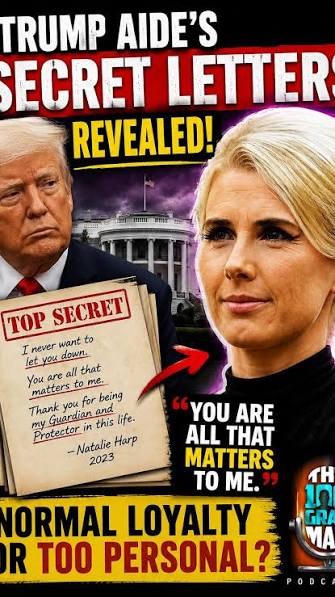
Natalie Harp was born in 1991 and raised in California. She graduated from Point Loma Nazarene University in 2012, and from Liberty University in 2015 with an MBA.
By 2017, Harp began suffering from chronic pain and complications incurred by a medical error involving intravenous therapy for stage II bone cancer.
In 2019, Harp praised then-President Trump for signing a federal right-to-try law which allowed her to access experimental treatments which she credited with saving her life.
Trump invited Harp to speak at the 2020 Republican National Convention She compared Trump to the sympathetic character, George Bailey, of It’s a Wonderful Life.
Trump also asked her to serve as a member of the advisory board for his 2020 Presidential campaign. Harp worked for the Right-wing television channel One America News Network from 2020 to 2022.
She later became an aide to Trump for his 2024 Presidential campaign as a key figure in his communications efforts.
In January 2025, Trump appointed Harp to the position of special assistant to the President and executive assistant to the President, with a government salary of $150,000.

Natalie Harp
She worked intimately with Trump and other national security figures for more than one year minus a security clearance. One national security official warned that this position gave her access to more sensitive information than any other Trump associate.
One White House staff member said that she “plays into the less productive and more troublesome parts of his nature, putting things in front of him that aren’t vetted.”
Dan Scavino, a political advisor and former golf club manager who had handled Trump’s social media accounts, largely gave control of Trump’s Truth Social account to Harp.
She used it to post a racist video depicting former President Barack Obama and First Lady Michelle Obama as apes. She also posted an AI-generated image of Trump as Jesus.
Among her duties: Posting remarks Trump dictates to Truth Social, texting on his behalf, and sporting a portable printer to feed him documents, praise and upbeat news articles. This last task has earned her the nickname: “The human printer.”
No doubt to Trump’s humiliation, Harp has also been dubbed as his “diaper nurse.” Some former associates and critics have claimed or joked that he uses adult diapers due to age or health. But there is no evidence that Harp serves in any nursing, medical or caregiving role.
Still, the rumors persist.

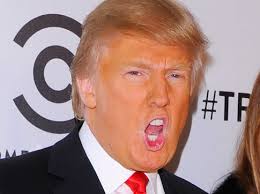
Donald Trump
And Trump appears flattered by her devotion. He calls her “sweetie” and “my Natalie.” And he’s told other aides that “Harp is the only one who loves him as much as his wife and children,” the New York Times reports.
Only recently has her role as Trump’s groupie-turned-government employee become widely known. And the man responsible is Georgia United States Senator Jon Ossoff.
At a campaign rally in Atlanta on August 16, Ossoff, a Democrat, said of Trump: “While the sailors on the [USS Abraham] Lincoln fight his war, while he fruitlessly drains our munitions and oil reserves, the president sleeps through his meetings.
“He golfs and trades stocks. See, he doesn’t want to do the job. He wants to build his ballroom and travel with Natalie on their apparently defenseless flying palace gifted by the Emir of Qatar.”
A clip of this remark was widely shared on social media.

Jon Ossoff
The week before the rally, Harp was among a small group of aides who joined Trump when he switched airplanes in Turkey to thwart a possible Iranian missile attack.
Those who were not allowed to board the decoy plane included:
- Secretary of State Marco Rubio;
- Treasury Secretary Scott Bessent;
- White House Deputy Chief of Staff for Policy Stephen Miller;
- White House Communications Director Steven Cheung.
Ossoff’s comment immediately brought Harp—and Trump—a burst of thoroughly unwelcome publicity.
Maggie Haberman, a New York Times reporter and the author of Regime Change, a scathing profile of the Trump administration, called her Trump’s “binky…a comfort blanket.”
Natalie’s estranged brother, Preston, laughed on CNN when he learned that his sister had jumped into the trunk of a Trump motorcade SUV when there wasn’t room for her to sit during a trip to court in 2023.
In Bureaucracy, History, Law, Law Enforcement, Military, Politics, Social commentary on August 21, 2026 at 12:10 am
After Donald Trump won the 2016 election, many people feared he would embark on a radical Right-wing agenda. But others hoped that the Washington bureaucracy would “box him in.”
The same sentiments echoed throughout Germany after Adolf Hitler was appointed Chancellor of Germany on January 30, 1933.
The 1983 TV mini-series, The Winds of War, offered a dramatic example of how honorable men can be overwhelmed by a ruthless dictator.
Based on the bestselling 1971 historical novel by Herman Wouk, the mini-series factually re-created the major historical events of World War II.

One of those events took place on November 5, 1939.
General Walther von Brauchitsch is summoned to the Chancellery in Berlin to meet with Adolf Hitler. He carries a memorandum signed by all the leaders of the German Wehrmacht asserting that Case Yellow—Hitler’s planned attack against France—is impossible.
Meanwhile, at the German army headquarters at Zossen, in Berlin, the Wehrmacht’s top command wait for word from von Brauchitsch.
CHANCELLERY:
Von Brauchitsch hands the memorandum to Hitler, who reads it.
Adolf Hitler (slamming down the memorandum): So—what is new in all this?

Gunter Meisner as Adolf Hitler in “The Winds of War”
Walther Von Brauchitsch: Fuhrer, it is the army’s final position that Case Yellow cannot proceed.
Hitler: Why not?
Von Brauchitsch: Because of the military fundamentals as stated. The meteorologists predict continuous soaking rains for weeks.
Hitler: It rains on the enemy, too.
ZOSSEN:
Brigadier General Armin Von Roon: The conspiracy has been going on that long—since Czechoslovakia [1938)?
Chief of the General Staff Franz Halder: If the British had not caved in at Munich [where France and Britain sold out their ally, Czechoslovakia]—perhaps. But they did. And ever then, ever since his big triumph, it has been hopeless. Hopeless.
Von Roon: Empty talk, talk, talk. I am staggered.
Halder: A hundred times I myself could have shot the man. I can still at any time. But what would be the result? Chaos. The people are for him. He has unified the country. We must stick to our posts and save him from making military mistakes.
CHANCELLERY:
Von Brauchitsch: Fuhrer, even the supply of artillery shells is totally inadequate.
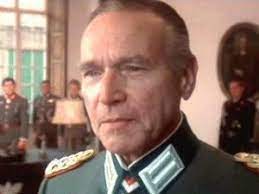
Wolfgang Preiss as Walter von Brauchitsch in “The Winds of War”
Hitler: Do you know how many artillery shells of all calibers we have in the staging areas—right this minute?
Von Brauchitsch: No.
Hitler: How many we have in the reserve dumps in the West? What the monthly annual production of shells is? What the projected rise in production of the next six months is, month by month?
Von Brauchitsch: Who keeps such figures in his head?
Hitler: I do! The supply is adequate. I tell you so. And I’m a field soldier who depended on artillery for four years to protect his life. [He hands von Brauchitsch a sheaf of armaments figures.] Check with your staff. if one of those figures is wrong, you can postpone Case Yellow. Otherwise—you march! And next time you come to see me, know what you’re talking about!
Von Brauchitsch: The morale of the army was low, even in the Polish campaign.
Hitler: Back up this monstrous assertion! In what units was morale low? What action was taken? How many death sentences were handed out for cowardice? Speak up! I’ll fly to the front and pass the death sentences myself. Name one specific instance.
Von Brauchitsch: It was common knowledge—
Hitler: Common knowledge? What is common knowledge is that army headquarters at Zossen crawls with cowards. You opposed me in rearming the Rhineland. You opposed me on the [union] with Austria. You opposed me on Czechoslovakia, until the British came crawling to me. You dirtied in your trousers, you heroes at Zossen, at the idea of marching into Poland. Well, have I once been wrong? Have you once been right? Answer me!
Von Brauchitsch: Mein Fuhrer—
Hitler: Tell everyone who signed this insubordinate Zossen rubbish to beware! I will ruthlessly crush everybody up to the rank of a Field Marshal who dares to oppose me. You don’t have to understand. You only have to obey. The German people understand me. I am Germany.
During his first term, President Donald Trump:
- Fired FBI Director James Comey for investigating Russia’s subversion of the 2016 Presidential election.
- Attacked the integrity of the American Intelligence community.
- Attacked the free press as “the enemy of the American people.”
- Tried to coerce Ukrainian President Volodymyr Zelensky to smear former Vice President Joe Biden, his presumed Democratic opponent in the 2020 Presidential election.
- Repeatedly lied about the dangers posed by the COVID-19 virus, thus enabling it to kill 400,000 by the time Trump left office.
- Incited his followers to violently attack the United States Capitol Building to overturn the results of the 2020 Presidential election and prevent Joe Biden, the winner, from taking office.
Like Adolf Hitler, Donald Trump can truthfully say: I am America.
And that was before the United States Supreme Court declared that a President has absolute immunity for his official acts—including criminal ones.
On November 5, 2024, 77 million Americans seeking cheap eggs and a purge of Hispanics re-elected Donald Trump President of the United States.
" WIKIPEDIA, 2016 PRESIDENTIAL CAMPAIGN, 2020 PRESIDENTIL CAMPAIGN, ABC NEWS, ALTERNET, AMERICABLOG, AP, ATTORNEY GENERAL, BABY BOOMER RESISTANCE, BALLOTS, BBC, BLOOMBERG, BLUESKY, BUZZFEED, CBS NEWS, CENSORSHIP, CHRISTOPHER KREBS, CIVIL RIGHTS, CNN, COVID-19, CROOKS AND LIARS, CYBERSECURITY AND INFRASTRUCTURE SECURITY AGENCY (CISA), DAILY KOS, DEFENSE CYBER COMMAND, DEPARTMENT OF HOMELAND SECURITY (DHS), DEPARTMENT OF JUSTICE, DIRECTOR OF NATIONAL INTELLIGENCE, DOMINION VOTING SYSTEMS, DONALD TRUMP, ELECTION ASSISTANCE COMMISSION, ELON MUSK, FACEBOOK, FBI, FEMINISM, FIVETHIRTYEIGHT, FOX NEWS NETWORK, FREEDOM OF THE PRESS, HACKERS, HARPER’S MAGAZINE, HERITAGE FOUNDATION, HILLARY CLINTON, HOLOCAUST, HUFFINGTON POST, I KNOW WHY THE CAGED BIRD SINGS (BOOK), JANET JACOB, JANUARY 6 COUP ATTEMPT, JOSEPH R. BIDEN, JOSEPH STALIN, MARK ZUCKERBERG, MAYA ANGELOU, MEDIA MATTERS, MEIN KAMPF (BOOK), MOTHER JONES, MOVEON, MSNBC, NATIONAL SECURITY AGENCY, NBC NEWS, NEW REPUBLIC, NEWSDAY, NEWSWEEK, NORTH ATLANTIC TREATY ORGANIZATION (NATO), NPR, PBS NEWSHOUR, PETE HEGSETH, POLITICO, POLITICUSUSA, PROJECT 2025, RACISM, RAW STORY, REPUBLICANS, REUTERS, SALON, SEATTLE TIMES, Secret Service, SENTINELONE, SLATE, SOVIET UNION, TALKING POINTS MEMO, THE ATLANTIC, THE CAMP OF THE SAINTS (BOOK), THE CHICAGO SUN-TIMES, THE CHICAGO TRIBUNE, THE DAILY BEAST, THE DAILY BLOG, THE GUARDIAN, THE HILL, THE HUFFINGTON POST, THE INTERCEPT, THE LOS ANGELES TIMES, THE NATION, THE NEW REPUBLIC, THE NEW YORK TIMES, THE NEW YORKER, THE VILLAGE VOICE, THE WASHINGTON POST, THINKPROGRESS, TIME, TROLLS, TRUTHDIG, TRUTHOUT, TWITTER, TWO POLITICAL JUNKIES, U.S. NEWS & WORLD REPORT, UNITED STATES NAVAL ACADEMY LIBRARY, UPI, USA TODAY, VLADIMIR PUTIN, WHITE SUPREMACY, X
In Bureaucracy, History, Law, Law Enforcement, Politics, Social commentary on July 23, 2026 at 3:13 am
Soviet dictator Joseph Stalin, in a moment of rare candor, once revealed his satanic ruthlessness to a group of fellow Bolsheviks: “To choose one’s victims, to prepare one’s plans minutely, to slake an implacable vengeance, and then to go to bed—there is nothing sweeter in the world.”
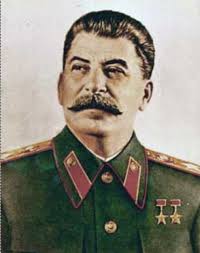
Joseph Stalin
On April 9, 2025, President Donald Trump revealed his intention to live by that belief. He issued a MEMORANDUM FOR THE HEADS OF EXECUTIVE DEPARTMENTS AND AGENCIES.
Its purpose: To target Christopher Krebs, the former director of the Cybersecurity and Infrastructure Security Agency (CISA) run by the Department of Homeland Security (DHS) for potential arrest and prosecution.
Krebs’ “crime”: Ensuring that the 2020 Presidential election was free of lies spread by Russians—and Americans—on social media platforms.
Deprived of his expected support from Russian trolls and hackers, Trump lost.
Among the “charges” outlined in Trump’s memorandum:
“Krebs skewed the bona fide debate about COVID-19 by attempting to discredit widely shared views that ran contrary to CISA’s favored perspective.”
During 2020—Trump’s last year in office as President—COVID-19 ravaged the United States. At least 400,000 Americans died—many of them because they believed Trump’s claims that:
- His administration had it under control; and
- At a time when there was no vaccine against the virus, people didn’t need to protect themselves from it—such as by social distancing and wearing masks in public.
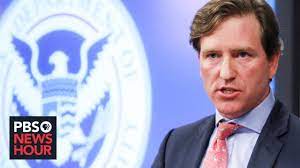
Chris Krebs
The memorandum continued:
“I hereby direct the heads of executive department and agencies to immediately take steps consistent with existing law to revoke any active security clearance held by Christopher Krebs.
“I further direct the Attorney General, the Director of National Intelligence, and all other relevant agencies to immediately take all action as necessary and consistent with existing law to suspend any active security clearances held by individuals at entities associated with Krebs, including SentinelOne, pending a review of whether such clearances are consistent with the national interest.”
SentinelOne is an American cybersecurity company in Mountain View, California, where Krebs serves as Chief Intelligence and Public Policy Officer.
“I further direct the Attorney General and the Secretary of Homeland Security, in consultation with any other agency head, to take all appropriate action to review Krebs’ activities as a Government employee, including his leadership of CISA [Cybersecurity and Infrastructure Security Agency].“
“This review should identify any instances where Krebs’ conduct appears to have been contrary to suitability standards for Federal employees, involved the unauthorized dissemination of classified information, or contrary to the purposes and policies identified in Executive Order 14149 of January 20, 2025 (Restoring Freedom of Speech and Ending Federal Censorship).”
Donald Trump
Trump is speaking about the censorship of Right-wing speech, which is virtually non-existent. But he has no qualms about suppressing freedom of speech for his critics.
He blocked access by the Associated Press to White House events because it refused to bow to his demand that it refer to the Gulf of Mexico as the “Gulf of America.”
On April 9, District Judge Trevor McFadden ruled the administration’s restriction on AP journalists was “contrary to the First Amendment,” which guarantees freedom of speech.
The administration has appealed the verdict to the United States Court of Appeals for the District of Columbia Circuit.
According to Trump’s memorandum:
“As part of that review, I direct a comprehensive evaluation of all of CISA’s activities over the last 6 years, focusing specifically on any instances where CISA’s conduct appears to have been contrary to the purposes and policies identified in Executive Order 14149.
“Upon completing these reviews, the Attorney General and the Secretary of Homeland Security shall prepare a joint report to be submitted to the President, through the Counsel to the President, with recommendations for appropriate remedial or preventative actions to be taken to fulfill the purposes and policies of Executive Order 14149.”
Clearly, Trump seeks to find any plausibly legal excuse to destroy the man who dared come between him and his Russian backers in 2020—and who contradicted his lies about COVID and the election.
Donald Trump’s ambition to become absolute dictator fits brilliantly into the goals of Project 2025, also known as the Presidential Transition Project.
This is a collection of policy proposals to fundamentally reshape the U.S. federal government in the event of a Republican victory in the 2024 Presidential election.
During the 2024 Presidential campaign, Trump repeatedly denied knowing anything about it. Anyone aware of his reputation as a notorious liar knew this wasn’t true.
Established in 2022 by the Right-wing Heritage Foundation, the project aims to recruit tens of thousands of radical Right-wingers to the District of Columbia to replace existing federal civil servants.
Among Project 2025’s priorities:
- Replace tenured civil servants with thousands of political hacks to establish an absolute dictatorship under a Republican President.
- “Reform” the Department of Justice by making it the President’s personal law firm.
- Make the director of the FBI personally accountable to the President—as the head of the KGB is personally accountable to Vladimir Putin.
History-ignorant Americans are now discovering what it means to have lived in the Soviet Union of Joseph Stalin—where truth and integrity were punished and lies and treachery were rewarded.
2016 PRESIDENTIAL CAMPAIGN, 2020 PRESIDENTIL CAMPAIGN, ABC NEWS, ALTERNET, AMERICABLOG, AP, BABY BOOMER RESISTANCE, BALLOTS, BBC, BIRTH CERTIFICATES, BLOOMBERG, BLUESKY, BUZZFEED, CBS NEWS, CENSORSHIP, CHINA, CHRISTOPHER KREBS, CIVIL RIGHTS, CNN, COVID-19, CROOKS AND LIARS, CYBERSECURITY AND INFRASTRUCTURE SECURITY AGENCY (CISA), DAILY KOS, DEFENSE CYBER COMMAND, DEPARTMENT OF HOMELAND SECURITY (DHS), DEPARTMENT OF JUSTICE, DIRECTOR OF NATIONAL INTELLIGENCE, DOMINION VOTING SYSTEMS, DONALD TRUMP, DRIVER'S LICENSES, ELECTION ASSISTANCE COMMISSION, FBI, FIVETHIRTYEIGHT, FOX NEWS NETWORK, FREEDOM OF THE PRESS, HACKERS, HARPER’S MAGAZINE, HERITAGE FOUNDATION, HILLARY CLINTON, HUFFINGTON POST, JONATHAN CAPEHART, JOSEPH R. BIDEN, JOSEPH STALIN, MAIL-IN BALLOTS, MARRIAGE CERTIFICATES, MEDIA MATTERS, MOTHER JONES, MOVEON, MSNBC, NATIONAL SECURITY AGENCY, NBC NEWS, NEW REPUBLIC, NEWSDAY, NEWSWEEK, NORTH ATLANTIC TREATY ORGANIZATION (NATO), NPR, PASSPORTS, PBS NEWSHOUR, POLITICO, POLITICUSUSA, RAW STORY, REAL IDS, REPUBLICANS, REUTERS, SALON, SAVE ACT (SAFEGUARD AMERICAN VOTER ELIGILITY ACT), SEATTLE TIMES, SLATE, SOVIET UNION, TALKING POINTS MEMO, THE ATLANTIC, THE CAMP OF THE SAINTS (BOOK), THE CHICAGO SUN-TIMES, THE CHICAGO TRIBUNE, THE DAILY BEAST, THE DAILY BLOG, THE GUARDIAN, THE HILL, THE HUFFINGTON POST, THE INTERCEPT, THE LOS ANGELES TIMES, THE NATION, THE NEW REPUBLIC, THE NEW YORK TIMES, THE NEW YORKER, THE VILLAGE VOICE, THE WASHINGTON POST, THINKPROGRESS, TIME, TRUTHDIG, TRUTHOUT, TWO POLITICAL JUNKIES, U.S. NEWS & WORLD REPORT, UPI, USA TODAY, VLADIMIR PUTIN, X
In Bureaucracy, History, Law, Law Enforcement, Politics, Social commentary on July 22, 2026 at 1:12 am
In the United States of Donald Trump, protecting the right to legitimate elections can get you investigated—if not indicted.
Case in point: Christopher Krebs, who prevented Russian trolls and hackers from sabotaging the 2020 Presidential election.
During the 2016 Presidential race, Russian propaganda played a major role in convincing millions of Americans to vote for Donald Trump. Social media platforms—especially Facebook and Twitter—were flooded with genuinely fake news to sow discord among Americans and create a pathway for Trump’s election.
And where Internet trolls left off, Russian computer hackers took over.
Hillary Clinton won the popular vote—65,853,514 to 62,984,828 for Trump. But in the United States, what counts in Presidential elections is the Electoral College vote.
And there Trump won: 304 to 227.
What put him over the top in the Electoral College was the help he got from Russian dictator Vladimir Putin.

Vladimir Putin
Пресс-служба Президента РФ, CC BY 4.0 <https://creativecommons.org/licenses/by/4.0>, via Wikimedia Commons
Putin had good reason to assist Trump: Putin wanted the United States to ditch the North Atlantic Treaty Organization (NATO) alliance, which has preserved Western Europe from Russian aggression since World War II. And Trump had often attacked America’s funding of NATO as a drain on the American economy.
As for Trump, he wanted something from Putin: He wanted to be President. For this, Putin could supply monies, Internet trolls to confuse voters with falsified news, and even the hacking of key voting centers.
So notorious was the role played by Russian trolls and hackers in winning Trump the 2016 election that the Department of Homeland Security (DHS) was determined to prevent a repetition in 2020.
And the point man for this was Chris Krebs, the director of the Cybersecurity and Infrastructure Security Agency (CISA) run by DHS.
Born in Atlanta, Georgia, in 1977, Krebs had received a B.A. in environmental sciences from the University of Virginia in 1999, and a J.D. from the George Mason University School of Law in 2007.

Chris Krebs
Krebs had served as Senior Advisor to the Assistant Secretary of Homeland Security for Infrastructure Protection, and later worked in the private sector as Director for Cybersecurity Policy for Microsoft.
In preparation for the 2020 Presidential election, Krebs launched a massive effort to counter lies spread by Russians—and Americans—on social media platforms. As he explained to Scott Pelley during a “60 Minutes” interview aired on November 29, 2020:
“So we spent something on the order of three and a half years of gaming out every possible scenario for how a foreign actor could interfere with an election. Countless, countless scenarios.”
At his command lay the resources of a series of powerful Federal investigative agencies:
“We had the Department of Defense Cyber Command. We had the National Security Agency. We had the FBI. We had the Secret Service. We also had representatives from the Election Assistance Commission, which is the federal independent agency that supports the actual administration of elections.”

As a result, Krebs was widely praised for revamping the department’s cybersecurity efforts and increasing coordination with state and local governments.
The November 3, 2020 election went very smoothly. Deprived of his expected support from Russian trolls and hackers, Trump lost.
On November 12, to counter the growing chorus of lies from Trump and his Right-wing allies that the election had been stolen, Krebs put out the following statement:
“The November 3rd election was the most secure in American history. There is no evidence that any voting system deleted or lost votes, changed votes, or was in any way compromised.”
On November 17, Trump fired Chris Krebs.
Too cowardly to confront Krebs, Trump fired him by tweet—and accompanied the outrage with yet more lies:
“The recent statement by Chris Krebs on the security of the 2020 election was highly inaccurate, in that there were massive improprieties and fraud, including dead people voting, poll watchers not allowed into polling locations, glitches in the voting machines which changed votes from Trump to Biden, late voting, and many more.”
Five years later, on April 9, 2025, a re-elected Trump issued a MEMORANDUM FOR THE HEADS OF EXECUTIVE DEPARTMENTS AND AGENCIES.
Its target: Chris Krebs.
Among other charges, Trump accused Krebs of suppressing “conservative or dissenting voices and distort[ing] public opinion.”
The two biggest and most influential social media platforms—Twitter (now X) and Facebook—are owned by avowedly Right-wing billionaires: Elon Musk and Mark Zuckerberg. And they massively supported Trump in the 2016 and 2020 elections.
After he incited a treasonous riot against Congress on January 6, 2021, both platforms briefly banned him from posting. But then both—fearing “retribution” if he became President again—once again gave him access to their audiences.
Immediately after losing the 2020 Presidential election, Trump began spreading “The Big Lie”: That he had been defeated by massive voter fraud made possible through Dominion Voting Systems.
In this he was backed by a major Right-wing propagandist: The Fox News Network.
On April 18, 2023, Fox News agreed to pay Dominion Voting Systems $797 million to avert a wrongful defamation trial. Dominion’s lawsuit would have exposed how the network promoted lies about the 2020 presidential election—all the while knowing they were lies.
So much for Trump’s claims of “widespread election malfeasance and serious vulnerabilities with voting machines.”
2016 PRESIDENTIAL CAMPAIGN, 2020 PRESIDENTIL CAMPAIGN, ABC NEWS, ALTERNET, AMERICABLOG, AP, BABY BOOMER RESISTANCE, BALLOTS, BBC, BIRTH CERTIFICATES, BLOOMBERG, BLUESKY, BUZZFEED, CBS NEWS, CENSORSHIP, CHINA, CHRISTOPHER KREBS, CIVIL RIGHTS, CNN, COVID-19, CROOKS AND LIARS, CYBERSECURITY AND INFRASTRUCTURE SECURITY AGENCY (CISA), DAILY KOS, DEFENSE CYBER COMMAND, DEPARTMENT OF HOMELAND SECURITY (DHS), DEPARTMENT OF JUSTICE, DIRECTOR OF NATIONAL INTELLIGENCE, DOMINION VOTING SYSTEMS, DONALD TRUMP, DRIVER'S LICENSES, ELECTION ASSISTANCE COMMISSION, FBI, FIVETHIRTYEIGHT, FOX NEWS NETWORK, FREEDOM OF THE PRESS, HACKERS, HARPER’S MAGAZINE, HERITAGE FOUNDATION, HILLARY CLINTON, HUFFINGTON POST, JONATHAN CAPEHART, JOSEPH R. BIDEN, JOSEPH STALIN, MAIL-IN BALLOTS, MARRIAGE CERTIFICATES, MEDIA MATTERS, MOTHER JONES, MOVEON, MSNBC, NATIONAL SECURITY AGENCY, NBC NEWS, NEW REPUBLIC, NEWSDAY, NEWSWEEK, NORTH ATLANTIC TREATY ORGANIZATION (NATO), NPR, PASSPORTS, PBS NEWSHOUR, POLITICO, POLITICUSUSA, RAW STORY, REAL IDS, REPUBLICANS, REUTERS, SALON, SAVE ACT (SAFEGUARD AMERICAN VOTER ELIGILITY ACT), SEATTLE TIMES, SLATE, SOVIET UNION, TALKING POINTS MEMO, THE ATLANTIC, THE CAMP OF THE SAINTS (BOOK), THE CHICAGO SUN-TIMES, THE CHICAGO TRIBUNE, THE DAILY BEAST, THE DAILY BLOG, THE GUARDIAN, THE HILL, THE HUFFINGTON POST, THE INTERCEPT, THE LOS ANGELES TIMES, THE NATION, THE NEW REPUBLIC, THE NEW YORK TIMES, THE NEW YORKER, THE VILLAGE VOICE, THE WASHINGTON POST, THINKPROGRESS, TIME, TRUTHDIG, TRUTHOUT, TWO POLITICAL JUNKIES, U.S. NEWS & WORLD REPORT, UPI, USA TODAY, VLADIMIR PUTIN, X
In Bureaucracy, History, Law, Law Enforcement, Politics, Social commentary on July 21, 2026 at 12:10 am
On the evening of July 16, President Donald Trump delivered a primetime television speech on election security—and the dangers of foreign interference. Specifically, he claimed that the country’s voting systems were vulnerable to being “rigged and stolen.”
But he provided no new evidence of a single fraudulent vote cast in any election:
“For many years I’ve called for bold, swift and decisive action to protect the integrity of America’s elections. Every American deserves to know that, when they cast their vote, that vote will be counted accurately in a system, and that is to make that system secure.
“Unfortunately, the system we have today falls catastrophically short of that standard. Tonight, I’m announcing the immediate declassification and release of critical intelligence, revealing shocking vulnerabilities in our election infrastructure.”
Trump claimed he was declassifying Intelligence documents that included allegations of Chinese efforts to influence American elections, concerns over voting machine security, and that noncitizens are found on certain states’ voter rolls.
“Allegations”—accusations—are not evidence. And the United States has never accused China of tainting or deleting voter records.
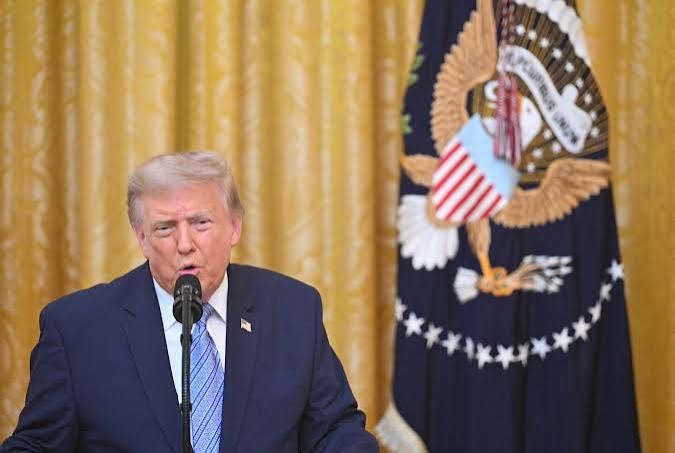
Donald Trump
“This evidence shows that the election system we have dangerously exposes and really exposes, like levels never thought possible, to hacking, exploitation, and foreign interference.
“Just as disturbingly, this vital information has for many years been covered up and hidden from you, the American people — our beautiful, our great American people.”
Yet “vulnerabilities” are different than actual evidence of election interference. And Trump provided none.
As usual, no Trump speech is complete without a boast of his own greatness:
“in mid-2018, China was working to influence the results of the US midterm elections and later the results of the 2020 presidential election itself. Separately, in mid-2019, the Chinese government’s strategy against the United States was focused on undermining domestic confidence in the US president.
“They wanted to just make you sound like your president wasn’t so hot, when actually your president has done a great job.”
Toward the end of his speech, Trump gave his reason for giving it:
“But most importantly, addressing this crisis of election security demands that Congress must pass the SAVE America Act. How easy is that to do, unless you want to cheat.
“And hopefully there will be no corrupt mail-in ballots, which, if you watched California and so many other places, mail-in ballots are inherently corrupt. So, you would have no mail-in ballots except for illness, disability, military deployment, or travel if you’re going away on business or vacation.”
All 50 states allow mail-in voting (often referred to as absentee voting). However, the rules and requirements for who can access a mail-in ballot vary significantly by state. There’s no evidence of widespread fraud in mail balloting.
It’s important to remember that, for all Trump’s stated concerns about preserving election integrity, on July 9, he fired the three remaining members of the Election Assistance Commission, which was created by Congress to help states administer secure elections.

The House passed the Save Act (Safeguard American Voter Eligibility Act) but it does not have the support of all Republicans in the Senate. Thus, it has no chance of becoming law this year.
So why is Trump so fired up about the SAVE Act? As Jonathan Capehart of MS NOW stated on the July 17 edition of The PBS Newshour:
“He’s very scared about what could happen if Democrats retake the House and retake the Senate. He has said as much on the record. If they take over, I will be investigated. And, quite frankly, there are reasons to investigate him and members of his administration.”
According to the Center for American Progress, a public policy research and advocacy organization, the SAVE Act would:
- Disenfranchise millions of now-eligible—and mostly Democratic—voters.
- Require all Americans to prove their citizenship status by presenting documentation—in person—when registering to vote or updating their voter registration information.
- Require the vast majority of Americans to rely on a passport or birth certificate to prove their citizenship.
- Force more than 140 million American citizens to pay for a passport.
- Force up to 69 million women who have taken their spouse’s name to obtain a birth certificate matching their legal name.
- Prevent Americans from registering to vote by mail by requiring documentation to be presented in person would prevent Americans from registering to vote by mail.

- Requite voters to appear in person, with original documentation, to even simply update their voter registration information for a change of address or change in party affiliation.
- These restrictions would be especially hard for more than 60 million Americans living in rural areas. (Ironically, millions of Right-wing Trump supporters living in rural areas would also be affected.)
- Drivers licenses—including REAL IDs—and military or tribal IDs would not be sufficient forms of documentation to prove citizenship.
Despite the disastrous changes this legislation would inflict on American elections, leadership in the U.S. House of Representatives—specifically, Speaker Mike Johnson—has declared that passing the SAVE Act is one of their top priorities this year.
So how did Donald Trump reward Chris Krebs, the man who prevented Russian interference in the 2020 Presidential election?
Trump fired him.
AL GREEN, ALEX PRETTI, ALEXI NAVALNY, ALTERNET, AMERICABLOG, AP, BABY BOOMER RESISTANCE, BBC, BIRTHRIGHT CITIZENSHIP, BLOOMBERG, BLUESKY, BUZZFEED, CBS NEWS, CNN, CONVERSATION WITH AN AMERICAN WRITER (POEM), CROOKS AND LIARS, DAILY KOS, DEPARTMENT OF HOMELAND SECURITY, DEPARTMENT OF JUSTICE, DEPARTMENT OF VETERANS AFFAIRS, DONALD TRUMP, EIGHTH AMENDMENT, FIFTH AMENDMENT, FIVETHIRTYEIGHT, HARPER’S MAGAZINE, HISTORY, HOUSE OF REPRESENTATIVES, HUFFINGTON POST, IMMIGRATION AND CUSTOMS ENFORCEMENT (ICE), IMPEACHMENT, JASON WATSON, MEDIA MATTERS, MOTHER JONES, MOVEON, MSNBC, NAZI GERMANY, NBC NEWS, news, NEWSDAY, NEWSWEEK, NPR, OLGA MISIK, PBS NEWSHOUR, POLITICO, POLITICS, POLITICUSUSA, RAW STORY, RENEE GOOD, REUTERS, RUSSIA, SALON, SEATTLE TIMES, SLATE, SOPHIE SCHOLL, TALKING POINTS MEMO, TARIFFS, THE ATLANTIC, THE CHICAGO SUN-TIMES, THE CHICAGO TRIBUNE, THE DAILY BEAST, THE DAILY BLOG, THE GUARDIAN, THE HILL, THE HUFFINGTON POST, THE INTERCEPT, THE LOS ANGELES TIMES, THE NATION, THE NEW REPUBLIC, THE NEW YORK TIMES, THE NEW YORKER, THE VILLAGE VOICE, THE WASHINGTON POST, THINKPROGRESS, TIME, TRUTHDIG, TRUTHOUT, TWO POLITICAL JUNKIES, U.S. NEWS & WORLD REPORT, UNITED STATES AIR FORCE, UNITED STATES CAPITOL, UNITED STATES CONSTITUTION, UPI, USA TODAY, VLADIMIR PUTIN, X, YEVGENY YEVTUSHENKO
In Bureaucracy, History, Law, Law Enforcement, Military, Politics, Social commentary on July 16, 2026 at 12:10 am
On July 27, 2019, Olga Misik—a 17-year-old activist in the Russia of Vladimir Putin—joined thousands of people attending an unauthorized protest in Moscow against the bar on opposition activists competing for seats in the Duma (parliament) election against Putin’s lackeys.
Olga was sentenced on May 11, 2021, for vandalism. She received two years and two months of “restricted liberty.”
Prior to her sentencing, Misik read a prepared statement to the court. Among its passages:
“Someone said, “It’s impossible to be afraid if you know you’re right.” But Russia teaches us to always be afraid. A country that attempts to kill us every day, and if you’re not part of the system, you might as well be dead already.
“Of course I was at that protest. I don’t regret it and more so am proud of my actions. In reality, I had no choice. I had to do everything in my power, thus I have no right to regret it. And if I had the option to go back in time, I would do it again….
“I guess hope is insanity. But not doing something you believe in, just because everyone around you thinks it’s pointless, that is learned hopelessness. And better to be insane in your eyes than hopeless in my own….”
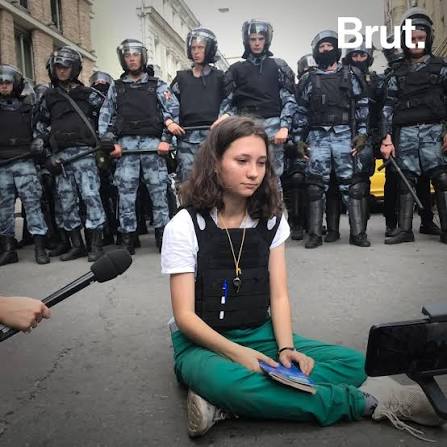
Olga Misik
On July 1, 2026, Air Force Major Jason Watson, dressed in full military uniform and holding a sign reading
stood on the steps of the United States Capitol Building. Speaking in a moderate, controlled voice, Watson laid out a damning indictment of the Trump administration:
“There are innumerable more impeachable offenses that I could cover:
—Denying congressional oversight of immigrant detention centers that look increasingly like CECOT.
—Suing media organizations, colleges, and law firms for billions of dollars while abusing executive branch agencies to extort settlements.
—Allowing a mega-donor to advertise products on the White House lawn.
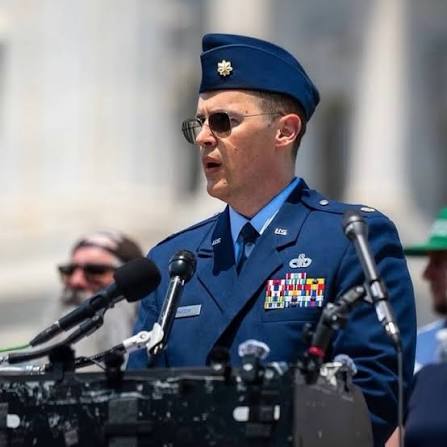
Jason Watson
—Trading pardons for donations.
—Levying illegal tariffs.
—Weaponizing the Department of Justice against political adversaries while ignoring crimes committed by supporters and enablers.
—Attempting to reverse birthright citizenship through executive order.
“For all of these high crimes and misdemeanors, the President and Vice President must be impeached, convicted, and removed.”
Olga Misik compared her trial to that of Sophie Scholl, an anti-Nazi political activist executed by Nazi Germany.
“A fascist government never seems fascist from the inside. It seems like just some minuscule, inconsequential censorship and some targeted repression that will never reach you. I’m not the one on trial today. Today, you are deciding not my fate but yours, and you still have a chance to do the right thing….
“I am not promising victory tomorrow, the day after, in a year, or 10. But someday we will win, because love and youth always win. I can’t promise to make it there alive, but I really hope you live to see it.
“You know what I’m actually being tried for. For reading the constitution. For my political positions. For being named person of the year. For my principles. For my actions.
“The Nazi regime eventually crumbled, as will the fascist regime in Russia. I don’t know when it will happen, be it a week, a year, or decade, but I know that someday we will be victorious, because love and youth always prevail….
“Sophie Scholl’s last words before her execution were, ‘The sun still shines.’ Indeed, the sun still shines. I couldn’t see it out the window of the detention center, but I always knew it was there. And if now, in such dark times, we can turn to the light, then maybe victory isn’t so far after all.”
Continuing his speech on the Congressional steps, Jason Watson said:
“The constitutional impeachment process is our best pathway to restore fidelity to our Constitution….
“But Congress remains unconvinced of the urgency and necessity of honoring its oath. So we must persuade them with our unrelenting, uncompromising civil resistance. I am calling on average Americans everywhere to peacefully exercise your First Amendment rights every day until this administration is removed and our democratic republic is restored.
I believe in America. I believe in us.
Initially, Watson had been accompanied by the Texas Democratic Congressman Al Green, but when he left the area, police said he needed to stop his protest or be arrested. Protests are prohibited at the U.S. Capitol unless participants are accompanied by a member of Congress.
Watson refused, so Capitol Police arrested him for “Crowding, Obstructing and Incommoding.”
According to an Air Force spokesperson, Watson has received at least 19 awards and seven decorations during his 17-year career.
He could be court-martialed or face disciplinary measures under the Uniform Code of Military Justice.
In his 1960 poem, “Conversation With an American Writer,” the Russian poet, Yevgeney Yevtushenko spoke for those Russians who had maintained their integrity in the face of Stalinist terror:
“You have courage,” they tell me.
It’s not true. I was never courageous.
I simply felt it unbecoming
to stoop to the cowardice of my colleagues.
In Russia—under Vladimir Putin—acting on moral courage is no small thing.
In the United States—under Donald Trump—acting on moral courage no small thing either.
AL GREEN, ALEX PRETTI, ALEXI NAVALNY, ALTERNET, AMERICABLOG, AP, BABY BOOMER RESISTANCE, BBC, BIRTHRIGHT CITIZENSHIP, BLOOMBERG, BLUESKY, BUZZFEED, CBS NEWS, CNN, CONVERSATION WITH AN AMERICAN WRITER (POEM), CROOKS AND LIARS, DAILY KOS, DEPARTMENT OF HOMELAND SECURITY, DEPARTMENT OF JUSTICE, DEPARTMENT OF VETERANS AFFAIRS, DONALD TRUMP, EIGHTH AMENDMENT, FIFTH AMENDMENT, FIVETHIRTYEIGHT, HARPER’S MAGAZINE, HOUSE OF REPRESENTATIVES, HUFFINGTON POST, IMMIGRATION AND CUSTOMS ENFORCEMENT (ICE), IMPEACHMENT, JASON WATSON, MEDIA MATTERS, MOTHER JONES, MOVEON, MSNBC, NAZI GERMANY, NBC NEWS, NEWSDAY, NEWSWEEK, NPR, OLGA MISIK, PBS NEWSHOUR, POLITICO, POLITICUSUSA, RAW STORY, RENEE GOOD, REUTERS, RUSSIA, SALON, SEATTLE TIMES, SLATE, SOPHIE SCHOLL, TALKING POINTS MEMO, TARIFFS, THE ATLANTIC, THE CHICAGO SUN-TIMES, THE CHICAGO TRIBUNE, THE DAILY BEAST, THE DAILY BLOG, THE GUARDIAN, THE HILL, THE HUFFINGTON POST, THE INTERCEPT, THE LOS ANGELES TIMES, THE NATION, THE NEW REPUBLIC, THE NEW YORK TIMES, THE NEW YORKER, THE VILLAGE VOICE, THE WASHINGTON POST, THINKPROGRESS, TIME, TRUTHDIG, TRUTHOUT, TWO POLITICAL JUNKIES, U.S. NEWS & WORLD REPORT, UNITED STATES AIR FORCE, UNITED STATES CAPITOL, UNITED STATES CONSTITUTION, UPI, USA TODAY, VLADIMIR PUTIN, X, YEVGENY YEVTUSHENKO
In Bureaucracy, History, Law, Law Enforcement, Military, Politics, Social commentary on July 15, 2026 at 12:40 am
On July 27, 2019, Olga Misik—a 17-year-old activist in the Russia of Vladimir Putin—joined thousands of people attending an unauthorized protest in Moscow against the bar on opposition activists competing for seats in the Duma (parliament) election against Putin’s lackeys.
Misik was released after the protest in 2019, but she later found herself facing charges related to a protest in 2020.
Olga was sentenced on May 11, 2021, for vandalism. She received two years and two months of “restricted liberty,” which amounted to home confinement, including a curfew that required her to be inside her house from 10 p.m. and 6 a.m.
Prior to her sentencing, Misik read a prepared statement to the court. Among its passages:
“Every night I wake from the smallest of sounds. I keep imagining footsteps in the hallway. Panic washes over me from the sound of the gravel crunching under the wheels of cars outside my window.
“I feel like all of the fear accumulated over the past nine months is most concentrated in this exact moment, in my final statement, because public speaking scares me more than the sentencing. My heart is racing at 151 beats per minute, and it feels as though it could explode any second now….”
On July 1, 2026, Air Force Major Jason Watson, dressed in full military uniform and holding a sign reading IMPEACH CONVICT REMOVE stood on the steps of the United States Capitol.
Speaking in a moderate, controlled voice, Watson laid out a damning indictment of the crimes thus far committed by the Trump administration:
“For the past 18 months, we the people have allowed the highest levels of the executive branch of the federal government to violate our Constitution and their oaths to it with impunity.
“When the president of the United States orders military action against foreign countries absent an emergency scenario, where American interests are under imminent dire threat as was done with Venezuela, Cuba and Iran, that’s an unconstitutional usurpation of Congress’s authority and a violation of the War Powers Clause.

Donald Trump
“These violations resulted in the deaths of 13 service members and injuries of hundreds more. For this, the president and vice president must be impeached, convicted and removed.
“When the President of the United States grants an unelected mega-donor sweeping authority to shut down large swaths of our federal government, along with unrestricted access to our government databases, that is an unconstitutional circumvention of Congress’s advice-and-consent authority under the Appointments Clause and Congress’s power of the purse under the Appropriations Clause.
“These violations exposed every American’s sensitive personal data to leaks and exploitation, illegally terminated tens of thousands of federal civil servants, crippled support for Americans needing medical care and disaster preparedness, and—most tragically—resulted in the deaths of hundreds of thousands of the world’s most impoverished people through the inhumane, abrupt cessation of U.S. aid.
“For this, the President and Vice President must be impeached, convicted, and removed.
Continuing her courtroom statement, Olga Misik said:
“I wasn’t scared when they put me in the detention center….My own fate was the last thing on my mind. It is very strange, maybe some sort of coping mechanism, but in those days I wasn’t afraid once….
“I was worried and stressed about how things would play out, but unafraid. The night was beautiful. I was aware that it could be my last one in freedom, and yet that did not scare me.
“However, after the search, for the past nine months, I have been scared constantly. Ever since the night in the detention center, I haven’t been able to get a good night’s sleep once.”
Continuing his speech on the Congressional steps, Jason Watson said:
“When the President of the United States directs the Department of Homeland Security to deny hundreds of people due process before illegally detaining them and sending them to a foreign prison notorious for human rights abuses, that is a violation of our Fifth and Eighth Amendment rights….
“For this, the President and Vice President must be impeached, convicted, and removed.
“When the President of the United States sponsors violence against the American people engaged in their constitutional right to peacefully assemble and protest, that is a violation of our First Amendment rights.

ICE victim Renee Good

CBP victim Alex Pretti
“Pastors praying for DHS agents were violently attacked without provocation. A legal observer lost an eye after being struck by a so-called non-lethal round fired by an ICE agent.
“A woman [Renee Good, a 37-year-old mother and poet] attempting to follow chaotic and contradictory DHS instructions was fatally shot.
“A subdued man [Alex Pretti, an intensive care nurse for the U.S. Department of Veterans Affairs] who posed no threat was fatally shot after having his firearm removed.
“There are innumerable more impeachable offenses that I could cover: denying congressional oversight of immigrant detention centers that look increasingly like CECOT; suing media organizations, colleges, and law firms for billions of dollars while abusing executive branch agencies to extort settlements; allowing a mega-donor to advertise products on the White House lawn; trading pardons for donations; levying illegal tariffs; weaponizing the Department of Justice against political adversaries while ignoring crimes committed by supporters and enablers; and attempting to reverse birthright citizenship through executive order.”
AL GREEN, ALEX PRETTI, ALEXI NAVALNY, ALTERNET, AMERICABLOG, AP, BABY BOOMER RESISTANCE, BBC, BIRTHRIGHT CITIZENSHIP, BLOOMBERG, BLUESKY, BUZZFEED, CBS NEWS, CNN, CONVERSATION WITH AN AMERICAN WRITER (POEM), CROOKS AND LIARS, DAILY KOS, DEPARTMENT OF HOMELAND SECURITY, DEPARTMENT OF JUSTICE, DEPARTMENT OF VETERANS AFFAIRS, DONALD TRUMP, EIGHTH AMENDMENT, FIFTH AMENDMENT, FIVETHIRTYEIGHT, HARPER’S MAGAZINE, HOUSE OF REPRESENTATIVES, HUFFINGTON POST, IMMIGRATION AND CUSTOMS ENFORCEMENT (ICE), IMPEACHMENT, JASON WATSON, MEDIA MATTERS, MOTHER JONES, MOVEON, MSNBC, NAZI GERMANY, NBC NEWS, NEWSDAY, NEWSWEEK, NPR, OLGA MISIK, PBS NEWSHOUR, POLITICO, POLITICUSUSA, RAW STORY, RENEE GOOD, REUTERS, RUSSIA, SALON, SEATTLE TIMES, SLATE, SOPHIE SCHOLL, TALKING POINTS MEMO, TARIFFS, THE ATLANTIC, THE CHICAGO SUN-TIMES, THE CHICAGO TRIBUNE, THE DAILY BEAST, THE DAILY BLOG, THE GUARDIAN, THE HILL, THE HUFFINGTON POST, THE INTERCEPT, THE LOS ANGELES TIMES, THE NATION, THE NEW REPUBLIC, THE NEW YORK TIMES, THE NEW YORKER, THE VILLAGE VOICE, THE WASHINGTON POST, THINKPROGRESS, TIME, TRUTHDIG, TRUTHOUT, TWO POLITICAL JUNKIES, U.S. NEWS & WORLD REPORT, UNITED STATES AIR FORCE, UNITED STATES CAPITOL, UNITED STATES CONSTITUTION, UPI, USA TODAY, VLADIMIR PUTIN, X, YEVGENY YEVTUSHENKO
In Bureaucracy, History, Law, Law Enforcement, Military, Politics, Social commentary on July 14, 2026 at 12:10 am
“I just read her final speech. And you know what? I felt ashamed,” Andrei Chvanov, from Tatarstan, wrote on Facebook.
He was referring to Olga MisIk, a 17-year-old activist in the Russia of President Vladimir Putin.
“Because my threshold of fear is much lower….She holds strong, jokes, writes, and is 100 percent sure that she is right. And she is right. She sees the truth. And she is not afraid. Not many people in our country have such a gift.”
On July 27, 2019, Misik was among thousands of people attending an unauthorized protest in Moscow against the bar on opposition activists competing for seats in the Duma (parliament) election against Putin’s lackeys.
Heavily-armed riot police—wielding shields, batons and helmets—stood behind her. As if oblivious to their presence, Olga sat cross-legged in the middle of the street.
She pulled out her copy of Russia’s 1993 constitution and began reading from it.

Olga Misik
“I read four sections,” she said in a later interview with the BBC. “An article talking about the right to peacefully protest, an article saying that everyone can take part in elections, has the right to freedom of speech and that the people’s will and power are the most important thing for the country.
“The situation in Russia is currently extremely unstable. The authorities are clearly getting very scared if they are consolidating armed forces from different parts of the country to chase peaceful protesters. And people’s mentality has changed, as I can see.”
Olga left the scene after the reading, but was later arrested on her way to a metro station. She was among more than 1,000 protesters arrested as a result of the rally. She had been detained four times in the past three months. She said she was peacefully protesting each time.
Misik was released after the protest in 2019, but she later faced charges related to a protest in 2020.
Although she is in no way biologically related to United States Air Force Major Jason Watson, in spirit they could easily be sister and brother.
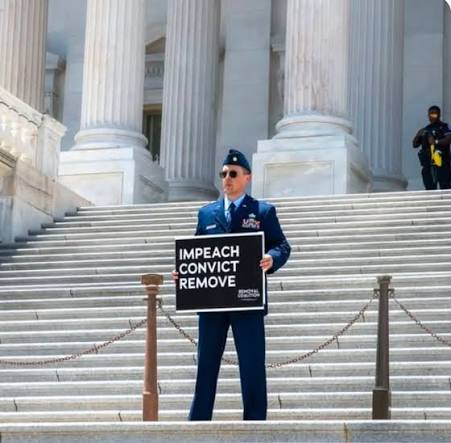
Jason Watson
On July 1, 2026, Watson, dressed in full military uniform and holding a sign reading
IMPEACH
CONVICT
REMOVE
stood on the steps of the United States Capitol, where protests are prohibited unless participants are accompanied by a member of Congress. Speaking in a moderate, controlled voice, Watson laid out a damning indictment of the crimes thus far committed by the Trump administration:
“My name is Jason Watson. I’m an active-duty major in the United States Air Force. However, who I am is immaterial. In the grand scheme of things, I’m just a nobody. What matters far more than who I am is what I have to say and the price I’m willing to pay to say it.
“I, Jason Paul Watson, do solemnly swear that I will support and defend the Constitution of the United States against all enemies, foreign and domestic. That I will bear true faith and allegiance to the same.
“That I take this obligation freely without any mental reservation or purpose of evasion, and that I will well and faithfully discharge the duties of the office upon which I’m about to enter. So help me God.
“I first swore this oath over 20 years ago upon entering basic cadet training at the United States Air Force Academy in late June of 2005. I’ve repeated it many times over since then. The oath of office means everything to me. It is foundational to our system of governance in the United States.
“The oath ensures that officials of our government owe allegiance not to any individual or political party, but to our Constitution and the democratic republic it represents.”
According to the Moscow Times, Olga and two friends were accused of vandalism after police said they hung a banner supporting Putin arch-foe Alexi Navalny and other political prisoners on a government building.
In addition, said the indictment, they “splashed red paint on a security booth outside the Prosecutor General’s Office building in August 2020.”
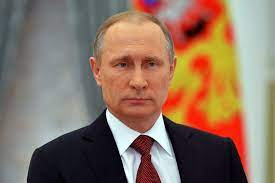
Vladimir Putin
Misik wrote on social media that she was dragged out of her home by police after the 2020 protest.
Olga was sentenced on May 11, 2021, for vandalism. She received two years and two months of “restricted liberty,” which amounted to home confinement, including a curfew that required her to be inside her house from 10 p.m. and 6 a.m. Her two friends received similar sentences.
Prior to her sentencing, Misik read a prepared statement to the court. Among its most moving passages:
“People often asked, ‘Aren’t I scared?’ More commonly outside the country than in Russia, because they don’t get the reality of life in Russia. They don’t understand the knock on the door in the middle of the night, the arrests and imprisonment without reason or cause.
“They don’t realize that the feeling of despair is passed on to us through our mothers’ milk. And that that feeling of despair causes any semblance of fear to atrophy, infecting us with learned hopelessness. What use is fear if you have no say in your future?
“However, after the search, for the past nine months, I have been scared constantly. Ever since the night in the detention center, I haven’t been able to get a good night’s sleep once.”
ABC NEWS, ALAMO, ALTERNET, AMERICABLOG, ANDREW JACKSON, ANTONIO LOPEZ DE SANTA ANNA, AP, BABY BOOMER RESISTANCE, BBC, BLOOMBERG NEWS, BLUESKY, BUZZFEED, CBS NEWS, CHARLES VII, CNN, CROOKS AND LIARS, DAILY KOS, DEPARTMENT OF HOMELAND SECURITY, DONALD TRUMP, FIVETHIRTYEIGHT, FRANCE, GAVIN NEWSOM, HARPER’S MAGAZINE, HUFFINGTON POST, IMMIGRATION AND CUSTOMS ENFORCEMENT (ICE), JOAN OF ARC, KAREN BASS, LONE STAR: A HISTORY OF TEXAS AND THE TEXANS (BOOK), MEDIA MATTERS, MOTHER JONES, MOVEON, MSNBC, NATIONAL GUARD, NBC NEWS, NEWSDAY, NEWSWEEK, NPR, PBS NEWSHOUR, POLITICO, POLITICUSUSA, RAW STORY, REUTERS, RUSSIA, SALON, SAM HOUSTON, SEATTLE TIMES, SLATE, T.R. FEHRENBACH, TALKING POINTS MEMO, TEXAS, THE ATLANTIC, THE CHICAGO SUN-TIMES, THE CHICAGO TRIBUNE, THE DAILY BEAST, THE DAILY BLOG, THE GUARDIAN, THE HILL, THE HUFFINGTON POST, THE INTERCEPT, THE LOS ANGELES TIMES, THE NATION, THE NEW REPUBLIC, THE NEW YORK TIMES, THE NEW YORKER, THE VILLAGE VOICE, THE WASHINGTON POST, THINKPROGRESS, TIME, TOM HOMAN, TRUTHDIG, TRUTHOUT, TWO POLITICAL JUNKIES, U.S. NEWS & WORLD REPORT, UKRAINE, UPI, USA TODAY, VLADIMIR PUTIN, VOLODYMYR ZELENSKY, WILLIAM BARRET TRAVIS, WONKETTE, X
In Bureaucracy, History, Law, Law Enforcement, Military, Politics, Social commentary on June 25, 2026 at 12:05 am
On June 11, 2025, California Governor Gavin Newsom addressed not only President Donald Trump’s response to civil disorders in Los Angeles, but the threat he posed to California, every other state—and democracy itself.
* * * * *
Donald Trump, without consulting with California’s law enforcement leaders, commandeered 2,000 of our state’s National Guard members to deploy on our streets. Illegally, and for no reason.
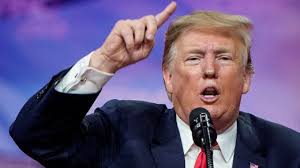
Donald Trump
This brazen abuse of power by a sitting President inflamed a combustible situation … putting our people, our officers, and the National Guard at risk.
That’s when the downward spiral began.
He doubled down on his dangerous National Guard deployment by fanning the flames even harder. And the President did it on purpose.
As the news spread throughout LA, anxiety for family and friends ramped up.
Protests started again. By night, several dozen lawbreakers became violent and destructive. They vandalized property. They tried to assault police officers.
Many of you have seen video clips of cars burning on cable news. If you incite violence or destroy our communities, you are going to be held accountable. That kind of criminal behavior will not be tolerated.

Full stop. Already, more than 370 people have been arrested. And we’re reviewing tapes to build additional cases, and people will be prosecuted to the fullest extent of the law.
Again, thanks to our law enforcement officers and the majority of Angelenos who protested peacefully, this situation was winding down and was concentrated in just a few square blocks downtown.
But that’s not what Donald Trump wanted. He again chose escalation; he chose more force. He chose theatrics over public safety – he federalized another 2,000 Guard members. He deployed more than 700 active U.S. Marines.
These are men and women trained in foreign combat, not domestic law enforcement.
Trump is pulling a military dragnet across LA, well beyond his stated intent to just go after violent and serious criminals. His agents are arresting dishwashers, gardeners, day laborers and seamstresses.

That’s just weakness. Weakness, masquerading as strength.
Donald Trump’s government isn’t protecting our communities – they are traumatizing our communities. And that seems to be the point.
California will keep fighting on behalf of our people – all of our people – including in the courts. Yesterday, we filed a legal challenge to President Trump’s reckless deployment of American troops to a major American city.
Authoritarian regimes begin by targeting people who are least able to defend themselves. But they do not stop there. Trump and his loyalists thrive on division because it allows them to take more power and exert even more control.
By the way, Trump – he’s not opposed to lawlessness and violence, as long as it serves HIM. What more evidence do we need than January 6th?
I ask everyone to take the time to reflect on this perilous moment. A president who wants to be bound by no law or constitution. Perpetrating a unified assault on American traditions.
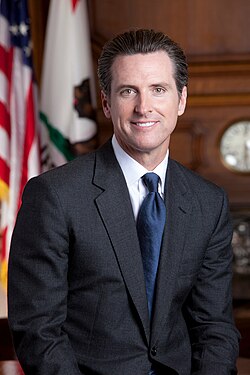
Gavin Newsom
This is a President who, in just over 140 days, has fired government watchdogs that could hold him accountable for corruption and fraud. He’s declared a war on culture, on history, on science – on knowledge itself. Databases, quite literally vanishing.
He’s delegitimizing news organizations and assaulting the First Amendment. At the threat of defunding them, he’s dictating what universities can teach. Targeting law firms and the judicial branch that are the foundation of an orderly, civil society.
Calling for a sitting Governor [Newsom himself] to be arrested for no other reason than – to use his words – “for getting elected.”
Look, this isn’t just about protests in LA. When Donald Trump sought blanket authority to commandeer the National Guard, he made that order apply to every state in this nation. This is about all of us. This is about you.
California may be first – but it clearly won’t end here. Other states are next. Democracy is next.
Democracy is under assault right before our eyes – the moment we’ve feared has arrived. He’s taking a wrecking ball to our founding fathers’ historic project: Three independent, coequal branches of government.
There are no longer any checks and balances. Congress is nowhere to be found. [House] Speaker [Mike] Johnson has completely abdicated that responsibility.
The rule of law has increasingly given way to the rule of Don.
The founding fathers did not live and die to see this moment. It’s time for all of us to stand up. [Supreme Court Justice Louis] Brandeis said it best: In a democracy, the most important office is not president, it’s certainly not governor. The most important office is office of citizen.
At this moment, we must all stand up and be held to a higher level of accountability. If you exercise your First Amendment rights, please do so peacefully.
I know many of you are feeling deep anxiety, stress, and fear. But I want you to know that YOU are the antidote to that fear and anxiety.
What Donald Trump wants most is your fealty. Your silence. To be complicit in this moment. Do NOT give in to him.
ABC NEWS, ALAMO, ALTERNET, AMERICABLOG, ANDREW JACKSON, ANTONIO LOPEZ DE SANTA ANNA, AP, BABY BOOMER RESISTANCE, BBC, BLOOMBERG NEWS, BLUESKY, BUZZFEED, CBS NEWS, CHARLES VII, CNN, CROOKS AND LIARS, DAILY KOS, DEPARTMENT OF HOMELAND SECURITY, DONALD TRUMP, FIVETHIRTYEIGHT, FRANCE, GAVIN NEWSOM, HARPER’S MAGAZINE, HUFFINGTON POST, IMMIGRATION AND CUSTOMS ENFORCEMENT (ICE), JOAN OF ARC, KAREN BASS, LONE STAR: A HISTORY OF TEXAS AND THE TEXANS (BOOK), MEDIA MATTERS, MOTHER JONES, MOVEON, MSNBC, NATIONAL GUARD, NBC NEWS, NEWSDAY, NEWSWEEK, NPR, PBS NEWSHOUR, POLITICO, POLITICUSUSA, RAW STORY, REUTERS, RUSSIA, SALON, SAM HOUSTON, SEATTLE TIMES, SLATE, T.R. FEHRENBACH, TALKING POINTS MEMO, TEXAS, THE ATLANTIC, THE CHICAGO SUN-TIMES, THE CHICAGO TRIBUNE, THE DAILY BEAST, THE DAILY BLOG, THE GUARDIAN, THE HILL, THE HUFFINGTON POST, THE INTERCEPT, THE LOS ANGELES TIMES, THE NATION, THE NEW REPUBLIC, THE NEW YORK TIMES, THE NEW YORKER, THE VILLAGE VOICE, THE WASHINGTON POST, THINKPROGRESS, TIME, TOM HOMAN, TRUTHDIG, TRUTHOUT, TWO POLITICAL JUNKIES, U.S. NEWS & WORLD REPORT, UKRAINE, UPI, USA TODAY, VLADIMIR PUTIN, VOLODYMYR ZELENSKY, WILLIAM BARRET TRAVIS, WONKETTE, X
In Bureaucracy, History, Law, Law Enforcement, Military, Politics, Social commentary on June 24, 2026 at 12:10 am
History is filled with examples of men—and women—who in moments of crisis rose to challenge a deadly enemy. One of these is California Governor Gavin C. Newsom.
On June 6, 2025, protests erupted in Los Angeles against Immigration and Customs Enforcement (ICE). The demonstrations were triggered by ICE raids at multiple locations in the city to arrest suspected illegal aliens.
On the evening of June 7, 2025, President Donald Trump signed a memorandum deploying 2,000 members of the California National Guard to the protests for either 60 days or for a length of time “at the discretion of the secretary of defense.”
He did so without the request—or consent—of Governor Newsom.
If a Democratic President did so in a Republican state, Congressional Republicans would scream “STATES’ RIGHTS!” and accuse the President of being a dictator. But since Trump is a Republican, Congressional Republicans enthusiastically supported his action.

National Guard troops in L.A.
In a tweet, Secretary of Defense Pete Hegseth said that active duty Marines were on “high alert” at Camp Pendleton.
And Trump later threatened to “have troops everywhere” if the protests spread to other cities. “If we see danger to our country and our citizens,” the Marines would be deployed to Los Angeles.
Newsom retorted that the National Guard—and especially the Marines—weren’t needed. The LAPD and Los Angeles County Sheriff’s Department were fully capable of protecting Federal property and dispersing the protesters.
He called on Trump to return control of the Guard to California—and withdraw the Marines, who are trained for combat, not handling civil unrest.
Thomas Homan, White House Executive Associate Director of Enforcement and Removal Operations, told NBC News that Newsom and Los Angeles Mayor Karen Bass could potentially face federal charges over their response to the ICE raids.
Homan had previously threatened arrest for anyone who obstructed immigration enforcement. When asked whether that would include Newsom or Bass, Homan did not rule it out.
“I’ll say it about anybody,” Homan said. “You cross that line, it’s a felony to knowingly harbor and conceal an illegal alien. It’s a felony to impede law enforcement doing their job.”

Tom Homan
Newsom quickly responded to Homan: “Trump’s border czar is threatening to arrest me for speaking out. Come and get me, tough guy.
“What the hell are they doing? These guys need to grow up, they need to stop and we need to push back and I’m sorry to be so clear but that kind of bloviating is exhausting. So Tom, arrest me. Let’s go.”
Homan just as quickly backed down: “There’s no intention to arrest the governor right now. I don’t know if he crossed that line.” Homan said he would “leave that up” to the Justice Department.
When asked about the idea of arresting Newsom, Trump said, “I’d do it if I were Tom. Gavin likes the publicity, but I think it would be a great thing.”
On June 11, Newsom addressed not only Trump’s response to civil disorders in Los Angeles, but the threat he posed to California, every other state—and democracy itself.
GOVERNOR GAVIN NEWSOM’S ADDRESS TO CALIFORNIA: DEMOCRACY AT A CROSSROADS ON JUNE 11, 2025
I want to say a few words about the events of the last few days. This past weekend, federal agents conducted large-scale workplace raids in and around Los Angeles. Those raids continue as I speak.
California is no stranger to immigration enforcement. But instead of focusing on undocumented immigrants with serious criminal records and people with final deportation orders – a strategy both parties have long supported – this administration is pushing mass deportations.
Indiscriminately targeting hardworking immigrant families, regardless of their roots or risk.
What’s happening right now is very different than anything we’ve seen before. On Saturday morning, when federal agents jumped out of an unmarked van near a Home Depot parking lot, they began grabbing people.
A deliberate targeting of a heavily Latino suburb.
A similar scene also played out when a clothing company was raided downtown.
In other actions: a US citizen, 9 months pregnant – arrested.
A four-year-old girl – taken.

Families separated. Friends disappearing.
In response, everyday Angelinos came out to exercise their Constitutional right to free speech and assembly. To protest their government’s actions.
In turn, the State of California and the City and County of Los Angeles sent our police officers to help keep the peace, and with some exceptions, they were successful.
Like many states, California is no stranger to this sort of civil unrest. We manage it regularly … and with our own law enforcement.
But this, again, was different.
What then ensued was the use of tear gas. Flash-bang grenades. Rubber bullets. Federal agents, detaining people and undermining their due process rights.
Donald Trump, without consulting with California’s law enforcement leaders, commandeered 2,000 of our state’s National Guard members to deploy on our streets. Illegally, and for no reason.
This brazen abuse of power by a sitting President inflamed a combustible situation … putting our people, our officers, and the National Guard at risk.
That’s when the downward spiral began.

ADOLF HITLER, ALTERNET, AMERICABLOG, AP, BABY BOOMER RESISTANCE, BARACK OBAMA, BARBARA TUCHMAN, BBC, BLOOMBERG, BLUESKY, BUZZFEED, CANADA, CBS NEWS, CNN, CROOKS AND LIARS, DAILY KOS, DAN SCAVINO, DARLINE GRAHAM, DAVID AXELROD, DAVIS INGLE, DEMOCRATS, DOGE, DONALD TRUMP, ENGLAND, EPSTEIN FILES, FIVETHIRTYEIGHT, FREDERICK WELLMAN, GREENLAND, HARPER’S MAGAZINE, HEINZ GUDERIAN, HUFFINGTON POST, IMMIGRATION AND CUSTOMS ENFORCEMENT (ICE), IMPEACHMENT, IRAN, JAMES COMEY, JAMES TALARICO, JOHN F. KENNEDY, JON OSSOFF, Kamala Harris, KIM JONG-UN, LEE HARVEY OSWALD, LETITIA JAMES, LINIDSEY GRAM, MAGGIE HABERMAN, MARCO RUBIO, MEDIA MATTERS, MICHAEL WOLFF, MICHELLE OBAMA, MIKE JOHNSON, MOTHER JONES, MOVEON, MSNBC, NATALIE HARP, NBC NEWS, NEWSDAY, NEWSWEEK, NICCOLO MACHIAVELLI, NPR, PBS NEWSHOUR, POLITICO, POLITICUSUSA, RAFAEL "TED" CRUZ, RAW STORY, REGIME CHANGE (BOOK), REPUBLICANS, REUTERS, SALON, SCOTT BESSENT, SCOTT JENNINGS, SEATTLE TIMES, SLATE, STEPHEN MILLER, STEVEN CHEUNG, STRAIT OF HORMUZ, TALKING POINTS MEMO, THE ATLANTIC, THE CHICAGO SUN-TIMES, THE CHICAGO TRIBUNE, THE DAILY BEAST, THE DAILY BLOG, THE GUARDIAN, THE HILL, THE HUFFINGTON POST, THE INTERCEPT, THE LOS ANGELES TIMES, THE NATION, THE NEW REPUBLIC, THE NEW YORK TIMES, THE NEW YORKER, THE VILLAGE VOICE, THE WASHINGTON POST, THINKPROGRESS, TIME, TRUTHDIG, TRUTHOUT, TWO POLITICAL JUNKIES, U.S. NEWS & WORLD REPORT, UNITED STATES DEPARTMENT OF JUSTICE, UPI, USA TODAY, VICTORY ARCH, VLADIMIR PUTIN, WHITE HOUSE BALLROOM, X, XI JINPING
“THE HUMAN PRINTER” AND HER ADONIS: PART ONE (OF THREE)
In Bureaucracy, Business, History, Medical, Military, Politics, Social commentary on August 31, 2026 at 12:10 amLetter #1: “I never want to bring you anything but joy. I’m sorry I lost my focus. You are all that matters to me. I don’t want to ever let you down. Thank you for being my Guardian and Protector in this Life.”
Letter #2: “I miss the days when you used to call, during my talkshow days, and we’d talk about everything and nothing. I want to get back to that synergy. We shouldn’t have to talk about work all the time! !
“And please, when I fail, will you tell me? You have the absolute right to cuss me out, if need be, when I deserve it, because no one knows or cares about me more.”
These weren’t the gushings of a starry-eyed high school girl toward a beloved object of affection.
They were the gushings of 35-year-old Natalie Harp, special assistant and executive assistant to the President of the United States since 2025. And the object of her affection is an 80-year-old married man with a notorious history of adultery.
Natalie Harp was born in 1991 and raised in California. She graduated from Point Loma Nazarene University in 2012, and from Liberty University in 2015 with an MBA.
By 2017, Harp began suffering from chronic pain and complications incurred by a medical error involving intravenous therapy for stage II bone cancer.
In 2019, Harp praised then-President Trump for signing a federal right-to-try law which allowed her to access experimental treatments which she credited with saving her life.
Trump invited Harp to speak at the 2020 Republican National Convention She compared Trump to the sympathetic character, George Bailey, of It’s a Wonderful Life.
Trump also asked her to serve as a member of the advisory board for his 2020 Presidential campaign. Harp worked for the Right-wing television channel One America News Network from 2020 to 2022.
She later became an aide to Trump for his 2024 Presidential campaign as a key figure in his communications efforts.
In January 2025, Trump appointed Harp to the position of special assistant to the President and executive assistant to the President, with a government salary of $150,000.
Natalie Harp
She worked intimately with Trump and other national security figures for more than one year minus a security clearance. One national security official warned that this position gave her access to more sensitive information than any other Trump associate.
One White House staff member said that she “plays into the less productive and more troublesome parts of his nature, putting things in front of him that aren’t vetted.”
Dan Scavino, a political advisor and former golf club manager who had handled Trump’s social media accounts, largely gave control of Trump’s Truth Social account to Harp.
She used it to post a racist video depicting former President Barack Obama and First Lady Michelle Obama as apes. She also posted an AI-generated image of Trump as Jesus.
Among her duties: Posting remarks Trump dictates to Truth Social, texting on his behalf, and sporting a portable printer to feed him documents, praise and upbeat news articles. This last task has earned her the nickname: “The human printer.”
No doubt to Trump’s humiliation, Harp has also been dubbed as his “diaper nurse.” Some former associates and critics have claimed or joked that he uses adult diapers due to age or health. But there is no evidence that Harp serves in any nursing, medical or caregiving role.
Still, the rumors persist.
Donald Trump
And Trump appears flattered by her devotion. He calls her “sweetie” and “my Natalie.” And he’s told other aides that “Harp is the only one who loves him as much as his wife and children,” the New York Times reports.
Only recently has her role as Trump’s groupie-turned-government employee become widely known. And the man responsible is Georgia United States Senator Jon Ossoff.
At a campaign rally in Atlanta on August 16, Ossoff, a Democrat, said of Trump: “While the sailors on the [USS Abraham] Lincoln fight his war, while he fruitlessly drains our munitions and oil reserves, the president sleeps through his meetings.
“He golfs and trades stocks. See, he doesn’t want to do the job. He wants to build his ballroom and travel with Natalie on their apparently defenseless flying palace gifted by the Emir of Qatar.”
A clip of this remark was widely shared on social media.
Jon Ossoff
The week before the rally, Harp was among a small group of aides who joined Trump when he switched airplanes in Turkey to thwart a possible Iranian missile attack.
Those who were not allowed to board the decoy plane included:
Ossoff’s comment immediately brought Harp—and Trump—a burst of thoroughly unwelcome publicity.
Maggie Haberman, a New York Times reporter and the author of Regime Change, a scathing profile of the Trump administration, called her Trump’s “binky…a comfort blanket.”
Natalie’s estranged brother, Preston, laughed on CNN when he learned that his sister had jumped into the trunk of a Trump motorcade SUV when there wasn’t room for her to sit during a trip to court in 2023.
Share this:
Like this: