Posts Tagged ‘ST. PAUL’
2020 PRESIDENTIAL ELECTION, AFFORDABLE CARE ACT (ACA), ALEC BALDWIN, ALTERNET, AMERICABLOG, AMNESTY INTERNATIONAL, AP, ARTICLE 1, BABY BOOMER RESISTANCE, BANDY X. LEE, BBC, BILL CLINTON, BIRTHRIGHT CITIZENSHIP, BLOOMBERG, BLUESKY, BUREAU OF LABOR STATISTICS (BLS), BUZZFEED, CANADA, CBS NEWS, CHICAGO, CHRIS KREBS, CNN, CONSUMER PROTECTION FINANCIAL BUREAU, CROOKS AND LIARS, CYBERSECURITY AND INFRASTRUCTURE SECURITY AGENCY (CISA), DAILY KOS, DAVID BROOKS, DEMOCRATS, DEPARTMENT OF JUSTICE (DOJ), DIVERSITY EQUITY AND INCLUSION (DEI), DONALD TRUMP, ELON MUSK, FBI, FEDERAL AVIATION ADMINISTRATION (FAA), FIVETHIRTYEIGHT, FLETCHER KNEBEL, GAIUS CALIGULA, GAZA, GEOFF BENNETT, GEORGE STEPHANOPOULOS, GORE VIDAL, GREENLAND, GULF OF AMERICA, GULF OF MEXICO, HARD UNIVERSITY, HARPER’S MAGAZINE, HARVARD MEDICAL SCHOOL, HUFFINGTON POST, illegal immigration, IMMIGRATION AND CUSTOMS ENFORCEMENT (ICE), INSPECTORS GENERAL, IRAN WAR, JANUARY 6 COUP ATTEMPT, JEFFREY EPSTEIN, JOHN ADAMS, JOHN D. GARTNER, JOHN F. KENNEDY CENTER FOR THE PERFORMING ARTS, JOHNS HOPKINS UNIVERSITY MEDICAL SCHOOL, JONATHAN CAPEHART, JOSEPH BIDEN, KEVIN SPACEY, LANCE DODES, LOS ANGELES, MARK MEADOWS, MEDAL OF HONOR WINNERS, MEDIA MATTERS, MEDICAID, MEDICARE, MICHAEL JACKSON, MICK JAGGER, MINNEAPOLIS, MOTHER JONES, MOVEON, MS NOW, MSNBC, NARCISSISM, NBC NEWS, NEWSDAY, NEWSWEEK, NIGHT AT CAMP DAVID (BOOK), NORTH ATLANTIC TREATY ORGANIZATION (NATO), NPR, Oil, PARIS CLIMATE AGREEMENT, PBS NEWSHOUR, POLITICO, POLITICUSUSA, PRINCE ANDREW, QATAR, RAW STORY, REPUBLICANS, REUTERS, RICHARD BRANSON, ROMAN EMPERORS, ROMAN EMPIRE, RUDY GIULIANI, SALLUST, SALON, SEATTLE TIMES, SLATE, ST. PAUL, STRAIT OF HORMUZ, SUPPLEMENTAL NUTRITION ASSISTANCE PROGRAM (SNAP), TACITUS, TALKING POINTS MEMO, THE ATLANTIC, THE CHICAGO SUN-TIMES, THE CHICAGO TRIBUNE, THE DAILY BEAST, THE DAILY BLOG, THE DANGEROUS CASE OF DONALD TRUMP (BOOK), THE GUARDIAN, THE HILL, THE HUFFINGTON POST, THE INTERCEPT, THE LOS ANGELES TIMES, THE NATION, THE NEW REPUBLIC, THE NEW YORK TIMES, THE NEW YORKER, THE PENTAGON, THE TWELVE CAESARS (ESSAY), THE VILLAGE VOICE, THE WASHINGTON POST, THINKPROGRESS, TIME, TRUTHDIG, TRUTHOUT, TWO POLITICAL JUNKIES, U.S. NEWS & WORLD REPORT, UNITED STATES CONSTITUTION, UPI, USA TODAY, VLADIMIR PUTIN, WAR CRIMES, WASHINGTON D.C., WOODY ALLEN, WORLD HEALTH ORGANIZATION, X, YALE SCHOOL OF MEDICINE
In Bureaucracy, History, Law, Law Enforcement, Military, Politics, Social commentary, Uncategorized on May 14, 2026 at 12:05 am
Among the outrages President Donald Trump has committed since returning to power on January 20:
- Launched an unprovoked attack on Iran on February 28, believing that in six weeks he could force its Islamic rulers to abandon their plans to develop nuclear weapons.
- When Iran closed the Strait of Hormuz—through which about 20%-25% of the world’s oil flows—Trump threatened: “A whole civilization will die tonight, never to be brought back again. I don’t want that to happen, but it probably will.”
- He backed off—at least temporarily—only after legal experts and organizations such as Amnesty International warned that attacking civilian infrastructure would constitute war crimes under international law.
Trump’s vindictiveness, his narcissism, his compulsive aggression, his complaints that his “enemies” in government and the press are trying to destroy him, have caused many to ask: Could the President of the United States be suffering from mental illness?
One who has dared to answer this question is John D. Gartner, a practicing psychotherapist.
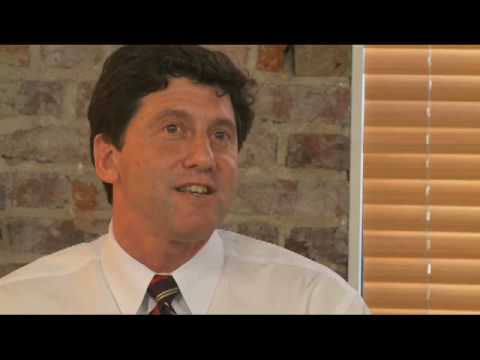
John D. Gartner
Gartner graduated magna cum laude from Princeton University, received his Ph.D in clinical psychology from the University of Massachusetts, and served as a part-time assistant professor of psychiatry at Johns Hopkins University Medical School for 28 years.
During an interview by U.S. News & World Report (published on January 27, 2017), Gartner said: “Donald Trump is dangerously mentally ill and temperamentally incapable of being president.”
Gartner said that Trump suffers from “malignant narcissism,” whose symptoms include:
- anti-social behavior
- sadism
- aggressiveness
- paranoia
- grandiosity.
“We’ve seen enough public behavior by Donald Trump now that we can make this diagnosis indisputably,” says Gartner, who admits he has not personally examined Trump.
Another psychiatrist who’s determined that Trump is “mentally compromised” is Bandy X. Lee, an assistant clinical psychiatry professor at the Yale School of Medicine.
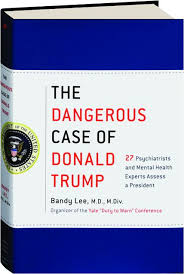
And she offered her reasons for doing so as the editor of The Dangerous Case of Donald Trump: 27 Psychiatrists and Mental Health Experts Assess a President.
“It doesn’t take a psychiatrist to notice that our president is mentally compromised,” she and colleague Judith Lewis Herman asserted in the book’s prologue.
According to Dr. Craig Malkin, a Lecturer in Psychology for Harvard Medical School and a licensed psychologist, Trump is a pathological narcissist:
“Pathological narcissism begins,” Malkin writes, “when people become so addicted to feeling special that, just like with any drug, they’ll do anything to get their ‘high,’ including lie, steal, cheat, betray and even hurt those closest to them.
“When they can’t let go of their need to be admired or recognized, they have to bend or invent a reality in which they remain special despite all messages to the contrary. In point of fact, they become dangerously psychotic. It’s just not always obvious until it’s too late.”
Lance Dodes, a retired psychiatry professor at Harvard Medical School, believes that Trump is a sociopath:
“The failure of normal empathy is central to sociopathy, which is marked by an absence of guilt, intentional manipulation and controlling or even sadistically harming others for personal power or gratification.”
* * * * * * * * * *
Americans have long believed that they—and especially their leaders—are an “exceptional” people. As a result, they consider themselves immune from the threats of corruption and dictatorship that have plagued other nations.
Millions of Americans—including many Trump supporters—have been shaken by the revelations of the Epstein Files, which chronicle the sexual depravities of convicted pedophile Jeffrey Epstein. Even more disturbing has been the knowledge that he and Donald Trump maintained a friendship for 15 to 17 years.
The Files so far released are replete with names of celebrities such as Michael Jackson, Mick Jagger, Kevin Spacey, Alec Baldwin, Woody Allen, George Stephanopoulos, Elon Musk, Richard Branson, former President Bill Clinton and Prince Andrew.
This has added to the shock and revulsion felt by millions of Americans. Yet they might have been less shocked had they read Gore Vidal’s 1959 essay, “The Twelve Caesars.”

Gore Vidal
Mark Coggins from San Francisco, CC BY 2.0 <https://creativecommons.org/licenses/by/2.0>, via Wikimedia Commons
Vidal’s essay is an ode to The Twelve Caesars, a classic work of ancient biography by Gaius Suetonius Tranquillus—known as Suetonius.
Suetonius, a Roman citizen and historian, chronicled the lives of the first twelve Caesars of imperial Rome: Julius Caesar, Augustus, Tiberius, Caligula, Claudius, Nero, Galba, Otho, Vitellius, Vespasian, Titus and Domitian.
Vidal sought to show the relevance of Suetonius’ work to present-day America: “It would be wrong, however, to dismiss, as so many commentators have, the wide variety of Caesarean sensuality as simply the viciousness of twelve abnormal men. They were, after all, a fairly representative lot.
“They differed from us – and their contemporaries – only in the fact of power, which made it possible for each to act out his most recondite sexual fantasies. This is the psychological fascination of Suetonius. What will men so placed do? The answer, apparently, is anything and everything.”
Thus the lesson taught by the celebrities—including Trump—who glommed onto Jeffrey Epstein: They differed from ordinary citizens only in the power they held over themselves—and others. And, reveling in that power, they felt free to indulge the most depraved fantasies, sexual and otherwise.
2020 PRESIDENTIAL ELECTION, AFFORDABLE CARE ACT (ACA), ALEC BALDWIN, ALTERNET, AMERICABLOG, AMNESTY INTERNATIONAL, AP, ARTICLE 1, BABY BOOMER RESISTANCE, BANDY X. LEE, BBC, BILL CLINTON, BIRTHRIGHT CITIZENSHIP, BLOOMBERG, BLUESKY, BUREAU OF LABOR STATISTICS (BLS), BUZZFEED, CANADA, CBS NEWS, CHICAGO, CHRIS KREBS, CNN, CONSUMER PROTECTION FINANCIAL BUREAU, CROOKS AND LIARS, CYBERSECURITY AND INFRASTRUCTURE SECURITY AGENCY (CISA), DAILY KOS, DAVID BROOKS, DEMOCRATS, DEPARTMENT OF JUSTICE (DOJ), DIVERSITY EQUITY AND INCLUSION (DEI), DONALD TRUMP, ELON MUSK, FBI, FEDERAL AVIATION ADMINISTRATION (FAA), FIVETHIRTYEIGHT, FLETCHER KNEBEL, GAIUS CALIGULA, GAZA, GEOFF BENNETT, GEORGE STEPHANOPOULOS, GORE VIDAL, GREENLAND, GULF OF AMERICA, GULF OF MEXICO, HARD UNIVERSITY, HARPER’S MAGAZINE, HARVARD MEDICAL SCHOOL, HUFFINGTON POST, illegal immigration, IMMIGRATION AND CUSTOMS ENFORCEMENT (ICE), INSPECTORS GENERAL, IRAN WAR, JANUARY 6 COUP ATTEMPT, JEFFREY EPSTEIN, JOHN ADAMS, JOHN D. GARTNER, JOHN F. KENNEDY CENTER FOR THE PERFORMING ARTS, JOHNS HOPKINS UNIVERSITY MEDICAL SCHOOL, JONATHAN CAPEHART, JOSEPH BIDEN, KEVIN SPACEY, LANCE DODES, LOS ANGELES, MARK MEADOWS, MEDAL OF HONOR WINNERS, MEDIA MATTERS, MEDICAID, MEDICARE, MICHAEL JACKSON, MICK JAGGER, MINNEAPOLIS, MOTHER JONES, MOVEON, MS NOW, MSNBC, NARCISSISM, NBC NEWS, NEWSDAY, NEWSWEEK, NIGHT AT CAMP DAVID (BOOK), NORTH ATLANTIC TREATY ORGANIZATION (NATO), NPR, Oil, PARIS CLIMATE AGREEMENT, PBS NEWSHOUR, POLITICO, POLITICUSUSA, PRINCE ANDREW, QATAR, RAW STORY, REPUBLICANS, REUTERS, RICHARD BRANSON, ROMAN EMPERORS, ROMAN EMPIRE, RUDY GIULIANI, SALLUST, SALON, SEATTLE TIMES, SLATE, ST. PAUL, STRAIT OF HORMUZ, SUPPLEMENTAL NUTRITION ASSISTANCE PROGRAM (SNAP), TACITUS, TALKING POINTS MEMO, THE ATLANTIC, THE CHICAGO SUN-TIMES, THE CHICAGO TRIBUNE, THE DAILY BEAST, THE DAILY BLOG, THE DANGEROUS CASE OF DONALD TRUMP (BOOK), THE GUARDIAN, THE HILL, THE HUFFINGTON POST, THE INTERCEPT, THE LOS ANGELES TIMES, THE NATION, THE NEW REPUBLIC, THE NEW YORK TIMES, THE NEW YORKER, THE PENTAGON, THE TWELVE CAESARS (ESSAY), THE VILLAGE VOICE, THE WASHINGTON POST, THINKPROGRESS, TIME, TRUTHDIG, TRUTHOUT, TWO POLITICAL JUNKIES, U.S. NEWS & WORLD REPORT, UNITED STATES CONSTITUTION, UPI, USA TODAY, VLADIMIR PUTIN, WAR CRIMES, WASHINGTON D.C., WOODY ALLEN, WORLD HEALTH ORGANIZATION, X, YALE SCHOOL OF MEDICINE
In Bureaucracy, History, Law, Law Enforcement, Military, Politics, Social commentary, Uncategorized on May 13, 2026 at 12:33 am
Night at Camp David is a 1965 novel about the danger of a President of the United States going insane.
In a November 30, 2018 review of the book, Tom McCarthy, national affairs correspondent for the British newspaper, The Guardian, wrote of President Donald Trump:
“The current president has seen crowds where none exist, deployed troops to answer no threat, attacked national institutions – the military, the justice department, the judiciary, the vote, the rule of law, the press – tried to prosecute his political enemies, elevated bigots, oppressed minorities, praised despots while insulting global allies and wreaked diplomatic havoc from North Korea to Canada.
“He stays up half the night watching TV and tweeting about it, then wakes up early to tweet some more, in what must be the most remarkable public diary of insecurity, petty vindictiveness, duplicity and scattershot focus by a major head of state in history.”
And the nightmare isn’t over.
Among the outrages Trump has committed since returning to power on January 20:
- Pardoned about 1,500 of his followers who violently tried to overturn the outcome of the 2020 Presidential election in the January 6, 2021 attack on Congress. Move than 250 of those pardoned had been convicted of assaulting police.
- Signed 26 executive orders reversing climate change initiatives, eliminating DEI programs, changing the federal designation for the Gulf of Mexico to the “Gulf of America” and initiating a federal hiring freeze.
- Fired the inspectors general—who are charged with protecting the government from waste and corruption—from more than a dozen federal agencies.
- Following Trump’s anti-DEI executive order, the Department of Defense deleted content that included the achievements of nonwhites—such as Navajo code talkers, black Tuskegee Airmen, Medal of Honor winners and women veterans.
- Fired Rohit Chopra, the director of the Consumer Financial Protection Bureau, which protects consumers from unfair, deceptive and fraudulent business practices.

Donald Trump
- Withdrew the United States from the World Health Organization (WHO).
- Withdrew the United States from the Paris climate agreement.
- Fired the non-partisan board members at the John F. Kennedy Center for the Performing Arts. His toadies illegally renamed it the Trump-Kennedy Center and appointed him as its chairman—just as Joseph Stalin made himself arbiter of what was permissible for artists in the Soviet Union.
- When artists and audiences—outraged by the takeover—boycotted the Center, an embarrassed Trump ordered its closure, claiming a two-year repair renovation was necessary
- Purged about a half-dozen executive assistant directors at the FBI. These were some of the bureau’s top managers overseeing criminal, national security and cyber investigations. Their “crime”: Investigating Trump’s inciting the January 6, 2021 coup attempt and illegally holding highly sensitive national security documents after leaving office.
- Ordered the Justice Department to indict his critics such as New York Attorney General Letitia James and former FBI Director James Comey.

- Declared “a national emergency” targeting migrants—legal and illegal.
- Tried to cancel birthright citizenship—enshrined within the United States Constitution— for U.S.-born children.
- Demanded a military parade for his 79th birthday, poorly disguised as a salute to the 250th anniversary of the United States Army.
- Pardoned favored political allies and loyalists. Among these: Seventy-seven people associated with the Trump fake electors plot to overturn the results of the 2020 U.S. presidential election, including Trump’s personal attorney Rudy Giuliani and former chief of staff Mark Meadows.
- Angrily fired the Commissioner of the Bureau of Labor Statistics following a weak jobs report, triggering fears about his extortionate tariff policy.
- Demanded that the media refer to the Gulf of Mexico as “the Gulf of America” and banned the Associated Press from the White House for refusing to do so.
- Ordered the closure of all Federal Diversity, Equity, Inclusion and Accessibility offices.
- Demanded that Canada become the 51st state and aggressively raised tariffs on Canadian goods.
- Shut down the Federal Government on October 1, when Democrats refused to agree to his gutting Medicaid, Medicare and the Affordable Care Act (ACA), causing 10-15 million Americans to lose health insurance coverage.
- Among those not getting paid: Air traffic controllers for the Federal Aviation Administration (FAA). Owing to many controllers’ refusing to work, the FAA reduced air traffic by 10% at many airports.
- Shut off the Supplemental Nutrition Assistance Program (SNAP) for the poor to pressure Democrats to support his gutting of healthcare programs.

- Issued executive orders revoking the security clearance of Chris Krebs, former director of the Cybersecurity and Infrastructure Security Agency. Krebs’ “crime”: Preventing lies spread by Russians—and Americans—on social media platforms from swaying the 2020 Presidential election to Trump.
- Flooded the streets of Los Angeles, Washington, D.C., Chicago with federalized National Guard troops against state governors’ wishes during immigration crackdowns and civil unrest.
- Flooded Minneapolis and St. Paul, Minnesota, with 3,000 Immigration and Customs Enforcement (ICE) agents who terrorized (and in two cases murdered) both American citizens and illegal aliens.
- Threatened Harvard University with the loss of billions of dollars in federal funding, claiming that 2023 student protests about Gaza violated the civil rights of Jewish students.
- Threatened Greenland—an autonomous territory within the Kingdom of Denmark—with invasion unless it agreed to acquisition by the United States. Since Denmark is a member of NATO, such an invasion would pit the United States against its own alliance.
2020 PRESIDENTIAL ELECTION, AFFORDABLE CARE ACT (ACA), ALEC BALDWIN, ALTERNET, AMERICABLOG, AMNESTY INTERNATIONAL, AP, ARTICLE 1, BABY BOOMER RESISTANCE, BANDY X. LEE, BBC, BILL CLINTON, BIRTHRIGHT CITIZENSHIP, BLOOMBERG, BLUESKY, BUREAU OF LABOR STATISTICS (BLS), BUZZFEED, CANADA, CBS NEWS, CHICAGO, CHRIS KREBS, CNN, CONSUMER PROTECTION FINANCIAL BUREAU, CROOKS AND LIARS, CYBERSECURITY AND INFRASTRUCTURE SECURITY AGENCY (CISA), DAILY KOS, DAVID BROOKS, DEMOCRATS, DEPARTMENT OF JUSTICE (DOJ), DIVERSITY EQUITY AND INCLUSION (DEI), DONALD TRUMP, ELON MUSK, FBI, FEDERAL AVIATION ADMINISTRATION (FAA), FIVETHIRTYEIGHT, FLETCHER KNEBEL, GAIUS CALIGULA, GAZA, GEOFF BENNETT, GEORGE STEPHANOPOULOS, GORE VIDAL, GREENLAND, GULF OF AMERICA, GULF OF MEXICO, HARD UNIVERSITY, HARPER’S MAGAZINE, HARVARD MEDICAL SCHOOL, HUFFINGTON POST, illegal immigration, IMMIGRATION AND CUSTOMS ENFORCEMENT (ICE), INSPECTORS GENERAL, IRAN WAR, JANUARY 6 COUP ATTEMPT, JEFFREY EPSTEIN, JOHN ADAMS, JOHN D. GARTNER, JOHN F. KENNEDY CENTER FOR THE PERFORMING ARTS, JOHNS HOPKINS UNIVERSITY MEDICAL SCHOOL, JONATHAN CAPEHART, JOSEPH BIDEN, KEVIN SPACEY, LANCE DODES, LOS ANGELES, MARK MEADOWS, MEDAL OF HONOR WINNERS, MEDIA MATTERS, MEDICAID, MEDICARE, MICHAEL JACKSON, MICK JAGGER, MINNEAPOLIS, MOTHER JONES, MOVEON, MS NOW, MSNBC, NARCISSISM, NBC NEWS, NEWSDAY, NEWSWEEK, NIGHT AT CAMP DAVID (BOOK), NORTH ATLANTIC TREATY ORGANIZATION (NATO), NPR, Oil, PARIS CLIMATE AGREEMENT, PBS NEWSHOUR, POLITICO, POLITICUSUSA, PRINCE ANDREW, QATAR, RAW STORY, REPUBLICANS, REUTERS, RICHARD BRANSON, ROMAN EMPERORS, ROMAN EMPIRE, RUDY GIULIANI, SALLUST, SALON, SEATTLE TIMES, SLATE, ST. PAUL, STRAIT OF HORMUZ, SUPPLEMENTAL NUTRITION ASSISTANCE PROGRAM (SNAP), TACITUS, TALKING POINTS MEMO, THE ATLANTIC, THE CHICAGO SUN-TIMES, THE CHICAGO TRIBUNE, THE DAILY BEAST, THE DAILY BLOG, THE DANGEROUS CASE OF DONALD TRUMP (BOOK), THE GUARDIAN, THE HILL, THE HUFFINGTON POST, THE INTERCEPT, THE LOS ANGELES TIMES, THE NATION, THE NEW REPUBLIC, THE NEW YORK TIMES, THE NEW YORKER, THE PENTAGON, THE TWELVE CAESARS (ESSAY), THE VILLAGE VOICE, THE WASHINGTON POST, THINKPROGRESS, TIME, TRUTHDIG, TRUTHOUT, TWO POLITICAL JUNKIES, U.S. NEWS & WORLD REPORT, UNITED STATES CONSTITUTION, UPI, USA TODAY, VLADIMIR PUTIN, WAR CRIMES, WASHINGTON D.C., WOODY ALLEN, WORLD HEALTH ORGANIZATION, X, YALE SCHOOL OF MEDICINE
In Bureaucracy, History, Law, Law Enforcement, Military, Politics, Social commentary on May 12, 2026 at 12:05 am
On the April 10 edition of The PBS Newshour, David Brooks of The Atlantic and Jonathan Capehart of MS NOW—exchanged opinions on the mental health of President Donald Trump.
Although Brooks, a conservative, and Capehart, a liberal, usually find themselves on opposite sides of a subject, this time they reached a consensus: Trump is dangerously ill.
David Brooks: Last January, as we watched this spiral psychologically….I read Roman histories. And so you get Tacitus and Sallust and those old guys, because they had a front-row seat to tyranny. And they watched authoritarians, one after another, Caligula, all these guys. And the one thing they all said was that they deteriorate.
They create a situation around them, when the sycophants have to get more sycophant. Anybody who’s reasonable is either dead or gone. And then the urge to dominate, the lust for power becomes drunk. They become drunk on that. And they get more and more daring, more and more out of control, and then you get this spiral.
And our founding fathers, they understood this so well. They read Tacitus. They loved these guys. And John Adams said, if we get a leader like that, he will run through our Congress, our Constitution the way a whale goes through a net. And so they completely understood. And their worst nightmare is now happening.
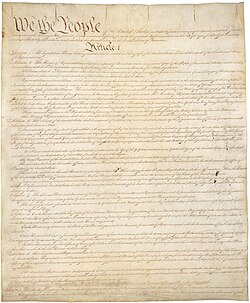
The Constitution of the United States
Moderator Geoff Bennett: And, Jonathan, 61 percent of Americans, including 30 percent of Republicans, now say that President Trump has become erratic with age. That’s according to a recent Reuters-Ipsos poll.
The press corps — I guess we should hold up a mirror to ourselves. The press corps spent two years making President Biden’s mental fitness, his acuity the story. Why isn’t that same scrutiny now being applied to President Trump broadly?
Jonathan Capehart: Yes, exactly. That has been my question since January 20 of last year. We, the press, spent a lot of time talking about President Biden and his age because he looked old. He moved slowly. He wasn’t as vigorous and agile, supposedly, as the guy he pushed out of office and then the guy who was running against him.
And even little slips of the tongue were used to show, see, aha, he’s not all there. He’s losing his mind. How does that compare to what we’re going through right now? I wish people who have written books — people who have gone on air talking about President Biden nonstop, where are they now?
Where are those books now that we have a president who has given ample evidence, ample evidence that something is not right? Where are the people who are standing up and saying, you know what, something needs to be done?
And that goes back to some — you were talking about the founders. They were prepared for something like this. What they weren’t prepared for was the Article I branch just ceding all authority. What they weren’t prepared for were people from the president’s own party willing to either turn a blind eye or enable him to run roughshod over the Constitution.

Donald Trump
Even when you have got him out there threatening annihilation of a civilization, even when he’s started a war for no reason and the enemy is in a stronger position now than it was before he started this war of his own choosing?
At some point, Republicans writ large and those on Capitol Hill have to start standing up for the Article I prerogatives, but also start standing up for the country. I don’t know how much longer we as a nation can withstand this. And I know the world is beyond done with us, but I think they’re also frightened of us.
* * * * * * * * * *
This is not the first time the subject of Donald Trump’s mental instability has been raised. In 2018, during Trump’s first term as President, a 53-year-old novel was re-released: Night at Camp David, by Fletcher Knebel.
At the time of its 1965, release, its plot was considered so over-the-top as to be worthy of science fiction:
Iowa Democratic Senator Jim MacVeagh is summoned to Camp David, the Presidential retreat, by President Mark Hollenbach. MacVeagh is expected to become Hollenbach’s next Vice President. But he becomes alarmed that Hollenbach is clearly suffering from intense paranoia.
Hollenbach wants to develop a closer relationship between the United States and Russia—while cutting ties with American allies in Europe. Moreover, he believes the American news media are conspiring against him with his political enemies.
Its paperback edition offered a sentence that went straight for the jugular: “What would happen if the President of the United States went stark-raving mad?”
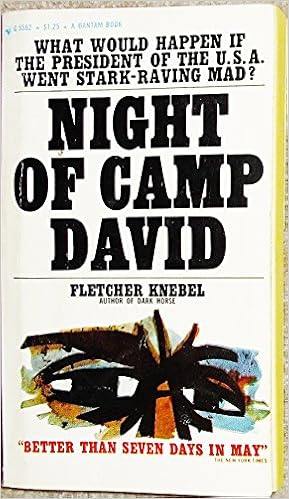
In a November 30, 2018 review of Night at Camp David, Tom McCarthy, national affairs correspondent for the British newspaper, The Guardian, wrote:
“The current president has seen crowds where none exist, deployed troops to answer no threat, attacked national institutions – the military, the justice department, the judiciary, the vote, the rule of law, the press – tried to prosecute his political enemies, elevated bigots, oppressed minorities, praised despots while insulting global allies and wreaked diplomatic havoc from North Korea to Canada.”
2020 PRESIDENTIAL ELECTION, AFFORDABLE CARE ACT (ACA), ALEC BALDWIN, ALTERNET, AMERICABLOG, AMNESTY INTERNATIONAL, AP, ARTICLE 1, BABY BOOMER RESISTANCE, BANDY X. LEE, BBC, BILL CLINTON, BIRTHRIGHT CITIZENSHIP, BLOOMBERG, BLUESKY, BUREAU OF LABOR STATISTICS (BLS), BUZZFEED, CANADA, CBS NEWS, CHICAGO, CHRIS KREBS, CNN, CONSUMER PROTECTION FINANCIAL BUREAU, CROOKS AND LIARS, CYBERSECURITY AND INFRASTRUCTURE SECURITY AGENCY (CISA), DAILY KOS, DAVID BROOKS, DEMOCRATS, DEPARTMENT OF JUSTICE (DOJ), DIVERSITY EQUITY AND INCLUSION (DEI), DONALD TRUMP, ELON MUSK, FBI, FEDERAL AVIATION ADMINISTRATION (FAA), FIVETHIRTYEIGHT, FLETCHER KNEBEL, GAIUS CALIGULA, GAZA, GEOFF BENNETT, GEORGE STEPHANOPOULOS, GORE VIDAL, GREENLAND, GULF OF AMERICA, GULF OF MEXICO, HARD UNIVERSITY, HARPER’S MAGAZINE, HARVARD MEDICAL SCHOOL, HUFFINGTON POST, illegal immigration, IMMIGRATION AND CUSTOMS ENFORCEMENT (ICE), INSPECTORS GENERAL, IRAN WAR, JANUARY 6 COUP ATTEMPT, JEFFREY EPSTEIN, JOHN ADAMS, JOHN D. GARTNER, JOHN F. KENNEDY CENTER FOR THE PERFORMING ARTS, JOHNS HOPKINS UNIVERSITY MEDICAL SCHOOL, JONATHAN CAPEHART, JOSEPH BIDEN, KEVIN SPACEY, LANCE DODES, LOS ANGELES, MARK MEADOWS, MEDAL OF HONOR WINNERS, MEDIA MATTERS, MEDICAID, MEDICARE, MICHAEL JACKSON, MICK JAGGER, MINNEAPOLIS, MOTHER JONES, MOVEON, MS NOW, MSNBC, NARCISSISM, NBC NEWS, NEWSDAY, NEWSWEEK, NIGHT AT CAMP DAVID (BOOK), NORTH ATLANTIC TREATY ORGANIZATION (NATO), NPR, Oil, PARIS CLIMATE AGREEMENT, PBS NEWSHOUR, POLITICO, POLITICUSUSA, PRINCE ANDREW, QATAR, RAW STORY, REPUBLICANS, REUTERS, RICHARD BRANSON, ROMAN EMPERORS, ROMAN EMPIRE, RUDY GIULIANI, SALLUST, SALON, SEATTLE TIMES, SLATE, ST. PAUL, STRAIT OF HORMUZ, SUPPLEMENTAL NUTRITION ASSISTANCE PROGRAM (SNAP), TACITUS, TALKING POINTS MEMO, THE ATLANTIC, THE CHICAGO SUN-TIMES, THE CHICAGO TRIBUNE, THE DAILY BEAST, THE DAILY BLOG, THE DANGEROUS CASE OF DONALD TRUMP (BOOK), THE GUARDIAN, THE HILL, THE HUFFINGTON POST, THE INTERCEPT, THE LOS ANGELES TIMES, THE NATION, THE NEW REPUBLIC, THE NEW YORK TIMES, THE NEW YORKER, THE PENTAGON, THE TWELVE CAESARS (ESSAY), THE VILLAGE VOICE, THE WASHINGTON POST, THINKPROGRESS, TIME, TRUTHDIG, TRUTHOUT, TWO POLITICAL JUNKIES, U.S. NEWS & WORLD REPORT, UNITED STATES CONSTITUTION, UPI, USA TODAY, VLADIMIR PUTIN, WAR CRIMES, WASHINGTON D.C., WOODY ALLEN, WORLD HEALTH ORGANIZATION, X, YALE SCHOOL OF MEDICINE
In Bureaucracy, History, Law, Law Enforcement, Military, Politics, Social commentary on May 11, 2026 at 12:10 am
On April 10, David Brooks of The Atlantic and Jonathan Capehart of MS NOW appeared—as they do every Friday—on the PBS Newshour to discuss the week’s political events.
Brooks is a conservative, Capehart, a liberal, but they exchange their often differing views in a calm, civil manner. But on this date, there was unanimity between them on the subject of President Donald Trump’s deteriorating mental state.
Moderator Geoff Bennett kicked off the exchange with this:
So, David, the president this week threatened to wipe out an entire civilization, and then he took a cease-fire deal 88 minutes before his own deadline. Is this maximum pressure or maximum chaos?
David Brooks: Maximum malevolence. We shouldn’t let that comment about the wiping out of civilization go by without saying what an antithesis it is of American history….We have always prided ourselves, whether — whatever stupid stuff we do, on not being a rapacious European-style imperial dominating power.
After World War II, we didn’t try to take over Germany and Japan. We gave them money so they could recover. Even George W. Bush, whatever you think of the war, the intentions were OK. But to threaten to wipe out a civilization is pure malevolence.

David Brooks
It’s an assertion of true evil. And it didn’t work. And so, if you want to know how the war is going, look at who’s moving. The U.S. used to have regime change. Now, today, Trump said just so we can stop the nuclear program. And the nuclear material have been unaffected by this war, by the way. So we’re pulling back our goals.
The Iranians, when they put forth their negotiating position, they’re sticking with the goals they had and then they’re adding more. We want to control the Straits of Hormuz. We want reparations. We want you to release all our money.
So they’re clearly on the offensive. And so if you…think America’s winning, why are we going backwards and why are we retreating?
Bennett: And, Jonathan, what does it mean for American foreign policy when the distance between the president saying on social media a whole civilization will die tonight and a cease-fire announcement is roughly eight hours?
Jonathan Capehart: It speaks to the chaos that….that characterizes the president himself, that characterizes how he is running his administration. I was on air Sunday morning….where he was demanding explicitly to open the Strait of Hormuz, you crazy bastards, from a president of the United States on Easter Sunday. To your point, this is not the America that we know.
The American president is supposed to be a statesman, supposed to be someone who is a reflection of our better selves or who we hope to be, who we project our image to be. And, right now, our image is so bad that we not only have the French leader calling out the American president, but the British prime minister called out the American president, basically lumping him with Vladimir Putin of Russia in terms of malevolent force on the world stage.

Jonathan Capehart
….This gets to the bigger question for me about….is the president all right? Because no American president ever has written the things, said the things, threatened the things that he did in the span of, what, 72 hours.
Bennett: Let’s talk more about that, because, last night, President Trump shared this graphic video of a woman being beaten to death. We’re not going to show that video, but you can see the screenshot of the social media message there on the screen.
And he used this video to attack former President Biden, Democrats, federal judges. A sitting president posting footage of a murder as political content, is there no line left?
Brooks: Apparently not. I think he is spiraling out of control. And I say that in part, and a little psychologically, narcissists tend to disinhibit as they age. And so they….just get more of themselves, which is not a good thing.
Donald Trump
But last January, as we watched this spiral psychologically….I read Roman histories. And so you get Tacitus and Sallust and those old guys, because they had a front-row seat to tyranny. And they watched authoritarians, one after another, Caligula, all these guys. And the one thing they all said was that they deteriorate.
They create a situation around them, when the sycophants have to get more sycophant. Anybody who’s reasonable is either dead or gone. And then the urge to dominate, the lust for power becomes drunk. They become drunk on that. And they get more and more daring, more and more out of control, and then you get this spiral.
And our founding fathers, they understood this so well. They read Tacitus. They loved these guys. And John Adams said, if we get a leader like that, he will run through our Congress, our Constitution the way a whale goes through a net. And so they completely understood. And their worst nightmare is now happening.
ABC NEWS, ADOLF HITLER, ALEX PRETTI, ALTERNET, AMERICABLOG, AP, BABY BOOMER RESISTANCE, BBC, BLOOMBERG NEWS, BUZZFEED, CBS NEWS, CNN, CROOKS AND LIARS, DAILY KOS, DONALD TRUMP, FIVETHIRTYEIGHT, GREGORY BOVINO, HARPER’S MAGAZINE, HUFFINGTON POST, IMMIGRATION AND CUSTOMS ENFORCEMENT (ICE), JACOB FREY, JOHN STEINBECK, MEDIA MATTERS, MINNEAPOLIS, MINNESOTA, MOTHER JONES, MOVEON, MSNBC, NAZI GERMANY, NBC NEWS, NEW REPUBLIC, NEWSDAY, NEWSWEEK, NORWAY, NPR, PAM BONDI, PBS NEWSHOUR, POLITICO, POLITICUSUSA, RAW STORY, RENEE GOOD, REUTERS, SALON, SEATTLE TIMES, SLATE, SOCRATES, ST. PAUL, TALKING POINTS MEMO, TERRORISM, THE ATLANTIC, THE CHICAGO SUN-TIMES, THE CHICAGO TRIBUNE, THE DAILY BEAST, THE DAILY BLOG, THE GUARDIAN, THE HILL, THE HUFFINGTON POST, THE INTERCEPT, THE LOS ANGELES TIMES, THE MOON IS DOWN (BOOK), THE NATION, THE NEW REPUBLIC, THE NEW YORK TIMES, THE NEW YORKER, THE VILLAGE VOICE, THE WASHINGTON POST, THINKPROGRESS, TIM WALZ, TIME, TODD BLANCHE, TRUTHDIG, TRUTHOUT, U.S. NEWS & WORLD REPORT, UPI, USA TODAY, WORLD WAR11
In History, Military, Politics, Social commentary on February 10, 2026 at 12:10 am
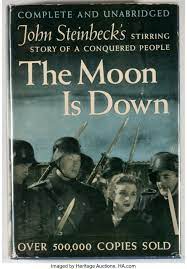
With Minnesota under siege by brutal and murderous agents of Immigration and Customs Enforcement (ICE) this is an appropriate time to read John Steinbeck’s 1942 novel, The Moon Is Down.
Written to inspire resistance movements in occupied countries, it has appeared in at least 92 editions across the world.
It tells the story of a Norwegian village occupied by Germans in World War II.
At first the invasion goes swiftly. Wehrmacht Colonel Lanser establishes his headquarters in the house of the democratically-elected Mayor Orden.
Lanser, a veteran of World War I, considers himself a man of civility and law. But in his heart he knows that “there are no peaceful people” when their freedom has been forcibly violated.
After an alderman named Alex Morden is executed for killing a German officer, the townspeople settle into “a slow, silent waiting revenge.”
Between the winter cold and the hostility of the townspeople, the Germans become fearful and disillusioned. One night, a frightened Lieutenant Tonder asks: “Captain, is this place conquered?”
“Of course.”
“Conquered and we’re afraid; conquered and we’re surrounded,” replies Tonder, hysterically. “Flies conquer the flypaper. Flies capture two hundred miles of new flypaper!”
Several nights later, Tonder knocks at the door of Molly Morden. He doesn’t realize that she nurses a deep hatred of Germans for the execution of her husband, Alex. Tonder desperately wants to escape the fury and loneliness of war. Molly agrees to talk with him, but insists that he leave and return another time.
When he returns the next evening, Molly invites him in—and then kills him with a pair of scissors.

John Steinbeck
A British plane flies over the town and drops packages of dynamite, which the townspeople hurriedly collect.
When the Germans learn about the droppings, Colonel Lanser arrests Mayor Orden and Doctor Albert Winter. As the two await their uncertain future, Orden tries to remember the speech Socrates delivered before he was put to death:
“Do you remember in school, in the Apology? Socrates says, ‘Someone will say, ‘And are you not ashamed, Socrates, of a course of life which is likely to bring you to an untimely end?’ To him I may fairly answer, ‘There you are mistaken: a man who is good for anything ought not to calculate the chance of living or dying; he ought only to consider whether he is doing right or wrong.’”
Colonel Lanser enters the room and warns Orden: “If you don’t urge your people to not use the dynamite, you will be executed.”
And Orden replies: “Nothing can change it. You will be destroyed and driven out. The people don’t like to be conquered, sir, and so they will not be. Free men cannot start a war, but once it is started, they can fight on in defeat.
“Herd men, followers of a leader, cannot do that, and so it is always the herd men who win battles and the free men who win wars. You will find that it is so, sir.”
Explosions begin erupting throughout the town.
As Orden is led outside—to his execution—he tells Winter, quoting Socrates: “’Crito, I owe a cock to Asclepius. Will you remember to pay the debt?’”
“The debt shall be paid,” replies Winter—meaning that resistance will continue.
On January 6-7, 2026, President Donald Trump flooded Minneapolis and St. Paul Minnesota with about 2,000 thuggish ICE agents.
During his 2024 campaign for President, Trump had promised—warned—that he would pursue “retribution” against those he believed had wronged him.
One of those was Minnesota Governor Tim Walz, who had dared to run against him as Kamala Harris’ vice presidential pick. Making Minnesota an even more attractive target for him was the state’s large Somali population, whom he had publicly labeled “garbage.”

ICE agents
Chad Davis, CC BY 4.0 <https://creativecommons.org/licenses/by/4.0>, via Wikimedia Commons
But then the unexpected happened: Minnesota residents began a wholesale resistance to ICE efforts to arrest—and often brutalize—their immigrant friends and neighbors.
Minnesotans used whistles and encrypted chats to follow and document ICE activity. Starting in December, 2025, hundreds of people signed up for ICE observation training at a church in Uptown. Such trainings are now common.
The ICE killings of Renee Good and Alex Pretti steeled Minnesotans to turn out in even greater numbers to protest their occupiers. At great personal risk, motorists followed ICE agents’ vehicles and photographed their assaults on illegal aliens—and American citizens.
“In one city—in one city we have this outrage and this powder keg happening,” Deputy Attorney General Todd Blanche told Fox News. “And it’s not right. And it doesn’t happen anywhere else.”
Gregory Bovino, commanding “Operation Metro Surge,” noted: “They’ve got some excellent communications.”
In turn, Trump ordered Attorney General Pam Bondi to launch criminal investigations into Walz and Minneapolis Mayor Jacob Frey. They are accused of impeding federal immigration enforcement through public criticisms of ICE.
Trump-–like Adolf Hitler-–believes that power flows from the top down. He believes that if he “takes out” leaders like Walz and Frey, opposition to his rule will collapse.
He can’t understand—and cope with—a bottom-up movement driven by constituents, who—like the citizens in The Moon Is Down—have emboldened their leaders to stand their ground.


2020 PRESIDENTIAL ELECTION, AFFORDABLE CARE ACT (ACA), ALEC BALDWIN, ALTERNET, AMERICABLOG, AMNESTY INTERNATIONAL, AP, ARTICLE 1, BABY BOOMER RESISTANCE, BANDY X. LEE, BBC, BILL CLINTON, BIRTHRIGHT CITIZENSHIP, BLOOMBERG, BLUESKY, BUREAU OF LABOR STATISTICS (BLS), BUZZFEED, CANADA, CBS NEWS, CHICAGO, CHRIS KREBS, CNN, CONSUMER PROTECTION FINANCIAL BUREAU, CROOKS AND LIARS, CYBERSECURITY AND INFRASTRUCTURE SECURITY AGENCY (CISA), DAILY KOS, DAVID BROOKS, DEMOCRATS, DEPARTMENT OF JUSTICE (DOJ), DIVERSITY EQUITY AND INCLUSION (DEI), DONALD TRUMP, ELON MUSK, FBI, FEDERAL AVIATION ADMINISTRATION (FAA), FIVETHIRTYEIGHT, FLETCHER KNEBEL, GAIUS CALIGULA, GAZA, GEOFF BENNETT, GEORGE STEPHANOPOULOS, GORE VIDAL, GREENLAND, GULF OF AMERICA, GULF OF MEXICO, HARD UNIVERSITY, HARPER’S MAGAZINE, HARVARD MEDICAL SCHOOL, HUFFINGTON POST, illegal immigration, IMMIGRATION AND CUSTOMS ENFORCEMENT (ICE), INSPECTORS GENERAL, IRAN WAR, JANUARY 6 COUP ATTEMPT, JEFFREY EPSTEIN, JOHN ADAMS, JOHN D. GARTNER, JOHN F. KENNEDY CENTER FOR THE PERFORMING ARTS, JOHNS HOPKINS UNIVERSITY MEDICAL SCHOOL, JONATHAN CAPEHART, JOSEPH BIDEN, KEVIN SPACEY, LANCE DODES, LOS ANGELES, MARK MEADOWS, MEDAL OF HONOR WINNERS, MEDIA MATTERS, MEDICAID, MEDICARE, MICHAEL JACKSON, MICK JAGGER, MINNEAPOLIS, MOTHER JONES, MOVEON, MS NOW, MSNBC, NARCISSISM, NBC NEWS, NEWSDAY, NEWSWEEK, NIGHT AT CAMP DAVID (BOOK), NORTH ATLANTIC TREATY ORGANIZATION (NATO), NPR, Oil, PARIS CLIMATE AGREEMENT, PBS NEWSHOUR, POLITICO, POLITICUSUSA, PRINCE ANDREW, QATAR, RAW STORY, REPUBLICANS, REUTERS, RICHARD BRANSON, ROMAN EMPERORS, ROMAN EMPIRE, RUDY GIULIANI, SALLUST, SALON, SEATTLE TIMES, SLATE, ST. PAUL, STRAIT OF HORMUZ, SUPPLEMENTAL NUTRITION ASSISTANCE PROGRAM (SNAP), TACITUS, TALKING POINTS MEMO, THE ATLANTIC, THE CHICAGO SUN-TIMES, THE CHICAGO TRIBUNE, THE DAILY BEAST, THE DAILY BLOG, THE DANGEROUS CASE OF DONALD TRUMP (BOOK), THE GUARDIAN, THE HILL, THE HUFFINGTON POST, THE INTERCEPT, THE LOS ANGELES TIMES, THE NATION, THE NEW REPUBLIC, THE NEW YORK TIMES, THE NEW YORKER, THE PENTAGON, THE TWELVE CAESARS (ESSAY), THE VILLAGE VOICE, THE WASHINGTON POST, THINKPROGRESS, TIME, TRUTHDIG, TRUTHOUT, TWO POLITICAL JUNKIES, U.S. NEWS & WORLD REPORT, UNITED STATES CONSTITUTION, UPI, USA TODAY, VLADIMIR PUTIN, WAR CRIMES, WASHINGTON D.C., WOODY ALLEN, WORLD HEALTH ORGANIZATION, X, YALE SCHOOL OF MEDICINE
ABSOLUTE POWER = ABSOLUTE CORRUPTION: PART FOUR (END)
In Bureaucracy, History, Law, Law Enforcement, Military, Politics, Social commentary, Uncategorized on May 14, 2026 at 12:05 amAmong the outrages President Donald Trump has committed since returning to power on January 20:
Trump’s vindictiveness, his narcissism, his compulsive aggression, his complaints that his “enemies” in government and the press are trying to destroy him, have caused many to ask: Could the President of the United States be suffering from mental illness?
One who has dared to answer this question is John D. Gartner, a practicing psychotherapist.
John D. Gartner
Gartner graduated magna cum laude from Princeton University, received his Ph.D in clinical psychology from the University of Massachusetts, and served as a part-time assistant professor of psychiatry at Johns Hopkins University Medical School for 28 years.
During an interview by U.S. News & World Report (published on January 27, 2017), Gartner said: “Donald Trump is dangerously mentally ill and temperamentally incapable of being president.”
Gartner said that Trump suffers from “malignant narcissism,” whose symptoms include:
“We’ve seen enough public behavior by Donald Trump now that we can make this diagnosis indisputably,” says Gartner, who admits he has not personally examined Trump.
Another psychiatrist who’s determined that Trump is “mentally compromised” is Bandy X. Lee, an assistant clinical psychiatry professor at the Yale School of Medicine.
And she offered her reasons for doing so as the editor of The Dangerous Case of Donald Trump: 27 Psychiatrists and Mental Health Experts Assess a President.
“It doesn’t take a psychiatrist to notice that our president is mentally compromised,” she and colleague Judith Lewis Herman asserted in the book’s prologue.
According to Dr. Craig Malkin, a Lecturer in Psychology for Harvard Medical School and a licensed psychologist, Trump is a pathological narcissist:
“Pathological narcissism begins,” Malkin writes, “when people become so addicted to feeling special that, just like with any drug, they’ll do anything to get their ‘high,’ including lie, steal, cheat, betray and even hurt those closest to them.
“When they can’t let go of their need to be admired or recognized, they have to bend or invent a reality in which they remain special despite all messages to the contrary. In point of fact, they become dangerously psychotic. It’s just not always obvious until it’s too late.”
Lance Dodes, a retired psychiatry professor at Harvard Medical School, believes that Trump is a sociopath:
“The failure of normal empathy is central to sociopathy, which is marked by an absence of guilt, intentional manipulation and controlling or even sadistically harming others for personal power or gratification.”
* * * * * * * * * *
Americans have long believed that they—and especially their leaders—are an “exceptional” people. As a result, they consider themselves immune from the threats of corruption and dictatorship that have plagued other nations.
Millions of Americans—including many Trump supporters—have been shaken by the revelations of the Epstein Files, which chronicle the sexual depravities of convicted pedophile Jeffrey Epstein. Even more disturbing has been the knowledge that he and Donald Trump maintained a friendship for 15 to 17 years.
The Files so far released are replete with names of celebrities such as Michael Jackson, Mick Jagger, Kevin Spacey, Alec Baldwin, Woody Allen, George Stephanopoulos, Elon Musk, Richard Branson, former President Bill Clinton and Prince Andrew.
This has added to the shock and revulsion felt by millions of Americans. Yet they might have been less shocked had they read Gore Vidal’s 1959 essay, “The Twelve Caesars.”
Gore Vidal
Mark Coggins from San Francisco, CC BY 2.0 <https://creativecommons.org/licenses/by/2.0>, via Wikimedia Commons
Vidal’s essay is an ode to The Twelve Caesars, a classic work of ancient biography by Gaius Suetonius Tranquillus—known as Suetonius.
Suetonius, a Roman citizen and historian, chronicled the lives of the first twelve Caesars of imperial Rome: Julius Caesar, Augustus, Tiberius, Caligula, Claudius, Nero, Galba, Otho, Vitellius, Vespasian, Titus and Domitian.
Vidal sought to show the relevance of Suetonius’ work to present-day America: “It would be wrong, however, to dismiss, as so many commentators have, the wide variety of Caesarean sensuality as simply the viciousness of twelve abnormal men. They were, after all, a fairly representative lot.
“They differed from us – and their contemporaries – only in the fact of power, which made it possible for each to act out his most recondite sexual fantasies. This is the psychological fascination of Suetonius. What will men so placed do? The answer, apparently, is anything and everything.”
Thus the lesson taught by the celebrities—including Trump—who glommed onto Jeffrey Epstein: They differed from ordinary citizens only in the power they held over themselves—and others. And, reveling in that power, they felt free to indulge the most depraved fantasies, sexual and otherwise.
Share this: