Posts Tagged ‘BLOOMBERG NEWS’
2016 PRESIDENTIAL ELECTION, 2020 PRESIDENTIAL ELECTION, ABC NEWS, ALTERNET, AMERICABLOG, AP, BABY BOOMER RESISTANCE, BBC, BLOOMBERG NEWS, BUZZFEED, CBS NEWS, CHRIS STIREWALT, CNN, COVID-19, CROOKS AND LIARS, DAILY KOS, DAVID BROOKS, DOMINION VOTING SYSTEMS, DONALD TRUMP, FIVETHIRTYEIGHT, FOX NEWS NETWORK, HARPER’S MAGAZINE, HUFFINGTON POST, JACQUI HEINRICH, JOE BIDEN, JONATHAN CAPEHART, LAURA INGRAHAM, LIBEL, MEDIA MATTERS, MIKE LINDELL, MOTHER JONES, MOVEON, MSNBC, NBC NEWS, NEW REPUBLIC, NEW YORK TIMES V. SULLIVAN, NEWSDAY, NEWSMAX, NEWSWEEK, NPR, PBS NEWSHOUR, POLITICO, POLITICUSUSA, RAW STORY, REPUBLICANS, REUTERS, RUDOLPH GIULIANI, RUPERT MURDOCH, SALON, SEAN HANNITY, SEATTLE TIMES, SIDNEY POWELL, SLANDER, SLATE, STEVE BANNON, TALKING POINTS MEMO, THE ATLANTIC, THE CHICAGO SUN-TIMES, THE CHICAGO TRIBUNE, THE DAILY BEAST, THE DAILY BLOG, THE GUARDIAN, THE HILL, THE HUFFINGTON POST, THE INTERCEPT, THE LOS ANGELES TIMES, THE NATION, THE NEW REPUBLIC, THE NEW YORK TIMES, THE NEW YORKER, THE VILLAGE VOICE, THE WASHINGTON POST, THINKPROGRESS, TIME, TRUTHDIG, TRUTHOUT, TUCKER CARLSON, U.S. NEWS & WORLD REPORT, UPI, USA TODAY, X
In Bureaucracy, Business, History, Law, Politics, Social commentary on September 24, 2026 at 12:10 am
Fox News has spent two years peddling “The Big Lie”—that President Donald J. Trump was cheated of electoral victory in 2020.
But now the truth is coming to light.
On the March 3 edition of The PBS Newshour, political commentators David Brooks and Jonathan Capehart explored the explosive revelations emerging from a lawsuit brought by Dominion Voting Systems against Fox News.
Host Amna Nawaz opened:
And, at CPAC today, [Steve Bannon, former chief strategist for President Trump] went after Fox, saying they’re not pro-Trump enough.
But, just this week, we did see a huge admission in that—the latest filings and the defamation case brought by Dominion Voting Systems, that admission from Fox chairman Rupert Murdoch. He conceded under oath Fox hosts lied about the 2020 election, and he chose not to stop them. What are the implications of that?
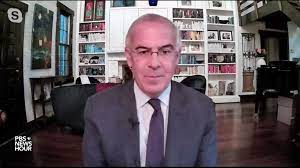
David Brooks
New York Times Columnist David Brooks: Rupert Murdoch started a paper called The Australian a long time ago. He was a journalist, an actual journalist. And now he’s gotten to the point where you can lie on camera if—as long as your ratings are OK.
Those people who lied didn’t lie over little things. They lied about the election results of a presidential election, kind of a major deal. And we now know—as we all suspected—they all knew what was happening.
And Murdoch is sitting there atop this organization sort of blithely pretending it’s not really his problem. And so he can say it, and he has power over the corporation today. He owns it. He could fire Tucker [Carlson]. He could fire all the people—all the people who were in on this and whose journalistic integrity has been exposed as zero.
And yet he’s still trying to blithely rise above it. And so it’s amazing that we have a major news organization that is inaccurate about a presidential election.
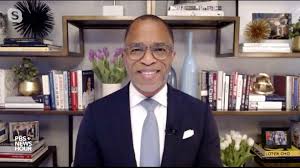

Jonathan Capehart
Washington Post Associated Editor Jonathan Capehart: Oh, it’s huge. And it was confirmation of something that folks on the left and just folks paying attention kind of suspected: That Fox News, the “news” is in quotes, that they’re out there blatantly telling lies.
But then to see in black and white as part of this case that not only…they would say lies on television, but then, behind the scenes, they knew the truth.
And what that says to me is, Rupert Murdoch and his anchors, those people who are peddling in lies, they are insulated from the effect of the lies that they tell. When you see someone saying, “Oh, our ratings are going down, and that’s going to affect the stock price.” So there’s no concern….

Rupert Murdoch
Hudson Institute, CC BY 2.0 <https://creativecommons.org/licenses/by/2.0>, via Wikimedia Commons
So that means you’re more concerned about your bottom line than the corrosive impact on our democracy and political discourse in this country. That, to me, was what’s really disturbing.
And what’s even more disturbing is that Fox News isn’t even really covering this lawsuit, which means that their audience, who should know about what’s being said about them and about the programming for them, they will never—they might not ever know….that what they’re being told is just a big bunch of lies.
Amna Nawaz: I go back to the impact again, though, because their audience, which is in the millions, right……if you’re a loyal Fox watcher prone to distrust any other information source anyway, does any of this make an impact?
Jonathan Capehart: Well, that’s the point I was trying to make. We don’t even know if they will even know about this case, as a result. And even if they do find out, either they might not trust it, or maybe they just don’t care. I don’t know.
David Brooks: Well, they’re losing some viewers to the further right, the Bannons of the world. So they are — they are definitely losing viewers.
But my colleague David French made the core point about Fox. If you’re in red America or in rural America, Fox is not just a news organization. It’s your community center. It’s an organization that—that news organization that pays intense attention, that lots of good news stories about cops and soldiers.
A lot of things that happen in red America that don’t get much coverage in the coastal media get a lot of attention in Fox. And so the loyalty there is not only about politics, and it’s not only about news coverage. It’s just about where people see themselves reflected.
* * * * *
A Twitter user recently asked: “Are critical thinkers being vastly outnumbered in the USA because secondary education is just so damn expensive? It’s no wonder Republican states are among the most poorly educated.”
The answer is: No.
You don’t have to accept propaganda.
You can question the official version of any story.
You can seek out multiple sources.
You don’t have to seek out only those sources that confirm your long-held prejudices.
And you don’t need a college education to do so.
If Right-wingers—who make up the audience for Fox News—are ignorant, it’s because they want to be ignorant.
2016 PRESIDENTIAL ELECTION, 2020 PRESIDENTIAL ELECTION, ABC NEWS, ALTERNET, AMERICABLOG, AP, BABY BOOMER RESISTANCE, BBC, BLOOMBERG NEWS, BUZZFEED, CBS NEWS, CHRIS STIREWALT, CNN, COVID-19, CROOKS AND LIARS, DAILY KOS, DAVID BROOKS, DOMINION VOTING SYSTEMS, DONALD TRUMP, FIVETHIRTYEIGHT, FOX NEWS NETWORK, HARPER’S MAGAZINE, HUFFINGTON POST, JACQUI HEINRICH, JOE BIDEN, JONATHAN CAPEHART, LAURA INGRAHAM, LIBEL, MEDIA MATTERS, MIKE LINDELL, MOTHER JONES, MOVEON, MSNBC, NBC NEWS, NEW REPUBLIC, NEW YORK TIMES V. SULLIVAN, NEWSDAY, NEWSMAX, NEWSWEEK, NPR, PBS NEWSHOUR, POLITICO, POLITICUSUSA, RAW STORY, REPUBLICANS, REUTERS, RUDOLPH GIULIANI, RUPERT MURDOCH, SALON, SEAN HANNITY, SEATTLE TIMES, SIDNEY POWELL, SLANDER, SLATE, STEVE BANNON, TALKING POINTS MEMO, THE ATLANTIC, THE CHICAGO SUN-TIMES, THE CHICAGO TRIBUNE, THE DAILY BEAST, THE DAILY BLOG, THE GUARDIAN, THE HILL, THE HUFFINGTON POST, THE INTERCEPT, THE LOS ANGELES TIMES, THE NATION, THE NEW REPUBLIC, THE NEW YORK TIMES, THE NEW YORKER, THE VILLAGE VOICE, THE WASHINGTON POST, THINKPROGRESS, TIME, TRUTHDIG, TRUTHOUT, TUCKER CARLSON, U.S. NEWS & WORLD REPORT, UPI, USA TODAY, X
In Bureaucracy, Business, History, Law, Politics, Social commentary on September 23, 2026 at 12:13 am
Reputable news organizations believe they’re hurt when a reporter gets his facts wrong—or, worse, invents a story for sensationalistic attention.
For Fox News Network, getting hurt means that some of its own reporters have told the truth. And, as a result, many of its viewers are turning to other Right-wing propaganda outlets.
In a series of email exchanges, Fox Network executives revealed they were not simply loyal to President Donald Trump but mortally afraid of him.
Star Host Tucker Carlson said that Trump was good at “destroying things. He’s the undisputed world champion of that. He could easily destroy us if we play it wrong.”
Nor was Carlson the only one. The fear started at the very top—with Fox CEO Rupert Murdoch: “Nobody wants Trump as an enemy. We all know that Trump has a big following. If he says, ‘Don’t watch Fox News, maybe some don’t.”
Up to January 26, 2021, Murdoch allowed Fox advertiser Mike “My Pillow” Lindell to appear on the Tucker Carlson Tonight Show to lie that Trump had been cheated of victory by massive voter fraud.
Questioned as to why he allowed it, Murdoch agreed with the statement, “It is not red or blue, it is green.”

Rupert Murdoch
In short: Lust for money, not ideology, motivated Fox’s slant on politics.
And, as with all Fox News commentary, truth played no role in the decision to air it.
With unapologetic hypocrisy, Fox stars Tucker Carlson, Sean Hannity and Laura Ingraham brutally mocked the lies being peddled by Trump—and their own network.
In a text to Ingraham, Carlson said that Sidney Powell, an attorney who was representing the Trump campaign, was “lying” and that he had “caught her” doing so.
Ingraham: “Sidney is a complete nut. No one will work with her. Ditto with Rudy [Giuliani].”
Hannity said Giuliani was “acting like an insane person” and Ingraham described him as “an idiot.”
And Hannity said: “That whole narrative that Sidney was pushing, I did not believe it for one second.”

Sean Hannity
How do we know all this? Certainly not because some outraged Fox whistleblower made these exchanges public.
It’s because Fox’s chief victim, Dominion Voting Systems, decided to strike back.
The Denver-based company produces and sells electronic voting hardware and software, including voting machines and tabulators, in Canada and the United States.
Dominion, claimed Fox, had criminally enabled Democrats to steal the election for Joe Biden by programming its machines to throw out votes meant for Trump.
Its reputation unfairly tarnished, its employees threatened with violence by Trump’s Fascistic supporters, Dominion filed a $1.6 billion defamation lawsuit against Fox News in March, 2021.
Dominion charged Fox News with pushing false conspiracy theories about the company to win back dissatisfied viewers upset with its coverage of Trump’s defeat.
Libel lawsuits are typically centered around one falsehood. But Dominion cites a lengthy list of Fox hosts making false claims even though they were known to be untrue.
According to an almost 200–page document Dominion filed in the lawsuit:
“From the top down, Fox knew ‘the Dominion stuff’ was ‘total BS.’ Yet despite knowing the truth—or at minimum, recklessly disregarding that truth—Fox spread and endorsed these ‘outlandish voter fraud claims’ about Dominion even as it internally recognized the lies as ‘crazy,’ ‘absurd,’ and ‘shockingly reckless.’
“As a result of the false accusations broadcast by Fox into millions of American homes, Dominion has suffered unprecedented harm and its employees’ lives have been put in danger,” Dominion’s attorneys wrote in the lawsuit.

Backing up its assertions: A treasury of emails, texts, testimony, and other private communications from Fox News personnel contradicting the network’s claims that Dominion’s voting machines had rigged the presidential election in Joe Biden’s favor.
These had all been obtained through the discovery process.
While Fox was echoing Trump’s claims of “massive voter fraud,” its executives and commentators knew that he—and they themselves—were lying.
In mid-November 2020, Carlson texted one of his producers that “there wasn’t enough fraud to change the outcome” of the election.
Later, Carlson said that Sidney Powell, one of Trump’s attorneys and a prominent accuser of election fraud, “is lying.”
Dana Perino, an anchor, called allegations of voter fraud against Dominion “total bs,” “insane,” and “nonsense.”
Murdoch told an executive on November 6, 2020 that “if Trump becomes a sore loser we should watch Sean [Hannity] especially and others don’t sound the same.”
And on January 5, 2021, Murdoch wrote to Fox News CEO Suzanne Scott:
“It’s been suggested our prime time three [Tucker Carlson, Sean Hannity, Laura Ingraham] should independently or together say something like, ‘the election is over and Joe Biden won.’ It would “go a long way to stop the Trump myth that the election [was] stolen.”
But Fox never aired such a statement.
Fox has repeatedly tried to get the case dismissed, but Superior Court Judge Eric Davis has refused to do so. A trial is slated to begin on April 17.
There is a difference between journalism and Fascistic propaganda. And Fox News Network routinely provides examples of the latter.
2016 PRESIDENTIAL ELECTION, 2020 PRESIDENTIAL ELECTION, ABC NEWS, ALTERNET, AMERICABLOG, AP, BABY BOOMER RESISTANCE, BBC, BLOOMBERG NEWS, BUZZFEED, CBS NEWS, CHRIS STIREWALT, CNN, COVID-19, CROOKS AND LIARS, DAILY KOS, DAVID BROOKS, DOMINION VOTING SYSTEMS, DONALD TRUMP, FIVETHIRTYEIGHT, FOX NEWS NETWORK, HARPER’S MAGAZINE, HUFFINGTON POST, JACQUI HEINRICH, JOE BIDEN, JONATHAN CAPEHART, LAURA INGRAHAM, LIBEL, MEDIA MATTERS, MIKE LINDELL, MOTHER JONES, MOVEON, MSNBC, NBC NEWS, NEW REPUBLIC, NEW YORK TIMES V. SULLIVAN, NEWSDAY, NEWSMAX, NEWSWEEK, NPR, PBS NEWSHOUR, POLITICO, POLITICUSUSA, RAW STORY, REPUBLICANS, REUTERS, RUDOLPH GIULIANI, RUPERT MURDOCH, SALON, SEAN HANNITY, SEATTLE TIMES, SIDNEY POWELL, SLANDER, SLATE, STEVE BANNON, TALKING POINTS MEMO, THE ATLANTIC, THE CHICAGO SUN-TIMES, THE CHICAGO TRIBUNE, THE DAILY BEAST, THE DAILY BLOG, THE GUARDIAN, THE HILL, THE HUFFINGTON POST, THE INTERCEPT, THE LOS ANGELES TIMES, THE NATION, THE NEW REPUBLIC, THE NEW YORK TIMES, THE NEW YORKER, THE VILLAGE VOICE, THE WASHINGTON POST, THINKPROGRESS, TIME, TRUTHDIG, TRUTHOUT, TUCKER CARLSON, U.S. NEWS & WORLD REPORT, UPI, USA TODAY, X
In Bureaucracy, Business, History, Law, Politics, Social commentary on September 22, 2026 at 12:05 am
In the beginning was the audience. And the audience was filled with Fascistic hate and prejudice, and sought always to have its beliefs confirmed.
And then came Fox News Network, which sought to capture that audience—and, with it, huge ratings and profits.
At the center of both Fox and its audience stood Donald Trump—first as a Presidential candidate, then as President.
In him, Right-wingers found their ideal representative: He promised to destroy all those groups they hated.
Among these: Blacks, Asians, “uppity” women, Muslims, liberals, Hispanics, Democrats.
Donald Trump
So when Trump lost the 2020 Presidential election—by 81,284,666 votes for former Vice President Joe Biden versus 74,224,319 for Trump-–the Right was devastated. And furious.
Unlike its defeats in past Presidential elections, this time the Right refused to accept the will of the electorate.
Trump had often “joked” about how wonderful it would be for the United States to have a “President-for-Life”—as was the case in China.
This time the Right intended to make that a reality.
Central to making that happen was the Fox News Network.
In 2022, for its seventh consecutive year, Fox News stood as the top-rated cable news network in the United States. Fox averaged 1.4 million total day viewers.
By contrast, 733,000 watched MSNBC and 568,000 watched CNN.
In prime time, Fox came in first with an average of 2.3 million viewers in 2022.
MSNBC came in second with 1.2 million and CNN ranked third with an average of 730,000.
As for profits: Fox’s net income for the twelve months ending December 31, 2022 was $1.507B, a 4.94% increase year-over-year.

In 2015, Trump launched his campaign for President. His chances for success seemed impossible at the time—even to many mainstream Republicans.
But as he won victory after victory in Republican primaries, Fox News stuck with him. And stayed with him through the four years of his Presidency.
Fox was Trump’s favorite network. It gave him unstinting praise and sought to put a favorable spin on everything he did. As a result, Trump rarely gave interviews to CBS, NBC or ABC News.
In turn, Fox profited hugely as its audience—and advertisers—eagerly tuned in.
So when Trump lost the 2020 Presidential election, he and Fox decided they must get him back into the Oval Office.
Trump did his best—or worst—by filing about 60 lawsuits to overturn the results of the election. But none of his attorneys could prove their claims that widespread fraud had robbed him of victory. The suits were dismissed by judges or withdrawn by Trump’s own attorneys.
Fox News couldn’t file fraudulent cases on Trump’s behalf. But it could poison the public mind by claiming—endlessly and falsely—that Trump had been cheated by massive voter fraud.
Fox didn’t even wait for the final results of the 2020 election to be called before it intervened on the side of what would soon be dubbed “The Big Lie.”
On Election Night, Chris Stirewalt, the political editor of Fox News Channel. was the first to project Biden’s victory in Arizona. This turned out to be right—and brought a furious attack upon Stirewalt.
Tucker Carlson
“We worked really hard to build what we have,” Fox host Tucker Carlson texted his producer, Alex Pfeiffer. “Those fuckers are destroying our credibility. It enrages me.”
For Carlson, credibility didn’t mean ensuring integrity in news reporting. It meant telling Fox’s Right-wing audience what it wanted to hear—whether the “news” was true or not.
Carlson added that he had spoken with fellow primetime commentators Laura Ingraham and Sean Hannity minutes earlier and that they were “highly upset.”
In a January 26 Op-Ed for the Los Angeles Times, Stirewalt wrote: “Having been cosseted by self-validating coverage for so long, many Americans now consider any news that might suggest that they are in error or that their side has been defeated as an attack on them personally.
“The lie that Trump won the 2020 election wasn’t nearly as much aimed at the opposing party as it was at the news outlets that stated the obvious, incontrovertible fact.”
Stirewalt was fired from Fox News in January, 2021.
Trump was furious about the Arizona call. After the election, he attacked Fox News and encouraged his followers to switch to Newsmax.
Which many of them did, costing Fox a big chunk of its audience.
For Fox, this was the ultimate catastrophe. The company began cracking down on its employees who had dared tell the truth on Election Night.
One case involved White House correspondent Jacqui Heinrich. Her sin was fact-checking a Trump tweet accusing Dominion Voting Systems of election fraud.
Heinrich wrote that top election officials had determined “there is no evidence that any voting system deleted or lost votes, changed votes, or was in any way compromised.”
“Please get her fired,” Star host Tucker Carlson texted his fellow told host Sean Hannity: “Seriously….what the fuck? I’m actually shocked….It needs to stop immediately, like tonight. It’s measurably hurting the company. The stock price is down. Not a joke.”
Hannity replied that he had already spoken to Suzanne Scott, the network’s chief executive. The next morning, Heinrich’s tweet had been deleted.
ABC NEWS, ALTERNET, AMERICABLOG, AMERICAN NZAI PARTY, AP, BABY BOOMER RESISTANCE, BARACK OBAMA, BBC, BLOOMBERG NEWS, BUZZFEED, CBS NEWS, CHRIS MATHEWS, CIVIL WAR, CNN, CROOKS AND LIARS, DAILY KOZ, DONALD TRUMP, FACEBOOK, FIVETHIRTYEIGHT, FOOD STAMPS, HARPER’S MAGAZINE, HUFFINGTON POST, KU KLUX KLAN, MEDIA MATTERS, MEDICARE, MOTHER JONES, MOVEON, MSNBC, NBC NEWS, NEW REPUBLIC, NEWSDAY, NEWSWEEK, NPR, PBS NEWSHOUR, POLITICO, POLITICUSUSA, PROPAGANDA, RACISM, RAW STORY, REPUBLICAN PARTY, REPUBLICANS, REUTERS, Ronald Reagan, SALON, SEATTLE TIMES, SEVENTEEN-SEVENTY-SIX (PLAY), SLATE, SOCIAL SECURITY, TALKING POINTS MEMO, THE ATLANTIC, THE CHICAGO SUN-TIMES, THE CHICAGO TRIBUNE, THE DAILY BEAST, THE DAILY BLOG, THE GUARDIAN, THE HILL, THE HUFFINGTON POST, THE INTERCEPT, THE LOS ANGELES TIMES, THE NATION, THE NEW REPUBLIC, THE NEW YORK TIMES, THE NEW YORKER, THE VILLAGE VOICE, THE WALL STREET JOURNAL, THE WASHINGTON POST, THINKPROGRESS, TIME, TIME MAGAZINE, TRUTHDIG, TRUTHOUT, TWO POLITICAL JUNKIES, U.S. NEWS & WORLD REPORT, UPI, USA TODAY, WILLIAM TECUMSEH SHERMAN, X
In Bureaucracy, Business, History, Medical, Politics, Social commentary on September 18, 2026 at 12:08 am
Republicans have long tried to prevent or eliminate programs that aid the poor and middle-class, including:
- Social Security (since it began in 1935)
- Medicare
- National health insurance
- Food stamps
- WIC (Women, Infants, Children).
So why are so many poor Americans now flocking to this party’s banner?
Two reasons: Racism and greed. There are historical parallels for both.
First, race:
In 1999, historian Victor Davis Hanson noted the huge gap in wealth between the aristocratic, slave-owning minority of the pre-Civil War South and the vast majority of poor white Southerners.
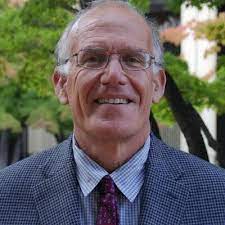
Victor Davis Hanson
“Before the war in the counties Sherman would later ruin, the top 10% of the landowners controlled 40% of the assessed wealth.”
In contrast, “more than half of those who were lucky enough to own any property at all still possessed less than 15% of the area’s valuation.”
So Hanson asked: “Why did the millions of poor whites of the Confederacy fight at all?”
He supplied the answer in his brilliant work on military history, The Soul of Battle: From Ancient Times to the Present Day, How Three Great Liberators Vanquished Tyranny.
One of those liberators was General William Tecumseh Sherman, who led 62,000 Union troops in a victorious “March to the Sea” through the Confederacy in 1864.
So why did so many poor Southern whites literally lay down their lives for the wealthy planter class, which despised them?
According to Hanson: “Behind the entire social fabric of the South lay slavery.
“If slavery eroded the economic position of the poor free citizens, if slavery encouraged a society of haves and have-nots…then it alone offered one promise to the free white man—poor, ignorant and dispirited—that he was at least not black and not a slave.”
And the planter class and its allies in government easily fobbed off their poor white countrymen with cheap flattery. Said Georgia Governor Joseph Brown:
“Among us the poor white laborer is respected as an equal. His family is treated with kindness, consideration, and respect. He does not belong to the menial class. The negro is in no sense his equal. He belongs to the only true aristocracy, the race of white men.”

Arlington House and plantation, former home of Robert E. Lee
Similarly, poor whites now flock to the Republican Party—which holds them in equal contempt—in large part to protest the 2008 election of the first black President of the United States.
According to a Pew Research Center study released on July 22, 2011: “Notably, the GOP gains have occurred only among white voters; a 2-point Republican edge among whites in 2008 (46% to 44%) has widened to a 13-point lead today (52% to 39%).”
Since the 1960s, Republicans have pursued a campaign policy of “divide and rule”—divide the nation along racial lines and reap the benefits at election time.
- Republicans opposed the Civil Rights Act of 1964.
- Republicans opposed the Voting Rights Act of 1965.
- Republicans, with Richard Nixon as their Presidential candidate in 1968 and 1972, pursued what they called a “Southern strategy”: Use “code language” to stoke fear and hatred of blacks among whites.
- Republicans have falsely identified welfare programs exclusively with non-whites. (Of the six million Americans receiving food stamps, about 42% are white, 32% are black, and 22% are Latino–with the growth fastest among whites during the recession.)
Thus, in voting Republican, many of these poor whites believe they are “striking a blow for the white race.”
And they can do so in a more socially acceptable way than joining a certified hate group such as the American Nazi Party or Ku Klux Klan.
Since 2015, openly racist groups such as the Klan and the American Nazi Party have flocked to the banner of Presidential candidate mogul Donald Trump. By enthusiastically courting their support, the real estate mogul has made it possible for Republican candidates to openly display their own racism.
Now greed:
In the hit play, 1776, on the creation and signing of the Declaration of Independence, there is a telling exchange between John Dickinson and John Hancock. It comes during the song, “Cool, Cool, Considerate Men.”
Dickinson, the delegate from Pennsylvania, urges Hancock, president of the Second Continental Congress, “to join us in our minuet.”
By “us” he means his fellow conservatives who fear losing their property and exalted status by supporting American independence from Great Britain.
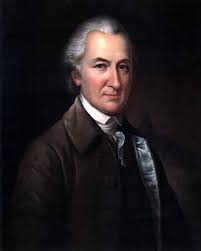
John Dickinson
Hancock declines, saying: “Fortunately, there are not enough men of property in America to dictate policy.”
To which Dickinson replies: “Perhaps not. But don’t forget that most men with nothing would rather protect the possibility of becoming rich than face the reality of being poor. And that is why they will follow us.”
Today, poor whites generally identify with the CEOs of powerful corporations. They believe the Republican gospel that they can attain such wealth—if only the government will “get out of my way.”
They forget—or ignore–the truth that government, for all its imperfections, is sometimes all that stands between them and a wide range of predators.
In return, the CEOs despise them as the privileged have always despised their social and economic “inferiors.”
Unless the Democratic Party can find ways to directly address these bitter, Politically Incorrect truths, it will continue its decline into insignificance.
ABC NEWS, ALTERNET, AMERICABLOG, AP, BABY BOOMER RESISTANCE, BARACK OBAMA, BBC, BLOOMBERG NEWS, BUZZFEED, CBS NEWS, CHRIS MATHEWS, CIVIL WAR, CNN, CROOKS AND LIARS, DAILY KOZ, FACEBOOK, FIVETHIRTYEIGHT, FOOD STAMPS, HARPER’S MAGAZINE, HUFFINGTON POST, MEDIA MATTERS, MEDICARE, MOTHER JONES, MOVEON, MSNBC, NBC NEWS, NEW REPUBLIC, NEWSDAY, NEWSWEEK, NPR, PBS NEWSHOUR, POLITICO, POLITICUSUSA, PROPAGANDA, RAW STORY, REPUBLICAN PARTY, REPUBLICANS, REUTERS, Ronald Reagan, SALON, SEATTLE TIMES, SLATE, SOCIAL SECURITY, TALKING POINTS MEMO, THE ATLANTIC, THE CHICAGO SUN-TIMES, THE CHICAGO TRIBUNE, THE DAILY BEAST, THE DAILY BLOG, THE GUARDIAN, THE HILL, THE HUFFINGTON POST, THE INTERCEPT, THE LOS ANGELES TIMES, THE NATION, THE NEW REPUBLIC, THE NEW YORK TIMES, THE NEW YORKER, THE VILLAGE VOICE, THE WALL STREET JOURNAL, THE WASHINGTON POST, THINKPROGRESS, TIME, TIME MAGAZINE, TRUTHDIG, TRUTHOUT, TWO POLITICAL JUNKIES, U.S. NEWS & WORLD REPORT, UPI, USA TODAY, WILLIAM TECUMSEH SHERMAN, X
In Bureaucracy, Business, History, Medical, Politics, Social commentary on September 17, 2026 at 12:10 am
On July 22, 2011, ABC News carried the following story:
The Pew Foundation, analyzing voter identification, found “the electorate’s partisan affiliations have shifted significantly” since Barack Obama won office in 2008.
The GOP had gained strength among white voters, most specifically “the young and poor.”
A seven-point Democratic advantage among whites under age 30 three years ago had turned into an 11-point GOP advantage. And a 15-point Democratic advantage among whites earning less than $30,000 annually had swung to a slim four-point Republican edge by 2011.

In addition:
- The GOP gains had occurred only among white voters.
- Republicans had made sizable gains among white voters since 2008. Fifty-two percent of white voters called themselves Republicans or leaned to the GOP, compared with 39% who affiliated with the Democratic Party or leaned Democratic.
- Democrats had lost their edge among lower income white voters.
- In 2008, Democrats had a 15 point lead among white voters with family incomes less than $30,000. By 2011, Republicans had a four-point edge among this group.
- The GOP’s lead among middle income white voters had grown since 2008, and Republicans held a substantial advantage with higher income white voters.
- Republicans have made gains among whites with a high school education or less. The GOP’s advantage over Democrats had grown from one point in 2008 to 17 points in 2011 among less educated whites.
- Republicans had made smaller gains among whites voters who had college degrees.
What is fascinating about these findings is this: The Republicans have, since 1980, pursued a policy of gutting programs aimed at helping the poor—while repeatedly creating tax-breaks for the wealthiest 1% of the population.
For Republicans, the patron saint of this “love-the-rich-screw-the-poor” ideology remains Ronald Reagan–two-time governor of California and twice-elected President of the United States (1981-1989)
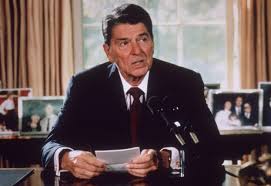
Ronald Reagan, who taught Americans to worship the wealthy
Among those charting Reagan’s legacy as President was former CBS Correspondent David Shoenbrum.
In his bestselling autobiography, America Inside Out: At Home and Abroad from Roosevelt to Reagan, he noted:
- On January 28, 1981, keeping a pledge to his financial backers in the oil industry, Reagan abolished Federal controls on the price of oil.
- Within a week, Exxon, Texaco and Shell raised gasoline prices and prices of home heating oil.
- Reagan saw it as his duty to put a floor under prices, not a ceiling above them.

- Reagan believed that when government helped business it wasn’t interfering. Loaning money to bail out a financially incompetent Chrysler was “supporting the free enterprise system.”
- But putting a high-profits tax on price-gouging corporations or filing anti-trust suits against them was “Communistic” and therefore intolerable.
- Tax-breaks for wealthy businesses meant helping America become stronger.
- But welfare for the poor or the victims of a predatory marketplace economy weakened America by sapping its morale.
“In short, welfare for the rich is good for America. But welfare for the poor is bad for America, even for the poor themselves, for it encourages them to be shiftless and lazy.
“Somehow, loans to the inefficient management of American corporations would not similarly encourage them in their inefficient methods,” wrote Shoenbrun.
Republicans have sought to dismantle Social Security ever since that program began in 1935. And Republicans have furiously opposed other programs aiding the poor and middle-class—such as Medicare, food stamps and WIC (Women, Infants, Children).
In short, this is not a political party with a history of rushing to the defense of those most in need.
So the question remains: Why are so many poor Americans flocking to its banner?
The answer lies in the history of the American South—and slavery.
ABC NEWS, ADOLF HITLER, ALTERNET, AMERICABLOG, AP, BABY BOOMER RESISTANCE, BBC, BLOOMBERG NEWS, BLUESKY, BUZZFEED, CANADA, CBS NEWS, CLAUDIA SHEINBAUM PARDO, CNN, CNN'S "STARTING POINT", CROOKS AND LIARS, DAILY KOS, DEPARTMENT OF HOMELAND SECURITY, DEPARTMENT OF JUSTICE, EXTORTION, FBI, FIVETHIRTYEIGHT, HARPER’S MAGAZINE, HUFFINGTON POST, INSIDER, JUDICIARY, MARK CARNEY, MASTADON, MEDIA MATTERS, MEXICO, MOTHER JONES, MOVEON, MSNBC, MSNBC'S "HARDBALL", NAZI GERMANY, NBC NEWS, NEGOTIATING, NEW REPUBLIC, NEWSDAY, NEWSWEEK, NPR, PBS NEWSHOUR, POLAND, POLITICO, POLITICUSUSA, PRESS, RAW STORY, REPUBLICAN PARTY, REPUBLICANS, REUTERS, SALON, SEATTLE TIMES, SLATE, TALKING POINTS MEMO, THE ATLANTIC, THE CHICAGO SUN-TIMES, THE CHICAGO TRIBUNE, THE DAILY BEAST, THE DAILY BLOG, THE GUARDIAN, THE HILL, THE HUFFINGTON POST, THE LOS ANGELES TIMES, THE NATION, THE NEW REPUBLIC, THE NEW YORK TIMES, THE NEW YORKER, THE PENTAGON, THE VILLAGE VOICE, THE WASHINGTON POST, THINKPROGRESS, TIME, TRUTHDIG, TRUTHOUT, TWO POLITICAL JUNKIES, U.S. NEWS & WORLD REPORT, UPI, USA TODAY, WONKETTE, WORLD WAR 11, X
In Bureaucracy, History, Law, Law Enforcement, Politics, Social commentary on September 16, 2026 at 12:26 am
On January 20, 2026, in a speech at the World Economic Forum in Davos, Switzerland, Canadian Prime Minister Mark Carney called for greater cooperation among the world’s middle-sized nations.
The reason: To protect themselves from great powers using tariffs to extort control over them.
An example of this: Ottawa and Beijing now have a limited tariff agreement that swaps reduced Chinese duties on Canadian canola seeds for lower Canadian tariffs on a capped volume of Chinese electric vehicles.
On January 26, Canada announced a plan to significantly expand trade with non‑U.S. countries, strengthen internal Canadian trade, and increase domestic investment by up to one trillion dollars over the next five years.

Canadian provinces and territories
On February 20, 2026, the United States Supreme Court ruled against emergency tariffs imposed under the International Emergency Economic Powers Act.
This had been the basis—and excuse—for Trump’s slapping tariffs on more than 180 countries.
Ignoring the Supreme Court ruling Trump imposed a short term 10% global tariff.
On July 1, after a virtual meeting with U.S. Trade Representative Jamieson Greer with his Canadian and Mexican counterparts, Greer announced that the U.S. would not extend the Canada-United States-Mexico Agreement (CUSMA).
Its goals had been to boost economic growth, reduce trade barriers, and secure preferential market access across North America.
On July 17, in a Truth Social post, Trump threatened to put new tariffs on Canada after hundreds of wildfires left much of the northern U.S. covered by smoke.
He could have offered to send American firefighters and firefighting equipment to Canada. But acting in a humane way has never been a part of Trump’s character.
On July 20, Trump alleged that Canada discriminated against American companies supplying alcohol, dairy and cars. He signed three proclamations under the 1930 Smoot-Hawley Tariff Act, imposing 50% tariffs on Canadian dairy, alcohol, cars and other products.
On August 22, Trump’s 50% tariffs took effect on about $20 billion worth of Canadian goods—dairy products, alcoholic beverages, cement and hockey equipment.
Trade negotiations had collapsed shortly before a midnight deadline the previous night.
Canadian Prime Minister Mark Carney said that “last-minute changes in the U.S. proposed terms” had caused the collapse.

Mark Carney
“….The general attitude….is that the core Canadian industries either would be subsidiaries effectively of the United States industries or would put in place terms where those industries would be, gradually wound down in Canada and we’re not going to of course….accept those terms.”
And he warned that Canada would match the tariffs “dollar for dollar” starting on September 8.
After Canada suspended trade talks on August 21, Trump signed an executive order “changing” the name of Lake Ontario, which borders New York and Canada’s Ontario province, to Lake America.
Google and Apple, cravenly seeking to win Trump’s favor, immediately displayed maps offering the Trumpian version of geography.
“When the Americans stop doing memes, stop throwing shade, stop trying to be tough and start being serious about having those discussions, we can have those discussions,” said Carney at a press conference.
There is no American precedent for such extortionate behavior—but there is a German one. That of Nazi Germany from t938 to 1939 under Adolf Hitler—first against Austria, then Czechoslovakia, and finally Poland.
It was his aggression against Poland that ignited World War II.

But Trump can be beaten—if his enemies are willing to go all the way.
Democratic nations like Canada and Mexico dare not attack the United States militarily. America’s military is so powerful the country is threatened only by China and Russia.
But they can target with ruthless tariffs those Red states whose Fascistic voting blocs fanatically support Trump—and the House and Senate members who support him.
They can:
- Deprive Red state populations of the fruits, vegetables, meats, cars, computers, oil, gas—and especially beer and alcohol—they take for granted.
- Refuse to stock goods from Red states in their stores.
- Appeal to the patriotism of Canadians and Mexicans to maintain the boycott despite the suffering this will impose on their own countries.
Canada, in particular, has a deadly weapon it can unleash at any time:
Provincial authorities and grid operators (such as Ontario’s Independent Electricity System Operator) can reduce or halt power flowing through cross-border transmission lines to states like New York, Michigan and Minnesota.
The U.S. imports electricity from Canada because it is cheaper than generating more supply domestically. Losing Canadian electricity would force affected states to rely on rapacious energy companies, driving up electricity costs for consumers.
This, in turn, would trigger voters’ anger against Trump-supporting Republican candidates for the House and Senate.
Americans are used to seeking simple, painless solutions to major problems. Thus, in 2024, Trump won 77 million votes by promising to drastically reduce the price of eggs.
Instead, he gave voters an unprovoked and endless war on Iran. This has created a worldwide spiral in oil prices—and fueled inflation in the United States and other nations.
As prices soar for food, energy and housing, Trump focuses on vanity projects like a 90,000 square-foot White House ballroom and a towering “Victory Arch” overlooking Arlington Cemetery.
When Red states are forced to suffer staggering losses for months on end, they will elect anti-Fascist Senators and Representatives to nullify the evils of Trump’s administration.
ABC NEWS, ADOLF HITLER, ALTERNET, AMERICABLOG, AP, BABY BOOMER RESISTANCE, BBC, BLOOMBERG NEWS, BLUESKY, BUZZFEED, CANADA, CBS NEWS, CLAUDIA SHEINBAUM PARDO, CNN, CNN'S "STARTING POINT", CROOKS AND LIARS, DAILY KOS, DEPARTMENT OF HOMELAND SECURITY, DEPARTMENT OF JUSTICE, EXTORTION, FBI, FIVETHIRTYEIGHT, HARPER’S MAGAZINE, HUFFINGTON POST, INSIDER, JUDICIARY, MARK CARNEY, MASTADON, MEDIA MATTERS, MEXICO, MOTHER JONES, MOVEON, MSNBC, MSNBC'S "HARDBALL", NAZI GERMANY, NBC NEWS, NEGOTIATING, NEW REPUBLIC, NEWSDAY, NEWSWEEK, NPR, PBS NEWSHOUR, POLAND, POLITICO, POLITICUSUSA, PRESS, RAW STORY, REPUBLICAN PARTY, REPUBLICANS, REUTERS, SALON, SEATTLE TIMES, SLATE, TALKING POINTS MEMO, THE ATLANTIC, THE CHICAGO SUN-TIMES, THE CHICAGO TRIBUNE, THE DAILY BEAST, THE DAILY BLOG, THE GUARDIAN, THE HILL, THE HUFFINGTON POST, THE LOS ANGELES TIMES, THE NATION, THE NEW REPUBLIC, THE NEW YORK TIMES, THE NEW YORKER, THE PENTAGON, THE VILLAGE VOICE, THE WASHINGTON POST, THINKPROGRESS, TIME, TRUTHDIG, TRUTHOUT, TWO POLITICAL JUNKIES, U.S. NEWS & WORLD REPORT, UPI, USA TODAY, WONKETTE, WORLD WAR 11, X
In Bureaucracy, History, Law, Politics, Social commentary on September 15, 2026 at 12:10 am
For all his slim grasp of history, Donald Trump knows that presidents and kings (of which he thinks himself the latter) are remembered for the wars they’ve won.
Easily won wars, of course, are the best. And, for Trump, Canada—no match for the United States militarily—seems a sure bet.
On December 2, 2024 Trump, recently re-elected as President of the United States, threatened to impose a 25% tax on all products entering the United States from Canada and Mexico unless they stopped the flow of drugs and illegal aliens.

Canadian flag
“Less than one percent of migrants coming into the United States irregularly come from Canada and 0.2 percent of the fentanyl coming into the United States comes from Canada,” then-Canadian Prime Minister Justin Trudeau told Parliament.
During 2023-2024, American customs agents seized 43 pounds of fentanyl at the Canadian border, compared with 21,100 pounds at the Mexican border.
Heroin syringe
Unmentioned—if not deliberately ignored by Trump: Canada plays a substantial role as a U.S. trading partner. About 60% of U.S. crude oil imports are from Canada, and 85% of U.S. electricity imports as well.
Canada is also the largest foreign supplier of steel, aluminum and uranium to the U.S. and has 34 critical minerals and metals that the Pentagon eagerly desires. About 77% of Canada’s exports go to the U.S.
Trudeau pleaded with Trump not to impose the tariff because because it would “kill” Canada’s economy.
Trump responded: “So your country can’t survive unless it’s ripping off the US to the tune of $100 billion?”
His comments referred to the American trade deficit with Canada.
The U.S. had a $75 billion trade deficit with Canada in 2023 but a third of what Canada sells into the U.S. is energy exports and prices have been high.
Trudeau left the meeting without reassurance that Trump would not impose a 25% tariff on products from Canada.
Trump’s trade conflict with Canada began immediately upon his return to office in 2025, driven by disputes over border security, immigration and tariffs.
On January 20, 2025, his first day back in office, Trump announced plans for a 25% tariff on all Canadian imports, citing illegal immigration and drug trafficking.
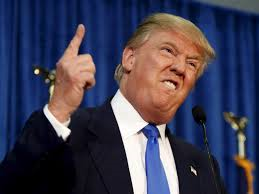
Donald Trump
In early February, 2025, Trump signed an executive order imposing a 25% blanket tariff on Canadian and Mexican goods (and 10% on energy) starting February 4, invoking a national emergency.
Then-Canadian Prime Minister Justin Trudeau vowed immediate retaliatory tariffs
In mid-February, Trump agreed to a 30-day pause to cool tensions and signed a separate plan for 25% tariffs on global steel and aluminum.
On March 4, 2025, Trump’s 25% tariffs on Canadian goods took effect (with energy capped at 10%). Canada fired back with massive retaliatory counter-tariffs.
American automakers, fearing their sales to Canada would be jeopardized, pressured Trump to delay auto tariffs. Trump agreed to do so, and temporarily paused levies on goods complying with the United States-Mexico-Canada Agreement.
But on March 5, 2025, Trump slapped 25% tariffs on Canada. Six days later, Trump announced that he would impose an additional 25% tariff on all Canadian steel and aluminum imports effective March 12.
Just as Adolf Hitler’s continuing aggression toward England promoted Winston Churchill’s appointment as its Prime Minister, Trump’s continuing aggression toward Canada did the same for Mark Carney.
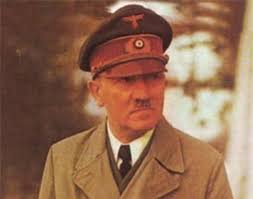
Adolf Hitler
Carney, a member of the Liberal Party, was elected as Canada’s Prime Minister-elect on March 9. He owed his victory to Trump’s insults toward Canada and threats to make it the 51st state of the United States.
He described the tariff conflict the “greatest crisis of our lifetimes.” And he vowed to defend Canada from American aggression.
On March 12, Trump slammed Canada with 25% duties on steel and aluminum. This, in turn, led Canada to impose further rounds of retaliatory levies on American manufactured goods.
On October 14, Trump issued an executive order that imposed a 10% tariff on softwood lumber and 25% on certain wooden furniture and cabinets from Canada, with scheduled increases.
But by September, Canada’s trade balance returned to surplus as exports recovered, particularly to markets outside the United States, while the impact of U.S. tariffs eased in some sectors.
American lumber and cabinet tariffs escalated further on January 1, 2026: A 50% tariff on specific kitchen vanities and cabinets—affecting Canadian exporters without exemptions.
On January 20, 2026, in a speech at the World Economic Forum in Davos, Switzerland, Carney urged greater cooperation among the world’s middle-sized nations to protect themselves from great powers using tariffs to extort control.
On January 24, Trump, responding to a faulty report, threatened to impose tariffs of up to 100% on all Canadian goods in response to a planned trade agreement between Canada and China.
The arrangement between Ottawa and Beijing is a limited, issue-specific tariff agreement that swaps reduced Chinese duties on Canadian canola seeds for lower Canadian tariffs on a capped volume of Chinese electric vehicles.
It is not a comprehensive Canada-China free trade agreement covering most goods and services, as Trump believed.
On January 26, Canada announced a plan to significantly expand trade with non‑U.S. countries, strengthen internal Canadian trade, and increase domestic investment by up to one trillion dollars over the next five years.
Thus, through threats, insults and extortionate tariffs, Trump has singularly ended a friendly U.S.-Canada relationship that had lasted more than 200 years.
ABC NEWS, ADOLF HITLER, ALTERNET, AMERICABLOG, AP, BABY BOOMER RESISTANCE, BBC, BLOOMBERG NEWS, BLUESKY, BUZZFEED, CANADA, CBS NEWS, CLAUDIA SHEINBAUM PARDO, CNN, CNN'S "STARTING POINT", CROOKS AND LIARS, DAILY KOS, DEPARTMENT OF HOMELAND SECURITY, DEPARTMENT OF JUSTICE, EXTORTION, FBI, FIVETHIRTYEIGHT, HARPER’S MAGAZINE, HUFFINGTON POST, INSIDER, JUDICIARY, MARK CARNEY, MASTADON, MEDIA MATTERS, MEXICO, MOTHER JONES, MOVEON, MSNBC, MSNBC'S "HARDBALL", NAZI GERMANY, NBC NEWS, NEGOTIATING, NEW REPUBLIC, NEWSDAY, NEWSWEEK, NPR, PBS NEWSHOUR, POLAND, POLITICO, POLITICUSUSA, PRESS, RAW STORY, REPUBLICAN PARTY, REPUBLICANS, REUTERS, SALON, SEATTLE TIMES, SLATE, TALKING POINTS MEMO, THE ATLANTIC, THE CHICAGO SUN-TIMES, THE CHICAGO TRIBUNE, THE DAILY BEAST, THE DAILY BLOG, THE GUARDIAN, THE HILL, THE HUFFINGTON POST, THE LOS ANGELES TIMES, THE NATION, THE NEW REPUBLIC, THE NEW YORK TIMES, THE NEW YORKER, THE PENTAGON, THE VILLAGE VOICE, THE WASHINGTON POST, THINKPROGRESS, TIME, TRUTHDIG, TRUTHOUT, TWO POLITICAL JUNKIES, U.S. NEWS & WORLD REPORT, UPI, USA TODAY, WONKETTE, WORLD WAR 11, X
In Bureaucracy, Business, History, Law, Military, Politics, Social commentary on September 14, 2026 at 12:11 am
The history book on the shelf
Is always repeating itself.
–“Waterloo,” by Abba
To understand what is happening in the United States today, it’s necessary to realize this:
- Its decent, democracy-cherishing citizens find themselves in the same position as decent, democracy-cherishing citizens of Nazi Germany from 1933 to 1945.
- And just as Germany’s government became a ruthless dictatorship, so has that of the United States.
- And just as ordinary, peace-loving Germans hoped for a powerful, democratic outsider to remove the menace of Adolf Hitler, so do ordinary, peace-loving Americans hope the same will happen to Donald Trump.
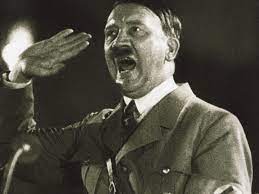
Adolf Hitler
From 1939 to 1945, those democracy-cherishing outsiders consisted of Canada, England and the United States. (The Soviet Union reluctantly joined this alliance only after it became yet another victim of Adolf Hitler’s aggression.)
In the case of the United States, that solution can only be achieved economically—by pressuring Right-wing Republican members of Congress in Red states to end their support for Trump’s dictatorial agenda.
And the only democratic countries with the power to do this are Mexico and Canada, America’s foremost trading partners.
The 2024 elections gave Republicans not only the White House but control of the House and Senate.

Donald Trump
Republicans don’t care that Trump has trashed the institutions that Americans have cherished for more than 200 years. Institutions like an independent judiciary, a free press, and an incorruptible Justice Department.
He has viciously attacked all of these—and Republicans have either said nothing or rushed to his defense.
What Republicans truly fear about Donald Trump is that if they dare to hold him accountable for his lifetime of criminality, his Fascistic base will turn on them—and turn them out of Congress.
If they are conflicted—whether to continue supporting Trump or desert him—the reason is the same: How can I hold onto my power and all the privileges that go with it?

Claudia Sheinbaum Pardo, President of Mexico

Mark Carney, Prime Minister of Canada
Lea-Kim, CC BY-SA 4.0 <https://creativecommons.org/licenses/by-sa/4.0>, via Wikimedia Commons
Republicans—with Trump as their Fuhrer—are utilizing the same my-way-or-else “negotiating” strategy as Nazi Germany’s Fuhrer, Adolf Hitler.
And Democrats—out of cowardice and/or ignorance of history—are, as usual, refusing to publicly make this comparison.
Thus, America’s rescue from Trump can only come from outside the United States.
Donald Trump has proven his affinity for dictators and dictatorships—lavishing praise on Russia’s Vladimir Putin, China’s Xi Jinping and North Korea’s Kim Jong-Un.
There are two reasons for this—and his hostile behavior toward democratic leaders:
- Trump admires dictators, desires to become one himself, and is now stocking essential federal agencies—such as the Pentagon, FBI and Department of Homeland Security—with his political hacks to make this a reality.
- He knows that compared to the dictatorships of Russia and China, democracies such as those of Canada, Mexico and Ukraine are comparatively weak militarily.
At a November 30, 2024 dinner at Mar-a-Lago, Trump’s estate in Palm Beach, Florida, he told then-Canadian Prime Minister Justin Trudeau that Canada could become the 51st state of the United States.
Canada’s Public Safety Minister Dominic LeBlanc, who attended the dinner, insisted that Trump was joking.
But on December 2, Trump threatened to impose a 25% tax on all products entering the United States from Canada and Mexico unless they stopped the flow of drugs and illegal aliens.
And on December 3, Trump posted on his Truth Social platform an AI-generated image of himself standing on a mountain with a Canadian flag beside him. Its caption: “Oh Canada!”
Trudeau had requested the Mar-a-Lago meeting to convince Trump that the northern border is completely different from the southern one with Mexico.
Canadian flag
“Less than one percent of migrants coming into the United States irregularly come from Canada and 0.2 percent of the fentanyl coming into the United States comes from Canada,” Trudeau said in Parliament.
During 2023-2024, American customs agents seized 43 pounds of fentanyl at the Canadian border, compared with 21,100 pounds at the Mexican border.
Most of the fentanyl reaching the U.S. is made by Mexican drug cartels using precursor chemicals smuggled from Asia.
As with Adolf Hitler, attempting to reason with Trump will prove fruitless. He respects only superior force.
But he has blinked when confronted with serious opposition.
Thus, on February 1, 2025, he threatened to hit Mexico and Canada with 25% tariffs, accusing them of injecting huge amounts of fentanyl and huge numbers of illegal aliens into the United States. This allowed him to look tough to his legions of uneducated, Fascistic voters.
But then Mexican President Claudia Sheinbaum Pardo and Canadian Prime Minister Mark Carney threatened to retaliate with their own 25% tariffs on American goods.
And the financially conservative Wall Street Journal-–whose target audience includes business leaders, investors, and affluent consumers—called Trump’s threat “the dumbest trade war in history.”
Suddenly, Trump found a way to declare victory, claiming that Mexico and Canada would vastly increase border security to stop the flow of fentanyl and illegal aliens.
And dropping his threat of a trade war.
"MISSION: IMPOSSIBLE", 2016 PRESIDENTIAL ELECTION, ABC NEWS, ALTERNET, AMERICABLOG, AP, AUGUSTO PINOCHET, AUGUSTO SANDINO, AYATOLLAH RUHOLLAH KHOMEINI, ” 9/11, BABY BOOMER RESISTANCE, BAY OF PIGS, BBC, BLOOMBERG NEWS, BUZZFEED, CBS NEWS, CHIANG KAI-SHEK, CHILE, CIA, CNN, CROOKS AND LIARS, CUBA, DAILY KOS, DAILY KOZ, DONALD TRUMP, DWIGHT D. EISENHOWER, FIDEL CASTRO, FIVETHIRTYEIGHT, FULGENCIO BATISTA, GEORGE W. BUSH, GUATEMALA, HAITI, HARPER’S MAGAZINE, HONODURAS, HUFFINGTON POST, IRAQ, JACOBO ARBENZ, JOHN F. KENNEDY, MAFIA, MAO TSE-TUNG, MEDIA MATTERS, MOHAMMAD MOSADDEGH, MOHAMMAD-REZA SHAH PHLAVI, MOTHER JONES, MOVEON, MSNBC, NATIONAL SECURITY AGENCY, NBC NEWS, NEW REPUBLIC, NEWSDAY, NEWSWEEK, NICARAGUA, NPR, OSAMA BIN LADEN, PBS NEWSHOUR, POLITICO, POLITICUSUSA, RAW STORY, REUTERS, RICHARD M. NIXON, ROBERT MUELLER, RUSSIA, SADDAM HUSSEIN, SALON, SALVADOR ALLENDE, SEATTLE TIMES, SLATE, SOVIET UNION, TALKING POINTS MEMO, THE ATLANTIC, THE CHICAGO SUN-TIMES, THE CHICAGO TRIBUNE, THE DAILY BEAST, THE DAILY BLOG, THE GUARDIAN, THE HILL, THE HUFFINGTON POST, THE INTERCEPT, THE LOS ANGELES TIMES, THE NATION, THE NEW REPUBLIC, THE NEW YORK TIMES, THE NEW YORKER, THE VILLAGE VOICE, THE WASHINGTON POST, THINKPROGRESS, TIME, TRUTHDIG, TRUTHOUT, U.S. NEWS & WORLD REPORT, UNITED FRUIT COMPANY, UPI, USA TODAY, X
In Bureaucracy, History, Military, Politics, Social commentary on September 7, 2026 at 12:10 am
The CIA, FBI and National Security Agency (which cracks codes and listens to the telephone conversation of foreign leaders) unanimously agree: Russian trolls and Intelligence agents played a major role in subverting the 2016 Presidential election.
Special Counsel Robert Mueller III, assigned in May, 2017, to investigate charges of Russian interference, believed there was collusion. He indicted or obtained guilty pleas from 34 people and three companies.

Robert Mueller
And about 58% of Americans believe that President Donald Trump tried to obstruct the investigation.
Apparently, most Americans don’t like having their elections subverted by enemy nations.
Subverting the governments of other countries is a right that Americans have long reserved for themselves. Among those regimes that have been toppled:
- Between 1898 and 1934, the United States repeatedly intervened with military force in Central America and the Caribbean.
- Americans staged invasions of Honduras in 1903, 1907, 1911, 1912, 1919, 1924 and 1925 to defend U.S. interests. These were defined as Standard Oil and the United Fruit Company.
- The United States occupied Nicaragua almost continuously from 1912 to 1933. Its legacy was the imposition of the tyrannical Somoza family, which ruled from 1936 to 1979.
- The United States occupied Haiti from 1915 to 1934. American banks had lent money to Haiti and requested American government intervention.
- In 1918, 13,000 American soldiers joined armies from Europe and Japan to overthrow the new Soviet government and restore the previous Czarist regime. By 1920, the invading forces proved unsuccessful and withdrew.
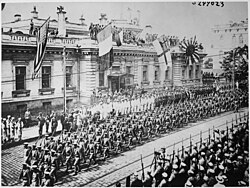
Allied troops parading in Vladivostok, 1918
- From 1946 to 1949, the United States provided military, logistical and other aid to the Right-wing Chinese Nationalist Party of Chiang Kai-shek. Its opponent: Communist forces led by Mao Tse-Tung, who ultimately proved victorious.
- In 1953, the Eisenhower administration ordered the CIA to overthrew the democratically-elected government of of Iranian Prime Minister Mohammad Mosaddegh. His crime: Nationalizing the Iranian oil industry, which had been under British control since 1913. He was succeeded by Mohammad-Reza Shah Phlavi.
- Whereas Mossadeddgh had ruled as a constitutional monarch, Phlavi was a dictator who depended on United States government support to retain power until he was overthrown in 1979 by the Ayatollah Ruhollah Khomeini.
- In 1954, the CIA overthrew the democratically-elected government of Guatemalan President Jacobo Arbenz. His crime: Installing a series of reforms that expanded the right to vote, allowed workers to organize, legitimized political parties and allowed public debate. Most infuriating to American Right-wingers: His agrarian reform law, which expropriated parts of large land-holdings and redistributed them to agricultural laborers.
- The United Fruit Company lobbied the United States government to overthrow him—and the CIA went into action. Arbenz was replaced by the first of a series of brutal Right-wing dictators.
- From 1959 until 1963, the United States government was obsessed with overthrowing the revolutionary Cuban government of Fidel Castro. Although not democratically elected, Castro was wildly popular in Cuba for overthrowing the dictatorial Fulgencio Batista.
- On April 17, 1961, over 1,400 CIA-trained Cuban exiles invaded Cuba at the Bay of Pigs. Cuban military forces crushed the invasion in three days.
- Infuriated with the failure of the Bay of Pigs invasion, President John F. Kennedy authorized “Operation Mongoose” to remove Castro through sabotage and assassination. The CIA, wanting to please Kennedy, teamed up with the Mafia, which wanted to resurrect its casinos on the island.
- Among the tactics used: Hiring Cuban gangsters to murder police officials and Soviet technicians; sabotaging mines; using biological and chemical warfare against the Cuban sugar industry. None of these proved successful in assassinating Castro nor overturning his regime.

Ernesto “Che” Guevera
- In 1970, President Richard M. Nixon ordered the CIA to prevent Marxist Salvador Allende from being democratically elected as president of Chile. When that failed, he ordered the CIA to overthrow Allende. Allende’s crime: A series of liberal reforms, including nationalizing large-scale industries (notably copper mining and banking).
- In 1973, he was overthrown by Chilean army units and national police. He committed suicide rather than be captured. He was followed by Right-wing dictator Augusto Pinochet, who slaughtered 3,200 political dissidents, imprisoned 30,000 and forced another 200,000 Chileans into exile.
And how did Americans react to all these attempts—successful and unsuccessful—at regime change?
Through indifference or outright support.
The popular 1960s TV series, “Mission: Impossible,” regularly depicted a CIA-type agency supporting regimes “we” liked or toppling those “we” didn’t.
Americans generally assume their Presidents and Congress know best who is a “friend” and who is an “enemy.” America’s friends usually turn out to be Right-wing dictators like Chiang Kai-Shek, Fulgencio Batista, Augusto Pinochet and Mohammad-Reza Shah Phlavi.
And its enemies often turn out to be liberal reformers like Augusto Sandino, Mohammad Mosaddegh and Salvador Allende.
Americans tend to favor intervention for the flimsiest of reasons. In 2003, President George W. Bush claimed Iraq’s dictator, Saddam Hussein, had plotted 9/11 with Osama bin Laden. There was absolutely no proof to substantiate this, yet Americans overwhelmingly supported Bush’s unprovoked invasion of Iraq.
But now the shoe is on the other foot.
Except for President Donald Trump and his fanatical supporters, Americans became furious that a foreign power dared to install “regime change” on them.
ABC NEWS, ADOLF HITLER, ALTERNET, AMERICABLOG, AP, BABY BOOMER RESISTANCE, BBC, BLOOMBERG NEWS, BLUESKY, BUZZFEED, CANADA, CBS NEWS, CLAUDIA SHEINBAUM PARDO, CNN, CNN'S "STARTING POINT", CROOKS AND LIARS, CZECHOSLAVAKIA, DAILY KOS, DAVID BROOKS, DEPARTMENT OF HOMELAND SECURITY, DEPARTMENT OF JUSTICE, DONALD TRUMP, EXTORTION, FBI, FIVETHIRTYEIGHT, GREENLAND, HARPER’S MAGAZINE, HUFFINGTON POST, INSIDER, IRAN, IRAN WAR, JACK SMITH, JIMMY CARTER, JUSTIN TRUDEAU, MASTADON, MEDIA MATTERS, MEXICO, MOTHER JONES, MOVEON, MSNBC, MSNBC'S "HARDBALL", NAZI GERMANY, NBC NEWS, NEGOTIATING, NEVILLE CHAMBERLAIN, NEW REPUBLIC, NEWSDAY, NEWSWEEK, NEWT GINGRICH, NICCOLO MACHIAVELLI, NPR, PANAMA, PBS NEWSHOUR, POLAND, POLITICO, POLITICUSUSA, R.I.CO. ACT, RAW STORY, REPUBLICAN PARTY, REPUBLICANS, REUTERS, ROBERT MEULLER, SALON, SEATTLE TIMES, SLATE, STRAIT OF HORMUZ, TALKING POINTS MEMO, THE ATLANTIC, THE CHICAGO SUN-TIMES, THE CHICAGO TRIBUNE, THE DAILY BEAST, THE DAILY BLOG, THE GUARDIAN, THE HAMILTON PROJECT, THE HILL, THE HUFFINGTON POST, THE LOS ANGELES TIMES, THE NATION, THE NEW REPUBLIC, THE NEW YORK TIMES, THE NEW YORKER, THE PENTAGON, THE PRINCE, THE VILLAGE VOICE, THE WASHINGTON POST, THINKPROGRESS, TIME, TRUTHDIG, TRUTHOUT, TWO POLITICAL JUNKIES, U.S. NEWS & WORLD REPORT, UKRAINE, UPI, USA TODAY, VLADIMIR PUTIN, VOLODMYR ZELENSKY, WONKETTE, WORLD WAR 11, X
In Bureaucracy, Business, History, Military, Politics, Social commentary on September 4, 2026 at 12:10 am
The “negotiating” methods of German Fuhrer Adolf Hitler serve as a useful guide to what domestic and world leaders can expect from trying to reach an agreement with President Donald Trump.
In September, 1938, seven months after seizing Austria, Hitler gave another exhibition of his “negotiating” methods.
This time, the target of his aggression was Czechoslovakia. Once again, he opened “negotiations” with a lie: The Czechoslovak government was trying to exterminate 3.5 million Germans living in the “Sudetenland.”
Then he threatened war: Germany would protect its citizens and halt such “oppression.”
For British Prime Minister Neville Chamberlain, the thought of another European war erupting less than 20 years after the end of World War I was simply unthinkable.
He quickly sent Hitler a telegram, offering to help resolve the crisis: “I could come to you by air and am ready to leave tomorrow. Please inform me of earliest time you can receive me, and tell me the place of the meeting. I should be grateful for a very early reply.”
[Mistake #1: Showing his willingness to placate a brutal dictator. Such men see any concessions as weakness—leading to only greater demands. Trump, like Hitler, relishes attacking those weaker than himself.]
The two European leaders met in Berchtesgaden, Germany, on September 15, 1938.
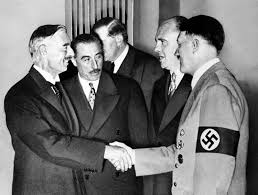
Neville Chamberlain and Adolf Hitler
Hitler denied that he had threatened war: “Force? Who speaks of force?“
Then, suddenly, he accused the Czechs of having mobilized their army in May. They had mobilized—in response to the mobilization of the German army.
“I shall not put up with this any longer,” shouted Hitler. “I shall settle this question in one way or another. I shall take matters in my own hands!”
Suddenly, Chamberlain seemed alarmed: “If I understood you right, you are determined to proceed against Czechoslovakia in any case. In the circumstances, it is best for me to return at once. Anything else now seems pointless.”
Hitler, taken aback, softened his tone and said they should consider the Sudetenland according to the principle of self-determination.
Chamberlain agreed to the cession of the Sudetenland. Three days later, French Prime Minister Edouard Daladier did the same. No Czechoslovak representative was invited to these discussions.
[Mistake #2: Instead of conceding to Hitler, which emboldened the dictator, Chamberlain should have pressed his advantage. When Hitler faced an opponent he couldn’t bribe or cow—such as British Prime Minister Winston Churchill or Soviet Premier Joseph Stalin—he raged and sulked.
[When Trump faces an opponent he can’t buy or intimidate—such as Special Counsel Jack Smith or Ayatollah Mojtaba Khamenei—he does the same.]
Chamberlain met Hitler again in Godesberg, Germany, on September 22 to confirm the agreements. But Hitler aimed to use the crisis as a pretext for war.
He now demanded not only the annexation of the Sudetenland but the immediate military occupation of the territories. This would give the Czechoslovak army no time to adapt their defense measures to the new borders.
To achieve a solution, Italian dictator Benito Mussolini suggested a conference of the major powers in Munich.
On September 29, Hitler, Daladier and Chamberlain met and agreed to Mussolini’s proposal. They signed the Munich Agreement, which accepted the immediate occupation of the Sudetenland.
The Czechoslovak government had not been a party to the talks. Nevertheless, it promised to abide by the agreement on September 30.
It actually had no choice. It faced the threat of an immediate German invasion after being deserted by its pledged allies: Britain, France and the Soviet Union.
[Mistake #3: Selling out an ally and making a concession to an insatiable dictator—and believing that Hitler could be trusted to keep his word.
[Just as Chamberlain sold out Czechoslovakia, Trump plans on selling out Ukraine to Russian dictator Vladimir Putin. He’s blamed Ukraine for starting the 2022 war—even though Russia invaded Ukraine.
He’s long wanted a Trump Tower in Moscow. Ukraine President Volodymyr Zelensky can’t give him that. Putin can.]
Chamberlain returned to England a hero. Holding aloft a copy of the worthless agreement he had signed with Hitler, he told cheering crowds in London: “I believe it is peace for our time.”

Neville Chamberlain
Hitler—still planning more conquests—knew better. In March, 1939, the German army occupied the rest of Czechoslovakia.
Chamberlain would soon be seen as a naive weakling—even before bombs started falling on London.
Believing himself invincible, Hitler turned his attention—and demands—to Poland.
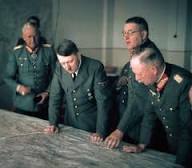
Adolf Hitler and his generals
Believing himself invincible, Trump now threatens violence against Canada, Greenland and Cuba.
Hitler ordered the invasion of Poland on September 1, 1939. To his surprise, France and England honored their pledges to support Poland—triggering World War II. Six years and 50-56 million deaths followed.
On February 28, 2026, Trump—in concert with Israel–attacked Iran without warning. To his surprise, the Iranians closed the Strait of Hormuz, through which 20-30% of the world’s oil total daily oil supply passes. This has triggered a global oil crisis and severely tightened international energy supplies.
Hitler couldn’t “turn off” the war he had started. He could only lash out as his enemies multiplied.
The same has proven true for Trump.


2016 PRESIDENTIAL ELECTION, 2020 PRESIDENTIAL ELECTION, ABC NEWS, ALTERNET, AMERICABLOG, AP, BABY BOOMER RESISTANCE, BBC, BLOOMBERG NEWS, BUZZFEED, CBS NEWS, CHRIS STIREWALT, CNN, COVID-19, CROOKS AND LIARS, DAILY KOS, DAVID BROOKS, DOMINION VOTING SYSTEMS, DONALD TRUMP, FIVETHIRTYEIGHT, FOX NEWS NETWORK, HARPER’S MAGAZINE, HUFFINGTON POST, JACQUI HEINRICH, JOE BIDEN, JONATHAN CAPEHART, LAURA INGRAHAM, LIBEL, MEDIA MATTERS, MIKE LINDELL, MOTHER JONES, MOVEON, MSNBC, NBC NEWS, NEW REPUBLIC, NEW YORK TIMES V. SULLIVAN, NEWSDAY, NEWSMAX, NEWSWEEK, NPR, PBS NEWSHOUR, POLITICO, POLITICUSUSA, RAW STORY, REPUBLICANS, REUTERS, RUDOLPH GIULIANI, RUPERT MURDOCH, SALON, SEAN HANNITY, SEATTLE TIMES, SIDNEY POWELL, SLANDER, SLATE, STEVE BANNON, TALKING POINTS MEMO, THE ATLANTIC, THE CHICAGO SUN-TIMES, THE CHICAGO TRIBUNE, THE DAILY BEAST, THE DAILY BLOG, THE GUARDIAN, THE HILL, THE HUFFINGTON POST, THE INTERCEPT, THE LOS ANGELES TIMES, THE NATION, THE NEW REPUBLIC, THE NEW YORK TIMES, THE NEW YORKER, THE VILLAGE VOICE, THE WASHINGTON POST, THINKPROGRESS, TIME, TRUTHDIG, TRUTHOUT, TUCKER CARLSON, U.S. NEWS & WORLD REPORT, UPI, USA TODAY, X
FOX NEWS: UNFAIR AND UNBALANCED: PART THREE (END)
In Bureaucracy, Business, History, Law, Politics, Social commentary on September 24, 2026 at 12:10 amFox News has spent two years peddling “The Big Lie”—that President Donald J. Trump was cheated of electoral victory in 2020.
But now the truth is coming to light.
On the March 3 edition of The PBS Newshour, political commentators David Brooks and Jonathan Capehart explored the explosive revelations emerging from a lawsuit brought by Dominion Voting Systems against Fox News.
Host Amna Nawaz opened:
And, at CPAC today, [Steve Bannon, former chief strategist for President Trump] went after Fox, saying they’re not pro-Trump enough.
But, just this week, we did see a huge admission in that—the latest filings and the defamation case brought by Dominion Voting Systems, that admission from Fox chairman Rupert Murdoch. He conceded under oath Fox hosts lied about the 2020 election, and he chose not to stop them. What are the implications of that?
David Brooks
New York Times Columnist David Brooks: Rupert Murdoch started a paper called The Australian a long time ago. He was a journalist, an actual journalist. And now he’s gotten to the point where you can lie on camera if—as long as your ratings are OK.
Those people who lied didn’t lie over little things. They lied about the election results of a presidential election, kind of a major deal. And we now know—as we all suspected—they all knew what was happening.
And Murdoch is sitting there atop this organization sort of blithely pretending it’s not really his problem. And so he can say it, and he has power over the corporation today. He owns it. He could fire Tucker [Carlson]. He could fire all the people—all the people who were in on this and whose journalistic integrity has been exposed as zero.
And yet he’s still trying to blithely rise above it. And so it’s amazing that we have a major news organization that is inaccurate about a presidential election.
Jonathan Capehart
Washington Post Associated Editor Jonathan Capehart: Oh, it’s huge. And it was confirmation of something that folks on the left and just folks paying attention kind of suspected: That Fox News, the “news” is in quotes, that they’re out there blatantly telling lies.
But then to see in black and white as part of this case that not only…they would say lies on television, but then, behind the scenes, they knew the truth.
And what that says to me is, Rupert Murdoch and his anchors, those people who are peddling in lies, they are insulated from the effect of the lies that they tell. When you see someone saying, “Oh, our ratings are going down, and that’s going to affect the stock price.” So there’s no concern….
Rupert Murdoch
Hudson Institute, CC BY 2.0 <https://creativecommons.org/licenses/by/2.0>, via Wikimedia Commons
So that means you’re more concerned about your bottom line than the corrosive impact on our democracy and political discourse in this country. That, to me, was what’s really disturbing.
And what’s even more disturbing is that Fox News isn’t even really covering this lawsuit, which means that their audience, who should know about what’s being said about them and about the programming for them, they will never—they might not ever know….that what they’re being told is just a big bunch of lies.
Amna Nawaz: I go back to the impact again, though, because their audience, which is in the millions, right……if you’re a loyal Fox watcher prone to distrust any other information source anyway, does any of this make an impact?
Jonathan Capehart: Well, that’s the point I was trying to make. We don’t even know if they will even know about this case, as a result. And even if they do find out, either they might not trust it, or maybe they just don’t care. I don’t know.
David Brooks: Well, they’re losing some viewers to the further right, the Bannons of the world. So they are — they are definitely losing viewers.
But my colleague David French made the core point about Fox. If you’re in red America or in rural America, Fox is not just a news organization. It’s your community center. It’s an organization that—that news organization that pays intense attention, that lots of good news stories about cops and soldiers.
A lot of things that happen in red America that don’t get much coverage in the coastal media get a lot of attention in Fox. And so the loyalty there is not only about politics, and it’s not only about news coverage. It’s just about where people see themselves reflected.
* * * * *
A Twitter user recently asked: “Are critical thinkers being vastly outnumbered in the USA because secondary education is just so damn expensive? It’s no wonder Republican states are among the most poorly educated.”
The answer is: No.
You don’t have to accept propaganda.
You can question the official version of any story.
You can seek out multiple sources.
You don’t have to seek out only those sources that confirm your long-held prejudices.
And you don’t need a college education to do so.
If Right-wingers—who make up the audience for Fox News—are ignorant, it’s because they want to be ignorant.
Share this: