Posts Tagged ‘ANDREW JACKSON’
ABC NEWS, ALTERNET, AMERICABLOG, ANDREW JACKSON, AP, ” 9/11, BABY BOOMER RESISTANCE, BARNARD COLLEGE, BATTLE OF NEW ORLEANS, BATTLE OF THE BULGE, BBC, BERLIN, BLOOMBERG, BOOT CAMP, BUZZFEED, CBS NEWS, CIVIL WAR, CNN, COLUMBIA UNIVERSITY, CROOKS AND LIARS, DAILY KOS, FIVETHIRTYEIGHT, GAZA, GEORGE S. PATTON, HAMAS, HARPER’S MAGAZINE, HARVARD, HUFFINGTON POST, IRELAND, ISRAEL, JOSEPH BIDEN, MEDIA MATTERS, MEXICAN WAR, MOTHER JONES, MOVEON, MSNBC, MUSLIMS, NAZI GERMANY, NBC NEWS, NEW REPUBLIC, NEWSDAY, NEWSWEEK, NORWAY, NPR, PBS NEWSHOUR, POLITICO, POLITICUSUSA, RAFAH, RAW STORY, REUTERS, SALON, SEATTLE TIMES, SLATE, SPAIN, TALIBAN, TALKING POINTS MEMO, TEXAS RANGERS, THE ATLANTIC, THE CHICAGO SUN-TIMES, THE CHICAGO TRIBUNE, THE DAILY BEAST, THE DAILY BLOG, THE GUARDIAN, THE HILL, THE HUFFINGTON POST, THE INTERCEPT, THE LOS ANGELES TIMES, THE NATION, THE NEW REPUBLIC, THE NEW YORK TIMES, THE NEW YORKER, THE VILLAGE VOICE, THE WASHINGTON POST, THINKPROGRESS, TIME, TRUTHDIG, TRUTHOUT, TWO POLITICAL JUNKIES, U.S. NEWS & WORLD REPORT, UNIVERSITY OF SOUTHERN CALIFORNIA, UPI, USA TODAY, VIETNAM WAR, WAFFEN-SS, WAR OF 1812, WILLIAM “BUFFALO BILL”CODY, WILLIAM TECUMSEH SHERMAN, WORLD COURT, WORLD WAR 11, X, YALE
In Bureaucracy, History, Military, Politics on June 26, 2026 at 12:05 am
On October 7, 2023, about 2,500 Hamas terrorists launched coordinated attacks on Israeli outposts and settlements, firing over 5,000 rockets and burning houses.
They killed over 1,139 people, of which 695 were civilians—including women, children and the elderly. They also kidnapped over 250 others—including 30 children—to Gaza.
Most of those hostages were subsequently murdered.

Palestinians celebrating the attack on Israel
Israel pounded Gaza with bombs, missiles. tanks and soldiers. By May, 2026, Palestinian health authorities claimed that Israel’s ground and air campaign had killed more than 72,000 Palestinians.
Among the reactions to this conflict:
- The World Court ordered Israel to immediately halt its military offensive in the southern Gaza city of Rafah.
- Liberal Democrats demanded that President Joseph Biden stop shipping military equipment to Israel.
- Three European countries—Spain, Ireland, and Norway—announced that they would recognize a Palestinian state.
- Across the United States, scores of university students protested Israel’s retaliation against Gaza.
- Among the universities targeted: Columbia, Harvard, Yale, the University of Texas at Austin, the University of Southern California, Emory University in Atlanta, Boston’s Emerson College.
- Columbia University, Barnard College and the University of Southern California canceled their graduation ceremonies owing to fears of violent protests by terrorism-sympathizing students.
Such holier-than-thou attitudes ignore three important truths:
First: Soldiering is by its nature a brutal business.
- The purpose of boot camp is to “break down” the restraints of pacifism and individuality and turn “boys” into “fighting men.” This must be done in weeks, so the process is shockingly brutal.
- Recruits are repeatedly taught such maxims as: “Ambushes are murder—and murder is fun.”
- Denigrating the enemy is a time-worn habit in all armies—including the American army. During the Indian wars, soldiers referred to Indians as “Red niggers.”
- In World War II—the “Good War”—America’s servicemen fought “Japs” and “Krauts.” During the Vietnam war, Vietnamese became “dinks” and “gooks.”
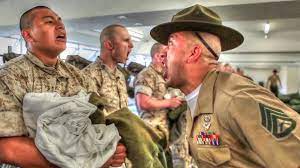
Marine drill instructor
- Today’s servicemen and women routinely (but unofficially) refer to their Islamic enemies as “ragheads” or “sand niggers.”
- Soldiers who aren’t toughened by boot camp are by the battlefield. As General George S. Patton often warned: “When you put your hand into a bunch of goo, that a moment before was your best friend’s face, you’ll know what to do.”
- Those who are demanding that Israel “pause” its offensive against Gaza ignore that when Allied armies were closing in on Berlin, the capitol of Nazi Germany, Americans did not demand that Nazis be given a chance to reorganize and counterattack.
Second: Atrocities in wartime are nothing new—including for U.S. forces.
- During the Mexican War, Texas Rangers accompanying the U.S. Army acted as commandos—and exacted reprisals against Mexicans engaging in terrorist acts.
- During the army’s wars against the Indians, soldiers and scouts—such as William F. “Buffalo Bill” Cody—routinely took scalps as trophies.
- During World War II, Marines posted in the Pacific rarely took prisoners. The reason: Japanese soldiers often pretended to surrender––and thus lured American troops into ambushes.
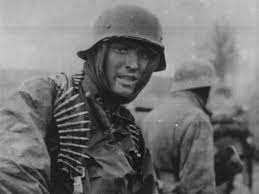
Waffen-SS soldier
- GIs fighting in the European theater generally shot fanatical Waffen-SS soldiers—including those who tried to surrender. This was especially true during the Battle of the Bulge, when Germans dressed in American uniforms stirred panic among Allied forces.
- During the Vietnam war, some “grunts” made necklaces of ears taken from dead Vietcong. Vietnam Correspondent Michael Herr, in his book Dispatches, relates the story of a grunt who was “building his own gook” from actual body parts.
Third: Those who provoke war do not have a right to dictate how their opponents should defend themselves.
- In 1815, just before the Battle of New Orleans, General Andrew Jackson ordered American snipers to harass invading British forces—and especially to take out officers. The British commander angrily protested this “barbarism.” Jackson sent back a message of his own: “You have invaded our country and we will defend ourselves as we see fit.”
- William Tecumseh Sherman, defending the conduct of his men during their legendary “March to the Sea” through Georgia, said: “Those people made war on us, defied and dared us to come south to their country, where they boasted they would kill us and do all manner of horrible things. We accepted their challenge, and now for them to whine and complain of the natural and necessary results is beneath contempt.”
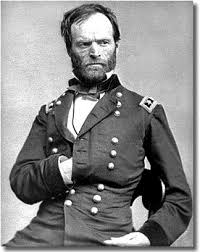
William Tecumseh Sherman
- Israelis have learned to deter Palestinian suicide-bombers by the use of police dogs. Muslims protest because they consider dogs defiled—and defiling—creatures. Islamic terrorists fear that blowing up themselves near a dog risks mingling their blood with that of the dead or wounded animal—thus forfeiting their opportunity to enter Paradise and claim those 72 willing virgins.
- In early November, 2001—two months after 9/11—Muslims throughout the Islamic world demanded that the United States halt its attacks on Taliban forces in Afghanistan out of “respect” for Ramadan, the Islamic month of fasting.
- In short: Islamic “holy warriors” could launch attacks that murdered thousands of innocent men, women and children. But “infidels” were supposed to defend themselves according to Islamic rules.
- The United States wisely refused to bow to this Islamic version of “political correctness.”
ABC NEWS, ALAMO, ALTERNET, AMERICABLOG, ANDREW JACKSON, ANTONIO LOPEZ DE SANTA ANNA, AP, BABY BOOMER RESISTANCE, BBC, BLOOMBERG NEWS, BLUESKY, BUZZFEED, CBS NEWS, CHARLES VII, CNN, CROOKS AND LIARS, DAILY KOS, DEPARTMENT OF HOMELAND SECURITY, DONALD TRUMP, FIVETHIRTYEIGHT, FRANCE, GAVIN NEWSOM, HARPER’S MAGAZINE, HUFFINGTON POST, IMMIGRATION AND CUSTOMS ENFORCEMENT (ICE), JOAN OF ARC, KAREN BASS, LONE STAR: A HISTORY OF TEXAS AND THE TEXANS (BOOK), MEDIA MATTERS, MOTHER JONES, MOVEON, MSNBC, NATIONAL GUARD, NBC NEWS, NEWSDAY, NEWSWEEK, NPR, PBS NEWSHOUR, POLITICO, POLITICUSUSA, RAW STORY, REUTERS, RUSSIA, SALON, SAM HOUSTON, SEATTLE TIMES, SLATE, T.R. FEHRENBACH, TALKING POINTS MEMO, TEXAS, THE ATLANTIC, THE CHICAGO SUN-TIMES, THE CHICAGO TRIBUNE, THE DAILY BEAST, THE DAILY BLOG, THE GUARDIAN, THE HILL, THE HUFFINGTON POST, THE INTERCEPT, THE LOS ANGELES TIMES, THE NATION, THE NEW REPUBLIC, THE NEW YORK TIMES, THE NEW YORKER, THE VILLAGE VOICE, THE WASHINGTON POST, THINKPROGRESS, TIME, TOM HOMAN, TRUTHDIG, TRUTHOUT, TWO POLITICAL JUNKIES, U.S. NEWS & WORLD REPORT, UKRAINE, UPI, USA TODAY, VLADIMIR PUTIN, VOLODYMYR ZELENSKY, WILLIAM BARRET TRAVIS, WONKETTE, X
In Bureaucracy, History, Law, Law Enforcement, Military, Politics, Social commentary on June 25, 2026 at 12:05 am
On June 11, 2025, California Governor Gavin Newsom addressed not only President Donald Trump’s response to civil disorders in Los Angeles, but the threat he posed to California, every other state—and democracy itself.
* * * * *
Donald Trump, without consulting with California’s law enforcement leaders, commandeered 2,000 of our state’s National Guard members to deploy on our streets. Illegally, and for no reason.
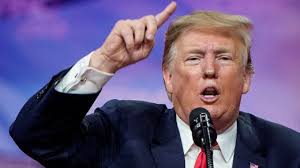
Donald Trump
This brazen abuse of power by a sitting President inflamed a combustible situation … putting our people, our officers, and the National Guard at risk.
That’s when the downward spiral began.
He doubled down on his dangerous National Guard deployment by fanning the flames even harder. And the President did it on purpose.
As the news spread throughout LA, anxiety for family and friends ramped up.
Protests started again. By night, several dozen lawbreakers became violent and destructive. They vandalized property. They tried to assault police officers.
Many of you have seen video clips of cars burning on cable news. If you incite violence or destroy our communities, you are going to be held accountable. That kind of criminal behavior will not be tolerated.

Full stop. Already, more than 370 people have been arrested. And we’re reviewing tapes to build additional cases, and people will be prosecuted to the fullest extent of the law.
Again, thanks to our law enforcement officers and the majority of Angelenos who protested peacefully, this situation was winding down and was concentrated in just a few square blocks downtown.
But that’s not what Donald Trump wanted. He again chose escalation; he chose more force. He chose theatrics over public safety – he federalized another 2,000 Guard members. He deployed more than 700 active U.S. Marines.
These are men and women trained in foreign combat, not domestic law enforcement.
Trump is pulling a military dragnet across LA, well beyond his stated intent to just go after violent and serious criminals. His agents are arresting dishwashers, gardeners, day laborers and seamstresses.

That’s just weakness. Weakness, masquerading as strength.
Donald Trump’s government isn’t protecting our communities – they are traumatizing our communities. And that seems to be the point.
California will keep fighting on behalf of our people – all of our people – including in the courts. Yesterday, we filed a legal challenge to President Trump’s reckless deployment of American troops to a major American city.
Authoritarian regimes begin by targeting people who are least able to defend themselves. But they do not stop there. Trump and his loyalists thrive on division because it allows them to take more power and exert even more control.
By the way, Trump – he’s not opposed to lawlessness and violence, as long as it serves HIM. What more evidence do we need than January 6th?
I ask everyone to take the time to reflect on this perilous moment. A president who wants to be bound by no law or constitution. Perpetrating a unified assault on American traditions.
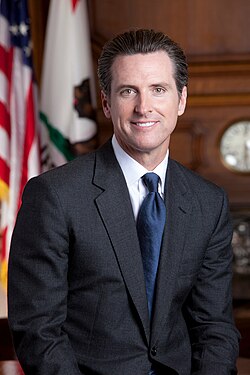
Gavin Newsom
This is a President who, in just over 140 days, has fired government watchdogs that could hold him accountable for corruption and fraud. He’s declared a war on culture, on history, on science – on knowledge itself. Databases, quite literally vanishing.
He’s delegitimizing news organizations and assaulting the First Amendment. At the threat of defunding them, he’s dictating what universities can teach. Targeting law firms and the judicial branch that are the foundation of an orderly, civil society.
Calling for a sitting Governor [Newsom himself] to be arrested for no other reason than – to use his words – “for getting elected.”
Look, this isn’t just about protests in LA. When Donald Trump sought blanket authority to commandeer the National Guard, he made that order apply to every state in this nation. This is about all of us. This is about you.
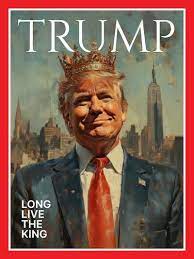
California may be first – but it clearly won’t end here. Other states are next. Democracy is next.
Democracy is under assault right before our eyes – the moment we’ve feared has arrived. He’s taking a wrecking ball to our founding fathers’ historic project: Three independent, coequal branches of government.
There are no longer any checks and balances. Congress is nowhere to be found. [House] Speaker [Mike] Johnson has completely abdicated that responsibility.
The rule of law has increasingly given way to the rule of Don.
The founding fathers did not live and die to see this moment. It’s time for all of us to stand up. [Supreme Court Justice Louis] Brandeis said it best: In a democracy, the most important office is not president, it’s certainly not governor. The most important office is office of citizen.
At this moment, we must all stand up and be held to a higher level of accountability. If you exercise your First Amendment rights, please do so peacefully.
I know many of you are feeling deep anxiety, stress, and fear. But I want you to know that YOU are the antidote to that fear and anxiety.
What Donald Trump wants most is your fealty. Your silence. To be complicit in this moment. Do NOT give in to him.
ABC NEWS, ALAMO, ALTERNET, AMERICABLOG, ANDREW JACKSON, ANTONIO LOPEZ DE SANTA ANNA, AP, BABY BOOMER RESISTANCE, BBC, BLOOMBERG NEWS, BLUESKY, BUZZFEED, CBS NEWS, CHARLES VII, CNN, CROOKS AND LIARS, DAILY KOS, DEPARTMENT OF HOMELAND SECURITY, DONALD TRUMP, FIVETHIRTYEIGHT, FRANCE, GAVIN NEWSOM, HARPER’S MAGAZINE, HUFFINGTON POST, IMMIGRATION AND CUSTOMS ENFORCEMENT (ICE), JOAN OF ARC, KAREN BASS, LONE STAR: A HISTORY OF TEXAS AND THE TEXANS (BOOK), MEDIA MATTERS, MOTHER JONES, MOVEON, MSNBC, NATIONAL GUARD, NBC NEWS, NEWSDAY, NEWSWEEK, NPR, PBS NEWSHOUR, POLITICO, POLITICUSUSA, RAW STORY, REUTERS, RUSSIA, SALON, SAM HOUSTON, SEATTLE TIMES, SLATE, T.R. FEHRENBACH, TALKING POINTS MEMO, TEXAS, THE ATLANTIC, THE CHICAGO SUN-TIMES, THE CHICAGO TRIBUNE, THE DAILY BEAST, THE DAILY BLOG, THE GUARDIAN, THE HILL, THE HUFFINGTON POST, THE INTERCEPT, THE LOS ANGELES TIMES, THE NATION, THE NEW REPUBLIC, THE NEW YORK TIMES, THE NEW YORKER, THE VILLAGE VOICE, THE WASHINGTON POST, THINKPROGRESS, TIME, TOM HOMAN, TRUTHDIG, TRUTHOUT, TWO POLITICAL JUNKIES, U.S. NEWS & WORLD REPORT, UKRAINE, UPI, USA TODAY, VLADIMIR PUTIN, VOLODYMYR ZELENSKY, WILLIAM BARRET TRAVIS, WONKETTE, X
In Bureaucracy, History, Law, Law Enforcement, Military, Politics, Social commentary on June 24, 2026 at 12:10 am
History is filled with examples of men—and women—who in moments of crisis rose to challenge a deadly enemy. One of these is California Governor Gavin C. Newsom.
On June 6, 2025, protests erupted in Los Angeles against Immigration and Customs Enforcement (ICE). The demonstrations were triggered by ICE raids at multiple locations in the city to arrest suspected illegal aliens.
On the evening of June 7, 2025, President Donald Trump signed a memorandum deploying 2,000 members of the California National Guard to the protests for either 60 days or for a length of time “at the discretion of the secretary of defense.”
He did so without the request—or consent—of Governor Newsom.
If a Democratic President did so in a Republican state, Congressional Republicans would scream “STATES’ RIGHTS!” and accuse the President of being a dictator. But since Trump is a Republican, Congressional Republicans enthusiastically supported his action.

National Guard troops in L.A.
In a tweet, Secretary of Defense Pete Hegseth said that active duty Marines were on “high alert” at Camp Pendleton.
And Trump later threatened to “have troops everywhere” if the protests spread to other cities. “If we see danger to our country and our citizens,” the Marines would be deployed to Los Angeles.
Newsom retorted that the National Guard—and especially the Marines—weren’t needed. The LAPD and Los Angeles County Sheriff’s Department were fully capable of protecting Federal property and dispersing the protesters.
He called on Trump to return control of the Guard to California—and withdraw the Marines, who are trained for combat, not handling civil unrest.
Thomas Homan, White House Executive Associate Director of Enforcement and Removal Operations, told NBC News that Newsom and Los Angeles Mayor Karen Bass could potentially face federal charges over their response to the ICE raids.
Homan had previously threatened arrest for anyone who obstructed immigration enforcement. When asked whether that would include Newsom or Bass, Homan did not rule it out.
“I’ll say it about anybody,” Homan said. “You cross that line, it’s a felony to knowingly harbor and conceal an illegal alien. It’s a felony to impede law enforcement doing their job.”

Tom Homan
Newsom quickly responded to Homan: “Trump’s border czar is threatening to arrest me for speaking out. Come and get me, tough guy.
“What the hell are they doing? These guys need to grow up, they need to stop and we need to push back and I’m sorry to be so clear but that kind of bloviating is exhausting. So Tom, arrest me. Let’s go.”
Homan just as quickly backed down: “There’s no intention to arrest the governor right now. I don’t know if he crossed that line.” Homan said he would “leave that up” to the Justice Department.
When asked about the idea of arresting Newsom, Trump said, “I’d do it if I were Tom. Gavin likes the publicity, but I think it would be a great thing.”
On June 11, Newsom addressed not only Trump’s response to civil disorders in Los Angeles, but the threat he posed to California, every other state—and democracy itself.
GOVERNOR GAVIN NEWSOM’S ADDRESS TO CALIFORNIA: DEMOCRACY AT A CROSSROADS ON JUNE 11, 2025
I want to say a few words about the events of the last few days. This past weekend, federal agents conducted large-scale workplace raids in and around Los Angeles. Those raids continue as I speak.
California is no stranger to immigration enforcement. But instead of focusing on undocumented immigrants with serious criminal records and people with final deportation orders – a strategy both parties have long supported – this administration is pushing mass deportations.
Indiscriminately targeting hardworking immigrant families, regardless of their roots or risk.
What’s happening right now is very different than anything we’ve seen before. On Saturday morning, when federal agents jumped out of an unmarked van near a Home Depot parking lot, they began grabbing people.
A deliberate targeting of a heavily Latino suburb.
A similar scene also played out when a clothing company was raided downtown.
In other actions: a US citizen, 9 months pregnant – arrested.
A four-year-old girl – taken.

Families separated. Friends disappearing.
In response, everyday Angelinos came out to exercise their Constitutional right to free speech and assembly. To protest their government’s actions.
In turn, the State of California and the City and County of Los Angeles sent our police officers to help keep the peace, and with some exceptions, they were successful.
Like many states, California is no stranger to this sort of civil unrest. We manage it regularly … and with our own law enforcement.
But this, again, was different.
What then ensued was the use of tear gas. Flash-bang grenades. Rubber bullets. Federal agents, detaining people and undermining their due process rights.
Donald Trump, without consulting with California’s law enforcement leaders, commandeered 2,000 of our state’s National Guard members to deploy on our streets. Illegally, and for no reason.
This brazen abuse of power by a sitting President inflamed a combustible situation … putting our people, our officers, and the National Guard at risk.
That’s when the downward spiral began.
ABC NEWS, ALAMO, ALTERNET, AMERICABLOG, ANDREW JACKSON, ANTONIO LOPEZ DE SANTA ANNA, AP, BABY BOOMER RESISTANCE, BBC, BLOOMBERG NEWS, BLUESKY, BUZZFEED, CBS NEWS, CHARLES VII, CNN, CROOKS AND LIARS, DAILY KOS, DEPARTMENT OF HOMELAND SECURITY, DONALD TRUMP, FIVETHIRTYEIGHT, FRANCE, GAVIN NEWSOM, HARPER’S MAGAZINE, HUFFINGTON POST, IMMIGRATION AND CUSTOMS ENFORCEMENT (ICE), JOAN OF ARC, KAREN BASS, LONE STAR: A HISTORY OF TEXAS AND THE TEXANS (BOOK), MEDIA MATTERS, MOTHER JONES, MOVEON, MSNBC, NATIONAL GUARD, NBC NEWS, NEWSDAY, NEWSWEEK, NPR, PBS NEWSHOUR, POLITICO, POLITICUSUSA, RAW STORY, REUTERS, RUSSIA, SALON, SAM HOUSTON, SEATTLE TIMES, SLATE, T.R. FEHRENBACH, TALKING POINTS MEMO, TEXAS, THE ATLANTIC, THE CHICAGO SUN-TIMES, THE CHICAGO TRIBUNE, THE DAILY BEAST, THE DAILY BLOG, THE GUARDIAN, THE HILL, THE HUFFINGTON POST, THE INTERCEPT, THE LOS ANGELES TIMES, THE NATION, THE NEW REPUBLIC, THE NEW YORK TIMES, THE NEW YORKER, THE VILLAGE VOICE, THE WASHINGTON POST, THINKPROGRESS, TIME, TOM HOMAN, TRUTHDIG, TRUTHOUT, TWO POLITICAL JUNKIES, U.S. NEWS & WORLD REPORT, UKRAINE, UPI, USA TODAY, VLADIMIR PUTIN, VOLODYMYR ZELENSKY, WILLIAM BARRET TRAVIS, WONKETTE, X
In Bureaucracy, History, Law, Law Enforcement, Military, Politics, Social commentary on June 23, 2026 at 12:10 am
History is filled with examples of men—and women—who in moments of crisis rose to challenge a deadly enemy.
Among these have been:
- Joan of Arc
- William Barret Travis
- Volodmyr Zelensky
Volofmyr Zelensky (January 25, 1978 – ) is a former attorney, actor and comedian who, as the sixth president of Ukraine, now leads his country in a life-or-death struggle against the aggressive Russia of Vladimir Putin.
In 2021, his administration came under mounting pressure from Russia. On February 24, 2022, Putin ordered a full-scale invasion of Ukraine.
During the assault by Russian troops on the capital of Kiev, the Biden administration urged Zelensky to evacuate to a safer location and offered to help him do so. Zelensky refused, saying: “The fight is here [in Kiev]; I need ammunition, not a ride.”
As CBS correspondent Scott Pelley put it: “The moment Zelensky told his people he refused to flee, they refused to fall.”
Russia expected Kiev to fall in three days. But more than four years after the invasion, Kiev still remains defiant—and in the hands of Ukrainians.
When Zelensky wasn’t broadcasting defiance at Russia and rousing Ukrainians to heroism, he was often visiting the battlefront. Zelensky sees Ukraine’s struggle as the opening round of Russia’s war against the West:
“Some are….saying, ‘We can’t defend Ukraine because there could be a nuclear war.’ I think that today, no one in this world can predict what Russia will do.
“If they invade further into our territory, then they will definitely move closer and closer to Europe. They will only become stronger and less predictable.”
Millions of Americans—such as those who took part in nationwide “No Kings” protests on June 14, 2025—feel the same way about Donald Trump and his own dictatorial regime.
Which leads to:
Gavin Christopher Newsom (October 10, 1967) has been the 40th governor of California since 2019. During the COVID-19 pandemic in 2020, he imposed strict lockdown measures, thus saving countless lives by preventing a far greater spread of the virus.

Gavin Newsom
In doing so, he aroused the wrath of then-President Donald J. Trump, who promoted false “cures” such as drinking bleach and shining UV light up people’s rectums. Trump’s goal: “Keep America open” so he could take credit for a robust economy—and win re-election—no matter how many people died.
And Newsom has continued to challenge a re-elected Trump’s lies and illegal actions:
- Trump has targeted the governor on social media, often referring to him as “Newscum.”
- And Newsom has proven he can give as good as he gets: He has highlighted U.S. Bureau of Labor Statistics data demonstrating that California created more jobs than any other state between the first quarters of 2025 and 2026.
- He has openly criticized Trump for policies that cut good-paying clean energy jobs and weaken environmental safeguards.
- The two routinely trade personal barbs on X over state issues like wildfire management, homelessness and California’s high-speed rail project.
- In January 2026, Trump gave a speech at the World Economic Forum in Switzerland. Afterward, Newsom publicly mocked it as “boring” and “boorish.”
- Newsom’s team accused the White House of blocking him from accessing the “USA House” headquarters at the summit.
On June 15, 2026, Newsom accused Trump of launching a politically motivated investigation into him and his wife: “They have not found a crime—they are simply trying to find one.
“He’s coming after me because I’m considering running for president, because he hates that I’ve consistently called him out over and over again for his lies and deceit.”
He added that federal agents had in recent days knocked on the doors of his friends and former employees, asking for records.
The Justice Department declined to comment.
On June 6, 2025, protests erupted in Los Angeles against Immigration and Customs Enforcement (ICE). The demonstrations were triggered by ICE raids at multiple locations in the city to arrest suspected illegal aliens.
The first raid occurred within the Los Angeles Fashion District; two other raids occurred at a clothing wholesaler and a Home Depot in upscale Westlake.
Word of these arrests quickly spread, and so did demonstrations, with the Department of Homeland Security (DHS) stating that 44 people were arrested for suspected immigration violations and one person was arrested for obstruction.
David Huerta, the California president of the Service Employees International Union, was arrested for blocking a vehicle and charged with felony conspiracy to impede an officer.
The epicenter of the protests became the Los Angeles Metropolitan Detention Center at 535 N Alameda Street. About 200 protesters remained at the facility by 7 p.m., when the Los Angeles Police Department (LAPD) declared the protest to be an unlawful assembly and ordered protesters to disperse
Some protesters hurled chunks of broken concrete toward officers; the LAPD responded with tear gas, pepper spray and flash-bang grenades to disperse the crowd. At 8:24 p.m. a citywide tactical alert was announced.
On June 7, the protests continued. About 1,000 people surrounded a local branch building used by Homeland Security.
Newsom deployed California Highway Patrol units to protect Los Angeles freeways.
By June 7, 118 illegal aliens had been arrested in Los Angeles, according to the DHS.
ABC NEWS, ALAMO, ALTERNET, AMERICABLOG, ANDREW JACKSON, ANTONIO LOPEZ DE SANTA ANNA, AP, BABY BOOMER RESISTANCE, BBC, BLOOMBERG NEWS, BLUESKY, BUZZFEED, CBS NEWS, CHARLES VII, CNN, CROOKS AND LIARS, DAILY KOS, DEPARTMENT OF HOMELAND SECURITY, DONALD TRUMP, FIVETHIRTYEIGHT, FRANCE, GAVIN NEWSOM, HARPER’S MAGAZINE, HUFFINGTON POST, IMMIGRATION AND CUSTOMS ENFORCEMENT (ICE), JOAN OF ARC, KAREN BASS, LONE STAR: A HISTORY OF TEXAS AND THE TEXANS (BOOK), MEDIA MATTERS, MOTHER JONES, MOVEON, MSNBC, NATIONAL GUARD, NBC NEWS, NEWSDAY, NEWSWEEK, NPR, PBS NEWSHOUR, POLITICO, POLITICUSUSA, RAW STORY, REUTERS, RUSSIA, SALON, SAM HOUSTON, SEATTLE TIMES, SLATE, T.R. FEHRENBACH, TALKING POINTS MEMO, TEXAS, THE ATLANTIC, THE CHICAGO SUN-TIMES, THE CHICAGO TRIBUNE, THE DAILY BEAST, THE DAILY BLOG, THE GUARDIAN, THE HILL, THE HUFFINGTON POST, THE INTERCEPT, THE LOS ANGELES TIMES, THE NATION, THE NEW REPUBLIC, THE NEW YORK TIMES, THE NEW YORKER, THE VILLAGE VOICE, THE WASHINGTON POST, THINKPROGRESS, TIME, TOM HOMAN, TRUTHDIG, TRUTHOUT, TWO POLITICAL JUNKIES, U.S. NEWS & WORLD REPORT, UKRAINE, UPI, USA TODAY, VLADIMIR PUTIN, VOLODYMYR ZELENSKY, WILLIAM BARRET TRAVIS, WONKETTE, X
In Bureaucracy, History, Law, Law Enforcement, Military, Politics, Social commentary on June 22, 2026 at 12:10 am
On November 30, 1954—the 80th birthday of former British Prime Minister Winston Churchill—he gave an uncharacteristically modest assessment of his World War II legacy:
“It was the nation and the race dwelling all around the globe that had the lion’s heart. I had the luck to be called upon to give the roar.”
But author William Manchester was having nothing of it. In his monumental trilogy, The Last Lion, he wrote:
“It wasn’t that simple. The spirit, if indeed within them, lay dormant until he became prime minister and they, kindled by his soaring prose, came to see themselves as he saw them and emerged a people transformed, the admiration of free men everywhere.”

Winston Churchill
History is filled with examples of men—and women—who in moments of crisis rose to challenge a deadly enemy.
Among these have been:
- Joan of Arc
- William Barret Travis
- Volodmyr Zelensky
Joan of Arc (c. 1412 – 30 May 1431) was an illiterate peasant girl who, in France’s darkest hour, became its greatest hero. After she arranged an interview with King Charles V11, he sent her with a relief army to lift the siege of Orléans.

Joan of Arc
She had never wielded a lance or sword, or even ridden a war horse. She had never studied military strategy nor even seen a battlefield. Yet nine days after arriving with an army at Orléans, she lifted the English siege of the city on May 8, 1429.
On May 4, her army attacked the outlying fortress of Saint Loup. She arrived just as the French soldiers were retreating after a failed attempt. Her sudden appearance roused the soldiers to cheer and launch another assault—which overwhelmed the fortress.
In June, Joan decisively defeated the English at the Battle of Patay. She then advanced on Reims, entering the city on July 16. The next day, Charles, the rightful heir to the French throne, was consecrated as the King of France in Reims Cathedral with Joan at his side.
These victories paved the way for the final French victory in the Hundred Years’ War at Castillon in 1453.
On May 23, 1430, while relieving the siege of Compiegne, she was captured by Burgundians troops and exchanged to the English. Tried for heresy, she was declared guilty and burned at the stake on May 30,1431.
Only 19 when she died, she had, through her inspired leadership, restored the kingdom of France.
William Barret Travis (August 1, 1809 – March 6, 1836) was a South Carolina lawyer whose courage and eloquence inspired 200 Texans at the Alamo to hold back an army of 2,000 Mexican soldiers.

William Barret Travis
Few of the defenders had known each other before finding themselves besieged. None of them had had professional military training. Some had served in local militias or as irregulars fighting Indians under the command of frontier officers such as Andrew Jackson. Since the vast majority of the garrison were volunteers, they could have deserted the fortress at any time.
Holding them in place was Travis. Gifted with an eloquence beyond his 26 years, he gave purpose to their stand. As historian T.R. Fehrenbach writes in his monumental book, Lone Star: A History of Texas and the Texans:
“From the Alamo, from his first message before the arrival of the Mexicans to his last, his words had the ring of prophecy. The Texas historian who stated publicly that few people would want to have a son serve under William Barret Travis had forgotten, in the comforts of long security, the reasons why men make war.”
When the final assault came before dawn on March 6, 1836, the roughly 200 defenders killed and wounded about 600 of their enemies—inflicting a casualty rate of 33% on the Mexican army.
Travis’ body was found near his cannon on the north wall. He had been shot through the forehead.
The garrison’s sacrifice inspired Sam Houston’s ragtag army to fall on the Mexican army at San Jacinto on April 21. Slaughtering about 800 soldiers, the Texans captured Mexican dictator Antonio Lopez de Santa Anna—and forced him to surrender control of Texas in return for his life.
Volofmyr Zelensky (January 25, 1978 – ) is a former attorney, actor and comedian who, as the sixth president of Ukraine, now leads his country in a life-or-death struggle against the aggressive Russia of Vladimir Putin.
After earning a law degree from Kiev National Economic University, he pursued a career in comedy. He created his own production company, Kvartal 95, which produced films, cartoons, and TV shows. His comedy, Servant of the People, starred Zelensky as the president of Ukraine.

Volodymyr Zelensky
In 2019, he announced his candidacy for president of Ukraine. He opposed the corruption that had been rife under the country’s luxury-loving president, Victor Yanukovych.
(In 2014, Ukrainians had rioted in Kiev and evicted Yanukovych. And that didn’t sit well with his “sponsor”—Russian President Vladimir Putin.)
A second feature of Zelensky’s presidential campaign: He promised to resolve the Russia-sponsored separatist movement in Donbas and end Ukraine’s protracted conflict there with Russia.
Zelensky won election by a landslide, with 72% of the vote.
In 2021, his administration came under mounting pressure from Russia. On February 24, 2022, Putin ordered a full-scale invasion of Ukraine.
ABC NEWS, ABRAHAM LINCOLN, AFGHANISTAN, ALEXANDER THE GREAT, ALTERNET, AMERICABLOG, ANDREW JACKSON, AP, BABY BOOMER RESISTANCE, BBC, BLOOMBERG, BUZZFEED, CBS NEWS, CHARLIE KIRK, CIVIL WAR, CNN, CROOKS AND LIARS, DAILY KOS, FIVETHIRTYEIGHT, FOX NEWS CHANNEL, GATES OF FIRE (BOOK), HARPER’S MAGAZINE, HUFFINGTON POST, JACK SMITH, JOHN C. CALHOUN, JOSEPH BIDEN, LIZ CHENEY, MEDIA MATTERS, MERCENARIES, MERRICK GARLAND, MOTHER JONES, MOVEON, MSNBC, NBC NEWS, NEW REPUBLIC, NEWSDAY, NEWSWEEK, NPR, ORGANIZED CRIME, PBS NEWSHOUR, POLITICO, POLITICUSUSA, PROJECT 2025, RAW STORY, REPUBLICANS, REUTERS, SALON, SEATTLE TIMES, SLATE, SPARTA, STEVEN PRESSFIELD, STORMY DANIELS, TALKING POINTS MEMO, THE AFGHAN CAMPAIGN (BOOK), THE ATLANTIC, THE CHICAGO SUN-TIMES, THE CHICAGO TRIBUNE, THE DAILY BEAST, THE DAILY BLOG, THE GUARDIAN, THE HILL, THE HUFFINGTON POST, THE INTERCEPT, THE LOS ANGELES TIMES, THE NATION, THE NEW REPUBLIC, THE NEW YORK TIMES, THE NEW YORKER, THE PROFESSION (BOOK), THE VILLAGE VOICE, THE VIRTUES OF WAR (BOOK), THE WASHINGTON POST, THERMOPYLAE, THINKPROGRESS, TIME, TREASON, TRUTHDIG, TRUTHOUT, TWO POLITICAL JUNKIES, U.S. NEWS & WORLD REPORT, UNITED STATES SUPREME COURT, UPI, USA TODAY, X
In Bureaucracy, History, Law, Law Enforcement, Military, Politics, Social commentary on June 4, 2026 at 12:10 am
Upon being sworn in as the nation’s 46th President on January 20, 2021, Joseph Biden faced the most important decision of his life.
On July 1, 2024, the Republican-dominated Supreme Court conferred almost unlimited criminal prosecution immunity to Presidents. This gave Biden the opportunity—and authority—to save, at least temporarily, the American republic.
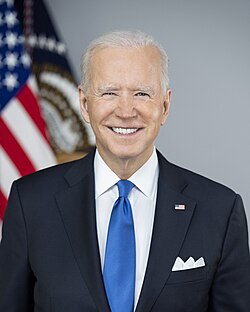
Joseph Biden
Instead, he chose to go down in history as the man who presided over the end of the American republic.
To save it, he could have:
- Purged, through arrests and trials, almost the entire treason-conspiring Republican party, starting with Donald Trump, its Fuhrer-in-waiting.
- Done this officially, because the Court had ruled that he (and future Presidents) could only be prosecuted for unofficial acts.
- Done this while he still commanded the full resources of the military and Justice Department.

- Swept clean the Federal courts of all Right-wing, treason-supporting judges—such as Aileen Cannon, who had repeatedly thwarted efforts to try Trump for stealing and hiding almost 300 highly classified government documents at his Mar-a-Lago estate.
- This would have included the six Right-wing Supreme Court Justices who have given future Presidents the legal authority to assassinate rivals, take bribes and/or foment coups.
If Biden had done this, he would have been damned as the first President since Abraham Lincoln to brutally crush political opposition.
But he would also have been hailed for having—at least temporarily—prevented a wholesale Right-wing takeover and dictatorship under Project 2025. Its’ goal: Replace existing federal civil service workers with tens of thousands of radical Right-wingers.
To preside over the end of the American republic, all Biden needed do was what he had done for the previous three years: Nothing.
Example #1: Only on November 18, 2022, did then-Attorney General Merrick Garland appoint Jack Smith Special Counsel to investigate Trump’s attempt to overturn the legitimate results of the 2020 Presidential election and become “President-for-Life.”
This was clearly treason—and Garland should have appointed Smith, at the latest, by mid-2021.

Merrick Garland
Example #2: Trump’s accomplices included 147 members of Congress who voted to invalidate the 2020 Electoral College vote count. A total of 139 served in the House of Representatives, and eight served in the Senate.
To date, not one of these accessories has even been indicted, let alone convicted, for treason.
Arguably, Biden’s worst appointment was Merrick Garland as Attorney General.
In 1961, when Robert F. Kennedy became Attorney General, he moved quickly and forcefully to wage war on America’s organized crime syndicates. Unprecedented numbers of mobsters found themselves facing vigorous FBI investigations, indictments and/or convictions.
By contrast, Garland’s timidity in prosecuting the crimes of Right-wing Republicans served as not only a national embarrassment but a mortal threat to national security.
On May 30, 2024, a Manhattan jury convicted Donald Trump of 34 felonies for falsifying New York business records in 2016. He had done so to conceal his hush money payoff to porn “star” Stormy Daniels for his extramarital tryst with her.
Donald Trump
Even though the Biden administration had nothing to do with the case, Republicans immediately blamed the President—and demanded wholesale prosecutions of the Left.
Right-wing propagandist Charlie Kirk urged Republican prosecutors to get “creative” in bringing charges: “Indict the left, or lose America,” he said on X.
And Trump quickly issued his own calls for “vengeance”:
“Wouldn’t it be terrible to throw the president’s wife and the former secretary of state, think of it, the former secretary of state, but the president’s wife, into jail? Wouldn’t that be a terrible thing? But they want to do it,” Trump said in an interview on Newsmax.
“It’s a terrible, terrible path that they’re leading us to. And it’s very possible that it’s going to have to happen to them.”
Nor did Trump forget former Republican Representative Liz Cheney, who chaired the House 1/6 Committee investigating the Trump-inspired attack on Congress.
“ELIZABETH LYNNE CHENEY IS GUILTY OF TREASON,” Trump posted on his social media website Truth Social. “RETRUTH IF YOU WANT TELEVISED MILITARY TRIBUNALS.”
There could be absolutely no doubt that Trump would pursue “vengeance” against everyone who has ever opposed him if he was re-elected President.
There could also be no doubt that he would remain in office until he died as “President-for-Life.”
When Andrew Jackson, seventh President of the United States from 1829 to 1837, was close to death, he asked his doctor: “What act of my administration will be most severely condemned by future Americans?”
“Perhaps the removal of the bank deposits,” said the doctor—referring to Jackson’s withdrawal of U.S. Government monies from the first Bank of the United States.
“Oh, no,” said Jackson, his eyes blazing. “I can tell you. Posterity will condemn me more because I was persuaded not to hang John C. Calhoun as a traitor than for any other act in my life!”
John C. Calhoun had once been Vice President under Jackson and later a United States Senator from South Carolina. His fiery, pro-slavery rhetoric and radical theories of “nullification” of Federal laws played a major role in bringing on the Civil War (1861-1865).
Like Jackson, Biden had a chance to prevent catastrophe. But through his own natural decency, he brought catastrophe to the country he loved.
Like Jackson, he will be simultaneously praised and damned by future generations of Americans.
ABC NEWS, ALAMO, ALTERNET, AMERICABLOG, ANDREW JACKSON, ANTONIO LOPEZ DE SANTA ANNA, AP, BABY BOOMER RESISTANCE, BUZZFEED, CBS NEWS, CNN, CROOKS AND LIARS, DAILY KOS, DAVID CROCKETT, DRUDGE RETORT, FIVETHIRTYEIGHT, HARPER’S MAGAZINE, JAMES BOWIE, MEDIA MATTERS, MEXICO, MOTHER JONES, MOVEON, MSNBC, NBC NEWS, NEWSWEEK, NPR, PBS NEWSHOUR, POLITICO, POLITICUSUSA, RAW STORY, REUTERS, SALON, SAM HOUSTON, SAN ANTONIO, SEATTLE TIMES, SLATE, STEPHEN F. AUSTIN, TALKING POINTS MEMO, TEXAS, TEXAS DECLARATION OF INDEPENDENCE, TEXAS REVOLUTION, THE ATLANTIC, THE CHICAGO SUN-TIMES, THE CHICAGO TRIBUNE, THE DAILY BEAST, THE DAILY BLOG, THE GUARDIAN, THE HILL, THE HUFFINGTON POST, THE LOS ANGELES TIMES, THE NATION, THE NEW REPUBLIC, THE NEW YORK TIMES, THE VILLAGE VOICE, THE WASHINGTON POST, THERMOPYLAE, THINKPROGRESS, THREE HUNDRED SPARTANS, TIME, TRUTHDIG, TRUTHOUT, TWO POLITICAL JUNKIES, U.S. NEWS & WORLD REPORT, UPI, USA TODAY, WILLIAM BARRET TRAVIS, WONKETTE, X
In History, Military, Politics, Social commentary on March 6, 2026 at 12:11 am
On the night before the final Mexican assault, one man escaped the Alamo to testify to the defenders’ courage. Or so goes the most famous story of the 13-day siege.
He was Louis Rose, a veteran of the Napoleonic wars and the dreadful 1812 retreat from Moscow. Unwilling to die in a hopeless battle, he slipped over a wall and sneaked through Mexican siege lines.
At Grimes County, he found shelter at the homestead of Abraham and Mary Ann Zuber. Their son, William, later claimed that his parents told him of Rose’s visit–and his story of Travis’ “line in the sand” speech.
In 1873, he published the tale in the Texas Almanac.
But many historians believe it is a fabrication. The story comes to us third-hand—from Rose to the Zubers to their son. And it was published 37 years after the Alamo fell.
Even if Travis didn’t draw a line in the sand, every member of the garrison, by remaining to stay, had crossed over his own line.
After a 12-day siege, Santa Anna decided to overwhelm the Alamo.
The first assault came at about 5 a.m. on Sunday, March 6, 1836.
The fort’s riflemen—aided by 14 cannons–repulsed it. And the second assault as well.
But the third assault proved unstoppable. The Alamo covered three acres, and held at most 250 defenders—against 2,000 Mexican soldiers.
When the Mexicans reached the fort, they mounted scaling ladders and poured over the walls.
Travis was among the first defenders to fall—shot through the forehead after firing a shotgun into the Mexican soldiery below.
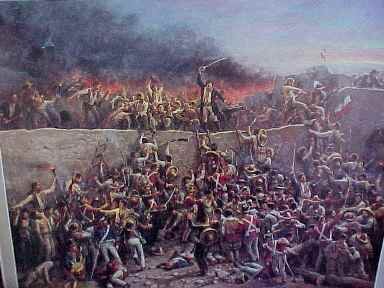
Death of William Barrett Travis (waving sword)
Mexicans broke into the room where the ailing James Bowie lay.
In Three Roads to the Alamo, historian William C. Davis writes that Bowie may have been unconscious or delirious. Mistaking him for a coward, the soldiers bayoneted him and blew out his brains.
But some accounts claim that Bowie died fighting—shooting two Mexicans with pistols, then plunging his famous knife into a third before being bayoneted. Nearly every Alamo movie depicts Bowie’s death this way.
As the Mexicans poured into the fort, at least 60 Texans tried to escape over the walls into the surrounding prairie. But they were quickly dispatched by lance-bearing Mexican cavalry.
The death of David Crockett remains highly controversial.
Baby boomers usually opt for the Walt Disney version: Davy swinging “Old Betsy” as Mexicans surround him. Almost every Alamo movie depicts him fighting to the death.

David Crockett’s Death
But Mexican Lieutenant Colonel Jose Enrique de la Pena claimed Crockett was one of seven Texans who surrendered or were captured and brought before Santa Anna after the battle. Santa Anna ordered their immediate execution, and they were hacked to death with sabers.
Only the 2004 remake of The Alamo has dared to depict this version. Although this version is now accepted by most historians, some still believe the de la Pena diary from which it comes is a forgery.
An hour after the battle erupted, it was over.
That afternoon, Santa Anna ordered the bodies of the slain defenders stacked and burned in three pyres.
Contrary to popular belief, some of the garrison survived:
- Joe, a black slave who had belonged to William B. Travis, the Alamo’s commander;
- Susanah Dickinson, the wife of a lieutenant killed in the Alamo, and her baby, Angelina;
- Several Mexican women and their children.
Also contrary to legend, the bravery of the Alamo defenders did not buy time for Texas to raise an army against Santa Anna. This didn’t happen until after the battle.
But their sacrifice proved crucial in securing Texas’ independence:
- The Alamo’s destruction warned those Texans who had not supported the revolution that they had no choice: They must win, die or flee their homes to the safety of the United States.
- It stirred increasing numbers of Americans to enter Texas and enlist in Sam Houston’s growing army.
- Santa Anna’s army was greatly weakened, losing 600 killed and wounded—a casualty rate of 33%.
- The nearly two-week siege bought time for the Texas convention to meet at Washington-on-the-Brazos and declare independence from Mexico.
On April 21, 1836, Santa Anna made a crucial mistake: During his army’s afternoon siesta, he failed to post sentries around his camp.
That afternoon, Sam Houston’s 900-man army struck the 1,400-man Mexican force at San Jacinto. In 18 minutes, the Texans—shouting “Remember the Alamo!”—killed about 700 Mexican soldiers and wounded 200 others.
The next day, a Texas patrol captured Santa Anna–wearing the uniform of a Mexican private. Resisting angry demands to hang the Mexican dictator, Houston forced Santa Anna to surrender control of Texas in return for his life.
The victory at San Jacinto won the independence of Texas. But the 13-day siege and fall of the Alamo remains the most famous and celebrated part of that conflict.
In 480 B.C., 300 Spartans won immortality at Thermopylae, a narrow mountain pass in ancient Greece, by briefly holding back an invading Persian army of thousands.
Although they died to the last man, their sacrifice inspired the rest of Greece to defeat its invaders.
Like Thermopylae, the battle of the Alamo proved both a defeat—and a victory.
ABC NEWS, ALAMO, ALTERNET, AMERICABLOG, ANDREW JACKSON, ANTONIO LOPEZ DE SANTA ANNA, AP, BABY BOOMER RESISTANCE, BUZZFEED, CBS NEWS, CNN, CROOKS AND LIARS, DAILY KOS, DAVID CROCKETT, DRUDGE RETORT, FIVETHIRTYEIGHT, HARPER’S MAGAZINE, JAMES BOWIE, MEDIA MATTERS, MEXICO, MOTHER JONES, MOVEON, MSNBC, NBC NEWS, NEWSWEEK, NPR, PBS NEWSHOUR, POLITICO, POLITICUSUSA, RAW STORY, REUTERS, SALON, SAM HOUSTON, SAN ANTONIO, SEATTLE TIMES, SLATE, STEPHEN F. AUSTIN, TALKING POINTS MEMO, TEXAS, TEXAS DECLARATION OF INDEPENDENCE, TEXAS REVOLUTION, THE ATLANTIC, THE CHICAGO SUN-TIMES, THE CHICAGO TRIBUNE, THE DAILY BEAST, THE DAILY BLOG, THE GUARDIAN, THE HILL, THE HUFFINGTON POST, THE LOS ANGELES TIMES, THE NATION, THE NEW REPUBLIC, THE NEW YORK TIMES, THE VILLAGE VOICE, THE WASHINGTON POST, THERMOPYLAE, THINKPROGRESS, THREE HUNDRED SPARTANS, TIME, TRUTHDIG, TRUTHOUT, TWO POLITICAL JUNKIES, U.S. NEWS & WORLD REPORT, UPI, USA TODAY, WILLIAM BARRET TRAVIS, WONKETTE, X
In History, Law Enforcement, Politics, Social commentary on March 5, 2026 at 12:10 am
Friday, March 6, 2026, marks the 190th anniversary of the most famous event in Texas history: The fall of the Alamo, a crumbling former Spanish mission in the heart of San Antonio.
After a 12-day siege, 180 to 250 Texans were overwhelmed by 2,000 Mexican soldiers.
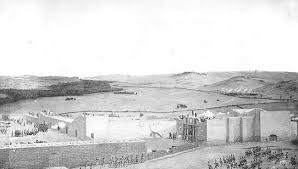
Mexican troops advancing on the Alamo
Americans “remember the Alamo”—but usually for the wrong reasons.
Some historians believe the battle should have never been fought.
The Alamo was not Thermopylae—a narrow mountain pass blocking the Persian march into ancient Greece. Santa Anna could have simply bypassed it.
In fact, several of Santa Anna’s generals urged the Mexican dictator to do just that—leave a small guard to hold down the fort’s defenders and wipe out the undefended, widely-separated Texas settlements.
But pride held Santa Anna fast to the Alamo. His brother-in-law, General Perfecto de Cos, had been forced to surrender the old mission to revolting Texans in December, 1835.
Santa Anna meant to redeem the fort—and his family honor—by force.
In virtually every Alamo movie, its two co-commanders, James Bowie and William Barret Travis, are portrayed as on the verge of all-out war—with each other.
In John Wayne’s heavily fictionalized 1960 film, The Alamo, Bowie and Travis agree to fight a duel as soon as they’ve whipped the Mexicans besieging them.
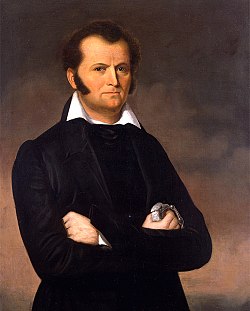
James Bowie

William B. Travis
In fact, the frictions between the two lasted only a short while. Just before the siege, some of Bowie’s volunteers—a far larger group than Travis’ regulars—got drunk.
Travis ordered them jailed—and Bowie ordered his men to release them. Bowie then went on a roaring drunk. The next day, a sober Bowie apologized to Travis and agreed they should share command.
This proved a wise decision, for just as the siege started, Bowie was felled by worsening illness—typhoid-pneumonia or tuberculosis.
In almost every Alamo movie, Bowie repeatedly leaves the fort to ambush unsuspecting Mexicans.
In reality, he stayed bed-ridden and lay close to death throughout the 13-day siege.
The Texans intended to make a suicidal stand.
False.
From the first day of the siege-–February 23, almost to the last, March 6, 1836—messengers rode out of the Alamo seeking help. The defenders believed that if they could cram enough men into the three-acre former mission, they could hold Santa Anna at bay.
No reinforcements reached the Alamo.
False.
On March 1, 32 men from Gonzalez—the only ones to answer Travis’ call—sneaked through the Mexican lines to enter the Alamo.
Meanwhile, the largest Texan force lay at Fort Defiance in Goliad, 85 miles away. This consisted of 500 men commanded by James Walker Fannin, a West Point dropout.
Fannin was better-suited for the role of Hamlet than military commander.
Upon receiving a plea of help from Travis, he set out in a halfhearted attempt to reach the mission. But when a supply wagon broke down, he returned to Fort Defiance and sat out the rest of the siege.
When the Mexican army approached Fort Defiance, Fannin and 400 of his men panicked and fled into the desert. They were surrounded, forced to surrender, and massacred on March 27
The Alamo garrison was fully prepared to confront the Mexican army.
False.
When the Mexicans suddenly arrived in San Antonio on the morning of February 23, 1836, they caught the Texans completely by surprise.
The previous night, they had been celebrating the birthday of George Washington. The Texans rushed headlong into the Alamo, hauling all the supplies they could hastily scrounge.
Santa Anna sent a courier under a flag of truce to the Alamo, demanding unconditional surrender. In effect, the Texans were being given the choice of later execution.
Travis replied with a shot from the fort’s biggest cannon, the 18-pounder (so named for the weight of its cannonball).
Santa Anna ordered the hoisting of a blood-red flag and the opening of an artillery salvo. The siege of the Alamo was on.
San Houston, who was elected general of the non-existent army of Texas, desperately tried to relieve the siege.
False.
At Washington-on-the-Brazos, 169 miles east of San Antonio, Texan delegates assembled to form a new government. When news reached the delegates that Travis desperately needed reinforcements, many of them wanted to rush to his defense.
But Houston and others declared they must first declare Texas’ independence. On March 2, 1836, they did just that. Meanwhile, Houston spent a good deal of that time drunk.

Did Travis draw a line?
Easily the most famous Alamo story is that of “the line in the sand.”
On the night of March 5—just prior to the final assault—there was a lull in the near-constant Mexican bombardment. Travis assembled his men and gave them a choice:
They could try to surrender and hope that Santa Anna would be merciful. They could try to escape. Or they could stay and fight.
With his sword, Travis drew a line in the dirt and invited those who would stay to cross over to him.
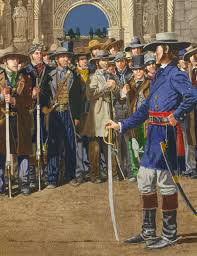
Travis draws the line
The entire garrison did—except for two men.
One of these was bed-ridden James Bowie. He asked that his sick-bed be carried over to Travis. The other was a veteran of the Napoleonic wars—Louis Rose.
ABC NEWS, ALAMO, ALTERNET, AMERICABLOG, ANDREW JACKSON, ANTONIO LOPEZ DE SANTA ANNA, AP, BABY BOOMER RESISTANCE, BUZZFEED, CBS NEWS, CNN, CROOKS AND LIARS, DAILY KOS, DAVID CROCKETT, DRUDGE RETORT, FIVETHIRTYEIGHT, HARPER’S MAGAZINE, JAMES BOWIE, MEDIA MATTERS, MEXICO, MOTHER JONES, MOVEON, MSNBC, NBC NEWS, NEWSWEEK, NPR, PBS NEWSHOUR, POLITICO, POLITICUSUSA, RAW STORY, REUTERS, SALON, SAM HOUSTON, SAN ANTONIO, SEATTLE TIMES, SLATE, STEPHEN F. AUSTIN, TALKING POINTS MEMO, TEXAS, TEXAS DECLARATION OF INDEPENDENCE, TEXAS REVOLUTION, THE ATLANTIC, THE CHICAGO SUN-TIMES, THE CHICAGO TRIBUNE, THE DAILY BEAST, THE DAILY BLOG, THE GUARDIAN, THE HILL, THE HUFFINGTON POST, THE LOS ANGELES TIMES, THE NATION, THE NEW REPUBLIC, THE NEW YORK TIMES, THE VILLAGE VOICE, THE WASHINGTON POST, THERMOPYLAE, THINKPROGRESS, THREE HUNDRED SPARTANS, TIME, TRUTHDIG, TRUTHOUT, TWO POLITICAL JUNKIES, U.S. NEWS & WORLD REPORT, UPI, USA TODAY, WILLIAM BARRET TRAVIS, WONKETTE, X
In History, Military, Politics, Social commentary on March 4, 2026 at 12:12 am
On March 2, 1836–190 years ago this year—Texas formally declared its independence from Mexico, of which it was then a province.
Sixty-one delegates took part in the convention held at Washington-on-the-Brazos.
Their signed statement proclaimed that the Mexican government had “ceased to protect the lives, liberty, and property of the people, from whom its legitimate powers are derived.”
Meanwhile, 169 miles away, the siege of the Alamo—a crumbling former Spanish mission in the heart of San Antonio—had entered its ninth day.
The mission that became a fortress has since become a shrine.

The Alamo Chapel
By Daniel Schwen – Own work, CC BY-SA 4.0
The combatants: 180 to 250 Texans (or “Texians,” as many of them preferred to be called) vs. 2,000 Mexican soldiers.
On the Texan side three names predominate: David Crockett, James Bowie and William Barret Travis. “The Holy Trinity,” as some historians ironically refer to them.
Crockett, at 49, was the most famous man in the Alamo. He had been a bear hunter, Indian fighter and Congressman. Rare among the men of his time, he sympathized with the Indian tribes he had helped subdue in the War of 1812.
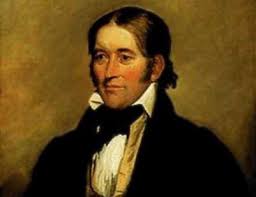
David Crockett
He believed Congress should honor the treaties made with the former hostiles and opposed President Andrew Jackson’s effort to move the tribes further West. Largely because of this, his constituents turned him out of office in November, 1835. He told them they could go to hell; he would go to Texas.
James Bowie, at 40, had been a slave trader with pirate Jean Lafitte and a land swindler. But his claim to fame lay in his skill as a knife-fighter.
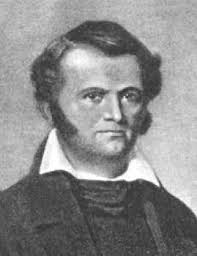
James Bowie
This grew out of his participating in an 1827 duel on a sandbar in Natchez, Mississippi. Bowie was acting as a second to one of the duelists who had arranged the event.
After the two duelists exchanged pistol shots without injury, they called it a draw. But those who had come as their seconds had scores to settle among themselves—and decided to do so. A bloody melee erupted.
Bowie was shot in the hip and then impaled on a sword cane wielded by Major Norris Wright, a longtime enemy. Drawing a large butcher knife he wore at his belt, he gutted Wright, who died instantly.
The brawl became famous as the Sandbar Fight, and cemented Bowie’s reputation across the South as a deadly knife fighter.
William Barret Travis, 26, had been an attorney and militia member. Burdened by debts and pursued by creditors, he fled Alabama in 1831 to start over in Texas. Behind him he left a wife, son, and unborn daughter.
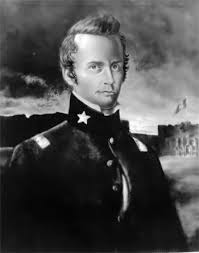
William Barret Travis
From the first, Travis burned to free Texas from Mexico and see it become a part of the United States.
In January, 1836, he was sent by the American provisional governor of Texas to San Antonio, to fortify the Alamo. He arrived there with a small party of regular soldiers and the title of lieutenant colonel in the state militia.
On the Mexican side, only one name matters: Antonio Lopez de Santa Anna, president (i.e., absolute dictator) of Mexico. After backing first one general and would-be “president” after another, Santa Anna maneuvered himself into the office in 1833.
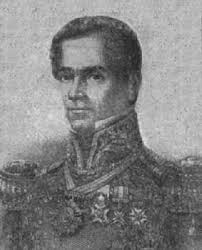
Antonio Lopez de Santa Anna
Texas was then legally a part of Mexico. Stephen F. Austin, “the father of Texas,” had received a grant from Spain—which ruled Mexico until 1821—to bring in 300 American families to settle there.
The Spaniards wanted to establish a buffer between themselves and warring Indian tribes like the Comanches. This immigration continued after Mexico threw off Spanish rule and obtained its independence.
But as Americans kept flooding into Texas, the character of its population changed, alarming its Mexican rulers.
The new arrivals did not see themselves as Mexican citizens but as transplanted Americans. They were largely Protestant, as opposed to the Catholic Mexicans. And many of them not only owned slaves but demanded the expansion of slavery—a practice illegal under Mexican law.
In October, 1835, fighting erupted between American settlers and Mexican soldiers.
In November, Mexican forces took shelter in the Alamo, which had been built in 1718 as a mission to convert Indians to Christianity. Since then it had been used as a fort—by Spanish and then Mexican troops.
Texans lay siege to the Alamo from October 16 to December 10, 1835. With his men exhausted, and facing certain defeat, General Perfecto de Cos, Santa Anna’s brother-in-law, surrendered. He gave his word to leave Texas and never take up arms again against its settlers.
Most Texans rejoiced. They believed they had won their “war” against Mexico. But others knew better.
One was Bowie. Another was Sam Houston, a former Indian fighter, Congressman and protégé of Andrew Jackson.
Still another was Santa Anna, who styled himself “The Napoleon of the West.” In January, 1836, he set out from Mexico City at the head of an army totaling about 7,000.
He planned the 18th century version of a blitzkrieg, intending to arrive in Texas and take its “rebellious foreigners” by surprise.
His forced march proved costly in lives, but met his objective. He arrived in San Antonio with several hundred soldiers on February 23, 1836.
The siege of the Alamo—the most famous event in Texas history—was about to begin.
ABC NEWS, ALAMO, ALTERNET, AMERICABLOG, ANDREW JACKSON, AP, BABY BOOMER RESISTANCE, BUZZFEED, CAMERON JUDD, CBS NEWS, CNN, CROCKETT OF TENNESSEE, CROOKS AND LIARS, DAILY KOS, DAVID CROCKETT, DAVY CROCKETT: KING OF THE WILD FRONTIER, DONALD TRUMP, FIVETHIRTYEIGHT, INDIAN WARS, JAMES BOWIE, MITT ROMNEY, MOTHER JONES, MOVEON, MSNBC, NBC NEWS, NBCNEWS, NEWSWEEK, NPR, PBS NEWSHOUR, POLITICO, POLITICUSUSA, RAW STORY, REUTERS, SALON, SEATTLE TIMES, SLATE, TALKING POINTS MEMO, TEXAS REVOLUTION, THE ATLANTIC, THE CHICAGO SUN-TIMES, THE CHICAGO TRIBUNE, THE DAILY BEAST, THE DAILY BLOG, THE GUARDIAN, THE HILL, THE HUFFINGTON POST, THE LOS ANGELES TIMES, THE NATION, THE NEW YORK TIMES, THE WASHINGTON POST, THINKPROGRESS, TIME, TRUTHDIG, U.S. NEWS & WORLD REPORT, UPI, USA TODAY, WALT DISNEY, WILLIAM BARRETT TRAVIS, X
In Bureaucracy, Business, History, Military, Politics, Social commentary on January 16, 2026 at 12:10 am
March 6, 2026, will mark the 190th anniversary of the fall of the Alamo, a crumbling former Spanish mission in the heart of San Antonio, Texas.
It’s been the subject of novels, movies, biographies, histories and TV dramas (most famously Walt Disney’s 1955 “Davy Crockett: King of the Wild Frontier” series).
Perhaps the most extraordinary scene of any Alamo movie or book occurs in the 1993 novel, Crockett of Tennessee, by Cameron Judd.
And it is no less affecting for its being—so far as we know—entirely fictional.
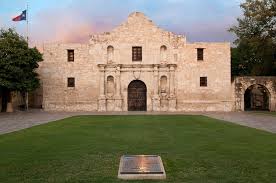
The Alamo
It’s March 5, 1836—the last night of life for the Alamo garrison. The next morning, 2,000 men of the Mexican Army will hurl themselves at the former mission and slaughter its 200 “Texian” defenders.
The fort’s commander, William Barrett Travis, has drawn his “line in the sand” and invited the garrison to choose: To surrender, to try to escape, or to stay and fight to the death.
And the garrison—except for one man—chooses to stay and fight.

An hour after deciding to stand and die in the Alamo, wrapped in the gloom of night, David Crockett is seized with paralyzing fear.
“We’re going to die here,” he chokes out to his longtime friend, Persius Tarr. “You understand that, Persius? We’re going to die!” 
“I know, Davy. But there ain’t no news in that,” says Tarr. “We’re born to die. Every one of us. Only difference between us and most everybody else is we know when and where it’s going to be.”
“But I can’t be afraid—not me. I’m Crockett. I’m Canebrake Davy. I’m half-horse, half-alligator.”
“I know you are, Davy,” says Tarr. “So do all these men here. That’s why you’re going to get past this.
“You’re going to put that fear behind you and walk back out there and fight like the man you are. The fear’s come and now it’s gone. This is our time, Davy.”
And then Tarr delivers a sentiment wholly alien to money-obsessed men like Donald Trump—who comprise the richest and most privileged 1% of today’s Americans.
“There’s men out there with their eyes on you. You’re the only thing keeping the fear away from them. You’re joking and grinning and fiddling—it gives them courage they wouldn’t have had without you.
“Maybe that’s why you’re here, Davy—to make the little men and the scared men into big and brave men. You’ve always cared about the little men, Davy. Remember who you are.
“You’re Crockett of Tennessee, and your glory-time has come. Don’t you miss a bit of it.”
The next morning, the Mexicans assault the Alamo. Crockett embraces his glory-time—and becomes a legend for all-time.
David Crockett (center) at the fall of the Alamo
David Crockett (1786-1836) lived—and died—a poor man. But this did not prevent him from trying to better the lives of his family and fellow citizens—and even his former enemies.
During the war of 1812, he served as a scout under Andrew Jackson. His foes were the Creek Indians, who had massacred 500 settlers at Fort Mims, Alabama—and threatened to do the same to Crockett’s family and neighbors in Tennessee.
But as a Congressman from Tennessee, he opposed then-President Jackson’s efforts to force the same defeated Indians to depart the lands guaranteed them by treaty.
To Crockett, a promise was sacred—whether given by a single man or the United States Government.

David Crockett
And his presence during the 13-day siege of the Alamo did cheer the spirits of the vastly outnumbered defenders.
Crockett, with his fiddle—and a Scotsman named MacGregor, with his bagpipes—often staged musical “duels” to see who could make the most noise.
Contrast this devotion of Crockett to the rights of “the little men,” with the boasts of Donald Trump, the billionaire President of the United States:

Donald Trump
- “The first thing they [doctors] is say: ‘Take off your shirt, sir, and show us that gorgeous chest. We’ve never seen a chest quite like it.’”
- “My fingers are long and beautiful, as, it has been well documented, are various other parts of my body.”
- “Actually, throughout my life, my two greatest assets have been mental stability and being, like, really smart.”
- “My IQ is one of the highest—and you all know it.”
- “My Twitter has become so powerful that I can actually make my enemies tell the truth.”
- “I think the only difference between me and the other candidates is that I’m more honest and my women are more beautiful.”
Unlike Crockett, who defended the weak, Trump boasted of his power:
- “You know I’m automatically attracted to beautiful—I just start kissing them. It’s like a magnet. Just kiss. I don’t even wait. And when you’re a star they let you do it. You can do anything.”
- “The Monroe Doctrine is a big deal, but we’ve superseded it by a lot, by a real lot. They now call it the ‘Donroe Doctrine.'”
- “I have the right to do anything I want to do.”
Those who give their lives for others are rightly loved and remembered as heroes. Those who dedicate their lives solely to their wallets and egos are rightly despised and then forgotten.


ABC NEWS, ALAMO, ALTERNET, AMERICABLOG, ANDREW JACKSON, ANTONIO LOPEZ DE SANTA ANNA, AP, BABY BOOMER RESISTANCE, BBC, BLOOMBERG NEWS, BLUESKY, BUZZFEED, CBS NEWS, CHARLES VII, CNN, CROOKS AND LIARS, DAILY KOS, DEPARTMENT OF HOMELAND SECURITY, DONALD TRUMP, FIVETHIRTYEIGHT, FRANCE, GAVIN NEWSOM, HARPER’S MAGAZINE, HUFFINGTON POST, IMMIGRATION AND CUSTOMS ENFORCEMENT (ICE), JOAN OF ARC, KAREN BASS, LONE STAR: A HISTORY OF TEXAS AND THE TEXANS (BOOK), MEDIA MATTERS, MOTHER JONES, MOVEON, MSNBC, NATIONAL GUARD, NBC NEWS, NEWSDAY, NEWSWEEK, NPR, PBS NEWSHOUR, POLITICO, POLITICUSUSA, RAW STORY, REUTERS, RUSSIA, SALON, SAM HOUSTON, SEATTLE TIMES, SLATE, T.R. FEHRENBACH, TALKING POINTS MEMO, TEXAS, THE ATLANTIC, THE CHICAGO SUN-TIMES, THE CHICAGO TRIBUNE, THE DAILY BEAST, THE DAILY BLOG, THE GUARDIAN, THE HILL, THE HUFFINGTON POST, THE INTERCEPT, THE LOS ANGELES TIMES, THE NATION, THE NEW REPUBLIC, THE NEW YORK TIMES, THE NEW YORKER, THE VILLAGE VOICE, THE WASHINGTON POST, THINKPROGRESS, TIME, TOM HOMAN, TRUTHDIG, TRUTHOUT, TWO POLITICAL JUNKIES, U.S. NEWS & WORLD REPORT, UKRAINE, UPI, USA TODAY, VLADIMIR PUTIN, VOLODYMYR ZELENSKY, WILLIAM BARRET TRAVIS, WONKETTE, X
A CHURCHILL FOR CALIFORNIA–AND AMERICA: PART FOUR (END)
In Bureaucracy, History, Law, Law Enforcement, Military, Politics, Social commentary on June 25, 2026 at 12:05 amOn June 11, 2025, California Governor Gavin Newsom addressed not only President Donald Trump’s response to civil disorders in Los Angeles, but the threat he posed to California, every other state—and democracy itself.
* * * * *
Donald Trump, without consulting with California’s law enforcement leaders, commandeered 2,000 of our state’s National Guard members to deploy on our streets. Illegally, and for no reason.
Donald Trump
This brazen abuse of power by a sitting President inflamed a combustible situation … putting our people, our officers, and the National Guard at risk.
That’s when the downward spiral began.
He doubled down on his dangerous National Guard deployment by fanning the flames even harder. And the President did it on purpose.
As the news spread throughout LA, anxiety for family and friends ramped up.
Protests started again. By night, several dozen lawbreakers became violent and destructive. They vandalized property. They tried to assault police officers.
Many of you have seen video clips of cars burning on cable news. If you incite violence or destroy our communities, you are going to be held accountable. That kind of criminal behavior will not be tolerated.
Full stop. Already, more than 370 people have been arrested. And we’re reviewing tapes to build additional cases, and people will be prosecuted to the fullest extent of the law.
Again, thanks to our law enforcement officers and the majority of Angelenos who protested peacefully, this situation was winding down and was concentrated in just a few square blocks downtown.
But that’s not what Donald Trump wanted. He again chose escalation; he chose more force. He chose theatrics over public safety – he federalized another 2,000 Guard members. He deployed more than 700 active U.S. Marines.
These are men and women trained in foreign combat, not domestic law enforcement.
Trump is pulling a military dragnet across LA, well beyond his stated intent to just go after violent and serious criminals. His agents are arresting dishwashers, gardeners, day laborers and seamstresses.
That’s just weakness. Weakness, masquerading as strength.
Donald Trump’s government isn’t protecting our communities – they are traumatizing our communities. And that seems to be the point.
California will keep fighting on behalf of our people – all of our people – including in the courts. Yesterday, we filed a legal challenge to President Trump’s reckless deployment of American troops to a major American city.
Authoritarian regimes begin by targeting people who are least able to defend themselves. But they do not stop there. Trump and his loyalists thrive on division because it allows them to take more power and exert even more control.
By the way, Trump – he’s not opposed to lawlessness and violence, as long as it serves HIM. What more evidence do we need than January 6th?
I ask everyone to take the time to reflect on this perilous moment. A president who wants to be bound by no law or constitution. Perpetrating a unified assault on American traditions.
Gavin Newsom
This is a President who, in just over 140 days, has fired government watchdogs that could hold him accountable for corruption and fraud. He’s declared a war on culture, on history, on science – on knowledge itself. Databases, quite literally vanishing.
He’s delegitimizing news organizations and assaulting the First Amendment. At the threat of defunding them, he’s dictating what universities can teach. Targeting law firms and the judicial branch that are the foundation of an orderly, civil society.
Calling for a sitting Governor [Newsom himself] to be arrested for no other reason than – to use his words – “for getting elected.”
Look, this isn’t just about protests in LA. When Donald Trump sought blanket authority to commandeer the National Guard, he made that order apply to every state in this nation. This is about all of us. This is about you.
California may be first – but it clearly won’t end here. Other states are next. Democracy is next.
Democracy is under assault right before our eyes – the moment we’ve feared has arrived. He’s taking a wrecking ball to our founding fathers’ historic project: Three independent, coequal branches of government.
There are no longer any checks and balances. Congress is nowhere to be found. [House] Speaker [Mike] Johnson has completely abdicated that responsibility.
The rule of law has increasingly given way to the rule of Don.
The founding fathers did not live and die to see this moment. It’s time for all of us to stand up. [Supreme Court Justice Louis] Brandeis said it best: In a democracy, the most important office is not president, it’s certainly not governor. The most important office is office of citizen.
At this moment, we must all stand up and be held to a higher level of accountability. If you exercise your First Amendment rights, please do so peacefully.
I know many of you are feeling deep anxiety, stress, and fear. But I want you to know that YOU are the antidote to that fear and anxiety.
What Donald Trump wants most is your fealty. Your silence. To be complicit in this moment. Do NOT give in to him.
Share this: