On August 1, 1914, Germany declared war on Russia. It did so after Russia mobilized its military to protect Serbia after Austria-Hungary declared war on the Serbian nation.
Four years later, Russia was devastated. After suffering massive casualties, its armies were in full retreat. Czar Nicholas II capitulated on March 15, 1917, after bread riots broke out in St. Petersburg, then the nation’s capital.
And the newly-installed Bolshevik government was faring no better in repelling the German invaders. Moreover, Vladimir Lenin, leader of the Bolsheviks, had made pulling Russia out of a disastrous war a major selling point of their propaganda campaign to win support.

Vladimir Lenin
Fortunately for them, the government of Kaiser Wilhelm II was equally anxious to end to its war with Russia. Doing so would allow it to transfer huge numbers of soldiers to the Western Front—hopefully before the United States could intervene on behalf of France and England.
On March 3, 1918, Russia and Germany signed the Treaty of Brest-Litovsk, withdrawing Russia from World War 1.
Under the terms of the treaty, Russia lost control of Ukraine, Poland, Belarus, Lithuania, Latvia, Estonia, and its Caucasian provinces of Kars and Batum. The lands comprised 34% of the former empire’s population, 54% of its industrial land, 89% of its coalfields, and 26% of its railways.
(The treaty was annulled when Germany signed the Armistice of November 11, 1918 when surrendering to the victorious Allies.)
The treaty was a humiliation for the new Soviet government. Leon Trotsky, leading the Russian delegation, at first refused to sign the agreement. But he also offered an end to hostilities, hoping to spark a proletarian revolution in Germany. He referred to this tactic as “neither peace nor war.”
The Germans were having none of it. Neither was Joseph Stalin, then a rising figure in the Communist government. Stalin’s scathing description of Trotsky’s phrase: “Neither peace nor war—nor a policy.”

Joseph Stalin in 1917
“Neither peace nor war—nor a policy” also describes the current state of relations between the United States and Iran.
Resuming the Presidency on January 20, 2025, Donald Trump threatened military invasions of Canada and Greenland and attacked Venezuela to snatch its dictator/president Nicolás Maduro. He ordered military strikes on suspected drug smuggling boats and cartel operations in the Caribbean, the Pacific and Ecuador.
Domestically he attacked such major universities as Columbia, Brown and Cornell for their Diversity, Equity and Inclusion (DEI) polices and/or alleged antisemitism. To restore their frozen federal funding, Columbia agreed to pay $200 million; Brown paid $50 million and Cornell paid $30 million.
But on February 28, 2026, Trump—in concert with Israel—launched an unprovoked series of devastating airstrikes against Iran. Suddenly he faced an enemy he could neither bribe nor intimidate.

Bombing of Tehran
To Trump’s surprise and dismay, Iran closed the Strait of Hormuz—through which about 20%-25% of the world’s total liquid petroleum consumption (about 20–21 million barrels per day) flows.
Overnight, gas prices surged. By late May, the national average for a gallon of regular gas reached $4.56, compared to roughly $2.98 before military operations began.
On March 11, Trump had told a reporter: “You know, you never like to say too early you won. We won. We won the, in the first hour, it was over.”
On April 5—Easter Sunday, no less—Trump posted on his website, Truth Social: “Tuesday will be Power Plant Day, and Bridge Day, all wrapped up in one, in Iran. There will be nothing like it!!! Open up the Fuckin’ Strait, you crazy bastards, or you’ll be living in Hell – JUST WATCH! Praise be to Allah. President DONALD J. TRUMP”
This was followed on April 7 by another post: “A whole civilization will die tonight, never to be brought back again. I don’t want that to happen, but it probably will.”

Donald Trump
But then Trump backed down after experts and international organizations such as Amnesty International warned that attacking civilian infrastructure would constitute war crimes under international law.
On April 8, Trump and Iranian leaders agreed to a two-week ceasefire—less than two hours before Trump’s deadline.
But then Trump ordered the United States Navy to blockade Iran’s ports—even after Iran officially declared the Strait of Hormuz open again.
In response, Iran declared the Strait closed as long as the U.S. blockade of Iranian ports remained in place.
This left Trump with two unpalatable choices: Expand his unpopular war and watch gas prices continue to rise, or remove the naval blockade and appear weak.
By late May, the Strait of Hormuz remained closed and crude oil prices continued to rise throughout the world. And so did the prices of all goods transported to market.
And, by late May, definite parallels had formed between Adolf Hitler’s disastrous attack on the Soviet Union and Donald Trump’s attack on Iran.
Hitler, confident in a swift victory over the Soviet Union in 1941, told his Chief of Staff, General Alfred Jodl, “We have only to kick in the door and the whole rotten structure will come crashing down.”
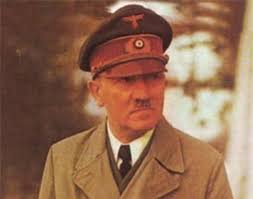
Adolf Hitler
Operation Barbarossa erupted on June 22, 1941, swallowing at least two million dead and wounded Soviet soldiers and another three million POWs (most of whom died in captivity under barbarous conditions). The Wehrmacht occupied the western half of the Soviet Union.


ADOLF HITLER, ALFRED JODL, ALTERNET, AMERICABLOG, AMNESTY INTERNATIONAL, AP, BABY BOOMER RESISTANCE, BBC, BELARUS, BLOOMBERG, BLUESKY, BOLSHEVIKS, BREST-LITOVSK, BROWN UNIVERSITY, BUZZFEED, CANADA, CBS NEWS, CNN, COLUMBIA UNIVERSITY, CORNELL UNIVERSITY, CROOKS AND LIARS, DAILY KOS, DIVERSITY EQUITY AND INCLUSION (DEI), DONALD TRUMP, ESTONIA, FIVETHIRTYEIGHT, GREENLAND, HARPER’S MAGAZINE, HUFFINGTON POST, IRAN, JD VANCE, JONATHAN TRIGG, JOSEPH STALIN, KAISER WILHELM 11, LATVIA, LEON TROTSKY, LITUANIA, MEDIA MATTERS, MOTHER JONES, MOVEON, MSNBC, NAVAL BLOCKADE, NAZI GERMANY, NBC NEWS, NEWSDAY, NEWSWEEK, NICHOLAS 11, NICHOLAS MADURO, NPR, NUCLEAR WAR, OPERATION BARBAROSSA, PBS NEWSHOUR, POLAND, POLITICO, POLITICUSUSA, RAW STORY, REUTERS, REVOLUTIONARY GUARD, RUSSIA, RUSSIAN REVOLUTION, SALON, SEATTLE TIMES, SLATE, SOVIET UNION, STRAIT OF HORMUZ, TALKING POINTS MEMO, THE ATLANTIC, THE BATTLE OF STALINGRAD THROUGH GERMAN EYES (EYE), THE CHICAGO SUN-TIMES, THE CHICAGO TRIBUNE, THE DAILY BEAST, THE DAILY BLOG, THE GUARDIAN, THE HILL, THE HUFFINGTON POST, THE INTERCEPT, THE LOS ANGELES TIMES, THE NATION, THE NEW REPUBLIC, THE NEW YORK TIMES, THE NEW YORKER, THE VILLAGE VOICE, THE WASHINGTON POST, THINKPROGRESS, TIME, TRUTHDIG, TRUTHOUT, TWO POLITICAL JUNKIES, U.S. NEWS & WORLD REPORT, UKRAINE, UPI, USA TODAY, VENEZUELA, Vladimir Lenin, WORLD WAR 1, WORLD WAR 11, X
NEITHER PEACE NOR WAR–NOR A POLICY: PART ONE (OF TWO)
In Bureaucracy, History, Military, Politics, Social commentary, Uncategorized on July 1, 2026 at 12:10 amOn August 1, 1914, Germany declared war on Russia. It did so after Russia mobilized its military to protect Serbia after Austria-Hungary declared war on the Serbian nation.
Four years later, Russia was devastated. After suffering massive casualties, its armies were in full retreat. Czar Nicholas II capitulated on March 15, 1917, after bread riots broke out in St. Petersburg, then the nation’s capital.
And the newly-installed Bolshevik government was faring no better in repelling the German invaders. Moreover, Vladimir Lenin, leader of the Bolsheviks, had made pulling Russia out of a disastrous war a major selling point of their propaganda campaign to win support.
Vladimir Lenin
Fortunately for them, the government of Kaiser Wilhelm II was equally anxious to end to its war with Russia. Doing so would allow it to transfer huge numbers of soldiers to the Western Front—hopefully before the United States could intervene on behalf of France and England.
On March 3, 1918, Russia and Germany signed the Treaty of Brest-Litovsk, withdrawing Russia from World War 1.
Under the terms of the treaty, Russia lost control of Ukraine, Poland, Belarus, Lithuania, Latvia, Estonia, and its Caucasian provinces of Kars and Batum. The lands comprised 34% of the former empire’s population, 54% of its industrial land, 89% of its coalfields, and 26% of its railways.
(The treaty was annulled when Germany signed the Armistice of November 11, 1918 when surrendering to the victorious Allies.)
The treaty was a humiliation for the new Soviet government. Leon Trotsky, leading the Russian delegation, at first refused to sign the agreement. But he also offered an end to hostilities, hoping to spark a proletarian revolution in Germany. He referred to this tactic as “neither peace nor war.”
The Germans were having none of it. Neither was Joseph Stalin, then a rising figure in the Communist government. Stalin’s scathing description of Trotsky’s phrase: “Neither peace nor war—nor a policy.”
Joseph Stalin in 1917
“Neither peace nor war—nor a policy” also describes the current state of relations between the United States and Iran.
Resuming the Presidency on January 20, 2025, Donald Trump threatened military invasions of Canada and Greenland and attacked Venezuela to snatch its dictator/president Nicolás Maduro. He ordered military strikes on suspected drug smuggling boats and cartel operations in the Caribbean, the Pacific and Ecuador.
Domestically he attacked such major universities as Columbia, Brown and Cornell for their Diversity, Equity and Inclusion (DEI) polices and/or alleged antisemitism. To restore their frozen federal funding, Columbia agreed to pay $200 million; Brown paid $50 million and Cornell paid $30 million.
But on February 28, 2026, Trump—in concert with Israel—launched an unprovoked series of devastating airstrikes against Iran. Suddenly he faced an enemy he could neither bribe nor intimidate.
Bombing of Tehran
To Trump’s surprise and dismay, Iran closed the Strait of Hormuz—through which about 20%-25% of the world’s total liquid petroleum consumption (about 20–21 million barrels per day) flows.
Overnight, gas prices surged. By late May, the national average for a gallon of regular gas reached $4.56, compared to roughly $2.98 before military operations began.
On March 11, Trump had told a reporter: “You know, you never like to say too early you won. We won. We won the, in the first hour, it was over.”
On April 5—Easter Sunday, no less—Trump posted on his website, Truth Social: “Tuesday will be Power Plant Day, and Bridge Day, all wrapped up in one, in Iran. There will be nothing like it!!! Open up the Fuckin’ Strait, you crazy bastards, or you’ll be living in Hell – JUST WATCH! Praise be to Allah. President DONALD J. TRUMP”
This was followed on April 7 by another post: “A whole civilization will die tonight, never to be brought back again. I don’t want that to happen, but it probably will.”
Donald Trump
But then Trump backed down after experts and international organizations such as Amnesty International warned that attacking civilian infrastructure would constitute war crimes under international law.
On April 8, Trump and Iranian leaders agreed to a two-week ceasefire—less than two hours before Trump’s deadline.
But then Trump ordered the United States Navy to blockade Iran’s ports—even after Iran officially declared the Strait of Hormuz open again.
In response, Iran declared the Strait closed as long as the U.S. blockade of Iranian ports remained in place.
This left Trump with two unpalatable choices: Expand his unpopular war and watch gas prices continue to rise, or remove the naval blockade and appear weak.
By late May, the Strait of Hormuz remained closed and crude oil prices continued to rise throughout the world. And so did the prices of all goods transported to market.
And, by late May, definite parallels had formed between Adolf Hitler’s disastrous attack on the Soviet Union and Donald Trump’s attack on Iran.
Hitler, confident in a swift victory over the Soviet Union in 1941, told his Chief of Staff, General Alfred Jodl, “We have only to kick in the door and the whole rotten structure will come crashing down.”
Adolf Hitler
Operation Barbarossa erupted on June 22, 1941, swallowing at least two million dead and wounded Soviet soldiers and another three million POWs (most of whom died in captivity under barbarous conditions). The Wehrmacht occupied the western half of the Soviet Union.
Share this: