Posts Tagged ‘WORLD WAR 11’
ABC NEWS, ALTERNET, AMERICABLOG, AP, APACHES, BABY BOOMER RESISTANCE, BBC, BLOOMBERG NEWS, BROCK PETERS, BUZZFEED, CBS NEWS, CHARLTON HESTON, CIVIL WAR, CNN, CROOKS AND LIARS, DAILY KOS, FIVETHIRTYEIGHT, HARPER’S MAGAZINE, HUFFINGTON POST, INDIAN WARS, INDIANS, JAMES COBURN, JIM HUTTON, MAJOR DUNDEE, MEDIA MATTERS, MEXICO, MICHAEL ANDERSON JR., MOTHER JONES, MOVEON, MOVIES, MSNBC, NBC NEWS, NEW REPUBLIC, NEWSDAY, NEWSWEEK, NPR, PBS NEWSHOUR, POLITICO, POLITICUSUSA, RAW STORY, REUTERS, RICHARD HARRIS, SALON, SAM PECKINPAH, SAVING PRIVATE RYAN, SEATTLE TIMES, SLATE, SPANISH-AMERICAN WAR, STEVEN SPIELBERG, TALKING POINTS MEMO, THE ATLANTIC, THE CHICAGO SUN-TIMES, THE CHICAGO TRIBUNE, THE DAILY BEAST, THE DAILY BLOG, THE GUARDIAN, THE HILL, THE HUFFINGTON POST, THE INTERCEPT, THE LOS ANGELES TIMES, THE NATION, THE NEW REPUBLIC, THE NEW YORK TIMES, THE NEW YORKER, THE VILLAGE VOICE, THE WASHIGNTON POST, THE WASHINGTON POST, THE WILD BUNCH, THINKPROGRESS, TIME, TOM HANKS, TRUTHDIG, TRUTHOUT, TWITTER, TWO POLITICAL JUNKIES, U.S. NEWS & WORLD REPORT, UPI, USA TODAY, WESTERNS, WORLD WAR 1, WORLD WAR 11
In Entertainment, History, Military, Politics, Social commentary on June 29, 2026 at 12:10 am
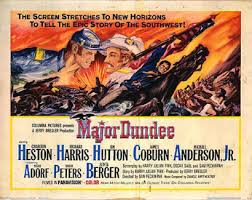
Major Dundee is a 1965 Sam Peckinpah Western focusing on a Union cavalry officer (Charlton Heston) who leads a motley troop of soldiers into Mexico to rescue three children kidnapped by Apaches.
Along the way they liberate Mexican villagers and clash with French lancers trying to establish Mexico as a French colony under would-be emperor Archduke Maximilian 1.
The Wild Bunch is universally recognized as Peckinpah’s greatest achievement. It has certainly had a far greater impact on audiences and critics than Major Dundee. According to Heston, this was really the movie Peckinpah wanted to make while making Dundee, but he couldn’t quite get his mind around it.
As a result, Dundee’s virtues have been tragically overlooked. It has a larger cast of major characters than Bunch, and these are men whose character an audience can truly admire and identify with:
- The charm of Benjamin Tyreen (Richard Harris), a Confederate lieutenant forced into Union service;
- The steady courage of Sergeant Gomez (Mario Adorf);
- The quiet dignity of Aesop (Brock Peters), a black soldier;
- The quest for maturity in young, untried bugler Tim Ryan (Michael Anderson, Jr.);
- The on-the-job training experience of impetuous Lt. Graham (Jim Hutton); and
- The stoic endurance of one-armed Indian scout Sam Potts (James Coburn).
These men are charged with a dangerous and dirty mission, and do it as well as they can, but you wouldn’t fear inviting them to meet your family.

Major Dundee (Charlton Heston)
That was definitely not the case with The Wild Bunch, four hardened killers prepared to rip off anyone, anytime, and leave a trail of bodies in their wake. The only place where you would have felt safe seeing them, in real-life, was behind prison bars.
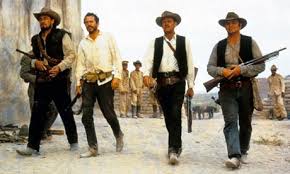
The Wild Bunch
Dundee is an odyssey movie, in the same vein as Saving Private Ryan. Both films start with a battle, followed by the disappearance of characters who need to be searched for and brought back to safety.
Just as Dundee assembles a small force to go into Mexico, so, too, does Captain John Miller (Tom Hanks) do the same, with his hunting ground being France.
Dundee’s men retrieve the kidnapped children and survive a near-fatal battle with Indians. Miller’s men twice clash with the Germans before finding their quarry, James Ryan.
Before Dundee can return to the United States, he must face and defeat a corps of French soldiers. Before Miller can haul Ryan back to safety, he must repulse a German assault.
Both groups of soldiers—Dundee’s and Miller’s—are transformed by their experiences in ways neither group could possibly articulate. (Miller, being a highly literate schoolteacher, would surely do a better job of this than the tight-jawed Dundee.)
Dundee’s soldiers return to a United States that’s just ended its Civil War with a Union victory—and the death of slavery. Miller’s soldiers return to a nation that is now a global superpower.
Of course, Ryan was fortunate in having Steven Spielberg as its director. With his clout, there was no question that Ryan would emerge as the film he wanted.
Peckinpah lacked such clout. And he fought with everyone, including the producer, Jerry Bressler, who ultimately held the power to destroy his film. This guaranteed that his movie would emerge far differently than he had envisioned.

Sam Peckinpah
In 2005, an extended version of Dundee was released, featuring 12 minutes of restored footage. (Much of the original footage was lost after severe cuts to the movie.)
In this new version, we fully see how unsympathetic a character the martinet Dundee really is. Owing to Heston’s career of playing heroes—such as Moses and El Cid—it’s easy to overlook Dundee’s arrogance and lethal fanaticism and automatically view him as a hero.
If he is indeed that, he is a hero with serious flaws.
And his self-imposed mission poses questions for us today:
- Where is the line between professional duty and personal fanaticism?
- How do we balance the success of a mission against its potential costs—especially if they prove appalling?
- At what point—if any—does personal conscience override professional obligations?
Whether intentionally or not, in Major Dundee, Peckinpah laid out a microcosm of the American history that would immediately follow the Civil War.
Former Confederates and Unionists would forego their regional animosities and fight against a recognized mutual enemy—the Indians. This would prove a dirty and drawn-out war, stripped of the glory and (later) treasured memories of the Civil War.
Just as Dundee’s final battle with French lancers ended with an American victory won at great cost, so, too, would America’s forays into the Spanish-American War and World Wars 1 and 11 prove the same.
Ben Tyreen’s commentary on the barbarism of French troops (“Never underestimate the value of a European education”) would be echoed by twentieth-century Americans uncovering the horrors of Dachau and Buchenwald.
And America would learn to project its formidable military power at great cost. Toward the end of the movie, Teresa Santiago (Senta Berger), the ex-patriot Austrian widow, asks Dundee: “But who do you answer to?”
It is a question that still vividly expresses the view of the international community as this superpower colossus hurtles from one often-disastrous conflict to the next.
ABC NEWS, ALTERNET, AMERICABLOG, ANDREW JACKSON, AP, ” 9/11, BABY BOOMER RESISTANCE, BARNARD COLLEGE, BATTLE OF NEW ORLEANS, BATTLE OF THE BULGE, BBC, BERLIN, BLOOMBERG, BOOT CAMP, BUZZFEED, CBS NEWS, CIVIL WAR, CNN, COLUMBIA UNIVERSITY, CROOKS AND LIARS, DAILY KOS, FIVETHIRTYEIGHT, GAZA, GEORGE S. PATTON, HAMAS, HARPER’S MAGAZINE, HARVARD, HUFFINGTON POST, IRELAND, ISRAEL, JOSEPH BIDEN, MEDIA MATTERS, MEXICAN WAR, MOTHER JONES, MOVEON, MSNBC, MUSLIMS, NAZI GERMANY, NBC NEWS, NEW REPUBLIC, NEWSDAY, NEWSWEEK, NORWAY, NPR, PBS NEWSHOUR, POLITICO, POLITICUSUSA, RAFAH, RAW STORY, REUTERS, SALON, SEATTLE TIMES, SLATE, SPAIN, TALIBAN, TALKING POINTS MEMO, TEXAS RANGERS, THE ATLANTIC, THE CHICAGO SUN-TIMES, THE CHICAGO TRIBUNE, THE DAILY BEAST, THE DAILY BLOG, THE GUARDIAN, THE HILL, THE HUFFINGTON POST, THE INTERCEPT, THE LOS ANGELES TIMES, THE NATION, THE NEW REPUBLIC, THE NEW YORK TIMES, THE NEW YORKER, THE VILLAGE VOICE, THE WASHINGTON POST, THINKPROGRESS, TIME, TRUTHDIG, TRUTHOUT, TWO POLITICAL JUNKIES, U.S. NEWS & WORLD REPORT, UNIVERSITY OF SOUTHERN CALIFORNIA, UPI, USA TODAY, VIETNAM WAR, WAFFEN-SS, WAR OF 1812, WILLIAM “BUFFALO BILL”CODY, WILLIAM TECUMSEH SHERMAN, WORLD COURT, WORLD WAR 11, X, YALE
In Bureaucracy, History, Military, Politics on June 26, 2026 at 12:05 am
On October 7, 2023, about 2,500 Hamas terrorists launched coordinated attacks on Israeli outposts and settlements, firing over 5,000 rockets and burning houses.
They killed over 1,139 people, of which 695 were civilians—including women, children and the elderly. They also kidnapped over 250 others—including 30 children—to Gaza.
Most of those hostages were subsequently murdered.

Palestinians celebrating the attack on Israel
Israel pounded Gaza with bombs, missiles. tanks and soldiers. By May, 2026, Palestinian health authorities claimed that Israel’s ground and air campaign had killed more than 72,000 Palestinians.
Among the reactions to this conflict:
- The World Court ordered Israel to immediately halt its military offensive in the southern Gaza city of Rafah.
- Liberal Democrats demanded that President Joseph Biden stop shipping military equipment to Israel.
- Three European countries—Spain, Ireland, and Norway—announced that they would recognize a Palestinian state.
- Across the United States, scores of university students protested Israel’s retaliation against Gaza.
- Among the universities targeted: Columbia, Harvard, Yale, the University of Texas at Austin, the University of Southern California, Emory University in Atlanta, Boston’s Emerson College.
- Columbia University, Barnard College and the University of Southern California canceled their graduation ceremonies owing to fears of violent protests by terrorism-sympathizing students.
Such holier-than-thou attitudes ignore three important truths:
First: Soldiering is by its nature a brutal business.
- The purpose of boot camp is to “break down” the restraints of pacifism and individuality and turn “boys” into “fighting men.” This must be done in weeks, so the process is shockingly brutal.
- Recruits are repeatedly taught such maxims as: “Ambushes are murder—and murder is fun.”
- Denigrating the enemy is a time-worn habit in all armies—including the American army. During the Indian wars, soldiers referred to Indians as “Red niggers.”
- In World War II—the “Good War”—America’s servicemen fought “Japs” and “Krauts.” During the Vietnam war, Vietnamese became “dinks” and “gooks.”
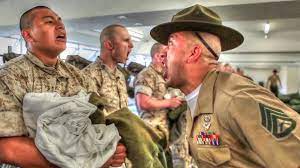
Marine drill instructor
- Today’s servicemen and women routinely (but unofficially) refer to their Islamic enemies as “ragheads” or “sand niggers.”
- Soldiers who aren’t toughened by boot camp are by the battlefield. As General George S. Patton often warned: “When you put your hand into a bunch of goo, that a moment before was your best friend’s face, you’ll know what to do.”
- Those who are demanding that Israel “pause” its offensive against Gaza ignore that when Allied armies were closing in on Berlin, the capitol of Nazi Germany, Americans did not demand that Nazis be given a chance to reorganize and counterattack.
Second: Atrocities in wartime are nothing new—including for U.S. forces.
- During the Mexican War, Texas Rangers accompanying the U.S. Army acted as commandos—and exacted reprisals against Mexicans engaging in terrorist acts.
- During the army’s wars against the Indians, soldiers and scouts—such as William F. “Buffalo Bill” Cody—routinely took scalps as trophies.
- During World War II, Marines posted in the Pacific rarely took prisoners. The reason: Japanese soldiers often pretended to surrender––and thus lured American troops into ambushes.
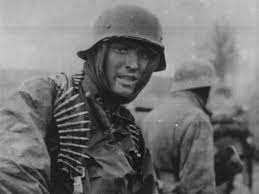
Waffen-SS soldier
- GIs fighting in the European theater generally shot fanatical Waffen-SS soldiers—including those who tried to surrender. This was especially true during the Battle of the Bulge, when Germans dressed in American uniforms stirred panic among Allied forces.
- During the Vietnam war, some “grunts” made necklaces of ears taken from dead Vietcong. Vietnam Correspondent Michael Herr, in his book Dispatches, relates the story of a grunt who was “building his own gook” from actual body parts.
Third: Those who provoke war do not have a right to dictate how their opponents should defend themselves.
- In 1815, just before the Battle of New Orleans, General Andrew Jackson ordered American snipers to harass invading British forces—and especially to take out officers. The British commander angrily protested this “barbarism.” Jackson sent back a message of his own: “You have invaded our country and we will defend ourselves as we see fit.”
- William Tecumseh Sherman, defending the conduct of his men during their legendary “March to the Sea” through Georgia, said: “Those people made war on us, defied and dared us to come south to their country, where they boasted they would kill us and do all manner of horrible things. We accepted their challenge, and now for them to whine and complain of the natural and necessary results is beneath contempt.”
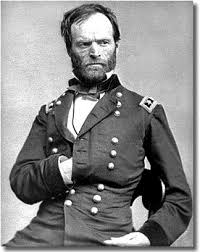
William Tecumseh Sherman
- Israelis have learned to deter Palestinian suicide-bombers by the use of police dogs. Muslims protest because they consider dogs defiled—and defiling—creatures. Islamic terrorists fear that blowing up themselves near a dog risks mingling their blood with that of the dead or wounded animal—thus forfeiting their opportunity to enter Paradise and claim those 72 willing virgins.
- In early November, 2001—two months after 9/11—Muslims throughout the Islamic world demanded that the United States halt its attacks on Taliban forces in Afghanistan out of “respect” for Ramadan, the Islamic month of fasting.
- In short: Islamic “holy warriors” could launch attacks that murdered thousands of innocent men, women and children. But “infidels” were supposed to defend themselves according to Islamic rules.
- The United States wisely refused to bow to this Islamic version of “political correctness.”
2016 PRESIDENTIAL ELECT, ABC NEWS, ADOLF HITLER, ALTERNET, AMERICABLOG, ANTONIN SCALIA, AP, BABY BOOMER RESISTANCE, BARACK OBAMA, BBC, BERNIE SANDERS, BLOOMBERG NEWS, BUZZFEED, CBS NEWS, CNN, CROOKS AND LIARS, D-DAY, DAILY KOS, DONALD TRUMP, FACEBOOK, FIVETHIRTYEIGHT, GEORGE S. PATTON, GREAT BRITAIN, HARPER’S MAGAZINE, HEINZ GUDERIAN, HENRY CLAY, HILLARY CLINTON, HUFFINGTON POST, ION, JIMMY CARTER, MEDIA MATTERS, MOTHER JONES, MOVEON, MSNBC, NAZI GERMANY, NBC NEWS, NEW REPUBLIC, NEWSDAY, NEWSWEEK, NICCOLO MACHIAVELLI, NPR, PBS NEWSHOUR, POLITICO, POLITICUSUSA, RAW STORY, REPUBLICANS, REUTERS, SALON, SEATTLE TIMES, SLATE, SOVIET UNION, STALINGRAD, TALKING POINTS MEMO, TERRORISM, THE ATLANTIC, THE CHICAGO SUN-TIMES, THE CHICAGO TRIBUNE, THE DAILY BEAST, THE DAILY BLOG, THE GUARDIAN, THE HILL, THE HUFFINGTON POST, THE INTERCEPT, THE LOS ANGELES TIMES, THE NATION, THE NEW REPUBLIC, THE NEW YORK TIMES, THE NEW YORKER, THE PRINCE, THE VILLAGE VOICE, THE WASHINGTON POST, THINKPROGRESS, TIME, TRUTHDIG, TRUTHOUT, TWO POLITICAL JUNKIES, U.S. NEWS & WORLD REPORT, UPI, USA TODAY, WAFFEN-SS, WORLD WAR 11, X
In Bureaucracy, History, Law, Politics, Social commentary on June 18, 2026 at 12:10 am
Most Americans believe that Nazi Germany was defeated because “we were the Good Guys and they were the Bad Guys.”
Not so.
The United States—and its allies, Great Britain and the Soviet Union—won the war for reasons that had nothing to do with the righteousness of their cause. These included:
- Nazi Germany—–i.e, its Fuehrer, Adolf Hitler—made a series of disastrous decisions. Chief among these: Attacking its ally, the Soviet Union, and declaring war on the United States.
- The greater material resources of the Soviet Union and the United States.
- The Allies waged war as brutally as the Germans.
On this last point:
- From D-Day to the fall of Berlin, captured Waffen-SS soldiers were often shot out of hand.
- When American troops came under fire in the German city of Aachen, Lt. Col. Derrill Daniel brought in a self-propelled 155mm artillery piece and opened up on a theater housing German soldiers. After the city surrendered, a German colonel labeled the use of the 155 “barbarous” and demanded that it be outlawed.
- During the battle of Stalingrad in 1942, Wilhelm Hoffman, a young German soldier and diarist, was appalled that the Russians refused to surrender. He wrote: “You don’t see them at all, they have established themselves in houses and cellars and are firing on all sides, including from our rear—barbarians, they used gangster methods….”

German soldiers in Stalingrad
In short: The Allies won because they dared to meet the brutality of a Heinz Guderian with that of a George S. Patton.
This is a lesson long ignored by the liberals of the Democratic Party. That’s why Republicans now hold both houses of Congress and the Presidency.
An example of this occurred on March 25, 2017: On CBS’ “Sunday Morning,” former President Jimmy Carter said that even if Special Counsel Robert Mueller found evidence that President Donald Trump had broken the law, “my own preference would be that he not be impeached.”
Instead, Carter would want Trump to “be able to serve out his term, because I think he wants to do a good job. And I’m willing to help him, if I can help him, and give him the benefit of the doubt.
“You know, I have confidence in the American system of government. I think ultimately the restraints on a president from the Congress and from the Supreme Court will be adequate to protect our nation, if he serves a full term.”
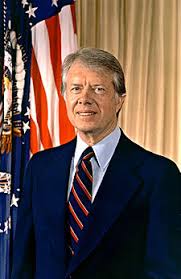
Jimmy Carter
After becoming President on January 20, 2017, Trump:
- Fired FBI Director James Comey for refusing to pledge his personal loyalty—and for investigating documented ties between Russian Intelligence agents and the 2016 Trump Presidential campaign.
- Threatened to fire Special Counsel Robert Mueller, who was assigned to take over that investigation after the Comey firing.
- Repeatedly attacked the nation’s press as “fake news” and “the enemy of the American people.”
- Contemptuously dismissed the warnings of American Intelligence agencies that Russia tried to subvert the 2016 Presidential campaign—and planned to do the same for the mid-term elections in November, 2018.
Trump, in short, was not going to be “helped” by the humility of a Jimmy Carter.

Donald Trump
Former President Barack Obama believes in rationality and decency. He felt more comfortable responding to attacks on his character than attacking the character of his enemies.
As a graduate of Columbia University and Harvard Law School, Obama was one of the most academically gifted Presidents in American history.
Yet he failed—like Carter—to grasp and apply a fundamental lesson taught by Niccolo Machiavelli, the father of modern political science.
In The Prince, Machiavelli warns:
From this arises the question whether it is better to be loved than feared, or feared more than loved.
The reply is, that one ought to be both feared and loved, but as it is difficult for the two to go together, it is much safer to be feared than loved….
And men have less scruple in offending one who makes himself loved than one who makes himself feared; for love is held by a chain of obligations which, men being selfish, is broken whenever it serves their purpose; but fear is maintained by a dread of punishment which never fails.

Niccolo Machiavelli
Obama’s failure to recognize the truth of Machiavelli’s lesson allowed Republicans to thwart many of his Presidential ambitions—such as picking a replacement for deceased Supreme Court Justice Antonin Scalia.
Throughout 2016, liberals celebrated on Facebook and Twitter the “certain” Presidency of Vermont U.S. Senator Bernie Sanders or former First Lady Hillary Clinton.
They fully expected to win the White House again, and even retake the Senate and House of Representatives.
But Donald Trump had a different plan—to subvert the 2016 election by Russian Intelligence agents and millions of Russian trolls flooding the Internet with legitimately fake news.
Former Kentucky U.S. Senator Henry Clay famously said: “I’d rather be right than be President.” Trump’s attitude can be summed up as: “I’m always right, so I want to be President.”
For Democrats to win elective victories and enact their agenda, they must find their own George Pattons to take on the Waffen-SS generals among Republican ranks.
1968 PRESIDENTIAL CAMPAIGN, 2022 MID-TERM ELECTIONS, 2024 PRESIDENTIAL ELECTIONS, ABC NEWS, ABORTION, ADOLF HITLER, ALTERNET, AMERICABLOG, AP, ARI FLEISCHER, ” 9/11, BABY BOOMER RESISTANCE, BBC, BILL CLINTON, BLOOMBERG NEWS, BUZZFEED, CBS NEWS, CNN, COMMUNISTS, CROOKS AND LIARS, DAILY KOZ, DAVID BROOKS, DEMOCRATS, DONALD TRUMP, ECONOMY, FACEBOOK, FEAR, FIVETHIRTYEIGHT, GEORGE H.W. BUSH, GEORGE W. BUSH, GREED, HARPER’S MAGAZINE, HATRED, HUFFINGTON POST, HUMAN NATURE, JANUARY 6 COUP ATTEMPT, JONATHAN CAPEHART, JOSEPH BIDEN, JOSEPH MCCARTHY, LEE ATWATER, LLEGAL ALIENS, MEDIA MATTERS, MOTHER JONES, MOVEON, MSNBC, NBC NEWS, NEW REPUBLIC, NEWSDAY, NEWSWEEK, NPR, PAUL VON HINDENBURG, PBS NEWSHOUR, POLITICO, POLITICUSUSA, RAW STORY, REPUBLICANS, REUTERS, RICHARD NIXON, SALON, SARAH HUCKABEE SANDERS, SEATTLE TIMES, SLATE, SOUTHERN STRATEGY, SOVIET UNION, TALKING POINTS MEMO, THE ATLANTIC, THE CHICAGO SUN-TIMES, THE CHICAGO TRIBUNE, THE DAILY BEAST, THE DAILY BLOG, THE GUARDIAN, THE HILL, THE HUFFINGTON POST, THE INTERCEPT, THE LOS ANGELES TIMES, THE NATION, THE NEW REPUBLIC, THE NEW YORK TIMES, THE NEW YORKER, THE VILLAGE VOICE, THE WASHINGTON POST, THINKPROGRESS, TIME, TREASON, TRUTHDIG, TRUTHOUT, TWO POLITICAL JUNKIES, U.S. NEWS & WORLD REPORT, UNITED STATES DEPARTMENT OF JUSTICE, UPI, USA TODAY, WEIMAR REPUBLIC, WILLIAM BRANGHAM, WONKETTE, WORLD WAR 11, X
In Bureaucracy, History, Law, Law Enforcement, Medical, Politics, Social commentary on June 12, 2026 at 12:22 am
Democrats want to believe a day will come when all races, colors and creeds will live together in harmony. Their policies aim at creating that sort of society.
Republicans have turned “illegal alien” into a battle cry.
This is especially true when inflation is high, jobs and housing are scarce, and local schools and hospitals are crammed with illegal aliens—who, by law, shouldn’t even be in the country.
Moreover, the “illegal alien” tagline often allows Republicans to sidestep criticism on even the most outrageous of their actions.
Example: The case of a 10-year-old Ohio girl who was raped—and had to travel to Indiana to obtain an abortion after the Supreme Court overturned Roe. v. Wade.
Ohio has a “heartbeat” law making abortion a crime after a fetal heartbeat is determined—usually within the first six weeks.
For Ohio’s Republican legislators and governor, the “rights” of a fetus far outweigh those of an actual human being—even if she is a child.
Ari Fleischer, former press secretary for President George W. Bush, said on Fox News that the girl’s illegal alien rapist from Guatemala was the villain, not the fetal heartbeat law.
“The agenda is to allow people to come into America without having to come here legally. If you start pointing things out like this, it makes it a moral question. And that’s why the press doesn’t want to face up to the fact it’s a moral issue that people should not be allowed in America unless they come here legally.”
If she had been raped by a legal American citizen, the Ohio “fetal heartbeat” law would have still forced her to carry the fetus to term.
Democrats believe—or want to believe—that voters are creatures of rationality.
Republicans learned long ago that most voters aren’t moved by appeals to their rationality. Instead, what counts with them is emotions—such as fear.
From the end of World War II in 1945 to the collapse of the Soviet Union in 1991, the Enemy of Choice for Republicans was the Communists.
Millions of Americans were so pathologically frightened by “The Red Menace” that any Democratic politician libeled as a “Communist,” “Comsymp,” “fellow traveler” was considered at least a potential traitor, if not an actual one.
Among the Republican politicians who rode to victory on a wave of Red hysteria: Richard Nixon and Joseph McCarthy
Even as late as 1992, President George H.W. Bush and the Republican establishment charged that Arkansas Governor Bill Clinton might be a KGB plant. Their evidence: During his tenure at Oxford University in 1969-70, Clinton had briefly visited Moscow—and thus might have been turned into a “Manchurian Candidate.”
After the collapse of the Soviet Union, Right-wingers had to settle for attacking their opponents as “liberals” and “soft on crime.” But these charges didn’t carry the same weight as “Communists” and “traitors.”
Then, on September 11, 2001, Republicans—and their Right-wing supporters—at last found a suitable replacement for the Red Menace: The Maniacal Muslim.
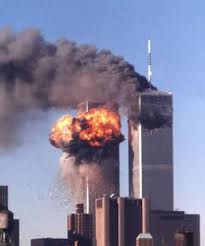
The World Trade Center on September 11, 2001
Led by President George W. Bush, Republicans used fear of Muslims to con and bully the nation into a needless, bloody, budget-busting war on Iraq.
The most immediate danger facing Democratic candidates: Their unwillingness to fight fire with fire.
Example 1: Republicans are organizing a nationwide effort to suppress voter turnout among blacks, Hispanics and liberals.
Yet Democrats are not making any similar effort to suppress Right-wing turnout. Nor did the Biden Justice Department indict those Republicans responsible for their anti-democratic efforts.
Example 2: On January 6, 2021, President Donald Trump—supported by at least 144 Republicans in the House and Senate—incited a treasonous coup to remain in office. This despite the overwhelming evidence that he had lost the 2020 election to Joseph Biden.

By the end of the Biden administration, not one major Republican supporting such treason had been indicted for that infamy. Let alone tried, convicted and imprisoned.
The single biggest reason for the Democrats loss in 2024 lay in the Biden administration’s toleration of Donald Trump’s continuing campaign of lies.
Trump continued to spread The Big Lie that he was robbed by a vast conspiracy—although not one of the more than 60 cases his lawyers brought before Federal judges proved this true.
Trump should have been indicted for treason by no later than mid-2021. Even then, the evidence was overwhelming that he had instigated the coup attempt. He was clearly preparing to run again for President in 2024.
An indictment for treason would cast a heavy—if not fatal—blow to that decision. At the very least, Trump would have been forced to mount a feverish—and expensive—defense.
And even many of his most fanatical supporters would have questioned the wisdom of voting for a man who might well become a Federal prison inmate.
In 2024, America stood at the point where the German Weimar Republic stood in 1932: With an aged President (Paul von Hindenburg) unable—or unwilling—to cope with a surging Fascistic movement (led by Adolf Hitler).
The results of that collective failure destroyed Germany and left 60 million dead around the world.
The 2024 Presidential election proved that history can repeat itself, albeit in different countries.
1968 PRESIDENTIAL CAMPAIGN, 2022 MID-TERM ELECTIONS, 2024 PRESIDENTIAL ELECTIONS, ABC NEWS, ABORTION, ADOLF HITLER, ALTERNET, AMERICABLOG, AP, ARI FLEISCHER, ” 9/11, BABY BOOMER RESISTANCE, BBC, BILL CLINTON, BLOOMBERG NEWS, BUZZFEED, CBS NEWS, CNN, COMMUNISTS, CROOKS AND LIARS, DAILY KOZ, DAVID BROOKS, DEMOCRATS, DONALD TRUMP, ECONOMY, FACEBOOK, FEAR, FIVETHIRTYEIGHT, GEORGE H.W. BUSH, GEORGE W. BUSH, GREED, HARPER’S MAGAZINE, HATRED, HUFFINGTON POST, HUMAN NATURE, JANUARY 6 COUP ATTEMPT, JONATHAN CAPEHART, JOSEPH BIDEN, JOSEPH MCCARTHY, LEE ATWATER, LLEGAL ALIENS, MEDIA MATTERS, MOTHER JONES, MOVEON, MSNBC, NBC NEWS, NEW REPUBLIC, NEWSDAY, NEWSWEEK, NPR, PAUL VON HINDENBURG, PBS NEWSHOUR, POLITICO, POLITICUSUSA, RAW STORY, REPUBLICANS, REUTERS, RICHARD NIXON, SALON, SARAH HUCKABEE SANDERS, SEATTLE TIMES, SLATE, SOUTHERN STRATEGY, SOVIET UNION, TALKING POINTS MEMO, THE ATLANTIC, THE CHICAGO SUN-TIMES, THE CHICAGO TRIBUNE, THE DAILY BEAST, THE DAILY BLOG, THE GUARDIAN, THE HILL, THE HUFFINGTON POST, THE INTERCEPT, THE LOS ANGELES TIMES, THE NATION, THE NEW REPUBLIC, THE NEW YORK TIMES, THE NEW YORKER, THE VILLAGE VOICE, THE WASHINGTON POST, THINKPROGRESS, TIME, TREASON, TRUTHDIG, TRUTHOUT, TWO POLITICAL JUNKIES, U.S. NEWS & WORLD REPORT, UNITED STATES DEPARTMENT OF JUSTICE, UPI, USA TODAY, WEIMAR REPUBLIC, WILLIAM BRANGHAM, WONKETTE, WORLD WAR 11, X
In Bureaucracy, History, Law, Law Enforcement, Medical, Politics, Social commentary on June 11, 2026 at 12:14 am
There are many reasons why Democrats consistently lose elections.
A major one: Democrats believe that people can be better than they are—and, given the chance, want to become better than they are.
Republicans realize that most people like themselves as they are—and don’t want to change. At least, not in the altruistic ways Democrats envision.
If they want to change anything about themselves, it’s strictly at the materialistic level: More money, lower prices, more big-ticket toys.
Susan Page, Washington Bureau Chief for USA TODAY, summed up the popularity of the “Greed Appeal” to voters on the March 13, 2020 edition of “Washington Week in Review”:

Susan Page
“USA Today has conducted a poll about the economic concerns that are out there….And Congress—you’re seeing fear in this country about the economy.
“In fact, when we did this poll this week about how Americans’ lives have been affected by the Coronavirus, people expressed more concern about the economic and financial effect than they did about the health effect. And you know, that goes to why this matters so much to President Trump.
“How many voters have you talked to who said, you know, I don’t really like President Trump’s tweets, but I like what I see happening in my 401(k). And when they look at their 401(k) this week, it may not look quite as bright as it did before.”
Democrats expect people to rise above their worst selves and embrace a higher, altruistic cause—civil rights, abortion rights, healthcare for all.
Republicans look for those who are comfortable in their racism, their greed, their hatred for women. They don’t try to reform them—they encourage them in their racism, greed and misogyny.
This began long before Donald Trump became a Presidential candidate in 2016.
When Richard Nixon announced his candidacy for President in 1968, he pursued what was euphemistically termed “a Southern strategy.”

Ricard Nixon
In reality, this was aimed to exploit whites’ fear and hatred of blacks.
In a now-infamous 1981 interview, Right-wing political consultant Lee Atwater explained how this worked.
“You start out in 1954 by saying, ‘Nigger, nigger, nigger.’ By 1968 you can’t say ‘nigger’—that hurts you, backfires.
“So you say stuff like, uh, forced busing, states’ rights, and all that stuff, and you’re getting so abstract.
“Now, you’re talking about cutting taxes, and all these things you’re talking about are totally economic things and a byproduct of them is, blacks get hurt worse than whites….
“‘We want to cut this,’ is much more abstract than even the busing thing, uh, and a hell of a lot more abstract than ‘Nigger, nigger.’
“So anyway you look at it, race is coming on the back burner.”

Lee Atwater
But blacks have by no means been the only targets—and victims—of Republican hate campaigns. A partial list of these would include:
- Liberals
- Women
- Socialists
- Secularists
- Disabled
- Environmentalists
- Hispanics
- Gays
- Lesbians
And now transgenders.
Republicans are experts at inciting hatred—and reaping huge gains in power as a result.
There can be no better example of a politician who has played successfully on the hatred of American voters than Donald Trump. If Barack Obama was the 2008 candidate of “Hope and Change,” then Trump was the 2016 candidate of “Hate and Fear.”
From June 15, 2015, when he launched his Presidential campaign, until October 24, 2016, Trump fired almost 4,000 angry, insulting tweets at 281 people and institutions that had somehow offended him.

Donald Trump
The New York Times needed two full pages of its print edition to showcase them.
Among his targets:
- Secretary of State Hillary Clinton
- The New York Times
- President Barack Obama
- CNN
- Actress Meryl Streep
- The Washington Post
- Singer Neil Young
- Democrats
- Actor Arnold Schwarzenegger
- Republicans
- Comedian John Oliver
- The State of New Jersey
- Beauty pageant contestants
Others he clearly delighted in insulting during the campaign included:
- Women
- Blacks
- Hispanics
- Asians
- Muslims
- The disabled
- Prisoners-of-war
Democrats want to believe a day will come when all races, colors and creeds will live together in harmony. Their policies aim at creating that sort of society.
Republicans know that most people instinctively feel comfortable with those who most resemble themselves. And they don’t seek out those who differ from themselves.
That’s why—in schools and prisons—whites sit mostly with whites, blacks sit mostly with blacks, and Hispanics sit mostly with Hispanics.
And if most Americans feel uncomfortable with fellow Americans who don’t resemble themselves, they are even more intolerant toward foreigners who don’t.
This is especially true when inflation is high, jobs and housing are scarce, and local schools and hospitals are crammed with illegal aliens—who, by law, shouldn’t even be in the country.
For these Americans, the Democrats’ “Kumbaya” message of love and tolerance falls on deaf ears. By contrast, Republicans’ cries of “Get rid of the illegal aliens!” ring loud and clear.

Illegal aliens crossing into the United States
Moreover, the “illegal alien” tagline often allows Republicans to sidestep criticism on even the most outrageous of their actions.
Example: The case of a 10-year-old Ohio girl who was raped—and had to travel to Indiana to obtain an abortion after the Supreme Court overturned Roe. v. Wade.
1968 PRESIDENTIAL CAMPAIGN, 2022 MID-TERM ELECTIONS, 2024 PRESIDENTIAL ELECTIONS, ABC NEWS, ABORTION, ADOLF HITLER, ALTERNET, AMERICABLOG, AP, ARI FLEISCHER, ” 9/11, BABY BOOMER RESISTANCE, BBC, BILL CLINTON, BLOOMBERG NEWS, BUZZFEED, CBS NEWS, CNN, COMMUNISTS, CROOKS AND LIARS, DAILY KOZ, DAVID BROOKS, DEMOCRATS, DONALD TRUMP, ECONOMY, FACEBOOK, FEAR, FIVETHIRTYEIGHT, GEORGE H.W. BUSH, GEORGE W. BUSH, GREED, HARPER’S MAGAZINE, HATRED, HUFFINGTON POST, HUMAN NATURE, JANUARY 6 COUP ATTEMPT, JONATHAN CAPEHART, JOSEPH BIDEN, JOSEPH MCCARTHY, LEE ATWATER, LLEGAL ALIENS, MEDIA MATTERS, MOTHER JONES, MOVEON, MSNBC, NBC NEWS, NEW REPUBLIC, NEWSDAY, NEWSWEEK, NPR, PAUL VON HINDENBURG, PBS NEWSHOUR, POLITICO, POLITICUSUSA, RAW STORY, REPUBLICANS, REUTERS, RICHARD NIXON, SALON, SARAH HUCKABEE SANDERS, SEATTLE TIMES, SLATE, SOUTHERN STRATEGY, SOVIET UNION, SUSAN PAGE, TALKING POINTS MEMO, THE ATLANTIC, THE CHICAGO SUN-TIMES, THE CHICAGO TRIBUNE, THE DAILY BEAST, THE DAILY BLOG, THE GUARDIAN, THE HILL, THE HUFFINGTON POST, THE INTERCEPT, THE LOS ANGELES TIMES, THE NATION, THE NEW REPUBLIC, THE NEW YORK TIMES, THE NEW YORKER, THE VILLAGE VOICE, THE WASHINGTON POST, THINKPROGRESS, TIME, TREASON, TRUTHDIG, TRUTHOUT, TWO POLITICAL JUNKIES, U.S. NEWS & WORLD REPORT, UNITED STATES DEPARTMENT OF JUSTICE, UPI, USA TODAY, WEIMAR REPUBLIC, WILLIAM BRANGHAM, WONKETTE, WORLD WAR 11, X
In Bureaucracy, History, Law, Law Enforcement, Medical, Politics, Social commentary on June 10, 2026 at 12:17 am
If you’re wondering why Democrats lost the Presidential election of November 5, 2024—you can stop wondering.
Here are the reasons. And they are the reasons why Democrats will likely lose the 2028 Presidential election as well.
Democrats believe that people can be better than they are—and, given the chance, want to become better than they are.
Republicans understand the darker sides of human nature far better than Democrats—and don’t hesitate to take full advantage of them.
Republicans realize that most people like themselves as they are—and don’t want to change. At least, not in the altruistic ways Democrats envision.
If they want to change anything about themselves, it’s strictly at the materialistic level: More money, lower prices, more big-ticket toys.
They may claim concern for others, but if given a choice between their pocketbook and a higher goal, most will vote for their pocketbook.
A first-rate example of this appeared on The PBS Newshour on July 15, 2022, during an exchange between conservative New York Times columnist David Brooks and Jonathan Capehart, associate editor for the Washington Post.
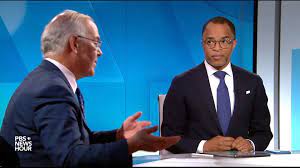
David Brooks (left) and Jonathan Capehart (right) on the PBS Newshour
Host William Brangham led off the exchange:
“I want to switch, Jonathan, to this issue of the continued fallout of the Supreme Court overturning Roe v. Wade. And Democrats seem to believe that this could be one of the things that might give them at least some trace of a fighting chance in the midterms.
“And we saw we this week this sort of horrendous case of a young 10-year-old girl who had been raped. She got pregnant. She then had to leave her state [Ohio] and go to another state [Indiana] where abortion would still be allowed.
“And GOP officials tried to make hay of it. They doubted that that story really existed. The local [Attorney General] said, we’re going to go after the doctor that performed this.
“Do you think that—that issue and the extremity of the way that this is being handled will actually benefit Democrats?”
Capehart: “It should. The idea that we’re talking about violence against a child, and then being forced by the state to give birth to this child, going to another state so she can terminate that pregnancy, and then being persecuted and prosecuted by the state for doing that….

“We are in “Handmaid’s Tale” territory here. We are turning into Gilead. And if there are people out there who are upset by the Supreme Court decision, by what Republican legislators around the country in states and localities are doing to further restrictions and bans on abortion.
“I don’t know what else could push people to the polls more than not just being stripped of a constitutional right, but having your right to — right to freedom, right to privacy, right to liberty not just taken away, but local officials doing everything they can to ensure that you don’t have autonomy over your own body.
“If that doesn’t get people out to the polls, I don’t know what will.”
Brangham then turned to Brooks:
“I mean, David, this was an incredibly extreme case, in some ways crystallized the sharpness and the horribleness of this division in this country.
“Do you think it will redound to the Democrats’ benefit?”
Brooks: “A little, but, frankly, not much.
“Now, abortion rights defenders, they should pursue their cause with the passion that they’re bringing to it….
“But there’s just a giant gap between what a lot of Democrats want to talk about and what the whole rest of the country wants to talk about. And if you ask people, what’s the most important issues, progressives want to talk about abortion and guns.
“The entire rest of the country, independents, conservatives, unaffiliated people, they want talk about the economy. And, for them, the economy is way up here. Jobs are number one. Inflation is number two.

“And so why is Joe Biden at 33 percent approval in the latest Times poll? It’s the economy. Why in the same poll do half of Hispanics support the Republicans now? The economy. These are earthquake numbers for Democrats…..
“But if Democrats, if they’re not talking about economic policy every day, then they’re just not talking about the policy that is clearly ranking number one with a vast majority of voters.”
No Republican has appealed more directly to greed as a motivator than Donald Trump.
On August 23, 2018, Trump, as President, offered additional evidence that he’s “not like other people.” He did so by giving an unprecedented reason why he shouldn’t be impeached: “I tell you what, if I ever got impeached, I think the market would crash, I think everybody would be very poor.”
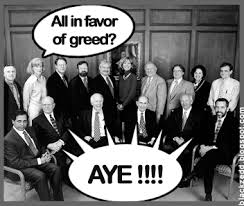
White House Press Secretary Sarah Huckabee Sanders doubtless spoke for millions of Trump supporters when she said, on June 4, 2018:
“Since taking office, the President has strengthened American leadership, security, prosperity, and accountability. And as we saw from Friday’s jobs report, our economy is stronger, Americans are optimistic, and business is booming.”
ABC NEWS, ADOLF HITLER, ADVICE, ALTERNET, AMERICABLOG, AP, BABY BOOMER RESISTANCE, BAY OF PIGS, BBC, BENITO MUSSOLINI, BLOOMBERG NEWS, BUZZFEED, CAESARE BORGIA, CBS NEWS, CNN, CORPORATIONS, CROOKS AND LIARS, CUBA, DAILY KOS, DAILY KOZ, FIDEL CASTRO, FIVETHIRTYEIGHT, FLORENCE, HARPER’S MAGAZINE, HUFFINGTON POST, JOHN F. KENNEDY, JOSEPH STALIN, KING PERSEUS OF MACEDON, MEDIA MATTERS, MOTHER JONES, MOVEON, MSNBC, NAZI-SOVIET "NON-AGGRESSION PACT", NBC NEWS, NEW REPUBLIC, NEWSDAY, NEWSWEEK, NICCOLO MACHIAVELLI, NPR, PBS NEWSHOUR, POLITICO, POLITICS, POLITICUSUSA, POPE JULIUS 11, RAW STORY, REUTERS, SALON, SEATTLE TIMES, SLATE, TALKING POINTS MEMO, THE ATLANTIC, THE CHICAGO SUN-TIMES, THE CHICAGO TRIBUNE, THE DAILY BEAST, THE DAILY BLOG, THE DISCOURSES, THE GUARDIAN, THE HILL, THE HUFFINGTON POST, THE INTERCEPT, THE LOS ANGELES TIMES, THE NATION, THE NEW REPUBLIC, THE NEW YORK TIMES, THE NEW YORKER, THE PRINCE, THE SS, THE VILLAGE VOICE, THE WASHINGTON POST, THINKPROGRESS, THIRD REICH, TIME, TRUTHDIG, TRUTHOUT, TWITTER, U.S. NEWS & WORLD REPORT, UKRAINE, UPI, USA TODAY, VLADIMIR PUTIN, VOLODYMYR ZELENSKY, WEHRMACHT, WORLD WAR 11
In Bureaucracy, Business, History, Military, Politics, Social commentary on May 22, 2026 at 12:05 am
Ask the average person, “What do you think of Niccolo Machiavelli?” and he’s likely to say: “The devil.”
In fact, “The Old Nick” became an English term used to describe Satan and slander Machiavelli at the same time.

Niccolo Machiavelli
The truth, however, is more complex. Machiavelli was a passionate Republican, who spent most of his adult life in the service of his beloved city-state, Florence.
The years he spent as a diplomat were tumultuous ones for Italy—with men like Pope Julius II and Caesare Borgia vying for power and plunging Italy into one bloodbath after another.
Florence, for all its wealth, lacked a strong army, and thus lay at the mercy of powerful enemies, such as Borgia. Machiavelli often had to use his wits to keep them at bay.
Machiavelli is best-known for his writing of The Prince, a pamphlet on the arts of gaining and holding power. Its admirers have included Benito Mussolini and Joseph Stalin.
But his longer and more thoughtful work is The Discourses, in which he offers advice on how to maintain liberty within a republic. Among its admirers were many of the men who framed the Constitution of the United States.



Most people believe that Machiavelli advocated evil for its own sake.
Not so. Rather, he recognized that sometimes there is no perfect—or perfectly good—solution to a problem.
Sometimes it’s necessary to take stern—even brutal—action to stop an evil (such as a riot) before it becomes widespread:
“A man who wishes to make a profession of goodness in everything must inevitably come to grief among so many who are not good. And therefore it is necessary for a prince, who wishes to maintain himself, to learn how not to be good, and to use this knowledge and not use it, according to the necessity of the case.”
His counsel remains as relevant today as it did during his lifetime (1469 – 1527). This is especially true for politicians—and students of political science.
But plenty of ordinary citizens can also benefit from the advice he has to offer—such as those in business who are asked to give advice to more powerful superiors.
Machiavelli warns there is danger in urging rulers to take a particular course of action: “For men only judge of matters by the result, all the blame of failure is charged upon him who first advised it, while in case of success he receives commendations. But the reward never equals the punishment.”
This puts would-be counselors in a difficult position: “If they do not advise what seems to them for the good of the republic or the prince, regardless of the consequences to themselves, then they fail to do their duty.
“And if they do advise it, then it is at the risk of their position and their lives, for all men are blind in thus, that they judge of good or evil counsels only by the results.”
Thus, Machiavelli warns that an adviser should “take things moderately, and not to undertake to advocate any enterprise with too much zeal, but to give one’s advice calmly and modestly.”
The person who asked for the advice may follow it, or not, as of his own choice, and not because he was led or forced into it by the adviser.
Above all, the adviser must avoid the danger of urging a course of action that runs “contrary to the wishes of the many.
“For the danger arises when your advice has caused the many to be contravened. In that case, when the result is unfortunate, they all concur in your destruction.”
Or, as President John F. Kennedy famously said after the disastrous invasion of Cuba at the Bay of Pigs in April, 1961: “Victory has a hundred fathers and defeat is an orphan.”
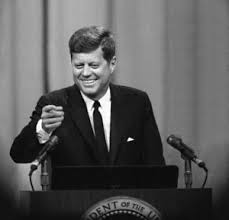
John F. Kennedy
By “not advocating any enterprise with too much zeal,” the adviser gains two advantages:
“The first is, you avoid all danger.
“And the second consists in the great credit which you will have if, after having modestly advised a certain course, your counsel is rejected, and the adoption of a different course results unfortunately.”
Finally, the time to give advice is before a catastrophe occurs, not after. Machiavelli gives a vivid example of what can happen if this rule is ignored.
King Perseus of Macedon had gone to war with Paulus Aemilius—and suffered a humiliating defeat. Fleeing the battlefield with a handful of his men, he later bewailed the disaster that had overtaken him.
Suddenly, one of his lieutenants began to lecture Perseus on the many errors he had committed, which had led to his ruin.
“Traitor,” raged the king, turning upon him, “you have waited until now to tell me all this, when there is no longer any time to remedy it—” And Perseus slew him with his own hands.
Niccolo Machiavelli sums up the lesson as this:
“Thus was this man punished for having been silent when he should have spoken, and for having spoken when he should have been silent.”
Be careful that you don’t make the same mistake.
ADOLF HITLER, ALTERNET, AMERICABLOG, AP, BABY BOOMER RESISTANCE, BBC, BLOOMBERG, BLUESKY, BUZZFEED, CBS NEWS, CNN, CROOKS AND LIARS, DAILY KOS, DEMOCRATS, DONALD TRUMP, FIVETHIRTYEIGHT, HARPER’S MAGAZINE, HUFFINGTON POST, IRAN WAR, JOHN GARAMENDI, LYNDON JOHNSON, MEDIA MATTERS, MOTHER JONES, MOVEON, MSNBC, NAZI GERMANY, NBC NEWS, NEWSDAY, NEWSWEEK, NPR, Oil, PBS NEWSHOUR, PETE HEGSETH, POLITICO, POLITICUSUSA, RAW STORY, REPUBLICANS, REUTERS, RICHARD NIXON, RO KHANNA, SALON, SEATTLE TIMES, SLATE, SS, STRAIT OF HORMUZ, TALKING POINTS MEMO, THE ATLANTIC, THE CHICAGO SUN-TIMES, THE CHICAGO TRIBUNE, THE DAILY BEAST, THE DAILY BLOG, THE GUARDIAN, THE HILL, THE HUFFINGTON POST, THE INTERCEPT, THE LOS ANGELES TIMES, THE NATION, THE NEW REPUBLIC, THE NEW YORK TIMES, THE NEW YORKER, THE PENTAGON, THE VILLAGE VOICE, THE WASHINGTON POST, THINKPROGRESS, THIRD REICH, TIME, TRUTHDIG, TRUTHOUT, TWO POLITICAL JUNKIES, U.S. NEWS & WORLD REPORT, UPI, USA TODAY, VIETNAM WAR, WAR CRIMES, WEHRMACHT, WORLD WAR 11, X
In Bureaucracy, Business, History, Law, Military, Politics, Social commentary on May 19, 2026 at 12:10 am
On April 29, Secretary of Defense Pete Hegseth appeared before Congress for the first time since President Donald Trump-–in concert with Israel—launched a series of devastating airstrikes against Iran.
During the hearing, the Pentagon revealed that the war so far had cost $25 billion. The fighting is on hold, but the military maintains its blockade of the Strait of Hormuz.
Early on in his testimony, Hegseth said the threat of Iran paled in comparison to one posed by Democrats: “The biggest challenge, the biggest adversary we face at this point are the reckless, feckless and defeatist words of congressional Democrats and some Republicans.”

Pete Hegseth
Forget that:
- Iran had effectively closed the Strait of Hormuz—through which 20% to 25% of the world’s oil consumption (about 20–21 million barrels per day) flows.
- As a result, gas prices rose overnight. By late April, the national average for a gallon of regular gas reached $4.02 to $4.04, compared to roughly $2.98 before military operations began.
- On April 5—Easter Sunday, no less—Trump posted on his website, Truth Social: “Tuesday will be Power Plant Day, and Bridge Day, all wrapped up in one, in Iran. There will be nothing like it!!! Open up the Fuckin’ Strait, you crazy bastards, or you’ll be living in Hell – JUST WATCH! Praise be to Allah. President DONALD J. TRUMP”
- When this threat failed to impress the Iranians, Trump posted on April 7: “A whole civilization will die tonight, never to be brought back again. I don’t want that to happen, but it probably will.”
- This implied threat of a nuclear holocaust led legal experts and international organizations such as Amnesty International to warn that attacking civilian infrastructure would constitute war crimes under international law.

Donald Trump
Implicit in Hegseth’s charge—and attitude—was the message: “It’s Democrats’ fault that we’re not winning the war that we—and Israel—started on February 28. And that a war that was supposed to last six weeks at most has now dragged on for two months—with no end in sight.”
It’s possible that the highly combative Hegseth had a specific remedy in mind for such criticism—one that had been applied by Nazi Germany to those who who doubted the “final victory” of the war that Adolf Hitler had started.
Those who did so—or openly criticized the need for the war or the genocidal way it was being fought—faced two ways of dying: Beheading or hanging.
So long as the Third Reich was winning—or at least in possession of actual German territory—the punishment of beheading was carried out upon conviction by kangaroo courts.
But when the Reich was immediately facing invasion—from the West by American and British forces, and from the East by Russian ones—there often wasn’t time for pseudo-legal folderol. Roving bands of Schutzstaffel (SS) or Wehrmacht troops openly shot or literally strung up such “traitors” from lamp posts.
Certainly Hegseth’s attitude reflected that mentality, as this exchange with Rep. John Garamendi (D-CA) revealed:
GARAMENDI: The president has got himself and America stuck in a quagmire of another war in the Middle East. He’s desperately trying to extricate himself from his own mistakes.
HEGSETH: You call it a quagmire, handing propaganda to our enemies? Shame on you for that statement. And statements like that are reckless to our troops.
During the Vietnam war (1965 – 1975) the administrations of Lyndon Johnson and Richard Nixon lied repeatedly about the “progress” being achieved. The polite term used to describe this was “credibility gap.”
As a result, “grunts” often sported buttons reading: “Ambushed at Credibility Gap.”
When a nation’s armed forces are winning easy—or even hard-won—victories over an enemy, word quickly spreads through their ranks. When facing defeat—or stalemate—soldiers are equally quick to sense the truth of this.
So Hegseth’s accusation that Garamendi’s accurately calling the war “a quagmire”—at least so far—could not prove a morale-buster for the soldiers fighting it.
Throughout his testimony, Hegseth acted like a man in charge of an inquisition, rather than a public official called on by Congress to answer questions.
A typical exchange between him and Rep. Ro Khanna (D-CA):
KHANNA (D-CA): Do you know how much it will cost Americans in terms of their increased cost in gas and food over the next year because of the Iran war?
HEGSETH: I would simply ask you what the cost is of an Iranian nuclear bomb.
KHANNA: I’m going to give you that opportunity.
HEGSETH: I would simply ask you what the — you’re playing gotcha questions about domestic things.
KHANNA: No, it’s not. You’re asking — you’re saying it’s a gotcha question to ask what it’s going to be in terms of the increased cost of gas?
HEGSETH: Why won’t you answer what it costs to prevent Iran from getting a nuclear bomb?
KHANNA: I give you that, sir. You don’t know what we’re paying in terms of gas. You don’t know what we’re paying in terms of food. Your $25 billion number is totally off. It’s the incompetence. It’s the incompetence.
What she should have said was: “You’re here to answer questions, not ask them.”
ABC NEWS, ABC’S THE WEEK, ADOLF HITLER, ALTERNET, AMERICABLOG, AP, AUSTRIA, BABY BOOMER RESISTANCE, BBC, BC NEWS, BEVIN ALEXANDER, BLOOMBERG, BLUESKY, BUZZFEED, CANADA, CBS NEWS, CHARLES “CQ” BROWN, CNN, CROOKS AND LIARS, CZECHOSLOVAKIA, D-DAY, DAILY KOS, DONALD TRUMP, ERWIN ROMMEL, FIVETHIRTYEIGHT, FRANCE, FUHRER OATH, GREAT BRITAIN, GREENLAND, HARPER’S MAGAZINE, HEINZ GUDERIAN, HOW HITLER COULD HAVE WON WORLD WAR II (BOOK), HUFFINGTON POST, IRAN, JAMES SLIFE, JEFFREY EPSTEIN, JEFFREY KRUSE, JIMMY CARTER, JOINT OPERATIONS COMMAND, JUSTIN TRUDEAU, LISA FRANCHETTI, MEDIA MATTERS, MEXICO, MOTHER JONES, MOVEON, MSNBC, MUNICH CONFERENCE, NATIONAL SECURITY AGENCY, NAZI GERMANY, NBC NEWS, NEWSDAY, NEWSWEEK, NPR, NUCLEAR WEAPONS SITES, PANAMA, PAUL VON HINDENBURG, PBS NEWSHOUR, PETE HEGSETH, POLAND, POLITICIZING THE MILITARY, POLITICO, POLITICUSUSA, RAMDY GEORGE, RANDY GEORGE, RAW STORY, REPUBLICANS, REUTERS, RHINELAND, RUSSIA, SALON, SEATTLE TIMES, SECRETARY OF DEFENSE, SHOSHANA CHATFIELD, SLATE, SUDENTENLAND, TALKING POINTS MEMO, THE ATLANTIC, THE CHICAGO SUN-TIMES, THE CHICAGO TRIBUNE, THE DAILY BEAST, THE DAILY BLOG, THE GUARDIAN, THE HILL, THE HUFFINGTON POST, THE INTERCEPT, THE LOS ANGELES TIMES, THE NATION, THE NEW REPUBLIC, THE NEW YORK TIMES, THE NEW YORKER, THE PENTAGON, THE SS, THE VILLAGE VOICE, THE WASHINGTON POST, THEODORE ROOSEVELT, THINKPROGRESS, TIME, TIMOTHY HAUGH, TRUTHDIG, TRUTHOUT, TWO POLITICAL JUNKIES, U.S. NEWS & WORLD REPORT, UPI, USA TODAY, WERNER VON BLOMBERG, WERNER VON FRITSCH, WONKETTE, WORLD WAR 11, X
In Bureaucracy, History, Military, Politics, Social commentary, Uncategorized on May 7, 2026 at 12:13 am
When Donald Trump isn’t picking fights with Americans, he picks them with the leaders of democratic countries.
At a November 30, 2024 dinner at Mar-a-Lago, Trump’s estate in Palm Beach, Florida, he told Canadian Prime Minister Justin Trudeau that Canada could become the 51st state of the United States.
Canada’s Public Safety Minister Dominic LeBlanc, who attended the dinner, insisted that Trump was joking.
But on December 2, Trump threatened to impose a 25% tax on all products entering the United States from Canada and Mexico unless they stopped the flow of drugs and illegal aliens.
And on December 3, Trump posted on his Truth Social platform an AI-generated image of himself standing on a mountain with a Canadian flag beside him. Its caption: “Oh Canada!”
Trudeau had requested the Mar-a-Lago meeting to convince Trump that the northern border is completely different from the southern one with Mexico.

Canadian flag
“Less than one percent of migrants coming into the United States irregularly come from Canada and 0.2 percent of the fentanyl coming into the United States comes from Canada,” Trudeau said in Parliament.
During the last fiscal year, American customs agents seized 43 pounds of fentanyl at the Canadian border, compared with 21,100 pounds at the Mexican border.
Most of the fentanyl reaching the U.S. is made by Mexican drug cartels using precursor chemicals smuggled from Asia.
Utterly unmentioned in Trump’s demand: It’s America’s insatiable demand for illicit drugs that is the root cause of the drug trade.

Heroin syringe
Also unmentioned—if not deliberately ignored by Trump: Canada plays a substantial role as a U.S. trading partner. About 60% of U.S. crude oil imports are from Canada, and 85% of U.S. electricity imports as well.
Canada is also the largest foreign supplier of steel, aluminum and uranium to the U.S. and has 34 critical minerals and metals that the Pentagon eagerly desires. About 77% of Canada’s exports go to the U.S.
Trudeau pleaded with Trump not to impose the tariff because because it would “kill” Canada’s economy.
Trump responded: “So your country can’t survive unless it’s ripping off the US to the tune of $100 billion?”
His comments referred to the American trade deficit with Canada.
The U.S. had a $75 billion trade deficit with Canada in 2023 but a third of what Canada sells into the U.S. is energy exports and prices have been high.
Trudeau left the meeting without reassurance that Trump would not impose a 25% tariff on products from Canada.
But on March 5, 2025, Trump slapped 25% tariffs on Canada. Six days later, Trump announced that he would impose an additional 25% tariff on all Canadian steel and aluminum imports effective March 12.
Yet another country Trump has aimed his hostility at is Greenland.
“For purposes of National Security and Freedom throughout the World, the United States of America feels that the ownership and control of Greenland is an absolute necessity,” Trump wrote on Truth Social on December 23, 2024.
The next day, Greenland’s Prime Minister Mute Egede told Trump to back off: “Greenland is ours. We are not for sale and will never be for sale. We must not lose our long struggle for freedom.”
The Kingdom of Denmark holds control of the semi-autonomous Greenland.
Trump had previously floated the idea of the U.S. buying Greenland in 2019, which the Danish prime minister at the time called “absurd.”

Greenland is home to America’s Pituffik Space Base which “detects and reports attack assessments of sea-launched and intercontinental ballistic missile threats in support of strategic missile warning and missile defense,” according to the base’s website.
Greenland is strategically significant to the United States because it sits between Russia and the eastern coast of the United States, and is the fastest way from Europe to New York.
Some critics believe that Trump is floating headline-getting assaults on other nations to divert attention from his domestic agenda—which includes deporting millions of men, women and children from Hispanic countries.
Others believe it’s to divert attention from the recently released Epstein Files, which document his longtime ties to convicted pedophile Jeffrey Epstein
In January, 2026, Danish military personnel were deployed to Greenland with instructions to prepare to disable key airport runways in Nuuk and Kangerlussuaq to prevent U.S. military aircraft from landing. Danish forces brought explosives and blood supplies in preparation for potential conflict.
NATO had been created in 1949 to deter Soviet Union aggression against Europe. For the first time in its 77-year history, its European members prepared to repulse an invasion by the United States.
Trump’s actions faced heavy opposition in Congress from both major parties. Republican Speaker of the House Mike Johnson described Trump’s threats as “completely inappropriate.”
On January 21, 2026, Trump reversed course, first ruling out military force and then abandoning tariff threats after talks with NATO secretary-general Mark Rutte.
And while Trump picks needless fights with America’s longtime allies, China—the first peer competitor that can challenge America economically, militarily, and technologically—is deepening its ties with Russia, Iran, North Korea, and other countries that seek to weaken U.S. power.
ABC NEWS, ABC’S THE WEEK, ADOLF HITLER, ALTERNET, AMERICABLOG, AP, AUSTRIA, BABY BOOMER RESISTANCE, BBC, BC NEWS, BEVIN ALEXANDER, BLOOMBERG, BLUESKY, BUZZFEED, CANADA, CBS NEWS, CHARLES “CQ” BROWN, CNN, CROOKS AND LIARS, CZECHOSLOVAKIA, D-DAY, DAILY KOS, DONALD TRUMP, ERWIN ROMMEL, FIVETHIRTYEIGHT, FRANCE, FUHRER OATH, GREAT BRITAIN, GREENLAND, HARPER’S MAGAZINE, HEINZ GUDERIAN, HOW HITLER COULD HAVE WON WORLD WAR II (BOOK), HUFFINGTON POST, JAMES SLIFE, JEFFREY EPSTEIN, JEFFREY KRUSE, JIMMY CARTER, JOINT OPERATIONS COMMAND, JUSTIN TRUDEAU, LISA FRANCHETTI, MEDIA MATTERS, MEXICO, MOTHER JONES, MOVEON, MSNBC, MUNICH CONFERENCE, NAZI GERMANY, NBC NEWS, NEWSDAY, NEWSWEEK, NPR, PANAMA, PAUL VON HINDENBURG, PBS NEWSHOUR, PETE HEGSETH, POLAND, POLITICIZING THE MILITARY, POLITICO, POLITICUSUSA, RAMDY GEORGE, RANDY GEORGE, RAW STORY, REPUBLICANS, REUTERS, RHINELAND, RUSSIA, SALON, SEATTLE TIMES, SECRETARY OF DEFENSE, SHOSHANA CHATFIELD, SLATE, SUDENTENLAND, TALKING POINTS MEMO, THE ATLANTIC, THE CHICAGO SUN-TIMES, THE CHICAGO TRIBUNE, THE DAILY BEAST, THE DAILY BLOG, THE GUARDIAN, THE HILL, THE HUFFINGTON POST, THE INTERCEPT, THE LOS ANGELES TIMES, THE NATION, THE NEW REPUBLIC, THE NEW YORK TIMES, THE NEW YORKER, THE PENTAGON, THE SS, THE VILLAGE VOICE, THE WASHINGTON POST, THEODORE ROOSEVELT, THINKPROGRESS, TIME, TIMOTHY HAUGH, TRUTHDIG, TRUTHOUT, TWO POLITICAL JUNKIES, U.S. NEWS & WORLD REPORT, UPI, USA TODAY, WERNER VON BLOMBERG, WERNER VON FRITSCH, WONKETTE, WORLD WAR 11, X
In Bureaucracy, History, Military, Politics, Social commentary on May 6, 2026 at 12:15 am
On August 22, 2025, the PBS Newshour website carried the following headline: HEGSETH FIRES GENERAL WHOSE AGENCY’S INTEL ASSESSMENT OF U.S. STRIKES ON IRAN ANGERED TRUMP.
The story opened: “Defense Secretary Pete Hegseth has fired a general whose agency’s initial intelligence assessment of damage to Iranian nuclear sites from U.S. strikes angered President Donald Trump, according to two people familiar with the decision and a White House official.
“Lt. Gen. Jeffrey Kruse will no longer serve as head of the U.S. Defense Intelligence Agency, according to the people, who spoke on condition of anonymity because they were not authorized to discuss it publicly.
“The firing is the latest upheaval in military leadership and in the country’s intelligence agencies, and comes a few months after details of the preliminary assessment leaked to the media. It found that Iran’s nuclear program has been set back only a few months by the U.S. strikes, contradicting assertions from Trump and Israeli Prime Minister Benjamin Netanyahu.”
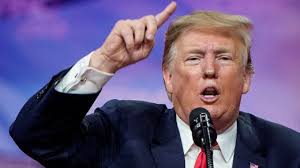
Donald Trump
After the June 21 strikes, Hegseth attacked the press, claiming that it had an anti-military bias . But he refused to provide evidence that proved the nuclear sites had been wiped out.
Since re-taking office on January 20, 2025, President Donald Trump, through Hegseth, has fired more than 10 senior military leaders. Critics have called this an unprecedented purge of the Pentagon.
Among those fired:
- General Charles “CQ” Brown Jr.: Chairman of the Joint Chiefs of Staff, Brown was the nation’s highest-ranking military officer
- Admiral Lisa Franchetti: The Chief of Naval Operations and the first woman to lead the U.S. Navy.
- General James Slife: The Vice Chief of Staff of the Air Force was fired along with Brown and Franchetti
- General Timothy Haugh: The head of U.S. Cyber Command and the director of the National Security Agency (NSA)
- Vice Admiral Shoshana Chatfield: The U.S. military representative to NATO
- Lieutenant General Jeffrey Kruse: The director of the Defense Intelligence Agency
- Army Chief of Staff Randy George: The Army’s most senior general
Hegseth had stopped George from promoting several high-ranking service members—including four Army officers, two black men and two female soldiers—from becoming one-star generals.
The reason: To purge “woke” leadership and prevent a black female officer from standing next to the President.
Decades of experience have been wiped from the highest levels of the U.S. military through removals and retirements during the first year of the second Trump administration.
Trump’s determination to remake the armed forces in his own image reflects he mindset of an earlier dictator whose rage and egotism carried him—and his country—to ruin: Adolf Hitler.
Bevin Alexander provides an overall—but colorful—view of Hitler’s generalship in How Hitler Could have Won World War II.

Among the fatal military mistakes that led to the defeat of the Third Reich:
- Wasting hundreds of Luftwaffe [air force] pilots, fighters and bombers in a halfhearted attempt to conquer England.
- Ignoring the pleas of generals like Erwin Rommel to conquer Syria, Iraq and Saudi Arabia, which would have given Germany control of most of the world’s oil.
- Attacking his ally, the Soviet Union, while still at war with Great Britain.
- Turning millions of Russians into enemies rather than allies by his brutal and murderous policies.
- Needlessly declaring war on the United States after the Japanese attacked Pearl Harbor. (Had he not done so, Americans would have focused all their attention on defeating Japan.)
- Insisting on a “not-one-step-back” military “strategy” that led to the needless surrounding, capture and/or deaths of hundreds of thousands of German servicemen.
As the war turned increasingly against him, Hitler demanded absolute control over the smallest details of his forces.
On June 6, 1944, General Gerd von Rundstedt insisted that Panzer tanks be released to drive the Allies from the Normandy beaches. But these could not be released except on direct orders of the Fuehrer.

Panzer tank
Hitler’s chief of staff, General Alfred Jodl, informed Rundstedt: The Fuhrer was asleep-–and was not to be awakened. By the time Hitler awoke and issued the order, it was too late.
He refused to accept responsibility for his policies that were leading Germany to certain defeat. He blamed his generals, accused them of cowardice, and relieved many of the best ones from command.
Among those sacked was Heinz Guderian, creator of the German Panzer corps—and responsible for the Blitzkreig victory against France in 1940.

Finally, on April 29, 1945—with the Russians only blocks from his underground Berlin bunker—Hitler dictated his “Last Political Testament.”
Once again, he refused to accept responsibility for unleashing a war that ultimately consumed 50 million lives:
“It is untrue that I or anyone else in Germany wanted war in 1939. It was desired and instigated exclusively by those international statesmen who either were of Jewish origin or worked for Jewish interests.”
Hitler had launched the invasion of Poland—and World War II—with a lie: That Poland had attacked Germany.
Fittingly, he closed the war—and his life—with a final lie.
The ancient Greeks believed that “a man’s character is his destiny.”
For Adolf Hitler—and the nations he ravaged—that proved fatally true.
The same has proven true for Donald Trump—and the United States.


ABC NEWS, ALTERNET, AMERICABLOG, AP, APACHES, BABY BOOMER RESISTANCE, BBC, BLOOMBERG NEWS, BROCK PETERS, BUZZFEED, CBS NEWS, CHARLTON HESTON, CIVIL WAR, CNN, CROOKS AND LIARS, DAILY KOS, FIVETHIRTYEIGHT, HARPER’S MAGAZINE, HUFFINGTON POST, INDIAN WARS, INDIANS, JAMES COBURN, JIM HUTTON, MAJOR DUNDEE, MEDIA MATTERS, MEXICO, MICHAEL ANDERSON JR., MOTHER JONES, MOVEON, MOVIES, MSNBC, NBC NEWS, NEW REPUBLIC, NEWSDAY, NEWSWEEK, NPR, PBS NEWSHOUR, POLITICO, POLITICUSUSA, RAW STORY, REUTERS, RICHARD HARRIS, SALON, SAM PECKINPAH, SAVING PRIVATE RYAN, SEATTLE TIMES, SLATE, SPANISH-AMERICAN WAR, STEVEN SPIELBERG, TALKING POINTS MEMO, THE ATLANTIC, THE CHICAGO SUN-TIMES, THE CHICAGO TRIBUNE, THE DAILY BEAST, THE DAILY BLOG, THE GUARDIAN, THE HILL, THE HUFFINGTON POST, THE INTERCEPT, THE LOS ANGELES TIMES, THE NATION, THE NEW REPUBLIC, THE NEW YORK TIMES, THE NEW YORKER, THE VILLAGE VOICE, THE WASHIGNTON POST, THE WASHINGTON POST, THE WILD BUNCH, THINKPROGRESS, TIME, TOM HANKS, TRUTHDIG, TRUTHOUT, TWITTER, TWO POLITICAL JUNKIES, U.S. NEWS & WORLD REPORT, UPI, USA TODAY, WESTERNS, WORLD WAR 1, WORLD WAR 11
MAJOR DUNDEE: 1860s AMERICA MEETS 21ST CENTURY AMERICA
In Entertainment, History, Military, Politics, Social commentary on June 29, 2026 at 12:10 amMajor Dundee is a 1965 Sam Peckinpah Western focusing on a Union cavalry officer (Charlton Heston) who leads a motley troop of soldiers into Mexico to rescue three children kidnapped by Apaches.
Along the way they liberate Mexican villagers and clash with French lancers trying to establish Mexico as a French colony under would-be emperor Archduke Maximilian 1.
The Wild Bunch is universally recognized as Peckinpah’s greatest achievement. It has certainly had a far greater impact on audiences and critics than Major Dundee. According to Heston, this was really the movie Peckinpah wanted to make while making Dundee, but he couldn’t quite get his mind around it.
As a result, Dundee’s virtues have been tragically overlooked. It has a larger cast of major characters than Bunch, and these are men whose character an audience can truly admire and identify with:
These men are charged with a dangerous and dirty mission, and do it as well as they can, but you wouldn’t fear inviting them to meet your family.
Major Dundee (Charlton Heston)
That was definitely not the case with The Wild Bunch, four hardened killers prepared to rip off anyone, anytime, and leave a trail of bodies in their wake. The only place where you would have felt safe seeing them, in real-life, was behind prison bars.
The Wild Bunch
Dundee is an odyssey movie, in the same vein as Saving Private Ryan. Both films start with a battle, followed by the disappearance of characters who need to be searched for and brought back to safety.
Just as Dundee assembles a small force to go into Mexico, so, too, does Captain John Miller (Tom Hanks) do the same, with his hunting ground being France.
Dundee’s men retrieve the kidnapped children and survive a near-fatal battle with Indians. Miller’s men twice clash with the Germans before finding their quarry, James Ryan.
Before Dundee can return to the United States, he must face and defeat a corps of French soldiers. Before Miller can haul Ryan back to safety, he must repulse a German assault.
Both groups of soldiers—Dundee’s and Miller’s—are transformed by their experiences in ways neither group could possibly articulate. (Miller, being a highly literate schoolteacher, would surely do a better job of this than the tight-jawed Dundee.)
Dundee’s soldiers return to a United States that’s just ended its Civil War with a Union victory—and the death of slavery. Miller’s soldiers return to a nation that is now a global superpower.
Of course, Ryan was fortunate in having Steven Spielberg as its director. With his clout, there was no question that Ryan would emerge as the film he wanted.
Peckinpah lacked such clout. And he fought with everyone, including the producer, Jerry Bressler, who ultimately held the power to destroy his film. This guaranteed that his movie would emerge far differently than he had envisioned.
Sam Peckinpah
In 2005, an extended version of Dundee was released, featuring 12 minutes of restored footage. (Much of the original footage was lost after severe cuts to the movie.)
In this new version, we fully see how unsympathetic a character the martinet Dundee really is. Owing to Heston’s career of playing heroes—such as Moses and El Cid—it’s easy to overlook Dundee’s arrogance and lethal fanaticism and automatically view him as a hero.
If he is indeed that, he is a hero with serious flaws.
And his self-imposed mission poses questions for us today:
Whether intentionally or not, in Major Dundee, Peckinpah laid out a microcosm of the American history that would immediately follow the Civil War.
Former Confederates and Unionists would forego their regional animosities and fight against a recognized mutual enemy—the Indians. This would prove a dirty and drawn-out war, stripped of the glory and (later) treasured memories of the Civil War.
Just as Dundee’s final battle with French lancers ended with an American victory won at great cost, so, too, would America’s forays into the Spanish-American War and World Wars 1 and 11 prove the same.
Ben Tyreen’s commentary on the barbarism of French troops (“Never underestimate the value of a European education”) would be echoed by twentieth-century Americans uncovering the horrors of Dachau and Buchenwald.
And America would learn to project its formidable military power at great cost. Toward the end of the movie, Teresa Santiago (Senta Berger), the ex-patriot Austrian widow, asks Dundee: “But who do you answer to?”
It is a question that still vividly expresses the view of the international community as this superpower colossus hurtles from one often-disastrous conflict to the next.
Share this: