Posts Tagged ‘PETE HEGSETH’
ADOLF HITLER, AFFORDABILITY, ALBERT SPEER, ALEXANDER THE GREAT, ALTERNET, AMERICABLOG, AP, BABY BOOMER RESISTANCE, BBC, BENJAMIN NETANYAHU, BLOOMBERG, BLUESKY, BUZZFEED, CBS NEWS, CNN, CROOKS AND LIARS, DAILY KOS, DE-STALINIZATION, DEMOCRATS, DONALD TRUMP, FIVETHIRTYEIGHT, FREDERIC SPOTTS, HARPER’S MAGAZINE, HITLER AND THE POWER OF AESTHETICS (BOOK), HOWARD STERN, HUFFINGTON POST, IRAN, ISRAEL, JAQUELINE KENNEDY, JOHN F. KENNEDY MEMORIAL CENTER FOR THE PERFORMING ARTS, JOSEPH STALIN, LEON TROTSKY, LYNDON B. JOHNSON, MEDIA MATTERS, MENELAUS, MIDTERM ELECTIONS, MONUMENTS, MOTHER JONES, MOVEON, MSNBC, NBC NEWS, NEWSDAY, NEWSWEEK, NICOLAS MADURO, NIKITA KHRUSHCHEV, NPR, OPERATION BARBAROSSA, PBS NEWSHOUR, PERCY BYSSHE SHELLEY, PETE HEGSETH, POLITICO, POLITICUSUSA, PRINCESS DIANA, RAW STORY, REUTERS, SALON, SEATTLE TIMES, SLATE, SOVIET UNION, STRAIT OF HORMUZ, T.E. LAWRENCE, TALKING POINTS MEMO, THE ATLANTIC, THE CHICAGO SUN-TIMES, THE CHICAGO TRIBUNE, THE DAILY BEAST, THE DAILY BLOG, THE GUARDIAN, THE HILL, THE HUFFINGTON POST, THE INTERCEPT, THE LOS ANGELES TIMES, THE NATION, THE NEW REPUBLIC, THE NEW YORK TIMES, THE NEW YORKER, THE ODYSSEY (POEM), THE VILLAGE VOICE, THE WASHINGTON POST, THINKPROGRESS, THIRD REICH, TIME, TROJAN WAR, TROY, TRUTH SOCIAL, TRUTHDIG, TRUTHOUT, TWO POLITICAL JUNKIES, U.S. NEWS & WORLD REPORT, UPI, USA TODAY, VENEZUELA, VICTORY ARCH, WHITE HOUSE BALLROOM, WHITE HOUSE ROSE GARDEN, X
In Bureaucracy, History, Law, Military, Politics, Social commentary on September 10, 2026 at 1:37 am
Upon his return to the Presidency in 2025, Donald Trump turned his “artistic” gifts on the White House.
On June 9, 2025, contractors began paving over the grass of the White House Rose Garden with stone tiles to create a patio.
This had been a special project of then-First Lady Jacqueline Kennedy. In 1962 she and designer Rachel Lambert “Bunny” Mellon created a classic, symmetrical space for official state functions and press events.
They installed a central open lawn surrounded by formal flower beds, seasonal plantings, and flowering crabapple trees.
The destruction of the rose garden ignited a firestorm of criticism. But Trump insisted that the paving go on anyway.
Like Adolf Hitler, Trump believes that “bigger is better” in architecture.
On July 31, 2025, the Trump administration announced that a 90,000 square feet addition would be made to the White House to incorporate a 650-person capacity ballroom.
In October, 2025, Trump ordered the demolition of the White House’s historic East Wing to clear space for it. It’s the most expensive project in Trump’s roster, with an $800 million estimated price tag, according to New York.
American taxpayers are expected to foot more than half the bill, despite Trump’s repeated denials of this. In March, 2026, he told reporters that construction on the ballroom “is taxpayer-free. We have no taxpayer putting up 10 cents.”
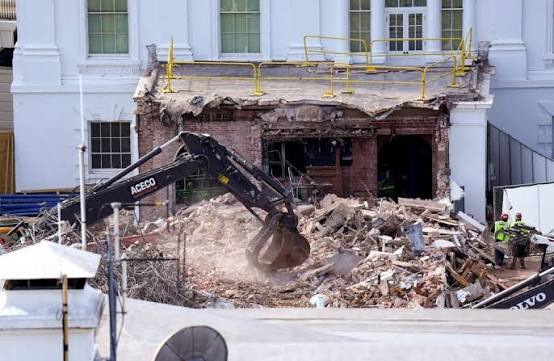
Demolition of the East Wing of the White House
Trump intends this to be a monument to himself: By October, 2025, senior officials within the Trump administration were using the title, “The President Donald J. Trump Ballroom.”
On August 31, the Supreme Court—packed with six Right-wing Justices—granted Trump approval to continue construction on his ballroom. This had been halted after a lower court issued a temporary block on the project earlier that month.
After the ruling, Trump wrote on Truth Social: “We are living in the Golden Age of America, and this Building will be one of the Greatest ever constructed in Washington, D.C. When completed in the Summer of 2028, the magnificent Ballroom and Military Complex will be something that the entire Country is very proud of.”
In a rare burst of candor, Trump told New York Magazine that his construction projects are essentially monuments to himself: “Nobody will do it once I’m gone. When I leave here, nobody will.”
For Trump, there can’t be too many monuments to his memory. Among these:
- Like a Roman emperor, Trump has put his face on a new commemorative gold-finished $1 coin issued by the U.S. Mint—allegedly to celebrate America’s 250th anniversary.
- He has mused about changing the name of the Strait of Hormuz to “Trump Strait.” How he would get the Iranians to accept that name remains unclear.
- In May, 2005, the US Department of Agriculture was decorated with a banner featuring Trump’s face. Since then, the Department of Justice, the Department of the Interior, and the Department of Labor have sported similar banners.
Achieving immortality—at least in how people remember them long after they’ve passed on—has long been a desire of tyrants. But once they’re dead, they no longer have control over the lives of their once-subject peoples.
So the way they’re remembered can prove vastly different from how they wanted to be regarded.
Alexander the Great thirsted be remembered as the world’s greatest conqueror, bringing Greek civilization to the nations he ravished.

Alexander the Great
Modern historians view him as a brilliant military leader—but also as a ruthless and megalomanic tyrant who slaughtered whole peoples and caused widespread destruction. Moreover, his empire collapsed quickly after his death.
Leon Trotsky—the Russian revolutionary and bitter foe of Joseph Stalin—wrote: “Nero, too, was a product of his epoch. Yet after he perished his statues were smashed and his name was scraped off everything.
“The vengeance of history is more terrible than the vengeance of the most powerful General Secretary. I venture to think that this is consoling.”
By the time he died in 1953, Soviet dictator Joseph Stalin had an estimated 6,000 statues of himself erected across the Soviet Union and Eastern Europe, holding the world record for the most statues raised to a living person.
After his death and the start of de-Stalinization under Nikita Khrushchev, the vast majority of these statues were quietly removed, demolished, or melted down.
Finally, there is this classic poetic commentary on the uncertainty of immortality, courtesy of Percy Bysshe Shelley:
I met a traveller from an antique land
Who said: Two vast and trunkless legs of stone
Stand in the desert. Near them, on the sand,
Half sunk, a shattered visage lies, whose frown,
And wrinkled lip, and sneer of cold command,
Tell that its sculptor well those passions read
Which yet survive, stamped on these lifeless things,
The hand that mocked them and the heart that fed:
And on the pedestal these words appear:
“My name is Ozymandias, king of kings:
Look on my works, ye Mighty, and despair!”
Nothing beside remains. Round the decay
Of that colossal wreck, boundless and bare
The lone and level sands stretch far away.
ADOLF HITLER, AFFORDABILITY, ALBERT SPEER, ALEXANDER THE GREAT, ALTERNET, AMERICABLOG, AP, BABY BOOMER RESISTANCE, BBC, BENJAMIN NETANYAHU, BLOOMBERG, BLUESKY, BUZZFEED, CBS NEWS, CNN, CROOKS AND LIARS, DAILY KOS, DE-STALINIZATION, DEMOCRATS, DONALD TRUMP, FIVETHIRTYEIGHT, FREDERIC SPOTTS, HARPER’S MAGAZINE, HITLER AND THE POWER OF AESTHETICS (BOOK), HOWARD STERN, HUFFINGTON POST, IRAN, ISRAEL, JAQUELINE KENNEDY, JOHN F. KENNEDY MEMORIAL CENTER FOR THE PERFORMING ARTS, JOSEPH STALIN, LEON TROTSKY, LYNDON B. JOHNSON, MEDIA MATTERS, MENELAUS, MIDTERM ELECTIONS, MONUMENTS, MOTHER JONES, MOVEON, MSNBC, NBC NEWS, NEWSDAY, NEWSWEEK, NICOLAS MADURO, NIKITA KHRUSHCHEV, NPR, OPERATION BARBAROSSA, PBS NEWSHOUR, PERCY BYSSHE SHELLEY, PETE HEGSETH, POLITICO, POLITICUSUSA, PRINCESS DIANA, RAW STORY, REUTERS, SALON, SEATTLE TIMES, SLATE, SOVIET UNION, STRAIT OF HORMUZ, T.E. LAWRENCE, TALKING POINTS MEMO, THE ATLANTIC, THE CHICAGO SUN-TIMES, THE CHICAGO TRIBUNE, THE DAILY BEAST, THE DAILY BLOG, THE GUARDIAN, THE HILL, THE HUFFINGTON POST, THE INTERCEPT, THE LOS ANGELES TIMES, THE NATION, THE NEW REPUBLIC, THE NEW YORK TIMES, THE NEW YORKER, THE ODYSSEY (POEM), THE VILLAGE VOICE, THE WASHINGTON POST, THINKPROGRESS, THIRD REICH, TIME, TROJAN WAR, TROY, TRUTH SOCIAL, TRUTHDIG, TRUTHOUT, TWO POLITICAL JUNKIES, U.S. NEWS & WORLD REPORT, UPI, USA TODAY, VENEZUELA, VICTORY ARCH, WHITE HOUSE BALLROOM, WHITE HOUSE ROSE GARDEN, X
In Bureaucracy, History, Law, Military, Politics, Social commentary on September 9, 2026 at 12:10 am
With his popularity rating hovering at 33% to 39%, President Donald Trump desperately fears a third impeachment action against him if Democrats retake the House of Representatives in the fast-approaching midterm elections scheduled for November 3.
Thus, his almost crazed lust to be remembered forever. And for all his slim grasp of history, he knows that presidents and kings (of which he thinks himself the latter) are remembered for the wars they’ve won and the monuments they’ve left behind.
Easily won wars, of course, are the best. And on January 3, 2026, Trump got just that.
American forces bombed military facilities and infrastructure in the capital city of Caracas and across northern Venezuela. And they captured Venezuelan President Nicolás Maduro and his wife, Cilia Flores. Both were flown to New York City to face federal drug trafficking and narco-terrorism charges.

Flag of Venezuela
Savoring that triumph, Trump conspired with Israeli Prime Minister Benjamin Netanyahu to overturn the leadership of Israel’s mortal enemy and America’s longtime antagonist: Iran.
Trump predicted several times that the war would be over in four to six weeks—the same timetable Adolf Hitler gave for the completion of his victory over the Soviet Union in 1941.
And just as “Operation Barbarossa” proved a fatal mistake, so Trump’s latest stab at playing Generalissimo has proven a total disaster. Six months into his war, he still has no plan for winning it or withdrawing from it without losing face.
Then there is his mania for monuments.
Upon his return to the Presidency in 2025, he turned his “artistic” gifts on the White House. On June 9, 2025, contractors began paving over the grass of the White House Rose Garden to create a patio.
This had been a special project of then-First Lady Jacqueline Kennedy. In 1962 she and designer Rachel Lambert “Bunny” Mellon created a classic, symmetrical space for official state functions and press events.
They installed a central open lawn surrounded by formal flower beds, seasonal plantings, and flowering crabapple trees.
By September, 2026 his administration had altered over 100 structures in Washington, D.C., alone, according to New York, which reported that the projects have collectively cost over a billion dollars.
On December 18, 2025, The John F. Kennedy Memorial Center for the Performing Arts became The Donald J. Trump and John F. Kennedy Memorial Center for the Performing Arts.
Not, of course, by an act of Congress. That happened in January, 1964, two months after the assassination of President John F. Kennedy.

John F. Kennedy Memorial Center for the Performing Arts.
Congress passed and President Lyndon B. Johnson signed into law legislation renaming the Center as a “living memorial” in his honor: The John F. Kennedy Memorial Center for the Performing Arts.
In Trump’s case, getting his name added to the Center was much simpler. First, he fired the longstanding board that had overseen the Center, and put his own handpicked board members on it.
Then his chosen thralls declared: “We’re adding Trump’s name to this building.”
No doubt to his amazement, there were serious objections to this—and lawsuits backing up those objections.
On May 29, 2026, U.S. District Judge Christopher Cooper in Washington, D.C., ruled that Trump’s name was illegally added to the Center:
“The Kennedy Center’s organic statute makes crystal clear that the Center is to be named for President Kennedy, and it cannot bear any other formal name or public memorial based on the Board’s unilateral say-so. Congress gave the Kennedy Center its name, and only Congress can change it.”
And he ordered that Trump’s name be removed from the building within two weeks—by June 12, two days before Trump’s 80th birthday.
Trump has, predictably, appealed the ruling to the Supreme Court.
He thus joined the ranks of arts-obsessed tyrants like Joseph Stalin and Adolf Hitler. For 12 years, Hitler served as the arbiter of culture in Nazi Germany. Stalin held that role for almost 30.
Hitler considered himself an unappreciated artist. At 18, he had applied for admission to the Academy of Fine Arts Vienna, but was rejected twice. If he had a friend, it was the architect Albert Speer, with whom he felt an artistic kinship.
Even as the Third Reich collapsed, he found time to pore over architectural models he intended to turn into gigantic buildings.
In Hitler and the Power of Aesthetics, author Frederic Spotts argues that Hitler saw the world corrupted by “evils” he must first destroy so he could re-create it to conform to his artistic ideals.
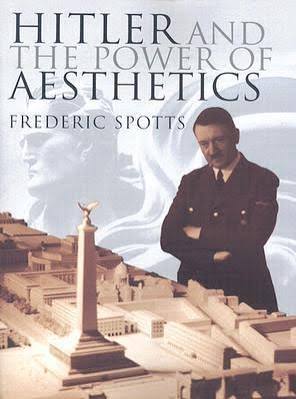
Like Hitler, Trump sees himself as an unrecognized artist through his erection of buildings. And, again like Hitler, he believes that he has a mission to replace ugliness with beauty.
But he’s clearly more focused on the demolition process than on the creation of beauty.
On October 20, 2025, demolitions crews—on his orders—gutted the East Wing of the White House to create a massive, 90,000 square feet, 650-person capacity ballroom.
And he has threatened to demolish the John F. Kennedy Center for the Performing Arts if his name is not added to it.
Meanwhile, he intends to close the Center for two years, to hide the embarrassing truth that artists and audiences no longer want to go there while he runs it.
ABC NEWS, ADOLF HITLER, ALI HOSSEINI KHAMENEI, ALTERNET, AMERICABLOG, AP, AYATOLLAH ALI KHAMENEI, BABY BOOMER RESISTANCE, BAHRAIN, BBC, BERLIN, BLOOMBERG, BLOOMBERG NEWS, BLUESKY, BUZZFEED, CBS NEWS, CNN, CROOKS AND LIARS, DAILY KOS, DONALD TRUMP, DRONES, FINLAND, FIVETHIRTYEIGHT, FRANCE, GREAT BRITAIN, HARPER’S MAGAZINE, HUFFINGTON POST, IRAN, ISRAEL, ITALY, JAPAN, JOACHIM VON RIBBENTROP, JOSEPH STALIN, KIEV, KUWAIT, LENINGRAD, LUFTWAFFE, MEDIA MATTERS, MOJTABA KHAMENEI, MOSCOW, MOTHER JONES, MOVEON, MSNBC, NAZI GERMANY, NBC NEWS, NEW REPUBLIC, NEWSDAY, NEWSWEEK, NEWT GINGRICH, NPR, NUCLEAR WEAPONS, OIL FIELDS, OMAN, OPERATION BARBAROSSA, PBS NEWSHOUR, PETE HEGSETH, POLAND, POLITICO, POLITICUSUSA, QATAR, QATER, RAW STORY, REUTERS, SALON, SAUDI ARABIA, SEATTLE TIMES, SLATE, SOVIET UNION, SS, TALKING POINTS MEMO, THE ATLANTIC, THE CHICAGO SUN-TIMES, THE CHICAGO TRIBUNE, THE DAILY BEAST, THE DAILY BLOG, THE GUARDIAN, THE HILL, THE HUFFINGTON POST, THE INTERCEPT, THE LONGEST DAY (MOVIE, THE LOS ANGELES TIMES, THE NATION, THE NEW REPUBLIC, THE NEW YORK TIMES, THE NEW YORKER, THE PENTAGON, THE UNITED ARAB EMIRATES, THE VILLAGE VOICE, THE WASHINGTON POST, THINKPROGRESS, THIRD REICH, TIME, TRUTHDIG, TRUTHOUT, TWO POLITICAL JUNKIES, U.S. NEWS & WORLD REPORT, UKRAINE, UNIFORMS, UPI, USA TODAY, VYACHESLAV MOLOTOV, WEHRMACHT, WONKETTE, WORLD WAR 11, X
In Bureaucracy, History, Military, Politics, Social commentary on August 4, 2026 at 12:10 am
Now, fast-forward 85 years—from 1941 to 2026. Substitute President Donald Trump for Fuhrer Adolf Hitler and Mojtaba Khamenei for Joseph Stalin—and Iran for the Soviet Union.

Just as Hitler launched his attack on the Soviet Union without warning, so did Trump launch his on Iran—on February 28.
Hitler—and numerous members of the Wehrmacht—believed that Germany’s mechanized panzers would quickly subdue Soviet armies.
“We were fast,” recalled Panzer Lieutenant Hans-Erdmann Schonbeck. “And our tank forces could cover huge distances. And once we broke through the enemy’s defenses, our orders were not to worry about threats to our right or left but to keep going, deep into Russian territory.”

Panzer tank
But the tanks soon faced unexpected difficulties. Most roads in Russia were unpaved, so the tanks raised huge dust clouds almost everywhere they went. The dust clogged their engines and brought many tanks to a halt. Repair crews worked themselves to exhaustion so that the lightning-fast advance could continue.
Another drawback not evident at the outset of the invasion: Summer uniforms. For a war that began on June 22, 1941, these were entirely appropriate. But as the months quickly passed, the notorious Russian winter season loomed ever closer.

Germans in summer uniforms
The German command underestimated the campaign’s duration, expecting a victory by autumn 1941, and prioritized ammunition and fuel over winter equipment. Although winter gear existed, it was stuck in supply depots in the West, and transport lines were too strained by the Soviets’ “scorched earth” tactics to move it to the front.
Without proper greatcoats or insulated boots, soldiers suffered from extreme cold, with temperatures dropping far below zero. Many resorted to stealing blankets from civilians or using blankets as makeshift clothing.
In its war with Iran, American’s air force completely dominated the skies. But then both American planes and ground forces faced an unexpected enemy: Mass-produced drones.
The same weapons—some of them supplied by Iran to Russia—have been used since 2022 in Ukraine. Unmanned and remotely-controlled, Ukrainian and Russian drones have transformed the battlefield. They’re estimated to inflict around 80% of combat casualties on both sides.
The technology—like that forged in Germany’s Blitzkrieg tactics—is revolutionizing warfare and evolving rapidly. To adapt to the new era, the U.S. military is learning lessons from Ukraine.

Iranian drone
Student News Agency, Attribution, via Wikimedia Commons
Not only are American military forces being targeted, so are those Gulf nations that have allied themselves with the United States: The United Arab Emirates, Saudi Arabia, Kuwait, Bahrain, Qatar and Oman.
Primarily targeted: Energy infrastructure, airports and sites hosting American military personnel.
For Iran, the drones are relatively cheap. For the United States, the costs of countering this threat are steadily mounting. A typical Shahed-136 costs Tehran roughly $20,000 to $50,000, while interceptor missiles, such as the Patriot and Terminal High Altitude Area Defense (THAAD), cost the United States millions.
On August 22, 1939—the eve of his invasion of Poland, which would ignite World War II—Adolf Hitler delivered a secret address to his supreme commanders and generals. Its climax:
“Close your hearts to pity. Act brutally. Eighty million people must obtain what is their right. Their existence must be made secure. The stronger man is right. The greatest harshness.”
Hitler urged his generals to act similarly toward the Russians, whom he regarded as subhumans.
The results of this policy soon became obvious when the Wehrmacht invaded Ukraine. Ukrainians, long suffering under the yoke of Stalin, greeted the invaders with bread and salt, the traditional greeting of comrades.
Within a month, they realized that the tyranny of Stalin had been replaced by an all-out extermination campaign of Hitler. For every Ukrainian the Germans killed, 10 more emerged to seek revenge.
Eighty-five years later, Donald Trump and officials of his administration are celebrating the indiscriminate slaughter of Iranians, whether civilian or military.
“We totally demolished Kharg Island, but we may hit it a few more times just for fun,” Trump said on NBC News.
On March 22, Secretary of Defense Pete Hegseth, hosting his monthly Christian worship service at the Pentagon, prayed: “Let every round find its mark against the enemies of righteousness and our great nation.
“Give them wisdom in every decision, endurance for the trial ahead, unbreakable unity, and overwhelming violence of action against those who deserve no mercy.”

Pete Hegseth
“I pursued my enemies and overtook them, and did not turn back till they were consumed,” he read from Psalms 18:37. “Those who hated me I destroyed. They cried to the Lord, but He did not answer them.”
Former House speaker and Trump advisor Newt Gingrich posted on X: “Instead of fighting over a 21-mile-wide bottleneck [Strait of Hormuz] forever, we [could] cut a new channel through friendly territory. A dozen thermonuclear detonations and you’ve got a waterway wider than the Panama Canal, deeper than the Suez, and safe from Iranian attacks.”
This would produce countless numbers of casualties and cover the Middle East with radioactive fallout.
It remains to be seen if such exhortations will lead American soldiers to act as barbarically as those of the Wehrmacht and SS—and inspire similar barbarism in return.
ABC NEWS, ADOLF HITLER, ALI HOSSEINI KHAMENEI, ALTERNET, AMERICABLOG, AP, AYATOLLAH ALI KHAMENEI, BABY BOOMER RESISTANCE, BAHRAIN, BBC, BERLIN, BLOOMBERG, BLOOMBERG NEWS, BLUESKY, BUZZFEED, CBS NEWS, CNN, CROOKS AND LIARS, DAILY KOS, DONALD TRUMP, DRONES, FINLAND, FIVETHIRTYEIGHT, FRANCE, GREAT BRITAIN, HARPER’S MAGAZINE, HUFFINGTON POST, IRAN, ISRAEL, ITALY, JAPAN, JOACHIM VON RIBBENTROP, JOSEPH STALIN, KIEV, KUWAIT, LENINGRAD, LUFTWAFFE, MEDIA MATTERS, MOJTABA KHAMENEI, MOSCOW, MOTHER JONES, MOVEON, MSNBC, NAZI GERMANY, NBC NEWS, NEW REPUBLIC, NEWSDAY, NEWSWEEK, NEWT GINGRICH, NPR, NUCLEAR WEAPONS, OIL FIELDS, OMAN, OPERATION BARBAROSSA, PBS NEWSHOUR, PETE HEGSETH, POLAND, POLITICO, POLITICUSUSA, QATAR, QATER, RAW STORY, REUTERS, SALON, SAUDI ARABIA, SEATTLE TIMES, SLATE, SOVIET UNION, SS, TALKING POINTS MEMO, THE ATLANTIC, THE CHICAGO SUN-TIMES, THE CHICAGO TRIBUNE, THE DAILY BEAST, THE DAILY BLOG, THE GUARDIAN, THE HILL, THE HUFFINGTON POST, THE INTERCEPT, THE LONGEST DAY (MOVIE, THE LOS ANGELES TIMES, THE NATION, THE NEW REPUBLIC, THE NEW YORK TIMES, THE NEW YORKER, THE PENTAGON, THE UNITED ARAB EMIRATES, THE VILLAGE VOICE, THE WASHINGTON POST, THINKPROGRESS, THIRD REICH, TIME, TRUTHDIG, TRUTHOUT, TWO POLITICAL JUNKIES, U.S. NEWS & WORLD REPORT, UKRAINE, UNIFORMS, UPI, USA TODAY, VYACHESLAV MOLOTOV, WEHRMACHT, WONKETTE, WORLD WAR 11, X
In Bureaucracy, History, Military, Politics, Social commentary on August 3, 2026 at 12:05 am
The city: Berlin.
The date: November 12–13, 1940.
The event: A meeting between German Fuhrer Adolf Hitler and Soviet Foreign Minister Vyacheslav Molotov.
The purposes: To discuss:
- Soviet expansion and control over Finland, Bulgaria, and the Turkish Straits; and
- Germany’s desire for the USSR to attack British interests in India and Iran.
Hitler wanted the USSR to join the Axis (Germany, Italy, and Japan) and expand “southward” toward the Indian Ocean to avoid conflict in Europe.
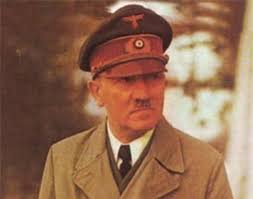
Adolf Hitler
Molotov ignored the talk of India and instead demanded control over Finland, Bulgaria, and the Turkish Straits.
Hitler adamantly opposed Soviet control over Finland, which he considered a strategic ally. He feared a Soviet expansion into Scandinavia would threaten German iron ore supplies from Sweden and northern interests.
And he deeply feared that the Soviet Union would cut off Germany’s vital Romanian oil supplies. Romania provided roughly 75% of German oil in 1941. A late 1940 Soviet attack on the Ploiești oil fields would render Germany helpless and force an end to the war.
On a personal level, Molotov and Hitler grated on each other’s nerves. Molotov was blunt in his remarks and didn’t spare Hitler at all. He seldom smiled and refused to compromises on Russia’s demands for control of Finland, Bulgaria, and the Turkish Straits.
At one point, Molotov asked: “Is last year’s agreement [between Germany and Russia] still valid?”
Hitler replied that it was.
“I asked this question,” said Molotov, “because of the Finns. You are on very friendly relations with the Finns. You invite people from Finland to Germany and you send missions there. And the Finns are very dangerous people. They undermine our security and we’ll have to do something about that and we are going to do something about that.”

Vyacheslav Molotov
“I understand you very well,” exploded Hitler. “You want to wage war against Finland and that is quite out of the question. Do you hear me? It’s impossible because my supplies of iron, nickel and other important raw materials would be cut.”
During the talks, British Royal Air Force (RAF) bombers appeared overhead, forcing the leaders to move to an air raid shelter.
German Foreign Minister Joachim von Ribbentrop had been trying to convince Molotov that Great Britain was “beaten” and that the British Empire was a “gigantic world-wide estate in bankruptcy” ready for partition.
Molotov sarcastically replied: “If England is beaten, why are we in this shelter and whose are the bombs that are falling?”
Even while Molotov was still in Berlin, Hitler ordered his generals to attack the Soviet Union on May 15, 1941.
Within a month they responded with a detailed plan code-named “Operation Barbarossa.”
Less than one year later—on June 22, 1941—with 134 divisions at full fighting strength and 73 more divisions for deployment behind the front, the German Wehrmacht invaded the Soviet Union.
Now the two most ruthless dictators on earth—Adolf Hitler and Joseph Stalin—were locked in a fight to the death.
At the outset, the odds clearly favored the Germans.
The invasion caught the Soviet Union by surprise. Joseph Stalin had received Intelligence reports from Great Britain that Germany was preparing to attack. But Stalin, who believed the British were trying to drive a wedge between him and Hitler, put his faith in Hitler, whose guarantees had long proved worthless.

German army units
From June to September, the Wehrmacht captured vast territories and encircled hundreds of thousands of Red Army troops. German forces quickly advanced toward Leningrad, Moscow, and Kiev, inflicting massive casualties.
The Luftwaffe destroyed much of the Soviet air force on the ground.
In June and July, German panzers quickly advanced, capturing over 300,000 Soviet prisoners in the Minsk-Bialystok pocket. By late September, Army Group South captured Kiev, resulting in the largest encirclement in history, with roughly 600,000 Soviet soldiers trapped.
By the end of 1941, more than three million Soviet soldiers were captured or killed. Still, the Soviet Union did not collapse and continued to commit new field armies to the conflict.
By December, the Wehrmacht, besieging Moscow, were literally freezing to death in their summer uniforms. Then, on December 5-6, the Soviets launched their decisive counter-offensive before Moscow, forcing German forces into a retreat.
It marked the first major land defeat for the Wehrmacht since its September 1, 1939 invasion of Poland, which ignited World War II.
Now, fast-forward 85 years. Substitute President Donald Trump for Fuhrer Adolf Hitler and Mojtaba Khamenei for Joseph Stalin—and Iran for the Soviet Union.
Donald Trump and Adolf Hitler
Just as Hitler launched his attack on the Soviet Union without warning, so did Trump launch his on Iran—on February 28.
Hitler’s attack didn’t kill Joseph Stalin, the all-powerful dictator of the Soviet Union. But Trump’s airstrikes killed Ali Hosseini Khamenei, who had ruled Iran as its supreme leader from 1989.

Ayatollah Ali Khamenei
Still, the Iranians quickly elevated his son, Mojtaba Khamenei, to the same position—and went on fighting.
Hitler––and numerous members of the Wehrmacht—believed that Germany’s mechanized panzers would succeed where Napoleon Bonaparte had failed in 1812. And that they could conquer the Soviet Union in only three months.
They were wrong.
ABC NEWS, ADOLF HITLER, ALFRED JODL, ALTERNET, AMERICABLOG, AP, AYATOLLAH ALI KHAMENEI, BABY BOOMER RESISTANCE, BBC, BELGIUM, BLOOMBERG, BLOOMBERG NEWS, BLUESKY, BUZZFEED, CBS NEWS, CNN, CROOKS AND LIARS, DAILY KOS, FIVETHIRTYEIGHT, FRANCE, GREECE, HARPER’S MAGAZINE, HEINZ GUDERIAN, HOLLAND, HUFFINGTON POST, ISRAEL, JORDAN, JOSEPH STALIN, KUWAIT, LENINGRAD, MEDIA MATTERS, MOSCOW, MOTHER JONES, MOVEON, MSNBC, NAPOLEON BONAPARTE, NAZI GERMANY, NBC NEWS, NEW REPUBLIC, NEWSDAY, NEWSWEEK, NORTH ATLANTIC TREATY ORGANIZATION (NATO), NORWAY DENMARK, NPR, NUCLEAR WEAPONS, OIL FIELDS, PBS NEWSHOUR, PETE HEGSETH, POLAND, POLITICO, POLITICUSUSA, QATAR, RAW STORY, REPUBLICAN PARTY, REUTERS, SALON, SAUDI ARABIA, SAVING PRIVATE RYAN (MOVIE), SEATTLE TIMES, SLATE, SOVIET UNION, TALKING POINTS MEMO, TERRORISM, THE ATLANTIC, THE CHICAGO SUN-TIMES, THE CHICAGO TRIBUNE, THE DAILY BEAST, THE DAILY BLOG, THE GUARDIAN, THE HILL, THE HUFFINGTON POST, THE INTERCEPT, THE LONGEST DAY (MOVIE, THE LOS ANGELES TIMES, THE NATION, THE NEW REPUBLIC, THE NEW YORK TIMES, THE NEW YORKER, THE PENTAGON, THE UNITED ARAB EMIRATES, THE VILLAGE VOICE, THE WASHINGTON POST, THINKPROGRESS, THIRD REICH, TIME, TRUTHDIG, TRUTHOUT, TWO POLITICAL JUNKIES, U.S. NEWS & WORLD REPORT, UPI, USA TODAY, WEHRMACHT, WONKETTE, X, YUGOSLAVIA
In Bureaucracy, History, Law, Politics, Social commentary on July 31, 2026 at 12:05 am
Donald Trump’s unprovoked attack on Iran is separated from Adolf Hitler’s attack on the Soviet Union by a span of 84 years. Yet despite differences in geography and history, eerie similarities exist between the two.
Hitler launched his assault on the Soviet Union on June 22, 1941—after a series of quick military conquests: Poland (1939); Norway, Denmark, Holland, Belgium, France (1940); Greece and Yugoslavia (1941).
Similarly, before launching his assault on Iran on February 28, Trump had scored a number of triumphs–albeit of a non-military nature. A March 19, 2026 article in The New Republic offers a partial summary:
Donald Trump and Adolf Hitler
“In the first year since returning to power, Trump and his subordinates have pushed the country toward fascism and oligarchy. He has turned Washington into an orgy of corruption and self-dealing beyond even the most cynical observer’s imagination.
“He has transformed Immigration and Customs Enforcement and Border Patrol into a lawless paramilitary force that has besieged American cities and killed at least five U.S. citizens and 22 foreign nationals. He has abused Americans and their immigrant neighbors alike simply because he can.”
In his attempt to conquer the Soviet Union, Hitler made the fatal mistake of trying to conquer too much territory all at once.
In August 1941, Hitler diverted forces from the central push on Moscow to surround Leningrad and industrial regions in the South, which delayed the attack on Moscow. By the time Hitler decided to capture Moscow, the weather had turned cold and the Germans were exhausted and freezing.
As in the case of Hitler, Trump assumed that Iran could be forced to quickly surrender. But that effort has been handicapped by a series of shifting and contradictory goals:
- Preventing Iran from developing nuclear weapons.
- Destroying Iran’s missile capabilities.
- Annihilating the Iranian navy.
- Ensuring that Iran quit arming, funding and/or directing “terrorist armies” outside its borders.
In the opening day of the war, American and Israeli airstrikes killed Iran’s Supreme Leader, Ayatollah Ali Khamenei. By March 17, Israel announced that it had killed two more top Iranian leaders in airstrikes. Still, Iranians chose new leaders to succeed dead ones and went on fighting.
Ayatollah Ali Khamenei
On March 19, Israeli airstrikes hit Iran’s largest gas field—South Pars, which is part of the world’s largest natural gas reserves. In retaliation, Iran launched drone and missile attacks against energy infrastructure in Saudi Arabia, the United Arab Emirates (UAE), Qatar, and Kuwait.
Iran also targeted Israel and attacked U.S. military bases in the region, including in Bahrain and Jordan.
Hitler expected the Soviet Union to collapse in a matter of weeks. France, which supposedly had the strongest army in Europe, had collapsed in six weeks in 1940. Hitler believed that General Winter, which had defeated Napoleon in 1812, would not be a problem for the mechanized Wehrmacht.
Yet the Wehrmacht was far less mechanized than portrayed by German propagandists. It relied heavily on horses for approximately 80% of its transport needs throughout World War II. During the winter of 1941 – 1942, the Wehrmacht lost over 179,000 horses. In the Army Group Center sector, losses reached roughly 1,000 horses per day.
In movies like “The Longest Day” and “Saving Private Ryan,” Americans celebrate the D-Day landings in France, on June 6, 1944. But for Nazi Germany, “the real war” was in the East. There the Wehrmacht concentrated the largest proportion of its forces—and suffered 85% of its casualties.
By March 19, the United States had spent $12 to over $12.7 billion on military operations against Iran. And the Pentagon was asking for an additional $200 billion for the war. Secretary of Defense Pete Hegseth warned “that number could move.”
On July 22, it moved—House Republicans passed a $1.5 trillion defense budget for 2027.
On April 7 the United States, Israel, and Iran agreed to a two-week ceasefire, under which Iran would re-open the Strait of Hormuz. On April 11, Trump said that American ships had started “clearing” the Strait of Hormuz.
The Iranian government threatened to attack the ships, accusing the United States of a ceasefire violation.
On July 8, Iran struck more targets in the Strait of Hormuz. Trump declared the Memorandum Of Understanding between the two countries was “over,” and that he didn’t want to deal any further with Iran’s leadership
Following an attack by Iranian forces on oil tankers in the Strait of Hormuz, on July 13, the United States began 13 consecutive nights of airstrikes on Iran, ending on July 24.
On July 27 Trump said he was ready for “strong military action” if talks with Iran failed, saying there’s “not much time” left for diplomacy
Bombing, however, has never by itself ended a war. Hitler’s terror-bombing of England only stiffened British resolve to fight on.
Trump could launch a ground troop invasion—but Iran is more than twice the size of Texas, covering about 636,000 square miles. That would require tens of thousands of troops—and almost certainly lead to a highly unpopular draft.
Aside from that, his only other choice is the use of nuclear weapons.
Both would be highly unpopular—especially in a midterms election year.
Like Hitler’s war against the Soviet Union, by July 28, Trump’s “two week” war with Iran had lasted five months—with no end in sight.
ABC NEWS, ADOLF HITLER, ALFRED JODL, ALTERNET, AMERICABLOG, AP, AYATOLLAH ALI KHAMENEI, BABY BOOMER RESISTANCE, BBC, BELGIUM, BLOOMBERG, BLOOMBERG NEWS, BLUESKY, BUZZFEED, CBS NEWS, CNN, CROOKS AND LIARS, DAILY KOS, FIVETHIRTYEIGHT, FRANCE, GREECE, HARPER’S MAGAZINE, HEINZ GUDERIAN, HOLLAND, HUFFINGTON POST, ISRAEL, JORDAN, JOSEPH STALIN, KUWAIT, LENINGRAD, MEDIA MATTERS, MOSCOW, MOTHER JONES, MOVEON, MSNBC, NAPOLEON BONAPARTE, NAZI GERMANY, NBC NEWS, NEW REPUBLIC, NEWSDAY, NEWSWEEK, NORTH ATLANTIC TREATY ORGANIZATION (NATO), NORWAY DENMARK, NPR, NUCLEAR WEAPONS, OIL FIELDS, PBS NEWSHOUR, PETE HEGSETH, POLAND, POLITICO, POLITICUSUSA, QATAR, RAW STORY, REPUBLICAN PARTY, REUTERS, SALON, SAUDI ARABIA, SAVING PRIVATE RYAN (MOVIE), SEATTLE TIMES, SLATE, SOVIET UNION, TALKING POINTS MEMO, TERRORISM, THE ATLANTIC, THE CHICAGO SUN-TIMES, THE CHICAGO TRIBUNE, THE DAILY BEAST, THE DAILY BLOG, THE GUARDIAN, THE HILL, THE HUFFINGTON POST, THE INTERCEPT, THE LONGEST DAY (MOVIE, THE LOS ANGELES TIMES, THE NATION, THE NEW REPUBLIC, THE NEW YORK TIMES, THE NEW YORKER, THE PENTAGON, THE UNITED ARAB EMIRATES, THE VILLAGE VOICE, THE WASHINGTON POST, THINKPROGRESS, THIRD REICH, TIME, TRUTHDIG, TRUTHOUT, TWO POLITICAL JUNKIES, U.S. NEWS & WORLD REPORT, UPI, USA TODAY, WEHRMACHT, WONKETTE, X, YUGOSLAVIA
In Bureaucracy, History, Military, Politics, Social commentary on July 30, 2026 at 12:13 am
Adolf Hitler had a warning for Donald Trump on the eve of his launching airstrikes against Iran.
A warning Trump should have heeded—but didn’t.
It all started on June 22, 1941.
On that date, Hitler ordered his powerful Wehrmacht o invade the Soviet Union.
Less than two years earlier, on August 23, 1939, he had signed a “non-aggression” pact with his longtime arch-enemy, Joseph Stalin, dictator of the Soviet Union.
Since then, his army had conquered Poland, Norway, Denmark, Holland, Belgium and France.
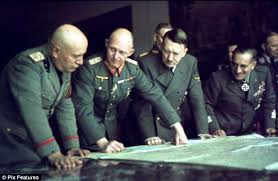
Adolf Hitler with his generals
Now, he believed, it was time to “settle accounts” with the Soviet Union.
Only there could Germany obtain the “living space” it “needed” for its expanding population.
So at 3 a.m. on June 22, 1941, Hitler once again launched an invasion.
At first, Hitler felt giddy with excitement.
Turning to Alfred Jodl, his chief of operations for the Wehrmacht, he said: “We have only to kick in the door and the whole rotten structure will come crashing down.”
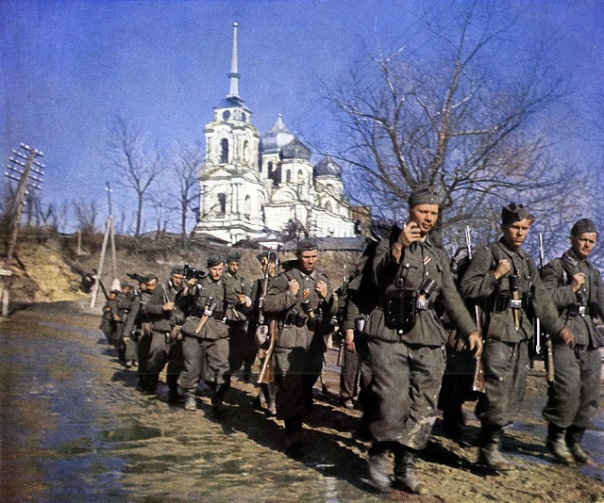
German soldiers marching through Russia
But soon afterward—almost as if he had just looked into the future and seen that he had none—he told an aide: “At the beginning of each campaign, one pushes a door into a dark, unseen room. One can never know what is hiding inside.”
That certainly proved true for Hitler.
Within four years, he was dead and the Red Army occupied Berlin.
And now the law of unintended consequences may be coming true for President Donald Trump and the United States.
On February 28, Trump—in concert with Israel—launched a series of devastating, unprovoked airstrikes against Iran. Since then, Trump and his Secretary of Defense, Pete Hegseth, have been all over the map with rosy predictions.

Donald Trump
- February 28: Trump posted on Truth Social that the bombing would continue “throughout the week or as long as necessary to achieve our objective of PEACE THROUGHOUT THE MIDDLE EAST AND, INDEED, THE WORLD!”
- March 1: In a video Trump declared that the war would continue “until all of our objectives are achieved.”
- March 2: Trump: “Right from the beginning, we projected four to five weeks, but we have capability to go far longer than that.”
- March 5: Hegseth to Pentagon reporters: “You can say four weeks [how long the war might last] but it could be six, it could be eight, it could be three. Ultimately, we set the pace and the tempo.”
- March 6: Trump: “There will be no deal with Iran except UNCONDITIONAL SURRENDER.”
- March 8: Hegseth: “We’re willing to go as far as we need to in order to be successful.”
- March 9: Trump: “No, but soon. I think so. Very soon” when asked by a reporter if the war would be over that week.
- March 11: “You know, you never like to say too early you won. We won. We won the, in the first hour, it was over.”
Hitler had been similarly optimistic about how long it would take to conquer the Soviet Union: Six to eight weeks, at the longest. And during the first three months of the war—July through September, 1941—that optimism seemed well-placed.
The Wehrmacht repeatedly lured Soviet armies into huge “cauldron battles,” then surrounded them, killing thousands and taking thousands of prisoners. By the end of September, German forces had captured or killed over 650,000 Russian troops in the Battle of Kiev alone, with total Soviet casualties reaching millions.
But then Hitler—and the Wehrmacht—paid a fatal price for their misplaced optimism.
The best—and most lethal—example of this hubris: The Wehrmacht went to war in summer uniforms on June 22—and were still wearing them in December.
Hitler placed infinite faith in the power of will to overcome all obstacles. When his soldiers were literally freezing to death before the gates of Moscow, Hitler believed that with “just one more push” the Soviet capital would fall.
When Heinz Guderian, his foremost expert on tank warfare, informed Hitler that German soldiers had no defense against the bitter cold, Hitler replied: They should dig foxholes.
Guderian replied that the icy ground was too solid to be punctured with spades.
Hitler’s reply: They should fire artillery shells into the ground to build foxholes.
This totally ignored the reality that, by December, 1941, the German army was dangerously short on munitions of all kinds.
Like Hitler, Trump seemed to consider himself omnipotent. Asked by a reporter how long the war would last, the President replied: “Any time I want it to end, it will end.”
Yet by the third week of the war, he began demanding—not asking—the assistance of NATO countries: We’ve had your back, now it’s our turn.
This totally ignored the fact that NATO exists to aid any of its members if it is attacked. After 9/11, NATO air force planes screened American airspace to prevent a repeat of similar carnage.
But NATO members are not obligated to join any nation in igniting a war. And that was precisely what Trump did on February 28—without consulting or even informing NATO of his plans to attack.
The only country that had known his intentions was Israel.
300 (MOVIE), ACHILLES, AGAMEMNON, ALEXANDER THE GREAT, ALTERNET, AMAZONS, AMERICABLOG, ANNE HATHAWAY, AP, BABY BOOMER RESISTANCE, BBC, BEN HUR (MOVIE), BLOOMBERG, BLUESKY, BUZZFEED, CBS NEWS, CHARLES LAUGHTON, CHARLIZE THERON, CHARLTON HESTON, CHRISTOPHER NOLAN, CLEOPATRA (MOVIE), CNN, COLMAN DOMINGO, CROOKS AND LIARS, DAILY KOS, DAVID AND BATHSHEBA (MOVIE), ELLIOT PAGE, ELON MUSK, FIVETHIRTYEIGHT, GORDON MITCHELL, GREEK MYTHOLOGY, GREGORY PECK, HARPER’S MAGAZINE, HECTOR, HELEN OF TROY, HENRY V (PLAY), HERCULES, HOMER, HOMOSEXUALITY, HUFFINGTON POST, ISRAELITES, JESUS CHRIST, JIMMY KIMMEL LIVE!, KINIG OF KINGS (MOVIE), LATIN, LAURENCE OLIVER, MATT DAMON, MATT WALSH, MEDIA MATTERS, MEL GIBSON, MENELAUS, MOTHER JONES, MOVEON, MSNBC, NBC NEWS, NEWSDAY, NEWSWEEK, NPR, ODYSSEUS, OPPENHEIMER (MOVIE), PBS NEWSHOUR, PENELOPE, PETE HEGSETH, PETER USTINOV, POLITICO, POLITICUSUSA, PRIAM, RAW STORY, REUTERS, REX HARRISON, RICHARD BURTON, SALON, SAMSON AND DELILAH (MOVIE), SAVING PRIVATE RYAN (MOVIE), SEATTLE TIMES, SLATE, SPARTA, SPARTACUS (MOVIE), SUSAN DEACY, TALKING POINTS MEMO, THE 300 SPARTANS (MOVIE), THE ATLANTIC, THE CHICAGO SUN-TIMES, THE CHICAGO TRIBUNE, THE DAILY BEAST, THE DAILY BLOG, THE FURY OF ACHILLES (MOVIE), THE GUARDIAN, THE HILL, THE HUFFINGTON POST, THE ILIAD, THE INTERCEPT, THE LOS ANGELES TIMES, THE NATION, THE NEW REPUBLIC, THE NEW YORK TIMES, THE NEW YORKER, THE ODYSSEY (MOVIE), THE ODYSSEY (POEM), THE PASSION OF THE CHRIST (MOVIE), THE TEN COMMANDMENTS (MOVIE), THE VILLAGE VOICE, THE WASHINGTON POST, THINKPROGRESS, TIME, TROJAN WAR, TROY, TROY (MOVIE), TRUTHDIG, TRUTHOUT, TWO POLITICAL JUNKIES, U.S. NEWS & WORLD REPORT, UPI, USA TODAY, WILLIAM SHAKESPEARE, WOLFGANG PETERSON, X
In Business, Entertainment, History, Military, Politics, Social commentary on July 29, 2026 at 12:10 am
Most of what Americans believe about the ancient world comes from blockbuster movies—many of them dating back to the 1940s, 1950s and 1960s.
Among those beliefs:
THE ISRAELITES WERE THE GOOD GUYS. That’s because Biblical movies were based (often loosely) on Old Testament stories. And the Old Testament was written by Israelites.
- The Israelites were never portrayed as being as ruthless as their enemies, despite this instruction in Jeremiah 51:22-23: “With you I will shatter men and women, old people and children, young men and maidens. With you I will shatter shepherds and flocks, farmers and oxen, captains and rulers.”
- “Sansom and Delilah” (1949) and “The Ten Commandments” (1956), pitted noble Israelites against, respectively, evil Philistines and Egyptians.
- Even when a major figure like King David (Gregory Peck in “David and Bathsheba” (1951) committed major sins like adultery and murder, the movie ended on a high note: God forgives him and sends rain to quench a parched Israel.
A big difference once existed between how audiences treated movies based on Greek mythology and those based on the Bible.
Audiences were content to enjoy films based on Greek myths without taking them seriously. But those watching movies based on Bible stories assumed they were watching history unfolding before them.
This was never truer than audiences’ reaction to director Mel Gibson’s 2004 blockbuster, The Passion of the Christ. Orthodox Christians flocked to the movie, which blamed Jesus’ crucifixion on Jewish high priests, not the Roman governor, Pontius Pilate.

Now audiences seem to believe that “The Odyssey” is delivering history, not mythology. When the first trailer was released in December, critics said that Odysseus’s boat looked like a “Viking ship.”
“I wonder whether we have become inclined to treat mythological material as though it were historical material,” said Susan Deacy, professor of Classics at the University of Roehampton and the author of The Greek Gods and Their Worlds. “Yet the Odyssey is continually being reimagined, with pretty well every age producing its own Homer.”
Many viewers were surprised to hear British actors, such as Tom Holland, speaking with American accents and using modern, contemporary expressions.
But Deacy said this is based on cinematic tradition, not historical accuracy. The ancient Greeks did not speak either modern American English or formal British English. So conversational language may actually be closer to the spirit of Homer’s oral storytelling than the formal style often used in historical films.

Susan Deacy
Susandeacy, CC0, via Wikimedia Commons
Audiences didn’t “treat mythological material as though it were historical material” in 2004, when Wolfgang Peterson’s “Troy” hit movie screens. It featured Brad Pitt as Achilles, Eric Bana as Hector, Orlando Bloom as Paris, Sean Bean as Odysseus and Diane Kruger as Helen.
Among its deviations from Homer and Greek mythology:
- Menelaus, the husband of Helen, is killed by Hector (instead of returning to Sparta with Helen).
- Agamemnon is killed during the fall of Troy by Briseis, the woman once held captive by Achilles. (According to Greek myth, he was murdered, upon his return home, by his wife, Clytemnestra.)
- Achilles infiltrates Troy in the wooden horse—and is killed on the city’s last night. (Greek mythology has him killed at the gates of Troy before the Greeks erected the Trojan horse.)
- Most incredibly, Paris and Helen escape Troy to presumably find happiness somewhere else. (In Greek mythology, Menelaus intends to kill Helen for running off with Paris. But when he sees her, she bares her still-magnificent breasts and yells: “Kill me!” He’s so dumbstruck by her beauty he drops his sword and walks hand-in-hand with her to his ship for the voyage home.)

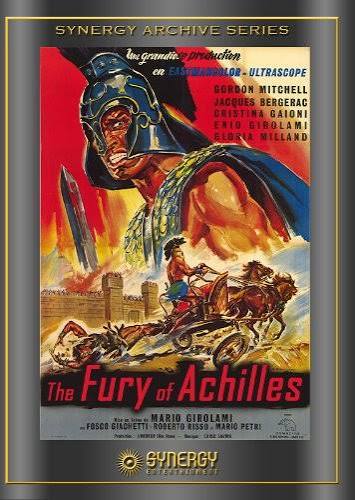
For those seeking a movie that adhere closely to the Iliad, the winner, hands down, is “The Fury of Achilles” (1962). It’s an Italian drama set in the tenth year of the Trojan War directed by Marino Girolami and starring Gordon Mitchell as Achilles.
It lacks the spectacle of “Troy” (owing to CGI) but is surprisingly sympathetic to its main characters—Achilles, Hector and Priam.
In one deeply moving scene, Achilles tells Briseis that every other Greek soldier hopes to return home, but he is doomed to die at Troy. He knows he has a vulnerable spot, but he doesn’t know where it is. He knows he is fated to kill Hector, Troy’s finest warrior—and that he himself will die soon afterward.
Hector is similarly treated with sympathy, knowing he must die—and that when he does, his beloved city will soon follow him. But then he kills Achilles’ dear companion, Patroclus, and feels obligated to accept Achilles’ challenge to single combat.
And finally there is Priam, king of Troy, who, as in Homer, movingly pleads to Achilles for the body of his son, Hector. Achilles answers: “Your son is luckier than I. He has a father who mourns him. Who will mourn me when I’m gone? My father is dead.”
And elderly Priam replies: “If I am still alive when you are dead, I will mourn you as another son I have lost.”
At which point a sorrowful Achilles hands over the body of Hector to his grieving father—and the movie, like the Iliad, comes to an end.
300 (MOVIE), ACHILLES, AGAMEMNON, ALEXANDER THE GREAT, ALTERNET, AMAZONS, AMERICABLOG, ANNE HATHAWAY, AP, BABY BOOMER RESISTANCE, BBC, BEN HUR (MOVIE), BLOOMBERG, BLUESKY, BUZZFEED, CBS NEWS, CHARLES LAUGHTON, CHARLIZE THERON, CHARLTON HESTON, CHRISTOPHER NOLAN, CLEOPATRA (MOVIE), CNN, COLMAN DOMINGO, CROOKS AND LIARS, DAILY KOS, DAVID AND BATHSHEBA (MOVIE), ELLIOT PAGE, ELON MUSK, FIVETHIRTYEIGHT, GORDON MITCHELL, GREEK MYTHOLOGY, GREGORY PECK, HARPER’S MAGAZINE, HECTOR, HELEN OF TROY, HENRY V (PLAY), HERCULES, HOMER, HOMOSEXUALITY, HUFFINGTON POST, ISRAELITES, JESUS CHRIST, JIMMY KIMMEL LIVE!, KINIG OF KINGS (MOVIE), LATIN, LAURENCE OLIVER, MATT DAMON, MATT WALSH, MEDIA MATTERS, MEL GIBSON, MENELAUS, MOTHER JONES, MOVEON, MSNBC, NBC NEWS, NEWSDAY, NEWSWEEK, NPR, ODYSSEUS, OPPENHEIMER (MOVIE), PBS NEWSHOUR, PENELOPE, PETE HEGSETH, PETER USTINOV, POLITICO, POLITICUSUSA, PRIAM, RAW STORY, REUTERS, REX HARRISON, RICHARD BURTON, SALON, SAMSON AND DELILAH (MOVIE), SAVING PRIVATE RYAN (MOVIE), SEATTLE TIMES, SLATE, SPARTA, SPARTACUS (MOVIE), SUSAN DEACY, TALKING POINTS MEMO, THE 300 SPARTANS (MOVIE), THE ATLANTIC, THE CHICAGO SUN-TIMES, THE CHICAGO TRIBUNE, THE DAILY BEAST, THE DAILY BLOG, THE FURY OF ACHILLES (MOVIE), THE GUARDIAN, THE HILL, THE HUFFINGTON POST, THE ILIAD, THE INTERCEPT, THE LOS ANGELES TIMES, THE NATION, THE NEW REPUBLIC, THE NEW YORK TIMES, THE NEW YORKER, THE ODYSSEY (MOVIE), THE ODYSSEY (POEM), THE PASSION OF THE CHRIST (MOVIE), THE TEN COMMANDMENTS (MOVIE), THE VILLAGE VOICE, THE WASHINGTON POST, THINKPROGRESS, TIME, TROJAN WAR, TROY, TROY (MOVIE), TRUTHDIG, TRUTHOUT, TWO POLITICAL JUNKIES, U.S. NEWS & WORLD REPORT, UPI, USA TODAY, WILLIAM SHAKESPEARE, WOLFGANG PETERSON, X
In Business, Entertainment, History, Military, Politics, Social commentary on July 28, 2026 at 12:17 am
Once again, the Right is enraged—this time, at a movie.
And not just any movie—“The Odyssey,” which looks to be the blockbuster hit of the summer.
It’s based on the epic poem, allegedly written by Homer, who lived between the eighth and ninth centuries. And while Homer likely earned nothing from his work, the film version of it opened with an estimated $124.5 million in domestic ticket sales and another $139.6 million from overseas,
Its director, Christopher Nolan, garnered the 2023 Best Picture Oscar for “Oppenheimer.” With a production budget of $250 million, it’s among the most expensive R-rated movies ever made. Universal is spending $125 million to market it.

Christopher Nolan
PhilipRomano, CC BY-SA 4.0 <https://creativecommons.org/licenses/by-sa/4.0>, via Wikimedia Commons
The movie stars Matt Damon (the “Ryan” in 1998’s “Saving Private Ryan”) as Odysseus, Tom Holland as his son, Telemachus; Anne Hathaway as his long-suffering wife, Penelope; Zendaya as the goddess, Athena; Robert Pattinson as the suitor Antinous and Charlize Theron as the sea nymph Calypso.
So far, so good—for the Right.
But then comes the “controversial” part: Nolan cast Lupita Nyong’o, a black actress, as Helen of Troy and Elliot Page (a “transitioning” actor) as a soldier.
Right-wingers are furious that that a black woman has been cast as Helen.

Right-wing commentator Matt Walsh wrote on X: “Not one person on the planet actually thinks that Lupita Nyong’o is ‘the most beautiful woman in the world.’ But Christopher Nolan knows that he would be called racist if he gave ’the most beautiful woman’ role to a white woman. Nolan is technically talented but a coward.”
Elon Musk charged: “Chris Nolan has lost his integrity.” And he vowed that that before the end of 2026, his AI tool Grok “will make a full-length movie of ‘The Odyssey’ that is historically accurate and true to the art of Homer.”
“By historically accurate, he means whiter than Christmas at Cracker Barrel,” comedian Colman Domingo joked during his stint as guest host on “Jimmy Kimmel Live!”
The Right’s fury can’t be based on the historical record—because the Odyssey is not history, but mythology. And according to ancient Greek myth, Helen was hatched from an egg laid after her mother was visited by Zeus in the form of a swan.
The Helen that Right-wingers envision is a product of Hollywood movie casting.

Troy did exist, and was located in northwestern Anatolia, in present-day Çanakkale province, Turkey. It lay just a few miles south of the Dardanelles strait, which connects the Aegean Sea to the Black Sea. This put the city in a highly strategic position controlling major ancient trade routes.
As a result, the famous Trojan War might well have been fought over conflicts in trade, rather than the alleged seduction/kidnapping of Helen, Queen of Sparta, by Paris, prince of Troy.
On the other hand, wars have been fought over perceived slights to the ego of one ruler by another. In William Shakespeare’s play, Henry V, the French Dauphin mocks Henry by sending him tennis balls, implying that Henry is a callow youth rather than a serious monarch. This leads Henry to invade France.
As for Elliot Page: Transgender surgery did not exist in the time of Homer. But homoerotic relationships certainly did—most famously among Greek soldiers.
Today, Right-wingers like Secretary of Defense Pete Hegseth fear that homosexuals make poor soldiers. But their choice in sex partners did not prevent the army of Alexander the Great from conquering most of the known world of his time.
The truth is that most of what Americans think they know about the ancient world comes not from scholarly books but blockbuster movies—many of them dating back to the 1940s, 1950s and 1960s.
Among those beliefs:
THE ANCIENT ROMANS SPOKE WITH BRITISH ACCIDENTS. That’s because British actors played Roman aristocrats in so many movies during the 1950s and 1960s.
- Laurence Oliver, Peter Ustinov and Charles Laughton played high-born Romans in “Spartacus” (1960) and Richard Burton and Rex Harrison played them in “Cleopatra” (1963).
- Romans didn’t speak English. They spoke Latin—which at that time was the language of world commerce. Today, it’s not used as a primary mother tongue in any community. A movie whose characters spoke Latin would find itself with an extremely small audience.
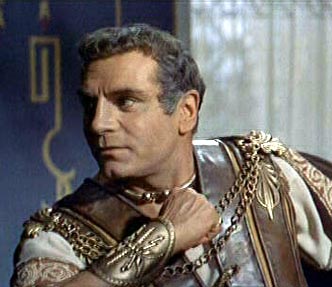
Laurence Oliver in “Spartacus”
SPARTANS WERE THE GOOD GUYS. “The 300 Spartans” (1962) and “300” (2006) celebrate the three-day battle of Thermopylae, where 300 Spartans and 6,700 other Greeks held the narrow pass against a huge Persian army. If the Spartans existed today, these films could serve as recruiting advertisements for their skill at war.
So far, so good.
What these films don’t say:
- The Spartans ruled a slave empire whose people farmed the land, supplied food and served as military laborers. Their forced labor gave Spartans the freedom to focus completely on military training.
- Once a year, Spartans were allowed to murder any helot they desired, just to remind their slaves who was boss.
- Spartan men were required to live apart from their wives in all-male barracks—and sneak out to have conjugal visits with their wives.
- Homosexuality played a major role in the lives of Spartans.
" WIKIPEDIA, 2016 PRESIDENTIAL CAMPAIGN, 2020 PRESIDENTIL CAMPAIGN, ABC NEWS, ALTERNET, AMERICABLOG, AP, ATTORNEY GENERAL, BABY BOOMER RESISTANCE, BALLOTS, BBC, BLOOMBERG, BLUESKY, BUZZFEED, CBS NEWS, CENSORSHIP, CHRISTOPHER KREBS, CIVIL RIGHTS, CNN, COVID-19, CROOKS AND LIARS, CYBERSECURITY AND INFRASTRUCTURE SECURITY AGENCY (CISA), DAILY KOS, DEFENSE CYBER COMMAND, DEPARTMENT OF HOMELAND SECURITY (DHS), DEPARTMENT OF JUSTICE, DIRECTOR OF NATIONAL INTELLIGENCE, DOMINION VOTING SYSTEMS, DONALD TRUMP, ELECTION ASSISTANCE COMMISSION, ELON MUSK, FACEBOOK, FBI, FEMINISM, FIVETHIRTYEIGHT, FOX NEWS NETWORK, FREEDOM OF THE PRESS, HACKERS, HARPER’S MAGAZINE, HERITAGE FOUNDATION, HILLARY CLINTON, HOLOCAUST, HUFFINGTON POST, I KNOW WHY THE CAGED BIRD SINGS (BOOK), JANET JACOB, JANUARY 6 COUP ATTEMPT, JOSEPH R. BIDEN, JOSEPH STALIN, MARK ZUCKERBERG, MAYA ANGELOU, MEDIA MATTERS, MEIN KAMPF (BOOK), MOTHER JONES, MOVEON, MSNBC, NATIONAL SECURITY AGENCY, NBC NEWS, NEW REPUBLIC, NEWSDAY, NEWSWEEK, NORTH ATLANTIC TREATY ORGANIZATION (NATO), NPR, PBS NEWSHOUR, PETE HEGSETH, POLITICO, POLITICUSUSA, PROJECT 2025, RACISM, RAW STORY, REPUBLICANS, REUTERS, SALON, SEATTLE TIMES, Secret Service, SENTINELONE, SLATE, SOVIET UNION, TALKING POINTS MEMO, THE ATLANTIC, THE CAMP OF THE SAINTS (BOOK), THE CHICAGO SUN-TIMES, THE CHICAGO TRIBUNE, THE DAILY BEAST, THE DAILY BLOG, THE GUARDIAN, THE HILL, THE HUFFINGTON POST, THE INTERCEPT, THE LOS ANGELES TIMES, THE NATION, THE NEW REPUBLIC, THE NEW YORK TIMES, THE NEW YORKER, THE VILLAGE VOICE, THE WASHINGTON POST, THINKPROGRESS, TIME, TROLLS, TRUTHDIG, TRUTHOUT, TWITTER, TWO POLITICAL JUNKIES, U.S. NEWS & WORLD REPORT, UNITED STATES NAVAL ACADEMY LIBRARY, UPI, USA TODAY, VLADIMIR PUTIN, WHITE SUPREMACY, X
In Bureaucracy, History, Law, Law Enforcement, Politics, Social commentary on July 23, 2026 at 3:13 am
Soviet dictator Joseph Stalin, in a moment of rare candor, once revealed his satanic ruthlessness to a group of fellow Bolsheviks: “To choose one’s victims, to prepare one’s plans minutely, to slake an implacable vengeance, and then to go to bed—there is nothing sweeter in the world.”
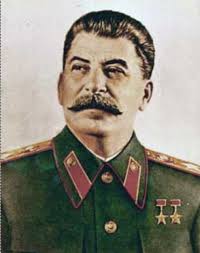
Joseph Stalin
On April 9, 2025, President Donald Trump revealed his intention to live by that belief. He issued a MEMORANDUM FOR THE HEADS OF EXECUTIVE DEPARTMENTS AND AGENCIES.
Its purpose: To target Christopher Krebs, the former director of the Cybersecurity and Infrastructure Security Agency (CISA) run by the Department of Homeland Security (DHS) for potential arrest and prosecution.
Krebs’ “crime”: Ensuring that the 2020 Presidential election was free of lies spread by Russians—and Americans—on social media platforms.
Deprived of his expected support from Russian trolls and hackers, Trump lost.
Among the “charges” outlined in Trump’s memorandum:
“Krebs skewed the bona fide debate about COVID-19 by attempting to discredit widely shared views that ran contrary to CISA’s favored perspective.”
During 2020—Trump’s last year in office as President—COVID-19 ravaged the United States. At least 400,000 Americans died—many of them because they believed Trump’s claims that:
- His administration had it under control; and
- At a time when there was no vaccine against the virus, people didn’t need to protect themselves from it—such as by social distancing and wearing masks in public.
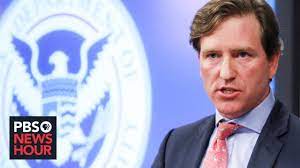
Chris Krebs
The memorandum continued:
“I hereby direct the heads of executive department and agencies to immediately take steps consistent with existing law to revoke any active security clearance held by Christopher Krebs.
“I further direct the Attorney General, the Director of National Intelligence, and all other relevant agencies to immediately take all action as necessary and consistent with existing law to suspend any active security clearances held by individuals at entities associated with Krebs, including SentinelOne, pending a review of whether such clearances are consistent with the national interest.”
SentinelOne is an American cybersecurity company in Mountain View, California, where Krebs serves as Chief Intelligence and Public Policy Officer.
“I further direct the Attorney General and the Secretary of Homeland Security, in consultation with any other agency head, to take all appropriate action to review Krebs’ activities as a Government employee, including his leadership of CISA [Cybersecurity and Infrastructure Security Agency].“
“This review should identify any instances where Krebs’ conduct appears to have been contrary to suitability standards for Federal employees, involved the unauthorized dissemination of classified information, or contrary to the purposes and policies identified in Executive Order 14149 of January 20, 2025 (Restoring Freedom of Speech and Ending Federal Censorship).”
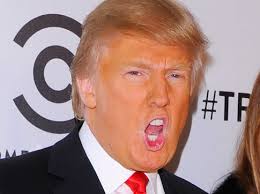
Donald Trump
Trump is speaking about the censorship of Right-wing speech, which is virtually non-existent. But he has no qualms about suppressing freedom of speech for his critics.
He blocked access by the Associated Press to White House events because it refused to bow to his demand that it refer to the Gulf of Mexico as the “Gulf of America.”
On April 9, District Judge Trevor McFadden ruled the administration’s restriction on AP journalists was “contrary to the First Amendment,” which guarantees freedom of speech.
The administration has appealed the verdict to the United States Court of Appeals for the District of Columbia Circuit.
According to Trump’s memorandum:
“As part of that review, I direct a comprehensive evaluation of all of CISA’s activities over the last 6 years, focusing specifically on any instances where CISA’s conduct appears to have been contrary to the purposes and policies identified in Executive Order 14149.
“Upon completing these reviews, the Attorney General and the Secretary of Homeland Security shall prepare a joint report to be submitted to the President, through the Counsel to the President, with recommendations for appropriate remedial or preventative actions to be taken to fulfill the purposes and policies of Executive Order 14149.”
Clearly, Trump seeks to find any plausibly legal excuse to destroy the man who dared come between him and his Russian backers in 2020—and who contradicted his lies about COVID and the election.
Donald Trump’s ambition to become absolute dictator fits brilliantly into the goals of Project 2025, also known as the Presidential Transition Project.
This is a collection of policy proposals to fundamentally reshape the U.S. federal government in the event of a Republican victory in the 2024 Presidential election.
During the 2024 Presidential campaign, Trump repeatedly denied knowing anything about it. Anyone aware of his reputation as a notorious liar knew this wasn’t true.
Established in 2022 by the Right-wing Heritage Foundation, the project aims to recruit tens of thousands of radical Right-wingers to the District of Columbia to replace existing federal civil servants.
Among Project 2025’s priorities:
- Replace tenured civil servants with thousands of political hacks to establish an absolute dictatorship under a Republican President.
- “Reform” the Department of Justice by making it the President’s personal law firm.
- Make the director of the FBI personally accountable to the President—as the head of the KGB is personally accountable to Vladimir Putin.
History-ignorant Americans are now discovering what it means to have lived in the Soviet Union of Joseph Stalin—where truth and integrity were punished and lies and treachery were rewarded.
ADOLF HITLER, ALTERNET, AMERICABLOG, AP, BABY BOOMER RESISTANCE, BBC, BLOOMBERG, BLUESKY, BUZZFEED, CBS NEWS, CNN, CROOKS AND LIARS, DAILY KOS, DEMOCRATS, DONALD TRUMP, FIVETHIRTYEIGHT, HARPER’S MAGAZINE, HUFFINGTON POST, IRAN WAR, JOHN GARAMENDI, LYNDON JOHNSON, MEDIA MATTERS, MOTHER JONES, MOVEON, MSNBC, NAZI GERMANY, NBC NEWS, NEWSDAY, NEWSWEEK, NPR, Oil, PBS NEWSHOUR, PETE HEGSETH, POLITICO, POLITICUSUSA, RAW STORY, REPUBLICANS, REUTERS, RICHARD NIXON, RO KHANNA, SALON, SEATTLE TIMES, SLATE, SS, STRAIT OF HORMUZ, TALKING POINTS MEMO, THE ATLANTIC, THE CHICAGO SUN-TIMES, THE CHICAGO TRIBUNE, THE DAILY BEAST, THE DAILY BLOG, THE GUARDIAN, THE HILL, THE HUFFINGTON POST, THE INTERCEPT, THE LOS ANGELES TIMES, THE NATION, THE NEW REPUBLIC, THE NEW YORK TIMES, THE NEW YORKER, THE PENTAGON, THE VILLAGE VOICE, THE WASHINGTON POST, THINKPROGRESS, THIRD REICH, TIME, TRUTHDIG, TRUTHOUT, TWO POLITICAL JUNKIES, U.S. NEWS & WORLD REPORT, UPI, USA TODAY, VIETNAM WAR, WAR CRIMES, WEHRMACHT, WORLD WAR 11, X
In Bureaucracy, Business, History, Law, Military, Politics, Social commentary on May 19, 2026 at 12:10 am
On April 29, Secretary of Defense Pete Hegseth appeared before Congress for the first time since President Donald Trump-–in concert with Israel—launched a series of devastating airstrikes against Iran.
During the hearing, the Pentagon revealed that the war so far had cost $25 billion. The fighting is on hold, but the military maintains its blockade of the Strait of Hormuz.
Early on in his testimony, Hegseth said the threat of Iran paled in comparison to one posed by Democrats: “The biggest challenge, the biggest adversary we face at this point are the reckless, feckless and defeatist words of congressional Democrats and some Republicans.”
Pete Hegseth
Forget that:
- Iran had effectively closed the Strait of Hormuz—through which 20% to 25% of the world’s oil consumption (about 20–21 million barrels per day) flows.
- As a result, gas prices rose overnight. By late April, the national average for a gallon of regular gas reached $4.02 to $4.04, compared to roughly $2.98 before military operations began.
- On April 5—Easter Sunday, no less—Trump posted on his website, Truth Social: “Tuesday will be Power Plant Day, and Bridge Day, all wrapped up in one, in Iran. There will be nothing like it!!! Open up the Fuckin’ Strait, you crazy bastards, or you’ll be living in Hell – JUST WATCH! Praise be to Allah. President DONALD J. TRUMP”
- When this threat failed to impress the Iranians, Trump posted on April 7: “A whole civilization will die tonight, never to be brought back again. I don’t want that to happen, but it probably will.”
- This implied threat of a nuclear holocaust led legal experts and international organizations such as Amnesty International to warn that attacking civilian infrastructure would constitute war crimes under international law.

Donald Trump
Implicit in Hegseth’s charge—and attitude—was the message: “It’s Democrats’ fault that we’re not winning the war that we—and Israel—started on February 28. And that a war that was supposed to last six weeks at most has now dragged on for two months—with no end in sight.”
It’s possible that the highly combative Hegseth had a specific remedy in mind for such criticism—one that had been applied by Nazi Germany to those who who doubted the “final victory” of the war that Adolf Hitler had started.
Those who did so—or openly criticized the need for the war or the genocidal way it was being fought—faced two ways of dying: Beheading or hanging.
So long as the Third Reich was winning—or at least in possession of actual German territory—the punishment of beheading was carried out upon conviction by kangaroo courts.
But when the Reich was immediately facing invasion—from the West by American and British forces, and from the East by Russian ones—there often wasn’t time for pseudo-legal folderol. Roving bands of Schutzstaffel (SS) or Wehrmacht troops openly shot or literally strung up such “traitors” from lamp posts.
Certainly Hegseth’s attitude reflected that mentality, as this exchange with Rep. John Garamendi (D-CA) revealed:
GARAMENDI: The president has got himself and America stuck in a quagmire of another war in the Middle East. He’s desperately trying to extricate himself from his own mistakes.
HEGSETH: You call it a quagmire, handing propaganda to our enemies? Shame on you for that statement. And statements like that are reckless to our troops.
During the Vietnam war (1965 – 1975) the administrations of Lyndon Johnson and Richard Nixon lied repeatedly about the “progress” being achieved. The polite term used to describe this was “credibility gap.”
As a result, “grunts” often sported buttons reading: “Ambushed at Credibility Gap.”
When a nation’s armed forces are winning easy—or even hard-won—victories over an enemy, word quickly spreads through their ranks. When facing defeat—or stalemate—soldiers are equally quick to sense the truth of this.
So Hegseth’s accusation that Garamendi’s accurately calling the war “a quagmire”—at least so far—could not prove a morale-buster for the soldiers fighting it.
Throughout his testimony, Hegseth acted like a man in charge of an inquisition, rather than a public official called on by Congress to answer questions.
A typical exchange between him and Rep. Ro Khanna (D-CA):
KHANNA (D-CA): Do you know how much it will cost Americans in terms of their increased cost in gas and food over the next year because of the Iran war?
HEGSETH: I would simply ask you what the cost is of an Iranian nuclear bomb.
KHANNA: I’m going to give you that opportunity.
HEGSETH: I would simply ask you what the — you’re playing gotcha questions about domestic things.
KHANNA: No, it’s not. You’re asking — you’re saying it’s a gotcha question to ask what it’s going to be in terms of the increased cost of gas?
HEGSETH: Why won’t you answer what it costs to prevent Iran from getting a nuclear bomb?
KHANNA: I give you that, sir. You don’t know what we’re paying in terms of gas. You don’t know what we’re paying in terms of food. Your $25 billion number is totally off. It’s the incompetence. It’s the incompetence.
What she should have said was: “You’re here to answer questions, not ask them.”


ADOLF HITLER, AFFORDABILITY, ALBERT SPEER, ALEXANDER THE GREAT, ALTERNET, AMERICABLOG, AP, BABY BOOMER RESISTANCE, BBC, BENJAMIN NETANYAHU, BLOOMBERG, BLUESKY, BUZZFEED, CBS NEWS, CNN, CROOKS AND LIARS, DAILY KOS, DE-STALINIZATION, DEMOCRATS, DONALD TRUMP, FIVETHIRTYEIGHT, FREDERIC SPOTTS, HARPER’S MAGAZINE, HITLER AND THE POWER OF AESTHETICS (BOOK), HOWARD STERN, HUFFINGTON POST, IRAN, ISRAEL, JAQUELINE KENNEDY, JOHN F. KENNEDY MEMORIAL CENTER FOR THE PERFORMING ARTS, JOSEPH STALIN, LEON TROTSKY, LYNDON B. JOHNSON, MEDIA MATTERS, MENELAUS, MIDTERM ELECTIONS, MONUMENTS, MOTHER JONES, MOVEON, MSNBC, NBC NEWS, NEWSDAY, NEWSWEEK, NICOLAS MADURO, NIKITA KHRUSHCHEV, NPR, OPERATION BARBAROSSA, PBS NEWSHOUR, PERCY BYSSHE SHELLEY, PETE HEGSETH, POLITICO, POLITICUSUSA, PRINCESS DIANA, RAW STORY, REUTERS, SALON, SEATTLE TIMES, SLATE, SOVIET UNION, STRAIT OF HORMUZ, T.E. LAWRENCE, TALKING POINTS MEMO, THE ATLANTIC, THE CHICAGO SUN-TIMES, THE CHICAGO TRIBUNE, THE DAILY BEAST, THE DAILY BLOG, THE GUARDIAN, THE HILL, THE HUFFINGTON POST, THE INTERCEPT, THE LOS ANGELES TIMES, THE NATION, THE NEW REPUBLIC, THE NEW YORK TIMES, THE NEW YORKER, THE ODYSSEY (POEM), THE VILLAGE VOICE, THE WASHINGTON POST, THINKPROGRESS, THIRD REICH, TIME, TROJAN WAR, TROY, TRUTH SOCIAL, TRUTHDIG, TRUTHOUT, TWO POLITICAL JUNKIES, U.S. NEWS & WORLD REPORT, UPI, USA TODAY, VENEZUELA, VICTORY ARCH, WHITE HOUSE BALLROOM, WHITE HOUSE ROSE GARDEN, X
VANITY AND NOTHINGNESS: PART THREE (END)
In Bureaucracy, History, Law, Military, Politics, Social commentary on September 10, 2026 at 1:37 amUpon his return to the Presidency in 2025, Donald Trump turned his “artistic” gifts on the White House.
On June 9, 2025, contractors began paving over the grass of the White House Rose Garden with stone tiles to create a patio.
This had been a special project of then-First Lady Jacqueline Kennedy. In 1962 she and designer Rachel Lambert “Bunny” Mellon created a classic, symmetrical space for official state functions and press events.
They installed a central open lawn surrounded by formal flower beds, seasonal plantings, and flowering crabapple trees.
The destruction of the rose garden ignited a firestorm of criticism. But Trump insisted that the paving go on anyway.
Like Adolf Hitler, Trump believes that “bigger is better” in architecture.
On July 31, 2025, the Trump administration announced that a 90,000 square feet addition would be made to the White House to incorporate a 650-person capacity ballroom.
In October, 2025, Trump ordered the demolition of the White House’s historic East Wing to clear space for it. It’s the most expensive project in Trump’s roster, with an $800 million estimated price tag, according to New York.
American taxpayers are expected to foot more than half the bill, despite Trump’s repeated denials of this. In March, 2026, he told reporters that construction on the ballroom “is taxpayer-free. We have no taxpayer putting up 10 cents.”
Demolition of the East Wing of the White House
Trump intends this to be a monument to himself: By October, 2025, senior officials within the Trump administration were using the title, “The President Donald J. Trump Ballroom.”
On August 31, the Supreme Court—packed with six Right-wing Justices—granted Trump approval to continue construction on his ballroom. This had been halted after a lower court issued a temporary block on the project earlier that month.
After the ruling, Trump wrote on Truth Social: “We are living in the Golden Age of America, and this Building will be one of the Greatest ever constructed in Washington, D.C. When completed in the Summer of 2028, the magnificent Ballroom and Military Complex will be something that the entire Country is very proud of.”
In a rare burst of candor, Trump told New York Magazine that his construction projects are essentially monuments to himself: “Nobody will do it once I’m gone. When I leave here, nobody will.”
For Trump, there can’t be too many monuments to his memory. Among these:
Achieving immortality—at least in how people remember them long after they’ve passed on—has long been a desire of tyrants. But once they’re dead, they no longer have control over the lives of their once-subject peoples.
So the way they’re remembered can prove vastly different from how they wanted to be regarded.
Alexander the Great thirsted be remembered as the world’s greatest conqueror, bringing Greek civilization to the nations he ravished.
Alexander the Great
Modern historians view him as a brilliant military leader—but also as a ruthless and megalomanic tyrant who slaughtered whole peoples and caused widespread destruction. Moreover, his empire collapsed quickly after his death.
Leon Trotsky—the Russian revolutionary and bitter foe of Joseph Stalin—wrote: “Nero, too, was a product of his epoch. Yet after he perished his statues were smashed and his name was scraped off everything.
“The vengeance of history is more terrible than the vengeance of the most powerful General Secretary. I venture to think that this is consoling.”
By the time he died in 1953, Soviet dictator Joseph Stalin had an estimated 6,000 statues of himself erected across the Soviet Union and Eastern Europe, holding the world record for the most statues raised to a living person.
After his death and the start of de-Stalinization under Nikita Khrushchev, the vast majority of these statues were quietly removed, demolished, or melted down.
Finally, there is this classic poetic commentary on the uncertainty of immortality, courtesy of Percy Bysshe Shelley:
Share this: