Posts Tagged ‘MEXICO’
ABC NEWS, ADOLF HITLER, ALTERNET, AMERICABLOG, AP, BABY BOOMER RESISTANCE, BBC, BLOOMBERG NEWS, BLUESKY, BUZZFEED, CANADA, CBS NEWS, CLAUDIA SHEINBAUM PARDO, CNN, CNN'S "STARTING POINT", CROOKS AND LIARS, DAILY KOS, DEPARTMENT OF HOMELAND SECURITY, DEPARTMENT OF JUSTICE, EXTORTION, FBI, FIVETHIRTYEIGHT, HARPER’S MAGAZINE, HUFFINGTON POST, INSIDER, JUDICIARY, MARK CARNEY, MASTADON, MEDIA MATTERS, MEXICO, MOTHER JONES, MOVEON, MSNBC, MSNBC'S "HARDBALL", NAZI GERMANY, NBC NEWS, NEGOTIATING, NEW REPUBLIC, NEWSDAY, NEWSWEEK, NPR, PBS NEWSHOUR, POLAND, POLITICO, POLITICUSUSA, PRESS, RAW STORY, REPUBLICAN PARTY, REPUBLICANS, REUTERS, SALON, SEATTLE TIMES, SLATE, TALKING POINTS MEMO, THE ATLANTIC, THE CHICAGO SUN-TIMES, THE CHICAGO TRIBUNE, THE DAILY BEAST, THE DAILY BLOG, THE GUARDIAN, THE HILL, THE HUFFINGTON POST, THE LOS ANGELES TIMES, THE NATION, THE NEW REPUBLIC, THE NEW YORK TIMES, THE NEW YORKER, THE PENTAGON, THE VILLAGE VOICE, THE WASHINGTON POST, THINKPROGRESS, TIME, TRUTHDIG, TRUTHOUT, TWO POLITICAL JUNKIES, U.S. NEWS & WORLD REPORT, UPI, USA TODAY, WONKETTE, WORLD WAR 11, X
In Bureaucracy, History, Law, Law Enforcement, Politics, Social commentary on September 16, 2026 at 12:26 am
On January 20, 2026, in a speech at the World Economic Forum in Davos, Switzerland, Canadian Prime Minister Mark Carney called for greater cooperation among the world’s middle-sized nations.
The reason: To protect themselves from great powers using tariffs to extort control over them.
An example of this: Ottawa and Beijing now have a limited tariff agreement that swaps reduced Chinese duties on Canadian canola seeds for lower Canadian tariffs on a capped volume of Chinese electric vehicles.
On January 26, Canada announced a plan to significantly expand trade with non‑U.S. countries, strengthen internal Canadian trade, and increase domestic investment by up to one trillion dollars over the next five years.

Canadian provinces and territories
On February 20, 2026, the United States Supreme Court ruled against emergency tariffs imposed under the International Emergency Economic Powers Act.
This had been the basis—and excuse—for Trump’s slapping tariffs on more than 180 countries.
Ignoring the Supreme Court ruling Trump imposed a short term 10% global tariff.
On July 1, after a virtual meeting with U.S. Trade Representative Jamieson Greer with his Canadian and Mexican counterparts, Greer announced that the U.S. would not extend the Canada-United States-Mexico Agreement (CUSMA).
Its goals had been to boost economic growth, reduce trade barriers, and secure preferential market access across North America.
On July 17, in a Truth Social post, Trump threatened to put new tariffs on Canada after hundreds of wildfires left much of the northern U.S. covered by smoke.
He could have offered to send American firefighters and firefighting equipment to Canada. But acting in a humane way has never been a part of Trump’s character.
On July 20, Trump alleged that Canada discriminated against American companies supplying alcohol, dairy and cars. He signed three proclamations under the 1930 Smoot-Hawley Tariff Act, imposing 50% tariffs on Canadian dairy, alcohol, cars and other products.
On August 22, Trump’s 50% tariffs took effect on about $20 billion worth of Canadian goods—dairy products, alcoholic beverages, cement and hockey equipment.
Trade negotiations had collapsed shortly before a midnight deadline the previous night.
Canadian Prime Minister Mark Carney said that “last-minute changes in the U.S. proposed terms” had caused the collapse.

Mark Carney
“….The general attitude….is that the core Canadian industries either would be subsidiaries effectively of the United States industries or would put in place terms where those industries would be, gradually wound down in Canada and we’re not going to of course….accept those terms.”
And he warned that Canada would match the tariffs “dollar for dollar” starting on September 8.
After Canada suspended trade talks on August 21, Trump signed an executive order “changing” the name of Lake Ontario, which borders New York and Canada’s Ontario province, to Lake America.
Google and Apple, cravenly seeking to win Trump’s favor, immediately displayed maps offering the Trumpian version of geography.
“When the Americans stop doing memes, stop throwing shade, stop trying to be tough and start being serious about having those discussions, we can have those discussions,” said Carney at a press conference.
There is no American precedent for such extortionate behavior—but there is a German one. That of Nazi Germany from t938 to 1939 under Adolf Hitler—first against Austria, then Czechoslovakia, and finally Poland.
It was his aggression against Poland that ignited World War II.

But Trump can be beaten—if his enemies are willing to go all the way.
Democratic nations like Canada and Mexico dare not attack the United States militarily. America’s military is so powerful the country is threatened only by China and Russia.
But they can target with ruthless tariffs those Red states whose Fascistic voting blocs fanatically support Trump—and the House and Senate members who support him.
They can:
- Deprive Red state populations of the fruits, vegetables, meats, cars, computers, oil, gas—and especially beer and alcohol—they take for granted.
- Refuse to stock goods from Red states in their stores.
- Appeal to the patriotism of Canadians and Mexicans to maintain the boycott despite the suffering this will impose on their own countries.
Canada, in particular, has a deadly weapon it can unleash at any time:
Provincial authorities and grid operators (such as Ontario’s Independent Electricity System Operator) can reduce or halt power flowing through cross-border transmission lines to states like New York, Michigan and Minnesota.
The U.S. imports electricity from Canada because it is cheaper than generating more supply domestically. Losing Canadian electricity would force affected states to rely on rapacious energy companies, driving up electricity costs for consumers.
This, in turn, would trigger voters’ anger against Trump-supporting Republican candidates for the House and Senate.
Americans are used to seeking simple, painless solutions to major problems. Thus, in 2024, Trump won 77 million votes by promising to drastically reduce the price of eggs.
Instead, he gave voters an unprovoked and endless war on Iran. This has created a worldwide spiral in oil prices—and fueled inflation in the United States and other nations.
As prices soar for food, energy and housing, Trump focuses on vanity projects like a 90,000 square-foot White House ballroom and a towering “Victory Arch” overlooking Arlington Cemetery.
When Red states are forced to suffer staggering losses for months on end, they will elect anti-Fascist Senators and Representatives to nullify the evils of Trump’s administration.
ABC NEWS, ADOLF HITLER, ALTERNET, AMERICABLOG, AP, BABY BOOMER RESISTANCE, BBC, BLOOMBERG NEWS, BLUESKY, BUZZFEED, CANADA, CBS NEWS, CLAUDIA SHEINBAUM PARDO, CNN, CNN'S "STARTING POINT", CROOKS AND LIARS, DAILY KOS, DEPARTMENT OF HOMELAND SECURITY, DEPARTMENT OF JUSTICE, EXTORTION, FBI, FIVETHIRTYEIGHT, HARPER’S MAGAZINE, HUFFINGTON POST, INSIDER, JUDICIARY, MARK CARNEY, MASTADON, MEDIA MATTERS, MEXICO, MOTHER JONES, MOVEON, MSNBC, MSNBC'S "HARDBALL", NAZI GERMANY, NBC NEWS, NEGOTIATING, NEW REPUBLIC, NEWSDAY, NEWSWEEK, NPR, PBS NEWSHOUR, POLAND, POLITICO, POLITICUSUSA, PRESS, RAW STORY, REPUBLICAN PARTY, REPUBLICANS, REUTERS, SALON, SEATTLE TIMES, SLATE, TALKING POINTS MEMO, THE ATLANTIC, THE CHICAGO SUN-TIMES, THE CHICAGO TRIBUNE, THE DAILY BEAST, THE DAILY BLOG, THE GUARDIAN, THE HILL, THE HUFFINGTON POST, THE LOS ANGELES TIMES, THE NATION, THE NEW REPUBLIC, THE NEW YORK TIMES, THE NEW YORKER, THE PENTAGON, THE VILLAGE VOICE, THE WASHINGTON POST, THINKPROGRESS, TIME, TRUTHDIG, TRUTHOUT, TWO POLITICAL JUNKIES, U.S. NEWS & WORLD REPORT, UPI, USA TODAY, WONKETTE, WORLD WAR 11, X
In Bureaucracy, History, Law, Politics, Social commentary on September 15, 2026 at 12:10 am
For all his slim grasp of history, Donald Trump knows that presidents and kings (of which he thinks himself the latter) are remembered for the wars they’ve won.
Easily won wars, of course, are the best. And, for Trump, Canada—no match for the United States militarily—seems a sure bet.
On December 2, 2024 Trump, recently re-elected as President of the United States, threatened to impose a 25% tax on all products entering the United States from Canada and Mexico unless they stopped the flow of drugs and illegal aliens.

Canadian flag
“Less than one percent of migrants coming into the United States irregularly come from Canada and 0.2 percent of the fentanyl coming into the United States comes from Canada,” then-Canadian Prime Minister Justin Trudeau told Parliament.
During 2023-2024, American customs agents seized 43 pounds of fentanyl at the Canadian border, compared with 21,100 pounds at the Mexican border.

Heroin syringe
Unmentioned—if not deliberately ignored by Trump: Canada plays a substantial role as a U.S. trading partner. About 60% of U.S. crude oil imports are from Canada, and 85% of U.S. electricity imports as well.
Canada is also the largest foreign supplier of steel, aluminum and uranium to the U.S. and has 34 critical minerals and metals that the Pentagon eagerly desires. About 77% of Canada’s exports go to the U.S.
Trudeau pleaded with Trump not to impose the tariff because because it would “kill” Canada’s economy.
Trump responded: “So your country can’t survive unless it’s ripping off the US to the tune of $100 billion?”
His comments referred to the American trade deficit with Canada.
The U.S. had a $75 billion trade deficit with Canada in 2023 but a third of what Canada sells into the U.S. is energy exports and prices have been high.
Trudeau left the meeting without reassurance that Trump would not impose a 25% tariff on products from Canada.
Trump’s trade conflict with Canada began immediately upon his return to office in 2025, driven by disputes over border security, immigration and tariffs.
On January 20, 2025, his first day back in office, Trump announced plans for a 25% tariff on all Canadian imports, citing illegal immigration and drug trafficking.
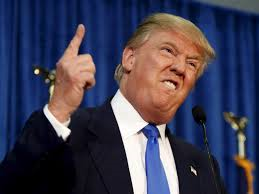
Donald Trump
In early February, 2025, Trump signed an executive order imposing a 25% blanket tariff on Canadian and Mexican goods (and 10% on energy) starting February 4, invoking a national emergency.
Then-Canadian Prime Minister Justin Trudeau vowed immediate retaliatory tariffs
In mid-February, Trump agreed to a 30-day pause to cool tensions and signed a separate plan for 25% tariffs on global steel and aluminum.
On March 4, 2025, Trump’s 25% tariffs on Canadian goods took effect (with energy capped at 10%). Canada fired back with massive retaliatory counter-tariffs.
American automakers, fearing their sales to Canada would be jeopardized, pressured Trump to delay auto tariffs. Trump agreed to do so, and temporarily paused levies on goods complying with the United States-Mexico-Canada Agreement.
But on March 5, 2025, Trump slapped 25% tariffs on Canada. Six days later, Trump announced that he would impose an additional 25% tariff on all Canadian steel and aluminum imports effective March 12.
Just as Adolf Hitler’s continuing aggression toward England promoted Winston Churchill’s appointment as its Prime Minister, Trump’s continuing aggression toward Canada did the same for Mark Carney.
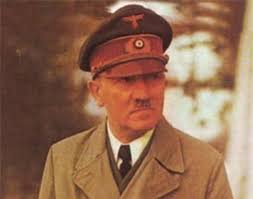
Adolf Hitler
Carney, a member of the Liberal Party, was elected as Canada’s Prime Minister-elect on March 9. He owed his victory to Trump’s insults toward Canada and threats to make it the 51st state of the United States.
He described the tariff conflict the “greatest crisis of our lifetimes.” And he vowed to defend Canada from American aggression.
On March 12, Trump slammed Canada with 25% duties on steel and aluminum. This, in turn, led Canada to impose further rounds of retaliatory levies on American manufactured goods.
On October 14, Trump issued an executive order that imposed a 10% tariff on softwood lumber and 25% on certain wooden furniture and cabinets from Canada, with scheduled increases.
But by September, Canada’s trade balance returned to surplus as exports recovered, particularly to markets outside the United States, while the impact of U.S. tariffs eased in some sectors.
American lumber and cabinet tariffs escalated further on January 1, 2026: A 50% tariff on specific kitchen vanities and cabinets—affecting Canadian exporters without exemptions.
On January 20, 2026, in a speech at the World Economic Forum in Davos, Switzerland, Carney urged greater cooperation among the world’s middle-sized nations to protect themselves from great powers using tariffs to extort control.
On January 24, Trump, responding to a faulty report, threatened to impose tariffs of up to 100% on all Canadian goods in response to a planned trade agreement between Canada and China.
The arrangement between Ottawa and Beijing is a limited, issue-specific tariff agreement that swaps reduced Chinese duties on Canadian canola seeds for lower Canadian tariffs on a capped volume of Chinese electric vehicles.
It is not a comprehensive Canada-China free trade agreement covering most goods and services, as Trump believed.
On January 26, Canada announced a plan to significantly expand trade with non‑U.S. countries, strengthen internal Canadian trade, and increase domestic investment by up to one trillion dollars over the next five years.
Thus, through threats, insults and extortionate tariffs, Trump has singularly ended a friendly U.S.-Canada relationship that had lasted more than 200 years.
ABC NEWS, ADOLF HITLER, ALTERNET, AMERICABLOG, AP, BABY BOOMER RESISTANCE, BBC, BLOOMBERG NEWS, BLUESKY, BUZZFEED, CANADA, CBS NEWS, CLAUDIA SHEINBAUM PARDO, CNN, CNN'S "STARTING POINT", CROOKS AND LIARS, DAILY KOS, DEPARTMENT OF HOMELAND SECURITY, DEPARTMENT OF JUSTICE, EXTORTION, FBI, FIVETHIRTYEIGHT, HARPER’S MAGAZINE, HUFFINGTON POST, INSIDER, JUDICIARY, MARK CARNEY, MASTADON, MEDIA MATTERS, MEXICO, MOTHER JONES, MOVEON, MSNBC, MSNBC'S "HARDBALL", NAZI GERMANY, NBC NEWS, NEGOTIATING, NEW REPUBLIC, NEWSDAY, NEWSWEEK, NPR, PBS NEWSHOUR, POLAND, POLITICO, POLITICUSUSA, PRESS, RAW STORY, REPUBLICAN PARTY, REPUBLICANS, REUTERS, SALON, SEATTLE TIMES, SLATE, TALKING POINTS MEMO, THE ATLANTIC, THE CHICAGO SUN-TIMES, THE CHICAGO TRIBUNE, THE DAILY BEAST, THE DAILY BLOG, THE GUARDIAN, THE HILL, THE HUFFINGTON POST, THE LOS ANGELES TIMES, THE NATION, THE NEW REPUBLIC, THE NEW YORK TIMES, THE NEW YORKER, THE PENTAGON, THE VILLAGE VOICE, THE WASHINGTON POST, THINKPROGRESS, TIME, TRUTHDIG, TRUTHOUT, TWO POLITICAL JUNKIES, U.S. NEWS & WORLD REPORT, UPI, USA TODAY, WONKETTE, WORLD WAR 11, X
In Bureaucracy, Business, History, Law, Military, Politics, Social commentary on September 14, 2026 at 12:11 am
The history book on the shelf
Is always repeating itself.
–“Waterloo,” by Abba
To understand what is happening in the United States today, it’s necessary to realize this:
- Its decent, democracy-cherishing citizens find themselves in the same position as decent, democracy-cherishing citizens of Nazi Germany from 1933 to 1945.
- And just as Germany’s government became a ruthless dictatorship, so has that of the United States.
- And just as ordinary, peace-loving Germans hoped for a powerful, democratic outsider to remove the menace of Adolf Hitler, so do ordinary, peace-loving Americans hope the same will happen to Donald Trump.
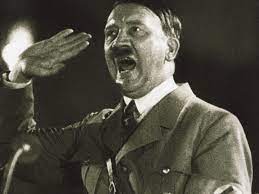
Adolf Hitler
From 1939 to 1945, those democracy-cherishing outsiders consisted of Canada, England and the United States. (The Soviet Union reluctantly joined this alliance only after it became yet another victim of Adolf Hitler’s aggression.)
In the case of the United States, that solution can only be achieved economically—by pressuring Right-wing Republican members of Congress in Red states to end their support for Trump’s dictatorial agenda.
And the only democratic countries with the power to do this are Mexico and Canada, America’s foremost trading partners.
The 2024 elections gave Republicans not only the White House but control of the House and Senate.

Donald Trump
Republicans don’t care that Trump has trashed the institutions that Americans have cherished for more than 200 years. Institutions like an independent judiciary, a free press, and an incorruptible Justice Department.
He has viciously attacked all of these—and Republicans have either said nothing or rushed to his defense.
What Republicans truly fear about Donald Trump is that if they dare to hold him accountable for his lifetime of criminality, his Fascistic base will turn on them—and turn them out of Congress.
If they are conflicted—whether to continue supporting Trump or desert him—the reason is the same: How can I hold onto my power and all the privileges that go with it?

Claudia Sheinbaum Pardo, President of Mexico

Mark Carney, Prime Minister of Canada
Lea-Kim, CC BY-SA 4.0 <https://creativecommons.org/licenses/by-sa/4.0>, via Wikimedia Commons
Republicans—with Trump as their Fuhrer—are utilizing the same my-way-or-else “negotiating” strategy as Nazi Germany’s Fuhrer, Adolf Hitler.
And Democrats—out of cowardice and/or ignorance of history—are, as usual, refusing to publicly make this comparison.
Thus, America’s rescue from Trump can only come from outside the United States.
Donald Trump has proven his affinity for dictators and dictatorships—lavishing praise on Russia’s Vladimir Putin, China’s Xi Jinping and North Korea’s Kim Jong-Un.
There are two reasons for this—and his hostile behavior toward democratic leaders:
- Trump admires dictators, desires to become one himself, and is now stocking essential federal agencies—such as the Pentagon, FBI and Department of Homeland Security—with his political hacks to make this a reality.
- He knows that compared to the dictatorships of Russia and China, democracies such as those of Canada, Mexico and Ukraine are comparatively weak militarily.
At a November 30, 2024 dinner at Mar-a-Lago, Trump’s estate in Palm Beach, Florida, he told then-Canadian Prime Minister Justin Trudeau that Canada could become the 51st state of the United States.
Canada’s Public Safety Minister Dominic LeBlanc, who attended the dinner, insisted that Trump was joking.
But on December 2, Trump threatened to impose a 25% tax on all products entering the United States from Canada and Mexico unless they stopped the flow of drugs and illegal aliens.
And on December 3, Trump posted on his Truth Social platform an AI-generated image of himself standing on a mountain with a Canadian flag beside him. Its caption: “Oh Canada!”
Trudeau had requested the Mar-a-Lago meeting to convince Trump that the northern border is completely different from the southern one with Mexico.
Canadian flag
“Less than one percent of migrants coming into the United States irregularly come from Canada and 0.2 percent of the fentanyl coming into the United States comes from Canada,” Trudeau said in Parliament.
During 2023-2024, American customs agents seized 43 pounds of fentanyl at the Canadian border, compared with 21,100 pounds at the Mexican border.
Most of the fentanyl reaching the U.S. is made by Mexican drug cartels using precursor chemicals smuggled from Asia.
As with Adolf Hitler, attempting to reason with Trump will prove fruitless. He respects only superior force.
But he has blinked when confronted with serious opposition.
Thus, on February 1, 2025, he threatened to hit Mexico and Canada with 25% tariffs, accusing them of injecting huge amounts of fentanyl and huge numbers of illegal aliens into the United States. This allowed him to look tough to his legions of uneducated, Fascistic voters.
But then Mexican President Claudia Sheinbaum Pardo and Canadian Prime Minister Mark Carney threatened to retaliate with their own 25% tariffs on American goods.
And the financially conservative Wall Street Journal-–whose target audience includes business leaders, investors, and affluent consumers—called Trump’s threat “the dumbest trade war in history.”
Suddenly, Trump found a way to declare victory, claiming that Mexico and Canada would vastly increase border security to stop the flow of fentanyl and illegal aliens.
And dropping his threat of a trade war.
ABC NEWS, ADOLF HITLER, ALTERNET, AMERICABLOG, AP, BABY BOOMER RESISTANCE, BBC, BLOOMBERG NEWS, BLUESKY, BUZZFEED, CANADA, CBS NEWS, CLAUDIA SHEINBAUM PARDO, CNN, CNN'S "STARTING POINT", CROOKS AND LIARS, CZECHOSLAVAKIA, DAILY KOS, DAVID BROOKS, DEPARTMENT OF HOMELAND SECURITY, DEPARTMENT OF JUSTICE, DONALD TRUMP, EXTORTION, FBI, FIVETHIRTYEIGHT, GREENLAND, HARPER’S MAGAZINE, HUFFINGTON POST, INSIDER, IRAN, IRAN WAR, JACK SMITH, JIMMY CARTER, JUSTIN TRUDEAU, MASTADON, MEDIA MATTERS, MEXICO, MOTHER JONES, MOVEON, MSNBC, MSNBC'S "HARDBALL", NAZI GERMANY, NBC NEWS, NEGOTIATING, NEVILLE CHAMBERLAIN, NEW REPUBLIC, NEWSDAY, NEWSWEEK, NEWT GINGRICH, NICCOLO MACHIAVELLI, NPR, PANAMA, PBS NEWSHOUR, POLAND, POLITICO, POLITICUSUSA, R.I.CO. ACT, RAW STORY, REPUBLICAN PARTY, REPUBLICANS, REUTERS, ROBERT MEULLER, SALON, SEATTLE TIMES, SLATE, STRAIT OF HORMUZ, TALKING POINTS MEMO, THE ATLANTIC, THE CHICAGO SUN-TIMES, THE CHICAGO TRIBUNE, THE DAILY BEAST, THE DAILY BLOG, THE GUARDIAN, THE HAMILTON PROJECT, THE HILL, THE HUFFINGTON POST, THE LOS ANGELES TIMES, THE NATION, THE NEW REPUBLIC, THE NEW YORK TIMES, THE NEW YORKER, THE PENTAGON, THE PRINCE, THE VILLAGE VOICE, THE WASHINGTON POST, THINKPROGRESS, TIME, TRUTHDIG, TRUTHOUT, TWO POLITICAL JUNKIES, U.S. NEWS & WORLD REPORT, UKRAINE, UPI, USA TODAY, VLADIMIR PUTIN, VOLODMYR ZELENSKY, WONKETTE, WORLD WAR 11, X
In Bureaucracy, Business, History, Military, Politics, Social commentary on September 4, 2026 at 12:10 am
The “negotiating” methods of German Fuhrer Adolf Hitler serve as a useful guide to what domestic and world leaders can expect from trying to reach an agreement with President Donald Trump.
In September, 1938, seven months after seizing Austria, Hitler gave another exhibition of his “negotiating” methods.
This time, the target of his aggression was Czechoslovakia. Once again, he opened “negotiations” with a lie: The Czechoslovak government was trying to exterminate 3.5 million Germans living in the “Sudetenland.”
Then he threatened war: Germany would protect its citizens and halt such “oppression.”
For British Prime Minister Neville Chamberlain, the thought of another European war erupting less than 20 years after the end of World War I was simply unthinkable.
He quickly sent Hitler a telegram, offering to help resolve the crisis: “I could come to you by air and am ready to leave tomorrow. Please inform me of earliest time you can receive me, and tell me the place of the meeting. I should be grateful for a very early reply.”
[Mistake #1: Showing his willingness to placate a brutal dictator. Such men see any concessions as weakness—leading to only greater demands. Trump, like Hitler, relishes attacking those weaker than himself.]
The two European leaders met in Berchtesgaden, Germany, on September 15, 1938.
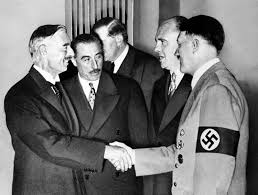
Neville Chamberlain and Adolf Hitler
Hitler denied that he had threatened war: “Force? Who speaks of force?“
Then, suddenly, he accused the Czechs of having mobilized their army in May. They had mobilized—in response to the mobilization of the German army.
“I shall not put up with this any longer,” shouted Hitler. “I shall settle this question in one way or another. I shall take matters in my own hands!”
Suddenly, Chamberlain seemed alarmed: “If I understood you right, you are determined to proceed against Czechoslovakia in any case. In the circumstances, it is best for me to return at once. Anything else now seems pointless.”
Hitler, taken aback, softened his tone and said they should consider the Sudetenland according to the principle of self-determination.
Chamberlain agreed to the cession of the Sudetenland. Three days later, French Prime Minister Edouard Daladier did the same. No Czechoslovak representative was invited to these discussions.
[Mistake #2: Instead of conceding to Hitler, which emboldened the dictator, Chamberlain should have pressed his advantage. When Hitler faced an opponent he couldn’t bribe or cow—such as British Prime Minister Winston Churchill or Soviet Premier Joseph Stalin—he raged and sulked.
[When Trump faces an opponent he can’t buy or intimidate—such as Special Counsel Jack Smith or Ayatollah Mojtaba Khamenei—he does the same.]
Chamberlain met Hitler again in Godesberg, Germany, on September 22 to confirm the agreements. But Hitler aimed to use the crisis as a pretext for war.
He now demanded not only the annexation of the Sudetenland but the immediate military occupation of the territories. This would give the Czechoslovak army no time to adapt their defense measures to the new borders.
To achieve a solution, Italian dictator Benito Mussolini suggested a conference of the major powers in Munich.
On September 29, Hitler, Daladier and Chamberlain met and agreed to Mussolini’s proposal. They signed the Munich Agreement, which accepted the immediate occupation of the Sudetenland.
The Czechoslovak government had not been a party to the talks. Nevertheless, it promised to abide by the agreement on September 30.
It actually had no choice. It faced the threat of an immediate German invasion after being deserted by its pledged allies: Britain, France and the Soviet Union.
[Mistake #3: Selling out an ally and making a concession to an insatiable dictator—and believing that Hitler could be trusted to keep his word.
[Just as Chamberlain sold out Czechoslovakia, Trump plans on selling out Ukraine to Russian dictator Vladimir Putin. He’s blamed Ukraine for starting the 2022 war—even though Russia invaded Ukraine.
He’s long wanted a Trump Tower in Moscow. Ukraine President Volodymyr Zelensky can’t give him that. Putin can.]
Chamberlain returned to England a hero. Holding aloft a copy of the worthless agreement he had signed with Hitler, he told cheering crowds in London: “I believe it is peace for our time.”

Neville Chamberlain
Hitler—still planning more conquests—knew better. In March, 1939, the German army occupied the rest of Czechoslovakia.
Chamberlain would soon be seen as a naive weakling—even before bombs started falling on London.
Believing himself invincible, Hitler turned his attention—and demands—to Poland.

Adolf Hitler and his generals
Believing himself invincible, Trump now threatens violence against Canada, Greenland and Cuba.
Hitler ordered the invasion of Poland on September 1, 1939. To his surprise, France and England honored their pledges to support Poland—triggering World War II. Six years and 50-56 million deaths followed.
On February 28, 2026, Trump—in concert with Israel–attacked Iran without warning. To his surprise, the Iranians closed the Strait of Hormuz, through which 20-30% of the world’s oil total daily oil supply passes. This has triggered a global oil crisis and severely tightened international energy supplies.
Hitler couldn’t “turn off” the war he had started. He could only lash out as his enemies multiplied.
The same has proven true for Trump.
ABC NEWS, ADOLF HITLER, ALTERNET, AMERICABLOG, AP, AUSTRIA, BABY BOOMER RESISTANCE, BBC, BLOOMBERG NEWS, BLUESKY, BUZZFEED, CANADA, CBS NEWS, CLAUDIA SHEINBAUM PARDO, CNN, CNN'S "STARTING POINT", CROOKS AND LIARS, CZECHOSLAVAKIA, CZECHOSLOVAKIA, DAILY KOS, DAVID BROOKS, DEPARTMENT OF HOMELAND SECURITY, DEPARTMENT OF JUSTICE, DONALD TRUMP, EXTORTION, FBI, FIVETHIRTYEIGHT, FRANCE, GELI rAUBAL, GREECE, GREENLAND, HARPER’S MAGAZINE, HUFFINGTON POST, INSIDER, IRAN, IRAN WAR, JACK SMITH, JIMMY CARTER, JUSTIN TRUDEAU, MASTADON, MEDIA MATTERS, MEXICO, MOTHER JONES, MOVEON, MSNBC, MSNBC'S "HARDBALL", NAZI GERMANY, NBC NEWS, NEGOTIATING, NEVILLE CHAMBERLAIN, NEW REPUBLIC, NEWSDAY, NEWSWEEK, NEWT GINGRICH, NICCOLO MACHIAVELLI, NPR, PANAMA, PBS NEWSHOUR, POLAND, POLITICO, POLITICUSUSA, R.I.CO. ACT, RAW STORY, REPUBLICAN PARTY, REPUBLICANS, REUTERS, ROBERT MEULLER, SALON, SEATTLE TIMES, SLATE, STRAIT OF HORMUZ, TALKING POINTS MEMO, TARIFFS, THE ATLANTIC, THE CHICAGO SUN-TIMES, THE CHICAGO TRIBUNE, THE DAILY BEAST, THE DAILY BLOG, THE GUARDIAN, THE HAMILTON PROJECT, THE HILL, THE HUFFINGTON POST, THE LOS ANGELES TIMES, THE NATION, THE NEW REPUBLIC, THE NEW YORK TIMES, THE NEW YORKER, THE PENTAGON, THE PRINCE, THE VILLAGE VOICE, THE WASHINGTON POST, THINKPROGRESS, TIME, TRADE WARS, TRUTHDIG, TRUTHOUT, TWO POLITICAL JUNKIES, U.S. NEWS & WORLD REPORT, UKRAINE, UPI, USA TODAY, VLADIMIR PUTIN, VOLODMYR ZELENSKY, WONKETTE, WORLD WAR 11, X, YUGOSLAVIA
In Bureaucracy, Business, History, Military, Politics, Social commentary on September 3, 2026 at 12:10 am
To understand the “negotiating” style of Donald Trump, it’s essential to study that of Adolf Hitler.
Both men, dictatorial by nature, did/do not believe in compromise. Their idea of “compromise” was/is: “You do what I want—or I’ll destroy you.”
In Hitler’s case, his mania for absolute control began with the Nazi party and eventually extended to Germany. Then it reached to Austria, Czechoslovakia, Poland, Norway, Denmark, France, Greece, Yugoslavia and Russia. At least 50 million men, women and children perished in the wars he unleashed from 1939 to 1945.
Adolf Hitler
Similarly, Trump’s mania for control started with building a real estate empire. Then it encompassed his “reality TV” show, The Apprentice—and finally politics.
He began dominating the Republican party by winning a series of Presidential primaries—and then the White House. Then came asserting control over the Justice Department and the judiciary—up to the Supreme Court.
Re-elected in 2024, he now seeks to dominate Americans, has asserted but failed to control Iran, attacks Mexico and Canada with trade wars, and threatened Greenland and Panama with invasion.
Much can be learned about Trump’s “negotiating” methods—and what it takes to counter them—by studying those of Germany’s Fuhrer.
Robert Payne, author of the bestselling biography, The Life and Death of Adolf Hitler (1973), described Hitler’s “negotiating” style thus:
“Although Hitler prized his own talents as a negotiator, a man always capable of striking a good bargain, he was totally lacking in finesse.
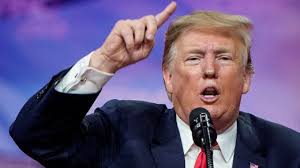
Donald Trump
“He was incapable of bargaining. He was like a man who goes up to a fruit peddler and threatens to blow his brains out if he does not sell his applies at the lowest possible price.”
What Payne writes about Hitler applies equally well to Trump.
Hitler revealed his “bargaining style” in 1938, when he invited Austrian Chancellor Kurt von Schuschnigg to his mountaintop retreat in Obersalzberg, Germany.
Hitler, an Austrian by birth, intended to annex his native land to Germany. Schuschnigg was aware of this, but felt secure in accepting the invitation. He had been assured that the question of Austrian sovereignty would not arise.
The meeting occurred on February 12, 1938.
Shuschnigg opened the discussion with a friendly compliment. Walking over to a large window, he admired the breathtaking view of the mountains.
HITLER: We haven’t come here to talk about the lovely view or the weather!
Austria has anyway never done anything which was of help to the German Reich….I am resolutely determined to make an end to all this business. The German Reich is a great power. Nobody can and nobody will interfere if it restores order on its frontiers.
[Like Hitler, Trump relies on insults and anger to put his victims on the defense.]
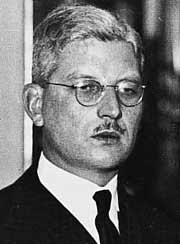
Kurt von Schuschnigg
SCHUSCHNIGG: We simply have to go on living alongside one another, the little state next to the big one. We have no other choice.
And that is why I ask you to tell me what your concrete complaints are. We will do all in our power to sort things out and establish a friendly relationship, as far as it is possible to do so.
HITLER: That’s what you say, Herr Schuschnigg. And I am telling you that I intend to clear up the whole of the so-called Austrian question—one way or another. Do you think I don’t know that you are fortifying Austria’s border with the Reich?
SCHUSCHNIGG: There can be no suggestion at all of that—
HITLER: Ridiculous explosive chambers are being built under bridges and roads—
This was a lie, and Hitler knew it was a lie. But it gave him an excuse to threaten to destroy Austria.
[For Trump, winning—not truth—is all that matters. During his first term as President, he told a documented 30,573 lies.]
HITLER: I have only to give one command and all this comic stuff on the border will be blown to pieces overnight. You don’t seriously think you could hold me up, even for half an hour, do you?
The S.A. [Hitler’s private army of Stormtroopers] and the [Condor] lLegion [which had bombed much of Spain into rubble during the Spanish Civil War] would come in after the troops and nobody—not even I—could stop them from wreaking vengeance.
Schnuschigg made a cardinal mistake in dealing with Hitler: He showed fear. And this was precisely what the Nazi dictator looked for in an opponent.
[Like Hitler, Trump relies on fear: “Real power is—I don’t even want to use the word—fear,” he said in March 2016 when still only a candidate for President.]
Contrary to popular belief, Hitler did not constantly rage at everyone. He used rage as a weapon, knowing that most people feel intimidated by it.
In the case of Schuschnigg, Hitler opened with insults and threats at the outset of their discussion. Then there was a period of calm, to convince the Austrian chancellor the worst was over.
Finally, he once again attacked—this time with so much fury that Schuschnigg was terrified into submission.
With one stroke of a pen, Austria became a vassal-state to Nazi Germany.
[Like Hitler, Trump threatens only those he feels are weak—thus his threats to use military force against Canada, Greenland and Panama.]
ABC NEWS, ALAMO, ALIEN-SMUGGLING RINGS, ALTERNET, ALVARO OBREGON, AMERICABLOG, AMNEXTY INTERNATIONAL, ANCHOR BABIES, ANTONIO LOPEZ DE SANTA ANNA, AP, ARIZONA, BABY BOOMER RESISTANCE, BARACK OBAMA, BARBARA LEE, BBC, BLOOMBERG, BLOOMBERG NEWS, BREXIT, BUREAU OF CUSTOMS AND BORDER PROTECTION, BUZZFEED, CALIFORNIA, CBS NEWS, CHICAGO, CNN, COLORADO, CORRUPTION, CROOKS AND LIARS, CUBA, DAILY KOS, DAVID CROCKETT, DEMOCRATIC PARTY, DEMOCRATS, DONALD TRUMP, DREAM ACT, DRUDGE REPORT, EMILIANO ZAPATA, ENGLISH LANGUAGE, ERIC ADAMS, EUROPEAN UNION (EU), FEDERATION FOR AMERICAN IMMIGRATION REFORM (FAIR), FELIPE CALDERON, FIVETHIRTYEIGHT, FLORIDA, FRANCISCO "PANCHO" VILLA, FRANCISCO MADERO, GOLIAD MASSACRE, GREG ABBOTT, HARPER’S MAGAZINE, HILLARY CLINTON, HISPANICS, HUFFINGTON POST, ILLEGAL ALIENS, illegal immigration, IMMIGRATIONS AND CUSTOMS ENFORCEMENT (ICE), JAMES BOWIE, JEFF SESSIONS, MEDI-CAL INSURANCE PROGRAM, MEDIA MATTERS, MEXICAN REVOLUTION, MEXICAN WAR, MEXICO, MEXICO CITY, MIGRANT CARRAVAN, MOSES AUSTIN, MOTHER JONES, MOVEON, MSNBC, NBC NEWS, NEVADA, NEW MEXICO, NEW REPUBLIC, NEW YORK CITY, NEWSDAY, NEWSWEEK, NEWT GINGRICH, NICARAGUA, NICCOLO MACHIAVELLI, NPR, PANCHO VILLA, PAUL RYAN, PBS NEWSHOUR, POLITICAL CORRECTNESS, POLITICO, POLITICUSUSA, RACIAL PROFILING, RAW STORY, REPUBLICAN PARTY, REPUBLICANS, REUTERS, ROBERT FROST, SALON, SAM HOUSTON, SAN JACINTO, SCHOOLS, SEATTLE TIMES, SLATE, SLAVERY, STEPHEN AUSTIN, TALKING POINTS MEMO, TEXAS, THE ATLANTIC, THE CHICAGO SUN-TIMES, THE CHICAGO TRIBUNE, THE DAILY BEAST, THE DAILY BLOG, THE DAILY MAIL, THE DISCOURSES, THE GUARDIAN, THE HILL, THE HUFFINGTON POST, THE INTERCEPT, THE LOS ANGELES TIMES, THE NATION, THE NEW REPUBLIC, THE NEW YORK TIMES, THE NEW YORKER, THE VILLAGE VOICE, THE WALL STREET JOURNAL, THE WASHINGTON POST, THINKPROGRESS, THOMAS HOMAN, TIJUANA, TIME, TRUTHDIG, TRUTHOUT, TWO POLITICAL JUNKIES, U.S. NEWS & WORLD REPORT, U.S. SUPREME COURT, UNITED KINGDOM (UK), UNITED STATES DEPARTMENT OF JUSTICE, UNITED STATES HEALTH AND HUMAN SERVICES DEPARTMENT, UPI, USA TODAY, UTAH, VENEZUELA, VENUSTIANO CARRANZA, WAL-MART, WASHINGTON D.C., WONKETTE
In Bureaucracy, Business, History, Law, Law Enforcement, Medical, Military, Politics, Social commentary on July 9, 2026 at 12:19 am
If Americans decide they truly want to control access to their own borders, there is a realistic way to accomplish this.
And it doesn’t involve building a wall along the Mexican border—which would prove ridiculously expensive and easily circumvented.

(1) The Justice Department should vigorously attack the “sanctuary movement” that officially thwarts the immigration laws of the United States.
Among the 31 “sanctuary cities” of this country: Washington, D.C.; New York City; Los Angeles; Chicago; San Francisco; Santa Ana; San Diego; Salt Lake City; Phoenix; Dallas; Houston; Austin; Detroit; Jersey City; Minneapolis; Miami; Denver; Baltimore; Seattle; Portland, Oregon; New Haven, Connecticut; and Portland, Maine.
These cities have adopted “sanctuary” ordinances that do not allow municipal funds or resources to be used to enforce federal immigration laws, usually by not allowing police or municipal employees to inquire about one’s immigration status.
(2) The most effective way to combat this movement: Indict the highest-ranking officials of those cities which have actively violated Federal immigration laws.
In San Francisco, for example, former District Attorney Kamala Harris—who was once Vice President of the United States—created a secret program called Back on Track, which provided training for jobs that illegal aliens could not legally hold.
She also prevented Immigration and Customs Enforcement (ICE) from deporting even those illegal aliens convicted of a felony.
(3) Indicting such officials would be comparable to the way that President Andres Jackson dealt with the threat South Carolinians once made to “nullify”—or ignore—any Federal laws they didn’t like.
Jackson quashed that threat by making one of his own: To lead an army into that State and purge all who dared defy the laws of the Federal Government.

(4) Even if some indicted officials escaped conviction, the results would prove worthwhile.
City officials would be forced to spend huge sums of their own money for attorneys and face months or even years of prosecution.
And this, in turn, would send a devastating warning to officials in other “sanctuary cities” that the same fate lies in store for them.
(5) CEOs whose companies—like Wal-Mart—systematically employ illegal aliens should be held directly accountable for the actions of their subordinates.
They should be indicted by the Justice Department under the Racketeer Influenced Corrupt Organizations (RICO) Act, the way Mafia bosses are prosecuted for ordering their own subordinates to commit crimes.
Upon conviction, the CEO should be sentenced to a mandatory prison term of at least twenty years.
This would prove a more effective remedy for combating illegal immigration than stationing tens of thousands of soldiers on the U.S./Mexican border. CEOs forced to account for their subordinates’ actions would take drastic steps to ensure that their companies strictly complied with Federal immigration laws.
Without employers luring illegal aliens at a fraction of the money paid to American workers, the flood of such illegal job-seekers would quickly dry up.
(6) The Government should stop granting automatic citizenship to “anchor babies” born to illegal aliens in the United States.
A comparable practice would be allowing bank robbers who had eluded the FBI to keep their illegally-obtained loot.
A person who violates the bank robbery laws of the United States is legally prosecutable for bank robbery, whether he’s immediately arrested or remains uncaught for years. The same should be true for those born illegally within this country.
If they’re not here legally at the time of birth, they should not be considered citizens and should—like their parents—be subject to deportation.
(7) The United States Government—from the President on down—should stop apologizing for the right to control the country’s national borders.
The Mexican Government doesn’t hesitate to apply strict laws to those immigrating to Mexico. And it feels no need to apologize for this.
Neither should we.
(8) Voting materials and ballots should be published in one language—English.
In Mexico, voting materials are published in one language—Spanish.
Throughout the United States, millions of Mexican illegals refuse to learn English and yet demand that voting materials and ballots be made available to them in Spanish.

(9) Those who are not legal citizens of the United States should not be allowed to vote in its elections.
In Mexico, those who are not Mexican citizens are not allowed to participate in the country’s elections.
The Mexican Government doesn’t consider itself racist for strictly enforcing its immigration laws.
The United States Government should not consider itself racist for insisting on the right to do the same.
(10) The United States should impose economic and even military sanctions against countries—such as China and Mexico—whose citizens make up the bulk of illegal aliens.
The Mexican government well remembers the 10-year Mexican Revolution (1910 – 1920) starring Francisco “Pancho” Villa, Emiliano Zapata and a host of other equally ruthless killers—and the one million dead men, women and children it produced.
So Mexico uses its American border to rid itself of those who might demand major reforms in the country’s political and economic institutions.
Such nations must learn that dumping their unwanteds on the United States now comes at an unaffordably high price. Otherwise those dumpings will continue.
ABC NEWS, ALAMO, ALIEN-SMUGGLING RINGS, ALTERNET, ALVARO OBREGON, AMERICABLOG, AMNEXTY INTERNATIONAL, ANCHOR BABIES, ANTONIO LOPEZ DE SANTA ANNA, AP, ARIZONA, BABY BOOMER RESISTANCE, BARACK OBAMA, BARBARA LEE, BBC, BLOOMBERG, BLOOMBERG NEWS, BREXIT, BUREAU OF CUSTOMS AND BORDER PROTECTION, BUZZFEED, CALIFORNIA, CBS NEWS, CHICAGO, CNN, COLORADO, CORRUPTION, CROOKS AND LIARS, CUBA, DAILY KOS, DAILY KOZ, DAVID CROCKETT, DEMOCRATIC PARTY, DEMOCRATS, DONALD TRUMP, DREAM ACT, DRUDGE REPORT, EMILIANO ZAPATA, ENGLISH LANGUAGE, ERIC ADAMS, EUROPEAN UNION (EU), FEDERATION FOR AMERICAN IMMIGRATION REFORM (FAIR), FELIPE CALDERON, FIVETHIRTYEIGHT, FLORIDA, FRANCISCO "PANCHO" VILLA, FRANCISCO MADERO, GOLIAD MASSACRE, GREG ABBOTT, HARPER’S MAGAZINE, HILLARY CLINTON, HISPANICS, HUFFINGTON POST, ILLEGAL ALIENS, illegal immigration, IMMIGRATIONS AND CUSTOMS ENFORCEMENT (ICE), JAMES BOWIE, JEFF SESSIONS, MEDI-CAL INSURANCE PROGRAM, MEDIA MATTERS, MEXICAN REVOLUTION, MEXICAN WAR, MEXICO, MEXICO CITY, MIGRANT CARRAVAN, MOSES AUSTIN, MOTHER JONES, MOVEON, MSNBC, NBC NEWS, NEVADA, NEW MEXICO, NEW REPUBLIC, NEW YORK CITY, NEWSDAY, NEWSWEEK, NEWT GINGRICH, NICARAGUA, NICCOLO MACHIAVELLI, NPR, PANCHO VILLA, PAUL RYAN, PBS NEWSHOUR, POLITICAL CORRECTNESS, POLITICO, POLITICUSUSA, RACIAL PROFILING, RAW STORY, REPUBLICAN PARTY, REPUBLICANS, REUTERS, ROBERT FROST, SALON, SAM HOUSTON, SAN JACINTO, SCHOOLS, SEATTLE TIMES, SLATE, SLAVERY, STEPHEN AUSTIN, TALKING POINTS MEMO, TEXAS, THE ATLANTIC, THE CHICAGO SUN-TIMES, THE CHICAGO TRIBUNE, THE DAILY BEAST, THE DAILY BLOG, THE DAILY MAIL, THE DISCOURSES, THE GUARDIAN, THE HILL, THE HUFFINGTON POST, THE INTERCEPT, THE LOS ANGELES TIMES, THE NATION, THE NEW REPUBLIC, THE NEW YORK TIMES, THE NEW YORKER, THE VILLAGE VOICE, THE WALL STREET JOURNAL, THE WASHINGTON POST, THINKPROGRESS, THOMAS HOMAN, TIJUANA, TIME, TRUTHDIG, TRUTHOUT, TWO POLITICAL JUNKIES, U.S. NEWS & WORLD REPORT, U.S. SUPREME COURT, UNITED KINGDOM (UK), UNITED STATES DEPARTMENT OF JUSTICE, UNITED STATES HEALTH AND HUMAN SERVICES DEPARTMENT, UPI, USA TODAY, UTAH, VENEZUELA, VENUSTIANO CARRANZA, WAL-MART, WASHINGTON D.C., WONKETTE
In Bureaucracy, Business, History, Law, Law Enforcement, Medical, Military, Politics, Social commentary on July 8, 2026 at 12:06 am
On May 8, 2018, United States Attorney General Jeff Sessions announced that a “zero-tolerance” policy toward people illegally entering the United States might separate families while parents are prosecuted.
“We don’t want to separate families, but we don’t want families to come to the border illegally and attempt to enter into this country improperly,” Sessions said. “The parents are subject to prosecution while children may not be. So, if we do our duty and prosecute those cases, then children inevitably for a period of time might be in different conditions.”
Children who were separated from their parents would be put under supervision of the U.S. Health and Human Services Department, Sessions said.
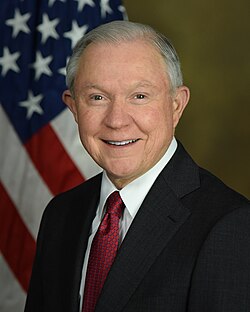
Jeff Sessions
Thomas Homan, U.S. Immigration and Customs Enforcement’s acting director, backed up Sessions’ “get tough” policy change: “Every law enforcement agency in this country separates parents from children when they’re arrested for a crime. There is no new policy. This has always been the policy.”
That policy soon went into effect. And it generated widespread outrage by
- Civil liberties organizations; and
- Those who believe the United States should not have—or enforce—its immigration laws.
“Criminalizing and stigmatizing parents who are only trying to keep their children from harm and give them a safe upbringing will cause untold damage to thousands of traumatized families who have already given up everything to flee terrible circumstances in their home countries,” said Erika Guevara-Rosas, Amnesty International’s Americas director.
In fact, alien-smugglers have increasingly used children as a wedge against American immigration laws. Their strategy: “Surely, Americans won’t arrest innocent children—or the adults who bring children with them.“
The Trump administration set out to prove them wrong.
This is typical behavior for law enforcement agencies: When criminals devise new ways to defeat existing police measures, the police devise new ways to counter those methods.
Meanwhile, those who believe the United States should throw open its doors to everyone who wants to enter are missing—or ignoring—a vital historical lesson.
Ironically, Mexico knows even better than the United States the perils of unchecked illegal immigration.
In 1821, Moses Austin sought a grant from Mexico to settle Texas. After he died in 1821, his son, Stephen, won recognition of the grant by Mexico.
The Mexican government had been unable to persuade large numbers of its own citizens to move to Texas, owing largely to raiding by such fierce Indian tribes as the Comanches.
The government saw the Anglo settlement of Texas as its best hope to tame an otherwise untamable frontier.

Stephen Austin
Austin convinced numerous American settlers to move to Texas, and by 1825 he had brought the first 300 American families into the territory.
Throughout the 1820s, Austin helped ensure the introduction of slavery into Texas, even though, under Mexican law, this was illegal. Tensions developed between unchecked numbers of Anglo settlers flooding into Texas and the Mexican authorities in charge there.
(“GTT”—“Gone to Texas”—was often carved on cabin doors by debt-ridden settlers who decided to seek their fortune in Texas. And some of the most notorious criminals on the frontier—such as slave-trader, land swindler and knife-fighter James Bowie—joined them.)
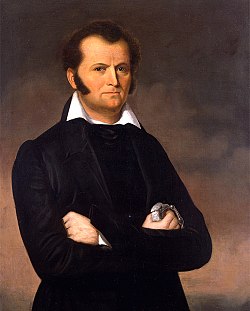
James Bowie
Eventually, the irresistible force of unlimited Anglo illegal immigration rebelled against the immovable object of Mexican legal/military authority.
The result:
- The battle of the Alamo: From February 23 to March 6, 1836, about 200 rebellious Texans withstood a 13-day siege in a former San Antonio mission, only to be slaughtered to the last man by an army of 2,000 Mexican soldiers commanded by President (actually, dictator) Antonio Lopez de Santa Anna. Among the victims: James Bowie and former Congressman David Crockett.
- The massacre at Goliad: On March 27, 1836, 425-445 Texans captured after the battle of Coleto were shot en masse by Mexican soldiers.
- The battle of San Jacinto: On April 21, 1836, Texans led by General Sam Houston won a surprise Texas victory over Mexican forces who were caught in a mid-afternoon siesta. Santa Anna—who had fled—was captured the next day.
Mexico was forced to give up all rights to Texas—which, nine years after winning its independence, became a state.
But ongoing conflicts between Mexico and the United States over Texas led to the Mexican war in 1846.
This, in turn, led to a series of devastating American victories over the Mexican army, and the capture of Mexico City itself.

Territory (in brown) that Mexico lost after the Mexican War
Mexico suffered the humiliation of both military defeat and the loss of its land holdings within the American Southwest—which, up to 1848, it had controlled.
This territory later became the states of California, New Mexico, Utah, Nevada, Arizona, Texas, and western Colorado.
And the United States finally spread “from sea to shining sea.”
So Mexico knows what it’s doing when it unloads millions of its own citizens—and those of other Latin and Central American countries—on the United States.
Mexico, in short, is a textbook case of what happens to a country that is unable to enforce its own immigration laws.
ABC NEWS, ALAMO, ALIEN-SMUGGLING RINGS, ALTERNET, ALVARO OBREGON, AMERICABLOG, AMNEXTY INTERNATIONAL, ANCHOR BABIES, ANTONIO LOPEZ DE SANTA ANNA, AP, ARIZONA, BABY BOOMER RESISTANCE, BARACK OBAMA, BARBARA LEE, BBC, BLOOMBERG, BLOOMBERG NEWS, BREXIT, BUREAU OF CUSTOMS AND BORDER PROTECTION, BUZZFEED, CALIFORNIA, CBS NEWS, CHICAGO, CNN, COLORADO, CORRUPTION, CROOKS AND LIARS, CUBA, DAILY KOS, DAVID CROCKETT, DEMOCRATIC PARTY, DEMOCRATS, DONALD TRUMP, DREAM ACT, DRUDGE REPORT, EMILIANO ZAPATA, ENGLISH LANGUAGE, ERIC ADAMS, EUROPEAN UNION (EU), FEDERATION FOR AMERICAN IMMIGRATION REFORM (FAIR), FELIPE CALDERON, FIVETHIRTYEIGHT, FLORIDA, FRANCISCO "PANCHO" VILLA, FRANCISCO MADERO, GOLIAD MASSACRE, GREG ABBOTT, HARPER’S MAGAZINE, HILLARY CLINTON, HISPANICS, HUFFINGTON POST, ILLEGAL ALIENS, illegal immigration, IMMIGRATIONS AND CUSTOMS ENFORCEMENT (ICE), JAMES BOWIE, JEFF SESSIONS, MEDI-CAL INSURANCE PROGRAM, MEDIA MATTERS, MEXICAN REVOLUTION, MEXICAN WAR, MEXICO, MEXICO CITY, MIGRANT CARRAVAN, MOSES AUSTIN, MOTHER JONES, MOVEON, MSNBC, NBC NEWS, NEVADA, NEW MEXICO, NEW REPUBLIC, NEW YORK CITY, NEWSDAY, NEWSWEEK, NEWT GINGRICH, NICARAGUA, NICCOLO MACHIAVELLI, NPR, PANCHO VILLA, PAUL RYAN, PBS NEWSHOUR, POLITICAL CORRECTNESS, POLITICO, POLITICUSUSA, RACIAL PROFILING, RAW STORY, REPUBLICAN PARTY, REPUBLICANS, REUTERS, ROBERT FROST, SALON, SAM HOUSTON, SAN JACINTO, SCHOOLS, SEATTLE TIMES, SLATE, SLAVERY, STEPHEN AUSTIN, TALKING POINTS MEMO, TEXAS, THE ATLANTIC, THE CHICAGO SUN-TIMES, THE CHICAGO TRIBUNE, THE DAILY BEAST, THE DAILY BLOG, THE DAILY MAIL, THE DISCOURSES, THE GUARDIAN, THE HILL, THE HUFFINGTON POST, THE INTERCEPT, THE LOS ANGELES TIMES, THE NATION, THE NEW REPUBLIC, THE NEW YORK TIMES, THE NEW YORKER, THE VILLAGE VOICE, THE WALL STREET JOURNAL, THE WASHINGTON POST, THINKPROGRESS, THOMAS HOMAN, TIJUANA, TIME, TRUTHDIG, TRUTHOUT, TWO POLITICAL JUNKIES, U.S. NEWS & WORLD REPORT, U.S. SUPREME COURT, UNITED KINGDOM (UK), UNITED STATES DEPARTMENT OF JUSTICE, UNITED STATES HEALTH AND HUMAN SERVICES DEPARTMENT, UPI, USA TODAY, UTAH, VENEZUELA, VENUSTIANO CARRANZA, WAL-MART, WASHINGTON D.C., WONKETTE, X
In Bureaucracy, Business, History, Law, Law Enforcement, Medical, Military, Politics, Social commentary on July 7, 2026 at 12:29 am
On January 31, 2020, the United Kingdom (UK) withdrew from the European Union (EU).
The United Kingdom—England, Scotland, Wales and Northern Ireland—had been a member state of the EU or its predecessor, the European Communities (EC), since January 1, 1973.
The vote had been a long time coming—and a major reason for it lay in the unrestricted immigration—legal and illegal—of Central and Eastern Europeans, who are allowed by EU regulations to freely live and work in any member state.
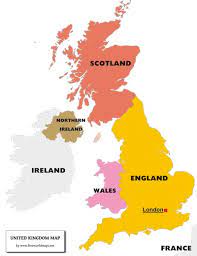
The United Kingdom
So the United Kingdom decided it would no longer be an EU member state.
Britons believed that migrants were clogging Britain’s health-care system and schools, while also depressing wages. By leaving the EU, Britons believed they could gain more control over their borders and drastically reduce immigration.
Immigration, the economy and health care had long been the top three issues on British voters’ minds.
The number of foreign-born people living in the UK went from 2.3 million in 1993 (when Britain joined the EU) to 8.2 million in 2014.
By 2020, the non-UK-born population was 9.5 million and the non-British population was 6.1 million. Most of these came from other EU countries: Cyprus, Malta, Croatia, Africa, the Middle East and Asia.
India, Pakistan and Bangladesh were the top three countries with the highest number of UK passport holders.
Critics of Brexit have blamed xenophobia for Britain’s leaving the EU. While that may have been true, it ignores a vital truth: People feel most comfortable around others like themselves.
In schools and prisons, it’s commonplace to see white sitting among whites, blacks sitting among blacks and Hispanics sitting among Hispanics.
In addition, people feel most comfortable among those who speak their own language. In the United States, there has been widespread resentment over having to “Push 1 for English” when calling government agencies.
Two factors are driving unprecedented levels of world migration:
- The world’s population at 8.1 billion, which puts unprecedented stress on available food, housing, medical care and other essential services; and
- The rapid escalation of climate change has brought drought/flooding to major parts of Africa, Asia and Latin and Central America.
Added to these must be an insight into human character offered by Niccolo Machiavelli, the sixteenth-century historian and political scientist, in his work, The Discourses:

Niccolo Machiavelli
It was a saying of ancient writers, that men afflict themselves in evil, and become weary of the good, and that both these dispositions produce the same effects.
For when men are no longer obliged to fight from necessity, they fight from ambition, which passion is so powerful in the hearts of men that it never leaves them, no matter to what height they may rise.
The reason for this is that nature has created men so that they desire everything, but are unable to attain it. Desire being thus always greater than the faculty of acquiring, discontent with what they have and dissatisfaction with themselves result from it.
This causes the changes in their fortunes—for as some men desire to have more, while others fear to lose what they have, enmities and war are the consequences. And this brings about the ruin of one province and the elevation of another.
In addition: Those who have spent their lives as law-abiding citizens resent it when immigrants—especially illegal aliens—gain advantage by breaking the law.
Such a case occurred on January 1, 2024.
That was when California became the first state to offer health insurance to all illegal aliens. All of these uninvited foreigners, regardless of age, now qualify for Medi-Cal, California’s version of the federal Medicaid program for people with low incomes.
Previously, illegal aliens could receive only emergency and pregnancy-related services under Medi-Cal as long as they met eligibility requirements, including income limits and California residency in 2014.
In 2015, then-Governor Jerry Brown allowed illegal alien children to receive coverage under Medi-Cal.
The final expansion starting January 1 will give full coverage to at least 700,000 illegal aliens who have no right to be in the country.
At the same time, about 3.2 million California citizens remained uninsured in 2022.
Meanwhile, California faces a record $68 billion budget deficit. Tax collections are off by $26 billion, combined with the economic slowdown California has been facing since 2022.
News stories announcing this taxpayers’ giveaway don’t refer to the recipients as “illegal aliens.” That’s because “illegal alien” is—for all its accuracy—Politically Incorrect.
Instead, those who defend the wanton violating of American immigration laws prefer the term “undocumented immigrant.”
As though these lawbreakers had valid citizenship documents but somehow lost them during their swim across the Rio Grande.
It’s entirely natural that those living in abject poverty—as millions do in Asia, Africa and Latin/Central America—want to escape it.
It’s also entirely natural that those who have escaped poverty want to hold on to all they have worked hard to attain.
The refusal of liberal politicians—in England, Italy, France, Germany and the United States—to accept these truths has led to the rise of authoritarian, Right-wing movements in those countries.
By refusing to address rising anger over such invasions, liberal politicians throughout the world are endangering the very democracies they cherish.
ABC NEWS, ALAMO, ALIEN-SMUGGLING RINGS, ALTERNET, ALVARO OBREGON, AMERICABLOG, AMNEXTY INTERNATIONAL, ANCHOR BABIES, ANTONIO LOPEZ DE SANTA ANNA, AP, ARIZONA, BABY BOOMER RESISTANCE, BARACK OBAMA, BARBARA LEE, BBC, BLOOMBERG, BLOOMBERG NEWS, BREXIT, BUREAU OF CUSTOMS AND BORDER PROTECTION, BUZZFEED, CALIFORNIA, CBS NEWS, CHICAGO, CNN, COLORADO, CORRUPTION, CROOKS AND LIARS, CUBA, DAILY KOS, DAVID CROCKETT, DEMOCRATIC PARTY, DEMOCRATS, DONALD TRUMP, DREAM ACT, DRUDGE REPORT, EMILIANO ZAPATA, ENGLISH LANGUAGE, ERIC ADAMS, EUROPEAN UNION (EU), FEDERATION FOR AMERICAN IMMIGRATION REFORM (FAIR), FELIPE CALDERON, FIVETHIRTYEIGHT, FLORIDA, FRANCISCO "PANCHO" VILLA, FRANCISCO MADERO, GOLIAD MASSACRE, GREG ABBOTT, HARPER’S MAGAZINE, HILLARY CLINTON, HISPANICS, HUFFINGTON POST, ILLEGAL ALIENS, illegal immigration, IMMIGRATIONS AND CUSTOMS ENFORCEMENT (ICE), JAMES BOWIE, JEFF SESSIONS, MEDI-CAL INSURANCE PROGRAM, MEDIA MATTERS, MEXICAN REVOLUTION, MEXICAN WAR, MEXICO, MEXICO CITY, MIGRANT CARRAVAN, MOSES AUSTIN, MOTHER JONES, MOVEON, MSNBC, NBC NEWS, NEVADA, NEW MEXICO, NEW REPUBLIC, NEW YORK CITY, NEWSDAY, NEWSWEEK, NEWT GINGRICH, NICARAGUA, NICCOLO MACHIAVELLI, NPR, PANCHO VILLA, PAUL RYAN, PBS NEWSHOUR, POLITICAL CORRECTNESS, POLITICO, POLITICUSUSA, RACIAL PROFILING, RAW STORY, REPUBLICAN PARTY, REPUBLICANS, REUTERS, ROBERT FROST, SALON, SAM HOUSTON, SAN JACINTO, SCHOOLS, SEATTLE TIMES, SLATE, SLAVERY, STEPHEN AUSTIN, TALKING POINTS MEMO, TEXAS, THE ATLANTIC, THE CHICAGO SUN-TIMES, THE CHICAGO TRIBUNE, THE DAILY BEAST, THE DAILY BLOG, THE DAILY MAIL, THE DISCOURSES, THE GUARDIAN, THE HILL, THE HUFFINGTON POST, THE INTERCEPT, THE LOS ANGELES TIMES, THE NATION, THE NEW REPUBLIC, THE NEW YORK TIMES, THE NEW YORKER, THE VILLAGE VOICE, THE WALL STREET JOURNAL, THE WASHINGTON POST, THINKPROGRESS, THOMAS HOMAN, TIJUANA, TIME, TRUTHDIG, TRUTHOUT, TWO POLITICAL JUNKIES, U.S. NEWS & WORLD REPORT, U.S. SUPREME COURT, UNITED KINGDOM (UK), UNITED STATES DEPARTMENT OF JUSTICE, UNITED STATES HEALTH AND HUMAN SERVICES DEPARTMENT, UPI, USA TODAY, UTAH, VENEZUELA, VENUSTIANO CARRANZA, WAL-MART, WASHINGTON D.C., WONKETTE
In Bureaucracy, Business, History, Law, Law Enforcement, Medical, Military, Politics, Social commentary on July 6, 2026 at 12:10 am
In May 20, 2010, Mexico’s then-President Felipe Calderon addressed a joint session of the United States Congress—and attacked a recently-enacted Arizona law that allowed law enforcement officials to detain anyone suspected of being in the country illegally.
According to Calderon, the law “introduces a terrible idea: Using racial profiling as a basis for law enforcement.
“I have said that Mexico does not stop at its border, that wherever there is a Mexican, there is Mexico.”
The hypocrisy of Calderon’s words was staggering. He was condemning the United States for doing what Mexico itself has long done: Strictly enforcing control of its own borders.

Felipe Calderon
World Economic ForumCopyright by World Economic Forum / Photo by Remy Steinegger
Mexico’s immigration laws state: Any foreigner that enters the country to stay less than six months is considered a visitor. To meet immigration requirements, you must:
- Have enough money to pay for your stay in the country;
- Have an invitation from a private or public interest organization.
If you want to stay more than 180 days, you must obtain a temporary residency visa in Mexico. This requires you to:
- Have a family relationship with a Mexican citizen.
- Have a job offer issued by a Mexican employer.
- Have an invitation from a private or public institution.
- Have enough money to pay for your stay in the country.
- Own real estate in Mexico.
- Have investments in Mexico.
After being a temporary resident for four years, you can apply for permanent residency. To obtain this, you must meet these requirements:
- Be a refugee or under the condition of political asylum.
- Have a family relationship with a Mexican citizen.
- To have been a temporary resident for four years.
- Be a pensioner with enough monthly income to pay for your stay in the country.
- Be related in a straight line up to the second degree to a Mexican by birth.
- To have been a temporary resident for two years in the case of a conjugal or concubine relationship with a Mexican citizen or permanent resident.
Eight years after Calderon demanded that Americans repeal their immigration laws, Mexicans suddenly discovered they hated illegal aliens, too.
On October 13, 2018, a caravan of at least 5,000 men, women and children from El Salvador, Guatemala and Honduras set out for the United States.
On October 18, President Donald Trump closed the U.S.-Mexico border to keep the caravan from entering the country.
By November 19, migrants had begun piling up in Tijuana, which borders San Diego.
Suddenly, Tijuana residents began carrying signs reading “No illegals,” “No to the invasion” and “Mexico First.” And marching in the streets wearing Mexico’s red, white and green national soccer jersey and vigorously waving Mexican flags.
“We want the caravan to go; they are invading us,” said Patricia Reyes, a 62-year-old protester. “They should have come into Mexico correctly, legally, but they came in like animals.”
The El Paso Times noted the resentment of many Mexicans toward the increasing numbers of Cuban illegal aliens in Juarez, which lies across from El Paso.
“They don’t get along with Mexican people,” said a burrito seller. “They get in a little group by themselves. A lot of people don’t like them here.”
And a business consultant complained, “There are people who are coming looking for a handout, who want us to help them, when they could also look for work.”
Over the weekend of October 12-13, 2019, a National Guard commander addressed his platoon before confronting the latest caravan: “No one will come to trample our country, our land!”
In the past, Mexicans comprised the largest group of illegal aliens entering the United States. But the Mexican economy has grown and developed to the point where fewer people see the need to emigrate.
Most illegals are now mostly from Guatemala, Honduras, and El Salvador. And there are growing numbers from Haiti, Cuba, various African countries, and even the Middle East.
During the first eight months of 2019, the number of asylum applications submitted to Mexico’s refugee agency (COMAR) more than tripled, compared to the same period in 2018. As a result, the refugee agency removed the how-to-apply video it once hosted on its website.
In the past, the Mexican Government refused to halt illegal immigration to the United States.
It remembered the bloody upheaval known as the Mexican Revolution. This lasted 10 years (1910-1920) and wiped out an estimated one to two million men, women and children.
Massacres were common on all sides, with men shot by the hundreds in bullrings or hung by the dozen on trees.
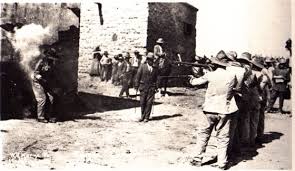
A Mexican Revolution firing squad
All of the major leaders of the Revolution—Francisco Madero, Emiliano Zapata, Venustiano Carranza, Francisco “Pancho” Villa, Alvaro Obregon—died in a hail of bullets.

Francisco “Pancho” Villa
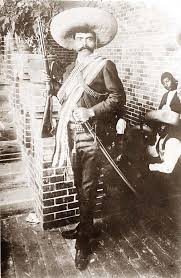
Emiliano Zapata
As a result, every successive Mexican Government lived in the shadow of another such wholesale bloodletting. These officials quietly decided to turn the United States border into a safety valve.
* * * * *
No other nation has ever allowed itself to become a dumping ground for the world’s unwanteds. And no law—religious or secular—obligates the United States to do so.
Space is limited in schools, hospitals and housing, and the more people who cram into limited spaces, the more frictions they inevitably create.
As native-born Mexicans are angrily finding out.
ABC NEWS, ALAMO, ALIEN-SMUGGLING RINGS, ALTERNET, ALVARO OBREGON, AMERICABLOG, AMNEXTY INTERNATIONAL, ANCHOR BABIES, ANTONIO LOPEZ DE SANTA ANNA, AP, ARIZONA, BABY BOOMER RESISTANCE, BARACK OBAMA, BARBARA LEE, BBC, BLOOMBERG, BLOOMBERG NEWS, BREXIT, BUREAU OF CUSTOMS AND BORDER PROTECTION, BUZZFEED, CALIFORNIA, CBS NEWS, CHICAGO, CNN, COLORADO, CORRUPTION, CROOKS AND LIARS, CUBA, DAILY KOS, DAILY KOZ, DAVID CROCKETT, DEMOCRATIC PARTY, DEMOCRATS, DONALD TRUMP, DREAM ACT, DRUDGE REPORT, EMILIANO ZAPATA, ENGLISH LANGUAGE, ERIC ADAMS, EUROPEAN UNION (EU), FEDERATION FOR AMERICAN IMMIGRATION REFORM (FAIR), FELIPE CALDERON, FIVETHIRTYEIGHT, FLORIDA, FRANCISCO "PANCHO" VILLA, FRANCISCO MADERO, GOLIAD MASSACRE, GREG ABBOTT, HARPER’S MAGAZINE, HILLARY CLINTON, HISPANICS, HUFFINGTON POST, ILLEGAL ALIENS, illegal immigration, IMMIGRATIONS AND CUSTOMS ENFORCEMENT (ICE), JAMES BOWIE, JEFF SESSIONS, MEDI-CAL, MEDI-CAL INSURANCE PROGRAM, MEDIA MATTERS, MEXICAN REVOLUTION, MEXICAN WAR, MEXICO, MEXICO CITY, MIGRANT CARRAVAN, MOSES AUSTIN, MOTHER JONES, MOVEON, MSNBC, NBC NEWS, NEVADA, NEW MEXICO, NEW REPUBLIC, NEW YORK CITY, NEWSDAY, NEWSWEEK, NEWT GINGRICH, NICARAGUA, NICCOLO MACHIAVELLI, NPR, PANCHO VILLA, PAUL RYAN, PBS NEWSHOUR, POLITICAL CORRECTNESS, POLITICO, POLITICUSUSA, RACIAL PROFILING, RAW STORY, REPUBLICAN PARTY, REPUBLICANS, REUTERS, ROBERT FROST, SALON, SAM HOUSTON, SAN JACINTO, SCHOOLS, SEATTLE TIMES, SLATE, SLAVERY, STEPHEN AUSTIN, TALKING POINTS MEMO, TEXAS, THE ATLANTIC, THE CHICAGO SUN-TIMES, THE CHICAGO TRIBUNE, THE DAILY BEAST, THE DAILY BLOG, THE DAILY MAIL, THE DISCOURSES, THE GUARDIAN, THE HILL, THE HUFFINGTON POST, THE INTERCEPT, THE LOS ANGELES TIMES, THE NATION, THE NEW REPUBLIC, THE NEW YORK TIMES, THE NEW YORKER, THE VILLAGE VOICE, THE WALL STREET JOURNAL, THE WASHINGTON POST, THINKPROGRESS, THOMAS HOMAN, TIJUANA, TIME, TRUTHDIG, TRUTHOUT, TWO POLITICAL JUNKIES, U.S. NEWS & WORLD REPORT, U.S. SUPREME COURT, UNITED KINGDOM (UK), UNITED STATES DEPARTMENT OF JUSTICE, UNITED STATES HEALTH AND HUMAN SERVICES DEPARTMENT, UPI, USA TODAY, UTAH, VENEZUELA, VENUSTIANO CARRANZA, WAL-MART, WASHINGTON D.C., WONKETTE
In Bureaucracy, Business, History, Law, Law Enforcement, Medical, Military, Politics, Social commentary on July 3, 2026 at 12:06 am
“Good fences make good neighbors.”
Robert Frost penned those famous words in his 1914 poem, “Mending Wall.”
For millions of Americans, illegal immigration was the issue empowering the candidacy of Donald Trump to regain the Presidency in 2024.
For them, Frost’s opening line has become gospel: “Something there is that truly loves a wall.”
A September 16, 2022 article in The Daily Mail headlined:
“America’s $78B Bill for Teaching Schoolkids With Poor English is Rising by BILLIONS in Biden-era Immigration Surge, Study Says, and 76,000 New Language Instructors Are a Tall Order in a Teacher Shortage.”
Among its findings:
- One million public school students—ranging from kindergarten to high school—need special training in speaking and writing English.
- It costs $78 billion each year to educate them.
- Texas, California, Florida and New York are among the states most burdened with such students.
- Only three percent of these students are proficient in English when they graduate from high school.
- These costs are raised by billions owing to an unceasing tide of illegal alien children at the southern border.
These alarming statistics were produced by a study from the Federation for American Immigration Reform (FAIR).
The 5.1 million students lacking English language skills need help in all their classes.
As a result, it costs 15 to 20 percent more to educate them than American-born students who grow up learning English.

Illegal aliens climbing over the border fence
With the United States facing a severe teacher shortage, some states have lowered their hiring rules to recruit teachers with only a high school diploma.
In 2020, the 5.1 million illegal alien students in public schools cost American taxpayers $78 billion—an $18.8 billion jump from the cost in 2016.
Of those students, 1.15 million were in California, costing the state $19.5 billion. One million more lived in Texas, costing that state $11.4 billion. And 278,000 lived in Florida, at a cost of $3.1 billion.
Only 370,000 teachers nationwide are trained to teach them, and 76,000 more will be needed during the next five years.
Immigration remains a highly divisive issue among Americans. “Red” Republican states want to close borders. “Blue” Democratic states are more open to newcomers.
Yet even famously liberal enclaves of support for illegal aliens like New York are beginning to have second thoughts about taking in unlimited numbers of uninvited foreigners.
On October 7, 2022, then-New York City Mayor Eric Adams declared a state of emergency in response to the city’s migrant crisis, which he said would cost the city $1 billion that fiscal year.

Eric Adams
“We now have a situation where more people are arriving in New York City than we can immediately accommodate, including families with babies and young children,” Adams said.
“Once the asylum seekers from today’s buses are provided shelter, we would surpass the highest number of people in recorded history in our city’s shelter system.”
Behind this unwanted influx lies Texas Governor Greg Abbott.
By May 1, 2025, Texas had spent more than $229 million busing illegal aliens found in Texas to famously liberal supporters of illegal immigration: Washington D.C., New York City and Chicago.
Abbott announced the program on April 13, 2024, as his response to the Biden administration’s immigration policies.

Greg Abbott
In October, 2023, New York City had 90,578 people in its shelter system. Thousands of these are American citizens who are homeless. They are competing for assistance with illegal aliens who were bused to New York City from the southern border since April, 2022.
Three Communist-ruled countries—Venezuela, Nicaragua and Cuba—are responsible for this huge surge in illegal aliens and their continuing drain on America’s schools, housing and hospitals (among other facilities).
Rising levels of repression, food shortages and economic stability are motivating Cubans, Venezuelans and Nicaraguans to enter the United States. And assisting them is the longtime policy of the United States government to automatically accept those leaving Communist countries as refugees.
At some point, the United States must face the economic and social absurdity of allowing some cities and states to provide sanctuary to every illegal alien who appears.
Even Eric Adams, emphasizing that New York City remains a sanctuary city, warned it could not cope with such an overwhelming influx of migrants:
“We are not telling anyone that New York can accommodate every migrant in the city. We’re not encouraging people to send eight, nine buses a day….We’re saying that as a sanctuary city with right to shelter, we’re going to fulfill that obligation. That’s what we’re doing.”
Abbott clearly believes he has the right to inflict thousands of illegal aliens on other states. And illegal aliens clearly believe they have the right to demand unlimited access to the United States.
At some point, America must stop allowing itself to be a dumping-ground for other countries’ unwanteds.
* * * * *
An “open door” policy proved essential 250 years ago, when most of America was unsettled and largely unpopulated.
But the United States is no longer a largely unpopulated, agricultural country. Most of its population lives in coastal cities—which is where most illegal aliens tend to settle as well.
Space is limited in schools, hospitals and housing, and the more people who cram into limited spaces, the more frictions they inevitably create.


ABC NEWS, ADOLF HITLER, ALTERNET, AMERICABLOG, AP, BABY BOOMER RESISTANCE, BBC, BLOOMBERG NEWS, BLUESKY, BUZZFEED, CANADA, CBS NEWS, CLAUDIA SHEINBAUM PARDO, CNN, CNN'S "STARTING POINT", CROOKS AND LIARS, DAILY KOS, DEPARTMENT OF HOMELAND SECURITY, DEPARTMENT OF JUSTICE, EXTORTION, FBI, FIVETHIRTYEIGHT, HARPER’S MAGAZINE, HUFFINGTON POST, INSIDER, JUDICIARY, MARK CARNEY, MASTADON, MEDIA MATTERS, MEXICO, MOTHER JONES, MOVEON, MSNBC, MSNBC'S "HARDBALL", NAZI GERMANY, NBC NEWS, NEGOTIATING, NEW REPUBLIC, NEWSDAY, NEWSWEEK, NPR, PBS NEWSHOUR, POLAND, POLITICO, POLITICUSUSA, PRESS, RAW STORY, REPUBLICAN PARTY, REPUBLICANS, REUTERS, SALON, SEATTLE TIMES, SLATE, TALKING POINTS MEMO, THE ATLANTIC, THE CHICAGO SUN-TIMES, THE CHICAGO TRIBUNE, THE DAILY BEAST, THE DAILY BLOG, THE GUARDIAN, THE HILL, THE HUFFINGTON POST, THE LOS ANGELES TIMES, THE NATION, THE NEW REPUBLIC, THE NEW YORK TIMES, THE NEW YORKER, THE PENTAGON, THE VILLAGE VOICE, THE WASHINGTON POST, THINKPROGRESS, TIME, TRUTHDIG, TRUTHOUT, TWO POLITICAL JUNKIES, U.S. NEWS & WORLD REPORT, UPI, USA TODAY, WONKETTE, WORLD WAR 11, X
FAILING AT IRAN, NOW HE WANTS CANADA: PART THREE (END)
In Bureaucracy, History, Law, Law Enforcement, Politics, Social commentary on September 16, 2026 at 12:26 amOn January 20, 2026, in a speech at the World Economic Forum in Davos, Switzerland, Canadian Prime Minister Mark Carney called for greater cooperation among the world’s middle-sized nations.
The reason: To protect themselves from great powers using tariffs to extort control over them.
An example of this: Ottawa and Beijing now have a limited tariff agreement that swaps reduced Chinese duties on Canadian canola seeds for lower Canadian tariffs on a capped volume of Chinese electric vehicles.
On January 26, Canada announced a plan to significantly expand trade with non‑U.S. countries, strengthen internal Canadian trade, and increase domestic investment by up to one trillion dollars over the next five years.
Canadian provinces and territories
On February 20, 2026, the United States Supreme Court ruled against emergency tariffs imposed under the International Emergency Economic Powers Act.
This had been the basis—and excuse—for Trump’s slapping tariffs on more than 180 countries.
Ignoring the Supreme Court ruling Trump imposed a short term 10% global tariff.
On July 1, after a virtual meeting with U.S. Trade Representative Jamieson Greer with his Canadian and Mexican counterparts, Greer announced that the U.S. would not extend the Canada-United States-Mexico Agreement (CUSMA).
Its goals had been to boost economic growth, reduce trade barriers, and secure preferential market access across North America.
On July 17, in a Truth Social post, Trump threatened to put new tariffs on Canada after hundreds of wildfires left much of the northern U.S. covered by smoke.
He could have offered to send American firefighters and firefighting equipment to Canada. But acting in a humane way has never been a part of Trump’s character.
On July 20, Trump alleged that Canada discriminated against American companies supplying alcohol, dairy and cars. He signed three proclamations under the 1930 Smoot-Hawley Tariff Act, imposing 50% tariffs on Canadian dairy, alcohol, cars and other products.
On August 22, Trump’s 50% tariffs took effect on about $20 billion worth of Canadian goods—dairy products, alcoholic beverages, cement and hockey equipment.
Trade negotiations had collapsed shortly before a midnight deadline the previous night.
Canadian Prime Minister Mark Carney said that “last-minute changes in the U.S. proposed terms” had caused the collapse.
Mark Carney
“….The general attitude….is that the core Canadian industries either would be subsidiaries effectively of the United States industries or would put in place terms where those industries would be, gradually wound down in Canada and we’re not going to of course….accept those terms.”
And he warned that Canada would match the tariffs “dollar for dollar” starting on September 8.
After Canada suspended trade talks on August 21, Trump signed an executive order “changing” the name of Lake Ontario, which borders New York and Canada’s Ontario province, to Lake America.
Google and Apple, cravenly seeking to win Trump’s favor, immediately displayed maps offering the Trumpian version of geography.
“When the Americans stop doing memes, stop throwing shade, stop trying to be tough and start being serious about having those discussions, we can have those discussions,” said Carney at a press conference.
There is no American precedent for such extortionate behavior—but there is a German one. That of Nazi Germany from t938 to 1939 under Adolf Hitler—first against Austria, then Czechoslovakia, and finally Poland.
It was his aggression against Poland that ignited World War II.
But Trump can be beaten—if his enemies are willing to go all the way.
Democratic nations like Canada and Mexico dare not attack the United States militarily. America’s military is so powerful the country is threatened only by China and Russia.
But they can target with ruthless tariffs those Red states whose Fascistic voting blocs fanatically support Trump—and the House and Senate members who support him.
They can:
Canada, in particular, has a deadly weapon it can unleash at any time:
Provincial authorities and grid operators (such as Ontario’s Independent Electricity System Operator) can reduce or halt power flowing through cross-border transmission lines to states like New York, Michigan and Minnesota.
The U.S. imports electricity from Canada because it is cheaper than generating more supply domestically. Losing Canadian electricity would force affected states to rely on rapacious energy companies, driving up electricity costs for consumers.
This, in turn, would trigger voters’ anger against Trump-supporting Republican candidates for the House and Senate.
Americans are used to seeking simple, painless solutions to major problems. Thus, in 2024, Trump won 77 million votes by promising to drastically reduce the price of eggs.
Instead, he gave voters an unprovoked and endless war on Iran. This has created a worldwide spiral in oil prices—and fueled inflation in the United States and other nations.
As prices soar for food, energy and housing, Trump focuses on vanity projects like a 90,000 square-foot White House ballroom and a towering “Victory Arch” overlooking Arlington Cemetery.
When Red states are forced to suffer staggering losses for months on end, they will elect anti-Fascist Senators and Representatives to nullify the evils of Trump’s administration.
Share this: