Posts Tagged ‘BLOOMBERG NEWS’
2016 PRESIDENTIAL ELECTION, 2020 PRESIDENTIAL ELECTION, 2024 PRESIDENTIAL ELECTION, 9/11 ATTACKS, ABC NEWS, ABORTION, ABRAHAM LINCOLN, ALTERNET, AMERICABLOG, AP, APPOMATTOX DEMOCRATS, ARNOLD SCHWARTZENEGGER, ASIANS, BABY BOOMER RESISTANCE, BARACK OBAMA, BBC, BLACKS, BLOOMBERG NEWS, BUZZFEED, CBS NEWS, CHARLES ROYSTER, CIVIL RIGHTS ACT OF 1964, CIVIL WAR, CLIMATE CHANGE, CNN, CONFEDERATE STATES OF AMERICA, COVID-19, CROOKS AND LIARS, DAILY KOS, DAVID BROOKS, DECLARATION OF INDEPENDENCE, DELTA VARIANT, DEPARTMENT OF HOMELAND SECURITY, DONALD TRUMP, FBI, FIVETHIRTYEIGHT, FORT SUMTER, FOSSIL FUELS, GEORGE W. BUSH, HAITIANS, HARPER’S MAGAZINE, HATRED, HILLARY CLINTON, HISPANICS, HUFFINGTON POST, IMMIGRANTS, JANUARY 6 COUP ATTEMPT, JOHN OLIVER, JOHNSON & JOHNSON VACCINE, JONATHAN CAPEHART, Kamala Harris, KGB, LYNDON B. JOHNSON, MASKS, MEDIA MATTERS, MERYL STREEP, MODERNA VACCINE, MOTHER JONES, MOVEON, MSNBC, MUSLIMS, NBC NEWS, NEIL YOUNG, NEW REPUBLIC, NEWSDAY, NEWSWEEK, NPR, PBS NEWSHOUR, PHIZER VACCINE, POLITICO, POLITICUSUSA, PRISONERS OF WAR, PROJECT 2025, RACISM, RAW STORY, RECONSTURCTION, REPUBLICANS, REUTERS, ROBERT E. LEE, RUSSIA, SALON, SEATTLE TIMES, SLATE, SLAVERY, SPRINGFIELD OHIO, TALKING POINTS MEMO, THE ATLANTIC, THE CHICAGO SUN-TIMES, THE CHICAGO TRIBUNE, THE DAILY BEAST, THE DAILY BLOG, THE DESTRUCTIVE WAR (BOOK), THE DISABLES, THE GUARDIAN, THE HILL, THE HUFFINGTON POST, THE LOS ANGELES TIMES, THE NATION, THE NEW REPUBLIC, THE NEW YORK TIMES, THE NEW YORKER, THE SOUTH, THE VILLAGE VOICE, THE WASHINGTON POST, THINKPROGRESS, TIME, TREASON, TRUTHDIG, TRUTHOUT, TWO POLITICAL JUNKIES, U.S. NEWS & WORLD REPORT, UKRAINE, ULYSSES S. GRANT, UPI, USA TODAY, VACCINATIONS, VLADIMIR PUTIN, WHITES, WOMEN, WONKETTE, X
In Bureaucracy, History, Medical, Politics, Social commentary on April 3, 2025 at 12:05 am
Throughout its history the South has been a hotbed of treason, racism and ignorance.
Today, it proudly continues holding fast to these traditions—as it threatens the entire country with a Fascistic dictatorship under Donald Trump.
Infamy 1: 1860 – 1865 – The Confederate States of America.
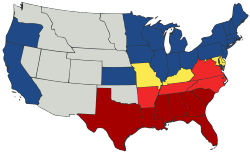
Union (blue) and Confederate (red) states: 1860 – 1865
Júlio Reis, CC BY-SA 3.0 <https://creativecommons.org/licenses/by-sa/3.0>, via Wikimedia Commons
From 1860 to 1865, the South—Texas, Arkansas, Louisiana, Tennessee, Mississippi, Alabama, Georgia, Florida, South Carolina, North Carolina and Virginia—produced the greatest case of mass treason in America’s history.
According to The Destructive War, by Charles Royster, it wasn’t the cause of “states’ rights” that led 13 Southern states to withdraw from the Union in 1860-61. It was their demand for “respect,” which, in reality, translates into “e-g-o.”
“The respect Southerners demanded did not consist simply of the states’ sovereignty or of the equal rights of Northern and Southern citizens, including slaveholders’ right to take their chattels into Northern territory.
“It entailed, too, respect for their assertion of the moral superiority of slaveholding society over free society,” writes Royster.
It was not enough for Southerners to claim equal standing with Northerners; Northerners must acknowledge it. But this was something that the North was increasingly unwilling to do.
Finally, its citizens dared to elect Abraham Lincoln as President in 1860.
Lincoln and his new Republican party damned slavery—and slaveholders—as morally evil, obsolete and ultimately doomed. And they were determined to prevent slavery from spreading any further throughout the country.
Southerners found all of this intolerable.
Lincoln—during his First Inaugural Address—bluntly said that he did not intend to “directly or indirectly…interfere with the institution of slavery in the States where it exists. I believe I have no lawful right to do so, and I have no inclination to do so.”
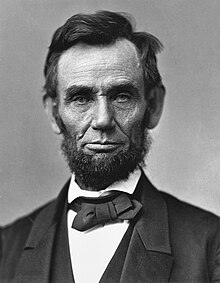
Abraham Lincoln
But that was not enough for Southerners.
Only 10% of Southerners owned slaves. The other 90% of the population “had no dog in this fight,” as Southerners liked to say.
Yet they so admired and aspired to be like their “gentleman betters” that they threw in their lot with them.
On April 12, 1861—just over a month since Lincoln’s inauguration on March 4—Southern batteries opened fire on Union Fort Sumter in Charleston Harbor, South Carolina.
This ignited the American Civil War, costing the lives of 750,000 Americans—at a time when the population of the United States stood at 31,443,321.
Four years later, Confederate General Robert E. Lee surrendered the Army of Northern Virginia to Union General Ulysses S. Grant at Appomattox Courthouse.
Huge sections of the South had been laid waste by Union troops and more than 258,000 Southerners had been killed.
And slavery, the mainstay of Southern plantation life, had been ended forever.
The South had paid a high price for its investment in treason.
Infamy 2: 1964 – 2024 – Racism breeds Southern Republicans.
In 1964, Democratic President Lyndon B. Johnson pushed the Civil Rights Act through Congress, ending more than a century of blatant discrimination against blacks.
The South—which before the Civil War had been solidly Democratic—suddenly went solidly Republican.
To understand this mammoth shift, it’s vital to realize: In Lincoln’s time, the Republicans were the party of progressives.
The party was founded on an anti-slavery platform. Its members were thus reviled as “Black Republicans.” And until the 1960s, the South was solidly Democratic.
Democrats were the ones defending the status quo—slavery—and opposing the rights of freed blacks in the South of Reconstruction and long afterward.
When, in the early 1960s, Democrats championed the rights of blacks, Southerners bolted for the Republican party—which held to the same values that slavery/discrimination-supporting Democrats once did.
After signing the Civil Rights Act of 1964 into law, President Lyndon B. Johnson told an aide: “We have just lost the South for a generation.”
Johnson was wrong: A generation lasts 20 to 30 years. It’s been 60 years since the signing of the Act, and the South is still solidly within the Republican camp.
To compete successfully in this region, Democrats would need to demand the reinstatement of segregation—if not slavery.
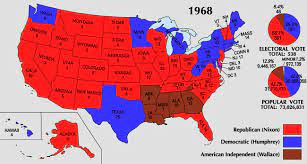
1968 election
Infamy 3: 2016 – Fascist racism elects Donald Trump as President.
Repeatedly, when asked why they supported Trump, his followers said: “He says what I’ve been thinking!”
And what Trump appealed to, above all else, was racist hatred.
From June 15, 2015, when he launched his Presidential campaign, until October 24, 2016, Trump fired almost 4,000 angry, insulting tweets at 281 people and institutions that had somehow offended him.

Donald Trump
The New York Times needed two full pages of its print edition to showcase them.
Among his targets:
- Women
- Blacks
- Hispanics
- Asians
- Muslims
- The disabled
- Prisoners-of-war

Red States voted for Donald Trump – 2016
BobWyatt07, CC BY-SA 4.0 <https://creativecommons.org/licenses/by-sa/4.0>, via Wikimedia Commons
Whites comprised the overwhelming majority of the audiences at Trump rallies. Not all were racists, but many of those who were advertised it on T-shirts: “MAKE AMERICA WHITE AGAIN.”
And the vast majority of the white votes Trump got were in the South.
The 2008 election of Barack Obama as the first black President had shocked whites. His 2012 re-election had deprived them of the hope that 2008 had been an accident.
In 2016 macho, largely uneducated, anti-black Southern males couldn’t accept a woman—Hillary Clinton—occupying the White House.
They ignored reputable reports—later confirmed—that Trump’s campaign was backed by Russian oligarchs linked to Russian dictator Vladimir Putin, the former head of the KGB.
ABC NEWS, ALTERNET, AMERICABLOG, ANTHONY FAUCI, AP, ATTACK ON THE UNITED STATES CAPITOL BUILDING, BABY BOOMER RESISTANCE, BBC, BLOOMBERG NEWS, BUZZFEED, CBS NEWS, CENTERS FOR DISEASE CONTROL AND PREVENTION, CLOROX BLEACH, CNN, COVID-19, CROOKS AND LIARS, DAILY KOZ, DONALD TRUMP, FACEBOOK, FIVETHIRTYEIGHT, HARPER’S MAGAZINE, HUFFINGTON POST, JAMES COBURN, JOE BIDEN, JULIUS CAESAR (PLAY), MARK ANTHONY, MASKS, MEDIA MATTERS, MOTHER JONES, MOVEON, MSNBC, NBC NEWS, NEW REPUBLIC, NEWSDAY, NEWSWEEK, NPR, PBS NEWSHOUR, POLITICO, POLITICUSUSA, RAW STORY, REUTERS, ROBERT F. KENNEDY JR., ROD SERLING, SALON, SEATTLE TIMES, SLATE, SOCIAL DISTANCING, TALKING POINTS MEMO, THE ATLANTIC, THE CHICAGO SUN-TIMES, THE CHICAGO TRIBUNE, THE DAILY BEAST, THE DAILY BLOG, THE GUARDIAN, THE HILL, THE HUFFINGTON POST, THE LOS ANGELES TIMES, THE NATION, THE NEW REPUBLIC, THE NEW YORK TIMES, THE NEW YORKER, THE VILLAGE VOICE, THE WASHINGTON POST, THINKPROGRESS, TIME, TRUTHDIG, TRUTHOUT, TWILIGHT ZONE, TWO POLITICAL JUNKIES, U.S. NEWS & WORLD REPORT, UPI, USA TODAY, UV LIGHT, WILLIAM SHAKESPEARE, WONKETTE, X
In Business, Entertainment, History, Medical, Military, Politics, Social commentary on March 6, 2025 at 12:12 am
On November 8, 1963—57 years before COVID-19 invaded the United States—Rod Serling’s “The Twilight Zone” offered a prophecy of future disaster for the country.
“The Old Man in the Cave” is set in a post-apocalyptic rural town in 1974, 10 years after a nuclear war has devastated the United States.

A nuclear explosion
The townspeople have discovered a supply of canned food. However, they are waiting for Mr. Goldsmith [John Anderson], their leader, to return with a message from the mysterious and unseen “old man in the cave.” Then they will learn whether the food is contaminated with radiation.
When Goldsmith returns, he informs them that the old man has declared the food is contaminated and that it should be destroyed.
Shortly thereafter, three soldiers led by Major French [James Coburn] enter the town and clash with Goldsmith as they try to establish their authority.
French is clearly a precursor of Donald Trump: Demanding instant obedience and threatening death to anyone who disobeys him, he claims he will organize the region to rebuild society..

Donald Trump
However, Goldsmith believes that French and his men simply want to strip the town of its food.
French attacks the townspeople’s belief in the seemingly infallible “old man in the cave.” He tells them they have survived these past 10 years—but they haven’t lived.
Fifty-seven years later, Donald Trump will furiously attack not COVID-19 but the medical advice of his own Centers for Disease Control and Prevention (CDC)—especially that provided by Dr. Anthony Fauci, the nation’s top expert on infectious disease.
He will disdain the wearing of masks and social distancing, and attack those Democratic governors who impose stay-at-home orders to contain the virus. He will offer a series of rosy predictions—none of which come true—that the virus will soon end.
His “cures” include ingesting Clorox bleach and/or having UV light shined up one’s anus.

COVID-19 virus
And French holds himself out as the man who can deliver them a wonderful new future.
Fifty-seven years later, Donald Trump will similarly declare: “I have joined the political arena so that the powerful can no longer beat up on people that cannot defend themselves. Nobody knows the system better than me, which is why I alone can fix it.”
French tempts the townspeople to eat the food Goldsmith warned was contaminated. There is a wild orgy of gluttony as they greedily consume it.
Only Goldsmith refuses to partake in the food orgy.
The townspeople turn on Goldsmith and threaten him with death unless he reveals the identity of “the old man in the cave.” Goldsmith finally takes the assembly to the cave to reveal his source: A computer.
French incites the townspeople to stone the computer with rocks and canned goods until it explodes. Then French leads the people into celebrating their new-found freedom from this “tyranny”.
Fifty-seven years later, Trump will similarly incite his followers to attack the United States Capitol building to halt the legal transfer of Presidential power from himself to Joe Biden.
But as Goldsmith had insisted, the “old man” was correct: The canned goods were contaminated with radiation. All the townspeople—including French and the soldiers—die, their bodies left lying throughout the streets.
Trump will similarly tempt millions of Americans to ignore the deaths of tens of thousands of their fellow citizens from COVID-19 and the overwhelming of the nation’s hospitals. The result will be a vast increase in deaths.
Only one man survives—Goldsmith, who has refused to eat the forbidden food and somberly walks out of the now-dead town.
As always in a “Twilight Zone” episode, it is Rod Serling who gets the final word: “Mr. Goldsmith, survivor. An eyewitness to man’s imperfection. An observer of the very human trait of greed. And a chronicler of the last chapter—the one reading ‘suicide’. Not a prediction of what is to be, just a projection of what could be. This has been The Twilight Zone.”

Rod Serling
Except that Serling was wrong: “The Old Man in the Cave” has proven an uncanny prediction of what did happen in America.
* * * * *
The chief lesson to be learned from the COVID-19 epidemic is that catastrophe inevitably results when natural disaster collides with an evil and incompetent administration.
And totally ignoring that lesson were the 77 million Americans who re-elected Donald Trump—the man most responsible for the deaths of 400,000 Americans—as President.
Under his tyrannical rule, the United States suffered not simply from a lethal virus but a combination of denial, lies, Republican subservience, chaos, extortion, propaganda as news, quackery as medicine, premature demands to “re-open the country,” ignoring the danger and—finally—resignation (“Learn to live with the virus”).
Even after three vaccines were produced, millions of Americans—almost all of them Right-wing Trump supporters—refused to protect themselves and the families and friends they claimed to love.
And Trump has appointed Robert F. Kennedy, Jr.—a 14-year heroin addict and fanatical anti-vaccine proponent—Secretary of Health and Human Services.
As if on cue: A mystery illness has emerged in the Congo whose symptoms—which include fever, vomiting and internal bleeding—result in death in 48 hours.
ABC NEWS, ADOLF HITLER, ALTERNET, AMERICABLOG, AP, BABY BOOMER RESISTANCE, BBC, BLOOMBERG NEWS, BLUESKY, BUZZFEED, CANADA, CBS NEWS, CLAUDIA SHEINBAUM PARDO, CNN, CNN'S "STARTING POINT", CROOKS AND LIARS, DAILY KOS, DEPARTMENT OF HOMELAND SECURITY, DEPARTMENT OF JUSTICE, EXTORTION, FBI, FIVETHIRTYEIGHT, HARPER’S MAGAZINE, HUFFINGTON POST, INSIDER, JUDICIARY, JUSTIN TRUDEAU, MASTADON, MEDIA MATTERS, MEXICO, MOTHER JONES, MOVEON, MSNBC, MSNBC'S "HARDBALL", NAZI GERMANY, NBC NEWS, NEGOTIATING, NEW REPUBLIC, NEWSDAY, NEWSWEEK, NPR, PBS NEWSHOUR, POLAND, POLITICO, POLITICUSUSA, PRESS, RAW STORY, REPUBLICAN PARTY, REPUBLICANS, REUTERS, SALON, SEATTLE TIMES, SLATE, TALKING POINTS MEMO, THE ATLANTIC, THE CHICAGO SUN-TIMES, THE CHICAGO TRIBUNE, THE DAILY BEAST, THE DAILY BLOG, THE GUARDIAN, THE HILL, THE HUFFINGTON POST, THE LOS ANGELES TIMES, THE NATION, THE NEW REPUBLIC, THE NEW YORK TIMES, THE NEW YORKER, THE PENTAGON, THE VILLAGE VOICE, THE WASHINGTON POST, THINKPROGRESS, TIME, TRUTHDIG, TRUTHOUT, TWO POLITICAL JUNKIES, U.S. NEWS & WORLD REPORT, UPI, USA TODAY, WONKETTE, WORLD WAR 11, X
In Bureaucracy, Business, History, Military, Politics, Social commentary on March 5, 2025 at 12:05 am
To understand what is happening in the United States today, it’s necessary to realize this:
Its decent, democracy-cherishing citizens find themselves in the same position as decent, democracy-cherishing citizens of Nazi Germany from 1933 to 1945.
And just as Germany’s government became a ruthless dictatorship, so has that of the United States.
And just as ordinary, peace-loving Germans hoped for a powerful, democratic outsider to remove the menace of Adolf Hitler, so do ordinary, peace-loving Americans hope the same will happen to Donald Trump.
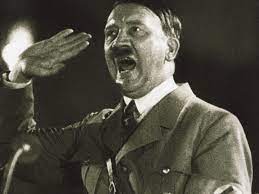
Adolf Hitler
From 1939 to 1945, those democracy-cherishing outsiders consisted of Canada, England and the United States. (The Soviet Union reluctantly joined this alliance only after it became yet another victim of Adolf Hitler’s aggression.)
In the case of the United States, that solution can only be achieved economically—by pressuring Right-wing Republican members of Congress in Red states to end their support for Trump’s dictatorial agenda.
And the only democratic countries with the power to do this are Mexico and Canada, America’s foremost trading partners.
The 2024 elections gave Republicans not only the White House but control of the House and Senate.

Donald Trump
Republicans don’t care that Trump has trashed the institutions that Americans have cherished for more than 200 years. Institutions like an independent judiciary, a free press, and an incorruptible Justice Department.
He has viciously attacked all of these—and Republicans have either said nothing or rushed to his defense.
What Republicans truly fear about Donald Trump is that if they dare to hold him accountable for his lifetime of criminality, his Fascistic base will turn on them—and turn them out of Congress.
If they are conflicted—whether to continue supporting Trump or desert him—the reason is the same: How can I hold onto my power and all the privileges that go with it?

Claudia Sheinbaum Pardo, President of Mexico

Justin Trudeau, Prime Minister of Canada
Republicans—with Trump as their Fuhrer—are utilizing the same my-way-or-else “negotiating” strategy as Nazi Germany’s Fuhrer, Adolf Hitler.
And Democrats—out of cowardice and/or ignorance of history—are, as usual, refusing to publicly make this comparison.
Thus, America’s rescue from Trump can only come from outside the United States.
Donald Trump has proven his affinity for dictators and dictatorships—lavishing praise on Russia’s Vladimir Putin, China’s Xi Jinping and North Korea’s Kim Jong-Un.
It’s with the leaders of democratic nations that he loves to pick fights. And he will go on doing so until he is stopped.
There are two reasons for his hostile behavior in foreign affairs:
- Trump admires dictators, desires to become one himself, and is now stocking essential federal agencies—such as the Pentagon, FBI and Department of Homeland Security—with his political hacks to make this a reality.
- He knows that compared to the dictatorships of Russia and China, democracies such as those of Canada, Mexico and Ukraine are comparatively weak militarily.
As with Adolf Hitler, attempting to reason with Trump will prove fruitless. He respects only superior force.
But he has blinked when confronted with serious opposition.
Thus, on February 1, he threatened to hit Mexico and Canada with 25% tariffs, accusing them of injecting huge amounts of Fentanyl and huge numbers of illegal aliens into the United States. This allowed him to look tough to his legions of uneducated, Fascistic voters.
But then Mexican President Claudia Sheinbaum Pardo and Canadian Prime Minister Justin Trudeau threatened to retaliate with their own 25% tariffs on American goods.
And the financially conservative Wall Street Journal-–whose target audience includes business leaders, investors, and affluent consumers—called Trump’s threat “the dumbest trade war in history.”
Suddenly, Trump found a way to declare victory, claiming that Mexico and Canada would vastly increase border security to stop the flow of Fentanyl and illegal aliens.
And dropping his threat of a trade war.
So Trump can be beaten—if his enemies are willing to go all the way.
Democratic nations like Canada and Mexico dare not attack Donald Trump militarily. The United States has such a powerful military it’s threatened only by China and Russia.
But Canada and Mexico can target with ruthless tariffs those Red states whose Fascistic voting blocs fanatically support Trump—and the House and Senate members who support him.
They can
- Deprive Red state populations of the fruits, vegetables, meats, cars, computers, oil, gas—and especially beer and alcohol—they take for granted.
- Refuse to stock goods from Red states in their stores.
- Appeal to the patriotism of Canadians and Mexicans to maintain the boycott despite the suffering this will impose on their own countries.
Americans have grown used to seeking simple, painless solutions to major problems. Thus, Trump won 77 million votes by promising to drastically reduce the price of eggs.
This despite a loss of millions of bird flu-infected chickens.
With egg prices continuing to drastically rise, Americans are already getting impatient for Trump to work a miracle—as he falsely promised to do during the campaign.
When Red states are forced to suffer staggering losses for months on end, they will elect anti-Fascist Senators and Representatives to nullify the evils of Trump’s administration.
ABC NEWS, ADOLF HITLER, ALTERNET, AMERICABLOG, AP, ASSASSINATION, BABY BOOMER RESISTANCE, BBC, BLOOMBERG NEWS, BRETT KAVANAUGH, BUZZFEED, CBS NEWS, CLARENCE THOMAS, CNN, CROOKS AND LIARS, CZECHOSLOVAKIA, DAILY KOS, DONALD TRUMP, DRUDGE REPORT, FINAL SOLUTION, FIVETHIRTYEIGHT, HARPER’S MAGAZINE, HEINRICH HIMMLER, HERMANN GOERING, HUFFINGTON POST, JANUARY 6 INSURRECTION, MARCO RUBIO, MEDIA MATTERS, MEDICAID, MITCH MCCONNEL, MOTHER JONES, MOVEON, MSNBC, NATIONAL RIFLE ASSOCIATION, NAZI GERMANY, NBC NEWS, NEW REPUBLIC, NEWSDAY, NEWSWEEK, NPR, PBS NEWSHOUR, POLITICO, POLITICUSUSA, RAND PAUL, RAW STORY, REINHARD HEYDRICH, REUTERS, ROLAND FREISLER, RON DESANTIS, RUDOLF HESS, SALON, SAMUEL ALITO, SEATTLE TIMES, SLATE, SS, STEVE BANNON, SUPPLEMENTAL NUTRITION ASSISTANCE PROGRAM (SNAP), TALKING POINTS MEMO, TED CRUZ, THE ATLANTIC, THE CHICAGO SUN-TIMES, THE CHICAGO TRIBUNE, THE DAILY BEAST, THE DAILY BLOG, THE GUARDIAN, THE HILL, THE HUFFINGTON POST, THE LOS ANGELES TIMES, THE NATION, THE NEW REPUBLIC, THE NEW YORK TIMES, THE NEW YORKER, THE SUPREME COURT, THE VILLAGE VOICE, THE WASHINGTON POST, THINKPROGRESS, TIME, TRUTHDIG, TRUTHOUT, TWO POLITICAL JUNKIES, U.S. NEWS & WORLD REPORT, UPI, USA TODAY, WANNSEE CONFERENCE, X
In Bureaucracy, Entertainment, History, Politics, Social commentary on February 28, 2025 at 3:05 am
“We mock you. We mock your fear. We want your fear. It’s going to be accountability. We are taking apart the administrative state. We’re going to destroy the deep state, and we’re going to hold everybody responsible that put this republic in the situation its in today.
“Accountability, responsibility. And that will come with authority. The authority of Donald J. Trump as the 47th president of the United States.”
The speaker was Steve Bannon, former Trump campaign manager and White House advisor. And he was issuing a warning to everyone who didn’t enthusiastically accept Donald Trump as his Once and Future Fuhrer.
Threats of violence have become common among Republicans since 2015, when Trump first ran for President. And they continue to cast a shadow over the 2024 Presidential campaign.
On March 16, 2016, Trump warned Republicans that if he didn’t win the GOP nomination in July, his supporters would literally riot: “I think you’d have riots. I think you would see problems like you’ve never seen before. I think bad things would happen. I really do. I wouldn’t lead it, but I think bad things would happen.”
Almost five years later, on January 6, 2021, Trump incited a deadly riot against the United States Capitol to stop Congress from certifying the electoral victory of Joe Biden in the 2020 presidential election.
Upon taking office again as President on January 20, 2025, Trump issued a blanket pardon to about 1,500 of his supporters who carried out the attack. This sent a clear message to his future opponents: “I will similarly pardon anyone who assaults you.”
The Third Reich similarly relied on violence—or the threat of it—to preserve its dictatorial control over Germany.
A key representative of that violence was Reinhard Tristan Eugen Heydrich.
A tall, blond-haired former naval officer, Heydrich was both a champion fencer and talented violinist. Heydrich joined the Schutzstaffel, or Protective Squads, better known as the SS, in 1931, and quickly became head of its counterintelligence service.
In 1934, he oversaw the “Night of the Long Knives” purge of Hitler’s brown-shirted S.A., or Stormtroopers.

Reinhard Heycrich
In September, 1941, Heydrich was appointed “Reich Protector” of Czechoslovakia, which had fallen prey to Germany in 1938 but whose citizens were growing restless under Nazi rule.
Heydrich immediately ordered a purge, executing 92 people within the first three days of his arrival in Prague. By February, 1942, 4,000-5,000 people had been arrested.
In January, 1942, Heydrich convened a meeting of high-ranking political and military leaders in Wannsee, Germany, to streamline “the Final Solution to the Jewish Question.”
An estimated six million Jews were thus slaughtered.
Returning to Prague, Heydrich continued his policy of carrot-and-stick with the Czechs—improving the social security system and requisitioning luxury hotels for middle-class workers, alternating with arrests and executions.
Two British-trained Czech commandos—Jan Kubis and Joseph Gabcik—parachuted into Prague.
On May 27, 1942, they waited at a hairpin turn in the road always taken by Heydrich. When Heydrich’s Mercedes slowed down, Gabcik raised his machinegun—which jammed.
Rising in his seat, Heydrich aimed his revolver at Gabcik—as Kubis lobbed a hand grenade at the car. The explosion drove steel and leather fragments of the car’s upholstery into Heydrich’s diaphragm, spleen and lung.

Scene of Reinhard Heydrich’s assassination
Hitler dispatched doctors from Berlin to save the Reich Protector. But infection set in, and on June 4, Heydrich died at age 38.
The assassination sent shockwaves through the upper echelons of the Third Reich. No one had dared assault—much less assassinate—a high-ranking Nazi official.
Nazis had slaughtered tens of thousands without hesitation—or fear that the same might happen to them.
Suddenly they realized that the fury they had aroused could be turned against themselves.
Which brings us to the leaders of America’s own Right-wing.
The names of infamous Nazis were widely known:
- Reichsmarshall Hermann Goering;
- Propaganda Minister Paul Joseph Goebbels;
- Deputy Fuhrer Rudolf Hess;
- SS-Reichsfuhrer Heinrich Himmler;
- “Hanging Judge” Roland Freisler;
- SS Obergruoppenfuhrer Reinhard Heydrich; and
- Fuhrer Adolf Hitler.
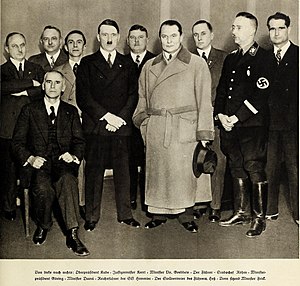
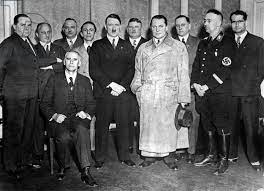
Members of the Nazi government
And so are the names of the infamous leaders of the American Right:
- Texas Senator Ted Cruz;
- Supreme Court Justice Clarence Thomas;
- Evangelist Franklin Graham;
- Georgia Congressman Marjorie Taylor Greene;
- Supreme Court Justice Samuel Alito;
- Florida Governor Ron DeSantis;
- President Donald Trump.
The difference between these two infamous groups is this:
In Nazi Germany, ordinary Germans could not learn about the personal lives of their dictators—including their home addresses—and to conspire against them.
In the United States, ordinary citizens have an array of means to do this. They can turn to newspapers, TV and magazines. And if that isn’t enough, “people finder” websites, for a modest price, provide addresses and names of relatives of potential targets.
In Nazi Germany, firearms were tightly controlled.
In the United States, the Right’s National Rifle Association has successfully lobbied to put lethal firepower into the hands of virtually anyone who wants it.
Eighty-three years ago, Reinhard Heydrich believed himself invulnerable from the hatred of the enemies he had made. That arrogance cost him his life.
The day may soon come when America’s own Right-wingers start learning that same lesson.
ABC NEWS, ALCOHOLISM, ALTERNATIVE HOUSING PROGRAM, ALTERNET, AMAZON, AMERICABLOG, AP, BABY BOOMER RESISTANCE, BBC, BLOOMBERG NEWS, BROOKE JENKINS, BUMS, BUZZFEED, CBS NEWS, CHESA BOUDIN, CITY JOURNAL, CNN, COVID-19, CRACK COCAINE, CROOKS AND LIARS, CVS, DAILY KOS, DEPARTMENT OF PUBLIC HEALTH (DPH), DRUG ADDICTION, FENTANYL, FIVETHIRTYEIGHT, GAVIN NEWSOM, HARPER’S MAGAZINE, HOMELESS, HOMELESSNESS, HUFFINGTON POST, IPS SECURITY, JOSEPH STALIN, LONDON BREED, LOS ANGELES, MARK HOPKINS HOTEL, MEDIA MATTERS, MENTAL ILLNESS, MICHAEL SHELLENBERGER, MOTEL 6, MOTHER JONES, MOVEON, MSNBC, NAVIGATION CENTERS, NBC NEWS, NEW REPUBLIC, NEWSDAY, NEWSWEEK, NPR, ORACLE, PBS NEWSHOUR, POLITICAL CORRECTNESS, POLITICO, POLITICUSUSA, PORTLAND, RAW STORY, REUTERS, SALON, SAN FRANCISCO, SAN FRANCISCO BOARD OF SUPERVISORS, SAN FRANCISCO DISTRICT ATTORNEY'S OFFICE, SAN FRANCISCO MAYOR'S OFFICE, SAN FRANCISCO POLICE DEPARTMENT, SAN FRANSICKO: WHY PROGRESSIVES RUIN CITIES (BOOK), SEATLE, SEATTLE TIMES, SLATE, TALKING POINTS MEMO, TENDERLOIN, THE ATLANTIC, THE CHICAGO SUN-TIMES, THE CHICAGO TRIBUNE, THE DAILY BEAST, THE DAILY BLOG, THE GUARDIAN, THE HILL, THE HUFFINGTON POST, THE INTERCEPT, THE LOS ANGELES TIMES, THE NATION, THE NEW REPUBLIC, THE NEW YORK TIMES, THE NEW YORKER, THE SPECTATOR WORLD, THE VILLAGE VOICE, THE WASHINGTON POST, THINKPROGRESS, TIME, TRUTHDIG, TRUTHOUT, TWITTER, U.S. NEWS & WORLD REPORT, UNITED STATES SUPREME COURT, UPI, USA TODAY, VMWARE, WALGREENS, WHOLE FOODS MARKET
In Bureaucracy, Business, History, Law, Law Enforcement, Politics, Social commentary on February 27, 2025 at 12:14 am
The latest wrinkle in San Francisco’s “be kind to Untermenschen“ (the German word for “subhumans”) campaign is the creation of “Navigation Centers.”
These are essentially holding pens for drug addicts, alcoholics, mentally ill and parasitic bums until they can be “navigated” to permanent housing.
But housing is in short supply in San Francisco, and there is no telling how long many of these Untermenschen will stay in them. Or what harm they will wreak on the neighborhoods warehousing them.
Since 2015, eight Navigation Centers have been opened throughout San Francisco; six are in operation.
Among the “amenities” they provide:
- Meals
- Privacy
- Space for pets
- Space separate from sleeping areas
- Laundry
- Access to benefits
- Wi-Fi
Hundreds—if not thousands—of their occupants are meth or heroin addicts. Such people commit virtually any crime to support their habit. And their crimes of choice are burglary and robbery.

Thus, pouring large numbers of them into San Francisco neighborhoods via “Navigation Centers” guarantees that countless decent citizens will become targets for desperate criminals.
At a public hearing in January, 2020, San Francisco Supervisor Aaron Peskin touted the importance of Navigation Centers—including the one that would soon be established at Post and Hyde Streets.
When a local resident asked, “Is one of these centers located where you live?” Peskin replied: “No.”
In short: The city’s elite make sure their homes are far removed from the plague they so easily inflict on San Francisco residents.
In fact, when they’re not swallowing alcohol or injecting, swallowing or sniffing drugs, many of San Francisco’s “homeless” spend a lot of their time ripping off retail stores.
Walgreens drug stores have proven a particular target for these DDMBs—Druggies, Drunks, Mentals and Bums—the four groups that make up 90% of the “homeless” population.
“I feel sorry for the clerks, they are regularly being verbally assaulted,” a regular customer, Sebastian Luke, told the San Francisco Chronicle.
“The clerks say there is nothing they can do. They say Walgreens’ policy is to not get involved. They don’t want anyone getting injured or getting sued, so the guys just keep coming in and taking whatever they want.”

“Retail theft across our San Francisco stores has continued to increase in the past few months to five times our chain average,” Walgreens spokesman Phil Caruso told the Chronicle in October, 2021.
“During this time to help combat this issue, we increased our investments in security measures in stores across the city to 46 times our chain average in an effort to provide a safe environment.”
As a result, Walgreens has closed at least 11 stores in San Francisco.
One store in the San Francisco area reportedly lost $1,000 a day to theft.
Many shoplifters then sell their stolen goods on the street—often near the store where they stole them.
Under California law, theft under $950 is considered a misdemeanor, but many prosecutors prefer to free those charged rather than holding them in jail.
The maximum sentence they could get: Six months.

Low-income and disabled seniors who depend on these disappearing drug stores for prescriptions are especially at risk.
The city budgeted $1.1 billion for fiscal year 2021-22 on DDMBs. Dividing that amount by about 7,754 DDMBs provides the figure of about $128,925 per DDMB per year.
So what can San Francisco do to effectively combat the plague of DDMBs?
- Launch a “Please Do Not Feed the Bums” publicity campaign—as it has against feeding pigeons. And those caught doing so should be heavily fined.
- Trash cans should be equipped with locked doors, to prevent bums from using them as food dispensers.
- Those living on the street should be given two choices: (1) Go to a local shelter or face arrest and the immediate confiscation of their possessions;
- (2) An “Untermenschen City” should be set up near the city dump. There they can live in their tents and/or sleeping bags while being unable to daily confront or assault others to obtain free money.
- San Francisco’s rent control laws should be strengthened, to prevent future evictions owing to the unchecked greed of landlords. Tenants on fixed incomes should be given special protections against extortionate rent increases.
- Bus drivers should be able to legally refuse passengers who stink of urine/feces, as they present a potential health-hazard to others.
- The owners of restaurants, theaters and grocery stores should likewise be allowed to refuse service on the same basis.
- Those applying for welfare benefits should be required to provide proof of residence. Too many people come to San Francisco because, upon arrival, they can immediately apply for such benefits.
- Set up a special unit to remove “street people” and their possessions from city sidewalks. This could be a division of the Sanitation Department, since its personnel are used to removing filth and debris of all types.
- Forcefully tell alcoholics and drug addicts: “Your anti-social behavior is not welcome here. Take your self-destructive lifestyles elsewhere. We won’t subsidize them.”
- Take the mentally unstable off the street and place them in institutions where their needs can be met.
- Tell those who are just plain bums: “Don’t expect us to support you.”
Only then will San Francisco reclaim its place as America’s most beloved city.
ABC NEWS, ALCOHOLISM, ALTERNATIVE HOUSING PROGRAM, ALTERNET, AMAZON, AMERICABLOG, AP, BABY BOOMER RESISTANCE, BBC, BLOOMBERG NEWS, BROOKE JENKINS, BUMS, BUZZFEED, CBS NEWS, CHESA BOUDIN, CITY JOURNAL, CNN, COVID-19, CRACK COCAINE, CROOKS AND LIARS, CVS, DAILY KOS, DEPARTMENT OF PUBLIC HEALTH (DPH), DRUG ADDICTION, FENTANYL, FIVETHIRTYEIGHT, GAVIN NEWSOM, HARPER’S MAGAZINE, HOMELESS, HOMELESSNESS, HUFFINGTON POST, IPS SECURITY, JOSEPH STALIN, LONDON BREED, LOS ANGELES, MARK HOPKINS HOTEL, MEDIA MATTERS, MENTAL ILLNESS, MICHAEL SHELLENBERGER, MOTEL 6, MOTHER JONES, MOVEON, MSNBC, NAVIGATION CENTERS, NBC NEWS, NEW REPUBLIC, NEWSDAY, NEWSWEEK, NPR, ORACLE, PBS NEWSHOUR, POLITICAL CORRECTNESS, POLITICO, POLITICUSUSA, PORTLAND, RAW STORY, REUTERS, SALON, SAN FRANCISCO, SAN FRANCISCO BOARD OF SUPERVISORS, SAN FRANCISCO DISTRICT ATTORNEY'S OFFICE, SAN FRANCISCO MAYOR'S OFFICE, SAN FRANCISCO POLICE DEPARTMENT, SAN FRANSICKO: WHY PROGRESSIVES RUIN CITIES (BOOK), SEATLE, SEATTLE TIMES, SLATE, TALKING POINTS MEMO, TENDERLOIN, THE ATLANTIC, THE CHICAGO SUN-TIMES, THE CHICAGO TRIBUNE, THE DAILY BEAST, THE DAILY BLOG, THE GUARDIAN, THE HILL, THE HUFFINGTON POST, THE INTERCEPT, THE LOS ANGELES TIMES, THE NATION, THE NEW REPUBLIC, THE NEW YORK TIMES, THE NEW YORKER, THE SPECTATOR WORLD, THE VILLAGE VOICE, THE WASHINGTON POST, THINKPROGRESS, TIME, TRUTHDIG, TRUTHOUT, TWITTER, U.S. NEWS & WORLD REPORT, UNITED STATES SUPREME COURT, UPI, USA TODAY, VMWARE, WALGREENS, WHOLE FOODS MARKET
In Bureaucracy, Business, History, Law, Law Enforcement, Medical, Politics, Social commentary on February 26, 2025 at 12:07 am
If you are a firefighter, police officer, paramedic or schoolteacher, and want to live in San Francisco, forget it.
According to Rent Cafe, which provides apartment listings directly from top property managers: “The average [monthly] rent for an apartment in San Francisco is $3,313.” And “the average size for a San Francisco apartment is 734 square feet.”

But there’s hope for you yet—if you’re a Druggie, Drunk, Mental or Bum (DDMBs).
Why?
Because the Mayor of San Francisco—currently London Breed—and Board of Supervisors have deliberately created an Untermenschen-friendly program that actually encourages such people to move to the city.
“Untermenschen,” in German, means “subhuman.”
The short version of this is “Unters.”
A major part of this lies in placing these “guests” in hotels throughout the city. These range from the relatively low-budget Motel 6 to the luxurious Mark Hopkins.
“Guests” receive personal grooming, sanitary and cleaning supplies, three delivered meals, and laundry service for clothes and linens.
The hotels were pressured into accepting the Unters, but they also wanted to recover monies lost to the COVID-19 pandemic.
The city is paying $200 per night per room, totaling $6,000 a month—nearly double the cost of a private one-bedroom apartment in San Francisco.
But there is a big catch for the hotels: When the “homeless” are placed in subsidized housing, their mental illness, irresponsible addiction to drugs and/or alcohol and/or generally sloth-like habits usually trash those premises.
San Francisco is secretly placing DDMBs—Druggies, Drunks, Mentals and Bums—among the tourists who check into these hotels. It does so by designating them as “emergency front-line workers.”
For most people, this means doctors, nurses and similar professionals.
It doesn’t mean DDMBs, if not outright criminals.
The city has invoked emergency-disaster law to keep this information secret. Officials refuse to notify the public about the dangers within their midst. The list of hotels is withheld from the press and reporters are forbidden to enter the properties.
City and hotel workers are required to sign nondisclosure agreements that forbid them to reveal the dangers they and their legitimate guests are exposed to. Doing so is punishable by a fine of up to $1,000, imprisonment for up to one year, or both.
Despite this, the truth has been leaking out. Security guards stand outside hotel entrances, alerting anyone who sees them that all is not well. Crime, vagrancy and drug usage/dealing have also increased around the hotels.
In one hotel, Unters receive needle kits and are advised to call the front desk before shooting up. Drug-related deaths have occurred. Containers for safely disposing of needles are placed on every floor. Even so, used syringes are often left where non-addicts can be infected by them.
“There are parties, drug overdoses, deaths, assaults on people, sexual harassment. It’s pandemonium,” City Journal writer Erica Sandberg reported. “This is very bad and it needs to be stopped.
“What they [hotel employees] told about the situation inside goes beyond any scope. They are not just terrified, they are traumatized by what they see. According to their stories, in hotels they found mattresses with feces, blood, hospital bandages on the floor. What people see is so terrible that they go out and say, ‘I don’t want to go back there.'”
City officials provide far more than free room and board to DDMBs.
The Department of Public Health (DPH) runs the COVID-19 Alternative Housing Program. And it works in two stages:
Stage 1: Move the “homeless” into the city’s hotels—at city expense.
Stage 2: Provide them with not only free food and shelter but free alcohol, cannabis, and cigarettes.
According to a May 11, 2020 story in City Journal.org:
“The program’s primary purpose is to keep homeless people, the majority of whom are addicts, out of harm’s way during the pandemic. By getting their substance of choice delivered, the thinking goes, the guests may be more apt to remain in their government-funded rooms.
“Another purpose of the program is to protect the public against the spread of coronavirus. The city doesn’t want homeless people who should be staying in their rooms roaming the neighborhood in search of the substances, potentially infecting others.”
But the agency doesn’t require that its addict “guests” remain quarantined. It merely asks that they do so.
After news about these deliveries leaked on social media, DPH claimed that “rumors that guests of San Francisco’s alternative housing program are receiving taxpayer-funded deliveries of alcohol, cannabis and tobacco are false.”
Except that the reports weren’t false.
The program is funded by private philanthropists. Nevertheless:
- DPH administers and oversees the program.
- It’s staffed by city workers, including doctors, nurse practitioners, nurses, social workers and security personnel.
- The department manages, stores and distributes the substances.
- Employee time is involved.
Thus, the program is financed by taxpayers, even if an outside group provides some of the funding.
The latest wrinkle in San Francisco’s “be kind to Untermenschen“ campaign is the creation of “Navigation Centers.” These are essentially holding pens for Unters—until they can be “navigated” to permanent housing.
ABC NEWS, ALCOHOLISM, ALTERNATIVE HOUSING PROGRAM, ALTERNET, AMAZON, AMERICABLOG, AP, BABY BOOMER RESISTANCE, BBC, BLOOMBERG NEWS, BROOKE JENKINS, BUMS, BUZZFEED, CBS NEWS, CHESA BOUDIN, CITY JOURNAL, CNN, COVID-19, CRACK COCAINE, CROOKS AND LIARS, CVS, DAILY KOS, DEPARTMENT OF PUBLIC HEALTH (DPH), DONALD TRUMP, FENTANYL, FIVETHIRTYEIGHT, GAVIN NEWSOM, HARPER’S MAGAZINE, HOMELESS, HOMELESSNESS, HUFFINGTON POST, IPS SECURITY, JOSEPH STALIN, LONDON BREED, LOS ANGELES, MARK HOPKINS HOTEL, MEDIA MATTERS, MENTAL ILLNESS, MICHAEL SHELLENBERGER, MOTEL 6, MOTHER JONES, MOVEON, MSNBC, NAVIGATION CENTERS, NBC NEWS, NEW REPUBLIC, NEWSDAY, NEWSWEEK, NPR, ORACLE, PBS NEWSHOUR, POLITICAL CORRECTNESS, POLITICO, POLITICUSUSA, PORTLAND, RAW STORY, REUTERS, SALON, SAN FRANCISCO, SAN FRANCISCO BOARD OF SUPERVISORS, SAN FRANCISCO DISTRICT ATTORNEY'S OFFICE, SAN FRANCISCO MAYOR'S OFFICE, SAN FRANCISCO POLICE DEPARTMENT, SAN FRANSICKO: WHY PROGRESSIVES RUIN CITIES (BOOK), SEATLE, SEATTLE TIMES, SLATE, TALKING POINTS MEMO, TENDERLOIN, THE ATLANTIC, THE CHICAGO SUN-TIMES, THE CHICAGO TRIBUNE, THE DAILY BEAST, THE DAILY BLOG, THE GUARDIAN, THE HILL, THE HUFFINGTON POST, THE INTERCEPT, THE LOS ANGELES TIMES, THE NATION, THE NEW REPUBLIC, THE NEW YORK TIMES, THE NEW YORKER, THE SPECTATOR WORLD, THE VILLAGE VOICE, THE WASHINGTON POST, THINKPROGRESS, TIME, TRUTHDIG, TRUTHOUT, U.S. NEWS & WORLD REPORT, UNITED STATES SUPREME COURT, UPI, USA TODAY, VMWARE, WALGREENS, WHOLE FOODS MARKET, X
In Bureaucracy, Business, History, Law, Law Enforcement, Medical, Politics, Social commentary on February 25, 2025 at 12:10 am
On November 3, 2021, National Public Radio’s website carried the following headline: “San Francisco’s new rapid response teams race to save lives as ODs dramatically rise.”
From the story:
“Faced with a stunning rise in drug overdose deaths the last few years, the vast majority tied to fentanyl, San Francisco has launched mobile teams made up of paramedics and nurses.
“The new Street Overdose Response Teams (SORT), a collaboration between the city’s health and fire departments, aim to deliver a broad range of support and care directly following an overdose.”
And what is the ultimate result of repeatedly saving drug-abusers from their own self-destructive behavior?
In his 2021 bestseller, San Fransicko: Why Progressives Ruin Cities, author Michael Shellenberger provides the answer.
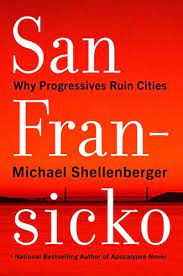
According to its dust jacket:
“Progressives claimed they knew how to solve homelessness, inequality, and crime. But in cities they control, progressives made those problems worse.
“Michael Shellenberger has lived in the San Francisco Bay Area for thirty years. During that time, he advocated for the decriminalization of drugs, affordable housing, and alternatives to jail and prison.
“But as homeless encampments spread, and overdose deaths skyrocketed, Shellenberger decided to take a closer look at the problem. What he discovered shocked him. The problems had grown worse not despite but because of progressive policies.”
In a June 1, 2022 interview with The Spectator World, Shellenberger blamed liberal ideology for this epidemic:
“The first thing is that they don’t enforce laws. They don’t enforce laws against people that they consider victims, which includes addicts and the mentally ill. And if you don’t enforce laws it turns out people don’t follow them and you don’t have functioning civilization.

Michael Shellenberger
Michael Shellenberger, CC BY-SA 4.0 <https://creativecommons.org/licenses/by-sa/4.0>, via Wikimedia Commons
“The second is that they have pursued a radical de-incarceration, de-policing and decriminalization agenda, which has removed penalties for many laws, including shoplifting $950 worth of goods, or possessing three grams of fentanyl and meth, enough to produce paranoid psychosis. And they’ve pursued a so-called housing first anti-shelter policy.
“So they’ve defunded the shelters. The governor himself has established that housing should be a right. That anybody who comes to San Francisco or Los Angeles should have their own apartment unit in those cities. That is the state policy. It is so ridiculous. It is shocking to even say that that is what the policy is, but that is what it is.
“What we need is pretty straightforward. We need to enforce laws. We need a shelter-first housing-earned policy and you need statewide psychiatric and addiction care like they have in every civilized country.
“We’re reviving people from overdose six, nine, twelve times and then sending them right back onto the streets to smoke more fentanyl. It’s bonkers.
“Fifty percent to 75 percent of all fires put out by the San Francisco and Los Angeles fire departments are in homeless encampments. My own research, and the research of others, shows that most of these are arson fires, people just getting back at each other.”
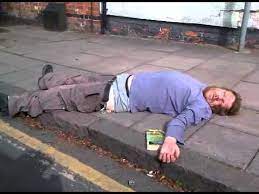
And how did the city’s mayor, London Breed, respond to the closing of the flagship store of Whole Foods Market? With a public statement that was pure boilerplate:
“Public safety is Mayor Breed’s top priority and vital to the City’s work around restoring our economy and making our residents and workers feel safe.
“We will continue to engage with them about the future use of the site. The Police will continue aggressively enforcing against open-air drug dealing, maximizing police response to urgent calls for assistance, partnering with retailers to address theft in their stores, and enforcing new street vending regulations to disrupt the sale of stolen goods.”
Nowhere in that statement is there any mention that from 2020 to July, 2022, San Francisco had a District Attorney—Chesa Boudin—who saw criminals as victims and sought any reason to excuse them for their crimes.
Nor is there any mention that the current D.A.—Brooke Jenkins—remains stymied by the realities that, under California law:
- Theft under $950 is considered a misdemeanor.
- As a result, many prosecutors prefer to free those charged rather than holding them in jail.
- The maximum sentence offenders can get is six months.
- This has led to massive shoplifting sprees at drugstores and merchandise discount stores like Target.
Also left unsaid:
- Firefighters, police officers and schoolteachers are unable to afford the extortionate rents charged by San Francisco landlords.
- But city officials have thrown out the welcome mat for DDMBs—Druggies, Drunks, Mentals and Bums.
- Many DDMBs refuse to enter the city’s available shelters. Some claim these places are dangerous—understandably so, since they’re peopled with drug addicts, alcoholics, psychotics and outright bums.
- Another reason why many of these shelters go unused: They don’t allow their “guests” to drink up or drug up.
Not everyone who can’t find housing is a DDMB.
If you are a firefighter, police officer, paramedic or schoolteacher, and want to live in San Francisco, forget it.
According to Rent Cafe, which provides apartment listings directly from top property managers: “The average [monthly] rent for an apartment in San Francisco is $2,879.” And “the average size for a San Francisco apartment is 739 square feet.”
ABC NEWS, ALCOHOLISM, ALTERNATIVE HOUSING PROGRAM, ALTERNET, AMAZON, AMERICABLOG, AP, BABY BOOMER RESISTANCE, BBC, BLOOMBERG NEWS, BROOKE JENKINS, BUMS, BUZZFEED, CBS NEWS, CHESA BOUDIN, CITY JOURNAL, CNN, COVID-19, CRACK COCAINE, CROOKS AND LIARS, CVS, DAILY KOS, DEPARTMENT OF PUBLIC HEALTH (DPH), DRUG ADDICTION, FENTANYL, FIVETHIRTYEIGHT, GAVIN NEWSOM, HARPER’S MAGAZINE, HOMELESS, HOMELESSNESS, HUFFINGTON POST, IPS SECURITY, JOSEPH STALIN, LONDON BREED, LOS ANGELES, MARK HOPKINS HOTEL, MEDIA MATTERS, MENTAL ILLNESS, MICHAEL SHELLENBERGER, MOTEL 6, MOTHER JONES, MOVEON, MSNBC, NAVIGATION CENTERS, NBC NEWS, NEW REPUBLIC, NEWSDAY, NEWSWEEK, NPR, ORACLE, PBS NEWSHOUR, POLITICAL CORRECTNESS, POLITICO, POLITICUSUSA, PORTLAND, RAW STORY, REUTERS, SALON, SAN FRANCISCO, SAN FRANCISCO BOARD OF SUPERVISORS, SAN FRANCISCO DISTRICT ATTORNEY'S OFFICE, SAN FRANCISCO MAYOR'S OFFICE, SAN FRANCISCO POLICE DEPARTMENT, SAN FRANSICKO: WHY PROGRESSIVES RUIN CITIES (BOOK), SEATLE, SEATTLE TIMES, SLATE, TALKING POINTS MEMO, TENDERLOIN, THE ATLANTIC, THE CHICAGO SUN-TIMES, THE CHICAGO TRIBUNE, THE DAILY BEAST, THE DAILY BLOG, THE GUARDIAN, THE HILL, THE HUFFINGTON POST, THE INTERCEPT, THE LOS ANGELES TIMES, THE NATION, THE NEW REPUBLIC, THE NEW YORK TIMES, THE NEW YORKER, THE SPECTATOR WORLD, THE VILLAGE VOICE, THE WASHINGTON POST, THINKPROGRESS, TIME, TRUTHDIG, TRUTHOUT, TWITTER, U.S. NEWS & WORLD REPORT, UNITED STATES SUPREME COURT, UPI, USA TODAY, VMWARE, WALGREENS, WHOLE FOODS MARKET
In Bureaucracy, Business, History, Law, Law Enforcement, Medical, Politics, Social commentary on February 24, 2025 at 12:05 am
On June 28, 2024, the Supreme Court, in City of Grants Pass vs. Johnson, empowered cities to enforce laws prohibiting camping and vagrancy.
Almost four years earlier, on September 28, 2018, a three-judge panel of the Ninth Circuit Court of Appeals had issued Martin v. City of Boise. This held that “the Eighth Amendment prohibits the imposition of criminal penalties for sitting, sleeping, or lying outside on public property for homeless individuals who cannot obtain shelter.”
People could be evicted only if beds or shelter were available to those who were being evicted.
Thanks to the Supreme Court’s ruling, communities nationwide can now fine, ticket or arrest those who make up the greatest part of this population–Druggies, Drunks, Mentals and Bums (DDMBs). But they aren’t forced to take any specific actions or to actively engage in criminal punishment.
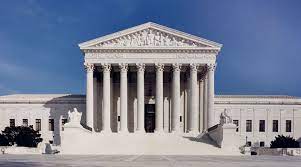
United States Supreme Court
On July 25, California Governor Gavin Newsom issued an executive order directing state agencies on how to remove homeless encampments from public spaces.
For years, California has been plagued by thousands of tents and makeshift shelters that line freeways, clutter shopping center parking lots and fill city parks.
California has the highest number of homeless in the country—more than 181,000 people in January 2023, more than 27% of the country’s homeless population.
The governor’s order leaves it up to local mayors to remove the encampments.
“Local governments now have the tools they need to address the decades-long issue of homelessness,” declared Newsome in a statement.
“Today, we are issuing an executive order that directs state agencies & urges locals to address encampments while connecting those living in them to housing & supportive services.”
San Francisco’s Mayor and Board of Supervisors may finally be ready to do what, for years, they had refused to do: Clear the city’s streets of DDMBs.
A massive casualty of the irresponsibility of “city leaders” came on April 10, 2023: One of the largest supermarkets in downtown San Francisco—the Whole Foods Market at Eighth and Market streets—announced it would shut down at the close of business that day.
The store, operated by Amazon, had been operating slightly more than a year. It had become the repeated victim of wholesale thefts courtesy of the city’s DDMBs.

The Politically Correct name for these people is “unhoused.” The accurate name for them is summed up in a German word: “Untermenschen”—“subhumans.”
Given the Politically Correct climate of San Francisco, the closing of the Whole Foods store was almost guaranteed to happen.
At its opening, on March 10, 2022, the store operated from 8 a.m. to 9 p.m. By October, it opened at 9 a.m. and closed at 7 p.m.
“It’s to better serve our customers, and it’s more or less because of the area and security issues,” said the store’s manager. “There’s just high theft and people being hostile.”
In November, the store enforced new rules for customers after syringes and crack pipes were found in the restroom. The bathroom was now open only to customers who showed security guards a receipt. Customers were then given a QR code for entry.
It was no coincidence that the bathrooms were often used by drug-abusers—the store was close to the Tenderloin Center, a safe drug-use site.

Crack cocaine
Argv0, CC BY-SA 4.0 <https://creativecommons.org/licenses/by-sa/4.0>, via Wikipedia Commons
Another reason for the change in bathroom policy: Thieves would fill up suitcases with merchandise before going into the restroom.
And who is ultimately responsible for such outrages?
San Francisco’s topmost officials—the Mayor, Board of Supervisors, District Attorney and chief of the San Francisco Police Department. Together, they have formed an “Untermenschen”-friendly alliance.
The start of the COVID-19 pandemic inflicted a massive loss in foot traffic in downtown San Francisco as employees fled high rises to work remotely from home. Many small businesses—especially restaurants—shuttered.
Compounding this disaster has been an increasing influx of hardcore alcoholics, hardcore drug addicts, psychotically mentally ill and parasitical bums. Sidewalks are littered with huge tents, used hypodermic syringes and needles, empty beer cans and wine bottles, human feces and pools of urine.
The local and national press have predicted a “Doom Loop” facing San Francisco, as the city’s tourism rate sharply declines and City Hall officials currently project a nearly $800 million deficit in San Francisco’s budget.
Tech giants such as Meta and IBM have abandoned San Francisco for events in cities such as Denver and Orlando, Florida.
In September, 2023, Silicon Valley tech giant Alphabet announced that it would move its high-profile Google Cloud Next conference to Las Vegas in 2024.
But this has not prevented city officials from calling for increased efforts to comfort those very parasites who threaten not only their own lives but those of law-abiding San Franciscans and the city’s tourism industry.
On November 3, 2021, National Public Radio’s website carried the following headline: “San Francisco’s new rapid response teams race to save lives as ODs dramatically rise.”
From the story:
“Faced with a stunning rise in drug overdose deaths the last few years, the vast majority tied to fentanyl, San Francisco has launched mobile teams made up of paramedics and nurses.
“The new Street Overdose Response Teams (SORT), a collaboration between the city’s health and fire departments, aim to deliver a broad range of support and care directly following an overdose.”
2020 PRESIDENTIAL ELECTION, ABC NEWS, ABORTION, AGUSTO PINOCHET, ALTERNET, AMERICABLOG, AMERICAN EXCEPTIONALISM, AMERICAN RECKONING: THE VIETNAM WAR AND OUR NATIONAL IDENTITY (BOOK), AP, AYATOLLAH RUHOLLAH KHOMEINI, BABY BOOMER RESISTANCE, BBC, BENJAMIN FRANKLIN, BIBLE BELT, BLOOMBERG NEWS, BUZZFEED, CBS NEWS, CHILE, CHINA, CHRISTIAN G. APPY, CIA, CIVIL RIGHTS ACT, CIVIL WAR, CNN, COAL MINING, CROOKS AND LIARS, DAILY KOS, DEMOCRATS, DONALD TRUMP, DRUG OVERDOSES, DWIGHT EISENHOWER, EDUCATION, FIVETHIRTYEIGHT, FUNDAMENTALIST CHRISTIANS, GERMANY, GUATEMALA, HARPER’S MAGAZINE, HISTORY, HUFFINGTON POST, INDIA, IRAN, ITALY, JACOBO ARBENZ, JAPAN, JOHN F. KENNEDY, JOSEPH R. BIDEN, LYNDON B. JOHNSON, MEDIA MATTERS, MOHAMMED MOSADDEGH, MOHAMMED-REZA SHAH PHLAVI, MOTHER JONES, MOVEON, MSNBC, MYTHS, NARENDRA MODI, NBC NEWS, NEW REPUBLIC, NEWSDAY, NEWSWEEK, NICARAGUA, NPR, OPIOD ADDICTION, PBS NEWSHOUR, POLITICO, POLITICS, POLITICUSUSA, PORNOGRAPHY, POVERTY, RAW STORY, RELIGIOUS CONSERVATIVES, REPUBLICANS, REUTERS, RICHARD NIXON, ROE V. WADE, RURAL AMERICA, SALON, SALVADORE ALLENDE, SEATTLE TIMES, SLATE, SMOKING, STEEL INDUSTRY, TALKING POINTS MEMO, THE ATLANTIC, THE CHICAGO SUN-TIMES, THE CHICAGO TRIBUNE, THE DAILY BEAST, THE DAILY BLOG, THE GUARDIAN, THE HILL, THE HUFFINGTON POST, THE INTERCEPT, THE LOS ANGELES TIMES, THE NATION, THE NEW REPUBLIC, THE NEW YORK TIMES, THE NEW YORKER, THE VILLAGE VOICE, THE WASHINGTON POST, THINKPROGRESS, THOMAS EDISON, TIME, TRUTHDIG, TRUTHOUT, U.S. NEWS & WORLD REPORT, UNITED STATES, UNITED STATES SUPREME COURT, UPI, USA TODAY, VIETNAM WAR, VOTER IGNORANCE, WORLD WAR 11, X
In Bureaucracy, History, Law, Law Enforcement, Politics, Social commentary on February 21, 2025 at 12:44 am
Americans live by a series of myths—myths they would be wise to abandon. Some are embraced by liberals, others by conservatives, and still others by both.
Myth 4: Americans are knowledgeable about their own history—and that of other nations.
Americans’ ignorance of history—their own and that of other nations—has long been a scandal.
- A 2018 national survey by the Institute for Citizens & Scholars found that only one in three Americans (36%) can actually pass a multiple choice test consisting of items taken from the U.S. Citizenship Test.
- More than half of respondents (60%) didn’t know which countries the United States fought in World War II (Germany, Italy and Japan).
- Only 24% correctly identified one thing Benjamin Franklin was famous for; 37% believed he invented the lightbulb (that inventor was Thomas Edison).
- Twelve percent incorrectly thought WWII General Dwight Eisenhower led troops in the Civil War; six percent thought he was a Vietnam War general.

if Americans are flagrantly ignorant of their own history, they are even worse at the history of other countries.
A major reason for this lies in Americans’ belief that other nations aren’t worth bothering about except when they threaten us. During the Vietnam war, soldiers referred to the United States as “The World”—as if the rest of the planet didn’t exist.
Americans, protected from Europe by the Atlantic Ocean and the Far East by the Pacific Ocean, allowed geography to isolate themselves from the messiness of the rest of the world.
Donald Trump, as President, gave a frightening example of this during a conversation with Indian Prime Minister Narendra Modi: “It’s not like you’ve got China on your border.” In fact, India does share a border with China.
Myth 5: The “Bible Belt” (the Deep South) is the spiritual capitol of America.
On the contrary:
- A 2015 study published in the Archives of Sexual Behavior found that religious conservatives search more for online pornography on Google than anyone else.
- Educational attainment and college graduation rates in the Bible Belt are among the lowest in the nation.

- Smoking rates are high in West Virginia, Kentucky, Arkansas, Tennessee, Louisiana, and Mississippi—and so are rates for smoking-related diseases and deaths.
- Heart disease, obesity, homicide and teenage pregnancies are among the highest in the nation.
Myth 6: Americans are health-conscious.
Comparing the United States with Australia, Austria, Canada, Denmark, Finland, France, Germany, Italy, Japan, Norway, Portugal, Spain, Sweden, Switzerland, the Netherlands, and the United Kingdom, the National Institutes of Health found:
- The United States has the second highest prevalence of HIV infections and the highest incidence of AIDS.
- Americans lose more years of life to alcohol and other drugs than people in peer countries.
- From age 20 onward, U.S. adults have among the highest prevalence rates of diabetes.
- The U.S. death rate from ischemic heart disease is the second highest.
- Lung disease is more prevalent in the United States.
Myth 7: Americans only support democratic regimes.
The United States has long supported foreign dictators—so long as they’re reliably Right-wing.
- Between 1898 and 1934, the United States repeatedly intervened with military force in Central America and the Caribbean.
- The United States occupied Nicaragua almost continuously from 1912 to 1933. Its legacy was the imposition of the tyrannical Somoza family, which ruled from 1936 to 1979.
- In 1953, the Eisenhower administration ordered the CIA to overthrew the democratically-elected government of of Iranian Prime Minister Mohammad Mosaddegh. His crime: Nationalizing the Iranian oil industry, which had been under British control since 1913.

- He was succeeded by Mohammad-Reza Shah Phlavi, a dictator who depended on United States government support to retain power until he was overthrown in 1979 by the Ayatollah Ruhollah Khomeini.
- In 1954, the CIA overthrew the democratically-elected government of Guatemalan President Jacobo Arbenz. His crime: Installing a series of reforms that expanded the right to vote, allowed workers to organize, legitimized political parties and allowed public debate.
- In 1970, President Richard M. Nixon ordered the CIA to prevent Marxist Salvador Allende from being democratically elected as president of Chile. When that failed, he ordered the CIA to overthrow Allende.
- His crime: A series of liberal reforms, including nationalizing large-scale industries (notably copper mining and banking).
- in 1973, he was overthrown by Chilean army units and national police. He was followed by Right-wing dictator Augusto Pinochet, who slaughtered 3,200 political dissidents, imprisoned 30,000 and forced another 200,000 Chileans into exile.
* * * * * * * * * *
Behind these myths: The belief in “American exceptionalism”—that the United States is unlike other nations in its innocence and steadfast dedication to human rights above all else.
Wrote Christian G. Appy, in his 2015 book, American Reckoning: The Vietnam War and Our National Identity:
“It was still unimaginable to most Americans that their own nation would wage aggressive war and justify it with unfounded claims, that it would support undemocratic governments reviled by their own people, and that American troops would be sent to fight in countries where they were widely regarded not as liberators but as imperialist invaders.”
For millions, that belief died a horrific death during the Vietnam war. Yet so long as millions remain convinced that America is guided by God and that its people are His faithful servants, these myths will remain vividly alive.
2020 PRESIDENTIAL ELECTION, ABC NEWS, ABORTION, AGUSTO PINOCHET, ALTERNET, AMERICABLOG, AMERICAN EXCEPTIONALISM, AMERICAN RECKONING: THE VIETNAM WAR AND OUR NATIONAL IDENTITY (BOOK), AP, AYATOLLAH RUHOLLAH KHOMEINI, BABY BOOMER RESISTANCE, BBC, BENJAMIN FRANKLIN, BIBLE BELT, BLOOMBERG NEWS, BUZZFEED, CBS NEWS, CHILE, CHINA, CHRISTIAN G. APPY, CIA, CIVIL RIGHTS ACT, CIVIL WAR, CNN, COAL MINING, CROOKS AND LIARS, DAILY KOS, DEMOCRATS, DONALD TRUMP, DRUG OVERDOSES, DWIGHT EISENHOWER, EDUCATION, FIVETHIRTYEIGHT, FUNDAMENTALIST CHRISTIANS, GERMANY, GUATEMALA, HARPER’S MAGAZINE, HISTORY, HUFFINGTON POST, INDIA, IRAN, ITALY, JACOBO ARBENZ, JAPAN, JOHN F. KENNEDY, JOSEPH R. BIDEN, LYNDON B. JOHNSON, MEDIA MATTERS, MOHAMMED MOSADDEGH, MOHAMMED-REZA SHAH PHLAVI, MOTHER JONES, MOVEON, MSNBC, MYTHS, NARENDRA MODI, NBC NEWS, NEW REPUBLIC, NEWSDAY, NEWSWEEK, NICARAGUA, NPR, OPIOD ADDICTION, PBS NEWSHOUR, POLITICO, POLITICS, POLITICUSUSA, PORNOGRAPHY, POVERTY, RAW STORY, RELIGIOUS CONSERVATIVES, REPUBLICANS, REUTERS, RICHARD NIXON, ROE V. WADE, RURAL AMERICA, SALON, SALVADORE ALLENDE, SEATTLE TIMES, SLATE, SMOKING, STEEL INDUSTRY, TALKING POINTS MEMO, THE ATLANTIC, THE CHICAGO SUN-TIMES, THE CHICAGO TRIBUNE, THE DAILY BEAST, THE DAILY BLOG, THE GUARDIAN, THE HILL, THE HUFFINGTON POST, THE INTERCEPT, THE LOS ANGELES TIMES, THE NATION, THE NEW REPUBLIC, THE NEW YORK TIMES, THE NEW YORKER, THE VILLAGE VOICE, THE WASHINGTON POST, THINKPROGRESS, THOMAS EDISON, TIME, TRUTHDIG, TRUTHOUT, U.S. NEWS & WORLD REPORT, UNITED STATES, UNITED STATES SUPREME COURT, UPI, USA TODAY, VIETNAM WAR, VOTER IGNORANCE, WORLD WAR 11, X
In Bureaucracy, History, Law, Law Enforcement, Politics, Social commentary on February 20, 2025 at 12:44 am
“The great enemy of truth is very often not the lie—deliberate, contrived and dishonest—but the myth, persistent, persuasive and unrealistic. Too often we hold fast to the clichés of our forebears. We subject all facts to a prefabricated set of interpretations. We enjoy the comfort of opinion without the discomfort of thought.”
—John F. Kennedy
Americans live by a series of myths—myths they would be the wiser to abandon. Some are embraced by liberals, others by conservatives, and still others by both.
Myth 1: Americans are highly educated.
According to the 2020 U.S. Census:
- In 2022, the highest level of education of the population age 25 and older in the United States ranged from less than high school to advanced degrees beyond a bachelor’s degree;
- 9% had less than a high school diploma or equivalent;
- 28% had high school as their highest level of school completed;
- 15% had completed some college but didn’t have a degree;
- 10% had an associate degree;
- 23% had a bachelor’s degree;
- 14% had completed advanced education such as a master’s degree, professional degree or doctorate.
Myth 2: Rural America is the repository of old-fashioned virtues.
Years of “hayseed” comedies such as “The Beverly Hillbillies,” “The Real McCoys,” “Green Acres” and “Petticoat Junction” convinced millions of Americans: If you want to find the “real” America, move to rural America.
If rural America is where you’ll find the “real” Americans, the future of the United States lies in peril.

Marshall County, Indiana
Derek Jensen (Tysto), CC BY 2.0 <https://creativecommons.org/licenses/by/2.0>, via Wikimedia Commons
- Rural Americans overwhelmingly support Donald Trump—who refused to accept defeat in a legitimate Presidential election, schemed to overturn the voters’ decision, and finally incited an attack on Congress to illegally remain in office.
- Rural America is home to fundamentalist Christians, who demand an end to legalized abortion and birth control—and thus hope to gain dictatorial control over women’s lives. They brand pro-choice Democrats as “baby killers.”
- During the 2020 Presidential election, Joe Biden won 91 of the nation’s 100 largest counties, but hardly anywhere else.
- Trump won about five times as many counties. Democrats are thriving in major metropolitan areas, but tanking elsewhere.
- Rather than being a Garden of Eden, rural America shares many big-city ills, such as crime, opioid addiction and a decline in life expectancy.
- Nearly all of the economic growth that occurred between the Great Recession and the start of the pandemic happened in a small number of metropolitan areas, making rural residents feel that the recession had never ended.
- Rural Americans refuse to abandon industries that are now dying out—such as in coal mining and steel.
- Trump promised—falsely—to bring those jobs back. Rural voters have forgiven him for this because he delivered on cultural issues—such as appointing anti-abortion Justices to the Supreme Court who overturned Roe v. Wade.
- Nearly half (46.7 percent) of all people living in rural areas are in the South.
- For a century following the Civil War (1861-1865) the South was accurately known as a Democratic stronghold. But that changed after Democratic President Lyndon B. Johnson signed the 1964 Civil Rights Act into law.
- In short: When Democrats went from suppressing black rights to protecting them, the great mass of white, racist rural Southerners moved to the Republican party.
Myth 3: Most Americans take a vital interest in politics.
Most Americans are dismayingly ignorant of politics at all levels—local, state and federal.
- The attempted coup of January 6, 2021, was largely fueled by ignorance. The rioters believed that Donald Trump was the real winner of the 2020 election, and that Joe Biden had “stolen” it through fraud.
- They clung to this belief, despite overwhelming evidence to the contrary, including numerous court decisions rejecting GOP claims of fraud, many of them authored by conservative, Republican-appointed judges.
- And this ignorance continues: A large majority of rural Republicans still believe that Biden was an illegitimate President—just 21% say that he “probably” or “definitely” won.
Donald Trump
- Most Americans don’t know the names of their state and federal representatives or even the names of the three branches of government.
- Only one third of Americans can name the three branches of our federal government: executive, legislative, judicial.
- Most voters overestimate the percentage of the federal budget spends on foreign aid (actually, about 1%). Yet they underestimate the amount going to entitlement programs, such as Medicare and Social Security. As a result, they believe we can solve our fiscal problems without either cutting entitlements or raising taxes on the vast majority of Americans.
- Voters also often reward or punish elected officials for events they did not cause, such as short-term economic trends or droughts.
Such ignorance makes people more susceptible to lies and conspiracy theories, including those about the 2020 election.
Myth 4: Americans take pride in their history.
Americans’ ignorance of history—their own and that of other nations—has long been a scandal.
- A 2018 national survey by the Institute for Citizens & Scholars found that only one in three Americans (36%) can actually pass a multiple choice test consisting of items taken from the U.S. Citizenship Test.
- More than half of respondents (60%) didn’t know which countries the United States fought in World War II (Germany, Italy and Japan).
 Bureaucracybuster's Blog
2016 PRESIDENTIAL ELECTION, 2020 PRESIDENTIAL ELECTION, 2024 PRESIDENTIAL ELECTION, 9/11 ATTACKS, ABC NEWS, ABORTION, ABRAHAM LINCOLN, ALTERNET, AMERICABLOG, AP, APPOMATTOX DEMOCRATS, ARNOLD SCHWARTZENEGGER, ASIANS, BABY BOOMER RESISTANCE, BARACK OBAMA, BBC, BLACKS, BLOOMBERG NEWS, BUZZFEED, CBS NEWS, CHARLES ROYSTER, CIVIL RIGHTS ACT OF 1964, CIVIL WAR, CLIMATE CHANGE, CNN, CONFEDERATE STATES OF AMERICA, COVID-19, CROOKS AND LIARS, DAILY KOS, DAVID BROOKS, DECLARATION OF INDEPENDENCE, DELTA VARIANT, DEPARTMENT OF HOMELAND SECURITY, DONALD TRUMP, FBI, FIVETHIRTYEIGHT, FORT SUMTER, FOSSIL FUELS, GEORGE W. BUSH, HAITIANS, HARPER’S MAGAZINE, HATRED, HILLARY CLINTON, HISPANICS, HUFFINGTON POST, IMMIGRANTS, JANUARY 6 COUP ATTEMPT, JOHN OLIVER, JOHNSON & JOHNSON VACCINE, JONATHAN CAPEHART, Kamala Harris, KGB, LYNDON B. JOHNSON, MASKS, MEDIA MATTERS, MERYL STREEP, MODERNA VACCINE, MOTHER JONES, MOVEON, MSNBC, MUSLIMS, NBC NEWS, NEIL YOUNG, NEW REPUBLIC, NEWSDAY, NEWSWEEK, NPR, PBS NEWSHOUR, PHIZER VACCINE, POLITICO, POLITICUSUSA, PRISONERS OF WAR, PROJECT 2025, RACISM, RAW STORY, RECONSTURCTION, REPUBLICANS, REUTERS, ROBERT E. LEE, RUSSIA, SALON, SEATTLE TIMES, SLATE, SLAVERY, SPRINGFIELD OHIO, TALKING POINTS MEMO, THE ATLANTIC, THE CHICAGO SUN-TIMES, THE CHICAGO TRIBUNE, THE DAILY BEAST, THE DAILY BLOG, THE DESTRUCTIVE WAR (BOOK), THE DISABLES, THE GUARDIAN, THE HILL, THE HUFFINGTON POST, THE LOS ANGELES TIMES, THE NATION, THE NEW REPUBLIC, THE NEW YORK TIMES, THE NEW YORKER, THE SOUTH, THE VILLAGE VOICE, THE WASHINGTON POST, THINKPROGRESS, TIME, TREASON, TRUTHDIG, TRUTHOUT, TWO POLITICAL JUNKIES, U.S. NEWS & WORLD REPORT, UKRAINE, ULYSSES S. GRANT, UPI, USA TODAY, VACCINATIONS, VLADIMIR PUTIN, WHITES, WOMEN, WONKETTE, X
FIVE MAPS TO SOUTHERN INFAMY: PART ONE (OF TWO)
In Bureaucracy, History, Medical, Politics, Social commentary on April 3, 2025 at 12:05 amThroughout its history the South has been a hotbed of treason, racism and ignorance.
Today, it proudly continues holding fast to these traditions—as it threatens the entire country with a Fascistic dictatorship under Donald Trump.
Infamy 1: 1860 – 1865 – The Confederate States of America.
Union (blue) and Confederate (red) states: 1860 – 1865
Júlio Reis, CC BY-SA 3.0 <https://creativecommons.org/licenses/by-sa/3.0>, via Wikimedia Commons
From 1860 to 1865, the South—Texas, Arkansas, Louisiana, Tennessee, Mississippi, Alabama, Georgia, Florida, South Carolina, North Carolina and Virginia—produced the greatest case of mass treason in America’s history.
According to The Destructive War, by Charles Royster, it wasn’t the cause of “states’ rights” that led 13 Southern states to withdraw from the Union in 1860-61. It was their demand for “respect,” which, in reality, translates into “e-g-o.”
“The respect Southerners demanded did not consist simply of the states’ sovereignty or of the equal rights of Northern and Southern citizens, including slaveholders’ right to take their chattels into Northern territory.
“It entailed, too, respect for their assertion of the moral superiority of slaveholding society over free society,” writes Royster.
It was not enough for Southerners to claim equal standing with Northerners; Northerners must acknowledge it. But this was something that the North was increasingly unwilling to do.
Finally, its citizens dared to elect Abraham Lincoln as President in 1860.
Lincoln and his new Republican party damned slavery—and slaveholders—as morally evil, obsolete and ultimately doomed. And they were determined to prevent slavery from spreading any further throughout the country.
Southerners found all of this intolerable.
Lincoln—during his First Inaugural Address—bluntly said that he did not intend to “directly or indirectly…interfere with the institution of slavery in the States where it exists. I believe I have no lawful right to do so, and I have no inclination to do so.”
Abraham Lincoln
But that was not enough for Southerners.
Only 10% of Southerners owned slaves. The other 90% of the population “had no dog in this fight,” as Southerners liked to say.
Yet they so admired and aspired to be like their “gentleman betters” that they threw in their lot with them.
On April 12, 1861—just over a month since Lincoln’s inauguration on March 4—Southern batteries opened fire on Union Fort Sumter in Charleston Harbor, South Carolina.
This ignited the American Civil War, costing the lives of 750,000 Americans—at a time when the population of the United States stood at 31,443,321.
Four years later, Confederate General Robert E. Lee surrendered the Army of Northern Virginia to Union General Ulysses S. Grant at Appomattox Courthouse.
Huge sections of the South had been laid waste by Union troops and more than 258,000 Southerners had been killed.
And slavery, the mainstay of Southern plantation life, had been ended forever.
The South had paid a high price for its investment in treason.
Infamy 2: 1964 – 2024 – Racism breeds Southern Republicans.
In 1964, Democratic President Lyndon B. Johnson pushed the Civil Rights Act through Congress, ending more than a century of blatant discrimination against blacks.
The South—which before the Civil War had been solidly Democratic—suddenly went solidly Republican.
To understand this mammoth shift, it’s vital to realize: In Lincoln’s time, the Republicans were the party of progressives.
The party was founded on an anti-slavery platform. Its members were thus reviled as “Black Republicans.” And until the 1960s, the South was solidly Democratic.
Democrats were the ones defending the status quo—slavery—and opposing the rights of freed blacks in the South of Reconstruction and long afterward.
When, in the early 1960s, Democrats championed the rights of blacks, Southerners bolted for the Republican party—which held to the same values that slavery/discrimination-supporting Democrats once did.
After signing the Civil Rights Act of 1964 into law, President Lyndon B. Johnson told an aide: “We have just lost the South for a generation.”
Johnson was wrong: A generation lasts 20 to 30 years. It’s been 60 years since the signing of the Act, and the South is still solidly within the Republican camp.
To compete successfully in this region, Democrats would need to demand the reinstatement of segregation—if not slavery.
1968 election
Infamy 3: 2016 – Fascist racism elects Donald Trump as President.
Repeatedly, when asked why they supported Trump, his followers said: “He says what I’ve been thinking!”
And what Trump appealed to, above all else, was racist hatred.
From June 15, 2015, when he launched his Presidential campaign, until October 24, 2016, Trump fired almost 4,000 angry, insulting tweets at 281 people and institutions that had somehow offended him.
Donald Trump
The New York Times needed two full pages of its print edition to showcase them.
Among his targets:
Red States voted for Donald Trump – 2016
BobWyatt07, CC BY-SA 4.0 <https://creativecommons.org/licenses/by-sa/4.0>, via Wikimedia Commons
Whites comprised the overwhelming majority of the audiences at Trump rallies. Not all were racists, but many of those who were advertised it on T-shirts: “MAKE AMERICA WHITE AGAIN.”
And the vast majority of the white votes Trump got were in the South.
The 2008 election of Barack Obama as the first black President had shocked whites. His 2012 re-election had deprived them of the hope that 2008 had been an accident.
In 2016 macho, largely uneducated, anti-black Southern males couldn’t accept a woman—Hillary Clinton—occupying the White House.
They ignored reputable reports—later confirmed—that Trump’s campaign was backed by Russian oligarchs linked to Russian dictator Vladimir Putin, the former head of the KGB.
Share this: