Archive for the ‘Military’ Category
9/11 ATTACKS, ABC NEWS, ABORTION, ADOLF HITLER, AL QAEDA, ALTERNET, AMERICABLOG, ANDREW CUOMO, ANTHONY FAUCI, AP, BABY BOOMER RESISTANCE, BLOOMBERG, BOB WOODWARD, BUZZFEED, CARL BERNSTEIN, CBS NEWS, CENTERS FOR DISEASE CONTROL AND PREVENTION (CDC), CHICAGO, CHINA, CIA, CLOROX BLEACH, CNN, CORONAVIRUS, COVID-19, COVID-19 TEST KITS, CROOKS AND LIARS, DAILY KOZ, DAVID BROOKS, DEBORAH BIRX, DEMOCRATIC NATIONAL CONVENTION, DEPARTMENT OF HOMELAND SECURITY, DONALD RUMSFELD, DONALD TRUMP, DRUDGE REPORT, FACEBOOK, FBI, FEDERAL EMERGENCY MANAGEMENT AGENCY (FEMA), FIVETHIRTYEIGHT, FLORIDA, FORBES, FOX NEWS, FRANKLIN D. ROOSEVELT, GRETCHEN WHITMER, HARPER’S MAGAZINE, HUFFINGTON POST, JARED KUSHNER, JAY INSLEE, KOREAN WAR, KRISTI NOEM, KRISTIN URQUIZA, LARRY HOGAN, LOS ANGELES, MARK ANTHONY URQUIZA, MARK SHIELDS, MARYLAND, MASSACHUSSETS, MEDIA MATTERS, MICHIGAN, MICK MULVANEY, MIKE PENCE, MOLOCH, MOTHER JONES, MOVEON, MSNBC, N95 MASKS, NAVY SEALS, NBC NEWS, NEW YORK, NEW YORK CITY, NEWSWEEK, NPR, OSAMA BIN LADEN, PAULA REID, PBS NEWSHOUR, PERSONAL PROTECTIVE EQUIPMENT (PPE), PHOENIX RALLY, POLITICO, POLITICUSUSA, RAW STORY, REPUBLICANS, REUTERS, RICHARD NIXON, ROBERT MUELLER, RUDOLPH GIULIANI, SALON, SCHOOLS, SEAN HANNITY, SEAN HANNITY SHOW, SEATTLE TIMES, SLATE, SOUTH DAKOTA, STEVEN PRESSFIELD, TALKING POINTS MEMO, THE ATLANTIC, THE CHICAGO SUN-TIMES, THE CHICAGO TRIBUNE, THE DAILY BEAST, THE DAILY BLOG, THE GUARDIAN, THE HILL, THE HUFFINGTON POST, THE LOS ANGELES TIMES, THE NATION, THE NEW REPUBLIC, THE NEW YORK TIMES, THE PENTAGON, THE VILLAGE VOICE, THE WASHINGTON POST, THINKPROGRESS, TIME, TRUTHDIG, TRUTHOUT, TULSA OAKAHOMA RALLY, TWO POLITICAL JUNKIES, U.S. NEWS & WORLD REPORT, UPI, USA TODAY, UV LIGHT, VEIL: THE SECRET WARS OF THE CIA (BOOK), VIETNAM WAR, WALTER SHAUB, WASHINGTON, WASHINGTON D.C., WASHINGTON MONTHLY, WASHINGTON WEEK IN REVIEW, WATERGATE, WILLIAM J. CASEY, WONKETTE, WORLD TRADE CENTER, X
In Bureaucracy, History, Law, Law Enforcement, Medical, Military, Politics, Social commentary on August 17, 2026 at 12:10 am
On April 23, 2020, President Donald Trump offered his own suggestions for how COVID-19 might be prevented or cured:
“So, supposing we hit the body with a tremendous—whether it’s ultraviolet or just very powerful light—and I think you said that that hasn’t been checked, but you’re going to test it. And then I said, supposing you brought the light inside the body, which you can do either through the skin or in some other way, and I think you said you’re going to test that too. It sounds interesting.
“And then I see the disinfectant, where it knocks it out in a minute. One minute! And is there a way we can do something like that, by injection inside or almost a cleaning. Because you see it gets in the lungs and it does a tremendous number on the lungs. So it would be interesting to check that. So, that, you’re going to have to use medical doctors with. But it sounds interesting to me.”
THE DANGERS OF TRUMP’S QUACKERY
Medical experts found Trump’s off-the-cuff remarks no laughing matter. Several doctors warned the public against injecting disinfectant or using UV light.
“It is incomprehensible to me that a moron like this holds the highest office in the land and that there exist people stupid enough to think this is OK,” said Walter Shaub, the former director of the Office of Government Ethics. “I can’t believe that in 2020 I have to caution anyone listening to the president that injecting disinfectant could kill you.”
Faced with public ridicule, Trump canceled a White House press briefing for the first time since Easter weekend.
Instead, on April 25, he issued this tweet: “What is the purpose of having White House News Conferences when the Lamestream Media asks nothing but hostile questions, & then refuses to report the truth or facts accurately.”
The Centers for Disease Control and Prevention (CDC) has urged Americans to wear masks and keep at least six feet from their fellows. And most of the nation’s governors have issued stay-at-home orders that ban large gatherings—including visits to parks and beaches.
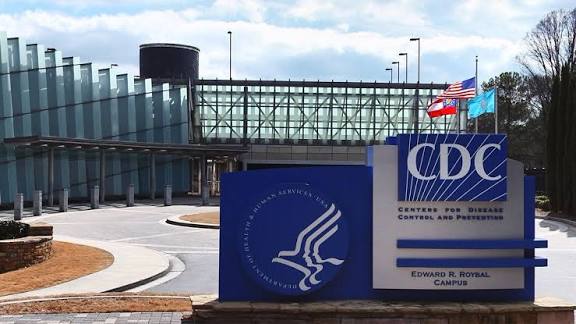
CDC headquarters in Atlanta, Georgia
TRUMP’S DEFIANCE OF SCIENCE–AND LAW
Yet President Trump has openly encouraged defiance of those orders.
On April 17, he issued a series of tweets to his supporters, encouraging them to defy the law:
“LIBERATE MINNESOTA!”
“LIBERATE MICHIGAN!”
“LIBERATE VIRGINIA, and save your great 2nd Amendment. It is under siege!”
All these states had Democratic governors. Their residents were being urged to stay indoors, wear masks when they ventured outside and keep a six-feet distance between themselves and others.
These states had been targeted for Right-wing protests—featuring large numbers of men and women standing close together, with most of them not wearing masks. They claimed their “freedoms” are being infringed upon.
On April 17, Trump launched his latest effort to deal with Coronavirus:
He issued a series of tweets to his supporters, encouraging them to defy the stay-at-home laws of Minnesota, Michigan and Virginia.
Trump saw the stay-at-home orders as a two-fold threat to himself:
- He couldn’t return to his hate-filled rallies until these were lifted; and
- The stock market wouldn’t start soaring again so long as the country was “locked down.”
Without his Nuremberg-style rallies and a roaring stock market, Trump faced the danger of being a one-term President.
Michigan, Minnesota and Virginia all had Democratic governors. They had urged their residents to stay indoors, wear masks when they ventured outside, and keep a six-feet distance between themselves and others.
As a result, those governors—especially Michigan’s Gretchen Whitmer—were being targeted for abuse and even death threats. And their states were facing disruptive protests by large numbers of Right-wingers standing close together, with few of them wearing masks. The protesters claimed their rights were being infringed upon.
Since the Supreme Court legalized abortion in 1973, the Right has demanded that even women who are pregnant due to rape or incest carry the fetus to term. Yet now that Right-wingers were being asked to wear masks in public—to protect themselves and others from a deadly plague—they had suddenly discovered the mantra: “It’s my body!”
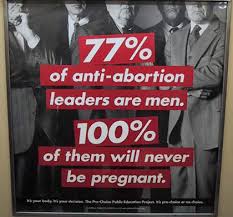
Writer Steven Pressfield summed up the immorality of these protests: “Why are we asked to wear surgical or face masks in public, to practice social distancing and to observe self-quarantining? Because these practices are not for the individual alone but for the protection of the whole [community].”
Washington Governor Jay Inslee tweeted: “The president’s statements this morning encourage illegal and dangerous acts. He is putting millions of people in danger of contracting COVID-19.
“His unhinged rantings and calls for people to ‘liberate’ states could also lead to violence. We’ve seen it before.”
Once states across the country began “reopening,” Trump scheduled his first 2020 re-election rally in Tulsa, Oklahoma.
It was held on June 20 at the BOK Center.
Scientists had learned that Coronavirus is more likely to be transmitted indoors than outdoors, when masses of people are packed together, and when people are loudly talking—or, worse, shouting. This is especially true when they’re not wearing masks.
9/11 ATTACKS, ABC NEWS, ABORTION, ADOLF HITLER, AL QAEDA, ALTERNET, AMERICABLOG, ANDREW CUOMO, ANTHONY FAUCI, AP, BABY BOOMER RESISTANCE, BLOOMBERG, BOB WOODWARD, BUZZFEED, CARL BERNSTEIN, CBS NEWS, CENTERS FOR DISEASE CONTROL AND PREVENTION (CDC), CHICAGO, CHINA, CIA, CLOROX BLEACH, CNN, CORONAVIRUS, COVID-19, COVID-19 TEST KITS, CROOKS AND LIARS, DAILY KOZ, DAVID BROOKS, DEBORAH BIRX, DEMOCRATIC NATIONAL CONVENTION, DEPARTMENT OF HOMELAND SECURITY, DONALD RUMSFELD, DONALD TRUMP, DRUDGE REPORT, FACEBOOK, FBI, FEDERAL EMERGENCY MANAGEMENT AGENCY (FEMA), FIVETHIRTYEIGHT, FLORIDA, FORBES, FOX NEWS, FRANKLIN D. ROOSEVELT, GRETCHEN WHITMER, HARPER’S MAGAZINE, HUFFINGTON POST, JARED KUSHNER, JAY INSLEE, KOREAN WAR, KRISTI NOEM, KRISTIN URQUIZA, LARRY HOGAN, LOS ANGELES, MARK ANTHONY URQUIZA, MARK SHIELDS, MARYLAND, MASSACHUSSETS, MEDIA MATTERS, MICHIGAN, MICK MULVANEY, MIKE PENCE, MOLOCH, MOTHER JONES, MOVEON, MSNBC, N95 MASKS, NAVY SEALS, NBC NEWS, NEW YORK, NEW YORK CITY, NEWSWEEK, NPR, OSAMA BIN LADEN, PAULA REID, PBS NEWSHOUR, PERSONAL PROTECTIVE EQUIPMENT (PPE), PHOENIX RALLY, POLITICO, POLITICUSUSA, RAW STORY, REPUBLICANS, REUTERS, RICHARD NIXON, ROBERT MUELLER, RUDOLPH GIULIANI, SALON, SCHOOLS, SEAN HANNITY, SEAN HANNITY SHOW, SEATTLE TIMES, SLATE, SOUTH DAKOTA, STEVEN PRESSFIELD, TALKING POINTS MEMO, THE ATLANTIC, THE CHICAGO SUN-TIMES, THE CHICAGO TRIBUNE, THE DAILY BEAST, THE DAILY BLOG, THE GUARDIAN, THE HILL, THE HUFFINGTON POST, THE LOS ANGELES TIMES, THE NATION, THE NEW REPUBLIC, THE NEW YORK TIMES, THE PENTAGON, THE VILLAGE VOICE, THE WASHINGTON POST, THINKPROGRESS, TIME, TRUTHDIG, TRUTHOUT, TULSA OAKAHOMA RALLY, TWO POLITICAL JUNKIES, U.S. NEWS & WORLD REPORT, UPI, USA TODAY, UV LIGHT, VEIL: THE SECRET WARS OF THE CIA (BOOK), VIETNAM WAR, WALTER SHAUB, WASHINGTON, WASHINGTON D.C., WASHINGTON MONTHLY, WASHINGTON WEEK IN REVIEW, WATERGATE, WILLIAM J. CASEY, WONKETTE, WORLD TRADE CENTER, X
In Bureaucracy, History, Law, Law Enforcement, Medical, Military, Politics, Social commentary on August 14, 2026 at 12:37 am
In 2020, the Federal Government seized vitally-needed medical supplies in at least seven states. FEMA didn’t publicly reporting the thefts, despite the outlay of millions of dollars of taxpayer money. Nor did the Trump administration explain how it decides which supplies to seize and where to reroute them.

TRUMP HAS SEIZED STATES’ MEDICAL SUPPLIES
The Federal Government didn’t inform states whose supplies it seized if they would receive the materials they ordered and paid for. That fueled concerns about whether the Trump administration was fairly distributing scarce medical supplies.
“We can’t get any answers,” said a California hospital official who asked not to be identified for fear of retaliation from the White House.
Trump said it was the states’ responsibility to obtain critically-needed medical supplies. But when they weren’t outbid by the Federal Government, hospital systems and states found their shipments of medical supplies seized with no explanation.
Where did those supplies go?
To China?
To Trump’s private warehouses?
To Jared Kushner, Trump’s son-in-law, for sale on the black market?
No one still knows.
A March 2 Washington Monthly story concluded ominously: “What if the White House simply gives all the masks and ventilators to red states and counties, leaving blue ones to struggle? What mechanisms of accountability are left?
“U.S. democracy wasn’t set up to deal with a president openly behaving like a James Bond villain while being protected by a political party behaving more like a mafia than a civic institution.”
PROPAGANDA AS “NEWS”
After Easter weekend, President Donald Trump began holding daily press briefings at the White House.
Their official purpose: To update the country on the administration’s ongoing response to the Coronavirus pandemic.
Their real purpose: To serve as a substitute for Trump’s hate-filled political rallies, which have been likened to those staged by Germany’s Fuhrer, Adolf Hitler, at Nuremberg.
These had been temporarily cancelled due to demands for social distancing to stem the rising tide of the COVID-19 pandemic. That had been Trump’s primary reason for seeking to end social distancing.
The White House tried hard to stage-manage these appearances. For example, on April 14, Trump interrupted the question-and-answer session by cutting to a White House-produced video to try to shame the media for critical coverage of his response to the crisis.

White House press conference
On April 26, The New York Times ran a story entitled: “Self-praise, hubris and self-pity: Examining 260,000 words about the Coronavirus from President Trump.” Summing up the image that Trump has tried to present of himself to the world, the Times concluded:
“The self-regard, the credit-taking, the audacious rewriting of recent history to cast himself as the hero of the pandemic rather than the president who was slow to respond: Such have been the defining features of Trump’s use of the bully pulpit during the coronavirus outbreak….
“By far the most recurring utterances from Trump in the [White House] briefings are self-congratulations, roughly 600 of them, which are often predicated on exaggerations and falsehoods….
“Trump’s attempts to display empathy or appeal to national unity (about 160 instances) amount to only a quarter of the number of times he complimented himself or a top member of his team.”
QUACKERY AS “MEDICINE”
On April 23, Donald Trump ventured into the equivalent of a PR minefield—and stepped on a mine of his own making.
After musing on new government research into how the virus reacts to different temperatures, climates and surfaces, Trump said: “So I asked Bill [William N. Bryan, acting Under Secretary for Science and Technology at the Department of Homeland Security] a question….
“So, supposing we hit the body with a tremendous—whether it’s ultraviolet or just very powerful light—and I think you said that that hasn’t been checked, but you’re going to test it. And then I said, supposing you brought the light inside the body, which you can do either through the skin or in some other way, and I think you said you’re going to test that too. It sounds interesting.
“And then I see the disinfectant, where it knocks it out in a minute. One minute! And is there a way we can do something like that, by injection inside or almost a cleaning. Because you see it gets in the lungs and it does a tremendous number on the lungs. So it would be interesting to check that. So, that, you’re going to have to use medical doctors with. But it sounds interesting to me.”
Trump was clearly seeking agreement with his latest medical theory. But Dr. Deborah Birx, the Coronavirus Task Force response coordinator, remained silent.
The Internet—and medical experts—did not.
On Twitter—the social media platform Trump routinely used to attack everyone he hated—his suggestion that injecting disinfectants could treat Coronavirus drew scorn and ridicule.
One tweet showed Trump as a doctor hovering over a patient and saying: “Once I’ve pumped you full of disinfectant, I’ll zap you with this UV torch until you’re cured.”
Another meme featured Trump as Marie Antoinette saying: “Let them eat Clorox.”
Medical experts found Trump’s off-the-cuff remarks no laughing matter. Several doctors warned the public against injecting disinfectant or using UV light.
9/11 ATTACKS, ABC NEWS, ABORTION, ADOLF HITLER, AL QAEDA, ALTERNET, AMERICABLOG, ANDREW CUOMO, ANTHONY FAUCI, AP, BABY BOOMER RESISTANCE, BLOOMBERG, BOB WOODWARD, BUZZFEED, CARL BERNSTEIN, CBS NEWS, CENTERS FOR DISEASE CONTROL AND PREVENTION (CDC), CHICAGO, CHINA, CIA, CLOROX BLEACH, CNN, CORONAVIRUS, COVID-19, COVID-19 TEST KITS, CROOKS AND LIARS, DAILY KOZ, DAVID BROOKS, DEBORAH BIRX, DEMOCRATIC NATIONAL CONVENTION, DEPARTMENT OF HOMELAND SECURITY, DONALD RUMSFELD, DONALD TRUMP, DRUDGE REPORT, FACEBOOK, FBI, FEDERAL EMERGENCY MANAGEMENT AGENCY (FEMA), FIVETHIRTYEIGHT, FLORIDA, FORBES, FOX NEWS, FRANKLIN D. ROOSEVELT, GRETCHEN WHITMER, HARPER’S MAGAZINE, HUFFINGTON POST, JARED KUSHNER, JAY INSLEE, KOREAN WAR, KRISTI NOEM, KRISTIN URQUIZA, LARRY HOGAN, LOS ANGELES, MARK ANTHONY URQUIZA, MARK SHIELDS, MARYLAND, MASSACHUSSETS, MEDIA MATTERS, MICHIGAN, MICK MULVANEY, MIKE PENCE, MOLOCH, MOTHER JONES, MOVEON, MSNBC, N95 MASKS, NAVY SEALS, NBC NEWS, NEW YORK, NEW YORK CITY, NEWSWEEK, NPR, OSAMA BIN LADEN, PAULA REID, PBS NEWSHOUR, PERSONAL PROTECTIVE EQUIPMENT (PPE), PHOENIX RALLY, POLITICO, POLITICUSUSA, RAW STORY, REPUBLICANS, REUTERS, RICHARD NIXON, ROBERT MUELLER, RUDOLPH GIULIANI, SALON, SCHOOLS, SEAN HANNITY, SEAN HANNITY SHOW, SEATTLE TIMES, SLATE, SOUTH DAKOTA, STEVEN PRESSFIELD, TALKING POINTS MEMO, THE ATLANTIC, THE CHICAGO SUN-TIMES, THE CHICAGO TRIBUNE, THE DAILY BEAST, THE DAILY BLOG, THE GUARDIAN, THE HILL, THE HUFFINGTON POST, THE LOS ANGELES TIMES, THE NATION, THE NEW REPUBLIC, THE NEW YORK TIMES, THE PENTAGON, THE VILLAGE VOICE, THE WASHINGTON POST, THINKPROGRESS, TIME, TRUTHDIG, TRUTHOUT, TULSA OAKAHOMA RALLY, TWO POLITICAL JUNKIES, U.S. NEWS & WORLD REPORT, UPI, USA TODAY, UV LIGHT, VEIL: THE SECRET WARS OF THE CIA (BOOK), VIETNAM WAR, WALTER SHAUB, WASHINGTON, WASHINGTON D.C., WASHINGTON MONTHLY, WASHINGTON WEEK IN REVIEW, WATERGATE, WILLIAM J. CASEY, WONKETTE, WORLD TRADE CENTER, X
In Bureaucracy, History, Law, Law Enforcement, Military, Politics, Social commentary, Uncategorized on August 13, 2026 at 12:10 am
Like Nazi Germany’s Fuhrer, Adolf Hitler, President Donald Trump liked to pit individuals and organizations against each other. Hitler, for example, would assign several agencies to tackle the same problem: “That way, the stronger one gets the job done,” he told his architect, Albert Speer.
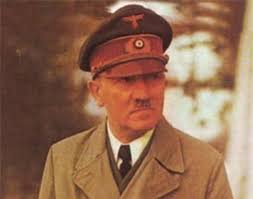
Adolf Hitler
PITTING CITIES AND STATES AGAINST EACH OTHER
This created needless duplication of efforts and wasted resources. But it ensured that Trump—like Hitler—remained the final voice of authority, since so many others were competing for his favor and direction.
This did not, however, work out well for the 50 states that make up the United States of America.
During the Great Depression, President Franklin D. Roosevelt intervened powerfully to ensure that all Americans received the help they needed.
Trump made it clear that each state was responsible for securing its needed supply of Personal Protective Equipment (PPEs) for its doctors and nurses aiding Coronavirus patients. This resulted in a dog-eat-dog atmosphere of cutthroat competition and scarcity, with Americans not only fighting the virus but each other.
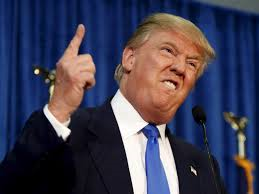
Donald Trump
USING A PLAGUE TO DESTROY AMERICANS
Even worse: Trump and Republicans used a deadly plague as a weapon against those Americans they hate.
On March 26, during an interview on Fox News, Trump blamed the failures of his administration’s response to Coronavirus on Democratic state governors like Andrew Cuomo (NY), Jay Inslee (WA), and Gretchen Whitmer (MI).
On March 27, during his press briefing, Trump said he told Vice President Mike Pence—who’s officially in charge of the White House’s response effort—to not call Inslee and Whitmer because they weren’t “appreciative” enough of his efforts.
Trump said this even as hospitals in each of their states were being overwhelmed with Coronavirus patients:
“I tell him—I mean I’m a different type of person—I say, ‘Mike, don’t call the governor in Washington, you’re wasting your time with him. Don’t call the woman in Michigan. If they don’t treat you right, I don’t call.”
At his March 27 press briefing, Trump echoed French King Louis X1V’s infamous remark—“I am the State”: “When they’re [governors] not appreciative to me, they’re not appreciative to the Army Corps, they’re not appreciative to FEMA [Federal Emergency Management Agency]. It’s not right.”
On that same day, Trump attacked Michigan Governor Gretchen Whitmer on Right-wing Fox News’ “Sean Hannity Show”: “I don’t know if she knows what’s going on, but all she does is sit there and blame the Federal Government.”
On March 27, Michigan Governor Gretchen Whitmer told a local radio station: “What I’ve gotten back is that vendors with whom we’ve procured contracts—they’re being told not to send stuff to Michigan. It’s really concerning. I reached out to the White House last night and asked for a phone call with the president, ironically at the time this stuff was going on.”

Gretchen Whitmer
A March 29 story in the Washington Monthly shed light on what lay behind Whitmer’s inability to secure desperately-needed ventilators from her longtime vendors. Its headline ran: “What If Trump Decides to Save Republicans But Not Democrats?”
A sub-headline read: “He’s providing vital resources to red states and ignoring blue states.”
Florida—a Trump-supporting state—submitted a request to FEMA on March 11 for 430,000 surgical masks, 180,000 N95 respirators, 82,000 face shields and 238,000 gloves—and received a shipment with everything three days later.
On Fox News, Rudy Giuliani, Trump’s personal lawyer, bluntly told governors: “Take the blame when you have to. When you play with your boss, sometimes it’s better when you don’t win the golf game. He’s the boss, he’s got all the resources.”
Translation: Suck up to the capo’s ego if you want to survive.
The mentality of the Black Hand had come to the Oval Office.

The Black Hand
TRUMP SEIZES STATES’ MEDICAL SUPPLIES
Trump wasn’t simply refusing to provide states with vitally-needed medical supplies—he was illegally seizing those supplies that states have ordered.
An April 20 Forbes story offered frightening insight into the tyrannical reach of the Trump administration. Entitled, “Maryland Gov. Hogan Takes Extraordinary Steps to Keep Feds From Confiscating COVID Tests,” the story unfolded like a spy thriller.
Governor Larry Hogan had heard reports that the federal government had confiscated crucial medical supplies from other states—like Massachusetts.
After obtaining 500,000 test kits from South Korea, Hogan ordered them flown into Baltimore–Washington International Airport rather than the larger Dulles International Airport in Virginia. From there they were escorted under guard to a secret location and constantly protected by the National Guard.
As they were sent out for distribution across the state, the tests remained under protection by the National Guard and state police.
The precautions were absolutely necessary. Hospitals in Florida and California reported that FEMA had seized their supplies without explanation.
Massachusetts ordered three million masks that were confiscated by the Federal Government at the Port of New York. This forced the state to ask New England Patriots’ owner Robert Kraft to use his team plane to fly in one million N95 masks from China.
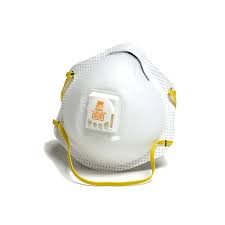
N95 mask
9/11 ATTACKS, ABC NEWS, ABORTION, ADOLF HITLER, AL QAEDA, ALTERNET, AMERICABLOG, ANDREW CUOMO, ANTHONY FAUCI, AP, BABY BOOMER RESISTANCE, BLOOMBERG, BOB WOODWARD, BUZZFEED, CARL BERNSTEIN, CBS NEWS, CENTERS FOR DISEASE CONTROL AND PREVENTION (CDC), CHICAGO, CHINA, CIA, CLOROX BLEACH, CNN, CORONAVIRUS, COVID-19, COVID-19 TEST KITS, CROOKS AND LIARS, DAILY KOZ, DAVID BROOKS, DEBORAH BIRX, DEMOCRATIC NATIONAL CONVENTION, DEPARTMENT OF HOMELAND SECURITY, DONALD RUMSFELD, DONALD TRUMP, DRUDGE REPORT, FACEBOOK, FBI, FEDERAL EMERGENCY MANAGEMENT AGENCY (FEMA), FIVETHIRTYEIGHT, FLORIDA, FORBES, FOX NEWS, FRANKLIN D. ROOSEVELT, GRETCHEN WHITMER, HARPER’S MAGAZINE, HUFFINGTON POST, JARED KUSHNER, JAY INSLEE, KOREAN WAR, KRISTI NOEM, KRISTIN URQUIZA, LARRY HOGAN, LOS ANGELES, MARK ANTHONY URQUIZA, MARK SHIELDS, MARYLAND, MASSACHUSSETS, MEDIA MATTERS, MICHIGAN, MICK MULVANEY, MIKE PENCE, MOLOCH, MOTHER JONES, MOVEON, MSNBC, N95 MASKS, NAVY SEALS, NBC NEWS, NEW YORK, NEW YORK CITY, NEWSWEEK, NPR, OSAMA BIN LADEN, PAULA REID, PBS NEWSHOUR, PERSONAL PROTECTIVE EQUIPMENT (PPE), PHOENIX RALLY, POLITICO, POLITICUSUSA, RAW STORY, REPUBLICANS, REUTERS, RICHARD NIXON, ROBERT MUELLER, RUDOLPH GIULIANI, SALON, SCHOOLS, SEAN HANNITY, SEAN HANNITY SHOW, SEATTLE TIMES, SLATE, SOUTH DAKOTA, STEVEN PRESSFIELD, TALKING POINTS MEMO, THE ATLANTIC, THE CHICAGO SUN-TIMES, THE CHICAGO TRIBUNE, THE DAILY BEAST, THE DAILY BLOG, THE GUARDIAN, THE HILL, THE HUFFINGTON POST, THE LOS ANGELES TIMES, THE NATION, THE NEW REPUBLIC, THE NEW YORK TIMES, THE PENTAGON, THE VILLAGE VOICE, THE WASHINGTON POST, THINKPROGRESS, TIME, TRUTHDIG, TRUTHOUT, TULSA OAKAHOMA RALLY, TWO POLITICAL JUNKIES, U.S. NEWS & WORLD REPORT, UPI, USA TODAY, UV LIGHT, VEIL: THE SECRET WARS OF THE CIA (BOOK), VIETNAM WAR, WALTER SHAUB, WASHINGTON, WASHINGTON D.C., WASHINGTON MONTHLY, WASHINGTON WEEK IN REVIEW, WATERGATE, WILLIAM J. CASEY, WONKETTE, WORLD TRADE CENTER, X
In Bureaucracy, History, Law, Law Enforcement, Medical, Military, Politics, Social commentary on August 12, 2026 at 6:12 pm
On February 7, 2020, during a recorded phone interview, President Donald J. Trump shared his thoughts—and the latest medical Intelligence—about the Coronavirus with Washington Post editor/investigative reporter Bob Woodward.
TRUMP CONFESSES TO BOB WOODWARD
Bob Woodward: And so, what was [Chinese] President Xi [Jinping] saying yesterday?
Donald Trump: Oh, we were talking mostly about the virus, and I think he’s going to have it in good shape. But it’s a very tricky situation.
Woodward: Indeed, it is.
Trump: It goes through air, Bob. That’s always tougher than the touch. The touch, you don’t have to touch things, right? But the air, you just breathe the air and that’s how it’s passed. And so that’s a very tricky one. That’s a very delicate one. It’s also more deadly than even your strenuous flues. People don’t realize, we lose 25,000, 30,000 people a year here. Who would ever think that, right?
Woodward: I know. It’s much forgotten.
Trump: It’s pretty amazing. And then I said, “Well, is that the same thing?”
Woodward: What are you able to do for—
Trump: This is more deadly. This is 5% versus 1%, and less than 1%. So this is deadly stuff.
“This is deadly stuff.”
Unfortunately for those who believed in him, Trump was not saying this in public.
WHAT TRUMP SAID IN PUBLIC
From January to early March, 2020, Trump and his allies within the Republican party and Fox News Network repeatedly assured Americans they had nothing to fear.
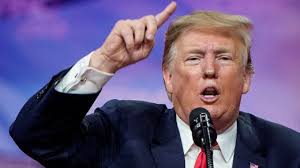
Donald Trump
Barnstorming the country in a series of hate-filled political rallies, Trump told his supporters:
- January 22:“We have it totally under control. It’s one person coming in from China.”
- February 2: “We pretty much shut it down coming in from China. It’s going to be fine.”
- February 24: “The Coronavirus is very much under control in the USA.”
- February 25: “CDC & my administration are doing a GREAT job of handling Coronavirus.”
- February 25: “I think that’s a problem that’s going to go away. They have studied it. They know very much. In fact, we’re very close to a vaccine.”
- February 26: “The 15 cases within a couple of days is going to be down to close to zero.”
- February 26: “We’re going very substantially down, not up.”
- February 27: “One day it’s like a miracle, it will disappear.”
- February 28: “We’re ordering a lot of supplies. We’re ordering a lot of, uh, elements that frankly we wouldn’t be ordering unless it was something like this. But we’re ordering a lot of different elements of medical.”

Coronavirus
- February 28: “Now the Democrats are politicizing the Coronavirus….We did one of the great jobs….One of my people came up to me and said, ‘Mr. President, they tried to beat you on Russia, Russia, Russia’….They couldn’t do it. They tried the impeachment hoax….It’s all turning, they lost….And this is their new hoax.”
- March 4: “If we have thousands of people that get better just by, you know, sitting around and even going to work—some of them go to work, but they get better.”
- March 6: “I think we’re doing a really good job in this country of keeping it down. A tremendous job of keeping it down.”
- March 6: “Anybody right now, and yesterday, anybody that needs a test gets a test. And the tests are beautiful.”
- March 6: “I like this stuff. I really get it. People are surprised that I understand it. Every one of these doctors said, ‘How do you know so much about this?’ Maybe I have a natural ability. Maybe I should have done that instead of running for President.”
- March 8: “We have a perfectly coordinated and fine tuned plan at the White House for our attack on Coronavirus.”
- March 9: “The Fake News Media and their partner, the Democrat Party, is doing everything within its semi-considerable power (it used to be greater!) to inflame the CoronaVirus situation, far beyond what the facts would warrant. Surgeon General, The risk is low to the average American.”
- March 10: “It will go away. Just stay calm. It will go away.”
MORE CONFESSIONS TO BOB WOODWARD
But on March 19, Trump offered a completely different take on the virus in another phone interview with Woodward:
Donald Trump: Now it’s starting out it’s not just all people, Bob. But just today and yesterday, some startling facts came out. It’s not just old, older-
Bob Woodward: Yeah. Exactly.
Trump: Young people too. Plenty of young people. We’re looking at what’s going on in—
Woodward: So, give me a moment of talking to somebody, going through this with Fauci, or somebody who kind of… It caused a pivot in your mind, because it’s clear just from what’s on the public record, that you went through a pivot on this to, “Oh my God. The gravity is almost inexplicable and unexplainable.”
Trump: Well, I think Bob, really, to be honest with you-
Woodward: Sure. I want you to be.
Trump: I wanted to always play it down. I still like playing it down because I don’t want to create a panic.
9/11 ATTACKS, ABC NEWS, ABORTION, ADOLF HITLER, AL QAEDA, ALTERNET, AMERICABLOG, ANDREW CUOMO, ANTHONY FAUCI, AP, BABY BOOMER RESISTANCE, BLOOMBERG, BOB WOODWARD, BUZZFEED, CARL BERNSTEIN, CBS NEWS, CENTERS FOR DISEASE CONTROL AND PREVENTION (CDC), CHICAGO, CHINA, CIA, CLOROX BLEACH, CNN, CORONAVIRUS, COVID-19, COVID-19 TEST KITS, CROOKS AND LIARS, DAILY KOZ, DAVID BROOKS, DEBORAH BIRX, DEMOCRATIC NATIONAL CONVENTION, DEPARTMENT OF HOMELAND SECURITY, DONALD RUMSFELD, DONALD TRUMP, DRUDGE REPORT, FACEBOOK, FBI, FEDERAL EMERGENCY MANAGEMENT AGENCY (FEMA), FIVETHIRTYEIGHT, FLORIDA, FORBES, FOX NEWS, FRANKLIN D. ROOSEVELT, GRETCHEN WHITMER, HARPER’S MAGAZINE, HUFFINGTON POST, JARED KUSHNER, JAY INSLEE, KOREAN WAR, KRISTI NOEM, KRISTIN URQUIZA, LARRY HOGAN, LOS ANGELES, MARK ANTHONY URQUIZA, MARK SHIELDS, MARYLAND, MASSACHUSSETS, MEDIA MATTERS, MICHIGAN, MICK MULVANEY, MIKE PENCE, MOLOCH, MOTHER JONES, MOVEON, MSNBC, N95 MASKS, NAVY SEALS, NBC NEWS, NEW YORK, NEW YORK CITY, NEWSWEEK, NPR, OSAMA BIN LADEN, PAULA REID, PBS NEWSHOUR, PERSONAL PROTECTIVE EQUIPMENT (PPE), PHOENIX RALLY, POLITICO, POLITICUSUSA, RAW STORY, REPUBLICANS, REUTERS, RICHARD NIXON, ROBERT MUELLER, RUDOLPH GIULIANI, SALON, SCHOOLS, SEAN HANNITY, SEAN HANNITY SHOW, SEATTLE TIMES, SLATE, SOUTH DAKOTA, STEVEN PRESSFIELD, TALKING POINTS MEMO, THE ATLANTIC, THE CHICAGO SUN-TIMES, THE CHICAGO TRIBUNE, THE DAILY BEAST, THE DAILY BLOG, THE GUARDIAN, THE HILL, THE HUFFINGTON POST, THE LOS ANGELES TIMES, THE NATION, THE NEW REPUBLIC, THE NEW YORK TIMES, THE PENTAGON, THE VILLAGE VOICE, THE WASHINGTON POST, THINKPROGRESS, TIME, TRUTHDIG, TRUTHOUT, TULSA OAKAHOMA RALLY, TWO POLITICAL JUNKIES, U.S. NEWS & WORLD REPORT, UPI, USA TODAY, UV LIGHT, VEIL: THE SECRET WARS OF THE CIA (BOOK), VIETNAM WAR, WALTER SHAUB, WASHINGTON, WASHINGTON D.C., WASHINGTON MONTHLY, WASHINGTON WEEK IN REVIEW, WATERGATE, WILLIAM J. CASEY, WONKETTE, WORLD TRADE CENTER, X
In Bureaucracy, History, Law, Law Enforcement, Medical, Military, Politics, Social commentary on August 11, 2026 at 12:11 am
The 9/11 terror attacks frightened Americans more than any event since the Japanese attack on Pearl Harbor in 1941.. But they didn’t slaughter as many Americans nor affect their lives as intimately as has the advent of COVID-19, also known as Coronavirus.
First, COVID-19 has killed far more Americans than 9/11. As before mentioned, 9/11 snuffed out the lives of almost 3,000 Americans. But as of September 15, 2020, more than 194,000 Americans had died of COVID-19. And the plague had not finished its murderous work.
Second, while 9/11 affected two American cities—New York and Washington, D.C.—COVID-19 spread throughout the country. As epicenters like New York City, Los Angeles and Chicago gain national attention, the virus continues to seep into rural centers—especially in the South and Midwest.
Third, the combination of evil and incompetence of the Trump administration shook Americans’ faith in the ability—and even the willingness—of the Federal Government to protect them.
TRUMP AND BOB WOODWARD
Conservative New York Times columnist David Brooks attacked President Donald Trump in terms usually reserved for serial killers. On the March 13 edition of The PBS Newshour, he said:
“This is what happens when you elect a sociopath as president, who doesn’t care, who has treated this whole thing for the past month as if it’s about him. ‘How do people like me?’ Minimizing the risks. ‘Does the stock market reflect well on me?’ And he hasn’t done the things a normal human being would do, which was to, let’s take precautions….
“And he’s incapable of that. And he’s even created an information distortion field around him.”
Yet even David Brooks could not have predicted the scandal that successfully threatened Trump’s chances for re-election on November 3.
Consider what Trump revealed privately to legendary investigative reporter Bob Woodward—with what he was telling the American public in countless addresses.
Woodward—along with Carl Bernstein—achieved imperishable fame in 1972-74 as the Washington Post reporters whose Watergate-related stories led to the fall of President Richard M. Nixon.
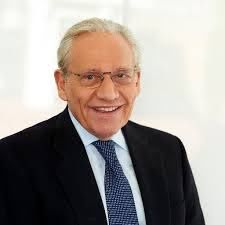
Bob Woodward
THE ADVENT OF CORONAVIRUS
First, some background on the Coronvirus itself:
The virus first appeared in Wuhan, China, in December, 2019. Its first reported victim became ill on December 1.
By December 31, the outbreak was traced to a novel strain of Coronavirus.
Coronaviruses are a group of viruses that affect birds and mammals. In humans, Coronaviruses can cause pneumonia and may cause bronchitis.
As President, Trump had access to Intelligence sources denied to his fellow citizens.
Trump first learned of the virus on January 3, 2020. This did not prevent him from playing golf on January 4, 5, 18 and 19.
On January 19, the first Coronavirus case appeared in the United States.
On January 27, then-acting chief of staff Mick Mulvaney tried to get the President to act.
But, according to officials who spoke with the Washington Post, Trump was “dismissive” of early briefings “because he did not believe that the virus had spread widely throughout the United States.”
Trump fired Mulvaney one month later.
Then, for Trump, it was back to the golf course—on February 1, 2 and 15.
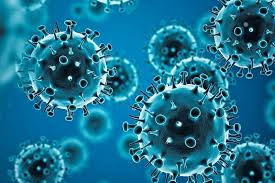
Coronavirus
TRUMP CONFESSES TO BOB WOODWARD
On February 7, he decided to share some of his Coronavirus Intelligence with legendary Washington Post editor and reporter Bob Woodward.
Why he chose to do this remains a mystery.
It’s possible that Trump—whose hatred of the press is infamous—thought he could “take” Woodward. Or perhaps even cultivate him.
Conservative New York Times columnist David Brooks thinks so. On the September 11 edition of The PBS Newshour, Brooks offered:
“First, the hubris to think, you could be the president and talk to Bob Woodward and not get hurt by it. Donald Trump walked right into this.
“Two, the extreme cynicism of not only bumbling around in February and March, because you didn’t know how serious the pandemic was, but the confirmation that you did know, and you still thought you could talk it down, as if you can talk down a force of nature, and that this—you wouldn’t end up getting caught.”
If Trump thought he could “take” or cultivate Woodward, it wasn’t the first time a high-ranking government official had done so.

William J. Casey
During the Presidency of Ronald Reagan, CIA director William J. Casey spilled countless secrets to Woodward—which found their way into a 1987 book: Veil: The Secret Wars of the CIA, 1981-1987. Woodward admitted that he didn’t know why Casey had been so forthcoming. 
On February 7, 2020, the following telephone interview between Trump and Woodward took place:
Bob Woodward: And so, what was [Chinese] President Xi [Jinping] saying yesterday?
Donald Trump: Oh, we were talking mostly about the virus, and I think he’s going to have it in good shape. But it’s a very tricky situation.
Woodward: Indeed, it is.
Trump: It goes through air, Bob. That’s always tougher than the touch. The touch, you don’t have to touch things, right? But the air, you just breathe the air and that’s how it’s passed. And so that’s a very tricky one. That’s a very delicate one. It’s also more deadly than even your strenuous flues. People don’t realize, we lose 25,000, 30,000 people a year here. Who would ever think that, right?
9/11 ATTACKS, ABC NEWS, ABORTION, ADOLF HITLER, AL QAEDA, ALTERNET, AMERICABLOG, ANDREW CUOMO, ANTHONY FAUCI, AP, BABY BOOMER RESISTANCE, BLOOMBERG, BOB WOODWARD, BUZZFEED, CARL BERNSTEIN, CBS NEWS, CENTERS FOR DISEASE CONTROL AND PREVENTION (CDC), CHICAGO, CHINA, CIA, CLOROX BLEACH, CNN, CORONAVIRUS, COVID-19, COVID-19 TEST KITS, CROOKS AND LIARS, DAILY KOZ, DAVID BROOKS, DEBORAH BIRX, DEMOCRATIC NATIONAL CONVENTION, DEPARTMENT OF HOMELAND SECURITY, DONALD RUMSFELD, DONALD TRUMP, DRUDGE REPORT, FACEBOOK, FBI, FEDERAL EMERGENCY MANAGEMENT AGENCY (FEMA), FIVETHIRTYEIGHT, FLORIDA, FORBES, FOX NEWS, FRANKLIN D. ROOSEVELT, GRETCHEN WHITMER, HARPER’S MAGAZINE, HUFFINGTON POST, JARED KUSHNER, JAY INSLEE, KOREAN WAR, KRISTI NOEM, KRISTIN URQUIZA, LARRY HOGAN, LOS ANGELES, MARK ANTHONY URQUIZA, MARK SHIELDS, MARYLAND, MASSACHUSSETS, MEDIA MATTERS, MICHIGAN, MICK MULVANEY, MIKE PENCE, MOLOCH, MOTHER JONES, MOVEON, MSNBC, N95 MASKS, NAVY SEALS, NBC NEWS, NEW YORK, NEW YORK CITY, NEWSWEEK, NPR, OSAMA BIN LADEN, PAULA REID, PBS NEWSHOUR, PERSONAL PROTECTIVE EQUIPMENT (PPE), PHOENIX RALLY, POLITICO, POLITICUSUSA, RAW STORY, REPUBLICANS, REUTERS, RICHARD NIXON, ROBERT MUELLER, RUDOLPH GIULIANI, SALON, SCHOOLS, SEAN HANNITY, SEAN HANNITY SHOW, SEATTLE TIMES, SLATE, SOUTH DAKOTA, STEVEN PRESSFIELD, TALKING POINTS MEMO, THE ATLANTIC, THE CHICAGO SUN-TIMES, THE CHICAGO TRIBUNE, THE DAILY BEAST, THE DAILY BLOG, THE GUARDIAN, THE HILL, THE HUFFINGTON POST, THE LOS ANGELES TIMES, THE NATION, THE NEW REPUBLIC, THE NEW YORK TIMES, THE PENTAGON, THE VILLAGE VOICE, THE WASHINGTON POST, THINKPROGRESS, TIME, TRUTHDIG, TRUTHOUT, TULSA OAKAHOMA RALLY, TWO POLITICAL JUNKIES, U.S. NEWS & WORLD REPORT, UPI, USA TODAY, UV LIGHT, VEIL: THE SECRET WARS OF THE CIA (BOOK), VIETNAM WAR, WALTER SHAUB, WASHINGTON, WASHINGTON D.C., WASHINGTON MONTHLY, WASHINGTON WEEK IN REVIEW, WATERGATE, WILLIAM J. CASEY, WONKETTE, WORLD TRADE CENTER, X
In Bureaucracy, History, Law, Law Enforcement, Military, Politics, Social commentary on August 10, 2026 at 12:07 am
On September 11, 2001, 19 Islamic terrorists snuffed out the lives of 3,000 Americans in New York, Washington, D.C. and Pennsylvania.
They did so by turning four commercial jetliners into fuel-bombs—and crashing them into, respectively, the Twin Towers of the World Trade Center in New York City; the Pentagon, in Washington, D.C.; and—unintentionally—a field in Somerset County, Pennsylvania.
(Its destination had been the White House or the Capitol Building. But its passengers, alerted by radio broadcasts of the doom awaiting them, resolved to take over the plane instead. The hijackers slammed the jet into the ground to avoid capture.)
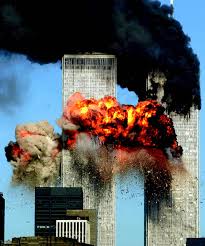
World Trade Center – September 11, 2001
But within less than a month, American warplanes began carpet-bombing Afghanistan, whose rogue Islamic “government” refused to surrender Osama bin Laden, the had of Al-Qaeda who had masterminded the attacks.
By December, 2001, the power of the Taliban was broken—and bin Laden was driven into hiding in Pakistan.
For more than 16 years, the United States—through its global military and espionage networks—relentlessly hunted down most of those responsible for that September carnage.
On May 1, 2011, U.S. Navy SEALS invaded bin Laden’s fortified mansion in Abbottabad, Pakistan—and shot him dead.
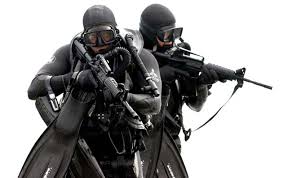
U.S. Navy SEALs
OSAMA BIN LADEN’S BOASTING
On December 13, 2001, the Pentagon released a videotape of Osama bin Laden discussing the attacks in Arabic with another man who appears to be a cleric.
The videotape had been discovered by American forces in a private home in Jalalabad, Afghanistan.
On the tape, bin Laden says he was pleasantly surprised by the amount of destruction caused at the World Trade Center. He had only expected the top portion of the Twin Towers to collapse:
“We calculated in advance the number of casualties from the enemy, who would be killed based on the position of the tower. We calculated that the floors that would be hit would be three or four floors. I was the most optimistic of them all.
“Due to my experience in this field [he had graduated from King Abdul Aziz University with a civil engineering degree in 1979] I was thinking that the fire from the gas in the plane would melt the iron structure of the building and collapse the area where the plane hit and all the floors above it only.
“This is all that we had hoped for.”
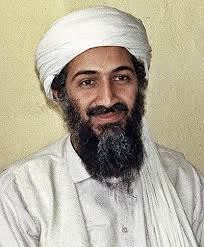
Osama bin Laden
9/11 VS. COVID-19
Now, consider this:
It’s September 11, 2020. Nineteen years to the day since the United States suffered its worst terrorist attack in history—a loss of 3,000 Americans.
And, in less than a year, the United States is nearing a death-toll of 200,000 from an enemy just as deadly and unrelenting as Al Qaeda.
That enemy is Coronavirus, also known as COVID-19.
The September 11 attacks jolted Americans out of their complacency toward Islamic terrorism. Since the 1980s, the United States had responded to terrorism via its legal system. After 9/11, Americans opted for a military response against Middle Eastern terror cells.
For months afterward, America feared the worst—that other cities would soon become targets for massive terror attacks. But, for all the death and destruction wrought that day, this didn’t happen.
There were two major reasons for this:
First, under its new director, Robert Mueller, the FBI completely refocused its mission from investigating crimes to preventing them. This resulted in a proactive rather than reactive mindset and approach. Even terrorists who felt safe abroad found themselves arrested by FBI agents employing the sort of techniques previously used against foreign spies.
Second, the attacks led to the creation of a huge new agency—the Department of Homeland Security. Massive sums of money were doled out to local police departments across the country, arming them with new hires and more sophisticated anti-crime technologies.
And for the first time since the dawning of the age of flight, the Federal Government took responsibility for preventing airline terrorism. Previously, this had fallen to individual airlines—which, seeing it as a financial drain, had assigned it a low priority.
The attacks also led to a complete restructuring of the United States military.
In the past, Americans had excelled in set-piece battles and wars. But when fighting enemies where guerrilla warfare negated overwhelming military power, the United States had done poorly—first in Korea (1950-1953) and then in Vietnam (1960-1975).
As a result, Secretary of Defense Donald Rumsfield reorganized the Pentagon’s bureaucracy, assigning highest priority to building unconventional military units such as the Army’s Green Berets and Delta Force, and the Navy’s SEALs.
These were all major changes resulting from the 9/11 attacks. They cost billions of dollars and got huge publicity. But they didn’t affect the lives of everyday Americans as intimately as has the advent of COVID-19, also known as Coronavirus.

Coronavirus
The 9/11 terror attacks frightened Americans more than any event since the Japanese attack on Pearl Harbor in 1941.. But they slaughtered only a fraction of Americans, as compared with the 194,000 who have died from COVID-19, in less than a year..
Osama bin Laden deservedly gained infamy for plotting 9/11. But Donald Trump, who repeatedly lied about the dangers of COVID-19, remains beloved by about 40% of Americans.
9/11, ABC NEWS, AFGHANISTAN, AL QAEDA, ALTERNET, AMERICABLOG, AMERICAN CAESARS: THE LIVES OF THE PRESIDENTS FROM FRANKLIN D. ROOSEVELT TO GEORGE W. BUSH, AMERICAN CAESARS: THE LIVES OF THE PRESIDENTS FROM FRANKLIN D. ROOSEVELT TO GEORGE W. BUSH (BOOK), AMERICAN EMPIRE, AP, ASSASSINATION, BABY BOOMER RESISTANCE, BASHAR AL-ASSAD, BILL CLINTON, BLOOMBERG, BUREAUCRACY, BUZZFEED, CBS NEWS, CHRIS MATHEWS, CNN, CONDOLEEZA RICE, CROOKS AND LIARS, DAIL Y KOS, DAILY KOZ, DRUDGE REPORT, DWIGHT EISENHOWER, FACEBOOK, FBI, FIVETHIRTYEIGHT, FOOD DELIVERY SERVICES, FRANKLIN D. ROOSEVELT, GAIUS SUETONIUS TRANQUILLIUS, GEORGE H.W. BUSH, GEORGE W. BUSH, GERALD R. FORD, HARPER’S MAGAZINE, HARRY S. TRUMAN, HUFFINGTON POST, JIMMY CARTER, JOHN F. KENNEDY, JOSEPH BIDEN, LYNDON B. JOHNSON, MEDIA MATTERS, MOTHER JONES, MOVEON, MSNBC, NBC NEWS, NEWSWEEK, NIGEL HAMILTON, NPR, OSAMA BIN LADEN, PATRIOT ACT, PBS NEWSHOUR, POLITICO, POLITICUSUSA, RAW STORY, REPUBLICAN PARTY, REUTERS, RICHARD CLARKE, RICHARD NIXON, ROMAN EMPIRE, SALON, SEATTLE TIMES, SEPTEMBER 11, SLATE, SYRIA, TALKING POINTS MEMO, TERRORISM, THE ATLANTIC, THE CHICAGO SUN-TIMES, THE CHICAGO TRIBUNE, THE DAILY BEAST, THE DAILY BLOG, THE GUARDIAN, THE HILL, THE HUFFINGTON POST, THE LOS ANGELES TIMES, THE NATION, THE NEW REPUBLIC, THE NEW YORK TIMES, THE TWELVE CAESARS, THE VILLAGE VOICE, THE WASHINGTON POST, THINKPROGRESS, TIME, TRANSPORTATION SAFEY ADMINISTRATION, TRUTHDIG, TRUTHOUT, TWO POLITICAL JUNKIES, U.S. NEWS & WORLD REPORT, UPI, USA TODAY, VCR RENTALS, X
In Bureaucracy, History, Law, Law Enforcement, Military, Politics, Social commentary on August 7, 2026 at 12:05 am
Colonel Brandt: “I wonder what we’ll do after we lose the war.”
Captain Kiesel: “Prepare for the next one.”
–-“The Cross of Iron,” film by Sam Peckinpah
On September 12, 2001, President George W. Bush attended a meeting of the National Security Council.
“Why shouldn’t we go against Iraq, not just Al-Qaeda?” demanded Donald Rumsfeld, the Secretary of Defense.
Vice President Dick Cheney enthusiastically agreed.
Secretary of State Colin Powell then pointed out there was absolutely no evidence that Iraq had had anything to do with 9/11 or Al-Qaeda. And he added: “The American people want us to do something about Al-Qaeda”—not Iraq.
On November 21, 2001, only 10 weeks after 9/11, Bush told Rumsfeld: It’s time to turn to Iraq.
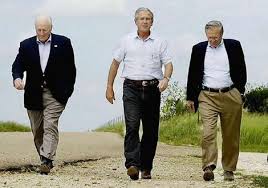
Liars Club: Dick Cheney, George Bush, Donald Rumsfeld
Bush and his war-hungry Cabinet officials knew that Americans demanded vengeance on Al-Qaeda’s mastermind, Osama bin Laden, and not Iraqi dictator Saddam Hussein. So they repeatedly fabricated “links” between the two:
- Saddam had worked hand-in-glove with Bin Laden to plan 9/11.
- Saddam was harboring and supporting Al-Qaeda throughout Iraq.
- Saddam, with help from Al-Qaeda, was scheming to build a nuclear bomb.
Yet as early as September 22, 2001, Bush had received a classified President’s Daily Brief intelligence report, which stated that there was no evidence linking Saddam Hussein to 9/11.
The report added that there was scant credible evidence that Iraq had any significant collaborative ties with Al-Qaeda.

Saddam Hussein
Even more important: Saddam had tried to monitor Al Qaeda through his intelligence service—because he saw Al-Qaeda and other theocratic radical Islamist organizations as a potential threat to his secular regime.
Bush administration officials repeatedly claimed that Iraq possessed huge quantities of chemical and biological weapons, in violation of UN resolutions. And they further claimed that US intelligence agencies had determined:
- the precise locations where these weapons were stored;
- the identities of those involved in their production; and
- the military orders issued by Saddam Hussein for their use in the event of war.
Among other lies stated as fact by members of the Bush administration:
- Iraq had sought uranium from Niger, in west Africa.
- Thousands of aluminum tubes imported by Iraq could be used in centrifuges to create enriched uranium.
- Iraq had up to 20 long-range Scud missiles, prohibited under UN sanctions.
- Iraq had massive stockpiles of chemical and biological agents, including nerve gas, anthrax and botulinum toxin.
- Saddam Hussein had issued chemical weapons to front-line troops who would use them when US forces crossed into Iraq.
Consider the following:
August 26, 2002: Cheney told the Veterans of Foreign Wars, “There is no doubt that Saddam Hussein now has weapons of mass destruction. There is no doubt he is amassing them to use against our friends, against our allies and against us.”
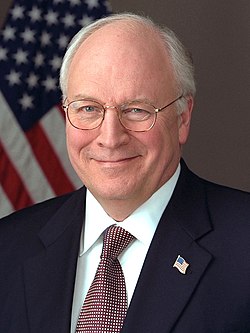
Vice President Dick Cheney
September 8, 2002: National Security Advisor Condoleeza Rice said on CNN: ”There is certainly evidence that Al-Qaeda people have been in Iraq. There is certainly evidence that Saddam Hussein cavorts with terrorists.”
September 18, 2002: Rumsfeld told the House Armed Services Committee, “We do know that the Iraqi regime has chemical and biological weapons. His regime has amassed large, clandestine stockpiles of chemical weapons—including VX, sarin, cyclosarin and mustard gas.”
October 7, 2002: Bush declared in a nationally televised speech in Cincinnati that Iraq “possesses and produces chemical and biological weapons. It is seeking nuclear weapons.”
March 16, 2003: Cheney declared on NBC’s “Meet the Press”: “We believe [Saddam Hussein] has, in fact, reconstituted nuclear weapons.”
March 30, 2003: On ABC’s “This Week” program, 10 days into the war, Rumsfeld said: “We know where they [weapons of mass destruction] are.”
Bush never regretted his decision to invade Iraq, which occurred on March 20, 2003.
Even as American occupying forces repeatedly failed to turn up any evidence of “weapons of mass destruction” (WMDs), Bush and his minions claimed the invasion a good thing.
In fact, Bush—who hid out the Vietnam war in the Texas Air National Guard—even joked publicly about the absence of WMDs.
He did so at a White House Correspondents dinner on March 24, 2004—one year after he had started the war.
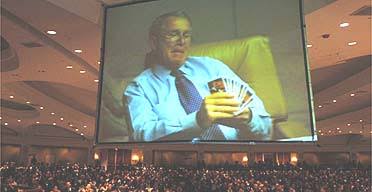
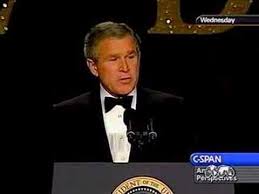
George W. Bush at the 2004 White House Correspondents’ dinner
To Bush, the non-existent WMDs were nothing more than the butt of a joke that night. While an overhead projector displayed photos of a puzzled-looking Bush searching around the Oval Office, Bush recited a comedy routine.
“Those weapons of mass destruction have gotta be somewhere,” Bush laughed, while a photo showed him poking around the corners in the Oval Office.
“Nope–no weapons over there! Maybe they’re under here,” he said, as a photo showed him looking under a desk.
Meanwhile, an assembly of wealthy, pampered men and women—the elite of America’s media and political classes—laughed heartily during Bush’s performance. It was a scene worthy of the court of the ancient Caesars, complete with royal flunkies.
Ultimately, the war that Bush had deliberately provoked
- Took the lives of 4,484 Americans.
- Cost the United States Treasury at least $2 trillion.
- Created a Middle East power vacumn.
- Allowed Iran–Iraq’s arch enemy–to eagerly fill it.
- Killed at least 655,000 Iraqis.
- Bush retired from office with a lavish pension and full Secret Service protection.
- He wrote his memoirs and was paid $7 for the first 1.5 million copies.
- Cheney, Rumsfeld, Rice retired to private business, wrote their own memoirs, and lived in comfort as respected elder statesmen.
9/11, ABC NEWS, AFGHANISTAN, AL QAEDA, ALTERNET, AMERICABLOG, AMERICAN CAESARS: THE LIVES OF THE PRESIDENTS FROM FRANKLIN D. ROOSEVELT TO GEORGE W. BUSH, AMERICAN CAESARS: THE LIVES OF THE PRESIDENTS FROM FRANKLIN D. ROOSEVELT TO GEORGE W. BUSH (BOOK), AMERICAN EMPIRE, AP, ASSASSINATION, BABY BOOMER RESISTANCE, BASHAR AL-ASSAD, BILL CLINTON, BLOOMBERG, BUREAUCRACY, BUZZFEED, CBS NEWS, CHRIS MATHEWS, CNN, CONDOLEEZA RICE, CROOKS AND LIARS, DAILY KOS, DRUDGE REPORT, DWIGHT EISENHOWER, FBI, FIVETHIRTYEIGHT, FOOD DELIVERY SERVICES, FRANKLIN D. ROOSEVELT, GAIUS SUETONIUS TRANQUILLIUS, GEORGE H.W. BUSH, GEORGE W. BUSH, GERALD R. FORD, HARPER’S MAGAZINE, HARRY S. TRUMAN, HUFFINGTON POST, JIMMY CARTER, JOHN F. KENNEDY, JOSEPH BIDEN, LYNDON B. JOHNSON, MEDIA MATTERS, MOTHER JONES, MOVEON, MSNBC, NBC NEWS, NEWSWEEK, NIGEL HAMILTON, NPR, OSAMA BIN LADEN, PATRIOT ACT, PBS NEWSHOUR, POLITICO, POLITICUSUSA, RAW STORY, REPUBLICAN PARTY, REUTERS, RICHARD CLARKE, RICHARD NIXON, ROMAN EMPIRE, SALON, SEATTLE TIMES, SEPTEMBER 11, SLATE, SYRIA, TALKING POINTS MEMO, TERRORISM, THE ATLANTIC, THE CHICAGO SUN-TIMES, THE CHICAGO TRIBUNE, THE DAILY BEAST, THE DAILY BLOG, THE GUARDIAN, THE HILL, THE HUFFINGTON POST, THE LOS ANGELES TIMES, THE NATION, THE NEW REPUBLIC, THE NEW YORK TIMES, THE TWELVE CAESARS, THE VILLAGE VOICE, THE WASHINGTON POST, THINKPROGRESS, TIME, TRANSPORTATION SAFEY ADMINISTRATION, TRUTHDIG, TRUTHOUT, TWO POLITICAL JUNKIES, U.S. NEWS & WORLD REPORT, UPI, USA TODAY, VCR RENTALS, X
In Bureaucracy, History, Law, Law Enforcement, Military, Politics, Social commentary on August 6, 2026 at 12:05 am
September 11, 2026 marks the 25th anniversary of the worst terrorist attack on United States soil. Inevitably, this is a time to remember all those whose lives were so cruelly snuffed out.
But it should also be a time to remember those who made this atrocity inevitable—by refusing to acknowledge and address the impending threat from Al-Qaeda.
British historian Nigel Hamilton has chronicled their arrogance and indifference in his 2010 biography: American Caesars: Lives of the Presidents from Franklin D. Roosevelt to George W. Bush.
Hamilton noted that Richard Clarke, the national security advisor on terrorism, was certain that Osama bin Laden had arranged the [USS.] Cole bombing in Aden on October 12, 2000.
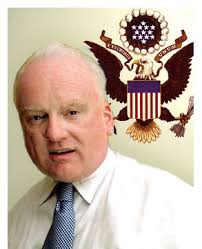
Richard Clarke
For months, Clarke tried to convince others in the Bush Administration that Bin Laden was plotting another attack against the United States—either abroad or at home.
But Clarke could not prevail against the know-it-all arrogance of such higher-ranking Bush officials as Vice President Dick Cheney; Secretary of Defense Donald Rumsfeld; Rumsfeld’s deputy, Paul Wolfowitz; and National Security Advisor Condoleeza Rice.
Rice initially refused to hold a cabinet-level meeting on the subject. Then she “insisted the matter be handled only by a more junior Deputy Principals meeting” in April, 2001, writes Hamilton.
Wolfowitz, the number-two man at the Department of Defense, said: “I don’t understand why we are beginning by talking about this one man, bin Laden.”
Even after Clarke outlined the threat posed by Al-Qaeda, Wolfowitz—whose real target was Saddam Hussein—said: “You give bin Laden too much credit.”
Wolfowitz insisted that bin Laden couldn’t carry out his terrorist acts without the aid of a state sponsor—namely, Iraq.
Wolfowitz, in fact, blamed Iraq for the 1993 bombing of the World Trade Center. Clarke was stunned, since there was absolutely no evidence of Iraqi involvement in this.
“Al-Qaeda plans major acts of terrorism against the United States,” Clarke warned his colleagues. He pointed out that, like Adolf Hitler, bin Laden had actually published his plans for future destruction.
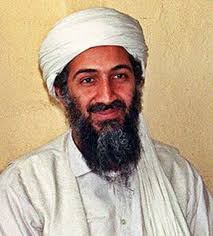
Osama bin Laden
And he added: “Sometimes, as with Hitler in Mein Kampf, you have to believe that these people will actually do what they say they will do.”
Wolfowitz heatedly traded on his Jewish heritage to bring Clarke’s unwelcome arguments to a halt: “I resent any comparison between the Holocaust and this little terrorist in Afghanistan.”
Writing in outraged fury, Hamilton sums up Clarke’s agonizing frustrations:
- Bush’s senior advisors treated their colleagues who had served in the Clinton administration with contempt.
- President Bush, Vice President Dick Cheney, National Security Advisor Condoleeza Rice, Secretary of Defense Donald Rumsfeld and Deputy Defense Secretary Paul Wolfowitz seemed content to ignore the danger signals of an impending Al-Qaeda attack.
- This left only Secretary of State Colin Powell, his deputy Richard Armitage, Richard Clarke and a skeptical Treasury Secretary, Paul O’Neill, to wage “a lonely battle to waken a seemingly deranged new administration.”
Clarke alerted Federal Intelligence agencies that “Al-Qaeda is planning a major attack on us.” He asked the FBI and CIA to report to his office all they could learn about suspicious persons or activities at home and abroad.
Finally, at a meeting with Rice on September 4, 2001, Clarke challenged her to “picture yourself at a moment when in the very near future Al-Qaeda has killed hundreds of Americans, and imagine asking yourself what you wish then that you had already done.”
Seven days later, Al-Qaeda struck, and 3,000 Americans died horrifically—and needlessly.
Neither Bush, Cheney, Rice, Rumsfeld nor Wolfowitz ever admitted their negligence. Nor would any of them be brought to account.
Disgustingly, these were the same officials who, afterward, posed as the Nation’s saviors—and branded anyone who disagreed with them as a traitor, practices the Right continues to exploit to this day.
Only Richard Clarke—who had vainly argued for stepped-up security precautions and taking the fight to Al-Qaeda—gave that apology.
On March 24, 2004, Clarke testified at the public 9/11 Commission hearings. Addressing relatives of victims in the audience, he said: “Your government failed you, those entrusted with protecting you failed you, and I failed you.”
Yet even worse was to come.
On the evening after the September 11 attacks, Bush took Clarke aside during a meeting in the White House Situation Room:
“I want you, as soon as you can, to go back over everything, everything. See if Saddam [Hussein, the dictator of Iraq] did this. See if he’s linked in any way.”
Clarke was stunned: “But, Mr. President, Al-Qaeda did this.”
“I know, I know,” said Bush. “But see if Saddam was involved. I want to know.”
Hussein had not plotted the attack—and there was no evidence proving that he did. But the attack gave “W” the excuse he wanted to remove the man he blamed for the 1992 defeat of his father, President George H.W. Bush.
Bush believed that his father would have been re-elected if he had “gone all the way” into Baghdad during the 1991 Gulf War.
He would finish the job that his father had started but failed to compete.
On September 12, 2001, Bush attended a meeting of the National Security Council.
“Why shouldn’t we go against Iraq, not just Al-Qaeda?” demanded Donald Rumsfeld, the Secretary of Defense.
Vice President Dick Cheney enthusiastically agreed.
9/11, ABC NEWS, AFGHANISTAN, AL QAEDA, ALTERNET, AMERICABLOG, AMERICAN CAESARS: THE LIVES OF THE PRESIDENTS FROM FRANKLIN D. ROOSEVELT TO GEORGE W. BUSH, AMERICAN EMPIRE, AP, ASSASSINATION, BABY BOOMER RESISTANCE, BASHAR AL-ASSAD, BILL CLINTON, BLOOMBERG, BUREAUCRACY, BUZZFEED, CBS NEWS, CHRIS MATHEWS, CNN, CONDOLEEZA RICE, CROOKS AND LIARS, DAILY KOS, DRUDGE REPORT, DWIGHT EISENHOWER, FBI, FIVETHIRTYEIGHT, FOOD DELIVERY SERVICES, FRANKLIN D. ROOSEVELT, GAIUS SUETONIUS TRANQUILLIUS, GEORGE H.W. BUSH, GEORGE W. BUSH, GERALD R. FORD, HARPER’S MAGAZINE, HARRY S. TRUMAN, HUFFINGTON POST, JIMMY CARTER, JOHN F. KENNEDY, JOSEPH BIDEN, Kamala Harris, LYNDON B. JOHNSON, MEDIA MATTERS, MOTHER JONES, MOVEON, MSNBC, NBC NEWS, NEWSWEEK, NIGEL HAMILTON, NPR, OSAMA BIN LADEN, PATRIOT ACT, PBS NEWSHOUR, POLITICO, POLITICUSUSA, RAW STORY, REPUBLICAN PARTY, REUTERS, RICHARD CLARKE, RICHARD NIXON, ROMAN EMPIRE, SALON, SEATTLE TIMES, SEPTEMBER 11, SLATE, SYRIA, TALKING POINTS MEMO, TERRORISM, THE ATLANTIC, THE CHICAGO SUN-TIMES, THE CHICAGO TRIBUNE, THE DAILY BEAST, THE DAILY BLOG, THE GUARDIAN, THE HILL, THE HUFFINGTON POST, THE LOS ANGELES TIMES, THE NATION, THE NEW REPUBLIC, THE NEW YORK TIMES, THE TWELVE CAESARS, THE VILLAGE VOICE, THE WASHINGTON POST, THINKPROGRESS, TIME, TRANSPORTATION SAFEY ADMINISTRATION, TRUTHDIG, TRUTHOUT, TWO POLITICAL JUNKIES, U.S. NEWS & WORLD REPORT, UPI, USA TODAY, VCR RENTALS, X
In Bureaucracy, History, Law, Military, Politics, Social commentary on August 5, 2026 at 12:14 am
This September 11th will mark 25 years—a quarter of a century—-since Islamic terrorists slammed two jetliners into the World Trade Center and a third into the Pentagon.
They would have crashed a fourth jetliner into the White House or Capitol Building except for the heroic resistance of passengers aboard United Airlines Flight 93.
Americans born since then can’t truly understand the horror this ignited in 281.4 million Americans. No one knew if this would be a single cataclysmic act—or if it was only the beginning?
Was the United States destined to become like Beirut, with bombs exploding and buildings collapsing in a seemingly endless spiral of destruction?
In the months directly after 9/11, Americans stopped going out at night. Home seemed to be the safest place to be—which is why food delivery services did a thriving business. So did stores offering VCR rentals.
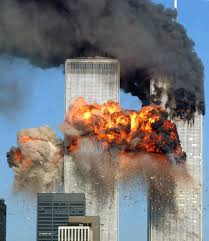
World Trade Center on September 11, 2001
The September 11 attacks drastically transformed the United States by:
- Vastly expanding federal surveillance powers through the newly-passed Patriot Act;
- Thrusting the United States into a nine-year war in Iraq and a 19-year war in Afghanistan;
- Eliminating the longstanding U.S. ban on assassinating foreign leaders;
- Instituting new mandatory ID checks, full-body scans and restrictions on carry-on items at airports through the newly-created Transportation Safety Administration (TSA).
- Sparking a momentary wave of patriotism, which dimmed owing to prolonged wars and controversial domestic policies.
As on past commemorations of 9/11, on this 25th anniversary, those who died will be remembered by friends and relatives who knew and loved them.
It is in fact appropriate to remember the innocents who died on that day—and the heroism of the police and firefighters who died trying to save them.
But it’s equally important to remember those who made 9/11 not simply possible but inevitable.
And that does not mean only the 19 highjackers who turned those planes into fuel-bombs. It means the officials at the highest levels of the administration of President George W. Bush.
Officials who, to this day, have never been held accountable in any way for the resulting death and destruction.
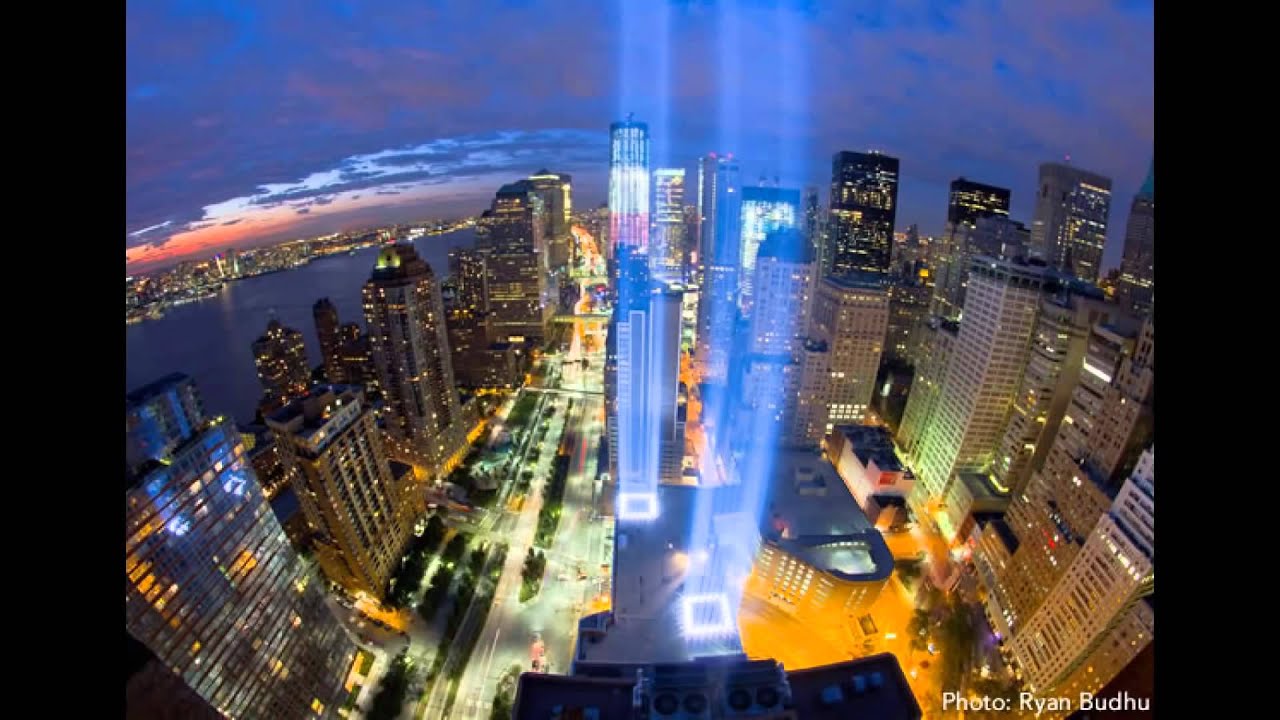
Tribute to 9/11 World Trade Center Victims
And who have been allowed to blatantly lie that they “kept us safe” from terrorism.
Obviously, such an indictment is not going to be presented by TV commentators today—not even on such liberal networks as CNN and MSNBC. And most definitely not on the right-wing Fox network.
Fortunately, British historian Nigel Hamilton has dared to lay bare the facts of this disgrace. Hamilton is the author of several acclaimed political biographies, including JFK: Reckless Youth and Bill Clinton: Mastering the Presidency.
In 2007, he began research on his latest book: American Caesars: The Lives of the Presidents From Franklin D. Roosevelt to George W. Bush.


Nigel Hamilton
The inspiration for this came from a classic work of ancient biography: The Twelve Caesars, by Gaius Suetonius Tranquillus–-known as Suetonius.
Suetonius, a Roman citizen and historian, had chronicled the lives of the first twelve Caesars of imperial Rome: Julius Caesar, Augustus, Tiberius, Caligula, Claudius, Nero, Galba, Otho, Vitellius, Vespasian, Titus and Domitian.
Hamilton wanted to examine post-World War II United States history as Suetonius had examined that of ancient Rome: Through the lives of the 12 “emperors” who had held the power of life and death over their fellow citizens—and those of other nations.
For Hamilton, the “greatest of American emperors, the Caesar Augustus of his time,” was Franklin D. Roosevelt, who led his country through the Great Depression and World War II.
His “”great successors” were Harry S. Truman, Dwight D. Eisenhower and John F. Kennedy—who, in turn, contained the Soviet Union abroad and presided over sustained economic prosperity at home.
By contrast, “arguably the worst of all the American Caesars” was “George W. Bush, and his deputy, Dick Cheney, who willfully and recklessly destroyed so much of the moral basis of American leadership in the modern world.”
Among the most lethal of Bush’s offenses: The appointing of officials who refused to take seriously the threat posed by Al-Qaeda.
![American Caesars: Lives of the Presidents from Franklin D. Roosevelt to George W. Bush Hamilton, Nigel [Used - Good] [Hardcover]](https://encrypted-tbn1.gstatic.com/shopping?q=tbn:ANd9GcQ3XD6eLs1xH-Ysmi1auGx3mKIdsQ74Bv4T8szI3xQLAxjLn2Y-xkQY8EIHF42Pfnxx8OQC0hAKc4l8nT2a3LiCKPSuZvHEVv7SdyE6ixW_5IOqYoKXhqf4&usqp=CAc)
And this arrogance and indifference continued–right up to September 11, 2001, when the World Trade Center and Pentagon became targets for destruction.
Among the few administration officials who did take Al-Qaeda seriously was Richard Clarke, the chief counter-terrorism adviser on the National Security Council.
Clarke had been thus appointed in 1998 by President Bill Clinton. He continued in the same role under President Bush—but the position was no longer given cabinet-level access.
This put him at a severe disadvantage when dealing with other, higher-ranking Bush officials—such as Vice President Dick Cheney, Secretary of Defense Donald Rumsfeld, Rumsfeld’s deputy, Paul Wolfowitz and National Security Advisor Condoleeza Rice.
These turned out to be the very officials who refused to believe that Al-Qaeda posed a lethal threat to the United States.
“Indeed,” writes Hamilton, “in the entire first eight months of the Bush Presidency, Clarke was not permitted to brief President Bush a single time, despite mounting evidence of plans for a new al-Qaeda outrage.” [Italics added]
Nor did it help that, during his first eight months in office before September 11, Bush was on vacation, according to the Washington Post, 42% of the time.
ABC NEWS, ADOLF HITLER, ALI HOSSEINI KHAMENEI, ALTERNET, AMERICABLOG, AP, AYATOLLAH ALI KHAMENEI, BABY BOOMER RESISTANCE, BAHRAIN, BBC, BERLIN, BLOOMBERG, BLOOMBERG NEWS, BLUESKY, BUZZFEED, CBS NEWS, CNN, CROOKS AND LIARS, DAILY KOS, DONALD TRUMP, DRONES, FINLAND, FIVETHIRTYEIGHT, FRANCE, GREAT BRITAIN, HARPER’S MAGAZINE, HUFFINGTON POST, IRAN, ISRAEL, ITALY, JAPAN, JOACHIM VON RIBBENTROP, JOSEPH STALIN, KIEV, KUWAIT, LENINGRAD, LUFTWAFFE, MEDIA MATTERS, MOJTABA KHAMENEI, MOSCOW, MOTHER JONES, MOVEON, MSNBC, NAZI GERMANY, NBC NEWS, NEW REPUBLIC, NEWSDAY, NEWSWEEK, NEWT GINGRICH, NPR, NUCLEAR WEAPONS, OIL FIELDS, OMAN, OPERATION BARBAROSSA, PBS NEWSHOUR, PETE HEGSETH, POLAND, POLITICO, POLITICUSUSA, QATAR, QATER, RAW STORY, REUTERS, SALON, SAUDI ARABIA, SEATTLE TIMES, SLATE, SOVIET UNION, SS, TALKING POINTS MEMO, THE ATLANTIC, THE CHICAGO SUN-TIMES, THE CHICAGO TRIBUNE, THE DAILY BEAST, THE DAILY BLOG, THE GUARDIAN, THE HILL, THE HUFFINGTON POST, THE INTERCEPT, THE LONGEST DAY (MOVIE, THE LOS ANGELES TIMES, THE NATION, THE NEW REPUBLIC, THE NEW YORK TIMES, THE NEW YORKER, THE PENTAGON, THE UNITED ARAB EMIRATES, THE VILLAGE VOICE, THE WASHINGTON POST, THINKPROGRESS, THIRD REICH, TIME, TRUTHDIG, TRUTHOUT, TWO POLITICAL JUNKIES, U.S. NEWS & WORLD REPORT, UKRAINE, UNIFORMS, UPI, USA TODAY, VYACHESLAV MOLOTOV, WEHRMACHT, WONKETTE, WORLD WAR 11, X
In Bureaucracy, History, Military, Politics, Social commentary on August 4, 2026 at 12:10 am
Now, fast-forward 85 years—from 1941 to 2026. Substitute President Donald Trump for Fuhrer Adolf Hitler and Mojtaba Khamenei for Joseph Stalin—and Iran for the Soviet Union.

Just as Hitler launched his attack on the Soviet Union without warning, so did Trump launch his on Iran—on February 28.
Hitler—and numerous members of the Wehrmacht—believed that Germany’s mechanized panzers would quickly subdue Soviet armies.
“We were fast,” recalled Panzer Lieutenant Hans-Erdmann Schonbeck. “And our tank forces could cover huge distances. And once we broke through the enemy’s defenses, our orders were not to worry about threats to our right or left but to keep going, deep into Russian territory.”
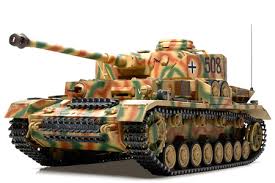
Panzer tank
But the tanks soon faced unexpected difficulties. Most roads in Russia were unpaved, so the tanks raised huge dust clouds almost everywhere they went. The dust clogged their engines and brought many tanks to a halt. Repair crews worked themselves to exhaustion so that the lightning-fast advance could continue.
Another drawback not evident at the outset of the invasion: Summer uniforms. For a war that began on June 22, 1941, these were entirely appropriate. But as the months quickly passed, the notorious Russian winter season loomed ever closer.

Germans in summer uniforms
The German command underestimated the campaign’s duration, expecting a victory by autumn 1941, and prioritized ammunition and fuel over winter equipment. Although winter gear existed, it was stuck in supply depots in the West, and transport lines were too strained by the Soviets’ “scorched earth” tactics to move it to the front.
Without proper greatcoats or insulated boots, soldiers suffered from extreme cold, with temperatures dropping far below zero. Many resorted to stealing blankets from civilians or using blankets as makeshift clothing.
In its war with Iran, American’s air force completely dominated the skies. But then both American planes and ground forces faced an unexpected enemy: Mass-produced drones.
The same weapons—some of them supplied by Iran to Russia—have been used since 2022 in Ukraine. Unmanned and remotely-controlled, Ukrainian and Russian drones have transformed the battlefield. They’re estimated to inflict around 80% of combat casualties on both sides.
The technology—like that forged in Germany’s Blitzkrieg tactics—is revolutionizing warfare and evolving rapidly. To adapt to the new era, the U.S. military is learning lessons from Ukraine.

Iranian drone
Student News Agency, Attribution, via Wikimedia Commons
Not only are American military forces being targeted, so are those Gulf nations that have allied themselves with the United States: The United Arab Emirates, Saudi Arabia, Kuwait, Bahrain, Qatar and Oman.
Primarily targeted: Energy infrastructure, airports and sites hosting American military personnel.
For Iran, the drones are relatively cheap. For the United States, the costs of countering this threat are steadily mounting. A typical Shahed-136 costs Tehran roughly $20,000 to $50,000, while interceptor missiles, such as the Patriot and Terminal High Altitude Area Defense (THAAD), cost the United States millions.
On August 22, 1939—the eve of his invasion of Poland, which would ignite World War II—Adolf Hitler delivered a secret address to his supreme commanders and generals. Its climax:
“Close your hearts to pity. Act brutally. Eighty million people must obtain what is their right. Their existence must be made secure. The stronger man is right. The greatest harshness.”
Hitler urged his generals to act similarly toward the Russians, whom he regarded as subhumans.
The results of this policy soon became obvious when the Wehrmacht invaded Ukraine. Ukrainians, long suffering under the yoke of Stalin, greeted the invaders with bread and salt, the traditional greeting of comrades.
Within a month, they realized that the tyranny of Stalin had been replaced by an all-out extermination campaign of Hitler. For every Ukrainian the Germans killed, 10 more emerged to seek revenge.
Eighty-five years later, Donald Trump and officials of his administration are celebrating the indiscriminate slaughter of Iranians, whether civilian or military.
“We totally demolished Kharg Island, but we may hit it a few more times just for fun,” Trump said on NBC News.
On March 22, Secretary of Defense Pete Hegseth, hosting his monthly Christian worship service at the Pentagon, prayed: “Let every round find its mark against the enemies of righteousness and our great nation.
“Give them wisdom in every decision, endurance for the trial ahead, unbreakable unity, and overwhelming violence of action against those who deserve no mercy.”

Pete Hegseth
“I pursued my enemies and overtook them, and did not turn back till they were consumed,” he read from Psalms 18:37. “Those who hated me I destroyed. They cried to the Lord, but He did not answer them.”
Former House speaker and Trump advisor Newt Gingrich posted on X: “Instead of fighting over a 21-mile-wide bottleneck [Strait of Hormuz] forever, we [could] cut a new channel through friendly territory. A dozen thermonuclear detonations and you’ve got a waterway wider than the Panama Canal, deeper than the Suez, and safe from Iranian attacks.”
This would produce countless numbers of casualties and cover the Middle East with radioactive fallout.
It remains to be seen if such exhortations will lead American soldiers to act as barbarically as those of the Wehrmacht and SS—and inspire similar barbarism in return.


9/11 ATTACKS, ABC NEWS, ABORTION, ADOLF HITLER, AL QAEDA, ALTERNET, AMERICABLOG, ANDREW CUOMO, ANTHONY FAUCI, AP, BABY BOOMER RESISTANCE, BLOOMBERG, BOB WOODWARD, BUZZFEED, CARL BERNSTEIN, CBS NEWS, CENTERS FOR DISEASE CONTROL AND PREVENTION (CDC), CHICAGO, CHINA, CIA, CLOROX BLEACH, CNN, CORONAVIRUS, COVID-19, COVID-19 TEST KITS, CROOKS AND LIARS, DAILY KOZ, DAVID BROOKS, DEBORAH BIRX, DEMOCRATIC NATIONAL CONVENTION, DEPARTMENT OF HOMELAND SECURITY, DONALD RUMSFELD, DONALD TRUMP, DRUDGE REPORT, FACEBOOK, FBI, FEDERAL EMERGENCY MANAGEMENT AGENCY (FEMA), FIVETHIRTYEIGHT, FLORIDA, FORBES, FOX NEWS, FRANKLIN D. ROOSEVELT, GRETCHEN WHITMER, HARPER’S MAGAZINE, HUFFINGTON POST, JARED KUSHNER, JAY INSLEE, KOREAN WAR, KRISTI NOEM, KRISTIN URQUIZA, LARRY HOGAN, LOS ANGELES, MARK ANTHONY URQUIZA, MARK SHIELDS, MARYLAND, MASSACHUSSETS, MEDIA MATTERS, MICHIGAN, MICK MULVANEY, MIKE PENCE, MOLOCH, MOTHER JONES, MOVEON, MSNBC, N95 MASKS, NAVY SEALS, NBC NEWS, NEW YORK, NEW YORK CITY, NEWSWEEK, NPR, OSAMA BIN LADEN, PAULA REID, PBS NEWSHOUR, PERSONAL PROTECTIVE EQUIPMENT (PPE), PHOENIX RALLY, POLITICO, POLITICUSUSA, RAW STORY, REPUBLICANS, REUTERS, RICHARD NIXON, ROBERT MUELLER, RUDOLPH GIULIANI, SALON, SCHOOLS, SEAN HANNITY, SEAN HANNITY SHOW, SEATTLE TIMES, SLATE, SOUTH DAKOTA, STEVEN PRESSFIELD, TALKING POINTS MEMO, THE ATLANTIC, THE CHICAGO SUN-TIMES, THE CHICAGO TRIBUNE, THE DAILY BEAST, THE DAILY BLOG, THE GUARDIAN, THE HILL, THE HUFFINGTON POST, THE LOS ANGELES TIMES, THE NATION, THE NEW REPUBLIC, THE NEW YORK TIMES, THE PENTAGON, THE VILLAGE VOICE, THE WASHINGTON POST, THINKPROGRESS, TIME, TRUTHDIG, TRUTHOUT, TULSA OAKAHOMA RALLY, TWO POLITICAL JUNKIES, U.S. NEWS & WORLD REPORT, UPI, USA TODAY, UV LIGHT, VEIL: THE SECRET WARS OF THE CIA (BOOK), VIETNAM WAR, WALTER SHAUB, WASHINGTON, WASHINGTON D.C., WASHINGTON MONTHLY, WASHINGTON WEEK IN REVIEW, WATERGATE, WILLIAM J. CASEY, WONKETTE, WORLD TRADE CENTER, X
DONALD TRUMP: KILLING MORE AMERICANS THAN OSAMA BIN LADEN: PART SIX (OF EIGHT)
In Bureaucracy, History, Law, Law Enforcement, Medical, Military, Politics, Social commentary on August 17, 2026 at 12:10 amOn April 23, 2020, President Donald Trump offered his own suggestions for how COVID-19 might be prevented or cured:
“So, supposing we hit the body with a tremendous—whether it’s ultraviolet or just very powerful light—and I think you said that that hasn’t been checked, but you’re going to test it. And then I said, supposing you brought the light inside the body, which you can do either through the skin or in some other way, and I think you said you’re going to test that too. It sounds interesting.
“And then I see the disinfectant, where it knocks it out in a minute. One minute! And is there a way we can do something like that, by injection inside or almost a cleaning. Because you see it gets in the lungs and it does a tremendous number on the lungs. So it would be interesting to check that. So, that, you’re going to have to use medical doctors with. But it sounds interesting to me.”
THE DANGERS OF TRUMP’S QUACKERY
Medical experts found Trump’s off-the-cuff remarks no laughing matter. Several doctors warned the public against injecting disinfectant or using UV light.
“It is incomprehensible to me that a moron like this holds the highest office in the land and that there exist people stupid enough to think this is OK,” said Walter Shaub, the former director of the Office of Government Ethics. “I can’t believe that in 2020 I have to caution anyone listening to the president that injecting disinfectant could kill you.”
Faced with public ridicule, Trump canceled a White House press briefing for the first time since Easter weekend.
Instead, on April 25, he issued this tweet: “What is the purpose of having White House News Conferences when the Lamestream Media asks nothing but hostile questions, & then refuses to report the truth or facts accurately.”
The Centers for Disease Control and Prevention (CDC) has urged Americans to wear masks and keep at least six feet from their fellows. And most of the nation’s governors have issued stay-at-home orders that ban large gatherings—including visits to parks and beaches.
CDC headquarters in Atlanta, Georgia
TRUMP’S DEFIANCE OF SCIENCE–AND LAW
Yet President Trump has openly encouraged defiance of those orders.
On April 17, he issued a series of tweets to his supporters, encouraging them to defy the law:
“LIBERATE MINNESOTA!”
“LIBERATE MICHIGAN!”
“LIBERATE VIRGINIA, and save your great 2nd Amendment. It is under siege!”
All these states had Democratic governors. Their residents were being urged to stay indoors, wear masks when they ventured outside and keep a six-feet distance between themselves and others.
These states had been targeted for Right-wing protests—featuring large numbers of men and women standing close together, with most of them not wearing masks. They claimed their “freedoms” are being infringed upon.
On April 17, Trump launched his latest effort to deal with Coronavirus:
He issued a series of tweets to his supporters, encouraging them to defy the stay-at-home laws of Minnesota, Michigan and Virginia.
Trump saw the stay-at-home orders as a two-fold threat to himself:
Without his Nuremberg-style rallies and a roaring stock market, Trump faced the danger of being a one-term President.
Michigan, Minnesota and Virginia all had Democratic governors. They had urged their residents to stay indoors, wear masks when they ventured outside, and keep a six-feet distance between themselves and others.
As a result, those governors—especially Michigan’s Gretchen Whitmer—were being targeted for abuse and even death threats. And their states were facing disruptive protests by large numbers of Right-wingers standing close together, with few of them wearing masks. The protesters claimed their rights were being infringed upon.
Since the Supreme Court legalized abortion in 1973, the Right has demanded that even women who are pregnant due to rape or incest carry the fetus to term. Yet now that Right-wingers were being asked to wear masks in public—to protect themselves and others from a deadly plague—they had suddenly discovered the mantra: “It’s my body!”
Writer Steven Pressfield summed up the immorality of these protests: “Why are we asked to wear surgical or face masks in public, to practice social distancing and to observe self-quarantining? Because these practices are not for the individual alone but for the protection of the whole [community].”
Washington Governor Jay Inslee tweeted: “The president’s statements this morning encourage illegal and dangerous acts. He is putting millions of people in danger of contracting COVID-19.
“His unhinged rantings and calls for people to ‘liberate’ states could also lead to violence. We’ve seen it before.”
Once states across the country began “reopening,” Trump scheduled his first 2020 re-election rally in Tulsa, Oklahoma.
It was held on June 20 at the BOK Center.
Scientists had learned that Coronavirus is more likely to be transmitted indoors than outdoors, when masses of people are packed together, and when people are loudly talking—or, worse, shouting. This is especially true when they’re not wearing masks.
Share this: