Archive for the ‘Law Enforcement’ Category
2016 PRESIDENTIAL CAMPAIGN, ABC NEWS, ADOLF HITLER, ALTERNET, AP, BARACK OBAMA, BULLYING, BURT LANCASTER, BUZZFEED, CBS NEWS, CIA, CNN, CROOKS AND LIARS, DAILY KOZ, DONALD TRUMP, FACEBOOK, FASCISM, FBI, HELSINKI PRESS CONFERENCE, HILLARY CLINTON, HUMAN RIGHTS CAMPAIGN (HRC), IMMIGRATION AND CUSTOMS ENFORCEMENT (ICE), JAMES COMEY, JEFF SESSIONS, JOHN F. KENNEDY, JUDGMENT AT NUREMBERG, LYING, MAIN INTELLIGENCE DIRECTORATE, MOTHER JONES, MOVEON, MSNBC, NAZI GERMANY, NBC NEWS, NEWSWEEK, NPR, PBS NEWSHOUR, POLITICO, RACISM, RAFAEL "TED" CRUZ, RAW STORY, REPUBLICANS, REUTERS, ROBERT S. MUELLER, RUSSIA, SALON, SEATTLE TIMES, SERGEY KISLYAK, SLATE, SPENCER TRACY, THE ATLANTIC, THE CHICAGO SUN-TIMES, THE CHICAGO TRIBUNE, THE DAILY BEAST, THE GUARDIAN, THE HILL, THE HUFFINGTON POST, THE LOS ANGELES TIMES, THE NATION, THE NEW YORK TIMES, THE WASHINGTON POST, TIME, TWITTER, U.S. NEWS & WORLD REPORT, UNITE THE RIGHT RALLY, UPI, USA TODAY, VLADIMIR PUTIN, WIRETAPPING
In Bureaucracy, Entertainment, History, Law Enforcement, Politics, Social commentary on October 24, 2018 at 12:12 am
Those who have seen the classic 1960 movie, “Judgment at Nuremberg,” will remember its pivotal moment.
That’s when Burt Lancaster, as Ernst Janning, the once distinguished German judge, confesses his guilt and that of Nazi Germany in a controlled, yet emotional, outburst.
Addressing the court—presided over by Chief Judge Dan Haywood (Spencer Tracy)—Janning explains the forces that led to the triumph of evil.

It’s not hard to imagine, in the future, an equally conscience-stricken member of the Donald Trump administration, standing before the bar of justice, making a similar statement:
“My counsel would have you believe we were not aware of the ICE concentration camps. Not aware. Where were we?
“Where were we when Trump began shrieking his hate across the country? When Trump called our free press ‘the enemy of the people’?
“Where were we when Trump openly praised Vladimir Putin and attacked those in the FBI, CIA and other Intelligence agencies sworn to protect us?
“Where were we when the victims of Trump’s hatred cried out in the night to us? Were we deaf? Dumb? Blind?
“My counsel says we were not aware of Trump’s treasonous collusion with Vladimir Putin—and his intention to betray American freedoms in exchange for the Presidency. He would give you the excuse we were misled by the lying rhetoric coming out of the White House.
“Does that make us any the less guilty? Maybe we didn’t know the details, but if we didn’t know, it was because we didn’t want to know.”
Consider Trump’s effect on:
Race relations:
- Since Trump’s election, attacks on non-whites by Right-wing—and white—Trump supporters have increased. According to The Human Rights Campaign (HRC), there has been a rapid increase in youth bullying during and since the 2016 campaign:
- “The bullying effects of the Trump presidency—dubbed the Trump effect—are devastating, particularly when it comes to bullying of minority groups, especially those who are easily identifiable and/or who are singled out by the president’s statements or actions.”
- On August 11-12, 2017, white supremacists from across the country gathered in Charlottesville, Virginia, for a “Unite the Right” rally. On August 13, a Nazi sympathizer rammed his car into a group of counter-protesters, killing a woman and injuring 19 other demonstrators.
- Refusing to condemn the Fascistic demonstrators, Trump said: “We condemn in the strongest possible terms this egregious display of hatred, bigotry and violence on many sides, on many sides.”

Donald Trump
The rule of law:
- On May 9, 2017, Trump fired FBI Director James Comey, who was conducting an FBI investigation into well-documented contacts between Trump’s 2016 Presidential campaign and Russian Intelligence agents.
- Trump has repeatedly and publicly attacked his own Attorney General, Jeff Sessions, for recusing himself from the above-mentioned investigation. (Sessions did so because of his own documented ties with Russian Ambassador Sergey Kislyak.)
- Trump has repeatedly attacked the integrity of Special Counsel Robert S. Mueller, who has continued the FBI’s probe into ties between Russia and Trump’s 2016 Presidential campaign.
- Trump has called on Sessions to investigate “all of the corruption” of Trump’s critics and those investigating him, including Hillary Clinton, James Comey, and Special Counsel Robert Mueller.
- In short: He wants to use the FBI as his private secret police against anyone who has ever criticized, investigated or run against him.
Trump as liar:
- From 2011 to 2016, Trump falsely accused Barack Obama as being born in Kenya, not—as evidence proves—Hawaii. This was an effort to de-legitimize Obama as President of the United States.
- During the 2016 Presidential campaign, Trump falsely accused the father of his political rival, Texas United States Senator Rafael “Ted” Cruz, of being a party to the assassination of President John F. Kennedy.
- After taking office Trump falsely accused former President Obama of illegally wiretapping him at Trump Tower.
- By August 1, 2018, the Washington Post reported that Trump had made 4,229 false or misleading statements since taking office.
Trump as traitor:
- Trump has repeatedly praised Russian President Vladimir Putin, both during his Presidential candidacy and since taking office. In fact, Putin remains the only major public figure that Trump has never criticized.
- On July 22, 2016, Trump said at a press conference in Doral, Florida: “Russia, if you are listening, I hope you are able to find the 33,000 emails that are missing [from Democratic Presidential candidate Hillary Clinton’s computer]. I think you will probably be rewarded mightily by our press.”
- Hours later, the Main Intelligence Directorate in Moscow targeted Clinton’s personal office and hit more than 70 other Clinton campaign accounts.
- On July 16, 2018, President Trump attended a press conference in Helsinki, Finland, with Russian President Vladimir Putin. There he sided with Putin against American Intelligence agencies—such as the FBI, CIA and National Security Agency—for Russia’s subversion of the 2016 Presidential election:
- “I have President Putin. He just said it’s not Russia. I will say this: I don’t see any reason why it would be, but I really do want to see the server.”
Since 1945, historians have brutally condemned the vicious and destructive reign of Adolf Hitler and those who supported him.
Future historians will condemn just as harshly the equally vicious and destructive reign of Donald Trump—and those who now support him.
2016 PRESIDENTIAL ELECTION, ABC NEWS, ALTERNET, AP, BERNIE SANDERS, BRETT KAVANAUGH, BUZZFEED, CBS NEWS, CHRISTINE BLASEY FORD, CNN, CROOKS AND LIARS, DAILY KOZ, DEMOCRATIC NATIONAL COMMITTEE, DONALD TRUMP, FACEBOOK, HILLARY CLINTON, IVANKA TRUMP, JAMAL KHASHOGGI, MARCO RUBIO, MOHAMMED BIN SALMAN, MOTHER JONES, MOVEON, MSNBC, NBC NEWS, NEWSWEEK, NPR, PBS NEWSHOUR, POLITICO, RAW STORY, REPUBLICANS, REUTERS, SALON, SAUDI ARABIA, SEATTLE TIMES, SLATE, THE ATLANTIC, THE CHICAGO SUN-TIMES, THE CHICAGO TRIBUNE, THE DAILY BEAST, THE GUARDIAN, THE HILL, THE HUFFINGTON POST, THE LOS ANGELES TIMES, THE NATION, THE NEW YORK TIMES, THE WASHINGTON POST, TIME, TRUMP WORLD TOWER, TURKEY, TWITTER, U.S. NEWS & WORLD REPORT, UNITED STATES SUPREME COURT, UPI, USA TODAY
In Bureaucracy, Business, History, Law Enforcement, Military, Politics, Social commentary on October 18, 2018 at 12:03 am
Once again, the self-righteous cry of “American exceptionalism” is being taken up by members of the United States Congress.
That is: Americans prize morality over money in international relationships.
It’s a myth the historical record won’t support.
The reason for the self-righteous outrage: The disappearance of Saudi dissident Jamal Khashoggi.
He had worked in the Saudi embassies in Washington and London, establishing himself as an unofficial spokesman for the Saudi royal family.
His independent streak and empathy for the Western perspective made him a uniquely important, well-liked contact for foreign journalists and diplomats seeking to understand the royal perspective.
Then, in 2017, Mohammed bin Salman became crown prince, and quickly consolidated power over the kingdom.
Khashoggi’s independent streak made him unwelcome there, so he moved to Virginia and became a columnist for The Washington Post. He also became the crown prince’s chief critic in the West.
On October 2, Khashoggi walked into the Saudi Consulate in Istanbul to pick up a document.
Khashoggi’s marriage had ended under the strain of his voluntary exile from Saudi Arabia. He had since become engaged to a Turkish woman. He thus needed to obtain a document attesting to his divorce from the Saudi authorities so he could remarry in Turkey. The wedding was scheduled for the following day.

Jamal Khashoggi
[GFDL (http://www.gnu.org/copyleft/fdl.html)%5D, via Wikimedia Commons
Turkish authorities have released video footage of Khashoggi walking into the consulate; they say there is none of him leaving it. The Saudis insist that he left the consulate safely, but have not offered any evidence to support this claim.
Turkish officials speaking anonymously say their government has detailed evidence to prove the following:
- That 15 Saudi agents flew into Istanbul on two private jets.
- The airline company has close ties to the crown prince and Saudi Interior Ministry.
- The agents waited for Khashoggi inside the consulate and murdered him within two hours of his arrival.
- The assassins used a bone saw to dismember Khashoggi’s corpse.
These reports have ignited an explosion of “American exceptionalism” among members of Congress—including Republicans.
“I believe the Trump administration will do something,” Florida United States Senator Marco Rubio said. “The president has said that. But, if he doesn’t, Congress will. That, I can tell you with 100 percent certainty.”
And Vermont Senator Bernie Sanders said: “I think one of the strong things that we can do is not only stop military sales, not only put sanctions on Saudi Arabia, but most importantly, get out of this terrible, terrible war in Yemen led by the Saudis.”
Fueling Republicans’ declared outrage: President Donald Trump’s heated defense of the Saudis—with whom he’s long had a financially profitable relationship.
“They buy all sorts of my stuff,”‘ Trump said in July 2015. “All kinds of toys from Trump. They pay me millions and hundreds of millions.”

Donald Trump
Among those “toys”:
- In June 2001, he sold the 45th floor of Trump World Tower to the Kingdom of Saudi Arabia for $4.5 million, according to a publicly filed deed for the transaction.
- In August 2015, two months after he launched his presidential campaign, Trump registered eight limited-liability companies that appeared tied to possible deals in the country, according to public records. All of the companies contained “Jeddah,” the name of a Saudi Arabian port city, in their title.
- In 2015, Trump’s daughter Ivanka told Hotelier Middle East, “Dubai is a top priority city for us. We are looking at multiple opportunities in Abu Dhabi, in Qatar, in Saudi Arabia, so those are the four areas where we are seeing the most interest. We haven’t made a final decision in any of the markets but we have many very compelling deals in each of them.”
Of course, Trump is now claiming a higher motive for siding with the Saudis. He doesn’t want to scuttle a major defense deal he made with Saudi Arabia in May, 2017:
“I don’t like the concept of stopping an investment of $110 billion into the United States because you know what they’re going to do, they’re going to take that money and spend it in Russia or China,”
And the next day, Trump said he had spoken with Saudi King Salman: “The king firmly denied any knowledge of it. … It sounded to me like these could have been rogue killers, who knows?”
This is comparable to Trump’s refusal, during his first debate with Hillary Clinton in September, 2016, to admit Russian hacking of the 2016 Democratic National Committee: “It could be Russia, but it could also be China. It could also be lots of other people. It also could be somebody sitting on their bed that weighs 400 pounds.”
“Here we go again with you know you’re guilty until proven innocent. I don’t like that,” said Trump on October 16.
“We just went through that with [Supreme Court nominee] [Brett] Kavanaugh and he was innocent all the way as far as I’m concerned.”
Factual note: Although confirmed as a Supreme Court Justice, Kavanaugh was not proven innocent. The FBI was not allowed to interview Kavanaugh and Christine Blasey Ford, the woman who accused him of attempted rape 36 years ago.
ABC NEWS, ADOLF HITLER, ALTERNET, AMERICABLOG, AP, ASSASSINATION, BABY BOOMER RESISTANCE, BBC, BLOOMBERG, BUZZFEED, CBS NEWS, CNN, CONSPIRACIES, CROOKS AND LIARS, DAILY KOS, DAY OF THE JACKAL, DONALD TRUMP, FACEBOOK, FIVETHIRTYEIGHT, FREDERICK FORSYTHE, GAIUS CASSIUS, HARPER’S MAGAZINE, HUFFINGTON POST, JULIUS CAESAR, LINCOLN MEMORIAL, MAR-A-LAGO, MARCUS BRUTUS, MARK ANTHONY, MEDIA MATTERS, MOTHER JONES, MOVEON, MSNBC, NBC NEWS, NEW REPUBLIC, NEWSDAY, NEWSWEEK, NICCOLO MACHIAVELLI, NPR, PBS NEWSHOUR, PLOTS, POLITICO, POLITICUSUSA, RAW STORY, REUTERS, RICHARD M. NIXON, SALON, SEATTLE TIMES, Secret Service, SLATE, TALKING POINTS MEMO, THE ATLANTIC, THE CHICAGO SUN-TIMES, THE CHICAGO TRIBUNE, THE DAILY BEAST, THE DAILY BLOG, THE DISCOURSES, THE GUARDIAN, THE HILL, THE HUFFINGTON POST, THE INTERCEPT, THE LOS ANGELES TIMES, THE NATION, THE NEW REPUBLIC, THE NEW YORK TIMES, THE NEW YORKER, THE VILLAGE VOICE, THE WALL STREET JOURNAL, THE WASHINGTON POST, THINKPROGRESS, TIME, TRUTHDIG, TRUTHOUT, TWO POLITICAL JUNKIES, U.S. NEWS & WORLD REPORT, UPI, USA TODAY, VIETNAM WAR, WHITE HOUSE STAFFER, X
In Bureaucracy, History, Law Enforcement, Politics, Social commentary on October 12, 2018 at 1:06 am
Niccolo Machiavelli, the father of modern political science, wrote that there are three periods of danger in a conspiracy:
- Dangers in organizing the plot
- Dangers in executing the conspiracy
- Dangers following the execution of the plot.
The first two were covered in Part Two of this series. Now, as to the third:
Dangers following the Execution of the Conspiracy: There is really but one—someone is left who will avenge the murdered prince. These can be brothers, sons or other relatives, who have been spared by negligence or for other reasons.
But of all the perils that follow the execution of a conspiracy, the most certain and fearful is the attachment of the people to the murdered prince. There is no remedy against this, for the conspirators can never secure themselves against a whole people.
An example of this occurred in the case of Julius Caesar, who, being beloved by the people, was avenged by them.
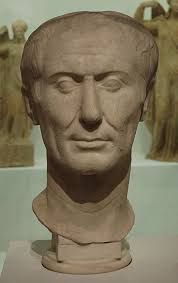
Julius Caesar
Machiavelli closes his chapter “Of Conspiracies” with advice to rulers on how they should act when they find a conspiracy has been formed against them.
If they discover that a conspiracy exists against them, they must, before punishing its authors, strive to learn its nature and extent. And they must measure the danger posed by the conspirators against their own strength.
And if they find it powerful and alarming, they must not expose it until they have amassed sufficient force to crush it. Otherwise, they will only speed their own destruction. They should try to pretend ignorance of it. If the conspirators find themselves discovered, they will be forced by necessity to act without consideration.
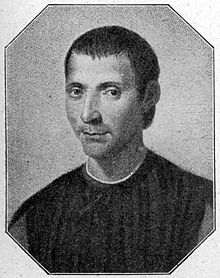
Niccolo Machiavelli
The foregoing was taken from Book Three, Chapter Six, of Machiavelli’s masterwork, The Discourses on Livy, which was published posthumously in 1531. But elsewhere in this volume, he notes how important it is for rulers to make themselves loved—or at least respected—by their fellow citizens:
Note how much more praise those Emperors merited who, after Rome became an empire, conformed to her laws like good princes, than those who took the opposite course.
Titus, Nerva, Trajan, Hadrian, Antoninus and Marcus Auelius did not require the Praetorians nor the multitudinous legions to defend them, because they were protected by their own good conduct, the good will of the people, and by the love of the Senate.
On the other hand, neither the Eastern nor the Western armies saved Caligula, Nero, Vitellius and so many other wicked Emperors from the enemies which their bad conduct and evil lives had raised up against them.
In his better-known work, The Prince, he warns rulers who—like Donald Trump–are inclined to rule by fear:
A prince should make himself feared in such a way that if he does not gain love, he at any rate avoids hatred: for fear and the absence of hatred may well go together.

Donald Trump
* * * * *
If Trump is aware of Machiavelli’s warnings, he has shown no signs of it.
Most Presidents have sought to make themselves seem friendly and caring toward their fellow Americans.
This held true even for Richard M. Nixon, when he made an impromptu visit to the Lincoln Memorial and engaged in a rambling dialogue with Vietnam war protesters.
The encounter happened around 4 a.m. on May 9, 1970, shortly after the invasion of Cambodia. Nationwide outrage had exploded on college campuses, climaxing in the killing of four students at Kent State University on May 4.
So young Vietnam antiwar protesters who had descended on Washington, D.C. were startled when Nixon suddenly appeared in their midst.
Even more startling: He had come with only a small number of Secret Service agents and his devoted White House valet, Manolo Sanchez.
Nixon, in his awkward way of trying to establish rapport, asked some of the students where they were from. When they said they attended Syracuse University, Nixon replied that it had a great football team.
But Nixon and the protesters were separated by too many differences–in their views on sexuality, civil rights, dissent and war—to find common cause.
Still, Nixon at least made an effort to understand and reach an accommodation with his critics.
Since taking office on January 20, Donald Trump has made none.
Instead, he has:
- Held a series of “victory rallies” with his Right-wing followers—which comedian Bill Mahrer calls “hillbilly Nurembergs.”
- Attacked the integrity of Federal judges who struck down his travel ban on Muslims.
- Called the nation’s most prestigious news media “the enemy of the American people.”
- Slandered truthful stories about his staffers’ ties to Russian Intelligence agents as “fake news.”
- Falsely accused his predecessor, President Barack Obama, of wiretapping him.
These and other infamous actions have led to only 45% of Americans approving of his performance—while 52% disapprove.
By Machiavelli’s standards, Trump has made himself the perfect target for a conspiracy: “When a prince becomes universally hated, it is likely that he’s harmed some individuals—who thus seek revenge. This desire is increased by seeing that the prince is widely loathed.”
ABC NEWS, ADOLF HITLER, ALTERNET, AMERICABLOG, AP, ASSASSINATION, BABY BOOMER RESISTANCE, BBC, BLOOMBERG, BUZZFEED, CBS NEWS, CNN, CONSPIRACIES, CROOKS AND LIARS, DAILY KOS, DAY OF THE JACKAL, DONALD TRUMP, FACEBOOK, FIVETHIRTYEIGHT, FREDERICK FORSYTHE, GAIUS CASSIUS, HARPER’S MAGAZINE, HUFFINGTON POST, JULIUS CAESAR, LINCOLN MEMORIAL, MAR-A-LAGO, MARCUS BRUTUS, MARK ANTHONY, MEDIA MATTERS, MOTHER JONES, MOVEON, MSNBC, NBC NEWS, NEW REPUBLIC, NEWSDAY, NEWSWEEK, NICCOLO MACHIAVELLI, NPR, PBS NEWSHOUR, PLOTS, POLITICO, POLITICUSUSA, RAW STORY, REUTERS, RICHARD M. NIXON, SALON, SEATTLE TIMES, Secret Service, SLATE, TALKING POINTS MEMO, THE ATLANTIC, THE CHICAGO SUN-TIMES, THE CHICAGO TRIBUNE, THE DAILY BEAST, THE DAILY BLOG, THE DISCOURSES, THE GUARDIAN, THE HILL, THE HUFFINGTON POST, THE INTERCEPT, THE LOS ANGELES TIMES, THE NATION, THE NEW REPUBLIC, THE NEW YORK TIMES, THE NEW YORKER, THE VILLAGE VOICE, THE WALL STREET JOURNAL, THE WASHINGTON POST, THINKPROGRESS, TIME, TRUTHDIG, TRUTHOUT, TWO POLITICAL JUNKIES, U.S. NEWS & WORLD REPORT, UPI, USA TODAY, VIETNAM WAR, WHITE HOUSE STAFFER, X
In Bureaucracy, History, Law Enforcement, Military, Politics, Social commentary on October 11, 2018 at 12:19 am
More than 500 years ago, Niccolo Machiavelli, the Florentine statesman, authored The Discourses on Livy, a work of political history and philosophy. In it, he outlined how citizens of a republic can maintain their freedoms.
One of the longest chapters—Book Three, Chapter Six—covers “Of Conspiracies.” In it, those who wish to conspire against a ruler will find highly useful advice.
And so will those who wish to foil such a conspiracy.
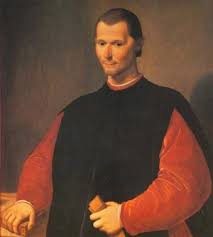

Niccolo Machiavelli
Writes Machiavelli:
For conspirators, there are three ways their efforts can be foiled:
- Discovery through denunciation;
- Discovery through incautiousness;
- Discovery through writings.
Discovery through Denunciation: This occurs through treachery or lack of prudence among one or more conspirators.
Treachery is so common that you can safely tell your plans to only your most trusted friends who are willing to risk their lives for your sake. You may find that you have only one or two of these.
But as you are bring more people into the conspiracy, the chances of discovery greatly increase. It’s impossible to find many who can be completely trusted: For their devotion to you must be greater than their sense of danger and fear of punishment.
Discovery through Carelessness: This happens when one of the conspirators speaks incautiously, so that a third person overhears it Or it may occur from thoughtlessness, when a conspirator tells the secret to his wife or child, or to some other indiscreet person.
When a conspiracy has more than three or four members, its discovery is almost certain, either through treason, imprudence or carelessness.
If more than one conspirator is arrested, the whole plot is discovered, for it will be impossible for any two to agree perfectly as to all their statements.
If only one is arrested, he may—through courage and stubbornness—be able to conceal the names of his accomplices. But then the others, to remain safe, must not panic and flee, since this is certain to be discovered.
If one of them becomes fearful—whether it’s the one who was arrested or is still at liberty—discovery of the conspiracy is certain.
The best way to avoid such detection is to confide your project to your intended fellow conspirators at the moment of execution—and not sooner.
A classic example of this occurred in ancient Persia: A group of nobles assembled to discuss overthrowing a usurper to the throne. The last one to arrive was Darius.
When one of the conspirators asked, “When should we strike?” Darius replied: “We must either go now at this very moment and carry it into execution, or I shall go and denounce you all. For I will not give any of you time to denounce me.”
At that, they went directly to the palace, assassinated the usurper and proclaimed Darius their new king.

Discovery through Writings: You may talk freely with anyone man about everything, for unless you have committed yourself in writing, the “Yes” of one man is worth as much as the “No” of another.
Thus, you should guard most carefully against writing, as against a dangerous rock, for nothing will convict you quicker than your own handwriting.
You may escape, then, from the accusation of a single individual, unless you are convicted by some writing or other pledge, which you should be careful never to give.
If you are denounced, there are means of escaping punishment:
- By denying the accusation and claiming that the person making it hates you; or
- Claiming that your accuser was tortured or coerced into giving false testimony against you.
But the most prudent course is to not tell your intentions to anyone, and to carry out the attempt yourself.
Even if you’re not discovered before you carry out your attack, there are still two dangers facing a conspirator:
Dangers in Execution: These result from:
- An unexpected change in the routine of the intended target;
- The lack of courage among the conspirators; or
- An error on their part, such as leaving some of those alive whom the conspirators intended to kill.
Adolf Hitler, who claimed to have a sixth-sense for danger, was famous for changing his routine at the last minute.
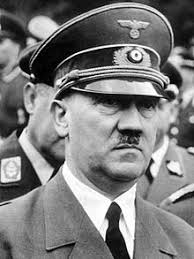

Adolf Hitler
On November 9, 1939, this instinct saved his life. He had been scheduled to give a long speech at a Munich beer hall before the “Old Fighters” of his storm troopers.
But that evening he cut short his speech and left the beer hall. Forty-five minutes later, a bomb exploded inside a pillar—before which Hitler had been speaking.
Conspirators can also be doomed by their good intentions.
In 44 B.C., Gaius Cassius, Marcus Brutus and other Roman senators decided to assassinate Julius Caesar, whose dictatorial ambitions they feared.
Cassius also intended to murder Mark Anthony, Caesar’s strongest ally. But Brutus objected, fearing the plotters would look like butchers, not saviors. Even worse, he allowed Anthony to deliver a eulogy at Caesar’s funeral.
This proved so inflammatory that the mourners rioted, driving the conspirators out of Rome. Soon afterward, they were defeated in a battle with the legions of Anthony and Octavian Caesar—and forced to commit suicide to avoid capture and execution.
ABC NEWS, ADOLF HITLER, ALTERNET, AMERICABLOG, AP, ASSASSINATION, BABY BOOMER RESISTANCE, BBC, BLOOMBERG, BUZZFEED, CBS NEWS, CNN, CONSPIRACIES, CROOKS AND LIARS, DAILY KOS, DAY OF THE JACKAL, DONALD TRUMP, FACEBOOK, FIVETHIRTYEIGHT, FREDERICK FORSYTHE, GAIUS CASSIUS, HARPER’S MAGAZINE, HUFFINGTON POST, JULIUS CAESAR, LINCOLN MEMORIAL, MAR-A-LAGO, MARCUS BRUTUS, MARK ANTHONY, MEDIA MATTERS, MOTHER JONES, MOVEON, MSNBC, NBC NEWS, NEW REPUBLIC, NEWSDAY, NEWSWEEK, NICCOLO MACHIAVELLI, NPR, PBS NEWSHOUR, PLOTS, POLITICO, POLITICUSUSA, RAW STORY, REUTERS, RICHARD M. NIXON, SALON, SEATTLE TIMES, Secret Service, SLATE, TALKING POINTS MEMO, THE ATLANTIC, THE CHICAGO SUN-TIMES, THE CHICAGO TRIBUNE, THE DAILY BEAST, THE DAILY BLOG, THE DISCOURSES, THE GUARDIAN, THE HILL, THE HUFFINGTON POST, THE INTERCEPT, THE LOS ANGELES TIMES, THE NATION, THE NEW REPUBLIC, THE NEW YORK TIMES, THE NEW YORKER, THE VILLAGE VOICE, THE WALL STREET JOURNAL, THE WASHINGTON POST, THINKPROGRESS, TIME, TRUTHDIG, TRUTHOUT, TWO POLITICAL JUNKIES, U.S. NEWS & WORLD REPORT, UPI, USA TODAY, VIETNAM WAR, WHITE HOUSE STAFFER, X
In Bureaucracy, History, Law Enforcement, Military, Politics, Social commentary on October 10, 2018 at 12:01 am
In the 1973 movie, The Day of the Jackal, a methodical assassin devises an ingenious plan to kill French President Charles de Gaulle.
Despite the best efforts of French security forces to entrap him, he eludes them time and again—and comes within an ace of assassinating de Gaulle.

The Day of the Jackal is fiction, based on a 1971 novel by Frederick Forsythe. In real life, most would-be political assassins lack the skills and sophistication of Forsythe’s anti-hero.
Take the case of the man who, on March 18, 2017, jumped over a bicycle rack outside the security perimeter of the White House. Within two minutes, agents of the U.S. Secret Service had tackled and arrested him.
Then, hours later, a motorist drove up to a White House checkpoint and claimed to have a bomb. Secret Service agents immediately arrested him and seized the stolen 2017 Chevrolet Impala. After a careful search, no explosives were found.
Both men will face criminal prosecution—and probably years in prison.
Even if they had been armed, President Donald J. Trump would not have faced any danger.
For the fifth time since taking office on January 20, he was in Florida, vacationing at his Mar-a-Lago resort.
That does not mean, of course, that future assassins will prove so inept.
More than 500 years ago, Niccolo Machiavelli, the father of modern political science, offered sound advice for would-be conspirators—and for rulers seeking to thwart conspiracies.
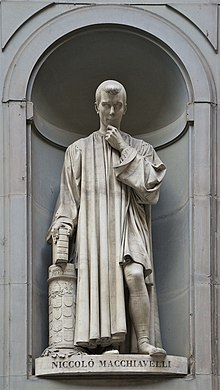
Niccolo Machiavellil
Niccolo Machiavelli: When a prince becomes universally hated, it is likely that he’s harmed some individuals—who thus seek revenge. This desire is increased by seeing the prince is widely loathed.
A prince, then, should avoid incurring such universal hatred….
By doing this, he protects himself from such vengeance-seekers. There are two reasons for this:
(1) Men rarely risk danger to avenge a wrong; and
(2) Even if they want to avenge a wrong, they know they will face almost universal condemnation because the prince is held in such high esteem.
So much for Machiavelli.
Now consider some of the tweets of “White House Staffer,” a self-proclaimed member of the Trump administration who claims 160,000 Twitter followers.
Since January 27, 2017, he has blasted a series of short, information-crammed tweets about daily life in the Executive Mansion.
[NOTE: Although I can’t confirm the legitimacy of his status or his tweets, I believe they are real. They contain too many small, intimate secrets of life in a paranoia-laced White House to not be genuine.]
March 1, 2017: Well the good times didn’t last long here. POTUS is back to flipping out on us.
March 13: POTUS [President of the United States] is thinking about suspending daily press briefings until the media “learn to be nice.” [Steve] Bannon [a top Trump adviser] is pushing for it.
March 16: Sean Hannity was asked to be Press Secretary last week. He turned it down because he didn’t want to take the pay cut. [Sean] Spicer survives.

Donald Trump
Niccolo Machiavelli: He who is threatened, and decides to avenge himself on the prince, becomes a truly dangerous man.
Anger is most likely aroused by injury to a a man’s property or honor. A prince should carefully avoid injuring either, for such a victim will always desire vengeance.
White House Staffer – February 25, 2017: The President keeps saying we’re a finely tuned machine. If that’s true why has he been fricking screaming at us all week? He’s losing it.
February 27: [Steve] Bannon is the scariest person here. He’s broken so much White House stuff by throwing it in anger. Plates, phones, chairs, etc.
February 27: It’s one thing to swear but [Steve] Bannon does it in front of the women here. C**t this, c**t that. He can’t finish a sentence without it.
Machiavelli draws a distinction between plots and conspiracies. A plot may be formed by a single individual or by many. The first isn’t a conspiracy, since that would involve at least two participants.
A single plotter avoids the danger faced by two or more conspirators: Since no one knows his intention, he can’t be betrayed by an accomplice.
Anyone may form a plot, whether he is prominent or insignificant, because everyone is at some time allowed to speak to the prince. And he can use this opportunity to satisfy his desire for revenge.
On the other hand, says Machiavelli, the dangers of assassination by a trusted intimate are slight: Few people dare to assault a prince. Of those who do, few or none escapes being killed in the attempt, or immediately afterward. As a result, only a small number of people are willing to incur such certain death.
Those who take part in a conspiracy against a ruler are “the great men of the state, or those on terms of familiar intercourse with the prince.”
These are men who have access to him. Julius Caesar, for example, was stabbed to death by members of the Roman Senate, who feared his assuming dictatorial powers.
And Adolf Hitler was conspired against by colonels and generals of the German Army. He was in fact holding a war conference when a briefcase bomb exploded, killing three officers and a stenographer, but leaving Hitler only slightly injured.
ABC NEWS, ALTERNET, AP, AR-15, ATOMIC BOMB, BENEATH THE PLANET OF THE APES, BUZZFEED, C-PAC, CBS NEWS, CIA, CNN, CROOKS AND LIARS, DAILY KOZ, DEMOCRATIC PARTY, DONALD TRUMP, FACEBOOK, FBI, GUNS, MARJORY STONEMAN DOUGLAS HIGH SCHOOL, MOTHER JONES, MOVEON, NATIONAL RIFLE ASSOCIATION, NBC NEWS, NEWSWEEK, NPR, NSA, POLITICO, RAW STORY, REUTERS, RUSSIA, SALON, SANDY HOOK ELEMENTARY SCHOOL, SEATTLE TIMES, SECOND AMENDMENT, SECURITY GUARDS, SLATE, SOCIALISM, THE ATLANTIC, THE CHICAGO SUN-TIMES, THE CHICAGO TRIBUNE, THE DAILY BEAST, THE GUARDIAN, THE HILL, THE HUFFINGTON POST, THE LOS ANGELES TIMES, THE NATION, THE NEW YORK TIMES, THE WASHINGTON POST, TIME, TWITTER, U.S. NEWS & WORLD REPORT, UPI, USA TODAY, USA TODAY NIKOLAS CRUZ, VLADIMIR PUTIN, WAYNE LAPIERRE
In Bureaucracy, History, Law, Law Enforcement, Politics, Social commentary on October 9, 2018 at 2:07 pm
On February 14, 2018, 19-year-old Nikolas Cruz slaughtered two faculty members and 15 students at Marjory Stoneman Douglas High School in Parkland, Florida.
His weapon of choice: An AR-15 assault rifle, often favored by gun massacre killers.
Eight days later, on February 22, Wayne LaPierre, executive vice president of the National Rifle Association, attacked those he held responsible for the series of massacres plaguing American schools.

Wayne LaPierre
And it wasn’t crazed gunmen armed with automatic weapons designed for military use.
With funerals still being planned for some of the victims, LaPierre blamed “the elites,” “saboteurs” and “new European-style socialists” for this and other gun massacres.
He did so at the Conservative Political Action Conference (C-PAC) in National Harbor, Maryland.
“They hate the NRA, they hate the Second Amendment,” said LaPierre, like an Old Testament prophet addressing his fanatical congregation.
“They hate individual freedom. In the rush of calls for more government, they have also revealed…their true selves.
“The elites do not care about America’s schoolchildren. If they truly cared, they would protect them. For them, it is not a safety issue. It is a political issue.
“Their goal is to eliminate the Second Amendment and our firearms freedoms, so they can eradicate all individual freedoms.”
His C-PAC congregation gave him a wild ovation.
He then outlined his solution for protecting America’s schoolchildren: Turning schools into virtual concentration camps patrolled by heavily-armed security guards.
And he accused the Democratic party of being “infested with saboteurs who do not believe in capitalism, do not believe in the Constitution, do not believe in our freedom, and do not believe in America as we know it.”
These “saboteurs” were “new European-style socialists.”
Which was ironic: In 2016, the NRA spent $30 million to elect Donald Trump—who fiercely defends Russian Communist dictator Vladimir Putin against the FBI, NSA and CIA.
But perhaps the highlight of LaPierre’s speech came at its close: “And there is no greater personal, individual freedom than the right to keep and bear arms, the right to protect yourself, and the right to survive.
“It is not bestowed by man, but granted by God to all Americans as our American birthright.”
Anyone who’s seen the 1970 sci-fi movie, Beneath the Planet of the Apes, remembers the final scene: Where seemingly normal underground dwellers strip off their human face masks and reveal themselves to be radiation-scarred mutants.
They wear white robes, and stand silently during a sermon or shout “Amen!” in what is clearly a dark parody of a religious service. It’s immediately clear what they are worshiping: An atomic bomb standing upright.

And they pay tribute to the engine of obliteration that has destroyed human civilization and brought about a world ruled by apes.
Their leader, Mendez, chants:
“Glory be to the Bomb, and to the Holy Fallout. As it was in the beginning, is now, and ever shall be. World without end. Amen.
“His sound has gone out to all lands, and his light unto the end of the world.
“Almighty and everlasting Bomb, who came down among us to make Heaven under Earth. Lighten our darkness. O instrument of God—grant us thy peace!”
Reading Wayne LaPierre’s eulogy to the Gun and his passionate invoking of God, it’s easy to re-imagine his giving a slightly altered version of the sermon offered in Beneath the Planet of the Apes. It’s also easy to imagine this taking place during an NRA convention.
WAYNE LAPIERRE: The heavens declare the glory of the Gun. And the body-count showeth His handiwork.
NRA CONGREGATION: His sound is gone out to all lands; and his Light unto the end of the world.
WAYNE LAPIEREE: He descendeth from the outermost part of Heaven; and there is nothing hid from the lead thereof. There is neither speech nor language after His voice is heard among them.
NRA CONGREGATION: Praise Him! Praise Him! My Strength and my Redeemer!
WAYNE LAPIERRE: Glory be to the Gun, and to the Holy Bodycount! As it was in the Beginning, is now and ever shall be, massacres without end. Amen!
NRA CHORUS: Amen! Amen! Amen! Amen!
WAYNE LAPIERRE: Almighty and everlasting Gun, who came down among us to make Heaven unto Earth. Lighten our darkness with your muzzle flashes. O instrument of God, grant us They peace.
NRA CHOIR: Almighty Gun, who destroyed all men—to create corpses! Behold His glory!
WAYNE LAPIERRE: Behold that Truth that abides in us. To reveal that Truth unto that Maker.
WAYNE LAPIERRE AND NRA CONGREGATION: I reveal my inmost self unto my God.
NRA CHORUS (singing): Unto my God!
NRA CONGREGATION (singing):
All guns bright and beautiful. All creatures dead with lead.
The good Gun makes us what we are!
He takes out eyes to see with, and lips that might yet speak. How great the Gun Almighty, who has made all things dead. Amen!
WAYNE LAPIERRE: May the Blessing of the Gun Almighty and the fellowship of the Holy Bodycount descend on us all, this night and forevermore!
* * * * * *
In 2012, a psychotic gunman slaughtered 20 first-graders and six adults at Sandy Hook Elementary School. Since then, at least 1,862 mass shootings have erupted nationwide,with at least 2,071 killed and 7,852 wounded.
ABC NEWS, ABORTION, ADOLF HITLER, ALTERNET, ANTI-FEMINISM, ANTI-SEMITISM, AP, BIRTH CONTROL, BURQAS, BUZZFEED, CBS NEWS, CHADORS, CNN, CONTRACEPTION, CROOKS AND LIARS, DAILY KOZ, FACEBOOK, INTERNATIONAL WOMEN'S DAY, ISLAM, MOTHER JONES, MOVEON, MSNBC, NBC NEWS, NEWSWEEK, NPR, PBS NEWSHOUR, POLITICO, RAW STORY, REPUBLICANS, REUTERS, Ronald Reagan, RUSH LIMBAUGH, SALON, SANDRA FLUKE, SAUDI ARABIA, SCOTT DESJARLAIS, SEAN HANNITY, SEATTLE TIMES, SLATE, TALIBAN, THE ATLANTIC, THE CHICAGO SUN-TIMES, THE CHICAGO TRIBUNE, THE DAILY BEAST, THE GUARDIAN, THE HILL, THE HUFFINGTON POST, THE LOS ANGELES TIMES, THE NATION, THE NEW YORK TIMES, THE WASHINGTON POST, TIME, TWITTER, U.S. NEWS & WORLD REPORT, UPI, USA TODAY, WOMEN
In Bureaucracy, History, Law, Law Enforcement, Politics, Social commentary on October 8, 2018 at 8:43 am
Republicans—at state and Federal levels—hate welfare for mothers too poor to support their families. But they love fetuses.
And to make sure there are plenty of them available, Republicans have launched an all-out war against a woman’s right to abortion—and even birth control.
So what’s responsible for all this fetus fanaticism? Several factors.
First, there is an energized constituency for politicians willing to wave this red flag.
Every major Republican Presidential candidate since Ronald Reagan has tapped into this voting bloc. And each has found plenty of votes to be gotten from it.
Second, many fetus fanatics simply dislike women.
They fear and resent the women’s movement, which has given women the right to enter the workforce and compete directly with men.
And what they hate most is the legal right of a woman to avoid becoming pregnant via birth control—or to abort the result of a male’s sperm if they do. They see this as a personal rejection. Perhaps it reminds many of them of their own failures in romance/marriage.
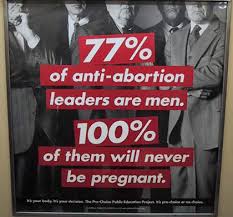
The Right is made up overwhelmingly of white males. And many of these men would feel entirely at home with a Christianized version of the Taliban.
They long for a world where women meekly cater to their every demand and believe only what their male masters approve for them to believe.
Third, many “pro-life” fetus fanatics hypocritically refuse to support the needs of children from low-income families.
Their attitude is: “She shouldn’t have had a child if she couldn’t support it.”

Fourth, many fetus fanatics are “family values” hypocrites.
For example: Representative Scott DesJarlais (R-TN), an anti-abortion, “family values” doctor, had an affair with a patient and later pressured her to get an abortion. He also agreed that his wife should have two abortions.
People like this subscribe to a philosophy of: “Do as I say, not as I do. And if I do it, it’s in the service of a Higher Cause and therefore entirely justified.”
Fifth, many fetus fanatics feel guilty about their own past sexual transgressions—especially if these resulted in pregnancy.
And they want to prevent others from living the same life they did. Some of these people are well-intentioned.
Even so, they usurp unto themselves a God-like right to intrude on the most intimate decisions for others—regardless of what those people may need or want.
Sixth, many fetus fanatics embrace contradictory goals.
On one hand, most of them claim they want to “get government off the backs of the people.” That usually means allowing corporations to pollute, sell dangerous products and treat their employees as slaves.
On the other hand, they want to insert the government into the vagina of every woman. That means empowering State and Federal authorities to prevent women from getting an abortion—even in cases of rape, incest or to save the life of the mother.
Seventh, many leaders of the fetus-fanatics movement are independently wealthy.
This means that even if abortion could be outlawed for the vast majority, they could always bribe a willing doctor—here or abroad—to perform such an operation on their wife, daughter and/or mistress. For them, there is always an escape clause.
Eighth, many fetus fanatics are not truly “pro-life.”
They totally oppose abortion under most—if not all—circumstances. But they also fully support:
- Making military-style assault weapons available to the mentally ill.
- Capital punishment.
- Going to war for almost any reason.
- Wholesale massacres of wildlife.
- Despoiling of the environment; and
- Even nuclear war.
Lucy, the famous cartoon character in Charles Schultz’ “Peanuts” series, once said: “I love humanity. It’s people I can’t stand.” For fetus fanatics, the line runs: “I love fetuses. Everything else is expendable.”
Ninth, many fetus fanatics believe that since their religion teaches that abortion is wrong, they have the right to enforce that belief on others.
This is especially true for evangelical Christians. They condemn Muslims—such as those in Saudi Arabia—for segregating women, forbidding them to drive and forcing them to wear head scarfs or chadors (black veils) or burqas (garments which cover a woman’s body from head to foot).
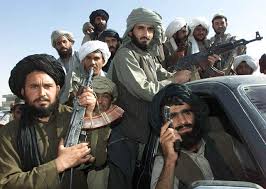
Taliban: Islam’s version of the “Right-to-Life” movement
But while evangelical Christians condemn Islamics for their fanatical intolerance of others’ religious beliefs, they lust to impose their own upon those who belong to other churches. Or who belong to no church at all.
Tenth, many fetus fanatics are just as opposed to birth control as they are to abortion.
Thus, when Georgia University law student Sandra Fluke asked Congress to require insurance companies to cover birth control, Rush Limbaugh branded her a “slut” and a “prostitute.” A man should have the right to make a woman pregnant, but she should be powerless to prevent it.
* * * * *
It’s time to face the blunt truth: A “Conservative Victory,” as Sean Hannity put it, would impose an anti-women Taliban on America.
Thus, a woman who seeks to control her own destiny would be insane to vote for a Right-wing candidate. Just as it would have been insane for a Jewish citizen to give his vote—and his life—to Adolf Hitler.
2001 TERROR ATTACKS, 9/11 ATTACKS, 9/11 TERRORIST ATTACKS, ABC NEWS, AIRPORT SECURITY, ALTERNET, AP, BIRTH CERTIFICATES, BUZZFEED, CBS NEWS, CNN, CROOKS AND LIARS, DAILY KOZ, DEPARTMENT OF HOMELAND SECURITY, DEPARTMENT OF MOTOR VEHICLES, DRIVER'S LICENSES, FACEBOOK, FBI, IDENTIFICATION, JOHN DILLINGER, MOHAMMED ATTA, MOTHER JONES, MOVEON, MSNBC, NATIONAL GUARD, NBC NEWS, NEWSWEEK, NPR, OSAMA BIN LADEN, PASSPORTS, PBS NEWSHOUR, POLITICO, RAW STORY, REAL ID ACT, REUTERS, SALON, SAN FRANCISCO FEDERAL BUILDING, SEATTLE TIMES, SECURITY THEATER, SLATE, SOCIAL SECURITY CARD, TERRORISM, THE ATLANTIC, THE CHICAGO SUN-TIMES, THE CHICAGO TRIBUNE, THE DAILY BEAST, THE GUARDIAN, THE HILL, THE HUFFINGTON POST, THE LOS ANGELES TIMES, THE NATION, THE NEW YORK TIMES, THE WASHINGTON POST, THEODORE BUNDY, TIME, TRANSPORTATION SECURITY ADMINISTRATION, TWITTER, U.S. NEWS & WORLD REPORT, UPI, USA TODAY, WORLD TRADE CENTER
In Bureaucracy, Business, History, Law, Law Enforcement, Military, Politics, Social commentary on October 5, 2018 at 12:11 am
Starting in 2016, traveling by air in the United States got more complicated. But not necessarily safer.
In 2005, Congress passed the Real ID Act as a counter-terrorism measure. Its goal was to set security standards for government-issued IDs.
The Act started to be introduced in late 2013. Now in the last phase of its implementation, its enforcers have decided that some states haven’t complied with its requirements.
As a result, driver’s licenses from those states will no longer suffice to pass through airport security. And that includes domestic flights as well as international ones.
Those states: New York, New Hampshire, Minnesota, Louisiana and American Samoa.
The reason: Licenses issued by those states don’t contain enough identifying information to pass muster with the Transportation Security Administration (TSA).

So how are residents of these states supposed to cope? The Federal Government is advising them to get a passport.
But, as one New York traveler outlined:
“To get a passport I’ll first need to get a certified copy of my birth certificate.
“And to get a copy of my birth certificate I need only to submit a copy of my driver’s license. A copy, no face-to-face, is-that-really you?
“So a New York driver’s license isn’t good enough for flying but it is good enough to get a birth certificate, which gets me a passport, which allows me to fly.”

Sample state ID card that’s acceptable under the Real ID Act
So much of what passes for security is actually security theater. It doesn’t actually make us safer, but it makes us feel safer.
And it makes us feel the government is keeping us safe, even when it isn’t.
For example: In the months after 9/11, National Guard troops were stationed in American airports. They certainly looked impressive.
What passengers didn’t know was that the Guardsmen carried unloaded assault rifles.
Consider this advice posted on the State of California Department of Motor Vehicles website:
“A valid California driver license or ID card can be used for federal purposes, including boarding a domestic flight and entering military bases or secure federal facilities, until October 1, 2020. After that date, only a REAL ID card or other federally approved documents will be accepted, such as a valid U.S. passport, passport card or military ID.”
To apply for a REAL ID card:
- Make an appointment (recommended) to visit a DMV field office.
- Provide proof of identity, such as a certified copy of a U.S. birth certificate, U.S. passport, employment authorization document, permanent resident card or foreign passport with an approved form I-94.
- Present proof of your Social Security number, such as an SSN card, W-2 or paystub with full SSN.
- Show a California residency document, such as a rental or lease agreement, mortgage bill, utility bill or employment, medical or school document.
- An original or certified copy of a name change document, such as a marriage certificate or divorce decree, may be required.
How does showing a “utility bill” document prove your integrity?
No doubt Mohammed Atta—the ringleader of the September 11, 2001 attacks—faithfully paid his utility bills—right up to the day when he highjacked American Airlines Flight 11 and crashed the plane into the North Tower of the World Trade Center.
And what does a “school document” reveal about the character of the person?
That s/he attended school? So what?
Theodore Bundy attended the University of Puget Sound and the University of Washington—before embarking on his career as a burglar, kidnapper, rapist and serial killer.
Or take the checking of photo IDs that has become routine to enter State and Federal office buildings.
What exactly does this tell the security guard?
If you’re John Dillinger or Osama bin Laden, it tells him: “This is a very wanted man.”
But if you’re John Q. Public, who’s not notorious as a bank robber or terrorist, showing him your ID tells him nothing.
But people watching the guard performing this security theater ritual assume: “The guard must know what he’s looking for. So we have to be safer for his checking those IDs.”
In fact, most security guards have little training and even less experience. Many of them don’t carry firearms and lack self-defense skills.
According to Salary.com: The median annual Security Guard salary is $29,204, as of July 29, 2016, with a range usually between $25,857 and $33,522.
Not exactly a salary geared to attract “the best and the brightest,” is it?
Or suppose you want to report a crime to a field office of the FBI.

A secretary asks why you’ve come.
If she considers your reason legitimate, she requires you to show your driver’s license or State ID card. Then she makes a xerox of this and hands the card back.
Then you must fill out a single-page form, which requires you to provide your:
- Name
- Address
- Phone number
- Social Security Number
- Reason to speak with an FBI agent
The FBI has always encouraged Americans to report anything they consider a threat to national security or a violation of Federal law.
But demanding so much private information just to report a crime will almost certainly decrease the number of people willing to do so.
2012 PRESIDENTIAL RACE, 2016 PRESIDENTIAL RACE, ABC NEWS, ADULTERY, ALTERNET, AP, ATHEISTS, BARACK OBAMA, BIBLE, BILL MAHER, BIRTH CONTROL, BUZZFEED, CATHOLICS, CBS NEWS, CIVIL LIBERTIES, CNN, CROOKS AND LIARS, DAILY KOZ, DONALD TRUMP, ELEANOR ROOSEVELT, FACEBOOK, FRANKLIN GRAHAM, HOMOSEXUALITY, HOMOSEXUALS, ISLAM, JERRY FALWELL JR., JESUS CHRIST, JEWS, LESBIANS, LIBERALS, MIKE PENCE, MITT ROMNEY, MOTHER JONES, MOVEON, MSNBC, MUSLIMS, NBC NEWS, NEWSWEEK, NEWT GINGRICH, NON-CHRISTIANS, NPR, PBS NEWSHOUR, POLITICO, RAW STORY, RELIGION, RELIGIOUS FREEDOM RESTORATION ACT, REPUBLICAN PARTY, REUTERS, RICHARD FEYNMAN, RICK SANTORUM, SALON, SAUDI ARABIA, SCIENCE, SEATTLE TIMES, SLATE, SLAVERY, SPANISH INQUISITION, STORMY DANIELS, SUPREME COURT, TEA PARTY, THE ATLANTIC, THE CHICAGO SUN-TIMES, THE CHICAGO TRIBUNE, THE DAILY BEAST, THE GUARDIAN, THE HILL, THE HUFFINGTON POST, THE LOS ANGELES TIMES, THE NATION, THE NEW YORK TIMES, THE WALL STREET JOURNAL, THE WASHINGTON POST, THEOLOGY, TIME, TOMAS DE TORQUEMADA, TWITTER, U.S. NEWS & WORLD REPORT, UPI, USA TODAY, WAR, WOMEN
In Bureaucracy, History, Law, Law Enforcement, Military, Politics, Social commentary on September 27, 2018 at 12:10 am
On February 18, 2012, Republican Presidential candidate Rick Santorum warned about the “phony theology” of President Barack Obama.
“It’s not about you,” Santorum told supporters of the Right-wing Tea Party in Columbus, Ohio. “It’s not about your quality of life. It’s not about your jobs.
“It’s about some phony ideal. Some phony theology. Oh, not a theology based on the Bible. A different theology.”
What would a Bible-based agenda mean for the country?
The death penalty would be vastly expanded to cover such “crimes” as:
- Sabbath-breaking: Because the Lord considers it a holy day, anyone who works on the Sabbath must be put to death. (Exodus 31:12-15)
- Adultery: If a man commits adultery with another man’s wife, both the man and the woman must be put to death. (Leviticus 20:10)
- Fornication: A priest’s daughter who loses her honor by committing fornication and thereby dishonors her father also, shall be burned to death. (Leviticus 21:9)
- Nonbelievers: They entered into a covenant to seek the Lord, the God of their fathers, with all their heart and soul; and everyone who would not seek the Lord, the God of Israel, was to be put to death, whether small or great, whether man or woman. (2 Chronicles 15:12-13)
- Homosexuality: If a man also lies with mankind, as he lies with a woman, both of them have committed an abomination. They shall surely be put to death. Their blood shall be upon them. (Leviticus 20-13)

A modern-day stoning–in Somalia
The Thirteenth Amendment to the Constitution—which forbids slavery—would be repealed. 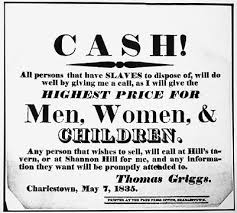
The Bible not only permits slavery but lays out rules for its practice—such as:
Almost all scientific progress would be discarded, since most of its findings conflict with the Bible:
- One generation passes away, and another generation comes: but the earth abides forever. (Ecclesiastes 1:4).
- This claim is totally contradicted by what astronomers now know about the eventual fate of the Earth: In about 7.6 billion years, the sun will exhaust its nuclear fuels. This will vastly increase its heat and gravitational pull, and at least Mercury, Earth and Venus will be vaporized.

The sun
- The Bible speaks of a world where physical laws are often violated by the will of God. Thus, Jesus turns water into wine and raises Lazarus from the dead; Jonah lives inside a fish for three days; Noah dies at 950 years; and demons are exorcised.
- In Biblical times, mental illness was seen as a manifestation of demonic possession. Today we know that mental illness has nothing to do with evil spirits.
Laws guaranteeing equal rights for women would be repealed:
- I do not permit a woman to teach or to have authority over a man; she must be silent. (1 Timothy 12:10)
- Wives, submit to your husbands as to the Lord. (Ephesians 5:22)
- A woman should learn in quietness and full submission. (1 Timothy 2:11)
- But if…and evidence of the girl’s virginity is not found, they shall bring the girl to the entrance of her father’s house and there her townsman shall stone her to death. (Deuteronomy 22:20-21)
Military conflicts would be fought without regard to the Geneva Convention–as the Israelites did:
- “You are my battle-ax and sword,” says the Lord. “With you I will shatter nations and destroy many kingdoms. With you I will shatter armies, destroying the horse and rider, the chariot and charioteer. With you I will shatter men and women, old people and children, young men and maidens. With you I will shatter shepherds and flocks, farmers and oxen, captains and rulers.” (Jeremiah 51:20-23)
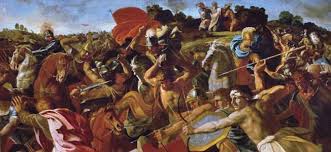
Depiction of the taking of Jericho by the Israelites
- Samuel said to Saul, “This is what the Lord Almighty says: ‘I will punish the Amalekites for what they did to Israel when they waylaid them as they came up from Egypt. Now go, attack the Amalekites and totally destroy everything that belongs to them. Do not spare them; put to death men and women, children and infants, cattle and sheep, camels and donkeys.’” (1 Samuel 15, 1-3)
* * * * *
Yes, a nation governed by “a theology based on the Bible” would be one far different from the United States we know today.
Since a number of Old Testament practices might lend themselves to easy abuse, this is not a matter to be taken lightly.
2012 PRESIDENTIAL RACE, 2016 PRESIDENTIAL RACE, ABC NEWS, ADULTERY, ALTERNET, AP, ATHEISTS, BARACK OBAMA, BIBLE, BILL MAHER, BIRTH CONTROL, BUZZFEED, CATHOLICS, CBS NEWS, CIVIL LIBERTIES, CNN, CROOKS AND LIARS, DAILY KOZ, DONALD TRUMP, ELEANOR ROOSEVELT, FACEBOOK, FRANKLIN GRAHAM, HOMOSEXUALITY, HOMOSEXUALS, ISLAM, JERRY FALWELL JR., JESUS CHRIST, JEWS, LESBIANS, LIBERALS, MIKE PENCE, MITT ROMNEY, MOTHER JONES, MOVEON, MSNBC, MUSLIMS, NBC NEWS, NEWSWEEK, NEWT GINGRICH, NON-CHRISTIANS, NPR, PBS NEWSHOUR, POLITICO, RAW STORY, RELIGION, RELIGIOUS FREEDOM RESTORATION ACT, REPUBLICAN PARTY, REUTERS, RICHARD FEYNMAN, RICK SANTORUM, SALON, SAUDI ARABIA, SCIENCE, SEATTLE TIMES, SLATE, SLAVERY, SPANISH INQUISITION, STORMY DANIELS, SUPREME COURT, TEA PARTY, THE ATLANTIC, THE CHICAGO SUN-TIMES, THE CHICAGO TRIBUNE, THE DAILY BEAST, THE GUARDIAN, THE HILL, THE HUFFINGTON POST, THE LOS ANGELES TIMES, THE NATION, THE NEW YORK TIMES, THE WALL STREET JOURNAL, THE WASHINGTON POST, THEOLOGY, TIME, TOMAS DE TORQUEMADA, TWITTER, U.S. NEWS & WORLD REPORT, UPI, USA TODAY, WAR, WOMEN
In Bureaucracy, History, Law, Law Enforcement, Military, Politics, Social commentary on September 26, 2018 at 12:03 am
Bernardo Gui was the chief inquisitor of the Dominican Order during the Medieval Inquisition (1184 – 1230s).
Gui closely studied the best methods for interrogating “heretics.” He set forth his findings in his most important and famous work, Practica Inquisitionis Heretice Pravitatis. or “Conduct of the Inquisition into Heretical Wickedness.”
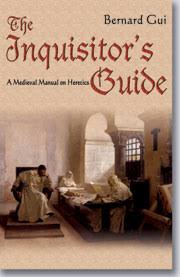
Here’s how such an interrogation might go:
When a heretic is first brought up for examination, he assumes a confident air, as though secure in his innocence. I ask him why he has been brought before me. He replies, smiling and courteous, “Sir, I would be glad to learn the cause from you.”
Interrogator: You are accused as a heretic, and that you believe and teach otherwise than Holy Church believes.
Accused Heretic: (Raising his eyes to heaven, with an air of the greatest faith) Lord, thou knowest that I am innocent of this, and that I never held any faith other than that of true Christianity.
Interrogator: You call your faith Christian, for you consider ours as false and heretical. But I ask whether you have ever believed as true another faith than that which the Roman Church holds to be true?
Accused Heretic: I believe the true faith which the Roman Church believes, and which you openly preach to us.
Interrogator: Perhaps you have some of your sect at Rome whom you call the Roman Church. I, when I preach, say many things, some of which are common to us both, as that God liveth, and you believe some of what I preach. Nevertheless you may be a heretic in not believing other matters which are to be believed.
Accused Heretic: I believe all things that a Christian should believe.
Interrogator: I know your tricks….But we waste time in this fencing. Say simply, Do you believe in one God the Father, and the Son, and the Holy Ghost?
Accused Heretic: I believe.
Interrogator: Do you believe in Christ born of the Virgin, suffered, risen, and ascended to heaven?
Accused Heretic: (Briskly) I believe.
Interrogator: Do you believe the bread and wine in the mass performed by the priests to be changed into the body and blood of Christ by divine virtue?
Accused Heretic: Ought I not to believe this?
Interrogator: I don’t ask if you ought to believe, but if you do believe.
Accused Heretic: I believe whatever you and other good doctors order me to believe.
Inquisitor: Those good doctors are the masters of your sect; if I accord with them you believe with me; if not, not.
Accused Heretic: I willingly believe with you if you teach what is good to me.
Inquisitor: You consider it good to you if I teach what your other masters teach. Say, then, do you believe the body of our Lord, Jesus Christ to be in the altar?
Accused Heretic: (Promptly) I believe that a body is there, and that all bodies are of our Lord.
Interrogator: I ask whether the body there is of the Lord who was born of the Virgin, hung on the cross, arose from the dead, ascended, etc.
Accused Heretic: And you, sir, do you not believe it?
Interrogator: I believe it wholly.
Accused Heretic: I believe likewise.
Men like Bernard Gui—and Franklin Graham—do not seek a golden future. They crave to return to a “golden” past—which includes the power Christians once held to forcibly impose their religious beliefs on others.
Among those slated for forced conversions by the Religious Right:
- Atheists
- Jews
- Women
- Homosexuals
- Lesbians
- Non-Christians
- Liberals
To gain absolute secular power over the lives of their fellow Americans, the Religious Right will support any candidate, no matter how morally despicable.
During the 2016 Presidential race, evangelicals—and their leaders such as Franklin Graham and Jerry Falwell, Jr.—fervently supported Donald Trump, despite:
- His being twice divorced;
- His multiple affairs (including one with porn star Stormy Daniels);
- His documented ties to Russian oligarchs and Mafia chieftains;
- His viciousness, greed, lying and egomania.
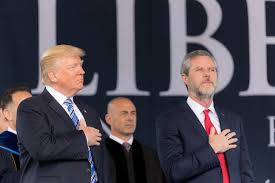
Donald Trump and Jerry Falwell, Jr., at Liberty University
And they continue to fervently support him.
They expect Trump to sponsor legislation that will—-by force of law—make their brand of Christianity supreme above all other religions.
Legislation such as The Religious Freedom Restoration Act.
This was signed into law on March 26, 2015, by Mike Pence, then Governor of Indiana.
This allows any individual or corporation to cite its religious beliefs as a defense when sued by a private party.
Officially, its intent is to prevent the government from forcing business owners to violate their religious beliefs.
Unofficially, its intent is to appease the hatred of gays and lesbians by the religious Right, a key constituency of the Republican party.
Thus, a bakery that doesn’t want to make a cake for a gay wedding or a restaurant that doesn’t want to serve lesbian patrons now has the legal right to refuse to do so.
And a hospital can legally turn away a gay patient if it wants to.
Islamic countries are notorious for their persecution of non-Muslims. Now the Religious Right wants to impose its own version of sharia law on American citizens.
.jpg&imgrefurl=https%3A%2F%2Fen.wikipedia.org%2Fwiki%2FJulius_Caesar&docid=i5zp8D4W-fCkiM&tbnid=pa1aoGEpET-OGM%3A&vet=1&w=1117&h=1769&bih=414&biw=745&ved=0ahUKEwjsvNnh8-rSAhULe7wKHWZBDxoQMwhQKBUwFQ&iact=c&ictx=1)


2016 PRESIDENTIAL CAMPAIGN, ABC NEWS, ADOLF HITLER, ALTERNET, AP, BARACK OBAMA, BULLYING, BURT LANCASTER, BUZZFEED, CBS NEWS, CIA, CNN, CROOKS AND LIARS, DAILY KOZ, DONALD TRUMP, FACEBOOK, FASCISM, FBI, HELSINKI PRESS CONFERENCE, HILLARY CLINTON, HUMAN RIGHTS CAMPAIGN (HRC), IMMIGRATION AND CUSTOMS ENFORCEMENT (ICE), JAMES COMEY, JEFF SESSIONS, JOHN F. KENNEDY, JUDGMENT AT NUREMBERG, LYING, MAIN INTELLIGENCE DIRECTORATE, MOTHER JONES, MOVEON, MSNBC, NAZI GERMANY, NBC NEWS, NEWSWEEK, NPR, PBS NEWSHOUR, POLITICO, RACISM, RAFAEL "TED" CRUZ, RAW STORY, REPUBLICANS, REUTERS, ROBERT S. MUELLER, RUSSIA, SALON, SEATTLE TIMES, SERGEY KISLYAK, SLATE, SPENCER TRACY, THE ATLANTIC, THE CHICAGO SUN-TIMES, THE CHICAGO TRIBUNE, THE DAILY BEAST, THE GUARDIAN, THE HILL, THE HUFFINGTON POST, THE LOS ANGELES TIMES, THE NATION, THE NEW YORK TIMES, THE WASHINGTON POST, TIME, TWITTER, U.S. NEWS & WORLD REPORT, UNITE THE RIGHT RALLY, UPI, USA TODAY, VLADIMIR PUTIN, WIRETAPPING
NUREMBERG COMES TO AMERICA
In Bureaucracy, Entertainment, History, Law Enforcement, Politics, Social commentary on October 24, 2018 at 12:12 amThose who have seen the classic 1960 movie, “Judgment at Nuremberg,” will remember its pivotal moment.
That’s when Burt Lancaster, as Ernst Janning, the once distinguished German judge, confesses his guilt and that of Nazi Germany in a controlled, yet emotional, outburst.
Addressing the court—presided over by Chief Judge Dan Haywood (Spencer Tracy)—Janning explains the forces that led to the triumph of evil.
It’s not hard to imagine, in the future, an equally conscience-stricken member of the Donald Trump administration, standing before the bar of justice, making a similar statement:
“My counsel would have you believe we were not aware of the ICE concentration camps. Not aware. Where were we?
“Where were we when Trump began shrieking his hate across the country? When Trump called our free press ‘the enemy of the people’?
“Where were we when Trump openly praised Vladimir Putin and attacked those in the FBI, CIA and other Intelligence agencies sworn to protect us?
“Where were we when the victims of Trump’s hatred cried out in the night to us? Were we deaf? Dumb? Blind?
“My counsel says we were not aware of Trump’s treasonous collusion with Vladimir Putin—and his intention to betray American freedoms in exchange for the Presidency. He would give you the excuse we were misled by the lying rhetoric coming out of the White House.
“Does that make us any the less guilty? Maybe we didn’t know the details, but if we didn’t know, it was because we didn’t want to know.”
Consider Trump’s effect on:
Race relations:
Donald Trump
The rule of law:
Trump as liar:
Trump as traitor:
Since 1945, historians have brutally condemned the vicious and destructive reign of Adolf Hitler and those who supported him.
Future historians will condemn just as harshly the equally vicious and destructive reign of Donald Trump—and those who now support him.
Share this: