Posts Tagged ‘WONKETTE’
2016 PRESIDENTIAL CAMPAIGN, 2020 PRESIDENTIAL CAMPAIGN, 2024 PRESIDENTIAL CAMPAIGN, 60 MINUTES NEWS MAGAINE, ABC NEWS, ADAM SCHIFF, ADOLF HITLER, ALBERT “THE EXECUTIONER” ANASTASIA, ALTERNET, ALVIN BRAGG, AMERICABLOG, AP, ARTICLES OF IMPEACHMENT, ARTIFICIAL INTELLIGENCE (AI), BABY BOOMER RESISTANCE, BORDER WALL, BUZZFEED, CANADA, CBS NEWS, CENSORSHIP, CENSUS BUREAU, CENTERS FOR DISEASE CONTROL AND PREVENTION, CHARLES “LUCKY” LUCIANO, CHARLES DE GAULLE, CHINA, CHRIS CHRISTIE, CHRISTI GRIMM, CHRISTOPHER S. MURPHY, CIA, CLASSIFIED DOCUMENTS, CNN, CONSERVATIVE POLITICAL ACTION CONFERENCE, CONSUMER FINANCIAL PROTECTION BUREAU, CONVERSATION WITH AN AMERICAN WRITER (POEM), CORONAVIRUS RELIEF MONIES, COVID-19, CROOKS AND LIARS, CUBAN MISSILE CRISIS, DAILY KOS, DAILY KOZ, DAN BOWMAN, DAN SULLIVAN, DANIELLE SASSOON, DAVID BROOKS, DEMOCRATS, DEPARTMENT OF DEFENSE, DEPARTMENT OF GOVERNMENT EFFICIENCY (DOGE), DEPARTMENT OF HEALTH AND HUMAN SERVICES, DEPARTMENT OF JUSTICE, DIVERSITY EQUITY INCLUSION (DEI), DONALD TRUMP, DONALD TRUMP JUNIOR, DRUDGE RETORT, E. JEAN CARROLL, ELON MUSK, EMIL BOVE, EMOLUMENTS CLAUSE OF THE UNITED STATES CONSTITUTION, ERIC ADAMS, EXTORTION, FBI, FIRST AMENDMENT, FIVETHIRTYEIGHT, FRIVOLOUS LAWSUITS, GENN FINE, GEORGE FLOYD, GEORGE STEPHANOPOULOS, GEORGE W. BUSH, GLENN FINE, GOVERNMENT ACCOUNTABILITY OFFICE, GOVERNMENT SHUTDOWN, GULF OF AMERICA, GULF OF MEXICO, HARPER’S MAGAZINE, HILLARY CLINTON, HOUSE FOREIGN AFFAIRS COMMITTEE, HOUSE INTELLIGENCE COMMITTEE, HOUSE OVERSIGHT AND REFORM COMMITTEE, HUNTER BIDEN, IMMIGRANTS, IMPEACHMENT, IMPOUNDMENT CONTROL ACT, INSPECTORS GENERAL, INTELLIGENCE COMMUNITY, INTELLIGENCE OFFICERS, JACK SMITH, JAKE SULLIVAN, JAKE TAPPER, JAMAL KHASHOGGI, JAMES COMEY, JAMES MCHENRY, JAMES ROBART, JANUARY 6 COUP ATTEMPT, JARED KUSHNER, JEFF SESSIONS, JOHN CORNYN, JOHN F. KENNEDY, JOHN F. KENNEDY CENTER FOR THE PERFORMING ARTS, JOHN ROBERTS, JOING CHIEFS OF STAFF, JON S. TIGAR, JOSEPH BIDEN, JOSEPH STALIN, Kamala Harris, KELLY LOEFFER, KEVIN CRAMER, LAFAYETTE SQUARE, LAMAR ALEXANDER, LEON PANETTA, LINDSEY GRAHAM, LUXUY JET, MARCO RUBIO, MARK MILLEY, MARTIN GUGINO, MEDIA MATTERS, MEIN KAMPF, MERRICK GARLAND, MEXICO, MICHAEL FLYNN, MICHAEL HAYDEN, MICHAEL K. ATKINSON, MICK MULVANEY, MIKE PENCE, MITCH MCCONNELL, MOHAMMED BIN SALMAN, MOTHER JONES, MOVEON, MSNBC, NANCY PELOSI, NATALIA VESELNITSKAYA, NATIONAL SECURITY AGENCY, NBC NEWS, NEWSWEEK, NIKKI HALEY, NPR, PAUL MANAFORT, PBS NEWSHOUR, PETE HEGSETH, POLITICO, POLITICUSUSA, QATAR, RAW STORY, REPUBLICANS, REUTERS, RINAT AKHMETSHIN, ROBERT MUELLER, ROBERT PAYNE, ROD ROSENSTEIN, ROGER STONE, RON DESANTIS, RON JOHNSON, RUSSIA, SALON, SEATTLE TIMES, SERGEY KISLYAK, SERGEY LAVROV, SLATE, ST. JOHN’S CHURCH, STEVE DAINES, TALKING POINTS MEMO, TARIFFS, TED CRUZ, THE ATLANTIC, THE CHICAGO SUN-TIMES, THE CHICAGO TRIBUNE, THE DAILY BEAST, THE DAILY BLOG, THE GUARDIAN, THE HILL, THE HUFFINGTON POST, THE JUDICIARY, THE LIFE AND DEATH OF ADOLF HITLER (BOOI), THE LIFE AND DEATH OF ADOLF HITLER (BOOK), THE LOS ANGELES TIMES, THE NATION, THE NEW REPUBLIC, THE NEW YORK TIMES, THE PENTAGON, THE PRESS, THE VILLAGE VOICE, THE WASHINGTON POST, THINKPROGRESS, TIME, TREASON, TRUMP TOWER MEETING, TRUTH SOCIAL, TRUTHDIG, TRUTHOUT, TWENTY-SECOND AMENDMENT, TWO POLITICAL JUNKIES, U.S. NEWS & WORLD REPORT, UKRAINE, UNITED STATES HOUSE OF REPRESENTATIVES, UNITED STATES SENATE, UPI, USA TODAY, VLADIMIR PUTIN, VOLODYMYR ZELENSKY, WHISTLEBLOWER, WHITE HOUSE BUDGET OFFICE, WONKETTE, X, YEVGENEY YEVTUSHENKO
In Bureaucracy, History, Law, Law Enforcement, Politics, Social commentary on June 2, 2025 at 12:59 am
“One man with courage makes a majority.”
—-Andrew Jackson
Donald Trump—facing four indictments and 91 criminal charges—proved the clear front runner for the 2024 Republican Presidential nomination.
And 77 million Right-wing Americans made him their choice for President on November 5.
Since 2015, Republicans have a shameful history of excusing his outrages and criminality.
A classic example of this occurred on June 9, 2020.
That was when then-President Trump charged that a 75-year-old man who was seriously injured by police officers in Buffalo, New York, was part of a radical leftist “set up.”
The victim, Martin Gugino, was described as a peace activist associated with the Catholic Worker Movement.
On June 4, 2020, during nationwide protests over the police murder of black security guard George Floyd, a curfew was imposed on Buffalo, New York. As police swept through Niagara Square, Gugino walked directly into their path as if attempting to speak with them.
Two officers pushed him and he fell backwards, hitting the back of his head on the pavement and losing consciousness. The line of officers walked past Gugino as he lay on the ground with blood pooling around his head. One officer tried to check on him, but another patrolman told him to move on, and he did.

Martin Gugino falls backward
Enter Trump, who had been severely criticized for sending police and National Guardsmen to remove peaceful protesters from Lafayette Square so he could stage a photo-op at nearby St. John’s Church.
On June 9 he tweeted: “Buffalo protester shoved by Police could be an ANTIFA provocateur. 75 year old Martin Gugino was pushed away after appearing to scan police communications in order to black out the equipment. @OANN I watched, he fell harder than was pushed. Was aiming scanner. Could be a set up?”
As usual, Trump offered no evidence to back up his slander. And, as usual, Republicans refused to condemn him for his latest outrage.
Among those competing for “Most Cowardly Sycophant of the Year”:
- Senate Majority Leader Mitch McConnell (KY) refused to say whether Trump’s tweet was appropriate.
- Texas Senator John Cornyn claimed he had missed it, adding: “A lot of this stuff just goes over my head.”
- Georgia Senator Kelly Loeffler refused to answer a question about the President’s tweet as she hopped on an elevator along with an aide in the Capitol.
- Texas Senator Ted Cruz: “I don’t comment on the tweets.”
- Florida Senator Marco Rubio: “I didn’t see it. You’re telling me about it. I don’t read Twitter. I only write on it.”
- Alaska Senator Dan Sullivan said he hadn’t seen it, and then said: “I don’t want to comment right now. I’m on my way to a meeting. I’ll see it when I see it.”
- North Dakota Senator Kevin Cramer: “I’ll say this: I worry more about the country itself than I do about what President Trump tweets.”
- Wisconsin Senator Ron Johnson said he hadn’t seen the tweet—and didn’t want it read to him: “I would rather not hear it.”
- Tennessee Senator Lamar Alexander: “Voters can evaluate that. I’m not going to give a running commentary on the President’s tweets.”
- Montana Senator Steve Daines refused to say whether Trump should have tweeted about the Buffalo incident.
So much for Republican profiles in courage.
On December 18, 2019, the House of Representatives had approved two Articles of Impeachment against Trump for:
Article 1: Abuse of Power: For pressuring the president of Ukraine to assist his re-election campaign by smearing a potential rival for the White House.
Article 2: Obstruction of Congress: For obstructing Congress by blocking testimony of subpoenaed witnesses and refusing to provide documents in response to House subpoenas in the impeachment inquiry.
On July 25, 2019, Trump had “asked” Ukraine President Volodymir Zelensky to do him a “favor”: Find embarrassing “dirt” on former Vice President Joseph Biden and his son, Hunter.
Hunter had had business dealings in Ukraine. And Joseph Biden might be Trump’s Democratic opponent for the White House in 2020.
To underline the seriousness of his “request,” earlier in July Trump had told Mick Mulvaney, his White House chief of staff, to withhold $400 million in military aid Congress had approved for Ukraine, which was facing an increasingly aggressive Russia
But then a CIA whistleblower filed a complaint about the extortion attempt—and the media and Congress soon learned of it. And ever since, the evidence linking Trump to impeachable offenses had mushroomed.
On January 16, 2020, the Government Accountability Office (GAO) announced that the Trump administration broke the law when it withheld security aid to Ukraine.
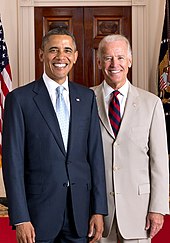
Joseph Biden with Barack Obama
As Senate trial proceedings unfolded, the 53-majority Republican Senators:
- Refused to hear from eyewitnesses who could prove that Trump had committed impeachable offenses,
- Refused to provide evidence on Trump’s behalf—but attacked witnesses who had testified against him in the House.
- Attacked Joseph Biden and his son, Hunter, as if they were on trial—instead of having been the targets of Trump’s smear-attempt.
On February 5, 2020, the Republican-dominated Senate—as expected—absolved President Donald Trump from trying to extort Ukraine into smearing a possible rival for the White House.
Only one Republican—Utah Senator Mitt Romney—had the moral courage to vote for conviction.
60 MINUTES, ABC NEWS, ALTERNET, AMERICABLOG, AP, BABY BOOMER RESISTANCE, BARACK OBAMA, BLOOMBERG, BUZZFEED, CARL MUELLER, CBS NEWS, CIA, CNN, CROOKS AND LIARS, DAILY KOS, DAILY KOZ, DRUDGE RETORT, FACEBOK, FACEBOOK, FIVETHIRTYEIGHT, HARPER’S MAGAZINE, IMPERIAL HUBRIS, ISLAM, ISLAMIC STATE OF IRAQ AND THE LEVANT, KAYLA MUELLER, MARCHING TOWARD HELL, MEDIA MATTERS, MICHAEL SCHEUER, MOTHER JONES, MOVEON, MSNBC, MUSLIMS, NBC NEWS, NEWSWEEK, NPR, OSAMA BIN LADEN, PBS NEWSHOUR, POLITICO, POLITICUSUSA, RAW STORY, REUTERS, SALON, SEATTLE TIMES, SLATE, SYRIA, TALKING POINTS MEMO, THE ATLANTIC, THE CHICAGO SUN-TIMES, THE CHICAGO TRIBUNE, THE DAILY BEAST, THE DAILY BLOG, THE GUARDIAN, THE HILL, THE HUFFINGTON POST, THE LOS ANGELES TIMES, THE NATION, THE NEW REPUBLIC, THE NEW YORK TIMES, THE VILLAGE VOICE, THE WALL STREET JOURNAL, THE WASHINGTON POST, THINKPROGRESS, TIME, TRUTHDIG, TRUTHOUT, TWO POLITICAL JUNKIES, U.S. NEWS & WORLD REPORT, UPI, USA TODAY, VIETNAM WAR, WONKETTE, X
In Bureaucracy, History, Military, Politics, Social commentary on May 30, 2025 at 12:11 am
“When trouble comes up anywhere in the world, they don’t call Beijing. They don’t call Moscow. They call us.”
So spoke President Barack Obama on the September 28, 2014 edition of 60 Minutes.
And, according to former CIA agent Michael Scheuer, that’s the problem: America can’t learn to mind its own business.
Scheuer is a 20-year CIA veteran—as well as an author, historian, foreign policy critic and political analyst.
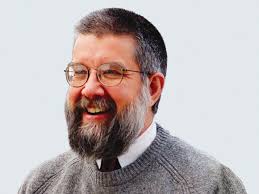
Michael Scheuer
From 1996 to 1999 he headed Alec Station, the CIA’s unit assigned to track Osama bin Laden at the agency’s Counterterrorism Center.
He has served as an adjunct professor at Georgetown University’s Center for Peace and Security Studies.
He is best-known as the author of two seminal works on America’s fight against terrorism: Imperial Hubris: Why the West is Losing the War on Terror (2003) and Marching Toward Hell: America and Islam after Iraq (2008).
Scheuer says that Islamics don’t hate Americans because of “our way of life”—with its freedoms of speech and worship and its highly secular, commercialized culture.
Instead, Islamic hatred toward the United States stems from America’s six longstanding policies in the Middle East:
- U.S. support for apostate, corrupt, and tyrannical Muslim governments
- U.S. and other Western troops on the Arabian Peninsula
- U.S. support for Israel that keeps Palestinians in the Israelis’ thrall
- U.S. pressure on Arab energy producers to keep oil prices low
- U.S. invasion of Iraq and Afghanistan
- U.S. support for Russia, India, and China against their Muslim militants
Scheuer contends that no amount of American propaganda will win “the hearts and minds” of Islamics who can “see, hear, experience, and hate” these policies firsthand.
But there is another danger facing America, says Scheuer, one that threatens “the core of our social and civil institutions.”
And in Marching Toward Hell he bluntly indicts that threat: The “profound and willful ignorance” of America’s “bipartisan governing elite.”
Scheuer defines this elite as “the inbred set of individuals who have influenced…drafted and conducted U.S. foreign policy” since 1973.
Within that group are:
- politicians
- journalists
- academics
- preachers
- civil servants
- military officers
- philanthropists
“Some are Republicans, others Democrats; some are evangelicals, others atheists; some are militarists, others pacifists; some are purveyors of Western civilization, others are multiculturalists,” writes Scheuer.
But for all their political and/or philosophical differences, the members of this governing elite share one belief in common.
According to Scheuer, that belief is “an unquenchable ardor to have the United States intervene in all places, situations and times.”
And he warns that this “bipartisan governing elite” must radically change its policies—such as unconditional support for Israel and corrupt, tyrannical Muslim governments.
Otherwise, Americans will be locked in an endless “hot war” with the Islamic world.
During his September 28, 2014 appearance on 60 Minutes, President Obama admitted that the mostly Sunni-Muslim Iraqi army had refused to combat the Sunni army of ISIS.
Then followed this exchange:
Steve Kroft: What happens if the Iraqis don’t fight or can’t fight?
President Obama: Well….
Steve Kroft: What’s the end game?
President Obama: I’m not going to speculate on failure at the moment. We’re just getting started. Let’s see how they do.
It was precisely such a mindset that led the United States, step by step, into the Vietnam quagmire.
In the Middle East, as in Vietnam, the United States lacked:
- Real or worthwhile allies in Iraq or Syria;
- A working knowledge of the peoples it wants to influence in either country;
- Clearly-defined goals that it seeks to accomplish in that region.
America rushed to disaster in Vietnam because its foreign policy elite felt it had to “do something” to fight Communism anywhere in the world.
Now Americans—in and out of government—feel they must “do something” to stop the routine carnage that is life throughout the Middle East.
In December, 2012, Kayla Mueller, an idealistic 24-year-old American woman, arrived in Syria to assist Syrians caught up in their own civil war. And on August 4, 2013, she was kidnapped by ISIS (Islamic State of Iraq and Syria) and held for ransom.
In 2015, she was killed—whether by her terrorist kidnappers or Jordanian airstrikes remains unclear.
On February 23, 2015, Carl Mueller appeared on the “Today” show, to protest the refusal of the United States Government to pay ransom demands to his daughter’s terrorist kidnappers.
“How many mistakes have we all made in life that were naïve and didn’t get caught at? Kayla was just in a place that was more dangerous than most. And she couldn’t help herself. She had to go in there and had to help.”
But did she?
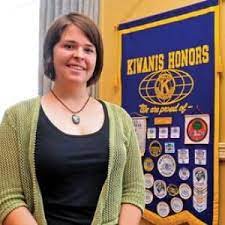

Kayla Mueller
There were thousands of communities within the United States desperate for the help of a caring social activist. And thousands of organizations—such as Volunteers in Service to America (VISTA), Habitat for Humanity and Catholic Relief Services—that would have been thrilled to enlist her services.
And she could have made lives better without constantly facing the dangers of kidnapping by Islamics determined to humiliate and slaughter Americans.
Michael Sheuer is right: The United States should learn to mind its own business and quit intervening in the affairs of Middle Eastern governments and peoples.
Kayla Mueller is proof of the rightness of that assertion.
2016 PRESIDENTIAL ELECTION, 2024 PRESIDENTIAL ELECTION, ABC NEWS, ALTERNET, AMERICABLOG, AP, BABY BOOMER RESISTANCE, BARACK OBAMA, BBC, BENEDICT ARNOLD, BLOOMBERG, BLOOMBERG NEWS, BLUESKY, BOSTON CONSULTING GROUP, BUZZFEED, CBS NEWS, CHRISTOPHER LASCH, CITIZENS FOR TAX JUSTICE, CNN, CORPORATE TAXES, CORRUPTION, CROOKS AND LIARS, DAILY KOS, DAILY KOZ, DEPARTMENT OF GOVERNMENT EFFICIENCY (DOGE), DONALD TRUMP, EDUARDO SAVEREN, ELON MUSK, FIVETHIRTYEIGHT, FORBES MAGAZINE, GROVER NORQUIST, HARPER’S MAGAZINE, HUFFINGTON POST, MEDIA MATTERS, MOTHER JONES, MOVEON, MSNBC, NBC NEWS, NEW REPUBLIC, NEWSDAY, NEWSWEEK, NICCOLO MACHIAVELLI, NPR, PBS NEWSHOUR, POLITICO, POLITICUSUSA, PUBLIC CAMPAIGN, RAW STORY, REPUBLICAN PARTY, REUTERS, RICHARD M. NIXON, RUSH LIMBAUGH, SALON, SEATTLE TIMES, SENATOR CHARLES SCHUMER, SLATE, STEPHEN DECATUR, TALKING POINTS MEMO, TAX AVOIDANCE, THE ATLANTIC, THE CHICAGO SUN-TIMES, THE CHICAGO TRIBUNE, THE DAILY BEAST, THE DAILY BLOG, THE DISCOURSES, THE GUARDIAN, THE HILL, THE HUFFINGTON POST, THE INTERCEPT, THE LOS ANGELES TIMES, THE NATION, THE NEW REPUBLIC, THE NEW YORK TIMES, THE NEW YORKER, THE REVOLT OF THE ELITES (BOOK), THE VILLAGE VOICE, THE WALL STREET JOURNAL, THE WASHINGTON POST, THINKPROGRESS, TIME, TREASON, TRUTHDIG, TRUTHOUT, TWO POLITICAL JUNKIES, U.S. NEWS & WORLD REPORT, U.S. PUBLIC INTEREST RESEARCH GROUP EDUCATION FUND, UPI, USA TODAY, WALL STREET, WEALTH GAP, WONKETTE, X
In Bureaucracy, History, Law, Politics, Social commentary on May 29, 2025 at 12:05 am
Niccolo Machiavelli, the father of modern politics, warns in his masterwork, The Discourses:
All those who have written upon civil institutions demonstrate…that whoever desires to found a state and give it laws, must start with assuming that all men are bad and ever ready to display their vicious nature, whenever they may find occasion for it.
If their evil disposition remains concealed for a time, it must be attributed to some unknown reason; and we must assume that it lacked occasion to show itself. But time, which has been said to be the father of all truth, does not fail to bring it to light.
Where the crimes of corporate employers are concerned, Americans need not wait for their evil disposition to reveal itself. It has been fully revealed for decades.
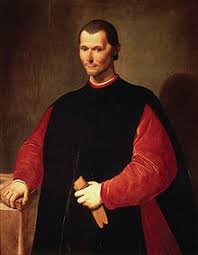
Niccolo Machiavelli
Increased media attention to “income inequality” has led some Democratic lawmakers to press for a long-overdue reform: Raising the stock threshold to 50%, making it harder for firms to abandon their country.
Yet a more comprehensive reform package would include legislation that mandates:
- American companies that move their headquarters abroad would be officially declared “agents of a foreign power engaged in hostile activity against the United States.”
- Those “foreign-owned” companies would be forbidden to sell products within the United States.
- Their assets would be subject to seizure by the Internal Revenue Service.
- The citizenship of those Americans engaged in such activity would be revoked and they would be ordered to leave the United States or face criminal prosecution for treason—and face trial for this if they returned.
Public Campaign is a non-profit, non-partisan organization dedicated to eliminating special interest money in American politics by securing publicly-funded elections at local, state and federal levels.
According to Public Campaign: “Twenty-five profitable Fortune 500 companies, some with a history of tax dodging, spent more on lobbying than they paid in federal taxes between 2008 and 2012….
“Over the past five years, these 25 corporations generated nearly $170 billion in combined profits and received $8.7 billion in tax rebates while paying their lobbyists over half a billion ($543 million), an average of nearly $300,000 a day.
“Based on newly released data by Citizens for Tax Justice, these 25 companies actually received tax refunds over all those five years.
“So most individual American families and small businesses have bigger tax bills than these corporate giants. Unfortunately, most American families and businesses do not have the lobbying operation and access these 25 companies enjoy.”
Several companies on this list are well-known—and spend millions of dollars on self-glorifying ads every year to convince consumers how wonderful they are. Among these:
- General Electric
- PG&E Corp
- Verizon Communications
- Boeing
- Consolidated Edison
- MetroPCS Communications
Republicans—and some Democrats—have tirelessly defended the greed of the richest and most privileged in America. For example, they have dubbed the estate tax—-which affects only a tiny, rich minority—“the death tax.”
This makes it appear to affect everyone. So millions of poor and middle-class Americans who will never have to pay a cent in estate taxes vigorously oppose it.
It’s time to recognize that a country can be betrayed for other than political reasons. It can be sold out for economic ones, too.
Trea$on
* * * * *
The United States desperately needs a new definition of treason—one that takes into account the following:
- Employers who set up offshore accounts to claim their American companies are foreign-owned—and thus exempt from taxes—-are traitors.
- Employers who enrich themselves by firing American workers and moving their plants to other countries—are traitors.
- Employers who systematically violate Federal immigration laws to hire illegal aliens at cut-rate wages—-instead of American workers—are traitors.
For thousands of years, otherwise highly intelligent men and women believed that kings ruled by divine right. That kings held absolute power, levied extortionate taxes and sent countless millions of men off to war—all because God wanted it that way.
That lunacy was dealt a deadly blow in 1776 when American Revolutionaries threw off the despotic rule of King George III of England.
But today, millions of Americans remain imprisoned by an equally outrageous and dangerous theory: The Theory of the Divine Right of Employers.
America can no longer afford such a dangerous fallacy as the Theory of the Divine Right of Employers.
The solution lies in remembering that the powerful never voluntarily surrender their privileges. Americans did not win their freedom from Great Britain—and its enslaving doctrine of the “divine right of kings”—by begging for their rights.
Americans will not win their freedom from their corporate masters—and the equally enslaving doctrine of “the divine right of employers”—by begging for the right to work and support themselves and their families.
And they will most certainly never win such freedom by supporting Right-wing political candidates whose first and only allegiance is to the corporate interests who bankroll their campaigns.
Corporations can—and do—spend millions of dollars on TV ads, selling lies—such as if the wealthy are forced to pay their fair share of taxes, jobs will inevitably disappear.
But Americans can choose to reject those lies—and demand that employers behave like patriots instead of predators.
2016 PRESIDENTIAL ELECTION, 2024 PRESIDENTIAL ELECTION, ABC NEWS, ALTERNET, AMERICABLOG, AP, BABY BOOMER RESISTANCE, BARACK OBAMA, BBC, BENEDICT ARNOLD, BLOOMBERG, BLOOMBERG NEWS, BLUESKY, BOSTON CONSULTING GROUP, BUZZFEED, CBS NEWS, CHRISTOPHER LASCH, CITIZENS FOR TAX JUSTICE, CNN, CORPORATE TAXES, CORRUPTION, CROOKS AND LIARS, DAILY KOS, DAILY KOZ, DEPARTMENT OF GOVERNMENT EFFICIENCY (DOGE), DONALD TRUMP, EDUARDO SAVEREN, ELON MUSK, FIVETHIRTYEIGHT, FORBES MAGAZINE, GROVER NORQUIST, HARPER’S MAGAZINE, HUFFINGTON POST, MEDIA MATTERS, MOTHER JONES, MOVEON, MSNBC, NBC NEWS, NEW REPUBLIC, NEWSDAY, NEWSWEEK, NICCOLO MACHIAVELLI, NPR, PBS NEWSHOUR, POLITICO, POLITICUSUSA, PUBLIC CAMPAIGN, RAW STORY, REPUBLICAN PARTY, REUTERS, RICHARD M. NIXON, RUSH LIMBAUGH, SALON, SEATTLE TIMES, SENATOR CHARLES SCHUMER, SLATE, STEPHEN DECATUR, TALKING POINTS MEMO, TAX AVOIDANCE, THE ATLANTIC, THE CHICAGO SUN-TIMES, THE CHICAGO TRIBUNE, THE DAILY BEAST, THE DAILY BLOG, THE DISCOURSES, THE GUARDIAN, THE HILL, THE HUFFINGTON POST, THE INTERCEPT, THE LOS ANGELES TIMES, THE NATION, THE NEW REPUBLIC, THE NEW YORK TIMES, THE NEW YORKER, THE REVOLT OF THE ELITES (BOOK), THE VILLAGE VOICE, THE WALL STREET JOURNAL, THE WASHINGTON POST, THINKPROGRESS, TIME, TREASON, TRUTHDIG, TRUTHOUT, TWO POLITICAL JUNKIES, U.S. NEWS & WORLD REPORT, U.S. PUBLIC INTEREST RESEARCH GROUP EDUCATION FUND, UPI, USA TODAY, WALL STREET, WEALTH GAP, WONKETTE, X
In Bureaucracy, History, Law, Politics, Social commentary on May 28, 2025 at 12:13 am
The British offered Revolutionary War General Benedict Arnold £20,000 for betraying West Point to the Crown.
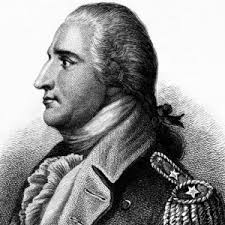
Benedict Arnold
But Arnold was a piker compared to companies that are raking in literally billions of untaxed dollars by betraying the United States in its time of economic trial.
To avoid paying their legitimate share of taxes, they move their headquarters overseas to countries with reduced tax rates. In tax parlance, this is called an “inversion.”
For almost 20 years, tax-avoiding corporations fled to Caribbean countries such as Bermuda and the Cayman Islands. But in 2004, Congress ruled that American companies could relocate overseas if foreign shareholders owned 20% of their stock.
According to statistics compiled by the Congressional Research Service (CRS) in 2014:

“Forty-seven U.S. corporations have reincorporated overseas through corporate inversions in the last 10 years, far more than during the previous 20 years combined.
“In total, 75 U.S. corporations have inverted since 1994 – with one other inversion occurring in 1983. What’s more, there are a dozen prospective inversion deals involving U.S. corporations looking to reincorporate overseas, according to CRS
“The new data underscores the significant increase in the number of U.S. corporations that have or are seeking to lower their U.S. taxes by reincorporating overseas.
“It also adds urgency to a legislative solution. Ways and Means Committee Ranking Member Sander Levin in May introduced legislation that would tighten rules to limit inversions.
“The Joint Committee on Taxation estimates that the legislation would save $19.5 billion over 10 years. Companion legislation was introduced in the Senate by Sen. Carl Levin.
“‘Barely a week seems to pass without news that another corporation plans to move its address overseas simply to avoid paying its fair share of U.S. taxes,’” said Ranking Member Levin.
“These corporate inversions are costing the U.S. billions of dollars and undermining vital domestic interests.
“‘We can and should address this problem immediately through legislation to tighten rules to limit the ability of corporations to simply change their address and ship U.S. tax dollars overseas.’”
According to a September 23, 2023 report by Boston Consulting Group, more than 90% of North American companies had relocated production and sourcing over the past five years.
Among those companies that have chosen to betray their country in its time of economic need:
- Tupperware
- Burger King
- Medtronic
- Purina
- Coors
- McDermott
- Ingersoll Rand
- Perrico
- Carnival Cruise Lines
- Seagate Technology
- Good Humor
- Frigidaire
- Lucky Strike
- Budweiser
- Firestone
- Ben & Jerry’s
- 7-Eleven
- Smithfield Foods
- IBM’s PC Business
- AMC Theaters
- General Electric appliances
- Trader Joe’s
- Holiday Inn
- Hoover
- Sunglass Hut
The 500 largest American companies hold more than $2.1 trillion in accumulated profits offshore to avoid U.S. taxes and would collectively owe an estimated $620 billion in U.S. taxes if they repatriated the funds.
So says a 2015 study released by two non-profit groups: Citizens for Tax Justice and the U.S. Public Interest Research Group Education Fund.
“At least 358 companies, nearly 72 percent of the Fortune 500, operate subsidiaries in tax haven jurisdictions as of the end of 2014,” the study said. “All told these 358 companies maintain at least 7,622 tax haven subsidiaries.”
Niccolo Machiavelli, the father of modern political science, foresaw this danger more than 500 years ago. He deeply mistrusted the nobility of his own time, because they stood above the law with estates, subjects and even armies of their own.
For Machiavelli one of the likeliest sources of corruption lay in their ability to buy influence through patronage, nepotism and favors.
The 2024 Presidential election provides the most blatant example of this: Elon Musk, the world’s richest man and the owner of SpaceX and X (formerly Twitter) donated $288 million to Donald Trump’s re-election campaign for President.
This allowed Musk to buy himself a high-ranking position within the new administration: The director of DOGE (Department of Government Efficiency)—a fictional agency whose power derived solely from Trump and charged with firing tens of thousands of federal employees.
To protect against such corruption, Machiavelli favored “good laws”—including, if necessary, the severest penalties—to coerce citizens to prefer the common good to private greed. Thus, civic duties would be maintained and private bids for power would be punished.
But Machiavelli also counseled the use of the carrot as well as the stick: Citizens should receive greater rewards for performing public services than private ones.
The American historian, Christopher Lasch, warned about this trend in his 1995 book, The Revolt of the Elites. Until recently, the economic and cultural elites of Western nations willingly shouldered civic responsibilities.
But that has changed.
According to Lasch: “The markets on which the fortunes of the new elites rely are tied to enterprises that operate across international boundaries….They have more in common with their counterparts in Brussels or Hong Kong than with the masses of people in their own country who are not yet plugged into the network of global communications.”
CEOs and their high-ranking lieutenants in such corporations send their children to private schools. They have their own private healthcare systems and even protection by armies of private security officers.
As far as they are concerned: “Why should we pay for public services that we don’t even use?”
The results of this greed and indifference can be seen across the nation.
2016 PRESIDENTIAL ELECTION, 2024 PRESIDENTIAL ELECTION, ABC NEWS, ALTERNET, AMERICABLOG, AP, BABY BOOMER RESISTANCE, BARACK OBAMA, BBC, BENEDICT ARNOLD, BLOOMBERG, BLOOMBERG NEWS, BLUESKY, BOSTON CONSULTING GROUP, BUZZFEED, CBS NEWS, CHRISTOPHER LASCH, CITIZENS FOR TAX JUSTICE, CNN, CORPORATE TAXES, CORRUPTION, CROOKS AND LIARS, DAILY KOS, DAILY KOZ, DEPARTMENT OF GOVERNMENT EFFICIENCY (DOGE), DONALD TRUMP, EDUARDO SAVEREN, ELON MUSK, FIVETHIRTYEIGHT, FORBES MAGAZINE, GROVER NORQUIST, HARPER’S MAGAZINE, HUFFINGTON POST, MEDIA MATTERS, MOTHER JONES, MOVEON, MSNBC, NBC NEWS, NEW REPUBLIC, NEWSDAY, NEWSWEEK, NICCOLO MACHIAVELLI, NPR, PBS NEWSHOUR, POLITICO, POLITICUSUSA, PUBLIC CAMPAIGN, RAW STORY, REPUBLICAN PARTY, REUTERS, RICHARD M. NIXON, RUSH LIMBAUGH, SALON, SEATTLE TIMES, SENATOR CHARLES SCHUMER, SLATE, STEPHEN DECATUR, TALKING POINTS MEMO, TAX AVOIDANCE, THE ATLANTIC, THE CHICAGO SUN-TIMES, THE CHICAGO TRIBUNE, THE DAILY BEAST, THE DAILY BLOG, THE DISCOURSES, THE GUARDIAN, THE HILL, THE HUFFINGTON POST, THE INTERCEPT, THE LOS ANGELES TIMES, THE NATION, THE NEW REPUBLIC, THE NEW YORK TIMES, THE NEW YORKER, THE REVOLT OF THE ELITES (BOOK), THE VILLAGE VOICE, THE WALL STREET JOURNAL, THE WASHINGTON POST, THINKPROGRESS, TIME, TREASON, TRUTHDIG, TRUTHOUT, TWO POLITICAL JUNKIES, U.S. NEWS & WORLD REPORT, U.S. PUBLIC INTEREST RESEARCH GROUP EDUCATION FUND, UPI, USA TODAY, WALL STREET, WEALTH GAP, WONKETTE, X
In Bureaucracy, History, Law, Politics, Social commentary on May 27, 2025 at 12:14 am
On May 13, 2012, Forbes magazine ran an Op-Ed piece under the headline: “For De-Friending The U.S., Facebook’s Eduardo Saverin Is an American Hero.”
Democratic Senator Chuck Schumer of New York angrily disagreed.

Chuck Shumer
“It is scary. It is a scary, absurd place where even a tax dodger who renounces America for his own 30 pieces of silver is celebrated as a patriot and an American hero.
“It is perverse. I am appalled by making heroic a man who renounces citizenship to escape a tax rate of capital gains of 15%.
“No one gets rich in America on their own,” Schumer said. “And when people do well in America, they should do well by America. I believe the vast majority of Americans believe this, too.”
From that Op-Ed piece:
“Saverin’s flight from the U.S. is yet another reminder of the superiority of a national consumption tax that in a perfect world would be implemented in concert with the abolition of the I.R.S.”
It’s tempting to imagine a world without an agency to collect taxes. But it’s nightmarish to contemplate a world where there were no taxes to pay for
- A powerful military to protect us;
- An FBI to combat terrorism and organized crime;
- An FAA to safely regulate airline traffic;
- Agencies to repair roads;
- Agencies to erect public buildings (such as schools, courts and libraries) and
- Agencies (such as the EPA and FDA) to protect us from predatory businessmen.
The Op-Ed piece further asserts that “you cannot limit the power of the Federal Government if its officials hold the power to tax incomes.”
Every nation in history—whether a democracy or a dictatorship, whether capitalist, socialist or communist—has understood the absolute necessity for collecting public revenues. And it has created means by which to do so.
“When individuals resist governmental hubris, we should exalt their actions.”
We should, in short, celebrate those who come to the United States to make fortunes they could not make anywhere else—and then, when they do, turn their backs on their adopted country.
We should rejoice that they have stuffed billions of dollars more into their already-fat pockets and left their supposed fellow countrymen to shift for themselves.
“In an ideal world the Federal Government should implement a consumption tax. And if, as a result, poor people suffer because they’re taxed at the same level as rich ones, fine.
“Everyone should know how much it costs to run the government.”
Of course we should have a “regressive” tax that “hits low incomes at the same percentage as high ones.”
Of course, those who are barely able to feed their families or can’t afford medical care should pay as much in taxes as a rich parasite who, like Mitt Romney, throws out $10,000 bets like so many dimes.
“If the Federal Government can’t fund all its programs because rich people like Saverin refuse to pay taxes, then U.S. taxpayers generally will have to make good for the missing taxes. It’s the fault of Congress that it cannot put an end to any program.”
For billionaires like Saverin and the well-heeled types who subscribe to Forbes, it doesn’t matter whether “the Federal Government can’t fund all its programs.”

San Simeon, estate of William Randolph Hearst
Greed-obsessed “swells” like Saverin:
- Don’t depend on Medicare—they can easily afford the best doctors money can buy;
- Don’t have to depend on Social Security to see them through old age;
- Don’t have to worry about standing in food bank lines;
- Don’t need to rely on police departments—if they’re threatened, they can easily afford round-the-clock bodyguards;
- Don’t need consumer protection agencies; if they’re victimized by unscrupulous businessmen, they can hire platoons of lawyers and private detectives.
A contemporary writer who warned of America’s abandonment by its privileged classes was Christopher Lasch. In his posthumously published last book, The Revolt of the Elites and the Betrayal of Democracy [2005] he wrote:

Christopher Lasch
“There has always been a privileged class, even in America. But it has never been so dangerously isolated from its surroundings.
“George Bush’s [the president who served from 1989 to 1992] wonderment, when he saw for the first time an electronic scanning device at a supermarket checkout counter, revealed…the chasm that divides the privileged classes from the rest of the nation.”
Until recently, wrote Lasch, American cultural and economic elites willingly shouldered civic responsibilities. But in post-modern capitalism, a professional elite defines itself as entirely separate from civic concerns.
The new elites flourish through enterprises that operate across international borders. The rich in America have more in common with their fellows in Europe or Asia than with the vast majority of their fellow Americans who don’t share their comfortable surroundings.
Thus, the privileged class in America—the top 1%—has separated itself from the crumbling public services and industrial cities that are used and lived in by the rest of the country’s citizens.
Even worse, our society has condoned their exalted status. The dust jacket blurb for James Patterson’s crime-thriller, NYPD Red, says it best:
“NYPD Red is a special task force charged with protecting the interests of Manhattan’s wealthiest and most powerful citizens.”
It’s time to protect the 99% of America’s citizens against the predators of its 1% wealthiest.
2016 PRESIDENTIAL ELECTION, 2024 PRESIDENTIAL ELECTION, ABC NEWS, ALTERNET, AMERICABLOG, AP, BABY BOOMER RESISTANCE, BARACK OBAMA, BBC, BENEDICT ARNOLD, BLOOMBERG, BLOOMBERG NEWS, BLUESKY, BOSTON CONSULTING GROUP, BUZZFEED, CBS NEWS, CHRISTOPHER LASCH, CITIZENS FOR TAX JUSTICE, CNN, CORPORATE TAXES, CORRUPTION, CROOKS AND LIARS, DAILY KOS, DAILY KOZ, DEPARTMENT OF GOVERNMENT EFFICIENCY (DOGE), DONALD TRUMP, EDUARDO SAVEREN, ELON MUSK, FIVETHIRTYEIGHT, FORBES MAGAZINE, GROVER NORQUIST, HARPER’S MAGAZINE, HUFFINGTON POST, MEDIA MATTERS, MOTHER JONES, MOVEON, MSNBC, NBC NEWS, NEW REPUBLIC, NEWSDAY, NEWSWEEK, NICCOLO MACHIAVELLI, NPR, PBS NEWSHOUR, POLITICO, POLITICUSUSA, PUBLIC CAMPAIGN, RAW STORY, REPUBLICAN PARTY, REUTERS, RICHARD M. NIXON, RUSH LIMBAUGH, SALON, SEATTLE TIMES, SENATOR CHARLES SCHUMER, SLATE, STEPHEN DECATUR, TALKING POINTS MEMO, TAX AVOIDANCE, THE ATLANTIC, THE CHICAGO SUN-TIMES, THE CHICAGO TRIBUNE, THE DAILY BEAST, THE DAILY BLOG, THE DISCOURSES, THE GUARDIAN, THE HILL, THE HUFFINGTON POST, THE INTERCEPT, THE LOS ANGELES TIMES, THE NATION, THE NEW REPUBLIC, THE NEW YORK TIMES, THE NEW YORKER, THE REVOLT OF THE ELITES (BOOK), THE VILLAGE VOICE, THE WALL STREET JOURNAL, THE WASHINGTON POST, THINKPROGRESS, TIME, TREASON, TRUTHDIG, TRUTHOUT, TWO POLITICAL JUNKIES, U.S. NEWS & WORLD REPORT, U.S. PUBLIC INTEREST RESEARCH GROUP EDUCATION FUND, UPI, USA TODAY, WALL STREET, WEALTH GAP, WONKETTE, X
In Bureaucracy, History, Law, Politics, Social commentary on May 26, 2025 at 12:10 am
Americans need to realize that a country can be betrayed for other than political reasons. It can also be sold out for economic ones.
On May 15, 2012, Facebook co-founder Eduardo Saverin renounced his U.S. citizenship.
Born in Brazil, the then-30-year-old Saverin became a U.S. citizen in 1998 but had lived in Singapore since 2009.
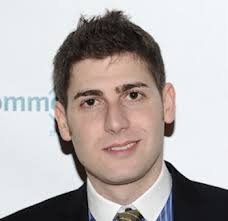
Eduardo Saverin
Giving up his citizenship allowed him to avoid paying taxes on billions of dollars on capital gains when Facebook launched its IPO on May 18, 2012. Singapore does not have a capital gains tax.
And America’s extreme Right couldn’t have been happier.
Take Rush Limbaugh, the former Right-wing talk-show host. The Rush Limbaugh Show aired throughout the U.S. on over 400 stations and was the highest-rated talk-radio program in the United States.
When Limbaugh spoke, his “dittohead” audience listened—and acted as he decreed.

Rush Limbaugh
“So if it’s a more favorable tax haven that you can find elsewhere and you go there,” asked Limbaugh, “why is it automatically that you are unpatriotic?
“Why is it automatically that you are a coward, that you are not paying your fair share? It’s this whole class envy thing rearing its head again.”
For Limbaugh, the villain wasn’t a billionaire who turned his back on the country that gave him the opportunity to become one. No, the villain lay in those who believe that even wealthy businessmen should behave like patriots—instead of parasites.
“But [Barack Obama is] out there demonizing successful people every day,” said Limbaugh, “targeting successful people every day, running a presidential campaign based on class warfare, trying to get the 99% of the country who are not in the top 1% to hate the 1%, to literally despise ’em.”
Consider the implications of this:
On November 1, 2011, Forbes magazine reported that, in 2007, the then-richest 1% of the American population owned 34.6% of the country’s total wealth, and the next 19% owned 50.5%.
Thus, the top 20% of Americans owned 85% of the country’s wealth and the bottom 80% of the population owned 15%.
According to Limbaugh’s philosophy, the bottom 80% of the population owning 15% of the country’s wealth should pay homage to the top 20% of Americans who own 85% of the country’s wealth.
In short, they should “know their place” and not expect the moneyed few to pay their fair share of taxes.
Of course, this was to be expected of Limbaugh—whose own wealth made him a multi-millionaire.
In 2001, U.S. News & World Report noted that Limbaugh had an eight-year contract, with Clear Channel Communications, for $31.25 million a year.
And according to a July 2, 2008, Matt Drudge column, Limbaugh had signed a contract extension through 2016 that was worth over $400 million.
And Limbaugh wasn’t alone in his praise for Saverin.
Another right-winger who defended those who run out on their country was anti-tax activist Grover Norquist.
On May 7, 2012, two Democratic Senators—Chuck Schumer of New York and Bob Casey of Pennsylvania—introduced legislation designed to tax expatriates even after they left the country.
Their “Ex-PATRIOT Act” would have imposed a mandatory 30% tax on American investments for those who renounce their citizenship and would also prohibit individuals like Saverin from re-entering the country.
But the bill died in committee.
In 2013, Schumer and two other Senators added similar provisions to a major immigration reform bill. But their amendment was not included in the version of the bill that passed the Senate.
“Saverin has turned his back from the country that welcomed him, kept him safe, educated him and helped him become a billionaire,” Schumer said at a press conference. He added that it was time to “de-friend” the Facebook co-founder.
Norquist, the president of Americans for Tax Reform (ATF) said that targeting people who turn in their passports reminded him of regimes that had driven people out of the country, only to confiscate their wealth at the door.
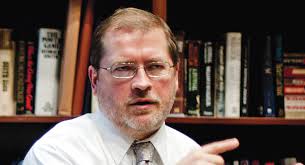
Grover Norquist
“I think Schumer can probably find the legislation to do this,” said Norquist. “It existed in Germany in the 1930s and Rhodesia in the ’70s and in South Africa as well. He probably just plagiarized it and translated it from the original German.”
On the floor of the Senate, Schumer denounced Norquist in return:
“I know a thing or two about what the Nazis did. Some of my relatives were killed by them.
“Saying that a person who made their fortune specifically because of the positive elements in American society, in turn, has a responsibility to do right by America is not even on the same planet as comparing to what Nazis did to Jews.”

Chuck Schumer
Schumer added that he found it troubling that conservatives would lionize someone like Saverin, who was called “an American hero” by Forbes magazine.
On May 13, 2012, Forbes—which describes itself as “The Capitalist Tool”—had run an Op-Ed piece under the headline: “For De-Friending The U.S., Facebook’s Eduardo Saverin Is an American Hero.”
“Can you believe it?” asked Schumer. “An American hero? Renouncing your citizenship now qualifies as heroic for the hard Right-wing?”
“This has gone so far, this idolatry they have taken to such an extreme end, they make Eduardo Saverin into their patron saint. In the name of low taxes for the wealthy, they have lionized an inherently unpatriotic person.”
1776 (PLAY), ABC NEWS, ALTERNET, AMERICABLOG, AP, “SOUTHERN STRAGEGY”, BABY BOOMER RESISTANCE, BARACK OBAMA, BLOOMBERG, BUZZFEED, CBS NEWS, CEOS, CHRIS MATHEWS, CIVIL RIGHTS ACT OF 1964, CIVIL WAR, CNN, CROOKS AND LIARS, DAILY KOZ, DECLARATION OF INDEPENDENCE, DONALD TRUMP, DRUDGE REPORT, FACEBOOK, FIVETHIRTYEIGHT, FOOD STAMPS, FRED TRUMP, HARPER’S MAGAZINE, HOWARD STERN, HUFFINGTON POST, JOHN DICKINSON, JOHN HANCOCK, MEDIA MATTERS, MEDICARE, MOTHER JONES, MOVEON, MSNBC, NBC NEWS, NEWSWEEK, NPR, PBS NEWSHOUR, PEW FOUNDATION, POLITICO, POLITICUSUSA, PROPAGANDA, RAW STORY, REPUBLICAN PARTY, REPUBLICANS, REUTERS, Ronald Reagan, SALON, SEATTLE TIMES, SLATE, SLAVERY, SOCIAL SECURITY, TALKING POINTS MEMO, THE ATLANTIC, THE CHICAGO SUN-TIMES, THE CHICAGO TRIBUNE, THE DAILY BEAST, THE DAILY BLOG, THE GUARDIAN, THE HILL, THE HUFFINGTON POST, THE LOS ANGELES TIMES, THE NATION, THE NEW REPUBLIC, THE NEW YORK TIMES, THE SOUL OF BATTLE (BOOK), THE VILLAGE VOICE, THE WALL STREET JOURNAL, THE WASHINGTON POST, THINKPROGRESS, TIME, TIME MAGAZINE, TRUTHDIG, TRUTHOUT, TWO POLITICAL JUNKIES, U.S. NEWS & WORLD REPORT, UPI, USA TODAY, VICTOR DAVIS HANSON, VIETNAM WAR, VOTING RIGHTS ACT OF 1965, WILLIAM TECUMSEH SHERMAN, WONKETTE, X
In Bureaucracy, Business, History, Politics, Social commentary on May 23, 2025 at 12:13 am
Republicans have long tried to prevent or eliminate programs that aid the poor and middle-class, including:
- Social Security (since it began in 1935)
- Medicare (started 1965)
- Medicaid (started 1985)
- Food stamps (started 1939)
- WIC (Women, Infants, Children–started 1972).
So why are so many poor Americans flocking to this party’s banner?
Two reasons: Racism and greed. There are historical parallels for both.
First, race:
In 1999, historian Victor Davis Hanson noted the huge gap in wealth between the aristocratic, slave-owning minority of the pre-Civil War South and the vast majority of poor white Southerners.
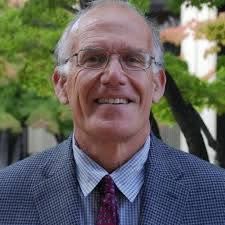
Victor Davis Hanson
“Before the war in the counties [Union General William Tecumseh] Sherman would later ruin, the top 10% of the landowners controlled 40% of the assessed wealth.”
In contrast, “more than half of those who were lucky enough to own any property at all still possessed less than 15% of the area’s valuation.”
So Hanson asked: “Why did the millions of poor whites of the Confederacy fight at all?”
He supplied the answer in his brilliant work on military history, The Soul of Battle: From Ancient Times to the Present Day, How Three Great Liberators Vanquished Tyranny.
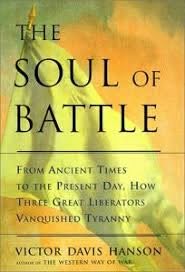
One of those liberators was General William Tecumseh Sherman, who led 62,000 Union troops in a victorious “March to the Sea” through the Confederacy in 1864.
So why did so many poor Southern whites literally lay down their lives for the wealthy planter class, which despised them?
According to Hanson: “Behind the entire social fabric of the South lay slavery.
“If slavery eroded the economic position of the poor free citizens, if slavery encouraged a society of haves and have-nots…then it alone offered one promise to the free white man—poor, ignorant and dispirited—that he was at least not black and not a slave.”
And the planter class and its allies in government easily fobbed off their poor white countrymen with cheap flattery. Said Georgia Governor Joseph Brown:
“Among us the poor white laborer is respected as an equal. His family is treated with kindness, consideration, and respect. He does not belong to the menial class. The negro is in no sense his equal. He belongs to the only true aristocracy, the race of white men.”

Arlington House and plantation, former home of Robert E. Lee
Similarly, poor whites now flock to the Republican Party—which holds them in equal contempt—in large part to protest the 2008 election of the first black President of the United States.
According to a Pew Research Center study released on July 22, 2011: “Notably, the GOP gains have occurred only among white voters; a 2-point Republican edge among whites in 2008 (46% to 44%) has widened to a 13-point lead today (52% to 39%).”
Since the 1960s, Republicans have pursued a campaign policy of “divide and rule”—divide the nation along racial lines and reap the benefits at election time.
- Republicans opposed the Civil Rights Act of 1964.
- Republicans opposed the Voting Rights Act of 1965.
- Republicans, with Richard Nixon as their Presidential candidate in 1968 and 1972, pursued what they called a “Southern strategy”: Use “code language” to stoke fear and hatred of blacks among whites.
- Republicans have falsely identified welfare programs exclusively with nonwhites. (Of the six million Americans receiving food stamps, about 42% are white, 32% are black, and 22% are Latino—with the growth fastest among whites during the recession.)
Thus, in voting Republican, many of these poor whites believe they are “striking a blow for the white race.”
And they can do so in a more socially acceptable way than joining a certified hate group such as the American Nazi Party or Ku Klux Klan.
Since 2015, openly racist groups such as the Klan and the American Nazi Party have flocked to the banner of Presidential candidate and President Donald Trump. By enthusiastically courting their support, the real estate mogul has made it possible for Republican candidates to openly display their own racism.
Now greed:
In the hit play, 1776, on the creation and signing of the Declaration of Independence, there is a telling exchange between John Dickinson and John Hancock. It comes during the song, “Cool, Cool, Considerate Men.”
Dickinson, the delegate from Pennsylvania, urges Hancock, president of the Second Continental Congress, “to join us in our minuet.” By “us” he means his fellow conservatives who fear losing their property and exalted status by supporting American independence from Great Britain.
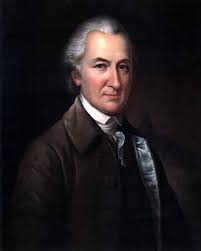
John Dickinson
Hancock declines, saying: “Fortunately, there are not enough men of property in America to dictate policy.”
To which Dickinson replies: “Perhaps not. But don’t forget that most men with nothing would rather protect the possibility of becoming rich than face the reality of being poor. And that is why they will follow us.”
Today, poor whites generally identify with the CEOs of powerful corporations. They believe the Republican gospel that they can attain such wealth—if only the government will “get out of my way.”
They forget—or ignore—the truth that government, for all its imperfections, is sometimes all that stands between them and a wide range of predators.
In return, the CEOs despise them as the privileged have always despised their social and economic “inferiors.”
Unless the Democratic Party can find ways to directly address these bitter, Politically Incorrect truths, it will continue its decline into insignificance.
1776 (PLAY), ABC NEWS, ALTERNET, AMERICABLOG, AP, “SOUTHERN STRAGEGY”, BABY BOOMER RESISTANCE, BARACK OBAMA, BLOOMBERG, BUZZFEED, CBS NEWS, CEOS, CHRIS MATHEWS, CIVIL RIGHTS ACT OF 1964, CIVIL WAR, CNN, CROOKS AND LIARS, DAILY KOZ, DECLARATION OF INDEPENDENCE, DONALD TRUMP, DRUDGE REPORT, FACEBOOK, FIVETHIRTYEIGHT, FOOD STAMPS, FRED TRUMP, HARPER’S MAGAZINE, HOWARD STERN, HUFFINGTON POST, JOHN DICKINSON, JOHN HANCOCK, MEDIA MATTERS, MEDICARE, MOTHER JONES, MOVEON, MSNBC, NBC NEWS, NEWSWEEK, NPR, PBS NEWSHOUR, PEW FOUNDATION, POLITICO, POLITICUSUSA, PROPAGANDA, RAW STORY, REPUBLICAN PARTY, REPUBLICANS, REUTERS, Ronald Reagan, SALON, SEATTLE TIMES, SLATE, SLAVERY, SOCIAL SECURITY, TALKING POINTS MEMO, THE ATLANTIC, THE CHICAGO SUN-TIMES, THE CHICAGO TRIBUNE, THE DAILY BEAST, THE DAILY BLOG, THE GUARDIAN, THE HILL, THE HUFFINGTON POST, THE LOS ANGELES TIMES, THE NATION, THE NEW REPUBLIC, THE NEW YORK TIMES, THE SOUL OF BATTLE (BOOK), THE VILLAGE VOICE, THE WALL STREET JOURNAL, THE WASHINGTON POST, THINKPROGRESS, TIME, TIME MAGAZINE, TRUTHDIG, TRUTHOUT, TWO POLITICAL JUNKIES, U.S. NEWS & WORLD REPORT, UPI, USA TODAY, VICTOR DAVIS HANSON, VIETNAM WAR, VOTING RIGHTS ACT OF 1965, WILLIAM TECUMSEH SHERMAN, WONKETTE, X
In Bureaucracy, Business, History, Politics, Social commentary on May 22, 2025 at 12:20 am
On July 22, 2011, ABC News carried the following story:
The Pew Foundation, analyzing voter identification, found “the electorate’s partisan affiliations have shifted significantly” since Barack Obama won office in 2008.
The GOP had gained strength among white voters, most specifically “the young and poor.”

A seven-point Democratic advantage among whites under age 30 three years earlier had turned into an 11-point GOP advantage. And a 15-point Democratic advantage among whites earning less than $30,000 annually had swung to a slim four-point Republican edge by 2011.
In addition:
- The GOP gains had occurred only among white voters.
- Republicans had made sizable gains among white voters since 2008. Fifty-two percent of white voters called themselves Republicans or leaned to the GOP, compared with 39% who affiliated with the Democratic Party or leaned Democratic.
- Democrats had lost their edge among lower income white voters.
- In 2008, Democrats had a 15 point lead among white voters with family incomes less than $30,000. By 2011, Republicans had a four-point edge among this group.
- The GOP’s lead among middle income white voters had grown since 2008, and Republicans held a substantial advantage with higher income white voters.
- Republicans made gains among whites with a high school education or less. The GOP’s advantage over Democrats had grown from one point in 2008 to 17 points in 2011 among less educated whites.
- Republicans had made smaller gains among white voters who had college degrees.
Five years later, in 2016, these masses of disaffected white men would overwhelmingly vote for Donald Trump, a real estate mogul-turned-celebrity-TV-host of “The Apprentice.”
Trump had been born into a life of luxury. He began his real estate career at his father’s real estate and construction company. He rose to wealth and fame after his father, Fred, gave him control of the business in 1971.
Similarly, soon after acquiring the family business, Trump set out to build his own empire—hotels, golf courses, casinos and skyscrapers across North and South America, Europe and Asia. Of the 515 entities he owns, 268 of them—52%—bear his last name. He often refers to his properties as “the swankiest,” “the most beautiful.”
During the Vietnam war, his father reportedly paid a doctor to claim that Trump suffered from “bone spurs” in his foot—thus enabling him to escape the draft.
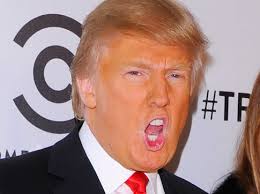
Donald Trump
In short, Trump has literally nothing in common with the masses of poor whites who worship him.
Howard Stern, the notorious radio host, has known Trump many years. Commenting on the appeal Trump has for his followers, Stern says: “The oddity of all this is the people Trump despises most, love him the most.
“The people who are voting for Trump for the most part …he wouldn’t even let them in his fucking hotel. He’d be disgusted by them. Go to Mar-a-Lago. See if there’s any people who look like you. I’m talking to you in the audience.”
Yet, while the poor worship Trump and Republicans generally, there is a disconnect between them: Since 1980, Republicans have pursued a policy of gutting programs aimed at helping the poor—while repeatedly creating tax-breaks for the wealthiest 1% of the population.
For Republicans, the patron saint of this “love-the-rich-screw-the-poor” ideology remains Ronald Reagan—two-time governor of California and twice-elected President of the United States (1981-1989)
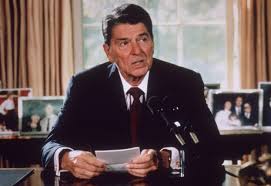
Ronald Reagan, who taught Americans to worship the wealthy
Among those charting Reagan’s legacy as President was former CBS Correspondent David Shoenbrum.
In his bestselling autobiography, America Inside Out: At Home and Abroad from Roosevelt to Reagan, he noted:
- On January 28, 1981, keeping a pledge to his financial backers in the oil industry, Reagan abolished Federal controls on the price of oil.
- Within a week, Exxon, Texaco and Shell raised gasoline prices and prices of home heating oil.
- Reagan saw it as his duty to put a floor under prices, not a ceiling above them.
- Reagan believed that when government helped business it wasn’t interfering. Loaning money to bail out a financially incompetent Chrysler was “supporting the free enterprise system.”
- But putting a high-profits tax on price-gouging corporations or filing anti-trust suits against them was “Communistic” and therefore intolerable.
- Tax-breaks for wealthy businesses meant helping America become stronger.
- But welfare for the poor or the victims of a predatory marketplace economy weakened America by sapping its morale.
“In short, welfare for the rich is good for America. But welfare for the poor is bad for America, even for the poor themselves, for it encourages them to be shiftless and lazy.
“Somehow, loans to the inefficient management of American corporations would not similarly encourage them in their inefficient methods,” wrote Shoenbrun.
Republicans have sought to dismantle Social Security ever since that program began in 1935. And Republicans have furiously opposed other programs aiding the poor and middle-class—such as Medicare, food stamps and WIC (Women, Infants, Children).
In short, this is not a political party with a history of rushing to the defense of those most in need.
So the question remains: Why are so many poor Americans flocking to its banner?
The answer lies in the history of the American South—and slavery.
2003 IRAQ WAR, ABC NEWS, ALTERNET, AMERICABLOG, AP, ASIANS, BABY BOOMER RESISTANCE, BARACK OBAMA, BBC, BIRTH CONTROL, BLACKS, BLOOMBERG NEWS, BUZZFEED, CBS NEWS, CNN, CROOKS AND LIARS, DAILY KOS, DAILY KOZ, DISABLED, DONALD TRUMP, ED MARTIN, FIVETHIRTYEIGHT, HARPER’S MAGAZINE, HILLARY CLINTON, HUFFINGTON POST, HUMAYUN KHAN, KATRINA PIERSON, LATINOS, MARCO GUTIERREZ, MEDIA MATTERS, MEDICAID, MEDICARE, MOTHER JONES, MOVEON, MSNBC, MUSLIMS, NBC NEWS, NEW REPUBLIC, NEWSDAY, NEWSWEEK, NICCOLO MACHIAVELLI, NPR, OBAMACARE, PBS NEWSHOUR, POLITICO, POLITICUSUSA, PRISONERS OF WAR, RAW STORY, REUTERS, SALON, SEATTLE TIMES, SLATE, SOCIAL SECURITY, TALKING POINTS MEMO, TEA PARTY, THE ATLANTIC, THE CHICAGO SUN-TIMES, THE CHICAGO TRIBUNE, THE DAILY BEAST, THE DAILY BLOG, THE DISCOURSES, THE GUARDIAN, THE HILL, THE HUFFINGTON POST, THE INTERCEPT, THE LOS ANGELES TIMES, THE NATION, THE NEW REPUBLIC, THE NEW YORK TIMES, THE NEW YORKER, THE PRINCE, THE VILLAGE VOICE, THE WALL STREET JOURNAL, THE WASHINGTON POST, THINKPROGRESS, TIME, TRUTHDIG, TRUTHOUT, TWO POLITICAL JUNKIES, U.S. NEWS & WORLD REPORT, UPI, USA TODAY, WAYNE ROOT, WOMEN, WONKETTE, X
In Bureaucracy, History, Military, Politics, Social commentary on May 20, 2025 at 12:10 am
No shortage of pundits have sized up Donald Trump—first as a Presidential candidate, then as the nation’s 45th President, and now as a its 47th President.
But how does Trump measure up in the estimate of Niccolo Machiavelli, the 16th-century Florentine statesman?
It is Machiavelli whose two great works on politics—The Prince and The Discourses—remain textbooks for successful politicians more than 500 years later.
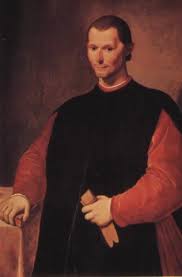

Niccolo Machiavelli
Let’s start with Trump’s notoriety for hurling insults at virtually everyone, including:
- Latinos
- Asians
- Muslims
- Blacks
- The Disabled
- Women
- Prisoners-of-War
These insults delight his white, under-educated followers. But they have alienated millions of other Americans who might have voted for him.
Here’s Machiavelli’s advice on issuing threats and insults:
-
“I hold it to be a proof of great prudence for men to abstain from threats and insulting words towards any one.
-
“For neither the one nor the other in any way diminishes the strength of the enemy—but the one makes him more cautious, and the other increases his hatred of you, and makes him more persevering in his efforts to injure you.”
For those who expected Trump to shed his propensity for constantly picking fights once he became President, Machiavelli warned:
-
“…If it happens that time and circumstances are favorable to one who acts with caution and prudence he will be successful. But if time and circumstances change he will be ruined, because he does not change the mode of his procedure.
-
“No man can be found so prudent as to be able to adopt himself to this, either because he cannot deviate from that to which his nature disposes him, or else because, having always prospered by walking in one path, he cannot persuade himself that it is well to leave it…
-
“For if one could change one’s nature with time and circumstances, fortune would never change.”
Then there is Trump’s approach to consulting advisers:
Asked on MSNBC’s “Morning Joe” who he consults about foreign policy, Trump replied; “I’m speaking with myself, number one, because I have a very good brain and I’ve said a lot of things.”
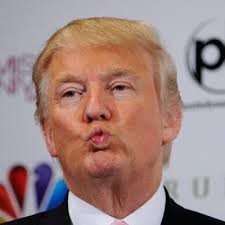
Donald Trump
Machiavelli advised:
-
“A prudent prince must [choose] for his counsel wise men, and [give] them alone full liberty to speak the truth to him, but only of those things that he asks and of nothing else.
-
“But he must be a great asker about everything and hear their opinions, and afterwards deliberate by himself in his own way, and in these counsels…comport himself so that every one may see that the more freely he speaks, the more he will be acceptable.”
On selecting good advisers, Machiavelli taught:
- “The first impression that one gets of a ruler and his brains is from seeing the men that he has about him.
- “When they are competent and loyal one can always consider him wise, as he has been able to recognize their ability and keep them faithful.
- “But when they are the reverse, one can always form an unfavorable opinion of him, because the first mistake that he makes is in making this choice.”
Among the advisers Trump relied on in his 2016 Presidential campaign:
- Founder of Latinos for Trump Marco Gutierrez told MSNBC’s Joy Reid: “My culture is a very dominant culture. And it’s imposing, and it’s causing problems. If you don’t do something about it, you’re gonna have taco trucks every corner.”
- At a Tea Party for Trump rally at a Harley-Davidson dealership in Festus, Missouri, former Missouri Republican Party director Ed Martin reassured the crowd that they weren’t racist for hating Mexicans.
From the outset of his Presidential campaign, Trump polled extremely poorly among Hispanic voters. Comments like these didn’t increase his popularity.
- Wayne Root, opening speaker and master of ceremonies at many Trump campaign events, told Virginia radio host Rob Schilling: People on public assistance and women getting birth control through Obamacare should not be allowed to vote.
Comments like this were a big turn-off among the 70% of women who had an unfavorable opinion of him—and anyone who receives Medicaid, Medicare or Social Security.
- Trump’s spokeswoman, Katrina Pierson, claimed that Barack Obama and Hillary Clinton were responsible for the death of Captain Humayun Khan—who was killed by a truck-bomb in Iraq in 2004.
Obama became President in 2009—almost five years after Khan’s death. And Clinton became Secretary of State the same year.
When your spokeswoman becomes a nationwide laughingstock, your own credibility goes down the toilet as well.
Finally, Machiavelli offered a warning that especially applies to Trump: Unwise princes cannot be wisely advised.
-
“It is an infallible rule that a prince who is not wise himself cannot be well advised, unless by chance he leaves himself entirely in the hands of one man who rules him in everything, and happens to be a very prudent man. In this case, he may doubtless be well governed, but it would not last long, for the governor would in a short time deprive him of the state.”
All of which would lead Niccolo Machiavelli to warn, if he could witness American politics today: “This bodes ill for your Republic.”
2016 PRESIDENTIAL CAMPAIGN, ABC NEWS, ALTERNET, AMERICABLOG, ANTHONY FAUCI, AP, BABY BOOMER RESISTANCE, BLOOMBERG, BUZZFEED, CBS NEWS, CNN, CORONAVIRUS, CROOKS AND LIARS, DAILY KOZ, DEMOCRATS, DONALD TRUMP, DRUDGE RETORT, EDUCATION, FIVETHIRTYEIGHT, FOX NEWS NETWORK, HARPER’S MAGAZINE, HYDROXYCHLORQUINE, KAYLEIGH MCENANY, LUNG CANCER, MALARIA, MARJORIE TAYLOR GREENE, MARK MILLEY, MEDIA MATTERS, MOTHER JONES, MOVEON, MSNBC, NBC NEWS, NEWSWEEK, NPR, PBS NEWSHOUR, PEW RESEARCH CENTER, POLITICO, POLITICUSUSA, RAW STORY, REPUBLICANS, REUTERS, RUSH LIMBAUGH, SALON, SEATTLE TIMES, SLATE, SMOKING, TALKING POINTS MEMO, THE ATLANTIC, THE CHICAGO SUN-TIMES, THE CHICAGO TRIBUNE, THE DAILY BEAST, THE DAILY BLOG, THE GUARDIAN, THE HILL, THE HUFFINGTON POST, THE LOS ANGELES TIMES, THE NATION, THE NEW REPUBLIC, THE NEW YORK TIMES, THE VILLAGE VOICE, THE WASHINGTON POST, THINKPROGRESS, TIME, TRUTHDIG, TRUTHOUT, TWITTER, TWO POLITICAL JUNKIES, U.S. MARSHALS SERVICE, U.S. NEWS & WORLD REPORT, UPI, USA TODAY, WITNESS SECURITY PROGRAM, WONKETTE
In Bureaucracy, History, Medical, Politics, Social commentary on May 13, 2025 at 12:11 am
“I’ve chosen this life. I know what it is. There are things about it that sometimes are disturbing. But you just focus on the job you have to do. And just put all that other stuff aside.”
The speaker wasn’t a longtime Mafia enforcer turned-State’s-witness. He was Dr. Anthony Fauci, director of the National Institute of Allergy and Infectious Diseases.
And he was speaking with an NBC News reporter about death threats he had received.
At 83, Fauci was getting the sort of protection reserved for organized crime witnesses through the Justice Department’s Witness Security Program.

Dr. Anthony Fauci
Cmichel67, CC BY-SA 4.0 <https://creativecommons.org/licenses/by-sa/4.0>, via Wikimedia Commons
In 2020, the U.S. Marshals Service deputized nine officers from the Department of Health and Human Services as bodyguards for Fauci.
After leaving government service as Chief Medical Advisor to the President in 2022, he continued to receive protection from the U.S. Marshals Service—until January 16, 2025.
That was when re-elected President Donald Trump revoked his security detail.
Speaking to reporters in North Carolina, Trump said that he wouldn’t feel any responsibility if Fauci were harmed.
“You can’t have a security detail for the rest of your life because you worked for government,” Trump said—ignoring the truth that he has had one since he ran for President in 2015.
On August 28, 2024, Trump had shared a picture of Fauci in an orange jumpsuit, during a hate-filled rant on his website, Truth Social.
In that same post he called for the death or imprisonment of his enemies—former President Barack Obama, Bill Gates, Vice President Kamala Harris and Hillary Clinton.
Fauci’s “crime”: Speaking the hard medical truth about Coronavirus—and thus contradicting then-President Donald Trump’s ignorance- and lie-riddled statements.
For example: Trump loudly touted hydroxychloroquine, used for treating malaria, as a miracle cure for the Coronavirus.
Yet Fauci dared to point out there had been no scientific trials of the drug for its effectiveness against Coronavirus. Moreover, given the medical condition of some patients, it could even prove fatal.
Nor is Fauci the only former government official Trump has marked for vengeance. He stripped the security detail assigned to former Chairman of the Joint Chiefs of Staff Mark Milley.
Milley’s “crime”: Rightly criticizing Trump as a wannabe dictator:
“We don’t take an oath to a king, or a queen, or to a tyrant or dictator, and we don’t take an oath to a wannabe dictator. We don’t take an oath to an individual. We take an oath to the Constitution, and we take an oath to the idea that is America, and we’re willing to die to protect it.”
Such statements have infuriated Trump’s base of—at best—half-educated followers.
During the 2016 Presidential race, after winning the Nevada primary, Trump infamously celebrated his victory: “We won the evangelicals. We won with young. We won with old. We won with highly educated. We won with poorly educated. I love the poorly educated.”
A February 24, 2016 USA Today story covering this event carried the headline: “Donald Trump loves the poorly educated—and they love him.”
An August 20, 2019 story in Forbes noted that a Pew Research survey, conducted in July, had found that “67% of Democrats and Democrat-leaning respondents say higher education is having a positive effect on the country compared to only 33% of Republicans and Republican-leaning participants.”
Furthermore, “The percentage of Republicans attributing a positive effect to higher education has steadily eroded from 58% (2010), 53% (2012), 54% (2015), 43% (2016), and 36% (2017). Among Republicans, 59% now say higher education has a negative effect on the U.S., compared to just 18% of Democrats.”
In March, 2020, an NBC News poll found that only 30% of Republicans said that they would actually listen to the advice of doctors to stay away from large, crowded areas to avoid Coronavirus.
These are the same people who get their version of reality from Right-wing sources like Fox News Network and Rush Limbaugh.
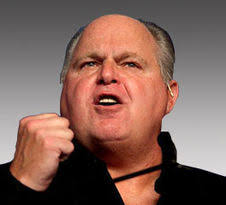
Rush Limbaugh
On his March 27, 2020 show, Limbaugh dismissed Coronavirus as “the common cold,” then added: “We didn’t elect a president to defer to a bunch of health experts that we don’t know.”
This is the same Rush Limbaugh who said, in 2015: “Firsthand smoke takes 50 years to kill people, if it does. Not everybody that smokes gets cancer. Now, it’s true that everybody who smokes dies, but so does everyone who eats carrots.”
In February, 2020, Limbaugh—a longtime and heavy cigar smoker—announced that he had Stage Four lung cancer. He died on February 17, 2021.
And then there is President Trump—and his chorus of cheerleaders.
Among these: Congresswoman Marjorie Taylor Greene (R-GA). At a House subcommittee hearing about the country’s response to the COVID-19 pandemic, Greene screeched at Fauci: “You know what this committee should be doing? We should be recommending you to be prosecuted.
“We should be writing a criminal referral because you should be prosecuted for crimes against humanity. You belong in prison, Dr. Fauci!”
Later, on X, she posted: “No one should get death threats and I get them ALL THE TIME.”
By daring to contradict such blatant ignorance—if not outright lies—Dr. Anthony Fauci has made himself a target for Right-wing hatred and death threats.
By the time Trump left office—on January 20, 2021—more than 400,000 Americans had died of COVID-19.


 Bureaucracybuster's Blog
2016 PRESIDENTIAL CAMPAIGN, 2020 PRESIDENTIAL CAMPAIGN, 2024 PRESIDENTIAL CAMPAIGN, 60 MINUTES NEWS MAGAINE, ABC NEWS, ADAM SCHIFF, ADOLF HITLER, ALBERT “THE EXECUTIONER” ANASTASIA, ALTERNET, ALVIN BRAGG, AMERICABLOG, AP, ARTICLES OF IMPEACHMENT, ARTIFICIAL INTELLIGENCE (AI), BABY BOOMER RESISTANCE, BORDER WALL, BUZZFEED, CANADA, CBS NEWS, CENSORSHIP, CENSUS BUREAU, CENTERS FOR DISEASE CONTROL AND PREVENTION, CHARLES “LUCKY” LUCIANO, CHARLES DE GAULLE, CHINA, CHRIS CHRISTIE, CHRISTI GRIMM, CHRISTOPHER S. MURPHY, CIA, CLASSIFIED DOCUMENTS, CNN, CONSERVATIVE POLITICAL ACTION CONFERENCE, CONSUMER FINANCIAL PROTECTION BUREAU, CONVERSATION WITH AN AMERICAN WRITER (POEM), CORONAVIRUS RELIEF MONIES, COVID-19, CROOKS AND LIARS, CUBAN MISSILE CRISIS, DAILY KOS, DAILY KOZ, DAN BOWMAN, DAN SULLIVAN, DANIELLE SASSOON, DAVID BROOKS, DEMOCRATS, DEPARTMENT OF DEFENSE, DEPARTMENT OF GOVERNMENT EFFICIENCY (DOGE), DEPARTMENT OF HEALTH AND HUMAN SERVICES, DEPARTMENT OF JUSTICE, DIVERSITY EQUITY INCLUSION (DEI), DONALD TRUMP, DONALD TRUMP JUNIOR, DRUDGE RETORT, E. JEAN CARROLL, ELON MUSK, EMIL BOVE, EMOLUMENTS CLAUSE OF THE UNITED STATES CONSTITUTION, ERIC ADAMS, EXTORTION, FBI, FIRST AMENDMENT, FIVETHIRTYEIGHT, FRIVOLOUS LAWSUITS, GENN FINE, GEORGE FLOYD, GEORGE STEPHANOPOULOS, GEORGE W. BUSH, GLENN FINE, GOVERNMENT ACCOUNTABILITY OFFICE, GOVERNMENT SHUTDOWN, GULF OF AMERICA, GULF OF MEXICO, HARPER’S MAGAZINE, HILLARY CLINTON, HOUSE FOREIGN AFFAIRS COMMITTEE, HOUSE INTELLIGENCE COMMITTEE, HOUSE OVERSIGHT AND REFORM COMMITTEE, HUNTER BIDEN, IMMIGRANTS, IMPEACHMENT, IMPOUNDMENT CONTROL ACT, INSPECTORS GENERAL, INTELLIGENCE COMMUNITY, INTELLIGENCE OFFICERS, JACK SMITH, JAKE SULLIVAN, JAKE TAPPER, JAMAL KHASHOGGI, JAMES COMEY, JAMES MCHENRY, JAMES ROBART, JANUARY 6 COUP ATTEMPT, JARED KUSHNER, JEFF SESSIONS, JOHN CORNYN, JOHN F. KENNEDY, JOHN F. KENNEDY CENTER FOR THE PERFORMING ARTS, JOHN ROBERTS, JOING CHIEFS OF STAFF, JON S. TIGAR, JOSEPH BIDEN, JOSEPH STALIN, Kamala Harris, KELLY LOEFFER, KEVIN CRAMER, LAFAYETTE SQUARE, LAMAR ALEXANDER, LEON PANETTA, LINDSEY GRAHAM, LUXUY JET, MARCO RUBIO, MARK MILLEY, MARTIN GUGINO, MEDIA MATTERS, MEIN KAMPF, MERRICK GARLAND, MEXICO, MICHAEL FLYNN, MICHAEL HAYDEN, MICHAEL K. ATKINSON, MICK MULVANEY, MIKE PENCE, MITCH MCCONNELL, MOHAMMED BIN SALMAN, MOTHER JONES, MOVEON, MSNBC, NANCY PELOSI, NATALIA VESELNITSKAYA, NATIONAL SECURITY AGENCY, NBC NEWS, NEWSWEEK, NIKKI HALEY, NPR, PAUL MANAFORT, PBS NEWSHOUR, PETE HEGSETH, POLITICO, POLITICUSUSA, QATAR, RAW STORY, REPUBLICANS, REUTERS, RINAT AKHMETSHIN, ROBERT MUELLER, ROBERT PAYNE, ROD ROSENSTEIN, ROGER STONE, RON DESANTIS, RON JOHNSON, RUSSIA, SALON, SEATTLE TIMES, SERGEY KISLYAK, SERGEY LAVROV, SLATE, ST. JOHN’S CHURCH, STEVE DAINES, TALKING POINTS MEMO, TARIFFS, TED CRUZ, THE ATLANTIC, THE CHICAGO SUN-TIMES, THE CHICAGO TRIBUNE, THE DAILY BEAST, THE DAILY BLOG, THE GUARDIAN, THE HILL, THE HUFFINGTON POST, THE JUDICIARY, THE LIFE AND DEATH OF ADOLF HITLER (BOOI), THE LIFE AND DEATH OF ADOLF HITLER (BOOK), THE LOS ANGELES TIMES, THE NATION, THE NEW REPUBLIC, THE NEW YORK TIMES, THE PENTAGON, THE PRESS, THE VILLAGE VOICE, THE WASHINGTON POST, THINKPROGRESS, TIME, TREASON, TRUMP TOWER MEETING, TRUTH SOCIAL, TRUTHDIG, TRUTHOUT, TWENTY-SECOND AMENDMENT, TWO POLITICAL JUNKIES, U.S. NEWS & WORLD REPORT, UKRAINE, UNITED STATES HOUSE OF REPRESENTATIVES, UNITED STATES SENATE, UPI, USA TODAY, VLADIMIR PUTIN, VOLODYMYR ZELENSKY, WHISTLEBLOWER, WHITE HOUSE BUDGET OFFICE, WONKETTE, X, YEVGENEY YEVTUSHENKO
REPUBLICANS: 50 WAYS TO BE A COWARD–PART ONE (OF SEVEN)
In Bureaucracy, History, Law, Law Enforcement, Politics, Social commentary on June 2, 2025 at 12:59 am“One man with courage makes a majority.”
—-Andrew Jackson
Donald Trump—facing four indictments and 91 criminal charges—proved the clear front runner for the 2024 Republican Presidential nomination.
And 77 million Right-wing Americans made him their choice for President on November 5.
Since 2015, Republicans have a shameful history of excusing his outrages and criminality.
A classic example of this occurred on June 9, 2020.
That was when then-President Trump charged that a 75-year-old man who was seriously injured by police officers in Buffalo, New York, was part of a radical leftist “set up.”
The victim, Martin Gugino, was described as a peace activist associated with the Catholic Worker Movement.
On June 4, 2020, during nationwide protests over the police murder of black security guard George Floyd, a curfew was imposed on Buffalo, New York. As police swept through Niagara Square, Gugino walked directly into their path as if attempting to speak with them.
Two officers pushed him and he fell backwards, hitting the back of his head on the pavement and losing consciousness. The line of officers walked past Gugino as he lay on the ground with blood pooling around his head. One officer tried to check on him, but another patrolman told him to move on, and he did.
Martin Gugino falls backward
Enter Trump, who had been severely criticized for sending police and National Guardsmen to remove peaceful protesters from Lafayette Square so he could stage a photo-op at nearby St. John’s Church.
On June 9 he tweeted: “Buffalo protester shoved by Police could be an ANTIFA provocateur. 75 year old Martin Gugino was pushed away after appearing to scan police communications in order to black out the equipment. @OANN I watched, he fell harder than was pushed. Was aiming scanner. Could be a set up?”
As usual, Trump offered no evidence to back up his slander. And, as usual, Republicans refused to condemn him for his latest outrage.
Among those competing for “Most Cowardly Sycophant of the Year”:
So much for Republican profiles in courage.
On December 18, 2019, the House of Representatives had approved two Articles of Impeachment against Trump for:
Article 1: Abuse of Power: For pressuring the president of Ukraine to assist his re-election campaign by smearing a potential rival for the White House.
Article 2: Obstruction of Congress: For obstructing Congress by blocking testimony of subpoenaed witnesses and refusing to provide documents in response to House subpoenas in the impeachment inquiry.
On July 25, 2019, Trump had “asked” Ukraine President Volodymir Zelensky to do him a “favor”: Find embarrassing “dirt” on former Vice President Joseph Biden and his son, Hunter.
Hunter had had business dealings in Ukraine. And Joseph Biden might be Trump’s Democratic opponent for the White House in 2020.
To underline the seriousness of his “request,” earlier in July Trump had told Mick Mulvaney, his White House chief of staff, to withhold $400 million in military aid Congress had approved for Ukraine, which was facing an increasingly aggressive Russia
But then a CIA whistleblower filed a complaint about the extortion attempt—and the media and Congress soon learned of it. And ever since, the evidence linking Trump to impeachable offenses had mushroomed.
On January 16, 2020, the Government Accountability Office (GAO) announced that the Trump administration broke the law when it withheld security aid to Ukraine.
Joseph Biden with Barack Obama
As Senate trial proceedings unfolded, the 53-majority Republican Senators:
On February 5, 2020, the Republican-dominated Senate—as expected—absolved President Donald Trump from trying to extort Ukraine into smearing a possible rival for the White House.
Only one Republican—Utah Senator Mitt Romney—had the moral courage to vote for conviction.
Share this: