Posts Tagged ‘WONKETTE’
2016 PRESIDENTIAL ELECTION, 2024 PRESIDENTIAL ELECTION, ABC NEWS, ADOLF HITLER, ALTERNET, AMERICABLOG, AP, BABY BOOMER RESISTANCE, BBC, BLACKS, BLOOMBERG, BLOOMBERG NEWS, BUZZFEED, CBS NEWS, CNN, COVID-19, CROOKS AND LIARS, DAILY KOS, DEMOCRACY, DONALD J. TRUMP, DONALD TRUMP, DRUDGE RETORT, ECONOMY, EMPLOYMENT, EXTORTION, FACEBOOK, FBI, FIVETHIRTYEIGHT, GESTAPO, GREED, HARPER’S MAGAZINE, HATRED, HISPANICS, HUFFINGTON POST, HUNTER BIDEN, immigration, INDEPENDENT COUNSEL, INFLATION, JAMES COMEY, JANUARY 6 COUP ATTEMPT, JEWS, JOE BIDEN, JOE SCARBOROUGH, JOHN ADAMS, JOSEPH R. BIDEN, Kamala Harris, MEDIA, MEDIA MATTERS, MEXICO, MIKA BRZEZINSKI, MORNING JOE, MOTHER JONES, MOVEON, MSNBC, NAZI ATROCITIES, NBC NEWS, NEW REPUBLIC, NEWSDAY, NEWSWEEK, NPR, PAM BONDI, PBS NEWSHOUR, POLITICO, POLITICUSUSA, PROJECT 2025, RACISM, RAW STORY, REPUBLICANS, REUTERS, ROBERT MUELLER, ROD ROSENSTEIN, SALON, SARAH HUCKABEE SANDERS, SEATTLE TIMES, SLATE, SOVIET UNION, TALKING POINTS MEMO, THE ATLANTIC, THE CHICAGO SUN-TIMES, THE CHICAGO TRIBUNE, THE DAILY BEAST, THE DAILY BLOG, THE GUARDIAN, THE HILL, THE HUFFINGTON POST, THE INTERCEPT, THE LOS ANGELES TIMES, THE NATION, THE NEW REPUBLIC, THE NEW YORK TIMES, THE NEW YORKER, THE VILLAGE VOICE, THE WASHINGTON POST, THINKPROGRESS, TIME, TRUMP UNIVERSITY SCANDAL, TRUTHDIG, TRUTHOUT, TWO POLITICAL JUNKIES, U.S. NEWS & WORLD REPORT, UKRAINE, UNEMPLOYMENT, UNITED STATES DEPARTMENT OF JUSTICE, UNITED STATES HOUSE OF REPRESENTATIVES, UNITED STATES SENATE, UPI, USA TODAY, VLADIMIR PUTIN, VOLODMYR ZELENSKY, WEHRMACHT, WHITE WOMEN, WONKETTE, X
In Bureaucracy, Business, History, Law, Law Enforcement, Military, Politics, Social commentary on December 4, 2024 at 12:11 am
During the 2024 Presidential election, the two most important issues—for voters—were immigration and inflation.
In short: “Get rid of the spics!” and “Give us cheaper eggs!”
Repeatedly, Vice President Kamala Harris warned that Donald Trump’s return to the Presidency would result in a Fascistic dictatorship:
“Donald Trump is increasingly unhinged and unstable, and in a second term, people like John Kelly [Trump’s former chief of staff] would not be there to be the guardrails against his propensities and his actions….
“He wants a military who will be loyal to him, personally, one that will obey his orders, even when he tells them to break the law or abandon their oath to the Constitution of the United States.”
Reputable media warned that he intended to turn the FBI into his private Gestapo and use the Justice Department to attack his political rivals.
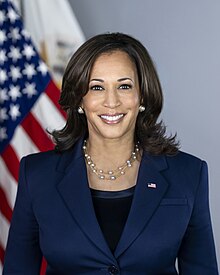
Kamala Harris
But Americans didn’t care.
Instead, 76.9 million voters chose to overturn the democratic traditions that had guided American life since 1788, when the United States Constitution was ratified.
Appeals to their hatred, racism and greed proved far more seductive.
Throughout Trump’s Presidency—2017 to 2021—those who opposed his agenda took solace in a series of expected saviors.
- On May 9, 2017, Trump fired FBI Director James Comey for daring to investigate his proven ties to Russian dictator Vladimir Putin. Assistant Attorney General Rod Rosenstein then appointed Robert Meuller as special counsel to investigate that firing—and Trump’s ties to Russia.
Mueller had a sterling reputation for integrity as a former prosecutor and FBI director. But he allowed himself to be intimidated by the Presidential aura—and refused to directly interview Trump.
His subsequent official report contained no impeachment-worthy evidence.
- On July 25, 2019, Trump threatened to withhold almost $400 million in promised military aid for Ukraine—which faced increasing aggression from Russia—unless its president, Volodymyr Zelensky, did him “a favor”: Investigate 2020 Democratic Presidential Candidate Joe Biden and his son, Hunter, who had had business dealings in Ukraine.
The reason for such an investigation: To find embarrassing “dirt” on Biden. Unless Zelensky found this, the promised aid would be withheld.
The House of Representatives tried Trump for abuse of power and obstruction of Congress. The evidence against him was overwhelming—including a transcript of the extortionate phone call.
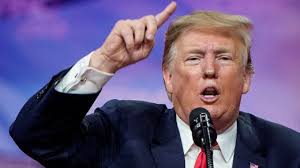
Donald Trump
But the Republican Senate refused to convict.
Had this happened, Trump would have been legally barred from running again for President.
- On January 6, 2021, Trump incited a violent attack on the United States Capitol to stop the counting of Electoral College votes—which would prove that he had lost the 2020 Presidential election to former Vice President Joseph Biden.
As a result, five people died and 174 police officers were injured. The Capitol Building—the symbol of American democracy—suffered about $2.7 billion in damages.
Evidence of Trump’s guilt was overwhelming—including video of his incitement.
But, once again, the Republican-dominated Senate refused to convict.

Stormtrumpers attacking the Capitol Building
Tyler Merbler from USA, CC BY 2.0 <https://creativecommons.org/licenses/by/2.0>, via Wikimedia Commons
Trump’s opponents had placed their hopes in Special Counsel Robert Mueller and (twice) the United States Congress to address the brazen criminality of Donald Trump.
The results: Anger and disappointment.
Yet one last hope remained:
That the 2024 Presidential election would send Joseph Biden, and then, after he dropped out of the race, Vice President Kamala Harris—to the White House.
Harris waged what was widely descripted as “a campaign of joy,” promising to be “the President of all Americans,” including those who voted against her. Repeatedly, she warned that, if re-elected, Trump would pursue a vengeance-fueled agenda against anyone who had dared cross him.
Trump ran a campaign based on hatred—of Hispanics, of liberals, of those who had served in his administration and now disowned him. During his single debate with Harris, he falsely claimed that Haitian immigrants in Ohio were “eating the dogs….they’re eating the cats” of local citizens.
On one occasion, he appeared to emulate performing a ‘sex act’ on a microphone stand during a rally after experiencing technical difficulties.
Most ominously, credible news reports circulated that, if Trump were re-elected, he would implement a radical, Right-wing plan—Project 2025—to completely reshape the federal government.
At its heart: The mass firings of politically neutral civil service officials and their replacement with thousands of political hacks.
This would arm Republicans with the power to establish an absolute dictatorship under the next Republican president.
Yet, in the end, none of this mattered.
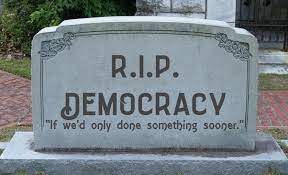
His supporters included:
- Hispanics: 54%—despite being repeatedly vilified by Trump and slated for mass deportation;
- White women: 52%—despite his destroying abortion rights and being convicted for raping columnist E. Jean Carroll;
- Blacks: 21%—giving Harris fewer votes than they gave Biden in 2020.
On January 30, 1933, Adolf Hitler rose to dictatorial power through backroom intrigues and appointment as Chancellor by President Paul von Hindenburg.
On November 5, 2024, Trump rose to dictatorial power when Americans voted to ignore his past crimes and the ones he boasted he intended to commit.
John Adams predicted this long ago: “Democracy never lasts long. It soon wastes, exhausts, and murders itself. There never was a democracy yet that did not commit suicide.”
2016 PRESIDENTIAL ELECTION, 2024 PRESIDENTIAL ELECTION, ABC NEWS, ADOLF HITLER, ALTERNET, AMERICABLOG, AP, BABY BOOMER RESISTANCE, BBC, BLACKS, BLOOMBERG, BLOOMBERG NEWS, BUZZFEED, CBS NEWS, CNN, COVID-19, CROOKS AND LIARS, DAILY KOS, DEMOCRACY, DONALD J. TRUMP, DONALD TRUMP, DRUDGE RETORT, ECONOMY, EMPLOYMENT, EXTORTION, FACEBOOK, FBI, FIVETHIRTYEIGHT, GESTAPO, GREED, HARPER’S MAGAZINE, HATRED, HISPANICS, HUFFINGTON POST, HUNTER BIDEN, immigration, INDEPENDENT COUNSEL, INFLATION, JAMES COMEY, JANUARY 6 COUP ATTEMPT, JEWS, JOE BIDEN, JOE SCARBOROUGH, JOHN ADAMS, JOSEPH R. BIDEN, Kamala Harris, MEDIA, MEDIA MATTERS, MEXICO, MIKA BRZEZINSKI, MORNING JOE, MOTHER JONES, MOVEON, MSNBC, NAZI ATROCITIES, NBC NEWS, NEW REPUBLIC, NEWSDAY, NEWSWEEK, NPR, PAM BONDI, PBS NEWSHOUR, POLITICO, POLITICUSUSA, PROJECT 2025, RACISM, RAW STORY, REPUBLICANS, REUTERS, ROBERT MUELLER, ROD ROSENSTEIN, SALON, SARAH HUCKABEE SANDERS, SEATTLE TIMES, SLATE, SOVIET UNION, TALKING POINTS MEMO, THE ATLANTIC, THE CHICAGO SUN-TIMES, THE CHICAGO TRIBUNE, THE DAILY BEAST, THE DAILY BLOG, THE GUARDIAN, THE HILL, THE HUFFINGTON POST, THE INTERCEPT, THE LOS ANGELES TIMES, THE NATION, THE NEW REPUBLIC, THE NEW YORK TIMES, THE NEW YORKER, THE VILLAGE VOICE, THE WASHINGTON POST, THINKPROGRESS, TIME, TRUMP UNIVERSITY SCANDAL, TRUTHDIG, TRUTHOUT, TWO POLITICAL JUNKIES, U.S. NEWS & WORLD REPORT, UKRAINE, UNEMPLOYMENT, UNITED STATES HOUSE OF REPRESENTATIVES, UNITED STATES SENATE, UPI, USA TODAY, VLADIMIR PUTIN, VOLODMYR ZELENSKY, WEHRMACHT, WHITE WOMEN, WONKETTE, X
In Bureaucracy, History, Politics, Social commentary on December 3, 2024 at 12:13 am
On April 27, 2020, Joe Scarborough offered an important insight about why most Americans ignored President Donald Trump’s crimes and outrages for so long:
“Back in January Joe Biden wrote an Op-Ed that the President was not prepared for this coming pandemic, and things were going to get worse. And he said ‘Let your doctors talk. Let your scientists talk. Follow their lead.’
“…And it’s been one scam idea after another, that people then promoted on other networks, scam doctors promoting these scam solutions, claiming that everybody who had taken this malaria drug had been cured in certain hospitals. This is just the sort of thing that catches up to Donald Trump.
“I’ve said from the very beginning: You can lie about independent counsels, people won’t listen. You can lie about former FBI directors—“
MIKA BRZEZINSKI: “It doesn’t impact their lives.”
JOE SCARBOROUGH: “They’re still going to work, the kids are doing fine, they’ve got enough money to pay their rent, to pay their mortgage, You can even lie about the Ukraine call—they don’t really care.
“But all of these lies, all of these [COVID-19] scams that he’s been pushing…have been revealed as lies—not by the people on cable news, but by their doctors. By nurses they know. If you’ve got a doctor who’s been treating your family for 20-25 years, you’re going to believe that person more than a scam artist that’s pushing propaganda for Donald Trump on talk radio.“
On August 23, 2018, Trump, appearing on “Fox and Friends,” said: “I tell you what, if I ever got impeached, I think the market would crash, I think everybody would be very poor.”
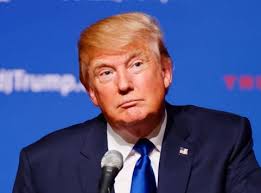
Donald Trump
Thus, he appealed to the greed and fear of his voting base—and no doubt hoped to reach beyond it: “Keep me in power or you’ll all suffer for it.”
Then-White House Press Secretary Sarah Huckabee Sanders bragged, on June 4, 2018:
“Since taking office, the President has strengthened American leadership, security, prosperity, and accountability. And as we saw from Friday’s jobs report, our economy is stronger, Americans are optimistic, and business is booming.”
Many Congressional Republicans echoed this: The American people care only about the economy—and how well-off they are.
For eight years, Nazi Germany underwent such an epoch. Germans called it “The Happy Time.”
It began on January 30, 1933, when Adolf Hitler became Chancellor—and lasted until June 22, 1941, when Hitler invaded the Soviet Union.
Germans knew about the Nazis’ cruelty to the Jews, the conquests of Austria, Czechoslovakia and Poland, the mass arrests and concentration camps.
They didn’t care.
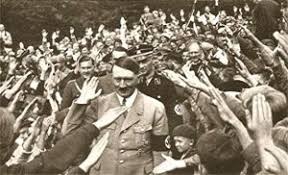
Frenzied Germans greet Adolf Hitler
The Gestapo didn’t have to watch everyone: German “patriots” gladly reported their fellow citizens—especially Jews—to the secret police.
As far as everyday Germans were concerned:
- The streets were clean and peaceful.
- Employment was high.
- The trouble-making unions were gone.
- Germany was once again “taking its rightful place” among ruling nations, after its catastrophic defeat in World War 1.
The height of “The Happy Time” came in June, 1940. In just six weeks, the Wehrmacht accomplished what the German army hadn’t in four years during World War 1: The total defeat of its longtime enemy, France.
Suddenly, French clothes, perfumes, delicacies, paintings and other “fortunes of war” came pouring into the Fatherland.
Most Germans believed der Krieg—“the war”—was over, and only good times lay ahead.
Then, on June 22, 1941, three million Wehrmacht soldiers slashed their way into the Soviet Union. The Third Reich was now locked in a death-struggle with a nation even more powerful than itself.

German soldiers in the Soviet Union
And then, on December 11, 1941—four days after Germany’s ally, Japan, attacked Pearl Harbor—Hitler declared war on the United States.
“The Happy Time” for Germans was over. Only prolonged disaster lay ahead.
Donald Trump has spent his life appealing to the greed or fear of those around him. For example:
- Florida Attorney General Pam Bondi personally solicited a political contribution from Trump around the same time her office deliberated joining an investigation of alleged fraud at Trump University and its affiliates.
- After Bondi dropped the Trump University case against Trump, he wrote her a $25,000 check for her re-election campaign.
- According to an April 14, 2019 story by ABC News, a nationwide review uncovered at least 36 criminal cases where Trump was invoked in direct connection with violent acts, threats of violence or allegations of assault.
- In nine cases, attackers hailed Trump in the midst or immediate aftermath of physically assaulting victims.
- In 10 more cases, perpetrators cheered or defended Trump while taunting or threatening others.
- And in another 10 cases, Trump and his rhetoric were cited in court to explain a defendant’s violent or threatening behavior.
But starting in January, 2020, Trump faced an enemy—to his re-election—that he couldn’t bribe or intimidate.
The deadly COVID-19 virus didn’t accept bribe-monies or grovel before a raging tyrant. As a result, 400,000 Americans died by the time Trump left office.
The Germans made a devil’s-bargain with Adolf Hitler—and paid dearly for it.
Millions of greedy Americans made a similar bargain with Donald Trump—and paid almost as dearly.
2020 PRESIDENTIAL CAMPAIGN, ABC NEWS, ABORTION, ABRAHAM LINCOLN, ADOLF HITLER, ALTERNET, AMERICABLOG, AP, BABY BOOMER RESISTANCE, BBC, BLOOMBERG NEWS, BUZZFEED, CBS NEWS, CIVIL WAR, CLONING, CNN, CONSERVATION, CROOKS AND LIARS, DAILY KOZ, DONALD TRUMP, FACEBOOK, FIVETHIRTYEIGHT, HARPER’S MAGAZINE, HUFFINGTON POST, HUMOR, JOE BIDEN, MEDIA MATTERS, MEXICANS, MOTHER JONES, MOVEON, MSNBC, NBC NEWS, NEW REPUBLIC, NEWSDAY, NEWSWEEK, NPR, PBS NEWSHOUR, POLITICO, POLITICUSUSA, RAW STORY, REPUBLICANS, REUTERS, Ronald Reagan, SALON, SEATTLE TIMES, SLATE, SLAVERY, TALKING POINTS MEMO, THE ATLANTIC, THE CHICAGO SUN-TIMES, THE CHICAGO TRIBUNE, THE DAILY BEAST, THE DAILY BLOG, THE GUARDIAN, THE HILL, THE HUFFINGTON POST, THE LOS ANGELES TIMES, THE NATION, THE NEW REPUBLIC, THE NEW YORK TIMES, THE NEW YORKER, THE VILLAGE VOICE, THE WASHINGTON POST, THEODORE ROOSEVELT, THINKPROGRESS, TIME, TRUST-BUSTING, TRUTHDIG, TRUTHOUT, TWO POLITICAL JUNKIES, U.S. NEWS & WORLD REPORT, UPI, USA TODAY, WONKETTE, X
In Bureaucracy, Entertainment, History, Humor, Military, Politics, Social commentary on December 2, 2024 at 12:19 am
Many Republican strategists feared that, with the defeat of Donald Trump by Joe Biden in 2020, Democrats would have a lock on the White House in 2024.
And the base of the Republican Party continued to demand candidates who are increasingly Fascistic.
The top officials of the Republican Party decided that science held the answer: They would use cloning to create the perfect, unbeatable Presidential candidate.
They directed scientists from the National Institute of Health to resurrect—via DNA samples—several past, hugely popular Republican leaders.
The first of these was Abraham Lincoln: Destroyer of slavery and defender of the Union.
The scientists then introduced him to a sample of Republican voters to gauge his current popularity.
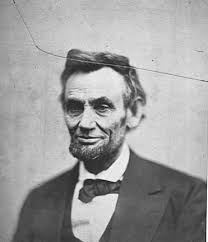
Abraham Lincoln
The test audience erupted—but not in the way party officials expected.
“Race-mixer!”
“He’s the reason we have all these damn civil rights laws.”
“He invaded the South—and destroyed states’ rights!”
To head off a riot, the scientists rushed the startled Lincoln-clone off the stage.
Then they introduced their next resurrected candidate: Theodore Roosevelt, the trust-busting conservationist.
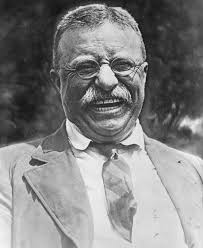
Theodore Roosevelt
Again, the test-audience erupted:
“Tree-hugger! Tree-hugger!”
“He’s the guy who broke up the big corporations—lousy Socialist!”
Startled Republican officials hustled the Roosevelt-clone out of the building.
Finally, they brought out their third choice for victory: A cloned Ronald Reagan.
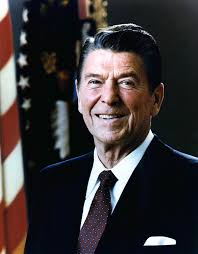
Ronald Reagan
For the test audience, this was simply too much:
“Not him! He legalized abortion in California when he was Governor!”
“He let all those damn Mexicans come into California! We need someone who kicks them out!”
Desperate, Republican leaders went into a huddle.
“What are we going to do?” asked one. “Lincoln, Roosevelt and Reagan were our most popular Presidents.”
“Yeah, but that was in the past, before Donald Trump showed us the way,” said another. “We need a candidate who speaks to our base today.”
“Hey, I’ve got an idea. But there’s just one catch. The guy I have in mind wasn’t actually born in the United States.”
“So what?”
“That would violate the Constitution.”
“Screw the Constitution. You know what Donald Trump always said: Why spoil the beauty of the thing with legality?”
So the Republicans again ordered the scientists to return to work one last time.
When the last resurrected candidate was presented to the test-audience, the crowd rose as one, shouting: “That’s him! That’s him!”
“The one we’ve been waiting for!”
“The one who really speaks for us!”
“He’s totally anti-abortion—and he hates uppity women!”
“He makes even Trump look like a pussy!”
“Yeah—he hates Socialists, gays and nonwhites, and he really believes in a strong military!”
Then the audience suddenly hushed as their cloned savior raised his hand for silence.
“All right, all right, I vill do it,” said the clone-candidate. “But the last time I led people to greatness, they proved unworthy of me.
“So I vill do it again—but only on von condition!”
“Yes, yes!” screamed the test-audience. “Anything you want! What is it?”
“Ziss time….”
Adolf Trump
….no more Mister Nice Guy!”
2016 PRESIDENTIAL ELECTION, ABC NEWS, ADOLF HITLER, AFGHANISTAN, ALTERNET, AMERICABLOG, AP, ASIANS, ” 9/11, BABY BOOMER RESISTANCE, BARACK OBAMA, BLACKS, BULLYING, BUZZFEED, CBS NEWS, CNN, COMMUNISM, CROOKS AND LIARS, DAILY KOZ, DONALD TRUMP, DRUDGE RETORT, FACEBOOK, FASCISM, FIVETHIRTYEIGHT, GEORGE W. BUSH, GREAT DEPRESSION, HARPER’S MAGAZINE, HILLARY CLINTON, HISPANICS, IRAQ, JEWS, KONRAD ADENAUR, MEDIA MATTERS, MOTHER JONES, MOVEON, MSNBC, MUSLIMS, NAZI GERMANY, NAZI PARTY, NBC NEWS, NEWSWEEK, NPR, PAUL VON HINDENBURG, PBS NEWSHOUR, POLITICO, POLITICUSUSA, RACISM, RAW STORY, REPUBLICANS, REUTERS, ROBERT PAYNE, SALON, SEATTLE TIMES, SLATE, TALKING POINTS MEMO, THE ATLANTIC, THE CHICAGO SUN-TIMES, THE CHICAGO TRIBUNE, THE DAILY BEAST, THE DAILY BLOG, THE GUARDIAN, THE HILL, THE HUFFINGTON POST, THE LIFE AND DEATH OF ADOLF HITLER, THE LOS ANGELES TIMES, THE LOS ANGELS TIMES, THE NATION, THE NEW REPUBLIC, THE NEW YORK TIMES, THE VILLAGE VOICE, THE WASHINGTON POST, THINKPROGRESS, TIME, TRUTHDIG, TRUTHOUT, TWO POLITICAL JUNKIES, U.S. NEWS & WORLD REPORT, UPI, USA TODAY, WONKETTE, WORLD WAR 11, X
In Bureaucracy, History, Politics, Social commentary on November 29, 2024 at 12:57 am
In his bestselling 1973 biography, The Life and Death of Adolf Hitler, British historian Robert Payne harshly condemned the German people for the rise of the Nazi dictator.
“[They] allowed themselves to be seduced by him and came to enjoy the experience….[They] followed him with joy and enthusiasm because he gave them license to pillage and murder to their hearts’ content. They were his servile accomplices, his willing victims….
“If he answered their suppressed desires, it was not because he shared them, but because he could make use of them. He despised the German people, for they were merely the instruments of his will.”
On November 8, 2016, millions of ignorant, hate-filled, Right-wing Americans elected Donald Trump—a man reflecting their own hate and ignorance—to the Presidency.
Yet, in some ways, Americans had fewer excuses for turning to a Fascistic style of government than the Germans did.
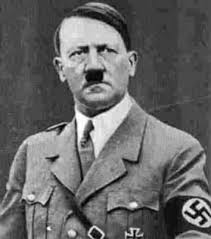
Adolf Hitler, joined the National Socialist German Workers (Nazi) Party in 1919—the year after World War 1 ended.
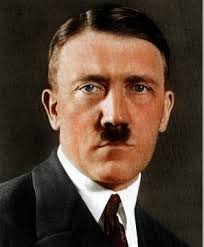
Adolf Hitler
In 1923, he staged a coup attempt in Bavaria—which was quickly and brutally put down by police. He was arrested and sentenced to less than a year in prison.
After that, Hitler decided that winning power through violence was no longer an option. He must win it through election—or appointment.
When the 1929 Depression struck Germany, the fortunes of Hitler’s Nazi party rose as the life savings of ordinary Germans fell. Streets echoed with bloody clashes between members of Hitler’s Nazi Stormtroopers and those of the German Communist Party.
Germans desperately looked for a leader—a Fuhrer—who could somehow deliver them from the threat of financial ruin and Communist takeover.
In early 1933, members of his own cabinet persuaded aging German president, Paul von Hindenburg, that only Hitler’s appointment as Chancellor could do this.
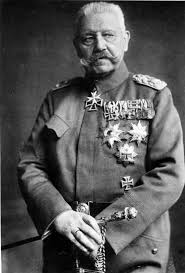
Paul von Hindenburg
Hindenburg was reluctant to do so. He considered Hitler a dangerous radical. But he let himself be convinced that he could “box in” and control Hitler by putting him in the Cabinet.
So, on January 30, 1933, Hindenburg appointed Adolf Hitler Chancellor (the equivalent of Attorney General) of Germany.
On August 2, 1934, Hindenburg died. Hitler immediately assumed the titles—and duties—of the offices of Chancellor and President. His rise to total power was complete.
It had taken him 14 years to do so.
In 2015, Donald Trump declared his candidacy for President.
Now, consider this:
- America was technically at war in the Middle East—but its fate was not truly threatened, as it had been during the Civil War.
- Government loans from President Barack Obama had saved American capitalism from its own excesses during the George W. Bush administration.
- Employment was up.
- No scandals had plagued the Obama Presidency—unlike the Reagan one.
- There been no large-scale terrorist attacks on American soil—such as 9/11 under George W. Bush.
Yet—not 17 months after announcing his candidacy for President—enough Americans fervently embraced Donald Trump to give him the most powerful position in the country and the world.
.jpg/220px-Donald_Trump_August_19,_2015_(cropped).jpg)
Donald Trump
Whites comprised the overwhelming majority of the audiences at Trump rallies. Not all were racists, but many of those who were advertised it on T-shirts: “MAKE AMERICA WHITE AGAIN.”
Birthrates among nonwhites were rising. By 2045, whites would make up less than 50 percent of the American population.
The 2008 election of the first black President had shocked whites. His 2012 re-election had deprived them of the hope that 2008 had been an accident.
Then came 2016—and the possibility that a black President might actually be followed by a woman: Hillary Clinton.
During Trump’s four years in office, he:
- Fired FBI Director James Comey for investigating Russia’s subversion of the 2016 Presidential election.
- Attacked Federal judges whose rulings displeased him.
- Repeatedly and enthusiastically defended Vladimir Putin, the dictator of Russia, America’s mortal enemy.
- Installed three Right-wing Justices on the Supreme Court who overturned Roe v. Wade, allowing states to once again outlaw abortion.
- Attacked and alienated America’s oldest allies, such as Canada and Great Britain.
- Shut down the United States Government, imperiling the lives of 800,000 Federal employees, to extort money from Congress for a worthless wall on the U.S.-Mexico border.
- Attacked the free press as “the enemy of the people.”
- Repeatedly lied about the dangers of COVID-19 while attacking governors who supported mask-wearing and social distancing; 400,000 Americans died.
- Refused to accept his loss in the 2020 Presidential election and spread “The Big Lie” that he had been cheated of victory by massive voter fraud.
- Incited a deadly attack on Congress to stop the counting of Electoral College votes—proving that Joe Biden had won the 2020 Presidential election—so he could remain in office as “President-for-Life.”
On November 5, 2024, 76,414,580 ignorant, hate-filled, Right-wing Americans eagerly voted to again install him as their Fuhrer.
Imagine that, four years after World War II, Germans had voted to replace their “colorless” chancellor, Konrad Adenauer, with the one who had ignited World War II and slaughtered six million Jews: Adolf Hitler.
All of this should be remembered the next time an American blames Germans for their embrace of Adolf Hitler.
ABC NEWS, ALTERNET, AMERICABLOG, AP, BABY BOOMER RESISTANCE, BARACK OBAMA, BBC, BLOOMBERG, BLOOMBERG NEWS, BUZZFEED, CBS NEWS, CENTRAL AMERICA, CHIANG KAI-SHEK, CHINA, CNN, COLUMBIA, COMMUNISM, CRIMEA, CROOKS AND LIARS, CUBA, CZECHOSLAVAKIA, DAILY KOS, DAILY KOZ, DEMOCRATS, DONALD TRUMP, FACEBOOK, FIVETHIRTYEIGHT, GUATEMALA, GUNBOAT DIPLOMACY, HARPER’S MAGAZINE, HARRY S. TRUMAN, HUFFINGTON POST, HUNGARY, JOHN F. KENNEDY, JOSEPH MCCARTHY, LATIN AMERICA, LYNDON B. JOHNSON, MAO TSE-TUNG, MEDIA MATTERS, MICK MULVANEY, MITT ROMNEY, MONROE DOCTRINE, MOTHER JONES, MOVEON, MSNBC, NBC NEWS, NEW REPUBLIC, NEWSDAY, NEWSWEEK, NICARAGUA, NPR, PANAMA, PBS NEWSHOUR, POLAND, POLITICO, POLITICUSUSA, RAW STORY, REPUBLICANS, REUTERS, RICHARD M. NIXON, SALON, SEATTLE TIMES, SLATE, SOCHI OLYMPICS, SOVIET UNION, SPHERES OF INFLUENCE, TALKING POINTS MEMO, THE ATLANTIC, THE CHICAGO SUN-TIMES, THE CHICAGO TRIBUNE, THE DAILY BEAST, THE DAILY BLOG, THE GUARDIAN, THE HILL, THE HUFFINGTON POST, THE INTERCEPT, THE LOS ANGELES TIMES, THE NATION, THE NEW REPUBLIC, THE NEW YORK TIMES, THE NEW YORKER, THE VILLAGE VOICE, THE WASHINGTON POST, THINKPROGRESS, TIME, TOM COTTON, TRUTHDIG, TRUTHOUT, TWO POLITICAL JUNKIES, U.S. NEWS & WORLD REPORT, UKRAINE, UPI, USA TODAY, VICTOR YANUKOVYCH, VIETNAM, VLADIMIR PUTIN, VOLODYMYR ZELENSKY, WONKETTE, X
In Bureaucracy, History, Military, Social commentary on November 22, 2024 at 12:11 am
The collapse of the Soviet Union in 1991 plunged the American Right into a depression.
Accusing Democrats of being “terrorist-lovers” just didn’t prove as profitable as accusing them of being “Communists.”
Then fate intervened.
The torch had barely gone out at the 2014 Sochi Winter Olympics when Russian President Vladimir Putin began menacing the Ukraine.
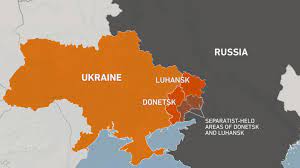
Ukraine vs. Russia
Even while the Olympics played out on television, Ukrainians had rioted in Kiev and evicted their corrupt, luxury-loving president, Victor Yanukovych.
And that didn’t sit well with his “sponsor”—Putin.
Yanukovych had rejected a pending European Union association agreement. He had chosen instead to pursue a Russian loan bailout and closer ties with Russia.
And that had sat well with Putin.
Since the breakup of the Soviet Union in 1991, Putin had yearned for its reestablishment. He had called that breakup “the greatest geopolitical tragedy of the 20th century.”

Vladimir Putin
Kremlin.ru, CC BY 4.0 <https://creativecommons.org/licenses/by/4.0>, via Wikimedia Commons
Russia has long resisted Ukraine’s move towards European institutions—especially NATO.
So it was almost a certainty that Putin would retaliate.
And since late February, 2014, he began moving Russian troops into Ukraine and its autonomous republic, Crimea. Russia annexed Ukraine’s southern Crimean peninsula and backed separatists who captured large swathes of eastern Ukraine.
On December 3, 2021, the Washington Post reported: “The Kremlin is planning a multi-front offensive as soon as early next year involving up to 175,000 troops” against Ukraine.
And where there is activity by Russians, American Rightists are eager to turn such events to their own political advantage.
Right-wingers such as Senator Tom Cotton (R-AR): ”It is a result of a year of Joe Biden’s impotence and incompetence towards Russia in particular and in foreign policy more generally.”
Cotton had vigorously defended President Donald Trump’s attempted extortion of Ukrainian President Volodymyr Zelensky in the face of Russian aggression.
In July, 2019, Trump told his acting chief of staff, Mick Mulvaney, to withhold almost $400 million in promised military aid for Ukraine.
Then, on July 25, Trump telephoned Zelensky to “request” a “favor”: Investigate presumed 2020 Democratic Presidential Candidate Joe Biden and his son, Hunter, who had had business dealings in Ukraine.
Clearly implied in the call: Produce “dirt” on Biden—or you won’t get the military aid.
All of which overlooks a number of brutal political truths.
First, all great powers have spheres of interest—and jealously guard them.
For the United States, it’s Latin and Central America, as established by the Monroe Doctrine.
And just what is the Monroe Doctrine?
It’s a statement made by President James Monroe in his 1823 annual message to Congress, which warned European powers not to interfere in the affairs of the Western Hemisphere.
It has no legitimacy except the willingness of the United States to use armed force to back it up. When the United States no longer has the will or resources to enforce the Doctrine, it will cease to have meaning.
For the Soviet Union, its spheres of influence include the Ukraine. Long known as “the breadbasket of Russia,” in 2011, it was the world’s third-largest grain exporter.
Russia will no more give up access to that breadbasket than the United States would part with the rich farming states of the Midwest.
Second, spheres of influence often prove disastrous to those smaller countries affected.
Throughout Latin and Central America, the United States remains highly unpopular for its brutal use of “gunboat diplomacy” during the 20th century.
Among those countries invaded or controlled by America: Mexico, Cuba, Guatemala, Nicaragua, Columbia, Panama and the Dominican Republic.
The resulting anger has led many Latin and Central Americans to support Communist Cuba, even though its political oppression and economic failure are universally apparent.
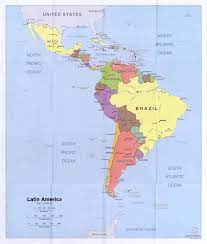
Latin and Central America
Similarly, the Soviet Union forced many nations—such as Poland, Hungary and Czechoslovakia—to submit to the will of Moscow.
The alternative? The threat of Soviet invasion—as occurred in Hungary in 1956 and Czechoslovakia in 1968.
Third, even “great powers” are not all-powerful.
In 1949, after a long civil war, the forces of Mao Tse-tung defeated the Nationalist armies of Chiang Kai-Shek, who withdrew to Taiwan.
China had never been a territory of the United States. Nor could the United States have prevented Mao from defeating the corrupt, ineptly-led Nationalist forces.
Even so, Republican Senators and Representatives such as Richard Nixon and Joseph McCarthy eagerly blamed President Harry S. Truman and the Democrats for “losing China.”
The fear of being accused of “losing” another country led Presidents John F. Kennedy, Lyndon B. Johnson and Richard M. Nixon to tragically commit the United States to “roll back” Communism in Cuba and Vietnam.
Now Republicans—who claim the United States can’t afford to provide healthcare for its poorest citizens—want to turn the national budget over to the Pentagon.
They want the United States to “intervene” in Ukraine—even though this would mean going to war with the only nuclear power capable of turning America into an atomic graveyard.
Before plunging into conflicts that don’t concern us and where there is absolutely nothing to “win,” Americans would do well to remember the above-stated lessons of history. And to learn from them.
1968 PRESIDENTIAL CAMPAIGN, 2024 PRESIDENTIAL ELECTIONS, ABC NEWS, ABORTION, ADOLF HITLER, AILEEN CANNON, ALTERNET, AMERICABLOG, AP, ARI FLEISCHER, ” 9/11, BABY BOOMER RESISTANCE, BBC, BILL CLINTON, BLOOMBERG NEWS, BUZZFEED, CBS NEWS, CNN, COMMUNISTS, CROOKS AND LIARS, DAILY KOZ, DAVID BROOKS, DEMOCRATS, DONALD TRUMP, ECONOMY, FBI, FEAR, FIVETHIRTYEIGHT, GEORGE H.W. BUSH, GEORGE W. BUSH, GREED, HARPER’S MAGAZINE, HATRED, HERITAGE FOUNDATION, HUFFINGTON POST, HUMAN NATURE, ILLEGAL ALIENS, JACK SIMITH, JANUARY 6 COUP ATTEMPT, JOHN GOTTI, JONATHAN CAPEHART, JOSEPH BIDEN, JOSEPH MCCARTHY, LEE ATWATER, MEDIA MATTERS, MERRICK GARLAND, MICHELLE OBAMA, MOTHER JONES, MOVEON, MSNBC, NBC NEWS, NEW REPUBLIC, NEWSDAY, NEWSWEEK, NPR, PAUL VON HINDENBURG, PBS NEWSHOUR, POLITICO, POLITICUSUSA, PROJECT 2025, RAW STORY, REPUBLICANS, REUTERS, RICHARD NIXON, SALON, SARAH HUCKABEE SANDERS, SEATTLE TIMES, SLATE, SOUTHERN STRATEGY, SOVIET UNION, TALKING POINTS MEMO, THE ATLANTIC, THE CHICAGO SUN-TIMES, THE CHICAGO TRIBUNE, THE DAILY BEAST, THE DAILY BLOG, THE GUARDIAN, THE HILL, THE HUFFINGTON POST, THE INTERCEPT, THE LOS ANGELES TIMES, THE NATION, THE NEW REPUBLIC, THE NEW YORK TIMES, THE NEW YORKER, THE VILLAGE VOICE, THE WASHINGTON POST, THINKPROGRESS, TIME, TREASON, TRUTHDIG, TRUTHOUT, TWO POLITICAL JUNKIES, U.S. NEWS & WORLD REPORT, UNITED STATES DEPARTMENT OF JUSTICE, UPI, USA TODAY, WEIMAR REPUBLIC, WILLIAM BRANGHAM, WONKETTE, WORLD WAR 11, X
In Bureaucracy, History, Law, Law Enforcement, Medical, Politics, Social commentary on November 13, 2024 at 12:17 am
There are many reasons why Democrats lose elections. Seven have already been offered. Here are two more.
Reason #7: Republicans learned long ago that most voters aren’t moved by appeals to their rationality. Instead, what counts with them is emotions—such as fear.
From the end of World War II in 1945 to the collapse of the Soviet Union in 1991, the Enemy of Choice for Republicans was the Communists.
Millions of Americans were so pathologically frightened by “The Red Menace” that any Democratic politician libeled as a “Communist,” “Comsymp,” “fellow traveler” was considered as at least a potential traitor, if not an actual one.
Among the Republican politicians who rode to victory on a wave of Red hysteria: Richard Nixon and Joseph McCarthy
Even as late as 1992, President George H.W. Bush and the Republican establishment charged that Arkansas Governor Bill Clinton might be a KGB plant. Their evidence: During his tenure at Oxford University in 1969-70, Clinton had briefly visited Moscow—and thus might have been turned into a “Manchurian Candidate.”
After the collapse of the Soviet Union, Right-wingers had to settle for attacking their opponents as “liberals” and “soft on crime.” But these charges didn’t carry the same weight as “Communists” and “traitors.”
Then, on September 11, 2001, Republicans—and their Right-wing supporters—at last found a suitable replacement for the Red Menace: The Maniacal Muslim.

The World Trade Center on September 11, 2001
Led by President George W. Bush, Republicans used fear of Muslims to con and bully the nation into a needless, bloody, budget-busting war on Iraq.
Democratic are generally unwilling to fight fire with fire. Thus, Michelle Obama in 2016: “When they go low, we go high.”
Reason #8: Republicans consistently bring brass knuckles to a prizefight.
Example 1: Republicans organized a nationwide effort to suppress voter turnout among blacks and liberals.
Yet Democrats didn’t make a similar effort to suppress Right-wing turnout. Nor did the Biden Justice Department indict those Republicans responsible for their anti-democratic efforts.
Example 2: On January 6, 2021, President Donald Trump—supported by at least 147 Republicans in the House and Senate—incited a treasonous coup to remain in office. This despite the overwhelming evidence that he had lost the 2020 election to Joseph Biden.
With the end of the Biden administration little more than two months away, not one Republican House or Senate member supporting such treason had been indicted for that infamy. Let alone tried, convicted and imprisoned.
Had this occurred, the Biden administration’s agenda would have been far more advanced than it is. Republicans who were raising funds for re-election campaigns would have been forced to raise them to pay huge legal bills.
They would have had far less time to plot to overthrow democracy. Instead, their attention would have been increasingly focused on their upcoming trials for treason.
Reason #9: Since 2021, the Biden administration tolerated Donald Trump’s campaign of lies.
Trump continues to spread The Big Lie that he was robbed by a vast conspiracy—although not one of the more than 60 cases his lawyers brought before Federal judges proved this true.
Moreover, he has openly and repeatedly threatened to seek “vengeance” on Democrats who have opposed him—starting with President Biden and his family.
A major goal of “Project 2025,” designed by the Right-wing Heritage Foundation, is to make the director of the FBI personally accountable to a Right-wing President—just as the head of the KGB is personally accountable to Vladimir Putin.
There can be no doubt that after Trump’s win in 2024, American democracy as it has existed for 248 years will vanish.
Trump should have been indicted for treason by no later than mid-2021. Even then, the evidence was overwhelming that he had instigated the coup attempt.

Yet it wasn’t until November 18, 2022, that Jack Smith was appointed Special Counsel to oversee the criminal investigations into Trump’s role in the January 6 Capitol attack and his illegal storage of classified documents at his Mar-a-Lago estate.
And Smith allowed Trump-appointed Florida Judge Aileen Cannon to indefinitely postpone the stolen documents trial.
Meanwhile, Trump won repeated delays in his trial for inciting a violent attack on the Capitol. His victory on November 5 guarantees he will not be prosecuted for any of his crimes.

To bring down Mafia “boss of all bosses” John Gotti, the FBI waged a seven-year, $75 million campaign—which included the use of electronic bugs and recruitment of informants.
To date, there is no evidence that the Bureau applied such an effort against Trump—although he, unlike Gotti, threatens the very foundations of American democracy.
For this, blame must fall squarely on Attorney General Merrick Garland, who has been notably derelict in pursuing Right-wing treason.
America now stands at the point where the German Weimar Republic stood in 1932: With an aged President (Paul von Hindenburg) unable—or unwilling—to cope with a surging Fascistic movement (led by Adolf Hitler).
The results of that collective failure destroyed Germany and left 60 million dead around the world.
The United States—and especially Democrats—has allowed itself to make that same fatal mistake.
1968 PRESIDENTIAL CAMPAIGN, 2024 PRESIDENTIAL ELECTIONS, ABC NEWS, ABORTION, ADOLF HITLER, AILEEN CANNON, ALTERNET, AMERICABLOG, AP, ARI FLEISCHER, ” 9/11, BABY BOOMER RESISTANCE, BBC, BILL CLINTON, BLOOMBERG NEWS, BUZZFEED, CBS NEWS, CNN, COMMUNISTS, CROOKS AND LIARS, DAILY KOZ, DAVID BROOKS, DEMOCRATS, DONALD TRUMP, ECONOMY, FBI, FEAR, FIVETHIRTYEIGHT, GEORGE H.W. BUSH, GEORGE W. BUSH, GREED, HARPER’S MAGAZINE, HATRED, HERITAGE FOUNDATION, HUFFINGTON POST, HUMAN NATURE, ILLEGAL ALIENS, JACK SMITH, JANUARY 6 COUP ATTEMPT, JONATHAN CAPEHART, JOSEPH BIDEN, JOSEPH MCCARTHY, JUOHN GOTTI, LEE ATWATER, MEDIA MATTERS, MERRICK GARLAND, MICHELLE OBAMA, MOTHER JONES, MOVEON, MSNBC, NBC NEWS, NEW REPUBLIC, NEWSDAY, NEWSWEEK, NPR, PAUL VON HINDENBURG, PBS NEWSHOUR, POLITICO, POLITICUSUSA, PROJECT 2025, RAW STORY, REPUBLICANS, REUTERS, RICHARD NIXON, SALON, SARAH HUCKABEE SANDERS, SEATTLE TIMES, SLATE, SOUTHERN STRATEGY, SOVIET UNION, TALKING POINTS MEMO, THE ATLANTIC, THE CHICAGO SUN-TIMES, THE CHICAGO TRIBUNE, THE DAILY BEAST, THE DAILY BLOG, THE GUARDIAN, THE HILL, THE HUFFINGTON POST, THE INTERCEPT, THE LOS ANGELES TIMES, THE NATION, THE NEW REPUBLIC, THE NEW YORK TIMES, THE NEW YORKER, THE VILLAGE VOICE, THE WASHINGTON POST, THINKPROGRESS, TIME, TREASON, TRUTHDIG, TRUTHOUT, TWO POLITICAL JUNKIES, U.S. NEWS & WORLD REPORT, UNITED STATES DEPARTMENT OF JUSTICE, UPI, USA TODAY, WEIMAR REPUBLIC, WILLIAM BRANGHAM, WONKETTE, WORLD WAR 11, X
In Bureaucracy, History, Law, Law Enforcement, Medical, Politics, Social commentary on November 12, 2024 at 12:05 am
There are many reasons why Democrats consistently lose elections.
Democrats expect people to rise above their worst selves and embrace a higher, altruistic cause—civil rights, abortion rights, healthcare for all.
Reason #3: Republicans look for those who are comfortable in their racism, their greed, their hatred for women. They don’t try to reform them—they encourage them in their racism, greed and misogyny.
This began long before Donald Trump became a Presidential candidate in 2016.
When Richard Nixon announced his candidacy for President in 1968, he pursued what was euphemistically termed “a Southern strategy.”
In reality, this was aimed to exploit whites’ fear and hatred of blacks.
In a now-infamous 1981 interview, Right-wing political consultant Lee Atwater explained how this worked.
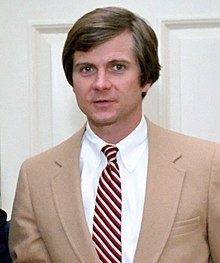
Lee Atwater
“You start out in 1954 by saying, ‘Nigger, nigger, nigger.’ By 1968 you can’t say ‘nigger’—that hurts you, backfires.
“So you say stuff like, uh, forced busing, states’ rights, and all that stuff, and you’re getting so abstract.
“Now, you’re talking about cutting taxes, and all these things you’re talking about are totally economic things and a byproduct of them is, blacks get hurt worse than whites….
“‘We want to cut this,’ is much more abstract than even the busing thing, uh, and a hell of a lot more abstract than ‘Nigger, nigger.’
“So anyway you look at it, race is coming on the back burner.”
But blacks have by no means been the only targets—and victims—of Republican hate campaigns. A partial list of these would include:
- Liberals
- Women
- Socialists
- Secularists
- Disabled
- Environmentalists
- Hispanics
- Gays
- Lesbians
And now transgenders.
Reason #4: Republicans are experts at inciting hatred—and reaping huge gains in power as a result.
There can be no better example of a politician who has played successfully on the hatred of American voters than Donald Trump. If Barack Obama was the 2008 candidate of “Hope and Change,” then Trump was the 2016 candidate of “Hate and Fear.”
From June 15, 2015, when he launched his Presidential campaign, until October 24, 2016, Trump fired almost 4,000 angry, insulting tweets at 281 people and institutions that had somehow offended him.
Donald Trump
The New York Times needed two full pages of its print edition to showcase them.
Among his targets:
- Hillary Clinton
- The New York Times
- President Barack Obama
- CNN
- Actress Meryl Streep
- The Washington Post
- Singer Neil Young
- Democrats
- Actor Arnold Schwarzenegger
- Republicans
- Comedian John Oliver
- The State of New Jersey
- Beauty pageant contestants
Others he clearly delighted in insulting during the campaign included:
- Women
- Blacks
- Hispanics
- Asians
- Muslims
- The disabled
- Prisoners-of-war
Democrats want to believe a day will come when all races, colors and creeds will live together in harmony. Their policies aim at creating that sort of society.
Reason #5: Republicans know that most people instinctively feel comfortable with those who most resemble themselves. And they don’t seek out those who differ from themselves.
That’s why—in schools and prisons—whites sit mostly with whites, blacks sit mostly with blacks, and Hispanics sit mostly with Hispanics.
Reason #6: Republicans know that if most Americans feel uncomfortable with fellow Americans who don’t resemble themselves, they feel even less comfortable with foreigners who don’t.
This is especially true when inflation is high, jobs and housing are scarce, and local schools and hospitals are crammed with illegal aliens—who, by law, shouldn’t even be in the country.
For these Americans, the Democrats’ “Kumbaya” message of love and tolerance is wasted. By contrast, Republicans’ cries of “Get rid of the illegal aliens!” ring loud and clear.

Illegal aliens crossing into the United States
Moreover, the “illegal alien” tagline often allows Republicans to sidestep criticism on even the most outrageous of their actions.
Example: The case of a 10-year-old Ohio girl who was raped—and had to travel to Indiana to obtain an abortion after the Supreme Court overturned Roe. v. Wade.
Ohio has a “heartbeat” law making abortion a crime after a fetal heartbeat is determined—usually within the first six weeks.

For Ohio’s Republican legislators and governor, the “rights” of a fetus far outweigh those of an actual human being—even if she is a child.
Ari Fleischer, former press secretary for President George W. Bush, said on Fox News that the girl’s illegal alien rapist from Guatemala was the villain, not the fetal heartbeat law.
“The agenda is to allow people to come into America without having to come here legally. If you start pointing things out like this, it makes it a moral question. And that’s why the press doesn’t want to face up to the fact it’s a moral issue that people should not be allowed in America unless they come here legally.”
Democrats believe that voters are creatures of rationality.
Reason #7: Republicans learned long ago that what counts with most voters is emotions—such as fear.
From the end of World War II in 1945 to the collapse of the Soviet Union in 1991, the Enemy of Choice for Republicans was the Communists.
Millions of Americans were so pathologically frightened by “The Red Menace” that any Democratic politician libeled as a “Communist,” “Comsymp,” “fellow traveler” was considered at least a potential traitor, if not an actual one.
1968 PRESIDENTIAL CAMPAIGN, 2024 PRESIDENTIAL ELECTIONS, ABC NEWS, ABORTION, ADOLF HITLER, AILEEN CANNON, ALTERNET, AMERICABLOG, AP, ARI FLEISCHER, ” 9/11, BABY BOOMER RESISTANCE, BBC, BILL CLINTON, BLOOMBERG NEWS, BUZZFEED, CBS NEWS, CNN, COMMUNISTS, CROOKS AND LIARS, DAILY KOZ, DAVID BROOKS, DEMOCRATS, DONALD TRUMP, ECONOMY, FBI, FEAR, FIVETHIRTYEIGHT, GEORGE H.W. BUSH, GEORGE W. BUSH, GREED, HARPER’S MAGAZINE, HATRED, HERITAGE FOUNDATION, HUFFINGTON POST, HUMAN NATURE, ILLEGAL ALIENS, JACK SMITH, JANUARY 6 COUP ATTEMPT, JONATHAN CAPEHART, JOSEPH BIDEN, JOSEPH MCCARTHY, JUOHN GOTTI, LEE ATWATER, MEDIA MATTERS, MERRICK GARLAND, MICHELLE OBAMA, MOTHER JONES, MOVEON, MSNBC, NBC NEWS, NEW REPUBLIC, NEWSDAY, NEWSWEEK, NPR, PAUL VON HINDENBURG, PBS NEWSHOUR, POLITICO, POLITICUSUSA, PROJECT 2025, RAW STORY, REPUBLICANS, REUTERS, RICHARD NIXON, SALON, SARAH HUCKABEE SANDERS, SEATTLE TIMES, SLATE, SOUTHERN STRATEGY, SOVIET UNION, SUSAN PAGE, TALKING POINTS MEMO, THE ATLANTIC, THE CHICAGO SUN-TIMES, THE CHICAGO TRIBUNE, THE DAILY BEAST, THE DAILY BLOG, THE GUARDIAN, THE HILL, THE HUFFINGTON POST, THE INTERCEPT, THE LOS ANGELES TIMES, THE NATION, THE NEW REPUBLIC, THE NEW YORK TIMES, THE NEW YORKER, THE VILLAGE VOICE, THE WASHINGTON POST, THINKPROGRESS, TIME, TREASON, TRUTHDIG, TRUTHOUT, TWO POLITICAL JUNKIES, U.S. NEWS & WORLD REPORT, UNITED STATES DEPARTMENT OF JUSTICE, UPI, USA TODAY, WEIMAR REPUBLIC, WILLIAM BRANGHAM, WONKETTE, WORLD WAR 11, X
In Bureaucracy, History, Law, Law Enforcement, Medical, Politics, Social commentary on November 11, 2024 at 12:16 am
If you’re wondering why Donald J. Trump once again won the election of 2024—you can stop wondering.
The Democrats lost the Senate while Republicans closed in on the House on November 5. The Democrats also lost the White House.
Why?
Reason #1: Because Republicans understand the darker sides of human nature far better than Democrats—and don’t hesitate to take full advantage of them.
Democrats believe that people want to become altruistically better than they are. They don’t.
Reason #2: Republicans realize that most people like themselves as they are—and don’t want to change. At least, not in the altruistic ways Democrats envision.
If they want to change anything about themselves, it’s strictly at the materialistic level: More money, lower prices, more big-ticket toys.
They may claim concern for others, but if given a choice between their pocketbook and a higher goal, most will vote for their pocketbook.
A first-rate example of this appeared on The PBS Newshour on July 15, 2022, during an exchange between conservative New York Times columnist David Brooks and Jonathan Capehart, associate editor for the Washington Post.
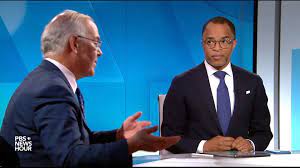
David Brooks (left) and Jonathan Capehart (right) on the PBS Newshour
Host William Brangham led off the exchange:
“I want to switch, Jonathan, to this issue of the continued fallout of the Supreme Court overturning Roe v. Wade. And Democrats seem to believe that this could be one of the things that might give them at least some trace of a fighting chance in the midterms.
“And we saw we this week this sort of horrendous case of a young 10-year-old girl who had been raped. She got pregnant. She then had to leave her state [Ohio] and go to another state [Indiana] where abortion would still be allowed.
“And GOP officials tried to make hay of it. They doubted that that story really existed. The local [Attorney General] said, we’re going to go after the doctor that performed this.
“Do you think that—that issue and the extremity of the way that this is being handled will actually benefit Democrats?”
Capehart: “It should. The idea that we’re talking about violence against a child, and then being forced by the state to give birth to this child, going to another state so she can terminate that pregnancy, and then being persecuted and prosecuted by the state for doing that….

“We are in “Handmaid’s Tale” territory here. We are turning into Gilead. And if there are people out there who are upset by the Supreme Court decision, by what Republican legislators around the country in states and localities are doing to further restrictions and bans on abortion.
“I don’t know what else could push people to the polls more than not just being stripped of a constitutional right, but having your right to — right to freedom, right to privacy, right to liberty not just taken away, but local officials doing everything they can to ensure that you don’t have autonomy over your own body.
“If that doesn’t get people out to the polls, I don’t know what will.”
It didn’t.
Brangham then turned to Brooks:
“I mean, David, this was an incredibly extreme case, in some ways crystallized the sharpness and the horribleness of this division in this country.
“Do you think it will redound to the Democrats’ benefit?”
Brooks: “A little, but, frankly, not much.
“Now, abortion rights defenders, they should pursue their cause with the passion that they’re bringing to it….
“But there’s just a giant gap between what a lot of Democrats want to talk about and what the whole rest of the country wants to talk about. And if you ask people, what’s the most important issues, progressives want to talk about abortion and guns.
“The entire rest of the country, independents, conservatives, unaffiliated people, they want to talk about the economy. And, for them, the economy is way up here. Jobs are number one. Inflation is number two.
“And so why is Joe Biden at 33 percent approval in the latest Times poll? It’s the economy. Why in the same poll do half of Hispanics support the Republicans now? The economy. These are earthquake numbers for Democrats…..
“But if Democrats, if they’re not talking about economic policy every day, then they’re just not talking about the policy that is clearly ranking number one with a vast majority of voters.”
No Republican has appealed more directly to greed as a motivator than Donald Trump.
On August 23, 2018, Trump, as President, offered additional evidence that he’s “not like other people.” He did so by giving an unprecedented reason why he shouldn’t be impeached: “I tell you what, if I ever got impeached, I think the market would crash, I think everybody would be very poor.”
White House Press Secretary Sarah Huckabee Sanders doubtless spoke for millions of Trump supporters when she said, on June 4, 2018:
“Since taking office, the President has strengthened American leadership, security, prosperity, and accountability. And as we saw from Friday’s jobs report, our economy is stronger, Americans are optimistic, and business is booming.”
2016 PRESIDENTIAL ELECTION, 2020 PRESIDENTIAL ELECTION, ABC NEWS, ABRAHAM LINCOLN, ADAM SCHIFF, ADOLF HITLER, ALEXANDER VINDMAN, ALTERNET, AMERICABLOG, AP, BABY BOOMER RESISTANCE, BLOOMBERG, BUZZFEED, CBS NEWS, CNN, CROOKS AND LIARS, DAILY KOZ, DEMOCRATS, DONALD TRUMP, DRUDGE RETORT, FACEBOOK, FIVETHIRTYEIGHT, FOX NEWS NETWORK, GERRYMANDERING, HARPER’S MAGAZINE, HOUSE INTELLIGENCE COMMITTEE, HOWARD BAKER, HUNTER BIDEN, JOE BIDEN, JOEL MATHIS, KEN PAXTON, LYNDON JOHNSON, MARIA YOVANOVICH, MEDIA MATTERS, MEDICAID, MICK MULVANEY, MOTHER JONES, MOVEON, MSNBC, NATIONAL SECURITY COUNCIL, NBC NEWS, NEWSWEEK, NPR, POLITICO, POLITICUSUSA, RAW STORY, REPUBLICANS, REUTERS, RICHARD NIXON, ROBERT PAYNE, RUDI GIULIANI, RUSSIA, SALON, SEATTLE TIMES, SLATE, TALKING POINTS MEMO, THE ATLANTIC, THE CHICAGO SUN-TIMES, THE CHICAGO TRIBUNE, THE DAILY BEAST, THE DAILY BLOG, THE GUARDIAN, THE HILL, THE HUFFINGTON POST, THE LIFE AND DEATH OF ADOLF HITLER (BOOK), THE LOS ANGELES TIMES, THE NATION, THE NEW REPUBLIC, THE NEW YORK TIMES, THE VILLAGE VOICE, THE WASHINGTON POST, THINKPROGRESS, THIRD REICH, TIME, TRUTHDIG, TRUTHOUT, TWITTER, TWO POLITICAL JUNKIES, U.S. NEWS & WORLD REPORT, UKRAINE, UPI, USA TODAY, VOLODYMYR ZELENSKY, VOTER ID LAWS, WATERGATE, WONKETTE
In Bureaucracy, History, Law, Law Enforcement, Politics, Social commentary on October 30, 2024 at 12:09 am
In a November 14, 2019 column, “Republicans Can’t Abandon Trump Now Because They’re All Guilty,” freelance journalist Joel Mathis warned: “Trump’s abuses of power mirror those of the GOP as a whole. Republicans can’t turn on him, because doing so would be to indict their party’s entire approach to politics.”
For example:
- At the state level, GOP legislatures have passed numerous voter ID laws over the last decade. Officially, the reason has been to prevent non-citizens from voting. In reality, the motive is to depress turnout among Democratic constituencies.
- When Democrats have won elections, Republicans have tried to block them from carrying out their policies. In Utah, voters approved Medicaid expansion at the ballot box—but Republicans nullified this.
- In North Carolina, Republican legislators prevented voters from choosing their representatives. Instead, Republican representatives chose voters through partisan sorting. In September, 2019, the state’s Supreme Court ruled the legislative gerrymandered district map unconstitutional.
The upshot of all this, wrote Mathis: “The president and his party are united in the belief that their entitlement to power allows them to manipulate and undermine the country’s democratic processes….The president and today’s GOP share the same sins. It will be difficult for them to abandon each other.”


On November 3, 2020, 81,255,933 Democratic voters outvoted 74,196,153 Republican voters to elect former Vice President Joseph Biden as the 46th President of the United States.
In the Electoral College—where Presidential elections are actually decided—Biden won by a margin of 306 to 232 votes for Trump.
Trump refused to accept that verdict. For the first time in American history, a President demanded a halt to the counting of votes while the outcome of an election hung in doubt.
States ignored his demand and kept counting.
Next, Trump ordered his attorneys to file lawsuits to overturn the election results, charging electoral fraud. Specifically:
- Illegal aliens had been allowed to vote.
- Trump ballots had been systematically destroyed.
- Tampered voting machines had turned Trump votes into Biden ones.
Throughout November and December, 61 cases were filed by Trump and his allies in state and federal courts—in Wisconsin, Arizona, Nevada, Michigan, Minnesota and Georgia, challenging the election results.
All were withdrawn by Trump’s attorneys or dismissed by Federal judges—some of them appointed by Trump himself.
Losing in the courts, Trump invited two Republican legislative leaders from Michigan to the White House to persuade them to stop the state from certifying the vote.
The Michigan legislators said they would follow the law.
On December 5, Trump called Georgia Governor Brian Kemp and asked him to call a special legislative session and convince state legislators to select their own electors that would support him, thus overturning Biden’s win.
Kemp refused, saying he lacked the authority to do so.
On December 8, the Supreme Court refused to hear Trump’s bid to reverse Pennsylvania’s certification of Biden’s victory. Representative Mike Kelly (R-PA), a Trump ally, argued that the state’s 2.5 million mail-in were unconstitutional.
The Court’s order read, “The application for injunctive relief presented to Justice [Samuel] Alito and by him referred to the Court is denied.” Although Trump had appointed three of the Court’s Justices, not one of them dissented.
Legal scholars almost unanimously agreed the Court’s action quashed Trump’s efforts to overturn the 2020 election results through the courts.

The Supreme Court
On December 8, Republican Senate Majority Leader Mitch McConnell and Missouri United States Senator Roy Blunt joined House Republican Leader Kevin McCarthy in blocking a resolution asserting that Biden is the President-elect of the United States.
Still, Trump pressed on. On December 9, he asked the Supreme Court to block millions of Biden votes from Georgia, Michigan, Pennsylvania and Wisconsin.
The request came in a filing with the court in a lawsuit brought by Texas Attorney General Ken Paxton.
The Court refused.
* * * * *
The United States has indeed become a polarized country. But it’s not the polarization between Republicans and Democrats, or between conservatives and liberals.
It’s the polarization between Right-wing fanatics intent on enslaving everyone who doesn’t subscribe to their Fascistic beliefs and agenda—and those who resist being enslaved.
Those who hoped that Republicans would choose patriotism over partisanship got their answer on February 5. That was when the Republican-dominated Senate—ignoring the overwhelming evidence against him—acquitted Donald Trump on both impeachment articles.
It’s natural to regret that the United States has become a sharply divided nation. CNN has taken the lead in hand-wringing with a weepy-voiced PSA:
“Our trust has been broken—in our leaders, in our institutions and even some of our friends. And we are hurting, Now more than ever we need each other to listen, to learn from one another, and to rebuild those bonds. Because trust shows we believe in the good in each other. It’s what makes us human. And when we can trust one another, that is when we can truly achieve great things.”
But those who insist on the truth should realize there is only one choice:
Either non-Fascist Americans will destroy the Republican party and its voters that threaten to enslave them—or they will be enslaved by Republicans and their voters who believe they are entitled to manipulate and destroy the country’s democratic processes.
There is no middle ground.
2016 PRESIDENTIAL ELECTION, 2020 PRESIDENTIAL ELECTION, ABC NEWS, ABRAHAM LINCOLN, ADAM SCHIFF, ADOLF HITLER, ALEXANDER VINDMAN, ALTERNET, AMERICABLOG, AP, BABY BOOMER RESISTANCE, BLOOMBERG, BUZZFEED, CBS NEWS, CNN, CROOKS AND LIARS, DAILY KOZ, DEMOCRATS, DONALD TRUMP, DRUDGE RETORT, FACEBOOK, FIVETHIRTYEIGHT, FOX NEWS NETWORK, GERRYMANDERING, HARPER’S MAGAZINE, HOUSE INTELLIGENCE COMMITTEE, HOWARD BAKER, HUNTER BIDEN, JOE BIDEN, JOEL MATHIS, KEN PAXTON, LYNDON JOHNSON, MARIA YOVANOVICH, MEDIA MATTERS, MEDICAID, MICK MULVANEY, MOTHER JONES, MOVEON, MSNBC, NATIONAL SECURITY COUNCIL, NBC NEWS, NEWSWEEK, NPR, POLITICO, POLITICUSUSA, RAW STORY, REPUBLICANS, REUTERS, RICHARD NIXON, ROBERT PAYNE, RUDI GIULIANI, RUSSIA, SALON, SEATTLE TIMES, SLATE, TALKING POINTS MEMO, THE ATLANTIC, THE CHICAGO SUN-TIMES, THE CHICAGO TRIBUNE, THE DAILY BEAST, THE DAILY BLOG, THE GUARDIAN, THE HILL, THE HUFFINGTON POST, THE LIFE AND DEATH OF ADOLF HITLER (BOOK), THE LOS ANGELES TIMES, THE NATION, THE NEW REPUBLIC, THE NEW YORK TIMES, THE VILLAGE VOICE, THE WASHINGTON POST, THINKPROGRESS, THIRD REICH, TIME, TRUTHDIG, TRUTHOUT, TWITTER, TWO POLITICAL JUNKIES, U.S. NEWS & WORLD REPORT, UKRAINE, UPI, USA TODAY, VOLODYMYR ZELENSKY, VOTER ID LAWS, WATERGATE, WONKETTE
In Bureaucracy, History, Law, Law Enforcement, Politics, Social commentary on October 29, 2024 at 12:13 am
On November 14, 2019, the CNN website showcased an opinion piece by Jane Carr and Laura Juncadella entitled: “Fractured States of America.”
And it opened:
“Some worry that it’s already too late, that we’ve crossed a threshold of polarization from which there is no return. Others look toward a future where more moderate voices are heeded and heard, and Americans can find better ways to relate to each other.
“Still others look back to history for a guide—perhaps for what not to do, or at the very least for proof that while it’s been bad before, progress is still possible.”
Then followed a series of anecdotes. The sub-headlines summed up many of the comments reported.
- “I was starting to hate people that I have loved for years.”
- “Voting for Trump cost me my friends.”
- “I feel like I’m living in hostile territory.”
- “Our children are watching this bloodsport.”
- “A student’s Nazi-style salute reflects the mate.”
- “Our leaders reflect the worst of us.”
- “I truly believe I will be assaulted over a bumper sticker.”
- “It already feels like a cold war.”
Abraham Lincoln warned: “A house divided against itself cannot stand. I believe this government cannot endure, permanently, half-slave and half-free. It will become all one thing or all the other.”
America now faces such a choice:
- To submit to the tyrannical aggression of a ruthless political party convinced that they are entitled to manipulate and undermine the country’s democratic processes; or
- To fiercely resist that aggression and the destruction of those democratic processes.
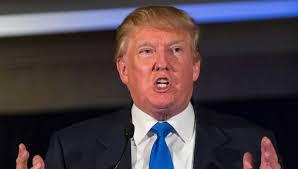
Consider the face-off between President Donald J. Trump and Army Lt. Colonel Alexander Vindman.
Vindman is a United States Army officer who served as the Director for European Affairs for the United States National Security Council. He was also a witness to Trump’s efforts to extort “a favor” from the president of Ukraine.

Lt. Colonel Alexander Vindman
Адміністрація Президента України [CC BY 4.0 (https://creativecommons.org/licenses/by/4.0)%5D
In July, 2019, Trump told his acting chief of staff, Mick Mulvaney, to withhold almost $400 million in promised military aid for Ukraine, which faces increasing aggression from Russia.
On July 25, Trump telephoned Ukrainian President Volodymyr Zelensky to “request” a “favor”: Investigate 2020 Democratic Presidential Candidate Joe Biden and his son, Hunter, who has had business dealings in Ukraine.
The reason for such an investigation: To find embarrassing “dirt” on Biden.
“I was concerned by the call,” Vindman, who had heard Trump’s phone call, testified before the House Intelligence Committee. “I did not think it was proper to demand that a foreign government investigate a U.S. citizen, and I was worried about the implications for the U.S. Government’s support of Ukraine.
“I realized that if Ukraine pursued an investigation into the Bidens and Burisma, it would likely be interpreted as a partisan play which would undoubtedly result in Ukraine losing the bipartisan support it has thus far maintained. This would all undermine U.S. national security.”
Trump denounced Vindman as a “Never Trumper”—as if opposing his extortion attempt constituted a blasphemy. Republicans and their shills on the Fox News Network attacked him as well.
As a result, he sought physical protection by the Army for himself and his family.
(On February 7, 2020, he was reassigned from the National Security Council at Trump’s order.)
Donald Trump
* * * * *
On November 25, 2019, CNN political correspondent Jake Tapper interviewed Representative Adam Schiff on the coming impeachment trial.
What would it mean if Republicans uniformly oppose any articles of impeachment against Trump? asked Tapper.
“It will have very long-term consequences, if that’s where we end up,” replied Schiff.
“And if not today, I think Republican members in the future, to their children and their grandchildren, will have to explain why they did nothing in the face of this deeply unethical man who did such damage to the country.”
In his bestselling 1973 biography, The Life and Death of Adolf Hitler, British historian Robert Payne harshly condemned the German people for the rise of the Nazi dictator:
“[They] allowed themselves to be seduced by him and came to enjoy the experience….[They] followed him with joy and enthusiasm because he gave them license to pillage and murder to their hearts’ content. They were his servile accomplices, his willing victims.”

Like Hitler, Trump offered his Republican voters and Congressional allies intoxicating dreams: “I will enrich all of you. And I will humiliate and destroy those Americans you most hate.”
For his white, Fascistic, largely elderly audience, those enemies included blacks, atheists, Hispanics, non-Christians, Muslims, liberals, “uppity” women, Asians.
And, again like Hitler, his audience had always possessed these dreams. Trump offered them nothing new. As a lifelong hater, he undoubtedly shared their dreams. But as a lifelong opportunist, he realized that he could use them to catapult himself into a position of supreme power.
He despised his followers—both as voters and Congressional allies—for they were merely the instruments of his will.
For Trump’s supporters in the House and Senate, fear remains their overwhelming motivation. They fear that if they cross him—or simply don’t praise him enough—he will sic his fanatical base on them. And then they will lose their cozy positions—and the power and perks that go with them.


 Bureaucracybuster's Blog
2016 PRESIDENTIAL ELECTION, 2024 PRESIDENTIAL ELECTION, ABC NEWS, ADOLF HITLER, ALTERNET, AMERICABLOG, AP, BABY BOOMER RESISTANCE, BBC, BLACKS, BLOOMBERG, BLOOMBERG NEWS, BUZZFEED, CBS NEWS, CNN, COVID-19, CROOKS AND LIARS, DAILY KOS, DEMOCRACY, DONALD J. TRUMP, DONALD TRUMP, DRUDGE RETORT, ECONOMY, EMPLOYMENT, EXTORTION, FACEBOOK, FBI, FIVETHIRTYEIGHT, GESTAPO, GREED, HARPER’S MAGAZINE, HATRED, HISPANICS, HUFFINGTON POST, HUNTER BIDEN, immigration, INDEPENDENT COUNSEL, INFLATION, JAMES COMEY, JANUARY 6 COUP ATTEMPT, JEWS, JOE BIDEN, JOE SCARBOROUGH, JOHN ADAMS, JOSEPH R. BIDEN, Kamala Harris, MEDIA, MEDIA MATTERS, MEXICO, MIKA BRZEZINSKI, MORNING JOE, MOTHER JONES, MOVEON, MSNBC, NAZI ATROCITIES, NBC NEWS, NEW REPUBLIC, NEWSDAY, NEWSWEEK, NPR, PAM BONDI, PBS NEWSHOUR, POLITICO, POLITICUSUSA, PROJECT 2025, RACISM, RAW STORY, REPUBLICANS, REUTERS, ROBERT MUELLER, ROD ROSENSTEIN, SALON, SARAH HUCKABEE SANDERS, SEATTLE TIMES, SLATE, SOVIET UNION, TALKING POINTS MEMO, THE ATLANTIC, THE CHICAGO SUN-TIMES, THE CHICAGO TRIBUNE, THE DAILY BEAST, THE DAILY BLOG, THE GUARDIAN, THE HILL, THE HUFFINGTON POST, THE INTERCEPT, THE LOS ANGELES TIMES, THE NATION, THE NEW REPUBLIC, THE NEW YORK TIMES, THE NEW YORKER, THE VILLAGE VOICE, THE WASHINGTON POST, THINKPROGRESS, TIME, TRUMP UNIVERSITY SCANDAL, TRUTHDIG, TRUTHOUT, TWO POLITICAL JUNKIES, U.S. NEWS & WORLD REPORT, UKRAINE, UNEMPLOYMENT, UNITED STATES DEPARTMENT OF JUSTICE, UNITED STATES HOUSE OF REPRESENTATIVES, UNITED STATES SENATE, UPI, USA TODAY, VLADIMIR PUTIN, VOLODMYR ZELENSKY, WEHRMACHT, WHITE WOMEN, WONKETTE, X
“DEMOCRACY IST KAPUTT!”–FIRST GERMANY, NOW AMERICA: PART TWO (END)
In Bureaucracy, Business, History, Law, Law Enforcement, Military, Politics, Social commentary on December 4, 2024 at 12:11 amDuring the 2024 Presidential election, the two most important issues—for voters—were immigration and inflation.
In short: “Get rid of the spics!” and “Give us cheaper eggs!”
Repeatedly, Vice President Kamala Harris warned that Donald Trump’s return to the Presidency would result in a Fascistic dictatorship:
“Donald Trump is increasingly unhinged and unstable, and in a second term, people like John Kelly [Trump’s former chief of staff] would not be there to be the guardrails against his propensities and his actions….
“He wants a military who will be loyal to him, personally, one that will obey his orders, even when he tells them to break the law or abandon their oath to the Constitution of the United States.”
Reputable media warned that he intended to turn the FBI into his private Gestapo and use the Justice Department to attack his political rivals.
Kamala Harris
But Americans didn’t care.
Instead, 76.9 million voters chose to overturn the democratic traditions that had guided American life since 1788, when the United States Constitution was ratified.
Appeals to their hatred, racism and greed proved far more seductive.
Throughout Trump’s Presidency—2017 to 2021—those who opposed his agenda took solace in a series of expected saviors.
Mueller had a sterling reputation for integrity as a former prosecutor and FBI director. But he allowed himself to be intimidated by the Presidential aura—and refused to directly interview Trump.
His subsequent official report contained no impeachment-worthy evidence.
The reason for such an investigation: To find embarrassing “dirt” on Biden. Unless Zelensky found this, the promised aid would be withheld.
The House of Representatives tried Trump for abuse of power and obstruction of Congress. The evidence against him was overwhelming—including a transcript of the extortionate phone call.
Donald Trump
But the Republican Senate refused to convict.
Had this happened, Trump would have been legally barred from running again for President.
As a result, five people died and 174 police officers were injured. The Capitol Building—the symbol of American democracy—suffered about $2.7 billion in damages.
Evidence of Trump’s guilt was overwhelming—including video of his incitement.
But, once again, the Republican-dominated Senate refused to convict.
Stormtrumpers attacking the Capitol Building
Tyler Merbler from USA, CC BY 2.0 <https://creativecommons.org/licenses/by/2.0>, via Wikimedia Commons
Trump’s opponents had placed their hopes in Special Counsel Robert Mueller and (twice) the United States Congress to address the brazen criminality of Donald Trump.
The results: Anger and disappointment.
Yet one last hope remained:
That the 2024 Presidential election would send Joseph Biden, and then, after he dropped out of the race, Vice President Kamala Harris—to the White House.
Harris waged what was widely descripted as “a campaign of joy,” promising to be “the President of all Americans,” including those who voted against her. Repeatedly, she warned that, if re-elected, Trump would pursue a vengeance-fueled agenda against anyone who had dared cross him.
Trump ran a campaign based on hatred—of Hispanics, of liberals, of those who had served in his administration and now disowned him. During his single debate with Harris, he falsely claimed that Haitian immigrants in Ohio were “eating the dogs….they’re eating the cats” of local citizens.
On one occasion, he appeared to emulate performing a ‘sex act’ on a microphone stand during a rally after experiencing technical difficulties.
Most ominously, credible news reports circulated that, if Trump were re-elected, he would implement a radical, Right-wing plan—Project 2025—to completely reshape the federal government.
At its heart: The mass firings of politically neutral civil service officials and their replacement with thousands of political hacks.
This would arm Republicans with the power to establish an absolute dictatorship under the next Republican president.
Yet, in the end, none of this mattered.
His supporters included:
On January 30, 1933, Adolf Hitler rose to dictatorial power through backroom intrigues and appointment as Chancellor by President Paul von Hindenburg.
On November 5, 2024, Trump rose to dictatorial power when Americans voted to ignore his past crimes and the ones he boasted he intended to commit.
John Adams predicted this long ago: “Democracy never lasts long. It soon wastes, exhausts, and murders itself. There never was a democracy yet that did not commit suicide.”
Share this: