Posts Tagged ‘THE PENTAGON’
ABC NEWS, ADOLF HITLER, ALI HOSSEINI KHAMENEI, ALTERNET, AMERICABLOG, AP, AYATOLLAH ALI KHAMENEI, BABY BOOMER RESISTANCE, BAHRAIN, BBC, BERLIN, BLOOMBERG, BLOOMBERG NEWS, BLUESKY, BUZZFEED, CBS NEWS, CNN, CROOKS AND LIARS, DAILY KOS, DONALD TRUMP, DRONES, FINLAND, FIVETHIRTYEIGHT, FRANCE, GREAT BRITAIN, HARPER’S MAGAZINE, HUFFINGTON POST, IRAN, ISRAEL, ITALY, JAPAN, JOACHIM VON RIBBENTROP, JOSEPH STALIN, KIEV, KUWAIT, LENINGRAD, LUFTWAFFE, MEDIA MATTERS, MOJTABA KHAMENEI, MOSCOW, MOTHER JONES, MOVEON, MSNBC, NAZI GERMANY, NBC NEWS, NEW REPUBLIC, NEWSDAY, NEWSWEEK, NEWT GINGRICH, NPR, NUCLEAR WEAPONS, OIL FIELDS, OMAN, OPERATION BARBAROSSA, PBS NEWSHOUR, PETE HEGSETH, POLAND, POLITICO, POLITICUSUSA, QATAR, QATER, RAW STORY, REUTERS, SALON, SAUDI ARABIA, SEATTLE TIMES, SLATE, SOVIET UNION, SS, TALKING POINTS MEMO, THE ATLANTIC, THE CHICAGO SUN-TIMES, THE CHICAGO TRIBUNE, THE DAILY BEAST, THE DAILY BLOG, THE GUARDIAN, THE HILL, THE HUFFINGTON POST, THE INTERCEPT, THE LONGEST DAY (MOVIE, THE LOS ANGELES TIMES, THE NATION, THE NEW REPUBLIC, THE NEW YORK TIMES, THE NEW YORKER, THE PENTAGON, THE UNITED ARAB EMIRATES, THE VILLAGE VOICE, THE WASHINGTON POST, THINKPROGRESS, THIRD REICH, TIME, TRUTHDIG, TRUTHOUT, TWO POLITICAL JUNKIES, U.S. NEWS & WORLD REPORT, UKRAINE, UNIFORMS, UPI, USA TODAY, VYACHESLAV MOLOTOV, WEHRMACHT, WONKETTE, WORLD WAR 11, X
In Bureaucracy, History, Military, Politics, Social commentary on April 1, 2026 at 12:17 am
Now, fast-forward 85 years—from 1941 to 2026. Substitute President Donald Trump for Fuhrer Adolf Hitler and Mojtaba Khamenei for Joseph Stalin—and Iran for the Soviet Union.

Just as Hitler launched his attack on the Soviet Union without warning, so did Trump launch his on Iran—on February 28.
Hitler—and numerous members of the Wehrmacht—believed that Germany’s mechanized panzers would quickly subdue Soviet armies.
“We were fast,” recalled Panzer Lieutenant Hans-Erdmann Schonbeck. “And our tank forces could cover huge distances. And once we broke through the enemy’s defenses, our orders were not to worry about threats to our right or left but to keep going, deep into Russian territory.”
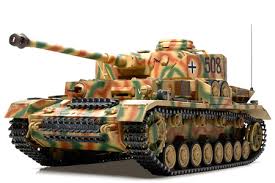
Panzer tank
But the tanks soon faced unexpected difficulties. Most roads in Russia were unpaved, so the tanks raised huge dust clouds almost everywhere they went. The dust clogged their engines and brought many tanks to a halt. Repair crews worked themselves to exhaustion so that the lightning-fast advance could continue.
Another drawback not evident at the outset of the invasion: Summer uniforms. For a war that began on June 22, 1941, these were entirely appropriate. But as the months quickly passed, the notorious Russian winter season loomed ever closer.

Germans in summer uniforms
The German command underestimated the campaign’s duration, expecting a victory by autumn 1941, and prioritized ammunition and fuel over winter equipment. Although winter gear existed, it was stuck in supply depots in the West, and transport lines were too strained by the Soviets’ “scorched earth” tactics to move it to the front.
Without proper greatcoats or insulated boots, soldiers suffered from extreme cold, with temperatures dropping far below zero. Many resorted to stealing blankets from civilians or using blankets as makeshift clothing.
In its war with Iran, American’s air force completely dominated the skies. But then both American planes and ground forces faced an unexpected enemy: Mass-produced drones.
The same weapons—some of them supplied by Iran to Russia—have been used since 2022 in Ukraine. Unmanned and remotely-controlled, Ukrainian and Russian drones have transformed the battlefield. They’re estimated to inflict around 80% of combat casualties on both sides.
The technology—like that forged in Germany’s Blitzkrieg tactics—is revolutionizing warfare and evolving rapidly. To adapt to the new era, the U.S. military is learning lessons from Ukraine.

Iranian drone
Student News Agency, Attribution, via Wikimedia Commons
Not only are American military forces being targeted, so are those Gulf nations that have allied themselves with the United States: The United Arab Emirates, Saudi Arabia, Kuwait, Bahrain, Qatar and Oman.
Primarily targeted: Energy infrastructure, airports and sites hosting American military personnel.
For Iran, the drones are relatively cheap. For the United States, the costs of countering this threat are steadily mounting. A typical Shahed-136 costs Tehran roughly $20,000 to $50,000, while interceptor missiles, such as the Patriot and Terminal High Altitude Area Defense (THAAD), cost millions.
On August 22, 1939—the eve of his invasion of Poland, which would ignite World War II—Adolf Hitler delivered a secret address to his supreme commanders and generals. Its climax:
“Close your hearts to pity. Act brutally. Eighty million people must obtain what is their right. Their existence must be made secure. The stronger man is right. The greatest harshness.”
Hitler urged his generals to act similarly toward the Russians, whom he regarded as subhumans.
The results of this policy soon became obvious when the Wehrmacht invaded Ukraine. Ukrainians, long suffering under the yoke of Stalin, greeted the invaders with bread and salt, the traditional greeting of comrades.
Within a month, they realized that the tyranny of Stalin had been replaced by an all-out extermination campaign of Hitler. For every Ukrainian the Germans killed, 10 more emerged to seek revenge.
Eighty-five years later, Donald Trump and officials of his administration are celebrating the indiscriminate slaughter of Iranians, whether civilian or military.
“We totally demolished Kharg Island, but we may hit it a few more times just for fun,” Trump said on NBC News.
On March 22, Secretary of Defense Pete Hegseth, hosting his monthly Christian worship service at the Pentagon, prayed: “Let every round find its mark against the enemies of righteousness and our great nation.
“Give them wisdom in every decision, endurance for the trial ahead, unbreakable unity, and overwhelming violence of action against those who deserve no mercy.”

Pete Hegseth
“I pursued my enemies and overtook them, and did not turn back till they were consumed,” he read from Psalms 18:37. “Those who hated me I destroyed. They cried to the Lord, but He did not answer them.”
Former House speaker and Trump advisor Newt Gingrich posted on X: “Instead of fighting over a 21-mile-wide bottleneck [Strait of Hormuz] forever, we [could] cut a new channel through friendly territory. A dozen thermonuclear detonations and you’ve got a waterway wider than the Panama Canal, deeper than the Suez, and safe from Iranian attacks.”
This would produce countless numbers of casualties and cover the Middle East with radioactive fallout.
It remains to be seen if such exhortations will lead American soldiers to act as barbarically as those of the Wehrmacht and SS—and inspire similar barbarism in return.
ABC NEWS, ADOLF HITLER, ALI HOSSEINI KHAMENEI, ALTERNET, AMERICABLOG, AP, AYATOLLAH ALI KHAMENEI, BABY BOOMER RESISTANCE, BAHRAIN, BBC, BERLIN, BLOOMBERG, BLOOMBERG NEWS, BLUESKY, BUZZFEED, CBS NEWS, CNN, CROOKS AND LIARS, DAILY KOS, DONALD TRUMP, DRONES, FINLAND, FIVETHIRTYEIGHT, FRANCE, GREAT BRITAIN, HARPER’S MAGAZINE, HUFFINGTON POST, IRAN, ISRAEL, ITALY, JAPAN, JOACHIM VON RIBBENTROP, JOSEPH STALIN, KIEV, KUWAIT, LENINGRAD, LUFTWAFFE, MEDIA MATTERS, MOJTABA KHAMENEI, MOSCOW, MOTHER JONES, MOVEON, MSNBC, NAZI GERMANY, NBC NEWS, NEW REPUBLIC, NEWSDAY, NEWSWEEK, NEWT GINGRICH, NPR, NUCLEAR WEAPONS, OIL FIELDS, OMAN, OPERATION BARBAROSSA, PBS NEWSHOUR, PETE HEGSETH, POLAND, POLITICO, POLITICUSUSA, QATAR, QATER, RAW STORY, REUTERS, SALON, SAUDI ARABIA, SEATTLE TIMES, SLATE, SOVIET UNION, SS, TALKING POINTS MEMO, THE ATLANTIC, THE CHICAGO SUN-TIMES, THE CHICAGO TRIBUNE, THE DAILY BEAST, THE DAILY BLOG, THE GUARDIAN, THE HILL, THE HUFFINGTON POST, THE INTERCEPT, THE LONGEST DAY (MOVIE, THE LOS ANGELES TIMES, THE NATION, THE NEW REPUBLIC, THE NEW YORK TIMES, THE NEW YORKER, THE PENTAGON, THE UNITED ARAB EMIRATES, THE VILLAGE VOICE, THE WASHINGTON POST, THINKPROGRESS, THIRD REICH, TIME, TRUTHDIG, TRUTHOUT, TWO POLITICAL JUNKIES, U.S. NEWS & WORLD REPORT, UKRAINE, UNIFORMS, UPI, USA TODAY, VYACHESLAV MOLOTOV, WEHRMACHT, WONKETTE, WORLD WAR 11, X
In Bureaucracy, History, Military, Politics, Social commentary on March 31, 2026 at 12:48 am
The city: Berlin.
The date: November 12–13, 1940.
The event: A meeting between German Fuhrer Adolf Hitler and Soviet Foreign Minister Vyacheslav Molotov.
The purposes: To discuss:
- Soviet expansion and control over Finland, Bulgaria, and the Turkish Straits; and
- Germany’s desire for the USSR to attack British interests in India and Iran.
Hitler wanted the USSR to join the Axis (Germany, Italy, and Japan) and expand “southward” toward the Indian Ocean to avoid conflict in Europe.
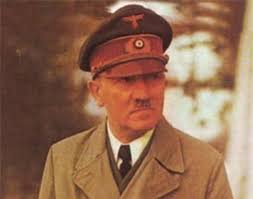
Adolf Hitler
Molotov ignored the talk of India and instead demanded control over Finland, Bulgaria, and the Turkish Straits.
Hitler adamantly opposed Soviet control over Finland, which he considered a strategic ally. He feared a Soviet expansion into Scandinavia would threaten German iron ore supplies from Sweden and northern interests.
And he deeply feared that the Soviet Union would cut off Germany’s vital Romanian oil supplies. Romania provided roughly 75% of German oil in 1941. A late 1940 Soviet attack on the Ploiești oil fields would render Germany helpless and force an end to the war.
On a personal level, Molotov and Hitler grated on each other’s nerves. Molotov was blunt in his remarks and didn’t spare Hitler at all. He seldom smiled and refused to compromises on Russia’s demands for control of Finland, Bulgaria, and the Turkish Straits.
At one point, Molotov asked: “Is last year’s agreement [between Germany and Russia] still valid?”
Hitler replied that it was.
“I asked this question,” said Molotov, “because of the Finns. You are on very friendly relations with the Finns. You invite people from Finland to Germany and you send missions there. And the Finns are very dangerous people. They undermine our security and we’ll have to do something about that and we are going to do something about that.”

Vyacheslav Molotov
“I understand you very well,” exploded Hitler. “You want to wage war against Finland and that is quite out of the question. Do you hear me? It’s impossible because my supplies of iron, nickel and other important raw materials would be cut.”
During the talks, British Royal Air Force (RAF) bombers appeared overhead, forcing the leaders to move to an air raid shelter.
German Foreign Minister Joachim von Ribbentrop had been trying to convince Molotov that Great Britain was “beaten” and that the British Empire was a “gigantic world-wide estate in bankruptcy” ready for partition.
Molotov sarcastically replied: “If England is beaten, why are we in this shelter and whose are the bombs that are falling?”
Even while Molotov was still in Berlin, Hitler ordered his generals to attack the Soviet Union on May 15, 1941.
Within a month they responded with a detailed plan code-named “Operation Barbarossa.”
Less than one year later—on June 22, 1941—with 134 divisions at full fighting strength and 73 more divisions for deployment behind the front, the German Wehrmacht invaded the Soviet Union.
Now the two most ruthless dictators on earth—Adolf Hitler and Joseph Stalin—were locked in a fight to the death.
At the outset, the odds clearly favored the Germans.
The invasion caught the Soviet Union by surprise. Joseph Stalin had received Intelligence reports from Great Britain that Germany was preparing to attack. But Stalin, who believed the British were trying to drive a wedge between him and Hitler, put his faith in Hitler, whose guarantees had long proved worthless.

German army units
From June to September, the Wehrmacht captured vast territories and encircled hundreds of thousands of Red Army troops. German forces quickly advanced toward Leningrad, Moscow, and Kiev, inflicting massive casualties.
The Luftwaffe destroyed much of the Soviet air force on the ground.
In June and July, German panzers quickly advanced, capturing over 300,000 Soviet prisoners in the Minsk-Bialystok pocket. By late September, Army Group South captured Kiev, resulting in the largest encirclement in history, with roughly 600,000 Soviet soldiers trapped.
By the end of 1941, more than three million Soviet soldiers were captured or killed. Still, the Soviet Union did not collapse and continued to commit new field armies to the conflict.
By December, the Wehrmacht, besieging Moscow, were literally freezing to death in their summer uniforms. Then, on December 5-6, the Soviets launched their decisive counter-offensive before Moscow, forcing German forces into a retreat.
It marked the first major land defeat for the Wehrmacht since its September 1, 1939 invasion of Poland, which ignited World War II.
Now, fast-forward 85 years. Substitute President Donald Trump for Fuhrer Adolf Hitler and Mojtaba Khamenei for Joseph Stalin—and Iran for the Soviet Union.
Donald Trump and Adolf Hitler
Just as Hitler launched his attack on the Soviet Union without warning, so did Trump launch his on Iran—on February 28.
Hitler’s attack didn’t kill Joseph Stalin, the all-powerful dictator of the Soviet Union. But Trump’s airstrikes killed Ali Hosseini Khamenei, who had ruled Iran as its supreme leader from 1989.

Ayatollah Ali Khamenei
Still, the Iranians quickly elevated his son, Mojtaba Khamenei, to the same position—and went on fighting.
Hitler—and numerous members of the Wehrmacht—believed that Germany’s mechanized panzers would succeed where Napoleon Bonaparte had failed in 1812. And that they could conquer the Soviet Union in only three months.
They were wrong.
ABC NEWS, ADOLF HITLER, ALFRED JODL, ALTERNET, AMERICABLOG, AP, AYATOLLAH ALI KHAMENEI, BABY BOOMER RESISTANCE, BBC, BELGIUM, BLOOMBERG, BLOOMBERG NEWS, BLUESKY, BUZZFEED, CBS NEWS, CNN, CROOKS AND LIARS, DAILY KOS, FIVETHIRTYEIGHT, FRANCE, GREECE, HARPER’S MAGAZINE, HEINZ GUDERIAN, HOLLAND, HUFFINGTON POST, ISRAEL, JORDAN, JOSEPH STALIN, KUWAIT, LENINGRAD, MEDIA MATTERS, MOSCOW, MOTHER JONES, MOVEON, MSNBC, NAPOLEON BONAPARTE, NAZI GERMANY, NBC NEWS, NEW REPUBLIC, NEWSDAY, NEWSWEEK, NORTH ATLANTIC TREATY ORGANIZATION (NATO), NORWAY DENMARK, NPR, NUCLEAR WEAPONS, OIL FIELDS, PBS NEWSHOUR, PETE HEGSETH, POLAND, POLITICO, POLITICUSUSA, QATAR, RAW STORY, REPUBLICAN PARTY, REUTERS, SALON, SAUDI ARABIA, SAVING PRIVATE RYAN (MOVIE), SEATTLE TIMES, SLATE, SOVIET UNION, TALKING POINTS MEMO, TERRORISM, THE ATLANTIC, THE CHICAGO SUN-TIMES, THE CHICAGO TRIBUNE, THE DAILY BEAST, THE DAILY BLOG, THE GUARDIAN, THE HILL, THE HUFFINGTON POST, THE INTERCEPT, THE LONGEST DAY (MOVIE, THE LOS ANGELES TIMES, THE NATION, THE NEW REPUBLIC, THE NEW YORK TIMES, THE NEW YORKER, THE PENTAGON, THE UNITED ARAB EMIRATES, THE VILLAGE VOICE, THE WASHINGTON POST, THINKPROGRESS, THIRD REICH, TIME, TRUTHDIG, TRUTHOUT, TWO POLITICAL JUNKIES, U.S. NEWS & WORLD REPORT, UPI, USA TODAY, WEHRMACHT, WONKETTE, X, YUGOSLAVIA
In Bureaucracy, History, Law, Politics, Social commentary on March 26, 2026 at 12:17 am
Donald Trump’s unprovoked attack on Iran is separated from Adolf Hitler’s attack on the Soviet Union by a span of 84 years. Yet despite differences in geography and history, eerie similarities exist between the two.
Hitler launched his assault on the Soviet Union on June 22, 1941—after a series of quick military conquests: Poland (1939); Norway, Denmark, Holland, Belgium, France (1940); Greece and Yugoslavia (1941).
Similarly, before launching his assault on Iran on February 28, Trump had scored a number of triumphs–albeit of a non-military nature. A March 19, 2026 article in The New Republic offers a partial summary:
Donald Trump and Adolf Hitler
“In the first year since returning to power, Trump and his subordinates have pushed the country toward fascism and oligarchy. He has turned Washington into an orgy of corruption and self-dealing beyond even the most cynical observer’s imagination.
“He has transformed Immigration and Customs Enforcement and Border Patrol into a lawless paramilitary force that has besieged American cities and killed at least five U.S. citizens and 22 foreign nationals. He has abused Americans and their immigrant neighbors alike simply because he can.”
In his attempt to conquer the Soviet Union, Hitler made the fatal mistake of trying to conquer too much territory all at once.
In August 1941, Hitler diverted forces from the central push on Moscow to surround Leningrad and industrial regions in the South, which delayed the attack on Moscow. By the time Hitler decided to capture Moscow, the weather had turned cold and the Germans were exhausted and freezing.
As in the case of Hitler, Trump assumed that Iran could be forced to quickly surrender. But that effort has been handicapped by a series of shifting and contradictory goals:
- Preventing Iran from developing nuclear weapons.
- Destroying Iran’s missile capabilities.
- Annihilating the Iranian navy.
- Ensuring that Iran quit arming, funding and/or directing “terrorist armies” outside its borders.
In the opening day of the war, American and Israeli airstrikes killed Iran’s Supreme Leader, Ayatollah Ali Khamenei. By March 17, Israel announced that it had killed two more top Iranian leaders in airstrikes. Still, Iranians chose new leaders to succeed dead ones and went on fighting.
Ayatollah Ali Khamenei
On March 19, Israeli airstrikes hit Iran’s largest gas field—South Pars, which is part of the world’s largest natural gas reserves. In retaliation, Iran launched drone and missile attacks against energy infrastructure in Saudi Arabia, the United Arab Emirates (UAE), Qatar, and Kuwait.
Iran also targeted Israel and attacked U.S. military bases in the region, including in Bahrain and Jordan.
Trump said there would be no further attacks on South Pars unless Iran attacked Qatar again. In that case the U.S. “will massively blow up the entirety” of the gas field.
Hitler expected the Soviet Union to collapse in a matter of weeks. France, which supposedly had the strongest army in Europe, had collapsed in six weeks in 1940. He believed that General Winter, which had defeated Napoleon in 1812, would not be a problem for the mechanized Wehrmacht.
Yet the Wehrmacht was far less mechanized than portrayed by German propagandists. It relied heavily on horses for approximately 80% of its transport needs throughout World War II. During the winter of 1941 – 1942, the Wehrmacht lost over 179,000 horses. In the Army Group Center sector, losses reached roughly 1,000 per day.
In movies like “The Longest Day” and “Saving Private Ryan,” Americans celebrate the D-Day landings on France, on June 6, 1944. But for Nazi Germany, “the real war” was in the East. There the Wehrmacht concentrated the largest proportion of its forces—and suffered 85% of its casualties.
By March 19, the United States had spent $12 to over $12.7 billion on military operations against Iran, which began on February 28.
And by March 19, the Pentagon was asking for an additional $200 billion for the war. Secretary of Defense Pete Hegseth said “that number could move.” When asked why so much more funding was needed, he replied: “It takes money to kill bad guys.”
It also takes money—lots of it—to keep Pentagon brass well-supplied with luxuries denied to Americans forced to live on Food Stamps.
In September 2025, the Pentagon spent a record-breaking $93.4 billion in a single month. While most of this was for military grants and contracts, a significant portion was used for high-end furniture, luxury food and musical instruments.
This spending surge, often called a “use-it-or-lose-it” spree, occurs at the end of the fiscal year as agencies rush to exhaust their budgets to avoid future cuts. Examples:
- Luxury Food: Lobster tail, $15 million on ribeye steak, $9 million on Alaskan King Crab, $25 million+ on salmon
- Furniture: High-end office furniture: $225.6 million, including $60,000 for Herman Miller recliners
- Instruments: $1.8 million: Steinway & Sons grand piano ($98,329), a $21,750 custom handmade flute and a $26,000 violin
- IT/Devices: High-Spec Apple iPad Air M3s and Samsung 98-inch monitors – $5.3 million
- Goodies: Ice cream machines, doughnuts, fruit basket stands – $275,000+
Meanwhile, Trump has called for huge increases to the Pentagon’s budget. In January, he posted that the 2027 fiscal year budget should be $1.5 trillion—a 50% increase.
“This will allow us to build the ‘Dream Military’ that we have long been entitled to and, more importantly, that will keep us SAFE and SECURE, regardless of foe.”
Fasten your seatbelts. It’s going to be a bumpy—and expensive—nightmare.
ABC NEWS, ADOLF HITLER, ALFRED JODL, ALTERNET, AMERICABLOG, AP, AYATOLLAH ALI KHAMENEI, BABY BOOMER RESISTANCE, BBC, BELGIUM, BLOOMBERG, BLOOMBERG NEWS, BLUESKY, BUZZFEED, CBS NEWS, CNN, CROOKS AND LIARS, DAILY KOS, FIVETHIRTYEIGHT, FRANCE, GREECE, HARPER’S MAGAZINE, HEINZ GUDERIAN, HOLLAND, HUFFINGTON POST, ISRAEL, JORDAN, JOSEPH STALIN, KUWAIT, LENINGRAD, MEDIA MATTERS, MOSCOW, MOTHER JONES, MOVEON, MSNBC, NAPOLEON BONAPARTE, NAZI GERMANY, NBC NEWS, NEW REPUBLIC, NEWSDAY, NEWSWEEK, NORTH ATLANTIC TREATY ORGANIZATION (NATO), NORWAY DENMARK, NPR, NUCLEAR WEAPONS, OIL FIELDS, PBS NEWSHOUR, PETE HEGSETH, POLAND, POLITICO, POLITICUSUSA, QATAR, RAW STORY, REPUBLICAN PARTY, REUTERS, SALON, SAUDI ARABIA, SAVING PRIVATE RYAN (MOVIE), SEATTLE TIMES, SLATE, SOVIET UNION, TALKING POINTS MEMO, TERRORISM, THE ATLANTIC, THE CHICAGO SUN-TIMES, THE CHICAGO TRIBUNE, THE DAILY BEAST, THE DAILY BLOG, THE GUARDIAN, THE HILL, THE HUFFINGTON POST, THE INTERCEPT, THE LONGEST DAY (MOVIE, THE LOS ANGELES TIMES, THE NATION, THE NEW REPUBLIC, THE NEW YORK TIMES, THE NEW YORKER, THE PENTAGON, THE UNITED ARAB EMIRATES, THE VILLAGE VOICE, THE WASHINGTON POST, THINKPROGRESS, THIRD REICH, TIME, TRUTHDIG, TRUTHOUT, TWO POLITICAL JUNKIES, U.S. NEWS & WORLD REPORT, UPI, USA TODAY, WEHRMACHT, WONKETTE, X, YUGOSLAVIA
In Bureaucracy, History, Military, Politics, Social commentary on March 25, 2026 at 12:02 am
Adolf Hitler had a warning for Donald Trump on the eve of his launching airstrikes against Iran.
A warning Trump should have heeded—but didn’t.
It all started on June 22, 1941.
On that date, Hitler ordered his powerful Wehrmacht o invade the Soviet Union.
Less than two years earlier, on August 23, 1939, he had signed a “non-aggression” pact with his longtime arch-enemy, Joseph Stalin, dictator of the Soviet Union.
Since then, his army had conquered Poland, Norway, Denmark, Holland, Belgium and France.
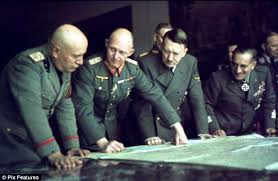
Adolf Hitler with his generals
Now, he believed, it was time to “settle accounts” with the Soviet Union.
Only there could Germany obtain the “living space” it “needed” for its expanding population.
So at 3 a.m. on June 22, 1941, Hitler once again launched an invasion.
At first, Hitler felt giddy with excitement.
Turning to Alfred Jodl, his chief of operations for the Wehrmacht, he said: “We have only to kick in the door and the whole rotten structure will come crashing down.”
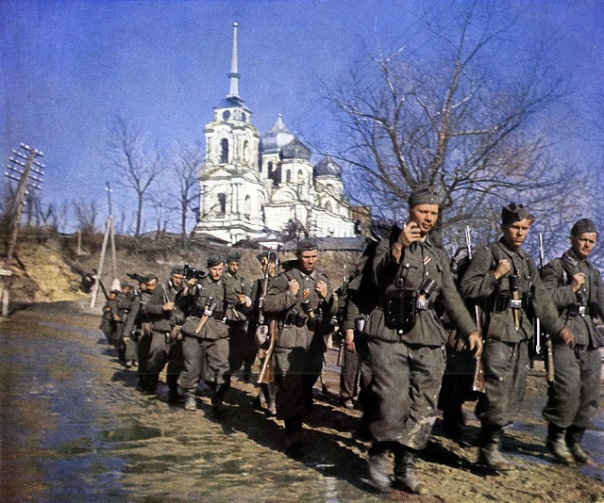
German soldiers marching through Russia
But soon afterward—almost as if he had just looked into the future and seen that he had none—he told an aide: “At the beginning of each campaign, one pushes a door into a dark, unseen room. One can never know what is hiding inside.”
That certainly proved true for Hitler.
Within four years, he was dead and the Red Army occupied Berlin.
And now the law of unintended consequences may be coming true for President Donald Trump and the United States.
On February 28, Trump—in concert with Israel—launched a series of devastating, unprovoked airstrikes against Iran. Since then, Trump and his Secretary of Defense, Pete Hegseth, have been all over the map with rosy predictions.

Donald Trump
- February 28: Trump posted on Truth Social that the bombing would continue “throughout the week or as long as necessary to achieve our objective of PEACE THROUGHOUT THE MIDDLE EAST AND, INDEED, THE WORLD!”
- March 1: In a video Trump declared that the war would continue “until all of our objectives are achieved.”
- March 2: Trump: “Right from the beginning, we projected four to five weeks, but we have capability to go far longer than that.”
- March 5: Hegseth to Pentagon reporters: “You can say four weeks [how long the war might last] but it could be six, it could be eight, it could be three. Ultimately, we set the pace and the tempo.”
- March 6: Trump: “There will be no deal with Iran except UNCONDITIONAL SURRENDER.”
- March 8: Hegseth: “We’re willing to go as far as we need to in order to be successful.”
- March 9: Trump: “No, but soon. I think so. Very soon” when asked by a reporter if the war would be over that week.
- March 11: “You know, you never like to say too early you won. We won. We won the, in the first hour, it was over.”
Hitler had been similarly optimistic about how long it would take to conquer the Soviet Union: Six to eight weeks, at the longest. And during the first three months of the war—July through September, 1941—that optimism seemed well-placed.
The Wehrmacht repeatedly lured Soviet armies into huge “cauldron battles,” then surrounded them, killing thousands and taking thousands of prisoners. By the end of September, German forces had captured or killed over 650,000 Russian troops in the Battle of Kiev alone, with total Soviet casualties reaching millions.
But then Hitler—and the Wehrmacht—paid a fatal price for their misplaced optimism.
The best—and most lethal—example of this hubris: The Wehrmacht went to war in summer uniforms on June 22—and were still wearing them in December.
Hitler placed infinite faith in the power of will to overcome all obstacles. When his soldiers were literally freezing to death before the gates of Moscow, Hitler believed that with “just one more push” the Soviet capital would fall.
When Heinz Guderian, his foremost expert on tank warfare, informed Hitler that German soldiers had no defense against the bitter cold, Hitler replied: They should dig foxholes.
Guderian replied that the icy ground was too solid to be punctured with spades.
Hitler’s reply: They should fire artillery shells into the ground to build foxholes.
This totally ignored the reality that, by December, 1941, the German army was dangerously short on munitions of all kinds.
Like Hitler, Trump seemed to consider himself omnipotent. Asked by a reporter how long the war would last, the President replied: “Any time I want it to end, it will end.”
Yet by the third week of the war, he began demanding—not asking—the assistance of NATO countries: We’ve had your back, now it’s our turn.
This totally ignored the fact that NATO exists to aid any of its members if it is attacked. After 9/11, NATO air force planes screened American airspace to prevent a repeat of similar carnage.
But NATO members are not obligated to join any nation in igniting a war. And that was precisely what Trump did on February 28—without consulting or even informing NATO of his plans to attack.
The only country that knew his intentions was Israel.
9/11 ATTACKS, ABC NEWS, AL QAEDA, ALTERNET, AMERICABLOG, AMERICAN CAESARS: THE LIVES OF THE PRESIDENTS FROM FRANKLIN D. ROOSEVELT TO GEORGE W. BUSH (BOOK), AMERICAN EMPIRE, AP, BABY BOOMER RESISTANCE, BARACK OBAMA, BASHAR AL-ASSAD, BBC, BILL CLINTON, BLOOMBERG NEWS, BUREAUCRACY, BUZZFEED, CBS NEWS, CHRIS MATHEWS, CNN, COLIN POWELL, CONDOLEEZA RICE, CROOKS AND LIARS, DAILY KOS, DICK CHENEY, DONALD RUMSFELD, DONALD TRUMP, DWIGHT EISENHOWER, FBI, FIVETHIRTYEIGHT, FRANKLIN D. ROOSEVELT, GAIUS SUETONIUS TRANQUILLIUS, GEORGE H.W. BUSH, GEORGE W. BUSH, GERALD R. FORD, HARPER’S MAGAZINE, HARRY S. TRUMAN, HOLOCAUST, HUFFINGTON POST, IRAN, IRAQ, ISRAEL, JEFFREY EPSTEIN, JFK: RECKLESS YOUTH (BOOK), JIMMY CARTER, JOHN F. KENNEDY, LYNDON B. JOHNSON, MEDIA MATTERS, MEIN KAMPF, MOTHER JONES, MOVEON, MSNBC, NATIONAL SECURITY COUNCIL, NBC NEWS, NEW REPUBLIC, NEWSDAY, NEWSWEEK, NIGEL HAMILTON, NPR, OSAMA BIN LADEN, PAUL O’NEIL, PAUL WOLFOWITZ, PBS NEWSHOUR, POLITICO, POLITICUSUSA, RAW STORY, REPUBLICAN PARTY, REUTERS, RICHARD CLARKE, RICHARD NIXON, ROMAN EMPIRE, SADDAM HUSSEIN, SALON, SEATTLE TIMES, SEPTEMBER 11, SLATE, SOVIET UNION, SUETONIUS, SYRIA, TALKING POINTS MEMO, TERRORISM, THE ATLANTIC, THE CHICAGO SUN-TIMES, THE CHICAGO TRIBUNE, THE DAILY BEAST, THE DAILY BLOG, THE GUARDIAN, THE HILL, THE HUFFINGTON POST, THE INTERCEPT, THE LOS ANGELES TIMES, THE NATION, THE NEW REPUBLIC, THE NEW YORK TIMES, THE NEW YORKER, THE PENTAGON, THE TWELVE CAESARS (BOOK), THE VILLAGE VOICE, THE WASHINGTON POST, THINKPROGRESS, TIME, TRUTHDIG, TRUTHOUT, U.S. NEWS & WORLD REPORT, UPI, USA TODAY, WEAPONS OF MASS DESTRUCTION, WHITE HOUSE CORRESPONDENTS DINNER, WORLD TRADE CENTER, WORLD WAR 11, X
In Bureaucracy, History, Military, Politics, Social commentary on March 18, 2026 at 12:40 am
On September 12, 2001, President George W. Bush attended a meeting of the National Security Council.
“Why shouldn’t we go against Iraq, not just Al-Qaeda?” demanded Donald Rumsfeld, the Secretary of Defense.
Vice President Dick Cheney enthusiastically agreed.
Secretary of State Colin Powell then pointed out there was absolutely no evidence that Iraq had had anything to do with 9/11 or Al-Qaeda. And he added: “The American people want us to do something about Al-Qaeda”—not Iraq.
On November 21, 2001, only 10 weeks after 9/11, Bush told Rumsfeld: It’s time to turn to Iraq.


Condoleeza Rice
Bush and his war-hungry Cabinet officials knew that Americans demanded vengeance on Al Qaeda’s mastermind, Osama bin Laden, and not Iraqi dictator Saddam Hussein. So they repeatedly fabricated “links” between the two:
- Saddam had worked hand-in-glove with Bin Laden to plan 9/11.
- Saddam was harboring and supporting Al-Qaeda throughout Iraq.
- Saddam, with help from Al-Qaeda, was scheming to build a nuclear bomb.
Yet as early as September 22, 2001, Bush had received a classified President’s Daily Brief intelligence report, which stated that there was no evidence linking Saddam Hussein to 9/11.
The report added that there was scant credible evidence that Iraq had any significant collaborative ties with Al-Qaeda.
Even more important: Saddam had tried to monitor Al Qaeda through his intelligence service—because he saw Al-Qaeda and other theocratic radical Islamist organizations as a potential threat to his secular regime.

Dick Cheney
Bush administration officials repeatedly claimed that Iraq possessed huge quantities of chemical and biological weapons, in violation of UN resolutions. And they further lied that US intelligence agencies had determined:
- The precise locations where these weapons were stored;
- The identities of those involved in their production; and
- The military orders issued by Saddam Hussein for their use in the event of war.
Among other lies stated as fact by members of the Bush administration:
- Iraq had sought uranium from Niger, in west Africa.
- Thousands of aluminum tubes imported by Iraq could be used in centrifuges to create enriched uranium.
- Iraq had up to 20 long-range Scud missiles, prohibited under UN sanctions.
- Iraq had massive stockpiles of chemical and biological agents, including nerve gas, anthrax and botulinum toxin.
- Saddam Hussein had issued chemical weapons to front-line troops who would use them when U.S. forces crossed into Iraq.
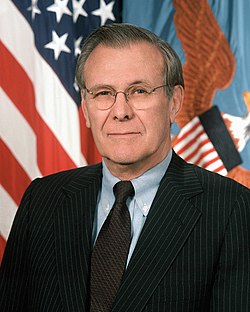
Donald Rumsfeld
Consider the following:
August 26, 2002: Cheney told the Veterans of Foreign Wars, “There is no doubt that Saddam Hussein now has weapons of mass destruction. There is no doubt he is amassing them to use against our friends, against our allies and against us.”
September 8, 2002: National Security Advisor Condoleeza Rice said on CNN: ”There is certainly evidence that Al-Qaeda people have been in Iraq. There is certainly evidence that Saddam Hussein cavorts with terrorists.”
September 18, 2002: Rumsfeld told the House Armed Services Committee, “We do know that the Iraqi regime has chemical and biological weapons. His regime has amassed large, clandestine stockpiles of chemical weapons—including VX, sarin, cyclosarin and mustard gas.”
October 7, 2002: Bush declared in a nationally televised speech in Cincinnati that Iraq “possesses and produces chemical and biological weapons. It is seeking nuclear weapons.”
March 16, 2003: Cheney declared on NBC’s “Meet the Press”: “We believe [Saddam Hussein] has, in fact, reconstituted nuclear weapons.”
Bush never regretted his decision to attack Iraq—on March 19, 2003.
Even as American occupying forces repeatedly failed to turn up any evidence of “weapons of mass destruction” (WMDs), Bush and his minions claimed the invasion a good thing.
In fact, Bush—who hid out the Vietnam war in the Texas Air National Guard—even joked publicly about the absence of WMDs.
He did so at a White House Correspondents dinner on March 24, 2004—one year after he had started the war.

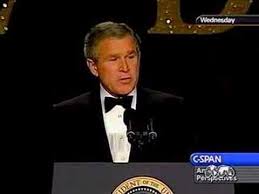
George W. Bush at the 2004 White House Correspondents’ dinner
To Bush, the non-existent WMDs were nothing more than the butt of a joke that night. While an overhead projector displayed photos of a puzzled-looking Bush searching around the Oval Office, Bush recited a comedy routine.
“Those weapons of mass destruction have gotta be somewhere,” Bush laughed, while a photo showed him poking around the corners in the Oval Office.
“Nope—no weapons over there! Maybe they’re under here,” he said, as a photo showed him looking under a desk.
Meanwhile, an assembly of wealthy, pampered men and women—-the elite of America’s media and political classes—laughed heartily during Bush’s performance.
It was a scene worthy of the court of the ancient Caesars, complete with royal flunkies: “Hey! That country we just destroyed wasn’t a threat to us after all! Isn’t that a gas?”
The results of the war that Bush had deliberately provoked:
- Cost the lives of 4,484 Americans.
- Depleted the United States Treasury of at least $2 trillion.
- Created a Middle East power vacuum.
- Allowed Iran—Iraq’s arch enemy—to eagerly fill it.
- Frightened and repelled even America’s closest allies.
- Killed at least 655,000 Iraqis.
- Bush retired from office with a lavish pension and full Secret Service protection.
- He wrote his memoirs and was paid $7 million for the first 1.5 million copies.
- Cheney, Rumsfeld and Rice retired to private business, wrote their memoirs, and lived in comfort as respected elder statesmen.
9/11 ATTACKS, ABC NEWS, AL QAEDA, ALTERNET, AMERICABLOG, AMERICAN CAESARS: THE LIVES OF THE PRESIDENTS FROM FRANKLIN D. ROOSEVELT TO GEORGE W. BUSH (BOOK), AMERICAN EMPIRE, AP, BABY BOOMER RESISTANCE, BASHAR AL-ASSAD, BBC, BILL CLINTON, BLOOMBERG NEWS, BUREAUCRACY, BUZZFEED, CBS NEWS, CHRIS MATHEWS, CNN, COLIN POWELL, CONDOLEEZA RICE, CROOKS AND LIARS, DAILY KOS, DICK CHENEY, DONALD RUMSFELD, DONALD TRUMP, DWIGHT EISENHOWER, FBI, FIVETHIRTYEIGHT, FRANKLIN D. ROOSEVELT, GAIUS SUETONIUS TRANQUILLIUS, GEORGE H.W. BUSH, GEORGE W. BUSH, GERALD R. FORD, HARPER’S MAGAZINE, HARRY S. TRUMAN, HOLOCAUST, HUFFINGTON POST, IRAN, IRAQ, ISRAEL, JEFFREY EPSTEIJN, JFK: RECKLESS YOUTH (BOOK), JIMMY CARTER, JOHN F. KENNEDY, LYNDON B. JOHNSON, MEDIA MATTERS, MEIN KAMPF, MOTHER JONES, MOVEON, MSNBC, NATIONAL SECURITY COUNCIL, NBC NEWS, NEW REPUBLIC, NEWSDAY, NEWSWEEK, NIGEL HAMILTON, NPR, OSAMA BIN LADEN, PAUL O’NEIL, PAUL WOLFOWITZ, PBS NEWSHOUR, POLITICO, POLITICUSUSA, RAW STORY, REPUBLICAN PARTY, REUTERS, RICHARD CLARKE, RICHARD NIXON, ROMAN EMPIRE, SADDAM HUSSEIN, SALON, SEATTLE TIMES, SEPTEMBER 11, SLATE, SOVIET UNION, SUETONIUS, SYRIA, TALKING POINTS MEMO, TERRORISM, THE ATLANTIC, THE CHICAGO SUN-TIMES, THE CHICAGO TRIBUNE, THE DAILY BEAST, THE DAILY BLOG, THE GUARDIAN, THE HILL, THE HUFFINGTON POST, THE INTERCEPT, THE LOS ANGELES TIMES, THE NATION, THE NEW REPUBLIC, THE NEW YORK TIMES, THE NEW YORKER, THE PENTAGON, THE TWELVE CAESARS (BOOK), THE VILLAGE VOICE, THE WASHINGTON POST, THINKPROGRESS, TIME, TRUTHDIG, TRUTHOUT, U.S. NEWS & WORLD REPORT, UPI, USA TODAY, WEAPONS OF MASS DESTRUCTION, WHITE HOUSE CORRESPONDENTS DINNER, WORLD TRADE CENTER, WORLD WAR 11, X
In Bureaucracy, History, Military, Politics, Social commentary on March 17, 2026 at 12:10 am
As President Donald Trump rains bombs and missiles on Iran, it’s vital to remember how American hubris led to a nine-year war in Iraq—from the “shock and awe” bombardment of March 20, 2003, until combat forces were finally withdrawn on December 18, 2011.
But this should also be a time to remember those Americans who made the 9/11 atrocity—and the disastrous Iraq war that followed—inevitable.
British historian Nigel Hamilton has chronicled their arrogance and indifference in his 2010 biography: American Caesars: Lives of the Presidents from Franklin D. Roosevelt to George W. Bush.
Hamilton noted that Richard Clarke, the national security advisor on terrorism, was certain that Osama bin Laden had arranged the USS Cole bombing in Aden on October 12, 2000.
For months, Clarke tried to convince others in the Bush Administration that Bin Laden was plotting another attack against the United States—either abroad or at home.
But Clarke could not prevail against the know-it-all arrogance of such higher-ranking Bush officials as Vice President Dick Cheney; Secretary of Defense Donald Rumsfeld; Rumsfeld’s deputy, Paul Wolfowitz; and National Security Advisor Condoleeza Rice.
Rice initially refused to hold a cabinet-level meeting on the subject. Then she “insisted the matter be handled only by a more junior Deputy Principals meeting” in April, 2001, writes Hamilton.
Even after Clarke outlined the threat posed by Al-Qaeda, Wolfowitz—the number-two man at the Department of Defense—said: “You give bin Laden too much credit.”
Wolfowitz—whose real target was Saddam Hussein—insisted that bin Laden couldn’t carry out his terrorist acts without the aid of a state sponsor—namely, Iraq.
In fact, Wolfowitz blamed Iraq for the 1993 bombing of the World Trade Center. Clarke was stunned, since there was absolutely no evidence of Iraqi involvement in this.
“Al-Qaeda plans major acts of terrorism against the United States,” Clarke warned his colleagues. He pointed out that, like Adolf Hitler, bin Laden had actually published his plans for future destruction.
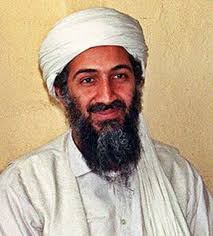
Osama bin Laden
And he added: “Sometimes, as with Hitler in Mein Kampf, you have to believe that these people will actually do what they say they will do.”
Wolfowitz heatedly traded on his Jewish heritage to bring Clarke’s unwelcome arguments to a halt: “I resent any comparison between the Holocaust and this little terrorist in Afghanistan.”
Writing in outraged fury, Hamilton sums up Clarke’s agonizing frustrations:
- Bush’s senior advisors treated their colleagues who had served in the Clinton administration with contempt.
- Bush, Dick Cheney, Rice, Rumsfeld and Wolfowitz seemed content to ignore the danger signals of an impending al-Qaeda attack.
- This left only Secretary of State Colin Powell, his deputy Richard Armitage, Richard Clarke and a skeptical Treasury Secretary, Paul O’Neill, to wage “a lonely battle to waken a seemingly deranged new administration.”
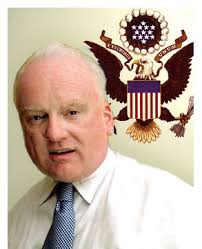
Richard Clarke
Clarke alerted Federal Intelligence agencies that “Al-Qaeda is planning a major attack on us.” He asked the FBI and CIA to report to his office all they could learn about suspicious persons or activities at home and abroad.
Finally, at a meeting with Rice on September 4, 2001, Clarke challenged her to “picture yourself at a moment when in the very near future Al-Qaeda has killed hundreds of Americans, and imagine asking yourself what you wish then that you had already done.”
Seven days later, Al-Qaeda struck, and 3,000 Americans died horrifically—and needlessly.
Neither Bush, Cheney, Rice, Rumsfeld nor Wolfowitz ever admitted their negligence. Nor would any of them be brought to account.

Condoleeza Rice, Dick Cheney, George W. Bush and Donald Rumsfeld
Disgustingly, these were the same officials who, afterward, posed as the Nation’s saviors—and branded anyone who disagreed with them as a traitor, practices the Right continues to exploit to this day.
Only Richard Clarke—who had vainly argued for stepped-up security precautions and taking the fight to Al-Qaeda—gave that apology.
On March 24, 2004, Clarke testified at the public 9/11 Commission hearings. Addressing relatives of victims in the audience, he said: “Your government failed you, those entrusted with protecting you failed you, and I failed you.”
Yet even worse was to come.
On the evening after the September 11 attacks, Bush took Clarke aside during a meeting in the White House Situation Room:
“I want you, as soon as you can, to go back over everything, everything. See if Saddam [Hussein, the dictator of Iraq] did this. See if he’s linked in any way.”
Clarke was stunned: “But, Mr. President, Al-Qaeda did this.”
“I know, I know,” said Bush. “But see if Saddam was involved. I want to know.”
Hussein had not plotted the attack—and there was no evidence proving that he did.
But the attack gave “W” the excuse he wanted to remove the man he blamed for the 1992 defeat of his father, President George H.W. Bush.
Bush believed that his father would have been re-elected if he had “gone all the way” into Baghdad during the 1991 Gulf War.
He would finish the job that his father had started but failed to compete.
It was Hamlet Revisited—with missiles.
On September 12, 2001, Bush attended a meeting of the National Security Council.
“Why shouldn’t we go against Iraq, not just Al-Qaeda?” demanded Donald Rumsfeld, the Secretary of Defense.
Vice President Dick Cheney enthusiastically agreed.
9/11 ATTACKS, ABC NEWS, AL QAEDA, ALTERNET, AMERICABLOG, AMERICAN CAESARS: THE LIVES OF THE PRESIDENTS FROM FRANKLIN D. ROOSEVELT TO GEORGE W. BUSH (BOOK), AMERICAN EMPIRE, AP, BABY BOOMER RESISTANCE, BASHAR AL-ASSAD, BBC, BILL CLINTON, BLOOMBERG NEWS, BUREAUCRACY, BUZZFEED, CBS NEWS, CHRIS MATHEWS, CNN, COLIN POWELL, CONDOLEEZA RICE, CROOKS AND LIARS, DAILY KOS, DICK CHENEY, DONALD RUMSFELD, DONALD TRUMP, DWIGHT EISENHOWER, FBI, FIVETHIRTYEIGHT, FRANKLIN D. ROOSEVELT, GAIUS SUETONIUS TRANQUILLIUS, GEORGE H.W. BUSH, GEORGE W. BUSH, GERALD R. FORD, HARPER’S MAGAZINE, HARRY S. TRUMAN, HOLOCAUST, HUFFINGTON POST, IRAN, IRAQ, ISRAEL, JEFFREY EPSTEIN, JFK: RECKLESS YOUTH (BOOK), JIMMY CARTER, JOHN F. KENNEDY, LYNDON B. JOHNSON, MEDIA MATTERS, MEIN KAMPF, MOTHER JONES, MOVEON, MSNBC, NATIONAL SECURITY COUNCIL, NBC NEWS, NEW REPUBLIC, NEWSDAY, NEWSWEEK, NIGEL HAMILTON, NPR, OSAMA BIN LADEN, PAUL O’NEIL, PAUL WOLFOWITZ, PBS NEWSHOUR, POLITICO, POLITICUSUSA, RAW STORY, REPUBLICAN PARTY, REUTERS, RICHARD CLARKE, RICHARD NIXON, ROMAN EMPIRE, SADDAM HUSSEIN, SALON, SEATTLE TIMES, SLATE, SOVIET UNION, SYRIA, TALKING POINTS MEMO, TERRORISM, THE ATLANTIC, THE CHICAGO SUN-TIMES, THE CHICAGO TRIBUNE, THE DAILY BEAST, THE DAILY BLOG, THE GUARDIAN, THE HILL, THE HUFFINGTON POST, THE INTERCEPT, THE LOS ANGELES TIMES, THE NATION, THE NEW REPUBLIC, THE NEW YORK TIMES, THE NEW YORKER, THE PENTAGON, THE TWELVE CAESARS (BOOK), THE VILLAGE VOICE, THE WASHINGTON POST, THINKPROGRESS, TIME, TRUTHDIG, TRUTHOUT, U.S. NEWS & WORLD REPORT, UPI, USA TODAY, WEAPONS OF MASS DESTRUCTION, WHITE HOUSE CORRESPONDENTS DINNER, WORLD TRADE CENTER, WORLD WAR 11, X
In Bureaucracy, History, Military, Politics, Social commentary on March 16, 2026 at 12:55 am
On February 28, 2026, President Donald J. Trump—in collusion with Israel—launched massive airstrikes against Iran.
Since then, he—and other members of his administration—have issued a series of shifting and contradictory reasons for starting the war. Among them:
- Preventing Iran from developing nuclear weapons.
- Destroying Iran’s missile capabilities.
- Annihilating the Iranian navy.
- Ensuring that Iran quit arming, funding and/or directing “terrorist armies” outside its borders.
- Pre-empting an Iranian attack on American military bases in the Middle East.
One reason not given: Driving the Epstein files—which document Trump’s salacious relationship with pedophile Jeffrey Epstein—off the airways and Internet.
Equally worrisome has been Trump’s shifting estimates about how long the conflict will rage:
- March 9: “It’s going to be ended soon.”
- March 11: “Any time I want it to end, it will end.”
- March 13: “It’ll be as long as it’s necessary.”
- March 13: “When I feel it in my bones” when asked “When are you going to know when it’s over?”
Trump’s comments are eerily similar to those made by President George W. Bush on May 1, 2003.
Standing under a “Mission Accomplished” banner on the deck of the aircraft carrier USS Abraham Lincoln, Bush announced: “Major combat operations in Iraq have ended. In the battle of Iraq, the United States and our allies have prevailed.”
Only on December 18, 2011, were American forces withdrawn from Iraq.
But Americans, refusing to learn from history or even read it, are now being forced to repeat it.
To begin at the beginning:
Even as the rubble was being cleared at the Pentagon and World Trade Center from 9/11, President George W. Bush was preparing to use the attack as an excuse to topple Iraqi dictator Saddam Hussein.
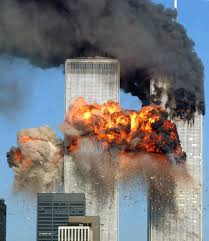
World Trade Center on September 11, 2001
Hussein had not plotted 9/11, and there was no evidence that he did. But that didn’t matter to Bush and those planning the invasion and conquest of Iraq.
British historian Nigel Hamilton has dared to lay bare the facts of this disgrace. Hamilton is the author of several acclaimed political biographies, including JFK: Reckless Youth and Bill Clinton: Mastering the Presidency.
In 2007, he began research on his latest book: American Caesars: The Lives of the Presidents From Franklin D. Roosevelt to George W. Bush.

Nigel Hamilton
Nigel Hamilton, CC BY-SA 3.0 <http://creativecommons.org/licenses/by-sa/3.0/>, via Wikimedia Commons
The inspiration for this came from a classic work of ancient biography: The Twelve Caesars, by Gaius Suetonius Tranquillus—known as Suetonius.
Suetonius, a Roman citizen and historian, had chronicled the lives of the first twelve Caesars of imperial Rome: Julius Caesar, Augustus, Tiberius, Caligula, Claudius, Nero, Galba, Otho, Vitellius, Vespasian, Titus and Domitian.
Hamilton wanted to examine post-World War II United States history as Suetonius had examined that of ancient Rome: Through the lives of the 12 “emperors” who had held the power of life and death over their fellow citizens—and those of other nations.
For Hamilton, the “greatest of American emperors, the Caesar Augustus of his time,” was Franklin D. Roosevelt, who led his country through the Great Depression and World War II.

Franklin D. Roosevelt
His “”great successors” were Harry S. Truman, Dwight D. Eisenhower and John F. Kennedy—who, in turn, contained the Soviet Union abroad and presided over sustained economic prosperity at home.
By contrast, “arguably the worst of all the American Caesars” was “George W. Bush, and his deputy, Dick Cheney, who willfully and recklessly destroyed so much of the moral basis of American leadership in the modern world.”
Among the most lethal of Bush’s offenses: The appointing of officials who refused to take seriously the threat posed by Al-Qaeda.
And this arrogance and indifference continued—right up to September 11, 2001, when the World Trade Center and Pentagon became targets for destruction.
Among the few administration officials who did take Al-Qaeda seriously was Richard Clarke, the chief counter-terrorism adviser on the National Security Council.
Clarke had been thus appointed in 1998 by President Bill Clinton. He continued in the same role under President Bush—but the position was no longer given cabinet-level access.
This put him at a severe disadvantage when dealing with other, higher-ranking Bush officials—such as Vice President Dick Cheney, Secretary of Defense Donald Rumsfeld, Rumsfeld’s deputy, Paul Wolfowitz and National Security Advisor Condoleeza Rice.
These turned out to be the very officials who refused to believe that Al-Qaeda posed a lethal threat to the United States.
“Indeed,” writes Hamilton, “in the entire first eight months of the Bush Presidency, Clarke was not permitted to brief President Bush a single time, despite mounting evidence of plans for a new al-Qaeda outrage.” [Italics added]
Nor did it help that, during his first eight months in office before September 11, Bush was on vacation, according to the Washington Post, 42% of the time.
For months, Clarke tried to convince others in the Bush Administration that Bin Laden was plotting another attack against the United States–either abroad or at home.
But Clarke could not prevail against the know-it-all arrogance of such higher-ranking Bush officials as Cheney, Rumsfeld, Wolfowitz and Rice.
9/11 TERROR ATTACKS, ABC NEWS, ALASKA AIRLINES, ALDRICH AMES, ALTERNET, AMERICABLOG, AMERICAN AIRLINES, AP, BABY BOOMER RESISTANCE, BBC, BC NEWS, BLOOMBERG, BLUESKY, BUZZFEED, CBS NEWS, CIA, CNN, CROOKS AND LIARS, DAILY KOS, DELTA AIRLINES, FBI, FIVETHIRTYEIGHT, HARPER’S MAGAZINE, HUFFINGTON POST, IDENTOGO, JETBLUE AIRLINES, JOHN F. KENNEDY, JOHN W. HINCKLEY, LYNETTE "SQUEAKY" FROMME, MEDIA MATTERS, MOTHER JONES, MOVEON, MSNBC, NBC NEWS, NEWSDAY, NEWSWEEK, NPR, PBS NEWSHOUR, POLITICO, POLITICUSUSA, PRESIDENT GERALD FORD, PRESIDENT RONALD REAGAN, RALPH NADER, RAW STORY, REUTERS, RICHARD REID, ROBERT HANSSEN, SALON, SARAH JANE MOORE, SEATTLE TIMES, Secret Service, SECURITY, SHOE-BOMBER, SLATE, SOUTHWEST AIRLINES, TALKING POINTS MEMO, TERRORISM, THE ATLANTIC, THE CHICAGO SUN-TIMES, THE CHICAGO TRIBUNE, THE DAILY BEAST, THE DAILY BLOG, THE GUARDIAN, THE HILL, THE HUFFINGTON POST, THE INTERCEPT, THE LOS ANGELES TIMES, THE NATION, THE NEW REPUBLIC, THE NEW YORK TIMES, THE NEW YORKER, THE PENTAGON, THE VILLAGE VOICE, THE WALL STREET JOURNAL, THE WASHINGTON POST, THINKPROGRESS, TIME, TRANSPORTATION SAFETY ADMINISTRATION (TSA), TRANSPORTATION SECURITY ADMINISTRATION, TRUTHDIG, TRUTHOUT, TSA PRECHECK, TWO POLITICAL JUNKIES, U.S. NEWS & WORLD REPORT, UNITED AIRLINES, UNITED FLIGHT 93, UPI, USA TODAY, USAIRWAYS, VIRGIN AMERICAN AIRLINES, WEALTH GAP, WORLD TRADE CENTER, X
In Bureaucracy, Business, History, Law, Law Enforcement, Politics, Social commentary on November 21, 2025 at 12:17 am
All security systems—including those considered the best—are created by humans. And humans are and will always be imperfect creatures.
So there will inevitably be times when security agents miss the assassin or terrorist intent on mayhem. For example:
- In September, 1975, two women—Lynette “Squeaky” Fromme and Sara Jane Moore—tried to assassinate President Gerald R. Ford on two separate occasions.
- Fromme was tackled by a Secret Service agent. Moore’s aim was deflected by Oliver Sipple, a Marine and Vietnam veteran, thus saving Ford’s life.
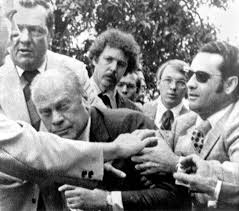
Gerald Ford being hustled from danger by Secret Service agents
Until these incidents, the Secret Service profile of a potential assassin didn’t include a woman.
- On March 30, 1981, John W. Hinckley, a psychotic obsessed with actress Jodie Foster, gained access to a line of reporters waiting to throw questions at President Ronald Reagan.
- As Reagan got into his bulletproof Presidential limousine, Hinckley drew a pistol and opened fire. Wounded, Reagan escaped death by inches.
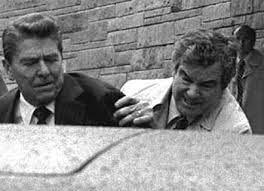
The Reagan Assassination attempt
The Secret Service Service had failed to prevent the attack because no one—until that moment—had attacked a President from the section reserved for reporters.
- On September 11, 2001, Islamic terrorists armed with boxcutters highjacked four American jetliners and turned them into fuel-bombs.
- Two of the airliners struck the North and South towers of the World Trade Center, destroying both structures.
- A third hit the Pentagon.
- The fourth—United Airlines Flight 93—crashed when it was diverted from its intended target (the White House or Congress) by passengers who resolved to fight back.
- Three thousand Americans died that day—in New York City, Washington, D.C., and Shanksville, Pennsylvania.
Until this day of catastrophe, no highjacker had turned a jumbo-jet into a fuel-bomb. Passengers had been advised to cooperate with highjackers, not resist them.
So how will the next 9/11 happen? In all likelihood, like this:
- A terrorist—or, more likely, several terrorists—will sign up for one or more airline “VIP screening” programs.
- They will be completely clean—no arrests, no convictions.
- They may well be respectable citizens in their communities.
- They will probably have amassed enough “frequent flier miles” to ingratiate themselves with the airlines and convince the Transportation Safety Administration (TSA) of their integrity.
- Then, one day, they will breeze through their selected airports—
- Without removing their belts and shoes;
- Without undergoing pat-down searches;
- Without being required to remove laptops and other electronic devices from their carry-ons;
- Without exposing their electronic devices to X-ray technology.
- Then they will board planes—either as part of an individual terrorist effort or a coordinated one, a la 9/11.
And then it will be too late.
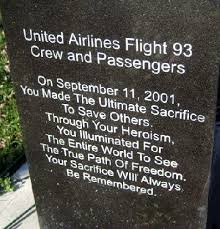
Memorial to the passengers and crew of United Flight 93
The TSA/airlines’ VIP programs are based on the assumption that someone who has completed a security check in the past need not be re-checked in the future.
This assumption has proven false for American Intelligence agencies such as the FBI and CIA.
- FBI agent Robert Hanssen spied for Soviet and Russian Intelligence services for 22 years (1979-2001). He’s now serving a life sentence in Florence, Colorado.
- CIA agent Aldrich Ames betrayed American secrets—including those Russians who had shared them—to Soviet and Russian espionage agencies from 1985 to 1994. He is likewise serving a life sentence.
Even requiring an agent to undergo repeated security checks is no guarantee of trustworthiness.
When asked about how he repeatedly passed CIA polygraph tests, Ames said: “There’s no special magic. Confidence is what does it. Confidence and a friendly relationship with the examiner. Rapport, where you smile and make him think that you like him.”
Thus, as William Shakespeare warned in Hamlet, “One may smile and smile and be a villain”—or a highjacker.
The TSA introduced its Pre-Check program during the fall of 2011. By August, 2024, more than 20 million travelers had been found worthy of “expedited” status.
In early September, 2013, TSA announced that it would more than double its “expedited screening” program, Pre-Check, from 40 to 100 airports by the end of the year.
Nor is TSA the only organization giving big-spending fliers special treatment at potential risk to their country. For example:
Delta Air Lines offers Sky Priority, described as providing “privileged access through security checkpoints” at select airports.
Another private security program, Clear, collects several pieces of biometric data on well-heeled passengers. Once verified by a kiosk local to the security checkpoint, the passengers are allowed to skirt the security barriers that poor and middle-class folks must pass through.
Priority Access, set up by TSA and the airlines, provides “expedited service” to first-class and business passengers. To qualify, you need only possess certain credit cards—such as the United Mileage Plus Club Card.
Some critics blast this two-tier passenger check-in system as an affront to democratic principles.
“It’s stratifying consumers by class and wealth, because the people who travel a lot usually have higher incomes,” said Ralph Nader, consumer advocate and frequent business traveler.
But there is an even more important reason to immediately disband these programs and require everyone—rich and middle-class alike—to undergo the same level of security screening:
The 3,000 men and women who died horrifically on September 11, 2001, at the hands of airline passengers whom authorities thought could be trusted to board a plane.

Tribute to the vanished World Trade Center
9/11 TERROR ATTACKS, ABC NEWS, ALASKA AIRLINES, ALDRICH AMES, ALTERNET, AMERICABLOG, AMERICAN AIRLINES, AP, BABY BOOMER RESISTANCE, BBC, BC NEWS, BLOOMBERG, BLUESKY, BUZZFEED, CBS NEWS, CIA, CNN, CROOKS AND LIARS, DAILY KOS, DELTA AIRLINES, FBI, FIVETHIRTYEIGHT, HARPER’S MAGAZINE, HUFFINGTON POST, IDENTOGO, JETBLUE AIRLINES, JOHN F. KENNEDY, JOHN W. HINCKLEY, LYNETTE "SQUEAKY" FROMME, MEDIA MATTERS, MOTHER JONES, MOVEON, MSNBC, NBC NEWS, NEWSDAY, NEWSWEEK, NPR, PBS NEWSHOUR, POLITICO, POLITICUSUSA, PRESIDENT GERALD FORD, PRESIDENT RONALD REAGAN, RALPH NADER, RAW STORY, REUTERS, RICHARD REID, ROBERT HANSSEN, SALON, SARAH JANE MOORE, SEATTLE TIMES, Secret Service, SECURITY, SHOE-BOMBER, SLATE, SOUTHWEST AIRLINES, TALKING POINTS MEMO, TERRORISM, THE ATLANTIC, THE CHICAGO SUN-TIMES, THE CHICAGO TRIBUNE, THE DAILY BEAST, THE DAILY BLOG, THE GUARDIAN, THE HILL, THE HUFFINGTON POST, THE INTERCEPT, THE LOS ANGELES TIMES, THE NATION, THE NEW REPUBLIC, THE NEW YORK TIMES, THE NEW YORKER, THE PENTAGON, THE VILLAGE VOICE, THE WALL STREET JOURNAL, THE WASHINGTON POST, THINKPROGRESS, TIME, TRANSPORTATION SAFETY ADMINISTRATION (TSA), TRUTHDIG, TRUTHOUT, TSA PRECHECK, TWITTER, TWO POLITICAL JUNKIES, U.S. NEWS & WORLD REPORT, UNITED AIRLINES, UNITED FLIGHT 93, UPI, USA TODAY, USAIRWAYS, VIRGIN AMERICAN AIRLINES, WEALTH GAP, WORLD TRADE CENTER, X
In Bureaucracy, Business, History, Law, Law Enforcement, Politics, Social commentary on November 20, 2025 at 12:10 am
More than 20 years after 9/11, America is now selling its Islamic enemies access to the very weapons—jet-fueled airplanes—they need to wage jihad against its citizens.
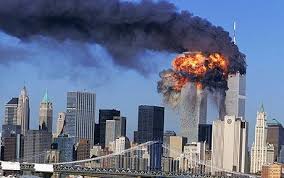
World Trade Center on September 11, 2001
This danger is brought to you by IdentoGO, the private security company chosen by the Transportation Safety Administration (TSA) to screen airline passengers.
Consider this ad it posts:
“How many times have you stood in line at the airport watching others breeze through security with no hassle? By enrolling in TSA Pre✓® , you too can breeze through security.
“Keep your shoes, jacket and belt on; your laptop in its case; 3-1-1 compliant liquids in your bag; and enjoy a better overall travel experience.
“TSA Pre✓® allows low-risk travelers to experience faster, more efficient screening at participating U.S. airport checkpoints for domestic and international travel.”
Yes, for an enrollment payment of $78, you, too, can apply to receive such preferential treatment. Even if it means putting the Nation’s security at risk. Travelers that are eligible for TSA Pre✓® include:
- U.S. citizens of frequent flyer programs who meet TSA-mandated criteria and who have been invited by a participating airline;
- U.S. citizen, U.S. national or Lawful Permanent Residents who are members of the TSA Pre✓® Application Program;
- U.S. citizens who are members of a U.S. Customs and Border Protection Trusted Traveler program, such as Global Entry, SENTRI, and NEXUS and Canadian citizens who are members of NEXUS; and
- Members of the U.S. Armed Forces.
- Find an IdentoGO Center near you, including a growing number of airport locations, offering TSA Pre✓® and pre-enroll online.
- Schedule an appointment to come in for fingerprinting.
- Pay the $85 applications fee and show your proof-of-identity documents from the approved list of valid government IDs.
- A Known Traveler Number (KTN) will be mailed to you or can be obtained online.
- Once enrolled, your KTN is used when booking travel and your TSA Pre✓® approval is printed on your boarding passes.
- Be sure to update your airline member profile to have the number automatically sent to the TSA when making reservations.
Among the credit cards that will buy you such preferential treatment:
If you’re accepted, you don’t need to undergo another background check for the next five years.
In 2024, 96% of TSA PreCheck passengers waited less than five minutes to board.
So what difference does it make that some passengers must submit to close inspection while others do not?
- If you’re trying to carry a metallic firearm aboard a plane, the magnetometer will likely pick it up. But if you’ve filled your computer with plastic explosive, the magnetometer won’t pick it up.

Advanced imaging technology
- Or maybe you want to be a shoe-bomber like Richard Reid, who tried to blow up an American Airlines flight in 2001. Being allowed to skip the requirement to remove your shoes will certainly take you a long way toward reaching your goal.
Why is America being placed at such risk? Three reasons:
- The greed of American airline corporations and the TSA.
- Wealthy, self-entitled Americans hate waiting in long airport security lines—like ordinary citizens.
- The Calvinistic belief—shared by most Americans—that wealth is a sign of God’s favor, and thus proof that its holder is worthy of deference, if not awe.
On September 11, 2001, 2,996 people were killed and more than 6,000 others wounded as three highjacked airliners slammed into:
- The North Tower of the World Trade Center;
- The South Tower of the World Trade Center;
- The Pentagon; and
- A field in Somerset County, Pennsylvania, after passengers and crew on United Flight 93 tried to regain control.
The attacks inflicted the worst shock and grief on America since the 1963 assassination of President John F. Kennedy.
So think about how easy it is to qualify as a TSA Pre-Check passenger the next time you board an airliner.
According to Yelp! reviews of thoroughly satisfied IdentoGO customers:
- “My TSA precheck appointment was done in 10 minutes! Plenty of free parking in their parking lot. The staff was friendly and courteous. I made an appointment thru the TSA precheck website. When I arrived, there was no wait. The office was clean, and the staff member who I met was friendly and courteous. Be sure to bring in your proper documents. $85 fee collected at the end of appointment. TSA precheck works for domestic flights only.”
- “The friendly agent took me in right away and he proceeded to go through my application with me, just to double check that all the information in the application is correct. He took my fingerprints (all fingers) and I was pretty much done in about 10 minutes.”
- “Going here for TSA precheck is a no-brainer. Super easy to get an appointment, free parking, and no waiting. Staff was friendly and efficient, explained what to expect after they submitted my information, and within less than 10 minutes I was on my way. Went in on a Friday afternoon and by Monday evening (ok, late evening really), I had my KTN. So, so easy.”
2020 PRESIDENTIAL ELECTION, ALTERNET, AMERICABLOG, AP, ATTORNEY GENERAL OF THE UNITED STATES, BABY BOOMER RESISTANCE, BBC, BC NEWS, BLOOMBERG, BLUESKY, BRENDEN CARR, BUZZFEED, CBS NEWS, CHARLIE KIRK, CIVIL RIGHTS, CNN, CROOKS AND LIARS, DAILY KOS, DISNEY, DIVERSITY EQUITY AND INCLUSION (DEI), DONALD TRUMP, FEDERAL COMMUNICATIONS COMMISSION, FIVETHIRTYEIGHT, FREEDOM OF SPEECH, GOODFELLAS (FILM), HARPER’S MAGAZINE, HUFFINGTON POST, J.D. VANCE, JANUARY 6 COUP ATTEMPT, JIMMY KIMMEL, JIMMY KIMMEL LIVE!, MAGA, MEDIA MATTERS, MOTHER JONES, MOVEON, MSNBC, NBC NEWS, NEWSDAY, NEWSWEEK, NPR, PAM BONDI, PBS NEWSHOUR, POLITICO, POLITICUSUSA, RAW STORY, REPUBLICANS, REUTERS, SALON, SEAN PARNELL, SEATTLE TIMES, SLATE, STEPHEN MILLER, TALKING POINTS MEMO, TEXAS FLOODS, THE ATLANTIC, THE CHICAGO SUN-TIMES, THE CHICAGO TRIBUNE, THE DAILY BEAST, THE DAILY BLOG, THE GUARDIAN, THE HILL, THE HUFFINGTON POST, THE INTERCEPT, THE LOS ANGELES TIMES, THE NATION, THE NEW REPUBLIC, THE NEW YORK TIMES, THE NEW YORKER, THE PENTAGON, THE VILLAGE VOICE, THE WASHINGTON POST, THINKPROGRESS, TIME, TRUTHDIG, TRUTHOUT, TWO POLITICAL JUNKIES, U.S. NEWS & WORLD REPORT, UPI, USA TODAY, X, ZOHRAN MAMDANI
In Bureaucracy, History, Law, Law Enforcement, Medical, Military, Politics, Social commentary on September 23, 2025 at 12:11 am
“Jimmy Kimmel Live! will be pre-empted indefinitely,” an ABC spokesperson said in a brief statement to media outlets on the evening of September 17.
This followed criticism by Republicans of on-air comments Kimmel had made after the September 10 shooting of Right-wing propagandist Charlie Kirk.
Early that day, Brendan Carr, chairman of the Federal Communications Commission, called Kimmel’s remarks “truly sick” in an interview with Right-wing podcaster Benny Johnson. And he said the Disney-owned network should hold Kimmel accountable or face punishment.
Speaking like a Mafioso in Goodfellas, Carr added: “This is a very, very serious issue right now for Disney. We can do this the easy way or the hard way. These companies can find ways to take action on Kimmel or there is going to be additional work for the FCC ahead.”

Brendan Carr
During his monologue on September 15, Kimmel said that President Donald Trump’s supporters were trying to “score political points” by portraying Kirk’s accused killer, 22-year-old Tyler Robinson, as a left-wing radical.
He did not attack Kirk or praise his assassination.
This is what Kimmel said:
“We hit some new lows over the weekend with the MAGA gang desperately trying to characterize this kid who murdered Charlie Kirk as anything other than one of them and doing everything they can to score political points from it. In between the finger-pointing, there was grieving. On Friday, the White House flew the flags at half-staff, which got some criticism, but on a human level, you can see how hard the president is taking this.”

Jimmy Kimmel
Kimmel then showed a clip of a reporter asking Trump how he was holding up in the wake of Kirk’s death.
“I think very good. And by the way, right there where you see all the trucks, they just started construction of the new ballroom for the White House, which is something they’ve been trying to get, as you know, for about 150 years, and it’s gonna be a beauty.”
“Yes, he’s at the fourth stage of grief: construction,” Kimmel said. “Demolition, construction. This is not how an adult grieves the murder of someone he called a friend. This is how a 4-year-old mourns a goldfish.”

Donald Trump
In fact, everything that Kimmel said about “the MAGA gang….doing everything they can to score political points” was absolutely true.
Since Kirk’s death, Trump and his Republican allies have threatened retribution (“consequences”) for people who speak unflatteringly about him.
On September 15—five days after Kirk’s death—Vice President J.D. Vance hosted Kirk’s podcast: “So, when you see someone celebrating Charlie’s murder, call them out and, hell, call their employer. We don’t believe in political violence, but we do believe in civility.”

J.D. Vance
Sean Parnell, the Pentagon’s top spokesman, wrote: “It is unacceptable for military personnel and Department of War civilians to celebrate or mock the assassination of a fellow American.”
White House Deputy Chief of Staff Stephen Miller vowed to use law enforcement to go after Americans who mocked Kirk’s death, calling that domestic terrorism:
“We will not live in fear, but you will live in exile, because the power of law enforcement under President Trump’s leadership will be used to find you, will be used to take away your money, take away your power, and if you have broken the law to take away your freedom.”
On September 15, Attorney General Pam Bondi told Katie Miller, the former DOGE aide, on her podcast: “There’s free speech and then there’s hate speech. And there is no place—especially now, especially after what happened to Charlie—in our society. We will absolutely target you, go after you, if you are targeting anyone with hate speech.”

Pam Bondi
At Kirk’s funeral on September 22, Trump gave his own example of hate speech: “That’s where I disagreed with Charlie. I hate my opponent and I don’t want the best for them. I’m sorry.”
Meanwhile, Kirk’s critics have accused him—both in life and death—of being the real exploiter of hate speech.
- At a 2024 Trump election rally in Georgia: Democrats “stand for everything God hates.”
- He promoted Trump’s false claim that the 2020 presidential election was “rigged” against him by a vast Democratic conspiracy.
- On January 5, 2021, the day before Trump’s followers attacked the United States Capitol, Kirk wrote on Twitter that his Turning Point Action group and Students for Trump were sending more than 80 “buses of patriots to D.C. to fight for this President.”
- Afterward, Kirk said that the attack on the Capitol wasn’t an insurrection and did not represent mainstream Trump supporters.
- On civil rights, Kirk said: “We made a huge mistake when we passed the Civil Rights Act in the 1960s.”
- On race: “If I see a Black pilot, I’m going to be like, ‘Boy, I hope he’s qualified.’”
- Speaking of the July 4 Texas flood along the Guadalupe River in the Hill Country: “You are not being told by the media anywhere, is that the death toll likely would not have been so high if it wasn’t for DEI.”
- He attacked New York City mayoral candidate Zohran Mamdani as “a self-righteous, narcissistic parasite on New York City and should be expelled from politics.”
The difference between Kirk and his opponents: Kirk didn’t face “retribution” from a powerful, Right-wing government for his speech.


 Bureaucracybuster's Blog
ABC NEWS, ADOLF HITLER, ALI HOSSEINI KHAMENEI, ALTERNET, AMERICABLOG, AP, AYATOLLAH ALI KHAMENEI, BABY BOOMER RESISTANCE, BAHRAIN, BBC, BERLIN, BLOOMBERG, BLOOMBERG NEWS, BLUESKY, BUZZFEED, CBS NEWS, CNN, CROOKS AND LIARS, DAILY KOS, DONALD TRUMP, DRONES, FINLAND, FIVETHIRTYEIGHT, FRANCE, GREAT BRITAIN, HARPER’S MAGAZINE, HUFFINGTON POST, IRAN, ISRAEL, ITALY, JAPAN, JOACHIM VON RIBBENTROP, JOSEPH STALIN, KIEV, KUWAIT, LENINGRAD, LUFTWAFFE, MEDIA MATTERS, MOJTABA KHAMENEI, MOSCOW, MOTHER JONES, MOVEON, MSNBC, NAZI GERMANY, NBC NEWS, NEW REPUBLIC, NEWSDAY, NEWSWEEK, NEWT GINGRICH, NPR, NUCLEAR WEAPONS, OIL FIELDS, OMAN, OPERATION BARBAROSSA, PBS NEWSHOUR, PETE HEGSETH, POLAND, POLITICO, POLITICUSUSA, QATAR, QATER, RAW STORY, REUTERS, SALON, SAUDI ARABIA, SEATTLE TIMES, SLATE, SOVIET UNION, SS, TALKING POINTS MEMO, THE ATLANTIC, THE CHICAGO SUN-TIMES, THE CHICAGO TRIBUNE, THE DAILY BEAST, THE DAILY BLOG, THE GUARDIAN, THE HILL, THE HUFFINGTON POST, THE INTERCEPT, THE LONGEST DAY (MOVIE, THE LOS ANGELES TIMES, THE NATION, THE NEW REPUBLIC, THE NEW YORK TIMES, THE NEW YORKER, THE PENTAGON, THE UNITED ARAB EMIRATES, THE VILLAGE VOICE, THE WASHINGTON POST, THINKPROGRESS, THIRD REICH, TIME, TRUTHDIG, TRUTHOUT, TWO POLITICAL JUNKIES, U.S. NEWS & WORLD REPORT, UKRAINE, UNIFORMS, UPI, USA TODAY, VYACHESLAV MOLOTOV, WEHRMACHT, WONKETTE, WORLD WAR 11, X
THE DICTATORS’ DANCE–PAST AND PRESENT: PART TWO (END)
In Bureaucracy, History, Military, Politics, Social commentary on April 1, 2026 at 12:17 amNow, fast-forward 85 years—from 1941 to 2026. Substitute President Donald Trump for Fuhrer Adolf Hitler and Mojtaba Khamenei for Joseph Stalin—and Iran for the Soviet Union.
Just as Hitler launched his attack on the Soviet Union without warning, so did Trump launch his on Iran—on February 28.
Hitler—and numerous members of the Wehrmacht—believed that Germany’s mechanized panzers would quickly subdue Soviet armies.
“We were fast,” recalled Panzer Lieutenant Hans-Erdmann Schonbeck. “And our tank forces could cover huge distances. And once we broke through the enemy’s defenses, our orders were not to worry about threats to our right or left but to keep going, deep into Russian territory.”
Panzer tank
But the tanks soon faced unexpected difficulties. Most roads in Russia were unpaved, so the tanks raised huge dust clouds almost everywhere they went. The dust clogged their engines and brought many tanks to a halt. Repair crews worked themselves to exhaustion so that the lightning-fast advance could continue.
Another drawback not evident at the outset of the invasion: Summer uniforms. For a war that began on June 22, 1941, these were entirely appropriate. But as the months quickly passed, the notorious Russian winter season loomed ever closer.
Germans in summer uniforms
The German command underestimated the campaign’s duration, expecting a victory by autumn 1941, and prioritized ammunition and fuel over winter equipment. Although winter gear existed, it was stuck in supply depots in the West, and transport lines were too strained by the Soviets’ “scorched earth” tactics to move it to the front.
Without proper greatcoats or insulated boots, soldiers suffered from extreme cold, with temperatures dropping far below zero. Many resorted to stealing blankets from civilians or using blankets as makeshift clothing.
In its war with Iran, American’s air force completely dominated the skies. But then both American planes and ground forces faced an unexpected enemy: Mass-produced drones.
The same weapons—some of them supplied by Iran to Russia—have been used since 2022 in Ukraine. Unmanned and remotely-controlled, Ukrainian and Russian drones have transformed the battlefield. They’re estimated to inflict around 80% of combat casualties on both sides.
The technology—like that forged in Germany’s Blitzkrieg tactics—is revolutionizing warfare and evolving rapidly. To adapt to the new era, the U.S. military is learning lessons from Ukraine.
Iranian drone
Student News Agency, Attribution, via Wikimedia Commons
Not only are American military forces being targeted, so are those Gulf nations that have allied themselves with the United States: The United Arab Emirates, Saudi Arabia, Kuwait, Bahrain, Qatar and Oman.
Primarily targeted: Energy infrastructure, airports and sites hosting American military personnel.
For Iran, the drones are relatively cheap. For the United States, the costs of countering this threat are steadily mounting. A typical Shahed-136 costs Tehran roughly $20,000 to $50,000, while interceptor missiles, such as the Patriot and Terminal High Altitude Area Defense (THAAD), cost millions.
On August 22, 1939—the eve of his invasion of Poland, which would ignite World War II—Adolf Hitler delivered a secret address to his supreme commanders and generals. Its climax:
“Close your hearts to pity. Act brutally. Eighty million people must obtain what is their right. Their existence must be made secure. The stronger man is right. The greatest harshness.”
Hitler urged his generals to act similarly toward the Russians, whom he regarded as subhumans.
The results of this policy soon became obvious when the Wehrmacht invaded Ukraine. Ukrainians, long suffering under the yoke of Stalin, greeted the invaders with bread and salt, the traditional greeting of comrades.
Within a month, they realized that the tyranny of Stalin had been replaced by an all-out extermination campaign of Hitler. For every Ukrainian the Germans killed, 10 more emerged to seek revenge.
Eighty-five years later, Donald Trump and officials of his administration are celebrating the indiscriminate slaughter of Iranians, whether civilian or military.
“We totally demolished Kharg Island, but we may hit it a few more times just for fun,” Trump said on NBC News.
On March 22, Secretary of Defense Pete Hegseth, hosting his monthly Christian worship service at the Pentagon, prayed: “Let every round find its mark against the enemies of righteousness and our great nation.
“Give them wisdom in every decision, endurance for the trial ahead, unbreakable unity, and overwhelming violence of action against those who deserve no mercy.”
Pete Hegseth
“I pursued my enemies and overtook them, and did not turn back till they were consumed,” he read from Psalms 18:37. “Those who hated me I destroyed. They cried to the Lord, but He did not answer them.”
Former House speaker and Trump advisor Newt Gingrich posted on X: “Instead of fighting over a 21-mile-wide bottleneck [Strait of Hormuz] forever, we [could] cut a new channel through friendly territory. A dozen thermonuclear detonations and you’ve got a waterway wider than the Panama Canal, deeper than the Suez, and safe from Iranian attacks.”
This would produce countless numbers of casualties and cover the Middle East with radioactive fallout.
It remains to be seen if such exhortations will lead American soldiers to act as barbarically as those of the Wehrmacht and SS—and inspire similar barbarism in return.
Share this: