Posts Tagged ‘THE GUARDIAN’
2016 PRESIDENTIAL ELECTION, 2024 PRESIDENTIAL ELECTION, ABC NEWS, ADOLF HITLER, ALTERNET, AMERICABLOG, AP, BABY BOOMER RESISTANCE, BBC, BLACKS, BLOOMBERG, BLOOMBERG NEWS, BUZZFEED, CBS NEWS, CNN, COVID-19, CROOKS AND LIARS, DAILY KOS, DEMOCRACY, DONALD J. TRUMP, DONALD TRUMP, DRUDGE RETORT, ECONOMY, EMPLOYMENT, EXTORTION, FACEBOOK, FBI, FIVETHIRTYEIGHT, GESTAPO, GREED, HARPER’S MAGAZINE, HATRED, HISPANICS, HUFFINGTON POST, HUNTER BIDEN, immigration, INDEPENDENT COUNSEL, INFLATION, JAMES COMEY, JANUARY 6 COUP ATTEMPT, JEWS, JOE BIDEN, JOE SCARBOROUGH, JOHN ADAMS, JOSEPH R. BIDEN, Kamala Harris, MEDIA, MEDIA MATTERS, MEXICO, MIKA BRZEZINSKI, MORNING JOE, MOTHER JONES, MOVEON, MSNBC, NAZI ATROCITIES, NBC NEWS, NEW REPUBLIC, NEWSDAY, NEWSWEEK, NPR, PAM BONDI, PBS NEWSHOUR, POLITICO, POLITICUSUSA, PROJECT 2025, RACISM, RAW STORY, REPUBLICANS, REUTERS, ROBERT MUELLER, ROD ROSENSTEIN, SALON, SARAH HUCKABEE SANDERS, SEATTLE TIMES, SLATE, SOVIET UNION, TALKING POINTS MEMO, THE ATLANTIC, THE CHICAGO SUN-TIMES, THE CHICAGO TRIBUNE, THE DAILY BEAST, THE DAILY BLOG, THE GUARDIAN, THE HILL, THE HUFFINGTON POST, THE INTERCEPT, THE LOS ANGELES TIMES, THE NATION, THE NEW REPUBLIC, THE NEW YORK TIMES, THE NEW YORKER, THE VILLAGE VOICE, THE WASHINGTON POST, THINKPROGRESS, TIME, TRUMP UNIVERSITY SCANDAL, TRUTHDIG, TRUTHOUT, TWO POLITICAL JUNKIES, U.S. NEWS & WORLD REPORT, UKRAINE, UNEMPLOYMENT, UNITED STATES DEPARTMENT OF JUSTICE, UNITED STATES HOUSE OF REPRESENTATIVES, UNITED STATES SENATE, UPI, USA TODAY, VLADIMIR PUTIN, VOLODMYR ZELENSKY, WEHRMACHT, WHITE WOMEN, WONKETTE, X
In Bureaucracy, Business, History, Law, Law Enforcement, Military, Politics, Social commentary on December 4, 2024 at 12:11 am
During the 2024 Presidential election, the two most important issues—for voters—were immigration and inflation.
In short: “Get rid of the spics!” and “Give us cheaper eggs!”
Repeatedly, Vice President Kamala Harris warned that Donald Trump’s return to the Presidency would result in a Fascistic dictatorship:
“Donald Trump is increasingly unhinged and unstable, and in a second term, people like John Kelly [Trump’s former chief of staff] would not be there to be the guardrails against his propensities and his actions….
“He wants a military who will be loyal to him, personally, one that will obey his orders, even when he tells them to break the law or abandon their oath to the Constitution of the United States.”
Reputable media warned that he intended to turn the FBI into his private Gestapo and use the Justice Department to attack his political rivals.
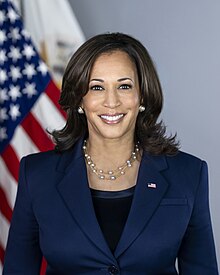
Kamala Harris
But Americans didn’t care.
Instead, 76.9 million voters chose to overturn the democratic traditions that had guided American life since 1788, when the United States Constitution was ratified.
Appeals to their hatred, racism and greed proved far more seductive.
Throughout Trump’s Presidency—2017 to 2021—those who opposed his agenda took solace in a series of expected saviors.
- On May 9, 2017, Trump fired FBI Director James Comey for daring to investigate his proven ties to Russian dictator Vladimir Putin. Assistant Attorney General Rod Rosenstein then appointed Robert Meuller as special counsel to investigate that firing—and Trump’s ties to Russia.
Mueller had a sterling reputation for integrity as a former prosecutor and FBI director. But he allowed himself to be intimidated by the Presidential aura—and refused to directly interview Trump.
His subsequent official report contained no impeachment-worthy evidence.
- On July 25, 2019, Trump threatened to withhold almost $400 million in promised military aid for Ukraine—which faced increasing aggression from Russia—unless its president, Volodymyr Zelensky, did him “a favor”: Investigate 2020 Democratic Presidential Candidate Joe Biden and his son, Hunter, who had had business dealings in Ukraine.
The reason for such an investigation: To find embarrassing “dirt” on Biden. Unless Zelensky found this, the promised aid would be withheld.
The House of Representatives tried Trump for abuse of power and obstruction of Congress. The evidence against him was overwhelming—including a transcript of the extortionate phone call.
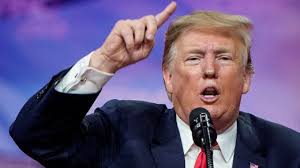
Donald Trump
But the Republican Senate refused to convict.
Had this happened, Trump would have been legally barred from running again for President.
- On January 6, 2021, Trump incited a violent attack on the United States Capitol to stop the counting of Electoral College votes—which would prove that he had lost the 2020 Presidential election to former Vice President Joseph Biden.
As a result, five people died and 174 police officers were injured. The Capitol Building—the symbol of American democracy—suffered about $2.7 billion in damages.
Evidence of Trump’s guilt was overwhelming—including video of his incitement.
But, once again, the Republican-dominated Senate refused to convict.

Stormtrumpers attacking the Capitol Building
Tyler Merbler from USA, CC BY 2.0 <https://creativecommons.org/licenses/by/2.0>, via Wikimedia Commons
Trump’s opponents had placed their hopes in Special Counsel Robert Mueller and (twice) the United States Congress to address the brazen criminality of Donald Trump.
The results: Anger and disappointment.
Yet one last hope remained:
That the 2024 Presidential election would send Joseph Biden, and then, after he dropped out of the race, Vice President Kamala Harris—to the White House.
Harris waged what was widely descripted as “a campaign of joy,” promising to be “the President of all Americans,” including those who voted against her. Repeatedly, she warned that, if re-elected, Trump would pursue a vengeance-fueled agenda against anyone who had dared cross him.
Trump ran a campaign based on hatred—of Hispanics, of liberals, of those who had served in his administration and now disowned him. During his single debate with Harris, he falsely claimed that Haitian immigrants in Ohio were “eating the dogs….they’re eating the cats” of local citizens.
On one occasion, he appeared to emulate performing a ‘sex act’ on a microphone stand during a rally after experiencing technical difficulties.
Most ominously, credible news reports circulated that, if Trump were re-elected, he would implement a radical, Right-wing plan—Project 2025—to completely reshape the federal government.
At its heart: The mass firings of politically neutral civil service officials and their replacement with thousands of political hacks.
This would arm Republicans with the power to establish an absolute dictatorship under the next Republican president.
Yet, in the end, none of this mattered.
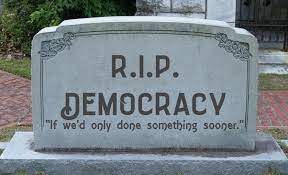
His supporters included:
- Hispanics: 54%—despite being repeatedly vilified by Trump and slated for mass deportation;
- White women: 52%—despite his destroying abortion rights and being convicted for raping columnist E. Jean Carroll;
- Blacks: 21%—giving Harris fewer votes than they gave Biden in 2020.
On January 30, 1933, Adolf Hitler rose to dictatorial power through backroom intrigues and appointment as Chancellor by President Paul von Hindenburg.
On November 5, 2024, Trump rose to dictatorial power when Americans voted to ignore his past crimes and the ones he boasted he intended to commit.
John Adams predicted this long ago: “Democracy never lasts long. It soon wastes, exhausts, and murders itself. There never was a democracy yet that did not commit suicide.”
2016 PRESIDENTIAL ELECTION, 2024 PRESIDENTIAL ELECTION, ABC NEWS, ADOLF HITLER, ALTERNET, AMERICABLOG, AP, BABY BOOMER RESISTANCE, BBC, BLACKS, BLOOMBERG, BLOOMBERG NEWS, BUZZFEED, CBS NEWS, CNN, COVID-19, CROOKS AND LIARS, DAILY KOS, DEMOCRACY, DONALD J. TRUMP, DONALD TRUMP, DRUDGE RETORT, ECONOMY, EMPLOYMENT, EXTORTION, FACEBOOK, FBI, FIVETHIRTYEIGHT, GESTAPO, GREED, HARPER’S MAGAZINE, HATRED, HISPANICS, HUFFINGTON POST, HUNTER BIDEN, immigration, INDEPENDENT COUNSEL, INFLATION, JAMES COMEY, JANUARY 6 COUP ATTEMPT, JEWS, JOE BIDEN, JOE SCARBOROUGH, JOHN ADAMS, JOSEPH R. BIDEN, Kamala Harris, MEDIA, MEDIA MATTERS, MEXICO, MIKA BRZEZINSKI, MORNING JOE, MOTHER JONES, MOVEON, MSNBC, NAZI ATROCITIES, NBC NEWS, NEW REPUBLIC, NEWSDAY, NEWSWEEK, NPR, PAM BONDI, PBS NEWSHOUR, POLITICO, POLITICUSUSA, PROJECT 2025, RACISM, RAW STORY, REPUBLICANS, REUTERS, ROBERT MUELLER, ROD ROSENSTEIN, SALON, SARAH HUCKABEE SANDERS, SEATTLE TIMES, SLATE, SOVIET UNION, TALKING POINTS MEMO, THE ATLANTIC, THE CHICAGO SUN-TIMES, THE CHICAGO TRIBUNE, THE DAILY BEAST, THE DAILY BLOG, THE GUARDIAN, THE HILL, THE HUFFINGTON POST, THE INTERCEPT, THE LOS ANGELES TIMES, THE NATION, THE NEW REPUBLIC, THE NEW YORK TIMES, THE NEW YORKER, THE VILLAGE VOICE, THE WASHINGTON POST, THINKPROGRESS, TIME, TRUMP UNIVERSITY SCANDAL, TRUTHDIG, TRUTHOUT, TWO POLITICAL JUNKIES, U.S. NEWS & WORLD REPORT, UKRAINE, UNEMPLOYMENT, UNITED STATES HOUSE OF REPRESENTATIVES, UNITED STATES SENATE, UPI, USA TODAY, VLADIMIR PUTIN, VOLODMYR ZELENSKY, WEHRMACHT, WHITE WOMEN, WONKETTE, X
In Bureaucracy, History, Politics, Social commentary on December 3, 2024 at 12:13 am
On April 27, 2020, Joe Scarborough offered an important insight about why most Americans ignored President Donald Trump’s crimes and outrages for so long:
“Back in January Joe Biden wrote an Op-Ed that the President was not prepared for this coming pandemic, and things were going to get worse. And he said ‘Let your doctors talk. Let your scientists talk. Follow their lead.’
“…And it’s been one scam idea after another, that people then promoted on other networks, scam doctors promoting these scam solutions, claiming that everybody who had taken this malaria drug had been cured in certain hospitals. This is just the sort of thing that catches up to Donald Trump.
“I’ve said from the very beginning: You can lie about independent counsels, people won’t listen. You can lie about former FBI directors—“
MIKA BRZEZINSKI: “It doesn’t impact their lives.”
JOE SCARBOROUGH: “They’re still going to work, the kids are doing fine, they’ve got enough money to pay their rent, to pay their mortgage, You can even lie about the Ukraine call—they don’t really care.
“But all of these lies, all of these [COVID-19] scams that he’s been pushing…have been revealed as lies—not by the people on cable news, but by their doctors. By nurses they know. If you’ve got a doctor who’s been treating your family for 20-25 years, you’re going to believe that person more than a scam artist that’s pushing propaganda for Donald Trump on talk radio.“
On August 23, 2018, Trump, appearing on “Fox and Friends,” said: “I tell you what, if I ever got impeached, I think the market would crash, I think everybody would be very poor.”
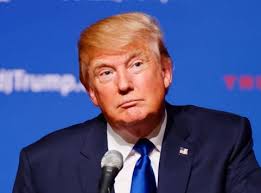
Donald Trump
Thus, he appealed to the greed and fear of his voting base—and no doubt hoped to reach beyond it: “Keep me in power or you’ll all suffer for it.”
Then-White House Press Secretary Sarah Huckabee Sanders bragged, on June 4, 2018:
“Since taking office, the President has strengthened American leadership, security, prosperity, and accountability. And as we saw from Friday’s jobs report, our economy is stronger, Americans are optimistic, and business is booming.”
Many Congressional Republicans echoed this: The American people care only about the economy—and how well-off they are.
For eight years, Nazi Germany underwent such an epoch. Germans called it “The Happy Time.”
It began on January 30, 1933, when Adolf Hitler became Chancellor—and lasted until June 22, 1941, when Hitler invaded the Soviet Union.
Germans knew about the Nazis’ cruelty to the Jews, the conquests of Austria, Czechoslovakia and Poland, the mass arrests and concentration camps.
They didn’t care.
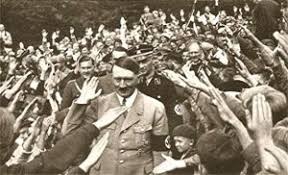
Frenzied Germans greet Adolf Hitler
The Gestapo didn’t have to watch everyone: German “patriots” gladly reported their fellow citizens—especially Jews—to the secret police.
As far as everyday Germans were concerned:
- The streets were clean and peaceful.
- Employment was high.
- The trouble-making unions were gone.
- Germany was once again “taking its rightful place” among ruling nations, after its catastrophic defeat in World War 1.
The height of “The Happy Time” came in June, 1940. In just six weeks, the Wehrmacht accomplished what the German army hadn’t in four years during World War 1: The total defeat of its longtime enemy, France.
Suddenly, French clothes, perfumes, delicacies, paintings and other “fortunes of war” came pouring into the Fatherland.
Most Germans believed der Krieg—“the war”—was over, and only good times lay ahead.
Then, on June 22, 1941, three million Wehrmacht soldiers slashed their way into the Soviet Union. The Third Reich was now locked in a death-struggle with a nation even more powerful than itself.

German soldiers in the Soviet Union
And then, on December 11, 1941—four days after Germany’s ally, Japan, attacked Pearl Harbor—Hitler declared war on the United States.
“The Happy Time” for Germans was over. Only prolonged disaster lay ahead.
Donald Trump has spent his life appealing to the greed or fear of those around him. For example:
- Florida Attorney General Pam Bondi personally solicited a political contribution from Trump around the same time her office deliberated joining an investigation of alleged fraud at Trump University and its affiliates.
- After Bondi dropped the Trump University case against Trump, he wrote her a $25,000 check for her re-election campaign.
- According to an April 14, 2019 story by ABC News, a nationwide review uncovered at least 36 criminal cases where Trump was invoked in direct connection with violent acts, threats of violence or allegations of assault.
- In nine cases, attackers hailed Trump in the midst or immediate aftermath of physically assaulting victims.
- In 10 more cases, perpetrators cheered or defended Trump while taunting or threatening others.
- And in another 10 cases, Trump and his rhetoric were cited in court to explain a defendant’s violent or threatening behavior.
But starting in January, 2020, Trump faced an enemy—to his re-election—that he couldn’t bribe or intimidate.
The deadly COVID-19 virus didn’t accept bribe-monies or grovel before a raging tyrant. As a result, 400,000 Americans died by the time Trump left office.
The Germans made a devil’s-bargain with Adolf Hitler—and paid dearly for it.
Millions of greedy Americans made a similar bargain with Donald Trump—and paid almost as dearly.
2020 PRESIDENTIAL CAMPAIGN, ABC NEWS, ABORTION, ABRAHAM LINCOLN, ADOLF HITLER, ALTERNET, AMERICABLOG, AP, BABY BOOMER RESISTANCE, BBC, BLOOMBERG NEWS, BUZZFEED, CBS NEWS, CIVIL WAR, CLONING, CNN, CONSERVATION, CROOKS AND LIARS, DAILY KOZ, DONALD TRUMP, FACEBOOK, FIVETHIRTYEIGHT, HARPER’S MAGAZINE, HUFFINGTON POST, HUMOR, JOE BIDEN, MEDIA MATTERS, MEXICANS, MOTHER JONES, MOVEON, MSNBC, NBC NEWS, NEW REPUBLIC, NEWSDAY, NEWSWEEK, NPR, PBS NEWSHOUR, POLITICO, POLITICUSUSA, RAW STORY, REPUBLICANS, REUTERS, Ronald Reagan, SALON, SEATTLE TIMES, SLATE, SLAVERY, TALKING POINTS MEMO, THE ATLANTIC, THE CHICAGO SUN-TIMES, THE CHICAGO TRIBUNE, THE DAILY BEAST, THE DAILY BLOG, THE GUARDIAN, THE HILL, THE HUFFINGTON POST, THE LOS ANGELES TIMES, THE NATION, THE NEW REPUBLIC, THE NEW YORK TIMES, THE NEW YORKER, THE VILLAGE VOICE, THE WASHINGTON POST, THEODORE ROOSEVELT, THINKPROGRESS, TIME, TRUST-BUSTING, TRUTHDIG, TRUTHOUT, TWO POLITICAL JUNKIES, U.S. NEWS & WORLD REPORT, UPI, USA TODAY, WONKETTE, X
In Bureaucracy, Entertainment, History, Humor, Military, Politics, Social commentary on December 2, 2024 at 12:19 am
Many Republican strategists feared that, with the defeat of Donald Trump by Joe Biden in 2020, Democrats would have a lock on the White House in 2024.
And the base of the Republican Party continued to demand candidates who are increasingly Fascistic.
The top officials of the Republican Party decided that science held the answer: They would use cloning to create the perfect, unbeatable Presidential candidate.
They directed scientists from the National Institute of Health to resurrect—via DNA samples—several past, hugely popular Republican leaders.
The first of these was Abraham Lincoln: Destroyer of slavery and defender of the Union.
The scientists then introduced him to a sample of Republican voters to gauge his current popularity.
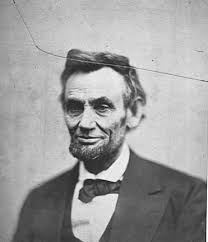
Abraham Lincoln
The test audience erupted—but not in the way party officials expected.
“Race-mixer!”
“He’s the reason we have all these damn civil rights laws.”
“He invaded the South—and destroyed states’ rights!”
To head off a riot, the scientists rushed the startled Lincoln-clone off the stage.
Then they introduced their next resurrected candidate: Theodore Roosevelt, the trust-busting conservationist.
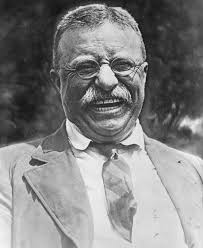
Theodore Roosevelt
Again, the test-audience erupted:
“Tree-hugger! Tree-hugger!”
“He’s the guy who broke up the big corporations—lousy Socialist!”
Startled Republican officials hustled the Roosevelt-clone out of the building.
Finally, they brought out their third choice for victory: A cloned Ronald Reagan.
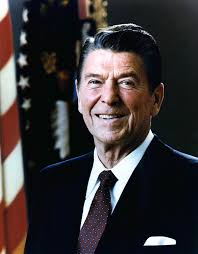
Ronald Reagan
For the test audience, this was simply too much:
“Not him! He legalized abortion in California when he was Governor!”
“He let all those damn Mexicans come into California! We need someone who kicks them out!”
Desperate, Republican leaders went into a huddle.
“What are we going to do?” asked one. “Lincoln, Roosevelt and Reagan were our most popular Presidents.”
“Yeah, but that was in the past, before Donald Trump showed us the way,” said another. “We need a candidate who speaks to our base today.”
“Hey, I’ve got an idea. But there’s just one catch. The guy I have in mind wasn’t actually born in the United States.”
“So what?”
“That would violate the Constitution.”
“Screw the Constitution. You know what Donald Trump always said: Why spoil the beauty of the thing with legality?”
So the Republicans again ordered the scientists to return to work one last time.
When the last resurrected candidate was presented to the test-audience, the crowd rose as one, shouting: “That’s him! That’s him!”
“The one we’ve been waiting for!”
“The one who really speaks for us!”
“He’s totally anti-abortion—and he hates uppity women!”
“He makes even Trump look like a pussy!”
“Yeah—he hates Socialists, gays and nonwhites, and he really believes in a strong military!”
Then the audience suddenly hushed as their cloned savior raised his hand for silence.
“All right, all right, I vill do it,” said the clone-candidate. “But the last time I led people to greatness, they proved unworthy of me.
“So I vill do it again—but only on von condition!”
“Yes, yes!” screamed the test-audience. “Anything you want! What is it?”
“Ziss time….”
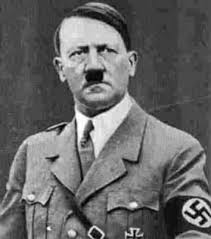
Adolf Trump
….no more Mister Nice Guy!”
2016 PRESIDENTIAL ELECTION, ABC NEWS, ADOLF HITLER, AFGHANISTAN, ALTERNET, AMERICABLOG, AP, ASIANS, ” 9/11, BABY BOOMER RESISTANCE, BARACK OBAMA, BLACKS, BULLYING, BUZZFEED, CBS NEWS, CNN, COMMUNISM, CROOKS AND LIARS, DAILY KOZ, DONALD TRUMP, DRUDGE RETORT, FACEBOOK, FASCISM, FIVETHIRTYEIGHT, GEORGE W. BUSH, GREAT DEPRESSION, HARPER’S MAGAZINE, HILLARY CLINTON, HISPANICS, IRAQ, JEWS, KONRAD ADENAUR, MEDIA MATTERS, MOTHER JONES, MOVEON, MSNBC, MUSLIMS, NAZI GERMANY, NAZI PARTY, NBC NEWS, NEWSWEEK, NPR, PAUL VON HINDENBURG, PBS NEWSHOUR, POLITICO, POLITICUSUSA, RACISM, RAW STORY, REPUBLICANS, REUTERS, ROBERT PAYNE, SALON, SEATTLE TIMES, SLATE, TALKING POINTS MEMO, THE ATLANTIC, THE CHICAGO SUN-TIMES, THE CHICAGO TRIBUNE, THE DAILY BEAST, THE DAILY BLOG, THE GUARDIAN, THE HILL, THE HUFFINGTON POST, THE LIFE AND DEATH OF ADOLF HITLER, THE LOS ANGELES TIMES, THE LOS ANGELS TIMES, THE NATION, THE NEW REPUBLIC, THE NEW YORK TIMES, THE VILLAGE VOICE, THE WASHINGTON POST, THINKPROGRESS, TIME, TRUTHDIG, TRUTHOUT, TWO POLITICAL JUNKIES, U.S. NEWS & WORLD REPORT, UPI, USA TODAY, WONKETTE, WORLD WAR 11, X
In Bureaucracy, History, Politics, Social commentary on November 29, 2024 at 12:57 am
In his bestselling 1973 biography, The Life and Death of Adolf Hitler, British historian Robert Payne harshly condemned the German people for the rise of the Nazi dictator.
“[They] allowed themselves to be seduced by him and came to enjoy the experience….[They] followed him with joy and enthusiasm because he gave them license to pillage and murder to their hearts’ content. They were his servile accomplices, his willing victims….
“If he answered their suppressed desires, it was not because he shared them, but because he could make use of them. He despised the German people, for they were merely the instruments of his will.”
On November 8, 2016, millions of ignorant, hate-filled, Right-wing Americans elected Donald Trump—a man reflecting their own hate and ignorance—to the Presidency.
Yet, in some ways, Americans had fewer excuses for turning to a Fascistic style of government than the Germans did.
Adolf Hitler, joined the National Socialist German Workers (Nazi) Party in 1919—the year after World War 1 ended.
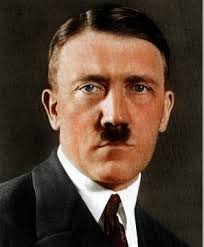
Adolf Hitler
In 1923, he staged a coup attempt in Bavaria—which was quickly and brutally put down by police. He was arrested and sentenced to less than a year in prison.
After that, Hitler decided that winning power through violence was no longer an option. He must win it through election—or appointment.
When the 1929 Depression struck Germany, the fortunes of Hitler’s Nazi party rose as the life savings of ordinary Germans fell. Streets echoed with bloody clashes between members of Hitler’s Nazi Stormtroopers and those of the German Communist Party.
Germans desperately looked for a leader—a Fuhrer—who could somehow deliver them from the threat of financial ruin and Communist takeover.
In early 1933, members of his own cabinet persuaded aging German president, Paul von Hindenburg, that only Hitler’s appointment as Chancellor could do this.
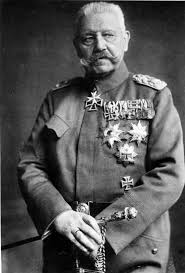
Paul von Hindenburg
Hindenburg was reluctant to do so. He considered Hitler a dangerous radical. But he let himself be convinced that he could “box in” and control Hitler by putting him in the Cabinet.
So, on January 30, 1933, Hindenburg appointed Adolf Hitler Chancellor (the equivalent of Attorney General) of Germany.
On August 2, 1934, Hindenburg died. Hitler immediately assumed the titles—and duties—of the offices of Chancellor and President. His rise to total power was complete.
It had taken him 14 years to do so.
In 2015, Donald Trump declared his candidacy for President.
Now, consider this:
- America was technically at war in the Middle East—but its fate was not truly threatened, as it had been during the Civil War.
- Government loans from President Barack Obama had saved American capitalism from its own excesses during the George W. Bush administration.
- Employment was up.
- No scandals had plagued the Obama Presidency—unlike the Reagan one.
- There been no large-scale terrorist attacks on American soil—such as 9/11 under George W. Bush.
Yet—not 17 months after announcing his candidacy for President—enough Americans fervently embraced Donald Trump to give him the most powerful position in the country and the world.
.jpg/220px-Donald_Trump_August_19,_2015_(cropped).jpg)
Donald Trump
Whites comprised the overwhelming majority of the audiences at Trump rallies. Not all were racists, but many of those who were advertised it on T-shirts: “MAKE AMERICA WHITE AGAIN.”
Birthrates among nonwhites were rising. By 2045, whites would make up less than 50 percent of the American population.
The 2008 election of the first black President had shocked whites. His 2012 re-election had deprived them of the hope that 2008 had been an accident.
Then came 2016—and the possibility that a black President might actually be followed by a woman: Hillary Clinton.
During Trump’s four years in office, he:
- Fired FBI Director James Comey for investigating Russia’s subversion of the 2016 Presidential election.
- Attacked Federal judges whose rulings displeased him.
- Repeatedly and enthusiastically defended Vladimir Putin, the dictator of Russia, America’s mortal enemy.
- Installed three Right-wing Justices on the Supreme Court who overturned Roe v. Wade, allowing states to once again outlaw abortion.
- Attacked and alienated America’s oldest allies, such as Canada and Great Britain.
- Shut down the United States Government, imperiling the lives of 800,000 Federal employees, to extort money from Congress for a worthless wall on the U.S.-Mexico border.
- Attacked the free press as “the enemy of the people.”
- Repeatedly lied about the dangers of COVID-19 while attacking governors who supported mask-wearing and social distancing; 400,000 Americans died.
- Refused to accept his loss in the 2020 Presidential election and spread “The Big Lie” that he had been cheated of victory by massive voter fraud.
- Incited a deadly attack on Congress to stop the counting of Electoral College votes—proving that Joe Biden had won the 2020 Presidential election—so he could remain in office as “President-for-Life.”
On November 5, 2024, 76,414,580 ignorant, hate-filled, Right-wing Americans eagerly voted to again install him as their Fuhrer.
Imagine that, four years after World War II, Germans had voted to replace their “colorless” chancellor, Konrad Adenauer, with the one who had ignited World War II and slaughtered six million Jews: Adolf Hitler.
All of this should be remembered the next time an American blames Germans for their embrace of Adolf Hitler.
.GOSPEL MUSIC, ABC NEWS, ADAM AND EVE, ALTERNET, AMERICABLOG, AP, ATHEISTS, BABY BOOMER RESISTANCE, BERNIE SANDERS, BUZZFEED, CBS NEWS, CHRISTIANITY, CNN, CROOKS AND LIARS, DAILY KOZ, DANIEL IN THE LION’S DEN, DONALD TRUMP, DRUDGE RETORT, DWIGHT D. EISENHOWER, FIVETHIRTYEIGHT, HARPER’S MAGAZINE, HILLARY CLINTON, IRRATIONALITY, JESUS CHRIST, JOHN F. KENNEDY, JOHN F. KENNEDY JR., JONAH, KING OF KINGS (MOVIE), LAZARUS, LOT’S WIFE, MARK ZUCKERBERG, MEDIA MATTERS, MOSES, MOTHER JONES, MOVEON, MSNBC, NBC NEWS, NEWSWEEK, NICCOLO MACHIAVELLIL, NOAH, NPR, PBS NEWSHOUR, POLITICO, POLITICUSUSA, QANON, RAW STORY, RESURRECTION, REUTERS, SALON, SAMSON AND DELILAH (MOVIE), SEATTLE TIMES, SLATE, TALKING POINTS MEMO, THE ATLANTIC, THE BIBLE, THE CHICAGO SUN-TIMES, THE CHICAGO TRIBUNE, THE DAILY BEAST, THE DAILY BLOG, THE GUARDIAN, THE HILL, THE HUFFINGTON POST, THE LOS ANGELES TIMES, THE NATION, THE NEW REPUBLIC, THE NEW YORK TIMES, THE PRINCE, THE TEN COMMANDMENTS (MOVIE), THE VILLAGE VOICE, THE WASHINGTON POST, THINKPROGRESS, TIME, TRUTHDIG, TRUTHOUT, TWO POLITICAL JUNKIES, U.S. NEWS & WORLD REPORT, UPI, USA TODAY, X
In Bureaucracy, History, Politics, RELIGION, Social commentary on November 28, 2024 at 12:18 am
Pray: To ask that the laws of the universe be annulled for the sake of a single petitioner, confessedly unworthy.
Most voters aren’t moved by appeals to their rationality. Instead, what counts with them is emotions. And nothing conjures up emotions more than appeals to religion.
There is no better example of the power of irrationality than a gathering of QAnon followers in Dallas, Texas, on November 2, 2021.
Hundreds of people from around the country gathered at the grassy knoll in Dallas’ Dealey Plaza, where President John F. Kennedy was assassinated in 1963.
The congregation wasn’t there to commemorate the death of the 35th President of the United States. They expected to see the return of the Kennedys.
QAnon logo
CC BY-SA 4.0 <https://creativecommons.org/licenses/by-sa/4.0>, via Wikimedia Commons
“Word on the street is Junior—JFK Jr.—will show up and introduce his parents,” one believer told a local news station. “He’ll (JFK Jr.) probably be the vice president with Trump.”
Those who believed in rationality weren’t surprised when the elder former President and his son failed to magically appear.
Most of the gathered crowd went home. But others stayed, waiting for months in Dallas for the Kennedys to return.
According to followers of QAnon, the Kennedys, who once dominated the Democratic Party, had somehow become allies of Donald Trump. In this scenario, the Kennedys and Trump were direct descendants of Jesus Christ—and locked in a conflict between good and evil.
It’s essential to understand how such thoroughly irrational beliefs can dominate the lives of millions. An excellent starting point are those beliefs embraced by Christians—from their first-century origins to the present day.
Among those beliefs:
- God creates Adam from dust. (This absolutely contradicts everything we know about how men and women reproduce. Would-be parents don’t throw dust into the air and see it instantly turn into newborn babies.)
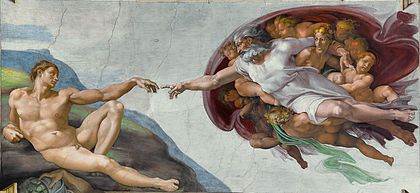
God creates Adam–as painted by Michelangelo
- Adam and Eve meet a talking snake. (Presumably it spoke Hebrew. When was the last time a zoologist had a serious discussion with a serpent?)
- Noah saves the world’s wildlife by stuffing them into an ark. (Sure—untrained wild animals are going to meekly walk, two-by-two, into a huge building. Then they’re going to let themselves be caged. And Noah and his family must store a huge variety of food for each type of animal for an indefinite period of time. And the sheer stench of all that animal urine and feces would have been horrific.)
- Moses parts the Red Sea. (Some scholars believe “Red” has been mistranslated from “Reed,” which is like upgrading “the White Quail” in Moby Dick to “the White Whale.”)
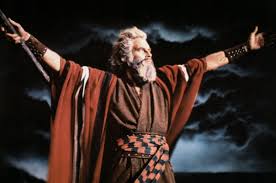
Moses (played by Charlton Heston) parts the Red Sea
- Lot’s wife becomes a pillar of salt. (A human being can be turned into ashes, but not salt.)
- Samson kills 1,000 Philistines with the jawbone of an ass. (Even Arnold Schwarzenegger at the height of his physical strength couldn’t kill so many men—except with a machinegun.)
- Daniel is thrown into a pit of lions—but survives because an angel closes their jaws. (This sounds inspiring—until you remember that didn’t happen when Christians were thrown to the lions by the Romans.)
- The will of God violates physical laws. (Jesus turns water into wine and raises Lazarus from the dead; Jonah lives inside a fish for three days; Noah dies at 950 years.)
- Jesus rises from the dead. (There have been near-death experiences, but there has never been a documented case of someone being certified as dead who came alive again.)
- Jesus will return more than 2,000 years after he died to wipe all evil from the earth and usher in a paradise for his faithful followers. (There has never been a case in recorded history of anyone returning from the dead decades or hundreds of years later—let alone more than 2,000 years later.)

“The Transfiguration of Jesus” as painted by Carl Bloch
So why do millions of people unquestioningly accept so many stories that totally contradict the most basic truths of common sense?
Like Muzak, these stories—and other Biblical tales—have been absorbed over time through several mediums:
- Countless parents have told them to their children.
- So have countless pastors and priests.
- From the 1940s to the 1960s, audiences reveled in such spectaculars as “Samson and Delilah,” “The Ten Commandments” and “King of Kings.” When people watch Biblical movies, they believe they’re seeing The Truth as it’s laid out in the Bible.
- The gospel music scene has produced mega-hits like: “Shall We Gather at the River?” “Take Me to the King,” “Down By the Riverside.”
It is not necessary to actually be religious to run for and win public office in the United States. But it is essential to claim to be. Donald Trump—totally lacking in humility and spirituality—became the darling of evangelicals in 2016.
As Niccolo Machiavelli wrote in The Prince: “For men in general judge more by the eyes than by the hands, for every one can see, but very few have to feel. Everyone sees what you appear to be, few feel what you are, and those few will not dare to oppose themselves to the many.”
2024 PRESIDENTIAL CAMPAIGN, ABC NEWS, ADOLF HITLER, ALTERNET, AMERICABLOG, AP, ATTORNEY GENERAL OF THE UNITED STATES, BABY BOOMER RESISTANCE, BBC, BLOOMBERG, BUZZFEED, CBS NEWS, CNN, CROOKS AND LIARS, DAILY KOS, DONALD TRUMP, ELON MUSK, ERNST ROHM, FBI, FIVETHIRTYEIGHT, HARPER’S MAGAZINE, HEINRICH HIMMLER, HUFFINGTON POST, Kamala Harris, MATT GAETZ, MEDIA MATTERS, MICHAEL COHEN, MOTHER JONES, MOVEON, MSNBC, NATIONAL LABOR RELATIONS BOARD (NLRB), NBC NEWS, NEW REPUBLIC, NEWSDAY, NEWSWEEK, NPR, PAM BONDI, PBS NEWSHOUR, POLITICO, POLITICUSUSA, RAW STORY, REUTERS, SALON, SEATTLE TIMES, SLATE, SPACE X, STORM TROOPERS, TALKING POINTS MEMO, TESLA, THE ATLANTIC, THE CHICAGO SUN-TIMES, THE CHICAGO TRIBUNE, THE DAILY BEAST, THE DAILY BLOG, THE GUARDIAN, THE HILL, THE HUFFINGTON POST, THE INTERCEPT, THE LOS ANGELES TIMES, THE NATION, THE NEW REPUBLIC, THE NEW YORK TIMES, THE NEW YORKER, THE S.A., THE SS, THE VILLAGE VOICE, THE WASHINGTON POST, THINKPROGRESS, THIRD REICH, TIME, TRUTHDIG, TRUTHOUT, TWO POLITICAL JUNKIES, U.S. NEWS & WORLD REPORT, UNITED STATES ATTORNEY’S OFFICE, UNITED STATES DEPARTMENT OF JUSTICE, UPI, USA TODAY, X
In Bureaucracy, Business, History, Law, Law Enforcement, Politics, Social commentary on November 27, 2024 at 12:11 am
Elon Musk is currently riding high.
He is—famously—the world’s richest man, with an estimated net worth of $314 billion as of November 2024, according to the Bloomberg Billionaires Index. He owns Tesla, Inc. X (formerly Twitter), Space X and xAI, an artificial intelligence startup that he founded in 2023.
And he’s used to getting his way: In a notorious video exchange with Donald Trump, the two men discussed firing striking workers.

Elon Musk
The Royal Society, CC BY-SA 3.0 <https://creativecommons.org/licenses/by-sa/3.0>, via Wikimedia Commons
Trump praised Musk for firing workers who went on strike. “You’re the greatest cutter. I look at what you do. You walk in and say, ‘You want to quit?’ I won’t mention the name of the company but they go on strike and you say, ’That’s OK. You’re all gone.’”
Musk said, “Yeah,” and laughed while Trump was talking.
In 2021, the National Labor Relations Board ruled that Musk, in a 2018 Twitter tweet, had unlawfully threatened Tesla employees with the loss of stock options if they voted to unionize.
But in October, 2024, the full 5th Circuit later threw out that decision and voted to hear the matter again.

Tesla headquarters
Larry D. Moore, CC BY 4.0 <https://creativecommons.org/licenses/by/4.0>, via Wikimedia Commons
And now, having successfully backed Trump for the Presidency against Vice President Kamala Harris, Musk feels he has achieved the ultimate in success—in business and politics.
But NBC News delivered a warning on November 13: “Elon Musk may already be overstaying his welcome in Trump’s orbit.”
Two sources involved with the Trump transition team said that Musk has been a near-constant presence at Mar-a-Lago in the week since Election Day.
And he’s begun to annoy people in Trump’s inner circle who believe he’s overstepping his role in the transition.
“‘He’s behaving as if he’s a co-president and making sure everyone knows it,” one source said. “And he’s sure taking lots of credit for the President’s victory. Bragging about America PAC and X to anyone who will listen. He’s trying to make President Trump feel indebted to him. And the President is indebted to no one.”
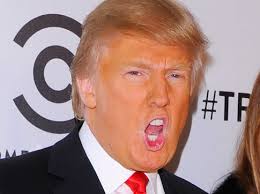
Donald Trump
Yet another source said: “He wants to be seen as having a say in everything (even if he doesn’t).”
The second source said Musk appeared to be pushing his own agenda, instead of focusing on Trump’s: “Appointing people because they are loyal to Elon doesn’t work.”
Trump is an alpha male who enjoys dominating others. Musk operates his companies in a similar way, Dan McAdams, a psychology professor at Northwestern University, told Newsweek.
“Two alphas can probably get along well enough as long as they don’t interfere with each other’s respective domain.
“The big thing that might come between them would be if Musk threatens Trump’s monopoly on American attention. Trump needs to be the center of everybody’s consciousness—and he has pretty much succeeded in accomplishing that extraordinary feat over the past eight years.
“Musk is certainly a narcissist but his self-worth is caught up in what he achieves. He really cares about building electric cars, sending people into space, and so on.
“Trump does not care about anything except himself. His entire self worth depends on others adoring him and fearing him,” McAdams said.
In an October 23 meeting with House Republicans, Trump praised Musk for his time and dedication to the campaign. Trump said Musk set aside his own business interests for the campaign and didn’t ask for anything in return.
Then, in what could have ominous implications for the future, Trump said: “Elon won’t go home. I can’t get rid of him. Until I don’t like him.”
The lawmaker sources insisted that Trump was joking.
So “Rocket Man” Musk, now basking in his “co-President” relationship with Trump, no doubt believes he has every reason to feel confident.
But Trump’s choice for Attorney General—Matt Gaetz—should have sent off alarm bells to Musk.
Gaetz made it clear he would do absolutely anything Trump wants. As Attorney General, he would have had the power to investigate and indict anyone Trump dislikes.
Then Gaetz withdrew his name from nomination following increased scrutiny over allegations of sexual misconduct.
And Pam Bondi, Trump’s replacement for Attorney General after Gaetz withdrew, has proven her own reliability. As Florida Attorney General, she solicited a political contribution from Donald Trump while her office deliberated investigating alleged fraud at Trump University and its affiliates.
After Bondi dropped the Trump University case, Trump wrote her a check $25,000 for her re-election campaign. The money came from the Donald J. Trump Foundation.
Musk has received billions of dollars in Federal contracts—among them $733.5 million for the Space Development Agency (SDA) and two for the National Reconnaissance Office (NRO).
Any of these is vulnerable to an accusation of corruption—warranted or unwarranted. At the very least, many—if not all—of those contracts could be cancelled. At the worst, Musk could find himself locked in combat with Federal prosecutors for the length of Trump’s term.
Ernst Rohm felt invulnerable at the start of 1934. As January 20, 2025, rapidly approaches, so does Elon Musk.
Like Rohm, Musk may live to regret the devotion he’s lavished on his choice for Fuhrer.
2024 PRESIDENTIAL CAMPAIGN, ABC NEWS, ADOLF HITLER, ALTERNET, AMERICABLOG, AP, ATTORNEY GENERAL OF THE UNITED STATES, BABY BOOMER RESISTANCE, BBC, BLOOMBERG, BUZZFEED, CBS NEWS, CNN, CROOKS AND LIARS, DAILY KOS, DONALD TRUMP, ELON MUSK, ERNST ROHM, FBI, FIVETHIRTYEIGHT, HARPER’S MAGAZINE, HEINRICH HIMMLER, HUFFINGTON POST, Kamala Harris, MATT GAETZ, MEDIA MATTERS, MICHAEL COHEN, MOTHER JONES, MOVEON, MSNBC, NATIONAL LABOR RELATIONS BOARD (NLRB), NBC NEWS, NEW REPUBLIC, NEWSDAY, NEWSWEEK, NPR, PAM BONDI, PBS NEWSHOUR, POLITICO, POLITICUSUSA, RAW STORY, REUTERS, SALON, SEATTLE TIMES, SLATE, SPACE X, STORM TROOPERS, TALKING POINTS MEMO, TESLA, THE ATLANTIC, THE CHICAGO SUN-TIMES, THE CHICAGO TRIBUNE, THE DAILY BEAST, THE DAILY BLOG, THE GUARDIAN, THE HILL, THE HUFFINGTON POST, THE INTERCEPT, THE LOS ANGELES TIMES, THE NATION, THE NEW REPUBLIC, THE NEW YORK TIMES, THE NEW YORKER, THE S.A., THE SS, THE VILLAGE VOICE, THE WASHINGTON POST, THINKPROGRESS, THIRD REICH, TIME, TRUTHDIG, TRUTHOUT, TWO POLITICAL JUNKIES, U.S. NEWS & WORLD REPORT, UNITED STATES ATTORNEY’S OFFICE, UNITED STATES DEPARTMENT OF JUSTICE, UPI, USA TODAY, X
In Bureaucracy, Business, History, Law, Law Enforcement, Politics, Social commentary on November 26, 2024 at 12:33 am
On June 30, 1934, German Chancellor Adolf Hitler ordered a massive purge of his private army, the S.A., (Sturmabteilungor). It was carried out by Hitler’s elite army-within-an-army, the Schutzstaffel, or Protective Squads, better known as the SS.
The Brownshirts (also known as “Storm Troopers”) had been instrumental in securing Hitler’s rise to Chancellor of Germany on January 30, 1933. They had violently intimidated political opponents (especially Communists) and organized mass rallies for the Nazi Party.
But after Hitler reached the pinnacle of power, they became a liability.
Ernst Rohm, their commander, had served as a tough army officer during World War 1. He was one of the few men allowed to use “du,” the personal form of “you” in German, when addressing Hitler.
Rohm urged Hitler to disband the regular German army, the Reichswehr, and replace it with his own undisciplined paramilitary legions as the nation’s defense force.
By 1934, the Storm Troopers numbered approximately three million. By contrast, about 100,000 soldiers served in the Reichswehr, owing to restrictions imposed by the 1919 Versailles Treaty which ended World War 1.
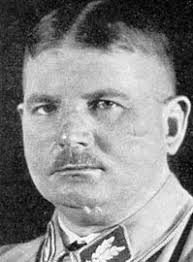
Ernst Rohm
Frightened by Rohm’s ambitions, the generals of the Reichswehr gave Hitler an ultimatum: Get rid of Rohm—or they would get rid of him.
Hitler didn’t hesitate. Backed by armed thugs, he stormed into Rohm’s apartment, catching him in bed with a young S.A. Storm Trooper.
Accusing his onetime friend of treasonously plotting to overthrow him, Hitler screamed: “You’re going to be shot!”
Rohm was not plotting a coup. But the generals had the whip hand—and, for Hitler, that was enough to literally sign Rohm’s death warrant.
Hours later, sitting in a prison cell, Rohm was offered a pistol with a single bullet.
“Adolf himself should do the dirty work,” said Rohm, adding: “All revolutions devour their own children.”
One hour later, Rohm died in a hail of SS bullets.
Earlier throughout that day, so had several hundred of his longtime S.A. cronies. Many of them yelled “Heil Hitler!” as they stood against barracks walls waiting to be shot.

SS troops on parade
Thirteen days later, addressing the Reichstag, Germany’s parliament, Hitler justified his purge in a nationally broadcast speech:
“If anyone reproaches me and asks why I did not resort to the regular courts of justice, then all I can say is this: In this hour I was responsible for the fate of the German people, and thereby I became the Supreme Judge of the German people!
“I gave the order to shoot the ringleaders in this treason, and I further gave the order to cauterize down to the raw flesh the ulcers of this poisoning of the wells in our domestic life.
“Let the nation know that its existence—which depends on its internal order and security—cannot be threatened with impunity by anyone! And let it be known for all time to come that if anyone raises his hand to strike the State, then certain death is his lot.”

Adolf Hitler addressing parliament
Ninety-one years after Adolf Hitler declared himself “the Supreme Judge of the German people,” the United States faces the same fate under re-elected President Donald J. Trump.
And his Number One victim may turn out to be Elon Musk, the man who played a pivotal role in sending him to the White House.
Musk, the leader of Space X Tesla and X (formerly Twitter), has donated tens of millions of dollars to pro-Trump super PACs, jumped around the stage behind Trump during campaign rallies, and turned X into a Right-wing cheering squad for Trump.
Trump has said he will make Musk the head of a new “government efficiency commission” aimed at eliminating inefficiency and waste within the federal bureaucracy.
But some—like former Trump lawyer Michael Cohen—have a warning for Musk: “Donald Trump is loyal to one person and one person only…himself.
“The moment Elon steps an inch out of Trump’s line, despite all he might have done for him, Donald will cut him off, disparage and denigrate him. Elon is no different than me or anyone else similarly situated. It’s just a matter of when.”
Cohen speaks from bitter personal experience.
A longtime executive of the Trump Organization, Cohen told ABC news in 2011: “If somebody does something Mr. Trump doesn’t like, I do everything in my power to resolve it to Mr. Trump’s benefit.”
In April 2018, the United States Attorney for the Southern District of New York began investigating Cohen. Charges reportedly included bank fraud, wire fraud and violations of campaign finance law.

Michael Cohen
By IowaPolitics.com (Trump executive Michael Cohen 012) [CC BY-SA 2.0 (https://creativecommons.org/licenses/by-sa/2.0)%5D, via Wikimedia Commons
On April 9, 2018, the FBI, executing a federal search warrant, raided Cohen’s office at the law firm of Squire Patton Boggs, as well as at his home and his hotel room in the Loews Regency Hotel in New York City.
Agents seized emails, tax and business records and recordings of phone conversations that Cohen had made.
Trump’s response: “Michael Cohen only handled a tiny, tiny fraction of my legal work.”
Thus Trump undermined the argument of Cohen’s lawyers that he was the President’s personal attorney—and therefore everything Cohen did was protected by attorney-client privilege.
9/11 TERROR ATTACKS, ABC NEWS, ADOLF HITLER, AFGHANISTAN, ALBERT SPEER, ALTERNET, AMERICABLOG, AP, BABY BOOMER RESISTANCE, BBC, BLOOMBERG, BUZZFEED, CBS NEWS, CIVIL WAR, CNN, CROOKS AND LIARS, DAILY KOS, FIVETHIRTYEIGHT, GAZA, GEORGIA, HAMAS, HARPER’S MAGAZINE, HUFFINGTON POST, INSIDE THE THIRD REICH (MOVIE), IRAQ, ISRAEL, MEDIA MATTERS, MOTHER JONES, MOVEON, MSNBC, NAZI GERMANY, NBC NEWS, NEW REPUBLIC, NEWSDAY, NEWSWEEK, NPR, OSAMA BIN LADEN, PALESTINIANS, PBS NEWSHOUR, POLITICO, POLITICUSUSA, RAW STORY, REUTERS, RUTGER HAUER, SALON, SEATTLE TIMES, SLATE, SMART BOMBS, TALKING POINTS MEMO, THE ATLANTIC, THE CHICAGO SUN-TIMES, THE CHICAGO TRIBUNE, THE DAILY BEAST, THE DAILY BLOG, THE GUARDIAN, THE HILL, THE HUFFINGTON POST, THE INTERCEPT, THE LOS ANGELES TIMES, THE NATION, THE NEW REPUBLIC, THE NEW YORK TIMES, THE NEW YORKER, THE VILLAGE VOICE, THE WASHINGTON POST, THINKPROGRESS, THIRD REICH, TIME, TRUTHDIG, TRUTHOUT, TWO POLITICAL JUNKIES, U.S. NEWS & WORLD REPORT, UPI, USA TODAY, WILLIAM TECUMSEH SHERMAN, WORLD WAR 11, X
In Bureaucracy, Entertainment, History, Military, Politics, Social commentary on November 25, 2024 at 12:29 am
The 1982 TV-movie, “Inside the Third Reich,” offers a scene that has no doubt echoed throughout Gaza since October 7, 2023.
It’s 1940, and the British—fed up with being repeatedly attacked by German bombers—are retaliating with an air raid on Berlin.
For the first time in its seven-year history, Adolf Hitler’s Third Reich is under attack.
Albert Speer (played by Rutger Hauer), Hitler’s favorite architect, is forced to take cover in an underground bomb shelter. It’s dark and cramped.
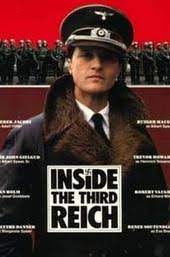
Rutger Hauer as Albert Speer
A woman sits next to him, sobbing repeatedly: “The German people only want peace. Why won’t they make peace? Why won’t they make peace?”
By which she means—intentionally or not: Why won’t the British simply agree to give Germany whatever it wants?
There has been a lot of this sentiment coursing through Gaza—and its allies in the Islamic world and elsewhere. It’s not stated as honestly as it is below, but translates to this anyway:
“Why won’t the Israelis allow Hamas to slaughter them—as it did on October 7, 2023?”
(Under the cover of thousands of rockets fired from Gaza, an estimated 1,200 men, women and children were slaughtered by Hamas terrorists in streets, houses, kibbutz communities and at a rave music festival. About 250 others were kidnapped and taken into Gaza.)
“Why are the Israelis bombing us?”
(Because they don’t like having their men, women and children slaughtered and kidnapped.)
“Why does the United States allow Israel to bomb us?”
(Americans didn’t like it when 3,000 of their own citizens were slaughtered by Islamics on 9/11. Within a month, America began pulverizing Afghanistan—home of 9/11 mastermind Osama bin Laden—and its occupation lasted 20 years.)
“We only slaughtered 1,200 Israelis. But they have killed—by our estimate—43,985 Palestinians. That’s so unfair.”
(Under this logic, Israel should be allowed to kill only 1,200 Palestinians: “I smacked you in the mouth once, so you should be allowed to smack me in the mouth once. Actually, you shouldn’t be allowed to smack me back at all.”)
“Israel is waging war on civilians—not Hamas.”
(Hamas has deliberately embedded itself among a civilian population: “Ha, ha, you’ll have to kill all these innocent people in order to kill us.” For Israel to accept such sanctuary would be to confer immunity on Hamas and guarantee ceaseless future attacks.)

Emblem of Hamas
“Palestinians didn’t attack Israel—Hamas did.”
(Hamas is overwhelmingly supported by Palestinians. A man who shelters a known killer is by definition an accessory to that killer’s crimes. Yet Hamas refuses to allow civilians to take shelter in its tunnels. Nor does it use its underground network to supply much-needed food and resources for Gazans.)
“Israel is fighting a war of genocide against Gaza!”
(The universal rallying cry among Gaza residents—and their Islamic and non-Islamic allies—is: “From the river to the sea, Palestine will be free.” Which means: When Israel is destroyed and its citizens are slaughtered. For Hamas, no “two-state solution” will do.)
According to CNN, several videos are circulating online that “show Israeli soldiers in Gaza behaving in offensive and disrespectful ways toward the civilian population. Other videos show soldiers ransacking private homes, destroying civilian property and using racist and hateful language.”
(Soldiers are universally notorious for showing disrespect for their enemies, whether civilian or military. During the Civil War, Union General William Tecumseh Sherman set out on his legendary “March to the Sea” through Georgia in 1864. His soldiers ravaged the countryside, destroyed all sources of food and forage and left behind hungry and demoralized Southerners.
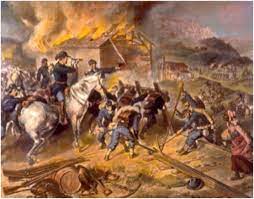
Sherman’s March
(As for Israeli soldiers “using racist and hateful language”: During World War II, GIs referred to Germans as “krauts” and to Japanese as “Japs.” During the Vietnam war, grunts called Vietcong and North Vietnamese soldiers “gooks.” In Afghanistan and Iraq, Americans used “ragheads” and “Hajiis” to describe their enemies.
(War is, by its nature, destructive—of lives, of property, of feelings for humanity.
(William Tecumseh Sherman minced no words in describing its evil: “You cannot qualify war in harsher terms than I will. War is cruelty, and you cannot refine it….You might as well appeal against the thunder-storm as against these terrible hardships of war….
(“They are inevitable, and the only way the people of Atlanta can hope once more to live in peace and quiet at home, is to stop the war….”
(Sherman’s words—which appeared in a September 12, 1864 letter to Atlanta Mayor James M. Calhoun—could be addressed to Hamas and the Gaza residents who support it:
(“Now that war comes home to you, you feel very different. You depreciate its horrors, but did not feel them when you sent car-loads of soldiers and ammunition, and moulded shells and shot, to carry war into Kentucky and Tennessee, to desolate the homes of hundreds of thousands of good people who only asked to live in peace at their old homes, and under the Government of their inheritance.”)
“The Holy Land.”
(There is no “holy land.” There is only desert claimed by two warring religions. Both sides believe “God is on our side.” So there will never be peace, only eternal war—until global warming finally makes the Middle East so hot that no one can live there.)
ABC NEWS, ALTERNET, AMERICABLOG, AP, BABY BOOMER RESISTANCE, BARACK OBAMA, BBC, BLOOMBERG, BLOOMBERG NEWS, BUZZFEED, CBS NEWS, CENTRAL AMERICA, CHIANG KAI-SHEK, CHINA, CNN, COLUMBIA, COMMUNISM, CRIMEA, CROOKS AND LIARS, CUBA, CZECHOSLAVAKIA, DAILY KOS, DAILY KOZ, DEMOCRATS, DONALD TRUMP, FACEBOOK, FIVETHIRTYEIGHT, GUATEMALA, GUNBOAT DIPLOMACY, HARPER’S MAGAZINE, HARRY S. TRUMAN, HUFFINGTON POST, HUNGARY, JOHN F. KENNEDY, JOSEPH MCCARTHY, LATIN AMERICA, LYNDON B. JOHNSON, MAO TSE-TUNG, MEDIA MATTERS, MICK MULVANEY, MITT ROMNEY, MONROE DOCTRINE, MOTHER JONES, MOVEON, MSNBC, NBC NEWS, NEW REPUBLIC, NEWSDAY, NEWSWEEK, NICARAGUA, NPR, PANAMA, PBS NEWSHOUR, POLAND, POLITICO, POLITICUSUSA, RAW STORY, REPUBLICANS, REUTERS, RICHARD M. NIXON, SALON, SEATTLE TIMES, SLATE, SOCHI OLYMPICS, SOVIET UNION, SPHERES OF INFLUENCE, TALKING POINTS MEMO, THE ATLANTIC, THE CHICAGO SUN-TIMES, THE CHICAGO TRIBUNE, THE DAILY BEAST, THE DAILY BLOG, THE GUARDIAN, THE HILL, THE HUFFINGTON POST, THE INTERCEPT, THE LOS ANGELES TIMES, THE NATION, THE NEW REPUBLIC, THE NEW YORK TIMES, THE NEW YORKER, THE VILLAGE VOICE, THE WASHINGTON POST, THINKPROGRESS, TIME, TOM COTTON, TRUTHDIG, TRUTHOUT, TWO POLITICAL JUNKIES, U.S. NEWS & WORLD REPORT, UKRAINE, UPI, USA TODAY, VICTOR YANUKOVYCH, VIETNAM, VLADIMIR PUTIN, VOLODYMYR ZELENSKY, WONKETTE, X
In Bureaucracy, History, Military, Social commentary on November 22, 2024 at 12:11 am
The collapse of the Soviet Union in 1991 plunged the American Right into a depression.
Accusing Democrats of being “terrorist-lovers” just didn’t prove as profitable as accusing them of being “Communists.”
Then fate intervened.
The torch had barely gone out at the 2014 Sochi Winter Olympics when Russian President Vladimir Putin began menacing the Ukraine.
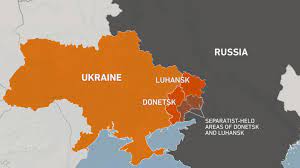
Ukraine vs. Russia
Even while the Olympics played out on television, Ukrainians had rioted in Kiev and evicted their corrupt, luxury-loving president, Victor Yanukovych.
And that didn’t sit well with his “sponsor”—Putin.
Yanukovych had rejected a pending European Union association agreement. He had chosen instead to pursue a Russian loan bailout and closer ties with Russia.
And that had sat well with Putin.
Since the breakup of the Soviet Union in 1991, Putin had yearned for its reestablishment. He had called that breakup “the greatest geopolitical tragedy of the 20th century.”

Vladimir Putin
Kremlin.ru, CC BY 4.0 <https://creativecommons.org/licenses/by/4.0>, via Wikimedia Commons
Russia has long resisted Ukraine’s move towards European institutions—especially NATO.
So it was almost a certainty that Putin would retaliate.
And since late February, 2014, he began moving Russian troops into Ukraine and its autonomous republic, Crimea. Russia annexed Ukraine’s southern Crimean peninsula and backed separatists who captured large swathes of eastern Ukraine.
On December 3, 2021, the Washington Post reported: “The Kremlin is planning a multi-front offensive as soon as early next year involving up to 175,000 troops” against Ukraine.
And where there is activity by Russians, American Rightists are eager to turn such events to their own political advantage.
Right-wingers such as Senator Tom Cotton (R-AR): ”It is a result of a year of Joe Biden’s impotence and incompetence towards Russia in particular and in foreign policy more generally.”
Cotton had vigorously defended President Donald Trump’s attempted extortion of Ukrainian President Volodymyr Zelensky in the face of Russian aggression.
In July, 2019, Trump told his acting chief of staff, Mick Mulvaney, to withhold almost $400 million in promised military aid for Ukraine.
Then, on July 25, Trump telephoned Zelensky to “request” a “favor”: Investigate presumed 2020 Democratic Presidential Candidate Joe Biden and his son, Hunter, who had had business dealings in Ukraine.
Clearly implied in the call: Produce “dirt” on Biden—or you won’t get the military aid.
All of which overlooks a number of brutal political truths.
First, all great powers have spheres of interest—and jealously guard them.
For the United States, it’s Latin and Central America, as established by the Monroe Doctrine.
And just what is the Monroe Doctrine?
It’s a statement made by President James Monroe in his 1823 annual message to Congress, which warned European powers not to interfere in the affairs of the Western Hemisphere.
It has no legitimacy except the willingness of the United States to use armed force to back it up. When the United States no longer has the will or resources to enforce the Doctrine, it will cease to have meaning.
For the Soviet Union, its spheres of influence include the Ukraine. Long known as “the breadbasket of Russia,” in 2011, it was the world’s third-largest grain exporter.
Russia will no more give up access to that breadbasket than the United States would part with the rich farming states of the Midwest.
Second, spheres of influence often prove disastrous to those smaller countries affected.
Throughout Latin and Central America, the United States remains highly unpopular for its brutal use of “gunboat diplomacy” during the 20th century.
Among those countries invaded or controlled by America: Mexico, Cuba, Guatemala, Nicaragua, Columbia, Panama and the Dominican Republic.
The resulting anger has led many Latin and Central Americans to support Communist Cuba, even though its political oppression and economic failure are universally apparent.
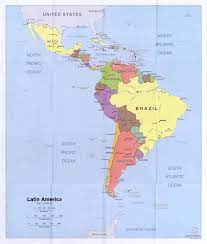
Latin and Central America
Similarly, the Soviet Union forced many nations—such as Poland, Hungary and Czechoslovakia—to submit to the will of Moscow.
The alternative? The threat of Soviet invasion—as occurred in Hungary in 1956 and Czechoslovakia in 1968.
Third, even “great powers” are not all-powerful.
In 1949, after a long civil war, the forces of Mao Tse-tung defeated the Nationalist armies of Chiang Kai-Shek, who withdrew to Taiwan.
China had never been a territory of the United States. Nor could the United States have prevented Mao from defeating the corrupt, ineptly-led Nationalist forces.
Even so, Republican Senators and Representatives such as Richard Nixon and Joseph McCarthy eagerly blamed President Harry S. Truman and the Democrats for “losing China.”
The fear of being accused of “losing” another country led Presidents John F. Kennedy, Lyndon B. Johnson and Richard M. Nixon to tragically commit the United States to “roll back” Communism in Cuba and Vietnam.
Now Republicans—who claim the United States can’t afford to provide healthcare for its poorest citizens—want to turn the national budget over to the Pentagon.
They want the United States to “intervene” in Ukraine—even though this would mean going to war with the only nuclear power capable of turning America into an atomic graveyard.
Before plunging into conflicts that don’t concern us and where there is absolutely nothing to “win,” Americans would do well to remember the above-stated lessons of history. And to learn from them.
ABC NEWS, ADOLF HITLER, ALTERNET, AMERICABLOG, AP, BABY BOOMER RESISTANCE, BBC, BLOOMBERG NEWS, BUZZFEED, CBS NEWS, CNN, CROOKS AND LIARS, DAILY KOS, FIVETHIRTYEIGHT, HARPER’S MAGAZINE, HUFFINGTON POST, JOSEPH STALIN, MEDIA MATTERS, MOTHER JONES, MOVEON, MSNBC, NAZI-SOVIET "NON-AGGRESSION PACT", NBC NEWS, NEW REPUBLIC, NEWSDAY, NEWSWEEK, NPR, NUCLEAR WEAPONS, PBS NEWSHOUR, POLITICO, POLITICUSUSA, RAW STORY, REUTERS, SALON, SEATTLE TIMES, SLATE, TALKING POINTS MEMO, THE ATLANTIC, THE CHICAGO SUN-TIMES, THE CHICAGO TRIBUNE, THE DAILY BEAST, THE DAILY BLOG, THE GUARDIAN, THE HILL, THE HUFFINGTON POST, THE INTERCEPT, THE LOS ANGELES TIMES, THE NATION, THE NEW REPUBLIC, THE NEW YORK TIMES, THE NEW YORKER, THE SS, THE VILLAGE VOICE, THE WASHINGTON POST, THINKPROGRESS, THIRD REICH, TIME, TRUTHDIG, TRUTHOUT, U.S. NEWS & WORLD REPORT, UKRAINE, UPI, USA TODAY, VLADIMIR PUTIN, VOLODYMYR ZELENSKY, WEHRMACHT, WORLD WAR 11, X
In Bureaucracy, History, Military, Politics, Social commentary on November 21, 2024 at 12:11 am
In the United States, World War II—at least, that part of the war fought in Europe—used to be celebrated in movies and TV shows like “Combat!” and “The Rat Patrol.” Today, it’s largely forgotten, except by veterans groups and the conflict’s rapidly aging veterans.
But in the Soviet Union, “the Great Patriotic War” against Nazi Germany is still celebrated as the triumph of Soviet strength and determination against horrific odds and losses.
Russian President Vladimir Putin’s invasion of Ukraine is unlikely to be remembered so fondly.
On April 28, 2006, Putin publicly stated that the 1991 collapse of the Soviet Union was “the greatest geopolitical catastrophe of the century.
“As for the Russian people, it became a genuine tragedy. Tens of millions of our fellow citizens and countrymen found themselves beyond the fringes of Russian territory.”
Putin was sounding a warning: He saw himself as Russia’s savior who would restore its lost empire.

Vladimir Putin
His invasion of Ukraine—officially called a “special military operation”—was intended as an important step toward that restoration.
Begun on February 24, the invasion targeted the Ukrainian capital, Kyiv, in an attempt to overthrow the democratic government of President Volodymyr Zelensky.
Ukrainian troops were outgunned and outnumbered. As in the case of the Soviet Union in 1941, Western military analystss expected the attack to quickly succeed. The Biden administration offered to evacuate Zelensky to safety.
Zelensky refused: “The fight is here; I need ammunition, not a ride.”
But after weeks of combat, Russian forces retreated, stymied by ferocious Ukrainian resistance.
In July, the last city under Ukrainian control in Luhansk fell to Russia after weeks of artillery bombardment and street fighting. But the Russians made little progress as they tried to conquer the remainder of Donbas.
In late August, after weeks of buildup, Ukraine launched a counteroffensive in the southern region of Kherson. Ukraine deployed newly arrived missile systems supplied by the United States and other Western countries to destroy Russian ammunition dumps and a Russian air base in Crimea.
By September, Ukrainian forces launched a rapid offensive, recapturing much of the northeastern Kharkiv region, including the city of Izium. Previously, the Russians had been using this as a key logistics hub.

Volodymyr Zelensky
On September 21, with Russian forces bogged down or retreating, Vladimir Putin announced the partial mobilization of 300,000 military reservists. All male citizens below 60 are now eligible to be drafted.
There are exceptions: Employees in IT and telecommunications, finance, “systemically-important” mass media outlets and interdependent suppliers, including registered media and broadcasters.
Still, the announcement set off a massive exodus of at least 194,000 Russian men (and their wives or girlfriends) to such neighboring countries as Turkey, Georgia, Kazakhstan and Mongolia.
During World War II, this would have been unthinkable: Whether driven by patriotism or a desire for vengeance on their German tormentors, Russians at all levels threw themselves into the conflict.
On the same day Putin announced the mobilization, he threatened to use nuclear weapons to defend not simply Russia but the Ukrainian territory his forces had captured:
“Our country possesses various means of destruction. When the territorial integrity of our nation is threatened, we, of course, will use all the means at our disposal to protect Russia and our people.”
To underscore his threat, he added: “Those who try to blackmail us with nuclear weapons should know that the weathervane can turn and point towards them.”
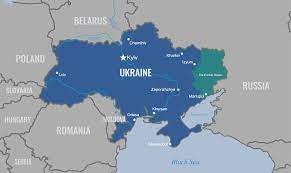
Putin’s threats have heightened world tensions and triggered speculation as to whether he would use nukes—against Ukraine or NATO countries, including the United States.
Volodymyr Zelensky thinks Putin is not bluffing.
President Joe Biden initially assured Americans there was no cause for concern. But since then the United States has stated that it has warned Putin that any use of nuclear weapons would trigger a catastrophic (non-specific) response against Russia.
Seen against the backdrop of Russia’s titanic victory in “the Great Patriotic War,” Putin’s repeated threats to use nuclear weapons actually underscore Russia’s weakness, not its strength.
Consider:
- “The Great Patriotic War” lasted almost four years—from June 22, 1941, to May 7, 1945.
- Russia’s opponent, Nazi Germany, was the most-feared military power in Europe.
- The war cost the Soviet Union at least 26 million lives before ending with the Red flag flying over Berlin.
- Almost the entire western half of the Soviet Union was devastated—first as the Germans overran territory from the Polish border to the gates of Moscow, and then again as the Soviets slowly pushed them back to Germany itself.
- For Russians, this was truly a “people’s war,” won through massive sacrifice and heroism—and without the use of nuclear weapons, which did not then exist.
Seventy-seven years after the end of World War II:
- Against the smaller and initially ill-equipped Ukrainian army, Russia has enjoyed a huge advantage in manpower and material.
- Yet so low is Russian morale that Putin has been forced to offer huge bribes to foreign mercenaries and even convicted criminals to refill his dispirited legions.
- Ukrainians, fueled by patriotism and a desire for vengeance, are fighting—and winning—their own version of “the Great Patriotic War.”


 Bureaucracybuster's Blog
2016 PRESIDENTIAL ELECTION, 2024 PRESIDENTIAL ELECTION, ABC NEWS, ADOLF HITLER, ALTERNET, AMERICABLOG, AP, BABY BOOMER RESISTANCE, BBC, BLACKS, BLOOMBERG, BLOOMBERG NEWS, BUZZFEED, CBS NEWS, CNN, COVID-19, CROOKS AND LIARS, DAILY KOS, DEMOCRACY, DONALD J. TRUMP, DONALD TRUMP, DRUDGE RETORT, ECONOMY, EMPLOYMENT, EXTORTION, FACEBOOK, FBI, FIVETHIRTYEIGHT, GESTAPO, GREED, HARPER’S MAGAZINE, HATRED, HISPANICS, HUFFINGTON POST, HUNTER BIDEN, immigration, INDEPENDENT COUNSEL, INFLATION, JAMES COMEY, JANUARY 6 COUP ATTEMPT, JEWS, JOE BIDEN, JOE SCARBOROUGH, JOHN ADAMS, JOSEPH R. BIDEN, Kamala Harris, MEDIA, MEDIA MATTERS, MEXICO, MIKA BRZEZINSKI, MORNING JOE, MOTHER JONES, MOVEON, MSNBC, NAZI ATROCITIES, NBC NEWS, NEW REPUBLIC, NEWSDAY, NEWSWEEK, NPR, PAM BONDI, PBS NEWSHOUR, POLITICO, POLITICUSUSA, PROJECT 2025, RACISM, RAW STORY, REPUBLICANS, REUTERS, ROBERT MUELLER, ROD ROSENSTEIN, SALON, SARAH HUCKABEE SANDERS, SEATTLE TIMES, SLATE, SOVIET UNION, TALKING POINTS MEMO, THE ATLANTIC, THE CHICAGO SUN-TIMES, THE CHICAGO TRIBUNE, THE DAILY BEAST, THE DAILY BLOG, THE GUARDIAN, THE HILL, THE HUFFINGTON POST, THE INTERCEPT, THE LOS ANGELES TIMES, THE NATION, THE NEW REPUBLIC, THE NEW YORK TIMES, THE NEW YORKER, THE VILLAGE VOICE, THE WASHINGTON POST, THINKPROGRESS, TIME, TRUMP UNIVERSITY SCANDAL, TRUTHDIG, TRUTHOUT, TWO POLITICAL JUNKIES, U.S. NEWS & WORLD REPORT, UKRAINE, UNEMPLOYMENT, UNITED STATES DEPARTMENT OF JUSTICE, UNITED STATES HOUSE OF REPRESENTATIVES, UNITED STATES SENATE, UPI, USA TODAY, VLADIMIR PUTIN, VOLODMYR ZELENSKY, WEHRMACHT, WHITE WOMEN, WONKETTE, X
“DEMOCRACY IST KAPUTT!”–FIRST GERMANY, NOW AMERICA: PART TWO (END)
In Bureaucracy, Business, History, Law, Law Enforcement, Military, Politics, Social commentary on December 4, 2024 at 12:11 amDuring the 2024 Presidential election, the two most important issues—for voters—were immigration and inflation.
In short: “Get rid of the spics!” and “Give us cheaper eggs!”
Repeatedly, Vice President Kamala Harris warned that Donald Trump’s return to the Presidency would result in a Fascistic dictatorship:
“Donald Trump is increasingly unhinged and unstable, and in a second term, people like John Kelly [Trump’s former chief of staff] would not be there to be the guardrails against his propensities and his actions….
“He wants a military who will be loyal to him, personally, one that will obey his orders, even when he tells them to break the law or abandon their oath to the Constitution of the United States.”
Reputable media warned that he intended to turn the FBI into his private Gestapo and use the Justice Department to attack his political rivals.
Kamala Harris
But Americans didn’t care.
Instead, 76.9 million voters chose to overturn the democratic traditions that had guided American life since 1788, when the United States Constitution was ratified.
Appeals to their hatred, racism and greed proved far more seductive.
Throughout Trump’s Presidency—2017 to 2021—those who opposed his agenda took solace in a series of expected saviors.
Mueller had a sterling reputation for integrity as a former prosecutor and FBI director. But he allowed himself to be intimidated by the Presidential aura—and refused to directly interview Trump.
His subsequent official report contained no impeachment-worthy evidence.
The reason for such an investigation: To find embarrassing “dirt” on Biden. Unless Zelensky found this, the promised aid would be withheld.
The House of Representatives tried Trump for abuse of power and obstruction of Congress. The evidence against him was overwhelming—including a transcript of the extortionate phone call.
Donald Trump
But the Republican Senate refused to convict.
Had this happened, Trump would have been legally barred from running again for President.
As a result, five people died and 174 police officers were injured. The Capitol Building—the symbol of American democracy—suffered about $2.7 billion in damages.
Evidence of Trump’s guilt was overwhelming—including video of his incitement.
But, once again, the Republican-dominated Senate refused to convict.
Stormtrumpers attacking the Capitol Building
Tyler Merbler from USA, CC BY 2.0 <https://creativecommons.org/licenses/by/2.0>, via Wikimedia Commons
Trump’s opponents had placed their hopes in Special Counsel Robert Mueller and (twice) the United States Congress to address the brazen criminality of Donald Trump.
The results: Anger and disappointment.
Yet one last hope remained:
That the 2024 Presidential election would send Joseph Biden, and then, after he dropped out of the race, Vice President Kamala Harris—to the White House.
Harris waged what was widely descripted as “a campaign of joy,” promising to be “the President of all Americans,” including those who voted against her. Repeatedly, she warned that, if re-elected, Trump would pursue a vengeance-fueled agenda against anyone who had dared cross him.
Trump ran a campaign based on hatred—of Hispanics, of liberals, of those who had served in his administration and now disowned him. During his single debate with Harris, he falsely claimed that Haitian immigrants in Ohio were “eating the dogs….they’re eating the cats” of local citizens.
On one occasion, he appeared to emulate performing a ‘sex act’ on a microphone stand during a rally after experiencing technical difficulties.
Most ominously, credible news reports circulated that, if Trump were re-elected, he would implement a radical, Right-wing plan—Project 2025—to completely reshape the federal government.
At its heart: The mass firings of politically neutral civil service officials and their replacement with thousands of political hacks.
This would arm Republicans with the power to establish an absolute dictatorship under the next Republican president.
Yet, in the end, none of this mattered.
His supporters included:
On January 30, 1933, Adolf Hitler rose to dictatorial power through backroom intrigues and appointment as Chancellor by President Paul von Hindenburg.
On November 5, 2024, Trump rose to dictatorial power when Americans voted to ignore his past crimes and the ones he boasted he intended to commit.
John Adams predicted this long ago: “Democracy never lasts long. It soon wastes, exhausts, and murders itself. There never was a democracy yet that did not commit suicide.”
Share this: