Next up: Nikolai Sergeyvich Zhilayev (pronounced Zill-lay-ev) was a Russian musicologist and the teacher of several 20th-century Russian composers.
Among these: Dimitri Shostakovich(September 25, 1906 – August 9, 1975)
Among his friends—to his ultimate misfortune—was Mikhail Nikolayevich Tukhachevsky, the former military hero now falsely condemned and executed as a traitor by Soviet dictator Joseph Stalin.
In 1938, Zhilayev(November 18, 1881 – January 20, 1938) also became a casualty of what has become known as The Great Terror.
In his posthumously-published memoirs, Testimony, Shostakovich, his pupil and friend, described how Zhilayevfaced his end with a calmness that awed even the NKVD (the predecessor to the KGB) secret policesent to arrest him.
Dimitri Shostakovich
“He had a large picture of Tukhachevsky in his room, and after the announcement that Tukhachevsky had been shot as a traitor to the homeland, Zhilayev did not take the picture down.
“I don’t know if I can explain how heroic a deed that was….As soon as the next poor soul was declared an enemy of the people, everyone destroyed in a panic everything connected with that person….
“And naturally, photographs flew into the fire first, because if someone informed on you, reported that you had a picture of an enemy of the people, it meant certain death.
“Zhilayev wasn’t afraid. When they came for him, Tukhachevsky’s prominently hung portrait amazed even the executioners.”
“What, it’s still up?” one of the secret police asked.
“The time will come,” Zhilayevreplied, “when they’ll erect a monument to him.”
As, in fact, has happened.
Meanwhile, Stalinhas been universally condemned as one of history’s greatest tyrants.
Third hero: Brett Crozier, the former commanding officer of the aircraft carrier USS Theodore Roosevelt.
Graduating from the United States Naval Academy at Annapolis in 1992, he received his Master’s Degree in National Security and Strategic Studies from the Naval War College in 2007.
From 2017 to 2018 he commanded the USS Blue Ridge. In November, 2019, he was given command of the nuclear aircraft carrier USS Theodore Roosevelt.
On March 24, 2020, reports circulated that three members of the crew had tested positive for COVID-19. The next day the number of stricken sailors increased to eight. A few days later, it was “dozens.” The sailors reportedly became ill at sea, two weeks after a port call at Danang, Vietnam.
The initial cases were airlifted to a military hospital. The Roosevelt was ordered to Guam. After the ship docked on March 27, 2020, all 5,000 aboard were ordered to be tested for the virus. But only about 100 stricken sailors were allowed to leave the ship. The rest remained on board.
On March 30, Crozier emailed a four-page internal letter to multiple Naval officials, pleading to have the majority of the crew evacuated and quarantined on shore. Given the crowded sleeping quarters and narrow passageways of the vessel, Crozierwrote that it was impossible to follow social distancing and quarantine procedures:
“This will require a political solution but it is the right thing to do. We are not at war. Sailors do not need to die. If we do not act now, we are failing to properly take care of our most trusted asset—our Sailors….
“This is a necessary risk. Keeping over 4,000 young men and women on board the TR is an unnecessary risk and breaks faith with those Sailors entrusted to our care.”
Brett Crozier
Croziersent his letter via a non-secure, unclassified email to 20-30 recipients, as well as the captain’s immediate chain of command. He reportedly believed that his immediate supervisor would not allow him to send it.
And his superior later confirmed that he would not have allowed Crozierto send it.
On March 31, someone leaked the letter to the San Francisco Chronicle, which published it.
On April 1, the Navy ordered the aircraft carrier evacuated. A skeleton crew of 400 remained aboard to maintain the nuclear reactor, the fire-fighting equipment, and the ship’s galley.
On April 2, Crozier was relieved of command by acting United States Secretary of the Navy Thomas Modly.
By that time, about 114 crew members—out of a total of around 4,000—reportedly tested positive for COVID-19.
As Crozier disembarked, sailors loudly saluted him with a standing ovation: “Cap-tain Cro-zier!”
Crozierwas reassigned to a shore position and retired in 2022.
Modlyclaimed that Crozier’sletter “raised alarm bells unnecessarily. It undermines our efforts and the chain of command’s efforts to address this problem, and creates a panic and this perception that the Navy’s not on the job, that the government’s not on the job, and it’s just not true.”
It was true.
Actually, the Trump administration had frittered away January and February, withPresidentDonald Trump giving multiple—and misleading—press conferences. In these, he played down the dangers of COVID-19, saying that “we’re on top of it”—even as the virus spread across the country.
“It was a betrayal. And I can tell you one other thing: because he did that he put it in the public’s forum and it is now a big controversy in Washington, DC,“continued Modly. [Italics added]
This was the United States Navy under Donald Trump—who threw “betrayal”and “treason” at anyone who dared reveal the truth about institutional crimes and failures.
…A truly great man is ever the same under all circumstances. And if his fortune varies, exalting him at one moment and oppressing him at another, he himself never varies, but always preserves a firm courage, which is so closely interwoven with his character that everyone can readily see that the fickleness of fortune has no power over him.
The conduct of weak men is very different. Made vain and intoxicated by good fortune, they attribute their success to merits which they do not possess. And this makes them odious and insupportable to all around them. And when they have afterwards to meet a reverse of fortune, they quickly fall into the other extreme, and become abject and vile. —Niccolo Machiavelli, The Discourses
Five heroes,five villains.
Two of the heroes are Russians; three are Americans.
The villains: One Russian (actually, Georgian); three American.
First up—in order of disappearance: Mikhail Nikolayevich Tukhachevsky (pronounced too-ka-chev-sky).
Tukhachevsky (February 4, 1893 – June 12, 1937) was a major Soviet military leader and theoretician from 1918 to 1937.
He commanded the Soviet Western Front during the Russian-Polish War (1920-21) and served as Chief of Staff of the Red Army (1925-1928).
He fought to modernize Soviet armament, as well as develop airborne, aviation and mechanized forces. Almost singlehandedly, he created the theory of deep operations for Soviet forces.
Mikhail Tukhachevsky
All of these innovations would reap huge dividends when the Soviet Union faced the lethal fury of Adolf Hitler’s Wehrmacht.
In 1936, Tukhachevsky warned Soviet dictator Joseph Stalinthat Nazi Germany might attack without warning—and ignite a long and murderous war.
Stalin—the son of a Georgian cobbler—resented Tukhachevsky’s coming from a noble family. A monumental egomaniac, he also hated that Tukhachevesky’sfame rivaled his own.
Warned of the approaching German danger, Stalinshouted: “What are you trying to do—frighten Soviet authority?”
Joseph Stalin
The attack that Tukhachevskywarned against came five years later—on June 22, 1941, leaving at least 26 million Russians dead.
But Tukhachevskywasn’t alive to command a defense.
The 1930s were a frightening and dangerous time to be alive in the Soviet Union. In 1934, Stalin, seeing imaginary enemies everywhere, ordered a series of purges that lasted right up to the German invasion.
An example of Stalin’s paranoia occurred one day while the dictator walked through the Kremlin corridors with Admiral Ivan Isakov. Officers of the NKVD (the predecessor to the KGB) stood guard at every corner.
“Every time I walk down the corridors,” said Stalin, “I think: Which one of them is it? If it’s this one, he will shoot me in the back. But if I turn the corner, the next one can shoot me in the face.”
In 1937-38, the Red Army fell prey to Stalin’sparanoia.
Its victims included:
Three of five marshals (five-star generals);
Thirteen of 15 army commanders (three- and four-star generals);
Fifty of 57 army corps commanders; and
One hundred fifty-four out of 186 division commanders.
And heading the list of those marked for death was Marshal Mikhail Tukhachevsky.
Arrested on May 22, 1937, he was interrogated and tortured. As a result, he “confessed” to being a German agent plotting to overthrow Stalin and seize power.
On his confession, which survives in the archives, his bloodstains can clearly be seen.
On June 11, 1937, the Soviet Supreme Court convened a special military tribunal to try Tukhachevsky and eight generals for treason.
It was a sham: The accused were denied defense attorneys, and could not appeal the verdict—-which was foregone: Death.
Within hours of the verdict, Tukhachevsky was summoned from his cell and shot once in the back of the head.
In a Russian version of poetic justice, five of the eight generals who served as Tukhachevsky’s judges were themselves later condemned and executed as traitors.
From 1937 until 1956, Tukhachevskywas officially declared a traitor and fifth-columnist.
Then, on February 25, 1957, Soviet Premier Nikita Khrushchev delivered his bombshell “Secret Speech” to the 20th Congress of the Communist Party of the Soviet Union.
In this, he denounced Stalin(who had died in 1953) as a ruthless tyrant responsible for the slaughter of millions of innocent men, women and children. He condemned Stalinfor creating a “personality cult” around himself, and for so weakening the Red Army that Nazi Germany was able to easily overrun half of the Soviet Union from 1941 to 1943.
On January 31, 1957, Tukhachevsky and his co-defendants were declared innocent of all charges and were “rehabilitated.”
Today, he is once again—rightly—considered a Russian hero and military genius. And Stalin is universally—and rightly—seen as a blood-stained tyrant.
Postage stamp honoring Mikhail Tukhachevsky
Next hero: Nikolai Sergeyvich Zhilayev (pronounced Zill-lay-ev)
Zhilayev(November 18, 1881 – January 20, 1938) was a Russian musicologist and the teacher of several 20th-century Russian composers. Among these: Dimitri Shostakovich.
Zhilayev, a member of the Russian Academy of Art-Sciences, taught at the Moscow Conservatory. Among his friends—to his ultimate misfortune—was Mikhail Tukhachevsky.
In 1938, he, too, became a casualty of what has become known as The Great Terror.
In his posthumously-published memoirs, Testimony, Shostakovich, his pupil and friend, described how Zhilayevfaced his end with a calmness that awed even the NKVD secret policesent to arrest him.
…A truly great man is ever the same under all circumstances. And if his fortune varies, exalting him at one moment and oppressing him at another, he himself never varies, but always preserves a firm courage, which is so closely interwoven with his character that everyone can readily see that the fickleness of fortune has no power over him.
The conduct of weak men is very different. Made vain and intoxicated by good fortune, they attribute their success to merits which they do not possess. And this makes them odious and insupportable to all around them. And when they have afterwards to meet a reverse of fortune, they quickly fall into the other extreme, and become abject and vile.
—Niccolo Machiavelli, The Discourses
Niccolo Machiavelli
When Donald Trump—as a businessman and President—has been confronted by men and women who can’t be bribed or intimidated, he has reacted with rage and frustration.
Trump boasted that he “never” settled cases out of court. But New York Attorney General Eric Schneiderman pressed fraud claims against the real estate mogul’s counterfeit Trump University—and Trump settled the case out of court rather than take the stand.
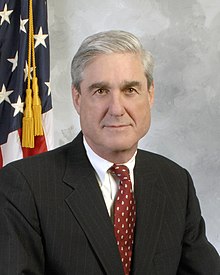
On May 17, 2017, Deputy Attorney General Rod Rosenstein appointed former FBI Director Robert S. Mueller to investigate links between Russian Intelligence agents and the 2016 Trump Presidential campaign.
Upon learning of his appointment, Trump wailed: “Oh my God. This is terrible. This is the end of my Presidency. I’m fucked.”
Throughout Mueller’s probe, Trump hurled repeated insults at him via Twitter and press conferences. His shills within Fox News and the Republican party attacked Mueller’s integrity and investigative methods. But Trump didn’t risk firing him, fearing impeachment.
Robert Mueller
When “democratic socialist” Zohran Mamdani declared his candidacy for New York City mayor on October 23, 2024, Trump viciously and repeatedly attacked him as a “communist.” He even threatened to cut off Federal aid to New York City.
Mamdami’s “communist” goals included support for universal child care and constructing 200,000 new affordable housing units.
When Mamdani overwhelmingly won election on November 4, he sannounced “If anyone can show a nation betrayed by Donald Trump how to defeat him, it is the city that gave rise to him.”
Trump responded the next day: “I hope it works out for New York. We’ll help him a little bit, maybe.”
Perhaps the key to Trump’s innermost fear can be found in a work of fiction—in this case, the 1996 historical novel, The Friends of Pancho Villa, by James Carlos Blake.
The book depicts the Mexican Revolution (1910 – 1920) and its most famous revolutionary, Francisco “Pancho” Villa. it’s told from the viewpoint of Rodolfo Fierro, Villa’s most feared executioner. In one day, for example, Fierro—using two revolvers—executed 300 captured Federale soldiers.
As in history, Blake’s Fierro presides over the execution of David Berlanga, a journalist who had dared criticize the often loutish behavior of Villa’s men.
On Villa’s command, Fierro approaches Berlanga in a Mexico City restaurant and orders: “Come with me.”
Standing against a barracks wall, Berlanga lights a cigar and requests permission to finish it. He then proceeds to smoke it with such a steady hand that its unbroken ash extends almost four inches.
The cigar finished, the ash still unbroken, Berlanga drops the butt to the ground and says calmly: “I’m ready.”
Then the assembled firing squad does its work.
Later, Fierro is so shaken by Berlanga’s sheer fearlessness that he seeks an explanation for it. Sitting in a cantina, he lights a cigar and tries to duplicate Berlanga’s four-inch length.
But the best he can do is less than three inches. He concludes that Berlanga used a trick—but he can’t figure it out.
Rodolfo Fierro
It had to be a trick, Fierro insists, because, if it wasn’t, there were only two other explanations for such a calm demeanor in the face of impending death.
The first was insanity. But Fierro rules this out: He had studied Berlanga’s eyes and found no madness there.
That leaves only one other explanation (other than a trick): Sheer courage.
And Fierro can’t accept this, either—because it’s disturbing.
“The power of men like me does not come solely from our ability to kill….No, the true source of our power is so obvious it sometimes goes unnoticed for what it is: our power comes from other men’s lack of courage.
“There is even less courage in this world than there is talent for killing. Men like me rule because most men are faint of heart in the shadow of death.
“But a man brave enough to control his fear of being killed, control it so well that no tremor reaches his fingers and no sign shows in his eyes…well. Such a man cannot be ruled, he can only be killed.”
Throughout his life, Trump has relied on bribery and intimidation. He well understands the power of greed and fear over most people.
What he doesn’t understand—and truly fears—is that some people cannot be bought or frightened.
Like Alexandria Ocasio-Cortez. Like Robert Mueller. And like Zohran Mamdani.
There’s a reason why Donald Trump loves tariffs—and it has nothing to do with economics.
It has everything to do with fear.
On January 20, 2025, his first day in office, he announced that he would impose 25% tariffs on Canada and Mexico starting February 1.
He could have opened well-intentioned negotiations with Canada and Mexico over what he considered an unfair trade imbalance. But he sees conciliation as a sign of weakness.
Exactly as Adolf Hitler did.
Robert Payne, author of the bestselling biography, The Life and Death of Adolf Hitler (1973), described Hitler’s—and Trump’s—“negotiating” style thus:
“He was incapable of bargaining. He was like a man who goes up to a fruit peddler and threatens to blow his brains out if he does not sell his applies at the lowest possible price.”
A similar example of his aggressiveness occurred during his first administration.
On July 14, 2019, Trump unleashed a brutal Twitter attack on four Democratic members of the House of Representatives who had harshly criticized his anti-immigration policies:
The Democrats—all female, and all non-white—were:
Alexandria Ocasio-Cortez of New York;
Rashida Tlaib of Michigan;
Ilhan Omar of Minnesota and
Ayanna Pressley of Massachusetts.
Of the Congresswomen that Trump singled out:
Cortez was born in New York City.
Tlaib was born in Detroit, Michigan.
Pressley was born in Cincinnati, Ohio.
Only Omar was born outside the United States—in Somalia. And she became an American citizen in 2000 when she was 17 years old.
Critics assailed Trump as racist for implying that these women were not United States citizens.
Moreover, as members of Congress, they had a legal right to declare “how our government is to be run.” House and Senate Republicans had vigorously—and often viciously—asserted that right during the Presidency of Barack Obama.
Donald Trump
Ocasio-Cortez quickly struck back on Twitter on the same day: “You are angry because you don’t believe in an America where I represent New York 14, where the good people of Minnesota elected@IlhanMN, where@RashidaTlaibfights for Michigan families, where@AyannaPressleychampions little girls in Boston.
“You are angry because you can’t conceive of an America that includes us. You rely on a frightened America for your plunder.
“You won’t accept a nation that sees healthcare as a right or education as a #1 priority, especially where we’re the ones fighting for it. Yet here we are.”
Alexandria Ocasio-Cortez
But then followed the most significant part of Cortez’ reply:
“But you know what’s the rub of it all, Mr. President? On top of not accepting an America that elected us, you cannot accept that we don’t fear you, either.
“You can’t accept that we will call your bluff & offer a positive vision for this country. And that’s what makes you seethe.”
For all his adult life, Donald Trump—as a businessman, Presidential candidate and twice-elected President—has trafficked in bribery and coercion. First bribery:
Florida Attorney General Pam Bondi (now United States Attorney General) personally solicited a political contribution from Donald Trump around the same time her office deliberated joining an investigation of alleged fraud at Trump University and its affiliates.
After Bondi dropped the Trump University case, he wrote her a $25,000 check for her re-election campaign. The money came from the Donald J. Trump Foundation.
Republican Texas Attorney General Ken Paxton moved to muzzle a former state regulator who says he was ordered in 2010 to drop a fraud investigation into Trump University for political reasons.
Paxton’s office issued a cease and desist letter to former Deputy Chief of Consumer Protection John Owens after he made public copies of a 14-page internal summary of the state’s case against Donald Trump for scamming millions from students of his now-defunct real estate seminar.
After the Texas case was dropped, Trump cut a $35,000 check to the gubernatorial campaign of then-attorney general and now Texas Governor Greg Abbott.
Now coercion:
Throughout his career as a businessman, Trump forced his employees to sign Non-Disclosure Agreements, threatening them with lawsuits if they revealed secrets of his greed and/or criminality.
In 2016. USA Today found that Trump was involved in over 3,500 lawsuits during the previous 30 years: “At least 60 lawsuits, along with hundreds of liens, judgments, and other government filings” were from contractors claiming they got stiffed.
On March 16, 2016, as a Republican Presidential candidate, Trump warned Republicans that if he didn’t win the GOP nomination in July, his supporters would literally riot: “I think you’d have riots. I think you would see problems like you’ve never seen before. I think bad things would happen, I really do. I wouldn’t lead it, but I think bad things would happen.”
An NBC reporter summed it up as: “The message to Republicans was clear: ‘Nice convention you got there. Shame if something happened to it.'”
Speaking with Bob Woodward, the legendary Washington Post investigative reporter, Trump confessed: “Real power is—I don’t even want to use the word—fear.”
During his Presidential campaign he encouraged Right-wing thugs to attack dissenters at his rallies, even claiming he would pay their legal expenses (which he didn’t).
But when he has confronted men and women who can’t be bribed or intimidated, Trump has reacted with rage and desperation.
“Real power is—I don’t even want to use the word—fear.”
Thus Donald Trump—then a 2016 Presidential candidate—revealed guiding philosophy on rule to legendary journalist Bob Woodward.
It also serves as the thesis of Woodward’s 2018 bestseller: Fear: Trump in the White House, which chronicles the first two years of Trump’s first term as President.
Throughout that term, he showed no interest in compromise: “Do what I want—or I’ll destroy you” proved his go-to method of “negotiation.” And it has remained so during the first nine months of his second term.
On July 4, he signed into law the Republicans’ “One Big Beautiful Bill” which gives huge tax breaks to billionaires—by gutting Medicare and the Affordable Care Act for the poor and middle-class.
When Democrats refused to sign on, he shut down the government on October 1, saying openly he intended to punish them—and their constituents—for their refusal to bow to his will.
The Federal Government remains closed as of this writing.
But there are humane ways to wield power—and these usually leave feelings of lasting gratitude—if not reverence—for those who do.
Two examples follow.
Lesson #!: In Book Three, Chapter 22 of his classic masterwork, The Discourses, Niccolo Machiavelli offers the following: “An Act of Humanity Prevailed More With the Falacians Than All the Power of Rome.”
Marcus Furius Camillus, a Roman general, was besieging the city of the Faliscians, and had surrounded it. A teacher charged with educating the children of some of the city’s noblest families decided to ingratiate himself with Camillus by leading them into the Roman camp.
As Roman hostages, they could be used to compel the city to surrender.
Camillus not only declined the offer but went one step further. He ordered the teacher stripped and his hands tied behind his back. Then Camillus had a rod put into the hands of each of the children and directed them to whip the teacher all the way back to the city.
Upon learning this, the citizens of Faliscia were so much touched by the humanity and integrity of Camillus, that they surrendered the place to him without any further defense.
Summing up the meaning of this, Machiavelli writes:“This example shows that an act of humanity and benevolence will at all times have more influence over the minds of men than violence and ferocity. It also proves that provinces and cities which no armies…could conquer, have yielded to an act of humanity, benevolence, chastity or generosity.
“…History also shows us how much the people desire to find such virtues in great men, and how much they are extolled by historians and biographers of princes….Amongst these, Xenophon takes great pains to show how many victories, how much honor and fame, Cyrus gained by his humanity and affability, and by his not having exhibited a single instance of pride, cruelty or luxuriousness, nor of any of the other vices that are apt to stain the lives of men.”
Niccolo Machiavelli
This lesson—recorded by a master political scientist and practitioner of Realpolitik—remains highly relevant today.
Lesson #2: On May 25, 2020, George Floyd, a black unemployed restaurant security guard, was murdered by Derek Chauvin, a white Minneapolis police officer. While Floyd was handcuffed and lying face down on a city street during an arrest, Chauvin kept his knee on the right side of Floyd’s neck for eight minutes and 46 seconds.
Cities across the United States erupted in mass protests over Floyd’s death—and police killings of black victims generally. Most of these demonstrations proved peaceful.
But cities such as Los Angeles, San Francisco and New York City saw stores looted, vandalized and/or burned.
In response, President Donald Trump called for harsh policing, telling governors in a nationwide conference call that they must “dominate” protesters or be seen as “weak.”
To drive home his point, Trump ordered police and National Guard troops to violently remove peaceful protesters from Lafayette Square, which borders St. John’s Church near the White House.
The purpose of the removal: To allow Trump to have a photo opportunity outside the church.
“I imposed a curfew at 7pm,” tweeted Washington, D.C. Mayor Muriel Bowser. “A full 25 minutes before the curfew & w/o provocation, federal police used munitions on peaceful protestors in front of the White House, an act that will make the job of @DCPoliceDept officers more difficult. Shameful!”
Contrast that with the example of Sheriff Christopher Swanson of Genesee County, Michigan.
Sheriff Christopher Swanson
Confronting a mass of aroused demonstrators in Flint Township on May 30, Swanson responded: “We want to be with you all for real.”
So Swanson took his helmet off. His deputies laid their batons down.
“I want to make this a parade, not a protest. So, you tell us what you need to do.”
“Walk with us!” the protesters shouted.
“Let’s walk, let’s walk,”said Swanson.
Cheering and applause resounded.
“Let’s go, let’s go,”Swanson said as he and the cheering crowd proceeded. “Where do you want to walk? We’ll walk all night.”
And Swanson and his fellow officers walked in sympathy with the protesters.
On October 18, more than seven million Americans protested the dictatorial policies of President Donald J. Trump.
It was the second nationwide “No Kings” series of protest marches since he took office on January 20.
The first marches, on June 14, had drawn about five million people.
Republicans, knowing the marches were coming, tried to pre-empt their “I Hate Dictators” message with one of their own: That the intended marchers hated America.
Speaker of the House Mike Johnson: “You’re gonna bring together the Marxists, the socialists, the Antifa advocates, the anarchists, and the pro-Hamas wing of the far-left Democrat party.”
Mike Johnson
Other Republicans quickly joined his chorus.
Treasury Secretary Scott Bessent: “This crazy No Kings rally this weekend, which is gonna be the farthest left, the hardest-core, the most unhinged in the Democratic Party, which is a big title.”
Kansas Senator Roger Marshall warned that the protests would turn violent and have to be stopped by the national guard.
Attorney general Pam Bondi claimed, without proof, that the protests were an organized effort with dedicated funding: “You’re seeing people out there with thousands of signs that all match, pre-bought, pre-put together. They are organized, and someone is funding it.”
Pam Bondi
But, according to an October 19 opinion piece in The New Republic, such slanders were proven wrong:
“The atmosphere was extremely energetic and family friendly for both young and old.
“People walked slowly, often with kids in tow. Countless attendees wore large inflatable costumes, inspired by the Portland frog. There was live music, tabling, and speeches by Bill Nye, Mehdi Hasan, and Senators Bernie Sanders and Chris Murphy, among others.”
The greatest threat posed to the Trump administration didn’t come from the “No Kings” rallies. It came from no less a figure than President Donald J. Trump.
To show his utter contempt for those who oppose his policies and dictatorial rule, he posted an AI-generated video on his Truth Social account. It showed him wearing a crown and flying a jet labeled “King Trump” that dumps feces on protesters.
It’s set to the music of the 1986 Top Gun film song, “Danger Zone,” by Kenny Loggiins.
Loggins responded on NPR: “This is an unauthorized use of my performance of ‘Danger Zone.’ Nobody asked me for my permission, which I would have denied, and I request that my recording on this video is removed immediately.
“I can’t imagine why anybody would want their music used or associated with something created with the sole purpose of dividing us. Too many people are trying to tear us apart, and we need to find new ways to come together. We’re all Americans, and we’re all patriotic.
“There is no ‘us and them’ – that’s not who we are, nor is it what we should be. It’s all of us. We’re in this together, and it is my hope that we can embrace music as a way of celebrating and uniting each and every one of us.”
Owing to Logginis’ demand, many YouTube versions of this video don’t contain that music.
NPR contacted to the White House for a response to Loggins’ reaction.
White House spokesman Davis R. Ingle ignored NPR’s questions but contemptuously replied with an image from Top Gun of stars Tom Cruise and the late Val Kilmer, captioned: “I FEEL THE NEED FOR SPEED.”
Loggins could file a copyright infringement suit against Trump.
The Internet erupted with outrage:
“Can’t believe that’s a president of a country.”
“It tells you everything you need to know about what he thinks about the people of America who are, in fact, America.”
“Just to be clear, Americans, this is what Donald Trump thinks of you if you oppose him, protest, or simply ask questions.”
“Trump’s AI fantasy of crowning himself King & dumping shit from a fighter jet is the most honest thing he’s ever posted. He’s literally shitting on Americans because he doesn’t give a fuck about them. And the MAGA stupids will cheer it, calling it “patriotism.”
But these were tame compared to the warning issued by Niccolo Machiavelli, the Florentine statesman, more than 500 years ago.
Niccolo Machiavelli
In his best-known work, The Prince, he advised rulers to “mingle with [citizens] from time to time, and give them an example of his humanity and munificence, always upholding, however, the majesty of his dignity, which must never be allowed to fail in anything whatever.”
“…A prince need trouble little about conspiracies when the people are well disposed. But when they are hostile and hold him in hatred, then he must fear everything and everybody.
“….For whoever conspires always believes that he will satisfy the people by the death of the prince.
“…[The Roman Emperor Commodus], being of a cruel and bestial disposition, in order to…exercise his rapacity on the people, he sought to favor the soldiers and render them licentious. On the other hand, by not maintaining his dignity, by often descending into the theater to fight with gladiators and committing other contemptible actions…he became despicable in the eyes of the soldiers. And being hated on the one hand and despised on the other, he was conspired against and killed.”
But there are other ways a tyrant can be forced to give up power—such as Gaius Caligula, Adolf Hitler and—possibly—Joseph Stalin.
Joseph Stalin ruled as absolute dictator of the Soviet Union from January 21, 1924, to March 5, 1953—29 years.
Joseph Stalin
Throughout his nearly 30-year reign over the Soviet Union, at least 20 million men, women and children died—from executions, deportations, imprisonment in Gulag camps, and a man-made famine through the forced collection of harvests.
Robert Payne, the acclaimed British historian, vividly portrayed the crimes of this murderous tyrant in his brilliant 1965 biography, The Rise and Fall of Stalin.
According to Payne, Stalin was planning yet another purge during the last weeks of his life. This would be “a holocaust greater than any he had planned before.
“This time there would be a chistka [purge] to end all chistkas, a purging of the entire body of the state from top to bottom. No one, not even the highest officials, was to be spared.”
Then, on March 4, 1953, Moscow Radio announced: “During the night of March 1-2, while in his Moscow apartment, Comrade Stalin suffered a cerebral hemorrhage affecting vital areas of the brain.”
Stalin died on March 5, 1953. He was 73 and in poor health from a lifetime of smoking, drinking and little exercise.
But he could have died of unnatural causes.
In the 2004 book, Stalin’s Last Crime, Vladimir P. Naumov, a Russian historian, and Jonathan Brent, a Yale University Soviet scholar, assert that he might have been poisoned.
If this happened, the occasion was during a final dinner with four members of the Politburo. Two of these were Lavrenti P. Beria, chief of the secret police, and Nikita S. Khrushchev, who eventually succeeded Stalin.
The authors believe that, if Stalin was poisoned, the most likely suspect was Beria. The method: Slipping warfarin, a tasteless and colorless blood thinner also used as a rat killer, into his glass of wine.
In Nikita Khrushchev’s 1970 memoirs, he quotes Beria as telling Vyacheslav M. Molotov, another Politburo member, two months after Stalin’s death: “I did him in! I saved all of you.”
It’s entirely possible that Donald Trump’s “Presidency-for-Life” may end by natural causes.
He’s 79, and despite his repeated boastings that he’s the healthiest President in United States history, clearly he isn’t.
He is grotesquely overweight, doesn’t exercise, falls asleep in public appearances and slurs his words. Much of his diet consists of greasy, artery-clogging fast food—such as from McDonald’s and KFC.
He stays up late at night, pouring out his hatred for countless real and imagined enemies on his website, Truth Social.
But that is not the only way his reign could disappear.
Since retaking office on January 20, Trump has ruled as de-facto dictator. Among his outrages.
Turning Immigration and Customs Enforcement (ICE) into his personal Gestapo. Nearly 150,000 people—both illegal aliens and American-born citizens—were arrested between January and late July 2025.
Purging FBI agents who rightly investigated his illegally confiscating classified documents and inciting the January 6, 2021 attack on Congress.
Attacking CBS and ABC for their news departments’ accurately covering his litany of mistakes and crimes.
Ordering the Justice Department to indict former FBI director James Comey and New York Attorney General Letitia James for carrying out their legal responsibilities.
Forcing ABC to (temporarily) cancel Jimmy Kimmel Live! because the comedian made jokes about him.
Shutting down the Federal Government over Democrats’ refusal to back his gutting of Medicare and the Affordable Care Act (ACA) to give tax breaks to billionaires.
On June 14, more than five million Americans protested Trump’s rule with a “No Kings” march. And nearly seven million participated in the October 18 march. More are planned.
* * * * * * * * * *
Niccolo Machiavelli, the father of modern political science, offers a stern warning for Trump—a warning he has steadfastly ignored.
Niccolo Machiavelli
In his masterwork, The Discourses on Livy, Machiavelli notes how important it is for rulers to make themselves loved—or at least respected—by their fellow citizens:
“Note how much more praise those Emperors merited who, after Rome became an empire, conformed to her laws like good princes, than those who took the opposite course.
“Titus, Nerva, Trajan, Hadrian, Antoninus and Marcus Auelius did not require the Praetorians nor the multitudinous legions to defend them, because they were protected by their own good conduct, the good will of the people, and by the love of the Senate.
“On the other hand, neither the Eastern nor the Western armies saved Caligula, Nero, Vitellius and so many other wicked Emperors from the enemies which their bad conduct and evil lives had raised up against them.”
In his better-known work,The Prince, Machiavelli warns rulers who—like Donald Trump–are inclined to rule by fear:
“A prince should make himself feared in such a way that if he does not gain love, he at any rate avoids hatred: for fear and the absence of hatred may well go together.”
By Machiavelli’s standards, Trump has made himself the perfect target for a conspiracy:
“When a prince becomes universally hated, it is likely that he’s harmed some individuals—who thus seek revenge. This desire is increased by seeing that the prince is widely loathed.”
He became Emperor in 37 A.D. after succeeding the Emperor Tiberius, his uncle who had adopted him as a son after his father died.
Caligula’s reign began well—and popularly. He gave Tiberius a magnificent funeral—then recalled to Rome all those whom Tiberius had banished, and ignored all charges that Tiberius had leveled against them.
He gave bonuses to the military and allowed the magistrates unrestricted jurisdiction, without appeal to himself.
But in October 37 A.D. he fell seriously ill or perhaps was poisoned.
Caligula soon recovered but emerged a changed man. He began claiming to be a god, and killing or exiling anyone he saw as a threat. He ordered his victims tortured to death with many slight wounds: “Strike so that he may feel that he is dying.”
Among his litany of crimes, according to his biographer, Gaius Suetonius Tranquillus:
“He forced parents to attend the executions of their sons, sending a litter for one man who pleaded ill health, and inviting another to dinner immediately after witnessing the death, and trying to rouse him to gaiety and jesting by a great show of affability.”
For all his cruelty and egomania, the trait that finally destroyed Caligula was his joy in humiliating others.
His fatal mistake was to taunt Cassius Chaerea, a member of his own bodyguard. Caligula considered Chaerea effeminate because of a weak voice and mocked him with names like “Priapus” and “Venus.”
On January 22 41 A.D. Chaerea and several other bodyguards hacked Caligula to death with swords before other guards could save him.
Next up: Adolf Hitler, dictator of Nazi Germany from January 30, 1933, to April 30, 1945—12 years.
He was born on April 20, 1889, in Braunau am Inn in Austria-Hungary.
Adolf Hitler
He was appointed Chancellor—chief law enforcement officer—of Germany on January 30, 1933, by President Paul von Hindenburg. Upon Hindenburg’s death in 1934, Hitler assumed the Presidency and established himself as absolute dictator.
From 1933 to 1939 he presided over Germany’s rapid economic recovery from the Great Depression, the defiance of restrictions imposed on Germany after World War 1, and the annexation of Austria and Czechoslovakia, where millions of ethnic Germans lived.
These accomplishments won him widespread popular support.
But after absorbing Czechoslovakia in 1938, Hitler felt himself invincible. On September 1, 1939, his armies attacked Poland—and unintentionally ignited World War II.
After conquering Norway, Denmark, Holland, Belgium, France, Greece and Yugoslavia, he made his two greatest mistakes of the war: He invaded the far more powerful Soviet Union on June 22, 1941, and declared war on the equally more powerful United States on December 11.
Parallel to unleashing a war that slaughtered 50 million people, Hitler orchestrated the extermination of at least six million Jews during the Holocaust.
By April, 1945, Germany faced destruction from the advancing Russians on the East, and from the advancing Americans on the West.
On April 30, with Russian forces only blocks from his underground bunker, Hitler lifted a heavy 7.65mm Walther PPK pistol to his right temple, bit on a cyanide capsule, and pulled the trigger.
Just as Caligula’s mangled remains were hastily burned and buried in the Horti Lamiani gardens, Hitler’s body was hastily cremated in the Reich Chancellery garden.
Last up: Joseph Stalin, dictator of the Soviet Union from January 21, 1924, to March 5, 1953—29 years.
Born on December 18, 1878, in Georgia, Russia, he hated Czarist rule and in 1903 joined the Communist Bolsheviks party, led by Vladimir Lenin, to overthrow it.
Joseph Stalin
On November 7, 1917, Lenin overthrew the Provisional Government, which had taken power in February, after Czarist rule collapsed.
Stalin became a member of the new Soviet government, gradually working his way to the position of General Secretary. When Lenin died on January 21, 1924, Stalin outmaneuvered Leon Trotsky, his major rival for the succession, and became absolute dictator.
Starting in 1934, a series of massive purges followed—most notably between August, 1936, and March, 1938.
Throughout his nearly 30-year reign over the Soviet Union, at least 20 million men, women and children died—from executions, deportations, imprisonment in Gulag camps, and a man-made famine through the forced collection of harvests.
Robert Payne, the acclaimed British historian, vividly portrayed the crimes of this murderous tyrant in his brilliant 1965 biography, The Rise and Fall of Stalin.
According to Payne, Stalin was planning yet another purge during the last weeks of his life. This would be “a holocaust greater than any he had planned before.
“This time there would be a chistka [purge] to end all chistkas, a purging of the entire body of the state from top to bottom. No one, not even the highest officials, was to be spared.”
Yet Stalin did nothing to calm their fears. He often summoned his “comrades” to the Kremlin for late-night drinking bouts, where he freely humiliated them.
Long before he took office for the first time on January 20, 2017, Donald Trump never intended to rule as an ordinary President.
Under the Constitution, a President can hold office for—at most—eight years. But a “President-for-Life” can rule until he dies.
That was—and remains—his ambition.
In a closed-door speech to Republican donors on March 3, 2018, Trump revealed his ultimate intention: To overthrow America’s constitutional government.
He praised China’s President, Xi Jinping, for recently assuming full dictatorial powers: “He’s now president for life. President for life. No, he’s great. And look, he was able to do that. I think it’s great. Maybe we’ll have to give that a shot some day.”
The statement was greeted with cheers and laughter by Republican donors.
Xi Jinping
Upon taking office as the Nation’s 45th President, Trump attacked or undermined one public or private institution after another.
Among these:
American Intelligence: Even before taking office, Trump refused to accept the findings of the FBI, CIA and National Security Agency (NSA) that Russian Intelligence agents had intervened in the 2016 election to ensure his victory.
“I think it’s ridiculous,” he told “Fox News Sunday.” “I think it’s just another excuse. I don’t believe it….No, I don’t believe it at all.”
And when FBI Director James Comey dared to pursue a probe into “the Russia thing,” Trump fired him without warning.
American law enforcement agencies: Trump repeatedly attacked his own Attorney General, Jeff Sessions, for not “protecting” him from agents pursuing the Russia investigation.
On November 8, 2018, Trump abruptly fired him, following Democrats’ winning control of the House in the midterm elections.
He threatened to fire Rod J. Rosenstein, the deputy attorney general, who oversaw Special Counsel Robert Mueller’s investigation into Russian subversion of the 2016 election.
American military agencies:In 2018, Trump refused to visit an American cemetery near Paris and referred to U.S. Marines buried there as “losers” and “suckers.”
Trump regularly abused military officials, calling Chairman of the Joint Chief of Staff Mark Milley a “dumbass” and former Secretary of Defense James Mattis “the world’s most overrated general.”
Seal of the Department of Defense
The press: On February 17, 2017, Trump tweeted: “The FAKE NEWS media (failing@nytimes, @NBCNews, @ABC, @CBS, @CNN) is not my enemy, it is the enemy of the American People!”
Appearing before the Conservative Political Action Conference on February 24, 2017, Trump said: “I want you all to know that we are fighting the fake news. It’s fake, phony, fake….I’m against the people that make up stories and make up sources. They shouldn’t be allowed to use sources unless they use somebody’s name. Let their name be put out there.”
The judiciary: Trump repeatedly attacked Seattle US District Judge James Robart, who halted Trump’s first Muslim travel ban.
In one tweet, Trump claimed: “Just cannot believe a judge would put our country in such peril. If something happens blame him and court system. People pouring in. Bad!”
At Trump’s bidding, White House aide Stephen Miller attacked the Ninth Circuit Court of Appeals: “We have a judiciary that has taken far too much power and become, in many cases, a supreme branch of government.”
Donald Trump
Even after leaving the White House in 2021, Trump continued his attacks on one cherished American institution after another:
Facing 91 criminal counts in four cases, he discredited the judicial system, attacking judges, prosecutors, witnesses—and even their family members.
He attacked Independent Counsel Jack Smith as “deranged” and accused him of trying to invalidate his candidacy for President in 2024.
He attacked retired U.S. Army General Mark Milley for calling him “a wannabe dictator,” and said that Milley deserved execution as a traitor.
Milley had successfully averted war with China by calling his Chinese military counterparts in the final weeks of Trump’s administration to assure them that Trump was not planning to attack China.
He claimed voter fraud where none existed, casting doubt on the integrity of the electoral system.
He claimed himself to be the victim of “the deep state” inside the federal bureaucracy.
He attacked the integrity of the FBI—causing previously “law and order” Republicans to demand its defunding.
* * * * * * * * * *
Donald Trump isn’t crazy, as many of his critics charge. He knows exactly what he’s doing—and why.
He intends to strip every potential challenger to his authority—or his version of reality—of legitimacy with the public. If he succeeds, there will be:
No independent press to reveal his failures and crimes.
No independent law enforcement agencies to investigate his abuses of office.
No independent judiciary to hold him accountable.
No independent military to dissent as he recklessly hurtles toward a nuclear disaster.
No candidate—Democrat or Republican—to challenge him for re-election in 2028—or any other year..
No candidate—Democrat or Republican—to challenge his remaining in office as “President-for-Life.”
A dictator can die of illness or old age.
China’s Communist ruler, Mao Zedong died on September 9, 1976, at 82, from a series of heart attacks.
And Spain’s Fascist tyrant, Francisco Franco, died on November 20, 1975, at 82, of congestive heart failure.
But there are other ways a tyrant can be forced to give up power—such as the following three.
Republicans have a long and despicable history of scapegoating one group after another: Blacks, liberals, Hispanics, gays, Asians, women, Muslims, environmentalists, lesbians.
And now they have added scientists generally and doctors in particular to their list of hated targets.
Since taking office on January 20, Donald Trump has virtually declared war on the American medical establishment.
Summarizing Trump’s first 100 days in office, Public Citizen, a nonprofit consumer advocacy organization, warned:
“Trump’s health administrators fired or forced resignations of senior staff, including the top vaccine regulator at the FDA, directors of many NIH institutes, and senior FDA staff involved in the regulation of food, tobacco and new drugs.”
“The administration has also proposed consolidation of many HHS agencies with near elimination of the Agency for Healthcare Research and Quality (AHRQ) and the National Institute of Occupational Safety and Health (NIOSH).”
“The Trump Administration stripped vital public health information from HHS, CDC and FDA websites and abandoned all diversity, equity, and inclusion initiatives.”
“Trump issued an executive order announcing his intent to withdraw the United States from the World Health Organization (WHO), suspending funding and other support and recalling U.S. government personnel assigned to work with WHO—to the detriment of several global health programs and emergency response efforts.”
“Trump’s allies in Congress are seeking to cut Medicare and Medicaid, with dangerous implications for access to health care, particularly for seniors and people with disabilities.”
“The Trump Administration is threatening to further privatize Medicare, threatening to hinder access to care and put the long term health of the program in jeopardy.”
“Trump and his allies in Congress want to give Big Pharma its top demand to undermine the Medicare Drug Price Negotiation Program—blocking seniors’ and people with disabilities’ access to Medicare-negotiated prices until 13 years after a drug is approved.”
On September 4, for the first time since he took office as Secretary of Health and Human Services on February 13, Robert F. Kennedy, Jr. faced his critics at the Senate Finance Committee.
Defending the wholesale firings at the Centers for Disease Control and Prevention (CDC), he said: “The people at the CDC who oversaw that process—who put masks on our children, who closed our schools—are the people who will be leaving. ”
He called the United States the “sickest country in the world” due to the prevalence of chronic diseases:
Robert F. Kennedy, Jr.
Kennedy attacked the integrity of Susan Monarez, whom he fired as CDC director after less than a month on the job. She had been nominated by Trump, endorsed by Kennedy and confirmed by a Senate vote in July.
Kennedy claimed: “I asked her: ‘Are you a trustworthy person?’ and she said ‘No.’ If you had an employee who told you they weren’t trustworthy, would you ask them to resign?”
In testifying before the Senate Committee on Health, Education, Labor and Pensions on September 17, Monarez offered a different explanation for her firing: She refused to cede to Kennedy’s demands to pre-approve vaccine recommendations for the public and he wanted her to fire career scientists.
“He just wanted blanket approval. Even under pressure, I could not replace evidence with ideology.
“He called CDC the most corrupt federal agency in the world, emphasized that CDC employees were horrible people. He said that CDC employees were killing children and they don’t care.”
Susan Monarez
In late August, Kennedy told her he had “already spoken with the White House several times about having” her removed, she said.
Kennedy used much of his testimony to lie or lob insults, rather than refute his critics with facts.
On August 9, a 30-year-old Georgia man, Patrick Joseph White, using an automatic rifle, had fired over 180 rounds on the CCD headquarters in Atlanta, breaking about 150 windows.
Influenced by anti-vaccine conspiracy theories, he believed the COVID-19 vaccine had made him depressed and suicidal.
When Democratic Senator Raphael Warnock asked Kennedy if his disparaging remarks about CDC employees could have instigated the shooting, Kennedy retorted: “Are you complicit in the assassination attempts on President Trump?”
“Why have you acted behind closed doors to overrule scientists and limit the freedom of parents to choose the COVID vaccine for their children?”asked Democratic New Hampshire Senator Maggie Hassan.
Kennedy: “This is crazy talk.”
It wasn’t. In many states, pharmacists cannot legally administer vaccines unless they are endorsed by the CDC’s advisory panel.
During 2020—Donald Trump’s final year of his first term as President—COVID-19 emerged as the greatest threat to worldwide health since the 1919 Spanish influenza.
Coronavirus
To this crisis, Trump responded with:
Lies about its dangers
Attacks on medical authorities who urged masking and social distancing
Inciting his followers to ignore governors’ “lockdown” orders to stop the spread
Thefts of medical supplies from Blue states
Quack cures (bleach, UV light)
Demands to “Re-open the country!” and
“Learn to live with it.”
At least 400,000 Americans died as a result.
Through his wholesale gutting of America’s healthcare system—once considered the best in the world—Trump and his anti-science accomplices are setting the United States on a collision course with the next deadly epidemic.
Steffen White’s Email: Sparta480@aol.com Former reporter, legal investigator and troubleshooter. Columnist at Bureaucracybuster.com. Fighting political and bureaucratic arrogance, incompetence and/or indifference.
When making complaints in writing, carefully review your email or letter before sending it. Remove any words that are vulgar or profane. Don't make sweeping accusations: "Your agency is a waste."
Don't attribute motives to people you've had problems with, such as: "The postal clerk refused to help me because he's a drunk." If the person actually appeared to be drunk, then be precise in your description: "As he leaned over the counter I could smell beer on his breath. Behind him, in a waste basket, I saw an empty bottle of Coors beer."
Show how the failure of the official to address your problem reflects badly on the company or agency: "This is not the level of service your ads would lead potential customers to expect."
If necessary, note any regulatory agencies that can make life rough for the company or agency if your complaint isn't resolved. For the phone company, for example, cite the FCC or the PUC. But do this only after you have stated you hope your complaint can be settled amicably and privately within the company.






 Bureaucracybuster's Blog
2016 PRESIDENTIAL ELECTION, 2020 PRESIDENTIAL ELECTION, ABC NEWS, ACAM SCHIFF, ADOLF HITLER, ALTERNET, AMERICABLOG, AP, BABY BOOMER RESISTANCE, BBC, BLOOMBERG NEWS, BRETT CROZIER, BUZZFEED, CBS NEWS, CHARLES PIERCE, CHRIS KREBS, CNN, CONVERSATION WITH AN AMERICAN WRITER (POEM), CORONAVIRUS, CROOKS AND LIARS, CYBERSECURITY AND INFRASTRUCTURE SECURITY AGENCY, DAILY KOS, DEPARTMENT OF HOMELAND SECURITY, DEPARTMENT OF STATE, DIMITRI SHOSTAKOVICH, DONALD TRUMP, DRUDGE REPORT, ESQUIRE MAGAZINE, FBI, FIVETHIRTYEIGHT, FOX NEWS NETWORK, GREAT TERROR, HARPER’S MAGAZINE, HOUSE INTELLIGENCE COMMITTEE, HOUSE OF REPRESENTATIVES, HUFFINGTON POST, JOSEPH BIDEN, JOSEPH STALIN, MARIA YOVANOVICH, MEDIA MATTERS, MICROSOFT, MIKHAIL TUKHACHEVESKY, MOTHER JONES, MOVEON, MSNBC, NAZI GERMANY, NBC NEWS, NEW REPUBLIC, NEWSDAY, NEWSWEEK, NICCOLO MACHIAVELLI, NIKITA KHRUSHCHEV, NIKOLAI ZHILAYEV, NPR, PBS NEWSHOUR, POLITICO, POLITICUSUSA, RAW STORY, REUTERS, RUDY GIULIANI, SALON, SEATTLE TIMES, SLATE, SOVIET UNION, TALKING POINTS MEMO, THE ATLANTIC, THE CHICAGO SUN-TIMES, THE CHICAGO TRIBUNE, THE DAILY BEAST, THE DAILY BLOG, THE DISCOURSES, THE GUARDIAN, THE HILL, THE HUFFINGTON POST, THE LOS ANGELES TIMES, THE NATION, THE NEW REPUBLIC, THE NEW YORK TIMES, THE NEW YORKER, THE VILLAGE VOICE, THE WALL STREET JOURNAL, THE WASHINGTON POST, THINKPROGRESS, THOMAS MODLY, TIME, TRUTHDIG, TRUTHOUT, TWO POLITICAL JUNKIES, U.S. NEWS & WORLD REPORT, UKRAINE, UPI, USA TODAY, WEHRMACHT, WONKETTE, WORLD WAR 11, X, YEVGENEY YEVTUSHENKO
TYRANTS AND MARTYRS–IN RUSSIA AND AMERICA: PART TWO (OF THREE)
In Bureaucracy, History, Law, Law Enforcement, Military, Politics, Social commentary on November 27, 2025 at 12:10 amNext up: Nikolai Sergeyvich Zhilayev (pronounced Zill-lay-ev) was a Russian musicologist and the teacher of several 20th-century Russian composers.
Among these: Dimitri Shostakovich (September 25, 1906 – August 9, 1975)
Among his friends—to his ultimate misfortune—was Mikhail Nikolayevich Tukhachevsky, the former military hero now falsely condemned and executed as a traitor by Soviet dictator Joseph Stalin.
In 1938, Zhilayev (November 18, 1881 – January 20, 1938) also became a casualty of what has become known as The Great Terror.
In his posthumously-published memoirs, Testimony, Shostakovich, his pupil and friend, described how Zhilayev faced his end with a calmness that awed even the NKVD (the predecessor to the KGB) secret police sent to arrest him.
Dimitri Shostakovich
“He had a large picture of Tukhachevsky in his room, and after the announcement that Tukhachevsky had been shot as a traitor to the homeland, Zhilayev did not take the picture down.
“I don’t know if I can explain how heroic a deed that was….As soon as the next poor soul was declared an enemy of the people, everyone destroyed in a panic everything connected with that person….
“And naturally, photographs flew into the fire first, because if someone informed on you, reported that you had a picture of an enemy of the people, it meant certain death.
“Zhilayev wasn’t afraid. When they came for him, Tukhachevsky’s prominently hung portrait amazed even the executioners.”
“What, it’s still up?” one of the secret police asked.
“The time will come,” Zhilayev replied, “when they’ll erect a monument to him.”
As, in fact, has happened.
Meanwhile, Stalin has been universally condemned as one of history’s greatest tyrants.
Third hero: Brett Crozier, the former commanding officer of the aircraft carrier USS Theodore Roosevelt.
Graduating from the United States Naval Academy at Annapolis in 1992, he received his Master’s Degree in National Security and Strategic Studies from the Naval War College in 2007.
From 2017 to 2018 he commanded the USS Blue Ridge. In November, 2019, he was given command of the nuclear aircraft carrier USS Theodore Roosevelt.
On March 24, 2020, reports circulated that three members of the crew had tested positive for COVID-19. The next day the number of stricken sailors increased to eight. A few days later, it was “dozens.” The sailors reportedly became ill at sea, two weeks after a port call at Danang, Vietnam.
The initial cases were airlifted to a military hospital. The Roosevelt was ordered to Guam. After the ship docked on March 27, 2020, all 5,000 aboard were ordered to be tested for the virus. But only about 100 stricken sailors were allowed to leave the ship. The rest remained on board.
On March 30, Crozier emailed a four-page internal letter to multiple Naval officials, pleading to have the majority of the crew evacuated and quarantined on shore. Given the crowded sleeping quarters and narrow passageways of the vessel, Crozier wrote that it was impossible to follow social distancing and quarantine procedures:
“This will require a political solution but it is the right thing to do. We are not at war. Sailors do not need to die. If we do not act now, we are failing to properly take care of our most trusted asset—our Sailors….
“This is a necessary risk. Keeping over 4,000 young men and women on board the TR is an unnecessary risk and breaks faith with those Sailors entrusted to our care.”
Brett Crozier
Crozier sent his letter via a non-secure, unclassified email to 20-30 recipients, as well as the captain’s immediate chain of command. He reportedly believed that his immediate supervisor would not allow him to send it.
And his superior later confirmed that he would not have allowed Crozier to send it.
On March 31, someone leaked the letter to the San Francisco Chronicle, which published it.
On April 1, the Navy ordered the aircraft carrier evacuated. A skeleton crew of 400 remained aboard to maintain the nuclear reactor, the fire-fighting equipment, and the ship’s galley.
On April 2, Crozier was relieved of command by acting United States Secretary of the Navy Thomas Modly.
By that time, about 114 crew members—out of a total of around 4,000—reportedly tested positive for COVID-19.
As Crozier disembarked, sailors loudly saluted him with a standing ovation: “Cap-tain Cro-zier!”
Crozier was reassigned to a shore position and retired in 2022.
Modly claimed that Crozier’s letter “raised alarm bells unnecessarily. It undermines our efforts and the chain of command’s efforts to address this problem, and creates a panic and this perception that the Navy’s not on the job, that the government’s not on the job, and it’s just not true.”
It was true.
Actually, the Trump administration had frittered away January and February, with President Donald Trump giving multiple—and misleading—press conferences. In these, he played down the dangers of COVID-19, saying that “we’re on top of it”—even as the virus spread across the country.
“It was a betrayal. And I can tell you one other thing: because he did that he put it in the public’s forum and it is now a big controversy in Washington, DC,“ continued Modly. [Italics added]
This was the United States Navy under Donald Trump—who threw “betrayal” and “treason” at anyone who dared reveal the truth about institutional crimes and failures.
Share this: