Posts Tagged ‘THE DISCOURSES (BOOK)’
ABC NEWS, ABRAHAM LINCOLN, ADOLF HITLER, ALTERNET, AMERICABLOG, ANDREW JOHNSON, AP, ASSASSINATION, BABY BOOMER RESISTANCE, BUZZFEED, CANADA, CBS NEWS, CNN, CONSPIRACIES, CROOKS AND LIARS, DAILY KOS, DONALD TRUMP, EAST WING OF THE WHITE HOUSE, EMPEROR COMMODUS, FBI, FIVETHIRTYEIGHT, GAIUS CASSIUS, GEORGE ALZERODT, HARPER’S MAGAZINE, immigration, IMMIGRATION AND CUSTOMS ENFORRCEMENT (ICE), JAMES COMEY, JANUARY 6 COUP ATTEMPT, JOHN F. KENNEDY CENTER FOR THE PERFORMING ARTS, JOHN WILKES BOOTH, JOSEPH STALIN, JULIUS CAESAR, JUSTICE DEPARTMENT, LAVRENTI BERIA, LETITIA JAMES, LEWIS POWELL, MARCUS BRUTUS, MARK ANTHONY, MEDIA MATTERS, MEGAN LORRAINE UTZ, MOTHER JONES, MOVEON, MSNBC, NBC NEWS, NEWSWEEK, NICCOLO MACHIAVELLI, NPR, PBS NEWSHOUR, PLOTS, POLITICO, POLITICUSUSA, RAW STORY, REUTERS, SALON, SEATTLE TIMES, Secret Service, SLATE, SOVIET UNION, TALKING POINTS MEMO, THE ATLANTIC, THE CHICAGO SUN-TIMES, THE CHICAGO TRIBUNE, THE DAILY BEAST, THE DAILY BLOG, THE DISCOURSES, THE DISCOURSES (BOOK), THE GUARDIAN, THE HILL, THE HUFFINGTON POST, THE LOS ANGELES TIMES, THE NATION, THE NEW REPUBLIC, THE NEW YORK TIMES, THE PRESS, THE PRINCE (BOOK), THE VILLAGE VOICE, THE WALL STREET JOURNAL, THE WASHINGTON POST, THINKPROGRESS, TIME, TRUTHDIG, TRUTHOUT, TWO POLITICAL JUNKIES, U.S. NEWS & WORLD REPORT, UKRAINE, UPI, USA TODAY, VLADIMIR PUTIN, WHITE HOUSE BALLROOM, WILLIAM H. SEWARD, WONKETTE, X
In Bureaucracy, History, Politics, Social commentary on November 5, 2026 at 12:09 am
More than 500 years ago, Niccolo Machiavelli, the father of modern political science, offered sound advice for would-be conspirators—and for rulers seeking to thwart conspiracies.
He did so in The Discourses on Livy, a work of political history and philosophy. In it, he outlined how citizens of a republic can maintain their freedoms.
One of the longest chapters—Book Three, Chapter Six—covers “Of Conspiracies.” In it, those who wish to conspire against a ruler will find highly useful advice. And so will those who might well become the targets of conspiracies.
For conspirators, there are five ways their efforts can be foiled:
- Discovery through denunciation;
- Discovery through carelessness;
- Discovery through writings;
- Dangers in executing the conspiracy;
- Dangers following the execution of the conspiracy.
Of these dangers, all but the last one have been examined so far.
Dangers following the execution of the conspiracy.
For Machiavelli, the greatest danger following the successful execution of a conspiracy is:
….the attachment of the people to the prince who has been killed. There is no remedy against this, for the conspirators can never secure themselves against a whole people.
[An example of this occurred in] the case of Julius Caesar, who, being beloved by the people, was avenged by them. For having driven the conspirators from Rome, they were the cause of their being all killed at various times and places.
Machiavelli closes his chapter “Of Conspiracies” with advice to rulers on how they should act when they find a conspiracy has been formed against them.
If they discover that a conspiracy exists against them, they must, before punishing its authors, strive to learn its nature and extent. And they must measure the danger posed by the conspirators against their own strength.
And if they find it powerful and alarming, they must not expose it until they have amassed sufficient force to crush it. Otherwise, they will only speed their own destruction. They should try to pretend ignorance of it. If the conspirators find themselves discovered, they will be forced by necessity to act without consideration.

Niccolo Machiavelli
The foregoing was taken from Book Three, Chapter Six, of Machiavelli’s masterwork, The Discourses on Livy, which was published posthumously in 1531.
But elsewhere in this volume, he notes how important it is for rulers to make themselves loved—or at least respected—by their fellow citizens:
Note how much more praise those Emperors merited who, after Rome became an empire, conformed to her laws like good princes, than those who took the opposite course.
Titus, Nerva, Trajan, Hadrian, Antoninus and Marcus Auelius did not require the Praetorians nor the multitudinous legions to defend them, because they were protected by their own good conduct, the good will of the people, and by the love of the Senate.
On the other hand, neither the Eastern nor the Western armies saved Caligula, Nero, Vitellius and so many other wicked Emperors from the enemies which their bad conduct and evil lives had raised up against them.
In his better-known work, The Prince, Machiavelli warns rulers who—like Donald Trump—are inclined to rule by fear:
A prince should make himself feared in such a way that if he does not gain love, he at any rate avoids hatred: for fear and the absence of hatred may well go together.
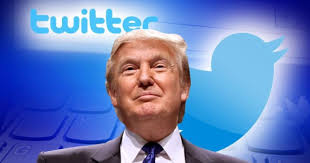
Donald Trump
By Machiavelli’s standards, Donald Trump has made himself the perfect target for a conspiracy.
During his first term as President, he viciously attacked many of the institutions Americans have cherished for more than 200 years. And during the first two years of his second term he has accelerated those attacks.
Among his targets:
- Pardoning about 1,500 of his followers who violently tried to overturn the outcome of the 2020 Presidential election in the January 6, 2021 attack on Congress. More than 250 of those pardoned had been convicted of assaulting police.
- Firing the non-partisan board members at the John F. Kennedy Center for the Performing Arts—and having his toadies illegally rename it the Trump-Kennedy Center.
- Threatening to demolish the Center when a judge ordered him to remove his name from it.
- Flooding Minneapolis and St. Paul, Minnesota, with 3,000 Immigration and Customs Enforcement (ICE) agents who terrorized (and in two cases murdered) both American citizens and illegal aliens.
- Demolishing the East Wing of the White House to create a 90,000 square foot ballroom
- Ordering the Justice Department to indict his critics such as New York Attorney General Letitia James and former FBI Director James Comey.
- Repeatedly attacking the nation’s free press as “the enemy of the people” for daring to report his growing list of crimes and disasters.
- Supporting Russian dictator Vladimir Putin in his efforts to conquer independent Ukraine.
- Demanding that Canada become the 51st state, aggressively raising tariffs on Canadian goods and even threatening military invasion.
As Machiavelli warned:
“When a prince becomes universally hated, it is likely that he’s harmed some individuals—who thus seek revenge. This desire is increased by seeing that the prince is widely loathed.”
ABC NEWS, ABRAHAM LINCOLN, ADOLF HITLER, ALTERNET, AMERICABLOG, ANDREW JOHNSON, AP, ASSASSINATION, BABY BOOMER RESISTANCE, BUZZFEED, CANADA, CBS NEWS, CNN, CONSPIRACIES, CROOKS AND LIARS, DAILY KOS, DONALD TRUMP, EAST WING OF THE WHITE HOUSE, EMPEROR COMMODUS, FBI, FIVETHIRTYEIGHT, GAIUS CASSIUS, GEORGE ALZERODT, HARPER’S MAGAZINE, immigration, JAMES COMEY, JANUARY 6 COUP ATTEMPT, JOHN F. KENNEDY CENTER FOR THE PERFORMING ARTS, JOHN WILKES BOOTH, JOSEPH STALIN, JULIUS CAESAR, JUSTICE DEPARTMENT, LAVRENTI BERIA, LETITIA JAMES, LEWIS POWELL, MARCUS BRUTUS, MARK ANTHONY, MEDIA MATTERS, MEGAN LORRAINE UTZ, MOTHER JONES, MOVEON, MSNBC, NBC NEWS, NEWSWEEK, NICCOLO MACHIAVELLI, NPR, PBS NEWSHOUR, PLOTS, POLITICO, POLITICUSUSA, RAW STORY, REUTERS, SALON, SEATTLE TIMES, Secret Service, SLATE, SOVIET UNION, TALKING POINTS MEMO, THE ATLANTIC, THE CHICAGO SUN-TIMES, THE CHICAGO TRIBUNE, THE DAILY BEAST, THE DAILY BLOG, THE DISCOURSES, THE DISCOURSES (BOOK), THE GUARDIAN, THE HILL, THE HUFFINGTON POST, THE LOS ANGELES TIMES, THE NATION, THE NEW REPUBLIC, THE NEW YORK TIMES, THE PRINCE (BOOK), THE VILLAGE VOICE, THE WALL STREET JOURNAL, THE WASHINGTON POST, THINKPROGRESS, TIME, TRUTHDIG, TRUTHOUT, TWO POLITICAL JUNKIES, U.S. NEWS & WORLD REPORT, UPI, USA TODAY, WHITE HOUSE BALLROOM, WILLIAM H. SEWARD, WONKETTE, X
In Bureaucracy, History, Politics, Social commentary on November 4, 2026 at 12:14 am
More than 500 years ago, Niccolo Machiavelli, the father of modern political science, offered sound advice for how citizens of a republic can maintain their freedoms.
He did so in The Discourses on Livy, a work of political history and philosophy. One of its longest chapters—Book Three, Chapter Six—covers “Of Conspiracies.” In it, those who wish to conspire against a ruler will find highly useful advice.
And so will those who might well become the targets of conspiracies.
Among his advisories: There are five ways a conspiracy can be foiled:
- Discovery through denunciation;
- Discovery through carelessness;
- Discovery through writings;
- Dangers in executing the conspiracy;
- Dangers following the execution of the conspiracy.

The first two have already been profiled. Now for the remaining three.
Discovery through Writings: You may talk freely with any one man about everything, for unless you have committed yourself in writing, the “Yes” of one man is worth as much as the “No” of another.
Thus, you should guard most carefully against writing, as against a dangerous rock, for nothing will convict you quicker than your own handwriting.
You may escape, then, from the accusation of a single individual, unless you are convicted by some writing or other pledge, which you should be careful never to give.
If you are denounced, there are means of escaping punishment:
- By denying the accusation and claiming that the person making it hates you; or
- Claiming that your accuser was tortured or coerced into giving false testimony against you.
But the most prudent course is to not tell your intentions to anyone, and to carry out the attempt yourself.
Even if you’re not discovered before you carry out your attack, there are still two dangers facing a conspirator:
- Dangers in executing the conspiracy; and
- Dangers following the execution of the conspiracy.
Dangers in Execution: These result from:
- An unexpected change in the routine of the intended target;
- The lack of courage among the conspirators; or
- An error on their part, such as leaving some of those alive whom the conspirators intended to kill.
Adolf Hitler, who claimed to have a sixth-sense for danger, was famous for changing his routine at the last minute.
On November 9, 1939, this instinct saved his life. He had been scheduled to give a long speech at a Munich beer hall before the “Old Fighters” of his storm troopers.
But that evening he cut short his speech and left the beer hall. Forty-five minutes later, a bomb exploded inside a pillar—before which Hitler had been speaking.
An unexpected lack of courage can also doom a conspiracy.
…Two brothers of Alfonso, Duke of Ferrara, plotted against his life, and employed for the execution of their plot one Giannes, the Duke’s almoner and musician, who several times at their request brought the Duke to them….but neither of them had the courage to do it.
The conspiracy was discovered, and they bore the penalty of their wickedness and their imprudence.
Conspirators can sabotage their efforts by speaking before acting:
Lucilla, the sister of the Emperor Commodus, ordered Quintianus to kill him. He lay in wait for Commodus at the entrance of the amphitheater, and, on stepping up to him with drawn dagger, cried, “The Senate sends you this!” which caused Quintianus to be arrested before he had time to strike Commodus….
The more people targeted for assassination, the more likely the conspiracy is to fail.
Conspiracies against single individuals are generally apt to fail…but when undertaken against two or more persons, they fail much easier. Such conspiracies present so many difficulties that it is almost impossible that they should succeed.
In fact, to strike two blows of this kind at the same instant and in different places is impracticable, and to attempt to do so at different moments of time would certainly result in the one’s preventing the other.
John Wilkes Booth, the assassin of President Abraham Lincoln, planned to murder not only Lincoln but two other high-ranking officials: Vice President Andrew Johnson and Secretary of State William H. Seward.
On the night of April 14, 1865, Booth assassinated Lincoln at Ford’s Theater. But George Alzerodt, who had been picked to murder Johnson, lost his nerve and never tried to carry out his assignment.
And Lewis Powell attacked Seward in his home, stabbing him five times in the face and neck, but failed to kill him. After struggling with a bodyguard and one of Seward’s sons, Powell fled.
Conspirators can also be undone by their good intentions.
In 44 B.C., Gaius Cassius, Marcus Brutus and other Roman senators decided to assassinate Julius Caesar, whose dictatorial ambitions they feared.
Cassius also intended to murder Mark Anthony, Caesar’s strongest ally.
But Brutus objected, fearing the plotters would look like butchers, not saviors. Even worse, he allowed Anthony to deliver a eulogy at Caesar’s funeral.
This proved so inflammatory that the mourners rioted, driving the conspirators out of Rome. Soon afterward, they were defeated in a battle with the legions of Anthony and Octavian Caesar—and forced to commit suicide to avoid capture and execution.
ABC NEWS, ABRAHAM LINCOLN, ADOLF HITLER, ALTERNET, AMERICABLOG, ANDREW JOHNSON, AP, ASSASSINATION, BABY BOOMER RESISTANCE, BUZZFEED, CANADA, CBS NEWS, CNN, CONSPIRACIES, CROOKS AND LIARS, DAILY KOS, DONALD TRUMP, EAST WING OF THE WHITE HOUSE, EMPEROR COMMODUS, FBI, FIVETHIRTYEIGHT, GAIUS CASSIUS, GEORGE ALZERODT, HARPER’S MAGAZINE, immigration, IMMIGRATION AND CUSTOMS ENFORRCEMENT (ICE), JAMES COMEY, JANUARY 6 COUP ATTEMPT, JOHN F. KENNEDY CENTER FOR THE PERFORMING ARTS, JOHN WILKES BOOTH, JOSEPH STALIN, JULIUS CAESAR, JUSTICE DEPARTMENT, LAVRENTI BERIA, LETITIA JAMES, LEWIS POWELL, MARCUS BRUTUS, MARK ANTHONY, MEDIA MATTERS, MEGAN LORRAINE UTZ, MOTHER JONES, MOVEON, MSNBC, NBC NEWS, NEWSWEEK, NICCOLO MACHIAVELLI, NPR, PBS NEWSHOUR, PLOTS, POLITICO, POLITICUSUSA, RAW STORY, REUTERS, SALON, SEATTLE TIMES, Secret Service, SLATE, SOVIET UNION, TALKING POINTS MEMO, THE ATLANTIC, THE CHICAGO SUN-TIMES, THE CHICAGO TRIBUNE, THE DAILY BEAST, THE DAILY BLOG, THE DISCOURSES, THE DISCOURSES (BOOK), THE GUARDIAN, THE HILL, THE HUFFINGTON POST, THE LOS ANGELES TIMES, THE NATION, THE NEW REPUBLIC, THE NEW YORK TIMES, THE PRESS, THE PRINCE (BOOK), THE VILLAGE VOICE, THE WALL STREET JOURNAL, THE WASHINGTON POST, THINKPROGRESS, TIME, TRUTHDIG, TRUTHOUT, TWO POLITICAL JUNKIES, U.S. NEWS & WORLD REPORT, UKRAINE, UPI, USA TODAY, VLADIMIR PUTIN, WHITE HOUSE BALLROOM, WILLIAM H. SEWARD, WONKETTE, X
In Bureaucracy, History, Politics, Social commentary on November 3, 2026 at 12:38 am
More than 500 years ago, Niccolo Machiavelli, the father of modern political science, offered sound advice on how citizens of a republic can maintain their freedoms.
He did so in The Discourses on Livy, a work of political history and philosophy. One of its longest chapters—Book Three, Chapter Six—covers “Of Conspiracies.”
This offers sound counsel for those who wish to conspire against a ruler. And for those who might well become the targets of conspiracies.
Among his advisories: A single plotter avoids the danger faced by two or more conspirators:
Since no one knows his intention, he can’t be betrayed by an accomplice.
Anyone may form a plot, whether he is prominent or insignificant, because everyone is at some time allowed to speak to the prince. And he can use this opportunity to satisfy his desire for revenge.
Joseph Stalin, undisputed dictator of the Soviet Union, may well have died at the hands of a single conspirator: His own secret police chief.
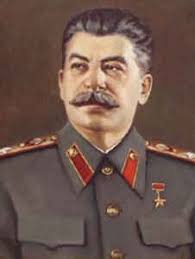
Joseph Stalin
Throughout his nearly 30-year reign over the Soviet Union, at least 20 million men, women and children died—from executions, deportations, imprisonment in Gulag camps, and a man-made famine through the forced collection of harvests. During the last weeks of his life, Stalin was planning yet another purge.
Among its intended victims: The highest-ranking officials of his regime.
Then, on March 5, 1953, Stalin died—officially from a cerebral hemorrhage.
In the 2004 book, Stalin’s Last Crime, Vladimir P. Naumov, a Russian historian, and Jonathan Brent, a Yale University Soviet scholar, assert that he might have been poisoned.
If this happened, the occasion was during a final dinner with four members of the Politburo. Two of these were Lavrenti P. Beria, chief of the secret police, and Nikita S. Khrushchev, who eventually succeeded Stalin.
The authors believe that, if Stalin was poisoned, the most likely suspect was Beria. The method: Slipping warfarin, a tasteless and colorless blood thinner also used as a rat killer, into his glass of wine.
In Nikita Khrushchev’s 1970 memoirs, he quotes Beria as telling Vyacheslav M. Molotov, another Politburo member, two months after Stalin’s death: “I did him in! I saved all of you.”
According to Machiavelli: Those who take part in a conspiracy against a ruler are “the great men of the state, or those on terms of familiar intercourse with the prince.”
These are men who have access to him. Julius Caesar, for example, was stabbed to death by members of the Roman Senate, who feared his assuming dictatorial powers.
And Adolf Hitler was conspired against by colonels and generals of the German Army. He was in fact holding a war conference when a briefcase bomb exploded, killing three officers and a stenographer, but leaving Hitler only slightly injured.
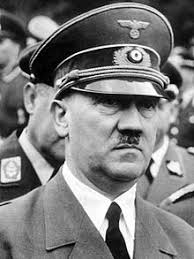

Adolf Hitler
There are five ways a conspiracy can be foiled:
- Discovery through denunciation;
- Discovery through carelessness;
- Discovery through writings;
- Dangers in executing the conspiracy;
- Dangers following the execution of the conspiracy.
Discovery through Denunciation: This occurs through treachery or lack of prudence among one or more conspirators.
Treachery is so common that you can safely tell your plans to only your most trusted friends who are willing to risk their lives for your sake. You may find that you have only one or two of these.
But as you are bring more people into the conspiracy, the chances of discovery greatly increase. It’s impossible to find many who can be completely trusted: For their devotion to you must be greater than their sense of danger and fear of punishment.
Discovery through Carelessness: This happens when one of the conspirators speaks incautiously, so that a third person overhears it. Or it may occur from thoughtlessness, when a conspirator tells the secret to his wife or child, or to some other indiscreet person.
When a conspiracy has more than three or four members, its discovery is almost certain, either through treason, imprudence or carelessness.
If more than one conspirator is arrested, the whole plot is discovered, for it will be impossible for any two to agree perfectly as to all their statements.
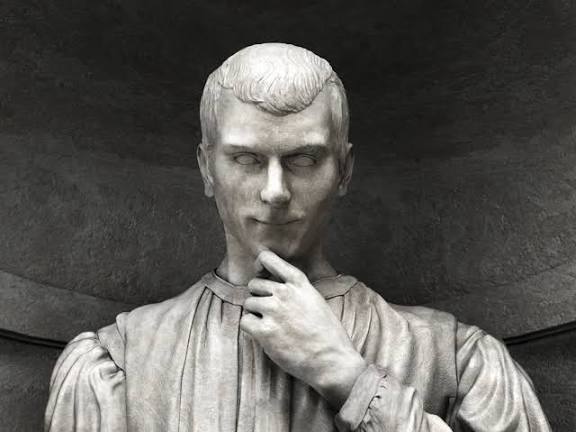
Niccolo Machiavelli
If one of them becomes fearful—whether it’s the one who was arrested or is still at liberty—discovery of the conspiracy is certain.
The best way to avoid such detection is to confide your project to your intended fellow conspirators at the moment of execution—and not sooner.
A classic example of this occurred in ancient Persia. According to the Greek historian Herodotus: A group of nobles assembled to discuss overthrowing a usurper to the throne. The last one to arrive was Darius.
When one of the conspirators asked, “When should we strike?” Darius replied: “We must either go now at this very moment and carry it into execution, or I shall go and denounce you all. For I will not give any of you time to denounce me.”
At that, they went directly to the palace, assassinated the usurper and proclaimed Darius their new king.
ABC NEWS, ABRAHAM LINCOLN, ADOLF HITLER, ALTERNET, AMERICABLOG, ANDREW JOHNSON, AP, ASSASSINATION, BABY BOOMER RESISTANCE, BUZZFEED, CANADA, CBS NEWS, CNN, CONSPIRACIES, CROOKS AND LIARS, DAILY KOS, DONALD TRUMP, EAST WING OF THE WHITE HOUSE, EMPEROR COMMODUS, FBI, FIVETHIRTYEIGHT, GAIUS CASSIUS, GEORGE ALZERODT, HARPER’S MAGAZINE, immigration, IMMIGRATION AND CUSTOMS ENFORRCEMENT (ICE), JAMES COMEY, JANUARY 6 COUP ATTEMPT, JOHN F. KENNEDY CENTER FOR THE PERFORMING ARTS, JOHN WILKES BOOTH, JOSEPH STALIN, JULIUS CAESAR, JUSTICE DEPARTMENT, LAVRENTI BERIA, LETITIA JAMES, LEWIS POWELL, MARCUS BRUTUS, MARK ANTHONY, MEDIA MATTERS, MEGAN LORRAINE UTZ, MOTHER JONES, MOVEON, MSNBC, NBC NEWS, NEWSWEEK, NICCOLO MACHIAVELLI, NPR, PBS NEWSHOUR, PLOTS, POLITICO, POLITICUSUSA, RAW STORY, REUTERS, SALON, SEATTLE TIMES, Secret Service, SLATE, SOVIET UNION, TALKING POINTS MEMO, THE ATLANTIC, THE CHICAGO SUN-TIMES, THE CHICAGO TRIBUNE, THE DAILY BEAST, THE DAILY BLOG, THE DISCOURSES, THE DISCOURSES (BOOK), THE GUARDIAN, THE HILL, THE HUFFINGTON POST, THE LOS ANGELES TIMES, THE NATION, THE NEW REPUBLIC, THE NEW YORK TIMES, THE PRESS, THE PRINCE (BOOK), THE VILLAGE VOICE, THE WALL STREET JOURNAL, THE WASHINGTON POST, THINKPROGRESS, TIME, TRUTHDIG, TRUTHOUT, TWO POLITICAL JUNKIES, U.S. NEWS & WORLD REPORT, UKRAINE, UPI, USA TODAY, VLADIMIR PUTIN, WHITE HOUSE BALLROOM, WILLIAM H. SEWARD, WONKETTE, X
In Bureaucracy, History, Politics, Social commentary on November 1, 2026 at 3:51 am
On October 22, Megan Lorraine Utz, 36, of Courtland, Alabama, was charged by the Justice Department with making threats against President Donald Trump. She was also charged with interstate transmission of threatening communication.
According to the indictment and complaint, on October 5, 2026, Utz posted a threat on Facebook regarding Trump’s attendance at the upcoming football game between Alabama and Georgia in Tuscaloosa, Alabama,on October 10.
Utz’s post stated: “He’s not allowed in my stadium! I’ll put a bullet through him if he dares.”
Trump ultimately canceled his planned visit to the game because of Hurricane Isaias.
On October 6, 2026, FBI agents, Secret Service agents, and the Florence Police Department located Utz in Florence, Alabama.
The Florence Police Department arrested Utz pursuant to an active misdemeanor warrant for Harassing Communications issued by the Guin Police Department.
“Threats of violence are taken seriously, and we are committed to protecting the safety of our nation’s leaders,” said U.S. Attorney Phillip W. Williams Jr.
Given the layers of security surrounding Trump, the chances of Utz’ succeeding in assassinating him were microscopically small. But she made them non-existent when she violated a prime instruction by Niccolo Machiavelli.
Specifically:
I hold it to be a proof of great prudence for men to abstain from threats and insulting words towards any one, for neither the one nor the other in any way diminishes the strength of the enemy—but the one makes him more cautious, and the other increases his hatred of you, and makes him more persevering in his efforts to injure you.
In this case, Trump never even heard the insult and threat. But those charged with protecting him did—and that was enough to guarantee Utz’ arrest and almost certain conviction for threatening the life of the President.
More than 500 years ago, Niccolo Machiavelli, the father of modern political science, offered sound advice for would-be conspirators—and for rulers seeking to thwart conspiracies.
He did so in The Discourses on Livy, a work of political history and philosophy. In it, he outlined how citizens of a republic can maintain their freedoms.
One of the longest chapters—Book Three, Chapter Six—covers “Of Conspiracies.” In it, those who wish to conspire against a ruler will find highly useful advice. And so will those who might well become the targets of conspiracies—such as President Donald J. Trump.

Niccolo Machiavelli
The most dangerous time for a ruler comes when he is universally hated. Thus, in his better-known work, The Prince, published in 1532, Machiavelli advises:
A prince must take great care that nothing goes out of his mouth which is not full of the above-named five qualities, and he should seem to be all mercy, faith, integrity, humanity and religion.
…A prince must show himself a lover of merit, give preferment to the able, and honor those who excel in every art.
Besides this, he ought, at convenient seasons of the year, to keep the people occupied with festivals and shows….mingle with them from time to time, and give them an example of his humanity and munificence, always upholding, however, the majesty of his dignity, which must never be allowed to fail in anything whatever.
Rulers who disregard this advice do so at their peril:
A prince need trouble little about conspiracies when the people are well disposed. But when they are hostile and hold him in hatred, then he must fear everything and everybody….
…[The Roman Emperor Commodus], being of a cruel and bestial disposition, in order to…exercise his rapacity on the people, he sought to favor the soldiers and render them licentious.
On the other hand, by not maintaining his dignity, by often descending into the theater to fight with gladiators and committing other contemptible actions…he became despicable in the eyes of the soldiers. And being hated on the one hand and despised on the other, he was conspired against and killed.
When a ruler becomes universally hated, it is likely that he’s harmed some individuals—who thus seek revenge. This desire is increased by seeing he is widely loathed.
So his first priority must be to make himself beloved—or at least avoid hatred.
By doing this, he protects himself from such vengeance-seekers. There are two reasons for this:
- Men rarely risk danger to avenge a wrong; and
- Even if they want to avenge a wrong, they know they will face almost universal condemnation because the prince is held in such high esteem.
Machiavelli draws a distinction between plots and conspiracies.
A plot may be formed by a single individual or by many. The first isn’t a conspiracy, since that would involve at least two participants.
A single plotter avoids the danger faced by two or more conspirators:
Since no one knows his intention, he can’t be betrayed by an accomplice.
Anyone may form a plot, whether he is prominent or insignificant, because everyone is at some time allowed to speak to the prince. And he can use this opportunity to satisfy his desire for revenge.
Joseph Stalin, undisputed dictator of the Soviet Union for almost 30 years, may well have died at the hands of a single conspirator: His own secret police chief.
60 MINUTES, ALTERNET, AMERICABLOG, AP, BABY BOOMER RESISTANCE, BBC, BLOOMBERG, BLUESKY, BRENDAN CARR, BUZZFEED, CBS NEWS, CHARLIE KIRK, CNN, COMCAST, CROOKS AND LIARS, DAILY KOS, DAVID LETTERMAN, DICK SMOTHERS, DIVERSITY EQUITY AND INCLUSION (DEI), DONALD TRUMP, ERIC TRUMP, FEDERAL COMMUNICATIONS COMMISSION (FCC), FIVETHIRTYEIGHT, HARPER’S MAGAZINE, HUFFINGTON POST, JIMMY FALLON, JIMMY KIMMEL, JIMMY KIMMEL LIVE!, JOSEPH MCCARTHY, Kamala Harris, LYNDON JOHNSON, MEDIA MATTERS, MOTHER JONES, MOVEON, MSNBC, NAZI GERMANY, NBC NEWS, NEWSDAY, NEWSWEEK, NICCOLO MACHIAVELLI, NPR, PARAMOUNT GLOBAL, PAUL MCCARTNEY, PBS NEWSHOUR, POLITICO, POLITICUSUSA, RAW STORY, REUTERS, SALON, SEATTLE TIMES, SKYDANCE MEDIA, SLATE, STEPHEN COLBERT, TALKING POINTS MEMO, THE ATLANTIC, THE CHICAGO SUN-TIMES, THE CHICAGO TRIBUNE, THE DAILY BEAST, THE DAILY BLOG, THE DISCOURSES (BOOK), THE GUARDIAN, THE HILL, THE HUFFINGTON POST, THE INTERCEPT, THE LATE SHOW WITH DAVID LETTERMAN, THE LATE SHOW WITH STEPHEN COLBERT, THE LOS ANGELES TIMES, THE NATION, THE NEW REPUBLIC, THE NEW YORK TIMES, THE NEW YORKER, THE SMOTHERS BROTHERS COMEDY HOUR, THE TONIGHT SHOW STRRING JIMMY FALLON, THE VILLAGE VOICE, THE WASHINGTON POST, THINKPROGRESS, TIME, TOM SMOTHERS, TOMMY SMOTHERS, TRUTHDIG, TRUTHOUT, TWO POLITICAL JUNKIES, TYLER ROBINWSON, U.S. NEWS & WORLD REPORT, UPI, USA TODAY, WALT DISNEY COMPANY, WILLIAM L. SHIRER, X
In Bureaucracy, Business, Entertainment, History, Politics, Social commentary on May 27, 2026 at 12:10 am
On July 14, 2025, after returning from a multi-week break, Stephen Colbert, host of CBS’ Late Night With Stephen Colbert, said: “While I was on vacation, my parent corporation, Paramount, paid Donald Trump a $16 million settlement over his ‘60 Minutes’ lawsuit.
“I believe this kind of complicated financial settlement with a sitting government official has a technical name in legal circles—it’s big fat bribe.”
Meanwhile, Paramount Global, the parent company of CBS Network, wanted to merge with Skydance Media.
For this, it needed the regulatory permission of the Federal Communications Commission (FCC) of the Trump administration.

On July 17, CBS cancelled the highest-rated late-night show on television with 2.4 million nightly viewers. It had also been nominated for 33 Emmys.
Addressing his in-house and television audience on July 17, Colbert announced: “I want to let you know something that I found out just last night. Next year will be our last season. The network will be ending The Late Show in May.
“It’s not just the end of our show, but it’s the end of The Late Show on CBS. I’m not being replaced. This is all just going away.”
In a statement, Paramount/CBS called the cancellation a purely financial decision: “It is not related in any way to the show’s performance, content or other matters happening at Paramount.”
Colbert did not directly accuse his bosses of bowing to pressure from the FCC. But he did offer this insightful comment: “Less than two years before they called to say it’s over, they were very eager for me to be signed for a long time. So, something changed.”
What “changed” was that after CBS cancelled one of Trump’s biggest critics, the merger between Paramount Global and Skydance Media was quickly approved by the FCC.

David Letterman had hosted The Late Show with David Letterman from August 30, 1993, until his retirement on May 20, 2015. In a May 5, 2025 interview with the New York Times, he didn’t mince words about what he felt was behind the cancellation:
Colbert “was dumped because the people selling the network to Skydance said, ‘Oh no, there’s not going to be any trouble with that guy. We’re going to take care of the show. We’re just going to throw that into the deal. When will the ink on the check dry?'”
CBS is one of the most profitable broadcast networks in the United States, through massive advertising revenue, affiliate fees, and sports broadcast rights.
Yet the owners of its parent company, Paramount Global—whose revenue stood at $29.2 billion in 2024—felt they could enrich themselves even more by acquiring Skydance Media.
And if siding with a dictatorial administration to strike a blow at freedom of speech was necessary to make the deal go forward, so be it.

The Ed Sullivan Theater, where Stephen Colbert reigned for 11 years
Ajay Suresh from New York, NY, USA, CC BY 2.0 <https://creativecommons.org/licenses/by/2.0>, via Wikimedia Commons
Disney didn’t reinstate Jimmy Kimmel Live! out of a steadfast commitment to the First Amendment. It did so only after a massive public backlash led to a widespread boycott of subscriptions to Disney+ and Hulu—and a steep drop in Disney’s stock value.
Stephen Colbert had no such reprieve. But he never—at least not in public—lost his poise. He often joked about the upcoming end of his show, endured jokes from his guests about it—and never stopped speaking truth to power at the expense of the Trump administration.
“The only choice you have is how to walk through it,” said his friend and mentor, Jon Stewart, as he and Colbert gazed into a fictitious green wormhole. “You can go in kicking and screaming. Or you can do what you’ve done for the past 30 years when faced with something dark: You stare it down and you can laugh.”
On his last night as host of The Late Show Colbert did exactly that, turning what could have been a mournful event into a celebration of joy and defiance.
Stephen Colbert Signs off “Late Show” with Emotional Goodbye https://www.youtube.com/watch?v=znec-DIff8o
There had been speculation that Colbert, a devout Catholic, might book Pope Leo XIV for his final show. So Colbert turned it into a gag. He pretended that he was about to bring out the pope for an interview—only to be told the Pontiff was refusing to come out of his dressing room.
“We got him the wrong snacks,” an unidentified voice informed him.
“Who’s going to be my last guest now?” asked Colbert—to be answered by Paul McCartney: “Hey, Stephen, what about me?”
Massive applause resounded as the former Beatle walked onstage.

Stephen Colbert and Paul McCartney
McCartney not only served as Colbert’s last interview guest but as his musical one as well. And McCartney led the band—and the audience—in a rousing number of “Hello, Goodbye,” the Beatles’ 1967 hit:
You say goodbye and I say hello
Hello hello
I don’t know why you say goodbye, I say hello
Hello hello
I don’t know why you say goodbye, I say hello
Members of the audience—probably including relatives of the show’s cast—swarmed onto the stage to join McCartney, Colbert and the band in what was an act of celebration and defiance: “When faced with something dark, you stare it down and you can laugh.”
Thus Stephen Colbert went gentle—and triumphant—into that good night.
60 MINUTES, ALTERNET, AMERICABLOG, AP, BABY BOOMER RESISTANCE, BBC, BLOOMBERG, BLUESKY, BRENDAN CARR, BUZZFEED, CBS NEWS, CHARLIE KIRK, CNN, COMCAST, CROOKS AND LIARS, DAILY KOS, DAVID LETTERMAN, DICK SMOTHERS, DIVERSITY EQUITY AND INCLUSION (DEI), DONALD TRUMP, ERIC TRUMP, FEDERAL COMMUNICATIONS COMMISSION (FCC), FIVETHIRTYEIGHT, HARPER’S MAGAZINE, HUFFINGTON POST, IRAN, JEFFREY EPSTEIN, JIMMY FALLON, JIMMY KIMMEL, JIMMY KIMMEL LIVE!, JOSEPH MCCARTHY, Kamala Harris, LYNDON JOHNSON, MEDIA MATTERS, MOTHER JONES, MOVEON, MSNBC, NAZI GERMANY, NBC NEWS, NEWSDAY, NEWSWEEK, NICCOLO MACHIAVELLI, NPR, PARAMOUNT GLOBAL, PAUL MCCARTNEY, PBS NEWSHOUR, POLITICO, POLITICUSUSA, RAW STORY, REUTERS, SALON, SEATTLE TIMES, SKYDANCE MEDIA, SLATE, STEPHEN COLBERT, TALKING POINTS MEMO, THE ATLANTIC, THE CHICAGO SUN-TIMES, THE CHICAGO TRIBUNE, THE DAILY BEAST, THE DAILY BLOG, THE DISCOURSES (BOOK), THE GUARDIAN, THE HILL, THE HUFFINGTON POST, THE INTERCEPT, THE LATE SHOW WITH DAVID LETTERMAN, THE LATE SHOW WITH STEPHEN COLBERT, THE LOS ANGELES TIMES, THE NATION, THE NEW REPUBLIC, THE NEW YORK TIMES, THE NEW YORKER, THE SMOTHERS BROTHERS COMEDY HOUR, THE TONIGHT SHOW STRRING JIMMY FALLON, THE VILLAGE VOICE, THE WASHINGTON POST, THINKPROGRESS, TIME, TOM SMOTHERS, TOMMY SMOTHERS, TRUTHDIG, TRUTHOUT, TWO POLITICAL JUNKIES, TYLER ROBINWSON, U.S. NEWS & WORLD REPORT, UPI, USA TODAY, WALT DISNEY COMPANY, WILLIAM L. SHIRER, X
In Bureaucracy, Business, Entertainment, History, Politics, Social commentary on May 26, 2026 at 12:05 am
…A truly great man is ever the same under all circumstances. And if his fortune varies, exalting him at one moment and oppressing him at another, he himself never varies, but always preserves a firm courage, which is so closely interwoven with his character that everyone can readily see that the fickleness of fortune has no power over him. —Niccolo Machiavelli, The Discourses
Watching the last episode of The Late Show With Stephen Colbert was like watching a slow-motion execution—where the victim turns his demise into a rousing revival meeting.
That episode, shown on Thursday, May 21, capped a hugely successful run of 10 years and eight months (September 8, 2015 to May 21, 2026). Broadcast on CBS against ABC’s Jimmy Kimmel Live! and NBC’s The Tonight Show Starring Jimmy Fallon, Late Night ranked as the highest-rated American late-night talk show.
And it held that ranking for nine consecutive seasons, marking the longest such streak in franchise history.
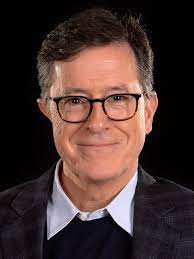
Stephen Colbert
But for all the adoring fans Colbert attracted during those years, he acquired one enemy who never forgot or forgave the slightest insult. And from 2015 onward, Colbert showered him with humorous, deadly accurate insults calculated to get under his paper-thin skin and stay there.
That enemy was Donald J. Trump.
Colbert started throwing thousands of barbs at Trump immediately after the real estate mogul launched his first campaign for President on June 16, 2015. These focused on Trump’s appearance, intelligence, family, policy shifts, criminality, legal troubles and commercial ventures.
Among the barbs:
- “It’s true, this [Iran] war reached all of its objectives. It’s been weeks since anyone mentioned the Epstein files.”
- After Trump threatened to destroy Iran but then agreed to a brief pause, Colbert paraphrased John Lennon’s famous peace anthem, singing: “All we are saying, is peace for two weeks.”
- “For my MAGA viewers. The Trump golden cell phone has FINALLY arrived after a nine month delay. And it SUCKS. The only Trump item more disappointing after a nine-month wait was Eric!”
- Colbert often joked about Trump’s short attention span, comparing his mind to “nature’s most cunning opponent, the goldfish.”
- Following Trump’s 34 felony convictions on May 30, 2024, for falsifying business records, Colbert joked that Trump had “more felonies than Baskin-Robbins has flavors.”

Donald Trump
Colbert had a biting wit that never flinched at speaking truth to—and about—power. But Trump had a weapon that Colbert couldn’t match: Command of the Federal Communications Commission (FCC).
And in its chair, Brendan Carr, he had a crony willing to destroy any network that dared to offend his thin-skinned boss, Donald Trump.
Knowing Trump’s animosity toward nonwhites, Carr has brutally attacked any network-related company promoting Diversity, Equity and Inclusion (DEI). He ordered investigations into Comcast and the Walt Disney Company and threatened to revoke ABC’s broadcast license over the practices.
On September 10, 2025, Right-wing propagandist Charlie Kirk was shot at Utah Valley University in Orem, Utah.
In September 2025, Carr pressured Disney, which owns ABC, to suspend comedian Jimmy Kimmel over comments he had made about the assassination. On September 17, Disney caved and suspended Kimmel.

Brendan Carr
Kimmel had actually called the murder “senseless.” What enraged Right-wing Americans was Kimmel’s noting that “the MAGA gang is desperately trying to characterize this kid who murdered Charlie Kirk as anything other than one of them and doing everything they can to score political points from it.”
This was actually true—and all the more embarrassing to Republicans because of it. The Trump administration and its MAGA cult have tried to portray Tyler Robinson, the man accused of shooting Kirk, as a radical liberal.
He is not.
Debbie Robinson, his grandmother, said most of the family are Republicans—and that Tyler’s father, Matt, is a staunch supporter of Donald Trump.
Disney/ABC reinstated The Jimmy Kimmel Show on September 23 after a massive public backlash, a steep drop in Disney’s stock value, and a widespread Hollywood boycott.
Unable to remove Kimmel, Carr moved on against Colbert in a more subtle manner.
He knew that Paramount Global wanted to merge with Skydance Media. And Paramount is the parent company of CBS Network, which hosted The Late Show With Stephen Colbert.

Jimmy Kimmel
Paramount had recently paid Trump $16 million to settle a lawsuit he had brought against the CBS news show, 60 Minutes. He claimed that it had misleadingly edited a pre-election interview with then Vice President Kamala Harris to boost her election chances in 2024. CBS’ attorneys and a number of legal experts had said that the lawsuit was “completely without merit.”
On July 14, 2025, after returning from a multi-week break, Colbert said: “While I was on vacation, my parent corporation, Paramount, paid Donald Trump a $16 million settlement over his ‘60 Minutes’ lawsuit.
“As someone who has always been a proud employee of this network, I am offended. And I don’t know if anything will ever repair my trust in this company, but just taking a stab at it, I’d say $16 million would help.
“I believe this kind of complicated financial settlement with a sitting government official has a technical name in legal circles—it’s big fat bribe.”
Colbert didn’t know it, but the axe was about to fall.
ABC NEWS, ALTERNET, AMERICABLOG, AP, BABY BOOMER RESISTANCE, BBC, BLOOMBERG, BLUESKY, BUZZFEED, CBS NEWS, CNN, CROOKS AND LIARS, DAILY KOS, DONALD TRUMP, FIVETHIRTYEIGHT, HARPER’S MAGAZINE, HUFFINGTON POST, JOHN KASICH, LATINOS, MEDIA MATTERS, MOTHER JONES, MOVEON, MSNBC, NBC NEWS, NEWSDAY, NEWSWEEK, NICCOLO MACHIAVELLI, NPR, NUCLEAR TRIAD, PBS NEWSHOUR, POLITICO, POLITICUSUSA, RAFAEL CRUZ, RAW STORY, REPUBLICAN PRESIDENTIAL NOMINATION, REUTERS, SALON, SEATTLE TIMES, SLATE, TALKING POINTS MEMO, THE ATLANTIC, THE CHICAGO SUN-TIMES, THE CHICAGO TRIBUNE, THE DAILY BEAST, THE DAILY BLOG, THE DISCOURSES (BOOK), THE GUARDIAN, THE HILL, THE HUFFINGTON POST, THE INTERCEPT, THE LOS ANGELES TIMES, THE NATION, THE NEW REPUBLIC, THE NEW YORK TIMES, THE NEW YORKER, THE PRINCE (BOOK), THE VILLAGE VOICE, THE WASHINGTON POST, THINKPROGRESS, TIME, TRUTHDIG, TRUTHOUT, TWO POLITICAL JUNKIES, U.S. NEWS & WORLD REPORT, UPI, USA TODAY, X
In Bureaucracy, History, Military, Politics, Social commentary on March 30, 2026 at 12:19 am
Niccolo Machiavelli, the 16th-century Florentine statesmen and father of modern politics, has more than a few timely warnings to offer Donald Trump—and voters inclined to support him.
For openers: Trump has drawn heavy criticism for his angry and brutal attacks on a wide range of persons and organizations—including his fellow Republicans, journalists, women, blacks, Hispanics, other countries and even celebrities who have nothing to do with politics.
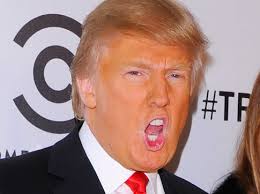
Donald Trump
Now consider Machiavelli’s advice on gratuitously handing out insults and threats:
-
“I hold it to be a proof of great prudence for men to abstain from threats and insulting words towards any one.
-
“For neither the one nor the other in any way diminishes the strength of the enemy—but the one makes him more cautious, and the other increases his hatred of you, and makes him more persevering in his efforts to injure you.”
And Trump’s reaction to the criticism he’s received?
“I can be Presidential, but if I was Presidential I would only have—about 20% of you would be here because it would be boring as hell, I will say,” Trump told supporters at a rally in Superior, Wisconsin.
Trump admitted that his wife, Melania, and daughter, Ivanka, had urged him to be more Presidential during the 2016 campaign. And he promised that he would.
“But I gotta knock off the final two [Republican candidates [Ohio Governor John Kasich and Texas U.S. Senator Rafael Cruz] first, if you don’t mind.”
For those who expected Trump to shed his propensity for constantly picking fights, Machiavelli had a stern warning:
-
“…If it happens that time and circumstances are favorable to one who acts with caution and prudence he will be successful. But if time and circumstances change he will be ruined, because he does not change the mode of his procedure.
-
“No man can be found so prudent as to be able to adopt himself to this, either because he cannot deviate from that to which his nature disposes him, or else because, having always prospered by walking in one path, he cannot persuade himself that it is well to leave it…
-
“For if one could change one’s nature with time and circumstances, fortune would never change.”
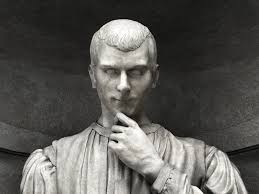
Niccolo Machiavelli
Then there is Trump’s approach to consulting advisers:
Asked on MSNBC’s “Morning Joe” who he consults about foreign policy, Trump replied: “I’m speaking with myself, number one, because I have a very good brain and I’ve said a lot of things.”
This totally contrasts with the advice given by Machiavelli:
-
“A prudent prince must [choose] for his counsel wise men, and [give] them alone full liberty to speak the truth to him, but only of those things that he asks and of nothing else.
-
“But he must be a great asker about everything and hear their opinions, and afterwards deliberate by himself in his own way, and in these counsels…comport himself so that every one may see that the more freely he speaks, the more he will be acceptable.”
And Machiavelli offers a related warning on the advising of rulers: Unwise princes cannot be wisely advised.
During the fifth GOP debate in the 2016 Presidential sweepstakes, host Hugh Hewitt asked Trump this question:
“Mr. Trump, Dr. [Ben] Carson just referenced the single most important job of the president, the command and the care of our nuclear forces. And he mentioned the triad.
“The B-52s are older than I am. The missiles are old. The submarines are aging out. It’s an executive order. It’s a commander-in-chief decision.
“What’s your priority among our nuclear triad?”
[The triad refers to America’s land-, sea- and air-based systems for delivering nuclear missiles and bombs.]
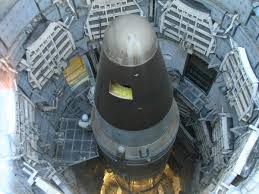
Nuclear missile in silo
Trump’s reply: “Well, first of all, I think we need somebody absolutely that we can trust, who is totally responsible, who really knows what he or she is doing. That is so powerful and so important.”
He then digressed to his having called the Iraq invasion a mistake in 2003 and 2004. Finally he came back on topic:
“But we have to be extremely vigilant and extremely careful when it comes to nuclear.
“Nuclear changes the whole ballgame. The biggest problem we have today is nuclear—nuclear proliferation and having some maniac, having some madman go out and get a nuclear weapon.
“I think to me, nuclear, is just the power, the devastation is very important to me.”
Which brings us back to Machiavelli:
-
“…Some think that a prince who gains the reputation of being prudent [owes this to] the good counselors he has about him; they are undoubtedly deceived.
-
“It is an infallible rule that a prince who is not wise himself cannot be well advised, unless by chance he leaves himself entirely in the hands of one man who rules him in everything, and happens to be a very prudent man. In this case, he may doubtless be well governed, but it would not last long, for the governor would in a short time deprive him of the state.”
All of which would lead Niccolo Machiavelli to warn, if he could witness American politics today: “This bodes ill for your Republic.”
2016 PRESIDENTIAL RACE, ABC NEWS, ADOLF HITLER, ALEXANDRIA OCASIO-CORTEZ, ALTERNET, AMERICABLOG, AP, AYANNA PRESSLEY, BABY BOOMER RESISTANCE, BARACK OBAMA, BBC, BC NEWS, BLOOMBERG, BLUESKY, BOB WOODWARD, BRIBERY, BUZZFEED, CANADA, CBS NEWS, CNN, CROOKS AND LIARS, DAILY KOS, DAVID BERLANGA, DONALD TRUMP, ERIC SCHNEIDERMAN, FIVETHIRTYEIGHT, FRANCISCO "PANCHO" VILLA, GREG ABBOTT, HARPER’S MAGAZINE, HUFFINGTON POST, ILHAN OMAR, INTIMIDATION, JAMES CARLOS BLAKE, JEFF SESSIONS, JOHN OWENS, KEN PAXTON, MEDIA MATTERS, MEXICAN REVOLUTION, MEXICO, MOTHER JONES, MOVEON, MSNBC, NBC NEWS, NEWSDAY, NEWSWEEK, NICCOLO MACHIAVELLI, NON-DISCLOSURE AGREEMENTS, NPR, PAM BONDI, PBS NEWSHOUR, POLITICO, POLITICUSUSA, RASHIDA TLAIB, RAW STORY, REPUBLICAN CONVENTION, REPUBLICANS, REUTERS, ROBERT MUELLER, ROBERT PAYNE, ROD ROSENSTEIN, RODOLFO FIERRO, SALON, SEATTLE TIMES, SLATE, TALKING POINTS MEMO, TARIFFS, THE ATLANTIC, THE CHICAGO SUN-TIMES, THE CHICAGO TRIBUNE, THE DAILY BEAST, THE DAILY BLOG, THE DISCOURSES, THE DISCOURSES (BOOK), THE FRIENDS OF PANCHO VILLA (BOOK), THE GUARDIAN, THE HILL, THE HUFFINGTON POST, THE INTERCEPT, THE LIFE AND DEATH OF ADOLF HITLER (BOOK), THE LOS ANGELES TIMES, THE NATION, THE NEW REPUBLIC, THE NEW YORK TIMES, THE NEW YORKER, THE VILLAGE VOICE, THE WASHINGTON POST, THINKPROGRESS, TIME, TRUMP UNIVERSITY, TRUTHDIG, TRUTHOUT, TWO POLITICAL JUNKIES, U.S. NEWS & WORLD REPORT, UPI, USA TODAY, X, ZOHRAN MAMDANI
In Bureaucracy, History, Law, Law Enforcement, Politics, Social commentary on November 18, 2025 at 12:10 am
…A truly great man is ever the same under all circumstances. And if his fortune varies, exalting him at one moment and oppressing him at another, he himself never varies, but always preserves a firm courage, which is so closely interwoven with his character that everyone can readily see that the fickleness of fortune has no power over him.
The conduct of weak men is very different. Made vain and intoxicated by good fortune, they attribute their success to merits which they do not possess. And this makes them odious and insupportable to all around them. And when they have afterwards to meet a reverse of fortune, they quickly fall into the other extreme, and become abject and vile.
—Niccolo Machiavelli, The Discourses
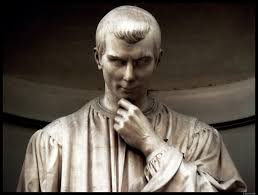
Niccolo Machiavelli
When Donald Trump—as a businessman and President—has been confronted by men and women who can’t be bribed or intimidated, he has reacted with rage and frustration.
- Trump boasted that he “never” settled cases out of court. But New York Attorney General Eric Schneiderman pressed fraud claims against the real estate mogul’s counterfeit Trump University—and Trump settled the case out of court rather than take the stand.
- On May 17, 2017, Deputy Attorney General Rod Rosenstein appointed former FBI Director Robert S. Mueller to investigate links between Russian Intelligence agents and the 2016 Trump Presidential campaign.
- Upon learning of his appointment, Trump wailed: “Oh my God. This is terrible. This is the end of my Presidency. I’m fucked.”
- Throughout Mueller’s probe, Trump hurled repeated insults at him via Twitter and press conferences. His shills within Fox News and the Republican party attacked Mueller’s integrity and investigative methods. But Trump didn’t risk firing him, fearing impeachment.

Robert Mueller
- When “democratic socialist” Zohran Mamdani declared his candidacy for New York City mayor on October 23, 2024, Trump viciously and repeatedly attacked him as a “communist.” He even threatened to cut off Federal aid to New York City.
- Mamdami’s “communist” goals included support for universal child care and constructing 200,000 new affordable housing units.
- When Mamdani overwhelmingly won election on November 4, he sannounced “If anyone can show a nation betrayed by Donald Trump how to defeat him, it is the city that gave rise to him.”
- Trump responded the next day: “I hope it works out for New York. We’ll help him a little bit, maybe.”
Perhaps the key to Trump’s innermost fear can be found in a work of fiction—in this case, the 1996 historical novel, The Friends of Pancho Villa, by James Carlos Blake.
The book depicts the Mexican Revolution (1910 – 1920) and its most famous revolutionary, Francisco “Pancho” Villa. it’s told from the viewpoint of Rodolfo Fierro, Villa’s most feared executioner. In one day, for example, Fierro—using two revolvers—executed 300 captured Federale soldiers.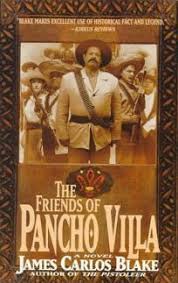
As in history, Blake’s Fierro presides over the execution of David Berlanga, a journalist who had dared criticize the often loutish behavior of Villa’s men.
On Villa’s command, Fierro approaches Berlanga in a Mexico City restaurant and orders: “Come with me.”
Standing against a barracks wall, Berlanga lights a cigar and requests permission to finish it. He then proceeds to smoke it with such a steady hand that its unbroken ash extends almost four inches.
The cigar finished, the ash still unbroken, Berlanga drops the butt to the ground and says calmly: “I’m ready.”
Then the assembled firing squad does its work.
Later, Fierro is so shaken by Berlanga’s sheer fearlessness that he seeks an explanation for it. Sitting in a cantina, he lights a cigar and tries to duplicate Berlanga’s four-inch length.
But the best he can do is less than three inches. He concludes that Berlanga used a trick—but he can’t figure it out.


Rodolfo Fierro
It had to be a trick, Fierro insists, because, if it wasn’t, there were only two other explanations for such a calm demeanor in the face of impending death.
The first was insanity. But Fierro rules this out: He had studied Berlanga’s eyes and found no madness there.
That leaves only one other explanation (other than a trick): Sheer courage.
And Fierro can’t accept this, either—because it’s disturbing.
“The power of men like me does not come solely from our ability to kill….No, the true source of our power is so obvious it sometimes goes unnoticed for what it is: our power comes from other men’s lack of courage.
“There is even less courage in this world than there is talent for killing. Men like me rule because most men are faint of heart in the shadow of death.
“But a man brave enough to control his fear of being killed, control it so well that no tremor reaches his fingers and no sign shows in his eyes…well. Such a man cannot be ruled, he can only be killed.”
Throughout his life, Trump has relied on bribery and intimidation. He well understands the power of greed and fear over most people.
What he doesn’t understand—and truly fears—is that some people cannot be bought or frightened.
Like Alexandria Ocasio-Cortez. Like Robert Mueller. And like Zohran Mamdani.
2016 PRESIDENTIAL RACE, ABC NEWS, ADOLF HITLER, ALEXANDRIA OCASIO-CORTEZ, ALTERNET, AMERICABLOG, AP, AYANNA PRESSLEY, BABY BOOMER RESISTANCE, BARACK OBAMA, BBC, BC NEWS, BLOOMBERG, BLUESKY, BOB WOODWARD, BRIBERY, BUZZFEED, CANADA, CBS NEWS, CNN, CROOKS AND LIARS, DAILY KOS, DAVID BERLANGA, DONALD TRUMP, ERIC SCHNEIDERMAN, FIVETHIRTYEIGHT, FRANCISCO "PANCHO" VILLA, GREG ABBOTT, HARPER’S MAGAZINE, HUFFINGTON POST, ILHAN OMAR, INTIMIDATION, JAMES CARLOS BLAKE, JEFF SESSIONS, JOHN OWENS, KEN PAXTON, MEDIA MATTERS, MEXICAN REVOLUTION, MEXICO, MOTHER JONES, MOVEON, MSNBC, NBC NEWS, NEWSDAY, NEWSWEEK, NICCOLO MACHIAVELLI, NON-DISCLOSURE AGREEMENTS, NPR, PAM BONDI, PBS NEWSHOUR, POLITICO, POLITICUSUSA, RASHIDA TLAIB, RAW STORY, REPUBLICAN CONVENTION, REPUBLICANS, REUTERS, ROBERT MUELLER, ROBERT PAYNE, ROD ROSENSTEIN, RODOLFO FIERRO, SALON, SEATTLE TIMES, SLATE, TALKING POINTS MEMO, TARIFFS, THE ATLANTIC, THE CHICAGO SUN-TIMES, THE CHICAGO TRIBUNE, THE DAILY BEAST, THE DAILY BLOG, THE DISCOURSES, THE DISCOURSES (BOOK), THE FRIENDS OF PANCHO VILLA (BOOK), THE GUARDIAN, THE HILL, THE HUFFINGTON POST, THE INTERCEPT, THE LIFE AND DEATH OF ADOLF HITLER (BOOK), THE LOS ANGELES TIMES, THE NATION, THE NEW REPUBLIC, THE NEW YORK TIMES, THE NEW YORKER, THE VILLAGE VOICE, THE WASHINGTON POST, THINKPROGRESS, TIME, TRUMP UNIVERSITY, TRUTHDIG, TRUTHOUT, TWO POLITICAL JUNKIES, U.S. NEWS & WORLD REPORT, UPI, USA TODAY, X, ZOHRAN MAMDANI
In Bureaucracy, History, Law, Law Enforcement, Politics, Social commentary on November 17, 2025 at 12:10 am
There’s a reason why Donald Trump loves tariffs—and it has nothing to do with economics.
It has everything to do with fear.
On January 20, 2025, his first day in office, he announced that he would impose 25% tariffs on Canada and Mexico starting February 1.
He could have opened well-intentioned negotiations with Canada and Mexico over what he considered an unfair trade imbalance. But he sees conciliation as a sign of weakness.
Exactly as Adolf Hitler did.
Robert Payne, author of the bestselling biography, The Life and Death of Adolf Hitler (1973), described Hitler’s—and Trump’s—“negotiating” style thus:
“He was incapable of bargaining. He was like a man who goes up to a fruit peddler and threatens to blow his brains out if he does not sell his applies at the lowest possible price.”
A similar example of his aggressiveness occurred during his first administration.
On July 14, 2019, Trump unleashed a brutal Twitter attack on four Democratic members of the House of Representatives who had harshly criticized his anti-immigration policies:
The Democrats—all female, and all non-white—were:
- Alexandria Ocasio-Cortez of New York;
- Rashida Tlaib of Michigan;
- Ilhan Omar of Minnesota and
- Ayanna Pressley of Massachusetts.
Of the Congresswomen that Trump singled out:
- Cortez was born in New York City.
- Tlaib was born in Detroit, Michigan.
- Pressley was born in Cincinnati, Ohio.
Only Omar was born outside the United States—in Somalia. And she became an American citizen in 2000 when she was 17 years old.
Critics assailed Trump as racist for implying that these women were not United States citizens.
Moreover, as members of Congress, they had a legal right to declare “how our government is to be run.” House and Senate Republicans had vigorously—and often viciously—asserted that right during the Presidency of Barack Obama.
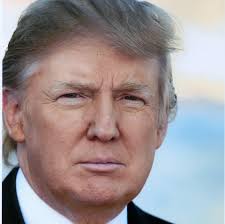
Donald Trump
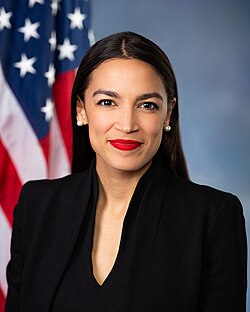
Ocasio-Cortez quickly struck back on Twitter on the same day: “You are angry because you don’t believe in an America where I represent New York 14, where the good people of Minnesota elected , where fights for Michigan families, where champions little girls in Boston.
“You are angry because you can’t conceive of an America that includes us. You rely on a frightened America for your plunder.
“You won’t accept a nation that sees healthcare as a right or education as a #1 priority, especially where we’re the ones fighting for it. Yet here we are.”
Alexandria Ocasio-Cortez
But then followed the most significant part of Cortez’ reply:
“But you know what’s the rub of it all, Mr. President? On top of not accepting an America that elected us, you cannot accept that we don’t fear you, either.
“You can’t accept that we will call your bluff & offer a positive vision for this country. And that’s what makes you seethe.”
For all his adult life, Donald Trump—as a businessman, Presidential candidate and twice-elected President—has trafficked in bribery and coercion. First bribery:
- Florida Attorney General Pam Bondi (now United States Attorney General) personally solicited a political contribution from Donald Trump around the same time her office deliberated joining an investigation of alleged fraud at Trump University and its affiliates.
- After Bondi dropped the Trump University case, he wrote her a $25,000 check for her re-election campaign. The money came from the Donald J. Trump Foundation.
- Republican Texas Attorney General Ken Paxton moved to muzzle a former state regulator who says he was ordered in 2010 to drop a fraud investigation into Trump University for political reasons.
- Paxton’s office issued a cease and desist letter to former Deputy Chief of Consumer Protection John Owens after he made public copies of a 14-page internal summary of the state’s case against Donald Trump for scamming millions from students of his now-defunct real estate seminar.
- After the Texas case was dropped, Trump cut a $35,000 check to the gubernatorial campaign of then-attorney general and now Texas Governor Greg Abbott.
Now coercion:
- Throughout his career as a businessman, Trump forced his employees to sign Non-Disclosure Agreements, threatening them with lawsuits if they revealed secrets of his greed and/or criminality.
- In 2016. USA Today found that Trump was involved in over 3,500 lawsuits during the previous 30 years: “At least 60 lawsuits, along with hundreds of liens, judgments, and other government filings” were from contractors claiming they got stiffed.
- On March 16, 2016, as a Republican Presidential candidate, Trump warned Republicans that if he didn’t win the GOP nomination in July, his supporters would literally riot: “I think you’d have riots. I think you would see problems like you’ve never seen before. I think bad things would happen, I really do. I wouldn’t lead it, but I think bad things would happen.”
- An NBC reporter summed it up as: “The message to Republicans was clear: ‘Nice convention you got there. Shame if something happened to it.'”
- Speaking with Bob Woodward, the legendary Washington Post investigative reporter, Trump confessed: “Real power is—I don’t even want to use the word—fear.”
- During his Presidential campaign he encouraged Right-wing thugs to attack dissenters at his rallies, even claiming he would pay their legal expenses (which he didn’t).
But when he has confronted men and women who can’t be bribed or intimidated, Trump has reacted with rage and desperation.
ABC NEWS, ALTERNET, AMERICABLOG, AP, BABY BOOMER RESISTANCE, BBC, BLOOMBERG, BLOOMBERG NEWS, BUZZFEED, CAROLYN PAWLENTY, CBS NEWS, CNN, CROOKS AND LIARS, DAILY KOS, DAILY KOZ, DEREK CHAUVIN, ERIC NELSON, FIVETHIRTYEIGHT, GEORGE FLOYD, HARPER’S MAGAZINE, HUFFINGTON POST, MEDIA MATTERS, MINNEAPOLIS POLICE DEPARTMENT, MOTHER JONES, MOVEON, MSNBC, NBC NEWS, NEW REPUBLIC, NEWSDAY, NEWSWEEK, NICCOLO MACHIAVELLI, NPR, PBS NEWSHOUR, POLITICO, POLITICUSUSA, RAW STORY, REUTERS, SALON, SEATTLE TIMES, SLATE, TALKING POINTS MEMO, THE ATLANTIC, THE CHICAGO SUN-TIMES, THE CHICAGO TRIBUNE, THE DAILY BEAST, THE DAILY BLOG, THE DISCOURSES (BOOK), THE GUARDIAN, THE HILL, THE HUFFINGTON POST, THE INTERCEPT, THE LOS ANGELES TIMES, THE NATION, THE NEW REPUBLIC, THE NEW YORK TIMES, THE NEW YORKER, THE PRINCE (BOOK), THE VILLAGE VOICE, THE WASHINGTON POST, THINKPROGRESS, TIME, TRUTHDIG, TRUTHOUT, TWITTER, TWO POLITICAL JUNKIES, U.S. NEWS & WORLD REPORT, UPI, USA TODAY, WONKETTE, X
In Bureaucracy, History, Law, Law Enforcement, Politics, Social commentary on August 16, 2024 at 12:08 am
On June 25, 2021, justice finally caught up with Derek Chauvin.
Chauvin was the white Minneapolis police officer who, on May 25, 2020, murdered George Floyd, a black unemployed restaurant security guard.
While Floyd was handcuffed and lying face down on a city street following an arrest, Chauvin kept his knee on the right side of Floyd’s neck for nine and one-half minutes.
A 17-year-old black girl, Darnella Frazier, captured Floyd’s murder on her cellphone. The video was seen by millions on YouTube and network news programs. It played a pivotal role at Chauvin’s trial.

Derek Chauvin
Cities across the United States erupted in mass protests over Floyd’s death—and police killings of black victims generally. Most of these demonstrations proved peaceful. But cities such as Los Angeles, San Francisco and New York City saw stores looted, vandalized and/or burned.
Chauvin was fired the next day from the Minneapolis Police Department and charged with second-degree unintentional murder, third-degree murder and second-degree manslaughter.
Chauvin’s trial began on March 8, 2021, and concluded on April 20 when the jury found him guilty on all three charges.
On June 25—one year and one month to the day after he murdered Floyd—he received his sentence: Twenty-two and one-half years in prison.
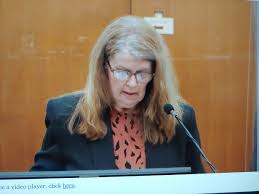
Several of Floyd’s family members spoke at the sentencing, but only one of Chauvin’s did. That was his mother, Carolyn Pawlenty.
Carolyn Pawlenty
Standing before Hennepin County Judge Peter Cahill, Pawlenty said:
“Derek has played over and over in his head the events of that day. I’ve seen the toll it has taken on him. I believe a lengthy sentence will not serve Derek well. Even though I have not spoken publicly, I have always supported him 100 percent and always will.
“Derek always dedicated his life and time to the police department. Even on his days off, he’d call in to see if they needed help.
“Derek is a quiet, thoughtful, honorable and selfless man. He has a big heart and has always put others before his own.
“My son’s identity has also been reduced to that as a racist. I want this court to know that none of these things are true and that my son is a good man.”
She pleaded with Judge Cahill for leniency: “When you sentence him, you will also be sentencing me. I won’t be able to see him or give him our special hug. When he is released, his father and I most likely won’t be here.”
Chauvin was 45. His mother was 73.
One of Floyd’s brothers, Philonise Floyd, said with undeserved generosity: “I understand that because that’s her son. The same way she spoke up for her son, I spoke up for my brother.
“So we all, we all love our loved ones. But the fact that I will never see my brother again is worse because she still will have the opportunity to see her son in the cell anytime she wants to.”
Chauvin’s attorney, Eric Nelson, argued that Chauvin should be sentenced to just probation with no more prison time:
“He was decorated as a police officer—multiple life-saving awards. He was decorated for valor. He was proud to be a police officer because what he liked to do was help people.”
Clearly lost on—or ignored by—Pawlenty and Nelson was this warning from Niccolo Machiavelli, the father of modern political science. He issued this in his masterwork, The Discourses, which offers advice on how to maintain liberty within a republic.
Niccolo Machiavelli
In Chapter 24, he writes: “Well-ordered republics establish punishments and rewards for their citizens, but never set off one against the other.
“The services of Horatius had been of the highest importance to Rome, for by his bravery he had conquered the Curatii. But the crime of killing his sister was atrocious, and the Romans were so outraged by this murder that he was put upon trial for his life, notwithstanding his recent great services to the state.
“It may seem like an instance of popular ingratitude; but a more careful examination, and reflection as to what the laws of a republic ought to be, will show that the people were to blame rather for the acquittal of Horatius than for having him tried.
“…No well-ordered republic should ever cancel the crimes of its citizens by their merits. But having established rewards for good actions and penalties for evil ones, and having rewarded a citizen for conduct who afterwards commits a wrong, he should be chastised for that without regard to his previous merits.
“And a state that properly observes this principle will long enjoy its liberty, but if otherwise, it will speedily come to ruin.
“For if a citizen who has rendered some eminent service to the state should add to the reputation and influence which he has thereby acquired the confident audacity of being able to commit any wrong without fear of punishment, he will in a little while become so insolent and overbearing as to put an end to all power of the law.
“But to preserve a wholesome fear of punishment for evil deeds, it is necessary not to omit rewarding good ones.”


ABC NEWS, ABRAHAM LINCOLN, ADOLF HITLER, ALTERNET, AMERICABLOG, ANDREW JOHNSON, AP, ASSASSINATION, BABY BOOMER RESISTANCE, BUZZFEED, CANADA, CBS NEWS, CNN, CONSPIRACIES, CROOKS AND LIARS, DAILY KOS, DONALD TRUMP, EAST WING OF THE WHITE HOUSE, EMPEROR COMMODUS, FBI, FIVETHIRTYEIGHT, GAIUS CASSIUS, GEORGE ALZERODT, HARPER’S MAGAZINE, immigration, IMMIGRATION AND CUSTOMS ENFORRCEMENT (ICE), JAMES COMEY, JANUARY 6 COUP ATTEMPT, JOHN F. KENNEDY CENTER FOR THE PERFORMING ARTS, JOHN WILKES BOOTH, JOSEPH STALIN, JULIUS CAESAR, JUSTICE DEPARTMENT, LAVRENTI BERIA, LETITIA JAMES, LEWIS POWELL, MARCUS BRUTUS, MARK ANTHONY, MEDIA MATTERS, MEGAN LORRAINE UTZ, MOTHER JONES, MOVEON, MSNBC, NBC NEWS, NEWSWEEK, NICCOLO MACHIAVELLI, NPR, PBS NEWSHOUR, PLOTS, POLITICO, POLITICUSUSA, RAW STORY, REUTERS, SALON, SEATTLE TIMES, Secret Service, SLATE, SOVIET UNION, TALKING POINTS MEMO, THE ATLANTIC, THE CHICAGO SUN-TIMES, THE CHICAGO TRIBUNE, THE DAILY BEAST, THE DAILY BLOG, THE DISCOURSES, THE DISCOURSES (BOOK), THE GUARDIAN, THE HILL, THE HUFFINGTON POST, THE LOS ANGELES TIMES, THE NATION, THE NEW REPUBLIC, THE NEW YORK TIMES, THE PRESS, THE PRINCE (BOOK), THE VILLAGE VOICE, THE WALL STREET JOURNAL, THE WASHINGTON POST, THINKPROGRESS, TIME, TRUTHDIG, TRUTHOUT, TWO POLITICAL JUNKIES, U.S. NEWS & WORLD REPORT, UKRAINE, UPI, USA TODAY, VLADIMIR PUTIN, WHITE HOUSE BALLROOM, WILLIAM H. SEWARD, WONKETTE, X
MACHIAVELLI: A FEW MODEST PROPOSALS FOR CONSPIRATORS–PART FOUR (END)
In Bureaucracy, History, Politics, Social commentary on November 5, 2026 at 12:09 amMore than 500 years ago, Niccolo Machiavelli, the father of modern political science, offered sound advice for would-be conspirators—and for rulers seeking to thwart conspiracies.
He did so in The Discourses on Livy, a work of political history and philosophy. In it, he outlined how citizens of a republic can maintain their freedoms.
One of the longest chapters—Book Three, Chapter Six—covers “Of Conspiracies.” In it, those who wish to conspire against a ruler will find highly useful advice. And so will those who might well become the targets of conspiracies.
For conspirators, there are five ways their efforts can be foiled:
Of these dangers, all but the last one have been examined so far.
Dangers following the execution of the conspiracy.
For Machiavelli, the greatest danger following the successful execution of a conspiracy is:
….the attachment of the people to the prince who has been killed. There is no remedy against this, for the conspirators can never secure themselves against a whole people.
[An example of this occurred in] the case of Julius Caesar, who, being beloved by the people, was avenged by them. For having driven the conspirators from Rome, they were the cause of their being all killed at various times and places.
Machiavelli closes his chapter “Of Conspiracies” with advice to rulers on how they should act when they find a conspiracy has been formed against them.
If they discover that a conspiracy exists against them, they must, before punishing its authors, strive to learn its nature and extent. And they must measure the danger posed by the conspirators against their own strength.
And if they find it powerful and alarming, they must not expose it until they have amassed sufficient force to crush it. Otherwise, they will only speed their own destruction. They should try to pretend ignorance of it. If the conspirators find themselves discovered, they will be forced by necessity to act without consideration.
Niccolo Machiavelli
The foregoing was taken from Book Three, Chapter Six, of Machiavelli’s masterwork, The Discourses on Livy, which was published posthumously in 1531.
But elsewhere in this volume, he notes how important it is for rulers to make themselves loved—or at least respected—by their fellow citizens:
Note how much more praise those Emperors merited who, after Rome became an empire, conformed to her laws like good princes, than those who took the opposite course.
Titus, Nerva, Trajan, Hadrian, Antoninus and Marcus Auelius did not require the Praetorians nor the multitudinous legions to defend them, because they were protected by their own good conduct, the good will of the people, and by the love of the Senate.
On the other hand, neither the Eastern nor the Western armies saved Caligula, Nero, Vitellius and so many other wicked Emperors from the enemies which their bad conduct and evil lives had raised up against them.
In his better-known work, The Prince, Machiavelli warns rulers who—like Donald Trump—are inclined to rule by fear:
A prince should make himself feared in such a way that if he does not gain love, he at any rate avoids hatred: for fear and the absence of hatred may well go together.
Donald Trump
By Machiavelli’s standards, Donald Trump has made himself the perfect target for a conspiracy.
During his first term as President, he viciously attacked many of the institutions Americans have cherished for more than 200 years. And during the first two years of his second term he has accelerated those attacks.
Among his targets:
As Machiavelli warned:
“When a prince becomes universally hated, it is likely that he’s harmed some individuals—who thus seek revenge. This desire is increased by seeing that the prince is widely loathed.”
Share this:
Like this: