Posts Tagged ‘DONALD TRUMP’
ABC NEWS, ALAMO, ALIEN-SMUGGLING RINGS, ALTERNET, ALVARO OBREGON, AMERICABLOG, AMNEXTY INTERNATIONAL, ANCHOR BABIES, ANTONIO LOPEZ DE SANTA ANNA, AP, ARIZONA, BABY BOOMER RESISTANCE, BARACK OBAMA, BARBARA LEE, BBC, BLOOMBERG, BLOOMBERG NEWS, BREXIT, BUREAU OF CUSTOMS AND BORDER PROTECTION, BUZZFEED, CALIFORNIA, CBS NEWS, CHICAGO, CNN, COLORADO, CORRUPTION, CROOKS AND LIARS, CUBA, DAILY KOS, DAVID CROCKETT, DEMOCRATIC PARTY, DEMOCRATS, DONALD TRUMP, DREAM ACT, DRUDGE REPORT, EMILIANO ZAPATA, ENGLISH LANGUAGE, ERIC ADAMS, EUROPEAN UNION (EU), FEDERATION FOR AMERICAN IMMIGRATION REFORM (FAIR), FELIPE CALDERON, FIVETHIRTYEIGHT, FLORIDA, FRANCISCO "PANCHO" VILLA, FRANCISCO MADERO, GOLIAD MASSACRE, GREG ABBOTT, HARPER’S MAGAZINE, HILLARY CLINTON, HISPANICS, HUFFINGTON POST, ILLEGAL ALIENS, illegal immigration, IMMIGRATIONS AND CUSTOMS ENFORCEMENT (ICE), JAMES BOWIE, JEFF SESSIONS, MEDI-CAL INSURANCE PROGRAM, MEDIA MATTERS, MEXICAN REVOLUTION, MEXICAN WAR, MEXICO, MEXICO CITY, MIGRANT CARRAVAN, MOSES AUSTIN, MOTHER JONES, MOVEON, MSNBC, NBC NEWS, NEVADA, NEW MEXICO, NEW REPUBLIC, NEW YORK CITY, NEWSDAY, NEWSWEEK, NEWT GINGRICH, NICARAGUA, NICCOLO MACHIAVELLI, NPR, PANCHO VILLA, PAUL RYAN, PBS NEWSHOUR, POLITICAL CORRECTNESS, POLITICO, POLITICUSUSA, RACIAL PROFILING, RAW STORY, REPUBLICAN PARTY, REPUBLICANS, REUTERS, ROBERT FROST, SALON, SAM HOUSTON, SAN JACINTO, SCHOOLS, SEATTLE TIMES, SLATE, SLAVERY, STEPHEN AUSTIN, TALKING POINTS MEMO, TEXAS, THE ATLANTIC, THE CHICAGO SUN-TIMES, THE CHICAGO TRIBUNE, THE DAILY BEAST, THE DAILY BLOG, THE DAILY MAIL, THE DISCOURSES, THE GUARDIAN, THE HILL, THE HUFFINGTON POST, THE INTERCEPT, THE LOS ANGELES TIMES, THE NATION, THE NEW REPUBLIC, THE NEW YORK TIMES, THE NEW YORKER, THE VILLAGE VOICE, THE WALL STREET JOURNAL, THE WASHINGTON POST, THINKPROGRESS, THOMAS HOMAN, TIJUANA, TIME, TRUTHDIG, TRUTHOUT, TWO POLITICAL JUNKIES, U.S. NEWS & WORLD REPORT, U.S. SUPREME COURT, UNITED KINGDOM (UK), UNITED STATES DEPARTMENT OF JUSTICE, UNITED STATES HEALTH AND HUMAN SERVICES DEPARTMENT, UPI, USA TODAY, UTAH, VENEZUELA, VENUSTIANO CARRANZA, WAL-MART, WASHINGTON D.C., WONKETTE
In Bureaucracy, Business, History, Law, Law Enforcement, Medical, Military, Politics, Social commentary on July 6, 2026 at 12:10 am
In May 20, 2010, Mexico’s then-President Felipe Calderon addressed a joint session of the United States Congress—and attacked a recently-enacted Arizona law that allowed law enforcement officials to detain anyone suspected of being in the country illegally.
According to Calderon, the law “introduces a terrible idea: Using racial profiling as a basis for law enforcement.
“I have said that Mexico does not stop at its border, that wherever there is a Mexican, there is Mexico.”
The hypocrisy of Calderon’s words was staggering. He was condemning the United States for doing what Mexico itself has long done: Strictly enforcing control of its own borders.

Felipe Calderon
World Economic ForumCopyright by World Economic Forum / Photo by Remy Steinegger
Mexico’s immigration laws state: Any foreigner that enters the country to stay less than six months is considered a visitor. To meet immigration requirements, you must:
- Have enough money to pay for your stay in the country;
- Have an invitation from a private or public interest organization.
If you want to stay more than 180 days, you must obtain a temporary residency visa in Mexico. This requires you to:
- Have a family relationship with a Mexican citizen.
- Have a job offer issued by a Mexican employer.
- Have an invitation from a private or public institution.
- Have enough money to pay for your stay in the country.
- Own real estate in Mexico.
- Have investments in Mexico.
After being a temporary resident for four years, you can apply for permanent residency. To obtain this, you must meet these requirements:
- Be a refugee or under the condition of political asylum.
- Have a family relationship with a Mexican citizen.
- To have been a temporary resident for four years.
- Be a pensioner with enough monthly income to pay for your stay in the country.
- Be related in a straight line up to the second degree to a Mexican by birth.
- To have been a temporary resident for two years in the case of a conjugal or concubine relationship with a Mexican citizen or permanent resident.
Eight years after Calderon demanded that Americans repeal their immigration laws, Mexicans suddenly discovered they hated illegal aliens, too.
On October 13, 2018, a caravan of at least 5,000 men, women and children from El Salvador, Guatemala and Honduras set out for the United States.
On October 18, President Donald Trump closed the U.S.-Mexico border to keep the caravan from entering the country.
By November 19, migrants had begun piling up in Tijuana, which borders San Diego.
Suddenly, Tijuana residents began carrying signs reading “No illegals,” “No to the invasion” and “Mexico First.” And marching in the streets wearing Mexico’s red, white and green national soccer jersey and vigorously waving Mexican flags.
“We want the caravan to go; they are invading us,” said Patricia Reyes, a 62-year-old protester. “They should have come into Mexico correctly, legally, but they came in like animals.”
The El Paso Times noted the resentment of many Mexicans toward the increasing numbers of Cuban illegal aliens in Juarez, which lies across from El Paso.
“They don’t get along with Mexican people,” said a burrito seller. “They get in a little group by themselves. A lot of people don’t like them here.”
And a business consultant complained, “There are people who are coming looking for a handout, who want us to help them, when they could also look for work.”
Over the weekend of October 12-13, 2019, a National Guard commander addressed his platoon before confronting the latest caravan: “No one will come to trample our country, our land!”
In the past, Mexicans comprised the largest group of illegal aliens entering the United States. But the Mexican economy has grown and developed to the point where fewer people see the need to emigrate.
Most illegals are now mostly from Guatemala, Honduras, and El Salvador. And there are growing numbers from Haiti, Cuba, various African countries, and even the Middle East.
During the first eight months of 2019, the number of asylum applications submitted to Mexico’s refugee agency (COMAR) more than tripled, compared to the same period in 2018. As a result, the refugee agency removed the how-to-apply video it once hosted on its website.
In the past, the Mexican Government refused to halt illegal immigration to the United States.
It remembered the bloody upheaval known as the Mexican Revolution. This lasted 10 years (1910-1920) and wiped out an estimated one to two million men, women and children.
Massacres were common on all sides, with men shot by the hundreds in bullrings or hung by the dozen on trees.
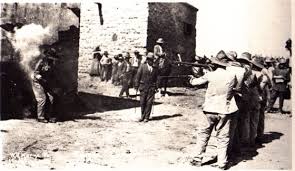
A Mexican Revolution firing squad
All of the major leaders of the Revolution—Francisco Madero, Emiliano Zapata, Venustiano Carranza, Francisco “Pancho” Villa, Alvaro Obregon—died in a hail of bullets.

Francisco “Pancho” Villa
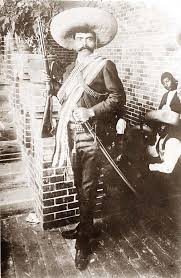
Emiliano Zapata
As a result, every successive Mexican Government lived in the shadow of another such wholesale bloodletting. These officials quietly decided to turn the United States border into a safety valve.
* * * * *
No other nation has ever allowed itself to become a dumping ground for the world’s unwanteds. And no law—religious or secular—obligates the United States to do so.
Space is limited in schools, hospitals and housing, and the more people who cram into limited spaces, the more frictions they inevitably create.
As native-born Mexicans are angrily finding out.
ABC NEWS, ALAMO, ALIEN-SMUGGLING RINGS, ALTERNET, ALVARO OBREGON, AMERICABLOG, AMNEXTY INTERNATIONAL, ANCHOR BABIES, ANTONIO LOPEZ DE SANTA ANNA, AP, ARIZONA, BABY BOOMER RESISTANCE, BARACK OBAMA, BARBARA LEE, BBC, BLOOMBERG, BLOOMBERG NEWS, BREXIT, BUREAU OF CUSTOMS AND BORDER PROTECTION, BUZZFEED, CALIFORNIA, CBS NEWS, CHICAGO, CNN, COLORADO, CORRUPTION, CROOKS AND LIARS, CUBA, DAILY KOS, DAILY KOZ, DAVID CROCKETT, DEMOCRATIC PARTY, DEMOCRATS, DONALD TRUMP, DREAM ACT, DRUDGE REPORT, EMILIANO ZAPATA, ENGLISH LANGUAGE, ERIC ADAMS, EUROPEAN UNION (EU), FEDERATION FOR AMERICAN IMMIGRATION REFORM (FAIR), FELIPE CALDERON, FIVETHIRTYEIGHT, FLORIDA, FRANCISCO "PANCHO" VILLA, FRANCISCO MADERO, GOLIAD MASSACRE, GREG ABBOTT, HARPER’S MAGAZINE, HILLARY CLINTON, HISPANICS, HUFFINGTON POST, ILLEGAL ALIENS, illegal immigration, IMMIGRATIONS AND CUSTOMS ENFORCEMENT (ICE), JAMES BOWIE, JEFF SESSIONS, MEDI-CAL, MEDI-CAL INSURANCE PROGRAM, MEDIA MATTERS, MEXICAN REVOLUTION, MEXICAN WAR, MEXICO, MEXICO CITY, MIGRANT CARRAVAN, MOSES AUSTIN, MOTHER JONES, MOVEON, MSNBC, NBC NEWS, NEVADA, NEW MEXICO, NEW REPUBLIC, NEW YORK CITY, NEWSDAY, NEWSWEEK, NEWT GINGRICH, NICARAGUA, NICCOLO MACHIAVELLI, NPR, PANCHO VILLA, PAUL RYAN, PBS NEWSHOUR, POLITICAL CORRECTNESS, POLITICO, POLITICUSUSA, RACIAL PROFILING, RAW STORY, REPUBLICAN PARTY, REPUBLICANS, REUTERS, ROBERT FROST, SALON, SAM HOUSTON, SAN JACINTO, SCHOOLS, SEATTLE TIMES, SLATE, SLAVERY, STEPHEN AUSTIN, TALKING POINTS MEMO, TEXAS, THE ATLANTIC, THE CHICAGO SUN-TIMES, THE CHICAGO TRIBUNE, THE DAILY BEAST, THE DAILY BLOG, THE DAILY MAIL, THE DISCOURSES, THE GUARDIAN, THE HILL, THE HUFFINGTON POST, THE INTERCEPT, THE LOS ANGELES TIMES, THE NATION, THE NEW REPUBLIC, THE NEW YORK TIMES, THE NEW YORKER, THE VILLAGE VOICE, THE WALL STREET JOURNAL, THE WASHINGTON POST, THINKPROGRESS, THOMAS HOMAN, TIJUANA, TIME, TRUTHDIG, TRUTHOUT, TWO POLITICAL JUNKIES, U.S. NEWS & WORLD REPORT, U.S. SUPREME COURT, UNITED KINGDOM (UK), UNITED STATES DEPARTMENT OF JUSTICE, UNITED STATES HEALTH AND HUMAN SERVICES DEPARTMENT, UPI, USA TODAY, UTAH, VENEZUELA, VENUSTIANO CARRANZA, WAL-MART, WASHINGTON D.C., WONKETTE
In Bureaucracy, Business, History, Law, Law Enforcement, Medical, Military, Politics, Social commentary on July 3, 2026 at 12:06 am
“Good fences make good neighbors.”
Robert Frost penned those famous words in his 1914 poem, “Mending Wall.”
For millions of Americans, illegal immigration was the issue empowering the candidacy of Donald Trump to regain the Presidency in 2024.
For them, Frost’s opening line has become gospel: “Something there is that truly loves a wall.”
A September 16, 2022 article in The Daily Mail headlined:
“America’s $78B Bill for Teaching Schoolkids With Poor English is Rising by BILLIONS in Biden-era Immigration Surge, Study Says, and 76,000 New Language Instructors Are a Tall Order in a Teacher Shortage.”
Among its findings:
- One million public school students—ranging from kindergarten to high school—need special training in speaking and writing English.
- It costs $78 billion each year to educate them.
- Texas, California, Florida and New York are among the states most burdened with such students.
- Only three percent of these students are proficient in English when they graduate from high school.
- These costs are raised by billions owing to an unceasing tide of illegal alien children at the southern border.
These alarming statistics were produced by a study from the Federation for American Immigration Reform (FAIR).
The 5.1 million students lacking English language skills need help in all their classes.
As a result, it costs 15 to 20 percent more to educate them than American-born students who grow up learning English.

Illegal aliens climbing over the border fence
With the United States facing a severe teacher shortage, some states have lowered their hiring rules to recruit teachers with only a high school diploma.
In 2020, the 5.1 million illegal alien students in public schools cost American taxpayers $78 billion—an $18.8 billion jump from the cost in 2016.
Of those students, 1.15 million were in California, costing the state $19.5 billion. One million more lived in Texas, costing that state $11.4 billion. And 278,000 lived in Florida, at a cost of $3.1 billion.
Only 370,000 teachers nationwide are trained to teach them, and 76,000 more will be needed during the next five years.
Immigration remains a highly divisive issue among Americans. “Red” Republican states want to close borders. “Blue” Democratic states are more open to newcomers.
Yet even famously liberal enclaves of support for illegal aliens like New York are beginning to have second thoughts about taking in unlimited numbers of uninvited foreigners.
On October 7, 2022, then-New York City Mayor Eric Adams declared a state of emergency in response to the city’s migrant crisis, which he said would cost the city $1 billion that fiscal year.

Eric Adams
“We now have a situation where more people are arriving in New York City than we can immediately accommodate, including families with babies and young children,” Adams said.
“Once the asylum seekers from today’s buses are provided shelter, we would surpass the highest number of people in recorded history in our city’s shelter system.”
Behind this unwanted influx lies Texas Governor Greg Abbott.
By May 1, 2025, Texas had spent more than $229 million busing illegal aliens found in Texas to famously liberal supporters of illegal immigration: Washington D.C., New York City and Chicago.
Abbott announced the program on April 13, 2024, as his response to the Biden administration’s immigration policies.

Greg Abbott
In October, 2023, New York City had 90,578 people in its shelter system. Thousands of these are American citizens who are homeless. They are competing for assistance with illegal aliens who were bused to New York City from the southern border since April, 2022.
Three Communist-ruled countries—Venezuela, Nicaragua and Cuba—are responsible for this huge surge in illegal aliens and their continuing drain on America’s schools, housing and hospitals (among other facilities).
Rising levels of repression, food shortages and economic stability are motivating Cubans, Venezuelans and Nicaraguans to enter the United States. And assisting them is the longtime policy of the United States government to automatically accept those leaving Communist countries as refugees.
At some point, the United States must face the economic and social absurdity of allowing some cities and states to provide sanctuary to every illegal alien who appears.
Even Eric Adams, emphasizing that New York City remains a sanctuary city, warned it could not cope with such an overwhelming influx of migrants:
“We are not telling anyone that New York can accommodate every migrant in the city. We’re not encouraging people to send eight, nine buses a day….We’re saying that as a sanctuary city with right to shelter, we’re going to fulfill that obligation. That’s what we’re doing.”
Abbott clearly believes he has the right to inflict thousands of illegal aliens on other states. And illegal aliens clearly believe they have the right to demand unlimited access to the United States.
At some point, America must stop allowing itself to be a dumping-ground for other countries’ unwanteds.
* * * * *
An “open door” policy proved essential 250 years ago, when most of America was unsettled and largely unpopulated.
But the United States is no longer a largely unpopulated, agricultural country. Most of its population lives in coastal cities—which is where most illegal aliens tend to settle as well.
Space is limited in schools, hospitals and housing, and the more people who cram into limited spaces, the more frictions they inevitably create.
ADOLF HITLER, ALFRED JODL, ALTERNET, AMERICABLOG, AMNESTY INTERNATIONAL, AP, BABY BOOMER RESISTANCE, BBC, BELARUS, BLOOMBERG, BLUESKY, BOLSHEVIKS, BREST-LITOVSK, BROWN UNIVERSITY, BUZZFEED, CANADA, CBS NEWS, CNN, COLUMBIA UNIVERSITY, CORNELL UNIVERSITY, CROOKS AND LIARS, DAILY KOS, DIVERSITY EQUITY AND INCLUSION (DEI), DONALD TRUMP, ESTONIA, FIVETHIRTYEIGHT, GREENLAND, HARPER’S MAGAZINE, HUFFINGTON POST, IRAN, JD VANCE, JONATHAN TRIGG, JOSEPH STALIN, KAISER WILHELM 11, LATVIA, LEON TROTSKY, LITUANIA, MEDIA MATTERS, MOTHER JONES, MOVEON, MSNBC, NAVAL BLOCKADE, NAZI GERMANY, NBC NEWS, NEWSDAY, NEWSWEEK, NICHOLAS 11, NICHOLAS MADURO, NPR, NUCLEAR WAR, OPERATION BARBAROSSA, PBS NEWSHOUR, POLAND, POLITICO, POLITICUSUSA, RAW STORY, REUTERS, REVOLUTIONARY GUARD, RUSSIA, RUSSIAN REVOLUTION, SALON, SEATTLE TIMES, SLATE, SOVIET UNION, STRAIT OF HORMUZ, TALKING POINTS MEMO, THE ATLANTIC, THE BATTLE OF STALINGRAD THROUGH GERMAN EYES (EYE), THE CHICAGO SUN-TIMES, THE CHICAGO TRIBUNE, THE DAILY BEAST, THE DAILY BLOG, THE GUARDIAN, THE HILL, THE HUFFINGTON POST, THE INTERCEPT, THE LOS ANGELES TIMES, THE NATION, THE NEW REPUBLIC, THE NEW YORK TIMES, THE NEW YORKER, THE VILLAGE VOICE, THE WASHINGTON POST, THINKPROGRESS, TIME, TRUTHDIG, TRUTHOUT, TWO POLITICAL JUNKIES, U.S. NEWS & WORLD REPORT, UKRAINE, UPI, USA TODAY, VENEZUELA, Vladimir Lenin, WORLD WAR 1, WORLD WAR 11, X
In Bureaucracy, History, Military, Politics, Social commentary on July 2, 2026 at 12:05 am
“Neither peace nor war—nor a policy” accurately describes the current state of relations between the United States and Iran.
On February 28, 2026, President Donald Trump—in concert with Israel—launched an unprovoked series of devastating airstrikes against Iran. Suddenly he faced an enemy he could neither bribe nor intimidate.
And, by late May, definite parallels had formed between Adolf Hitler’s disastrous attack on the Soviet Union and Donald Trump’s attack on Iran.
Operation Barbarossa erupted on June 22, 1941, swallowing at least two million dead and wounded Soviet soldiers and another three million POWs (most of whom died in captivity under barbarous conditions).
The Wehrmacht occupied the western half of the Soviet Union. But then the seemingly unstoppable Blitzkrieg ground to a halt—owing to unexpected and increasingly fierce resistance by Russians and the advent of the infamous Russian winter.
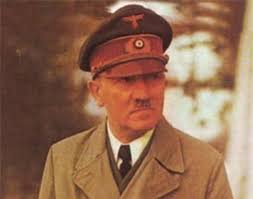
Adolf Hitler
Jonathan Trigg, in his vividly-written nonfiction book, The Battle of Stalingrad Through German Eyes, observes that when Hitler’s prediction of a six-week victory turned sour, he didn’t have a fallback strategy to win the war.
Nor did the General Staff have a solution. Every country they had invaded—Poland, Denmark, Norway, Belgium, France, Greece, Yugoslavia—-had capitulated. Its government had sued for peace or gone into exile. When Great Britain refused to surrender, Hitler had no answer, and he had none for the Soviet Union.
Panzer commander Ewald von Kleist admitted: “There were no plans for a prolonged struggle. Everything was based on the idea of a decisive result before the end of autumn 1941.”

Like Hitler, Trump had believed that:
- He could force Iran’s leaders to submit to his demands: Surrender their uranium stockpiles and promise to never build a nuclear bomb.
- His war would end successfully in four to six weeks at most.
Finally, like Hitler, Trump had no alternative plan for a prolonged struggle.
True, he could turn Iran into a radioactive pile of rubble by using nuclear weapons. Or he could order an all-out invasion of Iran—a country 2.4 to 2.5 times larger than Texas—requiring tens of thousands of troops.
But both options would be hugely unpopular among Americans—especially in an election year when Republicans were threatened with the loss of the House of Representatives and/or the Senate.
As a result, Trump could only threaten or deliver more impotent airstrikes.

Donald Trump
After a two-week ceasefire was announced on April 8, the following diplomatic activities occurred:
- April 11–12: Vice President JD Vance met with Iranian delegates in Islamabad for the highest-level diplomatic engagement between the two nations since 1979. The talks stalled over Iran’s nuclear enrichment capabilities.
- April 13: The United States launched a naval blockade on Iranian ports, suspending oil shipments.
- April 20–21: Trump warned that a lack of an extended deal would result in the resumption of bombing. The deadline was extended indefinitely while waiting for a unified Iranian proposal.
- June 17: Trump and Iranian President Pezeshkian signed a 14-point interim Memo of Understanding (MoU). The agreement established a 60-day negotiation window regarding Iran’s nuclear program and lifted the U.S. port blockade in exchange for the safe passage of commercial vessels.
- June 26: Trump announced that Iran violated the newly signed ceasefire after launching four one-way attack drones at cargo ships in the Strait of Hormuz.
- June 26–27: The U.S. military executed strikes against Iranian sites in response to the drone attacks, placing the future of the diplomatic agreement in jeopardy.
On June 28, Iran’s Islamic Revolutionary Guard Corps (IRGC) said it launched missiles and drones at United States bases in Kuwait and Bahrain.
Following the exchange of fire, the United States and Iran accused each other of violating the ceasefire agreement.
The IRGC said that the Memorandum of Understanding (MoU) signed gave Iran the right to control passage and navigation in the Strait of Hormuz, and from now on, violating ships would be dealt with more forcefully than in the past.

Strait of Hormuz
The Strait of Hormuz had operated freely as an international waterway before the 2026 war. An estimated 110 to 160 commercial and oil vessels had safely transited the 21-mile passageway on an average day.
The Trump administration is demanding that it remain freely open to all ships. Iran, having discovered that controlling the Strait gives it leverage over the world’s oil-based economy, is determined to exact tolls from ships that pass through it.
After the latest American strikes on Iran were announced, Trump wrote on Truth Social: “There may come a point when we are no longer able to be reasonable, and will be forced to militarily complete the job that we very successfully started. If that happens, the Islamic Republic of Iran will no longer exist!”
Given the conditions cited above, that is highly unlikely.
So long as Iran continues to exert its will against the world’s greatest superpower, German Chancellor Friedrich Merz’ unguarded statement will prove highly accurate:
“The Iranians are obviously very skilled at negotiating, or rather, very skillful at not negotiating, letting the Americans travel to Islamabad and then leave again without any result.
“An entire nation is being humiliated by the Iranian leadership, especially by these so-called Revolutionary Guards. And so, I hope that this ends as quickly as possible.”
ADOLF HITLER, ALFRED JODL, ALTERNET, AMERICABLOG, AMNESTY INTERNATIONAL, AP, BABY BOOMER RESISTANCE, BBC, BELARUS, BLOOMBERG, BLUESKY, BOLSHEVIKS, BREST-LITOVSK, BROWN UNIVERSITY, BUZZFEED, CANADA, CBS NEWS, CNN, COLUMBIA UNIVERSITY, CORNELL UNIVERSITY, CROOKS AND LIARS, DAILY KOS, DIVERSITY EQUITY AND INCLUSION (DEI), DONALD TRUMP, ESTONIA, FIVETHIRTYEIGHT, GREENLAND, HARPER’S MAGAZINE, HUFFINGTON POST, IRAN, JD VANCE, JONATHAN TRIGG, JOSEPH STALIN, KAISER WILHELM 11, LATVIA, LEON TROTSKY, LITUANIA, MEDIA MATTERS, MOTHER JONES, MOVEON, MSNBC, NAVAL BLOCKADE, NAZI GERMANY, NBC NEWS, NEWSDAY, NEWSWEEK, NICHOLAS 11, NICHOLAS MADURO, NPR, NUCLEAR WAR, OPERATION BARBAROSSA, PBS NEWSHOUR, POLAND, POLITICO, POLITICUSUSA, RAW STORY, REUTERS, REVOLUTIONARY GUARD, RUSSIA, RUSSIAN REVOLUTION, SALON, SEATTLE TIMES, SLATE, SOVIET UNION, STRAIT OF HORMUZ, TALKING POINTS MEMO, THE ATLANTIC, THE BATTLE OF STALINGRAD THROUGH GERMAN EYES (EYE), THE CHICAGO SUN-TIMES, THE CHICAGO TRIBUNE, THE DAILY BEAST, THE DAILY BLOG, THE GUARDIAN, THE HILL, THE HUFFINGTON POST, THE INTERCEPT, THE LOS ANGELES TIMES, THE NATION, THE NEW REPUBLIC, THE NEW YORK TIMES, THE NEW YORKER, THE VILLAGE VOICE, THE WASHINGTON POST, THINKPROGRESS, TIME, TRUTHDIG, TRUTHOUT, TWO POLITICAL JUNKIES, U.S. NEWS & WORLD REPORT, UKRAINE, UPI, USA TODAY, VENEZUELA, Vladimir Lenin, WORLD WAR 1, WORLD WAR 11, X
In Bureaucracy, History, Military, Politics, Social commentary, Uncategorized on July 1, 2026 at 12:10 am
On August 1, 1914, Germany declared war on Russia. It did so after Russia mobilized its military to protect Serbia after Austria-Hungary declared war on the Serbian nation.
Four years later, Russia was devastated. After suffering massive casualties, its armies were in full retreat. Czar Nicholas II capitulated on March 15, 1917, after bread riots broke out in St. Petersburg, then the nation’s capital.
And the newly-installed Bolshevik government was faring no better in repelling the German invaders. Moreover, Vladimir Lenin, leader of the Bolsheviks, had made pulling Russia out of a disastrous war a major selling point of their propaganda campaign to win support.

Vladimir Lenin
Fortunately for them, the government of Kaiser Wilhelm II was equally anxious to end to its war with Russia. Doing so would allow it to transfer huge numbers of soldiers to the Western Front—hopefully before the United States could intervene on behalf of France and England.
On March 3, 1918, Russia and Germany signed the Treaty of Brest-Litovsk, withdrawing Russia from World War 1.
Under the terms of the treaty, Russia lost control of Ukraine, Poland, Belarus, Lithuania, Latvia, Estonia, and its Caucasian provinces of Kars and Batum. The lands comprised 34% of the former empire’s population, 54% of its industrial land, 89% of its coalfields, and 26% of its railways.
(The treaty was annulled when Germany signed the Armistice of November 11, 1918 when surrendering to the victorious Allies.)
The treaty was a humiliation for the new Soviet government. Leon Trotsky, leading the Russian delegation, at first refused to sign the agreement. But he also offered an end to hostilities, hoping to spark a proletarian revolution in Germany. He referred to this tactic as “neither peace nor war.”
The Germans were having none of it. Neither was Joseph Stalin, then a rising figure in the Communist government. Stalin’s scathing description of Trotsky’s phrase: “Neither peace nor war—nor a policy.”

Joseph Stalin in 1917
“Neither peace nor war—nor a policy” also describes the current state of relations between the United States and Iran.
Resuming the Presidency on January 20, 2025, Donald Trump threatened military invasions of Canada and Greenland and attacked Venezuela to snatch its dictator/president Nicolás Maduro. He ordered military strikes on suspected drug smuggling boats and cartel operations in the Caribbean, the Pacific and Ecuador.
Domestically he attacked such major universities as Columbia, Brown and Cornell for their Diversity, Equity and Inclusion (DEI) polices and/or alleged antisemitism. To restore their frozen federal funding, Columbia agreed to pay $200 million; Brown paid $50 million and Cornell paid $30 million.
But on February 28, 2026, Trump—in concert with Israel—launched an unprovoked series of devastating airstrikes against Iran. Suddenly he faced an enemy he could neither bribe nor intimidate.

Bombing of Tehran
To Trump’s surprise and dismay, Iran closed the Strait of Hormuz—through which about 20%-25% of the world’s total liquid petroleum consumption (about 20–21 million barrels per day) flows.
Overnight, gas prices surged. By late May, the national average for a gallon of regular gas reached $4.56, compared to roughly $2.98 before military operations began.
On March 11, Trump had told a reporter: “You know, you never like to say too early you won. We won. We won the, in the first hour, it was over.”
On April 5—Easter Sunday, no less—Trump posted on his website, Truth Social: “Tuesday will be Power Plant Day, and Bridge Day, all wrapped up in one, in Iran. There will be nothing like it!!! Open up the Fuckin’ Strait, you crazy bastards, or you’ll be living in Hell – JUST WATCH! Praise be to Allah. President DONALD J. TRUMP”
This was followed on April 7 by another post: “A whole civilization will die tonight, never to be brought back again. I don’t want that to happen, but it probably will.”
Donald Trump
But then Trump backed down after experts and international organizations such as Amnesty International warned that attacking civilian infrastructure would constitute war crimes under international law.
On April 8, Trump and Iranian leaders agreed to a two-week ceasefire—less than two hours before Trump’s deadline.
But then Trump ordered the United States Navy to blockade Iran’s ports—even after Iran officially declared the Strait of Hormuz open again.
In response, Iran declared the Strait closed as long as the U.S. blockade of Iranian ports remained in place.
This left Trump with two unpalatable choices: Expand his unpopular war and watch gas prices continue to rise, or remove the naval blockade and appear weak.
By late May, the Strait of Hormuz remained closed and crude oil prices continued to rise throughout the world. And so did the prices of all goods transported to market.
And, by late May, definite parallels had formed between Adolf Hitler’s disastrous attack on the Soviet Union and Donald Trump’s attack on Iran.
Hitler, confident in a swift victory over the Soviet Union in 1941, told his Chief of Staff, General Alfred Jodl, “We have only to kick in the door and the whole rotten structure will come crashing down.”
Adolf Hitler
Operation Barbarossa erupted on June 22, 1941, swallowing at least two million dead and wounded Soviet soldiers and another three million POWs (most of whom died in captivity under barbarous conditions). The Wehrmacht occupied the western half of the Soviet Union.
ABC NEWS, ADOLF HITLER, ALGAE, ALTERNET, AMERICABLOG, AP, ARLINGTON NATIONAL CEMETERY, BABY BOOMER RESISTANCE, BBC, BLOOMBERG, BLUESKY, BUZZFEED, CBS NEWS, CNN, CORRUPTION, CROOKS AND LIARS, DAILY KOS, DEMOCRATIC SOCIALISM, DEMOCRATS, DODGE, DONALD TRUMP, EPSTEIN FILES, FAITH AND FREEDOM COALITION, FBI, FIVETHIRTYEIGHT, FREDERICK WELLMAN, HARPER’S MAGAZINE, HEINRICH HIMMLER, HOUSE OF REPRESENTATIVES, HOUSING BILL, HUFFINGTON POST, IRAN WAR, JEFFREY EPSTEIN, JEWS, LINCOLN MEMORIAL REFLECTING POOL, MEDIA MATTERS, MIKE JOHNSON, MOTHER JONES, MOVEON, MSNBC, NAZI GERMANY, NBC NEWS, NEW YORK CITY, NEWSDAY, NEWSWEEK, NPR, OIL FUTURES, ORGANIZED CRIME, PBS NEWSHOUR, POLITICO, POLITICUSUSA, RAW STORY, REPUBLICANS, REUTERS, ROAD TO MAJORITY CONFERENCE, SALON, SAVE AMERICA ACT, SCHUTZSTAFFEL. SS, SEATTLE TIMES, SLATE, SOCIAL SECURITY, TALKING POINTS MEMO, THE ATLANTIC, THE CHICAGO SUN-TIMES, THE CHICAGO TRIBUNE, THE DAILY BEAST, THE DAILY BLOG, THE GUARDIAN, THE HILL, THE HOLOCAUST, THE HUFFINGTON POST, THE INTERCEPT, THE LOS ANGELES TIMES, THE NATION, THE NEW REPUBLIC, THE NEW YORK TIMES, THE NEW YORKER, THE VILLAGE VOICE, THE WASHINGTON POST, THINKPROGRESS, TIME, TOM NICHOLS, TRIUMPHAL ARCH, TRUTHDIG, TRUTHOUT, TWO POLITICAL JUNKIES, U.S. NEWS & WORLD REPORT, UNITED STATES DEPARTMENT OF JUSTICE, UNITED STATES HOUSE OF REPRESENTATIVES, UPI, USA TODAY, WHITE HOUSE BALLROOM, WITNESS SECURITY PROGRAM, WITNESSES, WONKETTE, X
In Bureaucracy, History, Law, Law Enforcement, Military, Politics, Social commentary on June 30, 2026 at 12:30 am
On October 4, 1943, SS Reichsfuhrer Heinrich Himmler addressed SS officers stationed in Posen, Poland, about the ongoing campaign to exterminate the Jews of Europe.
He gave a similar speech two days later to an audience of Reichsleiters (national leaders) and Gauleiters (governors), as well as other government representatives.
Himmler intended to alert Reich officials of the extermination campaign the Schutzstaffel (“Protective Squads”)—otherwise known as the SS—and Wehrmacht (German army) had been waging since June, 1941.
The purpose: To make his listeners accessories to his monumental crimes—and to warn them there was no turning back.


Heinrich Himmler
Either Nazi Germany won the war that its Fuhrer, Adolf Hitler, had unintentionally unleashed on September 1, 1939—or its topmost officials would themselves face extinction as war criminals.
Said Himmler:
“I want to also mention a very difficult subject before you, with complete candor. It should be discussed amongst us, yet nevertheless, we will never speak about it in public. I am talking about the evacuation of the Jews, the extermination of the Jewish people.
“It is one of those things that is easily said: ‘The Jewish people is being exterminated.’…Most of you will know what it means when 100 bodies lie together, when 500 are there or when there are 1,000. And to have seen this through and—with the exception of human weakness—to have remained decent, has made us hard and is a page of glory never mentioned and never to be mentioned….
“But altogether we can say: We have carried out this most difficult task for the love of our people. And we have suffered no defect within us, in our soul, in our character.”
Fast forward 83 years—to June 26, 2026.
On that day, Mike Johnson (R-LA), Speaker of the House of Representatives, issued a warning about what Republicans stood to lose if Democrats won control of Congress in the upcoming November 3 midterm elections.
He did so at the annual Road to Majority Conference sponsored by the Right-wing Faith and Freedom Coalition:
“If we were to lose the midterms, heaven forbid, these Democrats, y’all, impeachment’s not even the biggest concern. They will turn every committee of Congress into an investigative body, and they’ll go after the president’s family, the Cabinet, his donors and friends—half of you in this room will be targeted.”

Mike Johnson
Johnson expressed worry over recent primary wins by Democratic Socialist candidates in New York City, then warned, “This is a midterm unlike any other. Not only because of the threats that we face that are very real and must be confronted, but it’s because of a lot of reasons on paper why we should win.
“I run the protection program. I’ll take care of you, okay?”
This was clearly a reference to the Justice Department’s Witness Security Program for organized crime informants. But that program requires career criminals to serve justice by helping to convict their former accomplices.
Johnson’s “program”—if there is one—would protect career criminals from investigation and prosecution.
“It’d be nice to have a Speaker who’d say: ‘And let them, we have nothing to hide, and they’ll look like fools for doing it.’ But what he’s saying here is: They’re gonna uncover a lot of stuff, and you don’t want that,” tweeted Atlantic senior staff writer Tom Nichols.
“This is the most corrupt words to come out of a Speaker’s mouth imaginable,” tweeted Frederick Wellman, Democratic congressional candidate for Missouri’s 2nd District. “The job of Congress isn’t to protect the President and his family. It’s to provide checks and balances on the Executive Branch.
“You’re damn right we will investigate crimes and corruption. Who moved $180 million in oil futures 15 minutes before Iran announcements? Who has gotten sole source contracts because of their connections to the Trump family? Where did our social security data go when DOGE downloaded it into portable hard drives?
“Where are the rest of the Epstein files? On and on this Congress has chosen covering up crimes instead of stopping them. That ends in November.”
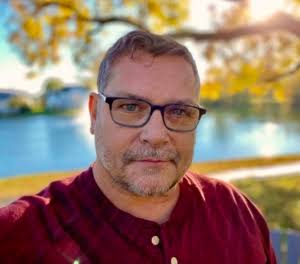
Fred Wellman
A February 27 – March 3 poll by the think tank Data for Progress found that an overwhelming majority of voters want the Justice Department and FBI to hold accountable those named in the Epstein files.
Voters are equally unsupportive of President Donald Trump’s series of planned vanity projects—such as a gigantic, $400 million White House ballroom and pretentious triumphal arch that will obscure views from Arlington National Cemetery.
His effort to “beautify” the Lincoln Memorial Reflecting Pool has turned it into a lake of stinking, unsightly green algae—and ignited national scorn and ridicule.
Meanwhile, Trump has refused to sign a newly-passed bipartisan housing bill until Congress passes the SAVE America Act, a sweeping elections bill that would disenfranchise millions of Democratic voters.
By following the same strategy as Heinrich Himmler, Trump has entangled Republicans in his own crimes.
His infamy is now theirs.
History has brutally condemned those Germans who, knowing the full extent of Adolf Hitler’s crimes, nevertheless signed on to perpetuate and conceal them.
History will render the same damning verdict against House and Senate Republicans who provided similar cover for the crimes of Donald Trump.
ABC NEWS, ALAMO, ALTERNET, AMERICABLOG, ANDREW JACKSON, ANTONIO LOPEZ DE SANTA ANNA, AP, BABY BOOMER RESISTANCE, BBC, BLOOMBERG NEWS, BLUESKY, BUZZFEED, CBS NEWS, CHARLES VII, CNN, CROOKS AND LIARS, DAILY KOS, DEPARTMENT OF HOMELAND SECURITY, DONALD TRUMP, FIVETHIRTYEIGHT, FRANCE, GAVIN NEWSOM, HARPER’S MAGAZINE, HUFFINGTON POST, IMMIGRATION AND CUSTOMS ENFORCEMENT (ICE), JOAN OF ARC, KAREN BASS, LONE STAR: A HISTORY OF TEXAS AND THE TEXANS (BOOK), MEDIA MATTERS, MOTHER JONES, MOVEON, MSNBC, NATIONAL GUARD, NBC NEWS, NEWSDAY, NEWSWEEK, NPR, PBS NEWSHOUR, POLITICO, POLITICUSUSA, RAW STORY, REUTERS, RUSSIA, SALON, SAM HOUSTON, SEATTLE TIMES, SLATE, T.R. FEHRENBACH, TALKING POINTS MEMO, TEXAS, THE ATLANTIC, THE CHICAGO SUN-TIMES, THE CHICAGO TRIBUNE, THE DAILY BEAST, THE DAILY BLOG, THE GUARDIAN, THE HILL, THE HUFFINGTON POST, THE INTERCEPT, THE LOS ANGELES TIMES, THE NATION, THE NEW REPUBLIC, THE NEW YORK TIMES, THE NEW YORKER, THE VILLAGE VOICE, THE WASHINGTON POST, THINKPROGRESS, TIME, TOM HOMAN, TRUTHDIG, TRUTHOUT, TWO POLITICAL JUNKIES, U.S. NEWS & WORLD REPORT, UKRAINE, UPI, USA TODAY, VLADIMIR PUTIN, VOLODYMYR ZELENSKY, WILLIAM BARRET TRAVIS, WONKETTE, X
In Bureaucracy, History, Law, Law Enforcement, Military, Politics, Social commentary on June 25, 2026 at 12:05 am
On June 11, 2025, California Governor Gavin Newsom addressed not only President Donald Trump’s response to civil disorders in Los Angeles, but the threat he posed to California, every other state—and democracy itself.
* * * * *
Donald Trump, without consulting with California’s law enforcement leaders, commandeered 2,000 of our state’s National Guard members to deploy on our streets. Illegally, and for no reason.
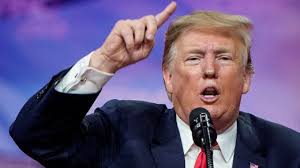
Donald Trump
This brazen abuse of power by a sitting President inflamed a combustible situation … putting our people, our officers, and the National Guard at risk.
That’s when the downward spiral began.
He doubled down on his dangerous National Guard deployment by fanning the flames even harder. And the President did it on purpose.
As the news spread throughout LA, anxiety for family and friends ramped up.
Protests started again. By night, several dozen lawbreakers became violent and destructive. They vandalized property. They tried to assault police officers.
Many of you have seen video clips of cars burning on cable news. If you incite violence or destroy our communities, you are going to be held accountable. That kind of criminal behavior will not be tolerated.

Full stop. Already, more than 370 people have been arrested. And we’re reviewing tapes to build additional cases, and people will be prosecuted to the fullest extent of the law.
Again, thanks to our law enforcement officers and the majority of Angelenos who protested peacefully, this situation was winding down and was concentrated in just a few square blocks downtown.
But that’s not what Donald Trump wanted. He again chose escalation; he chose more force. He chose theatrics over public safety – he federalized another 2,000 Guard members. He deployed more than 700 active U.S. Marines.
These are men and women trained in foreign combat, not domestic law enforcement.
Trump is pulling a military dragnet across LA, well beyond his stated intent to just go after violent and serious criminals. His agents are arresting dishwashers, gardeners, day laborers and seamstresses.

That’s just weakness. Weakness, masquerading as strength.
Donald Trump’s government isn’t protecting our communities – they are traumatizing our communities. And that seems to be the point.
California will keep fighting on behalf of our people – all of our people – including in the courts. Yesterday, we filed a legal challenge to President Trump’s reckless deployment of American troops to a major American city.
Authoritarian regimes begin by targeting people who are least able to defend themselves. But they do not stop there. Trump and his loyalists thrive on division because it allows them to take more power and exert even more control.
By the way, Trump – he’s not opposed to lawlessness and violence, as long as it serves HIM. What more evidence do we need than January 6th?
I ask everyone to take the time to reflect on this perilous moment. A president who wants to be bound by no law or constitution. Perpetrating a unified assault on American traditions.
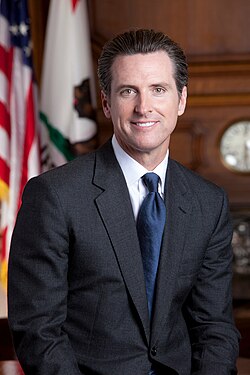
Gavin Newsom
This is a President who, in just over 140 days, has fired government watchdogs that could hold him accountable for corruption and fraud. He’s declared a war on culture, on history, on science – on knowledge itself. Databases, quite literally vanishing.
He’s delegitimizing news organizations and assaulting the First Amendment. At the threat of defunding them, he’s dictating what universities can teach. Targeting law firms and the judicial branch that are the foundation of an orderly, civil society.
Calling for a sitting Governor [Newsom himself] to be arrested for no other reason than – to use his words – “for getting elected.”
Look, this isn’t just about protests in LA. When Donald Trump sought blanket authority to commandeer the National Guard, he made that order apply to every state in this nation. This is about all of us. This is about you.
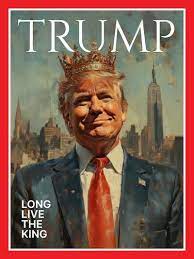
California may be first – but it clearly won’t end here. Other states are next. Democracy is next.
Democracy is under assault right before our eyes – the moment we’ve feared has arrived. He’s taking a wrecking ball to our founding fathers’ historic project: Three independent, coequal branches of government.
There are no longer any checks and balances. Congress is nowhere to be found. [House] Speaker [Mike] Johnson has completely abdicated that responsibility.
The rule of law has increasingly given way to the rule of Don.
The founding fathers did not live and die to see this moment. It’s time for all of us to stand up. [Supreme Court Justice Louis] Brandeis said it best: In a democracy, the most important office is not president, it’s certainly not governor. The most important office is office of citizen.
At this moment, we must all stand up and be held to a higher level of accountability. If you exercise your First Amendment rights, please do so peacefully.
I know many of you are feeling deep anxiety, stress, and fear. But I want you to know that YOU are the antidote to that fear and anxiety.
What Donald Trump wants most is your fealty. Your silence. To be complicit in this moment. Do NOT give in to him.
ABC NEWS, ALAMO, ALTERNET, AMERICABLOG, ANDREW JACKSON, ANTONIO LOPEZ DE SANTA ANNA, AP, BABY BOOMER RESISTANCE, BBC, BLOOMBERG NEWS, BLUESKY, BUZZFEED, CBS NEWS, CHARLES VII, CNN, CROOKS AND LIARS, DAILY KOS, DEPARTMENT OF HOMELAND SECURITY, DONALD TRUMP, FIVETHIRTYEIGHT, FRANCE, GAVIN NEWSOM, HARPER’S MAGAZINE, HUFFINGTON POST, IMMIGRATION AND CUSTOMS ENFORCEMENT (ICE), JOAN OF ARC, KAREN BASS, LONE STAR: A HISTORY OF TEXAS AND THE TEXANS (BOOK), MEDIA MATTERS, MOTHER JONES, MOVEON, MSNBC, NATIONAL GUARD, NBC NEWS, NEWSDAY, NEWSWEEK, NPR, PBS NEWSHOUR, POLITICO, POLITICUSUSA, RAW STORY, REUTERS, RUSSIA, SALON, SAM HOUSTON, SEATTLE TIMES, SLATE, T.R. FEHRENBACH, TALKING POINTS MEMO, TEXAS, THE ATLANTIC, THE CHICAGO SUN-TIMES, THE CHICAGO TRIBUNE, THE DAILY BEAST, THE DAILY BLOG, THE GUARDIAN, THE HILL, THE HUFFINGTON POST, THE INTERCEPT, THE LOS ANGELES TIMES, THE NATION, THE NEW REPUBLIC, THE NEW YORK TIMES, THE NEW YORKER, THE VILLAGE VOICE, THE WASHINGTON POST, THINKPROGRESS, TIME, TOM HOMAN, TRUTHDIG, TRUTHOUT, TWO POLITICAL JUNKIES, U.S. NEWS & WORLD REPORT, UKRAINE, UPI, USA TODAY, VLADIMIR PUTIN, VOLODYMYR ZELENSKY, WILLIAM BARRET TRAVIS, WONKETTE, X
In Bureaucracy, History, Law, Law Enforcement, Military, Politics, Social commentary on June 24, 2026 at 12:10 am
History is filled with examples of men—and women—who in moments of crisis rose to challenge a deadly enemy. One of these is California Governor Gavin C. Newsom.
On June 6, 2025, protests erupted in Los Angeles against Immigration and Customs Enforcement (ICE). The demonstrations were triggered by ICE raids at multiple locations in the city to arrest suspected illegal aliens.
On the evening of June 7, 2025, President Donald Trump signed a memorandum deploying 2,000 members of the California National Guard to the protests for either 60 days or for a length of time “at the discretion of the secretary of defense.”
He did so without the request—or consent—of Governor Newsom.
If a Democratic President did so in a Republican state, Congressional Republicans would scream “STATES’ RIGHTS!” and accuse the President of being a dictator. But since Trump is a Republican, Congressional Republicans enthusiastically supported his action.

National Guard troops in L.A.
In a tweet, Secretary of Defense Pete Hegseth said that active duty Marines were on “high alert” at Camp Pendleton.
And Trump later threatened to “have troops everywhere” if the protests spread to other cities. “If we see danger to our country and our citizens,” the Marines would be deployed to Los Angeles.
Newsom retorted that the National Guard—and especially the Marines—weren’t needed. The LAPD and Los Angeles County Sheriff’s Department were fully capable of protecting Federal property and dispersing the protesters.
He called on Trump to return control of the Guard to California—and withdraw the Marines, who are trained for combat, not handling civil unrest.
Thomas Homan, White House Executive Associate Director of Enforcement and Removal Operations, told NBC News that Newsom and Los Angeles Mayor Karen Bass could potentially face federal charges over their response to the ICE raids.
Homan had previously threatened arrest for anyone who obstructed immigration enforcement. When asked whether that would include Newsom or Bass, Homan did not rule it out.
“I’ll say it about anybody,” Homan said. “You cross that line, it’s a felony to knowingly harbor and conceal an illegal alien. It’s a felony to impede law enforcement doing their job.”

Tom Homan
Newsom quickly responded to Homan: “Trump’s border czar is threatening to arrest me for speaking out. Come and get me, tough guy.
“What the hell are they doing? These guys need to grow up, they need to stop and we need to push back and I’m sorry to be so clear but that kind of bloviating is exhausting. So Tom, arrest me. Let’s go.”
Homan just as quickly backed down: “There’s no intention to arrest the governor right now. I don’t know if he crossed that line.” Homan said he would “leave that up” to the Justice Department.
When asked about the idea of arresting Newsom, Trump said, “I’d do it if I were Tom. Gavin likes the publicity, but I think it would be a great thing.”
On June 11, Newsom addressed not only Trump’s response to civil disorders in Los Angeles, but the threat he posed to California, every other state—and democracy itself.
GOVERNOR GAVIN NEWSOM’S ADDRESS TO CALIFORNIA: DEMOCRACY AT A CROSSROADS ON JUNE 11, 2025
I want to say a few words about the events of the last few days. This past weekend, federal agents conducted large-scale workplace raids in and around Los Angeles. Those raids continue as I speak.
California is no stranger to immigration enforcement. But instead of focusing on undocumented immigrants with serious criminal records and people with final deportation orders – a strategy both parties have long supported – this administration is pushing mass deportations.
Indiscriminately targeting hardworking immigrant families, regardless of their roots or risk.
What’s happening right now is very different than anything we’ve seen before. On Saturday morning, when federal agents jumped out of an unmarked van near a Home Depot parking lot, they began grabbing people.
A deliberate targeting of a heavily Latino suburb.
A similar scene also played out when a clothing company was raided downtown.
In other actions: a US citizen, 9 months pregnant – arrested.
A four-year-old girl – taken.

Families separated. Friends disappearing.
In response, everyday Angelinos came out to exercise their Constitutional right to free speech and assembly. To protest their government’s actions.
In turn, the State of California and the City and County of Los Angeles sent our police officers to help keep the peace, and with some exceptions, they were successful.
Like many states, California is no stranger to this sort of civil unrest. We manage it regularly … and with our own law enforcement.
But this, again, was different.
What then ensued was the use of tear gas. Flash-bang grenades. Rubber bullets. Federal agents, detaining people and undermining their due process rights.
Donald Trump, without consulting with California’s law enforcement leaders, commandeered 2,000 of our state’s National Guard members to deploy on our streets. Illegally, and for no reason.
This brazen abuse of power by a sitting President inflamed a combustible situation … putting our people, our officers, and the National Guard at risk.
That’s when the downward spiral began.
ABC NEWS, ALAMO, ALTERNET, AMERICABLOG, ANDREW JACKSON, ANTONIO LOPEZ DE SANTA ANNA, AP, BABY BOOMER RESISTANCE, BBC, BLOOMBERG NEWS, BLUESKY, BUZZFEED, CBS NEWS, CHARLES VII, CNN, CROOKS AND LIARS, DAILY KOS, DEPARTMENT OF HOMELAND SECURITY, DONALD TRUMP, FIVETHIRTYEIGHT, FRANCE, GAVIN NEWSOM, HARPER’S MAGAZINE, HUFFINGTON POST, IMMIGRATION AND CUSTOMS ENFORCEMENT (ICE), JOAN OF ARC, KAREN BASS, LONE STAR: A HISTORY OF TEXAS AND THE TEXANS (BOOK), MEDIA MATTERS, MOTHER JONES, MOVEON, MSNBC, NATIONAL GUARD, NBC NEWS, NEWSDAY, NEWSWEEK, NPR, PBS NEWSHOUR, POLITICO, POLITICUSUSA, RAW STORY, REUTERS, RUSSIA, SALON, SAM HOUSTON, SEATTLE TIMES, SLATE, T.R. FEHRENBACH, TALKING POINTS MEMO, TEXAS, THE ATLANTIC, THE CHICAGO SUN-TIMES, THE CHICAGO TRIBUNE, THE DAILY BEAST, THE DAILY BLOG, THE GUARDIAN, THE HILL, THE HUFFINGTON POST, THE INTERCEPT, THE LOS ANGELES TIMES, THE NATION, THE NEW REPUBLIC, THE NEW YORK TIMES, THE NEW YORKER, THE VILLAGE VOICE, THE WASHINGTON POST, THINKPROGRESS, TIME, TOM HOMAN, TRUTHDIG, TRUTHOUT, TWO POLITICAL JUNKIES, U.S. NEWS & WORLD REPORT, UKRAINE, UPI, USA TODAY, VLADIMIR PUTIN, VOLODYMYR ZELENSKY, WILLIAM BARRET TRAVIS, WONKETTE, X
In Bureaucracy, History, Law, Law Enforcement, Military, Politics, Social commentary on June 23, 2026 at 12:10 am
History is filled with examples of men—and women—who in moments of crisis rose to challenge a deadly enemy.
Among these have been:
- Joan of Arc
- William Barret Travis
- Volodmyr Zelensky
Volofmyr Zelensky (January 25, 1978 – ) is a former attorney, actor and comedian who, as the sixth president of Ukraine, now leads his country in a life-or-death struggle against the aggressive Russia of Vladimir Putin.
In 2021, his administration came under mounting pressure from Russia. On February 24, 2022, Putin ordered a full-scale invasion of Ukraine.
During the assault by Russian troops on the capital of Kiev, the Biden administration urged Zelensky to evacuate to a safer location and offered to help him do so. Zelensky refused, saying: “The fight is here [in Kiev]; I need ammunition, not a ride.”
As CBS correspondent Scott Pelley put it: “The moment Zelensky told his people he refused to flee, they refused to fall.”
Russia expected Kiev to fall in three days. But more than four years after the invasion, Kiev still remains defiant—and in the hands of Ukrainians.
When Zelensky wasn’t broadcasting defiance at Russia and rousing Ukrainians to heroism, he was often visiting the battlefront. Zelensky sees Ukraine’s struggle as the opening round of Russia’s war against the West:
“Some are….saying, ‘We can’t defend Ukraine because there could be a nuclear war.’ I think that today, no one in this world can predict what Russia will do.
“If they invade further into our territory, then they will definitely move closer and closer to Europe. They will only become stronger and less predictable.”
Millions of Americans—such as those who took part in nationwide “No Kings” protests on June 14, 2025—feel the same way about Donald Trump and his own dictatorial regime.
Which leads to:
Gavin Christopher Newsom (October 10, 1967) has been the 40th governor of California since 2019. During the COVID-19 pandemic in 2020, he imposed strict lockdown measures, thus saving countless lives by preventing a far greater spread of the virus.

Gavin Newsom
In doing so, he aroused the wrath of then-President Donald J. Trump, who promoted false “cures” such as drinking bleach and shining UV light up people’s rectums. Trump’s goal: “Keep America open” so he could take credit for a robust economy—and win re-election—no matter how many people died.
And Newsom has continued to challenge a re-elected Trump’s lies and illegal actions:
- Trump has targeted the governor on social media, often referring to him as “Newscum.”
- And Newsom has proven he can give as good as he gets: He has highlighted U.S. Bureau of Labor Statistics data demonstrating that California created more jobs than any other state between the first quarters of 2025 and 2026.
- He has openly criticized Trump for policies that cut good-paying clean energy jobs and weaken environmental safeguards.
- The two routinely trade personal barbs on X over state issues like wildfire management, homelessness and California’s high-speed rail project.
- In January 2026, Trump gave a speech at the World Economic Forum in Switzerland. Afterward, Newsom publicly mocked it as “boring” and “boorish.”
- Newsom’s team accused the White House of blocking him from accessing the “USA House” headquarters at the summit.
On June 15, 2026, Newsom accused Trump of launching a politically motivated investigation into him and his wife: “They have not found a crime—they are simply trying to find one.
“He’s coming after me because I’m considering running for president, because he hates that I’ve consistently called him out over and over again for his lies and deceit.”
He added that federal agents had in recent days knocked on the doors of his friends and former employees, asking for records.
The Justice Department declined to comment.
On June 6, 2025, protests erupted in Los Angeles against Immigration and Customs Enforcement (ICE). The demonstrations were triggered by ICE raids at multiple locations in the city to arrest suspected illegal aliens.
The first raid occurred within the Los Angeles Fashion District; two other raids occurred at a clothing wholesaler and a Home Depot in upscale Westlake.
Word of these arrests quickly spread, and so did demonstrations, with the Department of Homeland Security (DHS) stating that 44 people were arrested for suspected immigration violations and one person was arrested for obstruction.
David Huerta, the California president of the Service Employees International Union, was arrested for blocking a vehicle and charged with felony conspiracy to impede an officer.
The epicenter of the protests became the Los Angeles Metropolitan Detention Center at 535 N Alameda Street. About 200 protesters remained at the facility by 7 p.m., when the Los Angeles Police Department (LAPD) declared the protest to be an unlawful assembly and ordered protesters to disperse

Some protesters hurled chunks of broken concrete toward officers; the LAPD responded with tear gas, pepper spray and flash-bang grenades to disperse the crowd. At 8:24 p.m. a citywide tactical alert was announced.
On June 7, the protests continued. About 1,000 people surrounded a local branch building used by Homeland Security.
Newsom deployed California Highway Patrol units to protect Los Angeles freeways.
By June 7, 118 illegal aliens had been arrested in Los Angeles, according to the DHS.
ABC NEWS, ALAMO, ALTERNET, AMERICABLOG, ANDREW JACKSON, ANTONIO LOPEZ DE SANTA ANNA, AP, BABY BOOMER RESISTANCE, BBC, BLOOMBERG NEWS, BLUESKY, BUZZFEED, CBS NEWS, CHARLES VII, CNN, CROOKS AND LIARS, DAILY KOS, DEPARTMENT OF HOMELAND SECURITY, DONALD TRUMP, FIVETHIRTYEIGHT, FRANCE, GAVIN NEWSOM, HARPER’S MAGAZINE, HUFFINGTON POST, IMMIGRATION AND CUSTOMS ENFORCEMENT (ICE), JOAN OF ARC, KAREN BASS, LONE STAR: A HISTORY OF TEXAS AND THE TEXANS (BOOK), MEDIA MATTERS, MOTHER JONES, MOVEON, MSNBC, NATIONAL GUARD, NBC NEWS, NEWSDAY, NEWSWEEK, NPR, PBS NEWSHOUR, POLITICO, POLITICUSUSA, RAW STORY, REUTERS, RUSSIA, SALON, SAM HOUSTON, SEATTLE TIMES, SLATE, T.R. FEHRENBACH, TALKING POINTS MEMO, TEXAS, THE ATLANTIC, THE CHICAGO SUN-TIMES, THE CHICAGO TRIBUNE, THE DAILY BEAST, THE DAILY BLOG, THE GUARDIAN, THE HILL, THE HUFFINGTON POST, THE INTERCEPT, THE LOS ANGELES TIMES, THE NATION, THE NEW REPUBLIC, THE NEW YORK TIMES, THE NEW YORKER, THE VILLAGE VOICE, THE WASHINGTON POST, THINKPROGRESS, TIME, TOM HOMAN, TRUTHDIG, TRUTHOUT, TWO POLITICAL JUNKIES, U.S. NEWS & WORLD REPORT, UKRAINE, UPI, USA TODAY, VLADIMIR PUTIN, VOLODYMYR ZELENSKY, WILLIAM BARRET TRAVIS, WONKETTE, X
In Bureaucracy, History, Law, Law Enforcement, Military, Politics, Social commentary on June 22, 2026 at 12:10 am
On November 30, 1954—the 80th birthday of former British Prime Minister Winston Churchill—he gave an uncharacteristically modest assessment of his World War II legacy:
“It was the nation and the race dwelling all around the globe that had the lion’s heart. I had the luck to be called upon to give the roar.”
But author William Manchester was having nothing of it. In his monumental trilogy, The Last Lion, he wrote:
“It wasn’t that simple. The spirit, if indeed within them, lay dormant until he became prime minister and they, kindled by his soaring prose, came to see themselves as he saw them and emerged a people transformed, the admiration of free men everywhere.”

Winston Churchill
History is filled with examples of men—and women—who in moments of crisis rose to challenge a deadly enemy.
Among these have been:
- Joan of Arc
- William Barret Travis
- Volodmyr Zelensky
Joan of Arc (c. 1412 – 30 May 1431) was an illiterate peasant girl who, in France’s darkest hour, became its greatest hero. After she arranged an interview with King Charles V11, he sent her with a relief army to lift the siege of Orléans.

Joan of Arc
She had never wielded a lance or sword, or even ridden a war horse. She had never studied military strategy nor even seen a battlefield. Yet nine days after arriving with an army at Orléans, she lifted the English siege of the city on May 8, 1429.
On May 4, her army attacked the outlying fortress of Saint Loup. She arrived just as the French soldiers were retreating after a failed attempt. Her sudden appearance roused the soldiers to cheer and launch another assault—which overwhelmed the fortress.
In June, Joan decisively defeated the English at the Battle of Patay. She then advanced on Reims, entering the city on July 16. The next day, Charles, the rightful heir to the French throne, was consecrated as the King of France in Reims Cathedral with Joan at his side.
These victories paved the way for the final French victory in the Hundred Years’ War at Castillon in 1453.
On May 23, 1430, while relieving the siege of Compiegne, she was captured by Burgundians troops and exchanged to the English. Tried for heresy, she was declared guilty and burned at the stake on May 30,1431.
Only 19 when she died, she had, through her inspired leadership, restored the kingdom of France.
William Barret Travis (August 1, 1809 – March 6, 1836) was a South Carolina lawyer whose courage and eloquence inspired 200 Texans at the Alamo to hold back an army of 2,000 Mexican soldiers.

William Barret Travis
Few of the defenders had known each other before finding themselves besieged. None of them had had professional military training. Some had served in local militias or as irregulars fighting Indians under the command of frontier officers such as Andrew Jackson. Since the vast majority of the garrison were volunteers, they could have deserted the fortress at any time.
Holding them in place was Travis. Gifted with an eloquence beyond his 26 years, he gave purpose to their stand. As historian T.R. Fehrenbach writes in his monumental book, Lone Star: A History of Texas and the Texans:
“From the Alamo, from his first message before the arrival of the Mexicans to his last, his words had the ring of prophecy. The Texas historian who stated publicly that few people would want to have a son serve under William Barret Travis had forgotten, in the comforts of long security, the reasons why men make war.”
When the final assault came before dawn on March 6, 1836, the roughly 200 defenders killed and wounded about 600 of their enemies—inflicting a casualty rate of 33% on the Mexican army.
Travis’ body was found near his cannon on the north wall. He had been shot through the forehead.
The garrison’s sacrifice inspired Sam Houston’s ragtag army to fall on the Mexican army at San Jacinto on April 21. Slaughtering about 800 soldiers, the Texans captured Mexican dictator Antonio Lopez de Santa Anna—and forced him to surrender control of Texas in return for his life.
Volofmyr Zelensky (January 25, 1978 – ) is a former attorney, actor and comedian who, as the sixth president of Ukraine, now leads his country in a life-or-death struggle against the aggressive Russia of Vladimir Putin.
After earning a law degree from Kiev National Economic University, he pursued a career in comedy. He created his own production company, Kvartal 95, which produced films, cartoons, and TV shows. His comedy, Servant of the People, starred Zelensky as the president of Ukraine.

Volodymyr Zelensky
In 2019, he announced his candidacy for president of Ukraine. He opposed the corruption that had been rife under the country’s luxury-loving president, Victor Yanukovych.
(In 2014, Ukrainians had rioted in Kiev and evicted Yanukovych. And that didn’t sit well with his “sponsor”—Russian President Vladimir Putin.)
A second feature of Zelensky’s presidential campaign: He promised to resolve the Russia-sponsored separatist movement in Donbas and end Ukraine’s protracted conflict there with Russia.
Zelensky won election by a landslide, with 72% of the vote.
In 2021, his administration came under mounting pressure from Russia. On February 24, 2022, Putin ordered a full-scale invasion of Ukraine.
2016 PRESIDENTIAL ELECT, ABC NEWS, ADOLF HITLER, ALTERNET, AMERICABLOG, ANTONIN SCALIA, AP, BABY BOOMER RESISTANCE, BARACK OBAMA, BBC, BERNIE SANDERS, BLOOMBERG NEWS, BUZZFEED, CBS NEWS, CNN, CROOKS AND LIARS, D-DAY, DAILY KOS, DONALD TRUMP, FACEBOOK, FIVETHIRTYEIGHT, GEORGE S. PATTON, GREAT BRITAIN, HARPER’S MAGAZINE, HEINZ GUDERIAN, HENRY CLAY, HILLARY CLINTON, HUFFINGTON POST, ION, JIMMY CARTER, MEDIA MATTERS, MOTHER JONES, MOVEON, MSNBC, NAZI GERMANY, NBC NEWS, NEW REPUBLIC, NEWSDAY, NEWSWEEK, NICCOLO MACHIAVELLI, NPR, PBS NEWSHOUR, POLITICO, POLITICUSUSA, RAW STORY, REPUBLICANS, REUTERS, SALON, SEATTLE TIMES, SLATE, SOVIET UNION, STALINGRAD, TALKING POINTS MEMO, TERRORISM, THE ATLANTIC, THE CHICAGO SUN-TIMES, THE CHICAGO TRIBUNE, THE DAILY BEAST, THE DAILY BLOG, THE GUARDIAN, THE HILL, THE HUFFINGTON POST, THE INTERCEPT, THE LOS ANGELES TIMES, THE NATION, THE NEW REPUBLIC, THE NEW YORK TIMES, THE NEW YORKER, THE PRINCE, THE VILLAGE VOICE, THE WASHINGTON POST, THINKPROGRESS, TIME, TRUTHDIG, TRUTHOUT, TWO POLITICAL JUNKIES, U.S. NEWS & WORLD REPORT, UPI, USA TODAY, WAFFEN-SS, WORLD WAR 11, X
In Bureaucracy, History, Law, Politics, Social commentary on June 18, 2026 at 12:10 am
Most Americans believe that Nazi Germany was defeated because “we were the Good Guys and they were the Bad Guys.”
Not so.
The United States—and its allies, Great Britain and the Soviet Union—won the war for reasons that had nothing to do with the righteousness of their cause. These included:
- Nazi Germany—–i.e, its Fuehrer, Adolf Hitler—made a series of disastrous decisions. Chief among these: Attacking its ally, the Soviet Union, and declaring war on the United States.
- The greater material resources of the Soviet Union and the United States.
- The Allies waged war as brutally as the Germans.
On this last point:
- From D-Day to the fall of Berlin, captured Waffen-SS soldiers were often shot out of hand.
- When American troops came under fire in the German city of Aachen, Lt. Col. Derrill Daniel brought in a self-propelled 155mm artillery piece and opened up on a theater housing German soldiers. After the city surrendered, a German colonel labeled the use of the 155 “barbarous” and demanded that it be outlawed.
- During the battle of Stalingrad in 1942, Wilhelm Hoffman, a young German soldier and diarist, was appalled that the Russians refused to surrender. He wrote: “You don’t see them at all, they have established themselves in houses and cellars and are firing on all sides, including from our rear—barbarians, they used gangster methods….”

German soldiers in Stalingrad
In short: The Allies won because they dared to meet the brutality of a Heinz Guderian with that of a George S. Patton.
This is a lesson long ignored by the liberals of the Democratic Party. That’s why Republicans now hold both houses of Congress and the Presidency.
An example of this occurred on March 25, 2017: On CBS’ “Sunday Morning,” former President Jimmy Carter said that even if Special Counsel Robert Mueller found evidence that President Donald Trump had broken the law, “my own preference would be that he not be impeached.”
Instead, Carter would want Trump to “be able to serve out his term, because I think he wants to do a good job. And I’m willing to help him, if I can help him, and give him the benefit of the doubt.
“You know, I have confidence in the American system of government. I think ultimately the restraints on a president from the Congress and from the Supreme Court will be adequate to protect our nation, if he serves a full term.”
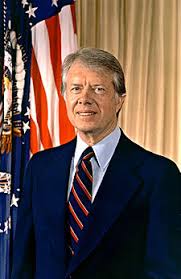
Jimmy Carter
After becoming President on January 20, 2017, Trump:
- Fired FBI Director James Comey for refusing to pledge his personal loyalty—and for investigating documented ties between Russian Intelligence agents and the 2016 Trump Presidential campaign.
- Threatened to fire Special Counsel Robert Mueller, who was assigned to take over that investigation after the Comey firing.
- Repeatedly attacked the nation’s press as “fake news” and “the enemy of the American people.”
- Contemptuously dismissed the warnings of American Intelligence agencies that Russia tried to subvert the 2016 Presidential campaign—and planned to do the same for the mid-term elections in November, 2018.
Trump, in short, was not going to be “helped” by the humility of a Jimmy Carter.

Donald Trump
Former President Barack Obama believes in rationality and decency. He felt more comfortable responding to attacks on his character than attacking the character of his enemies.
As a graduate of Columbia University and Harvard Law School, Obama was one of the most academically gifted Presidents in American history.
Yet he failed—like Carter—to grasp and apply a fundamental lesson taught by Niccolo Machiavelli, the father of modern political science.
In The Prince, Machiavelli warns:
From this arises the question whether it is better to be loved than feared, or feared more than loved.
The reply is, that one ought to be both feared and loved, but as it is difficult for the two to go together, it is much safer to be feared than loved….
And men have less scruple in offending one who makes himself loved than one who makes himself feared; for love is held by a chain of obligations which, men being selfish, is broken whenever it serves their purpose; but fear is maintained by a dread of punishment which never fails.

Niccolo Machiavelli
Obama’s failure to recognize the truth of Machiavelli’s lesson allowed Republicans to thwart many of his Presidential ambitions—such as picking a replacement for deceased Supreme Court Justice Antonin Scalia.
Throughout 2016, liberals celebrated on Facebook and Twitter the “certain” Presidency of Vermont U.S. Senator Bernie Sanders or former First Lady Hillary Clinton.
They fully expected to win the White House again, and even retake the Senate and House of Representatives.
But Donald Trump had a different plan—to subvert the 2016 election by Russian Intelligence agents and millions of Russian trolls flooding the Internet with legitimately fake news.
Former Kentucky U.S. Senator Henry Clay famously said: “I’d rather be right than be President.” Trump’s attitude can be summed up as: “I’m always right, so I want to be President.”
For Democrats to win elective victories and enact their agenda, they must find their own George Pattons to take on the Waffen-SS generals among Republican ranks.

 Bureaucracybuster's Blog
ABC NEWS, ALAMO, ALIEN-SMUGGLING RINGS, ALTERNET, ALVARO OBREGON, AMERICABLOG, AMNEXTY INTERNATIONAL, ANCHOR BABIES, ANTONIO LOPEZ DE SANTA ANNA, AP, ARIZONA, BABY BOOMER RESISTANCE, BARACK OBAMA, BARBARA LEE, BBC, BLOOMBERG, BLOOMBERG NEWS, BREXIT, BUREAU OF CUSTOMS AND BORDER PROTECTION, BUZZFEED, CALIFORNIA, CBS NEWS, CHICAGO, CNN, COLORADO, CORRUPTION, CROOKS AND LIARS, CUBA, DAILY KOS, DAVID CROCKETT, DEMOCRATIC PARTY, DEMOCRATS, DONALD TRUMP, DREAM ACT, DRUDGE REPORT, EMILIANO ZAPATA, ENGLISH LANGUAGE, ERIC ADAMS, EUROPEAN UNION (EU), FEDERATION FOR AMERICAN IMMIGRATION REFORM (FAIR), FELIPE CALDERON, FIVETHIRTYEIGHT, FLORIDA, FRANCISCO "PANCHO" VILLA, FRANCISCO MADERO, GOLIAD MASSACRE, GREG ABBOTT, HARPER’S MAGAZINE, HILLARY CLINTON, HISPANICS, HUFFINGTON POST, ILLEGAL ALIENS, illegal immigration, IMMIGRATIONS AND CUSTOMS ENFORCEMENT (ICE), JAMES BOWIE, JEFF SESSIONS, MEDI-CAL INSURANCE PROGRAM, MEDIA MATTERS, MEXICAN REVOLUTION, MEXICAN WAR, MEXICO, MEXICO CITY, MIGRANT CARRAVAN, MOSES AUSTIN, MOTHER JONES, MOVEON, MSNBC, NBC NEWS, NEVADA, NEW MEXICO, NEW REPUBLIC, NEW YORK CITY, NEWSDAY, NEWSWEEK, NEWT GINGRICH, NICARAGUA, NICCOLO MACHIAVELLI, NPR, PANCHO VILLA, PAUL RYAN, PBS NEWSHOUR, POLITICAL CORRECTNESS, POLITICO, POLITICUSUSA, RACIAL PROFILING, RAW STORY, REPUBLICAN PARTY, REPUBLICANS, REUTERS, ROBERT FROST, SALON, SAM HOUSTON, SAN JACINTO, SCHOOLS, SEATTLE TIMES, SLATE, SLAVERY, STEPHEN AUSTIN, TALKING POINTS MEMO, TEXAS, THE ATLANTIC, THE CHICAGO SUN-TIMES, THE CHICAGO TRIBUNE, THE DAILY BEAST, THE DAILY BLOG, THE DAILY MAIL, THE DISCOURSES, THE GUARDIAN, THE HILL, THE HUFFINGTON POST, THE INTERCEPT, THE LOS ANGELES TIMES, THE NATION, THE NEW REPUBLIC, THE NEW YORK TIMES, THE NEW YORKER, THE VILLAGE VOICE, THE WALL STREET JOURNAL, THE WASHINGTON POST, THINKPROGRESS, THOMAS HOMAN, TIJUANA, TIME, TRUTHDIG, TRUTHOUT, TWO POLITICAL JUNKIES, U.S. NEWS & WORLD REPORT, U.S. SUPREME COURT, UNITED KINGDOM (UK), UNITED STATES DEPARTMENT OF JUSTICE, UNITED STATES HEALTH AND HUMAN SERVICES DEPARTMENT, UPI, USA TODAY, UTAH, VENEZUELA, VENUSTIANO CARRANZA, WAL-MART, WASHINGTON D.C., WONKETTE
ILLEGAL ALIENS–THE WORLD’S UNWANTEDS: PART TWO (OF FIVE)
In Bureaucracy, Business, History, Law, Law Enforcement, Medical, Military, Politics, Social commentary on July 6, 2026 at 12:10 amIn May 20, 2010, Mexico’s then-President Felipe Calderon addressed a joint session of the United States Congress—and attacked a recently-enacted Arizona law that allowed law enforcement officials to detain anyone suspected of being in the country illegally.
According to Calderon, the law “introduces a terrible idea: Using racial profiling as a basis for law enforcement.
“I have said that Mexico does not stop at its border, that wherever there is a Mexican, there is Mexico.”
The hypocrisy of Calderon’s words was staggering. He was condemning the United States for doing what Mexico itself has long done: Strictly enforcing control of its own borders.
Felipe Calderon
World Economic ForumCopyright by World Economic Forum / Photo by Remy Steinegger
Mexico’s immigration laws state: Any foreigner that enters the country to stay less than six months is considered a visitor. To meet immigration requirements, you must:
If you want to stay more than 180 days, you must obtain a temporary residency visa in Mexico. This requires you to:
After being a temporary resident for four years, you can apply for permanent residency. To obtain this, you must meet these requirements:
Eight years after Calderon demanded that Americans repeal their immigration laws, Mexicans suddenly discovered they hated illegal aliens, too.
On October 13, 2018, a caravan of at least 5,000 men, women and children from El Salvador, Guatemala and Honduras set out for the United States.
On October 18, President Donald Trump closed the U.S.-Mexico border to keep the caravan from entering the country.
By November 19, migrants had begun piling up in Tijuana, which borders San Diego.
Suddenly, Tijuana residents began carrying signs reading “No illegals,” “No to the invasion” and “Mexico First.” And marching in the streets wearing Mexico’s red, white and green national soccer jersey and vigorously waving Mexican flags.
“We want the caravan to go; they are invading us,” said Patricia Reyes, a 62-year-old protester. “They should have come into Mexico correctly, legally, but they came in like animals.”
The El Paso Times noted the resentment of many Mexicans toward the increasing numbers of Cuban illegal aliens in Juarez, which lies across from El Paso.
“They don’t get along with Mexican people,” said a burrito seller. “They get in a little group by themselves. A lot of people don’t like them here.”
And a business consultant complained, “There are people who are coming looking for a handout, who want us to help them, when they could also look for work.”
Over the weekend of October 12-13, 2019, a National Guard commander addressed his platoon before confronting the latest caravan: “No one will come to trample our country, our land!”
In the past, Mexicans comprised the largest group of illegal aliens entering the United States. But the Mexican economy has grown and developed to the point where fewer people see the need to emigrate.
Most illegals are now mostly from Guatemala, Honduras, and El Salvador. And there are growing numbers from Haiti, Cuba, various African countries, and even the Middle East.
During the first eight months of 2019, the number of asylum applications submitted to Mexico’s refugee agency (COMAR) more than tripled, compared to the same period in 2018. As a result, the refugee agency removed the how-to-apply video it once hosted on its website.
In the past, the Mexican Government refused to halt illegal immigration to the United States.
It remembered the bloody upheaval known as the Mexican Revolution. This lasted 10 years (1910-1920) and wiped out an estimated one to two million men, women and children.
Massacres were common on all sides, with men shot by the hundreds in bullrings or hung by the dozen on trees.
A Mexican Revolution firing squad
All of the major leaders of the Revolution—Francisco Madero, Emiliano Zapata, Venustiano Carranza, Francisco “Pancho” Villa, Alvaro Obregon—died in a hail of bullets.
Francisco “Pancho” Villa
Emiliano Zapata
As a result, every successive Mexican Government lived in the shadow of another such wholesale bloodletting. These officials quietly decided to turn the United States border into a safety valve.
* * * * *
No other nation has ever allowed itself to become a dumping ground for the world’s unwanteds. And no law—religious or secular—obligates the United States to do so.
Space is limited in schools, hospitals and housing, and the more people who cram into limited spaces, the more frictions they inevitably create.
As native-born Mexicans are angrily finding out.
Share this: