ADOLF HITLER, ALFRED JODL, ALTERNET, AMERICABLOG, AMNESTY INTERNATIONAL, AP, BABY BOOMER RESISTANCE, BBC, BELARUS, BLOOMBERG, BLUESKY, BOLSHEVIKS, BREST-LITOVSK, BROWN UNIVERSITY, BUZZFEED, CANADA, CBS NEWS, CNN, COLUMBIA UNIVERSITY, CORNELL UNIVERSITY, CROOKS AND LIARS, DAILY KOS, DIVERSITY EQUITY AND INCLUSION (DEI), DONALD TRUMP, ESTONIA, FIVETHIRTYEIGHT, GREENLAND, HARPER’S MAGAZINE, HUFFINGTON POST, IRAN, JD VANCE, JONATHAN TRIGG, JOSEPH STALIN, KAISER WILHELM 11, LATVIA, LEON TROTSKY, LITUANIA, MEDIA MATTERS, MOTHER JONES, MOVEON, MSNBC, NAVAL BLOCKADE, NAZI GERMANY, NBC NEWS, NEWSDAY, NEWSWEEK, NICHOLAS 11, NICHOLAS MADURO, NPR, NUCLEAR WAR, OPERATION BARBAROSSA, PBS NEWSHOUR, POLAND, POLITICO, POLITICUSUSA, RAW STORY, REUTERS, REVOLUTIONARY GUARD, RUSSIA, RUSSIAN REVOLUTION, SALON, SEATTLE TIMES, SLATE, SOVIET UNION, STRAIT OF HORMUZ, TALKING POINTS MEMO, THE ATLANTIC, THE BATTLE OF STALINGRAD THROUGH GERMAN EYES (EYE), THE CHICAGO SUN-TIMES, THE CHICAGO TRIBUNE, THE DAILY BEAST, THE DAILY BLOG, THE GUARDIAN, THE HILL, THE HUFFINGTON POST, THE INTERCEPT, THE LOS ANGELES TIMES, THE NATION, THE NEW REPUBLIC, THE NEW YORK TIMES, THE NEW YORKER, THE VILLAGE VOICE, THE WASHINGTON POST, THINKPROGRESS, TIME, TRUTHDIG, TRUTHOUT, TWO POLITICAL JUNKIES, U.S. NEWS & WORLD REPORT, UKRAINE, UPI, USA TODAY, VENEZUELA, Vladimir Lenin, WORLD WAR 1, WORLD WAR 11, X
NEITHER PEACE NOR WAR–NOR A POLICY: PART TWO (END)
In Bureaucracy, History, Military, Politics, Social commentary on July 2, 2026 at 12:05 am
“Neither peace nor war—nor a policy” accurately describes the current state of relations between the United States and Iran.
On February 28, 2026, President Donald Trump—in concert with Israel—launched an unprovoked series of devastating airstrikes against Iran. Suddenly he faced an enemy he could neither bribe nor intimidate.
And, by late May, definite parallels had formed between Adolf Hitler’s disastrous attack on the Soviet Union and Donald Trump’s attack on Iran.
Operation Barbarossa erupted on June 22, 1941, swallowing at least two million dead and wounded Soviet soldiers and another three million POWs (most of whom died in captivity under barbarous conditions).
The Wehrmacht occupied the western half of the Soviet Union. But then the seemingly unstoppable Blitzkrieg ground to a halt—owing to unexpected and increasingly fierce resistance by Russians and the advent of the infamous Russian winter.
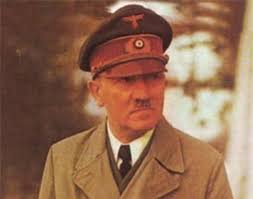
Adolf Hitler
Jonathan Trigg, in his vividly-written nonfiction book, The Battle of Stalingrad Through German Eyes, observes that when Hitler’s prediction of a six-week victory turned sour, he didn’t have a fallback strategy to win the war.
Nor did the General Staff have a solution. Every country they had invaded—Poland, Denmark, Norway, Belgium, France, Greece, Yugoslavia—-had capitulated. Its government had sued for peace or gone into exile. When Great Britain refused to surrender, Hitler had no answer, and he had none for the Soviet Union.
Panzer commander Ewald von Kleist admitted: “There were no plans for a prolonged struggle. Everything was based on the idea of a decisive result before the end of autumn 1941.”

Like Hitler, Trump had believed that:
- He could force Iran’s leaders to submit to his demands: Surrender their uranium stockpiles and promise to never build a nuclear bomb.
- His war would end successfully in four to six weeks at most.
Finally, like Hitler, Trump had no alternative plan for a prolonged struggle.
True, he could turn Iran into a radioactive pile of rubble by using nuclear weapons. Or he could order an all-out invasion of Iran—a country 2.4 to 2.5 times larger than Texas—requiring tens of thousands of troops.
But both options would be hugely unpopular among Americans—especially in an election year when Republicans were threatened with the loss of the House of Representatives and/or the Senate.
As a result, Trump could only threaten or deliver more impotent airstrikes.

Donald Trump
After a two-week ceasefire was announced on April 8, the following diplomatic activities occurred:
- April 11–12: Vice President JD Vance met with Iranian delegates in Islamabad for the highest-level diplomatic engagement between the two nations since 1979. The talks stalled over Iran’s nuclear enrichment capabilities.
- April 13: The United States launched a naval blockade on Iranian ports, suspending oil shipments.
- April 20–21: Trump warned that a lack of an extended deal would result in the resumption of bombing. The deadline was extended indefinitely while waiting for a unified Iranian proposal.
- June 17: Trump and Iranian President Pezeshkian signed a 14-point interim Memo of Understanding (MoU). The agreement established a 60-day negotiation window regarding Iran’s nuclear program and lifted the U.S. port blockade in exchange for the safe passage of commercial vessels.
- June 26: Trump announced that Iran violated the newly signed ceasefire after launching four one-way attack drones at cargo ships in the Strait of Hormuz.
- June 26–27: The U.S. military executed strikes against Iranian sites in response to the drone attacks, placing the future of the diplomatic agreement in jeopardy.
On June 28, Iran’s Islamic Revolutionary Guard Corps (IRGC) said it launched missiles and drones at United States bases in Kuwait and Bahrain.
Following the exchange of fire, the United States and Iran accused each other of violating the ceasefire agreement.
The IRGC said that the Memorandum of Understanding (MoU) signed gave Iran the right to control passage and navigation in the Strait of Hormuz, and from now on, violating ships would be dealt with more forcefully than in the past.

Strait of Hormuz
The Strait of Hormuz had operated freely as an international waterway before the 2026 war. An estimated 110 to 160 commercial and oil vessels had safely transited the 21-mile passageway on an average day.
The Trump administration is demanding that it remain freely open to all ships. Iran, having discovered that controlling the Strait gives it leverage over the world’s oil-based economy, is determined to exact tolls from ships that pass through it.
After the latest American strikes on Iran were announced, Trump wrote on Truth Social: “There may come a point when we are no longer able to be reasonable, and will be forced to militarily complete the job that we very successfully started. If that happens, the Islamic Republic of Iran will no longer exist!”
Given the conditions cited above, that is highly unlikely.
So long as Iran continues to exert its will against the world’s greatest superpower, German Chancellor Friedrich Merz’ unguarded statement will prove highly accurate:
“The Iranians are obviously very skilled at negotiating, or rather, very skillful at not negotiating, letting the Americans travel to Islamabad and then leave again without any result.
“An entire nation is being humiliated by the Iranian leadership, especially by these so-called Revolutionary Guards. And so, I hope that this ends as quickly as possible.”


ADOLF HITLER, ALFRED JODL, ALTERNET, AMERICABLOG, AMNESTY INTERNATIONAL, AP, BABY BOOMER RESISTANCE, BBC, BELARUS, BLOOMBERG, BLUESKY, BOLSHEVIKS, BREST-LITOVSK, BROWN UNIVERSITY, BUZZFEED, CANADA, CBS NEWS, CNN, COLUMBIA UNIVERSITY, CORNELL UNIVERSITY, CROOKS AND LIARS, DAILY KOS, DIVERSITY EQUITY AND INCLUSION (DEI), DONALD TRUMP, ESTONIA, FIVETHIRTYEIGHT, GREENLAND, HARPER’S MAGAZINE, HUFFINGTON POST, IRAN, JD VANCE, JONATHAN TRIGG, JOSEPH STALIN, KAISER WILHELM 11, LATVIA, LEON TROTSKY, LITUANIA, MEDIA MATTERS, MOTHER JONES, MOVEON, MSNBC, NAVAL BLOCKADE, NAZI GERMANY, NBC NEWS, NEWSDAY, NEWSWEEK, NICHOLAS 11, NICHOLAS MADURO, NPR, NUCLEAR WAR, OPERATION BARBAROSSA, PBS NEWSHOUR, POLAND, POLITICO, POLITICUSUSA, RAW STORY, REUTERS, REVOLUTIONARY GUARD, RUSSIA, RUSSIAN REVOLUTION, SALON, SEATTLE TIMES, SLATE, SOVIET UNION, STRAIT OF HORMUZ, TALKING POINTS MEMO, THE ATLANTIC, THE BATTLE OF STALINGRAD THROUGH GERMAN EYES (EYE), THE CHICAGO SUN-TIMES, THE CHICAGO TRIBUNE, THE DAILY BEAST, THE DAILY BLOG, THE GUARDIAN, THE HILL, THE HUFFINGTON POST, THE INTERCEPT, THE LOS ANGELES TIMES, THE NATION, THE NEW REPUBLIC, THE NEW YORK TIMES, THE NEW YORKER, THE VILLAGE VOICE, THE WASHINGTON POST, THINKPROGRESS, TIME, TRUTHDIG, TRUTHOUT, TWO POLITICAL JUNKIES, U.S. NEWS & WORLD REPORT, UKRAINE, UPI, USA TODAY, VENEZUELA, Vladimir Lenin, WORLD WAR 1, WORLD WAR 11, X
NEITHER PEACE NOR WAR–NOR A POLICY: PART TWO (END)
In Bureaucracy, History, Military, Politics, Social commentary on July 2, 2026 at 12:05 am“Neither peace nor war—nor a policy” accurately describes the current state of relations between the United States and Iran.
On February 28, 2026, President Donald Trump—in concert with Israel—launched an unprovoked series of devastating airstrikes against Iran. Suddenly he faced an enemy he could neither bribe nor intimidate.
And, by late May, definite parallels had formed between Adolf Hitler’s disastrous attack on the Soviet Union and Donald Trump’s attack on Iran.
Operation Barbarossa erupted on June 22, 1941, swallowing at least two million dead and wounded Soviet soldiers and another three million POWs (most of whom died in captivity under barbarous conditions).
The Wehrmacht occupied the western half of the Soviet Union. But then the seemingly unstoppable Blitzkrieg ground to a halt—owing to unexpected and increasingly fierce resistance by Russians and the advent of the infamous Russian winter.
Adolf Hitler
Jonathan Trigg, in his vividly-written nonfiction book, The Battle of Stalingrad Through German Eyes, observes that when Hitler’s prediction of a six-week victory turned sour, he didn’t have a fallback strategy to win the war.
Nor did the General Staff have a solution. Every country they had invaded—Poland, Denmark, Norway, Belgium, France, Greece, Yugoslavia—-had capitulated. Its government had sued for peace or gone into exile. When Great Britain refused to surrender, Hitler had no answer, and he had none for the Soviet Union.
Panzer commander Ewald von Kleist admitted: “There were no plans for a prolonged struggle. Everything was based on the idea of a decisive result before the end of autumn 1941.”
Like Hitler, Trump had believed that:
Finally, like Hitler, Trump had no alternative plan for a prolonged struggle.
True, he could turn Iran into a radioactive pile of rubble by using nuclear weapons. Or he could order an all-out invasion of Iran—a country 2.4 to 2.5 times larger than Texas—requiring tens of thousands of troops.
But both options would be hugely unpopular among Americans—especially in an election year when Republicans were threatened with the loss of the House of Representatives and/or the Senate.
As a result, Trump could only threaten or deliver more impotent airstrikes.
Donald Trump
After a two-week ceasefire was announced on April 8, the following diplomatic activities occurred:
On June 28, Iran’s Islamic Revolutionary Guard Corps (IRGC) said it launched missiles and drones at United States bases in Kuwait and Bahrain.
Following the exchange of fire, the United States and Iran accused each other of violating the ceasefire agreement.
The IRGC said that the Memorandum of Understanding (MoU) signed gave Iran the right to control passage and navigation in the Strait of Hormuz, and from now on, violating ships would be dealt with more forcefully than in the past.
Strait of Hormuz
The Strait of Hormuz had operated freely as an international waterway before the 2026 war. An estimated 110 to 160 commercial and oil vessels had safely transited the 21-mile passageway on an average day.
The Trump administration is demanding that it remain freely open to all ships. Iran, having discovered that controlling the Strait gives it leverage over the world’s oil-based economy, is determined to exact tolls from ships that pass through it.
After the latest American strikes on Iran were announced, Trump wrote on Truth Social: “There may come a point when we are no longer able to be reasonable, and will be forced to militarily complete the job that we very successfully started. If that happens, the Islamic Republic of Iran will no longer exist!”
Given the conditions cited above, that is highly unlikely.
So long as Iran continues to exert its will against the world’s greatest superpower, German Chancellor Friedrich Merz’ unguarded statement will prove highly accurate:
“The Iranians are obviously very skilled at negotiating, or rather, very skillful at not negotiating, letting the Americans travel to Islamabad and then leave again without any result.
“An entire nation is being humiliated by the Iranian leadership, especially by these so-called Revolutionary Guards. And so, I hope that this ends as quickly as possible.”
Share this:
Related