Posts Tagged ‘CIA’
2016 PRESIDENTIAL ELECTION, ABC NEWS, AL PACINO, ALTERNET, AMERICABLOG, AP, BABY BOOMER RESISTANCE, BBC, BLOOMBERG NEWS, BUZZFEED, CBS NEWS, CHINA, CIA, CNN, CROOKS AND LIARS, DAILY KOZ, DONALD TRUMP, EMILIO BARZINI, FACEBOOK, FBI, FIVETHIRTYEIGHT, FOX NEWS, FREDO CORLEONE, HARPER’S MAGAZINE, HUFFINGTON POST, HUNTER BIDEN, JAMES CCAN, JOE BIDEN, JOHN CAZALE, KIM JONG-UN, LINDSEY GRAHAM, MAFIA, MARLON BRANDO, MEDIA MATTERS, MICHAEL CORELEONE, MIKE PENCE, MITCH MCCONNELL, MOTHER JONES, MOVEON, MSNBC, NATIONAL SECURITY AGENCY, NATO, NBC NEWS, NEW REPUBLIC, NEWSDAY, NEWSWEEK, NORTH KOREA, NPR, PBS NEWSHOUR, POLITICO, POLITICUSUSA, RAW STORY, REPUBLICANS, REUTERS, RUSSIA, SALON, SEATTLE TIMES, SLATE, SONNY CORLEONE, TALKING POINTS MEMO, THE ATLANTIC, THE CHICAGO SUN-TIMES, THE CHICAGO TRIBUNE, THE DAILY BEAST, THE DAILY BLOG, THE GODFATHER, THE GUARDIAN, THE HILL, THE HUFFINGTON POST, THE INTERCEPT, THE LOS ANGELES TIMES, THE NATION, THE NEW REPUBLIC, THE NEW YORK TIMES, THE NEW YORKER, THE VILLAGE VOICE, THE WASHINGTON POST, THINKPROGRESS, TIME, TRUTHDIG, TRUTHOUT, TWITTER, TWO POLITICAL JUNKIES, U.S. NEWS & WORLD REPORT, UKRAINE, UPI, USA TODAY, VITO CORELEONE, VLADIMIR PUTIN, VOLODYMYR ZELENSKY, WONKETTE, XI JINPING
In Bureaucracy, Business, Entertainment, History, Law Enforcement, Politics, Social commentary on March 23, 2022 at 12:12 am
In 1972, warfare erupted the between the two most powerful Mafia families of New York.
On one side: The Corleone Family, headed by “Don Vito” Corleone. On the other: The Barzini Family, whose boss was Emilio Barzini.
Moviegoers flooded theaters across the nation to make The Godfather the highest-grossing film of 1972—and, for a time, the highest-grossing film ever made.
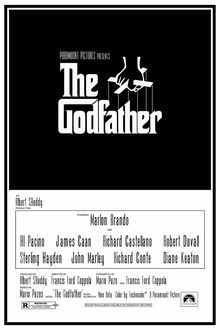
Audiences rooted for the Corleones and thrilled whenever a Barzini “soldier” bit the concrete. And they moaned when Vito Corleone (Marlon Brando) was shot and wounded at an outdoor market and Sonny Corleone (James Caan) got riddled by machine guns on a New Jersey causeway.
Why did so many moviegoers feel compelled to side with the Corleones?
One reason was that, early in the film, Don Corleone rejects an offer by the Barzini Family to enter the narcotics-trafficking business.
When speaking with Virgil Sollotzzo, the Turkish drug kingpin backed by the Barzinis, Corleone says: “It’s true I have a lot of friends who are judges and politicians. And they don’t mind if people want to gamble, or drink, or even pay for a woman. But they wouldn’t be so friendly if they knew my business was drugs.”
In short: He simply didn’t want to go to prison.
The other reason so many viewers identified with the Corleones lay in the brilliant casting of their members.
- Marlon Brando—considered by many the greatest actor of his time—headed the cast.
- Al Pacino, then an unknown, aroused sympathy as Michael, the Family outsider forced by the shooting of his father to become the Boss of All Bosses.
- James Caan (as Sonny) is handsome and the defender of his brutalized sister, Connie, against her abusive husband, Carlo Rizzi.
- John Cazale (as Fredo) is riddled with insecurities and not very bright, won the audiences’ sympathy by his sheer helplessness when compared to his ruthless siblings.
Yet the Corleones—for all their homilies about “honor” and “loyalty”—were every bit as greedy and lethal as their Mafia competitors. They just played the game more ruthlessly—and successfully.
All of which brings us to the current Mafia-like struggle between former President Donald Trump and most of the Republican party.
On February 26, two days after Russian President Vladimir Putin ordered an unprovoked invasion of Ukraine, Trump said: “The problem is not that Putin is smart, which of course he’s smart, but the real problem is that our leaders are dumb.”
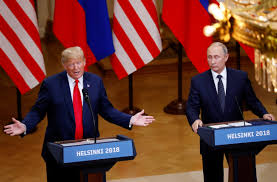
Donald Trump and Vladimir Putin press conference
Trump has often told aides that Putin is “a brilliant strategist, and really tough, and really smart and savvy,” and that President Joe “Biden is not up for it.”
As President, Trump had
- Derided the value of NATO and traditional global security alliances;
- Lavishly praised Communist tyrants such as Putin, China’s Xi Jinping and North Korea’s Kim Jon-Un;
- Threatened to withhold $400 million in aid to Ukraine unless its president, Volodymyr Zelensky, manufactured “dirt” on 2020 Democratic Presidential Candidate Joe Biden and his son, Hunter, who had had business dealings in Ukraine; and
- Publicly took Putin’s word over that of the FBI, CIA and National Security Agency that Russia had intervened in the 2016 Presidential race.
And House and Senate Republicans had repeatedly backed him up—even refusing to impeach him on February 5, 2020, for his attempted extortion of Zelensky.
But now Republicans are singing a different tune.
Former vice president Mike Pence, while refusing to criticize Trump, attacked Putin on Fox News. Through his longtime chief of staff, Marc Short, he said: “No one in the GOP should be praising Vladimir Putin. He’s a former KGB officer and a dictator and a thug. We should be clear about that.”
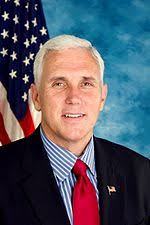
Mike Pence
“Number one, the Republican Party is going to rally around the idea that Putin is a thug and a crook,” Senator Lindsey Graham (R-S.C.) said in an interview. “I have no doubt that the overwhelming majority of Republican senators see what’s happening to Ukraine is detrimental to our national security and well-being.”
“He’s a thug. He’s a killer,” said Senate Minority Leader Mitch McConnell (R-KY). “He’s been on the rampage and this will not end well for him.”
Putin’s invasion of Ukraine has confronted Republicans with a series of unpleasant truths:
- Dictators are enemies of democracy—and cannot be appeased.
- NATO—which Trump dismissed as “obsolete”—is flexing its strength in response to Russia’s aggression.
- Despite the wishes of isolationists, the United States can’t ignore the world’s problems.
With polls showing that Americans overwhelmingly oppose Russia’s brutal invasion of Ukraine, Republicans face a stark choice:
- Side with their continuing leader, Donald Trump, who has sucked up to Communist dictators since 2015, or
- Face the wrath of voters outraged by Russian barbarities against a helpless Ukraine.
Several Republicans—such as Pence—have attacked Putin without mentioning Trump. But Trump’s embrace of Putin has been so fervent for so long that any attack on Putin must be seen as a repudiation of Trump.
Which, in turn, risks Trump’s calling down the wrath of his millions of followers on those who look to him as the Once and Future “President-for-Life.”
When predatory Mafiosi wipe each other out, honest citizens win. When Fascistic Republicans wage war on each other, democracy wins.
2016 PRESIDENTIAL ELECTION, 202O PRESIDENTIAL ELECTION, 6-7, ABC NEWS, ALEXANDER VINDMAN, ALTERNET, AMERICABLOG, AP, BABY BOOMER RESISTANCE, BARACK OBAMA, BBC, BLOOMBERG NEWS, BUZZFEED, CBS NEWS, CIA, CNN, CONSERVATIVE POLITICAL ACTION COMMITTEE (CPAC), CRIMEA, CROOKS AND LIARS, DAILY KOZ, DONALD TRUMP, FACEBOOK, FBI, FIVETHIRTYEIGHT, GEORGE W. BUSH, HARPER’S MAGAZINE, HOUSE INTELLIGENCE COMMITTEE, HUFFINGTON POST, HUNTER BIDEN, IMPEACHMENT, JAMES B. COMEY, JOE SCARBOROUGH, JOSEPH BIDEN, KGB, MEDIA MATTERS, MICK MULVANEY, MIKE POMPEO, MORNING JOE, MOTHER JONES, MOVEON, MSNBC, NATIONAL SECURITY AGENCY, NATIONAL SECURITY COUNCIL, NBC NEWS, NEW REPUBLIC, NEWSDAY, NEWSWEEK, NPR, PBS NEWSHOUR, POLITICO, POLITICUSUSA, RAW STORY, REPUBLICANS, REUTERS, RUSSIA, SALON, SEATTLE TIMES, SERGEY KISLYAK, SERGEY LAVROV, SLATE, TALKING POINTS MEMO, THE ATLANTIC, THE CHICAGO SUN-TIMES, THE CHICAGO TRIBUNE, THE DAILY BEAST, THE DAILY BLOG, THE GUARDIAN, THE HILL, THE HUFFINGTON POST, THE INTERCEPT, THE LOS ANGELES TIMES, THE NATION, THE NEW REPUBLIC, THE NEW YORK TIMES, THE NEW YORKER, THE VILLAGE VOICE, THE WASHINGTON POST, THINKPROGRESS, TIME, TRUTHDIG, TRUTHOUT, TUCKER CARLSON, TWITTER, TWO POLITICAL JUNKIES, U.S. NEWS & WORLD REPORT, UKRAINE, UPI, USA TODAY, VLADIMIR PUTIN, VOLODYMIR ZELENSKY, WONKETTE
In History, Military, Politics, Social commentary on March 4, 2022 at 12:14 am
From June 15, 2015, when he launched his Presidential campaign, until October 24, 2016, Donald Trump fired almost 4,000 angry, insulting tweets at 281 people and institutions that had somehow offended him.
By the end of his Presidency, he had sent out thousands more, and his total of insulted people and institutions had risen to 850.
Yet there is one person Trump has never insulted: Russian President Vladimir Putin.
And not only did Trump not insult him, he repeatedly praised and defended him.
Perhaps his most notorious defense of Putin came on July 16, 2018, at a press conference in Helsinki, Finland, with the Russian president.
There he rejected the findings of American Intelligence agencies—the FBI, CIA and National Security Agency—that Russia had interfered in the 2016 Presidential campaign to elect him: “You have groups that are wondering why the FBI never took the server, why haven’t they taken the server? Why was the FBI told to leave the office of the Democratic National Committee?
“I have President Putin. He just said it’s not Russia. I will say this: I don’t see any reason why it would be.”
Donald Trump, Vladimir Putin in Helsinki
And, in an unprecedented break with every Cold War President, he even supplied Putin with highly classified CIA Intelligence.
On May 10, 2017, Trump met with Russian Foreign Minister Sergey Lavrov and Russian Ambassador Sergey Kislyak in the Oval Office—and gave them highly classified Israeli Intelligence about an Islamic State plot to turn laptops into concealable bombs.
Kislyak is reportedly a top recruiter for Russia’s SVR foreign intelligence agency.
He met with both dignitaries on May 10—the day after fired FBI Director James B. Comey for investigating Russia’s subversion—on Trump’s behalf—of the 2016 Presidential race.
“I just fired the head of the FBI,” Trump told the two visitors. “He was crazy, a real nut job. I faced great pressure because of Russia. That’s taken off.”
On June 9, 2018, Trump called for Russia to be readmitted to the G7.
“I think it would be an asset to have Russia back in,” he said during an impromptu press conference at the summit.
“I think it would be good for the world. I think it would be good for Russia. I think it would be good for the United States. I think it would be good for all of the countries of the current G7. I think the G8 would be better.”
Russia was ousted from the group in 2014 after Putin annexed Crimea—the first violation of a European country’s borders since World War II.
“Today crystallizes precisely why Putin was so eager to see Trump elected,” said former Obama National Security Council spokesman Ned Price.
“For Putin, this is return on his investment, and it’s safe to say that his investment has paid off beyond even his wildest dreams,” he said in a statement to CNN.
Appearing on the December 18, 2015 edition of MSNBC’s “Morning Joe,” Trump had praised Putin as: “He’s running his country, and at least he’s a leader. Unlike what we have in this country.”
When Trump praised Putin as a leader, he no doubt meant to insult then-President Barack Obama.
Ironically, it was not Obama but Obama’s predecessor, George W. Bush, to whom his insult applied.
In June 2001, Bush and Vladimir Putin met in Slovenia. During the meeting a truly startling exchange occurred.
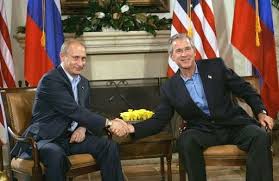
Vladimir Putin and George W. Bush
Putin, a former KGB Intelligence officer, had clearly done his homework on Bush. When he mentioned that one of the sports Bush had played was rugby, Bush was highly impressed.
“I did play rugby,” said Bush. “Very good briefing.”
Bush knew that Putin had worked for Soviet Intelligence. So he should not have been surprised that the KGB had amassed a lengthy dossier on him.
But more was to come.
BUSH: Let me say something about what caught my attention, Mr. President, was that your mother gave you a cross which you had blessed in Israel, the Holy land.
PUTIN: It’s true.
BUSH: That amazes me, that here you were a Communist, KGB operative, and yet you were willing to wear a cross. That speaks volumes to me, Mr. President. May I call you Vladimir?
Putin instantly sensed that Bush judged others—even world leaders—through the lens of his own fundamentalist Christian ideology. Falling back on his KGB training, Putin seized on this apparent point of commonality to build a bond.
He told Bush that his dacha had once burned to the ground, and the only item that had been saved was that cross.
“Well, that’s the story of the cross as far as I’m concerned,” said Bush, clearly impressed. “Things are meant to be.”
Afterward, Bush and Putin gave an outdoor news conference.
“Is this a man that Americans can trust?” Associated Press Correspondent Ron Fourmier asked Bush.
“Yes,” said Bush. “I looked the man in the eye. I found him to be very straightforward and trustworthy. We had a very good dialogue. I was able to get a sense of his soul, a man deeply committed to his country and the best interests of his country. I wouldn’t have invited him to my ranch if I didn’t trust him.”
2016 PRESIDENTIAL ELECTION, 202O PRESIDENTIAL ELECTION, 6-7, ABC NEWS, ALEXANDER VINDMAN, ALTERNET, AMERICABLOG, AP, BABY BOOMER RESISTANCE, BARACK OBAMA, BBC, BLOOMBERG NEWS, BUZZFEED, CBS NEWS, CIA, CNN, CONSERVATIVE POLITICAL ACTION COMMITTEE (CPAC), CRIMEA, CROOKS AND LIARS, DAILY KOZ, DONALD TRUMP, FACEBOOK, FBI, FIVETHIRTYEIGHT, GEORGE W. BUSH, HARPER’S MAGAZINE, HOUSE INTELLIGENCE COMMITTEE, HUFFINGTON POST, HUNTER BIDEN, IMPEACHMENT, JAMES B. COMEY, JOE SCARBOROUGH, JOSEPH BIDEN, KGB, MEDIA MATTERS, MICK MULVANEY, MIKE POMPEO, MORNING JOE, MOTHER JONES, MOVEON, MSNBC, NATIONAL SECURITY AGENCY, NATIONAL SECURITY COUNCIL, NBC NEWS, NEW REPUBLIC, NEWSDAY, NEWSWEEK, NPR, PBS NEWSHOUR, POLITICO, POLITICUSUSA, RAW STORY, REPUBLICANS, REUTERS, RUSSIA, SALON, SEATTLE TIMES, SERGEY KISLYAK, SERGEY LAVROV, SLATE, TALKING POINTS MEMO, THE ATLANTIC, THE CHICAGO SUN-TIMES, THE CHICAGO TRIBUNE, THE DAILY BEAST, THE DAILY BLOG, THE GUARDIAN, THE HILL, THE HUFFINGTON POST, THE INTERCEPT, THE LOS ANGELES TIMES, THE NATION, THE NEW REPUBLIC, THE NEW YORK TIMES, THE NEW YORKER, THE VILLAGE VOICE, THE WASHINGTON POST, THINKPROGRESS, TIME, TRUTHDIG, TRUTHOUT, TUCKER CARLSON, TWITTER, TWO POLITICAL JUNKIES, U.S. NEWS & WORLD REPORT, UKRAINE, UPI, USA TODAY, VLADIMIR PUTIN, VOLODYMIR ZELENSKY, WONKETTE
In Bureaucracy, History, Military, Politics, Social commentary on March 3, 2022 at 12:12 am
On February 24, Russian President Vladimir Putin ordered an all-out assault on Ukraine.
Two days later, former President Donald Trump appeared at the Conservative Political Action Committee (CPAC)—to praise Putin and attack “our leaders.”
Specifically:
“The Ukrainian crisis is an outrage and it should never have been allowed to occur, we are praying for the proud people of Ukraine. God bless them all. The problem is not that Putin is smart, it’s that our leaders are dumb.
“They’re allowing Putin to get away with this assault on humanity. Putin is playing Biden like a drum. The real problem is that our leaders are dumb, dumb. So dumb. You could take the five worst presidents in history, and they wouldn’t have done the damage President Joe Biden has done in such a short time.”
Donald Trump
Historians may well rate Trump among “the five worst presidents in history.” And the damage “he has done in such a short time” began with the love-fest between himself and Putin even before he entered the White House.
The starting date for this: December 17, 2015.
Putin made the first move: “He is a bright and talented person without any doubt. He is the absolute leader of the presidential race.
“He says he will want to reach another, deeper, level of relations (with Russia). What else can we do but to welcome it? Certainly, we welcome it.
“That is none of our business to evaluate his accomplishments, but he remains the absolute front-runner in the presidential race. He is an outstanding and talented personality without any doubts.”
Appearing on the December 18, 2015 edition of MSNBC’s “Morning Joe,” Trump responded in kind: “Sure, when people call you ‘brilliant,’ it’s always good. Especially when the person heads up Russia.
“It is always a great honor to be so nicely complimented by a man so highly respected within his own country and beyond.”
The host, Joe Scarborough, was taken aback: “Well, I mean, [Putin’s] also a person who kills journalists, political opponents, and invades countries. Obviously that would be a concern, would it not?”

Joe Scarborough
NBC News, CC BY-SA 4.0 <https://creativecommons.org/licenses/by-sa/4.0>, via Wikipedia Commons
TRUMP: He’s running his country, and at least he’s a leader. Unlike what we have in this country.
SCARBOROUGH: But again: He kills journalists that don’t agree with him.
TRUMP: I think our country does plenty of killing, also, Joe, so, you know. There’s a lot of stupidity going on in the world right now, Joe. A lot of killing going on. A lot of stupidity. And that’s the way it is.
SCARBOROUGH: I’m confused. So I mean, you obviously condemn Vladimir Putin killing journalists and political opponents, right?
TRUMP: Oh sure, absolutely.
Despite his expressed sympathy for the Ukrainian people, Trump tried to extort a “favor” from Ukrainian President Volodymyr Zelensky in the face of Russian aggression.
In July, 2019, Trump told his acting chief of staff, Mick Mulvaney, to withhold almost $400 million in Congressionally promised military aid for Ukraine.
Then, on July 25, Trump telephoned Zelensky to demand: Investigate presumed 2020 Democratic Presidential Candidate Joe Biden and his son, Hunter, who had had business dealings in Ukraine.
Clearly implied in the call: Produce “dirt” on Biden—or you won’t get the military aid.
Unfortunately for Trump, his call was overheard by Army Lieutenant Colonel Alexander Vindman, who served as the Director for European Affairs for the United States National Security Council.
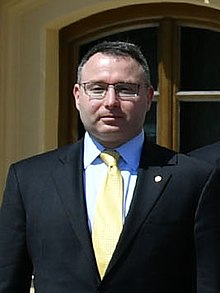
Lt. Colonel Alexander Vindman
“I was concerned by the call,” Vindman testified before the House Intelligence Committee. “I did not think it was proper to demand that a foreign government investigate a U.S. citizen, and I was worried about the implications for the U.S. Government’s support of Ukraine.
“I realized that if Ukraine pursued an investigation into the Bidens and Burisma, it would likely be interpreted as a partisan play which would undoubtedly result in Ukraine losing the bipartisan support it has thus far maintained. This would all undermine U.S. national security.”
Trump denounced Vindman as a “Never Trumper”—as if opposing his extortion attempt constituted a blasphemy. Republicans and their shills on the Fox News Network attacked Vindman as well. As a result, he sought physical protection by the Army for himself and his family.
On February 7, 2020, he was reassigned from the National Security Council at Trump’s order.
When the story broke, Ukraine got the promised military aid—and Trump found himself impeached for abuse of power and obstruction of Congress.
But Senate Republicans, ignoring the overwhelming evidence against him, easily acquitted Trump on February 5, 2020.
Two years after Trump’s acquittal, Vladimir Putin massively attacked Ukraine. For which, says Vindman, the Republican Party has “blood on its hands” for emboldening Russia.
And so, says Vindman, does Trump. His refusal to criticize Putin was a factor that led Putin to attack. So did Trump’s weakening the United States internally with his divisive politics:
“The Tucker Carlsons, the Donald Trumps, the Mike Pompeos, they and other Republicans are going to have to own this issue because they are the reason that Russia launched this operation.
“Putin, like Trump, smells vulnerability and exploits it. Vladimir Putin perceived that the United States was distracted and vulnerable. He’s been testing our resolve. He’s been getting positive signals in that regard.”
2016 PRESIDENTIAL ELECTION, 2020 PRESIDENTIAL ELECTION, 60 MINUTES, ABC NEWS, ALTERNET, AMERICABLOG, AP, BABY BOOMER RESISTANCE, BALLOTS, BBC, BLOOMBERG NEWS, BUZZFEED, CBS NEWS, CHRIS KREBS, CIA, CNN, CRIMINALITY, CROOKS AND LIARS, CYBERSECURITY INFRASTRUCTURE SECURITY AGENCY (CISA), DAILY KOZ, DEPARTMENT OF DEFENSE CYBER COMMAND, DEPARTMENT OF HOMELAND SECURITY (DHS), DONALD TRUMP, DRUDGE REPORT, ELECTION ASSISTANCE COMMISSION, ELECTION SECURITY, ELECTORAL COLLEGE, FACEBOOK, FBI, FIVETHIRTYEIGHT, HACKING, HARPER’S MAGAZINE, HILLARY CLINTON, HUFFINGTON POST, JOE BIDEN, Kamala Harris, MEDIA MATTERS, MICROSOFT, MIKE PENCE, MOTHER JONES, MOVEON, MSNBC, NATIONAL SECURITY AGENCY, NBC NEWS, NEW REPUBLIC, NEWSDAY, NEWSWEEK, NPR, PBS NEWSHOUR, POLITICO, POLITICUSUSA, POPULAR VOTE, PROPAGANDA, RAW STORY, REUTERS, RUSSIA, SALON, SCOTT PELLEY, SEATTLE TIMES, Secret Service, SLATE, TALKING POINTS MEMO, THE ATLANTIC, THE CHICAGO SUN-TIMES, THE CHICAGO TRIBUNE, THE DAILY BEAST, THE DAILY BLOG, THE GUARDIAN, THE HILL, THE HUFFINGTON POST, THE LOS ANGELES TIMES, THE NATION, THE NEW REPUBLIC, THE NEW YORK TIMES, THE NEW YORKER, THE VILLAGE VOICE, THE WASHINGTON POST, THINKPROGRESS, TIME, TIME MAGAZINE, TIME MAGAZINIE’S PERSON OF THE YEAR, TREASON, TRUTHDIG, TRUTHOUT, TWITTER, TWO POLITICAL JUNKIES, U.S. NEWS & WORLD REPORT, UNITED STATES HOUSE OF REPRESENTATIVES, UNITED STATES SENATE, UPI, USA TODAY, VLADIMIR PUTIN, WONKETTE
In Bureaucracy, History, Law, Law Enforcement, Politics, Social commentary on February 18, 2022 at 12:14 am
As a result of the vast increase in election security, President Donald Trump failed to get the help he expected from Russian dictator Vladimir Putin.
The result: He lost the 2020 Presidential election.
Thus, Joe Biden won the popular vote by 81,268,924 to 74,216,154 for Trump—and the Electoral College by 306 to 232.
Two days later, Trump claimed: “And this is a case where they’re trying to steal an election, they’re trying to rig an election.”
Chris Krebs was the director of the Cybersecurity and Infrastructure Security Agency (CISA) run by the Department of Homeland Security (DHS). And the man most responsible for ensuring election security.
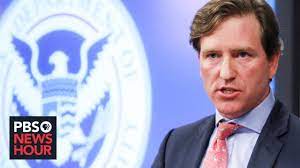
Chris Krebs
On November 12, to counter the growing chorus of lies from Trump and his Right-wing allies, he put out the following statement:
“The November 3rd election was the most secure in American history. There is no evidence that any voting system deleted or lost votes, changed votes, or was in any way compromised.”
On November 17, Trump fired Chris Krebs.
Too cowardly to confront Krebs, Trump fired him by tweet—and accompanied the outrage with yet another lie:
“The recent statement by Chris Krebs on the security of the 2020 election was highly inaccurate, in that there were massive improprieties and fraud, including dead people voting, poll watchers not allowed into polling locations, glitches in the voting machines which changed votes from Trump to Biden, late voting, and many more.
“Therefore, effective immediately, Chris Krebs has been terminated as director of the Cybersecurity and Infrastructure Security Agency.”
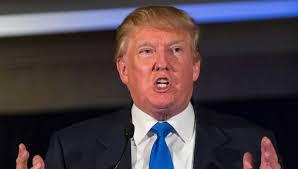
Donald Trump
Asked by “60 Minutes'” Scott Pelley if he was surprised to be fired, Krebs replied: “I don’t know if I was necessarily surprised. It’s not how I wanted to go out. The thing that upsets me the most about that is I didn’t get a chance to say goodbye to my team.
“And I’d worked with them for three and a half years, in the trenches. Building an agency, putting CISA on the national stage. And I love that team. And I didn’t get a chance to say goodbye, so that’s what I’m most upset about.”
Krebs was no dyed-in-the-wool Democrat but a life-long Republican. He gave up a lucrative job as Microsoft’s head of cybersecurity policy to join the Trump administration. He wanted to serve his country by creating a dedicated cybersecurity agency for the first time.
Still, he had his reservations about taking the job. As he told the Financial Times: “The flaws of this man [Trump] were obvious to everybody that was willing to pay attention. [But] to do your job, you have to be able to compartmentalize. I was willing to do that.
“Over time, it eats away at you. It eats away at you, the other parts of the department that were doing stuff that just seemed so inhumane. I was never involved in any of those policy conversations.”
By January 6, 2021, Trump had exhausted his legal efforts to overturn the results of the 2020 election.
From November 3 to December 14, Trump and his allies lost 59 times in court, either withdrawing cases or having them dismissed by Federal and state judges.
Of these attempts to challenge the results of the 2020 election, Krebs told Pelley:
“It was upsetting because what I saw was an apparent attempt to undermine confidence in the election, to confuse people, to scare people. It’s not me, it’s not just CISA. It’s the tens of thousands of election workers out there that had been working nonstop, 18-hour days, for months.
“They’re getting death threats for trying to carry out one of our core democratic institutions, an election. And that was, again, to me, a press conference that I just– it didn’t make sense. What it was actively doing was undermining democracy. And that’s dangerous.”
On January 6, the United States Senate, with Vice President Mike Pence presiding, met to certify states’ Electoral College results of the 2020 election.
That morning, Trump urged Pence to flip the results of the election to give him a win.
Pence replied that he lacked the power to overturn those results.
At noon, Trump appeared at the Ellipse, a 52-acre park south of the White House fence. A stage had been set up for him to address tens of thousands of his supporters, who eagerly awaited him.
Trump ordered them to march on the Capitol building to express their anger at his loss—and thus intimidate Congressional officials to reject the results.
The Stormtrumpers marched to the United States Capitol—and quickly brushed aside Capitol Police, who made little effort to arrest or shoot them.
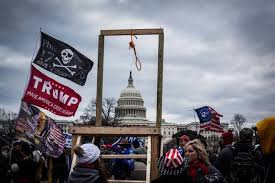
The “Jolly Roger” meets Donald Trump
Three hours passed before the mob was dispersed and order was restored.
Yet for all the terrible drama of that day, the true hero of the moment went unrecognized.
By depriving Trump of Russian help, Chris Krebs had ensured a victory for democracy.
On the evening of January 6, the House and Senate met again to count the Electoral Votes.
And as expected, the two bodies pronounced Joseph Biden the winner—bringing an end to Donald Trump’s reign of criminality and treason.
2016 PRESIDENTIAL ELECTION, 2020 PRESIDENTIAL ELECTION, 60 MINUTES, ABC NEWS, ALTERNET, AMERICABLOG, AP, BABY BOOMER RESISTANCE, BALLOTS, BBC, BLOOMBERG NEWS, BUZZFEED, CBS NEWS, CHRIS KREBS, CIA, CNN, CRIMINALITY, CROOKS AND LIARS, CYBERSECURITY INFRASTRUCTURE SECURITY AGENCY (CISA), DAILY KOZ, DEPARTMENT OF DEFENSE CYBER COMMAND, DEPARTMENT OF HOMELAND SECURITY (DHS), DONALD TRUMP, DRUDGE REPORT, ELECTION ASSISTANCE COMMISSION, ELECTION SECURITY, ELECTORAL COLLEGE, FACEBOOK, FBI, FIVETHIRTYEIGHT, HACKING, HARPER’S MAGAZINE, HILLARY CLINTON, HUFFINGTON POST, JOE BIDEN, Kamala Harris, MEDIA MATTERS, MICROSOFT, MIKE PENCE, MOTHER JONES, MOVEON, MSNBC, NATIONAL SECURITY AGENCY, NBC NEWS, NEW REPUBLIC, NEWSDAY, NEWSWEEK, NPR, PBS NEWSHOUR, POLITICO, POLITICUSUSA, POPULAR VOTE, PROPAGANDA, RAW STORY, REUTERS, RUSSIA, SALON, SCOTT PELLEY, SEATTLE TIMES, Secret Service, SLATE, TALKING POINTS MEMO, THE ATLANTIC, THE CHICAGO SUN-TIMES, THE CHICAGO TRIBUNE, THE DAILY BEAST, THE DAILY BLOG, THE GUARDIAN, THE HILL, THE HUFFINGTON POST, THE LOS ANGELES TIMES, THE NATION, THE NEW REPUBLIC, THE NEW YORK TIMES, THE NEW YORKER, THE VILLAGE VOICE, THE WASHINGTON POST, THINKPROGRESS, TIME, TIME MAGAZINE, TIME MAGAZINIE’S PERSON OF THE YEAR, TREASON, TRUTHDIG, TRUTHOUT, TWITTER, TWO POLITICAL JUNKIES, U.S. NEWS & WORLD REPORT, UNITED STATES HOUSE OF REPRESENTATIVES, UNITED STATES SENATE, UPI, USA TODAY, VLADIMIR PUTIN, WONKETTE
In Bureaucracy, History, Law, Law Enforcement, Politics, Social commentary on February 17, 2022 at 12:15 am
“TIME’s Person of the Year over the course of nearly a century has been a measuring stick for where the world is and where it’s going. But how to make sense of 2020, a year without measure? A year marked by multiple crises, all at once, all over the world: A once-in-a-century plague. Brutal racial injustice. Glaring inequality. Apocalyptic wildfires. Democracy under fire.”
Thus opens the web page advertising TIME magazine’s “Person of the Year” choice of Joe Biden and Kamala Harris.
On the surface, choosing Biden and Harris makes sense: “Joe Biden was elected President of the United States in the midst of an existential debate over what reality we inhabit. Perhaps the only thing Americans agree on right now is that the future of the country is at stake, even as they fiercely disagree about why.”
As for the shared legacy of Biden and Harris: “If Donald Trump was a force for disruption and division over the past four years, Biden and Harris show where the nation is heading: a blend of ethnicities, lived experiences and worldviews that must find a way forward together if the American experiment is to survive.”

Yet a lesser-known but far more consequential choice for “Person of the Year” would have been Chris Krebs.
Because, without Chris Krebs, there would not now be a Biden Presidency.
During the 2016 Presidential race, Russian propaganda had played a major role in convincing millions of Americans to vote for Donald Trump. Social media platforms—especially Facebook and Twitter—were flooded with genuinely fake news to sow discord among Americans and create a pathway for Trump’s election.
And where Internet trolls left off, Russian computer hackers took over.
Hillary Clinton won the popular vote—65,853,514 to 62,984,828 for Trump. But in the United States, what counts in Presidential elections is the Electoral College vote. And there Trump won: 304 to 227.
What put him over the top in the Electoral College was the help he got from Russian dictator Vladimir Putin.
So notorious was the role played by Russian trolls and hackers in winning Trump the 2016 election that the Department of Homeland Security (DHS) was determined to prevent a repetition in 2020.
And the point man for this was Chris Krebs, the director of the Cybersecurity and Infrastructure Security Agency (CISA) run by DHS.
Born in Atlanta, Georgia, in 1977, Krebs had received a B.A. in environmental sciences from the University of Virginia in 1999, and a J.D. from the George Mason University School of Law in 2007.
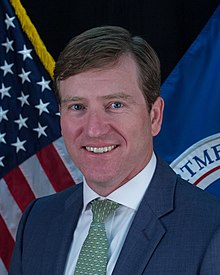
Chris Krebs
Krebs had served as Senior Advisor to the Assistant Secretary of Homeland Security for Infrastructure Protection, and later worked in the private sector as Director for Cybersecurity Policy for Microsoft.
In preparation for the 2020 Presidential election, Krebs launched a massive effort to counter lies spread by Russians—and Americans—on social media platforms. As he explained to Scott Pelley during a “60 Minutes” interview aired on November 29, 2020:
“So we spent something on the order of three and a half years of gaming out every possible scenario for how a foreign actor could interfere with an election. Countless, countless scenarios.”
Krebs’ to-do list included paper ballots:
“Paper ballots give you the ability to audit, to go back and check the tape and make sure that you got the count right. And that’s really one of the keys to success for a secure 2020 election. Ninety-five percent of the ballots cast in the 2020 election had a paper record associated with it. Compared to 2016, about 82%.
“That gives you the ability to prove that there was no malicious algorithm or hacked software that adjusted the tally of the vote, and just look at what happened in Georgia. Georgia has machines that tabulate the vote. They then held a hand recount and the outcome was consistent with the machine vote.”
Krebs’ duties included:
- Sharing intelligence from agencies such as the CIA and National Security Agency with local officials about foreign efforts at election interference.
- Ensuring that domestic voting equipment was secure.
- Attacking domestic misinformation head-on.
At his command lay the resources of a series of powerful Federal investigative agencies:
“We had the Department of Defense Cyber Command. We had the National Security Agency. We had the FBI. We had the Secret Service. We also had representatives from the Election Assistance Commission, which is the federal independent agency that supports the actual administration of elections.
“We had representatives from some of the election equipment vendors. And they’re critical because they’re the ones out there that know what’s going on on the ground if there’s any sort of issue with some of their systems. And we had representatives from state and local governments.”
Misinformation led CISA to create a new “Rumor Control” website ahead of the 2020 election. Its main goal was to debunk rumors surrounding the 2020 election that had been spreading throughout the country.
As a result, Krebs was widely praised for revamping the department’s cybersecurity efforts and increasing coordination with state and local governments.
By all accounts—except Donald Trump’s—the November 3, 2020 election went very smoothly.
2020 PRESIDENTIAL ELECTION, ABC NEWS, ADOLF HITLER, ALTERNET, AMERICABLOG, AP, BABY BOOMER RESISTANCE, BARACK OBAMA, BBC, BILL CLINTON, BLOOMBERG NEWS, BORDER WALL, BUZZFEED, CANADA, CBS NEWS, CIA, CNN, COVID-19, CROOKS AND LIARS, DAILY KOZ, DEMOCRATS, DONALD TRUMP, EMOLUMENTS CLAUSE, FACEBOOK, FASCISM, FBI, FEDERAL GOVERNMENT SHUTDOWN, FIVETHIRTYEIGHT, FRANKLIN D. ROOSEVELT, GEORGE H.W. BUSH, GREAT BRITAIN, HARPER’S MAGAZINE, HARRY S. TRUMAN, HUFFINGTON POST, JAMES COMEY, JANUARY 6 COUP ATTEMPT, JOE SCARBOROUGH, JOHN MCCAIN, JOSEPH BIDEN, JOSEPH R. MCCARPTHY, JOSEPH R. MCCARTHY, KIM JONG UN, KU KLUX KLAN, MEDIA MATTERS, MEIN KAMPF (BOOK), MIKA BREZINSKI, MITCH MCCONNELL, MOTHER JONES, MOVEON, MSNBC, NATIONAL SECURITY AGENCY, NAZIS, NBC NEWS, NEW REPUBLIC, NEWSDAY, NEWSWEEK, NEWT GINGRICH, NPR, PBS NEWSHOUR, PENTAGON, POLITICO, POLITICUSUSA, RAW STORY, REPUBLICANS, REUTERS, RODNEY KING, RUSSIA, SALON, SARAH HUCKABEE SANDERS, SEATTLE TIMES, SLATE, SOVIET UNION, TALKING POINTS MEMO, THE ATLANTIC, THE CHICAGO SUN-TIMES, THE CHICAGO TRIBUNE, THE DAILY BEAST, THE DAILY BLOG, THE GUARDIAN, THE HILL, THE HUFFINGTON POST, THE LOS ANGELES TIMES, THE NATION, THE NEW REPUBLIC, THE NEW YORK TIMES, THE NEW YORKER, THE VILLAGE VOICE, THE WASHINGTON POST, THINKPROGRESS, TIME, TRUTHDIG, TRUTHOUT, TWENTY-FIFTH AMENDMENT, TWITTER, TWO POLITICAL JUNKIES, U.S. NEWS & WORLD REPORT, UKRAINE, UNITED STATES HOUSE OF REPRESENTATIVES, UNITED STATES SENATE, UPI, USA TODAY, VLADIMIR PUTIN, VOLODYMR ZELENSKY, WONKETTE
In Bureaucracy, History, Law, Law Enforcement, Politics, Social commentary on February 9, 2022 at 12:12 am
In 2016, “reality show” host Donald Trump—with major assistance from Russian dictator Vladimir Putin—was elected President.
Throughout his four-year term, the Right enthusiastically supported him despite a record of unprecedented infamy—which included:
- Repeatedly and viciously attacking the nation’s free press for daring to report his growing list of crimes and disasters, calling it “the enemy of the American people.”
- Publicly siding with Russian dictator Vladimir Putin against American Intelligence agencies—such as the FBI, CIA and National Security Agency—which unanimously agreed that Russia had interfered with the 2016 Presidential election.
- Praising Nazis and Ku Klux Klansmen.
- Using his position as President to further enrich himself, in violation of the Emoluments Clause of the Constitution.
- Attacking and alienating America’s oldest allies, such as Canada and Great Britain.
- Firing FBI Director James Comey for refusing to pledge his personal loyalty to Trump—and continuing to investigate Russian subversion of the 2016 election.
- Shutting down the Federal Government on December 22, 2018, because Democrats refused to fund his “border wall” between the United States and Mexico. An estimated 380,000 government employees were furloughed and another 420,000 were ordered to work without pay.
- Trying to coerce Ukrainian President Volodymyr Zelensky to smear former Vice President Joe Biden, who was likely to be his Democratic opponent in the 2020 Presidential election.
Meanwhile, the vast majority of Americans supported Trump’s actions or refused to actively oppose them.
On April 27, 2020, “Morning Joe” host Joe Scarborough offered an important insight about why most Americans ignored Trump’s crimes and outrages for so long:
“I’ve said from the very beginning: You can lie about independent counsels, people won’t listen. You can lie about former FBI directors—“
MIKA BRZEZINSKI: “It doesn’t impact their lives.”
JOE SCARBOROUGH: “They’re still going to work, the kids are doing fine, they’ve got enough money to pay their rent, to pay their mortgage. You can even lie about the Ukraine call—they don’t really care.”
Then-White House Press Secretary Sarah Huckabee Sanders provided strong evidence for this when she bragged, on June 4, 2018:
“Since taking office, the President has strengthened American leadership, security, prosperity, and accountability. And as we saw from Friday’s jobs report, our economy is stronger, Americans are optimistic, and business is booming.”
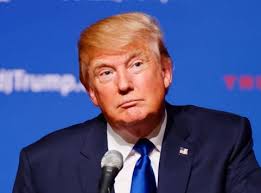
Donald Trump
Many Congressional Republicans echoed this: The American people care only about the economy—and how well-off they are.
But COVID-19 changed all that. Suddenly, millions of Americans found themselves stuck at home with their children. Many of them couldn’t go to work—because they were sick or their jobs had disappeared. Their 401Ks suddenly became worthless.
Had COVID-19 not intervened, Trump would still be President. And he wouldn’t have had to call on aid from Vladimir Putin. Millions of Right-wing, “I’ve-got-mine-so-screw-you” Americans would have happily returned him to office as “President-for-Life.”
During his 12-year reign, Adolf Hitler was the target of at least 42 overthrow plots. The most famous of these occurred on July 20, 1944.
So far as is known, Donald Trump was not the target of even one.
- No Cabinet members dared to invoke the Twenty-Fifth Amendment to the United States Constitution to remove Trump for office as “unable to discharge the powers and duties of his office.”
- House and Senate Republicans rubberstamped his every infamy. When he praised North Korea’s dictator Kim Jong-Un or attacked Vietnam POW John McCain or falsely charged massive voter fraud, Republicans stayed silent or loudly parroted his lies.
- On February 5, 2020, the Republican-dominated Senate—ignoring the overwhelming evidence against him—acquitted Trump on both impeachment articles: Obstruction of Congress and abuse of power.
- Just hours after Trump incited the deadly January 6, 2021 coup attempt at the United States Capitol, 147 Republicans lawmakers in the House and Senate voted to overturn Trump’s 2020 election loss—following months of his baseless claims that the November election had been stolen.
- At the Pentagon, American generals stood mute as Trump repeatedly abused their ability and integrity, while pursuing policies calculated to aid Russia.
- Although they regularly met with Trump, none of them plotted his removal.
- No FBI agents—steeped in Federal criminal law—built a case for Trump’s indictment and prosecution. This despite his attacking their integrity and even firing their director, James Comey, for investigating Russia’s subversion of the 2016 election.
Trump knows he cannot win office in a free election.
So notorious was the role played by Russian trolls and hackers in winning Trump the 2016 election that the Department of Homeland Security (DHS) was determined to prevent a repetition in 2020.
Chris Krebs, the director of the Cybersecurity and Infrastructure Security Agency, revamped the department’s cybersecurity efforts and increased coordination with state and local governments.
By all accounts—except Donald Trump’s—the November 3, 2020 election was virtually free of fraud. As a result, Trump lost.
That’s why legislators in Republican-controlled states are trying to corrupt election machinery at state and local levels—to nullify the votes of millions of Democrats in the 2022 and 2024 elections.
If they can restore a lifelong criminal to absolute power in 2024, Joseph Biden will be the last democratically-elected American President.
And Donald Trump will live out his dictatorial fantasies as “President-for-Life.”
2020 PRESIDENTIAL ELECTION, ABC NEWS, ADOLF HITLER, ALTERNET, AMERICABLOG, AP, BABY BOOMER RESISTANCE, BARACK OBAMA, BBC, BILL CLINTON, BLOOMBERG NEWS, BORDER WALL, BUZZFEED, CANADA, CBS NEWS, CIA, CNN, COVID-19, CROOKS AND LIARS, DAILY KOZ, DEMOCRATS, DONALD TRUMP, EMOLUMENTS CLAUSE, FACEBOOK, FASCISM, FBI, FEDERAL GOVERNMENT SHUTDOWN, FIVETHIRTYEIGHT, FRANKLIN D. ROOSEVELT, GEORGE H.W. BUSH, GREAT BRITAIN, HARPER’S MAGAZINE, HARRY S. TRUMAN, HUFFINGTON POST, JAMES COMEY, JANUARY 6 COUP ATTEMPT, JOE SCARBOROUGH, JOHN MCCAIN, JOSEPH BIDEN, JOSEPH R. MCCARPTHY, JOSEPH R. MCCARTHY, KIM JONG UN, KU KLUX KLAN, MEDIA MATTERS, MEIN KAMPF (BOOK), MIKA BREZINSKI, MITCH MCCONNELL, MOTHER JONES, MOVEON, MSNBC, NATIONAL SECURITY AGENCY, NAZIS, NBC NEWS, NEW REPUBLIC, NEWSDAY, NEWSWEEK, NEWT GINGRICH, NPR, PBS NEWSHOUR, PENTAGON, POLITICO, POLITICUSUSA, RAW STORY, REPUBLICANS, REUTERS, RODNEY KING, RUSSIA, SALON, SARAH HUCKABEE SANDERS, SEATTLE TIMES, SLATE, SOVIET UNION, TALKING POINTS MEMO, THE ATLANTIC, THE CHICAGO SUN-TIMES, THE CHICAGO TRIBUNE, THE DAILY BEAST, THE DAILY BLOG, THE GUARDIAN, THE HILL, THE HUFFINGTON POST, THE LOS ANGELES TIMES, THE NATION, THE NEW REPUBLIC, THE NEW YORK TIMES, THE NEW YORKER, THE VILLAGE VOICE, THE WASHINGTON POST, THINKPROGRESS, TIME, TRUTHDIG, TRUTHOUT, TWENTY-FIFTH AMENDMENT, TWITTER, TWO POLITICAL JUNKIES, U.S. NEWS & WORLD REPORT, UKRAINE, UNITED STATES HOUSE OF REPRESENTATIVES, UNITED STATES SENATE, UPI, USA TODAY, VLADIMIR PUTIN, VOLODYMR ZELENSKY, WONKETTE
In Bureaucracy, History, Law, Law Enforcement, Military, Politics, Social commentary on February 8, 2022 at 12:10 am
In his January 19 press conference, President Joseph Biden said: “I actually like Mitch McConnell. We like one another.”
In reality, McConnell refused to acknowledge Biden’s legitimacy as President-elect until December 15, 2020—more than one month after Biden’s election on November 3.
Additionally, at least 147 Republicans sided with Donald Trump’s lie that the 2020 election was stolen from him. And even after the treasonous attempted coup of January 6, 2021, many of them still refuse to accept the legitimacy of Biden’s win.

January 6, 2021’s attempted coup
Tyler Merbler from USA, CC BY 2.0 <https://creativecommons.org/licenses/by/2.0>, via Wikimedia Commons
Republicans have enthusiastically embraced Trump’s Big Lie that the 2020 election was stolen from him—despite overwhelming evidence that it wasn’t.
Legislators in Republican-controlled states are now working furiously to corrupt election machinery at state and local levels so they can nullify the votes of millions of Democrats in the 2022 and 2024 elections.
Their ultimate goal: Restore a lifelong criminal and Russia-appeasing traitor to absolute power as “President-for-Life.”
In 1996, Newt Gingrich, then Republican Speaker of the House of Representatives, wrote a memo entitled “Language: A Key Mechanism of Control.” It encouraged Republicans to attack Democrats with such words as “corrupt,” “selfish,” “destructive,” “hypocrisy,” “liberal,” “sick,” and “traitors.”
Republicans learned long ago that most voters aren’t moved by appeals to their rationality. Instead, what counts with them are emotions. And Republicans have become experts at appealing to these—especially the baser ones.
For Republicans, the Big Three emotions are: Hatred, Greed and Fear.
This has enabled Republicans to repeatedly score impressive electoral victories: Out of 17 Presidential elections since the end of World War II, Republicans have won 10.
But it’s not enough to see Republicans for what they are. Americans need to be seen for what they are.
Historically, the United States has always been a highly conservative nation. Going from “conservative” to “Fascist” is a relatively easy step—as millions of Donald Trump’s supporters have proven.
Since the end of World War 11, Republicans have regularly hurled the charge of “treason” against anyone who dared to run against them for office or think other than Republican-sponsored thoughts.
Republicans had been locked out of the White House from 1933 to 1952, during the administrations of Franklin D. Roosevelt and Harry S. Truman.
Determined to regain the Presidency by any means, they found that attacking the integrity of their fellow Americans a highly effective tactic.
During the 1950s, Wisconsin Republican Senator Joseph R. McCarthy rode a wave of paranoia to national prominence—by attacking the patriotism of anyone who disagreed with him.
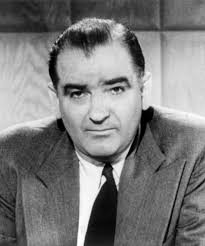
Joseph McCarthy
The fact that McCarthy never uncovered one actual case of treason was conveniently overlooked during his lifetime.
During the 1992 Presidential campaign, Republicans tried to paint Bill Clinton as a brainwashed “Manchurian candidate” because he had briefly visited the Soviet Union during his college years.
After the Soviet Union collapsed in 1991, Republicans lost their “soft on Communism” slander-line. So they tried to persuade voters that Democrats were “soft on crime.”
When riots flared in 1992 after the acquittal of LAPD officers who had savagely beaten Rodney King, President George H.W. Bush blamed the carnage on the “Great Society” programs of the 1960s.
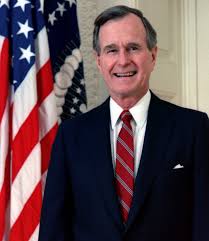
George H.W. Bush
After losing the White House to Clinton at the polls in 1992 and 1996, Republicans tried to oust him another way: By impeaching him over a tryst with a penis-loving intern named Monica Lewinsky.
The Republican-controlled House of Representatives voted to impeach, but the effort was defeated in the Democratically-controlled Senate.
The 2008 election of Barack Obama pushed the Republican “treason chorus” to new heights of infamy.
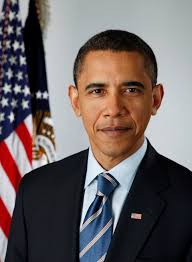
Barack Obama
Almost immediately after Obama took office, he came under attack by an industry of right-wing book authors such as Sean Hannity, Ann Coulter and Rush Limbaugh.
Consider the vocabulary Right-wingers use to describe their political adversaries:
“Liberals,” “radicals, “bankrupting,” “treason,” subversion,” “slander,” “terrorism,” “betrayal,” “catastrophe,” “shattering the American dream,” “leftists,” “Communists,” “government takeover,” “socialism,” “power grab,” “secularism,” “environmentalism.”
And while the Right lusts to constantly compare Democrats and liberals (the two aren’t always the same) to Nazis, its propaganda campaign draws heavily on Adolf Hitler’s own advice.
In Mein Kampf, the Nazi leader laid out his formula for successful propaganda: “All effective propaganda must be confined to a few bare essentials.
“Those must be expressed as far as possible in stereotypical formulas. These slogans should be persistently repeated until the very last individual has come to grasp the idea that has been put forward.
“[The masses] more readily fall victims to the big lie than the small lie, since they themselves often tell small lies in little matters but would be ashamed to resort to large-scale falsehoods.”
Thus, Republicans spent the eight years of Barack Obama’s Presidency repeating the lie that he was born in Kenya—not Hawaii, as the long-form version of his birth certificate attests.
The reason: To “prove” that he was an illegitimate President, and should be removed from office.
To Republicans’ dismay, their slander campaign didn’t prevent Obama from being elected in 2008—and re-elected in 2012.
In 2016, “reality show” host Donald Trump—with major assistance from Russian dictator Vladimir Putin—was elected President. Throughout his four-year term, the Right enthusiastically supported him—despite a record of unprecedented infamy.
2016 PRESIDENTIAL CAMPAIGN, ABC NEWS, ADOLF HITLER, ALTERNET, AMERICABLOG, AP, BABY BOOMER RESISTANCE, BARACK OBAMA, BBC, BLOOMBERG NEWS, BURT LANCASTER, BUZZFEED, CBS NEWS, CIA, CNN, CONCENTRATION CAMPS, CROOKS AND LIARS, DACHAU, DAILY KOZ, DAVID BROOKS, DEMOCRATS, DONALD TRUMP, FACEBOOK, FBI, FEDERAL GOVERNMENT SHUTDOWN, FIVETHIRTYEIGHT, FREEDOM OF THE PRESS, HARPER’S MAGAZINE, HUFFINGTON POST, IMMIGRATION AND CUSTOMS ENFORCEMENT (ICE), JAMES COMEY, JAMES ROBART, JEWS, JUDGMENT AT NUREMBERG, KIM JONG-UN, LYING, MEDIA MATTERS, MOTHER JONES, MOVEON, MSNBC, NATIONAL SECURITY AGENCY, NAZI GERMANY, NBC NEWS, NEW REPUBLIC, NEWSDAY, NEWSWEEK, NORTH KOREA, NPR, PBS NEWSHOUR, POLITICO, POLITICUSUSA, RACISM, RAW STORY, REPUBLICANS, REUTERS, ROBERT PAYNE, ROBERT S. MUELLER, RUSSIA, SALON, SEATTLE TIMES, SLATE, SPENCER TRACY, TALKING POINTS MEMO, THE ATLANTIC, THE CHICAGO SUN-TIMES, THE CHICAGO TRIBUNE, THE DAILY BEAST, THE DAILY BLOG, THE GUARDIAN, THE HILL, THE HUFFINGTON POST, THE LIFE AND DEATH OF ADOLF HITLER (BOOK), THE LOS ANGELES TIMES, THE NATION, THE NEW REPUBLIC, THE NEW YORK TIMES, THE NEW YORKER, THE VILLAGE VOICE, THE WASHINGTON POST, THINKPROGRESS, TIME, TRUTHDIG, TRUTHOUT, TWITTER, TWO POLITICAL JUNKIES, U.S. NEWS & WORLD REPORT, UPI, USA TODAY, VLADIMIR PUTIN, WONKETTE
In Bureaucracy, History, Law, Law Enforcement, Military, Politics, Social commentary on January 7, 2022 at 12:20 am
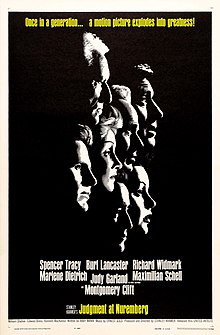
Those who have seen the classic 1960 movie, “Judgment at Nuremberg,” will remember its pivotal moment.
That’s when Burt Lancaster, as Ernst Janning, the once distinguished German judge, confesses his guilt and that of Nazi Germany in a controlled, yet emotional, outburst.
Addressing the court—presided over by Chief Judge Dan Haywood (Spencer Tracy)—Janning explains the forces that led to the triumph of evil.
“My counsel would have you believe we were not aware of the concentration camps. Not aware? Where were we?
“Where were we when Hitler began shrieking his hate in the Reichstag? When our neighbors were dragged out in the middle of the night to Dachau?
“Where were we when every village in Germany has a railroad terminal where cattle cars were filled with children being carried off to their extermination? Where were we when they cried out in the night to us? Were we deaf? Dumb? Blind?
“My counsel says we were not aware of the extermination of the millions. He would give you the excuse we were only aware of the extermination of the hundreds. Does that make us any the less guilty?
“Maybe we didn’t know the details, but if we didn’t know, it was because we didn’t want to know.”
It’s not hard to imagine, in the future, an equally conscience-stricken member of the Donald Trump administration, standing before the bar of justice, making a similar statement:
“My counsel would have you believe we were not aware of the ICE concentration camps. Not aware? Where were we?
“Where were we when Trump began shrieking his hate across the country? When Trump called our free press ‘the enemy of the people’?
“Where were we when Trump openly praised Vladimir Putin and attacked those in the FBI, CIA and other Intelligence agencies sworn to protect us?
“Where were we when the victims of Trump’s hatred cried out in the night to us? Were we deaf? Dumb? Blind?
“My counsel says we were not aware of Trump’s treasonous collusion with Vladimir Putin—and his intention to betray American freedoms in exchange for the Presidency. He would give you the excuse we were misled by the lying rhetoric coming out of the White House.
“Does that make us any the less guilty? Maybe we didn’t know the details—but if we didn’t know, it was because we didn’t want to know.”
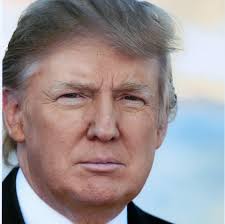
Donald Trump
In his bestselling 1973 biography, The Life and Death of Adolf Hitler, British historian Robert Payne harshly condemned the German people for the rise of the Nazi dictator:
“[They] allowed themselves to be seduced by him and came to enjoy the experience….[They] followed him with joy and enthusiasm because he gave them license to pillage and murder to their hearts’ content. They were his servile accomplices, his willing victims.”
On November 8, 2016, millions of ignorant, hate-filled, Right-wing Americans catapulted Donald Trump—a man, charged conservative New York Times columnist David Brooks, with an “odd psychology unleavened by kindness and charity”—into the Presidency.
Whereas Barack Obama, in 2008, ran for President on the slogan, “Yes, We Can!” Trump ran on the themes of fear and vindictiveness. He threatened violence not only against Democrats but even his fellow Republicans.
Upon taking office in January, 2017, Trump began undermining one public or private institution after another.
- Repeatedly and viciously attacking the nation’s free press for daring to report his growing list of crimes and disasters, calling it “the enemy of the American people.”
- Brutally attacking American Intelligence agencies—such as the FBI, CIA and National Security Agency—which unanimously agreed that Russia had interfered with the 2016 Presidential election.
- Repeatedly attacking Seattle US District Judge James Robart, who halted Trump’s first travel ban.
- Firing FBI Director James Comey for refusing to pledge his personal loyalty to Trump—and continuing to investigate Russian subversion of the 2016 election.
- Intending to fire Special Counsel Robert Mueller in 2017, but talked out of it by aides fearful that it would result in his impeachment.
- Lying so often—30,573 times in four years—he’s universally distrusted, at home and abroad.
- Shutting down the Federal government on December 22, 2018—because Democrats refused to fund his useless “border wall” between the United States and Mexico.
- Furloughing an estimated 380,000 government employees and ordering another 420,000 to work without pay. This lasted until January 25, 2019, when Trump caved to public pressure.
So why have Republicans almost unanimously stood by Trump despite the wreckage he has made of American foreign and domestic policy?
Fear that they will lose their privileged positions in Congress if they don’t.
This could happen by being voted out of Congress by:
- Trump’s fanatical base if they don’t slavishly obey him; or
- Anti-Trump voters wanting to protect the nation from a Trump dictatorship.
Future historians—if there are any—will similarly and harshly condemn those Americans who, like “good Germans,” joyfully embraced a regime dedicated to:
- Celebrating Trump’s egomania;
- Using the White House to further enrich Trump;
- Siding with Russia and North Korea against America’s oldest allies, such as those in NATO;
- Depriving America’s poor of their only source of healthcare; and
- Further enriching the ultra-wealthy.
ABC NEWS, ALTERNET, AMERICABLOG, AP, BABY BOOMER RESISTANCE, BBC, BLOOMBERG NEWS, BUZZFEED, CBS NEWS, CIA, CLIFF ROBERTSON, CNN, CROOKS AND LIARS, DAILY KOS, DAILY KOZ, DONALD TRUMP, FACEBOOK, FIVETHIRTYEIGHT, GLOBAL WARMING, HARPER’S MAGAZINE, HUFFINGTON POST, ILLEGAL ALIENS, illegal immigration, IMMIGRATION AND CUSTOMS ENFORCEMENT (ICE), MASS MIGRATIONS, MEDIA MATTERS, MEXICAN REVOLUTION, MEXICO, MIGRANT CARRAVAN, MOTHER JONES, MOVEON, MSNBC, NBC NEWS, NEW REPUBLIC, NEWSDAY, NEWSWEEK, NICCOLO MACHIAVELLI, NPR, PBS NEWSHOUR, POLITICO, POLITICUSUSA, RAW STORY, REUTERS, ROBERT REDFORD, SALON, SEATTLE TIMES, SLATE, TALKING POINTS MEMO, THE ATLANTIC, THE CHICAGO SUN-TIMES, THE CHICAGO TRIBUNE, THE DAILY BEAST, THE DAILY BLOG, THE DISCOURSES, THE GUARDIAN, THE HILL, THE HUFFINGTON POST, THE LOS ANGELES TIMES, THE NATION, THE NEW REPUBLIC, THE NEW YORK TIMES, THE NEW YORKER, THE VILLAGE VOICE, THE WALL STREET JOURNAL, THE WASHINGTON POST, THINKPROGRESS, THREE DAYS OF THE CONDOR, TIJUANA, TIME, TRUTHDIG, TRUTHOUT, TWITTER, TWO POLITICAL JUNKIES, U.S. NEWS & WORLD REPORT, UPI, USA TODAY, WONKETTE
In Bureaucracy, History, Law, Law Enforcement, Military, Politics, Social commentary on December 17, 2021 at 12:35 am
As climate change heats up the world, more mass migrations will occur. Millions of people will retreat from undeveloped countries and try to enter—legally and illegally—the United States and Europe.
This is entirely predictable.
What is also entirely predictable is this: Those who have a decent life will want to hold onto it—and not be overwhelmed by millions who don’t share their same race, values, education and religion.
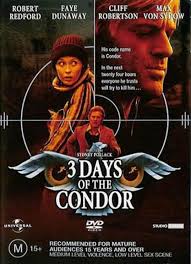
In the 1975 classic, Three Days of the Condor, Higgins, the deputy director of the CIA’s New York Division, confronts Joe Turner, an idealistic CIA employee on the realities of espionage.
Higgins (played by Cliff Robertson): “It’s simple economics. Today it’s oil, right? In 10 or 15 years, food. Plutonium. Maybe even sooner. Now, what do you think the people are gonna want us to do then?”
Joe Turner (played by Robert Redford): “Ask them.”
Higgins: “Not now—then! Ask ’em when they’re running out. Ask ’em when there’s no heat in their homes and they’re cold. Ask ’em when their engines stop. Ask ’em when people who have never known hunger start going hungry. You wanna know something? They won’t want us to ask ’em. They’ll just want us to get it for ’em!”
That day has come for millions of desperate people in Central and Latin America. And it is coming for all of us in the foreseeable future.
On October 13, 2018, a caravan of at least 5,000 men, women and children from El Salvador, Guatemala and Honduras set out for the United States. Many of them claimed they had been threatened by street gangs such as MS-13 or by government officials.
On October 18, President Donald Trump threatened to deploy the United States military and close the U.S.-Mexico border to keep the caravan from entering the country.
And then Trump did just that.
By November 19, migrants had begun piling up in Tijuana, which borders San Diego.
In August, 2021, the Supreme Court upheld the “Remain in Mexico” policy, which had been challenged by the Biden administration. Asylum seekers must wait in Mexico while they await hearings on their requests for entry to the United States.
And that’s when Tijuana residents began carrying signs reading “No illegals,” “No to the invasion” and “Mexico First.” And marching in the streets wearing Mexico’s red, white and green national soccer jersey and vigorously waving Mexican flags.
“We want the caravan to go; they are invading us,” said Patricia Reyes, a 62-year-old protester. “They should have come into Mexico correctly, legally, but they came in like animals.”
And the situation will only worsen in the months ahead.
Trump has ordered Immigration and Customs Enforcement (ICE) to draft new rules to limit the number of asylum-seekers.
As increasing numbers of migrants pour into Tijuana, access to housing, schools, hospitals and other social services will become increasingly strained. Violent clashes between Tijuana’s 1.6 million residents and its thousands of uninvited arrivals have been the result.
Tijuana’s mayor, Juan Manuel Gastélum, said the city couldn’t afford to continue supporting the migrants. He requested support from Mexico’s federal authorities.
For decades, the Mexican Government didn’t try to stop millions of its own citizens from routinely violating America’s immigration laws.
The reason: Mexicans still remember the bloody upheaval known as the Mexican Revolution (1910-1920) which slaughtered one to two million men, women and children. Massacres were common on all sides, with men shot by the hundreds in bullrings or hung by the dozen on trees.
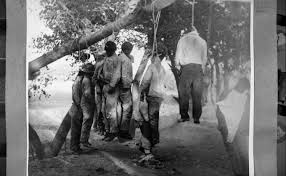
A Mexican “fruit tree”
As a result, every successive Mexican government has lived in the shadow of another such wholesale bloodletting. These officials have thus quietly turned the United States border into a safety valve.
If potential revolutionaries leave Mexico to find a better life in the United States, the Government doesn’t have to fear the rise of another Francisco “Pancho” Villa.
Suddenly, with the escape route to “El Norte” shut off, Mexicans have discovered that “illegal alien” is no longer a dirty phrase.
More than 500 years ago, Niccolo Machiavelli outlined the reason for such conflicts. In The Discourses, his masterwork on preserving liberty within a republic, he writes:
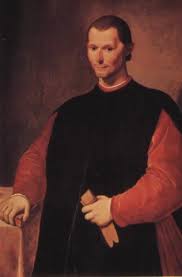
Niccolo Machiavelli
It was a saying of ancient writers, that men afflict themselves in evil, and become weary of the good, and that both these dispositions produce the same effects.
For when men are no longer obliged to fight from necessity, they fight from ambition, which passion is so powerful in the hearts of men that it never leaves them, no matter to what height they may rise.
The reason for this is that nature has created men so that they desire everything, but are unable to attain it. Desire being thus always greater than the faculty of acquiring, discontent with what they have and dissatisfaction with themselves result from it.
This causes the changes in their fortunes—for as some men desire to have more, while others fear to lose what they have, enmities and war are the consequences. And this brings about the ruin of one province and the elevation of another.
Those who want the United States to allow unchecked immigration are ignorant of such truths—or deliberately ignore them.
9/11, ABC NEWS, ALASKA AIRLINES, ALDRICH AMES, ALTERNET, AMERICAN AIRLINES, AP, BBC, BUZZFEED, CBS NEWS, CIA, CNN, DAILY KOS, DELTA AIRLINES, FACEBOOK, FBI, IDENTOGO, JETBLUE AIRLINES, JOHN F. KENNEDY, JOHN W. HINCKLEY, LYNETTE "SQUEAKY" FROMME, MOTHER JONES, MOVEON, NBC NEWS, NEWSWEEK, NPR, POLITICO, PRESIDENT GERALD FORD, PRESIDENT RONALD REAGAN, RALPH NADER, RAW STORY, REUTERS, RICHARD REID, ROBERT HANSSEN, SALON, SARAH JANE MOORE, SEATTLE TIMES, Secret Service, SECURITY, SHOE-BOMBER, SLATE, SOUTHWEST AIRLINES, TERRORISM, THE ATLANTIC, THE CHICAGO SUN-TIMES, THE CHICAGO TRIBUNE, THE DAILY BEAST, THE GUARDIAN, THE HILL, THE HUFFINGTON POST, THE LOS ANGELES TIMES, THE NEW YORK TIMES, THE PENTAGON, THE WALL STREET JOURNAL, THE WASHINGTON POST, TIME, TRANSPORTATION SECURITY ADMINISTRATION, TSA PRECHECK, TWITTER, U.S. NEWS & WORLD REPORT, UNITED AIRLINES, UNITED FLIGHT 93, UPI, USA TODAY, USAIRWAYS, VIRGIN AMERICAN AIRLINES, WEALTH GAP, WORLD TRADE CENTER
In Bureaucracy, Business, History, Law, Law Enforcement, Politics, Social commentary on October 28, 2021 at 12:10 am
All security systems—including those considered the best—are created by humans. And humans are and will always be imperfect creatures.
So there will inevitably be times when security agents miss the assassin or terrorist intent on mayhem. For example:
- In September, 1975, two women—Lynette “Squeaky” Fromme and Sara Jane Moore—tried to assassinate President Gerald R. Ford on two separate occasions.
- Fromme was tackled by a Secret Service agent. Moore’s aim was deflected by Oliver Sipple, a Marine and Vietnam veteran, thus saving Ford’s life.
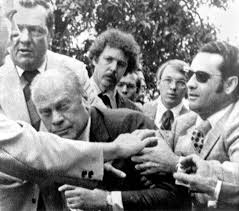
Gerald Ford being hustled from danger by Secret Service agents
Until these incidents, the Secret Service profile of a potential assassin didn’t include a woman.
- On March 30, 1981, John W. Hinckley, a psychotic obsessed with actress Jodie Foster, gained access to a line of reporters waiting to throw questions at President Ronald Reagan.
- As Reagan got into his bulletproof Presidential limousine, Hinckley drew a pistol and opened fire. Wounded, Reagan escaped death by inches.
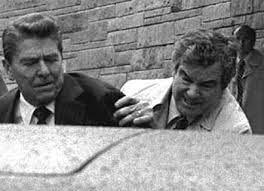
The Reagan Assassination attempt
The Secret Service Service had failed to prevent the attack because no one—until that moment—had attacked a President from the section reserved for reporters.
- On September 11, 2001, Islamic terrorists armed with boxcutters highjacked four American jetliners and turned them into fuel-bombs.
- Two of the airliners struck the North and South towers of the World Trade Center, destroying both structures.
- A third hit the Pentagon.
- The fourth—United Airlines Flight 93—crashed when it was diverted from its intended target (the White House or Congress) by passengers who resolved to fight back.
- Three thousand Americans died that day—in New York City, Washington, D.C., and Shanksville, Pennsylvania.
Until this day of catastrophe, no highjacker had turned a jumbo-jet into a fuel-bomb. Passengers had been advised to cooperate with highjackers, not resist them.
So how will the next 9/11 happen? In all likelihood, like this:
- A terrorist—or, more likely, several terrorists—will sign up for one or more airline “VIP screening” programs.
- They will be completely clean—no arrests, no convictions.
- They may well be respectable citizens in their communities.
- They will probably have amassed enough “frequent flier miles” to ingratiate themselves with the airlines and convince the Transportation Safety Administration (TSA) of their integrity.
- Then, one day, they will breeze through their selected airports—
- Without removing their belts and shoes;
- Without undergoing pat-down searches;
- Without being required to remove laptops and other electronic devices from their carry-ons;
- Without exposing their electronic devices to X-ray technology.
- Then they will board planes—either as part of an individual terrorist effort or a coordinated one, a la 9/11.
And then it will be too late.
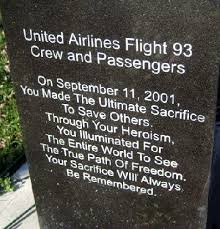
Memorial to the passengers and crew of United Flight 93
The TSA/airlines’ VIP programs are based on the assumption that someone who has completed a security check in the past need not be re-checked in the future.
This assumption has proven false for American Intelligence agencies such as the FBI and CIA.
- FBI agent Robert Hanssen spied for Soviet and Russian Intelligence services for 22 years (1979-2001). He’s now serving a life sentence in Florence, Colorado.
- CIA agent Aldrich Ames betrayed American secrets—including those Russians who had shared them—to Soviet and Russian espionage agencies from 1985 to 1994. He is likewise serving a life sentence.
Even requiring an agent to undergo repeated security checks is no guarantee of trustworthiness.
When asked about how he repeatedly passed CIA polygraph tests, Ames said: “There’s no special magic. Confidence is what does it. Confidence and a friendly relationship with the examiner. Rapport, where you smile and make him think that you like him.”
Thus, as William Shakespeare warned in Hamlet, “One may smile and smile and be a villain”—or a highjacker.
The TSA introduced its Pre-Check program during the fall of 2011. By March 2, 2020, 10 million travelers had been found worthy of “expedited” status.
In early September, 2013, TSA announced that it would more than double its “expedited screening” program, Pre-Check, from 40 to 100 airports by the end of the year.
Nor is TSA the only organization giving big-spending fliers special treatment at potential risk to their country. For example:
Delta Air Lines offers Sky Priority, described as providing “privileged access through security checkpoints” at select airports.
Another private security program, Clear, collects several pieces of biometric data on well-heeled passengers. Once verified by a kiosk local to the security checkpoint, the passengers are allowed to skirt the security barriers that poor and middle-class folks must pass through.
Priority Access, set up by TSA and the airlines, provides “expedited service” to first-class and business passengers. To qualify, you need only possess certain credit cards—such as the United Mileage Plus Club Card.
Some critics blast this two-tier passenger check-in system as an affront to democratic principles.
“It’s stratifying consumers by class and wealth, because the people who travel a lot usually have higher incomes,” said Ralph Nader, consumer advocate and frequent business traveler.
But there is an even more important reason to immediately disband these programs and require everyone—rich and middle-class alike—to undergo the same level of security screening:
The 3,000 men and women who died horrifically on September 11, 2001, at the hands of airline passengers whom authorities thought could be trusted to board a plane.

Tribute to the vanished World Trade Center


 Bureaucracybuster's Blog
2016 PRESIDENTIAL ELECTION, ABC NEWS, AL PACINO, ALTERNET, AMERICABLOG, AP, BABY BOOMER RESISTANCE, BBC, BLOOMBERG NEWS, BUZZFEED, CBS NEWS, CHINA, CIA, CNN, CROOKS AND LIARS, DAILY KOZ, DONALD TRUMP, EMILIO BARZINI, FACEBOOK, FBI, FIVETHIRTYEIGHT, FOX NEWS, FREDO CORLEONE, HARPER’S MAGAZINE, HUFFINGTON POST, HUNTER BIDEN, JAMES CCAN, JOE BIDEN, JOHN CAZALE, KIM JONG-UN, LINDSEY GRAHAM, MAFIA, MARLON BRANDO, MEDIA MATTERS, MICHAEL CORELEONE, MIKE PENCE, MITCH MCCONNELL, MOTHER JONES, MOVEON, MSNBC, NATIONAL SECURITY AGENCY, NATO, NBC NEWS, NEW REPUBLIC, NEWSDAY, NEWSWEEK, NORTH KOREA, NPR, PBS NEWSHOUR, POLITICO, POLITICUSUSA, RAW STORY, REPUBLICANS, REUTERS, RUSSIA, SALON, SEATTLE TIMES, SLATE, SONNY CORLEONE, TALKING POINTS MEMO, THE ATLANTIC, THE CHICAGO SUN-TIMES, THE CHICAGO TRIBUNE, THE DAILY BEAST, THE DAILY BLOG, THE GODFATHER, THE GUARDIAN, THE HILL, THE HUFFINGTON POST, THE INTERCEPT, THE LOS ANGELES TIMES, THE NATION, THE NEW REPUBLIC, THE NEW YORK TIMES, THE NEW YORKER, THE VILLAGE VOICE, THE WASHINGTON POST, THINKPROGRESS, TIME, TRUTHDIG, TRUTHOUT, TWITTER, TWO POLITICAL JUNKIES, U.S. NEWS & WORLD REPORT, UKRAINE, UPI, USA TODAY, VITO CORELEONE, VLADIMIR PUTIN, VOLODYMYR ZELENSKY, WONKETTE, XI JINPING
WHEN CRIMINALS FALL OUT, AMERICA WINS
In Bureaucracy, Business, Entertainment, History, Law Enforcement, Politics, Social commentary on March 23, 2022 at 12:12 amIn 1972, warfare erupted the between the two most powerful Mafia families of New York.
On one side: The Corleone Family, headed by “Don Vito” Corleone. On the other: The Barzini Family, whose boss was Emilio Barzini.
Moviegoers flooded theaters across the nation to make The Godfather the highest-grossing film of 1972—and, for a time, the highest-grossing film ever made.
Audiences rooted for the Corleones and thrilled whenever a Barzini “soldier” bit the concrete. And they moaned when Vito Corleone (Marlon Brando) was shot and wounded at an outdoor market and Sonny Corleone (James Caan) got riddled by machine guns on a New Jersey causeway.
Why did so many moviegoers feel compelled to side with the Corleones?
One reason was that, early in the film, Don Corleone rejects an offer by the Barzini Family to enter the narcotics-trafficking business.
When speaking with Virgil Sollotzzo, the Turkish drug kingpin backed by the Barzinis, Corleone says: “It’s true I have a lot of friends who are judges and politicians. And they don’t mind if people want to gamble, or drink, or even pay for a woman. But they wouldn’t be so friendly if they knew my business was drugs.”
In short: He simply didn’t want to go to prison.
The other reason so many viewers identified with the Corleones lay in the brilliant casting of their members.
Yet the Corleones—for all their homilies about “honor” and “loyalty”—were every bit as greedy and lethal as their Mafia competitors. They just played the game more ruthlessly—and successfully.
All of which brings us to the current Mafia-like struggle between former President Donald Trump and most of the Republican party.
On February 26, two days after Russian President Vladimir Putin ordered an unprovoked invasion of Ukraine, Trump said: “The problem is not that Putin is smart, which of course he’s smart, but the real problem is that our leaders are dumb.”
Donald Trump and Vladimir Putin press conference
Trump has often told aides that Putin is “a brilliant strategist, and really tough, and really smart and savvy,” and that President Joe “Biden is not up for it.”
As President, Trump had
And House and Senate Republicans had repeatedly backed him up—even refusing to impeach him on February 5, 2020, for his attempted extortion of Zelensky.
But now Republicans are singing a different tune.
Former vice president Mike Pence, while refusing to criticize Trump, attacked Putin on Fox News. Through his longtime chief of staff, Marc Short, he said: “No one in the GOP should be praising Vladimir Putin. He’s a former KGB officer and a dictator and a thug. We should be clear about that.”
Mike Pence
“Number one, the Republican Party is going to rally around the idea that Putin is a thug and a crook,” Senator Lindsey Graham (R-S.C.) said in an interview. “I have no doubt that the overwhelming majority of Republican senators see what’s happening to Ukraine is detrimental to our national security and well-being.”
“He’s a thug. He’s a killer,” said Senate Minority Leader Mitch McConnell (R-KY). “He’s been on the rampage and this will not end well for him.”
Putin’s invasion of Ukraine has confronted Republicans with a series of unpleasant truths:
With polls showing that Americans overwhelmingly oppose Russia’s brutal invasion of Ukraine, Republicans face a stark choice:
Several Republicans—such as Pence—have attacked Putin without mentioning Trump. But Trump’s embrace of Putin has been so fervent for so long that any attack on Putin must be seen as a repudiation of Trump.
Which, in turn, risks Trump’s calling down the wrath of his millions of followers on those who look to him as the Once and Future “President-for-Life.”
When predatory Mafiosi wipe each other out, honest citizens win. When Fascistic Republicans wage war on each other, democracy wins.
Share this: