Archive for the ‘Military’ Category
2016 PRESIDENTIAL CAMPAIGN, ABC NEWS, ADOLF HITLER, ALTERNET, ANN COULTER, AP, AUSTRIA, BARACK OBAMA, BILL CLINTON, BORDER WALL, BUZZFEED, CBS NEWS, CHARLES SCHUMER, CHRIS CILLIZZA, CNN, CONTRACTORS, COUNCIL OF ECONOMIC ADVISERS, CROOKS AND LIARS, CZECHOSLOVAKIA, DAILY KOZ, DAVID BROOKS, DEMOCRATS, DEPARTMENT OF COMMERCE, DEPARTMENT OF HOMELAND SECURITY, DICK CHENEY, DONALD TRUMP, EDOUARD DELADIER, FACEBOOK, FBI, FEDERAL AVIATION ADMINISTRATION (FAA), FOX NEWS, FRANCE, GEORGE W. BUSH, GOVERNMENT SHUTDOWN, HOUSE OF REPRESENTATIVES, JAPAN, JEDEDIAH BILA, JOSE ANDRES, JULIAN ZELITZER, KEVIN HASSETT, KURT VON SCHUSCHNIGG, MARIE ANTOINETTE, MARK SHIELDS, MIKE PENCE, MITCH MECONNELL, MOTHER JONES, MOVEON, MSNBC, MUNICH CONFERENCE, NANCY PELOSI, NAZI GERMANY, NBC NEWS, NEVILLE CHAMBERLAIN, NEWSWEEK, NICCOLO MACHIAVELLI, NPR, PBS NEWSHOUR, POLAND, POLITICO, RAW STORY, REPUBLICANS, REUTERS, ROBERT PAYNE, RUSH LIMBAUGH, SALON, SEATTLE TIMES, SLATE, SOUP KITCHENS, STATE OF THE UNION ADDRESS, SUPER BOWL, THE ATLANTIC, THE CHICAGO SUN-TIMES, THE CHICAGO TRIBUNE, THE DAILY BEAST, THE GUARDIAN, THE HILL, THE HUFFINGTON POST, THE LIFE AND DEATH OF ADOLF HITLER, THE LOS ANGELES TIMES, THE NATION, THE NEW YORK TIMES, THE PRINCE, THE WALL STREET JOURNAL, THE WASHINGTON POST, TIME, TRANSPORTATION SAFETY ADMINISTRATION (TSA), TWITTER, U.S. NEWS & WORLD REPORT, UBER, UNITED STATES HOUSE OF REPRESENTATIVES, UNITED STATES SECRET SERVICE, UNITED STATES SENATE, UPI, USA TODAY, WILBUR ROSS, WINSTON CHURCHILL, WORLD WAR 11
In Bureaucracy, History, Military, Politics, Social commentary on January 28, 2019 at 1:03 am
Robert Payne, author of the bestselling biography, The Life and Death of Adolf Hitler (1973), described Hitler’s “negotiating” style thus:
“Although Hitler prized his own talents as a negotiator, a man always capable of striking a good bargain, he was totally lacking in finesse.
“He was incapable of bargaining. He was like a man who goes up to a fruit peddler and threatens to blow his brains out if he does not sell his applies at the lowest possible price.”
By studying Hitler’s mindset and “negotiating” methods, we can learn much about the mindset and “negotiating” style of today’s Republican party.
A classic example of Hitler’s “negotiating style” came in September, 1938, when he focused his rage and aggression on Czechoslovakia.
Seven months earlier, he had absorbed Austria. He had done so by inviting its Chancellor, Kurt Shuschnigg, to Berlin. Then Hitler threatened Austria with invasion if Shuschnigg did not immediately agree to make his country a vassal-state of Germany.
This time, his threats were aimed at Neville Chamberlain, the prime minister of Great Britain, and Eduoard Deladier, the prime minister of France. Both countries had pledged to support Czechoslovakia against Hitler’s aggression.
Once again, he opened “negotiations” with a lie: The Czechoslovak government was trying to exterminate 3.5 million Germans living in the “Sudetenland.”
This consisted of the northern, southwest and western regions of Czechoslovakia, inhabited mostly by ethnic Germans.
Then he followed this up with the threat of war: Germany would protect its citizens and halt such “oppression.”
For British Prime Minister Neville Chamberlain, the thought of another European war erupting less than 20 years after the end of World War I was simply unthinkable.

The Cenotaph, in London, honoring the unknown British dead of World War 1
Something had to be done to prevent it. And he believed himself to be just the man to do it.
He quickly sent Hitler a telegram, offering to help resolve the crisis: “I could come to you by air and am ready to leave tomorrow. Please inform me of earliest time you can receive me, and tell me the place of the meeting. I should be grateful for a very early reply.”
Once again, another head-of-state was prepared to meet Hitler on his home ground. Again, Hitler took this concession as a sign of weakness. And Chamberlain’s use of such words as “please” and “grateful” only further convinced Hitler of another impending triumph.
Chamberlain was determined to grant his every demand—so long as this meant avoiding a second world war.
The two European leaders met in Berchtesgaden, Germany, on September 15, 1938.
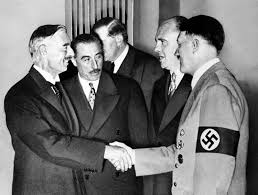
Neville Chamberlain and Adolf Hitler
During their talks, Chamberlain said he had come to discuss German grievances. But, he added, it was necessary in all circumstances to exclude the use of force.
Hitler appeared to be shocked that he could be accused of such intentions: “Force? Who speaks of force?“
Then, without warning, he switched to an aggressive mode. He accused the Czechs of having mobilized their army in May. They had mobilized—in response to the mobilization of the German army.
“I shall not put up with this any longer,” shouted Hitler. “I shall settle this question in one way or another. I shall take matters in my own hands!”
Suddenly, Chamberlain seemed alarmed—and possibly angry: “If I understood you right, you are determined to proceed against Czechoslovakia in any case. If this is so, why did you let me come to Berchtesgaden?
“In the circumstances, it is best for me to return at once. Anything else now seems pointless.”
Hitler was taken aback by the unexpected show of defiance. He realized he was about to lose his chance to bully the British into accepting his latest demands.
So he softened his tone and said they should consider the Sudetenland according to the principle of self-determination.
Chamberlain said he must immediately return to England to consult with his colleagues.
Hitler appeared uneasy. But then the German translator finished the sentence: “…and then meet you again.”
Hitler realized he still had a chance to attain victory without going to war.
Chamberlain agreed to the cession of the Sudetenland. Three days later, French Prime Minister Edouard Daladier did the same. No Czechoslovak representative was invited to these discussions.
Chamberlain met Hitler again in Godesberg, Germany, on September 22 to confirm the agreements. But Hitler aimed to use the crisis as a pretext for war.
He now demanded not only the annexation of the Sudetenland but the immediate military occupation of the territories. This would give the Czechoslovak army no time to adapt their defense measures to the new borders.
To achieve a solution, Italian dictator Benito Mussolini suggested a conference of the major powers in Munich.
On September 29, Hitler, Daladier and Chamberlain met and agreed to Mussolini’s proposal. They signed the Munich Agreement, which accepted the immediate occupation of the Sudetenland.
The Czechoslovak government had not been a party to the talks. Nevertheless, it promised to abide by the agreement on September 30.
It actually had no choice. It faced the threat of an immediate German invasion after being deserted by its pledged allies: Britain, France and the Soviet Union.
2016 PRESIDENTIAL ELECTION, ABC NEWS, ADOLF HITLER, ALTERNET, AP, BUZZFEED, CBS NEWS, CNN, CROOKS AND LIARS, DAILY KOZ, DICTATORSHIPS, DONALD TRUMP, FACEBOOK, FBI, HANS BERND GISEVIUS, HERMAN GORING, INEFFICIENCY, MARTIN NIEMOELLER, Military, MOTHER JONES, MOVEON, MSNBC, NAZI GERMANY, NBC NEWS, NEWSWEEK, NPR, NUREMBERG TRIALS, OFFICE OF STRATEGIC SERVICES, PBS NEWSHOUR, POLITICO, RAW STORY, REICHSTAG BUILDING, REICHSTAG FIRE, RELIGION, REUTERS, SALON, SEATTLE TIMES, SLATE, STORMTROOPERS, THE ATLANTIC, THE CHICAGO SUN-TIMES, THE CHICAGO TRIBUNE, THE DAILY BEAST, THE GUARDIAN, THE HILL, THE HUFFINGTON POST, THE LOS ANGELES TIMES, THE NATION, THE NEW YORK TIMES, THE WASHINGTON POST, THE WILD BUNCH, THIRD REICH, TIME, TO THE BITTER END (BOOK), TWITTER, U.S. NEWS & WORLD REPORT, UPI, USA TODAY
In Bureaucracy, History, Law, Military, Politics, Social commentary on January 25, 2019 at 12:08 am
“We must not make the error of thinking that all those who eat the bread of dictatorship are evil from the first, but they must necessarily become evil….One of the vital lessons we must learn from the German disaster is the ease with which a people can be sucked down into the morass of inaction.”
Thus warns Hans Bernd Gisevius—one of the few survivors of the July 20, 1944 bomb attempt on Adolf Hitler.
A covert opponent of the Nazi regime, he served as a liaison in Zurich between the American Office of Strategic Services (OSS) and German resistance forces in Germany.
In 1946, he published his autobiography, To the Bitter End, sharply indicting the Reich and its leaders—many of whom Gisevius had known personally. He also condemned the German people, charging that they pretended ignorance of the atrocities being committed.

Hans Bernd Gisevius at Nuremberg
In his introduction, Gisevius notes: “This book is not intended as a history of the Third Reich. The author has selected a few prominent incidents out of the confusion of contemporaneous events and has attempted to use these as points through which to trace the broad curves of the historical process.”
Almost 75 years after the fall of the Third Reich, Gisevius offers invaluable insights into America’s own foray into Fascistic government under President Donald J. Trump.
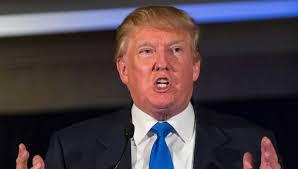
Donald Trump
Even more important, he offers concrete suggestions for successfully resisting a Fascist regime.
Ability to Retain Support: “We have learned that in the political realm abuses are all ultimately punished. But it takes extraordinarily long for the breach to become apparent. As long as dictatorships can produce ‘successes’ and conceal abuses they remain armored against opposition. The masses will not desert them.”
Attractiveness of Simplicity: “A favorite name for Hitler was ‘the great simplifier.’ This was apt; in spite of the verbosity and clumsiness of his language, he really possessed an astonishing flair for summarizing complicated matters into brief formulas.”
Corruption of Spirituality: “The Nazis wanted to lock Christianity into a ghetto, and many Christians believed it was their duty to accept this isolation gladly. [Pastor Martin] Niemoeller knew that it must not be accepted.”
Inefficiency a Hallmark of Dictatorships: “Incredible as it sounds, even the chief of the Wehrmacht was not aware of all the contracts that had been let. He obtained virtually no information from the air force or the navy, and the army provided him with only fragmentary information….
“Hitler approved of this procedure. He did not want any coordinating authority to be able to survey the total situation. He preferred conflicts and rivalries because he thought they would speed the tempo of rearmament.”
Responsibility of the Military: “Undoubtedly a small group of generals were at heart earnestly troubled. These men were conscious of a tremendous responsibility: they felt that no command from above, however unequivocal, could erase their responsibility. In fact there was only a minute group of army officers who were, ‘in principle,’ co-conspirators to the Nazi Terror. Most of the officer corps remained ‘neutral,’ both inwardly and outwardly.
“They were part of that irresponsible group of human beings who always seek a secure life without cares and are allured by the prospect of a career. By their excess of passivity our generals, willy-nilly, consciously or unconsciously, became profiteering participants in the Nazi Revolution.”

Soldiers saluting Adolf Hitler
The Danger of Accommodating Evil: “Let…individuals fall prey to over-cleverness, opportunism or cowardice and they are irrevokably lost. Passive acceptance, intellectual subservience, or, in religious terms, failure to pray against the evil, may constitute a kind of silent support for authoritarian rule.”
Corruptions of Power: “Within a few weeks, the Party leaders and sub-leaders found themselves in positions of power beyond their wildest dreams….They had no professional training. They knew nothing about law. They did not trust the professional officialdom who worked under them. What could they do but extemporize? They simply dictated, in the firm conviction that their subjects would obey.”
Collective Responsibility: “Once that system [of authoritarian rule] has been installed….there is only one course remaining to each individual and to all individuals collectively: To fight the terrorists with the same courage and tenacity, with the same willingness to take risks, that they employ in wartime under ‘orders’ when they fight the ‘enemy.'”
* * * * *
In the classic 1969 Western, The Wild Bunch, there’s a scene where Pike Bishop, the leader of the outlaw gang, and his close friend, Dutch Engstrom, face off.
They’re being chased by a posse led by Deke Thornton, a former gang member—who’s threatened with prison if he doesn’t kill them all.
“Damn that Deke Thornton to Hell!” shouts Engstrom.
“What would you do in his place?” replies Bishop. “He gave his word!”
“He gave his word to a railroad!”
“It’s his word!”
“That ain’t what counts,” says Engstrom. “It’s who you give it to!”
“It’s who you give it to.” Those words must constantly be remembered when making a commitment. The person/cause you serve must be worthy of that service.
Otherwise, such virtues as loyalty and courage become meaningless perversions in service to evil.
ABC NEWS, ADOLF HITLER, ALEXANDRIA OCASIO-CORTEZ, ALTERNET, AP, BORDER WALL, BUZZFEED, CANADA, CBS NEWS, CNN, CROOKS AND LIARS, DAILY KOZ, DONALD J. TRUMP, ECONOMY, EMPLOYMENT, FACEBOOK, FBI, FEDERAL GOVERNMENT SHUTDOWN, FRED TRUMP, GESTAPO, ILLEGAL ALIENS, JEWS, MEDIA, MEXICO, MOTHER JONES, MOVEON, MSNBC, NAZI ATROCITIES, NBC NEWS, NEWSWEEK, NPR, PAM BONDI, POLITICO, RAW STORY, REPUBLICANS, REUTERS, SALON, SARAH HUCKABEE SANDERS, SEATTLE TIMES, SLATE, SOVIET UNION, THE ATLANTIC, THE CHICAGO SUN-TIMES, THE CHICAGO TRIBUNE, THE DAILY BEAST, THE GUARDIAN, THE HILL, THE HUFFINGTON POST, THE LOS ANGELES TIMES, THE NATION, THE NEW YORK TIMES, THE WASHINGTON POST, TIME, TRUMP UNIVERSITY SCANDAL, TWITTER, U.S. NEWS & WORLD REPORT, UNEMPLOYMENT, UPI, USA TODAY, WEHRMACHT
In Bureaucracy, History, Law, Law Enforcement, Military, Politics, Social commentary on January 24, 2019 at 12:17 am
On January 16, newly-elected Rep. Alexandria Ocasio-Cortez (N.Y.) gave her maiden speech on the floor of the House of Representatives.
“It is not normal to hold 800,000 workers’ paychecks hostage. It is not normal to shut down the government when we don’t get what we want,” said Ocasio-Cortez. “And it is certainly not normal to starve the people we serve for a proposal that is wildly unpopular among the American people.”
She was referring to the partial shutdown of the Federal Government ordered by President Donald Trump. Since December 22, an estimated 380,000 government employees have been furloughed and another 420,000 ordered to work without pay.
The reason: Trump is demanding $5.6 billion to erect a wall along the U.S.-Mexico border. And the newly-elected Democratic House of Representatives is refusing to provide it.
And Ocasio-Cortez is right: It isn’t normal behavior for a President to behave like a Mafia extortionist.
Until, that is, Donald Trump assumed the office.
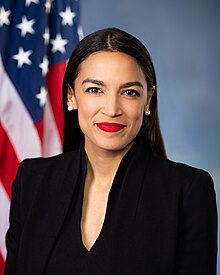
Alexandria Ocasio-Cortez
But, then, Donald Trump warned, during the 2016 Presidential campaign, that “I’m not like other people.”
Once again attacking the nation’s free press, he vowed that, as President, he would “open up those libel laws” so that when the New York Times or the Washington Post “write a hit piece, we can sue them and win money instead of having no chance of winning because they’re totally protected.
“With me, they’re not protected, because I’m not like other people, but I’m not taking money, I’m not taking their money.”
On August 23, 2018, Trump, as President, offered additional evidence that he’s “not like other people.” He did so by giving an unprecedented reason why he shouldn’t be impeached.
Appearing on “Fox and Friends,” he said: “I tell you what, if I ever got impeached, I think the market would crash, I think everybody would be very poor.”
He didn’t say: “I shouldn’t be impeached because I’m innocent. I didn’t collude with Russian Intelligence to subvert the 2016 Presidential election.”
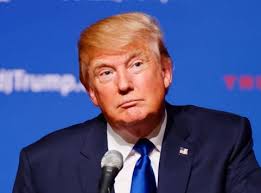
Donald Trump
Instead, he appealed to the greed and fear of his voting base—and no doubt hoped to reach beyond it: “Keep me in power or you’ll all suffer for it.”
White House Press Secretary Sarah Huckabee Sanders doubtless spoke for millions of Trump supporters when she said, on June 4, 2018:
“Since taking office, the President has strengthened American leadership, security, prosperity, and accountability. And as we saw from Friday’s jobs report, our economy is stronger, Americans are optimistic, and business is booming.”
Many Congressional Republicans have echoed this: The American people care only about the economy—and how well-off they are.
For eight years, Nazi Germany underwent such an epoch. Germans called it “The Happy Time.”
It began on January 30, 1933, when Adolf Hitler became Chancellor—and lasted until June 22, 1941. Germans knew about the Nazis’ cruelty to the Jews, the mass arrests and concentration camps. They didn’t care.
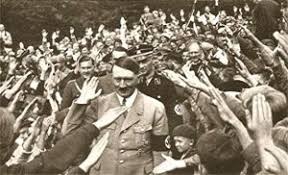
Frenzied Germans greet Adolf Hitler
The Gestapo didn’t have to watch everyone: German “patriots” gladly reported their fellow citizens—especially Jews—to the secret police.
As far as everyday Germans were concerned:
- The streets were clean and peaceful.
- Employment was high.
- The trouble-making unions were gone.
- Germany was once again “taking its rightful place” among ruling nations, after its catastrophic defeat in World War 1.
The height of “The Happy Time” came in June, 1940. In just six weeks, the Wehrmacht accomplished what the German army hadn’t in four years during World War 1: The total defeat of its longtime enemy, France.
Suddenly, French clothes, perfumes, delicacies, paintings and other “fortunes of war” came pouring into the Fatherland.
Most Germans believed der Krieg—“the war”—was over, and only good times lay ahead.
Then, on June 22, 1941, three million Wehrmacht soldiers slashed their way into the Soviet Union. The Third Reich was now locked in a death-struggle with a nation even more powerful than itself.

German soldiers in the Soviet Union
And then, on December 11, 1941—four days after Germany’s ally, Japan, attacked Pearl Harbor—Hitler declared war on the United States.
“The Happy Time” for Germans was over. Only prolonged disaster lay ahead.
Donald Trump has spent his life appealing to the greed or fear of those around him. For example:
- Florida Attorney General Pam Bondi personally solicited a political contribution from Donald Trump around the same time her office deliberated joining an investigation of alleged fraud at Trump University and its affiliates.
- After Bondi dropped the Trump University case against Trump, he wrote her a $25,000 check for her re-election campaign.
- In 1999, Fred Trump, Donald’s father died. His deceased brother’s family sued Donald, arguing they were originally in the will, but Donald took advantage of his father’s dementia to cut them out of it. He withdrew medical benefits critical to his nephew’s infant son: “I was angry because they sued,” Trump later said in an interview.
The Germans made a devil’s-bargain with Adolf Hitler—and paid dearly for it.
Millions of greedy Americans have embraced Donald Trump, another would-be tyrant, as America’s economic savior.
By supporting Trump—or at least not opposing him—they have also made a devil’s-bargain.
And such bargains always end with the devil winning.
2016 PRESIDENTIAL CAMPAIGN, ABC NEWS, ALTERNET, AMERICAN UNIVERSITY, AP, APOLLO MOON LANDING, BARACK OBAMA, BARBARA TUCHMAN, BUZZFEED, CBS NEWS, CNN, COLD WAR, CROOKS AND LIARS, CUBAN MISSILE CRISIS, DAILY KOZ, DONALD TRUMP, DREAMS FROM MY FATHER, FACEBOOK, HERMAN CAIN, JOHN F. KENNEDY, KELLEYANNE CONWAY, LIBYA, LILTERACY, LYNDON B. JOHNSON, MOTHER JONES, MOVEON, NBC NEWS, NEWSWEEK, NPR, NUCLEAR TEST BAN TREATY, POLITICO, RATIONALITY, RAW STORY, REUTERS, RICHARD M. NIXON, RICK PERRY, SALON, SEAN SPICER, SEATTLE TIMES, SLATE, SUPER COMMITTEE OF CONGRESS, SUPREME COURT, THE ATLANTIC, THE AUDACITY OF HOPE, THE CHICAGO SUN-TIMES, THE CHICAGO TRIBUNE, THE DAILY BEAST, THE GUARDIAN, THE GUNS OF AUGUST, THE HILL, THE HUFFINGTON POST, THE LOS ANGELES TIMES, THE NATION, THE NEW YORK TIMES, THE WASHINGTON POST, TIME, TWITTER, U.S. NEWS & WORLD REPORT, UPI, USA TODAY, VIETNAM WAR, WORLD WAR 1
In Bureaucracy, History, Military, Politics, Social commentary on January 18, 2019 at 12:17 am
Fifty-five years ago, on November 22, 1963, two bullets slammed into the neck and head of President John Fitzgerald Kennedy.
It has been said that JFK left his country with three great legacies:
- The Nuclear Test Ban Treaty;
- The Apollo moon landing; and
- The Vietnam war.
Of these, the following can be said with certainty:
- The Test Ban Treaty has prevented atmospheric testing—and poisoning—by almost all the world’s nuclear powers.
- After reaching the moon—in 1969—Americans quickly lost interest in space and have today largely abandoned plans for manned exploration. For America, as for JFK, beating the Russians to the moon was the end-goal.
- Under Presidents Lyndon Johnson and Richard Nixon, 58,000 Americans died in Vietnam; 153,303 were wounded; and billions of dollars were squandered in a hopeless effort to intervene in what was essentially a Vietnamese civil war.
But there was a fourth legacy—and perhaps the most important of all: The belief that mankind could overcome its greatest challenges through rationality and perseverance.
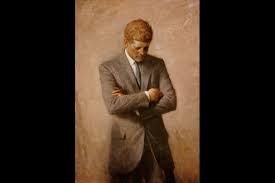
White House painting of JFK
At American University on June 10, 1963, Kennedy called upon his fellow Americans to re-examine the events and attitudes that had led to the Cold War. And he declared that the search for peace was by no means absurd:
“Our problems are man-made; therefore, they can be solved by man. And man can be as big as he wants. No problem of human destiny is beyond human beings.
“Man’s reason and spirit have often solved the seemingly unsolvable, and we believe they can do it again.”
Today, politicians from both parties cannot agree on solutions to even the most vital national problems.
Since December 22, 2018, President Donald J. Trump shut down the Federal Government because Democrats would not agree to spending $5.6 on a symbolic “border wall” between the United States and Mexico. As a result, 380,000 government employees were furloughed and another 420,000 were ordered to work without pay.
By January 13, 2019, the shutdown had reached its 22nd day.
President Kennedy insisted on being well-informed. He speed-read several newspapers every morning and nourished personal relationships with the press. These journalistic contacts gave Kennedy additional sources of information and perspectives on national and international issues.
During the 2012 Presidential campaign, Republican Presidential candidates celebrated their ignorance of both.
Former Godfather’s Pizza CEO Herman Cain famously said, “We need a leader, not a reader.” Thus he excused his ignorance for why President Barack Obama had intervened in Libya.
Texas Governor Rick Perry (and now Secretary of Energy) showed similar pride in not knowing there are nine judges on the United States Supreme Court:
“Well, obviously, I know there are nine Supreme Court judges. I don’t know how eight came out my mouth. But the, uh, the fact is, I can tell you—I don’t have memorized all of those Supreme Court judges. And, uh, ah—
“Here’s what I do know. That when I put an individual on the Supreme Court, just like I done in Texas, ah, we got nine Supreme Court justices in Texas, ah, they will be strict constructionists….”
In short, it’s the media’s fault if they ask you a question and your answer reveals your own ignorance, stupidity or criminality.
And President Donald Trump has gone even further—attacking the free press as “the enemy of America” for exposing his lies and criminality.
His senior adviser, Kelleyanne Conway, set the tone of his administration’s approach to the truth right at the outset. Asked why then-White House press secretary Sean Spicer had lied about the size of the crowd at Trump’s inauguration, Conway replied:
“You’re saying it’s a falsehood. And they’re giving—Sean Spicer, our press secretary—gave alternative facts.”
“Alternative facts aren’t facts, they are falsehoods,” Chuck Todd, the moderator on NBC’s “Meet the Press,” properly responded.
During the height of the Cuban Missile Crisis, Kennedy spoke with aides about a book he had just finished: Barbara Tuchman’s The Guns of August, about the events leading to World War 1.
He said that the book’s most important revelation was how European leaders had blindly rushed into war, without thought to the possible consequences. Kennedy told his aides he did not intend to make the same mistake–that, having read his history, he was determined to learn from it.
Republicans attacked President Obama for his Harvard education and articulate use of language. Among their taunts: “Hitler also gave good speeches.”
And they resented his having earned most of his income as a writer of two books: Dreams From My Father and The Audacity of Hope. As if being a writer is somehow subversive.
When knowledge and literacy are attacked as “highfalutin’” arrogance, and ignorance and incoherence are embraced as sincerity, national decline lies just around the corner.
During the 2016 Presidential campaign, Donald Trump infamously chortled after winning the Nevada Republican primary: “We won with poorly educated. I love the poorly educated.”
And, that November, “the poorly educated” elected him President. He is their ideal of what a President should be.
In retrospect, the funeral for President Kennedy marked the death of more than a rational and optimistic human being.
It marked the death of Americans’ pride in choosing reasoning and educated citizens for their leaders.
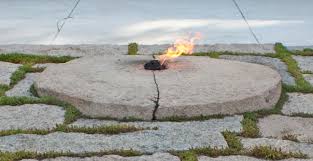
The Eternal Flame at the grave of President John F. Kennedy
2016 PRESIDENTIAL ELECTION, ABC NEWS, ADOLF HITLER, ALTERNET, AP, BUZZFEED, CBS NEWS, CNN, CROOKS AND LIARS, DAILY KOZ, ERNA GRUHN, ERNST ROHEM, FACEBOOK, FBI, HANS BERND GISEVIUS, HERMANN GORING, HILLARY CLINTON, JAMES COMEY, JEFF SESSIONS, KGB, MOTHER JONES, MOVEON, MSNBC, NAZI GERMANY, NBC NEWS, NEWSWEEK, NPR, NUREMBERG TRIALS, OFFICE OF STRATEGIC SERVICES, PAUL VON HINDENBURG, PBS NEWSHOUR, POLITICO, RAW STORY, REICHSTAG FIRE, REUTERS, ROBERT S. MUELLER, ROD ROSENSTEIN, SALON, SEATTLE TIMES, SLATE, SS, STORMTROOPERS, THE ATLANTIC, THE CHICAGO SUN-TIMES, THE CHICAGO TRIBUNE, THE DAILY BEAST, THE GUARDIAN, THE HILL, THE HUFFINGTON POST, THE LOS ANGELES TIMES, THE NATION, THE NEW YORK TIMES, THE PRESS, THE WASHINGTON POST, THIRD REICH, TIME, TO THE BITTER END (BOOK), TWITTER, U.S. NEWS & WORLD REPORT, UPI, USA TODAY, WERNER VON BLOMBERG, WERNER VON FRITSCH
In Bureaucracy, History, Law, Law Enforcement, Military, Politics, Social commentary on January 14, 2019 at 12:03 am
Hans Bernd Gisevius holds a unique position in the history of the Third Reich.
He was one of the few plotters of the July 20, 1944 bomb attack on Adolf Hitler to survive the wave of arrests that followed.
A covert opponent of the Nazi regime, he served as a liaison in Zurich between the American Office of Strategic Services (OSS) and German resistance forces in Germany.
Not only did he outlive the Reich, he took revenge on it at the Nuremberg trials. In April, 1946, for three days he gave damning evidence against former Reichsmarshall Hermann Goring and his accomplices.
Hans Bernd Gisevius at Nuremberg
In 1946, he published his autobiography, To the Bitter End, sharply indicting the Reich and its leaders—many of whom Gisevius had known personally. He also condemned the German people, charging that they pretended ignorance of the atrocities being committed.
In his introduction, Gisevius notes: “This book is not intended as a history of the Third Reich. The author has selected a few prominent incidents out of the confusion of contemporaneous events and has attempted to use these as points through which to trace the broad curves of the historical process.”
To the Bitter End opens with the February 27, 1933 arson attack on the Reichstag building, home of the German parliament. By the time the fire was put out, most of the building was gutted.
On January 30, 1933, Adolf Hitler had been appointed Chancellor of Germany. Now he used the fire to gain unprecedented control over the country.

Reichstag fire
The next day, at Hitler’s request, President Paul von Hindenburg signed the Reichstag Fire Decree into law. This suspended most civil liberties in Germany, including:
- Freedom of speech, press, association and public assembly
- Habeas corpus and
- Secrecy of the mails and telephone.
The next major event Gisevius chronicled has since become known as “The Night of the Long Knives.”
On June 30, 1934, Hitler ordered a massive purge of his private army, the S.A., or Stormtroopers. This was carried out by Hitler’s elite army-within-an-army, the Schutzstaffel, or Protective Squads, better known as the SS.
The S.A. Brownshirts had been instrumental in securing Hitler’s rise to Chancellor of Germany. They had intimidated political opponents and organized mass rallies for the Nazi Party.
Ernst Rohem, their commander, urged Hitler to disband the regular German army, the Reichswehr, and replace it with his own legions as the nation’s defense force.
Frightened by Rohem’s ambitions, the generals of the Reichswehr warned Hitler: Get rid of Rohem—or we’ll get rid of you.
So Rohem died in a hail of SS bullets—along with several hundred of his longtime S.A. cronies.
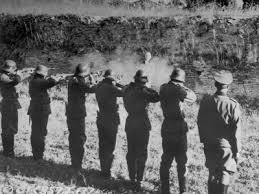
SS firing squad
A third crisis that paved the way for Hitler’s assuming supremacy over the German armed forces came in early 1938.
Hitler had been wanting to replace two high-ranking military officials: General Werner von Fritsch and Colonel General Werner von Blomberg. He intended to go to war—and despised their hesitation to do so.
On January 12, 1938, Blomberg married Erna Gruhn, with Hitler and Reichsmarshall Hermann Goring attending as witnesses. Soon afterward, Berlin police discovered that Gruhn had a criminal record as a prostitute and had posed for pornographic photographs.
Marrying a woman with such a background violated the standard of conduct expected of officers. Hitler was infuriated at having served as a witness, but he also saw the scandal as an opportunity to dispose of Blomberg.
Shortly after Blomberg was forced to resign in disgrace, the SS presented Hitler with a file that falsely accused Werner von Fritsch of homosexuality. Fritsch angrily denied the accusation but resigned on February 4, 1938.
From that point on, Hitler was in de facto command of the German Armed Services.
To the Bitter End vividly depicts how, step by step, Hitler gained total control of Germany—and plunged it headlong into World War II.
None of these steps, by itself, was fatal. But, taken together, they led to the deaths of 60 million men, women and children, the utter destruction of Germany and the domination of Eastern Europe (including East Germany) for 44 years after the Reich collapsed.
Since Donald Trump took office as the 45th President of the United States, Americans have seen him move, step by step, toward his goal of absolute power. Among these moves:
- Firing FBI Director James Comey for pursuing an investigation into Russian subversion of the 2016 election.
- Repeatedly attacking his own Attorney General, Jeff Sessions, for not “protecting” him from investigators pursuing the Russia investigation.
- Firing Sessions and replacing him with Matthew Whittaker, who had loudly criticized the probe led by Special Counsel Robert S. Mueller.
- Relentlessly attacking the free press as “the enemy of the American people.”
- Brutally attacking Federal judges whose rulings displease him.
- On multiple occasions, urging Deputy Attorney General Rod Rosenstein to vengefully prosecute Hillary Clinton, his 2016 rival for the Presidency.
The United States may yet fall victim to a nuclear war triggered by an insult-happy Trump, or a dictatorship where he turns the Justice Department into his personal SS.
If so, a future American chronicler may, like Hans Bernd Gisevius, leave behind a record of a nation betrayed by lost opportunities and a brutal tyrant.
2016 PRESIDENTIAL RACE, ABC NEWS, ADRIANNE ZUCKER, ALTERNET, ANTHONY SALARNO, ANTHONY SALERNO, AP, BILLY BUSH, BUZZFEED, CBS NEWS, CHARLES SCHUMER, CNN, CROOKS AND LIARS, DAILY KOZ, DAYS OF OUR LIVES, DONALD TRUMP, FACEBOOK, GAIUS CALIGULA, GAIUS SUETONIUS TRANQUILLUS, GOVERNMENT SHUTDOWN, HILLARY CLINTON, IVANKA TRUMP, MAFIA, MEXICO BORDER WALL, MICHELE BACHMANN, MOTHER JONES, MOVEON, NANCY PELOSI, NBC NEWS, NEWSWEEK, NPR, PAUL CASTELLANO, POLITICO, RAW STORY, REPUBLICAN PARTY, REUTERS, ROBERT LEUCI, ROMAN EMPIRE, SALON, SEATTLE TIMES, Secret Service, SEXUAL HARASSMENT, SLATE, THE ATLANTIC, THE CHICAGO SUN-TIMES, THE CHICAGO TRIBUNE, THE DAILY BEAST, THE GUARDIAN, THE HILL, THE HUFFINGTON POST, THE LOS ANGELES TIMES, THE NATION, THE NEW YORK TIMES, THE TWELVE CAESARS, THE WALL STREET JOURNAL, THE WASHINGTON POST, TIME, TODAY, TWITTER, U.S. NEWS & WORLD REPORT, UPI, USA TODAY
In Bureaucracy, History, Law, Law Enforcement, Military, Politics, Social commentary on January 11, 2019 at 12:06 am
Unlike Gaius Caligula, Donald Trump hasn’t yet been charged with murder. But he has often boasted: “Get even with people. If they screw you, screw them back 10 times as hard. I really believe that.”
And during his rise as a business mogul, he hired mobbed-up firms to erect Trump Tower and his Trump Plaza apartment building in Manhattan. Among his business associates: Mafia bosses Anthony “Fat Tony” Salerno and Paul Castellano.
If Trump hasn’t ordered rub-outs, there’s no question that many of the mobsters he’s dealt with have.
And during his second Presidential debate with Democratic nominee Hillary Clinton, he previewed the dangers of a Trump Justice Department: “If I win I am going to instruct my attorney general to get a special prosecutor to look into your situation.”
Reports have since emerged that he tried to pressure Acting Attorney General Rod Rosenstein into prosecuting Clinton—even though there was no evidence that she had committed a crime.
As emperor of Rome, Caligula’s egomania soon reached psychotic heights.
- He gave himself several surnames: “Pious,” “Child of the Camp,” “Father of the Armies,” and “Greatest and Best of Caesars.”
- Flattered that he had risen higher than princes and kings, he began to believe himself a god.
- He appeared at the temple of Castor and Pollux to be worshiped as Jupiter Latiaris.
- He also set up a special temple to his own godhead.

Gaius Caligula
Trump’s egomania is literally stamped on his properties. Of the 515 entities he owns, 268 of them—52%—bear his last name. He often refers to his properties as “the swankiest,” “the most beautiful.”
Among the references he’s made to himself:
- “My fingers are long and beautiful, as, it has been well documented, are various other parts of my body.”
- “I think the only difference between me and the other candidates is that I’m more honest and my women are more beautiful.”
- “My Twitter has become so powerful that I can actually make my enemies tell the truth.”
- “My IQ is one of the highest—and you all know it.”
When Caligula wasn’t ordering wholesale Stalin-like purges—ranging from Roman aristocrats to slaves—he was setting new records for debauchery.
According to the Roman historian Gaius Suetonius Tranquillus: “He lived in habitual incest with all his [three] sisters, and at a large banquet he placed each of them in turn below him, while his wife reclined above. Of these he is believed to have violated Drusilla when he was still a minor.”
Trump has never been charged with incest, but he’s repeatedly made sexually inappropriate comments about his daughter, Ivanka:
- “Yeah, she’s really something, and what a beauty, that one. If I weren’t happily married and, ya know, her father …”
- When Trump appeared on the Dr. Oz Show, he was joined on stage by Ivanka. After they kissed, Dr. Oz said: “It’s nice to see a dad kiss his daughter.” Trump: “I kiss her every chance I get.” The remark was edited before the show aired.
- When asked how he would react if Ivanka, a former teen model, posed forPlayboy, Trump replied: “I don’t think Ivanka would do that, although she does have a very nice figure. I’ve said if Ivanka weren’t my daughter, perhaps I’d be dating her.”
I
Ivanka Trump
For all his cruelty and egomania, the trait that finally destroyed Caligula was his joy in humiliating others.
His fatal mistake was to taunt Cassius Chaerea, a member of his own bodyguard. Caligula considered Chaerea effeminate because of a weak voice and mocked him with names like “Priapus” and “Venus.”
On January 22 41 A.D. Chaerea and several other bodyguards hacked Caligula to death with swords before other guards could save him.
Like Caligula, Trump may find that his joy in inflicting suffering on others may ultimately destroy him.
By December 28, 2018, the New York Times estimated that Trump had insulted 551 people, places and institutions since declaring his candidacy for President in 2015.
Before taking office as President, Trump added to this list the United States Secret Service. He did so by keeping his longtime private security force, and combining its members with those of the elite federal agency.
Marginalizing the Secret Service sent a clear and insulting message: “You’re not good enough, and I don’t trust you.”
Among the agencies directly affected by the Trump-ordered government shutdown, now into its 18th day: The Department of Homeland Security (DHS)—whose employees include the Secret Service agents who protect Trump.
In short: The men and women guarding Trump are facing financial ruin—along with their families—because Trump didn’t get his way on “The Wall.”
In the 1981 movie, Prince of the City—based on the real-life career of NYPD Detective Robert Leuci—a Mafia killer warns a cop who will soon testify against police corruption: “Anybody can be hit. You know that. All those guards have to do is look the wrong way for a second.”
Secret Service agents now face a choice: To take a bullet for a tyrant masquerading as President—or for their families threatened with ruin.
It remains to be seen if Trump suffers the same fate of Caligula.
2016 PRESIDENTIAL RACE, ABC NEWS, ADRIANNE ZUCKER, ALTERNET, ANTHONY SALERNO, AP, BILLY BUSH, BUZZFEED, CBS NEWS, CHARLES SCHUMER, CNN, CROOKS AND LIARS, DAILY KOZ, DAYS OF OUR LIVES, DONALD TRUMP, FACEBOOK, GAIUS CALIGULA, GAIUS SUETONIUS TRANQUILLUS, GOVERNMENT SHUTDOWN, HILLARY CLINTON, IVANKA TRUMP, MAFIA, MEXICO BORDER WALL, MICHELE BACHMANN, MOTHER JONES, MOVEON, NANCY PELOSI, NBC NEWS, NEWSWEEK, NPR, PAUL CASTELLANO, POLITICO, RAW STORY, REPUBLICAN PARTY, REUTERS, ROBERT LEUCI, ROMAN EMPIRE, SALON, SEATTLE TIMES, Secret Service, SEXUAL HARASSMENT, SLATE, THE ATLANTIC, THE CHICAGO SUN-TIMES, THE CHICAGO TRIBUNE, THE DAILY BEAST, THE GUARDIAN, THE HILL, THE HUFFINGTON POST, THE LOS ANGELES TIMES, THE NATION, THE NEW YORK TIMES, THE TWELVE CAESARS, THE WALL STREET JOURNAL, THE WASHINGTON POST, TIME, TODAY, TWITTER, U.S. NEWS & WORLD REPORT, UPI, USA TODAY
In Bureaucracy, History, Law, Law Enforcement, Military, Politics, Social commentary on January 10, 2019 at 12:06 am
Like Gaius Caligula, the “mad emperor” of ancient Rome, Donald Trump can truly say: “Let them hate me, so long as they fear me.”
In fact, he said exactly that to Bob Woodward, the legendary Washington Post investigative reporter: “Real power is—I don’t even want to use the word—fear.”
Similarities between Trump and Caligula emerged well before Trump entered the White House.
On October 7, 2016, The Washington Post leaked a video of Donald Trump making sexually predatory comments about women.
The remarks came during a 2005 exchange with Billy Bush, then the host of Access Hollywood (and now host of Today).

Billy Bush
Daniel S.-L. [CC BY-SA 4.0 (https://creativecommons.org/licenses/by-sa/4.0)%5D, from Wikimedia Commons
The two were traveling in an Access Hollywood bus to the set of the soap opera Days of Our Lives, where Trump was to make a cameo appearance.
Neither Trump nor Bush could be seen during the exchange–the video focuses entirely on the bus. But the audio came in clearly–and, for Trump, damningly:
Donald Trump:You know and I moved on her actually. You know she was down on Palm Beach. I moved on her and I failed. I’ll admit it. I did try and fuck her. She was married.
Unknown: That’s huge news.
Trump:No, no, Nancy. No this was—and I moved on her very heavily, in fact, I took her out furniture shopping. She wanted to get some furniture. I said I’ll show you where they have some nice furniture.
I took her out furniture. I moved on her like a bitch, but I couldn’t get there, and she was married. Then all of a sudden I see her, she’s now got the big phony tits and everything. She’s totally changed her look.
[At that point, they spot Arianne Zucker, the starring actress in Days in Our Lives.]

Arianne Zucker
Greg Hernandez from California, CA, USA [CC BY 2.0 (https://creativecommons.org/licenses/by/2.0)%5D, via Wikimedia Commons
Bush: Sheesh, your girl’s hot as shit. In the purple. Yes! The Donald has scored. Whoa, my man!
Trump: Look at you. You are a pussy. Maybe it’s a different one.
Bush: It better not be the publicist. No, it’s her. It’s—
Trump: Yeah, that’s her. With the gold. I better use some Tic Tacs just in case I start kissing her. You know I’m automatically attracted to beautiful—I just start kissing them. It’s like a magnet. Just kiss. I don’t even wait. And when you’re a star they let you do it. You can do anything.
Bush: Whatever you want.
Trump: Grab them by the pussy. You can do anything.
Gaius Caligula—who lived in open incest with his three sisters—couldn’t have said it better.
When the Washington Post broke the story on October 7, the reaction was immediate—and explosive.
Caligula’s life spanned August 31, 12 A.D. to January 24, 41 A.D. His chief biographer was Gaius Suetonius Tranquillus.

Gaius Caligula
Trump was born on June 14, 1946.
Caligula became Emperor in 37 A.D. after succeeding the Emperor Tiberius, his uncle who had adopted him as a son after his father died.
Trump was elected President on November 8, 2016, after winning 304 electoral votes to 227 for his Democratic opponent, Hillary Clinton.
Trump began his real estate career at his father’s real estate and construction company. He rose to wealth and fame after his father, Fred, gave him control of the business in 1971.
Caligula’s reign began well—and popularly. He gave Tiberius a magnificent funeral—then recalled to Rome all those whom Tiberius had banished, and ignored all charges that Tiberius had leveled against them.
He gave bonuses to the military and destroyed lists of those Tiberius had declared traitors. He allowed the magistrates unrestricted jurisdiction, without appeal to himself.
Similarly, soon after acquiring the family business, Trump set out to build his own empire—hotels, golf courses, casinos, skyscrapers across North and South America, Europe and Asia. He named many of them after himself.
He appeared at the Miss USA pageants, which he owned from 1996 to 2015. He hosted and co-produced The Apprentice, an NBC reality television series from 2004 to 2015.
The ancient historians describe Caligula as a noble and enlightened ruler during the first six months of his reign. But in October 37 A.D. he fell seriously ill or perhaps was poisoned.
Caligula soon recovered but emerged a changed man. He began laying claim to divine majesty, and killing or exiling anyone he saw as a threat.
Among his litany of crimes, according to his biographer, Gaius Suetonius Tranquillus:
“He forced parents to attend the executions of their sons, sending a litter for one man who pleaded ill health, and inviting another to dinner immediately after witnessing the death, and trying to rouse him to gaiety and jesting by a great show of affability.”
He favorite method of execution was to have a victim tortured with many slight wounds. His infamous order for this: “Strike so that he may feel that he is dying.”
Similarly, Trump delights in personal cruelties. During his campaign he encouraged Right-wing thugs to attack dissenters, even claiming he would pay their legal expenses.
He mocked Christine Blasey Ford, the psychology professor who accused his Supreme Court nominee, Brett Kavanaugh, of trying to rape her when she was a teenager.
And he delights in belittling his own Cabinet members: “He’s like a little rat. He just scurries around,” he said of Reince Priebus, his chief of staff.
2016 PRESIDENTIAL RACE, ABC NEWS, ADRIANNE ZUCKER, ALTERNET, ANTHONY SALERNO, AP, BILLY BUSH, BUZZFEED, CBS NEWS, CHARLES SCHUMER, CNN, CROOKS AND LIARS, DAILY KOZ, DAYS OF OUR LIVES, DONALD TRUMP, FACEBOOK, GAIUS CALIGULA, GAIUS SUETONIUS TRANQUILLUS, GOVERNMENT SHUTDOWN, HILLARY CLINTON, IVANKA TRUMP, MAFIA, MEXICO BORDER WALL, MICHELE BACHMANN, MOTHER JONES, MOVEON, NANCY PELOSI, NBC NEWS, NEWSWEEK, NPR, PAUL CASTELLANO, POLITICO, RAW STORY, REPUBLICAN PARTY, REUTERS, ROBERT LEUCI, ROMAN EMPIRE, SALON, SEATTLE TIMES, Secret Service, SEXUAL HARASSMENT, SLATE, THE ATLANTIC, THE CHICAGO SUN-TIMES, THE CHICAGO TRIBUNE, THE DAILY BEAST, THE GUARDIAN, THE HILL, THE HUFFINGTON POST, THE LOS ANGELES TIMES, THE NATION, THE NEW YORK TIMES, THE TWELVE CAESARS, THE WALL STREET JOURNAL, THE WASHINGTON POST, TIME, TODAY, TWITTER, U.S. NEWS & WORLD REPORT, UPI, USA TODAY
In Bureaucracy, History, Law, Law Enforcement, Military, Politics, Social commentary on January 9, 2019 at 12:11 am
January 20, 2019, will mark exactly two years since Donald Trump’s took the oath of office as the 45th President of the United States.
He’s thus held power almost as long as Gaius Caligula, who ruled the Roman empire for three years, ten months and eight days.
It was Caligula who, as the “mad emperor” of Rome, once said: “Bear in mind that I can treat anyone exactly as I please.” And Trump has made it abundantly clear he believes he has the same right.
Latest case in point: The continuing shutdown of the Federal Government.
The reason: Trump’s demand for $5.billion to partially fund a wall along the U.S.-Mexico border—and the refusal of House Democrats to give it to him.
As a Presidential candidate in 2016, Trump had claimed: “I would build a great wall, and nobody builds walls better than me, believe me, and I’ll build them very inexpensively. I will build a great great wall on our southern border and I’ll have Mexico pay for that wall.”
To Trump’s rabidly anti-Mexican audiences, that sounded great. It was the most important reason most of them had—and gave—for voting for him.
But then something unexpected—at least by Trump—happened: Mexico refused to pay for it.
That left Trump scrambling.
So that left Trump with only one way out: Forcing Americans to pay for it.
Threatening to shut down the Federal Government if he didn’t get his way—and his wall funding.

Donald Trump
On December 11, he met in the Oval Office with House Minority Leader Nancy Pelosi (D-CA) and Senate Minority Leader Charles Schumer. And, true to his love of publicity, Trump made sure it was televised live.
He lost no time in making his demand—and threat:“And one way or the other, it’s going to get built. I’d like not to see a government closing, a shutdown. We will see what happens over the next short period of time.”
“One way or the other”—“so doer so”—was a favorite phrase of Adolf Hitler’s, meaning: If he couldn’t bully his opponents into surrendering, he would use violence.
Pelosi responded: “I think the American people recognize that we must keep government open, that a shutdown is not worth anything, and that you should not have a Trump shutdown.”
“We do not want to shut down the government,” said Schumer, echoing her. You have called 20 times to shut down the government….We want to come to an agreement.
“If we can’t come to an agreement, we have solutions that will pass the House and Senate right now, and will not shut down the government. And that’s what we’re urging you to do. Not threaten to shut down the government because you can’t get your way.”
Trump, taking the bait, then said: “I’ll take it. You know what I’ll say: Yes, if we don’t get what we want, one way or the other…I will shut down the government. Absolutely.”
But Republican leaders in Congress didn’t want to be blamed for shutting down the government, seemed to persuade him to back away from his threat. The Senate passed a short-term funding measure without his wall money. Vice President Mike Pence told lawmakers that Trump was open to approving it
Then the Fox News Network stepped in.![]()

“I think a lot of people who voted for President Trump counted on him on this particular issue,” Fox & Friends host Jedediah Bila said.
“I think their feet were to the fire. And you see a lot of people around the country saying: ‘Hold on a second. You told us that you weren’t afraid to shut down the government, that’s why we like you. What happened? You just gave in right away?’”
And Right-wing columnist Ann Coulter said: “Trump will just have been a joke presidency who scammed the American people, amused the populists for a while, but he’ll have no legacy whatsoever.
“Trump will very likely not finish his term and definitely not be elected to a second term.”
For a man who has “joked” that having a “President-for-Life” would be “great,” Coulter’s words are a nightmare.
On December 22, 2018, Trump shut down the government.
Well, not entirely. An estimated 380,000 government employees were furloughed and another 420,000 were ordered to work without pay.
By January 9, 2019, Trump showed no signs of backing down.
So the Federal Office of Personnel Management (OPM) suggested that employees unable to pay rent could work for their landlords as a form of compensation!

The OPM also tweeted a link to letter templates that could be sent to creditors, mortgage companies or landlords explaining why bills couldn’t be paid.
The message ended: “If you need legal advice please consult with your personal attorney.”
That assumed that Federal workers could afford a personal attorney. A 2017 survey from CareerBuilder found that 78% of fulltime American workers lived paycheck-to-paycheck.
ABC NEWS, ADOLF HITLER, ALBERT SPEER, ALTERNET, BUZZFEED, CBS NEWS, CNN, DAILY KOS, DEBT CEILING, DEPARTMENT OF HOMELAND SECURITY, DONALD TRUMP, EXTORTION, FACEBOOK, FASCISM, GOVERNMENT SHUTDOWN, HOUSE OF REPRESENTATIVES, MOTHER JONES, MOVEON, NANCY PELOSI, NAZI GERMANY, NBC NEWS, NEWSWEEK, NPR, POLITICO, PRINCE OF THE CITY, RAW STORY, REPUBLICAN PARTY, REPUBLICANS, SALON, SLATE, THE CHICAGO SUN-TIMES, THE CHICAGO TRIBUNE, THE DAILY BEAST, THE HUFFINGTON POST, THE LOS ANGELES TIMES, THE NEW YORK TIMES, THE WALL STREET JOURNAL, THE WASHINGTON POST, TIME, TWITTER, U.S. NEWS & WORLD REPORT, UNITED STATES SECRET SERVICE, USA TODAY, WORLD WAR 11
In Bureaucracy, History, Military, Politics, Social commentary on January 8, 2019 at 12:07 am
On March 19, 1945, facing certain defeat, Germany’s Fuhrer, Adolf Hitler, ordered a massive “scorched-earth” campaign throughout Germany.
All German agriculture, industry, ships, communications, roads, food stuffs, mines, bridges, stores and utility plants were to be destroyed.
If implemented, it would deprive the entire German population of even the barest necessities after the war.
Albert Speer, Minister of Armaments for the Third Reich, was appalled.
The man he had idolized for 14 years had just passed a death sentence on Germany, the nation he claimed to love above all others.
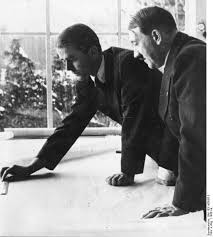
Albert Speer and Adolf Hitler pouring over architectural plans
Now living in a bunker 50 feet below bomb-shattered Berlin, Hitler gave full vent to his most destructive impulses.
“If the war is lost,” Hitler told Speer, “the nation will also perish. This fate is inevitable. There is no necessity to take into consideration the basis which the people will need to continue even a most primitive existence.
“Besides, those who will remain after the battle are only the inferior ones, for the good ones have all been killed.”
Speer argued in vain that there must be a future for the German people. But Hitler refused to back down. He gave Speer 24 hours to reconsider his opposition to the order.
The next day, Speer told Hitler: “My Fuhrer, I stand unconditionally behind you!”
“Then all is well,” said Hitler, suddenly with tears in his eyes.
“If I stand unreservedly behind you,” said Speer, “then you must entrust me rather than the Gauleiters [district Party leaders serving as provincial governors] with the implementation of your decree.”
Filled with gratitude, Hitler signed the decree Speer had thoughtfully prepared before their fateful meeting.
By doing so, Hitler unintentionally gave Speer the power to thwart his “scorched earth” decree.
Speer had been the closest thing to a friend in Hitler’s life. Trained as an architect, he had joined the Nazi Party in 1931.
In 1933, Speer became Hitler’s “genius architect” assigned to create buildings meant to last for a thousand years.
In 1943, Hitler appointed him Minister of Armaments, charged with revitalizing the German war effort.
Nevertheless, Speer now crisscrossed Germany, persuading military leaders and district governors to not destroy the vital facilities that would be needed after the war.
“No other senior National Socialist could have done the job,” writes Randall Hanson, author of Disobeying Hitler: German Resistance After Valkyrie.
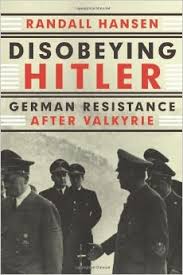
“Speer was one of the very few people in the Reich—perhaps even the only one—with such power to influence actors’ willingness/unwillingness to destroy.”
Despite his later conviction for war crimes at Nuremberg, Speer never regretted his efforts to save Germany from total destruction at the hands of Adolf Hitler.
Since the 2008 election of President Barack Obama, Republicans have adopted the same my-way-or-else “negotiating” stance as the German Fuhrer. Like him, they are determined to gain and hold absolute power—or destroy the Nation they claim to love.
On December 11, 2018, President Donald J. Trump met with then-House Minority Leader Nancy Pelosi (D-CA) and Senate Minority Leader Charles Schumer. The reason: To discuss his demand for $5 billion to fund his much-touted “border wall” between the United States and Mexico.
But Pelosi and Schumer stood firm: There would be no funding for a wall. They agreed, however, to extend funding for the Department of Homeland Security at current levels of $1.3 billion until September 30, 2019.
Trump, in turn, threatened to shut down the Federal Government if he didn’t get funding for his wall. “If we don’t get what we want, one way or the other…I will shut down the government. Absolutely.”
On December 22, Trump shut down the government. An estimated 380,000 government employees were furloughed and another 420,000 were ordered to work without pay.
And Trump told Congressional leaders the shutdown could last months or even years.
Donald Trump
For Trump, “the wall” is absolutely necessary—but not to keep illegal aliens out. They will go over, under or around it.
The real intent of the wall is to keep Trump in—the White House.
Trump’s fanatical base believes that a wall across the U.S.-Mexico border will stop all illegal immigration. And he knows that if he doesn’t build it, they won’t re-elect him.
Like Adolf Hitler, his attitude is: “If I can’t rule America, there won’t be an America.”
Among the agencies directly affected by the shutdown: The Department of Homeland Security (DHS)—whose employees include Secret Service agents.
In short: The men and women guarding Trump are facing financial ruin—along with their families—because Trump didn’t get his way.
This could ultimately prove disastrous for Trump.
In the 1981 movie, Prince of the City—based on the real-life career of NYPD Detective Robert Leuci—a Mafia killer warns Danny Ciello, a cop who will soon testify against police corruption: “Anybody can be hit. You know that. All those guards have to do is look the wrong way for a second.”
How alert are bodyguards likely to be when their families are faced with eviction and starvation?
Secret Service agents now face a choice: To take a bullet for a tyrant masquerading as President—or for their families threatened with ruin.
2016 PRESIDENTIAL CAMPAIGN, 2016 PRESIDENTIAL RACE, ABC NEWS, ACADEMY AWARDS, ALEXANDER SHUSTOROVICH, ALTERNET, ANDREW INTRATER, AP, ARCHIBALD COX, BARACK OBAMA, BENGHAZI INVESTIGATION, BEST ACTOR OSCAR, BUZZFEED, CBS NEWS, CHUCK GRASSLEY, CIA, CNN, CROOKS AND LIARS, DAILY KOZ, DAVID BROOKS, DEPARTMENT OF HOMELAND SECURITY, DEVIN NUNES, DONALD TRUMP, DONALD TRUMP JR., DONALD TRUMP’S INAUGURAL COMMITTEE, DWIGHT D. EISENHOWER, EMAILS INVESTIGATION, FACEBOOK, FBI, FEDERAL ELECTIONS COMMISSION, FOX NEWS, FRED ZINNEMANN, GARY COOPER, GEORGE W. BUSH, GRACE KELLY, HIGH NOON, HILLARY CLINTON, HOUSE INTELLIGENCE COMMITTEE, JACOB WOHL, JAMES COMEY, JARED KUSHNER, JEFF SESSIONS, JENNIFER TAUB, JOHN KASICH, JOHN MCCAIN, JOSEPH MCCARTHY, JOSEPH R. MCCARTHY, KGB, LEN BLAVATNIK, LESTER HOLT, LINDSEY GRAHAM, MARCO RUBIO, MARK SHIELDS, MICHAEL FLYNN, MITCH MCCONNELL, MOTHER JONES, MOVEON, MSNBC, NATIONAL SECURITY AGENCY, NBC NEWS, NEWSWEEK, NPR, OFFICE OF THE DIRECTOR OF NATIONAL INTELLIGENCE, PAUL MANAFORT, PAUL RYAN, PBS NEWSHOUR, PEW RESEARCH SURVEY, POLITICAL ACTION COMMITTEES (PACS), POLITICAL CONSULTANTS, POLITICO, PRINCETON UNIVERSITY, RAW STORY, REPUBLICAN PARTY, REPUBLICANS, REUTERS, RICHARD M. NIXON, ROBERT S. MUELLER 111, ROD ROSENSTEIN, RUDOLPH GIULIANI, RUSSIA, RUSSIAN OLIGARCHS, SALON, SCOTT WALKER, SEATTLE TIMES, SENATE INTELLIGENCE COMMITTEE, SENATE LEADERSHIP FUND, SERGEY KISLYAK, SERGEY LAVROV, SIMON KUKES, SLATE, SOVIET UNION, SUPREME COURT, TEX RITTER, THE ATLANTIC, THE CHICAGO SUN-TIMES, THE CHICAGO TRIBUNE, THE DAILY BEAST, THE GUARDIAN, THE HILL, THE HUFFINGTON POST, THE LOS ANGELES TIMES, THE NATION, THE NEW YORK TIMES, THE WASHINGTON POST, TIME, TRUMP INAUGURAL COMMITTEE, TRUMP TOWER, TWITTER, U.S. NEWS & WORLD REPORT, UNITED STATES DEPARTMENT OF JUSTICE, UNITED STATES DEPARTMENT OF STATE, UNITED STATES HOUSE OF REPRESENTATIVES, UNITED STATES MARINE CORPS, UNITED STATES SENATE, UNIVERSITY OF VIRGINIA LAW SCHOOL, UPI, USA TODAY, VERMONT LAW SCHOOL, VIETNAM WAR, VLADIMIR PUTIN, WILL KANE
In Bureaucracy, Entertainment, History, Law, Law Enforcement, Military, Politics, Social commentary on January 7, 2019 at 12:02 am
On November 8, 2016, millions of racist, hate-filled Americans took “revenge” on the nation’s first black President—by deliberately voting a Russian-backed egomaniac and would-be dictator into the White House.
By doing so, they set in motion events that would lead Robert S. Mueller to assume the consequences—and burdens—of their brutal, Fascistic desires.
On April 27, 2018, the House Intelligence Committee, after a sham “investigation,” concluded there had been “no collusion” between Russian Intelligence agents and members of the Trump Presidential campaign.
Among the evidence ignored: The now-infamous meeting at Trump Tower, in June, 2016, between Donald Trump’s son, Donald Jr.; his son-in-law, Jared Kushner; and his then-campaign manager, Paul Manafort, with Russian Intelligence agents.
The reason for the meeting: The Russians claimed to have dirt to offer on Hillary Clinton.
The “no collusion” verdict was inevitable, since the committee was chaired by California’s Republican Representative Devin Nunes, a wholly-owned subsidiary of Trump. Nunes had even improperly shared “secret” committee documents with the President.

Devin Nunes
The Senate Intelligence Committee, on the other hand, agreed with the conclusions previously reached by the American Intelligence community (CIA, FBI, National Security Agency): The Russians had worked to subvert the American political process and elect Trump over Clinton.
March 17, 2018, marked one year since Special Counsel Robert Mueller began his investigation to uncover “any links and/or coordination between the Russian government and individuals associated with the campaign of President Donald Trump, and any matters that arose or may arise directly from the investigation.”
By October, 2018, Mueller had:
- Indicted 31 people—including 26 Russian nationals and four former Trump campaign advisers.
- Indicted three Russian companies.
- Obtained six guilty pleas.
- Unveiled Russians’ determination to elect Trump over Hillary Clinton.
- Revealed that former National Security Adviser Michael Flynn discussed removing sanctions against Russia with then-Russian ambassador, Sergey Kislyak, during the transition period.
- Discovered that Trump associates knew about Russian outreach efforts during the campaign.
By contrast:
- Republicans spent four years investigating the 2012 attack on the United States embassy in Benghazi, Libya. Their goal: To derail the presumed 2016 Presidential candidacy of then-Secretary of State Hillary Clinton. But no indictments followed.
- Republicans spent two years investigating Hillary Clinton’s use of a private email server while Secretary of State. Again, no indictments followed.
* * * * *
It’s past time for Republicans to remember the lesson taught by High Noon, the classic 1952 Western starring Gary Cooper and Grace Kelly.
Town marshal Will Kane (Cooper) has just married Amy Fowler (Kelly) a Quaker. It should be the happiest day of his life. But shortly after the ceremony, word comes that Frank Miller—a notorious murderer Kane once sent to prison—has been released.

Even worse, Miller—joined by three other killers—is coming into town on the noon train to kill Kane.
Kane’s first instinct is to flee: He and his wife get into a buggy and dash out of town. But then his sense of duty takes over. He returns to town, intending to recruit a posse.
But this proves impossible—everyone is scared to death of Miller and his gang. And everyone Kane approaches has a reason for not backing him up.
Even Amy—a fervent believer in non-violence—threatens to leave him if he stands up to Miller. She will be on the noon train leaving town—with or without him.
When the clock strikes noon, the train arrives, and Kane—alone—faces his enemies. He shoots and kills two of them.
Then, as he’s pinned down by the third, he gets some unexpected help—from his wife: Amy shoots the would-be killer in the back—only to be taken hostage by Miller himself.
Miller tells Kane to leave his concealed position or he’ll kill Amy. Kane steps into the open—and Amy claws at Miller’s face, buying Kane the time he needs to shoot Miller down.
The townspeople rush to embrace Kane and congratulate him. But he’s disgusted with their cowardice and holds them in total contempt.
Saying nothing, he drops the marshal’s star into the dirt. He and Amy then get into a buggy and leave town.
Fred Zinnemann, the film’s director, intended the movie as an attack on those frightened into silence by Joseph McCarthy, the infamous Red-baiting Senator from Wisconsin.
Will Kane fought to protect himself and his town from a gang of murderous outlaws.
Robert Mueller is fighting to discover the truth behind Russian subversion of the American political system.
The difference between these two conflicts is this: We know how Kane’s fight ended—with a good man defeating evil men.
We do not know if Mueller will ultimately triumph over his—and America’s—mortal enemies.
Robert Mueller—as a soldier, prosecutor, FBI director and now Special Counsel—took an oath to “support and defend the Constitution of the United States against all enemies, foreign and domestic.”
So did Donald Trump when he was inaugurated President. And so did every member of the House of Representatives and the Senate.
The difference between Robert Mueller, and the overwhelming majority of Republican Congressional members who continue to support Trump, is this: Mueller, like a compass pointing True North, has always stayed faithful to that oath.


 Bureaucracybuster's Blog
2016 PRESIDENTIAL CAMPAIGN, ABC NEWS, ADOLF HITLER, ALTERNET, ANN COULTER, AP, AUSTRIA, BARACK OBAMA, BILL CLINTON, BORDER WALL, BUZZFEED, CBS NEWS, CHARLES SCHUMER, CHRIS CILLIZZA, CNN, CONTRACTORS, COUNCIL OF ECONOMIC ADVISERS, CROOKS AND LIARS, CZECHOSLOVAKIA, DAILY KOZ, DAVID BROOKS, DEMOCRATS, DEPARTMENT OF COMMERCE, DEPARTMENT OF HOMELAND SECURITY, DICK CHENEY, DONALD TRUMP, EDOUARD DELADIER, FACEBOOK, FBI, FEDERAL AVIATION ADMINISTRATION (FAA), FOX NEWS, FRANCE, GEORGE W. BUSH, GOVERNMENT SHUTDOWN, HOUSE OF REPRESENTATIVES, JAPAN, JEDEDIAH BILA, JOSE ANDRES, JULIAN ZELITZER, KEVIN HASSETT, KURT VON SCHUSCHNIGG, MARIE ANTOINETTE, MARK SHIELDS, MIKE PENCE, MITCH MECONNELL, MOTHER JONES, MOVEON, MSNBC, MUNICH CONFERENCE, NANCY PELOSI, NAZI GERMANY, NBC NEWS, NEVILLE CHAMBERLAIN, NEWSWEEK, NICCOLO MACHIAVELLI, NPR, PBS NEWSHOUR, POLAND, POLITICO, RAW STORY, REPUBLICANS, REUTERS, ROBERT PAYNE, RUSH LIMBAUGH, SALON, SEATTLE TIMES, SLATE, SOUP KITCHENS, STATE OF THE UNION ADDRESS, SUPER BOWL, THE ATLANTIC, THE CHICAGO SUN-TIMES, THE CHICAGO TRIBUNE, THE DAILY BEAST, THE GUARDIAN, THE HILL, THE HUFFINGTON POST, THE LIFE AND DEATH OF ADOLF HITLER, THE LOS ANGELES TIMES, THE NATION, THE NEW YORK TIMES, THE PRINCE, THE WALL STREET JOURNAL, THE WASHINGTON POST, TIME, TRANSPORTATION SAFETY ADMINISTRATION (TSA), TWITTER, U.S. NEWS & WORLD REPORT, UBER, UNITED STATES HOUSE OF REPRESENTATIVES, UNITED STATES SECRET SERVICE, UNITED STATES SENATE, UPI, USA TODAY, WILBUR ROSS, WINSTON CHURCHILL, WORLD WAR 11
LEARNING FROM THE MUNICH DISASTER: PART ONE (OF FIVE)
In Bureaucracy, History, Military, Politics, Social commentary on January 28, 2019 at 1:03 amRobert Payne, author of the bestselling biography, The Life and Death of Adolf Hitler (1973), described Hitler’s “negotiating” style thus:
“Although Hitler prized his own talents as a negotiator, a man always capable of striking a good bargain, he was totally lacking in finesse.
“He was incapable of bargaining. He was like a man who goes up to a fruit peddler and threatens to blow his brains out if he does not sell his applies at the lowest possible price.”
By studying Hitler’s mindset and “negotiating” methods, we can learn much about the mindset and “negotiating” style of today’s Republican party.
A classic example of Hitler’s “negotiating style” came in September, 1938, when he focused his rage and aggression on Czechoslovakia.
Seven months earlier, he had absorbed Austria. He had done so by inviting its Chancellor, Kurt Shuschnigg, to Berlin. Then Hitler threatened Austria with invasion if Shuschnigg did not immediately agree to make his country a vassal-state of Germany.
This time, his threats were aimed at Neville Chamberlain, the prime minister of Great Britain, and Eduoard Deladier, the prime minister of France. Both countries had pledged to support Czechoslovakia against Hitler’s aggression.
Once again, he opened “negotiations” with a lie: The Czechoslovak government was trying to exterminate 3.5 million Germans living in the “Sudetenland.”
This consisted of the northern, southwest and western regions of Czechoslovakia, inhabited mostly by ethnic Germans.
Then he followed this up with the threat of war: Germany would protect its citizens and halt such “oppression.”
For British Prime Minister Neville Chamberlain, the thought of another European war erupting less than 20 years after the end of World War I was simply unthinkable.
The Cenotaph, in London, honoring the unknown British dead of World War 1
Something had to be done to prevent it. And he believed himself to be just the man to do it.
He quickly sent Hitler a telegram, offering to help resolve the crisis: “I could come to you by air and am ready to leave tomorrow. Please inform me of earliest time you can receive me, and tell me the place of the meeting. I should be grateful for a very early reply.”
Once again, another head-of-state was prepared to meet Hitler on his home ground. Again, Hitler took this concession as a sign of weakness. And Chamberlain’s use of such words as “please” and “grateful” only further convinced Hitler of another impending triumph.
Chamberlain was determined to grant his every demand—so long as this meant avoiding a second world war.
The two European leaders met in Berchtesgaden, Germany, on September 15, 1938.
Neville Chamberlain and Adolf Hitler
During their talks, Chamberlain said he had come to discuss German grievances. But, he added, it was necessary in all circumstances to exclude the use of force.
Hitler appeared to be shocked that he could be accused of such intentions: “Force? Who speaks of force?“
Then, without warning, he switched to an aggressive mode. He accused the Czechs of having mobilized their army in May. They had mobilized—in response to the mobilization of the German army.
“I shall not put up with this any longer,” shouted Hitler. “I shall settle this question in one way or another. I shall take matters in my own hands!”
Suddenly, Chamberlain seemed alarmed—and possibly angry: “If I understood you right, you are determined to proceed against Czechoslovakia in any case. If this is so, why did you let me come to Berchtesgaden?
“In the circumstances, it is best for me to return at once. Anything else now seems pointless.”
Hitler was taken aback by the unexpected show of defiance. He realized he was about to lose his chance to bully the British into accepting his latest demands.
So he softened his tone and said they should consider the Sudetenland according to the principle of self-determination.
Chamberlain said he must immediately return to England to consult with his colleagues.
Hitler appeared uneasy. But then the German translator finished the sentence: “…and then meet you again.”
Hitler realized he still had a chance to attain victory without going to war.
Chamberlain agreed to the cession of the Sudetenland. Three days later, French Prime Minister Edouard Daladier did the same. No Czechoslovak representative was invited to these discussions.
Chamberlain met Hitler again in Godesberg, Germany, on September 22 to confirm the agreements. But Hitler aimed to use the crisis as a pretext for war.
He now demanded not only the annexation of the Sudetenland but the immediate military occupation of the territories. This would give the Czechoslovak army no time to adapt their defense measures to the new borders.
To achieve a solution, Italian dictator Benito Mussolini suggested a conference of the major powers in Munich.
On September 29, Hitler, Daladier and Chamberlain met and agreed to Mussolini’s proposal. They signed the Munich Agreement, which accepted the immediate occupation of the Sudetenland.
The Czechoslovak government had not been a party to the talks. Nevertheless, it promised to abide by the agreement on September 30.
It actually had no choice. It faced the threat of an immediate German invasion after being deserted by its pledged allies: Britain, France and the Soviet Union.
Share this: