Posts Tagged ‘SOVIET UNION’
9/11 ATTACKS, ABC NEWS, AL QAEDA, ALTERNET, AMERICABLOG, AMERICAN CAESARS: THE LIVES OF THE PRESIDENTS FROM FRANKLIN D. ROOSEVELT TO GEORGE W. BUSH (BOOK), AMERICAN EMPIRE, AP, BABY BOOMER RESISTANCE, BARACK OBAMA, BASHAR AL-ASSAD, BBC, BILL CLINTON, BLOOMBERG NEWS, BUREAUCRACY, BUZZFEED, CBS NEWS, CHRIS MATHEWS, CNN, COLIN POWELL, CONDOLEEZA RICE, CROOKS AND LIARS, DAILY KOS, DICK CHENEY, DONALD RUMSFELD, DONALD TRUMP, DWIGHT EISENHOWER, FBI, FIVETHIRTYEIGHT, FRANKLIN D. ROOSEVELT, GAIUS SUETONIUS TRANQUILLIUS, GEORGE H.W. BUSH, GEORGE W. BUSH, GERALD R. FORD, HARPER’S MAGAZINE, HARRY S. TRUMAN, HOLOCAUST, HUFFINGTON POST, IRAN, IRAQ, ISRAEL, JEFFREY EPSTEIN, JFK: RECKLESS YOUTH (BOOK), JIMMY CARTER, JOHN F. KENNEDY, LYNDON B. JOHNSON, MEDIA MATTERS, MEIN KAMPF, MOTHER JONES, MOVEON, MSNBC, NATIONAL SECURITY COUNCIL, NBC NEWS, NEW REPUBLIC, NEWSDAY, NEWSWEEK, NIGEL HAMILTON, NPR, OSAMA BIN LADEN, PAUL O’NEIL, PAUL WOLFOWITZ, PBS NEWSHOUR, POLITICO, POLITICUSUSA, RAW STORY, REPUBLICAN PARTY, REUTERS, RICHARD CLARKE, RICHARD NIXON, ROMAN EMPIRE, SADDAM HUSSEIN, SALON, SEATTLE TIMES, SEPTEMBER 11, SLATE, SOVIET UNION, SUETONIUS, SYRIA, TALKING POINTS MEMO, TERRORISM, THE ATLANTIC, THE CHICAGO SUN-TIMES, THE CHICAGO TRIBUNE, THE DAILY BEAST, THE DAILY BLOG, THE GUARDIAN, THE HILL, THE HUFFINGTON POST, THE INTERCEPT, THE LOS ANGELES TIMES, THE NATION, THE NEW REPUBLIC, THE NEW YORK TIMES, THE NEW YORKER, THE PENTAGON, THE TWELVE CAESARS (BOOK), THE VILLAGE VOICE, THE WASHINGTON POST, THINKPROGRESS, TIME, TRUTHDIG, TRUTHOUT, U.S. NEWS & WORLD REPORT, UPI, USA TODAY, WEAPONS OF MASS DESTRUCTION, WHITE HOUSE CORRESPONDENTS DINNER, WORLD TRADE CENTER, WORLD WAR 11, X
In Bureaucracy, History, Military, Politics, Social commentary on March 18, 2026 at 12:40 am
On September 12, 2001, President George W. Bush attended a meeting of the National Security Council.
“Why shouldn’t we go against Iraq, not just Al-Qaeda?” demanded Donald Rumsfeld, the Secretary of Defense.
Vice President Dick Cheney enthusiastically agreed.
Secretary of State Colin Powell then pointed out there was absolutely no evidence that Iraq had had anything to do with 9/11 or Al-Qaeda. And he added: “The American people want us to do something about Al-Qaeda”—not Iraq.
On November 21, 2001, only 10 weeks after 9/11, Bush told Rumsfeld: It’s time to turn to Iraq.


Condoleeza Rice
Bush and his war-hungry Cabinet officials knew that Americans demanded vengeance on Al Qaeda’s mastermind, Osama bin Laden, and not Iraqi dictator Saddam Hussein. So they repeatedly fabricated “links” between the two:
- Saddam had worked hand-in-glove with Bin Laden to plan 9/11.
- Saddam was harboring and supporting Al-Qaeda throughout Iraq.
- Saddam, with help from Al-Qaeda, was scheming to build a nuclear bomb.
Yet as early as September 22, 2001, Bush had received a classified President’s Daily Brief intelligence report, which stated that there was no evidence linking Saddam Hussein to 9/11.
The report added that there was scant credible evidence that Iraq had any significant collaborative ties with Al-Qaeda.
Even more important: Saddam had tried to monitor Al Qaeda through his intelligence service—because he saw Al-Qaeda and other theocratic radical Islamist organizations as a potential threat to his secular regime.

Dick Cheney
Bush administration officials repeatedly claimed that Iraq possessed huge quantities of chemical and biological weapons, in violation of UN resolutions. And they further lied that US intelligence agencies had determined:
- The precise locations where these weapons were stored;
- The identities of those involved in their production; and
- The military orders issued by Saddam Hussein for their use in the event of war.
Among other lies stated as fact by members of the Bush administration:
- Iraq had sought uranium from Niger, in west Africa.
- Thousands of aluminum tubes imported by Iraq could be used in centrifuges to create enriched uranium.
- Iraq had up to 20 long-range Scud missiles, prohibited under UN sanctions.
- Iraq had massive stockpiles of chemical and biological agents, including nerve gas, anthrax and botulinum toxin.
- Saddam Hussein had issued chemical weapons to front-line troops who would use them when U.S. forces crossed into Iraq.
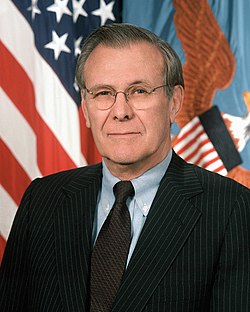
Donald Rumsfeld
Consider the following:
August 26, 2002: Cheney told the Veterans of Foreign Wars, “There is no doubt that Saddam Hussein now has weapons of mass destruction. There is no doubt he is amassing them to use against our friends, against our allies and against us.”
September 8, 2002: National Security Advisor Condoleeza Rice said on CNN: ”There is certainly evidence that Al-Qaeda people have been in Iraq. There is certainly evidence that Saddam Hussein cavorts with terrorists.”
September 18, 2002: Rumsfeld told the House Armed Services Committee, “We do know that the Iraqi regime has chemical and biological weapons. His regime has amassed large, clandestine stockpiles of chemical weapons—including VX, sarin, cyclosarin and mustard gas.”
October 7, 2002: Bush declared in a nationally televised speech in Cincinnati that Iraq “possesses and produces chemical and biological weapons. It is seeking nuclear weapons.”
March 16, 2003: Cheney declared on NBC’s “Meet the Press”: “We believe [Saddam Hussein] has, in fact, reconstituted nuclear weapons.”
Bush never regretted his decision to attack Iraq—on March 19, 2003.
Even as American occupying forces repeatedly failed to turn up any evidence of “weapons of mass destruction” (WMDs), Bush and his minions claimed the invasion a good thing.
In fact, Bush—who hid out the Vietnam war in the Texas Air National Guard—even joked publicly about the absence of WMDs.
He did so at a White House Correspondents dinner on March 24, 2004—one year after he had started the war.

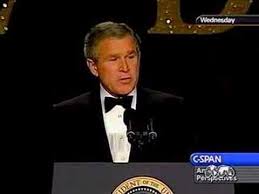
George W. Bush at the 2004 White House Correspondents’ dinner
To Bush, the non-existent WMDs were nothing more than the butt of a joke that night. While an overhead projector displayed photos of a puzzled-looking Bush searching around the Oval Office, Bush recited a comedy routine.
“Those weapons of mass destruction have gotta be somewhere,” Bush laughed, while a photo showed him poking around the corners in the Oval Office.
“Nope—no weapons over there! Maybe they’re under here,” he said, as a photo showed him looking under a desk.
Meanwhile, an assembly of wealthy, pampered men and women—-the elite of America’s media and political classes—laughed heartily during Bush’s performance.
It was a scene worthy of the court of the ancient Caesars, complete with royal flunkies: “Hey! That country we just destroyed wasn’t a threat to us after all! Isn’t that a gas?”
The results of the war that Bush had deliberately provoked:
- Cost the lives of 4,484 Americans.
- Depleted the United States Treasury of at least $2 trillion.
- Created a Middle East power vacuum.
- Allowed Iran—Iraq’s arch enemy—to eagerly fill it.
- Frightened and repelled even America’s closest allies.
- Killed at least 655,000 Iraqis.
- Bush retired from office with a lavish pension and full Secret Service protection.
- He wrote his memoirs and was paid $7 million for the first 1.5 million copies.
- Cheney, Rumsfeld and Rice retired to private business, wrote their memoirs, and lived in comfort as respected elder statesmen.
9/11 ATTACKS, ABC NEWS, AL QAEDA, ALTERNET, AMERICABLOG, AMERICAN CAESARS: THE LIVES OF THE PRESIDENTS FROM FRANKLIN D. ROOSEVELT TO GEORGE W. BUSH (BOOK), AMERICAN EMPIRE, AP, BABY BOOMER RESISTANCE, BASHAR AL-ASSAD, BBC, BILL CLINTON, BLOOMBERG NEWS, BUREAUCRACY, BUZZFEED, CBS NEWS, CHRIS MATHEWS, CNN, COLIN POWELL, CONDOLEEZA RICE, CROOKS AND LIARS, DAILY KOS, DICK CHENEY, DONALD RUMSFELD, DONALD TRUMP, DWIGHT EISENHOWER, FBI, FIVETHIRTYEIGHT, FRANKLIN D. ROOSEVELT, GAIUS SUETONIUS TRANQUILLIUS, GEORGE H.W. BUSH, GEORGE W. BUSH, GERALD R. FORD, HARPER’S MAGAZINE, HARRY S. TRUMAN, HOLOCAUST, HUFFINGTON POST, IRAN, IRAQ, ISRAEL, JEFFREY EPSTEIJN, JFK: RECKLESS YOUTH (BOOK), JIMMY CARTER, JOHN F. KENNEDY, LYNDON B. JOHNSON, MEDIA MATTERS, MEIN KAMPF, MOTHER JONES, MOVEON, MSNBC, NATIONAL SECURITY COUNCIL, NBC NEWS, NEW REPUBLIC, NEWSDAY, NEWSWEEK, NIGEL HAMILTON, NPR, OSAMA BIN LADEN, PAUL O’NEIL, PAUL WOLFOWITZ, PBS NEWSHOUR, POLITICO, POLITICUSUSA, RAW STORY, REPUBLICAN PARTY, REUTERS, RICHARD CLARKE, RICHARD NIXON, ROMAN EMPIRE, SADDAM HUSSEIN, SALON, SEATTLE TIMES, SEPTEMBER 11, SLATE, SOVIET UNION, SUETONIUS, SYRIA, TALKING POINTS MEMO, TERRORISM, THE ATLANTIC, THE CHICAGO SUN-TIMES, THE CHICAGO TRIBUNE, THE DAILY BEAST, THE DAILY BLOG, THE GUARDIAN, THE HILL, THE HUFFINGTON POST, THE INTERCEPT, THE LOS ANGELES TIMES, THE NATION, THE NEW REPUBLIC, THE NEW YORK TIMES, THE NEW YORKER, THE PENTAGON, THE TWELVE CAESARS (BOOK), THE VILLAGE VOICE, THE WASHINGTON POST, THINKPROGRESS, TIME, TRUTHDIG, TRUTHOUT, U.S. NEWS & WORLD REPORT, UPI, USA TODAY, WEAPONS OF MASS DESTRUCTION, WHITE HOUSE CORRESPONDENTS DINNER, WORLD TRADE CENTER, WORLD WAR 11, X
In Bureaucracy, History, Military, Politics, Social commentary on March 17, 2026 at 12:10 am
As President Donald Trump rains bombs and missiles on Iran, it’s vital to remember how American hubris led to a nine-year war in Iraq—from the “shock and awe” bombardment of March 20, 2003, until combat forces were finally withdrawn on December 18, 2011.
But this should also be a time to remember those Americans who made the 9/11 atrocity—and the disastrous Iraq war that followed—inevitable.
British historian Nigel Hamilton has chronicled their arrogance and indifference in his 2010 biography: American Caesars: Lives of the Presidents from Franklin D. Roosevelt to George W. Bush.
Hamilton noted that Richard Clarke, the national security advisor on terrorism, was certain that Osama bin Laden had arranged the USS Cole bombing in Aden on October 12, 2000.
For months, Clarke tried to convince others in the Bush Administration that Bin Laden was plotting another attack against the United States—either abroad or at home.
But Clarke could not prevail against the know-it-all arrogance of such higher-ranking Bush officials as Vice President Dick Cheney; Secretary of Defense Donald Rumsfeld; Rumsfeld’s deputy, Paul Wolfowitz; and National Security Advisor Condoleeza Rice.
Rice initially refused to hold a cabinet-level meeting on the subject. Then she “insisted the matter be handled only by a more junior Deputy Principals meeting” in April, 2001, writes Hamilton.
Even after Clarke outlined the threat posed by Al-Qaeda, Wolfowitz—the number-two man at the Department of Defense—said: “You give bin Laden too much credit.”
Wolfowitz—whose real target was Saddam Hussein—insisted that bin Laden couldn’t carry out his terrorist acts without the aid of a state sponsor—namely, Iraq.
In fact, Wolfowitz blamed Iraq for the 1993 bombing of the World Trade Center. Clarke was stunned, since there was absolutely no evidence of Iraqi involvement in this.
“Al-Qaeda plans major acts of terrorism against the United States,” Clarke warned his colleagues. He pointed out that, like Adolf Hitler, bin Laden had actually published his plans for future destruction.
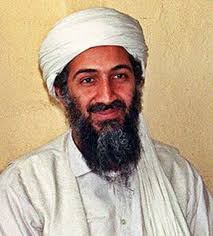
Osama bin Laden
And he added: “Sometimes, as with Hitler in Mein Kampf, you have to believe that these people will actually do what they say they will do.”
Wolfowitz heatedly traded on his Jewish heritage to bring Clarke’s unwelcome arguments to a halt: “I resent any comparison between the Holocaust and this little terrorist in Afghanistan.”
Writing in outraged fury, Hamilton sums up Clarke’s agonizing frustrations:
- Bush’s senior advisors treated their colleagues who had served in the Clinton administration with contempt.
- Bush, Dick Cheney, Rice, Rumsfeld and Wolfowitz seemed content to ignore the danger signals of an impending al-Qaeda attack.
- This left only Secretary of State Colin Powell, his deputy Richard Armitage, Richard Clarke and a skeptical Treasury Secretary, Paul O’Neill, to wage “a lonely battle to waken a seemingly deranged new administration.”
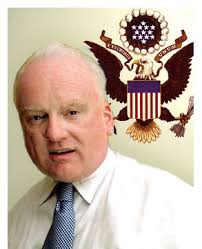
Richard Clarke
Clarke alerted Federal Intelligence agencies that “Al-Qaeda is planning a major attack on us.” He asked the FBI and CIA to report to his office all they could learn about suspicious persons or activities at home and abroad.
Finally, at a meeting with Rice on September 4, 2001, Clarke challenged her to “picture yourself at a moment when in the very near future Al-Qaeda has killed hundreds of Americans, and imagine asking yourself what you wish then that you had already done.”
Seven days later, Al-Qaeda struck, and 3,000 Americans died horrifically—and needlessly.
Neither Bush, Cheney, Rice, Rumsfeld nor Wolfowitz ever admitted their negligence. Nor would any of them be brought to account.

Condoleeza Rice, Dick Cheney, George W. Bush and Donald Rumsfeld
Disgustingly, these were the same officials who, afterward, posed as the Nation’s saviors—and branded anyone who disagreed with them as a traitor, practices the Right continues to exploit to this day.
Only Richard Clarke—who had vainly argued for stepped-up security precautions and taking the fight to Al-Qaeda—gave that apology.
On March 24, 2004, Clarke testified at the public 9/11 Commission hearings. Addressing relatives of victims in the audience, he said: “Your government failed you, those entrusted with protecting you failed you, and I failed you.”
Yet even worse was to come.
On the evening after the September 11 attacks, Bush took Clarke aside during a meeting in the White House Situation Room:
“I want you, as soon as you can, to go back over everything, everything. See if Saddam [Hussein, the dictator of Iraq] did this. See if he’s linked in any way.”
Clarke was stunned: “But, Mr. President, Al-Qaeda did this.”
“I know, I know,” said Bush. “But see if Saddam was involved. I want to know.”
Hussein had not plotted the attack—and there was no evidence proving that he did.
But the attack gave “W” the excuse he wanted to remove the man he blamed for the 1992 defeat of his father, President George H.W. Bush.
Bush believed that his father would have been re-elected if he had “gone all the way” into Baghdad during the 1991 Gulf War.
He would finish the job that his father had started but failed to compete.
It was Hamlet Revisited—with missiles.
On September 12, 2001, Bush attended a meeting of the National Security Council.
“Why shouldn’t we go against Iraq, not just Al-Qaeda?” demanded Donald Rumsfeld, the Secretary of Defense.
Vice President Dick Cheney enthusiastically agreed.
9/11 ATTACKS, ABC NEWS, AL QAEDA, ALTERNET, AMERICABLOG, AMERICAN CAESARS: THE LIVES OF THE PRESIDENTS FROM FRANKLIN D. ROOSEVELT TO GEORGE W. BUSH (BOOK), AMERICAN EMPIRE, AP, BABY BOOMER RESISTANCE, BASHAR AL-ASSAD, BBC, BILL CLINTON, BLOOMBERG NEWS, BUREAUCRACY, BUZZFEED, CBS NEWS, CHRIS MATHEWS, CNN, COLIN POWELL, CONDOLEEZA RICE, CROOKS AND LIARS, DAILY KOS, DICK CHENEY, DONALD RUMSFELD, DONALD TRUMP, DWIGHT EISENHOWER, FBI, FIVETHIRTYEIGHT, FRANKLIN D. ROOSEVELT, GAIUS SUETONIUS TRANQUILLIUS, GEORGE H.W. BUSH, GEORGE W. BUSH, GERALD R. FORD, HARPER’S MAGAZINE, HARRY S. TRUMAN, HOLOCAUST, HUFFINGTON POST, IRAN, IRAQ, ISRAEL, JEFFREY EPSTEIN, JFK: RECKLESS YOUTH (BOOK), JIMMY CARTER, JOHN F. KENNEDY, LYNDON B. JOHNSON, MEDIA MATTERS, MEIN KAMPF, MOTHER JONES, MOVEON, MSNBC, NATIONAL SECURITY COUNCIL, NBC NEWS, NEW REPUBLIC, NEWSDAY, NEWSWEEK, NIGEL HAMILTON, NPR, OSAMA BIN LADEN, PAUL O’NEIL, PAUL WOLFOWITZ, PBS NEWSHOUR, POLITICO, POLITICUSUSA, RAW STORY, REPUBLICAN PARTY, REUTERS, RICHARD CLARKE, RICHARD NIXON, ROMAN EMPIRE, SADDAM HUSSEIN, SALON, SEATTLE TIMES, SLATE, SOVIET UNION, SYRIA, TALKING POINTS MEMO, TERRORISM, THE ATLANTIC, THE CHICAGO SUN-TIMES, THE CHICAGO TRIBUNE, THE DAILY BEAST, THE DAILY BLOG, THE GUARDIAN, THE HILL, THE HUFFINGTON POST, THE INTERCEPT, THE LOS ANGELES TIMES, THE NATION, THE NEW REPUBLIC, THE NEW YORK TIMES, THE NEW YORKER, THE PENTAGON, THE TWELVE CAESARS (BOOK), THE VILLAGE VOICE, THE WASHINGTON POST, THINKPROGRESS, TIME, TRUTHDIG, TRUTHOUT, U.S. NEWS & WORLD REPORT, UPI, USA TODAY, WEAPONS OF MASS DESTRUCTION, WHITE HOUSE CORRESPONDENTS DINNER, WORLD TRADE CENTER, WORLD WAR 11, X
In Bureaucracy, History, Military, Politics, Social commentary on March 16, 2026 at 12:55 am
On February 28, 2026, President Donald J. Trump—in collusion with Israel—launched massive airstrikes against Iran.
Since then, he—and other members of his administration—have issued a series of shifting and contradictory reasons for starting the war. Among them:
- Preventing Iran from developing nuclear weapons.
- Destroying Iran’s missile capabilities.
- Annihilating the Iranian navy.
- Ensuring that Iran quit arming, funding and/or directing “terrorist armies” outside its borders.
- Pre-empting an Iranian attack on American military bases in the Middle East.
One reason not given: Driving the Epstein files—which document Trump’s salacious relationship with pedophile Jeffrey Epstein—off the airways and Internet.
Equally worrisome has been Trump’s shifting estimates about how long the conflict will rage:
- March 9: “It’s going to be ended soon.”
- March 11: “Any time I want it to end, it will end.”
- March 13: “It’ll be as long as it’s necessary.”
- March 13: “When I feel it in my bones” when asked “When are you going to know when it’s over?”
Trump’s comments are eerily similar to those made by President George W. Bush on May 1, 2003.
Standing under a “Mission Accomplished” banner on the deck of the aircraft carrier USS Abraham Lincoln, Bush announced: “Major combat operations in Iraq have ended. In the battle of Iraq, the United States and our allies have prevailed.”
Only on December 18, 2011, were American forces withdrawn from Iraq.
But Americans, refusing to learn from history or even read it, are now being forced to repeat it.
To begin at the beginning:
Even as the rubble was being cleared at the Pentagon and World Trade Center from 9/11, President George W. Bush was preparing to use the attack as an excuse to topple Iraqi dictator Saddam Hussein.
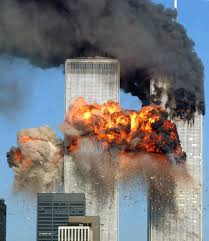
World Trade Center on September 11, 2001
Hussein had not plotted 9/11, and there was no evidence that he did. But that didn’t matter to Bush and those planning the invasion and conquest of Iraq.
British historian Nigel Hamilton has dared to lay bare the facts of this disgrace. Hamilton is the author of several acclaimed political biographies, including JFK: Reckless Youth and Bill Clinton: Mastering the Presidency.
In 2007, he began research on his latest book: American Caesars: The Lives of the Presidents From Franklin D. Roosevelt to George W. Bush.

Nigel Hamilton
Nigel Hamilton, CC BY-SA 3.0 <http://creativecommons.org/licenses/by-sa/3.0/>, via Wikimedia Commons
The inspiration for this came from a classic work of ancient biography: The Twelve Caesars, by Gaius Suetonius Tranquillus—known as Suetonius.
Suetonius, a Roman citizen and historian, had chronicled the lives of the first twelve Caesars of imperial Rome: Julius Caesar, Augustus, Tiberius, Caligula, Claudius, Nero, Galba, Otho, Vitellius, Vespasian, Titus and Domitian.
Hamilton wanted to examine post-World War II United States history as Suetonius had examined that of ancient Rome: Through the lives of the 12 “emperors” who had held the power of life and death over their fellow citizens—and those of other nations.
For Hamilton, the “greatest of American emperors, the Caesar Augustus of his time,” was Franklin D. Roosevelt, who led his country through the Great Depression and World War II.

Franklin D. Roosevelt
His “”great successors” were Harry S. Truman, Dwight D. Eisenhower and John F. Kennedy—who, in turn, contained the Soviet Union abroad and presided over sustained economic prosperity at home.
By contrast, “arguably the worst of all the American Caesars” was “George W. Bush, and his deputy, Dick Cheney, who willfully and recklessly destroyed so much of the moral basis of American leadership in the modern world.”
Among the most lethal of Bush’s offenses: The appointing of officials who refused to take seriously the threat posed by Al-Qaeda.
And this arrogance and indifference continued—right up to September 11, 2001, when the World Trade Center and Pentagon became targets for destruction.
Among the few administration officials who did take Al-Qaeda seriously was Richard Clarke, the chief counter-terrorism adviser on the National Security Council.
Clarke had been thus appointed in 1998 by President Bill Clinton. He continued in the same role under President Bush—but the position was no longer given cabinet-level access.
This put him at a severe disadvantage when dealing with other, higher-ranking Bush officials—such as Vice President Dick Cheney, Secretary of Defense Donald Rumsfeld, Rumsfeld’s deputy, Paul Wolfowitz and National Security Advisor Condoleeza Rice.
These turned out to be the very officials who refused to believe that Al-Qaeda posed a lethal threat to the United States.
“Indeed,” writes Hamilton, “in the entire first eight months of the Bush Presidency, Clarke was not permitted to brief President Bush a single time, despite mounting evidence of plans for a new al-Qaeda outrage.” [Italics added]
Nor did it help that, during his first eight months in office before September 11, Bush was on vacation, according to the Washington Post, 42% of the time.
For months, Clarke tried to convince others in the Bush Administration that Bin Laden was plotting another attack against the United States–either abroad or at home.
But Clarke could not prevail against the know-it-all arrogance of such higher-ranking Bush officials as Cheney, Rumsfeld, Wolfowitz and Rice.
2003 IRAQ WAR, ABC NEWS, ADOLF HITLER, ALTERNET, AMERICABLOG, AP, BABY BOOMER RESISTANCE, BBC, BLOOMBERG NEWS, BUZZFEED, CBS NEWS, CHINA, CNN, CRIMEAN PENINSULA, CROOKS AND LIARS, DAILY KOS, DONALD TRUMP, ECONOMIC SANCTIONS, EDOUARD DELADIER, ENGLAND, FIVETHIRTYEIGHT, FRANCE, GEORGE W. BUSH, HARPER’S MAGAZINE, HUFFINGTON POST, IRAN, JOACHIM VON RIBBENTROP, KIEV, MEDIA MATTERS, MOSKOVA (SHIP), MOTHER JONES, MOVEON, MSNBC, MUNICH CONFERENCE, NATO, NBC NEWS, NEVILLE CHAMBERLAIN, NEW REPUBLIC, NEWSDAY, NEWSWEEK, NPR, PBS NEWSHOUR, POLAND, POLITICO, POLITICUSUSA, RAW STORY, REPUBLIC OF GEORGIA, REUTERS, RUBLES, RUSSIA, SADDAM HUSSEIN, SALON, SEATTLE TIMES, SECOND CHECHEN WAR, SLATE, SOVIET UNION, TALKING POINTS MEMO, THE ATLANTIC, THE CHICAGO SUN-TIMES, THE CHICAGO TRIBUNE, THE DAILY BEAST, THE DAILY BLOG, THE GUARDIAN, THE HILL, THE HUFFINGTON POST, THE INTERCEPT, THE LOS ANGELES TIMES, THE NATION, THE NEW REPUBLIC, THE NEW YORK TIMES, THE NEW YORKER, THE VILLAGE VOICE, THE WASHINGTON POST, THINKPROGRESS, TIME, TRUTHDIG, TRUTHOUT, TWO POLITICAL JUNKIES, U.S. NEWS & WORLD REPORT, UKRAINE, UNITED STATES, UPI, USA TODAY, VLADIMIR PUTIN, WONKETTE, X
In Bureaucracy, Business, History, Military, Politics, Social commentary on March 12, 2026 at 12:39 am
On February 28, 2022, CNN’s website published the following headline: RUSSIA FACES FINANCIAL MELTDOWN AS SANCTIONS SLAM ITS ECONOMY.
The story opened:
“Russia was scrambling to prevent financial meltdown Monday as its economy was slammed by a broadside of crushing Western sanctions imposed over the weekend in response to the invasion of Ukraine.”
That unprovoked attack had opened on February 24, with missile and artillery attacks, striking major Ukrainian cities, including Kiev.
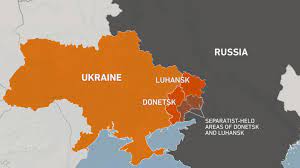
Ukraine vs. Russia
Russian President Vladimir Putin believed that the conquest of Ukraine would be a cakewalk. Intent on restoring the borders of the former Soviet Union, he had swept from one successful war to the next:
- In 1999-2000, he waged the Second Chechen War, restoring federal control of Chechnya.
- In 2008, he invaded the Republic of Georgia, which had declared its independence as the Soviet Union began to crumble. By war’s end, Russia occupied 20% of Georgia’s territory.
- In 2014, Putin invaded and annexed the Crimean Peninsula from Ukraine.
Meanwhile, the North Atlantic Treaty Organization (NATO) launched only verbal condemnations.
The reasons:
- Fear of igniting a nuclear war;
- Belief that Russia was simply acting within its own sphere of influence; and/or
- Then-President Donald Trump’s repeated attacks on NATO and displays of subservience to Putin.
NATO emblem
Russia had began massing troops on the Ukrainian border in 2021.
When the invasion came, the United States and its Western European allies retaliated with unprecedented economic sanctions.
Among the resulting casualties:
- The ruble crashed.
- Russia’s central bank more than doubled interest rates to 20%.
- Economists predicted the Russian economy could decline by five percent.
- The West—especially the United States—froze at least half of the $630 billion in international reserves that Putin had amassed to stave off tough sanctions.
Then the war bogged down for Russia. By 2026:
- Russia occupied approximately 20% of Ukraine.
- Russia made slow expansions in the east, but Ukraine regained about 400 square kilometers of territory.
- The war has become a conflict fought with drones, Vehicle movement near the front has become impossible.
- Russian drones and missiles target civilian infrastructure and residential areas.
- Ukraine has launched deep-strike operations against Russian military production and energy facilities.
- Russian casualties are estimated between 1.1 million and 1.3 million.
- Ukrainian casualties are estimated between 500,000 and 600,000.
- In short: The war is not going the way Putin assumed it would.

Vladimir Putin
Пресс-служба Президента РФ, CC BY 4.0 <https://creativecommons.org/licenses/by/4.0>, via Wikimedia Commons
Putin attacked Ukraine to prevent it from joining NATO. But:
- It has frightened Sweden and Finland into joining NATO.
- Russia has suffered a series of humiliating battlefield defeats and its draft has enraged millions of Russians.
- Putin has refused to withdraw from Ukraine and become bogged down in a seemingly endless war.
- As a result, Putin has locked himself into a no-win position.
- And NATO is now fully revitalized to meet future Russian threats.
This is not the first time a dictator has guessed wrong about the results of his actions.
On September 1, 1939, German Fuhrer Adolf Hitler ordered his armies to invade Poland.
Almost a year earlier—on September 29, 1938—he had bullied British Prime Minister Neville Chamberlain and French Prime Minister Edouard Daladier into surrendering the northern, southwest and western regions of Czechoslovakia, inhabited mostly by ethnic Germans.
The Munich Agreement whetted Hitler’s appetite for greater conquests—and fueled his contempt for England and France: “Our enemies are little worms,” he said in a conference with his generals. “I saw them at Munich.”
He believed he could conquer Poland, and Chamberlain and Daladier would meekly ratify his latest acquisition.
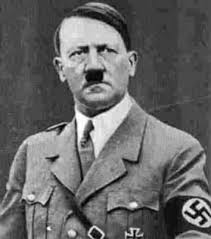
Adolf Hitler
So he was stunned when, on September 3, 1939, Britain and France—however reluctantly—honored their pledged word to Poland and declared war on Germany.
“What now?” Hitler furiously asked his Foreign Minister, Joachim von Ribbentrop.
Ribbentrop had no answer.
Knowing that Germany lacked the resources for a long war, Hitler had intended to fight a series of quick, small wars, gobbling up one country at a time. Now he found himself locked in an endless war with heavyweights France and England—and eventually the Soviet Union and the United States.
He stayed locked into that war until he committed suicide on April 30, 1945, and the Third Reich officially collapsed on May 7.
Fifty-eight years later, on March 21, 2003, President George W. Bush’s attacked Saddam Hussein’s Iraq.

George W. Bush
The war started impressively, with 1,700 air sorties and 504 Cruise missiles.
Within two weeks, American ground forces entered Baghdad. After four days of intense fighting, the Iraqi regime fell. By April 14, the Pentagon reported that major military operations had ended.
On May 1, 2003, Bush declared that the war was won.
But then American forces became embroiled in an endless, nationwide guerrilla war. Eighteen years later, the United States was still fighting in Iraq.
The war that Bush had deliberately provoked:
- Took the lives of 4,484 Americans.
- Cost the United States Treasury at least $2 trillion.
- Allowed Iran—Iraq’s arch enemy—to eagerly fill it the vacuum.
- Killed at least 655,000 Iraqis.
- Frightened China and Russia into expanding the size of their militaries.
On February 28, 2026, President Donald J. Trump—in collusion with Israel—launched massive airstrikes against Iran, predicting, on March 9: “It’s going to be ended soon….”
Thus do the worst intentions of hubristic dictators often come undone.
ABC NEWS, ADOLF HITLER, ALTERNET, AMERICABLOG, AP, BABY BOOMER RESISTANCE, BENITO MUSSOLINI, BUZZFEED, CBS NEWS, CNN, CROOKS AND LIARS, DAILY KOS, DEMOCRATS, DICTATORSHIP, DONALD TRUMP, DRUDGE RETORT, FASCISM, FIVETHIRTYEIGHT, HARPER’S MAGAZINE, IMPEACHMENT, IVAN THE TERRIBLE, JOSEPH STALIN, LEON TROTSKY, MEDIA MATTERS, MOTHER JONES, MOVEON, MSNBC, NAZI GERMANY, NBC NEWS, NEWSWEEK, NPR, PBS NEWSHOUR, POLITICO, POLITICUSUSA, RAW STORY, REPUBLICANS, REUTERS, ROBERT PAYNE, SALON, SEATTLE TIMES, SLATE, SOVIET UNION, TALKING POINTS MEMO, THE ATLANTIC, THE CHICAGO SUN-TIMES, THE CHICAGO TRIBUNE, THE CORRUPT SOCIETY (BOOK), THE DAILY BEAST, THE DAILY BLOG, THE GUARDIAN, THE HILL, THE HUFFINGTON POST, THE LOS ANGELES TIMES, THE NATION, THE NEW REPUBLIC, THE NEW YORK TIMES, THE VILLAGE VOICE, THE WASHINGTON POST, THINKPROGRESS, TIME, TRUTHDIG, TRUTHOUT, TWO POLITICAL JUNKIES, U.S. NEWS & WORLD REPORT, UNITED STATES CONSTITUTION, UNITED STATES HOUSE OF REPRESENTATIVES, UNITED STATES SENATE, UPI, USA TODAY, Vladimir Lenin, WILLIAM SHAKESPEARE, WINSTON CHURCHILL, WONKETTE, X
In Bureaucracy, History, Law, Law Enforcement, Military, Politics, Social commentary on February 27, 2026 at 12:15 am
According to a January 18, 2020 CNN story, President Donald Trump couldn’t understand why he had been impeached.
“Why are they doing this to me?” an anonymous source quoted Trump as saying repeatedly. Over the weekend of January 18-19, 2020, Trump told people around him at Mar-a-Lago that he “can’t understand why he is impeached.”
For starters, he could have read the legal brief that Democratic House managers had filed with the Senate:
“President Donald J. Trump used his official powers to pressure a foreign government to interfere in a United States election for his personal political gain, and then attempted to cover up his scheme by obstructing Congress’s investigation into his misconduct.
“The Constitution provides a remedy when the President commits such serious abuses of his office: impeachment and removal. The Senate must use that remedy now to safeguard the 2020 U.S. election, protect our constitutional form of government, and eliminate the threat that the President poses to America’s national security.”
But Trump completely dismissed such arguments, despite the overwhelming evidence backing them up.
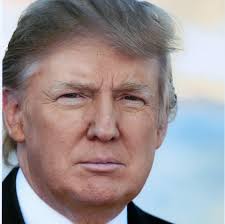
Donald Trump
Trump had become internationally notorious as a liar. By December 16, 2019, The Washington Post reported that he had made 15,413 false or misleading statements.
But there was no reason to doubt his sincerity when he said he didn’t know why he had been impeached.
And backing up that assertion would be no less an authority than the late British historian and author, Robert Payne.
Payne authored more than 110 books. Among his subjects were Adolf Hitler, Ivan the Terrible, Winston Churchill, Joseph Stalin, Vladimir Lenin, William Shakespeare and Leon Trotsky.
In 1975, he published The Corrupt Society: From Ancient Greece to Present-Day America. Among the epochs it covered were the civilizations of ancient Greece, Rome and China; Nazi Germany; the Soviet Union; and Watergate-era America.
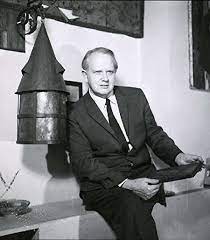

Robert Payne
Forty-one years before Donald Trump entered the White House, Payne offered a terrifying examination of the future President’s character.
In his chapter, “The Corrupt Individual,” Payne writes: “The corrupt man walks alone, gathering more and more power and wealth to himself, leaving a trail of destruction wherever he passes until he finally destroys himself.
“One aspect of him is immediately recognizable: His contempt for his fellow men. Hence his ruthlessness, his celebration of himself at the expense of everyone else, his absorption in his own affairs to the exclusion of all other affairs.
“Hence, too, his secretiveness, his intense sensitivity to real or imagined slights, for his contempt does not exclude a certain fear. He is necessarily a conspirator who imagines that his fellow men are conspiring against him.”

The corrupt man holds human life in contempt. He does not care how many people he kills or destroys on his march to fame, wealth or power—and to maintain himself in any or all of them.
When a nation is weak and divided, “a tyrant arises to take advantage of their weakness and divisiveness. He comes usually from the middle or upper class.”
He quickly identifies himself with a political party offering revolutionary changes. Then he takes control of it and turns it into his vehicle to power.
“He acts decisively and ruthlessly, driving wedges between people and setting them in opposition to one another. He is the master of corruption, and if necessary he will seek to corrupt the whole state to maintain his power. His weapons are the familiar weapons of subversion, treachery, and lies.”

Tyrants plunge into dangerous foreign adventures because it allows them to assert power over others with almost no domestic oversight. This makes them feel important—and distracts their subjects from worrying about internal affairs.
Tyrants shout, “We need law and order!”—while they are the most lawless thieves and murderers.
Tyrants learn nothing from the past or their own failures. Their characters do not change or develop. They surround themselves with sycophants and regard disagreement as treason. Because others fear to approach them with bad news—such as their armies have revolted—tyrants live in a world of lies and delusions.
Only when it is too late do they learn how widely-hated they are—and how determined their enemies are to destroy them.
Writes Payne:
“In our own age it becomes more and more difficult to wage war against corruption. The corrupt tend increasingly to acquire power, and the uncorrupted want more and more to be left alone.
“This is why it is so necessary to recognize the corrupt individual, the potential tyrant, to observe him closely, and wherever possible, to destroy him.”
Most Americans ignore history, believing that it has nothing worthwhile to offer them. When American military advisers in Vietnam were warned that the French had fought a losing war against the Vietcong, they responded: “They didn’t kill enough Vietcong.”
When Americans think of Fascistic dictatorships, they think of Adolf Hitler’s Germany and Benito Mussolini’s Italy—both of which ended 80 years ago in 1945.
They don’t think that such a dictatorship could ever happen here—or that, under a Republican party obsessed with holding absolute power, it has already happened.
AFFORDABLE CARE ACT (ACA), AFGHANISTAN, ALEX PRETTI, ALLEN DULLES, ALTERNET, AMAZON, AMERICABLOG, ANTI-CASTRO CUBANS, AP, APPLE, ARTIFICIAL INTELLIGENCE, ASSASSINATION, BABY BOOMER RESISTANCE, BARACK OBAMA, BARI WEISS, BAY OF PIGS, BBC, BIG TECH, BLACKS, BLOOMBERG, BLUESKY, BUZZFEED, CANADA, CANADIANS, CARLOS MARCELLO, CBS NEWS, CIA, CITIENSHIP TESTS, CIVIL RIGHTS, CLEAR AND PRESENT DANGER (FILM), CNN, COLUMBIAN/MEXICAN DRUG CARTELS, CONSPIRACIES, CROOKS AND LIARS, CUBA, CUBAN MISSILE CRISIS, CUSTOMS AND BORDER PATROL (CBP), DAILY KOS, DONALD TRUMP, FBI, FBI AGENTS, FEDERAL EMERGENCY MANAGEMENT AGENCY, FEDERAL RESERVE, FEDERAL TRADE COMMISSION, FIDEL CASTRO, FIVETHIRTYEIGHT, GAIUS CALIGULA, GAZA, GOOGLE, GREENLAND, GREENLANDERS, GUN RIGHTS ENTHUSIASTS, HARPER’S MAGAZINE, HARRISON FORD, HISPANICS, HUFFINGTON POST, IMMIGRANTS, IMMIGRATION AND CUSTOMS ENFORCEMENT (ICE), INSPECTORS GENERAL, INTERNATIONAL BROTHERHOOD OF TEAMSTERS, IRAN, IRANIANS, ISLAM, ISRAEL, ISREAL, J. EDGAR HOOVER, JAIME DIMON, JAMES COMEY, JANUARY 6 COUP ATTEMPT, JEFF BEZOS, JEFFREY, JEFFREY EPSTEIN, JEROME POWELL, JIMMY HOFFA, JOE BIDEN, JOHN F. KENNEDY, JOHN KELLY, JOURNALISTS, JP MORGAN CHASE, JUSTICE DEPARTMENT PROSECUTORS, Kamala Harris, KGB, LAWYERS, LEBANON, LETITIA JAMES, MAFIA, MARCUS AURELIUS, MARINE BARRACKS BOMBING, MARK ESPER, MARK MILLEY, MEDAL OF HONOR WINNERS, MEDIA MATTERS, MEDICARE, MELANIA TRUMP, META, MICHELLE OBAMA, Military, MINNESOTA, MOTHER JONES, MOVEON, MSNBC, MUSLIMS, NATIONAL RIFLE ASSOCIATION (NRA), NATO, NAVAJO CODE TALKERS, NBC NEWS, NERO, NEWSDAY, NEWSWEEK, NPR, NUCLEAR REACTOR SITES, NUCLEAR TEST BAN TREATY, NUCLELAR TEST BAN TREATY, OIL MILLIONAIRES, PAKISTAN, PAM BONDI, PARIS CLIMATE AGREEMENT, PBS NEWSHOUR, PETE HEGSETH, POLICE, POLITICO, POLITICUSUSA, RARE EARTH MIINERALS, RAW STORY, REUTERS, ROBERT F. KENNEDY, Ronald Reagan, RUDY GIULIANI, SALON, SAM GIANCANA, SEATTLE TIMES, SLATE, SOMALIS, SOUTHERN RACISTS, SOVIET UNION, SUICIDE BOMBINGS, TALKING POINTS MEMO, TARIFFS, THE ATLANTIC, THE CHICAGO SUN-TIMES, THE CHICAGO TRIBUNE, THE DAILY BEAST, THE DAILY BLOG, THE GUARDIAN, THE HILL, THE HUFFINGTON POST, THE INTERCEPT, THE KENNEDY HALF-CENTURY (BOOK), THE LOS ANGELES TIMES, THE MILITARY, THE NATION, THE NEW REPUBLIC, THE NEW YORK TIMES, THE NEW YORKER, THE PRESS, THE PRINCE (BOOK), THE VILLAGE VOICE, THE WASHINGTON POST, THINKPROGRESS, TIM COOK, TIME, TRAJAN, TRUTHDIG, TRUTHOUT, TUSKEGEE AIRMEN, TWO POLITICAL JUNKIES, U.S. NEWS & WORLD REPORT, UNITED STATES DEPARTMENT OF DEFENSE, UNITED STATES DEPARTMENT OF JUSTICE, UNITED STATES SECRET SERVICE, UPI, USA TODAY, WATERGATE, X
In Bureaucracy, Business, History, Law, Law Enforcement, Medical, Military, Politics, Social commentary on February 19, 2026 at 12:13 am
Just as President John F. Kennedy was passionately loved and hated, so, too, is Donald J. Trump. And Trump, at 79, has already been the target of two assassination attempts.
Among the potential consequences of that hatred:

Donald Trump
- Barons of Columbian/Mexican drug cartels – Trump has often threatened to invade Mexico and/or Columbia to attack the cartels. No international drug kingpin has ever launched an attack on an American President or member of Congress. But this could change if the cartels believe a pre-emptive strike is necessary.
- Their assassins have wrought substantial carnage on Columbian and Mexican law enforcers and politicians. In 2025, cartels assassinated Miguel Uribe Turbay, a Columbian senator and presidential candidate. Since the 2016 peace accord, at least 1,372 social leaders have been murdered, with 173 killed in 2024 and 67 more in early 2025. These attacks frequently target local officials and advocates for land reform or environmental protection.

- In Mexico, ahead of the 2024 elections, around 30 local candidates were murdered, and hundreds more abandoned their campaigns due to threats. At least 29 candidates or potential candidates were killed in the lead-up to the 2024 elections. Police chiefs have been targeted, such as the 2020 assassination attempt on Mexico City’s police chief.
- Wealthy as Big Tech companies, these cartels command the finest assassins and intelligence networks available. Unlike Trump, they strike without warning.
- Big tech executives and Wall Street executives – Like Renaissance princes, they command empires of wealth and security. They live apart from the masses of people who do not enjoy their privileged status. And their major ambition is to grow ever more wealthy. They use their money to buy members of Congress who then pass legislation favorable to their interests.
- Trump’s tariffs have led to enormous sell-offs of tech stocks and the Department of Justice and Federal Trade Commission have continued or intensified antitrust cases launched by the Biden administration against companies like Google and Meta, targeting monopolistic behavior.
- As a result, tech executives could use their purchased Congressional members to block Trump-sponsored legislation or their billions to defeat Congressional candidates sponsored by Trump.

The New York Stock Exchange
- Journalists – Reporters are uniquely armed to counterattack their would-be censors. They know how to unearth highly embarrassing information and turn it into spectacle. The unearthing of Watergate-related abuses brought down President Richard Nixon in 1974.
- And journalists’ willingness to expose the sex trafficking crimes of Jeffrey Epstein has proven a huge liability for Trump. And as he openly moves to abolish or manipulate the 2026 midterm elections, the press can keep the spotlight of public attention tightly focused on him.
- The military – In November 2025, six Democratic Senators and Representatives released a video reminding military service members that they can refuse “illegal orders.” Donald Trump called the lawmakers traitors and shared a social media post calling for them to be hanged.
- Soldiers, serving and retired, have a huge constituency—which extends to Congress. If soldiers start charging that they have received illegal orders, this will put an unwanted spotlight on the Pentagon—and Trump.
- So will taking their complaints to the media about Trump’s racist and sexist firings of professional military officers—such as Joint Chiefs Chair General CQ Brown, Navy Chief of Naval Operations Admiral Lisa Franchetti and Coast Guard Commandant Admiral Linda Fagan.
* * * * *
More than 500 years ago, Niccolo Machiavelli, the Florentine statesman, authored The Discourses on Livy, a work of political history and philosophy. In it, he outlined how citizens of a republic can maintain their freedoms.
One of the longest chapters—Book Three, Chapter Six—covers “Of Conspiracies.” In it, those who wish to conspire against a ruler will find highly useful advice. And so will those who wish to foil such a conspiracy.

Niccolo Machiavelli
Lorenzo Bartolini, CC0, via Wikimedia Commons
Above all, he notes how important it is for rulers to make themselves loved—or at least respected—by their fellow citizens:
“Note how much more praise those Emperors merited who, after Rome became an empire, conformed to her laws like good princes, than those who took the opposite course.
“Titus, Nerva, Trajan, Hadrian, Antoninus and Marcus Auelius did not require the Praetorians nor the multitudinous legions to defend them, because they were protected by their own good conduct, the good will of the people, and by the love of the Senate.
“On the other hand, neither the Eastern nor the Western armies saved Caligula, Nero, Vitellius and so many other wicked Emperors from the enemies which their bad conduct and evil lives had raised up against them.”
In his better-known work, The Prince, he warns rulers who—like Donald Trump–are inclined to rule by fear:
“A prince should make himself feared in such a way that if he does not gain love, he at any rate avoids hatred: for fear and the absence of hatred may well go together.”
By Machiavelli’s standards, Trump has made himself the perfect target for a conspiracy:
“When a prince becomes universally hated, it is likely that he’s harmed some individuals—who thus seek revenge. This desire is increased by seeing that the prince is widely loathed.”
AFFORDABLE CARE ACT (ACA), AFGHANISTAN, ALEX PRETTI, ALLEN DULLES, ALTERNET, AMAZON, AMERICABLOG, ANTI-CASTRO CUBANS, AP, APPLE, ARTIFICIAL INTELLIGENCE, ASSASSINATION, BABY BOOMER RESISTANCE, BARACK OBAMA, BARI WEISS, BAY OF PIGS, BBC, BIG TECH, BLACKS, BLOOMBERG, BLUESKY, BUZZFEED, CANADA, CANADIANS, CARLOS MARCELLO, CBS NEWS, CIA, CITIENSHIP TESTS, CIVIL RIGHTS, CLEAR AND PRESENT DANGER (FILM), CNN, COLUMBIAN/MEXICAN DRUG CARTELS, CONSPIRACIES, CROOKS AND LIARS, CUBA, CUBAN MISSILE CRISIS, CUSTOMS AND BORDER PATROL (CBP), DAILY KOS, DONALD TRUMP, FBI, FBI AGENTS, FEDERAL EMERGENCY MANAGEMENT AGENCY, FEDERAL RESERVE, FEDERAL TRADE COMMISSION, FIDEL CASTRO, FIVETHIRTYEIGHT, GAIUS CALIGULA, GAZA, GOOGLE, GREENLAND, GREENLANDERS, GUN RIGHTS ENTHUSIASTS, HARPER’S MAGAZINE, HARRISON FORD, HISPANICS, HUFFINGTON POST, IMMIGRANTS, IMMIGRATION AND CUSTOMS ENFORCEMENT (ICE), INSPECTORS GENERAL, INTERNATIONAL BROTHERHOOD OF TEAMSTERS, IRAN, IRANIANS, ISLAM, ISRAEL, ISREAL, J. EDGAR HOOVER, JAIME DIMON, JAMES COMEY, JANUARY 6 COUP ATTEMPT, JEFF BEZOS, JEFFREY, JEFFREY EPSTEIN, JEROME POWELL, JIMMY HOFFA, JOE BIDEN, JOHN F. KENNEDY, JOHN KELLY, JOURNALISTS, JP MORGAN CHASE, JUSTICE DEPARTMENT PROSECUTORS, Kamala Harris, KGB, LAWYERS, LEBANON, LETITIA JAMES, MAFIA, MARCUS AURELIUS, MARINE BARRACKS BOMBING, MARK ESPER, MARK MILLEY, MEDAL OF HONOR WINNERS, MEDIA MATTERS, MEDICARE, MELANIA TRUMP, META, MICHELLE OBAMA, Military, MINNESOTA, MOTHER JONES, MOVEON, MSNBC, MUSLIMS, NATIONAL RIFLE ASSOCIATION (NRA), NATO, NAVAJO CODE TALKERS, NBC NEWS, NERO, NEWSDAY, NEWSWEEK, NPR, NUCLEAR REACTOR SITES, NUCLEAR TEST BAN TREATY, NUCLELAR TEST BAN TREATY, OIL MILLIONAIRES, PAKISTAN, PAM BONDI, PARIS CLIMATE AGREEMENT, PBS NEWSHOUR, PETE HEGSETH, POLICE, POLITICO, POLITICUSUSA, RARE EARTH MIINERALS, RAW STORY, REUTERS, ROBERT F. KENNEDY, Ronald Reagan, RUDY GIULIANI, SALON, SAM GIANCANA, SEATTLE TIMES, SLATE, SOMALIS, SOUTHERN RACISTS, SOVIET UNION, SUICIDE BOMBINGS, TALKING POINTS MEMO, TARIFFS, THE ATLANTIC, THE CHICAGO SUN-TIMES, THE CHICAGO TRIBUNE, THE DAILY BEAST, THE DAILY BLOG, THE GUARDIAN, THE HILL, THE HUFFINGTON POST, THE INTERCEPT, THE KENNEDY HALF-CENTURY (BOOK), THE LOS ANGELES TIMES, THE MILITARY, THE NATION, THE NEW REPUBLIC, THE NEW YORK TIMES, THE NEW YORKER, THE PRESS, THE PRINCE (BOOK), THE VILLAGE VOICE, THE WASHINGTON POST, THINKPROGRESS, TIM COOK, TIME, TRAJAN, TRUTHDIG, TRUTHOUT, TUSKEGEE AIRMEN, TWO POLITICAL JUNKIES, U.S. NEWS & WORLD REPORT, UNITED STATES DEPARTMENT OF DEFENSE, UNITED STATES DEPARTMENT OF JUSTICE, UNITED STATES SECRET SERVICE, UPI, USA TODAY, WATERGATE, X
In Bureaucracy, Business, History, Law, Law Enforcement, Medical, Military, Politics, Social commentary on February 18, 2026 at 12:10 am
Just as President John F. Kennedy was passionately loved and hated, so, too, is Donald J. Trump. And, at 79, Trump has already been the target of two assassination attempts.
Among the reasons why Trump is so widely hated:
Donald Trump
- Lawyers – Trump has targeted law firms and attorneys that had previously represented clients opposed to him—by limiting the ability of attorneys to obtain access to government buildings, stopping any consideration for future employment with the government, canceling government contracts, and preventing any company that uses such a firm from obtaining federal contracts.
- Justice Department prosecutors – For tarnishing the once-incorruptible reputation of their agency.
- Trump has fired more than a dozen prosecutors and staff who investigated him for election interference and stealing classified documents.
- He has ordered the DOJ to indict his critics such as New York Attorney General Letitia James and former FBI Director James Comey.
- Prosecutors are being told to drop cases for political reasons, pursue weak investigations, and take positions in court they believe have no merit.
- Federal judges have criticized the DOJ for violating orders in cases related to deportation policies and for a lack of transparency.

Seal of the Justice Department
- FBI agents – For his purging about a half-dozen executive assistant directors at the FBI. These were some of the bureau’s top managers overseeing criminal, national security and cyber investigations. Their “crime”: Investigating Trump’s inciting the January 6, 2021 coup attempt and illegally holding highly sensitive national security documents after leaving office.
- Big tech executives – Initially they sought favor through donations and private meetings to secure a “deregulatory paradise.” (Amazon CEO Jeff Bezos infamously lavished $75 million on a “documentary” glorifying Melania Trump.)
- But now many are furious at facing a harsher business climate, intense regulatory pressure and employee backlash.
- Tech executives have complained that they are “giving him everything, and he promises nothing.”
- The killing of intensive care nurse Alex Pretti by Customs and Border Patrol (CPB) agents in Minneapolis has been condemned by several Big Tech CEOs, including Apple CEO Tim Cook.
Not all of these potential enemies present the same danger to Trump. Some of those dangers are political; others personal.
Among the potential consequences of that hatred:
- Blacks and Hispanics – Are most likely to express their anger at the polls—or demonstrations. Any public appearance by Trump is certain to be heavily policed by the Secret Service.
- Muslims could pose a significant political threat. In 2024, Muslims voted for Trump or refused to vote for Vice President Kamala Harris. The reason: President Joe Biden refused to force Israel to end its military attacks on Gaza to retrieve hostages seized by Hamas. Muslim voters could throw their voting weight against Republican Congressional candidates sponsored by Trump.
- They could also pose a serious personal threat. Armed with the belief that dying for Islam will grant them Paradise in Heaven, Muslims have a history of doing exactly that. Suicide bombings are virtually unknown in the United States. But in Afghanistan, Iran and Pakistan, they have taken a deadly toll on civilian and political life.
- Justice Department prosecutors could leak plans for illegal and/or embarrassing decisions by Attorney General Pam Bondi and her topmost deputies to the press. Some prosecutors could continue to resign their positions, thus embarrassing Trump and weakening the clout of the agency.
- Police officers, FBI agents and Secret Service agents are among the few people allowed to approach Trump armed. Many of them are likely to have friends or family members facing imprisonment and deportation under Trump’s all-out war on immigrants, legal and illegal. And Trump’s wholesale attacks on Medicare and the Affordable Care act could lead to similar casualties among family and friends, which could be cause for desired revenge.
- Canadians and Greenlanders – It’s highly unlikely that Canada or Greenland would send a hit team to the United States. But individual Canadians or Greenlanders living in the United States could pose a genuine threat to Trump. This could occur during political rallies or if they have access to him through positions in law enforcement or government.
- He has repeatedly threatened the sovereignty of their homelands—both longtime allies of the United States—and recently seemed on the verge of using military force against both. Had he attacked Greenland, a part of NATO, this would have pitted the United States against its longtime allies in Europe.
- Lawyers – Trump’s Justice Department has declared war on his critics. The resulting court losses have proven embarrassing for Trump—and highly profitable for attorneys. A judge dismissed indictments against former FBI Director James Comey and New York Attorney General Letitia James. A grand jury refused to indict six Democratic lawmakers who had made a video urging troops to refuse illegal orders. Attorneys who successfully oppose Trump gain wealth and stature—and a steady stream of new clients.
- Gun rights enthusiasts – For decades, Republicans have conditioned them to expect a Democratic President to seize their guns. But Trump’s recent anti-gun comments (“You can’t have guns, you can’t walk in with guns”) have sent a chill through this community.
- These people are the epitome of “single issue” voters. Many law enforcement officers—at all levels of government—are fervent members of the NRA, and some almost certainly have access to Trump.

AFFORDABLE CARE ACT (ACA), AFGHANISTAN, ALEX PRETTI, ALLEN DULLES, ALTERNET, AMAZON, AMERICABLOG, ANTI-CASTRO CUBANS, AP, APPLE, ARTIFICIAL INTELLIGENCE, ASSASSINATION, BABY BOOMER RESISTANCE, BARACK OBAMA, BARI WEISS, BAY OF PIGS, BBC, BIG TECH, BLACKS, BLOOMBERG, BLUESKY, BUZZFEED, CANADA, CANADIANS, CARLOS MARCELLO, CBS NEWS, CIA, CITIENSHIP TESTS, CIVIL RIGHTS, CLEAR AND PRESENT DANGER (FILM), CNN, COLUMBIAN/MEXICAN DRUG CARTELS, CONSPIRACIES, CROOKS AND LIARS, CUBA, CUBAN MISSILE CRISIS, CUSTOMS AND BORDER PATROL (CBP), DAILY KOS, DONALD TRUMP, FBI, FBI AGENTS, FEDERAL EMERGENCY MANAGEMENT AGENCY, FEDERAL RESERVE, FEDERAL TRADE COMMISSION, FIDEL CASTRO, FIVETHIRTYEIGHT, GAIUS CALIGULA, GAZA, GOOGLE, GREENLAND, GREENLANDERS, GUN RIGHTS ENTHUSIASTS, HARPER’S MAGAZINE, HARRISON FORD, HISPANICS, HUFFINGTON POST, IMMIGRANTS, IMMIGRATION AND CUSTOMS ENFORCEMENT (ICE), INSPECTORS GENERAL, INTERNATIONAL BROTHERHOOD OF TEAMSTERS, IRAN, IRANIANS, ISLAM, ISRAEL, ISREAL, J. EDGAR HOOVER, JAIME DIMON, JAMES COMEY, JANUARY 6 COUP ATTEMPT, JEFF BEZOS, JEFFREY, JEFFREY EPSTEIN, JEROME POWELL, JIMMY HOFFA, JOE BIDEN, JOHN F. KENNEDY, JOHN KELLY, JOURNALISTS, JP MORGAN CHASE, JUSTICE DEPARTMENT PROSECUTORS, Kamala Harris, KGB, LAWYERS, LEBANON, LETITIA JAMES, MAFIA, MARCUS AURELIUS, MARINE BARRACKS BOMBING, MARK ESPER, MARK MILLEY, MEDAL OF HONOR WINNERS, MEDIA MATTERS, MEDICARE, MELANIA TRUMP, META, MICHELLE OBAMA, Military, MINNESOTA, MOTHER JONES, MOVEON, MSNBC, MUSLIMS, NATIONAL RIFLE ASSOCIATION (NRA), NATO, NAVAJO CODE TALKERS, NBC NEWS, NERO, NEWSDAY, NEWSWEEK, NPR, NUCLEAR REACTOR SITES, NUCLEAR TEST BAN TREATY, NUCLELAR TEST BAN TREATY, OIL MILLIONAIRES, PAKISTAN, PAM BONDI, PARIS CLIMATE AGREEMENT, PBS NEWSHOUR, PETE HEGSETH, POLICE, POLITICO, POLITICUSUSA, RARE EARTH MIINERALS, RAW STORY, REUTERS, ROBERT F. KENNEDY, Ronald Reagan, RUDY GIULIANI, SALON, SAM GIANCANA, SEATTLE TIMES, SLATE, SOMALIS, SOUTHERN RACISTS, SOVIET UNION, SUICIDE BOMBINGS, TALKING POINTS MEMO, TARIFFS, THE ATLANTIC, THE CHICAGO SUN-TIMES, THE CHICAGO TRIBUNE, THE DAILY BEAST, THE DAILY BLOG, THE GUARDIAN, THE HILL, THE HUFFINGTON POST, THE INTERCEPT, THE KENNEDY HALF-CENTURY (BOOK), THE LOS ANGELES TIMES, THE MILITARY, THE NATION, THE NEW REPUBLIC, THE NEW YORK TIMES, THE NEW YORKER, THE PRESS, THE PRINCE (BOOK), THE VILLAGE VOICE, THE WASHINGTON POST, THINKPROGRESS, TIM COOK, TIME, TRAJAN, TRUTHDIG, TRUTHOUT, TUSKEGEE AIRMEN, TWO POLITICAL JUNKIES, U.S. NEWS & WORLD REPORT, UNITED STATES DEPARTMENT OF DEFENSE, UNITED STATES DEPARTMENT OF JUSTICE, UNITED STATES SECRET SERVICE, UPI, USA TODAY, WATERGATE, X
In Bureaucracy, Business, History, Law, Law Enforcement, Medical, Military, Politics, Social commentary on February 17, 2026 at 12:12 am
Just as President John F. Kennedy was passionately loved and hated, so, too, is Donald J. Trump. And Trump, at 79, has already been the target of two assassination attempts.

Donald Trump
Among the reasons why Trump is so widely hated:
- Gun rights enthusiasts – After Customs and Border Patrol (CBP) agents shot intensive care nurse Alex Pretti on January 24, Trump criticized Pretti for carrying a licensed, concealed pistol: “You can’t have guns, you can’t walk in with guns. I don’t like that he had a gun. I don’t like that he had two fully loaded magazines. That’s a lot of bad stuff.”
- The National Rifle Association (NRA) called Trump’s comments “dangerous and wrong.” And the National Association for Gun Rights (NAGR) stated: “Carrying an extra magazine implies nothing. Claiming otherwise sets a dangerous precedent for Second Amendment rights and creates an easy backdoor argument for magazine bans and similar legislation.”

Alex Pretti
- The military – Following his anti-DEI executive order, the Department of Defense deleted content that included the achievements of nonwhite servicemen and women—such as Navajo code talkers, black Tuskegee Airmen, Medal of Honor winners and women veterans. High-ranking militar y leaders fear retribution and the politicization of the armed forces.
- Former high-profile military leaders, including former Chiefs of Staff John Kelly and Mark Milley and former Defense Secretary Mark Esper, have criticized Trump, with some describing him as a ‘fascist to the core” and a threat to democracy.
- Trump has deployed the National Guard to Democratic cities against the wishes of their states’ governors.
- In September, 2025, Trump and Defense Secretary Pete Hegseth aired grievances to a silent, uncomfortable audience of top military leaders.
- Canadians – Trump has imposed 25% tariffs on Canadian goods, covering major sectors like steel, aluminum, and autos.
- And he has threatened to impose 100% tariffs due to trade disputes. These have caused significant anxiety regarding the Canadian economy, which relies heavily on trade with the United States.
- He has also repeatedly threatened to militarily invade Canada and make it the 51st state. Many Canadians feel betrayed by the treatment of a longstanding, peaceful ally, with 59% of Canadians now viewing the United States as their top threat.
- Greenlanders – Trump has grown increasingly bellicose about acquiring Greenland—by purchase or conquest. The official reason given: The dangers of Chinese or Russian conquest of the island, where the United States has an active military base for missile warning, defense and space surveillance.
- The real reason: To gain total access to Greenland’s rare earth minerals. This despite Greenland’s being a self-governing, autonomous part of the Kingdom of Denmark. The united States has recognized Denmark’s ties to Greenland since 1917 and signed a joint defense agreement in 1951.

Greenland
- Secret Service agents – There has never been a case of a Secret Service agent assassinating a President. But there are historical precedents for bodyguards turning on those they are supposed to protect. On January 22, 41 A.D. Cassius Chaerea and several other bodyguards hacked Roman Emperor Gaius Caligula to death with swords before other guards could save him.
- Caligula had often taunted Chaerea for having a weak voice. Similarly, Trump has forced Secret Service agents to work without pay through two major government shutdowns—for 35 days in 2018-19 and 43 days in 2025. Secret Service agents had to worry about meeting their bills and the needs of their families.
- Many agents could have friends or family members whose lives have been shattered by Trump’s massive layoffs of government employees and/or his assaults on the American medical establishment.
- Wall Street executives – For Trump’s attacks on Federal Reserve Chairman Jerome Powell and public criticism of the Fed, which threaten the independence of the institution and the stability of the economy.
- And for suing JP Morgan Chase and its CEO Jamie Dimon for $5 billion, alleging the bank “debanked” him after the January 6, 2021 Capitol attack.
- Major investors and CEOs fear that Trump’s tariff policies will ignite a global crash—as happened in April ,2025.
- Iranians – For his scrapping the Joint Comprehensive Plan of Action (JCPOA), commonly known as the Iran nuclear deal.
- And for re-imposing “highest-level” economic sanctions on Iran, targeting critical sectors such as oil, finance and shipping.
- Nor will Iranians forgive him for ordering the June 21, 2025, bombing of three key Iranian nuclear sites: Fordow, Natanz, and Isfahan.
- Barons of Columbian/Mexican drug cartels – For threatening to invade Columbia and Mexico and directly attack the drug lords who feed America’s demand for cocaine.
- This scenario forms the plot of the 1994 thriller, “Clear and Present Danger,” starring Harrison Ford. The movie ends with the American force almost wiped out by a drug lord’s army and being forced to evacuate Columbia.

Columbian drug lords
- Journalists – For his repeatedly attacking the nation’s free press as “the enemy of the people” for reporting his growing list of crimes and disasters.
- And barring the Associated Press from the White House for refusing to call the Gulf of Mexico “the Gulf of the United States.”
- Jeff Bezos, the CEO of Amazon, bought the Washington Post—which played a pivotal role in uncovering Watergate—-in 2013 and has turned that once-respected newspaper into a Right-wing cheerleader.
- And CBS News is now being rigorously censored by Editor-in-Chief Bari Weiss, a notorious Trump ally.
AFFORDABLE CARE ACT (ACA), AFGHANISTAN, ALEX PRETTI, ALLEN DULLES, ALTERNET, AMAZON, AMERICABLOG, ANTI-CASTRO CUBANS, AP, APPLE, ARTIFICIAL INTELLIGENCE, ASSASSINATION, BABY BOOMER RESISTANCE, BARACK OBAMA, BARI WEISS, BAY OF PIGS, BBC, BIG TECH, BLACKS, BLOOMBERG, BLUESKY, BUZZFEED, CANADA, CANADIANS, CARLOS MARCELLO, CBS NEWS, CIA, CITIENSHIP TESTS, CIVIL RIGHTS, CLEAR AND PRESENT DANGER (FILM), CNN, COLUMBIAN/MEXICAN DRUG CARTELS, CONSPIRACIES, CROOKS AND LIARS, CUBA, CUBAN MISSILE CRISIS, CUSTOMS AND BORDER PATROL (CBP), DAILY KOS, DONALD TRUMP, FBI, FBI AGENTS, FEDERAL EMERGENCY MANAGEMENT AGENCY, FEDERAL RESERVE, FEDERAL TRADE COMMISSION, FIDEL CASTRO, FIVETHIRTYEIGHT, GAIUS CALIGULA, GAZA, GOOGLE, GREENLAND, GREENLANDERS, GUN RIGHTS ENTHUSIASTS, HARPER’S MAGAZINE, HARRISON FORD, HISPANICS, HUFFINGTON POST, IMMIGRANTS, IMMIGRATION AND CUSTOMS ENFORCEMENT (ICE), INSPECTORS GENERAL, INTERNATIONAL BROTHERHOOD OF TEAMSTERS, IRAN, IRANIANS, ISLAM, ISRAEL, ISREAL, J. EDGAR HOOVER, JAIME DIMON, JAMES COMEY, JANUARY 6 COUP ATTEMPT, JEFF BEZOS, JEFFREY, JEFFREY EPSTEIN, JEROME POWELL, JIMMY HOFFA, JOE BIDEN, JOHN F. KENNEDY, JOHN KELLY, JOURNALISTS, JP MORGAN CHASE, JUSTICE DEPARTMENT PROSECUTORS, Kamala Harris, KGB, LAWYERS, LEBANON, LETITIA JAMES, MAFIA, MARCUS AURELIUS, MARINE BARRACKS BOMBING, MARK ESPER, MARK MILLEY, MEDAL OF HONOR WINNERS, MEDIA MATTERS, MEDICARE, MELANIA TRUMP, META, MICHELLE OBAMA, Military, MINNESOTA, MOTHER JONES, MOVEON, MSNBC, MUSLIMS, NATIONAL RIFLE ASSOCIATION (NRA), NATO, NAVAJO CODE TALKERS, NBC NEWS, NERO, NEWSDAY, NEWSWEEK, NPR, NUCLEAR REACTOR SITES, NUCLEAR TEST BAN TREATY, NUCLELAR TEST BAN TREATY, OIL MILLIONAIRES, PAKISTAN, PAM BONDI, PARIS CLIMATE AGREEMENT, PBS NEWSHOUR, PETE HEGSETH, POLICE, POLITICO, POLITICUSUSA, RARE EARTH MIINERALS, RAW STORY, REUTERS, ROBERT F. KENNEDY, Ronald Reagan, RUDY GIULIANI, SALON, SAM GIANCANA, SEATTLE TIMES, SLATE, SOMALIS, SOUTHERN RACISTS, SOVIET UNION, SUCIDE BOMBINGS, TALKING POINTS MEMO, TARIFFS, THE ATLANTIC, THE CHICAGO SUN-TIMES, THE CHICAGO TRIBUNE, THE DAILY BEAST, THE DAILY BLOG, THE GUARDIAN, THE HILL, THE HUFFINGTON POST, THE INTERCEPT, THE KENNEDY HALF-CENTURY (BOOK), THE LOS ANGELES TIMES, THE MILITARY, THE NATION, THE NEW REPUBLIC, THE NEW YORK TIMES, THE NEW YORKER, THE PRESS, THE PRINCE (BOOK), THE VILLAGE VOICE, THE WASHINGTON POST, THINKPROGRESS, TIM COOK, TIME, TRAJAN, TRUTHDIG, TRUTHOUT, TUSKEGEE AIRMEN, TWO POLITICAL JUNKIES, U.S. NEWS & WORLD REPORT, UNITED STATES DEPARTMENT OF DEFENSE, UNITED STATES DEPARTMENT OF JUSTICE, UNITED STATES SECRET SERVICE, UPI, USA TODAY, WATERGATE, X
In Bureaucracy, Business, History, Law, Law Enforcement, Medical, Military, Politics, Social commentary on February 16, 2026 at 12:55 am
The 2013 book, The Kennedy Half-Century: The Presidency, Assassination and Lasting Legacy of John F. Kennedy, offers a truly astounding chapter.
Its early chapters provide an overview of the major events of the brief Kennedy administration: “The Torch Is Passed,” “Steel at Home and Abroad,” “Europe, Space and Southeast Asia.”
The next chapters concentrate on the assassination: “Echoes From Dealey Plaza,” “Questions, Answers, Mysteries,” “Rounding Up the Usual Suspects,” “Examining the Physical Evidence.”
For anyone who’s previously delved into the thousand days of the Kennedy administration, much of these subjects will be at least generally familiar. But Chapter 11 zooms into an area that might seem right out of The Twilight Zone: “Inevitability: The Assassination That Had to Happen.”

The chapter opens: “It has taken fifty years to see part of the truth clearly: John F. Kennedy’s assassination might have been almost inevitable. It didn’t have to happen on November 22, 1963, but given a host of factors, one could reasonably argue that JFK was unlikely to make it out of his Presidency alive.”
Among the “host of factors” who had reason to hate Kennedy:
- New Orleans Mafia boss Carlos Marcello – Furious over the crackdown on organized crime by JFK’s brother, Attorney General Robert F. Kennedy, he spoke of having the President assassinated to render RFK impotent.
- Anti-Castro Cubans – Enraged at Kennedy’s failure to overthrow Cuban dictator Fidel Castro after landing 1,700 armed Cuban exiles at the Bay of Pigs.
- James R. Hoffa – Pursued relentlessly by Robert Kennedy, the president of the International Brotherhood of Teamsters Union talked privately of having the Attorney General assassinated.
- The KGB – For Kennedy’s humiliating the Soviet Union during the Cuban Missile Crisis.
- Chicago Mafia boss Sam Giancana – Expecting to win immunity from federal prosecution, he fixed the 1960 Illinois election for John F. Kennedy. Instead, he found himself under intense investigation by RFK’s Justice Department—and raged that the Kennedys had “welshed” on their part of the deal.
- FBI Director J. Edgar Hoover – Fearing dismissal by the Kennedys, he withheld lethal threats his agents overheard when bugged Mafiosi railed against the President and Attorney General.

J. Edgar Hoover
- Southern racists – Who believed that JFK was a “nigger lover” for supporting civil rights for blacks. Especially after he sent deputy U.S. marshals and National Guardsmen to desegregate the University of Mississippi and, later, the University of Alabama.
- The CIA – Blamed by Kennedy for failing to overthrow Castro at the Bay of Pigs, its legendary director, Allen Dulles, was forced to resign. Many of its agents blamed JFK for refusing to commit American military forces during that attack—and laying the seeds for the Cuban Missile Crisis.
- Military and defense establishment – Appalled by Kennedy’s “weak” response to the Cuban Missile Crisis and support of the Nuclear Test Ban Treaty with the Soviet Union.
- Fidel Castro – Enraged by a series of CIA-Mafia attempts on his life, he publicly warned: “U.S. leaders should think if they are aiding terrorist plans to eliminate Cuban leaders they themselves will not be safe.”

Fidel Castro
Just as President Kennedy was passionately loved and hated, so, too, is Donald J. Trump. And Trump, at 79, has already been the target of two assassination attempts.
Donald Trump
Among the “host of factors” who have reason to hate Trump:
- Blacks – For his racist attacks on Barack and Michelle Obama and on black journalists, politicians and celebrities.
- His issuing executive orders to eliminate diversity, equity and inclusion (DEI) programs—and remove references to black historical figures from government websites.
- A major reason for his flooding Minnesota with 3,000 ICE agents: Its large Somali population, which he publicly labeled “garbage.”
- Hispanics – For turning them into the #1 target of Immigration and Customs Enforcement (ICE). Throughout 2025, ICE arrested nearly 300,000 to 328,000 people, the vast majority of them Hispanics. These included not only illegal aliens but those with green cards awaiting their processing as citizens.
- More than 70,000 migrants are now held in detention centers. ICE vows to detain an additional 80,000 people in them. Some centers will reportedly hold up to 10,000 detainees apiece. This will allow Trump to imprison and then deport vastly more people much more quickly.
- Muslims – He’s said “I think Islam hates us” and called for a “total and complete shutdown of Muslims entering the United States.”
- And he’s imposed a travel ban on 11 Islamic countries in the Middle East, North Africa and sub-Saharan Africa.
- He’s proposed a registry for American Muslims and expressed support for surveillance of mosques.
- And he’s sided with Israel in its military attacks on Gaza and Iran.
- Police officers – Despite his claiming to be a “law and order” President, Trump pardoned more than 1,500 of his supporters who had attacked Capitol Police on January 6, 2021. More than 140 police officers were injured.
- In November 2025, he issued preemptive pardons for 77 people involved in the plot to overturn the 2020 election results, including Rudy Giuliani and Mark Meadows.
- Among the convicted drug kingpins serving life sentences he has pardoned: Andre Donnell Routt, Zechariah Benjamin, Joe Angelo Sotelo, Edward Ruben Sotelo and Larry Hoover.
2016 PRESIDENTIAL ELECTION, 2020 PRESIDENTIAL ELECTION, ABC NEWS, ACAM SCHIFF, ADOLF HITLER, ALTERNET, AMERICABLOG, AP, BABY BOOMER RESISTANCE, BBC, BLOOMBERG NEWS, BRETT CROZIER, BUZZFEED, CBS NEWS, CHARLES PIERCE, CHRIS KREBS, CNN, CONVERSATION WITH AN AMERICAN WRITER (POEM), CORONAVIRUS, CROOKS AND LIARS, CYBERSECURITY AND INFRASTRUCTURE SECURITY AGENCY, DAILY KOS, DEPARTMENT OF HOMELAND SECURITY, DEPARTMENT OF STATE, DIMITRI SHOSTAKOVICH, DONALD TRUMP, DRUDGE REPORT, ESQUIRE MAGAZINE, FBI, FIVETHIRTYEIGHT, FOX NEWS NETWORK, GREAT TERROR, HARPER’S MAGAZINE, HOUSE INTELLIGENCE COMMITTEE, HOUSE OF REPRESENTATIVES, HUFFINGTON POST, JOSEPH BIDEN, JOSEPH STALIN, MARIA YOVANOVICH, MEDIA MATTERS, MICROSOFT, MIKHAIL TUKHACHEVESKY, MOTHER JONES, MOVEON, MSNBC, NAZI GERMANY, NBC NEWS, NEW REPUBLIC, NEWSDAY, NEWSWEEK, NICCOLO MACHIAVELLI, NIKITA KHRUSHCHEV, NIKOLAI ZHILAYEV, NPR, PBS NEWSHOUR, POLITICO, POLITICUSUSA, RAW STORY, REUTERS, RUDY GIULIANI, SALON, SEATTLE TIMES, SLATE, SOVIET UNION, TALKING POINTS MEMO, THE ATLANTIC, THE CHICAGO SUN-TIMES, THE CHICAGO TRIBUNE, THE DAILY BEAST, THE DAILY BLOG, THE DISCOURSES, THE GUARDIAN, THE HILL, THE HUFFINGTON POST, THE LOS ANGELES TIMES, THE NATION, THE NEW REPUBLIC, THE NEW YORK TIMES, THE NEW YORKER, THE VILLAGE VOICE, THE WALL STREET JOURNAL, THE WASHINGTON POST, THINKPROGRESS, THOMAS MODLY, TIME, TRUTHDIG, TRUTHOUT, TWO POLITICAL JUNKIES, U.S. NEWS & WORLD REPORT, UKRAINE, UPI, USA TODAY, WEHRMACHT, WONKETTE, WORLD WAR 11, X, YEVGENEY YEVTUSHENKO
In Bureaucracy, History, Law, Law Enforcement, Military, Politics, Social commentary on November 28, 2025 at 12:25 am
Next hero: Marie Yovanovitch, the former United States ambassador to Ukraine (2016 – 2019). She had joined the Foreign Service in 1986, and served as ambassador to Kyrgyzstan (2005 – 2008) and Armenia (2008 – 2011).
In May 2019, on President Donald Trump’s orders, the State Department recalled Yovanovitch as ambassador to Ukraine. She had earned respect from the national security community for her efforts to encourage Ukraine to tackle corruption.
But she had been criticized by Right-wing media outlets—notably Fox News Network––and by Trump’s personal attorney, Rudy Giuliani.

Marie Yovanovitch
CNN reported that Yovanovitch stopped Giuliani from interviewing witnesses in his search for politically damaging information against former Vice President Joe Biden, whose son, Hunter, had had business dealings in Ukraine.
On October 11, 2019, she appeared before the House Intelligence Committee, chaired by Representative Adam Schiff (D-CA). She did so in defiance of orders by the White House and State Department to not attend.
“She was a hero even before she hit the hearing room,” wrote Charles Pierce for Esquire magazine.
“She told them to stuff their directives, she would answer a congressional subpoena like a citizen is supposed to do. And she didn’t sneak in through the basement. She walked into the Capitol through the front doors, and she didn’t do so to fck around.”
Testifying for nearly 10 hours, Yovanovitch said that Trump had removed her from her post owing to “unfounded and false claims” and “a concerted campaign against me.”
She believed that associates of Trump’s personal lawyer, Giuliani, might have thought “that their personal financial ambitions were stymied by our anti-corruption policy in Ukraine.”
And she warned that the State Department was being “attacked and hollowed out from within. State Department leadership, with Congress, needs to take action now to defend this great institution, and its thousands of loyal and effective employees.”
After retiring from the State Department in 2020, Yovanovitch became a senior fellow in the Russia and Eurasia Program at the Carnegie Endowment for International Peace.
Another hero-victim on Trump’s hate-list was Chis Krebs.
During the 2016 Presidential race, Russian propaganda had played a major role in convincing millions of Americans to vote for Donald Trump. Social media platforms—especially Facebook and Twitter—were flooded with genuinely fake news to sow discord among Americans and create a pathway for Trump’s election.
Trump didn’t win a majority of the popular vote. But he got enough help from Russian President Vladimir Putin to triumph in the Electoral College.
So notorious was the role played by Russian trolls and hackers in winning Trump the 2016 election that the Department of Homeland Security (DHS) was determined to prevent a repetition in 2020.
And point man for this was Chris Krebs.
Born in Atlanta, Georgia, in 1977, Krebs had received a B.A. in environmental sciences from the University of Virginia in 1999, and a J.D. from the George Mason University School of Law in 2007.
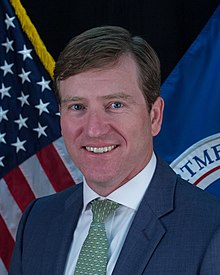
Chris Krebs
Krebs had served as Senior Advisor to the Assistant Secretary of Homeland Security for Infrastructure Protection, and later worked in the private sector as Director for Cybersecurity Policy for Microsoft.
Now he was director of the Cybersecurity and Infrastructure Security Agency at DHS.
In preparation for the 2020 Presidential election, Krebs launched a massive effort to counter lies spread by Russians—and Americans—on social media platforms. Among his duties:
- Sharing Intelligence from agencies such as the CIA and National Security Agency with local officials about foreign efforts at election interference.
- Ensuring that domestic voting equipment was secure.
- Attacking domestic misinformation head-on.
By all accounts—except Trump’s—the November 3, 2020 election went very smoothly.
As a result of the vast increase in election security, Trump not only failed to win the popular vote again but couldn’t get the help he expected from Putin.
On November 17, Trump fired Chris Krebs.
The reason: Krebs had not only countered Russian propaganda lies—he had dared to counter Trump’s as well. For example: He rejected Trump’s claims of widespread voter fraud: There “is no evidence that any voting system deleted or lost votes, changed votes, or was in any way compromised.”
In a November 17 story on the CNN website, CNN reporters Kaitlan Collins and Paul LeBlanc bluntly concluded:
“[Krebs’] dismissal underscores the lengths Trump is willing to go to punish those who don’t adopt his conspiratorial view of the election.
“Since CNN and other outlets called the race for President-elect Joe Biden, Trump has refused to accept the results, instead pushing baseless conspiracies that his second term is being stolen.”
Yet, by depriving Trump of Russian help, Krebs ensured a victory for democracy.
On January 6, 2021, the House and Senate counted the Electoral Votes—and pronounced Joseph Biden the winner—bringing an end to Trump’s reign of criminality and treason.
In his 1960 poem, “Conversation With an American Writer,” the Russian poet, Yevgeney Yevtushenko spoke for those Russians who had maintained their integrity in the face of Stalinist terror:
“You have courage,” they tell me.
It’s not true. I was never courageous.
I simply felt it unbecoming
to stoop to the cowardice of my colleagues.
Unfortunately, the same cannot be said of Republicans in the United States Senate and House of Representatives in the face of Trump terror.

 Bureaucracybuster's Blog
9/11 ATTACKS, ABC NEWS, AL QAEDA, ALTERNET, AMERICABLOG, AMERICAN CAESARS: THE LIVES OF THE PRESIDENTS FROM FRANKLIN D. ROOSEVELT TO GEORGE W. BUSH (BOOK), AMERICAN EMPIRE, AP, BABY BOOMER RESISTANCE, BARACK OBAMA, BASHAR AL-ASSAD, BBC, BILL CLINTON, BLOOMBERG NEWS, BUREAUCRACY, BUZZFEED, CBS NEWS, CHRIS MATHEWS, CNN, COLIN POWELL, CONDOLEEZA RICE, CROOKS AND LIARS, DAILY KOS, DICK CHENEY, DONALD RUMSFELD, DONALD TRUMP, DWIGHT EISENHOWER, FBI, FIVETHIRTYEIGHT, FRANKLIN D. ROOSEVELT, GAIUS SUETONIUS TRANQUILLIUS, GEORGE H.W. BUSH, GEORGE W. BUSH, GERALD R. FORD, HARPER’S MAGAZINE, HARRY S. TRUMAN, HOLOCAUST, HUFFINGTON POST, IRAN, IRAQ, ISRAEL, JEFFREY EPSTEIN, JFK: RECKLESS YOUTH (BOOK), JIMMY CARTER, JOHN F. KENNEDY, LYNDON B. JOHNSON, MEDIA MATTERS, MEIN KAMPF, MOTHER JONES, MOVEON, MSNBC, NATIONAL SECURITY COUNCIL, NBC NEWS, NEW REPUBLIC, NEWSDAY, NEWSWEEK, NIGEL HAMILTON, NPR, OSAMA BIN LADEN, PAUL O’NEIL, PAUL WOLFOWITZ, PBS NEWSHOUR, POLITICO, POLITICUSUSA, RAW STORY, REPUBLICAN PARTY, REUTERS, RICHARD CLARKE, RICHARD NIXON, ROMAN EMPIRE, SADDAM HUSSEIN, SALON, SEATTLE TIMES, SEPTEMBER 11, SLATE, SOVIET UNION, SUETONIUS, SYRIA, TALKING POINTS MEMO, TERRORISM, THE ATLANTIC, THE CHICAGO SUN-TIMES, THE CHICAGO TRIBUNE, THE DAILY BEAST, THE DAILY BLOG, THE GUARDIAN, THE HILL, THE HUFFINGTON POST, THE INTERCEPT, THE LOS ANGELES TIMES, THE NATION, THE NEW REPUBLIC, THE NEW YORK TIMES, THE NEW YORKER, THE PENTAGON, THE TWELVE CAESARS (BOOK), THE VILLAGE VOICE, THE WASHINGTON POST, THINKPROGRESS, TIME, TRUTHDIG, TRUTHOUT, U.S. NEWS & WORLD REPORT, UPI, USA TODAY, WEAPONS OF MASS DESTRUCTION, WHITE HOUSE CORRESPONDENTS DINNER, WORLD TRADE CENTER, WORLD WAR 11, X
DISASTER IN IRAQ: PROLOGUE TO DISASTER IN IRAN: PART THREE (END)
In Bureaucracy, History, Military, Politics, Social commentary on March 18, 2026 at 12:40 amOn September 12, 2001, President George W. Bush attended a meeting of the National Security Council.
“Why shouldn’t we go against Iraq, not just Al-Qaeda?” demanded Donald Rumsfeld, the Secretary of Defense.
Vice President Dick Cheney enthusiastically agreed.
Secretary of State Colin Powell then pointed out there was absolutely no evidence that Iraq had had anything to do with 9/11 or Al-Qaeda. And he added: “The American people want us to do something about Al-Qaeda”—not Iraq.
On November 21, 2001, only 10 weeks after 9/11, Bush told Rumsfeld: It’s time to turn to Iraq.
Condoleeza Rice
Bush and his war-hungry Cabinet officials knew that Americans demanded vengeance on Al Qaeda’s mastermind, Osama bin Laden, and not Iraqi dictator Saddam Hussein. So they repeatedly fabricated “links” between the two:
Yet as early as September 22, 2001, Bush had received a classified President’s Daily Brief intelligence report, which stated that there was no evidence linking Saddam Hussein to 9/11.
The report added that there was scant credible evidence that Iraq had any significant collaborative ties with Al-Qaeda.
Even more important: Saddam had tried to monitor Al Qaeda through his intelligence service—because he saw Al-Qaeda and other theocratic radical Islamist organizations as a potential threat to his secular regime.
Dick Cheney
Bush administration officials repeatedly claimed that Iraq possessed huge quantities of chemical and biological weapons, in violation of UN resolutions. And they further lied that US intelligence agencies had determined:
Among other lies stated as fact by members of the Bush administration:
Donald Rumsfeld
Consider the following:
August 26, 2002: Cheney told the Veterans of Foreign Wars, “There is no doubt that Saddam Hussein now has weapons of mass destruction. There is no doubt he is amassing them to use against our friends, against our allies and against us.”
September 8, 2002: National Security Advisor Condoleeza Rice said on CNN: ”There is certainly evidence that Al-Qaeda people have been in Iraq. There is certainly evidence that Saddam Hussein cavorts with terrorists.”
September 18, 2002: Rumsfeld told the House Armed Services Committee, “We do know that the Iraqi regime has chemical and biological weapons. His regime has amassed large, clandestine stockpiles of chemical weapons—including VX, sarin, cyclosarin and mustard gas.”
October 7, 2002: Bush declared in a nationally televised speech in Cincinnati that Iraq “possesses and produces chemical and biological weapons. It is seeking nuclear weapons.”
March 16, 2003: Cheney declared on NBC’s “Meet the Press”: “We believe [Saddam Hussein] has, in fact, reconstituted nuclear weapons.”
Bush never regretted his decision to attack Iraq—on March 19, 2003.
Even as American occupying forces repeatedly failed to turn up any evidence of “weapons of mass destruction” (WMDs), Bush and his minions claimed the invasion a good thing.
In fact, Bush—who hid out the Vietnam war in the Texas Air National Guard—even joked publicly about the absence of WMDs.
He did so at a White House Correspondents dinner on March 24, 2004—one year after he had started the war.
George W. Bush at the 2004 White House Correspondents’ dinner
To Bush, the non-existent WMDs were nothing more than the butt of a joke that night. While an overhead projector displayed photos of a puzzled-looking Bush searching around the Oval Office, Bush recited a comedy routine.
“Those weapons of mass destruction have gotta be somewhere,” Bush laughed, while a photo showed him poking around the corners in the Oval Office.
“Nope—no weapons over there! Maybe they’re under here,” he said, as a photo showed him looking under a desk.
Meanwhile, an assembly of wealthy, pampered men and women—-the elite of America’s media and political classes—laughed heartily during Bush’s performance.
It was a scene worthy of the court of the ancient Caesars, complete with royal flunkies: “Hey! That country we just destroyed wasn’t a threat to us after all! Isn’t that a gas?”
The results of the war that Bush had deliberately provoked:
Share this: