Posts Tagged ‘ISRAEL’
ADOLF HITLER, AFFORDABILITY, ALBERT SPEER, ALEXANDER THE GREAT, ALTERNET, AMERICABLOG, AP, BABY BOOMER RESISTANCE, BBC, BENJAMIN NETANYAHU, BLOOMBERG, BLUESKY, BUZZFEED, CBS NEWS, CNN, CROOKS AND LIARS, DAILY KOS, DE-STALINIZATION, DEMOCRATS, DONALD TRUMP, FIVETHIRTYEIGHT, FREDERIC SPOTTS, HARPER’S MAGAZINE, HITLER AND THE POWER OF AESTHETICS (BOOK), HOWARD STERN, HUFFINGTON POST, IRAN, ISRAEL, JAQUELINE KENNEDY, JOHN F. KENNEDY MEMORIAL CENTER FOR THE PERFORMING ARTS, JOSEPH STALIN, LEON TROTSKY, LYNDON B. JOHNSON, MEDIA MATTERS, MENELAUS, MIDTERM ELECTIONS, MONUMENTS, MOTHER JONES, MOVEON, MSNBC, NBC NEWS, NEWSDAY, NEWSWEEK, NICOLAS MADURO, NIKITA KHRUSHCHEV, NPR, OPERATION BARBAROSSA, PBS NEWSHOUR, PERCY BYSSHE SHELLEY, PETE HEGSETH, POLITICO, POLITICUSUSA, PRINCESS DIANA, RAW STORY, REUTERS, SALON, SEATTLE TIMES, SLATE, SOVIET UNION, STRAIT OF HORMUZ, T.E. LAWRENCE, TALKING POINTS MEMO, THE ATLANTIC, THE CHICAGO SUN-TIMES, THE CHICAGO TRIBUNE, THE DAILY BEAST, THE DAILY BLOG, THE GUARDIAN, THE HILL, THE HUFFINGTON POST, THE INTERCEPT, THE LOS ANGELES TIMES, THE NATION, THE NEW REPUBLIC, THE NEW YORK TIMES, THE NEW YORKER, THE ODYSSEY (POEM), THE VILLAGE VOICE, THE WASHINGTON POST, THINKPROGRESS, THIRD REICH, TIME, TROJAN WAR, TROY, TRUTH SOCIAL, TRUTHDIG, TRUTHOUT, TWO POLITICAL JUNKIES, U.S. NEWS & WORLD REPORT, UPI, USA TODAY, VENEZUELA, VICTORY ARCH, WHITE HOUSE BALLROOM, WHITE HOUSE ROSE GARDEN, X
In Bureaucracy, History, Law, Military, Politics, Social commentary on September 9, 2026 at 12:10 am
With his popularity rating hovering at 33% to 39%, President Donald Trump desperately fears a third impeachment action against him if Democrats retake the House of Representatives in the fast-approaching midterm elections scheduled for November 3.
Thus, his almost crazed lust to be remembered forever. And for all his slim grasp of history, he knows that presidents and kings (of which he thinks himself the latter) are remembered for the wars they’ve won and the monuments they’ve left behind.
Easily won wars, of course, are the best. And on January 3, 2026, Trump got just that.
American forces bombed military facilities and infrastructure in the capital city of Caracas and across northern Venezuela. And they captured Venezuelan President Nicolás Maduro and his wife, Cilia Flores. Both were flown to New York City to face federal drug trafficking and narco-terrorism charges.

Flag of Venezuela
Savoring that triumph, Trump conspired with Israeli Prime Minister Benjamin Netanyahu to overturn the leadership of Israel’s mortal enemy and America’s longtime antagonist: Iran.
Trump predicted several times that the war would be over in four to six weeks—the same timetable Adolf Hitler gave for the completion of his victory over the Soviet Union in 1941.
And just as “Operation Barbarossa” proved a fatal mistake, so Trump’s latest stab at playing Generalissimo has proven a total disaster. Six months into his war, he still has no plan for winning it or withdrawing from it without losing face.
Then there is his mania for monuments.
Upon his return to the Presidency in 2025, he turned his “artistic” gifts on the White House. On June 9, 2025, contractors began paving over the grass of the White House Rose Garden to create a patio.
This had been a special project of then-First Lady Jacqueline Kennedy. In 1962 she and designer Rachel Lambert “Bunny” Mellon created a classic, symmetrical space for official state functions and press events.
They installed a central open lawn surrounded by formal flower beds, seasonal plantings, and flowering crabapple trees.
By September, 2026 his administration had altered over 100 structures in Washington, D.C., alone, according to New York, which reported that the projects have collectively cost over a billion dollars.
On December 18, 2025, The John F. Kennedy Memorial Center for the Performing Arts became The Donald J. Trump and John F. Kennedy Memorial Center for the Performing Arts.
Not, of course, by an act of Congress. That happened in January, 1964, two months after the assassination of President John F. Kennedy.
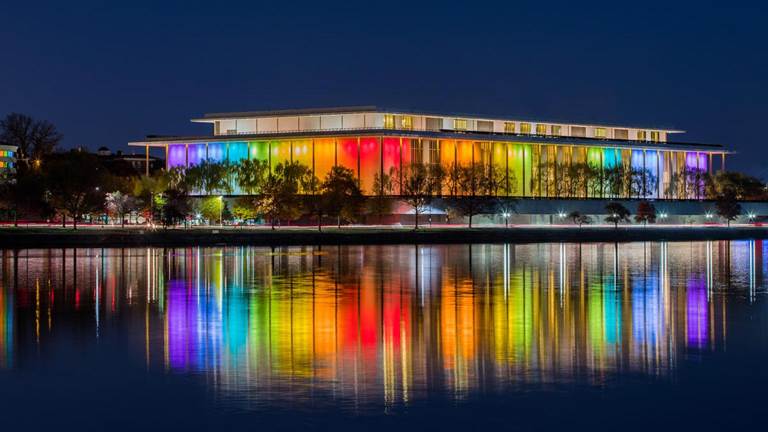
John F. Kennedy Memorial Center for the Performing Arts.
Congress passed and President Lyndon B. Johnson signed into law legislation renaming the Center as a “living memorial” in his honor: The John F. Kennedy Memorial Center for the Performing Arts.
In Trump’s case, getting his name added to the Center was much simpler. First, he fired the longstanding board that had overseen the Center, and put his own handpicked board members on it.
Then his chosen thralls declared: “We’re adding Trump’s name to this building.”
No doubt to his amazement, there were serious objections to this—and lawsuits backing up those objections.
On May 29, 2026, U.S. District Judge Christopher Cooper in Washington, D.C., ruled that Trump’s name was illegally added to the Center:
“The Kennedy Center’s organic statute makes crystal clear that the Center is to be named for President Kennedy, and it cannot bear any other formal name or public memorial based on the Board’s unilateral say-so. Congress gave the Kennedy Center its name, and only Congress can change it.”
And he ordered that Trump’s name be removed from the building within two weeks—by June 12, two days before Trump’s 80th birthday.
Trump has, predictably, appealed the ruling to the Supreme Court.
He thus joined the ranks of arts-obsessed tyrants like Joseph Stalin and Adolf Hitler. For 12 years, Hitler served as the arbiter of culture in Nazi Germany. Stalin held that role for almost 30.
Hitler considered himself an unappreciated artist. At 18, he had applied for admission to the Academy of Fine Arts Vienna, but was rejected twice. If he had a friend, it was the architect Albert Speer, with whom he felt an artistic kinship.
Even as the Third Reich collapsed, he found time to pore over architectural models he intended to turn into gigantic buildings.
In Hitler and the Power of Aesthetics, author Frederic Spotts argues that Hitler saw the world corrupted by “evils” he must first destroy so he could re-create it to conform to his artistic ideals.
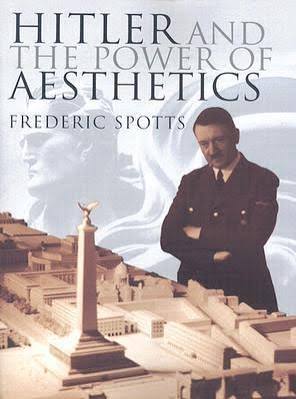
Like Hitler, Trump sees himself as an unrecognized artist through his erection of buildings. And, again like Hitler, he believes that he has a mission to replace ugliness with beauty.
But he’s clearly more focused on the demolition process than on the creation of beauty.
On October 20, 2025, demolitions crews—on his orders—gutted the East Wing of the White House to create a massive, 90,000 square feet, 650-person capacity ballroom.
And he has threatened to demolish the John F. Kennedy Center for the Performing Arts if his name is not added to it.
Meanwhile, he intends to close the Center for two years, to hide the embarrassing truth that artists and audiences no longer want to go there while he runs it.
ADOLF HITLER, AFFORDABILITY, ALBERT SPEER, ALEXANDER THE GREAT, ALTERNET, AMERICABLOG, AP, BABY BOOMER RESISTANCE, BBC, BENJAMIN NETANYAHU, BLOOMBERG, BLUESKY, BUZZFEED, CBS NEWS, CNN, CROOKS AND LIARS, DAILY KOS, DE-STALINIZATION, DEMOCRATS, DONALD TRUMP, FIVETHIRTYEIGHT, FREDERIC SPOTTS, HARPER’S MAGAZINE, HITLER AND THE POWER OF AESTHETICS (BOOK), HOWARD STERN, HUFFINGTON POST, IRAN, ISRAEL, JAQUELINE KENNEDY, JOHN F. KENNEDY MEMORIAL CENTER FOR THE PERFORMING ARTS, JOSEPH STALIN, LEON TROTSKY, LYNDON B. JOHNSON, MEDIA MATTERS, MIDTERM ELECTIONS, MONUMENTS, MOTHER JONES, MOVEON, MSNBC, NBC NEWS, NEWSDAY, NEWSWEEK, NICOLAS MADURO, NIKITA KHRUSHCHEV, NPR, OPERATION BARBAROSSA, PBS NEWSHOUR, PERCY BYSSHE SHELLEY, POLITICO, POLITICUSUSA, PRINCESS DIANA, RAW STORY, REUTERS, SALON, SEATTLE TIMES, SLATE, SOVIET UNION, STRAIT OF HORMUZ, T.E. LAWRENCE, TALKING POINTS MEMO, THE ATLANTIC, THE CHICAGO SUN-TIMES, THE CHICAGO TRIBUNE, THE DAILY BEAST, THE DAILY BLOG, THE GUARDIAN, THE HILL, THE HUFFINGTON POST, THE INTERCEPT, THE LOS ANGELES TIMES, THE NATION, THE NEW REPUBLIC, THE NEW YORK TIMES, THE NEW YORKER, THE VILLAGE VOICE, THE WASHINGTON POST, THINKPROGRESS, THIRD REICH, TIME, TRUTH SOCIAL, TRUTHDIG, TRUTHOUT, TWO POLITICAL JUNKIES, U.S. NEWS & WORLD REPORT, UPI, USA TODAY, VENEZUELA, VICTORY ARCH, WHITE HOUSE BALLROOM, WHITE HOUSE ROSE GARDEN, X
In Bureaucracy, History, Law, Military, Politics, Social commentary on September 8, 2026 at 12:10 am
All men dream: but not equally. Those who dream by night in the dusty recesses of their minds wake in the day to find that it was vanity: but the dreamers of the day are dangerous men, for they may act their dream with open eyes, to make it possible.
–T.E. Lawrence
Donald Trump’s first love has always been himself. And for all of his adult life he’s tried to promote himself as the smartest, the handsomest, the richest, the most popular man in the United States—if not the world.
Trump’s egomania is literally stamped on his properties. Of the estimated 515 entities he owns, 268 of them—52%—bear his last name. He often refers to his properties as “the swankiest,” “the most beautiful.”
Among the references he’s made to himself:
- “My fingers are long and beautiful, as, it has been well documented, are various other parts of my body.”
- “I think the only difference between me and the other candidates is that I’m more honest and my women are more beautiful.”
- “My IQ is one of the highest––and you all know it.”
- “I did a lot of great deals and I did them early and young, and now I’m building all over the world….”
- “So I have a total net worth, and now with the increase, it’ll be well-over $10 billion.”
On October 7, 2016, Trump unknowingly—on a hot mike—outlined his approach to women he found attractive:
“You know I’m automatically attracted to beautiful—I just start kissing them. It’s like a magnet. Just kiss. I don’t even wait. And when you’re a star they let you do it. You can do anything. Grab them by the pussy. You can do anything.”
Even when he did not score with a woman of his desires, he left no doubt that—at least in his own mind—he could have. Just months after Princess Diana’s death in August 1997, radio host Howard Stern asked Trump if he could have “nailed” her.
Trump replied, “I think I could have.”

Donald Trump
But now Trump is an 80-year-old, easily distracted man who repeatedly falls asleep in public events—such as during White House meetings or a World Cup game. During press conferences and on his website, Truth Social, he often explodes in angry, insulting tirades against a legion of perceived enemies—particularly female journalists.
He avoids exercise—except for golf—believing that a human is born with only a finite amount of energy, which is depleted by physical activity. His diet is famously heavy on fast food, sweets and Diet Coke.
A well-known order from McDonald’s includes two Big Macs, two Filet-O-Fish sandwiches, and a chocolate shake or malted.
As a result, his diet poses several medical risks. Meals centered on cheeseburgers, well-done steaks, and French fries are dense in saturated fats and sodium.
Over time, excessive sodium and trans fats elevate “bad” LDL cholesterol, damage blood vessels, and spike blood pressure, significantly accelerating the risk of heart attacks, stroke, and chronic hypertension.
Moving from the personal to the political: He’s launched a losing war on Iran, repeatedly predicted it would be over in four to six weeks, and has seen it spiral into six months with no end in sight.
Instead of taking responsibility for his decision to provoke a needless war, he repeatedly blames others for his failure to win it. On September 4, he posted on Truth Social:
“The Radical Left Lunatics, Dumocrats, and Communists would rather have us LOSE the War in Iran, than have President Donald J. Trump WIN the War for America, In other words, they’d rather have us LOSE than have us WIN!”
Meanwhile, Iran continues to control the Strait of Hormuz, through which about 20 million barrels of oil used to pass each day. That flow has been reduced to between two million and six million barrels each day.

Strait of Hormuz
This has created a worldwide spiral in oil prices—and fueled inflation in the United States and other nations. But as prices for housing, energy and food soar in the United States, Trump claims that “affordability” is a “Democratic hoax.”
Like Adolf Hitler contemplating architectural models while Nazi Germany neared destruction, Trump focuses on vanity projects like a 90,000 square foot White House ballroom and a towering “Victory Arch” literally overshadowing Arlington Cemetery.
When Trump—a five-time Vietnam war draft dodger—was asked in 2025 who the 250-foot arch was for, he replied, “Me.”
As much as he fears and loathes to admit it, he has to realize he can’t live forever—and that he’ll be lucky to live another 10 years, if not a far shorter span.
And with his popularity rating hovering at 33% to 39%, he desperately fears a third impeachment action against him if Democrats retake the House of Representatives in the fast-approaching midterm elections scheduled for November 3.
Thus, his almost crazed lust to be remembered forever. And for all his slim grasp of history, he knows that presidents and kings (of which he thinks himself the latter) are remembered for the wars they’ve won and the monuments they’ve left behind.
ABC NEWS, ADOLF HITLER, ALI HOSSEINI KHAMENEI, ALTERNET, AMERICABLOG, AP, AYATOLLAH ALI KHAMENEI, BABY BOOMER RESISTANCE, BAHRAIN, BBC, BERLIN, BLOOMBERG, BLOOMBERG NEWS, BLUESKY, BUZZFEED, CBS NEWS, CNN, CROOKS AND LIARS, DAILY KOS, DONALD TRUMP, DRONES, FINLAND, FIVETHIRTYEIGHT, FRANCE, GREAT BRITAIN, HARPER’S MAGAZINE, HUFFINGTON POST, IRAN, ISRAEL, ITALY, JAPAN, JOACHIM VON RIBBENTROP, JOSEPH STALIN, KIEV, KUWAIT, LENINGRAD, LUFTWAFFE, MEDIA MATTERS, MOJTABA KHAMENEI, MOSCOW, MOTHER JONES, MOVEON, MSNBC, NAZI GERMANY, NBC NEWS, NEW REPUBLIC, NEWSDAY, NEWSWEEK, NEWT GINGRICH, NPR, NUCLEAR WEAPONS, OIL FIELDS, OMAN, OPERATION BARBAROSSA, PBS NEWSHOUR, PETE HEGSETH, POLAND, POLITICO, POLITICUSUSA, QATAR, QATER, RAW STORY, REUTERS, SALON, SAUDI ARABIA, SEATTLE TIMES, SLATE, SOVIET UNION, SS, TALKING POINTS MEMO, THE ATLANTIC, THE CHICAGO SUN-TIMES, THE CHICAGO TRIBUNE, THE DAILY BEAST, THE DAILY BLOG, THE GUARDIAN, THE HILL, THE HUFFINGTON POST, THE INTERCEPT, THE LONGEST DAY (MOVIE, THE LOS ANGELES TIMES, THE NATION, THE NEW REPUBLIC, THE NEW YORK TIMES, THE NEW YORKER, THE PENTAGON, THE UNITED ARAB EMIRATES, THE VILLAGE VOICE, THE WASHINGTON POST, THINKPROGRESS, THIRD REICH, TIME, TRUTHDIG, TRUTHOUT, TWO POLITICAL JUNKIES, U.S. NEWS & WORLD REPORT, UKRAINE, UNIFORMS, UPI, USA TODAY, VYACHESLAV MOLOTOV, WEHRMACHT, WONKETTE, WORLD WAR 11, X
In Bureaucracy, History, Military, Politics, Social commentary on August 4, 2026 at 12:10 am
Now, fast-forward 85 years—from 1941 to 2026. Substitute President Donald Trump for Fuhrer Adolf Hitler and Mojtaba Khamenei for Joseph Stalin—and Iran for the Soviet Union.

Just as Hitler launched his attack on the Soviet Union without warning, so did Trump launch his on Iran—on February 28.
Hitler—and numerous members of the Wehrmacht—believed that Germany’s mechanized panzers would quickly subdue Soviet armies.
“We were fast,” recalled Panzer Lieutenant Hans-Erdmann Schonbeck. “And our tank forces could cover huge distances. And once we broke through the enemy’s defenses, our orders were not to worry about threats to our right or left but to keep going, deep into Russian territory.”
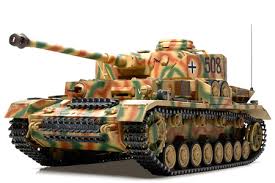
Panzer tank
But the tanks soon faced unexpected difficulties. Most roads in Russia were unpaved, so the tanks raised huge dust clouds almost everywhere they went. The dust clogged their engines and brought many tanks to a halt. Repair crews worked themselves to exhaustion so that the lightning-fast advance could continue.
Another drawback not evident at the outset of the invasion: Summer uniforms. For a war that began on June 22, 1941, these were entirely appropriate. But as the months quickly passed, the notorious Russian winter season loomed ever closer.

Germans in summer uniforms
The German command underestimated the campaign’s duration, expecting a victory by autumn 1941, and prioritized ammunition and fuel over winter equipment. Although winter gear existed, it was stuck in supply depots in the West, and transport lines were too strained by the Soviets’ “scorched earth” tactics to move it to the front.
Without proper greatcoats or insulated boots, soldiers suffered from extreme cold, with temperatures dropping far below zero. Many resorted to stealing blankets from civilians or using blankets as makeshift clothing.
In its war with Iran, American’s air force completely dominated the skies. But then both American planes and ground forces faced an unexpected enemy: Mass-produced drones.
The same weapons—some of them supplied by Iran to Russia—have been used since 2022 in Ukraine. Unmanned and remotely-controlled, Ukrainian and Russian drones have transformed the battlefield. They’re estimated to inflict around 80% of combat casualties on both sides.
The technology—like that forged in Germany’s Blitzkrieg tactics—is revolutionizing warfare and evolving rapidly. To adapt to the new era, the U.S. military is learning lessons from Ukraine.

Iranian drone
Student News Agency, Attribution, via Wikimedia Commons
Not only are American military forces being targeted, so are those Gulf nations that have allied themselves with the United States: The United Arab Emirates, Saudi Arabia, Kuwait, Bahrain, Qatar and Oman.
Primarily targeted: Energy infrastructure, airports and sites hosting American military personnel.
For Iran, the drones are relatively cheap. For the United States, the costs of countering this threat are steadily mounting. A typical Shahed-136 costs Tehran roughly $20,000 to $50,000, while interceptor missiles, such as the Patriot and Terminal High Altitude Area Defense (THAAD), cost the United States millions.
On August 22, 1939—the eve of his invasion of Poland, which would ignite World War II—Adolf Hitler delivered a secret address to his supreme commanders and generals. Its climax:
“Close your hearts to pity. Act brutally. Eighty million people must obtain what is their right. Their existence must be made secure. The stronger man is right. The greatest harshness.”
Hitler urged his generals to act similarly toward the Russians, whom he regarded as subhumans.
The results of this policy soon became obvious when the Wehrmacht invaded Ukraine. Ukrainians, long suffering under the yoke of Stalin, greeted the invaders with bread and salt, the traditional greeting of comrades.
Within a month, they realized that the tyranny of Stalin had been replaced by an all-out extermination campaign of Hitler. For every Ukrainian the Germans killed, 10 more emerged to seek revenge.
Eighty-five years later, Donald Trump and officials of his administration are celebrating the indiscriminate slaughter of Iranians, whether civilian or military.
“We totally demolished Kharg Island, but we may hit it a few more times just for fun,” Trump said on NBC News.
On March 22, Secretary of Defense Pete Hegseth, hosting his monthly Christian worship service at the Pentagon, prayed: “Let every round find its mark against the enemies of righteousness and our great nation.
“Give them wisdom in every decision, endurance for the trial ahead, unbreakable unity, and overwhelming violence of action against those who deserve no mercy.”

Pete Hegseth
“I pursued my enemies and overtook them, and did not turn back till they were consumed,” he read from Psalms 18:37. “Those who hated me I destroyed. They cried to the Lord, but He did not answer them.”
Former House speaker and Trump advisor Newt Gingrich posted on X: “Instead of fighting over a 21-mile-wide bottleneck [Strait of Hormuz] forever, we [could] cut a new channel through friendly territory. A dozen thermonuclear detonations and you’ve got a waterway wider than the Panama Canal, deeper than the Suez, and safe from Iranian attacks.”
This would produce countless numbers of casualties and cover the Middle East with radioactive fallout.
It remains to be seen if such exhortations will lead American soldiers to act as barbarically as those of the Wehrmacht and SS—and inspire similar barbarism in return.
ABC NEWS, ADOLF HITLER, ALI HOSSEINI KHAMENEI, ALTERNET, AMERICABLOG, AP, AYATOLLAH ALI KHAMENEI, BABY BOOMER RESISTANCE, BAHRAIN, BBC, BERLIN, BLOOMBERG, BLOOMBERG NEWS, BLUESKY, BUZZFEED, CBS NEWS, CNN, CROOKS AND LIARS, DAILY KOS, DONALD TRUMP, DRONES, FINLAND, FIVETHIRTYEIGHT, FRANCE, GREAT BRITAIN, HARPER’S MAGAZINE, HUFFINGTON POST, IRAN, ISRAEL, ITALY, JAPAN, JOACHIM VON RIBBENTROP, JOSEPH STALIN, KIEV, KUWAIT, LENINGRAD, LUFTWAFFE, MEDIA MATTERS, MOJTABA KHAMENEI, MOSCOW, MOTHER JONES, MOVEON, MSNBC, NAZI GERMANY, NBC NEWS, NEW REPUBLIC, NEWSDAY, NEWSWEEK, NEWT GINGRICH, NPR, NUCLEAR WEAPONS, OIL FIELDS, OMAN, OPERATION BARBAROSSA, PBS NEWSHOUR, PETE HEGSETH, POLAND, POLITICO, POLITICUSUSA, QATAR, QATER, RAW STORY, REUTERS, SALON, SAUDI ARABIA, SEATTLE TIMES, SLATE, SOVIET UNION, SS, TALKING POINTS MEMO, THE ATLANTIC, THE CHICAGO SUN-TIMES, THE CHICAGO TRIBUNE, THE DAILY BEAST, THE DAILY BLOG, THE GUARDIAN, THE HILL, THE HUFFINGTON POST, THE INTERCEPT, THE LONGEST DAY (MOVIE, THE LOS ANGELES TIMES, THE NATION, THE NEW REPUBLIC, THE NEW YORK TIMES, THE NEW YORKER, THE PENTAGON, THE UNITED ARAB EMIRATES, THE VILLAGE VOICE, THE WASHINGTON POST, THINKPROGRESS, THIRD REICH, TIME, TRUTHDIG, TRUTHOUT, TWO POLITICAL JUNKIES, U.S. NEWS & WORLD REPORT, UKRAINE, UNIFORMS, UPI, USA TODAY, VYACHESLAV MOLOTOV, WEHRMACHT, WONKETTE, WORLD WAR 11, X
In Bureaucracy, History, Military, Politics, Social commentary on August 3, 2026 at 12:05 am
The city: Berlin.
The date: November 12–13, 1940.
The event: A meeting between German Fuhrer Adolf Hitler and Soviet Foreign Minister Vyacheslav Molotov.
The purposes: To discuss:
- Soviet expansion and control over Finland, Bulgaria, and the Turkish Straits; and
- Germany’s desire for the USSR to attack British interests in India and Iran.
Hitler wanted the USSR to join the Axis (Germany, Italy, and Japan) and expand “southward” toward the Indian Ocean to avoid conflict in Europe.
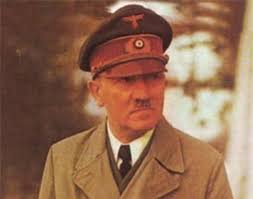
Adolf Hitler
Molotov ignored the talk of India and instead demanded control over Finland, Bulgaria, and the Turkish Straits.
Hitler adamantly opposed Soviet control over Finland, which he considered a strategic ally. He feared a Soviet expansion into Scandinavia would threaten German iron ore supplies from Sweden and northern interests.
And he deeply feared that the Soviet Union would cut off Germany’s vital Romanian oil supplies. Romania provided roughly 75% of German oil in 1941. A late 1940 Soviet attack on the Ploiești oil fields would render Germany helpless and force an end to the war.
On a personal level, Molotov and Hitler grated on each other’s nerves. Molotov was blunt in his remarks and didn’t spare Hitler at all. He seldom smiled and refused to compromises on Russia’s demands for control of Finland, Bulgaria, and the Turkish Straits.
At one point, Molotov asked: “Is last year’s agreement [between Germany and Russia] still valid?”
Hitler replied that it was.
“I asked this question,” said Molotov, “because of the Finns. You are on very friendly relations with the Finns. You invite people from Finland to Germany and you send missions there. And the Finns are very dangerous people. They undermine our security and we’ll have to do something about that and we are going to do something about that.”

Vyacheslav Molotov
“I understand you very well,” exploded Hitler. “You want to wage war against Finland and that is quite out of the question. Do you hear me? It’s impossible because my supplies of iron, nickel and other important raw materials would be cut.”
During the talks, British Royal Air Force (RAF) bombers appeared overhead, forcing the leaders to move to an air raid shelter.
German Foreign Minister Joachim von Ribbentrop had been trying to convince Molotov that Great Britain was “beaten” and that the British Empire was a “gigantic world-wide estate in bankruptcy” ready for partition.
Molotov sarcastically replied: “If England is beaten, why are we in this shelter and whose are the bombs that are falling?”
Even while Molotov was still in Berlin, Hitler ordered his generals to attack the Soviet Union on May 15, 1941.
Within a month they responded with a detailed plan code-named “Operation Barbarossa.”
Less than one year later—on June 22, 1941—with 134 divisions at full fighting strength and 73 more divisions for deployment behind the front, the German Wehrmacht invaded the Soviet Union.
Now the two most ruthless dictators on earth—Adolf Hitler and Joseph Stalin—were locked in a fight to the death.
At the outset, the odds clearly favored the Germans.
The invasion caught the Soviet Union by surprise. Joseph Stalin had received Intelligence reports from Great Britain that Germany was preparing to attack. But Stalin, who believed the British were trying to drive a wedge between him and Hitler, put his faith in Hitler, whose guarantees had long proved worthless.

German army units
From June to September, the Wehrmacht captured vast territories and encircled hundreds of thousands of Red Army troops. German forces quickly advanced toward Leningrad, Moscow, and Kiev, inflicting massive casualties.
The Luftwaffe destroyed much of the Soviet air force on the ground.
In June and July, German panzers quickly advanced, capturing over 300,000 Soviet prisoners in the Minsk-Bialystok pocket. By late September, Army Group South captured Kiev, resulting in the largest encirclement in history, with roughly 600,000 Soviet soldiers trapped.
By the end of 1941, more than three million Soviet soldiers were captured or killed. Still, the Soviet Union did not collapse and continued to commit new field armies to the conflict.
By December, the Wehrmacht, besieging Moscow, were literally freezing to death in their summer uniforms. Then, on December 5-6, the Soviets launched their decisive counter-offensive before Moscow, forcing German forces into a retreat.
It marked the first major land defeat for the Wehrmacht since its September 1, 1939 invasion of Poland, which ignited World War II.
Now, fast-forward 85 years. Substitute President Donald Trump for Fuhrer Adolf Hitler and Mojtaba Khamenei for Joseph Stalin—and Iran for the Soviet Union.
Donald Trump and Adolf Hitler
Just as Hitler launched his attack on the Soviet Union without warning, so did Trump launch his on Iran—on February 28.
Hitler’s attack didn’t kill Joseph Stalin, the all-powerful dictator of the Soviet Union. But Trump’s airstrikes killed Ali Hosseini Khamenei, who had ruled Iran as its supreme leader from 1989.

Ayatollah Ali Khamenei
Still, the Iranians quickly elevated his son, Mojtaba Khamenei, to the same position—and went on fighting.
Hitler––and numerous members of the Wehrmacht—believed that Germany’s mechanized panzers would succeed where Napoleon Bonaparte had failed in 1812. And that they could conquer the Soviet Union in only three months.
They were wrong.
ABC NEWS, ADOLF HITLER, ALFRED JODL, ALTERNET, AMERICABLOG, AP, AYATOLLAH ALI KHAMENEI, BABY BOOMER RESISTANCE, BBC, BELGIUM, BLOOMBERG, BLOOMBERG NEWS, BLUESKY, BUZZFEED, CBS NEWS, CNN, CROOKS AND LIARS, DAILY KOS, FIVETHIRTYEIGHT, FRANCE, GREECE, HARPER’S MAGAZINE, HEINZ GUDERIAN, HOLLAND, HUFFINGTON POST, ISRAEL, JORDAN, JOSEPH STALIN, KUWAIT, LENINGRAD, MEDIA MATTERS, MOSCOW, MOTHER JONES, MOVEON, MSNBC, NAPOLEON BONAPARTE, NAZI GERMANY, NBC NEWS, NEW REPUBLIC, NEWSDAY, NEWSWEEK, NORTH ATLANTIC TREATY ORGANIZATION (NATO), NORWAY DENMARK, NPR, NUCLEAR WEAPONS, OIL FIELDS, PBS NEWSHOUR, PETE HEGSETH, POLAND, POLITICO, POLITICUSUSA, QATAR, RAW STORY, REPUBLICAN PARTY, REUTERS, SALON, SAUDI ARABIA, SAVING PRIVATE RYAN (MOVIE), SEATTLE TIMES, SLATE, SOVIET UNION, TALKING POINTS MEMO, TERRORISM, THE ATLANTIC, THE CHICAGO SUN-TIMES, THE CHICAGO TRIBUNE, THE DAILY BEAST, THE DAILY BLOG, THE GUARDIAN, THE HILL, THE HUFFINGTON POST, THE INTERCEPT, THE LONGEST DAY (MOVIE, THE LOS ANGELES TIMES, THE NATION, THE NEW REPUBLIC, THE NEW YORK TIMES, THE NEW YORKER, THE PENTAGON, THE UNITED ARAB EMIRATES, THE VILLAGE VOICE, THE WASHINGTON POST, THINKPROGRESS, THIRD REICH, TIME, TRUTHDIG, TRUTHOUT, TWO POLITICAL JUNKIES, U.S. NEWS & WORLD REPORT, UPI, USA TODAY, WEHRMACHT, WONKETTE, X, YUGOSLAVIA
In Bureaucracy, History, Law, Politics, Social commentary on July 31, 2026 at 12:05 am
Donald Trump’s unprovoked attack on Iran is separated from Adolf Hitler’s attack on the Soviet Union by a span of 84 years. Yet despite differences in geography and history, eerie similarities exist between the two.
Hitler launched his assault on the Soviet Union on June 22, 1941—after a series of quick military conquests: Poland (1939); Norway, Denmark, Holland, Belgium, France (1940); Greece and Yugoslavia (1941).
Similarly, before launching his assault on Iran on February 28, Trump had scored a number of triumphs–albeit of a non-military nature. A March 19, 2026 article in The New Republic offers a partial summary:
Donald Trump and Adolf Hitler
“In the first year since returning to power, Trump and his subordinates have pushed the country toward fascism and oligarchy. He has turned Washington into an orgy of corruption and self-dealing beyond even the most cynical observer’s imagination.
“He has transformed Immigration and Customs Enforcement and Border Patrol into a lawless paramilitary force that has besieged American cities and killed at least five U.S. citizens and 22 foreign nationals. He has abused Americans and their immigrant neighbors alike simply because he can.”
In his attempt to conquer the Soviet Union, Hitler made the fatal mistake of trying to conquer too much territory all at once.
In August 1941, Hitler diverted forces from the central push on Moscow to surround Leningrad and industrial regions in the South, which delayed the attack on Moscow. By the time Hitler decided to capture Moscow, the weather had turned cold and the Germans were exhausted and freezing.
As in the case of Hitler, Trump assumed that Iran could be forced to quickly surrender. But that effort has been handicapped by a series of shifting and contradictory goals:
- Preventing Iran from developing nuclear weapons.
- Destroying Iran’s missile capabilities.
- Annihilating the Iranian navy.
- Ensuring that Iran quit arming, funding and/or directing “terrorist armies” outside its borders.
In the opening day of the war, American and Israeli airstrikes killed Iran’s Supreme Leader, Ayatollah Ali Khamenei. By March 17, Israel announced that it had killed two more top Iranian leaders in airstrikes. Still, Iranians chose new leaders to succeed dead ones and went on fighting.
Ayatollah Ali Khamenei
On March 19, Israeli airstrikes hit Iran’s largest gas field—South Pars, which is part of the world’s largest natural gas reserves. In retaliation, Iran launched drone and missile attacks against energy infrastructure in Saudi Arabia, the United Arab Emirates (UAE), Qatar, and Kuwait.
Iran also targeted Israel and attacked U.S. military bases in the region, including in Bahrain and Jordan.
Hitler expected the Soviet Union to collapse in a matter of weeks. France, which supposedly had the strongest army in Europe, had collapsed in six weeks in 1940. Hitler believed that General Winter, which had defeated Napoleon in 1812, would not be a problem for the mechanized Wehrmacht.
Yet the Wehrmacht was far less mechanized than portrayed by German propagandists. It relied heavily on horses for approximately 80% of its transport needs throughout World War II. During the winter of 1941 – 1942, the Wehrmacht lost over 179,000 horses. In the Army Group Center sector, losses reached roughly 1,000 horses per day.
In movies like “The Longest Day” and “Saving Private Ryan,” Americans celebrate the D-Day landings in France, on June 6, 1944. But for Nazi Germany, “the real war” was in the East. There the Wehrmacht concentrated the largest proportion of its forces—and suffered 85% of its casualties.
By March 19, the United States had spent $12 to over $12.7 billion on military operations against Iran. And the Pentagon was asking for an additional $200 billion for the war. Secretary of Defense Pete Hegseth warned “that number could move.”
On July 22, it moved—House Republicans passed a $1.5 trillion defense budget for 2027.
On April 7 the United States, Israel, and Iran agreed to a two-week ceasefire, under which Iran would re-open the Strait of Hormuz. On April 11, Trump said that American ships had started “clearing” the Strait of Hormuz.
The Iranian government threatened to attack the ships, accusing the United States of a ceasefire violation.
On July 8, Iran struck more targets in the Strait of Hormuz. Trump declared the Memorandum Of Understanding between the two countries was “over,” and that he didn’t want to deal any further with Iran’s leadership
Following an attack by Iranian forces on oil tankers in the Strait of Hormuz, on July 13, the United States began 13 consecutive nights of airstrikes on Iran, ending on July 24.
On July 27 Trump said he was ready for “strong military action” if talks with Iran failed, saying there’s “not much time” left for diplomacy
Bombing, however, has never by itself ended a war. Hitler’s terror-bombing of England only stiffened British resolve to fight on.
Trump could launch a ground troop invasion—but Iran is more than twice the size of Texas, covering about 636,000 square miles. That would require tens of thousands of troops—and almost certainly lead to a highly unpopular draft.
Aside from that, his only other choice is the use of nuclear weapons.
Both would be highly unpopular—especially in a midterms election year.
Like Hitler’s war against the Soviet Union, by July 28, Trump’s “two week” war with Iran had lasted five months—with no end in sight.
ABC NEWS, ADOLF HITLER, ALFRED JODL, ALTERNET, AMERICABLOG, AP, AYATOLLAH ALI KHAMENEI, BABY BOOMER RESISTANCE, BBC, BELGIUM, BLOOMBERG, BLOOMBERG NEWS, BLUESKY, BUZZFEED, CBS NEWS, CNN, CROOKS AND LIARS, DAILY KOS, FIVETHIRTYEIGHT, FRANCE, GREECE, HARPER’S MAGAZINE, HEINZ GUDERIAN, HOLLAND, HUFFINGTON POST, ISRAEL, JORDAN, JOSEPH STALIN, KUWAIT, LENINGRAD, MEDIA MATTERS, MOSCOW, MOTHER JONES, MOVEON, MSNBC, NAPOLEON BONAPARTE, NAZI GERMANY, NBC NEWS, NEW REPUBLIC, NEWSDAY, NEWSWEEK, NORTH ATLANTIC TREATY ORGANIZATION (NATO), NORWAY DENMARK, NPR, NUCLEAR WEAPONS, OIL FIELDS, PBS NEWSHOUR, PETE HEGSETH, POLAND, POLITICO, POLITICUSUSA, QATAR, RAW STORY, REPUBLICAN PARTY, REUTERS, SALON, SAUDI ARABIA, SAVING PRIVATE RYAN (MOVIE), SEATTLE TIMES, SLATE, SOVIET UNION, TALKING POINTS MEMO, TERRORISM, THE ATLANTIC, THE CHICAGO SUN-TIMES, THE CHICAGO TRIBUNE, THE DAILY BEAST, THE DAILY BLOG, THE GUARDIAN, THE HILL, THE HUFFINGTON POST, THE INTERCEPT, THE LONGEST DAY (MOVIE, THE LOS ANGELES TIMES, THE NATION, THE NEW REPUBLIC, THE NEW YORK TIMES, THE NEW YORKER, THE PENTAGON, THE UNITED ARAB EMIRATES, THE VILLAGE VOICE, THE WASHINGTON POST, THINKPROGRESS, THIRD REICH, TIME, TRUTHDIG, TRUTHOUT, TWO POLITICAL JUNKIES, U.S. NEWS & WORLD REPORT, UPI, USA TODAY, WEHRMACHT, WONKETTE, X, YUGOSLAVIA
In Bureaucracy, History, Military, Politics, Social commentary on July 30, 2026 at 12:13 am
Adolf Hitler had a warning for Donald Trump on the eve of his launching airstrikes against Iran.
A warning Trump should have heeded—but didn’t.
It all started on June 22, 1941.
On that date, Hitler ordered his powerful Wehrmacht o invade the Soviet Union.
Less than two years earlier, on August 23, 1939, he had signed a “non-aggression” pact with his longtime arch-enemy, Joseph Stalin, dictator of the Soviet Union.
Since then, his army had conquered Poland, Norway, Denmark, Holland, Belgium and France.
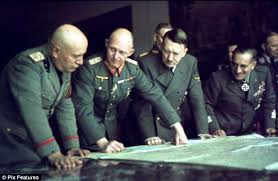
Adolf Hitler with his generals
Now, he believed, it was time to “settle accounts” with the Soviet Union.
Only there could Germany obtain the “living space” it “needed” for its expanding population.
So at 3 a.m. on June 22, 1941, Hitler once again launched an invasion.
At first, Hitler felt giddy with excitement.
Turning to Alfred Jodl, his chief of operations for the Wehrmacht, he said: “We have only to kick in the door and the whole rotten structure will come crashing down.”
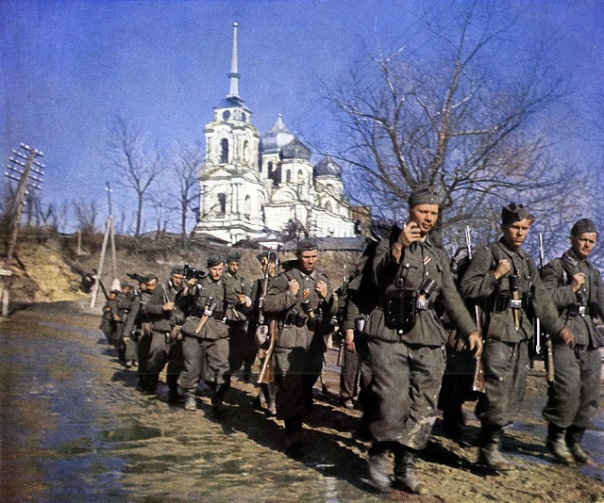
German soldiers marching through Russia
But soon afterward—almost as if he had just looked into the future and seen that he had none—he told an aide: “At the beginning of each campaign, one pushes a door into a dark, unseen room. One can never know what is hiding inside.”
That certainly proved true for Hitler.
Within four years, he was dead and the Red Army occupied Berlin.
And now the law of unintended consequences may be coming true for President Donald Trump and the United States.
On February 28, Trump—in concert with Israel—launched a series of devastating, unprovoked airstrikes against Iran. Since then, Trump and his Secretary of Defense, Pete Hegseth, have been all over the map with rosy predictions.

Donald Trump
- February 28: Trump posted on Truth Social that the bombing would continue “throughout the week or as long as necessary to achieve our objective of PEACE THROUGHOUT THE MIDDLE EAST AND, INDEED, THE WORLD!”
- March 1: In a video Trump declared that the war would continue “until all of our objectives are achieved.”
- March 2: Trump: “Right from the beginning, we projected four to five weeks, but we have capability to go far longer than that.”
- March 5: Hegseth to Pentagon reporters: “You can say four weeks [how long the war might last] but it could be six, it could be eight, it could be three. Ultimately, we set the pace and the tempo.”
- March 6: Trump: “There will be no deal with Iran except UNCONDITIONAL SURRENDER.”
- March 8: Hegseth: “We’re willing to go as far as we need to in order to be successful.”
- March 9: Trump: “No, but soon. I think so. Very soon” when asked by a reporter if the war would be over that week.
- March 11: “You know, you never like to say too early you won. We won. We won the, in the first hour, it was over.”
Hitler had been similarly optimistic about how long it would take to conquer the Soviet Union: Six to eight weeks, at the longest. And during the first three months of the war—July through September, 1941—that optimism seemed well-placed.
The Wehrmacht repeatedly lured Soviet armies into huge “cauldron battles,” then surrounded them, killing thousands and taking thousands of prisoners. By the end of September, German forces had captured or killed over 650,000 Russian troops in the Battle of Kiev alone, with total Soviet casualties reaching millions.
But then Hitler—and the Wehrmacht—paid a fatal price for their misplaced optimism.
The best—and most lethal—example of this hubris: The Wehrmacht went to war in summer uniforms on June 22—and were still wearing them in December.
Hitler placed infinite faith in the power of will to overcome all obstacles. When his soldiers were literally freezing to death before the gates of Moscow, Hitler believed that with “just one more push” the Soviet capital would fall.
When Heinz Guderian, his foremost expert on tank warfare, informed Hitler that German soldiers had no defense against the bitter cold, Hitler replied: They should dig foxholes.
Guderian replied that the icy ground was too solid to be punctured with spades.
Hitler’s reply: They should fire artillery shells into the ground to build foxholes.
This totally ignored the reality that, by December, 1941, the German army was dangerously short on munitions of all kinds.
Like Hitler, Trump seemed to consider himself omnipotent. Asked by a reporter how long the war would last, the President replied: “Any time I want it to end, it will end.”
Yet by the third week of the war, he began demanding—not asking—the assistance of NATO countries: We’ve had your back, now it’s our turn.
This totally ignored the fact that NATO exists to aid any of its members if it is attacked. After 9/11, NATO air force planes screened American airspace to prevent a repeat of similar carnage.
But NATO members are not obligated to join any nation in igniting a war. And that was precisely what Trump did on February 28—without consulting or even informing NATO of his plans to attack.
The only country that had known his intentions was Israel.
ABC NEWS, ALTERNET, AMERICABLOG, ANDREW JACKSON, AP, ” 9/11, BABY BOOMER RESISTANCE, BARNARD COLLEGE, BATTLE OF NEW ORLEANS, BATTLE OF THE BULGE, BBC, BERLIN, BLOOMBERG, BOOT CAMP, BUZZFEED, CBS NEWS, CIVIL WAR, CNN, COLUMBIA UNIVERSITY, CROOKS AND LIARS, DAILY KOS, FIVETHIRTYEIGHT, GAZA, GEORGE S. PATTON, HAMAS, HARPER’S MAGAZINE, HARVARD, HUFFINGTON POST, IRELAND, ISRAEL, JOSEPH BIDEN, MEDIA MATTERS, MEXICAN WAR, MOTHER JONES, MOVEON, MSNBC, MUSLIMS, NAZI GERMANY, NBC NEWS, NEW REPUBLIC, NEWSDAY, NEWSWEEK, NORWAY, NPR, PBS NEWSHOUR, POLITICO, POLITICUSUSA, RAFAH, RAW STORY, REUTERS, SALON, SEATTLE TIMES, SLATE, SPAIN, TALIBAN, TALKING POINTS MEMO, TEXAS RANGERS, THE ATLANTIC, THE CHICAGO SUN-TIMES, THE CHICAGO TRIBUNE, THE DAILY BEAST, THE DAILY BLOG, THE GUARDIAN, THE HILL, THE HUFFINGTON POST, THE INTERCEPT, THE LOS ANGELES TIMES, THE NATION, THE NEW REPUBLIC, THE NEW YORK TIMES, THE NEW YORKER, THE VILLAGE VOICE, THE WASHINGTON POST, THINKPROGRESS, TIME, TRUTHDIG, TRUTHOUT, TWO POLITICAL JUNKIES, U.S. NEWS & WORLD REPORT, UNIVERSITY OF SOUTHERN CALIFORNIA, UPI, USA TODAY, VIETNAM WAR, WAFFEN-SS, WAR OF 1812, WILLIAM “BUFFALO BILL”CODY, WILLIAM TECUMSEH SHERMAN, WORLD COURT, WORLD WAR 11, X, YALE
In Bureaucracy, History, Military, Politics on June 26, 2026 at 12:05 am
On October 7, 2023, about 2,500 Hamas terrorists launched coordinated attacks on Israeli outposts and settlements, firing over 5,000 rockets and burning houses.
They killed over 1,139 people, of which 695 were civilians—including women, children and the elderly. They also kidnapped over 250 others—including 30 children—to Gaza.
Most of those hostages were subsequently murdered.
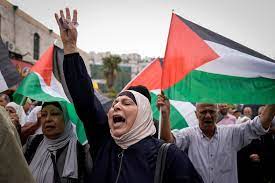
Palestinians celebrating the attack on Israel
Israel pounded Gaza with bombs, missiles. tanks and soldiers. By May, 2026, Palestinian health authorities claimed that Israel’s ground and air campaign had killed more than 72,000 Palestinians.
Among the reactions to this conflict:
- The World Court ordered Israel to immediately halt its military offensive in the southern Gaza city of Rafah.
- Liberal Democrats demanded that President Joseph Biden stop shipping military equipment to Israel.
- Three European countries—Spain, Ireland, and Norway—announced that they would recognize a Palestinian state.
- Across the United States, scores of university students protested Israel’s retaliation against Gaza.
- Among the universities targeted: Columbia, Harvard, Yale, the University of Texas at Austin, the University of Southern California, Emory University in Atlanta, Boston’s Emerson College.
- Columbia University, Barnard College and the University of Southern California canceled their graduation ceremonies owing to fears of violent protests by terrorism-sympathizing students.
Such holier-than-thou attitudes ignore three important truths:
First: Soldiering is by its nature a brutal business.
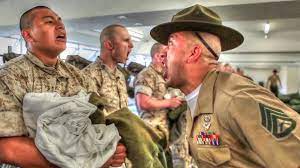
- The purpose of boot camp is to “break down” the restraints of pacifism and individuality and turn “boys” into “fighting men.” This must be done in weeks, so the process is shockingly brutal.
- Recruits are repeatedly taught such maxims as: “Ambushes are murder—and murder is fun.”
- Denigrating the enemy is a time-worn habit in all armies—including the American army. During the Indian wars, soldiers referred to Indians as “Red niggers.”
- In World War II—the “Good War”—America’s servicemen fought “Japs” and “Krauts.” During the Vietnam war, Vietnamese became “dinks” and “gooks.”
Marine drill instructor
- Today’s servicemen and women routinely (but unofficially) refer to their Islamic enemies as “ragheads” or “sand niggers.”
- Soldiers who aren’t toughened by boot camp are by the battlefield. As General George S. Patton often warned: “When you put your hand into a bunch of goo, that a moment before was your best friend’s face, you’ll know what to do.”
- Those who are demanding that Israel “pause” its offensive against Gaza ignore that when Allied armies were closing in on Berlin, the capitol of Nazi Germany, Americans did not demand that Nazis be given a chance to reorganize and counterattack.
Second: Atrocities in wartime are nothing new—including for U.S. forces.
- During the Mexican War, Texas Rangers accompanying the U.S. Army acted as commandos—and exacted reprisals against Mexicans engaging in terrorist acts.
- During the army’s wars against the Indians, soldiers and scouts—such as William F. “Buffalo Bill” Cody—routinely took scalps as trophies.
- During World War II, Marines posted in the Pacific rarely took prisoners. The reason: Japanese soldiers often pretended to surrender––and thus lured American troops into ambushes.
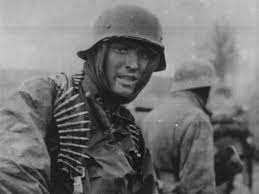
Waffen-SS soldier
- GIs fighting in the European theater generally shot fanatical Waffen-SS soldiers—including those who tried to surrender. This was especially true during the Battle of the Bulge, when Germans dressed in American uniforms stirred panic among Allied forces.
- During the Vietnam war, some “grunts” made necklaces of ears taken from dead Vietcong. Vietnam Correspondent Michael Herr, in his book Dispatches, relates the story of a grunt who was “building his own gook” from actual body parts.
Third: Those who provoke war do not have a right to dictate how their opponents should defend themselves.
- In 1815, just before the Battle of New Orleans, General Andrew Jackson ordered American snipers to harass invading British forces—and especially to take out officers. The British commander angrily protested this “barbarism.” Jackson sent back a message of his own: “You have invaded our country and we will defend ourselves as we see fit.”
- William Tecumseh Sherman, defending the conduct of his men during their legendary “March to the Sea” through Georgia, said: “Those people made war on us, defied and dared us to come south to their country, where they boasted they would kill us and do all manner of horrible things. We accepted their challenge, and now for them to whine and complain of the natural and necessary results is beneath contempt.”
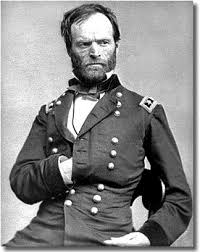
William Tecumseh Sherman
- Israelis have learned to deter Palestinian suicide-bombers by the use of police dogs. Muslims protest because they consider dogs defiled—and defiling—creatures. Islamic terrorists fear that blowing up themselves near a dog risks mingling their blood with that of the dead or wounded animal—thus forfeiting their opportunity to enter Paradise and claim those 72 willing virgins.
- In early November, 2001—two months after 9/11—Muslims throughout the Islamic world demanded that the United States halt its attacks on Taliban forces in Afghanistan out of “respect” for Ramadan, the Islamic month of fasting.
- In short: Islamic “holy warriors” could launch attacks that murdered thousands of innocent men, women and children. But “infidels” were supposed to defend themselves according to Islamic rules.
- The United States wisely refused to bow to this Islamic version of “political correctness.”
ABC NEWS, ADOLF HITLER, ALTERNET, AMERICABLOG, AMNESTY INTERNATIONAL, AP, BABY BOOMER RESISTANCE, BBC, BLOOMBERG, BLUESKY, BROWN UNIVERSITY, BUZZFEED, CBS NEWS, CNN, COLUMBIA UNIVERSITY, CORNELL UNIVERSITY, CROOKS AND LIARS, DAILY KOS, DIVERSITY EQUITY AND INCLUSION (DEI), DONALD TRUMP, ECONOMY, EMPLOYMENT, FBI, FIVETHIRTYEIGHT, GESTAPO, HARPER’S MAGAZINE, HUFFINGTON POST, INDEPENDENT COUNSEL, IRAN, ISRAEL, JEWS, MEDIA, MEDIA MATTERS, MOTHER JONES, MOVEON, MSNBC, NAZI ATROCITIES, NAZI GERMANY, NBC NEWS, NEWSDAY, NEWSWEEK, NPR, Oil, PBS NEWSHOUR, POLITICO, POLITICUSUSA, RAW STORY, REPUBLICANS, REUTERS, SALON, SARAH HUCKABEE SANDERS, SEATTLE TIMES, SLATE, SOVIET UNION, STRAIT OF HORMUZ, TALKING POINTS MEMO, THE ATLANTIC, THE CHICAGO SUN-TIMES, THE CHICAGO TRIBUNE, THE DAILY BEAST, THE DAILY BLOG, THE GUARDIAN, THE HILL, THE HUFFINGTON POST, THE INTERCEPT, THE LOS ANGELES TIMES, THE NATION, THE NEW REPUBLIC, THE NEW YORK TIMES, THE NEW YORKER, THE VILLAGE VOICE, THE WASHINGTON POST, THINKPROGRESS, TIME, TRUTHDIG, TRUTHOUT, TWILIGHT ZONE, TWO POLITICAL JUNKIES, U.S. NEWS & WORLD REPORT, UNEMPLOYMENT, UPI, USA TODAY, WAR CRIMES, WEHRMACHT, WONKETTE, X
In Bureaucracy, History, Law, Law Enforcement, Politics, Social commentary on May 28, 2026 at 12:12 am
On August 23, 2018, President Donald Trump appearing on “Fox and Friends,” said: “I tell you what, if I ever got impeached, I think the market would crash, I think everybody would be very poor.”

Donald Trump
Thus, he appealed to the greed and fear of his voting base—and no doubt hoped to reach beyond it: “Keep me in power or you’ll all suffer for it.”
Then-White House Press Secretary Sarah Huckabee Sanders bragged, on June 4, 2018:
“Since taking office, the President has strengthened American leadership, security, prosperity, and accountability. And as we saw from Friday’s jobs report, our economy is stronger, Americans are optimistic, and business is booming.”
Many Congressional Republicans echoed this: The American people care only about the economy—and how well-off they are.
And in 2024, a major reason why 77 million Americans re-elected a 34-times convicted felon and the inciter of the January 6 coup attempt was to get cheap eggs.
For eight years, Nazi Germany underwent such an epoch. Germans called it “The Happy Time.”
It began on January 30, 1933, when Adolf Hitler became Chancellor—and lasted until June 22, 1941, when Hitler invaded the Soviet Union.
Germans knew about the Nazis’ cruelty to the Jews, the conquests of Austria and Czechoslovakia, the mass arrests and concentration camps.
They didn’t care.
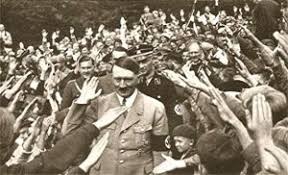
Frenzied Germans greet Adolf Hitler
The Gestapo didn’t have to watch everyone: German “patriots” gladly reported their fellow citizens—especially Jews—to the secret police.
As far as everyday Germans were concerned:
- The streets were clean and peaceful.
- Employment was high.
- The trouble-making unions were gone.
- Germany was once again “taking its rightful place” among ruling nations, after its catastrophic defeat in World War 1.
The height of “The Happy Time” came in June, 1940. In just six weeks, the Wehrmacht accomplished what the German army hadn’t in four years during World War 1: The total defeat of its longtime enemy, France.
Suddenly, French clothes, perfumes, delicacies, paintings and other “fortunes of war” came pouring into the Fatherland.
Most Germans believed der Krieg—“the war”—was over, and only good times lay ahead.
Then, on June 22, 1941, three million Wehrmacht soldiers slashed their way into the Soviet Union. The Third Reich was now locked in a death-struggle with a nation even more powerful than itself.

German soldiers in the Soviet Union
And then, on December 11, 1941—four days after Germany’s ally, Japan, attacked Pearl Harbor—Hitler declared war on the United States.
“The Happy Time” for Germans was over. Only prolonged disaster lay ahead.
Resuming the Presidency on January 20, 2025, Trump has threatened military invasions of Canada and Greenland and attacked Venezuela to snatch its dictator/president Nicolás Maduro. He has ordered military strikes on suspected drug smuggling and cartel operations in the Caribbean, the Pacific and Ecuador.
Domestically he has attacked such major universities as Columbia, Brown and Cornell for their Diversity, Equity and Inclusion (DEI) polices and/or alleged antisemitism. To restore their frozen federal funding, Columbia agreed to pay $200 million; Brown paid $50 million and Cornell paid $30 million.
But on February 28, 2026, Trump—in concert with Israel—launched an unprovoked series of devastating airstrikes against Iran. Suddenly he faced an enemy he could neither bribe nor intimidate.

Bombing of Terhan
To Trump’s surprise and dismay, Iran closed the Strait of Hormuz—through which which about 20%-25% of the world’s total liquid petroleum consumption (about 20–21 million barrels per day) flows.
Overnight, gas prices surged. By late May, the national average for a gallon of regular gas reached $4.56, compared to roughly $2.98 before military operations began.
On April 5—Easter Sunday, no less—Trump posted on his website, Truth Social: “Tuesday will be Power Plant Day, and Bridge Day, all wrapped up in one, in Iran. There will be nothing like it!!! Open up the Fuckin’ Strait, you crazy bastards, or you’ll be living in Hell – JUST WATCH! Praise be to Allah. President DONALD J. TRUMP”
This was followed on April 7 by another post: “A whole civilization will die tonight, never to be brought back again. I don’t want that to happen, but it probably will.”
But then Trump backed down after experts and international organizations such as Amnesty International warned that attacking civilian infrastructure would constitute war crimes under international law.
On March 11, Trump had told a reporter: “You know, you never like to say too early you won. We won. We won the, in the first hour, it was over.”
By late May, it was not over; the Strait of Hormuz remained closed and crude oil prices continued to rise throughout the world. And so did the prices of all goods transported to market.
Like Adolf Hitler, Trump had believed his war would end successfully in four to six weeks at most. And, like Hitler, Trump had no plan for a prolonged struggle.
Short of using nuclear weapons or ordering an all-out invasion of Iran—both hugely unpopular among Americans—Trump could only threaten or deliver more impotent airstrikes.
The Germans made a devil’s-bargain with Adolf Hitler—and paid dearly for it.
Millions of greedy and hate-filled Americans have embraced Donald Trump—another would-be tyrant—as America’s economic savior.
By supporting Trump—or at least not opposing him—they also made a devil’s-bargain. And such bargains always end with the devil winning.
60 MIINUTES, ABORTION, ADOLF HITLER, ALBERT SPEER, ALTERNET, AMERICABLOG, AP, BABY BOOMER RESISTANCE, BBC, BERLIN, BIRTH CONTROL, BLOOMBERG, BLUESKY, BUZZFEED, CANADA, CBS NEWS, CENSUS BUREAU, CENTERS FOR DISEASE CONTROL AND PREVENTION (CDC), CNN, CONSUMER FINANCIAL PROTECTION BUREAU, CONTRACEPTION, CONVERSATION WITH AN AMERICAN WRITER (POEM), COVID-19, CROOKS AND LIARS, DAILY KOS, DEMOCRATS, DENMARK, DEPARTMENT OF DEFENSE (DOD), DEPARTMENT OF GOVERNMENT EFFICIENCY (DOGE), DEPARTMENT OF JUSTICE (DOJ), DIVERSITY EQUITY AND INCLUSION (DEI), DONALD TRUMP, ELON MUSK, ENVIRONMENTAL PROTECTION AGENCY, FASCISM, FBI, FEDERAL COMMUNICATIONS COMMISSION (FCC), FEDERAL TRADE COMMISSION (FTC), FIVETHIRTYEIGHT, FOSSIL FUELS, FRANCE, GAS, GEORGE STEPHANOPOULOS, HARPER’S MAGAZINE, HERITAGE FOUNDATION, HUFFINGTON POST, HUNTER BIDEN, INSPECTORS GENERAL, INTELLIGENCE OFFICERS, IRAN, ISRAEL, JANUARY 6 COUP ATTEMPT, JOE BIDEN, JOHN F. KENNEDY CENTER FOR THE PERFORMING ARTS, JOSEPH STALIN, LUXURY JET, MEDAL OF HONOR, MEDIA MATTERS, MOTHER JONES, MOVEON, MSNBC, NATIONAL OCEANIC AND ATMOSPHERIC AGENCY (NOAA), NAZI GERMANY, NBC NEWS, NEWSDAY, NEWSWEEK, NORWAY, NPR, Oil, PARDONS, PBS NEWSHOUR, POLAND, POLITICO, POLITICUSUSA, PROJECT 2025, PUBLIC TRANSIT SYSTEMS, QATAR, RAPE, RAW STORY, REPUBLICAN PARTY, REPUBLICANS, REUTERS, ROBERT PAYNE, SALON, SEATTLE TIMES, SECURITY CLEARANCES, SLATE, SOVIET UNION, STALINGRAD, STRAIT OF HORMUZ, TALKING POINTS MEMO, TAX CUTS, THE ATLANTIC, THE CHICAGO SUN-TIMES, THE CHICAGO TRIBUNE, THE DAILY BEAST, THE DAILY BLOG, THE GUARDIAN, THE HILL, THE HUFFINGTON POST, THE INTERCEPT, THE LIFE AND DEATH OF ADOLF HITLER (BOOK), THE LOS ANGELES TIMES, THE NATION, THE NEW REPUBLIC, THE NEW YORK TIMES, THE NEW YORKER, THE PENTAGON, THE VILLAGE VOICE, THE WASHINGTON POST, THINKPROGRESS, TIME, TRUTHDIG, TRUTHOUT, TWO POLITICAL JUNKIES, U.S. NEWS & WORLD REPORT, UKRAINE, UPI, USA TODAY, VLADIMIR PUTIN, VOLODYMYR ZELENSKY, WAR CRIMES, WEHRMACHT, WORLD WAR 11, X, YEVGENEY YEVTUSHENKO
In Bureaucracy, Business, History, Law, Law Enforcement, Military, Politics, Social commentary on April 30, 2026 at 12:18 am
Eighty-one years ago, on March 19, 1945, facing certain defeat, Adolf Hitler ordered a massive “scorched-earth” campaign throughout Germany.
All German agriculture, industry, ships, communications, roads, food stuffs, mines, bridges, stores and utility plants were to be destroyed.
If implemented, it would deprive the entire German population of even the barest necessities after the war.
Opposing him—at first openly, and later secretly—was Albert Speer, his former architect and now Minister of Armaments.

Albert Speer
Speer argued that there must be a future for the German people: “If our enemies wish to destroy us, why help them? We must leave the people something.”
But Hitler refused to back down: “I don’t want to hear any more.”
He gave Speer 24 hours to reconsider his opposition to the order.
Speer could not directly promise to carry out Hitler’s “scorched earth” order. So he gave Hitler a vague answer that essentially committed him to nothing: “My Fuhrer, I stand unconditionally behind you!”
“Then all is well,” said Hitler, suddenly with tears in his eyes.
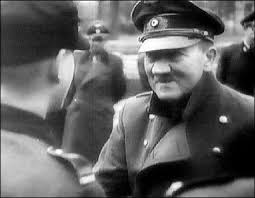
Adolf Hitler addressing boy soldiers as the Third Reich crumbles
“If I stand unreservedly behind you,” said Speer, “then you must entrust me rather than the Gauleiters [district Party leaders serving as provincial governors] with the implementation of your decree.”
Filled with gratitude, Hitler signed the decree Speer had thoughtfully prepared before their fateful meeting.
By doing so, Hitler unintentionally gave Speer the power to thwart his “scorched earth” order.
Trained as an architect, Speer had joined the Nazi Party in 1931. He met Hitler in 1933, when he presented the Fuhrer with architectural designs for the Nuremberg rally scheduled for that year.
From then on, Speer became Hitler’s “genius architect” assigned to create buildings meant to last for a thousand years. “If Hitler had been capable of friendship,” Speer said after the war, “I would have been that friend.”
In 1943, Hitler appointed him Minister of Armaments, charged with revitalizing the German war effort.
Nevertheless, Speer now crisscrossed Germany, persuading military leaders and district governors to not destroy the vital facilities that would be needed after the war.
“No other senior National Socialist could have done the job,” writes Randall Hanson, author of Disobeying Hitler: German Resistance After Valkyrie.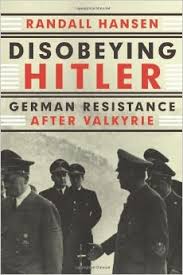
“Speer was one of the very few people in the Reich—-perhaps even the only one—with such power to influence actors’ willingness/unwillingness to destroy.”
Despite his later conviction for war crimes at Nuremberg, Speer never regretted his efforts to save Germany from total destruction at the hands of Adolf Hitler.
* * * * * * * * * *
Why have Republicans almost unanimously stood by Donald Trump despite the wreckage he has made of American foreign and domestic policy?
Fear—that they will lose their privileged positions in Congress if they don’t.
This could happen by:
- Their being voted out of Congress by Trump’s fanatical base; or
- Their being voted out of Congress by anti-Trump voters fed up with Trump’s appalling behavior.
House and Senate Republicans’ support for Trump hinges on one question: “Can I hold onto my power and all the privileges that accompany it by sticking—or breaking—with him?”
The Original Nazis were guided by Hitler’s belief that the world was polluted by corruption and ugliness—and their mission was to remove that ugliness and corruption.
This meant removing those peoples they deemed inferior—Jews, Slavs (Poles, Serbs, Russians), Communists, liberals, gypsies, the physically and mentally handicapped.
Today’s Fascistic Republicans believe themselves to be the only legitimate political party. And so do their supporters.
No sin—or even crime—is intolerable if it’s committed by a Republican.
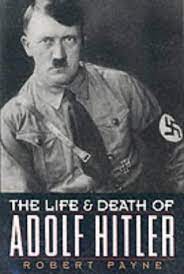
In his bestselling 1973 biography, The Life and Death of Adolf Hitler, British historian Robert Payne harshly condemned the German people for the rise of the Nazi dictator:
“[They] allowed themselves to be seduced by him and came to enjoy the experience….[They] followed him with joy and enthusiasm because he gave them license to pillage and murder to their hearts’ content. They were his servile accomplices, his willing victims.”
Like Hitler, Trump offered his Republican voters and Congressional allies intoxicating dreams: “I will enrich all of you. And I will humiliate and destroy those Americans you most hate.”
For his white, Fascistic, largely elderly audience, those enemies included blacks, atheists, Hispanics, non-Christians, Muslims, liberals, “uppity” women, Asians.
For most of the first three years of his first term, he faced little opposition. What cost Trump the White House wasn’t Democratic or Republican courage but a deadly disease—COVID-19—which Trump refused to take seriously.
Democrats cowered before Trump’s slanders—thereby ensuring more assaults.
Most of the press quailed before Trump. Only a few media outlets—notably The New York Times, CNN and The Washington Post––dared investigate his crimes and blunders.
In 1960, the Russian poet, Yevgeney Yevtushenko, published “Conversation With an American Writer”—a stinging indictment of the cowardly opportunists who had supported the brutal tyranny of Joseph Stalin:
“You have courage,” they tell me.
It’s not true. I was never courageous.
I simply felt it unbecoming
to stoop to the cowardice of my colleagues.
Too many Republicans know all-too-well how it feels to stoop to the cowardice of their colleagues.
60 MIINUTES, ABORTION, ADOLF HITLER, ALBERT SPEER, ALTERNET, AMERICABLOG, AP, BABY BOOMER RESISTANCE, BBC, BERLIN, BIRTH CONTROL, BLOOMBERG, BLUESKY, BUZZFEED, CANADA, CBS NEWS, CENSUS BUREAU, CENTERS FOR DISEASE CONTROL AND PREVENTION (CDC), CNN, CONSUMER FINANCIAL PROTECTION BUREAU, CONTRACEPTION, CONVERSATION WITH AN AMERICAN WRITER (POEM), COVID-19, CROOKS AND LIARS, DAILY KOS, DEMOCRATS, DENMARK, DEPARTMENT OF DEFENSE (DOD), DEPARTMENT OF GOVERNMENT EFFICIENCY (DOGE), DEPARTMENT OF JUSTICE (DOJ), DIVERSITY EQUITY AND INCLUSION (DEI), DONALD TRUMP, ELON MUSK, ENVIRONMENTAL PROTECTION AGENCY, FASCISM, FBI, FEDERAL COMMUNICATIONS COMMISSION (FCC), FEDERAL TRADE COMMISSION (FTC), FIVETHIRTYEIGHT, FOSSIL FUELS, FRANCE, GAS, GEORGE STEPHANOPOULOS, HARPER’S MAGAZINE, HERITAGE FOUNDATION, HUFFINGTON POST, HUNTER BIDEN, INSPECTORS GENERAL, INTELLIGENCE OFFICERS, IRAN, ISRAEL, JANUARY 6 COUP ATTEMPT, JOE BIDEN, JOHN F. KENNEDY CENTER FOR THE PERFORMING ARTS, JOSEPH STALIN, LUXURY JET, MEDAL OF HONOR, MEDIA MATTERS, MOTHER JONES, MOVEON, MSNBC, NATIONAL OCEANIC AND ATMOSPHERIC AGENCY (NOAA), NAZI GERMANY, NBC NEWS, NEWSDAY, NEWSWEEK, NORWAY, NPR, Oil, PARDONS, PBS NEWSHOUR, POLAND, POLITICO, POLITICUSUSA, PROJECT 2025, PUBLIC TRANSIT SYSTEMS, QATAR, RAPE, RAW STORY, REPUBLICAN PARTY, REPUBLICANS, REUTERS, ROBERT PAYNE, SALON, SEATTLE TIMES, SECURITY CLEARANCES, SLATE, SOVIET UNION, STALINGRAD, STRAIT OF HORMUZ, TALKING POINTS MEMO, TAX CUTS, THE ATLANTIC, THE CHICAGO SUN-TIMES, THE CHICAGO TRIBUNE, THE DAILY BEAST, THE DAILY BLOG, THE GUARDIAN, THE HILL, THE HUFFINGTON POST, THE INTERCEPT, THE LIFE AND DEATH OF ADOLF HITLER (BOOK), THE LOS ANGELES TIMES, THE NATION, THE NEW REPUBLIC, THE NEW YORK TIMES, THE NEW YORKER, THE PENTAGON, THE VILLAGE VOICE, THE WASHINGTON POST, THINKPROGRESS, TIME, TRUTHDIG, TRUTHOUT, TWO POLITICAL JUNKIES, U.S. NEWS & WORLD REPORT, UKRAINE, UPI, USA TODAY, VLADIMIR PUTIN, VOLODYMYR ZELENSKY, WAR CRIMES, WEHRMACHT, WORLD WAR 11, X, YEVGENEY YEVTUSHENKO
In Bureaucracy, Business, History, Law, Law Enforcement, Military, Politics, Social commentary on April 29, 2026 at 12:10 am
Since Donald Trump retook the office of President on January 20, 2025, Republicans have lustily supported or remained silent about his litany of criminal, if not treasonous, actions:
- Trump fired the inspectors general—who are charged with protecting the government from waste and corruption—from more than a dozen federal agencies.
- Several career lawyers who worked on the criminal investigations into Trump during the Biden administration were fired by Acting Attorney General James McHenry because he “do[es] not believe that the leadership of the Department can trust you to assist in implementing the President’s agenda faithfully.”
- Trump ordered a purge of about a half-dozen executive assistant directors at the FBI. These were some of the bureau’s top managers overseeing criminal, national security and cyber investigations.
- Their “crime”: Trump blamed them for investigating his inciting the January 6, 2021 coup attempt and his illegal holding of highly sensitive national security documents after leaving office.

- Without explanation, Trump fired Rohit Chopra, the director of the Consumer Financial Protection Bureau, which protects consumers from unfair, deceptive and fraudulent business practices.
- Following Trump’s executive orders, federal agencies deleted multiple federal web pages and data. Among the agencies: The Pentagon, the Centers for Disease Control and Prevention and the Census Bureau. The changes affected content related to diversity, equity and inclusion (DEI), gender identity, public health research, environmental policy and social programs.
- Following Trump’s anti-DEI executive order, the United States Department of Defense (DOD) deleted content that included the achievements of nonwhite groups, such as Navajo code talkers, black Tuskegee Airmen, Medal of Honor winners and women veterans. As in Joseph Stalin’s Soviet Union, those that Trump hates are made to disappear from history.

- Trump fired the board members at the John F. Kennedy Center for the Performing Arts and appointed himself as chairman—just as Joseph Stalin made himself arbiter of what was permissible for artists in the Soviet Union.
- Trump held what amounted to an ambush meeting with Ukrainian President Volodymyr Zelensky at the White House. Siding with Russian dictator Vladimir Putin, Trump blamed Zelensky for Russia’s 2022 invasion of Ukraine.
- Trump demanded that Zelensky sign over mineral rights to the United States without America’s providing a security guarantee for Ukraine. Zelensky left without signing such an agreement.
- The Trump-authorized and illegitimate Department of Government Efficiency (DOGE) led by billionaire Elon Musk, dismantled multiple agencies, invaded the privacy of untold millions by accessing sensitive data systems and fired tens of thousands of federal workers.
- Trump filed frivolous and extortionate lawsuits against major news networks CBS and ABC.
- Against CBS: Trump claimed that its news magazine, “60 Minutes” deceptively edited an interview with Kamala Harris to damage his presidential campaign and influence the election. He initially sought $10 billion in damages, then increased it to $20 billion. Paramount, the owner of CBS, agreed to pay $16 million in legal fees and a contribution to the future Trump Library.

- Against ABC: He claimed that its commentator, George Stephanopoulos, falsely stated he was found liable for “rape” in the case brought by columnist E. Jean Carroll. The jury found Trump liable for sexual abuse and defamation, but not rape. The judge later clarified that what the jury found Trump did was in fact rape, as commonly understood.
- Nevertheless, in December 2024, ABC News agreed to pay $15 million to a foundation for Trump’s presidential library and $1 million in legal fees to settle the lawsuit.
- Trump solicited and received a $400 million luxury jet from Qatar for use as Air Force One, in direct violation of the Emoluments Clause of the United States Constitution, which prohibits federal officials from accepting gifts from foreign countries.
- The jet will cost taxpayers hundreds of millions of dollars to bring it up to presidential standards, including a security sweep of the entire aircraft and costly upgrades to ensure classified communications. After Trump leaves office, it will be transferred to his Presidential library.
Qatar’s donated plane
John Taggart from Claydon Banbury, Oxfordshire, CC BY-SA 2.0 <https://creativecommons.org/licenses/by-sa/2.0>, via Wikimedia Commons
- On February 28, 2026, Trump—in concert with Israel—launched an unprovoked series of devastating airstrikes against Iran.
- On March 11, Trump told a reporter: “You know, you never like to say too early you won. We won. We won the, in the first hour, it was over.”
- But then—to Trump’s surprise and fury—Iran closed the narrow Strait of Hormuz, through which about 20%-25% of the world’s total liquid petroleum consumption (about 20–21 million barrels per day) flows.
- Overnight, gas prices rose. By late April, the national average for a gallon of regular gas reached $4.02 to $4.04, compared to roughly $2.98 before military operations began.
- On April 5—Easter Sunday, no less—Trump posted on his website, Truth Social: “Tuesday will be Power Plant Day, and Bridge Day, all wrapped up in one, in Iran. There will be nothing like it!!! Open up the Fuckin’ Strait, you crazy bastards, or you’ll be living in Hell – JUST WATCH! Praise be to Allah. President DONALD J. TRUMP”
- This was followed on April 7 by another post: “A whole civilization will die tonight, never to be brought back again. I don’t want that to happen, but it probably will.”
- Legal experts and international organizations such as Amnesty International warned that attacking civilian infrastructure would constitute war crimes under international law.


ADOLF HITLER, AFFORDABILITY, ALBERT SPEER, ALEXANDER THE GREAT, ALTERNET, AMERICABLOG, AP, BABY BOOMER RESISTANCE, BBC, BENJAMIN NETANYAHU, BLOOMBERG, BLUESKY, BUZZFEED, CBS NEWS, CNN, CROOKS AND LIARS, DAILY KOS, DE-STALINIZATION, DEMOCRATS, DONALD TRUMP, FIVETHIRTYEIGHT, FREDERIC SPOTTS, HARPER’S MAGAZINE, HITLER AND THE POWER OF AESTHETICS (BOOK), HOWARD STERN, HUFFINGTON POST, IRAN, ISRAEL, JAQUELINE KENNEDY, JOHN F. KENNEDY MEMORIAL CENTER FOR THE PERFORMING ARTS, JOSEPH STALIN, LEON TROTSKY, LYNDON B. JOHNSON, MEDIA MATTERS, MENELAUS, MIDTERM ELECTIONS, MONUMENTS, MOTHER JONES, MOVEON, MSNBC, NBC NEWS, NEWSDAY, NEWSWEEK, NICOLAS MADURO, NIKITA KHRUSHCHEV, NPR, OPERATION BARBAROSSA, PBS NEWSHOUR, PERCY BYSSHE SHELLEY, PETE HEGSETH, POLITICO, POLITICUSUSA, PRINCESS DIANA, RAW STORY, REUTERS, SALON, SEATTLE TIMES, SLATE, SOVIET UNION, STRAIT OF HORMUZ, T.E. LAWRENCE, TALKING POINTS MEMO, THE ATLANTIC, THE CHICAGO SUN-TIMES, THE CHICAGO TRIBUNE, THE DAILY BEAST, THE DAILY BLOG, THE GUARDIAN, THE HILL, THE HUFFINGTON POST, THE INTERCEPT, THE LOS ANGELES TIMES, THE NATION, THE NEW REPUBLIC, THE NEW YORK TIMES, THE NEW YORKER, THE ODYSSEY (POEM), THE VILLAGE VOICE, THE WASHINGTON POST, THINKPROGRESS, THIRD REICH, TIME, TROJAN WAR, TROY, TRUTH SOCIAL, TRUTHDIG, TRUTHOUT, TWO POLITICAL JUNKIES, U.S. NEWS & WORLD REPORT, UPI, USA TODAY, VENEZUELA, VICTORY ARCH, WHITE HOUSE BALLROOM, WHITE HOUSE ROSE GARDEN, X
VANITY AND NOTHINGNESS: PART TWO (OF THREE)
In Bureaucracy, History, Law, Military, Politics, Social commentary on September 9, 2026 at 12:10 amWith his popularity rating hovering at 33% to 39%, President Donald Trump desperately fears a third impeachment action against him if Democrats retake the House of Representatives in the fast-approaching midterm elections scheduled for November 3.
Thus, his almost crazed lust to be remembered forever. And for all his slim grasp of history, he knows that presidents and kings (of which he thinks himself the latter) are remembered for the wars they’ve won and the monuments they’ve left behind.
Easily won wars, of course, are the best. And on January 3, 2026, Trump got just that.
American forces bombed military facilities and infrastructure in the capital city of Caracas and across northern Venezuela. And they captured Venezuelan President Nicolás Maduro and his wife, Cilia Flores. Both were flown to New York City to face federal drug trafficking and narco-terrorism charges.
Flag of Venezuela
Savoring that triumph, Trump conspired with Israeli Prime Minister Benjamin Netanyahu to overturn the leadership of Israel’s mortal enemy and America’s longtime antagonist: Iran.
Trump predicted several times that the war would be over in four to six weeks—the same timetable Adolf Hitler gave for the completion of his victory over the Soviet Union in 1941.
And just as “Operation Barbarossa” proved a fatal mistake, so Trump’s latest stab at playing Generalissimo has proven a total disaster. Six months into his war, he still has no plan for winning it or withdrawing from it without losing face.
Then there is his mania for monuments.
Upon his return to the Presidency in 2025, he turned his “artistic” gifts on the White House. On June 9, 2025, contractors began paving over the grass of the White House Rose Garden to create a patio.
This had been a special project of then-First Lady Jacqueline Kennedy. In 1962 she and designer Rachel Lambert “Bunny” Mellon created a classic, symmetrical space for official state functions and press events.
They installed a central open lawn surrounded by formal flower beds, seasonal plantings, and flowering crabapple trees.
By September, 2026 his administration had altered over 100 structures in Washington, D.C., alone, according to New York, which reported that the projects have collectively cost over a billion dollars.
On December 18, 2025, The John F. Kennedy Memorial Center for the Performing Arts became The Donald J. Trump and John F. Kennedy Memorial Center for the Performing Arts.
Not, of course, by an act of Congress. That happened in January, 1964, two months after the assassination of President John F. Kennedy.
John F. Kennedy Memorial Center for the Performing Arts.
Congress passed and President Lyndon B. Johnson signed into law legislation renaming the Center as a “living memorial” in his honor: The John F. Kennedy Memorial Center for the Performing Arts.
In Trump’s case, getting his name added to the Center was much simpler. First, he fired the longstanding board that had overseen the Center, and put his own handpicked board members on it.
Then his chosen thralls declared: “We’re adding Trump’s name to this building.”
No doubt to his amazement, there were serious objections to this—and lawsuits backing up those objections.
On May 29, 2026, U.S. District Judge Christopher Cooper in Washington, D.C., ruled that Trump’s name was illegally added to the Center:
“The Kennedy Center’s organic statute makes crystal clear that the Center is to be named for President Kennedy, and it cannot bear any other formal name or public memorial based on the Board’s unilateral say-so. Congress gave the Kennedy Center its name, and only Congress can change it.”
And he ordered that Trump’s name be removed from the building within two weeks—by June 12, two days before Trump’s 80th birthday.
Trump has, predictably, appealed the ruling to the Supreme Court.
He thus joined the ranks of arts-obsessed tyrants like Joseph Stalin and Adolf Hitler. For 12 years, Hitler served as the arbiter of culture in Nazi Germany. Stalin held that role for almost 30.
Hitler considered himself an unappreciated artist. At 18, he had applied for admission to the Academy of Fine Arts Vienna, but was rejected twice. If he had a friend, it was the architect Albert Speer, with whom he felt an artistic kinship.
Even as the Third Reich collapsed, he found time to pore over architectural models he intended to turn into gigantic buildings.
In Hitler and the Power of Aesthetics, author Frederic Spotts argues that Hitler saw the world corrupted by “evils” he must first destroy so he could re-create it to conform to his artistic ideals.
Like Hitler, Trump sees himself as an unrecognized artist through his erection of buildings. And, again like Hitler, he believes that he has a mission to replace ugliness with beauty.
But he’s clearly more focused on the demolition process than on the creation of beauty.
On October 20, 2025, demolitions crews—on his orders—gutted the East Wing of the White House to create a massive, 90,000 square feet, 650-person capacity ballroom.
And he has threatened to demolish the John F. Kennedy Center for the Performing Arts if his name is not added to it.
Meanwhile, he intends to close the Center for two years, to hide the embarrassing truth that artists and audiences no longer want to go there while he runs it.
Share this: