Posts Tagged ‘GEORGE W. BUSH’
2016 PRESIDENTIAL CAMPAIGN, 2020 PRESIDENTIAL CAMPAIGN, 2024 PRESIDENTIAL CAMPAIGN, 60 MINUTES NEWS MAGAINE, ABC NEWS, ADAM SCHIFF, ADOLF HITLER, ALBERT “THE EXECUTIONER” ANASTASIA, ALTERNET, ALVIN BRAGG, AMERICABLOG, AP, ARTICLES OF IMPEACHMENT, ARTIFICIAL INTELLIGENCE (AI), BABY BOOMER RESISTANCE, BORDER WALL, BUZZFEED, CANADA, CBS NEWS, CENSORSHIP, CENSUS BUREAU, CENTERS FOR DISEASE CONTROL AND PREVENTION, CHARLES “LUCKY” LUCIANO, CHARLES DE GAULLE, CHINA, CHRIS CHRISTIE, CHRISTI GRIMM, CHRISTOPHER S. MURPHY, CIA, CLASSIFIED DOCUMENTS, CNN, CONSERVATIVE POLITICAL ACTION CONFERENCE, CONSUMER FINANCIAL PROTECTION BUREAU, CONVERSATION WITH AN AMERICAN WRITER (POEM), CORONAVIRUS RELIEF MONIES, COVID-19, CROOKS AND LIARS, CUBAN MISSILE CRISIS, DAILY KOS, DAN BOWMAN, DAN SULLIVAN, DANIELLE SASSOON, DAVID BROOKS, DEMOCRATS, DEPARTMENT OF DEFENSE, DEPARTMENT OF GOVERNMENT EFFICIENCY (DOGE), DEPARTMENT OF HEALTH AND HUMAN SERVICES, DEPARTMENT OF JUSTICE, DIVERSITY EQUITY INCLUSION (DEI), DONALD TRUMP, DONALD TRUMP JUNIOR, DRUDGE RETORT, E. JEAN CARROLL, ELON MUSK, EMIL BOVE, EMOLUMENTS CLAUSE OF THE UNITED STATES CONSTITUTION, ERIC ADAMS, EXTORTION, FBI, FIRST AMENDMENT, FIVETHIRTYEIGHT, FRIVOLOUS LAWSUITS, GEORGE FLOYD, GEORGE STEPHANOPOULOS, GEORGE W. BUSH, GLENN FINE, GOVERNMENT ACCOUNTABILITY OFFICE, GOVERNMENT SHUTDOWN, GULF OF AMERICA, GULF OF MEXICO, HARPER’S MAGAZINE, HILLARY CLINTON, HOUSE FOREIGN AFFAIRS COMMITTEE, HOUSE INTELLIGENCE COMMITTEE, HOUSE OVERSIGHT AND REFORM COMMITTEE, HUNTER BIDEN, IMMIGRANTS, IMPEACHMENT, IMPOUNDMENT CONTROL ACT, INSPECTORS GENERAL, INTELLIGENCE COMMUNITY, INTELLIGENCE OFFICERS, JACK SMITH, JAKE SULLIVAN, JAKE TAPPER, JAMAL KHASHOGGI, JAMES COMEY, JAMES MCHENRY, JAMES ROBART, JANUARY 6 COUP ATTEMPT, JARED KUSHNER, JEFF SESSIONS, JOHN CORNYN, JOHN F. KENNEDY, JOHN F. KENNEDY CENTER FOR THE PERFORMING ARTS, JOHN ROBERTS, JOING CHIEFS OF STAFF, JON S. TIGAR, JOSEPH BIDEN, JOSEPH STALIN, Kamala Harris, KELLY LOEFFER, KEVIN CRAMER, LAFAYETTE SQUARE, LAMAR ALEXANDER, LEON PANETTA, LINDSEY GRAHAM, LUXUY JET, MARCO RUBIO, MARK MILLEY, MARTIN GUGINO, MEDIA MATTERS, MEIN KAMPF, MERRICK GARLAND, MEXICO, MICHAEL FLYNN, MICHAEL HAYDEN, MICHAEL K. ATKINSON, MICK MULVANEY, MIKE PENCE, MITCH MCCONNELL, MOHAMMED BIN SALMAN, MOTHER JONES, MOVEON, MSNBC, NANCY PELOSI, NATALIA VESELNITSKAYA, NATIONAL SECURITY AGENCY, NBC NEWS, NEWSWEEK, NIKKI HALEY, NPR, PAUL MANAFORT, PBS NEWSHOUR, PETE HEGSETH, POLITICO, POLITICUSUSA, QATAR, RAW STORY, REPUBLICANS, REUTERS, RINAT AKHMETSHIN, ROBERT MUELLER, ROBERT PAYNE, ROD ROSENSTEIN, ROGER STONE, RON DESANTIS, RON JOHNSON, RUSSIA, SALON, SEATTLE TIMES, SERGEY KISLYAK, SERGEY LAVROV, SLATE, ST. JOHN’S CHURCH, STEVE DAINES, TALKING POINTS MEMO, TARIFFS, TED CRUZ, THE ATLANTIC, THE CHICAGO SUN-TIMES, THE CHICAGO TRIBUNE, THE DAILY BEAST, THE DAILY BLOG, THE GUARDIAN, THE HILL, THE HUFFINGTON POST, THE JUDICIARY, THE LIFE AND DEATH OF ADOLF HITLER (BOOI), THE LIFE AND DEATH OF ADOLF HITLER (BOOK), THE LOS ANGELES TIMES, THE NATION, THE NEW REPUBLIC, THE NEW YORK TIMES, THE PENTAGON, THE PRESS, THE VILLAGE VOICE, THE WASHINGTON POST, THINKPROGRESS, TIME, TREASON, TRUMP TOWER MEETING, TRUTH SOCIAL, TRUTHDIG, TRUTHOUT, TWENTY-SECOND AMENDMENT, TWO POLITICAL JUNKIES, U.S. NEWS & WORLD REPORT, UKRAINE, UNITED STATES HOUSE OF REPRESENTATIVES, UNITED STATES SENATE, UPI, USA TODAY, VLADIMIR PUTIN, VOLODYMYR ZELENSKY, WHISTLEBLOWER, WHITE HOUSE BUDGET OFFICE, WONKETTE, X, YEVGENEY YEVTUSHENKO
In Bureaucracy, History, Law, Law Enforcement, Military, Politics, Social commentary on June 10, 2025 at 12:37 am
Republicans have a long and disgraceful history of excusing Donald Trump’s litany of crimes—as a 2016 Presidential candidate, as President (2017-2021), as a former President (2021-2025) and once again as President.
Forgiven Crime 44: Trump’s Justice Department ordered Danielle Sassoon, the United States Attorney for the Southern District of New York, to dismiss pending criminal charges against New York City Mayor Eric Adams for bribery, solicitation, conspiracy and wire fraud,
This occurred after Adams—who had previously refused to cooperate with Trump’s roundup of illegal aliens—agreed to do so. Sassoon resigned from the Justice Department rather than comply with the order.
Forgiven Crime 45: When Danielle Sassoon resigned instead of carrying out what she believed was an illegal order, Emil Bove, the Acting Attorney General, sent her a letter stating that her conduct would be investigated and evaluated by the Attorney General, after which “the Attorney General will determine whether termination or some other action is appropriate.”

Danielle Sassoon
Forgiven Crime 46: Trump held what amounted to an ambush meeting with Ukrainian President Volodymyr Zelensky at the White House. Siding with Russian dictator Vladimir Putin, Trump blamed Zelensky for Russia’s 2022 invasion of Ukraine.
Trump demanded that Zelensky sign over mineral rights to the United States without America’s providing a security guarantee for Ukraine. Zelensky left without signing such an agreement.
Forgiven Crime 47: Trump announced that he was considering violating the 22nd Amendment and seeking an illegal third Presidential term in 2028.
Forgiven Crime 48: The Trump-authorized and illegitimate Department of Government Efficiency (DOGE) led by billionaire Elon Musk, dismantled multiple agencies, invaded the privacy of untold millions by accessing sensitive data systems and fired tens of thousands of federal workers.
Forgiven Crime 49: Trump filed frivolous and extortionate lawsuits against major news networks CBS and ABC.
Against CBS: Trump claimed that its news magazine, “60 Minutes” deceptively edited an interview with Kamala Harris to damage his presidential campaign and influence the election. He initially sought $10 billion in damages, then increased it to $20 billion.

Against ABC: He claimed that its commentator, George Stephanopoulos, falsely stated he was found liable for “rape” in the case brought by columnist E. Jean Carroll. The jury found Trump liable for sexual abuse and defamation, but not rape. The judge later clarified that what the jury found Trump did was in fact rape, as commonly understood.
ABC settled the lawsuit by agreeing to donate $15 million to Trump’s Presidential library.
Forgiven Crime 50: Trump solicited and received a $400 million luxury jet from Qatar for use as Air Force One, in direct violation of the Emoluments Clause of the United States Constitution, which prohibits federal officials from accepting gifts from foreign countries.
The jet will cost taxpayers hundreds of millions of dollars to bring it up to presidential standards, including a security sweep of the entire aircraft and costly upgrades to ensure classified communications.
After Trump leaves office, it will be transferred to his Presidential library.
* * * * *
Why have Republicans almost unanimously stood by Donald Trump despite the wreckage he made of American foreign and domestic policy?
Fear—that they will lose their privileged positions in Congress if they don’t.
This could happen by:
- Their being voted out of Congress by Trump’s fanatical base; or
- Their being voted out of Congress by anti-Trump voters fed up with Trump’s appalling behavior.
House and Senate Republicans’ support for Trump hinges on one question: “Can I hold onto my power and all the privileges that accompany it by sticking—or breaking—with him?”
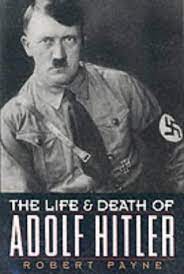
In his bestselling 1973 biography, The Life and Death of Adolf Hitler, British historian Robert Payne harshly condemned the German people for the rise of the Nazi dictator:
“[They] allowed themselves to be seduced by him and came to enjoy the experience….[They] followed him with joy and enthusiasm because he gave them license to pillage and murder to their hearts’ content. They were his servile accomplices, his willing victims.”
Like Hitler, Trump offered his Republican voters and Congressional allies intoxicating dreams: “I will enrich all of you. And I will humiliate and destroy those Americans you most hate.”
For his white, Fascistic, largely elderly audience, those enemies included blacks, atheists, Hispanics, non-Christians, Muslims, liberals, “uppity” women, Asians.
For most of the first three years of his first term, he faced little opposition. What cost Trump the White House wasn’t Democratic or Republican courage but a deadly disease—COVID-19—which Trump refused to take seriously.
Democrats cowered before Trump’s slanders—thereby ensuring more assaults.
Most of the press quailed before Trump. Only a few media outlets—notably the New York Times, CNN and the Washington Post-–dared investigate his crimes and blunders.
In 1960, the Russian poet, Yevgeney Yevtushenko, published “Conversation With an American Writer”—a stinging indictment of the cowardly opportunists who had supported the brutal tyranny of Joseph Stalin:
“You have courage,” they tell me.
It’s not true. I was never courageous.
I simply felt it unbecoming
to stoop to the cowardice of my colleagues.
Too many Republicans know all-too-well how it feels to stoop to the cowardice of their colleagues for a transitory hold on power and privilege.
2016 PRESIDENTIAL CAMPAIGN, 2020 PRESIDENTIAL CAMPAIGN, 2024 PRESIDENTIAL CAMPAIGN, 60 MINUTES NEWS MAGAINE, ABC NEWS, ADAM SCHIFF, ADOLF HITLER, ALBERT “THE EXECUTIONER” ANASTASIA, ALTERNET, ALVIN BRAGG, AMERICABLOG, AP, ARTICLES OF IMPEACHMENT, ARTIFICIAL INTELLIGENCE (AI), BABY BOOMER RESISTANCE, BORDER WALL, BUZZFEED, CANADA, CBS NEWS, CENSORSHIP, CENSUS BUREAU, CENTERS FOR DISEASE CONTROL AND PREVENTION, CHARLES “LUCKY” LUCIANO, CHARLES DE GAULLE, CHINA, CHRIS CHRISTIE, CHRISTI GRIMM, CHRISTOPHER S. MURPHY, CIA, CLASSIFIED DOCUMENTS, CNN, CONSERVATIVE POLITICAL ACTION CONFERENCE, CONSUMER FINANCIAL PROTECTION BUREAU, CONVERSATION WITH AN AMERICAN WRITER (POEM), CORONAVIRUS RELIEF MONIES, COVID-19, CROOKS AND LIARS, CUBAN MISSILE CRISIS, DAILY KOS, DAN BOWMAN, DAN SULLIVAN, DANIELLE SASSOON, DAVID BROOKS, DEMOCRATS, DEPARTMENT OF DEFENSE, DEPARTMENT OF GOVERNMENT EFFICIENCY (DOGE), DEPARTMENT OF HEALTH AND HUMAN SERVICES, DEPARTMENT OF JUSTICE, DIVERSITY EQUITY INCLUSION (DEI), DONALD TRUMP, DONALD TRUMP JUNIOR, DRUDGE RETORT, E. JEAN CARROLL, ELON MUSK, EMIL BOVE, EMOLUMENTS CLAUSE OF THE UNITED STATES CONSTITUTION, ERIC ADAMS, EXTORTION, FBI, FIRST AMENDMENT, FIVETHIRTYEIGHT, FRIVOLOUS LAWSUITS, GEORGE FLOYD, GEORGE STEPHANOPOULOS, GEORGE W. BUSH, GLENN FINE, GOVERNMENT ACCOUNTABILITY OFFICE, GOVERNMENT SHUTDOWN, GULF OF AMERICA, GULF OF MEXICO, HARPER’S MAGAZINE, HILLARY CLINTON, HOUSE FOREIGN AFFAIRS COMMITTEE, HOUSE INTELLIGENCE COMMITTEE, HOUSE OVERSIGHT AND REFORM COMMITTEE, HUNTER BIDEN, IMMIGRANTS, IMPEACHMENT, IMPOUNDMENT CONTROL ACT, INSPECTORS GENERAL, INTELLIGENCE COMMUNITY, INTELLIGENCE OFFICERS, JACK SMITH, JAKE SULLIVAN, JAKE TAPPER, JAMAL KHASHOGGI, JAMES COMEY, JAMES MCHENRY, JAMES ROBART, JANUARY 6 COUP ATTEMPT, JARED KUSHNER, JEFF SESSIONS, JOHN CORNYN, JOHN F. KENNEDY, JOHN F. KENNEDY CENTER FOR THE PERFORMING ARTS, JOHN ROBERTS, JOING CHIEFS OF STAFF, JON S. TIGAR, JOSEPH BIDEN, JOSEPH STALIN, Kamala Harris, KELLY LOEFFER, KEVIN CRAMER, LAFAYETTE SQUARE, LAMAR ALEXANDER, LEON PANETTA, LINDSEY GRAHAM, LUXUY JET, MARCO RUBIO, MARK MILLEY, MARTIN GUGINO, MEDIA MATTERS, MEIN KAMPF, MERRICK GARLAND, MEXICO, MICHAEL FLYNN, MICHAEL HAYDEN, MICHAEL K. ATKINSON, MICK MULVANEY, MIKE PENCE, MITCH MCCONNELL, MOHAMMED BIN SALMAN, MOTHER JONES, MOVEON, MSNBC, NANCY PELOSI, NATALIA VESELNITSKAYA, NATIONAL SECURITY AGENCY, NBC NEWS, NEWSWEEK, NIKKI HALEY, NPR, PAUL MANAFORT, PBS NEWSHOUR, PETE HEGSETH, POLITICO, POLITICUSUSA, QATAR, RAW STORY, REPUBLICANS, REUTERS, RINAT AKHMETSHIN, ROBERT MUELLER, ROBERT PAYNE, ROD ROSENSTEIN, ROGER STONE, RON DESANTIS, RON JOHNSON, RUSSIA, SALON, SEATTLE TIMES, SERGEY KISLYAK, SERGEY LAVROV, SLATE, ST. JOHN’S CHURCH, STEVE DAINES, TALKING POINTS MEMO, TARIFFS, TED CRUZ, THE ATLANTIC, THE CHICAGO SUN-TIMES, THE CHICAGO TRIBUNE, THE DAILY BEAST, THE DAILY BLOG, THE GUARDIAN, THE HILL, THE HUFFINGTON POST, THE JUDICIARY, THE LIFE AND DEATH OF ADOLF HITLER (BOOI), THE LIFE AND DEATH OF ADOLF HITLER (BOOK), THE LOS ANGELES TIMES, THE NATION, THE NEW REPUBLIC, THE NEW YORK TIMES, THE PENTAGON, THE PRESS, THE VILLAGE VOICE, THE WASHINGTON POST, THINKPROGRESS, TIME, TREASON, TRUMP TOWER MEETING, TRUTH SOCIAL, TRUTHDIG, TRUTHOUT, TWENTY-SECOND AMENDMENT, TWO POLITICAL JUNKIES, U.S. NEWS & WORLD REPORT, UKRAINE, UNITED STATES HOUSE OF REPRESENTATIVES, UNITED STATES SENATE, UPI, USA TODAY, VLADIMIR PUTIN, VOLODYMYR ZELENSKY, WHISTLEBLOWER, WHITE HOUSE BUDGET OFFICE, WONKETTE, X, YEVGENEY YEVTUSHENKO
In Bureaucracy, History, Law, Law Enforcement, Military, Politics, Social commentary on June 9, 2025 at 12:10 am
Throughout the first term of his Presidency, Republicans continued to support Donald Trump despite a series of actions that would have normally resulted in impeachment, if not imprisonment.
And they continued to support him after he left office—and after his re-election as President on November 5, 2024.
Forgiven Crime 29: Trump has echoed Adolf Hitler in attacking immigrants: “They’re poisoning the blood of our country. They’ve poisoned mental institutions and prisons all over the world, not just in South America, not just the three or four countries that we think about, but all over the world.”
Republicans have refused to condemn those remarks—or the original source—Mein Kampf-–of those remarks.
Forgiven Crime 30: On January 20, 2025—his first day as re-elected President—Trump granted clemency to more than 1,500 people convicted of offenses related to the January 6, 2021 United States Capitol attack. This sends a clear message that his supporters can commit virtually any crime against his opponents with impunity.
Forgiven Crime 31: Trump signed 26 executive orders. Among the results: Reversing climate change initiatives, eliminating DEI programs, changing the federal designation for the Gulf of Mexico to the “Gulf of America” and initiating a federal hiring freeze.

Executive Order signed by President Harry S. Truman
Forgiven Crime 32: Trump revoked the security clearances of 51 former Intelligence officials. Their “crime”: Signing a letter in 2020 stating that reports about a laptop allegedly belonging to Hunter Biden, son of then-presidential candidate Joe Biden, had “classic earmarks of a Russian information operation.”
Forgiven Crime 33: Trump revoked an executive order on Artificial Intelligence safety signed by former President Biden. Biden’s order, introduced in 2023, aimed to establish safeguards for the rapidly advancing AI technology.
Forgiven Crime 34: During a press conference in North Carolina, President Trump reaffirmed his stance that Canada should become the 51st state. Rejecting the longtime friendship between the two countries, Trump took an increasingly aggressive stance toward Canada, imposing steep tariffs and even threatening military intervention.
Forgiven Crime 35: Trump fired the inspectors general—who are charged with protecting the government from waste and corruption—from more than a dozen federal agencies.
Forgiven Crime 36: Several career lawyers who worked on the criminal investigations into Donald Trump were fired by Acting Attorney General James McHenry because he “do[es] not believe that the leadership of the Department can trust you to assist in implementing the President’s agenda faithfully.”
Seal of the U.S. Department of Justice
Forgiven Crime 37: Secretary of Defense Pete Hegseth informed former Chairman of the Joint Chiefs of Staff Mark Milley “that he is revoking the authorization for his security detail and suspending his security clearance.”
In addition, Hegseth ordered the Pentagon’s inspector general to open “an inquiry into the facts and circumstances surrounding General Milley’s conduct so that the Secretary may determine whether it is appropriate to reopen his military grade review determination.”
Milley’s “crimes”: After the Trump-incited January 6 attempted coup, Milley assured his Chinese counterpart that the U.S. was not about to start a military conflict. And in his farewell speech upon his retirement, said that service members “don’t take an oath to a wannabe dictator. … We don’t take an oath to an individual.”
Forgiven Crime 38: Trump ordered a purge of about a half-dozen executive assistant directors at the FBI. These were some of the bureau’s top managers overseeing criminal, national security and cyber investigations.
Their “crime”: Trump blamed them for investigating his inciting the January 6, 2021 coup attempt and his illegal holding of highly sensitive national security documents after leaving office.
Seal of the FBI
Forgiven Crime 39: On February 1, Trump arbitrarily placed tariffs of 25% on imports from Canada and Mexico and 10% on imports from China with no stated exemptions.
Forgiven Crime 40: Without explanation, Trump fired Rohit Chopra, the director of the Consumer Financial Protection Bureau, which protects consumers from unfair, deceptive and fraudulent business practices.
Forgiven Crime 41: Following Trump’s executive orders, federal agencies deleted multiple federal web pages and data. Among the agencies: The Pentagon, the Centers for Disease Control and Prevention and the Census Bureau. The changes affected content related to diversity, equity and inclusion (DEI), gender identity, public health research, environmental policy and social programs.
Forgiven Crime 42: Following Trump’s anti-DEI executive order, the United States Department of Defense (DOD) deleted content that included the achievements of nonwhite groups, such as Navajo code code talkers, black Tuskegee Airmen, Medal of Honor winners and women veterans. As in Joseph Stalin’s Soviet Union, those that Trump hates are made to disappear from history.
Forgiven Crime 43: Trump fired the board members at the John F. Kennedy Center for the Performing Arts and appointed himself as chairman—just as Joseph Stalin made himself arbiter of what was permissible for artists in the Soviet Union.
Forgiven Crime 44: When the Associated Press refused to designate the Gulf of Mexico as the “Gulf of America,” as Trump has decreed it now is, Trump banned its reporters from the White House press pool and official White House events.
A federal judge ordered him to reinstate the Associated Press’s access to presidential events on grounds that his ban violated the First Amendment, which guarantees freedom of the press.
2016 PRESIDENTIAL CAMPAIGN, 2020 PRESIDENTIAL CAMPAIGN, 2024 PRESIDENTIAL CAMPAIGN, 60 MINUTES NEWS MAGAINE, ABC NEWS, ADAM SCHIFF, ADOLF HITLER, ALBERT “THE EXECUTIONER” ANASTASIA, ALTERNET, ALVIN BRAGG, AMERICABLOG, AP, ARTICLES OF IMPEACHMENT, ARTIFICIAL INTELLIGENCE (AI), BABY BOOMER RESISTANCE, BORDER WALL, BUZZFEED, CANADA, CBS NEWS, CENSORSHIP, CENSUS BUREAU, CENTERS FOR DISEASE CONTROL AND PREVENTION, CHARLES “LUCKY” LUCIANO, CHARLES DE GAULLE, CHINA, CHRIS CHRISTIE, CHRISTI GRIMM, CHRISTOPHER S. MURPHY, CIA, CLASSIFIED DOCUMENTS, CNN, CONSERVATIVE POLITICAL ACTION CONFERENCE, CONSUMER FINANCIAL PROTECTION BUREAU, CONVERSATION WITH AN AMERICAN WRITER (POEM), CORONAVIRUS RELIEF MONIES, COVID-19, CROOKS AND LIARS, CUBAN MISSILE CRISIS, DAILY KOS, DAN BOWMAN, DAN SULLIVAN, DANIELLE SASSOON, DAVID BROOKS, DEMOCRATS, DEPARTMENT OF DEFENSE, DEPARTMENT OF GOVERNMENT EFFICIENCY (DOGE), DEPARTMENT OF HEALTH AND HUMAN SERVICES, DEPARTMENT OF JUSTICE, DIVERSITY EQUITY INCLUSION (DEI), DONALD TRUMP, DONALD TRUMP JUNIOR, DRUDGE RETORT, E. JEAN CARROLL, ELON MUSK, EMIL BOVE, EMOLUMENTS CLAUSE OF THE UNITED STATES CONSTITUTION, ERIC ADAMS, EXTORTION, FBI, FIRST AMENDMENT, FIVETHIRTYEIGHT, FRIVOLOUS LAWSUITS, GEORGE FLOYD, GEORGE STEPHANOPOULOS, GEORGE W. BUSH, GLENN FINE, GOVERNMENT ACCOUNTABILITY OFFICE, GOVERNMENT SHUTDOWN, GULF OF AMERICA, GULF OF MEXICO, HARPER’S MAGAZINE, HILLARY CLINTON, HOUSE FOREIGN AFFAIRS COMMITTEE, HOUSE INTELLIGENCE COMMITTEE, HOUSE OVERSIGHT AND REFORM COMMITTEE, HUNTER BIDEN, IMMIGRANTS, IMPEACHMENT, IMPOUNDMENT CONTROL ACT, INSPECTORS GENERAL, INTELLIGENCE COMMUNITY, INTELLIGENCE OFFICERS, JACK SMITH, JAKE SULLIVAN, JAKE TAPPER, JAMAL KHASHOGGI, JAMES COMEY, JAMES MCHENRY, JAMES ROBART, JANUARY 6 COUP ATTEMPT, JARED KUSHNER, JEFF SESSIONS, JOHN CORNYN, JOHN F. KENNEDY, JOHN F. KENNEDY CENTER FOR THE PERFORMING ARTS, JOHN ROBERTS, JOING CHIEFS OF STAFF, JON S. TIGAR, JOSEPH BIDEN, JOSEPH STALIN, Kamala Harris, KELLY LOEFFER, KEVIN CRAMER, LAFAYETTE SQUARE, LAMAR ALEXANDER, LEON PANETTA, LINDSEY GRAHAM, LUXUY JET, MARCO RUBIO, MARK MILLEY, MARTIN GUGINO, MEDIA MATTERS, MEIN KAMPF, MERRICK GARLAND, MEXICO, MICHAEL FLYNN, MICHAEL HAYDEN, MICHAEL K. ATKINSON, MICK MULVANEY, MIKE PENCE, MITCH MCCONNELL, MOHAMMED BIN SALMAN, MOTHER JONES, MOVEON, MSNBC, NANCY PELOSI, NATALIA VESELNITSKAYA, NATIONAL SECURITY AGENCY, NBC NEWS, NEWSWEEK, NIKKI HALEY, NPR, PAUL MANAFORT, PBS NEWSHOUR, PETE HEGSETH, POLITICO, POLITICUSUSA, QATAR, RAW STORY, REPUBLICANS, REUTERS, RINAT AKHMETSHIN, ROBERT MUELLER, ROBERT PAYNE, ROD ROSENSTEIN, ROGER STONE, RON DESANTIS, RON JOHNSON, RUSSIA, SALON, SEATTLE TIMES, SERGEY KISLYAK, SERGEY LAVROV, SLATE, ST. JOHN’S CHURCH, STEVE DAINES, TALKING POINTS MEMO, TARIFFS, TED CRUZ, THE ATLANTIC, THE CHICAGO SUN-TIMES, THE CHICAGO TRIBUNE, THE DAILY BEAST, THE DAILY BLOG, THE GUARDIAN, THE HILL, THE HUFFINGTON POST, THE JUDICIARY, THE LIFE AND DEATH OF ADOLF HITLER (BOOI), THE LIFE AND DEATH OF ADOLF HITLER (BOOK), THE LOS ANGELES TIMES, THE NATION, THE NEW REPUBLIC, THE NEW YORK TIMES, THE PENTAGON, THE PRESS, THE VILLAGE VOICE, THE WASHINGTON POST, THINKPROGRESS, TIME, TREASON, TRUMP TOWER MEETING, TRUTH SOCIAL, TRUTHDIG, TRUTHOUT, TWENTY-SECOND AMENDMENT, TWO POLITICAL JUNKIES, U.S. NEWS & WORLD REPORT, UKRAINE, UNITED STATES HOUSE OF REPRESENTATIVES, UNITED STATES SENATE, UPI, USA TODAY, VLADIMIR PUTIN, VOLODYMYR ZELENSKY, WHISTLEBLOWER, WHITE HOUSE BUDGET OFFICE, WONKETTE, X, YEVGENEY YEVTUSHENKO
In Bureaucracy, History, Law, Law Enforcement, Military, Politics, Social commentary on June 6, 2025 at 12:10 am
Throughout the first term of his Presidency, Republicans continued to support Donald Trump despite a series of actions that would have normally resulted in impeachment.
Forgiven Crime #19: After being acquitted of impeachable offenses by the Senate, Trump fired the Inspectors General (IG) of five cabinet departments in six weeks. Among these:
- Michael K. Atkinson – The IG of the Intelligence Community. The reason: Atkinson had forwarded the whistleblower complaint which led to Trump’s impeachment.
- Glenn Fine – Appointed to oversee funds voted by Congress to deal with the COVID-19 pandemic ravaging the United States. His dismissal ensured that Trump—who had admitted to defrauding students at his notorious “Trump University”—could spend the $2 trillion in relief monies any way he wished.
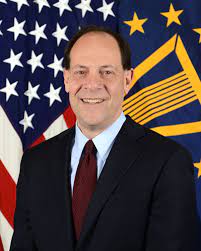
Glenn Fine
- Christi Grimm – As IG at the Department of Health and Human Services, she outraged Trump by contradicting him by agreeing—accurately—that the nation’s hospitals were suffering from severe shortages of personal protective equipment and testing supplies for COVID-19.
Forgiven Crime #20: After losing the Presidential election on November 3, 2020, Trump became the first American President in history to refuse to accept the verdict.
Forgiven Crime #21: From November 3 to December 14, 2020, Trump and his allies challenged the election results, filing—and losing—59 cases in court, either withdrawing cases or having them dismissed by Federal and state judges.
Forgiven Crime #22: On December 5, 2021, Trump called Georgia Governor Brian Kemp and asked him to call a special legislative session and convince state legislators to select their own electors that would support him, thus overturning Biden’s win.
Kemp refused.
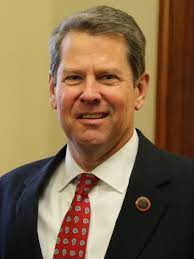
Brian Kemp
Forgiven Crime 23: On January 6, 2021, Trump ordered his assembled followers to attack the Capitol Building where House and Senate members were counting Electoral Votes—that were certain to certify Joseph R. Biden as the legitimate winner of the 2020 Presidential election.
Their goal: To stop the counting of those votes—and enable Trump to serve as “President-for-Life.”
Many of the lawmakers’ offices were occupied and vandalized. One Capitol police officer was killed and 114 others were injured.
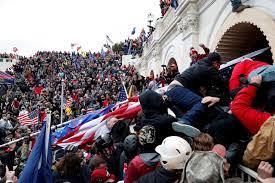
This was, in effect, a treasonous coup attempt.
On February 13, 2021, the Republican-dominated Senate once again acquitted Trump—of “incitement of insurrection” against the United States government.
Forgiven Crime 24: In 2022, Trump became the first ex-President to be indicted for crimes committed during his four-year administration: 2017-2021. He faced 91 criminal charges across four jurisdictions: Georgia, Florida, New York and the District of Columbia.
Yet even as he viciously attacked his rivals for the 2024 Republican Presidential nomination, all but one—former New Jersey Governor Chris Christie—refused to condemn him as an indicted criminal.
Florida Governor Ron DeSantis and former South Carolina Governor Nikki Haley promised to pardon Trump if he was convicted and either one of them was elected President.
Forgiven Crime 25: On August 8, 2022, for the first time in American history, Donald Trump became the first former President to be the subject of an FBI raid.
The raid came without warning on Trump’s residence at Mar-a-Lago in Palm Beach, Florida. FBI agents, armed with a search warrant, scoured the premises—for documents Trump illegally took before he left the White House on January 20, 2021.
Trump had repeatedly refused to return the documents.
Forgiven Crime 26: In March, 2023, Trump threatened “death and destruction” if he were criminally charged in New York for making “hush money” payments to porn “actress” Stormy Daniels. Trump shared an image of himself threatening Manhattan District Attorney Alvin Bragg with a baseball bat on his Truth Social platform.
Not even Mafia bosses like Charles “Lucky” Luciano and Albert “The Executioner” Anastasia dared issue such a threat.
Forgiven Crime 27: On November 18, 2022, Attorney General Merrick Garland appointed Jack Smith Special Counsel to prosecute Trump for his attempted January 6 coup.
Trump used his social media platform, Truth Social, to attack Smith as “a deranged lunatic” and “psycho” for indicting him for his theft of national security documents. He also attacked Smith’s wife, Katy Gale Chevigny, thus exposing her to possible violence from his fanatical supporters.
Trump’s attacks on Smith led to an increase in security for the Special Counsel.
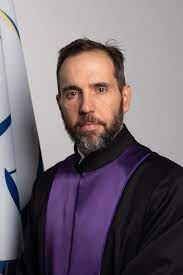
Jack Smith
Forgiven Crime 28: As Iowa prepared to cast votes in the Republican caucuses on January 15, 2024,, meteorologists warned of “life-threatening” conditions. Trump, the Republican front-runner lusting for a second term as President, took that advice.
Scheduled for four in-person Iowa events on January 14, he canceled three of them the day before voting, due to the freezing cold and snow.
But that didn’t mean he shared the same concern for those he urged to vote for him.
“If you want to save America from crooked Joe Biden, you must go caucus tomorrow. First step, very first step. We’re gonna do it. We’re gonna do it big. You got to get out. “
“You can’t sit home. If you’re sick as a dog, you say, ‘Darling, I gotta make it,’” Trump said at an Indianola rally on January 14. “Even if you vote and then pass away, it’s worth it, remember.”
Republicans saw nothing immoral in Trump’s disregard for the lives of his voting supporters—just as they saw nothing immoral in his disregard for the lives of schoolchildren during the worst year of COVID-19.
2016 PRESIDENTIAL CAMPAIGN, 2020 PRESIDENTIAL CAMPAIGN, 2024 PRESIDENTIAL CAMPAIGN, 60 MINUTES NEWS MAGAINE, ABC NEWS, ADAM SCHIFF, ADOLF HITLER, ALBERT “THE EXECUTIONER” ANASTASIA, ALTERNET, ALVIN BRAGG, AMERICABLOG, AP, ARTICLES OF IMPEACHMENT, ARTIFICIAL INTELLIGENCE (AI), BABY BOOMER RESISTANCE, BORDER WALL, BUZZFEED, CANADA, CBS NEWS, CENSORSHIP, CENSUS BUREAU, CENTERS FOR DISEASE CONTROL AND PREVENTION, CHARLES “LUCKY” LUCIANO, CHARLES DE GAULLE, CHINA, CHRIS CHRISTIE, CHRISTI GRIMM, CHRISTOPHER S. MURPHY, CIA, CLASSIFIED DOCUMENTS, CNN, CONSERVATIVE POLITICAL ACTION CONFERENCE, CONSUMER FINANCIAL PROTECTION BUREAU, CONVERSATION WITH AN AMERICAN WRITER (POEM), CORONAVIRUS RELIEF MONIES, COVID-19, CROOKS AND LIARS, CUBAN MISSILE CRISIS, DAILY KOS, DAN BOWMAN, DAN SULLIVAN, DANIELLE SASSOON, DAVID BROOKS, DEMOCRATS, DEPARTMENT OF DEFENSE, DEPARTMENT OF GOVERNMENT EFFICIENCY (DOGE), DEPARTMENT OF HEALTH AND HUMAN SERVICES, DEPARTMENT OF JUSTICE, DIVERSITY EQUITY INCLUSION (DEI), DONALD TRUMP, DONALD TRUMP JUNIOR, DRUDGE RETORT, E. JEAN CARROLL, ELON MUSK, EMIL BOVE, EMOLUMENTS CLAUSE OF THE UNITED STATES CONSTITUTION, ERIC ADAMS, EXTORTION, FBI, FIRST AMENDMENT, FIVETHIRTYEIGHT, FRIVOLOUS LAWSUITS, GENN FINE, GEORGE FLOYD, GEORGE STEPHANOPOULOS, GEORGE W. BUSH, GLENN FINE, GOVERNMENT ACCOUNTABILITY OFFICE, GOVERNMENT SHUTDOWN, GULF OF AMERICA, GULF OF MEXICO, HARPER’S MAGAZINE, HILLARY CLINTON, HOUSE FOREIGN AFFAIRS COMMITTEE, HOUSE INTELLIGENCE COMMITTEE, HOUSE OVERSIGHT AND REFORM COMMITTEE, HUNTER BIDEN, IMMIGRANTS, IMPEACHMENT, IMPOUNDMENT CONTROL ACT, INSPECTORS GENERAL, INTELLIGENCE COMMUNITY, INTELLIGENCE OFFICERS, JACK SMITH, JAKE SULLIVAN, JAKE TAPPER, JAMAL KHASHOGGI, JAMES COMEY, JAMES MCHENRY, JAMES ROBART, JANUARY 6 COUP ATTEMPT, JARED KUSHNER, JEFF SESSIONS, JOHN CORNYN, JOHN F. KENNEDY, JOHN F. KENNEDY CENTER FOR THE PERFORMING ARTS, JOHN ROBERTS, JOING CHIEFS OF STAFF, JON S. TIGAR, JOSEPH BIDEN, JOSEPH STALIN, Kamala Harris, KELLY LOEFFER, KEVIN CRAMER, LAFAYETTE SQUARE, LAMAR ALEXANDER, LEON PANETTA, LINDSEY GRAHAM, LUXUY JET, MARCO RUBIO, MARK MILLEY, MARTIN GUGINO, MEDIA MATTERS, MEIN KAMPF, MERRICK GARLAND, MEXICO, MICHAEL FLYNN, MICHAEL HAYDEN, MICHAEL K. ATKINSON, MICK MULVANEY, MIKE PENCE, MITCH MCCONNELL, MOHAMMED BIN SALMAN, MOTHER JONES, MOVEON, MSNBC, NANCY PELOSI, NATALIA VESELNITSKAYA, NATIONAL SECURITY AGENCY, NBC NEWS, NEWSWEEK, NIKKI HALEY, NPR, PAUL MANAFORT, PBS NEWSHOUR, PETE HEGSETH, POLITICO, POLITICUSUSA, QATAR, RAW STORY, REPUBLICANS, REUTERS, RINAT AKHMETSHIN, ROBERT MUELLER, ROBERT PAYNE, ROD ROSENSTEIN, ROGER STONE, RON DESANTIS, RON JOHNSON, RUSSIA, SALON, SEATTLE TIMES, SERGEY KISLYAK, SERGEY LAVROV, SLATE, ST. JOHN’S CHURCH, STEVE DAINES, TALKING POINTS MEMO, TARIFFS, TED CRUZ, THE ATLANTIC, THE CHICAGO SUN-TIMES, THE CHICAGO TRIBUNE, THE DAILY BEAST, THE DAILY BLOG, THE GUARDIAN, THE HILL, THE HUFFINGTON POST, THE JUDICIARY, THE LIFE AND DEATH OF ADOLF HITLER (BOOI), THE LIFE AND DEATH OF ADOLF HITLER (BOOK), THE LOS ANGELES TIMES, THE NATION, THE NEW REPUBLIC, THE NEW YORK TIMES, THE PENTAGON, THE PRESS, THE VILLAGE VOICE, THE WASHINGTON POST, THINKPROGRESS, TIME, TREASON, TRUMP TOWER MEETING, TRUTH SOCIAL, TRUTHDIG, TRUTHOUT, TWENTY-SECOND AMENDMENT, TWO POLITICAL JUNKIES, U.S. NEWS & WORLD REPORT, UKRAINE, UNITED STATES HOUSE OF REPRESENTATIVES, UNITED STATES SENATE, UPI, USA TODAY, VLADIMIR PUTIN, VOLODYMYR ZELENSKY, WHISTLEBLOWER, WHITE HOUSE BUDGET OFFICE, WONKETTE, X, YEVGENEY YEVTUSHENKO
In Bureaucracy, History, Law, Law Enforcement, Military, Politics, Social commentary on June 5, 2025 at 12:10 am
Throughout his Presidency, Republicans continued to support Donald Trump despite a series of actions that would have normally resulted in impeachment.
Forgiven Crime #12: On July 16, 2018, Trump attended a press conference in Helsinki, Finland, with Russian President Vladimir Putin. There he blamed American Intelligence agencies—such as the FBI, CIA and National Security Agency—instead of Putin for Russia’s subversion of the 2016 Presidential election.
“I have President Putin,” said Trump. “He just said it’s not Russia. I will say this: I don’t see any reason why it would be.”

Donald Trump and Vladimir Putin in Helsinki
Forgiven Crime #13: Waging all-out war on the First Amendment, which guarantees freedom of the press.
On February 17, 2017, Trump tweeted: “The FAKE NEWS media (failing @nytimes, @NBCNews, @ABC, @CBS, @CNN) is not my enemy, it is the enemy of the American People!”
Seven days later, appearing before the Conservative Political Action Conference on February 24, Trump said: “I want you all to know that we are fighting the fake news. It’s fake, phony, fake….I’m against the people that make up stories and make up sources. They shouldn’t be allowed to use sources unless they use somebody’s name. Let their name be put out there.”
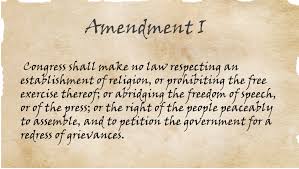
Forgiven Crime #14: Waging all-out war on the independent judiciary
Trump repeatedly attacked Seattle U.S. District Judge James Robart, who halted Trump’s first anti-Islamic travel ban: “Just cannot believe a judge would put our country in such peril. If something happens blame him and court system. People pouring in. Bad!”
On October 20, 2018, Trump attacked U.S. District Judge Jon S. Tigar as an “Obama judge.” Tigar had ruled that the administration must consider asylum claims no matter where migrants cross the U.S. border.
The next day, Supreme Court Chief Justice John Roberts told the Associated Press: “We do not have Obama judges or Trump judges, Bush judges or Clinton judges. What we have is an extraordinary group of dedicated judges doing their level best to do equal right to those appearing before them.”
On Thanksgiving Day, 2018, Trump attacked Roberts—appointed by Republican President George W. Bush—on Twitter: “Sorry Chief Justice John Roberts, but you do indeed have ‘Obama judges,’ and they have a much different point of view than the people who are charged with the safety of our country.”
Forgiven Crime #15: Threatening members of Congress with treason charges for daring to challenge him.
Furious that Rep. Adam Schiff (D-CA) mocked him during a session of the House Intelligence Committee, Trump tweeted: “I want Schiff questioned at the highest level for Fraud & Treason…..”
“Rep. Adam Schiff illegally made up a FAKE & terrible statement, pretended it to be mine as the most important part of my call to the Ukrainian President, and read it aloud to Congress and the American people. It bore NO relationship to what I said on the call. Arrest for Treason?”

Adam Schiff
He judged House Speaker Nancy Pelosi “every bit as guilty as Liddle’ Adam Schiff for High Crimes and Misdemeanors, and even Treason. I guess that means that they, along with all of those that evilly ‘Colluded’ with them, must all be immediately Impeached!”
Forgiven Crime #16: He lied so often—30,573 times by the end of his first term, according to the Washington Post—that he’s universally distrusted, at home and abroad.
During the Cuban Missile Crisis, French President Charles de Gaulle was offered photographs taken by American spy planes of Russian missile emplacements in Cuba. De Gaulle waved them away, saying that, for him, the word of the President of the United States was enough.

Charles de Gaulle and John F. Kennedy
Today, no free world leader would take Trump’s word for anything.
Forgiven Crime #17: On December 22, 2018, Trump shut down the Federal government—because Democrats refused to fund his “border wall” between the United States and Mexico.
An estimated 380,000 government employees were furloughed and another 420,000 were ordered to work without pay.
- For weeks, hundreds of thousands of government workers missed paychecks.
- Increasing numbers of employees of the Transportation Safety Administration (TSA)—which provides security against airline terrorism—began refusing to come to work, claiming to be sick.
- At the Federal Aviation Administration (FAA) many air traffic controllers called in “sick.”
- Due to the shortage of air traffic controllers, many planes weren’t able to land safely at places like New York’s LaGuardia Airport.
- Many Federal employees—such as FBI agents—were forced to rely on soup kitchens to feed their families.
This lasted until January 25, 2019, when Trump caved to public pressure.
Forgiven Crime #18: Even while being investigated by Congress for trying to extort Ukraine to investigate his 2020 Presidential rival, Joseph Biden, Trump publicly urged China to investigate Biden and his son, Hunter.
Trump repeatedly denied he had strong-armed Ukrainian President Volodymyr Zelensky to smear former Vice President Joseph Biden. But on October 3, 2019, on the White House lawn, with TV cameras whirring, Trump said: “China should start an investigation into the Bidens.”
And to drive home the message, Trump warned: “I have a lot of options on China, but if they don’t do what we want, we have tremendous power.”
2016 PRESIDENTIAL CAMPAIGN, 2020 PRESIDENTIAL CAMPAIGN, 2024 PRESIDENTIAL CAMPAIGN, 60 MINUTES NEWS MAGAINE, ABC NEWS, ADAM SCHIFF, ADOLF HITLER, ALBERT “THE EXECUTIONER” ANASTASIA, ALTERNET, ALVIN BRAGG, AMERICABLOG, AP, ARTICLES OF IMPEACHMENT, ARTIFICIAL INTELLIGENCE (AI), BABY BOOMER RESISTANCE, BORDER WALL, BUZZFEED, CANADA, CBS NEWS, CENSORSHIP, CENSUS BUREAU, CENTERS FOR DISEASE CONTROL AND PREVENTION, CHARLES “LUCKY” LUCIANO, CHARLES DE GAULLE, CHINA, CHRIS CHRISTIE, CHRISTI GRIMM, CHRISTOPHER S. MURPHY, CIA, CLASSIFIED DOCUMENTS, CNN, CONSERVATIVE POLITICAL ACTION CONFERENCE, CONSUMER FINANCIAL PROTECTION BUREAU, CONVERSATION WITH AN AMERICAN WRITER (POEM), CORONAVIRUS RELIEF MONIES, COVID-19, CROOKS AND LIARS, CUBAN MISSILE CRISIS, DAILY KOS, DAN BOWMAN, DAN SULLIVAN, DANIELLE SASSOON, DAVID BROOKS, DEMOCRATS, DEPARTMENT OF DEFENSE, DEPARTMENT OF GOVERNMENT EFFICIENCY (DOGE), DEPARTMENT OF HEALTH AND HUMAN SERVICES, DEPARTMENT OF JUSTICE, DIVERSITY EQUITY INCLUSION (DEI), DONALD TRUMP, DONALD TRUMP JUNIOR, DRUDGE RETORT, E. JEAN CARROLL, ELON MUSK, EMIL BOVE, EMOLUMENTS CLAUSE OF THE UNITED STATES CONSTITUTION, ERIC ADAMS, EXTORTION, FBI, FIRST AMENDMENT, FIVETHIRTYEIGHT, FRIVOLOUS LAWSUITS, GENN FINE, GEORGE FLOYD, GEORGE STEPHANOPOULOS, GEORGE W. BUSH, GLENN FINE, GOVERNMENT ACCOUNTABILITY OFFICE, GOVERNMENT SHUTDOWN, GULF OF AMERICA, GULF OF MEXICO, HARPER’S MAGAZINE, HILLARY CLINTON, HOUSE FOREIGN AFFAIRS COMMITTEE, HOUSE INTELLIGENCE COMMITTEE, HOUSE OVERSIGHT AND REFORM COMMITTEE, HUNTER BIDEN, IMMIGRANTS, IMPEACHMENT, IMPOUNDMENT CONTROL ACT, INSPECTORS GENERAL, INTELLIGENCE COMMUNITY, INTELLIGENCE OFFICERS, JACK SMITH, JAKE SULLIVAN, JAKE TAPPER, JAMAL KHASHOGGI, JAMES COMEY, JAMES MCHENRY, JAMES ROBART, JANUARY 6 COUP ATTEMPT, JARED KUSHNER, JEFF SESSIONS, JOHN CORNYN, JOHN F. KENNEDY, JOHN F. KENNEDY CENTER FOR THE PERFORMING ARTS, JOHN ROBERTS, JOING CHIEFS OF STAFF, JON S. TIGAR, JOSEPH BIDEN, JOSEPH STALIN, Kamala Harris, KELLY LOEFFER, KEVIN CRAMER, LAFAYETTE SQUARE, LAMAR ALEXANDER, LEON PANETTA, LINDSEY GRAHAM, LUXUY JET, MARCO RUBIO, MARK MILLEY, MARTIN GUGINO, MEDIA MATTERS, MEIN KAMPF, MERRICK GARLAND, MEXICO, MICHAEL FLYNN, MICHAEL HAYDEN, MICHAEL K. ATKINSON, MICK MULVANEY, MIKE PENCE, MITCH MCCONNELL, MOHAMMED BIN SALMAN, MOTHER JONES, MOVEON, MSNBC, NANCY PELOSI, NATALIA VESELNITSKAYA, NATIONAL SECURITY AGENCY, NBC NEWS, NEWSWEEK, NIKKI HALEY, NPR, PAUL MANAFORT, PBS NEWSHOUR, PETE HEGSETH, POLITICO, POLITICUSUSA, QATAR, RAW STORY, REPUBLICANS, REUTERS, RINAT AKHMETSHIN, ROBERT MUELLER, ROBERT PAYNE, ROD ROSENSTEIN, ROGER STONE, RON DESANTIS, RON JOHNSON, RUSSIA, SALON, SEATTLE TIMES, SERGEY KISLYAK, SERGEY LAVROV, SLATE, ST. JOHN’S CHURCH, STEVE DAINES, TALKING POINTS MEMO, TARIFFS, TED CRUZ, THE ATLANTIC, THE CHICAGO SUN-TIMES, THE CHICAGO TRIBUNE, THE DAILY BEAST, THE DAILY BLOG, THE GUARDIAN, THE HILL, THE HUFFINGTON POST, THE JUDICIARY, THE LIFE AND DEATH OF ADOLF HITLER (BOOI), THE LIFE AND DEATH OF ADOLF HITLER (BOOK), THE LOS ANGELES TIMES, THE NATION, THE NEW REPUBLIC, THE NEW YORK TIMES, THE PENTAGON, THE PRESS, THE VILLAGE VOICE, THE WASHINGTON POST, THINKPROGRESS, TIME, TREASON, TRUMP TOWER MEETING, TRUTH SOCIAL, TRUTHDIG, TRUTHOUT, TWENTY-SECOND AMENDMENT, TWO POLITICAL JUNKIES, U.S. NEWS & WORLD REPORT, UKRAINE, UNITED STATES HOUSE OF REPRESENTATIVES, UNITED STATES SENATE, UPI, USA TODAY, VLADIMIR PUTIN, VOLODYMYR ZELENSKY, WHISTLEBLOWER, WHITE HOUSE BUDGET OFFICE, WONKETTE, X, YEVGENEY YEVTUSHENKO
In Bureaucracy, History, Law, Law Enforcement, Military, Politics, Social commentary on June 4, 2025 at 12:11 am
Republicans have a long and shameful history of excusing Donald Trump’s vicious slanders and law-breaking.
Forgiven Crime #6: Republicans refused to condemn Trump’s blatant “bromance” with Russian dictator Vladimir Putin.
Since the end of World War II, no Republican Presidential candidate had repeatedly exchanged fulsome praise with a foreign leader hostile to the United States. Yet that is precisely what happened between Donald Trump and Vladimir Putin.
Thus Putin on Trump: “He is a bright personality, a talented person, no doubt about it. It is not up to us to appraise his positive sides, it is up to the U.S. voters. but, as we can see, he is an absolute leader in the presidential race.”
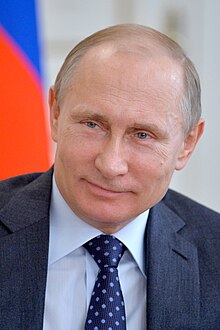
Vladimir Putin
And Trump on Putin: “It is always a great honor to be so nicely complimented by a man so highly respected within his own country and beyond. He’s running his country, and at least he’s a leader. Unlike what we have in this country”—a clear attack on then-President Barack Obama.
Donald Trump
Forgiven Crime #7: Republicans supported the treasonous meeting between Trump’s campaign managers and Russian Intelligence agents.
On July 9, 2016, high-ranking members of Trump’s Presidential campaign met with lobbyists tied to Putin. The meeting took place at Trump Tower and the participants included:
- Trump’s son, Donald Trump Jr.;
- His son-in-law, Jared Kushner;
- His then-campaign manager, Paul Manafort;
- Natalia Veselnitskaya, a Russian lawyer with ties to Putin; and
- Rinat Akhmetshin, a former Soviet counterintelligence officer suspected of having ongoing ties to Russian Intelligence.
The purpose of that meeting: To gain access to any “dirt” Russian Intelligence could supply on Democratic Presidential Nominee Hillary Clinton.
Forgiven Crime #8: Republicans supported Trump’s open—and treasonous—solicitation of Russian interference in the 2016 Presidential election.
On July 22, 2016, at a press conference in Doral, Florida, Trump said: “Russia, if you are listening, I hope you are able to find the 33,000 emails that are missing [from Democratic Presidential candidate Hillary Clinton’s computer]. I think you will probably be rewarded mightily by our press.”
“This has to be the first time that a major presidential candidate has actively encouraged a foreign power to conduct espionage against his political opponent,” Hillary for America policy adviser Jake Sullivan said in a statement. “That’s not hyperbole, those are just the facts. This has gone from being a matter of curiosity, and a matter of politics, to being a national security issue.”
“I find those kinds of statements to be totally outrageous because you’ve got now a presidential candidate who is, in fact, asking the Russians to engage in American politics,” said former CIA Director Leon Panetta, a Clinton surrogate. “I just think that’s beyond the pale.”
Hours later, the Main Intelligence Directorate in Moscow targeted Clinton’s personal office and hit more than 70 other Clinton campaign accounts.
Forgiven Crime #9: On May 9, 2017, Trump fired FBI Director James Comey for investigating Russia’s subversion of the 2016 Presidential race.
There were four reasons for this:
- Comey had refused to pledge his personal loyalty to Trump. Trump had made the “request” during a private dinner at the White House in January.
- Comey told Trump that he would always be honest with him. But that didn’t satisfy Trump’s demand that the head of the FBI act as his personal secret police chief—as was the case in the former Soviet Union.
- Trump had tried to coerce Comey into dropping the FBI’s investigation into former National Security Adviser Michael Flynn, for his secret ties to Russia and Turkey. Comey had similarly resisted that demand.
- Comey had recently asked the Justice Department to fund an expanded FBI investigation into well-documented contacts between Trump’s 2016 Presidential campaign and Russian Intelligence agents. The goal of that collaboration: To elect Trump over Hillary Clinton, a longtime foe of Russian President Putin.

James Comey
Forgiven Crime #10: On May 10, 2017. Trump met with Russian Foreign Minister Sergey Lavrov and Russian Ambassador Sergey Kislyak in the Oval Office—and gave them highly classified Israeli Intelligence about an Islamic State plot to turn laptops into concealable bombs.
Kislyak is reportedly a top recruiter for Russia’s SVR foreign intelligence agency. He has been closely linked with Jeff Sessions, then Attorney General, and fired National Security Adviser Mike Flynn.
“I just fired the head of the FBI,” Trump told the two dignitaries. “He was crazy, a real nut job. I faced great pressure because of Russia. That’s taken off.”
Then, on May 11, Trump gave away his real reason for firing Comey:
Interviewed on NBC News by reporter Lester Holt, Trump said: “And in fact when I decided to just do it, I said to myself, I said ‘you know, this Russia thing with Trump and Russia is a made-up story, it’s an excuse by the Democrats for having lost an election that they should have won.'”
Forgiven Crime #11: Blatantly lying about the CIA’s findings in the brutal murder of Washington Post journalist Jamal Khashoggi.
On Thanksgiving Day, 2018, Trump said that the CIA hadn’t concluded that Saudi Crown Prince Mohammed bin Salman had ordered it.
This was a lie—the agency had reached such a conclusion, based on a recording provided by the Turkish government and American Intelligence.
2016 PRESIDENTIAL CAMPAIGN, 2020 PRESIDENTIAL CAMPAIGN, 2024 PRESIDENTIAL CAMPAIGN, 60 MINUTES NEWS MAGAINE, ABC NEWS, ADAM SCHIFF, ADOLF HITLER, ALBERT “THE EXECUTIONER” ANASTASIA, ALTERNET, ALVIN BRAGG, AMERICABLOG, AP, ARTICLES OF IMPEACHMENT, ARTIFICIAL INTELLIGENCE (AI), BABY BOOMER RESISTANCE, BORDER WALL, BUZZFEED, CANADA, CBS NEWS, CENSORSHIP, CENSUS BUREAU, CENTERS FOR DISEASE CONTROL AND PREVENTION, CHARLES “LUCKY” LUCIANO, CHARLES DE GAULLE, CHINA, CHRIS CHRISTIE, CHRISTI GRIMM, CHRISTOPHER S. MURPHY, CIA, CLASSIFIED DOCUMENTS, CNN, CONSERVATIVE POLITICAL ACTION CONFERENCE, CONSUMER FINANCIAL PROTECTION BUREAU, CONVERSATION WITH AN AMERICAN WRITER (POEM), CORONAVIRUS RELIEF MONIES, COVID-19, CROOKS AND LIARS, CUBAN MISSILE CRISIS, DAILY KOS, DAN BOWMAN, DAN SULLIVAN, DANIELLE SASSOON, DAVID BROOKS, DEMOCRATS, DEPARTMENT OF DEFENSE, DEPARTMENT OF GOVERNMENT EFFICIENCY (DOGE), DEPARTMENT OF HEALTH AND HUMAN SERVICES, DEPARTMENT OF JUSTICE, DIVERSITY EQUITY INCLUSION (DEI), DONALD TRUMP, DONALD TRUMP JUNIOR, DRUDGE RETORT, E. JEAN CARROLL, ELON MUSK, EMIL BOVE, EMOLUMENTS CLAUSE OF THE UNITED STATES CONSTITUTION, ERIC ADAMS, EXTORTION, FBI, FIRST AMENDMENT, FIVETHIRTYEIGHT, FRIVOLOUS LAWSUITS, GENN FINE, GEORGE FLOYD, GEORGE STEPHANOPOULOS, GEORGE W. BUSH, GLENN FINE, GOVERNMENT ACCOUNTABILITY OFFICE, GOVERNMENT SHUTDOWN, GULF OF AMERICA, GULF OF MEXICO, HARPER’S MAGAZINE, HILLARY CLINTON, HOUSE FOREIGN AFFAIRS COMMITTEE, HOUSE INTELLIGENCE COMMITTEE, HOUSE OVERSIGHT AND REFORM COMMITTEE, HUNTER BIDEN, IMMIGRANTS, IMPEACHMENT, IMPOUNDMENT CONTROL ACT, INSPECTORS GENERAL, INTELLIGENCE COMMUNITY, INTELLIGENCE OFFICERS, JACK SMITH, JAKE SULLIVAN, JAKE TAPPER, JAMAL KHASHOGGI, JAMES COMEY, JAMES MCHENRY, JAMES ROBART, JANUARY 6 COUP ATTEMPT, JARED KUSHNER, JEFF SESSIONS, JOHN CORNYN, JOHN F. KENNEDY, JOHN F. KENNEDY CENTER FOR THE PERFORMING ARTS, JOHN ROBERTS, JOING CHIEFS OF STAFF, JON S. TIGAR, JOSEPH BIDEN, JOSEPH STALIN, Kamala Harris, KELLY LOEFFER, KEVIN CRAMER, LAFAYETTE SQUARE, LAMAR ALEXANDER, LEON PANETTA, LINDSEY GRAHAM, LUXUY JET, MARCO RUBIO, MARK MILLEY, MARTIN GUGINO, MEDIA MATTERS, MEIN KAMPF, MERRICK GARLAND, MEXICO, MICHAEL FLYNN, MICHAEL HAYDEN, MICHAEL K. ATKINSON, MICK MULVANEY, MIKE PENCE, MITCH MCCONNELL, MOHAMMED BIN SALMAN, MOTHER JONES, MOVEON, MSNBC, NANCY PELOSI, NATALIA VESELNITSKAYA, NATIONAL SECURITY AGENCY, NBC NEWS, NEWSWEEK, NIKKI HALEY, NPR, PAUL MANAFORT, PBS NEWSHOUR, PETE HEGSETH, POLITICO, POLITICUSUSA, QATAR, RAW STORY, REPUBLICANS, REUTERS, RINAT AKHMETSHIN, ROBERT MUELLER, ROBERT PAYNE, ROD ROSENSTEIN, ROGER STONE, RON DESANTIS, RON JOHNSON, RUSSIA, SALON, SEATTLE TIMES, SERGEY KISLYAK, SERGEY LAVROV, SLATE, ST. JOHN’S CHURCH, STEVE DAINES, TALKING POINTS MEMO, TARIFFS, TED CRUZ, THE ATLANTIC, THE CHICAGO SUN-TIMES, THE CHICAGO TRIBUNE, THE DAILY BEAST, THE DAILY BLOG, THE GUARDIAN, THE HILL, THE HUFFINGTON POST, THE JUDICIARY, THE LIFE AND DEATH OF ADOLF HITLER (BOOI), THE LIFE AND DEATH OF ADOLF HITLER (BOOK), THE LOS ANGELES TIMES, THE NATION, THE NEW REPUBLIC, THE NEW YORK TIMES, THE PENTAGON, THE PRESS, THE VILLAGE VOICE, THE WASHINGTON POST, THINKPROGRESS, TIME, TREASON, TRUMP TOWER MEETING, TRUTH SOCIAL, TRUTHDIG, TRUTHOUT, TWENTY-SECOND AMENDMENT, TWO POLITICAL JUNKIES, U.S. NEWS & WORLD REPORT, UKRAINE, UNITED STATES HOUSE OF REPRESENTATIVES, UNITED STATES SENATE, UPI, USA TODAY, VLADIMIR PUTIN, VOLODYMYR ZELENSKY, WHISTLEBLOWER, WHITE HOUSE BUDGET OFFICE, WONKETTE, X, YEVGENEY YEVTUSHENKO
In Bureaucracy, History, Law, Law Enforcement, Politics, Social commentary on June 3, 2025 at 12:14 am
On February 5, 2020, the Republican-dominated Senate—as expected—absolved President Donald Trump from trying to extort Ukraine into smearing a possible rival for the White House.
Only one Republican—Utah Senator Mitt Romney—had the moral courage to vote for conviction.
But this was not the first time Republicans sought to excuse Trump’s litany of crimes and outrages. Those efforts go back to the 2016 Presidential election.
Forgiven Crime #1: Not demanding that Trump quit the 2016 Presidential race—or demanding that he be indicted—for making a terrorist threat against his own party.
On March 16, 2016, Trump, the front-runner for the Republican Presidential nomination, issued a warning to his fellow Right-wingers: If he didn’t win the GOP nomination at the convention in July, his supporters would literally riot.
“I think we’ll win before getting to the convention. But I can tell you if we didn’t, if we’re 20 votes short or if we’re 100 short and we’re at 1,100 and somebody else is at 500 or 400…I don’t think you can say that we don’t get it automatically. I think you’d have riots.
“I think you would see problems like you’ve never seen before. I think bad things would happen. I really do. I wouldn’t lead it, but I think bad things would happen.”
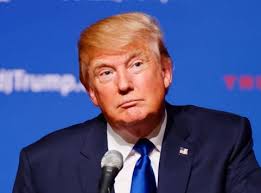
Donald Trump
An NBC reporter summed it up as follows: “As Trump indicated, there is a very real possibility he might lose the nomination if he wins only a plurality of delegates thanks to party rules that allow delegates to support different candidates after the initial ballot.
“In that context, the message to Republicans was clear on [March 16]: ‘Nice convention you got there, shame if something happened to it.’”
Threatening his Republican and Democratic opponents with violence played a major role in Donald Trump’s campaign for President.
Forgiven Crime #2: Supporting his “dog-whistle” call for the assassination of Democratic Nominee Hillary Clinton.
On August 9, 2016, at a rally in Wilmington, North Carolina, Trump said: “Hillary [Clinton] wants to abolish, essentially abolish, the Second Amendment. If she gets to pick her [Supreme Court] judges, nothing you can do folks. Although the Second Amendment people, maybe there is, I don’t know.”
Democrats—and responsible news media—immediately saw this for the “dog-whistle” signal it was.
“Don’t treat this as a political misstep,” Senator Christopher S. Murphy of Connecticut, who has called for stiffer gun laws, wrote on Twitter. “It’s an assassination threat, seriously upping the possibility of a national tragedy & crisis.”
“Well, let me say if someone else said that outside of the hall, he’d be in the back of a police wagon now, with the Secret Service questioning him,” said Michael Hayden, former head of the CIA and National Security Agency (NSA).
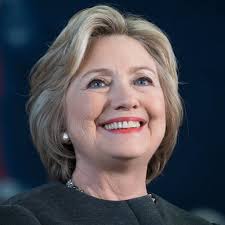
Hillary Clinton
Threats of violence continued to be made by Trump supporters right up to the day of the election.
- On July 29, Roger Stone, a notorious Right-wing political consultant acting as a Trump strategist, told Breitbart News: “The first thing Trump needs to do is begin talking about [voter fraud] constantly. If there’s voter fraud, this election will be illegitimate, the election of the winner will be illegitimate, we will have a constitutional crisis, widespread civil disobedience, and the government will no longer be the government.”
- At a town hall meeting where Trump’s Vice Presidential nominee Mike Pence appeared, a woman named Rhonda said: “For me personally, if Hillary Clinton gets in, I myself am ready for a revolution.”
- In Cincinnati, a Trump supporter threatened to forcibly remove Clinton from the White House if she won the race: “If she’s in office, I hope we can start a coup. She should be in prison or shot. That’s how I feel about it,”
- Dan Bowman, a 50-year-old contractor, said of Hillary Clinton, the Democratic nominee. “We’re going to have a revolution and take them out of office if that’s what it takes. There’s going to be a lot of bloodshed. But that’s what it’s going to take….I would do whatever I can for my country.”
Forgiven Crime #3: Republicans supported Trump’s call for his followers to intimidate Democratic voters at election time.
Trump encouraged his mostly white supporters to sign up online to be “election observers” to stop “Crooked Hillary from rigging this election.” He urged them to act as poll watchers in “other” [non-white] communities to ensure that things are “on the up and up.”
Many of his supporters promised to do so.
“Trump said to watch your precincts. I’m going to go, for sure,” said Steve Webb, a 61-year-old carpenter from Fairfield, Ohio.
“I’ll look for…well, it’s called racial profiling. Mexicans. Syrians. People who can’t speak American,” he said. “I’m going to go right up behind them. I’ll do everything legally. I want to see if they are accountable. I’m not going to do anything illegal. I’m going to make them a little bit nervous.”
Forgiven Crime #4: Threatening to fire Rod J. Rosenstein, the deputy attorney general, who oversaw Special Counsel Robert Mueller’s investigation into Russian subversion of the 2016 election.
Forgiven Crime #5: Threatening to fire Independent Counsel Robert Mueller during the summer of 2017, but was talked out of it by aides fearful that it would set off calls for his impeachment.
2016 PRESIDENTIAL CAMPAIGN, 2020 PRESIDENTIAL CAMPAIGN, 2024 PRESIDENTIAL CAMPAIGN, 60 MINUTES NEWS MAGAINE, ABC NEWS, ADAM SCHIFF, ADOLF HITLER, ALBERT “THE EXECUTIONER” ANASTASIA, ALTERNET, ALVIN BRAGG, AMERICABLOG, AP, ARTICLES OF IMPEACHMENT, ARTIFICIAL INTELLIGENCE (AI), BABY BOOMER RESISTANCE, BORDER WALL, BUZZFEED, CANADA, CBS NEWS, CENSORSHIP, CENSUS BUREAU, CENTERS FOR DISEASE CONTROL AND PREVENTION, CHARLES “LUCKY” LUCIANO, CHARLES DE GAULLE, CHINA, CHRIS CHRISTIE, CHRISTI GRIMM, CHRISTOPHER S. MURPHY, CIA, CLASSIFIED DOCUMENTS, CNN, CONSERVATIVE POLITICAL ACTION CONFERENCE, CONSUMER FINANCIAL PROTECTION BUREAU, CONVERSATION WITH AN AMERICAN WRITER (POEM), CORONAVIRUS RELIEF MONIES, COVID-19, CROOKS AND LIARS, CUBAN MISSILE CRISIS, DAILY KOS, DAILY KOZ, DAN BOWMAN, DAN SULLIVAN, DANIELLE SASSOON, DAVID BROOKS, DEMOCRATS, DEPARTMENT OF DEFENSE, DEPARTMENT OF GOVERNMENT EFFICIENCY (DOGE), DEPARTMENT OF HEALTH AND HUMAN SERVICES, DEPARTMENT OF JUSTICE, DIVERSITY EQUITY INCLUSION (DEI), DONALD TRUMP, DONALD TRUMP JUNIOR, DRUDGE RETORT, E. JEAN CARROLL, ELON MUSK, EMIL BOVE, EMOLUMENTS CLAUSE OF THE UNITED STATES CONSTITUTION, ERIC ADAMS, EXTORTION, FBI, FIRST AMENDMENT, FIVETHIRTYEIGHT, FRIVOLOUS LAWSUITS, GENN FINE, GEORGE FLOYD, GEORGE STEPHANOPOULOS, GEORGE W. BUSH, GLENN FINE, GOVERNMENT ACCOUNTABILITY OFFICE, GOVERNMENT SHUTDOWN, GULF OF AMERICA, GULF OF MEXICO, HARPER’S MAGAZINE, HILLARY CLINTON, HOUSE FOREIGN AFFAIRS COMMITTEE, HOUSE INTELLIGENCE COMMITTEE, HOUSE OVERSIGHT AND REFORM COMMITTEE, HUNTER BIDEN, IMMIGRANTS, IMPEACHMENT, IMPOUNDMENT CONTROL ACT, INSPECTORS GENERAL, INTELLIGENCE COMMUNITY, INTELLIGENCE OFFICERS, JACK SMITH, JAKE SULLIVAN, JAKE TAPPER, JAMAL KHASHOGGI, JAMES COMEY, JAMES MCHENRY, JAMES ROBART, JANUARY 6 COUP ATTEMPT, JARED KUSHNER, JEFF SESSIONS, JOHN CORNYN, JOHN F. KENNEDY, JOHN F. KENNEDY CENTER FOR THE PERFORMING ARTS, JOHN ROBERTS, JOING CHIEFS OF STAFF, JON S. TIGAR, JOSEPH BIDEN, JOSEPH STALIN, Kamala Harris, KELLY LOEFFER, KEVIN CRAMER, LAFAYETTE SQUARE, LAMAR ALEXANDER, LEON PANETTA, LINDSEY GRAHAM, LUXUY JET, MARCO RUBIO, MARK MILLEY, MARTIN GUGINO, MEDIA MATTERS, MEIN KAMPF, MERRICK GARLAND, MEXICO, MICHAEL FLYNN, MICHAEL HAYDEN, MICHAEL K. ATKINSON, MICK MULVANEY, MIKE PENCE, MITCH MCCONNELL, MOHAMMED BIN SALMAN, MOTHER JONES, MOVEON, MSNBC, NANCY PELOSI, NATALIA VESELNITSKAYA, NATIONAL SECURITY AGENCY, NBC NEWS, NEWSWEEK, NIKKI HALEY, NPR, PAUL MANAFORT, PBS NEWSHOUR, PETE HEGSETH, POLITICO, POLITICUSUSA, QATAR, RAW STORY, REPUBLICANS, REUTERS, RINAT AKHMETSHIN, ROBERT MUELLER, ROBERT PAYNE, ROD ROSENSTEIN, ROGER STONE, RON DESANTIS, RON JOHNSON, RUSSIA, SALON, SEATTLE TIMES, SERGEY KISLYAK, SERGEY LAVROV, SLATE, ST. JOHN’S CHURCH, STEVE DAINES, TALKING POINTS MEMO, TARIFFS, TED CRUZ, THE ATLANTIC, THE CHICAGO SUN-TIMES, THE CHICAGO TRIBUNE, THE DAILY BEAST, THE DAILY BLOG, THE GUARDIAN, THE HILL, THE HUFFINGTON POST, THE JUDICIARY, THE LIFE AND DEATH OF ADOLF HITLER (BOOI), THE LIFE AND DEATH OF ADOLF HITLER (BOOK), THE LOS ANGELES TIMES, THE NATION, THE NEW REPUBLIC, THE NEW YORK TIMES, THE PENTAGON, THE PRESS, THE VILLAGE VOICE, THE WASHINGTON POST, THINKPROGRESS, TIME, TREASON, TRUMP TOWER MEETING, TRUTH SOCIAL, TRUTHDIG, TRUTHOUT, TWENTY-SECOND AMENDMENT, TWO POLITICAL JUNKIES, U.S. NEWS & WORLD REPORT, UKRAINE, UNITED STATES HOUSE OF REPRESENTATIVES, UNITED STATES SENATE, UPI, USA TODAY, VLADIMIR PUTIN, VOLODYMYR ZELENSKY, WHISTLEBLOWER, WHITE HOUSE BUDGET OFFICE, WONKETTE, X, YEVGENEY YEVTUSHENKO
In Bureaucracy, History, Law, Law Enforcement, Politics, Social commentary on June 2, 2025 at 12:59 am
“One man with courage makes a majority.”
—-Andrew Jackson
Donald Trump—facing four indictments and 91 criminal charges—proved the clear front runner for the 2024 Republican Presidential nomination.
And 77 million Right-wing Americans made him their choice for President on November 5.
Since 2015, Republicans have a shameful history of excusing his outrages and criminality.
A classic example of this occurred on June 9, 2020.
That was when then-President Trump charged that a 75-year-old man who was seriously injured by police officers in Buffalo, New York, was part of a radical leftist “set up.”
The victim, Martin Gugino, was described as a peace activist associated with the Catholic Worker Movement.
On June 4, 2020, during nationwide protests over the police murder of black security guard George Floyd, a curfew was imposed on Buffalo, New York. As police swept through Niagara Square, Gugino walked directly into their path as if attempting to speak with them.
Two officers pushed him and he fell backwards, hitting the back of his head on the pavement and losing consciousness. The line of officers walked past Gugino as he lay on the ground with blood pooling around his head. One officer tried to check on him, but another patrolman told him to move on, and he did.
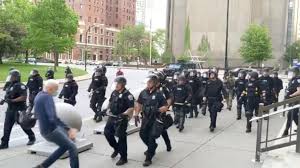
Martin Gugino falls backward
Enter Trump, who had been severely criticized for sending police and National Guardsmen to remove peaceful protesters from Lafayette Square so he could stage a photo-op at nearby St. John’s Church.
On June 9 he tweeted: “Buffalo protester shoved by Police could be an ANTIFA provocateur. 75 year old Martin Gugino was pushed away after appearing to scan police communications in order to black out the equipment. @OANN I watched, he fell harder than was pushed. Was aiming scanner. Could be a set up?”
As usual, Trump offered no evidence to back up his slander. And, as usual, Republicans refused to condemn him for his latest outrage.
Among those competing for “Most Cowardly Sycophant of the Year”:
- Senate Majority Leader Mitch McConnell (KY) refused to say whether Trump’s tweet was appropriate.
- Texas Senator John Cornyn claimed he had missed it, adding: “A lot of this stuff just goes over my head.”
- Georgia Senator Kelly Loeffler refused to answer a question about the President’s tweet as she hopped on an elevator along with an aide in the Capitol.
- Texas Senator Ted Cruz: “I don’t comment on the tweets.”
- Florida Senator Marco Rubio: “I didn’t see it. You’re telling me about it. I don’t read Twitter. I only write on it.”
- Alaska Senator Dan Sullivan said he hadn’t seen it, and then said: “I don’t want to comment right now. I’m on my way to a meeting. I’ll see it when I see it.”
- North Dakota Senator Kevin Cramer: “I’ll say this: I worry more about the country itself than I do about what President Trump tweets.”
- Wisconsin Senator Ron Johnson said he hadn’t seen the tweet—and didn’t want it read to him: “I would rather not hear it.”
- Tennessee Senator Lamar Alexander: “Voters can evaluate that. I’m not going to give a running commentary on the President’s tweets.”
- Montana Senator Steve Daines refused to say whether Trump should have tweeted about the Buffalo incident.
So much for Republican profiles in courage.
On December 18, 2019, the House of Representatives had approved two Articles of Impeachment against Trump for:
Article 1: Abuse of Power: For pressuring the president of Ukraine to assist his re-election campaign by smearing a potential rival for the White House.
Article 2: Obstruction of Congress: For obstructing Congress by blocking testimony of subpoenaed witnesses and refusing to provide documents in response to House subpoenas in the impeachment inquiry.
On July 25, 2019, Trump had “asked” Ukraine President Volodymir Zelensky to do him a “favor”: Find embarrassing “dirt” on former Vice President Joseph Biden and his son, Hunter.
Hunter had had business dealings in Ukraine. And Joseph Biden might be Trump’s Democratic opponent for the White House in 2020.
To underline the seriousness of his “request,” earlier in July Trump had told Mick Mulvaney, his White House chief of staff, to withhold $400 million in military aid Congress had approved for Ukraine, which was facing an increasingly aggressive Russia
But then a CIA whistleblower filed a complaint about the extortion attempt—and the media and Congress soon learned of it. And ever since, the evidence linking Trump to impeachable offenses had mushroomed.
On January 16, 2020, the Government Accountability Office (GAO) announced that the Trump administration broke the law when it withheld security aid to Ukraine.
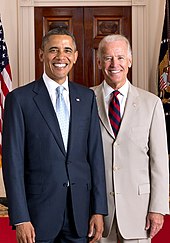
Joseph Biden with Barack Obama
As Senate trial proceedings unfolded, the 53-majority Republican Senators:
- Refused to hear from eyewitnesses who could prove that Trump had committed impeachable offenses,
- Refused to provide evidence on Trump’s behalf—but attacked witnesses who had testified against him in the House.
- Attacked Joseph Biden and his son, Hunter, as if they were on trial—instead of having been the targets of Trump’s smear-attempt.
On February 5, 2020, the Republican-dominated Senate—as expected—absolved President Donald Trump from trying to extort Ukraine into smearing a possible rival for the White House.
Only one Republican—Utah Senator Mitt Romney—had the moral courage to vote for conviction.
1984 (BOOK), 2016 PRESIDENTIAL ELECTION, 2020 PRESIDENTIAL ELECTION, ABC NEWS, ALTERNET, AMERICABLOG, AP, ” 9/11, BABY BOOMER RESISTANCE, BBC, BILL CLINTON, BLOOMBERG NEWS, BUZZFEED, CBS NEWS, CHRIS STIREWALT, CNN, CONDOLEEZA RICE, COVID-19, CROOKS AND LIARS, DAILY KOS, DICK CHENEY, DOMINION VOTING SYSTEMS, DONALD RUMSFELD, DONALD TRUMP, FIVETHIRTYEIGHT, FOX NEWS NETWORK, GEORGE ORWELL, GEORGE W. BUSH, HARPER’S MAGAZINE, HISTORY, HUFFINGTON POST, JANUARY 6 COUP ATTEMPT, JEB BUSH, JOE BIDEN, JOSEPH STALIN, LAURA INGRAHAM, LAVRENTI BERIA, LIBEL, MARCO RUBIO, MEDIA MATTERS, MIKE LINDELL, MOTHER JONES, MOVEON, MSNBC, NAZI-SOVIET NONAGGRESSION PACT, NBC NEWS, NEW REPUBLIC, NEW YORK TIMES V. SULLIVAN, NEWSDAY, NEWSMAX, NEWSWEEK, NKVD, NPR, PAUL WOLFOWITZ, POLITICO, POLITICUSUSA, RAW STORY, REPUBLICAN PARTY, REPUBLICANS, REUTERS, RICHARD CLARKE, RUDOLPH GIULIANI, SALON, SEAN HANNITY, SEATTLE TIMES, SIDNEY POWELL, SLANDER, SLATE, SOVIET UNION, STEVE BANNON, TALKING POINTS MEMO, THE ATLANTIC, THE CHICAGO SUN-TIMES, THE CHICAGO TRIBUNE, THE DAILY BEAST, THE DAILY BLOG, THE GUARDIAN, THE HILL, THE HUFFINGTON POST, THE INTERCEPT, THE LOS ANGELES TIMES, THE NATION, THE NEW REPUBLIC, THE NEW YORK TIMES, THE NEW YORKER, THE VILLAGE VOICE, THE WASHINGTON POST, THE WASHINGTONPOST, THINKPROGRESS, TIME, TRUTHDIG, TRUTHOUT, TUCKER CARLSON, TWO POLITICAL JUNKIES, U.S. NEWS & WORLD REPORT, UPI, USA TODAY, X
In Bureaucracy, Business, History, Military, Politics on April 10, 2025 at 12:13 am
At one time, Americans believed that the wholesale rewriting of history happened only in the Soviet Union.
“The problem with writing about history in the Soviet Union,” went a popular joke among Russians, “is that you never know what’s going to happen yesterday.”
A classic example of this occurred in the Great Soviet Encyclopedia.
Lavrentiy Beria had been head of the NKVD, the dreaded predecessor to the KGB, from 1938 to 1953. On June 26, 1953, three months after the death of Soviet dictator Joseph Stalin, Beria was arrested on orders of his fellow Communist Party leaders, who feared he intended to purge them.
Beria was executed on December 23.
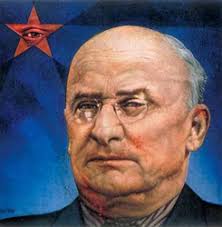
Lavrentiy Beria
But the Great Soviet Encyclopedia had just gone to press with a long article singing Beria’s praises.
What to do?
The editors of the Encyclopedia wrote an equally long article about “the Bering Straits,” which was to be pasted over the article about Beria, and sent this off to its subscribers. An unknown number of them decided it was safer to paste accordingly.
Similarly, Joseph Stalin was depicted in Soviet “history” texts as the architect of Russia’s victory over Nazi Germany during World War II.
No “historian” dared mention that Stalin’s wholesale purges of the Red Army in the 1930s had made the country vulnerable to the German attack in 1941. As had Stalin’s “nonaggression” pact with Germany in 1939, where he and Adolf Hitler secretly divided Poland between them.
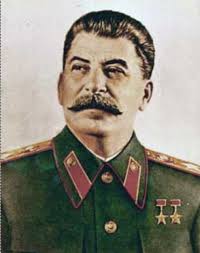
Joseph Stalin
But Russians no longer have a monopoly on rewriting history.
During the 2016 Presidential election, the Republican party furiously rewrote history in a desperate attempt to win the White House.
Specifically, its members tried to convince Americans that:
- President George W. Bush “kept us safe” (excluding, of course, the terror attacks of September 11, 2001, which slaughtered 3,000 Americans); and/or
- President Bush wasn’t to blame for 9/11—it was his predecessor, Bill Clinton (who left office on January 20, eight months earlier).
on J
World Trade Center – September 11, 2001
In 2015, Jeb Bush entered the “Rewriting History for Americans” sweepstakes.
On October 16, 2015, during an interview on Bloomberg TV, Donald Trump, the leading Republican candidate for President in 2016, dared speak (for Republicans) the unspeakable:
“When you talk about George Bush, I mean, say what you want, the World Trade Center came down during his time. He was President, OK? Blame him, or don’t blame him, but he was President. The World Trade Center came down during his reign.”
Bush was quick to respond on Twitter: “How pathetic for @realdonaldtrump to criticize the president for 9/11. We were attacked & my brother kept us safe.”

Jeb Bush
Trump replied:
“At the debate you said your brother kept us safe—I wanted to be nice & did not mention the WTC came down during his watch, 9/11.”
And: “No @JebBush, you’re pathetic for saying nothing happened during your brother’s term when the World Trade Center was attacked and came down.”
Suddenly, on February 13, another Republican Presidential candidate rushed to rewrite 9/11: Florida United States Senator Marco Rubio.
According to Rubio: “The World Trade Center came down because Bill Clinton didn’t kill Osama bin Laden when he had the chance to kill him.”
And on the following day, on NBC’s “Meet the Press,” he again made the charge: “If you’re going to ascribe blame, don’t blame George W. Bush, blame a decision that was made years earlier, not to take out bin Laden when the opportunity presented itself.”
All of which ignored such embarrassing truths as:
- During the first eight months of the Bush Presidency, Richard Clarke, the counter-terrorism adviser on the National Security Council, was not permitted to brief President Bush, despite mounting evidence of plans for a new Al-Qaeda outrage.
- From January 20 to September 11, 2001, Bush was on vacation, according to the Washington Post, 42% of the time.
- National Security Adviser Condoleeza Rice initially refused to hold a cabinet-level meeting on the subject of terrorism. Then she insisted that the matter be handled only by a more junior Deputy Principals meeting.
- Paul Wolfowitz, the number-two man at the Department of Defense, said: “I don’t understand why we are beginning by talking about this one man, bin Laden.”
- Even after Clarke outlined the threat posed by Al-Qaeda, Wolfowitz-–whose real target was Iraqi dictator Saddam Hussein—said: “You give bin Laden too much credit.”
- Finally, at a meeting with Rice on September 4, 2001, Clarke challenged her to “picture yourself at a moment when in the very near future Al-Qaeda has killed hundreds of Americans, and imagine asking yourself what you wish then that you had already done.”
- Seven days later, Al-Qaeda struck, and 3,000 Americans died horrifically—and needlessly.
- Neither Bush, Vice President Dick Cheney, Rice, Secretary of Defense Donald Rumsfeld nor Wolfowitz ever admitted their negligence. Nor has any of them been brought to account.
People who say the Republicans are “batshit crazy” for denying responsibility for 9/11 clearly haven’t read—or understood—George Orwell’s novel, 1984.
The unnamed Party’s slogan is: “He who controls the past controls the future. He who controls the present controls the past.”
The same holds true for Republicans: They hope to rewrite the past, as Joseph Stalin did, to wash away their crimes and errors–and pin these on their self-declared enemies.
And thus gain—and retain—absolute power over 300 million Americans.
2016 PRESIDENTIAL ELECTION, 2020 PRESIDENTIAL ELECTION, 2024 PRESIDENTIAL ELECTION, 9/11 ATTACKS, ABC NEWS, ABORTION, ABRAHAM LINCOLN, ALTERNET, AMERICABLOG, AP, APPOMATTOX DEMOCRATS, ARNOLD SCHWARTZENEGGER, ASIANS, BABY BOOMER RESISTANCE, BARACK OBAMA, BBC, BLACKS, BLOOMBERG NEWS, BUZZFEED, CBS NEWS, CHARLES ROYSTER, CIVIL RIGHTS ACT OF 1964, CIVIL WAR, CLIMATE CHANGE, CNN, CONFEDERATE STATES OF AMERICA, COVID-19, CROOKS AND LIARS, DAILY KOS, DAVID BROOKS, DECLARATION OF INDEPENDENCE, DELTA VARIANT, DEPARTMENT OF HOMELAND SECURITY, DONALD TRUMP, FBI, FIVETHIRTYEIGHT, FORT SUMTER, FOSSIL FUELS, GEORGE W. BUSH, HAITIANS, HARPER’S MAGAZINE, HATRED, HILLARY CLINTON, HISPANICS, HUFFINGTON POST, IMMIGRANTS, JANUARY 6 COUP ATTEMPT, JOHN OLIVER, JOHNSON & JOHNSON VACCINE, JONATHAN CAPEHART, Kamala Harris, KGB, LYNDON B. JOHNSON, MASKS, MEDIA MATTERS, MERYL STREEP, MODERNA VACCINE, MOTHER JONES, MOVEON, MSNBC, MUSLIMS, NBC NEWS, NEIL YOUNG, NEW REPUBLIC, NEWSDAY, NEWSWEEK, NPR, PBS NEWSHOUR, PHIZER VACCINE, POLITICO, POLITICUSUSA, PRISONERS OF WAR, PROJECT 2025, RACISM, RAW STORY, RECONSTURCTION, REPUBLICANS, REUTERS, ROBERT E. LEE, RUSSIA, SALON, SEATTLE TIMES, SLATE, SLAVERY, SPRINGFIELD OHIO, TALKING POINTS MEMO, THE ATLANTIC, THE CHICAGO SUN-TIMES, THE CHICAGO TRIBUNE, THE DAILY BEAST, THE DAILY BLOG, THE DESTRUCTIVE WAR (BOOK), THE DISABLES, THE GUARDIAN, THE HILL, THE HUFFINGTON POST, THE LOS ANGELES TIMES, THE NATION, THE NEW REPUBLIC, THE NEW YORK TIMES, THE NEW YORKER, THE SOUTH, THE VILLAGE VOICE, THE WASHINGTON POST, THINKPROGRESS, TIME, TREASON, TRUTHDIG, TRUTHOUT, TWO POLITICAL JUNKIES, U.S. NEWS & WORLD REPORT, UKRAINE, ULYSSES S. GRANT, UPI, USA TODAY, VACCINATIONS, VLADIMIR PUTIN, WHITES, WOMEN, WONKETTE, X
In Bureaucracy, History, Medical, Politics, Social commentary on April 4, 2025 at 12:09 am
Southern treason, racism and ignorance have given the United States five periods of infamy.
Infamy 4: 2000 – COVID-19 pandemic.
Donald Trump’s four-year Presidency produced a legacy of unprecedented racism, criminality, abuse of power and treason.
But the crime which brought him down was his unwillingness to protect Americans from the deadly COVID-19 pandemic.
The COVID-19 catastrophe slammed into the United States in January, 2020. It was the inevitable result of a natural disaster colliding with an evil and incompetent administration.
Trump’s “cures” for COVID-19 included denial, lies, Republican subservience, chaos, extortion, propaganda as news, quackery as medicine, demands to “re-open the country,” Ignoring the danger and—finally—resignation (“Learn to live with the virus”).
Trump quickly made the virus a referendum on himself. If you supported him, you didn’t wear a mask in public—even though no vaccine was available and hospitals were rapidly overwhelmed by debilitated and dying casualties of the virus.
On the July 21, 2021, edition of the PBS Newshour, Washington Post Columnist Jonathan Capehart outlined the catastrophic results of Trump’s behavior: “If we had had a president of the United States who took this seriously when this first came on the scene, if we had a Republican party that took this seriously enough to warn everyone, their constituents, saying, ‘Wash your hands, then put on a mask, then go get the vaccine,’ we wouldn’t be where we are right now.”
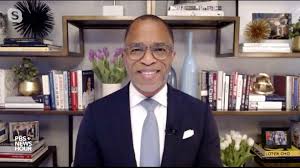
Jonathan Capehart
But neither Trump nor the Republican party urged Americans to “wash your hands, put on a mask, then go get the vaccine.”
It took the election of Joseph R. Biden to fashion a comprehensive attack on COVID-19.
By March, 2021, three vaccines—by Pfizer, Moderna and Johnson & Johnson—became available. A total of 90.4 million doses of these vaccines had been given. And 30.7 million Americans had been fully vaccinated against the virus.
But after a triumphant beginning, the pace of vaccinations slowed, then halted. By late July, 2021, only 49.6% of Americans had been fully vaccinated.

COVID-19 vaccination map – July 21, 2021
George Karabassis, CC BY 4.0 <https://creativecommons.org/licenses/by/4.0>, via Wikimedia Commons
Many of those who had gotten one shot of the Pfizer and Moderna vaccines refused to get the necessary second one.
What had happened?
“The people I know personally who are not getting the vaccine, for them, it was like, ‘They rushed this thing,'” theorized conservative New York Times columnist David Brooks on the PBS Newshour on July 23, 2021.
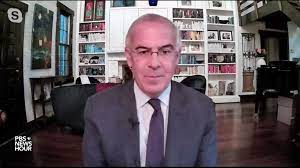
David Brooks
And leading the way to this catastrophe of self-destruction were the states of the South and Midwest: Mississippi (47.1%,), Alabama (50.5%), Arkansas (53.2%), and Tennessee (52.9%) with the lowest rates of residents who have gotten at least one shot.
By late July, 2021, three states—Florida, Texas and Missouri-–with lower vaccination rates accounted for 40% of all cases nationwide.
And colliding head-on with the refusals of millions to get vaccinated was the newer—and deadlier—Delta variant of COVID-19.
Just as the South unleashed the Civil War on America, it had ignited a new wave of COVID-19 on America.
Infamy 5: 2024 – Backing Trump again
Donald Trump is the only American President to be impeached twice—once for trying to extort “a favor” from Ukraine and again for inciting a violent attack on Congress.
On January 6, 2021, having failed to win re-election, he incited a deadly attack on Congressional members who were counting Electoral College votes. His goal: To intimidate them into throwing out the results and allowing him to become “President-for-Life.”
As a Presidential candidate in 2024, he has constantly repeated the lie that he won in 2020 but was cheated by massive vote fraud.
He has viciously attacked immigrants—both legal and illegal. During his September 11 debate with Vice President Kamala Harris, he falsely charged that legal Haitian immigrants in Springfield, Ohio, were “eating the dogs. They’re eating the cats. They’re eating the pets of the people that live there.”
The results: In Springfield, a string of bomb threats have shut down city and school buildings. Public events have been canceled. And state troopers have been sent in to guard students going to school.
Most ominously, Trump intends to implement Project 2025, the Right-wing Heritage Foundation’s blueprint for a Fascistic dictatorship. Under this:
- Career civil servants will be fired en masse and replaced by fanatical Right-wingers whose only loyalty is to Trump.
- The FBI director will be personally accountable to Trump—just as the KGB director is accountable to Vladimir Putin.
- The Department of Homeland Security will be abolished.
- Fossil fuels—the leading cause of global warming—will be favored and environmental regulations to combat climate change abolished.
- Abortion will be outlawed.
And, once again, it’s the South that threatens to end American democracy.
His attacks on nonwhites speak directly to Southerners’ longstanding racism. His attacks on the federal government feed into their resentment over losing the Civil War 159 years ago.
Most Southerners have abandoned democracy and lustily embraced the creation of a Right-wing dictatorship. Where they were once fiercely anti-Communist, they are now fiercely anti-liberal.
In 1776, Southerners’ fervent embrace of slavery almost aborted the Declaration of Independence and the birth of the American Republic.
In 2024, Southerners’ fervent embrace of racism, hatred and treason may signal its demise.
2016 PRESIDENTIAL ELECTION, 2020 PRESIDENTIAL ELECTION, 2024 PRESIDENTIAL ELECTION, 9/11 ATTACKS, ABC NEWS, ABORTION, ABRAHAM LINCOLN, ALTERNET, AMERICABLOG, AP, APPOMATTOX DEMOCRATS, ARNOLD SCHWARTZENEGGER, ASIANS, BABY BOOMER RESISTANCE, BARACK OBAMA, BBC, BLACKS, BLOOMBERG NEWS, BUZZFEED, CBS NEWS, CHARLES ROYSTER, CIVIL RIGHTS ACT OF 1964, CIVIL WAR, CLIMATE CHANGE, CNN, CONFEDERATE STATES OF AMERICA, COVID-19, CROOKS AND LIARS, DAILY KOS, DAVID BROOKS, DECLARATION OF INDEPENDENCE, DELTA VARIANT, DEPARTMENT OF HOMELAND SECURITY, DONALD TRUMP, FBI, FIVETHIRTYEIGHT, FORT SUMTER, FOSSIL FUELS, GEORGE W. BUSH, HAITIANS, HARPER’S MAGAZINE, HATRED, HILLARY CLINTON, HISPANICS, HUFFINGTON POST, IMMIGRANTS, JANUARY 6 COUP ATTEMPT, JOHN OLIVER, JOHNSON & JOHNSON VACCINE, JONATHAN CAPEHART, Kamala Harris, KGB, LYNDON B. JOHNSON, MASKS, MEDIA MATTERS, MERYL STREEP, MODERNA VACCINE, MOTHER JONES, MOVEON, MSNBC, MUSLIMS, NBC NEWS, NEIL YOUNG, NEW REPUBLIC, NEWSDAY, NEWSWEEK, NPR, PBS NEWSHOUR, PHIZER VACCINE, POLITICO, POLITICUSUSA, PRISONERS OF WAR, PROJECT 2025, RACISM, RAW STORY, RECONSTURCTION, REPUBLICANS, REUTERS, ROBERT E. LEE, RUSSIA, SALON, SEATTLE TIMES, SLATE, SLAVERY, SPRINGFIELD OHIO, TALKING POINTS MEMO, THE ATLANTIC, THE CHICAGO SUN-TIMES, THE CHICAGO TRIBUNE, THE DAILY BEAST, THE DAILY BLOG, THE DESTRUCTIVE WAR (BOOK), THE DISABLES, THE GUARDIAN, THE HILL, THE HUFFINGTON POST, THE LOS ANGELES TIMES, THE NATION, THE NEW REPUBLIC, THE NEW YORK TIMES, THE NEW YORKER, THE SOUTH, THE VILLAGE VOICE, THE WASHINGTON POST, THINKPROGRESS, TIME, TREASON, TRUTHDIG, TRUTHOUT, TWO POLITICAL JUNKIES, U.S. NEWS & WORLD REPORT, UKRAINE, ULYSSES S. GRANT, UPI, USA TODAY, VACCINATIONS, VLADIMIR PUTIN, WHITES, WOMEN, WONKETTE, X
In Bureaucracy, History, Medical, Politics, Social commentary on April 3, 2025 at 12:05 am
Throughout its history the South has been a hotbed of treason, racism and ignorance.
Today, it proudly continues holding fast to these traditions—as it threatens the entire country with a Fascistic dictatorship under Donald Trump.
Infamy 1: 1860 – 1865 – The Confederate States of America.
Union (blue) and Confederate (red) states: 1860 – 1865
Júlio Reis, CC BY-SA 3.0 <https://creativecommons.org/licenses/by-sa/3.0>, via Wikimedia Commons
From 1860 to 1865, the South—Texas, Arkansas, Louisiana, Tennessee, Mississippi, Alabama, Georgia, Florida, South Carolina, North Carolina and Virginia—produced the greatest case of mass treason in America’s history.
According to The Destructive War, by Charles Royster, it wasn’t the cause of “states’ rights” that led 13 Southern states to withdraw from the Union in 1860-61. It was their demand for “respect,” which, in reality, translates into “e-g-o.”
“The respect Southerners demanded did not consist simply of the states’ sovereignty or of the equal rights of Northern and Southern citizens, including slaveholders’ right to take their chattels into Northern territory.
“It entailed, too, respect for their assertion of the moral superiority of slaveholding society over free society,” writes Royster.
It was not enough for Southerners to claim equal standing with Northerners; Northerners must acknowledge it. But this was something that the North was increasingly unwilling to do.
Finally, its citizens dared to elect Abraham Lincoln as President in 1860.
Lincoln and his new Republican party damned slavery—and slaveholders—as morally evil, obsolete and ultimately doomed. And they were determined to prevent slavery from spreading any further throughout the country.
Southerners found all of this intolerable.
Lincoln—during his First Inaugural Address—bluntly said that he did not intend to “directly or indirectly…interfere with the institution of slavery in the States where it exists. I believe I have no lawful right to do so, and I have no inclination to do so.”
Abraham Lincoln
But that was not enough for Southerners.
Only 10% of Southerners owned slaves. The other 90% of the population “had no dog in this fight,” as Southerners liked to say.
Yet they so admired and aspired to be like their “gentleman betters” that they threw in their lot with them.
On April 12, 1861—just over a month since Lincoln’s inauguration on March 4—Southern batteries opened fire on Union Fort Sumter in Charleston Harbor, South Carolina.
This ignited the American Civil War, costing the lives of 750,000 Americans—at a time when the population of the United States stood at 31,443,321.
Four years later, Confederate General Robert E. Lee surrendered the Army of Northern Virginia to Union General Ulysses S. Grant at Appomattox Courthouse.
Huge sections of the South had been laid waste by Union troops and more than 258,000 Southerners had been killed.
And slavery, the mainstay of Southern plantation life, had been ended forever.
The South had paid a high price for its investment in treason.
Infamy 2: 1964 – 2024 – Racism breeds Southern Republicans.
In 1964, Democratic President Lyndon B. Johnson pushed the Civil Rights Act through Congress, ending more than a century of blatant discrimination against blacks.
The South—which before the Civil War had been solidly Democratic—suddenly went solidly Republican.
To understand this mammoth shift, it’s vital to realize: In Lincoln’s time, the Republicans were the party of progressives.
The party was founded on an anti-slavery platform. Its members were thus reviled as “Black Republicans.” And until the 1960s, the South was solidly Democratic.
Democrats were the ones defending the status quo—slavery—and opposing the rights of freed blacks in the South of Reconstruction and long afterward.
When, in the early 1960s, Democrats championed the rights of blacks, Southerners bolted for the Republican party—which held to the same values that slavery/discrimination-supporting Democrats once did.
After signing the Civil Rights Act of 1964 into law, President Lyndon B. Johnson told an aide: “We have just lost the South for a generation.”
Johnson was wrong: A generation lasts 20 to 30 years. It’s been 60 years since the signing of the Act, and the South is still solidly within the Republican camp.
To compete successfully in this region, Democrats would need to demand the reinstatement of segregation—if not slavery.
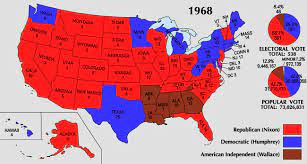
1968 election
Infamy 3: 2016 – Fascist racism elects Donald Trump as President.
Repeatedly, when asked why they supported Trump, his followers said: “He says what I’ve been thinking!”
And what Trump appealed to, above all else, was racist hatred.
From June 15, 2015, when he launched his Presidential campaign, until October 24, 2016, Trump fired almost 4,000 angry, insulting tweets at 281 people and institutions that had somehow offended him.
Donald Trump
The New York Times needed two full pages of its print edition to showcase them.
Among his targets:
- Women
- Blacks
- Hispanics
- Asians
- Muslims
- The disabled
- Prisoners-of-war

Red States voted for Donald Trump – 2016
BobWyatt07, CC BY-SA 4.0 <https://creativecommons.org/licenses/by-sa/4.0>, via Wikimedia Commons
Whites comprised the overwhelming majority of the audiences at Trump rallies. Not all were racists, but many of those who were advertised it on T-shirts: “MAKE AMERICA WHITE AGAIN.”
And the vast majority of the white votes Trump got were in the South.
The 2008 election of Barack Obama as the first black President had shocked whites. His 2012 re-election had deprived them of the hope that 2008 had been an accident.
In 2016 macho, largely uneducated, anti-black Southern males couldn’t accept a woman—Hillary Clinton—occupying the White House.
They ignored reputable reports—later confirmed—that Trump’s campaign was backed by Russian oligarchs linked to Russian dictator Vladimir Putin, the former head of the KGB.


 Bureaucracybuster's Blog
2016 PRESIDENTIAL CAMPAIGN, 2020 PRESIDENTIAL CAMPAIGN, 2024 PRESIDENTIAL CAMPAIGN, 60 MINUTES NEWS MAGAINE, ABC NEWS, ADAM SCHIFF, ADOLF HITLER, ALBERT “THE EXECUTIONER” ANASTASIA, ALTERNET, ALVIN BRAGG, AMERICABLOG, AP, ARTICLES OF IMPEACHMENT, ARTIFICIAL INTELLIGENCE (AI), BABY BOOMER RESISTANCE, BORDER WALL, BUZZFEED, CANADA, CBS NEWS, CENSORSHIP, CENSUS BUREAU, CENTERS FOR DISEASE CONTROL AND PREVENTION, CHARLES “LUCKY” LUCIANO, CHARLES DE GAULLE, CHINA, CHRIS CHRISTIE, CHRISTI GRIMM, CHRISTOPHER S. MURPHY, CIA, CLASSIFIED DOCUMENTS, CNN, CONSERVATIVE POLITICAL ACTION CONFERENCE, CONSUMER FINANCIAL PROTECTION BUREAU, CONVERSATION WITH AN AMERICAN WRITER (POEM), CORONAVIRUS RELIEF MONIES, COVID-19, CROOKS AND LIARS, CUBAN MISSILE CRISIS, DAILY KOS, DAN BOWMAN, DAN SULLIVAN, DANIELLE SASSOON, DAVID BROOKS, DEMOCRATS, DEPARTMENT OF DEFENSE, DEPARTMENT OF GOVERNMENT EFFICIENCY (DOGE), DEPARTMENT OF HEALTH AND HUMAN SERVICES, DEPARTMENT OF JUSTICE, DIVERSITY EQUITY INCLUSION (DEI), DONALD TRUMP, DONALD TRUMP JUNIOR, DRUDGE RETORT, E. JEAN CARROLL, ELON MUSK, EMIL BOVE, EMOLUMENTS CLAUSE OF THE UNITED STATES CONSTITUTION, ERIC ADAMS, EXTORTION, FBI, FIRST AMENDMENT, FIVETHIRTYEIGHT, FRIVOLOUS LAWSUITS, GEORGE FLOYD, GEORGE STEPHANOPOULOS, GEORGE W. BUSH, GLENN FINE, GOVERNMENT ACCOUNTABILITY OFFICE, GOVERNMENT SHUTDOWN, GULF OF AMERICA, GULF OF MEXICO, HARPER’S MAGAZINE, HILLARY CLINTON, HOUSE FOREIGN AFFAIRS COMMITTEE, HOUSE INTELLIGENCE COMMITTEE, HOUSE OVERSIGHT AND REFORM COMMITTEE, HUNTER BIDEN, IMMIGRANTS, IMPEACHMENT, IMPOUNDMENT CONTROL ACT, INSPECTORS GENERAL, INTELLIGENCE COMMUNITY, INTELLIGENCE OFFICERS, JACK SMITH, JAKE SULLIVAN, JAKE TAPPER, JAMAL KHASHOGGI, JAMES COMEY, JAMES MCHENRY, JAMES ROBART, JANUARY 6 COUP ATTEMPT, JARED KUSHNER, JEFF SESSIONS, JOHN CORNYN, JOHN F. KENNEDY, JOHN F. KENNEDY CENTER FOR THE PERFORMING ARTS, JOHN ROBERTS, JOING CHIEFS OF STAFF, JON S. TIGAR, JOSEPH BIDEN, JOSEPH STALIN, Kamala Harris, KELLY LOEFFER, KEVIN CRAMER, LAFAYETTE SQUARE, LAMAR ALEXANDER, LEON PANETTA, LINDSEY GRAHAM, LUXUY JET, MARCO RUBIO, MARK MILLEY, MARTIN GUGINO, MEDIA MATTERS, MEIN KAMPF, MERRICK GARLAND, MEXICO, MICHAEL FLYNN, MICHAEL HAYDEN, MICHAEL K. ATKINSON, MICK MULVANEY, MIKE PENCE, MITCH MCCONNELL, MOHAMMED BIN SALMAN, MOTHER JONES, MOVEON, MSNBC, NANCY PELOSI, NATALIA VESELNITSKAYA, NATIONAL SECURITY AGENCY, NBC NEWS, NEWSWEEK, NIKKI HALEY, NPR, PAUL MANAFORT, PBS NEWSHOUR, PETE HEGSETH, POLITICO, POLITICUSUSA, QATAR, RAW STORY, REPUBLICANS, REUTERS, RINAT AKHMETSHIN, ROBERT MUELLER, ROBERT PAYNE, ROD ROSENSTEIN, ROGER STONE, RON DESANTIS, RON JOHNSON, RUSSIA, SALON, SEATTLE TIMES, SERGEY KISLYAK, SERGEY LAVROV, SLATE, ST. JOHN’S CHURCH, STEVE DAINES, TALKING POINTS MEMO, TARIFFS, TED CRUZ, THE ATLANTIC, THE CHICAGO SUN-TIMES, THE CHICAGO TRIBUNE, THE DAILY BEAST, THE DAILY BLOG, THE GUARDIAN, THE HILL, THE HUFFINGTON POST, THE JUDICIARY, THE LIFE AND DEATH OF ADOLF HITLER (BOOI), THE LIFE AND DEATH OF ADOLF HITLER (BOOK), THE LOS ANGELES TIMES, THE NATION, THE NEW REPUBLIC, THE NEW YORK TIMES, THE PENTAGON, THE PRESS, THE VILLAGE VOICE, THE WASHINGTON POST, THINKPROGRESS, TIME, TREASON, TRUMP TOWER MEETING, TRUTH SOCIAL, TRUTHDIG, TRUTHOUT, TWENTY-SECOND AMENDMENT, TWO POLITICAL JUNKIES, U.S. NEWS & WORLD REPORT, UKRAINE, UNITED STATES HOUSE OF REPRESENTATIVES, UNITED STATES SENATE, UPI, USA TODAY, VLADIMIR PUTIN, VOLODYMYR ZELENSKY, WHISTLEBLOWER, WHITE HOUSE BUDGET OFFICE, WONKETTE, X, YEVGENEY YEVTUSHENKO
REPUBLICANS: 50 WAYS TO BE A COWARD–PART SEVEN (END)
In Bureaucracy, History, Law, Law Enforcement, Military, Politics, Social commentary on June 10, 2025 at 12:37 amRepublicans have a long and disgraceful history of excusing Donald Trump’s litany of crimes—as a 2016 Presidential candidate, as President (2017-2021), as a former President (2021-2025) and once again as President.
Forgiven Crime 44: Trump’s Justice Department ordered Danielle Sassoon, the United States Attorney for the Southern District of New York, to dismiss pending criminal charges against New York City Mayor Eric Adams for bribery, solicitation, conspiracy and wire fraud,
This occurred after Adams—who had previously refused to cooperate with Trump’s roundup of illegal aliens—agreed to do so. Sassoon resigned from the Justice Department rather than comply with the order.
Forgiven Crime 45: When Danielle Sassoon resigned instead of carrying out what she believed was an illegal order, Emil Bove, the Acting Attorney General, sent her a letter stating that her conduct would be investigated and evaluated by the Attorney General, after which “the Attorney General will determine whether termination or some other action is appropriate.”
Danielle Sassoon
Forgiven Crime 46: Trump held what amounted to an ambush meeting with Ukrainian President Volodymyr Zelensky at the White House. Siding with Russian dictator Vladimir Putin, Trump blamed Zelensky for Russia’s 2022 invasion of Ukraine.
Trump demanded that Zelensky sign over mineral rights to the United States without America’s providing a security guarantee for Ukraine. Zelensky left without signing such an agreement.
Forgiven Crime 47: Trump announced that he was considering violating the 22nd Amendment and seeking an illegal third Presidential term in 2028.
Forgiven Crime 48: The Trump-authorized and illegitimate Department of Government Efficiency (DOGE) led by billionaire Elon Musk, dismantled multiple agencies, invaded the privacy of untold millions by accessing sensitive data systems and fired tens of thousands of federal workers.
Forgiven Crime 49: Trump filed frivolous and extortionate lawsuits against major news networks CBS and ABC.
Against CBS: Trump claimed that its news magazine, “60 Minutes” deceptively edited an interview with Kamala Harris to damage his presidential campaign and influence the election. He initially sought $10 billion in damages, then increased it to $20 billion.
Against ABC: He claimed that its commentator, George Stephanopoulos, falsely stated he was found liable for “rape” in the case brought by columnist E. Jean Carroll. The jury found Trump liable for sexual abuse and defamation, but not rape. The judge later clarified that what the jury found Trump did was in fact rape, as commonly understood.
ABC settled the lawsuit by agreeing to donate $15 million to Trump’s Presidential library.
Forgiven Crime 50: Trump solicited and received a $400 million luxury jet from Qatar for use as Air Force One, in direct violation of the Emoluments Clause of the United States Constitution, which prohibits federal officials from accepting gifts from foreign countries.
The jet will cost taxpayers hundreds of millions of dollars to bring it up to presidential standards, including a security sweep of the entire aircraft and costly upgrades to ensure classified communications.
After Trump leaves office, it will be transferred to his Presidential library.
* * * * *
Why have Republicans almost unanimously stood by Donald Trump despite the wreckage he made of American foreign and domestic policy?
Fear—that they will lose their privileged positions in Congress if they don’t.
This could happen by:
House and Senate Republicans’ support for Trump hinges on one question: “Can I hold onto my power and all the privileges that accompany it by sticking—or breaking—with him?”
In his bestselling 1973 biography, The Life and Death of Adolf Hitler, British historian Robert Payne harshly condemned the German people for the rise of the Nazi dictator:
“[They] allowed themselves to be seduced by him and came to enjoy the experience….[They] followed him with joy and enthusiasm because he gave them license to pillage and murder to their hearts’ content. They were his servile accomplices, his willing victims.”
Like Hitler, Trump offered his Republican voters and Congressional allies intoxicating dreams: “I will enrich all of you. And I will humiliate and destroy those Americans you most hate.”
For his white, Fascistic, largely elderly audience, those enemies included blacks, atheists, Hispanics, non-Christians, Muslims, liberals, “uppity” women, Asians.
For most of the first three years of his first term, he faced little opposition. What cost Trump the White House wasn’t Democratic or Republican courage but a deadly disease—COVID-19—which Trump refused to take seriously.
Democrats cowered before Trump’s slanders—thereby ensuring more assaults.
Most of the press quailed before Trump. Only a few media outlets—notably the New York Times, CNN and the Washington Post-–dared investigate his crimes and blunders.
In 1960, the Russian poet, Yevgeney Yevtushenko, published “Conversation With an American Writer”—a stinging indictment of the cowardly opportunists who had supported the brutal tyranny of Joseph Stalin:
“You have courage,” they tell me.
It’s not true. I was never courageous.
I simply felt it unbecoming
to stoop to the cowardice of my colleagues.
Too many Republicans know all-too-well how it feels to stoop to the cowardice of their colleagues for a transitory hold on power and privilege.
Share this: