Posts Tagged ‘SOVIET UNION’
ABC NEWS, BARACK OBAMA, CBS NEWS, CNN, DICK CHENEY, DUTY, FACEBOOK, GEORGE W. BUSH, HOUSE INTELLIGENCE COMMITTEE, JOHN MCCAIN, NBC NEWS, ROBERT M. GATES, RUSSIA, SOVIET UNION, THE CHICAGO TRIBUNE, THE CHICAO SUN-TIMES, THE LOS ANGELES TIMES, THE NEW YORK TIMES, THE WASHINGTON POST, TWITTER, UKRAINE, UNITED STATES, USA TODAY, VLADIMIR PUTIN
In Bureaucracy, History, Military, Politics on September 3, 2015 at 1:00 am
Since the late 1940s, Republicans have hurled the charge of “appeasement” at every Democratic President
Harry S. Truman, John F. Kennedy, Lyndon Johnson, Jimmy Carter and Bill Clinton found themselves accused of “selling out” to the Soviet Union. The motive for this was usually attributed to cowardice–if not outright treason.
And now it’s the turn of President Barack Obama.
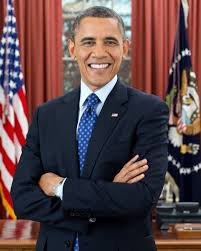
President Barack Obama
“The President is afraid of provoking Vladimir Putin,” U.S. Senator John McCain told Reuters. “Vladimir Putin is on the move because he has paid no price for his aggression.”
Another United State Senator who charges Obama with appeasement is Ted Cruz of Texas.
“Putin fears no retribution,” Cruz said on ABC News’ This Week. “Their policy has been to alienate and abandon our friends, and to coddle and appease our enemies.
“Putin is a KGB thug. When the protests began in Ukraine, the president should have stood unapologetically, emphatically for freedom. When the United States doesn’t speak for freedom, tyrants notice.”
It’s clear that the American Right–long aching for a chance to lob nuclear missiles at the former Soviet Union–is itching for the chance to do so now.
Yet America’s frustrations with Russia generally–and Putin in particular–long predate those of Barack Obama.
A major reason for this: America’s dealings with Russia have not always been as wise as they should have been.
In his memoir, Duty, Robert M. Gates, who served as Secretary of Defense for Presidents George W. Bush and Barack Obama, candidly writes:
“I shared with [President Bush] my belief that from 1999 onward, the West, and particularly the United States, had badly underestimated the magnitude of Russian humiliation in losing the Cold War and then the dissolution of the Soviet Union.
“The arrogance, after the collapse, of American government officials, academicians, businessmen, and politicians in telling the Russians how to conduct their domestic and foreign affairs…had led to deep and long-term resentment and bitterness.”

Convincing Soviet Premier Mikhail Gorbachev to allow a United Germany to enter NATO proved a major success, asserts Gates.
But moving quickly–after the collapse of the Soviet Union–to incorporate many of its former members into NATO was a serious mistake.
U.S. agreements with Romanian and Bulgarian governments to rotate [American] troops through bases in those countries was a needless provocation (especially since we never deployed the 5,000 troops in either country.”
Gates further notes that the United States later made an even worse mistake:
“Trying to bring Georgia and Ukraine into NATO was truly overreaching. The roots of the Russian Empire trace back to Kiev in the ninth century, so that was an especially monumental provocation.
“Were the Europeans, much less the Americans, willing to send their sons and daughters to defend Ukraine or Georgia? Hardly.
“So NATO expansion was a political act, not a carefully considered military commitment.”
This “undermined the purpose of the alliance” and recklessly ignored “what the Russians considered their own vital national interests.”
Nor were relations between the United States and post-Soviet Russia helped by the naievity of President George W. Bush.
In June, 2001, Bush and Vladimir Putin met in Slovenia. During the meeting a truly startling exchange occurred.

President George W. Bush and Vladimir Putin
Putin, a former KGB Intelligence officer, had clearly done his homework on Bush. When he mentioned that one of the sports Bush had played was rugby, Bush was highly impressed.
“I did play rugby,” gushed Bush. “Very good briefing.”
But more was to come.
BUSH: Let me say something about what caught my attention, Mr. President, was that your mother gave you a cross which you had blessed in Israel, the Holy Land.
PUTIN: It’s true.
BUSH: That amazes me, that here you were a Communist, KGB operative, and yet you were willing to wear a cross. That speaks volumes to me, Mr. President. May I call you Vladimir?
Putin instantly sensed that Bush judged others–even world leaders–through the lens of his own fundamentalist Christian theology.
Falling back on his KGB training, Putin seized on this apparent point of commality to build a bond. He told Bush that his dacha had once burned to the ground, and the only item that had been saved was that cross.
“Well, that’s the story of the cross as far as I’m concerned,” said Bush, clearly impressed. “Things are meant to be.”
Afterward, Bush and Putin gave an outdoor news conference.
“Is this a man that America can trust?” Associated Press correspondent Ron Foumier asked Bush.
“Yes,” said Bush. “I looked the man in the eye. I found him to be very straightforward and trustworthy. We had a very good dialogue.
“I was able to get a sense of his soul, a man deeply committed to his country and the best interests of his country. I wouldn’t have invited him to my ranch if I didn’t trust him.”
Of course, no one from the Right is now recalling such embarrassing words.
It’s far more politically profitable to pretend that all of America’s tensions with Russia began with the election of Barack Obama.
And to pretend that those tensions will vanish once another Right-wing President enters the White House.
60 MINUTES, 9/11 ATTACKS, ABC NEWS, ADOLF HITLER, AFGHANISTAN, AL QAEDA, BARACK OBAMA, BARCK OBAMA, BASHAR AL-ASSAD, CARL VON CLAUSEWITZ, CARLOS THE JACKAL, CBS NEWS, CHEMICAL WEAPONS, CHINA, CIA, CNN, DAVID BROOKS, DAVID CORN, FACEBOK, FACEBOOK, HARRY TRUMAN, IMPERIAL HUBRIS, IRAN, ISLAM, ISLAMIC STATE OF IRAQ AND THE LEVANT, ISRAEL, MARCHING TOWARD HELL, MICHAEL SCHEUER, MOTHER JONES MAGAZINE, MUSLIMS, NAZI GERMANY, NBC NEWS, OSAMA BIN LADEN, RUSSIA, SOVIET UNION, SYRIA, TERRORISM, THE CHICAGO TIMES, THE CHICAGO TRIBUNE, THE LOS ANGELES TIMES, THE NEW YORK TIMES, THE WASHINGTON POST, TWITTER, USA TODAY, VIETNAM WAR, VLADIMIR PUTIN, WORLD WAR 1
In Bureaucracy, History, Military, Politics, Social commentary on August 21, 2015 at 12:56 am
For America to avoid permanent military entanglements in the Middle East, it must learn to mind its own business.
So says Michael Scheuer, a 20-year CIA veteran who, from 1996 to 1999, headed Alec Station, the CIA’s unit assigned to track Osama bin Laden at the agency’s Counterterrorism Center.
He’s also the author of two seminal works on America’s fight against terrorism: Imperial Hubris: Why the West is Losing the War on Terror (2003) and Marching Toward Hell: America and Islam after Iraq (2008).
Scheuer has repeatedly warned: The United States must not deploy troops in Syria.
More than 310,000 people have been killed in Syria’s uprising-turned-civil war. The conflict began on March 15, 2011, triggered by protests demanding political reforms and the ouster of dictator Bashar al-Assad.
And many members of Congress are demanding that “we must do something” to stop all that killing.
Among the reasons why America should steer clear of the Syrian tar-baby:
The Assad regime is backed by–-among others–the Iranian-supported terrorist group, Hezbollah (Party of God). Its enemies include another terrorist group–Al Qaeda.
Hezbollah is comprised of Shiite Muslims. A sworn enemy of Israel, it has kidnapped scores of Americans suicidal enough to visit Lebanon and truck-bombed the Marine Barracks in Beirut in 1983, killing 299 Americans.
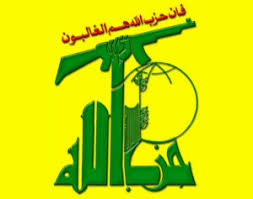
Flag of Hezbollah
Al-Qaeda, on the other hand, is made up of Sunni Muslims. Besides plotting 9/11, It has attacked the mosques and gatherings of liberal Muslims, Shias, Sufis and other non-Sunnis.
Examples of these sectarian attacks include the Sadr City bombings, the 2004 Ashoura massacre and the April, 2007 Baghdad bombings.
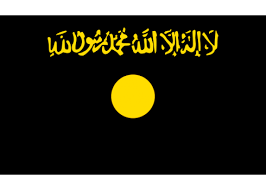
Flag of Al Qaeda
When your enemies are intent on killing each other, it’s best to stand aside and let them do it.
Intervening in Syria could produce unintended consequences for American forces–and make the United States a target for more Islamic terrorism.
An American military strike on Syrian government forces could lead the country’s dictator, Bashar al-Assad, to attack Israel–perhaps even with chemical weapons.
Assad could do this simply because he hates Jews–or to lure Israel into attacking Syria.
If that happened, the Islamic world–which lusts to destroy Israelis even more than “apostate” Muslims–would rally to Syria against the United States, Israel’s chief ally.
China and Russia are fully supporting the Assad dictatorship–-and the brutalities it commits against its own citizens.
This reflects badly on them–-not the United States.
And any move by the United States to directly attack the Assad regime could ignite an all-out war with Russia and/or China.
What happens if American and Russian forces start trading salvos? Or if Russian President Vladimir Putin orders an attack on Israel, in return for America’s attack on Russia’s ally, Syria?
It was exactly that scenario–Great Powers going to war over conflicts between their small-state allies–-that triggered World War l.
The United States cannot defeat the Islamic State of Iraq and the Levant (ISIL) through air power alone.
President Barack Obama authorized airstrikes against ISIL in September, 2014. Since then, the United States Air Force has dropped thousands of bombs on ISIL convoys.
This has not, however, destroyed ISIL. And its failure to do so has only led to demands by hawkish Republicans and Democrats for “boots on the ground.”
This was in fact predictable. Air power alone failed to secure victory over Nazi Germany during World War II and Vietnam during the Vietnam war. Nor did it “shock and awe” the Iraqis into surrendering during the 2003 Iraq war.
While Islamic nations like Syria and Iraq wage war within their own borders, they will lack the resources to launch attacks against the United States.
When Adolf Hitler invaded the Soviet Union in 1941, then-Senator Harry Truman said: “I hope the Russians kill lots of Nazis and vice versa.”
That should be America’s view whenever its sworn enemies start killing themselves off. Americans should welcome such self-slaughters, not become entrapped in them.
* * * * *
During his September 28, 2014 appearance on 60 Minutes, President Obama admitted that the mostly Sunni-Muslim Iraqi army had refused to combat the Sunni army of ISIL.
Then followed this exchange:
Steve Kroft: What happens if the Iraqis don’t fight or can’t fight?
President Obama: Well…
Steve Kroft: What’s the end game?
President Obama: I’m not going to speculate on failure at the moment. We’re just getting started. Let’s see how they do….
It was precisely such a mindset that led the United States, step by step, into the Vietnam quagmire.
As in the case of Vietnam, the United States lacks:
- Real or worthwhile allies in Iraq or Syria;
- A working knowledge of the peoples it wants to influence in either country;
- Clearly-defined goals that it seeks to accomplish in that region.
America rushed to disaster in Vietnam because its foreign policy elite felt it had to “do something” to fight Communism anywhere in the world.
And it is continuing to rush toward disaster in the Middle East because its foreign policy elite once again feel is must “do something.”
60 MINUTES, 9/11 ATTACKS, ABC NEWS, ADOLF HITLER, AFGHANISTAN, AL QAEDA, BARACK OBAMA, BARCK OBAMA, BASHAR AL-ASSAD, CARL VON CLAUSEWITZ, CARLOS THE JACKAL, CBS NEWS, CHEMICAL WEAPONS, CHINA, CIA, CNN, DAVID BROOKS, DAVID CORN, FACEBOK, FACEBOOK, HARRY TRUMAN, IMPERIAL HUBRIS, IRAN, ISLAM, ISLAMIC STATE OF IRAQ AND THE LEVANT, ISRAEL, MARCHING TOWARD HELL, MICHAEL SCHEUER, MOTHER JONES MAGAZINE, MUSLIMS, NAZI GERMANY, NBC NEWS, OSAMA BIN LADEN, RUSSIA, SOVIET UNION, SYRIA, TERRORISM, THE CHICAGO TIMES, THE CHICAGO TRIBUNE, THE LOS ANGELES TIMES, THE NEW YORK TIMES, THE WASHINGTON POST, TWITTER, USA TODAY, VIETNAM WAR, VLADIMIR PUTIN, WORLD WAR 1
In Bureaucracy, History, Military, Politics, Social commentary on August 20, 2015 at 12:10 am
The United States must learn to mind its own business. Otherwise, it will remain forever entangled in warfare–especially in the Middle East.
That’s the advice of former CIA agent Michael Scheuer.
Scheuer is a 20-year CIA veteran–as well as an author, historian, foreign policy critic and political analyst.
He is currently an adjunct professor at Georgetown University’s Center for Peace and Security Studies.

Michael Scheuer
He’s also the author of two seminal works on America’s fight against terrorism: Imperial Hubris: Why the West is Losing the War on Terror (2003) and Marching Toward Hell: America and Islam after Iraq (2008).
Scheuer says that Islamics don’t hate Americans because of “our way of life”–with its freedoms of speech and worship and its highly secular, commercialized culture.
Instead, Islamic hatred toward the United States stems from America’s six longstanding policies in the Middle East:
- U.S. support for apostate, corrupt, and tyrannical Muslim governments
- U.S. and other Western troops on the Arabian Peninsula
- U.S. support for Israel that keeps Palestinians in the Israelis’ thrall
- U.S. pressure on Arab energy producers to keep oil prices low
- U.S. occupation of Iraq and Afghanistan
- U.S. support for Russia, India, and China against their Muslim militants
Scheuer contends that no amount of American propaganda will win “the hearts and minds” of Islamics who can “see, hear, experience, and hate” these policies firsthand.
But there is another danger facing America, says Scheuer, one that threatens “the core of our social and civil institutions.”
And in Marching Toward Hell he bluntly indicts that threat: The “profound and willful ignorance” of America’s “bipartisan governing elite.”

Scheuer defines this elite as “the inbred set of individuals who have influenced…drafted and conducted U.S. foreign policy” since 1973.
Within that group are:
- politicians
- journalists
- academics
- preachers
- civil servants
- military officers
- philanthropists.
“Some are Republicans, others Democrats; some are evangelicals, others atheists; some are militarists, others pacifists; some are purveyors of Western civilization, others are multiculturalists,” writes Scheuer.
But for all their political and/or philosophical differences, the members of this governing elite share one belief in common: “An unquenchable ardor to have the United States intervene abroad in all places, situations and times.”
And he warns that this “bipartisan governing elite” must radically change its policies–such as unconditional support for Israel and corrupt, tyrannical Muslim governments.
Otherwise, Americans will be locked in an endless “hot war” with the Islamic world.
On September 28, 2014, President Barack Obama provided an example of this “unquenchable ardor to have the United States intervene abroad in all places, situations and times.”
In an appearance on 60 Minutes, Obama spoke about his recent decision to commit American troops to fighting the Islamic State of Iraq and the Levant (ISIL).
Steve Kroft: I think everybody applauds the efforts that you’ve made and the size of the coalition that has been assembled.
But most of them are contributing money or training or policing the borders, not getting particularly close to the contact. It looks like once again we are leading the operation. We are carrying…
President Obama: Steve, that’s always the case. That’s always the case. America leads. We are the indispensable nation. We have capacity no one else has. Our military is the best in the history of the world.
And when trouble comes up anywhere in the world, they don’t call Beijing. They don’t call Moscow. They call us. That’s the deal.

President Barack Obama
Steve Kroft: I mean, it looks like we are doing 90%.
President Obama: Steve…when there’s an earthquake in Haiti, take a look at who’s leading the charge making sure Haiti can rebuild. That’s how we roll. And that’s what makes this America.
Scheuer believes that this mindset shouldn’t be what “makes this America.” And that the place to start is by not deploying troops to Syria.
More than 310,000 people have been killed in Syria’s uprising-turned-civil war. The conflict began on March 15, 2011, triggered by protests demanding political reforms and the ouster of dictator Bashar al-Assad.
Among the reasons why America should steer clear of the Syrian bloodbath:
Since 1979, Syria has been listed by the U.S. State Department as a sponsor of terrorism.
Among the terrorist groups it supports are Hizbollah and Hamas. For years, Syria provided a safehouse in Damascus to Ilich Ramírez Sánchez–-the notorious terrorist better known as Carlos the Jackal.

Ilich Ramírez Sánchez–“Carlos the Jackal”
There are no “good Syrians” for the United States to support–-only murderers who have long served a tyrant and other murderers who now wish to become the next tyrant.
The United States doesn’t know what it wants to do in Syria, other than “send a message.”
Carl von Clausewitz, the Prussian military theorist, wrote: “War is the continuation of state policy by other means.” But President Barack Obama hasn’t stated what his “state policy” is toward Syria–or what he intends to gain by attacking it.
Obama has said he’s “not after regime-change.” If true, that would leave Assad in power–-and free to go on killing those who resist his rule.
60 MINUTES, 9/11 ATTACKS, ABC NEWS, ADOLF HITLER, AFGHANISTAN, AL QAEDA, BARACK OBAMA, BARCK OBAMA, BASHAR AL-ASSAD, CARL VON CLAUSEWITZ, CARLOS THE JACKAL, CBS NEWS, CHEMICAL WEAPONS, CHINA, CIA, CNN, DAVID BROOKS, DAVID CORN, FACEBOK, FACEBOOK, HARRY TRUMAN, IMPERIAL HUBRIS, IRAN, ISLAM, ISLAMIC STATE OF IRAQ AND THE LEVANT, ISRAEL, MARCHING TOWARD HELL, MICHAEL SCHEUER, MOTHER JONES MAGAZINE, MUSLIMS, NAZI GERMANY, NBC NEWS, OSAMA BIN LADEN, RUSSIA, SOVIET UNION, SYRIA, TERRORISM, THE CHICAGO TIMES, THE CHICAGO TRIBUNE, THE LOS ANGELES TIMES, THE NEW YORK TIMES, THE WASHINGTON POST, TWITTER, USA TODAY, VIETNAM WAR, VLADIMIR PUTIN, WORLD WAR 1
In Bureaucracy, History, Military, Politics, Social commentary on August 19, 2015 at 12:07 am
On April 16, the Syrian Observatory for Human Rights released some encouraging news for potential victims of Islamic terrorism–and those fighting it.

More than 310,000 people have been killed in Syria’s uprising-turned-civil war.
Put another way: More than 310,000 potential or actual Islamic terrorists will never again pose a threat to the United States or Western Europe.
The Syrian conflict began on March 15, 2011, triggered by protests demanding political reforms and the ouster of dictator Bashar al-Assad.
According to the Observatory, which is safely based in Britain:
- The total number of dead is now at 310,000.
- More than 37,000 rebels have been killed and over 46,000 from pro-Assad forces.
- At least 682 Hizbollah fighters.
- The true toll on both sides was likely much higher–by perhaps more than 60,000.
And who does the Syrian Observatory for Human Rights blame for this Islamic self-slaughter? Why, the West, of course.
According to its website:
“The silence of the International community for the war crimes and crimes against humanity committed in Syria encourages the criminals to kill more and more Syrian people because they have not found anyone that deter them from continuing their crimes that cause to wound more than 1500000 people; some of them with permanent disabilities, make hundreds of thousands children without parents, displace more than half of Syrian people and destroy infrastructure, private and public properties.”
310,000 people killed since the beginning of the Syrian Revolution | Syrian Observatory For Human Rights
Got that? “They have not found anyone that deter them from continuing their crimes”–as if it’s the duty of non-Muslims to bring civilized behavior to Islamics.
And why are all these murderers “continuing their crimes”? Because of a religious dispute within Islam that traces back to the fourth century.
Yes, it’s Sunni Muslims, who make up a majority of Islamics, versus Shiite Muslims, who comprise a minority.
Each group considers the other takfirs–that is, “apostates.” And, in Islam, being labeled an apostate can easily get you murdered.
But, according to the Syrian Observatory, it’s the duty of the infidel West to convince these murderers to stop slaughtering one another.
Think of it:
- In three years, 310,000 actual or potential enemies of Western Civilization have chosen to kill each other off.
- Additional thousands are certain to follow their example.
- And the United States cannot be held in any way responsible for it.
Meanwhile, Right-wing Republicans demand that the United States thrust itself into a conflict that doesn’t threaten or concern Americans in any way.
On August 14, conservative columnist David Brooks appeared on the “Week’s Roundup” segment of The PBS Newshour.
Speaking of the current Islamic self-slaughter in Iraq, he said:
“I do think that we abandoned Iraq too quickly, left too quickly, left a void in the Sunni areas, which ISIS was completely happy to fill.

David Brooks
“But more important–and this is a bigger indictment of the Obama administration–we did nothing about the Syrian civil war. And that created the biggest void.
“And that’s not necessarily [Senator] Hillary Clinton’s fault because she was arguing for a more aggressive policy. Nonetheless, we did nothing.
“Even today, our attacks on ISIS are paltry, and we have continue to do nothing. And there are strategic issues. There are just moral issues.
“Today, my newspaper [The New York Times] had a front-page story on just rape academies, this institutionalized rape.
“And the fact that we can stand by and do nothing while this is happening, to me, that’s an indictment of the sitting administration.”
David Corn, the Washington bureau chief for Mother Jones magazine, appeared on that Newshour segment. And he had a totally different take on the matter:
“…It wasn’t until after [President George W. Bush’s] invasion of Iraq that you had something called al-Qaida in Iraq. And that was the group that morphed into ISIS. So ISIS is a direct result of the war in Iraq right there….
“But then [Presidential candidate Jeb Bush] said what happened was that [President Barack] Obama and [then-Secretary of State] Hillary Clinton orchestrated this quick withdrawal after everything was secure.

David Corn
“Nothing was really secure in 2009-2010….But it was George W. Bush in December 2008 who created the agreement with [Iraqi] Prime Minister [Nouri] Maliki that said that U.S. troops had to be out by 2011.
“And then Obama didn’t renegotiate that. And there is a lot of question as to whether he could even have, given the political situation in Baghdad itself. So…Jeb Bush is totally rewriting this. And my question is, why is he even talking about Iraq?”
To which Brooks replied: “He wants to have an anti-terror foreign policy.”
According to Micheal Scheuer, for all their ideological differences, Republicans and Democrats share one belief in common: “An unquenchable ardor to have the United States intervene abroad in all places, situations and times.”
Scheuer is a 20-year CIA veteran–as well as an author, historian, foreign policy critic and political analyst.
Michael Scheuer
From 1996 to 1999 he headed Alec Station, the CIA’s unit assigned to track Osama bin Laden at the agency’s Counterterrorism Center.
And he’s convinced that if America wants peace, it must learn to mind its own business.
2016 PRESIDENTIAL RACE, ABC NEWS, ABRAHAM LINCOLN, ALAMO, CENSORSHIP, CHRISTIAN RIGHT, CIVIL WAR, CNN, COUNTDOWN, DAVY CROCKETT, EDWARD R. MURROW, FACEBOOK, GEORGE ORWELL, GEORGE W. BUSH, GETTYSBURG ADDRESS, HISPANICS, HISTORY, IRAQ WAR, JEB BUSH, JEFFERSON DAVIS, JIM BOWIE, JOSEPH STALIN, LAVRENTI BERIA, MARTIN LUTHER KING, MSNBC, RACHEL MADDOW, RELIGION, SCHOOLS, SLAVERY, SOVIET UNION, TEXAS, TEXTBOOKS, THE CHICAGO SUN-TIMES, THE CHICAGO TRIBUNE, THE HUFFINGTON POST, THE LOS ANGELES TIMES, THE NEW YORK TIMES, THE WASHINGTON POST, THOMAS JEFFERSON, TWITTER, USA TODAY
In Bureaucracy, History, Politics, Social commentary on August 18, 2015 at 12:54 am
At one time, Americans believed that wholesale rewriting of history could happen only in the Soviet Union.
“The problem with writing about history in the Soviet Union,” went the joke, “is that you never know what’s going to happen yesterday.”
A classic example of this occurred within the Great Soviet Encyclopedia.
Lavrenti Beria had been head of the NKVD, the dreaded secret police, from 1938 to 1953. In 1953, following the death of Soviet dictator Joseph Stalin, Beria was arrested and executed on orders of his fellow Communist Party leaders.
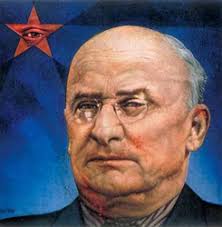
Lavrenti Beria
But the Great Soviet Encyclopedia had just gone to press with a long article singing Beria’s praises.
What to do?
The editors of the Encyclopedia wrote an equally long article about “the Berring Straits,” which was to be pasted over the article about Beria, and sent this off to its subscribers. An unknown number of them decided it was safer to paste accordingly.
In the 1981 film, “Excalibur,” Merlin warns the newly-minted knights of the Round Table: “For it is the doom of men that they forget.”
Forgetting our past is dangerous, but so is “understanding” it incorrectly.
In Texas, state-mandated “history” textbooks omit selected events and persons from the historical record–such as Thomas Jefferson and Martin Luther King.
This can be as lethal to the truth as outright lying.

Joseph Stalin, for example, ordered that school textbooks omit all references to the major role played by Leon Trotsky, his arch-rival for power, during the Russian Revolution.
Similarly, in Texas students are required to study Confederate President Jefferson Davis’ inaugural address alongside President Lincoln’s Gettysburg Address.
Such “teaching” should be seen for what it is: A thinly-veiled attempt to legitimize the most massive case of treason in United States history.
(The Civil War started on April 12, 1861, when Confederate artillery opened fire on Fort Sumter, a United States fort in Charleston Harbor. Fort Sumter surrendered 34 hours later.
(At least 800,000 Southerners took up arms against the legally elected government of the United States.)
The late broadcast journalist, Edward R. Murrow, would have referred to this practice as “giving Jesus and Judas equal time.”
Recently, Jeb Bush has entered the “Rewriting History for Americans” contest.
On August 13, speaking at a national security forum in Davenport, Iowa, he defended the unprovoked 2003 invasion of Iraq by his brother, President George W. Bush:
“I’ll tell you though, that taking out Saddam Hussein turned out to be a pretty good deal.”
And he went on to defend the 2007 troop “surge”, calling it “a great success that made Iraq safer.
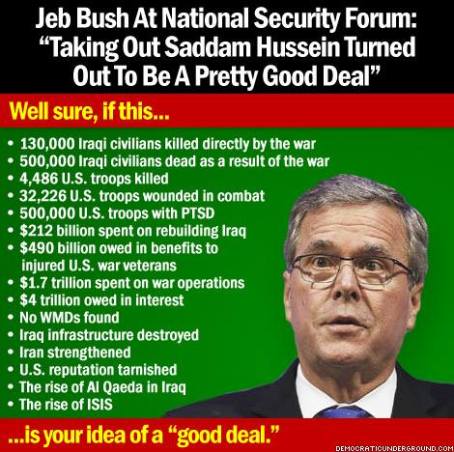
“I’ve been critical and I think people have every right to be critical of decisions that were made. In 2009, Iraq was fragile but secure. It was–its mission was accomplished in a way that there was security there.”
(Ironically, the phrase, “its mission was accomplished” proved an embarrassing reminder for the Bush family.
(A banner titled “Mission Accomplished” was displayed on the aircraft carrier USS Abraham Lincoln as George W. Bush announced–wrongly–that the war was over on May 1, 2003.)
Jeb Bush claimed that President Barack Obama had prematurely withdrawn troops from Iraq during his first term, thus allowing ISIS to “fill the void.”
One dissenter to Jeb Bush’s effort to rewrite his brother’s history is David Corn, Washington bureau chief for Mother Jones magazine.
Addressing Bush’s claims on the August 15 edition of The PBS Newshour, he said:
“I mean, I have to laugh a little bit, because I think he was setting a record for chutzpah.
“…It wasn’t until after his brother’s invasion of Iraq that you had something called al-Qaida in Iraq. And that was the group that morphed into ISIS.
“So ISIS is a direct result of the war in Iraq right there. And so he’s wrong on the history.
“But then he said what happened was that Obama and Hillary Clinton orchestrated this quick withdrawal after everything was secure. Nothing was really secure in 2009-2010.
“…But it was George W. Bush in December 2008 who created the agreement with [Iraqi] Prime Minister [Nouri] [al-]Maliki that said that U.S. troops had to be out by 2011.
“And then Obama didn’t renegotiate that. And there is a lot of question as to whether he could even have, given the political situation in Baghdad itself.
“So Bush is totally–Jeb Bush is totally rewriting this.”
Click here: Brooks and Corn on Cuba as campaign issue
This is no small matter. George W. Bush’s needless and unprovoked war on Iraq:
- Cost the lives of 4,486 American soldiers.
- Wounded another 32,226 troops.
- Resulted in the deaths of an estimated 655,000 Iraqis.
- Cost the American treasury at least $2 trillion.
- Turned up no Weapons of Mass Destruction–Bush’s pretext for going to war.
- Led to the rise of Al-Qaeda–and later ISIS–in Iraq.
- Strengthened theocratic Iran by removing its major secularist opponent.
All of which simply proves, once again, that the past is never truly dead. It simply waits to be re-interpreted by each new generation–with some interpretations winding up closer to the truth than others.
Or, in this case, each new Presidential candidate of the Bush family.
2012 PRESIDENTIAL RACE, ABC NEWS, BARACK OBAMA, BARBARA TUCHMAN, CBS NEWS, CNN, FACEBOOK, HERMAN CAIN, JEB BUSH, JOHN F. KENNEDY, NBC NEWS, NUCLEAR TEST BAN TREATY, REPUBLICANS, RICK PERRY, Sarah Palin, SOVIET UNION, THE CHICAGO SUN-TIMES, THE CHICAGO TRIBUNE, THE GUNS OF AUGUST, THE NEW YORK TIMES, THE WASHINGTON POST, TWITTER, USA TODAY, VIETNAM WAR
In Bureaucracy, History, Politics, Social commentary on July 13, 2015 at 2:32 am
Former Florida Governor Jeb Bush graduated Phi Beta Kappa and magna cum laude from the University of Texas, where he earned a B.A. degree in Latin American affairs.
He completed his coursework in two years and is fluent in Spanish.

Jeb Bush giving commencement address at Liberty University
So it’s interesting to contrast Bush’s educational background with a statement he made to the New Hampshire Union Leader on July 8.
Speaking about the foreign policy of President Barack Obama, Bush said:
“You don’t have to be the world’s policeman, but we have to be the world’s leader—and there’s a huge difference.
“This guy, this president and Secretary Clinton and Secretary Kerry, when someone disagrees with their nuanced approach—where it’s all kind of so sophisticated it makes no sense, you know what I’m saying?
“Big-syllable words and lots of fancy conferences and meetings—but we’re not leading, that creates chaos, it creates a more dangerous world.”
If Bush lacked a university degree, it would be reasonable to assume that his remarks were fueled by jealousy of those who did have one.
But since Bush does have a university degree, there’s another possible reason for his statement: He’s playing dumb to win votes from his largely uneducated audience among the Far Right.
In fact, appealing to the ignorant and uneducated has become a commonplace for politicians on the Right.
President John F. Kennedy speed-read several newspapers every morning. He nourished personal relationships with the press-–and not for entirely altruistic reasons.
These journalistic relationships gave Kennedy additional sources of information and perspectives on national and international issues.
But in 2012, Republican Presidential candidates celebrated their ignorance of both.
Former Godfather’s Pizza CEO Herman Cain famously said, “We need a leader, not a reader.” Thus he excused his ignorance of the reasons for President Barack Obama’s intervention in Libya.
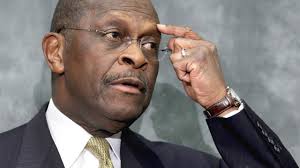
Herman Cain
Texas Governor Rick Perry showed similar pride in not knowing there are nine judges on the United States Supreme Court:
“Well, obviously, I know there are nine Supreme Court judges. I don’t know how eight came out my mouth. But the, uh, the fact is, I can tell you–I don’t have memorized all of those Supreme Court judges. And, uh, ah–
“Here’s what I do know. That when I put an individual on the Supreme Court, just like I done in Texas, ah, we got nine Supreme Court justices in Texas, ah, they will be strict constructionists….”
In short, it’s the media’s fault if they ask you a question and your answer reveals your own ignorance, stupidity or criminality.
Then there was Sarah Palin’s rewriting of history via “The Midnight Ride of Paul Revere”:
“He warned the British that they weren’t going to be taking away our arms by ringing those bells and, um, making sure as he’s riding his horse through town to send those warning shots and bells that, uh, we were going to be secure and we were going to be free.”
In fact, Revere wasn’t warning the British about anything. He was warning his fellow Americans about an impending British attack–as his celebrated catchphrase “The British are coming!” made clear.
Republicans have attacked President Obama for his Harvard education and articulate use of language. Among their taunts: “Hitler also gave good speeches.”
And they resent his having earned most of his income as a writer of two books: Dreams From My Father and The Audacity of Hope. As if being a writer is somehow subversive.
When President Kennedy was assassinated on November 22, 1963, it was said that he left three great legacies to his country:
- The Nuclear Test Ban Treaty;
- The Apollo moon landing; and
- The Vietnam war.
But there was a fourth legacy–and perhaps the most important of all: The belief that mankind could overcome its greatest challenges through rationality and perseverance.
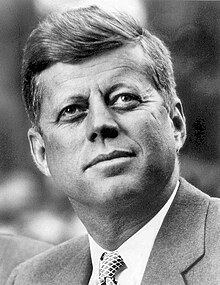
John F. Kennedy
At American University on June 10, 1963, Kennedy called upon his fellow Americans to re-examine the events and attitudes that had led to the Cold War. And he declared that the search for peace was by no means absurd:
“Our problems are man-made; therefore, they can be solved by man. And man can be as big as he wants. No problem of human destiny is beyond human beings.
“Man’s reason and spirit have often solved the seemingly unsolvable, and we believe they can do it again.”
Today, politicians from both parties cannot agree on solutions to even the most vital national problems.
On November 21, 2011, the 12 members of the “Super-Committee” of Congress, tasked with finding $1.2 trillion in cuts in government spending, threw up their hands in defeat.
During the height of the Cuban Missile Crisis, Kennedy spoke with aides about a book he had just finished: Barbara Tuchman’s The Guns of August, on the events leading to World War 1.
He said that the book’s most important revelation was how European leaders had blindly rushed into war, without thought to the possible consequences. Kennedy told his aides he did not intend to make the same mistake-–that, having read his history, he was determined to learn from it.
When knowledge and literacy are attacked as “highfalutin’” arrogance, and ignorance and incoherence are embraced as sincerity, national decline and collapse lie just around the corner.
ABC NEWS, ANCHOR BABIES, BARACK OBAMA, BERLIN AIRLIFT, CBS NEWS, CNN, DEMOCRATIC PARTY, DEPARTMENT OF HOMELAND SECURITY, EGYPT, FRANCISCO SANCHEZ, ILLEGAL ALIENS, illegal immigration, IMMIGRATION AND CUSTOMS ENFORCEMENT, ISRAEL, MEXICO, MITCH MCCONNELL, MSNBC, NBC NEWS, OPERATION NICKEL GRASS, OUTER LIMITS "ZANTI MISFITS" EPISODE, RACIAL PROFILING, REPUBLICAN PARTY, RICHARD NIXON, RICK SANTORUM, SOVIET UNION, SYRIA, THE HUFFINGTON POST, THE LOS ANGELES TIMES, THE NEW YORK TIMES, THE OUTER LIMITS, THE WASHINGTON POST, YOM KIPPUR WAR
In Bureaucracy, History, Law, Law Enforcement, Politics, Social commentary on July 10, 2015 at 12:25 pm
Republican Congressional candidates like Kentucky U.S. Senator Mitch McConnell have long demanded an end to illegal immigration.
In 2012, former U.S. Senator Rick Santorum made illegal immigration a major issue of his failed campaign for the Presidency.
The Republicans’ chief proposed weapon: Wholesale deportation of millions of illegal aliens from the United States.

But even if a future Republican President dared to take such a politically controversial step, could it actually succeed?
Let’s assume that the Federal Government could identify and arrest all or most of the estimated 11 to 20 million illegal aliens now living in the United States. Then what?
Sending them back to their native countries would prove a colossal failure.
Most of America’s illegals come from neighboring Hispanic countries. Which means that as soon as they are deported, most of them cross the Mexican border again.
Case in point: Francisco Sanchez, now accused of shooting a woman on a San Francisco pier. With a history of seven felony convictions, he’s been deported to his native Mexico five times, most recently in 2009.
Click here: Report: Most Illegal Immigrants Come From Mexico – US News
More importantly: The governments of those Central and South American countries use the United States as a dumping ground–of those citizens who might demand reforms in their political and economic institutions.
There is only one approach that could strike a meaningful blow against illegal immigration. And it might well be called “The Zanti Option.”
Viewers of the 1960s sci-fi series, The Outer Limits, will vividly recall its classic 1963 episode, “The Zanti Misfits.”
In this, soldiers at an American Army base in a California ghost town nervously await first-contact with an alien race that has landed a space ship nearby.
The soldiers are warned to steer clear of the ship, and they do. But then an escaped convict (Bruce Dern, in an early role) happens upon the scene–-and the ship.
The Zantis, enraged, emerge–and soon the soldiers at the military base find themselves under attack.

A “Zanti”
The soldiers desperately fight back–-with flamethrowers, machineguns or just rifle butts. Finally the soldiers win, wiping out the Zantis.
But now the base–-and probably America–-faces a wholesale invasion from the planet Zanti to avenge the deaths of their comrades.
So the soldiers wait anxiously for their next transmission from Zanti–-which soon arrives.
To their surprise–-and relief–-it’s a message of thanks: “We will not retaliate. We never intended to. We knew that you could not live with such aliens in your midst.
“It was always our intention that you destroy them…We are incapable of executing our own species, but you are not. You are practiced executioners. We thank you.”
A future Republican President could deal with the tsunami of illegal aliens by launching what might be called “Operation Zanti.”
Rather than deport them to nearby countries–from which they would easily sneak back into the United States–-the Federal Government could ship them off to more distant lands.
Like Afghanistan. Or Iraq. Or Syria.
It’s unlikely they will sneak back across the American border from the Middle East.
Such a policy change would:
- Close the Mexican revolving door, which keeps illegal immigration flowing; and
- Send an unmistakably blunt message to other would-be illegals: “The same fate awaits you.”
Although this might seem a far-fetched proposal, it could be easily carried out by the United States Air Force.
According to this agency’s website: “The C-5 Galaxy is one of the largest aircraft in the world and the largest airlifter in the Air Force inventory.
“The C-5 has a greater capacity than any other airlifter. It [can] carry 36 standard pallets and 81 troops simultaneously.
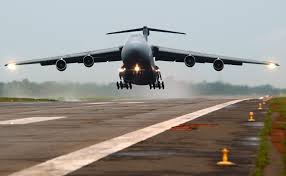
C-5 transport plane
“[It can also carry] any of the Army’s air-transportable combat equipment, including such bulky items as the 74-ton mobile scissors bridge.
“It can also carry outsize and oversize cargo over intercontinental ranges and can take off or land in relatively short distances.”
Click here: C-5 A/B/C Galaxy and C-5M Super Galaxy > U.S. Air Force > Fact Sheet Display
Instead of stuffing these planes with cargo, they could be stuffed wall-to-wall with illegal aliens.
The United States Air Force has a proud history of successfully providing America’s soldiers–-and allies–-with the supplies they need.
From June 24, 1948 to May 12, 1949, only the Berlin Airlift stood between German citizens and starvation.
The Soviet Union had blocked the railway, road, and canal access to the Berlin sectors under allied control. Their goal: Force the western powers to allow the Soviet zone to supply Berlin with food, fuel, and aid.
This would have given the Soviets control over the entire city.
Air forces from the United States, England, Canada, Australia, New Zealand and South Africa flew over 200,000 flights in one year, dropping more than 4,700 tons of necessities daily to the besiged Berliners.
The success of the Berlin Airlift raised American prestige and embarrassed the Soviets, who lifted the blockade.

The Berlin Airlift
A similar triumph came during the Yom Kippur War after Egypt and Syria attacked Israel without warning on October 6, 1973.
A Watergate-embattled President Richard Nixon ordered “Operation Nickel Grass” to deliver urgently-needed weapons and supplies to Israel.
For 32 days, the Air Force shipped 22,325 tons of ammunition, artillery, tanks and other supplies. These proved invaluable in saving Israel from destruction.
So the mass deportation of millions of illegal aliens lies within America’s technological capability. Whether any American President would be willing to give that order is another matter.
ABC NEWS, ANCHOR BABIES, BARACK OBAMA, BERLIN AIRLIFT, CBS NEWS, CNN, DEMOCRATIC PARTY, DEPARTMENT OF HOMELAND SECURITY, EGYPT, FRANCISCO SANCHEZ, ILLEGAL ALIENS, illegal immigration, IMMIGRATION AND CUSTOMS ENFORCEMENT, ISRAEL, MEXICO, MITCH MCCONNELL, MSNBC, NBC NEWS, OPERATION NICKEL GRASS, OUTER LIMITS "ZANTI MISFITS" EPISODE, RACIAL PROFILING, REPUBLICAN PARTY, RICHARD NIXON, RICK SANTORUM, SOVIET UNION, SYRIA, THE HUFFINGTON POST, THE LOS ANGELES TIMES, THE NEW YORK TIMES, THE OUTER LIMITS, THE WASHINGTON POST, YOM KIPPUR WAR
In Bureaucracy, History, Law, Law Enforcement, Politics, Social commentary on July 9, 2015 at 9:27 am
Except in times of war, no nation has ever been invaded by so many alien residents as the United States.
Throughout 2014, tens of thousands of unaccompanied Hispanic minors–all of them uninvited–illegally entered the United States through the Mexican border.
They are backed up by an estimated 11 to 20 million illegal aliens now living more or less openly throughout the country.
Just as sheer numbers of Mexicans overwhelmed the defenders of the Alamo, this similar Hispanic tidal wave has overwhelmed immigration officials.
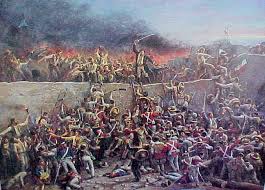
Mexicans storming the Alamo – March 6, 1836
It’s also forced the Obama administration to declare a humanitarian crisis and open three emergency shelters on military bases in California, Oklahoma and Texas.
The invasion is taking its greatest toll in cities that already have large numbers of immigrants–such as New York and Los Angeles.
Newly-arrived alien children and their relatives are flooding into schools and hospitals that are supposedly intended for American citizens. No sooner do they cross the border than they aggressively seek legal aid in converting their illegal arrival into a lifelong legal stay.

Mexicans storming the United States border – today
For years, Republicans and Democrats have clashed over the subject of illegal immigration. Each side has taken what seems to be an opposing position.
Democrats favor wholesale grants of unearned citizenship to the estimated 11 to 20 million illegal aliens who brazenly violated the law when they sneaked across American borders.
And Republicams favor beefing up security against future waves of such invaders.
But the brutal truth is that neither Democrats nor Republicans truly want to end these invasions. Nor do they want to deport the millions of illegals who have already taken up residence here.
Each party has its own reasons for this.
Democrats, primarily governed by liberal ideology, believe it’s racist for whites to demand control of their own national borders.
They ignore the blunt reality that Mexico–America’s largest source of illegal aliens–strictly enforces control of its own borders.
Mexico has a single, streamlined law that ensures that foreign visitors and immigrants are:
- in the country legally;
- have the means to sustain themselves economically;
- not destined to be burdens on society;
- of economic and social benefit to society;
- of good character and have no criminal records; and
- contribute to the general well-being of the nation.
The law also ensures that:
- immigration authorities have a record of each foreign visitor;
- foreign visitors do not violate their visa status;
- foreign visitors are banned from interfering in the country’s internal politics;
- foreign visitors who enter under false pretenses are imprisoned or deported;
- foreign visitors violating the terms of their entry are imprisoned or deported;
- those who aid in illegal immigration will be sent to prison.
But there’s another reason why Democrats are keen to grant automatic citizenship to millions of illegal aliens: They see them as a huge constituency.
They don’t care that these illegals’ defiance of American immigration laws:
- Floods the United States with millions of poor non-citizens who don’t speak English.
- Overwhelms the public school system with children–who also don’t speak English–who require bilingual education.
- Overwhelms the public healthcare system–especially emergency rooms–with poor illegal aliens. As a result, urgently-needed medical care is often denied toAmerican citizens.
Click here: Cost of Unlawful Immigrants to the U.S. Taxpayers
But Republicans are equally guilty of refusing to take a hard stand against deporting those whose presence is a blatant affront to America’s immigration laws.
There are two reasons for this:
- Like Democrats, Republicans want to recruit them as knee-jerk voters.
- Republicans want them as low-skilled, low-wage fodder for their major campaign contributors–such as corporate-farms and retail outlets like Wal-Mart.
Unlike Democrats, however, Republicans like to feign outrage at the presence of so many illegal aliens within their midst.
It’s the Republican base that’s demanding an end to illegal immigration.
Those masses of alienated and angry whites who find themselves living in a nation that’s increasingly alien from themselves.
A nation where “Press One for English” is now the norm when contacting government agencies. A nation where illegal aliens can obtain free medical care that’s denied to native-born citizens.

American citizens protesting illegal immigration
It was enraged citizens like this who, on June 10, 2014, cost Virginia Congressman Eric Cantor his bid for re-election. Cantor’s 14-year political career crashed on the fury of Tea Party opposition to illegal immigration.
Still, the question remains: What should be done about the tens of thousands of illegals now swarming into the United States?
Democrats hasten to defend President Barack Obama’s refusal to deport en masse these violators. They claim he is the victim of unpredictable circumstances.
But they don’t offer any solution that involves wholesale deportations of such invaders. It’s as if they believe this onrushing tidal wave will somehow recede on its own momentum.
Meanwhile, Republicans essentially take the position of Mitt Romney, their failed 2012 Presidential candidate: Self-deportation.
This way, the party doesn’t have to actually come out in favor of forcibly returning unwanted foreigners to their respective countries.
But there is a way the United States could deal with this unceasing tsunami of foreign invasions. It might be called “The Zanti Misfits” solution.
9/11 ATTACKS, ABC NEWS, ADOLF HITLER, AFGHANISTAN, AL QAEDA, BARCK OBAMA, BASHAR AL-ASSAD, CARL VON CLAUSEWITZ, CARLOS THE JACKAL, CBS NEWS, CHEMICAL WEAPONS, CHINA, CNN, FACEBOOK, HARRY TRUMAN, IRAN, ISLAM, ISRAEL, MUSLIMS, NAZI GERMANY, NBC NEWS, OSAMA BIN LADEN, RUSSIA, SOVIET UNION, SYRIA, TERRORISM, THE LOS ANGELES TIMES, THE NEW YORK TIMES, THE WASHINGTON POST, TWITTER, VLADIMIR PUTIN, WORLD WAR 1
In Bureaucracy, History, Military, Politics, Social commentary on June 15, 2015 at 12:10 am
On April 16, the Syrian Observatory for Human Rights released some encouraging news for potential victims of Islamic terrorism–and those fighting it.
More than 310,000 people have been killed in Syria’s uprising-turned-civil war.
Put another way: More than 310,000 potential or actual Islamic terrorists will never again pose a threat to the United States or Western Europe.
The Syrian conflict began on March 15, 2011, triggered by protests demanding political reforms and the ouster of dictator Bashar al-Assad.
According to the Observatory, which is based in Britain:
- The total number of dead is now at 310,000.
- More than 37,000 rebels have been killed and over 46,000 from pro-Assad forces.
- At least 682 Hizbollah fighters.
- The true toll on both sides was likely much higher–by perhaps more than 60,000.
And who does the Syrian Observatory for Human Rights blame for this Islamic self-slaughter? Why, the West, of course.
According to its website:
“The silence of the International community for the war crimes and crimes against humanity committed in Syria encourages the criminals to kill more and more Syrian people because they have not found anyone that deter them from continuing their crimes that cause to wound more than 1500000 people; some of them with permanent disabilities, make hundreds of thousands children without parents, displace more than half of Syrian people and destroy infrastructure, private and public properties.”
310,000 people killed since the beginning of the Syrian Revolution | Syrian Observatory For Human Rights
Got that? “They have not found anyone that deter them from continuing their crimes”–as if it’s the duty of non-Muslims to bring civilized behavior to Islamics.
And why are all these murderers “continuing their crimes”? Because of an inner-religious dispute within Islam that traces back to the fourth century.
Yes, it’s Sunni Muslims, who make up a majority of Islamics, versus Shiite Muslims, who comprise a minority.
Each group considers the other takfirs–that is, “apostates.” And, in Islam, being labeled an apostate can easily get you murdered.
But, according to the Syrian Observatory, it’s the duty of the West to convince these murderers to stop slaughtering one another.
Think of it:
- In three years, 310,000 actual or potential enemies of Western Civilization have chosen to kill each other off.
- Additional thousands are certain to follow their example.
- And the United States cannot be held in any way responsible for it.
Meanwhile, Right-wing Republicans demand that the United States thrust itself into a conflict that doesn’t threaten Americans in any way.
Here are six excellent reasons why America should stay clear of the Syrian bloodbath:
1. Since 1979, Syria has been listed by the U.S. State Department as a sponsor of terrorism.
Among the terrorist groups it supports are Hizbollah and Hamas. For years, Syria provided a safehouse in Damascus to Ilich Ramírez Sánchez–-the notorious terrorist better known as Carlos the Jackal.
Ilich Ramírez Sánchez–“Carlos the Jackal”
2. There are no “good Syrians” for the United States to support–-only murderers who have long served a tyrant and other murderers who now wish to become the next tyrant.
3. The United States doesn’t know what it wants to do in Syria, other than “send a message.”
Carl von Clausewitz, the Prussian military theorist, wrote: “War is the continuation of state policy by other means.” But President Barack Obama hasn’t stated what he intends gain by attacking Syria.
Obama has said he’s “not after regime-change.” If true, that would leave Assad in power–-and free to go on killing those who resist his rule.
4. The Assad regime is backed by–-among others–-the Iranian-supported terrorist group, Hizbollah (Party of God). Its enemies include another terrorist group–Al Qaeda.
Hizbollah is comprised of Shiite Muslims. A sworn enemy of Israel, it has kidnapped scores of Americans suicidal enough to visit Lebanon and truck-bombed the Marine Barracks in Beirut in 1983, killing 299 Americans.
Flag of Hezbollah
Al-Qaeda, on the other hand, is made up of Sunni Muslims. Besides plotting 9/11, It has attacked the mosques and gatherings of liberal Muslims, Shias, Sufis and other non-Sunnis.
Examples of these sectarian attacks include the Sadr City bombings, the 2004 Ashoura massacre and the April, 2007 Baghdad bombings.
Flag of Al Qaeda
When your enemies are intent on killing each other, it’s best to stand aside and let them do it.
5. China and Russia are fully supporting the Assad dictatorship–-and the brutalities it commits against its own citizens.
This reflects badly on them–-not the United States.
And any move by the United States to directly attack the Assad regime could ignite an all-out war with Russia and/or China.
What happens if American and Russian forces start trading salvos? Or if Russian President Vladimir Putin orders an attack on Israel, in return for America’s attack on Russia’s ally, Syria?
It was exactly that scenario–Great Powers going to war over conflicts between their small-state allies–-that triggered World War l.
6. While Islamic nations like Syria and Iraq wage war within their own borders, they will lack the resources to launch attacks against the United States.
When Adolf Hitler invaded the Soviet Union in 1941, then-Senator Harry Truman said: “I hope the Russians kill lots of Nazis and vice versa.”
That should be America’s view whenever its sworn enemies start killing themselves off. Americans should welcome such self-slaughters, not become entrapped in them.
9/11 ATTACKS, ABC NEWS, ADOLF HITLER, AFGHANISTAN, AL QAEDA, BARCK OBAMA, BASHAR AL-ASSAD, CARL VON CLAUSEWITZ, CARLOS THE JACKAL, CBS NEWS, CHEMICAL WEAPONS, CHINA, CNN, FACEBOOK, HARRY TRUMAN, IRAN, ISLAM, ISRAEL, MUSLIMS, NAZI GERMANY, NBC NEWS, OSAMA BIN LADEN, RUSSIA, SOVIET UNION, SYRIA, TERRORISM, THE LOS ANGELES TIMES, THE NEW YORK TIMES, THE WASHINGTON POST, TWITTER, VLADIMIR PUTIN, WORLD WAR 1
In History, Military, Politics, Social commentary on April 6, 2015 at 12:19 am
On February 7, the Syrian Observatory for Human Rights released some encouraging news for those fighting Islamic terrorism.
More than 210,000 people have been killed in Syria’s uprising-turned-civil war.
Conflict began on March 15, 2011. The trigger: Protests demanding political reforms and the ouster of dictator Bashar al-Assad.
According to the Observatory, which is based in Coventry, England:
- The estimated death toll now stands at 210,041.
- More than 35,827 rebels have been killed and over 45,385 Syrian army soldiers.
- The umber of foreign fighters killed is nearly 25,000.
- The real number of non-Syrian casualties is estimated to be 85,000 more than the documented number.
The Observatory’s director, Rami Abdelrahman, damned not the killers but those nations refusing to be sucked into this constantly escalating violence:
“It is shameful that the international community has done nothing to show that it will defend human rights. They are just looking on at this tragedy. The Syrian people dying are just statistics to them.”
If those dying in Syria are “just statistics,” then they are statistics of terrorists and potential terrorists who will never pose a threat to the United States.
Think of it:
- In four years, 210,000 actual or potential enemies of Western Civilization have chosen to slaughter each other.
- Additional thousands are certain to follow their example.
- And the United States cannot be held in any way responsible for it.
Here are seven excellent reasons why America should not send soldiers to bomb and/or invade Syria.
1. Intervening in Syria could produce unintended consequences for American forces–and make the United States a target for more Islamic terrorism.
American bombs or missiles could land on one or more sites containing stockpiles of chemical weapons. Imagine the international outrage that will result if the release of those weapons kills hundreds or thousands of Syrians.
Within the Islamic world, the United States will be seen as waging a war against Islam, and not simply another Islamic dictator.
Almost certainly, an American military strike on Syria would lead its dictator, Bashar al-Assad, to attack Israel–perhaps even with chemical weapons.
Assad could do this simply because he hates Jews–or to lure Israel into attacking Syria.
If that happened, the Islamic world–which lusts to destroy Israel more than anything else–would rally to Syria against the United States, Israel’s chief ally.
2. Since 1979, Syria has been listed by the U.S. State Department as a sponsor of terrorism.
Among the terrorist groups it supports are Hizbollah and Hamas. For years, Syria provided a safe-house in Damascus to Ilich Ramírez Sánchez–the notorious terrorist better known as Carlos the Jackal.
There are no “good Syrians” for the United States to support–only murderers who have long served a tyrant and other murderers who now wish to become the next tyrant.
3. The United States doesn’t know what it wants to do in Syria, other than “send a message.”
Carl von Clausewitz, the Prussian military theorist, wrote: “War is the continuation of state policy by other means.” But President Barack Obama hasn’t stated what he intends gain by attacking Syria.
Obama has said he’s “not after regime-change.” If true, that would leave Assad in power–and free to go on killing those who resist his rule.
4. The Assad regime is backed by–among others–the Iranian-supported terrorist group, Hezbollah (Party of God). Its enemies include another terrorist group–Al Qaeda.
Hezbollah is comprised of Shiite Muslims, who form a minority of Islamics. A sworn enemy of Israel, it has kidnapped scores of Americans suicidal enough to visit Lebanon and truck-bombed the Marine Barracks in Beirut in 1983, killing 299 Americans.
Flag of Hezbollah
Al-Qaeda, on the other hand, is made up of Sunni Muslims, who form the majority of that religion. It considers Shiite Muslims to be “takfirs”–heretics–and thus worthy of extermination.
Al Qaeda has attacked the mosques and gatherings of liberal Muslims, Shias, Sufis and other non-Sunnis. Examples of sthese ectarian attacks include the Sadr City bombings, the 2004 Ashoura massacre and the April, 2007 Baghdad bombings.
Flag of Al Qaeda
When your enemies are intent on killing each other, it’s best to stand aside and let them do it.
5. China and Russia are fully supporting the Assad dictatorship–and the brutalities it commits against its own citizens.
This reflects badly on them–not the United States.
6. The United States could find itself in a shooting war with Russia and/or China.
What happens if American and Russian warships–or armies–start exchanging fire? Or if Russian President Vladimir Putin orders an attack on Israel, in return for America’s attack on Russia’s ally, Syria?
It was exactly that scenario–Great Powers going to war over conflicts between their small-state allies–that triggered World War l.
7. While Islamic nations like Syria and Egypt wage war within their own borders, they will lack the resources to launch attacks against the United States.
When Adolf Hitler invaded the Soviet Union in 1941, then-Senator Harry Truman said: “I hope the Russians kill lots of Nazis and vice versa.”
That should be America’s view whenever its sworn enemies start killing themselves off. Americans should welcome such self-slaughters, not become entrapped in them.


(3)(1)(1).jpg&imgrefurl=http%3A%2F%2Fsilkroadsandsiamesesmiles.com%2F2011%2F01%2F26%2Froot-causes-illegal-immigration%2F&docid=undefined&tbnid=MpAe36i-e_f-BM%3A&w=576&h=421&ei=uJyeVZa6D4PwoAT3_Z2wBg&ved=0CAIQxiAwAA&iact=c)


60 MINUTES, 9/11 ATTACKS, ABC NEWS, ADOLF HITLER, AFGHANISTAN, AL QAEDA, BARACK OBAMA, BARCK OBAMA, BASHAR AL-ASSAD, CARL VON CLAUSEWITZ, CARLOS THE JACKAL, CBS NEWS, CHEMICAL WEAPONS, CHINA, CIA, CNN, DAVID BROOKS, DAVID CORN, FACEBOK, FACEBOOK, HARRY TRUMAN, IMPERIAL HUBRIS, IRAN, ISLAM, ISLAMIC STATE OF IRAQ AND THE LEVANT, ISRAEL, MARCHING TOWARD HELL, MICHAEL SCHEUER, MOTHER JONES MAGAZINE, MUSLIMS, NAZI GERMANY, NBC NEWS, OSAMA BIN LADEN, RUSSIA, SOVIET UNION, SYRIA, TERRORISM, THE CHICAGO TIMES, THE CHICAGO TRIBUNE, THE LOS ANGELES TIMES, THE NEW YORK TIMES, THE WASHINGTON POST, TWITTER, USA TODAY, VIETNAM WAR, VLADIMIR PUTIN, WORLD WAR 1
LET KILLERS BE KILLERS: PART THREE (END)
In Bureaucracy, History, Military, Politics, Social commentary on August 21, 2015 at 12:56 amFor America to avoid permanent military entanglements in the Middle East, it must learn to mind its own business.
So says Michael Scheuer, a 20-year CIA veteran who, from 1996 to 1999, headed Alec Station, the CIA’s unit assigned to track Osama bin Laden at the agency’s Counterterrorism Center.
He’s also the author of two seminal works on America’s fight against terrorism: Imperial Hubris: Why the West is Losing the War on Terror (2003) and Marching Toward Hell: America and Islam after Iraq (2008).
Scheuer has repeatedly warned: The United States must not deploy troops in Syria.
More than 310,000 people have been killed in Syria’s uprising-turned-civil war. The conflict began on March 15, 2011, triggered by protests demanding political reforms and the ouster of dictator Bashar al-Assad.
And many members of Congress are demanding that “we must do something” to stop all that killing.
Among the reasons why America should steer clear of the Syrian tar-baby:
The Assad regime is backed by–-among others–the Iranian-supported terrorist group, Hezbollah (Party of God). Its enemies include another terrorist group–Al Qaeda.
Hezbollah is comprised of Shiite Muslims. A sworn enemy of Israel, it has kidnapped scores of Americans suicidal enough to visit Lebanon and truck-bombed the Marine Barracks in Beirut in 1983, killing 299 Americans.
Flag of Hezbollah
Al-Qaeda, on the other hand, is made up of Sunni Muslims. Besides plotting 9/11, It has attacked the mosques and gatherings of liberal Muslims, Shias, Sufis and other non-Sunnis.
Examples of these sectarian attacks include the Sadr City bombings, the 2004 Ashoura massacre and the April, 2007 Baghdad bombings.
Flag of Al Qaeda
When your enemies are intent on killing each other, it’s best to stand aside and let them do it.
Intervening in Syria could produce unintended consequences for American forces–and make the United States a target for more Islamic terrorism.
An American military strike on Syrian government forces could lead the country’s dictator, Bashar al-Assad, to attack Israel–perhaps even with chemical weapons.
Assad could do this simply because he hates Jews–or to lure Israel into attacking Syria.
If that happened, the Islamic world–which lusts to destroy Israelis even more than “apostate” Muslims–would rally to Syria against the United States, Israel’s chief ally.
China and Russia are fully supporting the Assad dictatorship–-and the brutalities it commits against its own citizens.
This reflects badly on them–-not the United States.
And any move by the United States to directly attack the Assad regime could ignite an all-out war with Russia and/or China.
What happens if American and Russian forces start trading salvos? Or if Russian President Vladimir Putin orders an attack on Israel, in return for America’s attack on Russia’s ally, Syria?
It was exactly that scenario–Great Powers going to war over conflicts between their small-state allies–-that triggered World War l.
The United States cannot defeat the Islamic State of Iraq and the Levant (ISIL) through air power alone.
President Barack Obama authorized airstrikes against ISIL in September, 2014. Since then, the United States Air Force has dropped thousands of bombs on ISIL convoys.
This has not, however, destroyed ISIL. And its failure to do so has only led to demands by hawkish Republicans and Democrats for “boots on the ground.”
This was in fact predictable. Air power alone failed to secure victory over Nazi Germany during World War II and Vietnam during the Vietnam war. Nor did it “shock and awe” the Iraqis into surrendering during the 2003 Iraq war.
While Islamic nations like Syria and Iraq wage war within their own borders, they will lack the resources to launch attacks against the United States.
When Adolf Hitler invaded the Soviet Union in 1941, then-Senator Harry Truman said: “I hope the Russians kill lots of Nazis and vice versa.”
That should be America’s view whenever its sworn enemies start killing themselves off. Americans should welcome such self-slaughters, not become entrapped in them.
* * * * *
During his September 28, 2014 appearance on 60 Minutes, President Obama admitted that the mostly Sunni-Muslim Iraqi army had refused to combat the Sunni army of ISIL.
Then followed this exchange:
Steve Kroft: What happens if the Iraqis don’t fight or can’t fight?
President Obama: Well…
Steve Kroft: What’s the end game?
President Obama: I’m not going to speculate on failure at the moment. We’re just getting started. Let’s see how they do….
It was precisely such a mindset that led the United States, step by step, into the Vietnam quagmire.
As in the case of Vietnam, the United States lacks:
America rushed to disaster in Vietnam because its foreign policy elite felt it had to “do something” to fight Communism anywhere in the world.
And it is continuing to rush toward disaster in the Middle East because its foreign policy elite once again feel is must “do something.”
Share this: