Posts Tagged ‘SOVIET UNION’
ABC NEWS, ADOLF HITLER, BOOKS, BUSINESS LEADERSHIP, CBS NEWS, CNN, ENGLAND, ERICH VON MANSTEIN, ERWIN ROMMEL, FACEBOOK, FRANCE, HEINZ GUDERIAN, HOW HITLER COULD HAVE WON WORLD WAR II, JOSEPH STALIN, NAZI GERMANY, NBC NEWS, SOVIET UNION, THE CHICAGO SUN-TIMES, THE CHICAGO TRIBUNE, THE LOS ANGELES TIMES, THE NEW YORK TIMES, THE WALL STREET JOURNAL, THE WASHINGTON POST, TWITTER, USA TODAY, WORLD WAR ii
In Bureaucracy, Business, History, Military, Politics, Social commentary on March 27, 2015 at 4:19 pm
Would-be CEOs and Fuehrers, listen up: Character is destiny.
Case in point: The ultimate Fuehrer and CEO, Adolf Hitler.
Ever since he shot himself in his underground Berlin bunker on April 30, 1945, historians have fiercely debated: Was der Fuehrer a military genius or an imbecile?
With literally thousands of titles to choose, the average reader may feel overwhelmed. But if you’re looking for an understandable, overall view of Hitler’s generalship, an excellent choice would be How Hitler Could Have Won World War II by Bevin Alexander.

Among “the fatal errors that led to Nazi defeat” (as proclaimed on the book jacket) were:
- Wasting hundreds of Luftwaffe pilots, fighters and bombers in a half-hearted attempt to conquer England.
- Ignoring the pleas of generals like Erwin Rommel to conquer Syria, Iraq and Saudi Arabia–thus giving Germany control of most of the world’s oil.
- Attacking his ally, the Soviet Union, while still at war with Great Britain.
- Needlessly turning millions of Russians into enemies rather than allies by his brutal and murderous policies.
- Declaring war on the United States after the Japanese attacked Pearl Harbor. (Had he not done so, Americans would have focused all their attention on conquering Japan.)
- Refusing to negotiate a separate peace with Soviet dictator Joseph Stalin–thus granting Germany a large portion of captured Russian territory in exchange for letting Stalin remain in power.
- Insisting on a “not one step back” military “strategy” that led to the unnecessary surrounding, capture and/or deaths of hundreds of thousands of German servicemen.
As the war turned increasingly against him, Hitler became ever more rigid in his thinking.
He demanded absolute control over the smallest details of his forces. This, in turn, led to astounding and needless losses in German soldiers.
One such incident was immortalized in the 1962 movie, The Longest Day, about the Allied invasion of France known as D-Day.
On June 6, 1944, Rommel ordered the panzer tanks to drive the Allies from the Normandy beaches. But these could not be released except on direct order of theFuehrer.  As Hitler’s chief of staff, General Alfred Jodl, informed Rommel: The Fuehrer was asleep–and, no, he, Jodl, would not wake him. By the time Hitler awoke and issued the order, it was too late.
Nor could he accept responsibility for the policies that were clearly leading Germany to certain defeat. Hitler blamed his generals, accused them of cowardice, and relieved many of the best ones from command.
Among those sacked was Heinz Guderian, creator of the German panzer corps–and thus responsible for its highly effective “blitzkrieg” campaign against France in 1940.
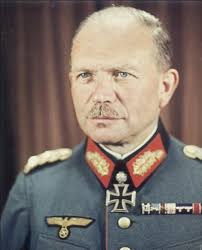
Heinz Guderian
Another was Erich von Manstein, designer of the strategy that defeated France in six weeks–something Germany couldn’t do during the four years of World War 1.
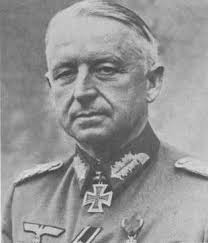
Erich von Manstein
Finally, on April 29, 1945–with the Russians only blocks from his underground bunker in Berlin–Hitler dictated his “Last Political Testament.”
Once again, he refused to accept responsibility for unleashing a war that would ultimately consume 50 million lives:
“It is untrue that I or anyone else in Germany wanted war in 1939. It was desired and instigated exclusively by those international statesmen who either were of Jewish origin or worked for Jewish interests.”
Hitler had launched the war with a lie–that Poland had attacked Germany, rather than vice versa. And he closed the war–and his life–with a final lie.
All of which brings us to Niccolo Machiavelli, the father of political science.
In his classic book, The Discourses, he wrote at length on the best ways to maintain liberty within a republic.
In Book Three, Chapter 31, Machiavelli declares: “Great Men and Powerful Republics Preserve an Equal Dignity and Courage in Prosperity and Adversity.”
It is a chapter that Adolf Hitler would have done well to read.
“…A truly great man is ever the same under all circumstances. And if his fortune varies, exalting him at one moment and oppressing him at another, he himself never varies, but always preserves a firm courage, which is so closely interwoven with his character that everyone can readily see that the fickleness of fortune has no power over him.
“The conduct of weak men is very different. Made vain and intoxicated by good fortune, they attribute their success to merits which they do not possess, and this makes them odious and insupportable to all around them.
“And when they have afterwards to meet a reverse of fortune, they quickly fall into the other extreme, and become abject and vile.
“Thence it comes that princes of this character think more of flying in adversity than of defending themselves, like men who, having made a bad use of prosperity, are wholly unprepared for any defense against reverses.”
Stay alert to signs of such character flaws among your own business colleagues–and especially your superiors. They are the warning signs of a future catastrophe.
ABC NEWS, CBS NEWS, CENSORSHIP, CHERNOBYL NUCLEAR PLANT, CLIMATE CHANGE, CNN, FACEBOOK, FLORIDA, GLOBAL WARMING, MIKHAIL GORGACHEV, NBC NEWS, RICK SCOTT, SOVIET UNION, THE CHICAGO SUN-TIMES, THE CHICAGO TRIBUNE, THE LOS ANGELES TIMES, THE NEW YORK TIMES, THE WASHINGTON POST, TWITTER, USA TODAY
In Bureaucracy, History, Politics on March 16, 2015 at 5:02 pm
Dictators on the Right and Left have different goals, but their tactics always remain the same. And chief among these tactics is the use of censorship–to glorify themselves and silence anyone who disagrees with them.
A dramatic example of censorship on the Left occurred in April, 1986,courtesy of Mikhail Gorbachev, recently-installed leader of the Soviet Union.
Elected General Secretary on March 11, 1985 by members of the ruling Communist Party, Gorbachev had quickly set out to revitalize the ailing empire he had inherited.
He introduced two new words to both the Soviet and Western vocabularies: “glasnost” (“openness”) and “perestroika” (“restructuring”).
It was “glasnost” that attracted immediate attention from Western scholars and journalists. Gorbachev seemed to be promsing an end to rigid Soviet censorship of the press–for both Soviets and foreign correspondents.
The first test of this new polilcy came on April 26, 1986. An explosion blew the roof off the fourth reactor building at the Chornobyl nuclear power plant in Kiev, Ukraine. Massive quantities of radioactive particles began spewing into the air.
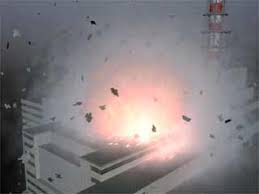
Explosion at Chernobyl nuclear power plant
And the Soviet government–supposedly committed to a policy of “openness”–reacted with silence.
No warnings went out to the Ukraine, to other parts of the Soviet Union, or to nations beyond the reach of the Red Army.
At 9 a.m. on April 28–more than 55 and a half hours after the explosion–an alarm sounded at the Forsmark Nuclear Power station in Sweden.
High amounts of radioactivity were being detected, but nobody knew from where.
The radiation spread to Denmark, Finland and Norway. Scandinavian experts quickly traced the fallout to its source: The Chernobyl nuclear plant in Ukraine.
But when Swedish authorities directly asked the Soviet government for an explanation, the reply they got was: Nothing happened.
On April 28 the Kremlin issued a statement: “An accident occurred at the Chornobyl Atomic Power Plant and one of the reactors was damaged. Measures have been undertaken to eliminate the consequences of the accident.”
As Moscow tried to keep a lid on the expanding catastrophe, Ukrainians tuned in to broadcasts over Radio Free Europe, the Voice of America or Radio Liberty.
But picking up these broadcasts was hard, because the Soviets–despite “glasnost”–continued their decades-old policy of jamming foreign radio stations.
On April 29, the Kremlin finally admitted that an “accident” at Chernobyl had killed two people, but “the situation has now been stabilized” and was under control.
American spy satelliltes, however, relayed pictures of fires still burning out of control at Chernobyl while Soviet aircraft circled the plant dumping chemicals to stop the blaze.
Meanwhile, Soviet TV “news” commentators parroted the line that there was nothing to worry about.
On April 30, the “news” led with a story about spring flowers in Ukraine and preparations for the annual May Day celebration in Moscow.
But the truth finally caught up with the Soviets.
By May 1986, about a month later, all those living within a 19 mile of the plant (about 116,000 people) had been relocated. According to reports from Soviet scientists, 10,800 square miles were contaminated.
Roughly 830,000 people lived in this area. Some reports project 30,000 to 60,000 excess cancer deaths, with predicted excess cases of thyroid cancer ranging between 18,000 and 66,000 in Belarus alone, depending on the risk-projection model.
Right-wingers also embrace censorship when it suits their aims. Such as in Florida–where coastal islands face the treat of being swallowed by the ocean and daily floods create nightmares for highway travelers.
But Rick Scott–its Republican Governor and a 2916 Presidential hopeful–doesn’t believe in “climate change’ or “global warming.” Asked by a reporter for his views on the subject, he fobbed off the question with, “Well, I’m not a scientist.”
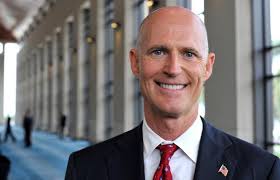
Smiling through the coming apocalypse: Rick Scott
Accordingly, he has ordered members of the Florida Department of Environmental Protection (DEP) to stop using those terms “global warming” and “climate change” in official correspondence.
DEP has a $1.4 billion budget and 3,200 employees, but is forbidden to speak openly about perhaps the foremost danger now facing Floridians.
According to the Florida Center for Investigative Reporting (FCIR) the policy is “unwritten” and was “distributed verbally statewide.”
Just as the Nazis passed down many of their orders verbally, to ensure deniability, so has Scott.
Accordingly, John Tupps, Scott’s spokesman, assured The Washington Post: “There is no policy in existence. … Allegations and claims made in the [Florida investigative article] are not true. This policy, it doesn’t exist.”
But FCIR has no reservations about exposing the issue that threatens the very existence of the state.
“The irony is clearly apparent,” said Tristam Korten, one of FCIR’s writers. “Florida is a peninsula with 1,200 miles of coastline, and when it comes to climate change, we’re the canary in the coalmine. And we’re relying on the state government to protect us and to plan for these changes.”

Rising sea levels threaten Miami–and the rest of Florida
Further proof of the governor’s censorship decree comes from statements of former DEP employees.
One of these, Kristina Trotta, was told during a 2014 meeting that she couldn’t employ terms such as “climate change” and “global warming.”
“We were told that we were not allowed to discuss anything that was not a true fact. The regional administrator told us that we are the governor’s agency; this is the message from the governor’s office. And that is the message we will portray.”
ABC NEWS, AL QAEDA, BARACK OBANA, BASHAR AL-ASSAD, CBS NEWS, CNN, EGYPT, FACEBOOK, HARRY S. TRUMAN, HEZBOLLAH, IRAQ, ISLAM, ISLAMIC STATE OF IRAQ AND SYRIA (ISIS), NAZI GERMANY, NBC NEWS, SHIA MUSLIMS, SOVIET UNION, SUNNI MUSLIMS, SYRIA, TALIBAN, TERRORISM, THE CHICAGO SUN-TIMES, THE CHICAGO TRIBUNE, THE LOS ANGELES TIMES, THE NEW YORK TIMES, THE WASHINGTON POST, TWITTER, UNITED NATIONS, USA TODAY
In Bureaucracy, History, Military, Politics on February 18, 2015 at 2:58 am
Sometimes your worst enemies aid you in ways you could never help yourself.
From July 10 to October 31, 1940, hundreds of badly-outnumbered pilots of the British Royal Air Force (RAF) fought off relentless attacks by Germany’s feared Luftwaffe.
But Adolf Hitler wasn’t prepared to give up. He believed he could so terrorize Britons that they would demand that their government submit to German surrender demands.
From September 7, 1940 to May 21, 1941, the Luftwaffe subjected England–and especially London–to a ruthless bombing campaign that became known as The Blitz.
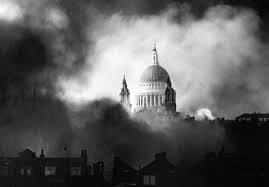
The undamaged St. Paul’s Cathredal, December, 1940
More than 100 tons of high explosives were dropped on 16 British cities. During 267 days (almost 37 weeks):
- London was attacked 71 times;
- Birmingham, Plymouth and Liverpool were attacked eight times;
- Bristol was attacked six times; Glasgow, five; Southampton four; and
- There was also at least one large raid on another eight cities.
Between 40,000 and 43,000 British civilians were killed. About 139,000 others were wounded.
Clearly, what Great Britain desperately needed most was a miracle.
Exactly that happened on June 22, 1941.
With 134 Divisions at full fighting strength and 73 more divisions for deployment behind the front, the German Wehrmacht invaded the Soviet Union.

German tank commander
Joseph Stalin, the longtime Soviet dictator, was stunned. The invasion had come less than two years after Germany had signed a non-aggression pact with the Soviet Union.
Now they were locked in a fight to the death.
People in England were also surprised–but also suddenly hopeful. Britain now had an ally whose resources might tip the balance against Hitler.
Fast-forward to 2015.
On February 18, news reports surfaced that members of the Islamic State of Iraq and Syria (ISIS) may have burned to death 45 people in the western Iraqi town of al-Baghdadi.
Al-Baghdadi lies just five miles from an air base stafffed by several hundred U.S. Marines. The victims might have included members of the security forces that clashed with ISIS for control of the town.
This latest atrocity comes only days after ISIS released a video showing the beheading of 21 Egyptian Coptic Christians in Libya.
And still earlier this month–on February 3–ISIS released a a video showing the barbaric “execution” of a captured Jordanian fighter pilot, Lt. Muath al-Kasaesbeh.
Al Kasaesbeh, locked in a steel cage like an animal, could only watch stoically as an ISIS member ignited a trail of flammable liquid leading directly to him. The pilot stood upright throughout the ordeal until the flames at last consumed him.
In response to the beheadings of the 21 Egyptians, Egypt carried out a series of airstrikes against ISIS militants in Libya.
And two days after the murder of its pilot, Jordanian fighter jets launched airstrikes against ISIS training centers, arms and ammunition depots.
“This is just the beginning and you shall know who the Jordanians are,” the armed forces said in a statement on state TV.
Today–just as England was saved by the misjudgment of Nazi Germany in attacking the Soviet Union– the United States faces just such an opportunity.
The Islamic world–which has been at war with the United States for 36 years–is now at war with itself.
In Syria, it’s Hezbollah (Party of God) vs. Al-Qaeda (The Base).
United Nations officials estimate that more than 191,000 people have died in Syria’s civil war since conflict began on March 15, 2011. The trigger: Protests demanding political reforms and the ouster of dictator Bashar al-Assad.
Hezbollah is comprised of Shiite Muslims, who form a minority of Islamics. A sworn enemy of Israel, it has kidnapped scores of Americans suicidal enough to visit Lebanon and truck-bombed the Marine Barracks in Beirut in 1983, killing 299 Americans.
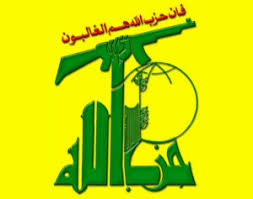
Flag of Hezbollah
Al-Qaeda, on the other hand, is made up of Sunni Muslims, who form the majority of that religion. It is intolerent of non-Sunni Muslims and has instigated violence against them. It denounces them as “takfirs”–heretics–and thus worthy of extermination.
Al-Qaeda has attacked the mosques and gatherings of liberal Muslims, Shias, Sufis and other non-Sunnis. Examples of sectarian attacks include the Sadr City bombings, the 2004 Ashoura massacre and the April, 2007 Baghdad bombings.
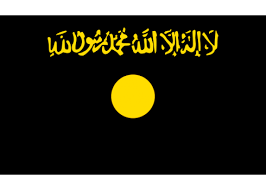
Flag of Al-Qaeda
While Islamic nations wage war within their own borders, they will lack the resources–and incentive–to launch attacks against the United States.
Every dead Hezbollah and Al-Qaeda member makes the United States that much safer.
Every dead supporter of Hezbollah or Al-Qaeda makes the United States that much safer.
Every dead ISIS member makes the United States that much safer.
And every ISIS victim stirs up greater hate against ISIS.
No American could instill such hatred against Al-Qaeda or Hezbollah or ISIS. This is entirely a war of religious and sectarian hatred. A war where each fighter is convinced that “Allah is on my side.”
These conflicts could easily become the Islamic equivalent of “the Hundred Years’ War” that raged from 1337 to 1453 between England and France.
When Adolf Hitler invaded the Soviet Union in 1941, then-Senator Harry Truman said: “I hope the Russians kill lots of Nazis and vice versa.”
As Congress and President Obama move ever closer to committing American forces to yet another Middle East conflict, it’s well to remember Truman’s words.
That should be America’s view whenever its sworn enemies start killing off each other. Americans should welcome such self-slaughters, not become entrapped in them.
ABC NEWS, ADOLF HITLER, ANCIENT ROME, CBS NEWS, CNN, ISLAMIC STATE OF IRAQ AND SYRIA, JORDAN, JOSEPH STALIN, KATYN FOREST MASSACRE, KGB, N.K.V.D., NAZI GERMANY, NBC NEWS, NICCOLO MACHIAVELLI, SOVIET UNION, THE CHICAGO SUN-TIMES, THE CHICAGO TRIBUNE, THE DISCOURSES, THE LOS ANGELES TIMES, THE NEW YORK TIMES, THE WASHINGTON POST, USA TODAY, WAR CRIMES, WORLD WAR ii
In History, Military, Politics on February 17, 2015 at 6:30 pm
The Islamic State of Iraq and Syria (ISIS) has been in the news a great deal lately–and for reasons most organizations try to avoid. Or at least cover up. It has been designated as a terrorist organization by
- Russia
- the United States
- Canada
- the European Union
- Australia
- Turkey
- the United Nations
- Indonesia
- the United Kingdom
- Saudi Arabia
- the United Arab Emerites
- Egypt
- India and
- Malaysia
It been condemned by such well-known human rights organizations as Amnesty International. And a major reason for this is the evidence of its brutalities that ISIS has proudly supplied. Among this evidence are its own Internet videos of
- the beheadings of soldiers, civilians, journalists, and aid workers;
- the burning of a captured Jordanian fighter pilot;
- demands for extortionate ransoms for kidnapped Japanese and American captives;
- the wholesale shooting of captured Iraqi soldiers; and
- the selling of captured children.
The release on February 3 of a video showing the barbaric “execution” of a captured Jordanian fighter pilot, Lt. Muath al-Kasaesbeh, underscored ISIS reputation for cruelty
Al Kasaesbeh, locked in a steel cage like an animal, could only watch stoically as an ISIS member ignited a trail of flammable liquid leading directly to him. The pilot stood upright throughout the ordeal until the flames at last consumed him.
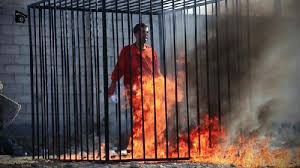
ISIS burning of captured Jordanian fighter pilot Muath al-Kasaesbeh
Terrorism experts believe that the elaborately-staged video was meant to weaken the morale of Jordan and other Sunni Arab members of the U.S.-led coalition against ISIS.
But it violated a fundamental rule of public relations: If you commit atrocities, do it secretly so you can deny it if the truth ever comes out.
That’s how the members of Soviet dictator Joseph Stalin’s dreaded secret police–the N.K.V.D.–the predecsssors to the later-named KGB–operated throughout their brutal history.
In 1939, when the Soviet Union seized the eastern half of Poland, the N.K.V.D. executed 22,000 Polish army officers in the dense Katyn forest.
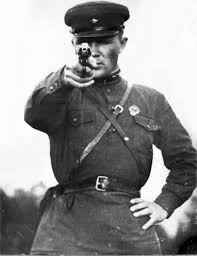
N.K.V.D. executioner
The government of Nazi Germany announced the discovery of mass graves in the forest in 1943. The Soviet Union furiously denied responsibility, claiming the victims had been executed by the Germans.
The Soviets continued to deny responsibility for the massacres until 1990, when the government finally admitted its guilt.
ISIS has turned out videos of its brutalities which film experts have declared are almost up to the quality of Hollywood spectaculars. But ISIS leaders have apparently forgotten–if they ever knew–the truth of the saying: “You can make a throne of bayonets, but you can’t sit on it.”
Niccolo Machiavelli, in his classic work, The Discourses, offered a telling example of how magnanimity can triumph over brutality.
Camillus was besieging the city of the Faliscians, and had surrounded it….A teacher charged with the education of the children of some of the noblest families of that city [to ingratiate himself] with Camillus and the Romans, led these children…into the Roman camp.
And presenting them to Camillus [the teacher] said to him, “By means of these children as hostages, you will be able to compel the city to surrender.”
Camillus not only declined the offer but had the teacher stripped and his hands tied behind his back….[Then Camillus] had a rod put into the hands of each of the children…[and] directed them to whip [the teacher] all the way back to the city.
Upon learning this fact, the citizens of Faliscia were so much touched by the humanity and integrity of Camillus, that they surrendered the place to him without any further defense.
This example shows that an act of humanity and benevolence will at all times have more influence over the minds of men than violence and ferocity. It also proves that provinces and cities which no armies…could conquer, have yielded to an act of humanity, benevolence, chastity or generosity.
What Machiavelli doesn’t say–but what history offers plenty of examples to substantiate–is this: The brutality of aggressors will be met–and sometimes overcome–with brutality by their past or intended victims.
Nowhere was this better proved than during the German invasion of the Soviet Union.
Without warning, three million German soldiers–backed up by overwhelming air and tank support–attacked their “ally” on June 22, 1941.
The Wehrmacht blitzed its way across Russia–to the gates of Moscow and as far south as Stalingrad on the Volga River. In its path it left devastated cities and at least 20 million dead Russians.
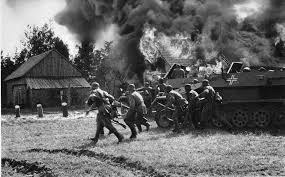
German soldiers moving into a burning Russian village
Russian women were gang-raped, then shot, or blown up with hand grenades. Tens of thousands of captured Russian soldiers were allowed to die of hunger, sickness and freezing cold behind barbed wire. Other captured POWs were brutally beaten, tortured and/or shot.
But then the tide of war turned and the Russians launched their own offensives in 1943. And they kept going–all the way to Berlin.
Russians raped tens of thousands of German women–and nailed others to barn doors. Cossacks cut off the raised hands of Germans trying to surrender. Tanks crushed retreating German soldiers and civilians unlucky enough to be in their path.
Thus do those who practice barbarism often find themselves being repaid with it–usually ten-fold.
9/11, ABC NEWS, ADOLF HITLER, AMERICANS FOR TAX REFORM, ANDERSON COOPER, ANTI-COMMUNISM, ARTHUR MILLER, BILL CLINTON, CBS NEWS, CENTER FOR SECURITY POLICY, CHINA, CHRIS MATTHEWS, CNN, DICK CHENEY, DWIGHT D. EISENHOWER, EDWARD R. MURROW, FACEBOOK, GEORGE H.W. BUSH, HARRY S. TRUMAN, HEINRICH HIMMLER, HERMAN CAIN, HERMAN GORING, HILLARY CLINTON, HUMA ABEDIN, JEWS, JIMMY CARTER, JOHN BIRCH SOCIETY, JOHN F. KENNEDY, JOHN STEINBECK, JOSEPH GOEBBELS, JOSEPH MCCARTHY, JOSEPH STALIN, KGB, LIZ CHENEY, LUCILLE BALL, LYNDON B. JOHNSON, MARY CHENEY, MICHELLE BACHMANN, MIKE HUCKABEE, MITT ROMNEY, MSNBC, MUSLIM BROTHERHOOD, MUSLIMS, NAZI GERMANY, NAZI PARTY, NBC NEWS, NEWT GINGRICH, PETE SEEGER, RED SCARE, REINHARD HEYDRICH, REPUBLICAN PARTY, RICHARD NIXON, RICK SANTORUM, Ronald Reagan, SAME-SEX MARRIAGE, SENATOR MIKE ENZI, SOVIET UNION, SS, THE AMERICAN CENTER FOR SECURITY POLICY, THE CHICAGO SUN-TIMES, THE CHICAGO TRIBUNE, THE HUFFINGTON POST, THE LOS ANGELES TIMES, THE NEW YORK TIMES, THE WALL STREET JOURNAL, THE WASHINGTON POST, TWITTER, USA TODAY, WYOMING
In Bureaucracy, History, Law, Politics, Social commentary on February 6, 2015 at 12:15 am
With the Soviet Union collapsed in 1991, the Republican Party went into a tailspin of dismay.
For almost 50 years, Republicans had conjured up The Red Bogeyman to scare voters into sending them to Congress and the White House.
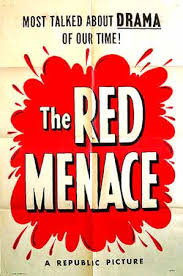
But now that the “workers’ paradise” had disappeared, Americans seemed to lose interest in the Communist Menace.
True, the People’s Republic of China remained, and its increasing economic clout would challenge the United States well into the 21st century. But Americans didn’t seem to fear the Red Chinese as they had the Red Russians.
What was the Republican Party to do to lure voters?
On September 11, 2001, the answer arrived–in two highjacked jetliners that crashed into the World Trade Center in New York and one that struck the Pentagon in Washington, D.C.
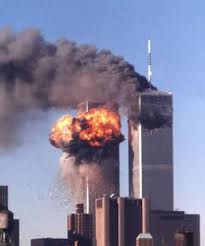
Exit The Red Bogeyman. Enter The Maniacal Muslim.
Consider:
- Mike Huckabee – “If the purpose of a church is to push forward the gospel of Jesus Christ, and then you have a Muslim group that says that Jesus Christ and all the people that follow him are a bunch of infidels who should be essentially obliterated, I have a hard time understanding that.”
- Herman Cain – ”I would not” appoint a Muslim in his administration.
- Newt Gingrich – “I am convinced that if we do not decisively win the struggle over the nature of America, by the time they [his grandchildren] are my age they will be in a secular atheist country, potentially one dominated by radical Islamists. …”
- Rick Santorum – On supporting the racial profiling of Muslims: “Obviously, Muslims would be someone you look at, absolutely.”
- Mitt Romney – “Based on the numbers of American Muslims in our population, I cannot see that a Cabinet position [for a Muslim] would be justified.”
And on July 13, Rep. Michelle Bachmann (R-Minn.) sent letters to the Inspectors General of the Departments of
- Defense;
- State;
- Justice; and
- Homeland Security.
“The purpose of these letters,” wrote Bachmann, was to “request a multi-department investigation into potential Muslim Brotherhood infiltration into the United States Government.”

Michelle Bachmann
Bachmann further asserted in her letter to the State Department that Huma Abedin, deputy chief of staff to Secretary of State Hillary Clinton, had ties to the Muslim Brotherhood.
And the evidence for this?
The Center for Security Policy’s claim that Abedin’s father (who died when she was a teenager), mother and brother are “connected” to the organization.
And what is the Center of Security Policy? A private organization subsidized by donors to neo-conservative causes.
In a separate letter, Bachmann demanded to know how Abedin received her security clearance.
Among the co-signers of Bachmann’s letter to the Inspectors General were:
- Rep. Trent Franks of Arizona, who has said abortion has done more harm to blacks than slavery;
- Rep. Lynn Westmoreland of Georgia, who called presidential candidate Barack Obama and his wife, Michelle, ”uppity”; and
- Rep. Louie Gohmert of Texas, who claims that terrorist organizations send pregnant women into the U.S. so that their children will be American citizens–who can enter and leave the country at will as they are trained to be terrorists abroad.
When pressed for their evidence of “a vast Muslim conspiracy,” right-wing accusers usually refuse to provide any.
An example of this occurred during an August 13, 2010 interview between Gohmert and CNN’s Anderson Cooper:
COOPER: What research? Can you tell us about the research?
GOHMERT: You are attacking the messenger, Anderson, you are better than this. You used to be good. You used to find that there was a problem and you would go after it.
COOPER: Sir, I am asking you for evidence of something that you said on the floor of the House.
GOHMERT: I did, and you listen, this is a problem. If you would spend as much time looking into the problem as you would have been trying to come after me and belittle me this week –
COOPER: Sir, do you want to offer any evidence? I’m giving you an opportunity to say what research and evidence you have. You’ve offered none, other than yelling.
Nor did Gohmert offer any evidence that evening.
Of course, the ultimate Republican Muslim slander is that President Barack Obama–a longtime Christian–is himself a Muslim.
No doubt Republicans feel totally safe in making these attacks, since Muslims comprise only 1% of the American population.
This has long been a hallmark of right-wing attacks–to go after a minority that cannot effectively defend itself.
Thus, Adolf Hitler attacked the Jews of Germany.
And Republicans have successively attacked blacks, Hispanics and gays–until each group became politically influential enough to defeat Republican candidates.
Today, most right-wing politicians at least grudgingly court all of these groups.
When Muslims become a significant political force in their own right, the Right will court them, too. And then move on to yet another helpless scapegoat to blame for America’s troubles.
9/11, ABC NEWS, ADOLF HITLER, AMERICANS FOR TAX REFORM, ANDERSON COOPER, ANTI-COMMUNISM, ARTHUR MILLER, BILL CLINTON, CBS NEWS, CENTER FOR SECURITY POLICY, CHINA, CHRIS MATTHEWS, CNN, DICK CHENEY, DWIGHT D. EISENHOWER, EDWARD R. MURROW, FACEBOOK, GEORGE H.W. BUSH, HARRY S. TRUMAN, HEINRICH HIMMLER, HERMAN CAIN, HERMAN GORING, HILLARY CLINTON, HUMA ABEDIN, JEWS, JIMMY CARTER, JOHN BIRCH SOCIETY, JOHN F. KENNEDY, JOHN STEINBECK, JOSEPH GOEBBELS, JOSEPH MCCARTHY, JOSEPH STALIN, KGB, LIZ CHENEY, LUCILLE BALL, LYNDON B. JOHNSON, MARY CHENEY, MICHELLE BACHMANN, MIKE HUCKABEE, MITT ROMNEY, MSNBC, MUSLIM BROTHERHOOD, MUSLIMS, NAZI GERMANY, NAZI PARTY, NBC NEWS, NEWT GINGRICH, PETE SEEGER, RED SCARE, REINHARD HEYDRICH, REPUBLICAN PARTY, RICHARD NIXON, RICK SANTORUM, Ronald Reagan, SAME-SEX MARRIAGE, SENATOR MIKE ENZI, SOVIET UNION, SS, THE AMERICAN CENTER FOR SECURITY POLICY, THE CHICAGO SUN-TIMES, THE CHICAGO TRIBUNE, THE HUFFINGTON POST, THE LOS ANGELES TIMES, THE NEW YORK TIMES, THE WALL STREET JOURNAL, THE WASHINGTON POST, TWITTER, USA TODAY, WYOMING
In Bureaucracy, History, Law, Politics, Social commentary on February 5, 2015 at 12:08 am
“Judge not, that you not be judged. For with what judgment you judged, you shall be judged, and with what measure you mete, it shall be measured to you again.”
So warns the Gospel of St. Matthew, 7:1-2. It’s advice that Right-wingers Joseph McCarthy, Robert Welch and George H.W. Bush would have done well to heed.
Joseph McCarthy, Wisconsin’s gift to the United States Senate, became infamous as the demagogue whose Red-baiting accusations terrified America from 1950 to 1954.
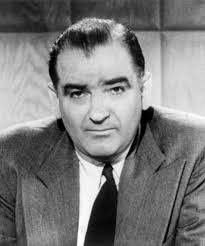
Joseph McCarthy
Elected to the Senate in 1946, he rose to national prominence on February 9, 1950, after giving a fiery speech in Wheeling, West Virginia:
“The State Department is infested with communists. I have here in my hand a list of 205—a list of names that were made known to the Secretary of State as being members of the Communist Party and who nevertheless are still working and shaping policy in the State Department.”
Americans were already growing increasingly fearful of Communism:
- Soviet dictator Joseph Stalin had not withdrawn the Red Army from the countries it had occupied in Eastern Europe during World War II.
- In 1948, the Soviet Union developed–and demonstrated–its own atomic bomb, an achievement U.S. scientists had claimed would not happen for at least a decade.
- In 1949, China fell to the triumphant armies of Mao Tse Tung.
But anti-communism as a lever to political advancement sharply accelerated following McCarthy’s speech. Republicans–resentful at being denied the White House since 1932–seized upon anti-communism as their passport to power.
No American–no matter how prominent–was safe from the accusation of being a Communist or a Communist sympathizer–”a Comsymp” or “fellow traveler” in the style of the era.
Among those accused:
- Secretary of State George C. Marshall, who had overseen America’s strategy for defeating Nazi Germany and Imperial Japan
- President Harry S. Truman
- Playwright Lillian Hellman and Arthur Miller
- Actors Charlie Chaplin, Zero Mostel, Lloyd Bridges, Howard Da Silva, Edward G. Robinson and John Garfield
- Composers Arron Copland and Elmer Bernstein
- Physicist J. Robert Oppenheimer, who presided over the creation of America’s atomic bomb
- Actressses Lee Grant, Delores del Rio, Ruth Gordon and Lucille Ball
- Journalists Edward R. Murrow and William L. Shirer, who had chronicled the rise of Nazi Germany
- Folksinger Pete Seeger
- Writers Irwin Shaw, Howard Fast, John Steinbeck and Dashiell Hammett
Even “untouchable” Republicans became targets for such slander.
The most prominent of these was President Dwight D. Eisenhower–labeled ”a conscious, dedicated agent of the Communist Conspiracy” by Robert Welch, who founded the John Birth Society in 1958.

Robert Welch
Welch, an independently wealthy businessman, used his money to publicize the Society and its views. Welch saw even hardline anti-Communists like Vice President Richard Nixon and actor Ronald Reagan as dangerously liberal.
Meanwhile, McCarthy finally overstepped himself. In 1953, he attacked the leadership of the United States Army as “a hotbed of traitors” and convened an inquiry through the Senate Permanent Subcommittee on Investigations.
But the hearings backfired, exposing McCarthy as the bullying demagogue he was. A Senate committee voted to condemn his behavior, charging that he had “acted contrary to senatorial ethics and tended to bring the Senate into dishonor and disrepute.”
Although McCarthy remained in the Senate another two and a half years, his political influence had ended.
Journalists who had raced to cover his latest slander now avoided him. So did his Republican colleagues–many of whom had once sought his help at election time.
Yet even without McCarthy, Republicans rode the issue of anti-Communism to victory from 1948 to 1960.
After holding the White House for eight years under Eisenhower, they lost it in 1960 to John F. Kennedy and again in 1964 to Lyndon Johnson.
By 1968, with the nation mired in Vietnam and convulsed by antiwar demonstrations, Americans turned once more to those who preyed upon their fears and hates. They elected Richard Nison–and re-elected him in 1972.
After Jimmy Carter won the Presidency in 1976 and lost it in 1980, Republicans held the White House until 1992. Throughout that time, they continued to accuse their opponents of being devious agents–or at least unwitting pawns–of “the Communist conspiracy.”
Even as late as 1992, President George H.W. Bush and the Republican establishment charged that Arkansas Governor Bill Clinton might be a KGB plant.
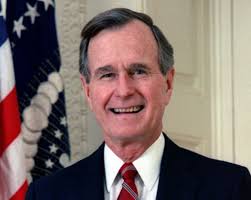
George H.W. Bush
Their evidence: During his tenure at Oxford University in 1969-70, Clinton had briefly visited Moscow.
Thus, the Republican charged that he might have been “programmed” as a real-life “Manchrian candidate” to become, first, Governor of Arkansas–one of America’s poorest states–and then President.
What made this charge all the more absurd: The Soviet Union had officially dissolved in December, 1991.
Although Republicans continued to hurl “Communist!” and “treason!” at their opponents, these charges no longer carried the weight they had while the Soviet Union existed.
Right-wingers had to settle for attacking their opponents as “liberals” and “soft on crime.”
Then, on September 11, 2001, Republicans–and their right-wing supporters–at last found a suitable replacement for the Red Menace.
9/11, ABC NEWS, ADOLF HITLER, AMERICANS FOR TAX REFORM, ANDERSON COOPER, ANTI-COMMUNISM, ARTHUR MILLER, BILL CLINTON, CBS NEWS, CENTER FOR SECURITY POLICY, CHINA, CHRIS MATTHEWS, CNN, DICK CHENEY, DWIGHT D. EISENHOWER, EDWARD R. MURROW, FACEBOOK, GEORGE H.W. BUSH, HARRY S. TRUMAN, HEINRICH HIMMLER, HERMAN CAIN, HERMAN GORING, HILLARY CLINTON, HUMA ABEDIN, JEWS, JIMMY CARTER, JOHN BIRCH SOCIETY, JOHN F. KENNEDY, JOHN STEINBECK, JOSEPH GOEBBELS, JOSEPH MCCARTHY, JOSEPH STALIN, KGB, LIZ CHENEY, LUCILLE BALL, LYNDON B. JOHNSON, MARY CHENEY, MICHELLE BACHMANN, MIKE HUCKABEE, MITT ROMNEY, MSNBC, MUSLIM BROTHERHOOD, MUSLIMS, NAZI GERMANY, NAZI PARTY, NBC NEWS, NEWT GINGRICH, PETE SEEGER, RED SCARE, REINHARD HEYDRICH, REPUBLICAN PARTY, RICHARD NIXON, RICK SANTORUM, Ronald Reagan, SAME-SEX MARRIAGE, SENATOR MIKE ENZI, SOVIET UNION, SS, THE AMERICAN CENTER FOR SECURITY POLICY, THE CHICAGO SUN-TIMES, THE CHICAGO TRIBUNE, THE HUFFINGTON POST, THE LOS ANGELES TIMES, THE NEW YORK TIMES, THE WALL STREET JOURNAL, THE WASHINGTON POST, TWITTER, USA TODAY, WYOMING
In Bureaucracy, History, Law, Politics, Social commentary on February 4, 2015 at 12:02 am
All revolutions,” said Ernst Rohem, leader of Adolf Hitler’s brown-shirted thugs, the S.A., “devour their own children.”
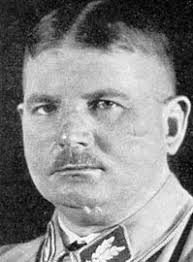
Ernst Rohem
Fittingly, he said this as he sat inside a prison cell awaiting his own execution.
On June 30, 1934, Hitler had ordered a massive purge of his private army, the S.A., or Stormtroopers. The purge was carried out by Hitler’s elite army-within-an-army, the Schutzstaffel, or Protective Squads, better known as the SS.
The S.A. Brownshirts had been instrumental in securing Hitler’s rise to Chancellor of Germany on January 30, 1933. They had intimidated political opponents and organized mass rallies for the Nazi Party.
But after Hitler reached the pinnacle of power, they became a liability.
Ernst Rohem, their commander, urged Hitler to disband the regular German army, theReichswehr, and replace it with his own legions as the nation’s defense force.
Frightened by Rohem’s ambitions, the generals of the Reichswehr gave Hitler an ultimatum: Get rid of Rohem–or they would get rid of him.
So Rohem died in a hail of SS bullets–as did several hundred of his longtime S.A. cronies.
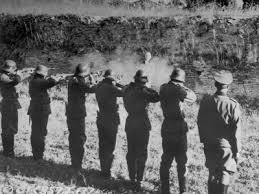
SS firing squad
Among the SS commanders supervising those executions was Reinhard Heydrich–a tall, blond-haired formal naval officer who was both a champion fencer and talented violinist.
Ultimately, he would become the personification of the Nazi ideal–”the man with the iron heart,” as Hitler eulogized at Heydrich’s funeral just eight years later.
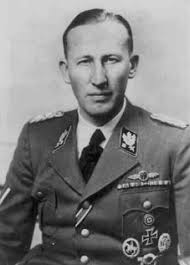
Reinhard Heydrich
Even so, Heydrich had a problem: He could never escape vicious rumors that his family tree contained a Jewish ancestor.
His paternal grandmother had married Reinhold Heydrich, and then Gustav Robert Suss. For unknown reasons, she decided to call herself Suss-Heydrich.
Since “Suss” was widely believed in Germany to indicate Jewish origin, the “stigma” of Jewish heritage attached itself to the Heydrich family.
Heydrich joined the SS in 1931 and quickly became head of its counterintelligence service. But his arrogance and overweening ambition created a great many enemies.
Only a year later, he became the target of an urgent investigation by the SS itself. The charge: That he was part-Jewish, the ultimate sin in Hitler’s “racially pure” Nazi Germany.
The investigation cleared Heydrich, but the rumor of his “tainted” origins persisted, clearly tormenting the second most powerful man in the SS. Even his superior, Heinrich Himmler, the Reichsfuhrer-SS, believed it.
When Heydrich was assassinated in 1942 by Czech assassins in Prague, Himmler attended his funeral. He paid tribute to his former subordinate at the service: ”You, Reinhard Heydrich, were a truly good SS-man.”
But he could not resist saying in private: “He was an unhappy man, completely divided against himself, as often happened with those of mixed race.”
Those who dare to harshly judge others usually find themselves assailed just as harshly.
A modern-day example is Liz Cheney, daughter of former Vice President Dick Cheney and a 2014 candidate for U.S. Senator from Wyoming.
Liz tried to position herself as far more right-wing than her opponent, Republican U.S. Senator Michael Bradley “Mike” Enzi. She found her work cut out for her: In March, 2007, Enzi was ranked by National Journal as the sixth-most conservative U.S. Senator. Among his legislative priorities:
- Supporting partial privatization of Social Security
- Consistently voting against expanding Medicare.
- Voting against enrolling more children or the poor in public healthcare.

Mike Enzi
And Liz had a problem Enzi did not: Her sister, Mary, was not only a lesbian but legally married to another woman: Heather Poe. This led many Wyoming voters to wonder if Liz Cheney was far-Right enough to merit their support.
So Liz went all-out to assure them that even though her sister led a degenerate lifestyle, she, Liz, stood foursquare against legalizing gay marriage: “I do believe it’s an issue that’s got to be left up to states. I do believe in the traditional definition of marriage.”

Liz Cheney
And, in another statement: “I am strongly pro-life and I am not pro-gay marriage.
“I believe the issue of marriage must be decided by the states, and by the people in the states, not by judges and not even by legislators, but by the people themselves.”
This stance led to a heated rift between her and Mary. “For the record, I love my sister, but she is dead wrong on the issue of marriage,” Mary Cheney wrote in a Facebook post in September, 2013.
“Freedom means freedom for everyone,” she continued. “That means that all families–regardless of how they look or how they are made–all families are entitled to the same rights, privileges and protections as every other.”
Adding to the complications: Their father, Dick Cheney—often ridiculed as “Darth Vader” for his own extreme Right-wing views—endorsed same-sex marriage in 2009.
(After a brief run, Cheney, on January 6, 2014, Cheney withdrew from the race.)
But, as was true for officials in Nazi Germany, so is it true for Right-wing Republicans: It’s impossible to be too radical a Right-winger.
In the 1930s and 40s, it was politically—and personally—dangerous to be labeled “pro-Jewish” or “pro-Communist” in Hitler’s Germany.
And today it is equally dangerous—at least politically—to be labeled “pro-liberal” or “pro-gay” in the Republican Party.
ABC NEWS, AL QAEDA, BARACK OBAMA, CBS NEWS, CENTRAL AMERICA, CHAING KAI-SHEK, CHINA, CNN, COLUMBIA, COMMUNISM, CRIMEA, CUBA, CZECHOSLAVAKIA, DEMOCRATS, FACEBOOK, GUATEMALA, GUNBOAT DIPLOMACY, HARRY S. TRUMAN, HEZBOLLAH, HUNGARY, JOHN F. KENNEDY, JOSEPH MCCARTHY, LATIN AMERICA, LYNDON B. JOHNSON, MAO TSE-TUNG, MITT ROMNEY, MONROE DOCTRINE, NBC NEWS, NICARAGUA, PANAMA, POLAND, REPUBLICANS, RICHARD M. NIXON, SOCHI OLYMPICS, SOVIET UNION, SPHERES OF INFLUENCE, SYRIA, THE LOS ANGELES TIMES, THE NEW YORK TIMES, THE WASHINGTON POST, TWITTER, UKRAINE, VIETNAM, VLADIMIR PUTIN
In History, Law, Military, Politics on January 2, 2015 at 12:43 am
Ever since the collapse of the Soviet Union in 1991, the American Right has felt dejected.
Accusing Democrats of being “terrorist-lovers” just hasn’t been as profitable as accusing them of being “Communists.”
The torch had barely gone out at the much-ballyhooed Sochi Olympics, in February, 2014, when Russian President Vladimir Putin began menacing the Ukraine.
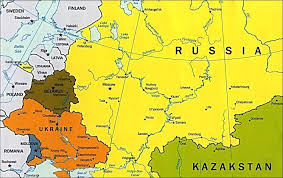
Even while the Olympics played out on television, Ukrainians had rioted in Kiev and evicted their corrupt, luxury-loving president, Victor Yanukovych.
And this, of course, didn’t sit well with his “sponsor”–Putin.
Yanukovych had rejected a pending European Union association agreement. He had chosen instead to pursue a Russian loan bailout and closer ties with Russia.
And that had sat well with Putin.
Since the breakup of the Soviet Union in 1991, Putin had yearned for a reestablishment of the same. He had called that breakup “the greatest geopolitical tragedy of the 20th century.”
So it was almost a certainty that, when his chosen puppet, Yanukovych, was sent packing, Putin would find some way to retaliate.
And since late February, he has done so, gradually moving Russian troops into Ukraine and its autonomous republic, Crimea.
By late March, it was clear that Russia had sufficient forces in both Ukraine and Crimea to wreak any amount of destruction Putin may wish to inflict.
And where there is activity by Russians, there are American Rightists eager–in Shakespeare’s words–to “cry havoc and let slip the dogs of war.”
Rightists such as Mitt Romney, the former Massachussetts governor who lost the 2012 Presidential election by a wide margin to Barack Obama.
“There’s no question but that the president’s naiveté with regards to Russia,” said Romney on March 23.
“And unfortunately, not having anticipated Russia’s intentions, the president wasn’t able to shape the kinds of events that may have been able to prevent the kinds of circumstances that you’re seeing in the Ukraine, as well as the things that you’re seeing in Syria.”
All of which overlooks a number of brutal political truths.
First, all great powers have spheres of interest–and jealously guard them.
For the United States, it’s Latin and Central America, as established by the Monroe Doctrine.
And just what is the Monroe Doctrine?
It’s a statement made by President James Monroe in his 1823 annual message to Congress, which warned European powers not to interfere in the affairs of the Western Hemisphere.
It has no other legitimacy than the willingness of the United States to use armed force to back it up. When the United States no longer has the will or resources to enforce the Doctrine, it will cease to have meaning.
For the Soviet Union, its spheres of influence include the Ukraine. Long known as “the breadbasket of Russia,” in 2011, it was the world’s third-largest grain exporter.
Russia will no more give up access to that breadbasket than the United States would part with the rich farming states of the Midwest.
Second, spheres of influence often prove disastrous to those smaller countries affected.
Throughout Latin and Central America, the United States remains highly unpopular for its brutal use of “gunboat diplomacy” during the 20th century.
Among those countries invaded or controlled by America: Mexico, Cuba, Guatemala, Nicaragua, Columbia, Panama and the Dominican Republic.
The resulting anger has led many Latin and Central Americans to support Communist Cuba, even though its political oppression and economic failure are universally apparent.

Similarly, the Union of Soviet Socialist Republics (U.S.S.R.) forced many nations–such as Poland, Hungary and Czechoslavakia–to submit to the will of Moscow.
The alternative? The threat of Soviet invasion–as occurred in Hungary in 1956 and Czechoslavakia in 1968.
Third, even “great powers” are not all-powerful.
In 1949, after a long civil war, the forces of Mao Tse-tung defeated the Nationalist armies of Chaing Kai-Shek, who withdrew to Taiwan.
China had never been a territory of the United States. Nor could the United States have prevented Mao from defeating the corrupt, ineptly-led Nationalist forces.
Even so, Republican Senators and Representatives such as Richard Nixon and Joseph McCarthy eagerly blamed President Harry S. Truman and the Democrats for “losing China.”
The fear of being accused of “losing” another country led Presidents John F. Kennedy, Lyndon B. Johnson and Richard M. Nixon to tragically commit the United States to “roll back” Communism in Cuba and Vietnam.
Now Republicans–who claim the United States can’t afford to provide healthcare for its poorest citizens–want to turn the national budget over to the Pentagon.
They want the United States to “intervene” in Syria–even though this civil war pits Al Qaeda and Hezbollah, two of America’s greatest enemies, against each other.
They want the United States to “intervene” in Ukraine–even though this would mean going to war with the only nuclear power capable of turning America into an atomic graveyard.
Before plunging into conflicts that don’t concern us and where there is absolutely nothing to “win,” Americans would do well to remember the above-stated lessons of history.
And to learn from them.
ABC NEWS, CBS NEWS, CNN, FACEBOOK, JOSEPH STALIN, KIM JONG-UN, LAVRENTI BERIA, NBC NEWS, NICCOLO MACHIAVELLI, NIKITA KHRUSHCHEV, NORTH KOREA, ROBERT PAYNE, SOVIET UNION, THE CHICAGO SUN-TIMES, THE CHICAGO TRIBUNE, THE NEW YORK TIMES, THE PRINCE, THE RISE AND FALL OF STALIN, THE WASHINGTON POST, TWITTER, USA TODAY, WARFARIN
In Bureaucracy, Entertainment, History, Military, Politics on December 30, 2014 at 12:02 am
According to an October 29 story on National Public Radio, at least 10 North Korean officials have been executed for watching South Korean soap operas.
If true, this brings to 50 the number of people murdered by North Korean dictator Kim Jong-Un for committing this “crime”.

Kim Jong-Un and his generals
Kim inherited control of the country after his father, Kim Jong-Il, died in 2011. Since then, he has ruthlessly eliminated all possible opposition.
“Kim Jong-Un is trying to establish absolute power and strengthen his regime with public punishments,” Yang Moo Jin, a professor at the University of North Korean Studies in Seoul, told Bloomberg News. “However, frequent purges can create side effects.”
Niccolo Machiavelli, the father of political science, couldn’t have said it better.
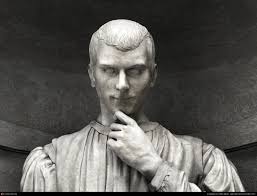
Niccolo Machiavelli
In fact, Machiavelli did say it–in Chapter Eight of The Prince, his famous work on the realities of politics, he warned:
“…In taking a state, the conqueror must arrange to commit all his cruelties at once, so as not to have to recur to them very day, and so as to be able, by not making fresh changes, to reassure people and win them over by benefiting them.
“Whoever acts otherwise, either through timidity or bad counsels, is always obliged to stand with knife in hand, and can never depend on his subjects, because they, owing to continually fresh injuries, are unable to depend upon him.”
Another Communist dictator–Joseph Stalin–may have paid the price for violating this counsel.
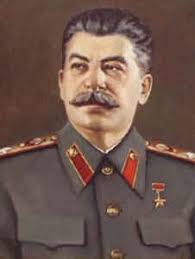
Joseph Stalin
Throughout his 30-year reign over the Soviet Union, Stalin was responsible for the deaths of at least 20 million men, women and children.
These deaths resulted from executions, a man-made famine through the forced collectivation of harvests, deportations and imprisonment in Gulag camps.
Robert Payne, the British historian, vividly portrayed the crimes of this murderous tyrant in his brilliant 1965 biography, The Rise and Fall of Stalin.
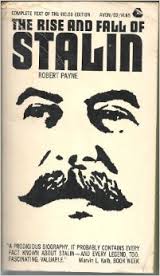
According to Payne, Stalin–who died on March 5, 1953–was planning yet another purge during the last weeks of his life. This would be “a holocaust greater than any he had planned before.
“The chistka [purge] had become a ritual like a ceremonial cleansing of a temple performed every three or four years according to ancient laws.
“The first chistka had taken place during the early months of the [Russian] revolution. It had proved so salutory that periodical bloodbaths were incorporated in the unwritten laws of the state.
“This time there would be a chistka to end all chistkas, a purging of the entire body of the state from top to bottom. No one, not even the highest officials, was to be spared.
“…The men who had been his closest companions and most willing executioners, would be the first to fall, followed by the leaders of the second rank, then of the third and fourth…until there was no one in the entire country who had not felt the touch of the healing knife.”
Then, on January 13, 1953, the Soviet Union’s two government-controlled newspapers–Pravda (“Truth”) and Izvestiya (“News”)–announced that a sinister plot by Jewish doctors had been uncovered.
Its alleged object: No less than the murder of Joseph Stalin himself.
Nine doctors, said Pravda, had so far been arrested.
Stalin’s closest associates–veteran observers of past purges–quickly realized that another was about to descend. And there could be no doubt who its chief victims would be.
Yet Stalin did nothing to calm their fears. He often summoned his “comrades” to the Kremlin for late-night drinking bouts, where he freely humiliated them.
“What would you do without Stalin?” he asked one night. “You’d be like blind kittens.”
Then, on March 4, 1953, Moscow Radio announced “the misfortune which has overtaken our Party and the people–the serious illness of Comrade J.V. Stalin.
“During the night of March 1-2, while in his Moscow apartment, Comrade Stalin suffered a cerebral hemorrhage affecting vital areas of the brain.”
Death came to Stalin on March 5.
Officially, the cause was ruled a cerebral hemorrhage. Stalin was 73 and in poor health from a lifetime of smoking and little exercise.
So it’s possible he died of natural causes. But it’s equally possible that he died of unnatural ones.
In the 2004 book, Stalin’s Last Crime, Vladimir P. Naumov, a Russian historian, and Jonathan Brent, a Yale University Soviet scholar, assert that he might have been poisoned.
If this happened, the occasion was during a final dinner with four members of the Politburo:
- Lavrenti P. Beria, chief of the secret police, then known as the MGB (Ministry for State Security);
- Georgi M. Malenkov, Stalin’s immediate successor;
- Nikita S. Khrushchev, who eventually rose to the top spot;
- and Nikolai Bulganin, then Minister of Defense.
The authors believe that, if Stalin was poisoned, the most likely suspect was Beria. And the method: Slipping warfarin, a tasteless and colorless blood thinner also used as a rat killer, into his glass of wine.
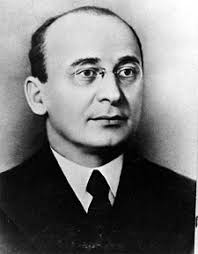
Lavrenti P. Peria
In Khrushchev’s 1970 memoirs, he quotes Beria as telling Vyacheslav M. Molotov, another Polituro member, two months after Stalin’s death: “I did him in! I saved all of you.”
Kim Jong-Un had better hope that Communist history doesn’t repeat itself.
ABC NEWS, ALEXANDRA, ASTROLOGY, CBS NEWS, CHICAGO SUN-TIMES, CHICAGO TRIBUNE, CNN, FACEBOOK, GERALD FORD, GRIGORI RASPUTIN, IRAQ WAR, JIMMY CARTER, JOAN QUIGLEY, JODIE FOSTER, JOHN HINCKLEY, MERV GRIFFIN, MIKHAIL GORBACHEV, NANCY REAGAN, NBC NEWS, NICHOLAS 11, Ronald Reagan, SOVIET UNION, STAR WARS, THE LOS ANGELES TIMES, THE NEW YORK TIMES, THE WALL STREET JOURNAL, THE WASHINGTON POST, TWITTER, USA TODAY
In Bureaucracy, History, Politics, Social commentary on December 2, 2014 at 12:00 am
The Presidency of Ronald W. Reagan consumed eight years of American history: 1981 – 1989. But its greed-fueled legacies continue to haunt us.
On October 21, the woman responsible for one of those legacies–government by astrologer–passed away at age 87.
Yes, Joan Quigley is dead.
For those unfamiliar with that name: Quigley was the court astrologer to Ronald and Nancy Reagan.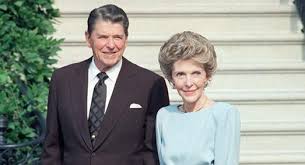
Ronald and Nancy Reagan in the White House
Nancy Reagan met Quigley on “The Merv Griffin Show” in 1973.
Quigley gave Nancy–and through her, Reagan himself–astrological advice during the latter’s campaign for the Republican Presidential nomination in 1976.
That effort failed to unseat President Gerald Ford–who was defeated that November by Jimmy Carter.
Four years later, in 1980, Reagan defeated Carter to become the 40th President of the United States.
On March 30, 1981, a mentally-disturbed loner named John W. Hinckley shot and critically wounded Reagan. Fixiated on actress Jodie Foster, he believed that by shooting the President he could gain her affection.
For Nancy, the assassination attempt proved a watershed.
Shortly after the shooting, Merv Griffin told her that Quigley had told him: If Nancy had called her on that fateful day, she–Quigley–could have warned that the President’s astrological charts had foretold a bad day.
From that moment on, Nancy made sure to regularly consult Quigley on virtually everything that she and the President intended to do.
When Reagan learned of Nancy’s consultations with Quigley, he warned her: Be careful, because it might look odd if it came out.
Click here: The President’s Astrologers – Joan Quigley, Nancy Reagan, Politicians and Their Families, Ronald Reagan : People.c
Many–if not most–of these calls from the White House to Quigley’s office in San Francisco were made on non-secure phone lines.

Joan Quigley
This meant that foreign powers–most notably the Soviet Union and Communist China–could have been privy to Reagan’s most secret intentions.
Nancy passed on Quigley’s suggestions as commands to Donald Regan, chief of the White House staff.
As a result, Regan kept a color-coded calendar on his desk to remember when the astrological signs were good for the President to speak, travel, or negotiate with foreign leaders.
Green ink highlighted “good” days; red ink “bad” days; yellow ink “iffy” days.
A list provided by Quigley to Nancy made the following recommendations–which Nancy, in turn, made into commands:
Late Dec thru March bad
Jan 16 – 23 very bad
Jan 20 nothing outside WH–possible attempt
Feb 20 – 26 be careful
March 7 – 14 bad period
March 10 – 14 no outside activity!
March 16 very bad
March 21 no
March 27 no
March 12 – 19 no trips exposure
March 19 – 25 no public exposure
April 3 careful
April 11 careful
April 17 careful
April 21 – 28 stay home
Donald Regan, no fan of Nancy’s, chafed under such restrictions: “Obviously, this list of dangerous or forbidden dates left very little lattitude for scheduling,” he later wrote.
Forced out of the White House in 1987 by Nancy, Regan struck back in a 1988 tell-all memoir: For the Record: From Wall Street to Washington.
In 1988, after her secret role in the Reagan White House was revealed, Quigley told the Associated Press that she was a “serious, scientific astrologer.”
The book revealed, for the first time, how Ronald Reagan had actually made his Presidential decisions.
All–including decisions to risk nuclear war with the Soviet Union–were based on a court astrologer’s horoscopes. Rationality and the best military intelligence available played a lesser, secondary role.
The last time major world leader to turn to the supernatural for advice had been Russian Czar Nicholas 11. His advisor had been Grigori Rasputin, a Siberian peasant whom Empress Alexandra believed was the only man who could save her hemophilic son–and heir to the throne.
In 1990, Quigley confirmed the allegations an autobiography, What Does Joan Say?: My Seven Years As White House Astrologer to Nancy and Ronald Reagan.
Click here: What Does Joan Say?: My Seven Years As White House Astrologer to Nancy and Ronald Reagan: Joan Quigley
The title came from the question that Ronald Reagan asked Nancy before making important decisions–including those that could risk the destruction of the United States.
Among the success Quigley took credit for:
- Strategies for winning the Presidential elections of 1980 and 1984;
- Helping Nancy Reagan overhaul her image as a spoiled rich girl;
- Defusing the controversey over Reagan’s visiting a graveyard for SS soldiers in Bitburg, Germany;
- Pursuing “Star Wars” as a major part of his strategy against the Soviet Union;
- The Intermediate-Range Nuclear Forces Treaty;
- Protecting Reagan from would-be assassins through timely warnings to Nancy; and
- Moving Reagan from seeing the Soviet Union as the “Evil Empire” to accepting Mikhail Gorbachev as a peace-seeking leader.
Thirty-three years after he became President, Ronald Reagan remains the most popular figure among Republicans.
His name is constantly invoked by Right-wing candidates, while his deliberately-crafted myth is held up as the example of Presidential greatness.
A number of precedents of the Reagan administration–like government by astrologer–might lend themselves to easy abuse. Thus, voters should consider this carefully before elevating “another Reagan” to the Presidency.


ABC NEWS, ADOLF HITLER, BOOKS, BUSINESS LEADERSHIP, CBS NEWS, CNN, ENGLAND, ERICH VON MANSTEIN, ERWIN ROMMEL, FACEBOOK, FRANCE, HEINZ GUDERIAN, HOW HITLER COULD HAVE WON WORLD WAR II, JOSEPH STALIN, NAZI GERMANY, NBC NEWS, SOVIET UNION, THE CHICAGO SUN-TIMES, THE CHICAGO TRIBUNE, THE LOS ANGELES TIMES, THE NEW YORK TIMES, THE WALL STREET JOURNAL, THE WASHINGTON POST, TWITTER, USA TODAY, WORLD WAR ii
IS THERE A HITLER IN YOUR CEO?
In Bureaucracy, Business, History, Military, Politics, Social commentary on March 27, 2015 at 4:19 pmWould-be CEOs and Fuehrers, listen up: Character is destiny.
Case in point: The ultimate Fuehrer and CEO, Adolf Hitler.
Ever since he shot himself in his underground Berlin bunker on April 30, 1945, historians have fiercely debated: Was der Fuehrer a military genius or an imbecile?
With literally thousands of titles to choose, the average reader may feel overwhelmed. But if you’re looking for an understandable, overall view of Hitler’s generalship, an excellent choice would be How Hitler Could Have Won World War II by Bevin Alexander.
Among “the fatal errors that led to Nazi defeat” (as proclaimed on the book jacket) were:
As the war turned increasingly against him, Hitler became ever more rigid in his thinking.
He demanded absolute control over the smallest details of his forces. This, in turn, led to astounding and needless losses in German soldiers.
One such incident was immortalized in the 1962 movie, The Longest Day, about the Allied invasion of France known as D-Day.
On June 6, 1944, Rommel ordered the panzer tanks to drive the Allies from the Normandy beaches. But these could not be released except on direct order of theFuehrer. As Hitler’s chief of staff, General Alfred Jodl, informed Rommel: The Fuehrer was asleep–and, no, he, Jodl, would not wake him. By the time Hitler awoke and issued the order, it was too late.
Nor could he accept responsibility for the policies that were clearly leading Germany to certain defeat. Hitler blamed his generals, accused them of cowardice, and relieved many of the best ones from command.
Among those sacked was Heinz Guderian, creator of the German panzer corps–and thus responsible for its highly effective “blitzkrieg” campaign against France in 1940.
Heinz Guderian
Another was Erich von Manstein, designer of the strategy that defeated France in six weeks–something Germany couldn’t do during the four years of World War 1.
Erich von Manstein
Finally, on April 29, 1945–with the Russians only blocks from his underground bunker in Berlin–Hitler dictated his “Last Political Testament.”
Once again, he refused to accept responsibility for unleashing a war that would ultimately consume 50 million lives:
“It is untrue that I or anyone else in Germany wanted war in 1939. It was desired and instigated exclusively by those international statesmen who either were of Jewish origin or worked for Jewish interests.”
Hitler had launched the war with a lie–that Poland had attacked Germany, rather than vice versa. And he closed the war–and his life–with a final lie.
All of which brings us to Niccolo Machiavelli, the father of political science.
In his classic book, The Discourses, he wrote at length on the best ways to maintain liberty within a republic.
In Book Three, Chapter 31, Machiavelli declares: “Great Men and Powerful Republics Preserve an Equal Dignity and Courage in Prosperity and Adversity.”
It is a chapter that Adolf Hitler would have done well to read.
“…A truly great man is ever the same under all circumstances. And if his fortune varies, exalting him at one moment and oppressing him at another, he himself never varies, but always preserves a firm courage, which is so closely interwoven with his character that everyone can readily see that the fickleness of fortune has no power over him.
“The conduct of weak men is very different. Made vain and intoxicated by good fortune, they attribute their success to merits which they do not possess, and this makes them odious and insupportable to all around them.
“And when they have afterwards to meet a reverse of fortune, they quickly fall into the other extreme, and become abject and vile.
“Thence it comes that princes of this character think more of flying in adversity than of defending themselves, like men who, having made a bad use of prosperity, are wholly unprepared for any defense against reverses.”
Stay alert to signs of such character flaws among your own business colleagues–and especially your superiors. They are the warning signs of a future catastrophe.
Share this: