Posts Tagged ‘PANAMA’
ABC NEWS, ADOLF HITLER, ALTERNET, AMERICABLOG, AP, BABY BOOMER RESISTANCE, BATTLE OF BRITAIN (MOVIE), BBC, BENITO MUSSOLINI, BLOOMBERG, BLUESKY, BUZZFEED, CANADA, CBS NEWS, CHINA, CLAUDIA SHEINBAUM PARDO, CNN, CROOKS AND LIARS, DAILY KOS, DEPARTMENT OF DEFENSE, DEPARTMENT OF HEALTH AND HUMAN SERVICES, DONALD TRUMP, EUROPEAN UNION, FIVETHIRTYEIGHT, GREECE, GREENLAND, HARPER’S MAGAZINE, HERMANN GORING, HUFFINGTON POST, JUSTIN TRUDEAU, LUFTWAFFE, MEDIA MATTERS, MEXICO, MOTHER JONES, MOVEON, MSNBC, NBC NEWS, NEW REPUBLIC, NEWSDAY, NEWSWEEK, NPR, PANAMA, PBS NEWSHOUR, PETE HEGSETH, POLITICO, POLITICUSUSA, RAW STORY, REUTERS, ROBERT F. KENNEDY JR., SALON, SEATTLE TIMES, SLATE, SOVIET UNION, TALKING POINTS MEMO, TARIFFS, THE ATLANTIC, THE CHICAGO SUN-TIMES, THE CHICAGO TRIBUNE, THE DAILY BEAST, THE DAILY BLOG, THE GUARDIAN, THE HILL, THE HUFFINGTON POST, THE INTERCEPT, THE LOS ANGELES TIMES, THE NATION, THE NEW REPUBLIC, THE NEW YORK TIMES, THE NEW YORKER, THE RISE ND FALL OF THE THIRD REICH (BOOK), THE VILLAGE VOICE, THE WASHINGTON POST, THINKPROGRESS, TIME, TRUTHDIG, TRUTHOUT, TWO POLITICAL JUNKIES, U.S. NEWS & WORLD REPORT, UPI, USA TODAY, WEHRMACHT, WILLIAM L. SHIRER, WINSTON CHURCHILL, WORLD WAR 11, X, YUGOSLAVIA
In Bureaucracy, Business, History, Military, Politics, Social commentary on March 27, 2025 at 12:06 am
On March 12, President Donald Trump halts imposing double tariffs on imports of Canadian steel and metal to 50%, just hours after announcing them. But he announces that he will raise duties on steel and aluminum imports from the European Union (EU) by 25%.
In response:
- Canada says it will place 25% reciprocal tariffs on steel products and raise taxes on tools, computers, servers, display monitors, sports equipment, and cast-iron products.
- The EU announces it will raise tariffs on American beef, poultry, bourbon and motorcycles, peanut butter and jeans.
- Tariffs on bourbon will aim a deadly blow at the American liquor industry—especially that which produces Kentucky bourbon.
Then, on March 13, Trump, like Adolf Hitler, justifies his attacks on peaceful nations. It is only when his victims dare counterattack that he feels wronged.
Bypassing the normal channels of diplomacy, Trump reverts to form on his own website, Truth Social:
“If this tariff is not removed immediately, the US will shortly place a 200% tariff on all WINES, CHAMPAGNES, & ALCOHOLIC PRODUCTS COMING OUT OF FRANCE AND OTHER EU REPRESENTED COUNTRIES. This will be great for the Wine and Champagne businesses in the US.”
On March 20, the EU announces that it will delay its planned tariffs on American goods, which are set to go into effect at the start of April, until mid-April instead. The decision gives the bloc more time to negotiate with Washington and review the list of products that would be affected by the tariffs.
Trump’s threat to raise tariffs even further echoes Adolf Hitler’s self-righteous indignation at the refusal of Yugoslavians to submit to his tyranny.
On October 28, 1940, his ally, Italian dictator Benito Mussolini—jealous of Hitler and desperate to create his own empire—attacked Greece. And his armies had taken a severe beating by the descendants of Alexander the Great.
So Hitler, reluctantly, decided to rush troops to Greece to save Mussolini from the embarrassment of losing his new war.
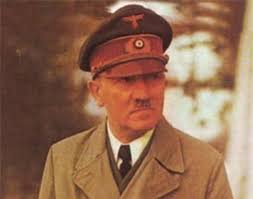
Adolf Hitler
At the time Yugoslavia was a monarchy ruled by the regent Prince Paul on behalf of the young King Peter II. On March 25, 1941, under threat of German invasion, Yugoslavia joined the Axis and agreed to permit transit through its territory to German troops headed for Greece.
When Yugoslavia’s nonaggression treaty with Germany was announced the next day in the Yugoslav capital of Belgrade, regent Prince Paul and the government were promptly overthrown in a popular uprising led by Yugoslav Air Force officers with the support of the Yugoslav Army.
On March 27, King Peter II was officially installed as king, ending the regency.
Hitler quickly learned the news. At first he thought it was a joke—and then he exploded in one of the wildest rages of his life.
Shouting that he had been “personally insulted,” Hitler demanded that Yugoslavia be crushed with “unmerciful harshness and that the military destruction be done in Blitzkrieg style. Now I intend to make a clean sweep of the Balkans—it is time people got to know me better!”
The invasion of Yugoslavia opened on April 6, 1941, with an overwhelming bombardment of Belgrade and facilities of the Royal Yugoslav Air Force by the the German air force, the Luftwaffe. The Wehrmacht attacked from southwestern Bulgaria, Romania, Hungary and Austria.
On April 17, after only 11 days of fighting, representatives for Yugoslavia signed the armistice and unconditionally surrendered all Yugoslav troops. Yugoslavia was subsequently divided amongst Germany, Hungary, Italy and Bulgaria.
Hitler was ecstatic: He had “avenged” his “betrayal,” and given the world another lesson on the power of his army and air force.
But his victory had come at a cost: The attack on Yugoslavia forced him to postpone his planned invasion of the Soviet Union by five weeks. And the Wehrmacht would suffer horribly when the bitterly cold Russian winter arrived.
As journalist and historian William L. Shirer wrote in his monumental study, The Rise and Fall of the Third Reich: “This postponement of the attack on Russia in order that the Nazi warlord might vent his personal spite against a small Balkan country which had dared to defy him was probably the most catastrophic single decision in Hitler’s career.
“It is hardly too much to say that by making it that March afternoon in the Chancellery in Berlin during a moment of convulsive rage he tossed away his last golden opportunity to win the war and to make of the Third Reich, which he had created with such stunning if barbarous genius, the greatest empire in German history and himself the master of Europe.”
It’s still too early to foresee if Trump will make such a single catastrophic decision. But he has clearly planted the seeds for this. Among these:
- Wholesale purgings of the federal workforce—especially in agencies responsible for national security and health;
- Turning America’s longtime allies—like Canada, Mexico, Greenland, Panama and the EU—into mortal enemies;
- Appointing incompetents to office—like alcoholic Pete Hegseth Secretary of Defense and 14-year heroin addict Robert F. Kennedy Jr. Secretretary of Health and Human Services.
As historian Barbara W. Tuchman warned in her book, The March of Folly: “A great empire and little minds go ill together.”
ABC NEWS, ADOLF HITLER, ALTERNET, AMERICABLOG, AP, BABY BOOMER RESISTANCE, BATTLE OF BRITAIN (MOVIE), BBC, BENITO MUSSOLINI, BLOOMBERG, BLUESKY, BUZZFEED, CANADA, CBS NEWS, CHINA, CLAUDIA SHEINBAUM PARDO, CNN, CROOKS AND LIARS, DAILY KOS, DEPARTMENT OF DEFENSE, DEPARTMENT OF HEALTH AND HUMAN SERVICES, DONALD TRUMP, EUROPEAN UNION, FIVETHIRTYEIGHT, GREECE, GREENLAND, HARPER’S MAGAZINE, HERMANN GORING, HUFFINGTON POST, JUSTIN TRUDEAU, LUFTWAFFE, MEDIA MATTERS, MEXICO, MOTHER JONES, MOVEON, MSNBC, NBC NEWS, NEW REPUBLIC, NEWSDAY, NEWSWEEK, NPR, PANAMA, PBS NEWSHOUR, PETE HEGSETH, POLITICO, POLITICUSUSA, RAW STORY, REUTERS, ROBERT F. KENNEDY JR., SALON, SEATTLE TIMES, SLATE, SOVIET UNION, TALKING POINTS MEMO, TARIFFS, THE ATLANTIC, THE CHICAGO SUN-TIMES, THE CHICAGO TRIBUNE, THE DAILY BEAST, THE DAILY BLOG, THE GUARDIAN, THE HILL, THE HUFFINGTON POST, THE INTERCEPT, THE LOS ANGELES TIMES, THE NATION, THE NEW REPUBLIC, THE NEW YORK TIMES, THE NEW YORKER, THE RISE ND FALL OF THE THIRD REICH (BOOK), THE VILLAGE VOICE, THE WASHINGTON POST, THINKPROGRESS, TIME, TRUTHDIG, TRUTHOUT, TWO POLITICAL JUNKIES, U.S. NEWS & WORLD REPORT, UPI, USA TODAY, WEHRMACHT, WILLIAM L. SHIRER, WINSTON CHURCHILL, WORLD WAR 11, X, YUGOSLAVIA
In Bureaucracy, Business, History, Military, Politics, Social commentary on March 26, 2025 at 12:05 am
The 1969 classic, Battle of Britain, features a scene that could today be filmed—live—at the next Conservative Political Action Conference (CPAC).
The movie dramatizes the heroic struggle of vastly outnumbered Royal Air Force (RAF) pilots against the numerically superior German air force, the Luftwaffe, during World War II.
Adolf Hitler, Germany’s Fuhrer, knew that to launch a successful naval invasion of Britain, he first must wipe the RAF from the skies.
The aerial combat began during the summer of 1940 and climaxed that September.

The turning point in the Battle—and the movie—occurs when a squadron of German bombers lost in bad weather at night accidentally bombs London. Attacks on London had been specifically forbidden by Hitler—for fear that they might bring the United States into the war.
An enraged British Prime Minister Winston Churchill orders a retaliatory attack on Berlin.
Since the eruption of World War II on September 1, 1939, with Hitler’s invasion of Poland. this is the first time that Berlin has been attacked. In fact, Hermann Goring, chief of the Luftwaffe, has said: “If ever a bomb falls on Berlin, you can call me Meyer.”
Now Hitler—who has ravaged Poland and France, and repeatedly bombed Britain, is enraged.
It’s perfectly OK for him to ravage other countries. It’s just not fair for his enemies to strike back.
He orders his faithful to assemble at the Reichstag, the German parliament, where he will outline his plans for knocking Britain out of the war.
Only then can he move on to his ultimate goal: Destroying his supposed ally, the Soviet Union.
In the movie, Battle of Britain, Hitler’s address is brilliantly—if briefly—staged, complete with rows of diehard Nazi women screaming their allegiance to their Fuhrer.
Hitler (played by Rolf Stiefel) starts his speech slowly, just as the real Hitler normally did to build to a shattering climax: “Last night, bombs were dropped on Berlin.
“So be it. Two can play at that game.
“If the RAF drops 200, 300, 400 bombs, then in one night we shall drop 2,000, 3,000, 4,000 bombs!”
His speech is interrupted by cheers from the Nazi faithful.

Adolf Hitler addressing the faithful in Battle of Britain
“If they attack our cities, then we will wipe theirs out!
“The hour will come when one of us must break. And it will never be National Socialist Germany!”
“NEVER! NEVER! NEVER!” screams the frenzied crowd.
“The English are filled with curiosity. They keep asking ‘Why doesn’t he come?’ Be patient. We are coming! We are coming!”
The Reichstag explodes with cheers of expected victory.
Britain went on to repulse the Luftwaffe’s attacks on its cities—and celebrate its victory at the end of the war.
That speech—in the movie and history—happened in 1940.
Fast forward to February 1, 2025: Newly re-elected President Donald Trump orders 25% tariffs on goods from Mexico and Canada, as well as 10% tariffs on imports from China.
- The White House says the tariffs will take effect on February 4.
On February 3, Trump announces a one-month pause of tariffs on Canada and Mexico after reaching agreements with each country that includes commitments to bolster border enforcement against drug smuggling.
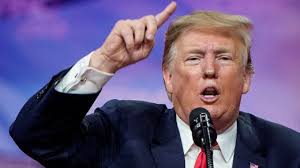
Donald Trump
On February 4, the United States imposes 10% tariffs on goods from China.
On February 27, Trump affirms plans to impose 25% tariffs on Canada and Mexico when the one-month delay expires on March 4.
- He also announces that an additional 10% tariff on goods from China will also take effect the same day.
On March 3, Trump reiterates plans to move forward with a fresh round of tariffs the following day.
On March 4, Trump’s tariffs on goods from Canada, Mexico and China take effect at 12:01 a.m. ET.
- China and Canada each respond with retaliatory tariffs, vowing additional measures.
- Mexican President Claudia Sheinbaum Pardo slamms Trump’s tariffs but says she will hold off on retaliatory measures until after a conversation with him.
On March 5, Trump orders a one-month delay of auto tariffs after a request from the “Big 3” U.S. automakers: Ford, General Motors and Stellantis, the parent company of Jeep and Chrysler.
On March 6, Trump temporarily pauses tariffs on Canadian and Mexican goods who are compliant with the United States-Mexico-Canada Agreement.
- Canadian Prime Minister Justin Trudeau says he will continue to impose tariffs on U.S. imports into the country until Trump cancels levies on Canadian products.

Justin Trudeau
Justin Trudeau – Prime Minister of Canada, CC BY 3.0 <https://creativecommons.org/licenses/by/3.0>, via Wikimedia Commons
On March 7, Trump says he is “strongly considering” large-scale banking sanctions, tariffs, and other sanctions on Russia until a cease fire and final settlement agreement is reached in the Russia-Ukraine war.
- He also suggests that Canada might soon be hit with reciprocal tariffs on its lumber and dairy products.
On March 11, Trump announces that he will impose an additional 25% tariff on all Canadian steel and aluminum imports effective March 12.
- He says the move was in retaliation to the Ontario government’s implementation of a 25% surcharge on all electricity exports to the U.S.
- Following this, Ontario says it will suspend its 25% surcharge on electricity exports to the U.S. after agreeing to discuss a renewed trade agreement.
ABC NEWS, ADOLF HITLER, ALTERNET, AMERICABLOG, AP, BABY BOOMER RESISTANCE, BBC, BLOOMBERG NEWS, BLUESKY, BUZZFEED, CANADA, CBS NEWS, CLAUDIA SHEINBAUM PARDO, CNN, CNN'S "STARTING POINT", CROOKS AND LIARS, CZECHOSLAVAKIA, DAILY KOS, DAVID BROOKS, DEPARTMENT OF HOMELAND SECURITY, DEPARTMENT OF JUSTICE, DONALD TRUMP, EXTORTION, FBI, FIVETHIRTYEIGHT, GREENLAND, HARPER’S MAGAZINE, HUFFINGTON POST, INSIDER, JACK SMITH, JIMMY CARTER, JUSTIN TRUDEAU, MASTADON, MEDIA MATTERS, MEXICO, MOTHER JONES, MOVEON, MSNBC, MSNBC'S "HARDBALL", NAZI GERMANY, NBC NEWS, NEGOTIATING, NEVILLE CHAMBERLAIN, NEW REPUBLIC, NEWSDAY, NEWSWEEK, NEWT GINGRICH, NICCOLO MACHIAVELLI, NPR, PANAMA, PBS NEWSHOUR, POLAND, POLITICO, POLITICUSUSA, R.I.CO. ACT, RAW STORY, REPUBLICAN PARTY, REPUBLICANS, REUTERS, ROBERT MEULLER, SALON, SEATTLE TIMES, SLATE, TALKING POINTS MEMO, THE ATLANTIC, THE CHICAGO SUN-TIMES, THE CHICAGO TRIBUNE, THE DAILY BEAST, THE DAILY BLOG, THE GUARDIAN, THE HAMILTON PROJECT, THE HILL, THE HUFFINGTON POST, THE LOS ANGELES TIMES, THE NATION, THE NEW REPUBLIC, THE NEW YORK TIMES, THE NEW YORKER, THE PENTAGON, THE PRINCE, THE VILLAGE VOICE, THE WASHINGTON POST, THINKPROGRESS, TIME, TRUTHDIG, TRUTHOUT, TWO POLITICAL JUNKIES, U.S. NEWS & WORLD REPORT, UKRAINE, UPI, USA TODAY, VLADIMIR PUTIN, VOLODMYR ZELENSKY, WONKETTE, WORLD WAR 11, X
In Bureaucracy, Business, History, Military, Politics, Social commentary on February 19, 2025 at 12:16 am
The “negotiating” methods of German Fuhrer Adolf Hitler serve as a useful guide to what domestic and world leaders can expect from trying to reach an agreement with President Donald Trump.
In September, 1938, seven months after seizing Austria, Hitler gave another exhibition of his “negotiating” methods.
This time, the target of his aggression was Czechoslovakia. Once again, he opened “negotiations” with a lie: The Czechoslovak government was trying to exterminate 3.5 million Germans living in the “Sudetenland.”
Then he threatened war: Germany would protect its citizens and halt such “oppression.”
For British Prime Minister Neville Chamberlain, the thought of another European war erupting less than 20 years after the end of World War I was simply unthinkable.
He quickly sent Hitler a telegram, offering to help resolve the crisis: “I could come to you by air and am ready to leave tomorrow. Please inform me of earliest time you can receive me, and tell me the place of the meeting. I should be grateful for a very early reply.”
[Mistake #1: Showing his willingness to placate a brutal dictator. Such men see any concessions as weakness—leading to only greater demands. Trump, like Hitler relishes attacking those weaker than himself.]
The two European leaders met in Berchtesgaden, Germany, on September 15, 1938.
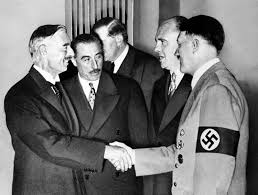
Neville Chamberlain and Adolf Hitler
Hitler denied that he had threatened war: “Force? Who speaks of force?“
Then, suddenly, he accused the Czechs of having mobilized their army in May. They had mobilized—in response to the mobilization of the German army.
“I shall not put up with this any longer,” shouted Hitler. “I shall settle this question in one way or another. I shall take matters in my own hands!”
Suddenly, Chamberlain seemed alarmed: “If I understood you right, you are determined to proceed against Czechoslovakia in any case. In the circumstances, it is best for me to return at once. Anything else now seems pointless.”
Hitler, taken aback, softened his tone and said they should consider the Sudetenland according to the principle of self-determination.
Chamberlain agreed to the cession of the Sudetenland. Three days later, French Prime Minister Edouard Daladier did the same. No Czechoslovak representative was invited to these discussions.
[Mistake #2: Instead of conceding to Hitler, which emboldened the dictator, he should have pressed his advantage. When Hitler found himself facing an opponent who couldn’t be bribed or cowed—such as British Prime Minister Winston Churchill or Soviet Premier Joseph Stalin—he raged and sulked.
[When Trump has faced an opponent he can’t buy or intimidate—such as Special Counsels Robert Mueller and Jack Smith—he has done the same.]
Chamberlain met Hitler again in Godesberg, Germany, on September 22 to confirm the agreements. But Hitler aimed to use the crisis as a pretext for war.
He now demanded not only the annexation of the Sudetenland but the immediate military occupation of the territories. This would give the Czechoslovak army no time to adapt their defense measures to the new borders.
To achieve a solution, Italian dictator Benito Mussolini suggested a conference of the major powers in Munich.
On September 29, Hitler, Daladier and Chamberlain met and agreed to Mussolini’s proposal. They signed the Munich Agreement, which accepted the immediate occupation of the Sudetenland.
The Czechoslovak government had not been a party to the talks. Nevertheless, it promised to abide by the agreement on September 30.
It actually had no choice. It faced the threat of an immediate German invasion after being deserted by its pledged allies: Britain, France and the Soviet Union.
[Mistake #3: Selling out an ally and making a concession to an insatiable dictator—and believing that Hitler could be trusted to keep his word.
[Just as Chamberlain sold out Czechoslovakia, Trump plans on selling out Ukraine to Russian dictator Vladimir Putin. He’s blamed Ukraine for starting the 2022 war—even though Russia invaded Ukraine.
He’s also attacked Ukrainian President Volodymyr Zelensky—and repeatedly praised Putin. And he’s unilaterally announced that he will begin directing “peace talks” with Putin to end his war on Ukraine.]
Chamberlain returned to England a hero. Holding aloft a copy of the worthless agreement he had signed with Hitler, he told cheering crowds in London: “I believe it is peace for our time.”
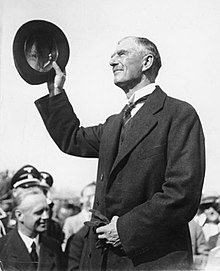
Neville Chamberlain
Winston Churchill knew better, predicting: “Britain and France had to choose between war and dishonor. They chose dishonor. They will have war.”
Hitler—still planning more conquests—also knew better. In March, 1939, the German army occupied the rest of Czechoslovakia.
Chamberlain would soon be seen as a naive weakling—even before bombs started falling on London.
Then Hitler turned his attention—and demands—to Poland.
When his generals balked, warning that an invasion would trigger a war with France and Britain, Hitler quickly brushed aside their fears: “Our enemies are little worms. I saw them at Munich.”
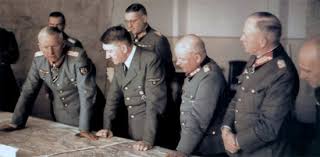
Adolf Hitler and his generals
Similarly, Trump drew the same lesson from his repeated escapes from American justice—that he was untouchable
Hitler ordered the invasion of Poland on September 1, 1939—unintentionally triggering World War II.
In time, historians and statesmen would regard Munich as an object lesson in the futility—and danger—in appeasing evil and aggression.
History has yet to record the all-but-certain disasters—foreign and domestic—of the Trump administration.
ABC NEWS, ADOLF HITLER, ALTERNET, AMERICABLOG, AP, AUSTRIA, BABY BOOMER RESISTANCE, BBC, BLOOMBERG NEWS, BLUESKY, BUZZFEED, CANADA, CBS NEWS, CLAUDIA SHEINBAUM PARDO, CNN, CNN'S "STARTING POINT", CROOKS AND LIARS, CZECHOSLAVAKIA, CZECHOSLOVAKIA, DAILY KOS, DAVID BROOKS, DEPARTMENT OF HOMELAND SECURITY, DEPARTMENT OF JUSTICE, DONALD TRUMP, EXTORTION, FBI, FIVETHIRTYEIGHT, FRANCE, GELI rAUBAL, GREENLAND, HARPER’S MAGAZINE, HUFFINGTON POST, INSIDER, JACK SMITH, JIMMY CARTER, JUSTIN TRUDEAU, MASTADON, MEDIA MATTERS, MEXICO, MOTHER JONES, MOVEON, MSNBC, MSNBC'S "HARDBALL", NAZI GERMANY, NBC NEWS, NEGOTIATING, NEVILLE CHAMBERLAIN, NEW REPUBLIC, NEWSDAY, NEWSWEEK, NEWT GINGRICH, NICCOLO MACHIAVELLI, NPR, PANAMA, PBS NEWSHOUR, POLAND, POLITICO, POLITICUSUSA, R.I.CO. ACT, RAW STORY, REPUBLICAN PARTY, REPUBLICANS, REUTERS, ROBERT MEULLER, SALON, SEATTLE TIMES, SLATE, TALKING POINTS MEMO, TARIFFS, THE ATLANTIC, THE CHICAGO SUN-TIMES, THE CHICAGO TRIBUNE, THE DAILY BEAST, THE DAILY BLOG, THE GUARDIAN, THE HAMILTON PROJECT, THE HILL, THE HUFFINGTON POST, THE LOS ANGELES TIMES, THE NATION, THE NEW REPUBLIC, THE NEW YORK TIMES, THE NEW YORKER, THE PENTAGON, THE PRINCE, THE VILLAGE VOICE, THE WASHINGTON POST, THINKPROGRESS, TIME, TRADE WARS, TRUTHDIG, TRUTHOUT, TWO POLITICAL JUNKIES, U.S. NEWS & WORLD REPORT, UKRAINE, UPI, USA TODAY, VLADIMIR PUTIN, VOLODMYR ZELENSKY, WONKETTE, WORLD WAR 11, X
In Bureaucracy, Business, History, Military, Politics, Social commentary on February 18, 2025 at 12:10 am
To understand the “negotiating” style of Donald Trump, it’s essential to study that of Adolf Hitler.
Both men, dictatorial by nature, did/do not believe in compromise. Their idea of “compromise” was/is: “You do what I want–or I’ll destroy you.”
In Hitler’s case, his mania for absolute control began with the Nazi party and eventually extended to Germany. Then it reached to Austria, Czechoslovakia, Poland, Norway, Denmark, France and Russia. At least 50 million men, women and children perished in the wars he unleashed from 1939 to 1945.
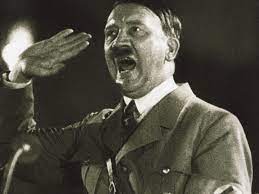
Adolf Hitler
Similarly, Trump’s mania for control started with building a real estate empire. Then it encompassed his “reality TV” show, The Apprentice—and finally politics.
He began dominating the Republican party by winning a series of Presidential primaries—and then the White House. Then came asserting control over the the Justice Department and the judiciary—up to the Supreme Court.
Re-elected in 2024, he now seeks to dominate Americans, demands military control over Gaza, threatens Mexico and Canada with trade wars, and Greenland and Panama with invasion.
Much can be learned about Trump’s “negotiating” methods—and what it takes to counter them—by studying those of Germany’s Fuhrer.
Robert Payne, author of the bestselling biography, The Life and Death of Adolf Hitler (1973), described Hitler’s “negotiating” style thus:
“Although Hitler prized his own talents as a negotiator, a man always capable of striking a good bargain, he was totally lacking in finesse.
Donald Trump
“He was incapable of bargaining. He was like a man who goes up to a fruit peddler and threatens to blow his brains out if he does not sell his applies at the lowest possible price.”
A classic example of Hitler’s “bargaining style” came in 1938, when he invited Austrian Chancellor Kurt von Schuschnigg to his mountaintop retreat in Obersalzberg, Germany.
Hitler, an Austrian by birth, intended to annex his native land to Germany. Schuschnigg was aware of Hitler’s desire, but nevertheless felt secure in accepting the invitation. He had been assured that the question of Austrian sovereignty would not arise.
The meeting occurred on February 12, 1938.
Shuschnigg opened the discussion with a friendly compliment. Walking over to a large window, he admired the breathtaking view of the mountains.
HITLER: We haven’t come here to talk about the lovely view or the weather!
Austria has anyway never done anything which was of help to the German Reich….I am resolutely determined to make an end to all this business. The German Reich is a great power. Nobody can and nobody will interfere if it restores order on its frontiers.
[Like Hitler, Trump relies on insults and anger to put his victims on the defense.]
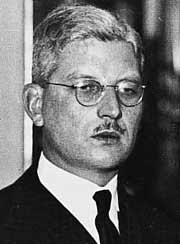
Kurt von Schuschnigg
SCHUSCHNIGG: We simply have to go on living alongside one another, the little state next to the big one. We have no other choice.
And that is why I ask you to tell me what your concrete complaints are. We will do all in our power to sort things out and establish a friendly relationship, as far as it is possible to do so.
HITLER: That’s what you say, Herr Schuschnigg. And I am telling you that I intend to clear up the whole of the so-called Austrian question—one way or another. Do you think I don’t know that you are fortifying Austria’s border with the Reich?
SCHUSCHNIGG: There can be no suggestion at all of that—
HITLER: Ridiculous explosive chambers are being built under bridges and roads—
This was a lie, and Hitler knew it was a lie. But it gave him an excuse to threaten to destroy Austria.
[For Trump, winning—not truth—is all that matters. During his first term as President, he told 30,573 lies.]
HITLER: I have only to give one command and all this comic stuff on the border will be blown to pieces overnight. You don’t seriously think you could hold me up, even for half an hour, do you?
The S.A. [Hitler’s private army of Stormtroopers] and the [Condor] lLegion [which had bombed much of Spain into rubble during the Spanish Civil War] would come in after the troops and nobody—not even I—could stop them from wreaking vengeance.
Schnuschigg made a cardinal mistake in dealing with Hitler: He showed fear. And this was precisely what the Nazi dictator looked for in an opponent.
[Like Hitler, Trump relies on fear: “Real power is—I don’t even want to use the word—fear,” he said in March 2016 when still only a candidate for President.]
Contrary to popular belief, Hitler did not constantly rage at everyone. He used rage as a weapon, knowing that most people feel intimidated by it.
In the case of Schuschnigg, Hitler opened with insults and threats at the outset of their discussion. Then there was a period of calm, to convince the Austrian chancellor the worst was over.
Finally, he once again attacked—this time with so much fury that Schuschnigg was terrified into submission.
With one stroke of a pen, Austria became a vassal-state to Nazi Germany.
[Like Hitler, Trump threatens only those he feels are weak—thus his threats to use military force against Canada, Greenland and Panama.]
ABC NEWS, ALTERNET, AMERICABLOG, AP, BABY BOOMER RESISTANCE, BARACK OBAMA, BBC, BLOOMBERG, BLOOMBERG NEWS, BUZZFEED, CBS NEWS, CENTRAL AMERICA, CHIANG KAI-SHEK, CHINA, CNN, COLUMBIA, COMMUNISM, CRIMEA, CROOKS AND LIARS, CUBA, CZECHOSLAVAKIA, DAILY KOS, DAILY KOZ, DEMOCRATS, DONALD TRUMP, FACEBOOK, FIVETHIRTYEIGHT, GUATEMALA, GUNBOAT DIPLOMACY, HARPER’S MAGAZINE, HARRY S. TRUMAN, HUFFINGTON POST, HUNGARY, JOHN F. KENNEDY, JOSEPH MCCARTHY, LATIN AMERICA, LYNDON B. JOHNSON, MAO TSE-TUNG, MEDIA MATTERS, MICK MULVANEY, MITT ROMNEY, MONROE DOCTRINE, MOTHER JONES, MOVEON, MSNBC, NBC NEWS, NEW REPUBLIC, NEWSDAY, NEWSWEEK, NICARAGUA, NPR, PANAMA, PBS NEWSHOUR, POLAND, POLITICO, POLITICUSUSA, RAW STORY, REPUBLICANS, REUTERS, RICHARD M. NIXON, SALON, SEATTLE TIMES, SLATE, SOCHI OLYMPICS, SOVIET UNION, SPHERES OF INFLUENCE, TALKING POINTS MEMO, THE ATLANTIC, THE CHICAGO SUN-TIMES, THE CHICAGO TRIBUNE, THE DAILY BEAST, THE DAILY BLOG, THE GUARDIAN, THE HILL, THE HUFFINGTON POST, THE INTERCEPT, THE LOS ANGELES TIMES, THE NATION, THE NEW REPUBLIC, THE NEW YORK TIMES, THE NEW YORKER, THE VILLAGE VOICE, THE WASHINGTON POST, THINKPROGRESS, TIME, TOM COTTON, TRUTHDIG, TRUTHOUT, TWO POLITICAL JUNKIES, U.S. NEWS & WORLD REPORT, UKRAINE, UPI, USA TODAY, VICTOR YANUKOVYCH, VIETNAM, VLADIMIR PUTIN, VOLODYMYR ZELENSKY, WONKETTE, X
In Bureaucracy, History, Military, Social commentary on November 22, 2024 at 12:11 am
The collapse of the Soviet Union in 1991 plunged the American Right into a depression.
Accusing Democrats of being “terrorist-lovers” just didn’t prove as profitable as accusing them of being “Communists.”
Then fate intervened.
The torch had barely gone out at the 2014 Sochi Winter Olympics when Russian President Vladimir Putin began menacing the Ukraine.
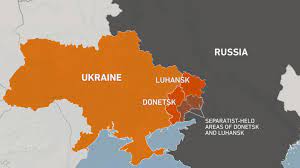
Ukraine vs. Russia
Even while the Olympics played out on television, Ukrainians had rioted in Kiev and evicted their corrupt, luxury-loving president, Victor Yanukovych.
And that didn’t sit well with his “sponsor”—Putin.
Yanukovych had rejected a pending European Union association agreement. He had chosen instead to pursue a Russian loan bailout and closer ties with Russia.
And that had sat well with Putin.
Since the breakup of the Soviet Union in 1991, Putin had yearned for its reestablishment. He had called that breakup “the greatest geopolitical tragedy of the 20th century.”

Vladimir Putin
Kremlin.ru, CC BY 4.0 <https://creativecommons.org/licenses/by/4.0>, via Wikimedia Commons
Russia has long resisted Ukraine’s move towards European institutions—especially NATO.
So it was almost a certainty that Putin would retaliate.
And since late February, 2014, he began moving Russian troops into Ukraine and its autonomous republic, Crimea. Russia annexed Ukraine’s southern Crimean peninsula and backed separatists who captured large swathes of eastern Ukraine.
On December 3, 2021, the Washington Post reported: “The Kremlin is planning a multi-front offensive as soon as early next year involving up to 175,000 troops” against Ukraine.
And where there is activity by Russians, American Rightists are eager to turn such events to their own political advantage.
Right-wingers such as Senator Tom Cotton (R-AR): ”It is a result of a year of Joe Biden’s impotence and incompetence towards Russia in particular and in foreign policy more generally.”
Cotton had vigorously defended President Donald Trump’s attempted extortion of Ukrainian President Volodymyr Zelensky in the face of Russian aggression.
In July, 2019, Trump told his acting chief of staff, Mick Mulvaney, to withhold almost $400 million in promised military aid for Ukraine.
Then, on July 25, Trump telephoned Zelensky to “request” a “favor”: Investigate presumed 2020 Democratic Presidential Candidate Joe Biden and his son, Hunter, who had had business dealings in Ukraine.
Clearly implied in the call: Produce “dirt” on Biden—or you won’t get the military aid.
All of which overlooks a number of brutal political truths.
First, all great powers have spheres of interest—and jealously guard them.
For the United States, it’s Latin and Central America, as established by the Monroe Doctrine.
And just what is the Monroe Doctrine?
It’s a statement made by President James Monroe in his 1823 annual message to Congress, which warned European powers not to interfere in the affairs of the Western Hemisphere.
It has no legitimacy except the willingness of the United States to use armed force to back it up. When the United States no longer has the will or resources to enforce the Doctrine, it will cease to have meaning.
For the Soviet Union, its spheres of influence include the Ukraine. Long known as “the breadbasket of Russia,” in 2011, it was the world’s third-largest grain exporter.
Russia will no more give up access to that breadbasket than the United States would part with the rich farming states of the Midwest.
Second, spheres of influence often prove disastrous to those smaller countries affected.
Throughout Latin and Central America, the United States remains highly unpopular for its brutal use of “gunboat diplomacy” during the 20th century.
Among those countries invaded or controlled by America: Mexico, Cuba, Guatemala, Nicaragua, Columbia, Panama and the Dominican Republic.
The resulting anger has led many Latin and Central Americans to support Communist Cuba, even though its political oppression and economic failure are universally apparent.
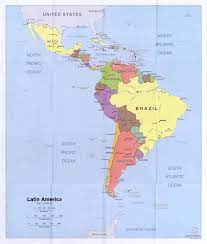
Latin and Central America
Similarly, the Soviet Union forced many nations—such as Poland, Hungary and Czechoslovakia—to submit to the will of Moscow.
The alternative? The threat of Soviet invasion—as occurred in Hungary in 1956 and Czechoslovakia in 1968.
Third, even “great powers” are not all-powerful.
In 1949, after a long civil war, the forces of Mao Tse-tung defeated the Nationalist armies of Chiang Kai-Shek, who withdrew to Taiwan.
China had never been a territory of the United States. Nor could the United States have prevented Mao from defeating the corrupt, ineptly-led Nationalist forces.
Even so, Republican Senators and Representatives such as Richard Nixon and Joseph McCarthy eagerly blamed President Harry S. Truman and the Democrats for “losing China.”
The fear of being accused of “losing” another country led Presidents John F. Kennedy, Lyndon B. Johnson and Richard M. Nixon to tragically commit the United States to “roll back” Communism in Cuba and Vietnam.
Now Republicans—who claim the United States can’t afford to provide healthcare for its poorest citizens—want to turn the national budget over to the Pentagon.
They want the United States to “intervene” in Ukraine—even though this would mean going to war with the only nuclear power capable of turning America into an atomic graveyard.
Before plunging into conflicts that don’t concern us and where there is absolutely nothing to “win,” Americans would do well to remember the above-stated lessons of history. And to learn from them.
ABC NEWS, ALTERNET, AMERICABLOG, AP, BABY BOOMER RESISTANCE, BARACK OBAMA, BBC, BLOOMBERG NEWS, BUZZFEED, CBS NEWS, CENTRAL AMERICA, CHIANG KAI-SHEK, CHINA, CNN, COLUMBIA, COMMUNISM, CRIMEA, CROOKS AND LIARS, CUBA, CZECHOSLAVAKIA, DAILY KOZ, DEMOCRATS, DONALD TRUMP, FACEBOOK, FIVETHIRTYEIGHT, GUATEMALA, GUNBOAT DIPLOMACY, HARPER’S MAGAZINE, HARRY S. TRUMAN, HUFFINGTON POST, HUNGARY, JOHN F. KENNEDY, JOSEPH MCCARTHY, LATIN AMERICA, LYNDON B. JOHNSON, MAO TSE-TUNG, MEDIA MATTERS, MICK MULVANEY, MITT ROMNEY, MONROE DOCTRINE, MOTHER JONES, MOVEON, MSNBC, NBC NEWS, NEW REPUBLIC, NEWSDAY, NEWSWEEK, NICARAGUA, NPR, PANAMA, PBS NEWSHOUR, POLAND, POLITICO, POLITICUSUSA, RAW STORY, REPUBLICANS, REUTERS, RICHARD M. NIXON, SALON, SEATTLE TIMES, SLATE, SOCHI OLYMPICS, SOVIET UNION, SPHERES OF INFLUENCE, TALKING POINTS MEMO, THE ATLANTIC, THE CHICAGO SUN-TIMES, THE CHICAGO TRIBUNE, THE DAILY BEAST, THE DAILY BLOG, THE GUARDIAN, THE HILL, THE HUFFINGTON POST, THE LOS ANGELES TIMES, THE NATION, THE NEW REPUBLIC, THE NEW YORK TIMES, THE NEW YORKER, THE VILLAGE VOICE, THE WASHINGTON POST, THINKPROGRESS, TIME, TOM COTTON, TRUTHDIG, TRUTHOUT, TWITTER, TWO POLITICAL JUNKIES, U.S. NEWS & WORLD REPORT, UKRAINE, UPI, USA TODAY, VICTOR YANUKOVYCH, VIETNAM, VLADIMIR PUTIN, VOLODYMYR ZELENSKY, WONKETTE
In Bureaucracy, History, Military, Politics, Social commentary, Uncategorized on January 24, 2022 at 12:35 am
Ever since the collapse of the Soviet Union in 1991, the American Right felt dejected.
Accusing Democrats of being “terrorist-lovers” just hasn’t been as profitable as accusing them of being “Communists.”
Then fate intervened.
The torch had barely gone out at the 2014 Sochi Winter Olympics when Russian President Vladimir Putin began menacing the Ukraine.
Ukraine vs. Russia
Even while the Olympics played out on television, Ukrainians had rioted in Kiev and evicted their corrupt, luxury-loving president, Victor Yanukovych.
And that didn’t sit well with his “sponsor”—Putin.
Yanukovych had rejected a pending European Union association agreement. He had chosen instead to pursue a Russian loan bailout and closer ties with Russia.
And that had sat well with Putin.
Since the breakup of the Soviet Union in 1991, Putin had yearned for its reestablishment. He had called that breakup “the greatest geopolitical tragedy of the 20th century.”
Vladimir Putin
Kremlin.ru, CC BY 4.0 <https://creativecommons.org/licenses/by/4.0>, via Wikimedia Commons
Russia has long resisted Ukraine’s move towards European institutions—especially NATO.
So it was almost a certainty that Putin would retaliate.
And since late February, 2014, he began moving Russian troops into Ukraine and its autonomous republic, Crimea. Russia annexed Ukraine’s southern Crimean peninsula and backed separatists who captured large swathes of eastern Ukraine.
On December 3, 2021, the Washington Post reported: “The Kremlin is planning a multi-front offensive as soon as early next year involving up to 175,000 troops” against Ukraine.
And where there is activity by Russians, American Rightists are eager to turn such events to their own political advantage.
Right-wingers such as Senator Tom Cotton (R-AR): ”It is a result of a year of Joe Biden’s impotence and incompetence towards Russia in particular and in foreign policy more generally.”
Cotton had vigorously defended President Donald Trump’s attempted extortion of Ukrainian President Volodymyr Zelensky in the face of Russian aggression.
In July, 2019, Trump told his acting chief of staff, Mick Mulvaney, to withhold almost $400 million in promised military aid for Ukraine.
Then, on July 25, Trump telephoned Zelensky to “request” a “favor”: Investigate presumed 2020 Democratic Presidential Candidate Joe Biden and his son, Hunter, who had had business dealings in Ukraine.
Clearly implied in the call: Produce “dirt” on Biden—or you won’t get the military aid.
All of which overlooks a number of brutal political truths.
First, all great powers have spheres of interest—and jealously guard them.
For the United States, it’s Latin and Central America, as established by the Monroe Doctrine.
And just what is the Monroe Doctrine?
It’s a statement made by President James Monroe in his 1823 annual message to Congress, which warned European powers not to interfere in the affairs of the Western Hemisphere.
It has no legitimacy except the willingness of the United States to use armed force to back it up. When the United States no longer has the will or resources to enforce the Doctrine, it will cease to have meaning.
For the Soviet Union, its spheres of influence include the Ukraine. Long known as “the breadbasket of Russia,” in 2011, it was the world’s third-largest grain exporter.
Russia will no more give up access to that breadbasket than the United States would part with the rich farming states of the Midwest.
Second, spheres of influence often prove disastrous to those smaller countries affected.
Throughout Latin and Central America, the United States remains highly unpopular for its brutal use of “gunboat diplomacy” during the 20th century.
Among those countries invaded or controlled by America: Mexico, Cuba, Guatemala, Nicaragua, Columbia, Panama and the Dominican Republic.
The resulting anger has led many Latin and Central Americans to support Communist Cuba, even though its political oppression and economic failure are universally apparent.
Latin and Central America
Similarly, the Soviet Union forced many nations—such as Poland, Hungary and Czechoslovakia—to submit to the will of Moscow.
The alternative? The threat of Soviet invasion—as occurred in Hungary in 1956 and Czechoslovakia in 1968.
Third, even “great powers” are not all-powerful.
In 1949, after a long civil war, the forces of Mao Tse-tung defeated the Nationalist armies of Chiang Kai-Shek, who withdrew to Taiwan.
China had never been a territory of the United States. Nor could the United States have prevented Mao from defeating the corrupt, ineptly-led Nationalist forces.
Even so, Republican Senators and Representatives such as Richard Nixon and Joseph McCarthy eagerly blamed President Harry S. Truman and the Democrats for “losing China.”
The fear of being accused of “losing” another country led Presidents John F. Kennedy, Lyndon B. Johnson and Richard M. Nixon to tragically commit the United States to “roll back” Communism in Cuba and Vietnam.
Now Republicans—who claim the United States can’t afford to provide healthcare for its poorest citizens—want to turn the national budget over to the Pentagon.
They want the United States to “intervene” in Ukraine—even though this would mean going to war with the only nuclear power capable of turning America into an atomic graveyard.
Before plunging into conflicts that don’t concern us and where there is absolutely nothing to “win,” Americans would do well to remember the above-stated lessons of history. And to learn from them.
ABC NEWS, AL QAEDA, BARACK OBAMA, CBS NEWS, CENTRAL AMERICA, CHAING KAI-SHEK, CHINA, CNN, COLUMBIA, COMMUNISM, CRIMEA, CUBA, CZECHOSLAVAKIA, DEMOCRATS, FACEBOOK, GUATEMALA, GUNBOAT DIPLOMACY, HARRY S. TRUMAN, HEZBOLLAH, HUNGARY, JOHN F. KENNEDY, JOSEPH MCCARTHY, LATIN AMERICA, LYNDON B. JOHNSON, MAO TSE-TUNG, MITT ROMNEY, MONROE DOCTRINE, NBC NEWS, NICARAGUA, PANAMA, POLAND, REPUBLICANS, RICHARD M. NIXON, SOCHI OLYMPICS, SOVIET UNION, SPHERES OF INFLUENCE, SYRIA, THE CHICAGO SUN-TIMES, THE CHICAGO TRIBUNE, THE LOS ANGELES TIMES, THE NEW YORK TIMES, THE WASHINGTON POST, TWITTER, UKRAINE, VIETNAM, VLADIMIR PUTIN
In Bureaucracy, History, Politics, Social commentary on September 27, 2016 at 12:05 am
It didn’t take much for American Right-wingers to start salivating–and celebrating.
All it took was for Russia to move troops into its neighboring territories of Ukraine and Crimea.
Ever since the collapse of the Soviet Union in 1991, the American Right felt dejected. Accusing Democrats of being “terrorist-lovers” just hadn’t been as profitable as accusing them of being “Communists.”
The torch had barely gone out at the much-ballyhooed 2014 Sochi Olympics when Russian President Vladimir Putin began menacing the Ukraine.
Even while the Olympics played out on television, Ukrainians had rioted in Kiev and evicted their corrupt, luxury-loving president, Victor Yanukovych.
And this, of course, didn’t sit well with his “sponsor”–Putin.
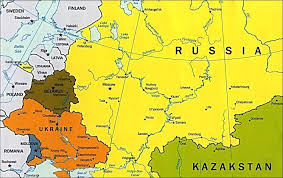
Yanukovych had rejected a pending European Union association agreement. He had chosen instead to pursue a Russian loan bailout and closer ties with Russia.
And that had sat well with Putin.
Since the breakup of the Soviet Union in 1991, Putin had yearned for a reestablishment of the same. He had called that breakup “the greatest geopolitical tragedy of the 20th century.”
So it was almost a certainty that, when his chosen puppet, Yanukovych, was sent packing, Putin would find some way to retaliate.
And since late February, 2014, he has done so, gradually moving Russian troops into Ukraine and its autonomous republic, Crimea.
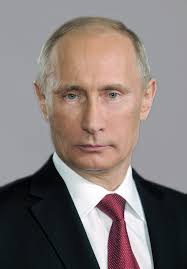
Vladimir Putin
By late March, it was clear that Russia had sufficient forces in both Ukraine and Crimea to wreak any amount of destruction Putin may wish to inflict.
And where there is activity by Russians, there are American Rightists eager–in Shakespeare’s word–to “cry havoc and let slip the dogs of war.”
Or at least to use such events to their own political advantage.
Right-wingers such as Mitt Romney, the former governor of Massachussetts who lost the 2012 Presidential election by a wide margin to Barack Obama.
“There’s no question but that the president’s naiveté with regards to Russia,” said Romney on March 23, 2014.
“And unfortunately, not having anticipated Russia’s intentions, the president wasn’t able to shape the kinds of events that may have been able to prevent the kinds of circumstances that you’re seeing in the Ukraine, as well as the things that you’re seeing in Syria.”
All of which overlooks a number of brutal political truths.
First, all great powers have spheres of interest–and jealously guard them.
For the United States, it’s Latin and Central America, as established by the Monroe Doctrine.
And just what is the Monroe Doctrine?
It’s a statement made by President James Monroe in his 1823 annual message to Congress, which warned European powers not to interfere in the affairs of the Western Hemisphere.
It has no other legitimacy than the willingness of the United States to use armed force to back it up. When the United States no longer has the will or resources to enforce the Doctrine, it will cease to have meaning.

For the Soviet Union, its spheres of influence include the Ukraine. Long known as “the breadbasket of Russia,” in 2011, it was the world’s third-largest grain exporter.
Russia will no more give up access to that breadbasket than the United States would part with the rich farming states of the Midwest.
Second, spheres of influence often prove disastrous to those smaller countries affected.
Throughout Latin and Central America, the United States remains highly unpopular for its brutal use of “gunboat diplomacy” during the 20th century.
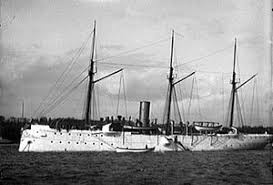
American gunboat
Among those countries invaded or controlled by America: Mexico, Cuba, Guatemala, Nicaragua, Columbia, Panama and the Dominican Republic.
The resulting anger has led many Latin and Central Americans to support Communist Cuba, even though its political oppression and economic failure are universally apparent.
Similarly, the Union of Soviet Socialist Republics (U.S.S.R.) forced many nations–such as Poland, Hungary and Czechoslavakia–to submit to the will of Moscow.
The alternative? The threat of Soviet invasion–as occurred in Hungary in 1956 and Czechoslovakia in 1968.
Third, even “great powers” are not all-powerful.
In 1949, after a long civil war, the forces of Mao Tse-tung defeated the Nationalist armies of Chaing Kai-Shek, who withdrew to Taiwan.
China had never been a territory of the United States. Nor could the United States have prevented Mao from defeating the corrupt, ineptly-led Nationalist forces.
Even so, Republican Senators and Representatives such as Richard Nixon and Joseph McCarthy eagerly blamed President Harry S. Truman and the Democrats for “losing China.”
The fear of being accused of “losing” another country led Presidents John F. Kennedy, Lyndon B. Johnson and Richard M. Nixon to tragically commit the United States to “roll back” Communism in Cuba and Vietnam.
Now Republicans–who claim the United States can’t afford to provide healthcare for its poorest citizens–want to turn the national budget over to the Pentagon.
They want the United States to “intervene” in Syria–even though this civil war pits Al Qaeda and Hezbollah, two of America’s greatest enemies, against each other.
They want the United States to “intervene” in Ukraine–even though this would mean going to war with the only nuclear power capable of turning America into an atomic graveyard.
Before plunging into conflicts that don’t concern us and where there is absolutely nothing to “win,” Americans would do well to remember the above-stated lessons of history. And to learn from them.
ABC NEWS, AL QAEDA, BARACK OBAMA, CBS NEWS, CENTRAL AMERICA, CHAING KAI-SHEK, CHINA, CNN, COLUMBIA, COMMUNISM, CRIMEA, CUBA, CZECHOSLAVAKIA, DEMOCRATS, FACEBOOK, GUATEMALA, GUNBOAT DIPLOMACY, HARRY S. TRUMAN, HEZBOLLAH, HUNGARY, JOHN F. KENNEDY, JOSEPH MCCARTHY, LATIN AMERICA, LYNDON B. JOHNSON, MAO TSE-TUNG, MITT ROMNEY, MONROE DOCTRINE, NBC NEWS, NICARAGUA, PANAMA, POLAND, REPUBLICANS, RICHARD M. NIXON, SOCHI OLYMPICS, SOVIET UNION, SPHERES OF INFLUENCE, SYRIA, THE LOS ANGELES TIMES, THE NEW YORK TIMES, THE WASHINGTON POST, TWITTER, UKRAINE, VIETNAM, VLADIMIR PUTIN
In History, Law, Military, Politics on January 2, 2015 at 12:43 am
Ever since the collapse of the Soviet Union in 1991, the American Right has felt dejected.
Accusing Democrats of being “terrorist-lovers” just hasn’t been as profitable as accusing them of being “Communists.”
The torch had barely gone out at the much-ballyhooed Sochi Olympics, in February, 2014, when Russian President Vladimir Putin began menacing the Ukraine.
Even while the Olympics played out on television, Ukrainians had rioted in Kiev and evicted their corrupt, luxury-loving president, Victor Yanukovych.
And this, of course, didn’t sit well with his “sponsor”–Putin.
Yanukovych had rejected a pending European Union association agreement. He had chosen instead to pursue a Russian loan bailout and closer ties with Russia.
And that had sat well with Putin.
Since the breakup of the Soviet Union in 1991, Putin had yearned for a reestablishment of the same. He had called that breakup “the greatest geopolitical tragedy of the 20th century.”
So it was almost a certainty that, when his chosen puppet, Yanukovych, was sent packing, Putin would find some way to retaliate.
And since late February, he has done so, gradually moving Russian troops into Ukraine and its autonomous republic, Crimea.
By late March, it was clear that Russia had sufficient forces in both Ukraine and Crimea to wreak any amount of destruction Putin may wish to inflict.
And where there is activity by Russians, there are American Rightists eager–in Shakespeare’s words–to “cry havoc and let slip the dogs of war.”
Rightists such as Mitt Romney, the former Massachussetts governor who lost the 2012 Presidential election by a wide margin to Barack Obama.
“There’s no question but that the president’s naiveté with regards to Russia,” said Romney on March 23.
“And unfortunately, not having anticipated Russia’s intentions, the president wasn’t able to shape the kinds of events that may have been able to prevent the kinds of circumstances that you’re seeing in the Ukraine, as well as the things that you’re seeing in Syria.”
All of which overlooks a number of brutal political truths.
First, all great powers have spheres of interest–and jealously guard them.
For the United States, it’s Latin and Central America, as established by the Monroe Doctrine.
And just what is the Monroe Doctrine?
It’s a statement made by President James Monroe in his 1823 annual message to Congress, which warned European powers not to interfere in the affairs of the Western Hemisphere.
It has no other legitimacy than the willingness of the United States to use armed force to back it up. When the United States no longer has the will or resources to enforce the Doctrine, it will cease to have meaning.
For the Soviet Union, its spheres of influence include the Ukraine. Long known as “the breadbasket of Russia,” in 2011, it was the world’s third-largest grain exporter.
Russia will no more give up access to that breadbasket than the United States would part with the rich farming states of the Midwest.
Second, spheres of influence often prove disastrous to those smaller countries affected.
Throughout Latin and Central America, the United States remains highly unpopular for its brutal use of “gunboat diplomacy” during the 20th century.
Among those countries invaded or controlled by America: Mexico, Cuba, Guatemala, Nicaragua, Columbia, Panama and the Dominican Republic.
The resulting anger has led many Latin and Central Americans to support Communist Cuba, even though its political oppression and economic failure are universally apparent.
Similarly, the Union of Soviet Socialist Republics (U.S.S.R.) forced many nations–such as Poland, Hungary and Czechoslavakia–to submit to the will of Moscow.
The alternative? The threat of Soviet invasion–as occurred in Hungary in 1956 and Czechoslavakia in 1968.
Third, even “great powers” are not all-powerful.
In 1949, after a long civil war, the forces of Mao Tse-tung defeated the Nationalist armies of Chaing Kai-Shek, who withdrew to Taiwan.
China had never been a territory of the United States. Nor could the United States have prevented Mao from defeating the corrupt, ineptly-led Nationalist forces.
Even so, Republican Senators and Representatives such as Richard Nixon and Joseph McCarthy eagerly blamed President Harry S. Truman and the Democrats for “losing China.”
The fear of being accused of “losing” another country led Presidents John F. Kennedy, Lyndon B. Johnson and Richard M. Nixon to tragically commit the United States to “roll back” Communism in Cuba and Vietnam.
Now Republicans–who claim the United States can’t afford to provide healthcare for its poorest citizens–want to turn the national budget over to the Pentagon.
They want the United States to “intervene” in Syria–even though this civil war pits Al Qaeda and Hezbollah, two of America’s greatest enemies, against each other.
They want the United States to “intervene” in Ukraine–even though this would mean going to war with the only nuclear power capable of turning America into an atomic graveyard.
Before plunging into conflicts that don’t concern us and where there is absolutely nothing to “win,” Americans would do well to remember the above-stated lessons of history.
And to learn from them.
ABC NEWS, AL QAEDA, BARACK OBAMA, CBS NEWS, CENTRAL AMERICA, CHAING KAI-SHEK, CHINA, CNN, COLUMBIA, COMMUNISM, CRIMEA, CUBA, CZECHOSLAVAKIA, DEMOCRATS, FACEBOOK, GUATEMALA, GUNBOAT DIPLOMACY, HARRY S. TRUMAN, HEZBOLLAH, HUNGARY, JOHN F. KENNEDY, JOSEPH MCCARTHY, LATIN AMERICA, LYNDON B. JOHNSON, MAO TSE-TUNG, MITT ROMNEY, MONROE DOCTRINE, NBC NEWS, NICARAGUA, PANAMA, POLAND, REPUBLICANS, RICHARD M. NIXON, SOCHI OLYMPICS, SOVIET UNION, SPHERES OF INFLUENCE, SYRIA, THE LOS ANGELES TIMES, THE NEW YORK TIMES, THE WASHINGTON POST, TWITTER, UKRAINE, VIETNAM, VLADIMIR PUTIN
In Bureaucracy, History, Military, Politics on August 21, 2014 at 10:27 pm
It didn’t take much for American Right-wingers to start salivating–and celebrating.
All it took was for Russia to move troops into its neighboring territories of Ukraine and Crimea.
Ever since the collapse of the Soviet Union in 1991, the American Right has felt dejected. Accusing Democrats of being “terrorist-lovers” just hasn’t been as profitable as accusing them of being “Communists.”
The torch had barely gone out at the much-ballyhooed Sochi Olympics when Russian President Vladimir Putin began menacing the Ukraine.
Even while the Olympics played out on television, Ukrainians had rioted in Kiev and evicted their corrupt, luxury-loving president, Victor Yanukovych.
And this, of course, didn’t sit well with his “sponsor”–Putin.
Yanukovych had rejected a pending European Union association agreement. He had chosen instead to pursue a Russian loan bailout and closer ties with Russia.
And that had sat well with Putin.
Since the breakup of the Soviet Union in 1991, Putin had yearned for a reestablishment of the same. He had called that breakup “the greatest geopolitical tragedy of the 20th century.”
So it was almost a certainty that, when his chosen puppet, Yanukovych, was sent packing, Putin would find some way to retaliate.
And since late February, he has done so, gradually moving Russian troops into Ukraine and its autonomous republic, Crimea.
By late March, it was clear that Russia had sufficient forces in both Ukraine and Crimea to wreak any amount of destruction Putin may wish to inflict.
And where there is activity by Russians, there are American Rightists eager–in Shakespeare’s words–to “cry havoc and let slip the dogs of war.”
Or at least to use such events to their own political advantage.
Right-wingers such as Mitt Romney, the former governor of Massachussetts who lost the 2012 Presidential election by a wide margin to Barack Obama.
“There’s no question but that the president’s naiveté with regards to Russia,” said Romney on March 23.
“And unfortunately, not having anticipated Russia’s intentions, the president wasn’t able to shape the kinds of events that may have been able to prevent the kinds of circumstances that you’re seeing in the Ukraine, as well as the things that you’re seeing in Syria.”
All of which overlooks a number of brutal political truths.
First, all great powers have spheres of interest–and jealously guard them.
For the United States, it’s Latin and Central America, as established by the Monroe Doctrine.
And just what is the Monroe Doctrine?
It’s a statement made by President James Monroe in his 1823 annual message to Congress, which warned European powers not to interfere in the affairs of the Western Hemisphere.
It has no other legitimacy than the willingness of the United States to use armed force to back it up. When the United States no longer has the will or resources to enforce the Doctrine, it will cease to have meaning.
For the Soviet Union, its spheres of influence include the Ukraine. Long known as “the breadbasket of Russia,” in 2011, it was the world’s third-largest grain exporter.
Russia will no more give up access to that breadbasket than the United States would part with the rich farming states of the Midwest.
Second, spheres of influence often prove disastrous to those smaller countries affected.
Throughout Latin and Central America, the United States remains highly unpopular for its brutal use of “gunboat diplomacy” during the 20th century.
Among those countries invaded or controlled by America: Cuba, Guatemala, Nicaragua, Columbia, Panama, the Dominican Republic.
The resulting anger has led many Latin and Central Americans to support Communist Cuba, even though its political oppression and economic failure are universally apparent.
Similarly, the Union of Soviet Socialist Republics (U.S.S.R.) forced many nations–such as Poland, Hungary and Czechoslavakia–to submit to the will of Moscow.
The alternative? The threat of Soviet invasion–as occurred in Hungary in 1956 and Czechoslavakia in 1968.
Third, even “great powers” are not all-powerful.
In 1949, after a long civil war, the forces of Mao Tse-tung defeated the Nationalist armies of Chaing Kai-Shek, who withdrew to Taiwan.
China had never been a territory of the United States. Nor could the United States have prevented Mao from defeating the corrupt, ineptly-led Nationalist forces.
Even so, Republican Senators and Representatives such as Richard Nixon and Joseph McCarthy eagerly blamed President Harry S. Truman and the Democrats for “losing China.”
The fear of being accused of “losing” another country led Presidents John F. Kennedy, Lyndon B. Johnson and Richard M. Nixon to tragically commit the United States to “roll back” Communism in Cuba and Vietnam.
Now Republicans–who claim the United States can’t afford to provide healthcare for its poorest citizens–want to turn the national budget over to the Pentagon.
They want the United States to “intervene” in Syria–even though this civil war pits Al Qaeda and Hezbollah, two of America’s greatest enemies, against each other.
They want the United States to “intervene” in Ukraine–even though this would mean going to war with the only nuclear power capable of turning America into an atomic graveyard.
Before plunging into conflicts that don’t concern us and where there is absolutely nothing to “win,” Americans would do well to remember the above-stated lessons of history. And to learn from them.
ABC NEWS, AL QAEDA, BARACK OBAMA, CBS NEWS, CENTRAL AMERICA, CHAING KAI-SHEK, CHINA, CNN, COLUMBIA, COMMUNISM, CRIMEA, CUBA, CZECHOSLAVAKIA, DEMOCRATS, FACEBOOK, GUATEMALA, GUNBOAT DIPLOMACY, HARRY S. TRUMAN, HEZBOLLAH, HUNGARY, JOHN F. KENNEDY, JOSEPH MCCARTHY, LATIN AMERICA, LYNDON B. JOHNSON, MAO TSE-TUNG, MITT ROMNEY, MONROE DOCTRINE, NBC NEWS, NICARAGUA, PANAMA, POLAND, REPUBLICANS, RICHARD M. NIXON, SOCHI OLYMPICS, SOVIET UNION, SPHERES OF INFLUENCE, SYRIA, THE LOS ANGELES TIMES, THE NEW YORK TIMES, THE WASHINGTON POST, TWITTER, UKRAINE, VIETNAM, VLADIMIR PUTIN
In History, Military, Politics on March 25, 2014 at 1:04 am
It didn’t take much for American Right-wingers to start salivating–and celebrating.
All it took was for Russia to move troops into its neighboring territories of Ukraine and Crimea.
Ever since the collapse of the Soviet Union in 1991, the American Right has felt dejected. Accusing Democrats of being “terrorist-lovers” just hasn’t been as profitable as accusing them of being “Communists.”
The torch had barely gone out at the much-ballyhooed Sochi Olympics when Russian President Vladimir Putin began menacing the Ukraine.
Even while the Olympics played out on television, Ukrainians had rioted in Kiev and evicted their corrupt, luxury-loving president, Victor Yanukovych.
And this, of course, didn’t sit well with his “sponsor”–Putin.
Yanukovych had rejected a pending European Union association agreement. He had chosen instead to pursue a Russian loan bailout and closer ties with Russia.
And that had sat well with Putin.
Since the breakup of the Soviet Union in 1991, Putin had yearned for a reestablishment of the same. He had called that breakup “the greatest geopolitical tragedy of the 20th century.”
So it was almost a certainty that, when his chosen puppet, Yanukovych, was sent packing, Putin would find some way to retaliate.
And since late February, he has done so, gradually moving Russian troops into Ukraine and its autonomous republic, Crimea.
By late March, it was clear that Russia had sufficient forces in both Ukraine and Crimea to wreak any amount of destruction Putin may wish to inflict.
And where there is activity by Russians, there are American Rightists eager–in Shakespeare’s words–to “cry havoc and let slip the dogs of war.”
Or at least to use such events to their own political advantage.
Right-wingers such as Mitt Romney, the former governor of Massachussetts who lost the 2012 Presidential election by a wide margin to Barack Obama.
“There’s no question but that the president’s naiveté with regards to Russia,” said Romney on March 23.
“And unfortunately, not having anticipated Russia’s intentions, the president wasn’t able to shape the kinds of events that may have been able to prevent the kinds of circumstances that you’re seeing in the Ukraine, as well as the things that you’re seeing in Syria.”
All of which overlooks a number of brutal political truths.
First, all great powers have spheres of interest–and jealously guard them.
For the United States, it’s Latin and Central America, as established by the Monroe Doctrine.
And just what is the Monroe Doctrine?
It’s a statement made by President James Monroe in his 1823 annual message to Congress, which warned European powers not to interfere in the affairs of the Western Hemisphere.
It has no other legitimacy than the willingness of the United States to use armed force to back it up. When the United States no longer has the will or resources to enforce the Doctrine, it will cease to have meaning.
For the Soviet Union, its spheres of influence include the Ukraine. Long known as “the breadbasket of Russia,” in 2011, it was the world’s third-largest grain exporter.
Russia will no more give up access to that breadbasket than the United States would part with the rich farming states of the Midwest.
Second, spheres of influence often prove disastrous to those smaller countries affected.
Throughout Latin and Central America, the United States remains highly unpopular for its brutal use of “gunboat diplomacy” during the 20th century.
Among those countries invaded or controlled by America: Mexico, Cuba, Guatemala, Nicaragua, Columbia, Panama and the Dominican Republic.
The resulting anger has led many Latin and Central Americans to support Communist Cuba, even though its political oppression and economic failure are universally apparent.
Similarly, the Union of Soviet Socialist Republics (U.S.S.R.) forced many nations–such as Poland, Hungary and Czechoslavakia–to submit to the will of Moscow.
The alternative? The threat of Soviet invasion–as occurred in Hungary in 1956 and Czechoslavakia in 1968.
Third, even “great powers” are not all-powerful.
In 1949, after a long civil war, the forces of Mao Tse-tung defeated the Nationalist armies of Chaing Kai-Shek, who withdrew to Taiwan.
China had never been a territory of the United States. Nor could the United States have prevented Mao from defeating the corrupt, ineptly-led Nationalist forces.
Even so, Republican Senators and Representatives such as Richard Nixon and Joseph McCarthy eagerly blamed President Harry S. Truman and the Democrats for “losing China.”
The fear of being accused of “losing” another country led Presidents John F. Kennedy, Lyndon B. Johnson and Richard M. Nixon to tragically commit the United States to “roll back” Communism in Cuba and Vietnam.
Now Republicans–who claim the United States can’t afford to provide healthcare for its poorest citizens–want to turn the national budget over to the Pentagon.
They want the United States to “intervene” in Syria–even though this civil war pits Al Qaeda and Hezbollah, two of America’s greatest enemies, against each other.
They want the United States to “intervene” in Ukraine–even though this would mean going to war with the only nuclear power capable of turning America into an atomic graveyard.
Before plunging into conflicts that don’t concern us and where there is absolutely nothing to “win,” Americans would do well to remember the above-stated lessons of history. And to learn from them.


%2C_side_view_1.jpg%2F300px-USS_Yorktown_(PG-1)%2C_side_view_1.jpg&imgrefurl=https%3A%2F%2Fen.wikipedia.org%2Fwiki%2FYorktown-class_gunboat&docid=IJnJQf9Gjk6Z0M&tbnid=MjZ187QW-8UJFM%3A&w=300&h=203&bih=469&biw=819&ved=0ahUKEwjK2LSlkKzPAhVLw2MKHcmIApsQxiAIAg&iact=c&ictx=1)


ABC NEWS, ADOLF HITLER, ALTERNET, AMERICABLOG, AP, BABY BOOMER RESISTANCE, BATTLE OF BRITAIN (MOVIE), BBC, BENITO MUSSOLINI, BLOOMBERG, BLUESKY, BUZZFEED, CANADA, CBS NEWS, CHINA, CLAUDIA SHEINBAUM PARDO, CNN, CROOKS AND LIARS, DAILY KOS, DEPARTMENT OF DEFENSE, DEPARTMENT OF HEALTH AND HUMAN SERVICES, DONALD TRUMP, EUROPEAN UNION, FIVETHIRTYEIGHT, GREECE, GREENLAND, HARPER’S MAGAZINE, HERMANN GORING, HUFFINGTON POST, JUSTIN TRUDEAU, LUFTWAFFE, MEDIA MATTERS, MEXICO, MOTHER JONES, MOVEON, MSNBC, NBC NEWS, NEW REPUBLIC, NEWSDAY, NEWSWEEK, NPR, PANAMA, PBS NEWSHOUR, PETE HEGSETH, POLITICO, POLITICUSUSA, RAW STORY, REUTERS, ROBERT F. KENNEDY JR., SALON, SEATTLE TIMES, SLATE, SOVIET UNION, TALKING POINTS MEMO, TARIFFS, THE ATLANTIC, THE CHICAGO SUN-TIMES, THE CHICAGO TRIBUNE, THE DAILY BEAST, THE DAILY BLOG, THE GUARDIAN, THE HILL, THE HUFFINGTON POST, THE INTERCEPT, THE LOS ANGELES TIMES, THE NATION, THE NEW REPUBLIC, THE NEW YORK TIMES, THE NEW YORKER, THE RISE ND FALL OF THE THIRD REICH (BOOK), THE VILLAGE VOICE, THE WASHINGTON POST, THINKPROGRESS, TIME, TRUTHDIG, TRUTHOUT, TWO POLITICAL JUNKIES, U.S. NEWS & WORLD REPORT, UPI, USA TODAY, WEHRMACHT, WILLIAM L. SHIRER, WINSTON CHURCHILL, WORLD WAR 11, X, YUGOSLAVIA
HITLER / TRUMP: “HOW DARE YOU ATTACK ME IN RETURN!”–PART TWO (END)
In Bureaucracy, Business, History, Military, Politics, Social commentary on March 27, 2025 at 12:06 amOn March 12, President Donald Trump halts imposing double tariffs on imports of Canadian steel and metal to 50%, just hours after announcing them. But he announces that he will raise duties on steel and aluminum imports from the European Union (EU) by 25%.
In response:
Then, on March 13, Trump, like Adolf Hitler, justifies his attacks on peaceful nations. It is only when his victims dare counterattack that he feels wronged.
Bypassing the normal channels of diplomacy, Trump reverts to form on his own website, Truth Social:
“If this tariff is not removed immediately, the US will shortly place a 200% tariff on all WINES, CHAMPAGNES, & ALCOHOLIC PRODUCTS COMING OUT OF FRANCE AND OTHER EU REPRESENTED COUNTRIES. This will be great for the Wine and Champagne businesses in the US.”
On March 20, the EU announces that it will delay its planned tariffs on American goods, which are set to go into effect at the start of April, until mid-April instead. The decision gives the bloc more time to negotiate with Washington and review the list of products that would be affected by the tariffs.
Trump’s threat to raise tariffs even further echoes Adolf Hitler’s self-righteous indignation at the refusal of Yugoslavians to submit to his tyranny.
On October 28, 1940, his ally, Italian dictator Benito Mussolini—jealous of Hitler and desperate to create his own empire—attacked Greece. And his armies had taken a severe beating by the descendants of Alexander the Great.
So Hitler, reluctantly, decided to rush troops to Greece to save Mussolini from the embarrassment of losing his new war.
Adolf Hitler
At the time Yugoslavia was a monarchy ruled by the regent Prince Paul on behalf of the young King Peter II. On March 25, 1941, under threat of German invasion, Yugoslavia joined the Axis and agreed to permit transit through its territory to German troops headed for Greece.
When Yugoslavia’s nonaggression treaty with Germany was announced the next day in the Yugoslav capital of Belgrade, regent Prince Paul and the government were promptly overthrown in a popular uprising led by Yugoslav Air Force officers with the support of the Yugoslav Army.
On March 27, King Peter II was officially installed as king, ending the regency.
Hitler quickly learned the news. At first he thought it was a joke—and then he exploded in one of the wildest rages of his life.
Shouting that he had been “personally insulted,” Hitler demanded that Yugoslavia be crushed with “unmerciful harshness and that the military destruction be done in Blitzkrieg style. Now I intend to make a clean sweep of the Balkans—it is time people got to know me better!”
The invasion of Yugoslavia opened on April 6, 1941, with an overwhelming bombardment of Belgrade and facilities of the Royal Yugoslav Air Force by the the German air force, the Luftwaffe. The Wehrmacht attacked from southwestern Bulgaria, Romania, Hungary and Austria.
On April 17, after only 11 days of fighting, representatives for Yugoslavia signed the armistice and unconditionally surrendered all Yugoslav troops. Yugoslavia was subsequently divided amongst Germany, Hungary, Italy and Bulgaria.
Hitler was ecstatic: He had “avenged” his “betrayal,” and given the world another lesson on the power of his army and air force.
But his victory had come at a cost: The attack on Yugoslavia forced him to postpone his planned invasion of the Soviet Union by five weeks. And the Wehrmacht would suffer horribly when the bitterly cold Russian winter arrived.
As journalist and historian William L. Shirer wrote in his monumental study, The Rise and Fall of the Third Reich: “This postponement of the attack on Russia in order that the Nazi warlord might vent his personal spite against a small Balkan country which had dared to defy him was probably the most catastrophic single decision in Hitler’s career.
“It is hardly too much to say that by making it that March afternoon in the Chancellery in Berlin during a moment of convulsive rage he tossed away his last golden opportunity to win the war and to make of the Third Reich, which he had created with such stunning if barbarous genius, the greatest empire in German history and himself the master of Europe.”
It’s still too early to foresee if Trump will make such a single catastrophic decision. But he has clearly planted the seeds for this. Among these:
As historian Barbara W. Tuchman warned in her book, The March of Folly: “A great empire and little minds go ill together.”
Share this: