Posts Tagged ‘JOHN F. KENNEDY’
ABC NEWS, ABRAHAM LINCOLN, ALTERNET, AMERICABLOG, AP, BABY BOOMER RESISTANCE, BAY OF PIGS, BBC, BERLIN CRISIS, BLOOMBERG NEWS, BUZZFEED, CBS NEWS, CHARLES ROYSTER, CIA, CIVIL WAR, CNN, CROOKS AND LIARS, CUBAN MISSILE CRISIS, DAILY KOZ, EGO, FACEBOOK, FIVETHIRTYEIGHT, HARPER’S MAGAZINE, HUFFINGTON POST, JOHN F. KENNEDY, MEDIA MATTERS, MOTHER JONES, MOVEON, MSNBC, NBC NEWS, NEW REPUBLIC, NEWSDAY, NEWSWEEK, NIKITA KHRUSHCHEV, NPR, NUCLEAR WAR, PBS NEWSHOUR, POLITICO, POLITICUSUSA, RAW STORY, REUTERS, ROBERT E. LEE, SALON, SAM HOUSTON, SEATTLE TIMES, SLATE, SLAVERY, TALKING POINTS MEMO, THE ATLANTIC, THE CHICAGO SUN-TIMES, THE CHICAGO TRIBUNE, THE DAILY BEAST, THE DAILY BLOG, THE DESTRUCTIVE WAR (BOOK), THE GUARDIAN, THE HILL, THE HUFFINGTON POST, THE LOS ANGELES TIMES, THE NATION, THE NEW REPUBLIC, THE NEW YORK TIMES, THE NEW YORKER, THE VILLAGE VOICE, THE WASHINGTON POST, THINKPROGRESS, TIME, TRUTHDIG, TRUTHOUT, TWO POLITICAL JUNKIES, U.S. NEWS & WORLD REPORT, ULYSSES S. GRANT, UPI, USA TODAY, WONKETTE, X
In Bureaucracy, History, Military, Politics, Social commentary on September 3, 2025 at 12:09 am
It’s commonplace to read about the role sex plays in motivating behavior. But the power of ego to determine history is often ignored.
Consider the role that ego played in igniting the American Civil War (1861 – 1865).
According to The Destructive War, by Charles Royster, it wasn’t the cause of “states’ rights” that led 11 Southern states to withdraw from the Union in 1860-61. It was their demand for “respect,” which, in reality, translates into “e-g-o.”
“The respect Southerners demanded did not consist simply of the states’ sovereignty or of the equal rights of Northern and Southern citizens, including slaveholders’ right to take their chattels into Northern territory.
“It entailed, too, respect for their assertion of the moral superiority of slaveholding society over free society,” writes Royster.
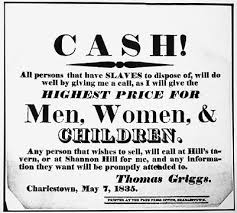
It was not enough for Southerners to claim equal standing with Northerners; Northerners must acknowledge it. But this was something that the North was less and less willing to do.
Finally, its citizens dared to elect Abraham Lincoln as President in 1860.
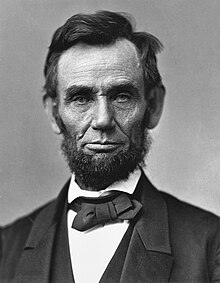
Abraham Lincoln
Lincoln and his new Republican party damned slavery—and slaveholders—as morally evil, obsolete and ultimately doomed. And they were determined to prevent slavery from spreading any further throughout the country.
Southerners found all of this intolerable.
The British author, Anthony Trollope, explained to his readers: “It is no light thing to be told daily, by our fellow citizens…that you are guilty of the one damning sin that cannot be forgiven.
“All this [Southerners] could partly moderate, partly rebuke and partly bear as long as political power remained in their hands. But they have gradually felt that this was going, and were prepared to cut the rope and run as soon as it was gone.”
Only 10% of Southerners owned slaves. The other 90% of the population “had no dog in this fight,” as Southerners liked to say.
Yet they so admired and aspired to be like their “gentleman betters” that they threw in their lot with them.
There were some Southerners who could see what was coming—and vainly warned their fellow citizens against it.
One of these was Sam Houston, the man who had won Texas independence at the 1836 battle of San Jacinto and later served as that state’s governor.

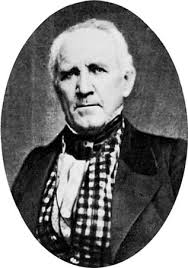
Sam Houston
On April 19, 1860, addressing a crowd in Galveston, he said: “Let me tell you what is coming. After the sacrifice of countless millions of treasure and hundreds of thousands of lives, you may win Southern independence if God be not against you.
“But I doubt it. I tell you that, while I believe with you in the doctrine of states’ rights, the North is determined to preserve this Union. They are not a fiery, impulsive people as you are, for they live in colder climates.
“But when they begin to move in a given direction, they move with the steady momentum and perseverance of a mighty avalanche; and what I fear is, they will overwhelm the South.”
Four years later, on April 9, 1865, Houston’s warning became history.
Confederate General Robert E. Lee surrendered the Army of Northern Virginia to Union General Ulysses S. Grant at Appomattox Courthouse.
Huge sections of the South had been laid waste by Union troops and more than 258,000 Southerners had been killed.
And slavery, the mainstay of Southern plantation life, had been ended forever.
The South had paid an expensive price for its fixation on ego.
Even more proved at risk a century later, when President John F. Kennedy faced off with Soviet Premier Nikita Khrushchev.
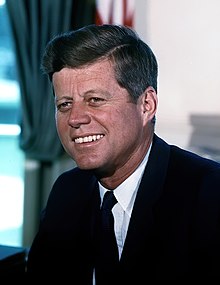
John F. Kennedy
In August, 1961, faced with the embarrassment of East Berliners fleeing by the thousands into West Germany, the Soviet leader erected the infamous Berlin Wall, sealing off East and West Berlin.
Khrushchev pressed his advantage, threatening Kennedy with nuclear war unless the Americans abandoned their protection of West Berlin.
In April, Kennedy had been humiliated at the Bay of Pigs when a CIA-sponsored invasion failed to overthrow the Cuba’s Fidel Castro. So he was already on the defensive when he and Khrushchev met in Vienna.
Kennedy’s reaction: “If Khrushchev wants to rub my nose in the dirt, it’s all over.”
In short: Kennedy was prepared to incinerate the planet if he felt his almighty ego was about to get smacked.
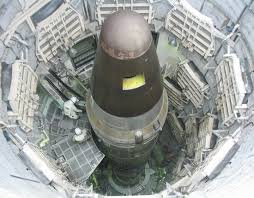
Nuclear missile in silo
What has proved true for states and nations proves equally true for those leading every other type of institution.
Although most people like to believe they are guided by rationality and morality, all-too-often, what truly decides the course of events is their ego.
For pre-Civil War Southerners, it meant demanding that “Yankees” show respect for slave-owning society. Otherwise, they would leave the Union.
For Kennedy, it meant playing a game of “chicken,” backed up with nuclear missiles, to show Khrushchev who Numero Uno really was.
And during the Cuban Missile Crisis, in October, 1962, humankind almost disappeared as Kennedy set out to make Khrushchev “blink.”
It is well to keep these lessons from history in mind when choosing political leaders—and when making our own major decisions.
ABC NEWS, AFGHANISTAN, ALTERNET, AMERICABLOG, AP, BABY BOOMER RESISTANCE, BARACK OBAMA, BBC, BLOOMBERG, BLOOMBERG NEWS, BUZZFEED, CANADA, CBS NEWS, CENTRAL AMERICA, CHIANG KAI-SHEK, CHINA, CNN, COLUMBIA, COMMUNISM, CRIMEA, CROOKS AND LIARS, CUBA, CZECHOSLAVAKIA, DAILY KOS, DAILY KOZ, DEMOCRATS, DONALD TRUMP, DWIGHT D. EISENHOWER, FACEBOOK, FIVETHIRTYEIGHT, GUATEMALA, GUNBOAT DIPLOMACY, HARPER’S MAGAZINE, HARRY S. TRUMAN, HUFFINGTON POST, HUNGARY, IRAQ, JOHN F. KENNEDY, JOSEPH MCCARTHY, LATIN AMERICA, LYNDON B. JOHNSON, MAO TSE-TUNG, MEDIA MATTERS, MICK MULVANEY, MITT ROMNEY, MONROE DOCTRINE, MOTHER JONES, MOVEON, MSNBC, NBC NEWS, NEW REPUBLIC, NEWSDAY, NEWSWEEK, NICARAGUA, NPR, PANAMA, PBS NEWSHOUR, POLAND, POLITICO, POLITICUSUSA, RAW STORY, REPUBLICANS, REUTERS, RICHARD M. NIXON, SALON, SEATTLE TIMES, SLATE, SOCHI OLYMPICS, SOVIET UNION, SPHERES OF INFLUENCE, SYRIA, TALKING POINTS MEMO, TARIFFS, THE ATLANTIC, THE CHICAGO SUN-TIMES, THE CHICAGO TRIBUNE, THE DAILY BEAST, THE DAILY BLOG, THE GUARDIAN, THE HILL, THE HUFFINGTON POST, THE INTERCEPT, THE LOS ANGELES TIMES, THE NATION, THE NEW REPUBLIC, THE NEW YORK TIMES, THE NEW YORKER, THE VILLAGE VOICE, THE WASHINGTON POST, THINKPROGRESS, TIME, TOM COTTON, TRUTHDIG, TRUTHOUT, TWO POLITICAL JUNKIES, U.S. NEWS & WORLD REPORT, UKRAINE, UPI, USA TODAY, VICTOR YANUKOVYCH, VIETNAM, VLADIMIR PUTIN, VOLODYMYR ZELENSKY, WONKETTE, X
In Bureaucracy, History, Military, Social commentary on August 14, 2025 at 12:14 am
Since February 24, 2022, Ukraine has been under Russian assault. For more than two years, President Joseph R. Biden supplied Ukrainians with arms and Intelligence.
Then voters elected Donald Trump President in 2024.
Suddenly, the future of Ukraine—and those countries making up the 75-year-old North Atlantic Treaty Organization (NATO)—looked very different.
Numerous commentators have noted that Trump is a “transactional President.” Meaning that he doesn’t enter any enterprise unless he believes there’s something in it for him.
Thus, defending a nation simply because it’s a democracy is a waste of time—unless he can gain something from it.
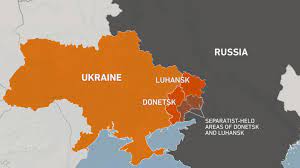
Ukraine vs. Russia
Trump wants access to Ukraine’s rare earth minerals, which are key to manufacturing high-tech products like computer chips and military equipment.
The reason: In April, 2025, China announced export restrictions on some of these minerals in retaliation for Trump’s placing tariffs on Chinese goods.
In asserting the United States’ sphere of influence, Trump sees himself as the leader of a country that’s expansive and claims new territory,
As a result, he has attacked America’s longtime ally and neighbor, Canada with tariffs. He’s even threatened it with possible military invasion.
Vladimir Putin is another politician who believes in spheres of influence.
Since the breakup of the Soviet Union in 1991, Putin has yearned for its reestablishment. He has called that breakup “the greatest geopolitical tragedy of the 20th century.”

Vladimir Putin
Kremlin.ru, CC BY 4.0 <https://creativecommons.org/licenses/by/4.0>, via Wikimedia Commons
Russia has long resisted Ukraine’s move towards European institutions—especially entry into NATO.
Since late February, 2014, he began moving Russian troops into Ukraine and its autonomous Republic, Crimea. Russia annexed Ukraine’s southern Crimean peninsula and backed separatists who captured large swathes of eastern Ukraine.
On December 3, 2021, the Washington Post reported: “The Kremlin was planning a multi-front offensive as soon as early next year involving up to 175,000 troops” against Ukraine.
And where there is activity by Russians, American Rightists are eager to turn such events to their own political advantage.
All of which overlooks a number of brutal political truths.
First, all great powers have spheres of interest—and jealously guard them.
For the United States, it’s Latin and Central America, as established by the Monroe Doctrine.
And just what is the Monroe Doctrine?
It’s a statement made by President James Monroe in his 1823 annual message to Congress, which warned European powers not to interfere in the affairs of the Western Hemisphere.
The Monroe Doctrine has no legitimacy except the willingness of the United States to use armed force to back it up. When the United States no longer has the will or resources to enforce the Doctrine, it will cease to have meaning.
In 1962, President John F. Kennedy threatened Russian premier Nikita Khrushchev with nuclear oblivion unless Soviet nuclear missiles were withdrawn from Cuba.
For the Soviet Union, its spheres of influence include the Ukraine. Long known as “the breadbasket of Russia,” in 2011, it was the world’s third-largest grain exporter.
Russia will no more give up access to that breadbasket than the United States would part with the rich farming states of the Midwest.
Second, spheres of influence often prove disastrous to those smaller countries affected.
Throughout Latin and Central America, the United States remains highly unpopular for its brutal use of “gunboat diplomacy” during the 20th century.
Among those countries invaded or controlled by America: Mexico, Cuba, Guatemala, Nicaragua, Columbia, Panama and the Dominican Republic.
The resulting anger has led many Latin and Central Americans to support Communist Cuba, even though its political oppression and economic failure are universally apparent.
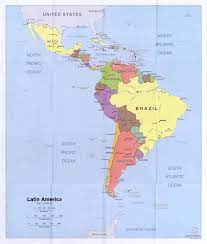
Latin and Central America
Similarly, the Soviet Union forced many nations—such as Poland, Hungary and Czechoslovakia—to submit to the will of Moscow.
The alternative? The threat of Soviet invasion—as occurred in Hungary in 1956 and Czechoslovakia in 1968.
Third, even “great powers” are not all-powerful.
In 1949, after a long civil war, the forces of Mao Zedong defeated the Nationalist armies of Chiang Kai-Shek, who withdrew to Taiwan.
China had never been a territory of the United States. Nor could the United States have prevented Mao from defeating the corrupt, ineptly-led Nationalist forces.
Even so, Republican Senators and Representatives such as Richard Nixon and Joseph McCarthy eagerly blamed President Harry S. Truman and the Democrats for “losing China.”
The fear of being accused of “losing” another country led Presidents Dwight D. Eisenhower, John F. Kennedy, Lyndon B. Johnson and Richard M. Nixon to tragically commit the United States to “roll back” Communism in Cuba and Vietnam.
Now Republicans—who claim the United States can’t afford to provide healthcare for its poorest citizens—want to turn the national budget over to the Pentagon.
They want the United States to “intervene” in Syria following the overthrow of Bashar al-Assad’s government in late 2024
This would insert the United States into yet another war in yet another Islamic country—after our disastrous forays in Iraq and Afghanistan.
Before plunging into conflicts that don’t concern us and where there is absolutely nothing to “win,” Americans would do well to remember the above-stated lessons of history. And to learn from them.
ABC NEWS, AL PACINO, ALTERNET, AMERICABLOG, AP, BABY BOOMER RESISTANCE, BLOOD FEUD, BUZZFEED, CARLOS MARCELLO, CBS NEWS, CHARLES BRANDT, CIA, CNN, COTTER SMITH, CROOKS AND LIARS, CUBA, DAILY KOZ, ERNEST BORGNINE, F.I.S.T. (MOVIE), FACEBOOK, FBI, FIDEL CASTRO, FIVETHIRTYEIGHT, FRANK FITZSIMMONS, FRANK SHEERAN, GUS RUSSO, HOFFA (MOVIE), INTERNATIONAL BROTHERHOOD OF TEAMSTERS, J. EDGAR HOOVER, JACK NICHOLSON, JAMES R. HOFFA, JOE PESCI, JOHN F. KENNEDY, JUSTICE DEPARTMENT, LIVE BY THE SWORD: THE SECRET WAR AGAINST CASTRO AND THE DEATH OF JFK, MAFIA, MARTIN SCORSESE, MOTHER JONES, MOVEON, MSNBC, NBC NEWS, NETFLIX, NEWSWEEK, NPR, PBS NEWSHOUR, POLITICO, POLITICUSUSA, RAFAEL EDWARD CRUZ, RAW STORY, REUTERS, ROBERT BLAKE, ROBERT DE NIRO, ROBERT F. KENNEDY, RUSSELL BUFFALINO, SALON, SAM GROOM, SEATTLE TIMES, Secret Service, SENATE LABOR RACKETS COMMITTEE, SLATE, SYLVESTER STALLONE, TALKING POINTS MEMO, THE ATLANTIC, THE CHICAGO SUN-TIMES, THE CHICAGO TRIBUNE, THE DAILY BEAST, THE DAILY BLOG, THE GUARDIAN, THE HILL, THE HUFFINGTON POST, THE IRISHMAN (MOVIE), THE LOS ANGELES TIMES, THE NATION, THE NEW YORK TIMES, THE WALL STREET JOURNAL, THE WASHINGTON POST, THINKPROGRESS, TIME, TRUTHDIG, TWITTER, U.S. NEWS & WORLD REPORT, UPI, USA TODAY
In Entertainment, History, Law, Law Enforcement, Politics, Social commentary on August 4, 2025 at 12:16 am
The 1983 TV mini-series, Blood Feud, chronicles the decade-long struggle between Robert F. Kennedy (Cotter Smith) and James R. Hoffa (Robert Blake), president of the International Brotherhood of Teamsters Union.
With Kennedy as Attorney General and facing relentless pressure from the Justice Department, the Mafia despairs of a solution. At a swanky restaurant, several high-ranking Mafiosi agree that “something” must be done.
On November 22, 1963, President John F. Kennedy is assassinated in Dallas, Texas.
Blood Feud clearly implies that the Mafia was responsible.
[The House Assassinations Committee investigated this possibility in 1978, and determined that Carlos Marcello, the Mafia boss of New Orleans, had the means, motive and opportunity to kill JFK. But it could not find any conclusive evidence of his involvement.]
Even with the President dead, RFK’s Justice Department continues to pursue Hoffa. In 1964, he is finally convicted of jury tampering and sentenced to 13 years’ imprisonment.
U.S. Department of Justice
Hoping to avoid prison, Hoffa phones Robert Kennedy, offering future Teamsters support if RFK runs for President. To prove he can deliver, he tells Kennedy that the Teamsters have even penetrated the FBI.
[In March, 1964, Kennedy met with Hoffa on an airfield at Dulles International Airport in Washington, D.C. He was accompanied by two Secret Service agents from the detail assigned to ex-First Lady Jacqueline Kennedy.
[FBI Director J. Edgar Hoover, no longer afraid to cross RFK, had withdrawn the agents previously assigned to guard him.
[Accompanying Hoffa were two muscular bodyguards—at least one of whom was packing two pistols in shoulder holsters.
[While the Secret Service agents watched from a respectful distance, Kennedy spoke quietly with Hoffa. The Attorney General showed a document to Hoffa, and the Teamsters leader at times nodded or shook his head.
[The agents drove Kennedy back to Washington. During the ride, he said nothing about the reason for the meeting.
[Gus Russo—author of Live By the Sword: The Secret War Against Castro and the Death of JFK—writes that the reason might have been Dallas.
[Perhaps, he speculates, RFK had wanted to look into Hoffa’s eyes while asking him: Did you have anything to do with the assassination? RFK had, in fact, done this with CIA Director John McCone almost immediately after his brother’s death.]
In Blood Feud, Kennedy confronts J. Edgar Hoover (Ernest Borgnine) and accuses him of illegally planting wiretaps in Mob hangouts all over the country.
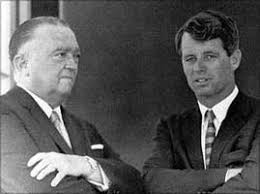
J. Edgar Hoover and Robert F. Kennedy
Hoover retorts that this had been the only way to obtain the prosecution-worthy intelligence Kennedy had demanded: “You loved that flow of information. You didn’t want it to stop.”
Kennedy: Why did you keep the FBI out of the fight against the Mob for decades?
Hoover: “Every agency that came to grips with them got corrupted by their money.”
[So far as is known, Hoover never made any such confession. Historians continue to guess his reason for leaving the Mob alone for decades.]
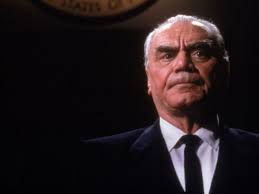

Ernest Borgnine as J. Edgar Hoover
RFK then mentions the CIA’s plots to employ the Mob to assassinate Cuban dictator Fidel Castro.
[The agency had wanted to please President Kennedy, and the Mafia had wanted to regain its casinos lost to the Cuban Revolution. The role the Kennedy brothers played in the CIA’s assassination plots remains murky, and has been the subject of endless speculation.]
“The CIA, doing business with the Mob,” says Kennedy. “The FBI, leaking information to its enemies [the Teamsters].” Then, sadly: “I guess it’s true—everyone does business with everyone.”
[So far as is known, the FBI did not pass on secrets to the Teamsters. But during the 1970s, the Mafia penetrated the Cleveland FBI office through bribes to a secretary. Several FBI Mob informants were “clipped” as a result.]
In 1967, Hoffa goes to prison. He stays there until, in 1971, President Richard Nixon commutes his sentence in hopes of gaining Teamsters’ support for his 1972 re-election.
Kennedy leaves the Justice Department in 1964 and is elected U.S. Senator from New York. In 1968 he runs for President. On June 5, after winning the California primary, he’s assassinated.
In Blood Feud, just before his assassination, RFK asks: “How will I ever really know if the Mob killed Jack because of my anti-Mob crusade?”
Hoffa schemes to return to the presidency of the Teamsters—a post now held by his successor, Frank Fitzsimmons. He runs the union in a more relaxed style than Hoffa, thus giving the Mob greater control over its pension fund.
And the Mafia likes it that way.
On July 30, 1975, Hoffa disappears from the parking lot of the Machus Red Fox Restaurant near Detroit. He had gone there to meet with two Mafia leaders.
Fifty years after the death of James R. Hoffa, and 57 years after that of Robert F. Kennedy:
- Labor unions are a shadow of their former power.
- The threat they once represented to national prosperity has been replaced by that of predatory corporations like Enron and AIG.
- The war RFK began on the Mafia has continued, sending countless mobsters to prison.
- Millions of Americans who once expected the Federal Government to protect them from crime now believe the Government is their biggest threat.
- The idealism that fueled RFK’s life has virtually disappeared from politics.
ABC NEWS, AL PACINO, ALTERNET, AMERICABLOG, AP, BABY BOOMER RESISTANCE, BLOOD FEUD, BUZZFEED, CARLOS MARCELLO, CBS NEWS, CHARLES BRANDT, CIA, CNN, COTTER SMITH, CROOKS AND LIARS, CUBA, DAILY KOZ, ERNEST BORGNINE, F.I.S.T. (MOVIE), FACEBOOK, FBI, FIDEL CASTRO, FIVETHIRTYEIGHT, FRANK FITZSIMMONS, FRANK SHEERAN, GUS RUSSO, HOFFA (MOVIE), INTERNATIONAL BROTHERHOOD OF TEAMSTERS, J. EDGAR HOOVER, JACK NICHOLSON, JAMES R. HOFFA, JOE PESCI, JOHN F. KENNEDY, JUSTICE DEPARTMENT, LIVE BY THE SWORD: THE SECRET WAR AGAINST CASTRO AND THE DEATH OF JFK, MAFIA, MARTIN SCORSESE, MOTHER JONES, MOVEON, MSNBC, NBC NEWS, NETFLIX, NEWSWEEK, NPR, PBS NEWSHOUR, POLITICO, POLITICUSUSA, RAFAEL EDWARD CRUZ, RAW STORY, REUTERS, ROBERT BLAKE, ROBERT DE NIRO, ROBERT F. KENNEDY, RUSSELL BUFFALINO, SALON, SAM GROOM, SEATTLE TIMES, Secret Service, SENATE LABOR RACKETS COMMITTEE, SLATE, SYLVESTER STALLONE, TALKING POINTS MEMO, THE ATLANTIC, THE CHICAGO SUN-TIMES, THE CHICAGO TRIBUNE, THE DAILY BEAST, THE DAILY BLOG, THE GUARDIAN, THE HILL, THE HUFFINGTON POST, THE IRISHMAN (MOVIE), THE LOS ANGELES TIMES, THE NATION, THE NEW YORK TIMES, THE WALL STREET JOURNAL, THE WASHINGTON POST, THINKPROGRESS, TIME, TRUTHDIG, TWITTER, U.S. NEWS & WORLD REPORT, UPI, USA TODAY
In Entertainment, History, Law, Law Enforcement, Politics, Social commentary on August 1, 2025 at 12:23 am
The 1983 TV mini-series, Blood Feud, chronicles the decade-long struggle between Robert F. Kennedy and James R. Hoffa.
Having “helped” Kennedy (Cotter Smith) to oust corrupt Teamsters President Dave Beck, Hoffa (Robert Blake) believes that Kennedy should now be satisfied: “He’s got his scalp. Now he can move on to other things while I run the union.”
But Hoffa has guessed wrong—with fatal results. Realizing that he’s been “played” by Hoffa, a furious Kennedy strikes back.
Robert Blake as James R Hoffa
He orders increased surveillance of Hoffa and his topmost associates. He subpoenas union records and members of both the Teamsters and the Mafia to appear before his committee in public hearings.
And he tries to enlist the aid of legendary FBI Director J. Edgar Hoover (Ernest Borgnine). But Hoover wants no part of a war against organized crime, whose existence he refuses to admit.
Meanwhile, Kennedy’s confrontations with Hoffa grow increasingly fierce. In open hearings, Kennedy accuses Hoffa of receiving kickbacks in the name of his wife. Hoffa damns him for “dirtying my wife’s name.”
Kennedy secures an indictment against Hoffa for hiring a spy to infiltrate the Senate Labor Rackets Committee. He’s so certain of a conviction that he tells the press he’ll “jump off the Capitol building” if Hoffa beats the rap.
But Hoffa’s lawyer, Edward Bennett Williams (Jose Ferrer) puts Kennedy himself on the witness stand. There he portrays Kennedy as a spoiled rich man who’s waging a vendetta against Hoffa.
Hoffa beats the rap, and offers to send Kennedy a parachute. But he jokingly warns reporters: “Hey, Bobby, you better have it checked. I don’t trust myself!”
By 1959, Robert Kennedy’s work as chief counsel for the Senate Labor Rackets Committee is over. But not his determination to send Teamsters President James Hoffa to prison.
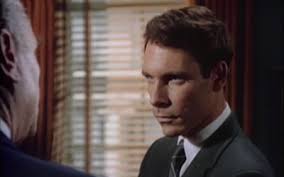
Cotter Smith as Robert Kennedy
Throughout 1960, he manages the Presidential campaign for his brother, John F. Kennedy (Sam Groom). By a margin of only 112,000 votes, JFK wins the election.
Hoffa thinks that his troubles are over, that “Bobby” will move on to other pursuits and forget about the Teamsters.
Hoffa is partly right: Kennedy moves on to another job. But it’s the office of United States Attorney General.
JFK, needing someone in the Cabinet he can trust completely, browbeats Robert into becoming the nation’s top cop.
For Hoffa, it’s a nightmare come true.
As Attorney General, Kennedy no longer has to beg J. Edgar Hoover to attack organized crime. He can—and does—order him to do so.
Throughout the country, the Mafia feels a new heat as FBI agents plant illegal electronic microphones (“bugs”) in their innermost sanctums. Agents openly tail mobsters—and send them to prison in large numbers.
And Kennedy sets up a special unit, composed of topflight prosecutors and investigators, to go after just one man: James Riddle Hoffa. The press comes to call it the “Get Hoffa” squad.
Hoffa continues to beat federal prosecutors in court. But he believes he’s under constant surveillance by the FBI, and his nerves are starting to crack.
Convinced that the FBI has bugged his office, he literally tears apart the room, hoping to find the bug. But he fails to do so.
What he doesn’t know is he’s facing a more personal danger—from one of his closest associates: Edward Grady Partin (Brian Dennehy).
He tells Partin how easy it would be to assassinate Kennedy with a rifle or bomb.
Later, Partin gets into a legal jam—and is abandoned by the Teamsters. Hoping to cut a deal, he relays word to the Justice Department of Hoffa’s threats against the Attorney General.
Now working for the Justice Department, Partin sends in reports on Hoffa’s juror-bribing efforts in yet another trial. Hoffa again beats the rap—but now Kennedy has the insider’s proof he needs to put him away for years.
Meanwhile, the Mafia despairs of the increasing pressure of the Justice Department. At a swanky restaurant, several high-ranking members agree that “something” must be done.
[Although this scene is fictional, it’s clearly based on an infamous outburst of Carlos Marcello, the longtime Mafia boss of New Orleans.
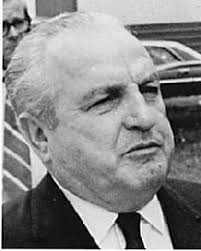
Carlos Marcello
[In 1961, Marcello was deported to his native Guatemala on orders by RFK. After illegally re-entering the country, he swore vengeance against the Attorney General.
[In September, 1962, during a meeting with several mob colleagues, he flew into a rage when someone mentioned Kennedy.
“Take the stone out of my shoe!” he shouted, echoing a Sicilian curse. “Don’t you worry about that little Bobby sonofabitch. He’s going to be taken care of!”
[When one of his colleagues warned that murdering RFK would trigger the wrath of his brother, the President, Marcello replied: “In Sicily they say if you want to kill a dog you don’t cut off the tail. You go for the head.”
[Marcello believed that the death of President Kennedy would render the Attorney General powerless. And he added that he planned to use a “nut” to do the job.]
On November 22, 1963, President John F. Kennedy is assassinated in Dallas, Texas.
Blood Feud clearly implies that the Mafia was responsible.
ABC NEWS, AL PACINO, ALTERNET, AMERICABLOG, AP, BABY BOOMER RESISTANCE, BLOOD FEUD, BUZZFEED, CARLOS MARCELLO, CBS NEWS, CHARLES BRANDT, CIA, CNN, COTTER SMITH, CROOKS AND LIARS, CUBA, DAILY KOZ, ERNEST BORGNINE, F.I.S.T. (MOVIE), FACEBOOK, FBI, FIDEL CASTRO, FIVETHIRTYEIGHT, FRANK FITZSIMMONS, FRANK SHEERAN, GUS RUSSO, HOFFA (MOVIE), INTERNATIONAL BROTHERHOOD OF TEAMSTERS, J. EDGAR HOOVER, JACK NICHOLSON, JAMES R. HOFFA, JOE PESCI, JOHN F. KENNEDY, JUSTICE DEPARTMENT, LIVE BY THE SWORD: THE SECRET WAR AGAINST CASTRO AND THE DEATH OF JFK, MAFIA, MARTIN SCORSESE, MOTHER JONES, MOVEON, MSNBC, NBC NEWS, NETFLIX, NEWSWEEK, NPR, PBS NEWSHOUR, POLITICO, POLITICUSUSA, RAFAEL EDWARD CRUZ, RAW STORY, REUTERS, ROBERT BLAKE, ROBERT DE NIRO, ROBERT F. KENNEDY, RUSSELL BUFFALINO, SALON, SAM GROOM, SEATTLE TIMES, Secret Service, SENATE LABOR RACKETS COMMITTEE, SLATE, SYLVESTER STALLONE, TALKING POINTS MEMO, THE ATLANTIC, THE CHICAGO SUN-TIMES, THE CHICAGO TRIBUNE, THE DAILY BEAST, THE DAILY BLOG, THE GUARDIAN, THE HILL, THE HUFFINGTON POST, THE IRISHMAN (MOVIE), THE LOS ANGELES TIMES, THE NATION, THE NEW YORK TIMES, THE WALL STREET JOURNAL, THE WASHINGTON POST, THINKPROGRESS, TIME, TRUTHDIG, TWITTER, U.S. NEWS & WORLD REPORT, UPI, USA TODAY
In Entertainment, History, Law, Law Enforcement, Politics, Social commentary on July 31, 2025 at 12:39 am
James Riddle Hoffa, the onetime president of the International Brotherhood of Teamsters (IBT) Union, vanished 50 years ago—on July 30, 1975.
Once a powerful union boss courted by mobsters and politicians more than 60 years ago, today he’s best-known for his sudden disappearance and presumed murder.
Elected President of the Teamsters in 1957, Hoffa was convicted of jury tampering in 1964 and began serving an eight-year prison sentence in 1967. Before doing so, he named Frank Fitzsimmons, whom he thought a totally loyal ally, to serve as a caretaker president.
Pardoned by President Richard M. Nixon in December, 1971, Hoffa immediately began campaigning to regain the presidency of the union in 1976. But Fitzsimmons had come to enjoy the IBT presidency—and wanted to keep it.
More importantly, the Mafia wanted him to keep it. Under Hoffa, the Teamsters had bankrolled various Mafia real estate schemes—such as building casinos in Las Vegas.
But Hoffa had kept a tight hold on Teamster monies. Fitzsimmons, by contrast, had allowed the Mafia a free hand—at the expense of the Teamsters pension fund meant for retiring members.
Warned by his onetime Mafia allies to drop his campaign for re-election, Hoffa charged ahead anyway.
On July 30, 1975, he expected to meet with three major Mafia bosses at a restaurant in Detroit: Anthony Giacalone, Russell Buffalino and Anthony Provenzano. With their backing, he expected a guaranteed victory.
Instead, he disappeared.
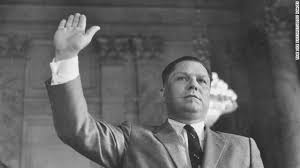
James Riddle Hoffa testifying before the Senate Labor Rackets Committee
The FBI assigned 200 agents to investigate his disappearance. But Hoffa’s body was never found, and even the way he died remained a mystery.
Then, in 2004, former prosecutor-turned-author Charles Brandt published a non-fiction book: I Heard You Paint Houses. Based on tape recorded interviews with former Mafia hitman Frank “The Irishman” Sheeran, it revealed the events that alleged led up to Hoffa’s execution.
And it was none other than Sheeran—to whom Hoffa had presented a gold, diamond-encrusted watch in October, 1974—who carried out the execution. 
In November, 2019, Sheeran’s life was depicted in the movie: The Irishman, directed by Martin Scorsese. Sheeran was portrayed by Robert De Niro, Joe Pesci portrayed Mafia boss Russell Buffalino and Al Pacino played Hoffa.
The Irishman received a limited theatrical release on November 1, 2019, followed by digital streaming on November 27 by Netflix.
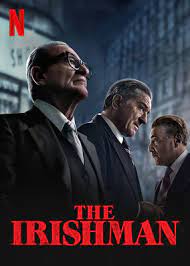
Joe Pesci (Russell Buffalino), Robert DeNiro (Frank Sheeran) and Al Pacino (Jimmy Hoffa)
This was not the first movie made about the life and death of Jimmy Hoffa. Sylvester Stallone played Johnny Kovak, a Hoffa-like labor leader, in 1978’s F.I.S.T. And Jack Nicholson played Hoffa in a 1992 movie.
But the most lengthy and detailed portrayal of Hoffa’s stormy life came 42 years ago on TV.
In 1983, Blood Feud, a two-part TV mini-series, depicted the 11-year animosity between Robert F. Kennedy and Hoffa. Although it took some dramatic liberties, its portrayal of the major events of that period remains essentially accurate.
In 1957, as a young, idealistic attorney, Kennedy declared war on Hoffa, the president of the Mafia-dominated International Brotherhood of Teamsters Union.
As chief counsel for the Senate Labor Rackets Committee, Kennedy was appalled at the corruption he discovered among high-ranking Teamsters officials. As he saw it, under Hoffa’s leadership, the union was nothing less than “a conspiracy of evil.”
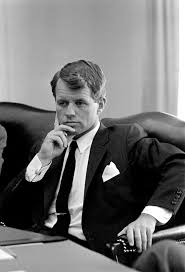
Robert Francis Kennedy as Chief Counsel, Senate Labor Rackets Committee
Hoffa, in turn, held an equally unflattering view of Kennedy. “A rich punk,” said Hoffa, who didn’t know or care about “the average workingman.”
Today, labor unions are a rapidly-vanishing species, commanding far less political influence than they did 60 years ago. As a result, young viewers of this series may find it hard to believe that labor ever held such sway, or that the Teamsters posed such a threat.
And in an age when millions see “Big Government” as the enemy, they may feel strong reservations about the all-out war that Robert F. Kennedy waged against Hoffa.
Blood Feud opens in 1957, when Hoffa (Robert Blake) is a rising figure within the Teamsters. Kennedy (Cotter Smith) is chief counsel for the Senate Labor Rackets Committee.
At first, Hoffa tries to ingratiate himself with Kennedy, telling him: “I know everybody who can help me and anybody who can hurt me.”
A wily Hoffa decides to parley Kennedy’s anti-corruption zeal into a path to power for himself. Via his attorney, Eddie Cheyfitz, he feeds Kennedy incriminating evidence against Dave Beck, president of the Teamsters.
Confronted with a Senate subpoena, Beck flees the country—paving the way for Hoffa to assume the top position in the union. Hoffa believes he has solved two problems at once.
Having “helped” Kennedy to oust Beck, Hoffa believes that Kennedy should now be satisfied: “He’s got his scalp. Now he can move on to other things while I run the union.”
But Hoffa has guessed wrong—with fatal results. Realizing that he’s been “played.” a furious Kennedy strikes back.
He orders increased surveillance of Hoffa and his topmost associates. He subpoenas union records and members of both the Teamsters and the Mafia to appear before his committee in public hearings.
And he tries to enlist the aid of legendary FBI Director J. Edgar Hoover (Ernest Borgnine). But Hoover wants no part of a war against organized crime, whose existence he refuses to admit.
2016 PRESIDENTIAL CAMPAIGN, 2020 PRESIDENTIAL CAMPAIGN, 2024 PRESIDENTIAL CAMPAIGN, 60 MINUTES NEWS MAGAINE, ABC NEWS, ADAM SCHIFF, ADOLF HITLER, ALBERT “THE EXECUTIONER” ANASTASIA, ALTERNET, ALVIN BRAGG, AMERICABLOG, AP, ARTICLES OF IMPEACHMENT, ARTIFICIAL INTELLIGENCE (AI), BABY BOOMER RESISTANCE, BORDER WALL, BUZZFEED, CANADA, CBS NEWS, CENSORSHIP, CENSUS BUREAU, CENTERS FOR DISEASE CONTROL AND PREVENTION, CHARLES “LUCKY” LUCIANO, CHARLES DE GAULLE, CHINA, CHRIS CHRISTIE, CHRISTI GRIMM, CHRISTOPHER S. MURPHY, CIA, CLASSIFIED DOCUMENTS, CNN, CONSERVATIVE POLITICAL ACTION CONFERENCE, CONSUMER FINANCIAL PROTECTION BUREAU, CONVERSATION WITH AN AMERICAN WRITER (POEM), CORONAVIRUS RELIEF MONIES, COVID-19, CROOKS AND LIARS, CUBAN MISSILE CRISIS, DAILY KOS, DAN BOWMAN, DAN SULLIVAN, DANIELLE SASSOON, DAVID BROOKS, DEMOCRATS, DEPARTMENT OF DEFENSE, DEPARTMENT OF GOVERNMENT EFFICIENCY (DOGE), DEPARTMENT OF HEALTH AND HUMAN SERVICES, DEPARTMENT OF JUSTICE, DIVERSITY EQUITY INCLUSION (DEI), DONALD TRUMP, DONALD TRUMP JUNIOR, DRUDGE RETORT, E. JEAN CARROLL, ELON MUSK, EMIL BOVE, EMOLUMENTS CLAUSE OF THE UNITED STATES CONSTITUTION, ERIC ADAMS, EXTORTION, FBI, FIRST AMENDMENT, FIVETHIRTYEIGHT, FRIVOLOUS LAWSUITS, GEORGE FLOYD, GEORGE STEPHANOPOULOS, GEORGE W. BUSH, GLENN FINE, GOVERNMENT ACCOUNTABILITY OFFICE, GOVERNMENT SHUTDOWN, GULF OF AMERICA, GULF OF MEXICO, HARPER’S MAGAZINE, HILLARY CLINTON, HOUSE FOREIGN AFFAIRS COMMITTEE, HOUSE INTELLIGENCE COMMITTEE, HOUSE OVERSIGHT AND REFORM COMMITTEE, HUNTER BIDEN, IMMIGRANTS, IMPEACHMENT, IMPOUNDMENT CONTROL ACT, INSPECTORS GENERAL, INTELLIGENCE COMMUNITY, INTELLIGENCE OFFICERS, JACK SMITH, JAKE SULLIVAN, JAKE TAPPER, JAMAL KHASHOGGI, JAMES COMEY, JAMES MCHENRY, JAMES ROBART, JANUARY 6 COUP ATTEMPT, JARED KUSHNER, JEFF SESSIONS, JOHN CORNYN, JOHN F. KENNEDY, JOHN F. KENNEDY CENTER FOR THE PERFORMING ARTS, JOHN ROBERTS, JOING CHIEFS OF STAFF, JON S. TIGAR, JOSEPH BIDEN, JOSEPH STALIN, Kamala Harris, KELLY LOEFFER, KEVIN CRAMER, LAFAYETTE SQUARE, LAMAR ALEXANDER, LEON PANETTA, LINDSEY GRAHAM, LUXUY JET, MARCO RUBIO, MARK MILLEY, MARTIN GUGINO, MEDIA MATTERS, MEIN KAMPF, MERRICK GARLAND, MEXICO, MICHAEL FLYNN, MICHAEL HAYDEN, MICHAEL K. ATKINSON, MICK MULVANEY, MIKE PENCE, MITCH MCCONNELL, MOHAMMED BIN SALMAN, MOTHER JONES, MOVEON, MSNBC, NANCY PELOSI, NATALIA VESELNITSKAYA, NATIONAL SECURITY AGENCY, NBC NEWS, NEWSWEEK, NIKKI HALEY, NPR, PAUL MANAFORT, PBS NEWSHOUR, PETE HEGSETH, POLITICO, POLITICUSUSA, QATAR, RAW STORY, REPUBLICANS, REUTERS, RINAT AKHMETSHIN, ROBERT MUELLER, ROBERT PAYNE, ROD ROSENSTEIN, ROGER STONE, RON DESANTIS, RON JOHNSON, RUSSIA, SALON, SEATTLE TIMES, SERGEY KISLYAK, SERGEY LAVROV, SLATE, ST. JOHN’S CHURCH, STEVE DAINES, TALKING POINTS MEMO, TARIFFS, TED CRUZ, THE ATLANTIC, THE CHICAGO SUN-TIMES, THE CHICAGO TRIBUNE, THE DAILY BEAST, THE DAILY BLOG, THE GUARDIAN, THE HILL, THE HUFFINGTON POST, THE JUDICIARY, THE LIFE AND DEATH OF ADOLF HITLER (BOOI), THE LIFE AND DEATH OF ADOLF HITLER (BOOK), THE LOS ANGELES TIMES, THE NATION, THE NEW REPUBLIC, THE NEW YORK TIMES, THE PENTAGON, THE PRESS, THE VILLAGE VOICE, THE WASHINGTON POST, THINKPROGRESS, TIME, TREASON, TRUMP TOWER MEETING, TRUTH SOCIAL, TRUTHDIG, TRUTHOUT, TWENTY-SECOND AMENDMENT, TWO POLITICAL JUNKIES, U.S. NEWS & WORLD REPORT, UKRAINE, UNITED STATES HOUSE OF REPRESENTATIVES, UNITED STATES SENATE, UPI, USA TODAY, VLADIMIR PUTIN, VOLODYMYR ZELENSKY, WHISTLEBLOWER, WHITE HOUSE BUDGET OFFICE, WONKETTE, X, YEVGENEY YEVTUSHENKO
In Bureaucracy, History, Law, Law Enforcement, Military, Politics, Social commentary on June 10, 2025 at 12:37 am
Republicans have a long and disgraceful history of excusing Donald Trump’s litany of crimes—as a 2016 Presidential candidate, as President (2017-2021), as a former President (2021-2025) and once again as President.
Forgiven Crime 44: Trump’s Justice Department ordered Danielle Sassoon, the United States Attorney for the Southern District of New York, to dismiss pending criminal charges against New York City Mayor Eric Adams for bribery, solicitation, conspiracy and wire fraud,
This occurred after Adams—who had previously refused to cooperate with Trump’s roundup of illegal aliens—agreed to do so. Sassoon resigned from the Justice Department rather than comply with the order.
Forgiven Crime 45: When Danielle Sassoon resigned instead of carrying out what she believed was an illegal order, Emil Bove, the Acting Attorney General, sent her a letter stating that her conduct would be investigated and evaluated by the Attorney General, after which “the Attorney General will determine whether termination or some other action is appropriate.”

Danielle Sassoon
Forgiven Crime 46: Trump held what amounted to an ambush meeting with Ukrainian President Volodymyr Zelensky at the White House. Siding with Russian dictator Vladimir Putin, Trump blamed Zelensky for Russia’s 2022 invasion of Ukraine.
Trump demanded that Zelensky sign over mineral rights to the United States without America’s providing a security guarantee for Ukraine. Zelensky left without signing such an agreement.
Forgiven Crime 47: Trump announced that he was considering violating the 22nd Amendment and seeking an illegal third Presidential term in 2028.
Forgiven Crime 48: The Trump-authorized and illegitimate Department of Government Efficiency (DOGE) led by billionaire Elon Musk, dismantled multiple agencies, invaded the privacy of untold millions by accessing sensitive data systems and fired tens of thousands of federal workers.
Forgiven Crime 49: Trump filed frivolous and extortionate lawsuits against major news networks CBS and ABC.
Against CBS: Trump claimed that its news magazine, “60 Minutes” deceptively edited an interview with Kamala Harris to damage his presidential campaign and influence the election. He initially sought $10 billion in damages, then increased it to $20 billion.

Against ABC: He claimed that its commentator, George Stephanopoulos, falsely stated he was found liable for “rape” in the case brought by columnist E. Jean Carroll. The jury found Trump liable for sexual abuse and defamation, but not rape. The judge later clarified that what the jury found Trump did was in fact rape, as commonly understood.
ABC settled the lawsuit by agreeing to donate $15 million to Trump’s Presidential library.
Forgiven Crime 50: Trump solicited and received a $400 million luxury jet from Qatar for use as Air Force One, in direct violation of the Emoluments Clause of the United States Constitution, which prohibits federal officials from accepting gifts from foreign countries.
The jet will cost taxpayers hundreds of millions of dollars to bring it up to presidential standards, including a security sweep of the entire aircraft and costly upgrades to ensure classified communications.
After Trump leaves office, it will be transferred to his Presidential library.
* * * * *
Why have Republicans almost unanimously stood by Donald Trump despite the wreckage he made of American foreign and domestic policy?
Fear—that they will lose their privileged positions in Congress if they don’t.
This could happen by:
- Their being voted out of Congress by Trump’s fanatical base; or
- Their being voted out of Congress by anti-Trump voters fed up with Trump’s appalling behavior.
House and Senate Republicans’ support for Trump hinges on one question: “Can I hold onto my power and all the privileges that accompany it by sticking—or breaking—with him?”
In his bestselling 1973 biography, The Life and Death of Adolf Hitler, British historian Robert Payne harshly condemned the German people for the rise of the Nazi dictator:
“[They] allowed themselves to be seduced by him and came to enjoy the experience….[They] followed him with joy and enthusiasm because he gave them license to pillage and murder to their hearts’ content. They were his servile accomplices, his willing victims.”
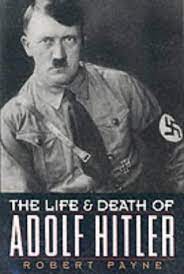
Like Hitler, Trump offered his Republican voters and Congressional allies intoxicating dreams: “I will enrich all of you. And I will humiliate and destroy those Americans you most hate.”
For his white, Fascistic, largely elderly audience, those enemies included blacks, atheists, Hispanics, non-Christians, Muslims, liberals, “uppity” women, Asians.
For most of the first three years of his first term, he faced little opposition. What cost Trump the White House wasn’t Democratic or Republican courage but a deadly disease—COVID-19—which Trump refused to take seriously.
Democrats cowered before Trump’s slanders—thereby ensuring more assaults.
Most of the press quailed before Trump. Only a few media outlets—notably the New York Times, CNN and the Washington Post-–dared investigate his crimes and blunders.
In 1960, the Russian poet, Yevgeney Yevtushenko, published “Conversation With an American Writer”—a stinging indictment of the cowardly opportunists who had supported the brutal tyranny of Joseph Stalin:
“You have courage,” they tell me.
It’s not true. I was never courageous.
I simply felt it unbecoming
to stoop to the cowardice of my colleagues.
Too many Republicans know all-too-well how it feels to stoop to the cowardice of their colleagues for a transitory hold on power and privilege.
2016 PRESIDENTIAL CAMPAIGN, 2020 PRESIDENTIAL CAMPAIGN, 2024 PRESIDENTIAL CAMPAIGN, 60 MINUTES NEWS MAGAINE, ABC NEWS, ADAM SCHIFF, ADOLF HITLER, ALBERT “THE EXECUTIONER” ANASTASIA, ALTERNET, ALVIN BRAGG, AMERICABLOG, AP, ARTICLES OF IMPEACHMENT, ARTIFICIAL INTELLIGENCE (AI), BABY BOOMER RESISTANCE, BORDER WALL, BUZZFEED, CANADA, CBS NEWS, CENSORSHIP, CENSUS BUREAU, CENTERS FOR DISEASE CONTROL AND PREVENTION, CHARLES “LUCKY” LUCIANO, CHARLES DE GAULLE, CHINA, CHRIS CHRISTIE, CHRISTI GRIMM, CHRISTOPHER S. MURPHY, CIA, CLASSIFIED DOCUMENTS, CNN, CONSERVATIVE POLITICAL ACTION CONFERENCE, CONSUMER FINANCIAL PROTECTION BUREAU, CONVERSATION WITH AN AMERICAN WRITER (POEM), CORONAVIRUS RELIEF MONIES, COVID-19, CROOKS AND LIARS, CUBAN MISSILE CRISIS, DAILY KOS, DAN BOWMAN, DAN SULLIVAN, DANIELLE SASSOON, DAVID BROOKS, DEMOCRATS, DEPARTMENT OF DEFENSE, DEPARTMENT OF GOVERNMENT EFFICIENCY (DOGE), DEPARTMENT OF HEALTH AND HUMAN SERVICES, DEPARTMENT OF JUSTICE, DIVERSITY EQUITY INCLUSION (DEI), DONALD TRUMP, DONALD TRUMP JUNIOR, DRUDGE RETORT, E. JEAN CARROLL, ELON MUSK, EMIL BOVE, EMOLUMENTS CLAUSE OF THE UNITED STATES CONSTITUTION, ERIC ADAMS, EXTORTION, FBI, FIRST AMENDMENT, FIVETHIRTYEIGHT, FRIVOLOUS LAWSUITS, GEORGE FLOYD, GEORGE STEPHANOPOULOS, GEORGE W. BUSH, GLENN FINE, GOVERNMENT ACCOUNTABILITY OFFICE, GOVERNMENT SHUTDOWN, GULF OF AMERICA, GULF OF MEXICO, HARPER’S MAGAZINE, HILLARY CLINTON, HOUSE FOREIGN AFFAIRS COMMITTEE, HOUSE INTELLIGENCE COMMITTEE, HOUSE OVERSIGHT AND REFORM COMMITTEE, HUNTER BIDEN, IMMIGRANTS, IMPEACHMENT, IMPOUNDMENT CONTROL ACT, INSPECTORS GENERAL, INTELLIGENCE COMMUNITY, INTELLIGENCE OFFICERS, JACK SMITH, JAKE SULLIVAN, JAKE TAPPER, JAMAL KHASHOGGI, JAMES COMEY, JAMES MCHENRY, JAMES ROBART, JANUARY 6 COUP ATTEMPT, JARED KUSHNER, JEFF SESSIONS, JOHN CORNYN, JOHN F. KENNEDY, JOHN F. KENNEDY CENTER FOR THE PERFORMING ARTS, JOHN ROBERTS, JOING CHIEFS OF STAFF, JON S. TIGAR, JOSEPH BIDEN, JOSEPH STALIN, Kamala Harris, KELLY LOEFFER, KEVIN CRAMER, LAFAYETTE SQUARE, LAMAR ALEXANDER, LEON PANETTA, LINDSEY GRAHAM, LUXUY JET, MARCO RUBIO, MARK MILLEY, MARTIN GUGINO, MEDIA MATTERS, MEIN KAMPF, MERRICK GARLAND, MEXICO, MICHAEL FLYNN, MICHAEL HAYDEN, MICHAEL K. ATKINSON, MICK MULVANEY, MIKE PENCE, MITCH MCCONNELL, MOHAMMED BIN SALMAN, MOTHER JONES, MOVEON, MSNBC, NANCY PELOSI, NATALIA VESELNITSKAYA, NATIONAL SECURITY AGENCY, NBC NEWS, NEWSWEEK, NIKKI HALEY, NPR, PAUL MANAFORT, PBS NEWSHOUR, PETE HEGSETH, POLITICO, POLITICUSUSA, QATAR, RAW STORY, REPUBLICANS, REUTERS, RINAT AKHMETSHIN, ROBERT MUELLER, ROBERT PAYNE, ROD ROSENSTEIN, ROGER STONE, RON DESANTIS, RON JOHNSON, RUSSIA, SALON, SEATTLE TIMES, SERGEY KISLYAK, SERGEY LAVROV, SLATE, ST. JOHN’S CHURCH, STEVE DAINES, TALKING POINTS MEMO, TARIFFS, TED CRUZ, THE ATLANTIC, THE CHICAGO SUN-TIMES, THE CHICAGO TRIBUNE, THE DAILY BEAST, THE DAILY BLOG, THE GUARDIAN, THE HILL, THE HUFFINGTON POST, THE JUDICIARY, THE LIFE AND DEATH OF ADOLF HITLER (BOOI), THE LIFE AND DEATH OF ADOLF HITLER (BOOK), THE LOS ANGELES TIMES, THE NATION, THE NEW REPUBLIC, THE NEW YORK TIMES, THE PENTAGON, THE PRESS, THE VILLAGE VOICE, THE WASHINGTON POST, THINKPROGRESS, TIME, TREASON, TRUMP TOWER MEETING, TRUTH SOCIAL, TRUTHDIG, TRUTHOUT, TWENTY-SECOND AMENDMENT, TWO POLITICAL JUNKIES, U.S. NEWS & WORLD REPORT, UKRAINE, UNITED STATES HOUSE OF REPRESENTATIVES, UNITED STATES SENATE, UPI, USA TODAY, VLADIMIR PUTIN, VOLODYMYR ZELENSKY, WHISTLEBLOWER, WHITE HOUSE BUDGET OFFICE, WONKETTE, X, YEVGENEY YEVTUSHENKO
In Bureaucracy, History, Law, Law Enforcement, Military, Politics, Social commentary on June 9, 2025 at 12:10 am
Throughout the first term of his Presidency, Republicans continued to support Donald Trump despite a series of actions that would have normally resulted in impeachment, if not imprisonment.
And they continued to support him after he left office—and after his re-election as President on November 5, 2024.
Forgiven Crime 29: Trump has echoed Adolf Hitler in attacking immigrants: “They’re poisoning the blood of our country. They’ve poisoned mental institutions and prisons all over the world, not just in South America, not just the three or four countries that we think about, but all over the world.”
Republicans have refused to condemn those remarks—or the original source—Mein Kampf-–of those remarks.
Forgiven Crime 30: On January 20, 2025—his first day as re-elected President—Trump granted clemency to more than 1,500 people convicted of offenses related to the January 6, 2021 United States Capitol attack. This sends a clear message that his supporters can commit virtually any crime against his opponents with impunity.
Forgiven Crime 31: Trump signed 26 executive orders. Among the results: Reversing climate change initiatives, eliminating DEI programs, changing the federal designation for the Gulf of Mexico to the “Gulf of America” and initiating a federal hiring freeze.

Executive Order signed by President Harry S. Truman
Forgiven Crime 32: Trump revoked the security clearances of 51 former Intelligence officials. Their “crime”: Signing a letter in 2020 stating that reports about a laptop allegedly belonging to Hunter Biden, son of then-presidential candidate Joe Biden, had “classic earmarks of a Russian information operation.”
Forgiven Crime 33: Trump revoked an executive order on Artificial Intelligence safety signed by former President Biden. Biden’s order, introduced in 2023, aimed to establish safeguards for the rapidly advancing AI technology.
Forgiven Crime 34: During a press conference in North Carolina, President Trump reaffirmed his stance that Canada should become the 51st state. Rejecting the longtime friendship between the two countries, Trump took an increasingly aggressive stance toward Canada, imposing steep tariffs and even threatening military intervention.
Forgiven Crime 35: Trump fired the inspectors general—who are charged with protecting the government from waste and corruption—from more than a dozen federal agencies.
Forgiven Crime 36: Several career lawyers who worked on the criminal investigations into Donald Trump were fired by Acting Attorney General James McHenry because he “do[es] not believe that the leadership of the Department can trust you to assist in implementing the President’s agenda faithfully.”
Seal of the U.S. Department of Justice
Forgiven Crime 37: Secretary of Defense Pete Hegseth informed former Chairman of the Joint Chiefs of Staff Mark Milley “that he is revoking the authorization for his security detail and suspending his security clearance.”
In addition, Hegseth ordered the Pentagon’s inspector general to open “an inquiry into the facts and circumstances surrounding General Milley’s conduct so that the Secretary may determine whether it is appropriate to reopen his military grade review determination.”
Milley’s “crimes”: After the Trump-incited January 6 attempted coup, Milley assured his Chinese counterpart that the U.S. was not about to start a military conflict. And in his farewell speech upon his retirement, said that service members “don’t take an oath to a wannabe dictator. … We don’t take an oath to an individual.”
Forgiven Crime 38: Trump ordered a purge of about a half-dozen executive assistant directors at the FBI. These were some of the bureau’s top managers overseeing criminal, national security and cyber investigations.
Their “crime”: Trump blamed them for investigating his inciting the January 6, 2021 coup attempt and his illegal holding of highly sensitive national security documents after leaving office.
Seal of the FBI
Forgiven Crime 39: On February 1, Trump arbitrarily placed tariffs of 25% on imports from Canada and Mexico and 10% on imports from China with no stated exemptions.
Forgiven Crime 40: Without explanation, Trump fired Rohit Chopra, the director of the Consumer Financial Protection Bureau, which protects consumers from unfair, deceptive and fraudulent business practices.
Forgiven Crime 41: Following Trump’s executive orders, federal agencies deleted multiple federal web pages and data. Among the agencies: The Pentagon, the Centers for Disease Control and Prevention and the Census Bureau. The changes affected content related to diversity, equity and inclusion (DEI), gender identity, public health research, environmental policy and social programs.
Forgiven Crime 42: Following Trump’s anti-DEI executive order, the United States Department of Defense (DOD) deleted content that included the achievements of nonwhite groups, such as Navajo code code talkers, black Tuskegee Airmen, Medal of Honor winners and women veterans. As in Joseph Stalin’s Soviet Union, those that Trump hates are made to disappear from history.
Forgiven Crime 43: Trump fired the board members at the John F. Kennedy Center for the Performing Arts and appointed himself as chairman—just as Joseph Stalin made himself arbiter of what was permissible for artists in the Soviet Union.
Forgiven Crime 44: When the Associated Press refused to designate the Gulf of Mexico as the “Gulf of America,” as Trump has decreed it now is, Trump banned its reporters from the White House press pool and official White House events.
A federal judge ordered him to reinstate the Associated Press’s access to presidential events on grounds that his ban violated the First Amendment, which guarantees freedom of the press.
2016 PRESIDENTIAL CAMPAIGN, 2020 PRESIDENTIAL CAMPAIGN, 2024 PRESIDENTIAL CAMPAIGN, 60 MINUTES NEWS MAGAINE, ABC NEWS, ADAM SCHIFF, ADOLF HITLER, ALBERT “THE EXECUTIONER” ANASTASIA, ALTERNET, ALVIN BRAGG, AMERICABLOG, AP, ARTICLES OF IMPEACHMENT, ARTIFICIAL INTELLIGENCE (AI), BABY BOOMER RESISTANCE, BORDER WALL, BUZZFEED, CANADA, CBS NEWS, CENSORSHIP, CENSUS BUREAU, CENTERS FOR DISEASE CONTROL AND PREVENTION, CHARLES “LUCKY” LUCIANO, CHARLES DE GAULLE, CHINA, CHRIS CHRISTIE, CHRISTI GRIMM, CHRISTOPHER S. MURPHY, CIA, CLASSIFIED DOCUMENTS, CNN, CONSERVATIVE POLITICAL ACTION CONFERENCE, CONSUMER FINANCIAL PROTECTION BUREAU, CONVERSATION WITH AN AMERICAN WRITER (POEM), CORONAVIRUS RELIEF MONIES, COVID-19, CROOKS AND LIARS, CUBAN MISSILE CRISIS, DAILY KOS, DAN BOWMAN, DAN SULLIVAN, DANIELLE SASSOON, DAVID BROOKS, DEMOCRATS, DEPARTMENT OF DEFENSE, DEPARTMENT OF GOVERNMENT EFFICIENCY (DOGE), DEPARTMENT OF HEALTH AND HUMAN SERVICES, DEPARTMENT OF JUSTICE, DIVERSITY EQUITY INCLUSION (DEI), DONALD TRUMP, DONALD TRUMP JUNIOR, DRUDGE RETORT, E. JEAN CARROLL, ELON MUSK, EMIL BOVE, EMOLUMENTS CLAUSE OF THE UNITED STATES CONSTITUTION, ERIC ADAMS, EXTORTION, FBI, FIRST AMENDMENT, FIVETHIRTYEIGHT, FRIVOLOUS LAWSUITS, GEORGE FLOYD, GEORGE STEPHANOPOULOS, GEORGE W. BUSH, GLENN FINE, GOVERNMENT ACCOUNTABILITY OFFICE, GOVERNMENT SHUTDOWN, GULF OF AMERICA, GULF OF MEXICO, HARPER’S MAGAZINE, HILLARY CLINTON, HOUSE FOREIGN AFFAIRS COMMITTEE, HOUSE INTELLIGENCE COMMITTEE, HOUSE OVERSIGHT AND REFORM COMMITTEE, HUNTER BIDEN, IMMIGRANTS, IMPEACHMENT, IMPOUNDMENT CONTROL ACT, INSPECTORS GENERAL, INTELLIGENCE COMMUNITY, INTELLIGENCE OFFICERS, JACK SMITH, JAKE SULLIVAN, JAKE TAPPER, JAMAL KHASHOGGI, JAMES COMEY, JAMES MCHENRY, JAMES ROBART, JANUARY 6 COUP ATTEMPT, JARED KUSHNER, JEFF SESSIONS, JOHN CORNYN, JOHN F. KENNEDY, JOHN F. KENNEDY CENTER FOR THE PERFORMING ARTS, JOHN ROBERTS, JOING CHIEFS OF STAFF, JON S. TIGAR, JOSEPH BIDEN, JOSEPH STALIN, Kamala Harris, KELLY LOEFFER, KEVIN CRAMER, LAFAYETTE SQUARE, LAMAR ALEXANDER, LEON PANETTA, LINDSEY GRAHAM, LUXUY JET, MARCO RUBIO, MARK MILLEY, MARTIN GUGINO, MEDIA MATTERS, MEIN KAMPF, MERRICK GARLAND, MEXICO, MICHAEL FLYNN, MICHAEL HAYDEN, MICHAEL K. ATKINSON, MICK MULVANEY, MIKE PENCE, MITCH MCCONNELL, MOHAMMED BIN SALMAN, MOTHER JONES, MOVEON, MSNBC, NANCY PELOSI, NATALIA VESELNITSKAYA, NATIONAL SECURITY AGENCY, NBC NEWS, NEWSWEEK, NIKKI HALEY, NPR, PAUL MANAFORT, PBS NEWSHOUR, PETE HEGSETH, POLITICO, POLITICUSUSA, QATAR, RAW STORY, REPUBLICANS, REUTERS, RINAT AKHMETSHIN, ROBERT MUELLER, ROBERT PAYNE, ROD ROSENSTEIN, ROGER STONE, RON DESANTIS, RON JOHNSON, RUSSIA, SALON, SEATTLE TIMES, SERGEY KISLYAK, SERGEY LAVROV, SLATE, ST. JOHN’S CHURCH, STEVE DAINES, TALKING POINTS MEMO, TARIFFS, TED CRUZ, THE ATLANTIC, THE CHICAGO SUN-TIMES, THE CHICAGO TRIBUNE, THE DAILY BEAST, THE DAILY BLOG, THE GUARDIAN, THE HILL, THE HUFFINGTON POST, THE JUDICIARY, THE LIFE AND DEATH OF ADOLF HITLER (BOOI), THE LIFE AND DEATH OF ADOLF HITLER (BOOK), THE LOS ANGELES TIMES, THE NATION, THE NEW REPUBLIC, THE NEW YORK TIMES, THE PENTAGON, THE PRESS, THE VILLAGE VOICE, THE WASHINGTON POST, THINKPROGRESS, TIME, TREASON, TRUMP TOWER MEETING, TRUTH SOCIAL, TRUTHDIG, TRUTHOUT, TWENTY-SECOND AMENDMENT, TWO POLITICAL JUNKIES, U.S. NEWS & WORLD REPORT, UKRAINE, UNITED STATES HOUSE OF REPRESENTATIVES, UNITED STATES SENATE, UPI, USA TODAY, VLADIMIR PUTIN, VOLODYMYR ZELENSKY, WHISTLEBLOWER, WHITE HOUSE BUDGET OFFICE, WONKETTE, X, YEVGENEY YEVTUSHENKO
In Bureaucracy, History, Law, Law Enforcement, Military, Politics, Social commentary on June 6, 2025 at 12:10 am
Throughout the first term of his Presidency, Republicans continued to support Donald Trump despite a series of actions that would have normally resulted in impeachment.
Forgiven Crime #19: After being acquitted of impeachable offenses by the Senate, Trump fired the Inspectors General (IG) of five cabinet departments in six weeks. Among these:
- Michael K. Atkinson – The IG of the Intelligence Community. The reason: Atkinson had forwarded the whistleblower complaint which led to Trump’s impeachment.
- Glenn Fine – Appointed to oversee funds voted by Congress to deal with the COVID-19 pandemic ravaging the United States. His dismissal ensured that Trump—who had admitted to defrauding students at his notorious “Trump University”—could spend the $2 trillion in relief monies any way he wished.
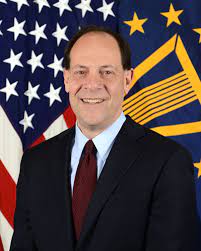
Glenn Fine
- Christi Grimm – As IG at the Department of Health and Human Services, she outraged Trump by contradicting him by agreeing—accurately—that the nation’s hospitals were suffering from severe shortages of personal protective equipment and testing supplies for COVID-19.
Forgiven Crime #20: After losing the Presidential election on November 3, 2020, Trump became the first American President in history to refuse to accept the verdict.
Forgiven Crime #21: From November 3 to December 14, 2020, Trump and his allies challenged the election results, filing—and losing—59 cases in court, either withdrawing cases or having them dismissed by Federal and state judges.
Forgiven Crime #22: On December 5, 2021, Trump called Georgia Governor Brian Kemp and asked him to call a special legislative session and convince state legislators to select their own electors that would support him, thus overturning Biden’s win.
Kemp refused.
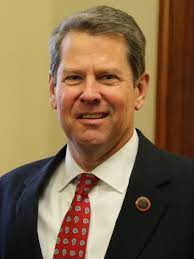
Brian Kemp
Forgiven Crime 23: On January 6, 2021, Trump ordered his assembled followers to attack the Capitol Building where House and Senate members were counting Electoral Votes—that were certain to certify Joseph R. Biden as the legitimate winner of the 2020 Presidential election.
Their goal: To stop the counting of those votes—and enable Trump to serve as “President-for-Life.”
Many of the lawmakers’ offices were occupied and vandalized. One Capitol police officer was killed and 114 others were injured.
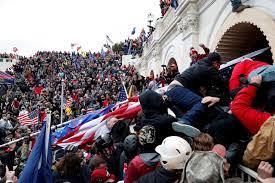
This was, in effect, a treasonous coup attempt.
On February 13, 2021, the Republican-dominated Senate once again acquitted Trump—of “incitement of insurrection” against the United States government.
Forgiven Crime 24: In 2022, Trump became the first ex-President to be indicted for crimes committed during his four-year administration: 2017-2021. He faced 91 criminal charges across four jurisdictions: Georgia, Florida, New York and the District of Columbia.
Yet even as he viciously attacked his rivals for the 2024 Republican Presidential nomination, all but one—former New Jersey Governor Chris Christie—refused to condemn him as an indicted criminal.
Florida Governor Ron DeSantis and former South Carolina Governor Nikki Haley promised to pardon Trump if he was convicted and either one of them was elected President.
Forgiven Crime 25: On August 8, 2022, for the first time in American history, Donald Trump became the first former President to be the subject of an FBI raid.
The raid came without warning on Trump’s residence at Mar-a-Lago in Palm Beach, Florida. FBI agents, armed with a search warrant, scoured the premises—for documents Trump illegally took before he left the White House on January 20, 2021.
Trump had repeatedly refused to return the documents.
Forgiven Crime 26: In March, 2023, Trump threatened “death and destruction” if he were criminally charged in New York for making “hush money” payments to porn “actress” Stormy Daniels. Trump shared an image of himself threatening Manhattan District Attorney Alvin Bragg with a baseball bat on his Truth Social platform.
Not even Mafia bosses like Charles “Lucky” Luciano and Albert “The Executioner” Anastasia dared issue such a threat.
Forgiven Crime 27: On November 18, 2022, Attorney General Merrick Garland appointed Jack Smith Special Counsel to prosecute Trump for his attempted January 6 coup.
Trump used his social media platform, Truth Social, to attack Smith as “a deranged lunatic” and “psycho” for indicting him for his theft of national security documents. He also attacked Smith’s wife, Katy Gale Chevigny, thus exposing her to possible violence from his fanatical supporters.
Trump’s attacks on Smith led to an increase in security for the Special Counsel.
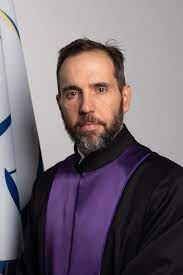
Jack Smith
Forgiven Crime 28: As Iowa prepared to cast votes in the Republican caucuses on January 15, 2024,, meteorologists warned of “life-threatening” conditions. Trump, the Republican front-runner lusting for a second term as President, took that advice.
Scheduled for four in-person Iowa events on January 14, he canceled three of them the day before voting, due to the freezing cold and snow.
But that didn’t mean he shared the same concern for those he urged to vote for him.
“If you want to save America from crooked Joe Biden, you must go caucus tomorrow. First step, very first step. We’re gonna do it. We’re gonna do it big. You got to get out. “
“You can’t sit home. If you’re sick as a dog, you say, ‘Darling, I gotta make it,’” Trump said at an Indianola rally on January 14. “Even if you vote and then pass away, it’s worth it, remember.”
Republicans saw nothing immoral in Trump’s disregard for the lives of his voting supporters—just as they saw nothing immoral in his disregard for the lives of schoolchildren during the worst year of COVID-19.
2016 PRESIDENTIAL CAMPAIGN, 2020 PRESIDENTIAL CAMPAIGN, 2024 PRESIDENTIAL CAMPAIGN, 60 MINUTES NEWS MAGAINE, ABC NEWS, ADAM SCHIFF, ADOLF HITLER, ALBERT “THE EXECUTIONER” ANASTASIA, ALTERNET, ALVIN BRAGG, AMERICABLOG, AP, ARTICLES OF IMPEACHMENT, ARTIFICIAL INTELLIGENCE (AI), BABY BOOMER RESISTANCE, BORDER WALL, BUZZFEED, CANADA, CBS NEWS, CENSORSHIP, CENSUS BUREAU, CENTERS FOR DISEASE CONTROL AND PREVENTION, CHARLES “LUCKY” LUCIANO, CHARLES DE GAULLE, CHINA, CHRIS CHRISTIE, CHRISTI GRIMM, CHRISTOPHER S. MURPHY, CIA, CLASSIFIED DOCUMENTS, CNN, CONSERVATIVE POLITICAL ACTION CONFERENCE, CONSUMER FINANCIAL PROTECTION BUREAU, CONVERSATION WITH AN AMERICAN WRITER (POEM), CORONAVIRUS RELIEF MONIES, COVID-19, CROOKS AND LIARS, CUBAN MISSILE CRISIS, DAILY KOS, DAN BOWMAN, DAN SULLIVAN, DANIELLE SASSOON, DAVID BROOKS, DEMOCRATS, DEPARTMENT OF DEFENSE, DEPARTMENT OF GOVERNMENT EFFICIENCY (DOGE), DEPARTMENT OF HEALTH AND HUMAN SERVICES, DEPARTMENT OF JUSTICE, DIVERSITY EQUITY INCLUSION (DEI), DONALD TRUMP, DONALD TRUMP JUNIOR, DRUDGE RETORT, E. JEAN CARROLL, ELON MUSK, EMIL BOVE, EMOLUMENTS CLAUSE OF THE UNITED STATES CONSTITUTION, ERIC ADAMS, EXTORTION, FBI, FIRST AMENDMENT, FIVETHIRTYEIGHT, FRIVOLOUS LAWSUITS, GENN FINE, GEORGE FLOYD, GEORGE STEPHANOPOULOS, GEORGE W. BUSH, GLENN FINE, GOVERNMENT ACCOUNTABILITY OFFICE, GOVERNMENT SHUTDOWN, GULF OF AMERICA, GULF OF MEXICO, HARPER’S MAGAZINE, HILLARY CLINTON, HOUSE FOREIGN AFFAIRS COMMITTEE, HOUSE INTELLIGENCE COMMITTEE, HOUSE OVERSIGHT AND REFORM COMMITTEE, HUNTER BIDEN, IMMIGRANTS, IMPEACHMENT, IMPOUNDMENT CONTROL ACT, INSPECTORS GENERAL, INTELLIGENCE COMMUNITY, INTELLIGENCE OFFICERS, JACK SMITH, JAKE SULLIVAN, JAKE TAPPER, JAMAL KHASHOGGI, JAMES COMEY, JAMES MCHENRY, JAMES ROBART, JANUARY 6 COUP ATTEMPT, JARED KUSHNER, JEFF SESSIONS, JOHN CORNYN, JOHN F. KENNEDY, JOHN F. KENNEDY CENTER FOR THE PERFORMING ARTS, JOHN ROBERTS, JOING CHIEFS OF STAFF, JON S. TIGAR, JOSEPH BIDEN, JOSEPH STALIN, Kamala Harris, KELLY LOEFFER, KEVIN CRAMER, LAFAYETTE SQUARE, LAMAR ALEXANDER, LEON PANETTA, LINDSEY GRAHAM, LUXUY JET, MARCO RUBIO, MARK MILLEY, MARTIN GUGINO, MEDIA MATTERS, MEIN KAMPF, MERRICK GARLAND, MEXICO, MICHAEL FLYNN, MICHAEL HAYDEN, MICHAEL K. ATKINSON, MICK MULVANEY, MIKE PENCE, MITCH MCCONNELL, MOHAMMED BIN SALMAN, MOTHER JONES, MOVEON, MSNBC, NANCY PELOSI, NATALIA VESELNITSKAYA, NATIONAL SECURITY AGENCY, NBC NEWS, NEWSWEEK, NIKKI HALEY, NPR, PAUL MANAFORT, PBS NEWSHOUR, PETE HEGSETH, POLITICO, POLITICUSUSA, QATAR, RAW STORY, REPUBLICANS, REUTERS, RINAT AKHMETSHIN, ROBERT MUELLER, ROBERT PAYNE, ROD ROSENSTEIN, ROGER STONE, RON DESANTIS, RON JOHNSON, RUSSIA, SALON, SEATTLE TIMES, SERGEY KISLYAK, SERGEY LAVROV, SLATE, ST. JOHN’S CHURCH, STEVE DAINES, TALKING POINTS MEMO, TARIFFS, TED CRUZ, THE ATLANTIC, THE CHICAGO SUN-TIMES, THE CHICAGO TRIBUNE, THE DAILY BEAST, THE DAILY BLOG, THE GUARDIAN, THE HILL, THE HUFFINGTON POST, THE JUDICIARY, THE LIFE AND DEATH OF ADOLF HITLER (BOOI), THE LIFE AND DEATH OF ADOLF HITLER (BOOK), THE LOS ANGELES TIMES, THE NATION, THE NEW REPUBLIC, THE NEW YORK TIMES, THE PENTAGON, THE PRESS, THE VILLAGE VOICE, THE WASHINGTON POST, THINKPROGRESS, TIME, TREASON, TRUMP TOWER MEETING, TRUTH SOCIAL, TRUTHDIG, TRUTHOUT, TWENTY-SECOND AMENDMENT, TWO POLITICAL JUNKIES, U.S. NEWS & WORLD REPORT, UKRAINE, UNITED STATES HOUSE OF REPRESENTATIVES, UNITED STATES SENATE, UPI, USA TODAY, VLADIMIR PUTIN, VOLODYMYR ZELENSKY, WHISTLEBLOWER, WHITE HOUSE BUDGET OFFICE, WONKETTE, X, YEVGENEY YEVTUSHENKO
In Bureaucracy, History, Law, Law Enforcement, Military, Politics, Social commentary on June 5, 2025 at 12:10 am
Throughout his Presidency, Republicans continued to support Donald Trump despite a series of actions that would have normally resulted in impeachment.
Forgiven Crime #12: On July 16, 2018, Trump attended a press conference in Helsinki, Finland, with Russian President Vladimir Putin. There he blamed American Intelligence agencies—such as the FBI, CIA and National Security Agency—instead of Putin for Russia’s subversion of the 2016 Presidential election.
“I have President Putin,” said Trump. “He just said it’s not Russia. I will say this: I don’t see any reason why it would be.”

Donald Trump and Vladimir Putin in Helsinki
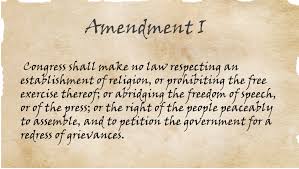
Forgiven Crime #13: Waging all-out war on the First Amendment, which guarantees freedom of the press.
On February 17, 2017, Trump tweeted: “The FAKE NEWS media (failing @nytimes, @NBCNews, @ABC, @CBS, @CNN) is not my enemy, it is the enemy of the American People!”
Seven days later, appearing before the Conservative Political Action Conference on February 24, Trump said: “I want you all to know that we are fighting the fake news. It’s fake, phony, fake….I’m against the people that make up stories and make up sources. They shouldn’t be allowed to use sources unless they use somebody’s name. Let their name be put out there.”
Forgiven Crime #14: Waging all-out war on the independent judiciary
Trump repeatedly attacked Seattle U.S. District Judge James Robart, who halted Trump’s first anti-Islamic travel ban: “Just cannot believe a judge would put our country in such peril. If something happens blame him and court system. People pouring in. Bad!”
On October 20, 2018, Trump attacked U.S. District Judge Jon S. Tigar as an “Obama judge.” Tigar had ruled that the administration must consider asylum claims no matter where migrants cross the U.S. border.
The next day, Supreme Court Chief Justice John Roberts told the Associated Press: “We do not have Obama judges or Trump judges, Bush judges or Clinton judges. What we have is an extraordinary group of dedicated judges doing their level best to do equal right to those appearing before them.”
On Thanksgiving Day, 2018, Trump attacked Roberts—appointed by Republican President George W. Bush—on Twitter: “Sorry Chief Justice John Roberts, but you do indeed have ‘Obama judges,’ and they have a much different point of view than the people who are charged with the safety of our country.”
Forgiven Crime #15: Threatening members of Congress with treason charges for daring to challenge him.
Furious that Rep. Adam Schiff (D-CA) mocked him during a session of the House Intelligence Committee, Trump tweeted: “I want Schiff questioned at the highest level for Fraud & Treason…..”
“Rep. Adam Schiff illegally made up a FAKE & terrible statement, pretended it to be mine as the most important part of my call to the Ukrainian President, and read it aloud to Congress and the American people. It bore NO relationship to what I said on the call. Arrest for Treason?”

Adam Schiff
He judged House Speaker Nancy Pelosi “every bit as guilty as Liddle’ Adam Schiff for High Crimes and Misdemeanors, and even Treason. I guess that means that they, along with all of those that evilly ‘Colluded’ with them, must all be immediately Impeached!”
Forgiven Crime #16: He lied so often—30,573 times by the end of his first term, according to the Washington Post—that he’s universally distrusted, at home and abroad.
During the Cuban Missile Crisis, French President Charles de Gaulle was offered photographs taken by American spy planes of Russian missile emplacements in Cuba. De Gaulle waved them away, saying that, for him, the word of the President of the United States was enough.

John F. Kennedy
Today, no free world leader would take Trump’s word for anything.
Forgiven Crime #17: On December 22, 2018, Trump shut down the Federal government—because Democrats refused to fund his “border wall” between the United States and Mexico.
An estimated 380,000 government employees were furloughed and another 420,000 were ordered to work without pay.
- For weeks, hundreds of thousands of government workers missed paychecks.
- Increasing numbers of employees of the Transportation Safety Administration (TSA)—which provides security against airline terrorism—began refusing to come to work, claiming to be sick.
- At the Federal Aviation Administration (FAA) many air traffic controllers called in “sick.”
- Due to the shortage of air traffic controllers, many planes weren’t able to land safely at places like New York’s LaGuardia Airport.
- Many Federal employees—such as FBI agents—were forced to rely on soup kitchens to feed their families.
This lasted until January 25, 2019, when Trump caved to public pressure.
Forgiven Crime #18: Even while being investigated by Congress for trying to extort Ukraine to investigate his 2020 Presidential rival, Joseph Biden, Trump publicly urged China to investigate Biden and his son, Hunter.
Trump repeatedly denied he had strong-armed Ukrainian President Volodymyr Zelensky to smear former Vice President Joseph Biden. But on October 3, 2019, on the White House lawn, with TV cameras whirring, Trump said: “China should start an investigation into the Bidens.”
And to drive home the message, Trump warned: “I have a lot of options on China, but if they don’t do what we want, we have tremendous power.”
2016 PRESIDENTIAL CAMPAIGN, 2020 PRESIDENTIAL CAMPAIGN, 2024 PRESIDENTIAL CAMPAIGN, 60 MINUTES NEWS MAGAINE, ABC NEWS, ADAM SCHIFF, ADOLF HITLER, ALBERT “THE EXECUTIONER” ANASTASIA, ALTERNET, ALVIN BRAGG, AMERICABLOG, AP, ARTICLES OF IMPEACHMENT, ARTIFICIAL INTELLIGENCE (AI), BABY BOOMER RESISTANCE, BORDER WALL, BUZZFEED, CANADA, CBS NEWS, CENSORSHIP, CENSUS BUREAU, CENTERS FOR DISEASE CONTROL AND PREVENTION, CHARLES “LUCKY” LUCIANO, CHARLES DE GAULLE, CHINA, CHRIS CHRISTIE, CHRISTI GRIMM, CHRISTOPHER S. MURPHY, CIA, CLASSIFIED DOCUMENTS, CNN, CONSERVATIVE POLITICAL ACTION CONFERENCE, CONSUMER FINANCIAL PROTECTION BUREAU, CONVERSATION WITH AN AMERICAN WRITER (POEM), CORONAVIRUS RELIEF MONIES, COVID-19, CROOKS AND LIARS, CUBAN MISSILE CRISIS, DAILY KOS, DAN BOWMAN, DAN SULLIVAN, DANIELLE SASSOON, DAVID BROOKS, DEMOCRATS, DEPARTMENT OF DEFENSE, DEPARTMENT OF GOVERNMENT EFFICIENCY (DOGE), DEPARTMENT OF HEALTH AND HUMAN SERVICES, DEPARTMENT OF JUSTICE, DIVERSITY EQUITY INCLUSION (DEI), DONALD TRUMP, DONALD TRUMP JUNIOR, DRUDGE RETORT, E. JEAN CARROLL, ELON MUSK, EMIL BOVE, EMOLUMENTS CLAUSE OF THE UNITED STATES CONSTITUTION, ERIC ADAMS, EXTORTION, FBI, FIRST AMENDMENT, FIVETHIRTYEIGHT, FRIVOLOUS LAWSUITS, GENN FINE, GEORGE FLOYD, GEORGE STEPHANOPOULOS, GEORGE W. BUSH, GLENN FINE, GOVERNMENT ACCOUNTABILITY OFFICE, GOVERNMENT SHUTDOWN, GULF OF AMERICA, GULF OF MEXICO, HARPER’S MAGAZINE, HILLARY CLINTON, HOUSE FOREIGN AFFAIRS COMMITTEE, HOUSE INTELLIGENCE COMMITTEE, HOUSE OVERSIGHT AND REFORM COMMITTEE, HUNTER BIDEN, IMMIGRANTS, IMPEACHMENT, IMPOUNDMENT CONTROL ACT, INSPECTORS GENERAL, INTELLIGENCE COMMUNITY, INTELLIGENCE OFFICERS, JACK SMITH, JAKE SULLIVAN, JAKE TAPPER, JAMAL KHASHOGGI, JAMES COMEY, JAMES MCHENRY, JAMES ROBART, JANUARY 6 COUP ATTEMPT, JARED KUSHNER, JEFF SESSIONS, JOHN CORNYN, JOHN F. KENNEDY, JOHN F. KENNEDY CENTER FOR THE PERFORMING ARTS, JOHN ROBERTS, JOING CHIEFS OF STAFF, JON S. TIGAR, JOSEPH BIDEN, JOSEPH STALIN, Kamala Harris, KELLY LOEFFER, KEVIN CRAMER, LAFAYETTE SQUARE, LAMAR ALEXANDER, LEON PANETTA, LINDSEY GRAHAM, LUXUY JET, MARCO RUBIO, MARK MILLEY, MARTIN GUGINO, MEDIA MATTERS, MEIN KAMPF, MERRICK GARLAND, MEXICO, MICHAEL FLYNN, MICHAEL HAYDEN, MICHAEL K. ATKINSON, MICK MULVANEY, MIKE PENCE, MITCH MCCONNELL, MOHAMMED BIN SALMAN, MOTHER JONES, MOVEON, MSNBC, NANCY PELOSI, NATALIA VESELNITSKAYA, NATIONAL SECURITY AGENCY, NBC NEWS, NEWSWEEK, NIKKI HALEY, NPR, PAUL MANAFORT, PBS NEWSHOUR, PETE HEGSETH, POLITICO, POLITICUSUSA, QATAR, RAW STORY, REPUBLICANS, REUTERS, RINAT AKHMETSHIN, ROBERT MUELLER, ROBERT PAYNE, ROD ROSENSTEIN, ROGER STONE, RON DESANTIS, RON JOHNSON, RUSSIA, SALON, SEATTLE TIMES, SERGEY KISLYAK, SERGEY LAVROV, SLATE, ST. JOHN’S CHURCH, STEVE DAINES, TALKING POINTS MEMO, TARIFFS, TED CRUZ, THE ATLANTIC, THE CHICAGO SUN-TIMES, THE CHICAGO TRIBUNE, THE DAILY BEAST, THE DAILY BLOG, THE GUARDIAN, THE HILL, THE HUFFINGTON POST, THE JUDICIARY, THE LIFE AND DEATH OF ADOLF HITLER (BOOI), THE LIFE AND DEATH OF ADOLF HITLER (BOOK), THE LOS ANGELES TIMES, THE NATION, THE NEW REPUBLIC, THE NEW YORK TIMES, THE PENTAGON, THE PRESS, THE VILLAGE VOICE, THE WASHINGTON POST, THINKPROGRESS, TIME, TREASON, TRUMP TOWER MEETING, TRUTH SOCIAL, TRUTHDIG, TRUTHOUT, TWENTY-SECOND AMENDMENT, TWO POLITICAL JUNKIES, U.S. NEWS & WORLD REPORT, UKRAINE, UNITED STATES HOUSE OF REPRESENTATIVES, UNITED STATES SENATE, UPI, USA TODAY, VLADIMIR PUTIN, VOLODYMYR ZELENSKY, WHISTLEBLOWER, WHITE HOUSE BUDGET OFFICE, WONKETTE, X, YEVGENEY YEVTUSHENKO
In Bureaucracy, History, Law, Law Enforcement, Military, Politics, Social commentary on June 4, 2025 at 12:11 am
Republicans have a long and shameful history of excusing Donald Trump’s vicious slanders and law-breaking.
Forgiven Crime #6: Republicans refused to condemn Trump’s blatant “bromance” with Russian dictator Vladimir Putin.
Since the end of World War II, no Republican Presidential candidate had repeatedly exchanged fulsome praise with a foreign leader hostile to the United States. Yet that is precisely what happened between Donald Trump and Vladimir Putin.
Thus Putin on Trump: “He is a bright personality, a talented person, no doubt about it. It is not up to us to appraise his positive sides, it is up to the U.S. voters. but, as we can see, he is an absolute leader in the presidential race.”

Vladimir Putin
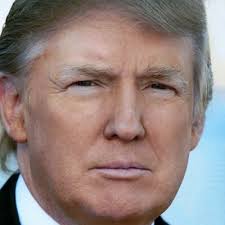
And Trump on Putin: “It is always a great honor to be so nicely complimented by a man so highly respected within his own country and beyond. He’s running his country, and at least he’s a leader. Unlike what we have in this country”—a clear attack on then-President Barack Obama.
Donald Trump
Forgiven Crime #7: Republicans supported the treasonous meeting between Trump’s campaign managers and Russian Intelligence agents.
On July 9, 2016, high-ranking members of Trump’s Presidential campaign met with lobbyists tied to Putin. The meeting took place at Trump Tower and the participants included:
- Trump’s son, Donald Trump Jr.;
- His son-in-law, Jared Kushner;
- His then-campaign manager, Paul Manafort;
- Natalia Veselnitskaya, a Russian lawyer with ties to Putin; and
- Rinat Akhmetshin, a former Soviet counterintelligence officer suspected of having ongoing ties to Russian Intelligence.
The purpose of that meeting: To gain access to any “dirt” Russian Intelligence could supply on Democratic Presidential Nominee Hillary Clinton.
Forgiven Crime #8: Republicans supported Trump’s open—and treasonous—solicitation of Russian interference in the 2016 Presidential election.
On July 22, 2016, at a press conference in Doral, Florida, Trump said: “Russia, if you are listening, I hope you are able to find the 33,000 emails that are missing [from Democratic Presidential candidate Hillary Clinton’s computer]. I think you will probably be rewarded mightily by our press.”
“This has to be the first time that a major presidential candidate has actively encouraged a foreign power to conduct espionage against his political opponent,” Hillary for America policy adviser Jake Sullivan said in a statement. “That’s not hyperbole, those are just the facts. This has gone from being a matter of curiosity, and a matter of politics, to being a national security issue.”
“I find those kinds of statements to be totally outrageous because you’ve got now a presidential candidate who is, in fact, asking the Russians to engage in American politics,” said former CIA Director Leon Panetta, a Clinton surrogate. “I just think that’s beyond the pale.”
Hours later, the Main Intelligence Directorate in Moscow targeted Clinton’s personal office and hit more than 70 other Clinton campaign accounts.
Forgiven Crime #9: On May 9, 2017, Trump fired FBI Director James Comey for investigating Russia’s subversion of the 2016 Presidential race.
There were four reasons for this:
- Comey had refused to pledge his personal loyalty to Trump. Trump had made the “request” during a private dinner at the White House in January.
- Comey told Trump that he would always be honest with him. But that didn’t satisfy Trump’s demand that the head of the FBI act as his personal secret police chief—as was the case in the former Soviet Union.
- Trump had tried to coerce Comey into dropping the FBI’s investigation into former National Security Adviser Michael Flynn, for his secret ties to Russia and Turkey. Comey had similarly resisted that demand.
- Comey had recently asked the Justice Department to fund an expanded FBI investigation into well-documented contacts between Trump’s 2016 Presidential campaign and Russian Intelligence agents. The goal of that collaboration: To elect Trump over Hillary Clinton, a longtime foe of Russian President Putin.

James Comey
Forgiven Crime #10: On May 10, 2017. Trump met with Russian Foreign Minister Sergey Lavrov and Russian Ambassador Sergey Kislyak in the Oval Office—and gave them highly classified Israeli Intelligence about an Islamic State plot to turn laptops into concealable bombs.
Kislyak is reportedly a top recruiter for Russia’s SVR foreign intelligence agency. He has been closely linked with Jeff Sessions, then Attorney General, and fired National Security Adviser Mike Flynn.
“I just fired the head of the FBI,” Trump told the two dignitaries. “He was crazy, a real nut job. I faced great pressure because of Russia. That’s taken off.”
Then, on May 11, Trump gave away his real reason for firing Comey:
Interviewed on NBC News by reporter Lester Holt, Trump said: “And in fact when I decided to just do it, I said to myself, I said ‘you know, this Russia thing with Trump and Russia is a made-up story, it’s an excuse by the Democrats for having lost an election that they should have won.'”
Forgiven Crime #11: Blatantly lying about the CIA’s findings in the brutal murder of Washington Post journalist Jamal Khashoggi.
On Thanksgiving Day, 2018, Trump said that the CIA hadn’t concluded that Saudi Crown Prince Mohammed bin Salman had ordered it.
This was a lie—the agency had reached such a conclusion, based on a recording provided by the Turkish government and American Intelligence.


-33510-W&docid=hCd9k6PuglvZAM&tbnid=CAo7BRzGtBWa3M%3A&w=500&h=375&bih=469&biw=819&ved=0ahUKEwiissafvJ_MAhUGKWMKHTZZA_MQxiAIAg&iact=c&ictx=1)
&docid=SiluTuHYHtjaZM&tbnid=uLB-PLYDVdkkVM%3A&w=455&h=341&ei=zeN_VI_hKYHjoATGs4Bo&ved=0CAIQxiAwAA&iact=c)


 Bureaucracybuster's Blog
ABC NEWS, ABRAHAM LINCOLN, ALTERNET, AMERICABLOG, AP, BABY BOOMER RESISTANCE, BAY OF PIGS, BBC, BERLIN CRISIS, BLOOMBERG NEWS, BUZZFEED, CBS NEWS, CHARLES ROYSTER, CIA, CIVIL WAR, CNN, CROOKS AND LIARS, CUBAN MISSILE CRISIS, DAILY KOZ, EGO, FACEBOOK, FIVETHIRTYEIGHT, HARPER’S MAGAZINE, HUFFINGTON POST, JOHN F. KENNEDY, MEDIA MATTERS, MOTHER JONES, MOVEON, MSNBC, NBC NEWS, NEW REPUBLIC, NEWSDAY, NEWSWEEK, NIKITA KHRUSHCHEV, NPR, NUCLEAR WAR, PBS NEWSHOUR, POLITICO, POLITICUSUSA, RAW STORY, REUTERS, ROBERT E. LEE, SALON, SAM HOUSTON, SEATTLE TIMES, SLATE, SLAVERY, TALKING POINTS MEMO, THE ATLANTIC, THE CHICAGO SUN-TIMES, THE CHICAGO TRIBUNE, THE DAILY BEAST, THE DAILY BLOG, THE DESTRUCTIVE WAR (BOOK), THE GUARDIAN, THE HILL, THE HUFFINGTON POST, THE LOS ANGELES TIMES, THE NATION, THE NEW REPUBLIC, THE NEW YORK TIMES, THE NEW YORKER, THE VILLAGE VOICE, THE WASHINGTON POST, THINKPROGRESS, TIME, TRUTHDIG, TRUTHOUT, TWO POLITICAL JUNKIES, U.S. NEWS & WORLD REPORT, ULYSSES S. GRANT, UPI, USA TODAY, WONKETTE, X
IT’S THE EGO, STUPID!
In Bureaucracy, History, Military, Politics, Social commentary on September 3, 2025 at 12:09 amIt’s commonplace to read about the role sex plays in motivating behavior. But the power of ego to determine history is often ignored.
Consider the role that ego played in igniting the American Civil War (1861 – 1865).
According to The Destructive War, by Charles Royster, it wasn’t the cause of “states’ rights” that led 11 Southern states to withdraw from the Union in 1860-61. It was their demand for “respect,” which, in reality, translates into “e-g-o.”
“The respect Southerners demanded did not consist simply of the states’ sovereignty or of the equal rights of Northern and Southern citizens, including slaveholders’ right to take their chattels into Northern territory.
“It entailed, too, respect for their assertion of the moral superiority of slaveholding society over free society,” writes Royster.
It was not enough for Southerners to claim equal standing with Northerners; Northerners must acknowledge it. But this was something that the North was less and less willing to do.
Finally, its citizens dared to elect Abraham Lincoln as President in 1860.
Abraham Lincoln
Lincoln and his new Republican party damned slavery—and slaveholders—as morally evil, obsolete and ultimately doomed. And they were determined to prevent slavery from spreading any further throughout the country.
Southerners found all of this intolerable.
The British author, Anthony Trollope, explained to his readers: “It is no light thing to be told daily, by our fellow citizens…that you are guilty of the one damning sin that cannot be forgiven.
“All this [Southerners] could partly moderate, partly rebuke and partly bear as long as political power remained in their hands. But they have gradually felt that this was going, and were prepared to cut the rope and run as soon as it was gone.”
Only 10% of Southerners owned slaves. The other 90% of the population “had no dog in this fight,” as Southerners liked to say.
Yet they so admired and aspired to be like their “gentleman betters” that they threw in their lot with them.
There were some Southerners who could see what was coming—and vainly warned their fellow citizens against it.
One of these was Sam Houston, the man who had won Texas independence at the 1836 battle of San Jacinto and later served as that state’s governor.
Sam Houston
On April 19, 1860, addressing a crowd in Galveston, he said: “Let me tell you what is coming. After the sacrifice of countless millions of treasure and hundreds of thousands of lives, you may win Southern independence if God be not against you.
“But I doubt it. I tell you that, while I believe with you in the doctrine of states’ rights, the North is determined to preserve this Union. They are not a fiery, impulsive people as you are, for they live in colder climates.
“But when they begin to move in a given direction, they move with the steady momentum and perseverance of a mighty avalanche; and what I fear is, they will overwhelm the South.”
Four years later, on April 9, 1865, Houston’s warning became history.
Confederate General Robert E. Lee surrendered the Army of Northern Virginia to Union General Ulysses S. Grant at Appomattox Courthouse.
Huge sections of the South had been laid waste by Union troops and more than 258,000 Southerners had been killed.
And slavery, the mainstay of Southern plantation life, had been ended forever.
The South had paid an expensive price for its fixation on ego.
Even more proved at risk a century later, when President John F. Kennedy faced off with Soviet Premier Nikita Khrushchev.
John F. Kennedy
In August, 1961, faced with the embarrassment of East Berliners fleeing by the thousands into West Germany, the Soviet leader erected the infamous Berlin Wall, sealing off East and West Berlin.
Khrushchev pressed his advantage, threatening Kennedy with nuclear war unless the Americans abandoned their protection of West Berlin.
In April, Kennedy had been humiliated at the Bay of Pigs when a CIA-sponsored invasion failed to overthrow the Cuba’s Fidel Castro. So he was already on the defensive when he and Khrushchev met in Vienna.
Kennedy’s reaction: “If Khrushchev wants to rub my nose in the dirt, it’s all over.”
In short: Kennedy was prepared to incinerate the planet if he felt his almighty ego was about to get smacked.
Nuclear missile in silo
What has proved true for states and nations proves equally true for those leading every other type of institution.
Although most people like to believe they are guided by rationality and morality, all-too-often, what truly decides the course of events is their ego.
For pre-Civil War Southerners, it meant demanding that “Yankees” show respect for slave-owning society. Otherwise, they would leave the Union.
For Kennedy, it meant playing a game of “chicken,” backed up with nuclear missiles, to show Khrushchev who Numero Uno really was.
And during the Cuban Missile Crisis, in October, 1962, humankind almost disappeared as Kennedy set out to make Khrushchev “blink.”
It is well to keep these lessons from history in mind when choosing political leaders—and when making our own major decisions.
Share this: