Posts Tagged ‘IRAN’
AFFORDABLE CARE ACT (ACA), AFGHANISTAN, ALEX PRETTI, ALLEN DULLES, ALTERNET, AMAZON, AMERICABLOG, ANTI-CASTRO CUBANS, AP, APPLE, ARTIFICIAL INTELLIGENCE, ASSASSINATION, BABY BOOMER RESISTANCE, BARACK OBAMA, BARI WEISS, BAY OF PIGS, BBC, BIG TECH, BLACKS, BLOOMBERG, BLUESKY, BUZZFEED, CANADA, CANADIANS, CARLOS MARCELLO, CBS NEWS, CIA, CITIENSHIP TESTS, CIVIL RIGHTS, CLEAR AND PRESENT DANGER (FILM), CNN, COLUMBIAN/MEXICAN DRUG CARTELS, CONSPIRACIES, CROOKS AND LIARS, CUBA, CUBAN MISSILE CRISIS, CUSTOMS AND BORDER PATROL (CBP), DAILY KOS, DONALD TRUMP, FBI, FBI AGENTS, FEDERAL EMERGENCY MANAGEMENT AGENCY, FEDERAL RESERVE, FEDERAL TRADE COMMISSION, FIDEL CASTRO, FIVETHIRTYEIGHT, GAIUS CALIGULA, GAZA, GOOGLE, GREENLAND, GREENLANDERS, GUN RIGHTS ENTHUSIASTS, HARPER’S MAGAZINE, HARRISON FORD, HISPANICS, HUFFINGTON POST, IMMIGRANTS, IMMIGRATION AND CUSTOMS ENFORCEMENT (ICE), INSPECTORS GENERAL, INTERNATIONAL BROTHERHOOD OF TEAMSTERS, IRAN, IRANIANS, ISLAM, ISRAEL, ISREAL, J. EDGAR HOOVER, JAIME DIMON, JAMES COMEY, JANUARY 6 COUP ATTEMPT, JEFF BEZOS, JEFFREY, JEFFREY EPSTEIN, JEROME POWELL, JIMMY HOFFA, JOE BIDEN, JOHN F. KENNEDY, JOHN KELLY, JOURNALISTS, JP MORGAN CHASE, JUSTICE DEPARTMENT PROSECUTORS, Kamala Harris, KGB, LAWYERS, LEBANON, LETITIA JAMES, MAFIA, MARCUS AURELIUS, MARINE BARRACKS BOMBING, MARK ESPER, MARK MILLEY, MEDAL OF HONOR WINNERS, MEDIA MATTERS, MEDICARE, MELANIA TRUMP, META, MICHELLE OBAMA, Military, MINNESOTA, MOTHER JONES, MOVEON, MSNBC, MUSLIMS, NATIONAL RIFLE ASSOCIATION (NRA), NATO, NAVAJO CODE TALKERS, NBC NEWS, NERO, NEWSDAY, NEWSWEEK, NPR, NUCLEAR REACTOR SITES, NUCLEAR TEST BAN TREATY, NUCLELAR TEST BAN TREATY, OIL MILLIONAIRES, PAKISTAN, PAM BONDI, PARIS CLIMATE AGREEMENT, PBS NEWSHOUR, PETE HEGSETH, POLICE, POLITICO, POLITICUSUSA, RARE EARTH MIINERALS, RAW STORY, REUTERS, ROBERT F. KENNEDY, Ronald Reagan, RUDY GIULIANI, SALON, SAM GIANCANA, SEATTLE TIMES, SLATE, SOMALIS, SOUTHERN RACISTS, SOVIET UNION, SUICIDE BOMBINGS, TALKING POINTS MEMO, TARIFFS, THE ATLANTIC, THE CHICAGO SUN-TIMES, THE CHICAGO TRIBUNE, THE DAILY BEAST, THE DAILY BLOG, THE GUARDIAN, THE HILL, THE HUFFINGTON POST, THE INTERCEPT, THE KENNEDY HALF-CENTURY (BOOK), THE LOS ANGELES TIMES, THE MILITARY, THE NATION, THE NEW REPUBLIC, THE NEW YORK TIMES, THE NEW YORKER, THE PRESS, THE PRINCE (BOOK), THE VILLAGE VOICE, THE WASHINGTON POST, THINKPROGRESS, TIM COOK, TIME, TRAJAN, TRUTHDIG, TRUTHOUT, TUSKEGEE AIRMEN, TWO POLITICAL JUNKIES, U.S. NEWS & WORLD REPORT, UNITED STATES DEPARTMENT OF DEFENSE, UNITED STATES DEPARTMENT OF JUSTICE, UNITED STATES SECRET SERVICE, UPI, USA TODAY, WATERGATE, X
In Bureaucracy, Business, History, Law, Law Enforcement, Medical, Military, Politics, Social commentary on February 17, 2026 at 12:12 am
Just as President John F. Kennedy was passionately loved and hated, so, too, is Donald J. Trump. And Trump, at 79, has already been the target of two assassination attempts.

Donald Trump
Among the reasons why Trump is so widely hated:
- Gun rights enthusiasts – After Customs and Border Patrol (CBP) agents shot intensive care nurse Alex Pretti on January 24, Trump criticized Pretti for carrying a licensed, concealed pistol: “You can’t have guns, you can’t walk in with guns. I don’t like that he had a gun. I don’t like that he had two fully loaded magazines. That’s a lot of bad stuff.”
- The National Rifle Association (NRA) called Trump’s comments “dangerous and wrong.” And the National Association for Gun Rights (NAGR) stated: “Carrying an extra magazine implies nothing. Claiming otherwise sets a dangerous precedent for Second Amendment rights and creates an easy backdoor argument for magazine bans and similar legislation.”

Alex Pretti
- The military – Following his anti-DEI executive order, the Department of Defense deleted content that included the achievements of nonwhite servicemen and women—such as Navajo code talkers, black Tuskegee Airmen, Medal of Honor winners and women veterans. High-ranking militar y leaders fear retribution and the politicization of the armed forces.
- Former high-profile military leaders, including former Chiefs of Staff John Kelly and Mark Milley and former Defense Secretary Mark Esper, have criticized Trump, with some describing him as a ‘fascist to the core” and a threat to democracy.
- Trump has deployed the National Guard to Democratic cities against the wishes of their states’ governors.
- In September, 2025, Trump and Defense Secretary Pete Hegseth aired grievances to a silent, uncomfortable audience of top military leaders.
- Canadians – Trump has imposed 25% tariffs on Canadian goods, covering major sectors like steel, aluminum, and autos.
- And he has threatened to impose 100% tariffs due to trade disputes. These have caused significant anxiety regarding the Canadian economy, which relies heavily on trade with the United States.
- He has also repeatedly threatened to militarily invade Canada and make it the 51st state. Many Canadians feel betrayed by the treatment of a longstanding, peaceful ally, with 59% of Canadians now viewing the United States as their top threat.
- Greenlanders – Trump has grown increasingly bellicose about acquiring Greenland—by purchase or conquest. The official reason given: The dangers of Chinese or Russian conquest of the island, where the United States has an active military base for missile warning, defense and space surveillance.
- The real reason: To gain total access to Greenland’s rare earth minerals. This despite Greenland’s being a self-governing, autonomous part of the Kingdom of Denmark. The united States has recognized Denmark’s ties to Greenland since 1917 and signed a joint defense agreement in 1951.

Greenland
- Secret Service agents – There has never been a case of a Secret Service agent assassinating a President. But there are historical precedents for bodyguards turning on those they are supposed to protect. On January 22, 41 A.D. Cassius Chaerea and several other bodyguards hacked Roman Emperor Gaius Caligula to death with swords before other guards could save him.
- Caligula had often taunted Chaerea for having a weak voice. Similarly, Trump has forced Secret Service agents to work without pay through two major government shutdowns—for 35 days in 2018-19 and 43 days in 2025. Secret Service agents had to worry about meeting their bills and the needs of their families.
- Many agents could have friends or family members whose lives have been shattered by Trump’s massive layoffs of government employees and/or his assaults on the American medical establishment.
- Wall Street executives – For Trump’s attacks on Federal Reserve Chairman Jerome Powell and public criticism of the Fed, which threaten the independence of the institution and the stability of the economy.
- And for suing JP Morgan Chase and its CEO Jamie Dimon for $5 billion, alleging the bank “debanked” him after the January 6, 2021 Capitol attack.
- Major investors and CEOs fear that Trump’s tariff policies will ignite a global crash—as happened in April ,2025.
- Iranians – For his scrapping the Joint Comprehensive Plan of Action (JCPOA), commonly known as the Iran nuclear deal.
- And for re-imposing “highest-level” economic sanctions on Iran, targeting critical sectors such as oil, finance and shipping.
- Nor will Iranians forgive him for ordering the June 21, 2025, bombing of three key Iranian nuclear sites: Fordow, Natanz, and Isfahan.
- Barons of Columbian/Mexican drug cartels – For threatening to invade Columbia and Mexico and directly attack the drug lords who feed America’s demand for cocaine.
- This scenario forms the plot of the 1994 thriller, “Clear and Present Danger,” starring Harrison Ford. The movie ends with the American force almost wiped out by a drug lord’s army and being forced to evacuate Columbia.

Columbian drug lords
- Journalists – For his repeatedly attacking the nation’s free press as “the enemy of the people” for reporting his growing list of crimes and disasters.
- And barring the Associated Press from the White House for refusing to call the Gulf of Mexico “the Gulf of the United States.”
- Jeff Bezos, the CEO of Amazon, bought the Washington Post—which played a pivotal role in uncovering Watergate—-in 2013 and has turned that once-respected newspaper into a Right-wing cheerleader.
- And CBS News is now being rigorously censored by Editor-in-Chief Bari Weiss, a notorious Trump ally.
AFFORDABLE CARE ACT (ACA), AFGHANISTAN, ALEX PRETTI, ALLEN DULLES, ALTERNET, AMAZON, AMERICABLOG, ANTI-CASTRO CUBANS, AP, APPLE, ARTIFICIAL INTELLIGENCE, ASSASSINATION, BABY BOOMER RESISTANCE, BARACK OBAMA, BARI WEISS, BAY OF PIGS, BBC, BIG TECH, BLACKS, BLOOMBERG, BLUESKY, BUZZFEED, CANADA, CANADIANS, CARLOS MARCELLO, CBS NEWS, CIA, CITIENSHIP TESTS, CIVIL RIGHTS, CLEAR AND PRESENT DANGER (FILM), CNN, COLUMBIAN/MEXICAN DRUG CARTELS, CONSPIRACIES, CROOKS AND LIARS, CUBA, CUBAN MISSILE CRISIS, CUSTOMS AND BORDER PATROL (CBP), DAILY KOS, DONALD TRUMP, FBI, FBI AGENTS, FEDERAL EMERGENCY MANAGEMENT AGENCY, FEDERAL RESERVE, FEDERAL TRADE COMMISSION, FIDEL CASTRO, FIVETHIRTYEIGHT, GAIUS CALIGULA, GAZA, GOOGLE, GREENLAND, GREENLANDERS, GUN RIGHTS ENTHUSIASTS, HARPER’S MAGAZINE, HARRISON FORD, HISPANICS, HUFFINGTON POST, IMMIGRANTS, IMMIGRATION AND CUSTOMS ENFORCEMENT (ICE), INSPECTORS GENERAL, INTERNATIONAL BROTHERHOOD OF TEAMSTERS, IRAN, IRANIANS, ISLAM, ISRAEL, ISREAL, J. EDGAR HOOVER, JAIME DIMON, JAMES COMEY, JANUARY 6 COUP ATTEMPT, JEFF BEZOS, JEFFREY, JEFFREY EPSTEIN, JEROME POWELL, JIMMY HOFFA, JOE BIDEN, JOHN F. KENNEDY, JOHN KELLY, JOURNALISTS, JP MORGAN CHASE, JUSTICE DEPARTMENT PROSECUTORS, Kamala Harris, KGB, LAWYERS, LEBANON, LETITIA JAMES, MAFIA, MARCUS AURELIUS, MARINE BARRACKS BOMBING, MARK ESPER, MARK MILLEY, MEDAL OF HONOR WINNERS, MEDIA MATTERS, MEDICARE, MELANIA TRUMP, META, MICHELLE OBAMA, Military, MINNESOTA, MOTHER JONES, MOVEON, MSNBC, MUSLIMS, NATIONAL RIFLE ASSOCIATION (NRA), NATO, NAVAJO CODE TALKERS, NBC NEWS, NERO, NEWSDAY, NEWSWEEK, NPR, NUCLEAR REACTOR SITES, NUCLEAR TEST BAN TREATY, NUCLELAR TEST BAN TREATY, OIL MILLIONAIRES, PAKISTAN, PAM BONDI, PARIS CLIMATE AGREEMENT, PBS NEWSHOUR, PETE HEGSETH, POLICE, POLITICO, POLITICUSUSA, RARE EARTH MIINERALS, RAW STORY, REUTERS, ROBERT F. KENNEDY, Ronald Reagan, RUDY GIULIANI, SALON, SAM GIANCANA, SEATTLE TIMES, SLATE, SOMALIS, SOUTHERN RACISTS, SOVIET UNION, SUCIDE BOMBINGS, TALKING POINTS MEMO, TARIFFS, THE ATLANTIC, THE CHICAGO SUN-TIMES, THE CHICAGO TRIBUNE, THE DAILY BEAST, THE DAILY BLOG, THE GUARDIAN, THE HILL, THE HUFFINGTON POST, THE INTERCEPT, THE KENNEDY HALF-CENTURY (BOOK), THE LOS ANGELES TIMES, THE MILITARY, THE NATION, THE NEW REPUBLIC, THE NEW YORK TIMES, THE NEW YORKER, THE PRESS, THE PRINCE (BOOK), THE VILLAGE VOICE, THE WASHINGTON POST, THINKPROGRESS, TIM COOK, TIME, TRAJAN, TRUTHDIG, TRUTHOUT, TUSKEGEE AIRMEN, TWO POLITICAL JUNKIES, U.S. NEWS & WORLD REPORT, UNITED STATES DEPARTMENT OF DEFENSE, UNITED STATES DEPARTMENT OF JUSTICE, UNITED STATES SECRET SERVICE, UPI, USA TODAY, WATERGATE, X
In Bureaucracy, Business, History, Law, Law Enforcement, Medical, Military, Politics, Social commentary on February 16, 2026 at 12:55 am
The 2013 book, The Kennedy Half-Century: The Presidency, Assassination and Lasting Legacy of John F. Kennedy, offers a truly astounding chapter.
Its early chapters provide an overview of the major events of the brief Kennedy administration: “The Torch Is Passed,” “Steel at Home and Abroad,” “Europe, Space and Southeast Asia.”
The next chapters concentrate on the assassination: “Echoes From Dealey Plaza,” “Questions, Answers, Mysteries,” “Rounding Up the Usual Suspects,” “Examining the Physical Evidence.”
For anyone who’s previously delved into the thousand days of the Kennedy administration, much of these subjects will be at least generally familiar. But Chapter 11 zooms into an area that might seem right out of The Twilight Zone: “Inevitability: The Assassination That Had to Happen.”

The chapter opens: “It has taken fifty years to see part of the truth clearly: John F. Kennedy’s assassination might have been almost inevitable. It didn’t have to happen on November 22, 1963, but given a host of factors, one could reasonably argue that JFK was unlikely to make it out of his Presidency alive.”
Among the “host of factors” who had reason to hate Kennedy:
- New Orleans Mafia boss Carlos Marcello – Furious over the crackdown on organized crime by JFK’s brother, Attorney General Robert F. Kennedy, he spoke of having the President assassinated to render RFK impotent.
- Anti-Castro Cubans – Enraged at Kennedy’s failure to overthrow Cuban dictator Fidel Castro after landing 1,700 armed Cuban exiles at the Bay of Pigs.
- James R. Hoffa – Pursued relentlessly by Robert Kennedy, the president of the International Brotherhood of Teamsters Union talked privately of having the Attorney General assassinated.
- The KGB – For Kennedy’s humiliating the Soviet Union during the Cuban Missile Crisis.
- Chicago Mafia boss Sam Giancana – Expecting to win immunity from federal prosecution, he fixed the 1960 Illinois election for John F. Kennedy. Instead, he found himself under intense investigation by RFK’s Justice Department—and raged that the Kennedys had “welshed” on their part of the deal.
- FBI Director J. Edgar Hoover – Fearing dismissal by the Kennedys, he withheld lethal threats his agents overheard when bugged Mafiosi railed against the President and Attorney General.

J. Edgar Hoover
- Southern racists – Who believed that JFK was a “nigger lover” for supporting civil rights for blacks. Especially after he sent deputy U.S. marshals and National Guardsmen to desegregate the University of Mississippi and, later, the University of Alabama.
- The CIA – Blamed by Kennedy for failing to overthrow Castro at the Bay of Pigs, its legendary director, Allen Dulles, was forced to resign. Many of its agents blamed JFK for refusing to commit American military forces during that attack—and laying the seeds for the Cuban Missile Crisis.
- Military and defense establishment – Appalled by Kennedy’s “weak” response to the Cuban Missile Crisis and support of the Nuclear Test Ban Treaty with the Soviet Union.
- Fidel Castro – Enraged by a series of CIA-Mafia attempts on his life, he publicly warned: “U.S. leaders should think if they are aiding terrorist plans to eliminate Cuban leaders they themselves will not be safe.”

Fidel Castro
Just as President Kennedy was passionately loved and hated, so, too, is Donald J. Trump. And Trump, at 79, has already been the target of two assassination attempts.

Donald Trump
Among the “host of factors” who have reason to hate Trump:
- Blacks – For his racist attacks on Barack and Michelle Obama and on black journalists, politicians and celebrities.
- His issuing executive orders to eliminate diversity, equity and inclusion (DEI) programs—and remove references to black historical figures from government websites.
- A major reason for his flooding Minnesota with 3,000 ICE agents: Its large Somali population, which he publicly labeled “garbage.”
- Hispanics – For turning them into the #1 target of Immigration and Customs Enforcement (ICE). Throughout 2025, ICE arrested nearly 300,000 to 328,000 people, the vast majority of them Hispanics. These included not only illegal aliens but those with green cards awaiting their processing as citizens.
- More than 70,000 migrants are now held in detention centers. ICE vows to detain an additional 80,000 people in them. Some centers will reportedly hold up to 10,000 detainees apiece. This will allow Trump to imprison and then deport vastly more people much more quickly.
- Muslims – He’s said “I think Islam hates us” and called for a “total and complete shutdown of Muslims entering the United States.”
- And he’s imposed a travel ban on 11 Islamic countries in the Middle East, North Africa and sub-Saharan Africa.
- He’s proposed a registry for American Muslims and expressed support for surveillance of mosques.
- And he’s sided with Israel in its military attacks on Gaza and Iran.
- Police officers – Despite his claiming to be a “law and order” President, Trump pardoned more than 1,500 of his supporters who had attacked Capitol Police on January 6, 2021. More than 140 police officers were injured.
- In November 2025, he issued preemptive pardons for 77 people involved in the plot to overturn the 2020 election results, including Rudy Giuliani and Mark Meadows.
- Among the convicted drug kingpins serving life sentences he has pardoned: Andre Donnell Routt, Zechariah Benjamin, Joe Angelo Sotelo, Edward Ruben Sotelo and Larry Hoover.
ADOLF HITLER, ALTERNET, AMERICABLOG, AP, BABY BOOMER RESISTANCE, BBC, BLOOMBERG, BLUESKY, BUZZFEED, CBS NEWS, CHINA, CNN, CROOKS AND LIARS, DAILY KOS, DENMARK, DEPORTATIONS, DONALD TRUMP, FIVETHIRTYEIGHT, GREENLAND, HARPER’S MAGAZINE, HUFFINGTON POST, IRAN, JAKE TAPPER, MEDIA MATTERS, MOTHER JONES, MOVEON, MSNBC, NATO, NBC NEWS, NEWSDAY, NEWSWEEK, NICCOLO MACHIAVELLI, NORTH KOREA, NPR, PBS NEWSHOUR, POLAND, POLITICO, POLITICUSUSA, RAW STORY, REUTERS, RUSSIA, SALON, SEATTLE TIMES, SLATE, STEPHEN MILLER, TALKING POINTS MEMO, THE ATLANTIC, THE CHICAGO SUN-TIMES, THE CHICAGO TRIBUNE, THE DAILY BEAST, THE DAILY BLOG, THE GUARDIAN, THE HILL, THE HUFFINGTON POST, THE INTERCEPT, THE LOS ANGELES TIMES, THE NATION, THE NEW REPUBLIC, THE NEW YORK TIMES, THE NEW YORKER, THE PRINCE (BOOK), THE VILLAGE VOICE, THE WASHINGTON POST, THINKPROGRESS, THOM TILLIS, TIME, TRUTHDIG, TRUTHOUT, TWO POLITICAL JUNKIES, U.S. NEWS & WORLD REPORT, UNITED STATES SENATE, UPI, USA TODAY, VLADIMIR PUTIN, X
In Bureaucracy, History, Military, Politics, Social commentary on January 13, 2026 at 12:23 am
“The first impression that one gets of a ruler and his brains is from seeing the men that he has about him.
“When they are competent and loyal one can always consider him wise, as he has been able to recognize their ability and keep them faithful.
“But when they are the reverse, one can always form an unfavorable opinion of him, because the first mistake that he makes is in making this choice.”
So wrote the Italian statesman Niccolo Machiavelli more than 500 years ago in his famous treatise on politics, The Prince.
And his words remain as true in our day as they were in his.
In fact, he could have been writing about the ability of Donald Trump to choose competent subordinates.

Niccolo Machiavelli
As a Presidential candidate, Trump repeatedly previewed his administrative incompetence—which he has continued to demonstrate as President.
The latest example of this: Stephen Miller, White House deputy chief of staff for policy. He previously served as senior advisor to the President and director of speechwriting from 2017 to 2021 during the first Trump administration.
His politics have been described as anti-immigration, white nationalist and far-right. His policies have resulted in mass deportations, arrests and shootings of innocent American citizens and the testing of the constitutional tenets that grant American citizenship.

Stephen Miller
And thanks to retiring North Carolina United States Senator Thom Tillis, there is another way to describe him: “Stupid.”
“Look, either Stephen Miller needs to get into a lane where he knows what he’s talking about or get out of this job,” Tillis told CNN’s Jake Tapper on the January 7 edition of “The Lead.”
Three days earlier, on January 4, Miller, appearing on the same show, had said: “Greenland should be part of the United States.”
This reflects Trump’s long-held obsession that he should acquire Greenland—by buying it or conquering it.
“What is the basis for their territorial claim?” demanded Miller. “What is their basis of having Greenland as a colony of Denmark?”
The answer: Greenland is a self-governing, autonomous part of the Kingdom of Denmark. The United States has recognized Denmark’s ties to Greenland since 1917 and signed a joint defense agreement in 1951.
This was updated in 2004, acknowledging Greenland’s connection to Denmark.
During the same interview, Miller made it clear that the use of brute force was not only on the table but was the Trump administration’s preferred way to behave on the world stage:
“We live in a world in which you can talk all you want about international niceties and everything else, but we live in a world, in the real world, Jake, that is governed by strength, that is governed by force, that is governed by power. These are the iron laws of the world since the beginning of time.”
Adolf Hitler could not have said it better. In fact, Miller—who is Jewish—could have been reciting the Fuhrer’s August 22, 1939 speech to his generals before the invasion of Poland:
“I shall give a propagandist reason for starting the war, no matter whether it is plausible or not. The victor will not be asked afterwards whether he told the truth or not. When starting and waging war it is not right that matters, but victory.
“Close your hearts to pity. Act brutally. Eighty million people must obtain what is their right. Their existence must be made secure. The stronger man is right.”
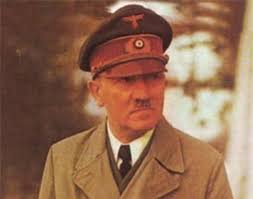
Adolf Hitler
Senator Tillis’ response was equally blunt. Calling the NATO alliance—of which Denmark is a member—critically important, he said:
“Shaking that alliance sends a signal to [Russian President Vladimir] Putin that he’s winning. And Stephen Miller doesn’t represent the United States government. He represents the Article 11 [Executive] branch.

Thom Tillis
“And I, as a member of the United States Senate, get to weigh in to this issue. And I know, whether they say it out loud or not, most of my colleagues agree with me.
“We need to make it very clear that our strength and our ability to project power to stand off against Putin, to stand off Russia, to stand off China, Iran, it all rests on this exquisite capability that we have under NATO.”
Tillis’ remarks came only hours after he delivered a scathing speech to his fellow Senators: “I’m sick of stupid. I want good advice for the president, because I want this president to have a good legacy.
“And this nonsense on what’s going on with Greenland is a distraction from the good work he’s doing, and the amateurs who said it was a good idea should lose their jobs.”
Tillis’ remarks ignore several brutal truths:
First, as Machiavelli notes, when a ruler’s advisors are incompetent, he is to blame for making those choices.
Second, Miller was speaking for Trump, not advising him.
Third, Donald Trump’s legacy will be one of unsurpassed greed, egomania, vindictiveness and authoritarianism.
He has turned America’s longstanding democratic allies into enemies and embraced the ruthless dictators of Russia, China and North Korea—and their style of governing.
His ultimate legacy will be one of infamy.
Nothing Tillis can do will alter that.
ABC NEWS, ALEXANDER THE GREAT, ALTERNET, AMERICABLOG, AP, BABY BOOMER RESISTANCE, BBC, BLOOMBERG NEWS, BUZZFEED, CBS NEWS, CNN, CROOKS AND LIARS, DAILY KOS, DONALD TRUMP, DOUGLAS MACARTHUR, FEDERAL SECURITY SERVICE, FIVETHIRTYEIGHT, GATES OF FIRE (BOOK), HARPER’S MAGAZINE, HUFFINGTON POST, IRAN, IRAQ, KGB, MEDIA MATTERS, MERCENARIES, MOTHER JONES, MOVEON, MSNBC, NBC NEWS, NEW REPUBLIC, NEWSDAY, NEWSWEEK, NICCOLO MACHIAVELLI, NICHOLAS MADURO, NPR, Oil, PBS NEWSHOUR, POLITICO, POLITICUSUSA, RAW STORY, REUTERS, SALON, SAUDI ARABIA, SEATTLE TIMES, SLATE, SPARTA, STANLEY MCCRYSTAL, STEVEN PRESSFIELD, TALKING POINTS MEMO, THE ATLANTIC, THE CHICAGO SUN-TIMES, THE CHICAGO TRIBUNE, THE DAILY BEAST, THE DAILY BLOG, THE GUARDIAN, THE HILL, THE HUFFINGTON POST, THE INTERCEPT, THE LOS ANGELES TIMES, THE NATION, THE NEW REPUBLIC, THE NEW YORK TIMES, THE NEW YORKER, THE PROFESSION (BOOK), THE VILLAGE VOICE, THE VIRTUES OF WAR (BOOK), THE WASHINGTON POST, THERMOPYLAE, THINKPROGRESS, TIME, TRUTHDIG, TRUTHOUT, U.S. NEWS & WORLD REPORT, UPI, USA TODAY, VENEZUELA, X
In Bureaucracy, Business, History, Military, Politics, Social commentary on January 6, 2026 at 12:10 am
During a January 3 news conference, President Donald Trump told reporters the real reason why the United States had just attacked Venezuela and captured its president—actually dictator—Nicholas Maduro and his wife:
“We’re going to have our very large United States oil companies—the biggest anywhere in the world—go in, spend billions of dollars, fix the badly broken infrastructure, the oil infrastructure.”
Forget months of accusing Venezuela of being a major supplier of illicit drugs to the United States.
Venezuela has the world’s largest proven oil reserves, with over 303 billion barrels. That’s more than Saudi Arabia (second-largest) and Iran (third-largest). But after President Hugo Chávez nationalized much of the industry in 2007, its oil production sharply declined.
By 2018, Venezuela was producing 1.3 million barrels of oil each day, from a high of more than 3 million barrels each day in the late 1990s.
Trump intends to change that.
On September 7, 2016, at a forum hosted by NBC, Trump had flatly stated that seizing Iraqi oil fields could have paid for the 2003 Iraq war:
“We go in, we spend $3 trillion, we lose thousands and thousands of lives, and then … what happens is we get nothing. You know, it used to be to the victor belong the spoils.
“You’re not stealing anything. We’re reimbursing ourselves … at a minimum, and I say more. We’re taking back $1.5 trillion to reimburse ourselves.”
Unable to steal Iraqi oil, Trump has chosen to steal that of Venezuela—by turning the Armed Services into mercenary gangsters.
In 2011, bestselling author Steven Pressfield had made the seizing of Saudi Arabian oil fields the premise of his novel The Profession.

Pressfield made his literary reputation with a series of classic novels about ancient Greece.
In Gates of Fire (1998) he explored the rigors and heroism of Spartan society—and the famous last stand of its 300 picked warriors at Thermopylae.
In The Virtues of War (2004) he entered the mind of Alexander the Great, whose armies swept across the known world, destroying all who dared oppose them.
But in The Profession, Pressfield created a plausible world set into the future of 2032. The book’s dust jacket summarizes its plot-line:
“Everywhere military force is for hire. Oil companies, multi-national corporations and banks employ powerful, cutting-edge mercenary armies to control global chaos and protect their riches.
“Force Insertion is the world’s merc [mercenary] monopoly. Its leader is the disgraced former United States Marine General James Salter, stripped of his command by the president for nuclear saber-rattling with the Chinese and banished to the Far East.”
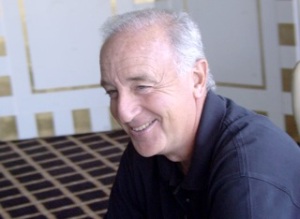
Steven Pressfield
Salter appears as a hybrid of World War II General Douglas MacArthur and Iraqi War General Stanley McCrystal.
Like MacArthur, Salter has butted heads with his President—and paid dearly for it. Now his ambition is no less than to become President himself—by popular acclaim. And like McCrystal, he is a pure warrior who leads from the front and is revered by his men.
Salter seizes Saudi Arabian oil fields, then offers them as a gift to America. By doing so, he makes himself the most popular man in the country—and a guaranteed occupant of the White House.
Douglas MacArthur

Stanley McCrystal
“The United States is an empire…but the American people lack the imperial temperament,” asserts Salter. “We’re not legionaries, we’re mechanics. In the end the American Dream boils down to what? ‘I’m getting mine and the hell with you.’”
Americans, says Salter, have come to like mercenaries: “They’ve had enough of sacrificing their sons and daughters in the name of some illusory world order. They want someone else’s sons and daughters to bear the burden….
“They want their problems to go away. They want me to to make them go away.”
Returning to the United States, he is acclaimed as a hero—and the next President.
He knows that his country is on a downward spiral toward oblivion: “Any time that you have the rise of mercenaries…society has entered a twilight era, a time past the zenith of its arc.”
And he doesn’t believe that his Presidency will arrest that decline: “But maybe in the short run, it’s better that my hand be on the wheel…rather than some other self-aggrandizing sonofabitch whose motives might not be as well intentioned….”
More than 500 years ago, Niccolo Machiavelli warned of the dangers of relying on mercenaries:
“Mercenaries…are useless and dangerous. And if a prince holds on to his state by means of mercenary armies, he will never be stable or secure; for they are disunited, ambitious, without discipline, disloyal; they are brave among friends; among enemies they are cowards.
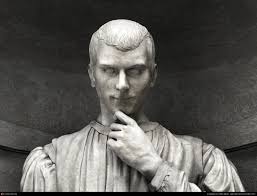
Niccolo Machiavelli
“They have neither the fear of God nor fidelity to men, and destruction is deferred only so long as the attack is. For in peace one is robbed by them, and in war by the enemy.”
Centuries ago, Niccolo Machiavelli issued a warning against relying on men whose first love is their own enrichment.
Steven Pressfield, in a work of fiction, has given us a nightmarish vision of a not-so-distant America where “Name your price” has become the byward for an age.
Both warnings are well worth heeding.
ABC NEWS, ALTERNET, AMERICABLOG, AP, ATOMIC BOMB, BABY BOOMER RESISTANCE, BARACK OBAMA, BBC, BEIRUT BOMBING, BILL CLINTON, BLOOMBERG NEWS, BUZZFEED, CBS NEWS, CHRIS MATTHEWS, CNN, COMMUNISM, CROOKS AND LIARS, CULTS, DAILY KOS, DONALD TRUMP, ECONOMICS, FIVETHIRTYEIGHT, GEORGE H.W. BUSH, HARDBALL, HARPER’S MAGAZINE, HUFFINGTON POST, IRAN, IRAN-CONTRA AFFAIR, JOHN F. KENNEDY, JOSEPH STALIN, MEDIA MATTERS, MEET THE PRESS, MOTHER JONES, MOVEON, MSNBC, NBC NEWS, NEW REPUBLIC, NEWSDAY, NEWSWEEK, NPR, PBS NEWSHOUR, POLITICO, POLITICUSUSA, POLLUTION, RAW STORY, REPUBLICAN PARTY, REUTERS, Ronald Reagan, SALON, SEATTLE TIMES, Secret Service, SLATE, SOVIET NUCLEAR PHYSICS, SOVIET UNION, TALKING POINTS MEMO, TAX CUTS, TERRORISM, THE ATLANTIC, THE CHICAGO SUN-TIMES, THE CHICAGO TRIBUNE, THE DAILY BEAST, THE DAILY BLOG, THE GUARDIAN, THE HILL, THE HUFFINGTON POST, THE INTERCEPT, THE LOS ANGELES TIMES, THE NATION, THE NEW REPUBLIC, THE NEW YORK TIMES, THE NEW YORKER, THE VILLAGE VOICE, THE WASHINGTON POST, THINKPROGRESS, THIS WEEK, TIME, TRUTHDIG, TRUTHOUT, TWO POLITICAL JUNKIES, U.S. NEWS & WORLD REPORT, UPI, USA TODAY, Vladimir Lenin, X
In Bureaucracy, Business, History, Military, Politics, Social commentary on October 27, 2025 at 12:05 am
On February 6, 2011, Ronald Reagan, if he had been alive, would have been 100 years old.
Publishers rushed to put out worshipful tributes to his eight years as President. Network political programs such as “This Week” and “Meet the Press” assembled surviving members of his administration to re-live the “glory days” of Reagan’s—and their—time in power.
Actually, it was during the Reagan administration that America entered its decline—a Right-wing legacy of huge Federal deficits, tax-cuts for the rich, bloated military budgets and cutbacks in government programs to aid the poor and middle-class.
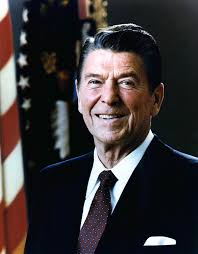
Ronald Reagan
No two men could have been more different than Vladimir Lenin and Ronald Reagan. Lenin created the Soviet Union in 1917 and became its first in a series of absolute dictators. Reagan spent his life fighting Communism, most notably as President.
So it’s ironic that both men, in death, got essentially the same funeral—and for the same reason: To sanctify and legitimize their respective organizations—and the authority of their potential successors.
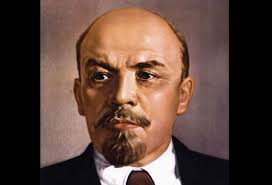
Vladimir Lenin
Lenin died on January 21, 1924, and was immediately succeeded by the party’s General Secretary, Joseph Stalin. Stalin, as a youth, had been a seminary student. He knew that, despite Communism’s official atheistic stance, most Russians remained loyal to the Russian Orthodox Church.
So in giving Lenin’s funeral oration, Stalin used the language of religion to confer sainthood upon a militant atheist—and upon his successor, Stalin himself: “We vow to thee, Comrade Lenin, that we will fulfill this, thy commandment….”
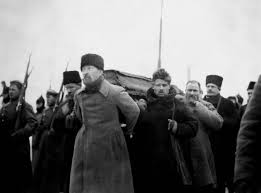
Funeral for Vladimir Lenin
Stalin and his fellow Communists immediately launched the “cult of Lenin,” depicting him as a fatherly, all-wise leader whose genius could only be bestowed upon his closest disciples.
Lenin’s extensive political writings were treated as divine writ, and were used to justify everything Stalin and his own successors wanted to do.
A classic example: Although he died 20 years before the American creation of the atomic bomb, Lenin was hailed by the Soviets as the “father” of “Soviet nuclear physics.”
Similarly, Republicans quickly turned Reagan into a modern-day saint of mythical proportions.
They did so for the same reason that Stalin deliberately forged a cult around the dead Lenin—to create a “holy” figure of whom other Republicans can claim to be true disciples.
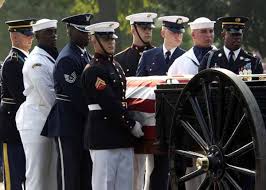
Funeral for Ronald Reagan
These deliberate fictions conveniently ignore a series of ugly truths:
- Reagan was only one of a series of Presidents who held the line against the Soviet Union.
- His budgets were just as stained with red ink as those of all previous Presidents.
- By the end of his term, 138 Reagan administration officials had been investigated, indicted or convicted for official misconduct and/or criminal violations.
- His “trickle-down” Reganomics brought prosperity to only the wealthiest 1% of Americans, proving that “a rising tide lifts some yachts.”
- By drastically shrinking the tax-base, bloating the defense budget and destroying programs to benefit the poor and middle-class, Reagan produced a $1 trillion deficit-–which only the Clinton Administration eliminated.
- Reagan believed that government should not help the impoverished. Those who lacked wealth to buy such necessities as housing and medical insurance were written off as unimportant.
- John F. Kennedy had praised government service as an honor. Reagan repeatedly said that “the best and the brightest” could be found only in business.
- This denigration of government service continues among Republicans to this day—defaming the very institutions they lust to control.
- Although he often berated the poor for their “laziness,” Reagan adhered to a “banker’s hours” schedule: During his working hours in the Oval Office, he often had blocks of free time—two to three hours. He would call for his fan mail and answer it.
- Reagan saw no need to protect America’s fragile environment against corporate polluters, eager to enrich themselves at its expense. He ignorantly stated: “Approximately 80% of our air pollution stems from hydrocarbons released by vegetation, so let’s not go overboard in setting and enforcing tough emission standards from man-made sources.”
Reagan famously attacked “welfare queens” and sought to deny government benefits for the poor. But he didn’t hesitate to enrich himself at public expense.
- Before his Presidency ended, 18 wealthy Californians contributed $156,000 apiece to buy him a 7,200 square-foot mansion overlooking Beverly Hills.
- Reagan signed a multi-million dollar deal to write his Presidential memoirs and publish a collection of his speeches.
- He signed an exclusive contract with a Washington lecture bureau, which paid him $50,000 per speech given in the United States and $100,000 overseas. This made him the highest-paid speaker in the country.
- These monies came in addition to his Presidential pension of $99,500 a year for life and his $30,000 annual pension as a former governor of California.
- At a cost to the government of $10 million annually, Reagan—a millionaire who could afford private security—continued to receive lifetime Secret Service protection from 40 fulltime agents.
The “cult of Lenin” died when the Soviet Union collapsed in 1991. The “cult of Reagan” died only when it was superseded by that of Donald Trump.
The difference: Reagan hid his brutal deeds behind a smile; Trump celebrates his openly with a frown.
ABC NEWS, ABC’S THE WEEK, ADOLF HITLER, ALTERNET, AMERICABLOG, AP, AUSTRIA, BABY BOOMER RESISTANCE, BBC, BC NEWS, BENJAMIN NETANYAHU, BEVIN ALEXANDER, BLOOMBERG, BLUESKY, BUZZFEED, CANADA, CBS NEWS, CHARLES “CQ” BROWN, CNN, CROOKS AND LIARS, CZECHOSLOVAKIA, D-DAY, DAILY KOS, DEFENSE INTELLIGENCE AGENCY, DEPARTMENT OF HOMELAND SECURITY, DONALD TRUMP, EDUARD DALADIER, ERWIN ROMMEL, FACEBOOK, FBI, FIVETHIRTYEIGHT, FRANCE, FUHRER OATH, GREAT BRITAIN, GREENLAND, HARPER’S MAGAZINE, HEINZ GUDERIAN, HERMAN GORING, HOW HITLER COULD HAVE WON WORLD WAR II (BOOK), HUFFINGTON POST, IRAN, JAMES SLIFE, JEFFREY KRUSE, JIMMY CARTER, JOINT OPERATIONS COMMAND, JUSTIN TRUDEAU, LISA FRANCHETTI, MEDIA MATTERS, MEXICO, MOTHER JONES, MOVEON, MSNBC, MUNICH CONFERENCE, NATIONAL SECURITY AGENCY, NAZI GERMANY, NBC NEWS, NEWSDAY, NEWSWEEK, NPR, NUCLEAR WEAPONS SITES, PANAMA, PAUL VON HINDENBURG, PBS NEWSHOUR, PETE HEGSETH, POLAND, POLITICIZING THE MILITARY, POLITICO, POLITICUSUSA, RAW STORY, REPUBLICANS, REUTERS, RHINELAND, RUSSIA, SALON, SEATTLE TIMES, SECRETARY OF DEFENSE, SHOSHANA CHATFIELD, SLATE, SUDENTENLAND, TALKING POINTS MEMO, THE ATLANTIC, THE CHICAGO SUN-TIMES, THE CHICAGO TRIBUNE, THE DAILY BEAST, THE DAILY BLOG, THE GUARDIAN, THE HILL, THE HUFFINGTON POST, THE INTERCEPT, THE LOS ANGELES TIMES, THE NATION, THE NEW REPUBLIC, THE NEW YORK TIMES, THE NEW YORKER, THE PENTAGON, THE SS, THE VILLAGE VOICE, THE WASHINGTON POST, THEODORE ROOSEVELT, THINKPROGRESS, TIME, TIMOTHY HAUGH, TRUTHDIG, TRUTHOUT, TWO POLITICAL JUNKIES, U.S. NEWS & WORLD REPORT, UPI, USA TODAY, WERNER VON BLOMBERG, WERNER VON FRITSCH, WONKETTE, WORLD WAR 11, X
In Bureaucracy, History, Military, Politics, Social commentary on August 26, 2025 at 12:06 am
On August 22, the PBS Newshour website carried the following headline: HEGSETH FIRES GENERAL WHOSE AGENCY’S INTEL ASSESSMENT OF U.S. STRIKES ON IRAN ANGERED TRUMP.
The story opened: “Defense Secretary Pete Hegseth has fired a general whose agency’s initial intelligence assessment of damage to Iranian nuclear sites from U.S. strikes angered President Donald Trump, according to two people familiar with the decision and a White House official.”
“Lt. Gen. Jeffrey Kruse will no longer serve as head of the U.S. Defense Intelligence Agency, according to the people, who spoke on condition of anonymity because they were not authorized to discuss it publicly.
“The firing is the latest upheaval in military leadership and in the country’s intelligence agencies, and comes a few months after details of the preliminary assessment leaked to the media. It found that Iran’s nuclear program has been set back only a few months by the U.S. strikes, contradicting assertions from Trump and Israeli Prime Minister Benjamin Netanyahu.”
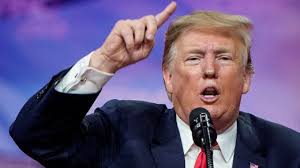
Donald Trump
After the June 21 strikes, Hegseth attacked the press, claiming that it had an anti-military bias . But he refused to provide evidence that proved the nuclear sites had been wiped out.
Since re-taking office on January 20, Trump has fired more than 10 senior military leaders. Critics have called this an unprecedented purge of the Pentagon.
Among those fired:
- General Charles “CQ” Brown Jr.: Chairman of the Joint Chiefs of Staff, Brown was the nation’s highest-ranking military officer.
- Admiral Lisa Franchetti: The Chief of Naval Operations and the first woman to lead the U.S. Navy.
- General James Slife: The Vice Chief of Staff of the Air Force was fired along with Brown and Franchetti.
- General Timothy Haugh: The head of U.S. Cyber Command and the director of the National Security Agency (NSA)
- Vice Admiral Shoshana Chatfield: The U.S. military representative to NATO.
- Lieutenant General Jeffrey Kruse: The director of the Defense Intelligence Agency
Trump’s determination to remake the armed forces in his own image reflects he mindset of an earlier dictator whose rage and egotism carried him—and his country—to ruin: Adolf Hitler.
Bevin Alexander provides an overall—but colorful—view of Hitler’s generalship in How Hitler Could have Won World War II.

Among the fatal military mistakes that led to the defeat of the Third Reich:
- Wasting hundreds of Luftwaffe [air force] pilots, fighters and bombers in a halfhearted attempt to conquer England.
- Ignoring the pleas of generals like Erwin Rommel to conquer Syria, Iraq and Saudi Arabia, which would have given Germany control of most of the world’s oil.
- Attacking his ally, the Soviet Union, while still at war with Great Britain.
- Turning millions of Russians into enemies rather than allies by his brutal and murderous policies.
- Needlessly declaring war on the United States after the Japanese attacked Pearl Harbor. (Had he not done so, Americans would have focused all their attention on defeating Japan.)
- Refusing to negotiate a separate peace with Soviet dictator Joseph Stalin—thus granting Germany a large portion of captured Russian territory in exchange for letting Stalin remain in power.
- Insisting on a “not-one-step-back” military “strategy” that led to the needless surrounding, capture and/or deaths of hundreds of thousands of German servicemen.
As the war turned increasingly against him, Hitler became ever more rigid in his thinking.
He demanded absolute control over the smallest details of his forces. This, in turn, led to astonishing and unnecessary losses among their ranks.
On June 6, 1944, General Gerd von Rundstedt insisted that Panzer tanks be released to drive the Allies from the Normandy beaches. But these could not be released except on direct orders of the Fuehrer.

Panzer tank
Hitler’s chief of staff, General Alfred Jodl, informed Rundstedt: The Fuhrer was asleep-–and was not to be awakened. By the time Hitler awoke and issued the order, it was too late.
Nor could Hitler accept responsibility for the policies that were leading Germany to certain defeat. He blamed his generals, accused them of cowardice, and relieved many of the best ones from command.
Among those sacked was Heinz Guderian, creator of the German Panzer corps—and responsible for the blitzkreig victory against France in 1940.

Heinz Guderian
Another was Erich von Manstein, designer of the strategy that defeated France in six weeks—which Germany had failed to do during four years of World War 1.
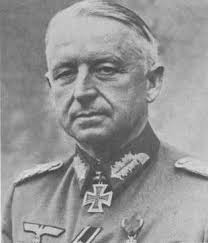
Erich von Manstein
Finally, on April 29, 1945—with the Russians only blocks from his underground Berlin bunker—Hitler dictated his “Last Political Testament.”
Once again, he refused to accept responsibility for unleashing a war that ultimately consumed 50 million lives:
“It is untrue that I or anyone else in Germany wanted war in 1939. It was desired and instigated exclusively by those international statesmen who either were of Jewish origin or worked for Jewish interests.”
Hitler had launched the invasion of Poland—and World War II—with a lie: That Poland had attacked Germany.
Fittingly, he closed the war—and his life—with a final lie.
The ancient Greeks believed that “a man’s character is his destiny.”
For Adolf Hitler—and the nations he ravaged—that proved fatally true.
It remains to be seen whether the same will prove true for Donald Trump—and the United States.
ABC NEWS, ABC’S THE WEEK, ADOLF HITLER, ALTERNET, AMERICABLOG, AP, AUSTRIA, BABY BOOMER RESISTANCE, BBC, BC NEWS, BENJAMIN NETANYAHU, BEVIN ALEXANDER, BLOOMBERG, BLUESKY, BUZZFEED, CANADA, CBS NEWS, CHARLES “CQ” BROWN, CNN, CROOKS AND LIARS, CZECHOSLOVAKIA, D-DAY, DAILY KOS, DEFENSE INTELLIGENCE AGENCY, DEPARTMENT OF HOMELAND SECURITY, DONALD TRUMP, EDUARD DALADIER, ERWIN ROMMEL, FIVETHIRTYEIGHT, FRANCE, FUHRER OATH, GREAT BRITAIN, GREENLAND, HARPER’S MAGAZINE, HEINZ GUDERIAN, HERMAN GORING, HOW HITLER COULD HAVE WON WORLD WAR II (BOOK), HUFFINGTON POST, IRAN, JAMES SLIFE, JEFFREY KRUSE, JIMMY CARTER, JOINT OPERATIONS COMMAND, JUSTIN TRUDEAU, LISA FRANCHETTI, MEDIA MATTERS, MEXICO, MOTHER JONES, MOVEON, MSNBC, MUNICH CONFERENCE, NATIONAL SECURITY AGENCY, NAZI GERMANY, NBC NEWS, NEWSDAY, NEWSWEEK, NPR, NUCLEAR WEAPONS SITES, PANAMA, PAUL VON HINDENBURG, PBS NEWSHOUR, PETE HEGSETH, POLAND, POLITICIZING THE MILITARY, POLITICO, POLITICUSUSA, RAW STORY, REPUBLICANS, REUTERS, RHINELAND, RUSSIA, SALON, SEATTLE TIMES, SHOSHANA CHATFIELD, SLATE, SUDENTENLAND, TALKING POINTS MEMO, THE ATLANTIC, THE CHICAGO SUN-TIMES, THE CHICAGO TRIBUNE, THE DAILY BEAST, THE DAILY BLOG, THE GUARDIAN, THE HILL, THE HUFFINGTON POST, THE INTERCEPT, THE LOS ANGELES TIMES, THE NATION, THE NEW REPUBLIC, THE NEW YORK TIMES, THE NEW YORKER, THE PENTAGON, THE SS, THE VILLAGE VOICE, THE WASHINGTON POST, THEODORE ROOSEVELT, THINKPROGRESS, TIME, TIMOTHY HAUGH, TRUTHDIG, TRUTHOUT, TWO POLITICAL JUNKIES, U.S. NEWS & WORLD REPORT, UPI, USA TODAY, WERNER VON BLOMBERG, WERNER VON FRITSCH, WONKETTE, WORLD WAR 11, X
In Bureaucracy, History, Military, Politics, Social commentary on August 25, 2025 at 12:22 am
President Donald Trump is notorious as a non-reader. Nevertheless, he seems poised to re-enact one of the most fateful events in 20th century history.
First, that event: On August 2, 1934, the aged German President Paul von Hindenburg died.
Adolf Hitler had been serving as Reich Chancellor—the equivalent of attorney general—since January 30, 1933. Within hours, the Nazi Reichstag [parliament] announced the following law, back-dated to August 1st:
“The office of Reich President will be combined with that of Reich Chancellor. The existing authority of the Reich President will consequently be transferred to the Führer and Reich Chancellor, Adolf Hitler.”
Immediately following the announcement of the new Führer law, the German Officer Corps and every individual soldier in the German Army was made to swear a brand new oath of allegiance:
“I swear by God this holy oath, that I will render to Adolf Hitler, Führer of the German Reich and People, Supreme Commander of the Armed Forces, unconditional obedience, and that I am ready, as a brave soldier, to risk my life at any time for this oath.”
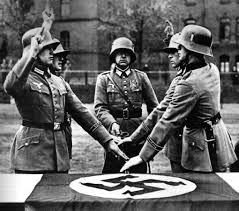
Soldiers swearing the Fuhrer Oath
In the past, German soldiers had sworn loyalty to Germany. Now they had sworn it to a single man.
For men of honor in uniform, conspiracy against the Führer now meant betrayal of the Fatherland itself. They considered this oath sacred, overriding all others. And the vast majority would fanatically obey it right to the end of the disastrous war Hitler was leading them into.
Yet even that didn’t give Hitler the absolute control over the Armed Forces that he sought.
Since taking command of Germany in the summer of 1934, Hitler wanted to replace two high-ranking military officials: General Werner von Fritsch and Colonel General Werner von Blomberg. Both were convinced that Hitler’s increasingly aggressive foreign policy was putting Germany on a collision course with war—a war the Fatherland could not win.
Hitler, in fact, meant to go to war—and despised Fritsch’s and Blomberg’s hesitation to do so. He decided to rid himself of both men.
But how?
Accident played a part in the case of Blomberg.
On January 12, 1938, Blomberg married Erna Gruhn, with Hitler and Reichsmarshall Hermann Goring attending as witnesses. Soon afterward, Berlin police discovered that Gruhn had a criminal record as a prostitute and had posed for pornographic photographs.
Marrying a woman with such a background violated the standard of conduct expected of German officers. Hitler was infuriated at having served as a witness to the ceremony.
But he also saw the scandal as an opportunity to dispose of Blomberg—who was forced to resign.
Shortly after Blomberg was forced out in disgrace, the SS—Hitler’s private police force—presented Hitler with a file that falsely accused Werner von Fritsch of homosexuality. Fritsch angrily denied the accusation but resigned on February 4, 1938.
From that point on, Hitler was in de facto command of the German Armed Services.
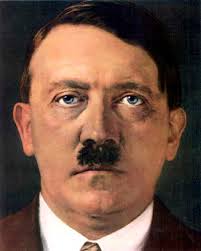
Adolf Hitler
Hitler had a timetable of conquest:
- On March 7, 1936, he seized the Rhineland, the demilitarized zone between Germany and its arch-enemy, France.
- On March 12, 1838, he “unified” Austria with Germany by annexing it.
- In September, 1938, he seized a large portion of western Czechoslovakia after that nation’s British and French “allies” sold it out at the infamous Munich Conference.
- On March 15, 1939, he ordered the Wehrmacht to occupy the rest of Czechoslovakia.
- On September 1, 1939, he ordered the invasion of Poland—unintentionally igniting World War II and the eventual destruction of Nazi Germany.
No one yet knows if Donald Trump has a plan of military conquest outside the United States. But since taking office on January 20, he has repeatedly threatened the economic—if not the military—security of:
- Canada
- Mexico
- Panama
- Greenland.
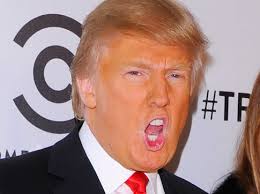
Donald Trump
On December 25, 2024, Trump told a conservative conference in Arizona that Panama was charging U.S. ships “ridiculous, highly unfair” fees to use its namesake canal.
The United States built the canal during the administration of President Theodore Roosevelt and opened it in 1914. It remained controlled by the United States until President Jimmy Carter signed a a 1977 agreement for its eventual handover to Panama in 1999.
On December 25, Trump posted on his website, Truth Social: “Merry Christmas to all, including to the wonderful soldiers of China, who are lovingly, but illegally, operating the Panama Canal.”
“There is not a single Chinese soldier in the canal,” the president of Panama, José Raúl Mulino, told reporters the next day, adding that there is “absolutely no Chinese interference.”
Another country that Trump has rushed to make an enemy of is America’s longtime ally—Canada.
At a November 30 dinner at Mar-a-Lago, Trump’s estate in Palm Beach, Florida, he told Canadian Prime Minister Justin Trudeau that Canada could become the 51st state of the United States.
Canada’s Public Safety Minister Dominic LeBlanc, who attended the dinner, insisted that Trump was joking.
But on December 2, Trump threatened to impose a 25% tax on all products entering the United States from Canada and Mexico unless they stopped the flow of drugs and illegal aliens.
And on December 3, Trump posted on his Truth Social platform an AI-generated image of himself standing on a mountain with a Canadian flag beside him. Its caption: “Oh Canada!”
2012 PRESIDENTIAL ELECTION, A HIGHER LOYALTY, ABC NEWS, ALTERNET, AMERICABLOG, AMERICAN CROSSROADS, ANN COULTER, AP, BABY BOOMER RESISTANCE, BARACK OBAMA, BBC, BC NEWS, BENJAMIN NETANYAHU, BLOOMBERG, BLOOMBERG NEWS, BLUESKY, BUZZFEED, CBS NEWS, CHRIS MATTHEWS, CNN, CROOKS AND LIARS, DAILY KOS, DONALD TRUMP, FASCISM, FBI, FIVETHIRTYEIGHT, HARDBALL, HARPER’S MAGAZINE, HOWIE CARR, HUFFINGTON POST, IN TRUMP WE TRUST (BOOK), IRAN, ISRAEL, ISRAEL-IRAN WAR, JAMES COMEY, KARL ROVE, MAGA, MEDIA MATTERS, MITT ROMNEY, MOTHER JONES, MOVEON, MSNBC, NBC NEWS, NEW REPUBLIC, NEWSDAY, NEWSWEEK, NPR, PBS NEWSHOUR, POLITICO, POLITICUSUSA, RAW STORY, REUTERS, RON DESANTIS, SALON, SEATTLE TIMES, SLATE, TALKING POINTS MEMO, THE ATLANTIC, THE CHICAGO SUN-TIMES, THE CHICAGO TRIBUNE, THE DAILY BEAST, THE DAILY BLOG, THE GUARDIAN, THE HILL, THE HUFFINGTON POST, THE INTERCEPT, THE LOS ANGELES TIMES, THE NATION, THE NEW REPUBLIC, THE NEW YORK TIMES, THE NEW YORKER, THE VILLAGE VOICE, THE WALL STREET JOURNAL, THE WASHINGTON POST, THINKPROGRESS, TIME, TRUTHDIG, TRUTHOUT, TWITTER, TWO POLITICAL JUNKIES, U.S. NEWS & WORLD REPORT, UPI, USA TODAY, X
In Bureaucracy, History, Law Enforcement, Politics, Social commentary on July 16, 2025 at 8:44 pm
On November 6, 2012, Ann Coulter, the Right-wing activist and propagandist, was devastated by the re-election of President Barack Obama.
“People are suffering. The country is in disarray,” she whined during an interview. “If Mitt Romney [the Republican Presidential nominee] cannot win in this economy, then the tipping point has been reached. We have more takers than makers and it’s over. There is no hope.”
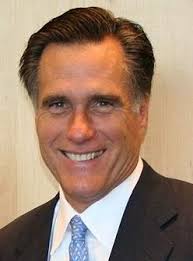
Mitt Romney
But by 2016, Coulter no longer felt dismayed. She felt rejuvenated—for she had found her perfect Presidential candidate: Donald Trump.
Appearing on the Right-wing radio program, “The Eric Metaxes Show,” she said: “What is the point of talking about abortion or anything else unless you get Donald Trump in to build the wall, deport illegals, end this ‘anchor baby’ nonsense, stop importing 100,000 Muslims a year, in addition to two million Third Worlders per year. It’s madness what this country has been doing.”
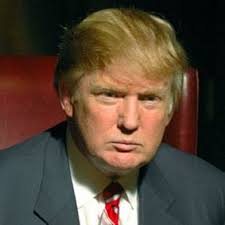
Donald Trump
And Coulter sang Trump’s praises in a 2016 book: In Trump We Trust: E Pluribus Awesome!
According to its dust jacket: “He’s putting America first in our trade deals and alliances, rather than pandering to our allies and enemies.
“He’s abandoned the GOP’s decades-long commitment to a bellicose foreign policy, at a time when the entire country is sick of unnecessary wars.”
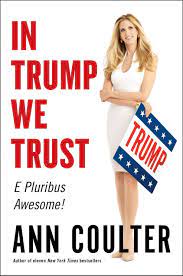
But by May, 2017, four months after Trump had taken office as President, Coulter was ready to abandon him. Her chief complaint: He hadn’t built the wall along the United States-Mexican border he had promised to erect.
“I guess we have to try to push him to keep his promises. But this isn’t North Korea, and if he doesn’t keep his promises I’m out,” she told the Right-wing website, The Daily Caller.
“This is why we voted for him. I think everyone who voted for him knew his personality was grotesque, it was the issues.”
And, on March 28, 2018, she had more choice words for him: “I knew he was a shallow, lazy ignoramus, and I didn’t care.”
On April, 1, she—by her account—had a shouting match with Trump in the Oval Office.

Ann Coulter (Gage Skidmore photo)
On the Right-wing “Howie Carr Show,” she claimed to have told him: “You’re not doing what you promised to do. Where’s the end of NAFTA? Where’s the wall? Where are the deportations? What are you doing talking about the DREAMers?”
“He’s failing right now,” Coulter told Carr. “The presidency isn’t over yet, he can still come back and do it. But people who voted for him shouldn’t be cheering for him every time he betrays them and this is a total betrayal for him to sign that [government appropriations] bill. It’s a total betrayal for him not to build the wall. And to pretend like it isn’t—yeah he can come back.”
But Trump didn’t build that wall. And Coulter was still furious with him.
In an April 4, 2023 column, she wrote: “The left’s sole objective is to make Trump the Republicans’ 2024 presidential nominee. He’s already lost three election cycles for the GOP—why not make it four?”
In short: She backed a monster to wreak destruction on those she hated. And then she became furious at him because he didn’t act monstrously enough.
Coulter backed Florida Governor Ron DeSantis—who polled significantly better than Trump among crucial independent voters—for President in 2024.
But DeSantis didn’t even come close to getting the Republican nomination. And Trump not only got the nomination but won the election against Vice President Kamala Harris.
Since being reelected in 2024, Trump has launched an all-out war on illegal immigrants. According to Immigration and Customs Enforcement (ICE): During Trump’s first 100 days, ICE arrested over 65,000 illegal aliens.
Asked what that time would be remembered for, Coulter said: “The 100 most wonderful days in U.S. history. I can’t believe how great Trump is.”
But in April 2025, she raised concerns about the legality of deporting people who hadn’t committed a crime, possibly violating First Amendment rights.
And Trump’s intervening in the conflict between Israel and Iran definitely violated her stated desire to end “the GOP’s decades-long commitment to a bellicose foreign policy.”
On June 12, Israel opened hostilities, with airstrikes targeting Iran’s nuclear program and leadership. But Israel lacked the 30,000-pound “bunker-busting” bombs that can penetrate the Fordo nuclear site, hidden deep underground in a mountain.
Only the United States has the bombs—and the aircraft that can deliver them. So Israeli Prime Minister Benjamin Netanyahu leaned on Trump to provide both.
And on June 14, he did—sending B-2 bombers to attack three Iranian nuclear sites.
This has split the MAGA base. Some support the United States’ traditional policy of supporting Israel. Others—like Coulter—want to keep the country out of “unnecessary wars.”
Trump claimed he would wait two weeks to see if Iran wants to “negotiate”—that is, agree to abandon its nuclear ambitions. For Trump, “negotiation” means: “Do as I say or I’ll destroy you.”
But more than a month has passed, and Iran has not responded to Trump’s demand. There is currently no way to tell what his next move—if any—on this issue will be.
The odds are overwhelming that Coulter will be disappointed once again.
ABC NEWS, ADOLF HITLER, ALI KHAMENEI, ALTERNET, AMERICABLOG, AP, B-52 BOMBERS, BABY BOOMER RESISTANCE, BATTLE OF BRITAIN (MOVIE), BBC, BENITO MUSSOLINI, BLOOMBERG, BLUESKY, BUNKER BUSTER BOMBS, BUZZFEED, CBS NEWS, CHAIRMAN OF THE JOINT CHIEFS OF STFF, CNN, CROOKS AND LIARS, DAILY KOS, DAN CAINE, DONALD TRUMP, FIVETHIRTYEIGHT, FORDO, HARPER’S MAGAZINE, HERMANN GORING, HUFFINGTON POST, IRAN, ISRAEL, JOINT CHIEFS OF STFF, LUFTWAFFE, MEDIA MATTERS, MOTHER JONES, MOVEON, MSNBC, NBC NEWS, NEW REPUBLIC, NEWSDAY, NEWSWEEK, NPR, NUCLEAR WEAPONS SITES, OPERATION MIDNIGHT HAMMER, PBS NEWSHOUR, POLITICO, POLITICUSUSA, RAW STORY, REUTERS, SALON, SEATTLE TIMES, SLATE, TALKING POINTS MEMO, THE ATLANTIC, THE CHICAGO SUN-TIMES, THE CHICAGO TRIBUNE, THE DAILY BEAST, THE DAILY BLOG, THE GUARDIAN, THE HILL, THE HUFFINGTON POST, THE INTERCEPT, THE LOS ANGELES TIMES, THE NATION, THE NEW REPUBLIC, THE NEW YORK TIMES, THE NEW YORKER, THE VILLAGE VOICE, THE WASHINGTON POST, THINKPROGRESS, TIME, TRUTHDIG, TRUTHOUT, TWO POLITICAL JUNKIES, U.S. NEWS & WORLD REPORT, UPI, USA TODAY, WINSTON CHURCHILL, WORLD WAR 11, X
In Bureaucracy, Business, History, Military, Politics, Social commentary on June 23, 2025 at 12:11 am
The 1969 classic, Battle of Britain, features a scene that could have been filmed after President Donald Trump launched unprovoked airstrikes against Iran on June 21.
The movie dramatizes the heroic struggle of vastly outnumbered Royal Air Force (RAF) pilots against the numerically superior German air force, the Luftwaffe, during World War II.
Adolf Hitler, Germany’s Fuhrer, knows that to launch a successful naval invasion of Britain, he first must wipe the RAF from the skies.
The aerial combat begins during the summer of 1940 and climaxes that September.

The turning point in the Battle—and the movie—occurs when a squadron of German bombers lost in bad weather at night accidentally bombs London. Attacks on London had been specifically forbidden by Hitler—for fear that they might bring the United States into the war.
An enraged British Prime Minister Winston Churchill orders a retaliatory attack on Berlin.
Since the eruption of World War II on September 1, 1939, with Hitler’s invasion of Poland. this is the first time that Berlin has been attacked. In fact, Hermann Goring, chief of the Luftwaffe, has said: “If ever a bomb falls on Berlin, you can call me Meyer.”
Now Hitler—who has ravaged Poland and France, and repeatedly bombed Britain, is enraged.
It’s perfectly OK for him to ravage other countries. It’s just unfair for his enemies to strike back.
He orders his faithful to assemble at the Reichstag, the German parliament, where he will outline his plans for knocking Britain out of the war.
In the movie, Battle of Britain, Hitler’s address is brilliantly—if briefly—staged, complete with rows of diehard Nazi women screaming their allegiance to their Fuhrer.
Hitler (played by Rolf Stiefel) starts his speech slowly, just as the real Hitler normally did to build to a shattering climax: “Last night, bombs were dropped on Berlin.
“So be it. Two can play at that game.
“If the RAF drops 200, 300, 400 bombs, then in one night we shall drop 2,000, 3,000, 4,000 bombs!”
His speech is interrupted by cheers from the Nazi faithful.

Adolf Hitler addressing the faithful in Battle of Britain
“If they attack our cities, then we will WIPE THEIRS OUT!
“The hour will come when one of us must break. And it will never be National Socialist Germany!”
“NEVER! NEVER! NEVER!” screams the frenzied crowd.
“The English are filled with curiosity. They keep asking ‘Why doesn’t he come?’ Be patient. We are coming! We are coming!”
The Reichstag explodes with cheers of expected victory.
Britain went on to repulse the Luftwaffe’s attacks on its cities—and celebrate its victory at the end of the war.
That speech—in the movie and history—happened in 1940.
Fast forward to June 21, 2025: Newly re-elected President Donald Trump orders seven B-2 bombers to attack three nuclear weapons sites in Iran.
Donald Trump
The attack, dubbed Operation Midnight Hammer, opens with a U.S. submarine launching more than 24 Tomahawk cruise missiles against targets at the site in Isfahan.
At about 6:40 p.m. ET, or 2:10 a.m. in Iran, the lead B-2 drops two “bunker-buster” bombs known as the GBU-57 Massive Ordnance Penetrators (MOPs) on the site at Fordo.
The GBU-57 bomb is designed to penetrate up to 200 feet (60 meters) underground before exploding. Armed with 6,000 pounds of explosives, it’s able to reach and destroy weapons of mass destruction located in well-protected facilities
For 25 minutes, a total of 14 30,000-pound bombs are dropped on targets at Fordo, Isfahan and Natanz. The Tomahawk missiles land at Isfahan after bombs are dropped on the two other sites. No shots are fired at the planes as they leave Iranian airspace.
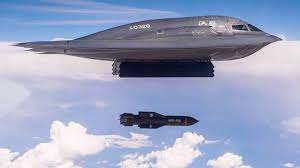
B-2 bomber drops “bunker buster” bomb
More than 125 U.S. aircraft participate in this mission, including the B-2 bombers, fighter jets, refueling planes and surveillance aircraft. More than 75 precision-guided weapons are used in the attack.
“Initial battle damage assessments indicate that all three sites sustained extremely severe damage and destruction,” says General Dan Caine, chairman of the Joint Chiefs of Staff.
He notes that a full assessment will take time.
“Our forces remain on high alert and are fully postured to respond to any Iranian retaliation or proxy attacks, which would be an incredibly poor choice,” Caine said. “We will defend ourselves.”
Always intent on having the last word, Trump adds on his website, Truth Social: “ANY RETALIATION BY IRAN AGAINST THE UNITED STATES OF AMERICA WILL BE MET WITH FORCE FAR GREATER THAN WHAT WAS WITNESSED TONIGHT.”
Like Hitler, it’s perfectly OK for him to ravage other countries. It’s just unfair for his enemies to strike back.
On April 12, 2025, Trump and Iran had begun a series of negotiations aimed at reaching a nuclear peace agreement. This followed a letter from Trump to Supreme Leader Ali Khamenei, setting a 60-day deadline for Iran to reach an agreement.
Like Hitler, Trump makes demands, offers no concessions and threatens destruction if his demands aren’t met.

Ali Khamenei
Khamenei.ir, CC BY 4.0 <https://creativecommons.org/licenses/by/4.0>, via Wikimedia Commons
On June 12, Israel launches all-out attacks on Iran, targeting Iran’s top military leaders, nuclear scientists, and politician Ali Shamkhani, who has been overseeing the negotiations with the United States.
Following the attacks, Iran suspends nuclear talks indefinitely.
There is no telling how Iran and its Islamic allies will respond. But that a response is coming is absolutely certain.
ABC NEWS, ALTERNET, AMERICABLOG, AP, AYATOLLAH RUHOLLAH KHOMEINI, BABY BOOMER RESISTANCE, BBC, BC NEWS, BLOOMBERG, BLOOMBERG NEWS, BLUESKY, BUZZFEED, CBS NEWS, CHRISTIAN RIGHT, CNN, COLD WAR, CROOKS AND LIARS, CZECHOSLOVAKIA, DAILY KOS, EGYPT, FIVETHIRTYEIGHT, GAZA, GLOBAL WARMING, HARPER’S MAGAZINE, HUFFINGTON POST, HUNGARIAN UPRISING, HUNGARY, IRAN, IRAQ, ISLAM, ISRAEL, JESUS CHRIST, MEDIA MATTERS, MIDDLE EAST, MOTHER JONES, MOVEON, MSNBC, NBC NEWS, NEW REPUBLIC, NEWSDAY, NEWSWEEK, NPR, Oil, PBS NEWSHOUR, POLITICO, POLITICUSUSA, RAW STORY, REUTERS, SALON, SAND CURTAIN, SEATTLE TIMES, SECOND COMING, SHAH OF IRAN, SHIITE MUSLIMS, SLATE, SOVIET UNION, SUNNI MUSLIMS, TALKING POINTS MEMO, TERRORISM, THE ATLANTIC, THE CHICAGO SUN-TIMES, THE CHICAGO TRIBUNE, THE DAILY BEAST, THE DAILY BLOG, THE GUARDIAN, THE HILL, THE HUFFINGTON POST, THE INTERCEPT, THE LOS ANGELES TIMES, THE NATION, THE NEW REPUBLIC, THE NEW YORK TIMES, THE NEW YORKER, THE VILLAGE VOICE, THE WALL STREET JOURNAL, THE WASHINGTON POST, THINKPROGRESS, TIME, TRUTHDIG, TRUTHOUT, TWO POLITICAL JUNKIES, U.S. NEWS & WORLD REPORT, UNITED STATES, UPI, USA TODAY, X
In Bureaucracy, History, Military, Politics, Social commentary on June 16, 2025 at 1:18 am
Once again, the Middle East is at war.
Since October 7, 2023, it’s been Israel vs. Gaza. But as of June 12, it’s now Israel vs. Iran.
And, once again, there’s an excellent chance the United States will be dragged into this latest blood feud.
But there can be peace—for the United States—in the Middle East.
That is, if Americans are willing to make radical changes in their approach to that part of the world.
First, the United States must embark on a crash program to develop alternatives to oil.
The Islamic world offers only one reason for American concern: oil.
Yet its consumption threatens the future of the world through global warming. And it keeps America tethered to regimes that are fundamentally unstable and hostile to the West.
Second, once the United States frees itself from its dependency on fossil fuels, it can safely end its relationship with such regimes.
That means putting an end to spending billions of dollars every year to prop up regimes like those in Iraq and Egypt. And it also means stopping the supply of big-ticket military hardware (like fighter planes and missiles) to Islamic regimes.
When the Shah of Iran was overthrown in 1979, he was probably the best-armed Islamic leader in the Middle East. His army and air force bristled with sophisticated American weaponry he had bought with billions of dollars in oil revenues.
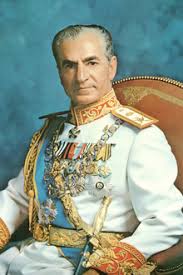
Shah of Iran
But he had thoroughly alienated his people. Liberals thought him a tyrant, and conservatives thought him a traitor to Islam. So when Ayatollah Ruhollah Khomeini flew to Iran from his self-exile in Paris, no one in the Shah’s army and air force raised a hand in his defense.
Third, the United States should end its “Permanent Bodyguard” relationship with Israel.
Every nation—including Israel—has the absolute right to defend itself from aggression. But no nation—including Israel—has the right to expect another nation to act as its permanent bodyguard.
Millions of Americans believe they are morally obligated to defend Israel owing to the barbarism of the Holocaust—which ended 80 years ago. Yet America was never a party to this, and has nothing to atone for.
And millions of Americans feel committed to Israel but care nothing for the fates of Israelis.
As Christian fundamentalists, they believe that before Jesus Christ can awaken from his 2,000-year slumber, Israel must re-conquer all the territory it supposedly held during the reign of Kings David and Solomon.
There is absolutely no evidence that anyone has ever been resurrected, but this means nothing to them.

Right-wing Christian fantasy: Dead man hovering
After Christ returns, they believe, the Jews will face a choice: Become Christians or go to hell.
For evangelical Christians, Jews remain the eternal “Christ killers.”
And if Jews must assume temporary control of the Middle East to bring about the return of a man who died 2,000 years ago, so be it.
This is the view of many Right-wing members of the House of Representatives and Senate. Obviously, people holding such totally irrational views shouldn’t be allowed to hold public office.
Unfortunately, such unbalanced views are shared by millions of equally irrational evangelical Christians.
Fourth, the United States and its European allies should erect a “Sand Curtain” around the Middle East.
For 44 years—1947 to 1991—the United States and the Soviet Union were locked in a Cold War. Essentially, the United States drew a ring around the Soviet Union—including those nations its armies had seized following the defeat of Nazi Germany in 1945.
The United States said, in effect: “We can’t liberate the countries you’re now occupying”—because trying to do so would have triggered a nuclear World War III. “But we won’t allow you to occupy and enslave any other countries. And if you try to do so, it will mean total war.”
Thus, the United States should erect a “sand curtain” around the Middle East. This could be attained by withdrawing all of its forces but keeping a good portion stationed in Europe.

It would then publicly announce: “From now on, you are the masters of your own destinies—so long as what you do affects only those of you living in the Middle East.
“We recognize that barbarism and violence have always been a part of life in the Middle East. And we don’t expect this to change.
“So go ahead and destroy as many of your own citizens as you wish—either because they’re Jewish or Christians, or because Sunni Muslims hate Shiite Muslims and Shiite Muslims hate Sunni Muslims.
“Just don’t do anything that poses a threat to those living outside your barbaric lands. In short: Europe and the United States are strictly off-limits to you.
“And if you aim your aggression at either, we will consider this an act of war and use all the weapons at our disposal—including nuclear ones—to wipe you from the face of the Earth.“
The United States cannot enforce peace between Islamics and Israelis. Nor between Christians and Islamics. Nor between Islamics and Islamics.
But it can impose an embargo to confine such barbarism to only the Middle East.


 Bureaucracybuster's Blog
AFFORDABLE CARE ACT (ACA), AFGHANISTAN, ALEX PRETTI, ALLEN DULLES, ALTERNET, AMAZON, AMERICABLOG, ANTI-CASTRO CUBANS, AP, APPLE, ARTIFICIAL INTELLIGENCE, ASSASSINATION, BABY BOOMER RESISTANCE, BARACK OBAMA, BARI WEISS, BAY OF PIGS, BBC, BIG TECH, BLACKS, BLOOMBERG, BLUESKY, BUZZFEED, CANADA, CANADIANS, CARLOS MARCELLO, CBS NEWS, CIA, CITIENSHIP TESTS, CIVIL RIGHTS, CLEAR AND PRESENT DANGER (FILM), CNN, COLUMBIAN/MEXICAN DRUG CARTELS, CONSPIRACIES, CROOKS AND LIARS, CUBA, CUBAN MISSILE CRISIS, CUSTOMS AND BORDER PATROL (CBP), DAILY KOS, DONALD TRUMP, FBI, FBI AGENTS, FEDERAL EMERGENCY MANAGEMENT AGENCY, FEDERAL RESERVE, FEDERAL TRADE COMMISSION, FIDEL CASTRO, FIVETHIRTYEIGHT, GAIUS CALIGULA, GAZA, GOOGLE, GREENLAND, GREENLANDERS, GUN RIGHTS ENTHUSIASTS, HARPER’S MAGAZINE, HARRISON FORD, HISPANICS, HUFFINGTON POST, IMMIGRANTS, IMMIGRATION AND CUSTOMS ENFORCEMENT (ICE), INSPECTORS GENERAL, INTERNATIONAL BROTHERHOOD OF TEAMSTERS, IRAN, IRANIANS, ISLAM, ISRAEL, ISREAL, J. EDGAR HOOVER, JAIME DIMON, JAMES COMEY, JANUARY 6 COUP ATTEMPT, JEFF BEZOS, JEFFREY, JEFFREY EPSTEIN, JEROME POWELL, JIMMY HOFFA, JOE BIDEN, JOHN F. KENNEDY, JOHN KELLY, JOURNALISTS, JP MORGAN CHASE, JUSTICE DEPARTMENT PROSECUTORS, Kamala Harris, KGB, LAWYERS, LEBANON, LETITIA JAMES, MAFIA, MARCUS AURELIUS, MARINE BARRACKS BOMBING, MARK ESPER, MARK MILLEY, MEDAL OF HONOR WINNERS, MEDIA MATTERS, MEDICARE, MELANIA TRUMP, META, MICHELLE OBAMA, Military, MINNESOTA, MOTHER JONES, MOVEON, MSNBC, MUSLIMS, NATIONAL RIFLE ASSOCIATION (NRA), NATO, NAVAJO CODE TALKERS, NBC NEWS, NERO, NEWSDAY, NEWSWEEK, NPR, NUCLEAR REACTOR SITES, NUCLEAR TEST BAN TREATY, NUCLELAR TEST BAN TREATY, OIL MILLIONAIRES, PAKISTAN, PAM BONDI, PARIS CLIMATE AGREEMENT, PBS NEWSHOUR, PETE HEGSETH, POLICE, POLITICO, POLITICUSUSA, RARE EARTH MIINERALS, RAW STORY, REUTERS, ROBERT F. KENNEDY, Ronald Reagan, RUDY GIULIANI, SALON, SAM GIANCANA, SEATTLE TIMES, SLATE, SOMALIS, SOUTHERN RACISTS, SOVIET UNION, SUICIDE BOMBINGS, TALKING POINTS MEMO, TARIFFS, THE ATLANTIC, THE CHICAGO SUN-TIMES, THE CHICAGO TRIBUNE, THE DAILY BEAST, THE DAILY BLOG, THE GUARDIAN, THE HILL, THE HUFFINGTON POST, THE INTERCEPT, THE KENNEDY HALF-CENTURY (BOOK), THE LOS ANGELES TIMES, THE MILITARY, THE NATION, THE NEW REPUBLIC, THE NEW YORK TIMES, THE NEW YORKER, THE PRESS, THE PRINCE (BOOK), THE VILLAGE VOICE, THE WASHINGTON POST, THINKPROGRESS, TIM COOK, TIME, TRAJAN, TRUTHDIG, TRUTHOUT, TUSKEGEE AIRMEN, TWO POLITICAL JUNKIES, U.S. NEWS & WORLD REPORT, UNITED STATES DEPARTMENT OF DEFENSE, UNITED STATES DEPARTMENT OF JUSTICE, UNITED STATES SECRET SERVICE, UPI, USA TODAY, WATERGATE, X
JFK HAD POWERFUL ENEMIES. SO DOES DJT: PART TWO (OF FOUR)
In Bureaucracy, Business, History, Law, Law Enforcement, Medical, Military, Politics, Social commentary on February 17, 2026 at 12:12 amJust as President John F. Kennedy was passionately loved and hated, so, too, is Donald J. Trump. And Trump, at 79, has already been the target of two assassination attempts.
Donald Trump
Among the reasons why Trump is so widely hated:
Alex Pretti
Greenland
Columbian drug lords
Share this: