Posts Tagged ‘FBI’
2024 PRESIDENTIL ELECTION, ABC NEWS, ABORTION, AGENCY FOR INTERNATIONAL DEVELOPMENT, ALTERNET, AMERICABLOG, AP, BABY BOOMER RESISTANCE, BBC, BIRTH CONTROL, BLOOMBERG, BLUESKY, BUZZFEED, CAPITAL PUNISHMENT, CBS NEWS, CENTERS FOR DISEASE CONTROL AND PREVENTION, CNN, CONSUMER FINANCIAL PROTECTION BUREAU, CROOKS AND LIARS, DAILY KOS, DEPARTMENT OF DEFENSE, DEPARTMENT OF EDUCATION, DEPARTMENT OF ENERGY, DEPARTMENT OF JUSTICE, DEPARTMENT OF VETERANS AFFAIRS, DONALD TRUMP, ELON MUSK, FBI, FEDERAL AVIATION ADMINISTRATION, FEDERAL COMMUNICATIONS COMMISSION, FEDERAL ELECTIONS COMMISSION, FEDERAL GOVERNMENT WORKFORCE, FEDERAL TRADE COMMISSION, FIVETHIRTYEIGHT, FOOD AND DRUG ADMINISTRATION FOOD DIVISION, GLOBAL WARMING, HARPER’S MAGAZINE, HERITAGE FOUNDATION, HOUSE OF REPRESENTATIVES, HUD COMMUNITY PLANNING AND DEVELOPMENT, HUFFINGTON POST, INTERNAL REVENUE SERVICE, JACK SMITH, JANUARY 6 COUP ATTEMPT, JOHN F. KENNEDY CENTER FOR THE PERFORMING ARTS, JOSEPH STALIN, MEDIA MATTERS, MEDICAID, MIKHAIL TUKHAVEVSKY, MOTHER JONES, MOVEON, MSNBC, NATIONAL FOREST SERVICE, NATIONAL INSTITUTES OF HEALTH, NATIONAL LABOR RELATIONS BOARD, NATIONAL OCEANIC AND ATMOSPHERIC ADMINISTRATION, NBC NEWS, NEW REPUBLIC, NEWSDAY, NEWSWEEK, NKVD, NPR, PBS NEWSHOUR, POLITICO, POLITICUSUSA, PRESIDENTIAL TRANSITION PROJTECT, PROJECT 2025, PURGE, RAW STORY, REPUBLICANS, REUTERS, SALON, SEATTLE TIMES, SLATE, SOVIET UNION, TALKING POINTS MEMO, THE ATLANTIC, THE CHICAGO SUN-TIMES, THE CHICAGO TRIBUNE, THE DAILY BEAST, THE DAILY BLOG, THE GUARDIAN, THE HILL, THE HUFFINGTON POST, THE INTERCEPT, THE LOS ANGELES TIMES, THE NATION, THE NEW REPUBLIC, THE NEW YORK TIMES, THE NEW YORKER, THE VILLAGE VOICE, THE WASHINGTON POST, THINKPROGRESS, TIME, TONY FABRIZO, TRANSPORTATION SECURITY ADMINISTRATION, TRUTHDIG, TRUTHOUT, TWO POLITICAL JUNKIES, U.S. NEWS & WORLD REPORT, UNEMPLOYMENT, UPI, USA TODAY, VLADIMIR PUTIN, X
In Bureaucracy, Business, History, Law, Medical, Military, Politics, Social commentary on March 13, 2025 at 12:18 am
Although Donald Trump’s purges—current and continuing—of his own government are unprecedented for the United States, they nevertheless have a historical precedent.
Unfortunately for Americans, that precedent occurred in the Soviet Union of Joseph Stalin.
The 1930s were a frightening and dangerous time to be alive in the Soviet Union. In 1934, Stalin, seeing imaginary enemies everywhere, ordered a series of purges that lasted right up to the German invasion in 1941.
In 1937-38, the Red Army fell prey to Stalin’s paranoia.
Its victims included:
- Three of five marshals (five-star generals);
- Thirteen of 15 army commanders (three- and four-star generals);
- Fifty of 57 army corps commanders; and
- One hundred fifty-four out of 186 division commanders.
And heading the list of those marked for death was Marshal Mikhail Tukhachevsky, a major Soviet military leader and theoretician from 1918 to 1937.

Joseph Stalin
Arrested on May 22, 1937, he was interrogated and tortured. As a result, he “confessed” to being a German agent plotting to overthrow Stalin and seize power.
On his confession, which survives in the archives, his bloodstains can clearly be seen.
On June 11, 1937, the Soviet Supreme Court convened a special military tribunal to try Tukhachevsky and eight generals for treason.
It was a sham: The accused were denied defense attorneys, and could not appeal the verdict—-which was foregone: Death.
Within hours of the verdict, Tukhachevsky was summoned from his cell and shot once in the back of the head.
In a Russian version of poetic justice, five of the eight generals who served as Tukhachevsky’s judges were themselves later condemned and executed as traitors.
From 1937 until 1956, Tukhachevsky was officially declared a traitor and fifth-columnist.
On January 31, 1957, Tukhachevsky and his co-defendants were declared innocent of all charges and were “rehabilitated” by order of Stalin’s successor, Nikita Khrushchev.

Postage stamp honoring Mikhail Tukhachevsky
The Stalin purges—lasting to 1938—decimated the Russian army and left the Soviet Union vulnerable to attack by its arch enemy: Adolf Hitler’s Nazi Germany.
On June 22, 1941, that attack swept over the western part of the Soviet Union, up to the gates of Moscow and, in 1942, as far east as Stalingrad. It took four years of bitter warfare—and a loss of at least 25 million Soviet casualties—before the Nazi threat was finally destroyed.
As a result of Trump’s purges of America’s health and security institutions, the United States now faces the same threat of invasion—through disease, terrorism, natural disaster or military conquest.
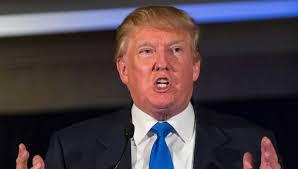
Donald Trump
Meanwhile, House and Senate Republicans are openly or silently rubberstamping Trump’s agenda.
The reason: They fear that Trump will turn his Fascistic voting base upon them. They want to keep their seats in Congress—and all the power and perks that go with them.
Republicans don’t care that Trump has trashed the institutions that Americans have cherished for more than 200 years. Institutions like an independent judiciary, a free press, and an incorruptible Justice Department.
He has viciously attacked all of these—and Republicans have either said nothing or rushed to his defense. Many of them tried to short-circuit Special Counsel Jack Smith’s investigation and prosecution of Trump’s inciting a deadly riot against Congress on January 6, 2021.
But there are signs that even some Republicans might be thinking of breaking with Trump—at least on slashing the Medicaid program.

States and the federal government jointly pay for Medicaid, which offers nearly-free health care coverage for roughly 80 million poor and disabled Americans, including millions of children. It cost $880 billion to operate in 2023.
Nationally, 55% of Americans said the government spends too little on Medicaid.
And pollster Tony Fabrizio, a chief architect of Trump’s 2024 victory, has heard rumblings of Republican discontent. He’s warned the President that:
- 59% of voters in 18 swing districts worry “about their personal financial situation.”
- In these swing districts, 80% favor extending the Affordable Care Act subsidies for health insurance—which will expire this year after Democrats expanded them in 2021.
- Majorities oppose cutting taxes on corporations.
- 63% say their top priority for tax policy is helping “working-class families,” versus the 1%, which Trump and Republicans favor.
The House blueprint, which Trump supports, lays the groundwork for up to $880 billion in Medicaid cuts and tens of billions in cuts to food stamps.
According to a February 22 story in The New Republic—“Trump’s New Pollster Just Hit Him With Very Bad News and a Warning”:
“One caveat: The Fabrizio poll finds that a very slim majority supports extending Trump’s 2017 tax cuts when they are not defined. But that package contained enormous tax cuts for the rich and corporations, and those would get extended too.”
Yet even if Medicaid and Medicare remain untouched, that will do nothing for those thousands of federal workers who have lost their jobs.
Many of them waited months to undergo extensive background investigations. Many of them have been on the job only weeks or months before being pink-slipped.
Most of them won’t be given letters of recommendation, proving they were not removed for cause. Which will make it hard to convince new employers to hire them.
They are among the first casualties of Donald Trump’s “Make America Great” campaign. They won’t be the last.
2024 PRESIDENTIL ELECTION, ABC NEWS, ABORTION, AGENCY FOR INTERNATIONAL DEVELOPMENT, ALTERNET, AMERICABLOG, AP, BABY BOOMER RESISTANCE, BBC, BIRTH CONTROL, BLOOMBERG, BLUESKY, BUZZFEED, CAPITAL PUNISHMENT, CBS NEWS, CENTERS FOR DISEASE CONTROL AND PREVENTION, CNN, CONSUMER FINANCIAL PROTECTION BUREAU, CROOKS AND LIARS, DAILY KOS, DEPARTMENT OF DEFENSE, DEPARTMENT OF EDUCATION, DEPARTMENT OF ENERGY, DEPARTMENT OF JUSTICE, DEPARTMENT OF VETERANS AFFAIRS, DONALD TRUMP, ELON MUSK, FBI, FEDERAL AVIATION ADMINISTRATION, FEDERAL COMMUNICATIONS COMMISSION, FEDERAL ELECTIONS COMMISSION, FEDERAL GOVERNMENT WORKFORCE, FEDERAL TRADE COMMISSION, FIVETHIRTYEIGHT, FOOD AND DRUG ADMINISTRATION FOOD DIVISION, GLOBAL WARMING, HARPER’S MAGAZINE, HERITAGE FOUNDATION, HOUSE OF REPRESENTATIVES, HUD COMMUNITY PLANNING AND DEVELOPMENT, HUFFINGTON POST, INTERNAL REVENUE SERVICE, JACK SMITH, JANUARY 6 COUP ATTEMPT, JOHN F. KENNEDY CENTER FOR THE PERFORMING ARTS, JOSEPH STALIN, MEDIA MATTERS, MEDICAID, MIKHAIL TUKHAVEVSKY, MOTHER JONES, MOVEON, MSNBC, NATIONAL FOREST SERVICE, NATIONAL INSTITUTES OF HEALTH, NATIONAL LABOR RELATIONS BOARD, NATIONAL OCEANIC AND ATMOSPHERIC ADMINISTRATION, NBC NEWS, NEW REPUBLIC, NEWSDAY, NEWSWEEK, NKVD, NPR, PBS NEWSHOUR, POLITICO, POLITICUSUSA, PRESIDENTIAL TRANSITION PROJTECT, PROJECT 2025, PURGE, RAW STORY, REPUBLICANS, REUTERS, SALON, SEATTLE TIMES, SLATE, SOVIET UNION, TALKING POINTS MEMO, THE ATLANTIC, THE CHICAGO SUN-TIMES, THE CHICAGO TRIBUNE, THE DAILY BEAST, THE DAILY BLOG, THE GUARDIAN, THE HILL, THE HUFFINGTON POST, THE INTERCEPT, THE LOS ANGELES TIMES, THE NATION, THE NEW REPUBLIC, THE NEW YORK TIMES, THE NEW YORKER, THE VILLAGE VOICE, THE WASHINGTON POST, THINKPROGRESS, TIME, TONY FABRIZO, TRANSPORTATION SECURITY ADMINISTRATION, TRUTHDIG, TRUTHOUT, TWO POLITICAL JUNKIES, U.S. NEWS & WORLD REPORT, UNEMPLOYMENT, UPI, USA TODAY, VLADIMIR PUTIN, X
In Bureaucracy, Business, History, Law, Law Enforcement, Medical, Military, Politics, Social commentary on March 12, 2025 at 12:13 am
Donald Trump made butchering the federal workforce a major issue during his 2024 campaign for President. And since taking office for the second time on January 20, he’s thoroughly made good on it—with relish.
All of this was entirely predictable—long before Trump re-entered the White House.
And Part Two of my three-part series, “Love Thy Dictator,” published on August 21, 2024, did just that. From that post:
Under Project 2025:
- The Department of Homeland Security would be abolished.
- Traditionally independent federal agencies such as the Department of Justice, Federal Communications Commission and the Federal Trade Commission would be placed under Presidential control.
- The Environmental Protection Agency would be stripped of its authority to protect the air, water and soil.
- States would be prevented from adopting stricter regulations on vehicular emissions, like California, has done.
- Fossil fuels—the leading cause of global warming—would be favored and environmental regulations to combat climate change abolished.
- The National Oceanic and Atmospheric Administration (NOAA) which the project calls “one of the main drivers of the climate change alarm industry,” would be abolished.

- Federal funding for all public transit systems across the country would be eliminated.
- The wealthiest 1% would receive massive tax cuts at the expense of the poor and middle class.
- Conception would be designated as the point where life begins.
- Abortion would be outlawed.
- Access to birth control would be sharply restricted, if not banned.
- Christianity would be designated as the official religion of the United States.
- The use of capital punishment would be revived and expanded—and the right of appeals sharply restricted.
Trump’s declaring all-out war on America’s cherished institutions—such as the Forest Service, Department of Defense, the Federal Aviation Administration, the Food and Drug Administration—is unprecedented in United States history.
It will also prove catastrophic for Trump’s constituencies—as well for those who totally oppose his reign.
Even billionaires—the constituency Trump cares about most—need reliable weather reports before setting out on their private jets or yachts.
Eliminating the National Oceanic and Atmospheric Administration will deprive them (as well as millions Trump doesn’t care about) of reliable information on approaching storms and other unsafe weather conditions.
Eliminating the Centers for Disease Control and Prevention will expose everyone—billionaires included—to the threats of widespread diseases such as Ebola and typhoid.
And as of February 25, CBS and other reliable news media have reported a new virus rising out of the Democratic Republic of Congo. In the majority of cases, the interval between the onset of symptoms and death has been just 48 hours.

Firing workers at the Transportation Security Agency—which is responsible for preventing aircraft hijackings—can only result in a repetition of 9/11-style hijackings.
The TSA was born in 2001, just two months after Islamic terrorists slaughtered 3,000 Americans via hijacked planes in New York and Washington, D.C—and signed into law by Republican President George W. Bush.
Firing employees at the Department of Defense will endanger America’s national security by drastically lowering morale as remaining employees must carry out their own duties and those of fired workers.
Firing workers at the Federal Aviation Administration virtually guarantees an increase in airline disasters. Since Trump took office on January 20, there have been 14 aviation disasters, killing a total of 93 people.
Firing employees at the Food and Drug Administration will result in a return to unsafe food, prescription and over-the-counter drugs, dietary supplements, vaccines, medical devices, cosmetics, electromagnetic radiation emitting devices and veterinary products.
The FDA dates back to 1906 and the administration of Republican President Theodore Roosevelt. Even billionaires—Trump’s preferred constituency—must eat and seek medical care, so they will be as disadvantaged by its demise as ordinary Americans.
Although Trump’s purges—current and continuing—of his own government are unprecedented for the United States, they nevertheless have a historical precedent.
Unfortunately for Americans, that precedent occurred in the Soviet Union of Joseph Stalin.
The 1930s were a frightening and dangerous time to be alive in the Soviet Union. In 1934, Stalin, seeing imaginary enemies everywhere, ordered a series of purges that lasted right up to the German invasion of 1941.
Joseph Stalin
An example of Stalin’s paranoia occurred one day while the dictator walked through the Kremlin corridors with Admiral Ivan Isakov. Officers of the NKVD (the predecessor to the KGB) stood guard at every corner.
“Every time I walk down the corridors,” said Stalin, “I think: Which one of them is it? If it’s this one, he will shoot me in the back. But if I turn the corner, the next one can shoot me in the face.”
In 1937-38, the Red Army fell prey to Stalin’s paranoia.
Its victims included:
- Three of five marshals (five-star generals);
- Thirteen of 15 army commanders (three- and four-star generals);
- Fifty of 57 army corps commanders; and
- One hundred fifty-four out of 186 division commanders.
And heading the list of those marked for death was Marshal Mikhail Tukhachevsky, a major Soviet military leader and theoretician from 1918 to 1937.
Arrested on May 22, 1937, he was interrogated and tortured. As a result, he “confessed” to being a German agent plotting to overthrow Stalin and seize power.
2024 PRESIDENTIL ELECTION, ABC NEWS, ABORTION, AGENCY FOR INTERNATIONAL DEVELOPMENT, ALTERNET, AMERICABLOG, AP, BABY BOOMER RESISTANCE, BBC, BIRTH CONTROL, BLOOMBERG, BLUESKY, BUZZFEED, CAPITAL PUNISHMENT, CBS NEWS, CENTERS FOR DISEASE CONTROL AND PREVENTION, CNN, CONSUMER FINANCIAL PROTECTION BUREAU, CROOKS AND LIARS, DAILY KOS, DEPARTMENT OF DEFENSE, DEPARTMENT OF EDUCATION, DEPARTMENT OF ENERGY, DEPARTMENT OF JUSTICE, DEPARTMENT OF VETERANS AFFAIRS, DONALD TRUMP, ELON MUSK, FBI, FEDERAL AVIATION ADMINISTRATION, FEDERAL COMMUNICATIONS COMMISSION, FEDERAL ELECTIONS COMMISSION, FEDERAL GOVERNMENT WORKFORCE, FEDERAL TRADE COMMISSION, FIVETHIRTYEIGHT, FOOD AND DRUG ADMINISTRATION FOOD DIVISION, GLOBAL WARMING, HARPER’S MAGAZINE, HERITAGE FOUNDATION, HOUSE OF REPRESENTATIVES, HUD COMMUNITY PLANNING AND DEVELOPMENT, HUFFINGTON POST, INTERNAL REVENUE SERVICE, JACK SMITH, JANUARY 6 COUP ATTEMPT, JOHN F. KENNEDY CENTER FOR THE PERFORMING ARTS, JOSEPH STALIN, MEDIA MATTERS, MEDICAID, MIKHAIL TUKHAVEVSKY, MOTHER JONES, MOVEON, MSNBC, NATIONAL FOREST SERVICE, NATIONAL INSTITUTES OF HEALTH, NATIONAL LABOR RELATIONS BOARD, NATIONAL OCEANIC AND ATMOSPHERIC ADMINISTRATION, NBC NEWS, NEW REPUBLIC, NEWSDAY, NEWSWEEK, NKVD, NPR, PBS NEWSHOUR, POLITICO, POLITICUSUSA, PRESIDENTIAL TRANSITION PROJTECT, PROJECT 2025, PURGE, RAW STORY, REPUBLICANS, REUTERS, SALON, SEATTLE TIMES, SLATE, SOVIET UNION, TALKING POINTS MEMO, THE ATLANTIC, THE CHICAGO SUN-TIMES, THE CHICAGO TRIBUNE, THE DAILY BEAST, THE DAILY BLOG, THE GUARDIAN, THE HILL, THE HUFFINGTON POST, THE INTERCEPT, THE LOS ANGELES TIMES, THE NATION, THE NEW REPUBLIC, THE NEW YORK TIMES, THE NEW YORKER, THE VILLAGE VOICE, THE WASHINGTON POST, THINKPROGRESS, TIME, TONY FABRIZO, TRANSPORTATION SECURITY ADMINISTRATION, TRUTHDIG, TRUTHOUT, TWO POLITICAL JUNKIES, U.S. NEWS & WORLD REPORT, UNEMPLOYMENT, UPI, USA TODAY, VLADIMIR PUTIN, X
In Bureaucracy, History, Law, Law Enforcement, Medical, Military, Politics, Social commentary on March 11, 2025 at 12:44 am
Donald Trump made butchering the federal workforce a major issue during his 2024 campaign for President. And since taking office for the second time on January 20, he’s thoroughly made good on it—with relish.
There is no better symbolism of this than the video of his billionaire enforcer Elon Musk literally wielding a chainsaw at a CPAC convention at Orin Hill, Maryland, on February 20.
Musk appeared onstage, wearing shades and his trademark black “Make America Great Again” hat, and said Argentine President Javier Milei had a gift for him.
The Argentine leader then walked onstage with the red chainsaw and passed it to Musk. The chainsaw was engraved with Milei’s slogan, “Viva la libertad, carajo”—“Long live liberty, damn it.”
Waving the power tool high, Musk shouted: “This is the chainsaw for bureaucracy! Chainsaw!”

Elon Musk
Meanwhile, CNN has been tracking the number—and effects—of the mushrooming cuts at federal offices in Washington and across the United States.
By February 28, these are the numbers so far:
- HUD Community Planning and Development – About 780 employees fired (83.3%)
- Agency for International Development – About 2,000 employees fired (20%)
- Department of Energy – At least 1.8 thousand employees fired (10.6%)
- National Forest Service – About 3.4 thousand employees fired (9.7%)
- National Oceanic and Atmospheric Administration – About 800 employees fired (6.4%)
- Internal Revenue Service – At least 6,000 employees fired (6.3%)
- Centers for Disease Control and Prevention – About 750 employees fired (5.9%)
- Consumer Financial Protection Bureau – At least 100 employees fired (5.9%)
- Food and Drug Administration Food Division – 89 employees fired (4.5%)
- National Institutes of Health – About 1.1 thousand employees fired (5.3%)
- Department of Education – At least 60 employees fired (1.4%)
- Federal Aviation Administration – About 400 employees fired (0.9%)
- Department of Defense – 5.4 thousand employees fired (0.8%)
- Department of Veterans Affairs – At least 2.4 thousand employees fired (0.5%)
- Transportation Security Administration – 243 employees fired (0.4%)
Others who have been summarily fired—without warning–include:
- 17 Inspectors General, the executive branch watchdogs who conduct audits and investigations of executive branch actions
- The Board of Trustees members for the John F. Kennedy Center for the Performing Arts —with Trump naming himself as chairman
- Elain Weintraub, chair of the Federal Elections Committee, which enforces campaign finance laws and oversees federal elections
- Gwynne Wilcox, the first black woman to serve on the National Labor Relations Board;
- Eight senior FBI officials involved in investigating the January 6 Capitol riots
- Several Justice Department prosecutors who had investigated Trump’s inciting the January 6, 2021 attack on Congress and his hoarding of classified documents at his Mar-a-Lago estate
And this is just within the first month of the Trump administration. More mass firings are certain to be coming.
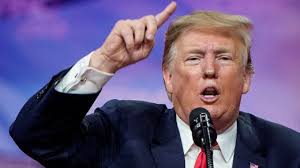
Donald Trump
But statistics tell only part of the story—and entirely leave out the human element. Among the reactions of the fired federal employees interviewed by CNN:
- “In spite of everything, I am just waiting on word to go back to work so I can serve the American people. That’s why I’m in public service; that’s why all of us are.” Federal worker – Food and Drug Administration
- “There are five of us [in my office] who moved over from other HR departments. We are military spouses, we are veterans, one with 18 years.” – Arielle Pines, Veterans Affairs
- “I was given no time to reach out to colleagues or even clean out my office.” Andria Townsend – National Park Service
- “It was a job I loved doing, protecting consumers every day. It will also have a pretty serious financial impact on my family.” Federal worker – Consumer Financial Protection Bureau
- “I don’t even have a letter of termination to get unemployment.” Victoria DeLano – Department of Education
- “I deployed twice. I spent so much time away from my family. I was gone when my mom passed away. I feel very much like the message is that my service isn’t valued.” Chelsea Milburn – Department of Education employee and veteran
All of this was entirely predictable—long before Trump re-entered the White House.
And Part Two of my three-part series, “Love Thy Dictator,” published on August 21, 2024, did just that. From that post:
Donald Trump’s ambition to become absolute dictator fits brilliantly into the goals of Project 2025, also known as the Presidential Transition Project.
This is a collection of policy proposals to fundamentally reshape the U.S. federal government in the event of a Republican victory in the 2024 Presidential election.
Established in 2022 by the Right-wing Heritage Foundation, the project aims to recruit tens of thousands of radical Right-wingers to the District of Columbia to replace existing federal civil servants.
Under Project 2025:
- Republicans consider federal employees to be subversives who comprise the “deep state.”
- Replacing tenured civil servants with thousands of political hacks will arm Republicans with the power to establish an absolute dictatorship under the next Republican president.
- Republicans believe the Department of Justice has “forfeited the trust” of the American people by investigating Donald Trump’s proven collaboration with Russia to win the 2016 Presidential election.

- As a result, the DOJ must be thoroughly “reformed” and tightly overseen by the White House.
- The director of the FBI must be personally accountable to the President—just as the head of the KGB is personally accountable to Vladimir Putin.
- Federal employees could be instantly fired for not obeying illegal orders, or on mere whim—including the whim of the President.
2016 PRESIDENTIAL CAMPAIGN, ABC NEWS, AL QAEDA, ALEXANDER THE GREAT, ALTERNET, AMERICABLOG, ANDREW G. MCCABE, AP, BABY BOOMER RESISTANCE, BARACK OBAMA, BLOOMBERG, BUZZFEED, CBS NEWS, CHINA, CIA, CNN, CONSERVATIVE POLITICAL ACTION CONFERENCE, CROOKS AND LIARS, DAILY KOS, DAILY KOZ, DONALD TRUMP, DRUDGE RETORT, FACEBOOK, FBI, FEDERAL JUDICIARY, FIVETHIRTYEIGHT, FOX NEWS SUNDAY, HARPER’S MAGAZINE, INTELLIGENCE AGENCIES, JAMES COMEY, JAMES ROBART, JEFF SESSIONS, MEDIA MATTERS, MOTHER JONES, MOVEON, MSNBC, NAVY SEALS, NBC NEWS, NEW YORK TIMES, NEWSWEEK, NINTH CIRCUIT COURT OF APPEALS, NPR, NSA, PBS NEWSHOUR, PLUTARCH, POLITICO, POLITICUSUSA, RAW STORY, REPUBLICAN DONORS, REUTERS, ROBERT MUELLER, ROD J. ROSENSTEIN, RUSSIA, RUSSIAN INTELLIGENCE, SALON, SEATTLE TIMES, SLATE, STEPHEN MILLER, TALKING POINTS MEMO, THE ATLANTIC, THE CHICAGO SUN-TIMES, THE CHICAGO TRIBUNE, THE DAILY BEAST, THE DAILY BLOG, THE GUARDIAN, THE HILL, THE HUFFINGTON POST, THE LOS ANGELES TIMES, THE NATION, THE NEW REPUBLIC, THE NEW YORK TIMES, THE PRESS, THE VILLAGE VOICE, THE WALL STREET JOURNAL, THE WASHINGTON POST, THINKPROGRESS, TIME, TRUTHDIG, TRUTHOUT, TWO POLITICAL JUNKIES, U.S. NEWS & WORLD REPORT, UPI, USA TODAY, WILLIAM “RYAN” OWENS, WIRETAPPING, WONKETTE, X, XI JINPING, YEMEN
In Bureaucracy, History, Law, Law Enforcement, Military, Politics, Social commentary on March 7, 2025 at 12:11 am
And the most glorious exploits do not always furnish us with the clearest discoveries of virtue or vice in men; sometimes a matter of less moment, an expression or a jest, informs us better of their characters and inclinations, than the most famous sieges, the greatest armaments, or the bloodiest battles whatsoever.
—Plutarch, “Life of Alexander”
In a closed-door speech to Republican donors on March 3, 2018, President Donald Trump proved the accuracy of Plutarch’s observation.
He praised China’s President, Xi Jinping, for recently assuming full dictatorial powers: “He’s now president for life. President for life. No, he’s great. And look, he was able to do that. I think it’s great. Maybe we’ll have to give that a shot some day.”
The statement was greeted with cheers and laughter by Republican donors.
And, in making that unguarded statement, Trump revealed his ultimate intention: To overthrow America’s constitutional government.

Donald Trump
Since then, Trump has continued to “joke” about serving more than the legal limit of eight years.
In April, 2019, at a White House event, he said he might remain in the Oval Office “at least for 10 or 14 years.”
In May, 2019, Trump retweeted Evangelical leader Jerry Falwell Jr.’s suggestion that he’s owed “2 yrs added to his 1st term” due to distractions caused by the Robert Mueller investigation.
Anyone who thought he was simply joking got a rude awakening on July 30, 2020, when Trump tweeted: “With Universal Mail-In Voting (not Absentee Voting, which is good), 2020 will be the most INACCURATE & FRAUDULENT Election in history. It will be a great embarrassment to the USA. Delay the Election until people can properly, securely and safely vote???”
Leaders of both Republican and Democratic parties quickly attacked Trump for suggesting that the election might be delayed.
With COVID-19 ravaging the nation and many economists predicting a coming Depression, Trump became desperate to reverse his falling poll numbers. But with the election less than 100 days away and, short of a miracle—or indefinitely postponing the vote—he looked increasingly like a one-term President.

Coronavirus
Since taking office as the Nation’s 45th President, Donald Trump had attacked or undermined one public or private institution after another.
Among these:
- American Intelligence: Even before taking office, Trump refused to accept the findings of the FBI, CIA and NSA that Russian Intelligence agents had intervened in the 2016 election to ensure his victory.
- And when FBI Director James Comey dared to pursue a probe into “the Russia thing,” Trump fired him without warning.
- American law enforcement agencies: Trump repeatedly attacked—and later fired—his own Attorney General, Jeff Sessions, for not “protecting” him from agents pursuing the Russia investigation.
- He repeatedly attacked the integrity of Deputy FBI Director Andrew G. McCabe until the latter resigned.
- He threatened to fire Rod J. Rosenstein, the deputy attorney general who oversaw Special Counsel Robert Mueller’s investigation into Russian subversion of the 2016 election.
- The press: On February 17, 2017, Trump tweeted: “The FAKE NEWS media (failing @nytimes, @NBCNews, @ABC, @CBS, @CNN) is not my enemy, it is the enemy of the American People!”
- Seven days later, appearing before the Conservative Political Action Conference on February 24, Trump said: “I want you all to know that we are fighting the fake news. It’s fake, phony, fake….I’m against the people that make up stories and make up sources. They shouldn’t be allowed to use sources unless they use somebody’s name. Let their name be put out there.”
- The judiciary: Trump repeatedly attacked Seattle U.S. District Judge James Robart, who halted Trump’s first Muslim travel ban.
- At Trump’s bidding, White House aide Stephen Miller attacked the Ninth Circuit Court of Appeals: “We have a judiciary that has taken far too much power and become, in many cases, a supreme branch of government.”
- President Barack Obama: For five years, Trump, more than anyone else, popularized the slander that Barack Obama was born in Kenya—and was therefore not an American citizen.
- Even after Obama released the long-form version of his birth certificate—on April 27, 2011—Trump tweeted, on August 6, 2012: “An ‘extremely credible source’ has called my office and told me that @BarackObama‘s birth certificate is a fraud.”
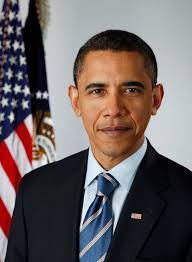
Barack Obama
- On March 4, 2017, in a series of unhinged tweets, Trump accused Obama of tapping his Trump Tower phones prior to the election: “Terrible! Just found out that Obama had my ‘wires tapped’ in Trump Tower just before the victory. Nothing found. This is McCarthyism!”
Trump was later forced to admit he had no evidence to back up his slanderous claims about Obama.
* * * * *
Donald Trump isn’t crazy, as many of his critics charge. As President, ex-President and re-elected President, he knows what he’s doing—and why.
He has tried to strip every potential challenger to his authority—and version of reality—of legitimacy. He intends there will be:
- No independent press to reveal his failures and crimes.
- No independent law enforcement agencies to investigate his abuses of office.
- No independent judiciary to hold him accountable.
- No independent military to dissent as he recklessly hurtles toward a nuclear disaster.
- No candidate—Democrat or Republican—to challenge him for re-election in 2028—and beyond.
In short: No one—ever—to challenge his remaining in office as “President-for-Life.”
ABC NEWS, ADOLF HITLER, ALTERNET, AMERICABLOG, AP, BABY BOOMER RESISTANCE, BBC, BLOOMBERG NEWS, BLUESKY, BUZZFEED, CANADA, CBS NEWS, CLAUDIA SHEINBAUM PARDO, CNN, CNN'S "STARTING POINT", CROOKS AND LIARS, DAILY KOS, DEPARTMENT OF HOMELAND SECURITY, DEPARTMENT OF JUSTICE, EXTORTION, FBI, FIVETHIRTYEIGHT, HARPER’S MAGAZINE, HUFFINGTON POST, INSIDER, JUDICIARY, JUSTIN TRUDEAU, MASTADON, MEDIA MATTERS, MEXICO, MOTHER JONES, MOVEON, MSNBC, MSNBC'S "HARDBALL", NAZI GERMANY, NBC NEWS, NEGOTIATING, NEW REPUBLIC, NEWSDAY, NEWSWEEK, NPR, PBS NEWSHOUR, POLAND, POLITICO, POLITICUSUSA, PRESS, RAW STORY, REPUBLICAN PARTY, REPUBLICANS, REUTERS, SALON, SEATTLE TIMES, SLATE, TALKING POINTS MEMO, THE ATLANTIC, THE CHICAGO SUN-TIMES, THE CHICAGO TRIBUNE, THE DAILY BEAST, THE DAILY BLOG, THE GUARDIAN, THE HILL, THE HUFFINGTON POST, THE LOS ANGELES TIMES, THE NATION, THE NEW REPUBLIC, THE NEW YORK TIMES, THE NEW YORKER, THE PENTAGON, THE VILLAGE VOICE, THE WASHINGTON POST, THINKPROGRESS, TIME, TRUTHDIG, TRUTHOUT, TWO POLITICAL JUNKIES, U.S. NEWS & WORLD REPORT, UPI, USA TODAY, WONKETTE, WORLD WAR 11, X
In Bureaucracy, Business, History, Military, Politics, Social commentary on March 5, 2025 at 12:05 am
To understand what is happening in the United States today, it’s necessary to realize this:
Its decent, democracy-cherishing citizens find themselves in the same position as decent, democracy-cherishing citizens of Nazi Germany from 1933 to 1945.
And just as Germany’s government became a ruthless dictatorship, so has that of the United States.
And just as ordinary, peace-loving Germans hoped for a powerful, democratic outsider to remove the menace of Adolf Hitler, so do ordinary, peace-loving Americans hope the same will happen to Donald Trump.
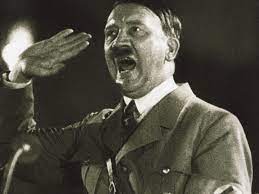
Adolf Hitler
From 1939 to 1945, those democracy-cherishing outsiders consisted of Canada, England and the United States. (The Soviet Union reluctantly joined this alliance only after it became yet another victim of Adolf Hitler’s aggression.)
In the case of the United States, that solution can only be achieved economically—by pressuring Right-wing Republican members of Congress in Red states to end their support for Trump’s dictatorial agenda.
And the only democratic countries with the power to do this are Mexico and Canada, America’s foremost trading partners.
The 2024 elections gave Republicans not only the White House but control of the House and Senate.
Donald Trump
Republicans don’t care that Trump has trashed the institutions that Americans have cherished for more than 200 years. Institutions like an independent judiciary, a free press, and an incorruptible Justice Department.
He has viciously attacked all of these—and Republicans have either said nothing or rushed to his defense.
What Republicans truly fear about Donald Trump is that if they dare to hold him accountable for his lifetime of criminality, his Fascistic base will turn on them—and turn them out of Congress.
If they are conflicted—whether to continue supporting Trump or desert him—the reason is the same: How can I hold onto my power and all the privileges that go with it?

Claudia Sheinbaum Pardo, President of Mexico

Justin Trudeau, Prime Minister of Canada
Republicans—with Trump as their Fuhrer—are utilizing the same my-way-or-else “negotiating” strategy as Nazi Germany’s Fuhrer, Adolf Hitler.
And Democrats—out of cowardice and/or ignorance of history—are, as usual, refusing to publicly make this comparison.
Thus, America’s rescue from Trump can only come from outside the United States.
Donald Trump has proven his affinity for dictators and dictatorships—lavishing praise on Russia’s Vladimir Putin, China’s Xi Jinping and North Korea’s Kim Jong-Un.
It’s with the leaders of democratic nations that he loves to pick fights. And he will go on doing so until he is stopped.
There are two reasons for his hostile behavior in foreign affairs:
- Trump admires dictators, desires to become one himself, and is now stocking essential federal agencies—such as the Pentagon, FBI and Department of Homeland Security—with his political hacks to make this a reality.
- He knows that compared to the dictatorships of Russia and China, democracies such as those of Canada, Mexico and Ukraine are comparatively weak militarily.
As with Adolf Hitler, attempting to reason with Trump will prove fruitless. He respects only superior force.
But he has blinked when confronted with serious opposition.
Thus, on February 1, he threatened to hit Mexico and Canada with 25% tariffs, accusing them of injecting huge amounts of Fentanyl and huge numbers of illegal aliens into the United States. This allowed him to look tough to his legions of uneducated, Fascistic voters.
But then Mexican President Claudia Sheinbaum Pardo and Canadian Prime Minister Justin Trudeau threatened to retaliate with their own 25% tariffs on American goods.
And the financially conservative Wall Street Journal-–whose target audience includes business leaders, investors, and affluent consumers—called Trump’s threat “the dumbest trade war in history.”
Suddenly, Trump found a way to declare victory, claiming that Mexico and Canada would vastly increase border security to stop the flow of Fentanyl and illegal aliens.
And dropping his threat of a trade war.
So Trump can be beaten—if his enemies are willing to go all the way.
Democratic nations like Canada and Mexico dare not attack Donald Trump militarily. The United States has such a powerful military it’s threatened only by China and Russia.
But Canada and Mexico can target with ruthless tariffs those Red states whose Fascistic voting blocs fanatically support Trump—and the House and Senate members who support him.
They can
- Deprive Red state populations of the fruits, vegetables, meats, cars, computers, oil, gas—and especially beer and alcohol—they take for granted.
- Refuse to stock goods from Red states in their stores.
- Appeal to the patriotism of Canadians and Mexicans to maintain the boycott despite the suffering this will impose on their own countries.
Americans have grown used to seeking simple, painless solutions to major problems. Thus, Trump won 77 million votes by promising to drastically reduce the price of eggs.
This despite a loss of millions of bird flu-infected chickens.
With egg prices continuing to drastically rise, Americans are already getting impatient for Trump to work a miracle—as he falsely promised to do during the campaign.
When Red states are forced to suffer staggering losses for months on end, they will elect anti-Fascist Senators and Representatives to nullify the evils of Trump’s administration.
ABC NEWS, ADOLF HITLER, ALTERNET, AMERICABLOG, AP, ASSASSINATION, BABY BOOMER RESISTANCE, BUZZFEED, CBS NEWS, CNN, CONSPIRACIES, CROOKS AND LIARS, DAILY KOS, DAILY KOZ, DAY OF THE JACKAL, DEPARTMENT OF DEFENSE, DEPARTMENT OF HOMELAND SECURITY, DEPARTMENT OF VETERANS AFFAIRS, DONALD TRUMP, DRUDGE RETORT, ENVIRONMENTAL PROTECTION AGENCY, FACEBOOK, FBI, FIVETHIRTYEIGHT, FREDERICK FORSYTHE, GAIUS CASSIUS, HARPER’S MAGAZINE, INTERNAL REVENUE SERVICE, JULIUS CAESAR, LINCOLN MEMORIAL, MAR-A-LAGO, MARCUS BRUTUS, MARK ANTHONY, MEDIA MATTERS, MOTHER JONES, MOVEON, MSNBC, NBC NEWS, NEWSWEEK, NICCOLO MACHIAVELLI, NPR, PBS NEWSHOUR, PLOTS, POLITICO, POLITICUSUSA, RAW STORY, REUTERS, RICHARD M. NIXON, SALON, SEATTLE TIMES, Secret Service, SLATE, TALKING POINTS MEMO, THE ATLANTIC, THE CHICAGO SUN-TIMES, THE CHICAGO TRIBUNE, THE DAILY BEAST, THE DAILY BLOG, THE DISCOURSES, THE GUARDIAN, THE HILL, THE HUFFINGTON POST, THE LOS ANGELES TIMES, THE NATION, THE NEW REPUBLIC, THE NEW YORK TIMES, THE VILLAGE VOICE, THE WALL STREET JOURNAL, THE WASHINGTON POST, THINKPROGRESS, TIME, TRUTHDIG, TRUTHOUT, TWO POLITICAL JUNKIES, U.S. NEWS & WORLD REPORT, UPI, USA TODAY, VIETNAM WAR, WHITE HOUSE STAFFER, WONKETTE, X
In Bureaucracy, History, Law Enforcement, Military, Politics, Social commentary on March 4, 2025 at 12:06 am
More than 500 years ago, Niccolo Machiavelli, the Florentine statesman, authored The Discourses on Livy, a work of political history and philosophy. In it, he outlined how citizens of a republic can maintain their freedoms.
For conspirators, there are three ways their efforts can be foiled.
- Discovery through denunciation;
- Discovery through incautiousness;
- Discovery through writings.
The first has already been covered. Now for the second and third.

Discovery through Writings: “You may talk freely with anyone man about everything, for unless you have committed yourself in writing, the “Yes” of one man is worth as much as the ‘No’ of another.
Thus, you should guard most carefully against writing, as against a dangerous rock, for nothing will convict you quicker than your own handwriting.
If you are denounced, there are means of escaping punishment:
- By denying the accusation and claiming that the person making it hates you; or
- Claiming that your accuser was tortured or coerced into giving false testimony against you.
“But the most prudent course is to not tell your intentions to anyone, and to carry out the attempt yourself.”
Even if you’re not discovered before you carry out your attack, there are still two dangers facing a conspirator:
Dangers in Execution: These result from:
- An unexpected change in the routine of the intended target;
- The lack of courage among the conspirators; or
- An error on their part, such as leaving some of those alive whom the conspirators intended to kill.
Adolf Hitler, who claimed to have a sixth-sense for danger, was famous for changing his routine at the last minute.
On November 9, 1939, this instinct saved his life. He had been scheduled to give a long speech at a Munich beer hall before the “Old Fighters” of his storm troopers.
But that evening he cut short his speech and left the beer hall. Forty-five minutes later, a bomb exploded inside a pillar—before which Hitler had been speaking.
Conspirators can also be doomed by their good intentions.
In 44 B.C., Gaius Cassius, Marcus Brutus and other Roman senators decided to assassinate Julius Caesar, whose dictatorial ambitions they feared.
Cassius also intended to murder Mark Anthony, Caesar’s strongest ally. But Brutus objected, fearing the plotters would look like butchers, not saviors. Even worse, he allowed Anthony to deliver a eulogy at Caesar’s funeral.
This proved so inflammatory that the mourners rioted, driving the conspirators out of Rome. Soon afterward, they were defeated in a battle with the legions of Anthony and Octavian Caesar—and forced to commit suicide to avoid capture and execution.
Machiavelli closes his chapter “Of Conspiracies” with advice to rulers on how they should act when they find a conspiracy has been formed against them.
“If they discover that a conspiracy exists against them, they must, before punishing its authors, strive to learn its nature and extent. And they must measure the danger posed by the conspirators against their own strength.
And if they find it powerful and alarming, they must not expose it until they have amassed sufficient force to crush it. Otherwise, they will only speed their own destruction. They should try to pretend ignorance of it. If the conspirators find themselves discovered, they will be forced by necessity to act without consideration.”
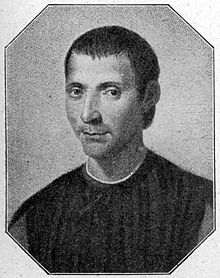
Niccolo Machiavelli
But Machiavelli also notes how important it is for rulers to make themselves loved—or at least respected—by their fellow citizens:
“Note how much more praise those Emperors merited who, after Rome became an empire, conformed to her laws like good princes, than those who took the opposite course.
Titus, Nerva, Trajan, Hadrian, Antoninus and Marcus Auelius did not require the Praetorians nor the multitudinous legions to defend them, because they were protected by their own good conduct, the good will of the people, and by the love of the Senate.
On the other hand, neither the Eastern nor the Western armies saved Caligula, Nero, Vitellius and so many other wicked Emperors from the enemies which their bad conduct and evil lives had raised up against them.”
In his better-known work, The Prince, he warns rulers who—like Donald Trump–are inclined to rule by fear:
“A prince should make himself feared in such a way that if he does not gain love, he at any rate avoids hatred: for fear and the absence of hatred may well go together.”
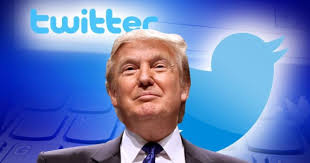
Donald Trump
By Machiavelli’s standards, Trump has made himself the perfect target for a conspiracy.
Since being inaugurated President a second time, he—and his billionaire enforcer, Elon Musk—have fired about 30,000 federal civil service workers. Another 75,000 have accepted buyouts under threat of being fired.
Among the purged agencies:
- Homeland Security
- Defense
- FBI
- Internal Revenue Service
- Veterans Affairs
- Environmental Protection Agency.
Many of these ex-employees have backgrounds in security. Combine this with the anger fired employees feel at the injustices to themselves and their families, and the result is a recipe for conspiratorial hatred.
“When a prince becomes universally hated, it is likely that he’s harmed some individuals—who thus seek revenge. This desire is increased by seeing that the prince is widely loathed.”
ABC NEWS, ADOLF HITLER, ALTERNET, AMERICABLOG, AP, ASSASSINATION, BABY BOOMER RESISTANCE, BUZZFEED, CBS NEWS, CNN, CONSPIRACIES, CROOKS AND LIARS, DAILY KOS, DAILY KOZ, DAY OF THE JACKAL, DEPARTMENT OF DEFENSE, DEPARTMENT OF HOMELAND SECURITY, DEPARTMENT OF VETERANS AFFAIRS, DONALD TRUMP, DRUDGE RETORT, ENVIRONMENTAL PROTECTION AGENCY, FACEBOOK, FBI, FIVETHIRTYEIGHT, FREDERICK FORSYTHE, GAIUS CASSIUS, HARPER’S MAGAZINE, INTERNAL REVENUE SERVICE, JULIUS CAESAR, LINCOLN MEMORIAL, MAR-A-LAGO, MARCUS BRUTUS, MARK ANTHONY, MEDIA MATTERS, MOTHER JONES, MOVEON, MSNBC, NBC NEWS, NEWSWEEK, NICCOLO MACHIAVELLI, NPR, PBS NEWSHOUR, PLOTS, POLITICO, POLITICUSUSA, RAW STORY, REUTERS, RICHARD M. NIXON, SALON, SEATTLE TIMES, Secret Service, SLATE, TALKING POINTS MEMO, THE ATLANTIC, THE CHICAGO SUN-TIMES, THE CHICAGO TRIBUNE, THE DAILY BEAST, THE DAILY BLOG, THE DISCOURSES, THE GUARDIAN, THE HILL, THE HUFFINGTON POST, THE LOS ANGELES TIMES, THE NATION, THE NEW REPUBLIC, THE NEW YORK TIMES, THE VILLAGE VOICE, THE WALL STREET JOURNAL, THE WASHINGTON POST, THINKPROGRESS, TIME, TRUTHDIG, TRUTHOUT, TWO POLITICAL JUNKIES, U.S. NEWS & WORLD REPORT, UPI, USA TODAY, VIETNAM WAR, WHITE HOUSE STAFFER, WONKETTE, X
In Bureaucracy, History, Law Enforcement, Military, Politics, Social commentary on March 3, 2025 at 12:05 am
More than 500 years ago, Niccolo Machiavelli, the father of modern political science, offered sound advice for would-be conspirators—and for rulers seeking to thwart conspiracies.
He did so in The Discourses on Livy, a work of political history and philosophy. In it, he outlined how citizens of a republic can maintain their freedoms.
One of the longest chapters—Book Three, Chapter Six—covers “Of Conspiracies.” In it, those who wish to conspire against a ruler will find highly useful advice. And so will those who might well become the targets of conspiracies—such as President Donald J. Trump.
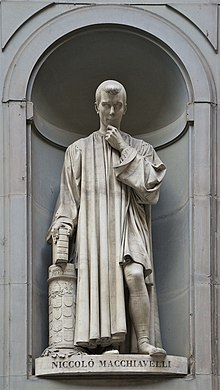
Niccolo Machiavellil
The most dangerous time for a ruler comes when he is universally hated.
Niccolo Machiavelli: “When a prince becomes universally hated, it is likely that he’s harmed some individuals—who thus seek revenge. This desire is increased by seeing the prince is widely loathed.
A prince, then, should avoid incurring such universal hatred….
By doing this, he protects himself from such vengeance-seekers. There are two reasons for this:
(1) Men rarely risk danger to avenge a wrong; and
(2) Even if they want to avenge a wrong, they know they will face almost universal condemnation because the prince is held in such high esteem.”
Machiavelli draws a distinction between plots and conspiracies.
“A plot may be formed by a single individual or by many. The first isn’t a conspiracy, since that would involve at least two participants.”
A single plotter avoids the danger faced by two or more conspirators:
“Since no one knows his intention, he can’t be betrayed by an accomplice.
Anyone may form a plot, whether he is prominent or insignificant, because everyone is at some time allowed to speak to the prince. And he can use this opportunity to satisfy his desire for revenge.”
On the other hand, says Machiavelli, the dangers of assassination by a trusted intimate are slight.
“Few people dare to assault a prince. Of those who do, few or none escapes being killed in the attempt, or immediately afterward. As a result, only a small number of people are willing to incur such certain death.”
Those who take part in a conspiracy against a ruler are “the great men of the state, or those on terms of familiar intercourse with the prince.”
These are men who have access to him. Julius Caesar, for example, was stabbed to death by members of the Roman Senate, who feared his assuming dictatorial powers.
And Adolf Hitler was conspired against by colonels and generals of the German Army. He was in fact holding a war conference when a briefcase bomb exploded, killing three officers and a stenographer, but leaving Hitler only slightly injured.
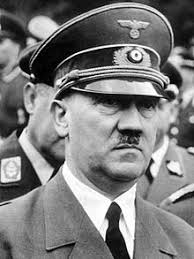

Adolf Hitler
There are three ways a conspiracy can be foiled:
- Discovery through denunciation;
- Discovery through incautiousness;
- Discovery through writings.
Discovery through Denunciation: This occurs through treachery or lack of prudence among one or more conspirators.
“Treachery is so common that you can safely tell your plans to only your most trusted friends who are willing to risk their lives for your sake. You may find that you have only one or two of these.
But as you are bring more people into the conspiracy, the chances of discovery greatly increase. It’s impossible to find many who can be completely trusted: For their devotion to you must be greater than their sense of danger and fear of punishment.”
Discovery through Carelessness: “This happens when one of the conspirators speaks incautiously, so that a third person overhears it Or it may occur from thoughtlessness, when a conspirator tells the secret to his wife or child, or to some other indiscreet person.
When a conspiracy has more than three or four members, its discovery is almost certain, either through treason, imprudence or carelessness.
If more than one conspirator is arrested, the whole plot is discovered, for it will be impossible for any two to agree perfectly as to all their statements.
If only one is arrested, he may—through courage and stubbornness—be able to conceal the names of his accomplices. But then the others, to remain safe, must not panic and flee, since this is certain to be discovered.
If one of them becomes fearful—whether it’s the one who was arrested or is still at liberty—discovery of the conspiracy is certain.
The best way to avoid such detection is to confide your project to your intended fellow conspirators at the moment of execution—and not sooner.”
A classic example of this occurred in ancient Persia. According to the Greek historian Herodotus: A group of nobles assembled to discuss overthrowing a usurper to the throne. The last one to arrive was Darius.
When one of the conspirators asked, “When should we strike?” Darius replied: “We must either go now at this very moment and carry it into execution, or I shall go and denounce you all. For I will not give any of you time to denounce me.”
At that, they went directly to the palace, assassinated the usurper and proclaimed Darius their new king.
ABC NEWS, ADOLF HITLER, ALTERNET, AMERICABLOG, AP, BABY BOOMER RESISTANCE, BBC, BLOOMBERG NEWS, BLUESKY, BUZZFEED, CANADA, CBS NEWS, CLAUDIA SHEINBAUM PARDO, CNN, CNN'S "STARTING POINT", CROOKS AND LIARS, CZECHOSLAVAKIA, DAILY KOS, DAVID BROOKS, DEPARTMENT OF HOMELAND SECURITY, DEPARTMENT OF JUSTICE, DONALD TRUMP, EXTORTION, FBI, FIVETHIRTYEIGHT, GREENLAND, HARPER’S MAGAZINE, HUFFINGTON POST, INSIDER, JACK SMITH, JIMMY CARTER, JUSTIN TRUDEAU, MASTADON, MEDIA MATTERS, MEXICO, MOTHER JONES, MOVEON, MSNBC, MSNBC'S "HARDBALL", NAZI GERMANY, NBC NEWS, NEGOTIATING, NEVILLE CHAMBERLAIN, NEW REPUBLIC, NEWSDAY, NEWSWEEK, NEWT GINGRICH, NICCOLO MACHIAVELLI, NPR, PANAMA, PBS NEWSHOUR, POLAND, POLITICO, POLITICUSUSA, R.I.CO. ACT, RAW STORY, REPUBLICAN PARTY, REPUBLICANS, REUTERS, ROBERT MEULLER, SALON, SEATTLE TIMES, SLATE, TALKING POINTS MEMO, THE ATLANTIC, THE CHICAGO SUN-TIMES, THE CHICAGO TRIBUNE, THE DAILY BEAST, THE DAILY BLOG, THE GUARDIAN, THE HAMILTON PROJECT, THE HILL, THE HUFFINGTON POST, THE LOS ANGELES TIMES, THE NATION, THE NEW REPUBLIC, THE NEW YORK TIMES, THE NEW YORKER, THE PENTAGON, THE PRINCE, THE VILLAGE VOICE, THE WASHINGTON POST, THINKPROGRESS, TIME, TRUTHDIG, TRUTHOUT, TWO POLITICAL JUNKIES, U.S. NEWS & WORLD REPORT, UKRAINE, UPI, USA TODAY, VLADIMIR PUTIN, VOLODMYR ZELENSKY, WONKETTE, WORLD WAR 11, X
In Bureaucracy, Business, History, Military, Politics, Social commentary on February 19, 2025 at 12:16 am
The “negotiating” methods of German Fuhrer Adolf Hitler serve as a useful guide to what domestic and world leaders can expect from trying to reach an agreement with President Donald Trump.
In September, 1938, seven months after seizing Austria, Hitler gave another exhibition of his “negotiating” methods.
This time, the target of his aggression was Czechoslovakia. Once again, he opened “negotiations” with a lie: The Czechoslovak government was trying to exterminate 3.5 million Germans living in the “Sudetenland.”
Then he threatened war: Germany would protect its citizens and halt such “oppression.”
For British Prime Minister Neville Chamberlain, the thought of another European war erupting less than 20 years after the end of World War I was simply unthinkable.
He quickly sent Hitler a telegram, offering to help resolve the crisis: “I could come to you by air and am ready to leave tomorrow. Please inform me of earliest time you can receive me, and tell me the place of the meeting. I should be grateful for a very early reply.”
[Mistake #1: Showing his willingness to placate a brutal dictator. Such men see any concessions as weakness—leading to only greater demands. Trump, like Hitler relishes attacking those weaker than himself.]
The two European leaders met in Berchtesgaden, Germany, on September 15, 1938.
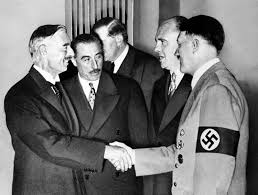
Neville Chamberlain and Adolf Hitler
Hitler denied that he had threatened war: “Force? Who speaks of force?“
Then, suddenly, he accused the Czechs of having mobilized their army in May. They had mobilized—in response to the mobilization of the German army.
“I shall not put up with this any longer,” shouted Hitler. “I shall settle this question in one way or another. I shall take matters in my own hands!”
Suddenly, Chamberlain seemed alarmed: “If I understood you right, you are determined to proceed against Czechoslovakia in any case. In the circumstances, it is best for me to return at once. Anything else now seems pointless.”
Hitler, taken aback, softened his tone and said they should consider the Sudetenland according to the principle of self-determination.
Chamberlain agreed to the cession of the Sudetenland. Three days later, French Prime Minister Edouard Daladier did the same. No Czechoslovak representative was invited to these discussions.
[Mistake #2: Instead of conceding to Hitler, which emboldened the dictator, he should have pressed his advantage. When Hitler found himself facing an opponent who couldn’t be bribed or cowed—such as British Prime Minister Winston Churchill or Soviet Premier Joseph Stalin—he raged and sulked.
[When Trump has faced an opponent he can’t buy or intimidate—such as Special Counsels Robert Mueller and Jack Smith—he has done the same.]
Chamberlain met Hitler again in Godesberg, Germany, on September 22 to confirm the agreements. But Hitler aimed to use the crisis as a pretext for war.
He now demanded not only the annexation of the Sudetenland but the immediate military occupation of the territories. This would give the Czechoslovak army no time to adapt their defense measures to the new borders.
To achieve a solution, Italian dictator Benito Mussolini suggested a conference of the major powers in Munich.
On September 29, Hitler, Daladier and Chamberlain met and agreed to Mussolini’s proposal. They signed the Munich Agreement, which accepted the immediate occupation of the Sudetenland.
The Czechoslovak government had not been a party to the talks. Nevertheless, it promised to abide by the agreement on September 30.
It actually had no choice. It faced the threat of an immediate German invasion after being deserted by its pledged allies: Britain, France and the Soviet Union.
[Mistake #3: Selling out an ally and making a concession to an insatiable dictator—and believing that Hitler could be trusted to keep his word.
[Just as Chamberlain sold out Czechoslovakia, Trump plans on selling out Ukraine to Russian dictator Vladimir Putin. He’s blamed Ukraine for starting the 2022 war—even though Russia invaded Ukraine.
He’s also attacked Ukrainian President Volodymyr Zelensky—and repeatedly praised Putin. And he’s unilaterally announced that he will begin directing “peace talks” with Putin to end his war on Ukraine.]
Chamberlain returned to England a hero. Holding aloft a copy of the worthless agreement he had signed with Hitler, he told cheering crowds in London: “I believe it is peace for our time.”
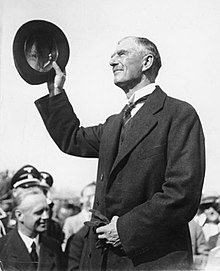
Neville Chamberlain
Winston Churchill knew better, predicting: “Britain and France had to choose between war and dishonor. They chose dishonor. They will have war.”
Hitler—still planning more conquests—also knew better. In March, 1939, the German army occupied the rest of Czechoslovakia.
Chamberlain would soon be seen as a naive weakling—even before bombs started falling on London.
Then Hitler turned his attention—and demands—to Poland.
When his generals balked, warning that an invasion would trigger a war with France and Britain, Hitler quickly brushed aside their fears: “Our enemies are little worms. I saw them at Munich.”
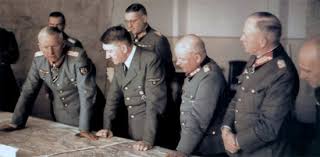
Adolf Hitler and his generals
Similarly, Trump drew the same lesson from his repeated escapes from American justice—that he was untouchable
Hitler ordered the invasion of Poland on September 1, 1939—unintentionally triggering World War II.
In time, historians and statesmen would regard Munich as an object lesson in the futility—and danger—in appeasing evil and aggression.
History has yet to record the all-but-certain disasters—foreign and domestic—of the Trump administration.
ABC NEWS, ADOLF HITLER, ALTERNET, AMERICABLOG, AP, AUSTRIA, BABY BOOMER RESISTANCE, BBC, BLOOMBERG NEWS, BLUESKY, BUZZFEED, CANADA, CBS NEWS, CLAUDIA SHEINBAUM PARDO, CNN, CNN'S "STARTING POINT", CROOKS AND LIARS, CZECHOSLAVAKIA, CZECHOSLOVAKIA, DAILY KOS, DAVID BROOKS, DEPARTMENT OF HOMELAND SECURITY, DEPARTMENT OF JUSTICE, DONALD TRUMP, EXTORTION, FBI, FIVETHIRTYEIGHT, FRANCE, GELI rAUBAL, GREENLAND, HARPER’S MAGAZINE, HUFFINGTON POST, INSIDER, JACK SMITH, JIMMY CARTER, JUSTIN TRUDEAU, MASTADON, MEDIA MATTERS, MEXICO, MOTHER JONES, MOVEON, MSNBC, MSNBC'S "HARDBALL", NAZI GERMANY, NBC NEWS, NEGOTIATING, NEVILLE CHAMBERLAIN, NEW REPUBLIC, NEWSDAY, NEWSWEEK, NEWT GINGRICH, NICCOLO MACHIAVELLI, NPR, PANAMA, PBS NEWSHOUR, POLAND, POLITICO, POLITICUSUSA, R.I.CO. ACT, RAW STORY, REPUBLICAN PARTY, REPUBLICANS, REUTERS, ROBERT MEULLER, SALON, SEATTLE TIMES, SLATE, TALKING POINTS MEMO, TARIFFS, THE ATLANTIC, THE CHICAGO SUN-TIMES, THE CHICAGO TRIBUNE, THE DAILY BEAST, THE DAILY BLOG, THE GUARDIAN, THE HAMILTON PROJECT, THE HILL, THE HUFFINGTON POST, THE LOS ANGELES TIMES, THE NATION, THE NEW REPUBLIC, THE NEW YORK TIMES, THE NEW YORKER, THE PENTAGON, THE PRINCE, THE VILLAGE VOICE, THE WASHINGTON POST, THINKPROGRESS, TIME, TRADE WARS, TRUTHDIG, TRUTHOUT, TWO POLITICAL JUNKIES, U.S. NEWS & WORLD REPORT, UKRAINE, UPI, USA TODAY, VLADIMIR PUTIN, VOLODMYR ZELENSKY, WONKETTE, WORLD WAR 11, X
In Bureaucracy, Business, History, Military, Politics, Social commentary on February 18, 2025 at 12:10 am
To understand the “negotiating” style of Donald Trump, it’s essential to study that of Adolf Hitler.
Both men, dictatorial by nature, did/do not believe in compromise. Their idea of “compromise” was/is: “You do what I want–or I’ll destroy you.”
In Hitler’s case, his mania for absolute control began with the Nazi party and eventually extended to Germany. Then it reached to Austria, Czechoslovakia, Poland, Norway, Denmark, France and Russia. At least 50 million men, women and children perished in the wars he unleashed from 1939 to 1945.
Adolf Hitler
Similarly, Trump’s mania for control started with building a real estate empire. Then it encompassed his “reality TV” show, The Apprentice—and finally politics.
He began dominating the Republican party by winning a series of Presidential primaries—and then the White House. Then came asserting control over the the Justice Department and the judiciary—up to the Supreme Court.
Re-elected in 2024, he now seeks to dominate Americans, demands military control over Gaza, threatens Mexico and Canada with trade wars, and Greenland and Panama with invasion.
Much can be learned about Trump’s “negotiating” methods—and what it takes to counter them—by studying those of Germany’s Fuhrer.
Robert Payne, author of the bestselling biography, The Life and Death of Adolf Hitler (1973), described Hitler’s “negotiating” style thus:
“Although Hitler prized his own talents as a negotiator, a man always capable of striking a good bargain, he was totally lacking in finesse.
Donald Trump
“He was incapable of bargaining. He was like a man who goes up to a fruit peddler and threatens to blow his brains out if he does not sell his applies at the lowest possible price.”
A classic example of Hitler’s “bargaining style” came in 1938, when he invited Austrian Chancellor Kurt von Schuschnigg to his mountaintop retreat in Obersalzberg, Germany.
Hitler, an Austrian by birth, intended to annex his native land to Germany. Schuschnigg was aware of Hitler’s desire, but nevertheless felt secure in accepting the invitation. He had been assured that the question of Austrian sovereignty would not arise.
The meeting occurred on February 12, 1938.
Shuschnigg opened the discussion with a friendly compliment. Walking over to a large window, he admired the breathtaking view of the mountains.
HITLER: We haven’t come here to talk about the lovely view or the weather!
Austria has anyway never done anything which was of help to the German Reich….I am resolutely determined to make an end to all this business. The German Reich is a great power. Nobody can and nobody will interfere if it restores order on its frontiers.
[Like Hitler, Trump relies on insults and anger to put his victims on the defense.]
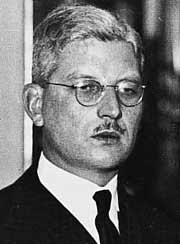
Kurt von Schuschnigg
SCHUSCHNIGG: We simply have to go on living alongside one another, the little state next to the big one. We have no other choice.
And that is why I ask you to tell me what your concrete complaints are. We will do all in our power to sort things out and establish a friendly relationship, as far as it is possible to do so.
HITLER: That’s what you say, Herr Schuschnigg. And I am telling you that I intend to clear up the whole of the so-called Austrian question—one way or another. Do you think I don’t know that you are fortifying Austria’s border with the Reich?
SCHUSCHNIGG: There can be no suggestion at all of that—
HITLER: Ridiculous explosive chambers are being built under bridges and roads—
This was a lie, and Hitler knew it was a lie. But it gave him an excuse to threaten to destroy Austria.
[For Trump, winning—not truth—is all that matters. During his first term as President, he told 30,573 lies.]
HITLER: I have only to give one command and all this comic stuff on the border will be blown to pieces overnight. You don’t seriously think you could hold me up, even for half an hour, do you?
The S.A. [Hitler’s private army of Stormtroopers] and the [Condor] lLegion [which had bombed much of Spain into rubble during the Spanish Civil War] would come in after the troops and nobody—not even I—could stop them from wreaking vengeance.
Schnuschigg made a cardinal mistake in dealing with Hitler: He showed fear. And this was precisely what the Nazi dictator looked for in an opponent.
[Like Hitler, Trump relies on fear: “Real power is—I don’t even want to use the word—fear,” he said in March 2016 when still only a candidate for President.]
Contrary to popular belief, Hitler did not constantly rage at everyone. He used rage as a weapon, knowing that most people feel intimidated by it.
In the case of Schuschnigg, Hitler opened with insults and threats at the outset of their discussion. Then there was a period of calm, to convince the Austrian chancellor the worst was over.
Finally, he once again attacked—this time with so much fury that Schuschnigg was terrified into submission.
With one stroke of a pen, Austria became a vassal-state to Nazi Germany.
[Like Hitler, Trump threatens only those he feels are weak—thus his threats to use military force against Canada, Greenland and Panama.]
ABC NEWS, ABORTION, ADOLF HITLER, ALBERT SPEER, ALTERNET, AMERICABLOG, AMERICAN TALIBAN (BOOK), AP, BABY BOOMER RESISTANCE, BBC, BLOOMBERG NEWS, BUZZFEED, CBS NEWS, CNN, CROOKS AND LIARS, DAILY KOS, DAILY KOZ, DINESH D'SOUZA, FACEBOOK, FBI, FIVETHIRTYEIGHT, HARPER’S MAGAZINE, HOMELAND SECURITY, HOMOSEXUALITY, HUFFINGTON POST, ISLAM, JIHADISTS, MARKOS MOULITSAS, MEDIA MATTERS, MOTHER JONES, MOVEON, MSNBC, MUSLIMS, NAZI GERMANY, NBC NEWS, NEW REPUBLIC, NEWSDAY, NEWSWEEK, NPR, PBS NEWSHOUR, POLITICO, POLITICUSUSA, RAW STORY, REPUBLICANS, REUTERS, RIGHT-WING EXTREMISTS, SALON, SEATTLE TIMES, SLATE, TALIBAN, TALKING POINTS MEMO, TERRORISM, THE ATLANTIC, THE CHICAGO SUN-TIMES, THE CHICAGO TRIBUNE, THE DAILY BEAST, THE DAILY BLOG, THE ENEMY AT HOME (BOOK), THE GUARDIAN, THE HILL, THE HUFFINGTON POST, THE LOS ANGELES TIMES, THE NATION, THE NEW REPUBLIC, THE NEW YORK TIMES, THE NEW YORKER, THE VILLAGE VOICE, THE WASHINGTON POST, THINKPROGRESS, TIME, TRUTHDIG, TRUTHOUT, TWO POLITICAL JUNKIES, U.S. NEWS & WORLD REPORT, UPI, USA TODAY, WONKETTE, X
In Bureaucracy, History, Politics, Social commentary on February 13, 2025 at 12:23 am
On April 15, 2015, CBS News broke a truly sensational and disturbing story:
Agents from the FBI and Department of Homeland Security (DHS) were investigating the online leak of home addresses of senior and former officials of the FBI, DHS and other Federal law enforcement agencies.
Even worse: Rather than Islamic terrorists being the culprits, the suspects were believed to be members of an American Right-wing extremist group.
The message was entitled: DHS-CIA-FBI TRAITORS HOME ADDRESSES.
It read: “LET THESE EVIL NWO SATANISTS KNOW THAT THERE WILL BE HELL TO PAY FOR THEIR 911 TREASON, AND THEIR FUTURE FEMA CAMP PLANNED PUBLIC CRACKDOWN TREASON ALSO
“JESUS IS LORD, AND THE PUBLIC IS IN CHARGE, NOT THESE SATANIC NWO STOOGES”
“NWO” could be an acronym for “New World Order,” a term used by conspiracy theorists to refer to a totalitarian world government.
In a statement, DHS said:
“The safety of our workforce is always a primary concern. DHS has notified employees who were identified in the posting and encouraged them to be vigilant. DHS will adjust security measures, as appropriate, to protect our employees.”
CBS did not say where the information was posted.
Click here: Right-Wing Group Blamed In Leak Of U.S. Officials’ Home Addresses: Report
Americans shouldn’t be shocked to find that a Right-wing group betrayed the safety of its fellow Americans.

The goals of both the American Right and Islamic terrorist groups such as the Taliban actually share much in common:
- Women should have fewer rights than men.
- Abortion should be illegal.
- There should be no separation between church and state.
- Religion should be taught in school.
- Religious doctrine trumps science.
- Government should be based on religious doctrine.
- Homosexuality should be outlawed.
A 2010 book, American Taliban: How War, Sex, Sin, and Power Bind Jihadists and the Radical Right, vividly documents the similarities between these two groups.
Its author is Markos Moulitsas, founder of Daily Kos, an American political blog that publishes news and opinions from a liberal viewpoint.


American Taliban opens with this provocative statement:
“Yes, the Republican party, and the entire modern conservative movement is, in fact, very much like the Taliban.
“In their tactics and on the issues, our homegrown American Taliban are almost indistinguishable from the Afghan Taliban.
“The American Taliban—whether in their militaristic zeal, their brute faith in masculinity, their disdain for women’s rights, their outright hatred of gays, their aversion to science and modernity or their staunch anti-intellectualism—share a litany of mores, values, and tactics with Islamic extremists….
“Let’s be honest, the freedoms that jihadists hate are the very same freedoms that our own homegrown repressive ideologues hate: freedom of thought, of inquiry, of lifestyle.”
Its subsequent chapters document the all-consuming rage of the American Right to brutally control the lives of their fellow citizens.
Ironically, Moulitsas’ thesis is—unintentionally—supported by no less an authority than Right-wing author Dinesh D’Souza.

Dinesh D’Souza
Gage Skidmore, CC BY-SA 3.0 <https://creativecommons.org/licenses/by-sa/3.0>, via Wikimedia Commons
Among the bestsellers D’Souza has written: Ronald Reagan: How an Ordinary Man Became an Extraordinary Leader, and Obama’s America: Unmaking the American Dream.
The title of his 2008 bestseller sums up D’Souza’s take on liberalism: The Enemy At Home: The Cultural Left and Its Responsibility for 9/11.
From the book’s dust jacket:
“Muslims and other traditional people around the world allege that secular American values are being imposed on their societies and that these values undermine religious belief, weaken the traditional family, and corrupt the innocence of children.
“But it is not ‘America’ that is doing this to them, it is the American cultural left. What traditional societies consider repulsive and immoral, the cultural left considers progressive and liberating….
“D’Souza argues that the war on terror is really a war for the hearts and minds of traditional Muslims—and traditional peoples everywhere. The only way to win the struggle with radical Islam is to convince traditional Muslims that America is on their side.”
In short: America needs to adopt the values of the Taliban.
* * * * *
On March 19, 1945, facing certain defeat, Adolf Hitler ordered a massive “scorched-earth” campaign throughout Germany.
All German agriculture, industry, ships, communications, roads, food stuffs, mines, bridges, stores and utility plants were to be destroyed.
If implemented, it would deprive the entire German population of even the barest necessities after the war.
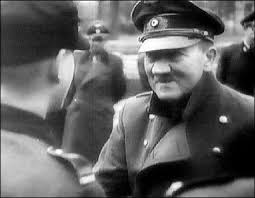
Adolf Hitler addressing boy soldiers as the Third Reich crumbles
“If the war is lost,” Hitler told Albert Speer, his former architect and now Minister of Armaments, “the nation will also perish.
“This fate is inevitable. There is no necessity to take into consideration the basis which the people will need to continue even a most primitive existence.
“On the contrary, it will be better to destroy these things ourselves, because this nation will have proved to be the weaker one and the future will belong solely to the stronger eastern nation.
“Besides, those who will remain after the battle are only the inferior ones, for the good ones have all been killed.”
Hitler’s view was: “If I can’t rule Germany, there won’t be a Germany.”
Apparently, some members of the American Right have reached the same decision about the United States.


 Bureaucracybuster's Blog
2024 PRESIDENTIL ELECTION, ABC NEWS, ABORTION, AGENCY FOR INTERNATIONAL DEVELOPMENT, ALTERNET, AMERICABLOG, AP, BABY BOOMER RESISTANCE, BBC, BIRTH CONTROL, BLOOMBERG, BLUESKY, BUZZFEED, CAPITAL PUNISHMENT, CBS NEWS, CENTERS FOR DISEASE CONTROL AND PREVENTION, CNN, CONSUMER FINANCIAL PROTECTION BUREAU, CROOKS AND LIARS, DAILY KOS, DEPARTMENT OF DEFENSE, DEPARTMENT OF EDUCATION, DEPARTMENT OF ENERGY, DEPARTMENT OF JUSTICE, DEPARTMENT OF VETERANS AFFAIRS, DONALD TRUMP, ELON MUSK, FBI, FEDERAL AVIATION ADMINISTRATION, FEDERAL COMMUNICATIONS COMMISSION, FEDERAL ELECTIONS COMMISSION, FEDERAL GOVERNMENT WORKFORCE, FEDERAL TRADE COMMISSION, FIVETHIRTYEIGHT, FOOD AND DRUG ADMINISTRATION FOOD DIVISION, GLOBAL WARMING, HARPER’S MAGAZINE, HERITAGE FOUNDATION, HOUSE OF REPRESENTATIVES, HUD COMMUNITY PLANNING AND DEVELOPMENT, HUFFINGTON POST, INTERNAL REVENUE SERVICE, JACK SMITH, JANUARY 6 COUP ATTEMPT, JOHN F. KENNEDY CENTER FOR THE PERFORMING ARTS, JOSEPH STALIN, MEDIA MATTERS, MEDICAID, MIKHAIL TUKHAVEVSKY, MOTHER JONES, MOVEON, MSNBC, NATIONAL FOREST SERVICE, NATIONAL INSTITUTES OF HEALTH, NATIONAL LABOR RELATIONS BOARD, NATIONAL OCEANIC AND ATMOSPHERIC ADMINISTRATION, NBC NEWS, NEW REPUBLIC, NEWSDAY, NEWSWEEK, NKVD, NPR, PBS NEWSHOUR, POLITICO, POLITICUSUSA, PRESIDENTIAL TRANSITION PROJTECT, PROJECT 2025, PURGE, RAW STORY, REPUBLICANS, REUTERS, SALON, SEATTLE TIMES, SLATE, SOVIET UNION, TALKING POINTS MEMO, THE ATLANTIC, THE CHICAGO SUN-TIMES, THE CHICAGO TRIBUNE, THE DAILY BEAST, THE DAILY BLOG, THE GUARDIAN, THE HILL, THE HUFFINGTON POST, THE INTERCEPT, THE LOS ANGELES TIMES, THE NATION, THE NEW REPUBLIC, THE NEW YORK TIMES, THE NEW YORKER, THE VILLAGE VOICE, THE WASHINGTON POST, THINKPROGRESS, TIME, TONY FABRIZO, TRANSPORTATION SECURITY ADMINISTRATION, TRUTHDIG, TRUTHOUT, TWO POLITICAL JUNKIES, U.S. NEWS & WORLD REPORT, UNEMPLOYMENT, UPI, USA TODAY, VLADIMIR PUTIN, X
THE ART OF THE PURGE–FIRST STALIN, NOW TRUMP: PART THREE (END)
In Bureaucracy, Business, History, Law, Medical, Military, Politics, Social commentary on March 13, 2025 at 12:18 amAlthough Donald Trump’s purges—current and continuing—of his own government are unprecedented for the United States, they nevertheless have a historical precedent.
Unfortunately for Americans, that precedent occurred in the Soviet Union of Joseph Stalin.
The 1930s were a frightening and dangerous time to be alive in the Soviet Union. In 1934, Stalin, seeing imaginary enemies everywhere, ordered a series of purges that lasted right up to the German invasion in 1941.
In 1937-38, the Red Army fell prey to Stalin’s paranoia.
Its victims included:
And heading the list of those marked for death was Marshal Mikhail Tukhachevsky, a major Soviet military leader and theoretician from 1918 to 1937.
Joseph Stalin
Arrested on May 22, 1937, he was interrogated and tortured. As a result, he “confessed” to being a German agent plotting to overthrow Stalin and seize power.
On his confession, which survives in the archives, his bloodstains can clearly be seen.
On June 11, 1937, the Soviet Supreme Court convened a special military tribunal to try Tukhachevsky and eight generals for treason.
It was a sham: The accused were denied defense attorneys, and could not appeal the verdict—-which was foregone: Death.
Within hours of the verdict, Tukhachevsky was summoned from his cell and shot once in the back of the head.
In a Russian version of poetic justice, five of the eight generals who served as Tukhachevsky’s judges were themselves later condemned and executed as traitors.
From 1937 until 1956, Tukhachevsky was officially declared a traitor and fifth-columnist.
On January 31, 1957, Tukhachevsky and his co-defendants were declared innocent of all charges and were “rehabilitated” by order of Stalin’s successor, Nikita Khrushchev.
Postage stamp honoring Mikhail Tukhachevsky
The Stalin purges—lasting to 1938—decimated the Russian army and left the Soviet Union vulnerable to attack by its arch enemy: Adolf Hitler’s Nazi Germany.
On June 22, 1941, that attack swept over the western part of the Soviet Union, up to the gates of Moscow and, in 1942, as far east as Stalingrad. It took four years of bitter warfare—and a loss of at least 25 million Soviet casualties—before the Nazi threat was finally destroyed.
As a result of Trump’s purges of America’s health and security institutions, the United States now faces the same threat of invasion—through disease, terrorism, natural disaster or military conquest.
Donald Trump
Meanwhile, House and Senate Republicans are openly or silently rubberstamping Trump’s agenda.
The reason: They fear that Trump will turn his Fascistic voting base upon them. They want to keep their seats in Congress—and all the power and perks that go with them.
Republicans don’t care that Trump has trashed the institutions that Americans have cherished for more than 200 years. Institutions like an independent judiciary, a free press, and an incorruptible Justice Department.
He has viciously attacked all of these—and Republicans have either said nothing or rushed to his defense. Many of them tried to short-circuit Special Counsel Jack Smith’s investigation and prosecution of Trump’s inciting a deadly riot against Congress on January 6, 2021.
But there are signs that even some Republicans might be thinking of breaking with Trump—at least on slashing the Medicaid program.
States and the federal government jointly pay for Medicaid, which offers nearly-free health care coverage for roughly 80 million poor and disabled Americans, including millions of children. It cost $880 billion to operate in 2023.
Nationally, 55% of Americans said the government spends too little on Medicaid.
And pollster Tony Fabrizio, a chief architect of Trump’s 2024 victory, has heard rumblings of Republican discontent. He’s warned the President that:
The House blueprint, which Trump supports, lays the groundwork for up to $880 billion in Medicaid cuts and tens of billions in cuts to food stamps.
According to a February 22 story in The New Republic—“Trump’s New Pollster Just Hit Him With Very Bad News and a Warning”:
“One caveat: The Fabrizio poll finds that a very slim majority supports extending Trump’s 2017 tax cuts when they are not defined. But that package contained enormous tax cuts for the rich and corporations, and those would get extended too.”
Yet even if Medicaid and Medicare remain untouched, that will do nothing for those thousands of federal workers who have lost their jobs.
Many of them waited months to undergo extensive background investigations. Many of them have been on the job only weeks or months before being pink-slipped.
Most of them won’t be given letters of recommendation, proving they were not removed for cause. Which will make it hard to convince new employers to hire them.
They are among the first casualties of Donald Trump’s “Make America Great” campaign. They won’t be the last.
Share this: