Posts Tagged ‘CUBA’
ABC NEWS, ALTERNET, AMERICABLOG, AP, BABY BOOMER RESISTANCE, BARACK OBAMA, BBC, BLOOMBERG, BLOOMBERG NEWS, BUZZFEED, CBS NEWS, CENTRAL AMERICA, CHIANG KAI-SHEK, CHINA, CNN, COLUMBIA, COMMUNISM, CRIMEA, CROOKS AND LIARS, CUBA, CZECHOSLAVAKIA, DAILY KOS, DAILY KOZ, DEMOCRATS, DONALD TRUMP, FACEBOOK, FIVETHIRTYEIGHT, GUATEMALA, GUNBOAT DIPLOMACY, HARPER’S MAGAZINE, HARRY S. TRUMAN, HUFFINGTON POST, HUNGARY, JOHN F. KENNEDY, JOSEPH MCCARTHY, LATIN AMERICA, LYNDON B. JOHNSON, MAO TSE-TUNG, MEDIA MATTERS, MICK MULVANEY, MITT ROMNEY, MONROE DOCTRINE, MOTHER JONES, MOVEON, MSNBC, NBC NEWS, NEW REPUBLIC, NEWSDAY, NEWSWEEK, NICARAGUA, NPR, PANAMA, PBS NEWSHOUR, POLAND, POLITICO, POLITICUSUSA, RAW STORY, REPUBLICANS, REUTERS, RICHARD M. NIXON, SALON, SEATTLE TIMES, SLATE, SOCHI OLYMPICS, SOVIET UNION, SPHERES OF INFLUENCE, TALKING POINTS MEMO, THE ATLANTIC, THE CHICAGO SUN-TIMES, THE CHICAGO TRIBUNE, THE DAILY BEAST, THE DAILY BLOG, THE GUARDIAN, THE HILL, THE HUFFINGTON POST, THE INTERCEPT, THE LOS ANGELES TIMES, THE NATION, THE NEW REPUBLIC, THE NEW YORK TIMES, THE NEW YORKER, THE VILLAGE VOICE, THE WASHINGTON POST, THINKPROGRESS, TIME, TOM COTTON, TRUTHDIG, TRUTHOUT, TWO POLITICAL JUNKIES, U.S. NEWS & WORLD REPORT, UKRAINE, UPI, USA TODAY, VICTOR YANUKOVYCH, VIETNAM, VLADIMIR PUTIN, VOLODYMYR ZELENSKY, WONKETTE, X
In Bureaucracy, History, Military, Social commentary on November 22, 2024 at 12:11 am
The collapse of the Soviet Union in 1991 plunged the American Right into a depression.
Accusing Democrats of being “terrorist-lovers” just didn’t prove as profitable as accusing them of being “Communists.”
Then fate intervened.
The torch had barely gone out at the 2014 Sochi Winter Olympics when Russian President Vladimir Putin began menacing the Ukraine.
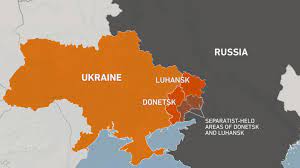
Ukraine vs. Russia
Even while the Olympics played out on television, Ukrainians had rioted in Kiev and evicted their corrupt, luxury-loving president, Victor Yanukovych.
And that didn’t sit well with his “sponsor”—Putin.
Yanukovych had rejected a pending European Union association agreement. He had chosen instead to pursue a Russian loan bailout and closer ties with Russia.
And that had sat well with Putin.
Since the breakup of the Soviet Union in 1991, Putin had yearned for its reestablishment. He had called that breakup “the greatest geopolitical tragedy of the 20th century.”

Vladimir Putin
Kremlin.ru, CC BY 4.0 <https://creativecommons.org/licenses/by/4.0>, via Wikimedia Commons
Russia has long resisted Ukraine’s move towards European institutions—especially NATO.
So it was almost a certainty that Putin would retaliate.
And since late February, 2014, he began moving Russian troops into Ukraine and its autonomous republic, Crimea. Russia annexed Ukraine’s southern Crimean peninsula and backed separatists who captured large swathes of eastern Ukraine.
On December 3, 2021, the Washington Post reported: “The Kremlin is planning a multi-front offensive as soon as early next year involving up to 175,000 troops” against Ukraine.
And where there is activity by Russians, American Rightists are eager to turn such events to their own political advantage.
Right-wingers such as Senator Tom Cotton (R-AR): ”It is a result of a year of Joe Biden’s impotence and incompetence towards Russia in particular and in foreign policy more generally.”
Cotton had vigorously defended President Donald Trump’s attempted extortion of Ukrainian President Volodymyr Zelensky in the face of Russian aggression.
In July, 2019, Trump told his acting chief of staff, Mick Mulvaney, to withhold almost $400 million in promised military aid for Ukraine.
Then, on July 25, Trump telephoned Zelensky to “request” a “favor”: Investigate presumed 2020 Democratic Presidential Candidate Joe Biden and his son, Hunter, who had had business dealings in Ukraine.
Clearly implied in the call: Produce “dirt” on Biden—or you won’t get the military aid.
All of which overlooks a number of brutal political truths.
First, all great powers have spheres of interest—and jealously guard them.
For the United States, it’s Latin and Central America, as established by the Monroe Doctrine.
And just what is the Monroe Doctrine?
It’s a statement made by President James Monroe in his 1823 annual message to Congress, which warned European powers not to interfere in the affairs of the Western Hemisphere.
It has no legitimacy except the willingness of the United States to use armed force to back it up. When the United States no longer has the will or resources to enforce the Doctrine, it will cease to have meaning.
For the Soviet Union, its spheres of influence include the Ukraine. Long known as “the breadbasket of Russia,” in 2011, it was the world’s third-largest grain exporter.
Russia will no more give up access to that breadbasket than the United States would part with the rich farming states of the Midwest.
Second, spheres of influence often prove disastrous to those smaller countries affected.
Throughout Latin and Central America, the United States remains highly unpopular for its brutal use of “gunboat diplomacy” during the 20th century.
Among those countries invaded or controlled by America: Mexico, Cuba, Guatemala, Nicaragua, Columbia, Panama and the Dominican Republic.
The resulting anger has led many Latin and Central Americans to support Communist Cuba, even though its political oppression and economic failure are universally apparent.
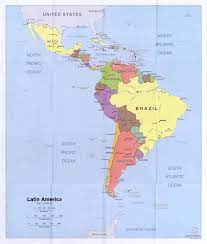
Latin and Central America
Similarly, the Soviet Union forced many nations—such as Poland, Hungary and Czechoslovakia—to submit to the will of Moscow.
The alternative? The threat of Soviet invasion—as occurred in Hungary in 1956 and Czechoslovakia in 1968.
Third, even “great powers” are not all-powerful.
In 1949, after a long civil war, the forces of Mao Tse-tung defeated the Nationalist armies of Chiang Kai-Shek, who withdrew to Taiwan.
China had never been a territory of the United States. Nor could the United States have prevented Mao from defeating the corrupt, ineptly-led Nationalist forces.
Even so, Republican Senators and Representatives such as Richard Nixon and Joseph McCarthy eagerly blamed President Harry S. Truman and the Democrats for “losing China.”
The fear of being accused of “losing” another country led Presidents John F. Kennedy, Lyndon B. Johnson and Richard M. Nixon to tragically commit the United States to “roll back” Communism in Cuba and Vietnam.
Now Republicans—who claim the United States can’t afford to provide healthcare for its poorest citizens—want to turn the national budget over to the Pentagon.
They want the United States to “intervene” in Ukraine—even though this would mean going to war with the only nuclear power capable of turning America into an atomic graveyard.
Before plunging into conflicts that don’t concern us and where there is absolutely nothing to “win,” Americans would do well to remember the above-stated lessons of history. And to learn from them.
ABC NEWS, ALTERNET, AMERICAN TABLOID, ANTI-CASTRO CUBANS, AP, ASSASSINATION, BUZZFEED, CBS NEWS, CIA, CNN, COMMUNISM, CROOKS AND LIARS, CUBA, CUBA TRAVEL BAN, CUBAN MISSILE CRISIS, DAILY KOS, DONALD TRUMP, DWIGHT D. EISENHOWER, FBI, FIDEL CASTRO, FLORIDA, FULGENCIO BATISTA, GUS RUSSO, JACK RUBY, JAMES ELLROY, JOHN F. KENNEDY, JOHNNY ROSELLI, LEE HARVEY OSWALD, LIVE BY THE SWORD, LYNDON B. JOHNSON, MAFIA, MARCO RUBIO, MOTHER JONES, MOVEON, MSNBC, NBC NEWS, NEWSWEEK, NIKITA KHRUSHCHEV, NPR, PBS NEWSHOUR, POLITICO, RAW STORY, REUTERS, ROBERT F. KENNEDY, SALON, SAM GIANCANA, SEATTLE TIMES, SLATE, THE ATLANTIC, THE CHICAGO SUN-TIMES, THE CHICAGO TRIBUNE, THE DAILY BEAST, THE GUARDIAN, THE HILL, THE HUFFINGTON POST, THE LOS ANGELES TIMES, THE NATION, THE NEW YORK TIMES, THE WASHINGTON POST, TIME, U.S. NEWS & WORLD REPORT, UPI, USA TODAY, WARREN COMMISSION, X
In Bureaucracy, History, Law Enforcement, Military, Politics, Social commentary on September 27, 2024 at 12:10 am
“John and Robert Kennedy knew what they were doing. They waged a vicious war against Fidel Castro—a war someone had to lose.”
And the loser turned out to be John F. Kennedy.
So writes investigative reporter Gus Russo in Live By the Sword: The Secret War Against Castro and the Death of JFK, published in 1998.
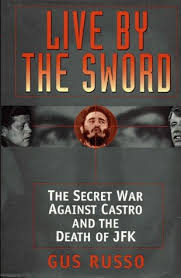
In what is may be the definitive account of the assassination of President John F. Kennedy, Russo reaches some startling—but highly documented—conclusions:
- Lee Harvey Oswald assassinated Kennedy.
- He did it alone.
- Oswald, a former Marine, was a committed Marxist—whose hero was Castro.
- The CIA’s ongoing campaign to overthrow and/or assassinate Castro was an open secret throughout the Gulf.
- Oswald visited New Orleans in the spring of 1963.
- There he learned that Castro was in the crosshairs of the CIA.
- For this, he blamed John F. Kennedy.
- Oswald told his Russian-born wife, Marina: “Fidel Castro needs defenders. I’m going to join his army of volunteers.”
- Jack Ruby, a Dallas nightclub owner, murdered Oswald because he was distraught over Kennedy’s death.
- Ruby was not part of a Mafia conspiracy to silence Oswald.
- Skeptics of the Warren Commission—which concluded that Oswald had acted alone—asked the wrong question: “Who killed Kennedy?”
- They should have asked: “Why was he killed?”
- The answer—according to Russo: “The Kennedys’ relentless pursuit of Castro and Cuba backfired in tragedy on that terrible day in November, 1963.”
Another book well worth reading about America’s Cuban obsession during the early 1960s is American Tabloid, by James Ellroy.
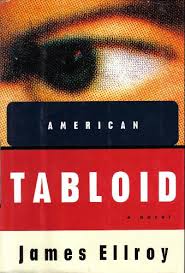
Although a novel, it vividly captures the intrigue, danger and sleaziness that permeated that era as no dry, historical documents can.
“The 50’s are finished,” reads its paperback dust jacket. “Zealous young lawyer Robert Kennedy has a red-hot jones to nail Jimmy Hoffa. JFK has his eyes on the Oval Office.
“J. Edgar Hoover is swooping down on the Red Menace. Howard Hughes is dodging subpoenas and digging up Kennedy dirt. And Castro is mopping up the bloody aftermath of his new Communist nation….
“Mob bosses, politicos, snitches, psychos, fall guys and femmes fatale. They’re mixing up a Molotov cocktail guaranteed to end the country’s innocence with a bang.”
Among the legacies of America’s twisted romance with anti-Castro Cubans:
- Following the JFK assassination, there was a cover-up.
- Its purpose: To protect the reputation of the United States Government—and that of its newly-martyred President.
- The CIA and FBI concealed the CIA-Mafia assassination plots from the Warren Commission assigned to investigate Kennedy’s murder.
- Other government officials participating in the cover-up included Attorney General Robert F. Kennedy and President Lyndon B. Johnson.
- Ironically, this secrecy ignited the widespread—and false—belief that the President had died at the hands of a government conspiracy.
- Robert Kennedy feared that his relentless pursuit of Castro might have led Castro to “take out” JFK first.
- Fearing his own assassination if he continued Kennedy’s efforts to murder Castro, President Johnson ordered the CIA to halt its campaign to overthrow and/or assassinate the Cuban leader.
- The huge Cuban community throughout Florida—and especially Miami—continues to exert a blackmailing influence on American politics.
- Right-wing politicians from Richard Nixon to Donald Trump have reaped electoral rewards by catering to the demands of this hate-obsessed voting block.
- These Cuban expatriate hope that the United States will launch a full-scale military invasion of the island to remove Fidel’s surviving brother, Raul.
- Having grown rich and soft in the United States, they fear to risk their own lives by returning to Cuba to overthrow the Castro regime—as Fidel had overthrown Fulgencio Batista.
- Only President Barack Obama had the political courage to re-establish diplomatic relations with Cuba—in 2015.
- This occurred long after the United States had reestablished ties with such former enemies as the Soviet Union, China and Vietnam.
- On June 4, 2019, President Donald Trump once again banned educational and recreational travel to Cuba.
The Cuban Missile Crisis remains the single most dangerous moment of the 50-year Cold War, when the world stood only minutes away from nuclear Armageddon.
That crisis stemmed from the American Right’s twisted obsession with Cuba.
So what are the lessons to be learned from that obsession?
- It is long past time to demand major changes in our foreign policy toward Cuba.
- It’s time to end the half-century contamination of American politics by those Cubans who live only for their hatred of Castro—and those political candidates who live to exploit it.
- (For example: Marco Rubio got elected U.S. Senator from Florida in 2010 by claiming that his parents had been forced to leave Cuba in 1959, after Fidel Castro took power. In fact, they had left Cuba in 1956—during the Batista dictatorship.)
- It’s time to end this wag-the-dog relationship. A population of about 1,700,000 Cuban exiles living in Florida should not be allowed to shape the domestic and foreign policy of a nation of 300 million.
- Those who continue to hate—or love—Fidel Castro should be left to their own private feud. But that is a feud they should settle on their own island, and not from the shores of the United States.
ABC NEWS, ALTERNET, AMERICAN TABLOID, ANTI-CASTRO CUBANS, AP, ASSASSINATION, BUZZFEED, CBS NEWS, CIA, CNN, COMMUNISM, CROOKS AND LIARS, CUBA, CUBA TRAVEL BAN, CUBAN MISSILE CRISIS, DAILY KOS, DONALD TRUMP, DWIGHT D. EISENHOWER, FBI, FIDEL CASTRO, FLORIDA, FULGENCIO BATISTA, GUS RUSSO, JACK RUBY, JAMES ELLROY, JOHN F. KENNEDY, JOHNNY ROSELLI, LEE HARVEY OSWALD, LIVE BY THE SWORD, LYNDON B. JOHNSON, MAFIA, MARCO RUBIO, MOTHER JONES, MOVEON, MSNBC, NBC NEWS, NEWSWEEK, NIKITA KHRUSHCHEV, NPR, PBS NEWSHOUR, POLITICO, RAW STORY, REUTERS, ROBERT F. KENNEDY, SALON, SAM GIANCANA, SEATTLE TIMES, SLATE, THE ATLANTIC, THE CHICAGO SUN-TIMES, THE CHICAGO TRIBUNE, THE DAILY BEAST, THE GUARDIAN, THE HILL, THE HUFFINGTON POST, THE LOS ANGELES TIMES, THE NATION, THE NEW YORK TIMES, THE WASHINGTON POST, TIME, U.S. NEWS & WORLD REPORT, UPI, USA TODAY, WARREN COMMISSION, X
In Bureaucracy, History, Law Enforcement, Military, Politics, Social commentary on September 26, 2024 at 12:05 am
On October 22, 1962, President John F. Kennedy went on nationwide TV to announce that Russian nuclear missiles had been installed in Cuba—and his blockade of that island.
He warned that any nuclear missile launched from Cuba against any nation would be regarded as an attack on the United States by the Soviet Union—and would trigger “a full retaliatory response” upon the U.S.S.R.
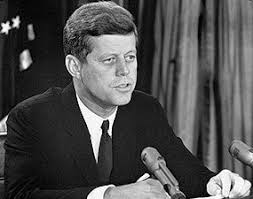
President John F. Kennedy addresses the nation
And he demanded that the Soviets remove all of their offensive weapons from Cuba:
“The path we have chosen for the present is full of hazards, as all paths are, but it is the one most consistent with our character and courage as a nation and our commitments around the world.
“The cost of freedom is always high, but Americans have always paid it. And one path we shall never choose, and that is the path of surrender or submission.”
On October 26, the United States raised the readiness level of SAC forces to DEFCON 2—the step just short of war. For the only time in U.S. history, B-52 bombers were dispersed to various locations and made ready to take off, fully equipped, on 15 minutes’ notice.
Other measures taken included:
- One-eighth of America’s 1,436 bombers were on airborne alert.
- About 145 intercontinental ballistic missiles stood on ready alert.
- Air Defense Command redeployed 161 nuclear-armed interceptors to 16 dispersal fields within nine hours with one-third maintaining 15-minute alert status.
- Twenty-three nuclear-armed B-52s were sent to orbit points within striking distance of the Soviet Union.
An invasion date of Cuba was set for October 29. But the Kennedy Administration—and the American military—didn’t know that Russian soldiers guarding the missiles had been armed with tactical nuclear weapons.
Had the Marines gone in, those mini-nukes would have been used. And a fullscale nuclear exchange between the United States and the Soviet Union would have almost certainly followed.
At the height of the crisis, Attorney General Robert F. Kennedy offered a solution.
Khrushchev had sent two teletypes to Kennedy. The first had agreed to remove the missiles, but the second had demanded that the United States remove its own nuclear missiles from Turkey, which bordered the Soviet Union.
Robert Kennedy’s solution: Ignore the second message—and announce that President Kennedy had accepted Khrushchev’s offer to remove the missiles.
After this announcement was made, President Kennedy said: “It can go either way now.”
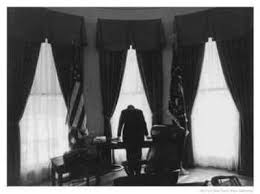
John F. Kennedy in the Oval Office
The crisis ended on October 28. Under enormous pressure, Khrushchev agreed to remove the missiles from Cuba.
Behind his decision lay a secret promise by the Kennedy administration to remove its obsolete nuclear missiles from Turkey, which bordered the Soviet Union. And a public pledge to not invade Cuba.
On the night the crisis ended, there occurred a prophetic exchange between the two Kennedy brothers.
JFK: “Maybe this is the night I should go to the theater”—a reference to Abraham Lincoln’s fatal attendance of Ford’s Theater at the end of the Civil War.
RFK: “If you go, I want to go with you.”
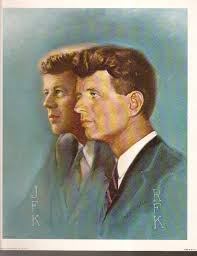
John F. and Robert F. Kennedy
But the Kennedys continued their campaign of sabotage throughout Cuba. And they were preparing something far bigger: A fullscale American invasion of the island.
On October 4, 1963, the Joint Chiefs of Staff submitted its latest version of the invasion plan, known as OPLAN 380-63. Its timetable went:
- January, 1964: Infiltration into Cuba by Cuban exiles.
- July 15, 1964: U.S. conventional forces join the fray.
- August 3, 1964: All-out U.S. air strikes on Cuba.
- October 1, 1964: Full-scale invasion to install “a government friendly to the U.S.”
During the Cuban Missile Crisis, Robert Kennedy—referring to the 1941 Japanese attack on Pearl Harbor—had resisted demands for a “sneak attack” on Cuba by saying: “I don’t want my brother to be the Tojo of the 1960s.”
Now the Kennedys planned such an attack on Cuba just one month before the November, 1964 Presidential election.
Then fate—in the unlikely figure of Lee Harvey Oswald—intervened.
On November 22, 1963, while the President rode through Dallas in an open-air automobile, a rifle-wielding assassin opened fire. He scored two hits on Kennedy—in the back of the neck and head. The second wound proved instantly fatal.
The nation and the world were shocked—and plunged into deep mourning.
But for some of those who had waged a secret, lethal war against Fidel Castro for the previous two years, Kennedy’s death—at least in retrospect—didn’t come as a surprise.
Robert Kennedy, in particular, spent the remaining years of his life agonizing over the possibility that his highly personal war against Castro had backfired.
That Castro, fed up with the CIA’s assassination plots against him, had retaliated with one of his own.
Robert Kennedy’s fears and guilt were compounded by the fact that, while waging war on Castro, he had waged an equally ruthless crusade against organized crime.
He knew that some of the mobsters he had tried to send to prison had played a major role in the CIA’s efforts to “hit” Castro. Had the Mafia—believing itself the victim of a double-cross—put out a “contract” on JFK instead?
It was a question that haunted him until the day he died.
ABC NEWS, ALTERNET, AMERICAN TABLOID, ANTI-CASTRO CUBANS, AP, ASSASSINATION, BUZZFEED, CBS NEWS, CIA, CNN, COMMUNISM, CROOKS AND LIARS, CUBA, CUBA TRAVEL BAN, CUBAN MISSILE CRISIS, DAILY KOS, DONALD TRUMP, DWIGHT D. EISENHOWER, FBI, FIDEL CASTRO, FLORIDA, FULGENCIO BATISTA, GUS RUSSO, JACK RUBY, JAMES ELLROY, JOHN F. KENNEDY, JOHNNY ROSELLI, LEE HARVEY OSWALD, LIVE BY THE SWORD, LYNDON B. JOHNSON, MAFIA, MARCO RUBIO, MOTHER JONES, MOVEON, MSNBC, NBC NEWS, NEWSWEEK, NIKITA KHRUSHCHEV, NPR, PBS NEWSHOUR, POLITICO, RAW STORY, REUTERS, ROBERT F. KENNEDY, SALON, SAM GIANCANA, SEATTLE TIMES, SLATE, THE ATLANTIC, THE CHICAGO SUN-TIMES, THE CHICAGO TRIBUNE, THE DAILY BEAST, THE GUARDIAN, THE HILL, THE HUFFINGTON POST, THE LOS ANGELES TIMES, THE NATION, THE NEW YORK TIMES, THE WASHINGTON POST, TIME, U.S. NEWS & WORLD REPORT, UPI, USA TODAY, WARREN COMMISSION, X
In Bureaucracy, History, Law Enforcement, Military, Politics, Social commentary on September 25, 2024 at 12:07 am
The war that John and Robert Kennedy waged against Fidel Castro became known within the CIA as Operation Mongoose.
But not everyone in the CIA was enthusiastic about the “get Castro” effort.
“Everyone at CIA was surprised at Kennedy’s obsession with Fidel,” recalled Sam Halpern, who was assigned to the Cuba Project. “They thought it was a waste of time. We all knew [Fidel] couldn’t hurt us. Most of us at CIA initially liked Kennedy, but why go after this little guy?

“One thing is for sure: Kennedy wasn’t doing it out of national security concerns. It was a personal thing. The Kennedy family felt personally burnt by the Bay of Pigs and sought revenge.”
It was all-out war. Among the tactics used:
- Hiring Cuban gangsters to murder Cuban police officials and Soviet technicians.
- Sabotaging mines.
- Paying up to $100,000 per “hit” for the murder or kidnapping of Cuban officials.
- Using biological and chemical warfare against the Cuban sugar industry.
“Bobby (Kennedy) wanted boom and bang all over the island,” recalled Halpern. “It was stupid. The pressure from the White House was very great.”
Attorney General Robert Kennedy
Attorney General Robert Kennedy had been appointed to supervise the CIA’s “get Castro” effort.
Among that “boom and bang” were a series of assassination plots against Castro, in which the Mafia was to be a key player.
Chicago Mobster Johnny Roselli proposed a simple plan: Through its underworld connections in Cuba, the Mafia would recruit a Cuban in Castro’s entourage, such as a waiter or bodyguard, who would poison him.
The CIA’s Technical Services division produced a botulinus toxin which was then injected into Castro’s favorite brand of cigars. The CIA also produced simpler botulinus toxin pills that could be dissolved in his food or drink.
But the deputized Mafia contacts failed to deliver any of the poisons to Castro.
Roselli told the CIA that the first poisoner had been discharged from Castro’s employ before he could kill him, and the back-up agent got “cold feet.”
Other proposals or attempts included:
- Planting colorful seashells rigged to explode at a site where Castro liked to go skindiving.
- Trying to arrange for his being presented with a wetsuit impregnated with noxious bacteria and mold spores, or with lethal chemical agents.
- Attempting to infect Castro’s scuba regulator with tuberculous bacilli.
- Trying to douse his handkerchiefs, tea and coffee with other lethal bacteria.
Former members of the Kennedy Administration later insisted that neither John nor Robert Kennedy knew or approved of these assassination plots. But the sheer weight of available evidence indicates otherwise.
Bobby, in particular, was constantly pressing the CIA to “do something” about Castro. In the world of covert action, words like “Kill Castro” aren’t committed to paper. Or even spoken.
“Plausible deniability”—for topmost government officials—holds as the all-important rule.
Castro, rightly seeing his life and regime threatened, appealed to Nikita Khrushchev, leader of the Soviet Union, for assistance.

Fidel Castro and Nikita Khrushchev
Khrushchev was quick to comply: “We must not allow the communist infant to be strangled in its crib,” he told members of his inner circle.
By October, 1962, the Soviet Union had sent more than
- 40,000 soldiers,
- 1,300 field pieces,
- 700 anti-aircraft guns,
- 350 tanks and
- 150 jets
to Cuba to deter another invasion.
Most importantly, Khrushchev began supplying Castro with nuclear-tipped ballistic missiles.
Their discovery, on October 15, 1962, ignited the single most dangerous confrontation of the 50-year Cold War.
Suddenly, the United States and the Soviet Union—both bristling with nuclear weapons—found themselves on the brink of nuclear war.
At the time, Kennedy officials claimed they couldn’t understand why Khrushchev had placed nuclear missiles in Cuba. “Maybe Khrushchev’s gone mad” was a typical public musing.
This remained the official American view for years afterward—as depicted in Robert Kennedy’s memoir, Thirteen Days: A Memoir of the Cuban Missile Crisis, published in 1969, the year after his death.
No admission was made that JFK had been waging a no-holds-barred campaign to overthrow the Cuban government and assassinate its leader.
The same proved true for the 1974 doc-u-drama, The Missiles of October, starring William Devane as John F. Kennedy and Martin Sheen as Robert Kennedy.
On October 16, President Kennedy was informed of the missile installations. He immediately convened a group of his 12 most important advisers, which became known as Ex-Comm, for Executive Committee.
Then followed seven days of guarded and intense debate by Kennedy and his advisers. Some of the participants—such as Air Force General Curtis LeMay—urged an all-out air strike against the missile sites.
Others—such as Adlai Stevenson, the United States delegate to the United Nations—urged a reliance on quiet diplomacy.
It was Secretary of Defense Robert S. McNamara who suggested a middle course: A naval blockade—a “quarantine” in Kennedy’s softened term—around Cuba. This would hopefully prevent the arrival of more Soviet offensive weapons on the island.
Finally, the President decided to to impose a naval blockade.
On October 22, Kennedy went on nationwide TV to announce the discovery of the missiles and his decision to blockade Cuba.
ABC NEWS, ALTERNET, AMERICAN TABLOID, ANTI-CASTRO CUBANS, AP, ASSASSINATION, BUZZFEED, CBS NEWS, CIA, CNN, COMMUNISM, CROOKS AND LIARS, CUBA, CUBAN MISSILE CRISIS, DAILY KOS, DONALD TRUMP, DWIGHT D. EISENHOWER, FBI, FIDEL CASTRO, FLORIDA, FULGENCIO BATISTA, GUS RUSSO, JACK RUBY, JAMES ELLROY, JOHN F. KENNEDY, JOHNNY ROSELLI, LEE HARVEY OSWALD, LIVE BY THE SWORD, LYNDON B. JOHNSON, MAFIA, MARCO RUBIO, MOTHER JONES, MOVEON, MSNBC, NBC NEWS, NEWSWEEK, NIKITA KHRUSHCHEV, NPR, PBS NEWSHOUR, POLITICO, RAW STORY, REUTERS, ROBERT F. KENNEDY, SALON, SAM GIANCANA, SEATTLE TIMES, SLATE, THE ATLANTIC, THE CHICAGO SUN-TIMES, THE CHICAGO TRIBUNE, THE DAILY BEAST, THE GUARDIAN, THE HILL, THE HUFFINGTON POST, THE LOS ANGELES TIMES, THE NATION, THE NEW YORK TIMES, THE WASHINGTON POST, TIME, U.S. NEWS & WORLD REPORT, UPI, USA TODAY, WARREN COMMISSION, X
In Bureaucracy, History, Law Enforcement, Military, Politics, Social commentary on September 24, 2024 at 12:10 am
On June 4, 2019, President Donald Trump banned cruise ships from the United States to visit Cuba and “people-to-people” educational travel there for Americans.
Officially, the reason was to keep American dollars “out of the hands” of the communist government.
Unofficially, the reason was to curry electoral favor with the huge Cuban exile community living in Florida, especially in Miami.
That community owes its existence to Fidel Castro (1926-2016).
To his supporters he was a tireless champion of the poor and a foe of American imperialism. To his enemies he was a ruthless dictator who drove his country to economic ruin in the name of a failed ideology—communism.
His reign began on January 1, 1959, when he swept triumphantly into Havana after a two-year guerrilla campaign against Cuban dictator Fulgencio Batista.
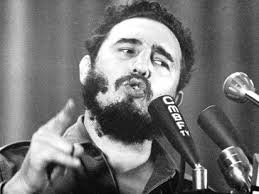
Fidel Castro
Almost immediately, hundreds of thousands of Cubans began fleeing to America. The first émigrés were more than 215,000 Batista followers. The exodus increased, peaking at approximately 78,000 in 1962.
In October, 1962, Castro stopped regularly scheduled travel between the two countries, and asylum seekers began sailing from Cuba to Florida.
Between 1962 and 1979, hundreds of thousands of Cubans entered the United States under the Attorney General’s parole authority.
By 2008, more than 1.24 million Cubans were living in the United States, mostly in South Florida, where the population of Miami was about one-third Cuban. Their sheer numbers transformed the state’s political, economic and cultural life. And not entirely for the better.
Many of these Cubans viewed themselves as political exiles, rather than immigrants, hoping to eventually return to Cuba after its Communist regime fell from power.
The large number of Cubans in South Florida, particularly in Miami’s “Little Havana,” allowed them to preserve their culture and customs to a degree rare for immigrant groups.
With so many discontented immigrants concentrated in Florida, they became a potential force for politicians to court.
And the issue guaranteed to sway their votes was unrelenting hostility to Castro. Unsurprisingly, most of their votes went to Right-wing Republicans.
John F. Kennedy was the first President to face this dilemma.
During the closing months of the administration of President Dwight D. Eisenhower, the CIA had begun training Cuban exiles for an invasion of their former homeland.
The exiles’ goal: To do what Castro had done—seek refuge in the mountains and launch a successful anti-Castro revolution.
But word of the coming invasion quickly leaked: The exiles were terrible secret-keepers. (A joke at the CIA went: “A Cuban thinks a secret is something you tell to only 300 people.”)
Kennedy insisted the invasion must appear to be an entirely Cuban enterprise. He refused to commit U.S. Marines and Air Force bombers.
More than 1,400 invaders landed on April 17, 1961 at the Bay of Pigs—and were quickly overwhelmed, with hundreds of the men taken prisoner.
Kennedy publicly took the blame for its failure: “Victory has a hundred fathers but defeat is an orphan.” Privately he seethed, and ordered the CIA to redouble its efforts to remove Castro at all costs.
To guarantee success, he appointed his brother, Robert—then Attorney General—to oversee the CIA’s “Castro removal” program.
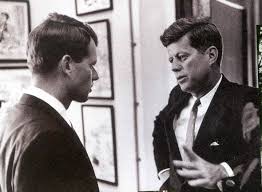
Robert F. Kennedy and John F. Kennedy
It’s here that America’s obsession with Cuba entered its darkest and most disgraceful period.
The CIA and the Mafia entered into an unholy alliance to assassinate Castro—each for its own benefit:
- The CIA wanted to please Kennedy.
- The mobsters wanted to regain their casino and brothel holdings that had made Cuba their private playground in pre-Castro times. They also hoped to use their pose as patriots to win immunity from future prosecution.
The CIA supplied poisons and explosives to various members of the Mafia. It was then up to the mobsters to assassinate Castro.
The CIA asked Johnny Roselli, a mobster linked to the Chicago syndicate, to go to Florida in 1961 and 1962 to organize assassination teams of Cuban exiles. They were to infiltrate their homeland and assassinate Castro.
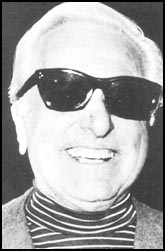
Johnny Roselli
Rosselli called upon two other crime figures: Chicago Mafia boss Sam Giancana and Santos Trafficante, the Costra Nostra chieftain for Tampa, for assistance.

Sam Giancana
Giancana, using the name “Sam Gold” in his dealings with the CIA, was meanwhile being hounded by the FBI on direct orders of Attorney General Robert Kennedy.
The mobsters were authorized to offer $150,000 to anyone who would kill Castro and were promised any support the Agency could yield.
Giancana was to locate someone who was close enough to Castro to be able to drop pills into his food. Trafficante would serve as courier to Cuba, helping to make arrangements for the murder on the island.
Rosselli was to be the main link between all of the participants in the plot.
Some historians believe that the Mob made a genuine effort to “whack” Fidel.
Others are convinced the mobsters simply ran a scam on the government. They pretended to carry out their “patriotic duty” while in fact making no effort at all to penetrate Castro’s security.
The CIA’s war against Castro was known as Operation Mongoose—the mongoose being a traditional enemy of the cobra. And those entrusted with this assignment were known as the Special Group.
ABC NEWS, ADOLF HITLER, ADVICE, ALTERNET, AMERICABLOG, AP, BABY BOOMER RESISTANCE, BAY OF PIGS, BBC, BENITO MUSSOLINI, BLOOMBERG NEWS, BUZZFEED, CAESARE BORGIA, CBS NEWS, CNN, CORPORATIONS, CROOKS AND LIARS, CUBA, DAILY KOS, DAILY KOZ, FIDEL CASTRO, FIVETHIRTYEIGHT, FLORENCE, HARPER’S MAGAZINE, HUFFINGTON POST, JOHN F. KENNEDY, JOSEPH STALIN, KING PERSEUS OF MACEDON, MEDIA MATTERS, MOTHER JONES, MOVEON, MSNBC, NAZI-SOVIET "NON-AGGRESSION PACT", NBC NEWS, NEW REPUBLIC, NEWSDAY, NEWSWEEK, NICCOLO MACHIAVELLI, NPR, PBS NEWSHOUR, POLITICO, POLITICS, POLITICUSUSA, POPE JULIUS 11, RAW STORY, REUTERS, SALON, SEATTLE TIMES, SLATE, TALKING POINTS MEMO, THE ATLANTIC, THE CHICAGO SUN-TIMES, THE CHICAGO TRIBUNE, THE DAILY BEAST, THE DAILY BLOG, THE DISCOURSES, THE GUARDIAN, THE HILL, THE HUFFINGTON POST, THE INTERCEPT, THE LOS ANGELES TIMES, THE NATION, THE NEW REPUBLIC, THE NEW YORK TIMES, THE NEW YORKER, THE PRINCE, THE SS, THE VILLAGE VOICE, THE WASHINGTON POST, THINKPROGRESS, THIRD REICH, TIME, TRUTHDIG, TRUTHOUT, TWITTER, U.S. NEWS & WORLD REPORT, UKRAINE, UPI, USA TODAY, VLADIMIR PUTIN, VOLODYMYR ZELENSKY, WEHRMACHT, WORLD WAR 11
In Bureaucracy, Business, History, Military, Politics, Social commentary on May 24, 2024 at 12:10 am
Ask the average person, “What do you think of Niccolo Machiavelli?” and he’s likely to say: “The devil.”
In fact, “The Old Nick” became an English term used to describe Satan and slander Machiavelli at the same time.

Niccolo Machiavelli
The truth, however, is more complex. Machiavelli was a passionate Republican, who spent most of his adult life in the service of his beloved city-state, Florence.
The years he spent as a diplomat were tumultuous ones for Italy—with men like Pope Julius II and Caesare Borgia vying for power and plunging Italy into one bloodbath after another.
Florence, for all its wealth, lacked a strong army, and thus lay at the mercy of powerful enemies, such as Borgia. Machiavelli often had to use his wits to keep them at bay.
Machiavelli is best-known for his writing of The Prince, a pamphlet on the arts of gaining and holding power. Its admirers have included Benito Mussolini and Joseph Stalin.
But his longer and more thoughtful work is The Discourses, in which he offers advice on how to maintain liberty within a republic. Among its admirers were many of the men who framed the Constitution of the United States.
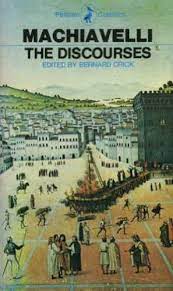

Most people believe that Machiavelli advocated evil for its own sake.
Not so. Rather, he recognized that sometimes there is no perfect—or perfectly good—solution to a problem.
Sometimes it’s necessary to take stern—even brutal—action to stop an evil (such as a riot) before it becomes widespread:
“A man who wishes to make a profession of goodness in everything must inevitably come to grief among so many who are not good. And therefore it is necessary for a prince, who wishes to maintain himself, to learn how not to be good, and to use this knowledge and not use it, according to the necessity of the case.”
His counsel remains as relevant today as it did during his lifetime (1469 – 1527). This is especially true for politicians—and students of political science.
But plenty of ordinary citizens can also benefit from the advice he has to offer—such as those in business who are asked to give advice to more powerful superiors.
Machiavelli warns there is danger in urging rulers to take a particular course of action: “For men only judge of matters by the result, all the blame of failure is charged upon him who first advised it, while in case of success he receives commendations. But the reward never equals the punishment.”
This puts would-be counselors in a difficult position: “If they do not advise what seems to them for the good of the republic or the prince, regardless of the consequences to themselves, then they fail to do their duty.
“And if they do advise it, then it is at the risk of their position and their lives, for all men are blind in thus, that they judge of good or evil counsels only by the results.”
Thus, Machiavelli warns that an adviser should “take things moderately, and not to undertake to advocate any enterprise with too much zeal, but to give one’s advice calmly and modestly.”
The person who asked for the advice may follow it, or not, as of his own choice, and not because he was led or forced into it by the adviser.
Above all, the adviser must avoid the danger of urging a course of action that runs “contrary to the wishes of the many.
“For the danger arises when your advice has caused the many to be contravened. In that case, when the result is unfortunate, they all concur in your destruction.”
Or, as President John F. Kennedy famously said after the disastrous invasion of Cuba at the Bay of Pigs in April, 1961: “Victory has a hundred fathers and defeat is an orphan.”
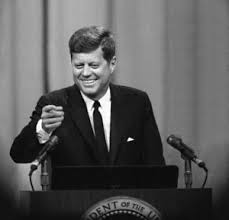
John F. Kennedy
By “not advocating any enterprise with too much zeal,” the adviser gains two advantages:
“The first is, you avoid all danger.
“And the second consists in the great credit which you will have if, after having modestly advised a certain course, your counsel is rejected, and the adoption of a different course results unfortunately.”
Finally, the time to give advice is before a catastrophe occurs, not after. Machiavelli gives a vivid example of what can happen if this rule is ignored.
King Perseus of Macedon had gone to war with Paulus Aemilius—and suffered a humiliating defeat. Fleeing the battlefield with a handful of his men, he later bewailed the disaster that had overtaken him.
Suddenly, one of his lieutenants began to lecture Perseus on the many errors he had committed, which had led to his ruin.
“Traitor,” raged the king, turning upon him, “you have waited until now to tell me all this, when there is no longer any time to remedy it—” And Perseus slew him with his own hands.
Niccolo Machiavelli sums up the lesson as this:
“Thus was this man punished for having been silent when he should have spoken, and for having spoken when he should have been silent.”
Be careful that you don’t make the same mistake.
ABC NEWS, ALAMO, ALIEN-SMUGGLING RINGS, ALTERNET, ALVARO OBREGON, AMERICABLOG, AMNEXTY INTERNATIONAL, ANCHOR BABIES, ANTONIO LOPEZ DE SANTA ANNA, AP, ARIZONA, BABY BOOMER RESISTANCE, BARACK OBAMA, BARBARA LEE, BBC, BLOOMBERG, BLOOMBERG NEWS, BREXIT, BUREAU OF CUSTOMS AND BORDER PROTECTION, BUZZFEED, CALIFORNIA, CBS NEWS, CHICAGO, CNN, COLORADO, CORRUPTION, CROOKS AND LIARS, CUBA, DAILY KOS, DAVID CROCKETT, DEMOCRATIC PARTY, DEMOCRATS, DONALD TRUMP, DREAM ACT, DRUDGE REPORT, EMILIANO ZAPATA, ENGLISH LANGUAGE, ERIC ADAMS, EUROPEAN UNION (EU), FEDERATION FOR AMERICAN IMMIGRATION REFORM (FAIR), FELIPE CALDERON, FIVETHIRTYEIGHT, FLORIDA, FRANCISCO "PANCHO" VILLA, FRANCISCO MADERO, GOLIAD MASSACRE, GREG ABBOTT, HARPER’S MAGAZINE, HILLARY CLINTON, HISPANICS, HUFFINGTON POST, ILLEGAL ALIENS, illegal immigration, IMMIGRATIONS AND CUSTOMS ENFORCEMENT (ICE), JAMES BOWIE, JEFF SESSIONS, MEDI-CAL INSURANCE PROGRAM, MEDIA MATTERS, MEXICAN REVOLUTION, MEXICAN WAR, MEXICO, MEXICO CITY, MIGRANT CARRAVAN, MOSES AUSTIN, MOTHER JONES, MOVEON, MSNBC, NBC NEWS, NEVADA, NEW MEXICO, NEW REPUBLIC, NEW YORK CITY, NEWSDAY, NEWSWEEK, NEWT GINGRICH, NICARAGUA, NICCOLO MACHIAVELLI, NPR, PANCHO VILLA, PAUL RYAN, PBS NEWSHOUR, POLITICAL CORRECTNESS, POLITICO, POLITICUSUSA, RACIAL PROFILING, RAW STORY, REPUBLICAN PARTY, REPUBLICANS, REUTERS, ROBERT FROST, SALON, SAM HOUSTON, SAN JACINTO, SCHOOLS, SEATTLE TIMES, SLATE, SLAVERY, STEPHEN AUSTIN, TALKING POINTS MEMO, TEXAS, THE ATLANTIC, THE CHICAGO SUN-TIMES, THE CHICAGO TRIBUNE, THE DAILY BEAST, THE DAILY BLOG, THE DAILY MAIL, THE DISCOURSES, THE GUARDIAN, THE HILL, THE HUFFINGTON POST, THE INTERCEPT, THE LOS ANGELES TIMES, THE NATION, THE NEW REPUBLIC, THE NEW YORK TIMES, THE NEW YORKER, THE VILLAGE VOICE, THE WALL STREET JOURNAL, THE WASHINGTON POST, THINKPROGRESS, THOMAS HOMAN, TIJUANA, TIME, TRUTHDIG, TRUTHOUT, TWITTER, TWO POLITICAL JUNKIES, U.S. NEWS & WORLD REPORT, U.S. SUPREME COURT, UNITED KINGDOM (UK), UNITED STATES DEPARTMENT OF JUSTICE, UNITED STATES HEALTH AND HUMAN SERVICES DEPARTMENT, UPI, USA TODAY, UTAH, VENEZUELA, VENUSTIANO CARRANZA, WAL-MART, WASHINGTON D.C., WONKETTE
In Bureaucracy, Business, History, Law, Law Enforcement, Medical, Military, Politics, Social commentary on January 9, 2024 at 12:13 am
If Americans decide they truly want to control access to their own borders, there is a realistic way to accomplish this.
And it doesn’t involve building a wall along the Mexican border—which would prove ridiculously expensive and easily circumvented.

(1) The Justice Department should vigorously attack the “sanctuary movement” that officially thwarts the immigration laws of the United States.
Among the 31 “sanctuary cities” of this country: Washington, D.C.; New York City; Los Angeles; Chicago; San Francisco; Santa Ana; San Diego; Salt Lake City; Phoenix; Dallas; Houston; Austin; Detroit; Jersey City; Minneapolis; Miami; Denver; Baltimore; Seattle; Portland, Oregon; New Haven, Connecticut; and Portland, Maine.
These cities have adopted “sanctuary” ordinances that do not allow municipal funds or resources to be used to enforce federal immigration laws, usually by not allowing police or municipal employees to inquire about one’s immigration status.
(2) The most effective way to combat this movement: Indict the highest-ranking officials of those cities which have actively violated Federal immigration laws.
In San Francisco, for example, former District Attorney Kamala Harris—who is now Vice President of the United States—created a secret program called Back on Track, which provided training for jobs that illegal aliens could not legally hold.
She also prevented Immigration and Customs Enforcement (ICE) from deporting even those illegal aliens convicted of a felony.
(3) Indicting such officials would be comparable to the way that President Andres Jackson dealt with the threat South Carolinians once made to “nullify”—or ignore—any Federal laws they didn’t like.
Jackson quashed that threat by making one of his own: To lead an army into that State and purge all who dared defy the laws of the Federal Government.

(4) Even if some indicted officials escaped conviction, the results would prove worthwhile.
City officials would be forced to spend huge sums of their own money for attorneys and face months or even years of prosecution.
And this, in turn, would send a devastating warning to officials in other “sanctuary cities” that the same fate lies in store for them.
(5) CEOs whose companies—like Wal-Mart—systematically employ illegal aliens should be held directly accountable for the actions of their subordinates.
They should be indicted by the Justice Department under the Racketeer Influenced Corrupt Organizations (RICO) Act, the way Mafia bosses are prosecuted for ordering their own subordinates to commit crimes.
Upon conviction, the CEO should be sentenced to a mandatory prison term of at least twenty years.
This would prove a more effective remedy for combating illegal immigration than stationing tens of thousands of soldiers on the U.S./Mexican border. CEOs forced to account for their subordinates’ actions would take drastic steps to ensure that their companies strictly complied with Federal immigration laws.
Without employers luring illegal aliens at a fraction of the money paid to American workers, the flood of such illegal job-seekers would quickly dry up.
(6) The Government should stop granting automatic citizenship to “anchor babies” born to illegal aliens in the United States.
A comparable practice would be allowing bank robbers who had eluded the FBI to keep their illegally-obtained loot.
A person who violates the bank robbery laws of the United States is legally prosecutable for bank robbery, whether he’s immediately arrested or remains uncaught for years. The same should be true for those born illegally within this country.
If they’re not here legally at the time of birth, they should not be considered citizens and should—like their parents—be subject to deportation.
(7) The United States Government—from the President on down—should stop apologizing for the right to control the country’s national borders.
The Mexican Government doesn’t hesitate to apply strict laws to those immigrating to Mexico. And it feels no need to apologize for this.
Neither should we.
(8) Voting materials and ballots should be published in one language—English.
In Mexico, voting materials are published in one language—Spanish.
Throughout the United States, millions of Mexican illegals refuse to learn English and yet demand that voting materials and ballots be made available to them in Spanish.

(9) Those who are not legal citizens of the United States should not be allowed to vote in its elections.
In Mexico, those who are not Mexican citizens are not allowed to participate in the country’s elections.
The Mexican Government doesn’t consider itself racist for strictly enforcing its immigration laws.
The United States Government should not consider itself racist for insisting on the right to do the same.
(10) The United States should impose economic and even military sanctions against countries—such as China and Mexico—whose citizens make up the bulk of illegal aliens.
The Mexican government well remembers the 10-year Mexican Revolution (1910 – 1920) starring Francisco “Pancho” Villa, Emiliano Zapata and a host of other equally ruthless killers—and the one million dead men, women and children it produced.
So Mexico uses its American border to rid itself of those who might demand major reforms in the country’s political and economic institutions.
Such nations must learn that dumping their unwanteds on the United States now comes at an unaffordably high price. Otherwise those dumpings will continue.
ABC NEWS, ALAMO, ALIEN-SMUGGLING RINGS, ALTERNET, ALVARO OBREGON, AMERICABLOG, AMNEXTY INTERNATIONAL, ANCHOR BABIES, ANTONIO LOPEZ DE SANTA ANNA, AP, ARIZONA, BABY BOOMER RESISTANCE, BARACK OBAMA, BARBARA LEE, BBC, BLOOMBERG, BLOOMBERG NEWS, BREXIT, BUREAU OF CUSTOMS AND BORDER PROTECTION, BUZZFEED, CALIFORNIA, CBS NEWS, CHICAGO, CNN, COLORADO, CORRUPTION, CROOKS AND LIARS, CUBA, DAILY KOS, DAILY KOZ, DAVID CROCKETT, DEMOCRATIC PARTY, DEMOCRATS, DONALD TRUMP, DREAM ACT, DRUDGE REPORT, EMILIANO ZAPATA, ENGLISH LANGUAGE, ERIC ADAMS, EUROPEAN UNION (EU), FEDERATION FOR AMERICAN IMMIGRATION REFORM (FAIR), FELIPE CALDERON, FIVETHIRTYEIGHT, FLORIDA, FRANCISCO "PANCHO" VILLA, FRANCISCO MADERO, GOLIAD MASSACRE, GREG ABBOTT, HARPER’S MAGAZINE, HILLARY CLINTON, HISPANICS, HUFFINGTON POST, ILLEGAL ALIENS, illegal immigration, IMMIGRATIONS AND CUSTOMS ENFORCEMENT (ICE), JAMES BOWIE, JEFF SESSIONS, MEDI-CAL INSURANCE PROGRAM, MEDIA MATTERS, MEXICAN REVOLUTION, MEXICAN WAR, MEXICO, MEXICO CITY, MIGRANT CARRAVAN, MOSES AUSTIN, MOTHER JONES, MOVEON, MSNBC, NBC NEWS, NEVADA, NEW MEXICO, NEW REPUBLIC, NEW YORK CITY, NEWSDAY, NEWSWEEK, NEWT GINGRICH, NICARAGUA, NICCOLO MACHIAVELLI, NPR, PANCHO VILLA, PAUL RYAN, PBS NEWSHOUR, POLITICAL CORRECTNESS, POLITICO, POLITICUSUSA, RACIAL PROFILING, RAW STORY, REPUBLICAN PARTY, REPUBLICANS, REUTERS, ROBERT FROST, SALON, SAM HOUSTON, SAN JACINTO, SCHOOLS, SEATTLE TIMES, SLATE, SLAVERY, STEPHEN AUSTIN, TALKING POINTS MEMO, TEXAS, THE ATLANTIC, THE CHICAGO SUN-TIMES, THE CHICAGO TRIBUNE, THE DAILY BEAST, THE DAILY BLOG, THE DAILY MAIL, THE DISCOURSES, THE GUARDIAN, THE HILL, THE HUFFINGTON POST, THE INTERCEPT, THE LOS ANGELES TIMES, THE NATION, THE NEW REPUBLIC, THE NEW YORK TIMES, THE NEW YORKER, THE VILLAGE VOICE, THE WALL STREET JOURNAL, THE WASHINGTON POST, THINKPROGRESS, THOMAS HOMAN, TIJUANA, TIME, TRUTHDIG, TRUTHOUT, TWITTER, TWO POLITICAL JUNKIES, U.S. NEWS & WORLD REPORT, U.S. SUPREME COURT, UNITED KINGDOM (UK), UNITED STATES DEPARTMENT OF JUSTICE, UNITED STATES HEALTH AND HUMAN SERVICES DEPARTMENT, UPI, USA TODAY, UTAH, VENEZUELA, VENUSTIANO CARRANZA, WAL-MART, WASHINGTON D.C., WONKETTE
In Bureaucracy, Business, History, Law, Law Enforcement, Medical, Military, Politics, Social commentary on January 8, 2024 at 12:10 am
On May 8, 2018, United States Attorney General Jeff Sessions announced that a “zero-tolerance” policy toward people illegally entering the United States might separate families while parents are prosecuted.
“We don’t want to separate families, but we don’t want families to come to the border illegally and attempt to enter into this country improperly,” Sessions said. “The parents are subject to prosecution while children may not be. So, if we do our duty and prosecute those cases, then children inevitably for a period of time might be in different conditions.”
Children who were separated from their parents would be put under supervision of the U.S. Health and Human Services Department, Sessions said.
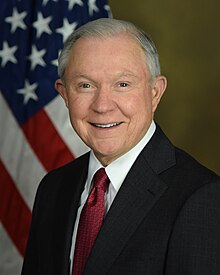
Jeff Sessions
Thomas Homan, U.S. Immigration and Customs Enforcement’s acting director, backed up Sessions’ “get tough” policy change: “Every law enforcement agency in this country separates parents from children when they’re arrested for a crime. There is no new policy. This has always been the policy.”
That policy soon went into effect. And it generated widespread outrage by
- Civil liberties organizations; and
- Those who believe the United States should not have—or enforce—its immigration laws.
“Criminalizing and stigmatizing parents who are only trying to keep their children from harm and give them a safe upbringing will cause untold damage to thousands of traumatized families who have already given up everything to flee terrible circumstances in their home countries,” said Erika Guevara-Rosas, Amnesty International’s Americas director.
In fact, alien-smugglers have increasingly used children as a wedge against American immigration laws. Their strategy: “Surely, Americans won’t arrest innocent children—or the adults who bring children with them.“
The Trump administration set out to prove them wrong.
This is typical behavior for law enforcement agencies: When criminals devise new ways to defeat existing police measures, the police devise new ways to counter those methods.
Meanwhile, those who believe the United States should throw open its doors to everyone who wants to enter are missing—or ignoring—a vital historical lesson.
Ironically, Mexico knows even better than the United States the perils of unchecked illegal immigration.
In 1821, Moses Austin sought a grant from Mexico to settle Texas. After he died in 1821, his son, Stephen, won recognition of the grant by Mexico.
The Mexican government had been unable to persuade large numbers of its own citizens to move to Texas, owing largely to raiding by such fierce Indian tribes as the Comanches.
The government saw the Anglo settlement of Texas as its best hope to tame an otherwise untamable frontier.

Stephen Austin
Austin convinced numerous American settlers to move to Texas, and by 1825 he had brought the first 300 American families into the territory.
Throughout the 1820s, Austin helped ensure the introduction of slavery into Texas, even though, under Mexican law, this was illegal. Tensions developed between unchecked numbers of Anglo settlers flooding into Texas and the Mexican authorities in charge there.
(“GTT”—“Gone to Texas”—was often carved on cabin doors by debt-ridden settlers who decided to seek their fortune in Texas. And some of the most notorious criminals on the frontier—such as slave-trader, land swindler and knife-fighter James Bowie—joined them.)

James Bowie
Eventually, the irresistible force of unlimited Anglo illegal immigration rebelled against the immovable object of Mexican legal/military authority.
The result:
- The battle of the Alamo: From February 23 to March 6, 1836, about 200 rebellious Texans withstood a 13-day siege in a former San Antonio mission, only to be slaughtered to the last man by an army of 2,000 Mexican soldiers commanded by President (actually, dictator) Antonio Lopez de Santa Anna. Among the victims: James Bowie and former Congressman David Crockett.
- The massacre at Goliad: On March 27, 1836, 425-445 Texans captured after the battle of Coleto were shot en masse by Mexican soldiers.
- The battle of San Jacinto: On April 21, 1836, Texans led by General Sam Houston won a surprise Texas victory over Mexican forces who were caught in a mid-afternoon siesta. Santa Anna—who had fled—was captured the next day.
Mexico was forced to give up all rights to Texas—which, nine years after winning its independence, became a state.
But ongoing conflicts between Mexico and the United States over Texas led to the Mexican war in 1846.
This, in turn, led to a series of devastating American victories over the Mexican army, and the capture of Mexico City itself.

Territory (in brown) that Mexico lost after the Mexican War
Mexico suffered the humiliation of both military defeat and the loss of its land holdings within the American Southwest—which, up to 1848, it had controlled.
This territory later became the states of California, New Mexico, Utah, Nevada, Arizona, Texas, and western Colorado.
And the United States finally spread “from sea to shining sea.”
So Mexico knows what it’s doing when it unloads millions of its own citizens—and those of other Latin and Central American countries—on the United States.
Mexico, in short, is a textbook case of what happens to a country that is unable to enforce its own immigration laws.
ABC NEWS, ALAMO, ALIEN-SMUGGLING RINGS, ALTERNET, ALVARO OBREGON, AMERICABLOG, AMNEXTY INTERNATIONAL, ANCHOR BABIES, ANTONIO LOPEZ DE SANTA ANNA, AP, ARIZONA, BABY BOOMER RESISTANCE, BARACK OBAMA, BARBARA LEE, BBC, BLOOMBERG, BLOOMBERG NEWS, BREXIT, BUREAU OF CUSTOMS AND BORDER PROTECTION, BUZZFEED, CALIFORNIA, CBS NEWS, CHICAGO, CNN, COLORADO, CORRUPTION, CROOKS AND LIARS, CUBA, DAILY KOS, DAVID CROCKETT, DEMOCRATIC PARTY, DEMOCRATS, DONALD TRUMP, DREAM ACT, DRUDGE REPORT, EMILIANO ZAPATA, ENGLISH LANGUAGE, ERIC ADAMS, EUROPEAN UNION (EU), FEDERATION FOR AMERICAN IMMIGRATION REFORM (FAIR), FELIPE CALDERON, FIVETHIRTYEIGHT, FLORIDA, FRANCISCO "PANCHO" VILLA, FRANCISCO MADERO, GOLIAD MASSACRE, GREG ABBOTT, HARPER’S MAGAZINE, HILLARY CLINTON, HISPANICS, HUFFINGTON POST, ILLEGAL ALIENS, illegal immigration, IMMIGRATIONS AND CUSTOMS ENFORCEMENT (ICE), JAMES BOWIE, JEFF SESSIONS, MEDI-CAL INSURANCE PROGRAM, MEDIA MATTERS, MEXICAN REVOLUTION, MEXICAN WAR, MEXICO, MEXICO CITY, MIGRANT CARRAVAN, MOSES AUSTIN, MOTHER JONES, MOVEON, MSNBC, NBC NEWS, NEVADA, NEW MEXICO, NEW REPUBLIC, NEW YORK CITY, NEWSDAY, NEWSWEEK, NEWT GINGRICH, NICARAGUA, NICCOLO MACHIAVELLI, NPR, PANCHO VILLA, PAUL RYAN, PBS NEWSHOUR, POLITICAL CORRECTNESS, POLITICO, POLITICUSUSA, RACIAL PROFILING, RAW STORY, REPUBLICAN PARTY, REPUBLICANS, REUTERS, ROBERT FROST, SALON, SAM HOUSTON, SAN JACINTO, SCHOOLS, SEATTLE TIMES, SLATE, SLAVERY, STEPHEN AUSTIN, TALKING POINTS MEMO, TEXAS, THE ATLANTIC, THE CHICAGO SUN-TIMES, THE CHICAGO TRIBUNE, THE DAILY BEAST, THE DAILY BLOG, THE DAILY MAIL, THE DISCOURSES, THE GUARDIAN, THE HILL, THE HUFFINGTON POST, THE INTERCEPT, THE LOS ANGELES TIMES, THE NATION, THE NEW REPUBLIC, THE NEW YORK TIMES, THE NEW YORKER, THE VILLAGE VOICE, THE WALL STREET JOURNAL, THE WASHINGTON POST, THINKPROGRESS, THOMAS HOMAN, TIJUANA, TIME, TRUTHDIG, TRUTHOUT, TWITTER, TWO POLITICAL JUNKIES, U.S. NEWS & WORLD REPORT, U.S. SUPREME COURT, UNITED KINGDOM (UK), UNITED STATES DEPARTMENT OF JUSTICE, UNITED STATES HEALTH AND HUMAN SERVICES DEPARTMENT, UPI, USA TODAY, UTAH, VENEZUELA, VENUSTIANO CARRANZA, WAL-MART, WASHINGTON D.C., WONKETTE
In Bureaucracy, Business, History, Law, Law Enforcement, Medical, Military, Politics, Social commentary on January 5, 2024 at 12:10 am
On January 31, 2020, the United Kingdom (UK) withdrew from the European Union (EU).
The United Kingdom—England, Scotland, Wales and Northern Ireland—had been a member state of the EU or its predecessor, the European Communities (EC), since January 1, 1973.
The vote had been a long time coming—and a major reason for it lay in the unrestricted immigration—legal and illegal—of Central and Eastern Europeans, who are allowed by EU regulations to freely live and work in any member state.
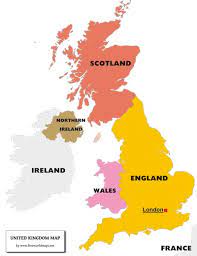
The United Kingdom
So the United Kingdom decided it would no longer be an EU member state.
Britons believed that migrants were clogging Britain’s health-care system and schools, while also depressing wages. By leaving the EU, Britons believed they could gain more control over their borders and drastically reduce immigration.
Immigration, the economy and health care had long been the top three issues on British voters’ minds.
The number of foreign-born people living in the UK went from 2.3 million in 1993 (when Britain joined the EU) to 8.2 million in 2014.
By 2020, the non-UK-born population was 9.5 million and the non-British population was 6.1 million. Most of these came from other EU countries: Cyprus, Malta, Croatia, Africa, the Middle East and Asia.
India, Pakistan and Bangladesh were the top three countries with the highest number of UK passport holders.
Critics of Brexit have blamed xenophobia for Britain’s leaving the EU. While that may have been true, it ignores a vital truth: People feel most comfortable around others like themselves.
In schools and prisons, it’s commonplace to see white sitting among whites, blacks sitting among blacks and Hispanics sitting among Hispanics.
In addition, people feel most comfortable among those who speak their own language. In the United States, there has been widespread resentment over having to “Push 1 for English” when calling government agencies.
Two factors are driving unprecedented levels of world migration:
- The world’s population at 8.1 billion, which puts unprecedented stress on available food, housing, medical care and other essential services; and
- The rapid escalation of climate change has brought drought/flooding to major parts of Africa, Asia and Latin and Central America.
Added to these must be an insight into human character offered by Niccolo Machiavelli, the sixteenth-century historian and political scientist, in his work, The Discourses:

Niccolo Machiavelli
It was a saying of ancient writers, that men afflict themselves in evil, and become weary of the good, and that both these dispositions produce the same effects.
For when men are no longer obliged to fight from necessity, they fight from ambition, which passion is so powerful in the hearts of men that it never leaves them, no matter to what height they may rise.
The reason for this is that nature has created men so that they desire everything, but are unable to attain it. Desire being thus always greater than the faculty of acquiring, discontent with what they have and dissatisfaction with themselves result from it.
This causes the changes in their fortunes—for as some men desire to have more, while others fear to lose what they have, enmities and war are the consequences. And this brings about the ruin of one province and the elevation of another.
In addition: Those who have spent their lives as law-abiding citizens resent it when immigrants—especially illegal aliens—gain advantage by breaking the law.
Such a case occurred on January 1, 2024.
That was when California became the first state to offer health insurance to all illegal aliens. All of these uninvited foreigners, regardless of age, now qualify for Medi-Cal, California’s version of the federal Medicaid program for people with low incomes.
Previously, illegal aliens could receive only emergency and pregnancy-related services under Medi-Cal as long as they met eligibility requirements, including income limits and California residency in 2014.
In 2015, then-Governor Jerry Brown allowed illegal alien children to receive coverage under Medi-Cal.
The final expansion starting January 1 will give full coverage to at least 700,000 illegal aliens who have no right to be in the country.
At the same time, about 3.2 million California citizens remained uninsured in 2022.
Meanwhile, California faces a record $68 billion budget deficit. Tax collections are off by $26 billion, combined with the economic slowdown California has been facing since 2022.
News stories announcing this taxpayers’ giveaway don’t refer to the recipients as “illegal aliens.” That’s because “illegal alien” is—for all its accuracy—Politically Incorrect.
Instead, those who defend the wanton violating of American immigration laws prefer the term “undocumented immigrant.”
As though these lawbreakers had valid citizenship documents but somehow lost them during their swim across the Rio Grande.
It’s entirely natural that those living in abject poverty—as millions do in Asia, Africa and Latin/Central America—want to escape it.
It’s also entirely natural that those who have escaped poverty want to hold on to all they have worked hard to attain.
The refusal of liberal politicians—in England, Italy, France, Germany and the United States—to accept these truths has led to the rise of authoritarian, Right-wing movements in those countries.
By refusing to address rising anger over such invasions, liberal politicians throughout the world are endangering the very democracies they cherish.
ABC NEWS, ALAMO, ALIEN-SMUGGLING RINGS, ALTERNET, ALVARO OBREGON, AMERICABLOG, AMNEXTY INTERNATIONAL, ANCHOR BABIES, ANTONIO LOPEZ DE SANTA ANNA, AP, ARIZONA, BABY BOOMER RESISTANCE, BARACK OBAMA, BARBARA LEE, BBC, BLOOMBERG, BLOOMBERG NEWS, BREXIT, BUREAU OF CUSTOMS AND BORDER PROTECTION, BUZZFEED, CALIFORNIA, CBS NEWS, CHICAGO, CNN, COLORADO, CORRUPTION, CROOKS AND LIARS, CUBA, DAILY KOS, DAVID CROCKETT, DEMOCRATIC PARTY, DEMOCRATS, DONALD TRUMP, DREAM ACT, DRUDGE REPORT, EMILIANO ZAPATA, ENGLISH LANGUAGE, ERIC ADAMS, EUROPEAN UNION (EU), FEDERATION FOR AMERICAN IMMIGRATION REFORM (FAIR), FELIPE CALDERON, FIVETHIRTYEIGHT, FLORIDA, FRANCISCO "PANCHO" VILLA, FRANCISCO MADERO, GOLIAD MASSACRE, GREG ABBOTT, HARPER’S MAGAZINE, HILLARY CLINTON, HISPANICS, HUFFINGTON POST, ILLEGAL ALIENS, illegal immigration, IMMIGRATIONS AND CUSTOMS ENFORCEMENT (ICE), JAMES BOWIE, JEFF SESSIONS, MEDI-CAL INSURANCE PROGRAM, MEDIA MATTERS, MEXICAN REVOLUTION, MEXICAN WAR, MEXICO, MEXICO CITY, MIGRANT CARRAVAN, MOSES AUSTIN, MOTHER JONES, MOVEON, MSNBC, NBC NEWS, NEVADA, NEW MEXICO, NEW REPUBLIC, NEW YORK CITY, NEWSDAY, NEWSWEEK, NEWT GINGRICH, NICARAGUA, NICCOLO MACHIAVELLI, NPR, PANCHO VILLA, PAUL RYAN, PBS NEWSHOUR, POLITICAL CORRECTNESS, POLITICO, POLITICUSUSA, RACIAL PROFILING, RAW STORY, REPUBLICAN PARTY, REPUBLICANS, REUTERS, ROBERT FROST, SALON, SAM HOUSTON, SAN JACINTO, SCHOOLS, SEATTLE TIMES, SLATE, SLAVERY, STEPHEN AUSTIN, TALKING POINTS MEMO, TEXAS, THE ATLANTIC, THE CHICAGO SUN-TIMES, THE CHICAGO TRIBUNE, THE DAILY BEAST, THE DAILY BLOG, THE DAILY MAIL, THE DISCOURSES, THE GUARDIAN, THE HILL, THE HUFFINGTON POST, THE INTERCEPT, THE LOS ANGELES TIMES, THE NATION, THE NEW REPUBLIC, THE NEW YORK TIMES, THE NEW YORKER, THE VILLAGE VOICE, THE WALL STREET JOURNAL, THE WASHINGTON POST, THINKPROGRESS, THOMAS HOMAN, TIJUANA, TIME, TRUTHDIG, TRUTHOUT, TWITTER, TWO POLITICAL JUNKIES, U.S. NEWS & WORLD REPORT, U.S. SUPREME COURT, UNITED KINGDOM (UK), UNITED STATES DEPARTMENT OF JUSTICE, UNITED STATES HEALTH AND HUMAN SERVICES DEPARTMENT, UPI, USA TODAY, UTAH, VENEZUELA, VENUSTIANO CARRANZA, WAL-MART, WASHINGTON D.C., WONKETTE
In Bureaucracy, Business, History, Law, Law Enforcement, Medical, Military, Politics, Social commentary on January 4, 2024 at 12:06 am
n May 20, 2010, Mexico’s then-President Felipe Calderon addressed a joint session of the United States Congress—and attacked a recently-enacted Arizona law that allowed law enforcement officials to detain anyone suspected of being in the country illegally.
According to Calderon, the law “introduces a terrible idea: using racial profiling as a basis for law enforcement.
“I have said that Mexico does not stop at its border, that wherever there is a Mexican, there is Mexico.”
The hypocrisy of Calderon’s words was staggering. He was condemning the United States for doing what Mexico itself has long done: Strictly enforcing control of its own borders.

Felipe Calderon
World Economic ForumCopyright by World Economic Forum / Photo by Remy Steinegger
Mexico’s immigration laws state: Any foreigner that enters the country to stay less than six months is considered a visitor. To meet immigration requirements, you must:
- Have enough money to pay for your stay in the country;
- Have an invitation from a private or public interest organization.
If you want to stay more than 180 days, you must obtain a temporary residency visa in Mexico. This requires you to:
- Have a family relationship with a Mexican citizen.
- Have a job offer issued by a Mexican employer.
- Have an invitation from a private or public institution.
- Have enough money to pay for your stay in the country.
- Own real estate in Mexico.
- Have investments in Mexico.
After being a temporary resident for four years, you can apply for permanent residency. To obtain this, you must meet these requirements:
- Be a refugee or under the condition of political asylum.
- Have a family relationship with a Mexican citizen.
- To have been a temporary resident for four years.
- Be a pensioner with enough monthly income to pay for your stay in the country.
- Be related in a straight line up to the second degree to a Mexican by birth.
- To have been a temporary resident for two years in the case of a conjugal or concubine relationship with a Mexican citizen or permanent resident.
Eight years after Calderon demanded that Americans repeal their immigration laws, Mexicans suddenly discovered they hated illegal aliens, too.
On October 13, 2018, a caravan of at least 5,000 men, women and children from El Salvador, Guatemala and Honduras set out for the United States.
On October 18, President Donald Trump closed the U.S.-Mexico border to keep the caravan from entering the country.
By November 19, migrants had begun piling up in Tijuana, which borders San Diego.
Suddenly, Tijuana residents began carrying signs reading “No illegals,” “No to the invasion” and “Mexico First.” And marching in the streets wearing Mexico’s red, white and green national soccer jersey and vigorously waving Mexican flags.
“We want the caravan to go; they are invading us,” said Patricia Reyes, a 62-year-old protester. “They should have come into Mexico correctly, legally, but they came in like animals.”
The El Paso Times noted the resentment of many Mexicans toward the increasing numbers of Cuban illegal aliens in Juarez, which lies across from El Paso.
“They don’t get along with Mexican people,” said a burrito seller. “They get in a little group by themselves. A lot of people don’t like them here.”
And a business consultant complained, “There are people who are coming looking for a handout, who want us to help them, when they could also look for work.”
Over the weekend of October 12-13, 2019, a National Guard commander addressed his platoon before confronting the latest caravan: “No one will come to trample our country, our land!”
In the past, Mexicans comprised the largest group of illegal aliens entering the United States. But the Mexican economy has grown and developed to the point where fewer people see the need to emigrate.
Most illegals are now mostly from Guatemala, Honduras, and El Salvador. And there are growing numbers from Haiti, Cuba, various African countries, and even the Middle East.
During the first eight months of 2019, the number of asylum applications submitted to Mexico’s refugee agency (COMAR) more than tripled, compared to the same period in 2018. As a result, the refugee agency removed the how-to-apply video it once hosted on its website.
In the past, the Mexican Government refused to halt illegal immigration to the United States.
It remembered the bloody upheaval known as the Mexican Revolution. This lasted 10 years (1910-1920) and wiped out an estimated one to two million men, women and children.
Massacres were common on all sides, with men shot by the hundreds in bullrings or hung by the dozen on trees.
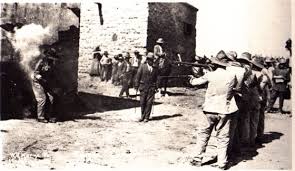
A Mexican Revolution firing squad
All of the major leaders of the Revolution—Francisco Madero, Emiliano Zapata, Venustiano Carranza, Francisco “Pancho” Villa, Alvaro Obregon—died in a hail of bullets.

Francisco “Pancho” Villa
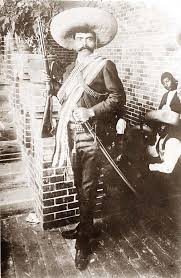
Emiliano Zapata
As a result, every successive Mexican Government lived in the shadow of another such wholesale bloodletting. These officials quietly decided to turn the United States border into a safety valve.
* * * * *
No other nation has ever allowed itself to become a dumping ground for the world’s unwanteds. And no law—religious or secular—obligates the United States to do so.
Space is limited in schools, hospitals and housing, and the more people who cram into limited spaces, the more frictions they inevitably create.
As native-born Mexicans are angrily finding out.

 Bureaucracybuster's Blog
ABC NEWS, ALTERNET, AMERICABLOG, AP, BABY BOOMER RESISTANCE, BARACK OBAMA, BBC, BLOOMBERG, BLOOMBERG NEWS, BUZZFEED, CBS NEWS, CENTRAL AMERICA, CHIANG KAI-SHEK, CHINA, CNN, COLUMBIA, COMMUNISM, CRIMEA, CROOKS AND LIARS, CUBA, CZECHOSLAVAKIA, DAILY KOS, DAILY KOZ, DEMOCRATS, DONALD TRUMP, FACEBOOK, FIVETHIRTYEIGHT, GUATEMALA, GUNBOAT DIPLOMACY, HARPER’S MAGAZINE, HARRY S. TRUMAN, HUFFINGTON POST, HUNGARY, JOHN F. KENNEDY, JOSEPH MCCARTHY, LATIN AMERICA, LYNDON B. JOHNSON, MAO TSE-TUNG, MEDIA MATTERS, MICK MULVANEY, MITT ROMNEY, MONROE DOCTRINE, MOTHER JONES, MOVEON, MSNBC, NBC NEWS, NEW REPUBLIC, NEWSDAY, NEWSWEEK, NICARAGUA, NPR, PANAMA, PBS NEWSHOUR, POLAND, POLITICO, POLITICUSUSA, RAW STORY, REPUBLICANS, REUTERS, RICHARD M. NIXON, SALON, SEATTLE TIMES, SLATE, SOCHI OLYMPICS, SOVIET UNION, SPHERES OF INFLUENCE, TALKING POINTS MEMO, THE ATLANTIC, THE CHICAGO SUN-TIMES, THE CHICAGO TRIBUNE, THE DAILY BEAST, THE DAILY BLOG, THE GUARDIAN, THE HILL, THE HUFFINGTON POST, THE INTERCEPT, THE LOS ANGELES TIMES, THE NATION, THE NEW REPUBLIC, THE NEW YORK TIMES, THE NEW YORKER, THE VILLAGE VOICE, THE WASHINGTON POST, THINKPROGRESS, TIME, TOM COTTON, TRUTHDIG, TRUTHOUT, TWO POLITICAL JUNKIES, U.S. NEWS & WORLD REPORT, UKRAINE, UPI, USA TODAY, VICTOR YANUKOVYCH, VIETNAM, VLADIMIR PUTIN, VOLODYMYR ZELENSKY, WONKETTE, X
SPHERES OF IINFLUENCE–FOR RUSSIA AND AMERICA
In Bureaucracy, History, Military, Social commentary on November 22, 2024 at 12:11 amThe collapse of the Soviet Union in 1991 plunged the American Right into a depression.
Accusing Democrats of being “terrorist-lovers” just didn’t prove as profitable as accusing them of being “Communists.”
Then fate intervened.
The torch had barely gone out at the 2014 Sochi Winter Olympics when Russian President Vladimir Putin began menacing the Ukraine.
Ukraine vs. Russia
Even while the Olympics played out on television, Ukrainians had rioted in Kiev and evicted their corrupt, luxury-loving president, Victor Yanukovych.
And that didn’t sit well with his “sponsor”—Putin.
Yanukovych had rejected a pending European Union association agreement. He had chosen instead to pursue a Russian loan bailout and closer ties with Russia.
And that had sat well with Putin.
Since the breakup of the Soviet Union in 1991, Putin had yearned for its reestablishment. He had called that breakup “the greatest geopolitical tragedy of the 20th century.”
Vladimir Putin
Kremlin.ru, CC BY 4.0 <https://creativecommons.org/licenses/by/4.0>, via Wikimedia Commons
Russia has long resisted Ukraine’s move towards European institutions—especially NATO.
So it was almost a certainty that Putin would retaliate.
And since late February, 2014, he began moving Russian troops into Ukraine and its autonomous republic, Crimea. Russia annexed Ukraine’s southern Crimean peninsula and backed separatists who captured large swathes of eastern Ukraine.
On December 3, 2021, the Washington Post reported: “The Kremlin is planning a multi-front offensive as soon as early next year involving up to 175,000 troops” against Ukraine.
And where there is activity by Russians, American Rightists are eager to turn such events to their own political advantage.
Right-wingers such as Senator Tom Cotton (R-AR): ”It is a result of a year of Joe Biden’s impotence and incompetence towards Russia in particular and in foreign policy more generally.”
Cotton had vigorously defended President Donald Trump’s attempted extortion of Ukrainian President Volodymyr Zelensky in the face of Russian aggression.
In July, 2019, Trump told his acting chief of staff, Mick Mulvaney, to withhold almost $400 million in promised military aid for Ukraine.
Then, on July 25, Trump telephoned Zelensky to “request” a “favor”: Investigate presumed 2020 Democratic Presidential Candidate Joe Biden and his son, Hunter, who had had business dealings in Ukraine.
Clearly implied in the call: Produce “dirt” on Biden—or you won’t get the military aid.
All of which overlooks a number of brutal political truths.
First, all great powers have spheres of interest—and jealously guard them.
For the United States, it’s Latin and Central America, as established by the Monroe Doctrine.
And just what is the Monroe Doctrine?
It’s a statement made by President James Monroe in his 1823 annual message to Congress, which warned European powers not to interfere in the affairs of the Western Hemisphere.
It has no legitimacy except the willingness of the United States to use armed force to back it up. When the United States no longer has the will or resources to enforce the Doctrine, it will cease to have meaning.
For the Soviet Union, its spheres of influence include the Ukraine. Long known as “the breadbasket of Russia,” in 2011, it was the world’s third-largest grain exporter.
Russia will no more give up access to that breadbasket than the United States would part with the rich farming states of the Midwest.
Second, spheres of influence often prove disastrous to those smaller countries affected.
Throughout Latin and Central America, the United States remains highly unpopular for its brutal use of “gunboat diplomacy” during the 20th century.
Among those countries invaded or controlled by America: Mexico, Cuba, Guatemala, Nicaragua, Columbia, Panama and the Dominican Republic.
The resulting anger has led many Latin and Central Americans to support Communist Cuba, even though its political oppression and economic failure are universally apparent.
Latin and Central America
Similarly, the Soviet Union forced many nations—such as Poland, Hungary and Czechoslovakia—to submit to the will of Moscow.
The alternative? The threat of Soviet invasion—as occurred in Hungary in 1956 and Czechoslovakia in 1968.
Third, even “great powers” are not all-powerful.
In 1949, after a long civil war, the forces of Mao Tse-tung defeated the Nationalist armies of Chiang Kai-Shek, who withdrew to Taiwan.
China had never been a territory of the United States. Nor could the United States have prevented Mao from defeating the corrupt, ineptly-led Nationalist forces.
Even so, Republican Senators and Representatives such as Richard Nixon and Joseph McCarthy eagerly blamed President Harry S. Truman and the Democrats for “losing China.”
The fear of being accused of “losing” another country led Presidents John F. Kennedy, Lyndon B. Johnson and Richard M. Nixon to tragically commit the United States to “roll back” Communism in Cuba and Vietnam.
Now Republicans—who claim the United States can’t afford to provide healthcare for its poorest citizens—want to turn the national budget over to the Pentagon.
They want the United States to “intervene” in Ukraine—even though this would mean going to war with the only nuclear power capable of turning America into an atomic graveyard.
Before plunging into conflicts that don’t concern us and where there is absolutely nothing to “win,” Americans would do well to remember the above-stated lessons of history. And to learn from them.
Share this: