Posts Tagged ‘BOB WOODWARD’
2016 PRESIDENTIAL CAMPAIGN, ABC NEWS, AFGHANISTAN, ALTERNET, AMERICABLOG, AP, BABY BOOMER RESISTANCE, BARACK OBAMA, BLOOMBERG, BOB WOODWARD, BUZZFEED, CBS NEWS, CENTER FOR AMERICAN PROGRESS ACTION FUND, CIA, CLINTON WATTS, CNN, COVID-19, CRAIG UNGER, CROOKS AND LIARS, DAILY KOS, DAVID ROTHKOPF, DEPARTMENT OF HOMELAND SECURITY, DIRECTOR OF NATIONAL INTELLIGENCE, DONALD TRUMP, DONALD TRUMP JR., DRUDGE RETORT, ERIC TRUMP, FBI, FBI’S COUNTERTERRORISM DIVISION, FEAR: TRUMP IN THE WHITE HOUSE (BOOK), FIVETHIRTYEIGHT, FOX NEWS, G7, GEORGE PAPADOPOULOS, GREG MILLER, HARPER’S MAGAZINE, HILLARY CLINTON, HOUSE INTELLIGENCE COMMITTEE, HOUSE OF TRUMP HOUSE OF PUTIN (BOOK), HOWARD STERN, ISLAMIC STATE OF IRAQ AND SYRIA (ISIS), ISRAELI INTELLIGENCE, JAMES CARLOS BLAKE, JAMES COMEY, JARED KUSHNER, JEFF SESSIONS, JOE SCARBOROUGH, JOINT TERRORISM TASK FORCE, JOSEPH BIDEN, Kamala Harris, MAIN INTELLIGENCE DIRECTORATE, MALCOM W. NANCE, MEDIA MATTERS, MICHAEL FLYNN, MICHAEL ISIKOFF, MOSCOW PROJECT, MOTHER JONES, MOVEON, MSNBC, NATALIA VESELNITSKAYA, NATIONAL SECURITY AGENCY, NBC NEWS, NEWSWEEK, NPR, OFFICE OF THE DIRECTOR OF NATIONAL INTELLIGENCE, PAUL MANAFORT, PBS NEWSHOUR, PERIL (BOOK), POLITICO, POLITICUSUSA, PRESIDENT’S DAILY BRIEFING, PRINCETON UNIVERSITY, RAGE (BOOK), RAW STORY, REPUBLICAN PARTY, REPUBLICANS, REUTERS, REX TILLERSON, RICHARD M. NIXON, RINAT AKHMETSHIN, ROBERT S. MUELLER 111, ROD ROSENSTEIN, RUSSIA, RUSSIAN ROULETTE (BOOK), SALLY YATES, SALON, SEAL TEAM SIX, SEATTLE TIMES, SENATE INTELLIGENCE COMMITTEE, SERGEY KISLYAK, SERGEY LAVROV, SLATE, TALIBAN, TALKING POINTS MEMO, THE APPRENTICE (BOOK), THE ATLANTIC, THE CHICAGO SUN-TIMES, THE CHICAGO TRIBUNE, THE DAILY BEAST, THE DAILY BLOG, THE FRIENDS OFPANCHO VILLA (BOOK(), THE GUARDIAN, THE HILL, THE HUFFINGTON POST, THE LOS ANGELES TIMES, THE NATION, THE NEW REPUBLIC, THE NEW YORK TIMES, THE PLOT TO DESTROY DEMOCRACY (BOOK), THE VILLAGE VOICE, THE WASHINGTON POST, THINKPROGRESS, TIME, TREASON, TRUMP TOWER MEETING, TRUTHDIG, TRUTHOUT, TWO POLITICAL JUNKIES, U.S. NAVY SEALS, U.S. NEWS & WORLD REPORT, UNITED STATES DEPARTMENT OF JUSTICE, UNITED STATES DEPARTMENT OF STATE, UPI, USA TODAY, VANIT FAIR, VICTOR YANUKOVYCH, VLADIMIR PUTIN, WIKILEAKS, WILLIAM BARR, WONKETTE, X
In Bureaucracy, History, Law, Law Enforcement, Military, Politics, Social commentary on January 20, 2025 at 12:11 am
“Who has not known men who discovered the truth about themselves only to be tortured by it for the rest of their lives? Is a man worse off when he doesn’t know who he is or when he learns he is truly a coward? When he is ignorant of his true nature or when he knows he is a traitor at heart? Not that I pity either cowards or traitors. To the contrary: In a just world, they would all be made to face the hard truth about themselves before they died.”
—James Carlos Blake, The Friends of Pancho Villa
On June 28, 2019, President Donald Trump demonstrated how seriously he took American election security.
It came during a meeting with Russian President Vladimir Putin in Osaka, Japan—their first since the March 22 release of the Mueller Report, which documented Russia’s subversion of the 2016 Presidential election.
An NBC News reporter asked: Would you tell Putin not to meddle in the 2020 Presidential election?
“Yes, of course I will,” replied Trump, grinning. “Don’t meddle in the election, please.”
And he jokingly wagged his finger at Putin: “Don’t meddle in the election.”
Putin grinned back.
Trump has repeatedly claimed that there was “no collusion” between him and members of Russia’s Intelligence community. But from the outset, he has acted like a guilty man desperate to stop an investigation before it uncovers the full extent of his criminality and treason.
TREASON EXAMPLE #1: On July 9, 2016, high-ranking members of his Presidential campaign met at Trump Tower with at least two lobbyists who had ties to Russian dictator Vladimir Putin. The participants included:
- Trump’s son, Donald Trump Jr.;
- His son-in-law, Jared Kushner;
- His then-campaign manager, Paul Manafort;
- Natalia Veselnitskaya, a Russian lawyer with ties to Putin; and
- Rinat Akhmetshin, a former Soviet counterintelligence officer suspected of having ongoing ties to Russian Intelligence.
The purpose of that meeting: To gain access to any “dirt” Russian Intelligence could supply on Democratic Presidential nominee Hillary Clinton.
Trump originally claimed that the meeting was “about the adoption of Russian children.” Eventually he admitted that it had been “a meeting to get information on an opponent.”
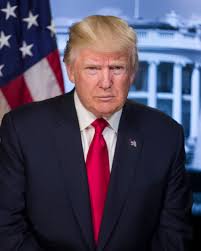
Donald Trump
TREASON EXAMPLE #2: On July 22, 2016, Wikileaks released 19,252 emails and 8,034 attachments hacked from computers of the highest-ranking officials of the Democratic National Committee (DNC). Early reports traced the leak to Russian hackers.
On July 27, 2016, during his campaign for President, Trump said at a press conference in Doral, Florida: “Russia, if you are listening, I hope you are able to find the 33,000 emails that are missing [from Democratic Presidential candidate Hillary Clinton’s computer]. I think you will probably be rewarded mightily by our press.”
This was nothing less than treason—calling upon a foreign power, hostile to the United States, to interfere in its Presidential election.
Hours later, the Main Intelligence Directorate in Moscow targeted Clinton’s personal office and hit more than 70 other Clinton campaign accounts.
Clinton Watts is a consultant and researcher on cyberwarfare. He has served as:
- An FBI Special Agent on a Joint Terrorism Task Force (JTTF);
- The Executive Officer of the Combating Terrorism Center at West Point (CTC); and
- A consultant to the FBI’s Counter Terrorism Division (CTD) and National Security Branch (NSB).
In a statement he prepared for the U.S. Senate Select Committee on Intelligence, Watts outlined cyberwarfare measures that Russia used to subvert the 2016 Presidential campaign.
He delivered this on March 30. 2017. Part of this reads as follows:
Through the end of 2015 and start of 2016, the Russian influence system….began pushing themes and messages seeking to influence the outcome of the U.S. Presidential election.
Russia’s overt media outlets and covert trolls sought to sideline opponents on both sides of the political spectrum with adversarial views toward the Kremlin. The final months leading up to the election have been the predominate focus of Russian influence discussions to date.
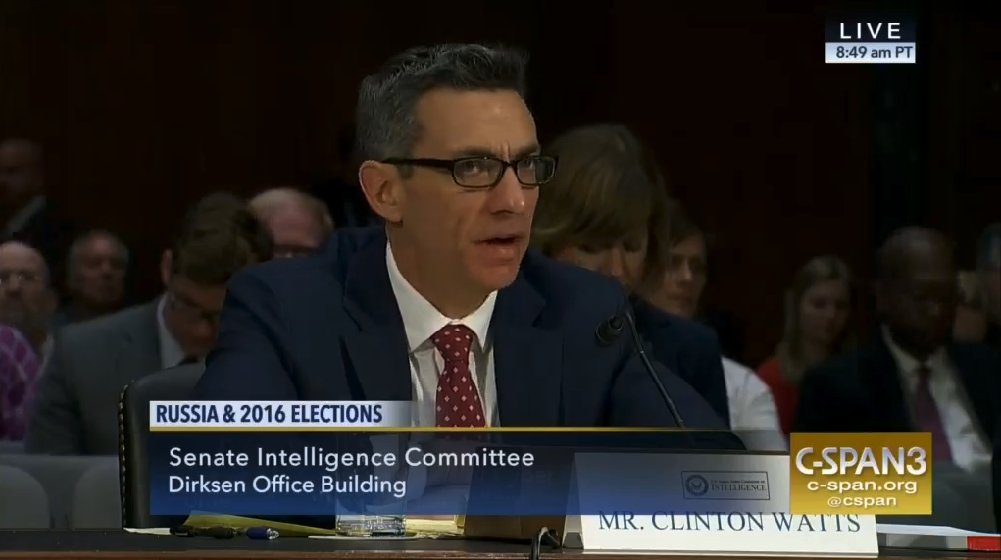
Clinton Watts
However, Russian Active Measures were in full swing during both the Republican and Democratic primary season and may have helped sink the hopes of candidates more hostile to Russian interests long before the field narrowed.
The final piece of Russia’s modern Active Measures surfaced in the summer of 2016 as hacked materials from previous months were strategically leaked.
On 22 July 2016, Wikileaks released troves of stolen communications from the Democratic National Committee and later batches of campaign emails. Guccifer 2.0 and DC Leaks revealed hacked information from a host of former U.S. government officials throughout July and August 2016.
For the remainder of the campaign season, this compromising material powered the influence system Russia successfully constructed in the previous two years.
TREASON EXAMPLE #3: Many of those Trump appointed to office had strong ties to the government of Russian President Vladimir Putin.
One of these was Secretary of State Rex Tillerson. In 2013, as the chief executive of ExxonMobil, he was presented with Russia’s Order of Friendship award. He had just signed deals with the state-owned Russian oil company Rosneft. Its chief, Igor Sechin, is a loyal Putin lieutenant.

Rex Tillerson
ABC NEWS, ALGIER HISS, ALTERNET, AMERICABLOG, ANTHONY HOPKINS, AP, BABY BOOMER RESISTANCE, BARACK OBAMA, BENJAMIN C. BRADLEE, BILL CLINTON, BLOOMBERG, BOB WOODWARD, BUZZFEED, CARL BERNSTEIN, CBS NEWS, CBSNEWS, CNN, CROOKS AND LIARS, DAILY KOS, DANIEL ELLSBURG, FIVETHIRTYEIGHT, FRENCH LEGION OF HONOR, HARPER’S MAGAZINE, JASON ROBARDS, JOHN F. KENNEDY, JOURNALISM, LYNDON B. JOHNSON, MEDIA MATTERS, MOTHER JONES, MOVEON, MSNBC, NBC NEWS, NEWSWEEK, NPR, PBS NEWSHOUR, PENTAGON PAPERS, POLITICO, POLITICUSUSA, RAW STORY, REPUBLICAN PARTY, REPUBLICANS, REUTERS, RICHARD NIXON, SALON, SEATTLE TIMES, SENATE WATERGATE COMMITTEE, SLATE, TALKING POINTS MEMO, THE ATLANTIC, THE CHICAGO SUN-TIMES, THE CHICAGO TRIBUNE, THE DAILY BEAST, THE DAILY BLOG, THE GUARDIAN, THE HILL, THE HUFFINGTON POST, THE LOS ANGELES TIMES, THE NATION, THE NEW REPUBLIC, THE NEW YORK TIMES, THE PENTAGON PAPERS, THE VILLAGE VOICE, THE WALL STREET JOURNAL, THE WASHINGTON POST, THE WASHINGTONPOST, THINKPROGRESS, TIME, TRUTHDIG, TRUTHOUT, TWO POLITICAL JUNKIES, U.S. NEWS & WORLD REPORT, UNITED STATES SUPREME COURT, UPI, USA TODAY, WATERGATE, WONKETTE, WORLD WAR 11, X
In Bureaucracy, History, Law Enforcement, Politics, Social commentary on August 9, 2024 at 12:10 am
August 9, 2024, will mark an anniversary increasingly fewer Americans remember: Fifty years to the weekday that Richard Milhous Nixon, 37th President of the United States, resigned in disgrace.
Benjamin Crowninshield Bradlee, the former executive editor of The Washington Post, remains virtually unknown outside the journalism profession. Yet his paper did more than any other to bring Nixon down.
Both Nixon and Bradlee were driven to succeed. And both achieved fame and power in doing so.
Bradlee made his name in journalism.
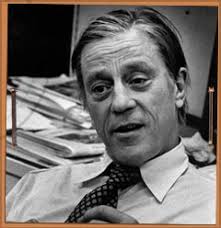
Benjamin C. Bradlee
Nixon made his name in politics.
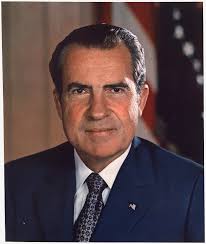
Richard Nixon
Both served in the United States Navy in the Pacific during World War II.
Both had strong connections to John F. Kennedy.
- Bradlee knew him as a friend and reporter during JFK’s years as a Senator and President.
- Nixon—as a Senator and later Vice President—knew Kennedy as a Senatorial colleague and as a political adversary, unsuccessfully contesting him for the Presidency in 1960.
For both, 1948 was a pivotal year.
- Bradlee joined The Washington Post as a reporter.
- Nixon, as a U.S. Representative, accused Algier Hiss, a former State Department official, of having been a Communist spy. Hiss was eventually convicted of perjury and sent to prison.
Both reached their positions of maximum power in 1968:
- Bradlee became executive editor of The Washington Post.
- Nixon became the 37th President of the United States.
But there was a fundamental difference between them:
- Bradlee made it his business to dig up the truth.
- Nixon made it his business to distort the truth—or to conceal it when distortion wasn’t enough.
Nixon and Bradlee had their first major clash in 1971 with the Pentagon Papers, a secret government study of how the United States became enmeshed in the Vietnam war.
- Although the Papers concerned events that had occurred during the Presidencies of John F. Kennedy and Lyndon B. Johnson, Nixon was outraged at their release by a former Defense Department analyst named Daniel Ellsberg.
- Bradlee, as executive editor of The Washington Post, successfully urged his publisher, Katherine Graham, to publish the papers after The New York Times was enjoined from doing so.
- The controversy ended when the Supreme Court ruled, 6–3, that the government failed to meet the burden of proof required for prior restraint of the press.
In 1972, Bradlee and Nixon squared off for their most important battle––a “third-rate burglary” of the Democratic National Committee headquarters at the Watergate Hotel.
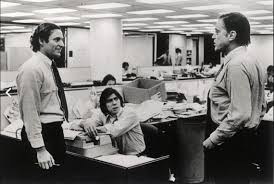
Bob Woodward, Carl Bernstein and Benjamin C. Bradlee
- Bradlee backed two young, aggressive reporters named Bob Woodward and Carl Bernstein, as they probed the burglary.
- This led to their discovering a series of illegal dirty tricks the Nixon re-election campaign had aimed at various Democratic opponents.
- The Post’s revelations led to the formation of the Senate Watergate Committee, the discovery of Nixon’s tape-recordings of his private—and criminal—conversations, and, finally, to Nixon’s own resignation in disgrace on August 9, 1974.
Bradlee became an advocate for education and the study of history. Nixon entered history as the only American President forced to resign from office.
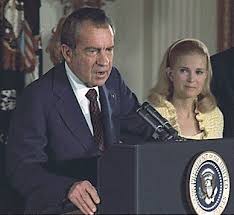
:Richard Nixon saying farewell at the White House
Bradlee became a media celebrity. Nixon became a media target.
- Bradlee was portrayed by Jason Robards in the hit 1976 film, All the President’s Men (for which he won an Academy Award for Best Supporting Actor).
- Nixon was portrayed—in Oliver Stone’s 1995 drama, Nixon—by Anthony Hopkins.
Bradlee and Nixon each published a series of books.
- Bradlee’s: That Special Grace and Conversations With Kennedy focused on his longtime friendship with John F. Kennedy; A Good Life: Newspapering and Other Adventures was Bradlee’s memoirs.
- Nixon’s: Among his 11 titles: Six Crises; RN: The Memoirs of Richard Nixon; The Real War; Leaders; Real Peace; No More Vietnams; Beyond Peace.
After leaving the White House, Nixon worked hard behind-the-scenes to refashion himself into an elder statesman of the Republican Party.
- Throughout the 1980s, he traveled the lecture circuit, wrote books, and met with many foreign leaders, especially those of Third World countries.
- He supported Ronald Reagan for president in 1980, making television appearances portraying himself as the senior statesman above the fray.
- For the rest of his life, he fought ferociously through the courts to prevent the release of most of the infamous “Watergate tapes” that chronicled his crimes as President.
- Only since his death have many of these been made public.
Nixon died on April 22, 1994, aged 81.
- Eulogists at his funeral included President Bill Clinton and former Presidents Gerald Ford, Ronald Reagan and George H.W. Bush, California Governor Pete Wilson and the Reverend Billy Graham.
- Despite his efforts to portray himself as an elder statesman, Nixon could never erase his infamy as the only President to resign in disgrace.
- To this day, he remains a nonperson within the Republican Party.
Bradlee remained executive editor of The Washington Post until retiring in 1991. But he continued to serve as vice president-at-large until his death at 93 on October 21, 2014.
- In 2007, he received the French Legion of Honor, the highest award given by the French government, at a ceremony in Paris.
- In 2013, he was named as a recipient of the Presidential Medal of Freedom by President Barack Obama. He was presented the medal at a White House ceremony on November 20, 2013.
2016 PRESIDENTIAL RACE, ABC NEWS, ALEXANDRIA OCASIO-CORTEZ, ALTERNET, AMERICABLOG, AP, AYANNA PRESSLEY, BABY BOOMER RESISTANCE, BOB WOODWARD, BRIBERY, BUZZFEED, CBS NEWS, CNN, CROOKS AND LIARS, DAILY KOZ, DAVID BERLANGA, DRUDGE RETORT, ELLIOT NESS, ERIC SCHNEIDERMAN, FIVETHIRTYEIGHT, FRANCISCO "PANCHO" VILLA, GREG ABBOTT, HARPER’S MAGAZINE, ILHAN OMAR, INTIMIDATION, JAMES CARLOS BLAKE, JEFF SESSIONS, JOHN OWENS, KEN PAXTON, MEDIA MATTERS, MEXICAN REVOLUTION, MOTHER JONES, MOVEON, MSNBC, NBC NEWS, NEWSWEEK, NICCOLO MACHIAVELLI, NON-DISCLOSURE AGREEMENTS, NPR, PAM BONDI, PBS NEWSHOUR, POLITICO, POLITICUSUSA, RASHIDA TLAIB, RAW STORY, REPUBLICAN CONVENTION, REUTERS, ROBERT MUELLER, ROD ROSENSTEIN, RODOLFO FIERRO, SALON, SEATTLE TIMES, SLATE, TALKING POINTS MEMO, THE ATLANTIC, THE CHICAGO SUN-TIMES, THE CHICAGO TRIBUNE, THE DAILY BEAST, THE DAILY BLOG, THE DISCOURSES, THE FRIENDS OF PANCHO VILLA (BOOK), THE GUARDIAN, THE HILL, THE HUFFINGTON POST, THE LOS ANGELES TIMES, THE NATION, THE NEW REPUBLIC, THE NEW YORK TIMES, THE VILLAGE VOICE, THE WASHINGTON POST, THINKPROGRESS, TIME, TRUMP UNIVERSITY, TRUTHDIG, TRUTHOUT, TWITTER, TWO POLITICAL JUNKIES, U.S. NEWS & WORLD REPORT, UPI, USA TODAY, USA TODAY DONALD TRUMP, WONKETTE
In Bureaucracy, History, Law, Politics, Social commentary on February 16, 2024 at 12:10 am
…A truly great man is ever the same under all circumstances. And if his fortune varies, exalting him at one moment and oppressing him at another, he himself never varies, but always preserves a firm courage, which is so closely interwoven with his character that everyone can readily see that the fickleness of fortune has no power over him.
The conduct of weak men is very different. Made vain and intoxicated by good fortune, they attribute their success to merits which they do not possess. And this makes them odious and insupportable to all around them. And when they have afterwards to meet a reverse of fortune, they quickly fall into the other extreme, and become abject and vile.
—Niccolo Machiavelli, The Discourses
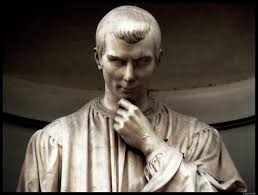
Niccolo Machiavelli
When Donald Trump—as a businessman and President—has been confronted by men and women who can’t be bribed or intimidated, he has reacted with rage and frustration.
- Trump boasted that he “never” settled cases out of court. But New York Attorney General Eric Schneiderman pressed fraud claims against the real estate mogul’s counterfeit Trump University—and Trump settled the case out of court rather than take the stand.
- “Today’s $25 million settlement agreement is a stunning reversal by Donald Trump,” said Schneiderman on November 18, 2016, “and a major victory for the over 6,000 victims of his fraudulent university.”
- On May 17, 2017, Deputy Attorney General Rod Rosenstein appointed former FBI Director Robert S. Mueller to investigate links between Russian Intelligence agents and the 2016 Trump Presidential campaign.
- Upon learning of his appointment, Trump wailed: “Oh my God. This is terrible. This is the end of my Presidency. I’m fucked.”
- “How could you let this happen, Jeff?” Trump demanded of Jeff Sessions, his Attorney General. “You were supposed to protect me. Everyone tells me if you get one of these independent counsels, it ruins your presidency. It takes years and years and I won’t be able to do anything. This is the worst thing that ever happened to me.”
- Throughout Mueller’s probe, Trump hurled repeated insults at him via Twitter and press conferences. He also called on his shills within Fox News and the Republican party to attack Mueller’s integrity and investigative methods.
- But aides convinced him that firing Mueller would be rightly seen as obstruction of justice—and thus grounds for impeachment. So he never dared go that far.
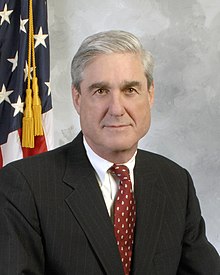
Robert Mueller
Perhaps the key to Trump’s innermost fear can be found in a work of fiction—in this case, the 1996 historical novel, The Friends of Pancho Villa, by James Carlos Blake.
The book depicts the Mexican Revolution (1910-1920) and its most famous revolutionary, Francisco “Pancho” Villa. it’s told from the viewpoint of Rodolfo Fierro, Villa’s most feared executioner. In one day, for example, Fierro—using two revolvers—executed 300 captured Federale soldiers.
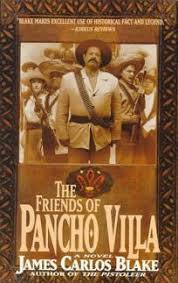
As in history, Blake’s Fierro presides over the execution of David Berlanga, a journalist who had dared criticize the often loutish behavior of Villa’s men.
On Villa’s command, Fierro approaches Berlanga in a Mexico City restaurant and orders: “Come with me.”
Standing against a barracks wall, Berlanga lights a cigar and requests permission to finish it. He then proceeds to smoke it with such a steady hand that its unbroken ash extends four inches.
The cigar finished, the ash still unbroken, Berlanga drops the butt to the ground and says calmly: “I’m ready.”
Then the assembled firing squad does its work.
Later, Fierro is so shaken by Berlanga’s sheer fearlessness that he seeks an explanation for it. Sitting in a cantina, he lights a cigar and tries to duplicate Berlanga’s four-inch length.
But the best he can do is less than three inches. He concludes that Berlanga used a trick—but he can’t figure it out.


Rodolfo Fierro
It had to be a trick, Fierro insists, because, if it wasn’t, there were only two other explanations for such a calm demeanor in the face of impending death.
The first was insanity. But Fierro rules this out: He had studied Berlanga’s eyes and found no madness there.
That leaves only one other explanation (other than a trick): Sheer courage.
And Fierro can’t accept this, either—because it’s disturbing.
“The power of men like me does not come solely from our ability to kill….No, the true source of our power is so obvious it sometimes goes unnoticed for what it is: our power comes from other men’s lack of courage.
“There is even less courage in this world than there is talent for killing. Men like me rule because most men are faint of heart in the shadow of death.
“But a man brave enough to control his fear of being killed, control it so well that no tremor reaches his fingers and no sign shows in his eyes…well. Such a man cannot be ruled, he can only be killed.”
Throughout his life, Trump has relied on bribery and intimidation. He well understands the power of greed and fear over most people.
What he doesn’t understand—and truly fears—is that some people cannot be bought or frightened.
People like Elliot Ness. Like Robert Mueller. And like Alexandria Ocasio-Cortez.
2016 PRESIDENTIAL RACE, ABC NEWS, ALEXANDRIA OCASIO-CORTEZ, ALTERNET, AMERICABLOG, AP, AYANNA PRESSLEY, BABY BOOMER RESISTANCE, BOB WOODWARD, BRIBERY, BUZZFEED, CBS NEWS, CNN, CROOKS AND LIARS, DAILY KOZ, DAVID BERLANGA, DRUDGE RETORT, ELLIOT NESS, ERIC SCHNEIDERMAN, FIVETHIRTYEIGHT, FRANCISCO "PANCHO" VILLA, GREG ABBOTT, HARPER’S MAGAZINE, ILHAN OMAR, INTIMIDATION, JAMES CARLOS BLAKE, JEFF SESSIONS, JOHN OWENS, KEN PAXTON, MEDIA MATTERS, MEXICAN REVOLUTION, MOTHER JONES, MOVEON, MSNBC, NBC NEWS, NEWSWEEK, NICCOLO MACHIAVELLI, NON-DISCLOSURE AGREEMENTS, NPR, PAM BONDI, PBS NEWSHOUR, POLITICO, POLITICUSUSA, RASHIDA TLAIB, RAW STORY, REPUBLICAN CONVENTION, REUTERS, ROBERT MUELLER, ROD ROSENSTEIN, RODOLFO FIERRO, SALON, SEATTLE TIMES, SLATE, TALKING POINTS MEMO, THE ATLANTIC, THE CHICAGO SUN-TIMES, THE CHICAGO TRIBUNE, THE DAILY BEAST, THE DAILY BLOG, THE DISCOURSES, THE FRIENDS OF PANCHO VILLA (BOOK), THE GUARDIAN, THE HILL, THE HUFFINGTON POST, THE LOS ANGELES TIMES, THE NATION, THE NEW REPUBLIC, THE NEW YORK TIMES, THE VILLAGE VOICE, THE WASHINGTON POST, THINKPROGRESS, TIME, TRUMP UNIVERSITY, TRUTHDIG, TRUTHOUT, TWITTER, TWO POLITICAL JUNKIES, U.S. NEWS & WORLD REPORT, UPI, USA TODAY, USA TODAY DONALD TRUMP, WONKETTE
In Bureaucracy, History, Law, Politics, Social commentary on February 15, 2024 at 12:11 am
On July 14, 2019, President Donald Trump unleashed a brutal Twitter attack on four Democratic members of the House of Representatives who had harshly criticized his anti-immigration policies:
“So interesting to see “Progressive” Democrat Congresswomen, who originally came from countries whose governments are a complete and total catastrophe, the worst, most corrupt and inept anywhere in the world (if they even have a functioning government at all), now loudly……
“….and viciously telling the people of the United States, the greatest and most powerful Nation on earth, how our government is to be run. Why don’t they go back and help fix the totally broken and crime infested places from which they came. Then come back and show us how….
“….it is done. These places need your help badly, you can’t leave fast enough. I’m sure that Nancy Pelosi would be very happy to quickly work out free travel arrangements!”
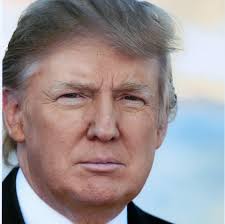
Donald Trump
The Democrats—all female, and all non-white—were:
- Alexandria Ocasio-Cortez of New York;
- Rashida Tlaib of Michigan;
- Ilhan Omar of Minnesota and
- Ayanna Pressley of Massachusetts.
Of the Congresswomen that Trump singled out:
- Cortez was born in New York City.
- Tlaib was born in Detroit, Michigan.
- Pressley was born in Cincinnati, Ohio.
Only Omar was born outside the United States—in Somalia. And she became an American citizen in 2000 when she was 17 years old.
Critics have assailed Trump as racist for implying that these women were not United States citizens.
Moreover, as members of Congress, they had a legal right to declare “how our government is to be run.” Republicans in the House and Senate vigorously—and often viciously—asserted that right during the Presidency of Barack Obama.
Ocasio-Cortez quickly struck back on Twitter on the same day: “You are angry because you don’t believe in an America where I represent New York 14, where the good people of Minnesota elected , where fights for Michigan families, where champions little girls in Boston.
“You are angry because you can’t conceive of an America that includes us. You rely on a frightened America for your plunder.
“You won’t accept a nation that sees healthcare as a right or education as a #1 priority, especially where we’re the ones fighting for it. Yet here we are.”

Alexandria Ocasio-Cortez
But then followed the most significant part of Cortez’ reply:
“But you know what’s the rub of it all, Mr. President? On top of not accepting an America that elected us, you cannot accept that we don’t fear you, either.
“You can’t accept that we will call your bluff & offer a positive vision for this country. And that’s what makes you seethe.”
“You cannot accept that we don’t fear you, either.”
For all his adult life, Donald Trump—as a businessman, Presidential candidate and now President—has trafficked in bribery and coercion.
First bribery:
- Florida Attorney General Pam Bondi personally solicited a political contribution from Donald Trump around the same time her office deliberated joining an investigation of alleged fraud at Trump University and its affiliates.
- After Bondi dropped the Trump University case, he wrote her a $25,000 check for her re-election campaign. The money came from the Donald J. Trump Foundation.
- Republican Texas Attorney General Ken Paxton moved to muzzle a former state regulator who says he was ordered in 2010 to drop a fraud investigation into Trump University for political reasons.
- Paxton’s office issued a cease and desist letter to former Deputy Chief of Consumer Protection John Owens after he made public copies of a 14-page internal summary of the state’s case against Donald Trump for scamming millions from students of his now-defunct real estate seminar.
- After the Texas case was dropped, Trump cut a $35,000 check to the gubernatorial campaign of then-attorney general and now Texas Governor Greg Abbott.
Now coercion:
- Throughout his career as a businessman, Trump forced his employees to sign Non-Disclosure Agreements, threatening them with lawsuits if they revealed secrets of his greed and/or criminality.
- In 2016. USA Today found that Trump was involved in over 3,500 lawsuits during the previous 30 years: “At least 60 lawsuits, along with hundreds of liens, judgments, and other government filings” were from contractors claiming they got stiffed.
- On March 16, 2016, as a Republican Presidential candidate, Trump warned Republicans that if he didn’t win the GOP nomination in July, his supporters would literally riot: “I think you’d have riots. I think you would see problems like you’ve never seen before. I think bad things would happen, I really do. I wouldn’t lead it, but I think bad things would happen.”
- An NBC reporter summed it up as: “The message to Republicans was clear: ‘Nice convention you got there. Shame if something happened to it.'”
- Speaking with Bob Woodward, the legendary Washington Post investigative reporter, Trump confessed: “Real power is—I don’t even want to use the word—fear.”
- During his Presidential campaign he encouraged Right-wing thugs to attack dissenters at his rallies, even claiming he would pay their legal expenses.
But when he has confronted men and women who can’t be bribed or intimidated, Trump has reacted with rage and desperation.
ABC NEWS, ADMIRAL IVAN ISAKOV, ADOLF HITLER, ALBERT SPEER, ALTERNET, ANDREW MCCABE, AP, BOB WOODWARD, BUZZFEED, CBS NEWS, CHEKA, CIA, CNN, COUNTER-SURVEILLANCE, CROOKS AND LIARS, DAILY KOZ, DEMOCRATIC PARTY, DONALD TRUMP, FBI, FSB, GENRIKH YAGODA, HEINRICH HIMMLER, HERMANN GOERING, HOUSE OF REPRESENTATIVES, JAMES COMEY, JEFF SESSIONS, JOSEPH STALIN, KGB, KRISJEN NIELSEN, LAVRENTY BERIA, MOTHER JONES, MOVEON, MSNBC, NBC NEWS, NEWSWEEK, NICCOLO MACHIAVELLI, NIKOLAI YEZHOV, NKVD, NPR, PBS NEWSHOUR, POLITICO, RACHEL BRAND, RANDOLPF “TEX” ALLES, RAW STORY, REPUBLICAN PARTY, REUTERS, SALLY YATES, SALON, SEAN SPICER, SEATTLE TIMES, SLATE, SOVIET UNION, SS, STORMY DANIELS, SURVEILLANCE, THE APPRENTICE, THE ATLANTIC, THE CHICAGO SUN-TIMES, THE CHICAGO TRIBUNE, THE DAILY BEAST, THE GUARDIAN, THE HILL, THE HUFFINGTON POST, THE LOS ANGELES TIMES, THE NATION, THE NEW YORK TIMES, THE PRINCE, THE WASHINGTON POST, TIME, TWITTER, U.S. NEWS & WORLD REPORT, UPI, USA TODAY
In Bureaucracy, History, Law, Law Enforcement, Military, Politics, Social commentary on July 7, 2023 at 12:30 am
In January, 2018, the White House banned the use of personal cell phones in the West Wing. The official reason: National security.
The real reason: To prevent staffers from leaking to reporters.
More ominously, well-suited men roamed the halls of the West Wing, carrying devices that pick up signals from phones that aren’t government-issued.
“Did someone forget to put their phone away?” one of the men would ask if such a device was detected. If no one said they had a phone, the detection team started searching the room.
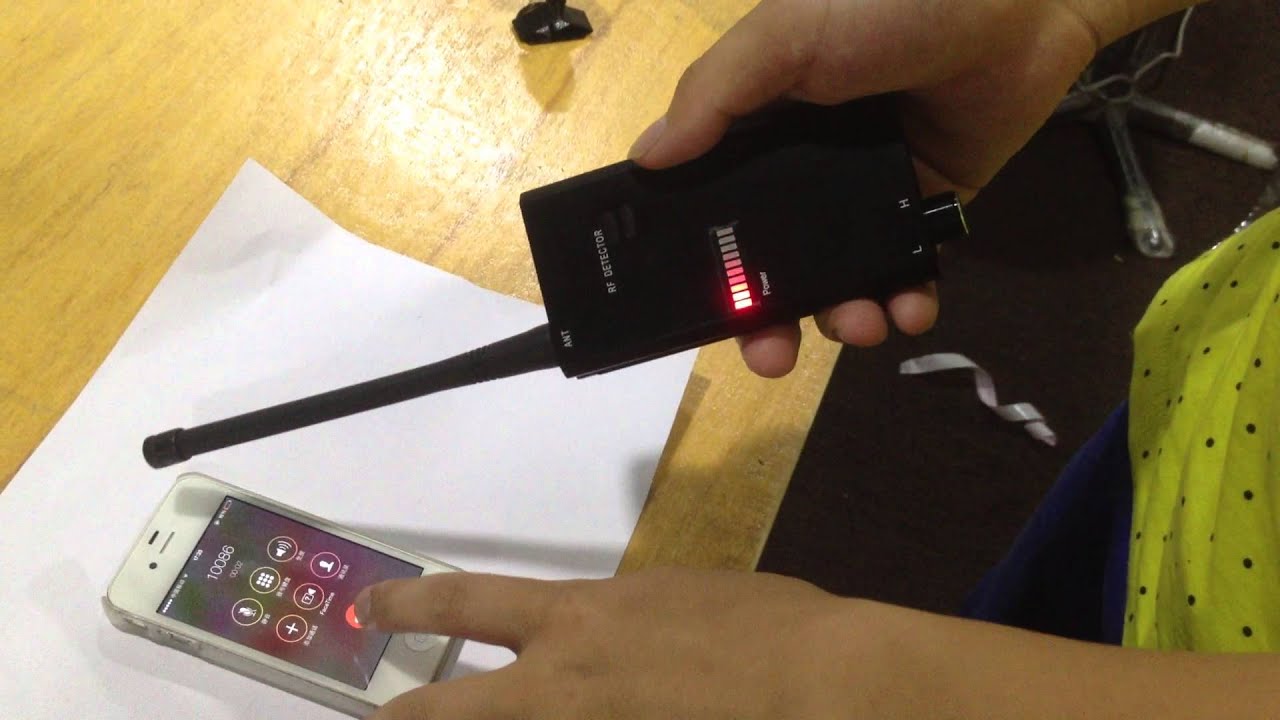
Phone detector
The devices can tell which type of phone is in the room.
This is the sort of behavior Americans have traditionally—and correctly—associated with dictatorships
In his memo outlining the policy, then-Chief of Staff John Kelly warned that anyone who violated the phone ban could be punished, including “being indefinitely prohibited from entering the White House complex.”
Yet even these draconian methods did not end White House leaks.
White House officials still spoke with reporters throughout the day and often aired their grievances, whether about annoying colleagues or competing policy priorities.
Aides with private offices sometimes called reporters on their desk phones. Others got their cell phones and called or texted reporters during lunch breaks.
According to an anonymous White House source: “The cellphone ban is for when people are inside the West Wing, so it really doesn’t do all that much to prevent leaks. If they banned all personal cellphones from the entire [White House] grounds, all that would do is make reporters stay up later because they couldn’t talk to their sources until after 6:30 pm.”
Other sources believed that leaks wouldn’t end unless Trump started firing staffers. But there was always the risk of firing the wrong people. Thus, to protect themselves, those who leaked might well accuse tight-lipped co-workers.
Within the Soviet Union (especially during the reign of Joseph Stalin) fear of secret police surveillance was widespread—and absolutely justified.
Among the methods used to keep conversations secret:
- Turning on the TV or radio to full volume.
- Turning on a water faucet at full blast.
- Turning the dial of a rotary phone to the end—and sticking a pencil in one of the small holes for numbers.
- Standing six to nine feet away from the hung-up receiver.
- Going for “a walk in the woods.”
- Saying nothing sensitive on the phone.
The secret police (known as the Cheka, the NKVD, the MGB, the KGB, and now the FSB) operated on seven working principles:
- Your enemy is hiding.
- Start from the usual suspects.
- Study the young.
- Stop the laughing.
- Rebellion spreads like wildfire.
- Stamp out every spark.
- Order is created by appearance.
Trump has always ruled through bribery and fear. He’s bought off (or tried to) those who might cause him trouble—like porn actress Stormy Daniels. And he’s threatened or filed lawsuits against those he couldn’t or didn’t want to bribe—such as contractors who have worked on various Trump properties.
But Trump couldn’t buy the loyalty of employees working in an atmosphere of hostility—which breeds resentment and fear. And some of them took revenge by sharing with reporters the latest crimes and follies of the Trump administration.
The more Trump waged war on the “cowards and traitors” who worked most closely with him, the more some of them found opportunities to strike back. This inflamed Trump even more—and led him to seek even more repressive methods against his own staffers.
This proved a no-win situation for Trump.
The results were twofold:
- Constant turnovers of staffers—with their replacements having to undergo lengthy background checks before coming on; and
- Continued leaking of embarrassing secrets by resentful employees who stayed.
**********
As host of NBC’s “The Apprentice,” Trump became infamous for booting off contestants with the phrase: “You’re fired.” In fact, he so delighted in using this that, in 2004, he tried to gain trademark ownership of it.
But the U.S. Patent and Trademark Office rejected his application. American copyright law explicitly prohibits copyright protections for short phrases or sayings.
Upon taking office as President, Trump bullied and insulted even White House officials and his own handpicked Cabinet officers. This resulted in an avalanche of firings and resignations.
The first two years of Trump’s White House saw more firings, resignations, and reassignments of top staffers than any other first-term administration in modern history. His Cabinet turnover exceeded that of any other administration in the last 100 years.
In 1934, Soviet dictator Joseph Stalin, seeing imaginary enemies everywhere, ordered a series of purges that lasted right up to the German invasion in 1941.
No one was safe from execution—not even the men who slaughtered as many as 20 to 60 million.
Fittingly, for all the fear he inspired, Stalin was plagued by paranoia. He lived in constant fear of assassination. Although surrounded by bodyguards, he distrusted even them.
Thus Stalin, who had turned the Soviet Union into a vast prison, became its leading prisoner.
Similarly, Donald Trump daily proved the accuracy of the age-old warning: “You can build a throne of bayonets, but you can’t sit on it.”
ABC NEWS, ADMIRAL IVAN ISAKOV, ADOLF HITLER, ALBERT SPEER, ALTERNET, ANDREW MCCABE, AP, BOB WOODWARD, BUZZFEED, CBS NEWS, CHEKA, CIA, CNN, COUNTER-SURVEILLANCE, CROOKS AND LIARS, DAILY KOZ, DEMOCRATIC PARTY, DONALD TRUMP, FBI, FSB, GENRIKH YAGODA, HEINRICH HIMMLER, HERMANN GOERING, HOUSE OF REPRESENTATIVES, JAMES COMEY, JEFF SESSIONS, JOSEPH STALIN, KGB, KRISJEN NIELSEN, LAVRENTY BERIA, MOTHER JONES, MOVEON, MSNBC, NBC NEWS, NEWSWEEK, NICCOLO MACHIAVELLI, NIKOLAI YEZHOV, NKVD, NPR, PBS NEWSHOUR, POLITICO, RACHEL BRAND, RANDOLPF “TEX” ALLES, RAW STORY, REPUBLICAN PARTY, REUTERS, SALLY YATES, SALON, SEATTLE TIMES, SLATE, SOVIET UNION, SS, STORMY DANIELS, SURVEILLANCE, THE APPRENTICE, THE ATLANTIC, THE CHICAGO SUN-TIMES, THE CHICAGO TRIBUNE, THE DAILY BEAST, THE GUARDIAN, THE HILL, THE HUFFINGTON POST, THE LOS ANGELES TIMES, THE NATION, THE NEW YORK TIMES, THE PRINCE, THE WASHINGTON POST, TIME, TWITTER, U.S. NEWS & WORLD REPORT, UPI, USA TODAY
In Bureaucracy, History, Law, Law Enforcement, Military, Politics, Social commentary on July 6, 2023 at 12:15 am
Donald Trump has often been compared to Adolf Hitler. But his reign bears far more resemblance to that of Joseph Stalin.
Germany’s Fuhrer, for all his brutality, maintained a relatively stable government by keeping the same men in office—from the day he took power on January 30, 1933, to the day he blew out his brains on April 30, 1945.
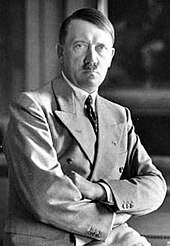
Adolf Hitler
Bundesarchiv, Bild 146-1990-048-29A / CC-BY-SA 3.0 [CC BY-SA 3.0 de (https://creativecommons.org/licenses/by-sa/3.0/de/deed.en)%5D
Heinrich Himmler, a former chicken farmer, remained head of the dreaded, black-uniformed Schutzstaffel, or Protection Squads, known as the SS, from 1929 until his suicide in 1945.
In April, 1934, Himmler was appointed assistant chief of the Gestapo (Secret State Police) in Prussia, and from that position he extended his control over the police forces of the whole Reich.
Hermann Goering, an ace fighter pilot in World War 1, served as Reich commissioner for aviation and head of the newly developed Luftwaffe, the German air force, from 1935 to 1945.
And Albert Speer, Hitler’s favorite architect, held that position from 1933 until 1942, when Hitler appointed him Reich Minister of Armaments and War Production. He held that position until the Third Reich collapsed in April, 1945.
Soviet Premier Joseph Stalin, by contrast, purged his ministers constantly. For example: From 1934 to 1953, Stalin had no fewer than three chiefs of his secret police, then named the NKVD:
- Genrikh Yagoda – (July 10, 1934 – September 26, 1936)
- Nikolai Yezhov (September 26, 1936 – November 25, 1938) and
- Lavrenty Beria (November, 1938 – March, 1953).
Stalin purged Yagoda and Yezhov, with both men executed after their arrest.
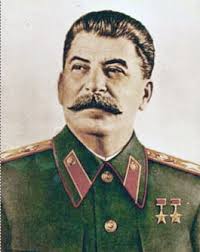
Joseph Stalin
He reportedly wanted to purge Beria, too, but the latter may have acted first. There has been speculation that Beria slipped warfarin, a blood-thinner often used to kill rats, into Stalin’s drink, causing him to die of a cerebral hemorrhage.
Stalin’s record for slaughter far eclipses that of Hitler.
For almost 30 years, through purges and starvation caused by enforced collections of farmers’ crops, Stalin slaughtered 20 to 60 million people.
The 1930s were a frightening and dangerous time to be alive in the Soviet Union. In 1934, Stalin, seeing imaginary enemies everywhere, ordered a series of purges that lasted right up to the German invasion in 1941.
An example of Stalin’s paranoia occurred one day while the dictator walked through the Kremlin corridors with Admiral Ivan Isakov. Officers of the NKVD (the predecessor to the KGB) stood guard at every corner.
“Every time I walk down the corridors,” said Stalin, “I think: Which one of them is it? If it’s this one, he will shoot me in the back. But if I turn the corner, the next one can shoot me in the face.”
Another Russian-installed tyrant who has sought to rule by fear: President Donald J. Trump.
In fact, he admitted as much to journalist Bob Woodward during the 2016 Presidential race: “Real power is—I don’t even want to use the word—fear.”
Donald Trump
As a Presidential candidate, Trump repeatedly used Twitter to attack hundreds of real and imagined enemies in politics, journalism, TV and films.
As President, he continued to insult virtually everyone, verbally and on Twitter. His targets included Democrats, Republicans, the media, foreign leaders and even members of his Cabinet.
In Russian, the word for “purge” is “chistka,” for “cleansing.” Among the victims of Trump’s recurring chistkas:
- Sally Yates – Assistant United States Attorney General
- James Comey – FBI Director
- Andrew McCabe – FBI Deputy Director
- Jeff Sessions – United States Attorney General
- Rachel Brand – Associate United States Attorney General
- Randolph “Tex” Alles – Director of the United States Secret Service
- Krisjen Nielsen – Secretary of the Department of Homeland Security
In his infamous political treatise, The Prince, Niccolo Machiavelli, the Florentine statesman, asked: “Is it is better to be loved or feared?”
And he answered it thus:
“The reply is, that one ought to be both feared and loved, but as it is difficult for the two to go together, it is much safer to be feared than loved.
“For it may be said of men in general that they are ungrateful, voluble, dissemblers, anxious to avoid danger and covetous of gain; as long as you benefit them, they are entirely yours….
“And the prince who has relied solely on their words, without making other preparations, is ruined….
“And men have less scruple in offending one who makes himself loved than one who makes himself feared; for love is held by a chain of obligations which, men being selfish, is broken whenever it serves their purpose; but fear is maintained by a dread of punishment which never fails.”
But Machiavelli warned about relying primarily on fear: “Still, a prince should make himself feared in such a way that if he does not gain love, he at any rate avoids hatred, for fear and the absence of hatred may well go together.”
**********
Donald Trump has violated that counsel throughout his life. He not only makes enemies, he revels in doing so—and in the fury he has aroused.
Filled with a poisonous hatred that encompasses almost everyone, Trump, as Presidential candidate and President, repeatedly played to the hatreds of his Right-wing base.
As first-mate Starbuck said of Captain Ahab in Herman Melville’s classic novel, Moby Dick: “He is a champion of darkness.”
ABC NEWS, ADMIRAL IVAN ISAKOV, ADOLF HITLER, ALBERT SPEER, ALTERNET, ANDREW MCCABE, AP, BOB WOODWARD, BUZZFEED, CBS NEWS, CHEKA, CIA, CNN, COUNTER-SURVEILLANCE, CROOKS AND LIARS, DAILY KOZ, DEMOCRATIC PARTY, DONALD TRUMP, FBI, FSB, GENRIKH YAGODA, HEINRICH HIMMLER, HERMANN GOERING, HOUSE OF REPRESENTATIVES, JAMES COMEY, JEFF SESSIONS, JOSEPH STALIN, KGB, KRISJEN NIELSEN, LAVRENTY BERIA, MOTHER JONES, MOVEON, MSNBC, NBC NEWS, NEWSWEEK, NICCOLO MACHIAVELLI, NIKOLAI YEZHOV, NKVD, NPR, PBS NEWSHOUR, POLITICO, RACHEL BRAND, RANDOLPF “TEX” ALLES, RAW STORY, REPUBLICAN PARTY, REUTERS, SALLY YATES, SALON, SEAN SPICER, SEATTLE TIMES, SLATE, SOVIET UNION, SS, STORMY DANIELS, SURVEILLANCE, THE APPRENTICE, THE ATLANTIC, THE CHICAGO SUN-TIMES, THE CHICAGO TRIBUNE, THE DAILY BEAST, THE GUARDIAN, THE HILL, THE HUFFINGTON POST, THE LOS ANGELES TIMES, THE NATION, THE NEW YORK TIMES, THE PRINCE, THE WASHINGTON POST, TIME, TWITTER, U.S. NEWS & WORLD REPORT, UPI, USA TODAY
In Bureaucracy, History, Law, Law Enforcement, Military, Politics, Social commentary on December 27, 2022 at 12:10 am
In January, 2018, the White House banned the use of personal cell phones in the West Wing. The official reason: National security.
The real reason: To prevent staffers from leaking to reporters.
More ominously, well-suited men roamed the halls of the West Wing, carrying devices that pick up signals from phones that aren’t government-issued.
“Did someone forget to put their phone away?” one of the men would ask if such a device was detected. If no one said they had a phone, the detection team started searching the room.
Phone detector
The devices can tell which type of phone is in the room.
This is the sort of behavior Americans have traditionally—and correctly—associated with dictatorships
In his memo outlining the policy, then-Chief of Staff John Kelly warned that anyone who violated the phone ban could be punished, including “being indefinitely prohibited from entering the White House complex.”
Yet even these draconian methods did not end White House leaks.
White House officials still spoke with reporters throughout the day and often aired their grievances, whether about annoying colleagues or competing policy priorities.
Aides with private offices sometimes called reporters on their desk phones. Others got their cell phones and called or texted reporters during lunch breaks.
According to an anonymous White House source: “The cellphone ban is for when people are inside the West Wing, so it really doesn’t do all that much to prevent leaks. If they banned all personal cellphones from the entire [White House] grounds, all that would do is make reporters stay up later because they couldn’t talk to their sources until after 6:30 pm.”
Other sources believed that leaks wouldn’t end unless Trump started firing staffers. But there was always the risk of firing the wrong people. Thus, to protect themselves, those who leaked might well accuse tight-lipped co-workers.
Within the Soviet Union (especially during the reign of Joseph Stalin) fear of secret police surveillance was widespread—and absolutely justified.
Among the methods used to keep conversations secret:
- Turning on the TV or radio to full volume.
- Turning on a water faucet at full blast.
- Turning the dial of a rotary phone to the end—and sticking a pencil in one of the small holes for numbers.
- Standing six to nine feet away from the hung-up receiver.
- Going for “a walk in the woods.”
- Saying nothing sensitive on the phone.
The secret police (known as the Cheka, the NKVD, the MGB, the KGB, and now the FSB) operated on seven working principles:
- Your enemy is hiding.
- Start from the usual suspects.
- Study the young.
- Stop the laughing.
- Rebellion spreads like wildfire.
- Stamp out every spark.
- Order is created by appearance.
Trump has always ruled through bribery and fear. He’s bought off (or tried to) those who might cause him trouble—like porn actress Stormy Daniels. And he’s threatened or filed lawsuits against those he couldn’t or didn’t want to bribe—such as contractors who have worked on various Trump properties.
But Trump couldn’t buy the loyalty of employees working in an atmosphere of hostility—which breeds resentment and fear. And some of them took revenge by sharing with reporters the latest crimes and follies of the Trump administration.
The more Trump waged war on the “cowards and traitors” who worked most closely with him, the more some of them found opportunities to strike back. This inflamed Trump even more—and led him to seek even more repressive methods against his own staffers.
This proved a no-win situation for Trump.
The results were twofold:
- Constant turnovers of staffers—with their replacements having to undergo lengthy background checks before coming on; and
- Continued leaking of embarrassing secrets by resentful employees who stayed.
**********
As host of NBC’s “The Apprentice,” Trump became infamous for booting off contestants with the phrase: “You’re fired.” In fact, he so delighted in using this that, in 2004, he tried to gain trademark ownership of it.
But the U.S. Patent and Trademark Office rejected his application. American copyright law explicitly prohibits copyright protections for short phrases or sayings.
Upon taking office as President, Trump bullied and insulted even White House officials and his own handpicked Cabinet officers. This resulted in an avalanche of firings and resignations.
The first two years of Trump’s White House saw more firings, resignations, and reassignments of top staffers than any other first-term administration in modern history. His Cabinet turnover exceeded that of any other administration in the last 100 years.
In 1934, Soviet dictator Joseph Stalin, seeing imaginary enemies everywhere, ordered a series of purges that lasted right up to the German invasion in 1941.
No one was safe from execution—not even the men who slaughtered as many as 20 to 60 million.
Fittingly, for all the fear he inspired, Stalin was plagued by paranoia. He lived in constant fear of assassination. Although surrounded by bodyguards, he distrusted even them.
Thus Stalin, who had turned the Soviet Union into a vast prison, became its leading prisoner.
Similarly, Donald Trump daily proved the accuracy of the age-old warning: “You can build a throne of bayonets, but you can’t sit on it.”
ABC NEWS, ADMIRAL IVAN ISAKOV, ADOLF HITLER, ALBERT SPEER, ALTERNET, ANDREW MCCABE, AP, BOB WOODWARD, BUZZFEED, CBS NEWS, CHEKA, CIA, CNN, COUNTER-SURVEILLANCE, CROOKS AND LIARS, DAILY KOZ, DEMOCRATIC PARTY, DONALD TRUMP, FBI, FSB, GENRIKH YAGODA, HEINRICH HIMMLER, HERMANN GOERING, HOUSE OF REPRESENTATIVES, JAMES COMEY, JEFF SESSIONS, JOSEPH STALIN, KGB, KRISJEN NIELSEN, LAVRENTY BERIA, MOTHER JONES, MOVEON, MSNBC, NBC NEWS, NEWSWEEK, NICCOLO MACHIAVELLI, NIKOLAI YEZHOV, NKVD, NPR, PBS NEWSHOUR, POLITICO, RACHEL BRAND, RANDOLPF “TEX” ALLES, RAW STORY, REPUBLICAN PARTY, REUTERS, SALLY YATES, SALON, SEATTLE TIMES, SLATE, SOVIET UNION, SS, STORMY DANIELS, SURVEILLANCE, THE APPRENTICE, THE ATLANTIC, THE CHICAGO SUN-TIMES, THE CHICAGO TRIBUNE, THE DAILY BEAST, THE GUARDIAN, THE HILL, THE HUFFINGTON POST, THE LOS ANGELES TIMES, THE NATION, THE NEW YORK TIMES, THE PRINCE, THE WASHINGTON POST, TIME, TWITTER, U.S. NEWS & WORLD REPORT, UPI, USA TODAY
In Bureaucracy, History, Law, Law Enforcement, Military, Politics, Social commentary on December 26, 2022 at 12:10 am
Donald Trump has often been compared to Adolf Hitler. But his reign bears far more resemblance to that of Joseph Stalin.
Germany’s Fuhrer, for all his brutality, maintained a relatively stable government by keeping the same men in office—from the day he took power on January 30, 1933, to the day he blew out his brains on April 30, 1945.
Adolf Hitler
Bundesarchiv, Bild 146-1990-048-29A / CC-BY-SA 3.0 [CC BY-SA 3.0 de (https://creativecommons.org/licenses/by-sa/3.0/de/deed.en)%5D
Heinrich Himmler, a former chicken farmer, remained head of the dreaded, black-uniformed Schutzstaffel, or Protection Squads, known as the SS, from 1929 until his suicide in 1945.
In April, 1934, Himmler was appointed assistant chief of the Gestapo (Secret State Police) in Prussia, and from that position he extended his control over the police forces of the whole Reich.
Hermann Goering, an ace fighter pilot in World War 1, served as Reich commissioner for aviation and head of the newly developed Luftwaffe, the German air force, from 1935 to 1945.
And Albert Speer, Hitler’s favorite architect, held that position from 1933 until 1942, when Hitler appointed him Reich Minister of Armaments and War Production. He held that position until the Third Reich collapsed in April, 1945.
Soviet Premier Joseph Stalin, by contrast, purged his ministers constantly. For example: From 1934 to 1953, Stalin had no fewer than three chiefs of his secret police, then named the NKVD:
- Genrikh Yagoda – (July 10, 1934 – September 26, 1936)
- Nikolai Yezhov (September 26, 1936 – November 25, 1938) and
- Lavrenty Beria (November, 1938 – March, 1953).
Stalin purged Yagoda and Yezhov, with both men executed after their arrest.
Joseph Stalin
He reportedly wanted to purge Beria, too, but the latter may have acted first. There has been speculation that Beria slipped warfarin, a blood-thinner often used to kill rats, into Stalin’s drink, causing him to die of a cerebral hemorrhage.
Stalin’s record for slaughter far eclipses that of Hitler.
For almost 30 years, through purges and starvation caused by enforced collections of farmers’ crops, Stalin slaughtered 20 to 60 million people.
The 1930s were a frightening and dangerous time to be alive in the Soviet Union. In 1934, Stalin, seeing imaginary enemies everywhere, ordered a series of purges that lasted right up to the German invasion in 1941.
An example of Stalin’s paranoia occurred one day while the dictator walked through the Kremlin corridors with Admiral Ivan Isakov. Officers of the NKVD (the predecessor to the KGB) stood guard at every corner.
“Every time I walk down the corridors,” said Stalin, “I think: Which one of them is it? If it’s this one, he will shoot me in the back. But if I turn the corner, the next one can shoot me in the face.”
Another Russian-installed tyrant who has sought to rule by fear: President Donald J. Trump.
In fact, he admitted as much to journalist Bob Woodward during the 2016 Presidential race: “Real power is—I don’t even want to use the word—fear.”
Donald Trump
As a Presidential candidate, Trump repeatedly used Twitter to attack hundreds of real and imagined enemies in politics, journalism, TV and films.
As President, he continued to insult virtually everyone, verbally and on Twitter. His targets included Democrats, Republicans, the media, foreign leaders and even members of his Cabinet.
In Russian, the word for “purge” is “chistka,” for “cleansing.” Among the victims of Trump’s recurring chistkas:
- Sally Yates – Assistant United States Attorney General
- James Comey – FBI Director
- Andrew McCabe – FBI Deputy Director
- Jeff Sessions – United States Attorney General
- Rachel Brand – Associate United States Attorney General
- Randolph “Tex” Alles – Director of the United States Secret Service
- Krisjen Nielsen – Secretary of the Department of Homeland Security
In his infamous political treatise, The Prince, Niccolo Machiavelli, the Florentine statesman, asked: “Is it is better to be loved or feared?”
And he answered it thus:
“The reply is, that one ought to be both feared and loved, but as it is difficult for the two to go together, it is much safer to be feared than loved.
“For it may be said of men in general that they are ungrateful, voluble, dissemblers, anxious to avoid danger and covetous of gain; as long as you benefit them, they are entirely yours….
“And the prince who has relied solely on their words, without making other preparations, is ruined….
“And men have less scruple in offending one who makes himself loved than one who makes himself feared; for love is held by a chain of obligations which, men being selfish, is broken whenever it serves their purpose; but fear is maintained by a dread of punishment which never fails.”
But Machiavelli warned about relying primarily on fear: “Still, a prince should make himself feared in such a way that if he does not gain love, he at any rate avoids hatred, for fear and the absence of hatred may well go together.”
**********
Donald Trump has violated that counsel throughout his life. He not only makes enemies, he revels in doing so—and in the fury he has aroused.
Filled with a poisonous hatred that encompasses almost everyone, Trump, as Presidential candidate and President, repeatedly played to the hatreds of his Right-wing base.
As first-mate Starbuck said of Captain Ahab in Herman Melville’s classic novel, Moby Dick: “He is a champion of darkness.”
ABC NEWS, ALGIER HISS, ALTERNET, AMERICABLOG, ANTHONY HOPKINS, AP, BABY BOOMER RESISTANCE, BARACK OBAMA, BENJAMIN C. BRADLEE, BILL CLINTON, BLOOMBERG, BOB WOODWARD, BUZZFEED, CARL BERNSTEIN, CBS NEWS, CBSNEWS, CNN, CROOKS AND LIARS, DAILY KOS, DANIEL ELLSBURG, DRUDGE REPORT, FACEBOOK, FIVETHIRTYEIGHT, FRENCH LEGION OF HONOR, HARPER’S MAGAZINE, JASON ROBARDS, JOHN F. KENNEDY, JOURNALISM, LYNDON B. JOHNSON, MEDIA MATTERS, MOTHER JONES, MOVEON, MSNBC, NBC NEWS, NEWSWEEK, NPR, PBS NEWSHOUR, PENTAGON PAPERS, POLITICO, POLITICUSUSA, RAW STORY, REPUBLICAN PARTY, REPUBLICANS, REUTERS, RICHARD NIXON, SALON, SEATTLE TIMES, SENATE WATERGATE COMMITTEE, SLATE, TALKING POINTS MEMO, THE ATLANTIC, THE CHICAGO SUN-TIMES, THE CHICAGO TRIBUNE, THE DAILY BEAST, THE DAILY BLOG, THE GUARDIAN, THE HILL, THE HUFFINGTON POST, THE LOS ANGELES TIMES, THE NATION, THE NEW REPUBLIC, THE NEW YORK TIMES, THE PENTAGON PAPERS, THE VILLAGE VOICE, THE WALL STREET JOURNAL, THE WASHINGTON POST, THE WASHINGTONPOST, THINKPROGRESS, TIME, TRUTHDIG, TRUTHOUT, TWITTER, TWO POLITICAL JUNKIES, U.S. NEWS & WORLD REPORT, UNITED STATES SUPREME COURT, UPI, USA TODAY, WATERGATE, WONKETTE, WORLD WAR 11
In Bureaucracy, History, Law Enforcement, Politics, Social commentary on September 2, 2022 at 12:10 am
August 9, 2022, marked an anniversary increasingly fewer Americans remember: Forty-eight years to the day that Richard Milhous Nixon, 37th President of the United States, resigned in disgrace.
Benjamin Crowninshield Bradlee, the former executive editor of The Washington Post, remains virtually unknown outside the journalism profession. Yet his paper did more than any other to bring Nixon down.
Both Nixon and Bradlee were driven to succeed. And both achieved fame and power in doing so.
Bradlee made his name in journalism.
Benjamin C. Bradlee
Nixon made his name in politics.
Richard Nixon
Both served in the United States Navy in the Pacific during World War II.
Both had strong connections to John F. Kennedy.
- Bradlee knew him as a friend and reporter during JFK’s years as a Senator and President.
- Nixon—as a Senator and later Vice President—knew Kennedy as a Senatorial colleague and as a political adversary, unsuccessfully contesting him for the Presidency in 1960.
For both, 1948 was a pivotal year.
- Bradlee joined The Washington Post as a reporter.
- Nixon, as a U.S. Representative, accused Algier Hiss, a former State Department official, of having been a Communist spy. Hiss was eventually convicted of perjury and sent to prison.
Both reached their positions of maximum power in 1968:
- Bradlee became executive editor of The Washington Post.
- Nixon became the 37th President of the United States.
But there was a fundamental difference between them:
- Bradlee made it his business to dig up the truth.
- Nixon made it his business to distort the truth—or to conceal it when distortion wasn’t enough.
Nixon and Bradlee had their first major clash in 1971 with the Pentagon Papers, a secret government study of how the United States became enmeshed in the Vietnam war.
- Although the Papers concerned events that had occurred during the Presidencies of John F. Kennedy and Lyndon B. Johnson, Nixon was outraged at their release by a former Defense Department analyst named Daniel Ellsberg.
- Bradlee, as executive editor of The Washington Post, successfully urged his publisher, Katherine Graham, to publish the papers after The New York Times was enjoined from doing so.
- The controversy ended when the Supreme Court ruled, 6–3, that the government failed to meet the burden of proof required for prior restraint of the press.
In 1972, Bradlee and Nixon squared off for their most important battle—a “third-rate burglary” of the Democratic National Committee headquarters at the Watergate Hotel.
Bob Woodward, Carl Bernstein and Benjamin C. Bradlee
- Bradlee backed two young, aggressive reporters named Bob Woodward and Carl Bernstein, as they probed the burglary.
- This led to their discovering a series of illegal dirty tricks the Nixon re-election campaign had aimed at various Democratic opponents.
- The Post’s revelations led to the formation of the Senate Watergate Committee, the discovery of Nixon’s tape-recordings of his private—and criminal—conversations, and, finally, to Nixon’s own resignation in disgrace on August 9, 1974.
Bradlee became an advocate for education and the study of history.Nixon entered history as the only American President forced to resign from office.
:Richard Nixon saying farewell at the White House
Bradlee became a media celebrity. Nixon became a media target.
- Bradlee was portrayed by Jason Robards in the hit 1976 film, All the President’s Men (for which he won an Academy Award for Best Supporting Actor).
- Nixon was portrayed—in Oliver Stone’s 1995 drama, Nixon—by Anthony Hopkins.
Bradlee and Nixon each published a series of books.
- Bradlee’s: That Special Grace and Conversations With Kennedy focused on his longtime friendship with John F. Kennedy; A Good Life: Newspapering and Other Adventures was Bradlee’s memoirs.
- Nixon’s: Among his 11 titles: Six Crises; RN: The Memoirs of Richard Nixon; The Real War; Leaders; Real Peace; No More Vietnams; Beyond Peace.
After leaving the White House, Nixon worked hard behind-the-scenes to refashion himself into an elder statesman of the Republican Party.
- Throughout the 1980s, he traveled the lecture circuit, wrote books, and met with many foreign leaders, especially those of Third World countries.
- He supported Ronald Reagan for president in 1980, making television appearances portraying himself as the senior statesman above the fray.
- For the rest of his life, he fought ferociously through the courts to prevent the release of most of the infamous “Watergate tapes” that chronicled his crimes as President.
- Only since his death have many of these been made public.
Nixon died on April 22, 1994.
- Eulogists at his funeral included President Bill Clinton and former Presidents Gerald Ford, Ronald Reagan and George H.W. Bush, California Governor Pete Wilson and the Reverend Billy Graham.
- Despite his efforts to portray himself as an elder statesman, Nixon could never erase his infamy as the only President to resign in disgrace.
- To this day, he remains a nonperson within the Republican Party.
Bradlee remained executive editor of The Washington Post until retiring in 1991. But he continued to serve as vice president-at-large until his death on October 21, 2014.
- In 2007, he received the French Legion of Honor, the highest award given by the French government, at a ceremony in Paris.
- In 2013, he was named as a recipient of the Presidential Medal of Freedom by President Barack Obama. He was presented the medal at a White House ceremony on November 20, 2013.
2020 PRESIDENTIAL ELECTION, ABC NEWS, ADOLF HITLER, ALTERNET, AMERICABLOG, AP, ATTORNEY GENERAL OF THE UNITED STATES, BABY BOOMER RESISTANCE, BARACK OBAMA, BAVARIA, BBC, BEER HALL PUTSCH, BENJAMIN CIVILETTI, BLOOMBERG NEWS, BOB WOODWARD, BUZZFEED, CAPITOL ATTACK, CBS NEWS, CNN, CROOKS AND LIARS, DAILY KOZ, DONALD TRUMP, DONALD TRUMP JUNIOR, ELECTORAL COLLEGE, FACEBOOK, FIVETHIRTYEIGHT, HARPER’S MAGAZINE, HITLER: ASCENT: 1889 – 1933 (BOOK), HUFFINGTON POST, JOHN EASTMAN, JOSEPH BIDEN, LINDSEY GRAHAM, MEDIA MATTERS, MEIN KAMPF, MERRICK GARLAND, MIKE LEE, MIKE PENCE, MITCH MCCONNELL, MITT ROMNEY, MO BROOKS, MOTHER JONES, MOVEON, MSNBC, MUNICH, NANCY PELOSI, NAZI GERMANY, NBC NEWS, NEW REPUBLIC, NEWSDAY, NEWSWEEK, NPR, OKLAHOMA CITY BOMBING, PBS NEWSHOUR, PERIL (BOOK), POLITICO, POLITICUSUSA, RAW STORY, REUTERS, ROBERT COSTA, RUDY GIULIANI, SALON, SEATTLE TIMES, SLATE, TALKING POINTS MEMO, THE ATLANTIC, THE CHICAGO SUN-TIMES, THE CHICAGO TRIBUNE, THE DAILY BEAST, THE DAILY BLOG, THE GUARDIAN, THE HILL, THE HUFFINGTON POST, THE LOS ANGELES TIMES, THE NATION, THE NEW REPUBLIC, THE NEW YORK TIMES, THE NEW YORKER, THE VILLAGE VOICE, THE WASHINGTON POST, THINKPROGRESS, TIME, TRUTHDIG, TRUTHOUT, TWITTER, TWO POLITICAL JUNKIES, U.S. NEWS & WORLD REPORT, UNITED STAITES SENATE, UNITED STATES CAPITOL, UNITED STATES COURT OF APPEALS FOR THE DISTRICT OF COLUMBIA, UNITED STATES DEPARTMENT OF JUSTICE, UNITED STATES HOUSE OF REPRESENTATIVES, UNITED STATES SENATE, UPI, USA TODAY, VOLKER ULRICH, WONKETTE
In Bureaucracy, History, Law, Law Enforcement, Politics, Social commentary on January 11, 2022 at 12:11 am
Merrick Brian Garland has served as:
- A special assistant to Attorney General Benjamin Civviletti (1979 – 1981).
- Judge of the United States Court of Appeals for the District of Columbia Circuit (1997 – 2021).
- Chief Judge of the United States Court of Appeals for the District of Columbia Circuit (2013 – 2020).
Yet, as United States Attorney General, he is now presiding over the closing days of the American Republic.
On January 6, 2021, President Donald Trump incited a treasonous attack on the United States Capitol Building. There, the United States Senate, with Vice President Mike Pence presiding, would certify states’ Electoral College results of that election.
Since former Vice President Joseph Biden had gotten 306 votes compared to 232 for Trump, the outcome was already known. And Trump, who had often “joked” about becoming “President-for-Life,” wanted that verdict overturned.
The Stormtrumpers marched to the United States Capitol—and quickly brushed aside Capitol Police, who made little effort to arrest Only or shoot them.
Only one rioter was shot: Ashli Babbitt, as she climbed through a shattered window in a barricaded door
By comparison: At the battle of the Alamo, 200 Texan defenders killed 600 Mexican attackers.


Stormtrumpers attacking Capitol police
After giving his inflammatory speech, Trump returned to the White House. There he gleefully watched his handiwork on television—and refused to call off his supporters or call the National Guard.
More than three hours passed before police—using riot gear, shields and batons—retook control of the Capitol.
By January 5, 2022, more than 700 Stormtrumpers have been arrested and charged.
- More than 150 defendants have pleaded guilty.
- About one-tenth of these—71—have been sentenced by January 1, 2022.
- The most common charge pleaded to is illegally parading or demonstrating in the Capitol, a misdemeanor.
- Of those who have been sentenced, fewer than half have received prison time.
- The median prison sentence to date is 45 days.
- Another
Yet no major Trump supporter has been arrested, let alone indicted. Such as:
- Trump’s attorney, Rudy Giuliani, who cried to the demonstrators, “Let’s have trial by combat!”
- Donald Trump, Jr., who, just hours before the Trump mob stormed Congress, threatened Republican lawmakers at a large rally outside the White House: “These guys better fight for Trump. Because if they’re not, guess what? I’m going to be in your backyard in a couple of months!”
- Rep, Mo Brooks (R-Ala.) who incited the Trump crowd with: “Today is the day American patriots start taking down names and kicking ass!”
- Donald Trump. He not only incited his followers to attack the Capitol, he has spent the last six months spreading poisonous lies that the 2020 election was “stolen” from him through “massive” voter fraud. As a result, he continues to undermine the democratic process as he terrorizes the Republican party to stand behind him.
There is a historical precedent for this, and it does not bode well for our Republic.
On November 9, 1923, Nazi Party Fuhrer Adolf Hitler tried to overthrow the government in Munich, Bavaria.
About 2,000 Nazis marched to the center of Munich, where they confronted heavily-armed police. A shootout erupted, killing 16 Nazis and four policemen.
Hitler was injured during the clash, but managed to escape. Two days later, he was arrested and charged with treason.
Put on trial, he found himself treated as a celebrity by a judge sympathetic to Right-wing groups. He was allowed to brutally cross-examine witnesses and even make inflammatory speeches.
At the end of the trial, he was convicted of treason and sentenced to five years’ imprisonment.
Serving time in Landsberg Prison, in Bavaria. he wrote his infamous book, Mein Kampf-–“My Struggle.” Part autobiography, part political treatise, it laid out his future plans—including the extermination of the Jews and the conquest of the Soviet Union.

Adolf Hitler leaving Landsberg Prison, December, 20, 1924
Nine months later, he was released on parole—by authorities loyal to the authoritarian Right instead of the newly-created Weimar Republic.
Hitler immediately began rebuilding the shattered Nazi party—and deciding on a new strategy to gain power. Never again would he resort to armed force. He would win office by election—or intrigue.
On January 30, 1933, those intrigues made him Chancellor of Germany.
Writes historian Volker Ullrich, in his monumental 2016 biography, Hitler: Ascent 1889 – 1939: “Historians have perennially tried to answer the question of whether Hitler’s rise to power could have been halted….

“There were repeated opportunities to end Hitler’s run of triumphs. The most obvious one was after the failed Putsch of November 1923. Had the Munich rabble-rouser been forced to serve his full five-year term of imprisonment in Landsberg, it is extremely unlikely that he would have been able to restart his political career.”
Thus, it isn’t just what happens that can influence the course of history. Often, it’s what doesn’t happen that has at least as great a result.
A 10- to 20-year prison sentence for Donald Trump would scuttle his chances for becoming dictator—and send a warning message to other Right-wingers.
The United States Justice Department now faces the same choice faced by the judges of the Weimar Republic: Enforce the law against a ruthless tyrant—or stand by while he mounts a comeback.
.jpeg&imgrefurl=http%3A%2F%2Fwww.whataboutclients.com%2Farchives%2F2014%2F09%2Famerican_authen.html&docid=boFt4L_sotcfWM&tbnid=ouxiHfzJFvsrwM%3A&w=240&h=248&ei=NhtPVKT3GJX6oQSa7YKgDg&ved=0CAIQxiAwAA&iact=c)


 Bureaucracybuster's Blog
2016 PRESIDENTIAL CAMPAIGN, ABC NEWS, AFGHANISTAN, ALTERNET, AMERICABLOG, AP, BABY BOOMER RESISTANCE, BARACK OBAMA, BLOOMBERG, BOB WOODWARD, BUZZFEED, CBS NEWS, CENTER FOR AMERICAN PROGRESS ACTION FUND, CIA, CLINTON WATTS, CNN, COVID-19, CRAIG UNGER, CROOKS AND LIARS, DAILY KOS, DAVID ROTHKOPF, DEPARTMENT OF HOMELAND SECURITY, DIRECTOR OF NATIONAL INTELLIGENCE, DONALD TRUMP, DONALD TRUMP JR., DRUDGE RETORT, ERIC TRUMP, FBI, FBI’S COUNTERTERRORISM DIVISION, FEAR: TRUMP IN THE WHITE HOUSE (BOOK), FIVETHIRTYEIGHT, FOX NEWS, G7, GEORGE PAPADOPOULOS, GREG MILLER, HARPER’S MAGAZINE, HILLARY CLINTON, HOUSE INTELLIGENCE COMMITTEE, HOUSE OF TRUMP HOUSE OF PUTIN (BOOK), HOWARD STERN, ISLAMIC STATE OF IRAQ AND SYRIA (ISIS), ISRAELI INTELLIGENCE, JAMES CARLOS BLAKE, JAMES COMEY, JARED KUSHNER, JEFF SESSIONS, JOE SCARBOROUGH, JOINT TERRORISM TASK FORCE, JOSEPH BIDEN, Kamala Harris, MAIN INTELLIGENCE DIRECTORATE, MALCOM W. NANCE, MEDIA MATTERS, MICHAEL FLYNN, MICHAEL ISIKOFF, MOSCOW PROJECT, MOTHER JONES, MOVEON, MSNBC, NATALIA VESELNITSKAYA, NATIONAL SECURITY AGENCY, NBC NEWS, NEWSWEEK, NPR, OFFICE OF THE DIRECTOR OF NATIONAL INTELLIGENCE, PAUL MANAFORT, PBS NEWSHOUR, PERIL (BOOK), POLITICO, POLITICUSUSA, PRESIDENT’S DAILY BRIEFING, PRINCETON UNIVERSITY, RAGE (BOOK), RAW STORY, REPUBLICAN PARTY, REPUBLICANS, REUTERS, REX TILLERSON, RICHARD M. NIXON, RINAT AKHMETSHIN, ROBERT S. MUELLER 111, ROD ROSENSTEIN, RUSSIA, RUSSIAN ROULETTE (BOOK), SALLY YATES, SALON, SEAL TEAM SIX, SEATTLE TIMES, SENATE INTELLIGENCE COMMITTEE, SERGEY KISLYAK, SERGEY LAVROV, SLATE, TALIBAN, TALKING POINTS MEMO, THE APPRENTICE (BOOK), THE ATLANTIC, THE CHICAGO SUN-TIMES, THE CHICAGO TRIBUNE, THE DAILY BEAST, THE DAILY BLOG, THE FRIENDS OFPANCHO VILLA (BOOK(), THE GUARDIAN, THE HILL, THE HUFFINGTON POST, THE LOS ANGELES TIMES, THE NATION, THE NEW REPUBLIC, THE NEW YORK TIMES, THE PLOT TO DESTROY DEMOCRACY (BOOK), THE VILLAGE VOICE, THE WASHINGTON POST, THINKPROGRESS, TIME, TREASON, TRUMP TOWER MEETING, TRUTHDIG, TRUTHOUT, TWO POLITICAL JUNKIES, U.S. NAVY SEALS, U.S. NEWS & WORLD REPORT, UNITED STATES DEPARTMENT OF JUSTICE, UNITED STATES DEPARTMENT OF STATE, UPI, USA TODAY, VANIT FAIR, VICTOR YANUKOVYCH, VLADIMIR PUTIN, WIKILEAKS, WILLIAM BARR, WONKETTE, X
TREASON IS A TRUMP’S BEST FRIEND: PART ONE (OF SIX)
In Bureaucracy, History, Law, Law Enforcement, Military, Politics, Social commentary on January 20, 2025 at 12:11 am“Who has not known men who discovered the truth about themselves only to be tortured by it for the rest of their lives? Is a man worse off when he doesn’t know who he is or when he learns he is truly a coward? When he is ignorant of his true nature or when he knows he is a traitor at heart? Not that I pity either cowards or traitors. To the contrary: In a just world, they would all be made to face the hard truth about themselves before they died.”
—James Carlos Blake, The Friends of Pancho Villa
On June 28, 2019, President Donald Trump demonstrated how seriously he took American election security.
It came during a meeting with Russian President Vladimir Putin in Osaka, Japan—their first since the March 22 release of the Mueller Report, which documented Russia’s subversion of the 2016 Presidential election.
An NBC News reporter asked: Would you tell Putin not to meddle in the 2020 Presidential election?
“Yes, of course I will,” replied Trump, grinning. “Don’t meddle in the election, please.”
And he jokingly wagged his finger at Putin: “Don’t meddle in the election.”
Putin grinned back.
Trump has repeatedly claimed that there was “no collusion” between him and members of Russia’s Intelligence community. But from the outset, he has acted like a guilty man desperate to stop an investigation before it uncovers the full extent of his criminality and treason.
TREASON EXAMPLE #1: On July 9, 2016, high-ranking members of his Presidential campaign met at Trump Tower with at least two lobbyists who had ties to Russian dictator Vladimir Putin. The participants included:
The purpose of that meeting: To gain access to any “dirt” Russian Intelligence could supply on Democratic Presidential nominee Hillary Clinton.
Trump originally claimed that the meeting was “about the adoption of Russian children.” Eventually he admitted that it had been “a meeting to get information on an opponent.”
Donald Trump
TREASON EXAMPLE #2: On July 22, 2016, Wikileaks released 19,252 emails and 8,034 attachments hacked from computers of the highest-ranking officials of the Democratic National Committee (DNC). Early reports traced the leak to Russian hackers.
On July 27, 2016, during his campaign for President, Trump said at a press conference in Doral, Florida: “Russia, if you are listening, I hope you are able to find the 33,000 emails that are missing [from Democratic Presidential candidate Hillary Clinton’s computer]. I think you will probably be rewarded mightily by our press.”
This was nothing less than treason—calling upon a foreign power, hostile to the United States, to interfere in its Presidential election.
Hours later, the Main Intelligence Directorate in Moscow targeted Clinton’s personal office and hit more than 70 other Clinton campaign accounts.
Clinton Watts is a consultant and researcher on cyberwarfare. He has served as:
In a statement he prepared for the U.S. Senate Select Committee on Intelligence, Watts outlined cyberwarfare measures that Russia used to subvert the 2016 Presidential campaign.
He delivered this on March 30. 2017. Part of this reads as follows:
Through the end of 2015 and start of 2016, the Russian influence system….began pushing themes and messages seeking to influence the outcome of the U.S. Presidential election.
Russia’s overt media outlets and covert trolls sought to sideline opponents on both sides of the political spectrum with adversarial views toward the Kremlin. The final months leading up to the election have been the predominate focus of Russian influence discussions to date.
Clinton Watts
However, Russian Active Measures were in full swing during both the Republican and Democratic primary season and may have helped sink the hopes of candidates more hostile to Russian interests long before the field narrowed.
The final piece of Russia’s modern Active Measures surfaced in the summer of 2016 as hacked materials from previous months were strategically leaked.
On 22 July 2016, Wikileaks released troves of stolen communications from the Democratic National Committee and later batches of campaign emails. Guccifer 2.0 and DC Leaks revealed hacked information from a host of former U.S. government officials throughout July and August 2016.
For the remainder of the campaign season, this compromising material powered the influence system Russia successfully constructed in the previous two years.
TREASON EXAMPLE #3: Many of those Trump appointed to office had strong ties to the government of Russian President Vladimir Putin.
One of these was Secretary of State Rex Tillerson. In 2013, as the chief executive of ExxonMobil, he was presented with Russia’s Order of Friendship award. He had just signed deals with the state-owned Russian oil company Rosneft. Its chief, Igor Sechin, is a loyal Putin lieutenant.
Rex Tillerson
Share this: