Posts Tagged ‘BARACK OBAMA’
2016 PRESIDENTIAL CAMPAIGN, 2016 PRESIDENTIAL ELECTION, 2020 PRESIDENTIAL ELECTION, ABC NEWS, ADOLF HITLER, ALTERNET, AMERICABLOG, AP, ARMED SERVICES, ARTICLES OF IMPEACHMENT, BABY BOOMER RESISTANCE, BARACK OBAMA, BLOOMBERG, BUZZFEED, CBS NEWS, CIA, CLAUS VON STAUFFENBERG, CNN, CROOKS AND LIARS, DAILY KOZ, DANA ANDREWS, DONALD TRUMP, FACEBOOK, FBI, FIDEL CASTRO, FIVETHIRTYEIGHT, GESTAPO, HARPER’S MAGAZINE, IMPEACHMENT, JACOBO ARBENZ, JAMES B. COMEY, JAMES MATTIS, JOHN KASICH, JOHN MCCAIN, JOSEPH BIDEN, JUSTICE DEPARTMENT, KIM JONG ON, MARK ESPER, MARTIN NIEMOELLER, MEDIA MATTERS, MOHAMMED MOSADDEGH, MOTHER JONES, MOVEON, MSNBC, MUSLIMS, NATIONAL SECURITY AGENCY, NAZI GERMANY, NBC NEWS, NEWSWEEK, NPR, PBS NEWSHOUR, POLITICO, POLITICUSUSA, RAW STORY, REPUBLICANS, REUTERS, SALON, SEATTLE TIMES, SERGEY KISLYAK, SERGEY LAVROV, SLATE, SUPREME COURT, TALKING POINTS MEMO, THE ATLANTIC, THE CHICAGO SUN-TIMES, THE CHICAGO TRIBUNE, THE DAILY BEAST, THE DAILY BLOG, THE GUARDIAN, THE HILL, THE HOLOCAUST, THE HUFFINGTON POST, THE JUDICIARY, THE LOS ANGELES TIMES, THE NATION, THE NEW REPUBLIC, THE NEW YORK TIMES, THE PENTAGON, THE PRESS, THE SS, THE VILLAGE VOICE, THE WASHINGTON POST, THINKPROGRESS, THIRD REICH, TIME, TRUTHDIG, TRUTHOUT, TWENTY-FIFTH AMENDMENT, TWILIGHT ZONE, TWITTER, TWO POLITICAL JUNKIES, U.S. NEWS & WORLD REPORT, UNITED STATES CONSTITUTION, UNITED STATES HOUSE OF REPRESENTATIVES, UNITED STATES SECRET SERVICE, UNITED STATES SENATE, UPI, USA TODAY, VLADIMIR PUTIN, VOTER FRAUD, WHERMACHT, WONKETTE, WORLD WAR 11
In Bureaucracy, History, Military, Politics, Social commentary on August 23, 2022 at 12:10 am
In the Twilight Zone episode, “No Time Like the Past,” Paul Driscoll (Dana Andrews), a scientist in early 1960s America, uses a time machine to visit Nazi Germany on the eve of World War II.
He’s rented a motel room overlooking the balcony from where the Fuehrer, Adolf Hitler will soon make a speech. And he’s eager to watch that speech—through the lens of a telescopic-sighted rifle.
Just as he’s about to pull the trigger, there’s a knock at his door–by the maid. Driscoll hustles her out as soon as possible, then once again picks up his rifle. He—and viewers—can once again see Hitler through the cross-hairs of his weapon.
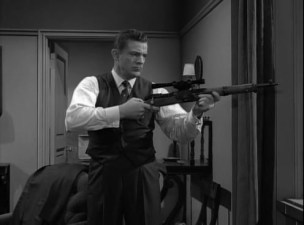
Paul Driscoll prepares to shoot Adolf Hitler
But instead of the anticipated shot, there’s another knock at his door—his time by the black-uniformed secret police, the SS. Driscoll knows the game is up, and disappears into the present just as the thugs break down his door.
And the audience is left to ponder how different the world would have been if Driscoll—or someone in Nazi Germany—had succeeded in assassinating the man whose wars would wipe out the lives of 50 million men, women and children around the globe.
One 2016 Republican candidate for President dared to invoke the menace of Nazi Germany in warning of the dangers of a Donald Trump Presidency. And to argue that Americans could prevent that past from returning.
In November, 2015, John Kasich, the governor of Ohio, was peddling a message of creating jobs, balancing the Federal budget and disdain for Washington, D.C.
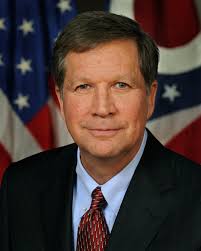
John Kasich
But he remained far behind in the polls, dropping 50% in support in just one month—from September to October. Meanwhile, Trump, the New York billionaire developer, was being backed by 25% of Republican primary voters.
So, with nothing to lose, Kasich decided to take off the gloves. He invoked the “N” word for Republicans: Nazi.
He authorized the creation of a TV ad that opened with ominous music—and the face of a snarling Donald Trump.
“I would like anyone who is listening to consider some thoughts that I’ve paraphrased from the words of German pastor Martin Niemoeller.”
The voice belonged to Tom Moe, a retired colonel in the U.S. Air Force—and a former Vietnam prisoner-of-war.
“You might not care if Donald Trump says Muslims must register with the government, because you’re not one,” continued Moe.
“And you might not care if Donald Trump says he’s going to round up all the Hispanic immigrants, because you’re not one.
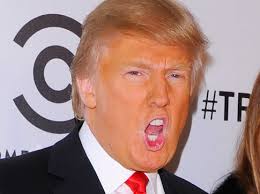
Donald Trump
“And you might not care if Donald Trump says it’s OK to rough up black protesters, because you’re not one.
“And you might not care of Donald Trump wants to suppress journalists, because you’re not one.
“But think about this:
“If he keeps going, and he actually becomes President, he might just get around to you. And you’d better hope that there’s someone left to help you.”
Martin Niemoeller (1892–1984) was a prominent Protestant pastor who had commanded a U-boat during World War 1. He became a bitter public foe of Adolf Hitler.
A staunch anti-Communist, he had initially supported the Nazis as Germany’s only hope of salvation against the Soviet Union.
But when the Nazis made the church subordinate to State authority, Niemoeller created the Pastors’ Emergency League to defend religious freedom.
For his opposition to the Third Reich, Niemoeller spent seven years in concentration camps.
With the collapse of the Reich in 1945, he was freed—and elected President of the Protestant church in Hesse and Nassau in 1947. During the 1960s, he was a president of the World Council of Churches.
He is best remembered for his powerful condemnation of the failure of Germans to protest the increasing oppression of the Nazis:
First they came for the Communists, but I was not a Communist, so I did not speak out.
Then they came for the Socialists, but I was not a Socialist, so I did not speak out.
Then they came for the trade unionists, but I was not a trade unionist, so I did not speak out.
Then they came for the Jews, but I was not a Jew, so I did not speak out.
And when they came for me, there was no one left to speak out for me.
Neither “Adolf Hitler” nor “Nazi Party” was mentioned during the one-minute Kassich video. But a furious Trump threatened to sue Kasich if he could find find anything “not truthful” within the ad.
Apparently he couldn’t find anything “not truthful,” because he never sued.
So threatened the man who had called Mexican immigrants “rapists” and accused President Barack Obama of being a Muslim and an illegal alien.
The Kasich ad was the darkest attack made against Trump by any candidate—Republican or Democrat. And it raised a disturbing question:
If Donald Trump proved to be America’s Adolf Hitler, would there be an American Claus von Stauffenberg?
Colonel Claus Schenk von Stuaffenberg was the German army officer who, on July 20, 1944, tried to assassinate Adolf Hitler.
2003 IRAQ WAR; ABU GHRAIB PRISON, ABC NEWS, ABORTION, ALTERNET, AMERICABLOG, ANIMAL RIGHTS, AP, “GREASE”, BABY BOOMER RESISTANCE, BARACK OBAMA, BBC, BILLBOARD HOT 100, BIRTH CONTROL, BLACKS, BLOOMBERG NEWS, BREAST CANCER, BUZZFEED, CBS NEWS, CEDARS-SINAI MEDICAL CENTER, CLIMATE CHANGE, CNN, CROOKS AND LIARS, DAILY KOZ, DEMOCRATS, DONALD TRUMP, EURIPIDES, FACEBOOK, FIVETHIRTYEIGHT, GAYS, GRAMMY AWARDS, HARPER’S MAGAZINE, HUFFINGTON POST, JOHN TRAVOLTA, LARRY KING, LESBIANS, LUNG CANCER, MEDIA MATTERS, MOTHER JONES, MOVEON, MSNBC, NBC NEWS, NEW REPUBLIC, NEWSDAY, NEWSWEEK, NPR, OLIVIA NEWTON-JOHN, PBS NEWSHOUR, POLITICO, POLITICUSUSA, RAW STORY, RED CROSS, REPUBLICANS, REUTERS, RUSH LIMBAUGH, SALON, SANDRA FLUKE, SEATTLE TIMES, SLATE, SMOKING, TALKING POINTS MEMO, THE ATLANTIC, THE CHICAGO SUN-TIMES, THE CHICAGO TRIBUNE, THE DAILY BEAST, THE DAILY BLOG, THE GUARDIAN, THE HILL, THE HUFFINGTON POST, THE INTERCEPT, THE LOS ANGELES TIMES, THE NATION, THE NEW REPUBLIC, THE NEW YORK TIMES, THE NEW YORKER, THE RUSH LIMBAUGH SHOW, THE VILLAGE VOICE, THE WASHINGTON POST, THINKPROGRESS, TIME, TRAGEDY, TRUTHDIG, TRUTHOUT, TWITTER, TWO POLITICAL JUNKIES, U.S. NEWS & WORLD REPORT, UPI, USA TODAY, VANITY FAIR, WONKETTE
In Entertainment, History, Medical, Politics, Social commentary on August 15, 2022 at 12:12 am
Two deaths. Two entirely different legacies.
The first—of Rush Limbaugh—came on February 17, 2021.
The second—of Olivia Newton-John—came on August 10, 2022.
Limbaugh hosted The Rush Limbaugh Show, which was nationally syndicated on AM and FM radio stations from 1988 until his death in 2021.
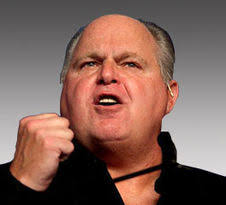
Rush Limbaugh
With 15.5 million listeners, Limbaugh’s radio show was the most popular one in the United States. He became one of the most prominent Right wing voices in the country during the 1990s.
Among his targets: Blacks; liberals; Democrats; gays; lesbians; feminists (whom he called “feminazis”); consent in sexual relations; environmentalism; climate change; abortion rights; Barack Obama; the need for masking and vaccinations against COVID-19.
Among the personalities and causes he championed: The 2003 Iraq war; torture at the infamous Abu Ghraib prison; eliminating taxes on the wealthy; smoking; Donald Trump;
His attack on Sandra Fluke, a third-year Georgetown University law student who testified before Congress on February 23, 2012, was typical Limbaugh.
Fluke said that insurance companies should cover the costs of birth control. As a student at a Jesuit campus that refuses to provide insurance coverage for contraception, birth control costs can be as high as $3,000 during the three years a woman attends law school.
Limbaugh’s response: “So Ms. Fluke and the rest of you Feminazis, here’s the deal: If we are going to pay for your contraceptives and thus pay for you to have sex, we want something for it. And I’ll tell you what it is. We want you to post the videos online so we can all watch.”
Sandra Fluke was among the millions who didn’t mourn when Limbaugh died at 70 on February 17, 2021, of lung cancer caused by a lifetime of cigar smoking.
If the legacy of Rush Limbaugh was darkness personified, the legacy of Olivia Newton-John was one of sunshine and joy.

Olivia Newton-John
Larry D. Moore, CC BY-SA 3.0 <https://creativecommons.org/licenses/by-sa/3.0>, via Wikimedia Commons
She dominated the pop charts of the 1970s and ’80s with mega hits “Hopelessly Devoted to You,” “I Honestly Love You,” “Have You Never Been Mellow?” “Magic,” and “Physical.”
Vanity Fair described her thus: “Her angelic beam matched with a clear, sweet-yet-supple soprano was vocal satin, giving her a versatile edge in singing feel-good numbers across genres and styles.”
But her biggest splash came in “Grease,” the top-grossing movie for 1978, where she co-starred with John Travolta. Her role as Sandy, an Australian exchange student, brought her international acclaim and further propelled her musical career. The movie’s soundtrack remains one of the world’s best-selling albums.
“I don’t think anyone could have imagined a movie would go on almost 40 years and would still be popular and people would still be talking to me about it all the time and loving it,” Newton-John said in 2017.
She won four Grammy awards and racked up five number-one hits and another 10 top-10 hits on the Billboard Hot 100 and two number-one albums on the Billboard 200. Eleven of her singles and 14 of her albums have been certified Gold by the Recording Industry Association of America.
Having sold more than 100 million records, Newton-John is one of the most popular singers of the 20th and 21st centuries.
“I love to sing, it’s all I know how to do,” she told CNN in 2017. “That’s all I’ve ever done since I was 15, so it’s my life. I feel very grateful that I can still do it and people still come to see me.”
An animal-rights advocate, she cancelled a 1978 concert tour of Japan to protest the slaughter of dolphins caught in tuna fishing nets.
Among the charities and foundations she supported: Cure Breast Cancer, Red Cross, Healthy Child Healthy World, Cedars-Sinai Medical Center. She was a performer on the 1979 Music for UNICEF Concert for the UN’s International Year of the Child, televised worldwide.
Behind her bright smile and sunny disposition lay the shadow of tragedy. In 2005 Newton-John’s then-boyfriend, Patrick McDermott, disappeared at sea while on a fishing trip off the coast of California.
“It’s very hard to live with that,” she told CNN’s Larry King in 2006. “It’s probably the hardest thing I’ve ever experienced, and I’ve been through a lot of things.”
In 1992, she was diagnosed with breast cancer. She recovered, but for 25 years she lived with the constant threat of its return.
“I draw strength from the millions of women who have faced this challenge successfully,” she said in a statement. “This has been detected early because I’ve had regular examinations, so I encourage other women to do the same.”
Then, in May 2017, she announced that the cancer had returned and metastasized to her lower back.
Asked during a February 2021 interview if she had contemplated her own death, she replied, “I have quite a few times,” adding it was “sooner than I would have wanted. I mean—we all know we are going to die. I think we spend our lives probably much in denial of it.”
The title of her 2019 autobiography, Don’t Stop Believin’, summed up her attitude toward life.
On August 8, 2022, Olivia Newton-John died from cancer at her home in the Santa Ynez Valley of California. She was 73.
Euripides, the Greek tragedian, was right: “When good men die, their goodness does not perish, but lives though they are gone. As for the bad, all that was theirs dies and is buried with them.”
ABC NEWS, ALTERNET, AMERICABLOG, ANCHOR BABIES, AP, BABY BOOMER RESISTANCE, BARACK OBAMA, BARBARA LEE, BBC, BLOOMBERG NEWS, BUZZFEED, CBS NEWS, CNN, CROOKS AND LIARS, DAILY KOZ, DEMOCRATIC PARTY, DONALD TRUMP, DREAM ACT, FACEBOOK, FIVETHIRTYEIGHT, HARPER’S MAGAZINE, HILLARY CLINTON, HISPANICS, HUFFINGTON POST, illegal immigration, MEDIA MATTERS, MEXICO, MOTHER JONES, MOVEON, MSNBC, NBC NEWS, NEW REPUBLIC, NEWSDAY, NEWSWEEK, NEWT GINGRICH, NPR, PAUL RYAN, PBS NEWSHOUR, POLITICO, POLITICUSUSA, RACIAL PROFILING, RAW STORY, REPUBLICAN PARTY, REUTERS, SALON, SEATTLE TIMES, SLATE, TALKING POINTS MEMO, THE ATLANTIC, THE CHICAGO SUN-TIMES, THE CHICAGO TRIBUNE, THE DAILY BEAST, THE DAILY BLOG, THE GUARDIAN, THE HILL, THE HUFFINGTON POST, THE INTERCEPT, THE LOS ANGELES TIMES, THE NATION, THE NEW REPUBLIC, THE NEW YORK TIMES, THE NEW YORKER, THE VILLAGE VOICE, THE WASHINGTON POST, THINKPROGRESS, TIME, TRUTHDIG, TRUTHOUT, TWITTER, TWO POLITICAL JUNKIES, U.S. NEWS & WORLD REPORT, U.S. SUPREME COURT, UPI, USA TODAY, WAL-MART
In Bureaucracy, Business, History, Law, Law Enforcement, Military, Politics, Social commentary on August 5, 2022 at 12:10 am
If Americans decide they truly want to control access to their own borders, there is a realistic way to accomplish this.
And it doesn’t involve building a wall along the Mexican border—which would prove ridiculously expensive and easily circumvented.

(1) The Justice Department should vigorously attack the “sanctuary movement” that officially thwarts the immigration laws of the United States.
Among the 31 “sanctuary cities” of this country: Washington, D.C.; New York City; Los Angeles; Chicago; San Francisco; Santa Ana; San Diego; Salt Lake City; Phoenix; Dallas; Houston; Austin; Detroit; Jersey City; Minneapolis; Miami; Denver; Baltimore; Seattle; Portland, Oregon; New Haven, Connecticut; and Portland, Maine.
These cities have adopted “sanctuary” ordinances that do not allow municipal funds or resources to be used to enforce federal immigration laws, usually by not allowing police or municipal employees to inquire about one’s immigration status.
(2) The most effective way to combat this movement: Indict the highest-ranking officials of those cities which have actively violated Federal immigration laws.
In San Francisco, for example, former District Attorney Kamala Harris—who is now Vice President of the United States—created a secret program called Back on Track, which provided training for jobs that illegal aliens could not legally hold.
She also prevented Immigration and Customs Enforcement (ICE) from deporting even those illegal aliens convicted of a felony.
(3) Indicting such officials would be comparable to the way that President Andres Jackson dealt with the threat South Carolinians once made to “nullify”—or ignore—any Federal laws they didn’t like.
Jackson quashed that threat by making one of his own: To lead an army into that State and purge all who dared defy the laws of the Federal Government.

(4) Even if some indicted officials escaped conviction, the results would prove worthwhile.
City officials would be forced to spend huge sums of their own money for attorneys and face months or even years of prosecution.
And this, in turn, would send a devastating warning to officials in other “sanctuary cities” that the same fate lies in store for them.
(5) CEOs whose companies—like Wal-Mart—systematically employ illegal aliens should be held directly accountable for the actions of their subordinates.
They should be indicted by the Justice Department under the Racketeer Influenced Corrupt Organizations (RICO) Act, the way Mafia bosses are prosecuted for ordering their own subordinates to commit crimes.
Upon conviction, the CEO should be sentenced to a mandatory prison term of at least twenty years.
This would prove a more effective remedy for combating illegal immigration than stationing tens of thousands of soldiers on the U.S./Mexican border. CEOs forced to account for their subordinates’ actions would take drastic steps to ensure that their companies strictly complied with Federal immigration laws.
Without employers luring illegal aliens at a fraction of the money paid to American workers, the flood of such illegal job-seekers would quickly dry up.

(6) The Government should stop granting automatic citizenship to “anchor babies” born to illegal aliens in the United States.
A comparable practice would be allowing bank robbers who had eluded the FBI to keep their illegally-obtained loot.
A person who violates the bank robbery laws of the United States is legally prosecutable for bank robbery, whether he’s immediately arrested or remains uncaught for years. The same should be true for those born illegally within this country.
If they’re not here legally at the time of birth, they should not be considered citizens and should—like their parents—be subject to deportation.
(7) The United States Government—from the President on down—should stop apologizing for the right to control the country’s national borders.
The Mexican Government doesn’t hesitate to apply strict laws to those immigrating to Mexico. And it feels no need to apologize for this.
Neither should we.
(8) Voting materials and ballots should be published in one language—English.
In Mexico, voting materials are published in one language—Spanish.
Throughout the United States, millions of Mexican illegals refuse to learn English and yet demand that voting materials and ballots be made available to them in Spanish.

(9) Those who are not legal citizens of the United States should not be allowed to vote in its elections.
In Mexico, those who are not Mexican citizens are not allowed to participate in the country’s elections.
The Mexican Government doesn’t consider itself racist for strictly enforcing its immigration laws.
The United States Government should not consider itself racist for insisting on the right to do the same.
(10) The United States should impose economic and even military sanctions against countries—such as China and Mexico—whose citizens make up the bulk of illegal aliens.
The Mexican government well remembers the 10-year Mexican Revolution (1910 – 1920) starring Francisco “Pancho” Villa, Emiliano Zapata and a host of other equally ruthless killers—and the one million dead men, women and children it produced.
So Mexico uses its American border to rid itself of those who might demand major reforms in the country’s political and economic institutions.
Such nations must learn that dumping their unwanteds on the United States now comes at an unaffordably high price. Otherwise those dumpings will continue.
60 MINUTES, ABC NEWS, ALTERNET, AMERICABLOG, AP, BABY BOOMER RESISTANCE, BARACK OBAMA, BLOOMBERG, BUZZFEED, CARL MUELLER, CBS NEWS, CIA, CNN, CROOKS AND LIARS, DAILY KOS, DAILY KOZ, DRUDGE RETORT, FACEBOK, FACEBOOK, FIVETHIRTYEIGHT, HARPER’S MAGAZINE, IMPERIAL HUBRIS, ISLAM, ISLAMIC STATE OF IRAQ AND THE LEVANT, KAYLA MUELLER, MARCHING TOWARD HELL, MEDIA MATTERS, MICHAEL SCHEUER, MOTHER JONES, MOVEON, MSNBC, MUSLIMS, NBC NEWS, NEWSWEEK, NPR, OSAMA BIN LADEN, PBS NEWSHOUR, POLITICO, POLITICUSUSA, RAW STORY, REUTERS, SALON, SEATTLE TIMES, SLATE, SYRIA, TALKING POINTS MEMO, THE ATLANTIC, THE CHICAGO SUN-TIMES, THE CHICAGO TRIBUNE, THE DAILY BEAST, THE DAILY BLOG, THE GUARDIAN, THE HILL, THE HUFFINGTON POST, THE LOS ANGELES TIMES, THE NATION, THE NEW REPUBLIC, THE NEW YORK TIMES, THE VILLAGE VOICE, THE WALL STREET JOURNAL, THE WASHINGTON POST, THINKPROGRESS, TIME, TRUTHDIG, TRUTHOUT, TWITTER, TWO POLITICAL JUNKIES, U.S. NEWS & WORLD REPORT, UPI, USA TODAY, VIETNAM WAR, WONKETTE
In Bureaucracy, History, Military, Politics, Social commentary on August 1, 2022 at 12:10 am
“When trouble comes up anywhere in the world, they don’t call Beijing. They don’t call Moscow. They call us.”
So spoke President Barack Obama on the September 28, 2014 edition of 60 Minutes.
And, according to former CIA agent Michael Scheuer, that’s the problem: America can’t learn to mind its own business.
Scheuer is a 20-year CIA veteran—as well as an author, historian, foreign policy critic and political analyst.
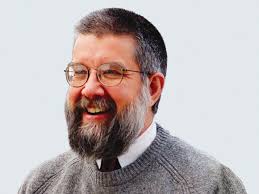
Michael Scheuer
From 1996 to 1999 he headed Alec Station, the CIA’s unit assigned to track Osama bin Laden at the agency’s Counterterrorism Center.
He has served as an adjunct professor at Georgetown University’s Center for Peace and Security Studies.
He is best-known as the author of two seminal works on America’s fight against terrorism: Imperial Hubris: Why the West is Losing the War on Terror (2003) and Marching Toward Hell: America and Islam after Iraq (2008).
Scheuer says that Islamics don’t hate Americans because of “our way of life”—with its freedoms of speech and worship and its highly secular, commercialized culture.
Instead, Islamic hatred toward the United States stems from America’s six longstanding policies in the Middle East:
- U.S. support for apostate, corrupt, and tyrannical Muslim governments
- U.S. and other Western troops on the Arabian Peninsula
- U.S. support for Israel that keeps Palestinians in the Israelis’ thrall
- U.S. pressure on Arab energy producers to keep oil prices low
- U.S. occupation of Iraq and Afghanistan
- U.S. support for Russia, India, and China against their Muslim militants
Scheuer contends that no amount of American propaganda will win “the hearts and minds” of Islamics who can “see, hear, experience, and hate” these policies firsthand.
But there is another danger facing America, says Scheuer, one that threatens “the core of our social and civil institutions.”
And in Marching Toward Hell he bluntly indicts that threat: The “profound and willful ignorance” of America’s “bipartisan governing elite.”
Scheuer defines this elite as “the inbred set of individuals who have influenced…drafted and conducted U.S. foreign policy” since 1973.
Within that group are:
- politicians
- journalists
- academics
- preachers
- civil servants
- military officers
- philanthropists.
“Some are Republicans, others Democrats; some are evangelicals, others atheists; some are militarists, others pacifists; some are purveyors of Western civilization, others are multiculturalists,” writes Scheuer.
But for all their political and/or philosophical differences, the members of this governing elite share one belief in common.
According to Scheuer, that belief is “an unquenchable ardor to have the United States intervene in all places, situations and times.”
And he warns that this “bipartisan governing elite” must radically change its policies—such as unconditional support for Israel and corrupt, tyrannical Muslim governments.
Otherwise, Americans will be locked in an endless “hot war” with the Islamic world.
During his September 28, 2014 appearance on 60 Minutes, President Obama admitted that the mostly Sunni-Muslim Iraqi army had refused to combat the Sunni army of ISIS.
Then followed this exchange:
Steve Kroft: What happens if the Iraqis don’t fight or can’t fight?
President Obama: Well….
Steve Kroft: What’s the end game?
President Obama: I’m not going to speculate on failure at the moment. We’re just getting started. Let’s see how they do.
It was precisely such a mindset that led the United States, step by step, into the Vietnam quagmire.
In the Middle East, as in Vietnam, the United States lacked:
- Real or worthwhile allies in Iraq or Syria;
- A working knowledge of the peoples it wants to influence in either country;
- Clearly-defined goals that it seeks to accomplish in that region.
America rushed to disaster in Vietnam because its foreign policy elite felt it had to “do something” to fight Communism anywhere in the world.
Now Americans—in and out of government—feel they must “do something” to stop the routine carnage that is life throughout the Middle East.
In December, 2012, Kayla Mueller, an idealistic 24-year-old American woman, arrived in Syria to assist Syrians caught up in their own civil war. And on August 4, 2013, she was kidnapped and held for ransom.
In 2015, she was killed—whether by her terrorist kidnappers or Jordanian airstrikes remains unclear.
On February 23, 2015, Carl Mueller appeared on the “Today” show, to protest the refusal of the United States Government to pay ransom demands to her terrorist kidnappers.
“How many mistakes have we all made in life that were naïve and didn’t get caught at? Kayla was just in a place that was more dangerous than most. And she couldn’t help herself. She had to go in there and had to help.”
But did she?
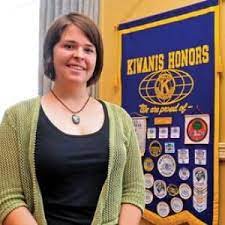

Kayla Mueller
There were thousands of communities within the United States desperate for the help of a caring social activist. And thousands of organizations—such as Volunteers in Service to America (VISTA), Habitat for Humanity and Catholic Relief Services—that would have been thrilled to enlist her services.
And she could have made lives better without constantly facing the dangers of kidnapping by Islamics determined to humiliate and slaughter Americans.
Michael Sheuer is right: The United States should learn to mind its own business and quit intervening in the affairs of Middle Eastern governments and peoples.
Kayla Mueller is proof of the rightness of that assertion.
2016 PRESIDENTIAL ELECTION, 2020 PRESIDENTIAL ELECTION, 9/11 ATTACKS, ABC NEWS, ABRAHAM LINCOLN, ALTERNET, AMERICABLOG, AP, APPOMATTOX DEMOCRATS, ARNOLD SCHWARTZENEGGER, ASIANS, BABY BOOMER RESISTANCE, BARACK OBAMA, BBC, BLACKS, BLOOMBERG NEWS, BUZZFEED, CBS NEWS, CHARLES ROYSTER, CIVIL RIGHTS ACT OF 1964, CIVIL WAR, CNN, CONFEDERATE STATES OF AMERICA, COVID-19, CROOKS AND LIARS, DAILY KOZ, DAVID BROOKS, DELTA VARIANT, DONALD TRUMP, FACEBOOK, FIVETHIRTYEIGHT, FORT SUMTER, GEORGE W. BUSH, HARPER’S MAGAZINE, HILLARY CLINTON, HISPANICS, HUFFINGTON POST, JOHN OLIVER, JOHNSON & JOHNSON VACCINE, JONATHAN CAPEHART, KGB, LYNDON B. JOHNSON, MASKS, MEDIA MATTERS, MERYL STREEP, MODERNA VACCINE, MOTHER JONES, MOVEON, MSNBC, MUSLIMS, NBC NEWS, NEIL YOUNG, NEW REPUBLIC, NEWSDAY, NEWSWEEK, NPR, PBS NEWSHOUR, PHIZER VACCINE, POLITICO, POLITICUSUSA, PRISONERS OF WAR, RACISM, RAW STORY, RECONSTURCTION, REPUBLICANS, REUTERS, ROBERT E. LEE, RUSSIA, SALON, SEATTLE TIMES, SLATE, TALKING POINTS MEMO, THE ATLANTIC, THE CHICAGO SUN-TIMES, THE CHICAGO TRIBUNE, THE DAILY BEAST, THE DAILY BLOG, THE DESTRUCTIVE WAR (BOOK), THE DISABLES, THE GUARDIAN, THE HILL, THE HUFFINGTON POST, THE LOS ANGELES TIMES, THE NATION, THE NEW REPUBLIC, THE NEW YORK TIMES, THE NEW YORKER, THE SOUTH, THE VILLAGE VOICE, THE WASHINGTON POST, THINKPROGRESS, TIME, TREASON, TRUTHDIG, TRUTHOUT, TWITTER, TWO POLITICAL JUNKIES, U.S. NEWS & WORLD REPORT, ULYSSES S. GRANT, UPI, USA TODAY, VACCINATIONS, VLADIMIR PUTIN, WHITES, WOMEN, WONKETTE
In Bureaucracy, History, Medical, Politics, Social commentary, Uncategorized on July 29, 2022 at 12:11 am
Whites comprised the overwhelming majority of the audiences at Donald Trump’s 2016 Presidential campaign rallies. Not all were racists, but many of those who were advertised it on T-shirts: “MAKE AMERICA WHITE AGAIN.”
And the vast majority of the white votes Trump got were in the South.
The 2008 election of Barack Obama as the first black President had shocked whites. His 2012 re-election had deprived them of the hope that 2008 had been an accident.
Then came 2016—and the possibility that a black President might actually be followed by a woman: Former Secretary of State Hillary Clinton.
And for macho, largely uneducated, anti-black Southern males, the idea of a woman dictating to men was simply too much to bear.
Thus, the third map of Southern infamy: The election of Donald Trump.
When Trump declared his candidacy:
- The country was essentially at peace.
- Thanks to government loans from President Obama, American capitalism had been saved from its own excesses during the George W. Bush administration.
- Employment was up. CEOs were doing extremely well.
- Unlike the administration of Ronald Reagan, there had been no corruption scandals during the Obama Presidency.
- Nor had there been any large-scale terrorist attacks on American soil—like 9/11 under President George W. Bush.
Above all, the news was filled with reputable reports—later confirmed—that Trump’s campaign was backed by Russian oligarchs linked to Vladimir Putin, the former head of the KGB and now President of Russia.
In short: Southerners—who had long portrayed themselves as America’s most dedicated patriots—flocked to the banner of a man who publicly called on “Russia” to interfere in an American Presidential election.

Red States voted for Donald Trump – 2016
BobWyatt07, CC BY-SA 4.0 <https://creativecommons.org/licenses/by-sa/4.0>, via Wikimedia Commons
The fourth map of Southern infamy.
Donald Trump’s four-year Presidency produced a legacy of unprecedented racism, criminality, abuse of power and treason.
But the crime for which he will be longest-remembered—and which finally brought him down—was his unwillingness to protect Americans from the deadly COVID-19 pandemic.
The COVID-19 catastrophe slammed into the United States in January, 2020. It was the inevitable result of a natural disaster colliding with an evil and incompetent administration.
Trump’s “cures” for COVID-19 included denial, lies, Republican subservience, chaos, extortion, propaganda as news, quackery as medicine, demands to “re-open the country,” Ignoring the danger and—finally—resignation (“Learn to live with the virus”).
Early on, Trump made the virus a referendum on himself. If you supported him, you didn’t wear a mask when you ventured out in public. This despite the fact that, throughout 2020, there was no vaccine available and hospitals were rapidly overwhelmed by debilitated and dying casualties of the virus.
“I think, once Donald Trump and other Republicans made it a manhood issue, or a freedom issue, or whatever kind of issue they made it, it’s hard to walk back that culture war signal,” said conservative New York Times columnist David Brooks on the PBS Newshour on July 23, 2021.
Washington Post Columnist Jonathan Capehart echoed him: “I think, if we had had a president of the United States who took this seriously when this first came on the scene, if we had a Republican party that took this seriously enough to warn everyone, their constituents saying, wash your hands, then put on a mask, then go get the vaccine, we wouldn’t be where we are right now.”
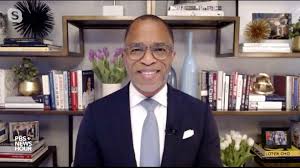
Jonathan Capehart
But neither Trump nor the Republican party urged Americans to “wash your hands, put on a mask, then go get the vaccine.”
By March, 2021, three vaccines—by Pfizer, Moderna and Johnson & Johnson—became available. A total of 90.4 million doses of these vaccines had been given. And 30.7 million Americans had been fully vaccinated against the virus.
But after a triumphant beginning, the pace of vaccinations slowed, then halted. By late July, 2021, only 49.6% of Americans had been fully vaccinated.

COVID-19 vaccination map – July 21, 2021
George Karabassis, CC BY 4.0 <https://creativecommons.org/licenses/by/4.0>, via Wikimedia Commons
Many of those who had gotten one shot of the Pfizer and Moderna vaccines refused to get the necessary second one. These must be given almost a month apart.
(The Johnson & Johnson vaccine requires only one shot.)
What had happened?
“The people I know personally who are not getting the vaccine, for them, it was like, ‘They rushed this thing,'” theorized David Brooks. “‘Who knows what’s going to happen to all these people who get the shots in 10 years or 20 years?’ So, why should I take the risk?’
“And that’s not completely crazy, but it’s not—it’s based on some sense of general distrust for the establishment, including the medical establishment. And that establishment—that distrust is the core of this thing.”
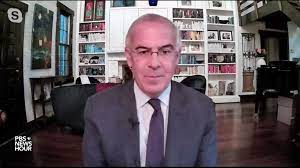
David Brooks
And leading the way to this catastrophe of self-destruction were the states of the South and Midwest: Mississippi (47.1%,), Alabama (50.5%), Arkansas (53.2%), and Tennessee (52.9%) with the lowest rates of residents who have gotten at least one shot.
By late July, 2021, three states—Florida, Texas and Missouri—with lower vaccination rates accounted for 40 percent of all cases nationwide.
And colliding head-on with the refusals of millions to get vaccinated was the newer—and deadlier—Delta variant of COVID-19.
Just as the South unleashed the Civil War on America, it has now ignited a new wave of COVID-19 on America.
2016 PRESIDENTIAL ELECTION, 2020 PRESIDENTIAL ELECTION, 9/11 ATTACKS, ABC NEWS, ABRAHAM LINCOLN, ALTERNET, AMERICABLOG, AP, APPOMATTOX DEMOCRATS, ARNOLD SCHWARTZENEGGER, ASIANS, BABY BOOMER RESISTANCE, BARACK OBAMA, BBC, BLACKS, BLOOMBERG NEWS, BUZZFEED, CBS NEWS, CHARLES ROYSTER, CIVIL RIGHTS ACT OF 1964, CIVIL WAR, CNN, CONFEDERATE STATES OF AMERICA, COVID-19, CROOKS AND LIARS, DAILY KOZ, DAVID BROOKS, DELTA VARIANT, DONALD TRUMP, FACEBOOK, FIVETHIRTYEIGHT, FORT SUMTER, GEORGE W. BUSH, HARPER’S MAGAZINE, HILLARY CLINTON, HISPANICS, HUFFINGTON POST, JOHN OLIVER, JOHNSON & JOHNSON VACCINE, JONATHAN CAPEHART, KGB, LYNDON B. JOHNSON, MASKS, MEDIA MATTERS, MERYL STREEP, MODERNA VACCINE, MOTHER JONES, MOVEON, MSNBC, MUSLIMS, NBC NEWS, NEIL YOUNG, NEW REPUBLIC, NEWSDAY, NEWSWEEK, NPR, PBS NEWSHOUR, PHIZER VACCINE, POLITICO, POLITICUSUSA, PRISONERS OF WAR, RACISM, RAW STORY, RECONSTURCTION, REPUBLICANS, REUTERS, ROBERT E. LEE, RUSSIA, SALON, SEATTLE TIMES, SLATE, TALKING POINTS MEMO, THE ATLANTIC, THE CHICAGO SUN-TIMES, THE CHICAGO TRIBUNE, THE DAILY BEAST, THE DAILY BLOG, THE DESTRUCTIVE WAR (BOOK), THE DISABLES, THE GUARDIAN, THE HILL, THE HUFFINGTON POST, THE LOS ANGELES TIMES, THE NATION, THE NEW REPUBLIC, THE NEW YORK TIMES, THE NEW YORKER, THE SOUTH, THE VILLAGE VOICE, THE WASHINGTON POST, THINKPROGRESS, TIME, TREASON, TRUTHDIG, TRUTHOUT, TWITTER, TWO POLITICAL JUNKIES, U.S. NEWS & WORLD REPORT, ULYSSES S. GRANT, UPI, USA TODAY, VACCINATIONS, VLADIMIR PUTIN, WHITES, WOMEN, WONKETTE
In Bureaucracy, History, Medical, Politics, Social commentary on July 28, 2022 at 12:11 am
Throughout its history the South has been a hotbed of treason, racism and ignorance.
Today, it proudly continues holding fast to these traditions—even as it places the entire country in danger of contagion and dictatorship.
From 1860 to 1865, the South—Texas, Arkansas, Louisiana, Tennessee, Mississippi, Alabama, Georgia, Florida, South Carolina, North Carolina and Virginia—produced the greatest case of mass treason in America’s history.
Southern infamy’s first map was called the Confederate States of America.
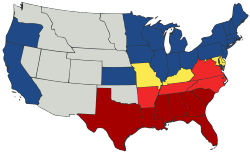
Union (blue) and Confederate (red) states: 1860 – 1865
Júlio Reis, CC BY-SA 3.0 <https://creativecommons.org/licenses/by-sa/3.0>, via Wikimedia Commons
According to The Destructive War, by Charles Royster, it wasn’t the cause of “states’ rights” that led 13 Southern states to withdraw from the Union in 1860-61. It was their demand for “respect,” which, in reality, translates into “e-g-o.”
“The respect Southerners demanded did not consist simply of the states’ sovereignty or of the equal rights of Northern and Southern citizens, including slaveholders’ right to take their chattels into Northern territory.
“It entailed, too, respect for their assertion of the moral superiority of slaveholding society over free society,” writes Royster.
It was not enough for Southerners to claim equal standing with Northerners; Northerners must acknowledge it. But this was something that the North was less and less willing to do.
Finally, its citizens dared to elect Abraham Lincoln in 1860.
Lincoln and his new Republican party damned slavery—and slaveholders—as morally evil, obsolete and ultimately doomed. And they were determined to prevent slavery from spreading any further throughout the country.
Southerners found all of this intolerable.
Lincoln—during his First Inaugural Address—bluntly said that he did not intend to “directly or indirectly…interfere with the institution of slavery in the States where it exists. I believe I have no lawful right to do so, and I have no inclination to do so.”
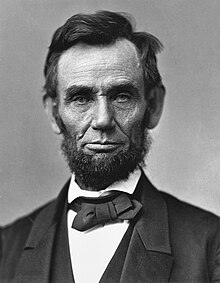
Abraham Lincoln
But that was not enough for Southerners.
Only 10% of Southerners owned slaves. The other 90% of the population “had no dog in this fight,” as Southerners liked to say.
Yet they so admired and aspired to be like their “gentleman betters” that they threw in their lot with them.
On April 12, 1861—just over a month since Lincoln’s inauguration on March 4—Southern batteries opened fire on Union Fort Sumter in Charleston Harbor, South Carolina.
This ignited the American Civil War, costing the lives of 750,000.Americans—at a time when the population of the United States stood at 31,443,321.
Four years later, Confederate General Robert E. Lee surrendered the Army of Northern Virginia to Union General Ulysses S. Grant at Appomattox Courthouse.
Huge sections of the South had been laid waste by Union troops and more than 258,000 Southerners had been killed.
And slavery, the mainstay of Southern plantation life, had been ended forever.
The South had paid a high price for its investment in treason.
Southern infamy’s second map dates from 1964 to 2016.
In 1964, Democratic President Lyndon B. Johnson pushed the Civil Rights Act through Congress, ending more than a century of blatant discrimination against blacks.
The South—which before the Civil War had been solidly Democratic—suddenly went solidly Republican.
To understand this mammoth shift, it’s vital to realize: In Lincoln’s time, the Republicans were the party of progressives.
The party was founded on an anti-slavery platform. Its members were thus reviled as “Black Republicans.” And until the 1960s, the South was solidly Democratic.
Democrats were the ones defending the status quo—slavery—and opposing the rights of freed blacks in the South of Reconstruction and long afterward.
When, in the early 1960s, Democrats championed the rights of blacks, Southerners bolted for the Republican party—which held to the same values that slavery/discrimination-supporting Democrats once did.
After signing the Civil Rights Act of 1964 into law, President Lyndon B. Johnson told an aide: “We have just lost the South for a generation.”
Johnson was wrong: A generation lasts 20 to 30 years. It’s been 58 years since the signing of the Act, and the South is still solidly within the Republican camp.
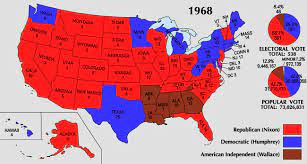
1968 election
The South’s third map of infamy culminated with the election of Donald Trump as President in 2016.
Repeatedly, when asked why they supported Trump, his followers said: “He says what I’ve been thinking!”
And what Trump appealed to, above all else, was hatred.
From June 15, 2015, when he launched his Presidential campaign, until October 24, 2016, Trump fired almost 4,000 angry, insulting tweets at 281 people and institutions that had somehow offended him.
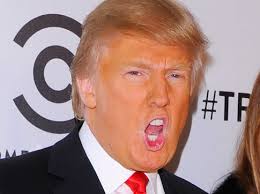
Donald Trump
The New York Times needed two full pages of its print edition to showcase them.
Among his targets:
- Democratic Presidential Nominee Hillary Clinton
- President Barack Obama
- Actress Meryl Streep
- Singer Neil Young
- Actor Arnold Schwarzenegger
- Comedian John Oliver
- News organizations
- The State of New Jersey
- Beauty pageant contestants
Others he clearly delighted in insulting during the campaign included:
- Women
- Blacks
- Hispanics
- Asians
- Muslims
- The disabled
- Prisoners-of-war
Whites comprised the overwhelming majority of the audiences at Trump rallies. Not all were racists, but many of those who were advertised it on T-shirts: “MAKE AMERICA WHITE AGAIN.”
And the vast majority of the white votes Trump got were in the South.
1776 (PLAY), ABC NEWS, ALTERNET, AMERICABLOG, AP, “SOUTHERN STRAGEGY”, BABY BOOMER RESISTANCE, BARACK OBAMA, BLOOMBERG, BUZZFEED, CBS NEWS, CEOS, CHRIS MATHEWS, CIVIL RIGHTS ACT OF 1964, CIVIL WAR, CNN, CROOKS AND LIARS, DAILY KOZ, DECLARATION OF INDEPENDENCE, DONALD TRUMP, DRUDGE REPORT, FACEBOOK, FIVETHIRTYEIGHT, FOOD STAMPS, FRED TRUMP, HARPER’S MAGAZINE, HOWARD STERN, HUFFINGTON POST, JOHN DICKINSON, JOHN HANCOCK, MEDIA MATTERS, MEDICARE, MOTHER JONES, MOVEON, MSNBC, NBC NEWS, NEWSWEEK, NPR, PBS NEWSHOUR, PEW FOUNDATION, POLITICO, POLITICUSUSA, PROPAGANDA, RAW STORY, REPUBLICAN PARTY, REPUBLICANS, REUTERS, Ronald Reagan, SALON, SEATTLE TIMES, SLATE, SLAVERY, SOCIAL SECURITY, TALKING POINTS MEMO, THE ATLANTIC, THE CHICAGO SUN-TIMES, THE CHICAGO TRIBUNE, THE DAILY BEAST, THE DAILY BLOG, THE GUARDIAN, THE HILL, THE HUFFINGTON POST, THE LOS ANGELES TIMES, THE NATION, THE NEW REPUBLIC, THE NEW YORK TIMES, THE SOUL OF BATTLE (BOOK), THE VILLAGE VOICE, THE WALL STREET JOURNAL, THE WASHINGTON POST, THINKPROGRESS, TIME, TIME MAGAZINE, TRUTHDIG, TRUTHOUT, TWITTER, TWO POLITICAL JUNKIES, U.S. NEWS & WORLD REPORT, UPI, USA TODAY, VICTOR DAVIS HANSON, VIETNAM WAR, VOTING RIGHTS ACT OF 1965, WILLIAM TECUMSEH SHERMAN, WONKETTE
In Bureaucracy, History, Politics, Social commentary on July 27, 2022 at 12:12 am
Republicans have long tried to prevent or eliminate programs that aid the poor and middle-class, including:
- Social Security (since it began in 1935)
- Medicare
- National health insurance
- Food stamps
- WIC (Women, Infants, Children).
So why are so many poor Americans now flocking to this party’s banner?
Two reasons: Racism and greed. There are historical parallels for both.
First, race:
In 1999, historian Victor Davis Hanson noted the huge gap in wealth between the aristocratic, slave-owning minority of the pre-Civil War South and the vast majority of poor white Southerners.
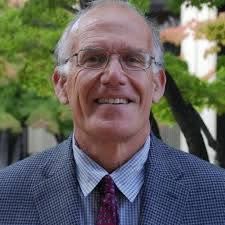
Victor Davis Hanson
“Before the war in the counties [Union General William Tecumseh] Sherman would later ruin, the top 10% of the landowners controlled 40% of the assessed wealth.”
In contrast, “more than half of those who were lucky enough to own any property at all still possessed less than 15% of the area’s valuation.”
So Hanson asked: “Why did the millions of poor whites of the Confederacy fight at all?”
He supplied the answer in his brilliant work on military history, The Soul of Battle: From Ancient Times to the Present Day, How Three Great Liberators Vanquished Tyranny.
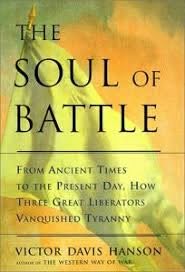
One of those liberators was General William Tecumseh Sherman, who led 62,000 Union troops in a victorious “March to the Sea” through the Confederacy in 1864.
So why did so many poor Southern whites literally lay down their lives for the wealthy planter class, which despised them?
According to Hanson: “Behind the entire social fabric of the South lay slavery.
“If slavery eroded the economic position of the poor free citizens, if slavery encouraged a society of haves and have-nots…then it alone offered one promise to the free white man–poor, ignorant and dispirited–that he was at least not black and not a slave.”
And the planter class and its allies in government easily fobbed off their poor white countrymen with cheap flattery. Said Georgia Governor Joseph Brown:
“Among us the poor white laborer is respected as an equal. His family is treated with kindness, consideration, and respect. He does not belong to the menial class. The negro is in no sense his equal. He belongs to the only true aristocracy, the race of white men.”

Arlington House and plantation, former home of Robert E. Lee
Similarly, poor whites now flock to the Republican Party–which holds them in equal contempt– in large part to protest the 2008 election of the first black President of the United States.
According to a Pew Research Center study released on July 22, 2011: “Notably, the GOP gains have occurred only among white voters; a 2-point Republican edge among whites in 2008 (46% to 44%) has widened to a 13-point lead today (52% to 39%).”
Since the 1960s, Republicans have pursued a campaign policy of “divide and rule”–divide the nation along racial lines and reap the benefits at election time.
- Republicans opposed the Civil Rights Act of 1964.
- Republicans opposed the Voting Rights Act of 1965.
- Republicans, with Richard Nixon as their Presidential candidate in 1968 and 1972, pursued what they called a “Southern strategy”: Use “code language” to stoke fear and hatred of blacks among whites.
- Republicans have falsely identified welfare programs exclusively with non-whites. (Of the six million Americans receiving food stamps, about 42% are white, 32% are black, and 22% are Latino–with the growth fastest among whites during the recession.)
Thus, in voting Republican, many of these poor whites believe they are “striking a blow for the white race.”
And they can do so in a more socially acceptable way than joining a certified hate group such as the American Nazi Party or Ku Klux Klan.
Since 2015, openly racist groups such as the Klan and the American Nazi Party have flocked to the banner of Presidential candidate Donald Trump. By enthusiastically courting their support, the real estate mogul has made it possible for Republican candidates to openly display their own racism.
Now greed:
In the hit play, 1776, on the creation and signing of the Declaration of Independence, there is a telling exchange between John Dickinson and John Hancock. It comes during the song, “Cool, Cool, Considerate Men.”
Dickinson, the delegate from Pennsylvania, urges Hancock, president of the Second Continental Congress, “to join us in our minuet.” By “us” he means his fellow conservatives who fear losing their property and exalted status by supporting American independence from Great Britain.
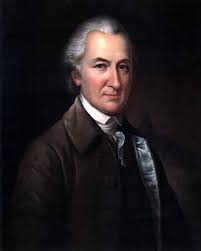
John Dickinson
Hancock declines, saying: “Fortunately, there are not enough men of property in America to dictate policy.”
To which Dickinson replies: “Perhaps not. But don’t forget that most men with nothing would rather protect the possibility of becoming rich than face the reality of being poor. And that is why they will follow us.”
Today, poor whites generally identify with the CEOs of powerful corporations. They believe the Republican gospel that they can attain such wealth–if only the government will “get out of my way.”
They forget—or ignore—the truth that government, for all its imperfections, is sometimes all that stands between them and a wide range of predators.
In return, the CEOs despise them as the privileged have always despised their social and economic “inferiors.”
Unless the Democratic Party can find ways to directly address these bitter, Politically Incorrect truths, it will continue its decline into insignificance.
1776 (PLAY), ABC NEWS, ALTERNET, AMERICABLOG, AP, “SOUTHERN STRAGEGY”, BABY BOOMER RESISTANCE, BARACK OBAMA, BLOOMBERG, BUZZFEED, CBS NEWS, CEOS, CHRIS MATHEWS, CIVIL RIGHTS ACT OF 1964, CIVIL WAR, CNN, CROOKS AND LIARS, DAILY KOZ, DECLARATION OF INDEPENDENCE, DONALD TRUMP, DRUDGE REPORT, FACEBOOK, FIVETHIRTYEIGHT, FOOD STAMPS, FRED TRUMP, HARPER’S MAGAZINE, HOWARD STERN, HUFFINGTON POST, JOHN DICKINSON, JOHN HANCOCK, MEDIA MATTERS, MEDICARE, MOTHER JONES, MOVEON, MSNBC, NBC NEWS, NEWSWEEK, NPR, PBS NEWSHOUR, PEW FOUNDATION, POLITICO, POLITICUSUSA, PROPAGANDA, RAW STORY, REPUBLICAN PARTY, REPUBLICANS, REUTERS, Ronald Reagan, SALON, SEATTLE TIMES, SLATE, SLAVERY, SOCIAL SECURITY, TALKING POINTS MEMO, THE ATLANTIC, THE CHICAGO SUN-TIMES, THE CHICAGO TRIBUNE, THE DAILY BEAST, THE DAILY BLOG, THE GUARDIAN, THE HILL, THE HUFFINGTON POST, THE LOS ANGELES TIMES, THE NATION, THE NEW REPUBLIC, THE NEW YORK TIMES, THE SOUL OF BATTLE (BOOK), THE VILLAGE VOICE, THE WALL STREET JOURNAL, THE WASHINGTON POST, THINKPROGRESS, TIME, TIME MAGAZINE, TRUTHDIG, TRUTHOUT, TWITTER, TWO POLITICAL JUNKIES, U.S. NEWS & WORLD REPORT, UPI, USA TODAY, VICTOR DAVIS HANSON, VIETNAM WAR, VOTING RIGHTS ACT OF 1965, WILLIAM TECUMSEH SHERMAN, WONKETTE
In Bureaucracy, Business, History, Politics, Social commentary on July 26, 2022 at 12:16 am
On July 22, 2011, ABC News carried the following story:
The Pew Foundation, analyzing voter identification, found “the electorate’s partisan affiliations have shifted significantly” since Barack Obama won office in 2008.
The GOP had gained strength among white voters, most specifically “the young and poor.”

A seven-point Democratic advantage among whites under age 30 three years ago had turned into an 11-point GOP advantage. And a 15-point Democratic advantage among whites earning less than $30,000 annually had swung to a slim four-point Republican edge by 2011.
In addition:
- The GOP gains had occurred only among white voters.
- Republicans had made sizable gains among white voters since 2008. Fifty-two percent of white voters called themselves Republicans or leaned to the GOP, compared with 39% who affiliated with the Democratic Party or leaned Democratic.
- Democrats had lost their edge among lower income white voters.
- In 2008, Democrats had a 15 point lead among white voters with family incomes less than $30,000. By 2011, Republicans had a four-point edge among this group.
- The GOP’s lead among middle income white voters had grown since 2008, and Republicans held a substantial advantage with higher income white voters.
- Republicans have made gains among whites with a high school education or less. The GOP’s advantage over Democrats had grown from one point in 2008 to 17 points in 2011 among less educated whites.
- Republicans had made smaller gains among white voters who had college degrees.
Five years later, in 2016, these masses of disaffected white men would overwhelmingly vote for Donald Trump, a real estate mogul-turned-celebrity-TV-host of “The Apprentice.”
Trump had been born into a life of luxury. He began his real estate career at his father’s real estate and construction company. He rose to wealth and fame after his father, Fred, gave him control of the business in 1971.
Similarly, soon after acquiring the family business, Trump set out to build his own empire—hotels, golf courses, casinos and skyscrapers across North and South America, Europe and Asia. Of the 515 entities he owns, 268 of them—52%—bear his last name. He often refers to his properties as “the swankiest,” “the most beautiful.”
During the Vietnam war, his father reportedly paid a doctor to claim that Trump suffered from “bone spurs” in his foot—thus enabling him to escape the draft.
Donald Trump
In short, Trump has literally nothing in common with the masses of poor whites who worship him.
Howard Stern, the notorious radio host, has known Trump many years. Commenting on the appeal Trump has for his followers, Stern says: “The oddity of all this is the people Trump despises most, love him the most.
“The people who are voting for Trump for the most part …he wouldn’t even let them in his fucking hotel. He’d be disgusted by them. Go to Mar-a-Lago. See if there’s any people who look like you. I’m talking to you in the audience.”
Yet, while the poor worship Trump and Republicans generally, there is a disconnect between them: Since 1980, Republicans have pursued a policy of gutting programs aimed at helping the poor—while repeatedly creating tax-breaks for the wealthiest 1% of the population.
For Republicans, the patron saint of this “love-the-rich-screw-the-poor” ideology remains Ronald Reagan—two-time governor of California and twice-elected President of the United States (1981-1989)
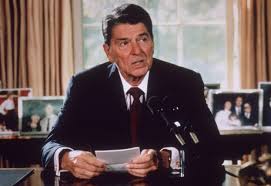
Ronald Reagan, who taught Americans to worship the wealthy
Among those charting Reagan’s legacy as President was former CBS Correspondent David Shoenbrum.
In his bestselling autobiography, America Inside Out: At Home and Abroad from Roosevelt to Reagan, he noted:
- On January 28, 1981, keeping a pledge to his financial backers in the oil industry, Reagan abolished Federal controls on the price of oil.
- Within a week, Exxon, Texaco and Shell raised gasoline prices and prices of home heating oil.
- Reagan saw it as his duty to put a floor under prices, not a ceiling above them.
- Reagan believed that when government helped business it wasn’t interfering. Loaning money to bail out a financially incompetent Chrysler was “supporting the free enterprise system.”
- But putting a high-profits tax on price-gouging corporations or filing anti-trust suits against them was “Communistic” and therefore intolerable.
- Tax-breaks for wealthy businesses meant helping America become stronger.
- But welfare for the poor or the victims of a predatory marketplace economy weakened America by sapping its morale.
“In short, welfare for the rich is good for America. But welfare for the poor is bad for America, even for the poor themselves, for it encourages them to be shiftless and lazy.
“Somehow, loans to the inefficient management of American corporations would not similarly encourage them in their inefficient methods,” wrote Shoenbrun.
Republicans have sought to dismantle Social Security ever since that program began in 1935. And Republicans have furiously opposed other programs aiding the poor and middle-class—such as Medicare, food stamps and WIC (Women, Infants, Children).
In short, this is not a political party with a history of rushing to the defense of those most in need.
So the question remains: Why are so many poor Americans flocking to its banner?
The answer lies in the history of the American South—and slavery.
2016 PRESIDENTIAL RACE, ABC NEWS, ABRAHAM LINCOLN, ALTERNET, AMERICABLOG, AP, BABY BOOMER RESISTANCE, BARACK OBAMA, BBC, BLOOMBERG NEWS, BUZZFEED, CBS NEWS, CIVIL RIGHTS ACT OF 1964, CIVIL WAR, CNN, CROOKS AND LIARS, DAILY KOZ, DANIEL DAY-LEWIS, DONALD TRUMP, EMANCIPATION PROCLAMATION, FACEBOOK, FIVETHIRTYEIGHT, HARPER’S MAGAZINE, HUFFINGTON POST, LYNDON B. JOHNSON, MEDIA MATTERS, MITT ROMNEY, MOTHER JONES, MOVEON, MOVIES, MSNBC, NBC NEWS, NEW REPUBLIC, NEWSDAY, NEWSWEEK, NPR, PBS NEWSHOUR, POLITICO, POLITICUSUSA, RAW STORY, REUTERS, SALON, SEATTLE TIMES, SLATE, SLAVERY, STEVEN SPIELBERG, TALKING POINTS MEMO, THE ATLANTIC, THE CHICAGO SUN-TIMES, THE CHICAGO TRIBUNE, THE DAILY BEAST, THE DAILY BLOG, THE GUARDIAN, THE HILL, THE HUFFINGTON POST, THE INTERCEPT, THE LOS ANGELES TIMES, THE NATION, THE NEW REPUBLIC, THE NEW YORK TIMES, THE NEW YORKER, THE VILLAGE VOICE, THE WASHINGTON POST, THINKPROGRESS, THIRTEENTH AMENDMENT, TIME, TRUTHDIG, TRUTHOUT, TWITTER, TWO POLITICAL JUNKIES, U.S. NEWS & WORLD REPORT, UPI, USA TODAY, VOTER ID LAWS, VOTING RIGHTS ACT OF 1965, WONKETTE
In Bureaucracy, Entertainment, History, Law, Military, Politics, Social commentary on July 22, 2022 at 12:18 am
Steven Spielberg’s Lincoln is more than a mesmerizing history lesson.
It’s a timely reminder that racism and repression are not confined to any one period or political party.
At the heart of the film: Abraham Lincoln (Daniel Day-Lewis) wants to win ratification of what will be the Thirteenth Amendment to the United States Constitution. An amendment that will forever ban slavery.
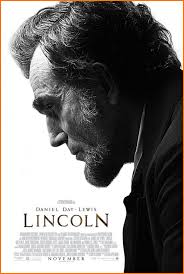
True, Lincoln, in 1862, had issued the Emancipation Proclamation. This–in theory–freed slaves held in the Confederate states that had seceded from the Union in 1861.
But Lincoln regards this as a temporary wartime measure. he fears that once the war is over, the Supreme Court may rule the Proclamation unconstitutional. This might allow Southerners to continue practicing slavery, even after losing the war.
To prevent this, Congress must pass an anti-slavery amendment.
But winning Congressional passage of such an amendment won’t be easy.
The Senate had ratified its passage in 1864. But the amendment must secure approval from the House of Representatives to become law.
And the House is filled with men–there are no women menmbers during the 19th century–who seethe with hostility.
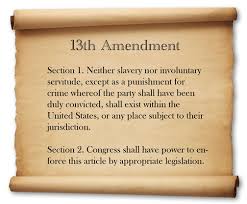
Some are hostile to Lincoln personally. One of them dubs him a dictator–Abraham Africanus.” Another accuses him of shifting his positions for the sake of expediency.
Other members–white men all–are hostile to the idea of “equality between the races.” To them, ending slavery means opening the door to interracial marriage–especially marriage between black men and white women.
Perhaps even worse, it means possibly giving blacks–or women–the the right to vote.
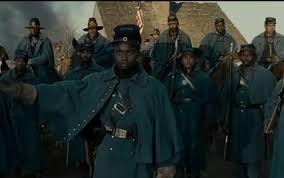
In fact, the possibility that blacks might win voting rights arises early in the movie. Lincoln is speaking to a couple of black Union soldiers, and one of them is unafraid to voice his discontent. He’s upset that black soldiers are paid less than white ones–and that they’re led only by white officers.
He says that, in time, maybe this will change. Maybe, in 100 years, he guesses, blacks will get the right to vote.
(To the shame of all Americans, that’s how long it will eventually take. Not until the passage of the Voting Rights Act of 1965 will blacks be guaranteed legal protection against discriminatory voting practices.)
To understand the Congressional debate over the Thirteenth Amendment, it’s necessary to remember this: In Lincoln’s time, the Republicans were the party of progressives.
The party was founded on an anti-slavery platform. Its members were thus reviled as “Black Republicans.” And until the 1960s, the South was solidly Democratic.
Democrats were the ones defending the status quo–slavery–and opposing freed blacks in the South of Reconstruction and long afterward.
In short, in the 18th century, Democrats in the South acted as Republicans do now. The South went Republican only after a Democratic President–Lyndon B. Johnson–rammed the Civil Rights Act of 1964 through Congress.
Watching this re-enactment of the 1865 debate in Lincoln is like watching the current Presidential campaign. The same mentalities are at work:
-
Those (in this case, slave-owners) who already have a great deal want to gain even more at the expense of others.
-
Those (slaves and freed blacks) who have little strive to gain more or at least hang onto what they have.
-
Those who defend the privileged wealthy refuse to allow their “social inferiors” to enjoy similar privileges (such as the right to vote).
During the 2012 Presidential race, Republicans tried to bar those likely to vote for President Barack Obama from getting into the voting booth. But their bogus “voter ID” restrictions were struck down in courts across the nation.
Listening to those opposing the amendment, one is reminded of Mitt Romney’s infamous comments about the “47%”:
“Well, there are 47% of the people who will vote for the president no matter what….
“Who are dependent upon government, who believe that–that they are victims, who believe that government has a responsibility to care for them, who believe that they’re entitled to healthcare, to food, to housing, to you name it. But that’s–it’s an entitlement. And the government should give it to them.”
Put another way: “Who says people have a right to obtain medical care, food and housing? If they can’t inherit unearned wealth the way I did, screw them.”
In the end, it’s Abraham Lincoln who has the final word–and leaves his nation the better for it. Through diplomacy and backroom dealings (trading political offices for votes) he wins passage of the anti-slavery amendment.
The ownership of human chattel is finally an ugly memory of the American past.
The movie closes with a historically-correct tribute to Lincoln’s generosity toward those who opposed him–in Congress and on the battlefield. It occurs during Lincoln’s Second Inaugural Address:
“With malice toward none, with charity for all….To bind up the nation’s wounds. To care for him who shall have bourne the battle, and for his widow and his orphan….”
This ending presents a vivid philosophical contrast with the increasingly mean-spirited rhetoric and policies of 2016’s Republican candidates for President–especially those of Donald Trump.
Watching Lincoln, you realize how incredibly lucky America was as a nation to have had such leadership when it was most urgently needed.
2012 PRESIDENTIAL RACE, ALTERNET, AP, BARACK OBAMA, BAY OF PIGS, BBC, BERLIN WALL, BILL CLINTON, BRUCE GREENWOOD, BUZZFEED, CARLOS MARCELLO, CBS NEWS, CIA, CIVIL RIGHTS, CLIFF ROBERTSON, CNN, CUBAN MISSILE CRISIS, DAILY KOS, DAVID HALBERSTAM, DONALD J. TRUMP, FACEBOOK, FBI, FIDEL CASTRO, FRANK SINATRA, HERMAN CAIN, ICH BEN EIN BERLINNER SPEECH, INTERNET MOVIE DATABASE, J. EDGAR HOOVER, JAMES MARSDEN, JOHN F. KENNEDY, JOSEPH MCCARTHY, JOSEPH P. KENNEDY, LYNDON B. JOHNSON, MAFIA, MALCOM X, MARTIN LUTHER KING, MARTIN SHEEN, MOTHER JONES, MOVEON, MOVIES, NBC NEWS, NEWSWEEK, NEWT GINGRICH, NIKITA KHRUSHCHEV, NPR, NUCLEAR TEST BAN TREATY, POLITICO, PT-109, RAW STORY, REUTERS, RICK PERRY, ROBERT F. KENNEDY, ROBERT S. MCNAMARA, SALON, SAM GIANCANA, SANTOS TRAFFICANTE, Sarah Palin, SATURDAY NIGHT LIVE, SEATTLE TIMES, SLATE, SOVIET UNION, THE ATLANTIC, THE BEST AND THE BRIGHTEST, THE BUTLER, THE CHICAGO SUN-TIMES, THE CHICAGO TRIBUNE, THE DAILY BEAST, THE GUARDIAN, THE HILL, THE HUFFINGTON POST, THE LOS ANGELES TIMES, THE MISSILES OF OCTOBER, THE NEW YORK TIMES, THE RAT PACK, THE WALL STREET JOURNAL, THE WASHINGTON POST, THIRTEEN DAYS, TIME, TWILIGHT ZONE, TWITTER, U.S. NEWS & WORLD REPORT, UPI, USA TODAY, VIETNAM WAR, WILLIAM DEVANE, WILLIAM PETERSON
In Bureaucracy, Business, History, Law, Law Enforcement, Military, Politics, Social commentary on July 15, 2022 at 12:10 am
Fifty-nine years ago, on November 22, 1963, two bullets slammed into the neck and head of President John Fitzgerald Kennedy.
It has been said that he left his country with three great legacies:
- The Nuclear Test Ban Treaty;
- The Apollo moon landing; and
- The Vietnam war.
Of these, the following can be said with certainty:
- The Test Ban Treaty has prevented atmosphereic testing—and poisoning—by almost all the world’s nuclear powers.
- After reaching the moon—in 1969—Americans quickly lost interest in space and have today largely abandoned plans for manned exploration. For America, as for JFK, beating the Russians to the moon was the end-goal.
- Under Presidents Lyndon Johnson and Richard Nixon, 58,000 Americans died in Vietnam; 153,303 were wounded; and billions of dollars were squandered in a hopeless effort to intervene in what was essentially a Vietnamese civil war. From 1965 to 1972, the war angrily divided Americas as had no event since the Civil War.
But there was a fourth legacy—and perhaps the most important of all: The belief that mankind could overcome its greatest challenges through rationality and perseverance.
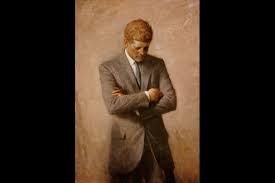
White House painting of JFK
At American University on June 10, 1963, Kennedy called upon his fellow Americans to re-examine the events and attitudes that had led to the Cold War. And he declared that the search for peace was by no means absurd:
“Our problems are man-made; therefore, they can be solved by man. And man can be as big as he wants. No problem of human destiny is beyond human beings.
“Man’s reason and spirit have often solved the seemingly unsolvable, and we believe they can do it again.”
Today, politicians from both parties cannot agree on solutions to even the most vital national problems.
On November 21, 2011, the 12 members of the “Super-Committee” of Congress, tasked with finding $1.2 trillion in cuts in government spending, threw up their hands in defeat.
President Kennedy insisted on being well-informed. He speed-read several newspapers every morning and nourished personal relationships with the press—and not for altruistic reasons. These journalistic contacts gave Kennedy additional sources of information and perspectives on national and international issues.
During the 2012 Presidential campaign, Republican Presidential candidates celebrated their ignorance of both.
Former Godfather’s Pizza CEO Herman Cain famously said, “We need a leader, not a reader.” Thus he excused his ignorance for why President Barack Obama had intervened in Libya.
Texas Governor Rick Perry (and now Secretary of Energy) showed similar pride in not knowing there are nine judges on the United States Supreme Court:
“Well, obviously, I know there are nine Supreme Court judges. I don’t know how eight came out my mouth. But the, uh, the fact is, I can tell you—I don’t have memorized all of those Supreme Court judges. And, uh, ah—
“Here’s what I do know. That when I put an individual on the Supreme Court, just like I done in Texas, ah, we got nine Supreme Court justices in Texas, ah, they will be strict constructionists….”
In short, it’s the media’s fault if they ask you a question and your answer reveals your own ignorance, stupidity or criminality.
Sarah Palin rewrote history via “The Midnight Ride of Paul Revere”: “He warned the British that they weren’t going to be taking away our arms by ringing those bells and, um, making sure as he’s riding his horse through town to send those warning shots and bells that, uh, we were going to be secure and we were going to be free.”
In fact, Revere wasn’t warning the British about anything. Instead, he was warning his fellow Americans about an impending British attack—as his celebrated catchphrase “The British are coming!” made clear.
During the height of the Cuban Missile Crisis, Kennedy spoke with aides about a book he had just finished: Barbara Tuchman’s The Guns of August, about the events leading to World War 1.
He said that the book’s most important revelation was how European leaders had blindly rushed into war, without thought to the possible consequences. Kennedy told his aides he did not intend to make the same mistake—that, having read his history, he was determined to learn from it.
Republicans attacked President Obama for his Harvard education and articulate use of language. Among their taunts: “Hitler also gave good speeches.”
And they resented his having earned most of his income as a writer of two books: Dreams From My Father and The Audacity of Hope. As if being a writer is somehow subversive.
When knowledge and literacy are attacked as “highfalutin’” arrogance, and ignorance and incoherence are embraced as sincerity, national decline lies just around the corner.
Many Americans believe that decline arrived with the 2016 election of Donald Trump. In fact, they believe it was Trump who announced it after winning the Nevada Republican primary: “We won with poorly educated. I love the poorly educated.”
In retrospect, the funeral for President Kennedy marked the death of more than a rational and optimistic human being.
It marked the death of Americans’ pride in choosing reasoning and educated citizens for their leaders.

The Eternal Flame at the grave of President John F. Kennedy


2016 PRESIDENTIAL CAMPAIGN, 2016 PRESIDENTIAL ELECTION, 2020 PRESIDENTIAL ELECTION, ABC NEWS, ADOLF HITLER, ALTERNET, AMERICABLOG, AP, ARMED SERVICES, ARTICLES OF IMPEACHMENT, BABY BOOMER RESISTANCE, BARACK OBAMA, BLOOMBERG, BUZZFEED, CBS NEWS, CIA, CLAUS VON STAUFFENBERG, CNN, CROOKS AND LIARS, DAILY KOZ, DANA ANDREWS, DONALD TRUMP, FACEBOOK, FBI, FIDEL CASTRO, FIVETHIRTYEIGHT, GESTAPO, HARPER’S MAGAZINE, IMPEACHMENT, JACOBO ARBENZ, JAMES B. COMEY, JAMES MATTIS, JOHN KASICH, JOHN MCCAIN, JOSEPH BIDEN, JUSTICE DEPARTMENT, KIM JONG ON, MARK ESPER, MARTIN NIEMOELLER, MEDIA MATTERS, MOHAMMED MOSADDEGH, MOTHER JONES, MOVEON, MSNBC, MUSLIMS, NATIONAL SECURITY AGENCY, NAZI GERMANY, NBC NEWS, NEWSWEEK, NPR, PBS NEWSHOUR, POLITICO, POLITICUSUSA, RAW STORY, REPUBLICANS, REUTERS, SALON, SEATTLE TIMES, SERGEY KISLYAK, SERGEY LAVROV, SLATE, SUPREME COURT, TALKING POINTS MEMO, THE ATLANTIC, THE CHICAGO SUN-TIMES, THE CHICAGO TRIBUNE, THE DAILY BEAST, THE DAILY BLOG, THE GUARDIAN, THE HILL, THE HOLOCAUST, THE HUFFINGTON POST, THE JUDICIARY, THE LOS ANGELES TIMES, THE NATION, THE NEW REPUBLIC, THE NEW YORK TIMES, THE PENTAGON, THE PRESS, THE SS, THE VILLAGE VOICE, THE WASHINGTON POST, THINKPROGRESS, THIRD REICH, TIME, TRUTHDIG, TRUTHOUT, TWENTY-FIFTH AMENDMENT, TWILIGHT ZONE, TWITTER, TWO POLITICAL JUNKIES, U.S. NEWS & WORLD REPORT, UNITED STATES CONSTITUTION, UNITED STATES HOUSE OF REPRESENTATIVES, UNITED STATES SECRET SERVICE, UNITED STATES SENATE, UPI, USA TODAY, VLADIMIR PUTIN, VOTER FRAUD, WHERMACHT, WONKETTE, WORLD WAR 11
NAZI DEJA-VU AMERICAN STYLE: PART ONE (OF THREE)
In Bureaucracy, History, Military, Politics, Social commentary on August 23, 2022 at 12:10 amIn the Twilight Zone episode, “No Time Like the Past,” Paul Driscoll (Dana Andrews), a scientist in early 1960s America, uses a time machine to visit Nazi Germany on the eve of World War II.
He’s rented a motel room overlooking the balcony from where the Fuehrer, Adolf Hitler will soon make a speech. And he’s eager to watch that speech—through the lens of a telescopic-sighted rifle.
Just as he’s about to pull the trigger, there’s a knock at his door–by the maid. Driscoll hustles her out as soon as possible, then once again picks up his rifle. He—and viewers—can once again see Hitler through the cross-hairs of his weapon.
Paul Driscoll prepares to shoot Adolf Hitler
But instead of the anticipated shot, there’s another knock at his door—his time by the black-uniformed secret police, the SS. Driscoll knows the game is up, and disappears into the present just as the thugs break down his door.
And the audience is left to ponder how different the world would have been if Driscoll—or someone in Nazi Germany—had succeeded in assassinating the man whose wars would wipe out the lives of 50 million men, women and children around the globe.
One 2016 Republican candidate for President dared to invoke the menace of Nazi Germany in warning of the dangers of a Donald Trump Presidency. And to argue that Americans could prevent that past from returning.
In November, 2015, John Kasich, the governor of Ohio, was peddling a message of creating jobs, balancing the Federal budget and disdain for Washington, D.C.
John Kasich
But he remained far behind in the polls, dropping 50% in support in just one month—from September to October. Meanwhile, Trump, the New York billionaire developer, was being backed by 25% of Republican primary voters.
So, with nothing to lose, Kasich decided to take off the gloves. He invoked the “N” word for Republicans: Nazi.
He authorized the creation of a TV ad that opened with ominous music—and the face of a snarling Donald Trump.
“I would like anyone who is listening to consider some thoughts that I’ve paraphrased from the words of German pastor Martin Niemoeller.”
The voice belonged to Tom Moe, a retired colonel in the U.S. Air Force—and a former Vietnam prisoner-of-war.
“You might not care if Donald Trump says Muslims must register with the government, because you’re not one,” continued Moe.
“And you might not care if Donald Trump says he’s going to round up all the Hispanic immigrants, because you’re not one.
Donald Trump
“And you might not care if Donald Trump says it’s OK to rough up black protesters, because you’re not one.
“And you might not care of Donald Trump wants to suppress journalists, because you’re not one.
“But think about this:
“If he keeps going, and he actually becomes President, he might just get around to you. And you’d better hope that there’s someone left to help you.”
Martin Niemoeller (1892–1984) was a prominent Protestant pastor who had commanded a U-boat during World War 1. He became a bitter public foe of Adolf Hitler.
A staunch anti-Communist, he had initially supported the Nazis as Germany’s only hope of salvation against the Soviet Union.
But when the Nazis made the church subordinate to State authority, Niemoeller created the Pastors’ Emergency League to defend religious freedom.
For his opposition to the Third Reich, Niemoeller spent seven years in concentration camps.
With the collapse of the Reich in 1945, he was freed—and elected President of the Protestant church in Hesse and Nassau in 1947. During the 1960s, he was a president of the World Council of Churches.
He is best remembered for his powerful condemnation of the failure of Germans to protest the increasing oppression of the Nazis:
First they came for the Communists, but I was not a Communist, so I did not speak out.
Then they came for the Socialists, but I was not a Socialist, so I did not speak out.
Then they came for the trade unionists, but I was not a trade unionist, so I did not speak out.
Then they came for the Jews, but I was not a Jew, so I did not speak out.
And when they came for me, there was no one left to speak out for me.
Neither “Adolf Hitler” nor “Nazi Party” was mentioned during the one-minute Kassich video. But a furious Trump threatened to sue Kasich if he could find find anything “not truthful” within the ad.
Apparently he couldn’t find anything “not truthful,” because he never sued.
So threatened the man who had called Mexican immigrants “rapists” and accused President Barack Obama of being a Muslim and an illegal alien.
The Kasich ad was the darkest attack made against Trump by any candidate—Republican or Democrat. And it raised a disturbing question:
If Donald Trump proved to be America’s Adolf Hitler, would there be an American Claus von Stauffenberg?
Colonel Claus Schenk von Stuaffenberg was the German army officer who, on July 20, 1944, tried to assassinate Adolf Hitler.
Share this: