Posts Tagged ‘ADOLF HITLER’
ABC NEWS, ADOLF HITLER, ALTERNET, AMERICABLOG, ANDREW JOHNSON, AP, ARTICLES OF IMPEACHMENT, BABY BOOMER RESISTANCE, BILL CLINTON, BUZZFEED, CBS NEWS, CNN, CROOKS AND LIARS, DAILY KOZ, DONALD TRUMP, DRUDGE RETORT, EVA BRAUN, FACEBOOK, FBI, FIVETHIRTYEIGHT, FOUNDING FATHERS, HARPER’S MAGAZINE, HEINRICH HIMMLER, HERMANN GORING, IMPEACHMENT, LAST POLITICAL TESTAMENT OF AOLD HITLER, MEDIA MATTERS, MOTHER JONES, MOVEON, MSNBC, NANCY PELOSI, NAZI GERMANY, NBC NEWS, NEWSWEEK, NPR, PBS NEWSHOUR, POLITICO, POLITICUSUSA, RAW STORY, REUTERS, RICHARD NIXON, SALON, SEATTLE TIMES, SLATE, TALKING POINTS MEMO, THE ATLANTIC, THE CHICAGO SUN-TIMES, THE CHICAGO TRIBUNE, THE DAILY BEAST, THE DAILY BLOG, THE GUARDIAN, THE HILL, THE HUFFINGTON POST, THE LOS ANGELES TIMES, THE NATION, THE NEW REPUBLIC, THE NEW YORK TIMES, THE VILLAGE VOICE, THE WASHINGTON POST, THINKPROGRESS, THIRD REICH, TIME, TRUTHDIG, TRUTHOUT, TWITTER, TWO POLITICAL JUNKIES, U.S. NEWS & WORLD REPORT, UKRAINE, UNITED STATES CONSTITUTION, UNITED STATES HOUSE OF REPRESENTATIVES, UNITED STATES SENATE, UPI, USA TODAY, WONKETTE, WORLD WAR 1, WORLD WAR 11
In Bureaucracy, History, Law, Law Enforcement, Military, Politics, Social commentary on January 23, 2020 at 12:05 am
“We’re achieving what no administration has ever achieved before,” President Donald Trump said in a speech to the American Farm Bureau on January 19. “And what do I get out of it? Tell me. I get impeached! That’s what I get out of it. By these radical left lunatics, I get impeached.”
His attitude reflects that of another self-pitying, all-powerful man whose egomania and lust for power brought him to destruction: Adolf Hitler.
On December 17, 2019, facing certain impeachment in the Democratic-controlled House of Representatives, Trump sent a vicious, self-pitying letter its Speaker, Nancy Pelosi.
Trump doesn’t care about history, nor is he even knowledgeable about it. But he does care about labels—those he gives his enemies and those they give him. And he desperately wanted to avoid having “impeachment” attached to his name in American Presidential history.
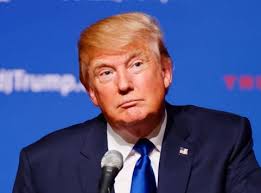
Donald Trump
Trump was facing two deadly charges:
Article 1: Abuse of Power: For pressuring Ukraine to assist him in his re-election campaign by damaging former Vice President Joe Biden, his possible Democratic rival.
Article 2: Obstruction of Congress: For obstructing Congress by blocking testimony of subpoenaed witnesses and refusing to provide documents in response to House subpoenas in the impeachment inquiry.
And he had tried—and failed—to head these off by insults and intimidation. Just two days earlier, he had tweeted about the Speaker: “Nancy’s teeth were falling out of her mouth, and she didn’t have time to think!”
So, on December 17, he sought to do in a letter what he had failed to do on Twitter. He sent a ranting and insulting six-page letter to Nancy Pelosi.

Nancy Pelosi
The Washington Post estimates that from the day he took office—January 20, 2017—to October 9, 2019—Trump had made 13,435 false or misleading claims.
And in sending his letter to Pelosi, he remained true to form.
His letter has no precedent in American history. But there is such a precedent in German history—specifically, the infamous “Last Political Testament” of Adolf Hitler.
Hitler dictated this to a secretary at 4 a.m. on April 29, 1945, shortly after marrying his longtime mistress, Eva Braun. The marriage occurred in his bunker in Berlin under the now-shattered Reich Chancellery.
Even 50 feet below ground, the structure shook as bombs continued to rain from American and British planes. And, at ground level, a more deadly threat was fast approaching: At least one million enraged Russian soldiers, seeking vengeance for the devastation wrought on their country from 1941 to 1945.
Hitler knew the end was closing in on him. He had many times spoken of suicide, and now he was determined to cheat his enemies of the pleasure of killing or capturing him. But before he ended his life, he was determined to have the last word.
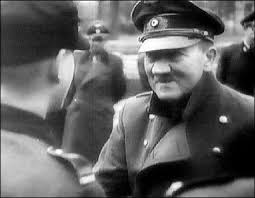
Adolf Hitler
Which is where “My Political Testament” comes in.
Seventy-four years separate Adolf Hitler’s testament from Donald Trump’s letter to Nancy Pelosi. But the similarities between the two are uncanny.
ADOLF HITLER: More than thirty years have now passed since I in 1914 made my modest contribution as a volunteer in the first world war that was forced upon the Reich.
In these three decades I have been actuated solely by love and loyalty to my people in all my thoughts, acts and life. They gave me the strength to make the most difficult decisions which have ever confronted mortal man. I have spent my time, my working strength and my health in these three decades.
DONALD TRUMP: After three years of unfair and unwarranted investigations, 45 million dollars spent, 18 angry Democrat prosecutors, the entire force of the FBI, headed by leadership now proven to be totally incompetent and corrupt, you have found NOTHING!
Few people in high position could have endured or passed this test. You do not know, nor do you care, the great damage and hurt you have inflicted upon wonderful and loving members of my family. You conducted a fake investigation upon the democratically elected President of the United States, and you are doing it yet again.
ADOLF HITLER: It is untrue that I or anyone else in Germany wanted the war in 1939. It was desired and instigated exclusively by those international statesmen who were either of Jewish descent or worked for Jewish interests.
I have made too many offers for the control and limitation of armaments, which posterity will not for all time be able to disregard for the responsibility for the outbreak of this war to be laid on me.
DONALD TRUMP: The Articles of Impeachment introduced by the House Judiciary Committee are not recognizable under any standard of Constitutional theory, interpretation, or jurisprudence. They include no crimes, no misdemeanors, and no offenses whatsoever. You have cheapened the importance of the very ugly word, impeachment!
By proceeding with your invalid impeachment, you are violating your oaths of office, you are breaking your allegiance to the Constitution, and you are declaring open war on American Democracy.
You dare to invoke the Founding Fathers in pursuit of this election-nullification scheme — yet your spiteful actions display unfettered contempt for America’s founding and your egregious conduct threatens to destroy that which our Founders pledged their very lives to build.
ABC NEWS, ADOLF HITLER, ALTERNET, AMERICABLOG, AP, BABY BOOMER RESISTANCE, BENITO MUSSOLINI, BUZZFEED, CBS NEWS, CNN, CROOKS AND LIARS, DAILY KOS, DEMOCRATS, DICTATORSHIP, DONALD TRUMP, DRUDGE RETORT, FASCISM, FIVETHIRTYEIGHT, HARPER’S MAGAZINE, IMPEACHMENT, IVAN THE TERRIBLE, JOSEPH STALIN, LEON TROTSKY, MEDIA MATTERS, MOTHER JONES, MOVEON, MSNBC, NAZI GERMANY, NBC NEWS, NEWSWEEK, NPR, PBS NEWSHOUR, POLITICO, POLITICUSUSA, RAW STORY, REPUBLICANS, REUTERS, ROBERT PAYNE, SALON, SEATTLE TIMES, SLATE, SOVIET UNION, TALKING POINTS MEMO, THE ATLANTIC, THE CHICAGO SUN-TIMES, THE CHICAGO TRIBUNE, THE CORRUPT SOCIETY (BOOK), THE DAILY BEAST, THE DAILY BLOG, THE GUARDIAN, THE HILL, THE HUFFINGTON POST, THE LOS ANGELES TIMES, THE NATION, THE NEW REPUBLIC, THE NEW YORK TIMES, THE VILLAGE VOICE, THE WASHINGTON POST, THINKPROGRESS, TIME, TRUTHDIG, TRUTHOUT, TWO POLITICAL JUNKIES, U.S. NEWS & WORLD REPORT, UNITED STATES CONSTITUTION, UNITED STATES HOUSE OF REPRESENTATIVES, UNITED STATES SENATE, UPI, USA TODAY, Vladimir Lenin, WILLIAM SHAKESPEARE, WINSTON CHURCHILL, WONKETTE, X
In Bureaucracy, History, Law, Law Enforcement, Military, Politics, Social commentary on January 22, 2020 at 12:21 am
According to a January 18 CNN story, President Donald Trump can’t understand why he’s been impeached.
“Why are they doing this to me,” an anonymous source quoted Trump as saying repeatedly. Over the weekend of January 18-19, Trump told people around him at Mar-a-Lago that he “can’t understand why he is impeached.”
For starters, he could read the legal brief that Democratic House managers filed with the Senate:
“President Donald J. Trump used his official powers to pressure a foreign government to interfere in a United States election for his personal political gain, and then attempted to cover up his scheme by obstructing Congress’s investigation into his misconduct.
“The Constitution provides a remedy when the President commits such serious abuses of his office: impeachment and removal. The Senate must use that remedy now to safeguard the 2020 U.S. election, protect our constitutional form of government, and eliminate the threat that the President poses to America’s national security.”
But Trump has completely dismissed such arguments, despite the overwhelming evidence backing them up.
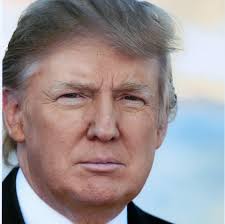
Donald Trump
Trump has become internationally notorious as a liar. By December 16, 2019, The Washington Post reported that he had made 15,413 false or misleading statements.
But there is no reason to doubt his sincerity when he says he doesn’t know why he’s been impeached.
And backing up that assertion would be no less an authority than the late British historian and author, Robert Payne.
Payne authored more than 110 books. Among his subjects were Adolf Hitler, Ivan the Terrible, Winston Churchill, Joseph Stalin, Vladimir Lenin, William Shakespeare and Leon Trotsky.
In 1975, he published The Corrupt Society: From Ancient Greece to Present-Day America. Among the epochs it covered were the civilizations of ancient Greece, Rome and China; Nazi Germany; the Soviet Union; and Watergate-era America.
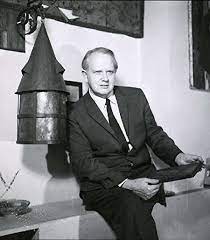

Robert Payne
Forty-one years before Donald Trump entered the White House, Payne offered a terrifying examination of the future President’s character.
In his chapter, “The Corrupt Individual,” Payne writes: “The corrupt man walks alone, gathering more and more power and wealth to himself, leaving a trail of destruction wherever he passes until he finally destroys himself.”

“One aspect of him is immediately recognizable: His contempt for his fellow men. Hence his ruthlessness, his celebration of himself at the expense of everyone else, his absorption in his own affairs to the exclusion of all other affairs.
“Hence, too, his secretiveness, his intense sensitivity to real or imagined slights, for his contempt does not exclude a certain fear. He is necessarily a conspirator who imagines that his fellow men are conspiring against him.”
The corrupt man holds human life in contempt. He does not care how many people he kills or destroys on his march to fame, wealth or power—and to maintain himself in any or all of them.
When a nation is weak and divided, “a tyrant arises to take advantage of their weakness and divisiveness. He comes usually from the middle or upper class.”
He quickly identifies himself with a political party offering revolutionary changes. Then he takes control of it and turns it into his vehicle to power.
“He acts decisively and ruthlessly, driving wedges between people and setting them in opposition to one another. He is the master of corruption, and if necessary he will seek to corrupt the whole state to maintain his power. His weapons are the familiar weapons of subversion, treachery, and lies.”
Tyrants plunge into dangerous foreign adventures because it allows them to assert power over others with almost no domestic oversight. This makes them feel important—and distracts their subjects from worrying about internal affairs.
Tyrants shout, “We need law and order!”—while they are the most lawless thieves and murderers.
Tyrants learn nothing from the past or their own failures. Their characters do not change or develop. They surround themselves with sycophants and regard disagreement as treason. Because others fear to approach them with bad news—such as their armies have revolted—tyrants live in a world of lies and delusions.
Only when it is too late do they learn how widely-hated they are—and how determined their enemies are to destroy them.
Writes Payne:
“In our own age it becomes more and more difficult to wage war against corruption. The corrupt tend increasingly to acquire power, and the uncorrupted want more and more to be left alone.
“This is why it is so necessary to recognize the corrupt individual, the potential tyrant, to observe him closely, and wherever possible, to destroy him.”
Most Americans ignore history, believing that it has nothing worthwhile to offer them. When American military advisers in Vietnam were warned that the French had fought a losing war against the Vietcong, they responded: “They didn’t kill enough Vietcong.”
When Americans think of Fascistic dictatorships, they think of Adolf Hitler’s Germany and Benito Mussolini’s Italy—both of which ended 74 years ago in 1945.
They don’t think that such a dictatorship could ever happen here—or that, under a Republican party obsessed with holding absolute power, it has already happened.
2016 PRESIDENTIAL ELECTION, 2020 PRESIDENTIAL ELECTION, ABC NEWS, ADAM SCHIFF, ADOLF HITLER, ALTERNET, AMERICABLOG, AP, BABY BOOMER RESISTANCE, BUZZFEED, CBS NEWS, CIA, CNN, CROOKS AND LIARS, DAILY KOZ, DIRECTOR OF NATIONAL INTELLIGENCE, DONALD TRUMP, DRUDGE RETORT, FACEBOOK, FBI, FIVETHIRTYEIGHT, FOX NEWS SUNDAY, HARPER’S MAGAZINE, HEZBOLLAH, HUNTER BIDEN, IRAN, JAKE TAPPER, JAMES B. COMEY, JAMES R. CLAPPER, JOE BIDEN, MATT BEVIN, MEDIA MATTERS, MITCH MCCONNELL, MOTHER JONES, MOVEON, MSNBC, NANCY PELOSI, NATIONAL SECURITY AGENCY, NBC NEWS, NEWSWEEK, NPR, PARDONS, PBS NEWSHOUR, POLITICO, POLITICUSUSA, QASSEM SOLEIMANI, RAW STORY, REUTERS, ROBERT PAYNE, RUSSIA, SALON, SEATTLE TIMES, SLATE, TALKING POINTS MEMO, THE ATLANTIC, THE CHICAGO SUN-TIMES, THE CHICAGO TRIBUNE, THE DAILY BEAST, THE DAILY BLOG, THE GUARDIAN, THE HILL, THE HUFFINGTON POST, THE LIFE AND DEATH OF ADOLF HITLER (BOOK), THE LOS ANGELES TIMES, THE NATION, THE NEW REPUBLIC, THE NEW YORK TIMES, THE NEW YORKER, THE PENTAGON, THE VILLAGE VOICE, THE WASHINGTON POST, THINKPROGRESS, TIME, TRUTHDIG, TRUTHOUT, TWITTER, TWO POLITICAL JUNKIES, U.S. NEWS & WORLD REPORT, UKRAINE, UNITED STATES HOUSE OF REPRESENTATIVES, UNITED STATES SENATE, UPI, USA TODAY, VLADIMIR PUTIN, VOLODYMUR ZELENSKY, WONKETTE
In Bureaucracy, History, Military, Politics, Social commentary on January 6, 2020 at 1:10 am
Major General Qassem Soleimani commanded Iran’s elite Quds Force, which oversees and carries out intelligence operations, terrorist plots and unconventional warfare outside of Iran.
On January 3, he was killed by an American Predator drone near Baghdad International Airport. Another casualty of the attack was Jafar Ibrahimi, a leader of Hezbollah (“Party of God”).
A 2013 profile of Soleimani in The New Yorker referred to him as “the shadow commander” who was “reshaping the Middle East.” The Washington Post called him Iran’s “most revered military leader.”
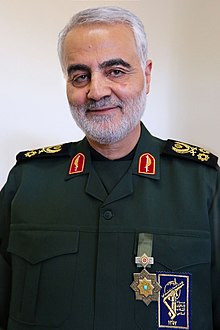
Qassem Soleimani
http://farsi.khamenei.ir/photo-album?id=41944#i [CC BY (https://creativecommons.org/licenses/by/4.0)%5D
There are at least three reasons for this targeted killing.
Reason #1: According to President Donald Trump, the strike was ordered because Soleimani was “actively developing plans” to attack American troops and officials within the Middle East.
A statement released by the Pentagon claimed:
“General Soleimani was developing plans to attack American diplomats and service members in Iraq and throughout the region. General Soleimani and his Quds Force were responsible for the deaths of hundreds of American and coalition service members and the wounding of thousands more….
“This strike was aimed at deterring future Iranian attack plans.”
There are just two problems with this claim:
First, from the day he took office—January 20, 2017—to October 14, 2019, Trump had made 13,435 false or misleading claims, according to the Washington Post. To foreign leaders as well as Americans who aren’t his fanatical followers, his word means nothing.
Second, Trump has repeatedly insulted America’s top Intelligence agencies and rejected their unanimous findings when he didn’t like the news.
On December 16, 2016, then-FBI Director James B. Comey and Director of National Intelligence James R. Clapper Jr. agreed with a CIA assessment that Russia intervened in the 2016 election in part to help Donald Trump win the White House.
Trump, however, steadfastly denied any such role by Russia: “I think it’s ridiculous,” he told “Fox News Sunday.” “I think it’s just another excuse. I don’t believe it….No, I don’t believe it at all.”

Reason #2: Killing Soleimani served to distract Americans from the fact that, on December 18, the House of Representatives had impeached Donald Trump along party lines.
In July, 2019, Trump had tried to extort a “favor” from Volodymyr Zelensky, the president of Ukraine: Find embarrassing “dirt” on former Vice President Joseph Biden and his son, Hunter.
Hunter had had business dealings in Ukraine. And Joe Biden might be Trump’s Democratic opponent for the White House in 2020.
Since then, House Speaker Nancy Pelosi has become enraged at Republicans’ bragging that their majority in the Senate would acquit Trump no matter how much evidence of his criminality was submitted. So she had refused to submit the Articles of Impeachment to the Senate, in hopes of pressuring Senate Majority Leader Mitch McConnell to craft a more objective trial procedure.
Thus, the Soleimani killing served, for Trump, as the ultimate “wag the dog” event.
Donald Trump
Reason #3: Trump is taking his revenge on the United States for his impeachment.
On November 5, Kentucky voters refused to re-elect Republican Governor Matt Bevin. To get revenge, he issued hundreds of pardons before he left office on December 9.
Among those pardoned: Convicted killer Patrick Baker, whose family held a fundraiser for Bevin in 2018, and a convicted sex offender whose mother was married to a millionaire road contractor.
These hardened criminals will be preying on Kentuckians for decades to come.
Donald Trump is furious at being impeached. Taking his cue from Bevin, he has decided to punish the country because a handful of Democrats dared to oppose his criminality.
So he has provoked a war with Iran to ensure that thousands of Americans—soldiers and civilians—die in decades to come.
In his bestselling 1973 biography, The Life and Death of Adolf Hitler, British historian Robert Payne harshly condemned the German people for the rise of the Nazi dictator.
“[They] allowed themselves to be seduced by him and came to enjoy the experience….[They] followed him with joy and enthusiasm because he gave them license to pillage and murder to their hearts’ content. They were his servile accomplices, his willing victims….
“If he answered their suppressed desires, it was not because he shared them, but because he could make use of them. He despised the German people, for they were merely the instruments of his will.”
Americans have long smugly condemned those Germans who fanatically supported Hitler or stood by impassively while he ordered horrendous crimes and unleashed a world war that claimed 50 million lives.
One American who has learned from the lessons of history is Rep. Adam Schiff (D-CA), chairman of the House Intelligence Committee.
On November 25, Schiff warned what would happen if Republicans opposed any articles of impeachment against Trump:
“It will have very long-term consequences, if that’s where we end up. And if not today, I think Republican members in the future, to their children and their grandchildren, will have to explain why they did nothing in the face of this deeply unethical man who did such damage to the country.”
The harm that Trump has so far done to the United States is nothing compared to the devastation coming from a needless war with a country fast gaining a nuclear arsenal.
2016 PRESIDENTIAL ELECTION, ABC NEWS, ABRAHAM LINCOLN, ADOLF HITLER, ALTERNET, AMERICABLOG, AP, BABY BOOMER RESISTANCE, BARACK OBAMA, BUZZFEED, CBS NEWS, CIA, CIVIL WAR, CNN, CROOKS AND LIARS, DAILY KOS, DAILY KOZ, DONALD TRUMP, DRUDGE RETORT, FACEBOOK, FBI, FIVETHIRTYEIGHT, FRANKLIN D. ROOSEVELT, GREAT DEPRESSION, HARPER’S MAGAZINE, HERBERT HOOVER, HILLARY CLINTON, HITLER (BOOK), JOACHIM C. FEST, JOHN F. KENNEDY, LYNDON B. JOHNSON, MEDIA MATTERS, MOTHER JONES, MOVEON, MSNBC, NBC NEWS, NEWSWEEK, NPR, OTTO VON BISMARK, PBS NEWSHOUR, POLITICO, POLITICUSUSA, RAW STORY, REUTERS, RICHARD M. NIXON, RUSSIA, SALON, SEATTLE TIMES, SLATE, SLAVERY, TALKING POINTS MEMO, THE ATLANTIC, THE CHICAGO SUN-TIMES, THE CHICAGO TRIBUNE, THE DAILY BEAST, THE DAILY BLOG, THE GUARDIAN, THE HILL, THE HUFFINGTON POST, THE LOS ANGELES TIMES, THE NATION, THE NEW REPUBLIC, THE NEW YORK TIMES, THE VILLAGE VOICE, THE WALL STREET JOURNAL, THE WASHINGTON POST, THEODORE ROOSEVELT, THINKPROGRESS, TIME, TRUTHDIG, TRUTHOUT, TWITTER, TWO POLITICAL JUNKIES, U.S. NEWS & WORLD REPORT, UPI, USA TODAY, VIETNAM WAR, VLADIMIR PUTIN, WATERGATE, WONKETTE, WORLD WAR 11
In Bureaucracy, History, Politics, Social commentary on December 23, 2019 at 12:07 am
Why are some Presidents remembered with affection, while others are detested—or forgotten altogether?
Generally, Presidents who are warmly remembered are seen as making positive contributions to the lives of their fellow Americans and being “people-oriented.”
Among these:
- Abraham Lincoln
- Theodore Roosevelt
- Franklin Roosevelt
- John F. Kennedy
Among the reasons they are held in such high regard:
- Abraham Lincoln ended slavery and restored the Union. Although he ruthlessly prosecuted the Civil War, his humanity remains engraved in stories such as his pardoning a soldier condemned to be shot for cowardice: “If Almighty God gives a man a cowardly pair of legs, how can he help their running away with him?”
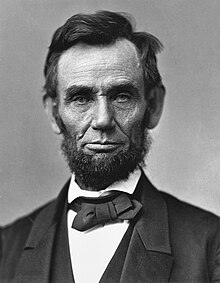
Abraham Lincoln
- Theodore Roosevelt championed an era of reform, such as creating the Food and Drug Administration and five National Parks. Popularly known as “Teddy,” he even had a toy bear—the teddy bear—named after him.
- Franklin D. Roosevelt successfully led America through the Great Depression and World War II. He was the first President to insist that government existed to directly better the lives of its citizens: “The test of our progress is not whether we add more to the abundance of those who have much; it is whether we provide enough for those who have too little.”
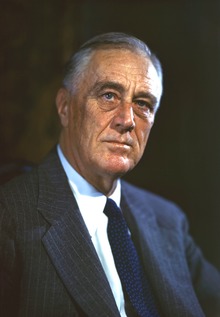
Franklin D. Roosevelt
- John F. Kennedy supported civil rights and called for an end to the Cold War. He challenged Americans to “ask what you can do for your country” and made government service respectable, even chic. His youth, charisma, intelligence and handsomeness led millions to mourn for “what might have been” had he lived to win a second term.
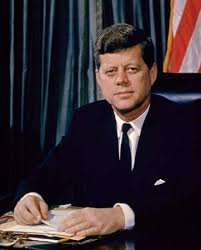
John F. Kennedy
Presidents who remain unpopular among Americans are seen as unlikable and responsible (directly or not) for mass suffering.
Among these:
- Herbert Hoover
- Lyndon B. Johnson
- Richard M. Nixon
Among the reasons they are held in such low regard:
- Herbert Hoover is still blamed for the 1929 Great Depression. He didn’t create it, but his conservative, “small-government” philosophy led him to refuse to aid its victims. An engineer by profession, he saw the Depression as a machine that needed repair, not as a catastrophe for human beings. This lack of “emotional intelligence” cost him heavily with voters.
- Lyndon B. Johnson is still blamed as the President “who got us into Vietnam.” John F. Kennedy had laid the groundwork by placing 16,000 American troops there by the time he died in 1963. But it was Johnson who greatly expanded the war in 1965 and kept it going—with hugely expanding casualties—for the next three years. Unlike Kennedy, whom he followed, he looked and sounded terrible on TV. Voters compared LBJ’s Texas drawl and false piety with JFK’s wit and good looks—and found him wanting.
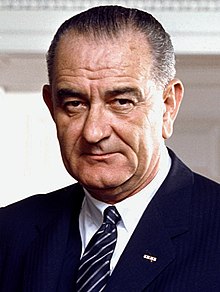
Lyndon B. Johnson
- Richard M. Nixon will be remembered foremost as the President who was forced to resign under threat of impeachment and removal from office. Like Herbert Hoover, he was not a “people person” and seemed remote to even his closest associates. Although he took office on a pledge to “bring us together” and end the Vietnam war, he attacked war protesters as traitors and kept the war going another four years. His paranoid fears of losing the 1972 election led to his creating an illegal “Plumbers” unit which bugged the Democratic offices at the Watergate Hotel. And his attempted cover-up of their illegal actions led to his being forced to resign from office in disgrace.
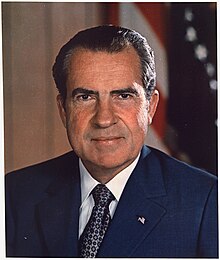
Richard M. Nixon
Which brings us to the question: How is Donald J. Trump likely to be remembered?
Historian Joachim C. Fest offers an unintended answer to this question in his 1973 bestselling biography Hitler:
“The phenomenon of the great man is primarily aesthetic, very rarely moral in nature; and even if we were prepared to make allowances in the latter realm, in the former we could not.
“An ancient tenet of aesthetics holds that one who for all his remarkable traits is a repulsive human being, is unfit to be a hero.”
Among the reasons for Hitler’s being “a repulsive human being,” Fest cites the Fuhrer’s
- “intolerance and vindictiveness”;
- “lack of generosity”; and
- “banal and naked materialism–power was the only motive he would recognize.”
Fest then quotes German chancellor Otto von Bismark on what constitutes greatness: “Impressiveness in this world is always akin to the fallen angel who is beautiful but without peace, great in his plans and efforts, but without success, proud but sad.”
And Fest concludes: “If this is true greatness, Hitler’s distance from it is immeasurable.”
What Fest writes about Adolf Hitler applies just as brutally to President Trump.
Donald Trump
Intolerant and vindictive. Lacking generosity. Nakedly materialistic.
He has:
- Boasted about the politicians he’s bought and the women he’s bedded—and forced himself on.
- Threatened his Democratic opponent—Hillary Clinton—with prosecution if he were elected.
- Slandered entire segments of Americans—blacks, Hispanics, women, journalists, Asians, the disabled, the Gold Star parents of a fallen soldier.
- Slandered President Barack Obama for five years as a non-citizen, finally admitting the truth only to win black votes.
- Attacked the FBI and CIA for accurately reporting that Russian President Vladimir Putin had intervened in the 2016 Presidential election to ensure Trump’s victory.
At this stage, it’s hard to imagine Trump joining that select number of Presidents Americans remember with awe and reverence.
ABC NEWS, ADOLF HITLER, ALTERNET, AMERICABLOG, AP, BABY BOOMER RESISTANCE, BUZZFEED, CANADA, CBS NEWS, CNN, CROOKS AND LIARS, DAILY KOZ, DONALD J. TRUMP, DRUDGE RETORT, ECONOMY, EMPLOYMENT, FACEBOOK, FBI, FIVETHIRTYEIGHT, FRED TRUMP, GESTAPO, HARPER’S MAGAZINE, JEWS, MEDIA, MEDIA MATTERS, MOTHER JONES, MOVEON, MSNBC, NAZI ATROCITIES, NBC NEWS, NEWSWEEK, NPR, PAM BONDI, PBS NEWSHOUR, POLITICO, POLITICUSUSA, RAW STORY, REPUBLICANS, REUTERS, SALON, SARAH HUCKABEE SANDERS, SEATTLE TIMES, SLATE, SOVIET UNION, TALKING POINTS MEMO, THE ATLANTIC, THE CHICAGO SUN-TIMES, THE CHICAGO TRIBUNE, THE DAILY BEAST, THE DAILY BLOG, THE GUARDIAN, THE HILL, THE HUFFINGTON POST, THE LOS ANGELES TIMES, THE NATION, THE NEW REPUBLIC, THE NEW YORK TIMES, THE VILLAGE VOICE, THE WASHINGTON POST, THINKPROGRESS, TIME, TRUMP UNIVERSITY SCANDAL, TRUTHDIG, TRUTHOUT, TWITTER, TWO POLITICAL JUNKIES, U.S. NEWS & WORLD REPORT, UNEMPLOYMENT, UPI, USA TODAY, WEHRMACHT, WONKETTE, WORLD WAR ii
In Bureaucracy, History, Military, Politics, Social commentary on December 20, 2019 at 12:04 am
On February 26, 2016, Republican Presidential Candidate Donald J. Trump made an astonishing admission: “I’m not like other people.”
He did so while revealing that, as President, he would “open up those libel laws” so that when the New York Times or the Washington Post “write a hit piece, we can sue them and win money instead of having no chance of winning because they’re totally protected.
“With me, they’re not protected, because I’m not like other people, but I’m not taking money, I’m not taking their money.”
On August 23, 2018, Trump, as President, offered additional evidence that he’s “not like other people.” He did so by giving an unprecedented reason why he shouldn’t be impeached.
Appearing on “Fox and Friends,” he said:
- “I don’t know how you can impeach somebody who’s done a great job.”
- “I tell you what, if I ever got impeached, I think the market would crash, I think everybody would be very poor.”
- Pointing to his head, he said: “Because without this thinking, you would see numbers that you wouldn’t believe in reverse.”
He didn’t say: “I shouldn’t be impeached because I’m innocent. I didn’t collude with Russian Intelligence to subvert the 2016 Presidential election.”
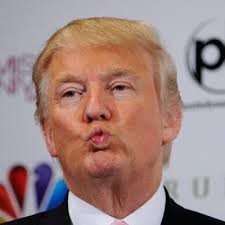
Donald Trump
Instead, he appealed to the greed and fear of his voting base—and no doubt hoped to reach beyond it: “Keep me in power or you’ll all suffer for it.”
An official White House statement entitled “American Greatness,” issued on June 4, 2018 stated:
“Nearly 3 million jobs have been created since President Trump took office. The unemployment rate has dropped to 3.8, the lowest rate since April 2000, and job openings have reached 6.6 million, the highest level recorded. President Trump has restored confidence in the American economy, with confidence among both consumers and businesses reaching historic highs.”
Much of this jobs growth, however, was already underway during the closing years of the Obama administration. But that hasn’t stopped Trump from taking credit for it.
White House Press Secretary Sarah Huckabee Sanders doubtless spoke for millions of Trump supporters when she said, on June 4:
“Since taking office, the President has strengthened American leadership, security, prosperity, and accountability. And as we saw from Friday’s jobs report, our economy is stronger, Americans are optimistic, and business is booming.
“The American people do not believe this strong economy is fantasy or unrealistic.”
Many Congressional Republicans have echoed this: The American people care only about the economy—and how well-off they are.
For eight years, Nazi Germany underwent such an epoch. Germans called it “The Happy Time.”
It began on January 30, 1933, when Adolf Hitler became Chancellor—and lasted until June 22, 1941. Germans knew about the Nazis’ cruelty to the Jews, the mass arrests and concentration camps. They didn’t care.
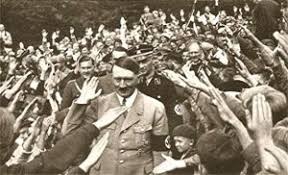
Frenzied Germans greet Adolf Hitler
The Gestapo didn’t have to watch everyone: German “patriots” gladly reported their fellow citizens—especially Jews—to the secret police.
As far as everyday Germans were concerned:
- The streets were clean and peaceful.
- Employment was high.
- The trouble-making unions were gone.
- Germany was once again “taking its rightful place” among ruling nations, after its catastrophic defeat in World War 1.
The height of “The Happy Time” came in June, 1940. In just six weeks, the Wehrmacht accomplished what the German army hadn’t in four years during World War 1: The total defeat of its longtime enemy, France.
Suddenly, French clothes, perfumes, delicacies, paintings and other “fortunes of war” came pouring into the Fatherland. (Reichsmarshall Herman Goring, head of the Luftwaffe—air force—amassed his own private air collection from French museums.)
Most Germans believed der Krieg—“the war”—was over, and only good times lay ahead.
Then, on June 22, 1941, three million Wehrmacht soldiers slashed their way into the Soviet Union. The Third Reich was now locked in a death-struggle with a nation even more powerful than itself.

German soldiers in the Soviet Union
And then, on December 11, 1941—four days after Germany’s ally, Japan, attacked Pearl Harbor—Hitler declared war on the United States.
“The Happy Time” for Germans was over. Only prolonged disaster lay ahead.
Donald Trump has spent his life appealing to the greed or fear of those around him. For example:
- Florida Attorney General Pam Bondi personally solicited a political contribution from Donald Trump around the same time her office deliberated joining an investigation of alleged fraud at Trump University and its affiliates.
- After Bondi dropped the Trump University case against Trump, he wrote her a $25,000 check for her re-election campaign.
- In 1999, Fred Trump, Donald’s father died. His deceased brother’s family sued Donald, arguing they were originally in the will, but Donald took advantage of his father’s dementia to cut them out of it. He withdrew medical benefits critical to his nephew’s infant son: “I was angry because they sued,” Trump later said in an interview.
The Germans made a devil’s-bargain with Adolf Hitler—and paid dearly for it.
Millions of greedy Americans have embraced Donald Trump, another would-be tyrant, as America’s economic savior.
By supporting Trump—or at least not opposing him—they have made a devil’s-bargain.
And such bargains always end with the devil winning.
ABC NEWS, ADOLF HITLER, ALTERNET, AMERICABLOG, ANDREW JOHNSON, AP, ARTICLES OF IMPEACHMENT, BABY BOOMER RESISTANCE, BILL CLINTON, BUZZFEED, CBS NEWS, CNN, CROOKS AND LIARS, DAILY KOZ, DONALD TRUMP, DRUDGE RETORT, EVA BRAUN, FACEBOOK, FBI, FIVETHIRTYEIGHT, FOUNDING FATHERS, HARPER’S MAGAZINE, HEINRICH HIMMLER, HERMANN GORING, IMPEACHMENT, LAST POLITICAL TESTAMENT OF AOLD HITLER, MEDIA MATTERS, MOTHER JONES, MOVEON, MSNBC, NANCY PELOSI, NAZI GERMANY, NBC NEWS, NEWSWEEK, NPR, PBS NEWSHOUR, POLITICO, POLITICUSUSA, RAW STORY, REUTERS, RICHARD NIXON, SALON, SEATTLE TIMES, SLATE, TALKING POINTS MEMO, THE ATLANTIC, THE CHICAGO SUN-TIMES, THE CHICAGO TRIBUNE, THE DAILY BEAST, THE DAILY BLOG, THE GUARDIAN, THE HILL, THE HUFFINGTON POST, THE LOS ANGELES TIMES, THE NATION, THE NEW REPUBLIC, THE NEW YORK TIMES, THE VILLAGE VOICE, THE WASHINGTON POST, THINKPROGRESS, THIRD REICH, TIME, TRUTHDIG, TRUTHOUT, TWITTER, TWO POLITICAL JUNKIES, U.S. NEWS & WORLD REPORT, UKRAINE, UNITED STATES CONSTITUTION, UNITED STATES HOUSE OF REPRESENTATIVES, UNITED STATES SENATE, UPI, USA TODAY, WONKETTE, WORLD WAR 1, WORLD WAR 11
In Bureaucracy, History, Law, Law Enforcement, Military, Politics, Social commentary on December 19, 2019 at 12:03 am
On December 17, 2019, President Donald J. Trump sent a vicious, self-pitying letter to Nancy Pelosi, Speaker of the House of Representatives.
Seventy-four years separate Adolf Hitler’s “Last Political Testament” from Trump’s letter to Pelosi. But the similarities between the two are uncanny.
ADOLF HITLER: I have further never wished that after the first fatal world war a second against England, or even against America, should break out. Centuries will pass away, but out of the ruins of our towns and monuments the hatred against those finally responsible whom we have to thank for everything, international Jewry and its helpers, will grow.
DONALD TRUMP: Your first claim, “Abuse of Power,” is a completely disingenuous, meritless, and baseless invention of your imagination. You know that I had a totally innocent conversation with the President of Ukraine….
The second claim, so-called “Obstruction of Congress,” is preposterous and dangerous. House Democrats are trying to impeach the duly elected President of the United States for asserting Constitutionally based privileges that have been asserted on a bipartisan basis by administrations of both political parties throughout our Nation’s history.
ADOLF HITLER: Three days before the outbreak of the German-Polish war I again proposed to the British ambassador in Berlin a solution to the German-Polish problem — similar to that in the case of the Saar district, under international control. This offer also cannot be denied.
DONALD TRUMP: You are turning a policy disagreement between two branches of government into an impeachable offense — it is no more legitimate than the Executive Branch charging members of Congress with crimes for the lawful exercise of legislative power.

ADOLF HITLER: I die with a happy heart, aware of the immeasurable deeds and achievements of our soldiers at the front, our women at home, the achievements of our farmers and workers and the work, unique in history, of our youth who bear my name.
DONALD TRUMP: You and your party are desperate to distract from America’s extraordinary economy, incredible jobs boom, record stock market, soaring confidence, and flourishing citizens.
ADOLF HITLER: From the sacrifice of our soldiers and from my own unity with them unto death, will in any case spring up in the history of Germany, the seed of a radiant renaissance of the National-Socialist movement and thus of the realization of a true community of nations.
DONALD TRUMP: There is far too much that needs to be done to improve the lives of our citizens. It is time for you and the highly partisan Democrats in Congress to immediately cease this impeachment fantasy and get back to work for the American People. While I have no expectation that you will do so, I write this letter to you for the purpose of history and to put my thoughts on a permanent and indelible record.
One hundred years from now, when people look back at this affair, I want them to understand it, and learn from it, so that it can never happen to another President again.
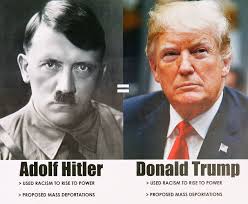
Adolf Hitler / Donald Trump
ADOLF HITLER: Before my death I expel the former Reichsmarschall Hermann Goring from the party and deprive him of all rights which he may enjoy by virtue of the decree of June 29th, 1941….
Before my death I expel the former Reichsfuhrer-SS and Minister of the Interior, Heinrich Himmler, from the party and from all offices of State….
Göring and Himmler, quite apart from their disloyalty to my person, have done immeasurable harm to the country and the whole nation by secret negotiations with the enemy, which they conducted without my knowledge and against my wishes, and by illegally attempting to seize power in the State for themselves.
DONALD TRUMP: Before the Impeachment Hoax, it was the Russian Witch Hunt. Against all evidence, and regardless of the truth, you and your deputies claimed that my campaign colluded with the Russians — a grave, malicious, and slanderous lie, a falsehood like no other.
You forced our Nation through turmoil and torment over a wholly fabricated story, illegally purchased from a foreign spy by Hillary Clinton and the DNC in order to assault our democracy.
Yet, when the monstrous lie was debunked and this Democrat conspiracy dissolved into dust, you did not apologize. You did not recant. You did not ask to be forgiven. You showed no remorse, no capacity for self-reflection. Instead, you pursued your next libelous and vicious crusade—you engineered an attempt to frame and defame an innocent person.
* * * * *
Adolf Hitler opened World War II with a lie—that Polish forces had attacked a German radio station. He ended it with another lie—that “Jewish interests” had forced war on an innocent Germany.
Donald Trump opened his administration with a lie—that his inaugural crowd had been far bigger than that of his predecessor, Barack Obama. On the eve of impeachment, he chose to lie again—that Pelosi “engineered an attempt to frame and defame an innocent person.”
Few tears were shed for Adolf Hitler when his “Last Political Testament” was unveiled after his suicide.
Nancy Pelosi’s reaction to Donald Trump’s letter was equally appropriate: “It’s really sick.”
ABC NEWS, ADOLF HITLER, ALTERNET, AMERICABLOG, ANDREW JOHNSON, AP, ARTICLES OF IMPEACHMENT, BABY BOOMER RESISTANCE, BILL CLINTON, BUZZFEED, CBS NEWS, CNN, CROOKS AND LIARS, DAILY KOZ, DONALD TRUMP, DRUDGE RETORT, EVA BRAUN, FACEBOOK, FBI, FIVETHIRTYEIGHT, FOUNDING FATHERS, HARPER’S MAGAZINE, HEINRICH HIMMLER, HERMANN GORING, IMPEACHMENT, LAST POLITICAL TESTAMENT OF AOLD HITLER, MEDIA MATTERS, MOTHER JONES, MOVEON, MSNBC, NANCY PELOSI, NAZI GERMANY, NBC NEWS, NEWSWEEK, NPR, PBS NEWSHOUR, POLITICO, POLITICUSUSA, RAW STORY, REUTERS, RICHARD NIXON, SALON, SEATTLE TIMES, SLATE, TALKING POINTS MEMO, THE ATLANTIC, THE CHICAGO SUN-TIMES, THE CHICAGO TRIBUNE, THE DAILY BEAST, THE DAILY BLOG, THE GUARDIAN, THE HILL, THE HUFFINGTON POST, THE LOS ANGELES TIMES, THE NATION, THE NEW REPUBLIC, THE NEW YORK TIMES, THE VILLAGE VOICE, THE WASHINGTON POST, THINKPROGRESS, THIRD REICH, TIME, TRUTHDIG, TRUTHOUT, TWITTER, TWO POLITICAL JUNKIES, U.S. NEWS & WORLD REPORT, UKRAINE, UNITED STATES CONSTITUTION, UNITED STATES HOUSE OF REPRESENTATIVES, UNITED STATES SENATE, UPI, USA TODAY, WONKETTE, WORLD WAR 1, WORLD WAR 11
In Bureaucracy, History, Law, Law Enforcement, Military, Politics, Social commentary on December 18, 2019 at 12:10 am
On December 17, 2019, President Donald J. Trump channeled the spirit of Adolf Hitler, Fuhrer of the Third Reich.
He did so in a vicious, self-pitying letter to Nancy Pelosi, Speaker of the House of Representatives.
The House was expected to vote on two articles of impeachment against him the next day. Specifically, these condemned him for:
Article 1: Abuse of Power: For pressuring Ukraine to assist him in his re-election campaign by damaging former Vice President Joe Biden, his possible Democratic rival.
Article 2: Obstruction of Congress: For obstructing Congress by blocking testimony of subpoenaed witnesses and refusing to provide documents in response to House subpoenas in the impeachment inquiry.
Trump is ensured an acquittal in the United States Senate, where Republicans hold a 53 to 47 member advantage. Yet he knows that only three other Presidents have faced impeachment—Andrew Johnson, Richard Nixon and Bill Clinton.
Trump doesn’t care about history, nor is he even knowledgeable about it. But he does care about labels—those he gives his enemies and those they give him. And he desperately wants to avoid having “impeachment” attached to his name in American Presidential history.
Donald Trump
Trump had tried—and failed—to head this off by insults and intimidation. Just two days earlier, he had tweeted about the Speaker: “Nancy’s teeth were falling out of her mouth, and she didn’t have time to think!”
So, on December 17, he sought to do in a letter what he had failed to do on Twitter. He sent a ranting and insulting six-page letter to Nancy Pelosi.
Nancy Pelosi
The Washington Post estimates that from the day he took office—January 20, 2017—to October 9, 2019—Trump had made 13,435 false or misleading claims.
And in sending his letter to Pelosi, he remained true to form.
His letter has no precedent in American history. But there is such a precedent in German history—specifically, the infamous “Last Political Testament” of Adolf Hitler.
Hitler dictated this to a secretary at 4 a.m. on April 29, 1945, shortly after marrying his longtime mistress, Eva Braun. The marriage occurred in his bunker in Berlin under the now-shattered Reich Chancellery.
Even 50 feet below ground, the structure shook as bombs continued to rain from American and British planes. And, at ground level, a more deadly threat was fast approaching: At least one million enraged Russian soldiers, seeking vengeance for the devastation wrought on their country from 1941 to 1945.
Hitler knew the end was closing in on him. He had many times spoken of suicide, and now he was determined to cheat his enemies of the pleasure of killing or capturing him. But before he ended his life, he was determined to have the last word.
Adolf Hitler
Which is where “My Political Testament” comes in.
Seventy-four years separate Adolf Hitler’s testament from Donald Trump’s letter to Nancy Pelosi. But the similarities between the two are uncanny.
ADOLF HITLER: More than thirty years have now passed since I in 1914 made my modest contribution as a volunteer in the first world war that was forced upon the Reich.
In these three decades I have been actuated solely by love and loyalty to my people in all my thoughts, acts and life. They gave me the strength to make the most difficult decisions which have ever confronted mortal man. I have spent my time, my working strength and my health in these three decades.
DONALD TRUMP: After three years of unfair and unwarranted investigations, 45 million dollars spent, 18 angry Democrat prosecutors, the entire force of the FBI, headed by leadership now proven to be totally incompetent and corrupt, you have found NOTHING!
Few people in high position could have endured or passed this test. You do not know, nor do you care, the great damage and hurt you have inflicted upon wonderful and loving members of my family. You conducted a fake investigation upon the democratically elected President of the United States, and you are doing it yet again.
ADOLF HITLER: It is untrue that I or anyone else in Germany wanted the war in 1939. It was desired and instigated exclusively by those international statesmen who were either of Jewish descent or worked for Jewish interests.
I have made too many offers for the control and limitation of armaments, which posterity will not for all time be able to disregard for the responsibility for the outbreak of this war to be laid on me.
DONALD TRUMP: The Articles of Impeachment introduced by the House Judiciary Committee are not recognizable under any standard of Constitutional theory, interpretation, or jurisprudence. They include no crimes, no misdemeanors, and no offenses whatsoever. You have cheapened the importance of the very ugly word, impeachment!
By proceeding with your invalid impeachment, you are violating your oaths of office, you are breaking your allegiance to the Constitution, and you are declaring open war on American Democracy.
You dare to invoke the Founding Fathers in pursuit of this election-nullification scheme — yet your spiteful actions display unfettered contempt for America’s founding and your egregious conduct threatens to destroy that which our Founders pledged their very lives to build.
2016 PRESIDENTIAL CAMPAIGN, ABC NEWS, ADAM SCHIFF, ADOLF HITLER, ALTERNET, AMERICABLOG, AP, BABY BOOMER RESISTANCE, BURT LANCASTER, BUZZFEED, CBS NEWS, CIA, CNN, CONCENTRATION CAMPS, CROOKS AND LIARS, DACHAU, DAILY KOZ, DAVID BROOKS, DEMOCRATS, DONALD TRUMP, FACEBOOK, FBI, FEDERAL GOVERNMENT SHUTDOWN, FIVETHIRTYEIGHT, FREEDOM OF THE PRESS, JAKE TAPPER, JAMES COMEY, JAMES ROBART, JEWS, JUDGMENT AT NUREMBERG (MOVIE), KIM JONG-UN, LYING, MICK MULVANEY, MOTHER JONES, MOVEON, MSNBC, NATIONAL SECURITY AGENCY, NAZI GERMANY, NBC NEWS, NEWSWEEK, NORTH KOREA, NPR, PBS NEWSHOUR, POLITICO, POLITICUSUSA, RACISM, RAW STORY, REPUBLICANS, REUTERS, ROBERT PAYNE, ROBERT S. MUELLER, RUSSIA, SALON, SEATTLE TIMES, SLATE, TALKING POINTS MEMO, THE ATLANTIC, THE CHICAGO SUN-TIMES, THE CHICAGO TRIBUNE, THE DAILY BEAST, THE DAILY BLOG, THE GUARDIAN, THE HILL, THE HUFFINGTON POST, THE LIFE AND DEATH OF ADOLF HITLER (BOOK), THE LOS ANGELES TIMES, THE NATION, THE NEW YORK TIMES, THE WASHINGTON POST, THINKPROGRESS, TIME, TRUTHDIG, TWITTER, U.S. NEWS & WORLD REPORT, UKRAINE, UPI, USA TODAY, ZOLODYMYR ZELENSKY
In Bureaucracy, History, Law, Law Enforcement, Military, Politics, Social commentary on December 12, 2019 at 12:11 am
House Intelligence Committee Chairman Adam Schiff (D-CA) has a sense of history that many of his colleagues—especially Republicans—would do well to acquire.
Since September, he has headed an investigation into President Donald J. Trump’s attempt to extort foreign interference on his behalf in the 2020 election.

Adam Schiff
In July, 2019, he told his acting chief of staff, Mick Mulvaney, to withhold almost $400 million in promised military aid for Ukraine, which faces increasing aggression from Russia.
On July 25, Trump telephoned Ukrainian President Volodymyr Zelensky to “request” a “favor”: Investigate Democratic Presidential Candidate Joe Biden and his son, Hunter, who has had business dealings in Ukraine.
The reason for such an investigation: To find embarrassing “dirt” on Biden.

Joe Biden
But then a CIA whistleblower filed a complaint about the extortion attempt—and the media and Congress soon learned of it.
On November 25, Schiff sat for an extended interview with Jake Tapper, CNN’s political correspondent.
What would it mean if Republicans uniformly oppose any articles of impeachment against Trump? asked Tapper.
Schiff replied that the vote would be a matter of conscience—and history: “It will have very long-term consequences, if that’s where we end up.
“And if not today, I think Republican members in the future, to their children and their grandchildren, will have to explain why they did nothing in the face of this deeply unethical man who did such damage to the country.”
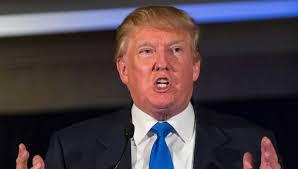
Donald Trump
In the classic 1960 movie, “Judgment at Nuremberg,” Burt Lancaster, as Ernst Janning, the once distinguished German judge, confesses his guilt and that of Nazi Germany in a controlled, yet emotional, outburst.
“My counsel would have you believe we were not aware of the concentration camps. Not aware? Where were we?
“Where were we when Hitler began shrieking his hate in the Reichstag? When our neighbors were dragged out in the middle of the night to Dachau?
“Where were we when every village in Germany has a railroad terminal where cattle cars were filled with children being carried off to their extermination? Where were we when they cried out in the night to us? Were we deaf? Dumb? Blind?
“My counsel says we were not aware of the extermination of the millions. He would give you the excuse we were only aware of the extermination of the hundreds. Does that make us any the less guilty?
“Maybe we didn’t know the details, but if we didn’t know, it was because we didn’t want to know.”
Adam Schiff is clearly hoping to avoid such an infamous fate for his own country.
In his bestselling 1973 biography, The Life and Death of Adolf Hitler, British historian Robert Payne harshly condemned the German people for the rise of the Nazi dictator:
“[They] allowed themselves to be seduced by him and came to enjoy the experience….[They] followed him with joy and enthusiasm because he gave them license to pillage and murder to their hearts’ content. They were his servile accomplices, his willing victims.”
On November 8, 2016, millions of ignorant, hate-filled, Right-wing Americans catapulted Donald Trump—a man, charged conservative New York Times columnist David Brooks, with an “odd psychology unleavened by kindness and charity”—into the Presidency.
Upon taking office in January, 2017, Trump began undermining one public or private institution after another.
- He repeatedly and viciously attacked the nation’s free press for daring to report his growing list of crimes and disasters, calling it “the enemy of the American people.”
- He brutally attacked American Intelligence agencies—such as the FBI, CIA and National Security Agency—which unanimously agreed that Russia had interfered with the 2016 Presidential election.
- He repeatedly attacked Seattle U.S. District Judge James Robart, who halted Trump’s first Muslim travel ban.
- He fired FBI Director James Comey for refusing to pledge his personal loyalty to Trump and continuing to investigate Russian subversion of the 2016 election.
- He intended to fire Special Counsel Robert Mueller in 2017, but was talked out of it by aides fearful that it would result in his impeachment.
- He has lied so often—13,435 times by October 14, 2019, according to the Washington Post—he’s universally distrusted, at home and abroad.
- On December 22, 2018, he shut down the Federal government—because Democrats refused to fund his “border wall” between the United States and Mexico.
- An estimated 380,000 government employees were furloughed and another 420,000 were ordered to work without pay. This lasted until January 25, 2019, when Trump caved to public pressure.
So why have Republicans almost unanimously stood by Trump despite the wreckage he has made of American foreign and domestic policy? Fear that they will lose their privileged positions in Congress if they don’t.
This could happen by:
- Their being voted out of Congress by Trump’s fanatical base; or
- Their being voted out of Congress by anti-Trump voters sensing Republican weakness if he’s impeached.
Future historians—if there are any—will similarly and harshly condemn those Americans who, like “good Germans,” joyfully embraced a regime dedicated to:
- Celebrating Trump’s egomania;
- Using the White House to further enrich Trump;
- Siding with Russia and North Korea against America’s oldest allies, such as NATO;
- Depriving America’s poor of their only source of healthcare; and
- Further enriching the ultra-wealthy.
2016 PRESIDENTIAL CAMPAIGN, 2020 PRESIDENTIAL CAMPAIGN, ABC NEWS, ADOLF HITLER, ALTERNET, AMERICABLOG, ANCIENT ROME, ANTONIN SCALIA, AP, BABY BOOMER RESISTANCE, BERNIE SANDERS, BUZZFEED, CAMPAIGN CONTRIBUTIONS, CBS NEWS, CITIZENS UNITED, CLEOPATRA, CNN, CROOKS AND LIARS, DAILY KOZ, DONALD TRUMP, ELIZABETH WARREN, FACEBOOK, FIVETHIRTYEIGHT, FORECLOSURES, GLADIATORS, JOE BIDEN, JULIUS CAESAR, KIRK DOUGLAS, LAURENCE OLIVER, MARCUS CRASSUS, MEIN KAMPF, MICHAEL BLOOMBERG, MITT ROMNEY, MOTHER JONES, MOVEON, MSNBC, NBC NEWS, NEWSWEEK, NEWT GINGRICH, NPR, PBS NEWSHOUR, PETE BUTTIGIEG, POLITICO, POLITICUSUSA, RAW STORY, REUTERS, SALON, SEATTLE TIMES, SHELDON ADELSON, SLATE, SPARTACUS, SUPREME COURT, TALKING POINTS MEMO, THE ATLANTIC, THE CHICAGO SUN-TIMES, THE CHICAGO TRIBUNE, THE DAILY BEAST, THE DAILY BLOG, THE GUARDIAN, THE HILL, THE HUFFINGTON POST, THE LOS ANGELES TIMES, THE NATION, THE NEW YORK TIMES, THE WASHINGTON POST, THINKPROGRESS, TIME, TOM STEYER, TRUTHDIG, TWITTER, U.S. NEWS & WORLD REPORT, UPI, USA TODAY
In Bureaucracy, Business, History, Military, Politics, Social commentary on December 10, 2019 at 12:08 am
The 1960 Kirk Douglas epic, Spartacus, has proven to be more than great entertainment. It has turned out to be a prophecy of the end of the American Republic.
In the movie, Spartacus (Douglas), a Roman slave, entertains Marcus Crassus (Laurence Oliver) the richest man in Rome. He does so by fighting to the death as a gladiator.

Poster for Spartacus
While Spartacus and his fellow gladiator/friend, Draba (Woody Strode), slash and stab at each other in the arena, Crassus idly chats with his crony, Marcus Glabrus (Jon Dall).
Crassus has just secured Glabrus’ appointment as commander of the garrison of Rome. Glabrus is grateful, but curious as to how he did it.
After all, Gaius Gracchus (Charles Laughton), the leader of the Roman Senate, hates Crassus, and vigorously opposes his every move.
“I fought fire with oil,” says Crassus. “I purchased the Senate behind his back.”
Just as Crassus bought the Roman Senate in Spartacus, billionaires similarly bought the 2016 Presidential election.
In 2016, Newt Gingrich, former Speaker of the House of Representatives, ran as the pet candidate of casino billionaire Sheldon G. Adelson. Since 2007, Adelson had spent millions in support of Gingrich and his causes.
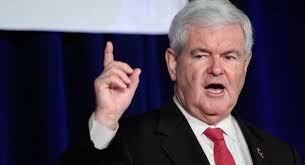
Newt Gingrich
Adelson put up seed money and, ultimately, $7.7 million between 2006 and 2010 for a nonprofit group that served as a precursor to Gingrich’s presidential campaign.
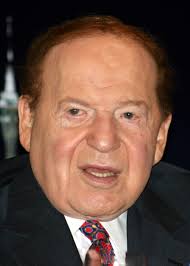
Sheldon Adelson
Such a contribution is beyond the means of the average American. But Adelson is listed by Forbes as the eighth-wealthiest American, with a net worth of $21.5 billion.
Adelson denied any selfish motives for giving millions to a candidate for the most powerful office in the world:
“My motivation for helping Newt is simple and should not be mistaken for anything other than the fact that my wife Miriam and I hold our friendship with him very dear and are doing what we can as private citizens to support his candidacy.”
Former Massachusetts Governor Mitt Romney also relied heavily on a small group of millionaires and billionaires for support.
By February, 2012, a quarter of the money amassed by Romney’s campaign came from just 41 people. Each contributor gave more than $100,000, according to a Washington Post analysis of disclosure data. Nearly a dozen of the donors had contributed $1 million or more.
Some of Romney’s biggest supporters included executives at Bain Capital, his former firm; bankers at Goldman Sachs; and a hedge fund mogul who made billions betting on the housing crash.
Four years later, in May, 2016, Adelson met privately with Republican Presidential nominee-in-waiting Donald Trump.
Adelson promised to contribute more to secure Trump’s election than he had contributed to any previous campaign—up to and exceeding $100 million.
Meanwhile, Trump bragged that he was “not beholden” to any “special interests” because “I’m really rich.” This falsehood proved a main reason for his popularity as a candidate.
Donald Trump
Fast forward another three years—and a December 4, 2019 story in Fortune: “2020 Presidential Campaign Fundraising (and Spending) Are on Track to Smash Records.”
Trump, as President, has so far raised $165.3 million.
But Democrats altogether have far outstripped him with $475.6 million raised.
Among the largest Democratic money-raisers (in millions):
- Bernie Sanders: $74.5
- Elizabeth Warren: $60.3
- Pete Buttigieg: $51.5
- Tom Steyer: $49.6
- Joe Biden: $37.8
Former New York Mayor Michael Bloomberg entered the race on November 24. Within a week he paid $57 million for TV ads.
His fellow billionaire Tom Steyer has spent over $60 million since July,
All of this can be directly traced to the 2010 “Citizens United” decision by the U.S. Supreme Court that ended limits in corporate contributions to political campaigns. The decision is so named for the group that successfully sued over federal campaign finance laws.
The 5-4 decision led to the rise of Super PACs—outside groups affiliated with candidates that can take in unlimited contributions as long as they don’t directly coordinate with the candidate. The overwhelming majority of this money goes for negative ads—that slander opponents without saying anything about what a candidate proposes to do.
Former U.S. Supreme Court Justice Antonin Scalia brushed aside criticism of the corrupting role money played in politics: Change the channel or turn off the TV.
“I don’t care who is doing the speech—the more the merrier,” Scalia said. “People are not stupid. If they don’t like it, they’ll shut it off.”
On the contrary: A fundamental principle of propaganda holds that most people are stupid—or can be made to behave stupidly. If they are ceaselessly bombarded with mind-numbing lies, they will eventually substitute these for reality.
In Mein Kampf, Adolf Hitler laid out his formula for successful propaganda: “All effective propaganda must be confined to a few bare essentials.
“These must be expressed as far as possible in stereotypical formulas. These slogans should be persistently repeated until the very last individual has come to grasp the idea that has been put forward.”
During the early 1960s a series of movies about the Roman Empire—like Spartacus and Cleopatra—hit the big screen. In these, rich criminals like Marcus Crassus openly bought the favors of ambitious politicians like Julius Caesar.
No doubt millions of moviegoers thought, “Boy, I’m glad that couldn’t happen here.”
But it has happened here—and it’s happening right now.
2016 PRESIDENTIAL CAMPAIGN, ABC NEWS, ADOLF HITLER, ALTERNET, AMERICABLOG, AP, BABY BOOMER RESISTANCE, BARACK OBAMA, BERNIE SANDERS, BUZZFEED, CBS NEWS, CNN, CROOKS AND LIARS, DAILY KOZ, DAVID BROOKS, DEMOCRATIC PARTY, DONALD TRUMP, ELIZABETH WARREN, FACEBOOK, FIVETHIRTYEIGHT, HILLARY CLINTON, JEB BUSH, JOHN KASICH, JOSEPH MCCARTHY, LIBERALS, MARCO RUBIO, MARK SHIELDS, MITCH MCCONNELL, MOTHER JONES, MOVEON, MSNBC, NBC NEWS, NEWSWEEK, NEWT GINGRICH, NOCCOLO MACHIAVELLI, NPR, OBAMA GIRL VIDEO, PBS NEWSHOUR, POLITICO, POLITICUSUSA, RAND PAUL, RAW STORY, REPUBLICAN PARTY, REPUBLICANS, REUTERS, RICK PERRY, SALON, SEATTLE TIMES, SLANDER, SLATE, STEPHEN COLBERT, STORMY DANIELS, TALKING POINTS MEMO, TED CRUZ, THE ATLANTIC, THE CHICAGO SUN-TIMES, THE CHICAGO TRIBUNE, THE DAILY BEAST, THE DAILY BLOG, THE GUARDIAN, THE HILL, THE HUFFINGTON POST, THE LOS ANGELES TIMES, THE NATION, THE NEW YORK TIMES, THE PRINCE, THE WASHINGTON POST, THINKPROGRESS, TIME, TREVOR NOAH, TRUTHDIG, TWITTER, U.S. NEWS & WORLD REPORT, UPI, USA TODAY, VLADIMIR PUTIN
In Bureaucracy, History, Humor, Politics, Social commentary on December 5, 2019 at 12:02 am
Words are weapons—or can be, if used properly.
Republicans learned this truth after World War II.
- Richard Nixon became a United States Senator by attacking Helen Gahagen Douglas as “the Pink Lady.”
- Senator Joseph R. McCarthy and other Red-baiting Republicans essentially paralyzed the Democratic party through such slanderous terms as “Comsymps,” “fellow-travelers” and “Fifth Amendment Communists.”
Since 1945, Republicans have won the majority of Presidential elections: In 1952, 1956, 1968, 1972, 1980, 1984, 1988, 2000, 2004, 2016.
As a whole, Democrats have shown themselves indifferent to or ignorant of the power of effective language.
Many of them—such as former President Barack Obama—take the view: “I’m not going to get into the gutter like my opponents.” Thus, they take the “high ground” while their sworn Republican enemies undermine them via “smear and fear” tactics.
As far back as the early 1950s, slander-hurling Wisconsin U.S. Senator Joseph R. McCarthy demonstrated the effectiveness of such tactics. Wrote Pulitzer-Prize winning author David Halberstam, in his monumental study of the origins of the Vietnam War, The Best and the Brightest:
“But if they did not actually stick, and they did not, [McCarthy’s] charges had an equally damaging effect: They poisoned. Where there was smoke, there must be fire. He wouldn’t be saying these things [voters reasoned] unless there was something to it.”
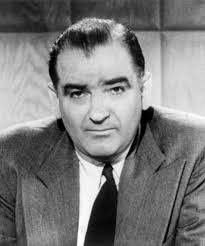
Joseph McCarthy
President Donald J. Trump solicited aid from Russian Communists to win the Presidency in 2016. He solicited aid from Chinese Communists to retain it in 2020. He has attacked countless Americans and world leaders—including those who preside over America’s NATO alliance. Yet the one man he has never even criticized is Russian dictator Vladimir Putin.
Yet faced with such clear-cut evidence, Democrats have refused to directly accuse him of treason.
For example, Democrats could routinely refer to him ad ads as
- “TrumPutin”
- “Commissar-in-Chief”
- “Putin’s Poodle”
- “Red Donald”
- “Putin’s Puppet”
- “Trumpy Traitor.”
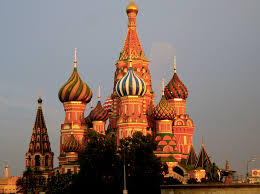
The Kremlin
Opponents of Trump-apologist U.S. Senator Mitch McConnell (R-KY) have effectively dubbed him “Moscow Mitch”—in large part for his accepting at least $4.5 million from a Russian oligarch linked to Putin.
But Trump has gotten a free pass on treason from politicians and news media alike.
Similarly, upon taking office, Trump has acted far more like a dictatorial Henry VIII than a democratically-elected President. Yet here, too, Democrats have failed to capitalize on this obvious truth. They could easily do so through terms like:
- “Carrot Caligula”
- “Fake President”
- “El Dunce.”
Tyrants are conspicuously vulnerable to ridicule. Yet here, too, Democrats have proven unable or unwilling to make use of this powerful weapon.
In this YouTube-obsessed age, Democrats could effectively assail Trump with a series of ridiculing videos. For example, Trump’s well-established “bromance” with Putin could be turned into a parody of the famous Beatles’ song, “With a Little Help From My Friends”:
What do I do when the bank calls me in?
(Does it worry you to be in debt?)
How do I feel when I need rubles fast?
(Do you worry Vlad might say “Nyet”?)
No, I get by with a little help from my Vlad.
Mm, I can lie with a little help from my Vlad.
Mm, you’re gonna fry with a little help from my Vlad.

Many of Trump’s fiercest defenders in the House and Senate have taken “campaign contributions” (i.e., bribes) from Russian oligarchs. They could be pointedly attacked by turning the Muppet song, “The Rainbow Connection,” into “The Russian Connection.”
And Right-wingers taking bribes?
For traitors with something to hide.
And some choose to believe it.
It’s clear as the old KGB.
The bribers, the traitors–you’ll see.
The 2008, “Obama Girl” video was not an attack video. Yet this generated huge interest in his candidacy—especially among young voters. It was funny and offered a catchy tune that, once heard, was impossible to forget.
An equally catchy tune could prove the same for Trump—in a totally different way.
The clash between Trump and porn “star” Stormy Daniels has been replaced by even more salacious scandals. But it could easily be revised through a parody of the Frank Sinatra classic, “Love and Marriage”:
What a couple–they’re so dumb and wormy.
They are, I tell you, brother
A filth that really suits each other.
When his wife’s away, Trump thinks, “Why worry?
And they don’t mind I’m really stinky.”
Trump has repeatedly shown that he does not take well to ridicule. Pouring on enough of it could lead him to a blunder so outrageous that even Republicans might feel obliged to break ranks with him.
Admittedly, late-night comedians like Stephen Colbert and Trevor Noah have inflicted huge comic damage on Trump’s image and ego.
But it’s one thing for a professional comedian to serve up such barbs—and another for a major political party to do so through a series of blistering TV ads.
Humorists could easily provide the material. But it will take Democrats the courage to use it.


ABC NEWS, ADOLF HITLER, ALTERNET, AMERICABLOG, ANDREW JOHNSON, AP, ARTICLES OF IMPEACHMENT, BABY BOOMER RESISTANCE, BILL CLINTON, BUZZFEED, CBS NEWS, CNN, CROOKS AND LIARS, DAILY KOZ, DONALD TRUMP, DRUDGE RETORT, EVA BRAUN, FACEBOOK, FBI, FIVETHIRTYEIGHT, FOUNDING FATHERS, HARPER’S MAGAZINE, HEINRICH HIMMLER, HERMANN GORING, IMPEACHMENT, LAST POLITICAL TESTAMENT OF AOLD HITLER, MEDIA MATTERS, MOTHER JONES, MOVEON, MSNBC, NANCY PELOSI, NAZI GERMANY, NBC NEWS, NEWSWEEK, NPR, PBS NEWSHOUR, POLITICO, POLITICUSUSA, RAW STORY, REUTERS, RICHARD NIXON, SALON, SEATTLE TIMES, SLATE, TALKING POINTS MEMO, THE ATLANTIC, THE CHICAGO SUN-TIMES, THE CHICAGO TRIBUNE, THE DAILY BEAST, THE DAILY BLOG, THE GUARDIAN, THE HILL, THE HUFFINGTON POST, THE LOS ANGELES TIMES, THE NATION, THE NEW REPUBLIC, THE NEW YORK TIMES, THE VILLAGE VOICE, THE WASHINGTON POST, THINKPROGRESS, THIRD REICH, TIME, TRUTHDIG, TRUTHOUT, TWITTER, TWO POLITICAL JUNKIES, U.S. NEWS & WORLD REPORT, UKRAINE, UNITED STATES CONSTITUTION, UNITED STATES HOUSE OF REPRESENTATIVES, UNITED STATES SENATE, UPI, USA TODAY, WONKETTE, WORLD WAR 1, WORLD WAR 11
LIKE FUHRER, LIKE PRESIDENTIAL FUHRER: PART ONE (OF TWO)
In Bureaucracy, History, Law, Law Enforcement, Military, Politics, Social commentary on January 23, 2020 at 12:05 am“We’re achieving what no administration has ever achieved before,” President Donald Trump said in a speech to the American Farm Bureau on January 19. “And what do I get out of it? Tell me. I get impeached! That’s what I get out of it. By these radical left lunatics, I get impeached.”
His attitude reflects that of another self-pitying, all-powerful man whose egomania and lust for power brought him to destruction: Adolf Hitler.
On December 17, 2019, facing certain impeachment in the Democratic-controlled House of Representatives, Trump sent a vicious, self-pitying letter its Speaker, Nancy Pelosi.
Trump doesn’t care about history, nor is he even knowledgeable about it. But he does care about labels—those he gives his enemies and those they give him. And he desperately wanted to avoid having “impeachment” attached to his name in American Presidential history.
Donald Trump
Trump was facing two deadly charges:
Article 1: Abuse of Power: For pressuring Ukraine to assist him in his re-election campaign by damaging former Vice President Joe Biden, his possible Democratic rival.
Article 2: Obstruction of Congress: For obstructing Congress by blocking testimony of subpoenaed witnesses and refusing to provide documents in response to House subpoenas in the impeachment inquiry.
And he had tried—and failed—to head these off by insults and intimidation. Just two days earlier, he had tweeted about the Speaker: “Nancy’s teeth were falling out of her mouth, and she didn’t have time to think!”
So, on December 17, he sought to do in a letter what he had failed to do on Twitter. He sent a ranting and insulting six-page letter to Nancy Pelosi.
Nancy Pelosi
The Washington Post estimates that from the day he took office—January 20, 2017—to October 9, 2019—Trump had made 13,435 false or misleading claims.
And in sending his letter to Pelosi, he remained true to form.
His letter has no precedent in American history. But there is such a precedent in German history—specifically, the infamous “Last Political Testament” of Adolf Hitler.
Hitler dictated this to a secretary at 4 a.m. on April 29, 1945, shortly after marrying his longtime mistress, Eva Braun. The marriage occurred in his bunker in Berlin under the now-shattered Reich Chancellery.
Even 50 feet below ground, the structure shook as bombs continued to rain from American and British planes. And, at ground level, a more deadly threat was fast approaching: At least one million enraged Russian soldiers, seeking vengeance for the devastation wrought on their country from 1941 to 1945.
Hitler knew the end was closing in on him. He had many times spoken of suicide, and now he was determined to cheat his enemies of the pleasure of killing or capturing him. But before he ended his life, he was determined to have the last word.
Adolf Hitler
Which is where “My Political Testament” comes in.
Seventy-four years separate Adolf Hitler’s testament from Donald Trump’s letter to Nancy Pelosi. But the similarities between the two are uncanny.
ADOLF HITLER: More than thirty years have now passed since I in 1914 made my modest contribution as a volunteer in the first world war that was forced upon the Reich.
In these three decades I have been actuated solely by love and loyalty to my people in all my thoughts, acts and life. They gave me the strength to make the most difficult decisions which have ever confronted mortal man. I have spent my time, my working strength and my health in these three decades.
DONALD TRUMP: After three years of unfair and unwarranted investigations, 45 million dollars spent, 18 angry Democrat prosecutors, the entire force of the FBI, headed by leadership now proven to be totally incompetent and corrupt, you have found NOTHING!
Few people in high position could have endured or passed this test. You do not know, nor do you care, the great damage and hurt you have inflicted upon wonderful and loving members of my family. You conducted a fake investigation upon the democratically elected President of the United States, and you are doing it yet again.
ADOLF HITLER: It is untrue that I or anyone else in Germany wanted the war in 1939. It was desired and instigated exclusively by those international statesmen who were either of Jewish descent or worked for Jewish interests.
I have made too many offers for the control and limitation of armaments, which posterity will not for all time be able to disregard for the responsibility for the outbreak of this war to be laid on me.
DONALD TRUMP: The Articles of Impeachment introduced by the House Judiciary Committee are not recognizable under any standard of Constitutional theory, interpretation, or jurisprudence. They include no crimes, no misdemeanors, and no offenses whatsoever. You have cheapened the importance of the very ugly word, impeachment!
By proceeding with your invalid impeachment, you are violating your oaths of office, you are breaking your allegiance to the Constitution, and you are declaring open war on American Democracy.
You dare to invoke the Founding Fathers in pursuit of this election-nullification scheme — yet your spiteful actions display unfettered contempt for America’s founding and your egregious conduct threatens to destroy that which our Founders pledged their very lives to build.
Share this: