Archive for the ‘Law’ Category
ABC NEWS, ADOLF HITLER, ALTERNET, AMERICABLOG, AP, BABY BOOMER RESISTANCE, BARACK OBAMA, BBC, BILL CLINTON, BLOOMBERG NEWS, BUZZFEED, CANADA, CBS NEWS, CHINA, CHRIS MATTHEWS, CNN, CNN'S "STARTING POINT", CROOKS AND LIARS, CZECHOSLAVAKIA, DAILY KOS, DARRELL ISSA, DAVID BROOKS, DEBT CEILING, DENMARK, DONALD TRUMP, DRUG TRAFFICKING, EXECUTIVE ORDERS, EXTORTION, FIVETHIRTYEIGHT, GEORGE W. BUSH, GREENLAND, HARPER’S MAGAZINE, HOUSE SPEAKER JOHN BOEHNER, HUFFINGTON POST, ILLEGAL ALIENS, immigration reform, INSIDER, IRAN, JANET YELLEN, JIMMY CARTER, JOSEPH BIDEN, JUSTIN TRUDEAU, MEDIA MATTERS, MEXICO, MITCH MCCONNELL, MOTHER JONES, MOVEON, MSNBC, MSNBC'S "HARDBALL", NANCY PELOSI, NAZI GERMANY, NBC NEWS, NEGOTIATING, NEVILLE CHAMBERLAIN, NEW REPUBLIC, NEWSDAY, NEWSWEEK, NEWT GINGRICH, NICCOLO MACHIAVELLI, NORTH KOREA, NPR, PANAMA CANAL, PAP SMEARS, PBS NEWSHOUR, PITUFFIK SPACE BASE, PLANNED PARENTHOOD, POLAND, POLITICO, POLITICUSUSA, R.I.CO. ACT, RAW STORY, REPUBLICAN PARTY, REPUBLICANS, REUTERS, Ronald Reagan, RUSSIA, SALON, SEATTLE TIMES, SLATE, TALKING POINTS MEMO, TARIFFS, THE ATLANTIC, THE CHICAGO SUN-TIMES, THE CHICAGO TRIBUNE, THE DAILY BEAST, THE DAILY BLOG, THE GUARDIAN, THE HAMILTON PROJECT, THE HILL, THE HUFFINGTON POST, THE LOS ANGELES TIMES, THE NATION, THE NEW REPUBLIC, THE NEW YORK TIMES, THE NEW YORKER, THE PRINCE, THE VILLAGE VOICE, THE WASHINGTON POST, THINKPROGRESS, TIME, TITLE X, TRUTHDIG, TRUTHOUT, TWITTER, TWO POLITICAL JUNKIES, U.S. NEWS & WORLD REPORT, UPI, USA TODAY, WARREN BUFFET, WENDY EDELBERG, WINSTON CHURCHILL, WONKETTE, WORLD WAR 11, X
In Bureaucracy, Business, History, Law, Law Enforcement, Military, Politics, Social commentary on January 8, 2025 at 12:10 am
By studying the “negotiating” methods used by Adolf Hitler, Americans generally—and Democrats in particular—can learn much about the mindset and “negotiating” style of today’s Republican party.
Consider President-Elect Donald Trump’s recent threats against not only Canada but Panama—specifically, to retake control of the Panama Canal.
On December 25, Trump told a conservative conference in Arizona that Panama was charging US ships “ridiculous, highly unfair” fees to use its namesake canal.
The United States built the canal during the administration of President Theodore Roosevelt and opened it in 1914. It remained controlled by the United States until President Jimmy Carter signed a a 1977 agreement for its eventual handover to Panama in 1999.

Panama Canal (in white)
But this week, Trump threatened that if shipping rates were not lowered, “we will demand that the Panama Canal be returned to us, in full, quickly and without question.”
He accused China of operating the canal and lamented that the United States “puts in Billions of Dollars in ‘repair’ money, but will have absolutely nothing to say about ‘anything.’”
On December 25, Trump posted on his website, Truth Social: “Merry Christmas to all, including to the wonderful soldiers of China, who are lovingly, but illegally, operating the Panama Canal.”
“There is not a single Chinese soldier in the canal,” the president of Panama, José Raúl Mulino, told reporters the next day, adding that there is “absolutely no Chinese interference.”
Trump’s threats against Panama may be connected with the outstanding tax evasion case he faces in the country.
In 2019, the owners of a Panama City hotel tower that was previously managed and operated under the Trump brand accused the Trump Organization of pocketing money meant to pay taxes. According to a lawsuit, Trump’s companies simply kept the money, “intentionally evading taxes” and leaving the new owner liable for millions.
Yet the blunt truth remains: Unless Trump goes to war with Panama, his threat to take over the canal is effectively meaningless.
During the 2024 Presidential campaign, Trump denied reading Adolf Hitler’s notorious book, Mein Kampf (“My Struggle.”)
In the past, however, he has acknowledged owning a copy of it. And he has adopted the same “negotiating” style as the late Fuhrer: Do-as-I-say-or-I’ll-destroy-you.
A classic example of Hitler’s “bargaining style” came in 1938, when he invited Austrian Chancellor Kurt von Schuschnigg to his mountaintop retreat in Obersalzberg, Germany.

Kurt von Schuschnigg
Hitler, an Austrian by birth, intended to annex his native land to Germany. Schuschnigg was aware of Hitler’s desire, but nevertheless felt secure in accepting the invitation. He had been assured that the question of Austrian sovereignty would not arise.
The meeting occurred on February 12, 1938.
Shuschnigg opened the discussion with a friendly compliment. Walking over to a large window, he admired the breathtaking view of the mountains.
HITLER: We haven’t come here to talk about the lovely view or the weather!
Austria has anyway never done anything which was of help to the German Reich….I am resolutely determined to make an end to all this business. The German Reich is a great power. Nobody can and nobody will interfere if it restores order on its frontiers.
SCHUSCHNIGG: We simply have to go on living alongside one another, the little state next to the big one. We have no other choice.
And that is why I ask you to tell me what your concrete complaints are. We will do all in our power to sort things out and establish a friendly relationship, as far as it is possible to do so.
HITLER: That’s what you say, Herr Schuschnigg. And I am telling you that I intend to clear up the whole of the so-called Austrian question—one way or another. Do you think I don’t know that you are fortifying Austria’s border with the Reich?
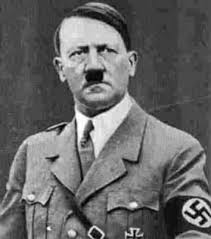
Adolf Hitler
SCHUSCHNIGG: There can be no suggestion at all of that—
HITLER: Ridiculous explosive chambers are being built under bridges and roads—
This was a lie, and Hitler knew it was a lie. But no matter. It gave him an excuse to threaten to destroy Austria—as he was to destroy so many other nations during the next seven years.
HITLER: I have only to give one command and all this comic stuff on the border will be blown to pieces overnight. You don’t seriously think you could hold me up, even for half an hour, do you?
Who knows—perhaps you will find me one morning in Vienna like a spring storm. Then you will go through something! I’d like to spare the Austrians that.
The S.A. [Hitler’s private army of Stormtroopers] and the [Condor] lLegion [which had bombed much of Spain into rubble during the three-year Spanish Civil War] would come in after the troops and nobody—not even I—could stop them from wreaking vengeance.
Schnuschigg made a cardinal mistake in dealing with Hitler: He showed fear. And this was precisely what the Nazi dictator looked for in an opponent.
Contrary to popular belief, Hitler did not constantly rage at everyone. On the contrary: he could, when he desired, be charming, especially to women. He used rage as a weapon, knowing that most people feel intimidated by it.
ABC NEWS, ADOLF HITLER, ALTERNET, AMERICABLOG, AP, BABY BOOMER RESISTANCE, BARACK OBAMA, BBC, BILL CLINTON, BLOOMBERG NEWS, BUZZFEED, CANADA, CBS NEWS, CHINA, CHRIS MATTHEWS, CNN, CNN'S "STARTING POINT", CROOKS AND LIARS, CZECHOSLAVAKIA, DAILY KOS, DARRELL ISSA, DAVID BROOKS, DEBT CEILING, DENMARK, DONALD TRUMP, DRUG TRAFFICKING, EXECUTIVE ORDERS, EXTORTION, FIVETHIRTYEIGHT, GEORGE W. BUSH, GREENLAND, HARPER’S MAGAZINE, HOUSE SPEAKER JOHN BOEHNER, HUFFINGTON POST, ILLEGAL ALIENS, immigration reform, INSIDER, IRAN, JANET YELLEN, JIMMY CARTER, JOSEPH BIDEN, JUSTIN TRUDEAU, MEDIA MATTERS, MEXICO, MITCH MCCONNELL, MOTHER JONES, MOVEON, MSNBC, MSNBC'S "HARDBALL", NANCY PELOSI, NAZI GERMANY, NBC NEWS, NEGOTIATING, NEVILLE CHAMBERLAIN, NEW REPUBLIC, NEWSDAY, NEWSWEEK, NEWT GINGRICH, NICCOLO MACHIAVELLI, NORTH KOREA, NPR, PAP SMEARS, PBS NEWSHOUR, PITUFFIK SPACE BASE, PLANNED PARENTHOOD, POLAND, POLITICO, POLITICUSUSA, R.I.CO. ACT, RAW STORY, REPUBLICAN PARTY, REPUBLICANS, REUTERS, Ronald Reagan, RUSSIA, SALON, SEATTLE TIMES, SLATE, TALKING POINTS MEMO, TARIFFS, THE ATLANTIC, THE CHICAGO SUN-TIMES, THE CHICAGO TRIBUNE, THE DAILY BEAST, THE DAILY BLOG, THE GUARDIAN, THE HAMILTON PROJECT, THE HILL, THE HUFFINGTON POST, THE LOS ANGELES TIMES, THE NATION, THE NEW REPUBLIC, THE NEW YORK TIMES, THE NEW YORKER, THE PRINCE, THE VILLAGE VOICE, THE WASHINGTON POST, THINKPROGRESS, TIME, TITLE X, TRUTHDIG, TRUTHOUT, TWITTER, TWO POLITICAL JUNKIES, U.S. NEWS & WORLD REPORT, UPI, USA TODAY, WARREN BUFFET, WENDY EDELBERG, WINSTON CHURCHILL, WONKETTE, WORLD WAR 11, X
In Bureaucracy, Business, History, Law, Law Enforcement, Military, Politics, Social commentary on January 7, 2025 at 12:10 am
Once again, Republicans are ruthlessly playing “chicken” with the nation’s financial and military security.
Even before taking the oath of office as President on January 20, 2025, Donald Trump has rushed to make an enemy of America’s longtime ally—Canada.
At a November 30 dinner at Mar-a-Lago, Trump’s estate in Palm Beach, Florida, he told Canadian Prime Minister Justin Trudeau that Canada could become the 51st state of the United States.
Canada’s Public Safety Minister Dominic LeBlanc, who attended the dinner, insisted that Trump was joking.
But on December 2, Trump threatened to impose a 25% tax on all products entering the United States from Canada and Mexico unless they stopped the flow of drugs and illegal aliens.
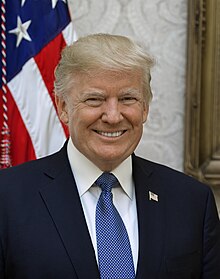
Donald Trump
And on December 3, Trump posted on his Truth Social platform an AI-generated image of himself standing on a mountain with a Canadian flag beside him. Its caption: “Oh Canada!”
Trudeau had requested the Mar-a-Lago meeting to convince Trump that the northern border is completely different from the southern one with Mexico.
“Less than one percent of migrants coming into the United States irregularly come from Canada and 0.2 percent of the fentanyl coming into the United States comes from Canada,” Trudeau said in Parliament.
During the last fiscal year, American customs agents seized 43 pounds of fentanyl at the Canadian border, compared with 21,100 pounds at the Mexican border.
Most of the fentanyl reaching the U.S. is made by Mexican drug cartels using precursor chemicals smuggled from Asia.
Utterly unmentioned in Trump’s demand: It’s America’s insatiable demand for illicit drugs that is the root cause of the drug trade.

Justin Trudeau
CC BY 3.0 <https://creativecommons.org/licenses/by/3.0>, via Wikimedia Commons
On immigration, the U.S. Border Patrol reported 1.53 million encounters with would-be illegal aliens at the Mexican border between October 2023 and September 2024. At the Canadian border, there were 23,721 such encounters.
Also unmentioned—if not deliberately ignored by Trump: Canada plays a substantial role as a U.S. trading partner. About 60% of U.S. crude oil imports are from Canada, and 85% of U.S. electricity imports as well.
Canada is also the largest foreign supplier of steel, aluminum and uranium to the U.S. and has 34 critical minerals and metals that the Pentagon eagerly desires. About 77% of Canada’s exports go to the U.S.
Trudeau pleaded with Trump not to impose the tariff because because it would “kill” Canada’s economy.
Trump responded: “So your country can’t survive unless it’s ripping off the US to the tune of $100 billion?”
His comments referred to the US trade deficit with Canada.
The U.S. had a $75 billion trade deficit with Canada last year but a third of what Canada sells into the U.S. is energy exports and prices have been high.
Trudeau left the meeting without reassurance that Trump would not impose a 25% tariff on products from Canada.
Republicans, in short, are one again utilizing the same “negotiating” strategy as Nazi Germany’s Fuhrer, Adolf Hitler.
And Democrats—out of cowardice or an ignorance of history—are once again refusing to publicly make this comparison.
By studying Adolf Hitler’s mindset and “negotiating” methods, we can learn much about the mindset and “negotiating” style of today’s Republican party.
Robert Payne, author of the bestselling biography, The Life and Death of Adolf Hitler (1973), described Hitler’s “negotiating” style thus:
“Although Hitler prized his own talents as a negotiator, a man always capable of striking a good bargain, he was totally lacking in finesse.
“He was incapable of bargaining. He was like a man who goes up to a fruit peddler and threatens to blow his brains out if he does not sell his applies at the lowest possible price.”
A classic example of Hitler’s “bargaining style” came in 1938, when he invited Austrian Chancellor Kurt von Schuschnigg to his mountaintop retreat in Obersalzberg, Germany.
Hitler, an Austrian by birth, intended to annex his native land to Germany. Schuschnigg was aware of Hitler’s desire, but nevertheless felt secure in accepting the invitation. He had been assured that the question of Austrian sovereignty would not arise.
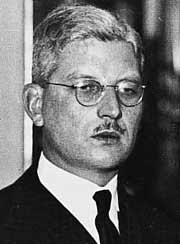
Kurt von Schuschnigg
The meeting occurred on February 12, 1938.
Shuschnigg opened the discussion with a friendly compliment. Walking over to a large window, he admired the breathtaking view of the mountains.
HITLER: We haven’t come here to talk about the lovely view or the weather!
Austria has anyway never done anything which was of help to the German Reich….I am resolutely determined to make an end to all this business. The German Reich is a great power. Nobody can and nobody will interfere if it restores order on its frontiers.
SCHUSCHNIGG: I am aware of your attitude toward the Austrian question and toward Austrian history….As we Austrians see it, the whole of our history is a very essential and valuable part of German history….And Austria’s contribution is a considerable one.
HITLER: It is absolutely zero—that I can assure you! Every national impulse has been trampled underfoot by Austria….
I could call myself an Austrian with just the same right—indeed with even more right—than you, Herr Schuschnigg. Why don’t you once try a plebiscite in Austria in which you and I run against each other? Then you would see!
ABC NEWS, ALTERNET, AMERICABLOG, AP, AT&T, BABY BOOMER RESISTANCE, BANK OF AMERICA, BLOOMBERG, BUZZFEED, CBS NEWS, CNN, CONSUMER FINANCIAL PROTECTION BUREAU, CROOKS AND LIARS, DAILY KOZ, DRUDGE REPORT, FACEBOOK, FEDERAL COMMUNICATIONS COMMISSION, FIVETHIRTYEIGHT, FRAUD, GOOD COP/BAD COP ROUTINE, HARPER’S MAGAZINE, HUFFINGTON POST, INTERNET SERVICE PROVIDERS, MEDIA MATTERS, MOTHER JONES, MOVEON, MSNBC, NBC NEWS, NEWSWEEK, NPR, PBS NEWSHOUR, POLITICO, POLITICUSUSA, PUBLIC UTILITIES COMMISSION, RAW STORY, REUTERS, SALON, SEATTLE TIMES, SLATE, TALKING POINTS MEMO, THE ATLANTIC, THE CHICAGO SUN-TIMES, THE CHICAGO TRIBUNE, THE DAILY BEAST, THE DAILY BLOG, THE GUARDIAN, THE HILL, THE HUFFINGTON POST, THE LOS ANGELES TIMES, THE NATION, THE NEW REPUBLIC, THE NEW YORK TIMES, THE VILLAGE VOICE, THE WASHINGTON POST, THINKPROGRESS, TIME, TRUTHDIG, TRUTHOUT, TWO POLITICAL JUNKIES, U.S. NEWS & WORLD REPORT, UPI, USA TODAY, UVERSE, WHO/WHOM?, WONKETTE, X
In Bureaucracy, Business, Law, Law Enforcement, Self-Help, Social commentary on January 6, 2025 at 12:06 am
It’s easy to be intimidated by a large corporation—such as a bank or phone company—when you’ve been ripped off. After all, it’s well-known, has millions of dollars, and legions of attorneys.
But when that happens, it’s essential to remember two words: Who/Whom?
Translation: Who can do What to Whom?
When you’re dealing with people whose greed is equaled only by their arrogance, there is only one way to prevail: You need to make them afraid of you.
And that can be achieved only by finding someone—or some agency—they fear, and turning them into your ally.
A friend of mine—Lynn—tried to order a calendar from an online calendar company. She put in the required information—including her debit card number—but kept getting “Error” messages.
Eventually she quit trying.
Lynn never got the calendar—but she wound up with four separate charges to her debit card, totaling $71.32.
She tried to get a refund from the company—which claimed they couldn’t find the charges.
Meanwhile, Lynn’s bank had in fact confirmed the charges—since the money had been taken from her account. And the bank—Bank of America—promised to remove the charges within 72 hours.
Three days came and went—and no reimbursement had been made to her account.

Bank of America Corporate Center
So Lynn called BofA again—and was told it would take about 45 days to run “an investigation” into her loss.
Luckily, an investigator-friend of hers advised her to file a complaint with the Federal Consumer Financial Protection Bureau (CFPB). It can be reached at https://www.consumerfinance.gov/
According to its website, the agency operates as follows:
- “We create clear rules to implement the law and preserve choices for consumers.”
- “We enforce federal consumer financial laws by investigating cases of potential wrongdoing and taking action.”
- “We supervise financial companies to ensure compliance with federal consumer laws.”
So she called the agency—at (855) 411-2372 on a Friday—and waited to see what happened.
Two days later—a Sunday—she called Bank of America to check her balance. To her surprise, she found that the bank had found a way to reverse the fraudulent charges that had been made to her debit card.
And it had done in far less than 45 days.
Clearly, someone at BofA had gotten the message: This is no woman—or agency—to take lightly.

Then there’s this case: From November, 2011 to February 2012, AT&T demanded that Dave pay for a service the company had failed to provide.
They had promised to supply him with Uverse high-speed Internet—at 25 MBPs a second. Instead, he had gotten only 6 MBPs—and a big dot in the middle of his computer screen while watching YouTube videos.
Finally, an AT&T rep told him the blunt truth: His geographical area in San Francisco was not yet supplied with the fiber-optic cables that could provide high-speed Internet service.
Dave canceled Uverse—and began getting a series of bills from AT&T.
After getting a phone call from a collection agency, Dave decided to ask me to intervene on his behalf.
I decided to go directly to the Office of the President of AT&T.
Why? Because the man at the top of an organization cannot fob you off with the excuse: “My hands are tied. I can’t do it.”
He can do anything he wants.
I found the name of the president by a quick search on Google under: “AT&T Corporate Offices.”
And at the top of the heap stood Randall L. Stephenson––Chairman of the Board, CEO and President of AT&T Inc.

Randall L. Stephenson
Robert Scoble, CC BY 2.0 <https://creativecommons.org/licenses/by/2.0>, via Wikimedia Commons
I didn’t expect to speak with Stephenson. One of his chief lieutenants would do nicely—such as a woman I’ll call Margie.
First, I introduced myself and said I was authorized to act on Dave’s behalf. Then I handed the phone to Dave (who was sitting next to me) so he could confirm this.
After that, I briefly outlined the problems Dave had been having.
Margie—using Dave’s phone number—quickly accessed the computerized records documenting all I had told her. She said she needed three or four days to fully investigate the matter before getting back to me.
Police long ago learned the “good cop/bad cop” routine usually works wonders. So I decided to apply a variation of this with Margie.
I said that Dave wanted to resolve this quietly and amicably. But, if necessary, he was prepared to do so through the California Public Utilities Commission (PUC) and the Federal Communications Commission (FCC)—both of which have jurisdiction over AT&T.
Margie hurriedly said there was no need to conduct an investigation after all. In fact, she added, she was writing a credit to Dave of $150.00 that very minute.
Why had Margie changed her mind?
Just as banks use every excuse to charge their customers for anything they can get away with, so do phone companies. AT&T wouldn’t want the PUC and FCC to start asking: “Is AT&T generally dunning customers for money they don’t owe?”
I had no doubt the answer would have proven to be: “Yes.”
And I believe that Margie felt the same way.
2016 PRESIDENTIAL ELECTION, ABC NEWS, ADOLF HITLER, ALTERNET, AMERICABLOG, ANDREW CUOMO, ANDREW JOHNSON, AP, BABY BOOMER RESISTANCE, BILL CLINTON, BILL DE BLASIO, BLACK LIVES MATTER, BLOOMBERG, BUZZFEED, CBS NEWS, CNN, CORONAVIRUS, COVID-19, CROOKS AND LIARS, DAILY KOZ, DONALD J. TRUMP FOUNDATION, DONALD TRUMP, DRUDGE REPORT, ERNST ROHM, EVAN HOLLANDER, FBI, FIVETHIRTYEIGHT, GEORGE FLOYD, HARPER’S MAGAZINE, HOUSE APPROPRIATIONS COMMITTEE, HUFFINGTON POST, IMPEACHMENT, JAMES COMEY, JEFF SESSIONS, JOHN S. TIGAR, JOSEPH BIDEN, LAFAYETTE SQUARE, MEDIA MATTERS, MOTHER JONES, MOVEON, MSNBC, NATIONAL GUARD, NBC NEWS, NEW YORK CITY, NEWSWEEK, NIGHT OF THE LONG KNIVES, NPR, PBS NEWSHOUR, POLITICO, POLITICUSUSA, PORTLAND, RAW STORY, REUTERS, ROBERT S. MUELLER, RUSSELL T. VOUGHT, SALON, SCHUTZSTAFFEL, SEATTLE, SEATTLE TIMES, Secret Service, SLATE, ST. JOHN’S CHURCH, STORMTROOPERS, TALKING POINTS MEMO, THE ATLANTIC, THE CHICAGO SUN-TIMES, THE CHICAGO TRIBUNE, THE DAILY BEAST, THE DAILY BLOG, THE GUARDIAN, THE HILL, THE HUFFINGTON POST, THE LOS ANGELES TIMES, THE NATION, THE NEW REPUBLIC, THE NEW YORK TIMES, THE VILLAGE VOICE, THE WASHINGTON POST, THINKPROGRESS, THIRD REICH, TIME, TRUMP UNIVERSITY, TRUTHDIG, TRUTHOUT, TWO POLITICAL JUNKIES, U.S. NEWS & WORLD REPORT, UNITED STATES DEPARTMENT OF JUSTICE, UPI, USA TODAY, WASHINGTON D.C., WILLIAM BARR, WONKETTE, X
In Bureaucracy, History, Law, Law Enforcement, Politics, Social commentary on January 3, 2025 at 12:13 am
Eighty-six years after Adolf Hitler declared himself “the Supreme Judge of the German people,” the United States faced the same fate under President Donald J. Trump.
On June 1, 2020, Trump declared: ”I am your President of law and order, and an ally of all peaceful protesters.”
But on that same evening, Trump ordered police, Secret Service agents and National Guard troops to violently remove peaceful protesters from Lafayette Square, which borders St. John’s Church near the White House.
They were protesting the murder of George Floyd, a black unemployed restaurant security guard, by a white Minneapolis police officer on May 25.
The purpose of the removal: To allow Trump to have a photo op outside the church.


Donald Trump at St. John’s Church
On September 2, Trump sent a memo to Russell T. Vought, the director of the Office of Management and Budget, and Attorney General William P. Barr. Its message: Find ways to cut funding to several cities controlled by Democrats.
Trump singled out four cities for defunding: Portland, Oregon; Washington, D.C.; Seattle, Washington; and New York City.
Trump gave his official reason for this move: “Anarchy has recently beset some of our states and cities. My administration will not allow federal tax dollars to fund cities that allow themselves to deteriorate into lawless zones.”
He blamed rising crime rates on Black Lives Matter protesters and blacks who had looted and burned stores during nationwide protests against police brutality. And he claimed that only he could save America from a civil war ignited by such protesters.

At the same time, he totally ignored—or defended—armed white militias who had faced off with Black Lives Matter protesters.
The memo seemed especially aimed at New York City, where Mayor Bill de Blasio and the state’s governor, Andrew Cuomo, had been highly critical of Trump’s failure to stem the Coronavirus pandemic.
On Twitter, Cuomo accused Trump of trying to strip funding that cities and states need to recover from Coronavirus: “He is not a king. He cannot ‘defund’ NYC. It’s an illegal stunt.”

Andrew Cuomo
Bill Neidhardt, a spokesman for de Blasio, tweeted: “As much as Donald Trump wants New York City to drop dead, we will never let this stand. This has nothing to do with ‘law and order’. This is a racist campaign stunt out of the Oval Office to attack millions of people of color.”
Trump’s order was never implemented—and was officially revoked on February 24, 2021, by the Justice Department of President Joe Biden.
As for his claim of being “your President of law and order”:
Trump is only the third United States President—after Andrew Johnson and Bill Clinton—to be impeached. And not once but twice.
He is also the only President to be:
- Convicted of sexually assaulting columnist E. Jean Carroll;
- Convicted on 34 felony counts of falsifying business records to conceal hush money payments to a porn actress;
- Repeatedly and falsely claiming voter fraud cheated him of re-election in 2020, thus undermining the legitimacy of the electoral system;
- Falsely claiming that Haitian immigrants were “eating the dogs, they’re eating the cats” of Ohio residents.
In addition, Trump waged all-out war on the following institutions:
- The FBI: When FBI Director James Comey dared to pursue a probe into Russia’s subversion of the 2016 Presidential election on Trump’s behalf, Trump fired him without warning on May 9, 2017.
- The Press: Viciously attacking the nation’s free press to report his growing list of crimes and disasters, calling it “the enemy of the American people”—a phrase used by Soviet dictator Joseph Stalin.
- The Justice Department: Trump repeatedly attacked his own Attorney General, Jeff Sessions, for not “protecting” him from agents pursuing the Russia investigation. On November 7, 2018, the day after Democrats won a majority of House seats, Trump fired Sessions.
- The Judiciary: On October 20, 2018, Trump attacked U.S. District Judge Jon S. Tigar as an “Obama judge.” Tigar had ruled that the administration must consider asylum claims no matter where migrants cross the U.S. border.
- The Department of Health and Human Services: By lying about the dangers of the COVID-19 virus and promoting quack cures, he caused the deaths of 400,000 Americans by the time he left office.
- The Electoral Process: On September 2, 2020 Trump urged residents in the critical political battleground of North Carolina to try to vote twice in the November 3 election, once by mail and once in person—a totally illegal act.
On the private-sector front:
- On December 10, 2019, Trump paid $2 million to eight charities as part of a settlement where he admitted to misusing funds raised by the Donald J. Trump Foundation. These had been used to promote his presidential bid and pay off business debts. He was forced to close the charity as a result.
- Legal action also forced Trump to shut down his unaccredited Trump University, which the conservative magazine National Review described as a “massive scam.” Although he boasted that he never settled lawsuits, he settled this one in November, 2016, for a reported $25 million rather than go to trial.
When Donald Trump calls himself a “law and order President,” he means: “My order is your law.”
2016 PRESIDENTIAL ELECTION, ABC NEWS, ADOLF HITLER, ALTERNET, AMERICABLOG, ANDREW CUOMO, ANDREW JOHNSON, AP, BABY BOOMER RESISTANCE, BILL CLINTON, BILL DE BLASIO, BLACK LIVES MATTER, BLOOMBERG, BUZZFEED, CBS NEWS, CNN, CORONAVIRUS, COVID-19, CROOKS AND LIARS, DAILY KOZ, DONALD J. TRUMP FOUNDATION, DONALD TRUMP, DRUDGE REPORT, ERNST ROHM, EVAN HOLLANDER, FBI, FIVETHIRTYEIGHT, GEORGE FLOYD, HARPER’S MAGAZINE, HOUSE APPROPRIATIONS COMMITTEE, HUFFINGTON POST, IMPEACHMENT, JAMES COMEY, JEFF SESSIONS, JENNY DURKAN, JOHN S. TIGAR, JOSEPH BIDEN, LAFAYETTE SQUARE, MEDIA MATTERS, MOTHER JONES, MOVEON, MSNBC, NATIONAL GUARD, NBC NEWS, NEW YORK CITY, NEWSWEEK, NIGHT OF THE LONG KNIVES, NPR, PBS NEWSHOUR, POLITICO, POLITICUSUSA, PORTLAND, RAW STORY, REUTERS, ROBERT S. MUELLER, RUSSELL T. VOUGHT, SALON, SCHUTZSTAFFEL, SEATTLE, SEATTLE TIMES, Secret Service, SLATE, ST. JOHN’S CHURCH, STORMTROOPERS, TALKING POINTS MEMO, TED WHEELER, THE ATLANTIC, THE CHICAGO SUN-TIMES, THE CHICAGO TRIBUNE, THE DAILY BEAST, THE DAILY BLOG, THE GUARDIAN, THE HILL, THE HUFFINGTON POST, THE LOS ANGELES TIMES, THE NATION, THE NEW REPUBLIC, THE NEW YORK TIMES, THE VILLAGE VOICE, THE WASHINGTON POST, THINKPROGRESS, THIRD REICH, TIME, TRUMP UNIVERSITY, TRUTHDIG, TRUTHOUT, TWO POLITICAL JUNKIES, U.S. NEWS & WORLD REPORT, UNITED STATES DEPARTMENT OF JUSTICE, UPI, USA TODAY, WASHINGTON D.C., WILLIAM BARR, WONKETTE, X
In Bureaucracy, History, Law, Law Enforcement, Politics, Social commentary on January 2, 2025 at 12:17 am
On June 30, 1934, German Chancellor Adolf Hitler ordered a massive purge of his private army, the S.A., or Brownshirts. It was carried out by Hitler’s elite army-within-an-army, the Schutzstaffel, or Protective Squads, better known as the SS.
The Brownshirts (also known as “Stiormtroopers”) had been instrumental in securing Hitler’s rise to Chancellor of Germany on January 30, 1933. They had intimidated political opponents (especially Communists) and organized mass rallies for the Nazi Party.
But after Hitler reached the pinnacle of power, they became a liability.
Ernst Rohm, their commander, had served as a tough army officer during World War 1. He was one of the few men allowed to use “du,” the personal form of “you” in German, when addressing Hitler.
Rohm urged Hitler to disband the regular German army, the Reichswehr, and replace it with his own undisciplined paramilitary legions as the nation’s defense force.
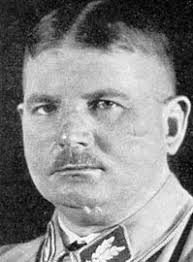
Ernst Rohm
Frightened by Rohm’s ambitions, the generals of the Reichswehr gave Hitler an ultimatum: Get rid of Rohm—or they would get rid of him.
Hitler didn’t hesitate. Backed by armed thugs, he stormed into Rohm’s apartment, catching him in bed with a young S.A. Stormtrooper.
Accusing his onetime friend of treasonously plotting to overthrow him, Hitler screamed: “You’re going to be shot!”
Rohm was not plotting a coup. But the generals had the whip hand—and, for Hitler, that was enough to literally sign Rohm’s death warrant.
Hours later, sitting in a prison cell, Rohm was offered a pistol with a single bullet.
“Adolf himself should do the dirty work,” said Rohm, adding: “All revolutions devour their own children.”
One hour later, Rohm died in a hail of SS bullets.
Earlier throughout that day, so had several hundred of his longtime S.A. cronies. Many of them yelled “Heil Hitler!” as they stood against barracks walls waiting to be shot.
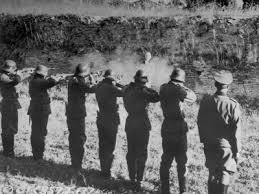
SS firing squad
Thirteen days later, addressing the Reichstag, Germany’s parliament, Hitler justified his purge in a nationally broadcast speech: “If anyone reproaches me and asks why I did not resort to the regular courts of justice, then all I can say is this: In this hour I was responsible for the fate of the German people, and thereby I became the Supreme Judge of the German people!
“I gave the order to shoot the ringleaders in this treason, and I further gave the order to cauterize down to the raw flesh the ulcers of this poisoning of the wells in our domestic life.
“Let the nation know that its existence—which depends on its internal order and security—cannot be threatened with impunity by anyone! And let it be known for all time to come that if anyone raises his hand to strike the State, then certain death is his lot.”
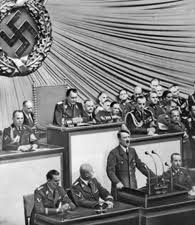
Adolf Hitler addressing parliament
Eighty-six years after Adolf Hitler declared himself “the Supreme Judge of the German people,” the United States faces the same fate under President Donald J. Trump.
On September 2, Trump sent a memo to Russell T. Vought, the director of the Office of Management and Budget, and Attorney General William P. Barr. Its title: “Reviewing Funding to State and Local Government Recipients That Are Permitting Anarchy, Violence and Destruction in American Cities.”
Both officials were ordered to find ways to cut funding to several cities controlled by Democrats.
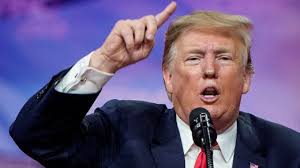
Donald Trump
Accusing local and state officials of abdicating their duties, Trump wrote: “Anarchy has recently beset some of our states and cities. My administration will not allow federal tax dollars to fund cities that allow themselves to deteriorate into lawless zones.”
In his memo, Trump ordered Vought to issue guidance in 30 days “to the heads of agencies on restricting eligibility of or otherwise disfavoring, to the maximum extent permitted by law, anarchist jurisdictions in the receipt of Federal grants.”
And he gave Barr 14 days to identify “anarchist jurisdictions” that “permitted violence and the destruction of property to persist and have refused to undertake reasonable measures” to restore order.
Trump singled out four cities for defunding: Portland, Oregon; Washington, D.C.; Seattle, Washington; and New York City.
The move threatened billions of dollars for many of the country’s largest urban cities.
But protecting American citizens from crime was not the real reason for this effort.
Polls showed Trump trailing his Democratic rival, former Vice President Joseph R. Biden Jr. As a result, Trump was resorting to the classic Republican tactics of smear and fear.
He wanted to shift public attention from his failure to halt the escalating Coronavirus pandemic—which had already killed more than 189,000 Americans and left 25 million unemployed.
He also wanted to turn Black Lives Matter protests against police brutality into white counter-protest at the ballot box.
Trump had long relied on divide-and-rule tactics to gain and hold power. He hoped to persuade suburban whites that he was the only thing standing between them and a black crime wave about to engulf them.
The hatred that millions of older whites—especially rural ones—felt for most of their fellow Americans gave Trump the White House in 2016. Trump hoped that such hatred—combined with fear—would do it again in 2020.
ABC NEWS, ALTERNET, AMERICABLOG, AP, BABY BOOMER RESISTANCE, BBC, BLOOMBERG NEWS, BUZZFEED, CBS NEWS, CHRISTOPHER DORNER, CNN, CROOKS AND LIARS, DAILY KOS, DEATH THREATS, FACEBOOK, FIVETHIRTYEIGHT, GEORGE ZIMMERMAN, HARPER’S MAGAZINE, HAWAII FIVE-O, HUFFINGTON POST, JACK LORD, LORI TANKEL, LOS ANGELES POLICE DEPARTMENT, MEDIA MATTERS, MOTHER JONES, MOVEON, MSNBC, NBC NEWS, NEW REPUBLIC, NEWSDAY, NEWSWEEK, NPR, PBS NEWSHOUR, POLICE, POLITICO, POLITICUSUSA, RAW STORY, REUTERS, ROBERT DALEY, SALON, SEATTLE TIMES, SLATE, SWAT TEAMS, TALKING POINTS MEMO, TARGET BLUE, THE ATLANTIC, THE CHICAGO SUN-TIMES, THE CHICAGO TRIBUNE, THE DAILY BEAST, THE DAILY BLOG, THE GUARDIAN, THE HILL, THE HUFFINGTON POST, THE INTERCEPT, THE LOS ANGELES TIMES, THE NATION, THE NEW REPUBLIC, THE NEW YORK TIMES, THE NEW YORKER, THE UNTOUCHABLES, THE VILLAGE VOICE, THE WALL STREET JOURNAL, THE WASHINGTON POST, THINKPROGRESS, TIME, TRAYVON MARTIN, TRUTHDIG, TRUTHOUT, U.S. NEWS & WORLD REPORT, UPI, USA TODAY, X
In Bureaucracy, History, Law, Law Enforcement, Politics, Social commentary on December 30, 2024 at 12:22 am
Lori Tankel had a problem: A lot of angry people thought she was George Zimmerman.
She began getting death threats on her
Unfortunately for Tankel, her number was one digit away from the number Zimmerman used to make his call to police just before he fatally shot Martin.
That phone number had been shown throughout the trial. And, believing the number was Zimmerman’s, someone posted Tankel’s number online.
Just minutes after the verdict, Tankel began getting death threats. “We’re going to kill you. We’re going to get you. Watch your back,” threatened a typical call.
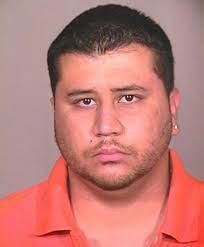
George Zimmerman
Tankel worked as a sales representative for several horse companies. She had grown used to relying on her phone to keep her business going.
But, almost as soon as the Zimmerman verdict came in, “My phone just started to blow up. Phone call after phone call, multiple phone
So she did what any ordinary citizen, faced with multiple death threats, would do: She called the police.
According to her, the Seminole County Sheriff’s Office told her the department itself receives around 400 death threats a minute on social media sites.
In short: Unless you’re wealthy, a politician or—best of all, a cop—don’t expect the police to protect you if your life is threatened.
First, above everyone else, police look out for each other.
Robert Daley bluntly revealed this truth in his 1971 bestseller, Target Blue: An Insider’s View of the N.Y.P.D. A police reporter for the New York Times, he served for one year as a deputy police commissioner.
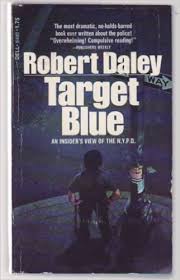
“A great many solvable crimes in the city were never solved, because not enough men were assigned to the case, or because those assigned were lazy or hardly cared or got sidetracked,” wrote Daley.
“But when a cop got killed, no other cop got sidetracked. Detectives worked on the case night and day….
“In effect, the citizen who murdered his wife’s lover was sought by a team of detectives, two men. But he who killed a cop was sought by 32,000.”
That’s why the Mafia tried to bribe cops, but never killed them.
Second, don’t expect the police to do for you what they’ll do for one another.
In February, 2013, Christopher Dorner declared war on his former fellow officers of the Los Angeles Police Department.
The LAPD assigned security and surveillance details to at least 50 threatened officers and their families. A typical detail consists of two to five or more guards. And those guards must be changed every eight to 12 hours.

Those details stayed in place long after Dorner was killed in a firefight on February 12, 2013.
But if your bullying neighbor threatens to kill you, don’t expect the police to send a guard detail over. They’ll claim: ”We can’t do anything until the guy does something. If he does, give us a call.”
Third, the more status and wealth you command, the more likely the police are to address your complaint or solve your case.
If you’re rich, your complaint will likely get top priority and the best service the agency can provide.
But if you’re poor or even middle-class without high-level political or police connections, you’ll be told: “We just don’t have the resources to protect everybody.”
Fourth, don’t expect your police department to operate with the vigor or efficiency of TV police agencies.
“I want this rock [Hawaii] sealed off,” Steve McGarrett (Jack Lord) routinely ordered when pursuing criminals on “Hawaii Five-O.”
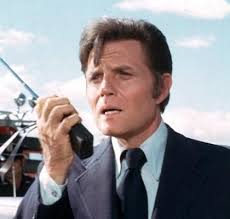
Jack Lord as Steve McGarrett
Real-life police departments, on the other hand:
- Often lack state-of-the-art crime labs to analyze evidence.
- Often lose or accidentally destroy important files.
- Are—like all bureaucracies—staffed by those who are lazy, indifferent or incompetent.
- Are notoriously competitive, generally refusing to share information with other police departments-–thus making it easier for criminals to run amok.
Even when police ”solve” a crime, that simply means making an arrest. After that, there are at least three possible outcomes:
- The District Attorney may decide not to file charges.
- The perpetrator may plead to a lesser offense and serve only a token sentence—or none at all.
- He might be found not guilty by a judge or jury.
Fifth, the result of all this can only be increased disrespect for law enforcement from a deservedly—and increasingly—cynical public.
It is the witnessing of blatant inequities and hypocrisies such as those displayed in the Christopher Dorner case that most damages public support for police at all levels.
When citizens believe police lack the ability—or even the will—to protect them or avenge their victimization, that is a deadly blow to law enforcement.
Police depend on citizens for more than crime tips.
They depend upon them to support hiring more cops and buying state-of-the-art police equipment.
When public support vanishes, so does much of that public funding.
The result can only be a return to the days of the lawless West, where citizens—as individuals or members of vigilante committees—look only to themselves for protection.
2016 PRESIDENTIAL CAMPAIGN, ABC NEWS, ACCESS HOLLYWOOD, ALTERNET, ANDERSON COOPER, AP, BILL CLILNTON, BILLY BUSH, BRETT KAVANAUGH, BUZZFEED, CBS NEWS, CHICAGO TRIBUNE, CNN, COREY LEWANDOWSKI, CROOKS AND LIARS, DAILY KOZ, DAYS OF OUR LIVES, DONALD TRUMP, E. JEAN CARROLL, FOX NEWS, HOUSE OF REPRESENTATIVES, INFIDELITY, IVANA TRUMP, JESSICA LEEDS, KEVIN MCCARTHY, LEIGH CORFMAN, MARCO RUBIO, MARLA MAPLES TRUMP, MELANIA TRUMP, MICHAEL GERSON, MINDY MCGILLIVRAY, MINDY MCGILLLIVRAY, MOTHER JONES, MOVEON, NATASHA STOYNOFF, NBC NEWS, NEWSWEEK, NPR, PALM BEACH POST, PEOPLE, PEOPLE MAGAZINE, POLITICO, RAPE, RAW STORY, REPUBLICAN PARTY, REPUBLICANS, REUTERS, SALON, SEAN HANNITY, SEATTLE TIMES, SEXUAL HARASSMENT, SEXUALLY TRANSMITTED DISEASES, SLATE, STORMY DANIELS, THE ATLANTIC, THE CHICAGO SUN-TIMES, THE CHICAGO TRIBUNE, THE DAILY BEAST, THE GUARDIAN, THE HILL, THE HUFFINGTON POST, THE LOS ANGELES TIMES, THE NATION, THE NEW YORK TIMES, THE PALM BEACH POST, THE WASHINGTON POST, THOM TILLIS, TIME, U.S. NEWS & WORLD REPORT, UPI, USA TODAY, WOMEN, X
In Bureaucracy, History, Law, Politics, Social commentary on December 26, 2024 at 12:05 am
Donald Trump—the soon-to-be President of the United States—has a woman problem.
Or, to be more accurate, a series of women problems.
First, he’s been married three times—and divorced twice:
- In 1977, Trump married Czech model Ivana Winklmayr. The couple divorced in 1992, following Trump’s notorious affair with actress Marla Maples.
- Maples and Trump were married in December 1993—and divorced in 1999.
- In 1998, Trump met Slovenian model Melania Knauss. They married in 2005.

Ivana Trump and Donald Trump
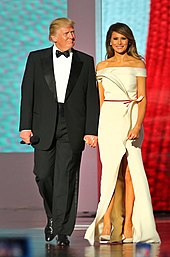
Donald and Melania Trump
And Trump has never been known for marital fidelity:
- He was still married to Ivana when he carried on a highly publicized extramarital affair with Marla Maples.
- Trump was still married to Maples when he entered into an affair with Melania Knauss.
- And only four months after Melania gave birth to their son, Barron, Trump had his now-infamous tryst with porn “actress” Stormy Daniels.
He has often boasted about his sexual prowess:
- When his 2016 Republican rival, Marco Rubio, joked that Trump’s hands were small, Trump said: “Look at those hands, are they small hands? And, [Rubio] referred to my hands—‘if they’re small, something else must be small.’ I guarantee you there’s no problem. I guarantee.”
- Trump equated avoiding STDs during the late 1990s with serving in Vietnam: “I’ve been so lucky in terms of that whole world, it is a dangerous world out there. It’s like Vietnam, sort of. It is my personal Vietnam. I feel like a great and very brave solider.”
John F. Kennedy—another notorious womanizer—never felt the need to boast of his prowess.
Trump’s most infamous “take” on women appeared during the 2016 Presidential race. The remarks happened during a 2005 exchange with Billy Bush, then the host of Access Hollywood.
The two were traveling in an Access Hollywood bus to the set of the soap opera Days of Our Lives, where Trump was to make a cameo appearance. A “hot” microphone caught Trump’s boast of trying to pick up a married woman:
“You know and I moved on her actually. You know she was down on Palm Beach. I moved on her and I failed. I’ll admit it. I did try and fuck her. She was married.
“No, no, Nancy. No this was—and I moved on her very heavily. In fact, I took her out furniture shopping. She wanted to get some furniture. I said I’ll show you where they have some nice furniture.
“I took her out furniture [shopping]. I moved on her like a bitch, but I couldn’t get there, and she was married. Then all of a sudden I see her, she’s now got the big phony tits and everything. She’s totally changed her look….
“You know I’m automatically attracted to beautiful—I just start kissing them. It’s like a magnet. Just kiss. I don’t even wait. And when you’re a star they let you do it. You can do anything. Grab them by the pussy. You can do anything.”
When the Washington Post broke the story on October 7, 2016, the reaction was immediate—and explosive.
Trump quickly released a statement: “This was locker room banter, a private conversation that took place many years ago. Bill Clinton has said far worse to me on the golf course—not even close. I apologize if anyone was offended.”
During the second Presidential debate on October 9, moderator Anderson Cooper asked Trump: “Have you ever done those things?”
Trump: “And I will tell you—no I have not.”
On October 12, 2016, The Palm Beach Post, The New York Times and People all published stories of women claiming to have been sexually assaulted by Trump.
Among his victims:
- MINDY MCGILLLIVRAY: Told the Post that Trump groped her buttocks when she, then 34, visited Mar-a-Lago in Palm Beach, Florida, in 2013.
Within a week of accusing Trump, she told the Palm Beach Post that she and her family were leaving the United States. The reason: She feared for her family’s safety.
“We feel the backlash of the Trump supporters. It scares us. It intimidates us. We are in fear of our lives.’’
- NATASHA STOYNOFF: A People magazine writer, in December, 2005, she went to Mar-a-Lago to interview Donald and Melania Trump for a first-wedding-anniversary feature story.
During a break in the interview, Trump said he wanted to show Stoynoff a “tremendous” room in the mansion.
Recalled Stoynoff: “We walked into that room alone, and Trump shut the door behind us. I turned around, and within seconds he was pushing me against the wall and forcing his tongue down my throat.”

Natasha Stoynoff
Fortunately, Trump’s butler soon entered the room, and Trump acted as though nothing had happened. But as soon as he and Stoynoff were alone again, Trump said: “You know we’re going to have an affair, don’t you?”
Stoynoff asked her editors—and received permission—to be removed from writing any further Trump features.
- JESSICA LEEDS: More than 30 years earlier, Trump had made equally unwelcome advances toward businesswoman Leeds, then 38.

Jessica Leeds
She said she was sitting next to Trump in the first-class cabin of a New York-bound flight when Trump lifted the armrest, grabbed her breasts and tried to put his hand up her skirt. She fled to the back of the plane.
ABC NEWS, ALTERNET, AMERICABLOG, AP, BABY BOOMER RESISTANCE, BBC, BLOOMBERG, BUZZFEED, CBS NEWS, CLASS WARFARE, CNN, CROOKS AND LIARS, DAILY KOS, DAILY KOZ, DANA CARVEY, DICK CHENEY, ECONOMIC DISPARITY, FIVETHIRTYEIGHT, FRANK CAPRA, GEORGE BAILEY, HARPER’S MAGAZINE, HENRY F. POTTER, HUFFINGTON POST, IT'S A WONDERFUL LIFE, JAMES STEWART, LIONEL BARRYMORE, MEDIA MATTERS, MOTHER JONES, MOVEON, MOVIES, MSNBC, NBC NEWS, NEW REPUBLIC, NEWSDAY, NEWSWEEK, NPR, PBS NEWSHOUR, POLITICO, POLITICUSUSA, RAW STORY, REUTERS, SALON, SATURDAY NIGHT LIVE, SEATTLE TIMES, SLATE, TALKING POINTS MEMO, THE ATLANTIC, THE CHICAGO SUN-TIMES, THE CHICAGO TRIBUNE, THE DAILY BEAST, THE DAILY BLOG, THE GUARDIAN, THE HILL, THE HUFFINGTON POST, THE INTERCEPT, THE LOS ANGELES TIMES, THE NATION, THE NEW REPUBLIC, THE NEW Y ORK TIMES, THE NEW YORK TIMES, THE NEW YORKER, THE VILLAGE VOICE, THE WASHINGTON POST, THINKPROGRESS, TIME, TRUTHDIG, TRUTHOUT, TWO POLITICAL JUNKIES, U.S. NEWS & WORLD REPORT, UNEMPLOYMENT, UPI, USA TODAY, X
In Business, Entertainment, Law, Law Enforcement, Politics, Social commentary on December 23, 2024 at 12:24 am
Every Christmas, TV audiences find comfort and triumph in the rerunning of a black-and-white 1946 movie: It’s a Wonderful Life.
It’s the story of George Bailey (James Stewart), a decent husband and father who hovers on the brink of suicide—until his guardian angel, Clarence, suddenly intervenes.

Clarence reveals to George what his home town, Bedford Falls, New York, would be like if he had never been born. George finds himself shocked to learn:
- With no counterweight to the schemes of rapacious slumlord Henry F. Potter, Bedford Falls becomes Potterville, filled with pawn shops and sleazy nightclubs.
- With no George Bailey to save his younger brother, Harry, from drowning in a frozen pond, Harry drowns.
- With no Harry to live to become a Naval fighter pilot in World War II, he’s not on hand to shoot down two Japanese planes targeting an American troopship.
- As a result, the troopship and its crew are destroyed.
George is forced to face the significant role he has played in the lives of so many others.
Armed with this knowledge, he once again embraces life, running through the snow-covered streets of Bedford Falls and shouting “Merry Christmas!” to everyone he meets.
Audiences have hailed George Bailey as an Everyman hero—and the film as a life-affirming testament to the unique importance of each individual.
But there is another aspect of the movie that has not been so closely studied: The legacy of its villain, Henry F. Potter, who, as played by Lionel Barrymore, bears a striking resemblance to former Vice President Dick Cheney.

Henry F. Potter
It is Potter—the richest man in Bedford Falls—whose insatiable greed threatens to destroy it. And it is Potter whose criminality drives George Bailey to the brink of suicide.
The antagonism between Bailey and Potter starts early in the movie. George dreams of leaving Bedford Falls and building skyscrapers. Meanwhile, he works at the Bailey Building and Loan Association, which plays a vital role in the life of the community.
Potter, a member of the Building and Loan Association board, tries to persuade the board of directors to dissolve the firm. He objects to their providing home loans for the working poor.
George persuades them to reject Potter’s proposal, but they agree only on condition that George run the Building and Loan. Reluctantly, George agrees.
Later, Potter tries to lure George away from the Building and Loan, offering him a $20,000 salary and the chance to visit Europe. George is briefly tempted.
But then he realizes that Potter intends to close down the Building and Loan and deny financial help to those who most need it. Angrily, he turns down Potter’s offer:
“You sit around here and you spin your little webs and you think the whole world revolves around you and your money. Well, it doesn’t, Mr. Potter!
“In the whole vast configuration of things, I’d say you were nothing but a scurvy little spider.”
It is a setback for Potter, but he’s willing to bide his time for revenge.
On Christmas Eve morning, the town prepares a hero’s welcome for George’s brother, Harry. George’s scatter-brained Uncle Billy visits Potter’s bank to deposit $8,000 of the Building and Loan’s cash funds.
He taunts Potter by reading the newspaper headlines announcing the coming tribute. Potter snatches the paper, and Billy unthinkingly allows the money to be snatched with it.
When Billy leaves, Potter opens the paper and sees the money. He keeps it, knowing that misplacement of bank money will bankrupt the Building and Loan and bring criminal charges against George.
But at the last minute, word of George’s plight reaches his wide range of grateful friends. A flood of townspeople arrive with more than enough donations to save George and the Building and Loan.
The movie ends on a triumphant note, with George basking in the glow of love from his family and friends.
But no critic seems to have noticed that Henry Potter’s theft has gone unnoticed. (Uncle Billy can’t recall how he lost the money.) Potter is richer by $8,000. And ready to go on taking advantage of others.
Perhaps it’s time to see Potter’s actions in a new light—that of America’s richest 1%, ever ready to prey upon the weaknesses of others.
Justice never catches up with Potter in the movie. But the joke-writers at Saturday Night Live have conjured up a satisfactory punishment for his avarice.
In this version, Uncle Billy suddenly remembers that he left the money with Potter. Enraged, George Bailey (Dana Carvey) leads his crowd of avenging friends to Potter’s office.
Potter realizes the jig is up and offers to return the money. But George wants more than that—and he and his friends proceed to stomp and beat Potter to death.
The skit ends with with George and his friends singing “Auld Ang Syne”—as they do in the movie—as they finish off Potter with clubs.
America is rapidly a divided nation—one where the richest 1% lord it over an increasingly impoverished 99%.
The time may be coming when many Americans are ready to embrace the SNL approach to economic justice.
ABC NEWS, AIG, ALAN GREENSPAN, ALTERNET, AMERICABLOG, AP, AYN RAND, BABY BOOMER RESISTANCE, BAILOUT PROGRAM, BBC, BLOOMBERG, BUSINESS REGULATION, BUZZFEED, CALVIN COOLIDGE, CBS NEWS, CBSNEWS, CEOS, CNN, COLLEGE GRADUATES, CORPORATE BAILOUTS, CROOKS AND LIARS, DAILY KOS, DAILY KOZ, DRUG-TESTING, FACEBOOK, FBI, FINANCE, FIVETHIRTYEIGHT, GREED, HARPER’S MAGAZINE, HUFFINGTON POST, MEDIA MATTERS, MOTHER JONES, MOVEON, MSNBC, NBC NEWS, NEW REPUBLIC, NEWSDAY, NEWSWEEK, NPR, PBS NEWSHOUR, POLITICO, POLITICUSUSA, RAW STORY, REPUBLICANS, REUTERS, ROBERT BENMOSCHE, SALON, SEATTLE TIMES, SLATE, T.A.R.P. PROGRAM, TALKING POINTS MEMO, TEA PARTY, THE ATLANTIC, THE CHICAGO SUN-TIMES, THE CHICAGO TRIBUNE, THE DAILY BEAST, THE DAILY BLOG, THE GUARDIAN, THE HILL, THE HUFFINGTON POST, THE INTERCEPT, THE LOS ANGELES TIMES, THE NATION, THE NEW REPUBLIC, THE NEW YORK TIMES, THE NEW YORKER, THE VILLAGE VOICE, THE WASHINGTON POST, THINKPROGRESS, TIME, TIMOTHY GEITHNER, TREASURY DEPARTMENT, TRUTHDIG, TRUTHOUT, TWO POLITICAL JUNKIES, U.S. NEWS & WORLD REPORT, UNEMPLOYMENT, UPI, USA TODAY, WALL STREET, WELFARE, X
In Bureaucracy, Business, History, Law, Politics, Social commentary on December 20, 2024 at 12:19 am
Robert Benmosche, the CEO of American International Group (AIG) had some blunt advice to college graduates searching for work.
“You have to accept the hand that’s been dealt you in life,” Benmosche said in a 2013 interview on Bloomberg Television. “Don’t cry about it. Deal with it.”
As is typical of one-percenters, Benmosche blamed willing-to-work college graduates for the refusal of rich employers to offer jobs instead of excuses.
AIG’s way of “accepting the hand that’s been dealt you in life” was to go crying to the Federal Government for a bailout loan—which eventually ballooned to $182 billion.
If college graduates should “deal with” the hardships of finding a responsible, hiring-inclined employer with a stiff upper lip, as Benmosche advised, the same advice should work wonders on greed-fueled CEOs.
Greed-test CEOs for future government loans.
After all, drug-testing welfare recipients has become the new mantra for Republicans.
Some bills have even targeted people who seek unemployment insurance and food stamps, despite scanty evidence that the poor and jobless are disproportionately on drugs.
The concept of background screening is actually sound. But Republicans are aiming it at the wrong end of the economic spectrum.
Since 2008, the government has handed out billions of dollars in bailouts to CEOs of the wealthiest corporations in the country.
The reason: To rescue the economy from the calamity produced by the criminal greed and recklessness of those same corporations.
In 2008, Alan Greenspan, the former chairman of the Federal Reserve, testified before Congress about the origins of the Wall Street “meltdown.”
He admitted that he was “shocked” at the breakdown in U.S. credit markets and said he was “partially” wrong to resist regulation of some securities.
“Those of us who have looked to the self-interest of lending institutions to protect shareholder’s equity—myself especially—are in a state of shocked disbelief,” said Greenspan, who had ruled the Fed from 1987 to 2006.
Alan Greenspan
As a disciple of the right-wing philosopher, Ayan Rand, Greenspan had fiercely held to her belief that “The Market” was a divine institution. As such, “it” alone knew what was best for the nation’s economic prosperity.
“Enlightened self-interest,” he believed, would guarantee that those who dedicated their lives to making money would not allow mere greed to steer them—and the country—into disaster.
As he saw it, any attempt to regulate greed-based appetites could only harm that divine institution.
This had been the prevailing attitude among businessmen prior to the 1929 Wall Street crash that brought on the Great Depression. It proved wrong then.
And it proved wrong for Greenspan—and the country—in 2008. And the nation will be literally paying for such misguided confidence in profit-addicted men for decades to come.
So if Republicans want to protect the “poor, oppressed taxpayer,” they should demand background investigations for those whose addiction truly threatens the economic future of this country.
That is: The men (and occasionally women) who run the nation’s most important financial institutions, such as banks, insurance and mortgage companies.
Thus, in the future, all CEOs—and their families and topmost executives—of financial institutions seeking Federal bailouts should be required to:
- Undergo “full field investigations” by the FBI and IRS.
- Submit full financial disclosure forms concerning not only themselves but all members of their immediate families.
- Be subject to Federal prosecution for perjury if they provide false information or conceal evidence of criminal violations.
- Periodically submit themselves for additional background investigation.
- Be subject to arrest, indictment and prosecution if the background investigation turns up evidence of criminal activity.
In addition:
- If a bailout-seeking financial institution refuses to comply with these criteria, it should be refused the loan.
- If a CEO and/or other top officials are judged ineligible for a loan, the company should be asked to replace those executives with others who might qualify.
- Those alternative executives should be subject to the same background investigation requirements as just outlined.
- If the institution refuses to replace those executives found ineligible, the Government should refuse the loan.
- If the Government is forced to take over a troubled financial institution, its CEO and top executives should be replaced with applicants who have passed the required security screening.
The United States has a long and embarrassing history in worshiping wealth for its own sake. Part of this can be traced to the old Calvinistic doctrine that wealth is a proof of salvation, since it shows evidence of God’s favor.
“The man who builds a factory,” eulogized President Calvin Coolidge, “builds a temple. And the man who works there, worships there.”
Another reason for this worship of mammon is the belief that someone who is wealthy is automatically endowed with wisdom and integrity. If that were true, Mafia bosses would be the moral equivalent of Saint Augustine.
Following these beliefs to their ultimate conclusion will transform the United States into a plutocracy—a government of the wealthy, by the wealthy, for the wealthy.
Every day—from President Donald Trump on down—we see fresh evidence of the destruction wrought by the unchecked greed of wealthy, powerful men.
When they—and their paid shills in Congress—demand, “De-regulate business,” it’s essential to remember what this really means.
It means: “Let criminals be criminals.”
ABC NEWS, AIG, ALAN GREENSPAN, ALTERNET, AMERICABLOG, AP, AYN RAND, BABY BOOMER RESISTANCE, BAILOUT PROGRAM, BBC, BLOOMBERG, BUSINESS REGULATION, BUZZFEED, CALVIN COOLIDGE, CBS NEWS, CBSNEWS, CEOS, CNN, COLLEGE GRADUATES, CORPORATE BAILOUTS, CROOKS AND LIARS, DAILY KOS, DAILY KOZ, DRUG-TESTING, FACEBOOK, FBI, FINANCE, FIVETHIRTYEIGHT, GREED, HARPER’S MAGAZINE, HUFFINGTON POST, MEDIA MATTERS, MOTHER JONES, MOVEON, MSNBC, NBC NEWS, NEW REPUBLIC, NEWSDAY, NEWSWEEK, NPR, PBS NEWSHOUR, POLITICO, POLITICUSUSA, RAW STORY, REPUBLICANS, REUTERS, SALON, SEATTLE TIMES, SLATE, T.A.R.P. PROGRAM, TALKING POINTS MEMO, TEA PARTY, THE ATLANTIC, THE CHICAGO SUN-TIMES, THE CHICAGO TRIBUNE, THE DAILY BEAST, THE DAILY BLOG, THE GUARDIAN, THE HILL, THE HUFFINGTON POST, THE INTERCEPT, THE LOS ANGELES TIMES, THE NATION, THE NEW REPUBLIC, THE NEW YORK TIMES, THE NEW YORKER, THE VILLAGE VOICE, THE WASHINGTON POST, THINKPROGRESS, TIME, TIMOTHY GEITHNER, TREASURY DEPARTMENT, TRUTHDIG, TRUTHOUT, TWO POLITICAL JUNKIES, U.S. NEWS & WORLD REPORT, UNEMPLOYMENT, UPI, USA TODAY, WALL STREET, WELFARE, X
In Bureaucracy, Business, History, Law, Politics, Social commentary on December 19, 2024 at 12:11 am
The late Robert Benmosche, then CEO of American International Group (AIG), had some blunt advice to college graduates searching for work in a tight job market.
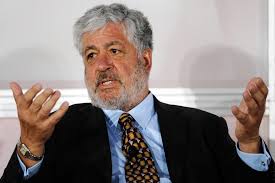
Robert Benmosche
“You have to accept the hand that’s been dealt you in life,” Benmosche said in a 2013 interview on Bloomberg Television. “Don’t cry about it. Deal with it.”
Typical advice from a one-percenter whose company, AIG, suffered a liquidity crisis when its credit ratings were downgraded below “AA” levels in September, 2008.
So how did AIG “deal with” its own crisis? It went crying to its Uncle Sugar, the United States Government, for a bailout.
Which it promptly got.
The United States Federal Reserve Bank, on September 16, 2008, made an $85 billion loan to AIG to meet increased collateral obligations resulting from its credit rating downgrade—and thus saving it from certain bankruptcy.
In return, the Government took an 80% stake in the firm.
(The bailout eventually ballooned to $182 billion in exchange for a 92% stake.)
College graduates, said Benmosche, needed to seize the opportunities that become available to them, even if their options are limited.
“They want me to talk to the students and give them a sense of encouragement, especially with the high unemployment,” said Benmosche.
“My advice will be, ‘Whatever opportunity comes your way, take it. Take it and treat it as if it’s the only one that’s coming your way, because that actually may be the truth.’”
Yes, if you have the opportunity to cry yourself into a multi-billion dollar loan from the Federal Government, by all means, do so.
Of course, willing-to-work college graduates who can’t find willing-to-hire employers won’t be able to count on a generous bailout from the Federal Government.
To which most of them will owe hundreds of thousands of dollars in student loans.
It’s long past time to apply to “untouchable” CEOs like Robert Benmosche the same criteria that Right-wing Republicans demand be applied to welfare recipients.
Republican lawmakers have vigorously pursued welfare drug-testing in Congress and more than 30 states.

Some bills have even targeted people who claim unemployment insurance and food stamps, despite scanty evidence the poor and jobless are disproportionately on drugs.
The concept of background screening is actually sound. But Republicans are aiming it at the wrong end of the economic spectrum.
Since 2008, the government has handed out billions of dollars in bailouts to the wealthiest corporations in the country.
The reason: To rescue the economy from the calamity produced by the criminal greed and recklessness of those same corporations.
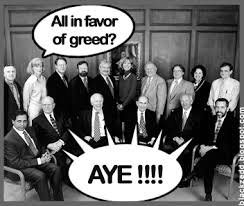
For example:
According to the Special Inspector General for the TARP bailout, the total commitment of government is $16.8 trillion dollars with the $4.6 trillion already paid out.
And it’s equally important to remember that welfare recipients did not:
- Hold CEO positions at any of the banks so far bailed out;
- Run such insurance companies as American International Group (AIG);
- Administer the Federal Home Loan Mortgage Corporation, known as Freddie Mac;
- Command the Federal National Mortgage Association, known as Fannie Mae.
The 2010 documentary Inside Job chronicles the events leading to the 2008 global financial crisis. One of its most insightful moments occurs at a party held by then-Treasury Secretary Henry Paulson.
“We can’t control our greed,” the CEO of a large bank admits to his fellow guests. “You should regulate us more.”
Greed is defined as an excessive desire for wealth or goods. At its worst, greed trumps rationality, judgment and concern about the damage it may cause.
Greed begins in the neurochemistry of the brain. A neurotransmitter called dopamine fuels our greed. The higher the dopamine levels in the brain, the greater the pleasure we experience.
Cocaine, for example, directly increases dopamine levels. So does money.
Harvard researcher Hans Breiter has found, via magnetic resonance imaging studies, that the craving for money activates the same regions of the brain as the lust for sex, cocaine or any other pleasure-inducer.
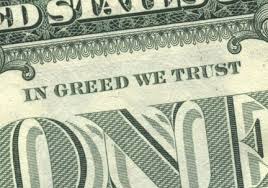
Dopamine is most reliably activated by an experience we haven’t had before. We crave recreating that experience.
But snorting the same amount of cocaine, or earning the same sum of money, does not cause dopamine levels to increase. So the pleasure-seeker must increase the amount of stimuli to keep enjoying the euphoria.
In time, this incessant craving for pleasure becomes an addiction. And feeding that addiction–-with ever more money–becomes the overriding goal.
Thus, the infamous line—”Greed is good”—in the 1987 film, Wall Street, turns out to be both false and deadly for all concerned.
But the situation need not remain this way.


.jpg&docid=sOkRc_ehpi7xFM&tbnid=RqUpfRRKBX9_7M%3A&vet=1&w=300&h=250&bih=470&biw=790&ved=2ahUKEwiljoPgqZraAhXD-lQKHYAMDR4QxiAoAXoECAAQFQ&iact=c&ictx=1)


 Bureaucracybuster's Blog
ABC NEWS, ADOLF HITLER, ALTERNET, AMERICABLOG, AP, BABY BOOMER RESISTANCE, BARACK OBAMA, BBC, BILL CLINTON, BLOOMBERG NEWS, BUZZFEED, CANADA, CBS NEWS, CHINA, CHRIS MATTHEWS, CNN, CNN'S "STARTING POINT", CROOKS AND LIARS, CZECHOSLAVAKIA, DAILY KOS, DARRELL ISSA, DAVID BROOKS, DEBT CEILING, DENMARK, DONALD TRUMP, DRUG TRAFFICKING, EXECUTIVE ORDERS, EXTORTION, FIVETHIRTYEIGHT, GEORGE W. BUSH, GREENLAND, HARPER’S MAGAZINE, HOUSE SPEAKER JOHN BOEHNER, HUFFINGTON POST, ILLEGAL ALIENS, immigration reform, INSIDER, IRAN, JANET YELLEN, JIMMY CARTER, JOSEPH BIDEN, JUSTIN TRUDEAU, MEDIA MATTERS, MEXICO, MITCH MCCONNELL, MOTHER JONES, MOVEON, MSNBC, MSNBC'S "HARDBALL", NANCY PELOSI, NAZI GERMANY, NBC NEWS, NEGOTIATING, NEVILLE CHAMBERLAIN, NEW REPUBLIC, NEWSDAY, NEWSWEEK, NEWT GINGRICH, NICCOLO MACHIAVELLI, NORTH KOREA, NPR, PANAMA CANAL, PAP SMEARS, PBS NEWSHOUR, PITUFFIK SPACE BASE, PLANNED PARENTHOOD, POLAND, POLITICO, POLITICUSUSA, R.I.CO. ACT, RAW STORY, REPUBLICAN PARTY, REPUBLICANS, REUTERS, Ronald Reagan, RUSSIA, SALON, SEATTLE TIMES, SLATE, TALKING POINTS MEMO, TARIFFS, THE ATLANTIC, THE CHICAGO SUN-TIMES, THE CHICAGO TRIBUNE, THE DAILY BEAST, THE DAILY BLOG, THE GUARDIAN, THE HAMILTON PROJECT, THE HILL, THE HUFFINGTON POST, THE LOS ANGELES TIMES, THE NATION, THE NEW REPUBLIC, THE NEW YORK TIMES, THE NEW YORKER, THE PRINCE, THE VILLAGE VOICE, THE WASHINGTON POST, THINKPROGRESS, TIME, TITLE X, TRUTHDIG, TRUTHOUT, TWITTER, TWO POLITICAL JUNKIES, U.S. NEWS & WORLD REPORT, UPI, USA TODAY, WARREN BUFFET, WENDY EDELBERG, WINSTON CHURCHILL, WONKETTE, WORLD WAR 11, X
HITLER DAYS ARE HERE AGAIN: PART TWO (OF FOUR)
In Bureaucracy, Business, History, Law, Law Enforcement, Military, Politics, Social commentary on January 8, 2025 at 12:10 amBy studying the “negotiating” methods used by Adolf Hitler, Americans generally—and Democrats in particular—can learn much about the mindset and “negotiating” style of today’s Republican party.
Consider President-Elect Donald Trump’s recent threats against not only Canada but Panama—specifically, to retake control of the Panama Canal.
On December 25, Trump told a conservative conference in Arizona that Panama was charging US ships “ridiculous, highly unfair” fees to use its namesake canal.
The United States built the canal during the administration of President Theodore Roosevelt and opened it in 1914. It remained controlled by the United States until President Jimmy Carter signed a a 1977 agreement for its eventual handover to Panama in 1999.
Panama Canal (in white)
But this week, Trump threatened that if shipping rates were not lowered, “we will demand that the Panama Canal be returned to us, in full, quickly and without question.”
He accused China of operating the canal and lamented that the United States “puts in Billions of Dollars in ‘repair’ money, but will have absolutely nothing to say about ‘anything.’”
On December 25, Trump posted on his website, Truth Social: “Merry Christmas to all, including to the wonderful soldiers of China, who are lovingly, but illegally, operating the Panama Canal.”
“There is not a single Chinese soldier in the canal,” the president of Panama, José Raúl Mulino, told reporters the next day, adding that there is “absolutely no Chinese interference.”
Trump’s threats against Panama may be connected with the outstanding tax evasion case he faces in the country.
In 2019, the owners of a Panama City hotel tower that was previously managed and operated under the Trump brand accused the Trump Organization of pocketing money meant to pay taxes. According to a lawsuit, Trump’s companies simply kept the money, “intentionally evading taxes” and leaving the new owner liable for millions.
Yet the blunt truth remains: Unless Trump goes to war with Panama, his threat to take over the canal is effectively meaningless.
During the 2024 Presidential campaign, Trump denied reading Adolf Hitler’s notorious book, Mein Kampf (“My Struggle.”)
In the past, however, he has acknowledged owning a copy of it. And he has adopted the same “negotiating” style as the late Fuhrer: Do-as-I-say-or-I’ll-destroy-you.
A classic example of Hitler’s “bargaining style” came in 1938, when he invited Austrian Chancellor Kurt von Schuschnigg to his mountaintop retreat in Obersalzberg, Germany.
Kurt von Schuschnigg
Hitler, an Austrian by birth, intended to annex his native land to Germany. Schuschnigg was aware of Hitler’s desire, but nevertheless felt secure in accepting the invitation. He had been assured that the question of Austrian sovereignty would not arise.
The meeting occurred on February 12, 1938.
Shuschnigg opened the discussion with a friendly compliment. Walking over to a large window, he admired the breathtaking view of the mountains.
HITLER: We haven’t come here to talk about the lovely view or the weather!
Austria has anyway never done anything which was of help to the German Reich….I am resolutely determined to make an end to all this business. The German Reich is a great power. Nobody can and nobody will interfere if it restores order on its frontiers.
SCHUSCHNIGG: We simply have to go on living alongside one another, the little state next to the big one. We have no other choice.
And that is why I ask you to tell me what your concrete complaints are. We will do all in our power to sort things out and establish a friendly relationship, as far as it is possible to do so.
HITLER: That’s what you say, Herr Schuschnigg. And I am telling you that I intend to clear up the whole of the so-called Austrian question—one way or another. Do you think I don’t know that you are fortifying Austria’s border with the Reich?
Adolf Hitler
SCHUSCHNIGG: There can be no suggestion at all of that—
HITLER: Ridiculous explosive chambers are being built under bridges and roads—
This was a lie, and Hitler knew it was a lie. But no matter. It gave him an excuse to threaten to destroy Austria—as he was to destroy so many other nations during the next seven years.
HITLER: I have only to give one command and all this comic stuff on the border will be blown to pieces overnight. You don’t seriously think you could hold me up, even for half an hour, do you?
Who knows—perhaps you will find me one morning in Vienna like a spring storm. Then you will go through something! I’d like to spare the Austrians that.
The S.A. [Hitler’s private army of Stormtroopers] and the [Condor] lLegion [which had bombed much of Spain into rubble during the three-year Spanish Civil War] would come in after the troops and nobody—not even I—could stop them from wreaking vengeance.
Schnuschigg made a cardinal mistake in dealing with Hitler: He showed fear. And this was precisely what the Nazi dictator looked for in an opponent.
Contrary to popular belief, Hitler did not constantly rage at everyone. On the contrary: he could, when he desired, be charming, especially to women. He used rage as a weapon, knowing that most people feel intimidated by it.
Share this: