Posts Tagged ‘WATERGATE’
9/11 ATTACKS, ABC NEWS, ABORTION, ADOLF HITLER, AL-QAEDA, ALTERNET, AMERICABLOG, ANDREW CUOMO, ANTHONY FAUCI, AP, BABY BOOMER RESISTANCE, BLOOMBERG, BOB WOODWARD, BUZZFEED, CARL BERNSTEIN, CBS NEWS, CENTERS FOR DISEASE CONTROL AND PREVENTION (CDC), CHICAGO, CHINA, CIA, CLOROX BLEACH, CNN, CORONAVIRUS, COVID-19, COVID-19 TEST KITS, CROOKS AND LIARS, DAILY KOZ, DAVID BROOKS, DEBORAH BIRX, DEMOCRATIC NATIONAL CONVENTION, DEPARTMENT OF HOMELAND SECURITY, DONALD RUMSFELD, DONALD TRUMP, DRUDGE REPORT, FACEBOOK, FBI, FEDERAL EMERGENCY MANAGEMENT AGENCY (FEMA), FIVETHIRTYEIGHT, FLORIDA, FORBES, FOX NEWS, FRANKLIN D. ROOSEVELT, GRETCHEN WHITMER, HARPER’S MAGAZINE, HUFFINGTON POST, JARED KUSHNER, JAY INSLEE, KOREAN WAR, KRISTI NOEM, KRISTIN URQUIZA, LARRY HOGAN, LOS ANGELES, MARK ANTHONY URQUIZA, MARK SHIELDS, MARYLAND, MASSACHUSSETS, MEDIA MATTERS, MICHIGAN, MICK MULVANEY, MIKE PENCE, MOLOCH, MOTHER JONES, MOVEON, MSNBC, N95 MASKS, NAVY SEALS, NBC NEWS, NEW YORK, NEW YORK CITY, NEWSWEEK, NPR, OSAMA BIN LADEN, PAULA REID, PBS NEWSHOUR, PERSONAL PROTECTIVE EQUIPMENT (PPE), PHOENIX RALLY, POLITICO, POLITICUSUSA, RAW STORY, REPUBLICANS, REUTERS, RICHARD NIXON, ROBERT MUELLER, RUDOLPH GIULIANI, SALON, SCHOOLS, SEAN HANNITY, SEAN HANNITY SHOW, SEATTLE TIMES, SLATE, SOUTH DAKOTA, STEVEN PRESSFIELD, TALKING POINTS MEMO, THE ATLANTIC, THE CHICAGO SUN-TIMES, THE CHICAGO TRIBUNE, THE DAILY BEAST, THE DAILY BLOG, THE GUARDIAN, THE HILL, THE HUFFINGTON POST, THE LOS ANGELES TIMES, THE NATION, THE NEW REPUBLIC, THE NEW YORK TIMES, THE PENTAGON, THE VILLAGE VOICE, THE WASHINGTON POST, THINKPROGRESS, TIME, TRUTHDIG, TRUTHOUT, TULSA OAKAHOMA RALLY, TWITTER, TWO POLITICAL JUNKIES, U.S. NEWS & WORLD REPORT, UPI, USA TODAY, UV LIGHT, VEIL: THE SECRET WARS OF THE CIA (BOOK), VIETNAM WAR, WALTER SHAUB, WASHINGTON, WASHINGTON D.C., WASHINGTON MONTHLY, WASHINGTON WEEK IN REVIEW, WATERGATE, WILLIAM J. CASEY, WONKETTE, WORLD TRADE CENTER
In Bureaucracy, History, Law, Law Enforcement, Medical, Military, Politics, Social commentary on September 16, 2020 at 12:05 am
On February 7, 2020, during a recorded phone interview, President Donald J. Trump shared his thoughts—and the latest medical Intelligence—about the Coronavirus with Washington Post editor/investigative reporter Bob Woodward.
TRUMP CONFESSES TO BOB WOODWARD
Bob Woodward: And so, what was [Chinese] President Xi [Jinping] saying yesterday?
Donald Trump: Oh, we were talking mostly about the virus, and I think he’s going to have it in good shape. But it’s a very tricky situation.
Woodward: Indeed, it is.
Trump: It goes through air, Bob. That’s always tougher than the touch. The touch, you don’t have to touch things, right? But the air, you just breathe the air and that’s how it’s passed. And so that’s a very tricky one. That’s a very delicate one. It’s also more deadly than even your strenuous flues. People don’t realize, we lose 25,000, 30,000 people a year here. Who would ever think that, right?
Woodward: I know. It’s much forgotten.
Trump: It’s pretty amazing. And then I said, “Well, is that the same thing?”
Woodward: What are you able to do for—
Trump: This is more deadly. This is 5% versus 1%, and less than 1%. So this is deadly stuff.
“This is deadly stuff.”
Unfortunately for those who believed in him, Trump was not saying this in public.
WHAT TRUMP SAID IN PUBLIC
From January to early March, 2020, Trump and his allies within the Republican party and Fox News Network repeatedly assured Americans they had nothing to fear.
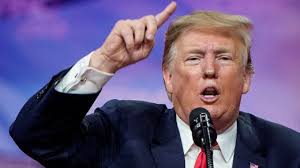
Donald Trump
Barnstorming the country in a series of hate-filled political rallies, Trump told his supporters:
- January 22:“We have it totally under control. It’s one person coming in from China.”
- February 2: “We pretty much shut it down coming in from China. It’s going to be fine.”
- February 24: “The Coronavirus is very much under control in the USA.”
- February 25: “CDC & my administration are doing a GREAT job of handling Coronavirus.”
- February 25: “I think that’s a problem that’s going to go away. They have studied it. They know very much. In fact, we’re very close to a vaccine.”
- February 26: “The 15 cases within a couple of days is going to be down to close to zero.”
- February 26: “We’re going very substantially down, not up.”
- February 27: “One day it’s like a miracle, it will disappear.”
- February 28: “We’re ordering a lot of supplies. We’re ordering a lot of, uh, elements that frankly we wouldn’t be ordering unless it was something like this. But we’re ordering a lot of different elements of medical.”
- February 28: “Now the Democrats are politicizing the Coronavirus….We did one of the great jobs….One of my people came up to me and said, ‘Mr. President, they tried to beat you on Russia, Russia, Russia’….They couldn’t do it. They tried the impeachment hoax….It’s all turning, they lost….And this is their new hoax.”
- March 4: “If we have thousands of people that get better just by, you know, sitting around and even going to work—some of them go to work, but they get better.”
- March 6: “I think we’re doing a really good job in this country of keeping it down. A tremendous job of keeping it down.”
- March 6: “Anybody right now, and yesterday, anybody that needs a test gets a test. And the tests are beautiful.”
- March 6: “I like this stuff. I really get it. People are surprised that I understand it. Every one of these doctors said, ‘How do you know so much about this?’ Maybe I have a natural ability. Maybe I should have done that instead of running for President.”
- March 8: “We have a perfectly coordinated and fine tuned plan at the White House for our attack on Coronavirus.”
- March 9: “The Fake News Media and their partner, the Democrat Party, is doing everything within its semi-considerable power (it used to be greater!) to inflame the CoronaVirus situation, far beyond what the facts would warrant. Surgeon General, The risk is low to the average American.”
- March 10: “It will go away. Just stay calm. It will go away.”
MORE CONFESSIONS TO BOB WOODWARD
But on March 19, Trump offered a completely different take on the virus in another phone interview with Woodward:
Donald Trump: Now it’s starting out it’s not just all people, Bob. But just today and yesterday, some startling facts came out. It’s not just old, older-
Bob Woodward: Yeah. Exactly.
Trump: Young people too. Plenty of young people. We’re looking at what’s going on in—
Woodward: So, give me a moment of talking to somebody, going through this with Fauci, or somebody who kind of… It caused a pivot in your mind, because it’s clear just from what’s on the public record, that you went through a pivot on this to, “Oh my God. The gravity is almost inexplicable and unexplainable.”
Trump: Well, I think Bob, really, to be honest with you-
Woodward: Sure. I want you to be.
Trump: I wanted to always play it down. I still like playing it down because I don’t want to create a panic.
9/11 ATTACKS, ABC NEWS, ABORTION, ADOLF HITLER, AL-QAEDA, ALTERNET, AMERICABLOG, ANDREW CUOMO, ANTHONY FAUCI, AP, BABY BOOMER RESISTANCE, BLOOMBERG, BOB WOODWARD, BUZZFEED, CARL BERNSTEIN, CBS NEWS, CENTERS FOR DISEASE CONTROL AND PREVENTION (CDC), CHICAGO, CHINA, CIA, CLOROX BLEACH, CNN, CORONAVIRUS, COVID-19, COVID-19 TEST KITS, CROOKS AND LIARS, DAILY KOZ, DAVID BROOKS, DEBORAH BIRX, DEMOCRATIC NATIONAL CONVENTION, DEPARTMENT OF HOMELAND SECURITY, DONALD RUMSFELD, DONALD TRUMP, DRUDGE REPORT, FACEBOOK, FBI, FEDERAL EMERGENCY MANAGEMENT AGENCY (FEMA), FIVETHIRTYEIGHT, FLORIDA, FORBES, FOX NEWS, FRANKLIN D. ROOSEVELT, GRETCHEN WHITMER, HARPER’S MAGAZINE, HUFFINGTON POST, JARED KUSHNER, JAY INSLEE, KOREAN WAR, KRISTI NOEM, KRISTIN URQUIZA, LARRY HOGAN, LOS ANGELES, MARK ANTHONY URQUIZA, MARK SHIELDS, MARYLAND, MASSACHUSSETS, MEDIA MATTERS, MICHIGAN, MICK MULVANEY, MIKE PENCE, MOLOCH, MOTHER JONES, MOVEON, MSNBC, N95 MASKS, NAVY SEALS, NBC NEWS, NEW YORK, NEW YORK CITY, NEWSWEEK, NPR, OSAMA BIN LADEN, PAULA REID, PBS NEWSHOUR, PERSONAL PROTECTIVE EQUIPMENT (PPE), PHOENIX RALLY, POLITICO, POLITICUSUSA, RAW STORY, REPUBLICANS, REUTERS, RICHARD NIXON, ROBERT MUELLER, RUDOLPH GIULIANI, SALON, SCHOOLS, SEAN HANNITY, SEAN HANNITY SHOW, SEATTLE TIMES, SLATE, SOUTH DAKOTA, STEVEN PRESSFIELD, TALKING POINTS MEMO, THE ATLANTIC, THE CHICAGO SUN-TIMES, THE CHICAGO TRIBUNE, THE DAILY BEAST, THE DAILY BLOG, THE GUARDIAN, THE HILL, THE HUFFINGTON POST, THE LOS ANGELES TIMES, THE NATION, THE NEW REPUBLIC, THE NEW YORK TIMES, THE PENTAGON, THE VILLAGE VOICE, THE WASHINGTON POST, THINKPROGRESS, TIME, TRUTHDIG, TRUTHOUT, TULSA OAKAHOMA RALLY, TWITTER, TWO POLITICAL JUNKIES, U.S. NEWS & WORLD REPORT, UPI, USA TODAY, UV LIGHT, VEIL: THE SECRET WARS OF THE CIA (BOOK), VIETNAM WAR, WALTER SHAUB, WASHINGTON, WASHINGTON D.C., WASHINGTON MONTHLY, WASHINGTON WEEK IN REVIEW, WATERGATE, WILLIAM J. CASEY, WONKETTE, WORLD TRADE CENTER
In Bureaucracy, History, Medical, Military, Politics, Social commentary on September 15, 2020 at 12:05 am
The 9/11 terror attacks frightened Americans more than any event since the Japanese attack on Pearl Harbor in 1941.. But they didn’t slaughter as many Americans nor affect their lives as intimately as has the advent of COVID-19, also known as Coronavirus.
First, COVID-19 has killed far more Americans than 9/11. As before mentioned, 9/11 snuffed out the lives of almost 3,000 Americans. But as of September 15, more than 194,000 Americans have died of COVID-19. And the plague has not finished its murderous work.
Second, while 9/11 affected two American cities—New York and Washington, D.C.—COVID-19 has spread throughout the country. As epicenters like New York City, Los Angeles and Chicago gain national attention, the virus continues to seep into rural centers—especially in the South and Midwest.
Third, the combination of evil and incompetence of the Trump administration has shaken Americans’ faith in the ability—and even the willingness—of the Federal Government to protect them.
TRUMP AND BOB WOODWARD
Conservative New York Times columnist David Brooks attacked President Donald Trump in terms usually reserved for serial killers. On the March 13 edition of The PBS Newshour, he said:
“This is what happens when you elect a sociopath as president, who doesn’t care, who has treated this whole thing for the past month as if it’s about him. ‘How do people like me?’ Minimizing the risks. ‘Does the stock market reflect well on me?’ And he hasn’t done the things a normal human being would do, which was to, let’s take precautions….
“And he’s incapable of that. And he’s even created an information distortion field around him.”
Yet even David Brooks could not have predicted the scandal that now threatens Trump’s chances for re-election on November 3.
To understand this, it’s necessary to compare what Trump was saying privately to legendary investigative reporter Bob Woodward—as opposed to what he was telling the American public in countless addresses.
Woodward—along with Carl Bernstein—achieved imperishable fame in 1972-74 as the Washington Post reporters whose Watergate-related stories led to the fall of President Richard M. Nixon.
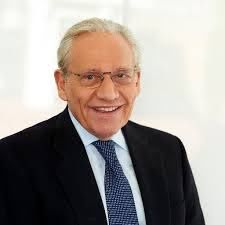
Bob Woodward
THE ADVENT OF CORONAVIRUS
First, some background on the Coronvirus itself:
The virus first appeared in Wuhan, China, in December, 2019. Its first reported victim became ill on December 1.
By December 31, the outbreak was traced to a novel strain of Coronavirus.
Coronaviruses are a group of viruses that affect birds and mammals. In humans, Coronaviruses can cause pneumonia and may cause bronchitis.
As President, Trump had access to Intelligence sources denied to his fellow citizens.
Trump first learned of the virus on January 3, 2020. This did not prevent him from playing golf on January 4, 5, 18 and 19.
On January 19, the first Coronavirus case appeared in the United States.
On January 27, then-acting chief of staff Mick Mulvaney tried to get the President to act.
But, according to officials who spoke with the Washington Post, Trump was “dismissive” of early briefings “because he did not believe that the virus had spread widely throughout the United States.”
Trump fired Mulvaney one month later.
Then, for Trump, it was back to the golf course—on February 1, 2 and 15.
TRUMP CONFESSES TO BOB WOODWARD
On February 7, he decided to share some of his Coronavirus Intelligence with legendary Washington Post editor and reporter Bob Woodward.
Why he chose to do this remains a mystery.
It’s possible that Trump—whose hatred of the press is infamous—thought he could “take” Woodward. Or perhaps even cultivate him.
Conservative New York Times columnist David Brooks thinks so. On the September 11 edition of The PBS Newshour, Brooks offered:
“First, the hubris to think, you could be the president and talk to Bob Woodward and not get hurt by it. Donald Trump walked right into this.
“Two, the extreme cynicism of not only bumbling around in February and March, because you didn’t know how serious the pandemic was, but the confirmation that you did know, and you still thought you could talk it down, as if you can talk down a force of nature, and that this—you wouldn’t end up getting caught.”
If Trump thought he could “take” or cultivate Woodward, it wasn’t the first time a high-ranking government official had done so.
During the Presidency of Ronald Reagan, CIA director William J. Casey spilled countless secrets to Woodward—which found their way into a 1987 book: Veil: The Secret Wars of the CIA, 1981-1987. Woodward admitted that he didn’t know why Casey had been so forthcoming.

On February 7, 2020, the following telephone interview between Trump and Woodward took place:
Bob Woodward: And so, what was [Chinese] President Xi [Jinping] saying yesterday?
Donald Trump: Oh, we were talking mostly about the virus, and I think he’s going to have it in good shape. But it’s a very tricky situation.
Woodward: Indeed, it is.
Trump: It goes through air, Bob. That’s always tougher than the touch. The touch, you don’t have to touch things, right? But the air, you just breathe the air and that’s how it’s passed. And so that’s a very tricky one. That’s a very delicate one. It’s also more deadly than even your strenuous flues. People don’t realize, we lose 25,000, 30,000 people a year here. Who would ever think that, right?
9/11 ATTACKS, ABC NEWS, ABORTION, ADOLF HITLER, AL-QAEDA, ALTERNET, AMERICABLOG, ANDREW CUOMO, ANTHONY FAUCI, AP, BABY BOOMER RESISTANCE, BLOOMBERG, BOB WOODWARD, BUZZFEED, CARL BERNSTEIN, CBS NEWS, CENTERS FOR DISEASE CONTROL AND PREVENTION (CDC), CHICAGO, CHINA, CIA, CLOROX BLEACH, CNN, CORONAVIRUS, COVID-19, COVID-19 TEST KITS, CROOKS AND LIARS, DAILY KOZ, DAVID BROOKS, DEBORAH BIRX, DEMOCRATIC NATIONAL CONVENTION, DEPARTMENT OF HOMELAND SECURITY, DONALD RUMSFELD, DONALD TRUMP, DRUDGE REPORT, FACEBOOK, FBI, FEDERAL EMERGENCY MANAGEMENT AGENCY (FEMA), FIVETHIRTYEIGHT, FLORIDA, FORBES, FOX NEWS, FRANKLIN D. ROOSEVELT, GRETCHEN WHITMER, HARPER’S MAGAZINE, HUFFINGTON POST, JARED KUSHNER, JAY INSLEE, KOREAN WAR, KRISTI NOEM, KRISTIN URQUIZA, LARRY HOGAN, LOS ANGELES, MARK ANTHONY URQUIZA, MARK SHIELDS, MARYLAND, MASSACHUSSETS, MEDIA MATTERS, MICHIGAN, MICK MULVANEY, MIKE PENCE, MOLOCH, MOTHER JONES, MOVEON, MSNBC, N95 MASKS, NAVY SEALS, NBC NEWS, NEW YORK, NEW YORK CITY, NEWSWEEK, NPR, OSAMA BIN LADEN, PAULA REID, PBS NEWSHOUR, PERSONAL PROTECTIVE EQUIPMENT (PPE), PHOENIX RALLY, POLITICO, POLITICUSUSA, RAW STORY, REPUBLICANS, REUTERS, RICHARD NIXON, ROBERT MUELLER, RUDOLPH GIULIANI, SALON, SCHOOLS, SEAN HANNITY, SEAN HANNITY SHOW, SEATTLE TIMES, SLATE, SOUTH DAKOTA, STEVEN PRESSFIELD, TALKING POINTS MEMO, THE ATLANTIC, THE CHICAGO SUN-TIMES, THE CHICAGO TRIBUNE, THE DAILY BEAST, THE DAILY BLOG, THE GUARDIAN, THE HILL, THE HUFFINGTON POST, THE LOS ANGELES TIMES, THE NATION, THE NEW REPUBLIC, THE NEW YORK TIMES, THE PENTAGON, THE VILLAGE VOICE, THE WASHINGTON POST, THINKPROGRESS, TIME, TRUTHDIG, TRUTHOUT, TULSA OAKAHOMA RALLY, TWITTER, TWO POLITICAL JUNKIES, U.S. NEWS & WORLD REPORT, UPI, USA TODAY, UV LIGHT, VEIL: THE SECRET WARS OF THE CIA (BOOK), VIETNAM WAR, WALTER SHAUB, WASHINGTON, WASHINGTON D.C., WASHINGTON MONTHLY, WASHINGTON WEEK IN REVIEW, WATERGATE, WILLIAM J. CASEY, WONKETTE, WORLD TRADE CENTER
In Bureaucracy, History, Law Enforcement, Medical, Military, Politics, Social commentary on September 14, 2020 at 12:15 am
On September 11, 2001, 19 Islamic terrorists snuffed out the lives of 3,000 Americans in New York, Washington, D.C. and Pennsylvania.
They did so by turning four commercial jetliners into fuel-bombs—and crashing them into, respectively, the Twin Towers of the World Trade Center in New York City; the Pentagon, in Washington, D.C.; and—unintentionally—a field in Somerset County, Pennsylvania.
(Its destination had been the White House or the Capitol Building. But its passengers, alerted by radio broadcasts of the doom awaiting them, resolved to take over the plane instead. The hijackers slammed the jet into the ground to avoid capture.)
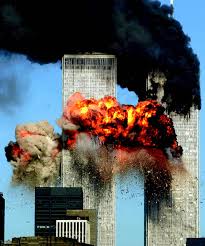
World Trade Center – September 11, 2001
But within less than a month, American warplanes began carpet-bombing Afghanistan, whose rogue Islamic “government” refused to surrender Osama bin Laden, the had of Al-Qaeda who had masterminded the attacks.
By December, 2001, the power of the Taliban was broken—and bin Laden was driven into hiding in Pakistan.
For more than 16 years, the United States—through its global military and espionage networks—relentlessly hunted down most of those responsible for that September carnage.
On May 1, 2011, U.S. Navy SEALS invaded bin Laden’s fortified mansion in Abbottabad, Pakistan—and shot him dead.
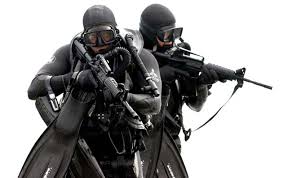
U.S. Navy SEALs
OSAMA BIN LADEN’S BOASTING
On December 13, 2001, the Pentagon released a videotape of Osama bin Laden discussing the attacks in Arabic with another man who appears to be a cleric.
The videotape had been discovered by American forces in a private home in Jalalabad, Afghanistan.
On the tape, bin Laden says he was pleasantly surprised by the amount of destruction caused at the World Trade Center. He had only expected the top portion of the Twin Towers to collapse:
“We calculated in advance the number of casualties from the enemy, who would be killed based on the position of the tower. We calculated that the floors that would be hit would be three or four floors. I was the most optimistic of them all.
“Due to my experience in this field [he had graduated from King Abdul Aziz University with a civil engineering degree in 1979] I was thinking that the fire from the gas in the plane would melt the iron structure of the building and collapse the area where the plane hit and all the floors above it only.
“This is all that we had hoped for.”
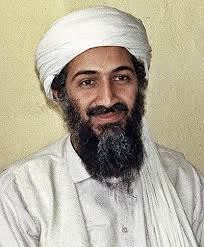
Osama bin Laden
9/11 VS. COVID-19
Now, consider this:
It’s September 11, 2020. Nineteen years to the day since the United States suffered its worst terrorist attack in history—a loss of 3,000 Americans.
And, in less than a year, the United States is nearing a death-toll of 200,000 from an enemy just as deadly and unrelenting as Al Qaeda.
That enemy is Coronavirus, also known as COVID-19.
The September 11 attacks jolted Americans out of their complacency toward Islamic terrorism. Since the 1980s, the United States had responded to terrorism via its legal system. After 9/11, Americans opted for a military response against Middle Eastern terror cells.
For months afterward, America feared the worst—that other cities would soon become targets for massive terror attacks. But, for all the death and destruction wrought that day, this didn’t happen.
There were two major reasons for this:
First, under its new director, Robert Mueller, the FBI completely refocused its mission from investigating crimes to preventing them. This resulted in a proactive rather than reactive mindset and approach. Even terrorists who felt safe abroad found themselves arrested by FBI agents employing the sort of techniques previously used against foreign spies.
Second, the attacks led to the creation of a huge new agency—the Department of Homeland Security. Massive sums of money were doled out to local police departments across the country, arming them with new hires and more sophisticated anti-crime technologies.

And for the first time since the dawning of the age of flight, the Federal Government took responsibility for preventing airline terrorism. Previously, this had fallen to individual airlines—which, seeing it as a financial drain, had assigned it a low priority.
The attacks also led to a complete restructuring of the United States military.
In the past, Americans had excelled in set-piece battles and wars. But when fighting enemies where guerrilla warfare negated overwhelming military power, the United States had done poorly—first in Korea (1950-1953) and then in Vietnam (1960-1975).
As a result, Secretary of Defense Donald Rumsfield reorganized the Pentagon’s bureaucracy, assigning highest priority to building unconventional military units such as the Army’s Green Berets and Delta Force, and the Navy’s SEALs.
These were all major changes resulting from the 9/11 attacks. They cost billions of dollars and got huge publicity. But they didn’t affect the lives of everyday Americans as intimately as has the advent of COVID-19, also known as Coronavirus.
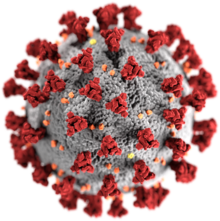
Coronavirus
The 9/11 terror attacks frightened Americans more than any event since the Japanese attack on Pearl Harbor in 1941.. But they slaughtered only a fraction of Americans, as compared with the 194,000 who have died from COVID-19, in less than a year..
Osama bin Laden deservedly gained infamy for plotting 9/11. But Donald Trump, who repeatedly lied about the dangers of COVID-19, remains beloved by about 40% of Americans.
ABC NEWS, ALGIER HISS, ALTERNET, AMERICABLOG, AP, BABY BOOMER RESISTANCE, BARACK OBAMA, BENJAMIN C. BRADLEE, BILL CLINTON, BLOOMBERG, BUZZFEED, CBS NEWS, CBSNEWS, CNN, CROOKS AND LIARS, DAILY KOZ, DANIEL ELLSBURG, DRUDGE REPORT, FACEBOOK, FIVETHIRTYEIGHT, FRENCH LEGION OF HONOR, HARPER’S MAGAZINE, JASON ROBARDS, JOHN F. KENNEDY, JOURNALISM, LYNDON B. JOHNSON, MEDIA MATTERS, MOTHER JONES, MOVEON, MSNBC, NBC NEWS, NEWSWEEK, NPR, PBS NEWSHOUR, PENTAGON PAPERS, POLITICO, POLITICUSUSA, RAW STORY, REPUBLICAN PARTY, REPUBLICANS, REUTERS, RICHARD NIXON, SALON, SEATTLE TIMES, SLATE, TALKING POINTS MEMO, THE ATLANTIC, THE CHICAGO SUN-TIMES, THE CHICAGO TRIBUNE, THE DAILY BEAST, THE DAILY BLOG, THE GUARDIAN, THE HILL, THE HUFFINGTON POST, THE LOS ANGELES TIMES, THE NATION, THE NEW REPUBLIC, THE NEW YORK TIMES, THE PENTAGON PAPERS, THE VILLAGE VOICE, THE WALL STREET JOURNAL, THE WASHINGTON POST, THE WASHINGTONPOST, THINKPROGRESS, TIME, TRUTHDIG, TRUTHOUT, TWITTER, TWO POLITICAL JUNKIES, U.S. NEWS & WORLD REPORT, UPI, USA TODAY, WATERGATE, WONKETTE, WORLD WAR 11
In Bureaucracy, History, Law Enforcement, Politics, Social commentary on August 14, 2020 at 12:11 am
August 9, 2020, marked an anniversary increasingly fewer Americans remember: Forty-six years to the day that Richard Milhous Nixon, 37th President of the United States, resigned in disgrace.
Benjamin Crowninshield Bradlee, the former executive editor of The Washington Post, remains virtually unknown outside the journalism profession. Yet his paper did more than any other to bring Nixon down.
Both Nixon and Bradlee were driven to succeed. And both achieved fame and power in doing so.
Bradlee made his name in journalism.
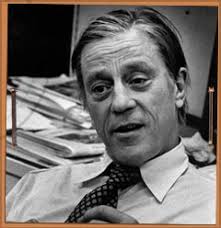
Benjamin C. Bradlee
Nixon made his name in politics.
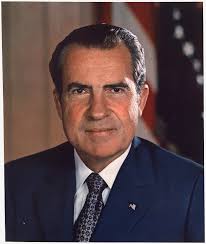
Richard Nixon
Both served in the United States Navy in the Pacific during World War II.
Both had strong connections to John F. Kennedy.
- Bradlee knew him as a friend and reporter during JFK’s years as a Senator and President.
- Nixon—as a Senator and later Vice President—knew Kennedy as a Senatorial colleague and as a political adversary, unsuccessfully contesting him for the Presidency in 1960.
For both, 1948 was a pivotal year.
- Bradlee joined The Washington Post as a reporter.
- Nixon, as a U.S. Representative, accused Algier Hiss, a former State Department official, of having been a Communist spy. Hiss was eventually convicted of perjury and sent to prison.
Both reached their positions of maximum power in 1968:
- Bradlee became executive editor of The Washington Post.
- Nixon became the 37th President of the United States.
But there was a fundamental difference between them:
- Bradlee made it his business to dig up the truth.
- Nixon made it his business to distort the truth—or to conceal it when distortion wasn’t enough.
Nixon and Bradlee had their first major clash in 1971 with the Pentagon Papers, a secret government study of how the United States became enmeshed in the Vietnam war.
- Although the Papers concerned events that had occurred during the Presidencies of John F. Kennedy and Lyndon B. Johnson, Nixon was outraged at their release by a former Defense Department analyst named Daniel Ellsberg.
- Bradlee, as executive editor of The Washington Post, successfully urged his publisher, Katherine Graham, to publish the papers after The New York Times was enjoined from doing so.
- The controversy ended when the Supreme Court ruled, 6–3, that the government failed to meet the burden of proof required for prior restraint of the press.
In 1972, Bradlee and Nixon squared off for their most important battle—a “third-rate burglary” of the Democratic National Committee headquarters at the Watergate Hotel.
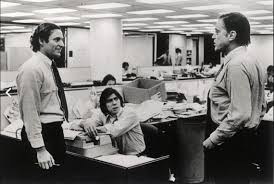
Bob Woodward, Carl Bernstein and Benjamin C. Bradlee
- Bradlee backed two young, aggressive reporters named Bob Woodward and Carl Bernstein, as they probed the burglary.
- This led to their discovering a series of illegal dirty tricks the Nixon re-election campaign had aimed at various Democratic opponents.
- The Post’s revelations led to the formation of the Senate Watergate Committee, the discovery of Nixon’s tape-recordings of his private—and criminal—conversations, and, finally, to Nixon’s own resignation in disgrace on August 9, 1974.
Bradlee became an advocate for education and the study of history.Nixon entered history as the only American President forced to resign from office.
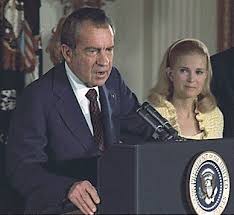
:Richard Nixon saying farewell at the White House
Bradlee became a media celebrity. Nixon became a media target.
- Bradlee was portrayed by Jason Robards in the hit 1976 film, All the President’s Men (for which he won an Academy Award for Best Supporting Actor).
- Nixon was portrayed—in Oliver Stone’s 1995 drama, Nixon—by Anthony Hopkins.
Bradlee and Nixon each published a series of books.
- Bradlee’s: That Special Grace and Conversations With Kennedy focused on his longtime friendship with John F. Kennedy; A Good Life: Newspapering and Other Adventures was Bradlee’s memoirs.
- Nixon’s: Among his 11 titles: Six Crises; RN: The Memoirs of Richard Nixon; The Real War; Leaders; Real Peace; No More Vietnams; Beyond Peace.
After leaving the White House, Nixon worked hard behind-the-scenes to refashion himself into an elder statesman of the Republican Party.
- Throughout the 1980s, he traveled the lecture circuit, wrote books, and met with many foreign leaders, especially those of Third World countries.
- He supported Ronald Reagan for president in 1980, making television appearances portraying himself as the senior statesman above the fray.
- For the rest of his life, he fought ferociously through the courts to prevent the release of most of the infamous “Watergate tapes” that chronicled his crimes as President.
- Only since his death have many of these been made public.
Nixon died on April 22, 1994.
- Eulogists at his funeral included President Bill Clinton and former Presidents Gerald Ford, Ronald Reagan and George H.W. Bush, California Governor Pete Wilson and the Reverend Billy Graham.
- Despite his efforts to portray himself as an elder statesman, Nixon could never erase his infamy as the only President to resign in disgrace.
- To this day, he remains a nonperson within the Republican Party.
Bradlee remained executive editor of The Washington Post until retiring in 1991. But he continued to serve as vice president-at-large until his death on October 21, 2014.
- In 2007, he received the French Legion of Honor, the highest award given by the French government, at a ceremony in Paris.
- In 2013, he was named as a recipient of the Presidential Medal of Freedom by President Barack Obama. He was presented the medal at a White House ceremony on November 20, 2013.
2020 PRESIDENTIAL ELECTION, ABC NEWS, ABRAHAM LINCOLN, ADAM SCHIFF, ALEXANDER VINDMAN, ALTERNET, AMERICABLOG, AP, BABY BOOMER RESISTANCE, BLOOMBERG, BUZZFEED, CBS NEWS, CNN, CROOKS AND LIARS, DAILY KOZ, DAVID BROOKS, DEMOCRATS, DONALD TRUMP, DRUDGE RETORT, FACEBOOK, FIVETHIRTYEIGHT, FOX NEWS NETWORK, GERRYMANDERING, HARPER’S MAGAZINE, HOUSE INTELLIGENCE COMMITTEE, HOWARD BAKER, HUNTER BIDEN, JOE BIDEN, JOEL MATHIS, LYNDON JOHNSON, MARIA YOVANOVICH, MARK SHIELDS, MEDIA MATTERS, MEDICAID, MICK MULVANEY, MOTHER JONES, MOVEON, MSNBC, NATIONAL SECURITY COUNCIL, NBC NEWS, NEWSWEEK, NPR, PBS NEWSHOUR, POLITICO, POLITICUSUSA, RAW STORY, REPUBLICANS, REUTERS, RICHARD NIXON, RUDI GIULIANI, RUSSIA, SALON, SEATTLE TIMES, SLATE, TALKING POINTS MEMO, THE ATLANTIC, THE CHICAGO SUN-TIMES, THE CHICAGO TRIBUNE, THE DAILY BEAST, THE DAILY BLOG, THE GUARDIAN, THE HILL, THE HUFFINGTON POST, THE LOS ANGELES TIMES, THE NATION, THE NEW REPUBLIC, THE NEW YORK TIMES, THE VILLAGE VOICE, THE WASHINGTON POST, THINKPROGRESS, TIME, TRUTHDIG, TRUTHOUT, TWITTER, TWO POLITICAL JUNKIES, U.S. NEWS & WORLD REPORT, UKRAINE, UPI, USA TODAY, VOLODYMYR ZELENSKY, VOTER ID LAWS, WATERGATE, WONKETTE
In Bureaucracy, History, Military, Politics, Social commentary on June 23, 2020 at 12:07 am
On November 22, 2019, Mark Shields—a liberal syndicated columnist—and David Brooks—a conservative one for The New York Times—reached disturbingly similar conclusions about the corruption reveled by hearings of the House Intelligence Committee.
DAVID BROOKS: “I think Donald Trump and Rudy Giuliani, I don’t think it ever occurred to them that this was unethical. What strikes me [is] that everyone was in the loop, that this was not something they tried to hide.
“This was just something they thought was the way politics gets done or foreign policy gets done, that there’s no division between personal gain and public service.”
MARK SHIELDS: “What I have underestimated….is the fear that Donald Trump exercises over Republicans.I mean, people talked about Lyndon Johnson being a fearsome political leader. They don’t even approach. I mean, he strikes fear into the hearts of Republicans up and down the line. And I think that….has been eye-opening in its dimensions.”
Nor is there any reason to believe that the GOP will reign Trump in.
In a November 14 column, “Republicans Can’t Abandon Trump Now Because They’re All Guilty,” freelance journalist Joel Mathis warned: “Trump’s abuses of power mirror those of the GOP as a whole. Republicans can’t turn on him, because doing so would be to indict their party’s entire approach to politics.”
For example:
- At the state level, GOP legislatures have passed numerous voter ID laws over the last decade. Officially, the reason has been to prevent non-citizens from voting. In reality, the motive is to depress turnout among Democratic constituencies.
- When Democrats have won elections, Republicans have tried to block them from carrying out their policies. In Utah, voters approved Medicaid expansion at the ballot box—but Republicans nullified this.
- In North Carolina, Republican legislators prevented voters from choosing their representatives. Instead, Republican representatives chose voters through partisan sorting. In September, the state’s Supreme Court ruled the legislative gerrymandered district map unconstitutional.
The upshot of all this: “The president and his party are united in the belief that their entitlement to power allows them to manipulate and undermine the country’s democratic processes….


“In the meantime, it is probably best to give up waiting for that impeachment-induced moment—a Watergate—when Republicans realize their duty to country and come around to opposing him. The president and today’s GOP share the same sins. It will be difficult for them to abandon each other.”
On November 21, 2019, Representative Adam Schiff (D-CA), chairman of the House Intelligence Committee, attacked Republicans’ total rejection of the overwhelming evidence linking Trump with extortion:

Adam Schiff
“But apparently, it’s all hearsay. Even when you actually hear the President….that’s hearsay. We can’t rely on people saying what the President said. Apparently, we can only rely on what the President says, and there, we shouldn’t even rely on that either….
“We should imagine he said something about actually fighting corruption, instead of what he actually said, which was, ‘I want you to do us a favor, though. I want you to look into this 2016 CrowdStrike conspiracy theory, and I want you to look into the Bidens.’
“I guess we’re not even supposed to rely on that because that’s hearsay….That would be like saying you can’t rely on the testimony of the burglars during Watergate because it’s only hearsay, or you can’t consider the fact that they tried to break in because they got caught. They actually didn’t get what they came for, so, you know, kind of no harm, no foul. That’s absurd.
“The difference between [Watergate and Trump’s attempted extortion of Ukraine] is not the difference between [Richard] Nixon and [Donald] Trump. It’s the difference between that Congress and this one. And so, we are asking, where is Howard Baker? Where are the people who are willing to go beyond their party to look to their duty?
“But the other defense besides ‘It failed, the scheme failed, they got caught,’ the other defense is ‘The President denies it.’ Well, I guess that’s case closed, right?
“….This President believes he is above the law, beyond accountability. And in my view, there is nothing more dangerous than an unethical President who believes they are above the law.”
* * * * *
The United States has indeed become a polarized country. But it’s not the polarization between Republicans and Democrats, or between conservatives and liberals.
It’s the polarization between Right-wing fanatics intent on enslaving everyone who doesn’t subscribe to their Fascistic beliefs and agenda—and those who resist being enslaved.
Those who hoped that Republicans would choose patriotism over partisanship got their answer on February 5. That was when the Republican-dominated Senate—ignoring the overwhelming evidence against him—acquitted Donald Trump on both impeachment articles.
It’s natural to regret that the United States has become a sharply divided nation. But those who lament this should realize there is only one choice:
Either non-Fascist Americans will destroy the Republican party and its voters that threaten to enslave them—or they will be enslaved by Republicans and their voters who believe they are entitled to manipulate and undermine the country’s democratic processes.
There is no middle ground.
2020 PRESIDENTIAL ELECTION, ABC NEWS, ABRAHAM LINCOLN, ADAM SCHIFF, ALEXANDER VINDMAN, ALTERNET, AMERICABLOG, AP, BABY BOOMER RESISTANCE, BLOOMBERG, BUZZFEED, CBS NEWS, CNN, CROOKS AND LIARS, DAILY KOZ, DAVID BROOKS, DEMOCRATS, DONALD TRUMP, DRUDGE RETORT, FACEBOOK, FIVETHIRTYEIGHT, FOX NEWS NETWORK, GERRYMANDERING, HARPER’S MAGAZINE, HOUSE INTELLIGENCE COMMITTEE, HOWARD BAKER, HUNTER BIDEN, JOE BIDEN, JOEL MATHIS, LYNDON JOHNSON, MARIA YOVANOVICH, MARK SHIELDS, MEDIA MATTERS, MEDICAID, MICK MULVANEY, MOTHER JONES, MOVEON, MSNBC, NATIONAL SECURITY COUNCIL, NBC NEWS, NEWSWEEK, NPR, PBS NEWSHOUR, POLITICO, POLITICUSUSA, RAW STORY, REPUBLICANS, REUTERS, RICHARD NIXON, RUDI GIULIANI, RUSSIA, SALON, SEATTLE TIMES, SLATE, TALKING POINTS MEMO, THE ATLANTIC, THE CHICAGO SUN-TIMES, THE CHICAGO TRIBUNE, THE DAILY BEAST, THE DAILY BLOG, THE GUARDIAN, THE HILL, THE HUFFINGTON POST, THE LOS ANGELES TIMES, THE NATION, THE NEW REPUBLIC, THE NEW YORK TIMES, THE VILLAGE VOICE, THE WASHINGTON POST, THINKPROGRESS, TIME, TRUTHDIG, TRUTHOUT, TWITTER, TWO POLITICAL JUNKIES, U.S. NEWS & WORLD REPORT, UKRAINE, UPI, USA TODAY, VOLODYMYR ZELENSKY, VOTER ID LAWS, WATERGATE, WONKETTE
In Bureaucracy, History, Military, Politics, Social commentary on June 22, 2020 at 12:28 am
On November 14, 2019, the CNN website showcased an opinion piece by Jane Carr and Laura Juncadella entitled: “Fractured States of America.”
And it opened:
“Some worry that it’s already too late, that we’ve crossed a threshold of polarization from which there is no return. Others look toward a future where more moderate voices are heeded and heard, and Americans can find better ways to relate to each other. Still others look back to history for a guide—perhaps for what not to do, or at the very least for proof that while it’s been bad before, progress is still possible.”
Then followed a series of anecdotes. The sub-headlines summed up many of the comments reported.
- “I was starting to hate people that I have loved for years.”
- “Voting for Trump cost me my friends.”
- “I feel like I’m living in hostile territory.”
- “Our children are watching this bloodsport.”
- “A student’s Nazi-style salute reflects the mate.”
- “Our leaders reflect the worst of us.”
- “I truly believe I will be assaulted over a bumper sticker.”
- “It already feels like a cold war.”
Abraham Lincoln warned: “A house divided against itself cannot stand. I believe this government cannot endure, permanently, half-slave and half-free. It will become all one thing or all the other.”
America now faces such a choice:
- To submit to the tyrannical aggression of a ruthless political party convinced that they are entitled to power to manipulate and undermine the country’s democratic processes; or
- To fiercely resist that aggression and the destruction of those democratic processes.
Consider the face-off between President Donald J. Trump and Army Lt. Colonel Alexander Vindman.
Vindman is is a United States Army officer who served as the Director for European Affairs for the United States National Security Council. He was also a witness to Trump’s efforts to extort “a favor” from the president of Ukraine.
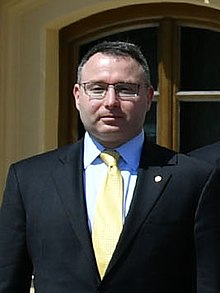
Lt. Colonel Alexander Vindman
Адміністрація Президента України [CC BY 4.0 (https://creativecommons.org/licenses/by/4.0)%5D
In July, 2019, Trump told his acting chief of staff, Mick Mulvaney, to withhold almost $400 million in promised military aid for Ukraine, which faces increasing aggression from Russia.
On July 25, Trump telephoned Ukrainian President Volodymyr Zelensky to “request” a “favor”: Investigate 2020 Democratic Presidential Candidate Joe Biden and his son, Hunter, who has had business dealings in Ukraine.
The reason for such an investigation: To find embarrassing “dirt” on Biden.
“I was concerned by the call,” Vindman, who had heard Trump’s phone call, testified before the House Intelligence Committee. “I did not think it was proper to demand that a foreign government investigate a U.S. citizen, and I was worried about the implications for the U.S. Government’s support of Ukraine.
“I realized that if Ukraine pursued an investigation into the Bidens and Burisma, it would likely be interpreted as a partisan play which would undoubtedly result in Ukraine losing the bipartisan support it has thus far maintained. This would all undermine U.S. national security.”
Trump denounced Vindman as a “Never Trumper”—as if opposing his extortion attempt constituted a blasphemy. Republicans and their shills on the Fox News Network attacked him as well. As a result, he sought physical protection by the Army for himself and his family.
(On February 7, 2020, he was reassigned from the National Security Council at Trump’s order.)
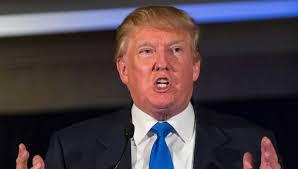
Donald Trump
On November 15, conservative New York Times columnist David Brooks and liberal syndicated columnist Mark Shields appeared on The PBS Newshour to offer their reactions by Republicans and Democrats to Trump’s extortion attempt.
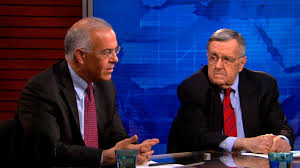
David Brooks and Mark Shields on “The PBS Newshour”
DAVID BROOKS: “The case is very solid and airtight that there was the quid pro quo. All the testimony points to that. And, mostly, you see a contrast. The first two gentlemen that testified on the first day, they were just upstanding, solid public servants.
“I felt like I was looking back in time, because I was looking at two people who are not self-centered. They cared about the country. They were serving. They had no partisan ax to grind. They were just honest men of integrity.
“And I thought we saw that again today with [former Ambassador to Ukraine] Marie Yovanovitch. And in her case, the day was more emotional, because you got to see a case of bullying against a strong, upstanding woman.
“And so I thought she expressed—like, the heavy moments of today where when she expressed her reaction to how badly she was treated. And so that introduces an element of emotion and pathos into what shouldn’t be just a legal proceeding. It should be something where people see the contrast between good people and bad people.”
MARK SHIELDS: “There’s a sense of outrage building. This is a story of corruption, corruption not in Ukraine, corruption in the United States.
“I mean, why? Why did they go to such lengths to denigrate, to attack, to try and destroy and sabotage the career of a dedicated public servant [United States Ambassador to Ukraine Marie Yovanovich], a person who had put her life on the line? Why did they do it? What was it, money? Was it power?”
2016 PRESIDENTIAL CAMPAIGN, 2020 PRESIDENTIAL CAMPAIGN, ABC NEWS, ADOLF HITLER, ALTERNET, AMERICABLOG, ANCIENT GREECE, ANCIENT ROME, AP, BABY BOOMER RESISTANCE, BERNIE SANDERS, BUZZFEED, CATASTROPHE, CBS NEWS, CHINA, CNN, CONSUMER PROTECTION, CORPORATE TAXES, CORRUPTION, CROOKS AND LIARS, DAILY KOZ, DEMOCRATIC PARTY, DONALD TRUMP, DRUDGE RETORT, EXECUTIVE PAYWATCH, FACEBOOK, FIVETHIRTYEIGHT, FORBES, FUNDRAISING, HARPER’S MAGAZINE, HILLARY CLINTON, INCOME INEQUALITY, IVAN THE TERRIBLE, JOE BIDEN, JOSEPH STALIN, LEON TROTSKY, MEDIA MATTERS, MOTHER JONES, MOVEON, MSNBC, NAZI GERMANY, NBC NEWS, NEWSWEEK, NICCOLO MACHIAVELLI, NPR, PBS NEWSHOUR, POLITICO, POLITICUSUSA, RAW STORY, REUTERS, ROBERT PAYNE, SALON, SEATTLE TIMES, SLATE, SPARTACUS, TALKING POINTS MEMO, THE ATLANTIC, THE CHICAGO SUN-TIMES, THE CHICAGO TRIBUNE, THE CORRUPT SOCIETY (BOOK), THE DAILY BEAST, THE DAILY BLOG, THE DISCOURSES, THE FRENCH REVOLUTION, THE GREAT LEVELER (BOOK), THE GUARDIAN, THE HILL, THE HUFFINGTON POST, THE LOS ANGELES TIMES, THE NATION, THE NEW REPUBLIC, THE NEW YORK TIMES, THE RUSSIAN REVOLUTION, THE VILLAGE VOICE, THE WASHINGTON POST, THINKPROGRESS, TIME, TRUTHDIG, TRUTHOUT, TWITTER, TWO POLITICAL JUNKIES, U.S. NEWS & WORLD REPORT, UPI, USA TODAY, VIOLENCE, Vladimir Lenin, WALL STREET, WALTER SCHEIDEL, WATERGATE, WEALTH GAP, WILLIAM SHAKESPEARE, WINSTON CHURCHILL, WONKETTE
In Bureaucracy, Business, History, Law, Politics, Social commentary on February 21, 2020 at 12:07 am
The gap between rich and poor in the United States has never been greater.
A May 1, 2018 article in Forbes—which bills itself as “The Capitalist Tool”—vividly documents this truth.
“In the 1950s, a typical CEO made 20 times the salary of his or her average worker. Last year, [2017] CEO pay at an S&P 500 Index firm soared to an average of 361 times more than the average rank-and-file worker, or pay of $13,940,000 a year, according to an AFL-CIO’s Executive Paywatch news release today.”
The average CEO pay climbed six percent in 2017—while the average production worker earned just $38,613, according to Executive Paywatch.
The average wage—adjusted for inflation—has stagnated for more than 50 years. Meanwhile, CEOs’ average pay since the 1950s has risen by 1000%.
This would not have been news to Niccolo Machiavelli, the father of modern political science. In his masterwork, The Discourses, he observed the human condition as that of constant struggle:
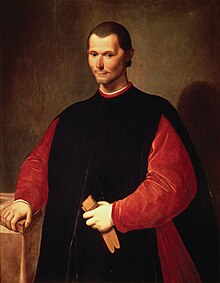
Niccolo Machiavelli
“It was a saying of ancient writers, that men afflict themselves in evil, and become weary of the good, and that both these dispositions produce the same effects.
“For when men are no longer obliged to fight from necessity, they fight from ambition, which passion is so powerful in the hearts of men that it never leaves them, no matter to what height they may rise.
“The reason for this is that nature has created men so that they desire everything, but are unable to attain it. Desire being thus always greater than the faculty of acquiring, discontent with what they have and dissatisfaction with themselves result from it.
“This causes the changes in their fortunes—for as some men desire to have more, while others fear to lose what they have, enmities and war are the consequences. And this brings about the ruin of one province and the elevation of another.”
Author Walter Scheidel, Dickason Professor in the Humanities, Professor of Classics and History at Stanford University, has also given this subject a great deal of thought. And, like Machiavelli, he has reached some highly disturbing conclusions.

Walter Scheidel
World Economic Forum [CC BY-SA 2.0 (https://creativecommons.org/licenses/by-sa/2.0)%5D
Scheidel gave voice to these in his 2017 book, The Great Leveler: Violence and the History of Inequality from the Stone Age to the Twenty-First Century. His thesis: Only violence and catastrophes have consistently reduced inequality throughout history.
According to the book’s jacket blurb: “Are mass violence and catastrophes the only forces that can seriously decrease economic inequality? To judge by thousands of years of history, the answer is yes.
“Tracing the global history of inequality from the Stone Age to today, Walter Scheidel shows that inequality never dies peacefully. Inequality declines when carnage and disaster strike and increases when peace and stability return.
“The Great Leveler is the first book to chart the crucial role of violent shocks in reducing inequality over the full sweep of human history around the world.
“Ever since humans began to farm, herd livestock, and pass on their assets to future generations, economic inequality has been a defining feature of civilization. Over thousands of years, only violent events have significantly lessened inequality.
“The ‘Four Horsemen’ of leveling—mass-mobilization warfare, transformative revolutions, state collapse, and catastrophic plagues—have repeatedly destroyed the fortunes of the rich….
“Today, the violence that reduced inequality in the past seems to have diminished, and that is a good thing. But it casts serious doubt on the prospects for a more equal future.”
Revolutionaries have known the truth of Scheidel’s findings from the gladiators’ revolt of Spartacus (73 – 71 B.C.) to the French Revolution (1789 – 1799) to the overthrow of the Czarist Romanov dynasty (1917).
But American politicians serenely ignore that truth. They depend on the mega-rich for millions of dollars in “campaign contributions”—which pay for self-glorifying ads on TV.
Thus, in 2016, American voters had a “choice” between two “love-the-rich” Presidential candidates: Donald Trump and Hillary Clinton. The result was that millions stayed home or voted in protest for third-party candidates who had no chance of winning.
In his 1975 book, The Corrupt Society: From Ancient Greece to Modern-day America, British historian Robert Payne warned that the predatory rich would not change their behavior: “Nor is there any likelihood that the rich will plow back their money into services to ensure the general good.
“They have rarely demonstrated social responsibility, and they are much more likely to hold on to their wealth at all costs than to renounce any part of it.
“Like the tyrant who lives in a world wholly remote from the world of the people, shielded and protected from all possible influences, the rich are usually the last to observe the social pressures rising from below, and when these social pressures reach flashpoint, it is too late to call in the police or the army.
“The tyrant dies; the police and the army go over to the revolutionaries; and the new government dispossesses the rich by decree. A single authoritative sentence suffices to expunge all private wealth and restore it to the service of the nation.”
For millions of struggling, impoverished Americans, that day cannot come soon enough.
2016 PRESIDENTIAL CAMPAIGN, 2020 PRESIDENTIAL CAMPAIGN, ABC NEWS, ADOLF HITLER, ALTERNET, AMERICABLOG, ANCIENT GREECE, ANCIENT ROME, AP, BABY BOOMER RESISTANCE, BERNIE SANDERS, BUZZFEED, CATASTROPHE, CBS NEWS, CHINA, CNN, CONSUMER PROTECTION, CORPORATE TAXES, CORRUPTION, CROOKS AND LIARS, DAILY KOZ, DEMOCRATIC PARTY, DONALD TRUMP, DRUDGE RETORT, EXECUTIVE PAYWATCH, FACEBOOK, FIVETHIRTYEIGHT, FORBES, FUNDRAISING, HARPER’S MAGAZINE, HILLARY CLINTON, INCOME INEQUALITY, IVAN THE TERRIBLE, JOE BIDEN, JOSEPH STALIN, LEON TROTSKY, MEDIA MATTERS, MOTHER JONES, MOVEON, MSNBC, NAZI GERMANY, NBC NEWS, NEWSWEEK, NICCOLO MACHIAVELLI, NPR, PBS NEWSHOUR, POLITICO, POLITICUSUSA, RAW STORY, REUTERS, ROBERT PAYNE, SALON, SEATTLE TIMES, SLATE, SPARTACUS, TALKING POINTS MEMO, THE ATLANTIC, THE CHICAGO SUN-TIMES, THE CHICAGO TRIBUNE, THE CORRUPT SOCIETY (BOOK), THE DAILY BEAST, THE DAILY BLOG, THE DISCOURSES, THE FRENCH REVOLUTION, THE GREAT LEVELER (BOOK), THE GUARDIAN, THE HILL, THE HUFFINGTON POST, THE LOS ANGELES TIMES, THE NATION, THE NEW REPUBLIC, THE NEW YORK TIMES, THE RUSSIAN REVOLUTION, THE VILLAGE VOICE, THE WASHINGTON POST, THINKPROGRESS, TIME, TRUTHDIG, TRUTHOUT, TWITTER, TWO POLITICAL JUNKIES, U.S. NEWS & WORLD REPORT, UPI, USA TODAY, VIOLENCE, Vladimir Lenin, WALL STREET, WALTER SCHEIDEL, WATERGATE, WEALTH GAP, WILLIAM SHAKESPEARE, WINSTON CHURCHILL, WONKETTE
In Bureaucracy, Business, History, Politics, Social commentary on February 20, 2020 at 12:10 am
Americans are used to Presidential candidates telling lies (euphemistically known as “campaign promises”) to get elected.
But when a candidate actually (and usually accidentally) tells the truth, the results can be electrifying.
On June 18, 2019, Democratic Presidential candidate (and momentary front-runner) Joseph Biden addressed a roomful of donors in New York.
The former Vice President believed that his message would comfort his well-heeled audience of billionaires: Don’t worry, if I’m elected, your standard of living won’t change.
Addressing the 100 or so guests at a fundraiser at the Carlyle Hotel in New York City, Biden said that he had taken heat from “some of the people on my team, on the Democratic side” because he had said that rich people were “just as patriotic as poor people.

Joe Biden
“The truth of the matter is, you all, you all know, you all know in your gut what has to be done. We can disagree in the margins but the truth of the matter is it’s all within our wheelhouse and nobody has to be punished. No one’s standard of living will change, nothing would fundamentally change,” he said.
And he added: “I mean, we may not want to demonize anybody who has made money.
“When we have income inequality as large as we have in the United States today, it brews and ferments political discord and basic revolution. Not a joke. Not a joke … It allows demagogues to step in and say the reason where we are is because of the ‘other’….
“You’re not the other. I need you very badly. I hope if I win this nomination, I won’t let you down. I promise you. I have a bad reputation, I always say what I mean. The problem is I sometimes say all that I mean.”
Biden has talked about decreasing income inequality and promoting workers’ rights. But he’s taken a moderate stance when it comes to taxation.
United States Senator Bernie Sanders (D-VT), on the other hand, has attacked the ultra-rich as responsible for the ever-widening gap between themselves and the poor.
“I love Bernie, but I’m not Bernie Sanders. I don’t think 500 billionaires are the reason why we’re in trouble,” Biden said in March, 2019.
Instead, he proposes expanding tax credits for the poor and middle class, and making the tax code less friendly to rich investors.
Robert Payne, the distinguished British historian, took a different—and darker—view of the rich.
Payne authored more than 110 books. Among his subjects were Adolf Hitler, Ivan the Terrible, Winston Churchill, Joseph Stalin, Vladimir Lenin, William Shakespeare and Leon Trotsky.
In 1975, he published The Corrupt Society: From Ancient Greece to Present-Day America. It proved a summary of many of his previous works.

Among the epochs it covered: The civilizations of ancient Greece, Rome and China; Nazi Germany; the Soviet Union; and Watergate-era America. And the massive corruption each of those epochs had spawned.
In his chapter, “A View of the Uncorrupted Society,” Payne warned: Power and wealth are the main sources of corruption.
“The rich, simply by being rich, are infected with corruption. Their overwhelming desire is to grow richer, but they can do this only at the expense of those who are poorer than themselves.
”Their interests conflict with those of the overall society. They live sheltered from the constant anxieties of the poor, and thus cannot understand them. Nor do they try to.
They see the poor as alien from themselves, and thus come to fear and despise them. And their wealth and influence enables them to buy politicians—who, in turn, write legislation that protects the rich from the poor.
But Payne foresaw an even greater danger from the rich and powerful than their mere isolation from the rest of society: “The mere presence of the rich is corrupting. Their habits, their moral codes, their delight in conspicuous consumption are permanent affronts to the rest of humanity. Vast inequalities of wealth are intolerable in any decent society.”
Writing in 1975, Payne noted that a third of the private wealth was possessed by less than five percent of the population—while about a fifth of the populace lived at the poverty level. By 2000, he predicted, about five percent of the population would possess two-thirds of America’s wealth. And more than half the population would be near or below the starvation level.
The result could only be catastrophe. The only way to halt this this increasing concentration of wealth by fewer people would be through law or violent revolution.
Payne has proven to be an uncanny prophet.
On December 8, 2017, the Seattle Times noted that the wealthiest one percent of Americans owned 40% of the country’s wealth. They owned more wealth than the bottom 90% combined.
From 2013, the share of wealth owned by the one percent increased by nearly three percentage points. Wealth owned by the bottom 90%, meanwhile, fell over the same period.
But this situation need not remain permanent.
ABC NEWS, ADOLF HITLER, ALTERNET, AMERICABLOG, AP, BABY BOOMER RESISTANCE, BASKETBALL, BUZZFEED, CBS NEWS, CHIANG KAI-SHEK, CNN, COLD WAR, COLUMBIA BROADCASTING SYSTEM, COMMUNISM, CROOKS AND LIARS, DAILY BEAST, DAILY KOZ, DRUDGE RETORT, EDWARD R. MURROW, ERIK WEMPLE, FACEBOOK, FELICIA SONMEZ, FIVETHIRTYEIGHT, HARPER’S MAGAZINE, JOHN F. KENNEDY, KOBE BRYANT, LIBERALISM, LOYALTY OATH GOVERNMENT EMPLOYEES PROGRAM, MARTY BARON, MEDIA MATTERS, MOTHER JONES, MOVEON, MSNBC, NAZI GERMANY, NBC NEWS, NEWSWEEK, NPR, PBS NEWSHOUR, PENTAGON PAPERS, POLITICO, POLITICUSUSA, RADIO AND TELEVISION NEWS DIRECTORS ASSOCIATION, RAPE, RAW STORY, REUTERS, SALON, SEATTLE TIMES, SEE IT NOW, SLATE, SOVIET UNION, TALKING POINTS MEMO, THE ATLANTIC, THE BLITZ, THE CHICAGO SUN-TIMES, THE CHICAGO TRIBUNE, THE DAILY BEAST, THE DAILY BLOG, THE GUARDIAN, THE HILL, THE HUFFINGTON POST, THE LOS ANGELES TIMES, THE NATION, THE NEW REPUBLIC, THE NEW YORK TIMES, THE VILLAGE VOICE, THE WASHINGTON POST, THINKPROGRESS, TIME, TRACY GRANT, TRUTHDIG, TRUTHOUT, TWITTER, TWO POLITICAL JUNKIES, U.S. NEWS & WORLD REPORT, UNITED STATES INFORMATION AGENCY, UPI, USA TODAY, WATERGATE, WILLIAM L. SHIRER, WILLIAM PALEY, WILLIAM RANDOLPH HEARST, WONKETTE
In Bureaucracy, Business, Entertainment, History, Politics, Social commentary on January 30, 2020 at 12:09 am
During the early and mid-1950s, “CBS” came to have two meanings.
For the overwhelming majority of Americans, it stood for “Columbia Broadcasting System.”
But for many of the reporters and editors working in its News Division, “CBS” came to mean “Cowardly Bastards Syndrome.”
William L. Shirer had worked as a newspaper reporter for Universal News Service, a wire service for William Randolph Hearst. Assigned to Germany, he had been one of the first American reporters to chronicle Adolf Hitler’s rise to power.
In 1937, with the Hearst empire losing money, he found himself fired. Shortly afterward, he was hired by Edward R. Murrow, European manager for CBS News. Murrow hadn’t had any experience in journalism; he needed a top-flight reporter.
Shirer, a veteran reporter speaking fluent German and French, fit that bill.
Together, Shirer and Murrow were the beginning of what would become the CBS News empire. Shirer remained in Nazi Germany until December, 1940, when just ahead of the Gestapo, he left for the United States by passenger ship.

William L. Shirer
Meanwhile, Murrow achieved international fame reporting on the London Blitz, his signature introduction to each broadcast being: “This….is London.”
Thus, when both men returned to the United States after the war, they were genuine celebrities. Murrow took a job as a CBS vice president. Shirer continued to work as a correspondent.
In 1947, however, their longtime friendship came to an end.
Americans’ attitudes toward the Soviet Union—their ally during World War II—were hardening. Right-wingers saw no difference between liberalism and Communism. And Shirer was strongly critical of the Truman “loyalty oath” program for government employees and his catering to foreign dictators like Chiang Kai-Shek.
J. B. Williams, a maker of shaving soap, withdrew sponsorship of Shirer’s highly-rated Sunday news show. Within a month, CBS, through Murrow, moved Shirer’s program to Sunday midday and then canceled it.
Shirer blamed Murrow for not defending him—or the independence of the news division. After being fired by CBS, Shirer warned Murrow; “I’ve been through this before with newspapers. But you’re going to get it, too. Don’t kid yourself.”

Edward R. Murrow
Murrow’s turn did come, starting in 1958, with the cancellation of his hugely successful—and controversial—investigative series, See It Now.
Then, on October 15, 1958, in a speech before the Radio and Television News Directors Association in Chicago, Murrow attacked TV’s emphasis on entertainment and commercialism at the expense of public interest.
William S. Paley, the chairman of CBS and a longtime Murrow friend, never forgave the broadcaster for “biting the hand that feeds him.”
His influence almost ended at CBS, in 1961 Murrow accepted President John F. Kennedy’s invitation to direct the United States Information Agency.
In 1965, Murrow, a heavy cigarette smoker, died of lung cancer at 57. Shirer died in 1993, at 89.
But the Cowardly Bastards Syndrome didn’t die with Shirer and Murrow. It lives on in American journalism—most recently at The Washington Post.
On January 26, basketball celebrity Kobe Bryant died in a helicopter crash in Calabasas, California.
Several hours after Bryant’s death, The Washington Post’s national political reporter, Felicia Sonmez, tweeted a 2016 Daily Beast story that detailed a 2003 sexual assault allegation made against him.
The criminal charge was dropped, but Bryant settled a civil suit with his accuser for an undisclosed amount of money. He didn’t admit guilt, but he admitted that while he saw the encounter as consensual, his accuser did not.
Sonmez’s initial tweet about the allegation against Bryant ignited a firestorm of outrage. But she defended it, writing that “any public figure is worth remembering in their totality.”
 Sports-obsessed fans, who worship celebrity jocks as genuine heroes, loudly disagreed. Sonmez found herself deluged with insults and death threats on Twitter and in her Inbox.
Then came the indignity of being put on suspended leave by her employer—The Washington Post.
Before she was suspended, Sonmez received an email from the Post’s executive editor, Marty Baron: “A real lack of judgment to tweet this. Please stop. You’re hurting this institution by doing this.”
Tracy Grant, the Post’s managing editor, said in a statement that Sonmez’ tweets “displayed poor judgement that undermined the work of her colleagues.”
How tweeting a true story about a dead celebrity “undermined the work of her colleagues” was not explained.
Bryant had been charged with rape.
He had settled out of court on the same charge.
And truth is supposed to be the ultimate defense in a libel or slander lawsuit.
On top of that, Somnez had not even written the story—she had merely posted a Daily Beast story on Twitter.
Erik Wemple, the Post’s media critic, wrote that Grant told Sonmez in an email that her tweet didn’t “pertain” to her “coverage area”—politics.
Responded Wemple: “If journalists at The Post are prone to suspension for tweeting stories off their beats, the entire newsroom should be on administrative leave.”
The Washington Post has had many proud moments—such as the publishing of the Pentagon Papers in 1971 and its monumental coverage of Watergate from 1972 to 1974.
For journalists who cherish their freedom, this moment will long live in infamy.
2016 PRESIDENTIAL ELECTION, ABC NEWS, ABRAHAM LINCOLN, ADOLF HITLER, ALTERNET, AMERICABLOG, AP, BABY BOOMER RESISTANCE, BARACK OBAMA, BUZZFEED, CBS NEWS, CIA, CIVIL WAR, CNN, CROOKS AND LIARS, DAILY KOS, DAILY KOZ, DONALD TRUMP, DRUDGE RETORT, FACEBOOK, FBI, FIVETHIRTYEIGHT, FRANKLIN D. ROOSEVELT, GREAT DEPRESSION, HARPER’S MAGAZINE, HERBERT HOOVER, HILLARY CLINTON, HITLER (BOOK), JOACHIM C. FEST, JOHN F. KENNEDY, LYNDON B. JOHNSON, MEDIA MATTERS, MOTHER JONES, MOVEON, MSNBC, NBC NEWS, NEWSWEEK, NPR, OTTO VON BISMARK, PBS NEWSHOUR, POLITICO, POLITICUSUSA, RAW STORY, REUTERS, RICHARD M. NIXON, RUSSIA, SALON, SEATTLE TIMES, SLATE, SLAVERY, TALKING POINTS MEMO, THE ATLANTIC, THE CHICAGO SUN-TIMES, THE CHICAGO TRIBUNE, THE DAILY BEAST, THE DAILY BLOG, THE GUARDIAN, THE HILL, THE HUFFINGTON POST, THE LOS ANGELES TIMES, THE NATION, THE NEW REPUBLIC, THE NEW YORK TIMES, THE VILLAGE VOICE, THE WALL STREET JOURNAL, THE WASHINGTON POST, THEODORE ROOSEVELT, THINKPROGRESS, TIME, TRUTHDIG, TRUTHOUT, TWITTER, TWO POLITICAL JUNKIES, U.S. NEWS & WORLD REPORT, UPI, USA TODAY, VIETNAM WAR, VLADIMIR PUTIN, WATERGATE, WONKETTE, WORLD WAR 11
In Bureaucracy, History, Politics, Social commentary on December 23, 2019 at 12:07 am
Why are some Presidents remembered with affection, while others are detested—or forgotten altogether?
Generally, Presidents who are warmly remembered are seen as making positive contributions to the lives of their fellow Americans and being “people-oriented.”
Among these:
- Abraham Lincoln
- Theodore Roosevelt
- Franklin Roosevelt
- John F. Kennedy
Among the reasons they are held in such high regard:
- Abraham Lincoln ended slavery and restored the Union. Although he ruthlessly prosecuted the Civil War, his humanity remains engraved in stories such as his pardoning a soldier condemned to be shot for cowardice: “If Almighty God gives a man a cowardly pair of legs, how can he help their running away with him?”
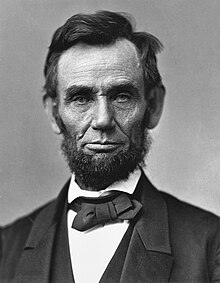
Abraham Lincoln
- Theodore Roosevelt championed an era of reform, such as creating the Food and Drug Administration and five National Parks. Popularly known as “Teddy,” he even had a toy bear—the teddy bear—named after him.
- Franklin D. Roosevelt successfully led America through the Great Depression and World War II. He was the first President to insist that government existed to directly better the lives of its citizens: “The test of our progress is not whether we add more to the abundance of those who have much; it is whether we provide enough for those who have too little.”
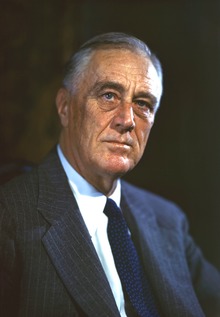
Franklin D. Roosevelt
- John F. Kennedy supported civil rights and called for an end to the Cold War. He challenged Americans to “ask what you can do for your country” and made government service respectable, even chic. His youth, charisma, intelligence and handsomeness led millions to mourn for “what might have been” had he lived to win a second term.
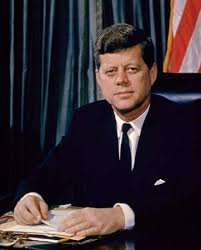
John F. Kennedy
Presidents who remain unpopular among Americans are seen as unlikable and responsible (directly or not) for mass suffering.
Among these:
- Herbert Hoover
- Lyndon B. Johnson
- Richard M. Nixon
Among the reasons they are held in such low regard:
- Herbert Hoover is still blamed for the 1929 Great Depression. He didn’t create it, but his conservative, “small-government” philosophy led him to refuse to aid its victims. An engineer by profession, he saw the Depression as a machine that needed repair, not as a catastrophe for human beings. This lack of “emotional intelligence” cost him heavily with voters.
- Lyndon B. Johnson is still blamed as the President “who got us into Vietnam.” John F. Kennedy had laid the groundwork by placing 16,000 American troops there by the time he died in 1963. But it was Johnson who greatly expanded the war in 1965 and kept it going—with hugely expanding casualties—for the next three years. Unlike Kennedy, whom he followed, he looked and sounded terrible on TV. Voters compared LBJ’s Texas drawl and false piety with JFK’s wit and good looks—and found him wanting.
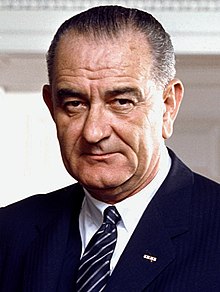
Lyndon B. Johnson
- Richard M. Nixon will be remembered foremost as the President who was forced to resign under threat of impeachment and removal from office. Like Herbert Hoover, he was not a “people person” and seemed remote to even his closest associates. Although he took office on a pledge to “bring us together” and end the Vietnam war, he attacked war protesters as traitors and kept the war going another four years. His paranoid fears of losing the 1972 election led to his creating an illegal “Plumbers” unit which bugged the Democratic offices at the Watergate Hotel. And his attempted cover-up of their illegal actions led to his being forced to resign from office in disgrace.
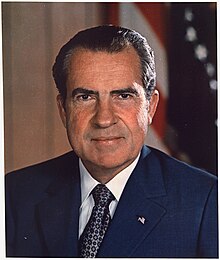
Richard M. Nixon
Which brings us to the question: How is Donald J. Trump likely to be remembered?
Historian Joachim C. Fest offers an unintended answer to this question in his 1973 bestselling biography Hitler:
“The phenomenon of the great man is primarily aesthetic, very rarely moral in nature; and even if we were prepared to make allowances in the latter realm, in the former we could not.
“An ancient tenet of aesthetics holds that one who for all his remarkable traits is a repulsive human being, is unfit to be a hero.”
Among the reasons for Hitler’s being “a repulsive human being,” Fest cites the Fuhrer’s
- “intolerance and vindictiveness”;
- “lack of generosity”; and
- “banal and naked materialism–power was the only motive he would recognize.”
Fest then quotes German chancellor Otto von Bismark on what constitutes greatness: “Impressiveness in this world is always akin to the fallen angel who is beautiful but without peace, great in his plans and efforts, but without success, proud but sad.”
And Fest concludes: “If this is true greatness, Hitler’s distance from it is immeasurable.”
What Fest writes about Adolf Hitler applies just as brutally to President Trump.
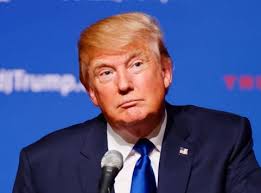
Donald Trump
Intolerant and vindictive. Lacking generosity. Nakedly materialistic.
He has:
- Boasted about the politicians he’s bought and the women he’s bedded—and forced himself on.
- Threatened his Democratic opponent—Hillary Clinton—with prosecution if he were elected.
- Slandered entire segments of Americans—blacks, Hispanics, women, journalists, Asians, the disabled, the Gold Star parents of a fallen soldier.
- Slandered President Barack Obama for five years as a non-citizen, finally admitting the truth only to win black votes.
- Attacked the FBI and CIA for accurately reporting that Russian President Vladimir Putin had intervened in the 2016 Presidential election to ensure Trump’s victory.
At this stage, it’s hard to imagine Trump joining that select number of Presidents Americans remember with awe and reverence.
.jpeg&imgrefurl=http%3A%2F%2Fwww.whataboutclients.com%2Farchives%2F2014%2F09%2Famerican_authen.html&docid=boFt4L_sotcfWM&tbnid=ouxiHfzJFvsrwM%3A&w=240&h=248&ei=NhtPVKT3GJX6oQSa7YKgDg&ved=0CAIQxiAwAA&iact=c)


 Bureaucracybuster's Blog
9/11 ATTACKS, ABC NEWS, ABORTION, ADOLF HITLER, AL-QAEDA, ALTERNET, AMERICABLOG, ANDREW CUOMO, ANTHONY FAUCI, AP, BABY BOOMER RESISTANCE, BLOOMBERG, BOB WOODWARD, BUZZFEED, CARL BERNSTEIN, CBS NEWS, CENTERS FOR DISEASE CONTROL AND PREVENTION (CDC), CHICAGO, CHINA, CIA, CLOROX BLEACH, CNN, CORONAVIRUS, COVID-19, COVID-19 TEST KITS, CROOKS AND LIARS, DAILY KOZ, DAVID BROOKS, DEBORAH BIRX, DEMOCRATIC NATIONAL CONVENTION, DEPARTMENT OF HOMELAND SECURITY, DONALD RUMSFELD, DONALD TRUMP, DRUDGE REPORT, FACEBOOK, FBI, FEDERAL EMERGENCY MANAGEMENT AGENCY (FEMA), FIVETHIRTYEIGHT, FLORIDA, FORBES, FOX NEWS, FRANKLIN D. ROOSEVELT, GRETCHEN WHITMER, HARPER’S MAGAZINE, HUFFINGTON POST, JARED KUSHNER, JAY INSLEE, KOREAN WAR, KRISTI NOEM, KRISTIN URQUIZA, LARRY HOGAN, LOS ANGELES, MARK ANTHONY URQUIZA, MARK SHIELDS, MARYLAND, MASSACHUSSETS, MEDIA MATTERS, MICHIGAN, MICK MULVANEY, MIKE PENCE, MOLOCH, MOTHER JONES, MOVEON, MSNBC, N95 MASKS, NAVY SEALS, NBC NEWS, NEW YORK, NEW YORK CITY, NEWSWEEK, NPR, OSAMA BIN LADEN, PAULA REID, PBS NEWSHOUR, PERSONAL PROTECTIVE EQUIPMENT (PPE), PHOENIX RALLY, POLITICO, POLITICUSUSA, RAW STORY, REPUBLICANS, REUTERS, RICHARD NIXON, ROBERT MUELLER, RUDOLPH GIULIANI, SALON, SCHOOLS, SEAN HANNITY, SEAN HANNITY SHOW, SEATTLE TIMES, SLATE, SOUTH DAKOTA, STEVEN PRESSFIELD, TALKING POINTS MEMO, THE ATLANTIC, THE CHICAGO SUN-TIMES, THE CHICAGO TRIBUNE, THE DAILY BEAST, THE DAILY BLOG, THE GUARDIAN, THE HILL, THE HUFFINGTON POST, THE LOS ANGELES TIMES, THE NATION, THE NEW REPUBLIC, THE NEW YORK TIMES, THE PENTAGON, THE VILLAGE VOICE, THE WASHINGTON POST, THINKPROGRESS, TIME, TRUTHDIG, TRUTHOUT, TULSA OAKAHOMA RALLY, TWITTER, TWO POLITICAL JUNKIES, U.S. NEWS & WORLD REPORT, UPI, USA TODAY, UV LIGHT, VEIL: THE SECRET WARS OF THE CIA (BOOK), VIETNAM WAR, WALTER SHAUB, WASHINGTON, WASHINGTON D.C., WASHINGTON MONTHLY, WASHINGTON WEEK IN REVIEW, WATERGATE, WILLIAM J. CASEY, WONKETTE, WORLD TRADE CENTER
DONALD TRUMP: KILLING MORE AMERICANS THAN OSAMA BIN LADEN: PART THREE (OF EIGHT)
In Bureaucracy, History, Law, Law Enforcement, Medical, Military, Politics, Social commentary on September 16, 2020 at 12:05 amOn February 7, 2020, during a recorded phone interview, President Donald J. Trump shared his thoughts—and the latest medical Intelligence—about the Coronavirus with Washington Post editor/investigative reporter Bob Woodward.
TRUMP CONFESSES TO BOB WOODWARD
Bob Woodward: And so, what was [Chinese] President Xi [Jinping] saying yesterday?
Donald Trump: Oh, we were talking mostly about the virus, and I think he’s going to have it in good shape. But it’s a very tricky situation.
Woodward: Indeed, it is.
Trump: It goes through air, Bob. That’s always tougher than the touch. The touch, you don’t have to touch things, right? But the air, you just breathe the air and that’s how it’s passed. And so that’s a very tricky one. That’s a very delicate one. It’s also more deadly than even your strenuous flues. People don’t realize, we lose 25,000, 30,000 people a year here. Who would ever think that, right?
Woodward: I know. It’s much forgotten.
Trump: It’s pretty amazing. And then I said, “Well, is that the same thing?”
Woodward: What are you able to do for—
Trump: This is more deadly. This is 5% versus 1%, and less than 1%. So this is deadly stuff.
“This is deadly stuff.”
Unfortunately for those who believed in him, Trump was not saying this in public.
WHAT TRUMP SAID IN PUBLIC
From January to early March, 2020, Trump and his allies within the Republican party and Fox News Network repeatedly assured Americans they had nothing to fear.
Donald Trump
Barnstorming the country in a series of hate-filled political rallies, Trump told his supporters:
MORE CONFESSIONS TO BOB WOODWARD
But on March 19, Trump offered a completely different take on the virus in another phone interview with Woodward:
Donald Trump: Now it’s starting out it’s not just all people, Bob. But just today and yesterday, some startling facts came out. It’s not just old, older-
Bob Woodward: Yeah. Exactly.
Trump: Young people too. Plenty of young people. We’re looking at what’s going on in—
Woodward: So, give me a moment of talking to somebody, going through this with Fauci, or somebody who kind of… It caused a pivot in your mind, because it’s clear just from what’s on the public record, that you went through a pivot on this to, “Oh my God. The gravity is almost inexplicable and unexplainable.”
Trump: Well, I think Bob, really, to be honest with you-
Woodward: Sure. I want you to be.
Trump: I wanted to always play it down. I still like playing it down because I don’t want to create a panic.
Share this: