Posts Tagged ‘UKRAINE’
2020 PRESIDENTIAL ELECTION, ABC NEWS, ALEX VINDMAN, ALTERNET, AMERICABLOG, AP, BABY BOOMER RESISTANCE, BBC, BLOOMBERG NEWS, BUZZFEED, CBS NEWS, CNN, CROOKS AND LIARS, DAILY KOS, DAVID PRESSMAN, DEMOCRATS, DONALD TRUMP, DRUDGE RETORT, FIVETHIRTYEIGHT, GORDON SONDLAND, HARPER’S MAGAZINE, HUFFINGTON POST, JOHN ROOD, JOSEPH BIDEN, MARK ESPER, MEDIA MATTERS, MORNING JOE, MOTHER JONES, MOVEON, MSNBC, NBC NEWS, NEW REPUBLIC, NEWSDAY, NEWSWEEK, NICCOLO MACHIAVELLI, NPR, PBS NEWSHOUR, POLITICO, POLITICUSUSA, RAW STORY, REPUBLICANS, REUTERS, SALON, SEATTLE TIMES, SLATE, TALKING POINTS MEMO, THE ATLANTIC, THE CHICAGO SUN-TIMES, THE CHICAGO TRIBUNE, THE DAILY BEAST, THE DAILY BLOG, THE GUARDIAN, THE HILL, THE HUFFINGTON POST, THE INTERCEPT, THE LOS ANGELES TIMES, THE NATION, THE NEW REPUBLIC, THE NEW YORK TIMES, THE NEW YORKER, THE PENTAGON, THE PRINCE, THE VILLAGE VOICE, THE WASHINGTON POST, THINKPROGRESS, TIME, TRUTHDIG, TRUTHOUT, TWO POLITICAL JUNKIES, U.S. NEWS & WORLD REPORT, UKRAINE, UPI, USA TODAY, VOLODMYR ZELENSKY, WONKETTE, X, YEVGENEY VINDMAN
In Bureaucracy, History, Law, Military, Politics, Social commentary on August 19, 2024 at 12:11 am
“There is no other way of guarding oneself against flattery than by letting men understand that they will not offend you by speaking the truth. But when every one can tell you the truth, you lose their respect.
“A prudent prince must therefore take a third course, by choosing for his counsel wise men, and giving them alone full liberty to speak the truth to him, but only of those things that he asks and of nothing else.”
So wrote the Italian statesman Niccolo Machiavelli more than 500 years ago in his famous treatise on politics, The Prince. And he added:
“But he must be a great asker about everything and hear their opinions, and afterwards deliberate by himself in his own way, and in these counsels and with each of these men comport himself so that every one may see that the more freely he speaks, the more he will be acceptable.
“Beyond these he should listen to no one, go about the matter deliberately, and be determined in his decisions.”
Machiavelli’s words remain as true in our day as they were in his.
Especially for “a very stable genius,” as ex-President Donald J. Trump once referred to himself.
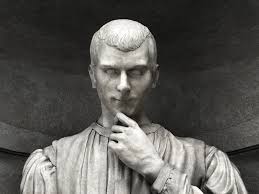
Niccolo Machiavelli
Asked on MSNBC’s “Morning Joe” who he consults about foreign policy, Trump replied; “I’m speaking with myself, number one, because I have a very good brain and I’ve said a lot of things.”
Machiavelli offers a related warning that especially applies to Trump: Unwise princes cannot be wisely advised:
“It is an infallible rule that a prince who is not wise himself cannot be well advised, unless by chance he leaves himself entirely in the hands of one man who rules him in everything, and happens to be a very prudent man. In this case, he may doubtless be well governed, but it would not last long, for the governor would in a short time deprive him of the state.”
Competent executives surround themselves with experts in diverse fields and pay attention to their expertise. They don’t feel threatened by it but rely on it to implement their agenda. Advisers whose counsel proves correct are to be retained and rewarded.
Machiavelli offers practical advice on this:
“The prince, in order to retain his fidelity, ought to think of his minister, honoring and enriching him, doing him kindnesses and conferring on him favors and responsible tasks, so that the great favors and riches bestowed on him cause him not to desire other honors and riches, and the offices he holds make him fearful of changes.”
But rewarding those who try to head off ruinous decision-making is not Trump’s way.
Consider the case of John Rood, the Pentagon’s top policy official until February 19. That was when he resigned, saying he was leaving at Trump’s request.
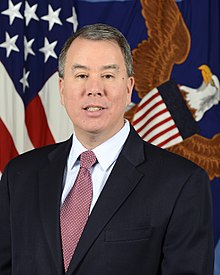
John Rood
Rood had certified in 2019 that Ukraine had made enough anti-corruption progress to justify the release of Congressionally-authorized aid for its efforts to thwart Russian aggression.
And that totally conflicted with Trump’s attempt to extort a “favor” from Ukrainian President Volodymyr Zelensky.
In July, 2019, Trump told his acting chief of staff, Mick Mulvaney, to withhold almost $400 million in promised military aid for Ukraine.
On July 25, Trump telephoned Zelensky to “request” a “favor”: Investigate Democratic Presidential Candidate Joseph Biden and his son, Hunter, who has had business dealings in Ukraine.
The reason for such an investigation: To find embarrassing “dirt” on Biden.

Joe Biden
But then a CIA whistleblower filed a complaint about the extortion attempt—and this led directly to impeachment proceedings by the Democratically-controlled House for abuse of power and obstruction of Congress.
But the Republican-dominated Senate voted to acquit him.
Afterwards, Trump purged several officials he considered disloyal for cooperating with the impeachment hearings:
- Army Lt. Col. Alex Vindman, from the National Security Council.
- White House Attorney Lt. Col. Yevgeny Vindman, Vindman’s twin brother.
- Gordon Sondland, Trump’s ambassador to the European Union.
“The truth has cost Lt. Col. Alexander Vindman his job, his career, and his privacy,” his attorney David Pressman, said in a statement.
For Trump, Rood had been “disloyal” on two occasions:
- He stated in a May 23, 2019 letter to Congress that the Pentagon had thoroughly assessed Ukraine’s anti-corruption actions. And he said that those reforms justified the authorized $400 million in aid.
- He told reporters last year: “In the weeks after signing the certification I did become aware that the aid had been held. I never received a very clear explanation other than there were concerns about corruption in Ukraine.”
Asked about Rood’s resignation, chief Pentagon spokesman Jonathan Hoffman declined to speculate on the reason for Trump’s decision.
According to Secretary of Defense Mark Esper, Rood played “a critical role” on issues such as nuclear deterrence, NATO, missile defense and the National Defense Strategy.
That did not protect him, however, from Trump’s vendetta against those who dared to reveal his crimes to Democratic impeachment committees.
All of which would lead Niccolo Machiavelli to warn, if he could witness American politics today: “This bodes ill for your Republic.”
2016 PRESIDENTIAL ELECTION, 2020 PRESIDENTIAL ELECTION, ABC NEWS, AFGHANISTAN, ALTERNET, AMERICABLOG, AP, BABY BOOMER RESISTANCE, BEATRICE STRAIGHT, BILL KRISTOL, BORDER WALL, BUZZFEED, CBS NEWS, CIA, CNN, CONSUMER PROTECTION, CORRUPTION, CROOKS AND LIARS, DAILY KOZ, DEMOCRATS, DONALD TRUMP, ENVIRONMENTAL PROTECTION, FAYE DUNAWAY, FBI, FEDERAL GOVERNMENT SHUTDOWN, FIVETHIRTYEIGHT, FOREIGN POLICY, FOX NEWS NETWORK, FREEDOM OF THE PRESS, GUNS, HEALTH CARE, HUNTER BIDEN, immigration, INTERNATIONAL TRADE, JANUARY 6 COUP ATTEMPT, JOSEPH BIDEN, JUSTICE DEPARTMENT, Kamala Harris, KEVIN MCCARTHY, MOTHER JONES, MOVEON, MSNBC, NATIONAL SECURITY, NATIONAL SECURITY AGENCY, NBC NEWS, NETWORK (MOVIE), NEWSWEEK, NIKKI HALEY, NPR, PADDY CHAYEFSKY, PBS NEWSHOUR, PETER FINCH, POLITICO, POLITICUSUSA, RAW STORY, REPUBLICANS, REUTERS, ROBERT DUVALL, RUSSIA, SALON, SEATTLE TIMES, SIDNEY LUMET, SLATE, TALKING POINTS MEMO, THE ATLANTIC, THE CHICAGO SUN-TIMES, THE CHICAGO TRIBUNE, THE DAILY BEAST, THE DAILY BLOG, THE GUARDIAN, THE HILL, THE HUFFINGTON POST, THE LOS ANGELES TIMES, THE NATION, THE NEW YORK TIMES, THE WASHINGTON POST, THINKPROGRESS, TIME, TRUTHDIG, U.S. NEWS & WORLD REPORT, UKRAINE, UNITED STATES HOUSE OF REPRESENTATIVES, UNITED STATES SENATE, UPI, USA TODAY, WILLIAM HOLDEN, X
In Bureaucracy, Entertainment, History, Politics, Social commentary on August 15, 2024 at 12:19 am
Donald Trump has been compared to Adolf Hitler, Joseph Stalin and Gaius Caligula. But perhaps his counterpart lies not in history but in fiction.
Specifically, the fictional news anchor Howard Beale in Network, the 1976 satire written by Paddy Chayefsky and directed by Sidney Lumet. It starred Faye Dunaway, William Holden, Robert Duvall, Peter Finch and Beatrice Straight.

Howard Beale (Finch) the longtime anchor of the UBS Evening News, is about to be fired because of declining ratings.
So he announces on live television that he will commit suicide on next Tuesday’s broadcast.
UBS fires him, but then agrees to let Beale appear one more time to leave with dignity.
But once Beale is back on the air, he launches into a rant that contains the most famous—and most often-quoted—line in the film:
“I don’t have to tell you things are bad. Everybody knows things are bad. It’s a depression. Everybody’s out of work or scared of losing their job. The dollar buys a nickel’s worth, banks are going bust, shopkeepers keep a gun under the counter….
“We know the air is unfit to breathe and our food is unfit to eat….
“So I want you to get up now. I want all of you to get up out of your chairs. I want you to get up right now and go to the window. Open it, and stick your head out, and yell, ‘I’M AS MAD AS HELL, AND I’M NOT GOING TO TAKE THIS ANYMORE!'”

Peter Finch as Howard Beale in Network
Beale is clearly losing it. But his outburst causes the newscast’s ratings to spike. Instead of pulling him off the air, the top brass of UBS decide to exploit Beale’s antics.
Soon he’s hosting a new program called The Howard Beale Show, where he’s billed as “the mad prophet of the airwaves.” Ultimately, the show becomes the most highly rated program on television.
But then Beale’s ratings slide as audiences find his sermons on the dehumanization of society depressing.
To rid themselves of Beale and boost their season-opener ratings, the network’s top executives hire a band of terrorists called the Ecumenical Liberation Army to assassinate Beale—on the air!
Forty years after Network, Right-wing voters sent “reality show” host and real estate mogul Donald Trump to the White House.
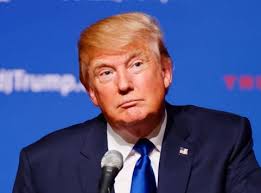
Donald Trump
Republicans have reveled in his antics and enthusiastically supported his most heinous acts, which have included:
- Repeatedly and viciously attacking the nation’s free press for daring to report his growing list of crimes and disasters, calling it “the enemy of the American people.”
- Repeatedly “hinting” that he wants to be “President-for-Life.”
- Allowing predatory corporations to subvert Federal regulatory protections for consumers and the environment.
- Repeatedly and viciously attacking American Intelligence agencies—such as the FBI, CIA and National Security Agency—for unanimously agreeing that Russia interfered with the 2016 Presidential election.
- Shutting down the Federal Government for more than a month on December 22, 2018, because Democrats refused to fund his “border wall” between the United States and Mexico.
- Pressuring Ukrainian President Volodymyr Zelensky to provide “dirt” on Hunter Biden, the son of Democratic Presidential candidate Joseph Biden—and threatening to withhold military aid if Zelensky refused.
- Inciting a deadly riot against Congress where Senators and Representatives were meeting to count the Electoral College votes won by himself and Joe Biden in 2020. His objective: Stop the count, which he knew would prove him the loser.
The greed-obsessed honchos of the fictional UBS Network believed they could parley Howard Beale’s madness into greater profits.
Similarly, power-obsessed Republicans in the House and Senate believe they can parley Donald Trump’s tyrannical and unstable nature into lifetime tenure for themselves.
Yet, like the executives at UBS, Congressional Republicans may soon be forced to turn on their most poisonous creation.
Right-wing Fox News Network gave its enthusiastic support to Trump during the 2016 Presidential race. And it continues to do so throughout his 2024 campaign.
But now, in 2024, Trump seems unable to come to grips with Vice President Kamala Harris. He still yearns to run against President Joe Biden—whose unexpected exit on July 21 caught him totally by surprise.
So he attacks her race, her intelligence, her crowd size, her integrity (“Crooked Kamala”)—the last despite her having been a prosecutor and his being a convicted felon.
Fellow Republicans—such as commentator Bill Kristol and former House Speaker Kevin McCarthy—keep pressing him to focus on policy, not character assassination.
Former U.N. Ambassador and defeated GOP primary rival Nikki Haley said on Fox News: “Quit whining about her. We knew it was going to be her….Republicans need to be fighting for suburban women, for college-educated, for independents, for moderate Republicans and conservative Democrats.”
But Trump, seeing his polls dwarfed by those of Harris, sticks to what he knows best: Lies and smears.
They don’t seem to be working as well for him as they did in 2016.
Republicans may soon face the following dilemma:
- Can I hold onto my power—and privileges—by supporting Trump? Or:
- Can I hold onto my power—and privileges—by deserting him?
This is how Republicans define morality today.
2016 PRESIDENTIAL CAMPAIGN, ABC NEWS, ALTERNET, AMERICABLOG, AP, BABY BOOMER RESISTANCE, BILL MAULDIN, BUZZFEED, CBS NEWS, CHINA, CIA, CNN, CROOKS AND LIARS, DAILY KOZ, DONALD TRUMP, EXTORTION, FBI, FIVETHIRTYEIGHT, HILLARY CLINTON, JOE BIDEN, LUCIAN K. TRUSCOTT JR., MOTHER JONES, MOVEON, MSNBC, NAZI GERMANY, NBC NEWS, NEWSWEEK, NPR, PBS NEWSHOUR, POLITICO, POLITICUSUSA, RAW STORY, REUTERS, RUSSIA, SALON, SAVING PRIVATE RYAN, SEATTLE TIMES, SLATE, STEVEN SPIELBERG, TALKING POINTS MEMO, THE ATLANTIC, THE CHICAGO SUN-TIMES, THE CHICAGO TRIBUNE, THE DAILY BEAST, THE DAILY BLOG, THE GUARDIAN, THE HILL, THE HUFFINGTON POST, THE LOS ANGELES TIMES, THE NATION, THE NEW YORK TIMES, THE WASHINGTON POST, THINKPROGRESS, TIME, TRUMP FOUNDATION, TRUTHDIG, U.S. NEWS & WORLD REPORT, UKRAINE, UPI, USA TODAY, VETERANS’ DAY, VIETNAM WAR, VLADIMIR PUTIN, WORLD WAR 11, X
In Bureaucracy, History, Military, Politics, Social commentary on August 2, 2024 at 12:05 am
If President Donald Trump expected a warm welcome when he attended the 100th Veterans Day Parade in Manhattan, he was rudely disappointed.
“Lock him up!” yelled many protesters, echoing chants at his own rallies against Hillary Clinton, his 2016 rival for President.
Other New Yorkers plastered their windows with large anti-Trump signs: “DUMP TRUMP!” “IMPEACH!” “CONVICT!”
One demonstrator held up a sign: “Draft Dodger,” a reference to Trump’s avoiding military service in Vietnam through five draft deferments, including one for bone spurs.
“My grandfather fought in World War II, he was a colonel and an immigrant from Russia,” said a 52-year-old woman who only identified herself as Liz.
“He would be horrified at the corruption and hate in the White House right now. He was a Republican, but he was not a racist. He was completely committed to this country.”
Another woman, Janet Gonzelez, 85, attacked Trump’s “upside down” foreign policy in the Middle East. Asked what she would tell Trump if she met him, she replied: “Fuck you.”
Speaking behind bulletproof plexiglass, Trump tried to drown out a throng of protesters shouting and blowing whistles outside the west entrance of Madison Square Park.
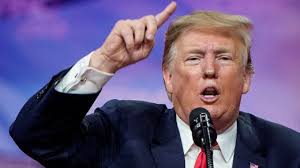
Donald Trump
“Our veterans risked everything for us. Now it is our duty to serve and protect them every single day of our lives,” Trump said, as a chorus of boos echoed in the distance.
What Trump did not mention was that, only four days earlier, a New York judge had ordered him to pay $2 million in damages owing to misuse of funds by the Trump Foundation.
In January, 2016, Trump had held a televised fundraiser for veterans. He claimed that the funds would be distributed to charities serving the needs of veterans.
But the Trump Foundation improperly used $2.82 million it received from that fundraiser to fuel his campaign for President.
Thus, the man who had ripped off American veterans was now presiding over a day created to honor them.
There is no better way to trace the decline of the United States than to compare the 2019 Manhattan Veterans’ Day celebration with the 1946 one at the Sicily-Rome American Cemetery, near the town of Nettuno.
The cemetery held about 20,000 American graves, mostly of soldiers who had died in Sicily or at Anzio, fighting Nazi Germany.
Presiding over that event was Lt. General Lucian K. Truscott, Jr., the U.S. Fifth Army Commander.
Unlike many other generals, Truscott had shared in the dangers of combat, pouring over maps on the hood of his jeep with company commanders as bullets or shells whizzed about him.
When it came his turn to speak, Truscott moved to the podium. Then he turned his back on the assembled visitors—which included several Congressmen.
The audience he now faced were the graves of his fellow soldiers.
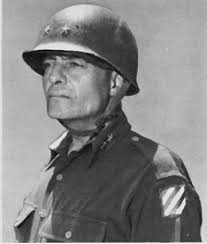
Lt. General Lucian K. Truscott, Jr.
Among those who heard Truscott’s speech was Bill Mauldin, the famous cartoonist for the Army newspaper, Stars and Stripes. Mauldin had created Willie and Joe, the unshaved, slovenly-looking “dogfaces” who came to symbolize the GI.
It’s from Mauldin that we have the fullest account of Truscott’s speech that day.
“He apologized to the dead men for their presence there. He said that everybody tells leaders that it is not their fault that men get killed in war, but that every leader knows in his heart that this is not altogether true.
“He said he hoped anybody here through any mistake of his would forgive him, but he realized that he was asking a hell of a lot under the circumstances….
“Truscott said he would not speak of the ‘glorious’ dead because he didn’t see much glory in getting killed in your teens or early twenties.
“He promised that if in the future he ran into anybody, especially old men, who thought death in battle was glorious, he would straighten them out. He said he thought it was the least he could do.”
Then Truscott walked away, without acknowledging his audience of celebrities.
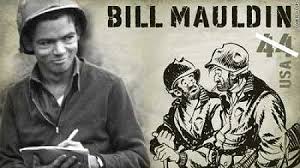
Bill Mauldin and “Willie and Joe,” the characters he made famous
Contrast the character of Lucian Truscott with that of the man who held the office of President of the United States.
Donald Trump has:
- Equated his reckless sex life during the 1970s with the risks American soldiers faced in Vietnam.
- Relentlessly defended Russian dictator Vladimir Putin against all criticism, even as he’s slandered literally hundreds of his fellow citizens on Twitter.
- Attacked the FBI and CIA for concluding that Russia intervened in the 2016 election to help him win the White House.
- Tried to extort the president of Ukraine to slander former Vice President Joe Biden, his possible rival for the White House in 2020.
- “Joked” that it would be “great” if the United States had a “President-for-Life”—like China.
Saving Private Ryan, Steven Spielberg’s 1998 World War II epic, opens with a scene of an American flag snapping in the wind.
Except that the brilliant colors of Old Glory have been washed out, leaving only black-and-white stripes and black stars.
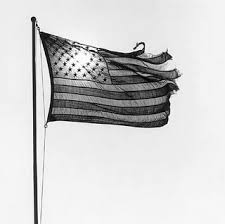
Small wonder that, for many Americans, Old Glory has taken on a darker, washed-out appearance—in real-life as in film.
ABC NEWS, ADOLF HITLER, ADVICE, ALTERNET, AMERICABLOG, AP, BABY BOOMER RESISTANCE, BAY OF PIGS, BBC, BENITO MUSSOLINI, BLOOMBERG NEWS, BUZZFEED, CAESARE BORGIA, CBS NEWS, CNN, CORPORATIONS, CROOKS AND LIARS, CUBA, DAILY KOS, DAILY KOZ, FIDEL CASTRO, FIVETHIRTYEIGHT, FLORENCE, HARPER’S MAGAZINE, HUFFINGTON POST, JOHN F. KENNEDY, JOSEPH STALIN, KING PERSEUS OF MACEDON, MEDIA MATTERS, MOTHER JONES, MOVEON, MSNBC, NAZI-SOVIET "NON-AGGRESSION PACT", NBC NEWS, NEW REPUBLIC, NEWSDAY, NEWSWEEK, NICCOLO MACHIAVELLI, NPR, PBS NEWSHOUR, POLITICO, POLITICS, POLITICUSUSA, POPE JULIUS 11, RAW STORY, REUTERS, SALON, SEATTLE TIMES, SLATE, TALKING POINTS MEMO, THE ATLANTIC, THE CHICAGO SUN-TIMES, THE CHICAGO TRIBUNE, THE DAILY BEAST, THE DAILY BLOG, THE DISCOURSES, THE GUARDIAN, THE HILL, THE HUFFINGTON POST, THE INTERCEPT, THE LOS ANGELES TIMES, THE NATION, THE NEW REPUBLIC, THE NEW YORK TIMES, THE NEW YORKER, THE PRINCE, THE SS, THE VILLAGE VOICE, THE WASHINGTON POST, THINKPROGRESS, THIRD REICH, TIME, TRUTHDIG, TRUTHOUT, TWITTER, U.S. NEWS & WORLD REPORT, UKRAINE, UPI, USA TODAY, VLADIMIR PUTIN, VOLODYMYR ZELENSKY, WEHRMACHT, WORLD WAR 11
In Bureaucracy, Business, History, Military, Politics, Social commentary on May 24, 2024 at 12:10 am
Ask the average person, “What do you think of Niccolo Machiavelli?” and he’s likely to say: “The devil.”
In fact, “The Old Nick” became an English term used to describe Satan and slander Machiavelli at the same time.

Niccolo Machiavelli
The truth, however, is more complex. Machiavelli was a passionate Republican, who spent most of his adult life in the service of his beloved city-state, Florence.
The years he spent as a diplomat were tumultuous ones for Italy—with men like Pope Julius II and Caesare Borgia vying for power and plunging Italy into one bloodbath after another.
Florence, for all its wealth, lacked a strong army, and thus lay at the mercy of powerful enemies, such as Borgia. Machiavelli often had to use his wits to keep them at bay.
Machiavelli is best-known for his writing of The Prince, a pamphlet on the arts of gaining and holding power. Its admirers have included Benito Mussolini and Joseph Stalin.
But his longer and more thoughtful work is The Discourses, in which he offers advice on how to maintain liberty within a republic. Among its admirers were many of the men who framed the Constitution of the United States.


Most people believe that Machiavelli advocated evil for its own sake.
Not so. Rather, he recognized that sometimes there is no perfect—or perfectly good—solution to a problem.
Sometimes it’s necessary to take stern—even brutal—action to stop an evil (such as a riot) before it becomes widespread:
“A man who wishes to make a profession of goodness in everything must inevitably come to grief among so many who are not good. And therefore it is necessary for a prince, who wishes to maintain himself, to learn how not to be good, and to use this knowledge and not use it, according to the necessity of the case.”
His counsel remains as relevant today as it did during his lifetime (1469 – 1527). This is especially true for politicians—and students of political science.
But plenty of ordinary citizens can also benefit from the advice he has to offer—such as those in business who are asked to give advice to more powerful superiors.
Machiavelli warns there is danger in urging rulers to take a particular course of action: “For men only judge of matters by the result, all the blame of failure is charged upon him who first advised it, while in case of success he receives commendations. But the reward never equals the punishment.”
This puts would-be counselors in a difficult position: “If they do not advise what seems to them for the good of the republic or the prince, regardless of the consequences to themselves, then they fail to do their duty.
“And if they do advise it, then it is at the risk of their position and their lives, for all men are blind in thus, that they judge of good or evil counsels only by the results.”
Thus, Machiavelli warns that an adviser should “take things moderately, and not to undertake to advocate any enterprise with too much zeal, but to give one’s advice calmly and modestly.”
The person who asked for the advice may follow it, or not, as of his own choice, and not because he was led or forced into it by the adviser.
Above all, the adviser must avoid the danger of urging a course of action that runs “contrary to the wishes of the many.
“For the danger arises when your advice has caused the many to be contravened. In that case, when the result is unfortunate, they all concur in your destruction.”
Or, as President John F. Kennedy famously said after the disastrous invasion of Cuba at the Bay of Pigs in April, 1961: “Victory has a hundred fathers and defeat is an orphan.”
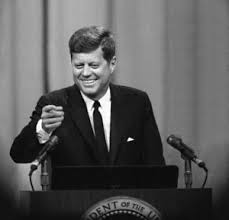
John F. Kennedy
By “not advocating any enterprise with too much zeal,” the adviser gains two advantages:
“The first is, you avoid all danger.
“And the second consists in the great credit which you will have if, after having modestly advised a certain course, your counsel is rejected, and the adoption of a different course results unfortunately.”
Finally, the time to give advice is before a catastrophe occurs, not after. Machiavelli gives a vivid example of what can happen if this rule is ignored.
King Perseus of Macedon had gone to war with Paulus Aemilius—and suffered a humiliating defeat. Fleeing the battlefield with a handful of his men, he later bewailed the disaster that had overtaken him.
Suddenly, one of his lieutenants began to lecture Perseus on the many errors he had committed, which had led to his ruin.
“Traitor,” raged the king, turning upon him, “you have waited until now to tell me all this, when there is no longer any time to remedy it—” And Perseus slew him with his own hands.
Niccolo Machiavelli sums up the lesson as this:
“Thus was this man punished for having been silent when he should have spoken, and for having spoken when he should have been silent.”
Be careful that you don’t make the same mistake.
ABC NEWS, ALAMO, ALTERNET, AMERICABLOG, ANDREW JACKSON, ANTONIO LOPEZ DE SANTA ANNA, AP, BABY BOOMER RESISTANCE, BBC, BLOOMBERG NEWS, BUZZFEED, CBS NEWS, CHARLES VII, CNN, CROOKS AND LIARS, DAILY KOZ, DAVID CROCKETT, FIVETHIRTYEIGHT, FRANCE, HARPER’S MAGAZINE, HUFFINGTON POST, JAMES BOWIE, JOAN OF ARC, LONE STAR: A HISTORY OF TEXAS AND THE TEXANS (BOOK), MEDIA MATTERS, MOTHER JONES, MOVEON, MSNBC, NBC NEWS, NEW REPUBLIC, NEWSDAY, NEWSWEEK, NPR, PBS NEWSHOUR, POLITICO, POLITICUSUSA, RAW STORY, REUTERS, RUSSIA, SALON, SAM HOUSTON, SEATTLE TIMES, SLATE, T.R. FEHRENBACH, TALKING POINTS MEMO, TEXAS, THE ATLANTIC, THE CHICAGO SUN-TIMES, THE CHICAGO TRIBUNE, THE DAILY BEAST, THE DAILY BLOG, THE GUARDIAN, THE HILL, THE HUFFINGTON POST, THE INTERCEPT, THE LOS ANGELES TIMES, THE NATION, THE NEW REPUBLIC, THE NEW YORK TIMES, THE NEW YORKER, THE VILLAGE VOICE, THE WASHINGTON POST, THINKPROGRESS, TIME, TRUTHDIG, TRUTHOUT, TWO POLITICAL JUNKIES, U.S. NEWS & WORLD REPORT, UKRAINE, UPI, USA TODAY, VLADIMIR PUTIN, VOLODYMYR ZELENSKY, WILLIAM BARRET TRAVIS, WONKETTE, X
In History, Military, Politics, Social commentary on May 21, 2024 at 12:10 am
They seem to come out of nowhere—people who have never had military training nor even any experience with violence. Yet they display an utter fearlessness and eloquence that inspires others to great deeds in the face of overwhelming danger.
For 13 days—from February 23 to March 6, 1836—about 200 frontiersmen defended a ruined mission in San Antonio, Texas, against an army of 2,000 Mexican soldiers.
Few of them had known each other before finding themselves besieged. None of them had had professional military training. Some had served in local militias or as irregulars fighting Indians under the command of frontier officers such as Andrew Jackson.
One of these was David Crockett, recently a Congressman from Tennessee.
Since the vast majority of the garrison were volunteers, they could have deserted the fortress at any time.
Holding them in place was a former lawyer named William Barret Travis. Gifted with an eloquence beyond his 26 years, he gave purpose to their stand.
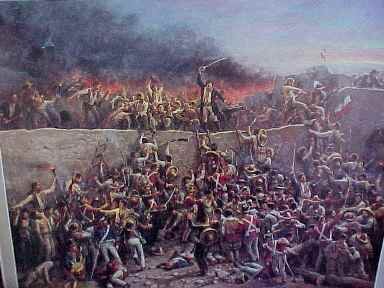
William Barret Travis (with sword) at the Alamo
As historian T.R. Fehrenbach writes in his monumental book, Lone Star: A History of Texas and the Texans:
“From the Alamo, from his first message before the arrival of the Mexicans to his last, his words had the ring of prophecy. The Texas historian who stated publicly that few people would want to have a son serve under William Barret Travis had forgotten, in the comforts of long security, the reasons why men make war.”
When the final assault came before dawn on March 6, 1836, the roughly 200 defenders killed and wounded about 600 of their enemies—inflicting a casualty rate of 33% on the Mexican army.
Travis’ body was found near his cannon on the north wall.
The garrison’s sacrifice inspired Sam Houston’s ragtag army to fall on the Mexican army at San Jacinto on April 21. Slaughtering about 800 soldiers, the Texans captured Mexican dictator Antonio Lopez de Santa Anna—and forced him to surrender control of Texas in return for his life.
- Volodymyr Zelensky (January 25, 1978 – ) is a former attorney, actor and comedian who, as the sixth president of Ukraine, now leads his country in a life-or-death struggle against the aggressive Russia of Vladimir Putin.
After earning a law degree from the Kiev National Economic University, he pursued a career in comedy. He created his own production company, Kvartal 95, which produced films, cartoons, and TV shows. His comedy, Servant of the People, starred Zelensky as the president of Ukraine.

Volodymyr Zelensky
In 2019, he announced his candidacy for president of Ukraine. He opposed the corruption that had been rife under the country’s luxury-loving president, Victor Yanukovych.
(In 2014, Ukrainians had rioted in Kiev and evicted Yanukovych. And that didn’t sit well with his “sponsor”—Russian President Vladimir Putin.)
A second feature of Zelensky’s presidential campaign: He promised to resolve the Russia-sponsored separatist movement in Donbas and end Ukraine’s protracted conflict there with Russia.
Zelensky won election by a landslide, with 72% of the vote.
In 2021, his administration came under mounting pressure from Russia. On February 24, 2022, Putin ordered a full-scale invasion of Ukraine.
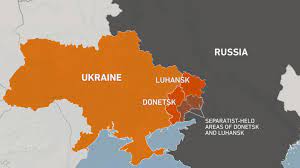
Ukraine vs. Russia
In the early hours of February 24, shortly before the start of the Russian invasion, Zelensky recorded an address to both Ukraine and Russia. As a Jew, he refuted Putin’s claims that there were Neo-Nazis in the Ukrainian government.
And he appealed to Russians—in Russian—to pressure their leadership to prevent war.
During the assault by Russian troops on the capital of Kiev, the Biden administration urged Zelensky to evacuate to a safer location and offered to help him do so. Zelensky refused, saying: “The fight is here [in Kiev]; I need ammunition, not a ride.”
As CBS correspondent Scott Pelley put it: “The moment Zelensky told his people he refused to flee, they refused to fall.”
Russia expected Kiev to fall in three days. But 61 days after the invasion, Kiev still remains defiant—and in the hands of Ukrainians.
When he wasn’t broadcasting defiance at Russia and rousing Ukrainians to heroism, he was often visiting the battlefront.
Interviewed on CBS’ 60 Minutes, Zelensky said: “I don’t want to make myself out to be a hero. I love my family. I want to live many more years, but choosing between running or being with my people, of course I’m ready to give my life for my country.”
Since the start of the invasion, he has reportedly been the target of more than a dozen assassination attempts.
Other world leaders have applauded his courage and leadership. Historian Andrew Roberts compared him to Winston Churchill.
The Harvard Political Review said that Zelensky “has harnessed the power of social media to become history’s first truly online wartime leader, bypassing traditional gatekeepers as he uses the internet to reach out to the people.”
Zelensky sees Ukraine’s struggle as the opening round of Russia’s war against the West.
“Some are….saying, ‘We can’t defend Ukraine because there could be a nuclear war.’ I think that today, no one in this world can predict what Russia will do. If they invade further into our territory, then they will definitely move closer and closer to Europe. They will only become stronger and less predictable.”
ABC NEWS, ALAMO, ALTERNET, AMERICABLOG, ANDREW JACKSON, ANTONIO LOPEZ DE SANTA ANNA, AP, BABY BOOMER RESISTANCE, BBC, BLOOMBERG NEWS, BUZZFEED, CBS NEWS, CHARLES VII, CNN, CROOKS AND LIARS, DAILY KOZ, DAVID CROCKETT, FIVETHIRTYEIGHT, FRANCE, HARPER’S MAGAZINE, HUFFINGTON POST, JAMES BOWIE, JOAN OF ARC, LONE STAR: A HISTORY OF TEXAS AND THE TEXANS (BOOK), MEDIA MATTERS, MOTHER JONES, MOVEON, MSNBC, NBC NEWS, NEW REPUBLIC, NEWSDAY, NEWSWEEK, NPR, PBS NEWSHOUR, POLITICO, POLITICUSUSA, RAW STORY, REUTERS, RUSSIA, SALON, SAM HOUSTON, SEATTLE TIMES, SLATE, T.R. FEHRENBACH, TALKING POINTS MEMO, TEXAS, THE ATLANTIC, THE CHICAGO SUN-TIMES, THE CHICAGO TRIBUNE, THE DAILY BEAST, THE DAILY BLOG, THE GUARDIAN, THE HILL, THE HUFFINGTON POST, THE INTERCEPT, THE LOS ANGELES TIMES, THE NATION, THE NEW REPUBLIC, THE NEW YORK TIMES, THE NEW YORKER, THE VILLAGE VOICE, THE WASHINGTON POST, THINKPROGRESS, TIME, TRUTHDIG, TRUTHOUT, TWO POLITICAL JUNKIES, U.S. NEWS & WORLD REPORT, UKRAINE, UPI, USA TODAY, VLADIMIR PUTIN, VOLODYMYR ZELENSKY, WILLIAM BARRET TRAVIS, WONKETTE, X
In History, Military, Politics, Social commentary on May 20, 2024 at 12:10 am
Joan of Arc. William Barret Travis. Volodymyr Zelensky.
The first two names long ago burned themselves into the pages of history. The third one is now doing the same.
They seem to come out of nowhere—people who have never had military training nor even any experience with violence. Yet they display an utter fearlessness and eloquence that inspires others to great deeds in the face of overwhelming danger.
- Joan of Arc (c. 1412 – 30 May 1431) was an illiterate peasant girl who, in France’s darkest hour, became its greatest hero.
In 1428, when she was about 17, Joan traveled to Vaucouleurs and asked for an armed escort to King Charles V11. She said that she had received visions from the archangel Michael, Saint Margaret and Saint Catherine of Alexandra, instructing her to deliver France from English domination.
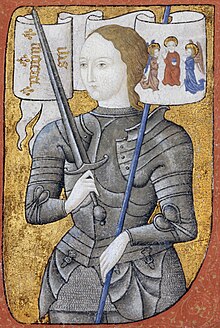
Joan of Arc
Her request was rejected twice, but eventually Robert de Baudricourt, the garrison commander, relented and gave her an escort to meet Charles at Chinon. She had never seen Charles, but even though he disguised himself among his courtiers, she instantly recognized him.
After their interview, Charles sent Joan at the head of a relief army to lift the siege of Orléans.
She had never wielded a lance or sword, or even ridden a war horse. She had never studied military strategy nor even seen a battlefield. Yet nine days after arriving at Orléans, she lifted the siege on May 8, 1429.
On May 4, her army attacked the outlying fortress of Saint Loup. She arrived just as the French soldiers were retreating after a failed attempt. Her sudden appearance roused the soldiers to cheer and launch another assault—which overwhelmed the fortress.
In June, Joan decisively defeated the English at the Battle of Patay. She then advanced on Reims, entering the city on July 16. The next day, Charles was consecrated as the King of France in Reims Cathedral with Joan at his side.
These victories paved the way for the final French victory in the Hundred Years’ War at Castillon in 1453.
Joan never attributed her success to anyone but God. She referred to herself as “Joan the Maid” and demanded that her soldiers refrain from sexual activity. At her orders, prostitutes—the camp followers of both French and British armies—were driven out of her encampments.
She did not expect to live a long life—and warned that the French had only about a year to claim their victories before she died.
On May 23, 1430, while relieving the siege of Compiegne, she was captured by Burgundians troops and exchanged to the English. Tried for heresy, she was declared guilty and burned at the stake on May 30,1431.
Only 19 when she died, she had, through her inspired leadership, restored the kingdom of France.
- William Barret Travis (August 1, 1809 – March 6, 1836) was a South Carolina lawyer whose courage and eloquence inspired 200 Texans to hold back a Mexican army at the Alamo.
An early advocate of Texas’ independence from Mexico, Travis entered the newly-formed Texas army as a regular officer. Although he had no experience in battle, he burned for glory as a cavalryman. But he accepted the order of Governor Henry Smith to go to San Antonio and defend the Alamo from the approaching Mexicans.
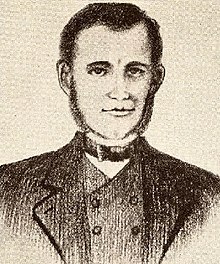
William Barret Travis
Arriving there, he found himself overshadowed by the popularity of co-commander James Bowie, the legendary knife fighter. But when Bowie collapsed with pneumonia on February 23, 1836—the first day of the siege—Travis took command.
According to historian T.R. Fehrenbach:
“The true measure of this man, with his soldier’s cap, his sword, his exalted ideas of honor, and his florid rhetoric, was that he captured these violent frontiersmen and bent them to his purpose.
“No competent Texas historian really believes Travis drew his line on the ground with his sword and invited his men to leave or stay. That was not Buck Travis’ style. He intended to keep his command on the walls regardless of what the men wanted. He was consciously guarding the ramparts of Texas.”

The siege of the Alamo
On February 23, 1836, Travis penned one of the most famous letters in early American history. Addressing it “To the People of Texas and All Americans in the World,” he wrote:
“I am besieged with a thousand or more of the Mexicans under Santa Anna [the president and dictator of Mexico]…..
“The enemy has demanded our surrender at discretion, otherwise the garrison is to be put to the sword. I shall never surrender or retreat. Thus, I call on you in the name of Liberty, of patriotism, and everything dear to the American character, to come to my aid with all dispatch…
“If this call is neglected I am determined to sustain myself as long as possible and die like a soldier who never forgets what is due his honor and that of his country. VICTORY OR DEATH.”
On March 3, Travis wrote his last letter, addressing it to the newly-declared Republic of Texas. “I shall have to fight the enemy on his own terms….The victory will cost the enemy so dear it will be worse for him than a defeat.”
On March 6, 1836, his prophecy came true.
2020 PRESIDENTIAL ELECTION, 2022 MIDTERM ELECTIONS, ABC NEWS, ADAM LAXALT, ALEXANDER SHUSTOROVICH, ALTERNET, AMERICABLOG, AP, AUDREY MURAVIEV, BABY BOOMER RESISTANCE, BBC, BLOOMBERG NEWS, BUZZFEED, CARL VON CLAUSEWITZ, CBS NEWS, CHRIS CILLIZZA, CIA, CNN, CROOKS AND LIARS, DAILY KOS, DEBT CEILING, DEFENSE INTELLIGENCE AGENCY, DONALD TRUMP, DONALD TRUMP JR., EMOLUMENTS CLAUSE, ERIC TRUMP, FASCISM, FBI, FEDERAL ELECTIONS COMMISSION, FIVETHIRTYEIGHT, FOX NETWORK, FRANKLIN GRAHAM, GEORGE W. BUSH, HARPER’S MAGAZINE, HUFFINGTON POST, HUNTER BIDEN, INTERNATIONAL BROTHERHOOD OF TEAMSTERS UNION, JAMES KIRCHICK, JANUARY 6 COUP ATTEMPT, JESSE BENTON, JOE BIDEN, JOHN KASICH, JOHN MCCAIN, JOSEPH MCCARTHY, KEVIN MCCARTHY, LEN BLAVATNIK, LIBERALISM, LINDSEY GRAHAM, MAFIA, MARCO RUBIO, MEDIA MATTERS, MICHELLE OBAMA, MOTHER JONES, MOVEON, MSNBC, NANCY PELOSI, NBC NEWS, NEW REPUBLIC, NEWSDAY, NEWSWEEK, NICCOLO MACHIAVELLI, NPR, OLIGARCHS, PBS NEWSHOUR, POLITICO, POLITICUSUSA, RAW STORY, REPUBLICANS, REUTERS, RICHARD NIXON, ROBERT F. KENNEDY, Ronald Reagan, RUSSIA, RUSSIA TODAY, SALON, SCOTT WALKER, SEATTLE TIMES, SLATE, SPIRO AGNEW, TALKING POINTS MEMO, THE ATLANTIC, THE CHICAGO SUN-TIMES, THE CHICAGO TRIBUNE, THE DAILY BEAST, THE DAILY BLOG, THE GUARDIAN, THE HILL, THE HUFFINGTON POST, THE INTERCEPT, THE LOS ANGELES TIMES, THE NATION, THE NEW REPUBLIC, THE NEW YORK TIMES, THE NEW YORKER, THE PRINCE, THE VILLAGE VOICE, THE WASHINGTON POST, THINKPROGRESS, TIME, TRUTHDIG, TRUTHOUT, TWITTER, U.S. NEWS & WORLD REPORT, UKRAINE, UNITED STATES CAPITOL BUILDING, UNITED STATES CONSTITUTION, UNITED STATES HOUSE OF REPRESENTATIVES, UNITED STATES JUSTICE DEPARTMENT, UNITED STATES SENATE, UPI, USA TODAY, VLADIMIR PUTIN, VOLODYMYR ZELENSKY, WORLD WAR 11
In Bureaucracy, History, Law, Law Enforcement, Politics, Social commentary on April 23, 2024 at 12:10 am
….A man who wishes to make a profession of goodness in everything must inevitably come to grief among so many who are not good. And therefore it is necessary, for a prince who wishes to maintain himself, to learn how not to be good, and to use this knowledge and not use it, according to the necessity of the case.
—Niccolo Machiavelli’s advice to President Joseph Biden in “The Prince”

Niccolo Machiavelli
Republicans, having won control of the House of Representatives, are eagerly seeking to destroy whatever legacy President Joseph R. Biden hopes to leave.
Intending to abuse their new-found powers to the utmost, their topmost goals include:
- Bringing false impeachment charges against Biden;
- Investigating FBI officials who rightly investigated evidence of Donald Trump’s collaboration with Russia;
- Investigating the President’s son, Hunter, for unspecified offenses, to damage his father’s credibility; and
- Holding America’s economy hostage by refusing to raise the debt ceiling unless Biden makes cuts in taxes and aid programs for the poor and middle class.
Yet their dictatorial ambitions—lavishly funded by Russian “campaign contributions” (i.e., bribes)—can be thwarted.
Two methods for achieving this have already been discussed in Part one of this series:
- Attack Republicans as traitors selling out the country to Vladimir Putin, and
- Concede NOTHING to Republicans
Here are two more:
Counterattack Strategy #3: Open Senate Investigations on the Trumps
House Republicans have ruthlessly attacked Biden’s son, Hunter, to damage the President’s credibility.
“What’s on Hunter’s laptop?” has become their latest version of “Who promoted Peress?”
Irving Peress was a New York City dentist who became a primary target for Red-baiting Republican Senator Joseph McCarthy during the 1954 Army-McCarthy hearings.
Democrats can effectively blunt this attack: Senatorial Democrats can hold similar investigative hearings on the actions of Donald Trump, Jr., and Eric Trump during their father’s White House tenure.
Both were highly involved with President Trump’s finances during his four years in office. And Trump never hesitated to violate the Emoluments Clause of the United States Constitution.

United States Constitution
Article I, Section 9, Paragraph 8 prohibits federal office holders from receiving gifts, payments, or anything of value from a foreign state or its rulers, officers, or representatives.
The Founders wanted to ensure that the country’s leaders would not be corrupted, even unconsciously, through bribes. At that time, bribery was a common practice among European rulers and diplomats.
Trump encouraged diplomats, lobbyists and insiders to stay at his Washington, D.C. hotel—which lay only a short walk from the White House on Pennsylvania Avenue.
And the prices charged there weren’t cheap:
- Cocktails ran from $23 for a gin and tonic to $100 for a vodka concoction with raw oysters and caviar.
- A seafood pyramid called “the Trump Tower” cost $120.
- A salt-aged Kansas City strip steak cost $59.
It’s a certainty that Trump’s sons, Eric and Donald, Jr., oversaw the profits sheet for this hotel—and other Trump properties across the country visited by members of foreign governments.
Thus, there are legitimate avenues for investigation open to Senatorial subcommittees—just as Robert F. Kennedy once probed financial ties between the Mafia and the International Brother of Teamsters Union.
The Justice Department might even be persuaded to launch its own investigation—not only into possible financial corruption during the Trump administration but into widespread reports of cocaine use by Donald, Jr.

Donald Trump, Jr.
Gage Skidmore from Surprise, AZ, United States of America, CC BY-SA 2.0 <https://creativecommons.org/licenses/by-sa/2.0>, via Wikimedia Commons
The House cannot bring criminal penalties against anyone. But the Justice Department can.
Counterattack Strategy #4: Open Justice Department Investigations on Congress members who supported Trump’s 2020 Coup Attempt
After Donald Trump refused to concede the 2020 Presidential election, 17 Republican state Attorney Generals—and 126 Republican members from both houses of Congress—supported a Texas lawsuit to overturn the results in four battleground states: Georgia, Michigan, Pennsylvania and Wisconsin.
This was nothing less than a Right-wing coup attempt to overturn the results of a legitimate election. As a result, every one of these men and women can be legitimately indicted for treason—provided the Biden Justice Department has has the courage to do so.
Had the Justice Department brought such indictments in 2021 or 2022, the Republican party would now be facing legal and financial ruin. There is still time to do this.
Even if some of its members escape conviction, they will be forced to spend tens of thousands of dollars to stay out of prison.
And those who are convicted and sent to prison will serve notice on to the Right of the dangers of treason and abuse of power.
For decades, Republicans have turned Carl von Clausewitz’ famous dictum—“War is the continuation of politics by other means”—on its head: “Politics is a continuation of war by other means.”
That strategy has given the United States Richard Nixon, Spiro Agnew, George W. Bush, Donald Trump—and a Republican Congress willing to destroy the country it claims to love.
By contrast, Democrats have too often adhered to the Michelle Obama mantra: “When they go low, we go high.”
That strategy has allowed Republicans to give the United States needless wars, an exploding national debt and the near destruction of democracy.
2020 PRESIDENTIAL ELECTION, 2022 MIDTERM ELECTIONS, ABC NEWS, ADAM LAXALT, ALEXANDER SHUSTOROVICH, ALTERNET, AMERICABLOG, AP, AUDREY MURAVIEV, BABY BOOMER RESISTANCE, BBC, BLOOMBERG NEWS, BUZZFEED, CARL VON CLAUSEWITZ, CBS NEWS, CHRIS CILLIZZA, CIA, CNN, CROOKS AND LIARS, DAILY KOS, DEBT CEILING, DEFENSE INTELLIGENCE AGENCY, DONALD TRUMP, DONALD TRUMP JR., EMOLUMENTS CLAUSE, ERIC TRUMP, FASCISM, FBI, FEDERAL ELECTIONS COMMISSION, FIVETHIRTYEIGHT, FOX NETWORK, FRANKLIN GRAHAM, GEORGE W. BUSH, HARPER’S MAGAZINE, HUFFINGTON POST, HUNTER BIDEN, INTERNATIONAL BROTHERHOOD OF TEAMSTERS UNION, JAMES KIRCHICK, JANUARY 6 COUP ATTEMPT, JESSE BENTON, JOE BIDEN, JOHN KASICH, JOHN MCCAIN, JOSEPH MCCARTHY, KEVIN MCCARTHY, LEN BLAVATNIK, LIBERALISM, LINDSEY GRAHAM, MAFIA, MARCO RUBIO, MEDIA MATTERS, MICHELLE OBAMA, MOTHER JONES, MOVEON, MSNBC, NANCY PELOSI, NBC NEWS, NEW REPUBLIC, NEWSDAY, NEWSWEEK, NICCOLO MACHIAVELLI, NPR, OLIGARCHS, PBS NEWSHOUR, POLITICO, POLITICUSUSA, RAW STORY, REPUBLICANS, REUTERS, RICHARD NIXON, ROBERT F. KENNEDY, Ronald Reagan, RUSSIA, RUSSIA TODAY, SALON, SCOTT WALKER, SEATTLE TIMES, SLATE, SPIRO AGNEW, TALKING POINTS MEMO, THE ATLANTIC, THE CHICAGO SUN-TIMES, THE CHICAGO TRIBUNE, THE DAILY BEAST, THE DAILY BLOG, THE GUARDIAN, THE HILL, THE HUFFINGTON POST, THE INTERCEPT, THE LOS ANGELES TIMES, THE NATION, THE NEW REPUBLIC, THE NEW YORK TIMES, THE NEW YORKER, THE PRINCE, THE VILLAGE VOICE, THE WASHINGTON POST, THINKPROGRESS, TIME, TRUTHDIG, TRUTHOUT, TWITTER, U.S. NEWS & WORLD REPORT, UKRAINE, UNITED STATES CAPITOL BUILDING, UNITED STATES CONSTITUTION, UNITED STATES HOUSE OF REPRESENTATIVES, UNITED STATES JUSTICE DEPARTMENT, UNITED STATES SENATE, UPI, USA TODAY, VLADIMIR PUTIN, VOLODYMYR ZELENSKY, WORLD WAR 11
In Bureaucracy, Business, History, Law, Law Enforcement, Politics, Social commentary on April 22, 2024 at 12:17 am
It took 15 voting tries—and a series of humiliating concessions—for Kevin McCarthy (R-CA) to become Speaker of the House of Representatives.
All of the concessions he made were to the most Right-wing members of the House. And all of those members are fanatically dedicated to destroying whatever legacy President Joseph R. Biden hopes to leave.
At the top of their list: Impeaching Biden.
Republicans refused to impeach and convict Donald Trump after he incited a deadly riot against the United States Capitol Building. But they’re eager to remove Biden for what they consider the most impeachable offense of all.
He defeated a Republican candidate for President.
President Joseph Biden
And not just any Republican candidate: The candidate who had made no secret of his desire to be “President-for-Life.”
During the 2022 mid-term elections, Republicans had expected to sweep both the House and Senate. This would have given them virtual control of the government.
The House is the body that initiates revenue bills and impeaches federal officials. And the Senate holds the power to confirm Presidential appointments that require consent, and to provide advice and consent to ratify treaties.
But Democrats went on a rare offensive and rightly attacked Republicans as trying to gain absolute control over the lives of their fellow Americans. And voters rejected the candidates favored by Trump for local and federal offices.
Thus, Republicans had to settle for controlling the House.
Even so, they intended to abuse their new-found powers to the utmost. Among their topmost goals:
- Bringing false impeachment charges against President Biden;
- Investigating FBI officials who rightly investigated evidence of Donald Trump’s collaboration with Russia;
- Investigating the President’s son, Hunter, for unspecified offenses, to damage his father’s credibility; and
- Holding America’s economy hostage by refusing to raise the debt ceiling unless Biden makes cuts in taxes and aid programs for the poor and middle class.
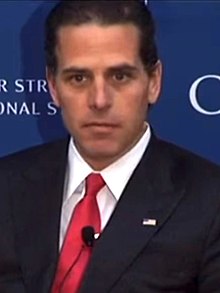
Hunter Biden
Center for Strategic & International Studies, CC BY 3.0 <https://creativecommons.org/licenses/by/3.0>, via Wikimedia Commons
If Democrats follow their usual mantra of “When they go low, we go high,” they will cower before Republican aggression and sacrifice their legislative agenda.
Yet they can snatch victory from the jaws of impending defeat—providing they are willing to follow the advice Robert F. Kennedy offered for combating the Mafia: “If we do not attack organized criminals with weapons and techniques as effective as their own, they will destroy us.”
Counterattack Strategy #1: Attack Republicans as traitors selling out the country to Vladimir Putin
Numerous Republicans have taken “campaign contributions”—i.e., bribes—from Russian oligarchs linked to Putin.
One Russian oligarch—Len Blavatnik—has given millions of dollars to top Republican leaders—such as Senators Mitch McConnell (Kentucky), Marco Rubio (Florida) and Lindsey Graham (South Carolina).

In just 2017, Blavatnik contributed the following to GOP Political Action Committees (PACs):
- $1.5 million to PACs associated with Rubio.
- $1 million to Trump’s Inaugural Committee.
- $1 million to McConnell’s Senate Leadership Fund.
- $3.5 million to a PAC associated with McConnell.
- $1.1 million to Unintimidated PAC, associated with Wisconsin Governor Scott Walker.
- $250,000 to New Day for America PAC, associated with Ohio Governor John Kasich.
- $800,000 to the Security is Strength PAC, associated with Senator Lindsey Graham.
The Biden administration need not ask the CIA or FBI to unearth these contributions. They can be easily found within the files of the Federal Election Commission (FEC).
Putin’s monies have been well-spent: About 90 House Republicans—out of a total of 213—attended Volodymyr Zelensky’s address to Congress on December 21, 2022, according to CQ Roll Call. Some who did spent much of the speech on their phones.
Many Republicans—such as former House Speaker Kevin McCarthy, who in 2021 received about $255,000 from Blavatnik—have openly threatened to end all funding for Ukraine’s heroic struggle against Russian aggression.
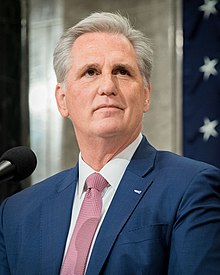
Kevin McCarthy
Attacking Republicans as Communist traitors would prove an effective technique. From the end of World War II to the collapse of the Soviet Union in 1991, Republicans successfully attacked Democrats as at least potential sellouts, if not actual traitors.
The advantage of attacking Russian-bribed Republicans today is that even some “Reagan Republicans”—such as James Kirchick, a conservative reporter, foreign correspondent, author, and columnist—have openly denounced this treason.
Thus, the White House could ignite an internal conflict within the Right by pitting Republicans against each other.
Counterattack Strategy #2: Concede NOTHING to Republicans
Donald Trump shut down the Federal Government on December 22, 2018, because Democrats refused to finance his useless border wall against Mexico.
So Speaker of the House Nancy Pelosi shut down his State of the Union appearance.
As CNN political analyst Chris Cillizza noted: “What Pelosi seems to understand better than past Trump political opponents is that giving ANY ground is a mistake. You have to not only stand firm, but be willing to go beyond all political norms—like canceling the SOTU—to win.”
His ego strung, Trump reopened the government.
And with Republicans threatening to not raise the debt ceiling unless their extortionate demands are met, the White House can effectively counter this danger:
Deduct from the budget every dollar directed toward Republican states. This would vastly reduce the size of the Federal budget, since subsidizing these failed economies accounts for a substantial portion of the budget.
2016 PRESIDENTIAL ELECTION, 2020 PRESIDENTIAL ELECTION, ABC NEWS, ACAM SCHIFF, ADOLF HITLER, ALTERNET, AMERICABLOG, AP, BABY BOOMER RESISTANCE, BBC, BLOOMBERG NEWS, BRETT CROZIER, BUZZFEED, CBS NEWS, CHARLES PIERCE, CHRIS KREBS, CNN, CONVERSATION WITH AN AMERICAN WRITER (POEM), CORONAVIRUS, CROOKS AND LIARS, CYBERSECURITY AND INFRASTRUCTURE SECURITY AGENCY, DAILY KOS, DEPARTMENT OF HOMELAND SECURITY, DEPARTMENT OF STATE, DIMITRI SHOSTAKOVICH, DONALD TRUMP, DRUDGE REPORT, ESQUIRE MAGAZINE, FBI, FIVETHIRTYEIGHT, FOX NEWS NETWORK, GREAT TERROR, HARPER’S MAGAZINE, HOUSE INTELLIGENCE COMMITTEE, HOUSE OF REPRESENTATIVES, HUFFINGTON POST, JOSEPH BIDEN, JOSEPH STALIN, MARIA YOVANOVICH, MEDIA MATTERS, MICROSOFT, MIKHAIL TUKHACHEVESKY, MOTHER JONES, MOVEON, MSNBC, NAZI GERMANY, NBC NEWS, NEW REPUBLIC, NEWSDAY, NEWSWEEK, NICCOLO MACHIAVELLI, NIKITA KHRUSHCHEV, NIKOLAI ZHILAYEV, NPR, PBS NEWSHOUR, POLITICO, POLITICUSUSA, RAW STORY, REUTERS, RUDY GIULIANI, SALON, SEATTLE TIMES, SLATE, SOVIET UNION, TALKING POINTS MEMO, THE ATLANTIC, THE CHICAGO SUN-TIMES, THE CHICAGO TRIBUNE, THE DAILY BEAST, THE DAILY BLOG, THE DISCOURSES, THE GUARDIAN, THE HILL, THE HUFFINGTON POST, THE LOS ANGELES TIMES, THE NATION, THE NEW REPUBLIC, THE NEW YORK TIMES, THE NEW YORKER, THE VILLAGE VOICE, THE WALL STREET JOURNAL, THE WASHINGTON POST, THINKPROGRESS, THOMAS MODLY, TIME, TRUTHDIG, TRUTHOUT, TWITTER, TWO POLITICAL JUNKIES, U.S. NEWS & WORLD REPORT, UKRAINE, UPI, USA TODAY, WEHRMACHT, WONKETTE, WORLD WAR ii, YEVGENEY YEVTUSHENKO
In Bureaucracy, History, Law, Law Enforcement, Military, Politics, Social commentary on March 21, 2024 at 12:10 am
Next hero: Marie Yovanovitch, the former United States ambassador to Ukraine (2016 – 2019). She had joined the Foreign Service in 1986, and served as ambassador to Kyrgyzstan (2005 – 2008) and Armenia (2008 – 2011).
In May 2019, on President Donald Trump’s orders, the State Department recalled Yovanovitch as ambassador to Ukraine. She had earned respect from the national security community for her efforts to encourage Ukraine to tackle corruption.
But she had been criticized by Right-wing media outlets—notably Fox News Network-–and by Trump’s personal attorney, Rudy Giuliani.

Marie Yovanovitch
CNN reported that Yovanovitch stopped Giuliani from interviewing witnesses in his search for politically damaging information against former Vice President Joe Biden, whose son, Hunter, had had business dealings in Ukraine.
On October 11, 2019, she appeared before the House Intelligence Committee, chaired by Representative Adam Schiff (D-CA). She did so in defiance of orders by the White House and State Department to not attend.
“She was a hero even before she hit the hearing room,” wrote Charles Pierce for Esquire magazine.
“She told them to stuff their directives, she would answer a congressional subpoena like a citizen is supposed to do. And she didn’t sneak in through the basement. She walked into the Capitol through the front doors, and she didn’t do so to fck around.”
Testifying for nearly 10 hours, Yovanovitch said that Trump had removed her from her post owing to “unfounded and false claims” and “a concerted campaign against me.”
She believed that associates of Trump’s personal lawyer, Giuliani, might have thought “that their personal financial ambitions were stymied by our anti-corruption policy in Ukraine.”
And she warned that the State Department was being “attacked and hollowed out from within. State Department leadership, with Congress, needs to take action now to defend this great institution, and its thousands of loyal and effective employees.”
Another victim on Trump’s hate-list was Chis Krebs.
During the 2016 Presidential race, Russian propaganda had played a major role in convincing millions of Americans to vote for Donald Trump. Social media platforms—especially Facebook and Twitter—were flooded with genuinely fake news to sow discord among Americans and create a pathway for Trump’s election.
And where Internet trolls left off, Russian computer hackers took over.
Trump didn’t win a majority of the popular vote. But he got enough help from Russian President Vladimir Putin to triumph in the Electoral College.
So notorious was the role played by Russian trolls and hackers in winning Trump the 2016 election that the Department of Homeland Security (DHS) was determined to prevent a repetition in 2020.
And point man for this was Chris Krebs.
Born in Atlanta, Georgia, in 1977, Krebs had received a B.A. in environmental sciences from the University of Virginia in 1999, and a J.D. from the George Mason University School of Law in 2007.
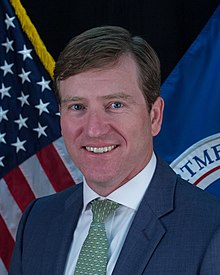
Chris Krebs
Krebs had served as Senior Advisor to the Assistant Secretary of Homeland Security for Infrastructure Protection, and later worked in the private sector as Director for Cybersecurity Policy for Microsoft.
Now he was director of the Cybersecurity and Infrastructure Security Agency at DHS.
In preparation for the 2020 Presidential election, Krebs launched a massive effort to counter lies spread by Russians—and Americans—on social media platforms. Among his duties:
- Sharing Intelligence from agencies such as the CIA and National Security Agency with local officials about foreign efforts at election interference.
- Ensuring that domestic voting equipment was secure.
- Attacking domestic misinformation head-on.
As a result, Krebs was widely praised for revamping the department’s cybersecurity efforts and increasing coordination with state and local governments.
By all accounts—except Trump’s—the November 3, 2020 election went very smoothly.
As a result of the vast increase in election security, Trump not only failed to win the popular vote again but couldn’t get the help he expected from Putin.
On November 17, Trump fired Chris Krebs.
The reason: Krebs had not only countered Russian propaganda lies—he had dared to counter Trump’s as well. For example: He rejected Trump’s claims of widespread voter fraud: There “is no evidence that any voting system deleted or lost votes, changed votes, or was in any way compromised.”
In a November 17 story on the CNN website, CNN reporters Kaitlan Collins and Paul LeBlanc bluntly concluded:
“[Krebs’] dismissal underscores the lengths Trump is willing to go to punish those who don’t adopt his conspiratorial view of the election.
“Since CNN and other outlets called the race for President-elect Joe Biden, Trump has refused to accept the results, instead pushing baseless conspiracies that his second term is being stolen.”
Yet, by depriving Trump of Russian help, Krebs ensured a victory for democracy.
On January 6, the House and Senate counted the Electoral Votes—and pronounced Joseph Biden the winner—bringing an end to Trump’s reign of criminality and treason.
In his 1960 poem, “Conversation With an American Writer,” the Russian poet, Yevgeney Yevtushenko spoke for those Russians who had maintained their integrity in the face of Stalinist terror:
“You have courage,” they tell me.
It’s not true. I was never courageous.
I simply felt it unbecoming
to stoop to the cowardice of my colleagues.
Unfortunately, the same cannot be said of Republicans in the United States Senate and House of Representatives in the face of Trump terror.
2016 PRESIDENTIAL ELECTION, 2020 PRESIDENTIAL ELECTION, ABC NEWS, ACAM SCHIFF, ADOLF HITLER, ALTERNET, AMERICABLOG, AP, BABY BOOMER RESISTANCE, BBC, BLOOMBERG NEWS, BRETT CROZIER, BUZZFEED, CBS NEWS, CHARLES PIERCE, CHRIS KREBS, CNN, CONVERSATION WITH AN AMERICAN WRITER (POEM), CORONAVIRUS, CROOKS AND LIARS, CYBERSECURITY AND INFRASTRUCTURE SECURITY AGENCY, DAILY KOS, DEPARTMENT OF HOMELAND SECURITY, DEPARTMENT OF STATE, DIMITRI SHOSTAKOVICH, DONALD TRUMP, DRUDGE REPORT, ESQUIRE MAGAZINE, FBI, FIVETHIRTYEIGHT, FOX NEWS NETWORK, GREAT TERROR, HARPER’S MAGAZINE, HOUSE INTELLIGENCE COMMITTEE, HOUSE OF REPRESENTATIVES, HUFFINGTON POST, JOSEPH BIDEN, JOSEPH STALIN, MARIA YOVANOVICH, MEDIA MATTERS, MICROSOFT, MIKHAIL TUKHACHEVESKY, MOTHER JONES, MOVEON, MSNBC, NAZI GERMANY, NBC NEWS, NEW REPUBLIC, NEWSDAY, NEWSWEEK, NICCOLO MACHIAVELLI, NIKITA KHRUSHCHEV, NIKOLAI ZHILAYEV, NPR, PBS NEWSHOUR, POLITICO, POLITICUSUSA, RAW STORY, REUTERS, RUDY GIULIANI, SALON, SEATTLE TIMES, SLATE, SOVIET UNION, TALKING POINTS MEMO, THE ATLANTIC, THE CHICAGO SUN-TIMES, THE CHICAGO TRIBUNE, THE DAILY BEAST, THE DAILY BLOG, THE DISCOURSES, THE GUARDIAN, THE HILL, THE HUFFINGTON POST, THE LOS ANGELES TIMES, THE NATION, THE NEW REPUBLIC, THE NEW YORK TIMES, THE NEW YORKER, THE VILLAGE VOICE, THE WALL STREET JOURNAL, THE WASHINGTON POST, THINKPROGRESS, THOMAS MODLY, TIME, TRUTHDIG, TRUTHOUT, TWITTER, TWO POLITICAL JUNKIES, U.S. NEWS & WORLD REPORT, UKRAINE, UPI, USA TODAY, WEHRMACHT, WONKETTE, WORLD WAR ii, YEVGENEY YEVTUSHENKO
In Bureaucracy, History, Law, Law Enforcement, Military, Politics, Social commentary on March 20, 2024 at 12:16 am
Next up: Nikolai Sergeyvich Zhilayev (pronounced Zill-lay-ev) was a Russian musicologist and the teacher of several 20th-century Russian composers.
Among these: Dimitri Shostakovich (September 25, 1906 – August 9, 1975)
Among his friends—to his ultimate misfortune—was Mikhail Nikolayevich Tukhachevsky, the former military hero now falsely condemned and executed as a traitor by Soviet dictator Joseph Stalin.
In 1938, Zhilayev (November 18, 1881 – January 20, 1938) also became a casualty of what has become known as The Great Terror.
In his posthumously-published memoirs, Testimony, Shostakovich, his pupil and friend, described how Zhilayev faced his end with a calmness that awed even the NKVD (the predecessor to the KGB) secret police sent to arrest him.
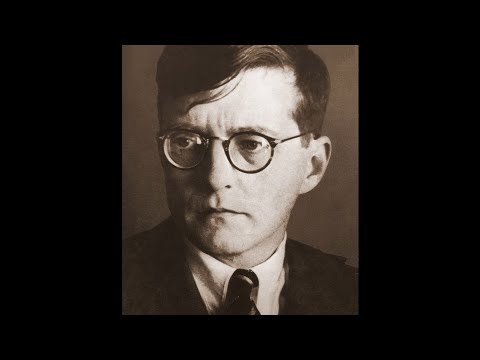
Dimitri Shostakovich
“He had a large picture of Tukhachevsky in his room, and after the announcement that Tukhachevsky had been shot as a traitor to the homeland, Zhilayev did not take the picture down.
“I don’t know if I can explain how heroic a deed that was….As soon as the next poor soul was declared an enemy of the people, everyone destroyed in a panic everything connected with that person….
“And naturally, photographs flew into the fire first, because if someone informed on you, reported that you had a picture of an enemy of the people, it meant certain death.
“Zhilayev wasn’t afraid. When they came for him, Tukhachevsky’s prominently hung portrait amazed even the executioners.”
“What, it’s still up?” one of the secret police asked.
“The time will come,” Zhilayev replied, “when they’ll erect a monument to him.”
As, in fact, has happened.
Meanwhile, Stalin has been universally condemned as one of history’s greatest tyrants.
Third hero: Brett Crozier, the former commanding officer of the aircraft carrier USS Theodore Roosevelt.
Graduating from the United States Naval Academy at Annapolis in 1992, he received his Master’s Degree in National Security and Strategic Studies from the Naval War College in 2007.
From 2017 to 2018 he commanded the USS Blue Ridge. In November, 2019, he was given command of the nuclear aircraft carrier USS Theodore Roosevelt.
On March 24, 2020, reports circulated that three members of the crew had tested positive for COVID-19. The next day the number of stricken sailors increased to eight. A few days later, it was “dozens.” The sailors reportedly became ill at sea, two weeks after a port call at Danang, Vietnam.
The initial cases were airlifted to a military hospital. The Roosevelt was ordered to Guam. After the ship docked on March 27, 2020, all 5,000 aboard were ordered to be tested for the virus. But only about 100 stricken sailors were allowed to leave the ship. The rest remained on board.
On March 30, Crozier emailed a four-page internal letter to multiple Naval officials, pleading to have the majority of the crew evacuated and quarantined on shore. Given the crowded sleeping quarters and narrow passageways of the vessel, Crozier wrote that it was impossible to follow social distancing and quarantine procedures:
“This will require a political solution but it is the right thing to do. We are not at war. Sailors do not need to die. If we do not act now, we are failing to properly take care of our most trusted asset—our Sailors….
“This is a necessary risk. Keeping over 4,000 young men and women on board the TR is an unnecessary risk and breaks faith with those Sailors entrusted to our care.”
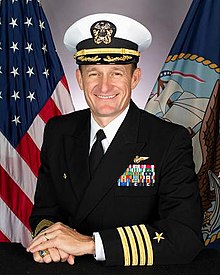
Brett Crozier
Crozier sent his letter via a non-secure, unclassified email to 20 to 30 recipients, as well as the captain’s immediate chain of command. He reportedly believed that his immediate supervisor would not allow him to send it.
And his superior later confirmed that he would not have allowed Crozier to send it.
On March 31, someone leaked the letter to the San Francisco Chronicle, which published it.
On April 1, the Navy ordered the aircraft carrier evacuated. A skeleton crew of 400 remained aboard to maintain the nuclear reactor, the fire-fighting equipment, and the ship’s galley.
On April 2, Crozier was relieved of command by acting United States Secretary of the Navy Thomas Modly.
By that time, about 114 crew members—out of a total of around 4,000—reportedly tested positive for COVID-19.
As Crozier disembarked, sailors loudly saluted him with a standing ovation: “Cap-tain Cro-zier!”
Modly claimed that Crozier’s letter “raised alarm bells unnecessarily. It undermines our efforts and the chain of command’s efforts to address this problem, and creates a panic and this perception that the Navy’s not on the job, that the government’s not on the job, and it’s just not true.”
Actually, the Trump administration had frittered away January and February, with President Donald Trump giving multiple—and misleading—press conferences. In these, he played down the dangers of COVID-19, saying that “we’re on top of it”—even as the virus spread across the country.
“It was a betrayal. And I can tell you one other thing: because he did that he put it in the public’s forum and it is now a big controversy in Washington, DC,” continued Modly. [Italics added]
This was the United States Navy under Donald Trump—who threw “betrayal” and “treason” at anyone who dared reveal the truth about institutional crimes and failures.


 Bureaucracybuster's Blog
2020 PRESIDENTIAL ELECTION, ABC NEWS, ALEX VINDMAN, ALTERNET, AMERICABLOG, AP, BABY BOOMER RESISTANCE, BBC, BLOOMBERG NEWS, BUZZFEED, CBS NEWS, CNN, CROOKS AND LIARS, DAILY KOS, DAVID PRESSMAN, DEMOCRATS, DONALD TRUMP, DRUDGE RETORT, FIVETHIRTYEIGHT, GORDON SONDLAND, HARPER’S MAGAZINE, HUFFINGTON POST, JOHN ROOD, JOSEPH BIDEN, MARK ESPER, MEDIA MATTERS, MORNING JOE, MOTHER JONES, MOVEON, MSNBC, NBC NEWS, NEW REPUBLIC, NEWSDAY, NEWSWEEK, NICCOLO MACHIAVELLI, NPR, PBS NEWSHOUR, POLITICO, POLITICUSUSA, RAW STORY, REPUBLICANS, REUTERS, SALON, SEATTLE TIMES, SLATE, TALKING POINTS MEMO, THE ATLANTIC, THE CHICAGO SUN-TIMES, THE CHICAGO TRIBUNE, THE DAILY BEAST, THE DAILY BLOG, THE GUARDIAN, THE HILL, THE HUFFINGTON POST, THE INTERCEPT, THE LOS ANGELES TIMES, THE NATION, THE NEW REPUBLIC, THE NEW YORK TIMES, THE NEW YORKER, THE PENTAGON, THE PRINCE, THE VILLAGE VOICE, THE WASHINGTON POST, THINKPROGRESS, TIME, TRUTHDIG, TRUTHOUT, TWO POLITICAL JUNKIES, U.S. NEWS & WORLD REPORT, UKRAINE, UPI, USA TODAY, VOLODMYR ZELENSKY, WONKETTE, X, YEVGENEY VINDMAN
MACHIAVELLI: HOW TO RECOGNIZE GOOD–AND STUPID–LEADERS
In Bureaucracy, History, Law, Military, Politics, Social commentary on August 19, 2024 at 12:11 am“There is no other way of guarding oneself against flattery than by letting men understand that they will not offend you by speaking the truth. But when every one can tell you the truth, you lose their respect.
“A prudent prince must therefore take a third course, by choosing for his counsel wise men, and giving them alone full liberty to speak the truth to him, but only of those things that he asks and of nothing else.”
So wrote the Italian statesman Niccolo Machiavelli more than 500 years ago in his famous treatise on politics, The Prince. And he added:
“But he must be a great asker about everything and hear their opinions, and afterwards deliberate by himself in his own way, and in these counsels and with each of these men comport himself so that every one may see that the more freely he speaks, the more he will be acceptable.
“Beyond these he should listen to no one, go about the matter deliberately, and be determined in his decisions.”
Machiavelli’s words remain as true in our day as they were in his.
Especially for “a very stable genius,” as ex-President Donald J. Trump once referred to himself.
Niccolo Machiavelli
Asked on MSNBC’s “Morning Joe” who he consults about foreign policy, Trump replied; “I’m speaking with myself, number one, because I have a very good brain and I’ve said a lot of things.”
Machiavelli offers a related warning that especially applies to Trump: Unwise princes cannot be wisely advised:
“It is an infallible rule that a prince who is not wise himself cannot be well advised, unless by chance he leaves himself entirely in the hands of one man who rules him in everything, and happens to be a very prudent man. In this case, he may doubtless be well governed, but it would not last long, for the governor would in a short time deprive him of the state.”
Competent executives surround themselves with experts in diverse fields and pay attention to their expertise. They don’t feel threatened by it but rely on it to implement their agenda. Advisers whose counsel proves correct are to be retained and rewarded.
Machiavelli offers practical advice on this:
“The prince, in order to retain his fidelity, ought to think of his minister, honoring and enriching him, doing him kindnesses and conferring on him favors and responsible tasks, so that the great favors and riches bestowed on him cause him not to desire other honors and riches, and the offices he holds make him fearful of changes.”
But rewarding those who try to head off ruinous decision-making is not Trump’s way.
Consider the case of John Rood, the Pentagon’s top policy official until February 19. That was when he resigned, saying he was leaving at Trump’s request.
John Rood
Rood had certified in 2019 that Ukraine had made enough anti-corruption progress to justify the release of Congressionally-authorized aid for its efforts to thwart Russian aggression.
And that totally conflicted with Trump’s attempt to extort a “favor” from Ukrainian President Volodymyr Zelensky.
In July, 2019, Trump told his acting chief of staff, Mick Mulvaney, to withhold almost $400 million in promised military aid for Ukraine.
On July 25, Trump telephoned Zelensky to “request” a “favor”: Investigate Democratic Presidential Candidate Joseph Biden and his son, Hunter, who has had business dealings in Ukraine.
The reason for such an investigation: To find embarrassing “dirt” on Biden.
Joe Biden
But then a CIA whistleblower filed a complaint about the extortion attempt—and this led directly to impeachment proceedings by the Democratically-controlled House for abuse of power and obstruction of Congress.
But the Republican-dominated Senate voted to acquit him.
Afterwards, Trump purged several officials he considered disloyal for cooperating with the impeachment hearings:
“The truth has cost Lt. Col. Alexander Vindman his job, his career, and his privacy,” his attorney David Pressman, said in a statement.
For Trump, Rood had been “disloyal” on two occasions:
Asked about Rood’s resignation, chief Pentagon spokesman Jonathan Hoffman declined to speculate on the reason for Trump’s decision.
According to Secretary of Defense Mark Esper, Rood played “a critical role” on issues such as nuclear deterrence, NATO, missile defense and the National Defense Strategy.
That did not protect him, however, from Trump’s vendetta against those who dared to reveal his crimes to Democratic impeachment committees.
All of which would lead Niccolo Machiavelli to warn, if he could witness American politics today: “This bodes ill for your Republic.”
Share this: