Posts Tagged ‘TWO POLITICAL JUNKIES’
ABC NEWS, ABRAHAM LINCOLN, AFGHANISTAN, ALEXANDER THE GREAT, ALTERNET, AMERICABLOG, ANDREW JACKSON, AP, BABY BOOMER RESISTANCE, BBC, BLOOMBERG, BUZZFEED, CBS NEWS, CHARLIE KIRK, CIVIL WAR, CNN, CROOKS AND LIARS, DAILY KOS, FIVETHIRTYEIGHT, FOX NEWS CHANNEL, GATES OF FIRE (BOOK), HARPER’S MAGAZINE, HUFFINGTON POST, JACK SMITH, JOHN C. CALHOUN, JOSEPH BIDEN, LIZ CHENEY, MEDIA MATTERS, MERCENARIES, MERRICK GARLAND, MOTHER JONES, MOVEON, MSNBC, NBC NEWS, NEW REPUBLIC, NEWSDAY, NEWSWEEK, NPR, ORGANIZED CRIME, PBS NEWSHOUR, POLITICO, POLITICUSUSA, PROJECT 2025, RAW STORY, REPUBLICANS, REUTERS, SALON, SEATTLE TIMES, SLATE, SPARTA, STEVEN PRESSFIELD, STORMY DANIELS, TALKING POINTS MEMO, THE AFGHAN CAMPAIGN (BOOK), THE ATLANTIC, THE CHICAGO SUN-TIMES, THE CHICAGO TRIBUNE, THE DAILY BEAST, THE DAILY BLOG, THE GUARDIAN, THE HILL, THE HUFFINGTON POST, THE INTERCEPT, THE LOS ANGELES TIMES, THE NATION, THE NEW REPUBLIC, THE NEW YORK TIMES, THE NEW YORKER, THE PROFESSION (BOOK), THE VILLAGE VOICE, THE VIRTUES OF WAR (BOOK), THE WASHINGTON POST, THERMOPYLAE, THINKPROGRESS, TIME, TREASON, TRUTHDIG, TRUTHOUT, TWO POLITICAL JUNKIES, U.S. NEWS & WORLD REPORT, UNITED STATES SUPREME COURT, UPI, USA TODAY, X
In Bureaucracy, Business, History, Law, Law Enforcement, Military, Politics, Social commentary on July 9, 2024 at 12:10 am
The Supreme Court has spoken. And Donald Trump, who tried to treasonously overturn the 2020 Presidential election and make himself “President-for-Life,” is now armed with the almost total immunity he has long sought.
As Trump and his entrenched Right-wing allies move ever closer to establishing an absolute dictatorship, this is an apt time to discover—or rediscover—the frighteningly real world of The Profession, a 2011 futuristic novel by bestselling author Steven Pressfield.
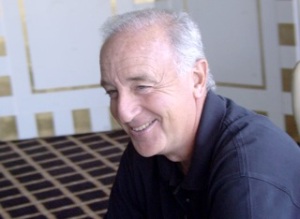
Steven Pressfield
Pressfield had previously made his mark as an author of historical novels—primarily set in ancient Greece.
In Gates of Fire (1998) he explored the rigors and heroism of Spartan society—and the famous last stand of its 300 picked warriors at Thermopylae.
In The Virtues of War (2004) Pressfield adopted the identity of Alexander the Great, explaining what it was like to command invincible armies that swept across the known world.
Finally, in The Afghan Campaign (2006) he chronicled—from the viewpoint of a lowly Greek soldier—Alexander’s brutal, three-year anti-guerrilla campaign in Afghanistan.
But in The Profession, Pressfield created a seemingly plausible world set in the future. The book’s dust jacket offers an excellent summary of its plot-line:
“The year is 2032. Everywhere military force is for hire. Oil companies, multi-national corporations and banks employ powerful, cutting-edge mercenary armies to control global chaos and protect their riches.
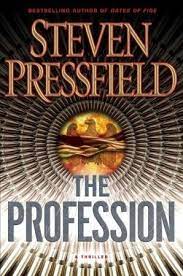
“Even nation states enlist mercenary forces to suppress internal insurrections, hunt terrorists, and do the black bag jobs necessary to maintain the new New World Order.
“Force Insertion is the world’s merc monopoly. Its leader is the disgraced former United States Marine General James Salter, stripped of his command by the president for nuclear saber-rattling with the Chinese and banished to the Far East.
“A grandmaster military and political strategist, Salter plans to take vengeance on those responsible for his exile and then come home…as Commander in Chief.”
Salter appears as a hybrid of World War II General Douglas MacArthur and Iraqi War General Stanley McCrystal. Like MacArthur, Salter has butted heads with his President—and paid dearly for it. Now his ambition—like MacArthur—is to become President himself by popular acclaim.

Douglas MacArthur
And like McCrystal, he is a pure warrior who leads from the front and is revered by his men. Salter seizes Saudi oil fields and strategically rigs them with explosives to be used if threatened.
Then he offers them as a gift to America. By doing so, he makes himself the most popular man in the country—and a guaranteed occupant of the White House.

Stanley McCrystal
And in 2032 the United States is a far different nation from the one its Founding Fathers created in 1776.
“Any time that you have the rise of mercenaries…society has entered a twilight era, a time past the zenith of its arc,” says Salter. “The United States is an empire…but the American people lack the imperial temperament. We’re not legionaries, we’re mechanics. In the end the American Dream boils down to what? ‘I’m getting mine and the hell with you.'”
Americans, asserts Salter, have come to like mercenaries: “They’ve had enough of sacrificing their sons and daughters in the name of some illusory world order. They want someone else’s sons and daughters to bear the burden….
“They want their problems to go away. They want me to make them go away.”
Yet unlike Donald Trump, who infamously shouted, “I love the poorly educated!” Salter is a highly intellectual man. He feels himself a tragic figure, lamenting that the United States has abandoned its longstanding political values even as he prepares to extinguish the most basic one by becoming dictator.
“The moment compels me to seize it. If I don’t someone or something worse will step in. But if I perform the bidding of Necessity, I violate the code of the republic to which all of us have sworn allegiance. I cross a line, beyond which there can be no return.
“But what, I ask, is the alternative? The nation has lost its way and is struggling desperately, merely to hang on. The nation can’t go on as it is, and everyone knows it. If not me, who? If not me, what?
“So, yes, I will go home. And yes, I will accept whatever crown, of paper or gold, that my country wants to press upon me. Not because I believe such a coronation will make any difference in the long run.
“But maybe in the short run, it’s better that my hand be on the wheel rather than some other self-aggrandizing sonofabitch whose motives might not be as well-intentioned or whose consciousness so painfully evolved.”
At a nationally televised press conference, Salter hands a loaded pistol to a longtime friend and disciple who now fears his dictatorial ambitions.
“Go ahead,” says Salter. “You’ll be saving the republic. And me, too.”
But the former disciple cannot bring himself to kill his longtime idol: “Now I’m guilty with you,” he says.
Steven Pressfield, in a work of fiction, has given us a nightmarish vision of a futuristic America.
Donald Trump and his Right-wing disciples may soon make that vision a reality.
2008 PRESIDENTIAL CAMPAIGN, 2016 PRESIDENTIAL CAMPAIGN, ABC NEWS, AFFORDABLE CARE ACT, ALTERNET, AMERICABLOG, ANDREW SHAFFER, AP, BABY BOOMER RESISTANCE, BARACK OBAMA, BLOOMBERG, BORDER WALL, BUZZFEED, CBS NEWS, CNN, CROOKS AND LIARS, DAILY KOZ, DON WINSLOW, DONALD TRUMP, DRUDGE REPORT, DRUG ENFORCEMENT ADMINISTRATION, DRUG TRAFFICKING, FIVETHIRTYEIGHT, GOODREADS, HARPER’S MAGAZINE, HEROIN, HOPE NEVER DIES (BOOK), HUFFINGTON POST, JOE BIDEN, JOHN F. KENNEDY, LOS ANGELES TIMES, MEDIA MATTERS, MEXICO, MOTHER JONES, MOVEON, MSNBC, NBC NEWS, NEWSWEEK, NPR, PBS NEWSHOUR, POLITICO, POLITICUSUSA, RAW STORY, REUTERS, RICHARD M. NIXON, ROLLING STONE, SALON, SEATTLE TIMES, SINALOA CARTEL, SLATE, TALKING POINTS MEMO, THE ATLANTIC, THE BORDER (BOOK), THE CHICAGO SUN-TIMES, THE CHICAGO TRIBUNE, THE DAILY BEAST, THE DAILY BLOG, THE GUARDIAN, THE HILL, THE HUFFINGTON POST, THE LOS ANGELES TIMES, THE NATION, THE NEW REPUBLIC, THE NEW YORK TIMES, THE VILLAGE VOICE, THE WASHINGTON POST, THINKPROGRESS, TIME, TRUTHDIG, TRUTHOUT, TWO POLITICAL JUNKIES, U.S. NEWS & WORLD REPORT, UPI, USA TODAY, WAR ON DRUGS, WONKETTE, X
In Bureaucracy, Entertainment, History, Politics, Social commentary on July 8, 2024 at 12:10 am
Joe Biden defeated Donald Trump to become the 46th President of the United States on January 20, 2021.
But before scoring that victory, he racked up a series of incredible adventures as a private investigator—in fiction.
In Hope Never Dies: An Obama-Biden Mystery, author Andrew Shaffer has fashioned a novel that is half-mystery, half-bromance.
Vice President Joe Biden has just left the Obama White House and doesn’t know what to do with the rest of his life. Then Finn Donnelly, his favorite railroad conductor, dies in a suspicious accident, leaving behind an ailing wife and a trail of clues.
To unravel the mystery, “Amtrak Joe” calls on the skills of his former boss: Barack Obama, the 44th President of the United States. Together they scour biker bars, cheap motels and other memorable haunts throughout Delaware.![]()
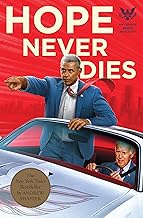
Then Biden unearths a disturbing truth about his longtime—and now dead—friend. This, in turn, leads Biden and Obama to uncover the sinister forces behind America’s opioid epidemic.
The book is pure fantasy fun, as evidenced from this review by Alexandra Alter in The New York Times:
“[Hope Never Dies is] a roughly 300-page work of political fanfiction, an escapist fantasy that will likely appeal to liberals pining for the previous administration, longing for the Obama-Biden team to emerge from political retirement as action heroes. But it’s also at times a surprisingly earnest story about estranged friends who are reunited under strange circumstances.”
A reader named Casey, reviewing the novel for Goodreads, writes: “While Shaffer could have leaned into nostalgia alone, he’s written a solid mystery with the characters fleshed out as more than just clichés.
“The reader really feels Biden’s longing to be helpful and his anguish over seeing 44’s legacy undone so quickly by an individual who shall remain nameless. (The presidential zings in this book are incredible, truly.)
“The tension between the two rings as true as it did when they were in office….By all means, this book shouldn’t work as well as it does. For a few hours, I got to enjoy the company of politicians who behaved like adults (mostly). It sure was nice.”
Contrasting with the relatively lighthearted fictional images of Joe Biden and Barack Obama is the immensely darker one of Donald Trump.
Don Winslow offers Trump an extended cameo appearance in The Border, his massive, 736-page novel about America’s war on drugs—and the horrific violence it has spawned in Mexico. It’s the third of a trilogy of novels vividly portraying the violent costs of an unwinnable conflict.
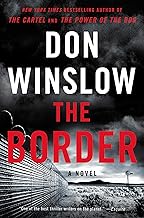
Art Keller is a dedicated agent of the Federal Drug Enforcement Administration (DEA). For over 40 years, he has waged all-out war on Adán Barrera, the godfather of the powerful Sinaloa Cartel.
Appointed director of the DEA, Keller now faces a series of deadly enemies:
- A heroin epidemic surging across America;
- Hitmen who want to kill him;
- Politicians who want to sabotage his agenda; and
- An incoming administration that’s allied with the very drug traffickers he’s trying to destroy.
And heading this administration is John Dennison—Donald Trump in all but name—who:
- Gratuitously insults people on Twitter;
- Fires a Special Counsel;
- Gets blackmailed by a woman he once bedded; and
- Colludes with drug traffickers for a multi-million dollar loan to finance his Presidential campaign.
Whereas the reviews for Hope Never Dies were as upbeat as the book itself, those of The Border reflect the novel’s mercilessly grim take on a war that can’t be won.
Los Angeles Times: “The Border is intricate, mean and swift, a sprawling canvass of characters including narco kingpins, a Guatemalan stowaway, a Staten Island heroin addict, a kinky hit woman, a barely veiled Donald Trump and DEA agent Art Keller, who….has been noble and merciless, a conflicted wanderer who makes America face the transgressions committed in its name.”
Rolling Stone: “Clocking in at over 700 pages, it is his most overtly political installment yet. He takes on the Trump administration directly, creating a fictional candidate, then president, who stokes racist fears of Mexicans, campaigns on ‘building the wall’ and, along with his venal son-in-law, gets caught up in a shady real estate deal involving Cartel money.”
NPR: “The Border becomes a book for our times. Like Shakespeare, it makes a three-act drama of our modern moment. Like Shakespeare’s plays, it shows us a world that is our own, a history that is our own, a burden that is our own, rendered out into the rhythm of scenes and arcs, chapters and parts.”
Obama concentrated the full force of his attention on reforming American healthcare—by making it available to millions whose insurance refused to provide coverage.
Trump’s top priority was to separate the United States from Mexico with an impenetrable wall—and he even diverted $3.6 billion from Pentagon funding to pay for it.
Like John F. Kennedy, Barack Obama will likely be positively remembered as much for what he tried to do as what he succeeded at doing.
Like Richard M. Nixon, Donald Trump will likely be remembered as a menacing stain on American history.
1968 PRESIDENTIAL CAMPAIGN, 2020 PRESIDENTIAL CAMPAIGN, ABC NEWS, ALTERNET, AMERICABLOG, AMERICAN INDIANS, AP, BABY BOOMER RESISTANCE, BARBARA GARSON, BBC, BLACK LIVES MATTER, BLOOMBERG, BUZZFEED, CBS NEWS, CIVIL RIGHTS, CNN, COMING APART: AMERICA IN THE 1960S (BOOK), CROOKS AND LIARS, DAILY KOS, DAILY KOZ, DEMOCRATS, DRUDGE REPORT, EUGENE MCCARTHY, FIVETHIRTYEIGHT, GEORGE BERNARD SHAW, GROSS NATIONAL PRODUCT, HARPER’S MAGAZINE, HUFFINGTON POST, JIM SLATTERY, JOHN F. KENNEDY, Kamala Harris, KANSAS STATE UNIVERSITY, LOOK MAGAZINE, LYNDON B. JOHNSON, MCBIRD!, MEDIA MATTERS, MISSISSIPPI, MOTHER JONES, MOVEON, MSNBC, NBC NEWS, NEW REPUBLIC, NEWSDAY, NEWSWEEK, NPR, PBS NEWSHOUR, POLITICO, POLITICUSUSA, RAW STORY, REPUBLICANS, REUTERS, ROBERT F. KENNEDY, SALON, SEATTLE TIMES, SIRHAN SIRHAN, SLATE, SOPHOCLES, STANLEY TRETICK, TALKING POINTS MEMO, TET OFFENSIVE, THE ATLANTIC, THE CHICAGO SUN-TIMES, THE CHICAGO TRIBUNE, THE DAILY BEAST, THE DAILY BLOG, THE GUARDIAN, THE HILL, THE HUFFINGTON POST, THE INTERCEPT, THE LOS ANGELES TIMES, THE NATION, THE NEW REPUBLIC, THE NEW YORK TIMES, THE NEW YORKER, THE VILLAGE VOICE, THE WASHINGTON POST, THINKPROGRESS, TIME, TIME MAGAZINE, TRUTHDIG, TRUTHOUT, TWO POLITICAL JUNKIES, U.S. NEWS & WORLD REPORT, UNIVERSITY OF KANSAS, UPI, USA TODAY, VIETNAM WAR, WILLIAM L. O'NEIL, WONKETTE, X
In Bureaucracy, History, Law, Law Enforcement, Military, Politics, Social commentary on July 5, 2024 at 12:10 am
On March 18, 1968, Presidential candidate Robert F. Kennedy, speaking at the University of Kansas, called on his fellow citizens to show compassion for those less fortunate and in need of relief through the Federal Government.
“If we believe that we, as Americans, are bound together by a common concern for each other, then an urgent national priority is upon us. We must begin to end the disgrace of this other America.”
Finally, Kennedy did something almost no other politician—in his time or since—has ever done: He dared to attack that holy-of-holies, the Gross Domestic Product (then called the Gross National Product).
“If we believe that we, as Americans, are bound together by a common concern for each other, then an urgent national priority is upon us. We must begin to end the disgrace of this other America.
“Too much and for too long, we seemed to have surrendered personal excellence and community values in the mere accumulation of material things. Our Gross National Product, now, is over $800 billion dollars a year, but that Gross National Product….counts air pollution and cigarette advertising, and ambulances to clear our highways of carnage.
“It counts special locks for our doors and the jails for the people who break them. It counts the destruction of the redwood and the loss of our natural wonder in chaotic sprawl. It counts napalm and counts nuclear warheads and armored cars for the police to fight the riots in our cities. It counts Whitman’s rifle and Speck’s knife, and the television programs which glorify violence in order to sell toys to our children.
“Yet the Gross National Product does not allow for the health of our children, the quality of their education or the joy of their play. It does not include the beauty of our poetry or the strength of our marriages, the intelligence of our public debate or the integrity of our public officials.
“It measures neither our wit nor our courage, neither our wisdom nor our learning, neither our compassion nor our devotion to our country. It measures everything in short, except that which makes life worthwhile. And it can tell us everything about America except why we are proud that we are Americans….

Senator Robert F. Kennedy campaigning for President
“George Bernard Shaw once wrote, ‘Some people see things as they are and say why? I dream things that never were and say, why not?’
“So I come here to Kansas to ask for your help. In the difficult five months ahead, before the convention in Chicago. I ask for your help and for your assistance.
“If you believe that the United States can do better. If you believe that we should change our course of action. If you believe that the United States stands for something here internally as well as elsewhere around the globe, I ask for your help and your assistance and your hand over the period of the next five months.
“And when we win in November….and we begin a new period of time for the United States of America, I want the next generation of Americans to look back upon this period and say as they said of Plato: ‘Joy was in those days, but to live.’ Thank you very much.”
At the end of Kennedy’s wildly popular speech at Kansas State University, photographer Stanley Tretick, of Look magazine, shouted, “This is Kansas, fucking Kansas! He’s going all the fucking way!”
But he didn’t go all the way. On June 5, 1968—82 days after announcing his Presidential candidacy—an assassin’s bullet suddenly halted his short-lived campaign—and his life.

Robert Kennedy’s funeral train
Historian William L. O’Neil delivered a poignant summary of Robert Kennedy’s legacy in his 1971 book, Coming Apart: An Informal History of America in the 1960′s:
“He aimed so high that he must be judged for what he meant to do, and through error and tragic accident, failed at…..He will also be remembered as an extraordinary human being who, though hated by some, was perhaps more deeply loved by his countrymen than any man of his time.
“That, too, must be entered into the final account, and it is no small thing. With his death, something precious vanished from public life.”
As United States Attorney General (1961-1964) Robert F. Kennedy had the courage to wage all-out war on the Mafia. As a United States Senator (1964-1968) he had the compassion to champion aid to impoverished Americans.
Even in his own era—a half-century ago—Robert Kennedy stood out as the only major Presidential candidate who could legitimately make both claims.
Today, most Democrats—battered by decades of Republican charges that they’re “big spenders”—fear supporting big-ticket items to help the poor.
And the Black Lives Matter movement has made any connection to law enforcement a disqualification for higher office—as former California Attorney General Kamala Harris found out as a 2020 Presidential candidate.
America may never again see a Presidential candidate who can combine a strong stand against crime with an equally strong commitment to helping the poor and disadvantaged.
1968 PRESIDENTIAL CAMPAIGN, 2020 PRESIDENTIAL CAMPAIGN, ABC NEWS, ALTERNET, AMERICABLOG, AMERICAN INDIANS, AP, BABY BOOMER RESISTANCE, BARBARA GARSON, BBC, BLACK LIVES MATTER, BLOOMBERG, BUZZFEED, CBS NEWS, CIVIL RIGHTS, CNN, COMING APART: AMERICA IN THE 1960S (BOOK), CROOKS AND LIARS, DAILY KOS, DAILY KOZ, DEMOCRATS, DRUDGE REPORT, EUGENE MCCARTHY, FIVETHIRTYEIGHT, GEORGE BERNARD SHAW, GROSS NATIONAL PRODUCT, HARPER’S MAGAZINE, HUFFINGTON POST, JIM SLATTERY, JOHN F. KENNEDY, Kamala Harris, KANSAS STATE UNIVERSITY, LOOK MAGAZINE, LYNDON B. JOHNSON, MCBIRD!, MEDIA MATTERS, MISSISSIPPI, MOTHER JONES, MOVEON, MSNBC, NBC NEWS, NEW REPUBLIC, NEWSDAY, NEWSWEEK, NPR, PBS NEWSHOUR, POLITICO, POLITICUSUSA, RAW STORY, REPUBLICANS, REUTERS, ROBERT F. KENNEDY, SALON, SEATTLE TIMES, SIRHAN SIRHAN, SLATE, SOPHOCLES, STANLEY TRETICK, TALKING POINTS MEMO, TET OFFENSIVE, THE ATLANTIC, THE CHICAGO SUN-TIMES, THE CHICAGO TRIBUNE, THE DAILY BEAST, THE DAILY BLOG, THE GUARDIAN, THE HILL, THE HUFFINGTON POST, THE INTERCEPT, THE LOS ANGELES TIMES, THE NATION, THE NEW REPUBLIC, THE NEW YORK TIMES, THE NEW YORKER, THE VILLAGE VOICE, THE WASHINGTON POST, THINKPROGRESS, TIME, TIME MAGAZINE, TRUTHDIG, TRUTHOUT, TWO POLITICAL JUNKIES, U.S. NEWS & WORLD REPORT, UNIVERSITY OF KANSAS, UPI, USA TODAY, VIETNAM WAR, WILLIAM L. O'NEIL, WONKETTE, X
In Bureaucracy, History, Law, Law Enforcement, Military, Politics, Social commentary on July 4, 2024 at 12:10 am
On March 18, 1968, Presidential candidate Robert F. Kennedy did what few politicians have ever done: He accepted public responsibility for a war that had since become a national disaster—the Vietnam war.
Addressing a packed audience of students and faculty at Kansas State University, he said:
“Let me begin this discussion with a note both personal and public. I was involved in many of the early decisions on Vietnam, decisions that helped set us on our present path.
“It may be that the effort was doomed from the start; that it was never really possible to bring all the people of South Vietnam under the rule of the successive governments we supported—governments, one after another, riddled with corruption, inefficiency, and greed; governments which did not and could not successfully capture and energize the national feeling of their people.
“If that is the case, as it well may be, then I am willing to bear my share of the responsibility, before history and before my fellow citizens. But past error is no excuse for its own perpetuation. Tragedy is a tool for the living to gain wisdom, not a guide by which to live.
“Now as ever, we do ourselves best justice when we measure ourselves against ancient tests, as in the Antigone of Sophocles: ‘All men make mistakes, but a good man yields when he knows his course is wrong, and repairs the evil. The only sin is pride.’
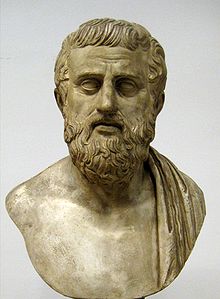
Sophocles
And he dared to attack the war as more than a military and political disaster: He saw it as a stain on America’s moral fiber:
“Can we ordain to ourselves the awful majesty of God—to decide what cities and villages are to be destroyed, who will live and who will die, and who will join the refugees wandering in a desert of our own creation?
“If it is true that we have a commitment to the South Vietnamese people, we must ask, are they being consulted—in Hue, or Ben Tre, or in the villages from which the three million refugees have fled?
“If they believe all the death and destruction are a lesser evil than the Wet Cong, why did they not warn us when the Viet Cong came into Hue, and the dozens of other cities, before the Tet Offensive? Why did they not join the fight?
“Will it be said of us, as Tacitus said of Rome: ‘They made a desert and called it peace?'”
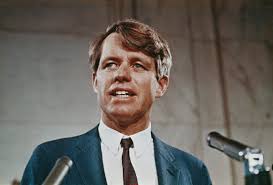
Robert F. Kennedy
The students gave him an ovation worthy of a rock star.
Time correspondent Hays Gorey said the electricity between Kennedy and the K.S.U. students was “real and rare.” “A good part of it is John F. Kennedy’s, of course, but John Kennedy…himself couldn’t be so passionate, and couldn’t set off such sparks.”
Jim Slattery, who would later be elected to Congress from Kansas, reread the K.S.U. speech during the second Iraq war and decided it was so powerful “because Kennedy was talking about what was right!”
As Kennedy started to leave, students rushed the platform where he stood, knocking over chairs and grabbing at him. They stroked his hair and ripped his shirtsleeves.
Later that day, Kennedy addressed another wildly enthusiastic audience—at the University of Kansas, in Lawrence, Kansas.
Then he addressed the glaring disparities between rich and poor Americans—a topic now generally ignored by Democrats and turned into an attack line by Republicans:
“All around us, all around us….men have lost confidence in themselves, in each other. It is confidence which has sustained us so much in the past. Rather than answer the cries of deprivation and despair….hundreds of communities and millions of citizens are looking for their answers, to force and repression and private gun stocks— so that we confront our fellow citizen across impossible barriers of hostility and mistrust.
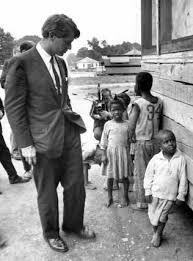
Robert F. Kennedy talking with black children
“And again, I don’t believe that we have to accept that. I don’t believe that it’s necessary in the United States of America. I think that we can work together. I don’t think that we have to shoot at each other, to beat each other, to curse each other and criticize each other, I think that we can do better in this country. And that is why I run for President of the United States….
“I have seen children in Mississippi starving, their bodies so crippled from hunger and their minds have been so destroyed for their whole life that they will have no future. I have seen children in Mississippi—here in the United States—with a gross national product of $800 billion dollars.
“I have seen children in the Delta area of Mississippi with distended stomachs, whose faces are covered with sores from starvation, and we haven’t developed a policy so we can get enough food so that they can live, so that their children, so that their lives are not destroyed, I don’t think that’s acceptable in the United States of America and I think we need a change.”
1968 PRESIDENTIAL CAMPAIGN, 2020 PRESIDENTIAL CAMPAIGN, ABC NEWS, ALTERNET, AMERICABLOG, AMERICAN INDIANS, AP, BABY BOOMER RESISTANCE, BARBARA GARSON, BBC, BLACK LIVES MATTER, BLOOMBERG, BUZZFEED, CBS NEWS, CIVIL RIGHTS, CNN, COMING APART: AMERICA IN THE 1960S (BOOK), CROOKS AND LIARS, DAILY KOS, DAILY KOZ, DEMOCRATS, DRUDGE REPORT, EUGENE MCCARTHY, FIVETHIRTYEIGHT, GEORGE BERNARD SHAW, GROSS NATIONAL PRODUCT, HARPER’S MAGAZINE, HUFFINGTON POST, JIM SLATTERY, JOHN F. KENNEDY, Kamala Harris, KANSAS STATE UNIVERSITY, LOOK MAGAZINE, LYNDON B. JOHNSON, MCBIRD!, MEDIA MATTERS, MISSISSIPPI, MOTHER JONES, MOVEON, MSNBC, NBC NEWS, NEW REPUBLIC, NEWSDAY, NEWSWEEK, NPR, PBS NEWSHOUR, POLITICO, POLITICUSUSA, RAW STORY, REPUBLICANS, REUTERS, ROBERT F. KENNEDY, SALON, SEATTLE TIMES, SIRHAN SIRHAN, SLATE, SOPHOCLES, STANLEY TRETICK, TALKING POINTS MEMO, TET OFFENSIVE, THE ATLANTIC, THE CHICAGO SUN-TIMES, THE CHICAGO TRIBUNE, THE DAILY BEAST, THE DAILY BLOG, THE GUARDIAN, THE HILL, THE HUFFINGTON POST, THE INTERCEPT, THE LOS ANGELES TIMES, THE NATION, THE NEW REPUBLIC, THE NEW YORK TIMES, THE NEW YORKER, THE VILLAGE VOICE, THE WASHINGTON POST, THINKPROGRESS, TIME, TIME MAGAZINE, TRUTHDIG, TRUTHOUT, TWO POLITICAL JUNKIES, U.S. NEWS & WORLD REPORT, UNIVERSITY OF KANSAS, UPI, USA TODAY, VIETNAM WAR, WILLIAM L. O'NEIL, WONKETTE, X
In Bureaucracy, History, Law, Law Enforcement, Military, Politics, Social commentary, Uncategorized on July 3, 2024 at 12:43 am
He remains forever frozen in time—young, vigorous, with tousled hair and a high-pitched voice calling on Americans to do better for those less fortunate.
And he exuded an idealism which seems totally out of place with today’s “I’ve-got-mine-so-screw-you” politics.
It’s been 56 years since his life was brutally cut short—yet he remains forever the age at which he died: 42. Born in 1925, he would turn 99 on November 20 if he were alive today.
On March 16, 1968, from the Caucus Room of the Old Senate Office building, New York Senator Robert F. Kennedy declared his candidacy for President of the United States.
Eight years earlier, on January 2, 1960, his brother, Massachusetts Senator John F. Kennedy had announced his own candidacy for the Democratic presidential nomination from the same place.
Ten months later, on November 8, that campaign had ended in victory with his election. And that victory, in turn, ended in bitter sorrow with his assassination two years, 10 months and two days later on November 22, 1963.
Robert F. Kennedy’s presidential campaign would not last as long as his late brother’s. Nor would it end in the victory he and his supporters yearned for.
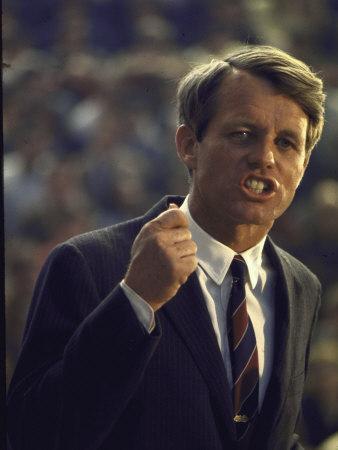
Robert F. Kennedy
Eighty-two days later, he was dead—shot in the back of the head by Sirhan Sirhan, a Palestinian Arab furious at Kennedy’s avowed support for Israel.
For Kennedy, making up his mind to run for the Presidency was no easy task.
Since the assassination of his brother, millions of Americans had assumed—as his admirers or detractors—that he would one day become President.
For his admirers, there was an element of “the once and future king” about this young, intense man with tousled hair and a high-pitched voice. He—they believed—was the man who would somehow avenge his martyred brother by restoring “Camelot” and returning youth, energy and idealism to the White House.
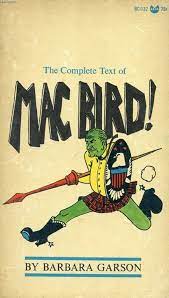
A playwright—Barbara Garson—had even written a 1967 satire depicting then-President Lyndon B. Johnson as the MacBeth-like murderer of John Ken O-Dunc. In the end, he was confronted and killed by Robert Ken O’Dunc.

His detractors saw him as a ruthless upstart who wanted to foist too-liberal policies on the United States. They distrusted his sympathy for the downtrodden—especially blacks and Hispanics. Worse, they saw the Kennedy family as trying to found a dynasty of Presidents that could last until the mid-1980s.
But the real Robert Kennedy was long torn between running against Johnson—whom he had long personally loathed—and letting someone else do so.
Kennedy’s hatred of Johnson—and his irrational belief that LBJ was somehow responsible for his brother’s death—was well-known. And Kennedy feared that if he ran against Johnson, his many enemies would charge he was doing so out of personal animosity.
And there was another reason: Johnson, who had won the Presidency in a landslide in 1964, was certain to seek re-election in 1968. If Kennedy challenged him for the nomination, it might well split the party and result in the election of a Republican that November. And he—Kennedy—would be blamed for it.
Throughout 1966-7, Kennedy was urged to run against Johnson. Still, he dithered.
Then, on March 12, Minnesota United States Senator Eugene McCarthy entered the New Hampshire Democratic primary against Johnson—and won a surprising 42.2% of the vote to Johnson’s 49.4%.
Four days later, Robert Kennedy announced his own candidacy.
McCarthy’s supporters were outraged: Their candidate had dared to do what Kennedy had not—directly take on Johnson. And now that he had shown it could be done, the opportunistic Kennedy had jumped in.
On March 18—two days after announcing his candidacy—Kennedy gave his first campaign speech at Kansas State University in Manhattan, Kansas. This was the heart of conservative country, and Kennedy didn’t know how his audience would accept many of his decidedly liberal proposals.
“Do you think they’ll boo him?” his wife, Ethel, asked a friend before the speech. “Will they hate him?”
Arriving at the university, Kennedy ate breakfast at the student union—and told a group of university officials and student leaders: “Some of you may not like what you’re going to hear in a few minutes, but it’s what I believe; and if I’m elected President, it’s what I’m going to do.”

Kansas State University
As events unfolded, he—and Ethel—had no reason to worry.
Kennedy had served as United States Attorney General from 1961 to 1964. Yet he had not limited himself to simply fighting organized crime and enforcing civil rights. He had aggressively urged his brother, the President, to take a hard line on fighting the Communist forces in Vietnam.
But now he did something almost no other politician had—or has—ever done: He publicly accepted responsibly for the disaster the war had become since 1965:
“Let me begin this discussion with a note both personal and public. I was involved in many of the early decisions on Vietnam, decisions that helped set us on our present path.
“It may be that the effort was doomed from the start; that it was never really possible to bring all the people of South Vietnam under the rule of the successive governments we supported.”
2016 PRESIDENTIAL ELECTION, 2020 PRESIDENTIAL ELECTION, ABC NEWS, ABORTION, ADOLF HITLER, ALTERNET, ALVIN BRAGG, AMERICABLOG, AP, “DEEP STATE, ” EMPLOYEE PROTECTIONS, BABY BOOMER RESISTANCE, BBC, BILL CLINTON, BIRTH CONTROL, BLOOMBERG, BORDER WALL, BUZZFEED, CAPITOL PUNISHMENT, CBS NEWS, CHRISTIANITY, CIA, CLIMATE CHANGE, CNN, COVID-19, CROOKS AND LIARS, DAILY KOS, DAVID BROOKS, DEPARTMENT OF HOMELAND SECURITY, DONALD TRUMP, ENVIRONMENTAL PROTECTION AGENCY, FBI, FEDERAL COMMUNICATIONS COMMISSION, FEDERAL GOVERNMENT SHUTDOWN, FEDERAL TRADE COMMISSION, FIVETHIRTYEIGHT, FOSSIL FUELS, FRANKLIN GRAHAM, GLOBAL WARMING, HARPER’S MAGAZINE, HERITAGE FOUNDATION, HUFFINGTON POST, JAMES COMEY, JANUARY 6 COUP ATTEMPT, JEFFREY GOLDBERG, JOSEPH BIDEN, KGB, MANHATTAN DISTRICT ATTORNEY'S OFFICE, MCKAY COPPINS, MEDIA MATTERS, MEXICO, MONICA LEWINSKY, MOTHER JONES, MOVEON, MSNBC, NATIONAL OCEANIC AND ATMOSPHERIC ADMINISTRATION (NOAA), NATIONAL SECURITY AGENCY, NAZI GERMANY, NBC NEWS, NEW REPUBLIC, NEWSDAY, NEWSWEEK, NPR, PBS NEWSHOUR, POLITICO, POLITICUSUSA, PRESIDENTIAL TRANSITION PROJECT, PROJECT 2025, PUBLIC TRANSIT, RAW STORY, RELIGION, REPUBLICAN PARTY, REUTERS, ROBERT PAYNE, Ronald Reagan, RUSSIA, SALON, SEATTLE TIMES, SLATE, STORMY DANIELS, TALKING POINTS MEMO, THE ATLANTIC, THE CHICAGO SUN-TIMES, THE CHICAGO TRIBUNE, THE DAILY BEAST, THE DAILY BLOG, THE GUARDIAN, THE HILL, THE HUFFINGTON POST, THE INTERCEPT, THE LIFE AND DEATH OF ADOLF HITLER (BOOK), THE LOS ANGELES TIMES, THE NATION, THE NEW REPUBLIC, THE NEW YORK TIMES, THE NEW YORKER, THE VILLAGE VOICE, THE WASHINGTON POST, THINKPROGRESS, TIME, TRUTHDIG, TRUTHOUT, TWO POLITICAL JUNKIES, U.S. NEWS & WORLD REPORT, UNITED STATES DEPARTMENT OF JUSTICE, UPI, USA TODAY, VLADIMIR PUTIN, WASHINGTON WEEK, X
In Bureaucracy, Business, History, Law, Law Enforcement, Medical, Politics, RELIGION, Social commentary on July 2, 2024 at 12:10 am
Why aren’t Republicans—allegedly the party of “family values”—morally outraged at Donald Trump for his adulterous tryst with a porn “star” and his hush money payment to conceal it during the 2016 Presidential campaign?
Why are they instead outraged at Manhattan District Attorney Alvin Bragg, at President Joseph Biden, at the criminal justice system itself?

Republican party logo
Simple: They see Trump as their best chance to not only reclaim the White House but establish a permanent Right-wing dictatorship.
Under this, the Republican party will become—in fact, if not officially—the only recognized political party in the nation.
Democratic candidates—for the House, Senate and Presidency—will be prevented from taking office by gerrymandering or false claims that they committed election fraud.
These—and other goals—have been enshrined in Project 2025, also known as the Presidential Transition Project. This is a collection of policy proposals to fundamentally reshape the U.S. federal government in the event of a Republican victory in the 2024 Presidential election.
Established in 2022 by the Right-wing Heritage Foundation, the project aims to recruit tens of thousands of radical Right-wingers to the District of Columbia to replace existing federal civil servants.

Under Project 2025:
- Republicans consider federal employees to be subversives who comprise the “deep state.”
- Replacing tenured civil servants with thousands of political hacks will arm Republicans with the power to establish an absolute dictatorship under the next Republican president.
- The Department of Justice has “forfeited the trust” of the American people by investigating Donald Trump’s proven collaboration with Russia to win the 2016 Presidential election.
- As a result, the DOJ must be thoroughly “reformed” and tightly overseen by the White House. The director of the FBI must be personally accountable to the President—just as the head of the KGB is personally accountable to Vladimir Putin.

Seal of the Justice Department
- Federal employees could be instantly fired for not obeying illegal orders, or on mere whim—including the whim of the President.
- Funding for the Department of Justice would be slashed.
- The FBI would be dismantled.
- The Department of Homeland Security would be abolished.
- The Environmental Protection Agency would be stripped of its authority to protect the air, water and soil.

- States would be prevented from adopting stricter regulations on vehicular emissions, like California has done.
- The National Oceanic and Atmospheric Administration (NOAA), which the project calls “one of the main drivers of the climate change alarm industry,” would be abolished.
- Fossil fuels—the leading cause of global warming—would be favored and environmental regulations to combat climate change abolished.
- Federal funding for all public transit systems across the country would be eliminated.

- Traditionally independent federal agencies such as the Department of Justice, Federal Communications Commission and the Federal Trade Commission would be placed under Presidential control.
- The wealthiest 1% would receive massive tax cuts at the expense of the poor and middle class.
- Conception would be designated as the point where life begins.
- Abortion would be outlawed.
- Access to birth control would be sharply restricted, if not banned.
- Christianity would be designated as the official religion of the United States.
- The use of capital punishment would be revived and expanded—and the right of appeals sharply restricted.
* * * * *
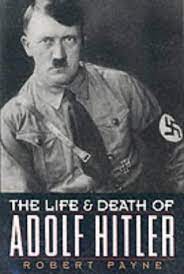
In his bestselling 1973 biography, The Life and Death of Adolf Hitler, British historian Robert Payne harshly condemned the German people for the rise of the Nazi dictator:
“Ultimately, the responsibility for the rise of Hitler lies with the German people, who allowed themselves to be seduced by him and came to enjoy the experience….
“[They] followed him with joy and enthusiasm because he gave them license to pillage and murder to their hearts’ content. They were his servile accomplices, his willing victims.”
On November 8, 2016, 62,984,828 ignorant, hate-filled, Right-wing Americans catapulted Donald Trump—a man, charged conservative New York Times columnist David Brooks, with an “odd psychology unleavened by kindness and charity”—into the Presidency.
And on November 3, 2020, 74,223,975 of those same Americans again voted for him. This despite Trump’s legacy of:
- Brutally attacking American Intelligence agencies—such as the FBI, CIA and National Security Agency—which unanimously agreed that Russia had interfered with the 2016 Presidential election.
- Firing FBI Director James Comey for refusing to pledge his personal loyalty to Trump—and continuing to investigate Russian subversion of the 2016 election.
- Lying about the dangers of the deadly COVID-19 virus, thus allowing it to ravage the country and kill 400,000 Americans.
- Refusing to accept the outcome of a legitimate Presidential election in 2020 and falsely claiming himself the victim of massive voter fraud.
- Inciting thousands of his followers to storm the United States Capitol Building to prevent the winner, Joe Biden, from being declared President-elect.
So why have millions of Americans stood by Trump despite the wreckage he has made of American foreign and domestic policy?
Their #1 reason: Hatred—of most of their fellow Americans.
Fortunately, 80 million Americans braved the COVID-19 pandemic and efforts by Republicans to overturn their voting rights—and elected Joseph Biden President of the United States.
Only time will tell if the country proves so lucky in 2024.
2016 PRESIDENTIAL ELECTION, 2020 PRESIDENTIAL ELECTION, ABC NEWS, ABORTION, ADOLF HITLER, ALTERNET, ALVIN BRAGG, AMERICABLOG, AP, “DEEP STATE, ” EMPLOYEE PROTECTIONS, BABY BOOMER RESISTANCE, BBC, BILL CLINTON, BIRTH CONTROL, BLOOMBERG, BORDER WALL, BUZZFEED, CAPITOL PUNISHMENT, CBS NEWS, CHRISTIANITY, CIA, CLIMATE CHANGE, CNN, COVID-19, CROOKS AND LIARS, DAILY KOS, DAVID BROOKS, DEPARTMENT OF HOMELAND SECURITY, DONALD TRUMP, ENVIRONMENTAL PROTECTION AGENCY, FBI, FEDERAL COMMUNICATIONS COMMISSION, FEDERAL GOVERNMENT SHUTDOWN, FEDERAL TRADE COMMISSION, FIVETHIRTYEIGHT, FOSSIL FUELS, FRANKLIN GRAHAM, GLOBAL WARMING, HARPER’S MAGAZINE, HERITAGE FOUNDATION, HUFFINGTON POST, JAMES COMEY, JANUARY 6 COUP ATTEMPT, JEFFREY GOLDBERG, JOSEPH BIDEN, KGB, MANHATTAN DISTRICT ATTORNEY'S OFFICE, MCKAY COPPINS, MEDIA MATTERS, MEXICO, MONICA LEWINSKY, MOTHER JONES, MOVEON, MSNBC, NATIONAL SECURITY AGENCY, NAZI GERMANY, NBC NEWS, NEW REPUBLIC, NEWSDAY, NEWSWEEK, NPR, PBS NEWSHOUR, POLITICO, POLITICUSUSA, PRESIDENTIAL TRANSITION PROJECT, PROJECT 2025, RAW STORY, RELIGION, REPUBLICAN PARTY, REUTERS, ROBERT PAYNE, Ronald Reagan, RUSSIA, SALON, SEATTLE TIMES, SLATE, STORMY DANIELS, TALKING POINTS MEMO, THE ATLANTIC, THE CHICAGO SUN-TIMES, THE CHICAGO TRIBUNE, THE DAILY BEAST, THE DAILY BLOG, THE GUARDIAN, THE HILL, THE HUFFINGTON POST, THE INTERCEPT, THE LIFE AND DEATH OF ADOLF HITLER (BOOK), THE LOS ANGELES TIMES, THE NATION, THE NEW REPUBLIC, THE NEW YORK TIMES, THE NEW YORKER, THE VILLAGE VOICE, THE WASHINGTON POST, THINKPROGRESS, TIME, TRUTHDIG, TRUTHOUT, TWO POLITICAL JUNKIES, U.S. NEWS & WORLD REPORT, UNITED STATES DEPARTMENT OF JUSTICE, UPI, USA TODAY, VLADIMIR PUTIN, WASHINGTON WEEK, X
In Bureaucracy, Business, History, Law, Law Enforcement, Medical, Military, Politics, RELIGION, Social commentary on July 1, 2024 at 12:10 am
The May 31, 2024 episode of Washington Week With the Atlantic raised the question: Why were Republicans so obsessed with Bill Clinton’s adulterous affair with Monica Lewinsky but are furiously supporting Donald Trump’s tryst with Stormy Daniels?
Moderator Jeffrey Goldberg opened with: “Donald Trump isn’t a convicted felon yet. Sorry to be pedantic here, but he technically acquires that status only at sentencing come July 11th.
“But a New York jury has spoken, finding him guilty of engaging in a financial scheme to keep the porn star, Stormy Daniels, quiet about their sexual encounter, one that occurred shortly after Trump’s wife gave birth to their son.
“Trump, in addition to this guilty verdict, was recently found liable for sexual abuse in a civil case. In total, more than 25 women have accused him of sexual assault and sexual harassment.
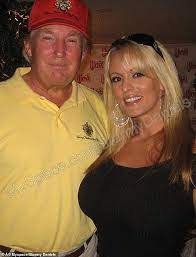
Donald Trump and Stormy Daniels
“The reaction of the Republican Party leaders to the verdict was to rally around Trump. Evangelical leaders, including Franklin Graham, also doubled down on their support. Graham, writing on X, said, ‘What we saw today has never happened before, and I think for the majority of Americans, it raises questions about whether our legal system can be trusted….’
“[In] the 1990s…. when Bill Clinton was president and Republicans were outraged and many other people were legitimately outraged that the president of the United States was having sexual relations with a White House intern. Explain to us, if you can, the different dynamics here, the party of family values.”
McKay Coppins, staff writer at the Atlantic: “Well, Donald Trump has fundamentally changed the way the Republican party, the conservative movement, think about morality and public leadership.
“Something that I always think about when issues like this come up is that before Donald Trump came on the scene, I can’t remember, it was 2013, 2014, if you surveyed Republican voters and asked them how important is public — it is personal morality in an elected leader to you.
“Something like two-thirds of them would say it’s very important, that I would rather have somebody of high moral character than somebody with policies I agree with.
“A couple years into the Trump presidency, that had flipped and it was only a third of voters said that that was the case, if you were a Republican.
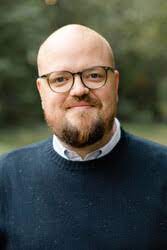
McKay Coppins
“And it just shows kind of the sea change in evangelical ethics and social conservative ethics. I think a lot of conservatives now, because of negative partisanship and polarization….they want to, you know, line up with their team right?
“They want to be with their guy, and then they kind of create a moral architecture around being able to do that.
“But, you know, [he] cheated on his wife with a porn star, and then….is now been convicted of committing fraud to cover it up.
“[It’s] almost a cliché to say if a Democrat had done that, we know what we would be hearing from social conservatives and evangelicals, but they want Donald Trump to be elected.
“And so they are pivoting away from the specifics of the case and the underlying facts of the case to [say] this is a rigged system, this is a legal persecution, Donald Trump is a victim, and we need to back him because they’re going to come after us next.”
There is unquestionably a great deal of truth in the foregoing. But there is also a great deal of truth in a statement that was not made:
Republicans’ professed outrage at Bill Clinton’s infidelities and their furious defense of those by Donald Trump actually share a common link.
In 1981, President Ronald Reagan, once the poster boy for Republican values, best described the current mindset of the Republican party. Ironically enough, at the time, he was assailing the leaders of the Soviet Union:
“The only morality they recognize is what will further their cause, meaning they reserve unto themselves the right to commit any crime, to lie, to cheat.”
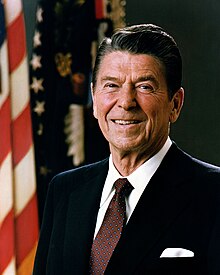
Ronald Reagan
In January, 1998, when the public learned of President Bill Clinton’s affair with White House intern Monica Lewinsky, Republicans gushed moral outrage.
They portrayed Lewinsky—who had had a seven-year extramarital affair with her former high school drama instructor and flashed her thong at Clinton, signaling her readiness for an affair—as a Vestal Virgin, and Clinton as Grigori Rasputin incarnate.
By 1992, Republicans had come to regard the White House as theirs by Divine Right. Anyone who ran against them automatically became—for them—a traitor. And anyone who won against them became—for them—an usurper.
Thus, Clinton’s true “crime” had been defeating, first, President George H.W. Bush, in 1992, and then Kansas Senator Bob Dole, in 1996.
Fast-forward to the May 30 conviction of Donald Trump on 34 counts of falsifying business records to conceal a sexual tryst with porn “star” Stormy Daniels.
Suddenly, Republicans aim their cries of moral outrage not at Trump but at Manhattan District Attorney Alvin Bragg, at President Joseph Biden, at the criminal justice system itself.
The reason: They see Trump as their best chance for not simply reclaiming the White House but for establishing a permanent Right-wing dictatorship.
" WIKIPEDIA, ABC NEWS, ADAM KINZINGER, ALEXANDRIA OCASIO-CORTEZ, ALTERNET, AMERICABLOG, ANTI-SEMITISM, AP, BABY BOOMER RESISTANCE, BALLOTPEDIA, BBC, BLOOMBERG NEWS, BUZZFEED, CBS NEWS, CNN, CROOKS AND LIARS, DAILY KOZ, DEMOCRATS, DICK CHENEY, DONALD TRUMP, FIVETHIRTYEIGHT, FOX NEWS, GEORGE W. BUSH, HARPER’S MAGAZINE, HERITAGE ACTION, HUFFINGTON POST, JANUARY 6 COMMITTEE, JANUARY 6 COUP ATTEMPT, JOSEPH BIDEN, KEVIN MCCARTHY, LIZ CHENEY, MARJORIE TAYLOR GREENE, MEDIA MATTERS, MOTHER JONES, MOVEON, MSNBC, NANCY PELOSI, NBC NEWS, NEW REPUBLIC, NEWSDAY, NEWSWEEK, NEWT GINGRICH, NPR, PAUL GOSAR, PBS NEWSHOUR, POLITICO, POLITICUSUSA, QANON, RAW STORY, REPUBLICAN NATIONAL COMMITTEE, REPUBLICANS, REUTERS, Ronald Reagan, RONNA ROMNEY MCDANIEL, SALON, SEATTLE TIMES, SLATE, SPANISH INQUISITION, TALKING POINTS MEMO, THE ATLANTIC, THE CHICAGO SUN-TIMES, THE CHICAGO TRIBUNE, THE DAILY BEAST, THE DAILY BLOG, THE GUARDIAN, THE HILL, THE HUFFINGTON POST, THE INTERCEPT, THE LOS ANGELES TIMES, THE NATION, THE NEW REPUBLIC, THE NEW YORK TIMES, THE NEW YORKER, THE VILLAGE VOICE, THE WASHINGTON POST, THINKPROGRESS, TIME, TRUTHDIG, TRUTHOUT, TWO POLITICAL JUNKIES, U.S. NEWS & WORLD REPORT, UNITED STATES HOUSE OF REPRESENTATIVES, UPI, USA TODAY, WONKETTE, X
In Bureaucracy, History, Law, Law Enforcement, Medical, Politics, Social commentary on June 28, 2024 at 12:10 am
The Republican National Committee (RNC) is a secular, political organization that leads the Republican party of the United States.
But on February 4, 2022, it acted as the reincarnation of the Spanish Inquisition—a judicial institution which attacked heresy in Spain from 1478 to 1834.
Under its reign of terror, countless “heretical” men and women found themselves sentenced by kangaroo courts to hideous torture and death.

Seal of the Spanish Inquisition
User:Di (they-them), CC BY-SA 4.0 <https://creativecommons.org/licenses/by-sa/4.0>, via Wikimedia Commons
On February 4, 2022, the RNC’s chair, Ronna Romney McDaniel, “cast out” two fellow Republicans: Representtives Liz Cheney (WY) and Adam Kinzinger (IL).
Their “crime”: Being the only Republicans to serve on the United States House Select Committee to Investigate the January 6th Attack on the United States Capitol, otherwise known as the January 6 Committee.
That censure described the deadly riot, where hundreds of then-President Donald Trump’s disciples stormed the Capitol and forced lawmakers to flee their chambers for safety, as “legitimate political discourse.”

Ronna Romney McDaniel
Part One of this series analyzed the first major paragraph of this censure. Part Two will analyze the remaining six.
“WHEREAS, Winning back the majority in Congress, including the United States House of Representatives, in 2022 must be the primary goal of the House Republican Conference (“Conference”) and requires all Republicans working together to accomplish the same….”
- Here, at least, the RNC and its chair, Ronna Romney McDaniel, offered the truth: Gaining absolute power over the legislative, executive and judicial branches of the Federal Government is this party’s “primary goal.”
- Punishing those who engage in treasonous attacks on Constitutional government is not a priority—so long as the perpetrators are Fascistic Right-wingers.
“WHEREAS, The Conference must not be sabotaged by Representatives Liz Cheney and Adam Kinzinger who have demonstrated, with actions and words, that they support Democrat efforts to destroy President Trump more than they support winning back a Republican majority in 2022….
DESTROYING PRESIDENT TRUMP:
- It was Trump who tried to destroy Constitutional government by stripping every potential challenger to his authority—or his version of reality—of legitimacy with the public. Had he succeeded, there would have been:
- No independent press to reveal his failures and crimes.
- No independent law enforcement agencies to investigate his abuses of office.
- No independent judiciary to hold him accountable.
- No candidate—Democrat or Republican—to challenge him for remaining in office in 2020—and thereafter—as “President-for-Life.”
WHEREAS, Representatives Cheney and Kinzinger have engaged in actions in their positions as members of the January 6th Select Committee not befitting Republican of Congress, which include the Committee’s disregard for minority rights, traditional checks and balances, due process, and adherence to other precedent and rules of the U.S. House and which seem intent on advancing a political agenda to buoy the Democrat bleak prospects in the upcoming midterm elections….”
WINNING BACK A REPUBLICAN MAJORITY IN 2022:
- This, for the RNC, takes precedence over investigating a treasonous plot to overthrow democratic government and establish a one-party (Republican) state, presided over by a lifetime criminal and proven traitor.

Liz Cheney

Adam Kinzinger
“WHEREAS, Congressional Republicans bear ultimate responsibility for their own success or failure and the RNC supports their efforts by denouncing those who deliberately jeopardize victory in November on which the future of our constitutional republic depends at this critical moment in history….”
DELIBERATELY JEOPARDIZING VICTORY:
- Once again, the RNC admits that gaining absolute power for itself takes precedence over investigating and punishing those who sought to overthrow American democracy.
“WHEREAS, Representatives Cheney and Kinzinger purport to be members of the Republican Party….”
“PURPORT” TO BE REPUBLICANS:
- Liz Cheney had been a Republican member of the House of Representatives from Wyoming since 2017. She voted in line with Trump’s policies 93% of the time, according to the data journalism site Five Thirty-Eight.
- Heritage Action, a Right-wing policy advocacy organization, gave her a “lifetime score” of 80%.
- Adam Kinzinger had been a Republican member of the House of Representatives from Illinois since 2011.
- According to Five Thirty-Eight, he voted in support of Trump’s agenda 90% of the time,
- Thus, the “crime” committed by Cheney and Kinzinger was to investigate the treasonous attempted coup by a lifelong criminal and would-be tyrant.
“WHEREAS, Representatives Cheney and Kinzinger are participating in a Democrat-led persecution of ordinary citizens engaged in legitimate political discourse, and they are both utilizing their past professed political affiliation to mask Democrat abuse of prosecutorial power for partisan purposes, therefore, be it
“RESOLVED, That the Republican National Committee hereby formally censures Representatives Liz Cheney of Wyoming and Adam Kinzinger of Illinois and shall immediately cease any and all support of them as members of the Republican Party for their behavior which has been destructive to the institution of the U.S. House of Representatives, the Republican Party and our republic, and is inconsistent with the position of the Conference.”
* * * * * * * * *
The RNC’s action was one worthy of the Spanish Inquisition.
And it serves as a warning to democracy-loving Americans of the fate awaiting them if Republicans’ revenge fantasies become reality.
" WIKIPEDIA, ABC NEWS, ADAM KINZINGER, ALEXANDRIA OCASIO-CORTEZ, ALTERNET, AMERICABLOG, ANTI-SEMITISM, AP, BABY BOOMER RESISTANCE, BALLOTPEDIA, BBC, BLOOMBERG NEWS, BUZZFEED, CBS NEWS, CNN, CROOKS AND LIARS, DAILY KOZ, DEMOCRATS, DICK CHENEY, DONALD TRUMP, FIVETHIRTYEIGHT, FOX NEWS, GEORGE W. BUSH, HARPER’S MAGAZINE, HERITAGE ACTION, HUFFINGTON POST, JANUARY 6 COMMITTEE, JANUARY 6 COUP ATTEMPT, JOSEPH BIDEN, KEVIN MCCARTHY, LIZ CHENEY, MARJORIE TAYLOR GREENE, MEDIA MATTERS, MOTHER JONES, MOVEON, MSNBC, NANCY PELOSI, NBC NEWS, NEW REPUBLIC, NEWSDAY, NEWSWEEK, NEWT GINGRICH, NPR, PAUL GOSAR, PBS NEWSHOUR, POLITICO, POLITICUSUSA, QANON, RAW STORY, REPUBLICAN NATIONAL COMMITTEE, REPUBLICANS, REUTERS, Ronald Reagan, RONNA ROMNEY MCDANIEL, SALON, SEATTLE TIMES, SLATE, SPANISH INQUISITION, TALKING POINTS MEMO, THE ATLANTIC, THE CHICAGO SUN-TIMES, THE CHICAGO TRIBUNE, THE DAILY BEAST, THE DAILY BLOG, THE GUARDIAN, THE HILL, THE HUFFINGTON POST, THE INTERCEPT, THE LOS ANGELES TIMES, THE NATION, THE NEW REPUBLIC, THE NEW YORK TIMES, THE NEW YORKER, THE VILLAGE VOICE, THE WASHINGTON POST, THINKPROGRESS, TIME, TRUTHDIG, TRUTHOUT, TWO POLITICAL JUNKIES, U.S. NEWS & WORLD REPORT, UNITED STATES HOUSE OF REPRESENTATIVES, UPI, USA TODAY, WONKETTE, X
In Bureaucracy, History, Law, Law Enforcement, Medical, Military, Politics, Social commentary on June 27, 2024 at 12:10 am
On February 4, 2022, the Republican National Committee (RNC) officially endorsed the use of violence on behalf of the party.
It described the January 6, 2021 attack on the nation’s Capitol—a violent and treasonous attempt to prevent the orderly and legal transition of power from one President to another—as “legitimate political discourse.”
This is no private opinion of a single Republican—or even a fringe group of Republicans.
The RNC is described on Wikipedia as:
“A U.S. political committee that leads the Republican party of the United States. It is responsible for developing and promoting the Republican political platform, as well as coordinating fundraising, election strategy, and a ‘party brand.’ It is also responsible for organizing and running the Republican National Convention.”
The endorsement came during an official censure of two of the Committee’s fellow Republicans—Reps. Liz Cheney (WY) and Adam Kinzinger (IL).
Their “crime”: Being the only Republicans to serve on the United States House Select Committee to Investigate the January 6th Attack on the United States Capitol, otherwise known as the January 6 Committee.
That censure described the deadly riot, where hundreds of then-President Donald Trump’s disciples stormed the Capitol and forced lawmakers to flee their chambers for safety, as “legitimate political discourse.”
Predictably, the statement opened with a series of grotesque lies:
“WHEREAS, The Biden Administration and Democrats in Congress have embarked on a systematic effort to replace liberty with socialism; eliminate border security in favor of lawless, open borders; create record inflation designed to steal the American dream from our children and grandchildren; neuter our national defense and a peace through strength foreign policy; replace President ‘Operation Warp Speed’ with incompetence and illegal mandates; and destroy America’s economy with the Green New Deal….”
To address these lies:
REPLACING LIBERTY WITH SOCIALISM:
- It was Donald Trump—not Joseph Biden—who said that he and North Korean dictator Kim Jong-Un “fell in love.”
- It was Trump—not Biden—who attacked American Intelligence agencies for their unanimous conclusion that Russian dictator Vladimir Putin interfered in the 2016 Presidential election.
- It was Trump—not Biden—who never once attacked nor even criticized Putin, although he has viciously attacked literally hundreds of others, verbally and on Twitter.
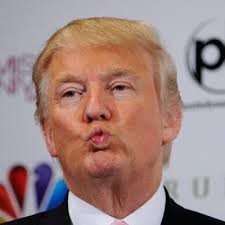
Donald Trump
ELIMINATING BORDER SECURITY:
- Attacking Hispanics—both those who are United States citizens and those who wish to become citizens—is a potent weapon for Republicans. It’s the single most galvanizing issue for their base, and the one guaranteed to win and retain Right-wing votes.
- The Biden administration—like every previous administration—is trying to stem the flow of illegal aliens on the southern border. But it’s a never-ending struggle marked by legal and logistical complications.
CREATE RECORD INFLATION:
- Biden—like every other President—has few weapons to use in controlling inflation. Much of this has been caused by COVID-19 and the resulting slowdowns and/or shutdowns in employment it has produced.
- As a capitalist nation, the United States does not often intervene in what is euphemistically called “the free enterprise system”—even though much of that is dominated by predatory corporations.
- Biden could propose legislation making price-gouging a Federal crime, punishable by a lengthy prison term. But this—modeled on the anti-extortion provisions in the Racketeer Influenced Corrupt Organizations (RICO) Act—would never gain Republican Congressional support.
NEUTER OUR NATIONAL DEFENSE:
- It was Trump—not Biden—who tried to extort a “favor” from Ukrainian President Volodymyr Zelensky: Investigate presumed 2020 Democratic Presidential Candidate Joseph Biden and his son, Hunter, who had had business dealings in Ukraine.
- Clearly implied in the call: Produce “dirt” on Biden—or you won’t get the Congressionally authorized $400 million in military aid.
- It was Trump who repeatedly defended Vladimir Putin while attacking America’s longstanding allies, such as Canada and Great Britain.

Vladimir Putin
Kremlin.ru, CC BY 4.0 <https://creativecommons.org/licenses/by/4.0>, via Wikimedia Commons
REPLACE “OPERATION WARP SPEED” WITH INCOMPETENCE, ILLEGAL MANDATES:
- Trump learned how deadly the virus was in January, 2020. But he publicly denied this and attacked mask-wearing and social distancing.
- He attacked governors who issued stay-at-home orders to contain the virus—and incited his followers to defy those orders.
- He secretly got vaccinated before leaving office and only reluctantly acknowledged the importance of vaccinations.
- His legacy of defying science continues to live on in his millions of Stormtrumper followers—who refuse to mask up, social distance and, most importantly, get vaccinated. The vast majority of those now flooding hospital ER and ICU rooms—and graveyards—are unvaccinated.
- Biden instead launched a nationwide campaign to persuade Americans to wear masks, socially distance and, above all, get vaccinated.
DESTROY AMERICA’S ECONOMY WITH A GREEN NEW DEAL:
- Despite Right-wing lies to the contrary, global warming is an established fact.
- If there is to be any chance of halting—let alone reversing—the planet-threatening dangers this brings, it must come through the elimination of fossil fuels such as coal and natural gas.
- But corporate CEOs—such as West Virginia Senator Joe Manchin—have a vested financial interest in continuing the sale of fossil fuels.
- And they have the backing of corrupt Right-wing politicians and millions of their voters who refuse to accept science.
ABC NEWS, AL QAEDA, ALTERNET, AMERICABLOG, AP, BABY BOOMER RESISTANCE, BARACK OBAMA, BBC, BLOOMBERG, BRUSSELS, BUZZFEED, CBS NEWS, CIA, CNN, CROOKS AND LIARS, DAILY KOS, DONALD TRUMP, EDUARDO "TED" CRUZ, FBI, FIVETHIRTYEIGHT, GUANTANAMO, HARPER’S MAGAZINE, HUFFINGTON POST, ISLAM, ISLAMIC STATE OF IRAQ AND SYRIA (ISIS), MEDIA MATTERS, MOTHER JONES, MOVEON, MSNBC, NBC NEWS, NEW REPUBLIC, NEWSDAY, NEWSWEEK, NEWT GINGRICH, NICCOLO MACHIAVELLI, NPR, PARIS, PBS NEWSHOUR, PENTAGON, POLITICO, POLITICUSUSA, RAW STORY, REUTERS, RICK SANTORUM, RUDLOPH GIULIANI, RUDOLPH GIULIANI, SALON, SAN BERNADINO, SEATTLE TIMES, SLATE, SUPREME COURT, TALKING POINTS MEMO, TERRORISM, THE ATLANTIC, THE CHICAGO SUN-TIMES, THE CHICAGO TRIBUNE, THE DAILY BEAST, THE DAILY BLOG, THE DISCOURSES, THE GUARDIAN, THE HILL, THE HUFFINGTON POST, THE INTERCEPT, THE LOS ANGELES TIMES, THE NATION, THE NEW REPUBLIC, THE NEW YORK TIMES, THE NEW YORKER, THE VILLAGE VOICE, THE WASHINGTON POST, THINKPROGRESS, TIME, TORTURE, TRUTHDIG, TRUTHOUT, TWO POLITICAL JUNKIES, U.S. NEWS & WORLD REPORT, UPI, USA TODAY, WATERBOARDING, X
In Bureaucracy, History, Law, Law Enforcement, Military, Politics, Social commentary on June 26, 2024 at 12:11 am
Donald Trump made a return to waterboarding terrorism suspects a prime issue in his campaign for the 2016 Republican Presidential nomination.
And a March 30, 2016 Reuters/lpsos poll showed that nearly two-thirds of Americans believed that the use of torture could be justified to force suspected terrorists to talk.
A growing fear by Americans of Islamic terrorism had been ignited by a series of deadly Islamic terrorist attacks in Europe and the United States.

Frightening a prisoner in Iraq
In fact, however, torture, generally, and waterboarding in particular, have proven worthless at obtaining reliable information.
Victims will say anything they think their captors want to hear to stop the agony.
Yoshia Chee, a Special Forces veteran of Vietnam, recalled his use of torture against suspected Vietcong:
“One of the favorite things was popping one of their eyeballs out with a spoon….
“If I had one of my eyeballs hanging out, I’d say I killed Kennedy. I’d agree to anything in the whole world.
“We would do that, and they still wouldn’t talk….You rarely got anything out of them. Just more hatred. More reason to fight back.”
Click here: Strange Ground: An Oral History Of Americans In Vietnam, 1945-1975: Harry Maurer: 9780306808395: Amazon.com: Books
During the George W. Bush Presidency, the CIA relied on harsh physical punishments—beatings, humiliations and waterboarding—to convince suspects to talk. These were euphemistically referred to as “enhanced interrogation techniques.”
Upon assuming the Presidency in 2009, Barack Obama ordered an immediate halt to such methods. Since then, Republicans generally and their Presidential aspirants in particular have harshly criticized Obama’s decision.
Like Trump, they claimed that Obama had endangered American security in the name of Political Correctness. In turn, Obama argued that the use of torture produces unreliable information and inflames Muslim hatred of America.
Meanwhile, the FBI applied its traditional “kill them with kindness” approach to interrogation. And agents found this yielded far greater results.
For one thing, most Al Qaeda members relished appearing before grand juries.
Unlike organized crime members, they were talkative—and even tried to proselytize to the jury members. They were proud of what they had done—and wanted to talk.

“This is what the FBI does,” said Mike Rolince, an FBI expert on counter-terrorism. “Nearly 100% of the terrorists we’ve taken into custody have confessed. The CIA wasn’t trained. They don’t do interrogations.”
According to The Threat Matrix: The FBI at War in the Age of Global Terror (2011) jihadists had been taught to expect severe torture at the hands of American interrogators.
Writes Author Garrett M. Graff:
“Often, in the FBI’s experience, their best cooperation came when detainees realized they weren’t going to get tortured, that the United States wasn’t the Great Satan. Interrogators were figuring out…that not playing into Al Qaeda’s propaganda could produce victories.”
And the FBI isn’t alone in believing that acts of simple humanity can turn even sworn enemies into allies.
No less an authority on “real-politick” than Niccolo Machiavelli reached the same conclusion more than 500 years ago.
In his small and notorious book, The Prince, he writes about the methods a ruler must use to gain power. But in his larger and lesser-known masterwork, The Discourses, he outlines the ways that liberty can be maintained in a republic.
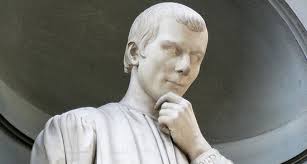
Niccolo Machiavelli
For Machiavelli, only a well-protected state can hope for peace and prosperity. Toward that end, he wrote at length about the best ways to succeed militarily. And in war, humanity can prevail at least as often as inhumanity.
Consider the following example from The Discourses:
Camillus [a Roman general] was besieging the city of the Faliscians, and had surrounded it….A teacher charged with the education of the children of some of the noblest families of that city [to ingratiate himself] with Camillus and the Romans, led these children…into the Roman camp.
And presenting them to Camillus [the teacher] said to him: “By means of these children as hostages, you will be able to compel the city to surrender.”
Camillus not only declined the offer but had the teacher stripped and his hands tied behind his back….[Then Camillus] had a rod put into the hands of each of the children…[and] directed them to whip [the teacher] all the way back to the city.
Upon learning this fact, the citizens of Faliscia were so much touched by the humanity and integrity of Camillus, that they surrendered the place to him without any further defense.
This example shows that an act of humanity and benevolence will at all times have more influence over the minds of men than violence and ferocity.
It also proves that provinces and cities which no armies…could conquer, have yielded to an act of humanity, benevolence, chastity or generosity.
This truth should be remembered whenever Right-wingers brag about their patriotism and willingness to “get tough“ with America’s enemies.
Many—like Newt Gingrich, Rudolph Giuliani, Rick Santorum, Eduardo “Ted” Cruz and Donald Trump—strenuously avoided military service. These “chickenhawks” talk tough and are always ready to send others into battle—but keep themselves well out of harm’s way.
Such men are not merely contemptible; they are dangerous.


ABC NEWS, ABRAHAM LINCOLN, AFGHANISTAN, ALEXANDER THE GREAT, ALTERNET, AMERICABLOG, ANDREW JACKSON, AP, BABY BOOMER RESISTANCE, BBC, BLOOMBERG, BUZZFEED, CBS NEWS, CHARLIE KIRK, CIVIL WAR, CNN, CROOKS AND LIARS, DAILY KOS, FIVETHIRTYEIGHT, FOX NEWS CHANNEL, GATES OF FIRE (BOOK), HARPER’S MAGAZINE, HUFFINGTON POST, JACK SMITH, JOHN C. CALHOUN, JOSEPH BIDEN, LIZ CHENEY, MEDIA MATTERS, MERCENARIES, MERRICK GARLAND, MOTHER JONES, MOVEON, MSNBC, NBC NEWS, NEW REPUBLIC, NEWSDAY, NEWSWEEK, NPR, ORGANIZED CRIME, PBS NEWSHOUR, POLITICO, POLITICUSUSA, PROJECT 2025, RAW STORY, REPUBLICANS, REUTERS, SALON, SEATTLE TIMES, SLATE, SPARTA, STEVEN PRESSFIELD, STORMY DANIELS, TALKING POINTS MEMO, THE AFGHAN CAMPAIGN (BOOK), THE ATLANTIC, THE CHICAGO SUN-TIMES, THE CHICAGO TRIBUNE, THE DAILY BEAST, THE DAILY BLOG, THE GUARDIAN, THE HILL, THE HUFFINGTON POST, THE INTERCEPT, THE LOS ANGELES TIMES, THE NATION, THE NEW REPUBLIC, THE NEW YORK TIMES, THE NEW YORKER, THE PROFESSION (BOOK), THE VILLAGE VOICE, THE VIRTUES OF WAR (BOOK), THE WASHINGTON POST, THERMOPYLAE, THINKPROGRESS, TIME, TREASON, TRUTHDIG, TRUTHOUT, TWO POLITICAL JUNKIES, U.S. NEWS & WORLD REPORT, UNITED STATES SUPREME COURT, UPI, USA TODAY, X
A TRAGIC DESTINY–IN FICTION AND REALITY: PART ONE (OF TWO)
In Bureaucracy, Business, History, Law, Law Enforcement, Military, Politics, Social commentary on July 9, 2024 at 12:10 amThe Supreme Court has spoken. And Donald Trump, who tried to treasonously overturn the 2020 Presidential election and make himself “President-for-Life,” is now armed with the almost total immunity he has long sought.
As Trump and his entrenched Right-wing allies move ever closer to establishing an absolute dictatorship, this is an apt time to discover—or rediscover—the frighteningly real world of The Profession, a 2011 futuristic novel by bestselling author Steven Pressfield.
Steven Pressfield
Pressfield had previously made his mark as an author of historical novels—primarily set in ancient Greece.
In Gates of Fire (1998) he explored the rigors and heroism of Spartan society—and the famous last stand of its 300 picked warriors at Thermopylae.
In The Virtues of War (2004) Pressfield adopted the identity of Alexander the Great, explaining what it was like to command invincible armies that swept across the known world.
Finally, in The Afghan Campaign (2006) he chronicled—from the viewpoint of a lowly Greek soldier—Alexander’s brutal, three-year anti-guerrilla campaign in Afghanistan.
But in The Profession, Pressfield created a seemingly plausible world set in the future. The book’s dust jacket offers an excellent summary of its plot-line:
“The year is 2032. Everywhere military force is for hire. Oil companies, multi-national corporations and banks employ powerful, cutting-edge mercenary armies to control global chaos and protect their riches.
“Even nation states enlist mercenary forces to suppress internal insurrections, hunt terrorists, and do the black bag jobs necessary to maintain the new New World Order.
“Force Insertion is the world’s merc monopoly. Its leader is the disgraced former United States Marine General James Salter, stripped of his command by the president for nuclear saber-rattling with the Chinese and banished to the Far East.
“A grandmaster military and political strategist, Salter plans to take vengeance on those responsible for his exile and then come home…as Commander in Chief.”
Salter appears as a hybrid of World War II General Douglas MacArthur and Iraqi War General Stanley McCrystal. Like MacArthur, Salter has butted heads with his President—and paid dearly for it. Now his ambition—like MacArthur—is to become President himself by popular acclaim.
Douglas MacArthur
And like McCrystal, he is a pure warrior who leads from the front and is revered by his men. Salter seizes Saudi oil fields and strategically rigs them with explosives to be used if threatened.
Then he offers them as a gift to America. By doing so, he makes himself the most popular man in the country—and a guaranteed occupant of the White House.
Stanley McCrystal
And in 2032 the United States is a far different nation from the one its Founding Fathers created in 1776.
“Any time that you have the rise of mercenaries…society has entered a twilight era, a time past the zenith of its arc,” says Salter. “The United States is an empire…but the American people lack the imperial temperament. We’re not legionaries, we’re mechanics. In the end the American Dream boils down to what? ‘I’m getting mine and the hell with you.'”
Americans, asserts Salter, have come to like mercenaries: “They’ve had enough of sacrificing their sons and daughters in the name of some illusory world order. They want someone else’s sons and daughters to bear the burden….
“They want their problems to go away. They want me to make them go away.”
Yet unlike Donald Trump, who infamously shouted, “I love the poorly educated!” Salter is a highly intellectual man. He feels himself a tragic figure, lamenting that the United States has abandoned its longstanding political values even as he prepares to extinguish the most basic one by becoming dictator.
“The moment compels me to seize it. If I don’t someone or something worse will step in. But if I perform the bidding of Necessity, I violate the code of the republic to which all of us have sworn allegiance. I cross a line, beyond which there can be no return.
“But what, I ask, is the alternative? The nation has lost its way and is struggling desperately, merely to hang on. The nation can’t go on as it is, and everyone knows it. If not me, who? If not me, what?
“So, yes, I will go home. And yes, I will accept whatever crown, of paper or gold, that my country wants to press upon me. Not because I believe such a coronation will make any difference in the long run.
“But maybe in the short run, it’s better that my hand be on the wheel rather than some other self-aggrandizing sonofabitch whose motives might not be as well-intentioned or whose consciousness so painfully evolved.”
At a nationally televised press conference, Salter hands a loaded pistol to a longtime friend and disciple who now fears his dictatorial ambitions.
“Go ahead,” says Salter. “You’ll be saving the republic. And me, too.”
But the former disciple cannot bring himself to kill his longtime idol: “Now I’m guilty with you,” he says.
Steven Pressfield, in a work of fiction, has given us a nightmarish vision of a futuristic America.
Donald Trump and his Right-wing disciples may soon make that vision a reality.
Share this: