Posts Tagged ‘RUSSIA’
ABC NEWS, ALTERNET, ANTI-COMMUNISM, AP, BUZZFEED, CBS NEWS, CIA, CNN, COLLUSION, COMMUNISM, CROOKS AND LIARS, DAILY KOZ, DEMOCRATIC PARTY, DONALD TRUMP, DONALD TRUMP JUNIOR, FACEBOOK, FBI, FOX NEWS, G.O.P., GRU (RUSSIAN MILITARY INTELLIGENCE), HILLARY CLINTON, INTELLIGENCE, ISLAMIC STATE OF IRAQ AND SYRIA (ISIS), JAMES B. COMEY, JAMES COMEY, JARED KUSHNER, MAIN INTELLIGENCE DIRECTORATE, MICHAEL FLYNN, MOSSAD, MOTHER JONES, MOVEON, NATIONAL SECURITY AGENCY, NBC NEWS, NEWSWEEK, NPR, PAUL MANAFORT, POLITICO, RAW STORY, REPUBLICAN PARTY, REUTERS, ROGER STONE, RUSSIA, SALLY YATES, SALON, SEATTLE TIMES, SERGEY KISLYAK, SERGEY LAVROV, SLATE, STATE OF THE UNION, STATE OF THE UNION ADDRESS, THE ATLANTIC, THE CHICAGO SUN-TIMES, THE CHICAGO TRIBUNE, THE DAILY BEAST, THE GUARDIAN, THE HILL, THE HUFFINGTON POST, THE LOS ANGELES TIMES, THE NATION, THE NEW YORK TIMES, THE WASHINGTON POST, TIME, TREASON, TRUMP TOWER MEETING, TWITTER, U.S. CONSTITUTION, U.S. NEWS & WORLD REPORT, UNITED STATES CONSTITUTION, UPI, USA TODAY, VLADIMIR PUTIN
In Bureaucracy, History, Military, Politics, Social commentary on November 28, 2022 at 12:14 am
Less than three years before committing his ultimate act of treason, President Donald Trump determined that Democrats were guilty of it.
Their crime? Refusing to stand and applaud him during his State of the Union message in January, 2018.
On February 5, he told a crowd in Cincinnati: “They were like death and un-American. Un-American. Somebody said, ‘treasonous.’ I mean, Yeah, I guess why not? Can we call that treason? Why not? I mean they certainly didn’t seem to love our country that much.”
For Trump, to love the United States, you must first prove that you love him.
Article Three of the United States Constitution defines treason as:
“Treason against the United States, shall consist only in levying War against them, or in adhering to their Enemies, giving them Aid and Comfort. No Person shall be convicted of Treason unless on the Testimony of two Witnesses to the same overt Act, or on Confession in open Court.”
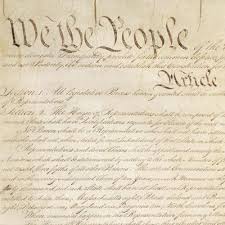
United States Constitution
In short: Actions such as colluding with a foreign power hostile to the United States (such as Russia) to subvert America’s democratic election process.
By that standard, Donald Trump stands rightly accused of a crime that traditionally carries the penalty of death.
Example #1: The infamous June, 2016 meeting at Trump Tower starring Donald Trump’s son, Donald, Jr.; Trump’s son-in-law, Jared Kushner; and Trump’s then-campaign manager, Paul Manafort—and two Russian lobbyists who wanted the United States to end its sanctions against Russia for human rights abuses.
The meeting’s purpose: To obtain from Russian Intelligence agents “dirt” on Trump’s opponent, Hillary Clinton.
Example #2: On July 27, 2016, Trump said at a press conference in Doral, Florida: “Russia, if you are listening, I hope you are able to find [Hillary Clinton’s] 33,000 emails that are missing—I think you will probably be rewarded mightily by our press.”
Hours later, the Main Intelligence Directorate in Moscow targeted Hillary Clinton’s personal office and hit more than 70 other Clinton campaign accounts,
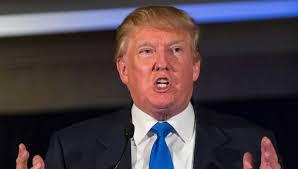
Donald Trump
Example #3: On December 16, 2016, then-FBI Director James B. Comey and Director of National Intelligence James R. Clapper Jr. agreed with a CIA assessment that Russia intervened in the 2016 election in part to help Donald Trump win the White House.
Trump, however has steadfastly denied any such role by Russia.
On July 16, 2018, he attended a press conference in Helsinki, Finland, with Russian President Vladimir Putin. There he blamed American Intelligence agencies—such as the FBI, CIA and National Security Agency—instead of Putin for Russia’s subversion of the 2016 Presidential election: “I have President Putin. He just said it’s not Russia. I will say this: I don’t see any reason why it would be.”
Example #4: On May 9, 2017, Trump fired FBI Director James Comey for investigating Russia’s subversion of the 2016 Presidential race. His motive: To end that investigation before it reached him.
The next day, meeting with Russian Foreign Minister Sergey Lavrov and Russian Ambassador Sergey Kislyak in the Oval Office, Trump said: “I just fired the head of the FBI. He was crazy, a real nut job. I faced great pressure because of Russia. That’s taken off.”
On May 11, during an interview with NBC’s Lester Holt, Trump admitted: “And, in fact, when I decided to just do it, I said to myself, I said: ‘You know, this Russia thing with Trump and Russia is a made up story, it’s an excuse by the Democrats for having lost an election that they should’ve won.’”
Example #5: During that same meeting, Trump gave the Russian officials highly classified Israeli Intelligence about an Islamic State plot to turn laptops into concealable bombs.
At first, the White House denied Trump had done so. Then Trump admitted in a tweet: “As President I wanted to share with Russia (at an openly scheduled W.H. meeting) which I have the absolute right to do, facts pertaining … to terrorism and airline flight safety.
Example #6: Trump surrounded himself with men who had close ties to Russian dictator Vladimir Putin. Among these:
- Paul Manafort – His former campaign manager. His longstanding ties to pro-Russian politicians in Ukraine lead directly to Putin.
- Roger Stone – Self-confessed dirty trickster and former business partner of Manafort. Stone had extensive contacts with hacker Guccifer 2.0, whom the CIA, NSA and FBI believe was actually a front for GRU, Russian military intelligence.
- Michael T. Flynn – Former United States Army lieutenant general and director of the Defense Intelligence Agency. A leading Trump supporter during the 2016 Presidential campaign, he was rewarded with the post of National Security Adviser when Trump took office.

Michael T. Flynn
- On February 13, 2017, The Washington Post reported that Acting Attorney General Sally Yates had warned Trump in late January that Flynn had lied about his contacts with Kislyak—and that he could be blackmailed by Russian Intelligence. Flynn was forced to resign that same day.
- In December, 2015, he had appeared on Russia Today, the news network that serves as “the Kremlin’s principal international propaganda outlet.” For this he received more than $45,000 as a “speaking fee.”
- At the gala where Flynn received the fee, he sat next to Putin for dinner.
The Republican party—which for 50 years claimed to be America’s defender against Communism—has now fervently embraced a man with demonstrated ties to a Communist dictator.
ABC NEWS, ABORTION, AFFORDABLE CARE ACT, AFFORDABLE HOUSING, ALTERNET, AMERICABLOG, AP, BABY BOOMER RESISTANCE, BBC, BLACKS, BLOOMBERG NEWS, BUZZFEED, CBS NEWS, CHINA, CNN, COMMUNISM, CORONAVIRUS, CRIME, CROOKS AND LIARS, DAILY KOZ, DENNIS HASTERT, DONALD TRUMP, DWIGHT D. EISENHOWER, ECONOMY, ELECTION-RIGGING, FACEBOOK, FIVETHIRTYEIGHT, FLORIDA, FOOD STAMPS, FRANCIS BELLAMY, GAYS, GLOBALISM, HARPER’S MAGAZINE, HISPANICS, HUFFINGTON POST, illegal immigration, IMPORTS, JANUARY 6 COUP ATTEMPT, JOSH DUGGAR, KIM JONG-UN, LESBIANS, MEDIA MATTERS, MEDICARE, MEXICO, MIKE PENCE, MOTHER JONES, MOVEON, MSNBC, NBC NEWS, NEW REPUBLIC, NEWSDAY, NEWSWEEK, NORTH KOREA, NPR, NUCLEAR FAMILY, PBS NEWSHOUR, PLEDGE OF ALLEGIANCE, POLITICO, POLITICUSUSA, RAW STORY, RELIGIOUS, RELIGIOUS FREEDOM RESTORATION ACT, REUTERS, RICHARD M. NIXON, RICK SCOTT, RUSSIA, SALON, SEATTLE TIMES, SLATE, SOCIAL SECURITY, SOCIALISM, TALKING POINTS MEMO, THE ATLANTIC, THE CHICAGO SUN-TIMES, THE CHICAGO TRIBUNE, THE DAILY BEAST, THE DAILY BLOG, THE GUARDIAN, THE HILL, THE HUFFINGTON POST, THE INTERCEPT, THE LOS ANGELES TIMES, THE NATION, THE NEW REPUBLIC, THE NEW YORK TIMES, THE NEW YORKER, THE VILLAGE VOICE, THE WASHINGTON POST, THINKPROGRESS, TIME, TRADEMARKS, TRANSGENDERS, TRUTHDIG, TRUTHOUT, TWITTER, TWO POLITICAL JUNKIES, U.S. NEWS & WORLD REPORT, UKRAINE, UPI, USA TODAY, VLADIMIR PUTIN, WONKETTE, XI JINPING
In Bureaucracy, Business, History, Law, Law Enforcement, Medical, Military, Politics, Social commentary on November 23, 2022 at 12:25 am
Next to the American flag, Republicans have loudly pledged their loyalty to the nuclear family.
And Florida United States Senator Rick Scott, in his “11 Point Plan to Rescue America,” is no exception.
Point 8: We will protect, defend, and promote the American Family at all costs. The nuclear family is crucial to civilization, it is God’s design for humanity, and it must be protected and celebrated. To say otherwise is to deny science.
Scott he claims that the nuclear family is “God’s design for humanity”—and that to disagree is to “deny science.”
Here are the facts:
First of all, there is no scientific proof for the existence of God. It is simply a belief.
Second, the nuclear family—a married couple and their dependent children under the age of 18—is a fast-disappearing species.

Nuclear family – 1955
Seattle Municipal Archives from Seattle, WA, CC BY 2.0 <https://creativecommons.org/licenses/by/2.0>, via Wikimedia Commons
There are currently just 23.1 million American homes with those ‘nuclear families,’ which is the fewest since 1959. So much for “God’s design for humanity.”
Point 9: Men are men, women are women, and unborn babies are babies.
“Men are men, women are women”: Republicans seek to frighten voters into voting for them by appealing to the fear that “Gays and transgenders are coming for your children.”
Without offering proof, they slander their opponents as “groomers”—pedophiles who befriend children and build their trust, leading to their sexual abuse.
Actually, gays don’t prey on heterosexuals but seek out others of their own sexual persuasion. The same is true for transgenders.
Meanwhile, the Republican party has had its own share of closeted pedophiles.
Among them:
- Josh (“18 Kids and Counting”) Duggar, recently sentenced to 12 years for possession of child pornography;
- Dennis Hastert, former Speaker of the House of Representatives, who sexually molested four young boys when he was their high school wrestling coach.
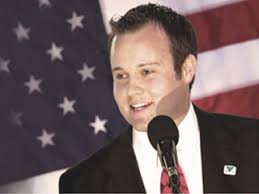
Josh Duggar
As for “Unborn babies are babies”: Those who have not yet been born are fetuses.
While Republicans have waged an almost 50-year war against legalized abortion, they have waged an equally aggressive war against Social Security, Medicare, the Affordable Care Act, food stamps, affordable housing, and aid to the blind and disabled.
In short: They oppose all those programs intended to help those who have been born.
Point 10: Americans will be free to welcome God into all aspects of our lives, and we will stop all government efforts to deny our religious freedom and freedom of speech.
The Democratic party is not trying to “deny our religious freedom and freedom of speech.”
On the contrary: It’s Republicans who have crafted laws to turn claimed religious beliefs into a weapon of discrimination.
A classic example: On March 26, 2015, Indiana’s then-Governor Mike Pence signed into law the Religious Freedom Restoration Act.
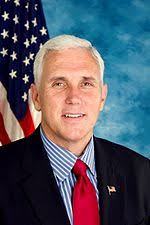
Mike Pence
This allows any individual or corporation to cite its religious beliefs as a defense when sued by a private party.
Thus, a bakery that doesn’t want to make a cake to be used at a gay wedding or a restaurant that doesn’t want to serve lesbian patrons can legally refuse to do so.
Republicans have introduced similar “right-to-discriminate” legislation in other states as well—such as Kansas, Arizona and South Dakota. So far, all have failed to win passage.
Republicans claim they want to “get the government off the backs of the people.” But their fixation on regulating the sexual lives of Americans ensures government intrusions of the most intimate kind.
Point 11: We are Americans, not globalists. America will be dependent on NO other country. We will conduct no trade that takes away jobs or displaces American workers.
This would be laughable except for the bitter truth: Countless numbers of Americans have lost their jobs because their companies deserted the United States for Third World nations like China, Vietnam or Mexico.
There are three reasons for this:
- To pay their employees far less than they would be paid in the United States;
- To avoid American health and safety restrictions on how employees can be treated; and
- To avoid enforcement of quality control regulations which ensure that products are safe and effective for use.
During Donald Trump’s Presidency, the Chinese government granted 18 trademarks to companies linked to him and his daughter, Ivanka, within two months.
In addition, Trump won approval to register three dozen trademarks in China covering everything from bars and hotels to child-care and massage services, raising further concerns over potential conflicts of interest.
From 2005 to 2017, Trump filed for 126 trademarks in China for his business empire.
As for Scott’s claim, “America will be dependent on NO other country”:
Like it or not, the United States can no longer separate itself from the rest of the world.
The ongoing war between Russia and Ukraine has badly affected American imports of grain products from Ukraine. And America’s continued reliance on fossil fuels forces it to depend on despotic Middle East oil kingdoms.
Finally, the Coronavirus pandemic has led to crucial shortages in goods America has long imported: Medicines, electronics, auto parts, solar panels, toys, air conditioners.
Thus, this provision—like the rest of Scott’s plan—runs head-on into the ugliness of sheer reality.
ABC NEWS, ABORTION, AFFORDABLE CARE ACT, AFFORDABLE HOUSING, ALTERNET, AMERICABLOG, AP, BABY BOOMER RESISTANCE, BBC, BLACKS, BLOOMBERG NEWS, BUZZFEED, CBS NEWS, CHINA, CNN, COMMUNISM, CORONAVIRUS, CRIME, CROOKS AND LIARS, DAILY KOZ, DENNIS HASTERT, DONALD TRUMP, DWIGHT D. EISENHOWER, ECONOMY, ELECTION-RIGGING, FACEBOOK, FIVETHIRTYEIGHT, FLORIDA, FOOD STAMPS, FRANCIS BELLAMY, GAYS, GLOBALISM, HARPER’S MAGAZINE, HISPANICS, HUFFINGTON POST, illegal immigration, IMPORTS, JANUARY 6 COUP ATTEMPT, JOSH DUGGAR, KIM JONG-UN, LESBIANS, MEDIA MATTERS, MEDICARE, MEXICO, MIKE PENCE, MOTHER JONES, MOVEON, MSNBC, NBC NEWS, NEW REPUBLIC, NEWSDAY, NEWSWEEK, NORTH KOREA, NPR, NUCLEAR FAMILY, PBS NEWSHOUR, PLEDGE OF ALLEGIANCE, POLITICO, POLITICUSUSA, RAW STORY, RELIGIOUS, RELIGIOUS FREEDOM RESTORATION ACT, REUTERS, RICHARD M. NIXON, RICK SCOTT, RUSSIA, SALON, SEATTLE TIMES, SLATE, SOCIAL SECURITY, SOCIALISM, TALKING POINTS MEMO, THE ATLANTIC, THE CHICAGO SUN-TIMES, THE CHICAGO TRIBUNE, THE DAILY BEAST, THE DAILY BLOG, THE GUARDIAN, THE HILL, THE HUFFINGTON POST, THE INTERCEPT, THE LOS ANGELES TIMES, THE NATION, THE NEW REPUBLIC, THE NEW YORK TIMES, THE NEW YORKER, THE VILLAGE VOICE, THE WASHINGTON POST, THINKPROGRESS, TIME, TRADEMARKS, TRANSGENDERS, TRUTHDIG, TRUTHOUT, TWITTER, TWO POLITICAL JUNKIES, U.S. NEWS & WORLD REPORT, UKRAINE, UPI, USA TODAY, VLADIMIR PUTIN, WONKETTE, XI JINPING
In Bureaucracy, Business, History, Law, Law Enforcement, Medical, Military, Politics, Social commentary on November 22, 2022 at 12:16 am
Florida’s Republican United States Senator Rick Scott’s has an “11 Point Plan to Rescue America”—and catapult himself into the White House.
Point 4: We will secure our border, finish building the wall, and name it after President Donald Trump.
The United States is surrounded by water on three sides—East, West and South. So anyone with a boat can smuggle illegal aliens into the country at any point along its 12,383 miles of coastline.
For those who get seasick, there’s a land route available—not across burning Mexican deserts but under them.
Over the years, officials have found at least 200 tunnels along the 2,000-mile-long U.S.-Mexico border, mostly in Arizona and California. They range from rudimentary crawlspaces to “super tunnels” that cost more than a million dollars and are equipped with elevators, ventilation shafts electric lights, and disguised exits and entrances.

Drug tunnel
U.S. Customs and Border Protection, Public domain, via Wikimedia Commons
Many of those who want to infiltrate the United States can simply fly in.
Wealthy and pregnant Chinese women often fly to the United States to “anchor” themselves via a baby born on American soil. The same is true for many Russian women.
And the Number One cause of illegal immigration: Foreigners’ overstaying their visas. In 2017, more than 600,000 foreigners who legally entered the United States overstayed their visas and remained in the country by the end of the year, according to the Department of Homeland Security.
So a wall is not going to solve America’s problem with illegal immigration.
Point 5: We will grow America’s economy, starve Washington’s economy, and stop Socialism.
When Republicans promise to “grow America’s economy,” they mean: Remove all government controls from business.
In real-world terms, this means corporations will be legally allowed to:
- Ignore existing laws protecting employees from unsafe working conditions;
- Ignore existing laws protecting the environment;
- Produce unsafe goods and fraudulent services;
- Pay their employees the lowest acceptable wages, in return for the “privilege” of working at these companies;
- Discriminate on the basis of race, sex, religion or sexual orientation; and/or
- Pay little or no business taxes, at the expense of communities who are required to make up for lost tax revenues.
Anyone who doubts this need only look at the living standards in “Red”, Republican-governed states such as Florida and Texas.
“Starve Washington’s economy” means: Eliminating programs that Republicans don’t like—starting with Social Security, Medicare and the Affordable Care Act. Anything that benefits ordinary Americans and not multi-billion dollar corporations will be slated for scrapping.
“Stopping socialism” is ludicrous: During his Presidency, Donald Trump’s best friends were Communist dictators: Vladimir Putin (Russia), Kim Jong-Un (North Korea) and Xi Jinping (China).
Trump actually bragged that, after an exchange of letters between himself and the murderous Kim Jong-Un, “We fell in love.”

Kim Jong-Un and Donald Trump
Had a Democratic President made a similar statement, Republicans would have screamed “Treason!” In Trump’s case, they said nothing.
Point 6: We will eliminate all federal programs that can be done locally, and enact term limits for federal bureaucrats and Congress.
As for “enacting term limits for federal bureaucrats and Congress”: This is the party that tried to illegally and treasonously overturn the results of a legitimate Presidential election so its candidate—Donald Trump—could remain in office as “President-for-Life” after losing the vote.
Point 7: We will protect the integrity of American Democracy and stop left-wing efforts to rig elections.
Scott’s platform is worth quoting in full on this issue:
Today’s Democrat Party is trying to rig elections and pack the courts because they have given up on Democracy. They don’t believe they can win based on their ideas, so they want to game the system and legalize voter fraud to stay in power. In true Orwellian fashion, Democrats refer to their election rigging plans as “voting rights”. We won’t allow the radical left to destroy our democracy by institutionalizing dishonesty and fraud.
Immediately after the verdict of the November 3, 2020 Presidential election was announced, President Donald Trump ordered his attorneys to file lawsuits overturning the results.
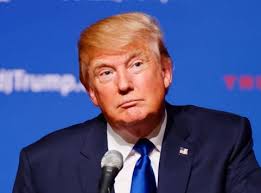
Donald Trump
- Throughout November and December, 2020, cases were filed in Wisconsin, Arizona, Nevada, Michigan, Minnesota and Georgia challenging the election results. None were supported by evidence of fraud—as even Trump’s lawyers admitted when questioned by judges.
- On November 13, nine cases meant to attack President-Elect Joe Biden’s win in key states were denied or dropped. A law firm challenging the vote count in Pennsylvania withdrew from the effort.
- In Michigan, Trump’s attorneys dropped their federal suit to block the certification of Detroit-area ballots.
- By November 21, more than 30 cases were withdrawn by Trump’s attorneys or dismissed by Federal judges—some of them appointed by Trump himself.
Ultimately, from November 3 to December 14, 2020, Trump and his allies lost 59 times in court, either withdrawing cases or having them dismissed by Federal and state judges.
This is the party that, since November, 2020, has sold a lie to millions of Right-wing Americans that the election was “stolen” from Donald trump.
It is Republicans—not Democrats—who have stopped trying to win elections based on their ideas and are now trying to win them by massive voter suppression. It’s hardly a party to be entrusted with election security.
2022 MIDTERM ELECTIONS, ABC NEWS, ABORTION, AFFORDABLE CARE ACT, AFFORDABLE HOUSING, ALTERNET, AMERICABLOG, AP, BABY BOOMER RESISTANCE, BBC, BLACKS, BLOOMBERG NEWS, BUZZFEED, CBS NEWS, CHINA, CNN, COMMUNISM, CORONAVIRUS, CRIME, CROOKS AND LIARS, DAILY KOZ, DENNIS HASTERT, DONALD TRUMP, DWIGHT D. EISENHOWER, ECONOMY, ELECTION DENIERS, ELECTION-RIGGING, FACEBOOK, FIVETHIRTYEIGHT, FLORIDA, FOOD STAMPS, FRANCIS BELLAMY, GAYS, GLOBALISM, HARPER’S MAGAZINE, HISPANICS, HUFFINGTON POST, illegal immigration, IMPORTS, JANUARY 6 COUP ATTEMPT, JOE BIDEN, JOSH DUGGAR, KIM JONG-UN, LESBIANS, MEDIA MATTERS, MEDICARE, MEXICO, MIKE PENCE, MOTHER JONES, MOVEON, MSNBC, NBC NEWS, NEW REPUBLIC, NEWSDAY, NEWSWEEK, NORTH KOREA, NPR, NUCLEAR FAMILY, PBS NEWSHOUR, PLEDGE OF ALLEGIANCE, POLITICO, POLITICUSUSA, RAW STORY, RELIGIOUS, RELIGIOUS FREEDOM RESTORATION ACT, REUTERS, RICHARD M. NIXON, RICK SCOTT, RUSSIA, SALON, SEATTLE TIMES, SLATE, SOCIAL SECURITY, SOCIALISM, TALKING POINTS MEMO, THE ATLANTIC, THE CHICAGO SUN-TIMES, THE CHICAGO TRIBUNE, THE DAILY BEAST, THE DAILY BLOG, THE GUARDIAN, THE HILL, THE HUFFINGTON POST, THE INTERCEPT, THE LOS ANGELES TIMES, THE NATION, THE NEW REPUBLIC, THE NEW YORK TIMES, THE NEW YORKER, THE VILLAGE VOICE, THE WASHINGTON POST, THINKPROGRESS, TIME, TRADEMARKS, TRANSGENDERS, TRUTHDIG, TRUTHOUT, TWITTER, TWO POLITICAL JUNKIES, U.S. NEWS & WORLD REPORT, UKRAINE, UPI, USA TODAY, VLADIMIR PUTIN, WONKETTE, XI JINPING
In Bureaucracy, Business, History, Law, Law Enforcement, Medical, Military, Politics, Social commentary on November 21, 2022 at 12:14 am
For decades, many dissatisfied voters have argued there’s no real difference between the Democratic and Republican parties.
So Rick Scott, former governor of Florida and now a United States Senator from that state, has decided to prove there is a difference between him and every other Presidential candidate.
With the next Presidential election approaching in less than two years, Scott is positioning himself to be the next Republican nominee for that office.
That’s why Scott has crafted “An 11 Point Plan to Rescue America.”
It merits close inspection—because if Scott or someone else with his agenda becomes President of the United States with a united Republican House and Senate behind him, this country will become entirely different from the one that exists today.
It was to prevent that from happening that millions of Democrats—joined by independents and moderate Republicans—turned out in unprecedented numbers on November 8.
For months, Republicans had been predicting that a “Red wave” would sweep Democrats from local, state and Federal offices across the country. Their strategy centered on propagating “The Big Lie” that President Donald Trump was robbed of victory in 2020 by massive voter fraud.
This was of course the authentic voice of former President Trump. Despite four years of lies, crime and treason, he remains in command of the Republican party.
And how did that strategy work out? No candidate who denied the legitimacy of the 2020 election won a 2022 race to run future elections in a swing state.
These include:
- Eight nominees for state elections chief;
- Thirteen nominees for governor;
- Eight nominees for United States Senator.

Rick Scott
Republicans have been stunned by their unexpected losses. The party out of power usually does well in midterm elections. Add to this the fact that President Joe Biden was widely seen as unpopular even among Democrats—and therefore vulnerable.
Nevertheless, Scott remains convinced that he has crafted the winning formula for Republicans—and for his election as President in 2024.
Its provisions follow.
Point 1: Our kids will say the pledge of allegiance, salute the Flag, learn that America is a great country, and choose the school that best fits them.
Like so many Right-wingers, Scott is apparently unaware that the Pledge of Allegiance was written in August, 1892, by the socialist minister Francis Bellamy. He hoped that the pledge would be used by citizens in any country, not just the United States.

Francis Bellamy
In its original form it read:
“I pledge allegiance to my Flag and the Republic for which it stands, one nation, indivisible, with liberty and justice for all.”
In 1923, the words, “the Flag of the United States of America” were added.
In 1954, President Dwight D. Eisenhower encouraged Congress to add the words “under God,” to distinguish Americans from “Godless” Communists.
“Learn that America is a great country” conjures up images of the propaganda force-fed to students of the former Soviet Union—and now in Russia. Just as Russians are taught that their military has never fought an aggressive war, so, too, do Republicans want to erase the subject of slavery and its long-term effects on society from American classrooms
Point 2: Government will never again ask American citizens to disclose their race, ethnicity, or skin color on any government forms.
Republicans have made race—as a source of friction between voters—a crucial part of their electoral campaigns. As far back as 1968, Richard Nixon campaigned on a “Southern strategy”—of stoking white fears of blacks.
It was this that won Nixon the Presidency in 1968 and 1972 and the White House for George H.W. Bush in 1988.
As blacks have gained in population and political clout, they have been succeeded by Hispanics as the Great Enemy for Republicans.
The top priority for Donald Trump—both as a Presidential candidate and President—was building a wall along the U.S.-Mexico border. That this would not have stopped illegal immigration meant nothing to him—or his millions of Right-wing followers.
Without a way to track the growth rates of nonwhites, Republicans won’t know how to target their self-declared enemies.
Point 3: The soft-on-crime days of coddling criminal behavior will end. We will re-fund and respect the police because they, not the criminals, are the good guys.
On January 6, 2021, “law and order” President Donald Trump incited a mob to attack the United States Capitol Building. Inside, members of Congress were meeting to count and certify Electoral College votes for the 2020 Presidential election.
Trump had clearly lost that election in November, yet for the previous two months he had repeatedly and falsely claimed he was the victim of a “rigged” election. His followers, believing that lie, intended to overturn the results of a legitimate election.
After more than three hours, police—using riot gear, shields and batons—retook control of the Capitol. More than 150 officers were injured in the attack by “law and order” Republicans.

January 6, 2021 coup attempt
TapTheForwardAssist, CC BY-SA 4.0 <https://creativecommons.org/licenses/by-sa/4.0>, via Wikimedia Commons
Even after the failed coup, 147 House and Senate Republicans voted to overturn the election.
Not the sort of behavior calculated to instill respect for the rule of law.
2016 PRESIDENTIAL ELECTION, 2020 PRESIDENTIAL ELECTION, 60 MINUTES, ABC NEWS, ALTERNET, AMERICABLOG, AP, BABY BOOMER RESISTANCE, BALLOTS, BBC, BLOOMBERG NEWS, BUZZFEED, CBS NEWS, CHRIS KREBS, CIA, CNN, CRIMINALITY, CROOKS AND LIARS, CYBERSECURITY INFRASTRUCTURE SECURITY AGENCY (CISA), DAILY KOZ, DEPARTMENT OF DEFENSE CYBER COMMAND, DEPARTMENT OF HOMELAND SECURITY (DHS), DONALD TRUMP, DRUDGE REPORT, ELECTION ASSISTANCE COMMISSION, ELECTION SECURITY, ELECTORAL COLLEGE, FACEBOOK, FBI, FIVETHIRTYEIGHT, HACKING, HARPER’S MAGAZINE, HILLARY CLINTON, HUFFINGTON POST, JOE BIDEN, Kamala Harris, MEDIA MATTERS, MICROSOFT, MIKE PENCE, MOTHER JONES, MOVEON, MSNBC, NATIONAL SECURITY AGENCY, NBC NEWS, NEW REPUBLIC, NEWSDAY, NEWSWEEK, NPR, PBS NEWSHOUR, POLITICO, POLITICUSUSA, POPULAR VOTE, PROPAGANDA, RAW STORY, REUTERS, RUSSIA, SALON, SCOTT PELLEY, SEATTLE TIMES, Secret Service, SLATE, TALKING POINTS MEMO, THE ATLANTIC, THE CHICAGO SUN-TIMES, THE CHICAGO TRIBUNE, THE DAILY BEAST, THE DAILY BLOG, THE GUARDIAN, THE HILL, THE HUFFINGTON POST, THE LOS ANGELES TIMES, THE NATION, THE NEW REPUBLIC, THE NEW YORK TIMES, THE NEW YORKER, THE VILLAGE VOICE, THE WASHINGTON POST, THINKPROGRESS, TIME, TIME MAGAZINE, TIME MAGAZINIE’S PERSON OF THE YEAR, TREASON, TRUTHDIG, TRUTHOUT, TWITTER, TWO POLITICAL JUNKIES, U.S. NEWS & WORLD REPORT, UNITED STATES HOUSE OF REPRESENTATIVES, UNITED STATES SENATE, UPI, USA TODAY, VLADIMIR PUTIN, WONKETTE
In Bureaucracy, History, Law, Law Enforcement, Politics, Social commentary on November 18, 2022 at 12:13 am
As a result of the vast increase in election security, President Donald Trump failed to get the help he expected from Russian dictator Vladimir Putin.
The result: He lost the 2020 Presidential election.
Thus, Joe Biden won the popular vote by 81,268,924 to 74,216,154 for Trump—and the Electoral College by 306 to 232.
Two days later, Trump claimed: “And this is a case where they’re trying to steal an election, they’re trying to rig an election.”
Chris Krebs was the director of the Cybersecurity and Infrastructure Security Agency (CISA) run by the Department of Homeland Security (DHS). And the man most responsible for ensuring election security.
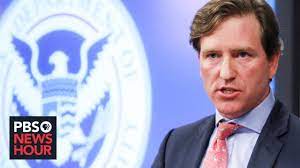
Chris Krebs
On November 12, to counter the growing chorus of lies from Trump and his Right-wing allies, he put out the following statement:
“The November 3rd election was the most secure in American history. There is no evidence that any voting system deleted or lost votes, changed votes, or was in any way compromised.”
On November 17, Trump fired Chris Krebs.
Too cowardly to confront Krebs, Trump fired him by tweet—and accompanied the outrage with yet another lie:
“The recent statement by Chris Krebs on the security of the 2020 election was highly inaccurate, in that there were massive improprieties and fraud, including dead people voting, poll watchers not allowed into polling locations, glitches in the voting machines which changed votes from Trump to Biden, late voting, and many more.
“Therefore, effective immediately, Chris Krebs has been terminated as director of the Cybersecurity and Infrastructure Security Agency.”
Donald Trump
Asked by “60 Minutes'” Scott Pelley if he was surprised to be fired, Krebs replied: “I don’t know if I was necessarily surprised. It’s not how I wanted to go out. The thing that upsets me the most about that is I didn’t get a chance to say goodbye to my team.
“And I’d worked with them for three and a half years, in the trenches. Building an agency, putting CISA on the national stage. And I love that team. And I didn’t get a chance to say goodbye, so that’s what I’m most upset about.”
Krebs was no dyed-in-the-wool Democrat but a life-long Republican. He gave up a lucrative job as Microsoft’s head of cybersecurity policy to join the Trump administration. He wanted to serve his country by creating a dedicated cybersecurity agency for the first time.
Still, he had his reservations about taking the job. As he told the Financial Times: “The flaws of this man [Trump] were obvious to everybody that was willing to pay attention. [But] to do your job, you have to be able to compartmentalize. I was willing to do that.
“Over time, it eats away at you. It eats away at you, the other parts of the department that were doing stuff that just seemed so inhumane. I was never involved in any of those policy conversations.”
By January 6, 2021, Trump had exhausted his legal efforts to overturn the results of the 2020 election.
From November 3 to December 14, Trump and his allies lost 59 times in court, either withdrawing cases or having them dismissed by Federal and state judges.
Of these attempts to challenge the results of the 2020 election, Krebs told Pelley:
“It was upsetting because what I saw was an apparent attempt to undermine confidence in the election, to confuse people, to scare people. It’s not me, it’s not just CISA. It’s the tens of thousands of election workers out there that had been working nonstop, 18-hour days, for months.
“They’re getting death threats for trying to carry out one of our core democratic institutions, an election. And that was, again, to me, a press conference that I just– it didn’t make sense. What it was actively doing was undermining democracy. And that’s dangerous.”
On January 6, the United States Senate, with Vice President Mike Pence presiding, met to certify states’ Electoral College results of the 2020 election.
That morning, Trump urged Pence to flip the results of the election to give him a win.
Pence replied that he lacked the power to overturn those results.
At noon, Trump appeared at the Ellipse, a 52-acre park south of the White House fence. A stage had been set up for him to address tens of thousands of his supporters, who eagerly awaited him.
Trump ordered them to march on the Capitol building to express their anger at his loss—and thus intimidate Congressional officials to reject the results.
The Stormtrumpers marched to the United States Capitol—and quickly brushed aside Capitol Police, who made little effort to arrest or shoot them.
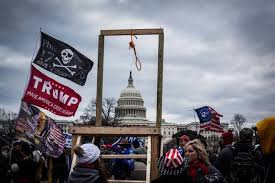
The “Jolly Roger” meets Donald Trump
Three hours passed before the mob was dispersed and order was restored.
Yet for all the terrible drama of that day, the true hero of the moment went unrecognized.
By depriving Trump of Russian help, Chris Krebs had ensured a victory for democracy.
On the evening of January 6, the House and Senate met again to count the Electoral Votes.
And as expected, the two bodies pronounced Joseph Biden the winner—bringing an end to Donald Trump’s reign of criminality and treason.
2016 PRESIDENTIAL ELECTION, 2020 PRESIDENTIAL ELECTION, 60 MINUTES, ABC NEWS, ALTERNET, AMERICABLOG, AP, BABY BOOMER RESISTANCE, BALLOTS, BBC, BLOOMBERG NEWS, BUZZFEED, CBS NEWS, CHRIS KREBS, CIA, CNN, CRIMINALITY, CROOKS AND LIARS, CYBERSECURITY INFRASTRUCTURE SECURITY AGENCY (CISA), DAILY KOZ, DEPARTMENT OF DEFENSE CYBER COMMAND, DEPARTMENT OF HOMELAND SECURITY (DHS), DONALD TRUMP, DRUDGE REPORT, ELECTION ASSISTANCE COMMISSION, ELECTION SECURITY, ELECTORAL COLLEGE, FACEBOOK, FBI, FIVETHIRTYEIGHT, HACKING, HARPER’S MAGAZINE, HILLARY CLINTON, HUFFINGTON POST, JOE BIDEN, Kamala Harris, MEDIA MATTERS, MICROSOFT, MIKE PENCE, MOTHER JONES, MOVEON, MSNBC, NATIONAL SECURITY AGENCY, NBC NEWS, NEW REPUBLIC, NEWSDAY, NEWSWEEK, NPR, PBS NEWSHOUR, POLITICO, POLITICUSUSA, POPULAR VOTE, PROPAGANDA, RAW STORY, REUTERS, RUSSIA, SALON, SCOTT PELLEY, SEATTLE TIMES, Secret Service, SLATE, TALKING POINTS MEMO, THE ATLANTIC, THE CHICAGO SUN-TIMES, THE CHICAGO TRIBUNE, THE DAILY BEAST, THE DAILY BLOG, THE GUARDIAN, THE HILL, THE HUFFINGTON POST, THE LOS ANGELES TIMES, THE NATION, THE NEW REPUBLIC, THE NEW YORK TIMES, THE NEW YORKER, THE VILLAGE VOICE, THE WASHINGTON POST, THINKPROGRESS, TIME, TIME MAGAZINE, TIME MAGAZINIE’S PERSON OF THE YEAR, TREASON, TRUTHDIG, TRUTHOUT, TWITTER, TWO POLITICAL JUNKIES, U.S. NEWS & WORLD REPORT, UNITED STATES HOUSE OF REPRESENTATIVES, UNITED STATES SENATE, UPI, USA TODAY, VLADIMIR PUTIN, WONKETTE
In Bureaucracy, History, Law Enforcement, Politics, Social commentary on November 17, 2022 at 12:10 am
TIME’s Person of the Year for 2020 proved to be two people: Joe Biden and Kamala Harris.
On the surface, choosing Biden and Harris made sense: “Joe Biden was elected President of the United States in the midst of an existential debate over what reality we inhabit. Perhaps the only thing Americans agree on right now is that the future of the country is at stake, even as they fiercely disagree about why.”
As for the shared legacy of Biden and Harris: “If Donald Trump was a force for disruption and division over the past four years, Biden and Harris show where the nation is heading: a blend of ethnicities, lived experiences and worldviews that must find a way forward together if the American experiment is to survive.”

Yet a lesser-known but far more consequential choice for “Person of the Year” would have been Chris Krebs.
Because, without Chris Krebs, there would not now be a Biden Presidency.
During the 2016 Presidential race, Russian propaganda played a major role in convincing millions of Americans to vote for Donald Trump. Social media platforms—especially Facebook and Twitter—were flooded with genuinely fake news to sow discord among Americans and create a pathway for Trump’s election.
And where Internet trolls left off, Russian computer hackers took over.
Hillary Clinton won the popular vote—65,853,514 to 62,984,828 for Trump. But in the United States, what counts in Presidential elections is the Electoral College vote.
And there Trump won: 304 to 227.
What put him over the top in the Electoral College was the help he got from Russian dictator Vladimir Putin.
Putin had good reason to assist Trump: Putin wanted the United States to ditch the North Atlantic Treaty Organization (NATO) alliance, which has preserved Western Europe from Russian aggression since World War II. And Trump had often attacked America’s funding of NATO as a drain on the American economy.
As for Trump, he wanted something from Putin: He wanted to be President. For this, Putin could supply monies, Internet trolls to confuse voters with falsified news, and even the hacking of key voting centers.
So notorious was the role played by Russian trolls and hackers in winning Trump the 2016 election that the Department of Homeland Security (DHS) was determined to prevent a repetition in 2020.
And the point man for this was Chris Krebs, the director of the Cybersecurity and Infrastructure Security Agency (CISA) run by DHS.
Born in Atlanta, Georgia, in 1977, Krebs had received a B.A. in environmental sciences from the University of Virginia in 1999, and a J.D. from the George Mason University School of Law in 2007.
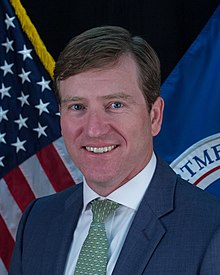
Chris Krebs
Krebs had served as Senior Advisor to the Assistant Secretary of Homeland Security for Infrastructure Protection, and later worked in the private sector as Director for Cybersecurity Policy for Microsoft.
In preparation for the 2020 Presidential election, Krebs launched a massive effort to counter lies spread by Russians—and Americans—on social media platforms. As he explained to Scott Pelley during a “60 Minutes” interview aired on November 29, 2020:
“So we spent something on the order of three and a half years of gaming out every possible scenario for how a foreign actor could interfere with an election. Countless, countless scenarios.”
Krebs’ to-do list included paper ballots:
“Paper ballots give you the ability to audit, to go back and check the tape and make sure that you got the count right. And that’s really one of the keys to success for a secure 2020 election. Ninety-five percent of the ballots cast in the 2020 election had a paper record associated with it. Compared to 2016, about 82%.
“That gives you the ability to prove that there was no malicious algorithm or hacked software that adjusted the tally of the vote, and just look at what happened in Georgia. Georgia has machines that tabulate the vote. They then held a hand recount and the outcome was consistent with the machine vote.”
Krebs’ duties included:
- Sharing intelligence from agencies such as the CIA and National Security Agency with local officials about foreign efforts at election interference.
- Ensuring that domestic voting equipment was secure.
- Attacking domestic misinformation head-on.
At his command lay the resources of a series of powerful Federal investigative agencies:
“We had the Department of Defense Cyber Command. We had the National Security Agency. We had the FBI. We had the Secret Service. We also had representatives from the Election Assistance Commission, which is the federal independent agency that supports the actual administration of elections.
“We had representatives from some of the election equipment vendors. And they’re critical because they’re the ones out there that know what’s going on on the ground if there’s any sort of issue with some of their systems. And we had representatives from state and local governments.”
Misinformation led CISA to create a new “Rumor Control” website ahead of the 2020 election. Its main goal was to debunk rumors surrounding the 2020 election that had been spreading throughout the country.
As a result, Krebs was widely praised for revamping the department’s cybersecurity efforts and increasing coordination with state and local governments.
By all accounts—except Donald Trump’s—the November 3, 2020 election went very smoothly.
2022 MIDTERM ELECTIONS, ABC NEWS, ABORTION, ALTERNET, AMERICABLOG, AP, BABY BOOMER RESISTANCE, BARACK OBAMA, BBC, BLOOMBERG NEWS, BUREAU OF JUSTICE STATISTICS, BUZZFEED, CBS NEWS, CHILD TAX CREDITS, CNN, COVID-19, CRIME, CROOKS AND LIARS, DAILY KOS, DAVID DEPAPE, DEMOCRATS, DEPARTMENT OF HOMELAND SECURITY, DONALD TRUMP, EXTORTION, FBI, FIVETHIRTYEIGHT, GAS, GAS PRICES, HARPER’S MAGAZINE, HUFFINGTON POST, illegal immigration, INFLATION, INSULIN, JAMAL KHASHOGGI, JOE BIDEN, MASS SHOOTINGS, MEDIA MATTERS, MERRICK GARLAND, MOHAMMED BIN SALMAN, MOTHER JONES, MOVEON, MSNBC, NANCY PELOSI, NBC NEWS, NEW REPUBLIC, NEWSDAY, NEWSWEEK, NPR, OPEC, PAUL PELOSI, PBS NEWSHOUR, POLITICO, POLITICUSUSA, PRESCRIPTION DRUGS, PRICES INCREASES, QANON, Racketeer Influenced Corrupt Organizations (RICO) Act, RAW STORY, REPUBLICANS, REUTERS, RUSSIA, SALON, SAUDI ARABIA, SEATTLE TIMES, SLATE, STIMULUS CHECKS, TALKING POINTS MEMO, TAX CUTS AND JOBS ACT OF 2017, THE ATLANTIC, THE CHICAGO SUN-TIMES, THE CHICAGO TRIBUNE, THE DAILY BEAST, THE DAILY BLOG, THE GUARDIAN, THE HILL, THE HUFFINGTON POST, THE INTERCEPT, THE LOS ANGELES TIMES, THE NATION, THE NEW REPUBLIC, THE NEW YORK TIMES, THE NEW YORKER, THE VILLAGE VOICE, THE WASHINGTON POST, THINKPROGRESS, TIME, TRUTHDIG, TRUTHOUT, TWITTER, U.S. NEWS & WORLD REPORT, UNITED STATES DEPARTMENT OF JUSTICE, UPI, USA TODAY
In Bureaucracy, Business, History, Law, Law Enforcement, Politics, Social commentary on November 8, 2022 at 12:16 am
During the 2022 midterm elections, Republicans ran—as usual—on the basis of hate and fear. And Democrats—as usual—ran as on the basis of cowardice and naivety.
On June 24, when six Right-wing Justices on the Supreme Court finally banned legalized abortion, Democrats believed they had a sure issue-winner come November.
But in the months since then, momentum has steadily swung to the Republicans. They have blamed President Joe Biden—and Democrats generally—for the following:
- Inflation;
- Crime;
- Illegal immigration.
While all of these have proven popular with voters, they reveal a tide of ignorance and unrealism among the electorate. Consider:
Inflation: This is a worldwide problem, not simply an American one. Some of this can be blamed on the continuing COVID-19 pandemic. But another reason is simply old-fashioned corporate greed—and the refusal of the Federal Government to attack it.
According to the Commerce Department’s Bureau of Economic Analysis (BEA): From May to August, corporate profit margins were the widest since the 1950s. During the second quarter of 2022 companies continued jacking up prices. This pushed inflation to a 40-year high at the expense of workers and consumers.
“We can argue until the cows come home about the cause of inflation,” writes Chris Becker, senior economist at the Groundwork Collaborative. “But we can’t lose sight of the basic moral point that it is outrageous that corporations are seeing skyrocketing profits while purchasing power for so many American households is declining.”
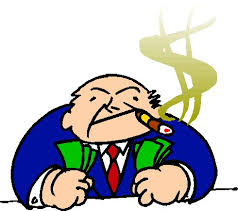
The Justice Department could deal with this through RICO—the Racketeer Influenced Corrupt Organizations Act. Corporations guilty of extortion—such as those that have priced insulin out of the reach of most Americans—could be prosecuted for extortion.
That would not only bring prices down but serve as a warning for future greed-fueled corporations.
But it takes more than laws to protect the citizens of a nation; it takes prosecutorial courage to enforce those laws. And in Attorney General Merrick Garland, that courage is pathetically lacking.
Republicans claim to have a “plan” for turning around this situation. Yet they have repeatedly voted against:
- Cheaper gas
- Cheaper insulin
- Cheaper prescription drugs
- Stimulus checks
- Child tax credits
In November, 2017, Donald Trump and a Republican-dominated House and Senate rammed the Tax Cuts and Jobs Act of 2017 through Congress.
According to Chye-Ching Huang, Director of Federal Fiscal Policy, the law:
- Encouraged rampant tax avoidance and gaming that undermines the integrity of the tax code.
- Left behind low- and moderate-income Americans.
- Cut the corporate tax rate from 35% to 21%.
- Allowed multinational corporations’ foreign profits to go largely untaxed.
- Benefitted overwhelmingly wealthy shareholders and highly paid executives.
Yet poor and middle-class Americans remain ignorant of this and believe Republicans truly care about them.
One symptom of inflation that especially infuriates Americans: High prices for gas.
In October, Saudi Arabia and Russia steered a group of oil-producing countries in voting to slash oil production by two million barrels per day. OPEC wants to prop up oil prices as global demand slows down.

Mohammed bin Salman Al Saud
Kremlin.ru, CC BY 4.0 <https://creativecommons.org/licenses/by/4.0>, via Wikimedia Commons
The Biden administration tried to persuade OPEC countries to not cut oil output. But Saudi Arabia—the biggest member of the oil-producing cartel—refused.
Some commentators believe that Saudi Crown Prince Mohammed bin Salman was primarily responsible for this. Biden had once pledged to treat Salman as a “pariah” after the brutal murder of journalist Jamal Khashoggi.
Yet there is nothing Biden can do—short of invading Saudi Arabia and taking control of its oil fields.
(President Donald Trump said the United States should have done this after it invaded Iraq.)
Crime: According to the Pew Research Center: Around six-in-10 registered voters (61%) say violent crime is very important when making their decision about who to vote for in this year’s congressional elections.
The Bureau of Justice Statistics, however, reports no recent increase in the U.S. violent crime rate. The FBI also estimates that there was no increase in the violent crime rate in 2021.
There has been a record number of mass shootings in the United States—622 by October. But while Republicans rail against violent crime, they consistently block all efforts to curb the sale of semi-automatic weaponry to anyone who wants it.

AR-15 Rifle
Moreover, while Federal law enforcement agencies—especially the FBI—receive major news coverage, most crime occurs at the local level. The Federal Government has no role to play in it—unless the violation occurs on Federal property or involves a Federal official.
Illegal Immigration: For Republicans, illegal aliens come exclusively from Central and Latin American countries.
Yet David DePape, who assaulted Paul Pelosi, the husband of House Speaker Nancy Pelosi, is a Canadian who overstayed his visa.
According to the latest report from the Department of Homeland Security (DHS), overstayers numbered more than 500,000 in 2020. They represent up to 40% of the total illegal alien population.
Moreover, dealing with illegal alien invasions is a problem that confronts every President, Republican and Democrat.
President Barack Obama was often attacked by immigration groups as the “Deporter in Chief.” Between 2009 and 2015, his administration removed more than 2.5 million people through immigration orders.
According to government data, the Obama administration deported more people than any other administration in history.
Yet, for Republicans, “the crisis at the border” will always remain a rallying cry—as long as it’s aimed at Hispanics.
2016 PRESIDENTIAL CAMPAIGN, ABC NEWS, ADOLF HITLER, AL CAPONE, ALTERNET, AMERICABLOG, AP, BABY BOOMER RESISTANCE, BARACK OBAMA, BBC, BLOOMBERG NEWS, BUZZFEED, CBS NEWS, CNN, COVID-19, CROOKS AND LIARS, DAILY KOS, DONALD TRUMP, FBI, FIFTH AMENDMENT, FIVETHIRTYEIGHT, HARPER’S MAGAZINE, HILLARY CLINTON, HUFFINGTON POST, JAMES COMEY, JOSEPH STALIN, LETITIA JAMES, LIBEL, MEDIA MATTERS, MOTHER JONES, MOVEON, MSNBC, NAZI GERMANY, NAZI-SOVIET NON-AGGRESSION PACT, NBC NEWS, NEW REPUBLIC, NEW YORK ATTORNEY GENERAL'S OFFICE, NEW YORK TIMES V. SULLIVAN, NEWSDAY, NEWSWEEK, NPR, NUCLEAR WEAPONS, PBS NEWSHOUR, POLITICO, POLITICUSUSA, RAW STORY, REUTERS, RUSSIA, SALON, SEATTLE TIMES, SLATE, TALKING POINTS MEMO, THE ATLANTIC, THE CHICAGO SUN-TIMES, THE CHICAGO TRIBUNE, THE DAILY BEAST, THE DAILY BLOG, THE GUARDIAN, THE HILL, THE HUFFINGTON POST, THE INTERCEPT, THE LOS ANGELES TIMES, THE NATION, THE NEW REPUBLIC, THE NEW YORK TIMES, THE NEW YORKER, THE SS, THE VILLAGE VOICE, THE WASHINGTON POST, THINKPROGRESS, THIRD REICH, TIME, TREASON, TRUMP FOUNDATION, TRUMP TOWER MEETING, TRUMP UNIVERSITY, TRUTHDIG, TRUTHOUT, TWITTER, U.S. NEWS & WORLD REPORT, UKRAINE, UNITED STATES SUPREME COURT, UPI, USA TODAY, VLADIMIR PUTIN, VOLODYMYR ZELENSKY, WEHRMACHT, WORLD WAR 11
In Business, History, Law, Medical, Politics, Social commentary on November 2, 2022 at 12:14 am
On October 3, former President Donald Trump filed a lawsuit against CNN for defamation.
Seeking $475 million in punitive damages, he charged the network with conducting a “campaign of libel and slander” against him.
Trump is claiming that CNN had used its influence to defeat him politically.
“As a part of its concerted effort to tilt the political balance to the left, CNN has tried to taint the Plaintiff with a series of ever-more scandalous, false, and defamatory labels of ‘racist,’ ‘Russian lackey,’ ‘insurrectionist,’ and ultimately ‘Hitler,'” the lawsuit claims.
The lawsuit focuses largely on CNN’s use of the term, “The Big Lie,” to describe Trump’s false claims that widespread voter fraud cost him the 2020 Presidential election.
The phrase dates from Adolf Hitler’s use of it in his autobiography, Mein Kampf: People “more readily fall victims to the big lie than the small lie, since they themselves often tell small lies in little matters but would be ashamed to resort to large-scale falsehoods.”
Trump’s lawsuit claims “The Big Lie” has been used in referring to him more than 7,700 times on CNN since January, 2021.
In addition, the lawsuit cites instances where CNN compared Trump to Hitler. In a January, 2022 report, Fareed Zakaria provided footage of Germany’s dictator.

So what are his odds of winning? Far less than your own of finding loose change in sofa cushions.
First: Donald Trump is a public figure—arguably the most public figure in the world. Plaintiffs who are public figures or government officials must prove themselves victims of actual malice to collect damages.
In the landmark case, New York Times v. Sullivan (1964) the Supreme Court declared that actual malice occurs when a statement is made “with knowledge that it was false or with reckless disregard of whether it was false or not.”
This is a more stringent standard than private citizens have to meet, which is negligence.
Second: Truth is an absolute defense against libel (unless the plaintiff is suing for invasion of privacy). And Trump’s history as a liar, criminal and traitor has been thoroughly established.
Liar:
- He created the lie that Barack Obama—whose birth certificate states unequivocally that he was born in Hawaii—was not an American citizen. The reason: To de-legitimize Obama as a Presidential candidate and President.
- Throughout 2020, he repeatedly lied about the dangers of COVID-19—attacking medical experts who urged citizens to mask up and social distance. As a result, by the time he left office, 400,000 Americans had died of COVID.
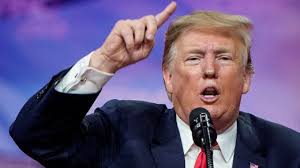
Donald Trump
Criminal:
- He has been forced to shut down his Trump Foundation and forced to pay more than $2 million in court-ordered damages to eight different charities for illegally misusing charitable funds at the Foundation for political purposes.
- He was also forced to close his unaccredited Trump University for scamming its students. He had promised to teach them “the secrets of success” in the real estate industry—then delivered nothing. In 2016, a federal court approved a $25 million settlement with many of those students.
Traitor:
- On July 9, 2016, high-ranking members of his Presidential campaign met at Trump Tower with at least two lobbyists who had ties to Russian dictator Vladimir Putin. The reason: To obtain “dirt” on Democratic candidate Hillary Clinton.
- On July 27, 2016, Trump said at a press conference in Doral, Florida: “Russia, if you’re listening, I hope you are able to find the 30,000 emails that are missing [from Democratic Presidential candidate Hillary Clinton’s computer]. I think you will probably be rewarded mightily by our press.”
These incidents were nothing less than treason—inviting a foreign power, hostile to the United States, to interfere in its Presidential election.
Third—and perhaps the most important of all: In a libel suit, the plaintiff must answer—under oath—all questions put to him by the defendant’s attorneys.
Trump, better than anyone, knows the depths of his own criminality. Just as Al Capone knew his notoriety for evil would make it impossible for him to win a libel suit, so does Trump.
On August 10, he invoked his Fifth Amendment privilege against self-incrimination nearly 450 times during a deposition at the office of New York Attorney General Letitia James, in its probe into the Trump Organization’s business practices.
He would not be allowed to do so as a litigant in a libel suit.
Moreover, he has a history of threatening to file lawsuits—and then failing to do so.
During the 2016 Presidential campaign, at least 12 women publicly accused him of sexually inappropriate behavior—if not assault.
Trump’s reaction: “All of these liars will be sued after the election is over.”
Six years later, he has not filed a single lawsuit for defamation.
So why has he filed a defamation suit against CNN?
Money—not by winning an impossible lawsuit, but by raising it from his gullible and Fascistic followers.
He will claim—once again—that he’s being persecuted and that “they’re not coming after me, they’re coming after you.”
And his millions of media-hating followers will gladly pony up money they will never see again.
If he loses the lawsuit—or pulls out of it—he will claim he’s the victim of “the deep-state establishment.”
And ask his followers for even more money—which they’ll cough up.
2016 PRESIDENTIAL CAMPAIGN, ABC NEWS, ADOLF HITLER, ALTERNET, AMERICABLOG, AP, BABY BOOMER RESISTANCE, BERNIE SANDERS, BUZZFEED, CARLY FIORINA, CBS NEWS, CNN, COVID-19, CROOKS AND LIARS, DAILY KOS, DAVID BROOKS, DEMOCRATIC PARTY, DENNIS HASTERT, DONALD TRUMP, ELIZABETH WARREN, FIVETHIRTYEIGHT, HILLARY CLINTON, JEB BUSH, JOHN KASICH, JOHNNY B. GOOD (SONG), JOSEPH MCCARTHY, JOSH DUGGAR, LIBERALS, MARCO RUBIO, MARJORIE TAYOR GREENE, MARK SHIELDS, MAXINE WATERS, MEGYN KELLY, MICHELLE OBAMA, MOTHER JONES, MOVEON, MSNBC, NANCY PELOSI, NBC NEWS, NEWSWEEK, NEWT GINGRICH, NPR, PBS NEWSHOUR, POLITICO, POLITICUSUSA, RAW STORY, REPUBLICAN PARTY, REPUBLICANS, REUTERS, RICK PERRY, RUSSIA, SALON, SEATTLE TIMES, SLANDER, SLATE, TALKING POINTS MEMO, THE ATLANTIC, THE CHICAGO SUN-TIMES, THE CHICAGO TRIBUNE, THE DAILY BEAST, THE DAILY BLOG, THE GUARDIAN, THE HILL, THE HUFFINGTON POST, THE LOS ANGELES TIMES, THE NATION, THE NEW YORK TIMES, THE RAINBOW CONNECTION (SONG), THE WASHINGTON POST, THINKPROGRESS, TIME, TRUTHDIG, TWITTER, U.S. NEWS & WORLD REPORT, UPI, USA TODAY, VLADIMIR PUTIN, YOUTUBE
In Bureaucracy, History, Humor, Politics, Social commentary on October 27, 2022 at 12:10 am
Words are weapons—or can be, if used properly.
Republicans learned this truth after World War II.
- Richard Nixon became a United States Senator in 1950 by attacking Helen Gahagen Douglas as “The Pink Lady.”
- from 1954 onward, Senator Joseph R. McCarthy and other Red-baiting Republicans essentially paralyzed the Democratic party through such slanderous terms as “Comsymps,” “fellow-travelers” and “Fifth Amendment Communists.”
Pulitzer-Prize winning author David Halberstam summed up the effectiveness of such tactics in his monumental study of the origins of the Vietnam War, The Best and the Brightest:
“But if they did not actually stick, and they did not, [Joseph McCarthy’s] charges had an equally damaging effect: They poisoned. Where there was smoke, there must be fire. He wouldn’t be saying these things [voters reasoned] unless there was something to it.”
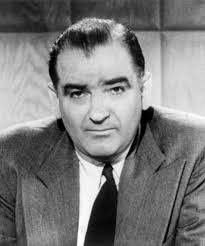
Joseph McCarthy
As a whole, Democrats have proven indifferent to or ignorant of the power of effective language.
President Donald Trump solicited Russian Communist aid to win the Presidency in 2016. He solicited aid from Chinese Communists to retain it in 2020.
He attacked countless Americans and world leaders—including those presiding over America’s NATO alliance. But he has never even criticized Russian dictator Vladimir Putin.
Yet even with such clear-cut evidence, Democrats refused to directly accuse him of treason, as in:
- “TrumPutin”
- “Commissar-in-Chief”
- “Putin’s Poodle”
- “Red Donald”
- “Putin’s Puppet”
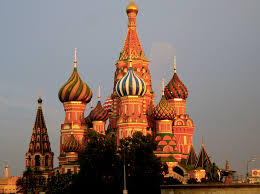
The Kremlin
Similarly, Trump has gotten a free pass on treason from the news media. None have dared suggest the obvious: That he moved boxes of classified documents to his Mar-a-Lago estate to sell them to America’s enemies in exchange for huge sums to pay his upcoming legal bills.
During the COVID-19 pandemic, Trump repeatedly lied about its lethality and opposed the use of masks and social distancing to combat it. As a result, 400,000 Americans had died by the time he left office.
Yet no Democrat has dared label him “Coronavirus-in-Chief.”
Nor has the news media directly held him accountable for those deaths.
Tyrants are conspicuously vulnerable to ridicule. Yet here, too, Democrats have proven unable or unwilling to make use of this powerful weapon.
In this YouTube-obsessed age, Democrats could effectively assail Trump with a series of ridiculing videos. For example, Trump’s well-established “bromance” with Putin could be turned into a parody of the famous song, “Johnny B. Good”:
Way back inside the Kremlin where the lights glow red
There ruled a man named Putin who would poison you dead.
He came up with a plan to make his Russia great
And all it took was bribes and Republican hate.
And Trumpy was a man who couldn’t read or spell
But he could sell out his land just like he’s ringing a bell.

Many of Trump’s fiercest defenders in the House and Senate have taken “campaign contributions” (i.e., bribes) from Russian oligarchs linked to Putin. They could be pointedly attacked by turning the Muppet song, “The Rainbow Connection,” into “The Russian Connection.”
Why are there so many tales about Russians
And Right-wingers taking bribes?
Russians are Commies and have lots of rubles
For traitors with something to hide.
So I’ve been told and some choose to believe it
It’s clear as the old KGB.
Someday we’ll find it
The Russian Connection—
The bribers, the traitors—you’ll see.
A continuing theme among Republican politicians is that they are paragons of religious virtue, while Democrats are champions of Satan.
Yet Democrats have done nothing to publicize such truths as:
- Former Speaker of the House Newt Gingrich is a serial adulterer.
- Former Speaker Dennis Hastert is a convicted sodomizer of teenage boys.
- Josh Duggar, a Right-wing star of the high-rated “reality” series, 19 Kids and Counting, has been sentenced to 12 years’ imprisonment for possessing child pornography.
- Georgia Representative Marjorie Taylor Greene, has boasted: “Marriage is a wonderful thing and I’m a firm believer in it.” Yet she engaged in open affairs with at least two members of her local gym—for which Perry Greene is now divorcing her.
Most Americans don’t follow political news closely—and know nothing of such revelations.
Moreover, Democrats need to repeatedly advertise such facts—to counter Republicans’ constant claims of being the moral arbiters of America. And this needs to be done through major advertising campaigns on TV—where most Americans get their news about politics.
Throughout 2016, liberals celebrated on Facebook and Twitter the “certain” Presidency of former First Lady Hillary Clinton. They were cheered on by First Lady Michelle Obama’s naive advice on political tactics: “When they go, we go high.”
Meanwhile, Donald Trump planned to subvert the 2016 election by Russian Intelligence agents and millions of Russian trolls flooding the Internet with legitimately fake news.
History has proven which tactics proved superior.
It’s long past time for Democrats to accept that they—and the country’s democratic traditions—are engaged in a death-match with their Republican opponents.
Only certain defeat is guaranteed by adhering to Marquis of Queensbury when your enemy is using brass knuckles.
For Democrats to win elective victories and preserve America’s democratic traditions, they must find their own George Pattons to confront the Waffen-SS generals among Republican ranks.
2016 PRESIDENTIAL CAMPAIGN, ABC NEWS, ADOLF HITLER, ALTERNET, AMERICABLOG, AP, BABY BOOMER RESISTANCE, BERNIE SANDERS, BUZZFEED, CARLY FIORINA, CBS NEWS, CNN, COMMUNISM, COVID-19, CROOKS AND LIARS, DAILY KOS, DAILY KOZ, DAVID BROOKS, DAVID HALBERSTAM, DEMOCRATIC PARTY, DEMOCRATS, DENNIS HASTERT, DONALD TRUMP, ELIZABETH WARREN, FACEBOOK, FIVETHIRTYEIGHT, HELEN GAHAGAN DOUGLAS, HILLARY CLINTON, JEB BUSH, JOHN KASICH, JOSEPH MCCARTHY, JOSEPH R. MCCARTHY, JOSH DUGGAR, LANGUAGE, LIBERALS, MARCO RUBIO, MARJORIE TAYOR GREENE, MARK SHIELDS, MAXINE WATERS, MEGYN KELLY, MICHELLE OBAMA, MOTHER JONES, MOVEON, MSNBC, NANCY PELOSI, NATO, NBC NEWS, NEWSWEEK, NEWT GINGRICH, NPR, PBS NEWSHOUR, POLITICO, POLITICUSUSA, RAW STORY, REPUBLICAN PARTY, REPUBLICANS, REUTERS, RICHARD NIXON, RICK PERRY, RUSSIA, SALON, SATIRE, SEATTLE TIMES, SLANDER, SLATE, TALKING POINTS MEMO, THE ATLANTIC, THE CHICAGO SUN-TIMES, THE CHICAGO TRIBUNE, THE DAILY BEAST, THE DAILY BLOG, THE GUARDIAN, THE HILL, THE HUFFINGTON POST, THE LOS ANGELES TIMES, THE NATION, THE NEW YORK TIMES, THE WASHINGTON POST, THINKPROGRESS, TIME, TRUTHDIG, TWITTER, U.S. NEWS & WORLD REPORT, UPI, USA TODAY, VLADIMIR PUTIN, YOUTUBE
In Bureaucracy, History, Politics, Social commentary on October 26, 2022 at 12:10 am
In 1996, Newt Gingrich, then Republican Speaker of the House of Representatives, wrote a memo that encouraged Republicans to “speak like Newt.”
Entitled “Language: A Key Mechanism of Control,” it urged Republicans to attack Democrats with such words as “corrupt,” “selfish,” “destructive,” “hypocrisy,” “liberal,” “sick,” and “traitors.”
Even worse, Gingrich encouraged the news media to disseminate such accusations. Among his suggestions:
- “Fights make news.”
- Create a “shield issue” to deflect criticism: “A shield issue is, just, you know, your opponent is going to attack you as lacking compassion. You better…show up in the local paper holding a baby in the neonatal center.”
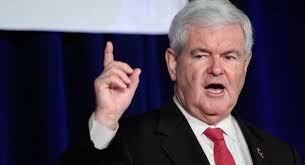
Newt Gingrich
In the memo, Gingrich advised:
“….In the video “We are a Majority,” Language is listed as a key mechanism of control used by a majority party, along with Agenda, Rules, Attitude and Learning.
“As the tapes have been used in training sessions across the country and mailed to candidates we have heard a plaintive plea: ‘I wish I could speak like Newt.’
“That takes years of practice. But, we believe that you could have a significant impact on your campaign and the way you communicate if we help a little. That is why we have created this list of words and phrases….
“This list is prepared so that you might have a directory of words to use in writing literature and mail, in preparing speeches, and in producing electronic media.
“The words and phrases are powerful. Read them. Memorize as many as possible. And remember that like any tool, these words will not help if they are not used.”
Here is the list of words Gingrich urged his followers to use in describing “the opponent, their record, proposals and their party”:
- abuse of power
- anti- (issue): flag, family, child, jobs
- betray
- bizarre
- bosses
- bureaucracy
- cheat
- coercion
- “compassion” is not enough
- collapse(ing)
- consequences
- corrupt
- corruption
- criminal rights
- crisis
- cynicism
- decay
- deeper
- destroy
- destructive
- devour
- disgrace
- endanger
- excuses
- failure (fail)
- greed
- hypocrisy
- ideological
- impose
- incompetent
- insecure
- insensitive
|
- intolerant
- liberal
- lie
- limit(s)
- machine
- mandate(s)
- obsolete
- pathetic
- patronage
- permissive attitude
- pessimistic
- punish (poor …)
- radical
- red tape
- self-serving
- selfish
- sensationalists
- shallow
- shame
- sick
- spend(ing)
- stagnation
- status quo
- steal
- taxes
- they/them
- threaten
- traitors
- unionized
- urgent (cy)
- waste
- welfare
|
Yes, speaking like Newt—or Adolf Hitler or Joseph R. McCarthy—“takes years of practice.”
And to the dismay of both Republicans and Democrats, Donald Trump has learned his lessons well.
On May 27, 2016, conservative New York Times columnist David Brooks analyzed the use of insults by Republican Presidential front-runner Donald Trump. He did so with his counterpart, liberal syndicated columnist, Mark Shields, on The PBS Newshour.
DAVID BROOKS: “Trump, for all his moral flaws, is a marketing genius. And you look at what he does. He just picks a word and he attaches it to a person. Little Marco [Rubio], Lyin’ Ted [Cruz], Crooked Hillary [Clinton].
“And that’s a word. And that’s how marketing works. It’s a simple, blunt message, but it gets under.
“It sticks, and it diminishes. And so it has been super effective for him, because he knows how to do that. And she [Hillary Clinton] just comes with, ‘Oh, he’s divisive.’
“These are words that are not exciting people. And her campaign style has gotten, if anything…a little more stagnant and more flat.”
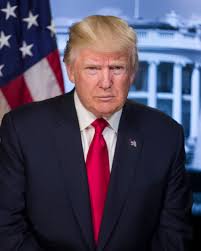
Donald Trump
MARK SHIELDS: “Donald Trump gratuitously slandered Ted Cruz’s wife. He libeled Ted Cruz’s father for being potentially part of Lee Harvey Oswald’s assassination of the president of the United States, suggesting that he was somehow a fellow traveler in that.
“This is a libel. You don’t get over it….”
Hillary Clinton wasn’t the only Presidential candidate who proved unable to cope with Trump’s gift for insult. His targets—and insults—included:
- Former Texas Governor Rick Perry: “Wears glasses to seem smart.”
- Former Florida Governor Jeb Bush: “Low Energy Jeb.”
- Vermont U.S. Senator Bernie Sanders: “Crazy Bernie.”
- Ohio Governor John Kasich: “Mathematically dead and totally desperate.”
Trump has reserved his most insulting words for women. For example:
- Carly Fiorina, his Republican primary competitor: “Look at that face. Would anyone vote for that?”
- Megyn Kelly, Fox News reporter: “You could see there was blood coming out of her eyes. Blood coming out of her wherever.”
- California Rep. Maxine Waters: “An extremely low IQ person.”
- Speaker of the House Nancy Pelosi: “MS-13 Lover Nancy Pelosi.”
Only one candidate has shown the ability to rattle Trump: Massachusetts Senator Elizabeth Warren.
As Mark Shields noted on The PBS Newshour.
“Elizabeth Warren gets under Donald Trunp’s skin. And I think she’s been the most effective adversary. I think she’s done more to unite the Democratic party than either Hillary Clinton or Bernie Sanders.
“I mean, she obviously—he can’t stay away from her. He is tweeting about her.”
And David Brooks offered: “And so the tactics…is either you do what Elizabeth Warren has done, like full-bore negativity, that kind of [get] under the skin, or try to ridicule him and use humor.”
A May 12, 2016 story on CNN—“Elizabeth Warren Gives Trump a Dose of His Own Medicine on Twitter”—noted: “Whenever Trump criticizes her, Warren fires right back at him, sometimes twice as hard.”


ABC NEWS, ALTERNET, ANTI-COMMUNISM, AP, BUZZFEED, CBS NEWS, CIA, CNN, COLLUSION, COMMUNISM, CROOKS AND LIARS, DAILY KOZ, DEMOCRATIC PARTY, DONALD TRUMP, DONALD TRUMP JUNIOR, FACEBOOK, FBI, FOX NEWS, G.O.P., GRU (RUSSIAN MILITARY INTELLIGENCE), HILLARY CLINTON, INTELLIGENCE, ISLAMIC STATE OF IRAQ AND SYRIA (ISIS), JAMES B. COMEY, JAMES COMEY, JARED KUSHNER, MAIN INTELLIGENCE DIRECTORATE, MICHAEL FLYNN, MOSSAD, MOTHER JONES, MOVEON, NATIONAL SECURITY AGENCY, NBC NEWS, NEWSWEEK, NPR, PAUL MANAFORT, POLITICO, RAW STORY, REPUBLICAN PARTY, REUTERS, ROGER STONE, RUSSIA, SALLY YATES, SALON, SEATTLE TIMES, SERGEY KISLYAK, SERGEY LAVROV, SLATE, STATE OF THE UNION, STATE OF THE UNION ADDRESS, THE ATLANTIC, THE CHICAGO SUN-TIMES, THE CHICAGO TRIBUNE, THE DAILY BEAST, THE GUARDIAN, THE HILL, THE HUFFINGTON POST, THE LOS ANGELES TIMES, THE NATION, THE NEW YORK TIMES, THE WASHINGTON POST, TIME, TREASON, TRUMP TOWER MEETING, TWITTER, U.S. CONSTITUTION, U.S. NEWS & WORLD REPORT, UNITED STATES CONSTITUTION, UPI, USA TODAY, VLADIMIR PUTIN
TRUMP AND TREASON
In Bureaucracy, History, Military, Politics, Social commentary on November 28, 2022 at 12:14 amLess than three years before committing his ultimate act of treason, President Donald Trump determined that Democrats were guilty of it.
Their crime? Refusing to stand and applaud him during his State of the Union message in January, 2018.
On February 5, he told a crowd in Cincinnati: “They were like death and un-American. Un-American. Somebody said, ‘treasonous.’ I mean, Yeah, I guess why not? Can we call that treason? Why not? I mean they certainly didn’t seem to love our country that much.”
For Trump, to love the United States, you must first prove that you love him.
Article Three of the United States Constitution defines treason as:
“Treason against the United States, shall consist only in levying War against them, or in adhering to their Enemies, giving them Aid and Comfort. No Person shall be convicted of Treason unless on the Testimony of two Witnesses to the same overt Act, or on Confession in open Court.”
United States Constitution
In short: Actions such as colluding with a foreign power hostile to the United States (such as Russia) to subvert America’s democratic election process.
By that standard, Donald Trump stands rightly accused of a crime that traditionally carries the penalty of death.
Example #1: The infamous June, 2016 meeting at Trump Tower starring Donald Trump’s son, Donald, Jr.; Trump’s son-in-law, Jared Kushner; and Trump’s then-campaign manager, Paul Manafort—and two Russian lobbyists who wanted the United States to end its sanctions against Russia for human rights abuses.
The meeting’s purpose: To obtain from Russian Intelligence agents “dirt” on Trump’s opponent, Hillary Clinton.
Example #2: On July 27, 2016, Trump said at a press conference in Doral, Florida: “Russia, if you are listening, I hope you are able to find [Hillary Clinton’s] 33,000 emails that are missing—I think you will probably be rewarded mightily by our press.”
Hours later, the Main Intelligence Directorate in Moscow targeted Hillary Clinton’s personal office and hit more than 70 other Clinton campaign accounts,
Donald Trump
Example #3: On December 16, 2016, then-FBI Director James B. Comey and Director of National Intelligence James R. Clapper Jr. agreed with a CIA assessment that Russia intervened in the 2016 election in part to help Donald Trump win the White House.
Trump, however has steadfastly denied any such role by Russia.
On July 16, 2018, he attended a press conference in Helsinki, Finland, with Russian President Vladimir Putin. There he blamed American Intelligence agencies—such as the FBI, CIA and National Security Agency—instead of Putin for Russia’s subversion of the 2016 Presidential election: “I have President Putin. He just said it’s not Russia. I will say this: I don’t see any reason why it would be.”
Example #4: On May 9, 2017, Trump fired FBI Director James Comey for investigating Russia’s subversion of the 2016 Presidential race. His motive: To end that investigation before it reached him.
The next day, meeting with Russian Foreign Minister Sergey Lavrov and Russian Ambassador Sergey Kislyak in the Oval Office, Trump said: “I just fired the head of the FBI. He was crazy, a real nut job. I faced great pressure because of Russia. That’s taken off.”
On May 11, during an interview with NBC’s Lester Holt, Trump admitted: “And, in fact, when I decided to just do it, I said to myself, I said: ‘You know, this Russia thing with Trump and Russia is a made up story, it’s an excuse by the Democrats for having lost an election that they should’ve won.’”
Example #5: During that same meeting, Trump gave the Russian officials highly classified Israeli Intelligence about an Islamic State plot to turn laptops into concealable bombs.
At first, the White House denied Trump had done so. Then Trump admitted in a tweet: “As President I wanted to share with Russia (at an openly scheduled W.H. meeting) which I have the absolute right to do, facts pertaining … to terrorism and airline flight safety.
Example #6: Trump surrounded himself with men who had close ties to Russian dictator Vladimir Putin. Among these:
Michael T. Flynn
The Republican party—which for 50 years claimed to be America’s defender against Communism—has now fervently embraced a man with demonstrated ties to a Communist dictator.
Share this: