Posts Tagged ‘ROBERT MEULLER’
ABC NEWS, ADOLF HITLER, ALTERNET, AMERICABLOG, AP, BABY BOOMER RESISTANCE, BBC, BLOOMBERG NEWS, BLUESKY, BUZZFEED, CANADA, CBS NEWS, CLAUDIA SHEINBAUM PARDO, CNN, CNN'S "STARTING POINT", CROOKS AND LIARS, CZECHOSLAVAKIA, DAILY KOS, DAVID BROOKS, DEPARTMENT OF HOMELAND SECURITY, DEPARTMENT OF JUSTICE, DONALD TRUMP, EXTORTION, FBI, FIVETHIRTYEIGHT, GREENLAND, HARPER’S MAGAZINE, HUFFINGTON POST, INSIDER, JACK SMITH, JIMMY CARTER, JUSTIN TRUDEAU, MASTADON, MEDIA MATTERS, MEXICO, MOTHER JONES, MOVEON, MSNBC, MSNBC'S "HARDBALL", NAZI GERMANY, NBC NEWS, NEGOTIATING, NEVILLE CHAMBERLAIN, NEW REPUBLIC, NEWSDAY, NEWSWEEK, NEWT GINGRICH, NICCOLO MACHIAVELLI, NPR, PANAMA, PBS NEWSHOUR, POLAND, POLITICO, POLITICUSUSA, R.I.CO. ACT, RAW STORY, REPUBLICAN PARTY, REPUBLICANS, REUTERS, ROBERT MEULLER, SALON, SEATTLE TIMES, SLATE, TALKING POINTS MEMO, THE ATLANTIC, THE CHICAGO SUN-TIMES, THE CHICAGO TRIBUNE, THE DAILY BEAST, THE DAILY BLOG, THE GUARDIAN, THE HAMILTON PROJECT, THE HILL, THE HUFFINGTON POST, THE LOS ANGELES TIMES, THE NATION, THE NEW REPUBLIC, THE NEW YORK TIMES, THE NEW YORKER, THE PENTAGON, THE PRINCE, THE VILLAGE VOICE, THE WASHINGTON POST, THINKPROGRESS, TIME, TRUTHDIG, TRUTHOUT, TWO POLITICAL JUNKIES, U.S. NEWS & WORLD REPORT, UKRAINE, UPI, USA TODAY, VLADIMIR PUTIN, VOLODMYR ZELENSKY, WONKETTE, WORLD WAR 11, X
In Bureaucracy, Business, History, Military, Politics, Social commentary on February 19, 2025 at 12:16 am
The “negotiating” methods of German Fuhrer Adolf Hitler serve as a useful guide to what domestic and world leaders can expect from trying to reach an agreement with President Donald Trump.
In September, 1938, seven months after seizing Austria, Hitler gave another exhibition of his “negotiating” methods.
This time, the target of his aggression was Czechoslovakia. Once again, he opened “negotiations” with a lie: The Czechoslovak government was trying to exterminate 3.5 million Germans living in the “Sudetenland.”
Then he threatened war: Germany would protect its citizens and halt such “oppression.”
For British Prime Minister Neville Chamberlain, the thought of another European war erupting less than 20 years after the end of World War I was simply unthinkable.
He quickly sent Hitler a telegram, offering to help resolve the crisis: “I could come to you by air and am ready to leave tomorrow. Please inform me of earliest time you can receive me, and tell me the place of the meeting. I should be grateful for a very early reply.”
[Mistake #1: Showing his willingness to placate a brutal dictator. Such men see any concessions as weakness—leading to only greater demands. Trump, like Hitler relishes attacking those weaker than himself.]
The two European leaders met in Berchtesgaden, Germany, on September 15, 1938.
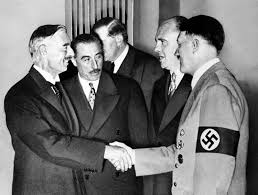
Neville Chamberlain and Adolf Hitler
Hitler denied that he had threatened war: “Force? Who speaks of force?“
Then, suddenly, he accused the Czechs of having mobilized their army in May. They had mobilized—in response to the mobilization of the German army.
“I shall not put up with this any longer,” shouted Hitler. “I shall settle this question in one way or another. I shall take matters in my own hands!”
Suddenly, Chamberlain seemed alarmed: “If I understood you right, you are determined to proceed against Czechoslovakia in any case. In the circumstances, it is best for me to return at once. Anything else now seems pointless.”
Hitler, taken aback, softened his tone and said they should consider the Sudetenland according to the principle of self-determination.
Chamberlain agreed to the cession of the Sudetenland. Three days later, French Prime Minister Edouard Daladier did the same. No Czechoslovak representative was invited to these discussions.
[Mistake #2: Instead of conceding to Hitler, which emboldened the dictator, he should have pressed his advantage. When Hitler found himself facing an opponent who couldn’t be bribed or cowed—such as British Prime Minister Winston Churchill or Soviet Premier Joseph Stalin—he raged and sulked.
[When Trump has faced an opponent he can’t buy or intimidate—such as Special Counsels Robert Mueller and Jack Smith—he has done the same.]
Chamberlain met Hitler again in Godesberg, Germany, on September 22 to confirm the agreements. But Hitler aimed to use the crisis as a pretext for war.
He now demanded not only the annexation of the Sudetenland but the immediate military occupation of the territories. This would give the Czechoslovak army no time to adapt their defense measures to the new borders.
To achieve a solution, Italian dictator Benito Mussolini suggested a conference of the major powers in Munich.
On September 29, Hitler, Daladier and Chamberlain met and agreed to Mussolini’s proposal. They signed the Munich Agreement, which accepted the immediate occupation of the Sudetenland.
The Czechoslovak government had not been a party to the talks. Nevertheless, it promised to abide by the agreement on September 30.
It actually had no choice. It faced the threat of an immediate German invasion after being deserted by its pledged allies: Britain, France and the Soviet Union.
[Mistake #3: Selling out an ally and making a concession to an insatiable dictator—and believing that Hitler could be trusted to keep his word.
[Just as Chamberlain sold out Czechoslovakia, Trump plans on selling out Ukraine to Russian dictator Vladimir Putin. He’s blamed Ukraine for starting the 2022 war—even though Russia invaded Ukraine.
He’s also attacked Ukrainian President Volodymyr Zelensky—and repeatedly praised Putin. And he’s unilaterally announced that he will begin directing “peace talks” with Putin to end his war on Ukraine.]
Chamberlain returned to England a hero. Holding aloft a copy of the worthless agreement he had signed with Hitler, he told cheering crowds in London: “I believe it is peace for our time.”
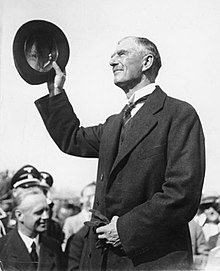
Neville Chamberlain
Winston Churchill knew better, predicting: “Britain and France had to choose between war and dishonor. They chose dishonor. They will have war.”
Hitler—still planning more conquests—also knew better. In March, 1939, the German army occupied the rest of Czechoslovakia.
Chamberlain would soon be seen as a naive weakling—even before bombs started falling on London.
Then Hitler turned his attention—and demands—to Poland.
When his generals balked, warning that an invasion would trigger a war with France and Britain, Hitler quickly brushed aside their fears: “Our enemies are little worms. I saw them at Munich.”
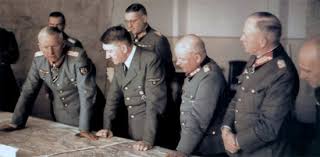
Adolf Hitler and his generals
Similarly, Trump drew the same lesson from his repeated escapes from American justice—that he was untouchable
Hitler ordered the invasion of Poland on September 1, 1939—unintentionally triggering World War II.
In time, historians and statesmen would regard Munich as an object lesson in the futility—and danger—in appeasing evil and aggression.
History has yet to record the all-but-certain disasters—foreign and domestic—of the Trump administration.
ABC NEWS, ADOLF HITLER, ALTERNET, AMERICABLOG, AP, AUSTRIA, BABY BOOMER RESISTANCE, BBC, BLOOMBERG NEWS, BLUESKY, BUZZFEED, CANADA, CBS NEWS, CLAUDIA SHEINBAUM PARDO, CNN, CNN'S "STARTING POINT", CROOKS AND LIARS, CZECHOSLAVAKIA, CZECHOSLOVAKIA, DAILY KOS, DAVID BROOKS, DEPARTMENT OF HOMELAND SECURITY, DEPARTMENT OF JUSTICE, DONALD TRUMP, EXTORTION, FBI, FIVETHIRTYEIGHT, FRANCE, GELI rAUBAL, GREENLAND, HARPER’S MAGAZINE, HUFFINGTON POST, INSIDER, JACK SMITH, JIMMY CARTER, JUSTIN TRUDEAU, MASTADON, MEDIA MATTERS, MEXICO, MOTHER JONES, MOVEON, MSNBC, MSNBC'S "HARDBALL", NAZI GERMANY, NBC NEWS, NEGOTIATING, NEVILLE CHAMBERLAIN, NEW REPUBLIC, NEWSDAY, NEWSWEEK, NEWT GINGRICH, NICCOLO MACHIAVELLI, NPR, PANAMA, PBS NEWSHOUR, POLAND, POLITICO, POLITICUSUSA, R.I.CO. ACT, RAW STORY, REPUBLICAN PARTY, REPUBLICANS, REUTERS, ROBERT MEULLER, SALON, SEATTLE TIMES, SLATE, TALKING POINTS MEMO, TARIFFS, THE ATLANTIC, THE CHICAGO SUN-TIMES, THE CHICAGO TRIBUNE, THE DAILY BEAST, THE DAILY BLOG, THE GUARDIAN, THE HAMILTON PROJECT, THE HILL, THE HUFFINGTON POST, THE LOS ANGELES TIMES, THE NATION, THE NEW REPUBLIC, THE NEW YORK TIMES, THE NEW YORKER, THE PENTAGON, THE PRINCE, THE VILLAGE VOICE, THE WASHINGTON POST, THINKPROGRESS, TIME, TRADE WARS, TRUTHDIG, TRUTHOUT, TWO POLITICAL JUNKIES, U.S. NEWS & WORLD REPORT, UKRAINE, UPI, USA TODAY, VLADIMIR PUTIN, VOLODMYR ZELENSKY, WONKETTE, WORLD WAR 11, X
In Bureaucracy, Business, History, Military, Politics, Social commentary on February 18, 2025 at 12:10 am
To understand the “negotiating” style of Donald Trump, it’s essential to study that of Adolf Hitler.
Both men, dictatorial by nature, did/do not believe in compromise. Their idea of “compromise” was/is: “You do what I want–or I’ll destroy you.”
In Hitler’s case, his mania for absolute control began with the Nazi party and eventually extended to Germany. Then it reached to Austria, Czechoslovakia, Poland, Norway, Denmark, France and Russia. At least 50 million men, women and children perished in the wars he unleashed from 1939 to 1945.
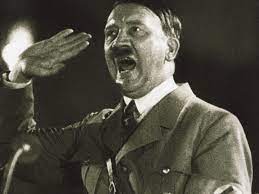
Adolf Hitler
Similarly, Trump’s mania for control started with building a real estate empire. Then it encompassed his “reality TV” show, The Apprentice—and finally politics.
He began dominating the Republican party by winning a series of Presidential primaries—and then the White House. Then came asserting control over the the Justice Department and the judiciary—up to the Supreme Court.
Re-elected in 2024, he now seeks to dominate Americans, demands military control over Gaza, threatens Mexico and Canada with trade wars, and Greenland and Panama with invasion.
Much can be learned about Trump’s “negotiating” methods—and what it takes to counter them—by studying those of Germany’s Fuhrer.
Robert Payne, author of the bestselling biography, The Life and Death of Adolf Hitler (1973), described Hitler’s “negotiating” style thus:
“Although Hitler prized his own talents as a negotiator, a man always capable of striking a good bargain, he was totally lacking in finesse.
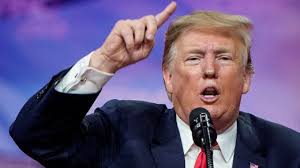
Donald Trump
“He was incapable of bargaining. He was like a man who goes up to a fruit peddler and threatens to blow his brains out if he does not sell his applies at the lowest possible price.”
A classic example of Hitler’s “bargaining style” came in 1938, when he invited Austrian Chancellor Kurt von Schuschnigg to his mountaintop retreat in Obersalzberg, Germany.
Hitler, an Austrian by birth, intended to annex his native land to Germany. Schuschnigg was aware of Hitler’s desire, but nevertheless felt secure in accepting the invitation. He had been assured that the question of Austrian sovereignty would not arise.
The meeting occurred on February 12, 1938.
Shuschnigg opened the discussion with a friendly compliment. Walking over to a large window, he admired the breathtaking view of the mountains.
HITLER: We haven’t come here to talk about the lovely view or the weather!
Austria has anyway never done anything which was of help to the German Reich….I am resolutely determined to make an end to all this business. The German Reich is a great power. Nobody can and nobody will interfere if it restores order on its frontiers.
[Like Hitler, Trump relies on insults and anger to put his victims on the defense.]
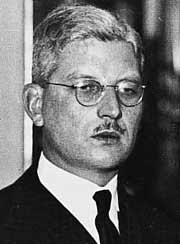
Kurt von Schuschnigg
SCHUSCHNIGG: We simply have to go on living alongside one another, the little state next to the big one. We have no other choice.
And that is why I ask you to tell me what your concrete complaints are. We will do all in our power to sort things out and establish a friendly relationship, as far as it is possible to do so.
HITLER: That’s what you say, Herr Schuschnigg. And I am telling you that I intend to clear up the whole of the so-called Austrian question—one way or another. Do you think I don’t know that you are fortifying Austria’s border with the Reich?
SCHUSCHNIGG: There can be no suggestion at all of that—
HITLER: Ridiculous explosive chambers are being built under bridges and roads—
This was a lie, and Hitler knew it was a lie. But it gave him an excuse to threaten to destroy Austria.
[For Trump, winning—not truth—is all that matters. During his first term as President, he told 30,573 lies.]
HITLER: I have only to give one command and all this comic stuff on the border will be blown to pieces overnight. You don’t seriously think you could hold me up, even for half an hour, do you?
The S.A. [Hitler’s private army of Stormtroopers] and the [Condor] lLegion [which had bombed much of Spain into rubble during the Spanish Civil War] would come in after the troops and nobody—not even I—could stop them from wreaking vengeance.
Schnuschigg made a cardinal mistake in dealing with Hitler: He showed fear. And this was precisely what the Nazi dictator looked for in an opponent.
[Like Hitler, Trump relies on fear: “Real power is—I don’t even want to use the word—fear,” he said in March 2016 when still only a candidate for President.]
Contrary to popular belief, Hitler did not constantly rage at everyone. He used rage as a weapon, knowing that most people feel intimidated by it.
In the case of Schuschnigg, Hitler opened with insults and threats at the outset of their discussion. Then there was a period of calm, to convince the Austrian chancellor the worst was over.
Finally, he once again attacked—this time with so much fury that Schuschnigg was terrified into submission.
With one stroke of a pen, Austria became a vassal-state to Nazi Germany.
[Like Hitler, Trump threatens only those he feels are weak—thus his threats to use military force against Canada, Greenland and Panama.]
ABC NEWS, ADOLF HITLER, ALTERNET, AMERICABLOG, AP, BABY BOOMER RESISTANCE, BBC, BLOOMBERG, BLUESKY, BUZZFEED, CBS NEWS, CNN, CROOKS AND LIARS, DAILY KOS, DAVID BROOKS, DONALD TRUMP, FBI, FIVETHIRTYEIGHT, GEORGE C. SCOTT, GEORGE S. PATTON, GESTAPO, HARPER’S MAGAZINE, HOGAN’S HEROES, HUFFINGTON POST, JACK SMITH, JAMES COMEY, JIMMY CARTER, MEDIA MATTERS, MEL BROOKS, MIKE FLYNN, MOTHER JONES, MOVEON, MSNBC, NAZI GERMANY, NBC NEWS, NEW REPUBLIC, NEWSDAY, NEWSWEEK, NPR, PAUL RYAN, PBS NEWSHOUR, POLITICO, POLITICUSUSA, RAW STORY, REPUBLICAN PARTY, REUTERS, RICHARD GRUNBERGER, RICHARD NIXON, ROBERT MEULLER, SALON, SEATTLE TIMES, SLATE, SOVIET UNION, TALKING POINTS MEMO, THE 12-YEAR REICH, THE ATLANTIC, THE CHICAGO SUN-TIMES, THE CHICAGO TRIBUNE, THE DAILY BEAST, THE DAILY BLOG, THE GUARDIAN, THE HILL, THE HUFFINGTON POST, THE INTERCEPT, THE LOS ANGELES TIMES, THE NATION, THE NEW REPUBLIC, THE NEW YORK TIMES, THE NEW YORKER, THE VILLAGE VOICE, THE WALL STREET JOURNAL, THE WASHINGTON POST, THINKPROGRESS, TIME, TRUTHDIG, TRUTHOUT, TWO POLITICAL JUNKIES, U.S. NEWS & WORLD REPORT, UPI, USA TODAY, WAFFEN-SS, WEHRMACHT, X
In Bureaucracy, History, Law, Law Enforcement, Military, Politics, Social commentary on February 7, 2025 at 12:05 am
Donald Trump is a convicted felon who blatantly supports Communist dictators Kim Jong-Un, Vladimir Putin and Xi Jinping—and who tried to treasonously overturn the 2020 Presidential election.
So why do so many Republicans continue to support him?
The answer lies in what happened almost 80 years ago in Berlin—when the “Thousand-Year” Third Reich collapsed after little more than 12 years.
While the Nazi Party ruled Germany from 1933 to 1945, its influence over all aspects of Germans’ lives was suffocating.
“Censorship prevailed, education was undermined, family life was idealized, but children were encouraged to turn in disloyal parents,” reads the back cover of Richard Grunberger’s classic 1971 book, The 12-Year Reich.
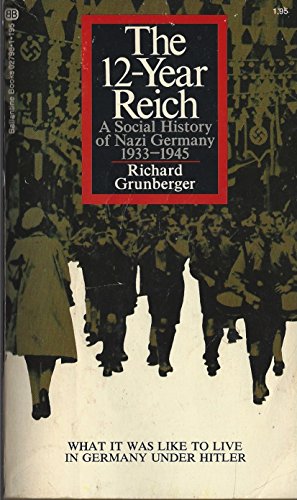
“‘Volk’ festivals, party rallies, awards, uniforms, pageantry all played a part in the massive effort to shape the mind of a nation.”
And yet, after the Reich surrendered unconditionally to the Allies on May 8, 1945:
- Countless Germans claimed to have hidden Jews in their attics—despite the fact that six million Jews died horrifically before the Reich fell.
- American and British soldiers couldn’t find any German veterans willing to admit they had ever fought against Western, democratic nations.
- All the once-proud legionaries of the Wehrmacht and Waffen-SS swore they had been fighting “the real enemy”—the Russians—on the Eastern front.
And almost universally, they blamed the conflict on the man they had embraced as their Fuhrer.
In short: Adolf Hitler had lost the war he started—making him a loser nobody wanted to be identified with.
In the decades since, the “loser” tag has continued to stick with those who once served the Third Reich. Mel Brooks has repeatedly turned German soldiers—once the pride of the battlefield—into idiotic comic foils.
Even the fearsome Gestapo was spoofed for laughs on the long-running TV comedy, “Hogan’s Heroes.”

“Hogan’s Heroes”
“Americans love a winner,” George C. Scott as George S. Patton says at the outset of the classic 1970 movie. “And will not tolerate a loser.”
And that is why Republicans have stuck so closely with Donald J. Trump—as President, former President and now re-elected President.
During the 2024 Presidential campaign, Americans were repeatedly warned that Trump intended to embrace Project 2025, a collection of policy proposals to fundamentally reshape the U.S. federal government.
Among these:
- The DOJ must be thoroughly “reformed” and tightly overseen by the White House.
- The director of the FBI must be personally accountable to the President—just as the head of the KGB is personally accountable to Vladimir Putin.

Seal of the Justice Department
- Federal employees could be instantly fired for not obeying illegal orders, or on mere whim—including the whim of the President.
- The Environmental Protection Agency would be stripped of its authority to protect the air, water and soil.
- The National Oceanic and Atmospheric Administration (NOAA) which the project calls “one of the main drivers of the climate change alarm industry” would be abolished.
- Fossil fuels—the leading cause of global warming—would be favored and environmental regulations to combat climate change abolished.
- Federal funding for all public transit systems across the country would be eliminated.
- Traditionally independent federal agencies such as the Department of Justice, Federal Communications Commission and the Federal Trade Commission would be placed under Presidential control.
- The wealthiest 1% would receive massive tax cuts at the expense of the poor and middle class.
- Conception would be designated as the point where life begins.
- Abortion would be outlawed.
- Access to birth control would be sharply restricted, if not banned.
Yet almost no Republican members of Congress dared to oppose this wholesale rejection of 248 years of American democracy.
Republicans don’t care that Trump has trashed the institutions that Americans have cherished for more than 200 years. Institutions like an independent judiciary, a free press, and an incorruptible Justice Department.
He has viciously attacked all of these—and Republicans have either said nothing or rushed to his defense. Many of them tried to short-circuit Special Counsel Jack Smith’s investigation and prosecution of Trump’s inciting a deadly riot against Congress on January 6, 2021.
What Congressional Republicans truly fear about Donald Trump is that if they dare to hold him accountable for his lifetime of criminality, his Fascistic base will turn on them—and turn them out of Congress.
Trump has been convicted of multiple crimes, but Republicans continue to slavishly support him. If they hadn’t, he would now be:
- A figure held up to ridicule and condemnation.
- Like Adolf Hitler.
- Like Richard Nixon.
And his Congressional supporters would be branded as losers along with him.
Republicans vividly remember what happened after Richard Nixon was forced to resign on August 9, 1974: Democrats, riding a wave of reform fever, swept Republicans out of the House and Senate—and Jimmy Carter into the White House.
If Republicans are conflicted—whether to continue supporting Trump or desert him—the reason is the same: How can I hold onto my power and all the privileges that go with it?
ABC NEWS, ADOLF HITLER, ALTERNET, AP, BBC, BUZZFEED, CBS NEWS, CNN, DAILY KOS, DAVID BROOKS, DONALD TRUMP, FBI, GEORGE C. SCOTT, GEORGE S. PATTON, GESTAPO, HOGAN’S HEROES, JACK SMITH, JAMES COMEY, JIMMY CARTER, MEL BROOKS, MIKE FLYNN, MOTHER JONES, MOVEON, NAZI GERMANY, NBC NEWS, NEWSWEEK, NPR, PAUL RYAN, PBS NEWSHOUR, POLITICO, RAW STORY, REPUBLICAN PARTY, REUTERS, RICHARD GRUNBERGER, RICHARD NIXON, ROBERT MEULLER, SALON, SEATTLE TIMES, SLATE, SOVIET UNION, THE 12-YEAR REICH, THE ATLANTIC, THE CHICAGO SUN-TIMES, THE CHICAGO TRIBUNE, THE DAILY BEAST, THE GUARDIAN, THE HILL, THE HUFFINGTON POST, THE LOS ANGELES TIMES, THE NEW YORK TIMES, THE WALL STREET JOURNAL, THE WASHINGTON POST, TIME, TWITTER, U.S. NEWS & WORLD REPORT, UPI, USA TODAY, WAFFEN-SS, WEHRMACHT
In Bureaucracy, History, Law, Law Enforcement, Military, Politics, Social commentary on September 29, 2023 at 12:16 am
As former President Donald Trump lurches almost daily from one legal setback to another, many Americans ask: “Why do so many Republicans continue to support him?”
The answer lies in what happened 78 years ago in Berlin—when the “Thousand-Year” Third Reich collapsed after little more than 12 years.
While the Nazi Party ruled Germany from 1933 to 1945, its influence over all aspects of Germans’ lives was suffocating.
“Censorship prevailed, education was undermined, family life was idealized, but children were encouraged to turn in disloyal parents,” reads the back cover of Richard Grunberger’s classic 1971 book, The 12-Year Reich.
“‘Volk’ festivals, party rallies, awards, uniforms, pageantry all played a part in the massive effort to shape the mind of a nation.”
And yet, after the Reich surrendered unconditionally to the Allies on May 8, 1945, a strange thing happened: Virtually no German admitted to having been a Nazi—or having even known one.
American and British soldiers couldn’t find any German veterans willing to admit they had ever fought against Western, democratic nations. All the once-proud legionaries of the Wehrmacht and Waffen-SS swore they had been fighting “the real enemy”—the Russians—on the Eastern front.
Countless Germans claimed to have hidden Jews in their attics—despite the fact that six million Jews died horrifically before the Reich fell.
And almost universally, they blamed the conflict on the man they had embraced as their Fuhrer.
In short: Adolf Hitler had lost the war he started—making him a loser nobody wanted to be identified with.
In the decades since, the “loser” tag has continued to stick with those who once served the Third Reich. Mel Brooks has repeatedly turned German soldiers—once the pride of the battlefield—into idiotic comic foils.
Even the fearsome Gestapo was spoofed for laughs on the long-running TV comedy, “Hogan’s Heroes.”
“Hogan’s Heroes”
“Americans love a winner,” George C. Scott as George S. Patton says at the outset of the classic 1970 movie. “And will not tolerate a loser.”
And that is why Republicans have stuck so closely with Donald J. Trump—as President and former President.
A typical example of this occurred on June 8, 2017 after former FBI director James Comey testified before the United States Senate Select Committee on Intelligence.
Comey revealed that, on February 14, 2017, Trump had ordered everyone but Comey to leave a crowded meeting in the Oval Office.
Flynn had resigned the previous day from his position as National Security Adviser. The FBI was investigating him for his previously undisclosed ties to Russia.
“I hope you can see your way clear to letting this go, to letting Flynn go,” said Trump. “He is a good guy. I hope you can let this go.”
This was clearly an attempt by Trump to obstruct the FBI’s investigation.
Yet Republican House Speaker Paul Ryan rushed to excuse Trump’s clearly illegal behavior: “He’s new at government, so therefore I think he’s learning as he goes.”
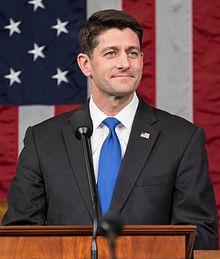
Paul Ryan
David Brooks, the conservative New York Times columnist, offered a more accurate explanation of Trump’s motives. Speaking on The PBS Newshour, Brooks said:
“We are a nation of laws. Donald Trump lives in an entirely different cultural universe. He is more clannist, believing in clan, believing in family, believing in loyalty, not recognizing objective law, not recognizing the procedures that is really how modern government operates….
“It’s not only that he doesn’t know the rules, but at all along and throughout his presidency, he has sort of trampled on the rules almost as a matter of policy, as a matter of character, because he doesn’t believe in that kind of relationships. It’s all personal loyalty, not about laws and norms and standards.”
Republicans don’t care that Trump has trashed the institutions that Americans have cherished for more than 200 years. Institutions like an independent judiciary, a free press, and an incorruptible Justice Department.
He has viciously attacked all of these—and Republicans have either said nothing or rushed to his defense. Many of them have tried to short-circuit Special Counsel Jack Smith’s investigation and prosecution of Trump’s inciting a deadly riot against Congress on January 6, 2021.
What Republicans truly fear about Donald Trump is that if they dare to hold him accountable for his lifetime of criminality, his Fascistic base will turn on them—and turn them out of Congress.
If Trump is convicted of multiple crimes, he will become a man no one any longer fears.
He will likely become the Republican nominee for President—and one almost guaranteed to lose in 2024 as he did in 2000.
He will become a figure held up to ridicule and condemnation.
Like Adolf Hitler. Like Richard Nixon.
And his Congressional supporters will be branded as losers along with him.
Republicans vividly remember what happened after Nixon was forced to resign on August 9, 1974: Democrats, riding a wave of reform fever, swept Republicans out of the House and Senate—and Jimmy Carter into the White House.
If they are conflicted—whether to continue supporting Trump or desert him—the reason is the same: How can I hold onto my power and all the privileges that go with it?
2016 PRESIDENTIAL ELECTION, ABC NEWS, ADOLF HITLER, ALBERT SPEER, ALTERNET, AP, BBC, BRETT MCGURK, BUZZFEED, CBS NEWS, CIA, CNN, DAILY KOS, DONALD TRUMP, DONLAD TRUMP, FACEBOOK, FBI, ISLAMIC STATE OF IRAQ AND SYRIA (ISIS), JAMES COMEY, JAMES MATTIS, JEFF SESSIONS, JIMMY CARTER, MOTHER JONES, MOVEON, NAZI GERMANY, NBC NEWS, NEWSWEEK, NPR, PBS NEWSHOUR, POLITICO, RAW STORY, REPUBLICAN PARTY, REPUBLICANS, REUTERS, RICHARD NIXON, ROBERT MEULLER, ROD ROSENSTEIN, SALON, SEATTLE TIMES, SLATE, SYRIA, THE ATLANTIC, THE CHICAGO SUN-TIMES, THE CHICAGO TRIBUNE, THE DAILY BEAST, THE GUARDIAN, THE HILL, THE HUFFINGTON POST, THE LOS ANGELES TIMES, THE NEW YORK TIMES, THE PRESS, THE WALL STREET JOURNAL, THE WASHINGTON POST, THIRD REICH, TIME, TWITTER, U.S. NEWS & WORLD REPORT, UNITED STATES HOUSE OF REPRESENTATIVES, UNITED STATES SENATE, UPI, USA TODAY, VLADIMIR PUTIN, WALTER SHAUB
In Bureaucracy, History, Law Enforcement, Military, Politics, Social commentary on December 24, 2018 at 12:21 am
On July 6, 2017, Walter Shaub, who had been director of the Office of Government Ethics since 2013, resigned his position.
He did so after repeatedly clashing with President Donald Trump over the latter’s conflicts-of-interest vis-a-vis his tangled financial holdings.
Summing up the ethical legacy of Trump’s life and administration, Shaub noted:
“When this is over, when the lights are turned back on, it will become clear that there were only two kinds of people: Those who stood against Trump’s corruption, cruelty and degradation of American values, and those who enabled him.”
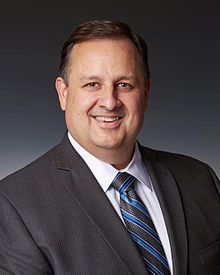
Walter Shaub
Since Trump took office as the 45th President of the United States on January 20, 2017, Americans have seen him steadily move toward his goal of absolute power.
Among these moves:
- Firing FBI Director James Comey for pursuing an investigation into Russian subversion of the 2016 election.
- Repeatedly attacking—and ultimately firing—his own Attorney General, Jeff Sessions, for not quashing the Russia investigation.
- Relentlessly attacking the free press as “the enemy of the American people.”
- Brutally attacking Federal judges whose rulings displease him.
- Repeatedly urging Deputy Attorney General Rod Rosenstein to vengefully prosecute Hillary Clinton, his 2016 rival for the Presidency.
- Refusing to accept the findings of the FBI, CIA and NSA that Russian Intelligence agents intervened in the 2016 election to ensure his victory.
- Siding with Russian dictator Vladimir Putin’s claim that Russia did not subvert that election.
- Shutting down the Federal Government to extortionately force Democrats to vote $5 billion for his “border wall” along the U.S.-Mexican border.
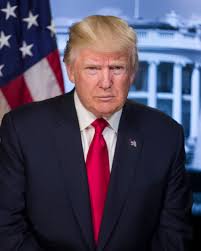
Donald Trump
Republicans don’t fear that Trump will trash the institutions that Americans have cherished for more than 200 years.
What Republicans fear is that he will finally cross one line too many—like firing Special Counsel Robert Mueller. And that the national outrage following this will force them to launch impeachment proceedings against him.
But it isn’t even Trump they most fear will be destroyed.
What they most fear losing is their own precious hold on nearly absolute power in Congress and the White House—and the privileges that accompany it.
If Trump is impeached and convicted, he will become a man no one any longer fears. He will be a figure held up to ridicule and condemnation.
Like Richard Nixon.
And, like Nixon, his fall will be followed by that of other Republicans.
Republicans vividly remember what happened after Nixon was forced to resign on August 9, 1974: Democrats, riding a wave of reform fever, swept Republicans out of the House and Senate—and Jimmy Carter into the White House.
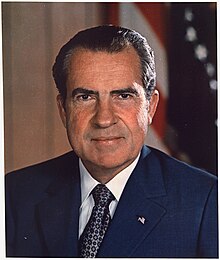
Richard Nixon
And Republicans fear history will repeat itself.
If Republicans are conflicted—whether to continue supporting Trump or desert him—the reason is the same: How can I hold onto my power and all the privileges that go with it?
Years from now, historians will compare the Trump era to that of the Third Reich—where sadists and opportunists sought power at the expense of their fellow citizens, and a handful of decent and courageous patriots dared to stand against them.
Only men like James Comey and James Marttis and Brett McGurk will emerge as heroes worthy of remembrance—and imitation.
On May 9, 2017, Comey was fired as FBI director for refusing to pledge his personal loyalty to Trump—and for daring to pursue an investigation into Russia’s subversion of the 2016 Presidential election.

James Comey
On December 20, 2018, Mattis officially notified Trump that he would resign as Secretary of Defense by March 1. The reason: Trump’s surprise announcement that he would pull all United States forces troops from Syria, where they have directed fighting against forces of the Islamic State of Iraq and Syria (ISIS).
And on December 21, Brett McGurk, Trump’s envoy to coalition forces fighting ISIS, submitted his own resignation—for the same reason.
For Trump, perhaps the most outrageous insult came on December 22, when Comey noted on Twitter: “To a president without any external ethical framework, folks who resign on principle must be confusing.”
Addressing GOP cowardice in refusing to stand up to Trump, Comey had publicly stated on December 17:
“Republicans used to understand that the actions of a president matter, the words of a president matter, the rule of law matters, and the truth matters. Where are those Republicans today?
“At some point, someone has to stand up and in the fear of Fox News and fear of their base, and fear of mean tweets, stand up for the values of this country and not slink away into retirement.”
* * * * *
As the Third Reich crumbled, Adolf Hitler sought to punish the German people for losing the war he had started.
He ordered the destruction of everything still remaining—industries, ships, harbors, communications, roads, mines, bridges, stores, utility plants, food stuffs.
Fortunately for Germany, one man—Minister of Armaments Albert Speer—broke ranks with his Fuehrer.
Risking death, he blocked such destruction or persuaded influential military and civilian leaders to disobey the order as well.
As a result, those targets slated for destruction were spared.
America still awaits its own Albert Speer to come forward and save its liberties from a racist, vindictive and treasonous President installed by American Fascists and KGB computer-hackers.
ABC NEWS, ADOLF HITLER, ALTERNET, AP, BBC, BUZZFEED, CBS NEWS, CNN, DAILY KOS, DAVID BROOKS, DONALD TRUMP, FACEBOOK, FBI, GEORGE C. SCOTT, GEORGE S. PATTON, GESTAPO, HOGAN’S HEROES, JAMES COMEY, JIMMY CARTER, MEL BROOKS, MIKE FLYNN, MOTHER JONES, MOVEON, NAZI GERMANY, NBC NEWS, NEWSWEEK, NPR, PAUL RYAN, PBS NEWSHOUR, POLITICO, RAW STORY, REPUBLICAN PARTY, REUTERS, RICHARD GRUNBERGER, RICHARD NIXON, ROBERT MEULLER, SALON, SEATTLE TIMES, SLATE, SOVIET UNION, THE 12-YEAR REICH, THE ATLANTIC, THE CHICAGO SUN-TIMES, THE CHICAGO TRIBUNE, THE DAILY BEAST, THE GUARDIAN, THE HILL, THE HUFFINGTON POST, THE LOS ANGELES TIMES, THE NEW YORK TIMES, THE WALL STREET JOURNAL, THE WASHINGTON POST, TIME, TWITTER, U.S. NEWS & WORLD REPORT, UPI, USA TODAY, WAFFEN-SS, WEHRMACHT
In Bureaucracy, History, Law, Law Enforcement, Military, Politics, Social commentary on April 12, 2018 at 12:05 am
As President Donald Trump lurches daily from one crisis to another—most of them of his own making—many Americans ask: “Why do Republicans continue to support him?”
The answer lies in what happened 73 years ago in Berlin—when the “Thousand-Year” Third Reich collapsed after little more than 12 years.
While the Nazi Party ruled Germany from 1933 to 1945, its influence over all aspects of Germans’ lives was suffocating.
“Censorship prevailed, education was undermined, family life was idealized, but children were encouraged to turn in disloyal parents,” reads the back cover of Richard Grunberger’s classic 1971 book, The 12-Year Reich.
“‘Volk’ festivals, party rallies, awards, uniforms, pageantry all played a part in the massive effort to shape the mind of a nation.”
And yet, after the Reich surrendered unconditionally to the Allies on May 8, 1945, a strange thing happened: Virtually no German admitted to having been a Nazi—or having even known one.
American and British soldiers couldn’t find any German veterans willing to admit they had ever fought against Western, democratic nations. All the once-proud legionaries of the Wehrmacht and Waffen-SS swore they had been fighting “the real enemy”—the Russians—on the Eastern front.
Countless Germans claimed to have hidden Jews in their attics. If so, how had six million Jews died horrifically before the Reich fell?
And almost universally, they blamed the conflict on the man they had embraced as their Fuhrer.
In short: Adolf Hitler had lost the war he started—making him a loser nobody wanted to be identified with.
In the decades since, the “loser” tag has continued to stick with those who once served the Third Reich. Mel Brooks has repeatedly turned German soldiers—once the pride of the battlefield—into idiotic comic foils.
Even the fearsome Gestapo was spoofed for laughs on the long-running TV comedy, “Hogan’s Heroes.”
“Hogan’s Heroes”
“Americans love a winner,” George C. Scott as George S. Patton says at the outset of the classic 1970 movie. “And will not tolerate a loser.”
And that is why Republicans have stuck so closely with President Donald J. Trump.
A typical example of this occurred on June 8, 2017 after former FBI director James Comey testified before the United States Senate Select Committee on Intelligence.
Comey revealed that, on February 14, Trump had ordered everyone but Comey to leave a crowded meeting in the Oval Office.
Flynn had resigned the previous day from his position as National Security Adviser. The FBI was investigating him for his previously undisclosed ties to Russia.
“I hope you can see your way clear to letting this go, to letting Flynn go,” said Trump. “He is a good guy. I hope you can let this go.”
This was clearly an attempt by Trump to obstruct the FBI’s investigation.
Yet Republican House Speaker Paul Ryan rushed to excuse his clearly illegal behavior: “He’s new at government, so therefore I think he’s learning as he goes.”
Paul Ryan
David Brooks, the conservative New York Times columnist, offered a more accurate explanation of Trump’s motives. Speaking on The PBS Newshour, Brooks said:
“We are a nation of laws. Donald Trump lives in an entirely different cultural universe. He is more clannist, believing in clan, believing in family, believing in loyalty, not recognizing objective law, not recognizing the procedures that is really how modern government operates….
“It’s not only that he doesn’t know the rules, but at all along and throughout his presidency, he has sort of trampled on the rules almost as a matter of policy, as a matter of character, because he doesn’t believe in that kind of relationships. It’s all personal loyalty, not about laws and norms and standards.”
Republicans don’t fear that Trump will trash the institutions that Americans have cherished for more than 200 years. Institutions like an independent judiciary, a free press, and an incorruptible Justice Department.
He has already attacked all of these—and Republicans have either said nothing or rushed to his defense.
What Republicans truly fear about Donald Trump is that he will finally cross one line too many—like firing Special Counsel Robert Meuller. And that the national outrage following this will force them to launch impeachment proceedings against him.
But it isn’t even Trump they fear will be destroyed.
What they most fear losing is their own hold on nearly absolute power in Congress and the White House.
If Trump is impeached and possibly indicted, he will become a man no one any longer fears. He will be a figure held up to ridicule and condemnation.
Like Adolf Hitler. Like Richard Nixon.
And his Congressional supporters will be branded as losers along with him.
Republicans vividly remember what happened after Nixon was forced to resign on August 9, 1974: Democrats, riding a wave of reform fever, swept Republicans out of the House and Senate—and Jimmy Carter into the White House.
If they are conflicted—whether to continue supporting Trump or desert him—the reason is the same: How can I hold onto my power and all the privileges that go with it?
ABC NEWS, ADOLF HITLER, ALTERNET, AP, BBC, BUZZFEED, CBS NEWS, CNN, DAILY KOS, DAVID BROOKS, DONALD TRUMP, FACEBOOK, FBI, GEORGE C. SCOTT, GEORGE S. PATTON, GESTAPO, HOGAN’S HEROES, IMPEACHMENT, JAMES COMEY, JIMMY CARTER, MEL BROOKS, MIKE FLYNN, MOTHER JONES, MOVEON, NAZI GERMANY, NBC NEWS, NEWSWEEK, NPR, PAUL RYAN, PBS NEWSHOUR, POLITICO, RAW STORY, REPUBLICAN PARTY, REUTERS, RICHARD GRUNBERGER, RICHARD NIXON, ROBERT MEULLER, SALON, SEATTLE TIMES, SLATE, SOVIET UNION, THE 12-YEAR REICH, THE ATLANTIC, THE CHICAGO SUN-TIMES, THE CHICAGO TRIBUNE, THE DAILY BEAST, THE GUARDIAN, THE HILL, THE HUFFINGTON POST, THE LOS ANGELES TIMES, THE NEW YORK TIMES, THE WALL STREET JOURNAL, THE WASHINGTON POST, TIME, TWITTER, U.S. NEWS & WORLD REPORT, UPI, USA TODAY
In Bureaucracy, History, Law, Politics, Social commentary on March 19, 2018 at 1:18 am
While Adolf Hitler ruled Germany from 1933 to 1945, “the persuasive influence of the Nazi regime reached into every corner of everyday life in Germany.”
So reads the paperback cover of Richard Grunberger’s classic 1971 book, The 12-Year Reich.
“Censorship prevailed, education was undermined, family life was idealized, but children were encouraged to turn in disloyal parents.
“‘Volk’ festivals, party rallies, awards, uniforms, pageantry all played a part in the massive effort to shape the mind of a nation.”
And yet, after the Reich surrendered unconditionally to the Allies on May 8, 1945, a strange thing happened: Virtually no one in Germany admitted to having been a Nazi—or having even known one.
As for who was responsible for losing the war itself: As far as most Germans were concerned, that blame fell entirely on the man they had once worshiped as Der Fuhrer. If he had just let his brilliant generals run operations, Germany would have triumphed.
In short: Adolf Hitler had lost the war he started—making him a loser nobody wanted to be identified with.
In the decades since, the “loser” tag has continued to stick with those who once served the Third Reich. Mel Brooks has repeatedly turned German soldiers—once the pride of the battlefield—into idiotic comic foils.
Even the fearsome Gestapo was spoofed for laughs on the long-running TV comedy, “Hogan’s Heroes.”

“Hogan’s Heroes”
“Americans love a winner,” George C. Scott as George S. Patton says at the outset of the classic 1970 movie. “And will not tolerate a loser.”
And that is why Republicans have stuck so closely with President Donald J. Trump.
A typical example of this occurred on June 8, 2017, after former FBI director James Comey testified before the United States Senate Select Committee on Intelligence.
Comey revealed that, on February 14, Trump had ordered everyone but Comey to leave a crowded meeting in the Oval Office.
“I want to talk about Mike Flynn,” said Trump.
Flynn had resigned the previous day from his position as National Security Adviser. The FBI was investigating him for his previously undisclosed ties to Russia.
“I hope you can see your way clear to letting this go, to letting Flynn go,” said Trump. “He is a good guy. I hope you can let this go.”
This was clearly an attempt by Trump to obstruct the FBI’s investigation.
Yet Republican House Speaker Paul Ryan rushed to excuse his clearly illegal behavior: “He’s new at government, so therefore I think he’s learning as he goes.”
Paul Ryan
Republicans don’t fear that Trump will trash the institutions that Americans have cherished for more than 200 years. Institutions like an independent judiciary, a free press, and an incorruptible Justice Department.
He has already attacked all of these—and Republicans have either said nothing or rushed to his defense.
And despite Trump’s repeated threats to fire Special Counsel Robert Mueller, Republicans have refused to enact any safeguards to prevent this. In fact, if Trump did so, it’s doubtful that most Republicans would vote to impeach and convict him.
The reason: They fear losing the support of his fanatical base—even if it constitutes only 36% of all registered voters.
At the same time, Republicans fear that Trump will finally cross one line too many. And that the national outrage following this will force them to launch impeachment proceedings against him.
But it isn’t even Trump they fear will be destroyed.
What they most fear losing is their own hold on nearly absolute power in Congress and the White House.
If Trump is impeached and possibly indicted, he will become a man no one any longer fears. He will be a figure held up to ridicule and condemnation.
Like Adolf Hitler. Like Richard Nixon.
And his Congressional supporters will be branded as losers along with him.
Republicans vividly remember what happened after Nixon was forced to resign on August 9, 1974: Democrats, riding a wave of reform fever, swept Republicans out of the House and Senate—and Jimmy Carter into the White House.
Thus, Americans who are fed up with the chaos and cruelties of the Trump administration must find a way to separate Trump from his knee-jerk supporters in Congress.
And here it is:
American voters need not wait until the fall elections to “send a message” to Republicans in the House and Senate. Instead, they can immediately launch recall campaigns against all Republicans in both houses of Congress.
That would have a far greater impact on Republicans than sending mere letters of outrage. Or even rejecting individual Republican candidates, such as Roy Moore in Alabama and Rick Saccone in Pennsylvania.
And this is where the Democratic party must finally show some backbone.
Democrats must launch an unceasing advertising campaign to persuade voters to force a nationwide recall of all Republicans.
Republicans must be forced to realize they will lose their privileged positions for supporting a vicious, unstable President who sells out the Nation to a hostile foreign power—Russia.
Only then will they sweep him out of the White House like a dead rat on the kitchen floor.
ABC NEWS, ADOLF HITLER, ALTERNET, AP, BBC, BUZZFEED, CBS NEWS, CNN, DAILY KOS, DAVID BROOKS, DONALD TRUMP, FACEBOOK, FBI, GEORGE C. SCOTT, GEORGE S. PATTON, GESTAPO, HOGAN’S HEROES, JAMES COMEY, JIMMY CARTER, MEL BROOKS, MIKE FLYNN, MOTHER JONES, MOVEON, NAZI GERMANY, NBC NEWS, NEWSWEEK, NPR, PAUL RYAN, PBS NEWSHOUR, POLITICO, RAW STORY, REPUBLICAN PARTY, REUTERS, RICHARD GRUNBERGER, RICHARD NIXON, ROBERT MEULLER, Ronald Reagan, SALON, SEATTLE TIMES, SLATE, SOVIET UNION, THE 12-YEAR REICH, THE ATLANTIC, THE CHICAGO SUN-TIMES, THE CHICAGO TRIBUNE, THE DAILY BEAST, THE GUARDIAN, THE HILL, THE HUFFINGTON POST, THE LOS ANGELES TIMES, THE NEW YORK TIMES, THE WALL STREET JOURNAL, THE WASHINGTON POST, TIME, TWITTER, U.S. NEWS & WORLD REPORT, UPI, USA TODAY, WAFFEN-SS, WEHRMACHT
In Bureaucracy, History, Law, Law Enforcement, Politics, Social commentary on December 27, 2017 at 2:10 am
While the Nazi Party ruled Germany from 1933 to 1945, its influence over all aspects of Germans’ lives was suffocating.
“The persuasive influence of the Nazi regime reached into every corner of everyday life in Germany,” reads the back cover of Richard Grunberger’s classic 1971 book, The 12-Year Reich.
“Censorship prevailed, education was undermined, family life was idealized, but children were encouraged to turn in disloyal parents.
“‘Volk’ festivals, party rallies, awards, uniforms, pageantry all played a part in the massive effort to shape the mind of a nation.”
And yet, after the Reich surrendered unconditionally to the Allies on May 8, 1945, a strange thing happened: Virtually no one in Germany admitted to having been a Nazi—or having even known one.
American and British soldiers couldn’t find any German veterans willing to admit they had ever fought against Western, democratic nations. All the once-proud legionaries of the Wehrmacht and Waffen-SS swore they had been fighting “the real enemy”—the Russians—on the Eastern front.
And then there were all the stories of Germans who, at great risk to themselves, had hidden Jews in their attics. Which left unanswered the question: If so many “good Germans” had saved so many Jews, how had six million Jews died horrifically before the Reich fell?
In short: Adolf Hitler had lost the war he started—making him a loser nobody wanted to be identified with.
In the decades since, the “loser” tag has continued to stick with those who once served the Third Reich. Mel Brooks has repeatedly turned German soldiers—once the pride of the battlefield—into idiotic comic foils.
Even the fearsome Gestapo was spoofed for laughs on the long-running TV comedy, “Hogan’s Heroes.”
“Hogan’s Heroes”
“Americans love a winner,” George C. Scott as George S. Patton says at the outset of the classic 1970 movie. “And will not tolerate a loser.”
And that is why Republicans have stuck so closely with President Donald J. Trump.
A typical example of this occurred on June 8 after former FBI director James Comey testified before the United States Senate Select Committee on Intelligence.
Comey revealed that, on February 14, Trump had ordered everyone but Comey to leave a crowded meeting in the Oval Office.
“I want to talk about Mike Flynn,” said Trump.
Flynn had resigned the previous day from his position as National Security Adviser. The FBI was investigating him for his previously undisclosed ties to Russia.
“I hope you can see your way clear to letting this go, to letting Flynn go,” said Trump. “He is a good guy. I hope you can let this go.”
This was clearly an attempt by Trump to obstruct the FBI’s investigation.
Yet Republican House Speaker Paul Ryan rushed to excuse his clearly illegal behavior: “He’s new at government, so therefore I think he’s learning as he goes.”
Paul Ryan
David Brooks, the conservative New York Times columnist, offered a more accurate explanation of Trump’s motives. Speaking on The PBS Newshour, Brooks said:
“We are a nation of laws. Donald Trump lives in an entirely different cultural universe. He is more clannist, believing in clan, believing in family, believing in loyalty, not recognizing objective law, not recognizing the procedures that is really how modern government operates….
“It’s not only that he doesn’t know the rules, but at all along and throughout his presidency, he has sort of trampled on the rules almost as a matter of policy, as a matter of character, because he doesn’t believe in that kind of relationships. It’s all personal loyalty, not about laws and norms and standards.”
Republicans don’t fear that Trump will trash the institutions that Americans have cherished for more than 200 years. Institutions like an independent judiciary, a free press, and an incorruptible Justice Department.
He has already attacked all of these—and Republicans have either said nothing or rushed to his defense.
What Republicans truly fear about Donald Trump is that he will finally cross one line too many—like firing Special Counsel Robert Meuller. And that the national outrage following this will force them to launch impeachment proceedings against him.
But it isn’t even Trump they fear will be destroyed.
What they most fear losing is their own hold on nearly absolute power in Congress and the White House.
If Trump is impeached and possibly indicted, he will become a man no one any longer fears. He will be a figure held up to ridicule and condemnation.
Like Adolf Hitler. Like Richard Nixon.
And his Congressional supporters will be branded as losers along with him.
Republicans vividly remember what happened after Nixon was forced to resign on August 9, 1974: Democrats, riding a wave of reform fever, swept Republicans out of the House and Senate—and Jimmy Carter into the White House.
What Ronald Reagan once said about the leadership of the Soviet Union now literally applies to that of the Republican Party:
“They…have openly and publicly declared that the only morality they recognize is what will further their cause, meaning they reserve unto themselves the right to commit any crime, to lie, to cheat, in order to attain that.”
ABC NEWS, ADOLF HITLER, ALTERNET, ANTHONY SCARAMUCCI, AP, BUZZFEED, CBS NEWS, CNN, CROOKS AND LIARS, DAILY KOZ, DONALD TRUMP, FACEBOOK, FBI, GENRIKH GRIGORYEVICH YAGODA, GRIGORI ZIMOVIEV, HEINRICH HIMMLER, HERMANN GOERING, HOPE HICKS, JAMES COMEY, JOACHIM VON RIBBONTROP, JOSEPH STALIN, JUSTICE DEPARTMENT, KGB, LAVENTI BERIA, LEON TROTSKY, LEV KAMENEV, LUFTWAFFE, MIKE FLYNN, MOTHER JONES, MOVEON, NAZI GERMANY, NBC NEWS, NEWSWEEK, NIKOLAI, NIKOLAI YEZHOV, NKVD, NPR, POLITICO, RAW STORY, REINCE PRIEBUS, REUTERS, ROBERT MEULLER, RUDOLF HESS, SALLY YATES, SALON, SEAN SPICER, SEATTLE TIMES, SEBASTIAN GORKA, SLATE, STEVE BANNON, THE ATLANTIC, THE CHICAGO SUN-TIMES, THE CHICAGO TRIBUNE, THE DAILY BEAST, THE GUARDIAN, THE HILL, THE HUFFINGTON POST, THE LOS ANGELES TIMES, THE NATION, THE NEW YORK TIMES, THE WASHINGTON POST, TIME, TWITTER, U.S. NEWS & WORLD REPORT, UP, UPI, USA TODAY
In Bureaucracy, History, Law Enforcement, Politics, Social commentary on September 26, 2017 at 12:29 am
One summer night in 1923, during a booze-fueled dinner, Joseph Stalin opened his hear to his two fellow diners.
One of these was Felix Dzerzhinsky, then the chief of the Cheka, the dreaded Soviet secret police (and precursor to the KGB). The other was Lev Kamenev, a member of the powerful Central Committee of the Communist party.
Kamenev asked his companions: “What is your greatest pleasure?”
And Stalin is reported to have said: “To choose one’s victim, to prepare one’s plans minutely, to slake an implacable vengeance and then to go to bed. There is nothing sweeter in the world.”
Thirteen years later, in August, 1936, Kamenev would be forced to confess to forming a terrorist organization. Its alleged purpose: To assassinate Stalin and other leaders of the Soviet government.
On August 25, 1936, Kamenev was executed in the notorious Lubyanka prison.
Donald Trump may not have read Stalin’s notorious quote about finding pleasure in vengeance. But he has given his own variation of it.
While addressing the National Achievers Conference in Sidney, Australia, in 2011, he offered this advice on how to achieve success: “Get even with people. If they screw you, screw them back 10 times as hard. I really believe it.”
Throughout his business career, Trump strictly practiced what he preached—becoming a plaintiff or a defendant in no fewer than 3,500 lawsuits.
Since January 20, he has carried this “get even” philosophy into the Presidency.
The result has been unprecedented White House infighting, turmoil—and departures. Among the casualties:
- Steve Bannon – Chief strategist and senior counselor: On August 17, 2016, Bannon was appointed chief executive of Trump’s presidential campaign. On August 18, 211 days into his tenure, he was fired. A major reason: Trump was angered by the news media’s—and even many comedians’—depiction of Bannon as the real power in the White House.
- Anthony Scaramucci – White House communications director: To celebrate his new job, he gave an insult-ridden interview to The New Yorker. Among his targets: Then-Chief of Staff Reince Priebus (“a fucking paranoid schizophrenic”) and Steve Bannon (““I’m not Steve Bannon, I’m not trying to suck my own cock”). Scaramucci’s career ended in just six days—on July 31.
- Reince Priebus – White House Chief of Staff: After repeatedly being humiliated by Trump—who at one point ordering him to kill a fly that was buzzing about—Priebus resigned on July 28, 190 days into his tenure.
- Jeff Sessions – Attorney General: Trump made him the target of a Twitter-laced feud. Sessions’ “crime”? Recusing himself from any decisions involving investigations into well-established ties between Russian Intelligence agents and members of Trump’s Presidential campaign. Trump publicly said that if he had known Sessions would recuse himself—because of his own past contacts with Russian officials—he would have picked someone else for Attorney General.
- Sean Spicer – Press Secretary: Resigned on July 21, 183 days into his tenure. The reason: Trump kept him in the dark about events Spicer needed to know—such as an interview that Trump arranged with the New York Times—and which ended disastrously for Trump.
- James Comey – FBI Director: Comey did not work for the Trump Presidential campaign. But many political analysts believe he played perhaps the decisive role in electing the reality TV mogul. Comey’s announcement—11 days before Election Day—that he was re-opening the Hillary Clinton email server case convinced millions of voters that she had committed a crime. If, as some believed, Comey did so to curry favor with Trump, he proved mistaken. Trump summoned Comey to the White House and, in a private meeting, demanded a pledge of personal loyalty. Comey refused to give this—or to drop the FBI’s investigation into collaboration between Russian Intelligence agents and Trump campaign officials. On May 9, Trump sent his longtime private bodyguard and chief henchman, Keith Schiller, to the FBI with a letter announcing Comey’s firing. (FBI directors do not have Civil Service protection and can be fired at any time by the President.)
- Mike Flynn – National Security Advisor: After resigning from the Defense Intelligence Agency, he vigorously supported Trump at rallies and events—including at the Republican National Convention. As a reward, he was appointed National Security Advisor. But he was forced to resign just 25 days into his tenure. The reason: The media revealed that he hadmisled Vice President Mike Pence about his multiple meetings with Sergey Kislyak, Russian Ambassador to the United States, before Trump’s inauguration.
As if such turmoil wasn’t enough, even worse may be to come. According to Politico: Many White House staffers are starting to look for the exits, even though the one-year mark of Trump’s first term is still months away.
“There is no joy in Trumpworld right now,” one source told Politico. “Working in the White House is supposed to be the peak of your career, but everyone is unhappy, and everyone is fighting everyone else.”
A mass exodus would cause even greater difficulties for the Trump administration, which has not filled hundreds of available positions because many people don’t want to join.
The Trump administration is hiring at a slower pace than the administrations of George H.W. Bush, Bill Clinton, George W. Bush and Barack Obama—including nominations and confirmations.
Fewer positions filled means less effective enforcement of the Trump agenda. For those who oppose it, this is something to celebrate.
ABC NEWS, ADOLF HITLER, ALTERNET, ANTHONY SCARAMUCCI, AP, BUZZFEED, CBS NEWS, CNN, CROOKS AND LIARS, DAILY KOZ, DONALD TRUMP, FACEBOOK, FBI, GENRIKH GRIGORYEVICH YAGODA, GRIGORI ZIMOVIEV, HEINRICH HIMMLER, HERMANN GOERING, HOPE HICKS, JAMES COMEY, JOACHIM VON RIBBONTROP, JOSEPH STALIN, JUSTICE DEPARTMENT, KGB, LAVENTI BERIA, LEON TROTSKY, LEV KAMENEV, LUFTWAFFE, MIKE FLYNN, MOTHER JONES, MOVEON, NAZI GERMANY, NBC NEWS, NEWSWEEK, NIKOLAI, NIKOLAI YEZHOV, NKVD, NPR, POLITICO, RAW STORY, REINCE PRIEBUS, REUTERS, ROBERT MEULLER, RUDOLF HESS, SALLY YATES, SALON, SEAN SPICER, SEATTLE TIMES, SEBASTIAN GORKA, SLATE, STEVE BANNON, THE ATLANTIC, THE CHICAGO SUN-TIMES, THE CHICAGO TRIBUNE, THE DAILY BEAST, THE GUARDIAN, THE HILL, THE HUFFINGTON POST, THE LOS ANGELES TIMES, THE NATION, THE NEW YORK TIMES, THE WASHINGTON POST, TIME, TWITTER, U.S. NEWS & WORLD REPORT, UP, UPI, USA TODAY
In Bureaucracy, History, Law Enforcement, Politics, Social commentary on September 25, 2017 at 2:06 am
Donald Trump—as both Presidential candidate and President—has often been compared to Adolf Hitler.
Yet, in at least one sense, this comparison is inaccurate. As Germany’s Fuhrer (1933-1945) Hitler kept on the members of his Cabinet for no less than 12 years.
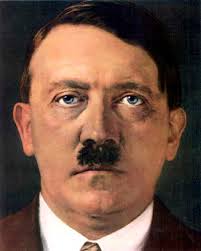
Adolf Hitler
Among these:
- Hermann Goering had repeatedly shown himself as the incompetent Reichsmarshall of the German air force, the Luftwaffe. Yet Hitler kept him on because Goering had been one of the “Old Fighters” who had supported Hitler long before the Nazis came to power. Only in April, 1945, when Hitler falsely believed that Goering was trying to supplant him as Fuhrer, did he expel him from the party and order his arrest.
- Rudolf Hess joined the Nazi party in 1920, and served as Deputy Fuhrer to Hitler from 1933 to 1941. That was when he flew to Scotland on a self-assigned mission to make peace with England. The British, believing him mad, locked him in the Tower of London until 1945. Afterward, he was convicted at Nuremberg for war crimes and sentenced to life imprisonment.
- Joachim von Ribbentrop had been a champagne salesman before Hitler appointed him Foreign Minister in 1938, and held that post until the Reich’s defeat in 1945. Although his arrogance and incompetence made him universally disliked by other high-ranking Nazi officials, Hitler never considered firing him.
- Heinrich Himmler, appointed Reichsfuhrer-SS in 1929, held that position throughout the 12 years (1933-1945) the Third Reich lasted. It was to Himmler that Hitler entrusted the most important project of his life: The destruction of European Jewry. Only after learning—in the final days of the Reich—that Himmler had sought to make peace with the Allies did Hitler expel him from the party and order his arrest.
Joseph Stalin, dictator of the Soviet Union (1928-1953) serves as a far better comparison figure for Trump.
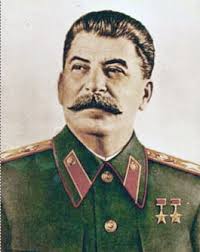
Joseph Stalin
In 1936, Stalin ordered the first of a series of purges—from high-ranking members of the Communist party to impoverished peasants. Among the most prominent of his victims:
- Grigory Zimoviev, former member of the Central Committee of the Communist party. He was arrested in 1934 on trumped-up charges of “moral complicity” in the assassination of Leniningrad party boss Sergei Kirov. He was executed in 1936.
- Leon Trotsky, onetime second-in-command only to Vladimir Lenin, clashed with Stalin before the November 7, 1917 Russian Revolution. They remained locked in combat until Lenin’s death of a cerebral hemorrhage in 1924. Stalin drove Trotsky out of the Communist party and even out of the Soviet Union. In 1940, on Stalin’s orders, he was assassinated while living under guard in Mexico.
- Genrikh Grigoryevich Yagoda served as director of the NKVD secret police (the precursor of the KGB) from 1934 to 1936. He supervised the arrest, show trial and execution of former Central Committee members Lev Kamenev and Grigory Zimoviev. Arrested in 1937, he was falsely charged with treason and conspiracy against the Soviet government. Yagoda was shot soon after the trial. His wife Ida Averbakh was also executed in 1938.
- Nikolai Yezhov became head of the NKVD secret police in 1936. He oversaw what historians have since named the Great Terror until 1939. Arrested in April, he was replaced by Lavrenty Beria. In 1940, Yezhov himself was executed by the executioners he had once commanded.
Like Joseph Stalin, Donald Trump has presided over a series of purges since reaching the White House.
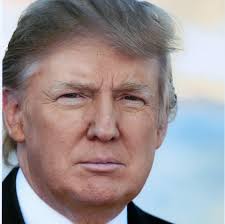
Donald Trump
Like Stalin, Trump demands unconditional loyalty from those who serve in his administration. And, also like Stalin, he does not believe that loyalty is a two-way street.
Moreover, it doesn’t take much to offend Trump’s fragile ego. When “Saturday Night Live” started doing skits showcasing his chief strategist, Steve Bannon, as a Rasputin-like figure who manipulated Trump, Bannon’s days were clearly numbered.
The same proved true for Anthony Scaramucci, who was to become White House communications director. All that it took to secure his dismissal was an expletive-ridden phone interview with The New Yorker‘s Ryan Lizza. It didn’t help Scaramucci that he bragged about purging the entire White House communications staff and even siccing the FBI on leakers.
Others have left the White House owing to its increasingly paranoid atmosphere. Reports have surfaced of staffers being ordered to turn over their cell phones for inspection. The reason: To ensure they weren’t communicating with reporters by text message or through encrypted apps.
Then there is the very real—and justified—fear of being caught up in Special Counsel Robert Mueller III’s ever-widening investigation into collusion between Russian Intelligence agents and members of Trump’s 2016 Presidential campaign.
One of those who has reportedly hired top-notch legal talent is Hope Hicks, interim White House communications director. According to Politico, the 28-year-old has retained the services of veteran criminal defense lawyer Robert Trout, who once worked for the Justice Department.
Even if a White House staffer is not ultimately indicted and convicted, the costs of hiring top-flight legal talent can prove ruinous.
During the 2016 campaign, Trump claimed a $9 billion fortune: “I’m really rich!” But he has shown no willingness to spend any of it defending those officials he has hired.
And for an administration already plagued with a shortage of desperately-needed talent, even worse may soon be to come.

.jpg)
 Bureaucracybuster's Blog
ABC NEWS, ADOLF HITLER, ALTERNET, AMERICABLOG, AP, BABY BOOMER RESISTANCE, BBC, BLOOMBERG NEWS, BLUESKY, BUZZFEED, CANADA, CBS NEWS, CLAUDIA SHEINBAUM PARDO, CNN, CNN'S "STARTING POINT", CROOKS AND LIARS, CZECHOSLAVAKIA, DAILY KOS, DAVID BROOKS, DEPARTMENT OF HOMELAND SECURITY, DEPARTMENT OF JUSTICE, DONALD TRUMP, EXTORTION, FBI, FIVETHIRTYEIGHT, GREENLAND, HARPER’S MAGAZINE, HUFFINGTON POST, INSIDER, JACK SMITH, JIMMY CARTER, JUSTIN TRUDEAU, MASTADON, MEDIA MATTERS, MEXICO, MOTHER JONES, MOVEON, MSNBC, MSNBC'S "HARDBALL", NAZI GERMANY, NBC NEWS, NEGOTIATING, NEVILLE CHAMBERLAIN, NEW REPUBLIC, NEWSDAY, NEWSWEEK, NEWT GINGRICH, NICCOLO MACHIAVELLI, NPR, PANAMA, PBS NEWSHOUR, POLAND, POLITICO, POLITICUSUSA, R.I.CO. ACT, RAW STORY, REPUBLICAN PARTY, REPUBLICANS, REUTERS, ROBERT MEULLER, SALON, SEATTLE TIMES, SLATE, TALKING POINTS MEMO, THE ATLANTIC, THE CHICAGO SUN-TIMES, THE CHICAGO TRIBUNE, THE DAILY BEAST, THE DAILY BLOG, THE GUARDIAN, THE HAMILTON PROJECT, THE HILL, THE HUFFINGTON POST, THE LOS ANGELES TIMES, THE NATION, THE NEW REPUBLIC, THE NEW YORK TIMES, THE NEW YORKER, THE PENTAGON, THE PRINCE, THE VILLAGE VOICE, THE WASHINGTON POST, THINKPROGRESS, TIME, TRUTHDIG, TRUTHOUT, TWO POLITICAL JUNKIES, U.S. NEWS & WORLD REPORT, UKRAINE, UPI, USA TODAY, VLADIMIR PUTIN, VOLODMYR ZELENSKY, WONKETTE, WORLD WAR 11, X
WANT TO NEGOTIATE WITH TRUMP? STUDY HITLER: PART TWO (END)
In Bureaucracy, Business, History, Military, Politics, Social commentary on February 19, 2025 at 12:16 amThe “negotiating” methods of German Fuhrer Adolf Hitler serve as a useful guide to what domestic and world leaders can expect from trying to reach an agreement with President Donald Trump.
In September, 1938, seven months after seizing Austria, Hitler gave another exhibition of his “negotiating” methods.
This time, the target of his aggression was Czechoslovakia. Once again, he opened “negotiations” with a lie: The Czechoslovak government was trying to exterminate 3.5 million Germans living in the “Sudetenland.”
Then he threatened war: Germany would protect its citizens and halt such “oppression.”
For British Prime Minister Neville Chamberlain, the thought of another European war erupting less than 20 years after the end of World War I was simply unthinkable.
He quickly sent Hitler a telegram, offering to help resolve the crisis: “I could come to you by air and am ready to leave tomorrow. Please inform me of earliest time you can receive me, and tell me the place of the meeting. I should be grateful for a very early reply.”
[Mistake #1: Showing his willingness to placate a brutal dictator. Such men see any concessions as weakness—leading to only greater demands. Trump, like Hitler relishes attacking those weaker than himself.]
The two European leaders met in Berchtesgaden, Germany, on September 15, 1938.
Neville Chamberlain and Adolf Hitler
Hitler denied that he had threatened war: “Force? Who speaks of force?“
Then, suddenly, he accused the Czechs of having mobilized their army in May. They had mobilized—in response to the mobilization of the German army.
“I shall not put up with this any longer,” shouted Hitler. “I shall settle this question in one way or another. I shall take matters in my own hands!”
Suddenly, Chamberlain seemed alarmed: “If I understood you right, you are determined to proceed against Czechoslovakia in any case. In the circumstances, it is best for me to return at once. Anything else now seems pointless.”
Hitler, taken aback, softened his tone and said they should consider the Sudetenland according to the principle of self-determination.
Chamberlain agreed to the cession of the Sudetenland. Three days later, French Prime Minister Edouard Daladier did the same. No Czechoslovak representative was invited to these discussions.
[Mistake #2: Instead of conceding to Hitler, which emboldened the dictator, he should have pressed his advantage. When Hitler found himself facing an opponent who couldn’t be bribed or cowed—such as British Prime Minister Winston Churchill or Soviet Premier Joseph Stalin—he raged and sulked.
[When Trump has faced an opponent he can’t buy or intimidate—such as Special Counsels Robert Mueller and Jack Smith—he has done the same.]
Chamberlain met Hitler again in Godesberg, Germany, on September 22 to confirm the agreements. But Hitler aimed to use the crisis as a pretext for war.
He now demanded not only the annexation of the Sudetenland but the immediate military occupation of the territories. This would give the Czechoslovak army no time to adapt their defense measures to the new borders.
To achieve a solution, Italian dictator Benito Mussolini suggested a conference of the major powers in Munich.
On September 29, Hitler, Daladier and Chamberlain met and agreed to Mussolini’s proposal. They signed the Munich Agreement, which accepted the immediate occupation of the Sudetenland.
The Czechoslovak government had not been a party to the talks. Nevertheless, it promised to abide by the agreement on September 30.
It actually had no choice. It faced the threat of an immediate German invasion after being deserted by its pledged allies: Britain, France and the Soviet Union.
[Mistake #3: Selling out an ally and making a concession to an insatiable dictator—and believing that Hitler could be trusted to keep his word.
[Just as Chamberlain sold out Czechoslovakia, Trump plans on selling out Ukraine to Russian dictator Vladimir Putin. He’s blamed Ukraine for starting the 2022 war—even though Russia invaded Ukraine.
He’s also attacked Ukrainian President Volodymyr Zelensky—and repeatedly praised Putin. And he’s unilaterally announced that he will begin directing “peace talks” with Putin to end his war on Ukraine.]
Chamberlain returned to England a hero. Holding aloft a copy of the worthless agreement he had signed with Hitler, he told cheering crowds in London: “I believe it is peace for our time.”
Neville Chamberlain
Winston Churchill knew better, predicting: “Britain and France had to choose between war and dishonor. They chose dishonor. They will have war.”
Hitler—still planning more conquests—also knew better. In March, 1939, the German army occupied the rest of Czechoslovakia.
Chamberlain would soon be seen as a naive weakling—even before bombs started falling on London.
Then Hitler turned his attention—and demands—to Poland.
When his generals balked, warning that an invasion would trigger a war with France and Britain, Hitler quickly brushed aside their fears: “Our enemies are little worms. I saw them at Munich.”
Adolf Hitler and his generals
Similarly, Trump drew the same lesson from his repeated escapes from American justice—that he was untouchable
Hitler ordered the invasion of Poland on September 1, 1939—unintentionally triggering World War II.
In time, historians and statesmen would regard Munich as an object lesson in the futility—and danger—in appeasing evil and aggression.
History has yet to record the all-but-certain disasters—foreign and domestic—of the Trump administration.
Share this: