Posts Tagged ‘REPUBLICAN PARTY’
2016 PRESIDENTIAL ELECTION, 2020 PRESIDENTIAL ELECTION, 2024 PRESIDENTIAL ELECTION, ABC NEWS, ABUSE OF POWER, ADOLF HITLER, AILEEN CANNON, ALTERNET, AMERICABLOG, AP, ASSASSINATION, AXIOS, BABY BOOMER RESISTANCE, BBC, BIRD FLU, BLACKS, BLOOMBERG, BUZZFEED, CBS NEWS, CHINA, CLASSIFIED DOCUMENTS, CLAUS VON STAUFFENBERG, CNN, COVID-19, CROOKS AND LIARS, DAILY KOS, DANIEL CASSINO, DEMOCRACY, DEMOCRATIC PARTY, DEMOCRATS, DONALD TRUMP, ELECTORAL COLLEGE, FBI, FEDERAL EMERGENCY MANAGEMENT AGENCY, FIVETHIRTYEIGHT, FUEL PRICES, GALLUP POLL, GAZA, GLOBAL CONFLICT, GROCERY PRICES, HARPER’S MAGAZINE, HILLARY CLINTON, HISPANICS, HITLER: ASCENT (BOOK), HUFFINGTON POST, HUNTER BIDEN, illegal immigration, IMPEACHMENT, INFLATION, INTERNATIONAL BROTHERHOOD OF TEAMSTERS, ISRAEL, JACK SMITH, JAMAL KHASHOOGI, JAMES COMER, JANUARY 6 COUP ATTEMPT, JARED KUSHNER, JIMMY HOFFA, JOHN ADAMS, JOSEPH BIDEN, Kamala Harris, KEVIN MCCARTHY, KIM JONG-UN, LATINOS, LOW INFORMATION VOTERS, MAR-A-LAGO, MARJORIE TAYLOR GREENE, MASCULINITY, MEDIA MATTERS, MEIN KAMPF, MERRICK GARLAND, MOHAMMED BIN SALMAN, MOTHER JONES, MOVEON, MSNBC, MUSLIMS, NAZI GERMANY, NAZIS, NBC NEWS, NEW REPUBLIC, NEWSDAY, NEWSWEEK, NORTH KORREA, NPR, OBSTRUCTION OF CONGRESS, PBS NEWSHOUR, POLITICO, POLITICUSUSA, RAW STORY, REPUBLICAN PARTY, REPUBLICANS, REUTERS, ROBERT F. KENNEDY, RUSSIA, SALON, SEATTLE TIMES, SLATE, SUPERMAN, TALKING POINTS MEMO, TERRORISM, THE ATLANTIC, THE CHICAGO SUN-TIMES, THE CHICAGO TRIBUNE, THE DAILY BEAST, THE DAILY BLOG, THE GUARDIAN, THE HILL, THE HUFFINGTON POST, THE INTERCEPT, THE LOS ANGELES TIMES, THE NATION, THE NEW REPUBLIC, THE NEW YORK TIMES, THE NEW YORKER, THE VILLAGE VOICE, THE WASHINGTON POST, THINKPROGRESS, THOMAS MATTHEW CROOKS, TIME, TRANSPORTATION COSTS, TRUTHDIG, TRUTHOUT, TWO POLITICAL JUNKIES, U.S. BORDER PATROL, U.S. NEWS & WORLD REPORT, UKRAINE, UNITED STATES DEPARTMENT OF JUSTICE, UNITED STATES HOUSE OF REPRESENTATIVES, UNITED STATES SECRET SERVICE, UNITED STATES SENATE, UPI, USA TODAY, VLADIMIR PUTIN, VOLKER ULLRICH, VOLODMYR ZELENSKY, VOX, WEIMAR REPUBLIC, WORLD WAR 11, X, XI JINPING
In Bureaucracy, History, Law, Law Enforcement, Medical, Politics, Social commentary on March 18, 2025 at 12:05 am
There were numerous instances where intervention by Federal legislators or law enforcement authorities could have utterly changed the outcome of the 2024 Presidential election.
Case #5: Even after Donald Trump left office, the Justice Department treated him with a deference not shown any other criminal defendant.
He was allowed, for example, to hurl insults and threats at Special Counsel Jack Smith and even Smith’s family.
One such post, published on Trump’s website, Truth Social, went: “Deranged Jack Smith, who is a sick puppet for A.G. Garland & Crooked Joe Biden, should be DEFUNDED & put out to rest. Republicans must get tough or the Dems will steal another Election. MAGA!”
By “A.G. Garland” Trump meant Attorney General Merrick Garland. By “put out to rest,” he meant that his followers should assassinate Smith.
Not even Mafia bosses like Charles “Lucky” Luciano and Albert “The Executioner” Anastasia dared issue such a threat.
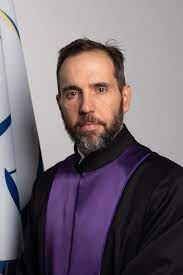
Jack Smith
By contrast: Jimmy Hoffa was president of the International Brotherhood of Teamsters. But that didn’t prevent Robert F. Kennedy’s Justice Department from indicting him for jury tampering—and convicting him on March 4, 1964. He was sentenced to eight years in prison and a $10,000 fine.
No one in the Kennedy Justice Department said: “He’s the elected president of the Teamsters Union—so we can’t touch him.” Yet that is precisely how the Biden Justice Department repeatedly acted—simply because, in 2016, he won a Presidential election.
Case #6: Throughout his struggles to stay out of prison, Trump was aided by the unrelenting support of the Republican party.
Republicans loudly and repeatedly claimed that Donald Trump was the legitimate winner of the 2020 Presidential election—despite overwhelming evidence that he wasn’t.
They also claimed that, by appointing Special Counsel Jack Smith to investigate Trump, the Democrats had weaponized Federal law enforcement.
They also fully supported Trump’s demand for the release of those who attacked the Capitol Building on January 6, 2021.

For example: Rep. Marjorie Taylor Greene (R-GA) has depicted these coup supporters as persecuted martyrs.
On March 24, 2022, members of the Republicans’ House Oversight Committee toured a Washington, D.C. jail where some of these defendants were held. “Their due process rights are being violated. And they have been mistreated and treated as political prisoners,” Greene told reporters after the tour.
Adolf Hitler similarly portrayed as martyrs the Nazis who tried to violently overthrow the government of Bavaria on November 9, 1923.
A March 2, 2020 Washington Monthly story concluded ominously: “U.S. democracy wasn’t set up to deal with a president openly behaving like a James Bond villain while being protected by a political party behaving more like a mafia than a civic institution.”
Case #7: While Congressional Republicans have relentlessly investigated President Joe Biden and his family, Democrats have refused to similarly investigate Trump’s family.
The United States House Oversight Committee opened its investigation into the Biden family on January 11, 2023. The investigation included the foreign business activities of Biden’s son, Hunter, and brother, James.
By November 2023, the investigation had not found any evidence of wrongdoing by President Biden.
Democrats, by contrast, have not probed why Jared Kushner, Donald Trump’s son-in-law and former White House adviser, received $2 billion from Saudi Arabia’s Crown Prince Mohammed bin Salman. The money came to Kushner’s private equity firm after Kushner left the White House in 2021.

Jared Kushner
Salman has been implicated by U.S. Intelligence reports in the 2018 torture and dismemberment of Washington Post columnist Jamal Khashoggi. When asked if he believed the reports, Kushner said: “Are we really still doing this?”
Democrats have also refused to investigate the Trump administration’s illegally seizing vitally-needed medical supplies in at least seven states during the COVID-19 pandemic.
The Federal Emergency Management Agency (FEMA) did not publicly report the thefts, despite the outlay of millions of dollars of taxpayer money. Nor did the administration explain how it decided which supplies to seize and where to reroute them.
The Federal Government did not inform states whose supplies it seized if they would receive the materials they ordered and paid for.
Case #8: On July 13, 2024, Trump was allegedly wounded in his right ear by a gunman while speaking at an open-air Presidential campaign rally near Butler, Pennsylvania.
The would-be assassin, Thomas Matthew Crooks, fired eight rounds from an AR-15 style rifle from the roof of a nearby building. Trump dived for cover behind his lectern, as the shooter killed one audience member and critically injured two others.
Crooks was shot and killed seconds later by the Secret Service’s Counter Sniper Team.
Had Trump not slightly turned his head at the moment Crooks fired, Republicans would have been forced to choose another nominee.
In addition, Trump would not have been alive to win the 2024 Presidential election and openly threaten to imprison the Justice Department prosecutors who sought to hold him accountable for his litany of crimes.
The assassination attempt calls to mind that by Colonel Claus Schenk von Stauffenberg on July 20, 1944, to kill Adolf Hitler with a briefcase bomb. Had he succeeded, the war in Europe would no doubt have ended far earlier, with countless lives being saved.
2016 PRESIDENTIAL ELECTION, 2020 PRESIDENTIAL ELECTION, 2024 PRESIDENTIAL ELECTION, ABC NEWS, ABUSE OF POWER, ADOLF HITLER, AILEEN CANNON, ALTERNET, AMERICABLOG, AP, ASSASSINATION, AXIOS, BABY BOOMER RESISTANCE, BBC, BIRD FLU, BLACKS, BLOOMBERG, BUZZFEED, CBS NEWS, CHINA, CLASSIFIED DOCUMENTS, CLAUS VON STAUFFENBERG, CNN, COVID-19, CROOKS AND LIARS, DAILY KOS, DANIEL CASSINO, DEMOCRACY, DEMOCRATIC PARTY, DEMOCRATS, DONALD TRUMP, ELECTORAL COLLEGE, FBI, FEDERAL EMERGENCY MANAGEMENT AGENCY, FIVETHIRTYEIGHT, FUEL PRICES, GALLUP POLL, GAZA, GLOBAL CONFLICT, GROCERY PRICES, HARPER’S MAGAZINE, HILLARY CLINTON, HISPANICS, HITLER: ASCENT (BOOK), HUFFINGTON POST, HUNTER BIDEN, illegal immigration, IMPEACHMENT, INFLATION, INTERNATIONAL BROTHERHOOD OF TEAMSTERS, ISRAEL, JACK SMITH, JAMAL KHASHOOGI, JAMES COMER, JANUARY 6 COUP ATTEMPT, JARED KUSHNER, JIMMY HOFFA, JOHN ADAMS, JOSEPH BIDEN, Kamala Harris, KEVIN MCCARTHY, KIM JONG-UN, LATINOS, LOW INFORMATION VOTERS, MAR-A-LAGO, MARJORIE TAYLOR GREENE, MASCULINITY, MEDIA MATTERS, MEIN KAMPF, MERRICK GARLAND, MOHAMMED BIN SALMAN, MOTHER JONES, MOVEON, MSNBC, MUSLIMS, NAZI GERMANY, NAZIS, NBC NEWS, NEW REPUBLIC, NEWSDAY, NEWSWEEK, NORTH KORREA, NPR, OBSTRUCTION OF CONGRESS, PBS NEWSHOUR, POLITICO, POLITICUSUSA, RAW STORY, REPUBLICAN PARTY, REPUBLICANS, REUTERS, ROBERT F. KENNEDY, RUSSIA, SALON, SEATTLE TIMES, SLATE, SUPERMAN, TALKING POINTS MEMO, TERRORISM, THE ATLANTIC, THE CHICAGO SUN-TIMES, THE CHICAGO TRIBUNE, THE DAILY BEAST, THE DAILY BLOG, THE GUARDIAN, THE HILL, THE HUFFINGTON POST, THE INTERCEPT, THE LOS ANGELES TIMES, THE NATION, THE NEW REPUBLIC, THE NEW YORK TIMES, THE NEW YORKER, THE VILLAGE VOICE, THE WASHINGTON POST, THINKPROGRESS, THOMAS MATTHEW CROOKS, TIME, TRANSPORTATION COSTS, TRUTHDIG, TRUTHOUT, TWO POLITICAL JUNKIES, U.S. BORDER PATROL, U.S. NEWS & WORLD REPORT, UKRAINE, UNITED STATES DEPARTMENT OF JUSTICE, UNITED STATES HOUSE OF REPRESENTATIVES, UNITED STATES SECRET SERVICE, UNITED STATES SENATE, UPI, USA TODAY, VLADIMIR PUTIN, VOLKER ULLRICH, VOLODMYR ZELENSKY, VOX, WEIMAR REPUBLIC, WORLD WAR 11, X, XI JINPING
In Bureaucracy, History, Law, Law Enforcement, Military, Politics, Social commentary on March 17, 2025 at 2:37 am
On November 9, 1923, Nazi Party Fuhrer Adolf Hitler tried to overthrow the government in Munich, Bavaria.
About 2,000 Nazis marched to the center of Munich, where they confronted heavily-armed police. A shootout erupted, killing 16 Nazis and four policemen.
Hitler was injured during the clash, but managed to escape. Two days later, he was arrested and charged with treason.
Put on trial, he found himself treated as a celebrity by a judge sympathetic to Right-wing groups. He was allowed to brutally cross-examine witnesses and even make inflammatory speeches.
At the end of the trial, he was convicted of treason and sentenced to five years’ imprisonment.
Serving time in Landsberg Prison, in Bavaria. he was given a huge cell, allowed to receive unlimited visitors and gifts, and treated with deference by guards and inmates.
Hitler used his time in prison to write his infamous book, Mein Kampf-–“My Struggle.” Part autobiography, part political treatise, it laid out his future plans—including the extermination of the Jews and the conquest of the Soviet Union.

Adolf Hitler leaving Landsberg Prison, December, 20, 1924
Nine months later, he was released on parole—by authorities loyal to the authoritarian Right instead of the newly-created Weimar Republic.
Hitler immediately began rebuilding the shattered Nazi party—and deciding on a new strategy to gain power. Never again would he resort to armed force. He would win office by election—or intrigue.
Writes historian Volker Ullrich, in his monumental biography, Hitler: Ascent 1889 – 1939: “Historians have perennially tried to answer the question of whether Hitler’s rise to power could have been halted….
“There were repeated opportunities to end Hitler’s run of triumphs. The most obvious one was after the failed Putsch of November 1923. Had the Munich rabble-rouser been forced to serve his full five-year term of imprisonment in Landsberg, it is extremely unlikely that he would have been able to restart his political career.”

Thus, it isn’t just what happens that can influence the course of history. Often, it’s what doesn’t happen that has at least as great a result.
Future historians—if there are any—may one day write that it’s what didn’t happen that played at least as great a role in re-electing Donald Trump President as what actually did.
There were numerous instances where intervention by Federal legislators or law enforcement authorities could have utterly changed the outcome of the 2024 election.
Case #1: On December 18, 2019, the Democratic-controlled House of Representatives adopted two articles of impeachment against Trump: abuse of power and obstruction of Congress. On February 5, 2020, the Republican-dominated Senate voted to acquit Trump on both articles of impeachment.
Their motive: Fear that if they didn’t, they would be “primaried” by even more extreme, Trump-supported Right-wing candidates—and lose their positions and the accompanying power and perks.
Had Republicans agreed to convict him, he could not have run again for President.
Case #2: On January 13, 2021, Trump was impeached for the second time for “incitement of insurrection”—inciting the January 6, 2021 attack on the United States Capitol.
The reason: To stop the counting of Electoral College votes, which he knew would prove that former Vice President Joseph Biden had won the 2020 Presidential election.
The evidence against him was overwhelming—including video of his inciting a mob of his followers to storm the Capitol Building.
But Republican Senators again acquitted Trump on February 13, 2021—choosing ambition over patriotism.
Had they done so, he could not have again been a candidate for President.

Donald Trump
Case #3: Only on November 18, 2022—a year and a half after becoming Attorney General—did Merrick Garland appoint Jack Smith Independent Counsel to investigate Donald Trump’s role for:
- Inciting the January 6 attack on Congress; and
- Illegally seizing and storing highly classified government documents at his Mar-a-Lago estate in Palm Beach Florida.
This gave Trump time to play his “deny and delay” game. Had he been prosecuted and convicted before the November 5 Presidential election, the results might well have been different.
Even hardcore supporters might have proved unwilling to vote for someone found guilty of inciting a riot or stealing highly classified documents.
Case #4: In June, 2023, Trump was indicted for illegally seizing and storing hundreds of highly classified government documents at his Mar-a-Lago estate.
Aileen Cannon, a Trump appointee as Federal Judge of the United States District Court for the Southern District of Florida, presided over the case.
She repeatedly ruled in his favor and finally dismissed the case in July, 2024. claiming that Special Counsel Jack Smith’s appointment was unconstitutional.
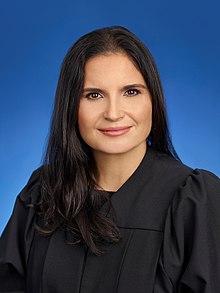
Aileen Cannon
Southern District of Florida, CC BY-SA 4.0 <https://creativecommons.org/licenses/by-sa/4.0>, via Wikimedia Commons
Many legal experts, citing her handling of the civil case against Trump, called for her recusal from the case. Jack Smith could have requested her removal from the case but did not ask a Federal appeals court to do so.
MSNBC analyst Barbara McQuade told Newsweek that Smith likely refused to do so to “return public trust” to the Justice Department, which had been challenged in recent years.
Cannon’s kid-gloves treatment of Trump echoed that of the Right-wing judge who presided over Adolf Hitler’s trial in 1923 for trying to overthrow the government of Bavaria.
ABC NEWS, ADOLF HITLER, ALTERNET, AMERICABLOG, AP, BABY BOOMER RESISTANCE, BBC, BLOOMBERG NEWS, BLUESKY, BUZZFEED, CANADA, CBS NEWS, CLAUDIA SHEINBAUM PARDO, CNN, CNN'S "STARTING POINT", CROOKS AND LIARS, DAILY KOS, DEPARTMENT OF HOMELAND SECURITY, DEPARTMENT OF JUSTICE, EXTORTION, FBI, FIVETHIRTYEIGHT, HARPER’S MAGAZINE, HUFFINGTON POST, INSIDER, JUDICIARY, JUSTIN TRUDEAU, MASTADON, MEDIA MATTERS, MEXICO, MOTHER JONES, MOVEON, MSNBC, MSNBC'S "HARDBALL", NAZI GERMANY, NBC NEWS, NEGOTIATING, NEW REPUBLIC, NEWSDAY, NEWSWEEK, NPR, PBS NEWSHOUR, POLAND, POLITICO, POLITICUSUSA, PRESS, RAW STORY, REPUBLICAN PARTY, REPUBLICANS, REUTERS, SALON, SEATTLE TIMES, SLATE, TALKING POINTS MEMO, THE ATLANTIC, THE CHICAGO SUN-TIMES, THE CHICAGO TRIBUNE, THE DAILY BEAST, THE DAILY BLOG, THE GUARDIAN, THE HILL, THE HUFFINGTON POST, THE LOS ANGELES TIMES, THE NATION, THE NEW REPUBLIC, THE NEW YORK TIMES, THE NEW YORKER, THE PENTAGON, THE VILLAGE VOICE, THE WASHINGTON POST, THINKPROGRESS, TIME, TRUTHDIG, TRUTHOUT, TWO POLITICAL JUNKIES, U.S. NEWS & WORLD REPORT, UPI, USA TODAY, WONKETTE, WORLD WAR 11, X
In Bureaucracy, Business, History, Military, Politics, Social commentary on March 5, 2025 at 12:05 am
To understand what is happening in the United States today, it’s necessary to realize this:
Its decent, democracy-cherishing citizens find themselves in the same position as decent, democracy-cherishing citizens of Nazi Germany from 1933 to 1945.
And just as Germany’s government became a ruthless dictatorship, so has that of the United States.
And just as ordinary, peace-loving Germans hoped for a powerful, democratic outsider to remove the menace of Adolf Hitler, so do ordinary, peace-loving Americans hope the same will happen to Donald Trump.
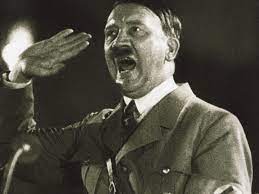
Adolf Hitler
From 1939 to 1945, those democracy-cherishing outsiders consisted of Canada, England and the United States. (The Soviet Union reluctantly joined this alliance only after it became yet another victim of Adolf Hitler’s aggression.)
In the case of the United States, that solution can only be achieved economically—by pressuring Right-wing Republican members of Congress in Red states to end their support for Trump’s dictatorial agenda.
And the only democratic countries with the power to do this are Mexico and Canada, America’s foremost trading partners.
The 2024 elections gave Republicans not only the White House but control of the House and Senate.
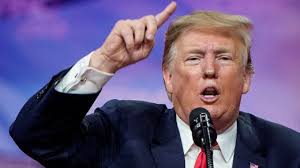
Donald Trump
Republicans don’t care that Trump has trashed the institutions that Americans have cherished for more than 200 years. Institutions like an independent judiciary, a free press, and an incorruptible Justice Department.
He has viciously attacked all of these—and Republicans have either said nothing or rushed to his defense.
What Republicans truly fear about Donald Trump is that if they dare to hold him accountable for his lifetime of criminality, his Fascistic base will turn on them—and turn them out of Congress.
If they are conflicted—whether to continue supporting Trump or desert him—the reason is the same: How can I hold onto my power and all the privileges that go with it?

Claudia Sheinbaum Pardo, President of Mexico

Justin Trudeau, Prime Minister of Canada
Republicans—with Trump as their Fuhrer—are utilizing the same my-way-or-else “negotiating” strategy as Nazi Germany’s Fuhrer, Adolf Hitler.
And Democrats—out of cowardice and/or ignorance of history—are, as usual, refusing to publicly make this comparison.
Thus, America’s rescue from Trump can only come from outside the United States.
Donald Trump has proven his affinity for dictators and dictatorships—lavishing praise on Russia’s Vladimir Putin, China’s Xi Jinping and North Korea’s Kim Jong-Un.
It’s with the leaders of democratic nations that he loves to pick fights. And he will go on doing so until he is stopped.
There are two reasons for his hostile behavior in foreign affairs:
- Trump admires dictators, desires to become one himself, and is now stocking essential federal agencies—such as the Pentagon, FBI and Department of Homeland Security—with his political hacks to make this a reality.
- He knows that compared to the dictatorships of Russia and China, democracies such as those of Canada, Mexico and Ukraine are comparatively weak militarily.
As with Adolf Hitler, attempting to reason with Trump will prove fruitless. He respects only superior force.
But he has blinked when confronted with serious opposition.
Thus, on February 1, he threatened to hit Mexico and Canada with 25% tariffs, accusing them of injecting huge amounts of Fentanyl and huge numbers of illegal aliens into the United States. This allowed him to look tough to his legions of uneducated, Fascistic voters.
But then Mexican President Claudia Sheinbaum Pardo and Canadian Prime Minister Justin Trudeau threatened to retaliate with their own 25% tariffs on American goods.
And the financially conservative Wall Street Journal-–whose target audience includes business leaders, investors, and affluent consumers—called Trump’s threat “the dumbest trade war in history.”
Suddenly, Trump found a way to declare victory, claiming that Mexico and Canada would vastly increase border security to stop the flow of Fentanyl and illegal aliens.
And dropping his threat of a trade war.
So Trump can be beaten—if his enemies are willing to go all the way.
Democratic nations like Canada and Mexico dare not attack Donald Trump militarily. The United States has such a powerful military it’s threatened only by China and Russia.
But Canada and Mexico can target with ruthless tariffs those Red states whose Fascistic voting blocs fanatically support Trump—and the House and Senate members who support him.
They can
- Deprive Red state populations of the fruits, vegetables, meats, cars, computers, oil, gas—and especially beer and alcohol—they take for granted.
- Refuse to stock goods from Red states in their stores.
- Appeal to the patriotism of Canadians and Mexicans to maintain the boycott despite the suffering this will impose on their own countries.
Americans have grown used to seeking simple, painless solutions to major problems. Thus, Trump won 77 million votes by promising to drastically reduce the price of eggs.
This despite a loss of millions of bird flu-infected chickens.
With egg prices continuing to drastically rise, Americans are already getting impatient for Trump to work a miracle—as he falsely promised to do during the campaign.
When Red states are forced to suffer staggering losses for months on end, they will elect anti-Fascist Senators and Representatives to nullify the evils of Trump’s administration.
ABC NEWS, ADOLF HITLER, ALTERNET, AMERICABLOG, AP, BABY BOOMER RESISTANCE, BBC, BLOOMBERG NEWS, BLUESKY, BUZZFEED, CANADA, CBS NEWS, CLAUDIA SHEINBAUM PARDO, CNN, CNN'S "STARTING POINT", CROOKS AND LIARS, CZECHOSLAVAKIA, DAILY KOS, DAVID BROOKS, DEPARTMENT OF HOMELAND SECURITY, DEPARTMENT OF JUSTICE, DONALD TRUMP, EXTORTION, FBI, FIVETHIRTYEIGHT, GREENLAND, HARPER’S MAGAZINE, HUFFINGTON POST, INSIDER, JACK SMITH, JIMMY CARTER, JUSTIN TRUDEAU, MASTADON, MEDIA MATTERS, MEXICO, MOTHER JONES, MOVEON, MSNBC, MSNBC'S "HARDBALL", NAZI GERMANY, NBC NEWS, NEGOTIATING, NEVILLE CHAMBERLAIN, NEW REPUBLIC, NEWSDAY, NEWSWEEK, NEWT GINGRICH, NICCOLO MACHIAVELLI, NPR, PANAMA, PBS NEWSHOUR, POLAND, POLITICO, POLITICUSUSA, R.I.CO. ACT, RAW STORY, REPUBLICAN PARTY, REPUBLICANS, REUTERS, ROBERT MEULLER, SALON, SEATTLE TIMES, SLATE, TALKING POINTS MEMO, THE ATLANTIC, THE CHICAGO SUN-TIMES, THE CHICAGO TRIBUNE, THE DAILY BEAST, THE DAILY BLOG, THE GUARDIAN, THE HAMILTON PROJECT, THE HILL, THE HUFFINGTON POST, THE LOS ANGELES TIMES, THE NATION, THE NEW REPUBLIC, THE NEW YORK TIMES, THE NEW YORKER, THE PENTAGON, THE PRINCE, THE VILLAGE VOICE, THE WASHINGTON POST, THINKPROGRESS, TIME, TRUTHDIG, TRUTHOUT, TWO POLITICAL JUNKIES, U.S. NEWS & WORLD REPORT, UKRAINE, UPI, USA TODAY, VLADIMIR PUTIN, VOLODMYR ZELENSKY, WONKETTE, WORLD WAR 11, X
In Bureaucracy, Business, History, Military, Politics, Social commentary on February 19, 2025 at 12:16 am
The “negotiating” methods of German Fuhrer Adolf Hitler serve as a useful guide to what domestic and world leaders can expect from trying to reach an agreement with President Donald Trump.
In September, 1938, seven months after seizing Austria, Hitler gave another exhibition of his “negotiating” methods.
This time, the target of his aggression was Czechoslovakia. Once again, he opened “negotiations” with a lie: The Czechoslovak government was trying to exterminate 3.5 million Germans living in the “Sudetenland.”
Then he threatened war: Germany would protect its citizens and halt such “oppression.”
For British Prime Minister Neville Chamberlain, the thought of another European war erupting less than 20 years after the end of World War I was simply unthinkable.
He quickly sent Hitler a telegram, offering to help resolve the crisis: “I could come to you by air and am ready to leave tomorrow. Please inform me of earliest time you can receive me, and tell me the place of the meeting. I should be grateful for a very early reply.”
[Mistake #1: Showing his willingness to placate a brutal dictator. Such men see any concessions as weakness—leading to only greater demands. Trump, like Hitler relishes attacking those weaker than himself.]
The two European leaders met in Berchtesgaden, Germany, on September 15, 1938.
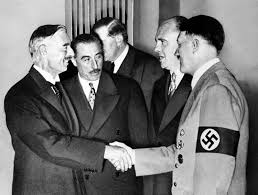
Neville Chamberlain and Adolf Hitler
Hitler denied that he had threatened war: “Force? Who speaks of force?“
Then, suddenly, he accused the Czechs of having mobilized their army in May. They had mobilized—in response to the mobilization of the German army.
“I shall not put up with this any longer,” shouted Hitler. “I shall settle this question in one way or another. I shall take matters in my own hands!”
Suddenly, Chamberlain seemed alarmed: “If I understood you right, you are determined to proceed against Czechoslovakia in any case. In the circumstances, it is best for me to return at once. Anything else now seems pointless.”
Hitler, taken aback, softened his tone and said they should consider the Sudetenland according to the principle of self-determination.
Chamberlain agreed to the cession of the Sudetenland. Three days later, French Prime Minister Edouard Daladier did the same. No Czechoslovak representative was invited to these discussions.
[Mistake #2: Instead of conceding to Hitler, which emboldened the dictator, he should have pressed his advantage. When Hitler found himself facing an opponent who couldn’t be bribed or cowed—such as British Prime Minister Winston Churchill or Soviet Premier Joseph Stalin—he raged and sulked.
[When Trump has faced an opponent he can’t buy or intimidate—such as Special Counsels Robert Mueller and Jack Smith—he has done the same.]
Chamberlain met Hitler again in Godesberg, Germany, on September 22 to confirm the agreements. But Hitler aimed to use the crisis as a pretext for war.
He now demanded not only the annexation of the Sudetenland but the immediate military occupation of the territories. This would give the Czechoslovak army no time to adapt their defense measures to the new borders.
To achieve a solution, Italian dictator Benito Mussolini suggested a conference of the major powers in Munich.
On September 29, Hitler, Daladier and Chamberlain met and agreed to Mussolini’s proposal. They signed the Munich Agreement, which accepted the immediate occupation of the Sudetenland.
The Czechoslovak government had not been a party to the talks. Nevertheless, it promised to abide by the agreement on September 30.
It actually had no choice. It faced the threat of an immediate German invasion after being deserted by its pledged allies: Britain, France and the Soviet Union.
[Mistake #3: Selling out an ally and making a concession to an insatiable dictator—and believing that Hitler could be trusted to keep his word.
[Just as Chamberlain sold out Czechoslovakia, Trump plans on selling out Ukraine to Russian dictator Vladimir Putin. He’s blamed Ukraine for starting the 2022 war—even though Russia invaded Ukraine.
He’s also attacked Ukrainian President Volodymyr Zelensky—and repeatedly praised Putin. And he’s unilaterally announced that he will begin directing “peace talks” with Putin to end his war on Ukraine.]
Chamberlain returned to England a hero. Holding aloft a copy of the worthless agreement he had signed with Hitler, he told cheering crowds in London: “I believe it is peace for our time.”
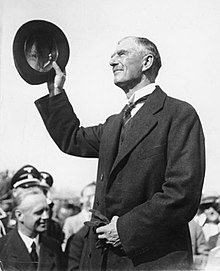
Neville Chamberlain
Winston Churchill knew better, predicting: “Britain and France had to choose between war and dishonor. They chose dishonor. They will have war.”
Hitler—still planning more conquests—also knew better. In March, 1939, the German army occupied the rest of Czechoslovakia.
Chamberlain would soon be seen as a naive weakling—even before bombs started falling on London.
Then Hitler turned his attention—and demands—to Poland.
When his generals balked, warning that an invasion would trigger a war with France and Britain, Hitler quickly brushed aside their fears: “Our enemies are little worms. I saw them at Munich.”
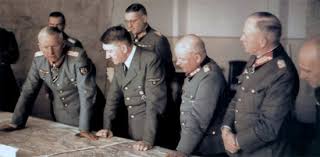
Adolf Hitler and his generals
Similarly, Trump drew the same lesson from his repeated escapes from American justice—that he was untouchable
Hitler ordered the invasion of Poland on September 1, 1939—unintentionally triggering World War II.
In time, historians and statesmen would regard Munich as an object lesson in the futility—and danger—in appeasing evil and aggression.
History has yet to record the all-but-certain disasters—foreign and domestic—of the Trump administration.
ABC NEWS, ADOLF HITLER, ALTERNET, AMERICABLOG, AP, AUSTRIA, BABY BOOMER RESISTANCE, BBC, BLOOMBERG NEWS, BLUESKY, BUZZFEED, CANADA, CBS NEWS, CLAUDIA SHEINBAUM PARDO, CNN, CNN'S "STARTING POINT", CROOKS AND LIARS, CZECHOSLAVAKIA, CZECHOSLOVAKIA, DAILY KOS, DAVID BROOKS, DEPARTMENT OF HOMELAND SECURITY, DEPARTMENT OF JUSTICE, DONALD TRUMP, EXTORTION, FBI, FIVETHIRTYEIGHT, FRANCE, GELI rAUBAL, GREENLAND, HARPER’S MAGAZINE, HUFFINGTON POST, INSIDER, JACK SMITH, JIMMY CARTER, JUSTIN TRUDEAU, MASTADON, MEDIA MATTERS, MEXICO, MOTHER JONES, MOVEON, MSNBC, MSNBC'S "HARDBALL", NAZI GERMANY, NBC NEWS, NEGOTIATING, NEVILLE CHAMBERLAIN, NEW REPUBLIC, NEWSDAY, NEWSWEEK, NEWT GINGRICH, NICCOLO MACHIAVELLI, NPR, PANAMA, PBS NEWSHOUR, POLAND, POLITICO, POLITICUSUSA, R.I.CO. ACT, RAW STORY, REPUBLICAN PARTY, REPUBLICANS, REUTERS, ROBERT MEULLER, SALON, SEATTLE TIMES, SLATE, TALKING POINTS MEMO, TARIFFS, THE ATLANTIC, THE CHICAGO SUN-TIMES, THE CHICAGO TRIBUNE, THE DAILY BEAST, THE DAILY BLOG, THE GUARDIAN, THE HAMILTON PROJECT, THE HILL, THE HUFFINGTON POST, THE LOS ANGELES TIMES, THE NATION, THE NEW REPUBLIC, THE NEW YORK TIMES, THE NEW YORKER, THE PENTAGON, THE PRINCE, THE VILLAGE VOICE, THE WASHINGTON POST, THINKPROGRESS, TIME, TRADE WARS, TRUTHDIG, TRUTHOUT, TWO POLITICAL JUNKIES, U.S. NEWS & WORLD REPORT, UKRAINE, UPI, USA TODAY, VLADIMIR PUTIN, VOLODMYR ZELENSKY, WONKETTE, WORLD WAR 11, X
In Bureaucracy, Business, History, Military, Politics, Social commentary on February 18, 2025 at 12:10 am
To understand the “negotiating” style of Donald Trump, it’s essential to study that of Adolf Hitler.
Both men, dictatorial by nature, did/do not believe in compromise. Their idea of “compromise” was/is: “You do what I want–or I’ll destroy you.”
In Hitler’s case, his mania for absolute control began with the Nazi party and eventually extended to Germany. Then it reached to Austria, Czechoslovakia, Poland, Norway, Denmark, France and Russia. At least 50 million men, women and children perished in the wars he unleashed from 1939 to 1945.
Adolf Hitler
Similarly, Trump’s mania for control started with building a real estate empire. Then it encompassed his “reality TV” show, The Apprentice—and finally politics.
He began dominating the Republican party by winning a series of Presidential primaries—and then the White House. Then came asserting control over the the Justice Department and the judiciary—up to the Supreme Court.
Re-elected in 2024, he now seeks to dominate Americans, demands military control over Gaza, threatens Mexico and Canada with trade wars, and Greenland and Panama with invasion.
Much can be learned about Trump’s “negotiating” methods—and what it takes to counter them—by studying those of Germany’s Fuhrer.
Robert Payne, author of the bestselling biography, The Life and Death of Adolf Hitler (1973), described Hitler’s “negotiating” style thus:
“Although Hitler prized his own talents as a negotiator, a man always capable of striking a good bargain, he was totally lacking in finesse.
Donald Trump
“He was incapable of bargaining. He was like a man who goes up to a fruit peddler and threatens to blow his brains out if he does not sell his applies at the lowest possible price.”
A classic example of Hitler’s “bargaining style” came in 1938, when he invited Austrian Chancellor Kurt von Schuschnigg to his mountaintop retreat in Obersalzberg, Germany.
Hitler, an Austrian by birth, intended to annex his native land to Germany. Schuschnigg was aware of Hitler’s desire, but nevertheless felt secure in accepting the invitation. He had been assured that the question of Austrian sovereignty would not arise.
The meeting occurred on February 12, 1938.
Shuschnigg opened the discussion with a friendly compliment. Walking over to a large window, he admired the breathtaking view of the mountains.
HITLER: We haven’t come here to talk about the lovely view or the weather!
Austria has anyway never done anything which was of help to the German Reich….I am resolutely determined to make an end to all this business. The German Reich is a great power. Nobody can and nobody will interfere if it restores order on its frontiers.
[Like Hitler, Trump relies on insults and anger to put his victims on the defense.]
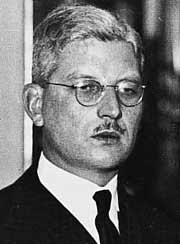
Kurt von Schuschnigg
SCHUSCHNIGG: We simply have to go on living alongside one another, the little state next to the big one. We have no other choice.
And that is why I ask you to tell me what your concrete complaints are. We will do all in our power to sort things out and establish a friendly relationship, as far as it is possible to do so.
HITLER: That’s what you say, Herr Schuschnigg. And I am telling you that I intend to clear up the whole of the so-called Austrian question—one way or another. Do you think I don’t know that you are fortifying Austria’s border with the Reich?
SCHUSCHNIGG: There can be no suggestion at all of that—
HITLER: Ridiculous explosive chambers are being built under bridges and roads—
This was a lie, and Hitler knew it was a lie. But it gave him an excuse to threaten to destroy Austria.
[For Trump, winning—not truth—is all that matters. During his first term as President, he told 30,573 lies.]
HITLER: I have only to give one command and all this comic stuff on the border will be blown to pieces overnight. You don’t seriously think you could hold me up, even for half an hour, do you?
The S.A. [Hitler’s private army of Stormtroopers] and the [Condor] lLegion [which had bombed much of Spain into rubble during the Spanish Civil War] would come in after the troops and nobody—not even I—could stop them from wreaking vengeance.
Schnuschigg made a cardinal mistake in dealing with Hitler: He showed fear. And this was precisely what the Nazi dictator looked for in an opponent.
[Like Hitler, Trump relies on fear: “Real power is—I don’t even want to use the word—fear,” he said in March 2016 when still only a candidate for President.]
Contrary to popular belief, Hitler did not constantly rage at everyone. He used rage as a weapon, knowing that most people feel intimidated by it.
In the case of Schuschnigg, Hitler opened with insults and threats at the outset of their discussion. Then there was a period of calm, to convince the Austrian chancellor the worst was over.
Finally, he once again attacked—this time with so much fury that Schuschnigg was terrified into submission.
With one stroke of a pen, Austria became a vassal-state to Nazi Germany.
[Like Hitler, Trump threatens only those he feels are weak—thus his threats to use military force against Canada, Greenland and Panama.]
2012 PRESIDENTIAL RACE, 2016 PRESIDENTIAL RACE, ABC NEWS, ADULTERY, ALTERNET, AMERICABLOG, AP, ATHEISTS, BABY BOOMER RESISTANCE, BARACK OBAMA, BBC, BIBLE, BILL MAHER, BIRTH CONTROL, BLOOMBERG NEWS, BUZZFEED, CATHOLICS, CBS NEWS, CIVIL LIBERTIES, CNN, CROOKS AND LIARS, DAILY KOZ, DONALD TRUMP, ELEANOR ROOSEVELT, FACEBOOK, FIVETHIRTYEIGHT, FRANKLIN GRAHAM, HARPER’S MAGAZINE, HOMOSEXUALITY, HOMOSEXUALS, HUFFINGTON POST, ISLAM, JERRY FALWELL JR., JESUS CHRIST, JEWS, LESBIANS, LIBERALS, MEDIA MATTERS, MIKE PENCE, MITT ROMNEY, MOTHER JONES, MOVEON, MSNBC, MUSLIMS, NBC NEWS, NEW REPUBLIC, NEWSDAY, NEWSWEEK, NEWT GINGRICH, NON-CHRISTIANS, NPR, PBS NEWSHOUR, POLITICO, POLITICUSUSA, RAW STORY, RELIGION, RELIGIOUS FREEDOM RESTORATION ACT, REPUBLICAN PARTY, REUTERS, RICHARD FEYNMAN, RICK SANTORUM, SALON, SAUDI ARABIA, SCIENCE, SEATTLE TIMES, SLATE, SLAVERY, SPANISH INQUISITION, STORMY DANIELS, SUPREME COURT, TALKING POINTS MEMO, TEA PARTY, THE ATLANTIC, THE CHICAGO SUN-TIMES, THE CHICAGO TRIBUNE, THE DAILY BEAST, THE DAILY BLOG, THE GUARDIAN, THE HILL, THE HUFFINGTON POST, THE LOS ANGELES TIMES, THE NATION, THE NEW REPUBLIC, THE NEW YORK TIMES, THE NEW YORKER, THE VILLAGE VOICE, THE WALL STREET JOURNAL, THE WASHINGTON POST, THEOLOGY, THINKPROGRESS, TIME, TOMAS DE TORQUEMADA, TRUTHDIG, TRUTHOUT, TWO POLITICAL JUNKIES, U.S. NEWS & WORLD REPORT, UPI, USA TODAY, WAR, WOMEN, WONKETTE, X
In Bureaucracy, History, Law, Law Enforcement, Military, Politics, RELIGION, Social commentary on February 12, 2025 at 12:09 am
Bernardo Gui was the chief inquisitor of the Dominican Order during the Medieval Inquisition (1184 – 1230s).
Gui closely studied the best methods for interrogating “heretics.” He set forth his findings in his most important and famous work, Practica Inquisitionis Heretice Pravitatis: “Conduct of the Inquisition Into Heretical Wickedness.”
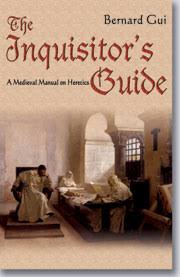
Here’s how such an interrogation might go:
When a heretic is first brought up for examination, he assumes a confident air, as though secure in his innocence. I ask him why he has been brought before me. He replies, smiling and courteous, “Sir, I would be glad to learn the cause from you.”
Interrogator: You are accused as a heretic, and that you believe and teach otherwise than Holy Church believes.
Accused Heretic: (Raising his eyes to heaven, with an air of the greatest faith) Lord, thou knowest that I am innocent of this, and that I never held any faith other than that of true Christianity.
Interrogator: You call your faith Christian, for you consider ours as false and heretical. But I ask whether you have ever believed as true another faith than that which the Roman Church holds to be true?
Accused Heretic: I believe the true faith which the Roman Church believes, and which you openly preach to us.
Interrogator: Perhaps you have some of your sect at Rome whom you call the Roman Church. I, when I preach, say many things, some of which are common to us both, as that God liveth, and you believe some of what I preach. Nevertheless you may be a heretic in not believing other matters which are to be believed.
Accused Heretic: I believe all things that a Christian should believe.
Interrogator: I know your tricks….But we waste time in this fencing. Say simply, Do you believe in one God the Father, and the Son, and the Holy Ghost?
Accused Heretic: I believe.
Interrogator: Do you believe in Christ born of the Virgin, suffered, risen, and ascended to heaven?
Accused Heretic: (Briskly) I believe.
Interrogator: Do you believe the bread and wine in the mass performed by the priests to be changed into the body and blood of Christ by divine virtue?
Accused Heretic: Ought I not to believe this?
Interrogator: I don’t ask if you ought to believe, but if you do believe.
Accused Heretic: I believe whatever you and other good doctors order me to believe.
Inquisitor: Those good doctors are the masters of your sect; if I accord with them you believe with me; if not, not.
Accused Heretic: I willingly believe with you if you teach what is good to me.
Inquisitor: You consider it good to you if I teach what your other masters teach. Say, then, do you believe the body of our Lord, Jesus Christ to be in the altar?
Accused Heretic: (Promptly) I believe that a body is there, and that all bodies are of our Lord.
Interrogator: I ask whether the body there is of the Lord who was born of the Virgin, hung on the cross, arose from the dead, ascended, etc.
Accused Heretic: And you, sir, do you not believe it?
Interrogator: I believe it wholly.
Accused Heretic: I believe likewise.
Men like Bernard Gui—and Franklin Graham—do not seek a golden future. They crave to return to a “golden” past—which includes the power Christians once held to forcibly impose their religious beliefs on others.
Among those slated for forced conversions by the Religious Right:
- Atheists
- Jews
- Women
- Homosexuals
- Lesbians
- Non-Christians
- Liberals
To gain absolute secular power over the lives of their fellow Americans, the Religious Right will support any candidate, no matter how morally despicable.
During the 2016 and 2020 Presidential races, evangelicals—and their leaders such as Franklin Graham and Jerry Falwell, Jr.—fervently supported Donald Trump, despite:
- His being twice divorced;
- His multiple affairs (including one with porn star Stormy Daniels);
- His documented ties to Russian oligarchs and Mafia chieftains;
- His viciousness, greed, lying and egomania.
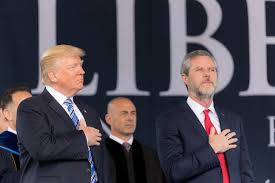
Donald Trump and Jerry Falwell, Jr., at Liberty University
And they continue to fervently support him.
They expect Trump to sponsor legislation that will—-by force of law—make their brand of Christianity supreme above all other religions.
Legislation such as The Religious Freedom Restoration Act.
This was signed into law on March 26, 2015, by Mike Pence, then Governor of Indiana.
This allows any individual or corporation to cite its religious beliefs as a defense when sued by a private party.
Officially, its intent is to prevent the government from forcing business owners to violate their religious beliefs.
Unofficially, its intent is to appease the hatred of gays and lesbians by the religious Right, a key constituency of the Republican party.
Thus, a bakery that doesn’t want to make a cake for a gay wedding or a restaurant that doesn’t want to serve lesbian patrons now has the legal right to refuse to do so.
And a hospital can legally turn away a gay patient if it wants to.
Islamic countries are notorious for their persecution of non-Muslims. Now the Religious Right wants to impose its own version of sharia law on American citizens.
2012 PRESIDENTIAL RACE, 2016 PRESIDENTIAL RACE, ABC NEWS, ADULTERY, ALTERNET, AMERICABLOG, AP, ATHEISTS, BABY BOOMER RESISTANCE, BARACK OBAMA, BBC, BIBLE, BILL MAHER, BIRTH CONTROL, BLOOMBERG NEWS, BUZZFEED, CATHOLICS, CBS NEWS, CIVIL LIBERTIES, CNN, CROOKS AND LIARS, DAILY KOZ, DONALD TRUMP, ELEANOR ROOSEVELT, FACEBOOK, FIVETHIRTYEIGHT, FRANKLIN GRAHAM, HARPER’S MAGAZINE, HOMOSEXUALITY, HOMOSEXUALS, HUFFINGTON POST, ISLAM, JERRY FALWELL JR., JESUS CHRIST, JEWS, LESBIANS, LIBERALS, MEDIA MATTERS, MIKE PENCE, MITT ROMNEY, MOTHER JONES, MOVEON, MSNBC, MUSLIMS, NBC NEWS, NEW REPUBLIC, NEWSDAY, NEWSWEEK, NEWT GINGRICH, NON-CHRISTIANS, NPR, PBS NEWSHOUR, POLITICO, POLITICUSUSA, RAW STORY, RELIGION, RELIGIOUS FREEDOM RESTORATION ACT, REPUBLICAN PARTY, REUTERS, RICHARD FEYNMAN, RICK SANTORUM, SALON, SAUDI ARABIA, SCIENCE, SEATTLE TIMES, SLATE, SLAVERY, SPANISH INQUISITION, STORMY DANIELS, SUPREME COURT, TALKING POINTS MEMO, TEA PARTY, THE ATLANTIC, THE CHICAGO SUN-TIMES, THE CHICAGO TRIBUNE, THE DAILY BEAST, THE DAILY BLOG, THE GUARDIAN, THE HILL, THE HUFFINGTON POST, THE LOS ANGELES TIMES, THE NATION, THE NEW REPUBLIC, THE NEW YORK TIMES, THE NEW YORKER, THE VILLAGE VOICE, THE WALL STREET JOURNAL, THE WASHINGTON POST, THEOLOGY, THINKPROGRESS, TIME, TOMAS DE TORQUEMADA, TRUTHDIG, TRUTHOUT, TWO POLITICAL JUNKIES, U.S. NEWS & WORLD REPORT, UPI, USA TODAY, WAR, WOMEN, WONKETTE, X
In Bureaucracy, History, Law, Law Enforcement, Military, Politics, RELIGION, Social commentary on February 11, 2025 at 12:14 am
American Right-wing elements relentlessly claimed that President Barack Obama was waging “a war on religion.”
GOP candidates like Rick Santorum, Newt Gingrich and Mitt Romney intended to make this a major theme of their respective campaigns for President in 2012.
Obama supported a woman’s right
- to obtain abortion—including in cases of rape and incest;
- to obtain birth control; and
- to obtain amniocentesis (pre-natal testing).
By promoting women’s rights, Obama was “waging a war against religion”—according to American fundamentalists.
Since access to such medical procedures as birth control and pre-natal testing has long been entirely legal, what’s all the fuss about?
It’s simple: The Right is not waging a “war for religious liberty.”
It’s waging a bitter struggle to establish a government that uses force or the threat of it to impose reactionary religious beliefs on those who do not share such religious beliefs.
And on atheists or agnostics, who share none at all.
These Rightists and their theocratic allies have less in common with Jesus Christ than with Tomas de Torquemada (1420 – 1498), the infamous Grand Inquisitor of the Spanish Inquisition.
Christ never ordered the torture or death of anyone. Torquemada—claiming to act in “defense” of the Roman Catholic Church—presided over the deaths of at least 2,000 “heretics.”

Tomas de Torquemada
Nor did these unfortunate victims of religious fanaticism meet their death quickly or painlessly. They died by perhaps the cruelest means possible—by being burned alive at the stake.
Torquemada didn’t hesitate to pronounce someone a heretic. He “knew” who such people were: Jews, Muslims, atheists. They were “lapsed Catholics” who, in his view, failed to show fervent devotion to the religious authorities—like himself—who tyrannically ruled their lives.
For such people, Torquemada believed, the only road to salvation lay in being “cleansed” of their sins. And nothing burns away impurities like fire.
But before the fire-stakes came the fire-mindset: The arrogance of “knowing” who qualified as “saved” and who would be forever “damned.”
Unless, of course, his or her soul had been “purified” by fire.
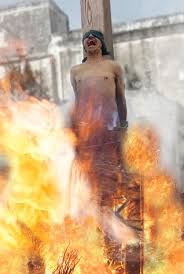
“Heretic” burned at the stake
Fundamentalist Christians can no longer sentence “heretics” to the stake.
But the mindset that ruled the Spanish Inquisition has not disappeared. It has been vividly displayed by no less a religious authority than Franklin Graham, son of America’s most famous preacher, Billy Graham.

Franklin Graham
Appearing on the MSNBC program, “Morning Joe,” on February 21, 2012, Graham was asked if he thought that Barack Obama, Rick Santorum, Newt Gingrich and Mitt Romney qualified as Christians.
On Obama: “Islam sees him as a son of Islam… I can’t say categorically that [Obama is not Muslim] because Islam has gotten a free pass under Obama.”
On Santorum: “I think so. His values are so clear on moral issues. No question about it… I think he’s a man of faith.”
On Gingrich: “I think Newt Gingrich is a Christian, at least he told me he is.”
On Romney: “Most Christians would not recognize Mormons as part of the Christian faith. They believe in Jesus Christ. They have a lot of other things they believe in too, that we don’t accept, theologically.”
Thus, Graham pronounced as “saved” a notorious multiple-adulterer like Gingrich. He also gave a pass to Santorum, who married a woman who had lived “in sin” with an abortionist for six years.
But he unhesitatingly damned a longtime churchgoer like Obama or a devout Mormon like Romney (whose faith, most evangelicals like Graham believe, is actually a non-Christian cult).
Six years later, in 2018, Graham defended President Donald Trump, a notorious womanizer and multiple-adulterer, against charges that, in 2006, he had slept with porn star Stormy Daniels.
“I believe at 70 years of age the president is a much different person today than he was four years ago, five years ago, 10 years ago. He is not President Perfect.”
This differs greatly from his position on President Bill Clinton’s affair with Monica Lewinsky: “If he will lie to or mislead his wife and daughter, those with whom he is most intimate, what will prevent him from doing the same to the American public?”
It’s easy to imagine Graham transported to the French city of Toulouse in the 14th century. And to imagine him wearing the robes of Bernardo Gui, the chief inquisitor of the Dominican Order during the Medieval Inquisition (1184 – 1230s).
Gui closely studied the best methods for interrogating “heretics.” He set forth his findings in his most important and famous work, Practica Inquisitionis Heretice Pravitatis. or “Conduct of the Inquisition into Heretical Wickedness.”
In this, he offered a vivid example of how such an interrogation might go. The following is taken from that manual:
When a heretic is first brought up for examination, he assumes a confident air, as though secure in his innocence. I ask him why he has been brought before me. He replies, smiling and courteous, “Sir, I would be glad to learn the cause from you.”
This is not a dialogue between equals. The Inquisitor literally holds the power of life or agonizing death over the man or woman he is interrogating.
2012 PRESIDENTIAL RACE, 2016 PRESIDENTIAL RACE, ABC NEWS, ADULTERY, ALTERNET, AMERICABLOG, AP, ATHEISTS, BABY BOOMER RESISTANCE, BARACK OBAMA, BBC, BIBLE, BILL MAHER, BIRTH CONTROL, BLOOMBERG NEWS, BUZZFEED, CATHOLICS, CBS NEWS, CIVIL LIBERTIES, CNN, CROOKS AND LIARS, DAILY KOZ, DONALD TRUMP, ELEANOR ROOSEVELT, FACEBOOK, FIVETHIRTYEIGHT, FRANKLIN GRAHAM, HARPER’S MAGAZINE, HOMOSEXUALITY, HOMOSEXUALS, HUFFINGTON POST, ISLAM, JERRY FALWELL JR., JESUS CHRIST, JEWS, LESBIANS, LIBERALS, MEDIA MATTERS, MIKE PENCE, MITT ROMNEY, MOTHER JONES, MOVEON, MSNBC, MUSLIMS, NBC NEWS, NEW REPUBLIC, NEWSDAY, NEWSWEEK, NEWT GINGRICH, NON-CHRISTIANS, NPR, PBS NEWSHOUR, POLITICO, POLITICUSUSA, RAW STORY, RELIGION, RELIGIOUS FREEDOM RESTORATION ACT, REPUBLICAN PARTY, REUTERS, RICHARD FEYNMAN, RICK SANTORUM, SALON, SAUDI ARABIA, SCIENCE, SEATTLE TIMES, SLATE, SLAVERY, SPANISH INQUISITION, STORMY DANIELS, SUPREME COURT, TALKING POINTS MEMO, TEA PARTY, THE ATLANTIC, THE CHICAGO SUN-TIMES, THE CHICAGO TRIBUNE, THE DAILY BEAST, THE DAILY BLOG, THE GUARDIAN, THE HILL, THE HUFFINGTON POST, THE LOS ANGELES TIMES, THE NATION, THE NEW REPUBLIC, THE NEW YORK TIMES, THE NEW YORKER, THE VILLAGE VOICE, THE WALL STREET JOURNAL, THE WASHINGTON POST, THEOLOGY, THINKPROGRESS, TIME, TOMAS DE TORQUEMADA, TRUTHDIG, TRUTHOUT, TWO POLITICAL JUNKIES, U.S. NEWS & WORLD REPORT, UPI, USA TODAY, WAR, WOMEN, WONKETTE, X
In Bureaucracy, History, Law, Law Enforcement, Military, Politics, RELIGION, Social commentary on February 10, 2025 at 12:02 am
Hamza Kashgari, a 23-year-old columnist in Saudi Arabia, decided to celebrate the birthday of the Islamic prophet Muhammed in a truly unique way.

Hamza Kashgar
In early February, 2012, he posted on Twitter a series of mock conversations between himself and Muhammad:
“On your birthday, I will say that I have loved the rebel in you, that you’ve always been a source of inspiration to me, and that I do not like the halos of divinity around you. I shall not pray for you.
“On your birthday, I find you wherever I turn. I will say that I have loved aspects of you, hated others, and could not understand many more.
“On your birthday, I shall not bow to you. I shall not kiss your hand. Rather, I shall shake it as equals do, and smile at you as you smile at me. I shall speak to you as a friend, no more.
“No Saudi women will go to hell, because it’s impossible to go there twice.”
The tweets sparked some 30,000 infuriated responses. Many Islamic clerics demanded that he face execution for blasphemy.
Kashgari posted an apology tweet: “I deleted my previous tweets because…I realized that they may have been offensive to the Prophet and I don’t want anyone to misunderstand.”
Soon afterward, Abdullah bin Abdulaziz Al Saud, then King of Saudi Arabia, ordered his arrest.
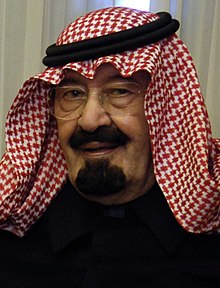
Saudi King King Abdullah
Kashgari fled to Malaysia, another majority-Muslim country. He was quickly arrested by police as he passed through Kuala Lumpur international airport. Three days later, he was deported to Saudi Arabia.
Human rights groups feared that he would be executed for blasphemy, a capitol offense in Saudi Arabia.
After nearly two years in prison, Kashgari was freed on October 29, 2013. Kashgari used Twitter to inform his supporters of his release.
Outrageous? By Western standards, absolutely.
Clearly there is no tolerence in Saudi Arabia for the freedoms of thought and expression that Americans take for granted.
Meanwhile, Right-wing American ayatollahs are working overtime to create just that sort of society—where theocratic despotism rules the most intimate aspects of our lives.
One of these was the former GOP Presidential candidate and U.S. Senator Rick Santorum. In early January, 2012, he said that states should have the right to outlaw birth control without the interference of the Supreme Court.
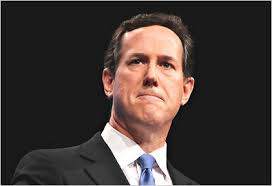
Rick Santorum
In an interview with ABC News, Santorum said he opposed the Supreme Court’s ruling that made birth control legal:
“The state has a right to do that [ban contraception]. I have never questioned that the state has a right to do that. It is not a Constitutional right. The state has the right to pass whatever statutes they have.
“That’s the thing I have said about the activism of the Supreme Court—they are creating rights, and it should be left up to the people to decide.”
In the landmark 1965 decision, Griswold v. Connecticut, the Court struck down a law that made it a crime to sell contraceptives to married couples. The Constitution, ruled the Justices, protected a right to privacy.
Two years later, in Eisenstadt v. Baird, the Court extended Griswold by striking down a law banning the sale of contraceptives to unmarried couples.
Santorum has left no doubt as to where he stands on contraception. On October 19, 2011, he said:
“One of the things I will talk about that no President has talked about before is I think the dangers of contraception in this country, the whole sexual libertine idea. Many in the Christian faith have said, ‘“Well, that’s okay. Contraception’s okay.’
“It’s not okay because it’s a license to do things in the sexual realm that is counter to how things are supposed to be. They’re supposed to be within marriage, they are supposed to be for purposes that are, yes, conjugal, but also…procreative.
“That’s the perfect way that a sexual union should happen. We take any part of that out, we diminish the act….And all of a sudden, it becomes deconstructed to the point where it’s simply pleasure.”
“How things are supposed to be”—according to Right-wing fanatics like Santorum and the evangelicals who support them.
Like the Saudi religious zealots who demand the death of a “blasphemer,” they demand that their religious views should govern everyone. That means Jews, Catholics, Islamics, atheists and agnostics.
American Christian fundamentalists and Islamic fundamentalists fervently agree on the following:
- Women should have fewer rights than men.
- Abortion should be illegal.
- There should be no separation between church and state.
- Religion should be taught in school.
- Religious doctrine trumps science.
- Government should be based on religious doctrine.
- Homosexuality should be outlawed.
The important difference—for Americans who value their freedom—is this:
The United States has a Supreme Court that can—and does—overturn laws that threaten civil liberties. Laws that GOP Presidential candidates clearly want to revive and force on those who don’t share their peculiar religious views.
Eleanor Roosevelt once said: “No one can make you feel inferior without your consent.”
The same holds true—in a democracy—for candidates who seek dictatorial power over their fellow citizens. Don’t give them your consent.
ABC NEWS, ADOLF HITLER, ALTERNET, AMERICABLOG, AP, BABY BOOMER RESISTANCE, BBC, BLOOMBERG, BLUESKY, BUZZFEED, CBS NEWS, CNN, CROOKS AND LIARS, DAILY KOS, DAVID BROOKS, DONALD TRUMP, FBI, FIVETHIRTYEIGHT, GEORGE C. SCOTT, GEORGE S. PATTON, GESTAPO, HARPER’S MAGAZINE, HOGAN’S HEROES, HUFFINGTON POST, JACK SMITH, JAMES COMEY, JIMMY CARTER, MEDIA MATTERS, MEL BROOKS, MIKE FLYNN, MOTHER JONES, MOVEON, MSNBC, NAZI GERMANY, NBC NEWS, NEW REPUBLIC, NEWSDAY, NEWSWEEK, NPR, PAUL RYAN, PBS NEWSHOUR, POLITICO, POLITICUSUSA, RAW STORY, REPUBLICAN PARTY, REUTERS, RICHARD GRUNBERGER, RICHARD NIXON, ROBERT MEULLER, SALON, SEATTLE TIMES, SLATE, SOVIET UNION, TALKING POINTS MEMO, THE 12-YEAR REICH, THE ATLANTIC, THE CHICAGO SUN-TIMES, THE CHICAGO TRIBUNE, THE DAILY BEAST, THE DAILY BLOG, THE GUARDIAN, THE HILL, THE HUFFINGTON POST, THE INTERCEPT, THE LOS ANGELES TIMES, THE NATION, THE NEW REPUBLIC, THE NEW YORK TIMES, THE NEW YORKER, THE VILLAGE VOICE, THE WALL STREET JOURNAL, THE WASHINGTON POST, THINKPROGRESS, TIME, TRUTHDIG, TRUTHOUT, TWO POLITICAL JUNKIES, U.S. NEWS & WORLD REPORT, UPI, USA TODAY, WAFFEN-SS, WEHRMACHT, X
In Bureaucracy, History, Law, Law Enforcement, Military, Politics, Social commentary on February 7, 2025 at 12:05 am
Donald Trump is a convicted felon who blatantly supports Communist dictators Kim Jong-Un, Vladimir Putin and Xi Jinping—and who tried to treasonously overturn the 2020 Presidential election.
So why do so many Republicans continue to support him?
The answer lies in what happened almost 80 years ago in Berlin—when the “Thousand-Year” Third Reich collapsed after little more than 12 years.
While the Nazi Party ruled Germany from 1933 to 1945, its influence over all aspects of Germans’ lives was suffocating.
“Censorship prevailed, education was undermined, family life was idealized, but children were encouraged to turn in disloyal parents,” reads the back cover of Richard Grunberger’s classic 1971 book, The 12-Year Reich.
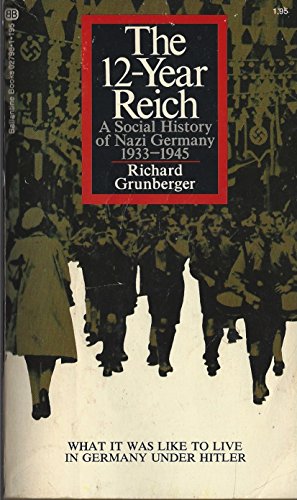
“‘Volk’ festivals, party rallies, awards, uniforms, pageantry all played a part in the massive effort to shape the mind of a nation.”
And yet, after the Reich surrendered unconditionally to the Allies on May 8, 1945:
- Countless Germans claimed to have hidden Jews in their attics—despite the fact that six million Jews died horrifically before the Reich fell.
- American and British soldiers couldn’t find any German veterans willing to admit they had ever fought against Western, democratic nations.
- All the once-proud legionaries of the Wehrmacht and Waffen-SS swore they had been fighting “the real enemy”—the Russians—on the Eastern front.
And almost universally, they blamed the conflict on the man they had embraced as their Fuhrer.
In short: Adolf Hitler had lost the war he started—making him a loser nobody wanted to be identified with.
In the decades since, the “loser” tag has continued to stick with those who once served the Third Reich. Mel Brooks has repeatedly turned German soldiers—once the pride of the battlefield—into idiotic comic foils.
Even the fearsome Gestapo was spoofed for laughs on the long-running TV comedy, “Hogan’s Heroes.”

“Hogan’s Heroes”
“Americans love a winner,” George C. Scott as George S. Patton says at the outset of the classic 1970 movie. “And will not tolerate a loser.”
And that is why Republicans have stuck so closely with Donald J. Trump—as President, former President and now re-elected President.
During the 2024 Presidential campaign, Americans were repeatedly warned that Trump intended to embrace Project 2025, a collection of policy proposals to fundamentally reshape the U.S. federal government.
Among these:
- The DOJ must be thoroughly “reformed” and tightly overseen by the White House.
- The director of the FBI must be personally accountable to the President—just as the head of the KGB is personally accountable to Vladimir Putin.

Seal of the Justice Department
- Federal employees could be instantly fired for not obeying illegal orders, or on mere whim—including the whim of the President.
- The Environmental Protection Agency would be stripped of its authority to protect the air, water and soil.
- The National Oceanic and Atmospheric Administration (NOAA) which the project calls “one of the main drivers of the climate change alarm industry” would be abolished.
- Fossil fuels—the leading cause of global warming—would be favored and environmental regulations to combat climate change abolished.
- Federal funding for all public transit systems across the country would be eliminated.
- Traditionally independent federal agencies such as the Department of Justice, Federal Communications Commission and the Federal Trade Commission would be placed under Presidential control.
- The wealthiest 1% would receive massive tax cuts at the expense of the poor and middle class.
- Conception would be designated as the point where life begins.
- Abortion would be outlawed.
- Access to birth control would be sharply restricted, if not banned.
Yet almost no Republican members of Congress dared to oppose this wholesale rejection of 248 years of American democracy.
Republicans don’t care that Trump has trashed the institutions that Americans have cherished for more than 200 years. Institutions like an independent judiciary, a free press, and an incorruptible Justice Department.
He has viciously attacked all of these—and Republicans have either said nothing or rushed to his defense. Many of them tried to short-circuit Special Counsel Jack Smith’s investigation and prosecution of Trump’s inciting a deadly riot against Congress on January 6, 2021.
What Congressional Republicans truly fear about Donald Trump is that if they dare to hold him accountable for his lifetime of criminality, his Fascistic base will turn on them—and turn them out of Congress.
Trump has been convicted of multiple crimes, but Republicans continue to slavishly support him. If they hadn’t, he would now be:
- A figure held up to ridicule and condemnation.
- Like Adolf Hitler.
- Like Richard Nixon.
And his Congressional supporters would be branded as losers along with him.
Republicans vividly remember what happened after Richard Nixon was forced to resign on August 9, 1974: Democrats, riding a wave of reform fever, swept Republicans out of the House and Senate—and Jimmy Carter into the White House.
If Republicans are conflicted—whether to continue supporting Trump or desert him—the reason is the same: How can I hold onto my power and all the privileges that go with it?
ABC NEWS, AL QAEDA, ALTERNET, AMERICABLOG, AP, BABY BOOMER RESISTANCE, BASHIR AL-ASSAD, BBC, BLOOMBERG, BLUESKY, BUZZFEED, CBS NEWS, CHARLES GEORGE GORDON, CHARLTON HESTON, CNN, CROOKS AND LIARS, DAILY KOS, DRUDGE RETORT, FIVETHIRTYEIGHT, GEORGE W. BUSH, GREAT BRITAIN, HARPER’S MAGAZINE, HIZBOLLAH, HUFFINGTON POST, IRAQ, ISLAM, KHARTOUM, KHARTOUM (MOVIE), LAURENCE OLIVER, MEDIA MATTERS, MOTHER JONES, MOVEON, MSNBC, NBC NEWS, NEOCONS, NEW REPUBLIC, NEWSDAY, NEWSWEEK, NPR, PBS NEWSHOUR, POLITICO, POLITICUSUSA, PRESIDENT BARACK OBAMA, RAW STORY, REPUBLICAN PARTY, REUTERS, SALON, SEATTLE TIMES, SHIITE MUSLIMS, SLATE, SUDAN, SUNNI MUSLIMS, SYRIA, TALKING POINTS MEMO, THE ATLANTIC, THE CHICAGO SUN-TIMES, THE CHICAGO TRIBUNE, THE DAILY BEAST, THE DAILY BLOG, THE GUARDIAN, THE HILL, THE HUFFINGTON POST, THE INTERCEPT, THE LOS ANGELES TIMES, THE MADHI, THE NATION, THE NEW REPUBLIC, THE NEW YORK TIMES, THE NEW YORKER, THE VILLAGE VOICE, THE WALL STREET JOURNAL, THE WASHINGTON POST, THINKPROGRESS, TIME, TRUTHDIG, TRUTHOUT, TWO POLITICAL JUNKIES, U.S. NEWS & WORLD REPORT, UPI, USA TODAY, WILLIAM GLADSTONE, WONKETTE, X
In Bureaucracy, History, Military, Politics, Social commentary on January 28, 2025 at 12:06 am
January 26, 2025, marked the 140th anniversary of the fall of Khartoum, the Sudanese city that sits on the banks of the White and Blue Nile Rivers.
The siege and fall of Khartoum is one of the truly epic stories of military history.
From March 18, 1884, to January 26, 1885, the charisma and military genius of one man—British General Charles George Gordon—held at bay an army of thousands of fanatical Islamics intent on slaughtering everyone in the city. 

Khartoum in 1888—four years after the siege
At stake were the lives of Khartoum’s 30,000 residents.
By comparison: The defenders of the Alamo—a far better-known battle—numbered no more than 250. And the siege of the San Antonio mission lasted only 13 days (February 23 to March 6, 1836) against an army of about 2,000 Mexicans.
The Alamo
Gordon’s story may seem antiquated. But it resembles the efforts Republicans made to pressure the Obama administration to commit ground forces to “freeing” Syria of its longtime dictator, “President” Bashir al-Assad.
The neocons of the George W. Bush Administration plunged the United States into an unprovoked war against Iraq in 2003. After Baghdad quickly fell, Americans cheered, thinking the war was over and the troops would soon return home.
Suddenly, American soldiers found themselves waging a two-front war in the same country: Fighting an Iraqi insurgency to throw them out, while trying to suppress growing sectarian warfare between Sunni and Shia Muslims.
And then, with Syria, Americans were being urged to plunge headfirst into a conflict they knew nothing about—and in which they had absolutely no stake.
On one side was the Ba’ath regime of Bashir al-Assad, supported by Russia, Iran, Hizbollah and elements in the Iraqi government. Hizbollah is comprised of Shiite Muslims, who form a minority of Islamics.
A sworn enemy of Israel, it has kidnapped scores of Americans suicidal enough to visit Lebanon and truck-bombed the Marine barracks in Beirut in 1983, killing 299 Americans.

Flag of Hizbollah
Al-Qaeda, on the other hand, is made up of Sunni Muslims, who form the majority of that religion.
It is intolerant of non-Sunni Muslims and has instigated violence against them. It denounces them as “takfirs”–heretics—and thus worthy of extermination.

Flag of Al-Qaeda
In short, it’s a Muslim-vs.-Muslim “holy war.
It’s all very reminiscent of events in the 1966 epic film, Khartoum, starring Charlton Heston as British General Charles George Gordon.
In 1884, the British government sends Gordon, a real-life hero of the Victorian era, to evacuate the Sudanese city of Khartoum.
Mohammed Achmed, a previously anonymous Sudanese, has proclaimed himself “The Madhi” (“The Expected One”) and raised the cry of jihad.
The Madhi (played by Lawrence Olivier) intends to drive all foreigners (of which the English are the largest group) out of Sudan and exterminate all those Muslims who do not practice his “pure” version of Islam.


Charlton Heston as Gordon (left); Laurence Oliver as the Madhi (right)
Gordon arrives in Khartoum to find he’s not fighting a rag-tag army of peasants. Instead, the Madhi is a highly intelligent military strategist.
And Gordon, an evangelical Christian, also finds he has underestimated the Madhi’s religious fanaticism: “I seem to have suffered from the delusion that I had a monopoly on God.”
A surprised Gordon finds himself and 30,000 Sudanese trapped in Khartoum when the Madhi’s forces suddenly appear. He sends off messengers and telegrams to the British Government, begging for a military relief force.
But the British Government wants nothing to do with the Sudan. It has sent Gordon there as a sop to British public opinion that “something” had to be done to quell the Madhist uprising.
The siege continues and tightens.
In Britain, the public hails Gordon as a Christian hero and demands that the Government send a relief expedition to save him.
Prime Minister William Gladstone finally sends a token force—which arrives in Khartoum two days after the city has fallen to the Madhi’s forces.
Gordon, standing at the top of a staircase and coolly facing down his dervish enemies, is speared to death.
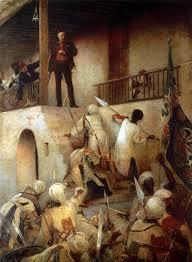
George W. Joy’s famous—and romanticized—painting of “The Death of Gordon”
(Actually, the best historical evidence indicates that Gordon fought to the last with pistol and sword before being overwhelmed by his Islamic enemies.)
When the news reaches England, Britons mourn—and then demand vengeance for the death of their hero.
The Government, which had sought to wash its hands of the poor, military unimportant Sudan, suddenly has to send an army to avenge Gordon.
As the narrator of Khartoum intones at the close of the film: “For 15 years the British paid the price with shame and war.”
There is a blunt lesson for Americans to learn from this episode—and from the 1966 movie Khartoum itself.
Americans have been fighting in the Middle East since 2001—first in Afghanistan to destroy Al-Qaeda, and then in Iraq, to pursue George W. Bush’s vendetta against Saddam Hussein. They continue to fight in Syria against ISIS.
The United States faces a crumbling infrastructure, millions living in poverty and trillions of dollars in debt.
It’s time for Americans to clean up their own house before worrying about the messes in other nations—especially those wholly alien to American values.


_b_617.jpg)


 Bureaucracybuster's Blog
2016 PRESIDENTIAL ELECTION, 2020 PRESIDENTIAL ELECTION, 2024 PRESIDENTIAL ELECTION, ABC NEWS, ABUSE OF POWER, ADOLF HITLER, AILEEN CANNON, ALTERNET, AMERICABLOG, AP, ASSASSINATION, AXIOS, BABY BOOMER RESISTANCE, BBC, BIRD FLU, BLACKS, BLOOMBERG, BUZZFEED, CBS NEWS, CHINA, CLASSIFIED DOCUMENTS, CLAUS VON STAUFFENBERG, CNN, COVID-19, CROOKS AND LIARS, DAILY KOS, DANIEL CASSINO, DEMOCRACY, DEMOCRATIC PARTY, DEMOCRATS, DONALD TRUMP, ELECTORAL COLLEGE, FBI, FEDERAL EMERGENCY MANAGEMENT AGENCY, FIVETHIRTYEIGHT, FUEL PRICES, GALLUP POLL, GAZA, GLOBAL CONFLICT, GROCERY PRICES, HARPER’S MAGAZINE, HILLARY CLINTON, HISPANICS, HITLER: ASCENT (BOOK), HUFFINGTON POST, HUNTER BIDEN, illegal immigration, IMPEACHMENT, INFLATION, INTERNATIONAL BROTHERHOOD OF TEAMSTERS, ISRAEL, JACK SMITH, JAMAL KHASHOOGI, JAMES COMER, JANUARY 6 COUP ATTEMPT, JARED KUSHNER, JIMMY HOFFA, JOHN ADAMS, JOSEPH BIDEN, Kamala Harris, KEVIN MCCARTHY, KIM JONG-UN, LATINOS, LOW INFORMATION VOTERS, MAR-A-LAGO, MARJORIE TAYLOR GREENE, MASCULINITY, MEDIA MATTERS, MEIN KAMPF, MERRICK GARLAND, MOHAMMED BIN SALMAN, MOTHER JONES, MOVEON, MSNBC, MUSLIMS, NAZI GERMANY, NAZIS, NBC NEWS, NEW REPUBLIC, NEWSDAY, NEWSWEEK, NORTH KORREA, NPR, OBSTRUCTION OF CONGRESS, PBS NEWSHOUR, POLITICO, POLITICUSUSA, RAW STORY, REPUBLICAN PARTY, REPUBLICANS, REUTERS, ROBERT F. KENNEDY, RUSSIA, SALON, SEATTLE TIMES, SLATE, SUPERMAN, TALKING POINTS MEMO, TERRORISM, THE ATLANTIC, THE CHICAGO SUN-TIMES, THE CHICAGO TRIBUNE, THE DAILY BEAST, THE DAILY BLOG, THE GUARDIAN, THE HILL, THE HUFFINGTON POST, THE INTERCEPT, THE LOS ANGELES TIMES, THE NATION, THE NEW REPUBLIC, THE NEW YORK TIMES, THE NEW YORKER, THE VILLAGE VOICE, THE WASHINGTON POST, THINKPROGRESS, THOMAS MATTHEW CROOKS, TIME, TRANSPORTATION COSTS, TRUTHDIG, TRUTHOUT, TWO POLITICAL JUNKIES, U.S. BORDER PATROL, U.S. NEWS & WORLD REPORT, UKRAINE, UNITED STATES DEPARTMENT OF JUSTICE, UNITED STATES HOUSE OF REPRESENTATIVES, UNITED STATES SECRET SERVICE, UNITED STATES SENATE, UPI, USA TODAY, VLADIMIR PUTIN, VOLKER ULLRICH, VOLODMYR ZELENSKY, VOX, WEIMAR REPUBLIC, WORLD WAR 11, X, XI JINPING
HOW TRUMP WON IN 2024: WHAT DIDN’T HAPPEN–PART TWO (OF FOUR)
In Bureaucracy, History, Law, Law Enforcement, Medical, Politics, Social commentary on March 18, 2025 at 12:05 amThere were numerous instances where intervention by Federal legislators or law enforcement authorities could have utterly changed the outcome of the 2024 Presidential election.
Case #5: Even after Donald Trump left office, the Justice Department treated him with a deference not shown any other criminal defendant.
He was allowed, for example, to hurl insults and threats at Special Counsel Jack Smith and even Smith’s family.
One such post, published on Trump’s website, Truth Social, went: “Deranged Jack Smith, who is a sick puppet for A.G. Garland & Crooked Joe Biden, should be DEFUNDED & put out to rest. Republicans must get tough or the Dems will steal another Election. MAGA!”
By “A.G. Garland” Trump meant Attorney General Merrick Garland. By “put out to rest,” he meant that his followers should assassinate Smith.
Not even Mafia bosses like Charles “Lucky” Luciano and Albert “The Executioner” Anastasia dared issue such a threat.
Jack Smith
By contrast: Jimmy Hoffa was president of the International Brotherhood of Teamsters. But that didn’t prevent Robert F. Kennedy’s Justice Department from indicting him for jury tampering—and convicting him on March 4, 1964. He was sentenced to eight years in prison and a $10,000 fine.
No one in the Kennedy Justice Department said: “He’s the elected president of the Teamsters Union—so we can’t touch him.” Yet that is precisely how the Biden Justice Department repeatedly acted—simply because, in 2016, he won a Presidential election.
Case #6: Throughout his struggles to stay out of prison, Trump was aided by the unrelenting support of the Republican party.
Republicans loudly and repeatedly claimed that Donald Trump was the legitimate winner of the 2020 Presidential election—despite overwhelming evidence that he wasn’t.
They also claimed that, by appointing Special Counsel Jack Smith to investigate Trump, the Democrats had weaponized Federal law enforcement.
They also fully supported Trump’s demand for the release of those who attacked the Capitol Building on January 6, 2021.
For example: Rep. Marjorie Taylor Greene (R-GA) has depicted these coup supporters as persecuted martyrs.
On March 24, 2022, members of the Republicans’ House Oversight Committee toured a Washington, D.C. jail where some of these defendants were held. “Their due process rights are being violated. And they have been mistreated and treated as political prisoners,” Greene told reporters after the tour.
Adolf Hitler similarly portrayed as martyrs the Nazis who tried to violently overthrow the government of Bavaria on November 9, 1923.
A March 2, 2020 Washington Monthly story concluded ominously: “U.S. democracy wasn’t set up to deal with a president openly behaving like a James Bond villain while being protected by a political party behaving more like a mafia than a civic institution.”
Case #7: While Congressional Republicans have relentlessly investigated President Joe Biden and his family, Democrats have refused to similarly investigate Trump’s family.
The United States House Oversight Committee opened its investigation into the Biden family on January 11, 2023. The investigation included the foreign business activities of Biden’s son, Hunter, and brother, James.
By November 2023, the investigation had not found any evidence of wrongdoing by President Biden.
Democrats, by contrast, have not probed why Jared Kushner, Donald Trump’s son-in-law and former White House adviser, received $2 billion from Saudi Arabia’s Crown Prince Mohammed bin Salman. The money came to Kushner’s private equity firm after Kushner left the White House in 2021.
Jared Kushner
Salman has been implicated by U.S. Intelligence reports in the 2018 torture and dismemberment of Washington Post columnist Jamal Khashoggi. When asked if he believed the reports, Kushner said: “Are we really still doing this?”
Democrats have also refused to investigate the Trump administration’s illegally seizing vitally-needed medical supplies in at least seven states during the COVID-19 pandemic.
The Federal Emergency Management Agency (FEMA) did not publicly report the thefts, despite the outlay of millions of dollars of taxpayer money. Nor did the administration explain how it decided which supplies to seize and where to reroute them.
The Federal Government did not inform states whose supplies it seized if they would receive the materials they ordered and paid for.
Case #8: On July 13, 2024, Trump was allegedly wounded in his right ear by a gunman while speaking at an open-air Presidential campaign rally near Butler, Pennsylvania.
The would-be assassin, Thomas Matthew Crooks, fired eight rounds from an AR-15 style rifle from the roof of a nearby building. Trump dived for cover behind his lectern, as the shooter killed one audience member and critically injured two others.
Crooks was shot and killed seconds later by the Secret Service’s Counter Sniper Team.
Had Trump not slightly turned his head at the moment Crooks fired, Republicans would have been forced to choose another nominee.
In addition, Trump would not have been alive to win the 2024 Presidential election and openly threaten to imprison the Justice Department prosecutors who sought to hold him accountable for his litany of crimes.
The assassination attempt calls to mind that by Colonel Claus Schenk von Stauffenberg on July 20, 1944, to kill Adolf Hitler with a briefcase bomb. Had he succeeded, the war in Europe would no doubt have ended far earlier, with countless lives being saved.
Share this: