Posts Tagged ‘PBS NEWSHOUR’
2016 PRESIDENTIAL RACE, ABC NEWS, ABORTION, ABRAHAM LINCOLN, ADOLF HITLER, ALTERNET, AMERICABLOG, AP, BABY BOOMER RESISTANCE, BARACK OBAMA, BBC, BLOOMBERG NEWS, BUZZFEED, CBS NEWS, CLONING, CNN, CROOKS AND LIARS, DAILY KOS, DAILY KOZ, FACEBOOK, FIVETHIRTYEIGHT, HARPER’S MAGAZINE, HILLARY CLINTON, HUFFINGTON POST, HUMOR, MEDIA MATTERS, MOTHER JONES, MOVEON, MSNBC, NBC NEWS, NEW REPUBLIC, NEWSDAY, NEWSWEEK, NPR, PBS NEWSHOUR, POLITICO, POLITICUSUSA, RAW STORY, REPUBLICANS, REUTERS, Ronald Reagan, SALON, SEATTLE TIMES, SLATE, TALKING POINTS MEMO, THE ATLANTIC, THE CHICAGO SUN-TIMES, THE CHICAGO TRIBUNE, THE DAILY BEAST, THE DAILY BLOG, THE GUARDIAN, THE HILL, THE HUFFINGTON POST, THE INTERCEPT, THE LOS ANGELES TIMES, THE NATION, THE NEW REPUBLIC, THE NEW YORK TIMES, THE NEW YORKER, THE VILLAGE VOICE, THE WASHINGTON POST, THEODORE ROOSEVELT, THINKPROGRESS, TIME, TRUTHDIG, TRUTHOUT, TWITTER, U.S. NEWS & WORLD REPORT, UPI, USA TODAY
In Bureaucracy, Entertainment, History, Humor, Military, Politics, Social commentary on June 15, 2018 at 12:24 am
Many Republican strategists feared that, after Barack Obama, Hillary Clinton had a lock on the White House for 2016.
And the base of the Republican Party continued to demand candidates who were increasingly Fascistic.
The top officials of the Republican Party decided that science held the answer: They would use cloning to create the perfect, unbeatable Presidential candidate.
They directed scientists from the National Institute of Health to resurrect—via DNA samples—several past, hugely popular Republican leaders.
The first of these was Abraham Lincoln: Destroyer of slavery and defender of the Union. The scientists then introduced him to a sample of Republican voters to gauge his current popularity.
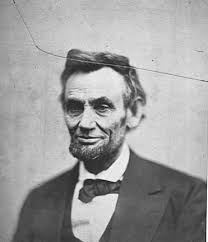
The test audience erupted—but not in the way party officials expected.
“Race-mixer!”
“He’s the reason we have all these damn civil rights laws.”
“He destroyed states’ rights!”
To head off a riot, the scientists rushed the startled Lincoln-clone off the stage.
Then they introduced their next resurrected candidate: Theodore Roosevelt, the trust-busting conservationist.
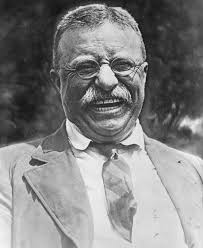
Again, the test-audience erupted:
“Tree-hugger! Tree-hugger!”
“He’s the guy who broke up the big corporations—lousy Socialist!”
Startled Republican officials hustled the Roosevelt-clone out of the building.
Finally, they brought out their third choice for victory: A cloned Ronald Reagan.
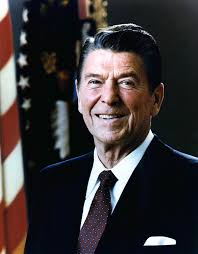
“Not him! He legalized abortion in California when he was Governor!”
“Yeah, and his first wife, Jane Wyman, divorced him. We can’t have a divorced guy in the White House!”
Desperate, Republican leaders went into a huddle.
“What are we going to do?” asked one. “Lincoln, Roosevelt and Reagan were our most popular Presidents.”
“Yeah, but that was in the past,” said another. “We need a candidate who speaks to our base today.”
“Hey, I’ve got an idea. But it’s a bit radical. The guy I have in mind wasn’t actually born in the United States.”
“So what?”
“That would violate the Constitution.”
“Screw the Constitution. You know what our friends in the oil industry say: Why spoil the beauty of the thing with legality?”
So the Republicans again ordered the scientists to return to work one last time.
When the last resurrected candidate was presented to the test-audience, the crowd rose as one, shouting: “That’s him! That’s him!”
“The one we’ve been waiting for!”
“The one who really speaks for us!”
“He’s totally anti-abortion and he hates upity women!”
“Yeah—he hates Socialists, gays and nonwhites, and he really believes in a strong military!”
“All right, all right, I vill do it,” said the clone-candidate. “But the last time I led people to greatness, they proved unworthy of me.
“So I vill do it again—but only under von condition!”
“Yes, yes!” screamed the test-audience. “Anything you want! What is it?”
“Ziss time….”
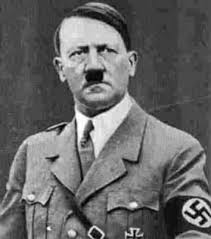
….no more Mr. Nice Guy!”
ABC NEWS, ALTERNET, AMERICABLOG, AP, ARMED ROBBERY, BABY BOOMER RESISTANCE, BBC, BLACK LIVES MATTER, BLOOMBERG NEWS, BUZZFEED, CBS NEWS, CNN, CRIME, CROOKS AND LIARS, DAILY KOZ, DAVID CAMPOS, ED LEE, FACEBOOK, FIVETHIRTYEIGHT, GANG ACTIVITY, GEORGE GASCON, GREG SUHR, HARPER’S MAGAZINE, HEROISM, HUFFINGTON POST, MARIO WOODS, MEDIA MATTERS, MOTHER JONES, MOVEON, MSNBC, NBC NEWS, NEW REPUBLIC, NEWSDAY, NEWSWEEK, NPR, OAKDALE MOB, PBS NEWSHOUR, POLITICO, POLITICUSUSA, RAW STORY, REUTERS, SALON, SAN FRANCISCO BOARD OF SUPERVISORS, SAN FRANCISCO MAYOR ED LEE, SAN FRANCISCO POLICE DEPARTMENT, SEATTLE TIMES, SLATE, TALKING POINTS MEMO, THE ATLANTIC, THE CHICAGO SUN-TIMES, THE CHICAGO TRIBUNE, THE DAILY BEAST, THE DAILY BLOG, THE GUARDIAN, THE HILL, THE HUFFINGTON POST, THE INTERCEPT, THE LOS ANGELES TIMES, THE NATION, THE NEW REPUBLIC, THE NEW YORK TIMES, THE NEW YORKER, THE VILLAGE VOICE, THE WASHINGTON POST, THINKPROGRESS, TIME, TRUTHDIG, TRUTHOUT, TWITTER, TWO POLITICAL JUNKIES, U.S. NEWS & WORLD REPORT, UPI, USA TODAY, WONKETTE
In Bureaucracy, History, Law Enforcement, Politics, Social commentary on May 29, 2018 at 12:03 am
“I am extremely disturbed by the state of the law today, and yet I am duty bound to adhere to the law. Under current law, police officers do not have to retreat, police officers don’t have to use the minimum force necessary.”
So said San Francisco District Attorney George Gascón, almost in tears, on May 24, 2018.
The reason: He could not file charges against the San Francisco Police Department (SFPD) officers who shot a drugged-up, knife-slashing assailant to death on December 2, 2015.
The dead slasher: Mario Woods, a known gang member, armed robber and car thief.
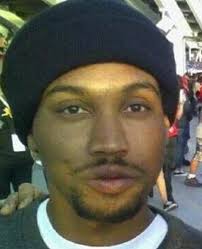
Mario Woods
At 26, Woods—born on July 22, 1989—had a well-documented history of criminality:
- He was an active member of the notorious Oakdale Mob infesting the predominantly black Bayview-Hunters Point area of San Francisco.
- His gang-related activities included armed robbery; attempted armed robbery; shooting incidents; being a felon in illegal possession of a firearm; car theft; driving a stolen car; and being involved in an automobile injury accident while fleeing from police.
- In 2008, he pleaded guilty to possession of a firearm by a felon.
- In 2009, he was one of six gang members added to the provisions of a 2007 gang injunction against the Oakdale Mob.
- Under the terms of this injunction, Oakdale Mob members are forbidden to engage in gang-related conduct within a four-block safety zone.
- Among those prohibited activities: Possessing guns or dangerous weapons; possessing illegal drugs; loitering with intent to sell drugs; intimidating witnesses or victims; using threats to recruit or retain gang members; defacing property with graffiti.
- In 2012, he was sentenced to seven years in state prison for armed robbery. (He had already spent almost three years in County Jail.) He was released in 2014.
On December 2, 2015, San Francisco police officers took a report from a 26-year-old Bayview man who had been slashed in the left shoulder.
He and a female friend had been eating in a car parked in front of an apartment building. They saw a man “walking back and forth on the sidewalk talking” to himself, according to the police report.
The man—wielding a knife—reached into the passenger’s side of the car. The passenger opened the door to push the assailant away.
When he got out of the car, the man slashed him across the left shoulder. Bleeding heavily, the passenger fled to San Francisco General Hospital.
Two officers responded to the crime scene. Police radioed in a description of the attacker, and more officers joined in the search.
Minutes later, officers spotted Mario Woods, who matched the suspect’s description. When he saw the officers get out of their car, he pulled a knife from his jeans pocket and said: “You’re not taking me today.”
The two officers drew their pistols and ordered Woods to drop the knife.
“You better squeeze that motherfucker and kill me,” said Woods.
Still refusing to drop the knife, Woods was hit with three nonlethal beanbag rounds fired from a 12-gauge weapon.
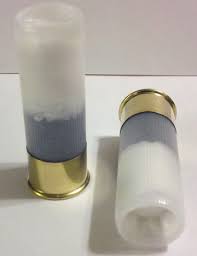
12-gauge Beanbag shotgun rounds
A woman repeatedly yelled to Woods: “Oh, my God, drop it! Drop it!”
A fourth beanbag from a 40mm gun hit Woods. Although he crouched on one knee, he still held the knife. Then he quickly regained his balance and stood up.
A dose of pepper spray had no apparent effect on him.
A crowd gathered—and an officer moved toward them to warn: “Back up!”
Suddenly, Woods moved toward the crowd.
The officer stepped into Woods’ path, to keep him from reaching the bystanders.
As Woods kept advancing, the officer fired his pistol. So did four other officers, riddling Woods with bullets.
The autopsy revealed that Woods had methamphetamine, marijuana, anti-depressants, cough syrup, nicotine and caffeine in his system.
Two of the officers were black—as was Woods. But in Uber-liberal San Francisco, police are widely regarded with suspicion, if not outright hostility. Especially when a black suspect is involved.
Predictably, Black Lives Matter called for a protest and vigil on December 3, 2015.
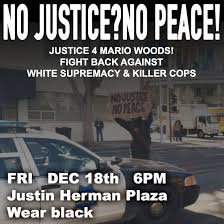
On January 25, 2016, San Francisco Mayor Ed Lee requested a federal investigation into Woods’ death.
And San Francisco Supervisor David Campos introduced a resolution to name July 22—Woods’ birthday—as “Mario Woods Day.”
On January 26, 2016, the Board of Supervisors unanimously passed Campos’ resolution.
The effort sparked outrage from the San Francisco Police Officers Association (POA) which represents rank-and-file officers.
In a letter addressed to the Board of Supervisors, POA President Martin Halloran wrote:
“It will be a hurtful day to [the families of SFPD officers killed in the line of duty] if this city’s elected officials decide to recognize and honor an individual that preyed upon our most vulnerable citizens.”
Woods’ mother, Gwen, was elated by the vote: “Sometimes you have to stand up and look life in the eye. Everyone can’t be bullied.”
Except those her son victimized.
Since December 2—the date of Woods’ shooting—blacks had demanded the firing of Greg Suhr, chief of the San Francisco Police Department and a 35-year veteran of the force.
On May 20, 2016, Shur was forced to resign at the request of then-Mayor Ed Lee.
Thus do criminals become heroes and sworn law enforcement officers villains in San Francisco.
2016 PRESIDENTIAL CAMPAIGN, ABC NEWS, ACADEMY AWARDS, ALEXANDER SHUSTOROVICH, ALTERNET, ANDREW INTRATER, AP, ARCHIBALD COX, BARACK OBAMA, BENGHAZI INVESTIGATION, BEST ACTOR OSCAR, BUZZFEED, CBS NEWS, CHUCK GRASSLEY, CIA, CNN, CROOKS AND LIARS, DAILY KOZ, DAVID BROOKS, DEPARTMENT OF HOMELAND SECURITY, DEVIN NUNES, DONALD TRUMP, DONALD TRUMP JR., DONALD TRUMP’S INAUGURAL COMMITTEE, DWIGHT D. EISENHOWER, EMAILS INVESTIGATION, FACEBOOK, FBI, FEDERAL ELECTIONS COMMISSION, FOX NEWS, FRED ZINNEMANN, GARY COOPER, GEORGE W. BUSH, GRACE KELLY, HIGH NOON, HILLARY CLINTON, HOUSE INTELLIGENCE COMMITTEE, JAMES COMEY, JARED KUSHNER, JEFF SESSIONS, JOHN KASICH, JOHN MCCAIN, JOSEPH R. MCCARTHY, KGB, LEN BLAVATNIK, LESTER HOLT, LINDSEY GRAHAM, MARCO RUBIO, MARK SHIELDS, MICHAEL FLYNN, MITCH MCCONNELL, MOTHER JONES, MOVEON, MSNBC, NATIONAL SECURITY AGENCY, NBC NEWS, NEWSWEEK, NPR, OFFICE OF THE DIRECTOR OF NATIONAL INTELLIGENCE, PAUL MANAFORT, PAUL RYAN, PBS NEWSHOUR, PEW RESEARCH SURVEY, POLITICAL ACTION COMMITTEES (PACS), POLITICAL CONSULTANTS, POLITICO, PRINCETON UNIVERSITY, RAW STORY, REPUBLICAN PARTY, REPUBLICANS, REUTERS, RICHARD M. NIXON, ROBERT S. MUELLER 111, ROD ROSENSTEIN, RUDOLPH GIULIANI, RUSSIA, RUSSIAN OLIGARCHS, SALON, SCOTT WALKER, SEATTLE TIMES, SENATE INTELLIGENCE COMMITTEE, SENATE LEADERSHIP FUND, SERGEY KISLYAK, SERGEY LAVROV, SIMON KUKES, SLATE, SOVIET UNION, TEX RITTER, THE ATLANTIC, THE CHICAGO SUN-TIMES, THE CHICAGO TRIBUNE, THE DAILY BEAST, THE GUARDIAN, THE HILL, THE HUFFINGTON POST, THE LOS ANGELES TIMES, THE NATION, THE NEW YORK TIMES, THE WASHINGTON POST, TIME, TRUMP INAUGURAL COMMITTEE, TRUMP TOWER, TWITTER, U.S. NEWS & WORLD REPORT, UNITED STATES DEPARTMENT OF JUSTICE, UNITED STATES DEPARTMENT OF STATE, UNITED STATES HOUSE OF REPRESENTATIVES, UNITED STATES MARINE CORPS, UNITED STATES SENATE, UNIVERSITY OF VIRGINIA LAW SCHOOL, UP, UPI, USA TODAY, VIETNAM WAR, VLADIMIR PUTIN, WILL KANE
In Bureaucracy, Entertainment, History, Law Enforcement, Military, Social commentary on May 24, 2018 at 12:04 am
On April 27, 2018, the House Intelligence Committee, after a sham “investigation,” concluded there had been “no collusion” between Russian Intelligence agents and members of the Trump Presidential campaign.
Among the evidence ignored: The now-infamous meeting at Trump Tower, in June, 2016, between Donald Trump’s son, Donald Jr.; his son-in-law, Jared Kushner; and his then-campaign manager, Paul Manafort, with Russian Intelligence agents.
The reason for the meeting: The Russians claimed to have dirt to offer on Hillary Clinton.
The “no collusion” verdict was inevitable, since the committee was chaired by California’s Republican Representative Devin Nunes, a wholly-owned subsidiary of Trump. Nunes had even improperly shared “secret” committee documents with the President.

Devin Nunes
The Senate Intelligence Committee, on the other hand, agreed with the conclusions previously reached by the American Intelligence community (CIA, FBI, National Security Agency): The Russians had worked to subvert the American political process and elect Trump over Clinton.
March 17, 2018, marked the start of the second year of Special Counsel Robert Mueller’s investigation to uncover “any links and/or coordination between the Russian government and individuals associated with the campaign of President Donald Trump, and any matters that arose or may arise directly from the investigation.”
By that date, Mueller had:
- Indicted 19 people—including four former Trump campaign advisers.
- Indicted three Russian companies.
- Obtained five guilty pleas—and the cooperation of all five defendants.
- Unveiled Russians’ determination to elect Trump over Hillary Clinton.
- Revealed that former National Security Adviser Michael Flynn discussed removing sanctions against Russia with then-Russian ambassador, Sergey Kislyak, during the transition period.
- Discovered that Trump associates knew about Russian outreach efforts during the campaign.
By contrast:
- Republicans spent four years investigating the 2012 attack on the United States embassy in Benghazi, Libya. Their goal: To derail the presumed 2016 Presidential candidacy of then-Secretary of State Hillary Clinton. But no indictments followed.
- Republicans spent two years investigating Hillary Clinton’s use of a private email server while Secretary of State. Again, no indictments followed.
It’s past time for Republicans to remember the lesson taught by High Noon, the classic 1952 Western starring Gary Cooper and Grace Kelly.

Town marshal Will Kane (Cooper) has just married Amy Fowler (Kelly) a Quaker. It should be the happiest day of his life. But shortly after the ceremony, word comes that Frank Miller—a notorious murderer Kane once sent to prison—has been released.
Even worse, Miller—joined by three other killers—is coming into town on the noon train to kill Kane.
Kane’s first instinct is to flee: He and his wife get into a buggy and dash out of town. But then his sense of duty takes over. He returns to town, intending to recruit a posse.
But this proves impossible—everyone is scared to death of Miller and his gang. And everyone Kane approaches has a reason for not backing him up.
Even Amy—a fervent believer in non-violence—threatens to leave him if he stands up to Miller. She will be on the noon train leaving town—with or without him.
When the clock strikes noon, the train arrives, and Kane—alone—faces his enemies. He shoots and kills two of them.
Then, as he’s pinned down by the third, he gets some unexpected help—from his wife: Amy shoots the would-be killer in the back—only to be taken hostage by Miller himself.
Miller tells Kane to leave his concealed position or he’ll kill Amy. Kane steps into the open—and Amy claws at Miller’s face, buying Kane the time he needs to shoot Miller down.
At that point, the townspeople rush to embrace Kane and congratulate him. But he’s now seen them for the cowards they are and holds them in total contempt.
Saying nothing, he drops the marshal’s star into the dirt. He and Amy then get into a buggy and leave town.
Fred Zinnemann, the film’s director, intended the movie as an attack on those frightened into silence by Joseph McCarthy, the infamous Red-baiting Senator from Wisconsin.
Will Kane fought to protect himself and his town from a gang of murderous outlaws.
Robert Mueller is fighting to discover the truth behind Russian subversion of the American political system.
The difference between these two conflicts is this: We know how Kane’s fight ended—with a good man defeating evil men.
We do not know if Mueller will ultimately triumph over his—and America’s—mortal enemies.
Robert Mueller—as a soldier, prosecutor, FBI director and now Special Counsel—took an oath to “support and defend the Constitution of the United States against all enemies, foreign and domestic.”
So did Donald Trump when he was inaugurated President. And so did every member of the House of Representatives and the Senate.
The difference between Robert Mueller, and the overwhelming majority of Republican Congressional members who have refused to support him, is this: Mueller, like a compass pointing True North, has always stayed faithful to that oath.
In doing so, he is carrying on his shoulders the burdens created when millions of racist, hate-filled Americans deliberately sent a Russian-backed egomaniac and would-be dictator to the White House.
2016 PRESIDENTIAL CAMPAIGN, ABC NEWS, ACADEMY AWARDS, ALEXANDER SHUSTOROVICH, ALTERNET, ANDREW INTRATER, AP, ARCHIBALD COX, BARACK OBAMA, BENGHAZI INVESTIGATION, BEST ACTOR OSCAR, BUZZFEED, CBS NEWS, CHUCK GRASSLEY, CIA, CNN, CROOKS AND LIARS, DAILY KOZ, DAVID BROOKS, DEPARTMENT OF HOMELAND SECURITY, DEVIN NUNES, DONALD TRUMP, DONALD TRUMP JR., DONALD TRUMP’S INAUGURAL COMMITTEE, DWIGHT D. EISENHOWER, EMAILS INVESTIGATION, FACEBOOK, FBI, FEDERAL ELECTIONS COMMISSION, FOX NEWS, FRED ZINNEMANN, GARY COOPER, GEORGE W. BUSH, GRACE KELLY, HIGH NOON, HILLARY CLINTON, HOUSE INTELLIGENCE COMMITTEE, JAMES COMEY, JARED KUSHNER, JEFF SESSIONS, JOHN KASICH, JOHN MCCAIN, JOSEPH R. MCCARTHY, KGB, LEN BLAVATNIK, LESTER HOLT, LINDSEY GRAHAM, MARCO RUBIO, MARK SHIELDS, MICHAEL FLYNN, MITCH MCCONNELL, MOTHER JONES, MOVEON, MSNBC, NATIONAL SECURITY AGENCY, NBC NEWS, NEWSWEEK, NPR, OFFICE OF THE DIRECTOR OF NATIONAL INTELLIGENCE, PAUL MANAFORT, PAUL RYAN, PBS NEWSHOUR, PEW RESEARCH SURVEY, POLITICAL ACTION COMMITTEES (PACS), POLITICAL CONSULTANTS, POLITICO, PRINCETON UNIVERSITY, RAW STORY, REPUBLICAN PARTY, REPUBLICANS, REUTERS, RICHARD M. NIXON, ROBERT S. MUELLER 111, ROD ROSENSTEIN, RUDOLPH GIULIANI, RUSSIA, RUSSIAN OLIGARCHS, SALON, SCOTT WALKER, SEATTLE TIMES, SENATE INTELLIGENCE COMMITTEE, SENATE LEADERSHIP FUND, SERGEY KISLYAK, SERGEY LAVROV, SIMON KUKES, SLATE, SOVIET UNION, TEX RITTER, THE ATLANTIC, THE CHICAGO SUN-TIMES, THE CHICAGO TRIBUNE, THE DAILY BEAST, THE GUARDIAN, THE HILL, THE HUFFINGTON POST, THE LOS ANGELES TIMES, THE NATION, THE NEW YORK TIMES, THE WASHINGTON POST, TIME, TRUMP INAUGURAL COMMITTEE, TRUMP TOWER, TWITTER, U.S. NEWS & WORLD REPORT, UNITED STATES DEPARTMENT OF JUSTICE, UNITED STATES DEPARTMENT OF STATE, UNITED STATES HOUSE OF REPRESENTATIVES, UNITED STATES MARINE CORPS, UNITED STATES SENATE, UNIVERSITY OF VIRGINIA LAW SCHOOL, UP, UPI, USA TODAY, VIETNAM WAR, VLADIMIR PUTIN, WILL KANE
In Bureaucracy, Entertainment, History, Law, Law Enforcement, Military, Social commentary on May 23, 2018 at 12:20 am
Altogether, four Russian oligarchs—Len Blavatnik, Alexander Shustorovich, Andrew Intrater and Simon Kukes––contributed $10.4 million from the start of the 2015-16 election cycle through September 2017. Of this, 99% went to Republicans.
As Senate Majority Leader, Kentucky United States Senator Mitch McConnell participated in high-level intelligence briefings in 2016. From agencies such as the FBI, CIA and the code-cracking National Security Agency, he learned that the Russians were trying to subvert the electoral process.

In October, 2016, the Department of Homeland Security (DHS) and the Office of the Director of National Intelligence (DNI) issued a joint statement: The Russian government had directed the effort to subvert the 2016 Presidential election.
Two weeks later, McConnell’s PAC accepted a $1 million donation from Blavatnik.
On March 30, 2017, McConnell’s PAC accepted another $1 million from Blavatnik. This was just 10 days after former FBI Director James Comey testified before the House Intelligence Committee about Russia’s efforts to subvert the 2016 election.
Billionaires don’t give huge sums to politicians without expecting to get something in return. And this is especially true—and frightening—when the contributors are linked to a former KGB agent like Vladimir Putin, whose aggressive intentions are increasingly on display.
So Special Counsel Robert Mueller is facing increased hostility from Republicans who no doubt fear their own ownership by Moscow will become a focus of his investigation.
But there is another powerful reason why so many Republicans have closed ranks with Trump against him:
#2: Republicans fear enraging Trump’s fanatical base.
On August 30, 2017, an article in Salon sought to explain why President Donald Trump was so popular among his supporters.
Its headline ran: “Most Americans Strongly Dislike Trump, But the Angry Minority That Adores Him Controls Our Politics.”
It described these voters as representing about one-third of the Republican party:
“These are older and more conservative white people, for the most part, who believe he should not listen to other Republicans and should follow his own instincts….
“They like Trump’s coarse personality, and approve of the fact that he treats women like his personal playthings. They enjoy it when he expresses sympathy for neo-Nazis and neo-Confederate white supremacists.
“They cheer when he declares his love for torture, tells the police to rough up suspects and vows to mandate the death penalty for certain crimes. (Which of course the president cannot do.)
“…This cohort of the Republican party didn’t vote for Trump because of his supposed policies on trade or his threat to withdraw from NATO. They voted for him because he said out loud what they were thinking. A petty, sophomoric, crude bully is apparently what they want as a leader.”
And keeping that cohort constantly stirred up is the Right-wing Fox News Network. This is not a source of legitimate news but the propaganda arm of the Fascistic Right and the Republican party.
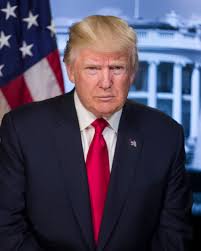
Donald Trump
On May 18, 2018, conservative New York Times columnist David Brooks offered this political commentary on The PBS Newshour: “I would just say, I observe politically, I do think if Trump fired Mueller tomorrow, the Republican Party would back him.
“Because I think FOX News has created a predicate. They have done thousands of surveys and investigations about Mueller as a political operative.”
And Brooks’ fellow political commentator, liberal syndicated columnist Mark Shields, echoed those sentiments: “At the same time, I think what we learned is that the defense of Donald Trump, led by himself and [his attorney] Rudy Giuliani, is to savage and torment, denigrate, vilify and libel Bob Mueller.
“Bob Mueller happens to be an American who turned down an eight-figure income to be a major corporate lawyer, instead became a public servant. He’s a man who volunteered and carries the wounds of battle from having been a Marine platoon leader in Vietnam.
“He is a public servant. He has not said a word. He has not given an interview. He has not leaked to anybody. And he stands vilified by Trump and Giuliani and their cohorts and their outriders. It is indefensible.
“And they are trying to exact the same damage upon the Justice Department of the country, the FBI and this country that Joe McCarthy did on the State Department, which has never fully recovered from his libelous attacks.”
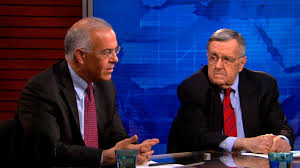
David Brooks and Mark Shields
According to a Pew Research Center survey, that one-third of Republicans who fanatically support Trump comprise only 16% of the population. That leaves 65% of Republicans who are revolted by Trump’s personality and behavior.
But that 65% of Republicans are being advised by GOP political consultants to vigorously support him.
“Your heart tells you that he’s bad for the country,” one anonymous consultant told the Salon reporter. “Your head looks at polling data among Republican primary voters and sees how popular he is.”
It’s precisely these hard-core Fascists who come out in mid-term elections—and they’re scaring the remaining 65% who make up the GOP establishment.
The highest priority of that establishment, after all, is to hold onto their privileged positions in the House and Senate. And anything that might jeopardize that—including what’s best for the country—can go hang.
2016 PRESIDENTIAL CAMPAIGN, ABC NEWS, ACADEMY AWARDS, ALEXANDER SHUSTOROVICH, ALTERNET, ANDREW INTRATER, AP, ARCHIBALD COX, BARACK OBAMA, BENGHAZI INVESTIGATION, BEST ACTOR OSCAR, BUZZFEED, CBS NEWS, CHUCK GRASSLEY, CIA, CNN, CROOKS AND LIARS, DAILY KOZ, DAVID BROOKS, DEPARTMENT OF HOMELAND SECURITY, DEVIN NUNES, DONALD TRUMP, DONALD TRUMP JR., DONALD TRUMP’S INAUGURAL COMMITTEE, DWIGHT D. EISENHOWER, EMAILS INVESTIGATION, FACEBOOK, FBI, FEDERAL ELECTIONS COMMISSION, FOX NEWS, FRED ZINNEMANN, GARY COOPER, GEORGE W. BUSH, GRACE KELLY, HIGH NOON, HILLARY CLINTON, HOUSE INTELLIGENCE COMMITTEE, JAMES COMEY, JARED KUSHNER, JEFF SESSIONS, JOHN KASICH, JOHN MCCAIN, JOSEPH R. MCCARTHY, KGB, LEN BLAVATNIK, LESTER HOLT, LINDSEY GRAHAM, MARCO RUBIO, MARK SHIELDS, MICHAEL FLYNN, MITCH MCCONNELL, MOTHER JONES, MOVEON, MSNBC, NATIONAL SECURITY AGENCY, NBC NEWS, NEWSWEEK, NPR, OFFICE OF THE DIRECTOR OF NATIONAL INTELLIGENCE, PAUL MANAFORT, PAUL RYAN, PBS NEWSHOUR, PEW RESEARCH SURVEY, POLITICAL ACTION COMMITTEES (PACS), POLITICAL CONSULTANTS, POLITICO, PRINCETON UNIVERSITY, RAW STORY, REPUBLICAN PARTY, REPUBLICANS, REUTERS, RICHARD M. NIXON, ROBERT S. MUELLER 111, ROD ROSENSTEIN, RUDOLPH GIULIANI, RUSSIA, RUSSIAN OLIGARCHS, SALON, SCOTT WALKER, SEATTLE TIMES, SENATE INTELLIGENCE COMMITTEE, SENATE LEADERSHIP FUND, SERGEY KISLYAK, SERGEY LAVROV, SIMON KUKES, SLATE, SOVIET UNION, TEX RITTER, THE ATLANTIC, THE CHICAGO SUN-TIMES, THE CHICAGO TRIBUNE, THE DAILY BEAST, THE GUARDIAN, THE HILL, THE HUFFINGTON POST, THE LOS ANGELES TIMES, THE NATION, THE NEW YORK TIMES, THE WASHINGTON POST, TIME, TRUMP INAUGURAL COMMITTEE, TRUMP TOWER, TWITTER, U.S. NEWS & WORLD REPORT, UNITED STATES DEPARTMENT OF JUSTICE, UNITED STATES DEPARTMENT OF STATE, UNITED STATES HOUSE OF REPRESENTATIVES, UNITED STATES MARINE CORPS, UNITED STATES SENATE, UNIVERSITY OF VIRGINIA LAW SCHOOL, UP, UPI, USA TODAY, VIETNAM WAR, VLADIMIR PUTIN, WILL KANE
In Bureaucracy, History, Law, Law Enforcement, Politics, Social commentary on May 22, 2018 at 12:02 am
On November 8, 2016, millions of racist, hate-filled Americans took “revenge” on the nation’s first black President—by deliberately voting a Russian-backed egomaniac and would-be dictator into the White House.
By doing so, they set in motion events that would lead Robert S. Mueller to assume the consequences—and burdens—of their brutal, Fascistic desires.
On May 9, 2017, President Donald Trump abruptly fired FBI Director James Comey.
By doing so, he hoped to derail the Bureau’s investigation of documented ties between Russian Intelligence agents and high-ranking officials of the 2016 Trump Presidential campaign.
A national firestorm erupted—unprecedented since President Richard M. Nixon had fired Watergate Special Prosecutor Archibald Cox on October 20, 1973.
To squelch it, Deputy Attorney General Rod Rosenstein moved quickly.
On May 17, 2017, he appointed Robert S. Mueller 111 to serve as Special Counsel for the United States Department of Justice.
Rosenstein charged Mueller to investigate “any links and/or coordination between the Russian government and individuals associated with the campaign of President Donald Trump, and any matters that arose or may arise directly from the investigation.”
Trump has claimed from the outset that there was “no collusion” between him and members of Russia’s Intelligence community. But he has acted like a guilty man desperate to stop the investigation before it uncovers the full extent of his criminality.
Since then, Trump, his shills in Congress and Right-wing Fox News have relentlessly attacked Mueller’s integrity and investigative methods.
From the outset of that investigation, there have been widespread fears that Trump would fire Mueller, just as he did Comey. Those fears increased over the weekend of March 17-18, 2018, when Trump spewed a series of angry tweets on Twitter:
- “The Mueller probe should never have been started in that there was no collusion and there was no crime. It was based on fraudulent activities and a Fake Dossier paid for by Crooked Hillary and the DNC, and improperly used in FISA COURT for surveillance of my campaign. WITCH HUNT!”
- “Why does the Mueller team have 13 hardened Democrats, some big Crooked Hillary supporters, and Zero Republicans? Another Dem recently added…does anyone think this is fair? And yet, there is NO COLLUSION!”
- “A total WITCH HUNT with massive conflicts of interest!”
In “High Noon,” Marshal Will Kane faced death at the hands of four cold-blooded killers. At least for the moment, Mueller does not seem to be facing that.
Trump presumably believes that ordering the murder of a Special Counsel—assuming he could find someone willing to carry it out—wouldn’t be tolerated, even in a country that has already accommodated Trump’s countless brutalities and corruptions.
So Mueller conducts his investigation every day under the shadow of being fired by a President who has repeatedly praised Russian dictator Vladimir Putin. And who has “joked” about how great it would be if the United States, like China, had a “President-for-Life.”
House and Senate Republicans have almost universally refused to speak out against threats by Trump to fire deputy Attorney General Rod Rosenstein and/or Special Counsel Robert Mueller.
Or, more importantly, to take action to prevent or punish him for doing so.
On April 17, 2018, Republican Senate Majority Leader Mitch McConnell said he would not allow legislation to protect Robert Mueller’s independent investigation into Russian subversion of the 2016 Presidential election to reach the Senate floor.

Mitch McConnell
“I’m the one who decides what we take to the floor. That’s my responsibility as majority leader. We’ll not be having this on the floor of the Senate,” the Kntucky Republican said in an interview on Fox News.
Earlier that day, another Republican, Speaker of the House Paul Ryan, claimed that legislation to protect Mueller was “unnecessary.”
“It would not be in the President’s interest to [fire Mueller] and I think he knows that,” said the Wisconsin Congressman.
Why have so few Republicans dared to stand against Trump?
Two major reasons:
#1: Because many House and Senate Republicans received millions of dollars in “campaign contributions” from Russian oligarchs who are answerable to Russian dictator Vladimir Putin.
In short: Bribe monies.
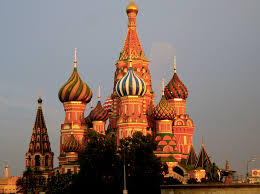
The Kremlin
The following data comes from the Federal Elections Commission.
One major Russian contributor is Len Blavatnik. During the 2015-16 election cycle, he proved one of the largest donors to GOP Political Action Committees (PACs).
Blavatnik’s net worth is estimated at $20 billion. In 2016, he gave $6.35 million to GOP PACs.
In 2017, he gave millions of dollars to top Republican leaders—such as Senators Mitch McConnell, Marco Rubio (Florida) and Lindsey Graham (South Carolina). Specifically, Blavatnik contributed:
- A total of $1.5 million to PACs associated with Rubio.
- $1 million to Trump’s Inaugural Committee.
- $1 million to McConnell’s Senate Leadership Fund.
- $3.5 million to a PAC associated with McConnell.
- $1.1 million to Unintimidated PAC, associated with Wisconsin Governor Scott Walker.
- $200,000 to the Arizona Grassroots Action PAC, associated with Arizona Senator John McCain.
- $250,000 to New Day for America PAC, associated with Ohio Governor John Kasich.
- $800,000 went to the Security is Strength PAC, associated with Senator Lindsey Graham.
Another Russian oligarch, Alexander Shustorovich, contributed $1 million to Trump’s Inaugural Committee.
A third oligarch, Andrew Intrater, contributed $250,000 to Trump’s Inaugural Committee.
And a fourth, Simon Kukes, contributed a total of $283,000, much of it to the Trump Victory Fund.
2016 PRESIDENTIAL CAMPAIGN, 2016 PRESIDENTIAL RACE, ABC NEWS, ACADEMY AWARDS, ALEXANDER SHUSTOROVICH, ALTERNET, ANDREW INTRATER, AP, ARCHIBALD COX, BARACK OBAMA, BENGHAZI INVESTIGATION, BEST ACTOR OSCAR, BUZZFEED, CBS NEWS, CIA, CNN, CROOKS AND LIARS, DAILY KOZ, DAVID BROOKS, DEPARTMENT OF HOMELAND SECURITY, DEVIN NUNES, DONALD TRUMP, DONALD TRUMP JR., DONALD TRUMP’S INAUGURAL COMMITTEE, DWIGHT D. EISENHOWER, EMAILS INVESTIGATION, FACEBOOK, FBI, FEDERAL ELECTIONS COMMISSION, FOX NEWS, FRED ZINNEMANN, GARY COOPER, GEORGE W. BUSH, GRACE KELLY, HIGH NOON, HILLARY CLINTON, HOUSE INTELLIGENCE COMMITTEE, JAMES COMEY, JARED KUSHNER, JEFF SESSIONS, JOHN KASICH, JOHN MCCAIN, JOSEPH MCCARTHY, JOSEPH R. MCCARTHY, KGB, LEN BLAVATNIK, LESTER HOLT, LINDSEY GRAHAM, MARCO RUBIO, MARK SHIELDS, MICHAEL FLYNN, MITCH MCCONNELL, MOTHER JONES, MOVEON, MSNBC, NATIONAL SECURITY AGENCY, NBC NEWS, NEWSWEEK, NPR, OFFICE OF THE DIRECTOR OF NATIONAL INTELLIGENCE, PAUL MANAFORT, PAUL RYAN, PBS NEWSHOUR, PEW RESEARCH SURVEY, POLITICAL ACTION COMMITTEES (PACS), POLITICAL CONSULTANTS, POLITICO, PRINCETON UNIVERSITY, RAW STORY, REPUBLICAN PARTY, REPUBLICANS, REUTERS, RICHARD M. NIXON, ROBERT MUELLER III, ROBERT S. MUELLER 111, ROD ROSENSTEIN, RUDOLPH GIULIANI, RUSSIA, RUSSIAN OLIGARCHS, SALON, SCOTT WALKER, SEATTLE TIMES, SENATE INTELLIGENCE COMMITTEE, SENATE LEADERSHIP FUND, SERGEY KISLYAK, SERGEY LAVROV, SIMON KUKES, SLATE, SOVIET UNION, SUPREME COURT, TEX RITTER, THE ATLANTIC, THE CHICAGO SUN-TIMES, THE CHICAGO TRIBUNE, THE DAILY BEAST, THE GUARDIAN, THE HILL, THE HUFFINGTON POST, THE LOS ANGELES TIMES, THE NATION, THE NEW YORK TIMES, THE WASHINGTON POST, TIME, TRUMP INAUGURAL COMMITTEE, TRUMP TOWER, TWITTER, U.S. NEWS & WORLD REPORT, UNITED STATES DEPARTMENT OF JUSTICE, UNITED STATES DEPARTMENT OF STATE, UNITED STATES HOUSE OF REPRESENTATIVES, UNITED STATES MARINE CORPS, UNITED STATES SENATE, UNIVERSITY OF VIRGINIA LAW SCHOOL, UP, UPI, USA TODAY, USA TODAY DONALD TRUMP, USA TODAY HIGH NOON, VIETNAM WAR, VLADIMIR PUTIN, WILL KANE
In Bureaucracy, History, Law, Law Enforcement, Military, Politics, Social commentary on May 21, 2018 at 12:26 am
His face is lined and his gray hair is topped with a black hat. This is clearly not a young man. If he’s seen his share of violence, he doesn’t talk about it.
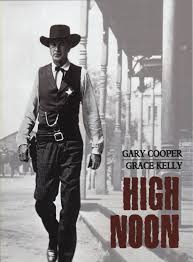
He’s about to face four armed and vicious criminals who intend to murder him. And he’s going to do it without support from the very citizens he’s sworn to defend.
His name: Will Kane, as played by Gary Cooper. And he’s the local marshal of an anonymous Western town.
“High Noon,” the 1952 movie in which this story takes place, won a Best Actor Academy Award for its star, Cooper. It was nominated for another six Academy Awards and won four (Actor, Editing, Music-Score, and Music-Song).
Its opening tune, “Do Not Forsake Me, Oh My Darling,” played incessantly on radios throughout the United States. President Dwight D. Eisenhower added his kudos to the movie, and often hummed its theme in the White House.
Fast forward to an America 66 years later.
A similar morality play is now occurring—in real life, not on a movie set. At stake isn’t simply the life of one man but perhaps the future of American democracy.
Carrying that burden is Robert Swan Mueller III.
Like the Gary Cooper character in “High Noon,” he is not a young man—born on August 7, 1944. And, like Cooper’s Will Kane, he is tall, gray-haired and tight-lipped.
But while Cooper never saw military service, Mueller did. A 1966 graduate of Princeton University, he served as a Marine Corps infantry platoon commander during the Vietnam War.
Wounded in combat, among the military awards he received were:
- The Bronze Star Medal with Combat “V” for heroism (for saving a wounded Marine while under enemy fire).
- The Purple Heart Medal (awarded for wounds in combat).
- Two Navy and Marine Corps Commendation Medals with Combat “V”.
- Combat Action Ribbon.
- National Defense Service Medal.
Having given three years of his life (1968-1971) to the Marines, Mueller devoted the rest of his life to law enforcement.
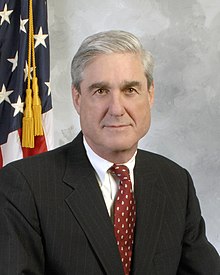
Robert Mueller
A 1973 graduate of the University of Virginia Law School, Mueller served as:
- United States Attorney for the District of Massachusetts (1986-1987);
- United States Assistant Attorney General for the Criminal Division (1990-1993);
- United States Attorney for the Northern District of California (1998-2001);
- United States Deputy Attorney General (January 20, 2001– May 10, 2001).
On September 4, 2001—seven days before Al Qaeda’s monstrous 9/11 attacks on Washington and New York—President George W. Bush appointed him director of the Federal Bureau of Investigation (FBI).
Widely praised for his integrity and effectiveness, he served his full 10-year term—the legal maximum.
But when President Barack Obama took office in 2009, he asked Mueller—a lifelong Republican—to stay on for an additional two years until a suitable replacement could be found.
Mueller agreed—and was succeeded by a fellow Justice Department colleague named James Comey.
Retiring from the FBI in 2013 at age 69, Mueller’s 27-year career as a dedicated law enforcer seemed at last to be over.
Then, on May 9, 2017, President Donald Trump fired Comey as FBI director. There were five reasons for this:
- Comey had refused to pledge his personal loyalty to Trump. Trump had made the “request” during a private dinner at the White House in January.
- Comey told Trump that he would always be honest with him. But that didn’t satisfy Trump’s demand that the head of the FBI act as his personal secret police chief—as was the case in the former Soviet Union.
- Trump had tried to coerce Comey into dropping the FBI’s investigation into former National Security Adviser Michael Flynn, for his secret ties to Russia and Turkey. Comey had similarly resisted that demand.
- Comey had recently asked the Justice Department to fund an expanded FBI investigation into well-documented contacts between Trump’s 2016 Presidential campaign and Russian Intelligence agents.
- The goal of that collaboration: To elect Trump over Hillary Clinton, a longtime foe of Russian President Vladimir Putin.

James Comey
On May 10—the day after firing Comey—Trump met in the Oval Office with Russian Foreign Minister Sergey Lavrov and Russian Ambassador Sergey Kislyak.
Kislyak is reportedly a top recruiter for Russia’s SVR foreign intelligence agency. He has been closely linked with Jeff Sessions, now Attorney General, and fired National Security Adviser Mike Flynn.
“I just fired the head of the F.B.I.,” Trump told the two dignitaries. “He was crazy, a real nut job. I faced great pressure because of Russia. That’s taken off.”
And on May 11, Trump, interviewed on NBC News by reporter Lester Holt, said: “And in fact when I decided to just do it, I said to myself, I said ‘you know, this Russia thing with Trump and Russia is a made-up story, it’s an excuse by the Democrats for having lost an election that they should have won.'”
ABC NEWS, ALTERNET, AMERICABLOG, AP, BABY BOOMER RESISTANCE, BUZZFEED, CANDICE BERGIN, CBS NEWS, CNN, CROOKS AND LIARS, DAILY KOZ, DRUDGE RETORT, ENGLAND, FACEBOOK, FIVETHIRTYEIGHT, FRANCE, GERMANY, HARPER’S MAGAZINE, ISRAEL, JAPAN, JOHN MILIUS, MEDIA MATTERS, MOROCCO, MOTHER JONES, MOVEON, MOVIES, MSNBC, NBC NEWS, NEWSWEEK, NPR, PBS NEWSHOUR, POLITICO, POLITICUSUSA, RAW STORY, REUTERS, SALON, SEAN CONNERY, SEATTLE TIMES, SLATE, TALKING POINTS MEMO, THE ATLANTIC, THE CHICAGO SUN-TIMES, THE CHICAGO TRIBUNE, THE DAILY BEAST, THE DAILY BLOG, THE GUARDIAN, THE HILL, THE HUFFINGTON POST, THE LOS ANGELES TIMES, THE NATION, THE NEW REPUBLIC, THE NEW YORK TIMES, THE VILLAGE VOICE, THE WALL STREET JOURNAL, THE WASHINGTON POST, THE WIND AND THE LION, THEODORE ROOSEVELT, THINKPROGRESS, TIME, TRUTHDIG, TRUTHOUT, TWITTER, TWO POLITICAL JUNKIES, U.S. NEWS & WORLD REPORT, UPI, USA TODAY, USA TODAY ABC NEWS, WONKETTE, WORLD WAR ii, WORLD WAR l, YELLOWSTONE NATIONAL PARK
In Entertainment, History, Military, Politics, Social commentary on May 18, 2018 at 1:12 am
There is a poignant scene in the middle of John Milius’ classic 1975 adventure film, The Wind and the Lion, that Americans would do well to remember.
The movie is set in 1904 America and Morocco. An American woman, Eden Pedicaris (Candice Bergen) and her two children have been kidnapped while vacationing in Tangier.
The kidnapper is a Berber brigand named Mulai Ahmed el Raisuli (Sean Connery—then successfully trying to shed his recent James Bond image).
To Raisuli, the Sultan and his uncle, the Pasha of Tangier, are corrupt and beholden to the European powers struggling to control Morocco.
Raisuli issues an outrageous ransom demand to provoke an international incident, embarrass the Sultan and start a civil war.
In the United States, President Theodore Roosevelt (Brian Keith) is running for re-election. He sees the crisis as a way to win votes and demonstrate America’s military strength as a new power.
So he issues a demand of his own: “Pedicarus alive—or Raisuli dead!”
While events rapidly spiral out of control in the Middle East, Roosevelt decides to vacation in Yellowstone National Park.
One night, a grizzly bear attacks the camp and is shot by Roosevelt and several other campers. The next morning, Roosevelt holds an imprumptu press conference for the reporters who have accompanied him.

Brian Keith (left) as Theodore Roosevelt
REPORTER: Did you take part in killing the grizzly, Mr. President?
ROOSEVELT: Yes, unfortunately.
REPORTER: Why do you say, ‘unfortunately,’ Mr. President?
ROOSEVELT: The American grizzly is a symbol of the American character: strength, intelligence, ferocity. Maybe a little blind and reckless at times, but courageous beyond all doubt. And one other trait that goes with all previous.
REPORTER: And that, Mr. President?
ROOSEVELT: Loneliness. The American grizzly lives out his life alone. Indomitable, unconquered—but always alone. He has no real allies, only enemies, but none of them as great as he.
REPORTER: And you feel this might be an American trait?
ROOSEVELT: Certainly. The world will never love us. They respect us—they might even grow to fear us. But they will never love us, for we have too much audacity! And, we’re a bit blind and reckless at times, too.
REPORTER: Are you perhaps referring to the situation in Morocco and the Panama Canal.
ROOSEVELT: If you say so. The American grizzly embodies the spirit of America. He should be our symbol! Not that ridiculous eagle—he’s nothing more than a dandified vulture.
When the Pasha of Tangier refuses to negotiate with Raisuli to secure the return of Pedecaris, the American Consul to Tangier, Samuel Gummere, decides on action. He confers with Admiral Chadwick, commanding the South Atlantic Squadron, and a Marine captain named Jerome.
Gummere then orders a company of Marines, supported by a small detachment of sailors, to seize the Pasha. But then he admits to the riskiness of the decision:
GUMMERE: You realize, of course, that if we fail in even the slightest way, we’ll all be killed.
CHADWICK: Yes, and the whole world will probably go to war.
JEROME: Gentlemen, if we fail and are killed, I certainly hope the world does go to war.
CHADWICK: A world ar war!
GUMMERE: A world war. Now that would be something to go out on.
In just ten years, they will get their hearts’ desire when World War 1 erupts.
The Marines quickly overwhelm the Pasha’s palace guard, take the Pasha hostage and force him to negotiate.
During the hostage exchange, Raisuli is betrayed and captured by German and Moroccan troops. His friend, the Sherif of Wazan, organizes the Berber tribe for an attack on the Europeans and their Moroccan lackeys.
Eden Pedecaris, who has grown to admire Raisuli, convinces a Marine captain and his men to rescue the Berber chieftain. She argues that President Roosevelt had promised that Raisuli would be unharmed if the Pedecarises were returned safely.
The Berbers and Marines team up to defeat the Germans and their Moroccan allies, rescuing Raisuli in the process.
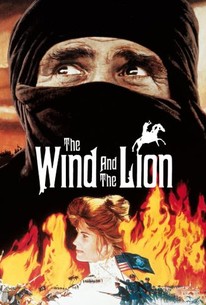
Thirteen years later—in 1917—the United States will officially take on the Germans in World War 1. And in another 37 years—in 1941—America will again declare war on Germany.
The film ends with a confident Theodore Roosevelt expecting (accurately) to be re-elected—and telling reporters that “the fate of Morocco will be decided tomorrow by me.”
The Wind and the Lion is set in an era when
- Nuclear weapons did not exist;
- Russia and China were militarily insignificant nations;
- England was the world’s superpower;
- America, Germany and Japan were on the rise;
- Israel was still a distant dream in the eyes of European Jews;
- The “Great Powers”—Germany, France and Great Britain—were struggling to carve up the Middle East to exploit its massive oil reserves; and
- Americans did not feel threatened by Islamic radicals.
As complex and dangerous as that era often seemed to those living more than 100 years ago, it has been succeeded by one even more complex and dangerous.
In this new and even more lethal era, it is well to remember Theodore Roosevelt’s warning that “we’re a bit blind and reckless at times, too.”
ABC NEWS, ADOLF HITLER, ALTERNET, AP, BBC, BUZZFEED, CBS NEWS, CNN, DAILY KOS, DAVID BROOKS, DONALD TRUMP, FACEBOOK, FBI, GEORGE C. SCOTT, GEORGE S. PATTON, GESTAPO, HOGAN’S HEROES, JAMES COMEY, JIMMY CARTER, MEL BROOKS, MIKE FLYNN, MOTHER JONES, MOVEON, NAZI GERMANY, NBC NEWS, NEWSWEEK, NPR, PAUL RYAN, PBS NEWSHOUR, POLITICO, RAW STORY, REPUBLICAN PARTY, REUTERS, RICHARD GRUNBERGER, RICHARD NIXON, ROBERT MEULLER, SALON, SEATTLE TIMES, SLATE, SOVIET UNION, THE 12-YEAR REICH, THE ATLANTIC, THE CHICAGO SUN-TIMES, THE CHICAGO TRIBUNE, THE DAILY BEAST, THE GUARDIAN, THE HILL, THE HUFFINGTON POST, THE LOS ANGELES TIMES, THE NEW YORK TIMES, THE WALL STREET JOURNAL, THE WASHINGTON POST, TIME, TWITTER, U.S. NEWS & WORLD REPORT, UPI, USA TODAY, WAFFEN-SS, WEHRMACHT
In Bureaucracy, History, Law, Law Enforcement, Military, Politics, Social commentary on April 12, 2018 at 12:05 am
As President Donald Trump lurches daily from one crisis to another—most of them of his own making—many Americans ask: “Why do Republicans continue to support him?”
The answer lies in what happened 73 years ago in Berlin—when the “Thousand-Year” Third Reich collapsed after little more than 12 years.
While the Nazi Party ruled Germany from 1933 to 1945, its influence over all aspects of Germans’ lives was suffocating.
“Censorship prevailed, education was undermined, family life was idealized, but children were encouraged to turn in disloyal parents,” reads the back cover of Richard Grunberger’s classic 1971 book, The 12-Year Reich.
“‘Volk’ festivals, party rallies, awards, uniforms, pageantry all played a part in the massive effort to shape the mind of a nation.”
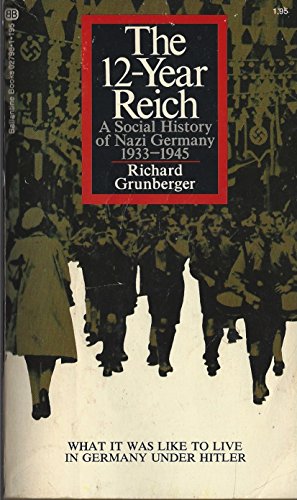
And yet, after the Reich surrendered unconditionally to the Allies on May 8, 1945, a strange thing happened: Virtually no German admitted to having been a Nazi—or having even known one.
American and British soldiers couldn’t find any German veterans willing to admit they had ever fought against Western, democratic nations. All the once-proud legionaries of the Wehrmacht and Waffen-SS swore they had been fighting “the real enemy”—the Russians—on the Eastern front.
Countless Germans claimed to have hidden Jews in their attics. If so, how had six million Jews died horrifically before the Reich fell?
And almost universally, they blamed the conflict on the man they had embraced as their Fuhrer.
In short: Adolf Hitler had lost the war he started—making him a loser nobody wanted to be identified with.
In the decades since, the “loser” tag has continued to stick with those who once served the Third Reich. Mel Brooks has repeatedly turned German soldiers—once the pride of the battlefield—into idiotic comic foils.
Even the fearsome Gestapo was spoofed for laughs on the long-running TV comedy, “Hogan’s Heroes.”

“Hogan’s Heroes”
“Americans love a winner,” George C. Scott as George S. Patton says at the outset of the classic 1970 movie. “And will not tolerate a loser.”
And that is why Republicans have stuck so closely with President Donald J. Trump.
A typical example of this occurred on June 8, 2017 after former FBI director James Comey testified before the United States Senate Select Committee on Intelligence.
Comey revealed that, on February 14, Trump had ordered everyone but Comey to leave a crowded meeting in the Oval Office.
Flynn had resigned the previous day from his position as National Security Adviser. The FBI was investigating him for his previously undisclosed ties to Russia.
“I hope you can see your way clear to letting this go, to letting Flynn go,” said Trump. “He is a good guy. I hope you can let this go.”
This was clearly an attempt by Trump to obstruct the FBI’s investigation.
Yet Republican House Speaker Paul Ryan rushed to excuse his clearly illegal behavior: “He’s new at government, so therefore I think he’s learning as he goes.”
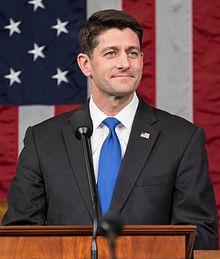
Paul Ryan
David Brooks, the conservative New York Times columnist, offered a more accurate explanation of Trump’s motives. Speaking on The PBS Newshour, Brooks said:
“We are a nation of laws. Donald Trump lives in an entirely different cultural universe. He is more clannist, believing in clan, believing in family, believing in loyalty, not recognizing objective law, not recognizing the procedures that is really how modern government operates….
“It’s not only that he doesn’t know the rules, but at all along and throughout his presidency, he has sort of trampled on the rules almost as a matter of policy, as a matter of character, because he doesn’t believe in that kind of relationships. It’s all personal loyalty, not about laws and norms and standards.”
Republicans don’t fear that Trump will trash the institutions that Americans have cherished for more than 200 years. Institutions like an independent judiciary, a free press, and an incorruptible Justice Department.
He has already attacked all of these—and Republicans have either said nothing or rushed to his defense.
What Republicans truly fear about Donald Trump is that he will finally cross one line too many—like firing Special Counsel Robert Meuller. And that the national outrage following this will force them to launch impeachment proceedings against him.
But it isn’t even Trump they fear will be destroyed.
What they most fear losing is their own hold on nearly absolute power in Congress and the White House.
If Trump is impeached and possibly indicted, he will become a man no one any longer fears. He will be a figure held up to ridicule and condemnation.
Like Adolf Hitler. Like Richard Nixon.
And his Congressional supporters will be branded as losers along with him.
Republicans vividly remember what happened after Nixon was forced to resign on August 9, 1974: Democrats, riding a wave of reform fever, swept Republicans out of the House and Senate—and Jimmy Carter into the White House.
If they are conflicted—whether to continue supporting Trump or desert him—the reason is the same: How can I hold onto my power and all the privileges that go with it?
ABC NEWS, ALTERNET, AP, BLACKS, BUZZFEED, CBS NEWS, CNN, CROOKS AND LIARS, DAILY KOZ, DAVID BROOKS, DONALD TRUMP, FACEBOOK, HILLARY CLINTON, JOHN KASICH, JOHN MCCAIN, LATINOS, MOTHER JONES, MOVEON, MUSLIMS, NBC NEWS, NEWSWEEK, NICCOLO MACHIAVELLI, NPR, NUCLEAR TRIAD, PBS NEWSHOUR, POLITICO, PRISONERS OF WAR, RAFAEL CRUZ, RAW STORY, REPUBLICAN PRESIDENTIAL NOMINATION, REUTERS, SALON, SEATTLE TIMES, SLATE, THE ATLANTIC, THE CHICAGO SUN-TIMES, THE CHICAGO TRIBUNE, THE DAILY BEAST, THE DISCOURSES, THE GUARDIAN, THE HILL, THE HUFFINGTON POST, THE LOS ANGELES TIMES, THE NATION, THE NEW YORK TIMES, THE PRINCE, THE WASHINGTON POST, TIME, TWITTER, U.S. NEWS & WORLD REPORT, UPI, USA TODAY, WOMEN
In Bureaucracy, History, Military, Politics, Social commentary on March 29, 2018 at 3:36 pm
As a Presidential candidate, Donald Trump was fiercely attacked by Democrats and his fellow Republicans. But one of his sharpest critics lived more than 500 years ago
He was Niccolo Machiavelli, the 16th-century Florentine statesmen and father of modern politics.
For openers: Trump had drawn heavy criticism for his angry and brutal attacks on a wide range of persons and organizations—including his fellow Republicans, journalists, news organizations, other countries and even celebrities who have nothing to do with politics.
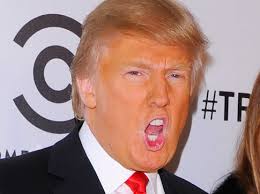
Donald Trump
Now consider Machiavelli’s advice on gratuitously handing out insults and threats:
- “I hold it to be a proof of great prudence for men to abstain from threats and insulting words towards any one.”
- “For neither the one nor the other in any way diminishes the strength of the enemy–but the one makes him more cautious, and the other increases his hatred of you, and makes him more persevering in his efforts to injure you.”
Trump, in turn, casually dismissed the criticism he had received:
“I can be Presidential, but if I was Presidential I would only have–about 20% of you would be here because it would be boring as hell, I will say,” Trump told supporters at a rally in Superior, Wisconsin.
Trump admitted that his wife, Melania, and daughter, Ivanka, had urged him to be more Presidential. And he promised that he would.
“But I gotta knock off the final two [Republican candidates—Ohio Governor John Kasich and Texas U.S. Senator Rafael Cruz] first, if you don’t mind.”
For those who expected Trump to shed his propensity for constantly picking fights, Machiavelli offered a stern warning:
- “…If it happens that time and circumstances are favorable to one who acts with caution and prudence he will be successful. But if time and circumstances change he will be ruined, because he does not change the mode of his procedure.”
- “No man can be found so prudent as to be able to adopt himself to this, either because he cannot deviate from that to which his nature disposes him, or else because, having always prospered by walking in one path, he cannot persuade himself that it is well to leave it…”
- “For if one could change one’s nature with time and circumstances, fortune would never change.”

Niccolo Machiavelli
Then there was Trump’s approach to consulting advisers:
Asked on MSNBC’s “Morning Joe” who he consults about foreign policy, Trump replied; “I’m speaking with myself, number one, because I have a very good brain and I’ve said a lot of things.”
This totally contrasted with the advice given by Machiavelli:
- “A prudent prince must [choose] for his counsel wise men, and [give] them alone full liberty to speak the truth to him, but only of those things that he asks and of nothing else.”
- “But he must be a great asker about everything and hear their opinions, and afterwards deliberate by himself in his own way, and in these counsels…comport himself so that every one may see that the more freely he speaks, the more he will be acceptable.”
And Machiavelli gave a related warning on the advising of rulers: Unwise princes cannot be wisely advised.
During the fifth GOP debate in the Presidential sweepstakes, host Hugh Hewitt asked Trump this question:
“Mr. Trump, Dr. [Ben] Carson just referenced the single most important job of the president, the command and the care of our nuclear forces. And he mentioned the triad.
“The B-52s are older than I am. The missiles are old. The submarines are aging out. It’s an executive order. It’s a commander-in-chief decision.
“What’s your priority among our nuclear triad?”
[The triad refers to America’s land-, sea- and air-based systems for delivering nuclear missiles and bombs.]
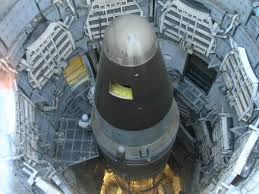
Nuclear missile in silo
Trump’s reply: “Well, first of all, I think we need somebody absolutely that we can trust, who is totally responsible, who really knows what he or she is doing. That is so powerful and so important.”
He then digressed to his having called the Iraq invasion a mistake in 2003 and 2004. Finally he came back on topic:
“But we have to be extremely vigilant and extremely careful when it comes to nuclear.
“Nuclear changes the whole ballgame. The biggest problem we have today is nuclear–nuclear proliferation and having some maniac, having some madman go out and get a nuclear weapon.
“I think to me, nuclear, is just the power, the devastation is very important to me.”
Which brings us back to Machiavelli:
- “…Some think that a prince who gains the reputation of being prudent [owes this to] the good counselors he has about him; they are undoubtedly deceived.”
- “It is an infallible rule that a prince who is not wise himself cannot be well advised, unless by chance he leaves himself entirely in the hands of one man who rules him in everything, and happens to be a very prudent man. In this case, he may doubtless be well governed, but it would not last long, for the governor would in a short time deprive him of the state.”
All of which led Niccolo Machiavelli to warn: “This bodes ill for your Republic.”
2016 PRESIDENTIAL ELECT, ABC NEWS, ADOLF HITLER, ALTERNET, AMERICABLOG, ANTONIN SCALIA, AP, BABY BOOMER RESISTANCE, BARACK OBAMA, BBC, BERNIE SANDERS, BLOOMBERG NEWS, BUZZFEED, CBS NEWS, CNN, CROOKS AND LIARS, D-DAY, DAILY KOZ, DONALD TRUMP, FACEBOOK, FIVETHIRTYEIGHT, GEORGE S. PATTON, GREAT BRITAIN, HARPER’S MAGAZINE, HEINZ GUDERIAN, HILLARY CLINTON, HUFFINGTON POST, ION, JIMMY CARTER, MEDIA MATTERS, MOTHER JONES, MOVEON, MSNBC, NAZI GERMANY, NBC NEWS, NEW REPUBLIC, NEWSDAY, NEWSWEEK, NICCOLO MACHIAVELLI, NPR, PBS NEWSHOUR, POLITICO, POLITICUSUSA, RAW STORY, REPUBLICANS, REUTERS, SALON, SEATTLE TIMES, SLATE, SOVIET UNION, STALINGRAD, TALKING POINTS MEMO, TERRORISM, THE ATLANTIC, THE CHICAGO SUN-TIMES, THE CHICAGO TRIBUNE, THE DAILY BEAST, THE DAILY BLOG, THE GUARDIAN, THE HILL, THE HUFFINGTON POST, THE INTERCEPT, THE LOS ANGELES TIMES, THE NATION, THE NEW REPUBLIC, THE NEW YORK TIMES, THE NEW YORKER, THE PRINCE, THE VILLAGE VOICE, THE WASHINGTON POST, THINKPROGRESS, TIME, TRUTHDIG, TRUTHOUT, TWITTER, TWO POLITICAL JUNKIES, U.S. NEWS & WORLD REPORT, UPI, USA TODAY, WAFFEN-SS, WORLD WAR 11
In Bureaucracy, History, Law, Politics, Social commentary on March 28, 2018 at 12:12 am
Most Americans believe that Nazi Germany was defeated because “we were the Good Guys and they were the Bad Guys.”
Not so.
The United States—and its allies, Great Britain and the Soviet Union—won the war for reasons that had nothing to do with the righteousness of their cause. These included:
- Nazi Germany—–i.e, its Fuehrer, Adolf Hitler—made a series of disastrous decisions. Chief among these: Attacking its ally, the Soviet Union, and declaring war on the United States;
- The greater material resources of the Soviet Union and the United States; and
- The Allies waged war as brutally as the Germans.
On this last point:
- From D-Day to the fall of Berlin, captured Waffen-SS soldiers were often shot out of hand.
- When American troops came under fire in the German city of Aachen, Lt. Col. Derrill Daniel brought in a self-propelled 155mm artillery piece and opened up on a theater housing German soldiers. After the city surrendered, a German colonel labeled the use of the 155 “barbarous” and demanded that it be outlawed.
- During the battle of Stalingrad in 1942, Wilhelm Hoffman, a young German soldier and diarist, was appalled that the Russians refused to surrender. He wrote: “You don’t see them at all, they have established themselves in houses and cellars and are firing on all sides, including from our rear–barbarians, they used gangster methods….”

German soldiers in Stalingrad
In short: The Allies won because they dared to meet the brutality of a Heinz Guderian with that of a George S. Patton.
This is a lesson long ignored by the liberals of the Democratic Party. As a result, Republicans now hold both houses of Congress and the Presidency.
An example of this occurred as recently as March 25.
On CBS’ “Sunday Morning,” former President Jimmy Carter said that even if Special Counsel Robert Mueller found evidence that President Donald Trump had broken the law, “my own preference would be that he not be impeached.”
Instead, Carter would want Trump to “be able to serve out his term, because I think he wants to do a good job. And I’m willing to help him, if I can help him, and give him the benefit of the doubt.
“You know, I have confidence in the American system of government. I think ultimately the restraints on a president from the Congress and from the Supreme Court will be adequate to protect our nation, if he serves a full term.”
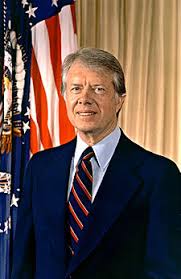
Jimmy Carter
Since becoming President on January 20, 2017, Trump has:
- Fired FBI Director James Comey for refusing to pledge his personal loyalty—and for investigating documented ties between Russian Intelligence agents and the 2016 Trump Presidential campaign.
- Threatened to fire Special Counsel Robert Mueller, who was assigned to take over that investigation after the Comey firing.
- Repeatedly attacked the nation’s press as “fake news” and “the enemy of the American people.”
- Contemptuously dismissed the warnings of American Intelligence agencies that Russia tried to subvert the 2016 Presidential campaign—and plans to do the same for the upcoming mid-term elections in November.
- Repeatedly praised Russian dictator Vladimir Putin—and refused to enforce Congressionally-mandated sanctions against Russia for its attempted subversion of the 2016 Presidential election.
Trump, in short, is not going to be “helped” by the humility of a Jimmy Carter.

Donald Trump
Barack Obama, like Jimmy Carter, believes in rationality and decency. Like Carter, he feels more comfortable responding to attacks on his character than attacking the character of his enemies.
As a graduate of Columbia University and Harvard Law School, Obama was one of the most academically gifted Presidents in American history.
Yet he failed—like Carter—to grasp and apply this fundamental lesson taught by Niccolo Machiavelli, the father of modern political science.
In The Prince, Machiavelli warns:
From this arises the question whether it is better to be loved than feared, or feared more than loved.
The reply is, that one ought to be both feared and loved, but as it is difficult for the two to go together, it is much safer to be feared than loved….
And men have less scruple in offending one who makes himself loved than one who makes himself feared; for love is held by a chain of obligations which, men being selfish, is broken whenever it serves their purpose; but fear is maintained by a dread of punishment which never fails.
Obama’s failure to recognize the truth of Machiavelli’s lesson allowed Republicans to thwart many of his Presidential ambitions—such as picking a replacement for deceased Supreme Court Justice Antonin Scalia.
Throughout 2016, liberals celebrated on Facebook and Twitter the “certain” Presidency of Vermont U.S. Senator Bernie Sanders or former First Lady Hillary Clinton.
They fully expected to win the White House again, and thought they might retake the Senate—and maybe even the House of Representatives.
But Donald Trump had a different plan—to subvert the 2016 election by Russian Intelligence agents and millions of Russian trolls flooding the Internet with legitimately fake news.
For Democrats to win elective victories and enact their agenda, they must find their own George Pattons to take on the Waffen-SS generals among Republican ranks.


.jpg)


2016 PRESIDENTIAL RACE, ABC NEWS, ABORTION, ABRAHAM LINCOLN, ADOLF HITLER, ALTERNET, AMERICABLOG, AP, BABY BOOMER RESISTANCE, BARACK OBAMA, BBC, BLOOMBERG NEWS, BUZZFEED, CBS NEWS, CLONING, CNN, CROOKS AND LIARS, DAILY KOS, DAILY KOZ, FACEBOOK, FIVETHIRTYEIGHT, HARPER’S MAGAZINE, HILLARY CLINTON, HUFFINGTON POST, HUMOR, MEDIA MATTERS, MOTHER JONES, MOVEON, MSNBC, NBC NEWS, NEW REPUBLIC, NEWSDAY, NEWSWEEK, NPR, PBS NEWSHOUR, POLITICO, POLITICUSUSA, RAW STORY, REPUBLICANS, REUTERS, Ronald Reagan, SALON, SEATTLE TIMES, SLATE, TALKING POINTS MEMO, THE ATLANTIC, THE CHICAGO SUN-TIMES, THE CHICAGO TRIBUNE, THE DAILY BEAST, THE DAILY BLOG, THE GUARDIAN, THE HILL, THE HUFFINGTON POST, THE INTERCEPT, THE LOS ANGELES TIMES, THE NATION, THE NEW REPUBLIC, THE NEW YORK TIMES, THE NEW YORKER, THE VILLAGE VOICE, THE WASHINGTON POST, THEODORE ROOSEVELT, THINKPROGRESS, TIME, TRUTHDIG, TRUTHOUT, TWITTER, U.S. NEWS & WORLD REPORT, UPI, USA TODAY
THE IDEAL REPUBLICAN CANDIDATE
In Bureaucracy, Entertainment, History, Humor, Military, Politics, Social commentary on June 15, 2018 at 12:24 amMany Republican strategists feared that, after Barack Obama, Hillary Clinton had a lock on the White House for 2016.
And the base of the Republican Party continued to demand candidates who were increasingly Fascistic.
The top officials of the Republican Party decided that science held the answer: They would use cloning to create the perfect, unbeatable Presidential candidate.
They directed scientists from the National Institute of Health to resurrect—via DNA samples—several past, hugely popular Republican leaders.
The first of these was Abraham Lincoln: Destroyer of slavery and defender of the Union. The scientists then introduced him to a sample of Republican voters to gauge his current popularity.
The test audience erupted—but not in the way party officials expected.
“Race-mixer!”
“He’s the reason we have all these damn civil rights laws.”
“He destroyed states’ rights!”
To head off a riot, the scientists rushed the startled Lincoln-clone off the stage.
Then they introduced their next resurrected candidate: Theodore Roosevelt, the trust-busting conservationist.
Again, the test-audience erupted:
“Tree-hugger! Tree-hugger!”
“He’s the guy who broke up the big corporations—lousy Socialist!”
Startled Republican officials hustled the Roosevelt-clone out of the building.
Finally, they brought out their third choice for victory: A cloned Ronald Reagan.
“Not him! He legalized abortion in California when he was Governor!”
“Yeah, and his first wife, Jane Wyman, divorced him. We can’t have a divorced guy in the White House!”
Desperate, Republican leaders went into a huddle.
“What are we going to do?” asked one. “Lincoln, Roosevelt and Reagan were our most popular Presidents.”
“Yeah, but that was in the past,” said another. “We need a candidate who speaks to our base today.”
“Hey, I’ve got an idea. But it’s a bit radical. The guy I have in mind wasn’t actually born in the United States.”
“So what?”
“That would violate the Constitution.”
“Screw the Constitution. You know what our friends in the oil industry say: Why spoil the beauty of the thing with legality?”
So the Republicans again ordered the scientists to return to work one last time.
When the last resurrected candidate was presented to the test-audience, the crowd rose as one, shouting: “That’s him! That’s him!”
“The one we’ve been waiting for!”
“The one who really speaks for us!”
“He’s totally anti-abortion and he hates upity women!”
“Yeah—he hates Socialists, gays and nonwhites, and he really believes in a strong military!”
“All right, all right, I vill do it,” said the clone-candidate. “But the last time I led people to greatness, they proved unworthy of me.
“So I vill do it again—but only under von condition!”
“Yes, yes!” screamed the test-audience. “Anything you want! What is it?”
“Ziss time….”
….no more Mr. Nice Guy!”
Share this: