Posts Tagged ‘NICCOLO MACHIAVELLI’
2016 PRESIDENTIAL ELECTION, A BRONX TALE, ABC NEWS, ALTERNET, AMERICABLOG, AP, BABY BOOMER RESISTANCE, BBC, BILL CLINTON, BLOOMBERG, BLUESKY, BUZZFEED, CBS NEWS, CHAZZ PALMINTERI, CNN, CROOKS AND LIARS, DAILY KOS, DONALD TRUMP, FIVETHIRTYEIGHT, H.R. MCMASTER, HARPER’S MAGAZINE, HUFFINGTON POST, JEFF SESSIONS, JOHN KELLY, MEDIA MATTERS, MOTHER JONES, MOVEON, MSNBC, NBC NEWS, NEWSDAY, NEWSWEEK, NICCOLO MACHIAVELLI, NPR, PBS NEWSHOUR, POLITICO, POLITICUSUSA, RAW STORY, REINCE PREBIUS, REPUBLICAN PARTY, REUTERS, ROBERT DE NIRO, Ronald Reagan, SALON, SEATTLE TIMES, SERGEI KISLYAK, SLATE, TALKING POINTS MEMO, THE ATLANTIC, THE CHICAGO SUN-TIMES, THE CHICAGO TRIBUNE, THE DAILY BEAST, THE DAILY BLOG, THE GUARDIAN, THE HILL, THE HUFFINGTON POST, THE INTERCEPT, THE LOS ANGELES TIMES, THE NATION, THE NEW REPUBLIC, THE NEW YORK TIMES, THE NEW YORKER, THE PRINCE, THE VILLAGE VOICE, THE WASHINGTON POST, THINKPROGRESS, TIME, TRUTHDIG, TRUTHOUT, TWO POLITICAL JUNKIES, U.S. NEWS & WORLD REPORT, UP, UPI, USA TODAY, X
In Bureaucracy, History, Law, Law Enforcement, Military, Politics, Social commentary on March 10, 2026 at 12:12 am
A reputation for being feared can be useful.
But it’s dangerous to constantly employ cruelties or punishments.
Whoever does so, warns Niccolo Machiavelli, “is always obliged to stand with knife in hand, and can never depend on his subjects, because they, owing to continually fresh injuries, are unable to depend upon him.”
Such a President is Donald Trump, who, as a Presidential candidate in 2016, told journalist Bob Woodward: “Real power is—I don’t even want to use the word—fear.”
As a Presidential candidate and President, Trump has repeatedly used X to attack hundreds of real and imagined enemies in politics, journalism, TV and films.
From June 15, 2015, when he launched his Presidential campaign, until October 24, 2016, Trump fired almost 4,000 angry, insulting tweets at 281 people and institutions that had somehow offended him.
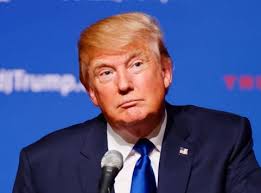
Donald Trump
The New York Times needed two full pages of its print edition to showcase them. Making one inflammatory statement after another, he offended one group of potential voters after another. Among those groups:
- Latinos
- Asians
- Blacks
- The disabled
- Women
- Prisoners-of-war
Since becoming President in 2017 and 2025, Trump has attacked and/or infuriated a wide array of influential agencies or groups. Among these:
- “Obamacare” patients: Trump authorized the directors of Federal agencies to waive requirements of the Affordable Care Act—which provides medical insurance to 22 million otherwise uninsured Americans—to the “maximum extent permitted by law.”
- The CIA: Appearing at CIA headquarters on his first full day in office, Trump addressed about 400 case officers. Standing before the star-studded memorial wall honoring 117 CIA officers who had fallen in the line of duty. Trump ignored their sacrifice. Instead, he boasted of the size of his Inaugural crowd and how many times he had appeared on the cover of Time.

- Civil rights advocates: Trump signed an executive order banning Muslims from entering the United States.
- He also ordered the Department of Homeland Security to massively expand the number of people subject to detention and deportation.
- Women: Trump has publicly insulted numerous women—such as Carly Fiorina, Megyn Kelly and Rosie O’Donnell—on their looks.
- He’s been accused by 22 women of making improper sexual advances.
- And he successfully backed Supreme Court nominee Brett Kavanaugh, whom Dr. Christine Blasey Ford accused of sexually assaulting her when they were teenagers.
- Medicare patients: During the 2016 campaign, Trump said he would allow Medicare to negotiate down the price of prescription drugs. But after meeting with pharmaceutical lobbyists on January 31, 2017, Trump said: “I’ll oppose anything that makes it harder for smaller, younger companies to take the risk of bringing their product to a vibrantly competitive market. That includes price-fixing by the biggest dog in the market, Medicare.”
And he has bullied and insulted even White House officials and his own handpicked Cabinet officers:
- Jeff Sessions: Trump waged a Twitter-laced feud against his Attorney General. Sessions’ “crime”? Recusing himself from investigations into well-established ties between Russian Intelligence agents and members of Trump’s Presidential campaign.
- On the day after the November, 2018 mid-term elections, Trump fired him.
- Commerce Secretary Wilbur Ross: Trump told him: “I don’t trust you. I don’t want you doing any more negotiations….You’re past your prime.”
- Chief of Staff Reince Priebus: Suffered repeated humiliations by Trump—such a being ordered to kill a fly that was buzzing about.
- On another occasion, Trump told an associate that Priebus was “like a little rat. He just scurries around.”
- On July 28, 2017, Priebus resigned.
- Chief of Staff John Kelly: Trump similarly ridiculed Priebus’ replacement, a former Marine Corps general. Kelly tried to limit the number of advisers who had unrestricted access to Trump—and bring discipline to his schedule.
- Instead of being grateful, Trump became furious. Kelly told colleagues: “He’s an idiot. It’s pointless to try to convince him of anything. He’s gone off the rails. We’re in Crazytown. I don’t even know why any of us are here. This is the worst job I’ve ever had.”

John Kelly
- The United States Secret Service: Before taking office as President, Trump infuriated this agency by keeping his longtime private security force—and adding its members to the elite federal agency. Thus, he clearly sent the insulting message: “You’re not good enough, and I don’t trust you.”
Trump’s repeated humiliations—and firings—of high-ranking administration officials led to a near-paralysis of his government. Many agencies were plagued by staff shortages. And many of the replacements were not of “top drawer” quality.
If Trump ever read Niccolo Machiavelli’s The Prince, he’s clearly forgotten the Florentine’s warning on the need to avoid hatred at all costs.
The new musical version of the play/movie A Bronx Tale allows Mafia capo Sonny to sing his lesson on fear versus love to Calogero, the teenager who idolizes him:
Listen now what I tell ya
This advice is you know whose
Love or fear—
It’s up to you kid
But you live with what you choose.
And it’s true: You live with what you choose.
Make being loved your top priority, and you risk being labeled a weakling who can be rolled—as Bill Clinton did.
But make being feared your goal, and you risk creating an atmosphere of hatred and paranoia—as Donald Trump has.
2016 PRESIDENTIAL ELECTION, A BRONX TALE, ABC NEWS, ALTERNET, AMERICABLOG, AP, BABY BOOMER RESISTANCE, BBC, BILL CLINTON, BLOOMBERG, BLUESKY, BUZZFEED, CBS NEWS, CHAZZ PALMINTERI, CNN, CROOKS AND LIARS, DAILY KOS, DONALD TRUMP, FIVETHIRTYEIGHT, H.R. MCMASTER, HARPER’S MAGAZINE, HUFFINGTON POST, JEFF SESSIONS, JOHN KELLY, MEDIA MATTERS, MOTHER JONES, MOVEON, MSNBC, NBC NEWS, NEWSDAY, NEWSWEEK, NICCOLO MACHIAVELLI, NPR, PBS NEWSHOUR, POLITICO, POLITICUSUSA, RAW STORY, REINCE PREBIUS, REPUBLICAN PARTY, REUTERS, ROBERT DE NIRO, Ronald Reagan, SALON, SEATTLE TIMES, SERGEI KISLYAK, SLATE, TALKING POINTS MEMO, THE ATLANTIC, THE CHICAGO SUN-TIMES, THE CHICAGO TRIBUNE, THE DAILY BEAST, THE DAILY BLOG, THE GUARDIAN, THE HILL, THE HUFFINGTON POST, THE INTERCEPT, THE LOS ANGELES TIMES, THE NATION, THE NEW REPUBLIC, THE NEW YORK TIMES, THE NEW YORKER, THE PRINCE, THE VILLAGE VOICE, THE WASHINGTON POST, THINKPROGRESS, TIME, TRUTHDIG, TRUTHOUT, TWO POLITICAL JUNKIES, U.S. NEWS & WORLD REPORT, UP, UPI, USA TODAY, X
In Bureaucracy, History, Law, Law Enforcement, Military, Politics, Social commentary on March 9, 2026 at 12:10 am
It’s probably the most-quoted passage of Niccolo Machiavelli’s infamous book, The Prince:
“From this arises the question whether it is better to be loved than feared, or feared more than loved. The reply is, that one ought to be both feared and loved, but as it is difficult for the two to go together, it is much safer to be feared than loved.
“For it may be said of men in general that they are ungrateful, voluble, dissemblers, anxious to avoid danger and covetous of gain. As long as you benefit them, they are entirely yours: they offer you their blood, their goods, their life and their children, when the necessity is remote, but when it approaches, they revolt.
“And the prince who has relied solely on their words, without making other preparations, is ruined. For the friendship which is gained by purchase and not through grandeur and nobility of spirit is bought but not secured, and at a pinch is not to be expended in your service.
“And men have less scruple in offending one who makes himself loved than one who makes himself feared. For love is held by a chain of obligations which, men being selfish, is broken whenever it serves their purpose. But fear is maintained by a dread of punishment which never fails.”


Niccolo Machiavelli
So—which is better: To be feared or loved?
In the 1993 film, A Bronx Tale, 17-year-old Calogero (Lillo Brancato) poses that question to his idol, the local Mafia capo, Sonny (Chazz Palminteri).
“That’s a good question,” Sonny replies. “It’s nice to be both, but it’s very difficult. But if I had my choice, I would rather be feared.”
Sonny has “done 10 years in the joint.” There he got an education in power—from the works of Machiavelli. Now he wants to pass on those hard-learned lessons to Calogero.
“Fear lasts longer than love. Friendships that are bought with money mean nothing. You see how it is around here. I make a joke, everybody laughs. I know I’m funny, but I’m not that funny. It’s fear that keeps them loyal to me.”

Sonny gives advice to his adopted son, Calogero
But Sonny warns there is a trick to being feared: “The trick is not being hated. That’s why I treat my men good, but not too good.
“I give too much, then they don’t need me. I give them just enough where they need me, but they don’t hate me.”
Many who quote Machiavelli in defense of being feared overlook this vital point: “Still a Prince should make himself feared in such a way that if he does not gain love, he at any rate avoids hatred, for fear and the absence of hatred may well go together.”
Presidents who desire above all to be loved risk inviting their enemies to see them as weaklings.
Case in point: Bill Clinton.
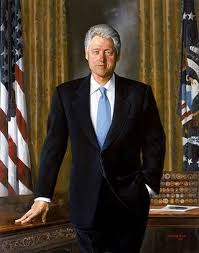
Bill Clinton
Clinton needed to be loved. He once said that if he were in a room with 100 people and 99 of them liked him but one didn’t, he would spend all his time with that one person, trying to win him over.
But while he could charm voters, he could not bring himself to retaliate against his sworn Republican enemies.
Clinton sought to endear himself to Republicans by:
- Adopting NAFTA—the Republican-sponsored North American Free Trade Act—which later proved so devastating to American workers;
- Siding with Republicans against poor Americans on welfare; and
- Championing the gutting of the Depression-era Glass-Steagall law, which barred investment banks from commercial banking activities.
In 1998, emboldened by Clinton’s refusal to stand up to them, House Republicans moved to impeach him over a sex scandal with White House intern Monica Lewinsky. But his Presidency survived when the Senate refused to convict.
To establish a fearful reputation, a leader must act decisively and ruthlessly when the interests of the organization are threatened. Punitive action must be taken promptly and confidently.
One or two harsh actions of this kind can make a leader more feared than a reign of terror.
Case in point: Ronald Reagan.
Always smiling, quick with a one-liner (especially at press conferences), seemingly unflappable, he projected a constantly optimistic view of his country and its citizens.
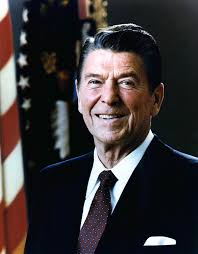
Ronald Reagan
But there was a steely, ruthless side to Reagan that appeared when he felt crossed.
On August 3, 1981, nearly 13,000 air traffic controllers walked out after contract talks with the Federal Aviation Administration collapsed. As a result, some 7,000 flights across the country were canceled on that day at the peak of the summer travel season.
Reagan branded the strike illegal. He threatened to fire any controller who failed to return to work within 48 hours.
On August 5, Reagan fired more than 11,000 air traffic controllers who hadn’t returned to work. The mass firing slowed commercial air travel, but it did not cripple the system as the strikers had forecast.
Reagan’s action stunned the American labor movement. Reagan was the only American President to have belonged to a union—the Screen Actors Guild. He had even been president of this, from 1947 to 1954.
There were no more strikes by Federal workers during Reagan’s tenure in office.
ALEX PRETTI, ALTERNET, AMERICABLOG, AP, BABY BOOMER RESISTANCE, BBC, BLOOMBERG, BLUESKY, BUZZFEED, CBS NEWS, CESARE BORGIA, CNN, CROOKS AND LIARS, DAILY KOS, DONALD TRUMP, FIVETHIRTYEIGHT, GREGORY BOVINO, HARPER’S MAGAZINE, HUFFINGTON POST, KAROLINE LEAVITT, KRISTI NOEM, MEDIA MATTERS, MINNESOTA, MINNIEAPOLIS, MOTHER JONES, MOVEON, MSNBC, NBC NEWS, NEWSDAY, NEWSWEEK, NICCOLO MACHIAVELLI, NPR, PBS NEWSHOUR, POLITICO, POLITICUSUSA, RAW STORY, REUTERS, SALON, SEATTLE TIMES, SLATE, TALKING POINTS MEMO, THE ATLANTIC, THE CHICAGO SUN-TIMES, THE CHICAGO TRIBUNE, THE DAILY BEAST, THE DAILY BLOG, THE GUARDIAN, THE HILL, THE HUFFINGTON POST, THE INTERCEPT, THE LOS ANGELES TIMES, THE NATION, THE NEW REPUBLIC, THE NEW YORK TIMES, THE NEW YORKER, THE PRINCE (BOOK), THE VILLAGE VOICE, THE WASHINGTON POST, THINKPROGRESS, TIME, TODD BLANCE, TRUTHDIG, TRUTHOUT, TWO POLITICAL JUNKIES, U.S. NEWS & WORLD REPORT, UNITED STATES CUSTOMS AND BORDER PATROL, UNITED STATES DEPARTMENT OF HOMELAND SECURITY, UPI, USA TODAY, X
In Bureaucracy, History, Law Enforcement, Politics, Social commentary on February 11, 2026 at 12:10 am
On January 24, 2026, Alex Jeffrey Pretti, a 37-year-old American intensive care nurse for the United States Department of Veterans Affairs, was shot multiple times and killed by agents of United States Customs and Border Protection (CBP) in Minneapolis, Minnesota.
Pretti was filming law enforcement agents with his phone attacking Minnesota residents. At one point, he stood between an agent and a woman whom the agent had pushed to the ground, putting his arm around her.
Pretti reached to wrap his arms around the fallen woman, apparently trying to help her up.

Alex Pretti
An agent shoved Pretti, and Pretti and the woman fell, still embracing. He was then pepper-sprayed and wrestled to the ground by several federal agents. Both of his arms were pinned down by his head. The agent that pepper-sprayed Pretti hit him with the pepper spray canister multiple times.
Pretti was legally licensed to carry a handgun, and was wearing one in a holster on his hip. An agent removed Pretti’s firearm. Another agent heard someone yell “Gun!” He drew his pistol and shot Pretti at close range.
The shooter was standing behind Pretti and not under direct threat, but fired three more shots into Pretti’s back, as he lay on the pavement with one hand still holding his phone and his other hand holding his glasses.
The agent who pepper-sprayed Pretti took out his gun and, together with the first shooter, fired six more shots at Pretti as he lay motionless on the ground.
The two agents fired a total of 10 shots in five seconds.

The killing of Alex Pretti ignited a firestorm of anger and horror throughout the country against the Trump administration. Protests were held in Seattle, Washington; Portland, Oregon, Durham, North Carolina, Oak Park, Illinois, Los Angeles and Boston.
Arousing even greater fury were inflammatory and slanderous accusations made against Pretti by Trump administration officials.
“He was there to perpetuate violence, and he was asked to show up and to continue to resist by a governor who’s irresponsible and has a long history of corruption and lying, and we won’t stand for it anymore,” said Secretary of Department of Homeland Security Kristi Noem.
Noem did not offer any evidence to back up her slander.

Kristi Noem
And White House Deputy Chief of Staff Stephen Miller called Pretti “a domestic terrorist who tried to assassinate law enforcement.”
Like Noem, Miller did not offer any evidence to support his slander.
Bystander video verified and reviewed by Reuters, the BBC, The Wall Street Journal and the Associated Press gave the lie to the Trump administration’s attacks on Pretti.
Faced with overwhelming—and video—evidence that Pretti had been shot while helplessly pinned to the ground, Trump officials started backpeddling.
“I don’t think anybody thinks that they were comparing what happened on Saturday to the legal definition of domestic terrorism,” said Deputy Attorney General Todd Blanche on Fox News.
“I have not heard the president characterize Mr Pretti in that way [as a domestic terrorist]” said White House Press Secretary Karoline Leavitt.
The ultimate pullback (so far) by the Trump administration was the demotion of Gregory Bovino, commander-at-large of the Border Control in Minneapolis.
Bovino had become the face of ICE brutality—ICE agents using tear gas against peaceful protesters, battering down a door to enter a house, smashing car windows and dragging people from vehicles.
Bovino had stated that Pretti intended to inflict “maximum damage and massacre law enforcement.”
On January 26, two days after Pretti’s death, Bovino was dismissed as commander-at-large and returned to El Centro, California.
More than 500 years ago, Niccolo Machiavelli, the father of modern political science, outlined how tyrants try to deflect public anger against the agents they appointed.
In Chapter Seven of The Prince, he writes:
“When the duke [Cesare Borgia] occupied the Romagna he found it under the rule of weak masters, who rather plundered their subjects than ruled them, and gave them more cause for disunion than for union.
“The country was full of robbery, quarrels, and every kind of violence; and so, wishing to bring back peace and obedience to authority, he considered it necessary to give it a good governor. Thereupon he promoted Messer Ramiro d’Orco [de Lorqua], a swift and cruel man, to whom he gave the fullest power.
“This man in a short time restored peace and unity with the greatest success. Afterwards the duke considered that it was not advisable to confer such excessive authority, for he had no doubt but that he would become odious.
“And because he knew that the past severity had caused some hatred against himself….he desired to show that, if any cruelty had been practiced, it had not originated with him, but in the natural sternness of the minister.
“Under this pretense he took Ramiro, and one morning caused him to be executed and left on the piazza at Cesena with the block and a bloody knife at his side. The barbarity of this spectacle caused the people to be at once satisfied and dismayed.”
The Trump administration’s pullback proves that what Machiavelli wrote 500 years ago remains entirely relevant today.
ABC NEWS, ADVICE, ALTERNET, AMERICABLOG, AP, BABY BOOMER RESISTANCE, BARACK OBAMA, BLOOMBERG, BUZZFEED, CBS NEWS, CNN, CORONAVIRUS, COVID-19, CROOKS AND LIARS, DAILY KOZ, DAVID BROOKS, DONALD TRUMP, DRUDGE RETORT, ECONOMY, EHRBERT HOOVER, FIVETHIRTYEIGHT, FRANKLIN D. ROOSEVELT, GREAT DEPRESSION, HARPER’S MAGAZINE, HARRY S. TRUMAN, MASKS, MEDIA MATTERS, MOTHER JONES, MOVEON, MSNBC, NBC NEWS, NEWSWEEK, NICCOLO MACHIAVELLI, NPR, NUEMBERG RALLIES, PBS NEWSHOUR, PENNSYLVANIA, POLITICO, POLITICUSUSA, RAW STORY, REUTERS, SALON, SEATTLE TIMES, SLATE, SOCIAL DISTANCING, TALKING POINTS MEMO, THE ATLANTIC, THE CHICAGO SUN-TIMES, THE CHICAGO TRIBUNE, THE DAILY BEAST, THE DAILY BLOG, THE DISCOURSES, THE GUARDIAN, THE HILL, THE HUFFINGTON POST, THE LOS ANGELES TIMES, THE NATION, THE NEW REPUBLIC, THE NEW YORK TIMES, THE PBS NEWSHOUR, THE VILLAGE VOICE, THE WASHINGTON POST, THINKPROGRESS, TIME, TRUTHDIG, TRUTHOUT, TWITTER, TWO POLITICAL JUNKIES, U.S. NEWS & WORLD REPORT, UPI, USA TODAY, WISCONSIN, WONKETTE
In Bureaucracy, History, Politics, Social commentary on February 9, 2026 at 12:16 am
Voters who believed that Donald Trump cared about them should have asked themselves: “Does he care about my children?”
And the answer would have been: “No.”
The father of modern political science, Niccolo Machiavelli (1469 – 1527) is widely thought of as the personification of Satan.
Actually, Machiavelli was a passionate republican, who spent most of his life in the service of his beloved city-state, Florence.

Niccolo Machiavelli
In his masterwork, The Discourses, he warned that life is complex and no course of action is guaranteed safe or successful.
Donald Trump, on the other hand, is a man of simplistic “solutions” for simplistic audiences.
By early April, 2020, he had refused to issue a national “stay-at-home” order to contain the spread of the Coronavirus. When states began issuing shutdown orders of their own, he railed against those orders and demanded that “we need to reopen the country.”
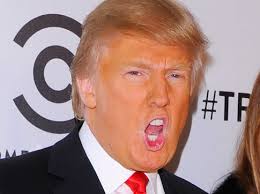
Donald Trump
What lay behind this demand were two hidden agendas. He wanted to:
- Quickly revitalize—and take credit for—a once-booming economy, even though this was largely created by President Barack Obama.
- Return to his Nuremberg-style rallies, where he could slander anyone he wanted while basking in the worship of thousands of his fanatical followers.
Which is why he clearly missed this warning Machiavelli offered in The Discourses:
“…I shall speak here only of those dangers to which those expose themselves who counsel a republic or a prince to undertake some grave and important enterprise in such a manner as to take upon themselves all the responsibility of the same.
“For as men only judge of matters by the result, all the blame of failure is charged upon him who first advised it, while in case of success he receives commendations. But the reward never equals the punishment….
“I see no other course than to take things moderately, and not to undertake to advocate any enterprise with too much zeal, but to give one’s advice calmly and modestly.
“If either then the republic or the prince decides to follow it, they may do so, as it were, of their own will, and not as though they were drawn into it by your importunity.
“In adopting this course it is not reasonable to suppose that either the prince or republic will manifest any ill will towards you on account of a resolution not taken contrary to the wishes of the many.”
But, by May, 2020, more Americans were wary about “reopening the country” than about rushing to do so.
On the May 15, edition of The PBS Newshour, New York Times columnist David Brooks noted:
“If you look at actual behavior, people locked themselves down before any politician took a move. And even in those states where the politicians are opening up, people are still locking down….
“And so I think the key decisions right now are not being made in statehouses and certainly not the White House. They’re being made in living rooms, as people decide, is it safe? Can I go out?”
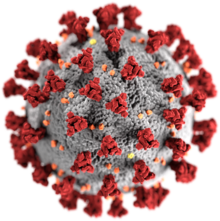
Coronavirus
By pushing his mantra—“America needs to reopen NOW!”—Trump was risking the lives of millions of Americans. But he was also risking the future of his Presidency.
If “reopening” the country proved disastrous, he had no back-up plan to offer.
Several states—such as Wisconsin and Pennsylvania—that re-opened saw swarms of people flooding into bars and restaurants. They didn’t wear masks or practice “social distancing.” Packed together like sardines, they offered themselves like a Right-wing sacrifice to Coronavirus.
The results were inevitable.
A new wave of COVID-19 erupted after America “reopened.” More employees were laid off—or refused to come to work for fear of Coronavirus.
The economy continued to tank.
As summer neared its end and millions of students faced returning to school, Trump offered his next “solution” to the Coronavirus pandemic: Send them back to school—-and not through virtual classes at home.
Trump wanted children to return to possibly COVID-19-infected classrooms.
And he wasn’t asking parents to send their children back to school. He was ordering them to.
On July 8, 2020, he tweeted that he might withhold federal funding from schools that did not resume in-person classes that fall.
Why was he so insistent on this?
Trump knew that before parents could return to work, their kids needed to return to class, He hoped that would boost the economy—for which he could take credit.
And that would boost his chances for re-election in November.
Just as the ancient Canaanites sacrificed their children to the god Moloch, so Trump expected his followers—and opponents—to risk their children’s lives for him.
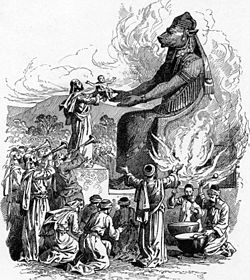
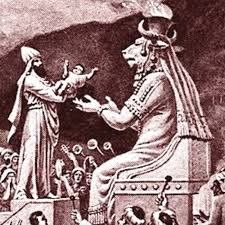
Ancient Canaanites offering their children as sacrifices to Moloch
And the sacrifices quickly started coming. Approximately 2.1 million children in the United States tested positive for COVID-19 by the end of December 2020.
Those who supported Trump in 2020 clearly valued the lives of their children far less than putting a ruthless psychopath back into power.
And, in 2024, 77 million Americans forgave him the loss—or near-loss—of their children and sent him back to the White House.
ABC NEWS, ALTERNET, AMERICABLOG, AP, “EL CID” (MOVIE, BABY BOOMER RESISTANCE, BLOOMBERG, BUZZFEED, CAMILLUS, CBS NEWS, CHARLTON HESTON, CHRISTOPHER SWANSON, CNN, CROOKS AND LIARS, DAILY KOS, DEREK CHAUVIN, DONALD TRUMP, DRUDGE RETORT, FIVETHIRTYEIGHT, FLINT TOWNSHIP, GEORGE FLOYD, HARPER’S MAGAZINE, LOS ANGELES, MARCUS FURIUS, MEDIA MATTERS, MOORS, MOTHER JONES, MOVEON, MSNBC, NBC NEWS, NEW YORK CITY, NEWSWEEK, NICCOLO MACHIAVELLI, NPR, PBS NEWSHOUR, POLITICO, POLITICUSUSA, RAW STORY, REUTERS, RODRIGO DIAZ DE VIVAR, SALON, SAN FRANCISCO, SEATTLE TIMES, SLATE, SPAIN, ST. JOHN’S CHURCH, TALKING POINTS MEMO, THE ATLANTIC, THE CHICAGO SUN-TIMES, THE CHICAGO TRIBUNE, THE DAILY BEAST, THE DAILY BLOG, THE DISCOURSES, THE GUARDIAN, THE HILL, THE HUFFINGTON POST, THE LOS ANGELES TIMES, THE NATION, THE NEW REPUBLIC, THE NEW YORK TIMES, THE VILLAGE VOICE, THE WASHINGTON POST, THINKPROGRESS, TIME, TRUTHDIG, TRUTHOUT, TWO POLITICAL JUNKIES, U.S. NEWS & WORLD REPORT, UPI, USA TODAY, VALENCIA, WONKETTE, X
In Bureaucracy, History, Law Enforcement, Politics, Social commentary on January 19, 2026 at 12:13 am
Two stories—one fictitious, the other historical.
Story #1: In the 1961 historical epic, “El Cid,” Rodrigo Diaz de Vivar, known as “El Cid”—“The Lord”—besieges the Spanish city of Valencia, which has been captured by the Moors.
Months have passed. The city’s population is starving and without hope.
Then, one day, El Cid (Charlton Heston) calls out over the city’s walls: “Soldiers and citizens of Valencia! We are not your enemy! Ben Yusof [the powerful emir who plans to conquer Spain with an invading army] is your enemy!
“Join us! We bring you peace! We bring you freedom! We bring you bread!”
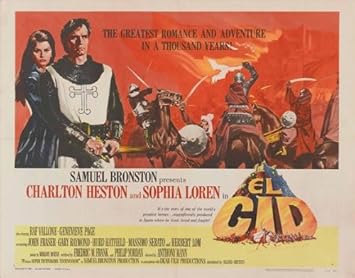
Suddenly El Cid’s Spanish catapults spring into action—loaded not with stones but loaves of bread. The loaves land in the city’s streets, where starving citizens and soldiers greedily devour them.
Then those citizens attack the bodyguards of the well-fed emir ruling Valencia—and throw the emir himself from a high wall.
The army of El Cid marches peacefully into the city.
Story #2: In Book Three, Chapter 22 of his classic masterwork, The Discourses, Niccolo Machiavelli offers the following: “An Act of Humanity Prevailed More With the Falacians Than All the Power of Rome.”
Marcus Furius Camillus, a Roman general, was besieging the city of the Faliscians, and had surrounded it. A teacher charged with the education of the children of some of the noblest families of that city decided to ingratiate himself with Camillus by leading those children into the Roman camp.
Presenting them to Camillus ,the teacher said to him, “By means of these children as hostages, you will be able to compel the city to surrender.”
Camillus not only declined the offer but went one step further. He ordered the teacher stripped and his hands tied behind his back. Then Camillus had a rod put into the hands of each of the children and directed them to whip the teacher all the way back to the city.
Upon learning this, the citizens of Faliscia were so much touched by the humanity and integrity of Camillus, that they surrendered the place to him without any further defense.
Summing up the meaning of this, Machiavelli writes: “This example shows that an act of humanity and benevolence will at all times have more influence over the minds of men than violence and ferocity. It also proves that provinces and cities which no armies…could conquer, have yielded to an act of humanity, benevolence, chastity or generosity.
“…History also shows us how much the people desire to find such virtues in great men, and how much they are extolled by historians and biographers of princes….Amongst these, Xenophon takes great pains to show how many victories, how much honor and fame, Cyrus gained by his humanity and affability, and by his not having exhibited a single instance of pride, cruelty or luxuriousness, nor of any of the other vices that are apt to stain the lives of men.”
Niccolo Machiavelli
These stories—the first the product of a movie screenwriter’s imagination, the second recorded by a master political scientist and historian—remain highly relevant today.
On May 25, 2020, George Floyd, a black unemployed restaurant security guard, was murdered by Derek Chauvin, a white Minneapolis police officer. While Floyd was handcuffed and lying face down on a city street during an arrest, Chauvin kept his knee on the right side of Floyd’s neck for eight minutes and 46 seconds.
Cities across the United States erupted in mass protests over Floyd’s death—and police killings of black victims generally. Most of these demonstrations proved peaceful.
But cities such as Los Angeles, San Francisco and New York City saw stores looted, vandalized and/or burned. In response, President Donald Trump called for harsh policing, telling governors in a nationwide conference call that they must “dominate” protesters or be seen as “weak.”
To drive home his point, Trump ordered police and National Guard troops to violently remove peaceful protesters from Lafayette Square, which borders St. John’s Church near the White House.
The purpose of the removal: To allow Trump to have a photo opportunity outside the church.
“I imposed a curfew at 7pm,” tweeted Washington, D.C. Mayor Muriel Bowser. “A full 25 minutes before the curfew & w/o provocation, federal police used munitions on peaceful protestors in front of the White House, an act that will make the job of @DCPoliceDept officers more difficult. Shameful!”
Contrast that with the example of Sheriff Christopher Swanson of Genesee County, Michigan.

Sheriff Christopher Swanson
Confronting a mass of aroused demonstrators in Flint Township on May 30, Swanson responded: “We want to be with you all for real.”
So Swanson took his helmet off. His deputies laid their batons down.
“I want to make this a parade, not a protest. So, you tell us what you need to do.”
“Walk with us!” the protesters shouted.
“Let’s walk, let’s walk,” said Swanson.
Cheering and applause resounded.
“Let’s go, let’s go,” Swanson said as he and the cheering crowd proceeded. “Where do you want to walk? We’ll walk all night.”
And Swanson and his fellow officers walked in sympathy with the protesters.
No rioting followed.
ADOLF HITLER, ALTERNET, AMERICABLOG, AP, BABY BOOMER RESISTANCE, BBC, BLOOMBERG, BLUESKY, BUZZFEED, CBS NEWS, CHINA, CNN, CROOKS AND LIARS, DAILY KOS, DENMARK, DEPORTATIONS, DONALD TRUMP, FIVETHIRTYEIGHT, GREENLAND, HARPER’S MAGAZINE, HUFFINGTON POST, IRAN, JAKE TAPPER, MEDIA MATTERS, MOTHER JONES, MOVEON, MSNBC, NATO, NBC NEWS, NEWSDAY, NEWSWEEK, NICCOLO MACHIAVELLI, NORTH KOREA, NPR, PBS NEWSHOUR, POLAND, POLITICO, POLITICUSUSA, RAW STORY, REUTERS, RUSSIA, SALON, SEATTLE TIMES, SLATE, STEPHEN MILLER, TALKING POINTS MEMO, THE ATLANTIC, THE CHICAGO SUN-TIMES, THE CHICAGO TRIBUNE, THE DAILY BEAST, THE DAILY BLOG, THE GUARDIAN, THE HILL, THE HUFFINGTON POST, THE INTERCEPT, THE LOS ANGELES TIMES, THE NATION, THE NEW REPUBLIC, THE NEW YORK TIMES, THE NEW YORKER, THE PRINCE (BOOK), THE VILLAGE VOICE, THE WASHINGTON POST, THINKPROGRESS, THOM TILLIS, TIME, TRUTHDIG, TRUTHOUT, TWO POLITICAL JUNKIES, U.S. NEWS & WORLD REPORT, UNITED STATES SENATE, UPI, USA TODAY, VLADIMIR PUTIN, X
In Bureaucracy, History, Military, Politics, Social commentary on January 13, 2026 at 12:23 am
“The first impression that one gets of a ruler and his brains is from seeing the men that he has about him.
“When they are competent and loyal one can always consider him wise, as he has been able to recognize their ability and keep them faithful.
“But when they are the reverse, one can always form an unfavorable opinion of him, because the first mistake that he makes is in making this choice.”
So wrote the Italian statesman Niccolo Machiavelli more than 500 years ago in his famous treatise on politics, The Prince.
And his words remain as true in our day as they were in his.
In fact, he could have been writing about the ability of Donald Trump to choose competent subordinates.
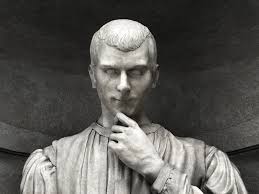
Niccolo Machiavelli
As a Presidential candidate, Trump repeatedly previewed his administrative incompetence—which he has continued to demonstrate as President.
The latest example of this: Stephen Miller, White House deputy chief of staff for policy. He previously served as senior advisor to the President and director of speechwriting from 2017 to 2021 during the first Trump administration.
His politics have been described as anti-immigration, white nationalist and far-right. His policies have resulted in mass deportations, arrests and shootings of innocent American citizens and the testing of the constitutional tenets that grant American citizenship.

Stephen Miller
And thanks to retiring North Carolina United States Senator Thom Tillis, there is another way to describe him: “Stupid.”
“Look, either Stephen Miller needs to get into a lane where he knows what he’s talking about or get out of this job,” Tillis told CNN’s Jake Tapper on the January 7 edition of “The Lead.”
Three days earlier, on January 4, Miller, appearing on the same show, had said: “Greenland should be part of the United States.”
This reflects Trump’s long-held obsession that he should acquire Greenland—by buying it or conquering it.
“What is the basis for their territorial claim?” demanded Miller. “What is their basis of having Greenland as a colony of Denmark?”
The answer: Greenland is a self-governing, autonomous part of the Kingdom of Denmark. The United States has recognized Denmark’s ties to Greenland since 1917 and signed a joint defense agreement in 1951.
This was updated in 2004, acknowledging Greenland’s connection to Denmark.
During the same interview, Miller made it clear that the use of brute force was not only on the table but was the Trump administration’s preferred way to behave on the world stage:
“We live in a world in which you can talk all you want about international niceties and everything else, but we live in a world, in the real world, Jake, that is governed by strength, that is governed by force, that is governed by power. These are the iron laws of the world since the beginning of time.”
Adolf Hitler could not have said it better. In fact, Miller—who is Jewish—could have been reciting the Fuhrer’s August 22, 1939 speech to his generals before the invasion of Poland:
“I shall give a propagandist reason for starting the war, no matter whether it is plausible or not. The victor will not be asked afterwards whether he told the truth or not. When starting and waging war it is not right that matters, but victory.
“Close your hearts to pity. Act brutally. Eighty million people must obtain what is their right. Their existence must be made secure. The stronger man is right.”
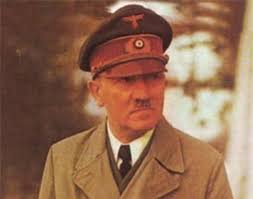
Adolf Hitler
Senator Tillis’ response was equally blunt. Calling the NATO alliance—of which Denmark is a member—critically important, he said:
“Shaking that alliance sends a signal to [Russian President Vladimir] Putin that he’s winning. And Stephen Miller doesn’t represent the United States government. He represents the Article 11 [Executive] branch.

Thom Tillis
“And I, as a member of the United States Senate, get to weigh in to this issue. And I know, whether they say it out loud or not, most of my colleagues agree with me.
“We need to make it very clear that our strength and our ability to project power to stand off against Putin, to stand off Russia, to stand off China, Iran, it all rests on this exquisite capability that we have under NATO.”
Tillis’ remarks came only hours after he delivered a scathing speech to his fellow Senators: “I’m sick of stupid. I want good advice for the president, because I want this president to have a good legacy.
“And this nonsense on what’s going on with Greenland is a distraction from the good work he’s doing, and the amateurs who said it was a good idea should lose their jobs.”
Tillis’ remarks ignore several brutal truths:
First, as Machiavelli notes, when a ruler’s advisors are incompetent, he is to blame for making those choices.
Second, Miller was speaking for Trump, not advising him.
Third, Donald Trump’s legacy will be one of unsurpassed greed, egomania, vindictiveness and authoritarianism.
He has turned America’s longstanding democratic allies into enemies and embraced the ruthless dictators of Russia, China and North Korea—and their style of governing.
His ultimate legacy will be one of infamy.
Nothing Tillis can do will alter that.
ABC NEWS, ALEXANDER THE GREAT, ALTERNET, AMERICABLOG, AP, BABY BOOMER RESISTANCE, BBC, BLOOMBERG NEWS, BUZZFEED, CBS NEWS, CNN, CROOKS AND LIARS, DAILY KOS, DONALD TRUMP, DOUGLAS MACARTHUR, FEDERAL SECURITY SERVICE, FIVETHIRTYEIGHT, GATES OF FIRE (BOOK), HARPER’S MAGAZINE, HUFFINGTON POST, IRAN, IRAQ, KGB, MEDIA MATTERS, MERCENARIES, MOTHER JONES, MOVEON, MSNBC, NBC NEWS, NEW REPUBLIC, NEWSDAY, NEWSWEEK, NICCOLO MACHIAVELLI, NICHOLAS MADURO, NPR, Oil, PBS NEWSHOUR, POLITICO, POLITICUSUSA, RAW STORY, REUTERS, SALON, SAUDI ARABIA, SEATTLE TIMES, SLATE, SPARTA, STANLEY MCCRYSTAL, STEVEN PRESSFIELD, TALKING POINTS MEMO, THE ATLANTIC, THE CHICAGO SUN-TIMES, THE CHICAGO TRIBUNE, THE DAILY BEAST, THE DAILY BLOG, THE GUARDIAN, THE HILL, THE HUFFINGTON POST, THE INTERCEPT, THE LOS ANGELES TIMES, THE NATION, THE NEW REPUBLIC, THE NEW YORK TIMES, THE NEW YORKER, THE PROFESSION (BOOK), THE VILLAGE VOICE, THE VIRTUES OF WAR (BOOK), THE WASHINGTON POST, THERMOPYLAE, THINKPROGRESS, TIME, TRUTHDIG, TRUTHOUT, U.S. NEWS & WORLD REPORT, UPI, USA TODAY, VENEZUELA, X
In Bureaucracy, Business, History, Military, Politics, Social commentary on January 6, 2026 at 12:10 am
During a January 3 news conference, President Donald Trump told reporters the real reason why the United States had just attacked Venezuela and captured its president—actually dictator—Nicholas Maduro and his wife:
“We’re going to have our very large United States oil companies—the biggest anywhere in the world—go in, spend billions of dollars, fix the badly broken infrastructure, the oil infrastructure.”
Forget months of accusing Venezuela of being a major supplier of illicit drugs to the United States.
Venezuela has the world’s largest proven oil reserves, with over 303 billion barrels. That’s more than Saudi Arabia (second-largest) and Iran (third-largest). But after President Hugo Chávez nationalized much of the industry in 2007, its oil production sharply declined.
By 2018, Venezuela was producing 1.3 million barrels of oil each day, from a high of more than 3 million barrels each day in the late 1990s.
Trump intends to change that.
On September 7, 2016, at a forum hosted by NBC, Trump had flatly stated that seizing Iraqi oil fields could have paid for the 2003 Iraq war:
“We go in, we spend $3 trillion, we lose thousands and thousands of lives, and then … what happens is we get nothing. You know, it used to be to the victor belong the spoils.
“You’re not stealing anything. We’re reimbursing ourselves … at a minimum, and I say more. We’re taking back $1.5 trillion to reimburse ourselves.”
Unable to steal Iraqi oil, Trump has chosen to steal that of Venezuela—by turning the Armed Services into mercenary gangsters.
In 2011, bestselling author Steven Pressfield had made the seizing of Saudi Arabian oil fields the premise of his novel The Profession.

Pressfield made his literary reputation with a series of classic novels about ancient Greece.
In Gates of Fire (1998) he explored the rigors and heroism of Spartan society—and the famous last stand of its 300 picked warriors at Thermopylae.
In The Virtues of War (2004) he entered the mind of Alexander the Great, whose armies swept across the known world, destroying all who dared oppose them.
But in The Profession, Pressfield created a plausible world set into the future of 2032. The book’s dust jacket summarizes its plot-line:
“Everywhere military force is for hire. Oil companies, multi-national corporations and banks employ powerful, cutting-edge mercenary armies to control global chaos and protect their riches.
“Force Insertion is the world’s merc [mercenary] monopoly. Its leader is the disgraced former United States Marine General James Salter, stripped of his command by the president for nuclear saber-rattling with the Chinese and banished to the Far East.”
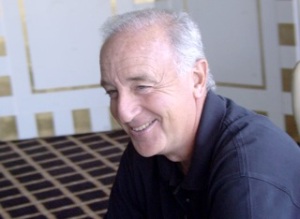
Steven Pressfield
Salter appears as a hybrid of World War II General Douglas MacArthur and Iraqi War General Stanley McCrystal.
Like MacArthur, Salter has butted heads with his President—and paid dearly for it. Now his ambition is no less than to become President himself—by popular acclaim. And like McCrystal, he is a pure warrior who leads from the front and is revered by his men.
Salter seizes Saudi Arabian oil fields, then offers them as a gift to America. By doing so, he makes himself the most popular man in the country—and a guaranteed occupant of the White House.
Douglas MacArthur

Stanley McCrystal
“The United States is an empire…but the American people lack the imperial temperament,” asserts Salter. “We’re not legionaries, we’re mechanics. In the end the American Dream boils down to what? ‘I’m getting mine and the hell with you.’”
Americans, says Salter, have come to like mercenaries: “They’ve had enough of sacrificing their sons and daughters in the name of some illusory world order. They want someone else’s sons and daughters to bear the burden….
“They want their problems to go away. They want me to to make them go away.”
Returning to the United States, he is acclaimed as a hero—and the next President.
He knows that his country is on a downward spiral toward oblivion: “Any time that you have the rise of mercenaries…society has entered a twilight era, a time past the zenith of its arc.”
And he doesn’t believe that his Presidency will arrest that decline: “But maybe in the short run, it’s better that my hand be on the wheel…rather than some other self-aggrandizing sonofabitch whose motives might not be as well intentioned….”
More than 500 years ago, Niccolo Machiavelli warned of the dangers of relying on mercenaries:
“Mercenaries…are useless and dangerous. And if a prince holds on to his state by means of mercenary armies, he will never be stable or secure; for they are disunited, ambitious, without discipline, disloyal; they are brave among friends; among enemies they are cowards.
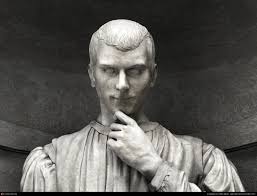
Niccolo Machiavelli
“They have neither the fear of God nor fidelity to men, and destruction is deferred only so long as the attack is. For in peace one is robbed by them, and in war by the enemy.”
Centuries ago, Niccolo Machiavelli issued a warning against relying on men whose first love is their own enrichment.
Steven Pressfield, in a work of fiction, has given us a nightmarish vision of a not-so-distant America where “Name your price” has become the byward for an age.
Both warnings are well worth heeding.
ABC NEWS, ADOLF HITLER, ALTERNET, AMERICABLOG, AP, ASSASSINATION, BABY BOOMER RESISTANCE, BUZZFEED, CBS NEWS, CNN, CONSPIRACIES, CROOKS AND LIARS, DAILY KOS, DONALD TRUMP, DRUDGE RETORT, FIVETHIRTYEIGHT, FREDERICK FORSYTHE, GAIUS CASSIUS, HARPER’S MAGAZINE, JULIUS CAESAR, LINCOLN MEMORIAL, MAR-A-LAGO, MARCUS BRUTUS, MARK ANTHONY, MEDIA MATTERS, MOTHER JONES, MOVEON, MSNBC, NBC NEWS, NEWSWEEK, NICCOLO MACHIAVELLI, NPR, PBS NEWSHOUR, PLOTS, POLITICO, POLITICUSUSA, RAW STORY, REUTERS, RICHARD M. NIXON, SALON, SEATTLE TIMES, Secret Service, SLATE, TALKING POINTS MEMO, THE ATLANTIC, THE CHICAGO SUN-TIMES, THE CHICAGO TRIBUNE, THE DAILY BEAST, THE DAILY BLOG, THE DISCOURSES, THE GUARDIAN, THE HILL, THE HUFFINGTON POST, THE LOS ANGELES TIMES, THE NATION, THE NEW REPUBLIC, THE NEW YORK TIMES, THE VILLAGE VOICE, THE WALL STREET JOURNAL, THE WASHINGTON POST, THINKPROGRESS, TIME, TRUTHDIG, TRUTHOUT, TWO POLITICAL JUNKIES, U.S. NEWS & WORLD REPORT, UPI, USA TODAY, VIETNAM WAR, WHITE HOUSE STAFFER, WONKETTE, X
In Bureaucracy, History, Law Enforcement, Military, Politics, Social commentary on December 2, 2025 at 12:49 am
More than 500 years ago, Niccolo Machiavelli, the Florentine statesman, authored The Discourses on Livy, a work of political history and philosophy. In it, he outlined how citizens of a republic can maintain their freedoms.
One of the longest chapters—Book Three, Chapter Six—covers “Of Conspiracies.” In it, those who wish to conspire against a ruler will find highly useful advice.
And so will those who wish to foil such a conspiracy.
For conspirators, there are three ways their efforts can be foiled.
- Discovery through denunciation;
- Discovery through incautiousness;
- Discovery through writings.
The first has already been covered. Now for the second and third.
Discovery through Writings: “You may talk freely with any one man about everything, for unless you have committed yourself in writing, the “Yes” of one man is worth as much as the “No” of another.
“Thus, you should guard most carefully against writing, as against a dangerous rock, for nothing will convict you quicker than your own handwriting.
“You may escape, then, from the accusation of a single individual, unless you are convicted by some writing or other pledge, which you should be careful never to give.
“If you are denounced, there are means of escaping punishment:
- By denying the accusation and claiming that the person making it hates you; or
- Claiming that your accuser was tortured or coerced into giving false testimony against you.
“But the most prudent course is to not tell your intentions to anyone, and to carry out the attempt yourself.”
Even if you’re not discovered before you carry out your attack, there are still two dangers facing a conspirator:
Dangers in Execution: These result from:
- An unexpected change in the routine of the intended target;
- The lack of courage among the conspirators; or
- An error on their part, such as leaving some of those alive whom the conspirators intended to kill.
Adolf Hitler, who claimed to have a sixth-sense for danger, was famous for changing his routine at the last minute.
On November 9, 1939, this instinct saved his life. He had been scheduled to give a long speech at a Munich beer hall before the “Old Fighters” of his storm troopers.
But that evening he cut short his speech and left the beer hall. Forty-five minutes later, a bomb exploded inside a pillar—before which Hitler had been speaking.
Conspirators can also be doomed by their good intentions.
In 44 B.C., Gaius Cassius, Marcus Brutus and other Roman senators decided to assassinate Julius Caesar, whose dictatorial ambitions they feared.
Cassius also intended to murder Mark Anthony, Caesar’s strongest ally. But Brutus objected, fearing the plotters would look like butchers, not saviors. Even worse, he allowed Anthony to deliver a eulogy at Caesar’s funeral.
This proved so inflammatory that the mourners rioted, driving the conspirators out of Rome. Soon afterward, they were defeated in a battle with the legions of Anthony and Octavian Caesar—and forced to commit suicide to avoid capture and execution.
Machiavelli closes his chapter “Of Conspiracies” with advice to rulers on how they should act when they find a conspiracy has been formed against them.
“If they discover that a conspiracy exists against them, they must, before punishing its authors, strive to learn its nature and extent. And they must measure the danger posed by the conspirators against their own strength.
“And if they find it powerful and alarming, they must not expose it until they have amassed sufficient force to crush it. Otherwise, they will only speed their own destruction. They should try to pretend ignorance of it. If the conspirators find themselves discovered, they will be forced by necessity to act without consideration.”
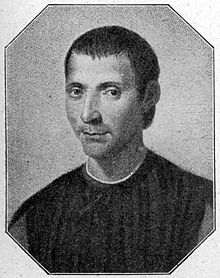
Niccolo Machiavelli
The foregoing was taken from Book Three, Chapter Six, of Machiavelli’s masterwork, The Discourses on Livy, which was published posthumously in 1531. But elsewhere in this volume, he notes how important it is for rulers to make themselves loved—or at least respected—by their fellow citizens:
“Note how much more praise those Emperors merited who, after Rome became an empire, conformed to her laws like good princes, than those who took the opposite course.
“Titus, Nerva, Trajan, Hadrian, Antoninus and Marcus Auelius did not require the Praetorians nor the multitudinous legions to defend them, because they were protected by their own good conduct, the good will of the people, and by the love of the Senate.
“On the other hand, neither the Eastern nor the Western armies saved Caligula, Nero, Vitellius and so many other wicked Emperors from the enemies which their bad conduct and evil lives had raised up against them.”
In his better-known work, The Prince, he warns rulers who—like Donald Trump–are inclined to rule by fear:
A prince should make himself feared in such a way that if he does not gain love, he at any rate avoids hatred: for fear and the absence of hatred may well go together.
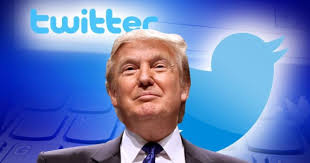
Donald Trump
By Machiavelli’s standards, Trump has made himself the perfect target for a conspiracy.
“When a prince becomes universally hated, it is likely that he’s harmed some individuals—who thus seek revenge. This desire is increased by seeing that the prince is widely loathed.”
ABC NEWS, ADOLF HITLER, ALTERNET, AMERICABLOG, AP, ASSASSINATION, BABY BOOMER RESISTANCE, BUZZFEED, CBS NEWS, CNN, CONSPIRACIES, CROOKS AND LIARS, DAILY KOS, DONALD TRUMP, FIVETHIRTYEIGHT, FREDERICK FORSYTHE, GAIUS CASSIUS, HARPER’S MAGAZINE, JULIUS CAESAR, LINCOLN MEMORIAL, MAR-A-LAGO, MARCUS BRUTUS, MARK ANTHONY, MEDIA MATTERS, MOTHER JONES, MOVEON, MSNBC, NBC NEWS, NEWSWEEK, NICCOLO MACHIAVELLI, NPR, PBS NEWSHOUR, PLOTS, POLITICO, POLITICUSUSA, RAW STORY, REUTERS, RICHARD M. NIXON, SALON, SEATTLE TIMES, Secret Service, SLATE, TALKING POINTS MEMO, THE ATLANTIC, THE CHICAGO SUN-TIMES, THE CHICAGO TRIBUNE, THE DAILY BEAST, THE DAILY BLOG, THE DISCOURSES, THE GUARDIAN, THE HILL, THE HUFFINGTON POST, THE LOS ANGELES TIMES, THE NATION, THE NEW REPUBLIC, THE NEW YORK TIMES, THE VILLAGE VOICE, THE WALL STREET JOURNAL, THE WASHINGTON POST, THINKPROGRESS, TIME, TRUTHDIG, TRUTHOUT, TWO POLITICAL JUNKIES, U.S. NEWS & WORLD REPORT, UPI, USA TODAY, VIETNAM WAR, WONKETTE, X
In Bureaucracy, History, Law Enforcement, Military, Politics, Social commentary on December 1, 2025 at 12:10 am
More than 500 years ago, Niccolo Machiavelli, the father of modern political science, offered sound advice for would-be conspirators—and for rulers seeking to thwart conspiracies.
It’s advice to which tyrants like Vladimir Putin and Donald Trump should pay close attention.
He did so in The Discourses on Livy, a work of political history and philosophy. In it, he outlined how citizens of a republic can maintain their freedoms.
One of the longest chapters—Book Three, Chapter Six—covers “Of Conspiracies.” In it, those who wish to conspire against a ruler will find highly useful advice. And so will those who might well become the targets of conspiracies—such as President Donald J. Trump.
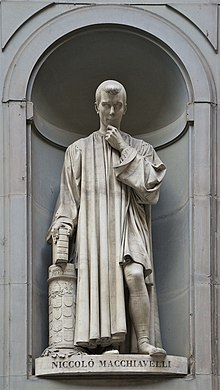
Niccolo Machiavellil
The most dangerous time for a ruler comes when he is universally hated.
Niccolo Machiavelli: When a prince becomes universally hated, it is likely that he’s harmed some individuals—who thus seek revenge. This desire is increased by seeing the prince is widely loathed.
A prince, then, should avoid incurring such universal hatred….
By doing this, he protects himself from such vengeance-seekers. There are two reasons for this:
(1) Men rarely risk danger to avenge a wrong; and
(2) Even if they want to avenge a wrong, they know they will face almost universal condemnation because the prince is held in such high esteem.
Machiavelli draws a distinction between plots and conspiracies.
A plot may be formed by a single individual or by many. The first isn’t a conspiracy, since that would involve at least two participants.
A single plotter avoids the danger faced by two or more conspirators:
Since no one knows his intention, he can’t be betrayed by an accomplice.
Anyone may form a plot, whether he is prominent or insignificant, because everyone is at some time allowed to speak to the prince. And he can use this opportunity to satisfy his desire for revenge.
On the other hand, says Machiavelli, the dangers of assassination by a trusted intimate are slight.
Few people dare to assault a prince. Of those who do, few or none escapes being killed in the attempt, or immediately afterward. As a result, only a small number of people are willing to incur such certain death.
Those who take part in a conspiracy against a ruler are “the great men of the state, or those on terms of familiar intercourse with the prince.”
These are men who have access to him. Julius Caesar, for example, was stabbed to death by members of the Roman Senate, who feared his assuming dictatorial powers.
And Adolf Hitler was conspired against by colonels and generals of the German Army. He was in fact holding a war conference when a briefcase bomb exploded, killing three officers and a stenographer, but leaving Hitler only slightly injured.
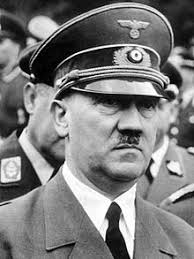

Adolf Hitler
There are three ways a conspiracy can be foiled:
- Discovery through denunciation;
- Discovery through incautiousness;
- Discovery through writings.
Discovery through Denunciation: This occurs through treachery or lack of prudence among one or more conspirators.
Treachery is so common that you can safely tell your plans to only your most trusted friends who are willing to risk their lives for your sake. You may find that you have only one or two of these.
But as you are bring more people into the conspiracy, the chances of discovery greatly increase. It’s impossible to find many who can be completely trusted: For their devotion to you must be greater than their sense of danger and fear of punishment.
Discovery through Carelessness: This happens when one of the conspirators speaks incautiously, so that a third person overhears it Or it may occur from thoughtlessness, when a conspirator tells the secret to his wife or child, or to some other indiscreet person.
When a conspiracy has more than three or four members, its discovery is almost certain, either through treason, imprudence or carelessness.
If more than one conspirator is arrested, the whole plot is discovered, for it will be impossible for any two to agree perfectly as to all their statements.
If only one is arrested, he may—through courage and stubbornness—be able to conceal the names of his accomplices. But then the others, to remain safe, must not panic and flee, since this is certain to be discovered.
If one of them becomes fearful—whether it’s the one who was arrested or is still at liberty—discovery of the conspiracy is certain. The best way to avoid such detection is to confide your project to your intended fellow conspirators at the moment of execution—and not sooner.
A classic example of this occurred in ancient Persia. According to the Greek historian Herodotus: A group of nobles assembled to discuss overthrowing a usurper to the throne. The last one to arrive was Darius.
When one of the conspirators asked, “When should we strike?” Darius replied: “We must either go now at this very moment and carry it into execution, or I shall go and denounce you all. For I will not give any of you time to denounce me.”
At that, they went directly to the palace, assassinated the usurper and proclaimed Darius their new king.
2016 PRESIDENTIAL ELECTION, 2020 PRESIDENTIAL ELECTION, ABC NEWS, ACAM SCHIFF, ADOLF HITLER, ALTERNET, AMERICABLOG, AP, BABY BOOMER RESISTANCE, BBC, BLOOMBERG NEWS, BRETT CROZIER, BUZZFEED, CBS NEWS, CHARLES PIERCE, CHRIS KREBS, CNN, CONVERSATION WITH AN AMERICAN WRITER (POEM), CORONAVIRUS, CROOKS AND LIARS, CYBERSECURITY AND INFRASTRUCTURE SECURITY AGENCY, DAILY KOS, DEPARTMENT OF HOMELAND SECURITY, DEPARTMENT OF STATE, DIMITRI SHOSTAKOVICH, DONALD TRUMP, DRUDGE REPORT, ESQUIRE MAGAZINE, FBI, FIVETHIRTYEIGHT, FOX NEWS NETWORK, GREAT TERROR, HARPER’S MAGAZINE, HOUSE INTELLIGENCE COMMITTEE, HOUSE OF REPRESENTATIVES, HUFFINGTON POST, JOSEPH BIDEN, JOSEPH STALIN, MARIA YOVANOVICH, MEDIA MATTERS, MICROSOFT, MIKHAIL TUKHACHEVESKY, MOTHER JONES, MOVEON, MSNBC, NAZI GERMANY, NBC NEWS, NEW REPUBLIC, NEWSDAY, NEWSWEEK, NICCOLO MACHIAVELLI, NIKITA KHRUSHCHEV, NIKOLAI ZHILAYEV, NPR, PBS NEWSHOUR, POLITICO, POLITICUSUSA, RAW STORY, REUTERS, RUDY GIULIANI, SALON, SEATTLE TIMES, SLATE, SOVIET UNION, TALKING POINTS MEMO, THE ATLANTIC, THE CHICAGO SUN-TIMES, THE CHICAGO TRIBUNE, THE DAILY BEAST, THE DAILY BLOG, THE DISCOURSES, THE GUARDIAN, THE HILL, THE HUFFINGTON POST, THE LOS ANGELES TIMES, THE NATION, THE NEW REPUBLIC, THE NEW YORK TIMES, THE NEW YORKER, THE VILLAGE VOICE, THE WALL STREET JOURNAL, THE WASHINGTON POST, THINKPROGRESS, THOMAS MODLY, TIME, TRUTHDIG, TRUTHOUT, TWO POLITICAL JUNKIES, U.S. NEWS & WORLD REPORT, UKRAINE, UPI, USA TODAY, WEHRMACHT, WONKETTE, WORLD WAR 11, X, YEVGENEY YEVTUSHENKO
In Bureaucracy, History, Law, Law Enforcement, Military, Politics, Social commentary on November 28, 2025 at 12:25 am
Next hero: Marie Yovanovitch, the former United States ambassador to Ukraine (2016 – 2019). She had joined the Foreign Service in 1986, and served as ambassador to Kyrgyzstan (2005 – 2008) and Armenia (2008 – 2011).
In May 2019, on President Donald Trump’s orders, the State Department recalled Yovanovitch as ambassador to Ukraine. She had earned respect from the national security community for her efforts to encourage Ukraine to tackle corruption.
But she had been criticized by Right-wing media outlets—notably Fox News Network––and by Trump’s personal attorney, Rudy Giuliani.

Marie Yovanovitch
CNN reported that Yovanovitch stopped Giuliani from interviewing witnesses in his search for politically damaging information against former Vice President Joe Biden, whose son, Hunter, had had business dealings in Ukraine.
On October 11, 2019, she appeared before the House Intelligence Committee, chaired by Representative Adam Schiff (D-CA). She did so in defiance of orders by the White House and State Department to not attend.
“She was a hero even before she hit the hearing room,” wrote Charles Pierce for Esquire magazine.
“She told them to stuff their directives, she would answer a congressional subpoena like a citizen is supposed to do. And she didn’t sneak in through the basement. She walked into the Capitol through the front doors, and she didn’t do so to fck around.”
Testifying for nearly 10 hours, Yovanovitch said that Trump had removed her from her post owing to “unfounded and false claims” and “a concerted campaign against me.”
She believed that associates of Trump’s personal lawyer, Giuliani, might have thought “that their personal financial ambitions were stymied by our anti-corruption policy in Ukraine.”
And she warned that the State Department was being “attacked and hollowed out from within. State Department leadership, with Congress, needs to take action now to defend this great institution, and its thousands of loyal and effective employees.”
After retiring from the State Department in 2020, Yovanovitch became a senior fellow in the Russia and Eurasia Program at the Carnegie Endowment for International Peace.
Another hero-victim on Trump’s hate-list was Chis Krebs.
During the 2016 Presidential race, Russian propaganda had played a major role in convincing millions of Americans to vote for Donald Trump. Social media platforms—especially Facebook and Twitter—were flooded with genuinely fake news to sow discord among Americans and create a pathway for Trump’s election.
Trump didn’t win a majority of the popular vote. But he got enough help from Russian President Vladimir Putin to triumph in the Electoral College.
So notorious was the role played by Russian trolls and hackers in winning Trump the 2016 election that the Department of Homeland Security (DHS) was determined to prevent a repetition in 2020.
And point man for this was Chris Krebs.
Born in Atlanta, Georgia, in 1977, Krebs had received a B.A. in environmental sciences from the University of Virginia in 1999, and a J.D. from the George Mason University School of Law in 2007.
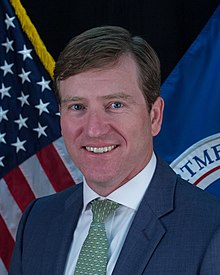
Chris Krebs
Krebs had served as Senior Advisor to the Assistant Secretary of Homeland Security for Infrastructure Protection, and later worked in the private sector as Director for Cybersecurity Policy for Microsoft.
Now he was director of the Cybersecurity and Infrastructure Security Agency at DHS.
In preparation for the 2020 Presidential election, Krebs launched a massive effort to counter lies spread by Russians—and Americans—on social media platforms. Among his duties:
- Sharing Intelligence from agencies such as the CIA and National Security Agency with local officials about foreign efforts at election interference.
- Ensuring that domestic voting equipment was secure.
- Attacking domestic misinformation head-on.
By all accounts—except Trump’s—the November 3, 2020 election went very smoothly.
As a result of the vast increase in election security, Trump not only failed to win the popular vote again but couldn’t get the help he expected from Putin.
On November 17, Trump fired Chris Krebs.
The reason: Krebs had not only countered Russian propaganda lies—he had dared to counter Trump’s as well. For example: He rejected Trump’s claims of widespread voter fraud: There “is no evidence that any voting system deleted or lost votes, changed votes, or was in any way compromised.”
In a November 17 story on the CNN website, CNN reporters Kaitlan Collins and Paul LeBlanc bluntly concluded:
“[Krebs’] dismissal underscores the lengths Trump is willing to go to punish those who don’t adopt his conspiratorial view of the election.
“Since CNN and other outlets called the race for President-elect Joe Biden, Trump has refused to accept the results, instead pushing baseless conspiracies that his second term is being stolen.”
Yet, by depriving Trump of Russian help, Krebs ensured a victory for democracy.
On January 6, 2021, the House and Senate counted the Electoral Votes—and pronounced Joseph Biden the winner—bringing an end to Trump’s reign of criminality and treason.
In his 1960 poem, “Conversation With an American Writer,” the Russian poet, Yevgeney Yevtushenko spoke for those Russians who had maintained their integrity in the face of Stalinist terror:
“You have courage,” they tell me.
It’s not true. I was never courageous.
I simply felt it unbecoming
to stoop to the cowardice of my colleagues.
Unfortunately, the same cannot be said of Republicans in the United States Senate and House of Representatives in the face of Trump terror.


 Bureaucracybuster's Blog
2016 PRESIDENTIAL ELECTION, A BRONX TALE, ABC NEWS, ALTERNET, AMERICABLOG, AP, BABY BOOMER RESISTANCE, BBC, BILL CLINTON, BLOOMBERG, BLUESKY, BUZZFEED, CBS NEWS, CHAZZ PALMINTERI, CNN, CROOKS AND LIARS, DAILY KOS, DONALD TRUMP, FIVETHIRTYEIGHT, H.R. MCMASTER, HARPER’S MAGAZINE, HUFFINGTON POST, JEFF SESSIONS, JOHN KELLY, MEDIA MATTERS, MOTHER JONES, MOVEON, MSNBC, NBC NEWS, NEWSDAY, NEWSWEEK, NICCOLO MACHIAVELLI, NPR, PBS NEWSHOUR, POLITICO, POLITICUSUSA, RAW STORY, REINCE PREBIUS, REPUBLICAN PARTY, REUTERS, ROBERT DE NIRO, Ronald Reagan, SALON, SEATTLE TIMES, SERGEI KISLYAK, SLATE, TALKING POINTS MEMO, THE ATLANTIC, THE CHICAGO SUN-TIMES, THE CHICAGO TRIBUNE, THE DAILY BEAST, THE DAILY BLOG, THE GUARDIAN, THE HILL, THE HUFFINGTON POST, THE INTERCEPT, THE LOS ANGELES TIMES, THE NATION, THE NEW REPUBLIC, THE NEW YORK TIMES, THE NEW YORKER, THE PRINCE, THE VILLAGE VOICE, THE WASHINGTON POST, THINKPROGRESS, TIME, TRUTHDIG, TRUTHOUT, TWO POLITICAL JUNKIES, U.S. NEWS & WORLD REPORT, UP, UPI, USA TODAY, X
WHEN PRESIDENTS ACT LIKE MAFIA BOSSES: PART TWO (END)
In Bureaucracy, History, Law, Law Enforcement, Military, Politics, Social commentary on March 10, 2026 at 12:12 amA reputation for being feared can be useful.
But it’s dangerous to constantly employ cruelties or punishments.
Whoever does so, warns Niccolo Machiavelli, “is always obliged to stand with knife in hand, and can never depend on his subjects, because they, owing to continually fresh injuries, are unable to depend upon him.”
Such a President is Donald Trump, who, as a Presidential candidate in 2016, told journalist Bob Woodward: “Real power is—I don’t even want to use the word—fear.”
As a Presidential candidate and President, Trump has repeatedly used X to attack hundreds of real and imagined enemies in politics, journalism, TV and films.
From June 15, 2015, when he launched his Presidential campaign, until October 24, 2016, Trump fired almost 4,000 angry, insulting tweets at 281 people and institutions that had somehow offended him.
Donald Trump
The New York Times needed two full pages of its print edition to showcase them. Making one inflammatory statement after another, he offended one group of potential voters after another. Among those groups:
Since becoming President in 2017 and 2025, Trump has attacked and/or infuriated a wide array of influential agencies or groups. Among these:
And he has bullied and insulted even White House officials and his own handpicked Cabinet officers:
John Kelly
Trump’s repeated humiliations—and firings—of high-ranking administration officials led to a near-paralysis of his government. Many agencies were plagued by staff shortages. And many of the replacements were not of “top drawer” quality.
If Trump ever read Niccolo Machiavelli’s The Prince, he’s clearly forgotten the Florentine’s warning on the need to avoid hatred at all costs.
The new musical version of the play/movie A Bronx Tale allows Mafia capo Sonny to sing his lesson on fear versus love to Calogero, the teenager who idolizes him:
Listen now what I tell ya
This advice is you know whose
Love or fear—
It’s up to you kid
But you live with what you choose.
And it’s true: You live with what you choose.
Make being loved your top priority, and you risk being labeled a weakling who can be rolled—as Bill Clinton did.
But make being feared your goal, and you risk creating an atmosphere of hatred and paranoia—as Donald Trump has.
Share this: