Posts Tagged ‘NICCOLO MACHIAVELLI’
ABC NEWS, ALAMO, ALIEN-SMUGGLING RINGS, ALTERNET, ALVARO OBREGON, AMERICABLOG, AMNEXTY INTERNATIONAL, ANCHOR BABIES, ANTONIO LOPEZ DE SANTA ANNA, AP, ARIZONA, BABY BOOMER RESISTANCE, BARACK OBAMA, BARBARA LEE, BBC, BLOOMBERG, BLOOMBERG NEWS, BREXIT, BUREAU OF CUSTOMS AND BORDER PROTECTION, BUZZFEED, CALIFORNIA, CBS NEWS, CHICAGO, CNN, COLORADO, CORRUPTION, CROOKS AND LIARS, CUBA, DAILY KOS, DAILY KOZ, DAVID CROCKETT, DEMOCRATIC PARTY, DEMOCRATS, DONALD TRUMP, DREAM ACT, DRUDGE REPORT, EMILIANO ZAPATA, ENGLISH LANGUAGE, ERIC ADAMS, EUROPEAN UNION (EU), FEDERATION FOR AMERICAN IMMIGRATION REFORM (FAIR), FELIPE CALDERON, FIVETHIRTYEIGHT, FLORIDA, FRANCISCO "PANCHO" VILLA, FRANCISCO MADERO, GOLIAD MASSACRE, GREG ABBOTT, HARPER’S MAGAZINE, HILLARY CLINTON, HISPANICS, HUFFINGTON POST, ILLEGAL ALIENS, illegal immigration, IMMIGRATIONS AND CUSTOMS ENFORCEMENT (ICE), JAMES BOWIE, JEFF SESSIONS, MEDI-CAL, MEDI-CAL INSURANCE PROGRAM, MEDIA MATTERS, MEXICAN REVOLUTION, MEXICAN WAR, MEXICO, MEXICO CITY, MIGRANT CARRAVAN, MOSES AUSTIN, MOTHER JONES, MOVEON, MSNBC, NBC NEWS, NEVADA, NEW MEXICO, NEW REPUBLIC, NEW YORK CITY, NEWSDAY, NEWSWEEK, NEWT GINGRICH, NICARAGUA, NICCOLO MACHIAVELLI, NPR, PANCHO VILLA, PAUL RYAN, PBS NEWSHOUR, POLITICAL CORRECTNESS, POLITICO, POLITICUSUSA, RACIAL PROFILING, RAW STORY, REPUBLICAN PARTY, REPUBLICANS, REUTERS, ROBERT FROST, SALON, SAM HOUSTON, SAN JACINTO, SCHOOLS, SEATTLE TIMES, SLATE, SLAVERY, STEPHEN AUSTIN, TALKING POINTS MEMO, TEXAS, THE ATLANTIC, THE CHICAGO SUN-TIMES, THE CHICAGO TRIBUNE, THE DAILY BEAST, THE DAILY BLOG, THE DAILY MAIL, THE DISCOURSES, THE GUARDIAN, THE HILL, THE HUFFINGTON POST, THE INTERCEPT, THE LOS ANGELES TIMES, THE NATION, THE NEW REPUBLIC, THE NEW YORK TIMES, THE NEW YORKER, THE VILLAGE VOICE, THE WALL STREET JOURNAL, THE WASHINGTON POST, THINKPROGRESS, THOMAS HOMAN, TIJUANA, TIME, TRUTHDIG, TRUTHOUT, TWO POLITICAL JUNKIES, U.S. NEWS & WORLD REPORT, U.S. SUPREME COURT, UNITED KINGDOM (UK), UNITED STATES DEPARTMENT OF JUSTICE, UNITED STATES HEALTH AND HUMAN SERVICES DEPARTMENT, UPI, USA TODAY, UTAH, VENEZUELA, VENUSTIANO CARRANZA, WAL-MART, WASHINGTON D.C., WONKETTE
In Bureaucracy, Business, History, Law, Law Enforcement, Medical, Military, Politics, Social commentary on July 3, 2026 at 12:06 am
“Good fences make good neighbors.”
Robert Frost penned those famous words in his 1914 poem, “Mending Wall.”
For millions of Americans, illegal immigration was the issue empowering the candidacy of Donald Trump to regain the Presidency in 2024.
For them, Frost’s opening line has become gospel: “Something there is that truly loves a wall.”
A September 16, 2022 article in The Daily Mail headlined:
“America’s $78B Bill for Teaching Schoolkids With Poor English is Rising by BILLIONS in Biden-era Immigration Surge, Study Says, and 76,000 New Language Instructors Are a Tall Order in a Teacher Shortage.”
Among its findings:
- One million public school students—ranging from kindergarten to high school—need special training in speaking and writing English.
- It costs $78 billion each year to educate them.
- Texas, California, Florida and New York are among the states most burdened with such students.
- Only three percent of these students are proficient in English when they graduate from high school.
- These costs are raised by billions owing to an unceasing tide of illegal alien children at the southern border.
These alarming statistics were produced by a study from the Federation for American Immigration Reform (FAIR).
The 5.1 million students lacking English language skills need help in all their classes.
As a result, it costs 15 to 20 percent more to educate them than American-born students who grow up learning English.

Illegal aliens climbing over the border fence
With the United States facing a severe teacher shortage, some states have lowered their hiring rules to recruit teachers with only a high school diploma.
In 2020, the 5.1 million illegal alien students in public schools cost American taxpayers $78 billion—an $18.8 billion jump from the cost in 2016.
Of those students, 1.15 million were in California, costing the state $19.5 billion. One million more lived in Texas, costing that state $11.4 billion. And 278,000 lived in Florida, at a cost of $3.1 billion.
Only 370,000 teachers nationwide are trained to teach them, and 76,000 more will be needed during the next five years.
Immigration remains a highly divisive issue among Americans. “Red” Republican states want to close borders. “Blue” Democratic states are more open to newcomers.
Yet even famously liberal enclaves of support for illegal aliens like New York are beginning to have second thoughts about taking in unlimited numbers of uninvited foreigners.
On October 7, 2022, then-New York City Mayor Eric Adams declared a state of emergency in response to the city’s migrant crisis, which he said would cost the city $1 billion that fiscal year.

Eric Adams
“We now have a situation where more people are arriving in New York City than we can immediately accommodate, including families with babies and young children,” Adams said.
“Once the asylum seekers from today’s buses are provided shelter, we would surpass the highest number of people in recorded history in our city’s shelter system.”
Behind this unwanted influx lies Texas Governor Greg Abbott.
By May 1, 2025, Texas had spent more than $229 million busing illegal aliens found in Texas to famously liberal supporters of illegal immigration: Washington D.C., New York City and Chicago.
Abbott announced the program on April 13, 2024, as his response to the Biden administration’s immigration policies.

Greg Abbott
In October, 2023, New York City had 90,578 people in its shelter system. Thousands of these are American citizens who are homeless. They are competing for assistance with illegal aliens who were bused to New York City from the southern border since April, 2022.
Three Communist-ruled countries—Venezuela, Nicaragua and Cuba—are responsible for this huge surge in illegal aliens and their continuing drain on America’s schools, housing and hospitals (among other facilities).
Rising levels of repression, food shortages and economic stability are motivating Cubans, Venezuelans and Nicaraguans to enter the United States. And assisting them is the longtime policy of the United States government to automatically accept those leaving Communist countries as refugees.
At some point, the United States must face the economic and social absurdity of allowing some cities and states to provide sanctuary to every illegal alien who appears.
Even Eric Adams, emphasizing that New York City remains a sanctuary city, warned it could not cope with such an overwhelming influx of migrants:
“We are not telling anyone that New York can accommodate every migrant in the city. We’re not encouraging people to send eight, nine buses a day….We’re saying that as a sanctuary city with right to shelter, we’re going to fulfill that obligation. That’s what we’re doing.”
Abbott clearly believes he has the right to inflict thousands of illegal aliens on other states. And illegal aliens clearly believe they have the right to demand unlimited access to the United States.
At some point, America must stop allowing itself to be a dumping-ground for other countries’ unwanteds.
* * * * *
An “open door” policy proved essential 250 years ago, when most of America was unsettled and largely unpopulated.
But the United States is no longer a largely unpopulated, agricultural country. Most of its population lives in coastal cities—which is where most illegal aliens tend to settle as well.
Space is limited in schools, hospitals and housing, and the more people who cram into limited spaces, the more frictions they inevitably create.
2016 PRESIDENTIAL ELECT, ABC NEWS, ADOLF HITLER, ALTERNET, AMERICABLOG, ANTONIN SCALIA, AP, BABY BOOMER RESISTANCE, BARACK OBAMA, BBC, BERNIE SANDERS, BLOOMBERG NEWS, BUZZFEED, CBS NEWS, CNN, CROOKS AND LIARS, D-DAY, DAILY KOS, DONALD TRUMP, FACEBOOK, FIVETHIRTYEIGHT, GEORGE S. PATTON, GREAT BRITAIN, HARPER’S MAGAZINE, HEINZ GUDERIAN, HENRY CLAY, HILLARY CLINTON, HUFFINGTON POST, ION, JIMMY CARTER, MEDIA MATTERS, MOTHER JONES, MOVEON, MSNBC, NAZI GERMANY, NBC NEWS, NEW REPUBLIC, NEWSDAY, NEWSWEEK, NICCOLO MACHIAVELLI, NPR, PBS NEWSHOUR, POLITICO, POLITICUSUSA, RAW STORY, REPUBLICANS, REUTERS, SALON, SEATTLE TIMES, SLATE, SOVIET UNION, STALINGRAD, TALKING POINTS MEMO, TERRORISM, THE ATLANTIC, THE CHICAGO SUN-TIMES, THE CHICAGO TRIBUNE, THE DAILY BEAST, THE DAILY BLOG, THE GUARDIAN, THE HILL, THE HUFFINGTON POST, THE INTERCEPT, THE LOS ANGELES TIMES, THE NATION, THE NEW REPUBLIC, THE NEW YORK TIMES, THE NEW YORKER, THE PRINCE, THE VILLAGE VOICE, THE WASHINGTON POST, THINKPROGRESS, TIME, TRUTHDIG, TRUTHOUT, TWO POLITICAL JUNKIES, U.S. NEWS & WORLD REPORT, UPI, USA TODAY, WAFFEN-SS, WORLD WAR 11, X
In Bureaucracy, History, Law, Politics, Social commentary on June 18, 2026 at 12:10 am
Most Americans believe that Nazi Germany was defeated because “we were the Good Guys and they were the Bad Guys.”
Not so.
The United States—and its allies, Great Britain and the Soviet Union—won the war for reasons that had nothing to do with the righteousness of their cause. These included:
- Nazi Germany—–i.e, its Fuehrer, Adolf Hitler—made a series of disastrous decisions. Chief among these: Attacking its ally, the Soviet Union, and declaring war on the United States.
- The greater material resources of the Soviet Union and the United States.
- The Allies waged war as brutally as the Germans.
On this last point:
- From D-Day to the fall of Berlin, captured Waffen-SS soldiers were often shot out of hand.
- When American troops came under fire in the German city of Aachen, Lt. Col. Derrill Daniel brought in a self-propelled 155mm artillery piece and opened up on a theater housing German soldiers. After the city surrendered, a German colonel labeled the use of the 155 “barbarous” and demanded that it be outlawed.
- During the battle of Stalingrad in 1942, Wilhelm Hoffman, a young German soldier and diarist, was appalled that the Russians refused to surrender. He wrote: “You don’t see them at all, they have established themselves in houses and cellars and are firing on all sides, including from our rear—barbarians, they used gangster methods….”

German soldiers in Stalingrad
In short: The Allies won because they dared to meet the brutality of a Heinz Guderian with that of a George S. Patton.
This is a lesson long ignored by the liberals of the Democratic Party. That’s why Republicans now hold both houses of Congress and the Presidency.
An example of this occurred on March 25, 2017: On CBS’ “Sunday Morning,” former President Jimmy Carter said that even if Special Counsel Robert Mueller found evidence that President Donald Trump had broken the law, “my own preference would be that he not be impeached.”
Instead, Carter would want Trump to “be able to serve out his term, because I think he wants to do a good job. And I’m willing to help him, if I can help him, and give him the benefit of the doubt.
“You know, I have confidence in the American system of government. I think ultimately the restraints on a president from the Congress and from the Supreme Court will be adequate to protect our nation, if he serves a full term.”
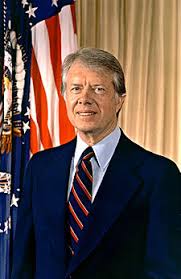
Jimmy Carter
After becoming President on January 20, 2017, Trump:
- Fired FBI Director James Comey for refusing to pledge his personal loyalty—and for investigating documented ties between Russian Intelligence agents and the 2016 Trump Presidential campaign.
- Threatened to fire Special Counsel Robert Mueller, who was assigned to take over that investigation after the Comey firing.
- Repeatedly attacked the nation’s press as “fake news” and “the enemy of the American people.”
- Contemptuously dismissed the warnings of American Intelligence agencies that Russia tried to subvert the 2016 Presidential campaign—and planned to do the same for the mid-term elections in November, 2018.
Trump, in short, was not going to be “helped” by the humility of a Jimmy Carter.

Donald Trump
Former President Barack Obama believes in rationality and decency. He felt more comfortable responding to attacks on his character than attacking the character of his enemies.
As a graduate of Columbia University and Harvard Law School, Obama was one of the most academically gifted Presidents in American history.
Yet he failed—like Carter—to grasp and apply a fundamental lesson taught by Niccolo Machiavelli, the father of modern political science.
In The Prince, Machiavelli warns:
From this arises the question whether it is better to be loved than feared, or feared more than loved.
The reply is, that one ought to be both feared and loved, but as it is difficult for the two to go together, it is much safer to be feared than loved….
And men have less scruple in offending one who makes himself loved than one who makes himself feared; for love is held by a chain of obligations which, men being selfish, is broken whenever it serves their purpose; but fear is maintained by a dread of punishment which never fails.

Niccolo Machiavelli
Obama’s failure to recognize the truth of Machiavelli’s lesson allowed Republicans to thwart many of his Presidential ambitions—such as picking a replacement for deceased Supreme Court Justice Antonin Scalia.
Throughout 2016, liberals celebrated on Facebook and Twitter the “certain” Presidency of Vermont U.S. Senator Bernie Sanders or former First Lady Hillary Clinton.
They fully expected to win the White House again, and even retake the Senate and House of Representatives.
But Donald Trump had a different plan—to subvert the 2016 election by Russian Intelligence agents and millions of Russian trolls flooding the Internet with legitimately fake news.
Former Kentucky U.S. Senator Henry Clay famously said: “I’d rather be right than be President.” Trump’s attitude can be summed up as: “I’m always right, so I want to be President.”
For Democrats to win elective victories and enact their agenda, they must find their own George Pattons to take on the Waffen-SS generals among Republican ranks.
60 MINUTES, ALTERNET, AMERICABLOG, AP, BABY BOOMER RESISTANCE, BBC, BLOOMBERG, BLUESKY, BRENDAN CARR, BUZZFEED, CBS NEWS, CHARLIE KIRK, CNN, COMCAST, CROOKS AND LIARS, DAILY KOS, DAVID LETTERMAN, DICK SMOTHERS, DIVERSITY EQUITY AND INCLUSION (DEI), DONALD TRUMP, ERIC TRUMP, FEDERAL COMMUNICATIONS COMMISSION (FCC), FIVETHIRTYEIGHT, HARPER’S MAGAZINE, HUFFINGTON POST, JIMMY FALLON, JIMMY KIMMEL, JIMMY KIMMEL LIVE!, JOSEPH MCCARTHY, Kamala Harris, LYNDON JOHNSON, MEDIA MATTERS, MOTHER JONES, MOVEON, MSNBC, NAZI GERMANY, NBC NEWS, NEWSDAY, NEWSWEEK, NICCOLO MACHIAVELLI, NPR, PARAMOUNT GLOBAL, PAUL MCCARTNEY, PBS NEWSHOUR, POLITICO, POLITICUSUSA, RAW STORY, REUTERS, SALON, SEATTLE TIMES, SKYDANCE MEDIA, SLATE, STEPHEN COLBERT, TALKING POINTS MEMO, THE ATLANTIC, THE CHICAGO SUN-TIMES, THE CHICAGO TRIBUNE, THE DAILY BEAST, THE DAILY BLOG, THE DISCOURSES (BOOK), THE GUARDIAN, THE HILL, THE HUFFINGTON POST, THE INTERCEPT, THE LATE SHOW WITH DAVID LETTERMAN, THE LATE SHOW WITH STEPHEN COLBERT, THE LOS ANGELES TIMES, THE NATION, THE NEW REPUBLIC, THE NEW YORK TIMES, THE NEW YORKER, THE SMOTHERS BROTHERS COMEDY HOUR, THE TONIGHT SHOW STRRING JIMMY FALLON, THE VILLAGE VOICE, THE WASHINGTON POST, THINKPROGRESS, TIME, TOM SMOTHERS, TOMMY SMOTHERS, TRUTHDIG, TRUTHOUT, TWO POLITICAL JUNKIES, TYLER ROBINWSON, U.S. NEWS & WORLD REPORT, UPI, USA TODAY, WALT DISNEY COMPANY, WILLIAM L. SHIRER, X
In Bureaucracy, Business, Entertainment, History, Politics, Social commentary on May 27, 2026 at 12:10 am
On July 14, 2025, after returning from a multi-week break, Stephen Colbert, host of CBS’ Late Night With Stephen Colbert, said: “While I was on vacation, my parent corporation, Paramount, paid Donald Trump a $16 million settlement over his ‘60 Minutes’ lawsuit.
“I believe this kind of complicated financial settlement with a sitting government official has a technical name in legal circles—it’s big fat bribe.”
Meanwhile, Paramount Global, the parent company of CBS Network, wanted to merge with Skydance Media.
For this, it needed the regulatory permission of the Federal Communications Commission (FCC) of the Trump administration.

On July 17, CBS cancelled the highest-rated late-night show on television with 2.4 million nightly viewers. It had also been nominated for 33 Emmys.
Addressing his in-house and television audience on July 17, Colbert announced: “I want to let you know something that I found out just last night. Next year will be our last season. The network will be ending The Late Show in May.
“It’s not just the end of our show, but it’s the end of The Late Show on CBS. I’m not being replaced. This is all just going away.”
In a statement, Paramount/CBS called the cancellation a purely financial decision: “It is not related in any way to the show’s performance, content or other matters happening at Paramount.”
Colbert did not directly accuse his bosses of bowing to pressure from the FCC. But he did offer this insightful comment: “Less than two years before they called to say it’s over, they were very eager for me to be signed for a long time. So, something changed.”
What “changed” was that after CBS cancelled one of Trump’s biggest critics, the merger between Paramount Global and Skydance Media was quickly approved by the FCC.

David Letterman had hosted The Late Show with David Letterman from August 30, 1993, until his retirement on May 20, 2015. In a May 5, 2025 interview with the New York Times, he didn’t mince words about what he felt was behind the cancellation:
Colbert “was dumped because the people selling the network to Skydance said, ‘Oh no, there’s not going to be any trouble with that guy. We’re going to take care of the show. We’re just going to throw that into the deal. When will the ink on the check dry?'”
CBS is one of the most profitable broadcast networks in the United States, through massive advertising revenue, affiliate fees, and sports broadcast rights.
Yet the owners of its parent company, Paramount Global—whose revenue stood at $29.2 billion in 2024—felt they could enrich themselves even more by acquiring Skydance Media.
And if siding with a dictatorial administration to strike a blow at freedom of speech was necessary to make the deal go forward, so be it.

The Ed Sullivan Theater, where Stephen Colbert reigned for 11 years
Ajay Suresh from New York, NY, USA, CC BY 2.0 <https://creativecommons.org/licenses/by/2.0>, via Wikimedia Commons
Disney didn’t reinstate Jimmy Kimmel Live! out of a steadfast commitment to the First Amendment. It did so only after a massive public backlash led to a widespread boycott of subscriptions to Disney+ and Hulu—and a steep drop in Disney’s stock value.
Stephen Colbert had no such reprieve. But he never—at least not in public—lost his poise. He often joked about the upcoming end of his show, endured jokes from his guests about it—and never stopped speaking truth to power at the expense of the Trump administration.
“The only choice you have is how to walk through it,” said his friend and mentor, Jon Stewart, as he and Colbert gazed into a fictitious green wormhole. “You can go in kicking and screaming. Or you can do what you’ve done for the past 30 years when faced with something dark: You stare it down and you can laugh.”
On his last night as host of The Late Show Colbert did exactly that, turning what could have been a mournful event into a celebration of joy and defiance.
Stephen Colbert Signs off “Late Show” with Emotional Goodbye https://www.youtube.com/watch?v=znec-DIff8o
There had been speculation that Colbert, a devout Catholic, might book Pope Leo XIV for his final show. So Colbert turned it into a gag. He pretended that he was about to bring out the pope for an interview—only to be told the Pontiff was refusing to come out of his dressing room.
“We got him the wrong snacks,” an unidentified voice informed him.
“Who’s going to be my last guest now?” asked Colbert—to be answered by Paul McCartney: “Hey, Stephen, what about me?”
Massive applause resounded as the former Beatle walked onstage.

Stephen Colbert and Paul McCartney
McCartney not only served as Colbert’s last interview guest but as his musical one as well. And McCartney led the band—and the audience—in a rousing number of “Hello, Goodbye,” the Beatles’ 1967 hit:
You say goodbye and I say hello
Hello hello
I don’t know why you say goodbye, I say hello
Hello hello
I don’t know why you say goodbye, I say hello
Members of the audience—probably including relatives of the show’s cast—swarmed onto the stage to join McCartney, Colbert and the band in what was an act of celebration and defiance: “When faced with something dark, you stare it down and you can laugh.”
Thus Stephen Colbert went gentle—and triumphant—into that good night.
60 MINUTES, ALTERNET, AMERICABLOG, AP, BABY BOOMER RESISTANCE, BBC, BLOOMBERG, BLUESKY, BRENDAN CARR, BUZZFEED, CBS NEWS, CHARLIE KIRK, CNN, COMCAST, CROOKS AND LIARS, DAILY KOS, DAVID LETTERMAN, DICK SMOTHERS, DIVERSITY EQUITY AND INCLUSION (DEI), DONALD TRUMP, ERIC TRUMP, FEDERAL COMMUNICATIONS COMMISSION (FCC), FIVETHIRTYEIGHT, HARPER’S MAGAZINE, HUFFINGTON POST, IRAN, JEFFREY EPSTEIN, JIMMY FALLON, JIMMY KIMMEL, JIMMY KIMMEL LIVE!, JOSEPH MCCARTHY, Kamala Harris, LYNDON JOHNSON, MEDIA MATTERS, MOTHER JONES, MOVEON, MSNBC, NAZI GERMANY, NBC NEWS, NEWSDAY, NEWSWEEK, NICCOLO MACHIAVELLI, NPR, PARAMOUNT GLOBAL, PAUL MCCARTNEY, PBS NEWSHOUR, POLITICO, POLITICUSUSA, RAW STORY, REUTERS, SALON, SEATTLE TIMES, SKYDANCE MEDIA, SLATE, STEPHEN COLBERT, TALKING POINTS MEMO, THE ATLANTIC, THE CHICAGO SUN-TIMES, THE CHICAGO TRIBUNE, THE DAILY BEAST, THE DAILY BLOG, THE DISCOURSES (BOOK), THE GUARDIAN, THE HILL, THE HUFFINGTON POST, THE INTERCEPT, THE LATE SHOW WITH DAVID LETTERMAN, THE LATE SHOW WITH STEPHEN COLBERT, THE LOS ANGELES TIMES, THE NATION, THE NEW REPUBLIC, THE NEW YORK TIMES, THE NEW YORKER, THE SMOTHERS BROTHERS COMEDY HOUR, THE TONIGHT SHOW STRRING JIMMY FALLON, THE VILLAGE VOICE, THE WASHINGTON POST, THINKPROGRESS, TIME, TOM SMOTHERS, TOMMY SMOTHERS, TRUTHDIG, TRUTHOUT, TWO POLITICAL JUNKIES, TYLER ROBINWSON, U.S. NEWS & WORLD REPORT, UPI, USA TODAY, WALT DISNEY COMPANY, WILLIAM L. SHIRER, X
In Bureaucracy, Business, Entertainment, History, Politics, Social commentary on May 26, 2026 at 12:05 am
…A truly great man is ever the same under all circumstances. And if his fortune varies, exalting him at one moment and oppressing him at another, he himself never varies, but always preserves a firm courage, which is so closely interwoven with his character that everyone can readily see that the fickleness of fortune has no power over him. —Niccolo Machiavelli, The Discourses
Watching the last episode of The Late Show With Stephen Colbert was like watching a slow-motion execution—where the victim turns his demise into a rousing revival meeting.
That episode, shown on Thursday, May 21, capped a hugely successful run of 10 years and eight months (September 8, 2015 to May 21, 2026). Broadcast on CBS against ABC’s Jimmy Kimmel Live! and NBC’s The Tonight Show Starring Jimmy Fallon, Late Night ranked as the highest-rated American late-night talk show.
And it held that ranking for nine consecutive seasons, marking the longest such streak in franchise history.
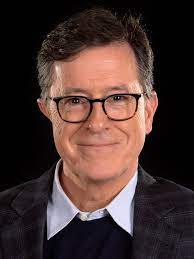
Stephen Colbert
But for all the adoring fans Colbert attracted during those years, he acquired one enemy who never forgot or forgave the slightest insult. And from 2015 onward, Colbert showered him with humorous, deadly accurate insults calculated to get under his paper-thin skin and stay there.
That enemy was Donald J. Trump.
Colbert started throwing thousands of barbs at Trump immediately after the real estate mogul launched his first campaign for President on June 16, 2015. These focused on Trump’s appearance, intelligence, family, policy shifts, criminality, legal troubles and commercial ventures.
Among the barbs:
- “It’s true, this [Iran] war reached all of its objectives. It’s been weeks since anyone mentioned the Epstein files.”
- After Trump threatened to destroy Iran but then agreed to a brief pause, Colbert paraphrased John Lennon’s famous peace anthem, singing: “All we are saying, is peace for two weeks.”
- “For my MAGA viewers. The Trump golden cell phone has FINALLY arrived after a nine month delay. And it SUCKS. The only Trump item more disappointing after a nine-month wait was Eric!”
- Colbert often joked about Trump’s short attention span, comparing his mind to “nature’s most cunning opponent, the goldfish.”
- Following Trump’s 34 felony convictions on May 30, 2024, for falsifying business records, Colbert joked that Trump had “more felonies than Baskin-Robbins has flavors.”

Donald Trump
Colbert had a biting wit that never flinched at speaking truth to—and about—power. But Trump had a weapon that Colbert couldn’t match: Command of the Federal Communications Commission (FCC).
And in its chair, Brendan Carr, he had a crony willing to destroy any network that dared to offend his thin-skinned boss, Donald Trump.
Knowing Trump’s animosity toward nonwhites, Carr has brutally attacked any network-related company promoting Diversity, Equity and Inclusion (DEI). He ordered investigations into Comcast and the Walt Disney Company and threatened to revoke ABC’s broadcast license over the practices.
On September 10, 2025, Right-wing propagandist Charlie Kirk was shot at Utah Valley University in Orem, Utah.
In September 2025, Carr pressured Disney, which owns ABC, to suspend comedian Jimmy Kimmel over comments he had made about the assassination. On September 17, Disney caved and suspended Kimmel.

Brendan Carr
Kimmel had actually called the murder “senseless.” What enraged Right-wing Americans was Kimmel’s noting that “the MAGA gang is desperately trying to characterize this kid who murdered Charlie Kirk as anything other than one of them and doing everything they can to score political points from it.”
This was actually true—and all the more embarrassing to Republicans because of it. The Trump administration and its MAGA cult have tried to portray Tyler Robinson, the man accused of shooting Kirk, as a radical liberal.
He is not.
Debbie Robinson, his grandmother, said most of the family are Republicans—and that Tyler’s father, Matt, is a staunch supporter of Donald Trump.
Disney/ABC reinstated The Jimmy Kimmel Show on September 23 after a massive public backlash, a steep drop in Disney’s stock value, and a widespread Hollywood boycott.
Unable to remove Kimmel, Carr moved on against Colbert in a more subtle manner.
He knew that Paramount Global wanted to merge with Skydance Media. And Paramount is the parent company of CBS Network, which hosted The Late Show With Stephen Colbert.

Jimmy Kimmel
Paramount had recently paid Trump $16 million to settle a lawsuit he had brought against the CBS news show, 60 Minutes. He claimed that it had misleadingly edited a pre-election interview with then Vice President Kamala Harris to boost her election chances in 2024. CBS’ attorneys and a number of legal experts had said that the lawsuit was “completely without merit.”
On July 14, 2025, after returning from a multi-week break, Colbert said: “While I was on vacation, my parent corporation, Paramount, paid Donald Trump a $16 million settlement over his ‘60 Minutes’ lawsuit.
“As someone who has always been a proud employee of this network, I am offended. And I don’t know if anything will ever repair my trust in this company, but just taking a stab at it, I’d say $16 million would help.
“I believe this kind of complicated financial settlement with a sitting government official has a technical name in legal circles—it’s big fat bribe.”
Colbert didn’t know it, but the axe was about to fall.
ABC NEWS, ADOLF HITLER, ADVICE, ALTERNET, AMERICABLOG, AP, BABY BOOMER RESISTANCE, BAY OF PIGS, BBC, BENITO MUSSOLINI, BLOOMBERG NEWS, BUZZFEED, CAESARE BORGIA, CBS NEWS, CNN, CORPORATIONS, CROOKS AND LIARS, CUBA, DAILY KOS, DAILY KOZ, FIDEL CASTRO, FIVETHIRTYEIGHT, FLORENCE, HARPER’S MAGAZINE, HUFFINGTON POST, JOHN F. KENNEDY, JOSEPH STALIN, KING PERSEUS OF MACEDON, MEDIA MATTERS, MOTHER JONES, MOVEON, MSNBC, NAZI-SOVIET "NON-AGGRESSION PACT", NBC NEWS, NEW REPUBLIC, NEWSDAY, NEWSWEEK, NICCOLO MACHIAVELLI, NPR, PBS NEWSHOUR, POLITICO, POLITICS, POLITICUSUSA, POPE JULIUS 11, RAW STORY, REUTERS, SALON, SEATTLE TIMES, SLATE, TALKING POINTS MEMO, THE ATLANTIC, THE CHICAGO SUN-TIMES, THE CHICAGO TRIBUNE, THE DAILY BEAST, THE DAILY BLOG, THE DISCOURSES, THE GUARDIAN, THE HILL, THE HUFFINGTON POST, THE INTERCEPT, THE LOS ANGELES TIMES, THE NATION, THE NEW REPUBLIC, THE NEW YORK TIMES, THE NEW YORKER, THE PRINCE, THE SS, THE VILLAGE VOICE, THE WASHINGTON POST, THINKPROGRESS, THIRD REICH, TIME, TRUTHDIG, TRUTHOUT, TWITTER, U.S. NEWS & WORLD REPORT, UKRAINE, UPI, USA TODAY, VLADIMIR PUTIN, VOLODYMYR ZELENSKY, WEHRMACHT, WORLD WAR 11
In Bureaucracy, Business, History, Military, Politics, Social commentary on May 22, 2026 at 12:05 am
Ask the average person, “What do you think of Niccolo Machiavelli?” and he’s likely to say: “The devil.”
In fact, “The Old Nick” became an English term used to describe Satan and slander Machiavelli at the same time.

Niccolo Machiavelli
The truth, however, is more complex. Machiavelli was a passionate Republican, who spent most of his adult life in the service of his beloved city-state, Florence.
The years he spent as a diplomat were tumultuous ones for Italy—with men like Pope Julius II and Caesare Borgia vying for power and plunging Italy into one bloodbath after another.
Florence, for all its wealth, lacked a strong army, and thus lay at the mercy of powerful enemies, such as Borgia. Machiavelli often had to use his wits to keep them at bay.
Machiavelli is best-known for his writing of The Prince, a pamphlet on the arts of gaining and holding power. Its admirers have included Benito Mussolini and Joseph Stalin.
But his longer and more thoughtful work is The Discourses, in which he offers advice on how to maintain liberty within a republic. Among its admirers were many of the men who framed the Constitution of the United States.
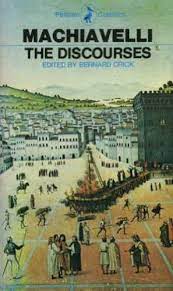


Most people believe that Machiavelli advocated evil for its own sake.
Not so. Rather, he recognized that sometimes there is no perfect—or perfectly good—solution to a problem.
Sometimes it’s necessary to take stern—even brutal—action to stop an evil (such as a riot) before it becomes widespread:
“A man who wishes to make a profession of goodness in everything must inevitably come to grief among so many who are not good. And therefore it is necessary for a prince, who wishes to maintain himself, to learn how not to be good, and to use this knowledge and not use it, according to the necessity of the case.”
His counsel remains as relevant today as it did during his lifetime (1469 – 1527). This is especially true for politicians—and students of political science.
But plenty of ordinary citizens can also benefit from the advice he has to offer—such as those in business who are asked to give advice to more powerful superiors.
Machiavelli warns there is danger in urging rulers to take a particular course of action: “For men only judge of matters by the result, all the blame of failure is charged upon him who first advised it, while in case of success he receives commendations. But the reward never equals the punishment.”
This puts would-be counselors in a difficult position: “If they do not advise what seems to them for the good of the republic or the prince, regardless of the consequences to themselves, then they fail to do their duty.
“And if they do advise it, then it is at the risk of their position and their lives, for all men are blind in thus, that they judge of good or evil counsels only by the results.”
Thus, Machiavelli warns that an adviser should “take things moderately, and not to undertake to advocate any enterprise with too much zeal, but to give one’s advice calmly and modestly.”
The person who asked for the advice may follow it, or not, as of his own choice, and not because he was led or forced into it by the adviser.
Above all, the adviser must avoid the danger of urging a course of action that runs “contrary to the wishes of the many.
“For the danger arises when your advice has caused the many to be contravened. In that case, when the result is unfortunate, they all concur in your destruction.”
Or, as President John F. Kennedy famously said after the disastrous invasion of Cuba at the Bay of Pigs in April, 1961: “Victory has a hundred fathers and defeat is an orphan.”
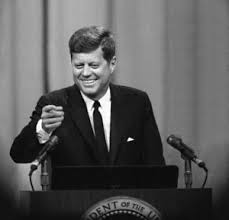
John F. Kennedy
By “not advocating any enterprise with too much zeal,” the adviser gains two advantages:
“The first is, you avoid all danger.
“And the second consists in the great credit which you will have if, after having modestly advised a certain course, your counsel is rejected, and the adoption of a different course results unfortunately.”
Finally, the time to give advice is before a catastrophe occurs, not after. Machiavelli gives a vivid example of what can happen if this rule is ignored.
King Perseus of Macedon had gone to war with Paulus Aemilius—and suffered a humiliating defeat. Fleeing the battlefield with a handful of his men, he later bewailed the disaster that had overtaken him.
Suddenly, one of his lieutenants began to lecture Perseus on the many errors he had committed, which had led to his ruin.
“Traitor,” raged the king, turning upon him, “you have waited until now to tell me all this, when there is no longer any time to remedy it—” And Perseus slew him with his own hands.
Niccolo Machiavelli sums up the lesson as this:
“Thus was this man punished for having been silent when he should have spoken, and for having spoken when he should have been silent.”
Be careful that you don’t make the same mistake.
ABC NEWS, ADOLF HITLER, ALTERNET, AMERICABLOG, AP, BABY BOOMER RESISTANCE, BBC, BLOOMBERG NEWS, BLUESKY, BUZZFEED, CANADA, CBS NEWS, CLAUDIA SHEINBAUM PARDO, CNN, CNN'S "STARTING POINT", CROOKS AND LIARS, CZECHOSLAVAKIA, DAILY KOS, DAVID BROOKS, DEPARTMENT OF HOMELAND SECURITY, DEPARTMENT OF JUSTICE, DONALD TRUMP, EXTORTION, FBI, FIVETHIRTYEIGHT, GREENLAND, HARPER’S MAGAZINE, HUFFINGTON POST, INSIDER, IRAN, IRAN WAR, JACK SMITH, JIMMY CARTER, JUSTIN TRUDEAU, MASTADON, MEDIA MATTERS, MEXICO, MOTHER JONES, MOVEON, MSNBC, MSNBC'S "HARDBALL", NAZI GERMANY, NBC NEWS, NEGOTIATING, NEVILLE CHAMBERLAIN, NEW REPUBLIC, NEWSDAY, NEWSWEEK, NEWT GINGRICH, NICCOLO MACHIAVELLI, NPR, PANAMA, PBS NEWSHOUR, POLAND, POLITICO, POLITICUSUSA, R.I.CO. ACT, RAW STORY, REPUBLICAN PARTY, REPUBLICANS, REUTERS, ROBERT MEULLER, SALON, SEATTLE TIMES, SLATE, STRAIT OF HORMUZ, TALKING POINTS MEMO, THE ATLANTIC, THE CHICAGO SUN-TIMES, THE CHICAGO TRIBUNE, THE DAILY BEAST, THE DAILY BLOG, THE GUARDIAN, THE HAMILTON PROJECT, THE HILL, THE HUFFINGTON POST, THE LOS ANGELES TIMES, THE NATION, THE NEW REPUBLIC, THE NEW YORK TIMES, THE NEW YORKER, THE PENTAGON, THE PRINCE, THE VILLAGE VOICE, THE WASHINGTON POST, THINKPROGRESS, TIME, TRUTHDIG, TRUTHOUT, TWO POLITICAL JUNKIES, U.S. NEWS & WORLD REPORT, UKRAINE, UPI, USA TODAY, VLADIMIR PUTIN, VOLODMYR ZELENSKY, WONKETTE, WORLD WAR 11, X
In Bureaucracy, Business, History, Military, Politics, Social commentary on April 20, 2026 at 12:05 am
The “negotiating” methods of German Fuhrer Adolf Hitler serve as a useful guide to what domestic and world leaders can expect from trying to reach an agreement with President Donald Trump.
In September, 1938, seven months after seizing Austria, Hitler gave another exhibition of his “negotiating” methods.
This time, the target of his aggression was Czechoslovakia. Once again, he opened “negotiations” with a lie: The Czechoslovak government was trying to exterminate 3.5 million Germans living in the “Sudetenland.”
Then he threatened war: Germany would protect its citizens and halt such “oppression.”
For British Prime Minister Neville Chamberlain, the thought of another European war erupting less than 20 years after the end of World War I was simply unthinkable.
He quickly sent Hitler a telegram, offering to help resolve the crisis: “I could come to you by air and am ready to leave tomorrow. Please inform me of earliest time you can receive me, and tell me the place of the meeting. I should be grateful for a very early reply.”
[Mistake #1: Showing his willingness to placate a brutal dictator. Such men see any concessions as weakness—leading to only greater demands. Trump, like Hitler, relishes attacking those weaker than himself.]
The two European leaders met in Berchtesgaden, Germany, on September 15, 1938.
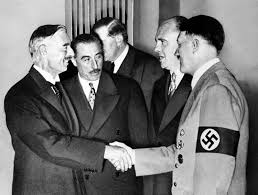
Neville Chamberlain and Adolf Hitler
Hitler denied that he had threatened war: “Force? Who speaks of force?“
Then, suddenly, he accused the Czechs of having mobilized their army in May. They had mobilized—in response to the mobilization of the German army.
“I shall not put up with this any longer,” shouted Hitler. “I shall settle this question in one way or another. I shall take matters in my own hands!”
Suddenly, Chamberlain seemed alarmed: “If I understood you right, you are determined to proceed against Czechoslovakia in any case. In the circumstances, it is best for me to return at once. Anything else now seems pointless.”
Hitler, taken aback, softened his tone and said they should consider the Sudetenland according to the principle of self-determination.
Chamberlain agreed to the cession of the Sudetenland. Three days later, French Prime Minister Edouard Daladier did the same. No Czechoslovak representative was invited to these discussions.
[Mistake #2: Instead of conceding to Hitler, which emboldened the dictator, Chamberlain should have pressed his advantage. When Hitler faced an opponent he couldn’t bribe or cow—such as British Prime Minister Winston Churchill or Soviet Premier Joseph Stalin—he raged and sulked.
[When Trump faces an opponent he can’t buy or intimidate—such as Special Counsels Robert Mueller and Jack Smith—he does the same.]
Chamberlain met Hitler again in Godesberg, Germany, on September 22 to confirm the agreements. But Hitler aimed to use the crisis as a pretext for war.
He now demanded not only the annexation of the Sudetenland but the immediate military occupation of the territories. This would give the Czechoslovak army no time to adapt their defense measures to the new borders.
To achieve a solution, Italian dictator Benito Mussolini suggested a conference of the major powers in Munich.
On September 29, Hitler, Daladier and Chamberlain met and agreed to Mussolini’s proposal. They signed the Munich Agreement, which accepted the immediate occupation of the Sudetenland.
The Czechoslovak government had not been a party to the talks. Nevertheless, it promised to abide by the agreement on September 30.
It actually had no choice. It faced the threat of an immediate German invasion after being deserted by its pledged allies: Britain, France and the Soviet Union.
[Mistake #3: Selling out an ally and making a concession to an insatiable dictator—and believing that Hitler could be trusted to keep his word.
[Just as Chamberlain sold out Czechoslovakia, Trump plans on selling out Ukraine to Russian dictator Vladimir Putin. He’s blamed Ukraine for starting the 2022 war—even though Russia invaded Ukraine.
[He’s also attacked Ukrainian President Volodymyr Zelensky—and repeatedly praised Putin. And he’s unilaterally announced that he will begin directing “peace talks” with Putin to end his war on Ukraine.]
Chamberlain returned to England a hero. Holding aloft a copy of the worthless agreement he had signed with Hitler, he told cheering crowds in London: “I believe it is peace for our time.”

Neville Chamberlain
Hitler—still planning more conquests—knew better. In March, 1939, the German army occupied the rest of Czechoslovakia.
Chamberlain would soon be seen as a naive weakling—even before bombs started falling on London.
Believing himself invincible, Hitler turned his attention—and demands—to Poland.
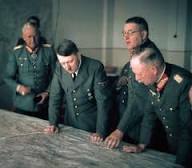
Adolf Hitler and his generals
Believing himself invincible, Trump threatened violence against Canada, Greenland and Cuba.
Hitler ordered the invasion of Poland on September 1, 1939. To his surprise, France and England honored their pledges to support Poland—triggering World War II.
On February 28, 2026, Trump—in concert with Israel–attacked Iran without warning. To his surprise, the Iranians closed the Straight of Hormuz, through which 20-30% of the world’s oil total daily oil supply passes.
Hitler couldn’t “turn off” the war he had started. He could only lash out as his enemies multiplied.
The same has proven true for Trump.
ABC NEWS, ADOLF HITLER, ALTERNET, AMERICABLOG, AP, AUSTRIA, BABY BOOMER RESISTANCE, BBC, BLOOMBERG NEWS, BLUESKY, BUZZFEED, CANADA, CBS NEWS, CLAUDIA SHEINBAUM PARDO, CNN, CNN'S "STARTING POINT", CROOKS AND LIARS, CZECHOSLAVAKIA, CZECHOSLOVAKIA, DAILY KOS, DAVID BROOKS, DEPARTMENT OF HOMELAND SECURITY, DEPARTMENT OF JUSTICE, DONALD TRUMP, EXTORTION, FBI, FIVETHIRTYEIGHT, FRANCE, GELI rAUBAL, GREECE, GREENLAND, HARPER’S MAGAZINE, HUFFINGTON POST, INSIDER, IRAN, IRAN WAR, JACK SMITH, JIMMY CARTER, JUSTIN TRUDEAU, MASTADON, MEDIA MATTERS, MEXICO, MOTHER JONES, MOVEON, MSNBC, MSNBC'S "HARDBALL", NAZI GERMANY, NBC NEWS, NEGOTIATING, NEVILLE CHAMBERLAIN, NEW REPUBLIC, NEWSDAY, NEWSWEEK, NEWT GINGRICH, NICCOLO MACHIAVELLI, NPR, PANAMA, PBS NEWSHOUR, POLAND, POLITICO, POLITICUSUSA, R.I.CO. ACT, RAW STORY, REPUBLICAN PARTY, REPUBLICANS, REUTERS, ROBERT MEULLER, SALON, SEATTLE TIMES, SLATE, STRAIT OF HORMUZ, TALKING POINTS MEMO, TARIFFS, THE ATLANTIC, THE CHICAGO SUN-TIMES, THE CHICAGO TRIBUNE, THE DAILY BEAST, THE DAILY BLOG, THE GUARDIAN, THE HAMILTON PROJECT, THE HILL, THE HUFFINGTON POST, THE LOS ANGELES TIMES, THE NATION, THE NEW REPUBLIC, THE NEW YORK TIMES, THE NEW YORKER, THE PENTAGON, THE PRINCE, THE VILLAGE VOICE, THE WASHINGTON POST, THINKPROGRESS, TIME, TRADE WARS, TRUTHDIG, TRUTHOUT, TWO POLITICAL JUNKIES, U.S. NEWS & WORLD REPORT, UKRAINE, UPI, USA TODAY, VLADIMIR PUTIN, VOLODMYR ZELENSKY, WONKETTE, WORLD WAR 11, X, YUGOSLAVIA
In Bureaucracy, Business, History, Military, Politics, Social commentary on April 17, 2026 at 12:10 am
To understand the “negotiating” style of Donald Trump, it’s essential to study that of Adolf Hitler.
Both men, dictatorial by nature, did/do not believe in compromise. Their idea of “compromise” was/is: “You do what I want—or I’ll destroy you.”
In Hitler’s case, his mania for absolute control began with the Nazi party and eventually extended to Germany. Then it reached to Austria, Czechoslovakia, Poland, Norway, Denmark, France, Greece, Yugoslavia and Russia. At least 50 million men, women and children perished in the wars he unleashed from 1939 to 1945.
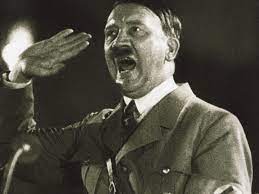
Adolf Hitler
Similarly, Trump’s mania for control started with building a real estate empire. Then it encompassed his “reality TV” show, The Apprentice—and finally politics.
He began dominating the Republican party by winning a series of Presidential primaries—and then the White House. Then came asserting control over the Justice Department and the judiciary—up to the Supreme Court.
Re-elected in 2024, he now seeks to dominate Americans, demands military control over Iran, threatens Mexico and Canada with trade wars, and Greenland and Panama with invasion.
Much can be learned about Trump’s “negotiating” methods—and what it takes to counter them—by studying those of Germany’s Fuhrer.
Robert Payne, author of the bestselling biography, The Life and Death of Adolf Hitler (1973), described Hitler’s “negotiating” style thus:
“Although Hitler prized his own talents as a negotiator, a man always capable of striking a good bargain, he was totally lacking in finesse.
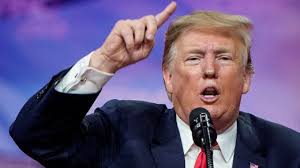
Donald Trump
“He was incapable of bargaining. He was like a man who goes up to a fruit peddler and threatens to blow his brains out if he does not sell his applies at the lowest possible price.”
What Payne writes about Hitler applies equally well to Trump.
Hitler revealed his “bargaining style” in 1938, when he invited Austrian Chancellor Kurt von Schuschnigg to his mountaintop retreat in Obersalzberg, Germany.
Hitler, an Austrian by birth, intended to annex his native land to Germany. Schuschnigg was aware of this, but felt secure in accepting the invitation. He had been assured that the question of Austrian sovereignty would not arise.
The meeting occurred on February 12, 1938.
Shuschnigg opened the discussion with a friendly compliment. Walking over to a large window, he admired the breathtaking view of the mountains.
HITLER: We haven’t come here to talk about the lovely view or the weather!
Austria has anyway never done anything which was of help to the German Reich….I am resolutely determined to make an end to all this business. The German Reich is a great power. Nobody can and nobody will interfere if it restores order on its frontiers.
[Like Hitler, Trump relies on insults and anger to put his victims on the defense.]
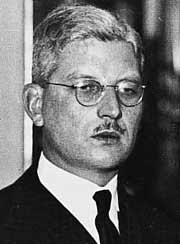
Kurt von Schuschnigg
SCHUSCHNIGG: We simply have to go on living alongside one another, the little state next to the big one. We have no other choice.
And that is why I ask you to tell me what your concrete complaints are. We will do all in our power to sort things out and establish a friendly relationship, as far as it is possible to do so.
HITLER: That’s what you say, Herr Schuschnigg. And I am telling you that I intend to clear up the whole of the so-called Austrian question—one way or another. Do you think I don’t know that you are fortifying Austria’s border with the Reich?
SCHUSCHNIGG: There can be no suggestion at all of that—
HITLER: Ridiculous explosive chambers are being built under bridges and roads—
This was a lie, and Hitler knew it was a lie. But it gave him an excuse to threaten to destroy Austria.
[For Trump, winning—not truth—is all that matters. During his first term as President, he told 30,573 lies.]
HITLER: I have only to give one command and all this comic stuff on the border will be blown to pieces overnight. You don’t seriously think you could hold me up, even for half an hour, do you?
The S.A. [Hitler’s private army of Stormtroopers] and the [Condor] lLegion [which had bombed much of Spain into rubble during the Spanish Civil War] would come in after the troops and nobody—not even I—could stop them from wreaking vengeance.
Schnuschigg made a cardinal mistake in dealing with Hitler: He showed fear. And this was precisely what the Nazi dictator looked for in an opponent.
[Like Hitler, Trump relies on fear: “Real power is—I don’t even want to use the word—fear,” he said in March 2016 when still only a candidate for President.]
Contrary to popular belief, Hitler did not constantly rage at everyone. He used rage as a weapon, knowing that most people feel intimidated by it.
In the case of Schuschnigg, Hitler opened with insults and threats at the outset of their discussion. Then there was a period of calm, to convince the Austrian chancellor the worst was over.
Finally, he once again attacked—this time with so much fury that Schuschnigg was terrified into submission.
With one stroke of a pen, Austria became a vassal-state to Nazi Germany.
[Like Hitler, Trump threatens only those he feels are weak—thus his threats to use military force against Canada, Greenland and Panama.]
2025 FEDERAL GOVERNMENT SHUTDOWN, ABC NEWS, AFFORDABLE CARE ACT, ALTERNET, AMERICABLOG, AP, BABY BOOMER RESISTANCE, BLOOMBERG, BUZZFEED, CAMILLUS, CBS NEWS, CHRISTOPHER SWANSON, CNN, CROOKS AND LIARS, DAILY KOS, DEREK CHAUVIN, DONALD TRUMP, FIVETHIRTYEIGHT, FLINT TOWNSHIP, GEORGE FLOYD, HARPER’S MAGAZINE, LOS ANGELES, MARCUS FURIUS, MEDIA MATTERS, MEDICARE, MOTHER JONES, MOVEON, MSNBC, NBC NEWS, NEW YORK CITY, NEWSWEEK, NICCOLO MACHIAVELLI, NPR, ONE BIG BEAUTIFUL BILL, PBS NEWSHOUR, POLITICO, POLITICUSUSA, RAW STORY, REPUBLICANS, REUTERS, SALON, SAN FRANCISCO, SEATTLE TIMES, SLATE, ST. JOHN’S CHURCH, TALKING POINTS MEMO, THE ATLANTIC, THE CHICAGO SUN-TIMES, THE CHICAGO TRIBUNE, THE DAILY BEAST, THE DAILY BLOG, THE DISCOURSES, THE GUARDIAN, THE HILL, THE HUFFINGTON POST, THE LOS ANGELES TIMES, THE NATION, THE NEW REPUBLIC, THE NEW YORK TIMES, THE VILLAGE VOICE, THE WASHINGTON POST, THINKPROGRESS, TIME, TRUTHDIG, TRUTHOUT, TWO POLITICAL JUNKIES, U.S. NEWS & WORLD REPORT, UPI, USA TODAY, WONKETTE, X
In Bureaucracy, History, Law Enforcement, Politics, Social commentary on April 16, 2026 at 12:17 am
Throughout his first term as President, “Do what I want—or I’ll destroy you!” proved Donald Trump’s go-to method of “negotiation.” And it has remained so since re-taking office on January 20, 2025.
On February 28, Trump—in concert with Israel—launched a series of devastating, unprovoked airstrikes against Iran.
Asked by a reporter how long the war would last, Trump arrogantly replied: “Any time I want it to end, it will end.”
But then Iran closed the Strait of Hormuz, through which 20% to 30% of the world’s total daily oil supply passes.
Gas prices in the United States immediately rose. Analysts warned that if the disruption continued, gasoline prices could exceed $5 per gallon.
Fearing this posed a direct threat to Repbublicans’ holding control of Congress in the upcoming midterm elections, on Easter Sunday Trump posted on his website, Truth Social:
“Tuesday [April 7] will be Power Plant Day, and Bridge Day, all wrapped in one, in Iran. There will be nothing like it!!! Open the Fuckin’ Strait, you crazy bastards, of you’ll be living in Hell – JUST WATCH! Praise be to Allah.”
Legal experts and international organizations such as Amnesty International warned that attacking civilian infrastructure would constitute war crimes under international law.
In less than 24 hours, American pilots would be forced to decide: “Do we want to become war criminals?”
But there are humane ways to wield power, and these usually leave feelings of lasting gratitude—if not reverence—for those who do.
Two examples follow.

Lesson #!: In Book Three, Chapter 22 of his classic masterwork, The Discourses, Niccolo Machiavelli offers the following: “An Act of Humanity Prevailed More With the Falacians Than All the Power of Rome.”
Marcus Furius Camillus, a Roman general, was besieging the city of the Faliscians, and had surrounded it. A teacher charged with educating the children of some of the city’s noblest families decided to ingratiate himself with Camillus by leading them into the Roman camp.
As Roman hostages, they could be used to compel the city to surrender.
Camillus not only declined the offer but went one step further. He ordered the teacher stripped and his hands tied behind his back. Then Camillus had a rod put into the hands of each of the children and directed them to whip the teacher all the way back to the city.
Upon learning this, the citizens of Faliscia were so much touched by the humanity and integrity of Camillus, that they surrendered the place to him without any further defense.
Summing up the meaning of this, Machiavelli writes: “This example shows that an act of humanity and benevolence will at all times have more influence over the minds of men than violence and ferocity. It also proves that provinces and cities which no armies…could conquer, have yielded to an act of humanity, benevolence, chastity or generosity.
“…History also shows us how much the people desire to find such virtues in great men, and how much they are extolled by historians and biographers of princes….Amongst these, Xenophon takes great pains to show how many victories, how much honor and fame, Cyrus gained by his humanity and affability, and by his not having exhibited a single instance of pride, cruelty or luxuriousness, nor of any of the other vices that are apt to stain the lives of men.”
Niccolo Machiavelli
This lesson—recorded by a master political scientist and practitioner of Realpolitik—remains highly relevant today.
Lesson #2: On May 25, 2020, George Floyd, a black unemployed restaurant security guard, was murdered by Derek Chauvin, a white Minneapolis police officer. While Floyd was handcuffed and lying face down on a city street during an arrest, Chauvin kept his knee on the right side of Floyd’s neck for eight minutes and 46 seconds.
Cities across the United States erupted in mass protests over Floyd’s death—and police killings of black victims generally. Most of these demonstrations proved peaceful.
But cities such as Los Angeles, San Francisco and New York City saw stores looted, vandalized and/or burned.
In response, President Donald Trump called for harsh policing, telling governors in a nationwide conference call that they must “dominate” protesters or be seen as “weak.”
To drive home his point, Trump ordered police and National Guard troops to violently remove peaceful protesters from Lafayette Square, which borders St. John’s Church near the White House.
The purpose of the removal: To allow Trump to have a photo opportunity outside the church.
Contrast that with the example of Sheriff Christopher Swanson of Genesee County, Michigan.

Sheriff Christopher Swanson
Confronting a mass of aroused demonstrators in Flint Township on May 30, Swanson responded: “We want to be with you all for real.”
So Swanson took his helmet off. His deputies laid their batons down.
“I want to make this a parade, not a protest. So, you tell us what you need to do.”
“Walk with us!” the protesters shouted.
“Let’s walk, let’s walk,” said Swanson.
Cheering and applause resounded.
“Let’s go, let’s go,” Swanson said as he and the cheering crowd proceeded. “Where do you want to walk? We’ll walk all night.”
And Swanson and his fellow officers walked in sympathy with the protesters.
No rioting followed.
ABC NEWS, ADOLF HITLER, AFFORDABLE CARE ACT (ACA), ALTERNET, AMERICABLOG, AP, AUSTRIA, BABY BOOMER RESISTANCE, BBC, BELGIUM, BLOOMBERG, BLUESKY, BOB WOODWARD, BUZZFEED, CARL BERNSTEIN, CBS NEWS, CHINA, CIA, CNN, CONSPIRACIES, CROOKS AND LIARS, CUBA, CZECHOSLOVAKIA, DAILY KOS, DONALD TRUMP, FBI, FEDERAL GOVERNMENT SHUTDOWN, FIDEL CASTRO, FIVETHIRTYEIGHT, FRANCE, FRANCISCO FRANCO, GAIUS CALIGULA, GAIUS SUETONIUS TRANQUILLUS, GREECE, HARPER’S MAGAZINE, HOLOCAUST, HUFFINGTON POST, IMMIGRATION AND CUSTOMS ENFORCEMENT (ICE), JANUARY 6 COUP ATTEMPT, JIMMY KIMMEL, JOSEPH STALIN, KFC, LAVRENTI BERIA, LEON TROTSKY, LETITIA JAMES, MACDONALD’S, MAO ZEDONG, MEDIA MATTERS, MOTHER JONES, MOVEON, MSNBC, NAZI GERMANY, NBC NEWS, NEWSDAY, NEWSWEEK, NICCOLO MACHIAVELLI, NIKITA KHRUSHCHEV, NORWAY, NPR, PAUL VON HINDENBURG, PBS NEWSHOUR, POLITBURO, POLITICO, POLITICUSUSA, RAW STORY, REPUBLICANS, REUTERS, ROBERT PAYNE, SALON, SEATTLE TIMES, SLATE, SOVIET UNION, SPAIN, TALKING POINTS MEMO, THE ATLANTIC, THE CHICAGO SUN-TIMES, THE CHICAGO TRIBUNE, THE DAILY BEAST, THE DAILY BLOG, THE DAILY KOS, THE DISCOURSES ON LIVY (BOOK), THE GUARDIAN, THE HILL, THE HUFFINGTON POST, THE INTERCEPT, THE LOS ANGELES TIMES, THE NATION, THE NEW REPUBLIC, THE NEW YORK TIMES, THE NEW YORKER, THE RISE AND FALL OF STALIN (BOOK), THE VILLAGE VOICE, THE WASHINGTON POST, THINKPROGRESS, TIME, TRUTHDIG, TRUTHOUT, TWO POLITICAL JUNKIES, U.S. NEWS & WORLD REPORT, UNITED STATES, UNITED STATES DEPARTMENT OF JUSTICE, UPI, USA TODAY, Vladimir Lenin, VYACHESLAV MOLOTOV, WATERGATE, WORLD WAR 1, WORLD WAR 11, X, YUGOSLAVIA
In Bureaucracy, History, Law, Law Enforcement, Military, Politics, Social commentary on April 13, 2026 at 12:07 am
A dictator can die of illness or old age.
But there are other ways a tyrant can be forced to give up power—such as Gaius Caligula, Adolf Hitler and—possibly—Joseph Stalin.
Death by Fellow Bureaucrat
Joseph Stalin ruled as absolute dictator of the Soviet Union from January 21, 1924, to March 5, 1953—29 years.
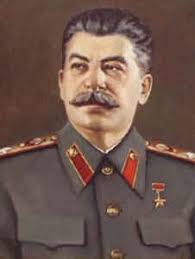
Joseph Stalin
Throughout his nearly 30-year reign over the Soviet Union, at least 20 million men, women and children died—from executions, deportations, imprisonment in Gulag camps, and a man-made famine through the forced collection of harvests.
Robert Payne, the acclaimed British historian, vividly portrayed the crimes of this murderous tyrant in his brilliant 1965 biography, The Rise and Fall of Stalin.
According to Payne, Stalin was planning yet another purge during the last weeks of his life. This would be “a holocaust greater than any he had planned before.
“This time there would be a chistka [purge] to end all chistkas, a purging of the entire body of the state from top to bottom. No one, not even the highest officials, was to be spared.”
Then, on March 5, 1953, Stalin died—officially from a cerebral hemorrhage.
He was 73 and in poor health from a lifetime of smoking, drinking and little exercise. But he could have died of unnatural causes.
In the 2004 book, Stalin’s Last Crime, Vladimir P. Naumov, a Russian historian, and Jonathan Brent, a Yale University Soviet scholar, assert that he might have been poisoned.
If this happened, the occasion was during a final dinner with four members of the Politburo. Two of these were Lavrenti P. Beria, chief of the secret police, and Nikita S. Khrushchev, who eventually succeeded Stalin.
The authors believe that, if Stalin was poisoned, the most likely suspect was Beria. The method: Slipping warfarin, a tasteless and colorless blood thinner also used as a rat killer, into his glass of wine.
In Nikita Khrushchev’s 1970 memoirs, he quotes Beria as telling Vyacheslav M. Molotov, another Politburo member, two months after Stalin’s death: “I did him in! I saved all of you.”
It’s entirely possible that Donald Trump’s “Presidency-for-Life” may end by natural causes.
He’s 79, and despite his repeated boastings that he’s the healthiest President in United States history, clearly he isn’t.
He is grotesquely overweight, doesn’t exercise, falls asleep in public appearances and slurs his words. Much of his diet consists of greasy, artery-clogging fast food—such as from McDonald’s and KFC.
He stays up late at night, pouring out his hatred for countless real and imagined enemies on his website, Truth Social.
But that is not the only way his reign could disappear in other ways:
- The Vice President and a majority of the Cabinet could invoke the Twenty-Fifth Amendment to the United States Constitution. This allows the removal of the President when he is “unable to discharge the powers and duties of his office.” The Vice President then becomes President.
- Within the Senate and House of Representatives, Republicans could stop backing his every infamy and secure his impeachment and conviction.
- Generals could protest publicly Trump’s attacks on their intelligence and even patriotism—or his racist and sexist firings of professional military officers.
- FBI agents could initiate their own unofficial investigations of Trump’s crimes and leak those results to the press. It was through such leaks that Bob Woodward and Carl Bernstein brought down Richard Nixon.
* * * * * * * * * *
More than 500 years ago, Niccolo Machiavelli, the Florentine statesman, authored The Discourses on Livy, a work of political history and philosophy. In it, he outlined how citizens of a republic can maintain their freedoms.
One of the longest chapters—Book Three, Chapter Six—covers “Of Conspiracies.” In it, those who wish to conspire against a ruler will find highly useful advice. And so will those who wish to foil such a conspiracy.
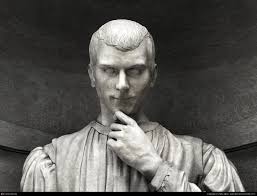
Niccolo Machiavelli
Above all, he notes how important it is for rulers to make themselves loved—or at least respected—by their fellow citizens:
“Note how much more praise those Emperors merited who, after Rome became an empire, conformed to her laws like good princes, than those who took the opposite course.
“Titus, Nerva, Trajan, Hadrian, Antoninus and Marcus Auelius did not require the Praetorians nor the multitudinous legions to defend them, because they were protected by their own good conduct, the good will of the people, and by the love of the Senate.
“On the other hand, neither the Eastern nor the Western armies saved Caligula, Nero, Vitellius and so many other wicked Emperors from the enemies which their bad conduct and evil lives had raised up against them.”
In his better-known work, The Prince, Machiavelli warns rulers who—like Donald Trump–are inclined to rule by fear:
“A prince should make himself feared in such a way that if he does not gain love, he at any rate avoids hatred: for fear and the absence of hatred may well go together.”
By Machiavelli’s standards, Trump has made himself the perfect target for a conspiracy:
“When a prince becomes universally hated, it is likely that he’s harmed some individuals—who thus seek revenge. This desire is increased by seeing that the prince is widely loathed.”
ABC NEWS, ADOLF HITLER, AFFORDABLE CARE ACT (ACA), ALTERNET, AMERICABLOG, AP, AUSTRIA, BABY BOOMER RESISTANCE, BBC, BELGIUM, BLOOMBERG, BLUESKY, BOB WOODWARD, BUZZFEED, CARL BERNSTEIN, CBS NEWS, CHINA, CNN, CONSPIRACIES, CROOKS AND LIARS, CUBA, CZECHOSLOVAKIA, DAILY KOS, DONALD TRUMP, FBI, FEDERAL GOVERNMENT SHUTDOWN, FIDEL CASTRO, FIVETHIRTYEIGHT, FRANCE, FRANCISCO FRANCO, GAIUS CALIGULA, GAIUS SUETONIUS TRANQUILLUS, GREECE, HARPER’S MAGAZINE, HOLLAND, HOLOCAUST, HUFFINGTON POST, IMMIGRATION AND CUSTOMS ENFORCEMENT (ICE), JANUARY 6 COUP ATTEMPT, JIMMY KIMMEL, JOSEPH STALIN, KFC, LAVRENTI BERIA, LEON TROTSKY, LETITIA JAMES, MACDONALD’S, MAO ZEDONG, MEDIA MATTERS, MOTHER JONES, MOVEON, MSNBC, NAZI GERMANY, NBC NEWS, NEWSDAY, NEWSWEEK, NICCOLO MACHIAVELLI, NIKITA KHRUSHCHEV, NORWAY, NPR, NSA, PAUL VON HINDENBURG, PBS NEWSHOUR, POLITBURO, POLITICO, POLITICUSUSA, RAW STORY, REPUBLICANS, REUTERS, ROBERT PAYNE, SALON, SEATTLE TIMES, SLATE, SOVIET UNION, SPAIN, TALKING POINTS MEMO, THE ATLANTIC, THE CHICAGO SUN-TIMES, THE CHICAGO TRIBUNE, THE DAILY BEAST, THE DAILY BLOG, THE DAILY KOS, THE DISCOURSES ON LIVY (BOOK), THE GUARDIAN, THE HILL, THE HUFFINGTON POST, THE INTERCEPT, THE LOS ANGELES TIMES, THE NATION, THE NEW REPUBLIC, THE NEW YORK TIMES, THE NEW YORKER, THE RISE AND FALL OF STALIN (BOOK), THE VILLAGE VOICE, THE WASHINGTON POST, THINKPROGRESS, TIME, TRUTHDIG, TRUTHOUT, TWO POLITICAL JUNKIES, U.S. NEWS & WORLD REPORT, UNITED STATES, UNITED STATES DEPARTMENT OF JUSTICE, UPI, USA TODAY, Vladimir Lenin, VYACHESLAV MOLOTOV, WATERGATE, WORLD WAR 1, WORLD WAR 11, X, YUGOSLAVIA
In Bureaucracy, History, Law, Law Enforcement, Military, Politics, Social commentary on April 10, 2026 at 12:16 am
A dictator can die of illness or old age. That’s what happened to Francisco Franco (Spain), Mao Zedong (China) and Fidel Castro (Cuba).
But there are other ways a tyrant can be forced to give up power—such as the following three.
Death by Bodyguards
First up: Gaius Caligula, the “Mad Emperor” of Imperial Rome.
Caligula’s reign spanned March 18, 37 A.D. to January 24, 41 A.D.—four years.

Gaius Caligula
Carole Raddato from FRANKFURT, Germany, CC BY-SA 2.0 <https://creativecommons.org/licenses/by-sa/2.0>, via Wikimedia Commons
He became Emperor in 37 A.D. after succeeding the Emperor Tiberius, his uncle who had adopted him as a son after his father died.
Caligula’s reign began well—and popularly. He gave Tiberius a magnificent funeral—then recalled to Rome all those whom Tiberius had banished, and ignored all charges that Tiberius had leveled against them.
He gave bonuses to the military and allowed the magistrates unrestricted jurisdiction, without appeal to himself.
But in October 37 A.D. he fell seriously ill or perhaps was poisoned.
Caligula soon recovered but emerged a changed man. He began claiming to be a god, and killing or exiling anyone he saw as a threat. He ordered his victims tortured to death with many slight wounds: “Strike so that he may feel that he is dying.”
Among his litany of crimes, according to his biographer, Gaius Suetonius Tranquillus:
“He forced parents to attend the executions of their sons, sending a litter for one man who pleaded ill health, and inviting another to dinner immediately after witnessing the death, and trying to rouse him to gaiety and jesting by a great show of affability.”
For all his cruelty and egomania, the trait that finally destroyed Caligula was his joy in humiliating others.
His fatal mistake was to taunt Cassius Chaerea, a member of his own bodyguard. Caligula considered Chaerea effeminate because of a weak voice and mocked him with names like “Priapus” and “Venus.”
On January 22 41 A.D. Chaerea and several other bodyguards hacked Caligula to death with swords before other guards could save him.
Death by Suicide
Next up: Adolf Hitler, dictator of Nazi Germany from January 30, 1933, to April 30, 1945—12 years.
He was born on April 20, 1889, in Braunau am Inn in Austria-Hungary.
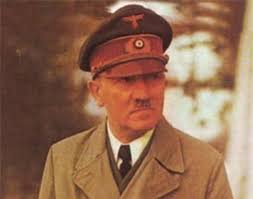
Adolf Hitler
He was appointed Chancellor—chief law enforcement officer—of Germany on January 30, 1933, by President Paul von Hindenburg. Upon Hindenburg’s death in 1934, Hitler assumed the Presidency and established himself as absolute dictator.
From 1933 to 1939 he presided over Germany’s rapid economic recovery from the Great Depression, the defiance of restrictions imposed on Germany after World War 1, and the annexation of Austria and Czechoslovakia, where millions of ethnic Germans lived.
These accomplishments won him widespread popular support.
But after absorbing Czechoslovakia in 1938, Hitler felt himself invincible. On September 1, 1939, his armies attacked Poland—and unintentionally ignited World War II.
After conquering Norway, Denmark, Holland, Belgium, France, Greece and Yugoslavia, he made his two greatest mistakes of the war: He invaded the far more powerful Soviet Union on June 22, 1941, and declared war on the equally more powerful United States on December 11.
Parallel to unleashing a war that slaughtered 50 million people, Hitler orchestrated the extermination of at least six million Jews during the Holocaust.
By April, 1945, Germany faced destruction from the advancing Russians on the East, and from the advancing Americans on the West.
On April 30, with Russian forces only blocks from his underground bunker, Hitler lifted a heavy 7.65mm Walther PPK pistol to his right temple, bit on a cyanide capsule, and pulled the trigger.
Just as Caligula’s mangled remains were hastily burned and buried in the Horti Lamiani gardens, Hitler’s body was hastily cremated in the Reich Chancellery garden.
Last up: Joseph Stalin, dictator of the Soviet Union from January 21, 1924, to March 5, 1953—29 years.
Born on December 18, 1878, in Georgia, Russia, he hated Czarist rule and in 1903 joined the Communist Bolsheviks party, led by Vladimir Lenin, to overthrow it.
Joseph Stalin
On November 7, 1917, Lenin overthrew the Provisional Government, which had taken power in February, after Czarist rule collapsed.
Stalin became a member of the new Soviet government, gradually working his way to the position of General Secretary. When Lenin died on January 21, 1924, Stalin outmaneuvered Leon Trotsky, his major rival for the succession, and became absolute dictator.
Starting in 1934, a series of massive purges followed—most notably between August, 1936, and March, 1938.
Throughout his nearly 30-year reign over the Soviet Union, at least 20 million men, women and children died—from executions, deportations, imprisonment in Gulag camps, and a man-made famine through the forced collection of harvests.
Robert Payne, the acclaimed British historian, vividly portrayed the crimes of this murderous tyrant in his brilliant 1965 biography, The Rise and Fall of Stalin.
According to Payne, Stalin was planning yet another purge during the last weeks of his life. This would be “a holocaust greater than any he had planned before.
“This time there would be a chistka [purge] to end all chistkas, a purging of the entire body of the state from top to bottom. No one, not even the highest officials, was to be spared.”
Yet Stalin did nothing to calm their fears. He often summoned his “comrades” to the Kremlin for late-night drinking bouts, where he freely humiliated them.


ABC NEWS, ALAMO, ALIEN-SMUGGLING RINGS, ALTERNET, ALVARO OBREGON, AMERICABLOG, AMNEXTY INTERNATIONAL, ANCHOR BABIES, ANTONIO LOPEZ DE SANTA ANNA, AP, ARIZONA, BABY BOOMER RESISTANCE, BARACK OBAMA, BARBARA LEE, BBC, BLOOMBERG, BLOOMBERG NEWS, BREXIT, BUREAU OF CUSTOMS AND BORDER PROTECTION, BUZZFEED, CALIFORNIA, CBS NEWS, CHICAGO, CNN, COLORADO, CORRUPTION, CROOKS AND LIARS, CUBA, DAILY KOS, DAILY KOZ, DAVID CROCKETT, DEMOCRATIC PARTY, DEMOCRATS, DONALD TRUMP, DREAM ACT, DRUDGE REPORT, EMILIANO ZAPATA, ENGLISH LANGUAGE, ERIC ADAMS, EUROPEAN UNION (EU), FEDERATION FOR AMERICAN IMMIGRATION REFORM (FAIR), FELIPE CALDERON, FIVETHIRTYEIGHT, FLORIDA, FRANCISCO "PANCHO" VILLA, FRANCISCO MADERO, GOLIAD MASSACRE, GREG ABBOTT, HARPER’S MAGAZINE, HILLARY CLINTON, HISPANICS, HUFFINGTON POST, ILLEGAL ALIENS, illegal immigration, IMMIGRATIONS AND CUSTOMS ENFORCEMENT (ICE), JAMES BOWIE, JEFF SESSIONS, MEDI-CAL, MEDI-CAL INSURANCE PROGRAM, MEDIA MATTERS, MEXICAN REVOLUTION, MEXICAN WAR, MEXICO, MEXICO CITY, MIGRANT CARRAVAN, MOSES AUSTIN, MOTHER JONES, MOVEON, MSNBC, NBC NEWS, NEVADA, NEW MEXICO, NEW REPUBLIC, NEW YORK CITY, NEWSDAY, NEWSWEEK, NEWT GINGRICH, NICARAGUA, NICCOLO MACHIAVELLI, NPR, PANCHO VILLA, PAUL RYAN, PBS NEWSHOUR, POLITICAL CORRECTNESS, POLITICO, POLITICUSUSA, RACIAL PROFILING, RAW STORY, REPUBLICAN PARTY, REPUBLICANS, REUTERS, ROBERT FROST, SALON, SAM HOUSTON, SAN JACINTO, SCHOOLS, SEATTLE TIMES, SLATE, SLAVERY, STEPHEN AUSTIN, TALKING POINTS MEMO, TEXAS, THE ATLANTIC, THE CHICAGO SUN-TIMES, THE CHICAGO TRIBUNE, THE DAILY BEAST, THE DAILY BLOG, THE DAILY MAIL, THE DISCOURSES, THE GUARDIAN, THE HILL, THE HUFFINGTON POST, THE INTERCEPT, THE LOS ANGELES TIMES, THE NATION, THE NEW REPUBLIC, THE NEW YORK TIMES, THE NEW YORKER, THE VILLAGE VOICE, THE WALL STREET JOURNAL, THE WASHINGTON POST, THINKPROGRESS, THOMAS HOMAN, TIJUANA, TIME, TRUTHDIG, TRUTHOUT, TWO POLITICAL JUNKIES, U.S. NEWS & WORLD REPORT, U.S. SUPREME COURT, UNITED KINGDOM (UK), UNITED STATES DEPARTMENT OF JUSTICE, UNITED STATES HEALTH AND HUMAN SERVICES DEPARTMENT, UPI, USA TODAY, UTAH, VENEZUELA, VENUSTIANO CARRANZA, WAL-MART, WASHINGTON D.C., WONKETTE
ILLEGAL ALIENS–THE WORLD’S UNWANTEDS: PART ONE (OF FIVE)
In Bureaucracy, Business, History, Law, Law Enforcement, Medical, Military, Politics, Social commentary on July 3, 2026 at 12:06 am“Good fences make good neighbors.”
Robert Frost penned those famous words in his 1914 poem, “Mending Wall.”
For millions of Americans, illegal immigration was the issue empowering the candidacy of Donald Trump to regain the Presidency in 2024.
For them, Frost’s opening line has become gospel: “Something there is that truly loves a wall.”
A September 16, 2022 article in The Daily Mail headlined:
“America’s $78B Bill for Teaching Schoolkids With Poor English is Rising by BILLIONS in Biden-era Immigration Surge, Study Says, and 76,000 New Language Instructors Are a Tall Order in a Teacher Shortage.”
Among its findings:
These alarming statistics were produced by a study from the Federation for American Immigration Reform (FAIR).
The 5.1 million students lacking English language skills need help in all their classes.
As a result, it costs 15 to 20 percent more to educate them than American-born students who grow up learning English.
Illegal aliens climbing over the border fence
With the United States facing a severe teacher shortage, some states have lowered their hiring rules to recruit teachers with only a high school diploma.
In 2020, the 5.1 million illegal alien students in public schools cost American taxpayers $78 billion—an $18.8 billion jump from the cost in 2016.
Of those students, 1.15 million were in California, costing the state $19.5 billion. One million more lived in Texas, costing that state $11.4 billion. And 278,000 lived in Florida, at a cost of $3.1 billion.
Only 370,000 teachers nationwide are trained to teach them, and 76,000 more will be needed during the next five years.
Immigration remains a highly divisive issue among Americans. “Red” Republican states want to close borders. “Blue” Democratic states are more open to newcomers.
Yet even famously liberal enclaves of support for illegal aliens like New York are beginning to have second thoughts about taking in unlimited numbers of uninvited foreigners.
On October 7, 2022, then-New York City Mayor Eric Adams declared a state of emergency in response to the city’s migrant crisis, which he said would cost the city $1 billion that fiscal year.
Eric Adams
“We now have a situation where more people are arriving in New York City than we can immediately accommodate, including families with babies and young children,” Adams said.
“Once the asylum seekers from today’s buses are provided shelter, we would surpass the highest number of people in recorded history in our city’s shelter system.”
Behind this unwanted influx lies Texas Governor Greg Abbott.
By May 1, 2025, Texas had spent more than $229 million busing illegal aliens found in Texas to famously liberal supporters of illegal immigration: Washington D.C., New York City and Chicago.
Abbott announced the program on April 13, 2024, as his response to the Biden administration’s immigration policies.
Greg Abbott
In October, 2023, New York City had 90,578 people in its shelter system. Thousands of these are American citizens who are homeless. They are competing for assistance with illegal aliens who were bused to New York City from the southern border since April, 2022.
Three Communist-ruled countries—Venezuela, Nicaragua and Cuba—are responsible for this huge surge in illegal aliens and their continuing drain on America’s schools, housing and hospitals (among other facilities).
Rising levels of repression, food shortages and economic stability are motivating Cubans, Venezuelans and Nicaraguans to enter the United States. And assisting them is the longtime policy of the United States government to automatically accept those leaving Communist countries as refugees.
At some point, the United States must face the economic and social absurdity of allowing some cities and states to provide sanctuary to every illegal alien who appears.
Even Eric Adams, emphasizing that New York City remains a sanctuary city, warned it could not cope with such an overwhelming influx of migrants:
“We are not telling anyone that New York can accommodate every migrant in the city. We’re not encouraging people to send eight, nine buses a day….We’re saying that as a sanctuary city with right to shelter, we’re going to fulfill that obligation. That’s what we’re doing.”
Abbott clearly believes he has the right to inflict thousands of illegal aliens on other states. And illegal aliens clearly believe they have the right to demand unlimited access to the United States.
At some point, America must stop allowing itself to be a dumping-ground for other countries’ unwanteds.
* * * * *
An “open door” policy proved essential 250 years ago, when most of America was unsettled and largely unpopulated.
But the United States is no longer a largely unpopulated, agricultural country. Most of its population lives in coastal cities—which is where most illegal aliens tend to settle as well.
Space is limited in schools, hospitals and housing, and the more people who cram into limited spaces, the more frictions they inevitably create.
Share this: