Posts Tagged ‘JOHN F. KENNEDY’
2016 PRESIDENTIAL ELECTION, A BRONX TALE, ABC NEWS, ADOLF HITLER, ALTERNET, AMERICABLOG, AP, BABY BOOMER RESISTANCE, BBC, BILL CLINTON, BLOOMBERG, BUZZFEED, CBS NEWS, CHAZZ PALMINTERI, CNN, CROOKS AND LIARS, DAILY KOS, DONALD TRUMP, FBI, FIVETHIRTYEIGHT, H.R. MCMASTER, HARPER’S MAGAZINE, HILLARY CLINTON, HUFFINGTON POST, IRS, J. EDGAR HOOVER, JEFF SESSIONS, JOHN F. KENNEDY, JOHN KELLY, LYNDON B. JOHNSON, MEDIA MATTERS, MOTHER JONES, MOVEON, MSNBC, NBC NEWS, NEW REPUBLIC, NEWSDAY, NEWSWEEK, NICCOLO MACHIAVELLI, NPR, PBS NEWSHOUR, POLITICO, POLITICUSUSA, RAW STORY, REINCE PREBIUS, REPUBLICAN PARTY, REUTERS, RICHARD M. NIXON, ROBERT DE NIRO, ROBERT F. KENNEDY, Ronald Reagan, SALON, SEATTLE TIMES, SERGEI KISLYAK, SLATE, TALKING POINTS MEMO, THE ATLANTIC, THE CHICAGO SUN-TIMES, THE CHICAGO TRIBUNE, THE DAILY BEAST, THE DAILY BLOG, THE GUARDIAN, THE HILL, THE HUFFINGTON POST, THE INTERCEPT, THE LOS ANGELES TIMES, THE NATION, THE NEW REPUBLIC, THE NEW YORK TIMES, THE NEW YORKER, THE PRINCE, THE VILLAGE VOICE, THE WASHINGTON POST, THINKPROGRESS, TIME, TRUTHDIG, TRUTHOUT, TWO POLITICAL JUNKIES, U.S. NEWS & WORLD REPORT, UPI, USA TODAY, WILLIAM RALPH INGE, X
In Bureaucracy, History, Law Enforcement, Social commentary, Uncategorized on August 26, 2024 at 1:32 am
It’s probably the most-quoted passage of Niccolo Machiavelli’s infamous book, The Prince:
“From this arises the question whether it is better to be loved than feared, or feared more than loved. The reply is, that one ought to be both feared and loved, but as it is difficult for the two to go together, it is much safer to be feared than loved.
“For it may be said of men in general that they are ungrateful, voluble, dissemblers, anxious to avoid danger and covetous of gain. As long as you benefit them, they are entirely yours: they offer you their blood, their goods, their life and their children, when the necessity is remote, but when it approaches, they revolt.
“And the prince who has relied solely on their words, without making other preparations, is ruined. For the friendship which is gained by purchase and not through grandeur and nobility of spirit is bought but not secured, and at a pinch is not to be expended in your service.
“And men have less scruple in offending one who makes himself loved than one who makes himself feared. For love is held by a chain of obligations which, men being selfish, is broken whenever it serves their purpose. But fear is maintained by a dread of punishment which never fails.”
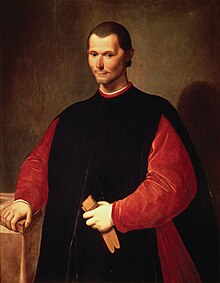

Niccolo Machiavelli
So—which is better: To be feared or loved?
In the 1993 film, A Bronx Tale, 17-year-old Calogero (Lillo Brancato) poses that question to his idol, the local Mafia capo, Sonny (Chazz Palminteri).
“That’s a good question,” Sonny replies. “It’s nice to be both, but it’s very difficult. But if I had my choice, I would rather be feared.
“Fear lasts longer than love. Friendships that are bought with money mean nothing. You see how it is around here. I make a joke, everybody laughs. I know I’m funny, but I’m not that funny. It’s fear that keeps them loyal to me.”
Presidents face the same dilemma as Mafia capos—and resolve it in their own ways.
LOVE ME BECAUSE I NEED TO BE LOVED
Bill Clinton believed that he could win over his self-appointed Republican enemies through his sheer charm.
Part of this lay in self-confidence: He had won the 1992 and 1996 elections by convincing voters that “I feel your pain.”
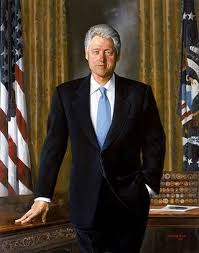
Bill Clinton
And part of it lay in his need to be loved. He once said that if he were in a room with 100 people and 99 of them liked him but one didn’t, he would spend all his time with that one person, trying to win him over.
But while he could charm voters, he could not bring himself to retaliate against his sworn Republican enemies.
On April 19, 1995, Right-wing terrorist Timothy McVeigh drove a truck–packed with 5,000 pounds of ammonium nitrate and nitromethane–to the front of the Alfred P. Murrah Federal Building in Oklahoma City.
The explosion killed 168 people, including 19 children in the day care center on the second floor, and injured 684 others.
Suddenly, Republicans were frightened. Since the end of World War II, they had vilified the very Federal Government they belonged to. They had deliberately courted the Right-wing militia groups responsible for the bombing.
So Republicans feared Clinton would now turn their decades of hate against them.
They need not have worried. On April 23, Clinton presided over a memorial service for the victims of the bombing. He gave a moving eulogy—without condemning the hate-filled Republican rhetoric that had at least indirectly led to the slaughter.
Clinton further sought to endear himself to Republicans by:
- Adopting NAFTA—the Republican-sponsored North American Free Trade Act—which later proved so devastating to American workers;
- Siding with Republicans against poor Americans on welfare; and
- Championing the gutting of the Depression-era Glass-Steagall law, which barred investment banks from commercial banking activities.
The result: Republicans believed Clinton was weak—and could be rolled.
In 1998, House Republicans moved to impeach him over a sex scandal with White House intern Monica Lewinsky. But his Presidency survived when the Senate refused to convict.
LOVE ME BECAUSE I’LL HURT YOU IF YOU DON’T
Lyndon Johnson wanted desperately to be loved.
Once, he complained to Dean Acheson, the former Secretary of State under Harry S. Truman, about the ingratitude of American voters. He had passed far more legislation than his predecessor, John F. Kennedy, and yet Kennedy remained beloved, while he, Johnson, was not.
Why was that? Johnson demanded.
“You are not a very likable man,” said Acheson truthfully.
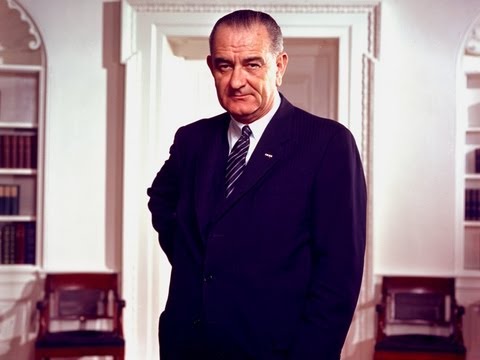
Lyndon B. Johnson
Johnson tried to make his subordinates love him. He would humiliate a man, then give him an expensive gift—such as a Cadillac. It was his way of binding the man to him.
He was on a first-name basis with J. Edgar Hoover, the longtime director of the FBI. He didn’t hesitate to request—and get—raw FBI files on his political opponents.
On at least one occasion, he told members of his Cabinet: No one would dare walk out on his administration—because if they did, two men would follow their ass to the end of the earth: Mr. J. Edgar Hoover and the head of the Internal Revenue Service.
ABC NEWS, ALGIER HISS, ALTERNET, AMERICABLOG, ANTHONY HOPKINS, AP, BABY BOOMER RESISTANCE, BARACK OBAMA, BENJAMIN C. BRADLEE, BILL CLINTON, BLOOMBERG, BOB WOODWARD, BUZZFEED, CARL BERNSTEIN, CBS NEWS, CBSNEWS, CNN, CROOKS AND LIARS, DAILY KOS, DANIEL ELLSBURG, FIVETHIRTYEIGHT, FRENCH LEGION OF HONOR, HARPER’S MAGAZINE, JASON ROBARDS, JOHN F. KENNEDY, JOURNALISM, LYNDON B. JOHNSON, MEDIA MATTERS, MOTHER JONES, MOVEON, MSNBC, NBC NEWS, NEWSWEEK, NPR, PBS NEWSHOUR, PENTAGON PAPERS, POLITICO, POLITICUSUSA, RAW STORY, REPUBLICAN PARTY, REPUBLICANS, REUTERS, RICHARD NIXON, SALON, SEATTLE TIMES, SENATE WATERGATE COMMITTEE, SLATE, TALKING POINTS MEMO, THE ATLANTIC, THE CHICAGO SUN-TIMES, THE CHICAGO TRIBUNE, THE DAILY BEAST, THE DAILY BLOG, THE GUARDIAN, THE HILL, THE HUFFINGTON POST, THE LOS ANGELES TIMES, THE NATION, THE NEW REPUBLIC, THE NEW YORK TIMES, THE PENTAGON PAPERS, THE VILLAGE VOICE, THE WALL STREET JOURNAL, THE WASHINGTON POST, THE WASHINGTONPOST, THINKPROGRESS, TIME, TRUTHDIG, TRUTHOUT, TWO POLITICAL JUNKIES, U.S. NEWS & WORLD REPORT, UNITED STATES SUPREME COURT, UPI, USA TODAY, WATERGATE, WONKETTE, WORLD WAR 11, X
In Bureaucracy, History, Law Enforcement, Politics, Social commentary on August 9, 2024 at 12:10 am
August 9, 2024, will mark an anniversary increasingly fewer Americans remember: Fifty years to the weekday that Richard Milhous Nixon, 37th President of the United States, resigned in disgrace.
Benjamin Crowninshield Bradlee, the former executive editor of The Washington Post, remains virtually unknown outside the journalism profession. Yet his paper did more than any other to bring Nixon down.
Both Nixon and Bradlee were driven to succeed. And both achieved fame and power in doing so.
Bradlee made his name in journalism.
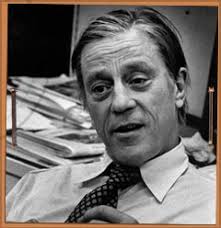
Benjamin C. Bradlee
Nixon made his name in politics.
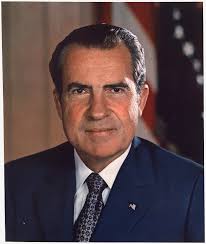
Richard Nixon
Both served in the United States Navy in the Pacific during World War II.
Both had strong connections to John F. Kennedy.
- Bradlee knew him as a friend and reporter during JFK’s years as a Senator and President.
- Nixon—as a Senator and later Vice President—knew Kennedy as a Senatorial colleague and as a political adversary, unsuccessfully contesting him for the Presidency in 1960.
For both, 1948 was a pivotal year.
- Bradlee joined The Washington Post as a reporter.
- Nixon, as a U.S. Representative, accused Algier Hiss, a former State Department official, of having been a Communist spy. Hiss was eventually convicted of perjury and sent to prison.
Both reached their positions of maximum power in 1968:
- Bradlee became executive editor of The Washington Post.
- Nixon became the 37th President of the United States.
But there was a fundamental difference between them:
- Bradlee made it his business to dig up the truth.
- Nixon made it his business to distort the truth—or to conceal it when distortion wasn’t enough.
Nixon and Bradlee had their first major clash in 1971 with the Pentagon Papers, a secret government study of how the United States became enmeshed in the Vietnam war.
- Although the Papers concerned events that had occurred during the Presidencies of John F. Kennedy and Lyndon B. Johnson, Nixon was outraged at their release by a former Defense Department analyst named Daniel Ellsberg.
- Bradlee, as executive editor of The Washington Post, successfully urged his publisher, Katherine Graham, to publish the papers after The New York Times was enjoined from doing so.
- The controversy ended when the Supreme Court ruled, 6–3, that the government failed to meet the burden of proof required for prior restraint of the press.
In 1972, Bradlee and Nixon squared off for their most important battle––a “third-rate burglary” of the Democratic National Committee headquarters at the Watergate Hotel.
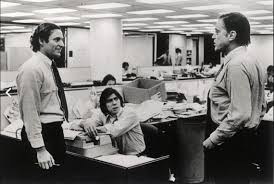
Bob Woodward, Carl Bernstein and Benjamin C. Bradlee
- Bradlee backed two young, aggressive reporters named Bob Woodward and Carl Bernstein, as they probed the burglary.
- This led to their discovering a series of illegal dirty tricks the Nixon re-election campaign had aimed at various Democratic opponents.
- The Post’s revelations led to the formation of the Senate Watergate Committee, the discovery of Nixon’s tape-recordings of his private—and criminal—conversations, and, finally, to Nixon’s own resignation in disgrace on August 9, 1974.
Bradlee became an advocate for education and the study of history. Nixon entered history as the only American President forced to resign from office.
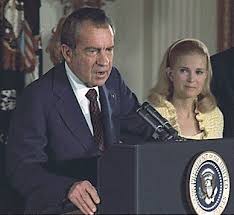
:Richard Nixon saying farewell at the White House
Bradlee became a media celebrity. Nixon became a media target.
- Bradlee was portrayed by Jason Robards in the hit 1976 film, All the President’s Men (for which he won an Academy Award for Best Supporting Actor).
- Nixon was portrayed—in Oliver Stone’s 1995 drama, Nixon—by Anthony Hopkins.
Bradlee and Nixon each published a series of books.
- Bradlee’s: That Special Grace and Conversations With Kennedy focused on his longtime friendship with John F. Kennedy; A Good Life: Newspapering and Other Adventures was Bradlee’s memoirs.
- Nixon’s: Among his 11 titles: Six Crises; RN: The Memoirs of Richard Nixon; The Real War; Leaders; Real Peace; No More Vietnams; Beyond Peace.
After leaving the White House, Nixon worked hard behind-the-scenes to refashion himself into an elder statesman of the Republican Party.
- Throughout the 1980s, he traveled the lecture circuit, wrote books, and met with many foreign leaders, especially those of Third World countries.
- He supported Ronald Reagan for president in 1980, making television appearances portraying himself as the senior statesman above the fray.
- For the rest of his life, he fought ferociously through the courts to prevent the release of most of the infamous “Watergate tapes” that chronicled his crimes as President.
- Only since his death have many of these been made public.
Nixon died on April 22, 1994, aged 81.
- Eulogists at his funeral included President Bill Clinton and former Presidents Gerald Ford, Ronald Reagan and George H.W. Bush, California Governor Pete Wilson and the Reverend Billy Graham.
- Despite his efforts to portray himself as an elder statesman, Nixon could never erase his infamy as the only President to resign in disgrace.
- To this day, he remains a nonperson within the Republican Party.
Bradlee remained executive editor of The Washington Post until retiring in 1991. But he continued to serve as vice president-at-large until his death at 93 on October 21, 2014.
- In 2007, he received the French Legion of Honor, the highest award given by the French government, at a ceremony in Paris.
- In 2013, he was named as a recipient of the Presidential Medal of Freedom by President Barack Obama. He was presented the medal at a White House ceremony on November 20, 2013.
2008 PRESIDENTIAL CAMPAIGN, 2016 PRESIDENTIAL CAMPAIGN, ABC NEWS, AFFORDABLE CARE ACT, ALTERNET, AMERICABLOG, ANDREW SHAFFER, AP, BABY BOOMER RESISTANCE, BARACK OBAMA, BLOOMBERG, BORDER WALL, BUZZFEED, CBS NEWS, CNN, CROOKS AND LIARS, DAILY KOZ, DON WINSLOW, DONALD TRUMP, DRUDGE REPORT, DRUG ENFORCEMENT ADMINISTRATION, DRUG TRAFFICKING, FIVETHIRTYEIGHT, GOODREADS, HARPER’S MAGAZINE, HEROIN, HOPE NEVER DIES (BOOK), HUFFINGTON POST, JOE BIDEN, JOHN F. KENNEDY, LOS ANGELES TIMES, MEDIA MATTERS, MEXICO, MOTHER JONES, MOVEON, MSNBC, NBC NEWS, NEWSWEEK, NPR, PBS NEWSHOUR, POLITICO, POLITICUSUSA, RAW STORY, REUTERS, RICHARD M. NIXON, ROLLING STONE, SALON, SEATTLE TIMES, SINALOA CARTEL, SLATE, TALKING POINTS MEMO, THE ATLANTIC, THE BORDER (BOOK), THE CHICAGO SUN-TIMES, THE CHICAGO TRIBUNE, THE DAILY BEAST, THE DAILY BLOG, THE GUARDIAN, THE HILL, THE HUFFINGTON POST, THE LOS ANGELES TIMES, THE NATION, THE NEW REPUBLIC, THE NEW YORK TIMES, THE VILLAGE VOICE, THE WASHINGTON POST, THINKPROGRESS, TIME, TRUTHDIG, TRUTHOUT, TWO POLITICAL JUNKIES, U.S. NEWS & WORLD REPORT, UPI, USA TODAY, WAR ON DRUGS, WONKETTE, X
In Bureaucracy, Entertainment, History, Politics, Social commentary on July 8, 2024 at 12:10 am
Joe Biden defeated Donald Trump to become the 46th President of the United States on January 20, 2021.
But before scoring that victory, he racked up a series of incredible adventures as a private investigator—in fiction.
In Hope Never Dies: An Obama-Biden Mystery, author Andrew Shaffer has fashioned a novel that is half-mystery, half-bromance.
Vice President Joe Biden has just left the Obama White House and doesn’t know what to do with the rest of his life. Then Finn Donnelly, his favorite railroad conductor, dies in a suspicious accident, leaving behind an ailing wife and a trail of clues.
To unravel the mystery, “Amtrak Joe” calls on the skills of his former boss: Barack Obama, the 44th President of the United States. Together they scour biker bars, cheap motels and other memorable haunts throughout Delaware.![]()
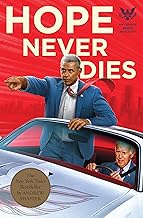
Then Biden unearths a disturbing truth about his longtime—and now dead—friend. This, in turn, leads Biden and Obama to uncover the sinister forces behind America’s opioid epidemic.
The book is pure fantasy fun, as evidenced from this review by Alexandra Alter in The New York Times:
“[Hope Never Dies is] a roughly 300-page work of political fanfiction, an escapist fantasy that will likely appeal to liberals pining for the previous administration, longing for the Obama-Biden team to emerge from political retirement as action heroes. But it’s also at times a surprisingly earnest story about estranged friends who are reunited under strange circumstances.”
A reader named Casey, reviewing the novel for Goodreads, writes: “While Shaffer could have leaned into nostalgia alone, he’s written a solid mystery with the characters fleshed out as more than just clichés.
“The reader really feels Biden’s longing to be helpful and his anguish over seeing 44’s legacy undone so quickly by an individual who shall remain nameless. (The presidential zings in this book are incredible, truly.)
“The tension between the two rings as true as it did when they were in office….By all means, this book shouldn’t work as well as it does. For a few hours, I got to enjoy the company of politicians who behaved like adults (mostly). It sure was nice.”
Contrasting with the relatively lighthearted fictional images of Joe Biden and Barack Obama is the immensely darker one of Donald Trump.
Don Winslow offers Trump an extended cameo appearance in The Border, his massive, 736-page novel about America’s war on drugs—and the horrific violence it has spawned in Mexico. It’s the third of a trilogy of novels vividly portraying the violent costs of an unwinnable conflict.
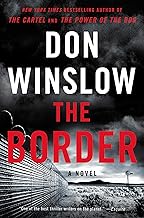
Art Keller is a dedicated agent of the Federal Drug Enforcement Administration (DEA). For over 40 years, he has waged all-out war on Adán Barrera, the godfather of the powerful Sinaloa Cartel.
Appointed director of the DEA, Keller now faces a series of deadly enemies:
- A heroin epidemic surging across America;
- Hitmen who want to kill him;
- Politicians who want to sabotage his agenda; and
- An incoming administration that’s allied with the very drug traffickers he’s trying to destroy.
And heading this administration is John Dennison—Donald Trump in all but name—who:
- Gratuitously insults people on Twitter;
- Fires a Special Counsel;
- Gets blackmailed by a woman he once bedded; and
- Colludes with drug traffickers for a multi-million dollar loan to finance his Presidential campaign.
Whereas the reviews for Hope Never Dies were as upbeat as the book itself, those of The Border reflect the novel’s mercilessly grim take on a war that can’t be won.
Los Angeles Times: “The Border is intricate, mean and swift, a sprawling canvass of characters including narco kingpins, a Guatemalan stowaway, a Staten Island heroin addict, a kinky hit woman, a barely veiled Donald Trump and DEA agent Art Keller, who….has been noble and merciless, a conflicted wanderer who makes America face the transgressions committed in its name.”
Rolling Stone: “Clocking in at over 700 pages, it is his most overtly political installment yet. He takes on the Trump administration directly, creating a fictional candidate, then president, who stokes racist fears of Mexicans, campaigns on ‘building the wall’ and, along with his venal son-in-law, gets caught up in a shady real estate deal involving Cartel money.”
NPR: “The Border becomes a book for our times. Like Shakespeare, it makes a three-act drama of our modern moment. Like Shakespeare’s plays, it shows us a world that is our own, a history that is our own, a burden that is our own, rendered out into the rhythm of scenes and arcs, chapters and parts.”
Obama concentrated the full force of his attention on reforming American healthcare—by making it available to millions whose insurance refused to provide coverage.
Trump’s top priority was to separate the United States from Mexico with an impenetrable wall—and he even diverted $3.6 billion from Pentagon funding to pay for it.
Like John F. Kennedy, Barack Obama will likely be positively remembered as much for what he tried to do as what he succeeded at doing.
Like Richard M. Nixon, Donald Trump will likely be remembered as a menacing stain on American history.
1968 PRESIDENTIAL CAMPAIGN, 2020 PRESIDENTIAL CAMPAIGN, ABC NEWS, ALTERNET, AMERICABLOG, AMERICAN INDIANS, AP, BABY BOOMER RESISTANCE, BARBARA GARSON, BBC, BLACK LIVES MATTER, BLOOMBERG, BUZZFEED, CBS NEWS, CIVIL RIGHTS, CNN, COMING APART: AMERICA IN THE 1960S (BOOK), CROOKS AND LIARS, DAILY KOS, DAILY KOZ, DEMOCRATS, DRUDGE REPORT, EUGENE MCCARTHY, FIVETHIRTYEIGHT, GEORGE BERNARD SHAW, GROSS NATIONAL PRODUCT, HARPER’S MAGAZINE, HUFFINGTON POST, JIM SLATTERY, JOHN F. KENNEDY, Kamala Harris, KANSAS STATE UNIVERSITY, LOOK MAGAZINE, LYNDON B. JOHNSON, MCBIRD!, MEDIA MATTERS, MISSISSIPPI, MOTHER JONES, MOVEON, MSNBC, NBC NEWS, NEW REPUBLIC, NEWSDAY, NEWSWEEK, NPR, PBS NEWSHOUR, POLITICO, POLITICUSUSA, RAW STORY, REPUBLICANS, REUTERS, ROBERT F. KENNEDY, SALON, SEATTLE TIMES, SIRHAN SIRHAN, SLATE, SOPHOCLES, STANLEY TRETICK, TALKING POINTS MEMO, TET OFFENSIVE, THE ATLANTIC, THE CHICAGO SUN-TIMES, THE CHICAGO TRIBUNE, THE DAILY BEAST, THE DAILY BLOG, THE GUARDIAN, THE HILL, THE HUFFINGTON POST, THE INTERCEPT, THE LOS ANGELES TIMES, THE NATION, THE NEW REPUBLIC, THE NEW YORK TIMES, THE NEW YORKER, THE VILLAGE VOICE, THE WASHINGTON POST, THINKPROGRESS, TIME, TIME MAGAZINE, TRUTHDIG, TRUTHOUT, TWO POLITICAL JUNKIES, U.S. NEWS & WORLD REPORT, UNIVERSITY OF KANSAS, UPI, USA TODAY, VIETNAM WAR, WILLIAM L. O'NEIL, WONKETTE, X
In Bureaucracy, History, Law, Law Enforcement, Military, Politics, Social commentary on July 5, 2024 at 12:10 am
On March 18, 1968, Presidential candidate Robert F. Kennedy, speaking at the University of Kansas, called on his fellow citizens to show compassion for those less fortunate and in need of relief through the Federal Government.
“If we believe that we, as Americans, are bound together by a common concern for each other, then an urgent national priority is upon us. We must begin to end the disgrace of this other America.”
Finally, Kennedy did something almost no other politician—in his time or since—has ever done: He dared to attack that holy-of-holies, the Gross Domestic Product (then called the Gross National Product).
“If we believe that we, as Americans, are bound together by a common concern for each other, then an urgent national priority is upon us. We must begin to end the disgrace of this other America.
“Too much and for too long, we seemed to have surrendered personal excellence and community values in the mere accumulation of material things. Our Gross National Product, now, is over $800 billion dollars a year, but that Gross National Product….counts air pollution and cigarette advertising, and ambulances to clear our highways of carnage.
“It counts special locks for our doors and the jails for the people who break them. It counts the destruction of the redwood and the loss of our natural wonder in chaotic sprawl. It counts napalm and counts nuclear warheads and armored cars for the police to fight the riots in our cities. It counts Whitman’s rifle and Speck’s knife, and the television programs which glorify violence in order to sell toys to our children.
“Yet the Gross National Product does not allow for the health of our children, the quality of their education or the joy of their play. It does not include the beauty of our poetry or the strength of our marriages, the intelligence of our public debate or the integrity of our public officials.
“It measures neither our wit nor our courage, neither our wisdom nor our learning, neither our compassion nor our devotion to our country. It measures everything in short, except that which makes life worthwhile. And it can tell us everything about America except why we are proud that we are Americans….

Senator Robert F. Kennedy campaigning for President
“George Bernard Shaw once wrote, ‘Some people see things as they are and say why? I dream things that never were and say, why not?’
“So I come here to Kansas to ask for your help. In the difficult five months ahead, before the convention in Chicago. I ask for your help and for your assistance.
“If you believe that the United States can do better. If you believe that we should change our course of action. If you believe that the United States stands for something here internally as well as elsewhere around the globe, I ask for your help and your assistance and your hand over the period of the next five months.
“And when we win in November….and we begin a new period of time for the United States of America, I want the next generation of Americans to look back upon this period and say as they said of Plato: ‘Joy was in those days, but to live.’ Thank you very much.”
At the end of Kennedy’s wildly popular speech at Kansas State University, photographer Stanley Tretick, of Look magazine, shouted, “This is Kansas, fucking Kansas! He’s going all the fucking way!”
But he didn’t go all the way. On June 5, 1968—82 days after announcing his Presidential candidacy—an assassin’s bullet suddenly halted his short-lived campaign—and his life.

Robert Kennedy’s funeral train
Historian William L. O’Neil delivered a poignant summary of Robert Kennedy’s legacy in his 1971 book, Coming Apart: An Informal History of America in the 1960′s:
“He aimed so high that he must be judged for what he meant to do, and through error and tragic accident, failed at…..He will also be remembered as an extraordinary human being who, though hated by some, was perhaps more deeply loved by his countrymen than any man of his time.
“That, too, must be entered into the final account, and it is no small thing. With his death, something precious vanished from public life.”
As United States Attorney General (1961-1964) Robert F. Kennedy had the courage to wage all-out war on the Mafia. As a United States Senator (1964-1968) he had the compassion to champion aid to impoverished Americans.
Even in his own era—a half-century ago—Robert Kennedy stood out as the only major Presidential candidate who could legitimately make both claims.
Today, most Democrats—battered by decades of Republican charges that they’re “big spenders”—fear supporting big-ticket items to help the poor.
And the Black Lives Matter movement has made any connection to law enforcement a disqualification for higher office—as former California Attorney General Kamala Harris found out as a 2020 Presidential candidate.
America may never again see a Presidential candidate who can combine a strong stand against crime with an equally strong commitment to helping the poor and disadvantaged.
1968 PRESIDENTIAL CAMPAIGN, 2020 PRESIDENTIAL CAMPAIGN, ABC NEWS, ALTERNET, AMERICABLOG, AMERICAN INDIANS, AP, BABY BOOMER RESISTANCE, BARBARA GARSON, BBC, BLACK LIVES MATTER, BLOOMBERG, BUZZFEED, CBS NEWS, CIVIL RIGHTS, CNN, COMING APART: AMERICA IN THE 1960S (BOOK), CROOKS AND LIARS, DAILY KOS, DAILY KOZ, DEMOCRATS, DRUDGE REPORT, EUGENE MCCARTHY, FIVETHIRTYEIGHT, GEORGE BERNARD SHAW, GROSS NATIONAL PRODUCT, HARPER’S MAGAZINE, HUFFINGTON POST, JIM SLATTERY, JOHN F. KENNEDY, Kamala Harris, KANSAS STATE UNIVERSITY, LOOK MAGAZINE, LYNDON B. JOHNSON, MCBIRD!, MEDIA MATTERS, MISSISSIPPI, MOTHER JONES, MOVEON, MSNBC, NBC NEWS, NEW REPUBLIC, NEWSDAY, NEWSWEEK, NPR, PBS NEWSHOUR, POLITICO, POLITICUSUSA, RAW STORY, REPUBLICANS, REUTERS, ROBERT F. KENNEDY, SALON, SEATTLE TIMES, SIRHAN SIRHAN, SLATE, SOPHOCLES, STANLEY TRETICK, TALKING POINTS MEMO, TET OFFENSIVE, THE ATLANTIC, THE CHICAGO SUN-TIMES, THE CHICAGO TRIBUNE, THE DAILY BEAST, THE DAILY BLOG, THE GUARDIAN, THE HILL, THE HUFFINGTON POST, THE INTERCEPT, THE LOS ANGELES TIMES, THE NATION, THE NEW REPUBLIC, THE NEW YORK TIMES, THE NEW YORKER, THE VILLAGE VOICE, THE WASHINGTON POST, THINKPROGRESS, TIME, TIME MAGAZINE, TRUTHDIG, TRUTHOUT, TWO POLITICAL JUNKIES, U.S. NEWS & WORLD REPORT, UNIVERSITY OF KANSAS, UPI, USA TODAY, VIETNAM WAR, WILLIAM L. O'NEIL, WONKETTE, X
In Bureaucracy, History, Law, Law Enforcement, Military, Politics, Social commentary on July 4, 2024 at 12:10 am
On March 18, 1968, Presidential candidate Robert F. Kennedy did what few politicians have ever done: He accepted public responsibility for a war that had since become a national disaster—the Vietnam war.
Addressing a packed audience of students and faculty at Kansas State University, he said:
“Let me begin this discussion with a note both personal and public. I was involved in many of the early decisions on Vietnam, decisions that helped set us on our present path.
“It may be that the effort was doomed from the start; that it was never really possible to bring all the people of South Vietnam under the rule of the successive governments we supported—governments, one after another, riddled with corruption, inefficiency, and greed; governments which did not and could not successfully capture and energize the national feeling of their people.
“If that is the case, as it well may be, then I am willing to bear my share of the responsibility, before history and before my fellow citizens. But past error is no excuse for its own perpetuation. Tragedy is a tool for the living to gain wisdom, not a guide by which to live.
“Now as ever, we do ourselves best justice when we measure ourselves against ancient tests, as in the Antigone of Sophocles: ‘All men make mistakes, but a good man yields when he knows his course is wrong, and repairs the evil. The only sin is pride.’
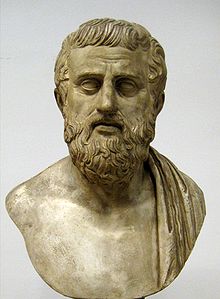
Sophocles
And he dared to attack the war as more than a military and political disaster: He saw it as a stain on America’s moral fiber:
“Can we ordain to ourselves the awful majesty of God—to decide what cities and villages are to be destroyed, who will live and who will die, and who will join the refugees wandering in a desert of our own creation?
“If it is true that we have a commitment to the South Vietnamese people, we must ask, are they being consulted—in Hue, or Ben Tre, or in the villages from which the three million refugees have fled?
“If they believe all the death and destruction are a lesser evil than the Wet Cong, why did they not warn us when the Viet Cong came into Hue, and the dozens of other cities, before the Tet Offensive? Why did they not join the fight?
“Will it be said of us, as Tacitus said of Rome: ‘They made a desert and called it peace?'”
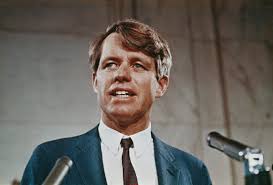
Robert F. Kennedy
The students gave him an ovation worthy of a rock star.
Time correspondent Hays Gorey said the electricity between Kennedy and the K.S.U. students was “real and rare.” “A good part of it is John F. Kennedy’s, of course, but John Kennedy…himself couldn’t be so passionate, and couldn’t set off such sparks.”
Jim Slattery, who would later be elected to Congress from Kansas, reread the K.S.U. speech during the second Iraq war and decided it was so powerful “because Kennedy was talking about what was right!”
As Kennedy started to leave, students rushed the platform where he stood, knocking over chairs and grabbing at him. They stroked his hair and ripped his shirtsleeves.
Later that day, Kennedy addressed another wildly enthusiastic audience—at the University of Kansas, in Lawrence, Kansas.
Then he addressed the glaring disparities between rich and poor Americans—a topic now generally ignored by Democrats and turned into an attack line by Republicans:
“All around us, all around us….men have lost confidence in themselves, in each other. It is confidence which has sustained us so much in the past. Rather than answer the cries of deprivation and despair….hundreds of communities and millions of citizens are looking for their answers, to force and repression and private gun stocks— so that we confront our fellow citizen across impossible barriers of hostility and mistrust.
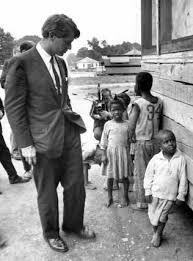
Robert F. Kennedy talking with black children
“And again, I don’t believe that we have to accept that. I don’t believe that it’s necessary in the United States of America. I think that we can work together. I don’t think that we have to shoot at each other, to beat each other, to curse each other and criticize each other, I think that we can do better in this country. And that is why I run for President of the United States….
“I have seen children in Mississippi starving, their bodies so crippled from hunger and their minds have been so destroyed for their whole life that they will have no future. I have seen children in Mississippi—here in the United States—with a gross national product of $800 billion dollars.
“I have seen children in the Delta area of Mississippi with distended stomachs, whose faces are covered with sores from starvation, and we haven’t developed a policy so we can get enough food so that they can live, so that their children, so that their lives are not destroyed, I don’t think that’s acceptable in the United States of America and I think we need a change.”
1968 PRESIDENTIAL CAMPAIGN, 2020 PRESIDENTIAL CAMPAIGN, ABC NEWS, ALTERNET, AMERICABLOG, AMERICAN INDIANS, AP, BABY BOOMER RESISTANCE, BARBARA GARSON, BBC, BLACK LIVES MATTER, BLOOMBERG, BUZZFEED, CBS NEWS, CIVIL RIGHTS, CNN, COMING APART: AMERICA IN THE 1960S (BOOK), CROOKS AND LIARS, DAILY KOS, DAILY KOZ, DEMOCRATS, DRUDGE REPORT, EUGENE MCCARTHY, FIVETHIRTYEIGHT, GEORGE BERNARD SHAW, GROSS NATIONAL PRODUCT, HARPER’S MAGAZINE, HUFFINGTON POST, JIM SLATTERY, JOHN F. KENNEDY, Kamala Harris, KANSAS STATE UNIVERSITY, LOOK MAGAZINE, LYNDON B. JOHNSON, MCBIRD!, MEDIA MATTERS, MISSISSIPPI, MOTHER JONES, MOVEON, MSNBC, NBC NEWS, NEW REPUBLIC, NEWSDAY, NEWSWEEK, NPR, PBS NEWSHOUR, POLITICO, POLITICUSUSA, RAW STORY, REPUBLICANS, REUTERS, ROBERT F. KENNEDY, SALON, SEATTLE TIMES, SIRHAN SIRHAN, SLATE, SOPHOCLES, STANLEY TRETICK, TALKING POINTS MEMO, TET OFFENSIVE, THE ATLANTIC, THE CHICAGO SUN-TIMES, THE CHICAGO TRIBUNE, THE DAILY BEAST, THE DAILY BLOG, THE GUARDIAN, THE HILL, THE HUFFINGTON POST, THE INTERCEPT, THE LOS ANGELES TIMES, THE NATION, THE NEW REPUBLIC, THE NEW YORK TIMES, THE NEW YORKER, THE VILLAGE VOICE, THE WASHINGTON POST, THINKPROGRESS, TIME, TIME MAGAZINE, TRUTHDIG, TRUTHOUT, TWO POLITICAL JUNKIES, U.S. NEWS & WORLD REPORT, UNIVERSITY OF KANSAS, UPI, USA TODAY, VIETNAM WAR, WILLIAM L. O'NEIL, WONKETTE, X
In Bureaucracy, History, Law, Law Enforcement, Military, Politics, Social commentary, Uncategorized on July 3, 2024 at 12:43 am
He remains forever frozen in time—young, vigorous, with tousled hair and a high-pitched voice calling on Americans to do better for those less fortunate.
And he exuded an idealism which seems totally out of place with today’s “I’ve-got-mine-so-screw-you” politics.
It’s been 56 years since his life was brutally cut short—yet he remains forever the age at which he died: 42. Born in 1925, he would turn 99 on November 20 if he were alive today.
On March 16, 1968, from the Caucus Room of the Old Senate Office building, New York Senator Robert F. Kennedy declared his candidacy for President of the United States.
Eight years earlier, on January 2, 1960, his brother, Massachusetts Senator John F. Kennedy had announced his own candidacy for the Democratic presidential nomination from the same place.
Ten months later, on November 8, that campaign had ended in victory with his election. And that victory, in turn, ended in bitter sorrow with his assassination two years, 10 months and two days later on November 22, 1963.
Robert F. Kennedy’s presidential campaign would not last as long as his late brother’s. Nor would it end in the victory he and his supporters yearned for.
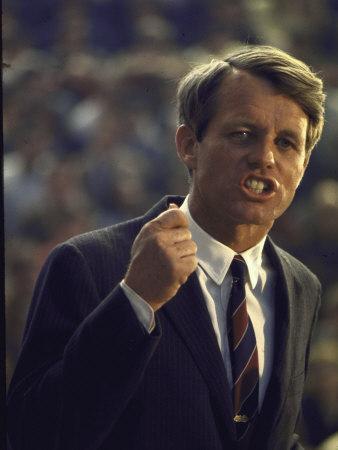
Robert F. Kennedy
Eighty-two days later, he was dead—shot in the back of the head by Sirhan Sirhan, a Palestinian Arab furious at Kennedy’s avowed support for Israel.
For Kennedy, making up his mind to run for the Presidency was no easy task.
Since the assassination of his brother, millions of Americans had assumed—as his admirers or detractors—that he would one day become President.
For his admirers, there was an element of “the once and future king” about this young, intense man with tousled hair and a high-pitched voice. He—they believed—was the man who would somehow avenge his martyred brother by restoring “Camelot” and returning youth, energy and idealism to the White House.
A playwright—Barbara Garson—had even written a 1967 satire depicting then-President Lyndon B. Johnson as the MacBeth-like murderer of John Ken O-Dunc. In the end, he was confronted and killed by Robert Ken O’Dunc.
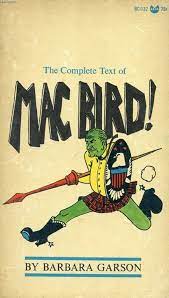

His detractors saw him as a ruthless upstart who wanted to foist too-liberal policies on the United States. They distrusted his sympathy for the downtrodden—especially blacks and Hispanics. Worse, they saw the Kennedy family as trying to found a dynasty of Presidents that could last until the mid-1980s.
But the real Robert Kennedy was long torn between running against Johnson—whom he had long personally loathed—and letting someone else do so.
Kennedy’s hatred of Johnson—and his irrational belief that LBJ was somehow responsible for his brother’s death—was well-known. And Kennedy feared that if he ran against Johnson, his many enemies would charge he was doing so out of personal animosity.
And there was another reason: Johnson, who had won the Presidency in a landslide in 1964, was certain to seek re-election in 1968. If Kennedy challenged him for the nomination, it might well split the party and result in the election of a Republican that November. And he—Kennedy—would be blamed for it.
Throughout 1966-7, Kennedy was urged to run against Johnson. Still, he dithered.
Then, on March 12, Minnesota United States Senator Eugene McCarthy entered the New Hampshire Democratic primary against Johnson—and won a surprising 42.2% of the vote to Johnson’s 49.4%.
Four days later, Robert Kennedy announced his own candidacy.
McCarthy’s supporters were outraged: Their candidate had dared to do what Kennedy had not—directly take on Johnson. And now that he had shown it could be done, the opportunistic Kennedy had jumped in.
On March 18—two days after announcing his candidacy—Kennedy gave his first campaign speech at Kansas State University in Manhattan, Kansas. This was the heart of conservative country, and Kennedy didn’t know how his audience would accept many of his decidedly liberal proposals.
“Do you think they’ll boo him?” his wife, Ethel, asked a friend before the speech. “Will they hate him?”
Arriving at the university, Kennedy ate breakfast at the student union—and told a group of university officials and student leaders: “Some of you may not like what you’re going to hear in a few minutes, but it’s what I believe; and if I’m elected President, it’s what I’m going to do.”

Kansas State University
As events unfolded, he—and Ethel—had no reason to worry.
Kennedy had served as United States Attorney General from 1961 to 1964. Yet he had not limited himself to simply fighting organized crime and enforcing civil rights. He had aggressively urged his brother, the President, to take a hard line on fighting the Communist forces in Vietnam.
But now he did something almost no other politician had—or has—ever done: He publicly accepted responsibly for the disaster the war had become since 1965:
“Let me begin this discussion with a note both personal and public. I was involved in many of the early decisions on Vietnam, decisions that helped set us on our present path.
“It may be that the effort was doomed from the start; that it was never really possible to bring all the people of South Vietnam under the rule of the successive governments we supported.”
1968 PRESIDENTIAL RACE, ABC NEWS, ADOLF HITLER, ALTERNET, AMERICABLOG, AP, BABY BOOMER RESISTANCE, BBC, BERNARD LAW MONTGOMERY, BLOOMBERG, BUZZFEED, CBS NEWS, CNN, COMING APART: AMERICA IN THE 1960S (BOOK), CROOKS AND LIARS, D-DAY, DAILY KOS, DAILY KOZ, DWIGHT D. EISENHOWER, ERWIN ROMMEL, EUGENE MCCARTHY, FACEBOOK, FIVETHIRTYEIGHT, HARPER’S MAGAZINE, HUBERT HUMPHERY, HUFFINGTON POST, JOHN F. KENNEDY, LYNDON B. JOHNSON, MEDIA MATTERS, MOTHER JONES, MOVEON, MSNBC, NAZI GERMANY, NBC NEWS, NEW REPUBLIC, NEWSDAY, NEWSWEEK, NORMAN COTA, NPR, PBS NEWSHOUR, POLITICO, POLITICUSUSA, RAW STORY, REUTERS, ROBERT F. KENNEDY, SALON, SEATTLE TIMES, SIRHAN SIRHAN, SLATE, TALKING POINTS MEMO, THE ATLANTIC, THE CHICAGO SUN-TIMES, THE CHICAGO TRIBUNE, THE DAILY BEAST, THE DAILY BLOG, THE GUARDIAN, THE HILL, THE HUFFINGTON POST, THE INTERCEPT, THE LOS ANGELES TIMES, THE NATION, THE NEW REPUBLIC, THE NEW YORK TIMES, THE NEW YORKER, THE VILLAGE VOICE, THE WASHINGTON POST, THINKPROGRESS, THIRD REICH, TIME, TRUTHDIG, TRUTHOUT, TWITTER, TWO POLITICAL JUNKIES, U.S. ARMY RANGERS, U.S. NEWS & WORLD REPORT, UPI, USA TODAY, VIETNAM WAR, WILLIAM L. O'NEILL, WORLD WAR 11, X
In Bureaucracy, History, Military, Politics, Social commentary on June 6, 2024 at 12:10 am
“For it is the doom of men that they forget.”
—Merlin, in “Excalibur”
June 6—a day of glory and tragedy.
The glory came 80 years ago—on Tuesday, June 6, 1944.
On that morning, Americans awoke to learn—from radio and newspapers—that their soldiers had landed on the French coast of Normandy.
In Supreme Command of the Allied Expeditionary Force: American General Dwight D. Eisenhower. Overall command of ground forces rested with British General Bernard Law Montgomery.
Operation Overlord, the Allied invasion to liberate France from Nazi Germany, proved one of the pivotal actions of World War II.
Shortly after midnight, 24,000 American, British, Canadian and Free French troops launched an airborne assault. This was followed at 6:30 a.m. by an amphibious landing of Allied infantry and armored divisions on the French coast.
Field Marshal Erwin Rommel—the legendary “Desert Fox”—commanded the German forces. For him, the first 24 hours of the battle would be decisive.
“For the Allies as well as the Germans,” he warned his staff, “it will be the longest day.”
The operation was the largest amphibious invasion in history. More than 160,000 troops landed—73,000 Americans, 61,715 British and 21,400 Canadians.

Omaha Beach – June 6, 1944
Initially, the Allied assault seemed likely to be stopped at the water’s edge—where Rommel had insisted it must be. He had warned that if the Allies established a beachhead, their overwhelming numbers and airpower would eventually prove irresistible.
German machine-gunners and mortarmen wreaked a fearful toll on Allied soldiers. But commanders like U.S. General Norman Cota led their men to victory through a storm of bullets and shells.
Coming upon a group of U.S. Army Rangers taking cover behind sand dunes, Cota demanded: “What outfit is this?”
“Rangers!” yelled one of the soldiers.
“Well, Goddamnit, then, Rangers, lead the way!” shouted Cota, inspiring the soldiers to rise and charge into the enemy.
The command also gave the Rangers the motto they carry to this day.
The Allied casualty figures for D-Day have been estimated at 10,000, including 4,414 dead. By nationality, the D-Day casualty figures are about
- 2,700 British
- 946 Canadians
- and 6,603 Americans.
The total number of German casualties on D-Day isn’t known, but is estimated at 4,000 to 9,000.
Allied and German armies continued to clash throughout France, Belgium and Germany until May 7, 1945, when Germany finally surrendered.
But Americans who had taken part in D-Day could be proud of having dealt a fatal blow to the evil ambitions of Adolf Hitler’s Third Reich.
So much for the glory of June 6. Now for the tragedy—which occurred 56 years ago, on Thursday, June 6, 1968.
Twenty-four years after D-Day, Americans awoke to learn—mostly from TV—that New York Senator Robert F. Kennedy had died at 1:44 a.m. of an assassin’s bullet.
He had been campaigning for the Democratic Presidential nomination, and had just won the California primary on June 4.
This had been a make-or-break event for Kennedy, a fierce critic of the seemingly endless Vietnam war.
He had won the Democratic primaries in Indiana and Nebraska, but had lost the Oregon primary to Minnesota Senator Eugene McCarthy.
If he defeated McCarthy in California, Kennedy could force his rival to quit the race. That would lead to a showdown between him and Vice President Hubert Humphrey for the nomination.
(President Lyndon B. Johnson had withdrawn from the race on March 31—just 15 days after Kennedy announced his candidacy on March 16.)
After winning the California and South Dakota primaries, Kennedy gave a magnanimous victory speech in the ballroom of the Ambassador Hotel in Los Angeles:

Robert F. Kennedy, only moments from death
“I think we can end the divisions within the United States….We are a great country, an unselfish country, and a compassionate country. And I intend to make that my basis for running over the period of the next few months.”
Then he entered the hotel kitchen—where Sirhan Sirhan, a 24-year-old Palestinian from Jordan, opened fire with a .22 revolver.
Kennedy was hit three times—once fatally in the back of the head. Five other people were also wounded.
Kennedy’s last-known words were: “Is everybody all right?” and “Jack, Jack”—the latter clearly a reference to his beloved older brother, John Fitzgerald Kennedy.
Almost five years earlier, that brother—then President of the United States—had been assassinated in Dallas on November 22, 1963.
Then Robert Kennedy lost consciousness—forever, dying in a hospital bed 24 hours later.
Kennedy had been a U.S. Attorney General (1961-1964) and Senator (1964-1968). But it was his connection to President Kennedy for which he was best-known.
His assassination—coming so soon after that of JFK—convinced many Americans there was something “sick” about the nation’s culture.
Historian William L. O’Neil delivered a poignant summary of Robert Kennedy’s legacy in Coming Apart: An Informal History of America in the 1960′s.

“He aimed so high that he must be judged for what he meant to do, and through error and tragic accident, failed at…..He will also be remembered as an extraordinary human being who, though hated by some, was perhaps more deeply loved by his countrymen than any man of his time.
“That, too, must be entered into the final account, and it is no small thing. With his death, something precious vanished from public life.”
ABC NEWS, ADOLF HITLER, ADVICE, ALTERNET, AMERICABLOG, AP, BABY BOOMER RESISTANCE, BAY OF PIGS, BBC, BENITO MUSSOLINI, BLOOMBERG NEWS, BUZZFEED, CAESARE BORGIA, CBS NEWS, CNN, CORPORATIONS, CROOKS AND LIARS, CUBA, DAILY KOS, DAILY KOZ, FIDEL CASTRO, FIVETHIRTYEIGHT, FLORENCE, HARPER’S MAGAZINE, HUFFINGTON POST, JOHN F. KENNEDY, JOSEPH STALIN, KING PERSEUS OF MACEDON, MEDIA MATTERS, MOTHER JONES, MOVEON, MSNBC, NAZI-SOVIET "NON-AGGRESSION PACT", NBC NEWS, NEW REPUBLIC, NEWSDAY, NEWSWEEK, NICCOLO MACHIAVELLI, NPR, PBS NEWSHOUR, POLITICO, POLITICS, POLITICUSUSA, POPE JULIUS 11, RAW STORY, REUTERS, SALON, SEATTLE TIMES, SLATE, TALKING POINTS MEMO, THE ATLANTIC, THE CHICAGO SUN-TIMES, THE CHICAGO TRIBUNE, THE DAILY BEAST, THE DAILY BLOG, THE DISCOURSES, THE GUARDIAN, THE HILL, THE HUFFINGTON POST, THE INTERCEPT, THE LOS ANGELES TIMES, THE NATION, THE NEW REPUBLIC, THE NEW YORK TIMES, THE NEW YORKER, THE PRINCE, THE SS, THE VILLAGE VOICE, THE WASHINGTON POST, THINKPROGRESS, THIRD REICH, TIME, TRUTHDIG, TRUTHOUT, TWITTER, U.S. NEWS & WORLD REPORT, UKRAINE, UPI, USA TODAY, VLADIMIR PUTIN, VOLODYMYR ZELENSKY, WEHRMACHT, WORLD WAR 11
In Bureaucracy, Business, History, Military, Politics, Social commentary on May 24, 2024 at 12:10 am
Ask the average person, “What do you think of Niccolo Machiavelli?” and he’s likely to say: “The devil.”
In fact, “The Old Nick” became an English term used to describe Satan and slander Machiavelli at the same time.

Niccolo Machiavelli
The truth, however, is more complex. Machiavelli was a passionate Republican, who spent most of his adult life in the service of his beloved city-state, Florence.
The years he spent as a diplomat were tumultuous ones for Italy—with men like Pope Julius II and Caesare Borgia vying for power and plunging Italy into one bloodbath after another.
Florence, for all its wealth, lacked a strong army, and thus lay at the mercy of powerful enemies, such as Borgia. Machiavelli often had to use his wits to keep them at bay.
Machiavelli is best-known for his writing of The Prince, a pamphlet on the arts of gaining and holding power. Its admirers have included Benito Mussolini and Joseph Stalin.
But his longer and more thoughtful work is The Discourses, in which he offers advice on how to maintain liberty within a republic. Among its admirers were many of the men who framed the Constitution of the United States.
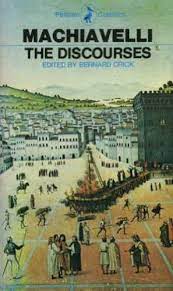

Most people believe that Machiavelli advocated evil for its own sake.
Not so. Rather, he recognized that sometimes there is no perfect—or perfectly good—solution to a problem.
Sometimes it’s necessary to take stern—even brutal—action to stop an evil (such as a riot) before it becomes widespread:
“A man who wishes to make a profession of goodness in everything must inevitably come to grief among so many who are not good. And therefore it is necessary for a prince, who wishes to maintain himself, to learn how not to be good, and to use this knowledge and not use it, according to the necessity of the case.”
His counsel remains as relevant today as it did during his lifetime (1469 – 1527). This is especially true for politicians—and students of political science.
But plenty of ordinary citizens can also benefit from the advice he has to offer—such as those in business who are asked to give advice to more powerful superiors.
Machiavelli warns there is danger in urging rulers to take a particular course of action: “For men only judge of matters by the result, all the blame of failure is charged upon him who first advised it, while in case of success he receives commendations. But the reward never equals the punishment.”
This puts would-be counselors in a difficult position: “If they do not advise what seems to them for the good of the republic or the prince, regardless of the consequences to themselves, then they fail to do their duty.
“And if they do advise it, then it is at the risk of their position and their lives, for all men are blind in thus, that they judge of good or evil counsels only by the results.”
Thus, Machiavelli warns that an adviser should “take things moderately, and not to undertake to advocate any enterprise with too much zeal, but to give one’s advice calmly and modestly.”
The person who asked for the advice may follow it, or not, as of his own choice, and not because he was led or forced into it by the adviser.
Above all, the adviser must avoid the danger of urging a course of action that runs “contrary to the wishes of the many.
“For the danger arises when your advice has caused the many to be contravened. In that case, when the result is unfortunate, they all concur in your destruction.”
Or, as President John F. Kennedy famously said after the disastrous invasion of Cuba at the Bay of Pigs in April, 1961: “Victory has a hundred fathers and defeat is an orphan.”
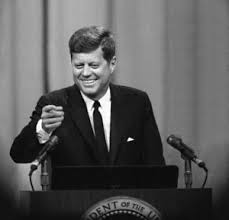
John F. Kennedy
By “not advocating any enterprise with too much zeal,” the adviser gains two advantages:
“The first is, you avoid all danger.
“And the second consists in the great credit which you will have if, after having modestly advised a certain course, your counsel is rejected, and the adoption of a different course results unfortunately.”
Finally, the time to give advice is before a catastrophe occurs, not after. Machiavelli gives a vivid example of what can happen if this rule is ignored.
King Perseus of Macedon had gone to war with Paulus Aemilius—and suffered a humiliating defeat. Fleeing the battlefield with a handful of his men, he later bewailed the disaster that had overtaken him.
Suddenly, one of his lieutenants began to lecture Perseus on the many errors he had committed, which had led to his ruin.
“Traitor,” raged the king, turning upon him, “you have waited until now to tell me all this, when there is no longer any time to remedy it—” And Perseus slew him with his own hands.
Niccolo Machiavelli sums up the lesson as this:
“Thus was this man punished for having been silent when he should have spoken, and for having spoken when he should have been silent.”
Be careful that you don’t make the same mistake.
2016 PRESIDENTIAL ELECTION, ABC NEWS, AIR FORCE, ALTERNET, AMERICABLOG, AP, ARMY, “MR. PRESIDENT” TITLE, BABY BOOMER RESISTANCE, BBC, BLOOMBERG, BUZZFEED, CBS NEWS, CNN, CROOKS AND LIARS, DAILY KOS, DAVID PECKER, DONALD TRUMP, DWIGHT D. EISENHOWER, FBI, FEDERAL AVIATION ADMINISTRATION, FIVETHIRTYEIGHT, HARPER’S MAGAZINE, HUFFINGTON POST, JIMMY CARTER, JOHN F. KENNEDY, JOSEPH BIDEN, KAREN MCDOUGAL, KONSTANTIN CHERNENKO, LEONID BREZHNEV, MARINE CORPS, MEDIA MATTERS, MIKHAIL GORBACHEV, MOTHER JONES, MOVEON, MSNBC, NATIONAL ENQUIRER, NAVY, NBC NEWS, NEW REPUBLIC, NEWSDAY, NEWSWEEK, NPR, PBS NEWSHOUR, POLITICO, POLITICUSUSA, RAW STORY, REUTERS, Ronald Reagan, SALON, SEATTLE TIMES, Secret Service, SLATE, SOVIET UNION, STOLEN VALOR ACT, STORMY DANIELS, TALKING POINTS MEMO, THE ATLANTIC, THE CHICAGO SUN-TIMES, THE CHICAGO TRIBUNE, THE DAILY BEAST, THE DAILY BLOG, THE GUARDIAN, THE HILL, THE HUFFINGTON POST, THE INTERCEPT, THE LOS ANGELES TIMES, THE NATION, THE NEW REPUBLIC, THE NEW YORK TIMES, THE NEW YORKER, THE PRESIDENCY, THE VILLAGE VOICE, THE WASHINGTON POST, THINKPROGRESS, TIME, TOMMY TURBERVILLE, TRUTHDIG, TRUTHOUT, TWO POLITICAL JUNKIES, U.S. NEWS & WORLD REPORT, UNITED STATES SECRET SERVICE, UPI, USA TODAY, X, YURI ANDROPOV
In Bureaucracy, History, Law, Law Enforcement, Medical, Politics, Social commentary on May 23, 2024 at 12:36 am
The upcoming 2024 Presidential election has raised serious issues which demand addressing.
Unfortunately, it’s too late to apply such remedies to this election. But they could be in place by the time the 2028 election occurs.
Reform #1: Institute mandatory FBI background investigations on all declared Presidential candidates.
Donald Trump’s trial for hush money payments to porn “star” Stormy Daniels has highlighted an issue that should have been addressed long ago: Americans don’t know as much about their candidates for President as they think they do.
- As the trial testimony of former National Enquirer publisher David Pecker has revealed: In August, 2015, he met with Trump at Trump Tower and offered to use the Enquirer to catch and kill any allegations of extramarital affairs against Trump.
- Later he personally facilitated a $150,000 payment to former Playboy Playmate Karen McDougal to keep her affair with Trump hushed up.
- This came in addition to Trump’s paying $130,000 in hush money to Daniels to ensure his 2006 tryst with her didn’t emerge during the campaign.
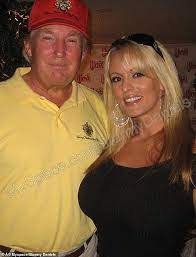
Donald Trump and Stormy Daniels
- Similarly, in 1960, Senator John F. Kennedy successfully ran for President while concealing his affliction with Addison’s Disease—an insufficiency of the Adrenal glands that can prove fatal.
Thus, all future candidates for President should be required to submit to full FBI background investigations at least one year before election time—with the results released before the election. Any candidate refusing to participate should be barred from competing.
You’re not allowed to become an FBI agent or Cabinet Secretary without passing a background investigation. You shouldn’t be allowed to become President without one, either.
Reform #2: No Presidential candidate can be over 70 at the time s/he leaves office.
The Federal Aviation Administration mandates that commercial airlines cannot employ pilots after they reach the age of 65.
FBI agents have a mandatory retirement age of 57.
Commissioned officers of the Army, Navy, Air Force and Marine Corps must retire by 64.
Yet Donald Trump is 77 and will turn 78 on June 14. Joseph Biden is 81 and will turn 82 on November 20.
If Trump wins, he will be 82 in 2028, his last year in office (assuming he doesn’t stage another—and successful—coup attempt). If Biden wins re-election, in 2028 he will be 86 (assuming he’s still alive by then).
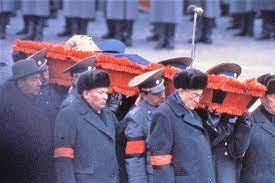
Funeral for Soviet dictator Leonid Brezhnev – 1982
The Presidency is notorious for prematurely ageing its occupants: “The typical president ages two years for every year they are in office,” said Dr. Michael Roizen. He used presidential medical records from the 1920s through today to reach this conclusion.
The United States Presidency is becoming a mirror-image of the former Soviet Union:
- In 1982, General Secretary Leonid Brezhnev died at age 75.
- He was succeeded by Yuri Andropov—who died, in 1984, at age 69.
- He, in turn, was followed by Konstantin Chernenko—who died in 1985 at age 73.
Finally, the Politburo—tired of replacing the General Secretary every two years—elected 54-year-old Mikhail Gorbachev, who lived to leave office six years later at age 60.
In the United States, having two geriatric Presidential candidates has become comic fodder for late-night TV hosts. Yet voters fear that neither candidate can handle the strains of another four years as President—or even survive a full term.
Reform #3: Abolish the honorific title of “Mr. President” for ex-Presidents.
This used to be offered as a tribute to a former President for having won the support of the majority of Americans.
But Donald Trump has corrupted this phrase, as he has so much else in American life. Since losing the 2020 Presidential election, he has continued to insist that he is the legitimate President of the United States, and Joseph Biden is a usurper.
When his fanatical followers refer to him as “President Trump,” that is what they mean—thus trying to de-legitimize Biden’s Presidency and elevate Trump as the rightful victor.
The 2005 Stolen Valor Act makes it a federal misdemeanor for anyone to falsely claim to have received any U.S. military decoration or medal—such as the Medal of Honor or Purple Heart. Violating the law can lead to fines, up to a year in prison, or both.
Thus, Congress should mandate that only the current holder of the Presidency has the legal right to call himself “Mr. President”—and that right ends when he no longer occupies the White House.
Reform #4: Require millionaire ex-Presidents to pay for Secret Service protection.
Every ex-President since Dwight D. Eisenhower—even Jimmy Carter—has been a millionaire.
Assigning a platoon of elite Secret Service agents to watch over every ex-President 24/7 is a huge expense.
The case of Ronald Reagan is instructive: At a cost to the government of $10 million annually, Reagan—while living in a 7,200 square-foot mansion overlooking Beverly Hills—received lifetime Secret Service protection from 40 fulltime agents.
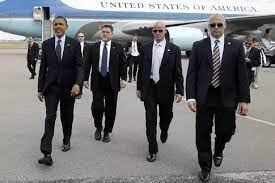
United States Secret Service
It’s also an unnecessary expense. There has never been an attack on an ex-President in all of American history.
Still, if the powers-that-be consider this essential, then millionaire ex-Presidents should be required to pay for their protection—just as moguls and Hollywood celebrities do.
As the situation now exists, the government is simply providing welfare for the rich. Whereas the poor face strict limits on how high their income can be and still receive welfare.
2020 PRESIDENTIAL ELECTION, ABC NEWS, ABORTION, AGUSTO PINOCHET, ALTERNET, AMERICABLOG, AMERICAN EXCEPTIONALISM, AMERICAN RECKONING: THE VIETNAM WAR AND OUR NATIONAL IDENTITY (BOOK), AP, AYATOLLAH RUHOLLAH KHOMEINI, BABY BOOMER RESISTANCE, BBC, BENJAMIN FRANKLIN, BIBLE BELT, BLOOMBERG NEWS, BUZZFEED, CBS NEWS, CHILE, CHINA, CHRISTIAN G. APPY, CIA, CIVIL RIGHTS ACT, CIVIL WAR, CNN, COAL MINING, CROOKS AND LIARS, DAILY KOS, DEMOCRATS, DONALD TRUMP, DRUG OVERDOSES, DWIGHT EISENHOWER, EDUCATION, FIVETHIRTYEIGHT, FUNDAMENTALIST CHRISTIANS, GERMANY, GUATEMALA, HARPER’S MAGAZINE, HISTORY, HUFFINGTON POST, INDIA, IRAN, ITALY, JACOBO ARBENZ, JAPAN, JOHN F. KENNEDY, JOSEPH R. BIDEN, LYNDON B. JOHNSON, MEDIA MATTERS, MOHAMMED MOSADDEGH, MOHAMMED-REZA SHAH PHLAVI, MOTHER JONES, MOVEON, MSNBC, MYTHS, NARENDRA MODI, NBC NEWS, NEW REPUBLIC, NEWSDAY, NEWSWEEK, NICARAGUA, NPR, OPIOD ADDICTION, PBS NEWSHOUR, POLITICO, POLITICS, POLITICUSUSA, PORNOGRAPHY, POVERTY, RAW STORY, RELIGIOUS CONSERVATIVES, REPUBLICANS, REUTERS, RICHARD NIXON, ROE V. WADE, RURAL AMERICA, SALON, SALVADORE ALLENDE, SEATTLE TIMES, SLATE, SMOKING, STEEL INDUSTRY, TALKING POINTS MEMO, THE ATLANTIC, THE CHICAGO SUN-TIMES, THE CHICAGO TRIBUNE, THE DAILY BEAST, THE DAILY BLOG, THE GUARDIAN, THE HILL, THE HUFFINGTON POST, THE INTERCEPT, THE LOS ANGELES TIMES, THE NATION, THE NEW REPUBLIC, THE NEW YORK TIMES, THE NEW YORKER, THE VILLAGE VOICE, THE WASHINGTON POST, THINKPROGRESS, THOMAS EDISON, TIME, TRUTHDIG, TRUTHOUT, TWITTER, U.S. NEWS & WORLD REPORT, UNITED STATES, UNITED STATES SUPREME COURT, UPI, USA TODAY, VIETNAM WAR, VOTER IGNORANCE, WORLD WAR 11
In Bureaucracy, History, Law, Law Enforcement, Politics, Social commentary on May 17, 2024 at 12:10 am
Americans live by a series of myths—myths they would be the wiser to abandon. Some are embraced by liberals, others by conservatives, and still others by both.
Myth 4: Americans are knowledgeable about their own history—and that of other nations.
Americans’ ignorance of history—their own and that of other nations—has long been a scandal.
- A 2018 national survey by the Institute for Citizens & Scholars found that only one in three Americans (36%) can actually pass a multiple choice test consisting of items taken from the U.S. Citizenship Test.
- More than half of respondents (60%) didn’t know which countries the United States fought in World War II (Germany, Italy and Japan).
- Only 24% correctly identified one thing Benjamin Franklin was famous for; 37% believed he invented the lightbulb (that inventor was Thomas Edison).
- Twelve percent incorrectly thought WWII General Dwight Eisenhower led troops in the Civil War; six percent thought he was a Vietnam War general.

if Americans are flagrantly ignorant of their own history, they are even worse at the history of other countries.
A major reason for this lies in Americans’ belief that other nations aren’t worth bothering about except when they threaten us. During the Vietnam war, soldiers referred to the United States as “The World”—as if the rest of the planet didn’t exist.
Americans, protected from Europe by the Atlantic Ocean and the Far East by the Pacific Ocean, allowed geography to isolate themselves from the messiness of the rest of the world.
Donald Trump, as President, gave a frightening example of this during a conversation with Indian Prime Minister Narendra Modi: “It’s not like you’ve got China on your border.” In fact, India does share a border with China.
Myth 5: The “Bible Belt” (the Deep South) is the spiritual capitol of America.
You won’t find these truths on “Green Acres” or “The Andy Griffith Show” but they form a stain on rural America that can’t be ignored:
- A 2015 study published in the Archives of Sexual Behavior found that religious conservatives search more for online pornography on Google than anyone else.
- Educational attainment and college graduation rates in the Bible Belt are among the lowest in the nation.
- Smoking rates are high in West Virginia, Kentucky, Arkansas, Tennessee, Louisiana, and Mississippi—and so are rates for smoking-related diseases and deaths.
- Heart disease, obesity, homicide and teenage pregnancies are among the highest in the nation.
Myth 6: Americans are health-conscious.
The United States is experiencing an epidemic of drug overdose deaths. In 2020, the age-adjusted rate of drug overdose deaths increased 31% compared to 2019.
Adults aged 35-44 experienced the highest rates of drug overdose deaths while young people aged 15-24 experienced the greatest percentage increase in deaths.
In 2019:
- 12 million Americans 12 or older used marijuana
- 9.1 million Americans used tobacco
- 14.5 million Americans aged 12 or older used alcohol
- 9.7 million people misused pain relievers
- 6 million people misused hallucinogens
- 5.9 million people misused depressants
- 5.5 million people misused cocaine
- 4.9 million people misused prescription stimulants
- 2.1 million people misused inhalants
- 2 million people used meth
- 745,000 Americans used heroin
Myth 7: Americans only support democratic regimes.
The United States has long supported foreign dictators—so long as they’re reliably Right-wing.
- Between 1898 and 1934, the United States repeatedly intervened with military force in Central America and the Caribbean.
- The United States occupied Nicaragua almost continuously from 1912 to 1933. Its legacy was the imposition of the tyrannical Somoza family, which ruled from 1936 to 1979.
- In 1953, the Eisenhower administration ordered the CIA to overthrew the democratically-elected government of of Iranian Prime Minister Mohammad Mosaddegh. His crime: Nationalizing the Iranian oil industry, which had been under British control since 1913.
- He was succeeded by Mohammad-Reza Shah Phlavi, a dictator who depended on United States government support to retain power until he was overthrown in 1979 by the Ayatollah Ruhollah Khomeini.
- In 1954, the CIA overthrew the democratically-elected government of Guatemalan President Jacobo Arbenz. His crime: Installing a series of reforms that expanded the right to vote, allowed workers to organize, legitimized political parties and allowed public debate.
- In 1970, President Richard M. Nixon ordered the CIA to prevent Marxist Salvador Allende from being democratically elected as president of Chile. When that failed, he ordered the CIA to overthrow Allende.
- His crime: A series of liberal reforms, including nationalizing large-scale industries (notably copper mining and banking).
- in 1973, he was overthrown by Chilean army units and national police. He was followed by Right-wing dictator Augusto Pinochet, who slaughtered 3,200 political dissidents, imprisoned 30,000 and forced another 200,000 Chileans into exile.
* * * * * * * * * *
Behind these myths: The belief in “American exceptionalism”—that the United States is unlike other nations in its innocence and steadfast dedication to human rights above all else.
Wrote Christian G. Appy, in his 2015 book, American Reckoning: The Vietnam War and Our National Identity:
“It was still unimaginable to most Americans that their own nation would wage aggressive war and justify it with unfounded claims, that it would support undemocratic governments reviled by their own people, and that American troops would be sent to fight in countries where they were widely regarded not as liberators but as imperialist invaders.”
For millions, that belief died a horrific death during the Vietnam war. Yet so long as millions remain convinced that America is guided by God and that its people are His faithful servants, these myths will remain vividly alive.
.jpeg&imgrefurl=http%3A%2F%2Fwww.whataboutclients.com%2Farchives%2F2014%2F09%2Famerican_authen.html&docid=boFt4L_sotcfWM&tbnid=ouxiHfzJFvsrwM%3A&w=240&h=248&ei=NhtPVKT3GJX6oQSa7YKgDg&ved=0CAIQxiAwAA&iact=c)


 Bureaucracybuster's Blog
2016 PRESIDENTIAL ELECTION, A BRONX TALE, ABC NEWS, ADOLF HITLER, ALTERNET, AMERICABLOG, AP, BABY BOOMER RESISTANCE, BBC, BILL CLINTON, BLOOMBERG, BUZZFEED, CBS NEWS, CHAZZ PALMINTERI, CNN, CROOKS AND LIARS, DAILY KOS, DONALD TRUMP, FBI, FIVETHIRTYEIGHT, H.R. MCMASTER, HARPER’S MAGAZINE, HILLARY CLINTON, HUFFINGTON POST, IRS, J. EDGAR HOOVER, JEFF SESSIONS, JOHN F. KENNEDY, JOHN KELLY, LYNDON B. JOHNSON, MEDIA MATTERS, MOTHER JONES, MOVEON, MSNBC, NBC NEWS, NEW REPUBLIC, NEWSDAY, NEWSWEEK, NICCOLO MACHIAVELLI, NPR, PBS NEWSHOUR, POLITICO, POLITICUSUSA, RAW STORY, REINCE PREBIUS, REPUBLICAN PARTY, REUTERS, RICHARD M. NIXON, ROBERT DE NIRO, ROBERT F. KENNEDY, Ronald Reagan, SALON, SEATTLE TIMES, SERGEI KISLYAK, SLATE, TALKING POINTS MEMO, THE ATLANTIC, THE CHICAGO SUN-TIMES, THE CHICAGO TRIBUNE, THE DAILY BEAST, THE DAILY BLOG, THE GUARDIAN, THE HILL, THE HUFFINGTON POST, THE INTERCEPT, THE LOS ANGELES TIMES, THE NATION, THE NEW REPUBLIC, THE NEW YORK TIMES, THE NEW YORKER, THE PRINCE, THE VILLAGE VOICE, THE WASHINGTON POST, THINKPROGRESS, TIME, TRUTHDIG, TRUTHOUT, TWO POLITICAL JUNKIES, U.S. NEWS & WORLD REPORT, UPI, USA TODAY, WILLIAM RALPH INGE, X
THE LIMITS OF LOVE AND FEAR: PART ONE (OF THREE)
In Bureaucracy, History, Law Enforcement, Social commentary, Uncategorized on August 26, 2024 at 1:32 amIt’s probably the most-quoted passage of Niccolo Machiavelli’s infamous book, The Prince:
“From this arises the question whether it is better to be loved than feared, or feared more than loved. The reply is, that one ought to be both feared and loved, but as it is difficult for the two to go together, it is much safer to be feared than loved.
“For it may be said of men in general that they are ungrateful, voluble, dissemblers, anxious to avoid danger and covetous of gain. As long as you benefit them, they are entirely yours: they offer you their blood, their goods, their life and their children, when the necessity is remote, but when it approaches, they revolt.
“And the prince who has relied solely on their words, without making other preparations, is ruined. For the friendship which is gained by purchase and not through grandeur and nobility of spirit is bought but not secured, and at a pinch is not to be expended in your service.
“And men have less scruple in offending one who makes himself loved than one who makes himself feared. For love is held by a chain of obligations which, men being selfish, is broken whenever it serves their purpose. But fear is maintained by a dread of punishment which never fails.”
Niccolo Machiavelli
So—which is better: To be feared or loved?
In the 1993 film, A Bronx Tale, 17-year-old Calogero (Lillo Brancato) poses that question to his idol, the local Mafia capo, Sonny (Chazz Palminteri).
“That’s a good question,” Sonny replies. “It’s nice to be both, but it’s very difficult. But if I had my choice, I would rather be feared.
“Fear lasts longer than love. Friendships that are bought with money mean nothing. You see how it is around here. I make a joke, everybody laughs. I know I’m funny, but I’m not that funny. It’s fear that keeps them loyal to me.”
Presidents face the same dilemma as Mafia capos—and resolve it in their own ways.
LOVE ME BECAUSE I NEED TO BE LOVED
Bill Clinton believed that he could win over his self-appointed Republican enemies through his sheer charm.
Part of this lay in self-confidence: He had won the 1992 and 1996 elections by convincing voters that “I feel your pain.”
Bill Clinton
And part of it lay in his need to be loved. He once said that if he were in a room with 100 people and 99 of them liked him but one didn’t, he would spend all his time with that one person, trying to win him over.
But while he could charm voters, he could not bring himself to retaliate against his sworn Republican enemies.
On April 19, 1995, Right-wing terrorist Timothy McVeigh drove a truck–packed with 5,000 pounds of ammonium nitrate and nitromethane–to the front of the Alfred P. Murrah Federal Building in Oklahoma City.
The explosion killed 168 people, including 19 children in the day care center on the second floor, and injured 684 others.
Suddenly, Republicans were frightened. Since the end of World War II, they had vilified the very Federal Government they belonged to. They had deliberately courted the Right-wing militia groups responsible for the bombing.
So Republicans feared Clinton would now turn their decades of hate against them.
They need not have worried. On April 23, Clinton presided over a memorial service for the victims of the bombing. He gave a moving eulogy—without condemning the hate-filled Republican rhetoric that had at least indirectly led to the slaughter.
Clinton further sought to endear himself to Republicans by:
The result: Republicans believed Clinton was weak—and could be rolled.
In 1998, House Republicans moved to impeach him over a sex scandal with White House intern Monica Lewinsky. But his Presidency survived when the Senate refused to convict.
LOVE ME BECAUSE I’LL HURT YOU IF YOU DON’T
Lyndon Johnson wanted desperately to be loved.
Once, he complained to Dean Acheson, the former Secretary of State under Harry S. Truman, about the ingratitude of American voters. He had passed far more legislation than his predecessor, John F. Kennedy, and yet Kennedy remained beloved, while he, Johnson, was not.
Why was that? Johnson demanded.
“You are not a very likable man,” said Acheson truthfully.
Lyndon B. Johnson
Johnson tried to make his subordinates love him. He would humiliate a man, then give him an expensive gift—such as a Cadillac. It was his way of binding the man to him.
He was on a first-name basis with J. Edgar Hoover, the longtime director of the FBI. He didn’t hesitate to request—and get—raw FBI files on his political opponents.
On at least one occasion, he told members of his Cabinet: No one would dare walk out on his administration—because if they did, two men would follow their ass to the end of the earth: Mr. J. Edgar Hoover and the head of the Internal Revenue Service.
Share this: