Posts Tagged ‘FRANCE’
2016 PRESIDENTIAL ELECTION, 202O PRESIDENTIAL ELECTION, ABC NEWS, ADOLF HITLER, ALASKA, ALEXANDER VINDMAN, ALTERNET, AMERICABLOG, AP, BABY BOOMER RESISTANCE, BBC, BLOOMBERG NEWS, BUZZFEED, CBS NEWS, CNN, CONSERVATIVE POLITICAL ACTION COMMITTEE (C-PAC, CRIMEA, CROOKS AND LIARS, CZECHOSLOVKIA, DONALD TRUMP, EDOUARD DALADIER, FIVETHIRTYEIGHT, FRANCE, FRANKLIN D. ROOSEVELT, GEORGE W. BUSH, GREAT BRITAIN, HARPER’S MAGAZINE, HOUSE INTELLIGENCE COMMITTEE, HUFFINGTON POST, IMPEACHMENT, J.D. VANCE, JOE SCARBOROUGH, JOSEPH BIDEN, MEDIA MATTERS, MICK MULVANEY, MIKE POMPEO, MORNING JOE, MOTHER JONES, MOVEON, MSNBC, MUNICH CONFERENCE, NATIONAL SECURITY COUNCIL, NAZI GERMANY, NBC NEWS, NEVILLE CHAMBERLAIN, NEW REPUBLIC, NEWSDAY, NEWSWEEK, NPR, PBS NEWSHOUR, POLITICO, POLITICUSUSA, RAW STORY, REPUBLICANS, REUTERS, RUSSIA, SALON, SEATTLE TIMES, SLATE, TALKING POINTS MEMO, THE ATLANTIC, THE CHICAGO SUN-TIMES, THE CHICAGO TRIBUNE, THE DAILY BEAST, THE DAILY BLOG, THE GUARDIAN, THE HILL, THE HUFFINGTON POST, THE INTERCEPT, THE LOS ANGELES TIMES, THE NATION, THE NEW REPUBLIC, THE NEW YORK TIMES, THE NEW YORKER, THE VILLAGE VOICE, THE WASHINGTON POST, THINKPROGRESS, TIME, TRUTHDIG, TRUTHOUT, TUCKER CARLSON, TWO POLITICAL JUNKIES, U.S. NEWS & WORLD REPORT, UKRAINE, UPI, USA TODAY, VLADIMIR PUTIN, VOLODYMYR ZELENSKY, WINSTON CHURCHILL, WONKETTE, X
In Bureaucracy, History, Military, Politics, Social commentary on August 18, 2025 at 12:10 am
On February 24, 2022, Russian President Vladimir Putin ordered an all-out assault on Ukraine.
Two days later, former President Donald Trump appeared at the Conservative Political Action Committee (CPAC)—to praise Putin and attack “our leaders.”
Specifically:
“The Ukrainian crisis is an outrage and it should never have been allowed to occur. we are praying for the proud people of Ukraine. God bless them all. The problem is not that Putin is smart, it’s that our leaders are dumb.
“They’re allowing Putin to get away with this assault on humanity. Putin is playing Biden like a drum. The real problem is that our leaders are dumb, dumb. So dumb. You could take the five worst presidents in history, and they wouldn’t have done the damage President Joe Biden has done in such a short time.”
Donald Trump
Historians may well rate Trump among “the five worst presidents in history.” And the damage “he has done in such a short time” began with the love-fest between himself and Putin even before he entered the White House.
The starting date for this: December 17, 2015.
Putin made the first move: “He is a bright and talented person without any doubt. He is the absolute leader of the presidential race.
“He says he will want to reach another, deeper, level of relations (with Russia). What else can we do but to welcome it? Certainly, we welcome it.
“That is none of our business to evaluate his accomplishments, but he remains the absolute front-runner in the presidential race. He is an outstanding and talented personality without any doubts.”
Appearing on the December 18, 2015 edition of MSNBC’s “Morning Joe,” Trump responded in kind: “Sure, when people call you ‘brilliant,’ it’s always good. Especially when the person heads up Russia.
“It is always a great honor to be so nicely complimented by a man so highly respected within his own country and beyond.”
The host, Joe Scarborough, was taken aback: “Well, I mean, [Putin’s] also a person who kills journalists, political opponents, and invades countries. Obviously that would be a concern, would it not?”

Joe Scarborough
NBC News, CC BY-SA 4.0 <https://creativecommons.org/licenses/by-sa/4.0>, via Wikipedia Commons
TRUMP: He’s running his country, and at least he’s a leader. Unlike what we have in this country.
SCARBOROUGH: But again: He kills journalists that don’t agree with him.
TRUMP: I think our country does plenty of killing, also, Joe, so, you know. There’s a lot of stupidity going on in the world right now, Joe. A lot of killing going on. A lot of stupidity. And that’s the way it is.
SCARBOROUGH: I’m confused. So I mean, you obviously condemn Vladimir Putin killing journalists and political opponents, right?
TRUMP: Oh sure, absolutely.
Despite his expressed sympathy for the Ukrainian people, Trump tried to extort a “favor” from Ukrainian President Volodymyr Zelensky in the face of Russian aggression.
In July, 2019, Trump told his acting chief of staff, Mick Mulvaney, to withhold almost $400 million in Congressionally promised military aid for Ukraine.
Then, on July 25, Trump telephoned Zelensky to demand: Investigate presumed 2020 Democratic Presidential Candidate Joe Biden and his son, Hunter, who had had business dealings in Ukraine.
Clearly implied in the call: Produce “dirt” on Biden—or you won’t get the military aid.
Unfortunately for Trump, his call was overheard by Army Lieutenant Colonel Alexander Vindman, who served as the Director for European Affairs for the United States National Security Council.
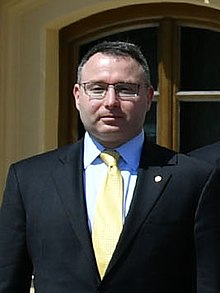
Lt. Colonel Alexander Vindman
“I was concerned by the call,” Vindman testified before the House Intelligence Committee. “I did not think it was proper to demand that a foreign government investigate a U.S. citizen, and I was worried about the implications for the U.S. Government’s support of Ukraine.
“I realized that if Ukraine pursued an investigation into the Bidens and Burisma, it would likely be interpreted as a partisan play which would undoubtedly result in Ukraine losing the bipartisan support it has thus far maintained. This would all undermine U.S. national security.”
Trump denounced Vindman as a “Never Trumper”—as if opposing his extortion attempt constituted a blasphemy. Republicans and their shills on the Fox News Network attacked Vindman as well. As a result, he sought physical protection by the Army for himself and his family.
On February 7, 2020, he was reassigned from the National Security Council at Trump’s order.
When the story broke, Ukraine got the promised military aid—and Trump found himself impeached for abuse of power and obstruction of Congress.
But Senate Republicans, ignoring the overwhelming evidence against him, easily acquitted Trump on February 5, 2020.
Two years after Trump’s acquittal, Vladimir Putin massively attacked Ukraine. For which, says Vindman, the Republican Party has “blood on its hands” for emboldening Russia.
And so, says Vindman, does Trump. His refusal to criticize Putin was a factor that led Putin to attack. So did Trump’s weakening the United States internally with his divisive politics:
“The Tucker Carlsons, the Donald Trumps, the Mike Pompeos, they and other Republicans are going to have to own this issue because they are the reason that Russia launched this operation.
“Putin, like Trump, smells vulnerability and exploits it. Vladimir Putin perceived that the United States was distracted and vulnerable. He’s been testing our resolve. He’s been getting positive signals in that regard.”
ABC NEWS, ALAMO, ALTERNET, AMERICABLOG, ANDREW JACKSON, ANTONIO LOPEZ DE SANTA ANNA, AP, BABY BOOMER RESISTANCE, BBC, BLOOMBERG NEWS, BLUESKY, BUZZFEED, CBS NEWS, CHARLES VII, CNN, CROOKS AND LIARS, DAILY KOS, DEPARTMENT OF HOMELAND SECURITY, DONALD TRUMP, FIVETHIRTYEIGHT, FRANCE, GAVIN NEWSOM, HARPER’S MAGAZINE, HUFFINGTON POST, IMMIGRATION AND CUSTOMS ENFORCEMENT (ICE), JOAN OF ARC, KAREN BASS, LONE STAR: A HISTORY OF TEXAS AND THE TEXANS (BOOK), MEDIA MATTERS, MOTHER JONES, MOVEON, MSNBC, NATIONAL GUARD, NBC NEWS, NEWSDAY, NEWSWEEK, NPR, PBS NEWSHOUR, POLITICO, POLITICUSUSA, RAW STORY, REUTERS, RUSSIA, SALON, SAM HOUSTON, SEATTLE TIMES, SLATE, T.R. FEHRENBACH, TALKING POINTS MEMO, TEXAS, THE ATLANTIC, THE CHICAGO SUN-TIMES, THE CHICAGO TRIBUNE, THE DAILY BEAST, THE DAILY BLOG, THE GUARDIAN, THE HILL, THE HUFFINGTON POST, THE INTERCEPT, THE LOS ANGELES TIMES, THE NATION, THE NEW REPUBLIC, THE NEW YORK TIMES, THE NEW YORKER, THE VILLAGE VOICE, THE WASHINGTON POST, THINKPROGRESS, TIME, TOM HOMAN, TRUTHDIG, TRUTHOUT, TWO POLITICAL JUNKIES, U.S. NEWS & WORLD REPORT, UKRAINE, UPI, USA TODAY, VLADIMIR PUTIN, VOLODYMYR ZELENSKY, WILLIAM BARRET TRAVIS, WONKETTE, X
In Bureaucracy, History, Law, Law Enforcement, Military, Politics, Social commentary on July 4, 2025 at 1:03 am
In The Last Lion, his three-volume biography of Winston Churchill, author William Manchester boldly summed up the prime minister’s most important contribution during World War II:
“The spirit [of courage], if indeed within them, lay dormant until he became prime minister and they, kindled by his soaring prose, came to see themselves as he saw them and emerged a people transformed, the admiration of free men everywhere.”
The same may one day be said about California Governor Gavin C. Newsom.
On June 11, Newsom addressed not only President Donald Trump’s response to civil disorders in Los Angeles, but the threat he posed to California, every other state—and democracy itself.
* * * * *
Authoritarian regimes begin by targeting people who are least able to defend themselves. But they do not stop there. Trump and his loyalists thrive on division because it allows them to take more power and exert even more control.
By the way, Trump – he’s not opposed to lawlessness and violence, as long as it serves HIM. What more evidence do we need than January 6th?
I ask everyone to take the time to reflect on this perilous moment. A president who wants to be bound by no law or constitution. Perpetrating a unified assault on American traditions.
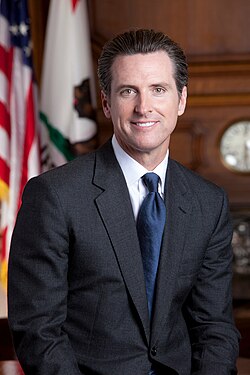
Gavin Newsom
This is a President who, in just over 140 days, has fired government watchdogs that could hold him accountable for corruption and fraud. He’s declared a war on culture, on history, on science – on knowledge itself. Databases, quite literally vanishing.
He’s delegitimizing news organizations and assaulting the First Amendment. At the threat of defunding them, he’s dictating what universities can teach. Targeting law firms and the judicial branch that are the foundation of an orderly, civil society.
Calling for a sitting Governor [himself] to be arrested for no other reason than – to use his words – “for getting elected.”
And we all know, this Saturday [June 14] he’s ordering our American heroes – the United States military – forcing them to put on a vulgar display to celebrate his birthday, just as other failed dictators have done in the past.
Look, this isn’t just about protests in LA. When Donald Trump sought blanket authority to commandeer the National Guard, he made that order apply to every state in this nation. This is about all of us. This is about you.
California may be first – but it clearly won’t end here. Other states are next. Democracy is next.
Democracy is under assault right before our eyes – the moment we’ve feared has arrived. He’s taking a wrecking ball to our founding fathers’ historic project: Three independent, coequal branches of government.
There are no longer any checks and balances. Congress is nowhere to be found. [House] Speaker [Mike] Johnson has completely abdicated that responsibility.
The rule of law has increasingly given way to the rule of Don.
The founding fathers did not live and die to see this moment. It’s time for all of us to stand up. [Supreme Court Justice Louis] Brandeis said it best: In a democracy, the most important office is not president, it’s certainly not governor. The most important office is office of citizen.
At this moment, we must all stand up and be held to a higher level of accountability. If you exercise your First Amendment rights, please do so peacefully.
I know many of you are feeling deep anxiety, stress, and fear. But I want you to know that YOU are the antidote to that fear and anxiety.
What Donald Trump wants most is your fealty. Your silence. To be complicit in this moment. Do NOT give in to him.
* * * * *
Volodymyr Zelensky (January 25, 1978 – ) is a former attorney, actor and comedian who, as the sixth president of Ukraine, now leads his country in a life-or-death struggle against the aggressive Russia’s dictator Vladimir Putin.
On February 24, 2022, Putin launched an all-out attack on Ukraine.

Volodymyr Zelensky
During the assault by Russian troops on the capital of Kiev, the Biden administration urged Zelensky to evacuate to a safer location and offered to help him do so. Zelensky refused, saying: “The fight is here [in Kiev]; I need ammunition, not a ride.”
As CBS correspondent Scott Pelley put it: “The moment Zelensky told his people he refused to flee, they refused to fall.”
Russia expected Kiev to fall in three days. But more than three years after the invasion, Kiev still remains defiant—and in the hands of Ukrainians.
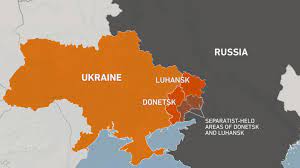
Ukraine vs. Russia
When Zelensky wasn’t broadcasting defiance at Russia and rousing Ukrainians to heroism, he was often visiting the battlefront.
Zelensky sees Ukraine’s struggle as the opening round of Russia’s war against the West.
“Some are….saying, ‘We can’t defend Ukraine because there could be a nuclear war.’ I think that today, no one in this world can predict what Russia will do. If they invade further into our territory, then they will definitely move closer and closer to Europe. They will only become stronger and less predictable.”
Millions of Americans—such as those who took part in nationwide “No Kings” protests on June 14—feel the same way about Donald Trump and his own dictatorial regime.
ABC NEWS, ALAMO, ALTERNET, AMERICABLOG, ANDREW JACKSON, ANTONIO LOPEZ DE SANTA ANNA, AP, BABY BOOMER RESISTANCE, BBC, BLOOMBERG NEWS, BLUESKY, BUZZFEED, CBS NEWS, CHARLES VII, CNN, CROOKS AND LIARS, DAILY KOS, DEPARTMENT OF HOMELAND SECURITY, DONALD TRUMP, FIVETHIRTYEIGHT, FRANCE, GAVIN NEWSOM, HARPER’S MAGAZINE, HUFFINGTON POST, IMMIGRATION AND CUSTOMS ENFORCEMENT (ICE), JOAN OF ARC, KAREN BASS, LONE STAR: A HISTORY OF TEXAS AND THE TEXANS (BOOK), MEDIA MATTERS, MOTHER JONES, MOVEON, MSNBC, NATIONAL GUARD, NBC NEWS, NEWSDAY, NEWSWEEK, NPR, PBS NEWSHOUR, POLITICO, POLITICUSUSA, RAW STORY, REUTERS, RUSSIA, SALON, SAM HOUSTON, SEATTLE TIMES, SLATE, T.R. FEHRENBACH, TALKING POINTS MEMO, TEXAS, THE ATLANTIC, THE CHICAGO SUN-TIMES, THE CHICAGO TRIBUNE, THE DAILY BEAST, THE DAILY BLOG, THE GUARDIAN, THE HILL, THE HUFFINGTON POST, THE INTERCEPT, THE LOS ANGELES TIMES, THE NATION, THE NEW REPUBLIC, THE NEW YORK TIMES, THE NEW YORKER, THE VILLAGE VOICE, THE WASHINGTON POST, THINKPROGRESS, TIME, TOM HOMAN, TRUTHDIG, TRUTHOUT, TWO POLITICAL JUNKIES, U.S. NEWS & WORLD REPORT, UKRAINE, UPI, USA TODAY, VLADIMIR PUTIN, VOLODYMYR ZELENSKY, WILLIAM BARRET TRAVIS, WONKETTE, X
In Bureaucracy, History, Law, Law Enforcement, Military, Politics, Social commentary on July 3, 2025 at 12:11 am
On June 11, California Governor Gavin Newsom addressed not only President Donald Trump’s response to civil disorders in Los Angeles, but the threat he posed to California, every other state—and democracy itself.
* * * * *
What’s happening right now is very different than anything we’ve seen before. On Saturday morning, when federal agents jumped out of an unmarked van near a Home Depot parking lot, they began grabbing people.
A deliberate targeting of a heavily Latino suburb.
A similar scene also played out when a clothing company was raided downtown.
In other actions: a US citizen, 9 months pregnant – arrested.
A four-year-old girl – taken.

Families separated. Friends disappearing.
In response, everyday Angelinos came out to exercise their Constitutional right to free speech and assembly. To protest their government’s actions.
In turn, the State of California and the City and County of Los Angeles sent our police officers to help keep the peace, and with some exceptions, they were successful.
Like many states, California is no stranger to this sort of civil unrest. We manage it regularly … and with our own law enforcement.
But this, again, was different.
What then ensued was the use of tear gas. Flash-bang grenades. Rubber bullets. Federal agents, detaining people and undermining their due process rights.
Donald Trump, without consulting with California’s law enforcement leaders, commandeered 2,000 of our state’s National Guard members to deploy on our streets. Illegally, and for no reason.
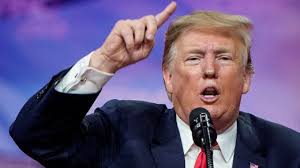
Donald Trump
This brazen abuse of power by a sitting President inflamed a combustible situation … putting our people, our officers, and the National Guard at risk.
That’s when the downward spiral began.
He doubled down on his dangerous National Guard deployment by fanning the flames even harder. And the President did it on purpose.
As the news spread throughout LA, anxiety for family and friends ramped up.
Protests started again. By night, several dozen lawbreakers became violent and destructive. They vandalized property. They tried to assault police officers.
Many of you have seen video clips of cars burning on cable news. If you incite violence or destroy our communities, you are going to be held accountable. That kind of criminal behavior will not be tolerated.

Full stop. Already, more than 370 people have been arrested. And we’re reviewing tapes to build additional cases, and people will be prosecuted to the fullest extent of the law.
Again, thanks to our law enforcement officers and the majority of Angelenos who protested peacefully, this situation was winding down and was concentrated in just a few square blocks downtown.
But that’s not what Donald Trump wanted. He again chose escalation; he chose more force. He chose theatrics over public safety – he federalized another 2,000 Guard members. He deployed more than 700 active U.S. Marines.
These are men and women trained in foreign combat, not domestic law enforcement.
We honor their service. We honor their bravery. But we do not want our streets militarized by our own Armed Forces. Not in L.A. Not in California. Not anywhere.
We’re seeing unmarked cars in school parking lots. Kids, afraid to attend their own graduation.
Trump is pulling a military dragnet across LA, well beyond his stated intent to just go after violent and serious criminals. His agents are arresting dishwashers, gardeners, day laborers and seamstresses.

That’s just weakness. Weakness, masquerading as strength.
Donald Trump’s government isn’t protecting our communities – they are traumatizing our communities. And that seems to be the point.
California will keep fighting on behalf of our people – all of our people – including in the courts. Yesterday, we filed a legal challenge to President Trump’s reckless deployment of American troops to a major American city.
Today, we sought an emergency court order to stop the use of the American military to engage in law enforcement activities across Los Angeles. If some of us can be snatched off the streets without a warrant, based only on suspicion or skin color, then none of us are safe.
Authoritarian regimes begin by targeting people who are least able to defend themselves. But they do not stop there. Trump and his loyalists thrive on division because it allows them to take more power and exert even more control.
By the way, Trump – he’s not opposed to lawlessness and violence, as long as it serves HIM. What more evidence do we need than January 6th?
I ask everyone to take the time to reflect on this perilous moment. A president who wants to be bound by no law or constitution. Perpetrating a unified assault on American traditions.
This is a President who, in just over 140 days, has fired government watchdogs that could hold him accountable for corruption and fraud. He’s declared a war on culture, on history, on science – on knowledge itself. Databases, quite literally vanishing.
He’s delegitimizing news organizations and assaulting the First Amendment. At the threat of defunding them, he’s dictating what universities can teach. Targeting law firms and the judicial branch that are the foundation of an orderly, civil society.
Calling for a sitting Governor [Newsom himself] to be arrested for no other reason than – to use his words – “for getting elected.”
ABC NEWS, ALAMO, ALTERNET, AMERICABLOG, ANDREW JACKSON, ANTONIO LOPEZ DE SANTA ANNA, AP, BABY BOOMER RESISTANCE, BBC, BLOOMBERG NEWS, BLUESKY, BUZZFEED, CBS NEWS, CHARLES VII, CNN, CROOKS AND LIARS, DAILY KOS, DEPARTMENT OF HOMELAND SECURITY, DONALD TRUMP, FIVETHIRTYEIGHT, FRANCE, GAVIN NEWSOM, HARPER’S MAGAZINE, HUFFINGTON POST, IMMIGRATION AND CUSTOMS ENFORCEMENT (ICE), JOAN OF ARC, KAREN BASS, LONE STAR: A HISTORY OF TEXAS AND THE TEXANS (BOOK), MEDIA MATTERS, MOTHER JONES, MOVEON, MSNBC, NATIONAL GUARD, NBC NEWS, NEWSDAY, NEWSWEEK, NPR, PBS NEWSHOUR, POLITICO, POLITICUSUSA, RAW STORY, REUTERS, RUSSIA, SALON, SAM HOUSTON, SEATTLE TIMES, SLATE, T.R. FEHRENBACH, TALKING POINTS MEMO, TEXAS, THE ATLANTIC, THE CHICAGO SUN-TIMES, THE CHICAGO TRIBUNE, THE DAILY BEAST, THE DAILY BLOG, THE GUARDIAN, THE HILL, THE HUFFINGTON POST, THE INTERCEPT, THE LOS ANGELES TIMES, THE NATION, THE NEW REPUBLIC, THE NEW YORK TIMES, THE NEW YORKER, THE VILLAGE VOICE, THE WASHINGTON POST, THINKPROGRESS, TIME, TOM HOMAN, TRUTHDIG, TRUTHOUT, TWO POLITICAL JUNKIES, U.S. NEWS & WORLD REPORT, UKRAINE, UPI, USA TODAY, VLADIMIR PUTIN, VOLODYMYR ZELENSKY, WILLIAM BARRET TRAVIS, WONKETTE, X
In Bureaucracy, History, Law, Law Enforcement, Military, Politics, Social commentary on July 2, 2025 at 12:10 am
History is filled with examples of men—and women—who in moments of crisis rose to challenge a deadly enemy. One of these is California Governor Gavin C. Newsom.
On June 6, protests erupted in Los Angeles against Immigration and Customs Enforcement (ICE). The demonstrations were triggered by ICE raids at multiple locations in the city to arrest suspected illegal aliens.
The first raid occurred within the Los Angeles Fashion District; two other raids occurred at a clothing wholesaler and a Home Depot in Westlake.
Word of these arrests quickly spread, and so did demonstrations, with the Department of Homeland Security (DHS) stating that 44 people were arrested for suspected immigration violations and one person was arrested for obstruction.
David Huerta, the California president of the Service Employees International Union, was arrested for blocking a vehicle and charged with felony conspiracy to impede an officer.
The epicenter of the protests became the Los Angeles Metropolitan Detention Center at 535 N Alameda Street. About 200 protesters remained at the facility by 7 p.m., when the Los Angeles Police Department (LAPD) declared the protest to be an unlawful assembly and ordered protesters to disperse
Some protesters hurled chunks of broken concrete toward officers; the LAPD responded with tear gas, pepper spray and flash-bang grenades to disperse the crowd. At 8:24 p.m. a citywide tactical alert was announced.
On June 7, the protests continued. About 1,000 people surrounded a local branch building used by Homeland Security.
California Governor Newsom deployed California Highway Patrol units to protect Los Angeles freeways.
By June 7, 118 illegal aliens had been arrested in Los Angeles, according to the DHS.
That evening, President Donald Trump signed a memorandum deploying 2,000 members of the California National Guard to the protests for either 60 days or for a length of time “at the discretion of the secretary of defense.”
He did so without the request—or consent—of Governor Newsom.
If a Democratic President did so in a Republican state, Congressional Republicans would scream “STATES’ RIGHTS!” and accuse the President of being a dictator. But since Trump is a Republican, Congressional Republicans enthusiastically supported his action.

National Guard troops in L.A.
In a tweet, Secretary of Defense Pete Hegseth said that active duty Marines were on “high alert” at Camp Pendleton.
And Trump later threatened to “have troops everywhere” if the protests spread to other cities. “If we see danger to our country and our citizens,” the Marines would be deployed to Los Angeles.
Newsom retorted that the National Guard—and especially the Marines—weren’t needed. The LAPD and Los Angeles County Sheriff’s Department were fully capable of protecting Federal property and dispersing the protesters.
He called on Trump to return control of the Guard to California—and withdraw the Marines, who are trained for combat, not handling civil unrest.
Thomas Homan, White House Executive Associate Director of Enforcement and Removal Operations, told NBC News that Newsom and Los Angeles Mayor Karen Bass could potentially face federal charges over their response to the ICE raids.
Homan had previously threatened arrest for anyone who obstructs immigration enforcement. When asked whether that would include Newsom or Bass, Homan did not rule it out.
“I’ll say it about anybody,” Homan said. “You cross that line, it’s a felony to knowingly harbor and conceal an illegal alien. It’s a felony to impede law enforcement doing their job.”

Tom Homan
Newsom quickly responded to Homan: “Trump’s border czar is threatening to arrest me for speaking out. Come and get me, tough guy.
“What the hell are they doing? These guys need to grow up, they need to stop and we need to push back and I’m sorry to be so clear but that kind of bloviating is exhausting. So Tom, arrest me. Let’s go.”
Homan just as quickly backed down: “There’s no intention to arrest the governor right now. I don’t know if he crossed that line.” Homan said he would “leave that up” to the Justice Department.
When asked about the idea of arresting Newsom, Trump said, “I’d do it if I were Tom. Gavin likes the publicity, but I think it would be a great thing.”
On June 11, Newsom addressed not only Trump’s response to civil disorders in Los Angeles, but the threat he posed to not only California, every other state—and democracy itself.
GOVERNOR GAVIN NEWSOM’S ADDRESS TO CALIFORNIA: DEMOCRACY AT A CROSSROADS ON JUNE 11, 2025
I want to say a few words about the events of the last few days. This past weekend, federal agents conducted large-scale workplace raids in and around Los Angeles. Those raids continue as I speak.
California is no stranger to immigration enforcement. But instead of focusing on undocumented immigrants with serious criminal records and people with final deportation orders – a strategy both parties have long supported – this administration is pushing mass deportations.
Indiscriminately targeting hardworking immigrant families, regardless of their roots or risk.
What’s happening right now is very different than anything we’ve seen before. On Saturday morning, when federal agents jumped out of an unmarked van near a Home Depot parking lot, they began grabbing people.
A deliberate targeting of a heavily Latino suburb.
ABC NEWS, ALAMO, ALTERNET, AMERICABLOG, ANDREW JACKSON, ANTONIO LOPEZ DE SANTA ANNA, AP, BABY BOOMER RESISTANCE, BBC, BLOOMBERG NEWS, BLUESKY, BUZZFEED, CBS NEWS, CHARLES VII, CNN, CROOKS AND LIARS, DAILY KOS, DEPARTMENT OF HOMELAND SECURITY, DONALD TRUMP, FIVETHIRTYEIGHT, FRANCE, GAVIN NEWSOM, HARPER’S MAGAZINE, HUFFINGTON POST, IMMIGRATION AND CUSTOMS ENFORCEMENT (ICE), JOAN OF ARC, KAREN BASS, LONE STAR: A HISTORY OF TEXAS AND THE TEXANS (BOOK), MEDIA MATTERS, MOTHER JONES, MOVEON, MSNBC, NATIONAL GUARD, NBC NEWS, NEWSDAY, NEWSWEEK, NPR, PBS NEWSHOUR, POLITICO, POLITICUSUSA, RAW STORY, REUTERS, RUSSIA, SALON, SAM HOUSTON, SEATTLE TIMES, SLATE, T.R. FEHRENBACH, TALKING POINTS MEMO, TEXAS, THE ATLANTIC, THE CHICAGO SUN-TIMES, THE CHICAGO TRIBUNE, THE DAILY BEAST, THE DAILY BLOG, THE GUARDIAN, THE HILL, THE HUFFINGTON POST, THE INTERCEPT, THE LOS ANGELES TIMES, THE NATION, THE NEW REPUBLIC, THE NEW YORK TIMES, THE NEW YORKER, THE VILLAGE VOICE, THE WASHINGTON POST, THINKPROGRESS, TIME, TOM HOMAN, TRUTHDIG, TRUTHOUT, TWO POLITICAL JUNKIES, U.S. NEWS & WORLD REPORT, UKRAINE, UPI, USA TODAY, VLADIMIR PUTIN, VOLODYMYR ZELENSKY, WILLIAM BARRET TRAVIS, WONKETTE, X
In Bureaucracy, History, Law, Law Enforcement, Military, Politics, Social commentary on July 1, 2025 at 12:10 am
On November 30, 1954—the 80th birthday of former British Prime Minister Winston Churchill—he gave an uncharacteristically modest assessment of his World War II legacy:
“It was the nation and the race dwelling all around the globe that had the lion’s heart. I had the luck to be called upon to give the roar.”
But author William Manchester was having nothing of it. In his monumental trilogy, The Last Lion, he wrote:
“It wasn’t that simple. The spirit, if indeed within them, lay dormant until he became prime minister and they, kindled by his soaring prose, came to see themselves as he saw them and emerged a people transformed, the admiration of free men everywhere.”
Characteristically it was Churchill who said: “Courage is rightly esteemed the first of human qualities because it is the quality which guarantees all others.”
History is filled with examples of men—and women—who in moments of crisis rose to challenge a deadly enemy.
Not all of them prevailed against the odds they faced.
Joan of Arc (c. 1412 – 30 May 1431) was an illiterate peasant girl who, in France’s darkest hour, became its greatest hero. After she arranged an interview with King Charles V11, he sent her with a relief army to lift the siege of Orléans.
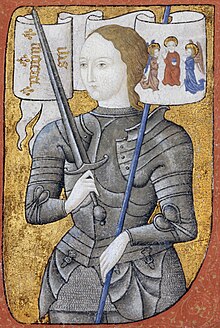
Joan of Arc
She had never wielded a lance or sword, or even ridden a war horse. She had never studied military strategy nor even seen a battlefield. Yet nine days after arriving with an army at Orléans, she lifted the English siege of the city on May 8, 1429.
On May 4, her army attacked the outlying fortress of Saint Loup. She arrived just as the French soldiers were retreating after a failed attempt. Her sudden appearance roused the soldiers to cheer and launch another assault—which overwhelmed the fortress.
In June, Joan decisively defeated the English at the Battle of Patay. She then advanced on Reims, entering the city on July 16. The next day, Charles, the rightful heir to the French throne, was consecrated as the King of France in Reims Cathedral with Joan at his side.
These victories paved the way for the final French victory in the Hundred Years’ War at Castillon in 1453.
On May 23, 1430, while relieving the siege of Compiegne, she was captured by Burgundians troops and exchanged to the English. Tried for heresy, she was declared guilty and burned at the stake on May 30,1431.
Only 19 when she died, she had, through her inspired leadership, restored the kingdom of France.
William Barret Travis (August 1, 1809 – March 6, 1836) was a South Carolina lawyer whose courage and eloquence inspired 200 Texans at the Alamo to hold back an army of 2,000 Mexican soldiers.
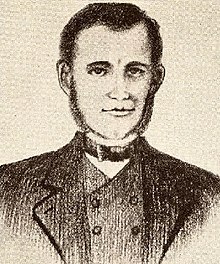
William Barret Travis
Few of the defenders had known each other before finding themselves besieged. None of them had had professional military training. Some had served in local militias or as irregulars fighting Indians under the command of frontier officers such as Andrew Jackson. Since the vast majority of the garrison were volunteers, they could have deserted the fortress at any time.
Holding them in place was Travis. Gifted with an eloquence beyond his 26 years, he gave purpose to their stand. As historian T.R. Fehrenbach writes in his monumental book, Lone Star: A History of Texas and the Texans:
“From the Alamo, from his first message before the arrival of the Mexicans to his last, his words had the ring of prophecy. The Texas historian who stated publicly that few people would want to have a son serve under William Barret Travis had forgotten, in the comforts of long security, the reasons why men make war.”
When the final assault came before dawn on March 6, 1836, the roughly 200 defenders killed and wounded about 600 of their enemies—inflicting a casualty rate of 33% on the Mexican army.
Travis’ body was found near his cannon on the north wall. He had been shot through the forehead.
The garrison’s sacrifice inspired Sam Houston’s ragtag army to fall on the Mexican army at San Jacinto on April 21. Slaughtering about 800 soldiers, the Texans captured Mexican dictator Antonio Lopez de Santa Anna—and forced him to surrender control of Texas in return for his life.
And now, as the United States faces the unprecedented danger of a Fascistic dictatorship under President Donald J. Trump, another hero has arisen.
Gavin Christopher Newsom (October 10, 1967) has been the 40th governor of California since 2019. During the COVID-19 pandemic in 2020, he imposed strict lockdown measures, thus saving countless lives by preventing a far greater spread of the virus.

Gavin Newsom
In doing so, he aroused the wrath of then-President Donald J. Trump, who promoted false “cures” such as drinking bleach and shining UV light up people’s rectums. Trump’s goal: “Keep America open”—so he could take credit for a robust economy, no matter how many people died.
Since being reelected in 2024 and taking office on January 20, Trump has committed, among other abuses:
- Deploying Marines and the National Guard to Los Angeles (against the wishes of the governor);
- Intimidating elected officials and judges;
- Purging the government of its inspectors general independent watchdogs;
- Blocking Congressional funding to agencies and universities; and
- Ignoring Constitutional guarantees of due process for those accused of being in the country illegally.
ABC NEWS, ADOLF HITLER, ALTERNET, AMERICABLOG, AP, AUSTRIA, BABY BOOMER RESISTANCE, BBC, BLOOMBERG NEWS, BLUESKY, BUZZFEED, CANADA, CBS NEWS, CLAUDIA SHEINBAUM PARDO, CNN, CNN'S "STARTING POINT", CROOKS AND LIARS, CZECHOSLAVAKIA, CZECHOSLOVAKIA, DAILY KOS, DAVID BROOKS, DEPARTMENT OF HOMELAND SECURITY, DEPARTMENT OF JUSTICE, DONALD TRUMP, EXTORTION, FBI, FIVETHIRTYEIGHT, FRANCE, GELI rAUBAL, GREENLAND, HARPER’S MAGAZINE, HUFFINGTON POST, INSIDER, JACK SMITH, JIMMY CARTER, JUSTIN TRUDEAU, MASTADON, MEDIA MATTERS, MEXICO, MOTHER JONES, MOVEON, MSNBC, MSNBC'S "HARDBALL", NAZI GERMANY, NBC NEWS, NEGOTIATING, NEVILLE CHAMBERLAIN, NEW REPUBLIC, NEWSDAY, NEWSWEEK, NEWT GINGRICH, NICCOLO MACHIAVELLI, NPR, PANAMA, PBS NEWSHOUR, POLAND, POLITICO, POLITICUSUSA, R.I.CO. ACT, RAW STORY, REPUBLICAN PARTY, REPUBLICANS, REUTERS, ROBERT MEULLER, SALON, SEATTLE TIMES, SLATE, TALKING POINTS MEMO, TARIFFS, THE ATLANTIC, THE CHICAGO SUN-TIMES, THE CHICAGO TRIBUNE, THE DAILY BEAST, THE DAILY BLOG, THE GUARDIAN, THE HAMILTON PROJECT, THE HILL, THE HUFFINGTON POST, THE LOS ANGELES TIMES, THE NATION, THE NEW REPUBLIC, THE NEW YORK TIMES, THE NEW YORKER, THE PENTAGON, THE PRINCE, THE VILLAGE VOICE, THE WASHINGTON POST, THINKPROGRESS, TIME, TRADE WARS, TRUTHDIG, TRUTHOUT, TWO POLITICAL JUNKIES, U.S. NEWS & WORLD REPORT, UKRAINE, UPI, USA TODAY, VLADIMIR PUTIN, VOLODMYR ZELENSKY, WONKETTE, WORLD WAR 11, X
In Bureaucracy, Business, History, Military, Politics, Social commentary on February 18, 2025 at 12:10 am
To understand the “negotiating” style of Donald Trump, it’s essential to study that of Adolf Hitler.
Both men, dictatorial by nature, did/do not believe in compromise. Their idea of “compromise” was/is: “You do what I want–or I’ll destroy you.”
In Hitler’s case, his mania for absolute control began with the Nazi party and eventually extended to Germany. Then it reached to Austria, Czechoslovakia, Poland, Norway, Denmark, France and Russia. At least 50 million men, women and children perished in the wars he unleashed from 1939 to 1945.
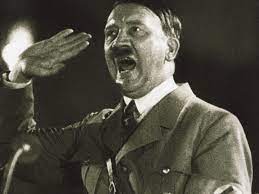
Adolf Hitler
Similarly, Trump’s mania for control started with building a real estate empire. Then it encompassed his “reality TV” show, The Apprentice—and finally politics.
He began dominating the Republican party by winning a series of Presidential primaries—and then the White House. Then came asserting control over the the Justice Department and the judiciary—up to the Supreme Court.
Re-elected in 2024, he now seeks to dominate Americans, demands military control over Gaza, threatens Mexico and Canada with trade wars, and Greenland and Panama with invasion.
Much can be learned about Trump’s “negotiating” methods—and what it takes to counter them—by studying those of Germany’s Fuhrer.
Robert Payne, author of the bestselling biography, The Life and Death of Adolf Hitler (1973), described Hitler’s “negotiating” style thus:
“Although Hitler prized his own talents as a negotiator, a man always capable of striking a good bargain, he was totally lacking in finesse.
Donald Trump
“He was incapable of bargaining. He was like a man who goes up to a fruit peddler and threatens to blow his brains out if he does not sell his applies at the lowest possible price.”
A classic example of Hitler’s “bargaining style” came in 1938, when he invited Austrian Chancellor Kurt von Schuschnigg to his mountaintop retreat in Obersalzberg, Germany.
Hitler, an Austrian by birth, intended to annex his native land to Germany. Schuschnigg was aware of Hitler’s desire, but nevertheless felt secure in accepting the invitation. He had been assured that the question of Austrian sovereignty would not arise.
The meeting occurred on February 12, 1938.
Shuschnigg opened the discussion with a friendly compliment. Walking over to a large window, he admired the breathtaking view of the mountains.
HITLER: We haven’t come here to talk about the lovely view or the weather!
Austria has anyway never done anything which was of help to the German Reich….I am resolutely determined to make an end to all this business. The German Reich is a great power. Nobody can and nobody will interfere if it restores order on its frontiers.
[Like Hitler, Trump relies on insults and anger to put his victims on the defense.]
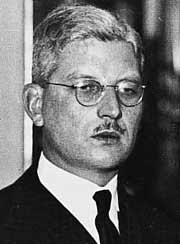
Kurt von Schuschnigg
SCHUSCHNIGG: We simply have to go on living alongside one another, the little state next to the big one. We have no other choice.
And that is why I ask you to tell me what your concrete complaints are. We will do all in our power to sort things out and establish a friendly relationship, as far as it is possible to do so.
HITLER: That’s what you say, Herr Schuschnigg. And I am telling you that I intend to clear up the whole of the so-called Austrian question—one way or another. Do you think I don’t know that you are fortifying Austria’s border with the Reich?
SCHUSCHNIGG: There can be no suggestion at all of that—
HITLER: Ridiculous explosive chambers are being built under bridges and roads—
This was a lie, and Hitler knew it was a lie. But it gave him an excuse to threaten to destroy Austria.
[For Trump, winning—not truth—is all that matters. During his first term as President, he told 30,573 lies.]
HITLER: I have only to give one command and all this comic stuff on the border will be blown to pieces overnight. You don’t seriously think you could hold me up, even for half an hour, do you?
The S.A. [Hitler’s private army of Stormtroopers] and the [Condor] lLegion [which had bombed much of Spain into rubble during the Spanish Civil War] would come in after the troops and nobody—not even I—could stop them from wreaking vengeance.
Schnuschigg made a cardinal mistake in dealing with Hitler: He showed fear. And this was precisely what the Nazi dictator looked for in an opponent.
[Like Hitler, Trump relies on fear: “Real power is—I don’t even want to use the word—fear,” he said in March 2016 when still only a candidate for President.]
Contrary to popular belief, Hitler did not constantly rage at everyone. He used rage as a weapon, knowing that most people feel intimidated by it.
In the case of Schuschnigg, Hitler opened with insults and threats at the outset of their discussion. Then there was a period of calm, to convince the Austrian chancellor the worst was over.
Finally, he once again attacked—this time with so much fury that Schuschnigg was terrified into submission.
With one stroke of a pen, Austria became a vassal-state to Nazi Germany.
[Like Hitler, Trump threatens only those he feels are weak—thus his threats to use military force against Canada, Greenland and Panama.]
ABC NEWS, ALAMO, ALTERNET, AMERICABLOG, ANDREW JACKSON, ANTONIO LOPEZ DE SANTA ANNA, AP, BABY BOOMER RESISTANCE, BBC, BLOOMBERG NEWS, BUZZFEED, CBS NEWS, CHARLES VII, CNN, CROOKS AND LIARS, DAILY KOZ, DAVID CROCKETT, FIVETHIRTYEIGHT, FRANCE, HARPER’S MAGAZINE, HUFFINGTON POST, JAMES BOWIE, JOAN OF ARC, LONE STAR: A HISTORY OF TEXAS AND THE TEXANS (BOOK), MEDIA MATTERS, MOTHER JONES, MOVEON, MSNBC, NBC NEWS, NEW REPUBLIC, NEWSDAY, NEWSWEEK, NPR, PBS NEWSHOUR, POLITICO, POLITICUSUSA, RAW STORY, REUTERS, RUSSIA, SALON, SAM HOUSTON, SEATTLE TIMES, SLATE, T.R. FEHRENBACH, TALKING POINTS MEMO, TEXAS, THE ATLANTIC, THE CHICAGO SUN-TIMES, THE CHICAGO TRIBUNE, THE DAILY BEAST, THE DAILY BLOG, THE GUARDIAN, THE HILL, THE HUFFINGTON POST, THE INTERCEPT, THE LOS ANGELES TIMES, THE NATION, THE NEW REPUBLIC, THE NEW YORK TIMES, THE NEW YORKER, THE VILLAGE VOICE, THE WASHINGTON POST, THINKPROGRESS, TIME, TRUTHDIG, TRUTHOUT, TWO POLITICAL JUNKIES, U.S. NEWS & WORLD REPORT, UKRAINE, UPI, USA TODAY, VLADIMIR PUTIN, VOLODYMYR ZELENSKY, WILLIAM BARRET TRAVIS, WONKETTE, X
In History, Military, Politics, Social commentary on January 1, 2025 at 12:05 am
They seem to come out of nowhere—people who have never had military training nor even any experience with violence. Yet they display an utter fearlessness and eloquence that inspires others to great deeds in the face of overwhelming danger.
For 13 days—from February 23 to March 6, 1836—about 200 frontiersmen defended a ruined mission in San Antonio, Texas, against an army of 2,000 Mexican soldiers.
Few of them had known each other before finding themselves besieged. None of them had had professional military training. Some had served in local militias or as irregulars fighting Indians under the command of frontier officers such as Andrew Jackson.
One of these was David Crockett, recently a Congressman from Tennessee.
Since the vast majority of the garrison were volunteers, they could have deserted the fortress at any time.
Holding them in place was a former lawyer named William Barret Travis. Gifted with an eloquence beyond his 26 years, he gave purpose to their stand.
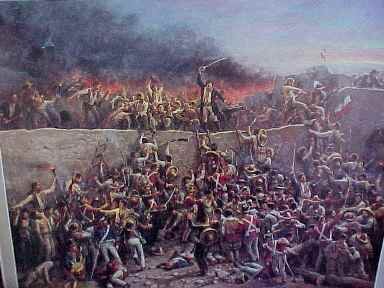
William Barret Travis (with sword) at the Alamo
As historian T.R. Fehrenbach writes in his monumental book, Lone Star: A History of Texas and the Texans:
“From the Alamo, from his first message before the arrival of the Mexicans to his last, his words had the ring of prophecy. The Texas historian who stated publicly that few people would want to have a son serve under William Barret Travis had forgotten, in the comforts of long security, the reasons why men make war.”
When the final assault came before dawn on March 6, 1836, the roughly 200 defenders killed and wounded about 600 of their enemies—inflicting a casualty rate of 33% on the Mexican army.
Travis’ body was found near his cannon on the north wall. He had been shot through the forehead.
The garrison’s sacrifice inspired Sam Houston’s ragtag army to fall on the Mexican army at San Jacinto on April 21. Slaughtering about 800 soldiers, the Texans captured Mexican dictator Antonio Lopez de Santa Anna—and forced him to surrender control of Texas in return for his life.
- Volodymyr Zelensky (January 25, 1978 – ) is a former attorney, actor and comedian who, as the sixth president of Ukraine, now leads his country in a life-or-death struggle against the aggressive Russia of Vladimir Putin.
After earning a law degree from the Kiev National Economic University, he pursued a career in comedy. He created his own production company, Kvartal 95, which produced films, cartoons, and TV shows. His comedy, Servant of the People, starred Zelensky as the president of Ukraine.
Volodymyr Zelensky
In 2019, he announced his candidacy for president of Ukraine. He opposed the corruption that had been rife under the country’s luxury-loving president, Victor Yanukovych.
(In 2014, Ukrainians had rioted in Kiev and evicted Yanukovych. And that didn’t sit well with his “sponsor”—Russian President Vladimir Putin.)
A second feature of Zelensky’s presidential campaign: He promised to resolve the Russia-sponsored separatist movement in Donbas and end Ukraine’s protracted conflict there with Russia.
Zelensky won election by a landslide, with 72% of the vote.
In 2021, his administration came under mounting pressure from Russia. On February 24, 2022, Putin ordered a full-scale invasion of Ukraine.
Ukraine vs. Russia
In the early hours of February 24, shortly before the start of the Russian invasion, Zelensky recorded an address to both Ukraine and Russia. As a Jew, he refuted Putin’s claims that there were Neo-Nazis in the Ukrainian government.
And he appealed to Russians—in Russian—to pressure their leadership to prevent war.
During the assault by Russian troops on the capital of Kiev, the Biden administration urged Zelensky to evacuate to a safer location and offered to help him do so. Zelensky refused, saying: “The fight is here [in Kiev]; I need ammunition, not a ride.”
As CBS correspondent Scott Pelley put it: “The moment Zelensky told his people he refused to flee, they refused to fall.”
Russia expected Kiev to fall in three days. But almost three years after the invasion, Kiev still remains defiant—and in the hands of Ukrainians.
When he wasn’t broadcasting defiance at Russia and rousing Ukrainians to heroism, he was often visiting the battlefront.
Interviewed on CBS’ 60 Minutes, Zelensky said: “I don’t want to make myself out to be a hero. I love my family. I want to live many more years, but choosing between running or being with my people, of course I’m ready to give my life for my country.”
Since the start of the invasion, he has reportedly been the target of more than a dozen assassination attempts.
Other world leaders have applauded his courage and leadership. Historian Andrew Roberts compared him to Winston Churchill.
The Harvard Political Review said that Zelensky “has harnessed the power of social media to become history’s first truly online wartime leader, bypassing traditional gatekeepers as he uses the internet to reach out to the people.”
Zelensky sees Ukraine’s struggle as the opening round of Russia’s war against the West.
“Some are….saying, ‘We can’t defend Ukraine because there could be a nuclear war.’ I think that today, no one in this world can predict what Russia will do. If they invade further into our territory, then they will definitely move closer and closer to Europe. They will only become stronger and less predictable.”
ABC NEWS, ALAMO, ALTERNET, AMERICABLOG, ANDREW JACKSON, ANTONIO LOPEZ DE SANTA ANNA, AP, BABY BOOMER RESISTANCE, BBC, BLOOMBERG NEWS, BUZZFEED, CBS NEWS, CHARLES VII, CNN, CROOKS AND LIARS, DAILY KOZ, DAVID CROCKETT, FIVETHIRTYEIGHT, FRANCE, HARPER’S MAGAZINE, HUFFINGTON POST, JAMES BOWIE, JOAN OF ARC, LONE STAR: A HISTORY OF TEXAS AND THE TEXANS (BOOK), MEDIA MATTERS, MOTHER JONES, MOVEON, MSNBC, NBC NEWS, NEW REPUBLIC, NEWSDAY, NEWSWEEK, NPR, PBS NEWSHOUR, POLITICO, POLITICUSUSA, RAW STORY, REUTERS, RUSSIA, SALON, SAM HOUSTON, SEATTLE TIMES, SLATE, T.R. FEHRENBACH, TALKING POINTS MEMO, TEXAS, THE ATLANTIC, THE CHICAGO SUN-TIMES, THE CHICAGO TRIBUNE, THE DAILY BEAST, THE DAILY BLOG, THE GUARDIAN, THE HILL, THE HUFFINGTON POST, THE INTERCEPT, THE LOS ANGELES TIMES, THE NATION, THE NEW REPUBLIC, THE NEW YORK TIMES, THE NEW YORKER, THE VILLAGE VOICE, THE WASHINGTON POST, THINKPROGRESS, TIME, TRUTHDIG, TRUTHOUT, TWO POLITICAL JUNKIES, U.S. NEWS & WORLD REPORT, UKRAINE, UPI, USA TODAY, VLADIMIR PUTIN, VOLODYMYR ZELENSKY, WILLIAM BARRET TRAVIS, WONKETTE, X
In History, Military, Politics, Social commentary on December 31, 2024 at 12:02 am
Joan of Arc. William Barret Travis. Volodymyr Zelensky.
The first two names long ago burned themselves into the pages of history. The third one is now doing the same.
They seem to come out of nowhere—people who have never had military training nor even any experience with violence. Yet they display an utter fearlessness and eloquence that inspires others to great deeds in the face of overwhelming danger.
- Joan of Arc (c. 1412 – 30 May 1431) was an illiterate peasant girl who, in France’s darkest hour, became its greatest hero.
In 1428, when she was about 17, Joan traveled to Vaucouleurs and asked for an armed escort to King Charles V11. She said that she had received visions from the archangel Michael, Saint Margaret and Saint Catherine of Alexandra, instructing her to deliver France from English domination.
Joan of Arc
Her request was rejected twice, but eventually Robert de Baudricourt, the garrison commander, relented and gave her an escort to meet Charles at Chinon. She had never seen Charles, but even though he disguised himself among his courtiers, she instantly recognized him.
After their interview, Charles sent Joan at the head of a relief army to lift the siege of Orléans.
She had never wielded a lance or sword, or even ridden a war horse. She had never studied military strategy nor even seen a battlefield. Yet nine days after arriving at Orléans, she lifted the siege on May 8, 1429.
On May 4, her army attacked the outlying fortress of Saint Loup. She arrived just as the French soldiers were retreating after a failed attempt. Her sudden appearance roused the soldiers to cheer and launch another assault—which overwhelmed the fortress.
In June, Joan decisively defeated the English at the Battle of Patay. She then advanced on Reims, entering the city on July 16. The next day, Charles was consecrated as the King of France in Reims Cathedral with Joan at his side.
These victories paved the way for the final French victory in the Hundred Years’ War at Castillon in 1453.
Joan never attributed her success to anyone but God. She referred to herself as “Joan the Maid” and demanded that her soldiers refrain from sexual activity. At her orders, prostitutes—the camp followers of both French and British armies—were driven out of her encampments.
She did not expect to live a long life—and warned that the French had only about a year to claim their victories before she died.
On May 23, 1430, while relieving the siege of Compiegne, she was captured by Burgundians troops and exchanged to the English. Tried for heresy, she was declared guilty and burned at the stake on May 30,1431.
Only 19 when she died, she had, through her inspired leadership, restored the kingdom of France.
- William Barret Travis (August 1, 1809 – March 6, 1836) was a South Carolina lawyer whose courage and eloquence inspired 200 Texans to hold back a Mexican army at the Alamo.
An early advocate of Texas’ independence from Mexico, Travis entered the newly-formed Texas army as a regular officer. Although he had no experience in battle, he burned for glory as a cavalryman. But he accepted the order of Governor Henry Smith to go to San Antonio and defend the Alamo from the approaching Mexicans.
William Barret Travis
Arriving there, he found himself overshadowed by the popularity of co-commander James Bowie, the legendary knife fighter. But when Bowie collapsed with pneumonia on February 23, 1836—the first day of the siege—Travis took command.
According to historian T.R. Fehrenbach:
“The true measure of this man, with his soldier’s cap, his sword, his exalted ideas of honor, and his florid rhetoric, was that he captured these violent frontiersmen and bent them to his purpose.
“No competent Texas historian really believes Travis drew his line on the ground with his sword and invited his men to leave or stay. That was not Buck Travis’ style. He intended to keep his command on the walls regardless of what the men wanted. He was consciously guarding the ramparts of Texas.”

The siege of the Alamo
On February 23, 1836, Travis penned one of the most famous letters in early American history. Addressing it “To the People of Texas and All Americans in the World,” he wrote:
“I am besieged with a thousand or more of the Mexicans under Santa Anna [the president and dictator of Mexico]…..
“The enemy has demanded our surrender at discretion, otherwise the garrison is to be put to the sword. I shall never surrender or retreat. Thus, I call on you in the name of Liberty, of patriotism, and everything dear to the American character, to come to my aid with all dispatch…
“If this call is neglected I am determined to sustain myself as long as possible and die like a soldier who never forgets what is due his honor and that of his country. VICTORY OR DEATH.”
On March 3, Travis wrote his last letter, addressing it to the newly-declared Republic of Texas. “I shall have to fight the enemy on his own terms….The victory will cost the enemy so dear it will be worse for him than a defeat.”
On March 6, 1836, his prophecy came true.
ABC NEWS, ADOLF HITLER, ALBERT SPEER, ALTERNET, AMERICABLOG, AP, BABY BOOMER RESISTANCE, BBC, BETRAYAL, BIBLES, BLOOMBERG, BUZZFEED, CBS NEWS, CHINA, CNN, CROOKS AND LIARS, DAILY KOS, DONALD TRUMP, ERICH VON MANSTEIN, FBI, FIVETHIRTYEIGHT, FRANCE, HARPER’S MAGAZINE, HUFFINGTON POST, JAMES COMEY, JOSEPH R. MCCARTHY, MAGINOT LINE, MEDIA MATTERS, MICHAEL COHEN, MOTHER JONES, MOVEON, MSNBC, MUGS, NAZI GERMANY, NBC NEWS, NEW REPUBLIC, NEWSDAY, NEWSWEEK, NPR, PBS NEWSHOUR, PEW RESEARCH CENTER, POLITICO, POLITICUSUSA, RAW STORY, REUTERS, ROY COHN, SALON, SEATTLE TIMES, SLATE, SNEAKERS, SOVIET UNION, T-SHIRTS, TALKING POINTS MEMO, THE ATLANTIC, THE CHICAGO SUN-TIMES, THE CHICAGO TRIBUNE, THE DAILY BEAST, THE DAILY BLOG, THE GUARDIAN, THE HILL, THE HUFFINGTON POST, THE INTERCEPT, THE IRAN NUCLEAR DEAL, THE LOS ANGELES TIMES, THE NATION, THE NEW REPUBLIC, THE NEW YORK TIMES, THE NEW YORKER, THE PARIS AGREEMENT, THE VILLAGE VOICE, THE WASHINGTON POST, THE WEEK, THINKPROGRESS, TIME, TRANS-PACIFIC PARTNERSHIP, TRUTHDIG, TRUTHOUT, TWO POLITICAL JUNKIES, U.S. NEWS & WORLD REPORT, UPI, USA TODAY, WORLD WAR 11, X
In Bureaucracy, History, Law, Law Enforcement, Military, Politics, Social commentary on November 18, 2024 at 12:10 am
On January 27, 1944, Adolf Hitler convened a meeting of 100 of his military chiefs, including all the army group commanders of the Eastern front.
The war against the Soviet Union was going badly while the Americans and British were preparing to invade France. And Hitler believed he had the recipe for assuring victory: The Wehrmacht needed to be inoculated with the spirit of National Socialism.
At the end of his long-winded speech, he addressed this challenge to his generals:
“If the worse ever comes to the worst, and I am ever abandoned as Supreme Commander by my own people, I must still expect my entire officer corps to muster around me with daggers drawn—just as every field marshal or the commander of an army corps, division or regiment expects his subordinates to stand by him in the hour of crisis.”
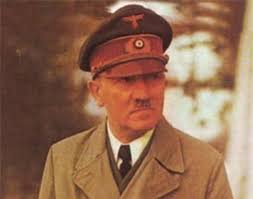
Adolf Hitler
Sitting in the front row was Field Marshal Erich von Manstein, perhaps the most brilliant member of the German General Staff. It was Manstein who had designed the “Sickle Cut” attack on France in May, 1940.
Bypassing the much-vaunted Maginot Line, the Wehrmacht struck through Belgium, taking the French completely by surprise. As a result, it defeated France in six weeks—something Germany had been unable to do during the four years of World War 1.
Now, in a loud voice, Manstein proclaimed: “And so it will be, Mein Fuhrer!”
Hitler froze; it had been more than a decade since anyone had dared interrupt him. Then, trying to make the best of a bad moment, he continued: “Very well. If this is the case, it will be impossible for us to lose this war.”
Hitler hoped that Manstein had intended to reassure him of his loyalty. But Martin Bormann, his all-powerful secretary, told him that the generals had interpreted the outburst differently: That the worse would indeed come to the worst.
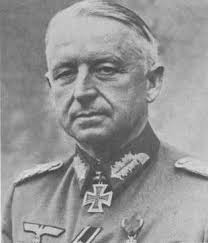
Erich von Manstein
And, which, in fact, happened.
As the Russian army closed in on his underground bunker in April, 1945, Hitler revealed his utter contempt for the Germans who had so blindly served him for 12 years.
“If the war is lost,” Hitler told his former architect and now Minister of Armaments, Albert Speer, “the nation will also perish. This fate is inevitable.
“There is no necessity to take into consideration the basis which the people will need to continue even a most primitive existence.
“On the contrary, it will be better to destroy these things ourselves, because this nation will have proved to be the weaker one and the future will belong solely to the stronger eastern nation.”
Just as Hitler demanded loyalty from his accomplices to infamy, so does Donald Trump.
Former FBI Director James Comey has had firsthand experience in attacking organized crime—and in spotting its leaders.
In his bestselling memoir, A Higher Loyalty, he writes:
“As I found myself thrust into the Trump orbit, I once again was having flashbacks to my earlier career as a prosecutor against the mob. The silent circle of assent. The boss in complete control. The loyalty oaths. The us-versus-them worldview. The lying about all things, large and small, in service to some code of loyalty that put the organization above morality and the truth.”

James Comey
When Comey refused to overlook Trump’s treasonous contacts with Russian dictator Vladimir Putin, Trump fired him.
On October 9, 2019, The Week published an article: “Note to Republicans: Trump will betray you just like he betrayed the Kurds. The one constant in the president’s life is betrayal.” Specifically:
“Trump’s forte is con artistry. He sells books he doesn’t write to people who don’t read. He failed as a businessman but succeeded as a fake businessman on TV. The supreme irony of his life is that he poses as a dealmaker when he is the opposite. Trump doesn’t make deals. He breaks them….
“If there’s a constant in Trump’s life, it’s betrayal. He has betrayed his business partners, his customers, his employees, his friends, his wives, and his voters. A man who is willing to betray those closest to him will not hesitate to turn his back on foreigners thousands of miles away.”
To enrich himself at the expense of his followers, Trump has peddled a variety of expensive products. Among these:
- “Never Surrender” sneakers;
- Mugshot T-shirts, mugs and posters;
- Bibles made in China (as he rails against a trade deficit between China and the United States.
On the international level, Trump has withdrawn the United States from a host of international agreements. Among these:
- The Trans-Pacific Partnership;
- The Paris Agreement to combat global warming;
- The Iran nuclear deal.
As a result, the world no longer trusts the United States to honor its commitments.
A 2018 Pew Research Center survey found that 82 percent of Europeans didn’t trust Trump’s handling of international issues. Seventy-five percent of Canadians and 91 percent of Mexicans didn’t trust him to do the right thing regarding world affairs.
For Trump, as for Hitler, loyalty goes only one way—from others to him. No one who served either man—no matter how loyally or how long—could be certain when he would be deemed disposable.
2016 PRESIDENTIAL ELECTION, 2020 PRESIDENTIAL ELECTION, ABC NEWS, ADOLF HITLER, ALTERNET, AP, BUZZFEED, CBS NEWS, CIA, CNN, COVID-19, CROOKS AND LIARS, DAILY KOS, DONALD TRUMP, FBI, FRANCE, GUNTER MEISNER, HERMAN WOUK, JAMES COMEY, JANUARY 6 COUP ATTEMPT, JOE BIDEN, KIM JONG-UN, MOTHER JONES, MOVEON, NAZI GERMANY, NBC NEWS, NEWSWEEK, NPR, POLITICO, RAW STORY, REUTERS, SALLY YATES, SALON, SEATTLE TIMES, SERGEY KISLYAK, SERGY LAVROV, SLATE, THE ATLANTIC, THE CHICAGO SUN-TIMES, THE CHICAGO TRIBUNE, THE DAILY BEAST, THE GUARDIAN, THE HILL, THE HUFFINGTON POST, THE LOS ANGELES TIMES, THE NATION, THE NEW YORK TIMES, THE PRESS, THE WASHINGTON POST, THE WINDS OF WAR, TIME, U.S. NEWS & WORLD REPORT, UPI, USA TODAY, VLADIMIR PUTIN, VOLODYMYR ZELENSKY, WALTER VON BRAUCHITSCH, WOLFGANG PREISS, WORLD WAR 11, X
In Bureaucracy, History, Military, Politics, Social commentary on November 14, 2024 at 12:14 am
After Donald Trump won the 2016 election, many people feared he would embark on a radical Right-wing agenda. But others hoped that the Washington bureaucracy would “box him in.”
The same sentiments echoed throughout Germany after Adolf Hitler was appointed Chancellor of Germany on January 30, 1933.
The 1983 TV mini-series, The Winds of War, offered a dramatic example of how honorable men can be overwhelmed by a ruthless dictator.
Based on the bestselling 1971 historical novel by Herman Wouk, the mini-series factually re-created the major historical events of World War II.
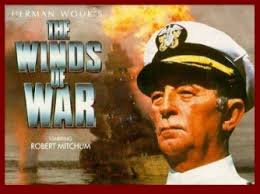
One of those events took place on November 5, 1939.
General Walther von Brauchitsch is summoned to the Chancellery in Berlin to meet with Adolf Hitler. He carries a memorandum signed by all the leaders of the German Wehrmacht asserting that Case Yellow—Hitler’s planned attack against France—is impossible.
Meanwhile, at the German army headquarters at Zossen, in Berlin, the Wehrmacht’s top command wait for word from von Brauchitsch.
CHANCELLERY:
Von Brauchitsch hands the memorandum to Hitler, who reads it.
Adolf Hitler (slamming down the memorandum): So—what is new in all this?
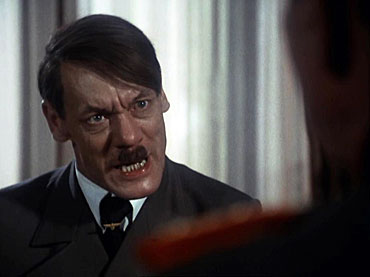
Gunter Meisner as Adolf Hitler in “The Winds of War”
Walther Von Brauchitsch: Fuhrer, it is the army’s final position that Case Yellow cannot proceed.
Hitler: Why not?
Von Brauchitsch: Because of the military fundamentals as stated. The meteorologists predict continuous soaking rains for weeks.
Hitler: It rains on the enemy, too.
ZOSSEN:
Brigadier General Armin Von Roon: The conspiracy has been going on that long—since Czechoslovakia [1938)?
Chief of the General Staff Franz Halder: If the British had not caved in at Munich [where France and Britain sold out their ally, Czechoslovakia]—perhaps. But they did. And ever then, ever since his big triumph, it has been hopeless. Hopeless.
Von Roon: Empty talk, talk, talk. I am staggered.
Halder: A hundred times I myself could have shot the man. I can still at any time. But what would be the result? Chaos. The people are for him. He has unified the country. We must stick to our posts and save him from making military mistakes.
CHANCELLERY:
Von Brauchitsch: Fuhrer, even the supply of artillery shells is totally inadequate.
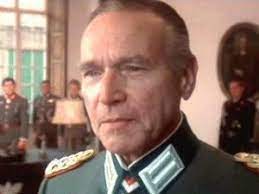
Wolfgang Preiss as Walter von Brauchitsch in “The Winds of War”
Hitler: Do you know how many artillery shells of all calibers we have in the staging areas—right this minute?
Von Brauchitsch: No.
Hitler: How many we have in the reserve dumps in the West? What the monthly annual production of shells is? What the projected rise in production of the next six months is, month by month?
Von Brauchitsch: Who keeps such figures in his head?
Hitler: I do! The supply is adequate. I tell you so. And I’m a field soldier who depended on artillery for four years to protect his life. [He hands von Brauchitsch a sheaf of armaments figures.] Check with your staff. if one of those figures is wrong, you can postpone Case Yellow. Otherwise—you march! And next time you come to see me, know what you’re talking about!
Von Brauchitsch: The morale of the army was low, even in the Polish campaign.
Hitler: Back up this monstrous assertion! In what units was morale low? What action was taken? How many death sentences were handed out for cowardice? Speak up! I’ll fly to the front and pass the death sentences myself. Name one specific instance.
Von Brauchitsch: It was common knowledge—
Hitler: Common knowledge? What is common knowledge is that army headquarters at Zossen crawls with cowards. You opposed me in rearming the Rhineland. You opposed me on the [union] with Austria. You opposed me on Czechoslovakia, until the British came crawling to me. You dirtied in your trousers, you heroes at Zossen, at the idea of marching into Poland. Well, have I once been wrong? Have you once been right? Answer me!
Von Brauchitsch: Mein Fuhrer—
Hitler: Tell everyone who signed this insubordinate Zossen rubbish to beware! I will ruthlessly crush everybody up to the rank of a Field Marshal who dares to oppose me. You don’t have to understand. You only have to obey. The German people understand me. I am Germany.
President Donald Trump:
- Fired FBI Director James Comey for investigating Russia’s subversion of the 2016 Presidential election.
- Attacked the integrity of the American Intelligence community.
- Attacked the free press as “the enemy of the American people.”
- Tried to coerce Ukrainian President Volodymyr Zelensky to smear former Vice President Joe Biden, his presumed Democratic opponent in the 2020 Presidential election.
- Repeatedly lied about the dangers posed by the COVID-19 virus, thus enabling it to ravage the country and kill 400,000 by the time Trump left office.
- Incited his followers to violently attack the United States Capitol Building to overturn the results of the 2020 Presidential election and prevent Joe Biden, the winner, from taking office.
Fast forward 79 years from Adolf Hitler’s stormy confrontation with Walter von Brauchitsch to January 6, 2021.
Like Adolf Hitler, Donald Trump could truthfully say: I am America.
And that was before the United States Supreme Court declared that a President has absolute immunity for his official acts—including criminal ones.


 Bureaucracybuster's Blog
2016 PRESIDENTIAL ELECTION, 202O PRESIDENTIAL ELECTION, ABC NEWS, ADOLF HITLER, ALASKA, ALEXANDER VINDMAN, ALTERNET, AMERICABLOG, AP, BABY BOOMER RESISTANCE, BBC, BLOOMBERG NEWS, BUZZFEED, CBS NEWS, CNN, CONSERVATIVE POLITICAL ACTION COMMITTEE (C-PAC, CRIMEA, CROOKS AND LIARS, CZECHOSLOVKIA, DONALD TRUMP, EDOUARD DALADIER, FIVETHIRTYEIGHT, FRANCE, FRANKLIN D. ROOSEVELT, GEORGE W. BUSH, GREAT BRITAIN, HARPER’S MAGAZINE, HOUSE INTELLIGENCE COMMITTEE, HUFFINGTON POST, IMPEACHMENT, J.D. VANCE, JOE SCARBOROUGH, JOSEPH BIDEN, MEDIA MATTERS, MICK MULVANEY, MIKE POMPEO, MORNING JOE, MOTHER JONES, MOVEON, MSNBC, MUNICH CONFERENCE, NATIONAL SECURITY COUNCIL, NAZI GERMANY, NBC NEWS, NEVILLE CHAMBERLAIN, NEW REPUBLIC, NEWSDAY, NEWSWEEK, NPR, PBS NEWSHOUR, POLITICO, POLITICUSUSA, RAW STORY, REPUBLICANS, REUTERS, RUSSIA, SALON, SEATTLE TIMES, SLATE, TALKING POINTS MEMO, THE ATLANTIC, THE CHICAGO SUN-TIMES, THE CHICAGO TRIBUNE, THE DAILY BEAST, THE DAILY BLOG, THE GUARDIAN, THE HILL, THE HUFFINGTON POST, THE INTERCEPT, THE LOS ANGELES TIMES, THE NATION, THE NEW REPUBLIC, THE NEW YORK TIMES, THE NEW YORKER, THE VILLAGE VOICE, THE WASHINGTON POST, THINKPROGRESS, TIME, TRUTHDIG, TRUTHOUT, TUCKER CARLSON, TWO POLITICAL JUNKIES, U.S. NEWS & WORLD REPORT, UKRAINE, UPI, USA TODAY, VLADIMIR PUTIN, VOLODYMYR ZELENSKY, WINSTON CHURCHILL, WONKETTE, X
VLADIMIR PUTIN: CHARMING A TYRANT, OUTFOXING A FOOL–PART ONE (OF TWO)
In Bureaucracy, History, Military, Politics, Social commentary on August 18, 2025 at 12:10 amOn February 24, 2022, Russian President Vladimir Putin ordered an all-out assault on Ukraine.
Two days later, former President Donald Trump appeared at the Conservative Political Action Committee (CPAC)—to praise Putin and attack “our leaders.”
Specifically:
“The Ukrainian crisis is an outrage and it should never have been allowed to occur. we are praying for the proud people of Ukraine. God bless them all. The problem is not that Putin is smart, it’s that our leaders are dumb.
“They’re allowing Putin to get away with this assault on humanity. Putin is playing Biden like a drum. The real problem is that our leaders are dumb, dumb. So dumb. You could take the five worst presidents in history, and they wouldn’t have done the damage President Joe Biden has done in such a short time.”
Donald Trump
Historians may well rate Trump among “the five worst presidents in history.” And the damage “he has done in such a short time” began with the love-fest between himself and Putin even before he entered the White House.
The starting date for this: December 17, 2015.
Putin made the first move: “He is a bright and talented person without any doubt. He is the absolute leader of the presidential race.
“He says he will want to reach another, deeper, level of relations (with Russia). What else can we do but to welcome it? Certainly, we welcome it.
“That is none of our business to evaluate his accomplishments, but he remains the absolute front-runner in the presidential race. He is an outstanding and talented personality without any doubts.”
Appearing on the December 18, 2015 edition of MSNBC’s “Morning Joe,” Trump responded in kind: “Sure, when people call you ‘brilliant,’ it’s always good. Especially when the person heads up Russia.
“It is always a great honor to be so nicely complimented by a man so highly respected within his own country and beyond.”
The host, Joe Scarborough, was taken aback: “Well, I mean, [Putin’s] also a person who kills journalists, political opponents, and invades countries. Obviously that would be a concern, would it not?”
Joe Scarborough
NBC News, CC BY-SA 4.0 <https://creativecommons.org/licenses/by-sa/4.0>, via Wikipedia Commons
TRUMP: He’s running his country, and at least he’s a leader. Unlike what we have in this country.
SCARBOROUGH: But again: He kills journalists that don’t agree with him.
TRUMP: I think our country does plenty of killing, also, Joe, so, you know. There’s a lot of stupidity going on in the world right now, Joe. A lot of killing going on. A lot of stupidity. And that’s the way it is.
SCARBOROUGH: I’m confused. So I mean, you obviously condemn Vladimir Putin killing journalists and political opponents, right?
TRUMP: Oh sure, absolutely.
Despite his expressed sympathy for the Ukrainian people, Trump tried to extort a “favor” from Ukrainian President Volodymyr Zelensky in the face of Russian aggression.
In July, 2019, Trump told his acting chief of staff, Mick Mulvaney, to withhold almost $400 million in Congressionally promised military aid for Ukraine.
Then, on July 25, Trump telephoned Zelensky to demand: Investigate presumed 2020 Democratic Presidential Candidate Joe Biden and his son, Hunter, who had had business dealings in Ukraine.
Clearly implied in the call: Produce “dirt” on Biden—or you won’t get the military aid.
Unfortunately for Trump, his call was overheard by Army Lieutenant Colonel Alexander Vindman, who served as the Director for European Affairs for the United States National Security Council.
Lt. Colonel Alexander Vindman
“I was concerned by the call,” Vindman testified before the House Intelligence Committee. “I did not think it was proper to demand that a foreign government investigate a U.S. citizen, and I was worried about the implications for the U.S. Government’s support of Ukraine.
“I realized that if Ukraine pursued an investigation into the Bidens and Burisma, it would likely be interpreted as a partisan play which would undoubtedly result in Ukraine losing the bipartisan support it has thus far maintained. This would all undermine U.S. national security.”
Trump denounced Vindman as a “Never Trumper”—as if opposing his extortion attempt constituted a blasphemy. Republicans and their shills on the Fox News Network attacked Vindman as well. As a result, he sought physical protection by the Army for himself and his family.
On February 7, 2020, he was reassigned from the National Security Council at Trump’s order.
When the story broke, Ukraine got the promised military aid—and Trump found himself impeached for abuse of power and obstruction of Congress.
But Senate Republicans, ignoring the overwhelming evidence against him, easily acquitted Trump on February 5, 2020.
Two years after Trump’s acquittal, Vladimir Putin massively attacked Ukraine. For which, says Vindman, the Republican Party has “blood on its hands” for emboldening Russia.
And so, says Vindman, does Trump. His refusal to criticize Putin was a factor that led Putin to attack. So did Trump’s weakening the United States internally with his divisive politics:
“The Tucker Carlsons, the Donald Trumps, the Mike Pompeos, they and other Republicans are going to have to own this issue because they are the reason that Russia launched this operation.
“Putin, like Trump, smells vulnerability and exploits it. Vladimir Putin perceived that the United States was distracted and vulnerable. He’s been testing our resolve. He’s been getting positive signals in that regard.”
Share this: